Cambridge A Level Biology 9700 — 2014 Oct/Nov Paper 4 · Variant 1
9700/41/O/N/14 · 100 marks · ≈113 min
The question paper and its mark scheme, free to read here and free to download. This is Cambridge’s own paper, exactly as it was sat.
Question paper24 pages




Mark scheme11 pages
Answers below. Sit the paper first if you are practising.
Paper as text
Question paper, page 1
This document consists of 20 printed pages and 2 blank pages and 2 lined pages. DC (RW/SW) 79175/3 © UCLES 2014 [Turn over Cambridge International Examinations Cambridge International Advanced Level * 2 5 6 8 9 2 3 0 7 6 * BIOLOGY 9700/41 Paper 4 A2 Structured Questions October/November 2014 2 hours Candidates answer on the Question Paper. Additional Materials: Answer paper available on request. READ THESE INSTRUCTIONS FIRST Write your Centre number, candidate number and name in the spaces provided at the top of this page. Write in dark blue or black pen. You may use an HB pencil for any diagrams, graphs or rough working. Do not use staples, paper clips, glue or correction fluid. DO NOT WRITE IN ANY BARCODES. Section A Answer all questions. Section B Answer one question. Circle the number of the Section B question you have answered in the grid below. Electronic calculators may be used. At the end of the examination, fasten all your work securely together. The number of marks is given in brackets [ ] at the end of each question or part question. For Examiner’s Use Section A 1 2 3 4 5 6 7 8 Section B 9 or 10 Total
Question paper, page 2
2 9700/41/O/N/14 © UCLES 2014 BLANK PAGE
Question paper, page 3
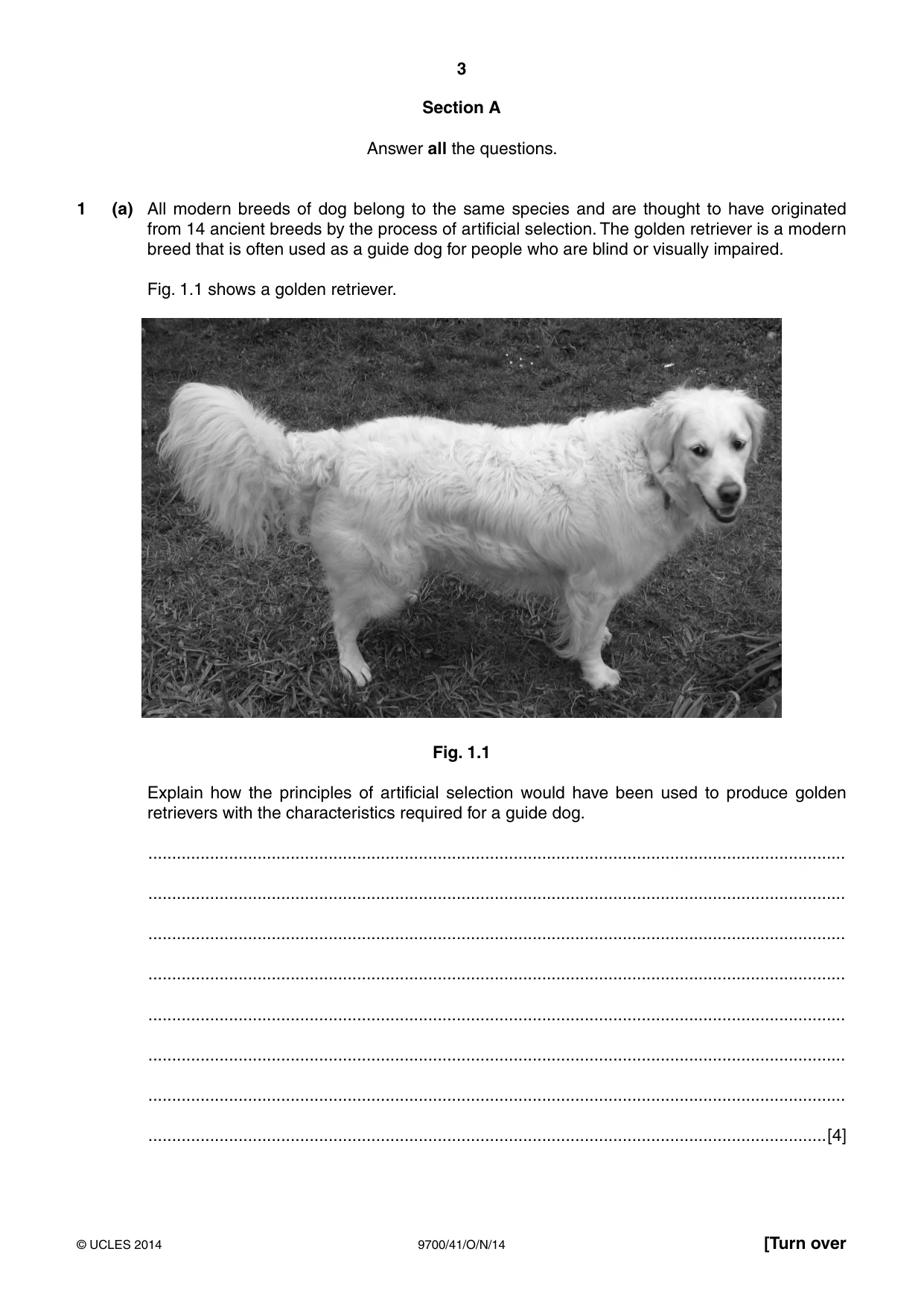
3 9700/41/O/N/14 © UCLES 2014 [Turn over Section A Answer all the questions. 1 (a) All modern breeds of dog belong to the same species and are thought to have originated from 14 ancient breeds by the process of artificial selection. The golden retriever is a modern breed that is often used as a guide dog for people who are blind or visually impaired. Fig. 1.1 shows a golden retriever. Fig. 1.1 Explain how the principles of artificial selection would have been used to produce golden retrievers with the characteristics required for a guide dog. … … … … … … … …[4]
Question paper, page 4
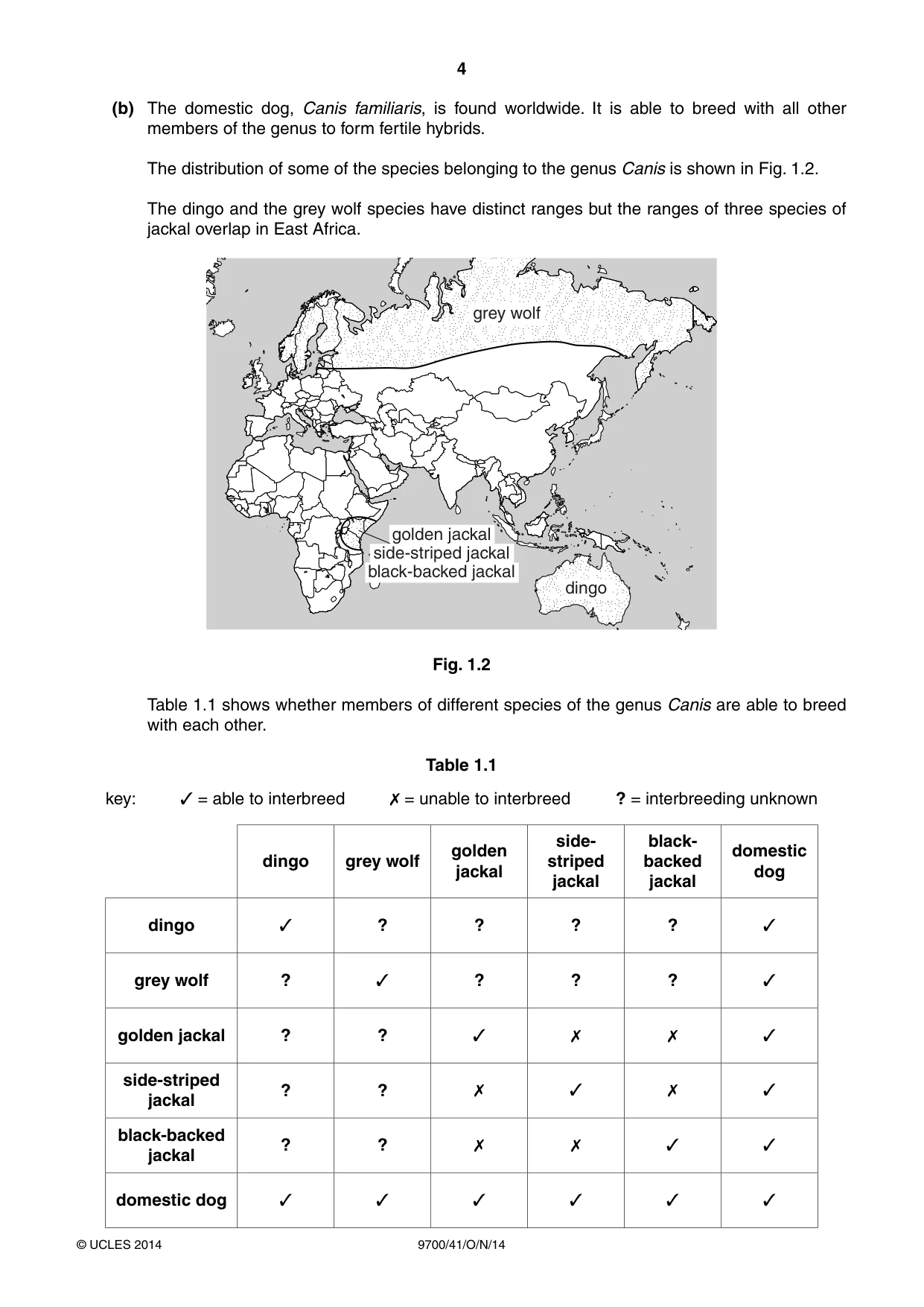
4 9700/41/O/N/14 © UCLES 2014 (b) The domestic dog, Canis familiaris, is found worldwide. It is able to breed with all other members of the genus to form fertile hybrids. The distribution of some of the species belonging to the genus Canis is shown in Fig. 1.2. The dingo and the grey wolf species have distinct ranges but the ranges of three species of jackal overlap in East Africa. grey wolf dingo golden jackal side-striped jackal black-backed jackal Fig. 1.2 Table 1.1 shows whether members of different species of the genus Canis are able to breed with each other. Table 1.1 key: ✓ = able to interbreed ✗ = unable to interbreed ? = interbreeding unknown dingo grey wolf golden jackal side- striped jackal black- backed jackal domestic dog dingo ✓ ? ? ? ? ✓ grey wolf ? ✓ ? ? ? ✓ golden jackal ? ? ✓ ✗ ✗ ✓ side-striped jackal ? ? ✗ ✓ ✗ ✓ black-backed jackal ? ? ✗ ✗ ✓ ✓ domestic dog ✓ ✓ ✓ ✓ ✓ ✓
Question paper, page 5
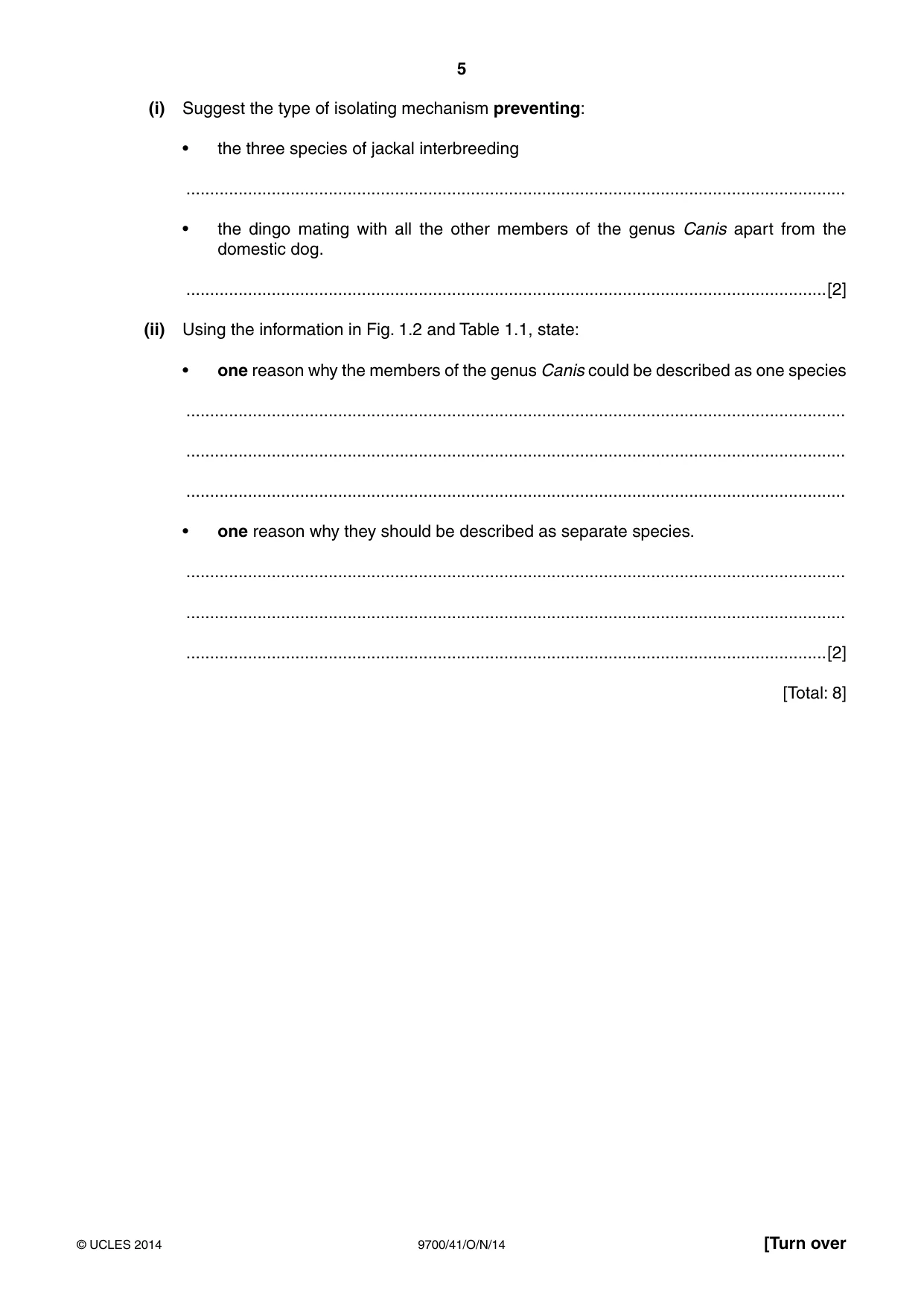
5 9700/41/O/N/14 © UCLES 2014 [Turn over (i) Suggest the type of isolating mechanism preventing: • the three species of jackal interbreeding … • the dingo mating with all the other members of the genus Canis apart from the domestic dog. …[2] (ii) Using the information in Fig. 1.2 and Table 1.1, state: • one reason why the members of the genus Canis could be described as one species … … … • one reason why they should be described as separate species. … … …[2] [Total: 8]
Question paper, page 6
6 9700/41/O/N/14 © UCLES 2014 2 Many tumours release a protein growth factor called VEGF. This is a chemical signal that causes nearby blood vessels to grow new branches into the tumour. The monoclonal antibody, bevacizumab (Avastin®), specifically binds to VEGF. (a) Suggest how Avastin® can prevent the growth and spread of a tumour. … … … … … …[2] (b) Avastin® is made by the hybridoma method. State: (i) the antigen that is injected into a mouse to produce this monoclonal antibody …[1] (ii) what is meant by a hybridoma. … … …[1] (c) The monoclonal antibody made by the hybridoma method is modified to obtain humanised mouse antibody. This type of antibody molecule resembles those produced by humans. Suggest advantages of using humanised mouse antibody rather than mouse antibody. … … … … … … …[3]
Question paper, page 7
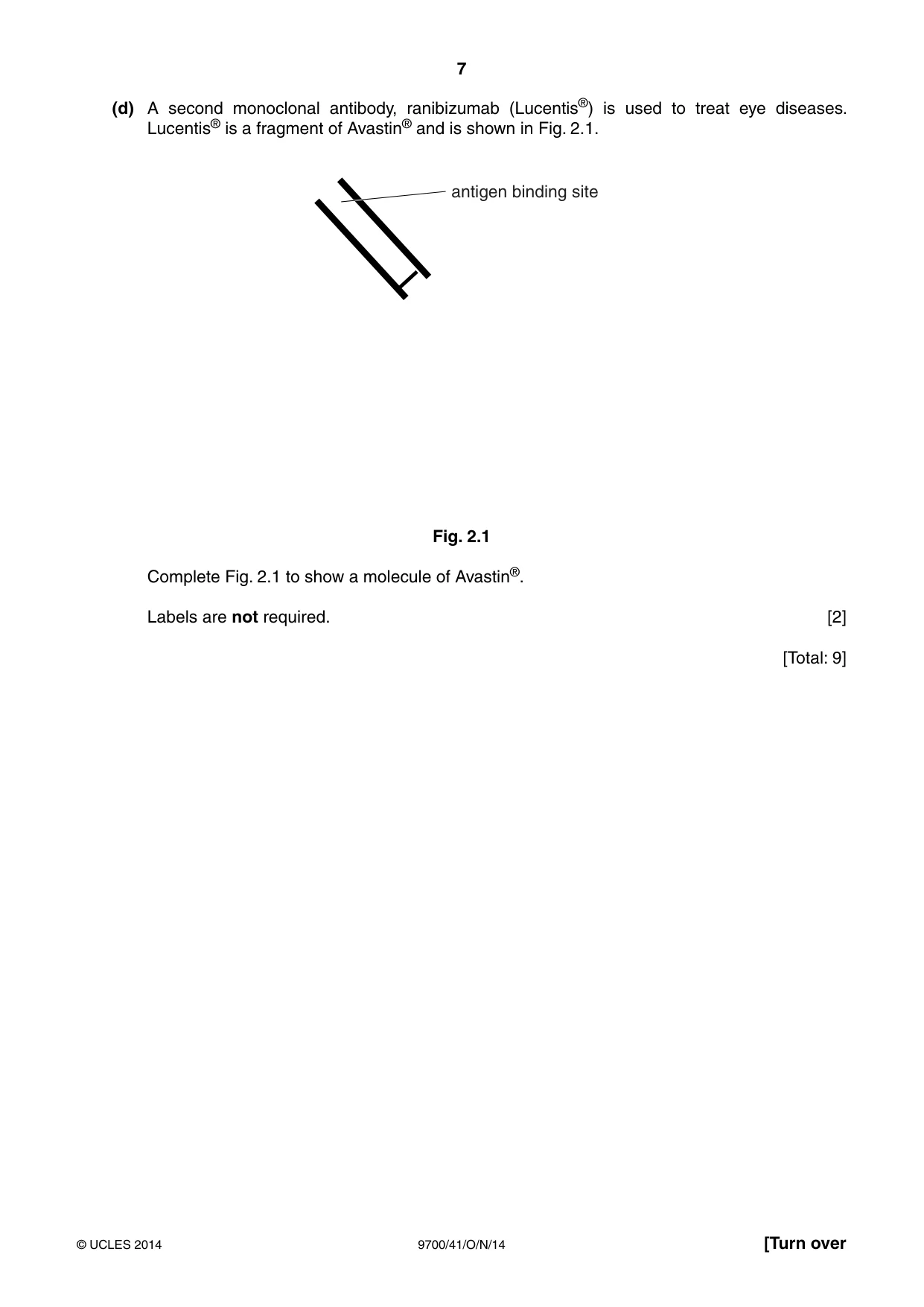
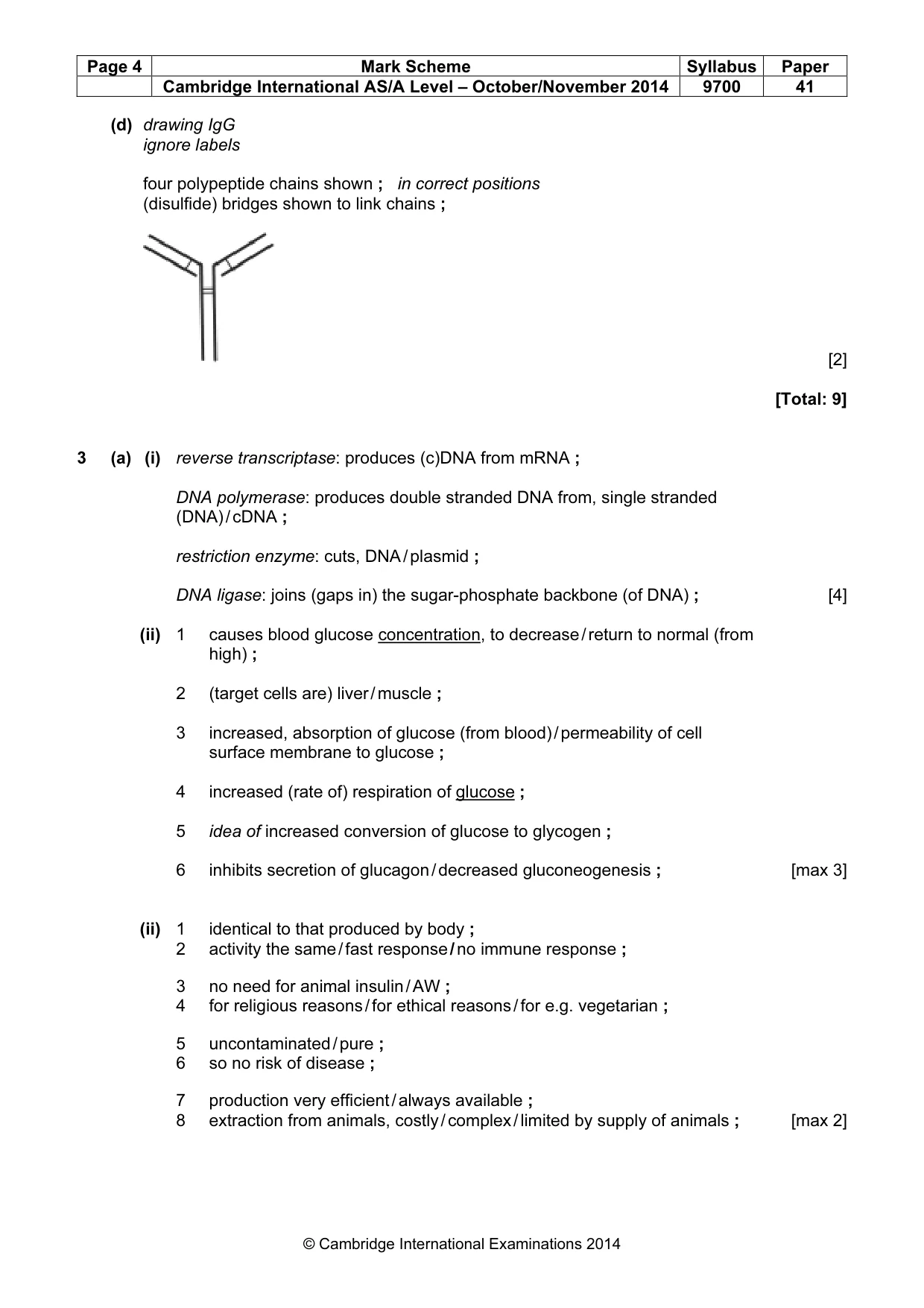
7 9700/41/O/N/14 © UCLES 2014 [Turn over (d) A second monoclonal antibody, ranibizumab (Lucentis®) is used to treat eye diseases. Lucentis® is a fragment of Avastin® and is shown in Fig. 2.1. antigen binding site Fig. 2.1 Complete Fig. 2.1 to show a molecule of Avastin®. Labels are not required. [2] [Total: 9]
Question paper, page 8
8 9700/41/O/N/14 © UCLES 2014 BLANK PAGE
Question paper, page 9
9 9700/41/O/N/14 © UCLES 2014 [Turn over 3 Human insulin can be synthesised in a laboratory strain of Escherichia coli using recombinant DNA (rDNA) technology. The starting point for the process is mRNA coding for insulin, isolated from human pancreas cells. Four enzymes are needed: • reverse transcriptase • DNA polymerase • restriction enzyme • DNA ligase. (a) (i) State the role of each of these enzymes in producing rDNA carrying the gene for human insulin. reverse transcriptase … … DNA polymerase … … restriction enzyme … … DNA ligase … …[4] (ii) Outline the role of insulin in a healthy human. … … … … … …[3]
Question paper, page 10
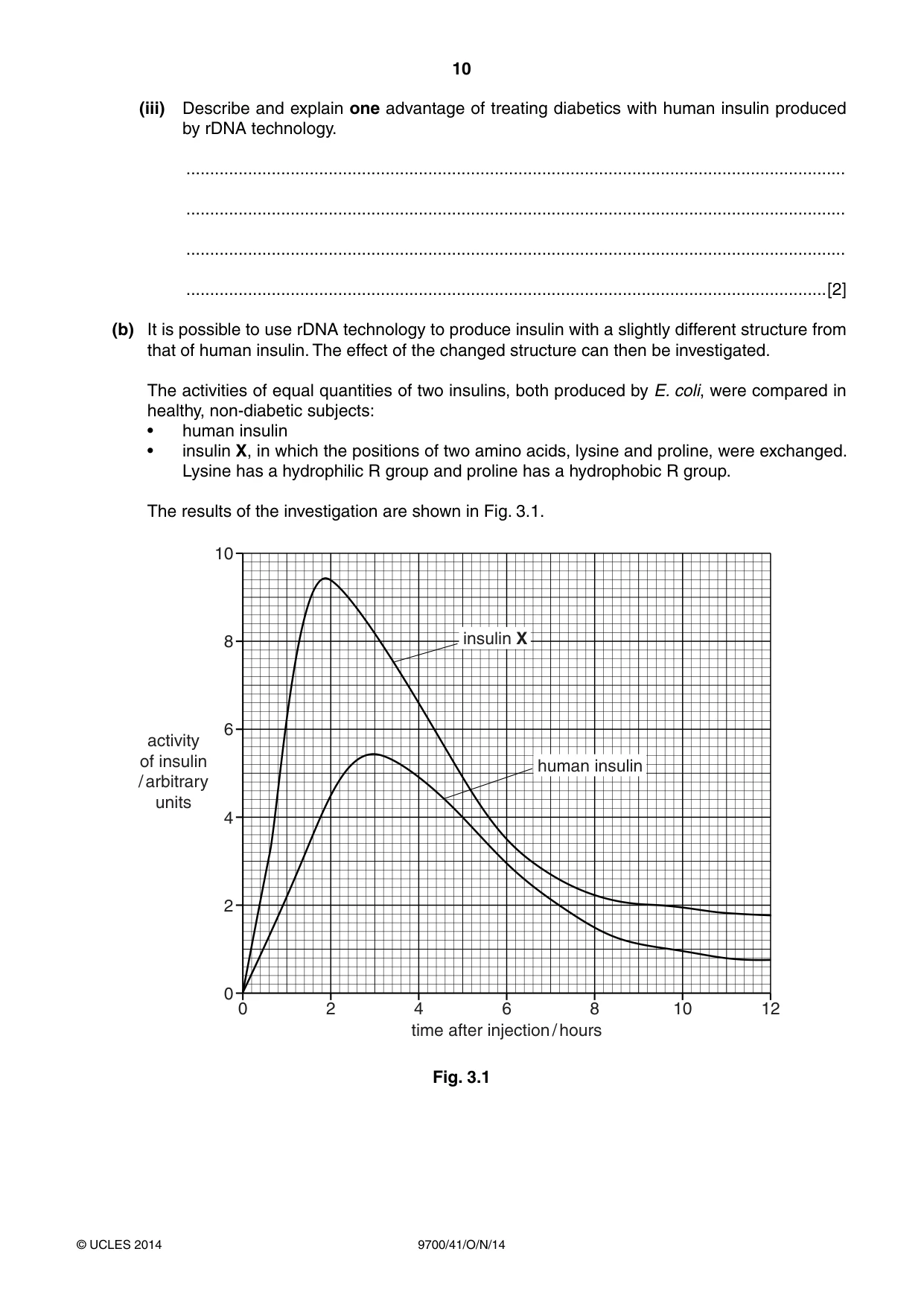
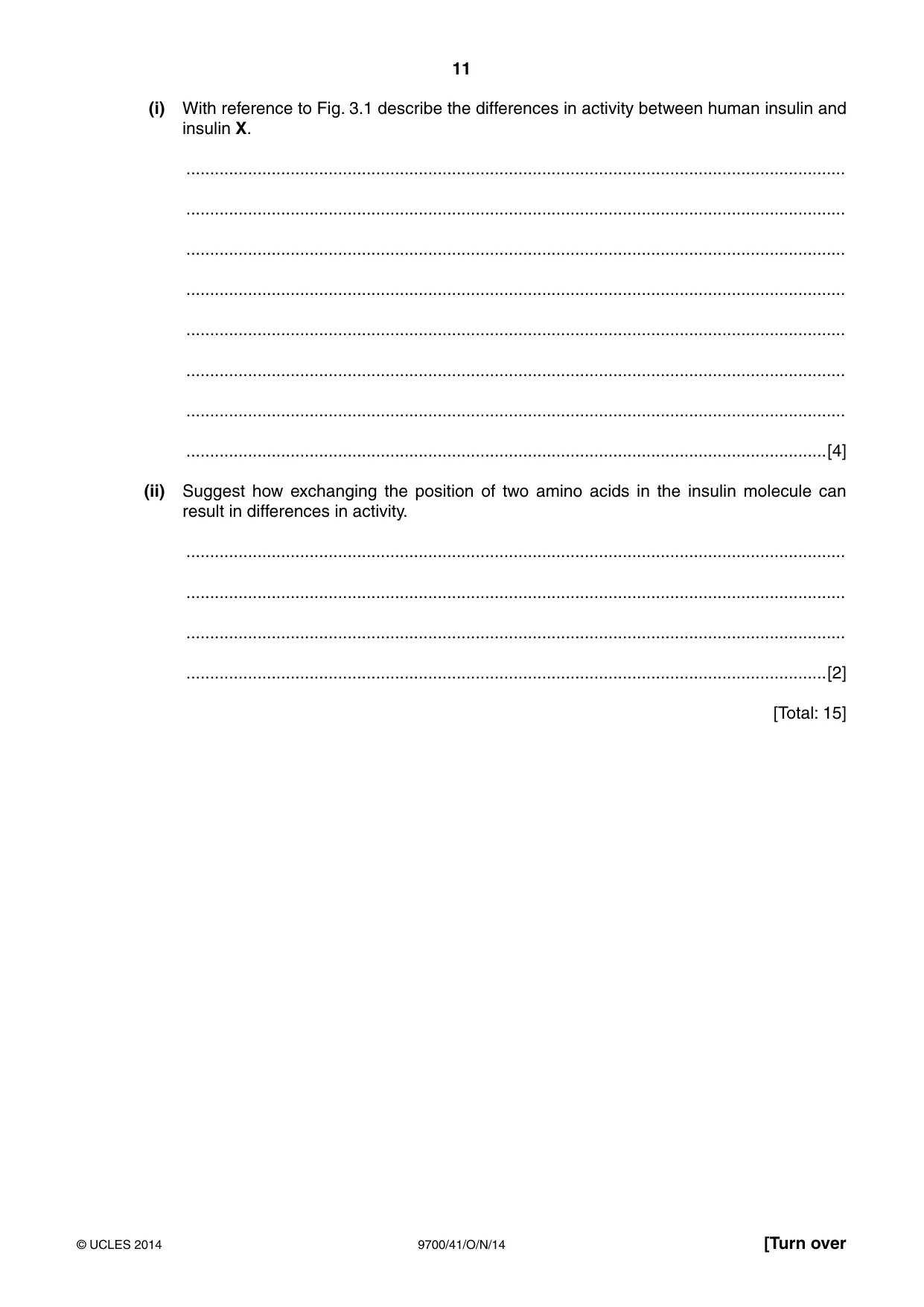
10 9700/41/O/N/14 © UCLES 2014 (iii) Describe and explain one advantage of treating diabetics with human insulin produced by rDNA technology. … … … …[2] (b) It is possible to use rDNA technology to produce insulin with a slightly different structure from that of human insulin. The effect of the changed structure can then be investigated. The activities of equal quantities of two insulins, both produced by E. coli, were compared in healthy, non-diabetic subjects: • human insulin • insulin X, in which the positions of two amino acids, lysine and proline, were exchanged. Lysine has a hydrophilic R group and proline has a hydrophobic R group. The results of the investigation are shown in Fig. 3.1. 0 0 2 4 activity of insulin / arbitrary units 6 8 10 2 4 6 time after injection / hours 8 10 12 insulin X human insulin Fig. 3.1
Question paper, page 11
11 9700/41/O/N/14 © UCLES 2014 [Turn over (i) With reference to Fig. 3.1 describe the differences in activity between human insulin and insulin X. … … … … … … … …[4] (ii) Suggest how exchanging the position of two amino acids in the insulin molecule can result in differences in activity. … … … …[2] [Total: 15]
Question paper, page 12
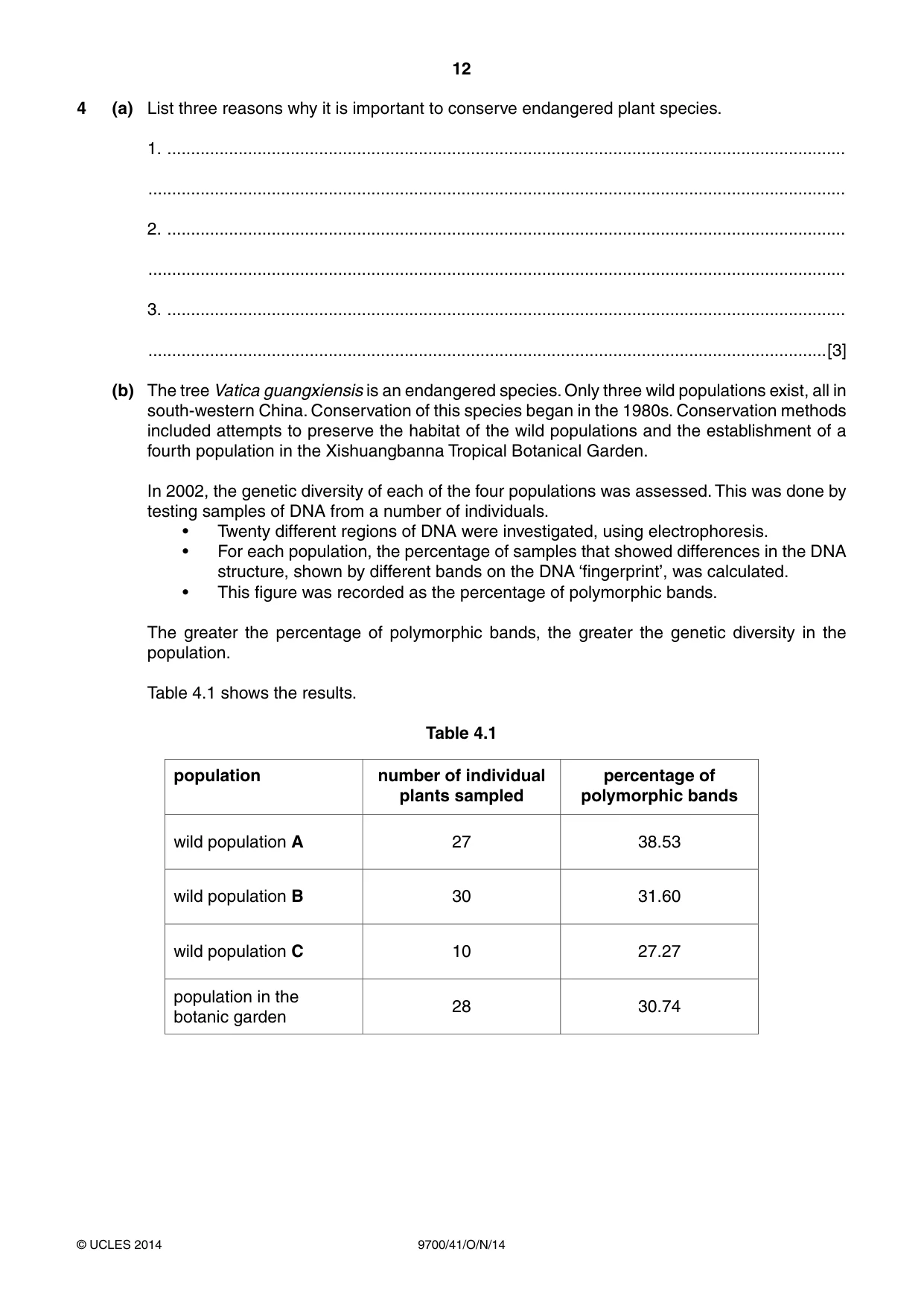
12 9700/41/O/N/14 © UCLES 2014 4 (a) List three reasons why it is important to conserve endangered plant species. 1. … … 2. … … 3. … …[3] (b) The tree Vatica guangxiensis is an endangered species. Only three wild populations exist, all in south-western China. Conservation of this species began in the 1980s. Conservation methods included attempts to preserve the habitat of the wild populations and the establishment of a fourth population in the Xishuangbanna Tropical Botanical Garden. In 2002, the genetic diversity of each of the four populations was assessed. This was done by testing samples of DNA from a number of individuals. • Twenty different regions of DNA were investigated, using electrophoresis. • For each population, the percentage of samples that showed differences in the DNA structure, shown by different bands on the DNA ‘fingerprint’, was calculated. • This figure was recorded as the percentage of polymorphic bands. The greater the percentage of polymorphic bands, the greater the genetic diversity in the population. Table 4.1 shows the results. Table 4.1 population number of individual plants sampled percentage of polymorphic bands wild population A 27 38.53 wild population B 30 31.60 wild population C 10 27.27 population in the botanic garden 28 30.74
Question paper, page 13
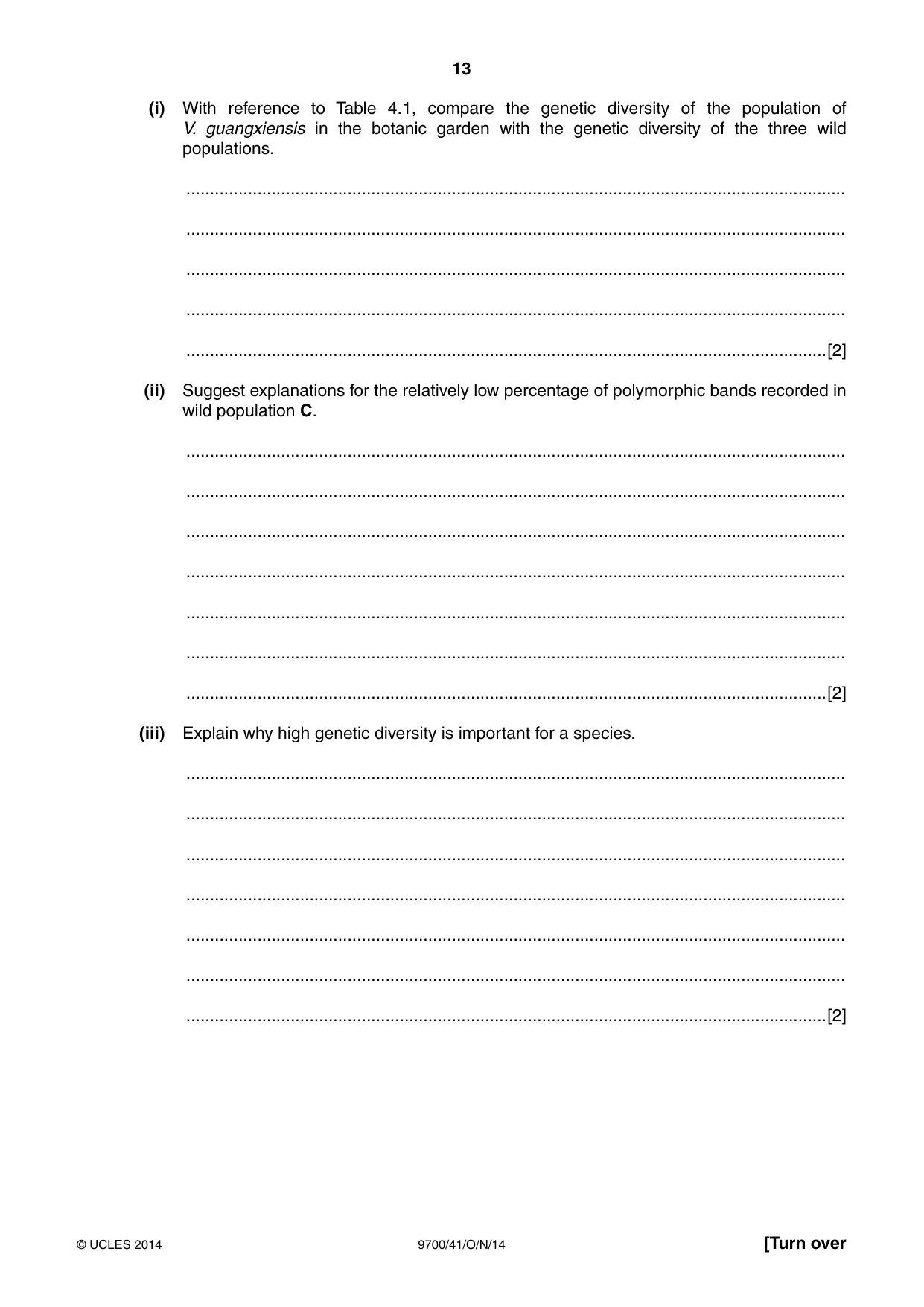
13 9700/41/O/N/14 © UCLES 2014 [Turn over (i) With reference to Table 4.1, compare the genetic diversity of the population of V. guangxiensis in the botanic garden with the genetic diversity of the three wild populations. … … … … …[2] (ii) Suggest explanations for the relatively low percentage of polymorphic bands recorded in wild population C. … … … … … … …[2] (iii) Explain why high genetic diversity is important for a species. … … … … … … …[2]
Question paper, page 14
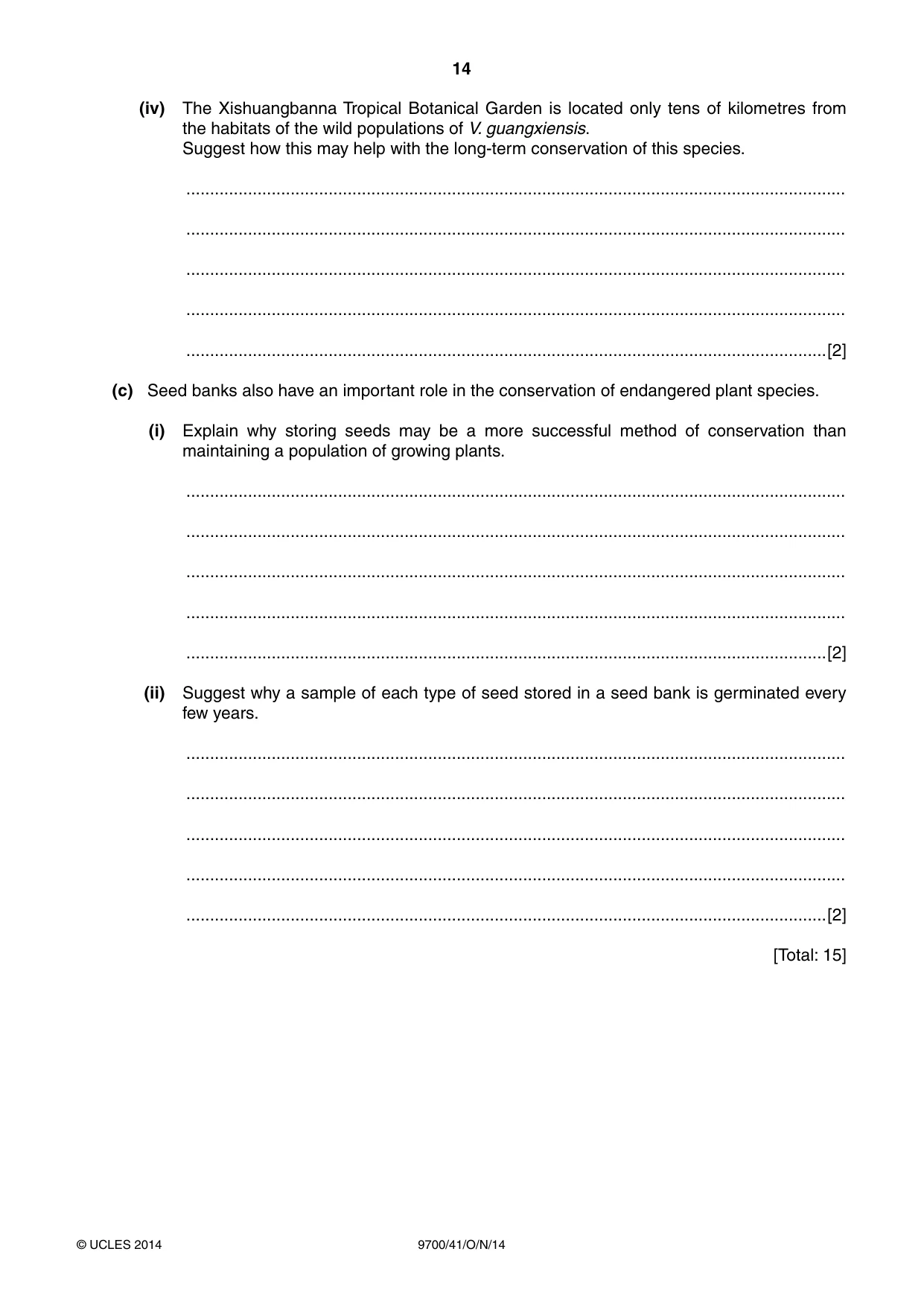
14 9700/41/O/N/14 © UCLES 2014 (iv) The Xishuangbanna Tropical Botanical Garden is located only tens of kilometres from the habitats of the wild populations of V. guangxiensis. Suggest how this may help with the long-term conservation of this species. … … … … …[2] (c) Seed banks also have an important role in the conservation of endangered plant species. (i) Explain why storing seeds may be a more successful method of conservation than maintaining a population of growing plants. … … … … …[2] (ii) Suggest why a sample of each type of seed stored in a seed bank is germinated every few years. … … … … …[2] [Total: 15]
Question paper, page 15
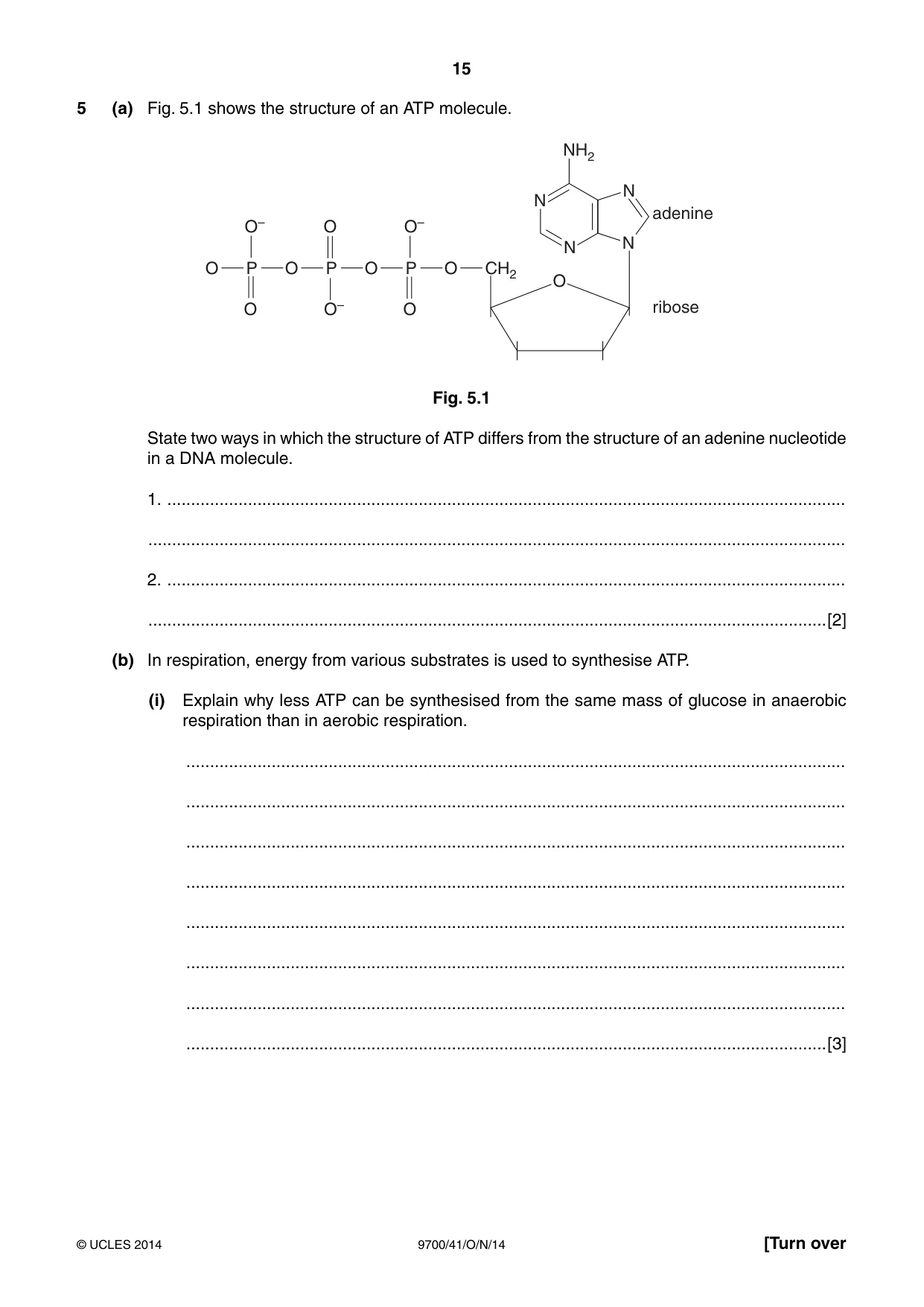
15 9700/41/O/N/14 © UCLES 2014 [Turn over 5 (a) Fig. 5.1 shows the structure of an ATP molecule. N NH2 CH2 O P O O P O O O P O N O N N O– O– O– adenine ribose Fig. 5.1 State two ways in which the structure of ATP differs from the structure of an adenine nucleotide in a DNA molecule. 1. … … 2. … …[2] (b) In respiration, energy from various substrates is used to synthesise ATP. (i) Explain why less ATP can be synthesised from the same mass of glucose in anaerobic respiration than in aerobic respiration. … … … … … … … …[3]
Question paper, page 16
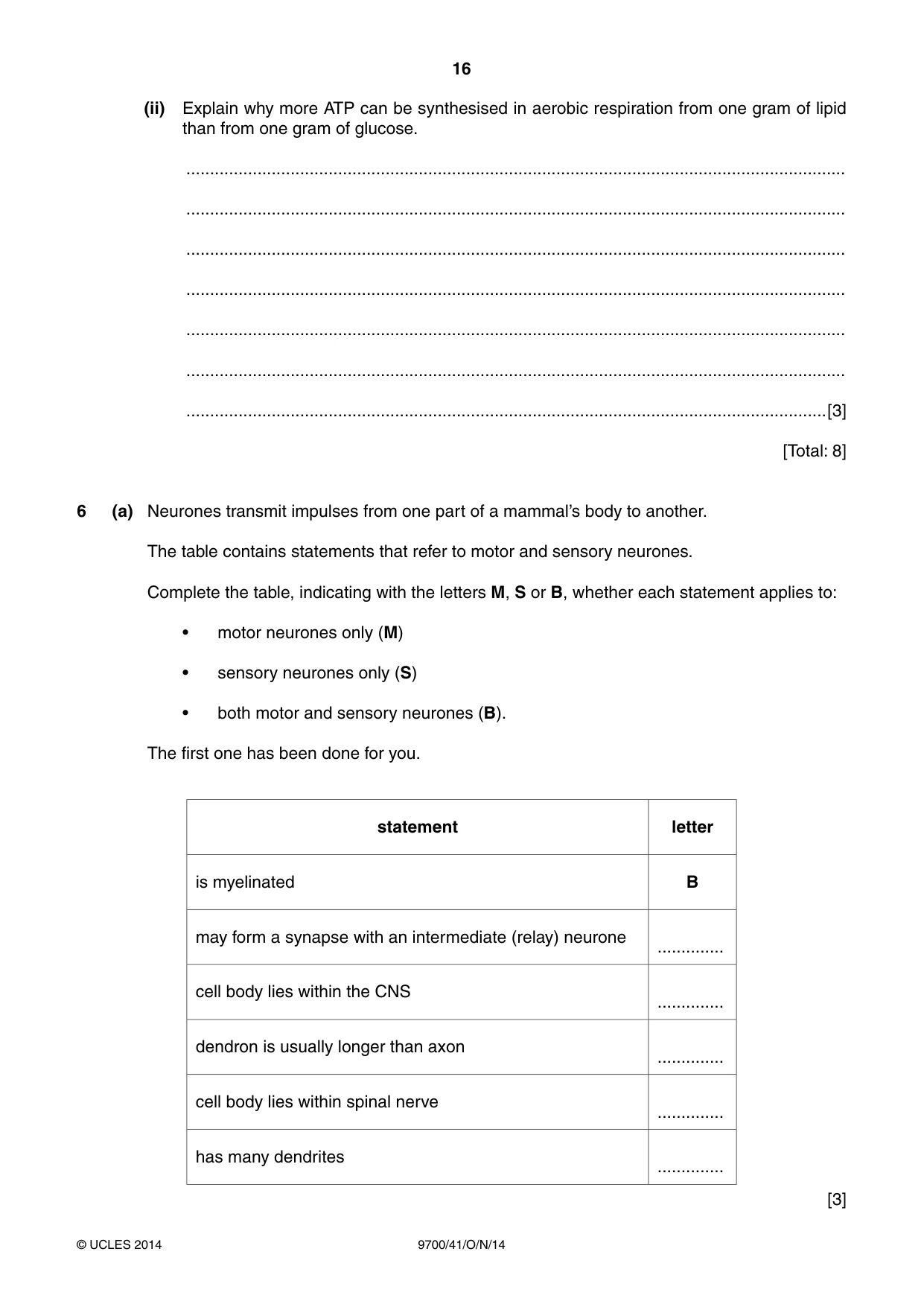
16 9700/41/O/N/14 © UCLES 2014 (ii) Explain why more ATP can be synthesised in aerobic respiration from one gram of lipid than from one gram of glucose. … … … … … … …[3] [Total: 8] 6 (a) Neurones transmit impulses from one part of a mammal’s body to another. The table contains statements that refer to motor and sensory neurones. Complete the table, indicating with the letters M, S or B, whether each statement applies to: • motor neurones only (M) • sensory neurones only (S) • both motor and sensory neurones (B). The first one has been done for you. statement letter is myelinated B may form a synapse with an intermediate (relay) neurone … cell body lies within the CNS … dendron is usually longer than axon … cell body lies within spinal nerve … has many dendrites … [3]
Question paper, page 17
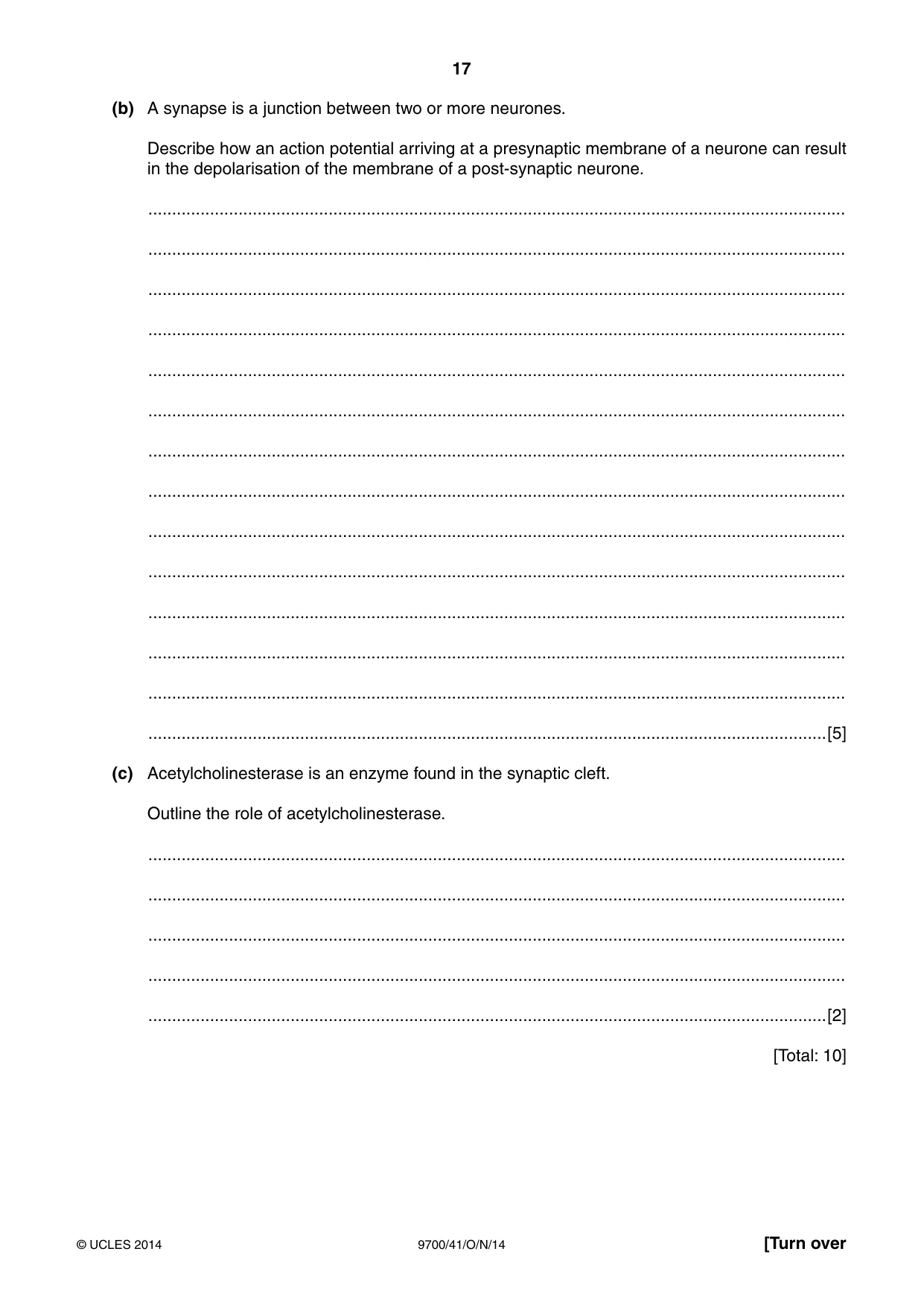
17 9700/41/O/N/14 © UCLES 2014 [Turn over (b) A synapse is a junction between two or more neurones. Describe how an action potential arriving at a presynaptic membrane of a neurone can result in the depolarisation of the membrane of a post-synaptic neurone. … … … … … … … … … … … … … …[5] (c) Acetylcholinesterase is an enzyme found in the synaptic cleft. Outline the role of acetylcholinesterase. … … … … …[2] [Total: 10]
Question paper, page 18
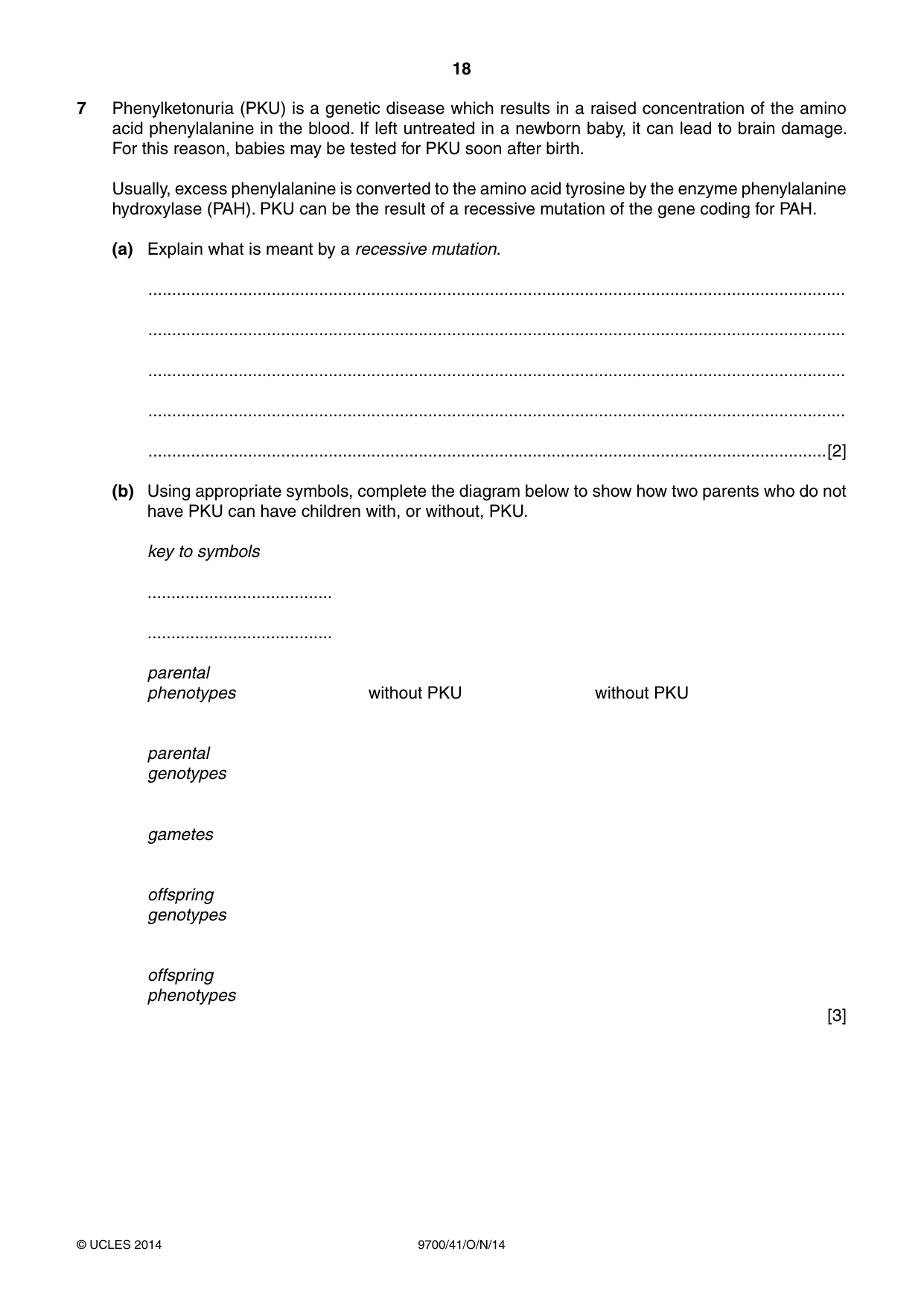
18 9700/41/O/N/14 © UCLES 2014 7 Phenylketonuria (PKU) is a genetic disease which results in a raised concentration of the amino acid phenylalanine in the blood. If left untreated in a newborn baby, it can lead to brain damage. For this reason, babies may be tested for PKU soon after birth. Usually, excess phenylalanine is converted to the amino acid tyrosine by the enzyme phenylalanine hydroxylase (PAH). PKU can be the result of a recessive mutation of the gene coding for PAH. (a) Explain what is meant by a recessive mutation. … … … … …[2] (b) Using appropriate symbols, complete the diagram below to show how two parents who do not have PKU can have children with, or without, PKU. key to symbols … … parental phenotypes without PKU without PKU parental genotypes gametes offspring genotypes offspring phenotypes [3]
Question paper, page 19
19 9700/41/O/N/14 © UCLES 2014 [Turn over (c) PKU can be caused when a short length of the RNA produced during transcription of the gene coding for PAH is lost. Suggest what effect this would have on the protein that is subsequently produced. … … … … … …[3] [Total: 8]
Question paper, page 20
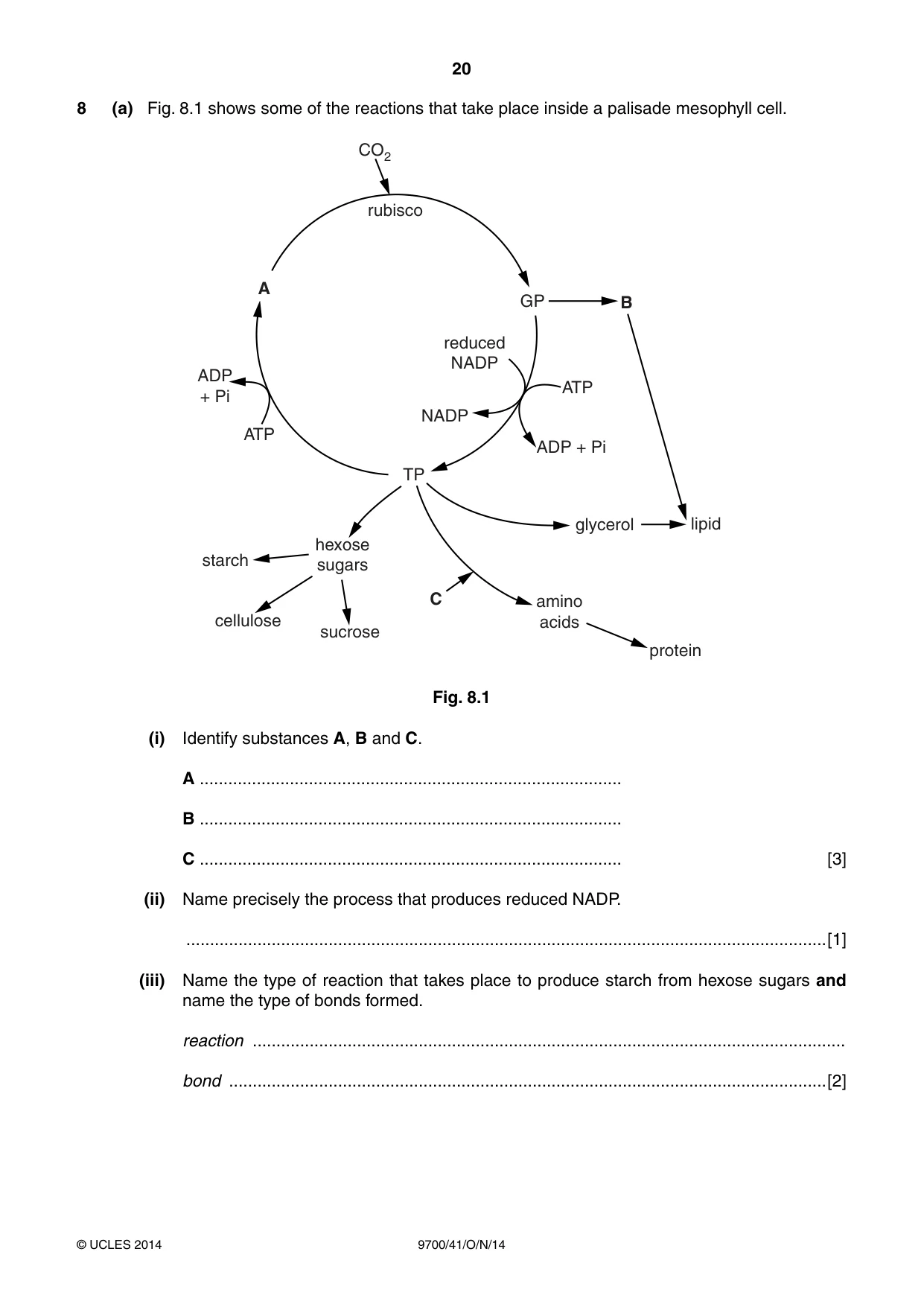
20 9700/41/O/N/14 © UCLES 2014 8 (a) Fig. 8.1 shows some of the reactions that take place inside a palisade mesophyll cell. CO2 rubisco glycerol amino acids hexose sugars sucrose cellulose starch ATP ATP GP TP NADP reduced NADP ADP + Pi A B ADP + Pi lipid protein C Fig. 8.1 (i) Identify substances A, B and C. A … B … C … [3] (ii) Name precisely the process that produces reduced NADP. …[1] (iii) Name the type of reaction that takes place to produce starch from hexose sugars and name the type of bonds formed. reaction … bond …[2]
Question paper, page 21
21 9700/41/O/N/14 © UCLES 2014 [Turn over (iv) Describe how carbon dioxide reaches the inside of a palisade mesophyll cell from the external atmosphere. … … … … … … …[3] (b) The optimum pH for the activity of rubisco is pH8. Explain why the illumination of chloroplasts leads to optimum pH conditions for rubisco. … … … … … … … … …[3] [Total: 12]
Question paper, page 22
22 9700/41/O/N/14 © UCLES 2014 Section B Answer one question. 9 (a) Explain the significance of cereal crops in the human diet. [8] (b) Describe and explain how gibberellins are involved in the germination of wheat or barley seeds. [7] [Total: 15] 10 (a) Describe the role of hormones in the maintenance of the human menstrual cycle. [9] (b) Explain the principles of homeostasis in humans. [6] [Total: 15] … … … … … … … … … … … … … … … … … …
Question paper, page 23
23 9700/41/O/N/14 © UCLES 2014 [Turn over … … … … … … … … … … … … … … … … … … … … … … … … … … … …
Question paper, page 24
24 9700/41/O/N/14 © UCLES 2014 Copyright Acknowledgements: Fig. 1.1 A. Bennett Permission to reproduce items where third-party owned material protected by copyright is included has been sought and cleared where possible. Every reasonable effort has been made by the publisher (UCLES) to trace copyright holders, but if any items requiring clearance have unwittingly been included, the publisher will be pleased to make amends at the earliest possible opportunity. Cambridge International Examinations is part of the Cambridge Assessment Group. Cambridge Assessment is the brand name of University of Cambridge Local Examinations Syndicate (UCLES), which is itself a department of the University of Cambridge. … … … … … … … … … … … … … … … … … … … … … … … …
Mark scheme, page 1
® IGCSE is the registered trademark of Cambridge International Examinations. CAMBRIDGE INTERNATIONAL EXAMINATIONS Cambridge International Advanced Subsidiary and Advanced Level MARK SCHEME for the October/November 2014 series 9700 BIOLOGY 9700/41 Paper 4 (A2 Structured Questions), maximum raw mark 100 This mark scheme is published as an aid to teachers and candidates, to indicate the requirements of the examination. It shows the basis on which Examiners were instructed to award marks. It does not indicate the details of the discussions that took place at an Examiners’ meeting before marking began, which would have considered the acceptability of alternative answers. Mark schemes should be read in conjunction with the question paper and the Principal Examiner Report for Teachers. Cambridge will not enter into discussions about these mark schemes. Cambridge is publishing the mark schemes for the October/November 2014 series for most Cambridge IGCSE®, Cambridge International A and AS Level components and some Cambridge O Level components.
Mark scheme, page 2
Page 2 Mark Scheme Syllabus Paper Cambridge International AS/A Level – October/November 2014 9700 41 © Cambridge International Examinations 2014 Mark scheme abbreviations: ; separates marking points / alternative answers for the same point R reject A accept (for answers correctly cued by the question, or by extra guidance) AW alternative wording (where responses vary more than usual) underline actual word given must be used by candidate (grammatical variants accepted) max indicates the maximum number of marks that can be given ora or reverse argument mp marking point (with relevant number) ecf error carried forward I ignore AVP alternative valid point (examples given as guidance)
Mark scheme, page 3
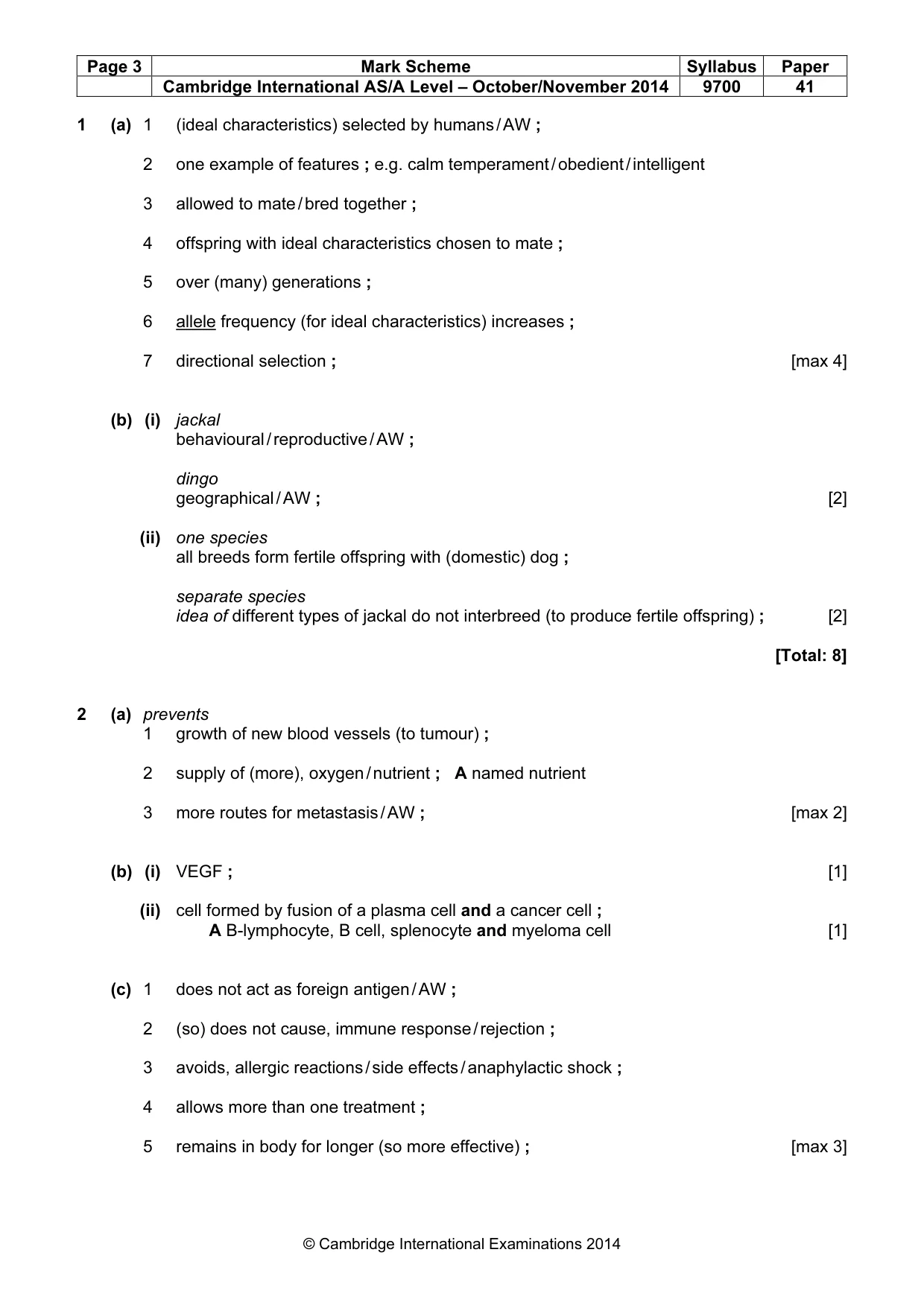
Page 3 Mark Scheme Syllabus Paper Cambridge International AS/A Level – October/November 2014 9700 41 © Cambridge International Examinations 2014 1 (a) 1 (ideal characteristics) selected by humans / AW ; 2 one example of features ; e.g. calm temperament / obedient / intelligent 3 allowed to mate / bred together ; 4 offspring with ideal characteristics chosen to mate ; 5 over (many) generations ; 6 allele frequency (for ideal characteristics) increases ; 7 directional selection ; [max 4] (b) (i) jackal behavioural / reproductive / AW ; dingo geographical / AW ; [2] (ii) one species all breeds form fertile offspring with (domestic) dog ; separate species idea of different types of jackal do not interbreed (to produce fertile offspring) ; [2] [Total: 8] 2 (a) prevents 1 growth of new blood vessels (to tumour) ; 2 supply of (more), oxygen / nutrient ; A named nutrient 3 more routes for metastasis / AW ; [max 2] (b) (i) VEGF ; [1] (ii) cell formed by fusion of a plasma cell and a cancer cell ; A B-lymphocyte, B cell, splenocyte and myeloma cell [1] (c) 1 does not act as foreign antigen / AW ; 2 (so) does not cause, immune response / rejection ; 3 avoids, allergic reactions / side effects / anaphylactic shock ; 4 allows more than one treatment ; 5 remains in body for longer (so more effective) ; [max 3]
Mark scheme, page 4
Page 4 Mark Scheme Syllabus Paper Cambridge International AS/A Level – October/November 2014 9700 41 © Cambridge International Examinations 2014 (d) drawing IgG ignore labels four polypeptide chains shown ; in correct positions (disulfide) bridges shown to link chains ; [2] [Total: 9] 3 (a) (i) reverse transcriptase: produces (c)DNA from mRNA ; DNA polymerase: produces double stranded DNA from, single stranded (DNA) / cDNA ; restriction enzyme: cuts, DNA / plasmid ; DNA ligase: joins (gaps in) the sugar-phosphate backbone (of DNA) ; [4] (ii) 1 causes blood glucose concentration, to decrease / return to normal (from high) ; 2 (target cells are) liver / muscle ; 3 increased, absorption of glucose (from blood) / permeability of cell surface membrane to glucose ; 4 increased (rate of) respiration of glucose ; 5 idea of increased conversion of glucose to glycogen ; 6 inhibits secretion of glucagon / decreased gluconeogenesis ; [max 3] (ii) 1 identical to that produced by body ; 2 activity the same / fast response / no immune response ; 3 no need for animal insulin / AW ; 4 for religious reasons / for ethical reasons / for e.g. vegetarian ; 5 uncontaminated / pure ; 6 so no risk of disease ; 7 production very efficient / always available ; 8 extraction from animals, costly / complex / limited by supply of animals ; [max 2]
Mark scheme, page 5
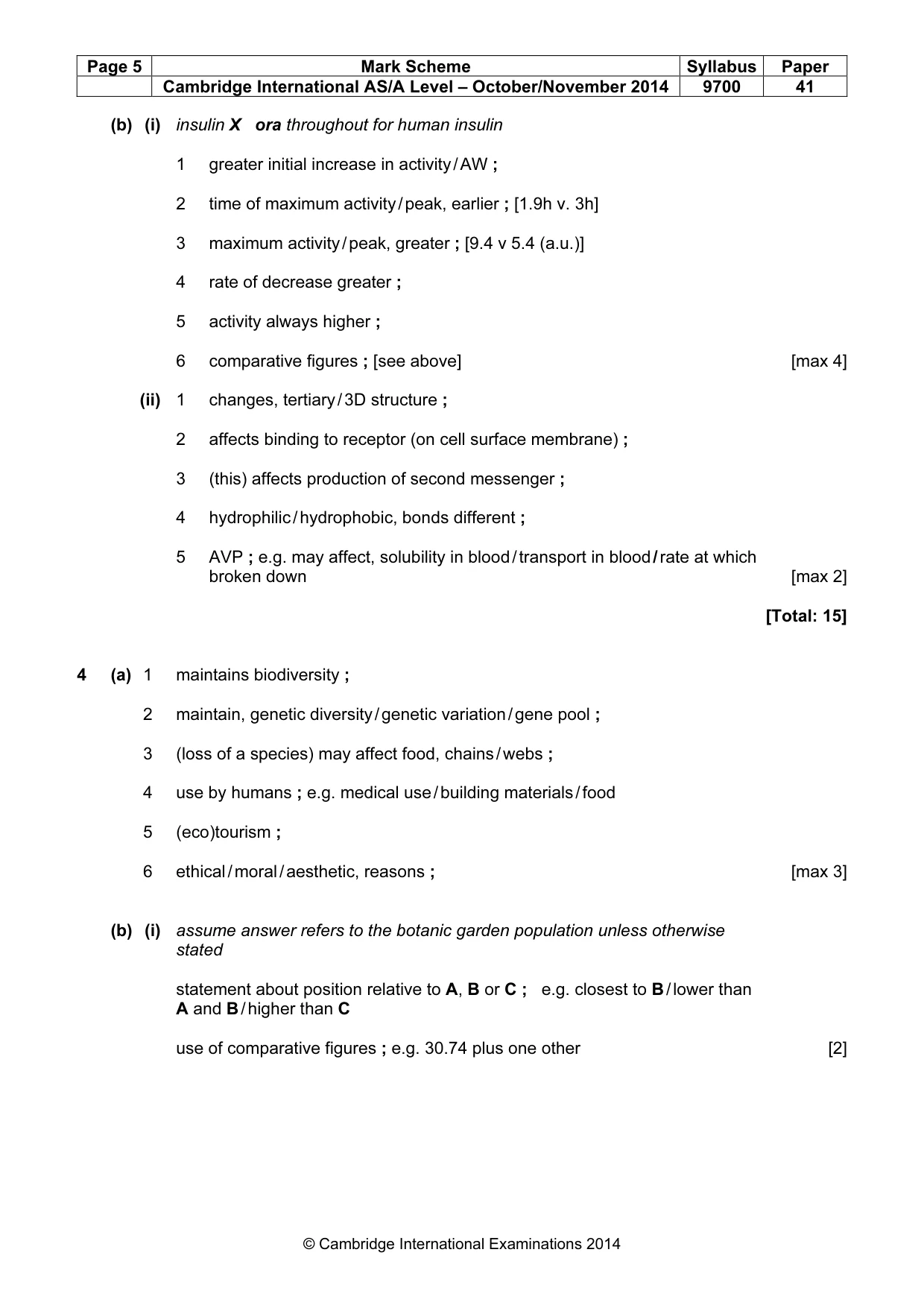
Page 5 Mark Scheme Syllabus Paper Cambridge International AS/A Level – October/November 2014 9700 41 © Cambridge International Examinations 2014 (b) (i) insulin X ora throughout for human insulin 1 greater initial increase in activity / AW ; 2 time of maximum activity / peak, earlier ; [1.9h v. 3h] 3 maximum activity / peak, greater ; [9.4 v 5.4 (a.u.)] 4 rate of decrease greater ; 5 activity always higher ; 6 comparative figures ; [see above] [max 4] (ii) 1 changes, tertiary / 3D structure ; 2 affects binding to receptor (on cell surface membrane) ; 3 (this) affects production of second messenger ; 4 hydrophilic / hydrophobic, bonds different ; 5 AVP ; e.g. may affect, solubility in blood / transport in blood / rate at which broken down [max 2] [Total: 15] 4 (a) 1 maintains biodiversity ; 2 maintain, genetic diversity / genetic variation / gene pool ; 3 (loss of a species) may affect food, chains / webs ; 4 use by humans ; e.g. medical use / building materials / food 5 (eco)tourism ; 6 ethical / moral / aesthetic, reasons ; [max 3] (b) (i) assume answer refers to the botanic garden population unless otherwise stated statement about position relative to A, B or C ; e.g. closest to B / lower than A and B / higher than C use of comparative figures ; e.g. 30.74 plus one other [2]
Mark scheme, page 6
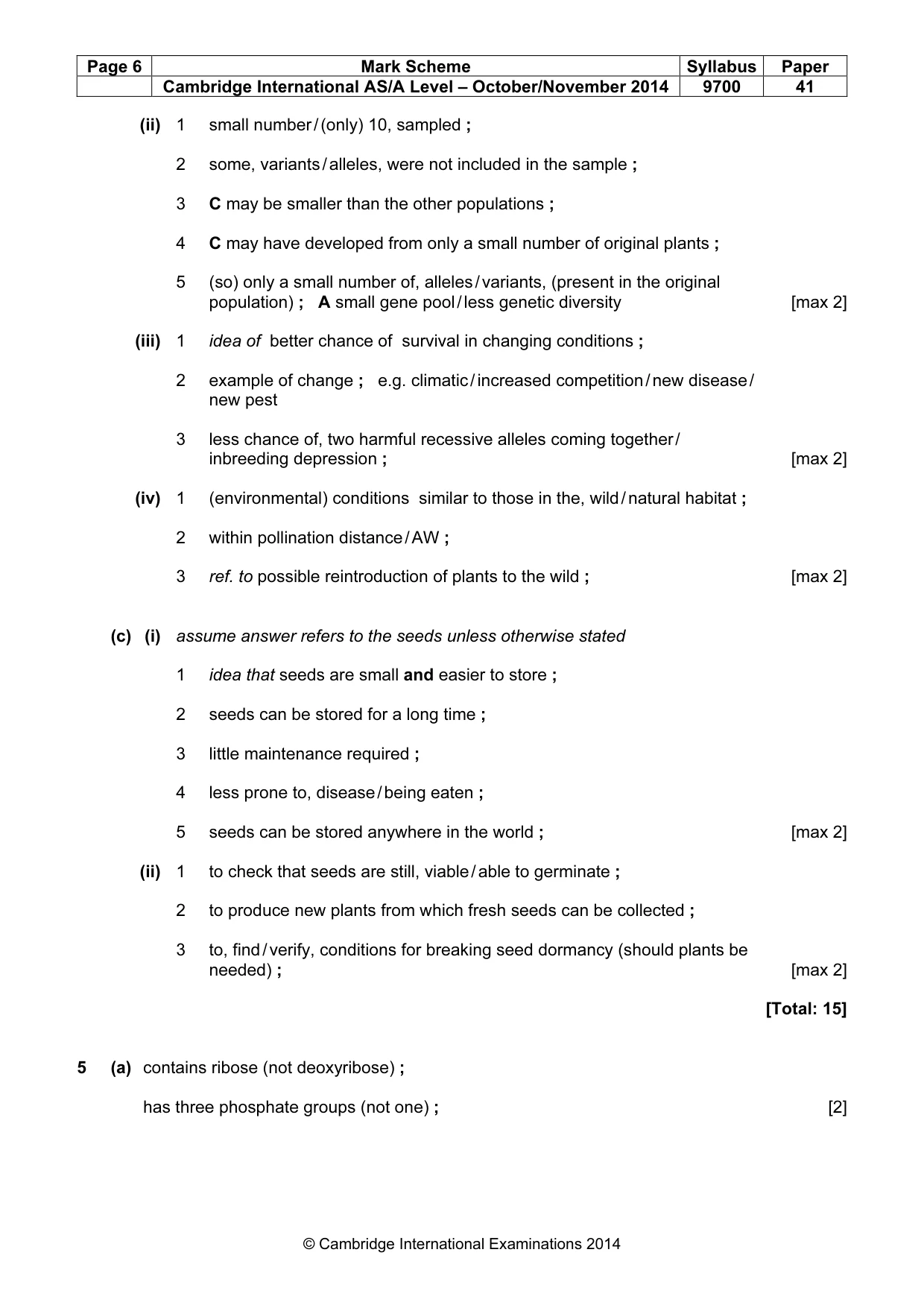
Page 6 Mark Scheme Syllabus Paper Cambridge International AS/A Level – October/November 2014 9700 41 © Cambridge International Examinations 2014 (ii) 1 small number / (only) 10, sampled ; 2 some, variants / alleles, were not included in the sample ; 3 C may be smaller than the other populations ; 4 C may have developed from only a small number of original plants ; 5 (so) only a small number of, alleles / variants, (present in the original population) ; A small gene pool / less genetic diversity [max 2] (iii) 1 idea of better chance of survival in changing conditions ; 2 example of change ; e.g. climatic / increased competition / new disease / new pest 3 less chance of, two harmful recessive alleles coming together / inbreeding depression ; [max 2] (iv) 1 (environmental) conditions similar to those in the, wild / natural habitat ; 2 within pollination distance / AW ; 3 ref. to possible reintroduction of plants to the wild ; [max 2] (c) (i) assume answer refers to the seeds unless otherwise stated 1 idea that seeds are small and easier to store ; 2 seeds can be stored for a long time ; 3 little maintenance required ; 4 less prone to, disease / being eaten ; 5 seeds can be stored anywhere in the world ; [max 2] (ii) 1 to check that seeds are still, viable / able to germinate ; 2 to produce new plants from which fresh seeds can be collected ; 3 to, find / verify, conditions for breaking seed dormancy (should plants be needed) ; [max 2] [Total: 15] 5 (a) contains ribose (not deoxyribose) ; has three phosphate groups (not one) ; [2]
Mark scheme, page 7
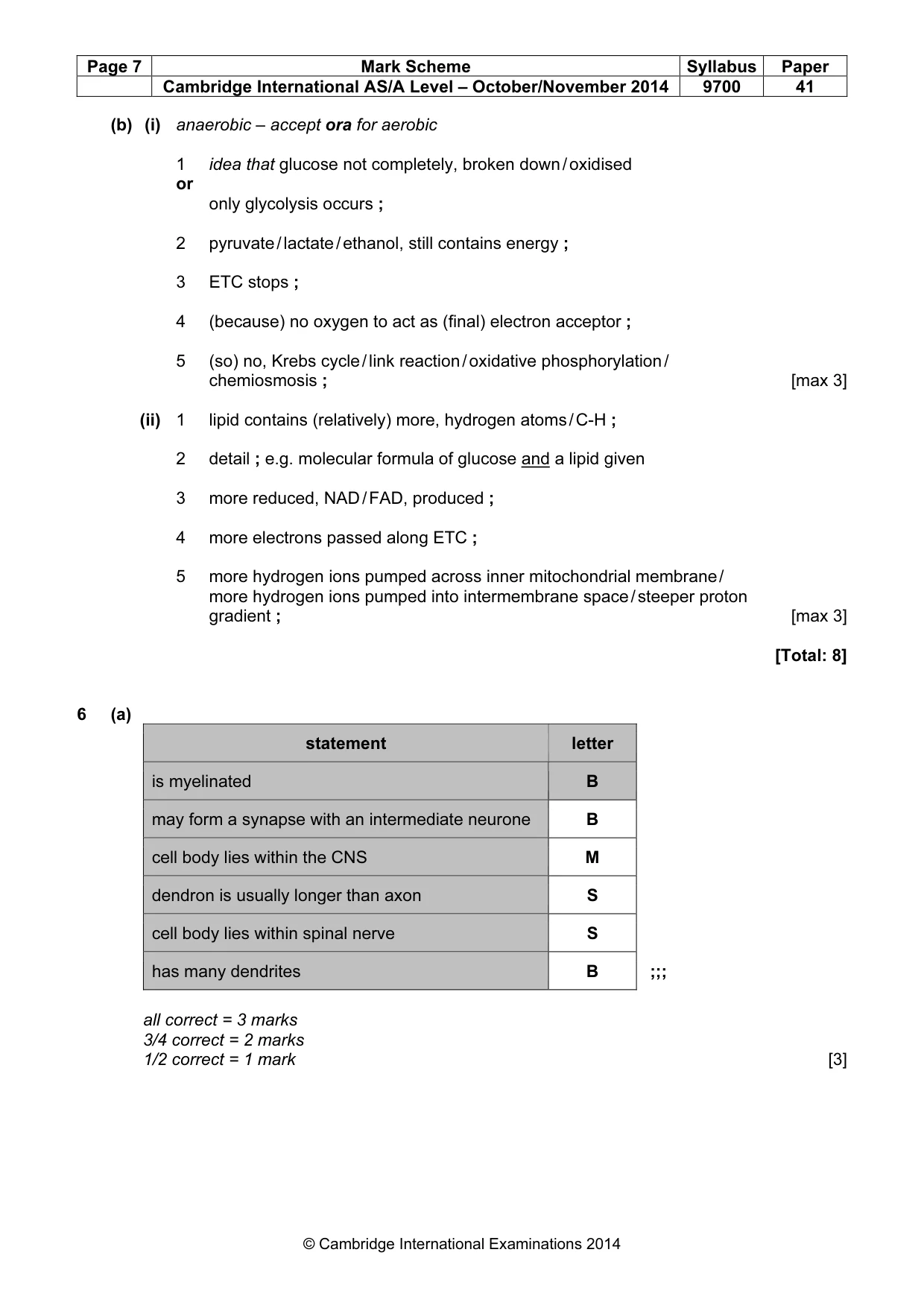
Page 7 Mark Scheme Syllabus Paper Cambridge International AS/A Level – October/November 2014 9700 41 © Cambridge International Examinations 2014 (b) (i) anaerobic – accept ora for aerobic 1 idea that glucose not completely, broken down / oxidised or only glycolysis occurs ; 2 pyruvate / lactate / ethanol, still contains energy ; 3 ETC stops ; 4 (because) no oxygen to act as (final) electron acceptor ; 5 (so) no, Krebs cycle / link reaction / oxidative phosphorylation / chemiosmosis ; [max 3] (ii) 1 lipid contains (relatively) more, hydrogen atoms / C-H ; 2 detail ; e.g. molecular formula of glucose and a lipid given 3 more reduced, NAD / FAD, produced ; 4 more electrons passed along ETC ; 5 more hydrogen ions pumped across inner mitochondrial membrane / more hydrogen ions pumped into intermembrane space / steeper proton gradient ; [max 3] [Total: 8] 6 (a) statement letter is myelinated B may form a synapse with an intermediate neurone B cell body lies within the CNS M dendron is usually longer than axon S cell body lies within spinal nerve S has many dendrites B ;;; all correct = 3 marks 3/4 correct = 2 marks 1/2 correct = 1 mark [3]
Mark scheme, page 8
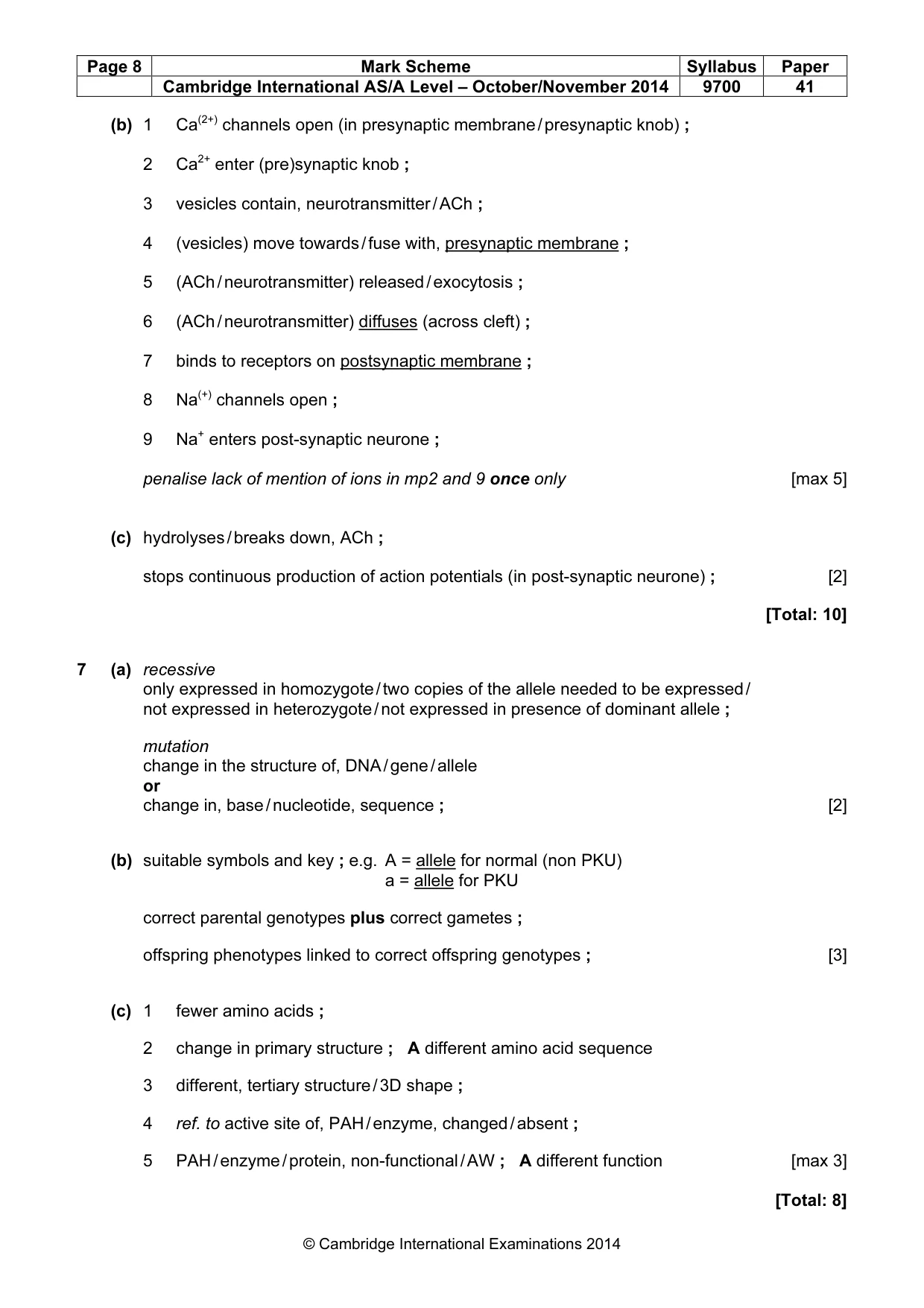
Page 8 Mark Scheme Syllabus Paper Cambridge International AS/A Level – October/November 2014 9700 41 © Cambridge International Examinations 2014 (b) 1 Ca(2+) channels open (in presynaptic membrane / presynaptic knob) ; 2 Ca2+ enter (pre)synaptic knob ; 3 vesicles contain, neurotransmitter / ACh ; 4 (vesicles) move towards / fuse with, presynaptic membrane ; 5 (ACh / neurotransmitter) released / exocytosis ; 6 (ACh / neurotransmitter) diffuses (across cleft) ; 7 binds to receptors on postsynaptic membrane ; 8 Na(+) channels open ; 9 Na+ enters post-synaptic neurone ; penalise lack of mention of ions in mp2 and 9 once only [max 5] (c) hydrolyses / breaks down, ACh ; stops continuous production of action potentials (in post-synaptic neurone) ; [2] [Total: 10] 7 (a) recessive only expressed in homozygote / two copies of the allele needed to be expressed / not expressed in heterozygote / not expressed in presence of dominant allele ; mutation change in the structure of, DNA / gene / allele or change in, base / nucleotide, sequence ; [2] (b) suitable symbols and key ; e.g. A = allele for normal (non PKU) a = allele for PKU correct parental genotypes plus correct gametes ; offspring phenotypes linked to correct offspring genotypes ; [3] (c) 1 fewer amino acids ; 2 change in primary structure ; A different amino acid sequence 3 different, tertiary structure / 3D shape ; 4 ref. to active site of, PAH / enzyme, changed / absent ; 5 PAH / enzyme / protein, non-functional / AW ; A different function [max 3] [Total: 8]
Mark scheme, page 9
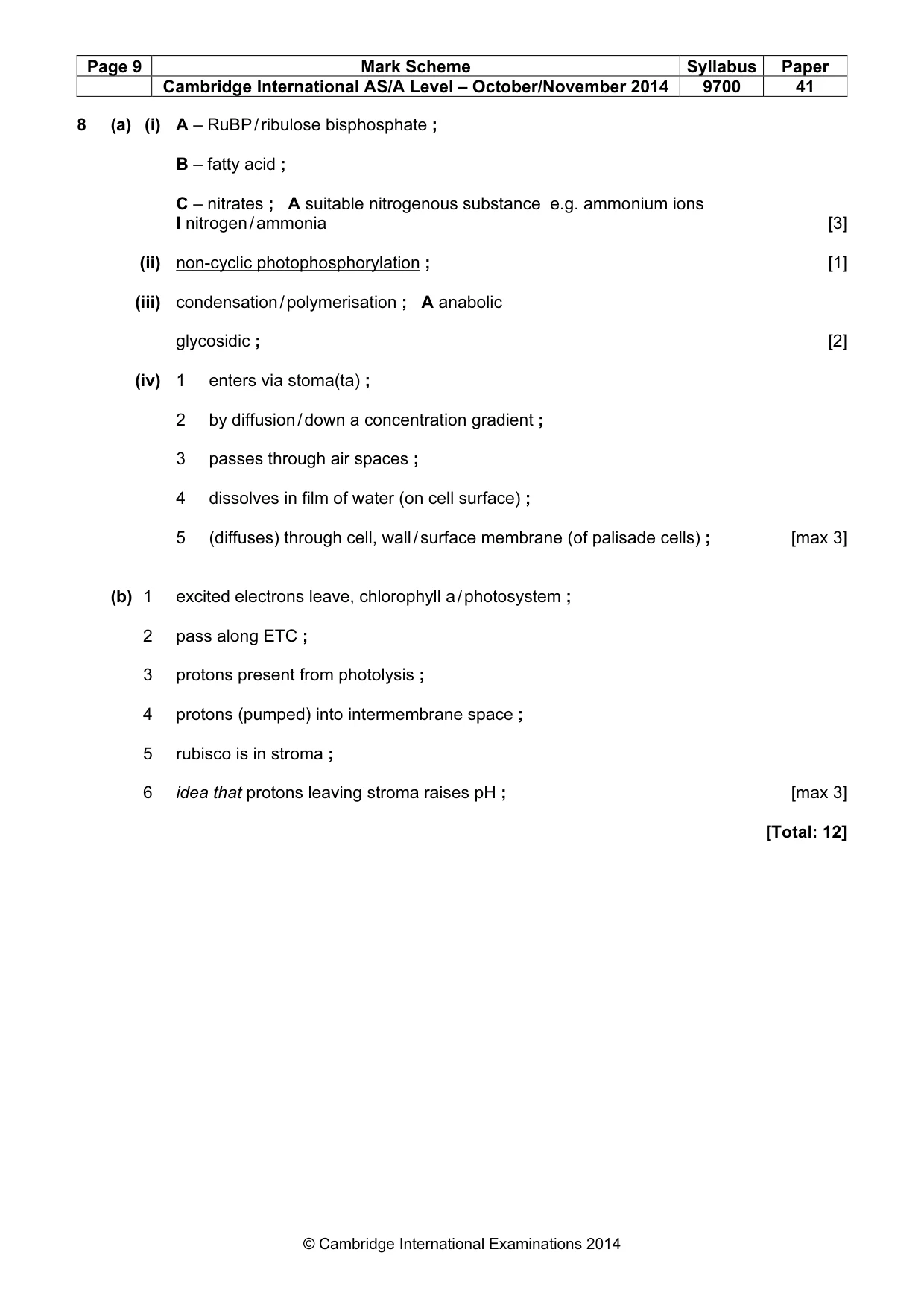
Page 9 Mark Scheme Syllabus Paper Cambridge International AS/A Level – October/November 2014 9700 41 © Cambridge International Examinations 2014 8 (a) (i) A – RuBP / ribulose bisphosphate ; B – fatty acid ; C – nitrates ; A suitable nitrogenous substance e.g. ammonium ions I nitrogen / ammonia [3] (ii) non-cyclic photophosphorylation ; [1] (iii) condensation / polymerisation ; A anabolic glycosidic ; [2] (iv) 1 enters via stoma(ta) ; 2 by diffusion / down a concentration gradient ; 3 passes through air spaces ; 4 dissolves in film of water (on cell surface) ; 5 (diffuses) through cell, wall / surface membrane (of palisade cells) ; [max 3] (b) 1 excited electrons leave, chlorophyll a / photosystem ; 2 pass along ETC ; 3 protons present from photolysis ; 4 protons (pumped) into intermembrane space ; 5 rubisco is in stroma ; 6 idea that protons leaving stroma raises pH ; [max 3] [Total: 12]
Mark scheme, page 10
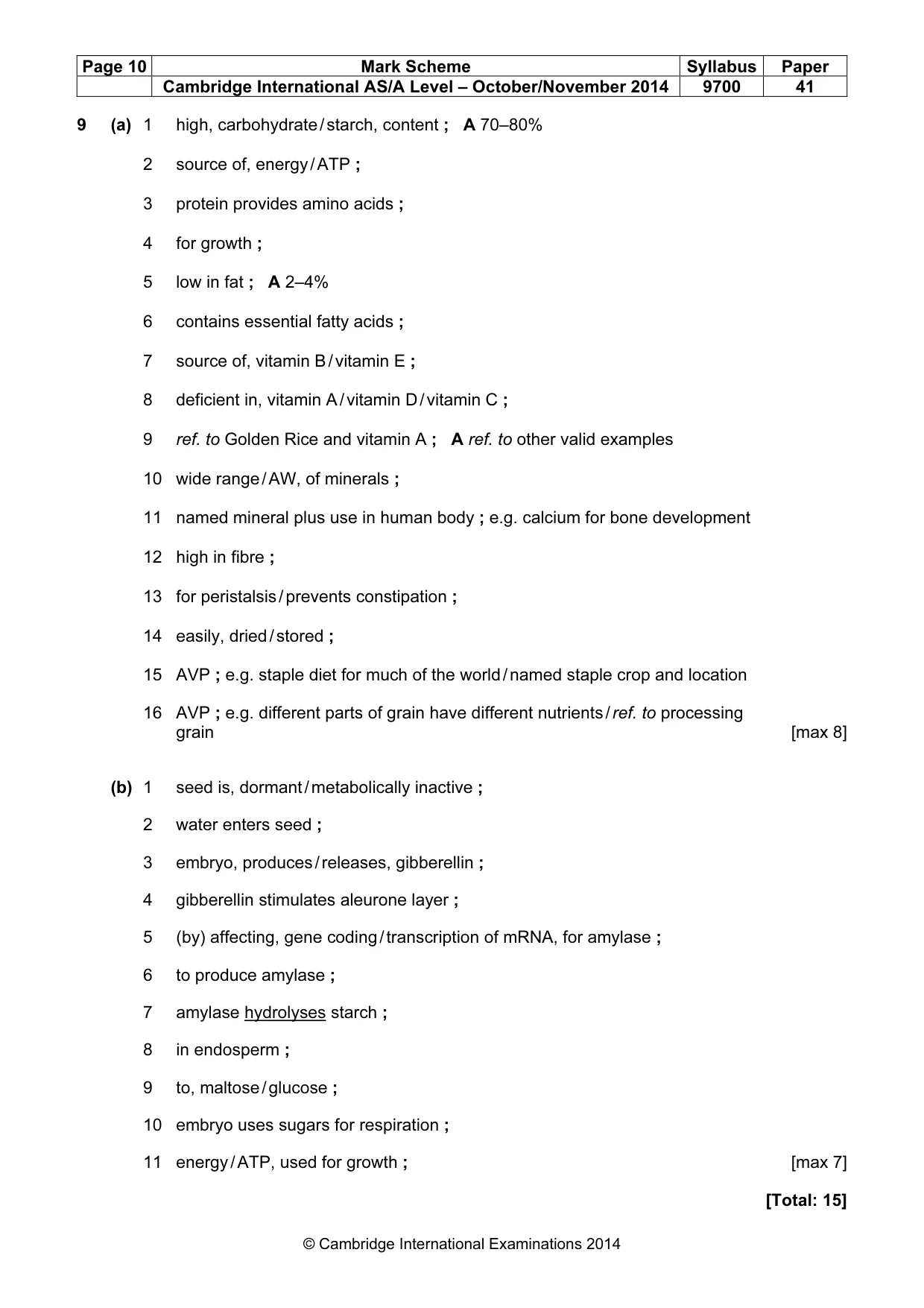
Page 10 Mark Scheme Syllabus Paper Cambridge International AS/A Level – October/November 2014 9700 41 © Cambridge International Examinations 2014 9 (a) 1 high, carbohydrate / starch, content ; A 70–80% 2 source of, energy / ATP ; 3 protein provides amino acids ; 4 for growth ; 5 low in fat ; A 2–4% 6 contains essential fatty acids ; 7 source of, vitamin B / vitamin E ; 8 deficient in, vitamin A / vitamin D / vitamin C ; 9 ref. to Golden Rice and vitamin A ; A ref. to other valid examples 10 wide range / AW, of minerals ; 11 named mineral plus use in human body ; e.g. calcium for bone development 12 high in fibre ; 13 for peristalsis / prevents constipation ; 14 easily, dried / stored ; 15 AVP ; e.g. staple diet for much of the world / named staple crop and location 16 AVP ; e.g. different parts of grain have different nutrients / ref. to processing grain [max 8] (b) 1 seed is, dormant / metabolically inactive ; 2 water enters seed ; 3 embryo, produces / releases, gibberellin ; 4 gibberellin stimulates aleurone layer ; 5 (by) affecting, gene coding / transcription of mRNA, for amylase ; 6 to produce amylase ; 7 amylase hydrolyses starch ; 8 in endosperm ; 9 to, maltose / glucose ; 10 embryo uses sugars for respiration ; 11 energy / ATP, used for growth ; [max 7] [Total: 15]
Mark scheme, page 11
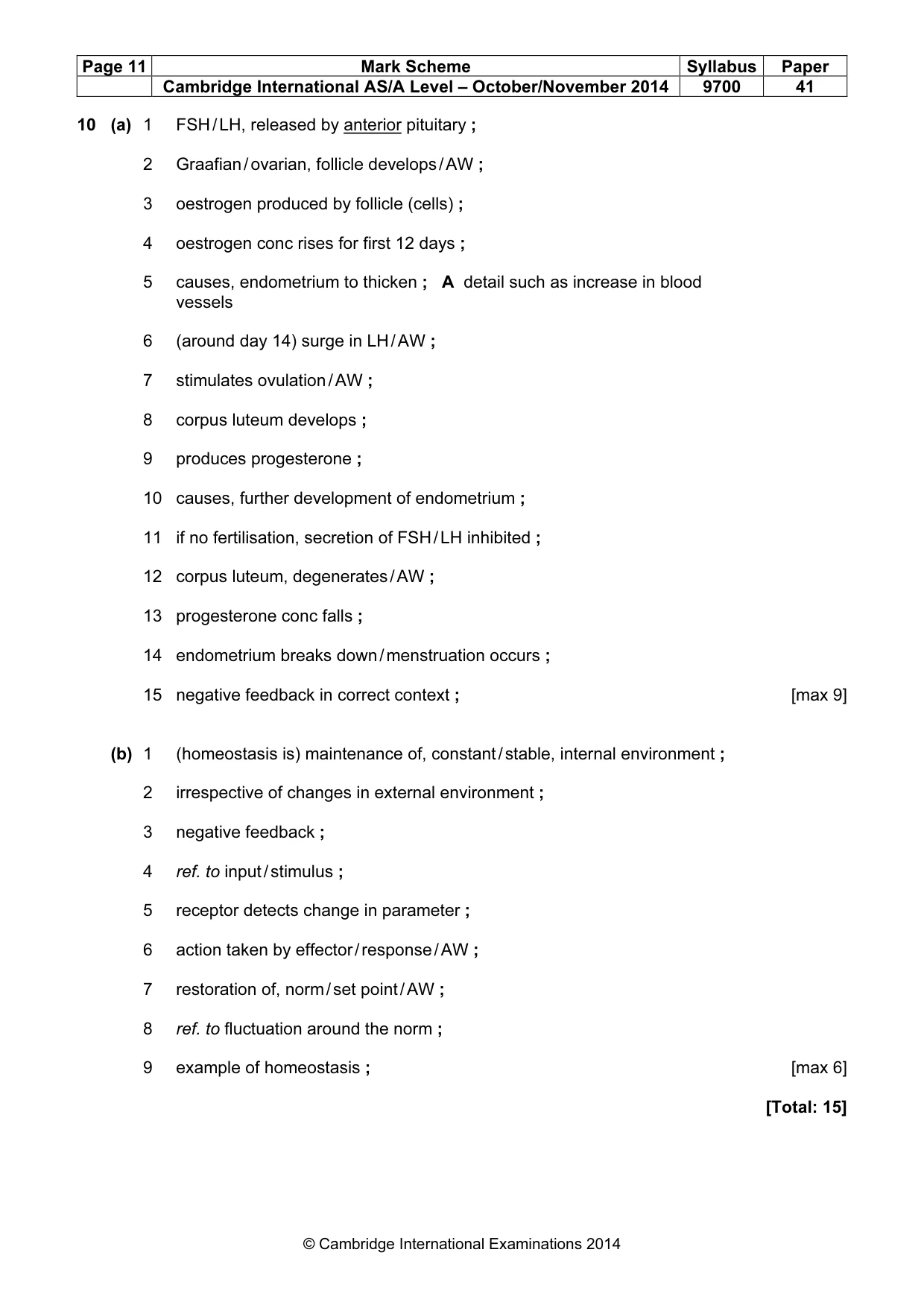
Page 11 Mark Scheme Syllabus Paper Cambridge International AS/A Level – October/November 2014 9700 41 © Cambridge International Examinations 2014 10 (a) 1 FSH / LH, released by anterior pituitary ; 2 Graafian / ovarian, follicle develops / AW ; 3 oestrogen produced by follicle (cells) ; 4 oestrogen conc rises for first 12 days ; 5 causes, endometrium to thicken ; A detail such as increase in blood vessels 6 (around day 14) surge in LH / AW ; 7 stimulates ovulation / AW ; 8 corpus luteum develops ; 9 produces progesterone ; 10 causes, further development of endometrium ; 11 if no fertilisation, secretion of FSH / LH inhibited ; 12 corpus luteum, degenerates / AW ; 13 progesterone conc falls ; 14 endometrium breaks down / menstruation occurs ; 15 negative feedback in correct context ; [max 9] (b) 1 (homeostasis is) maintenance of, constant / stable, internal environment ; 2 irrespective of changes in external environment ; 3 negative feedback ; 4 ref. to input / stimulus ; 5 receptor detects change in parameter ; 6 action taken by effector / response / AW ; 7 restoration of, norm / set point / AW ; 8 ref. to fluctuation around the norm ; 9 example of homeostasis ; [max 6] [Total: 15]
What you needed in this session
Cambridge’s own grade thresholds for 2014 Oct/Nov, Paper 4 · Variant 1. A higher threshold means an easier paper — the bar moves with how the cohort did.