Cambridge A Level Biology 9700 — 2014 Oct/Nov Paper 4 · Variant 3
9700/43/O/N/14 · 100 marks · ≈113 min
The question paper and its mark scheme, free to read here and free to download. This is Cambridge’s own paper, exactly as it was sat.
Question paper24 pages
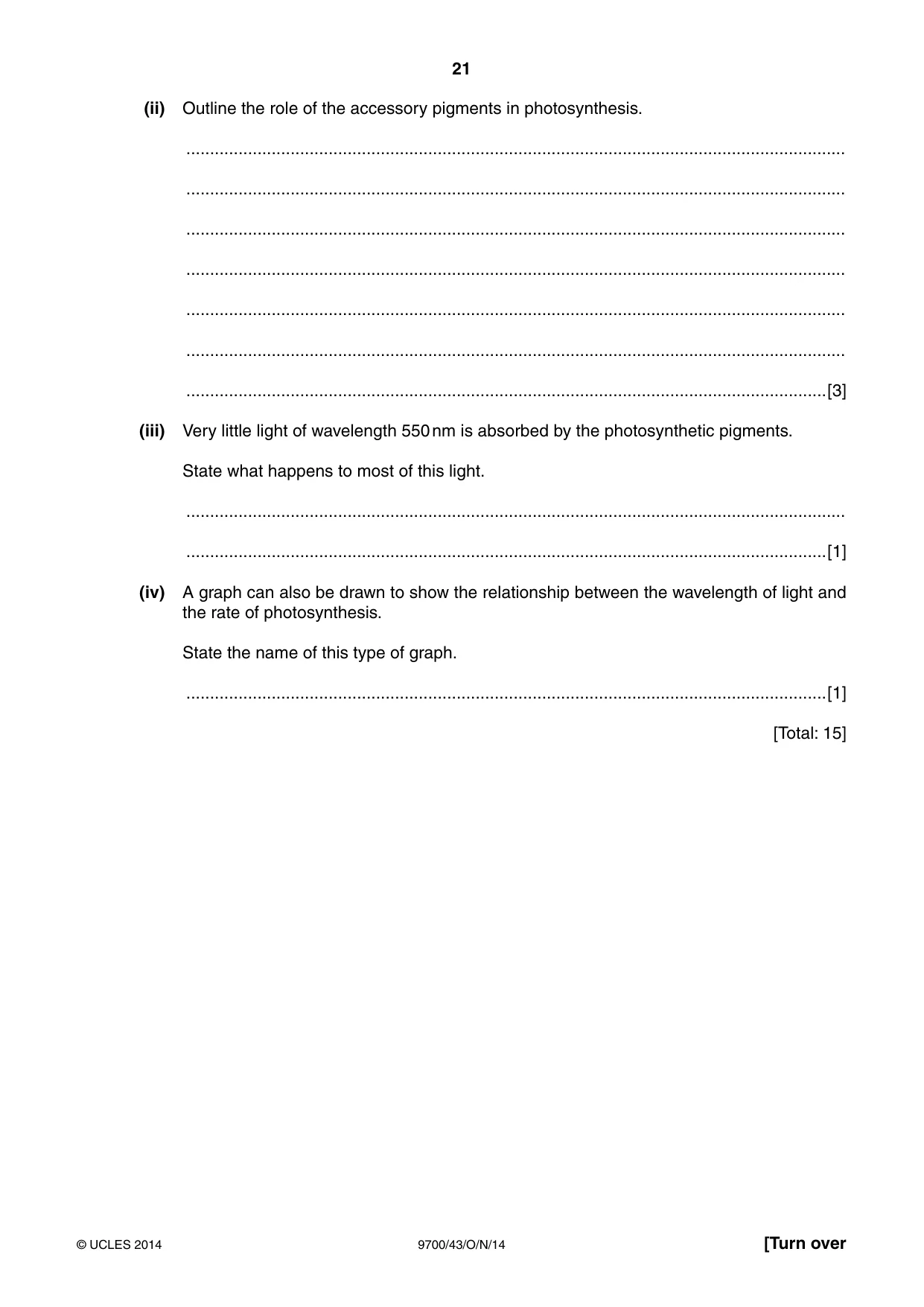
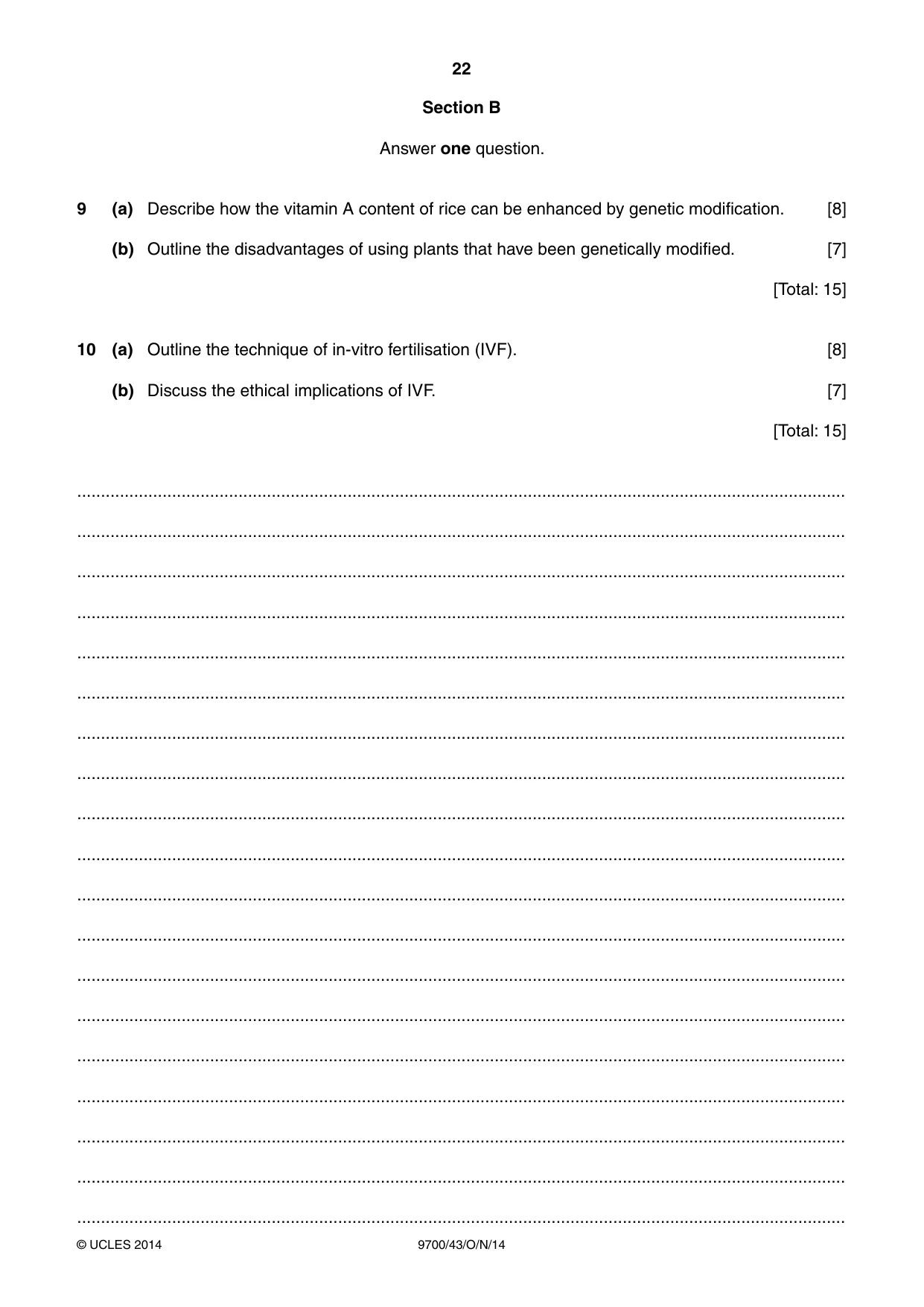


Mark scheme11 pages
Answers below. Sit the paper first if you are practising.
Paper as text
Question paper, page 1
This document consists of 22 printed pages and 2 lined pages. DC (RW/SW) 79176/3 © UCLES 2014 [Turn over Cambridge International Examinations Cambridge International Advanced Level * 6 7 8 2 0 7 1 7 5 1 * BIOLOGY 9700/43 Paper 4 A2 Structured Questions October/November 2014 2 hours Candidates answer on the Question Paper. Additional Materials: Answer paper available on request. READ THESE INSTRUCTIONS FIRST Write your Centre number, candidate number and name in the spaces provided at the top of this page. Write in dark blue or black pen. You may use an HB pencil for any diagrams, graphs or rough working. Do not use staples, paper clips, glue or correction fluid. DO NOT WRITE IN ANY BARCODES. Section A Answer all questions. Section B Answer one question Circle the number of the Section B question you have answered in the grid below. Electronic calculators may be used. At the end of the examination, fasten all your work securely together. The number of marks is given in brackets [ ] at the end of each question or part question. For Examiner’s Use Section A 1 2 3 4 5 6 7 8 Section B 9 or 10 Total
Question paper, page 2
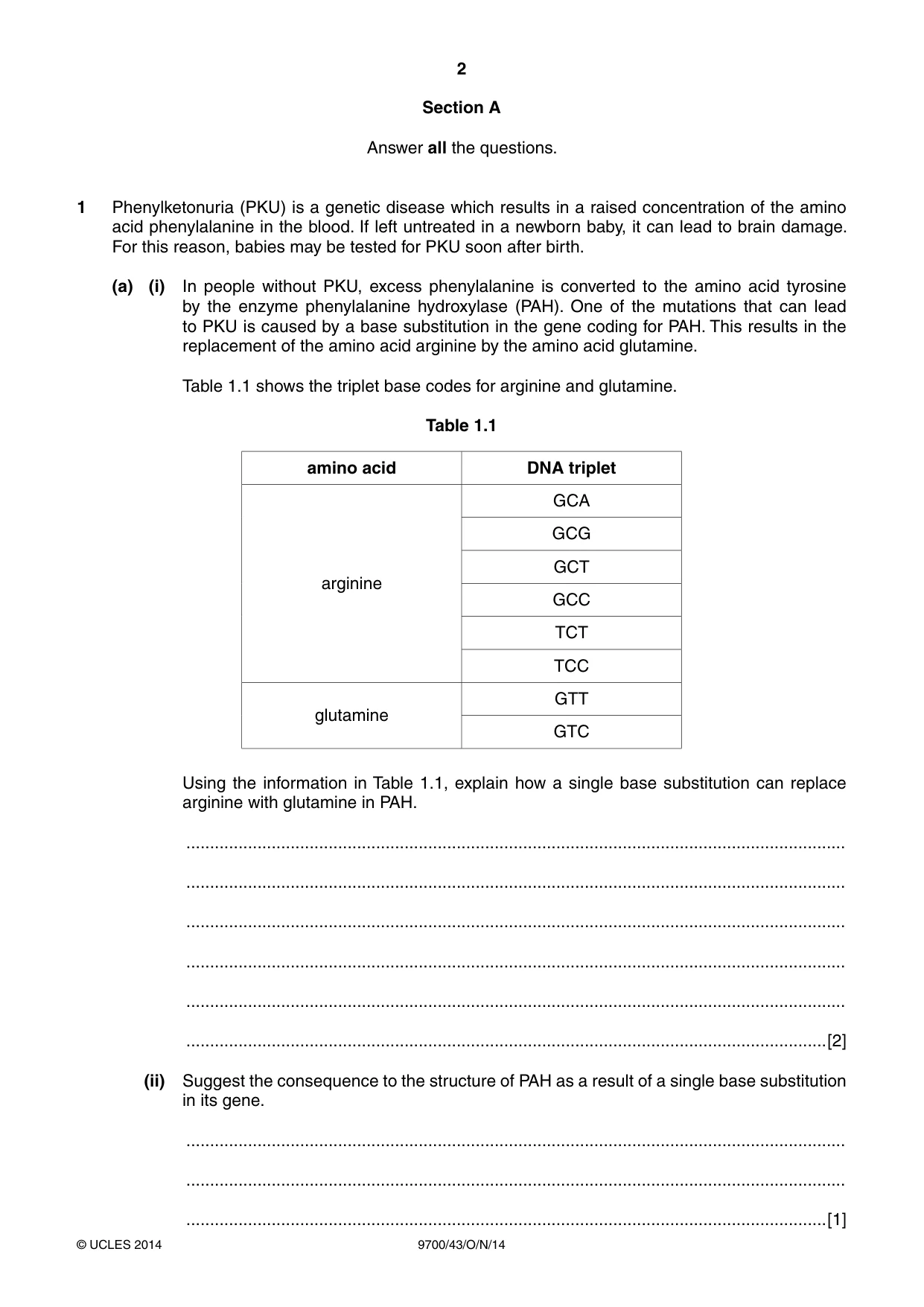
2 9700/43/O/N/14 © UCLES 2014 Section A Answer all the questions. 1 Phenylketonuria (PKU) is a genetic disease which results in a raised concentration of the amino acid phenylalanine in the blood. If left untreated in a newborn baby, it can lead to brain damage. For this reason, babies may be tested for PKU soon after birth. (a) (i) In people without PKU, excess phenylalanine is converted to the amino acid tyrosine by the enzyme phenylalanine hydroxylase (PAH). One of the mutations that can lead to PKU is caused by a base substitution in the gene coding for PAH. This results in the replacement of the amino acid arginine by the amino acid glutamine. Table 1.1 shows the triplet base codes for arginine and glutamine. Table 1.1 amino acid DNA triplet arginine GCA GCG GCT GCC TCT TCC glutamine GTT GTC Using the information in Table 1.1, explain how a single base substitution can replace arginine with glutamine in PAH. … … … … … …[2] (ii) Suggest the consequence to the structure of PAH as a result of a single base substitution in its gene. … … …[1]
Question paper, page 3
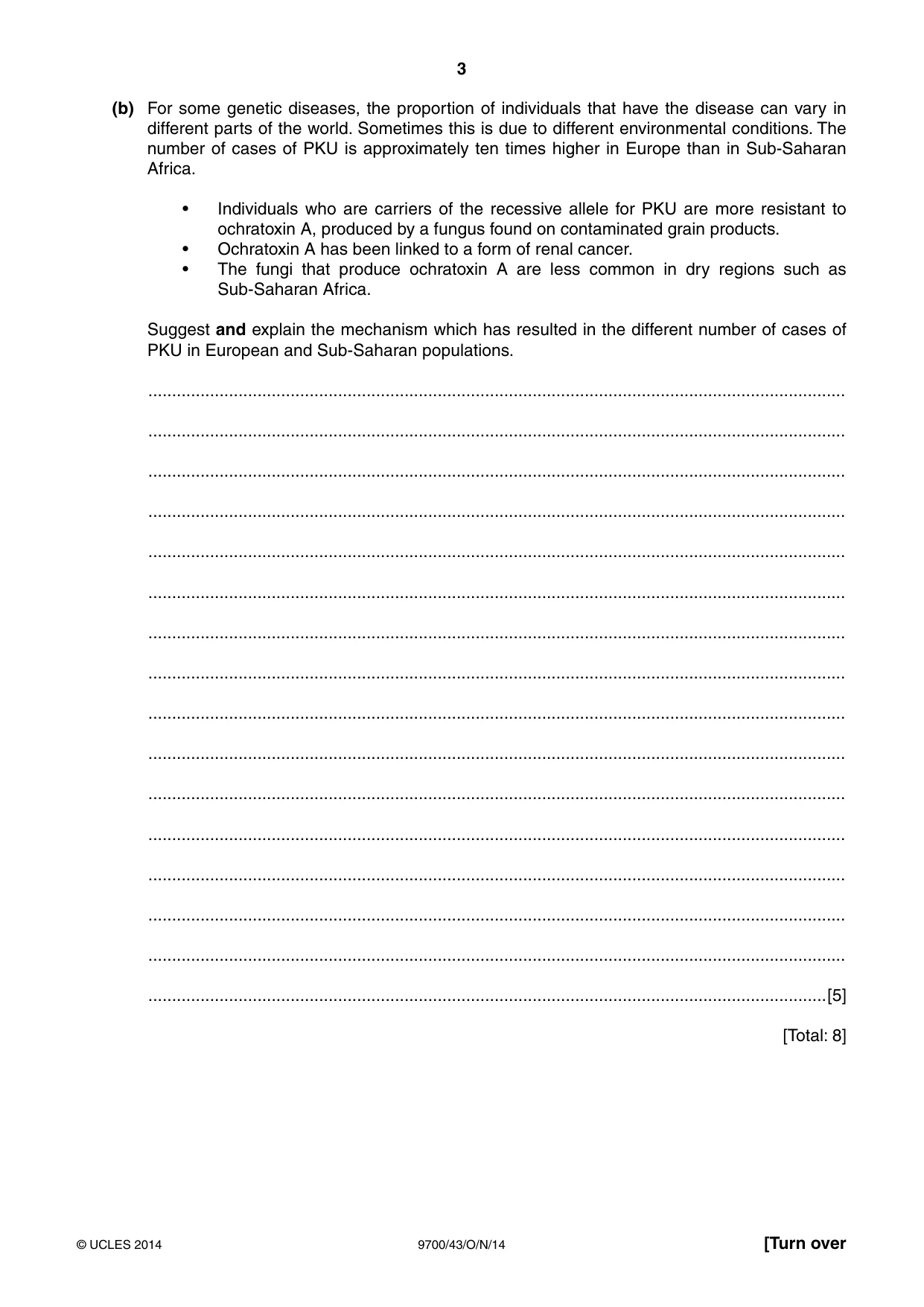
3 9700/43/O/N/14 © UCLES 2014 [Turn over (b) For some genetic diseases, the proportion of individuals that have the disease can vary in different parts of the world. Sometimes this is due to different environmental conditions. The number of cases of PKU is approximately ten times higher in Europe than in Sub-Saharan Africa. • Individuals who are carriers of the recessive allele for PKU are more resistant to ochratoxin A, produced by a fungus found on contaminated grain products. • Ochratoxin A has been linked to a form of renal cancer. • The fungi that produce ochratoxin A are less common in dry regions such as Sub-Saharan Africa. Suggest and explain the mechanism which has resulted in the different number of cases of PKU in European and Sub-Saharan populations. … … … … … … … … … … … … … … … …[5] [Total: 8]
Question paper, page 4
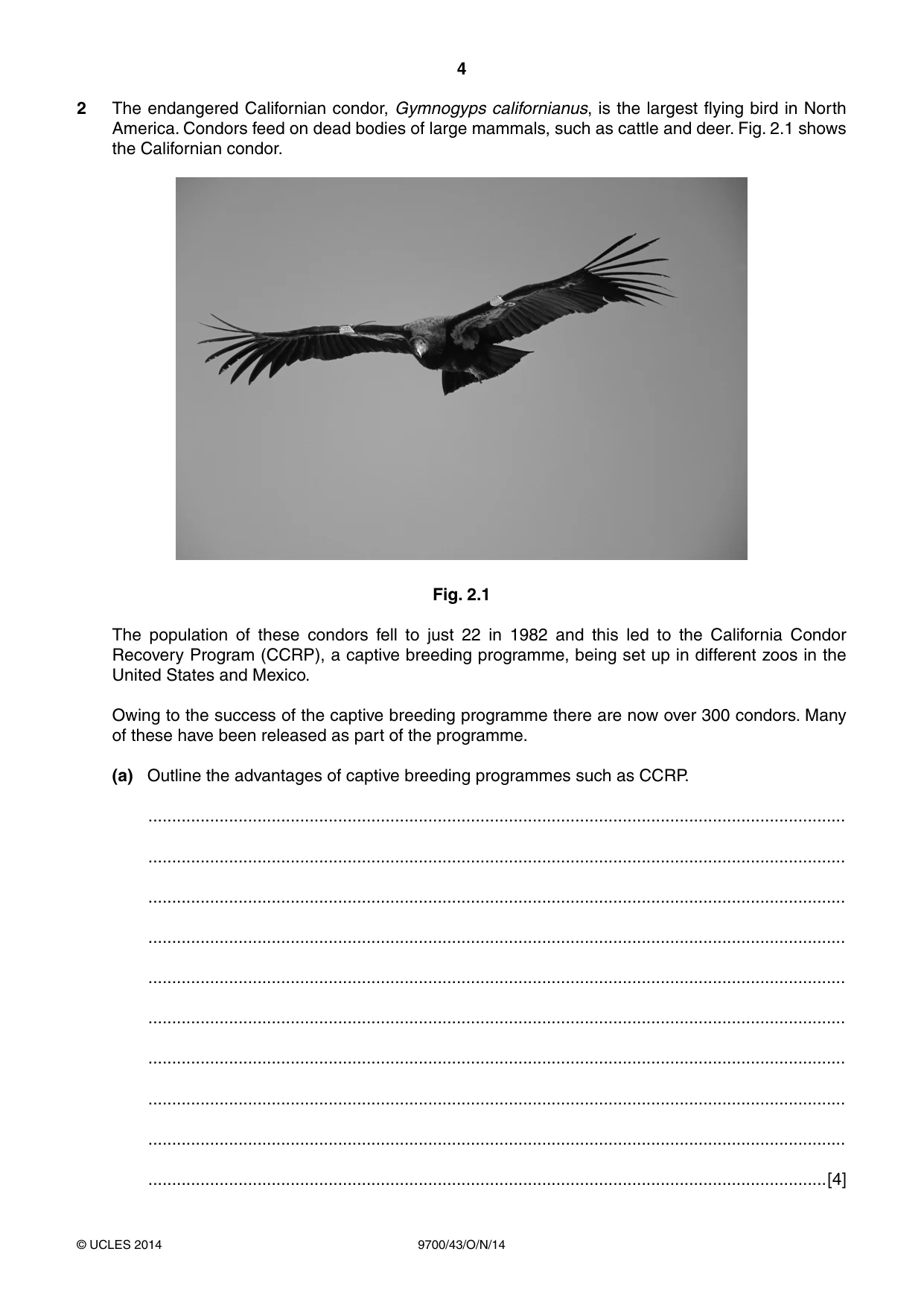
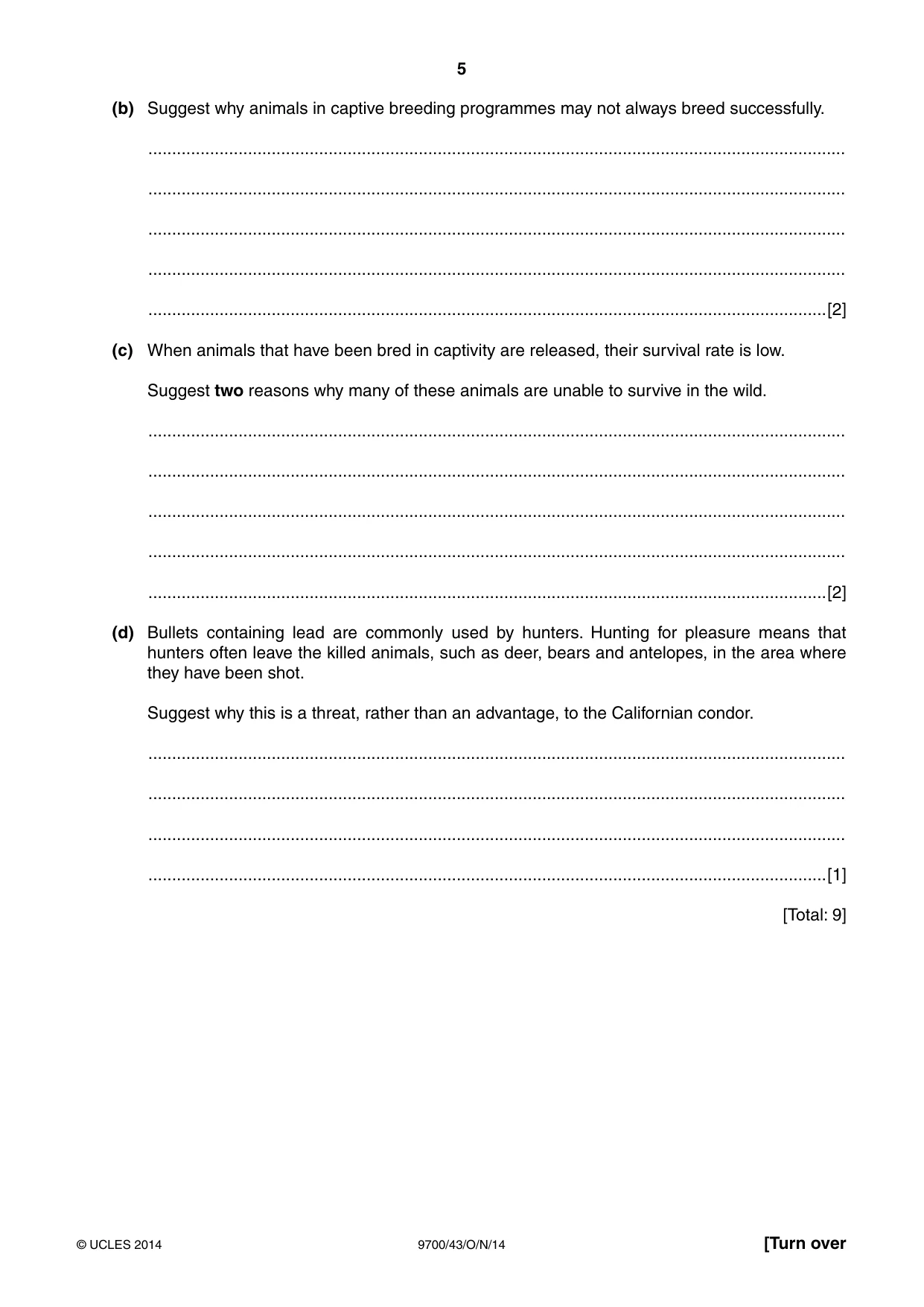
4 9700/43/O/N/14 © UCLES 2014 2 The endangered Californian condor, Gymnogyps californianus, is the largest flying bird in North America. Condors feed on dead bodies of large mammals, such as cattle and deer. Fig. 2.1 shows the Californian condor. Fig. 2.1 The population of these condors fell to just 22 in 1982 and this led to the California Condor Recovery Program (CCRP), a captive breeding programme, being set up in different zoos in the United States and Mexico. Owing to the success of the captive breeding programme there are now over 300 condors. Many of these have been released as part of the programme. (a) Outline the advantages of captive breeding programmes such as CCRP. … … … … … … … … … …[4]
Question paper, page 5
5 9700/43/O/N/14 © UCLES 2014 [Turn over (b) Suggest why animals in captive breeding programmes may not always breed successfully. … … … … …[2] (c) When animals that have been bred in captivity are released, their survival rate is low. Suggest two reasons why many of these animals are unable to survive in the wild. … … … … …[2] (d) Bullets containing lead are commonly used by hunters. Hunting for pleasure means that hunters often leave the killed animals, such as deer, bears and antelopes, in the area where they have been shot. Suggest why this is a threat, rather than an advantage, to the Californian condor. … … … …[1] [Total: 9]
Question paper, page 6
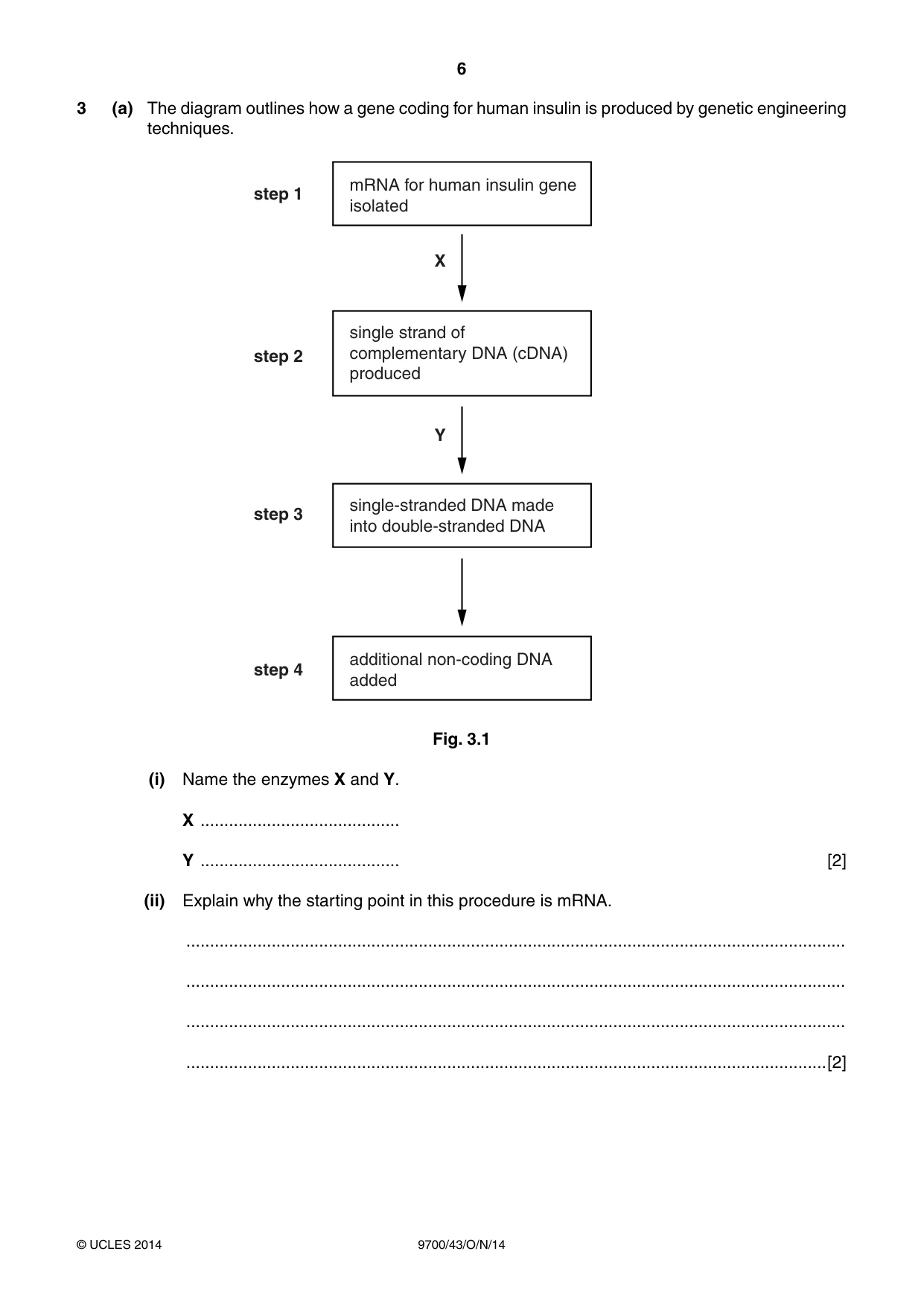
6 9700/43/O/N/14 © UCLES 2014 3 (a) The diagram outlines how a gene coding for human insulin is produced by genetic engineering techniques. mRNA for human insulin gene isolated step 1 step 2 X Y step 3 step 4 single strand of complementary DNA (cDNA) produced single-stranded DNA made into double-stranded DNA additional non-coding DNA added Fig. 3.1 (i) Name the enzymes X and Y. X … Y … [2] (ii) Explain why the starting point in this procedure is mRNA. … … … …[2]
Question paper, page 7
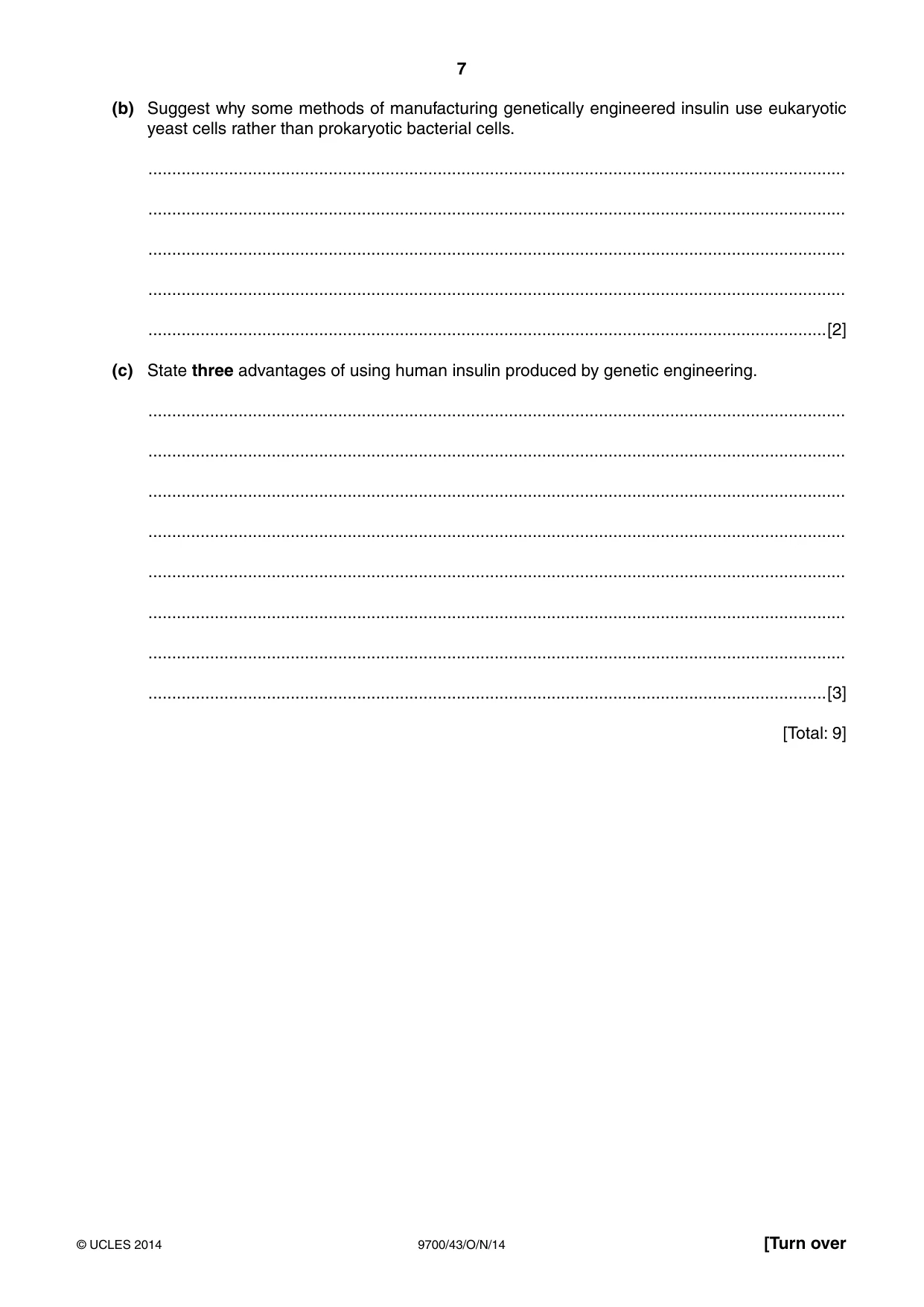
7 9700/43/O/N/14 © UCLES 2014 [Turn over (b) Suggest why some methods of manufacturing genetically engineered insulin use eukaryotic yeast cells rather than prokaryotic bacterial cells. … … … … …[2] (c) State three advantages of using human insulin produced by genetic engineering. … … … … … … … …[3] [Total: 9]
Question paper, page 8
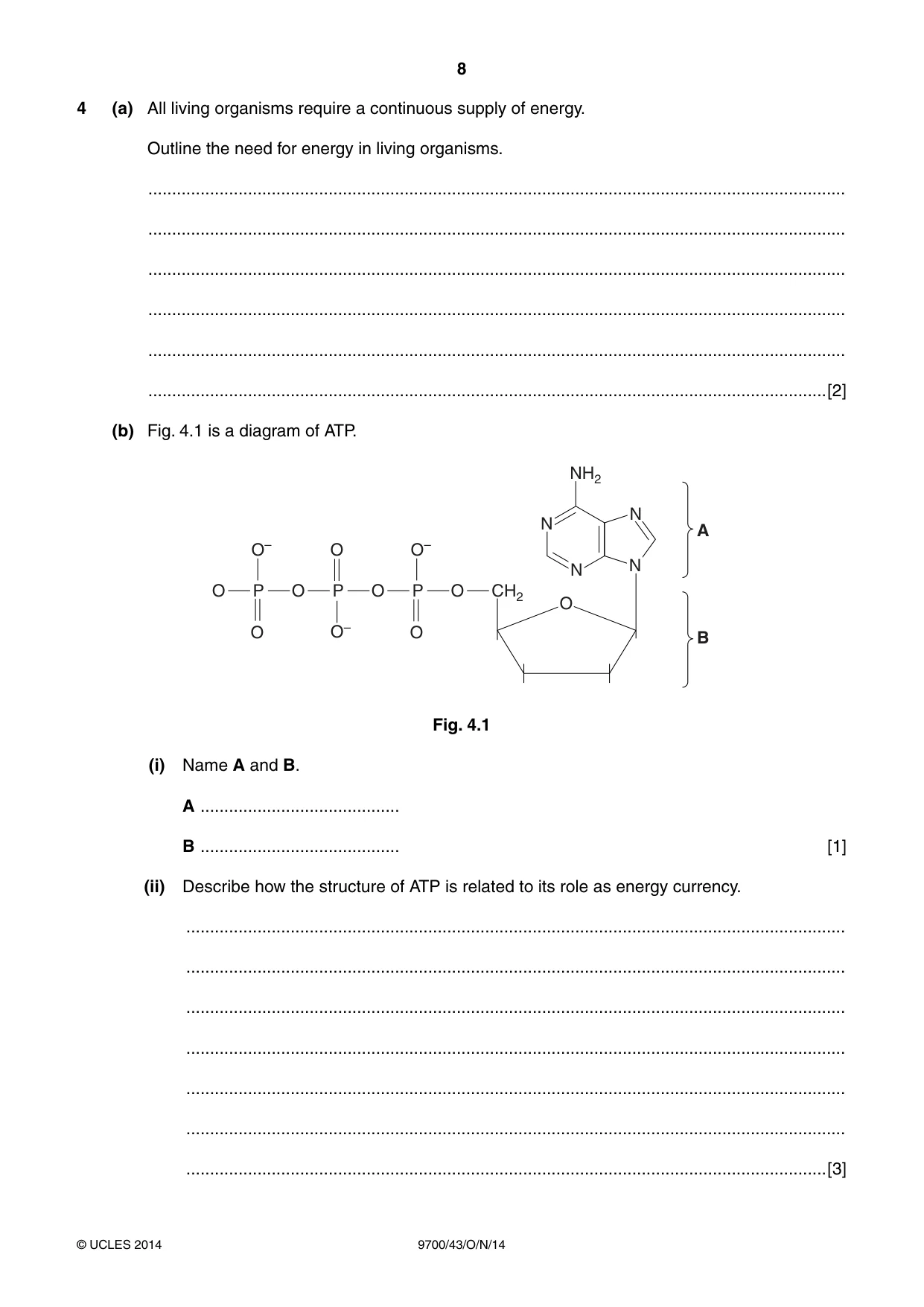
8 9700/43/O/N/14 © UCLES 2014 4 (a) All living organisms require a continuous supply of energy. Outline the need for energy in living organisms. … … … … … …[2] (b) Fig. 4.1 is a diagram of ATP. N NH2 CH2 O P O O P O O O P O N O N A B N O– O– O– Fig. 4.1 (i) Name A and B. A … B … [1] (ii) Describe how the structure of ATP is related to its role as energy currency. … … … … … … …[3]
Question paper, page 9
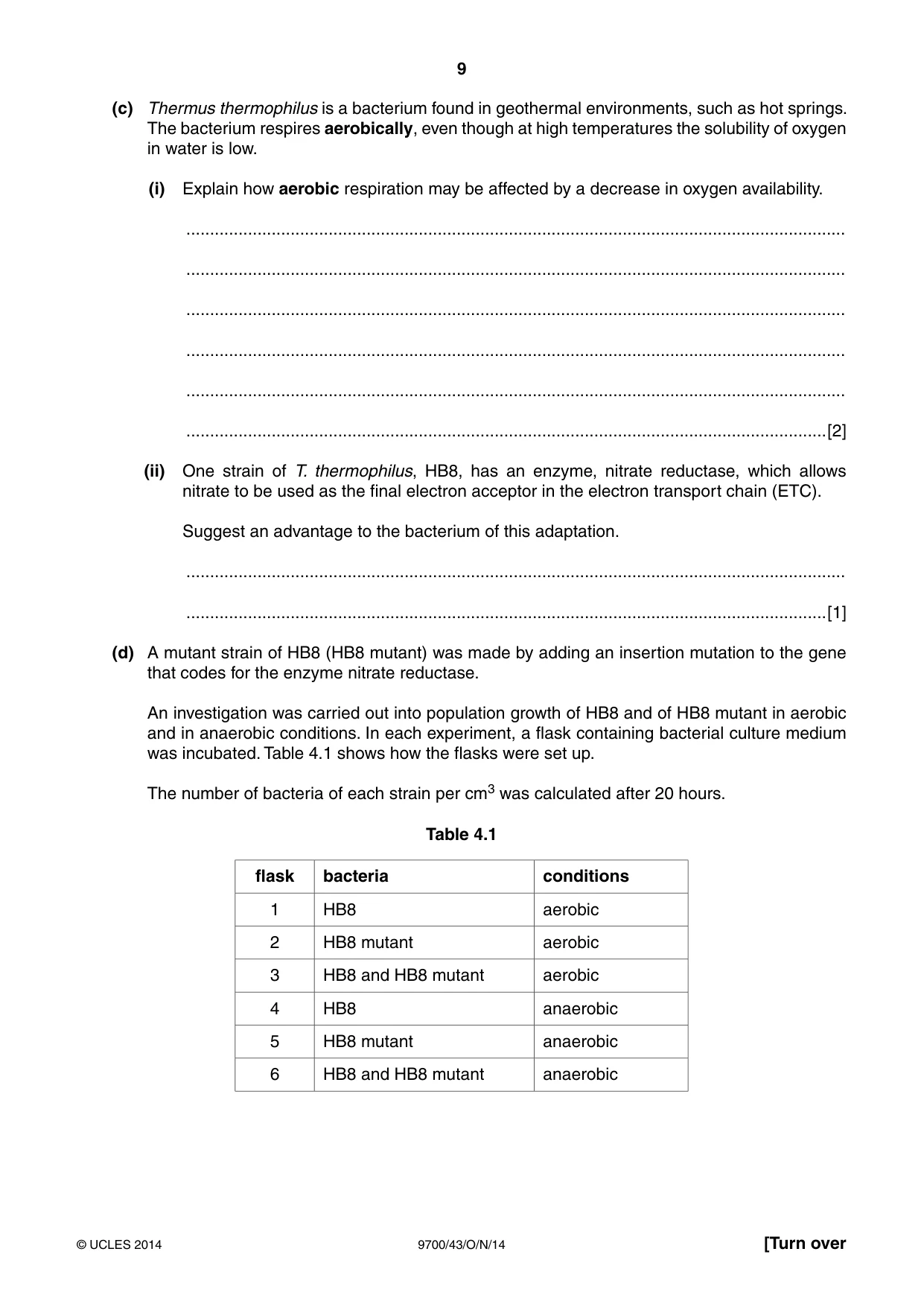
9 9700/43/O/N/14 © UCLES 2014 [Turn over (c) Thermus thermophilus is a bacterium found in geothermal environments, such as hot springs. The bacterium respires aerobically, even though at high temperatures the solubility of oxygen in water is low. (i) Explain how aerobic respiration may be affected by a decrease in oxygen availability. … … … … … …[2] (ii) One strain of T. thermophilus, HB8, has an enzyme, nitrate reductase, which allows nitrate to be used as the final electron acceptor in the electron transport chain (ETC). Suggest an advantage to the bacterium of this adaptation. … …[1] (d) A mutant strain of HB8 (HB8 mutant) was made by adding an insertion mutation to the gene that codes for the enzyme nitrate reductase. An investigation was carried out into population growth of HB8 and of HB8 mutant in aerobic and in anaerobic conditions. In each experiment, a flask containing bacterial culture medium was incubated. Table 4.1 shows how the flasks were set up. The number of bacteria of each strain per cm3 was calculated after 20 hours. Table 4.1 flask bacteria conditions 1 HB8 aerobic 2 HB8 mutant aerobic 3 HB8 and HB8 mutant aerobic 4 HB8 anaerobic 5 HB8 mutant anaerobic 6 HB8 and HB8 mutant anaerobic
Question paper, page 10
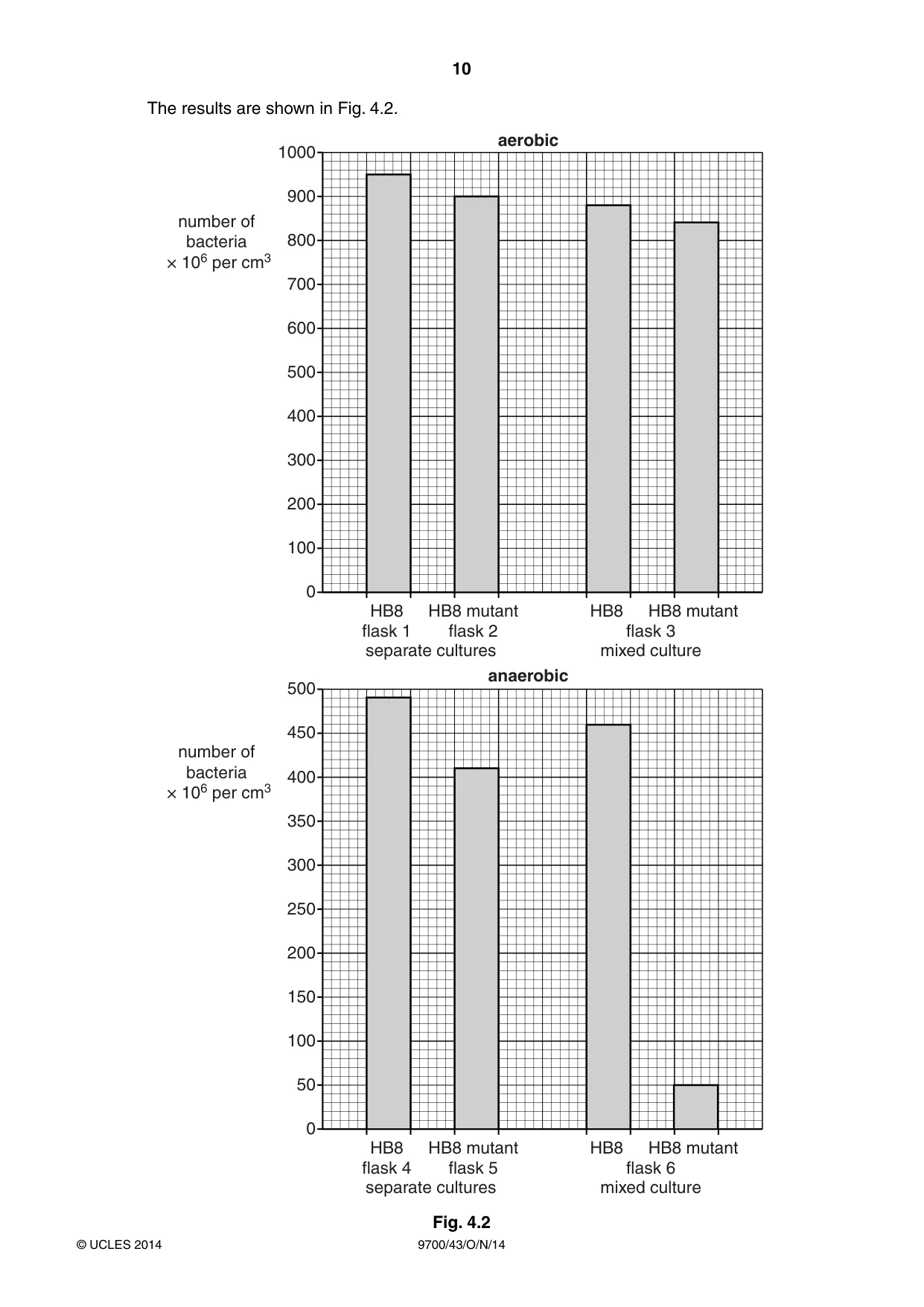
10 9700/43/O/N/14 © UCLES 2014 The results are shown in Fig. 4.2. 0 50 100 150 200 250 300 350 400 450 500 HB8 HB8 mutant flask 4 flask 5 separate cultures HB8 HB8 mutant flask 6 mixed culture 0 100 200 300 400 500 600 number of bacteria × 106 per cm3 number of bacteria × 106 per cm3 700 800 900 1000 HB8 HB8 mutant flask 1 flask 2 separate cultures HB8 HB8 mutant flask 3 mixed culture DHURELF anaerobic Fig. 4.2
Question paper, page 11
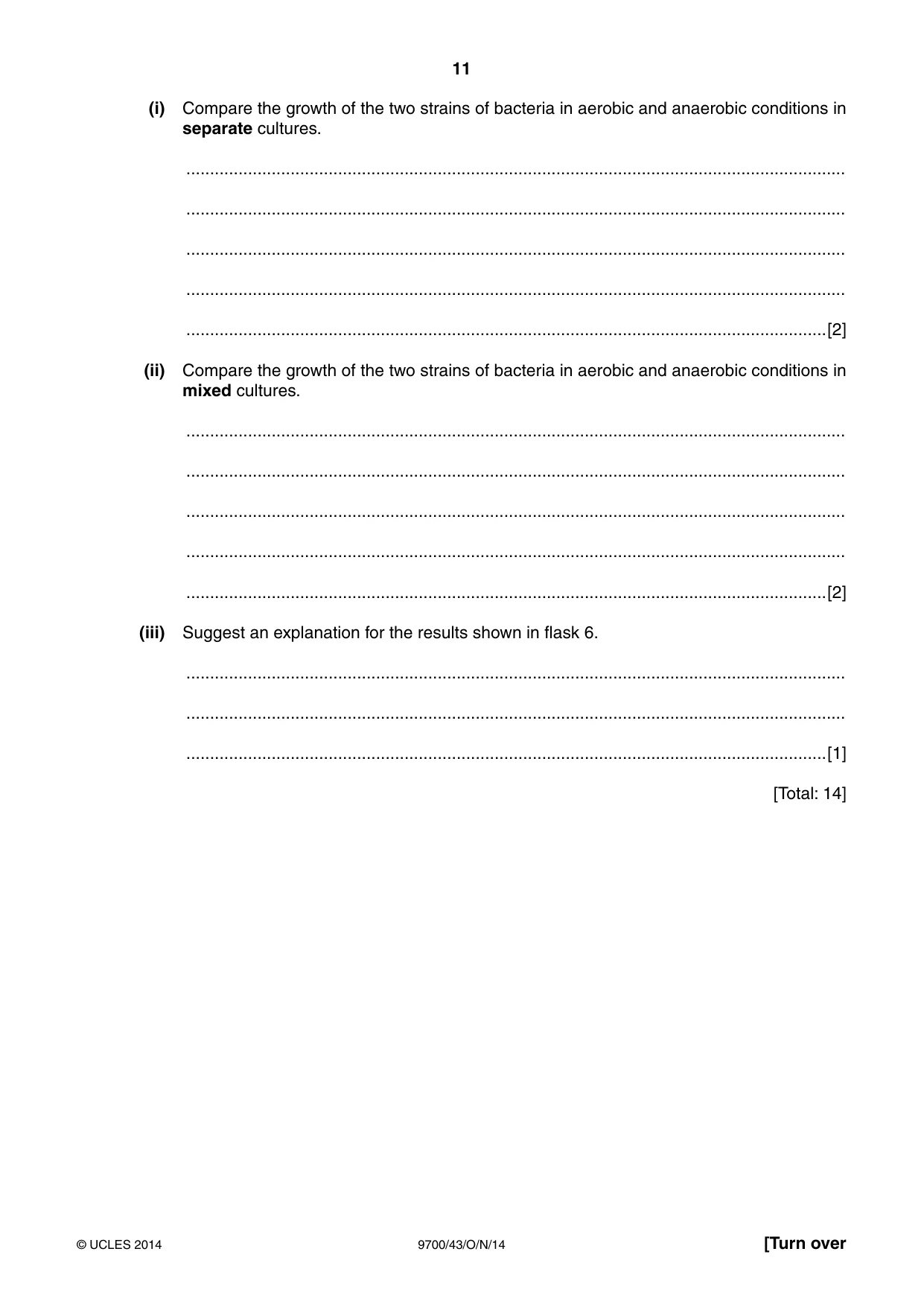
11 9700/43/O/N/14 © UCLES 2014 [Turn over (i) Compare the growth of the two strains of bacteria in aerobic and anaerobic conditions in separate cultures. … … … … …[2] (ii) Compare the growth of the two strains of bacteria in aerobic and anaerobic conditions in mixed cultures. … … … … …[2] (iii) Suggest an explanation for the results shown in flask 6. … … …[1] [Total: 14]
Question paper, page 12
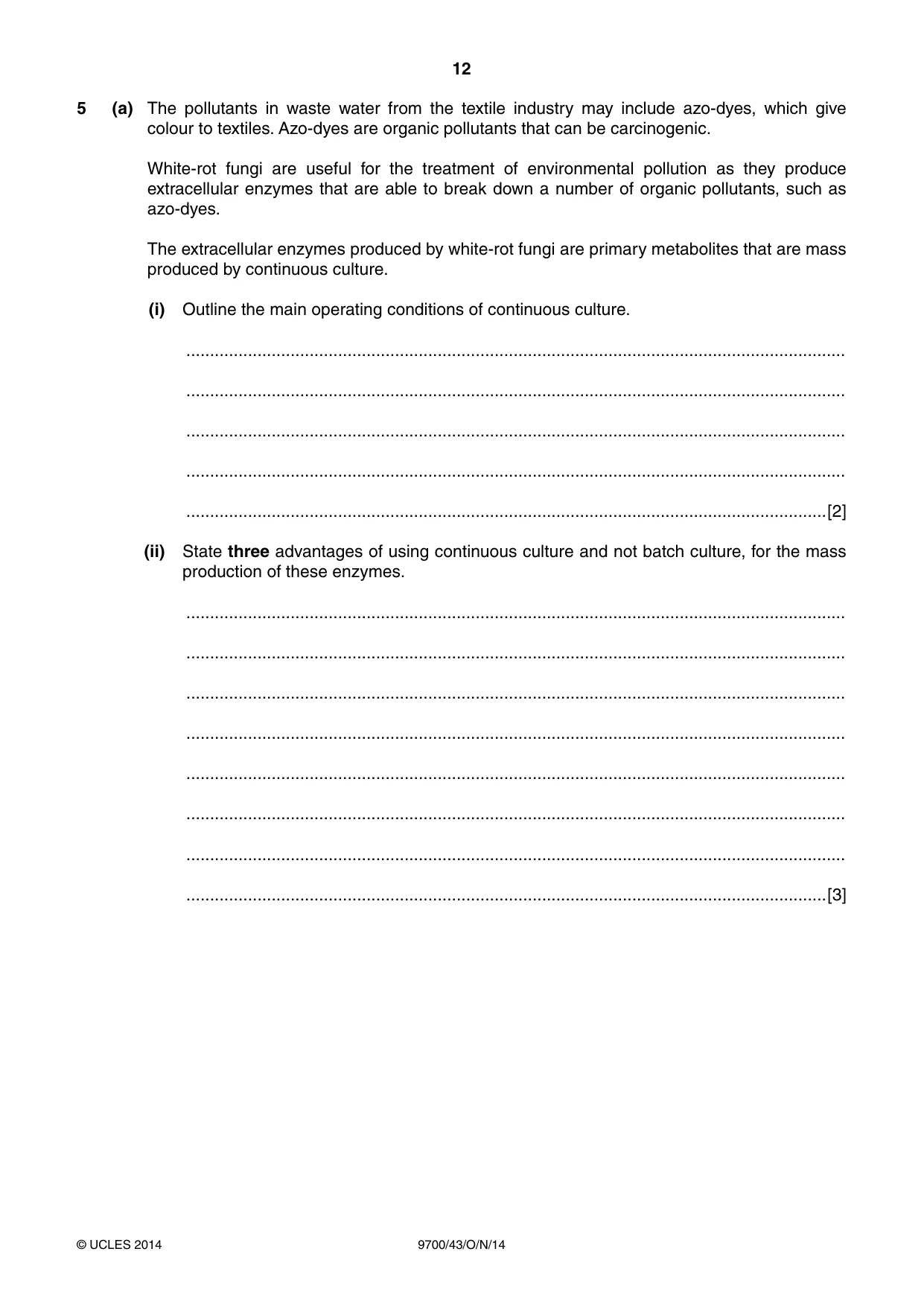
12 9700/43/O/N/14 © UCLES 2014 5 (a) The pollutants in waste water from the textile industry may include azo-dyes, which give colour to textiles. Azo-dyes are organic pollutants that can be carcinogenic. White-rot fungi are useful for the treatment of environmental pollution as they produce extracellular enzymes that are able to break down a number of organic pollutants, such as azo-dyes. The extracellular enzymes produced by white-rot fungi are primary metabolites that are mass produced by continuous culture. (i) Outline the main operating conditions of continuous culture. … … … … …[2] (ii) State three advantages of using continuous culture and not batch culture, for the mass production of these enzymes. … … … … … … … …[3]
Question paper, page 13
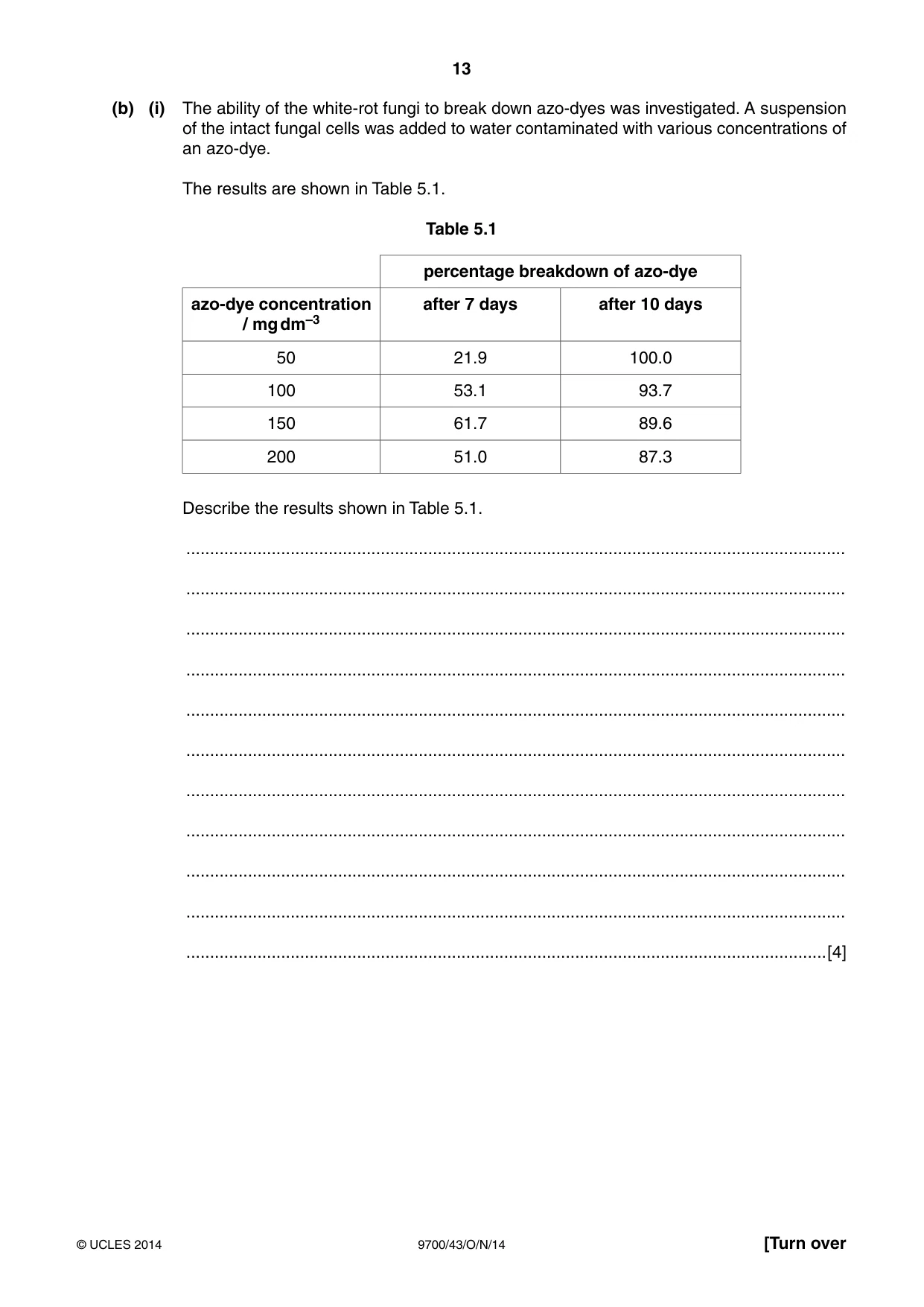
13 9700/43/O/N/14 © UCLES 2014 [Turn over (b) (i) The ability of the white-rot fungi to break down azo-dyes was investigated. A suspension of the intact fungal cells was added to water contaminated with various concentrations of an azo-dye. The results are shown in Table 5.1. Table 5.1 percentage breakdown of azo-dye azo-dye concentration / mg dm–3 after 7 days after 10 days 50 21.9 100.0 100 53.1 93.7 150 61.7 89.6 200 51.0 87.3 Describe the results shown in Table 5.1. … … … … … … … … … … …[4]
Question paper, page 14
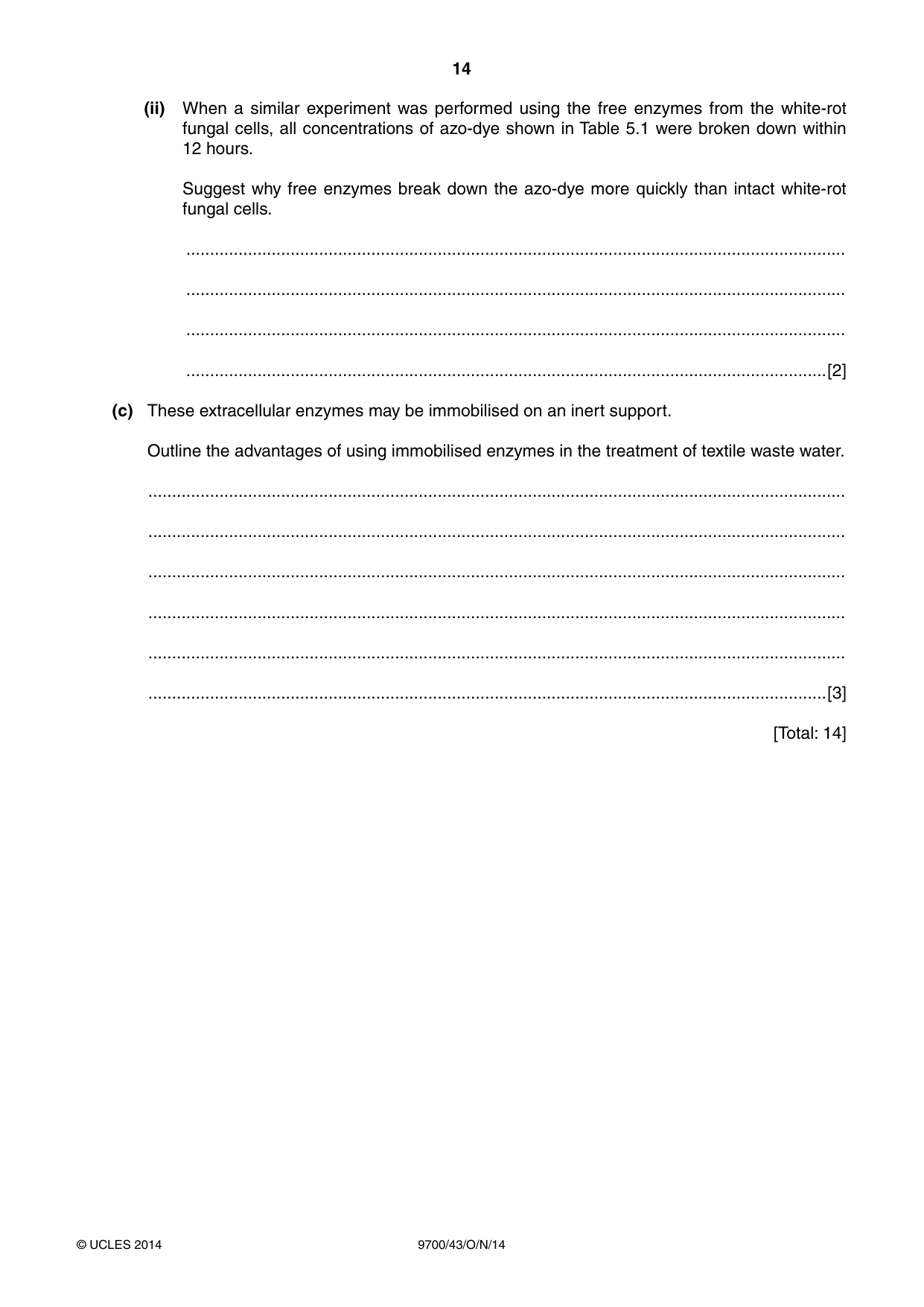
14 9700/43/O/N/14 © UCLES 2014 (ii) When a similar experiment was performed using the free enzymes from the white-rot fungal cells, all concentrations of azo-dye shown in Table 5.1 were broken down within 12 hours. Suggest why free enzymes break down the azo-dye more quickly than intact white-rot fungal cells. … … … …[2] (c) These extracellular enzymes may be immobilised on an inert support. Outline the advantages of using immobilised enzymes in the treatment of textile waste water. … … … … … …[3] [Total: 14]
Question paper, page 15
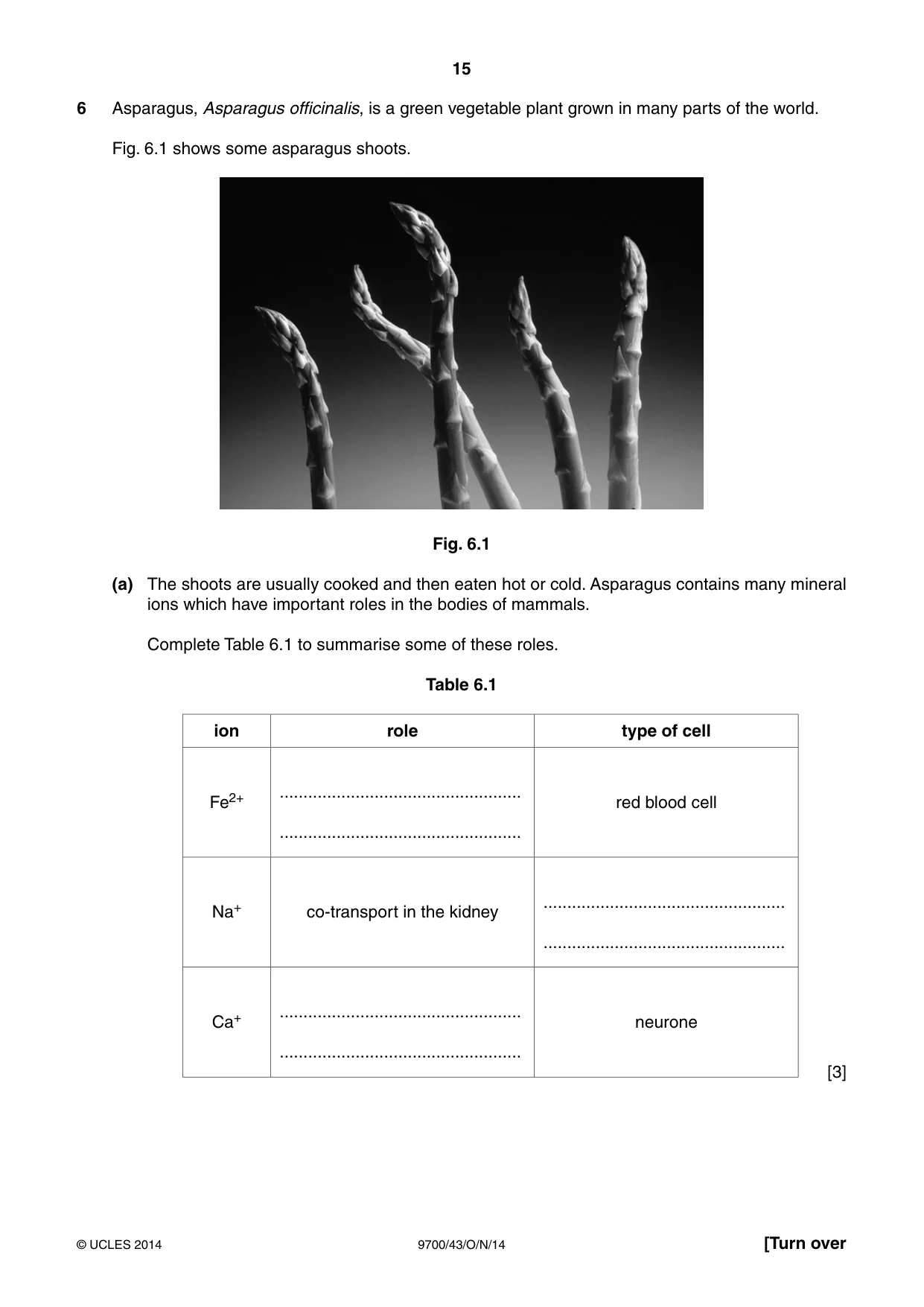
15 9700/43/O/N/14 © UCLES 2014 [Turn over 6 Asparagus, Asparagus officinalis, is a green vegetable plant grown in many parts of the world. Fig. 6.1 shows some asparagus shoots. Fig. 6.1 (a) The shoots are usually cooked and then eaten hot or cold. Asparagus contains many mineral ions which have important roles in the bodies of mammals. Complete Table 6.1 to summarise some of these roles. Table 6.1 ion role type of cell Fe2+ … … red blood cell Na+ co-transport in the kidney … … Ca+ … … neurone [3]
Question paper, page 16
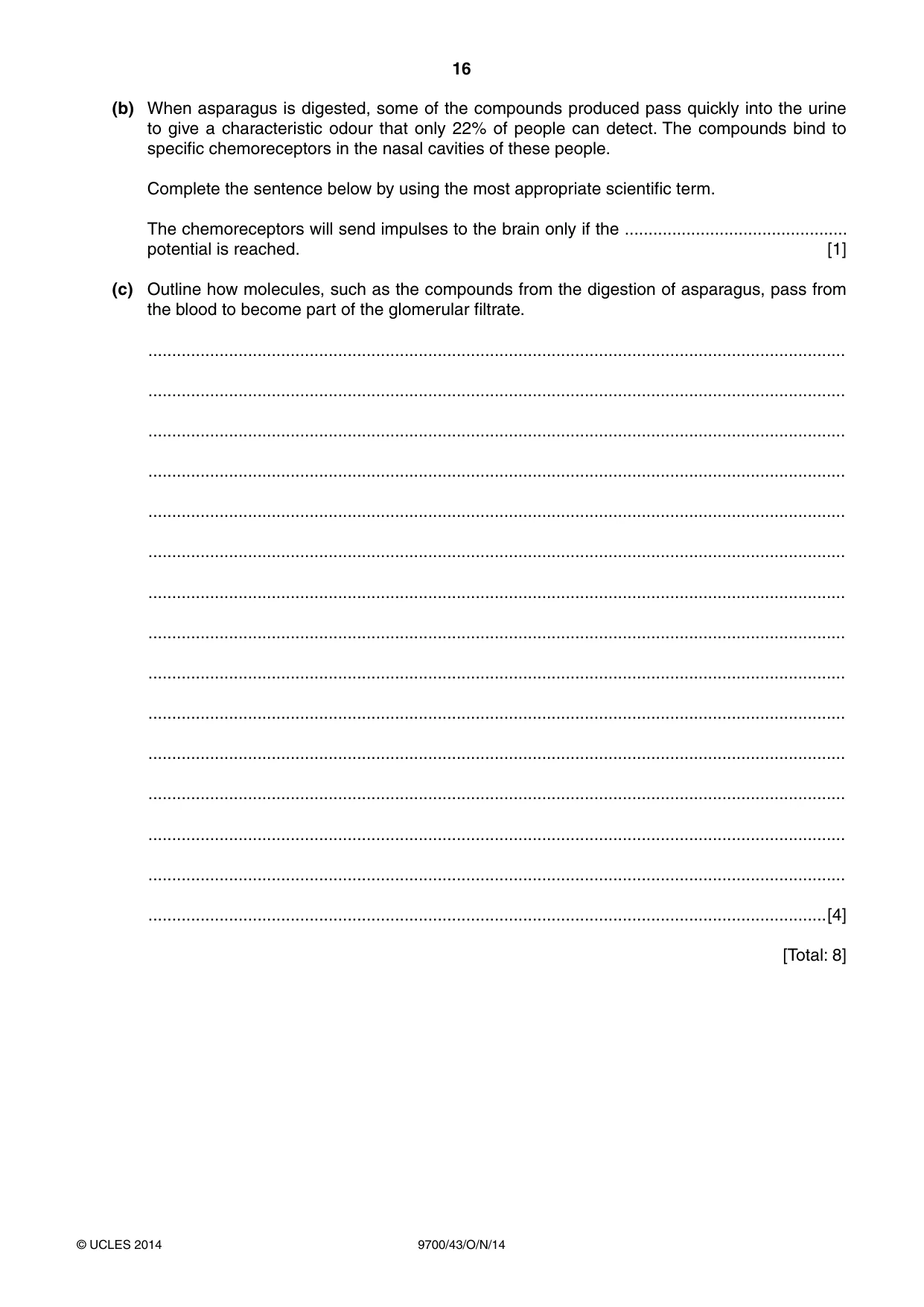
16 9700/43/O/N/14 © UCLES 2014 (b) When asparagus is digested, some of the compounds produced pass quickly into the urine to give a characteristic odour that only 22% of people can detect. The compounds bind to specific chemoreceptors in the nasal cavities of these people. Complete the sentence below by using the most appropriate scientific term. The chemoreceptors will send impulses to the brain only if the … potential is reached. [1] (c) Outline how molecules, such as the compounds from the digestion of asparagus, pass from the blood to become part of the glomerular filtrate. … … … … … … … … … … … … … … …[4] [Total: 8]
Question paper, page 17
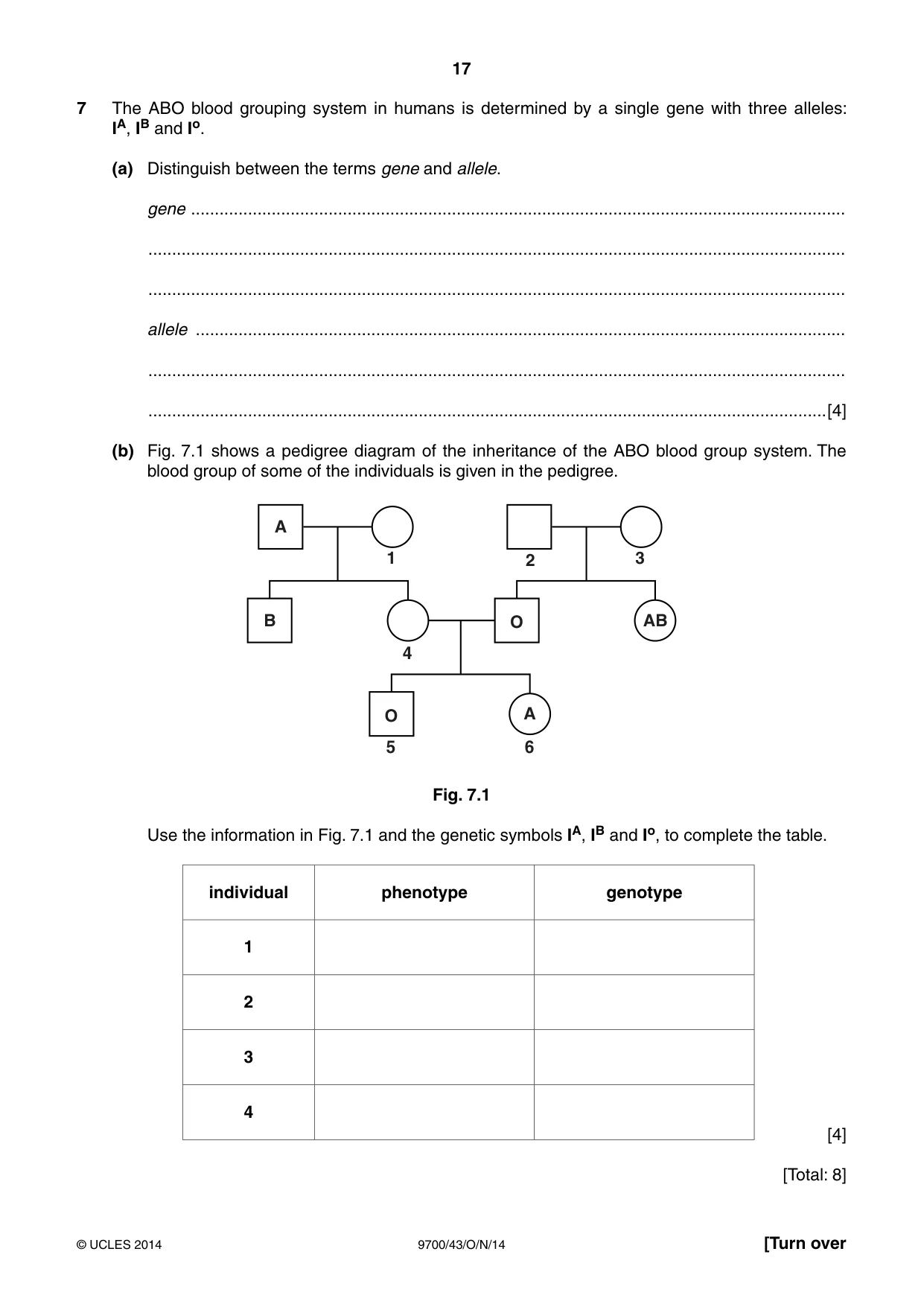
17 9700/43/O/N/14 © UCLES 2014 [Turn over 7 The ABO blood grouping system in humans is determined by a single gene with three alleles: IA, IB and Io. (a) Distinguish between the terms gene and allele. gene … … … allele … … …[4] (b) Fig. 7.1 shows a pedigree diagram of the inheritance of the ABO blood group system. The blood group of some of the individuals is given in the pedigree. A O AB 1 2 4 5 6 3 B O A Fig. 7.1 Use the information in Fig. 7.1 and the genetic symbols IA, IB and Io, to complete the table. individual phenotype genotype 1 2 3 4 [4] [Total: 8]
Question paper, page 18
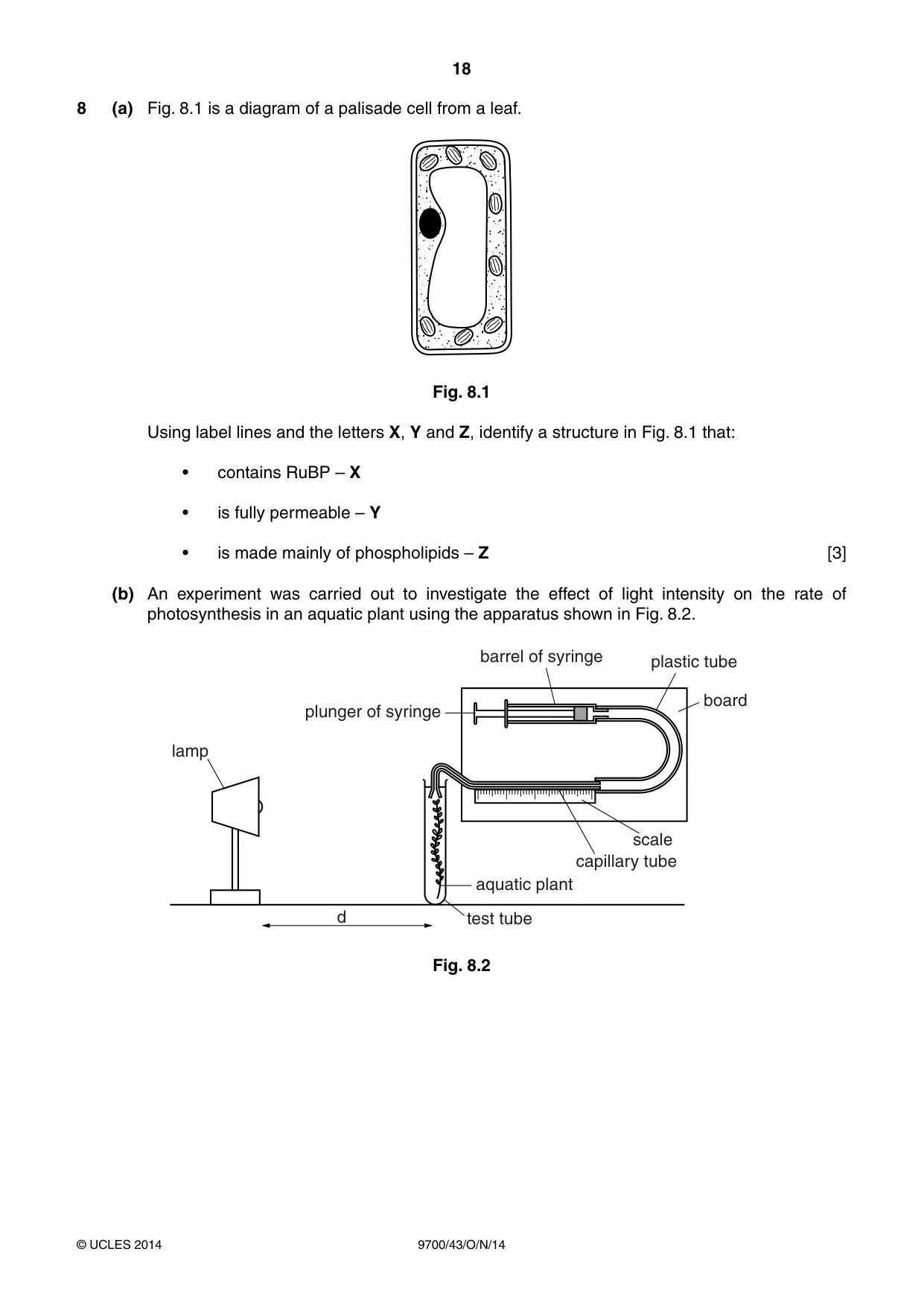
18 9700/43/O/N/14 © UCLES 2014 8 (a) Fig. 8.1 is a diagram of a palisade cell from a leaf. Fig. 8.1 Using label lines and the letters X, Y and Z, identify a structure in Fig. 8.1 that: • contains RuBP – X • is fully permeable – Y • is made mainly of phospholipids – Z [3] (b) An experiment was carried out to investigate the effect of light intensity on the rate of photosynthesis in an aquatic plant using the apparatus shown in Fig. 8.2. aquatic plant capillary tube test tube scale board plastic tube barrel of syringe plunger of syringe lamp d Fig. 8.2
Question paper, page 19
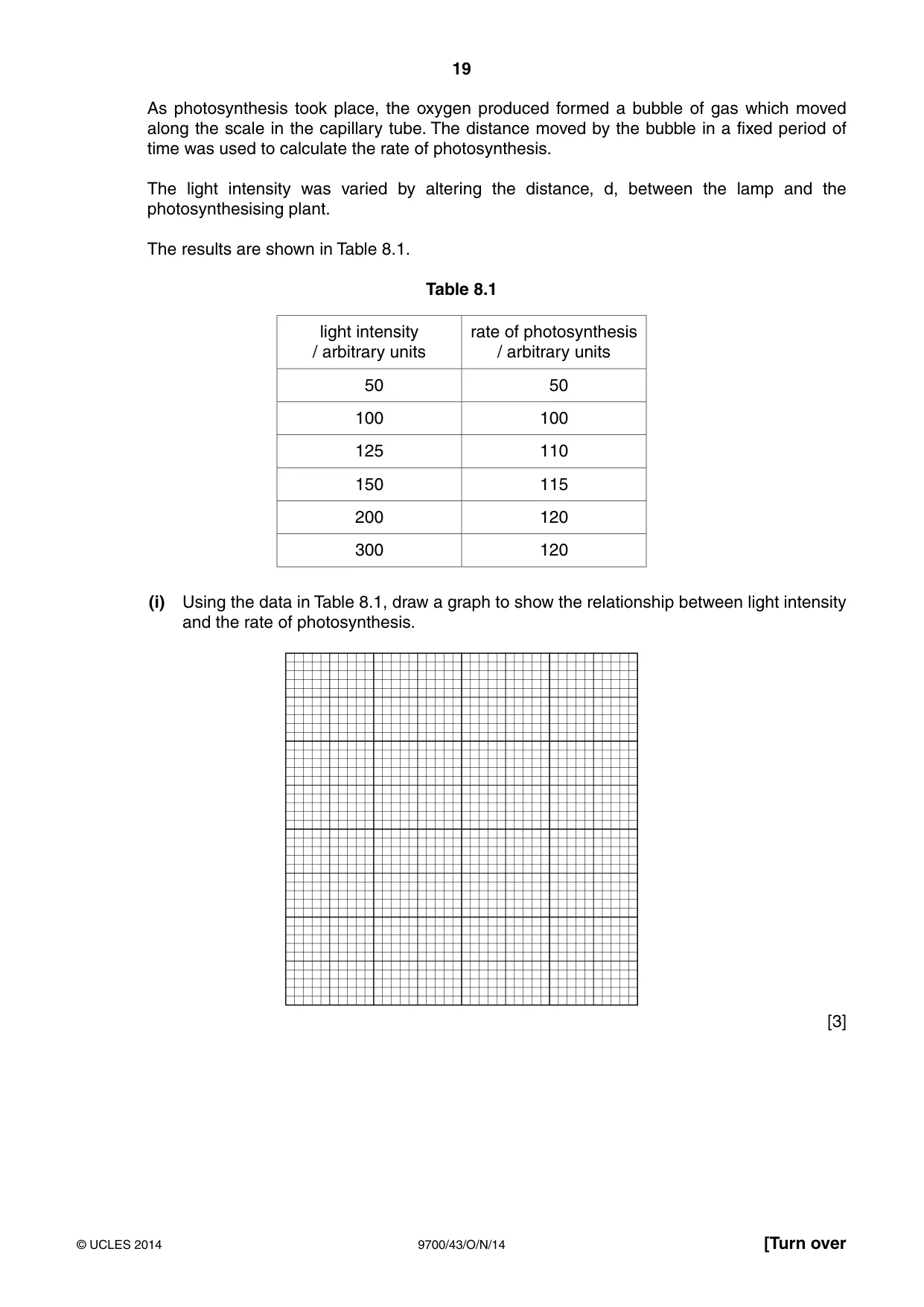
19 9700/43/O/N/14 © UCLES 2014 [Turn over As photosynthesis took place, the oxygen produced formed a bubble of gas which moved along the scale in the capillary tube. The distance moved by the bubble in a fixed period of time was used to calculate the rate of photosynthesis. The light intensity was varied by altering the distance, d, between the lamp and the photosynthesising plant. The results are shown in Table 8.1. Table 8.1 light intensity / arbitrary units rate of photosynthesis / arbitrary units 50 50 100 100 125 110 150 115 200 120 300 120 (i) Using the data in Table 8.1, draw a graph to show the relationship between light intensity and the rate of photosynthesis. [3]
Question paper, page 20
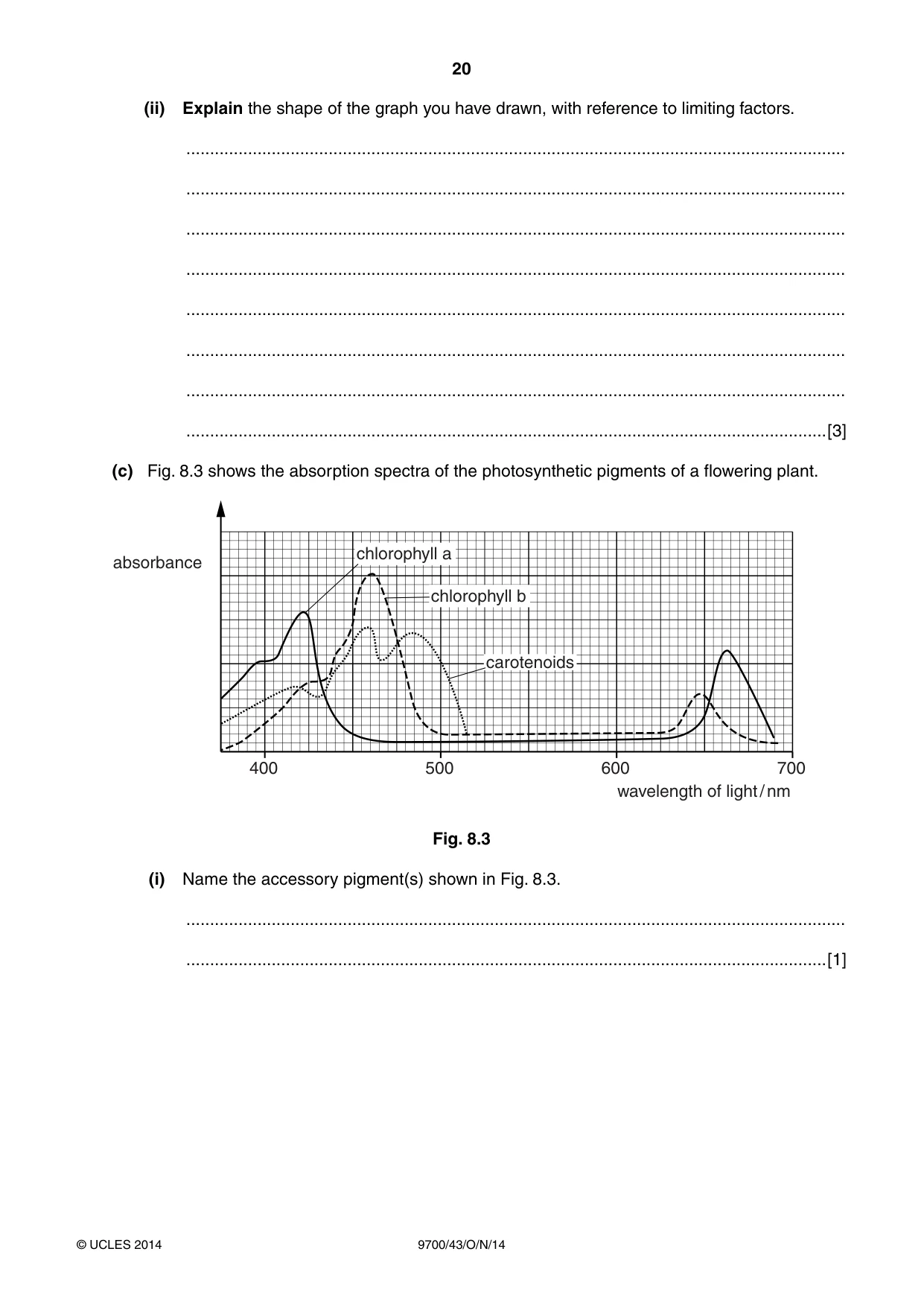
20 9700/43/O/N/14 © UCLES 2014 (ii) Explain the shape of the graph you have drawn, with reference to limiting factors. … … … … … … … …[3] (c) Fig. 8.3 shows the absorption spectra of the photosynthetic pigments of a flowering plant. 400 500 600 wavelength of light / nm absorbance 700 chlorophyll a chlorophyll b carotenoids Fig. 8.3 (i) Name the accessory pigment(s) shown in Fig. 8.3. … …[1]
Question paper, page 21
21 9700/43/O/N/14 © UCLES 2014 [Turn over (ii) Outline the role of the accessory pigments in photosynthesis. … … … … … … …[3] (iii) Very little light of wavelength 550 nm is absorbed by the photosynthetic pigments. State what happens to most of this light. … …[1] (iv) A graph can also be drawn to show the relationship between the wavelength of light and the rate of photosynthesis. State the name of this type of graph. …[1] [Total: 15]
Question paper, page 22
22 9700/43/O/N/14 © UCLES 2014 Section B Answer one question. 9 (a) Describe how the vitamin A content of rice can be enhanced by genetic modification. [8] (b) Outline the disadvantages of using plants that have been genetically modified. [7] [Total: 15] 10 (a) Outline the technique of in-vitro fertilisation (IVF). [8] (b) Discuss the ethical implications of IVF. [7] [Total: 15] … … … … … … … … … … … … … … … … … … …
Question paper, page 23
23 9700/43/O/N/14 © UCLES 2014 [Turn over … … … … … … … … … … … … … … … … … … … … … … … … … … … …
Question paper, page 24
24 9700/43/O/N/14 © UCLES 2014 Copyright Acknowledgements: Fig. 2.1 Yva Momatiuk & John Eastcott / Getty Images Fig. 6.1 J. R. Bale / Alamy Permission to reproduce items where third-party owned material protected by copyright is included has been sought and cleared where possible. Every reasonable effort has been made by the publisher (UCLES) to trace copyright holders, but if any items requiring clearance have unwittingly been included, the publisher will be pleased to make amends at the earliest possible opportunity. Cambridge International Examinations is part of the Cambridge Assessment Group. Cambridge Assessment is the brand name of University of Cambridge Local Examinations Syndicate (UCLES), which is itself a department of the University of Cambridge. … … … … … … … … … … … … … … … … … … … … … … …
Mark scheme, page 1
® IGCSE is the registered trademark of Cambridge International Examinations. CAMBRIDGE INTERNATIONAL EXAMINATIONS Cambridge International Advanced Subsidiary and Advanced Level MARK SCHEME for the October/November 2014 series 9700 BIOLOGY 9700/43 Paper 4 (A2 Structured Questions), maximum raw mark 100 This mark scheme is published as an aid to teachers and candidates, to indicate the requirements of the examination. It shows the basis on which Examiners were instructed to award marks. It does not indicate the details of the discussions that took place at an Examiners’ meeting before marking began, which would have considered the acceptability of alternative answers. Mark schemes should be read in conjunction with the question paper and the Principal Examiner Report for Teachers. Cambridge will not enter into discussions about these mark schemes. Cambridge is publishing the mark schemes for the October/November 2014 series for most Cambridge IGCSE®, Cambridge International A and AS Level components and some Cambridge O Level components.
Mark scheme, page 2
Page 2 Mark Scheme Syllabus Paper Cambridge International AS/A Level – October/November 2014 9700 43 © Cambridge International Examinations 2014 Mark scheme abbreviations: ; separates marking points / alternative answers for the same point R reject A accept (for answers correctly cued by the question, or by extra guidance) AW alternative wording (where responses vary more than usual) underline actual word given must be used by candidate (grammatical variants accepted) max indicates the maximum number of marks that can be given ora or reverse argument mp marking point (with relevant number) ecf error carried forward I ignore AVP alternative valid point (examples given as guidance)
Mark scheme, page 3
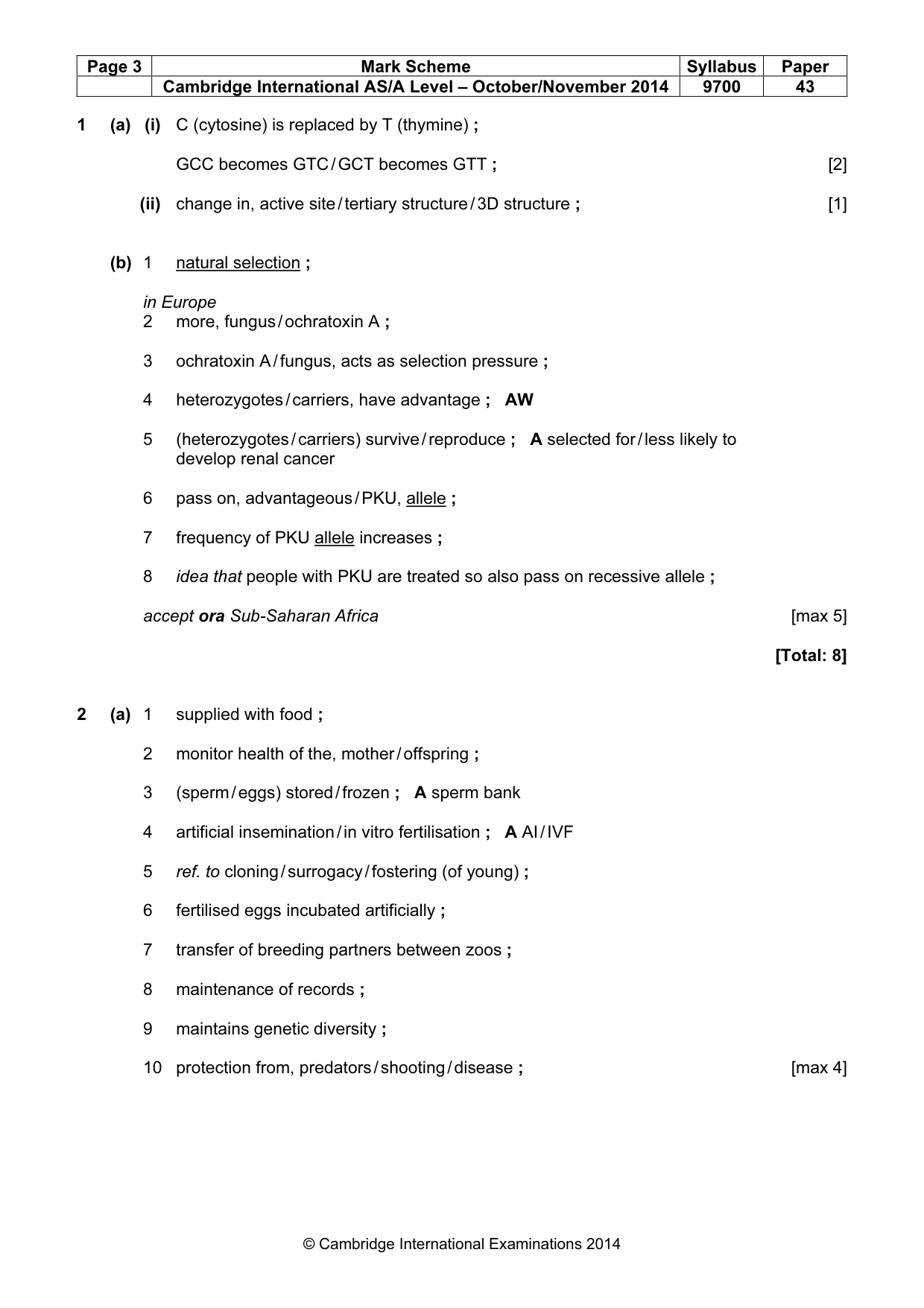
Page 3 Mark Scheme Syllabus Paper Cambridge International AS/A Level – October/November 2014 9700 43 © Cambridge International Examinations 2014 1 (a) (i) C (cytosine) is replaced by T (thymine) ; GCC becomes GTC / GCT becomes GTT ; [2] (ii) change in, active site / tertiary structure / 3D structure ; [1] (b) 1 natural selection ; in Europe 2 more, fungus / ochratoxin A ; 3 ochratoxin A / fungus, acts as selection pressure ; 4 heterozygotes / carriers, have advantage ; AW 5 (heterozygotes / carriers) survive / reproduce ; A selected for / less likely to develop renal cancer 6 pass on, advantageous / PKU, allele ; 7 frequency of PKU allele increases ; 8 idea that people with PKU are treated so also pass on recessive allele ; accept ora Sub-Saharan Africa [max 5] [Total: 8] 2 (a) 1 supplied with food ; 2 monitor health of the, mother / offspring ; 3 (sperm / eggs) stored / frozen ; A sperm bank 4 artificial insemination / in vitro fertilisation ; A AI / IVF 5 ref. to cloning / surrogacy / fostering (of young) ; 6 fertilised eggs incubated artificially ; 7 transfer of breeding partners between zoos ; 8 maintenance of records ; 9 maintains genetic diversity ; 10 protection from, predators / shooting / disease ; [max 4]
Mark scheme, page 4
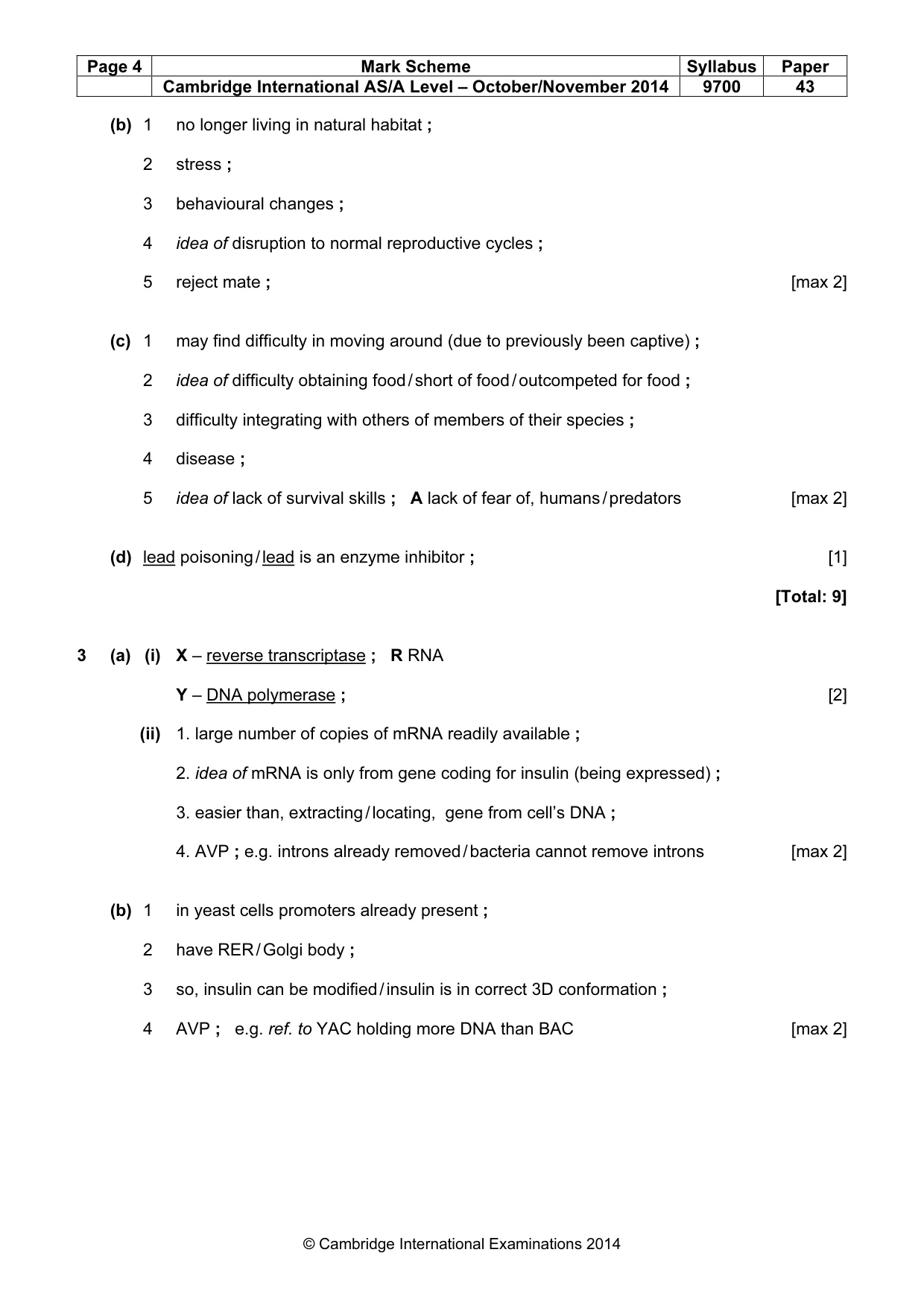
Page 4 Mark Scheme Syllabus Paper Cambridge International AS/A Level – October/November 2014 9700 43 © Cambridge International Examinations 2014 (b) 1 no longer living in natural habitat ; 2 stress ; 3 behavioural changes ; 4 idea of disruption to normal reproductive cycles ; 5 reject mate ; [max 2] (c) 1 may find difficulty in moving around (due to previously been captive) ; 2 idea of difficulty obtaining food / short of food / outcompeted for food ; 3 difficulty integrating with others of members of their species ; 4 disease ; 5 idea of lack of survival skills ; A lack of fear of, humans / predators [max 2] (d) lead poisoning / lead is an enzyme inhibitor ; [1] [Total: 9] 3 (a) (i) X – reverse transcriptase ; R RNA Y – DNA polymerase ; [2] (ii) 1. large number of copies of mRNA readily available ; 2. idea of mRNA is only from gene coding for insulin (being expressed) ; 3. easier than, extracting / locating, gene from cell’s DNA ; 4. AVP ; e.g. introns already removed / bacteria cannot remove introns [max 2] (b) 1 in yeast cells promoters already present ; 2 have RER / Golgi body ; 3 so, insulin can be modified / insulin is in correct 3D conformation ; 4 AVP ; e.g. ref. to YAC holding more DNA than BAC [max 2]
Mark scheme, page 5
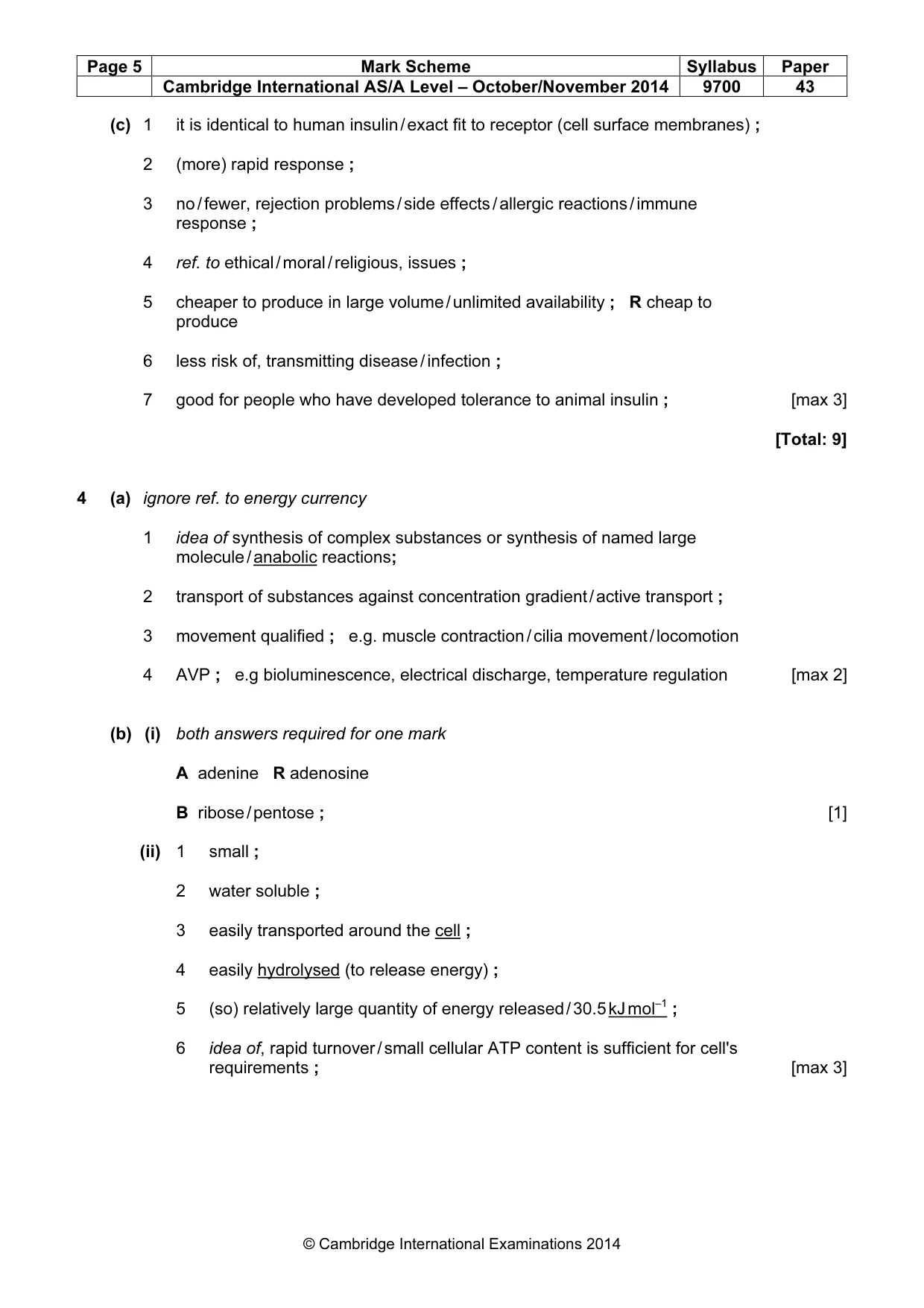
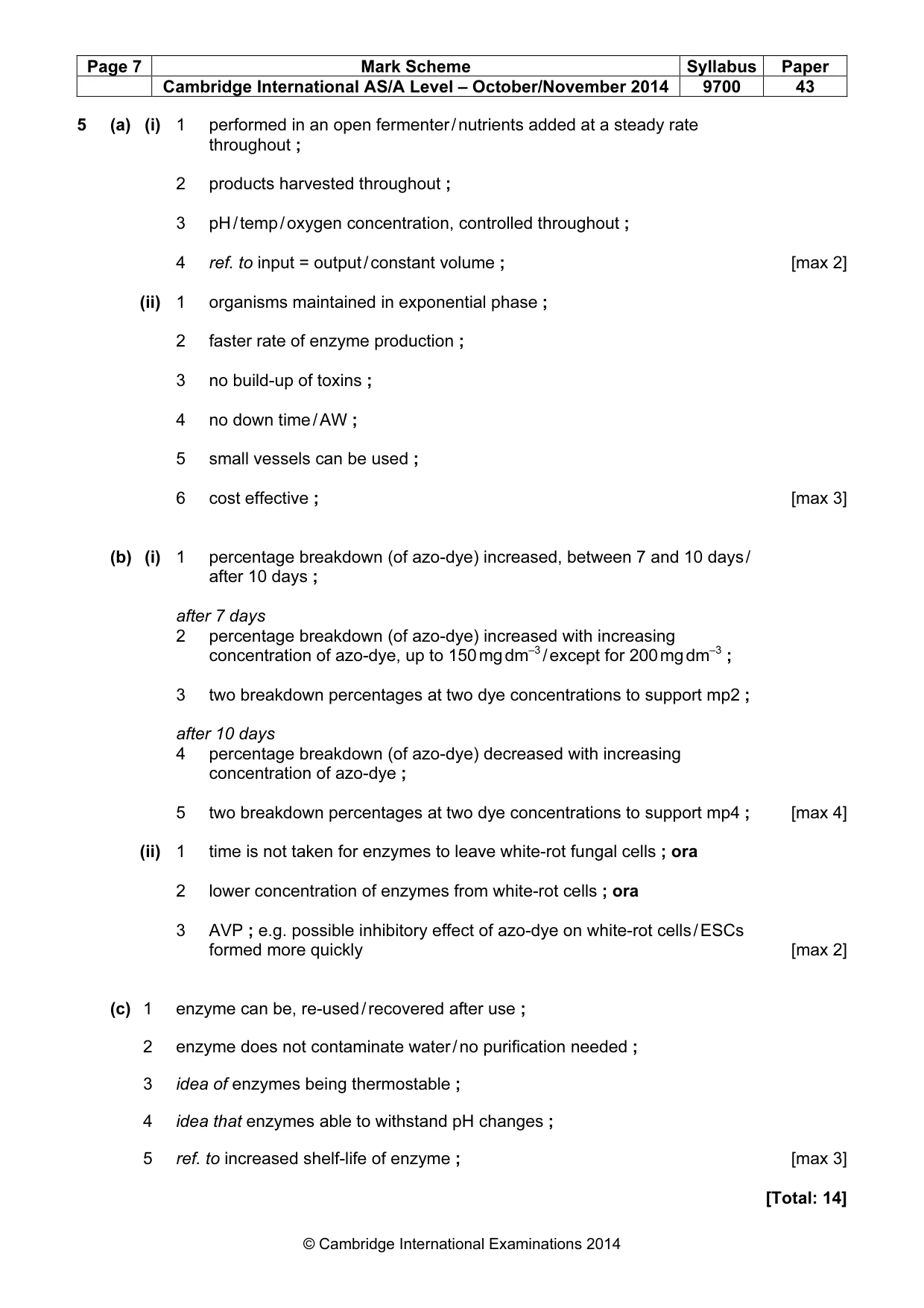
Page 5 Mark Scheme Syllabus Paper Cambridge International AS/A Level – October/November 2014 9700 43 © Cambridge International Examinations 2014 (c) 1 it is identical to human insulin / exact fit to receptor (cell surface membranes) ; 2 (more) rapid response ; 3 no / fewer, rejection problems / side effects / allergic reactions / immune response ; 4 ref. to ethical / moral / religious, issues ; 5 cheaper to produce in large volume / unlimited availability ; R cheap to produce 6 less risk of, transmitting disease / infection ; 7 good for people who have developed tolerance to animal insulin ; [max 3] [Total: 9] 4 (a) ignore ref. to energy currency 1 idea of synthesis of complex substances or synthesis of named large molecule / anabolic reactions; 2 transport of substances against concentration gradient / active transport ; 3 movement qualified ; e.g. muscle contraction / cilia movement / locomotion 4 AVP ; e.g bioluminescence, electrical discharge, temperature regulation [max 2] (b) (i) both answers required for one mark A adenine R adenosine B ribose / pentose ; [1] (ii) 1 small ; 2 water soluble ; 3 easily transported around the cell ; 4 easily hydrolysed (to release energy) ; 5 (so) relatively large quantity of energy released / 30.5 kJ mol–1 ; 6 idea of, rapid turnover / small cellular ATP content is sufficient for cell's requirements ; [max 3]
Mark scheme, page 6
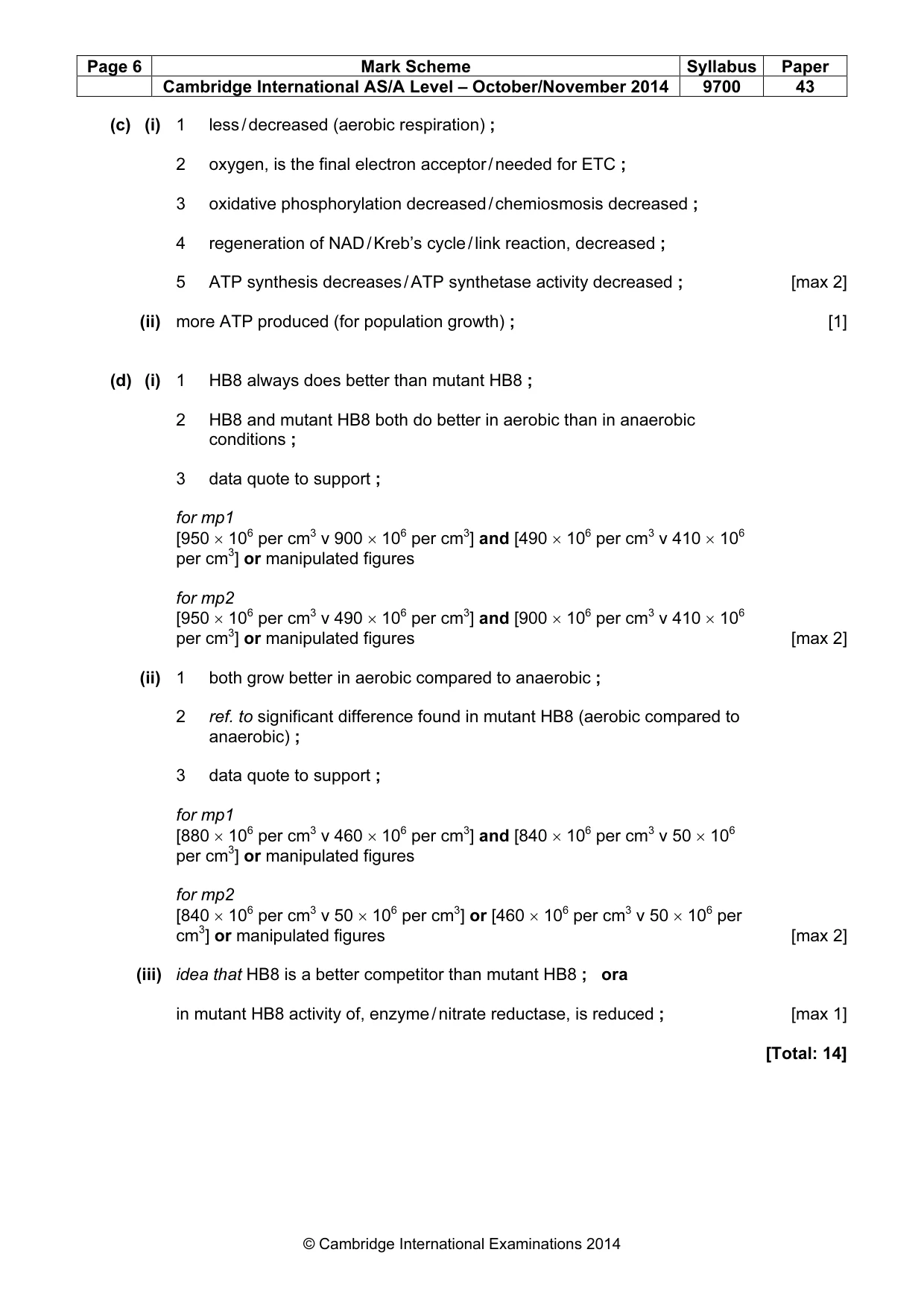
Page 6 Mark Scheme Syllabus Paper Cambridge International AS/A Level – October/November 2014 9700 43 © Cambridge International Examinations 2014 (c) (i) 1 less / decreased (aerobic respiration) ; 2 oxygen, is the final electron acceptor / needed for ETC ; 3 oxidative phosphorylation decreased / chemiosmosis decreased ; 4 regeneration of NAD / Kreb’s cycle / link reaction, decreased ; 5 ATP synthesis decreases / ATP synthetase activity decreased ; [max 2] (ii) more ATP produced (for population growth) ; [1] (d) (i) 1 HB8 always does better than mutant HB8 ; 2 HB8 and mutant HB8 both do better in aerobic than in anaerobic conditions ; 3 data quote to support ; for mp1 [950 × 106 per cm3 v 900 × 106 per cm3] and [490 × 106 per cm3 v 410 × 106 per cm3] or manipulated figures for mp2 [950 × 106 per cm3 v 490 × 106 per cm3] and [900 × 106 per cm3 v 410 × 106 per cm3] or manipulated figures [max 2] (ii) 1 both grow better in aerobic compared to anaerobic ; 2 ref. to significant difference found in mutant HB8 (aerobic compared to anaerobic) ; 3 data quote to support ; for mp1 [880 × 106 per cm3 v 460 × 106 per cm3] and [840 × 106 per cm3 v 50 × 106 per cm3] or manipulated figures for mp2 [840 × 106 per cm3 v 50 × 106 per cm3] or [460 × 106 per cm3 v 50 × 106 per cm3] or manipulated figures [max 2] (iii) idea that HB8 is a better competitor than mutant HB8 ; ora in mutant HB8 activity of, enzyme / nitrate reductase, is reduced ; [max 1] [Total: 14]
Mark scheme, page 7
Page 7 Mark Scheme Syllabus Paper Cambridge International AS/A Level – October/November 2014 9700 43 © Cambridge International Examinations 2014 5 (a) (i) 1 performed in an open fermenter / nutrients added at a steady rate throughout ; 2 products harvested throughout ; 3 pH / temp / oxygen concentration, controlled throughout ; 4 ref. to input = output / constant volume ; [max 2] (ii) 1 organisms maintained in exponential phase ; 2 faster rate of enzyme production ; 3 no build-up of toxins ; 4 no down time / AW ; 5 small vessels can be used ; 6 cost effective ; [max 3] (b) (i) 1 percentage breakdown (of azo-dye) increased, between 7 and 10 days / after 10 days ; after 7 days 2 percentage breakdown (of azo-dye) increased with increasing concentration of azo-dye, up to 150 mg dm–3 / except for 200 mg dm–3 ; 3 two breakdown percentages at two dye concentrations to support mp2 ; after 10 days 4 percentage breakdown (of azo-dye) decreased with increasing concentration of azo-dye ; 5 two breakdown percentages at two dye concentrations to support mp4 ; [max 4] (ii) 1 time is not taken for enzymes to leave white-rot fungal cells ; ora 2 lower concentration of enzymes from white-rot cells ; ora 3 AVP ; e.g. possible inhibitory effect of azo-dye on white-rot cells / ESCs formed more quickly [max 2] (c) 1 enzyme can be, re-used / recovered after use ; 2 enzyme does not contaminate water / no purification needed ; 3 idea of enzymes being thermostable ; 4 idea that enzymes able to withstand pH changes ; 5 ref. to increased shelf-life of enzyme ; [max 3] [Total: 14]
Mark scheme, page 8
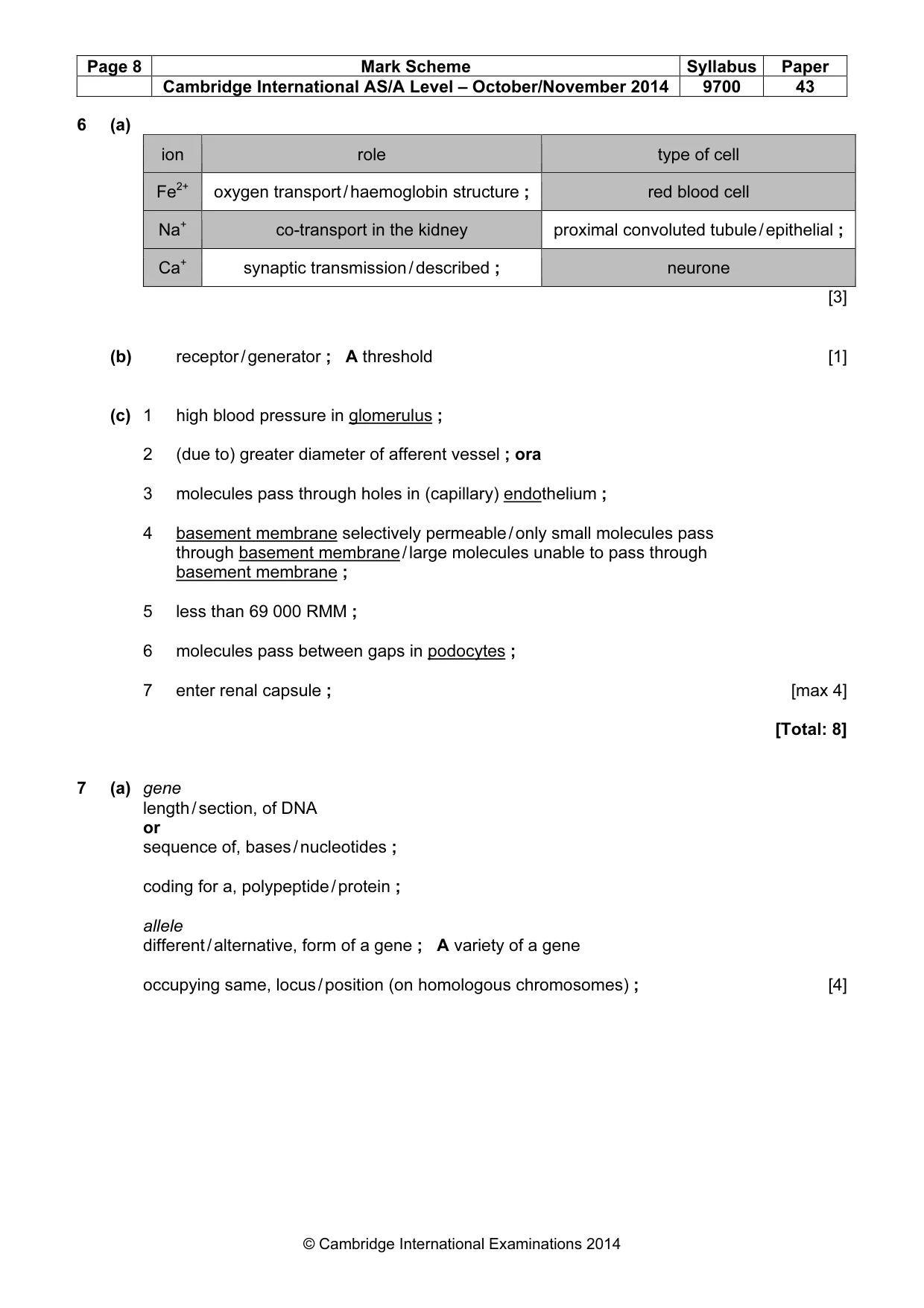
Page 8 Mark Scheme Syllabus Paper Cambridge International AS/A Level – October/November 2014 9700 43 © Cambridge International Examinations 2014 6 (a) ion role type of cell Fe2+ oxygen transport / haemoglobin structure ; red blood cell Na+ co-transport in the kidney proximal convoluted tubule / epithelial ; Ca+ synaptic transmission / described ; neurone [3] (b) receptor / generator ; A threshold [1] (c) 1 high blood pressure in glomerulus ; 2 (due to) greater diameter of afferent vessel ; ora 3 molecules pass through holes in (capillary) endothelium ; 4 basement membrane selectively permeable / only small molecules pass through basement membrane / large molecules unable to pass through basement membrane ; 5 less than 69 000 RMM ; 6 molecules pass between gaps in podocytes ; 7 enter renal capsule ; [max 4] [Total: 8] 7 (a) gene length / section, of DNA or sequence of, bases / nucleotides ; coding for a, polypeptide / protein ; allele different / alternative, form of a gene ; A variety of a gene occupying same, locus / position (on homologous chromosomes) ; [4]
Mark scheme, page 9
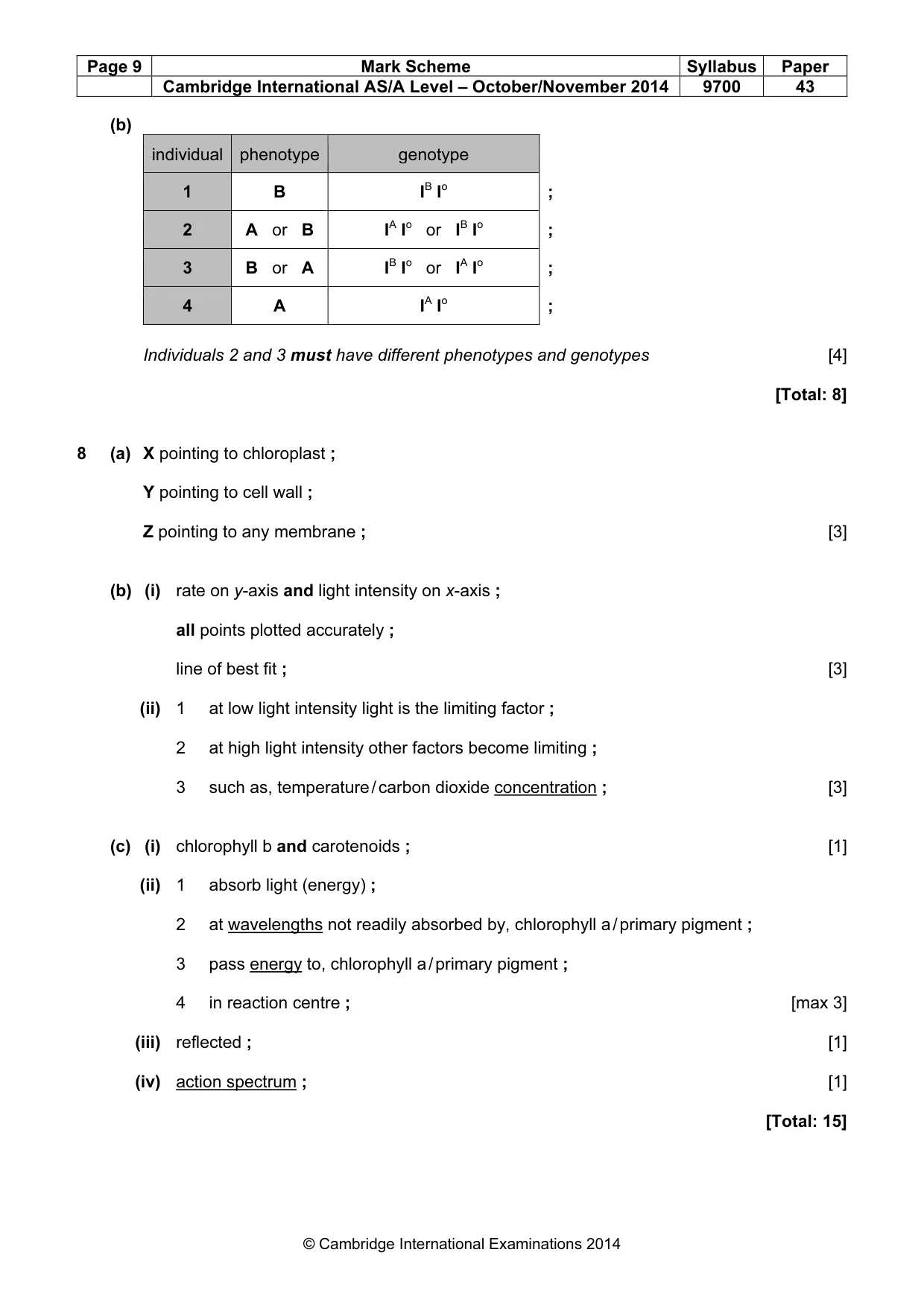
Page 9 Mark Scheme Syllabus Paper Cambridge International AS/A Level – October/November 2014 9700 43 © Cambridge International Examinations 2014 (b) individual phenotype genotype 1 B IB Io ; 2 A or B IA Io or IB Io ; 3 B or A IB Io or IA Io ; 4 A IA Io ; Individuals 2 and 3 must have different phenotypes and genotypes [4] [Total: 8] 8 (a) X pointing to chloroplast ; Y pointing to cell wall ; Z pointing to any membrane ; [3] (b) (i) rate on y-axis and light intensity on x-axis ; all points plotted accurately ; line of best fit ; [3] (ii) 1 at low light intensity light is the limiting factor ; 2 at high light intensity other factors become limiting ; 3 such as, temperature / carbon dioxide concentration ; [3] (c) (i) chlorophyll b and carotenoids ; [1] (ii) 1 absorb light (energy) ; 2 at wavelengths not readily absorbed by, chlorophyll a / primary pigment ; 3 pass energy to, chlorophyll a / primary pigment ; 4 in reaction centre ; [max 3] (iii) reflected ; [1] (iv) action spectrum ; [1] [Total: 15]
Mark scheme, page 10
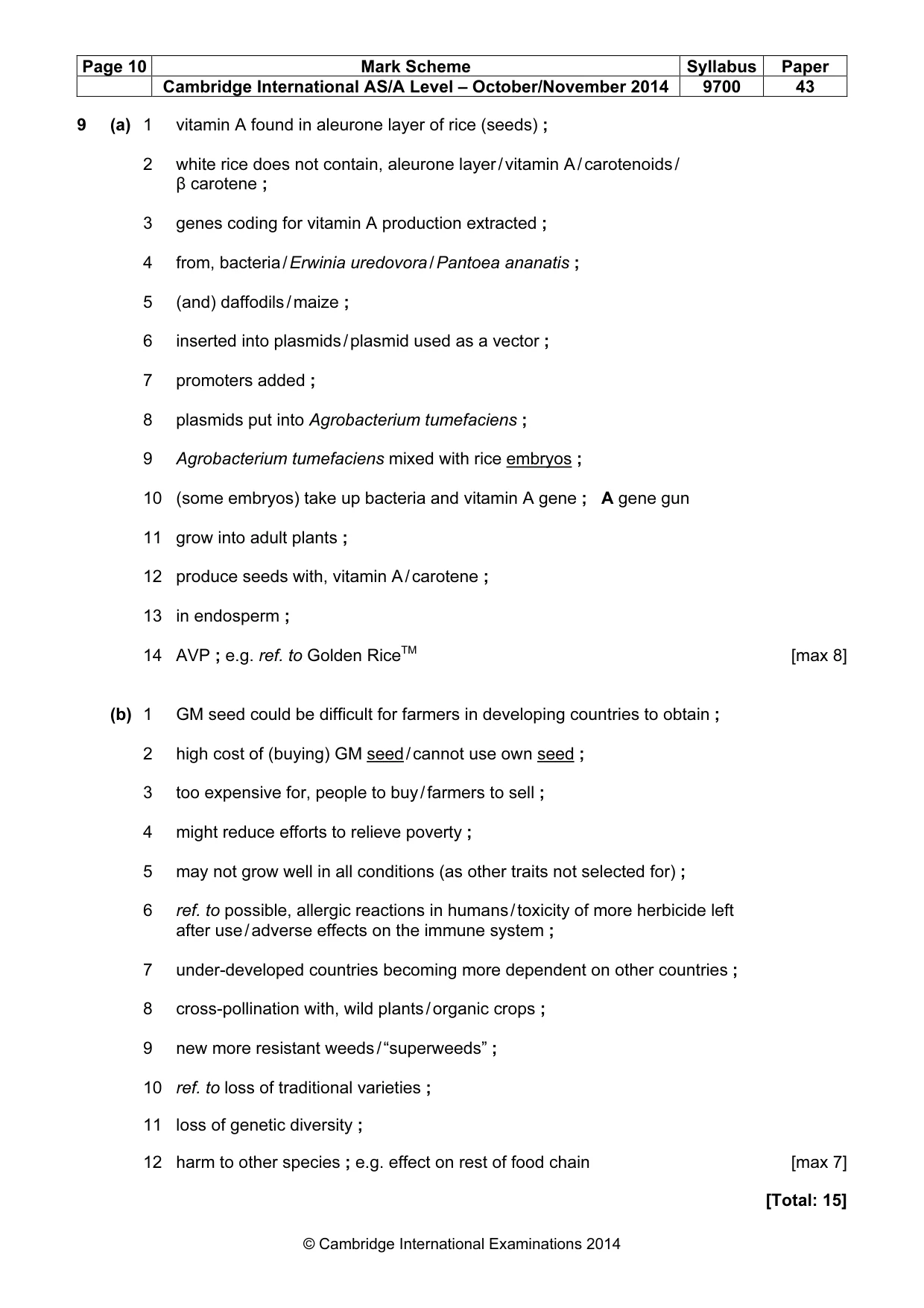
Page 10 Mark Scheme Syllabus Paper Cambridge International AS/A Level – October/November 2014 9700 43 © Cambridge International Examinations 2014 9 (a) 1 vitamin A found in aleurone layer of rice (seeds) ; 2 white rice does not contain, aleurone layer / vitamin A / carotenoids / β carotene ; 3 genes coding for vitamin A production extracted ; 4 from, bacteria / Erwinia uredovora / Pantoea ananatis ; 5 (and) daffodils / maize ; 6 inserted into plasmids / plasmid used as a vector ; 7 promoters added ; 8 plasmids put into Agrobacterium tumefaciens ; 9 Agrobacterium tumefaciens mixed with rice embryos ; 10 (some embryos) take up bacteria and vitamin A gene ; A gene gun 11 grow into adult plants ; 12 produce seeds with, vitamin A / carotene ; 13 in endosperm ; 14 AVP ; e.g. ref. to Golden RiceTM [max 8] (b) 1 GM seed could be difficult for farmers in developing countries to obtain ; 2 high cost of (buying) GM seed / cannot use own seed ; 3 too expensive for, people to buy / farmers to sell ; 4 might reduce efforts to relieve poverty ; 5 may not grow well in all conditions (as other traits not selected for) ; 6 ref. to possible, allergic reactions in humans / toxicity of more herbicide left after use / adverse effects on the immune system ; 7 under-developed countries becoming more dependent on other countries ; 8 cross-pollination with, wild plants / organic crops ; 9 new more resistant weeds / “superweeds” ; 10 ref. to loss of traditional varieties ; 11 loss of genetic diversity ; 12 harm to other species ; e.g. effect on rest of food chain [max 7] [Total: 15]
Mark scheme, page 11
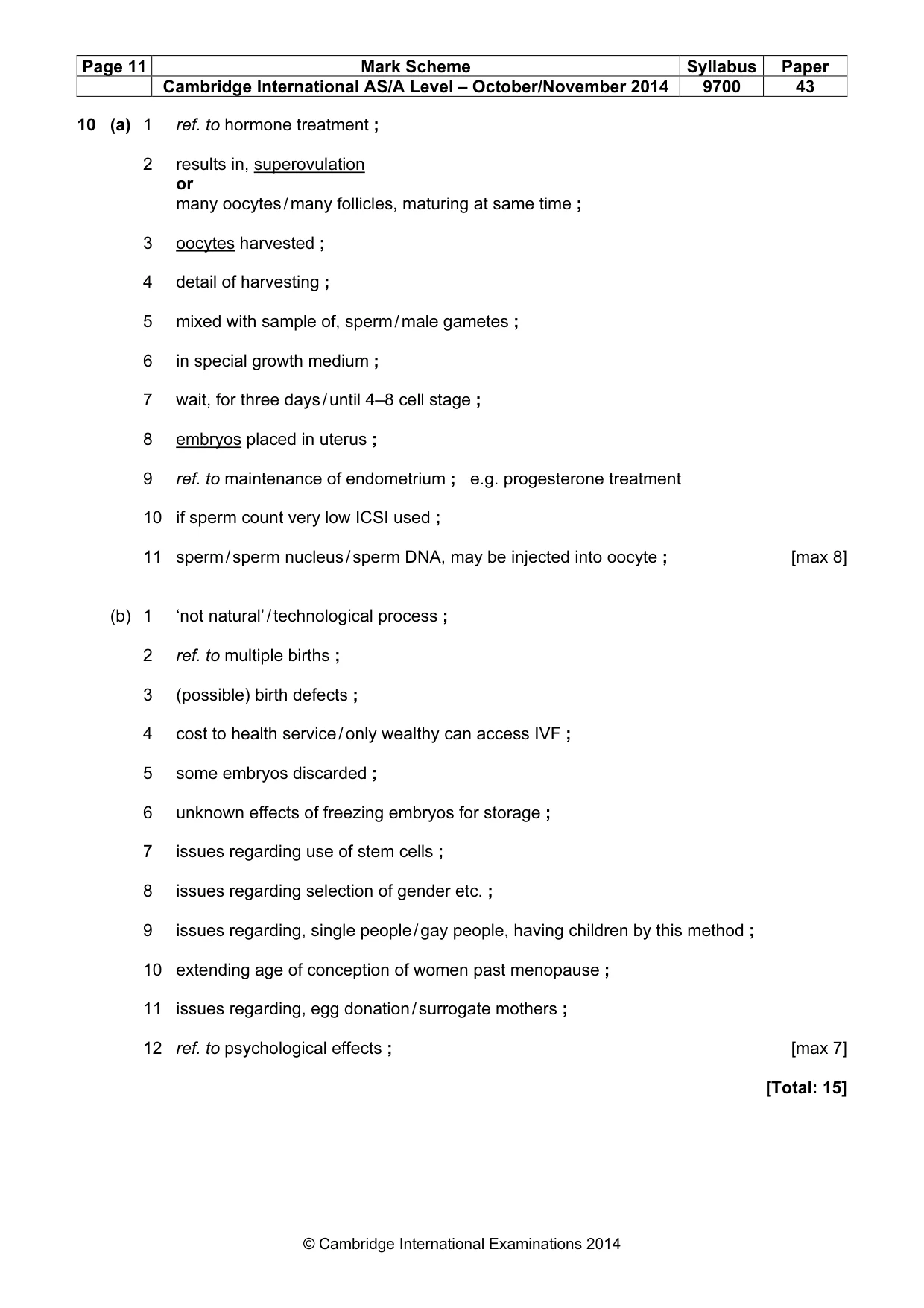
Page 11 Mark Scheme Syllabus Paper Cambridge International AS/A Level – October/November 2014 9700 43 © Cambridge International Examinations 2014 10 (a) 1 ref. to hormone treatment ; 2 results in, superovulation or many oocytes / many follicles, maturing at same time ; 3 oocytes harvested ; 4 detail of harvesting ; 5 mixed with sample of, sperm / male gametes ; 6 in special growth medium ; 7 wait, for three days / until 4–8 cell stage ; 8 embryos placed in uterus ; 9 ref. to maintenance of endometrium ; e.g. progesterone treatment 10 if sperm count very low ICSI used ; 11 sperm / sperm nucleus / sperm DNA, may be injected into oocyte ; [max 8] (b) 1 ‘not natural’ / technological process ; 2 ref. to multiple births ; 3 (possible) birth defects ; 4 cost to health service / only wealthy can access IVF ; 5 some embryos discarded ; 6 unknown effects of freezing embryos for storage ; 7 issues regarding use of stem cells ; 8 issues regarding selection of gender etc. ; 9 issues regarding, single people / gay people, having children by this method ; 10 extending age of conception of women past menopause ; 11 issues regarding, egg donation / surrogate mothers ; 12 ref. to psychological effects ; [max 7] [Total: 15]
What you needed in this session
Cambridge’s own grade thresholds for 2014 Oct/Nov, Paper 4 · Variant 3. A higher threshold means an easier paper — the bar moves with how the cohort did.