Cambridge A Level Biology 9700 — 2014 May/June Paper 2 · Variant 3
9700/23/M/J/14 · 60 marks · ≈68 min
The question paper and its mark scheme, free to read here and free to download. This is Cambridge’s own paper, exactly as it was sat.
Question paper12 pages
Mark scheme9 pages
Answers below. Sit the paper first if you are practising.
Paper as text
Question paper, page 1
This document consists of 12 printed pages. DC (LK/CGW) 79174/3 © UCLES 2014 [Turn over * 1 8 3 6 3 2 6 3 3 8 * BIOLOGY 9700/23 Paper 2 Structured Questions AS May/June 2014 1 hour 15 minutes Candidates answer on the Question Paper. No Additional Materials are required. READ THESE INSTRUCTIONS FIRST Write your Centre number, candidate number and name in the spaces provided at the top of this page. Write in dark blue or black ink. You may use a soft pencil for any diagrams, graphs or rough working. Do not use red ink, staples, paper clips, highlighters, glue or correction fluid. DO NOT WRITE IN ANY BARCODES. Answer all questions. Electronic calculators may be used. At the end of the examination, fasten all your work securely together. The number of marks is given in brackets [ ] at the end of each question or part question. Cambridge International Examinations Cambridge International Advanced Subsidiary and Advanced Level
Question paper, page 2
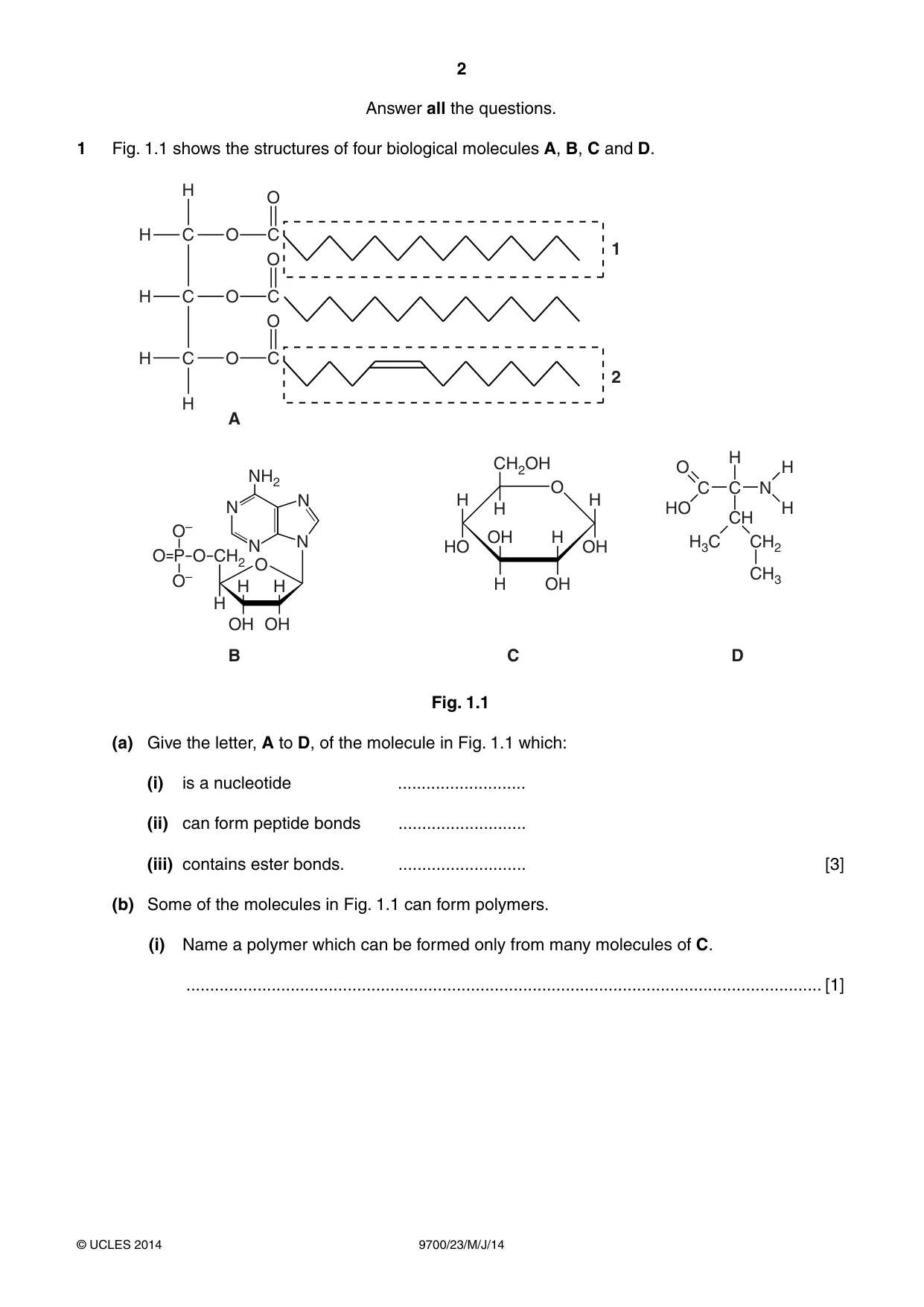
2 9700/23/M/J/14 © UCLES 2014 Answer all the questions. 1 Fig. 1.1 shows the structures of four biological molecules A, B, C and D. C O O C C O O 1 2 C C O O C H H H H H CH2OH H H H NH2 CH2 O P O– O– O H H H B C D A OH OH N C H H HO H3C CH2 CH3 H O CH C H OH H OH OH HO O N N O N N Fig. 1.1 (a) Give the letter, A to D, of the molecule in Fig. 1.1 which: (i) is a nucleotide … (ii) can form peptide bonds … (iii) contains ester bonds. … [3] (b) Some of the molecules in Fig. 1.1 can form polymers. (i) Name a polymer which can be formed only from many molecules of C. … [1]
Question paper, page 3
3 9700/23/M/J/14 © UCLES 2014 [Turn over (ii) State one way, visible in Fig. 1.1, in which the part labelled 1 of molecule A differs from the part labelled 2. … … …[1] (iii) Molecule D can form macromolecules with other similar monomers. These macromolecules have three dimensional shapes held in place by interactions or bonds other than those between adjacent monomers. Name two of these interactions or bonds. 1. … 2. … [2] [Total: 7]
Question paper, page 4
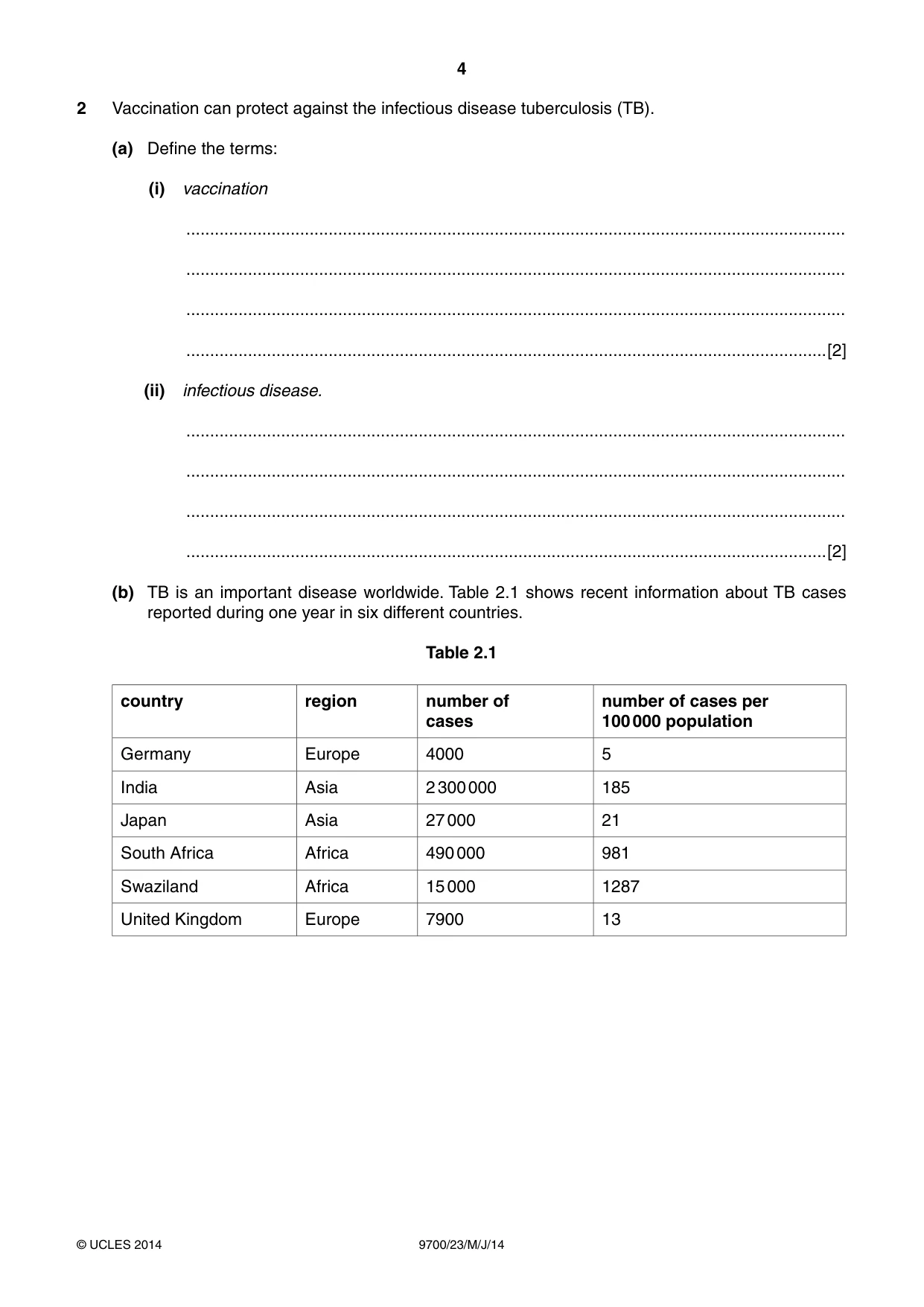
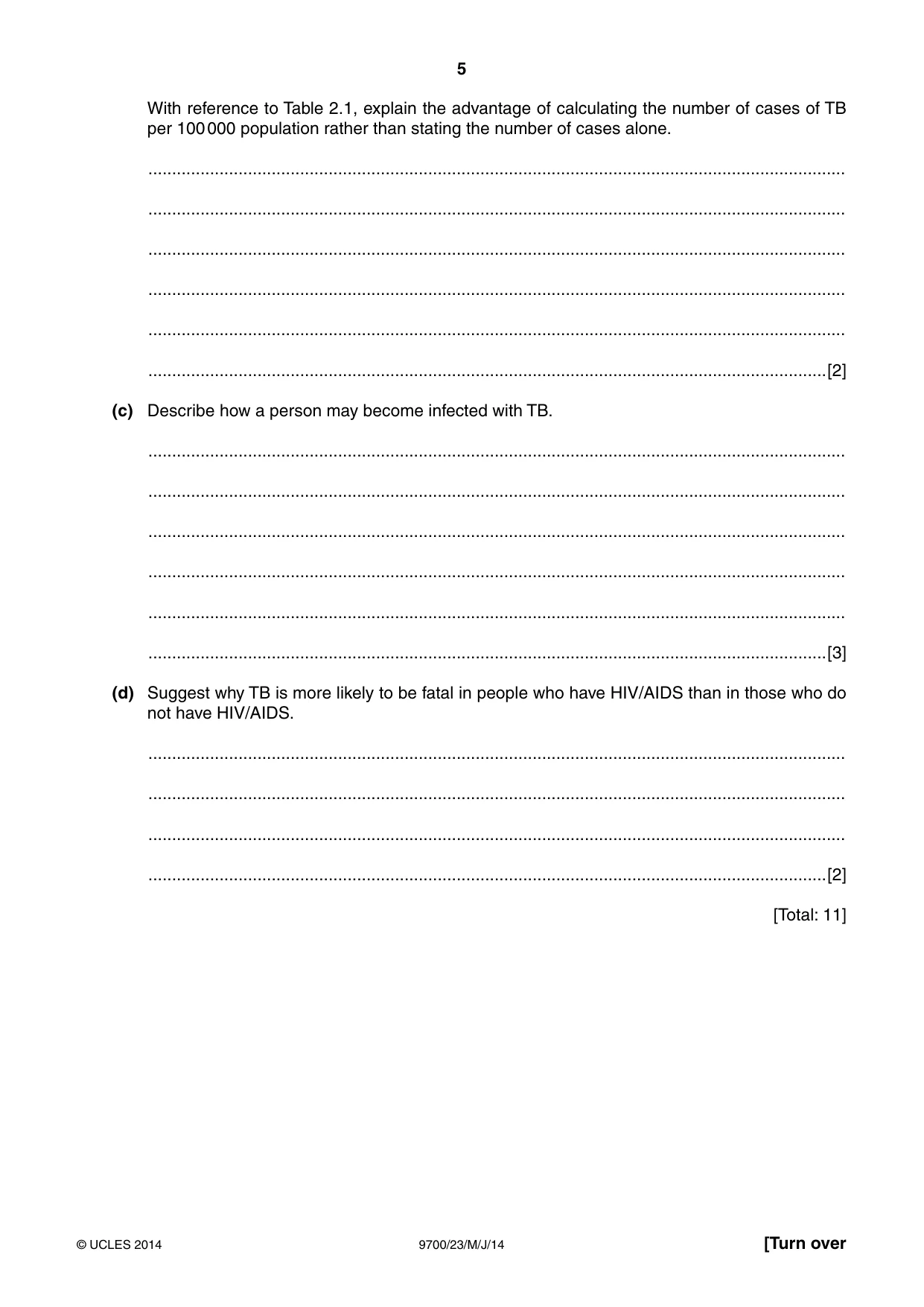
4 9700/23/M/J/14 © UCLES 2014 2 Vaccination can protect against the infectious disease tuberculosis (TB). (a) Define the terms: (i) vaccination … … … …[2] (ii) infectious disease. … … … …[2] (b) TB is an important disease worldwide. Table 2.1 shows recent information about TB cases reported during one year in six different countries. Table 2.1 country region number of cases number of cases per 100 000 population Germany Europe 4000 5 India Asia 2 300 000 185 Japan Asia 27 000 21 South Africa Africa 490 000 981 Swaziland Africa 15 000 1287 United Kingdom Europe 7900 13
Question paper, page 5
5 9700/23/M/J/14 © UCLES 2014 [Turn over With reference to Table 2.1, explain the advantage of calculating the number of cases of TB per 100 000 population rather than stating the number of cases alone. … … … … … …[2] (c) Describe how a person may become infected with TB. … … … … … …[3] (d) Suggest why TB is more likely to be fatal in people who have HIV/AIDS than in those who do not have HIV/AIDS. … … … …[2] [Total: 11]
Question paper, page 6
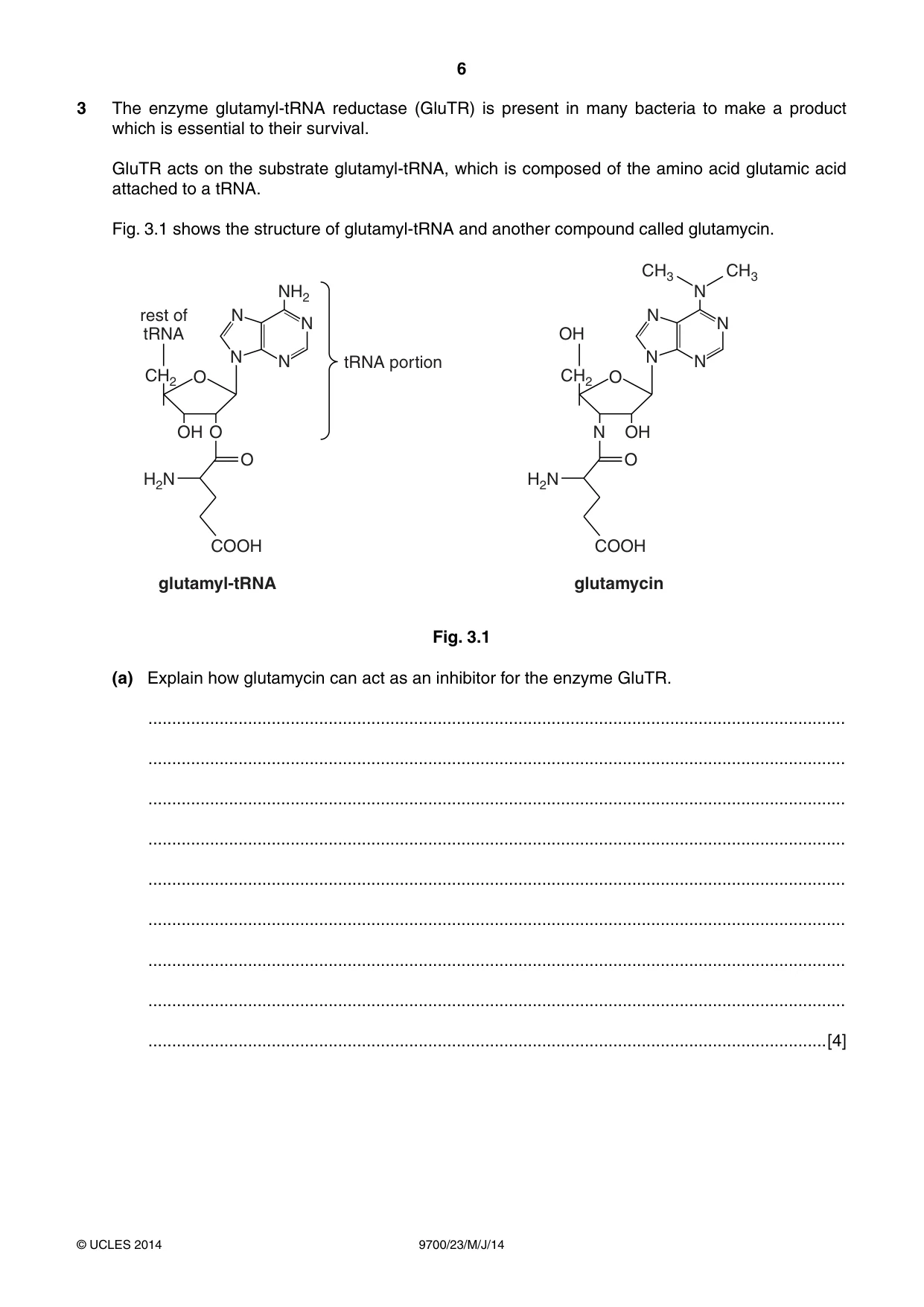
6 9700/23/M/J/14 © UCLES 2014 3 The enzyme glutamyl-tRNA reductase (GluTR) is present in many bacteria to make a product which is essential to their survival. GluTR acts on the substrate glutamyl-tRNA, which is composed of the amino acid glutamic acid attached to a tRNA. Fig. 3.1 shows the structure of glutamyl-tRNA and another compound called glutamycin. CH2 H2N COOH glutamyl-tRNA NH2 O O OH rest of tRNA N N O N N tRNA portion CH2 CH3 CH3 H2N COOH glutamycin OH O N OH N N O N N N Fig. 3.1 (a) Explain how glutamycin can act as an inhibitor for the enzyme GluTR. … … … … … … … … …[4]
Question paper, page 7
7 9700/23/M/J/14 © UCLES 2014 [Turn over (b) The bacteria take in glutamic acid by active transport. Describe the process of active transport. … … … … … … …[3] (c) In leguminous plants, glutamic acid is also essential for the formation of root nodules containing the bacterium Rhizobium. (i) Name the stage in the nitrogen cycle carried out by Rhizobium. …[1] (ii) Suggest advantages of Rhizobium living in root nodules of leguminous plants. … … … … …[2] (iii) Explain the role of Rhizobium in the growth of leguminous plants. … … … … …[2] [Total: 12]
Question paper, page 8
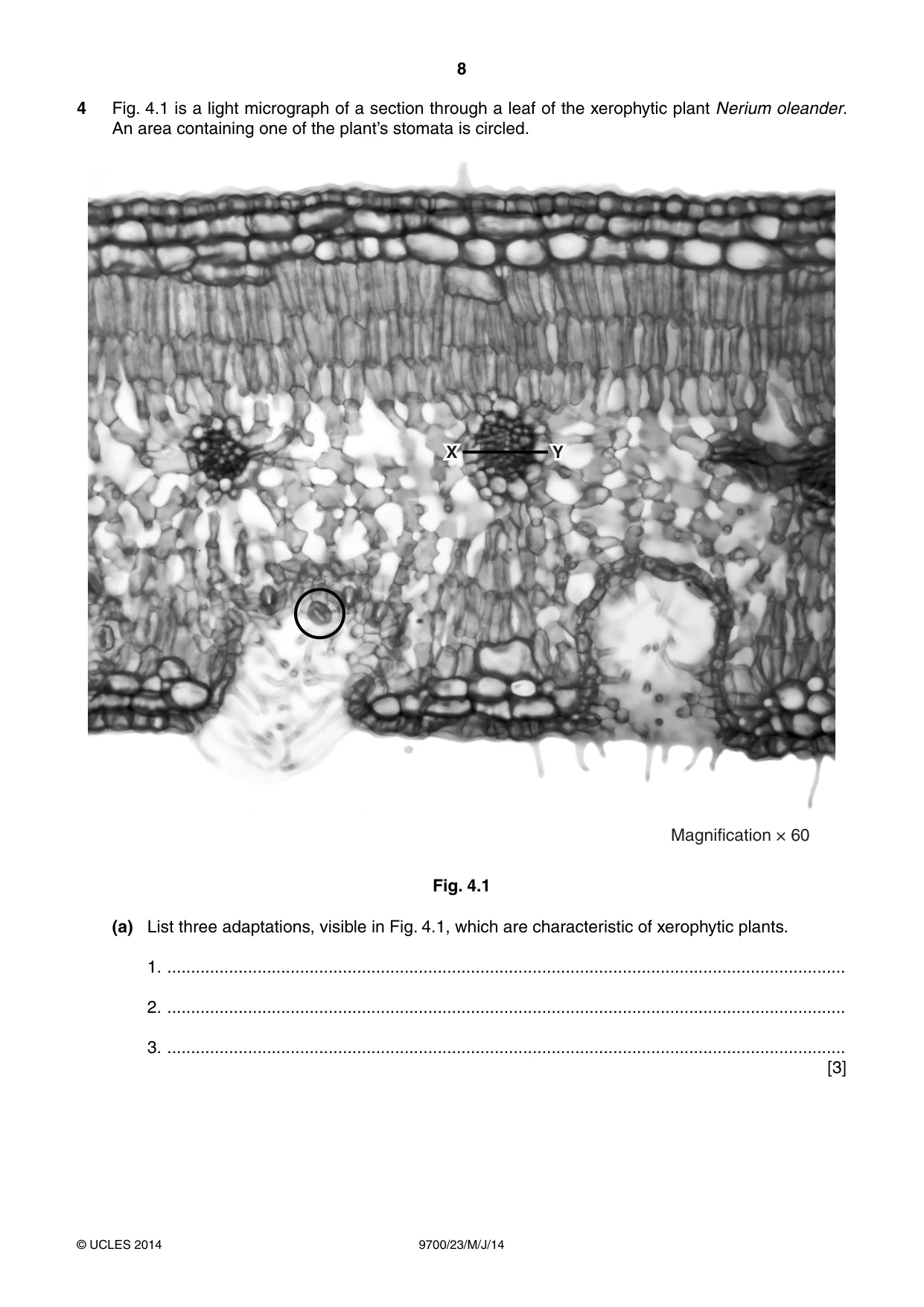
8 9700/23/M/J/14 © UCLES 2014 4 Fig. 4.1 is a light micrograph of a section through a leaf of the xerophytic plant Nerium oleander. An area containing one of the plant’s stomata is circled. X Y Magnification × 60 Fig. 4.1 (a) List three adaptations, visible in Fig. 4.1, which are characteristic of xerophytic plants. 1. … 2. … 3. … [3]
Question paper, page 9
9 9700/23/M/J/14 © UCLES 2014 [Turn over (b) Calculate the diameter of the vascular bundle across the line X-Y. Show your working and give your answer to the nearest 100 μm. answer … μm [2] (c) Describe the process of transpiration in plants such as N. oleander. … … … … … … … … …[4] [Total: 9]
Question paper, page 10
10 9700/23/M/J/14 © UCLES 2014 5 When haemoglobin in red blood cells travels through the capillaries of the lungs it binds with oxygen to form oxyhaemoglobin. When oxyhaemoglobin reaches respiring tissues, it dissociates to release oxygen. (a) Explain what causes oxyhaemoglobin to dissociate readily in actively respiring tissues. … … … … … … … …[3] (b) When people move to high altitudes there is an increased production of red blood cells. Explain why more red blood cells are produced when people move to higher altitudes. … … … … … …[3]
Question paper, page 11
11 9700/23/M/J/14 © UCLES 2014 [Turn over (c) Some people who move to live at high altitudes can develop chronic mountain sickness. One feature of this condition makes it difficult for the heart to pump blood around the body owing to the increased production of red blood cells. The EPAS1 gene codes for a type of protein called a transcription factor, which helps to regulate the transcription of genes involved in red blood cell production. Some people have a mutated version of this gene that prevents the over-production of red blood cells. (i) Explain what is meant by transcription. … … … … … …[3] (ii) Describe how a mutated version of the EPAS1 gene can cause a change in the transcription factor protein produced. … … … … … … … …[3] (iii) Some transcription factors may prevent transcription. Suggest two ways in which they may do this. 1. … … 2. … … [2] [Total: 14]
Question paper, page 12
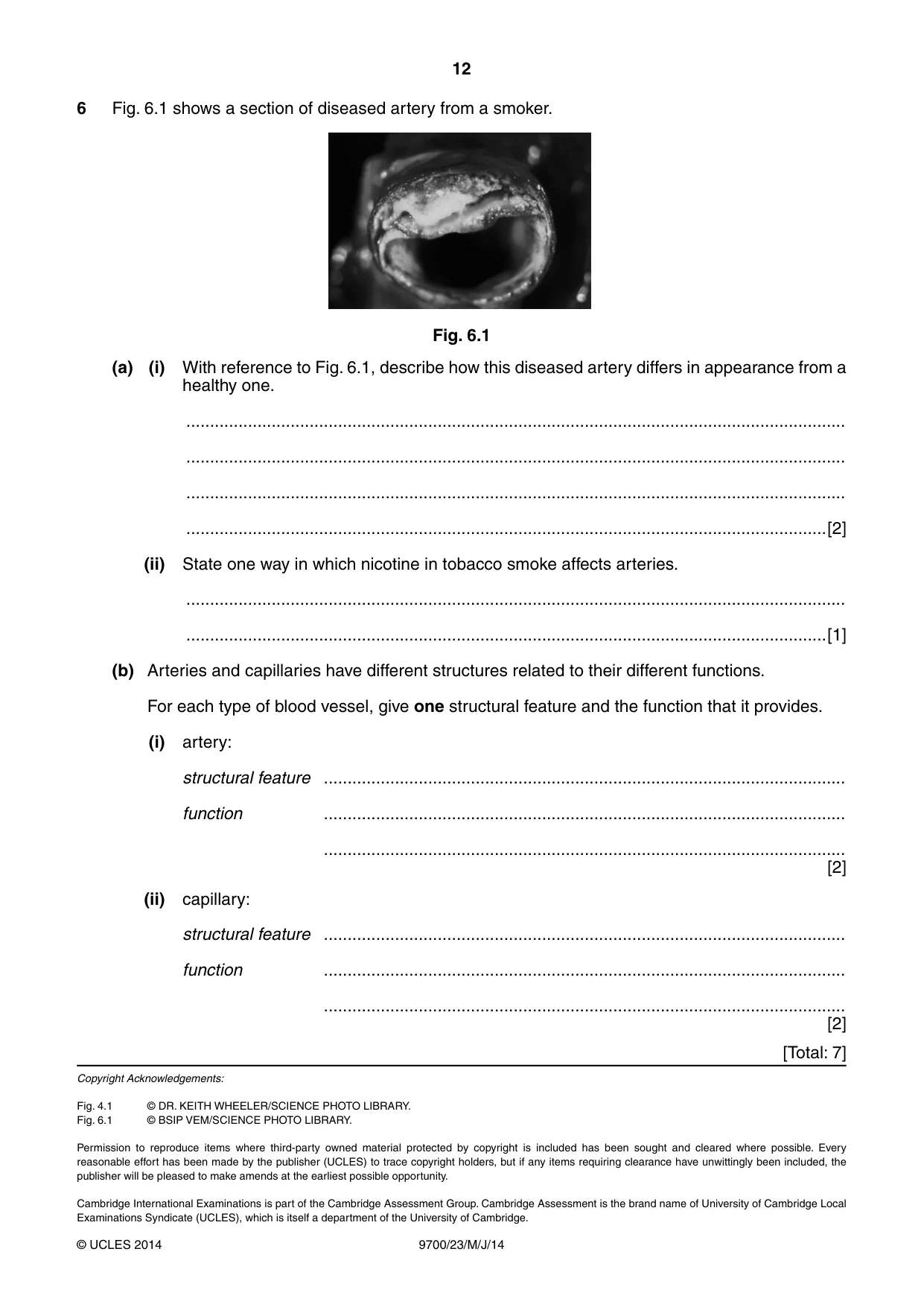
12 9700/23/M/J/14 © UCLES 2014 Copyright Acknowledgements: Fig. 4.1 © DR. KEITH WHEELER/SCIENCE PHOTO LIBRARY. Fig. 6.1 © BSIP VEM/SCIENCE PHOTO LIBRARY. Permission to reproduce items where third-party owned material protected by copyright is included has been sought and cleared where possible. Every reasonable effort has been made by the publisher (UCLES) to trace copyright holders, but if any items requiring clearance have unwittingly been included, the publisher will be pleased to make amends at the earliest possible opportunity. Cambridge International Examinations is part of the Cambridge Assessment Group. Cambridge Assessment is the brand name of University of Cambridge Local Examinations Syndicate (UCLES), which is itself a department of the University of Cambridge. 6 Fig. 6.1 shows a section of diseased artery from a smoker. Fig. 6.1 (a) (i) With reference to Fig. 6.1, describe how this diseased artery differs in appearance from a healthy one. … … … …[2] (ii) State one way in which nicotine in tobacco smoke affects arteries. … …[1] (b) Arteries and capillaries have different structures related to their different functions. For each type of blood vessel, give one structural feature and the function that it provides. (i) artery: structural feature … function … … [2] (ii) capillary: structural feature … function … … [2] [Total: 7]
Mark scheme, page 1
CAMBRIDGE INTERNATIONAL EXAMINATIONS GCE Advanced Subsidiary Level and GCE Advanced Level MARK SCHEME for the May/June 2014 series 9700 BIOLOGY 9700/23 Paper 2 (AS Structured Questions), maximum raw mark 60 This mark scheme is published as an aid to teachers and candidates, to indicate the requirements of the examination. It shows the basis on which Examiners were instructed to award marks. It does not indicate the details of the discussions that took place at an Examiners’ meeting before marking began, which would have considered the acceptability of alternative answers. Mark schemes should be read in conjunction with the question paper and the Principal Examiner Report for Teachers. Cambridge will not enter into discussions about these mark schemes. Cambridge is publishing the mark schemes for the May/June 2014 series for most IGCSE, GCE Advanced Level and Advanced Subsidiary Level components and some Ordinary Level components.
Mark scheme, page 2
Page 2 Mark Scheme Syllabus Paper GCE AS/A LEVEL – May/June 2014 9700 23 © Cambridge International Examinations 2014 Mark scheme abbreviations: ; separates marking points / alternative answers for the same point R reject A accept (for answers correctly cued by the question, or by extra guidance) AW alternative wording (where responses vary more than usual) underline actual word given must be used by candidate (grammatical variants accepted) max indicates the maximum number of marks that can be given ora or reverse argument mp marking point (with relevant number) ecf error carried forward I ignore
Mark scheme, page 3
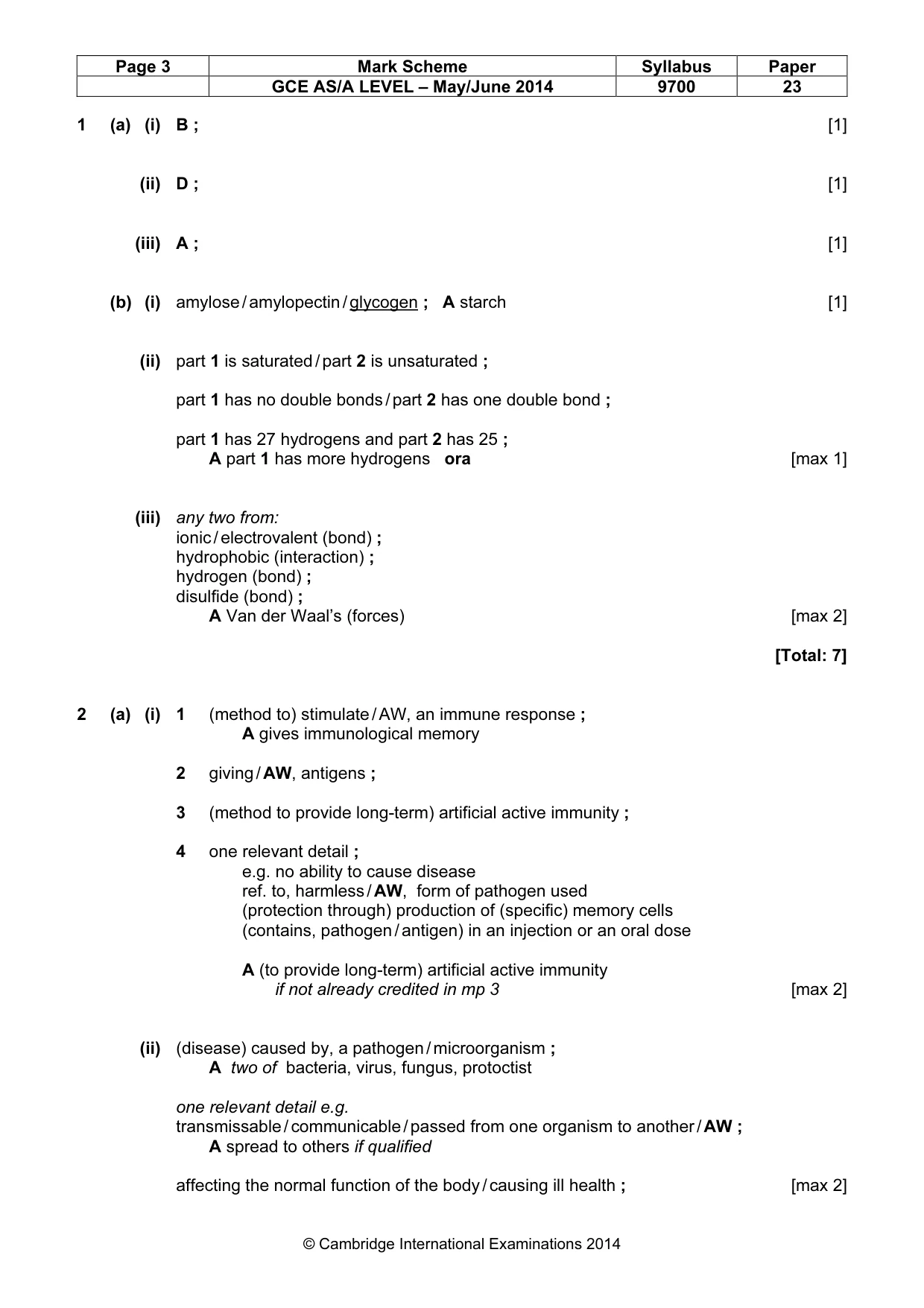
Page 3 Mark Scheme Syllabus Paper GCE AS/A LEVEL – May/June 2014 9700 23 © Cambridge International Examinations 2014 1 (a) (i) B ; [1] (ii) D ; [1] (iii) A ; [1] (b) (i) amylose / amylopectin / glycogen ; A starch [1] (ii) part 1 is saturated / part 2 is unsaturated ; part 1 has no double bonds / part 2 has one double bond ; part 1 has 27 hydrogens and part 2 has 25 ; A part 1 has more hydrogens ora [max 1] (iii) any two from: ionic / electrovalent (bond) ; hydrophobic (interaction) ; hydrogen (bond) ; disulfide (bond) ; A Van der Waal’s (forces) [max 2] [Total: 7] 2 (a) (i) 1 (method to) stimulate / AW, an immune response ; A gives immunological memory 2 giving / AW, antigens ; 3 (method to provide long-term) artificial active immunity ; 4 one relevant detail ; e.g. no ability to cause disease ref. to, harmless / AW, form of pathogen used (protection through) production of (specific) memory cells (contains, pathogen / antigen) in an injection or an oral dose A (to provide long-term) artificial active immunity if not already credited in mp 3 [max 2] (ii) (disease) caused by, a pathogen / microorganism ; A two of bacteria, virus, fungus, protoctist one relevant detail e.g. transmissable / communicable / passed from one organism to another / AW ; A spread to others if qualified affecting the normal function of the body / causing ill health ; [max 2]
Mark scheme, page 4
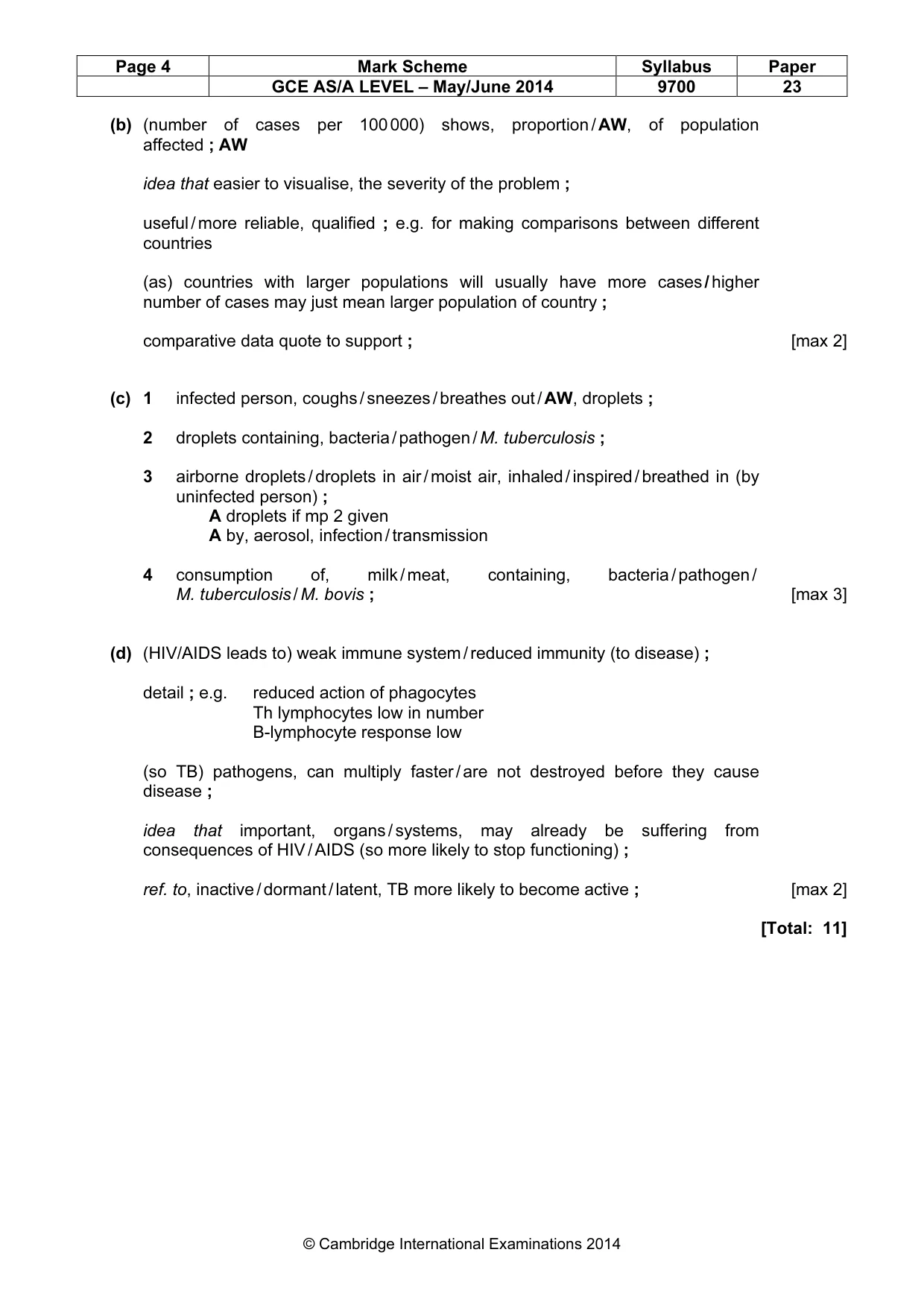
Page 4 Mark Scheme Syllabus Paper GCE AS/A LEVEL – May/June 2014 9700 23 © Cambridge International Examinations 2014 (b) (number of cases per 100 000) shows, proportion / AW, of population affected ; AW idea that easier to visualise, the severity of the problem ; useful / more reliable, qualified ; e.g. for making comparisons between different countries (as) countries with larger populations will usually have more cases / higher number of cases may just mean larger population of country ; comparative data quote to support ; [max 2] (c) 1 infected person, coughs / sneezes / breathes out / AW, droplets ; 2 droplets containing, bacteria / pathogen / M. tuberculosis ; 3 airborne droplets / droplets in air / moist air, inhaled / inspired / breathed in (by uninfected person) ; A droplets if mp 2 given A by, aerosol, infection / transmission 4 consumption of, milk / meat, containing, bacteria / pathogen / M. tuberculosis / M. bovis ; [max 3] (d) (HIV/AIDS leads to) weak immune system / reduced immunity (to disease) ; detail ; e.g. reduced action of phagocytes Th lymphocytes low in number B-lymphocyte response low (so TB) pathogens, can multiply faster / are not destroyed before they cause disease ; idea that important, organs / systems, may already be suffering from consequences of HIV / AIDS (so more likely to stop functioning) ; ref. to, inactive / dormant / latent, TB more likely to become active ; [max 2] [Total: 11]
Mark scheme, page 5
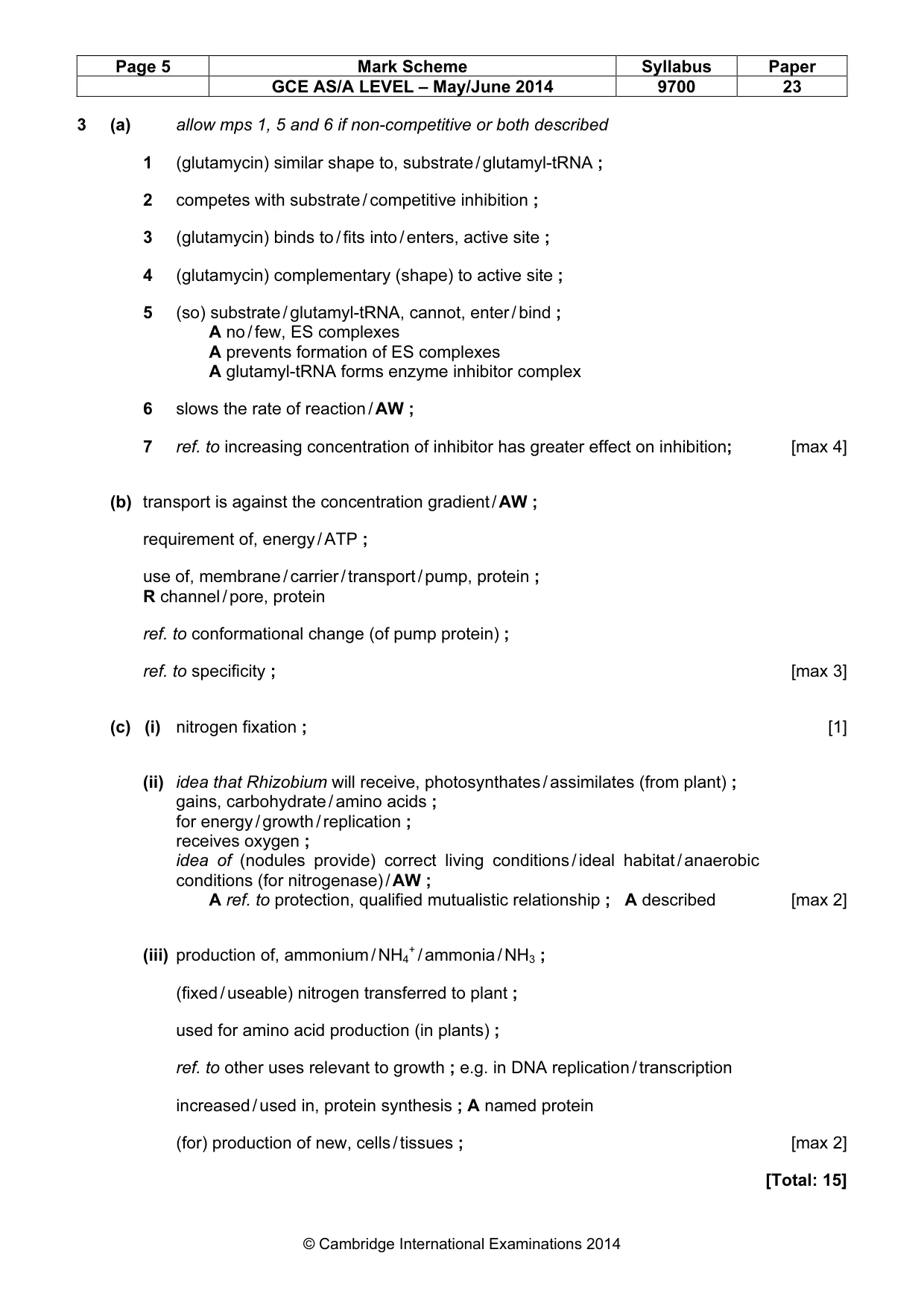
Page 5 Mark Scheme Syllabus Paper GCE AS/A LEVEL – May/June 2014 9700 23 © Cambridge International Examinations 2014 3 (a) allow mps 1, 5 and 6 if non-competitive or both described 1 (glutamycin) similar shape to, substrate / glutamyl-tRNA ; 2 competes with substrate / competitive inhibition ; 3 (glutamycin) binds to / fits into / enters, active site ; 4 (glutamycin) complementary (shape) to active site ; 5 (so) substrate / glutamyl-tRNA, cannot, enter / bind ; A no / few, ES complexes A prevents formation of ES complexes A glutamyl-tRNA forms enzyme inhibitor complex 6 slows the rate of reaction / AW ; 7 ref. to increasing concentration of inhibitor has greater effect on inhibition; [max 4] (b) transport is against the concentration gradient / AW ; requirement of, energy / ATP ; use of, membrane / carrier / transport / pump, protein ; R channel / pore, protein ref. to conformational change (of pump protein) ; ref. to specificity ; [max 3] (c) (i) nitrogen fixation ; [1] (ii) idea that Rhizobium will receive, photosynthates / assimilates (from plant) ; gains, carbohydrate / amino acids ; for energy / growth / replication ; receives oxygen ; idea of (nodules provide) correct living conditions / ideal habitat / anaerobic conditions (for nitrogenase) / AW ; A ref. to protection, qualified mutualistic relationship ; A described [max 2] (iii) production of, ammonium / NH4 + / ammonia / NH3 ; (fixed / useable) nitrogen transferred to plant ; used for amino acid production (in plants) ; ref. to other uses relevant to growth ; e.g. in DNA replication / transcription increased / used in, protein synthesis ; A named protein (for) production of new, cells / tissues ; [max 2] [Total: 15]
Mark scheme, page 6
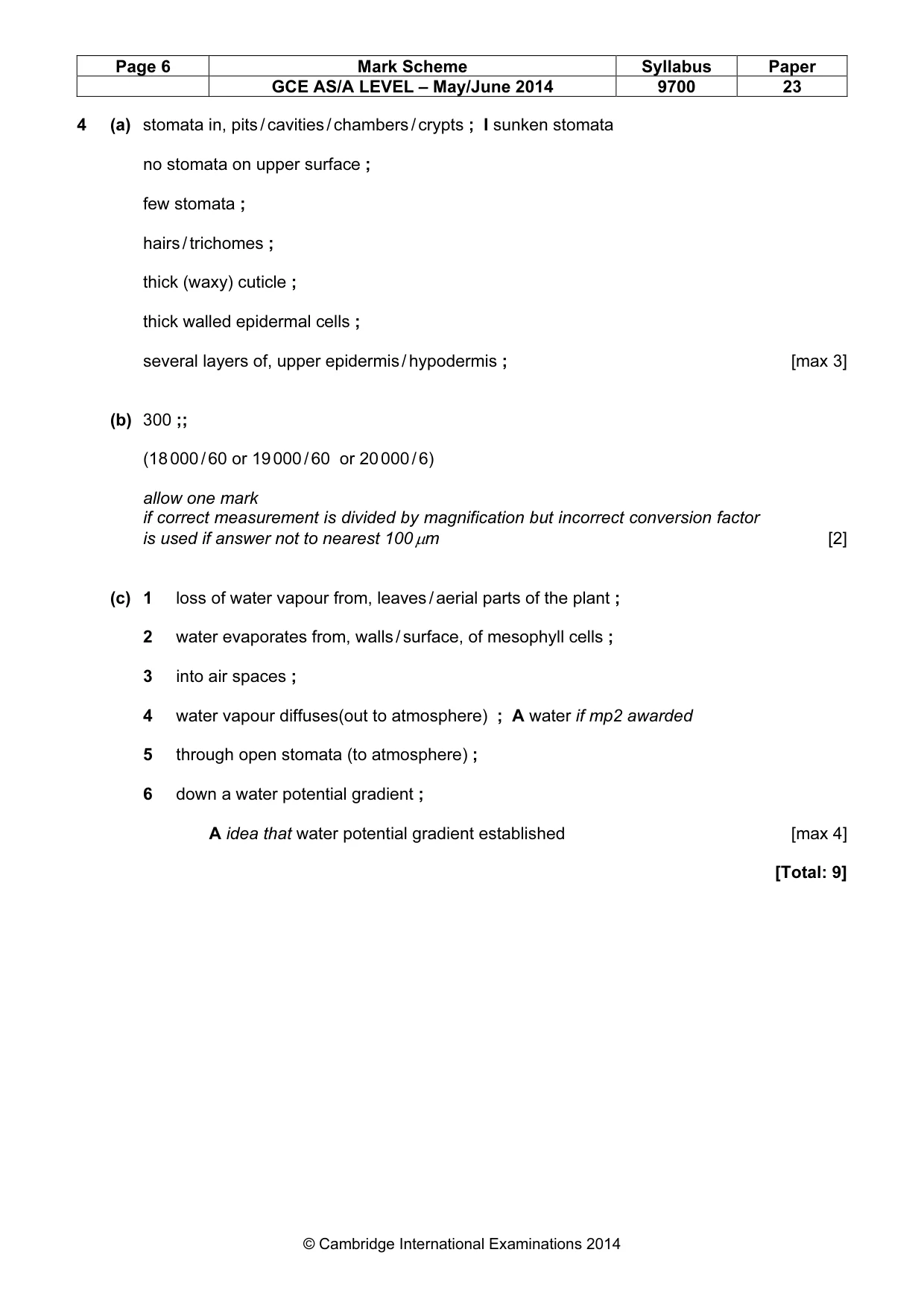
Page 6 Mark Scheme Syllabus Paper GCE AS/A LEVEL – May/June 2014 9700 23 © Cambridge International Examinations 2014 4 (a) stomata in, pits / cavities / chambers / crypts ; I sunken stomata no stomata on upper surface ; few stomata ; hairs / trichomes ; thick (waxy) cuticle ; thick walled epidermal cells ; several layers of, upper epidermis / hypodermis ; [max 3] (b) 300 ;; (18 000 / 60 or 19 000 / 60 or 20 000 / 6) allow one mark if correct measurement is divided by magnification but incorrect conversion factor is used if answer not to nearest 100 µm [2] (c) 1 loss of water vapour from, leaves / aerial parts of the plant ; 2 water evaporates from, walls / surface, of mesophyll cells ; 3 into air spaces ; 4 water vapour diffuses(out to atmosphere) ; A water if mp2 awarded 5 through open stomata (to atmosphere) ; 6 down a water potential gradient ; A idea that water potential gradient established [max 4] [Total: 9]
Mark scheme, page 7
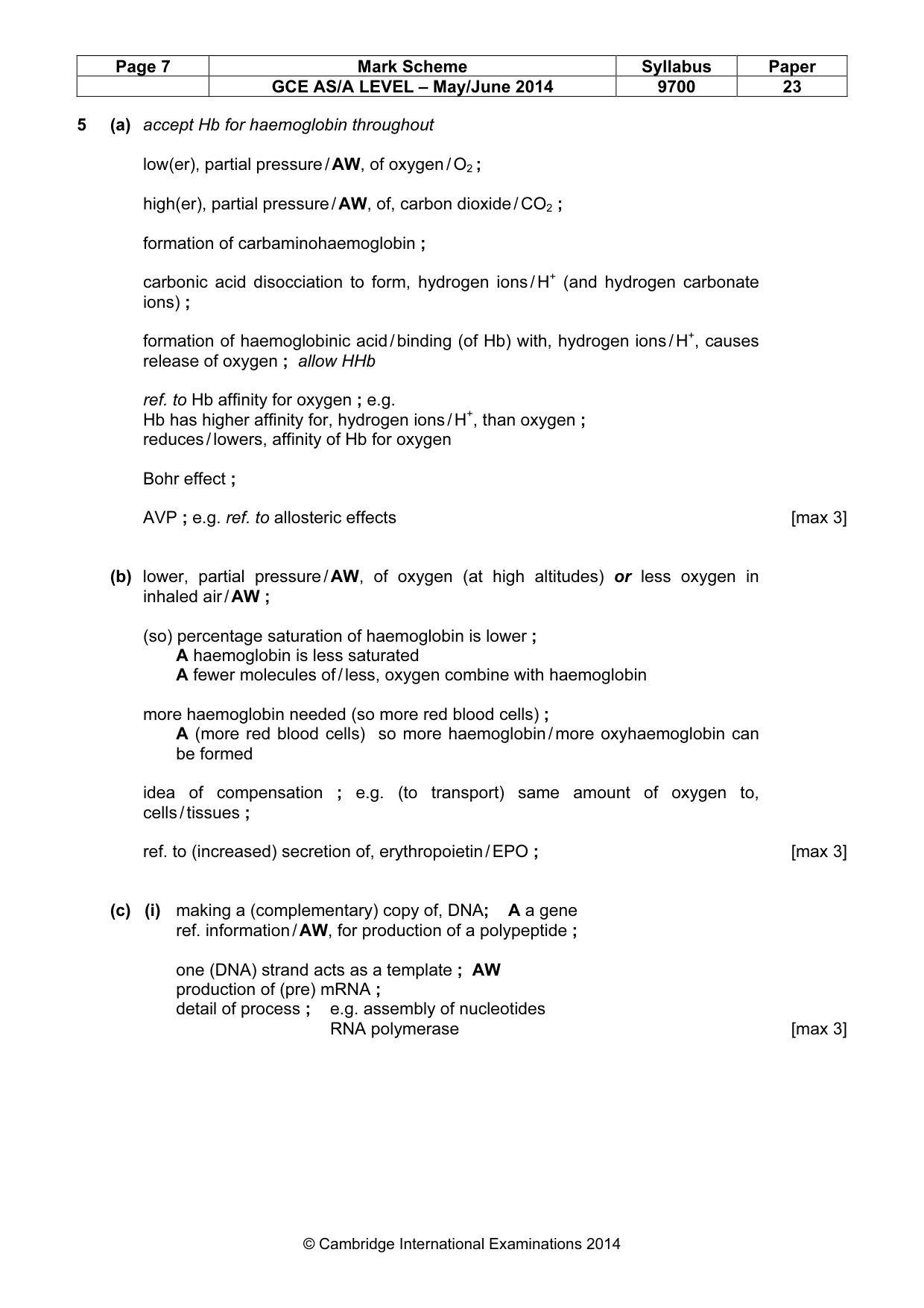
Page 7 Mark Scheme Syllabus Paper GCE AS/A LEVEL – May/June 2014 9700 23 © Cambridge International Examinations 2014 5 (a) accept Hb for haemoglobin throughout low(er), partial pressure / AW, of oxygen / O2 ; high(er), partial pressure / AW, of, carbon dioxide / CO2 ; formation of carbaminohaemoglobin ; carbonic acid disocciation to form, hydrogen ions / H+ (and hydrogen carbonate ions) ; formation of haemoglobinic acid / binding (of Hb) with, hydrogen ions / H+, causes release of oxygen ; allow HHb ref. to Hb affinity for oxygen ; e.g. Hb has higher affinity for, hydrogen ions / H+, than oxygen ; reduces / lowers, affinity of Hb for oxygen Bohr effect ; AVP ; e.g. ref. to allosteric effects [max 3] (b) lower, partial pressure / AW, of oxygen (at high altitudes) or less oxygen in inhaled air / AW ; (so) percentage saturation of haemoglobin is lower ; A haemoglobin is less saturated A fewer molecules of / less, oxygen combine with haemoglobin more haemoglobin needed (so more red blood cells) ; A (more red blood cells) so more haemoglobin / more oxyhaemoglobin can be formed idea of compensation ; e.g. (to transport) same amount of oxygen to, cells / tissues ; ref. to (increased) secretion of, erythropoietin / EPO ; [max 3] (c) (i) making a (complementary) copy of, DNA; A a gene ref. information / AW, for production of a polypeptide ; one (DNA) strand acts as a template ; AW production of (pre) mRNA ; detail of process ; e.g. assembly of nucleotides RNA polymerase [max 3]
Mark scheme, page 8
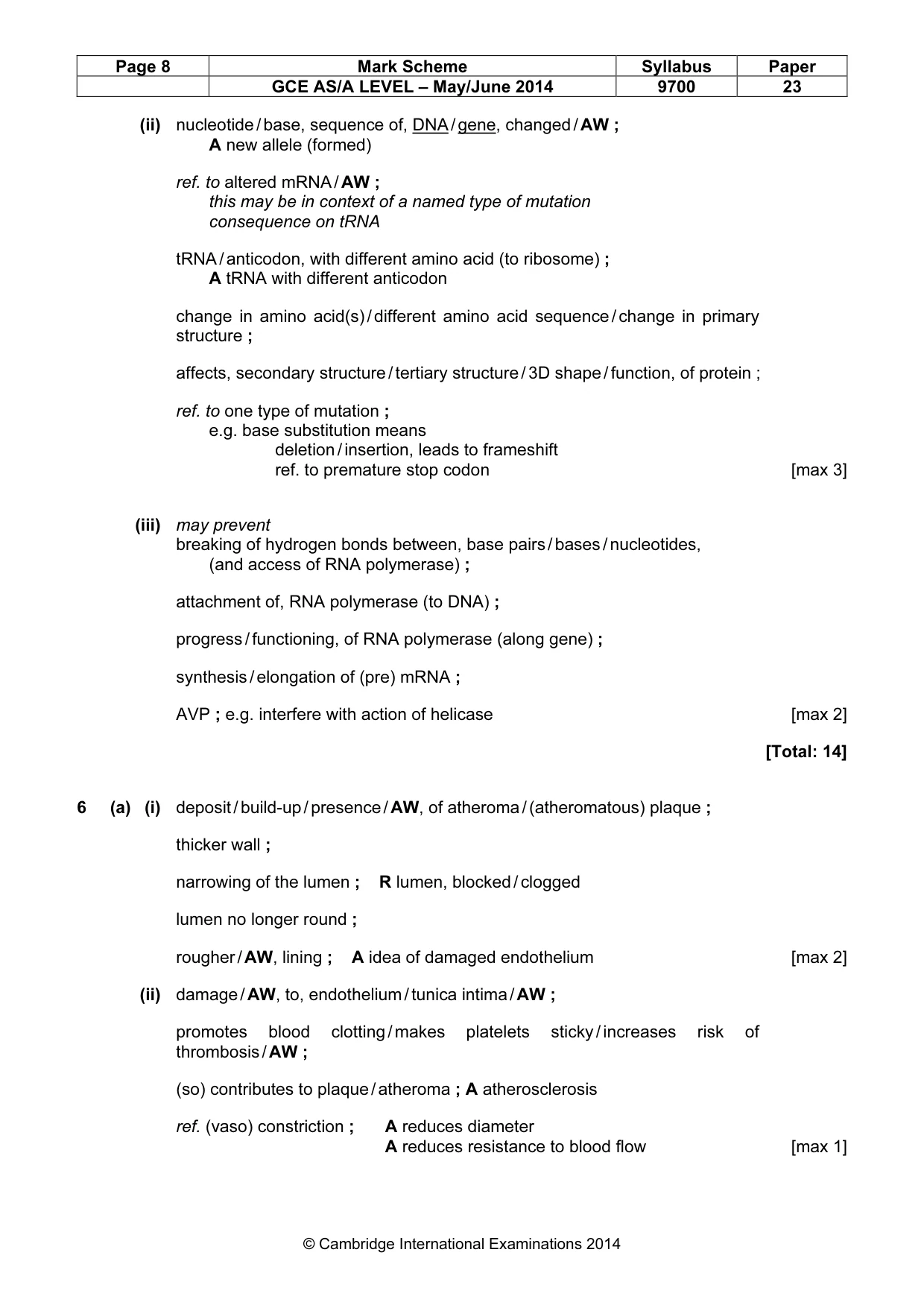
Page 8 Mark Scheme Syllabus Paper GCE AS/A LEVEL – May/June 2014 9700 23 © Cambridge International Examinations 2014 (ii) nucleotide / base, sequence of, DNA / gene, changed / AW ; A new allele (formed) ref. to altered mRNA / AW ; this may be in context of a named type of mutation consequence on tRNA tRNA / anticodon, with different amino acid (to ribosome) ; A tRNA with different anticodon change in amino acid(s) / different amino acid sequence / change in primary structure ; affects, secondary structure / tertiary structure / 3D shape / function, of protein ; ref. to one type of mutation ; e.g. base substitution means deletion / insertion, leads to frameshift ref. to premature stop codon [max 3] (iii) may prevent breaking of hydrogen bonds between, base pairs / bases / nucleotides, (and access of RNA polymerase) ; attachment of, RNA polymerase (to DNA) ; progress / functioning, of RNA polymerase (along gene) ; synthesis / elongation of (pre) mRNA ; AVP ; e.g. interfere with action of helicase [max 2] [Total: 14] 6 (a) (i) deposit / build-up / presence / AW, of atheroma / (atheromatous) plaque ; thicker wall ; narrowing of the lumen ; R lumen, blocked / clogged lumen no longer round ; rougher / AW, lining ; A idea of damaged endothelium [max 2] (ii) damage / AW, to, endothelium / tunica intima / AW ; promotes blood clotting / makes platelets sticky / increases risk of thrombosis / AW ; (so) contributes to plaque / atheroma ; A atherosclerosis ref. (vaso) constriction ; A reduces diameter A reduces resistance to blood flow [max 1]
Mark scheme, page 9
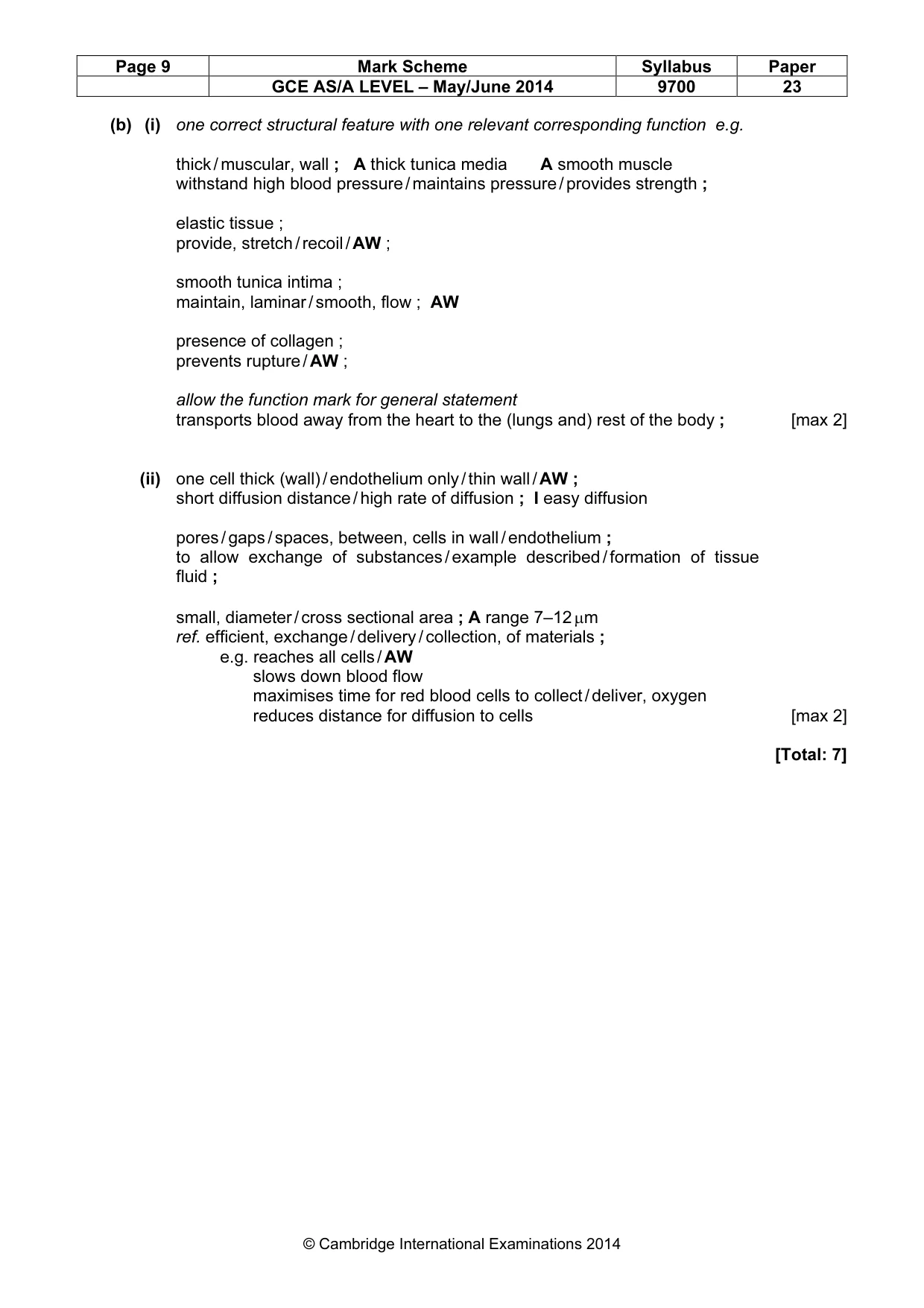
Page 9 Mark Scheme Syllabus Paper GCE AS/A LEVEL – May/June 2014 9700 23 © Cambridge International Examinations 2014 (b) (i) one correct structural feature with one relevant corresponding function e.g. thick / muscular, wall ; A thick tunica media A smooth muscle withstand high blood pressure / maintains pressure / provides strength ; elastic tissue ; provide, stretch / recoil / AW ; smooth tunica intima ; maintain, laminar / smooth, flow ; AW presence of collagen ; prevents rupture / AW ; allow the function mark for general statement transports blood away from the heart to the (lungs and) rest of the body ; [max 2] (ii) one cell thick (wall) / endothelium only / thin wall / AW ; short diffusion distance / high rate of diffusion ; I easy diffusion pores / gaps / spaces, between, cells in wall / endothelium ; to allow exchange of substances / example described / formation of tissue fluid ; small, diameter / cross sectional area ; A range 7–12 µm ref. efficient, exchange / delivery / collection, of materials ; e.g. reaches all cells / AW slows down blood flow maximises time for red blood cells to collect / deliver, oxygen reduces distance for diffusion to cells [max 2] [Total: 7]
What you needed in this session
Cambridge’s own grade thresholds for 2014 May/June, Paper 2 · Variant 3. A higher threshold means an easier paper — the bar moves with how the cohort did.