Cambridge A Level Biology 9700 — 2013 Oct/Nov Paper 4 · Variant 2
9700/42/O/N/13 · 100 marks · ≈113 min
The question paper and its mark scheme, free to read here and free to download. This is Cambridge’s own paper, exactly as it was sat.
Question paper24 pages




Mark scheme10 pages
Answers below. Sit the paper first if you are practising.
Paper as text
Question paper, page 1
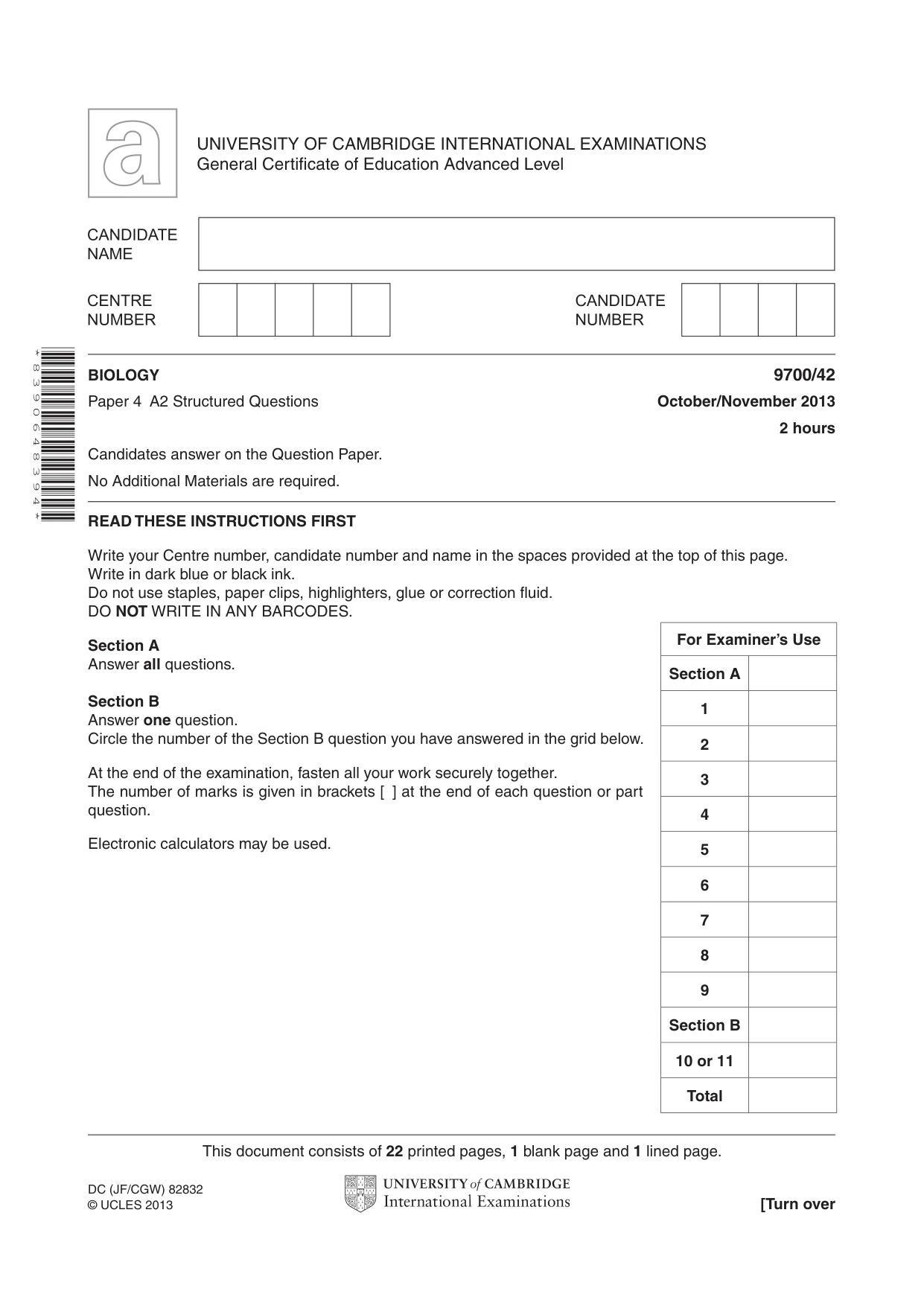
This document consists of 22 printed pages, 1 blank page and 1 lined page. DC (JF/CGW) 82832 © UCLES 2013 [Turn over UNIVERSITY OF CAMBRIDGE INTERNATIONAL EXAMINATIONS General Certificate of Education Advanced Level READ THESE INSTRUCTIONS FIRST Write your Centre number, candidate number and name in the spaces provided at the top of this page. Write in dark blue or black ink. Do not use staples, paper clips, highlighters, glue or correction fluid. DO NOT WRITE IN ANY BARCODES. Section A Answer all questions. Section B Answer one question. Circle the number of the Section B question you have answered in the grid below. At the end of the examination, fasten all your work securely together. The number of marks is given in brackets [ ] at the end of each question or part question. Electronic calculators may be used. * 8 3 9 0 6 4 8 3 9 4 * BIOLOGY 9700/42 Paper 4 A2 Structured Questions October/November 2013 2 hours Candidates answer on the Question Paper. No Additional Materials are required. For Examiner’s Use Section A 1 2 3 4 5 6 7 8 9 Section B 10 or 11 Total
Question paper, page 2
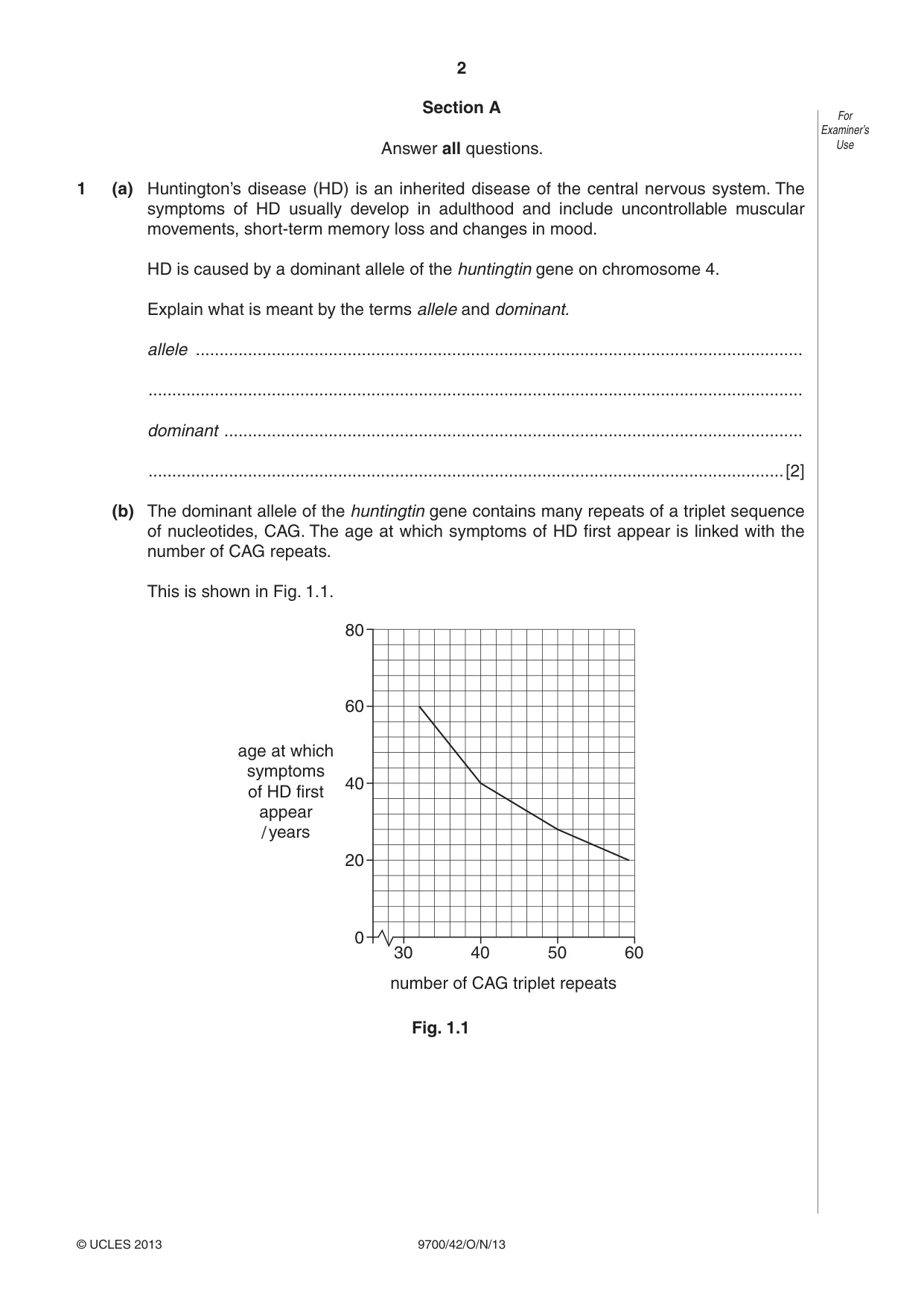
2 © UCLES 2013 9700/42/O/N/13 For Examiner’s Use Section A Answer all questions. 1 (a) Huntington’s disease (HD) is an inherited disease of the central nervous system. The symptoms of HD usually develop in adulthood and include uncontrollable muscular movements, short-term memory loss and changes in mood. HD is caused by a dominant allele of the huntingtin gene on chromosome 4. Explain what is meant by the terms allele and dominant. allele … … dominant … …[2] (b) The dominant allele of the huntingtin gene contains many repeats of a triplet sequence of nucleotides, CAG. The age at which symptoms of HD first appear is linked with the number of CAG repeats. This is shown in Fig. 1.1. 30 40 number of CAG triplet repeats 60 50 0 20 40 80 age at which symptoms of HD first appear / years 60 Fig. 1.1
Question paper, page 3
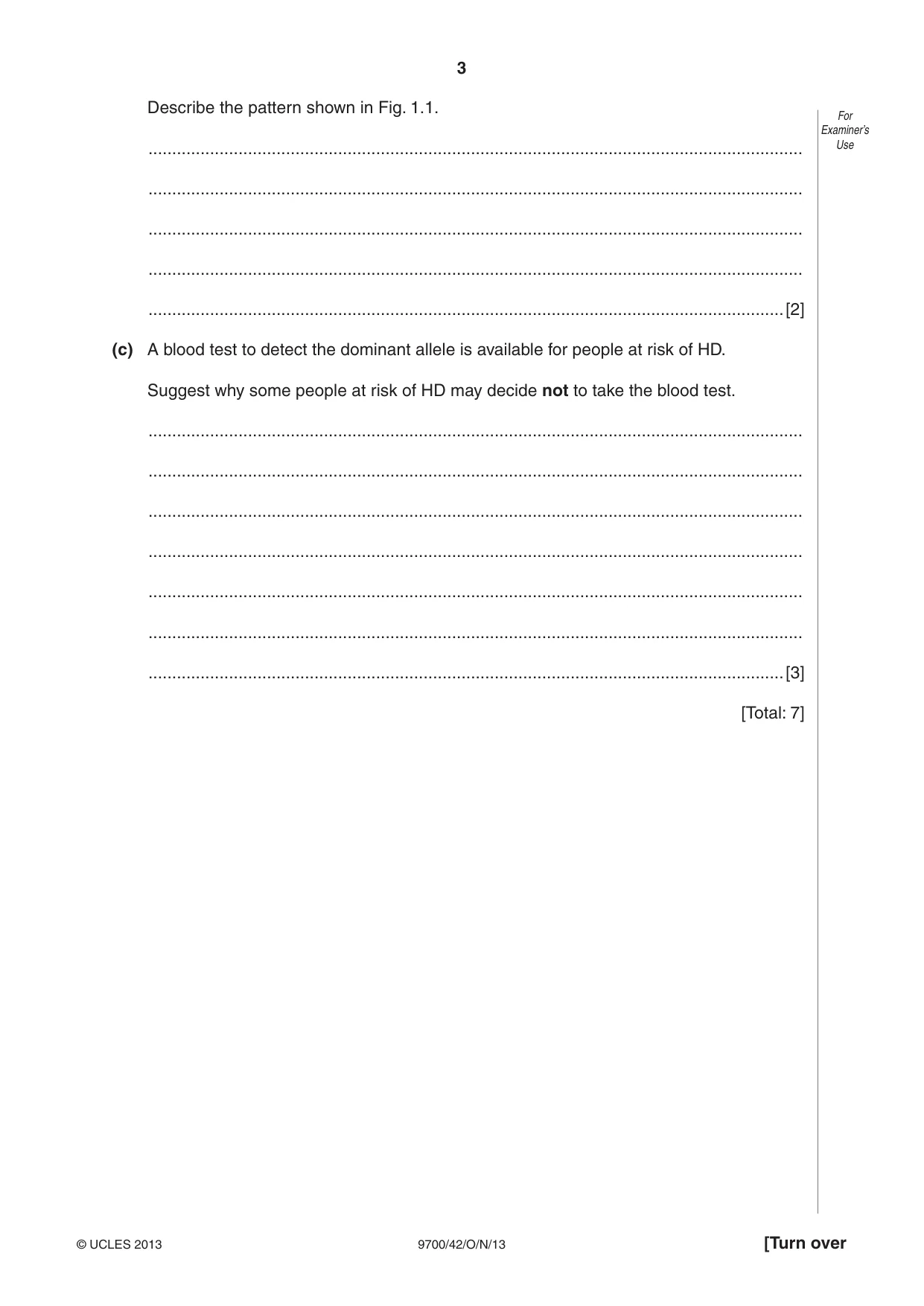
3 © UCLES 2013 [Turn over 9700/42/O/N/13 For Examiner’s Use Describe the pattern shown in Fig. 1.1. … … … … …[2] (c) A blood test to detect the dominant allele is available for people at risk of HD. Suggest why some people at risk of HD may decide not to take the blood test. … … … … … … …[3] [Total: 7]
Question paper, page 4
4 9700/42/O/N/13 © UCLES 2013 BLANK PAGE
Question paper, page 5
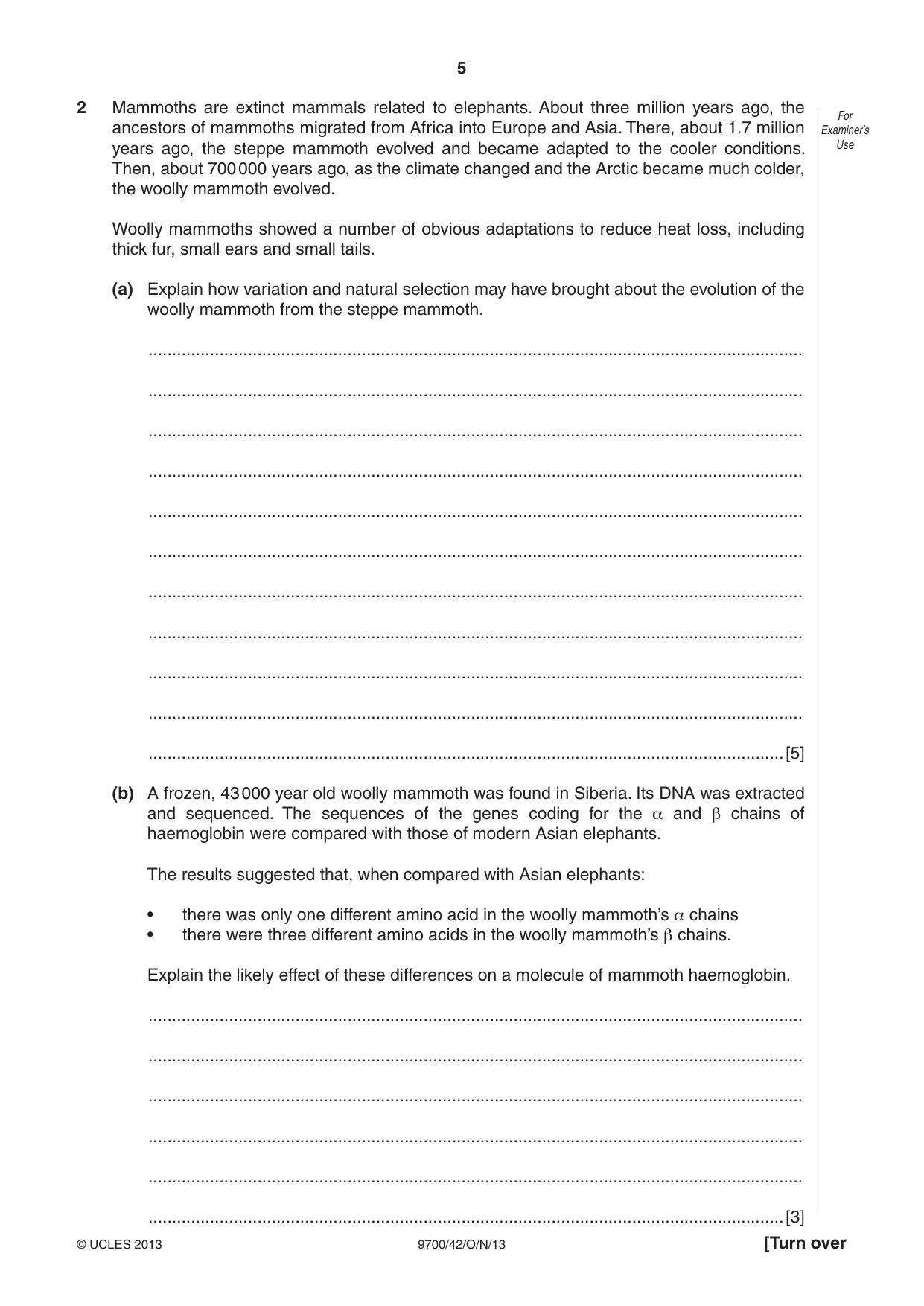
5 © UCLES 2013 [Turn over 9700/42/O/N/13 For Examiner’s Use 2 Mammoths are extinct mammals related to elephants. About three million years ago, the ancestors of mammoths migrated from Africa into Europe and Asia. There, about 1.7 million years ago, the steppe mammoth evolved and became adapted to the cooler conditions. Then, about 700 000 years ago, as the climate changed and the Arctic became much colder, the woolly mammoth evolved. Woolly mammoths showed a number of obvious adaptations to reduce heat loss, including thick fur, small ears and small tails. (a) Explain how variation and natural selection may have brought about the evolution of the woolly mammoth from the steppe mammoth. … … … … … … … … … … …[5] (b) A frozen, 43 000 year old woolly mammoth was found in Siberia. Its DNA was extracted and sequenced. The sequences of the genes coding for the α and β chains of haemoglobin were compared with those of modern Asian elephants. The results suggested that, when compared with Asian elephants: • there was only one different amino acid in the woolly mammoth’s α chains • there were three different amino acids in the woolly mammoth’s β chains. Explain the likely effect of these differences on a molecule of mammoth haemoglobin. … … … … … …[3]
Question paper, page 6
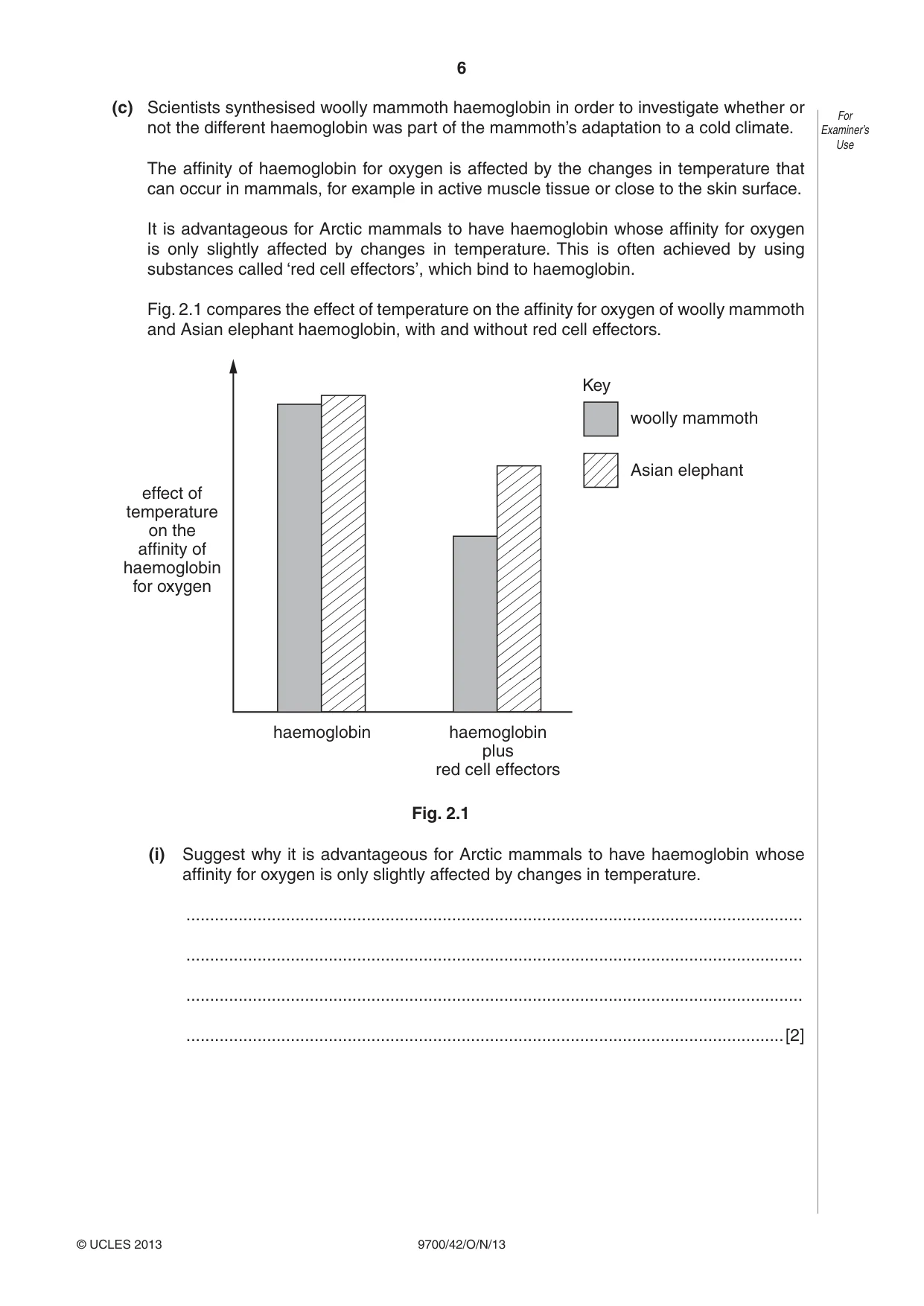
6 © UCLES 2013 9700/42/O/N/13 For Examiner’s Use (c) Scientists synthesised woolly mammoth haemoglobin in order to investigate whether or not the different haemoglobin was part of the mammoth’s adaptation to a cold climate. The affinity of haemoglobin for oxygen is affected by the changes in temperature that can occur in mammals, for example in active muscle tissue or close to the skin surface. It is advantageous for Arctic mammals to have haemoglobin whose affinity for oxygen is only slightly affected by changes in temperature. This is often achieved by using substances called ‘red cell effectors’, which bind to haemoglobin. Fig. 2.1 compares the effect of temperature on the affinity for oxygen of woolly mammoth and Asian elephant haemoglobin, with and without red cell effectors. haemoglobin effect of temperature on the affinity of haemoglobin for oxygen Key woolly mammoth Asian elephant haemoglobin plus red cell effectors Fig. 2.1 (i) Suggest why it is advantageous for Arctic mammals to have haemoglobin whose affinity for oxygen is only slightly affected by changes in temperature. … … … …[2]
Question paper, page 7
7 © UCLES 2013 [Turn over 9700/42/O/N/13 For Examiner’s Use (ii) Explain whether or not Fig. 2.1 provides evidence that woolly mammoth haemoglobin is better adapted for a cold climate than Asian elephant haemoglobin. … … … … … … … … …[4] [Total: 14]
Question paper, page 8
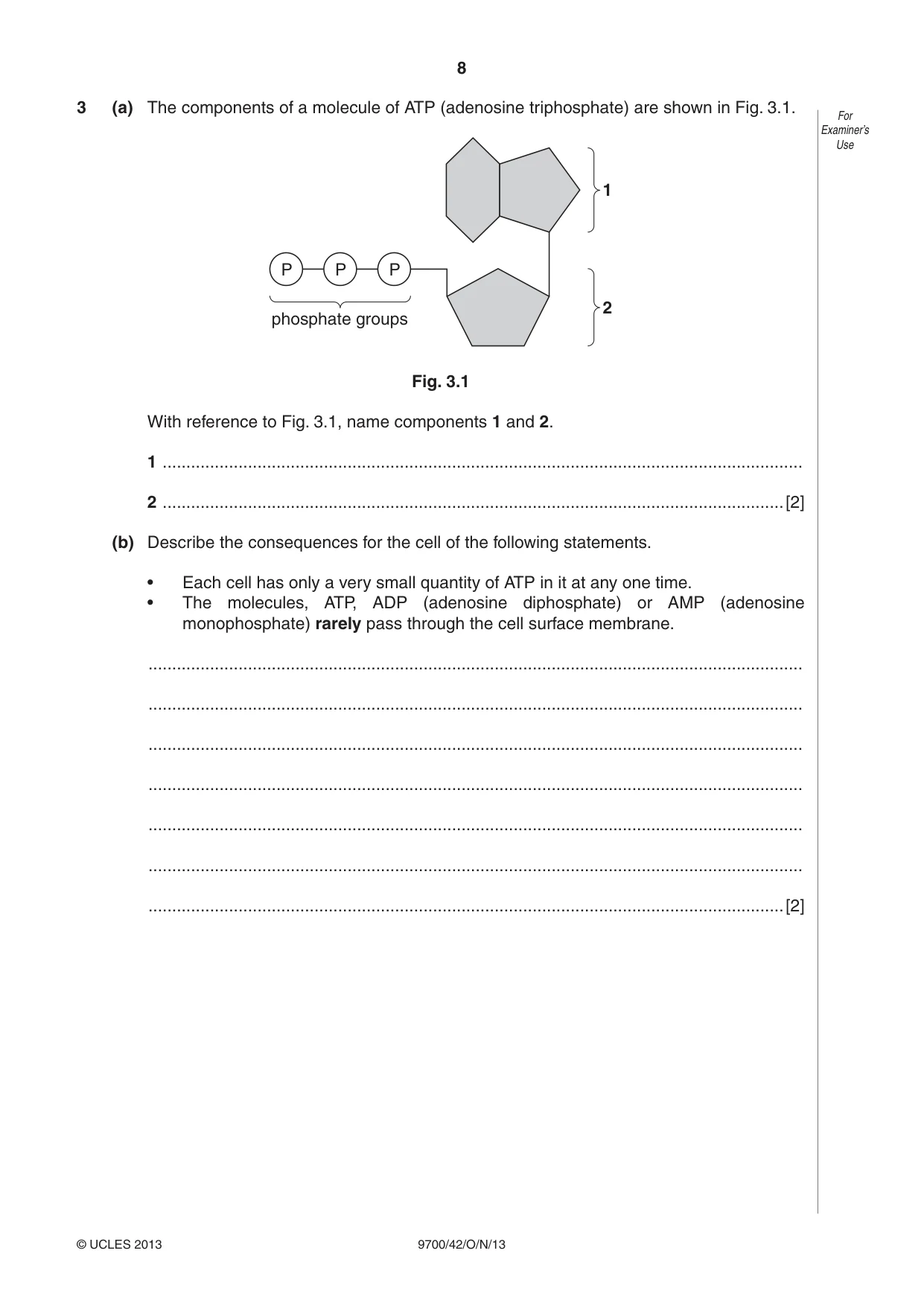
8 © UCLES 2013 9700/42/O/N/13 For Examiner’s Use 3 (a) The components of a molecule of ATP (adenosine triphosphate) are shown in Fig. 3.1. P P P 1 2 phosphate groups Fig. 3.1 With reference to Fig. 3.1, name components 1 and 2. 1 … 2 …[2] (b) Describe the consequences for the cell of the following statements. • Each cell has only a very small quantity of ATP in it at any one time. • The molecules, ATP, ADP (adenosine diphosphate) or AMP (adenosine monophosphate) rarely pass through the cell surface membrane. … … … … … … …[2]
Question paper, page 9
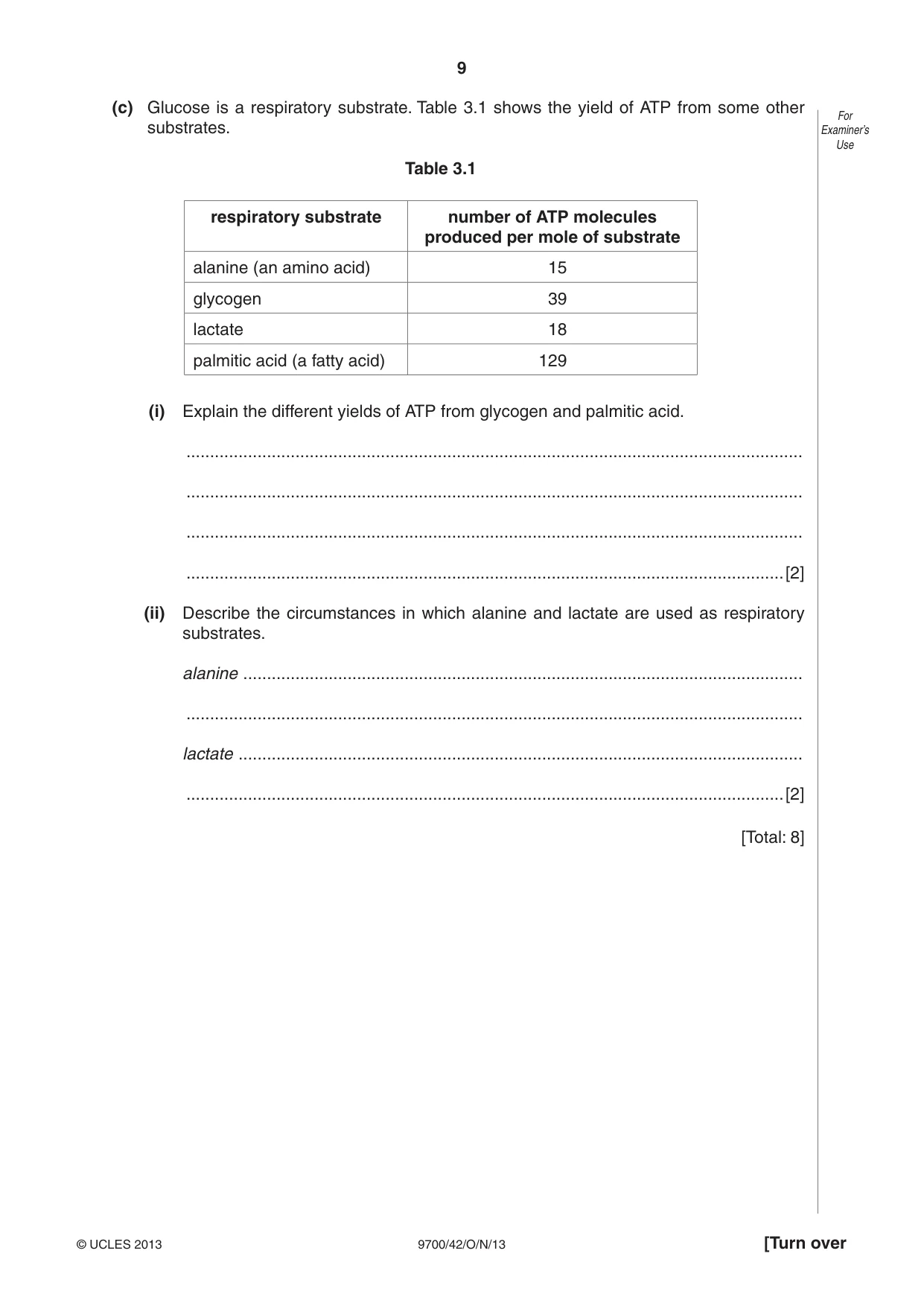
9 © UCLES 2013 [Turn over 9700/42/O/N/13 For Examiner’s Use (c) Glucose is a respiratory substrate. Table 3.1 shows the yield of ATP from some other substrates. Table 3.1 respiratory substrate number of ATP molecules produced per mole of substrate alanine (an amino acid) 15 glycogen 39 lactate 18 palmitic acid (a fatty acid) 129 (i) Explain the different yields of ATP from glycogen and palmitic acid. … … … …[2] (ii) Describe the circumstances in which alanine and lactate are used as respiratory substrates. alanine … … lactate … …[2] [Total: 8]
Question paper, page 10
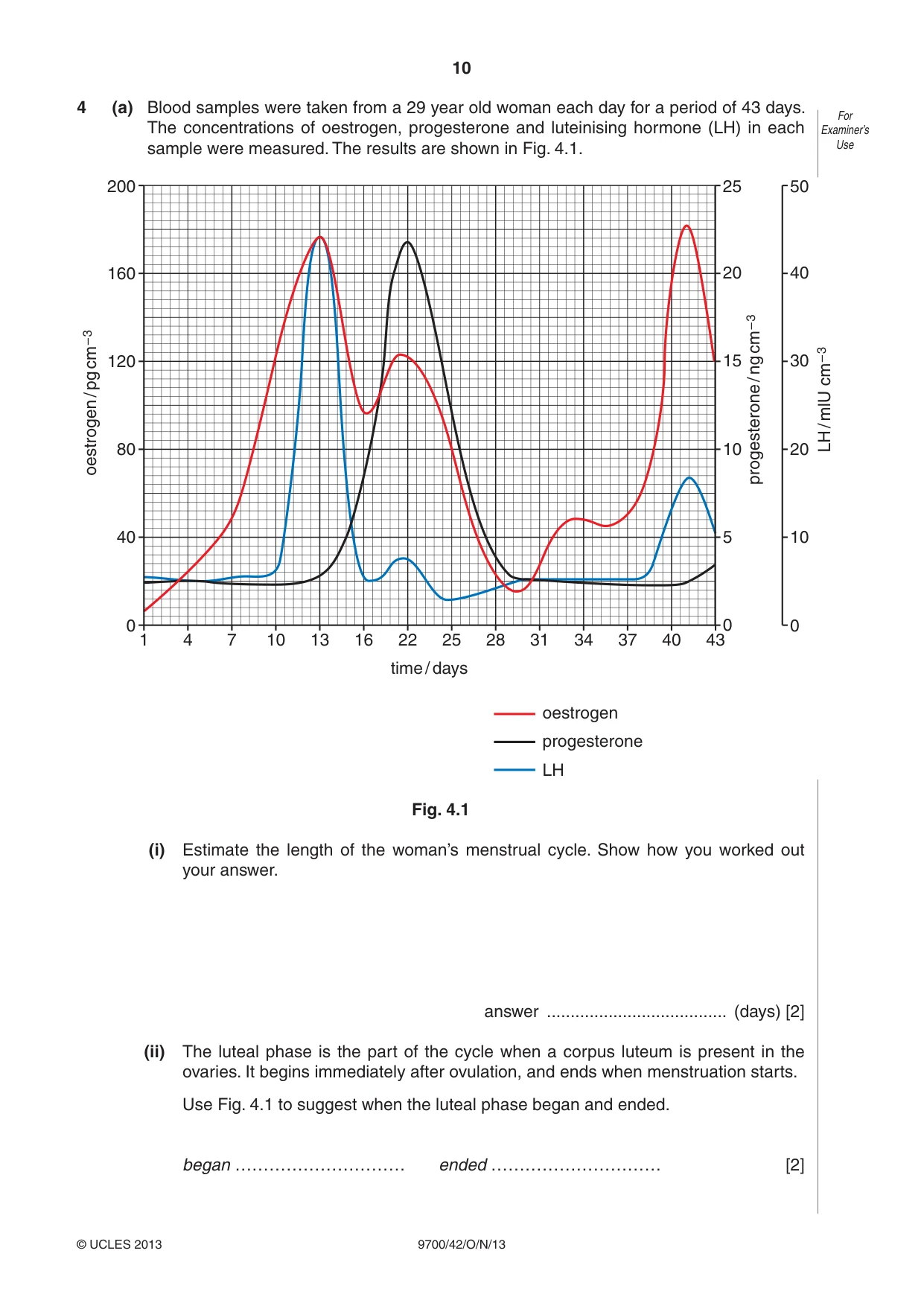
10 © UCLES 2013 9700/42/O/N/13 For Examiner’s Use 4 (a) Blood samples were taken from a 29 year old woman each day for a period of 43 days. The concentrations of oestrogen, progesterone and luteinising hormone (LH) in each sample were measured. The results are shown in Fig. 4.1. 1 4 0 40 80 120 160 200 0 5 10 15 20 25 7 10 13 16 22 25 time / days oestrogen progesterone LH oestrogen / pg cm – 3 progesterone / ng cm – 3 0 10 20 30 40 50 LH / mlU cm – 3 28 31 34 37 40 43 Fig. 4.1 (i) Estimate the length of the woman’s menstrual cycle. Show how you worked out your answer. answer … (days) [2] (ii) The luteal phase is the part of the cycle when a corpus luteum is present in the ovaries. It begins immediately after ovulation, and ends when menstruation starts. Use Fig. 4.1 to suggest when the luteal phase began and ended. began ………………………… ended ………………………… [2]
Question paper, page 11
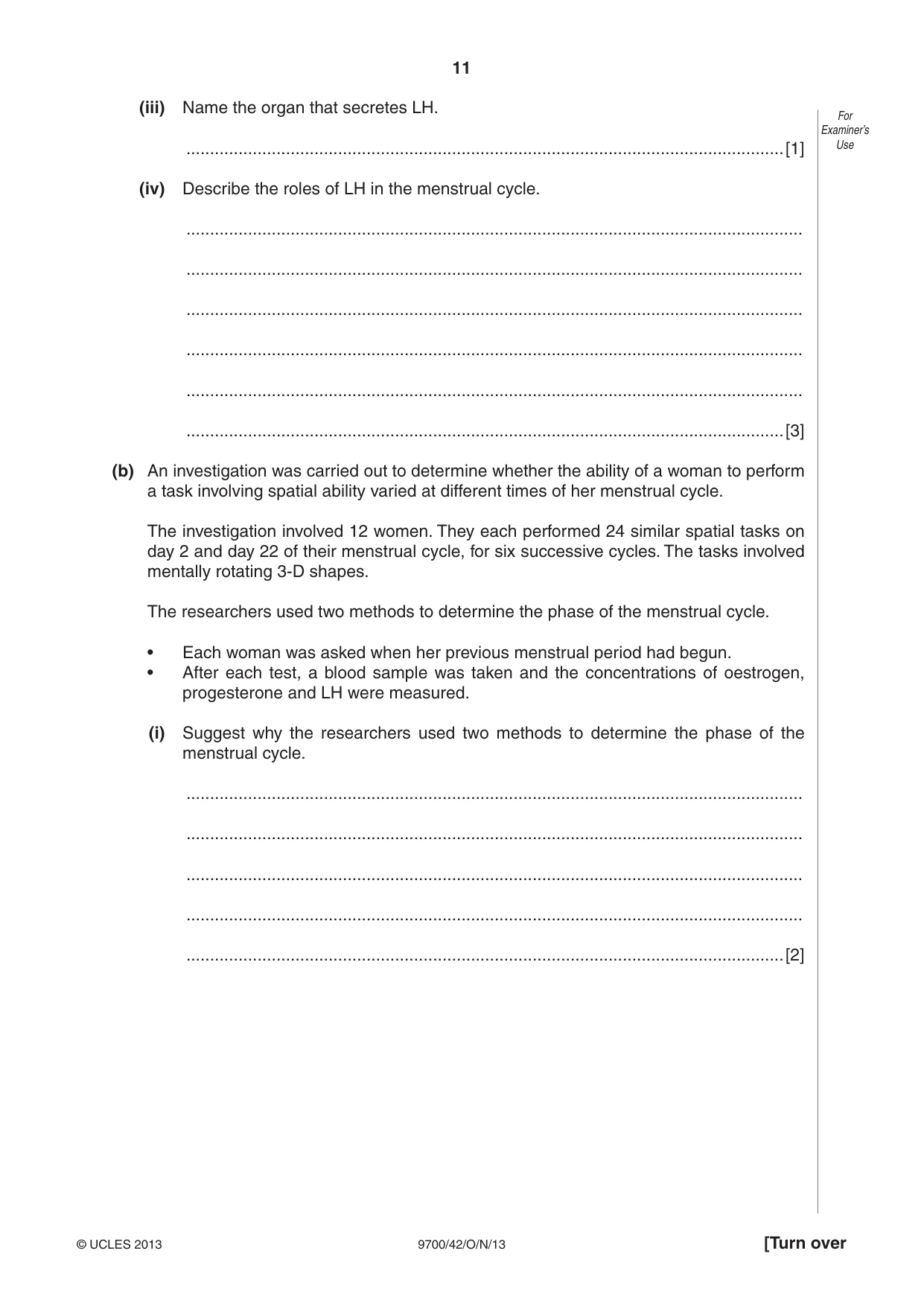
11 © UCLES 2013 [Turn over 9700/42/O/N/13 For Examiner’s Use (iii) Name the organ that secretes LH. …[1] (iv) Describe the roles of LH in the menstrual cycle. … … … … … …[3] (b) An investigation was carried out to determine whether the ability of a woman to perform a task involving spatial ability varied at different times of her menstrual cycle. The investigation involved 12 women. They each performed 24 similar spatial tasks on day 2 and day 22 of their menstrual cycle, for six successive cycles. The tasks involved mentally rotating 3-D shapes. The researchers used two methods to determine the phase of the menstrual cycle. • Each woman was asked when her previous menstrual period had begun. • After each test, a blood sample was taken and the concentrations of oestrogen, progesterone and LH were measured. (i) Suggest why the researchers used two methods to determine the phase of the menstrual cycle. … … … … …[2]
Question paper, page 12
12 © UCLES 2013 9700/42/O/N/13 For Examiner’s Use (ii) The mean score for women taking the tests on day 2 of their cycle was 10.50 out of 24. The mean score for women taking the tests on day 22 of their cycle was 7.38 out of 24. Discuss whether or not these results support the hypothesis that the concentration of oestrogen in the blood affects the ability to perform spatial tasks. … … … … … … … … … …[4] [Total: 14]
Question paper, page 13
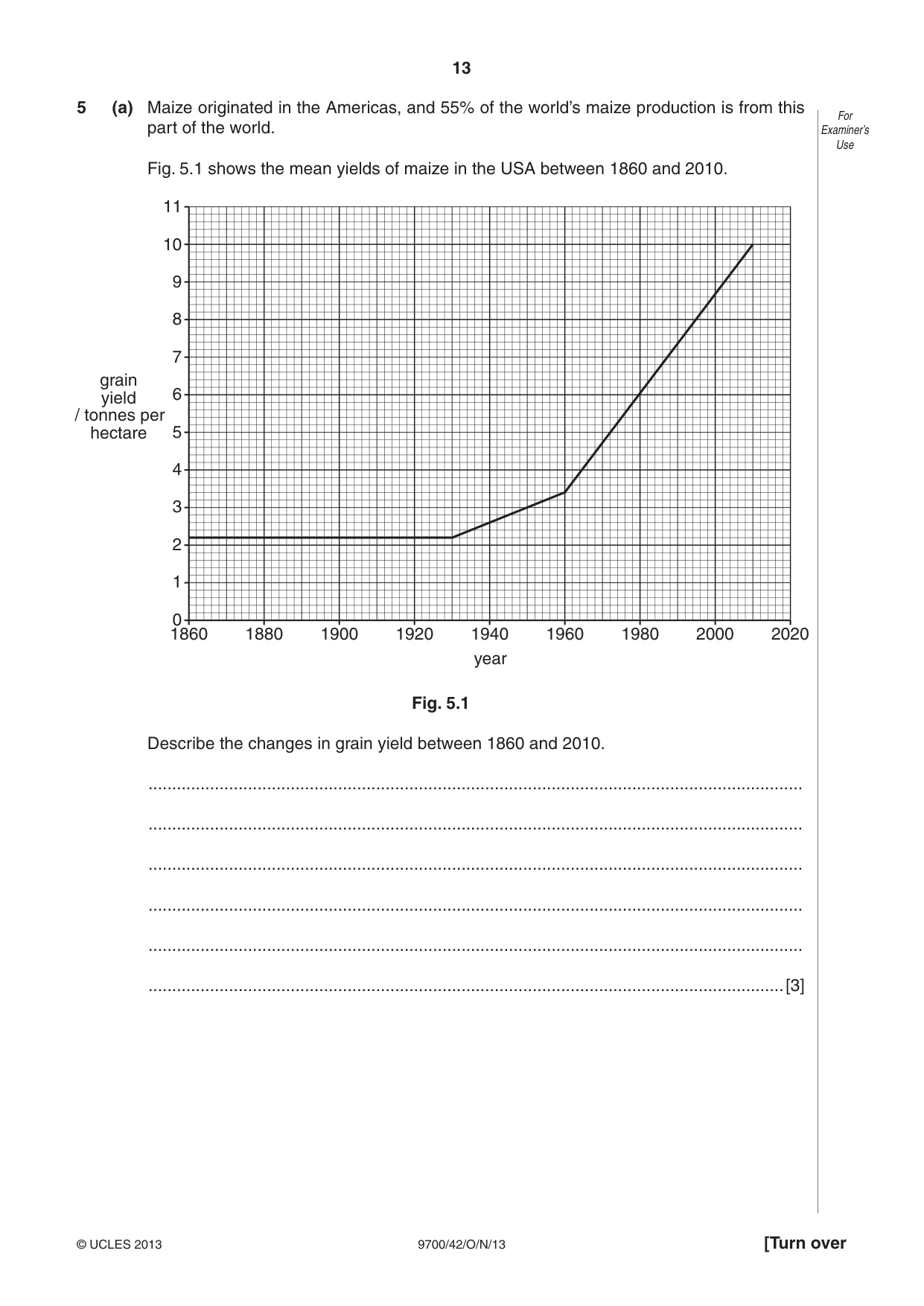
13 © UCLES 2013 [Turn over 9700/42/O/N/13 For Examiner’s Use 5 (a) Maize originated in the Americas, and 55% of the world’s maize production is from this part of the world. Fig. 5.1 shows the mean yields of maize in the USA between 1860 and 2010. 1860 0 2 4 6 grain yield / tonnes per hectare 8 10 11 1 3 5 7 9 1880 1900 1920 year 1940 1960 1980 2000 2020 Fig. 5.1 Describe the changes in grain yield between 1860 and 2010. … … … … … …[3]
Question paper, page 14
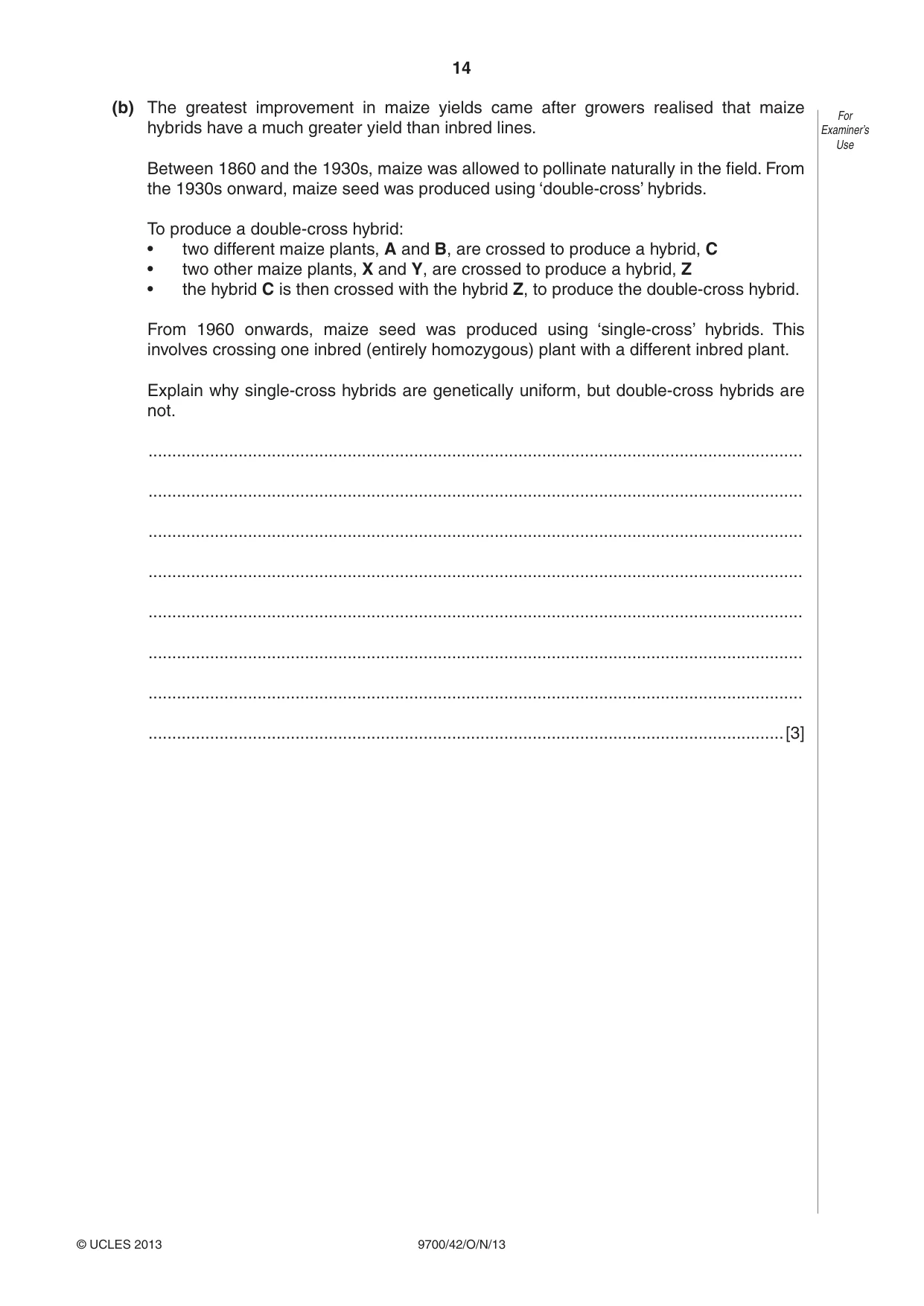
14 © UCLES 2013 9700/42/O/N/13 For Examiner’s Use (b) The greatest improvement in maize yields came after growers realised that maize hybrids have a much greater yield than inbred lines. Between 1860 and the 1930s, maize was allowed to pollinate naturally in the field. From the 1930s onward, maize seed was produced using ‘double-cross’ hybrids. To produce a double-cross hybrid: • two different maize plants, A and B, are crossed to produce a hybrid, C • two other maize plants, X and Y, are crossed to produce a hybrid, Z • the hybrid C is then crossed with the hybrid Z, to produce the double-cross hybrid. From 1960 onwards, maize seed was produced using ‘single-cross’ hybrids. This involves crossing one inbred (entirely homozygous) plant with a different inbred plant. Explain why single-cross hybrids are genetically uniform, but double-cross hybrids are not. … … … … … … … …[3]
Question paper, page 15
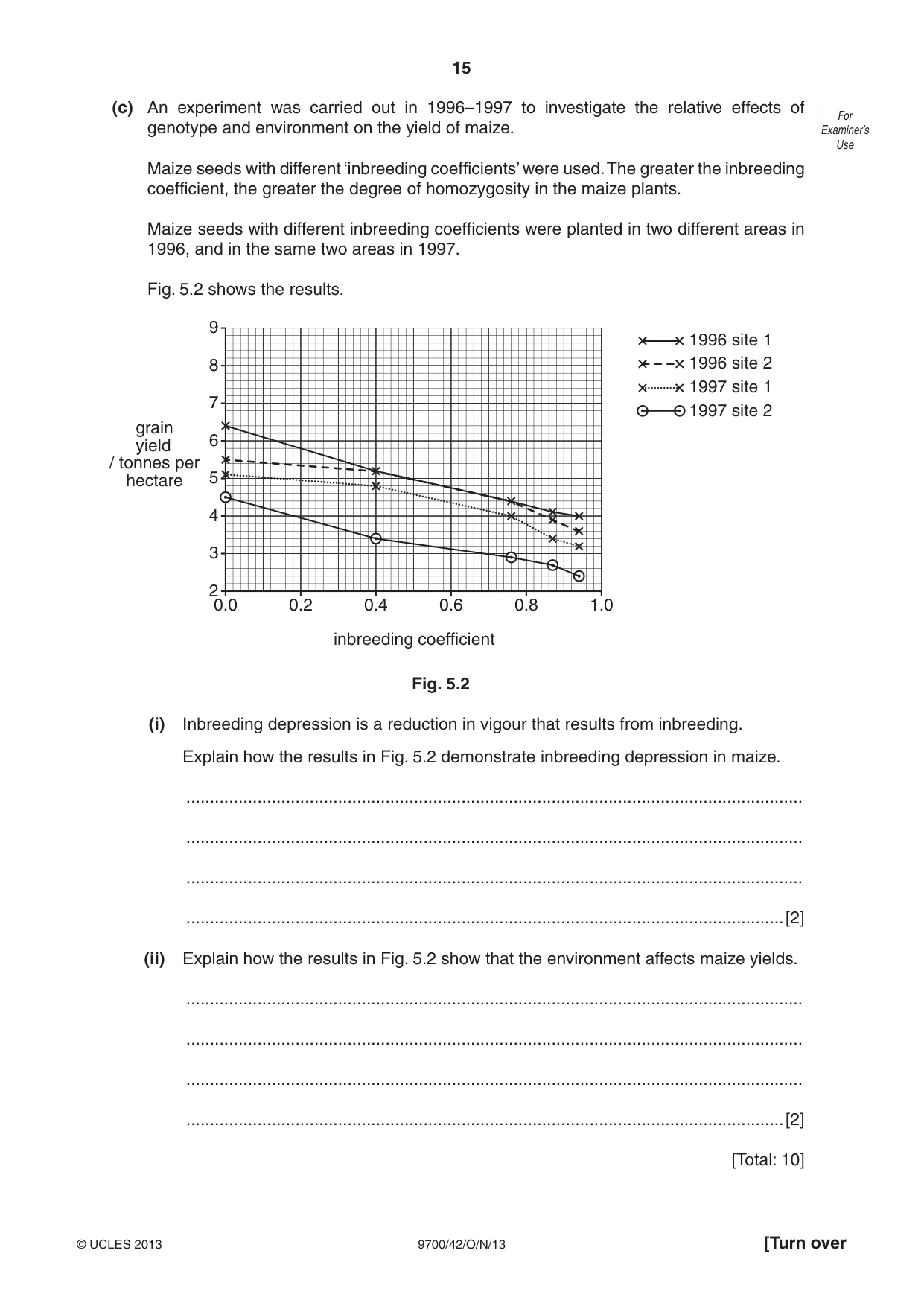
15 © UCLES 2013 [Turn over 9700/42/O/N/13 For Examiner’s Use (c) An experiment was carried out in 1996–1997 to investigate the relative effects of genotype and environment on the yield of maize. Maize seeds with different ‘inbreeding coefficients’ were used. The greater the inbreeding coefficient, the greater the degree of homozygosity in the maize plants. Maize seeds with different inbreeding coefficients were planted in two different areas in 1996, and in the same two areas in 1997. Fig. 5.2 shows the results. 0.0 2 4 6 8 grain yield / tonnes per hectare 3 5 7 9 0.2 0.4 0.6 inbreeding coefficient 0.8 1996 site 1 1996 site 2 1997 site 1 1997 site 2 1.0 Fig. 5.2 (i) Inbreeding depression is a reduction in vigour that results from inbreeding. Explain how the results in Fig. 5.2 demonstrate inbreeding depression in maize. … … … …[2] (ii) Explain how the results in Fig. 5.2 show that the environment affects maize yields. … … … …[2] [Total: 10]
Question paper, page 16
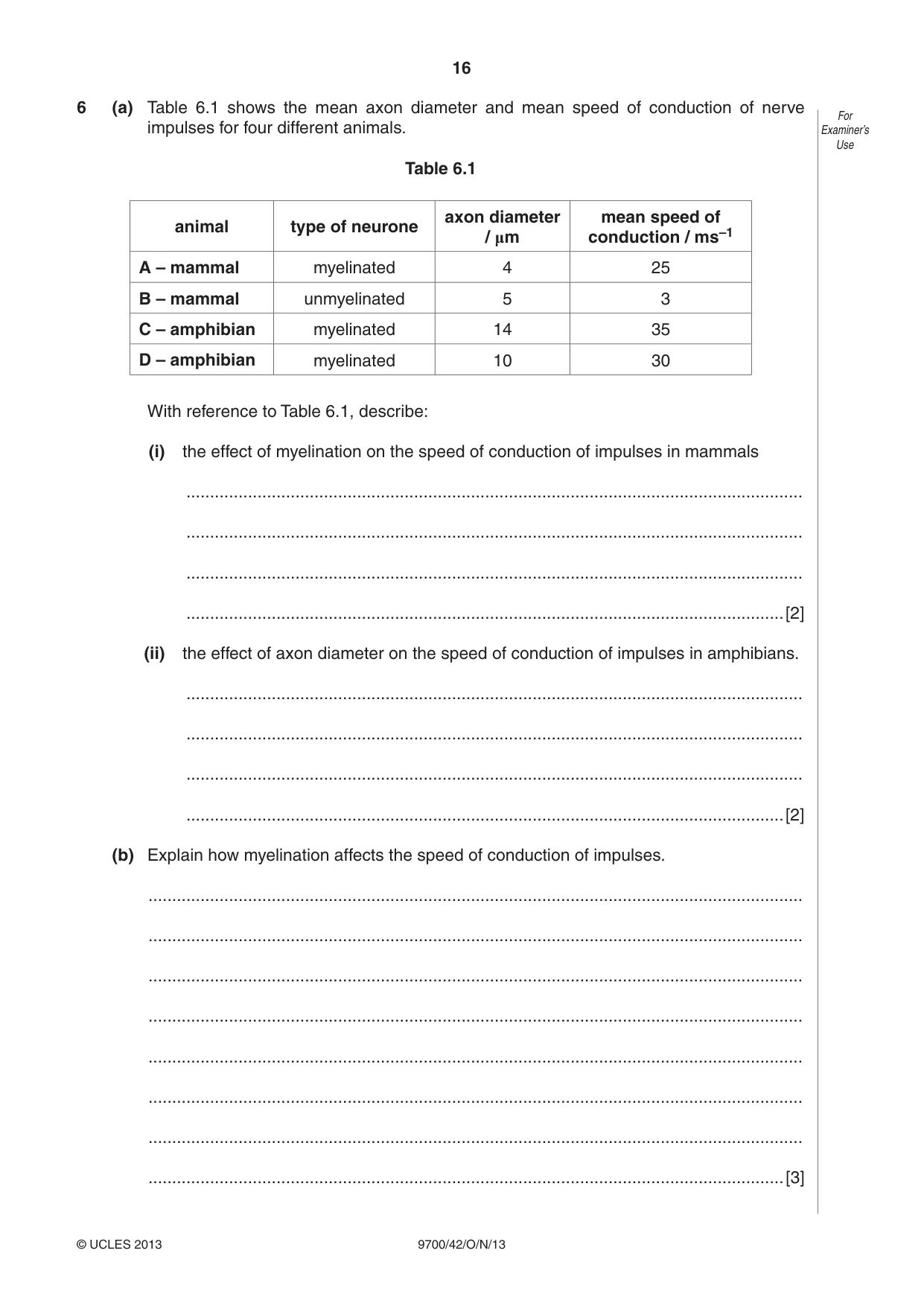
16 © UCLES 2013 9700/42/O/N/13 For Examiner’s Use 6 (a) Table 6.1 shows the mean axon diameter and mean speed of conduction of nerve impulses for four different animals. Table 6.1 animal type of neurone axon diameter / μm mean speed of conduction / ms–1 A – mammal myelinated 4 25 B – mammal unmyelinated 5 3 C – amphibian myelinated 14 35 D – amphibian myelinated 10 30 With reference to Table 6.1, describe: (i) the effect of myelination on the speed of conduction of impulses in mammals … … … …[2] (ii) the effect of axon diameter on the speed of conduction of impulses in amphibians. … … … …[2] (b) Explain how myelination affects the speed of conduction of impulses. … … … … … … … …[3]
Question paper, page 17
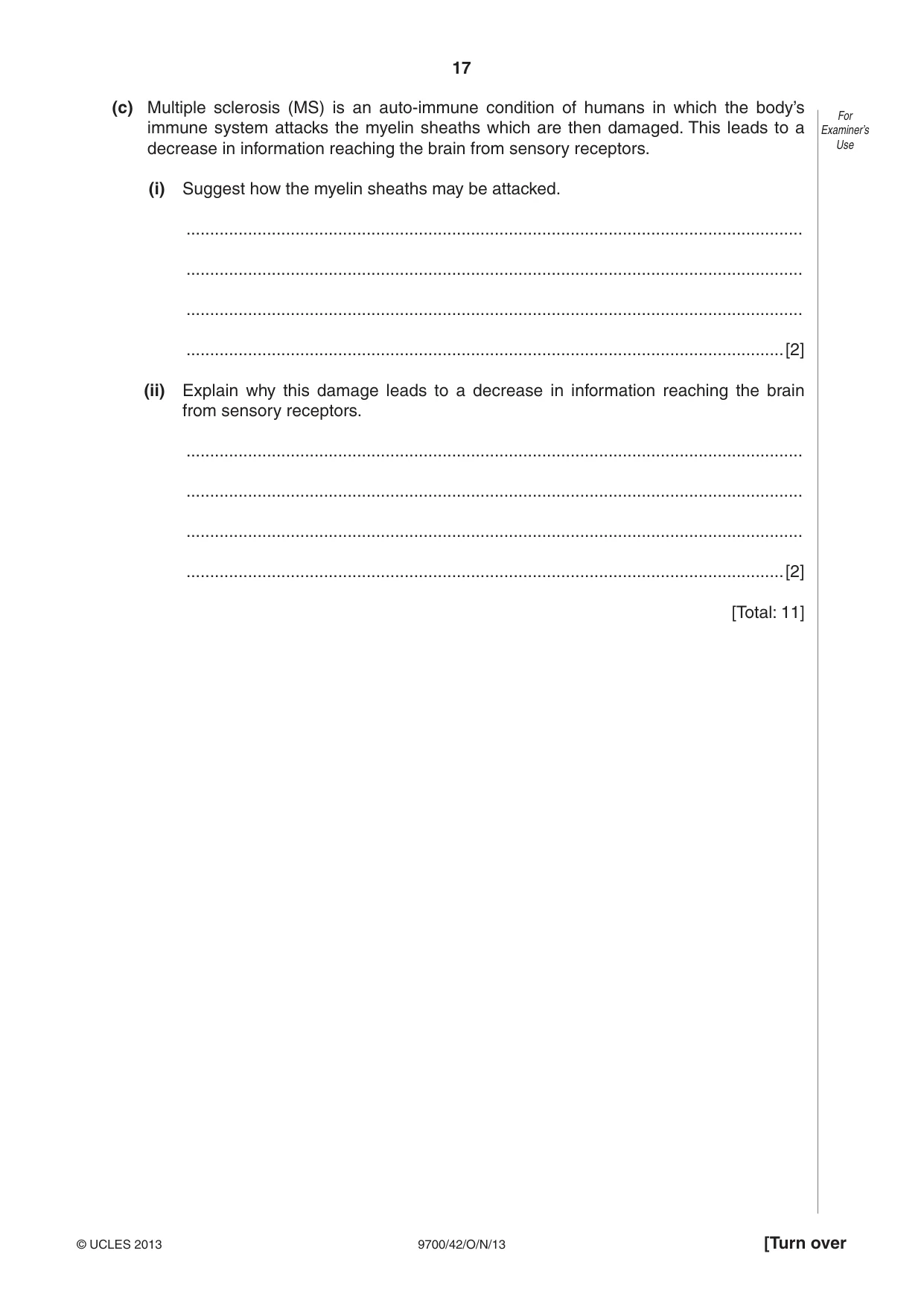
17 © UCLES 2013 [Turn over 9700/42/O/N/13 For Examiner’s Use (c) Multiple sclerosis (MS) is an auto-immune condition of humans in which the body’s immune system attacks the myelin sheaths which are then damaged. This leads to a decrease in information reaching the brain from sensory receptors. (i) Suggest how the myelin sheaths may be attacked. … … … …[2] (ii) Explain why this damage leads to a decrease in information reaching the brain from sensory receptors. … … … …[2] [Total: 11]
Question paper, page 18
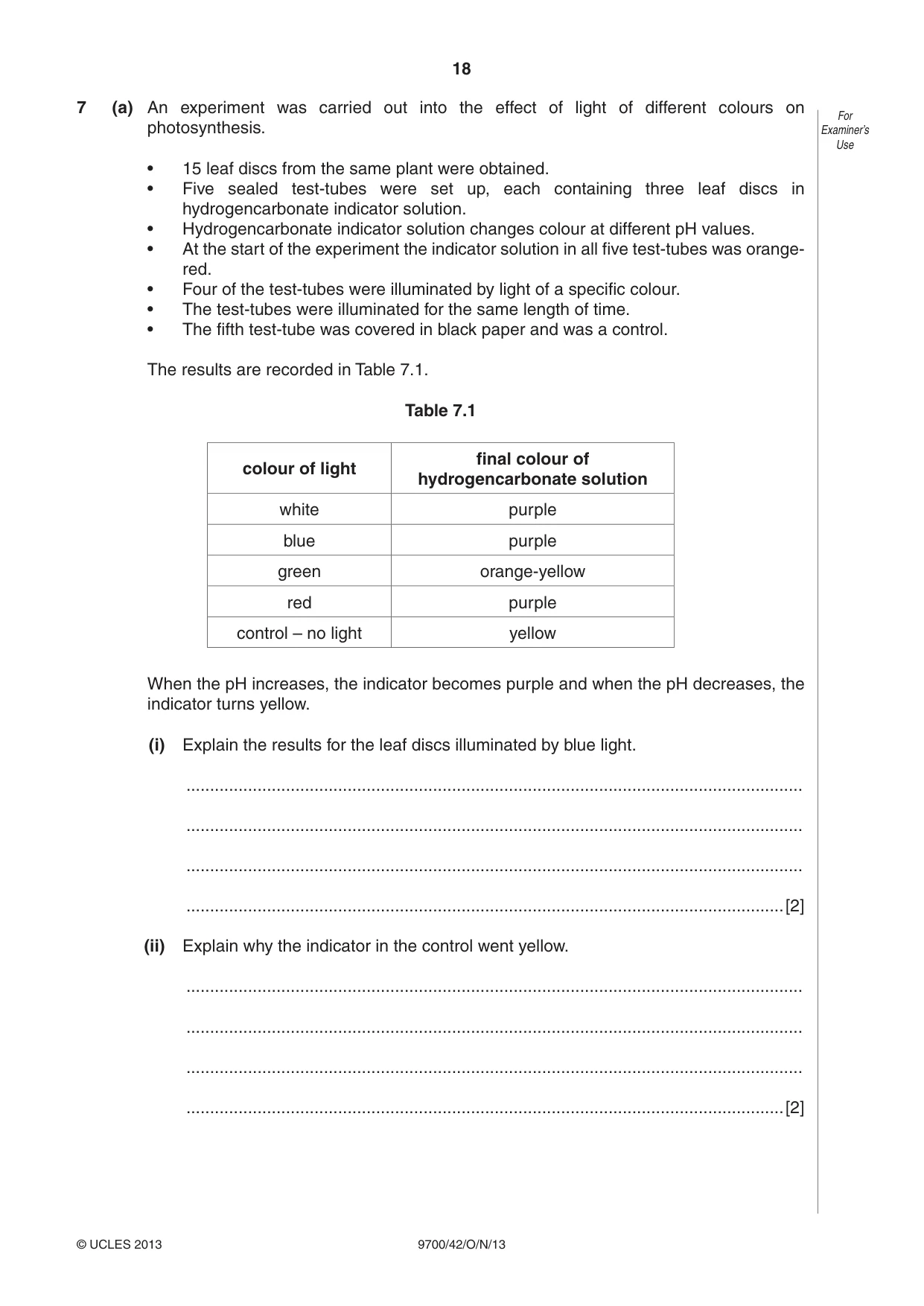
18 © UCLES 2013 9700/42/O/N/13 For Examiner’s Use 7 (a) An experiment was carried out into the effect of light of different colours on photosynthesis. • 15 leaf discs from the same plant were obtained. • Five sealed test-tubes were set up, each containing three leaf discs in hydrogencarbonate indicator solution. • Hydrogencarbonate indicator solution changes colour at different pH values. • At the start of the experiment the indicator solution in all five test-tubes was orange- red. • Four of the test-tubes were illuminated by light of a specific colour. • The test-tubes were illuminated for the same length of time. • The fifth test-tube was covered in black paper and was a control. The results are recorded in Table 7.1. Table 7.1 colour of light final colour of hydrogencarbonate solution white purple blue purple green orange-yellow red purple control – no light yellow When the pH increases, the indicator becomes purple and when the pH decreases, the indicator turns yellow. (i) Explain the results for the leaf discs illuminated by blue light. … … … …[2] (ii) Explain why the indicator in the control went yellow. … … … …[2]
Question paper, page 19
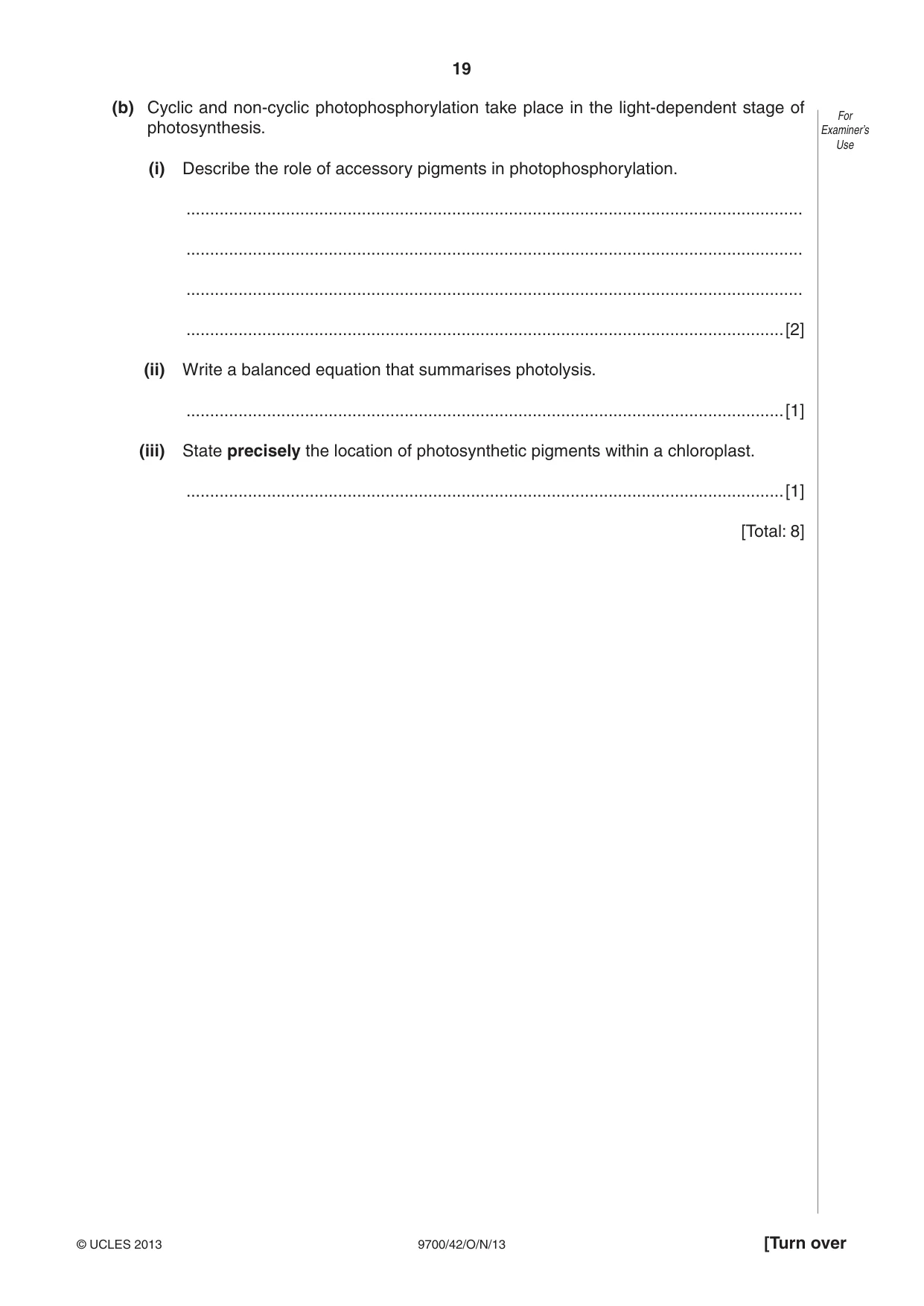
19 © UCLES 2013 [Turn over 9700/42/O/N/13 For Examiner’s Use (b) Cyclic and non-cyclic photophosphorylation take place in the light-dependent stage of photosynthesis. (i) Describe the role of accessory pigments in photophosphorylation. … … … …[2] (ii) Write a balanced equation that summarises photolysis. …[1] (iii) State precisely the location of photosynthetic pigments within a chloroplast. …[1] [Total: 8]
Question paper, page 20
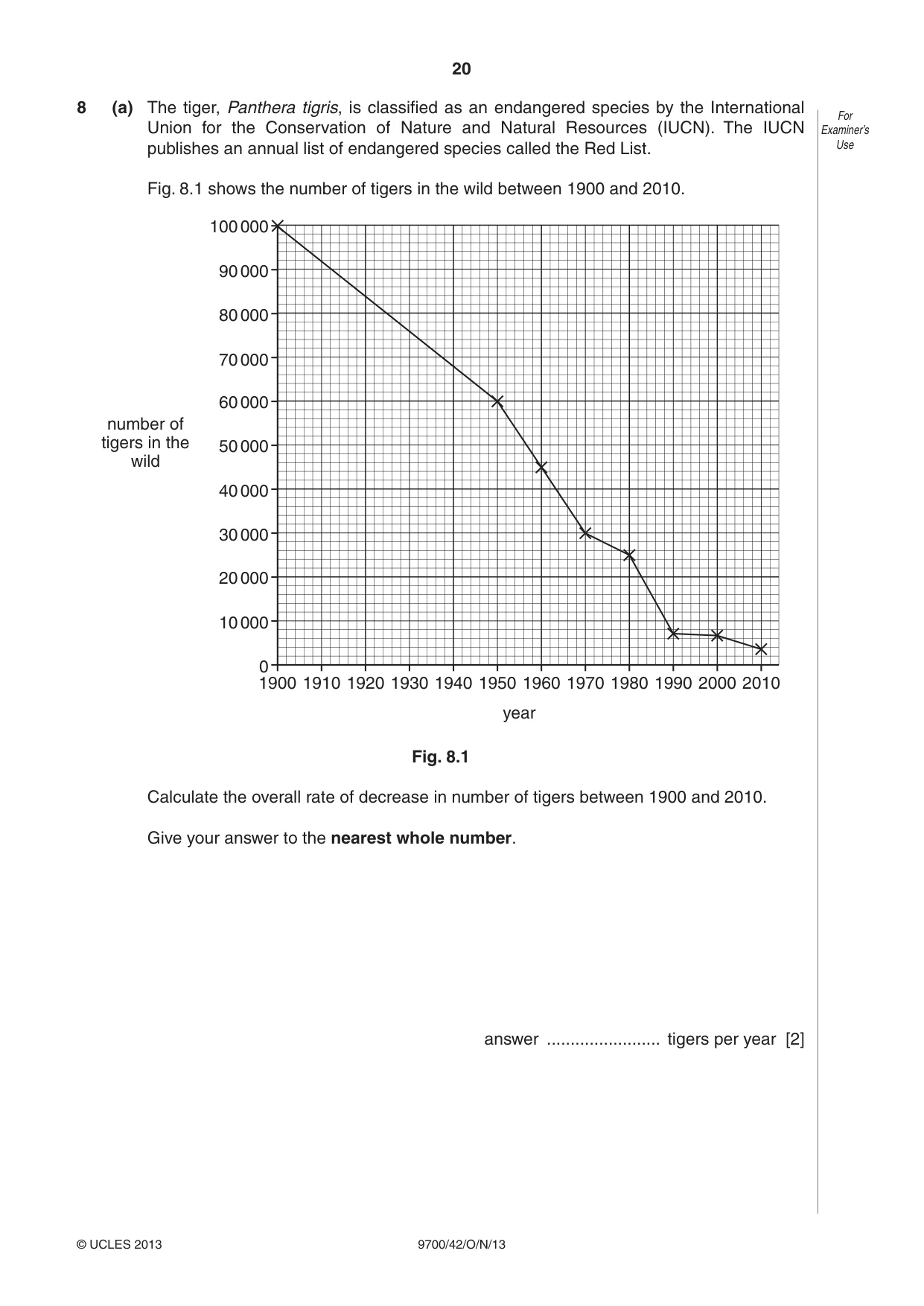
20 © UCLES 2013 9700/42/O/N/13 For Examiner’s Use 8 (a) The tiger, Panthera tigris, is classified as an endangered species by the International Union for the Conservation of Nature and Natural Resources (IUCN). The IUCN publishes an annual list of endangered species called the Red List. Fig. 8.1 shows the number of tigers in the wild between 1900 and 2010. 100 000 90 000 80 000 70 000 60 000 50 000 40 000 30 000 0 20 000 10 000 1900 1910 1920 1930 1940 1950 1960 year number of tigers in the wild 1970 1980 1990 2000 2010 Fig. 8.1 Calculate the overall rate of decrease in number of tigers between 1900 and 2010. Give your answer to the nearest whole number. answer … tigers per year [2]
Question paper, page 21
21 © UCLES 2013 [Turn over 9700/42/O/N/13 For Examiner’s Use (b) Describe the reasons why a named species has become endangered. … … … … … … … …[4] [Total: 6]
Question paper, page 22
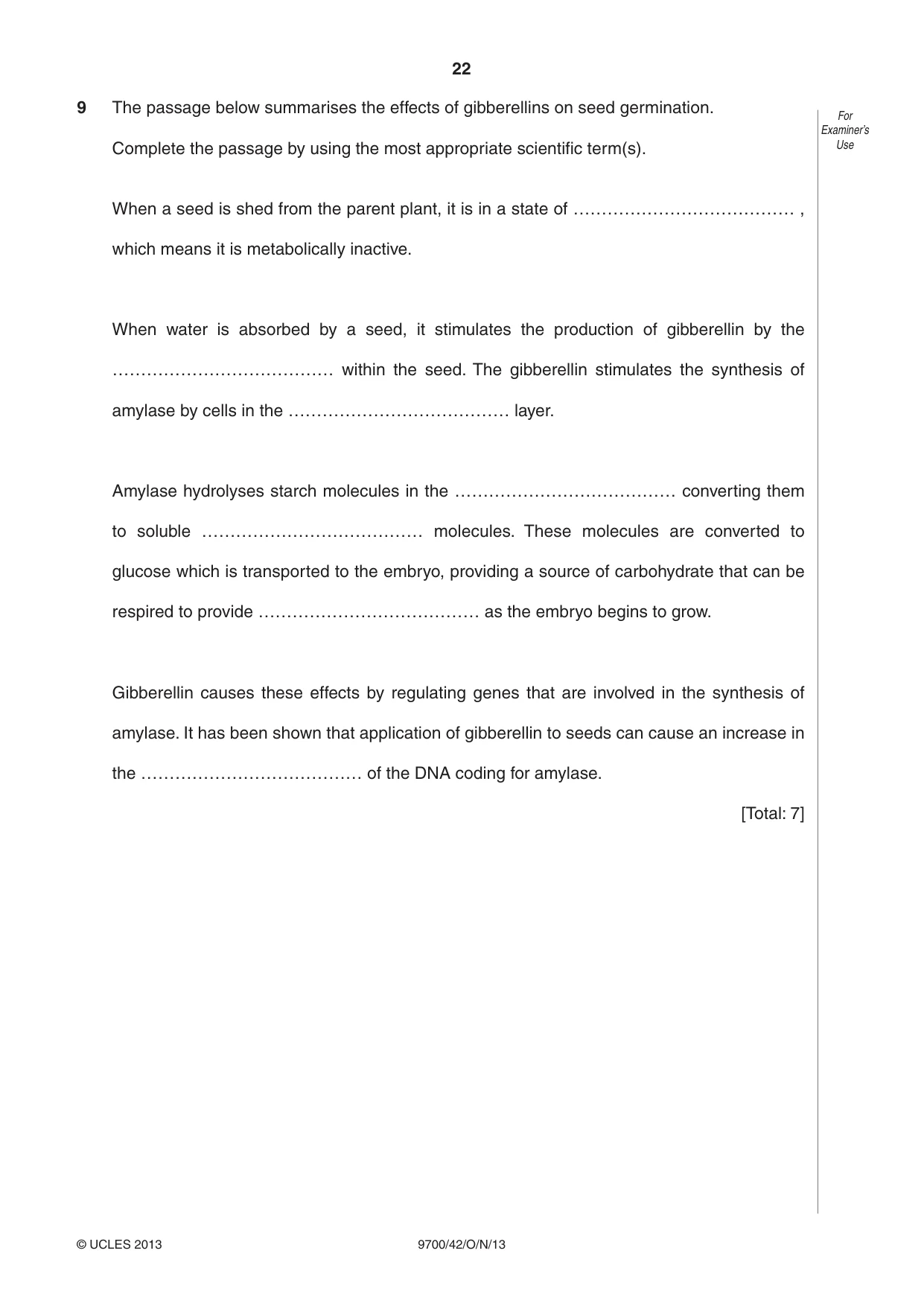
22 © UCLES 2013 9700/42/O/N/13 For Examiner’s Use 9 The passage below summarises the effects of gibberellins on seed germination. Complete the passage by using the most appropriate scientific term(s). When a seed is shed from the parent plant, it is in a state of ………………………………… , which means it is metabolically inactive. When water is absorbed by a seed, it stimulates the production of gibberellin by the ………………………………… within the seed. The gibberellin stimulates the synthesis of amylase by cells in the ………………………………… layer. Amylase hydrolyses starch molecules in the ………………………………… converting them to soluble ………………………………… molecules. These molecules are converted to glucose which is transported to the embryo, providing a source of carbohydrate that can be respired to provide ………………………………… as the embryo begins to grow. Gibberellin causes these effects by regulating genes that are involved in the synthesis of amylase. It has been shown that application of gibberellin to seeds can cause an increase in the ………………………………… of the DNA coding for amylase. [Total: 7]
Question paper, page 23
23 © UCLES 2013 [Turn over 9700/42/O/N/13 For Examiner’s Use Section B Answer one question. 10 (a) Explain what is meant by a gene mutation and outline the possible consequences of a gene mutation for an organism. [9] (b) Explain how faulty CFTR proteins in cell surface membranes can lead to the symptoms of cystic fibrosis. [6] [Total: 15] 11 (a) Describe the main features of an organism belonging to the plant kingdom. [7] (b) Describe the structure of a mitochondrion and outline its function in a plant cell. [8] [Total: 15] … … … … … … … … … … … … … … … … … …
Question paper, page 24
24 © UCLES 2013 9700/42/O/N/13 For Examiner’s Use … … … … … … … … … … … … … … … … … … … … … … … Permission to reproduce items where third-party owned material protected by copyright is included has been sought and cleared where possible. Every reasonable effort has been made by the publisher (UCLES) to trace copyright holders, but if any items requiring clearance have unwittingly been included, the publisher will be pleased to make amends at the earliest possible opportunity. University of Cambridge International Examinations is part of the Cambridge Assessment Group. Cambridge Assessment is the brand name of University of Cambridge Local Examinations Syndicate (UCLES), which is itself a department of the University of Cambridge.
Mark scheme, page 1
CAMBRIDGE INTERNATIONAL EXAMINATIONS GCE Advanced Subsidiary Level and GCE Advanced Level MARK SCHEME for the October/November 2013 series 9700 BIOLOGY 9700/42 Paper 4 (A2 Structured Questions), maximum raw mark 100 This mark scheme is published as an aid to teachers and candidates, to indicate the requirements of the examination. It shows the basis on which Examiners were instructed to award marks. It does not indicate the details of the discussions that took place at an Examiners’ meeting before marking began, which would have considered the acceptability of alternative answers. Mark schemes should be read in conjunction with the question paper and the Principal Examiner Report for Teachers. Cambridge will not enter into discussions about these mark schemes. Cambridge is publishing the mark schemes for the October/November 2013 series for most IGCSE, GCE Advanced Level and Advanced Subsidiary Level components and some Ordinary Level components.
Mark scheme, page 2
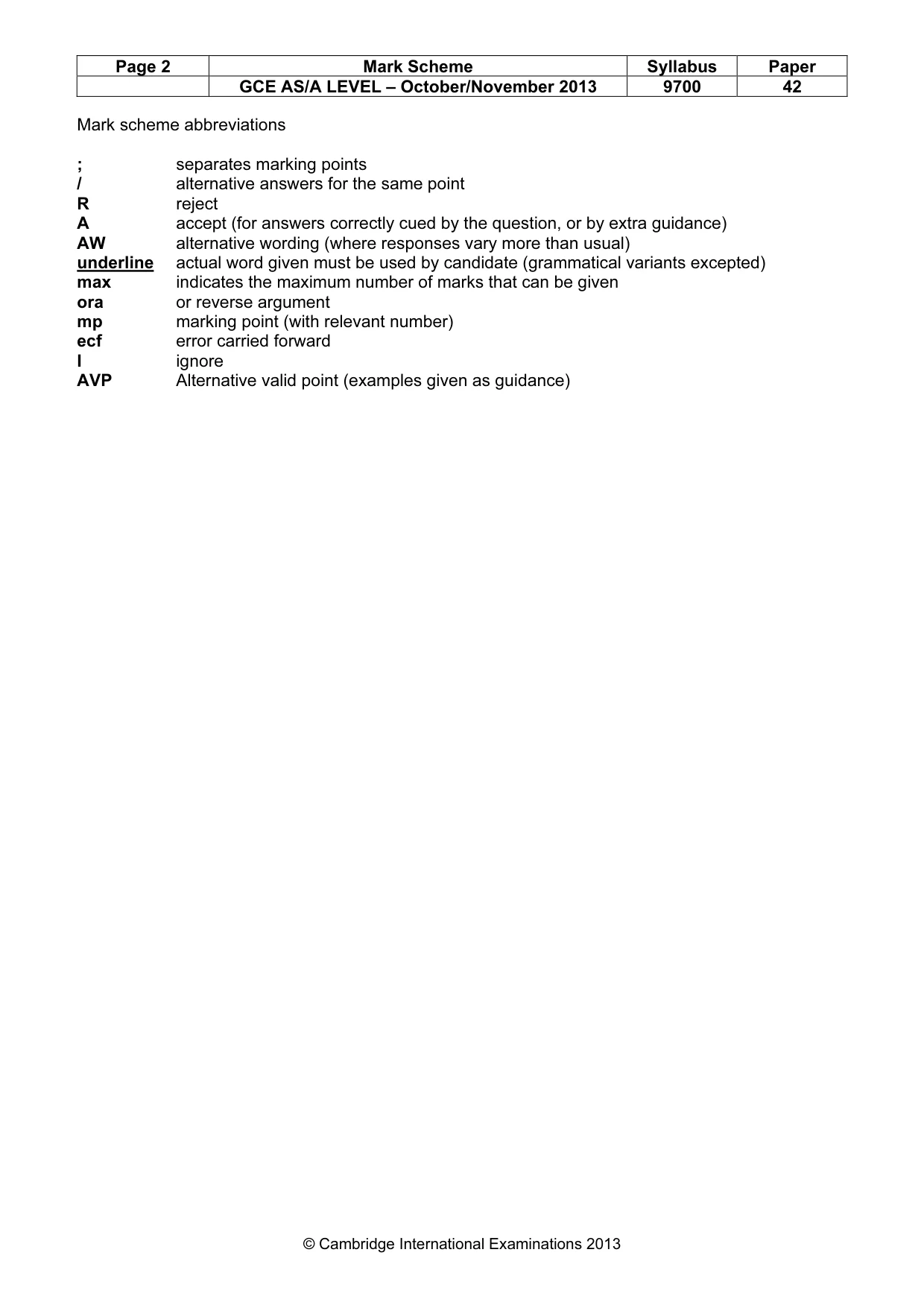
Page 2 Mark Scheme Syllabus Paper GCE AS/A LEVEL – October/November 2013 9700 42 © Cambridge International Examinations 2013 Mark scheme abbreviations ; separates marking points / alternative answers for the same point R reject A accept (for answers correctly cued by the question, or by extra guidance) AW alternative wording (where responses vary more than usual) underline actual word given must be used by candidate (grammatical variants excepted) max indicates the maximum number of marks that can be given ora or reverse argument mp marking point (with relevant number) ecf error carried forward I ignore AVP Alternative valid point (examples given as guidance)
Mark scheme, page 3
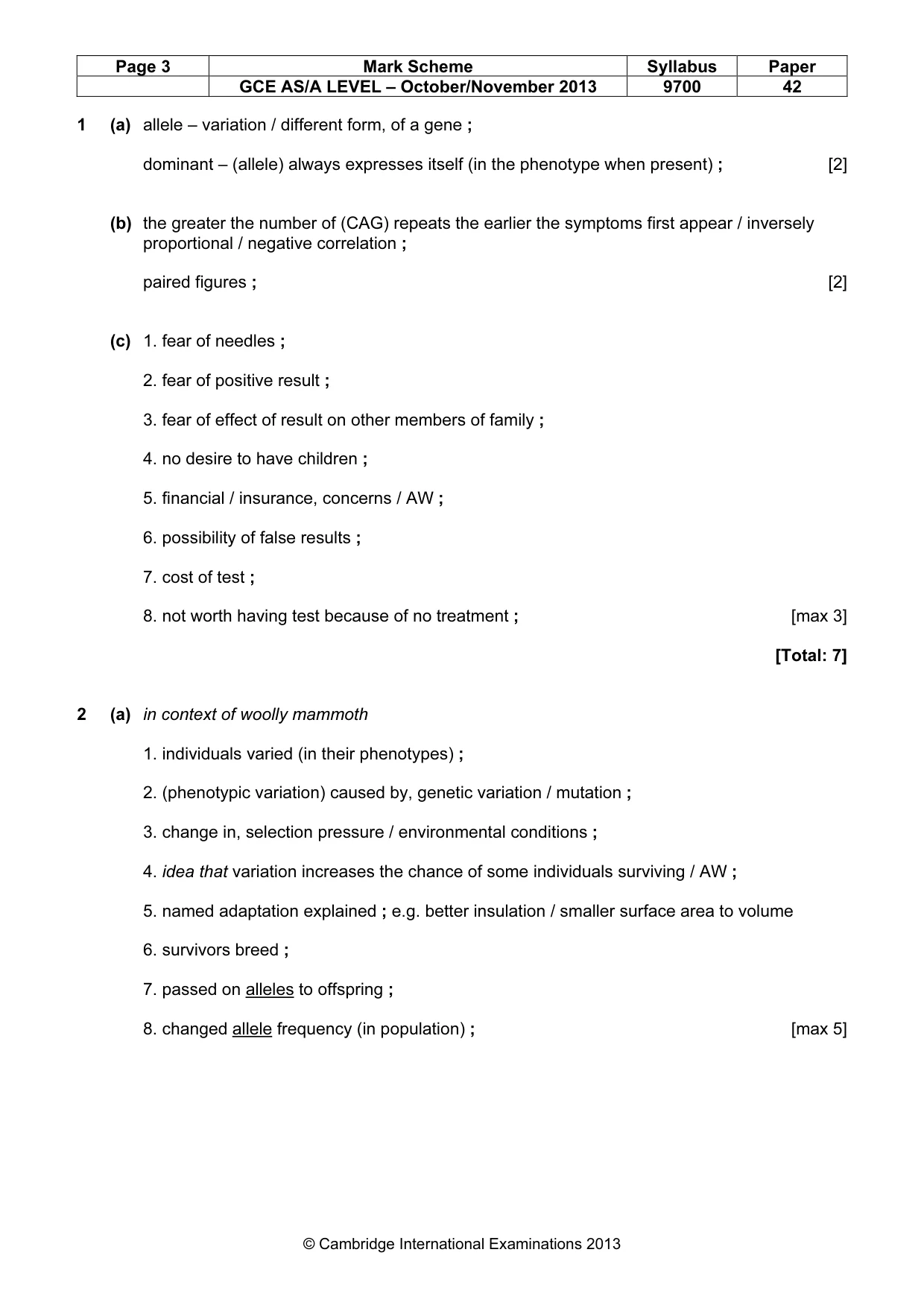
Page 3 Mark Scheme Syllabus Paper GCE AS/A LEVEL – October/November 2013 9700 42 © Cambridge International Examinations 2013 1 (a) allele – variation / different form, of a gene ; dominant – (allele) always expresses itself (in the phenotype when present) ; [2] (b) the greater the number of (CAG) repeats the earlier the symptoms first appear / inversely proportional / negative correlation ; paired figures ; [2] (c) 1. fear of needles ; 2. fear of positive result ; 3. fear of effect of result on other members of family ; 4. no desire to have children ; 5. financial / insurance, concerns / AW ; 6. possibility of false results ; 7. cost of test ; 8. not worth having test because of no treatment ; [max 3] [Total: 7] 2 (a) in context of woolly mammoth 1. individuals varied (in their phenotypes) ; 2. (phenotypic variation) caused by, genetic variation / mutation ; 3. change in, selection pressure / environmental conditions ; 4. idea that variation increases the chance of some individuals surviving / AW ; 5. named adaptation explained ; e.g. better insulation / smaller surface area to volume 6. survivors breed ; 7. passed on alleles to offspring ; 8. changed allele frequency (in population) ; [max 5]
Mark scheme, page 4
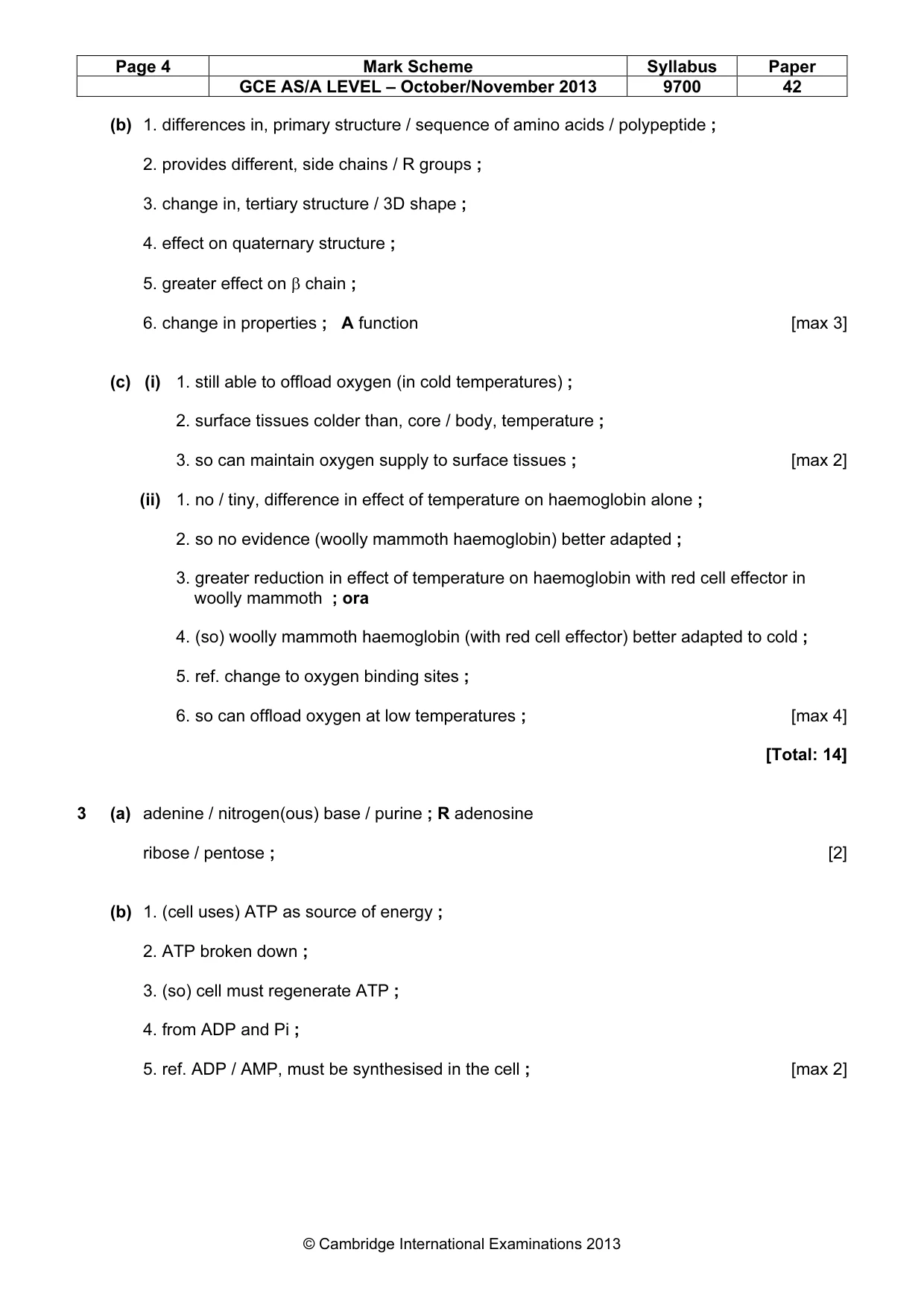
Page 4 Mark Scheme Syllabus Paper GCE AS/A LEVEL – October/November 2013 9700 42 © Cambridge International Examinations 2013 (b) 1. differences in, primary structure / sequence of amino acids / polypeptide ; 2. provides different, side chains / R groups ; 3. change in, tertiary structure / 3D shape ; 4. effect on quaternary structure ; 5. greater effect on β chain ; 6. change in properties ; A function [max 3] (c) (i) 1. still able to offload oxygen (in cold temperatures) ; 2. surface tissues colder than, core / body, temperature ; 3. so can maintain oxygen supply to surface tissues ; [max 2] (ii) 1. no / tiny, difference in effect of temperature on haemoglobin alone ; 2. so no evidence (woolly mammoth haemoglobin) better adapted ; 3. greater reduction in effect of temperature on haemoglobin with red cell effector in woolly mammoth ; ora 4. (so) woolly mammoth haemoglobin (with red cell effector) better adapted to cold ; 5. ref. change to oxygen binding sites ; 6. so can offload oxygen at low temperatures ; [max 4] [Total: 14] 3 (a) adenine / nitrogen(ous) base / purine ; R adenosine ribose / pentose ; [2] (b) 1. (cell uses) ATP as source of energy ; 2. ATP broken down ; 3. (so) cell must regenerate ATP ; 4. from ADP and Pi ; 5. ref. ADP / AMP, must be synthesised in the cell ; [max 2]
Mark scheme, page 5
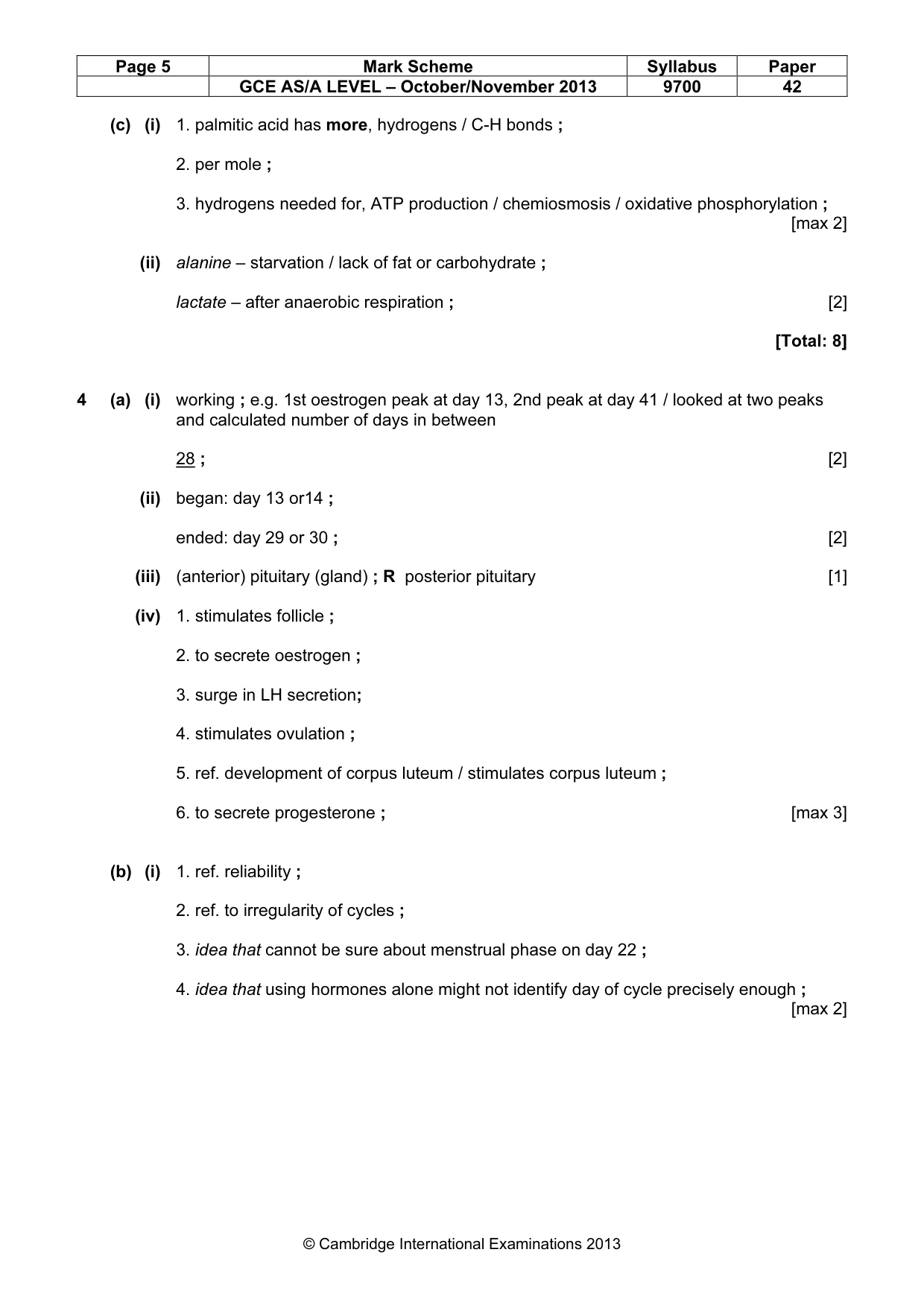
Page 5 Mark Scheme Syllabus Paper GCE AS/A LEVEL – October/November 2013 9700 42 © Cambridge International Examinations 2013 (c) (i) 1. palmitic acid has more, hydrogens / C-H bonds ; 2. per mole ; 3. hydrogens needed for, ATP production / chemiosmosis / oxidative phosphorylation ; [max 2] (ii) alanine – starvation / lack of fat or carbohydrate ; lactate – after anaerobic respiration ; [2] [Total: 8] 4 (a) (i) working ; e.g. 1st oestrogen peak at day 13, 2nd peak at day 41 / looked at two peaks and calculated number of days in between 28 ; [2] (ii) began: day 13 or14 ; ended: day 29 or 30 ; [2] (iii) (anterior) pituitary (gland) ; R posterior pituitary [1] (iv) 1. stimulates follicle ; 2. to secrete oestrogen ; 3. surge in LH secretion; 4. stimulates ovulation ; 5. ref. development of corpus luteum / stimulates corpus luteum ; 6. to secrete progesterone ; [max 3] (b) (i) 1. ref. reliability ; 2. ref. to irregularity of cycles ; 3. idea that cannot be sure about menstrual phase on day 22 ; 4. idea that using hormones alone might not identify day of cycle precisely enough ; [max 2]
Mark scheme, page 6
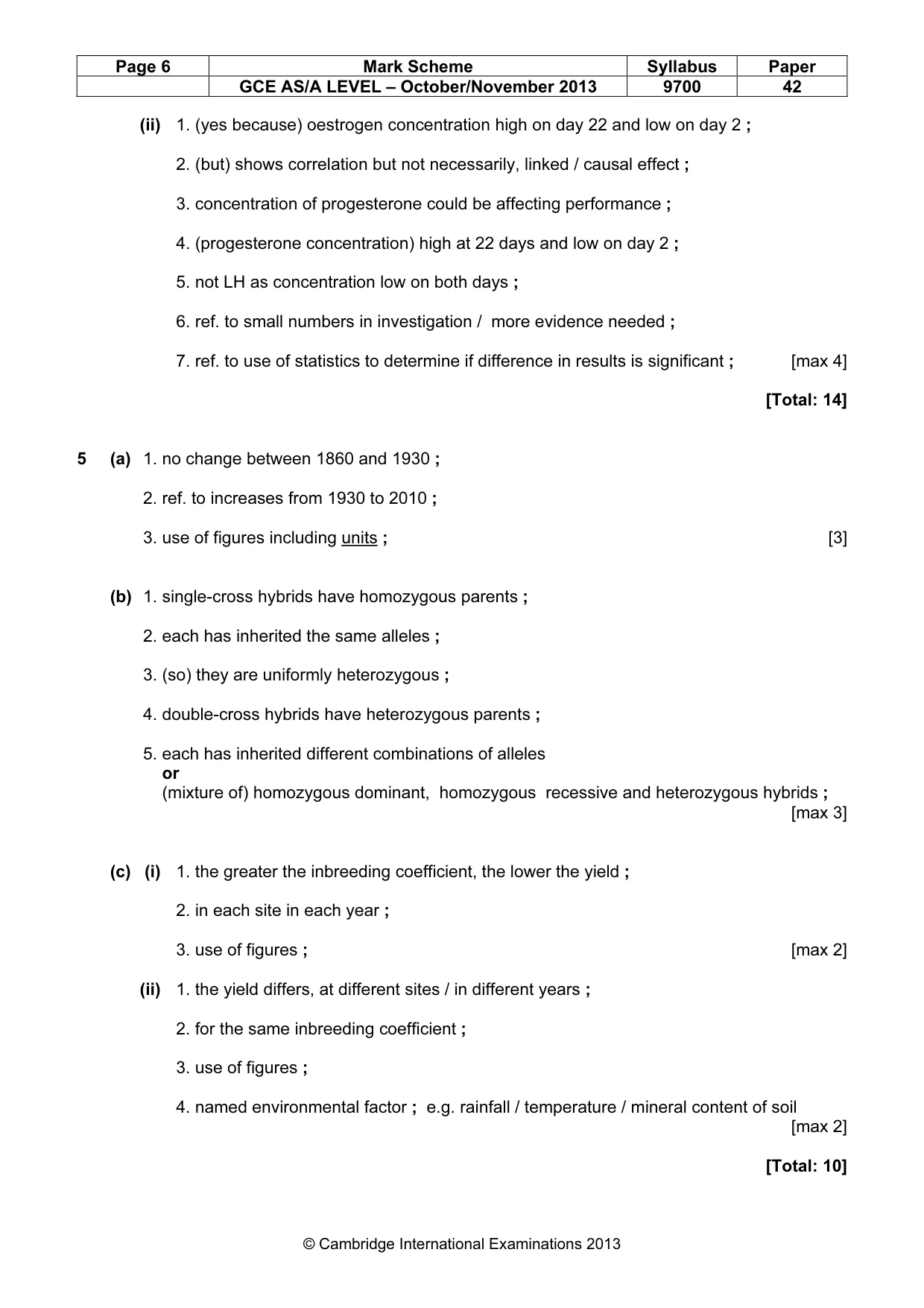
Page 6 Mark Scheme Syllabus Paper GCE AS/A LEVEL – October/November 2013 9700 42 © Cambridge International Examinations 2013 (ii) 1. (yes because) oestrogen concentration high on day 22 and low on day 2 ; 2. (but) shows correlation but not necessarily, linked / causal effect ; 3. concentration of progesterone could be affecting performance ; 4. (progesterone concentration) high at 22 days and low on day 2 ; 5. not LH as concentration low on both days ; 6. ref. to small numbers in investigation / more evidence needed ; 7. ref. to use of statistics to determine if difference in results is significant ; [max 4] [Total: 14] 5 (a) 1. no change between 1860 and 1930 ; 2. ref. to increases from 1930 to 2010 ; 3. use of figures including units ; [3] (b) 1. single-cross hybrids have homozygous parents ; 2. each has inherited the same alleles ; 3. (so) they are uniformly heterozygous ; 4. double-cross hybrids have heterozygous parents ; 5. each has inherited different combinations of alleles or (mixture of) homozygous dominant, homozygous recessive and heterozygous hybrids ; [max 3] (c) (i) 1. the greater the inbreeding coefficient, the lower the yield ; 2. in each site in each year ; 3. use of figures ; [max 2] (ii) 1. the yield differs, at different sites / in different years ; 2. for the same inbreeding coefficient ; 3. use of figures ; 4. named environmental factor ; e.g. rainfall / temperature / mineral content of soil [max 2] [Total: 10]
Mark scheme, page 7
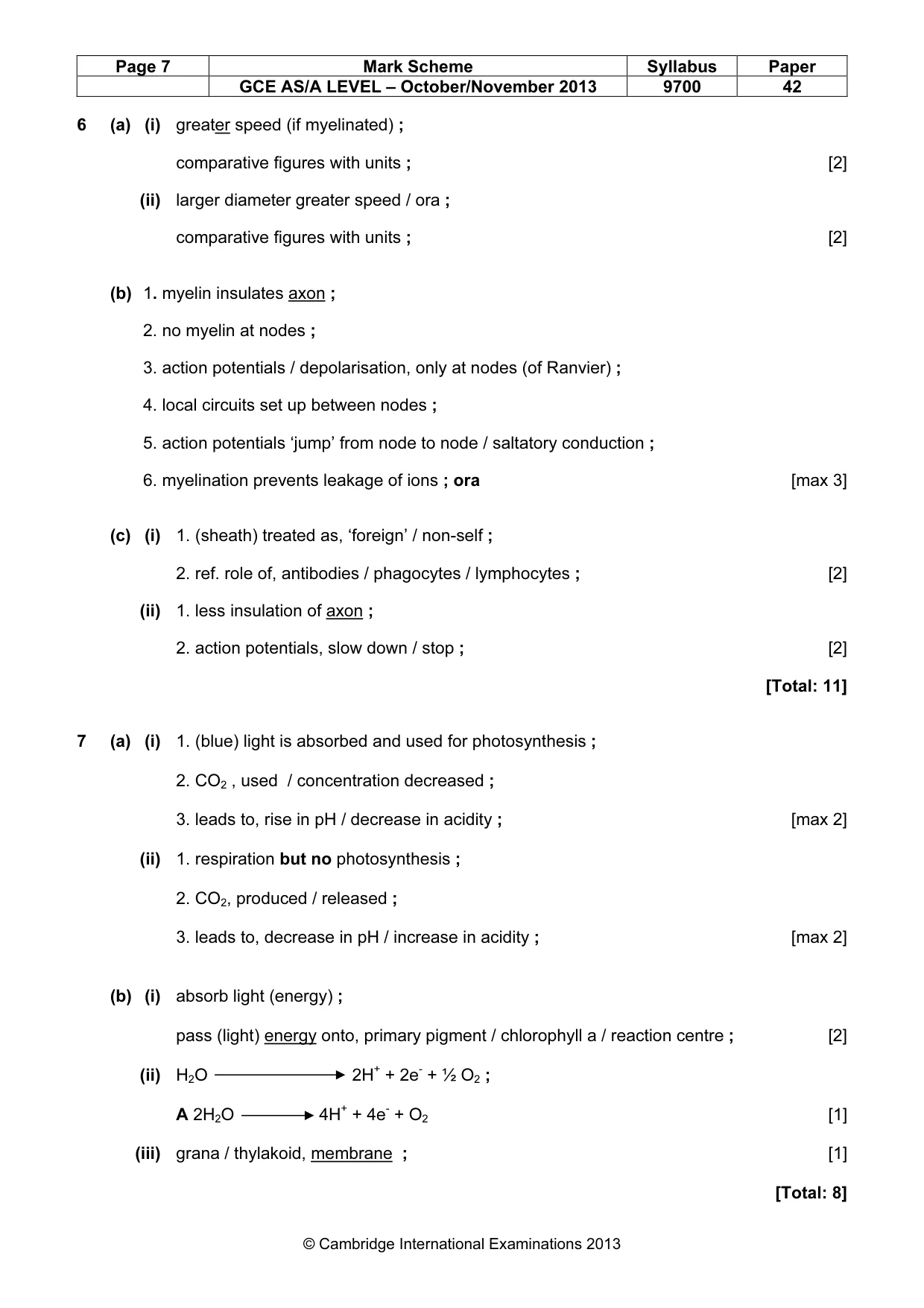
Page 7 Mark Scheme Syllabus Paper GCE AS/A LEVEL – October/November 2013 9700 42 © Cambridge International Examinations 2013 6 (a) (i) greater speed (if myelinated) ; comparative figures with units ; [2] (ii) larger diameter greater speed / ora ; comparative figures with units ; [2] (b) 1. myelin insulates axon ; 2. no myelin at nodes ; 3. action potentials / depolarisation, only at nodes (of Ranvier) ; 4. local circuits set up between nodes ; 5. action potentials ‘jump’ from node to node / saltatory conduction ; 6. myelination prevents leakage of ions ; ora [max 3] (c) (i) 1. (sheath) treated as, ‘foreign’ / non-self ; 2. ref. role of, antibodies / phagocytes / lymphocytes ; [2] (ii) 1. less insulation of axon ; 2. action potentials, slow down / stop ; [2] [Total: 11] 7 (a) (i) 1. (blue) light is absorbed and used for photosynthesis ; 2. CO2 , used / concentration decreased ; 3. leads to, rise in pH / decrease in acidity ; [max 2] (ii) 1. respiration but no photosynthesis ; 2. CO2, produced / released ; 3. leads to, decrease in pH / increase in acidity ; [max 2] (b) (i) absorb light (energy) ; pass (light) energy onto, primary pigment / chlorophyll a / reaction centre ; [2] (ii) H2O 2H+ + 2e- + ½ O2 ; A 2H2O 4H+ + 4e- + O2 [1] (iii) grana / thylakoid, membrane ; [1] [Total: 8]
Mark scheme, page 8
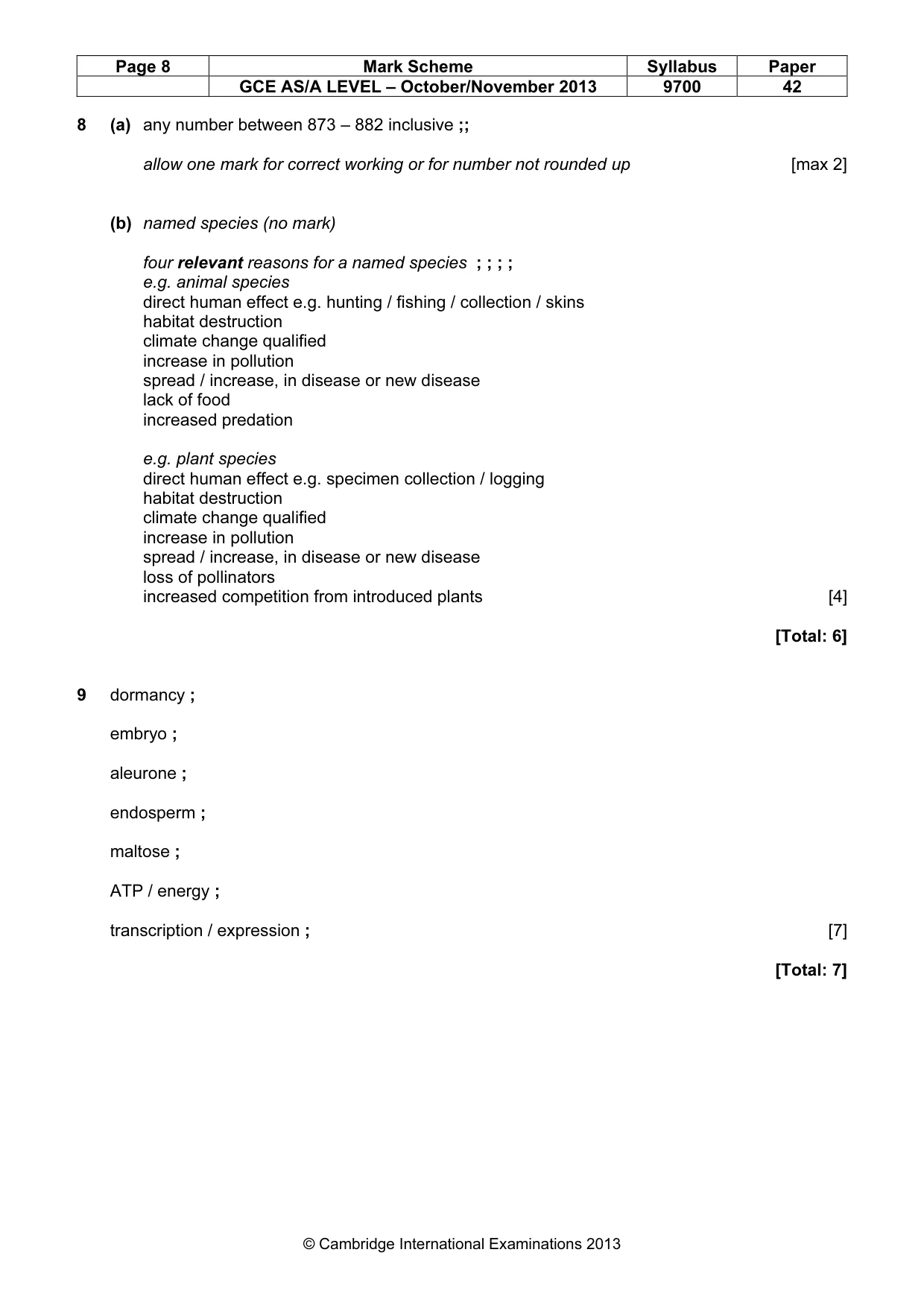
Page 8 Mark Scheme Syllabus Paper GCE AS/A LEVEL – October/November 2013 9700 42 © Cambridge International Examinations 2013 8 (a) any number between 873 – 882 inclusive ;; allow one mark for correct working or for number not rounded up [max 2] (b) named species (no mark) four relevant reasons for a named species ; ; ; ; e.g. animal species direct human effect e.g. hunting / fishing / collection / skins habitat destruction climate change qualified increase in pollution spread / increase, in disease or new disease lack of food increased predation e.g. plant species direct human effect e.g. specimen collection / logging habitat destruction climate change qualified increase in pollution spread / increase, in disease or new disease loss of pollinators increased competition from introduced plants [4] [Total: 6] 9 dormancy ; embryo ; aleurone ; endosperm ; maltose ; ATP / energy ; transcription / expression ; [7] [Total: 7]
Mark scheme, page 9
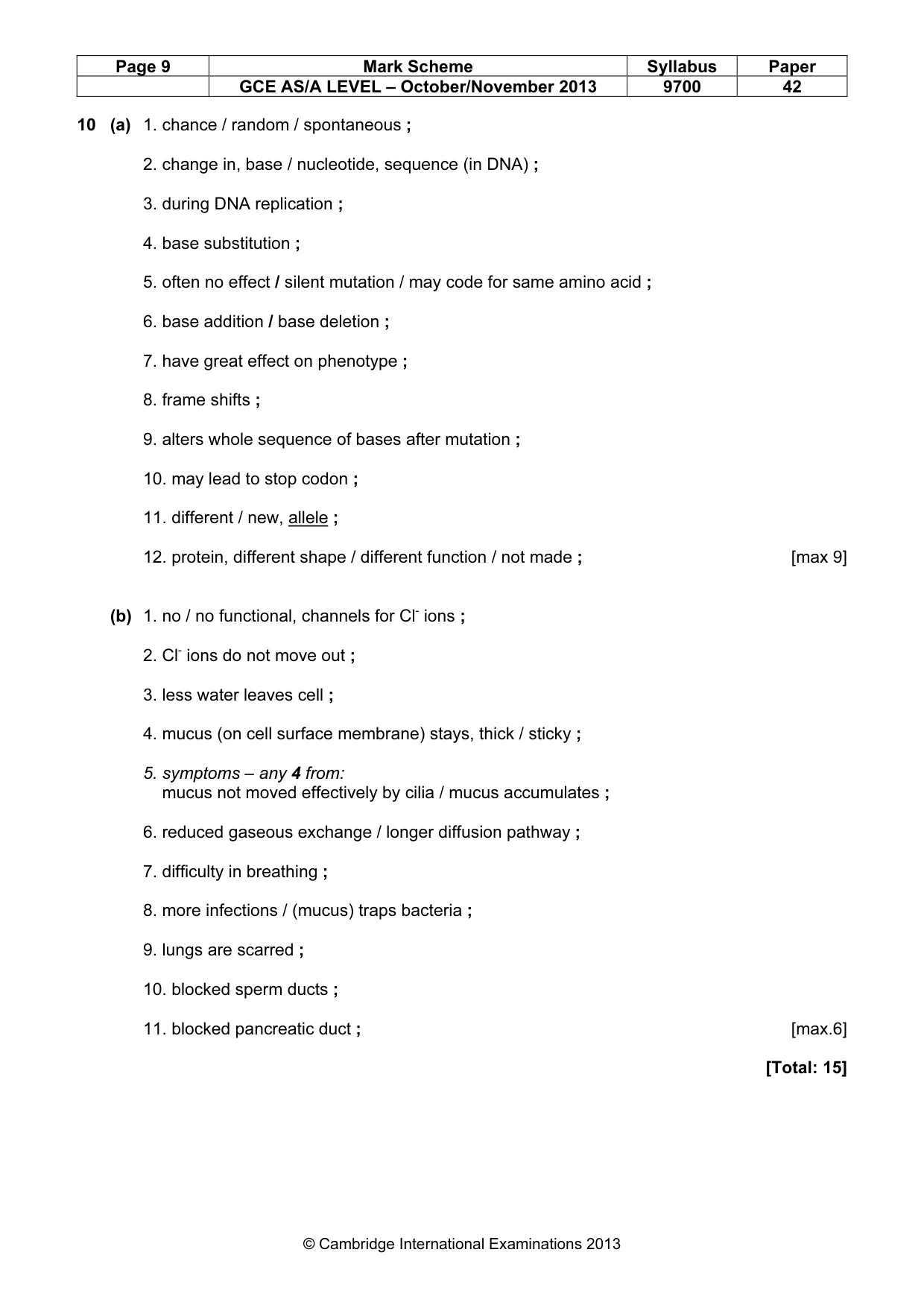
Page 9 Mark Scheme Syllabus Paper GCE AS/A LEVEL – October/November 2013 9700 42 © Cambridge International Examinations 2013 10 (a) 1. chance / random / spontaneous ; 2. change in, base / nucleotide, sequence (in DNA) ; 3. during DNA replication ; 4. base substitution ; 5. often no effect / silent mutation / may code for same amino acid ; 6. base addition / base deletion ; 7. have great effect on phenotype ; 8. frame shifts ; 9. alters whole sequence of bases after mutation ; 10. may lead to stop codon ; 11. different / new, allele ; 12. protein, different shape / different function / not made ; [max 9] (b) 1. no / no functional, channels for Cl- ions ; 2. Cl- ions do not move out ; 3. less water leaves cell ; 4. mucus (on cell surface membrane) stays, thick / sticky ; 5. symptoms – any 4 from: mucus not moved effectively by cilia / mucus accumulates ; 6. reduced gaseous exchange / longer diffusion pathway ; 7. difficulty in breathing ; 8. more infections / (mucus) traps bacteria ; 9. lungs are scarred ; 10. blocked sperm ducts ; 11. blocked pancreatic duct ; [max.6] [Total: 15]
Mark scheme, page 10
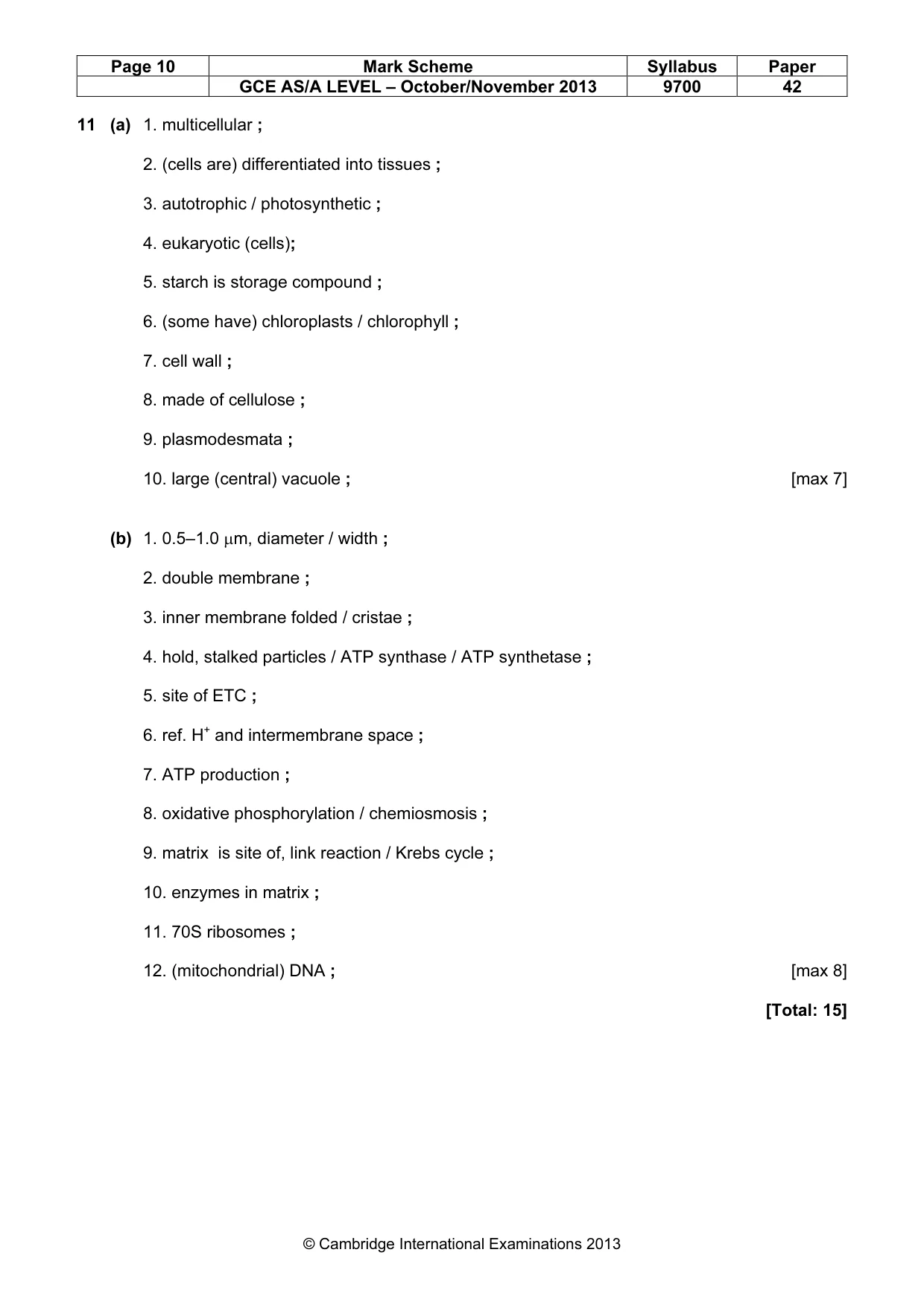
Page 10 Mark Scheme Syllabus Paper GCE AS/A LEVEL – October/November 2013 9700 42 © Cambridge International Examinations 2013 11 (a) 1. multicellular ; 2. (cells are) differentiated into tissues ; 3. autotrophic / photosynthetic ; 4. eukaryotic (cells); 5. starch is storage compound ; 6. (some have) chloroplasts / chlorophyll ; 7. cell wall ; 8. made of cellulose ; 9. plasmodesmata ; 10. large (central) vacuole ; [max 7] (b) 1. 0.5–1.0 µm, diameter / width ; 2. double membrane ; 3. inner membrane folded / cristae ; 4. hold, stalked particles / ATP synthase / ATP synthetase ; 5. site of ETC ; 6. ref. H+ and intermembrane space ; 7. ATP production ; 8. oxidative phosphorylation / chemiosmosis ; 9. matrix is site of, link reaction / Krebs cycle ; 10. enzymes in matrix ; 11. 70S ribosomes ; 12. (mitochondrial) DNA ; [max 8] [Total: 15]
What you needed in this session
Cambridge’s own grade thresholds for 2013 Oct/Nov, Paper 4 · Variant 2. A higher threshold means an easier paper — the bar moves with how the cohort did.