Cambridge A Level Biology 9700 — 2012 Oct/Nov Paper 4 · Variant 1
9700/41/O/N/12 · 100 marks · ≈113 min
The question paper and its mark scheme, free to read here and free to download. This is Cambridge’s own paper, exactly as it was sat.
Question paper24 pages
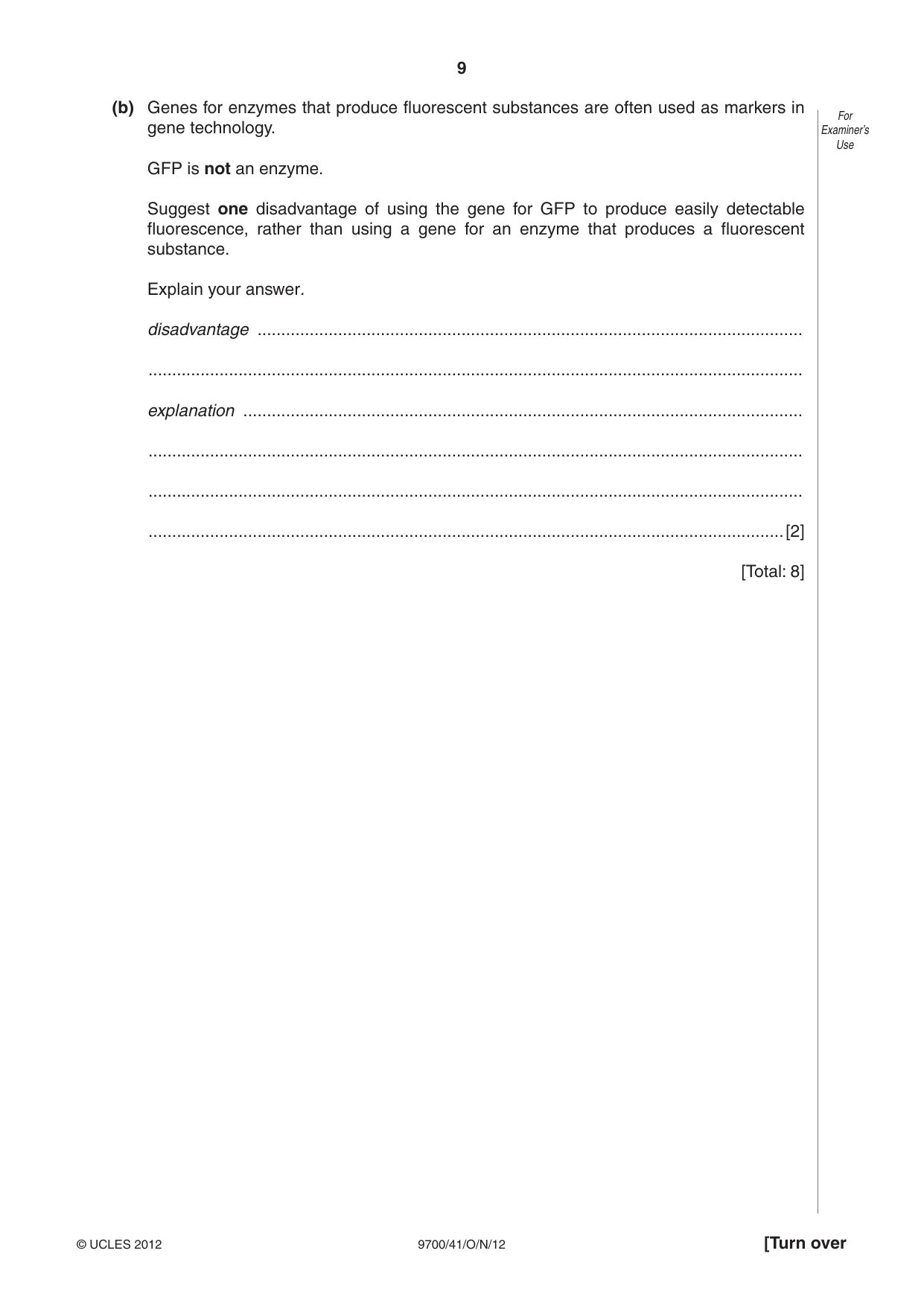
Mark scheme12 pages
Answers below. Sit the paper first if you are practising.
Paper as text
Question paper, page 1
This document consists of 23 printed pages and 1 lined page. DC (LEO/SW) 49058/2 © UCLES 2012 [Turn over UNIVERSITY OF CAMBRIDGE INTERNATIONAL EXAMINATIONS General Certificate of Education Advanced Level READ THESE INSTRUCTIONS FIRST Write your Centre number, candidate number and name in the spaces provided at the top of this page. Write in dark blue or black ink. Do not use staples, paper clips, highlighters, glue or correction fluid. Section A Answer all questions. Section B Answer one question. Circle the number of the Section B question you have answered in the grid below. At the end of the examination, fasten all your work securely together. The number of marks is given in brackets [ ] at the end of each question or part question. * 0 9 6 2 6 2 4 4 7 2 * BIOLOGY 9700/41 Paper 4 A2 Structured Questions October/November 2012 2 hours Candidates answer on the Question Paper. No Additional Materials are required. For Examiner’s Use Section A 1 2 3 4 5 6 7 8 Section B 9 or 10 Total
Question paper, page 2
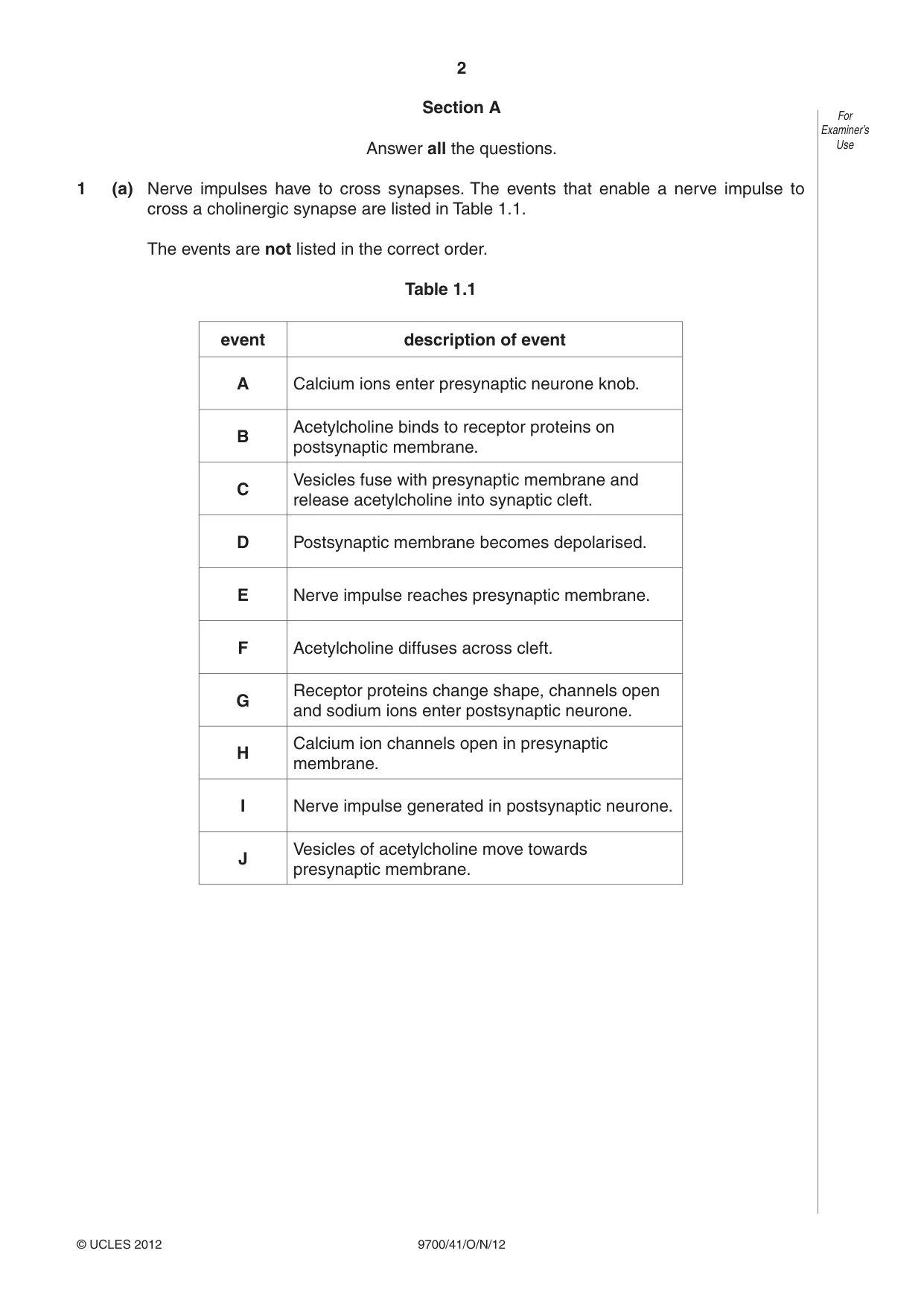
2 © UCLES 2012 9700/41/O/N/12 For Examiner’s Use Section A Answer all the questions. 1 (a) Nerve impulses have to cross synapses. The events that enable a nerve impulse to cross a cholinergic synapse are listed in Table 1.1. The events are not listed in the correct order. Table 1.1 event description of event A Calcium ions enter presynaptic neurone knob. B Acetylcholine binds to receptor proteins on postsynaptic membrane. C Vesicles fuse with presynaptic membrane and release acetylcholine into synaptic cleft. D Postsynaptic membrane becomes depolarised. E Nerve impulse reaches presynaptic membrane. F Acetylcholine diffuses across cleft. G Receptor proteins change shape, channels open and sodium ions enter postsynaptic neurone. H Calcium ion channels open in presynaptic membrane. I Nerve impulse generated in postsynaptic neurone. J Vesicles of acetylcholine move towards presynaptic membrane.
Question paper, page 3
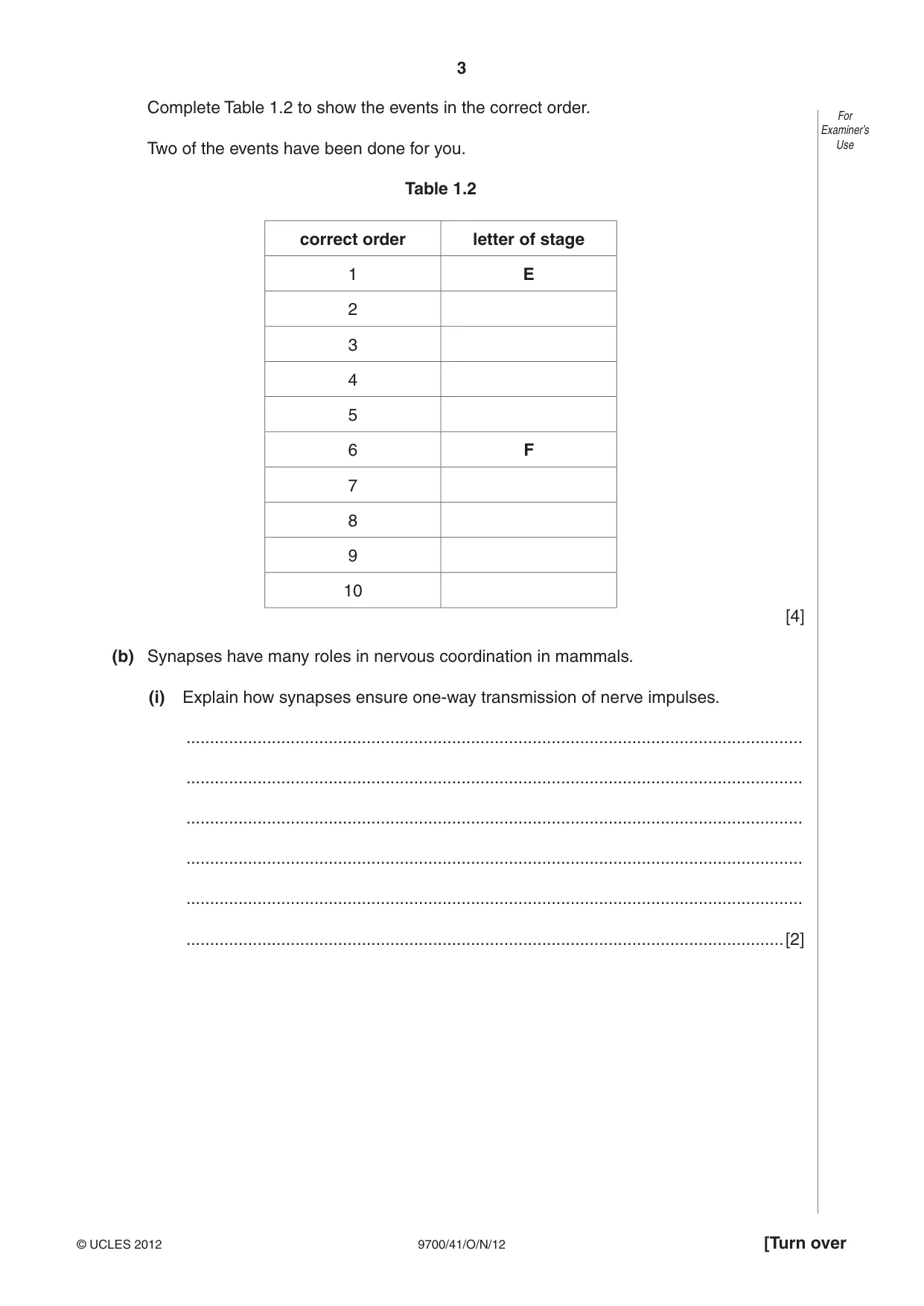
3 © UCLES 2012 [Turn over 9700/41/O/N/12 For Examiner’s Use Complete Table 1.2 to show the events in the correct order. Two of the events have been done for you. Table 1.2 correct order letter of stage 1 E 2 3 4 5 6 F 7 8 9 10 [4] (b) Synapses have many roles in nervous coordination in mammals. (i) Explain how synapses ensure one-way transmission of nerve impulses. … … … … … …[2]
Question paper, page 4
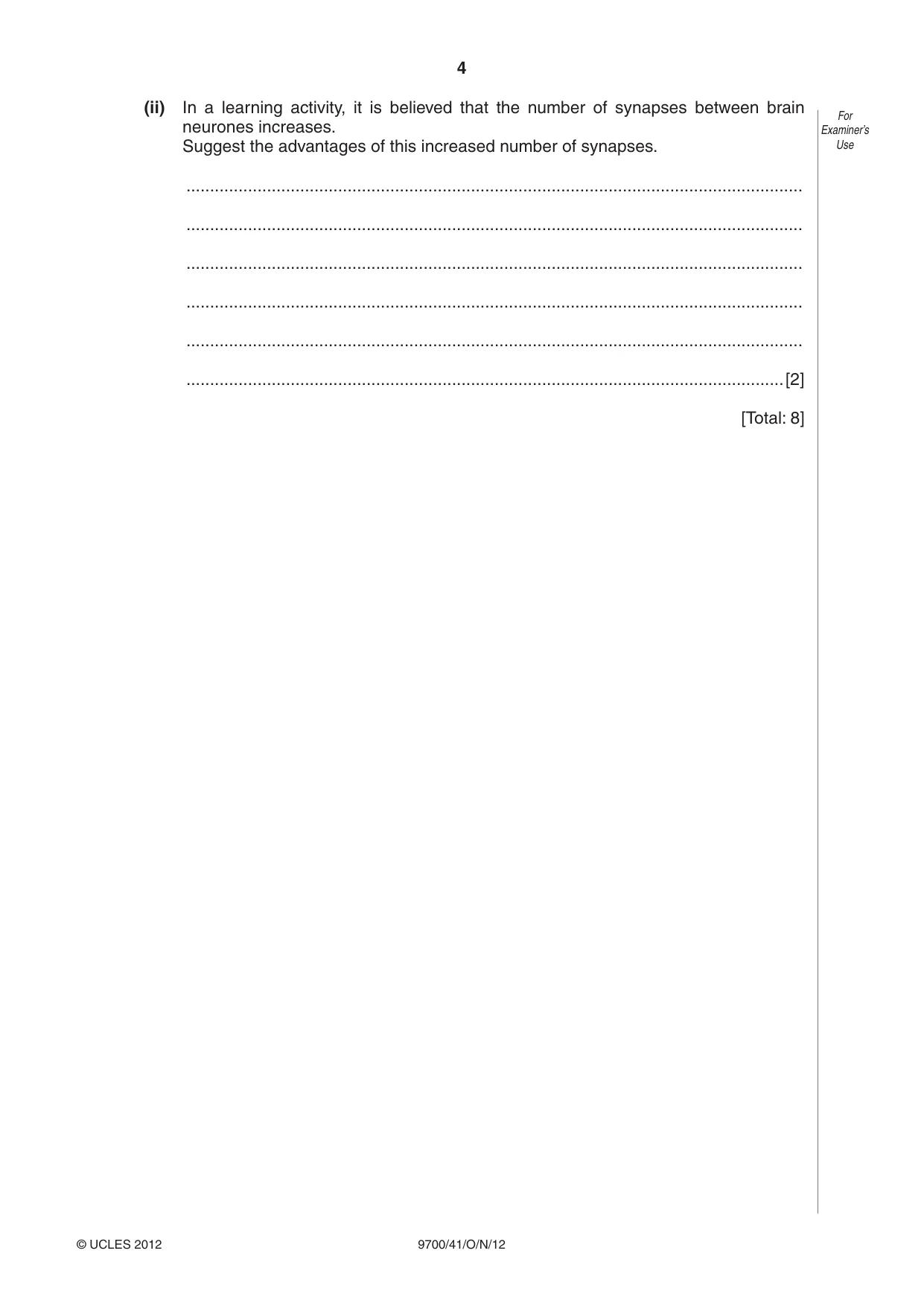
4 © UCLES 2012 9700/41/O/N/12 For Examiner’s Use (ii) In a learning activity, it is believed that the number of synapses between brain neurones increases. Suggest the advantages of this increased number of synapses. … … … … … …[2] [Total: 8]
Question paper, page 5
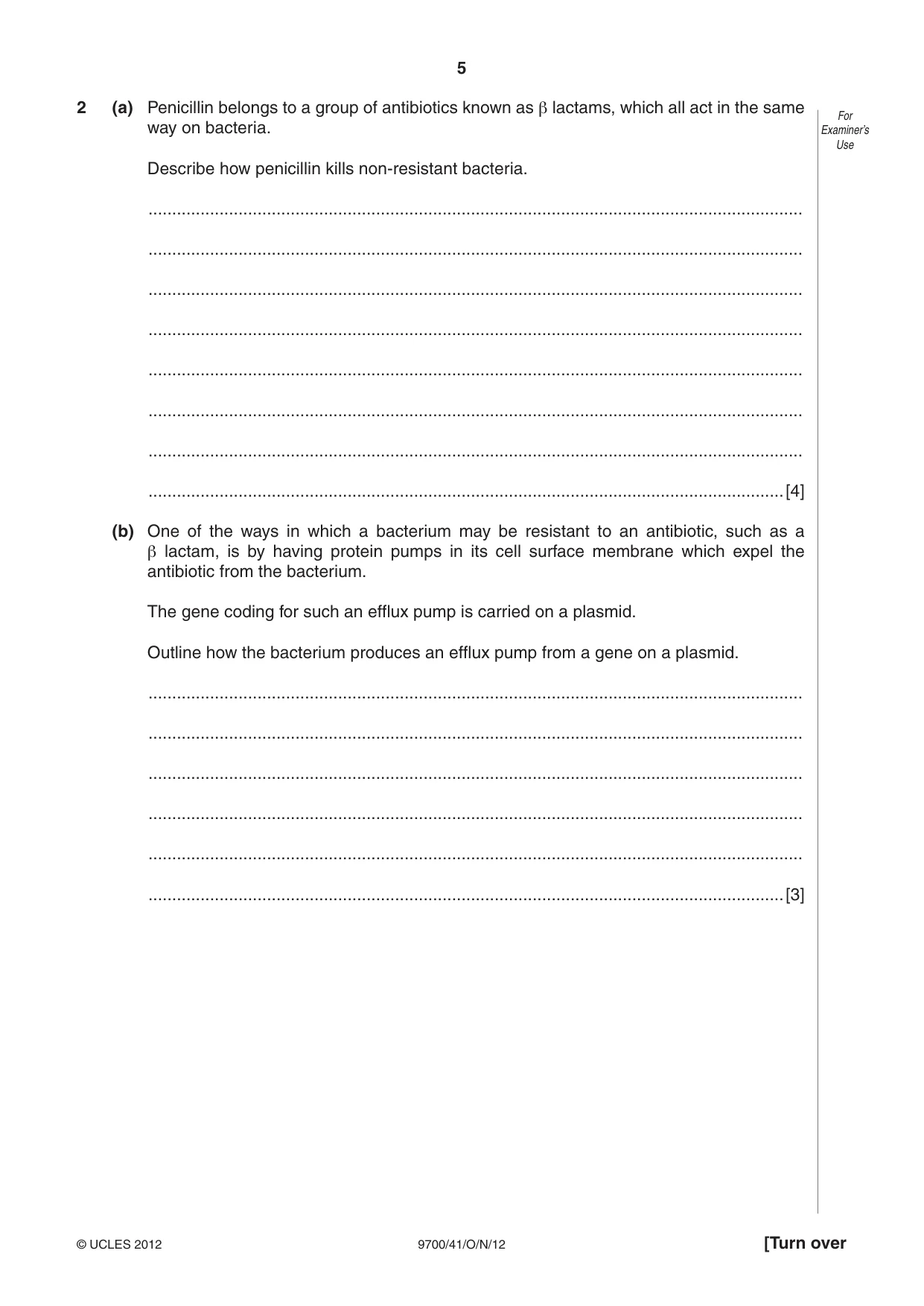
5 © UCLES 2012 [Turn over 9700/41/O/N/12 For Examiner’s Use 2 (a) Penicillin belongs to a group of antibiotics known as β lactams, which all act in the same way on bacteria. Describe how penicillin kills non-resistant bacteria. … … … … … … … …[4] (b) One of the ways in which a bacterium may be resistant to an antibiotic, such as a β lactam, is by having protein pumps in its cell surface membrane which expel the antibiotic from the bacterium. The gene coding for such an efflux pump is carried on a plasmid. Outline how the bacterium produces an efflux pump from a gene on a plasmid. … … … … … …[3]
Question paper, page 6
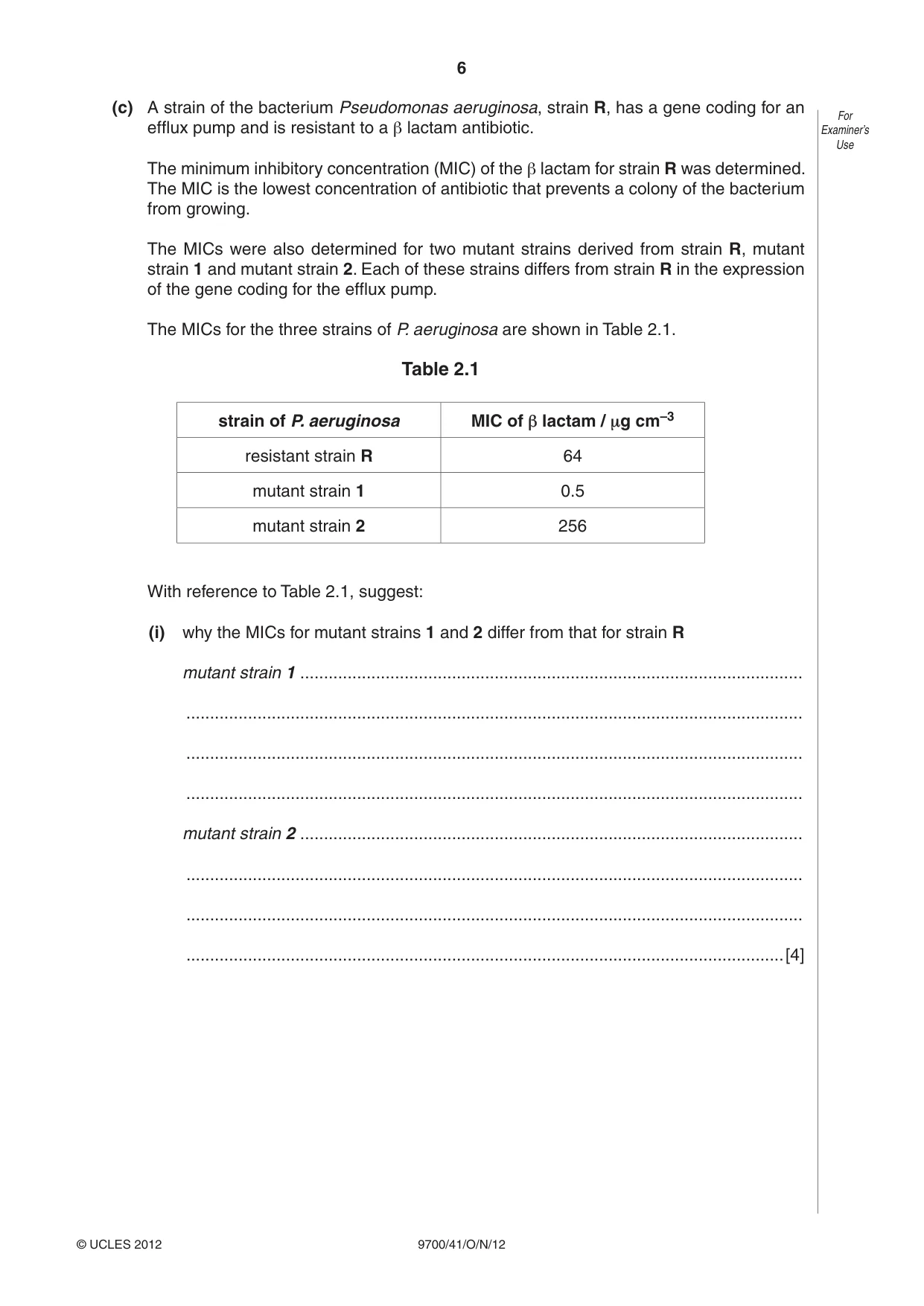
6 © UCLES 2012 9700/41/O/N/12 For Examiner’s Use (c) A strain of the bacterium Pseudomonas aeruginosa, strain R, has a gene coding for an efflux pump and is resistant to a β lactam antibiotic. The minimum inhibitory concentration (MIC) of the β lactam for strain R was determined. The MIC is the lowest concentration of antibiotic that prevents a colony of the bacterium from growing. The MICs were also determined for two mutant strains derived from strain R, mutant strain 1 and mutant strain 2. Each of these strains differs from strain R in the expression of the gene coding for the efflux pump. The MICs for the three strains of P. aeruginosa are shown in Table 2.1. Table 2.1 strain of P. aeruginosa MIC of β lactam / μg cm–3 resistant strain R 64 mutant strain 1 0.5 mutant strain 2 256 With reference to Table 2.1, suggest: (i) why the MICs for mutant strains 1 and 2 differ from that for strain R mutant strain 1 … … … … mutant strain 2 … … … …[4]
Question paper, page 7
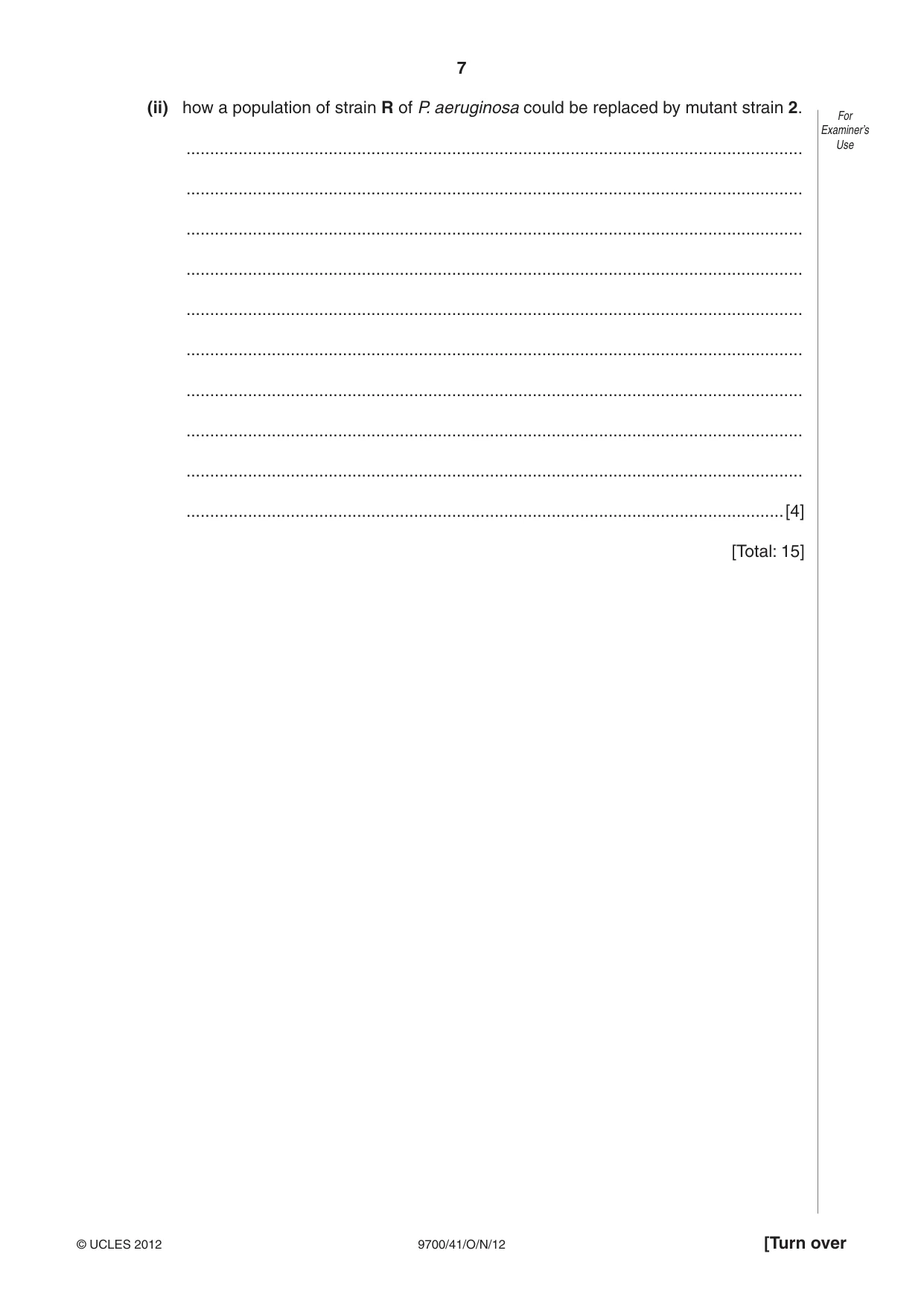
7 © UCLES 2012 [Turn over 9700/41/O/N/12 For Examiner’s Use (ii) how a population of strain R of P. aeruginosa could be replaced by mutant strain 2. … … … … … … … … … …[4] [Total: 15]
Question paper, page 8
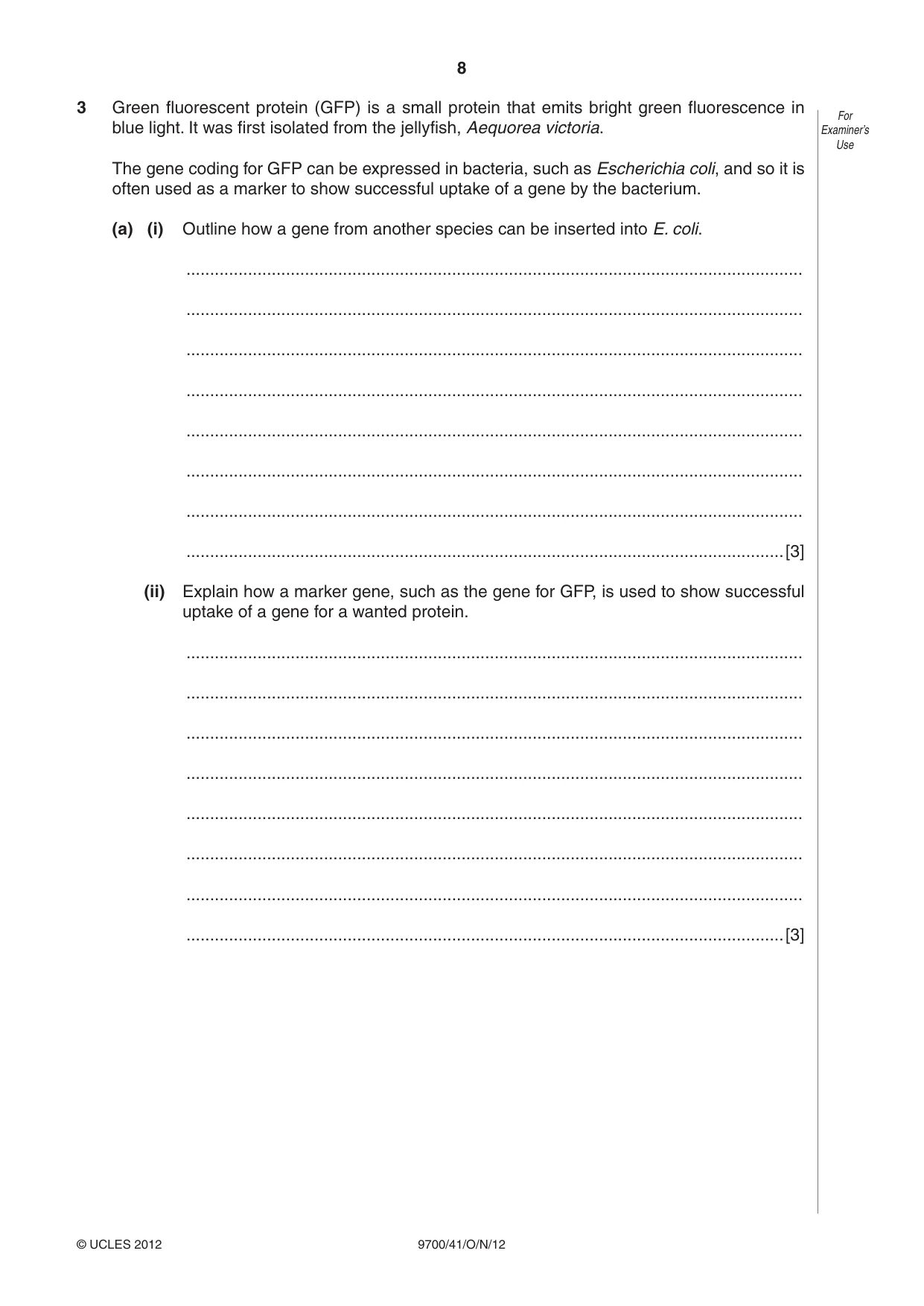
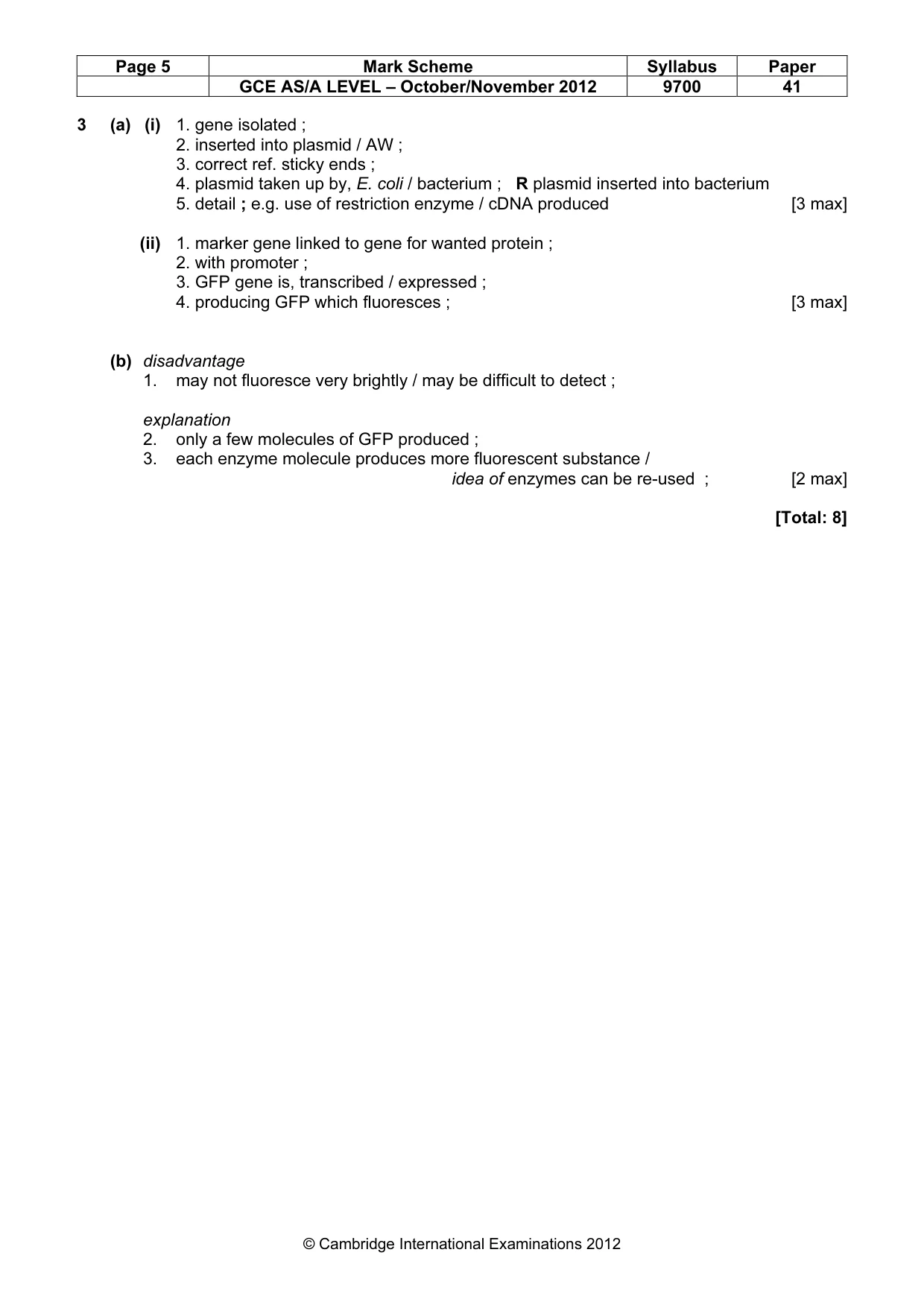
8 © UCLES 2012 9700/41/O/N/12 For Examiner’s Use 3 Green fluorescent protein (GFP) is a small protein that emits bright green fluorescence in blue light. It was first isolated from the jellyfish, Aequorea victoria. The gene coding for GFP can be expressed in bacteria, such as Escherichia coli, and so it is often used as a marker to show successful uptake of a gene by the bacterium. (a) (i) Outline how a gene from another species can be inserted into E. coli. … … … … … … … …[3] (ii) Explain how a marker gene, such as the gene for GFP, is used to show successful uptake of a gene for a wanted protein. … … … … … … … …[3]
Question paper, page 9
9 © UCLES 2012 [Turn over 9700/41/O/N/12 For Examiner’s Use (b) Genes for enzymes that produce fluorescent substances are often used as markers in gene technology. GFP is not an enzyme. Suggest one disadvantage of using the gene for GFP to produce easily detectable fluorescence, rather than using a gene for an enzyme that produces a fluorescent substance. Explain your answer. disadvantage … … explanation … … … …[2] [Total: 8]
Question paper, page 10
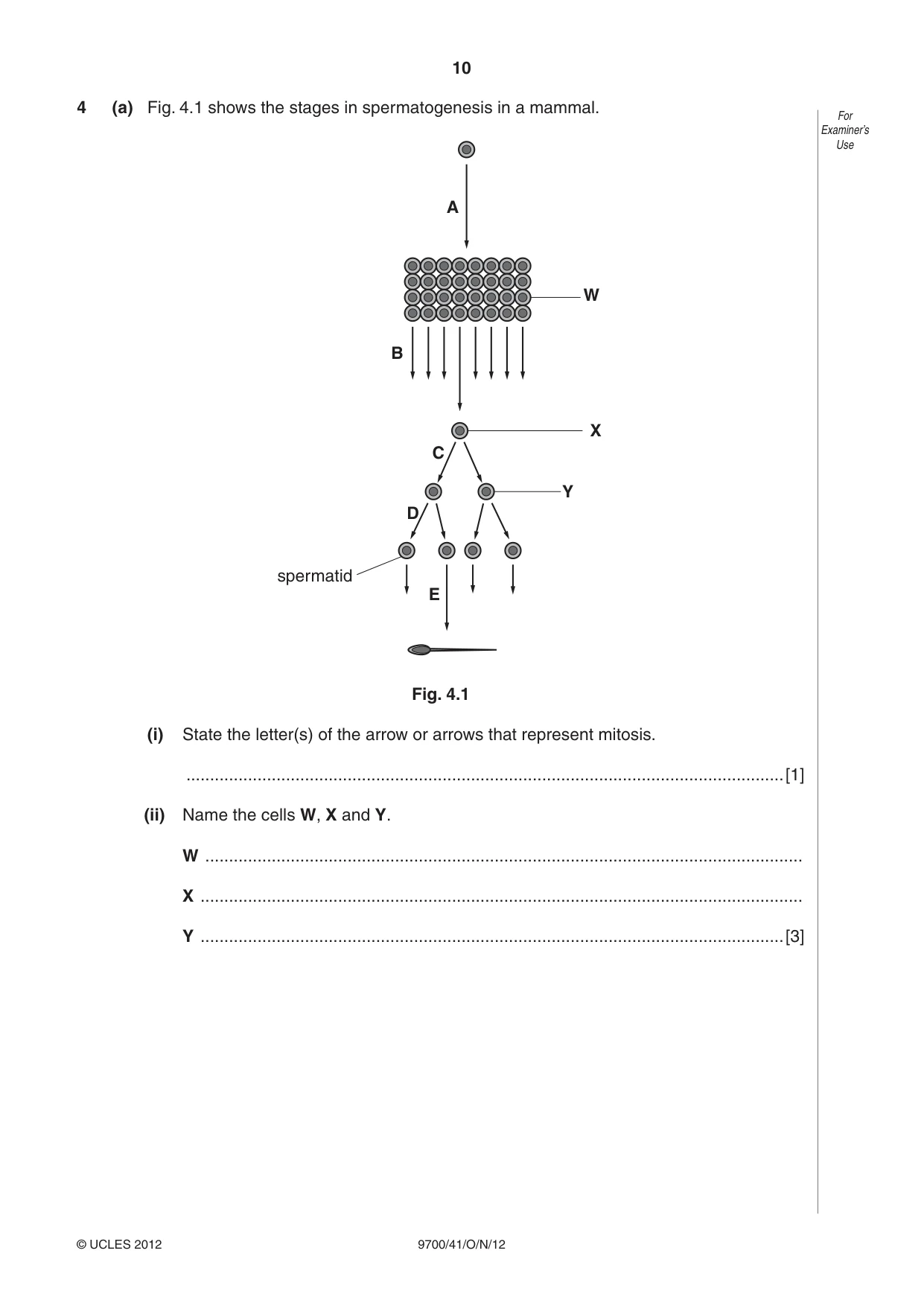
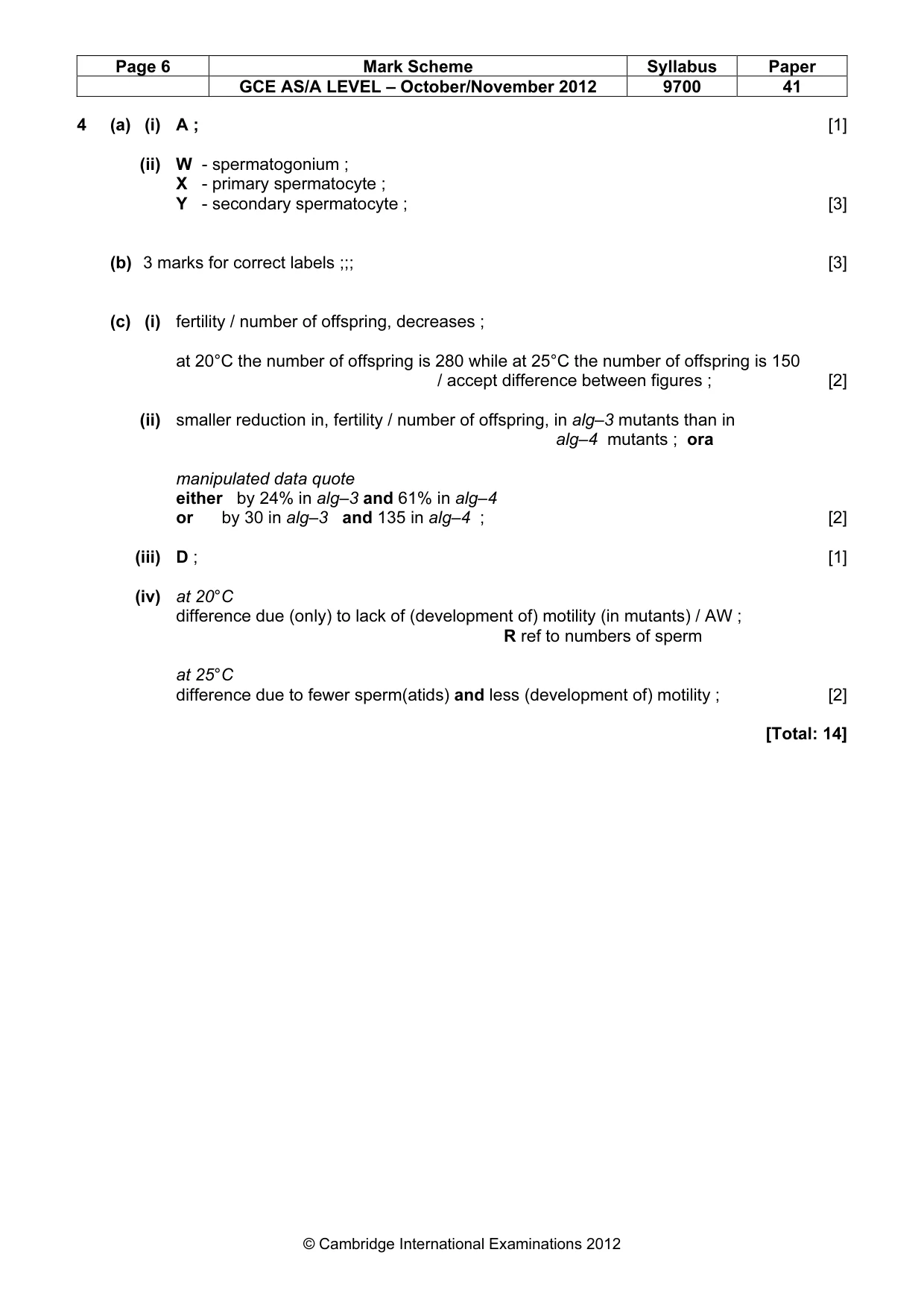
10 © UCLES 2012 9700/41/O/N/12 For Examiner’s Use 4 (a) Fig. 4.1 shows the stages in spermatogenesis in a mammal. A B W X Y E D spermatid C Fig. 4.1 (i) State the letter(s) of the arrow or arrows that represent mitosis. …[1] (ii) Name the cells W, X and Y. W … X … Y …[3]
Question paper, page 11
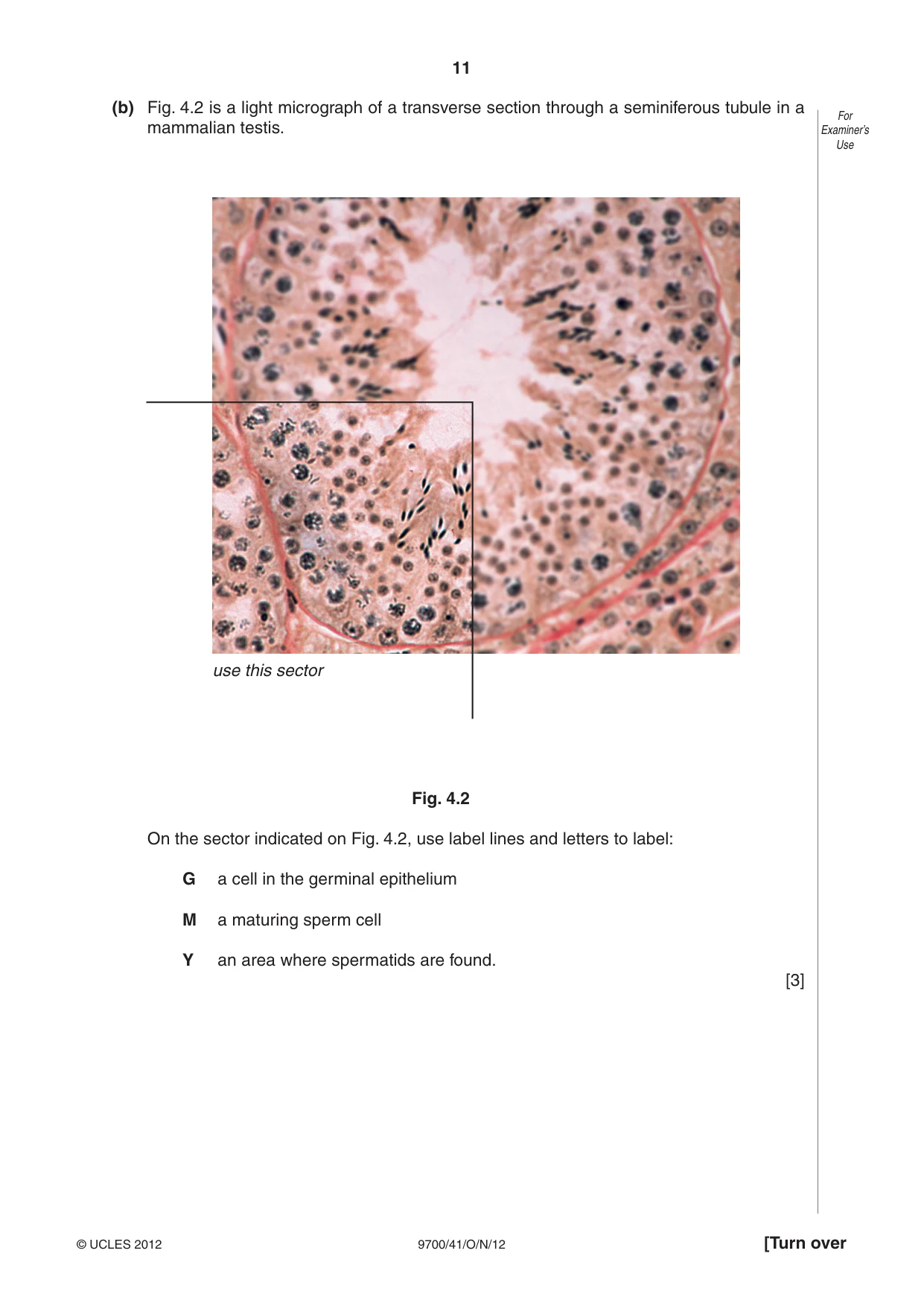
11 © UCLES 2012 [Turn over 9700/41/O/N/12 For Examiner’s Use (b) Fig. 4.2 is a light micrograph of a transverse section through a seminiferous tubule in a mammalian testis. use this sector Fig. 4.2 On the sector indicated on Fig. 4.2, use label lines and letters to label: G a cell in the germinal epithelium M a maturing sperm cell Y an area where spermatids are found. [3]
Question paper, page 12
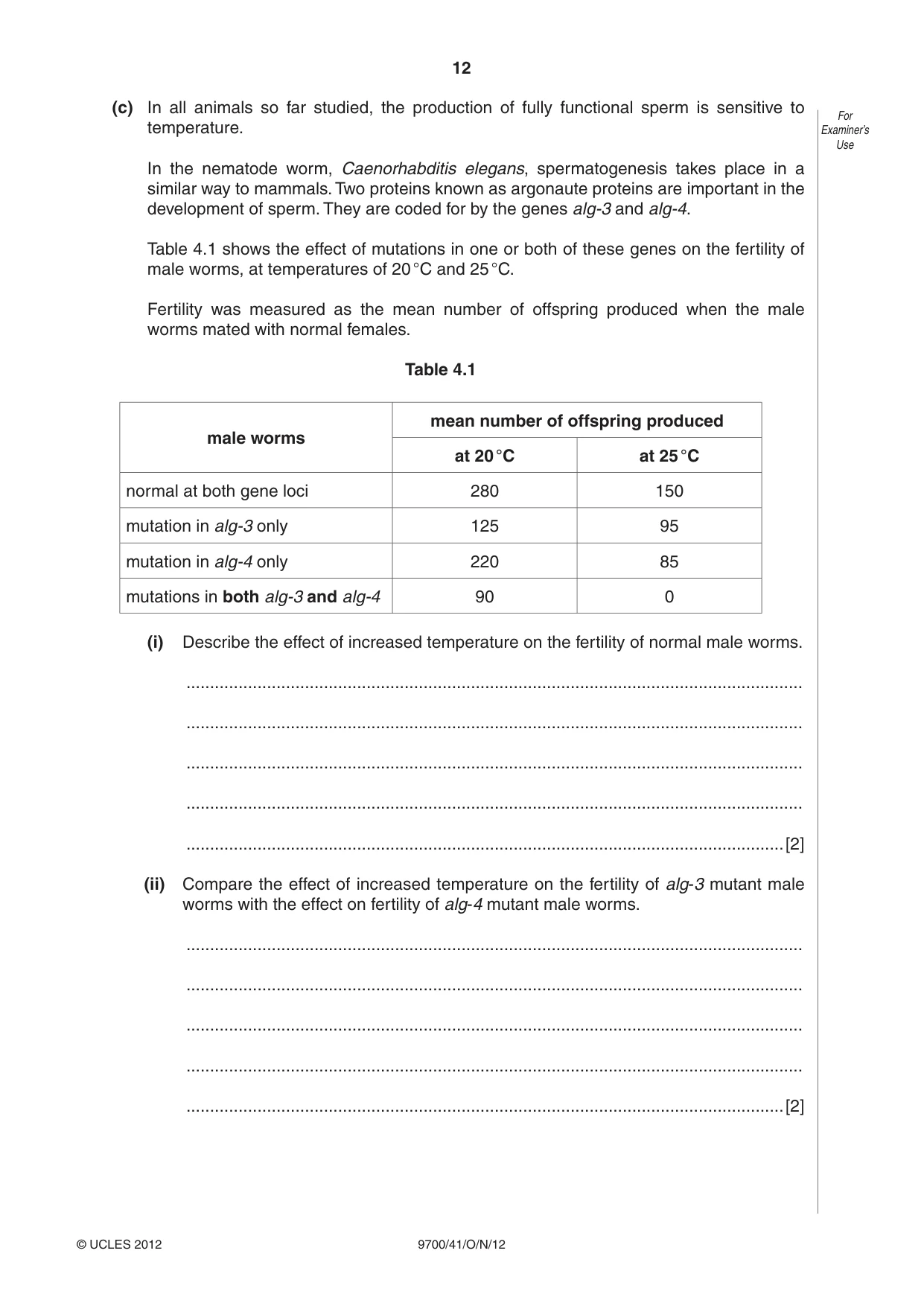
12 © UCLES 2012 9700/41/O/N/12 For Examiner’s Use (c) In all animals so far studied, the production of fully functional sperm is sensitive to temperature. In the nematode worm, Caenorhabditis elegans, spermatogenesis takes place in a similar way to mammals. Two proteins known as argonaute proteins are important in the development of sperm. They are coded for by the genes alg-3 and alg-4. Table 4.1 shows the effect of mutations in one or both of these genes on the fertility of male worms, at temperatures of 20 °C and 25 °C. Fertility was measured as the mean number of offspring produced when the male worms mated with normal females. Table 4.1 male worms mean number of offspring produced at 20 °C at 25 °C normal at both gene loci 280 150 mutation in alg-3 only 125 95 mutation in alg-4 only 220 85 mutations in both alg-3 and alg-4 90 0 (i) Describe the effect of increased temperature on the fertility of normal male worms. … … … … …[2] (ii) Compare the effect of increased temperature on the fertility of alg-3 mutant male worms with the effect on fertility of alg-4 mutant male worms. … … … … …[2]
Question paper, page 13
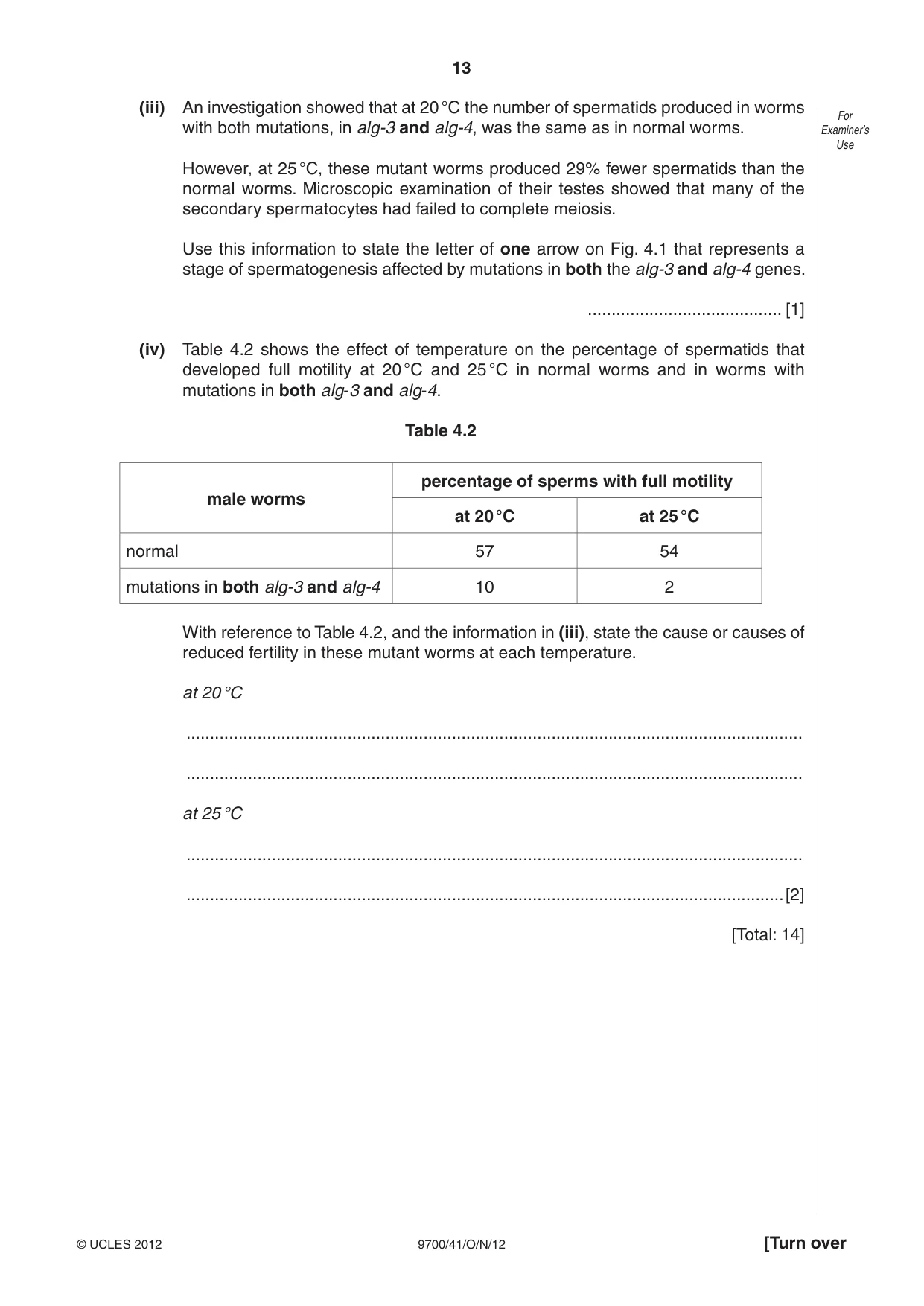
13 © UCLES 2012 [Turn over 9700/41/O/N/12 For Examiner’s Use (iii) An investigation showed that at 20 °C the number of spermatids produced in worms with both mutations, in alg-3 and alg-4, was the same as in normal worms. However, at 25 °C, these mutant worms produced 29% fewer spermatids than the normal worms. Microscopic examination of their testes showed that many of the secondary spermatocytes had failed to complete meiosis. Use this information to state the letter of one arrow on Fig. 4.1 that represents a stage of spermatogenesis affected by mutations in both the alg-3 and alg-4 genes. … [1] (iv) Table 4.2 shows the effect of temperature on the percentage of spermatids that developed full motility at 20 °C and 25 °C in normal worms and in worms with mutations in both alg-3 and alg-4. Table 4.2 male worms percentage of sperms with full motility at 20 °C at 25 °C normal 57 54 mutations in both alg-3 and alg-4 10 2 With reference to Table 4.2, and the information in (iii), state the cause or causes of reduced fertility in these mutant worms at each temperature. at 20 °C … … at 25 °C … …[2] [Total: 14]
Question paper, page 14
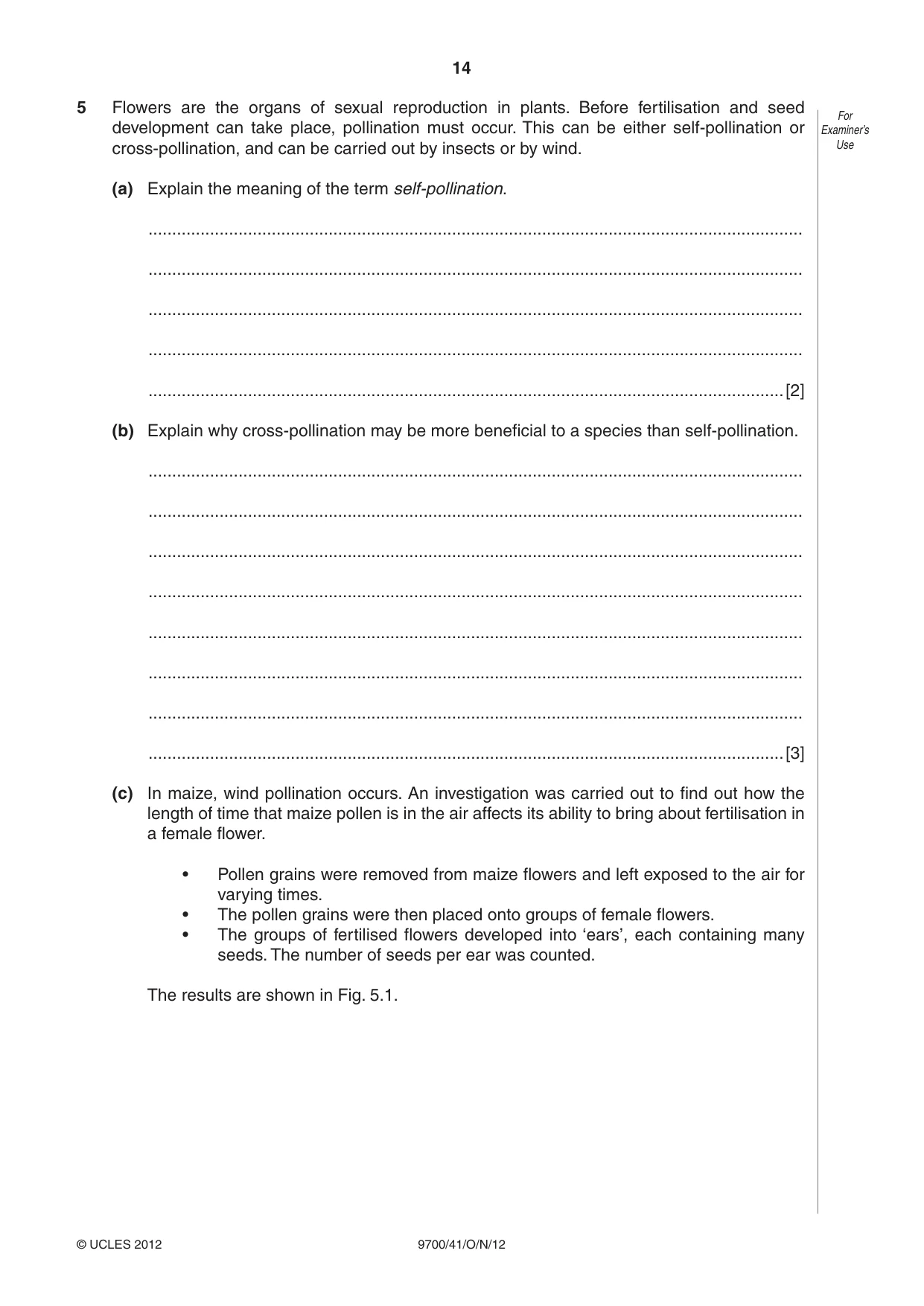
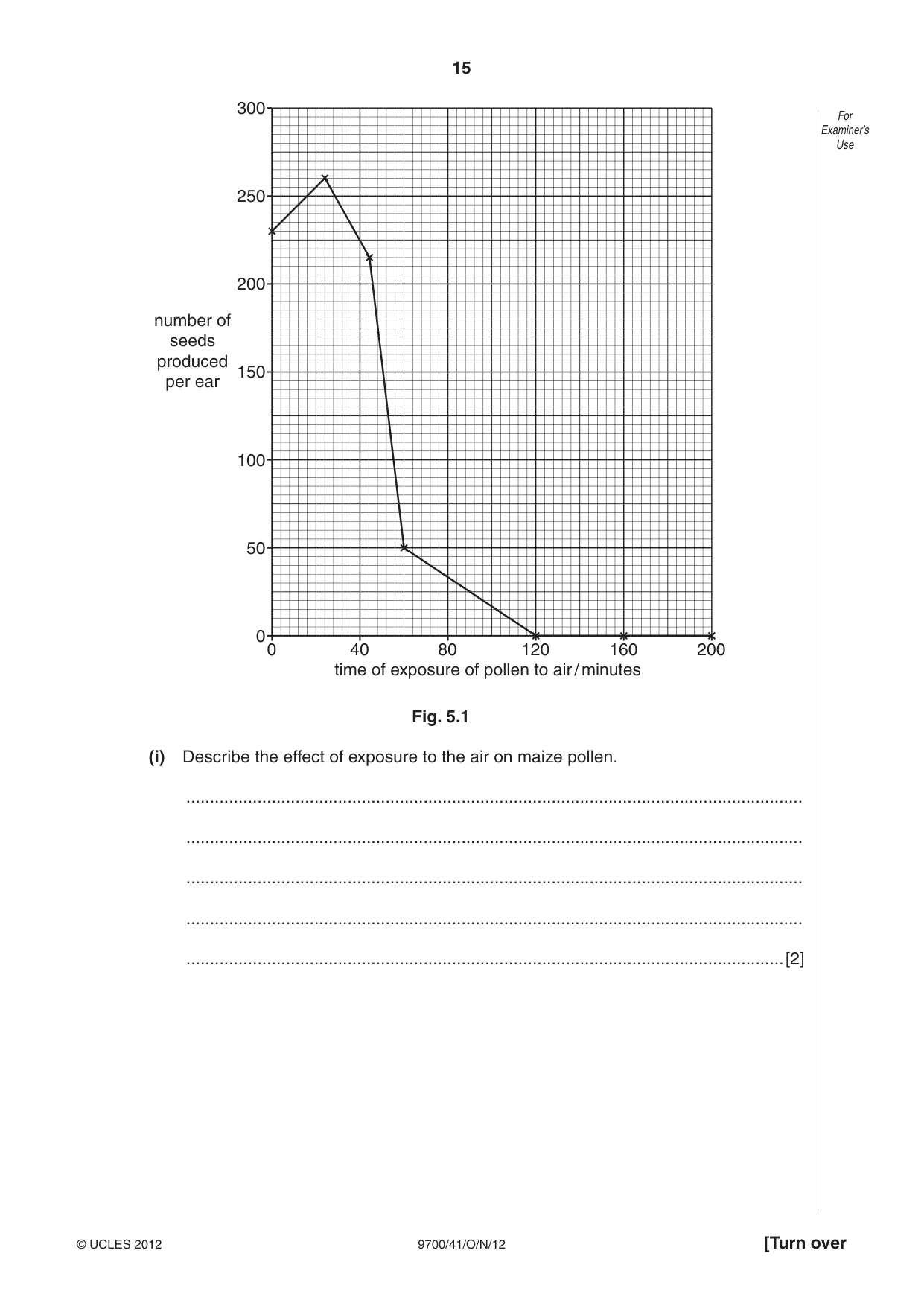
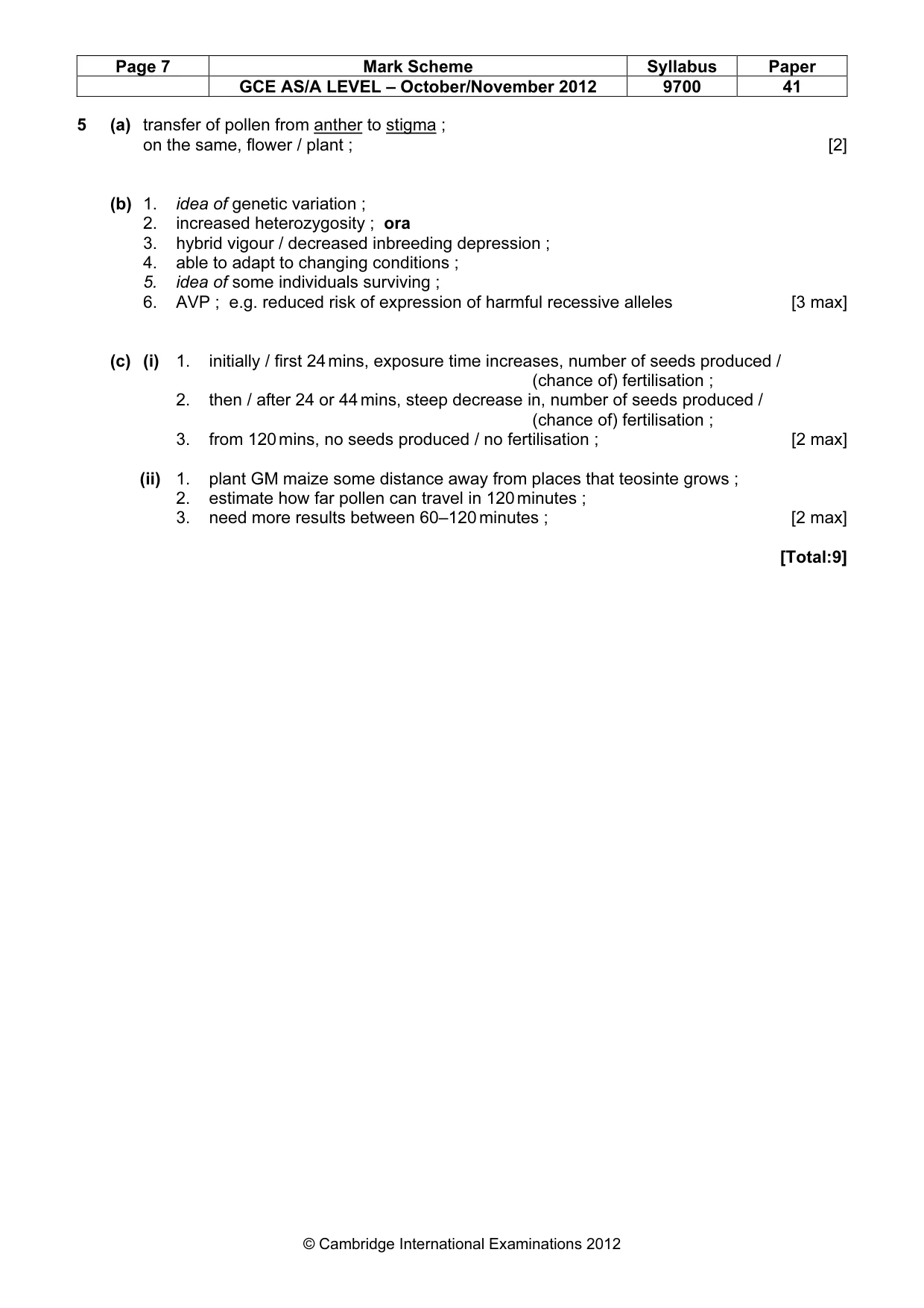
14 © UCLES 2012 9700/41/O/N/12 For Examiner’s Use 5 Flowers are the organs of sexual reproduction in plants. Before fertilisation and seed development can take place, pollination must occur. This can be either self-pollination or cross-pollination, and can be carried out by insects or by wind. (a) Explain the meaning of the term self-pollination. … … … … …[2] (b) Explain why cross-pollination may be more beneficial to a species than self-pollination. … … … … … … … …[3] (c) In maize, wind pollination occurs. An investigation was carried out to find out how the length of time that maize pollen is in the air affects its ability to bring about fertilisation in a female flower. • Pollen grains were removed from maize flowers and left exposed to the air for varying times. • The pollen grains were then placed onto groups of female flowers. • The groups of fertilised flowers developed into ‘ears’, each containing many seeds. The number of seeds per ear was counted. The results are shown in Fig. 5.1.
Question paper, page 15
15 © UCLES 2012 [Turn over 9700/41/O/N/12 For Examiner’s Use 0 0 50 100 150 200 250 300 40 80 120 time of exposure of pollen to air / minutes number of seeds produced per ear 160 200 Fig. 5.1 (i) Describe the effect of exposure to the air on maize pollen. … … … … …[2]
Question paper, page 16
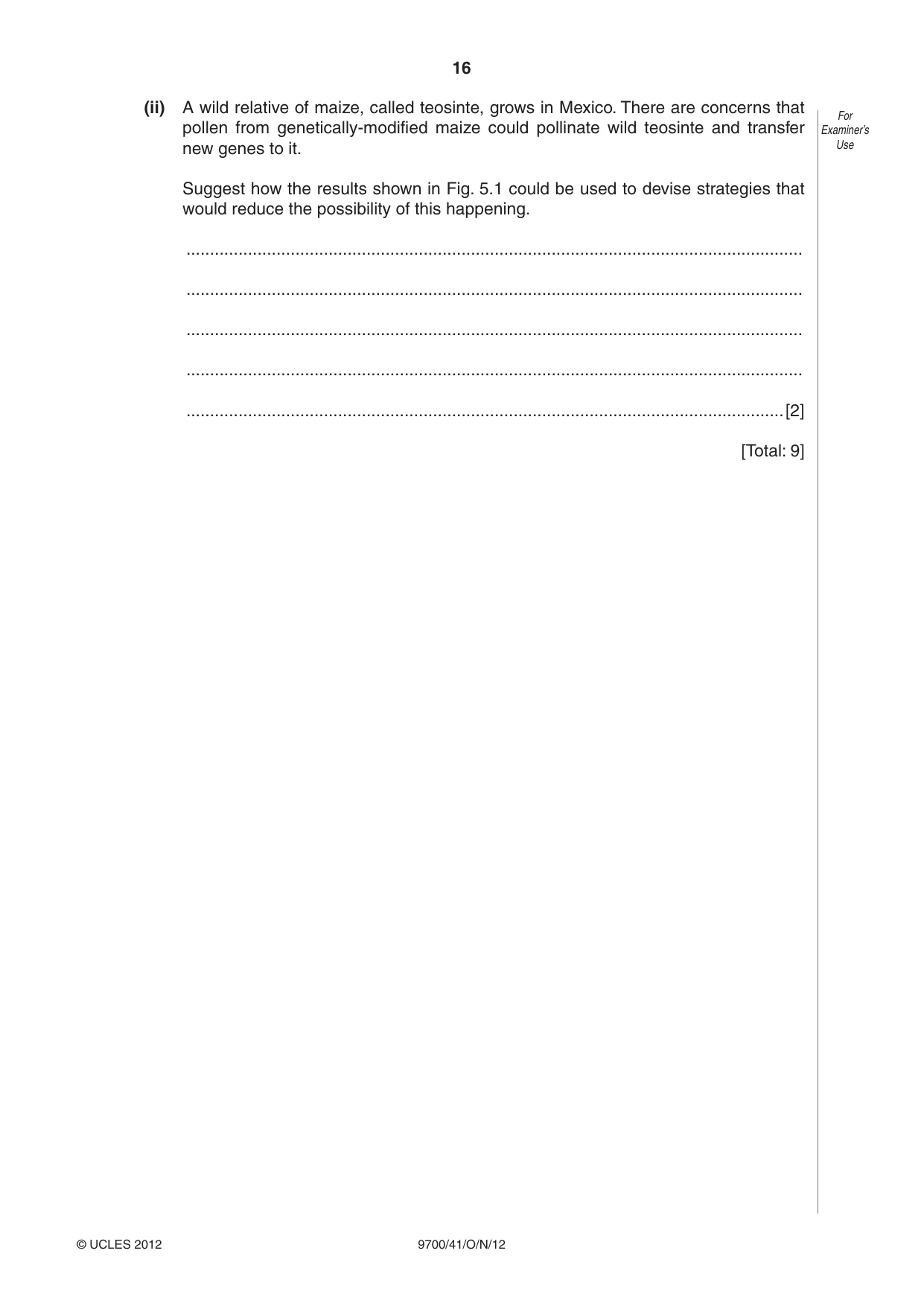
16 © UCLES 2012 9700/41/O/N/12 For Examiner’s Use (ii) A wild relative of maize, called teosinte, grows in Mexico. There are concerns that pollen from genetically-modified maize could pollinate wild teosinte and transfer new genes to it. Suggest how the results shown in Fig. 5.1 could be used to devise strategies that would reduce the possibility of this happening. … … … … …[2] [Total: 9]
Question paper, page 17
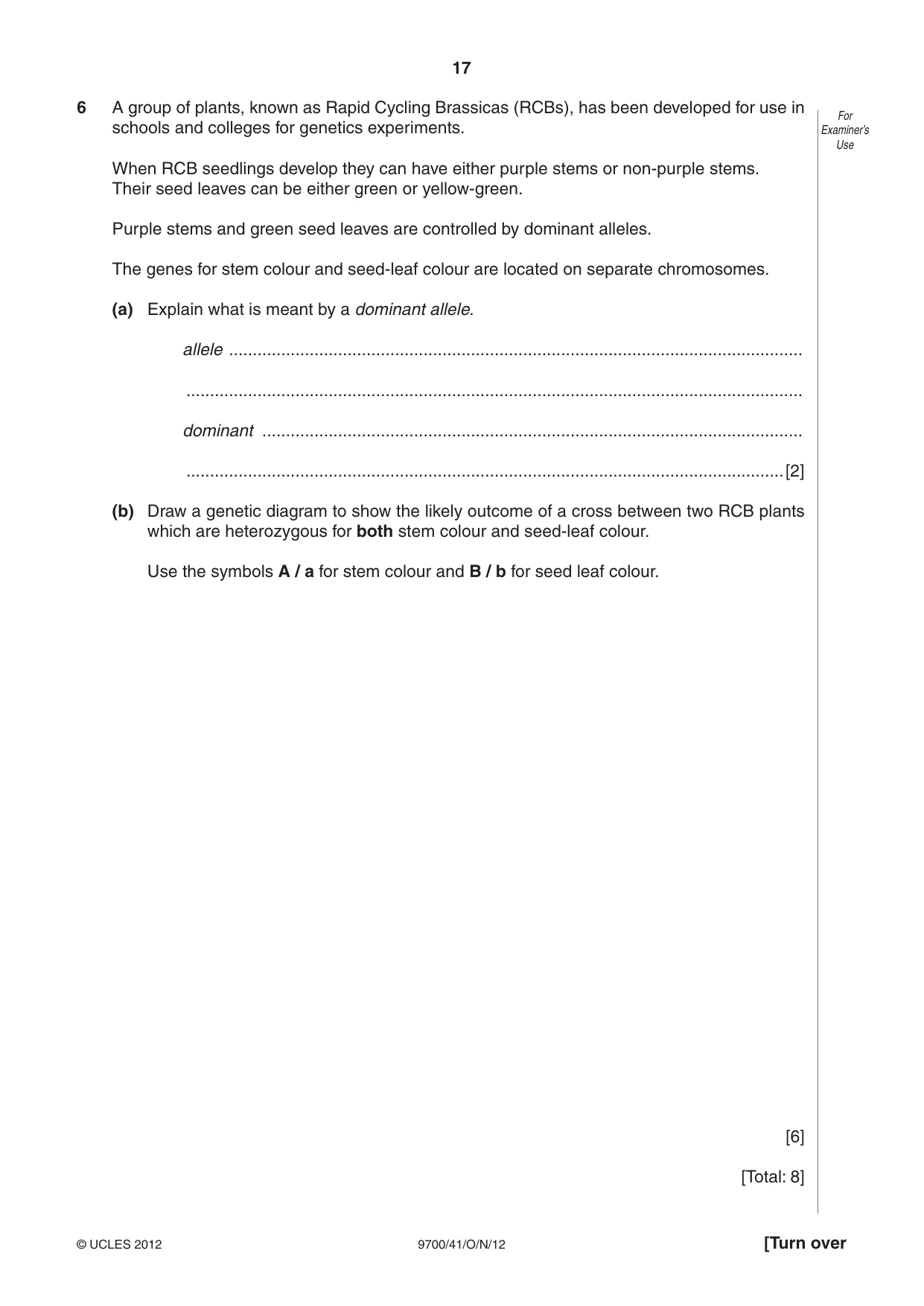
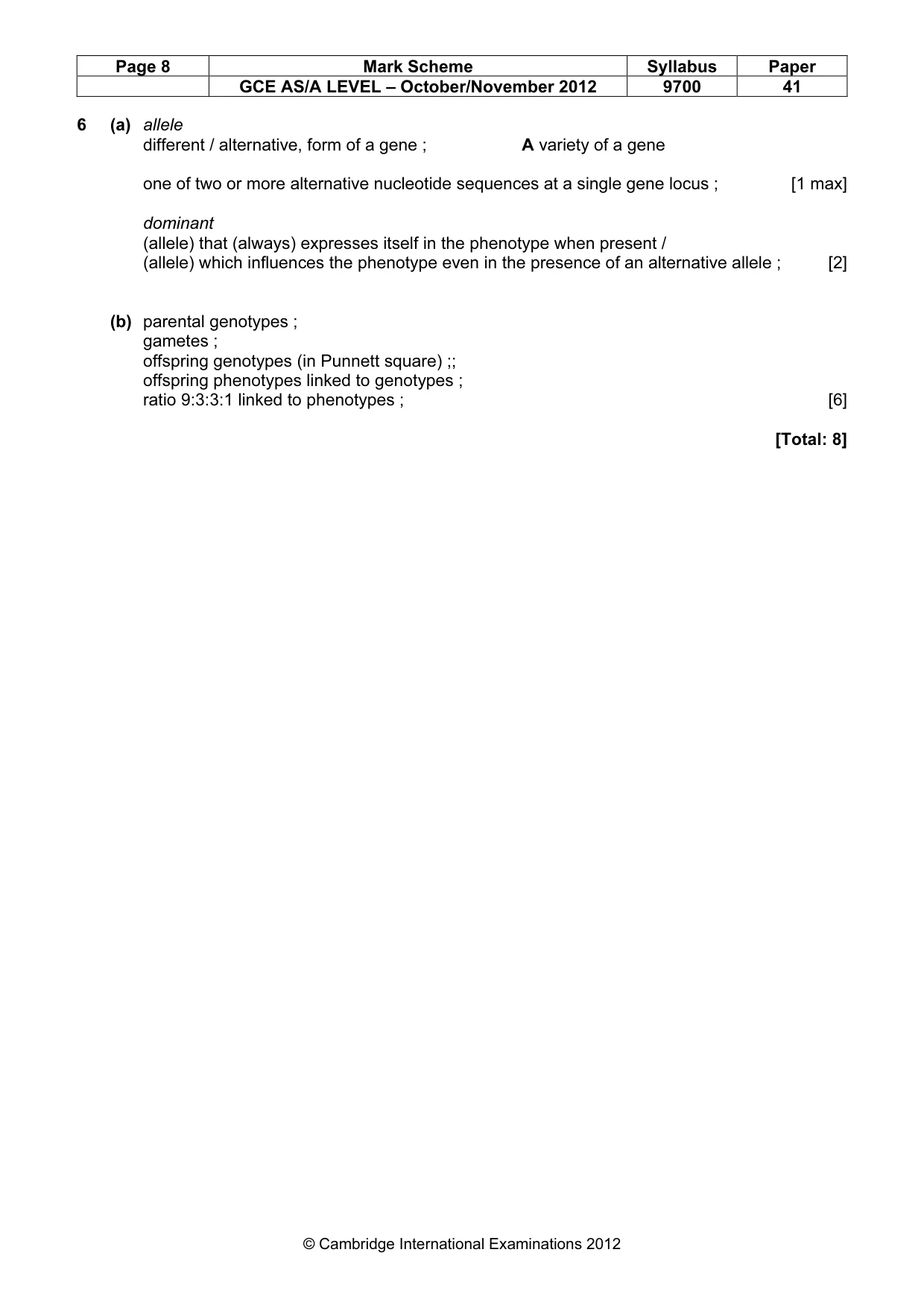
17 © UCLES 2012 [Turn over 9700/41/O/N/12 For Examiner’s Use 6 A group of plants, known as Rapid Cycling Brassicas (RCBs), has been developed for use in schools and colleges for genetics experiments. When RCB seedlings develop they can have either purple stems or non-purple stems. Their seed leaves can be either green or yellow-green. Purple stems and green seed leaves are controlled by dominant alleles. The genes for stem colour and seed-leaf colour are located on separate chromosomes. (a) Explain what is meant by a dominant allele. allele … … dominant … …[2] (b) Draw a genetic diagram to show the likely outcome of a cross between two RCB plants which are heterozygous for both stem colour and seed-leaf colour. Use the symbols A / a for stem colour and B / b for seed leaf colour. [6] [Total: 8]
Question paper, page 18
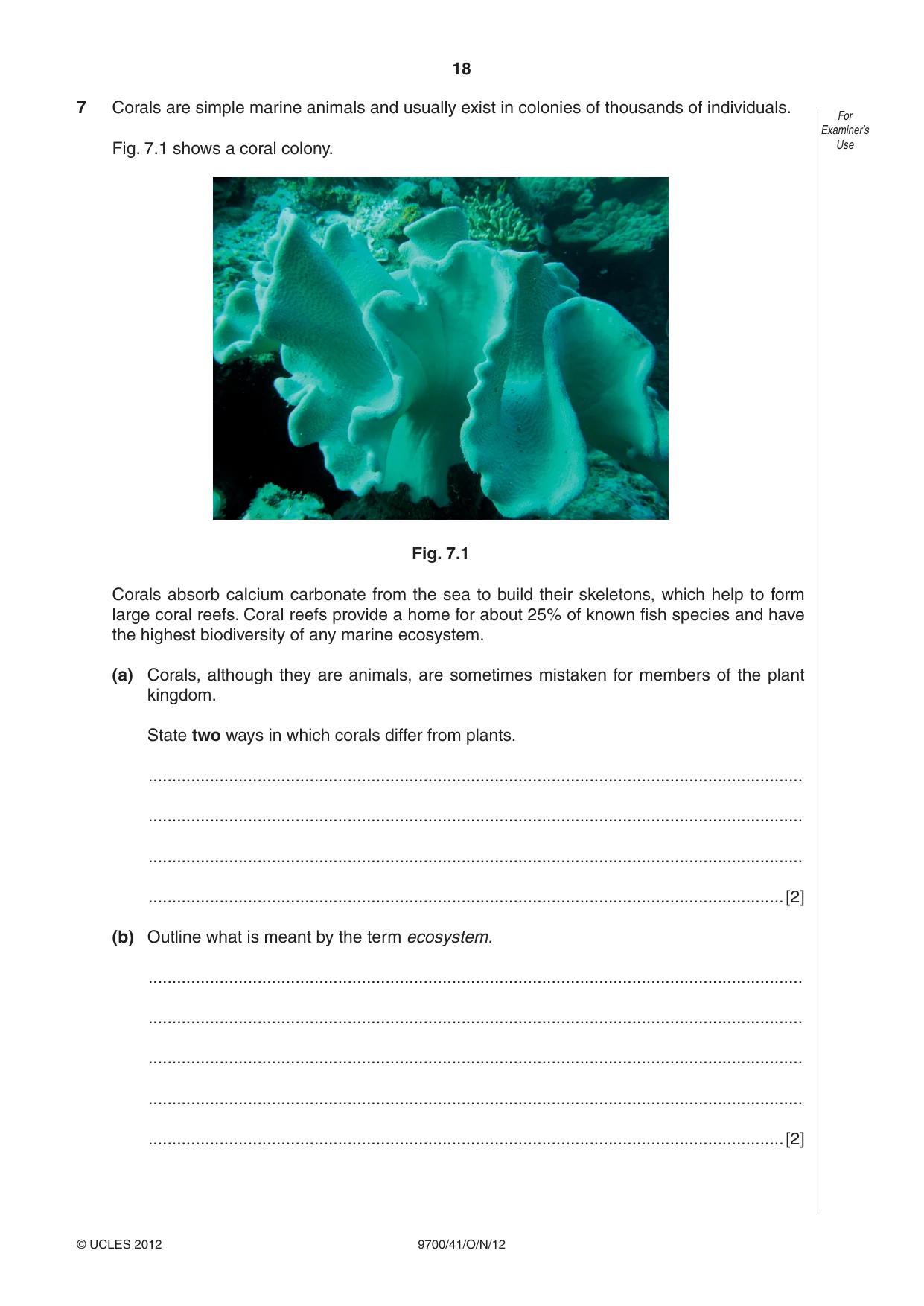
18 © UCLES 2012 9700/41/O/N/12 For Examiner’s Use 7 Corals are simple marine animals and usually exist in colonies of thousands of individuals. Fig. 7.1 shows a coral colony. Fig. 7.1 Corals absorb calcium carbonate from the sea to build their skeletons, which help to form large coral reefs. Coral reefs provide a home for about 25% of known fish species and have the highest biodiversity of any marine ecosystem. (a) Corals, although they are animals, are sometimes mistaken for members of the plant kingdom. State two ways in which corals differ from plants. … … … …[2] (b) Outline what is meant by the term ecosystem. … … … … …[2]
Question paper, page 19
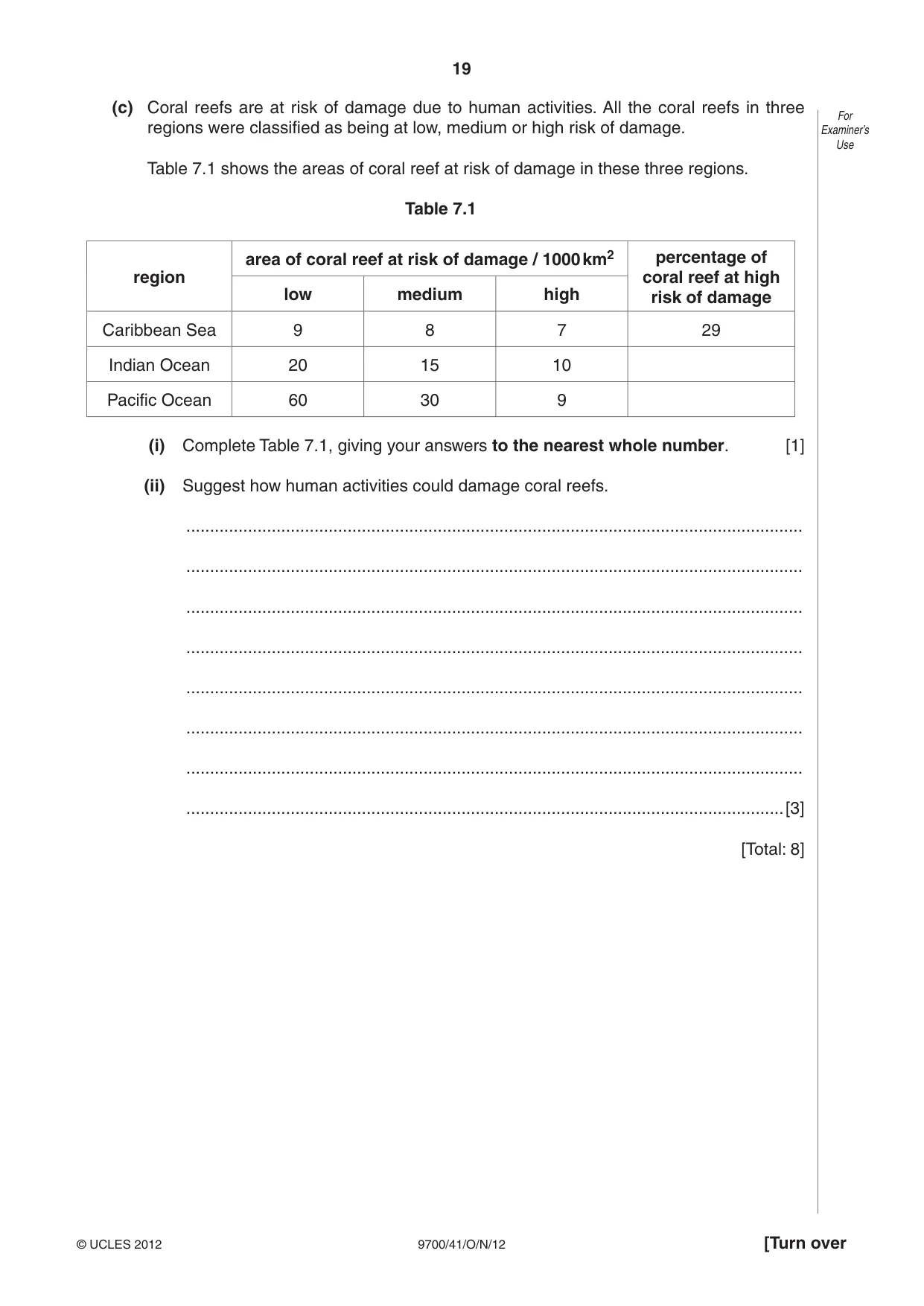
19 © UCLES 2012 [Turn over 9700/41/O/N/12 For Examiner’s Use (c) Coral reefs are at risk of damage due to human activities. All the coral reefs in three regions were classified as being at low, medium or high risk of damage. Table 7.1 shows the areas of coral reef at risk of damage in these three regions. Table 7.1 region area of coral reef at risk of damage / 1000 km2 percentage of coral reef at high risk of damage low medium high Caribbean Sea 9 8 7 29 Indian Ocean 20 15 10 Pacific Ocean 60 30 9 (i) Complete Table 7.1, giving your answers to the nearest whole number. [1] (ii) Suggest how human activities could damage coral reefs. … … … … … … … …[3] [Total: 8]
Question paper, page 20
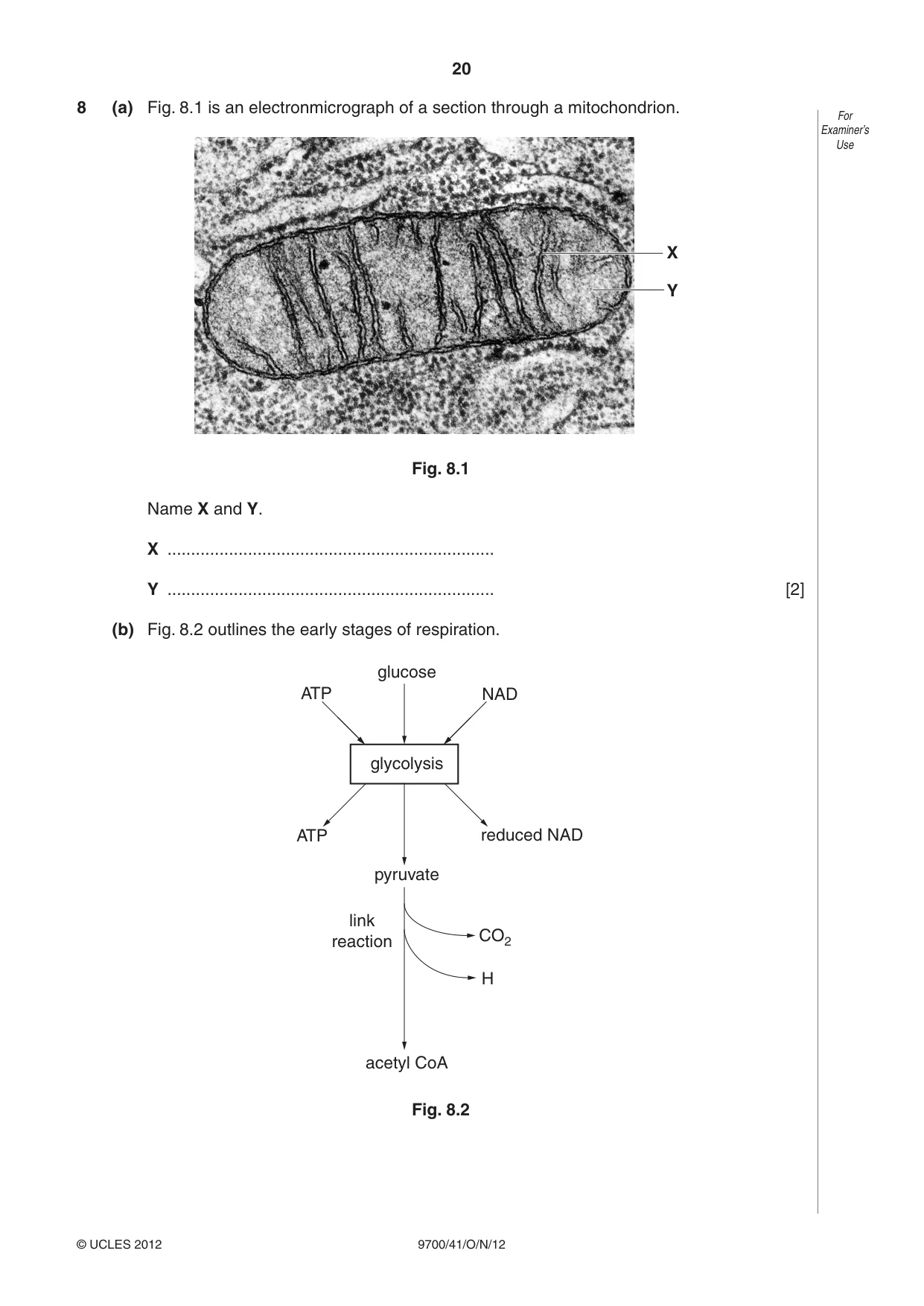
20 © UCLES 2012 9700/41/O/N/12 For Examiner’s Use 8 (a) Fig. 8.1 is an electronmicrograph of a section through a mitochondrion. X Y Fig. 8.1 Name X and Y. X … Y … [2] (b) Fig. 8.2 outlines the early stages of respiration. glucose glycolysis pyruvate ATP reduced NAD ATP NAD acetyl CoA H CO2 link reaction Fig. 8.2
Question paper, page 21
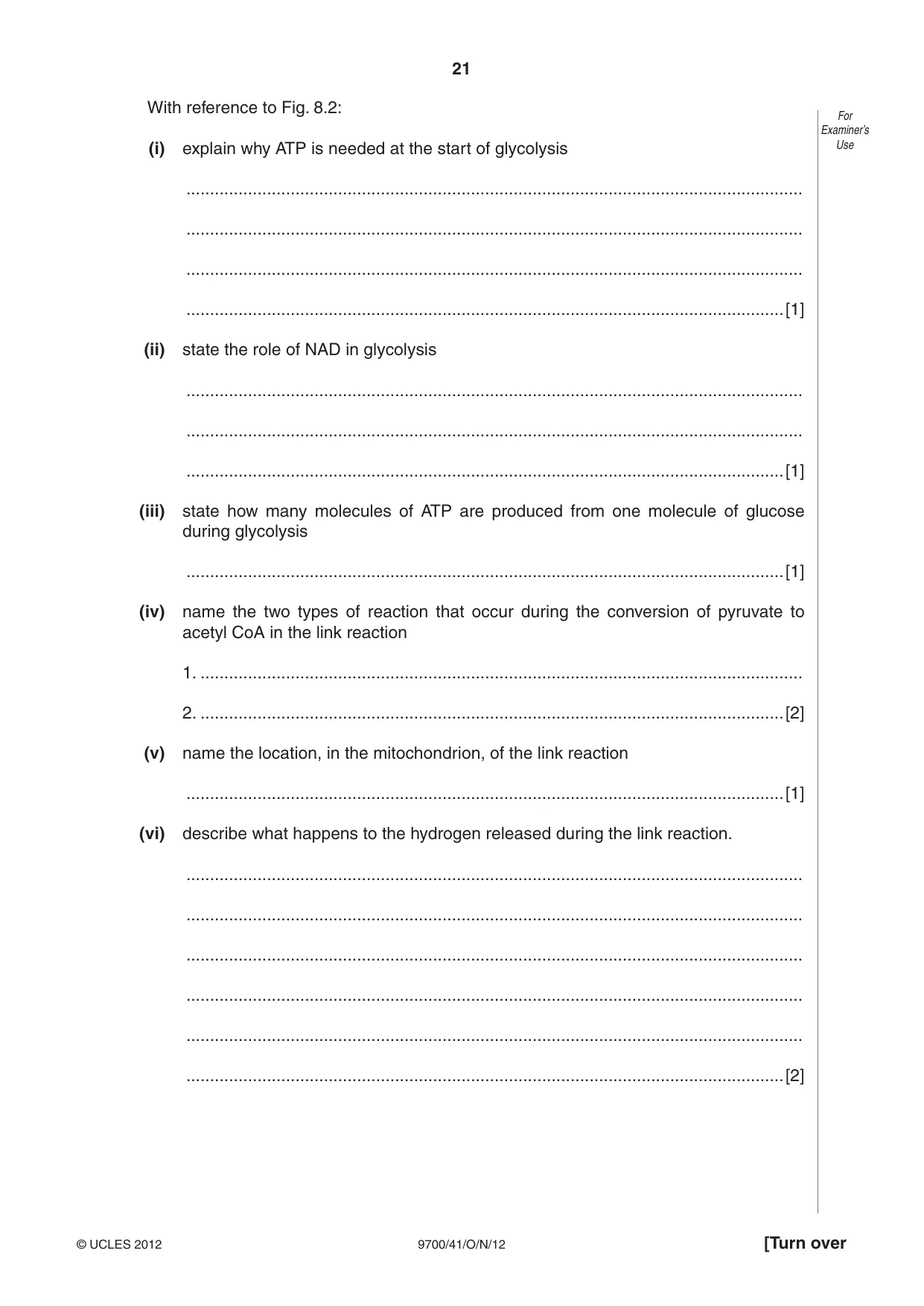
21 © UCLES 2012 [Turn over 9700/41/O/N/12 For Examiner’s Use With reference to Fig. 8.2: (i) explain why ATP is needed at the start of glycolysis … … … …[1] (ii) state the role of NAD in glycolysis … … …[1] (iii) state how many molecules of ATP are produced from one molecule of glucose during glycolysis …[1] (iv) name the two types of reaction that occur during the conversion of pyruvate to acetyl CoA in the link reaction 1. … 2. …[2] (v) name the location, in the mitochondrion, of the link reaction …[1] (vi) describe what happens to the hydrogen released during the link reaction. … … … … … …[2]
Question paper, page 22
22 © UCLES 2012 9700/41/O/N/12 For Examiner’s Use (c) Explain why ATP is regarded as the universal energy currency in organisms. … … … … … … … … … … … … …[5] [Total: 15]
Question paper, page 23
23 © UCLES 2012 [Turn over 9700/41/O/N/12 For Examiner’s Use Section B Answer one question. 9 (a) Describe the first division of meiosis (meiosis I) in animal cells. [6] (b) Discuss the link between the frequency of sickle cell anaemia and the number of cases of malaria. [9] [Total: 15] 10 (a) Describe the arrangement and location of chloroplast pigments and discuss their effect on absorption spectra. [8] (b) Describe the part played by auxins in apical dominance in a plant shoot. [7] [Total: 15] … … … … … … … … … … … … … … … … … …
Question paper, page 24
24 © UCLES 2012 9700/41/O/N/12 For Examiner’s Use … … … … … … … … … … … … … … … … … … … … … … … Copyright Acknowledgements: Question 8 Fig. 8.1 © CNRI/SCIENCE PHOTO LIBRARY Permission to reproduce items where third-party owned material protected by copyright is included has been sought and cleared where possible. Every reasonable effort has been made by the publisher (UCLES) to trace copyright holders, but if any items requiring clearance have unwittingly been included, the publisher will be pleased to make amends at the earliest possible opportunity. University of Cambridge International Examinations is part of the Cambridge Assessment Group. Cambridge Assessment is the brand name of University of Cambridge Local Examinations Syndicate (UCLES), which is itself a department of the University of Cambridge.
Mark scheme, page 1
CAMBRIDGE INTERNATIONAL EXAMINATIONS GCE Advanced Subsidiary Level and GCE Advanced Level MARK SCHEME for the October/November 2012 series 9700 BIOLOGY 9700/41 Paper 4 (A2 Structured Questions), maximum raw mark 100 This mark scheme is published as an aid to teachers and candidates, to indicate the requirements of the examination. It shows the basis on which Examiners were instructed to award marks. It does not indicate the details of the discussions that took place at an Examiners’ meeting before marking began, which would have considered the acceptability of alternative answers. Mark schemes should be read in conjunction with the question paper and the Principal Examiner Report for Teachers. Cambridge will not enter into discussions about these mark schemes. Cambridge is publishing the mark schemes for the October/November 2012 series for most IGCSE, GCE Advanced Level and Advanced Subsidiary Level components and some Ordinary Level components.
Mark scheme, page 2
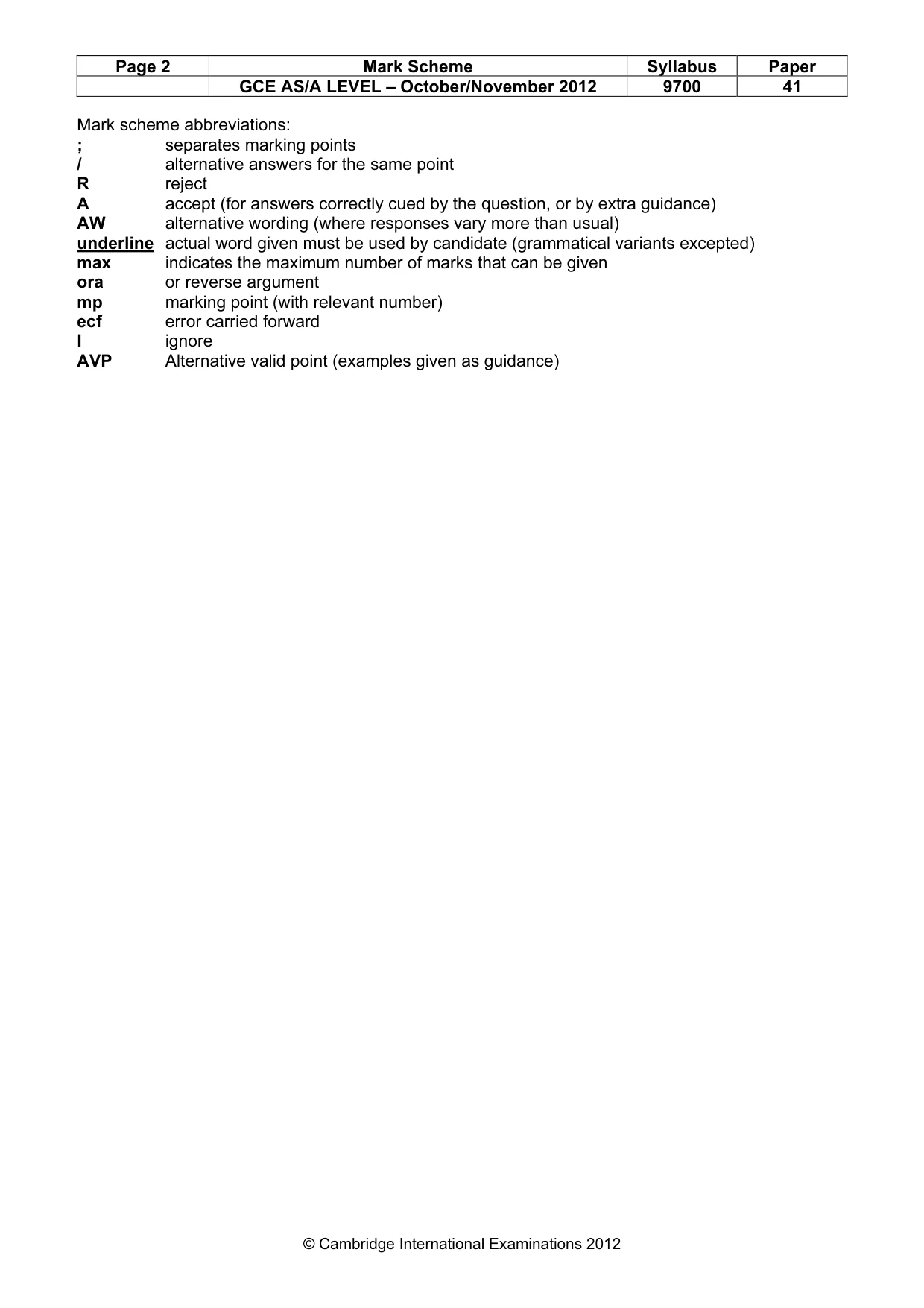
Page 2 Mark Scheme Syllabus Paper GCE AS/A LEVEL – October/November 2012 9700 41 © Cambridge International Examinations 2012 Mark scheme abbreviations: ; separates marking points / alternative answers for the same point R reject A accept (for answers correctly cued by the question, or by extra guidance) AW alternative wording (where responses vary more than usual) underline actual word given must be used by candidate (grammatical variants excepted) max indicates the maximum number of marks that can be given ora or reverse argument mp marking point (with relevant number) ecf error carried forward I ignore AVP Alternative valid point (examples given as guidance)
Mark scheme, page 3
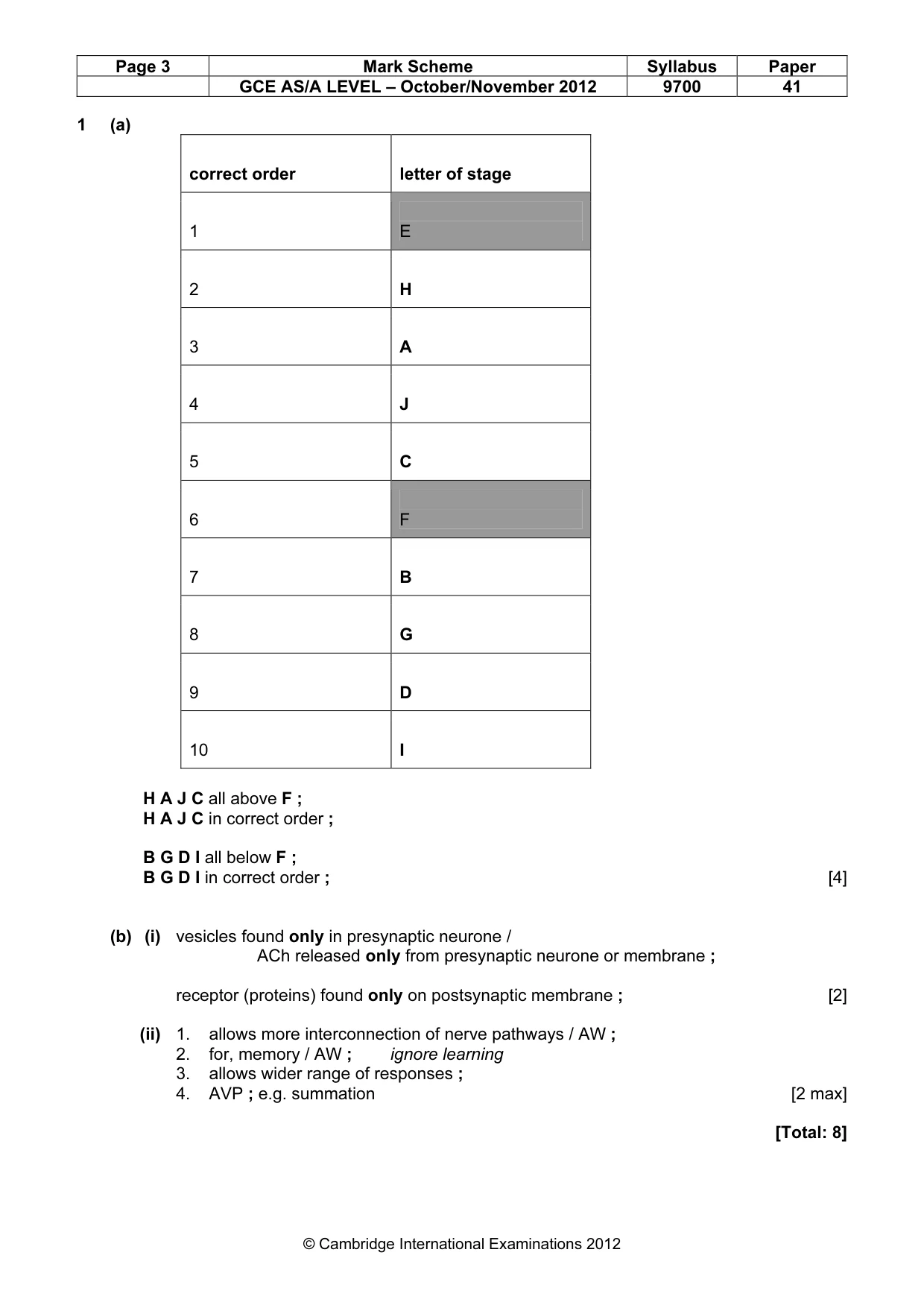
Page 3 Mark Scheme Syllabus Paper GCE AS/A LEVEL – October/November 2012 9700 41 © Cambridge International Examinations 2012 1 (a) correct order letter of stage 1 E 2 H 3 A 4 J 5 C 6 F 7 B 8 G 9 D 10 I H A J C all above F ; H A J C in correct order ; B G D I all below F ; B G D I in correct order ; [4] (b) (i) vesicles found only in presynaptic neurone / ACh released only from presynaptic neurone or membrane ; receptor (proteins) found only on postsynaptic membrane ; [2] (ii) 1. allows more interconnection of nerve pathways / AW ; 2. for, memory / AW ; ignore learning 3. allows wider range of responses ; 4. AVP ; e.g. summation [2 max] [Total: 8]
Mark scheme, page 4
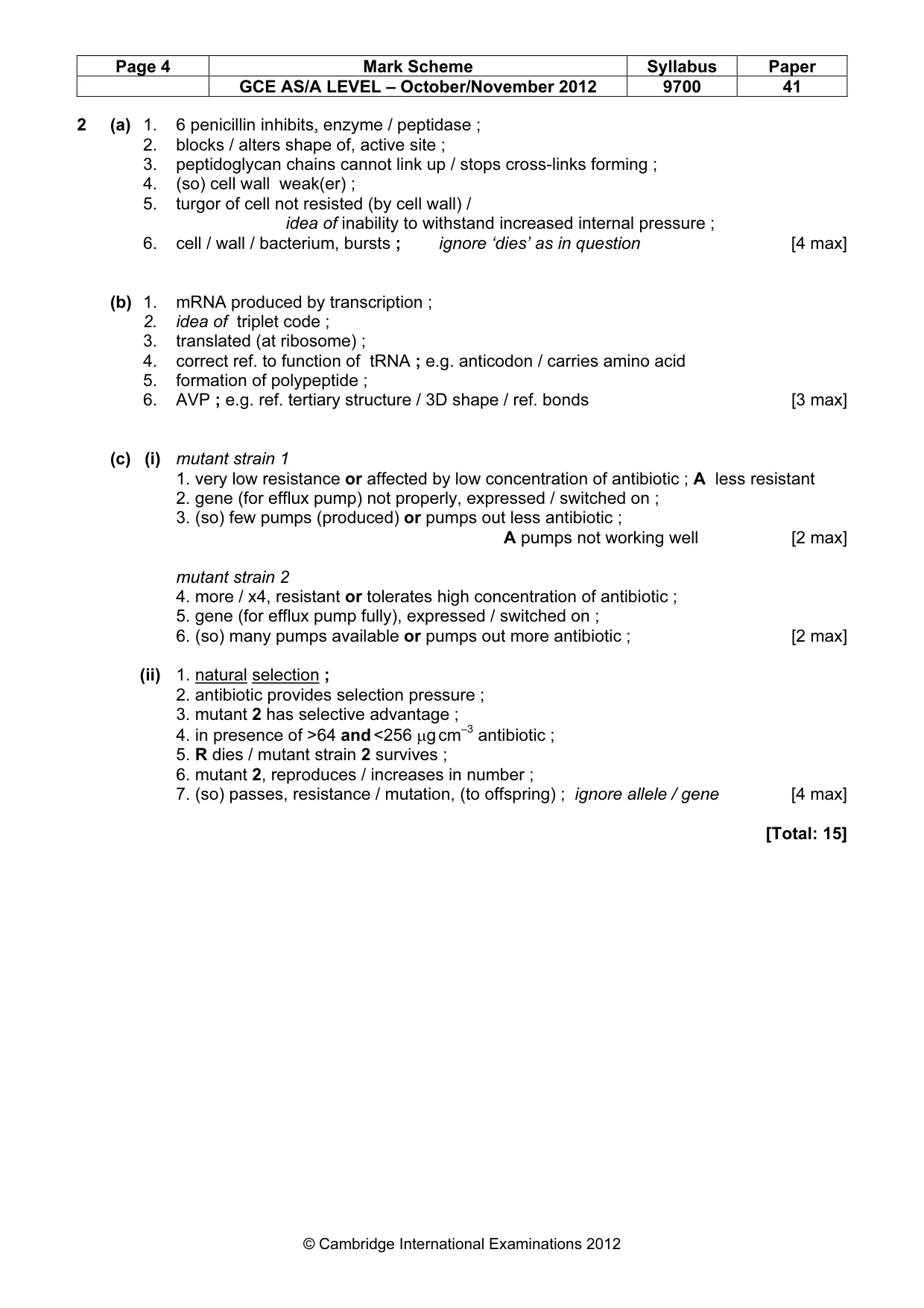
Page 4 Mark Scheme Syllabus Paper GCE AS/A LEVEL – October/November 2012 9700 41 © Cambridge International Examinations 2012 2 (a) 1. 6 penicillin inhibits, enzyme / peptidase ; 2. blocks / alters shape of, active site ; 3. peptidoglycan chains cannot link up / stops cross-links forming ; 4. (so) cell wall weak(er) ; 5. turgor of cell not resisted (by cell wall) / idea of inability to withstand increased internal pressure ; 6. cell / wall / bacterium, bursts ; ignore ‘dies’ as in question [4 max] (b) 1. mRNA produced by transcription ; 2. idea of triplet code ; 3. translated (at ribosome) ; 4. correct ref. to function of tRNA ; e.g. anticodon / carries amino acid 5. formation of polypeptide ; 6. AVP ; e.g. ref. tertiary structure / 3D shape / ref. bonds [3 max] (c) (i) mutant strain 1 1. very low resistance or affected by low concentration of antibiotic ; A less resistant 2. gene (for efflux pump) not properly, expressed / switched on ; 3. (so) few pumps (produced) or pumps out less antibiotic ; A pumps not working well [2 max] mutant strain 2 4. more / x4, resistant or tolerates high concentration of antibiotic ; 5. gene (for efflux pump fully), expressed / switched on ; 6. (so) many pumps available or pumps out more antibiotic ; [2 max] (ii) 1. natural selection ; 2. antibiotic provides selection pressure ; 3. mutant 2 has selective advantage ; 4. in presence of >64 and <256 µg cm–3 antibiotic ; 5. R dies / mutant strain 2 survives ; 6. mutant 2, reproduces / increases in number ; 7. (so) passes, resistance / mutation, (to offspring) ; ignore allele / gene [4 max] [Total: 15]
Mark scheme, page 5
Page 5 Mark Scheme Syllabus Paper GCE AS/A LEVEL – October/November 2012 9700 41 © Cambridge International Examinations 2012 3 (a) (i) 1. gene isolated ; 2. inserted into plasmid / AW ; 3. correct ref. sticky ends ; 4. plasmid taken up by, E. coli / bacterium ; R plasmid inserted into bacterium 5. detail ; e.g. use of restriction enzyme / cDNA produced [3 max] (ii) 1. marker gene linked to gene for wanted protein ; 2. with promoter ; 3. GFP gene is, transcribed / expressed ; 4. producing GFP which fluoresces ; [3 max] (b) disadvantage 1. may not fluoresce very brightly / may be difficult to detect ; explanation 2. only a few molecules of GFP produced ; 3. each enzyme molecule produces more fluorescent substance / idea of enzymes can be re-used ; [2 max] [Total: 8]
Mark scheme, page 6
Page 6 Mark Scheme Syllabus Paper GCE AS/A LEVEL – October/November 2012 9700 41 © Cambridge International Examinations 2012 4 (a) (i) A ; [1] (ii) W - spermatogonium ; X - primary spermatocyte ; Y - secondary spermatocyte ; [3] (b) 3 marks for correct labels ;;; [3] (c) (i) fertility / number of offspring, decreases ; at 20°C the number of offspring is 280 while at 25°C the number of offspring is 150 / accept difference between figures ; [2] (ii) smaller reduction in, fertility / number of offspring, in alg–3 mutants than in alg–4 mutants ; ora manipulated data quote either by 24% in alg–3 and 61% in alg–4 or by 30 in alg–3 and 135 in alg–4 ; [2] (iii) D ; [1] (iv) at 20°C difference due (only) to lack of (development of) motility (in mutants) / AW ; R ref to numbers of sperm at 25°C difference due to fewer sperm(atids) and less (development of) motility ; [2] [Total: 14]
Mark scheme, page 7
Page 7 Mark Scheme Syllabus Paper GCE AS/A LEVEL – October/November 2012 9700 41 © Cambridge International Examinations 2012 5 (a) transfer of pollen from anther to stigma ; on the same, flower / plant ; [2] (b) 1. idea of genetic variation ; 2. increased heterozygosity ; ora 3. hybrid vigour / decreased inbreeding depression ; 4. able to adapt to changing conditions ; 5. idea of some individuals surviving ; 6. AVP ; e.g. reduced risk of expression of harmful recessive alleles [3 max] (c) (i) 1. initially / first 24 mins, exposure time increases, number of seeds produced / (chance of) fertilisation ; 2. then / after 24 or 44 mins, steep decrease in, number of seeds produced / (chance of) fertilisation ; 3. from 120 mins, no seeds produced / no fertilisation ; [2 max] (ii) 1. plant GM maize some distance away from places that teosinte grows ; 2. estimate how far pollen can travel in 120 minutes ; 3. need more results between 60–120 minutes ; [2 max] [Total:9]
Mark scheme, page 8
Page 8 Mark Scheme Syllabus Paper GCE AS/A LEVEL – October/November 2012 9700 41 © Cambridge International Examinations 2012 6 (a) allele different / alternative, form of a gene ; A variety of a gene one of two or more alternative nucleotide sequences at a single gene locus ; [1 max] dominant (allele) that (always) expresses itself in the phenotype when present / (allele) which influences the phenotype even in the presence of an alternative allele ; [2] (b) parental genotypes ; gametes ; offspring genotypes (in Punnett square) ;; offspring phenotypes linked to genotypes ; ratio 9:3:3:1 linked to phenotypes ; [6] [Total: 8]
Mark scheme, page 9
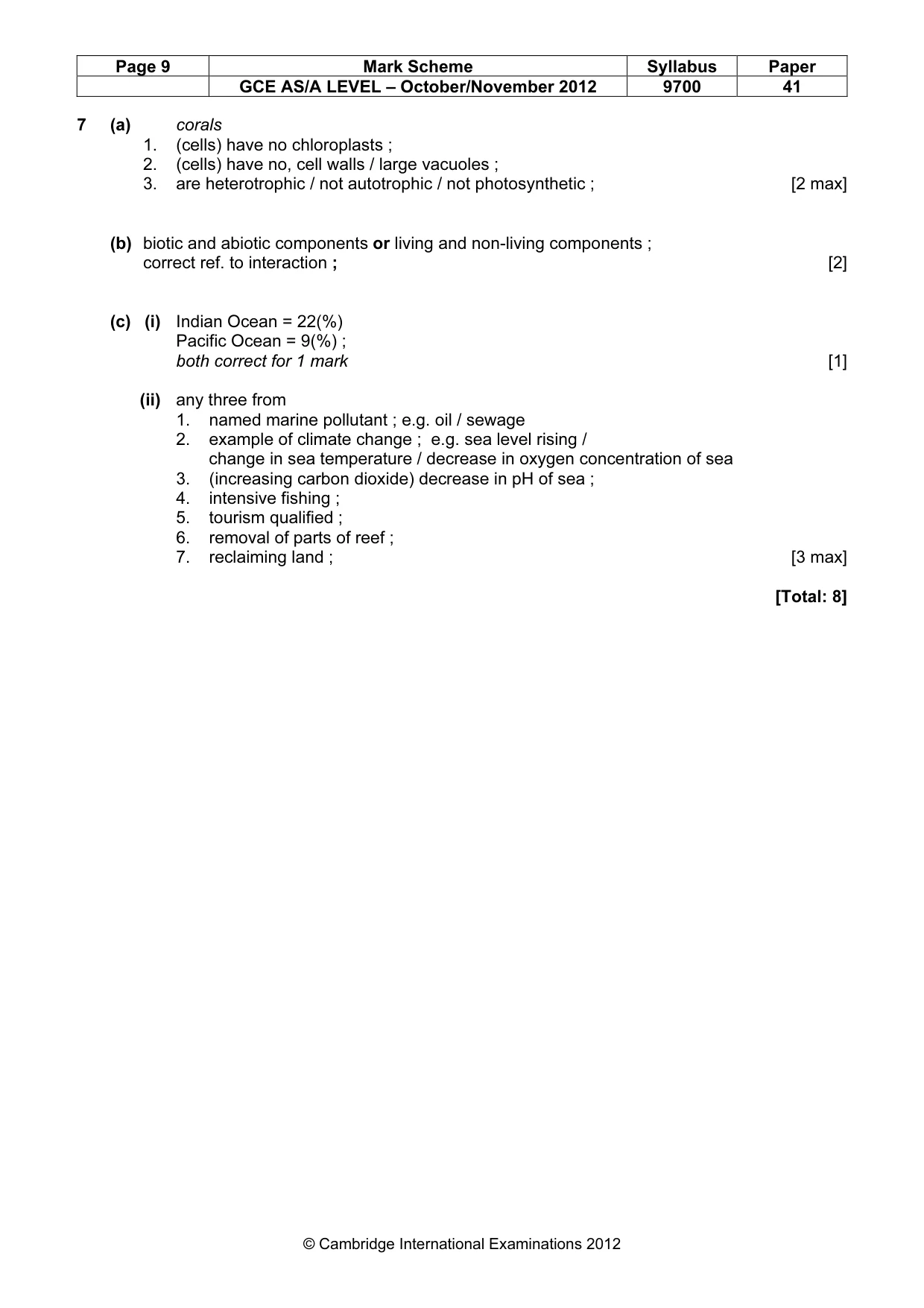
Page 9 Mark Scheme Syllabus Paper GCE AS/A LEVEL – October/November 2012 9700 41 © Cambridge International Examinations 2012 7 (a) corals 1. (cells) have no chloroplasts ; 2. (cells) have no, cell walls / large vacuoles ; 3. are heterotrophic / not autotrophic / not photosynthetic ; [2 max] (b) biotic and abiotic components or living and non-living components ; correct ref. to interaction ; [2] (c) (i) Indian Ocean = 22(%) Pacific Ocean = 9(%) ; both correct for 1 mark [1] (ii) any three from 1. named marine pollutant ; e.g. oil / sewage 2. example of climate change ; e.g. sea level rising / change in sea temperature / decrease in oxygen concentration of sea 3. (increasing carbon dioxide) decrease in pH of sea ; 4. intensive fishing ; 5. tourism qualified ; 6. removal of parts of reef ; 7. reclaiming land ; [3 max] [Total: 8]
Mark scheme, page 10
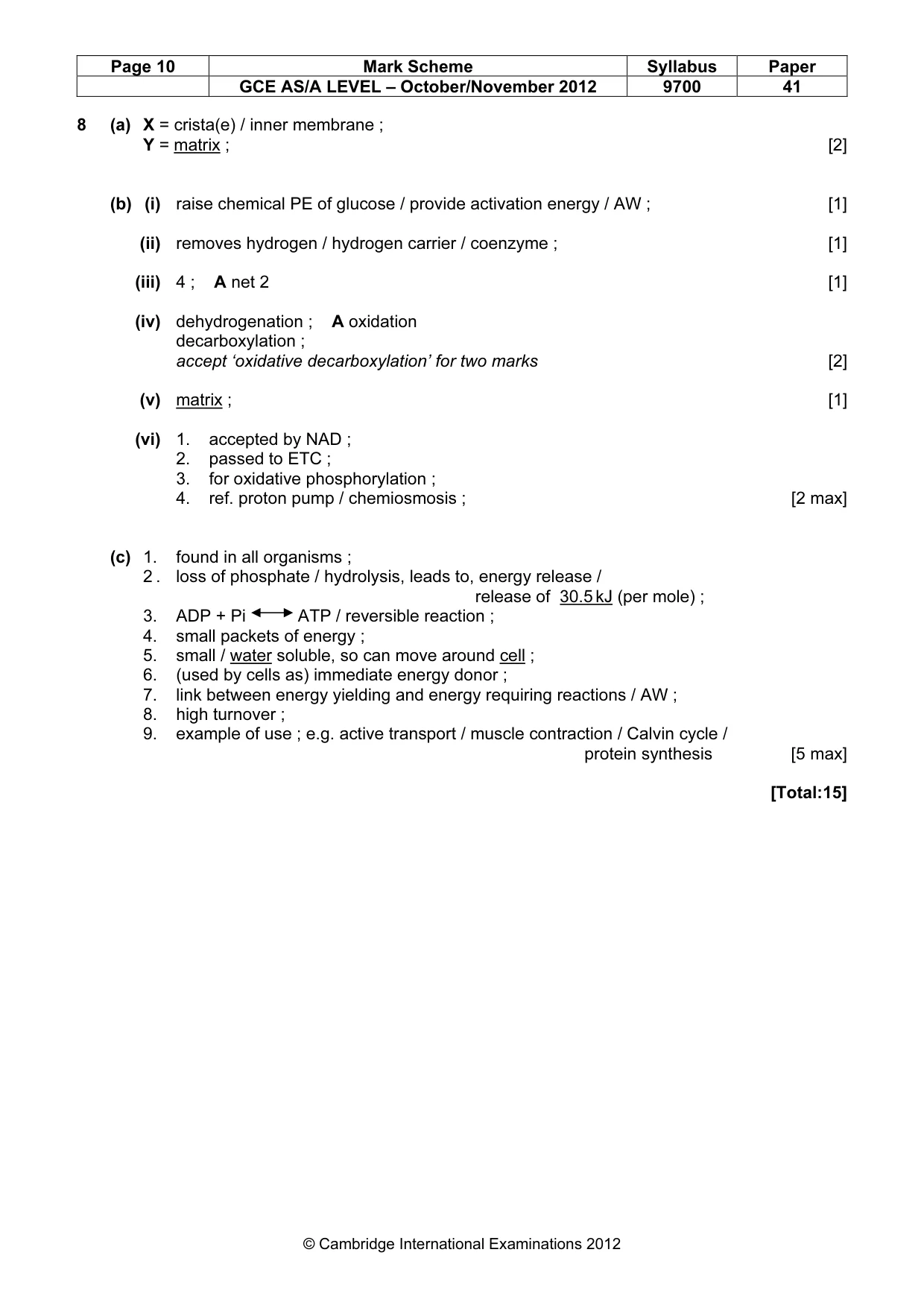
Page 10 Mark Scheme Syllabus Paper GCE AS/A LEVEL – October/November 2012 9700 41 © Cambridge International Examinations 2012 8 (a) X = crista(e) / inner membrane ; Y = matrix ; [2] (b) (i) raise chemical PE of glucose / provide activation energy / AW ; [1] (ii) removes hydrogen / hydrogen carrier / coenzyme ; [1] (iii) 4 ; A net 2 [1] (iv) dehydrogenation ; A oxidation decarboxylation ; accept ‘oxidative decarboxylation’ for two marks [2] (v) matrix ; [1] (vi) 1. accepted by NAD ; 2. passed to ETC ; 3. for oxidative phosphorylation ; 4. ref. proton pump / chemiosmosis ; [2 max] (c) 1. found in all organisms ; 2 . loss of phosphate / hydrolysis, leads to, energy release / release of 30.5 kJ (per mole) ; 3. ADP + Pi ATP / reversible reaction ; 4. small packets of energy ; 5. small / water soluble, so can move around cell ; 6. (used by cells as) immediate energy donor ; 7. link between energy yielding and energy requiring reactions / AW ; 8. high turnover ; 9. example of use ; e.g. active transport / muscle contraction / Calvin cycle / protein synthesis [5 max] [Total:15]
Mark scheme, page 11
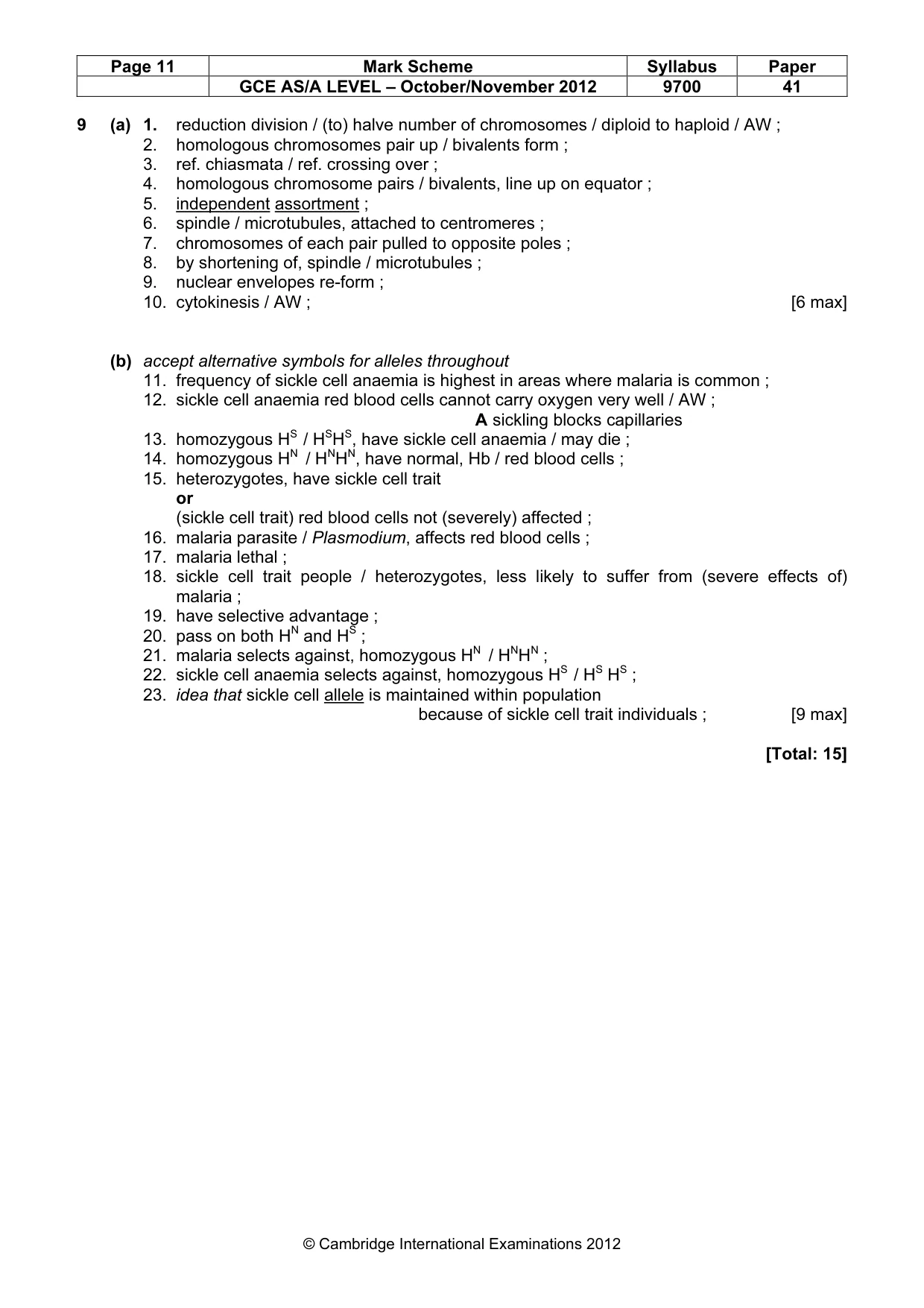
Page 11 Mark Scheme Syllabus Paper GCE AS/A LEVEL – October/November 2012 9700 41 © Cambridge International Examinations 2012 9 (a) 1. reduction division / (to) halve number of chromosomes / diploid to haploid / AW ; 2. homologous chromosomes pair up / bivalents form ; 3. ref. chiasmata / ref. crossing over ; 4. homologous chromosome pairs / bivalents, line up on equator ; 5. independent assortment ; 6. spindle / microtubules, attached to centromeres ; 7. chromosomes of each pair pulled to opposite poles ; 8. by shortening of, spindle / microtubules ; 9. nuclear envelopes re-form ; 10. cytokinesis / AW ; [6 max] (b) accept alternative symbols for alleles throughout 11. frequency of sickle cell anaemia is highest in areas where malaria is common ; 12. sickle cell anaemia red blood cells cannot carry oxygen very well / AW ; A sickling blocks capillaries 13. homozygous HS / HSHS, have sickle cell anaemia / may die ; 14. homozygous HN / HNHN, have normal, Hb / red blood cells ; 15. heterozygotes, have sickle cell trait or (sickle cell trait) red blood cells not (severely) affected ; 16. malaria parasite / Plasmodium, affects red blood cells ; 17. malaria lethal ; 18. sickle cell trait people / heterozygotes, less likely to suffer from (severe effects of) malaria ; 19. have selective advantage ; 20. pass on both HN and HS ; 21. malaria selects against, homozygous HN / HNHN ; 22. sickle cell anaemia selects against, homozygous HS / HS HS ; 23. idea that sickle cell allele is maintained within population because of sickle cell trait individuals ; [9 max] [Total: 15]
Mark scheme, page 12
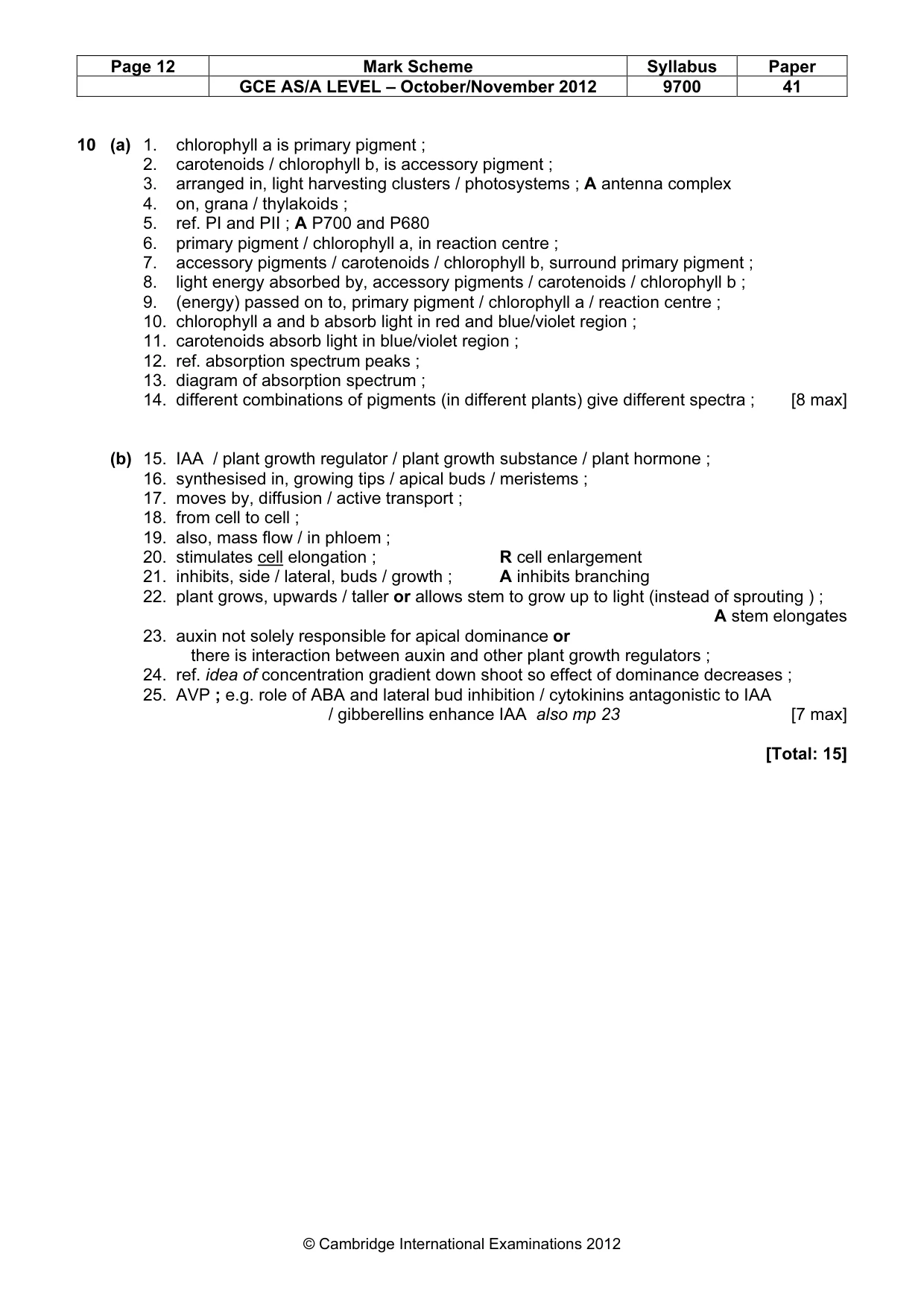
Page 12 Mark Scheme Syllabus Paper GCE AS/A LEVEL – October/November 2012 9700 41 © Cambridge International Examinations 2012 10 (a) 1. chlorophyll a is primary pigment ; 2. carotenoids / chlorophyll b, is accessory pigment ; 3. arranged in, light harvesting clusters / photosystems ; A antenna complex 4. on, grana / thylakoids ; 5. ref. PI and PII ; A P700 and P680 6. primary pigment / chlorophyll a, in reaction centre ; 7. accessory pigments / carotenoids / chlorophyll b, surround primary pigment ; 8. light energy absorbed by, accessory pigments / carotenoids / chlorophyll b ; 9. (energy) passed on to, primary pigment / chlorophyll a / reaction centre ; 10. chlorophyll a and b absorb light in red and blue/violet region ; 11. carotenoids absorb light in blue/violet region ; 12. ref. absorption spectrum peaks ; 13. diagram of absorption spectrum ; 14. different combinations of pigments (in different plants) give different spectra ; [8 max] (b) 15. IAA / plant growth regulator / plant growth substance / plant hormone ; 16. synthesised in, growing tips / apical buds / meristems ; 17. moves by, diffusion / active transport ; 18. from cell to cell ; 19. also, mass flow / in phloem ; 20. stimulates cell elongation ; R cell enlargement 21. inhibits, side / lateral, buds / growth ; A inhibits branching 22. plant grows, upwards / taller or allows stem to grow up to light (instead of sprouting ) ; A stem elongates 23. auxin not solely responsible for apical dominance or there is interaction between auxin and other plant growth regulators ; 24. ref. idea of concentration gradient down shoot so effect of dominance decreases ; 25. AVP ; e.g. role of ABA and lateral bud inhibition / cytokinins antagonistic to IAA / gibberellins enhance IAA also mp 23 [7 max] [Total: 15]
What you needed in this session
Cambridge’s own grade thresholds for 2012 Oct/Nov, Paper 4 · Variant 1. A higher threshold means an easier paper — the bar moves with how the cohort did.