Cambridge A Level Biology 9700 — 2012 Oct/Nov Paper 4 · Variant 3
9700/43/O/N/12 · 100 marks · ≈113 min
The question paper and its mark scheme, free to read here and free to download. This is Cambridge’s own paper, exactly as it was sat.
Question paper24 pages
Mark scheme10 pages
Answers below. Sit the paper first if you are practising.
Paper as text
Question paper, page 1
This document consists of 21 printed pages and 3 lined pages. DC (NH/SW) 48722/3 © UCLES 2012 [Turn over UNIVERSITY OF CAMBRIDGE INTERNATIONAL EXAMINATIONS General Certificate of Education Advanced Level READ THESE INSTRUCTIONS FIRST Write your Centre number, candidate number and name in the spaces provided at the top of this page. Write in dark blue or black ink. Do not use staples, paper clips, highlighters, glue or correction fluid. Section A Answer all questions. Section B Answer one question Circle the number of the Section B question you have answered in the grid below. At the end of the examination, fasten all your work securely together. The number of marks is given in brackets [ ] at the end of each question or part question. * 8 3 0 2 5 0 0 1 3 0 * BIOLOGY 9700/43 Paper 4 A2 Structured Questions October/November 2012 2 hours Candidates answer on the Question Paper. No Additional Materials are required. For Examiner’s Use Section A 1 2 3 4 5 6 7 8 Section B 9 or 10 Total
Question paper, page 2
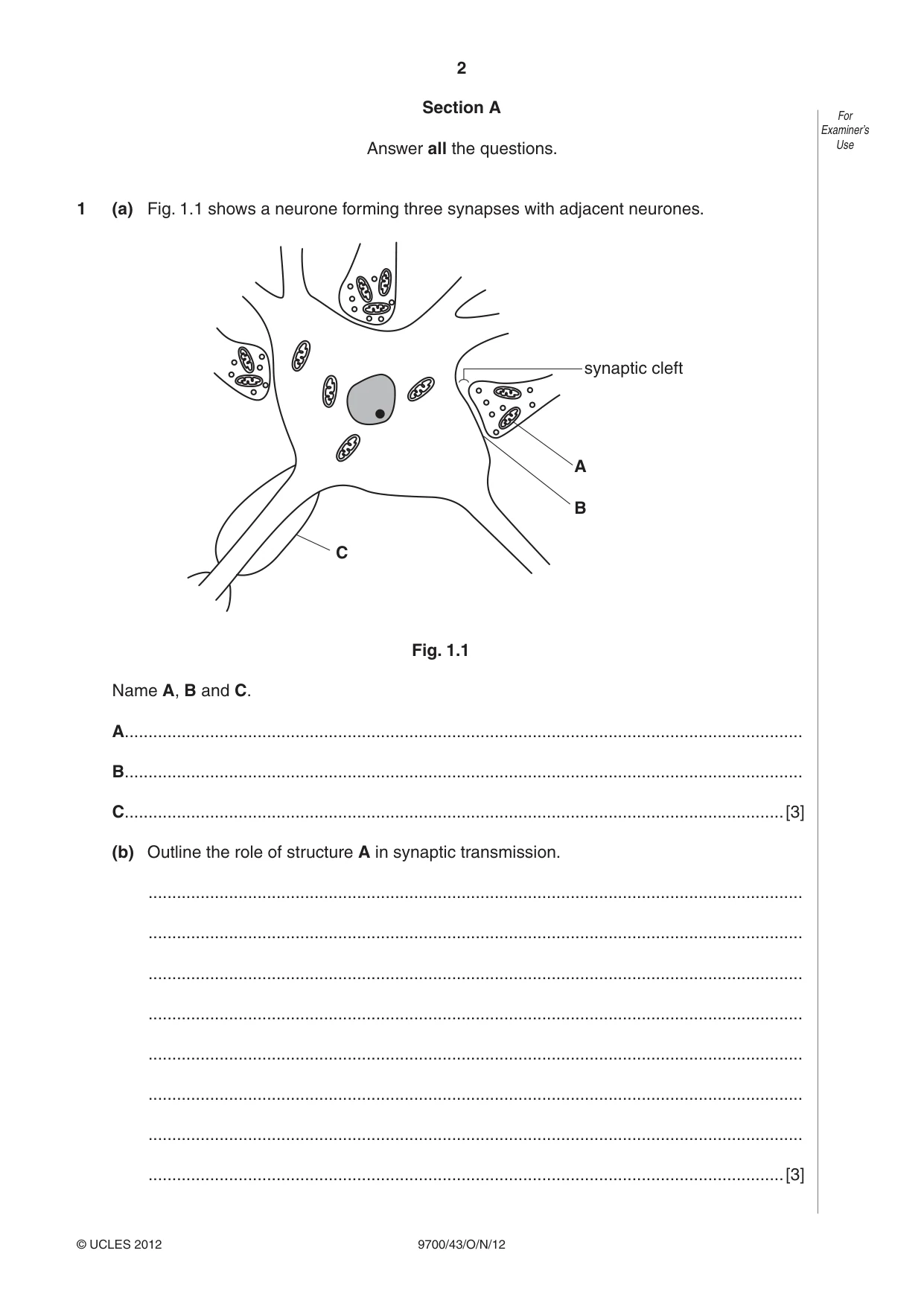
2 © UCLES 2012 9700/43/O/N/12 For Examiner’s Use Section A Answer all the questions. 1 (a) Fig. 1.1 shows a neurone forming three synapses with adjacent neurones. synaptic cleft A B C Fig. 1.1 Name A, B and C. A… B… C…[3] (b) Outline the role of structure A in synaptic transmission. … … … … … … … …[3]
Question paper, page 3
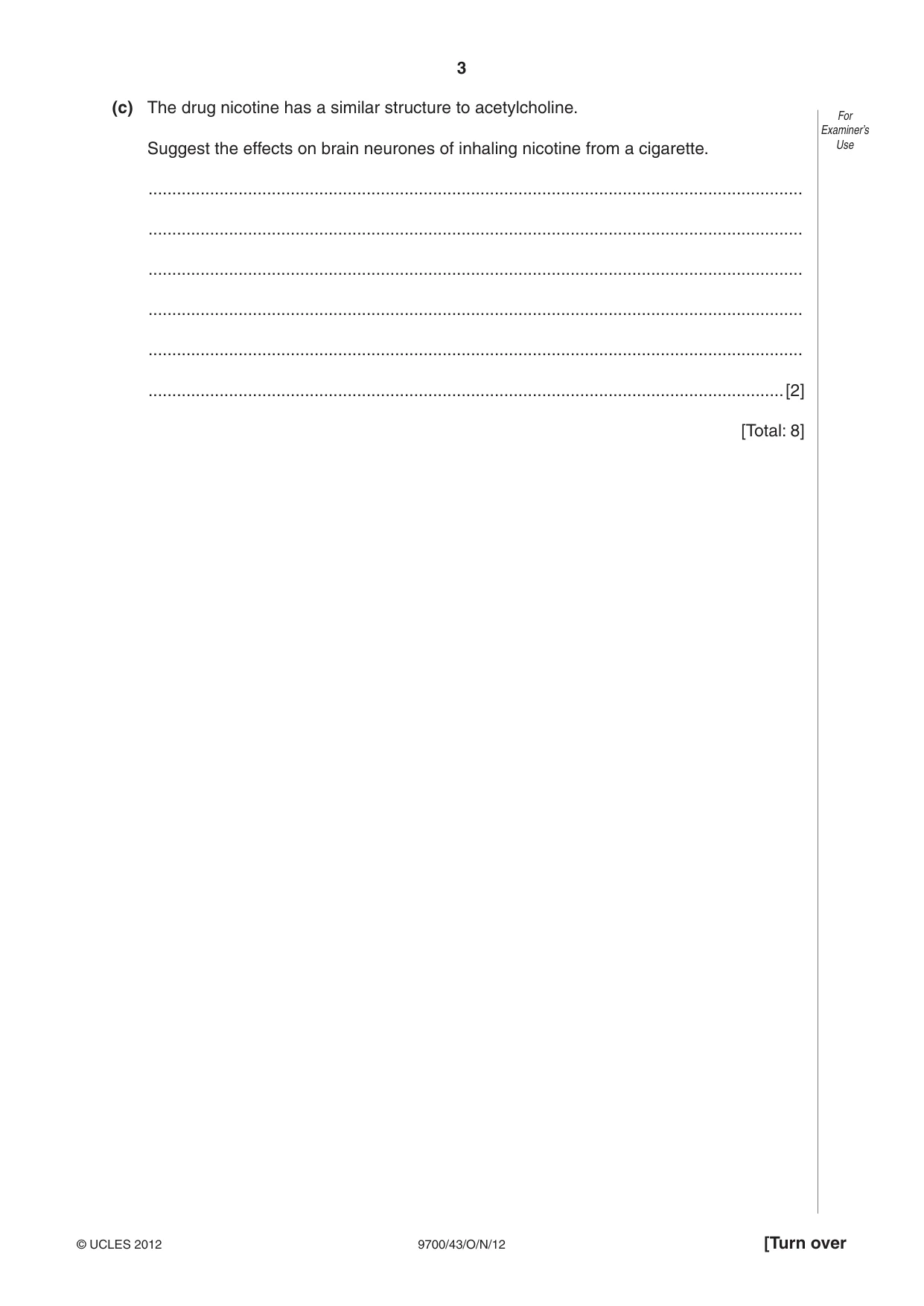
3 © UCLES 2012 [Turn over 9700/43/O/N/12 For Examiner’s Use (c) The drug nicotine has a similar structure to acetylcholine. Suggest the effects on brain neurones of inhaling nicotine from a cigarette. … … … … … …[2] [Total: 8]
Question paper, page 4
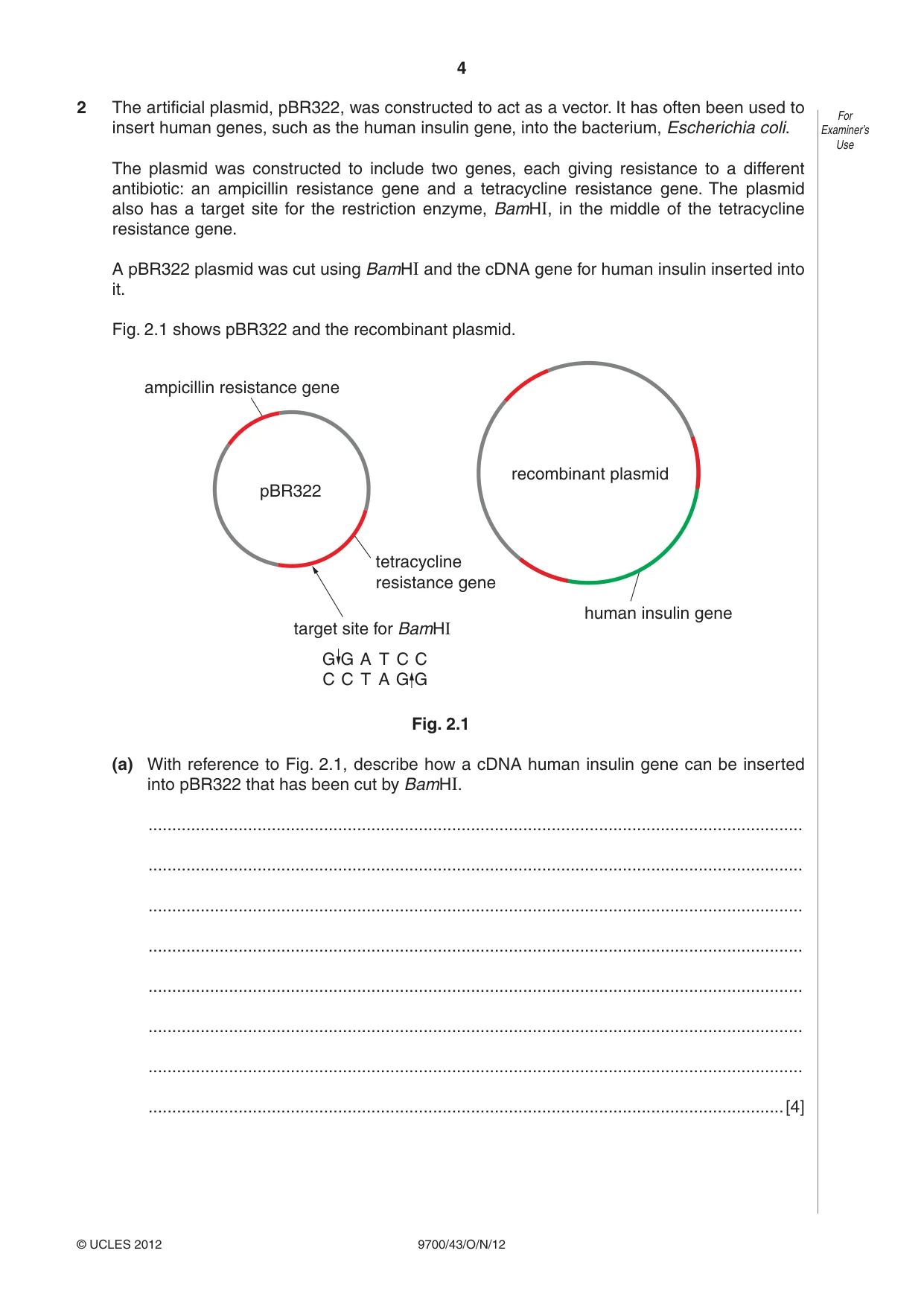
4 © UCLES 2012 9700/43/O/N/12 For Examiner’s Use 2 The artificial plasmid, pBR322, was constructed to act as a vector. It has often been used to insert human genes, such as the human insulin gene, into the bacterium, Escherichia coli. The plasmid was constructed to include two genes, each giving resistance to a different antibiotic: an ampicillin resistance gene and a tetracycline resistance gene. The plasmid also has a target site for the restriction enzyme, BamHI, in the middle of the tetracycline resistance gene. A pBR322 plasmid was cut using BamHI and the cDNA gene for human insulin inserted into it. Fig. 2.1 shows pBR322 and the recombinant plasmid. pBR322 recombinant plasmid human insulin gene tetracycline resistance gene G C G C A T T A C G C G ampicillin resistance gene target site for BamHI Fig. 2.1 (a) With reference to Fig. 2.1, describe how a cDNA human insulin gene can be inserted into pBR322 that has been cut by BamHI. … … … … … … … …[4]
Question paper, page 5
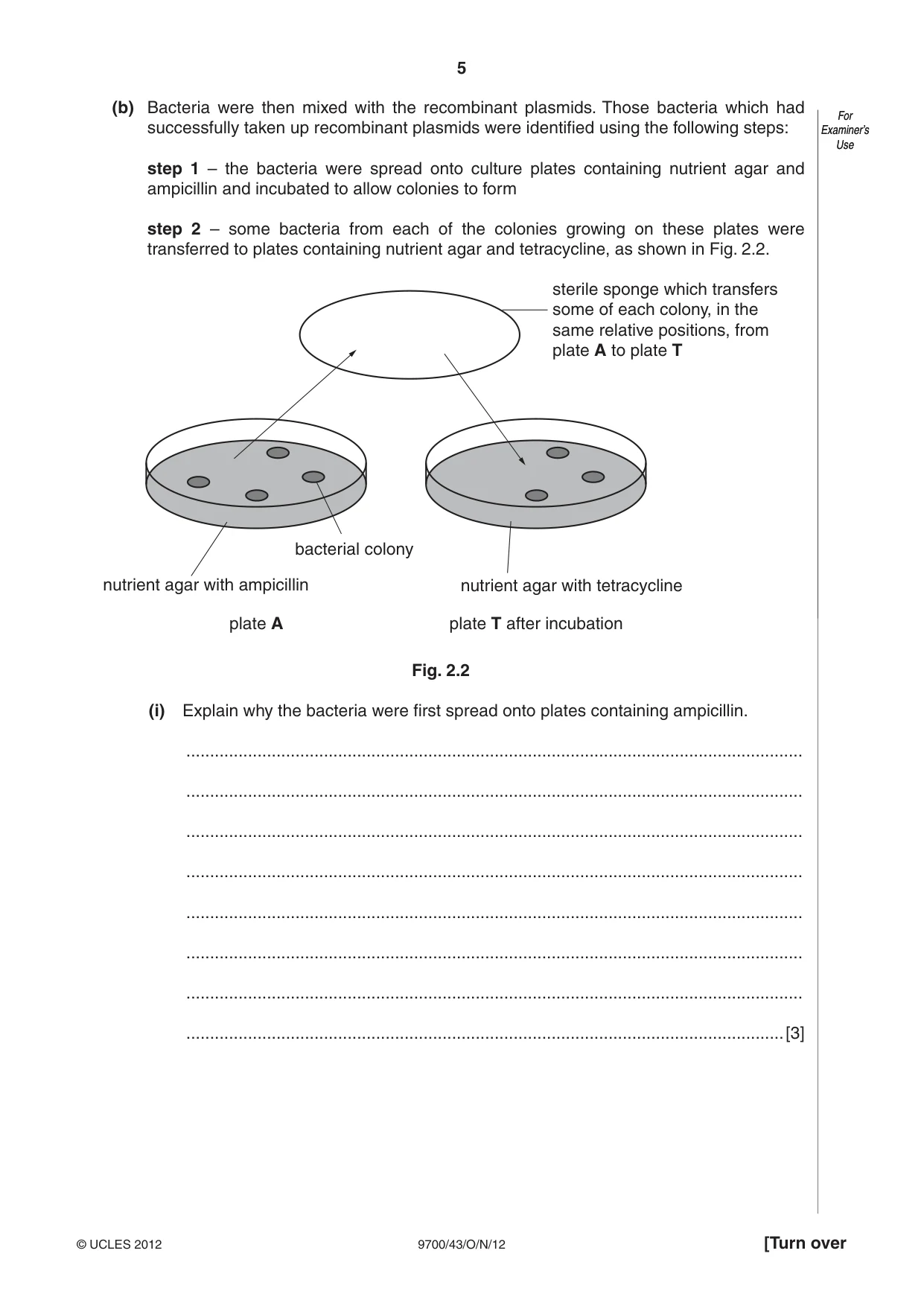
5 © UCLES 2012 [Turn over 9700/43/O/N/12 For Examiner’s Use For Examiner’s Use (b) Bacteria were then mixed with the recombinant plasmids. Those bacteria which had successfully taken up recombinant plasmids were identified using the following steps: step 1 – the bacteria were spread onto culture plates containing nutrient agar and ampicillin and incubated to allow colonies to form step 2 – some bacteria from each of the colonies growing on these plates were transferred to plates containing nutrient agar and tetracycline, as shown in Fig. 2.2. sterile sponge which transfers some of each colony, in the same relative positions, from plate A to plate T plate A plate T after incubation nutrient agar with tetracycline bacterial colony nutrient agar with ampicillin Fig. 2.2 (i) Explain why the bacteria were first spread onto plates containing ampicillin. … … … … … … … …[3]
Question paper, page 6
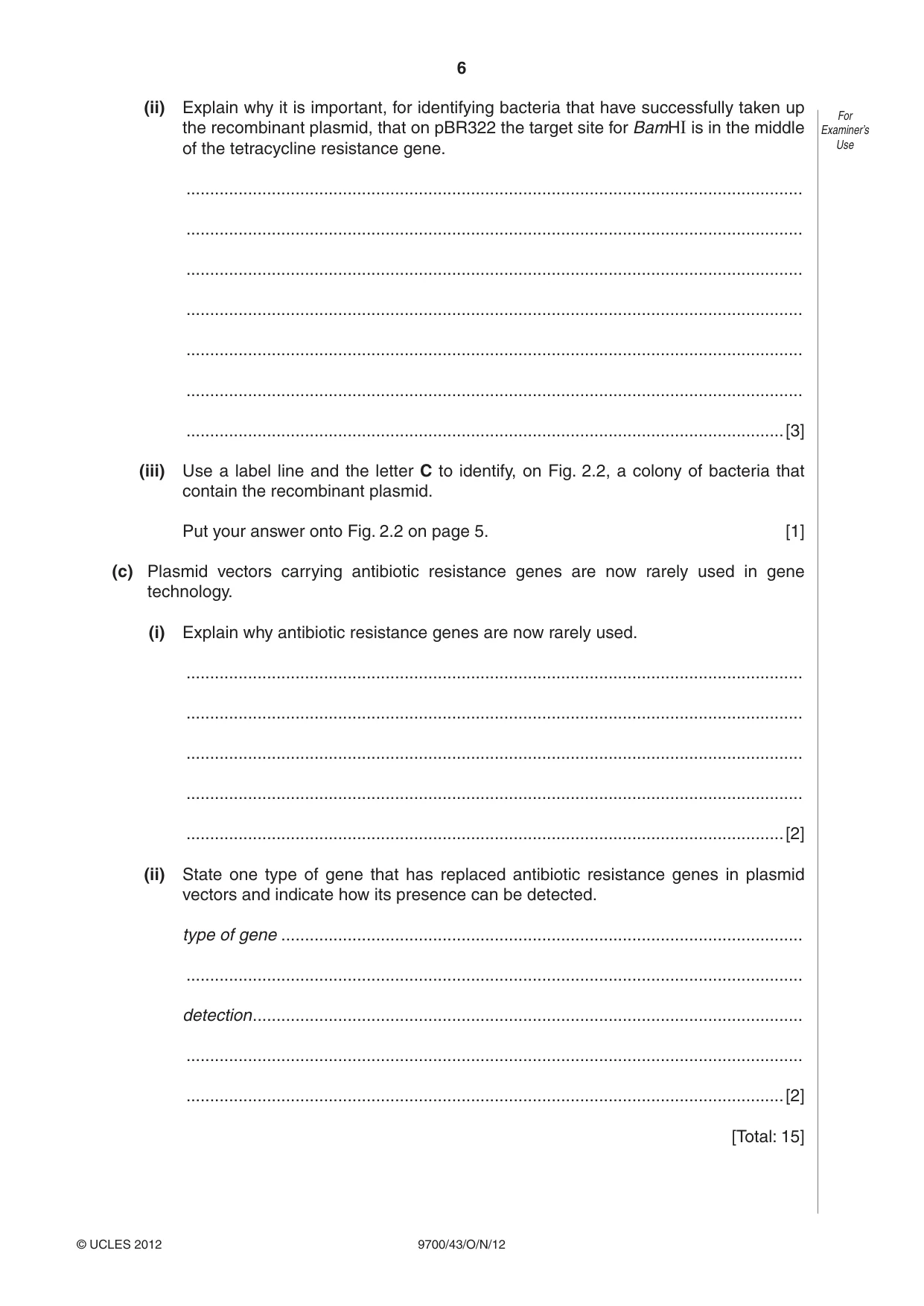
6 © UCLES 2012 9700/43/O/N/12 For Examiner’s Use (ii) Explain why it is important, for identifying bacteria that have successfully taken up the recombinant plasmid, that on pBR322 the target site for BamHI is in the middle of the tetracycline resistance gene. … … … … … … …[3] (iii) Use a label line and the letter C to identify, on Fig. 2.2, a colony of bacteria that contain the recombinant plasmid. Put your answer onto Fig. 2.2 on page 5. [1] (c) Plasmid vectors carrying antibiotic resistance genes are now rarely used in gene technology. (i) Explain why antibiotic resistance genes are now rarely used. … … … … …[2] (ii) State one type of gene that has replaced antibiotic resistance genes in plasmid vectors and indicate how its presence can be detected. type of gene … … detection … … …[2] [Total: 15]
Question paper, page 7
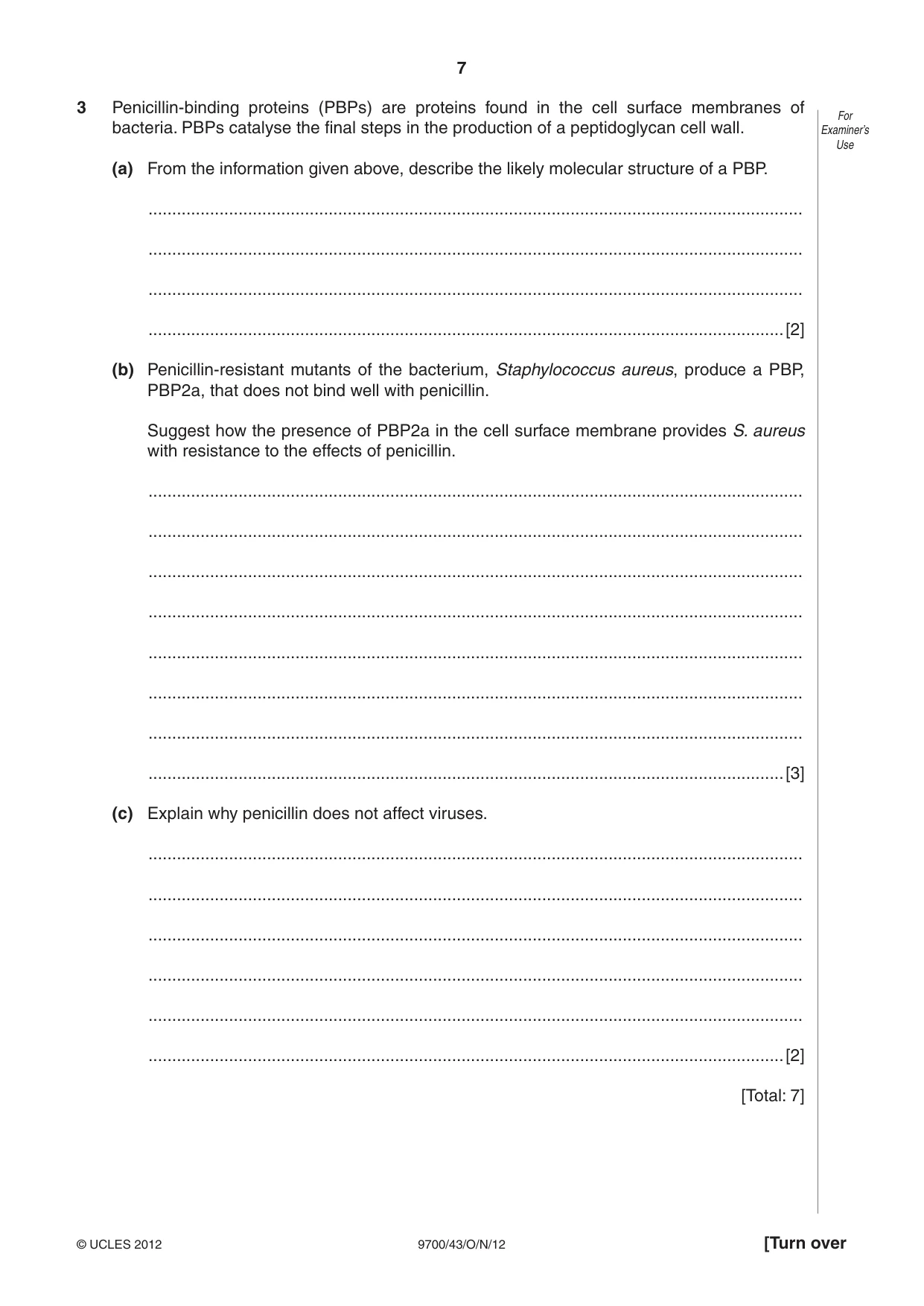
7 © UCLES 2012 [Turn over 9700/43/O/N/12 For Examiner’s Use 3 Penicillin-binding proteins (PBPs) are proteins found in the cell surface membranes of bacteria. PBPs catalyse the final steps in the production of a peptidoglycan cell wall. (a) From the information given above, describe the likely molecular structure of a PBP. … … … …[2] (b) Penicillin-resistant mutants of the bacterium, Staphylococcus aureus, produce a PBP, PBP2a, that does not bind well with penicillin. Suggest how the presence of PBP2a in the cell surface membrane provides S. aureus with resistance to the effects of penicillin. … … … … … … … …[3] (c) Explain why penicillin does not affect viruses. … … … … … …[2] [Total: 7]
Question paper, page 8
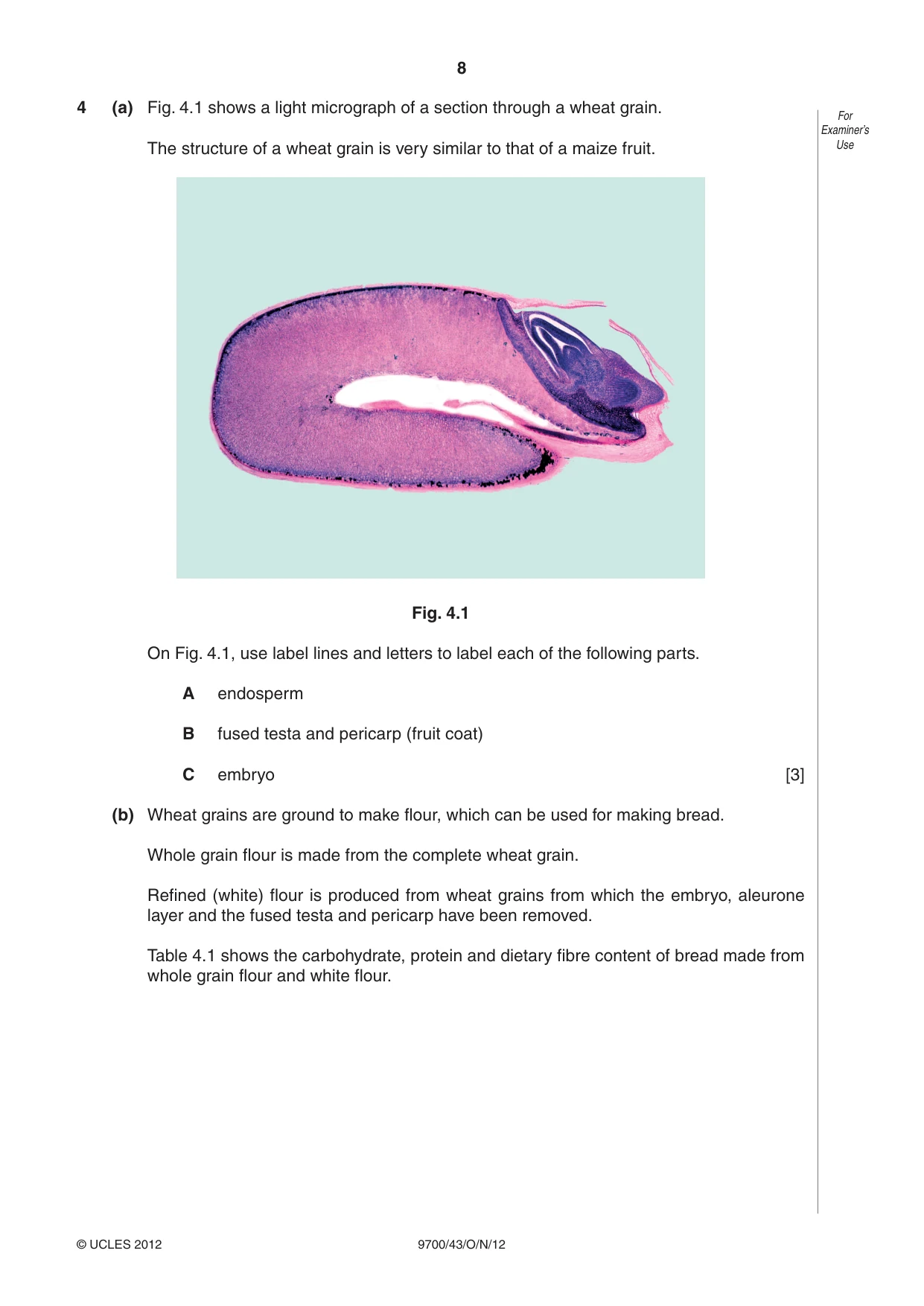
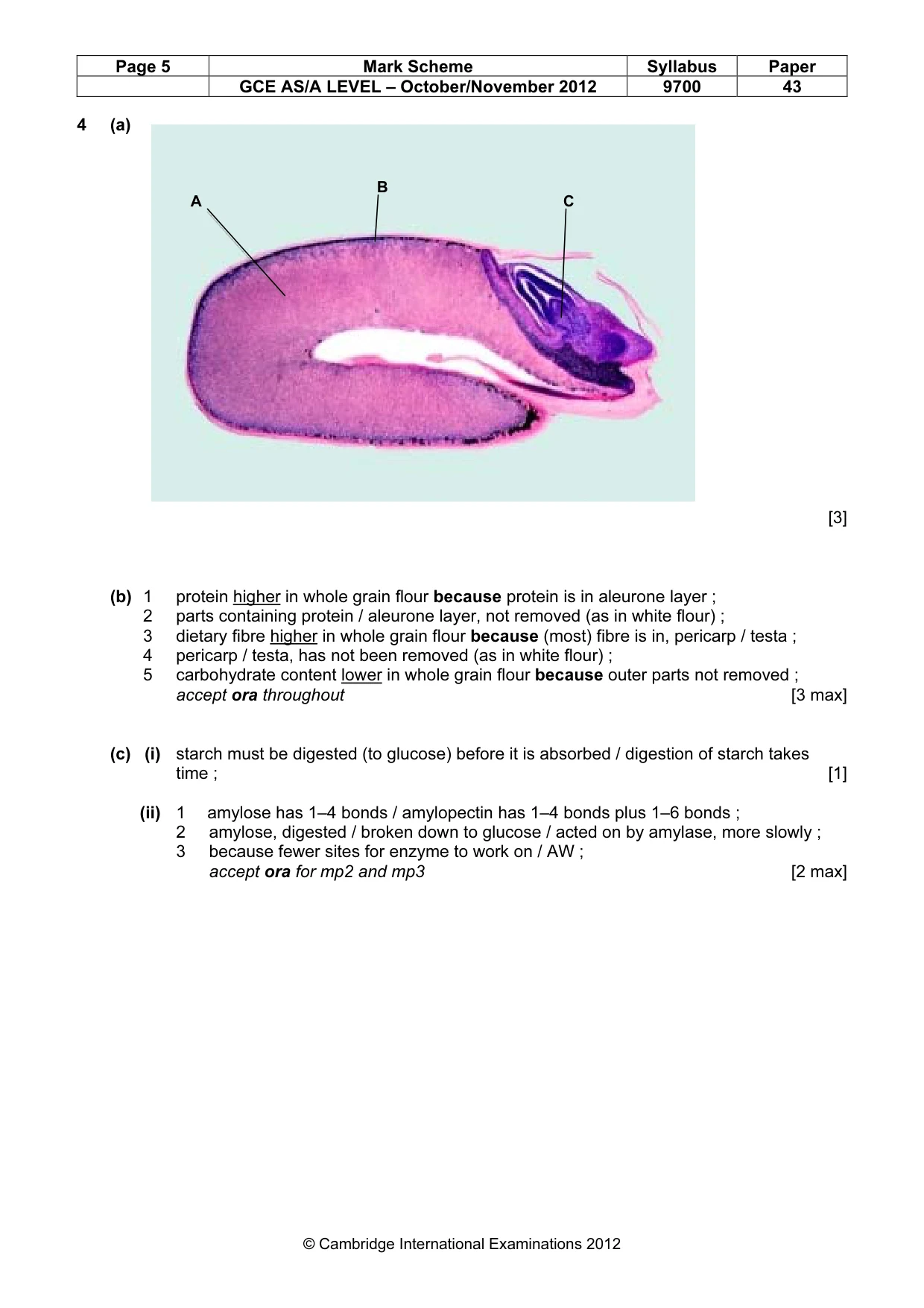
8 © UCLES 2012 9700/43/O/N/12 For Examiner’s Use 4 (a) Fig. 4.1 shows a light micrograph of a section through a wheat grain. The structure of a wheat grain is very similar to that of a maize fruit. Fig. 4.1 On Fig. 4.1, use label lines and letters to label each of the following parts. A endosperm B fused testa and pericarp (fruit coat) C embryo [3] (b) Wheat grains are ground to make flour, which can be used for making bread. Whole grain flour is made from the complete wheat grain. Refined (white) flour is produced from wheat grains from which the embryo, aleurone layer and the fused testa and pericarp have been removed. Table 4.1 shows the carbohydrate, protein and dietary fibre content of bread made from whole grain flour and white flour.
Question paper, page 9
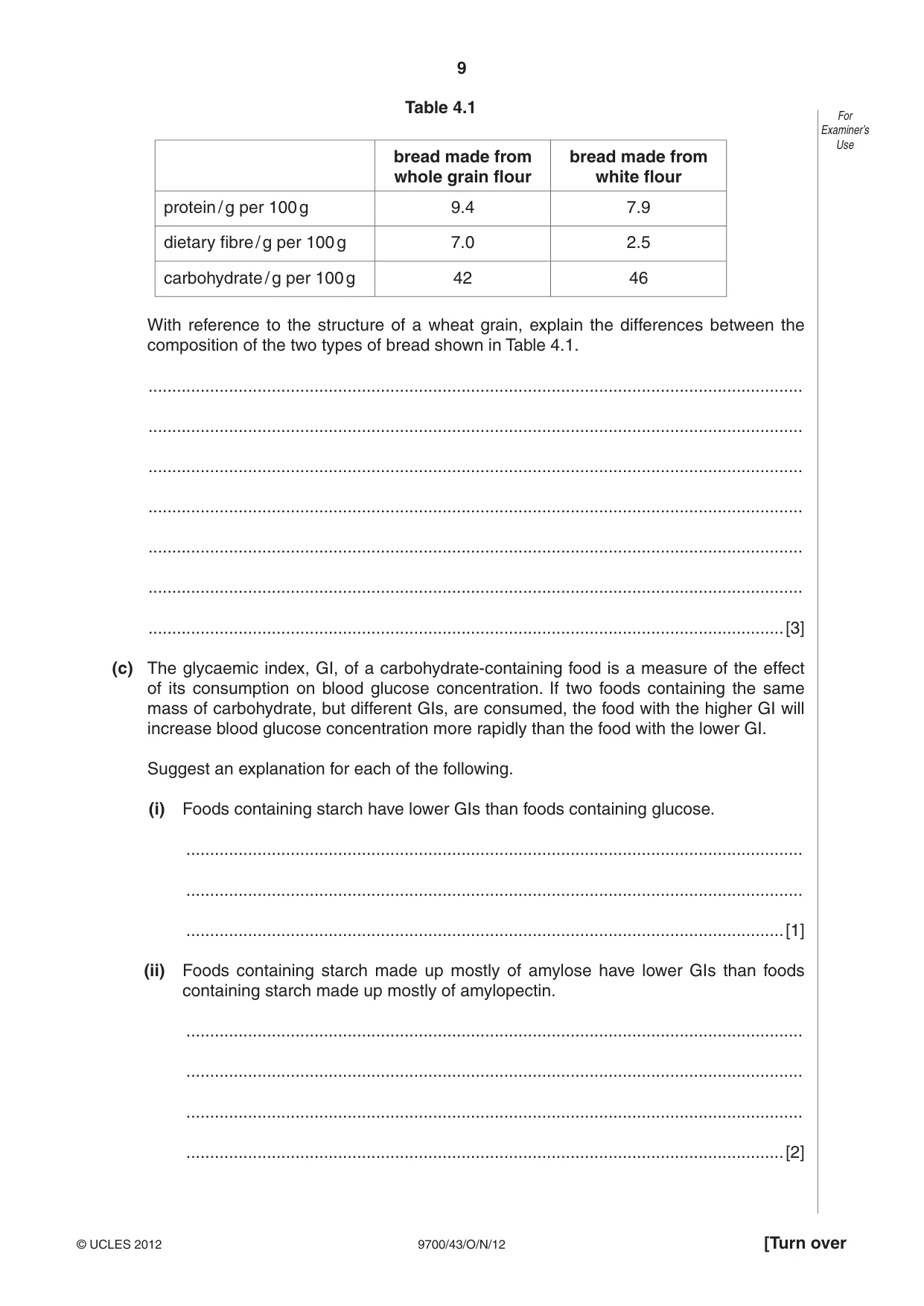
9 © UCLES 2012 [Turn over 9700/43/O/N/12 For Examiner’s Use Table 4.1 bread made from whole grain flour bread made from white flour protein / g per 100 g 9.4 7.9 dietary fibre / g per 100 g 7.0 2.5 carbohydrate / g per 100 g 42 46 With reference to the structure of a wheat grain, explain the differences between the composition of the two types of bread shown in Table 4.1. … … … … … … …[3] (c) The glycaemic index, GI, of a carbohydrate-containing food is a measure of the effect of its consumption on blood glucose concentration. If two foods containing the same mass of carbohydrate, but different GIs, are consumed, the food with the higher GI will increase blood glucose concentration more rapidly than the food with the lower GI. Suggest an explanation for each of the following. (i) Foods containing starch have lower GIs than foods containing glucose. … … …[1] (ii) Foods containing starch made up mostly of amylose have lower GIs than foods containing starch made up mostly of amylopectin. … … … …[2]
Question paper, page 10
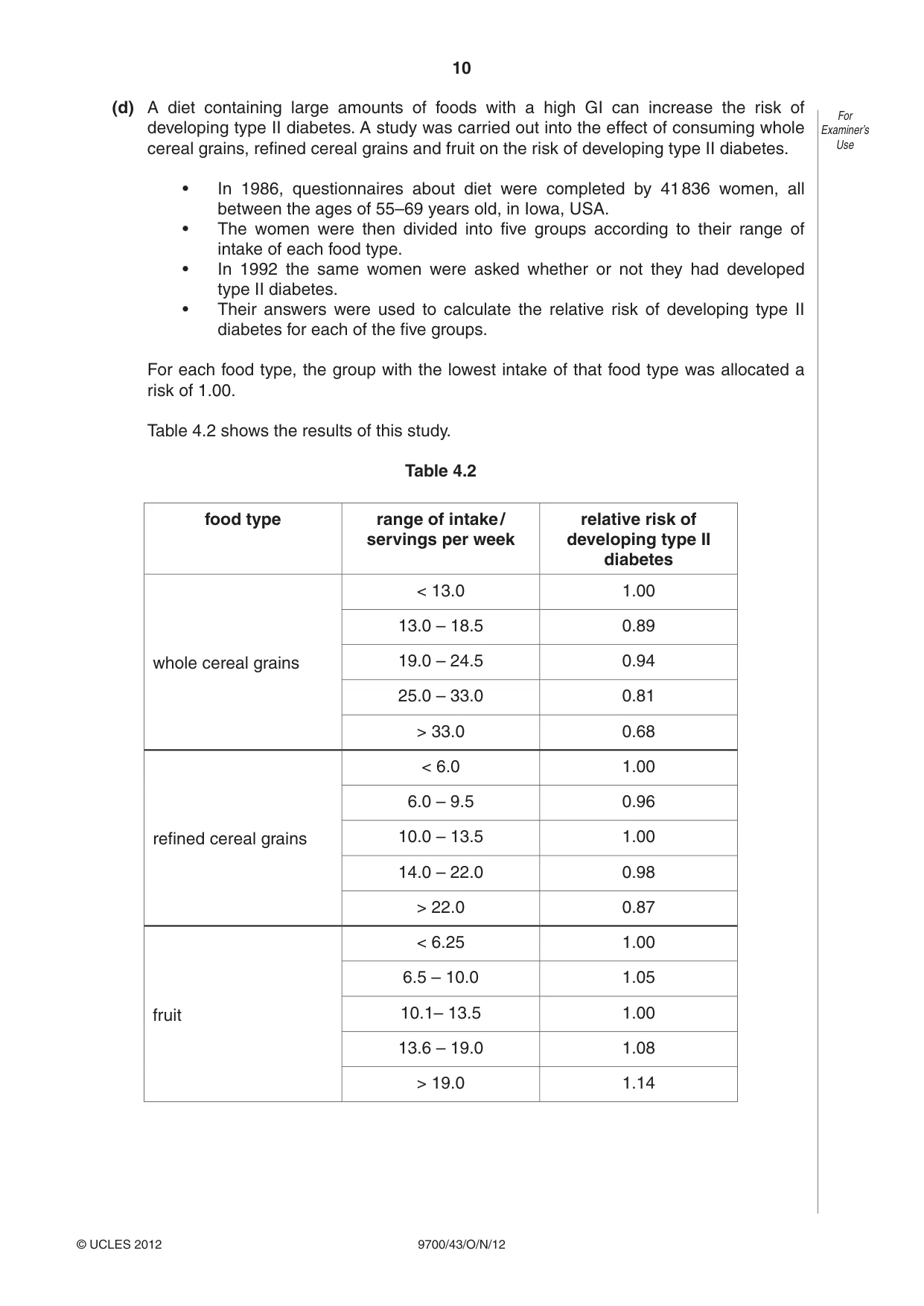
10 © UCLES 2012 9700/43/O/N/12 For Examiner’s Use (d) A diet containing large amounts of foods with a high GI can increase the risk of developing type II diabetes. A study was carried out into the effect of consuming whole cereal grains, refined cereal grains and fruit on the risk of developing type II diabetes. • In 1986, questionnaires about diet were completed by 41 836 women, all between the ages of 55–69 years old, in Iowa, USA. • The women were then divided into five groups according to their range of intake of each food type. • In 1992 the same women were asked whether or not they had developed type II diabetes. • Their answers were used to calculate the relative risk of developing type II diabetes for each of the five groups. For each food type, the group with the lowest intake of that food type was allocated a risk of 1.00. Table 4.2 shows the results of this study. Table 4.2 food type range of intake / servings per week relative risk of developing type II diabetes whole cereal grains < 13.0 1.00 13.0 – 18.5 0.89 19.0 – 24.5 0.94 25.0 – 33.0 0.81 > 33.0 0.68 refined cereal grains < 6.0 1.00 6.0 – 9.5 0.96 10.0 – 13.5 1.00 14.0 – 22.0 0.98 > 22.0 0.87 fruit < 6.25 1.00 6.5 – 10.0 1.05 10.1– 13.5 1.00 13.6 – 19.0 1.08 > 19.0 1.14
Question paper, page 11
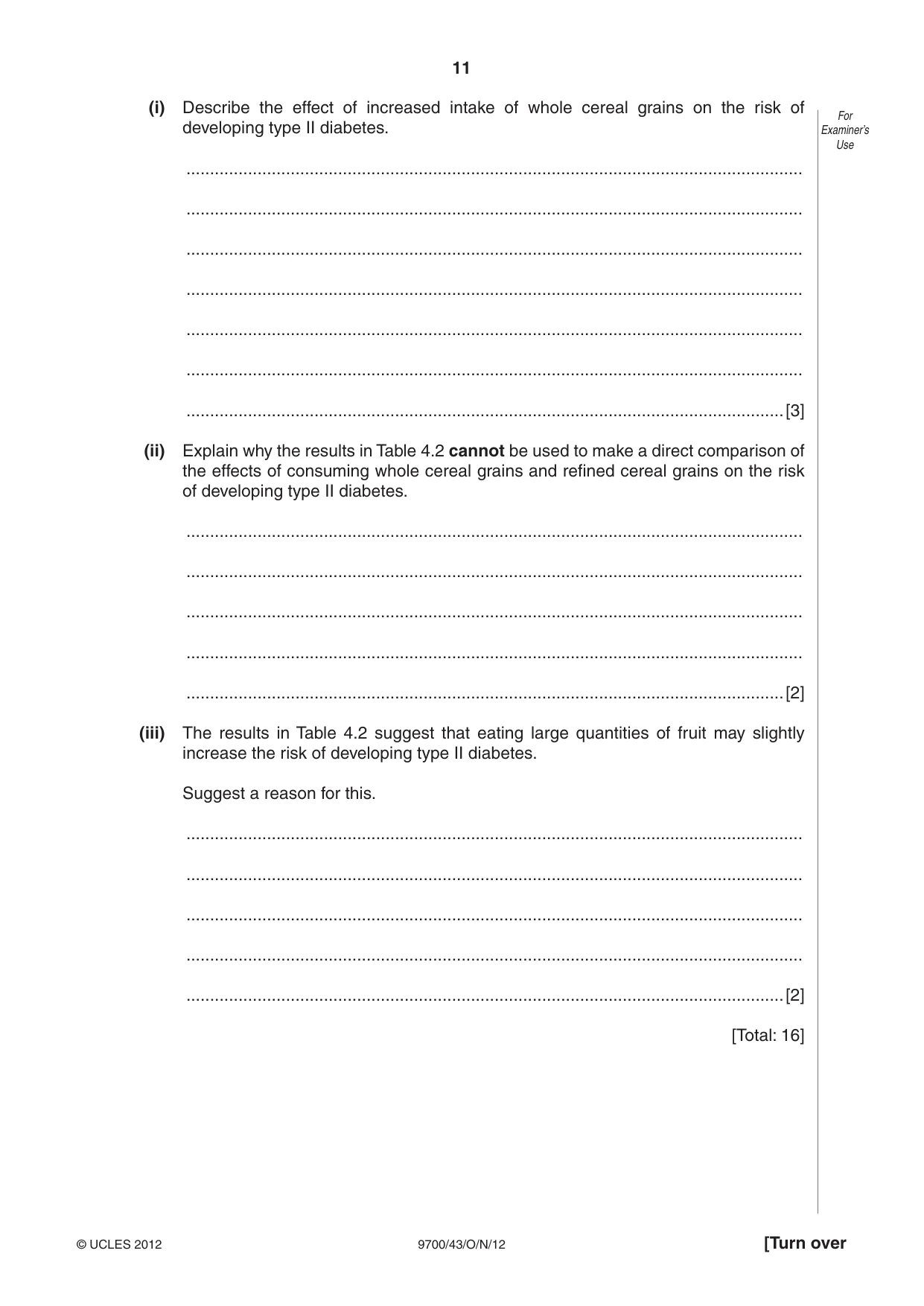
11 © UCLES 2012 [Turn over 9700/43/O/N/12 For Examiner’s Use (i) Describe the effect of increased intake of whole cereal grains on the risk of developing type II diabetes. … … … … … … …[3] (ii) Explain why the results in Table 4.2 cannot be used to make a direct comparison of the effects of consuming whole cereal grains and refined cereal grains on the risk of developing type II diabetes. … … … … …[2] (iii) The results in Table 4.2 suggest that eating large quantities of fruit may slightly increase the risk of developing type II diabetes. Suggest a reason for this. … … … … …[2] [Total: 16]
Question paper, page 12
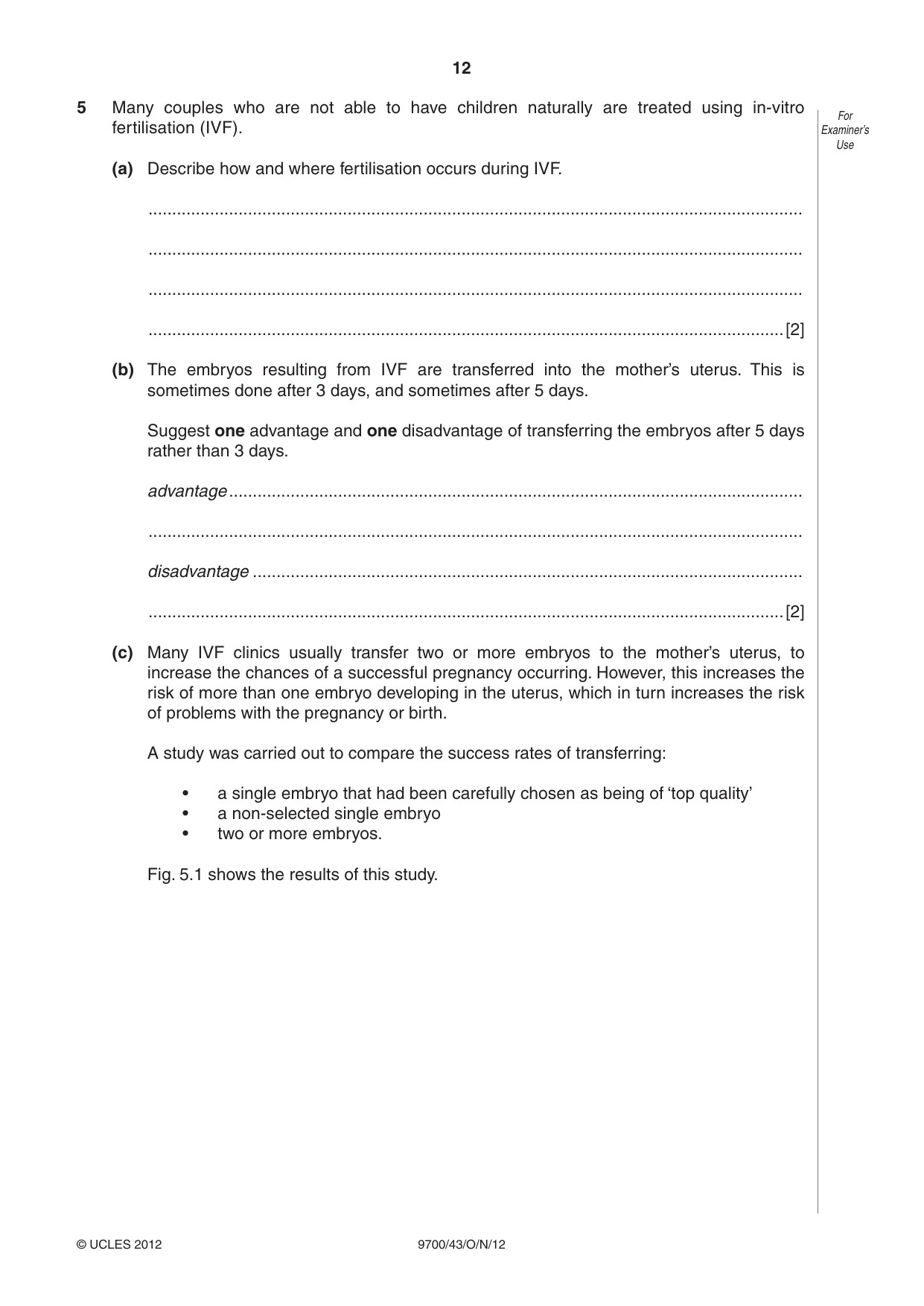
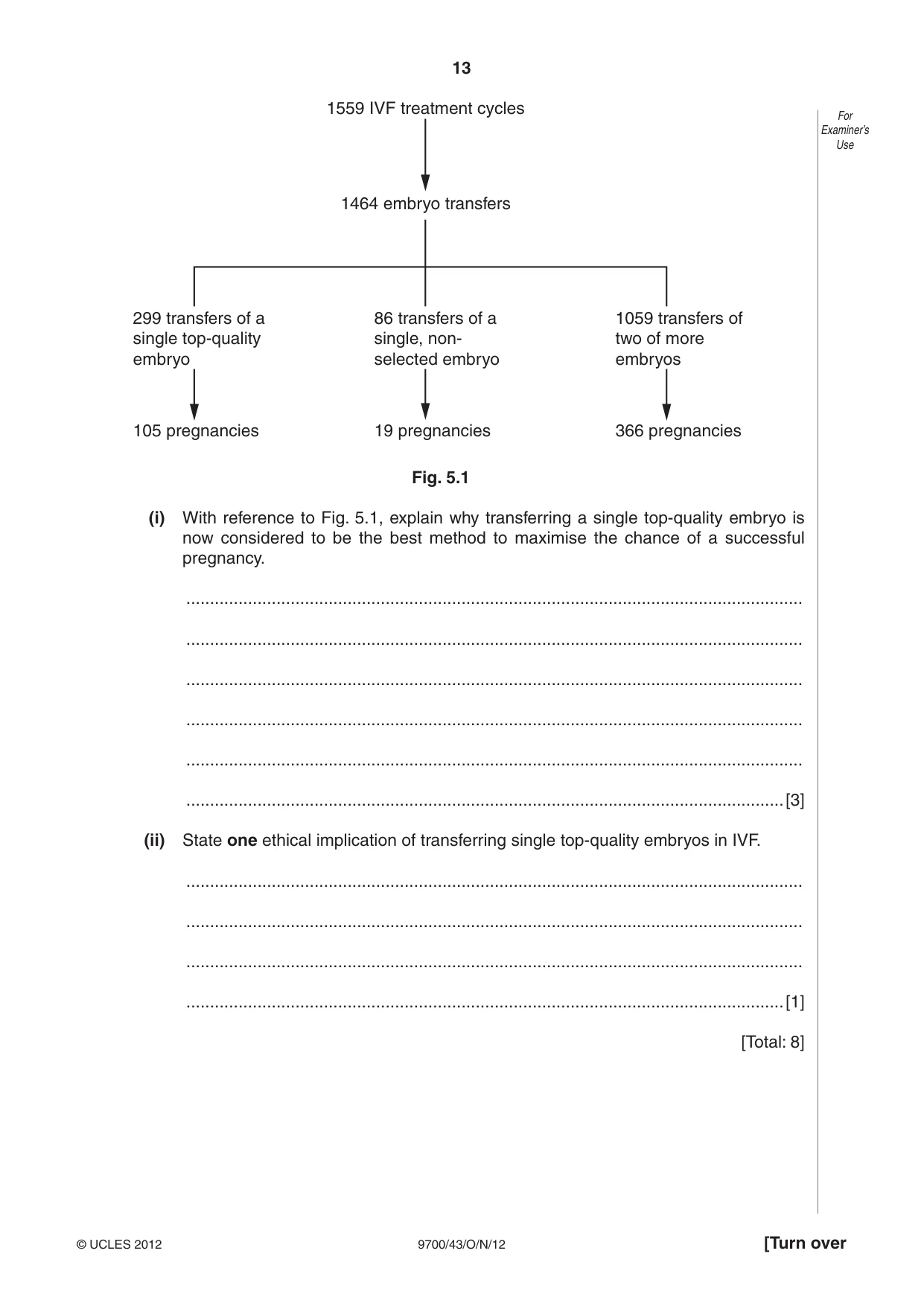
12 © UCLES 2012 9700/43/O/N/12 For Examiner’s Use 5 Many couples who are not able to have children naturally are treated using in-vitro fertilisation (IVF). (a) Describe how and where fertilisation occurs during IVF. … … … …[2] (b) The embryos resulting from IVF are transferred into the mother’s uterus. This is sometimes done after 3 days, and sometimes after 5 days. Suggest one advantage and one disadvantage of transferring the embryos after 5 days rather than 3 days. advantage … … disadvantage … …[2] (c) Many IVF clinics usually transfer two or more embryos to the mother’s uterus, to increase the chances of a successful pregnancy occurring. However, this increases the risk of more than one embryo developing in the uterus, which in turn increases the risk of problems with the pregnancy or birth. A study was carried out to compare the success rates of transferring: • a single embryo that had been carefully chosen as being of ‘top quality’ • a non-selected single embryo • two or more embryos. Fig. 5.1 shows the results of this study.
Question paper, page 13
13 © UCLES 2012 [Turn over 9700/43/O/N/12 For Examiner’s Use 1559 IVF treatment cycles 1464 embryo transfers 105 pregnancies 19 pregnancies 366 pregnancies 299 transfers of a single top-quality embryo 86 transfers of a single, non- selected embryo 1059 transfers of two of more embryos Fig. 5.1 (i) With reference to Fig. 5.1, explain why transferring a single top-quality embryo is now considered to be the best method to maximise the chance of a successful pregnancy. … … … … … …[3] (ii) State one ethical implication of transferring single top-quality embryos in IVF. … … … …[1] [Total: 8]
Question paper, page 14
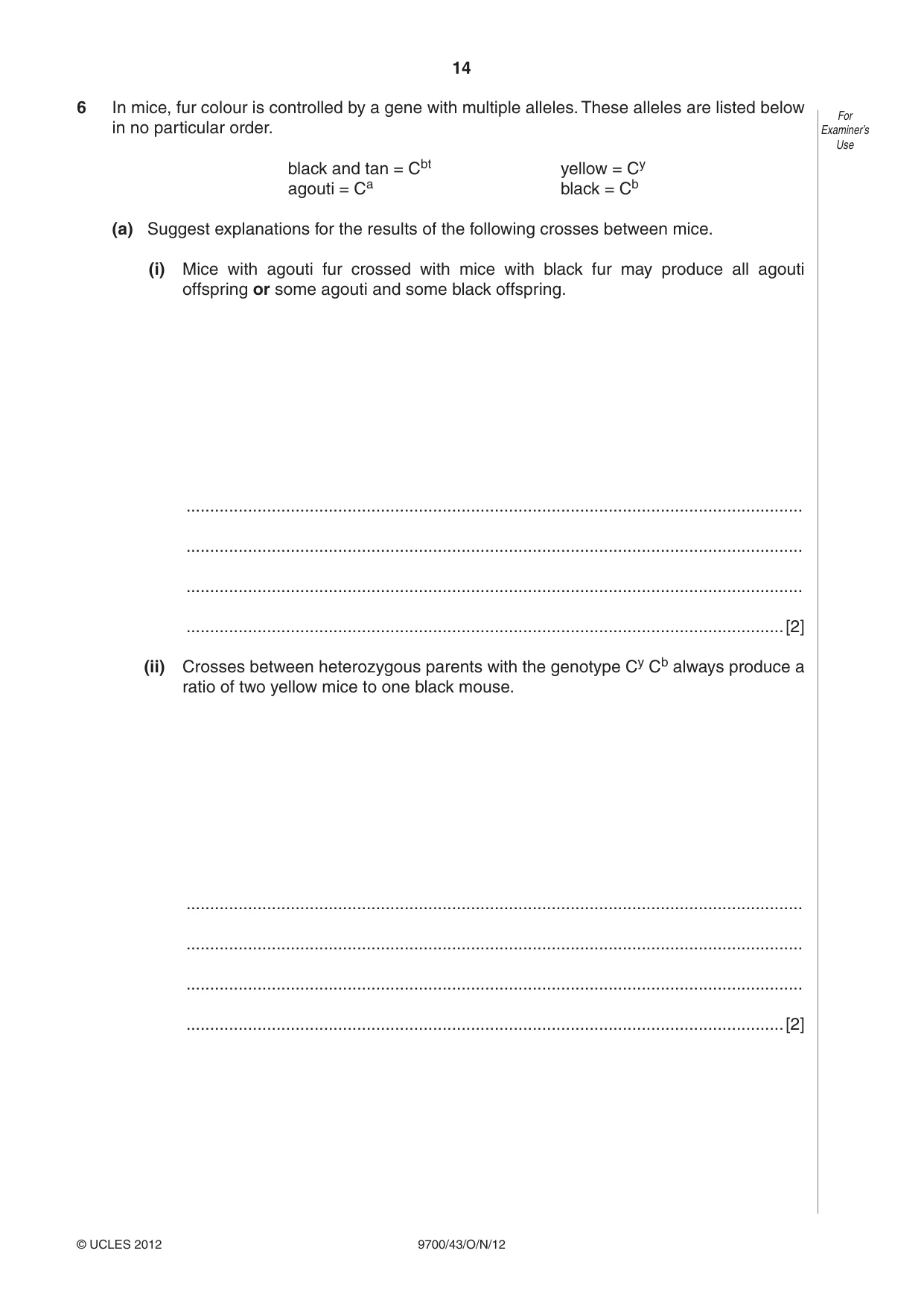
14 © UCLES 2012 9700/43/O/N/12 For Examiner’s Use 6 In mice, fur colour is controlled by a gene with multiple alleles. These alleles are listed below in no particular order. black and tan = Cbt yellow = Cy agouti = Ca black = Cb (a) Suggest explanations for the results of the following crosses between mice. (i) Mice with agouti fur crossed with mice with black fur may produce all agouti offspring or some agouti and some black offspring. … … … …[2] (ii) Crosses between heterozygous parents with the genotype Cy Cb always produce a ratio of two yellow mice to one black mouse. … … … …[2]
Question paper, page 15
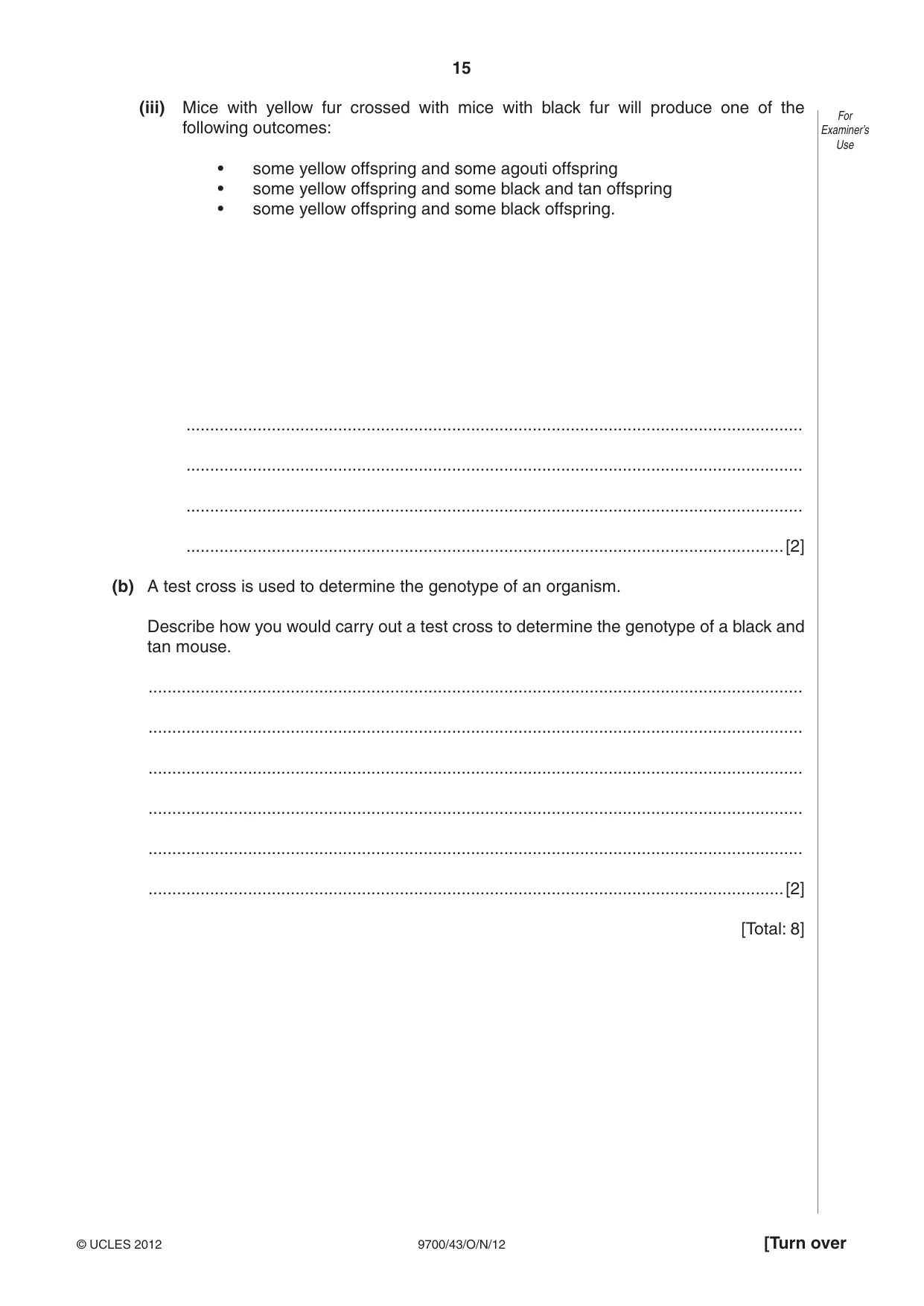
15 © UCLES 2012 [Turn over 9700/43/O/N/12 For Examiner’s Use (iii) Mice with yellow fur crossed with mice with black fur will produce one of the following outcomes: • some yellow offspring and some agouti offspring • some yellow offspring and some black and tan offspring • some yellow offspring and some black offspring. … … … …[2] (b) A test cross is used to determine the genotype of an organism. Describe how you would carry out a test cross to determine the genotype of a black and tan mouse. … … … … … …[2] [Total: 8]
Question paper, page 16
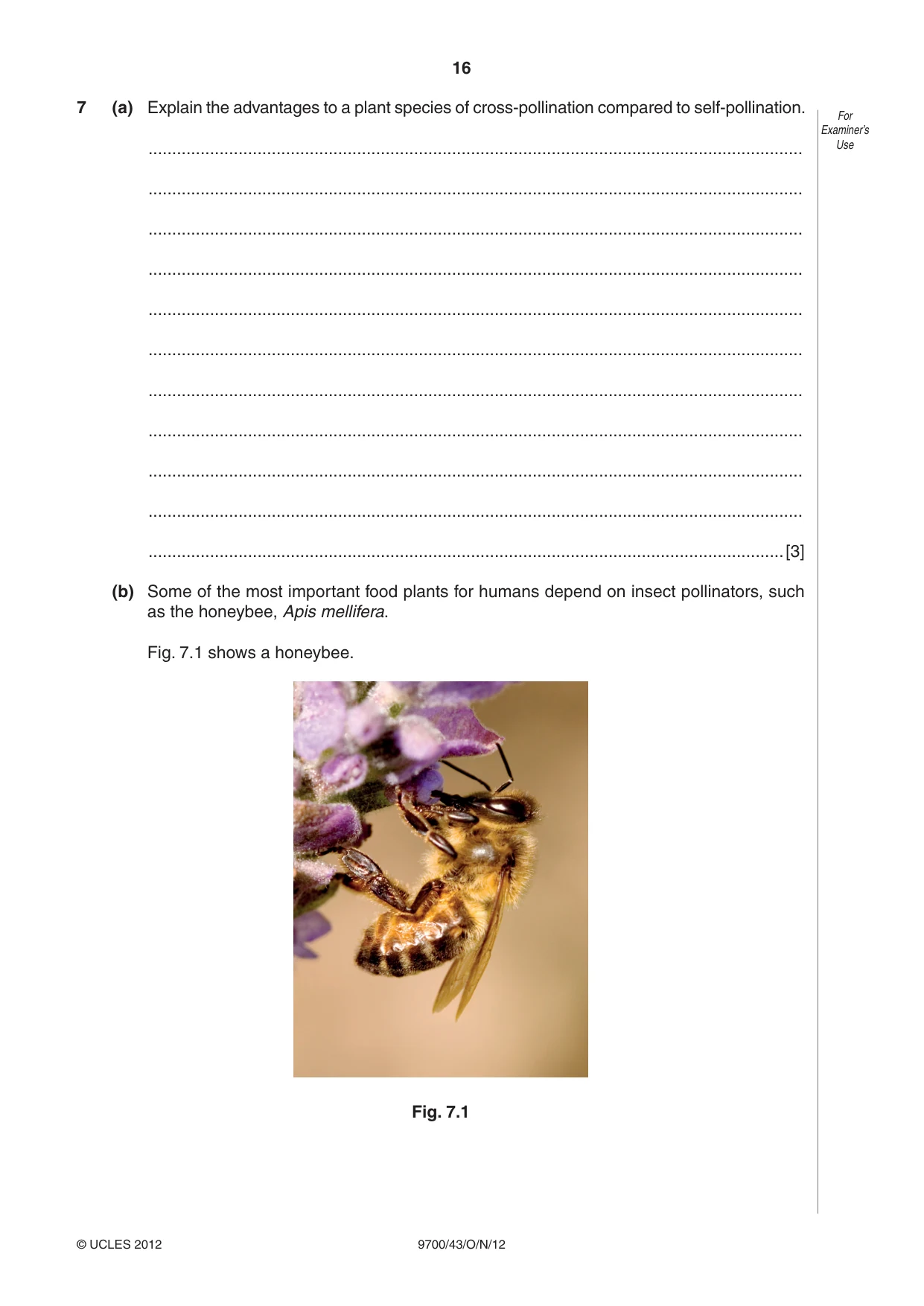
16 © UCLES 2012 9700/43/O/N/12 For Examiner’s Use 7 (a) Explain the advantages to a plant species of cross-pollination compared to self-pollination. … … … … … … … … … … …[3] (b) Some of the most important food plants for humans depend on insect pollinators, such as the honeybee, Apis mellifera. Fig. 7.1 shows a honeybee. Fig. 7.1
Question paper, page 17
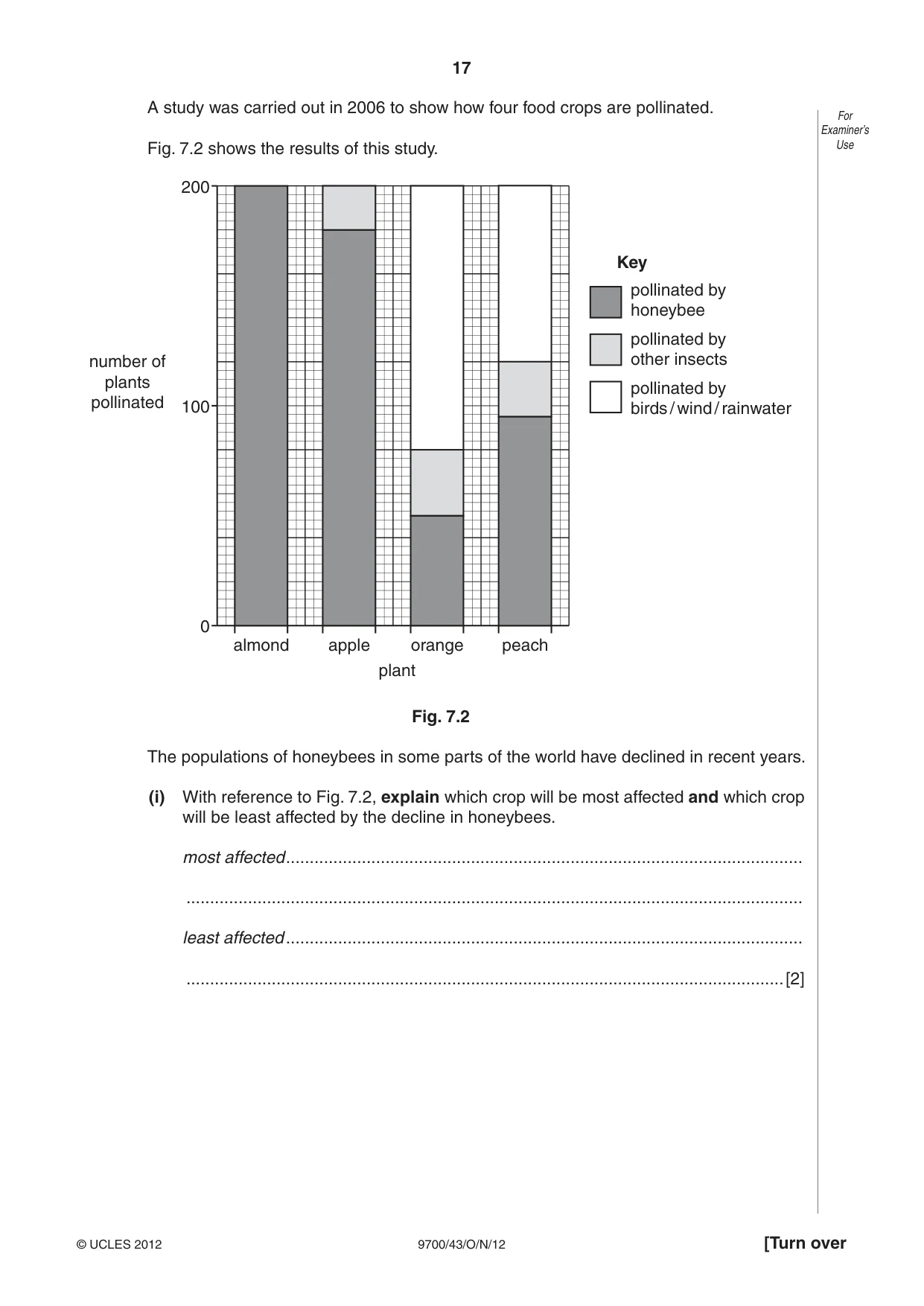
17 © UCLES 2012 [Turn over 9700/43/O/N/12 For Examiner’s Use A study was carried out in 2006 to show how four food crops are pollinated. Fig. 7.2 shows the results of this study. 0 100 200 almond apple orange plant peach pollinated by honeybee pollinated by other insects pollinated by birds / wind / rainwater Key number of plants pollinated Fig. 7.2 The populations of honeybees in some parts of the world have declined in recent years. (i) With reference to Fig. 7.2, explain which crop will be most affected and which crop will be least affected by the decline in honeybees. most affected … … least affected … …[2]
Question paper, page 18
© UCLES 2012 9700/43/O/N/12 For Examiner’s Use (ii) Suggest reasons why honeybee populations have declined. … … … … … … … … …[3] [Total: 8]
Question paper, page 19
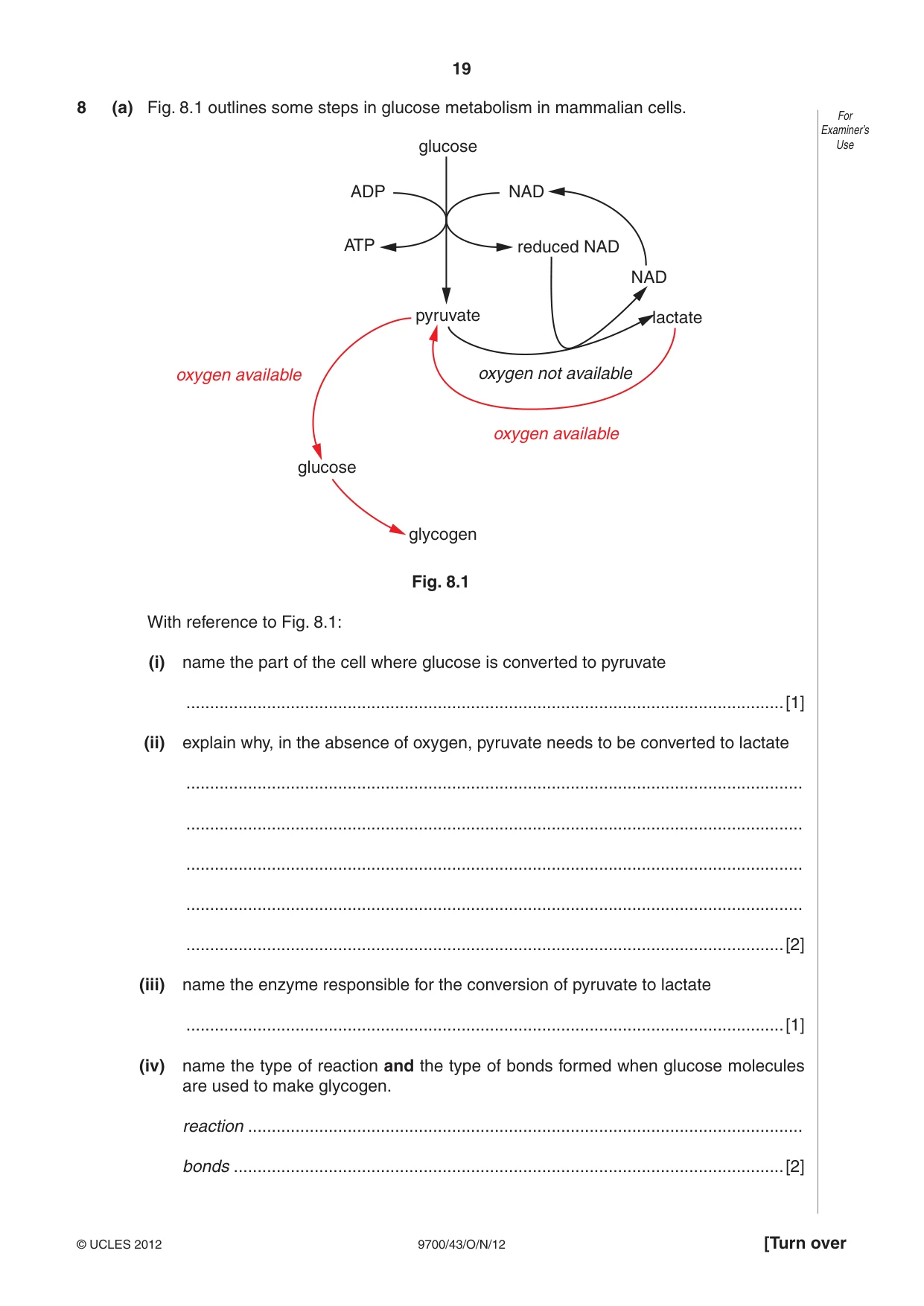
19 © UCLES 2012 [Turn over 9700/43/O/N/12 For Examiner’s Use 8 (a) Fig. 8.1 outlines some steps in glucose metabolism in mammalian cells. glucose reduced NAD NAD lactate oxygen not available glucose glycogen oxygen available oxygen available NAD ADP ATP pyruvate Fig. 8.1 With reference to Fig. 8.1: (i) name the part of the cell where glucose is converted to pyruvate …[1] (ii) explain why, in the absence of oxygen, pyruvate needs to be converted to lactate … … … … …[2] (iii) name the enzyme responsible for the conversion of pyruvate to lactate …[1] (iv) name the type of reaction and the type of bonds formed when glucose molecules are used to make glycogen. reaction … bonds …[2]
Question paper, page 20
20 © UCLES 2012 9700/43/O/N/12 For Examiner’s Use (b) Describe how anaerobic respiration in yeast cells differs from anaerobic respiration in mammalian cells. … … … … … … … … …[4] (c) The respiratory quotient (RQ) is used to determine the type of respiratory substrate, such as carbohydrate or lipid, which an organism uses at any one time. (i) State how the RQ is calculated. … … … …[2] (ii) State the typical RQ values obtained from the respiration of carbohydrates and lipids. carbohydrate … lipid … [2] (iii) Suggest what would happen to the RQ value when respiration becomes anaerobic. …[1] [Total: 15]
Question paper, page 21
21 © UCLES 2012 [Turn over 9700/43/O/N/12 For Examiner’s Use Section B Answer one question. 9 (a) Describe how crossing over and independent assortment can lead to genetic variation. [9] (b) Outline how artificial selection differs from natural selection. [6] [Total: 15] 10 (a) Outline the process of the photolysis of water and describe what happens to the products of photolysis. [10] (b) Describe the roles of gibberellins in stem elongation. [5] [Total: 15] … … … … … … … … … … … … … … … … … …
Question paper, page 22
22 © UCLES 2012 9700/43/O/N/12 For Examiner’s Use … … … … … … … … … … … … … … … … … … … … … … … … … … … …
Question paper, page 23
23 © UCLES 2012 [Turn over 9700/43/O/N/12 For Examiner’s Use … … … … … … … … … … … … … … … … … … … … … … … … … … … …
Question paper, page 24
24 © UCLES 2012 9700/43/O/N/12 For Examiner’s Use … … … … … … … … … … … … … … … … … … … … … … … Copyright Acknowledgements: Question 4 Fig. 4.1 © DR KEITH WHEELER / SCIENCE PHOTO LIBRARY. Question 7 Fig. 7.1 © POWER AND SYRED / SCIENCE PHOTO LIBRARY. Permission to reproduce items where third-party owned material protected by copyright is included has been sought and cleared where possible. Every reasonable effort has been made by the publisher (UCLES) to trace copyright holders, but if any items requiring clearance have unwittingly been included, the publisher will be pleased to make amends at the earliest possible opportunity. University of Cambridge International Examinations is part of the Cambridge Assessment Group. Cambridge Assessment is the brand name of University of Cambridge Local Examinations Syndicate (UCLES), which is itself a department of the University of Cambridge.
Mark scheme, page 1
CAMBRIDGE INTERNATIONAL EXAMINATIONS GCE Advanced Subsidiary Level and GCE Advanced Level MARK SCHEME for the October/November 2012 series 9700 BIOLOGY 9700/43 Paper 4 (A2 Structured Questions), maximum raw mark 100 This mark scheme is published as an aid to teachers and candidates, to indicate the requirements of the examination. It shows the basis on which Examiners were instructed to award marks. It does not indicate the details of the discussions that took place at an Examiners’ meeting before marking began, which would have considered the acceptability of alternative answers. Mark schemes should be read in conjunction with the question paper and the Principal Examiner Report for Teachers. Cambridge will not enter into discussions about these mark schemes. Cambridge is publishing the mark schemes for the October/November 2012 series for most IGCSE, GCE Advanced Level and Advanced Subsidiary Level components and some Ordinary Level components.
Mark scheme, page 2
Page 2 Mark Scheme Syllabus Paper GCE AS/A LEVEL – October/November 2012 9700 43 © Cambridge International Examinations 2012 Mark scheme abbreviations: ; separates marking points / alternative answers for the same point R reject A accept (for answers correctly cued by the question, or by extra guidance) AW alternative wording (where responses vary more than usual) underline actual word given must be used by candidate (grammatical variants excepted) max indicates the maximum number of marks that can be given ora or reverse argument mp marking point (with relevant number) ecf error carried forward I ignore AVP Alternative valid point (examples given as guidance)
Mark scheme, page 3
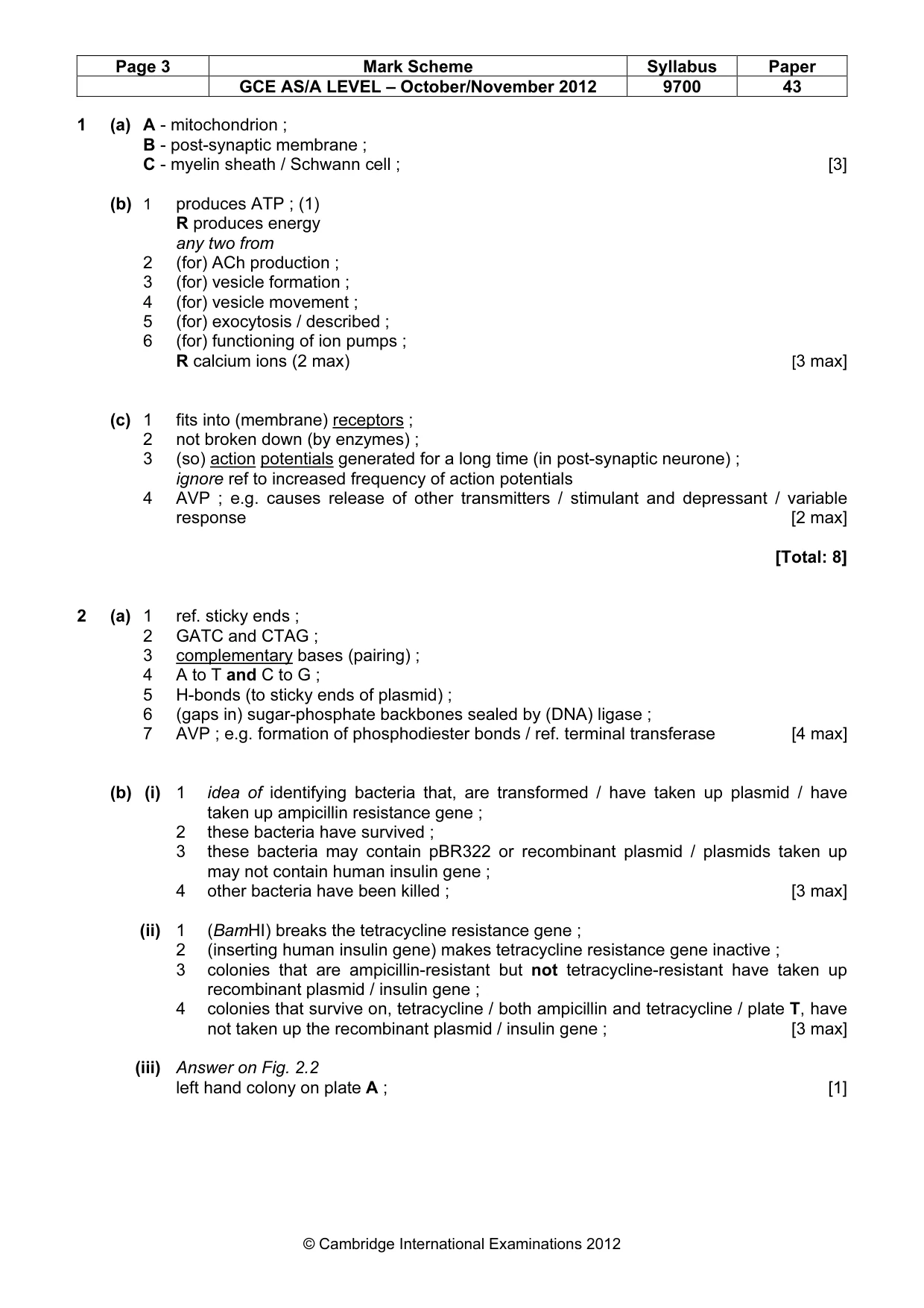
Page 3 Mark Scheme Syllabus Paper GCE AS/A LEVEL – October/November 2012 9700 43 © Cambridge International Examinations 2012 1 (a) A - mitochondrion ; B - post-synaptic membrane ; C - myelin sheath / Schwann cell ; [3] (b) 1 produces ATP ; (1) R produces energy any two from 2 (for) ACh production ; 3 (for) vesicle formation ; 4 (for) vesicle movement ; 5 (for) exocytosis / described ; 6 (for) functioning of ion pumps ; R calcium ions (2 max) [3 max] (c) 1 fits into (membrane) receptors ; 2 not broken down (by enzymes) ; 3 (so) action potentials generated for a long time (in post-synaptic neurone) ; ignore ref to increased frequency of action potentials 4 AVP ; e.g. causes release of other transmitters / stimulant and depressant / variable response [2 max] [Total: 8] 2 (a) 1 ref. sticky ends ; 2 GATC and CTAG ; 3 complementary bases (pairing) ; 4 A to T and C to G ; 5 H-bonds (to sticky ends of plasmid) ; 6 (gaps in) sugar-phosphate backbones sealed by (DNA) ligase ; 7 AVP ; e.g. formation of phosphodiester bonds / ref. terminal transferase [4 max] (b) (i) 1 idea of identifying bacteria that, are transformed / have taken up plasmid / have taken up ampicillin resistance gene ; 2 these bacteria have survived ; 3 these bacteria may contain pBR322 or recombinant plasmid / plasmids taken up may not contain human insulin gene ; 4 other bacteria have been killed ; [3 max] (ii) 1 (BamHI) breaks the tetracycline resistance gene ; 2 (inserting human insulin gene) makes tetracycline resistance gene inactive ; 3 colonies that are ampicillin-resistant but not tetracycline-resistant have taken up recombinant plasmid / insulin gene ; 4 colonies that survive on, tetracycline / both ampicillin and tetracycline / plate T, have not taken up the recombinant plasmid / insulin gene ; [3 max] (iii) Answer on Fig. 2.2 left hand colony on plate A ; [1]
Mark scheme, page 4
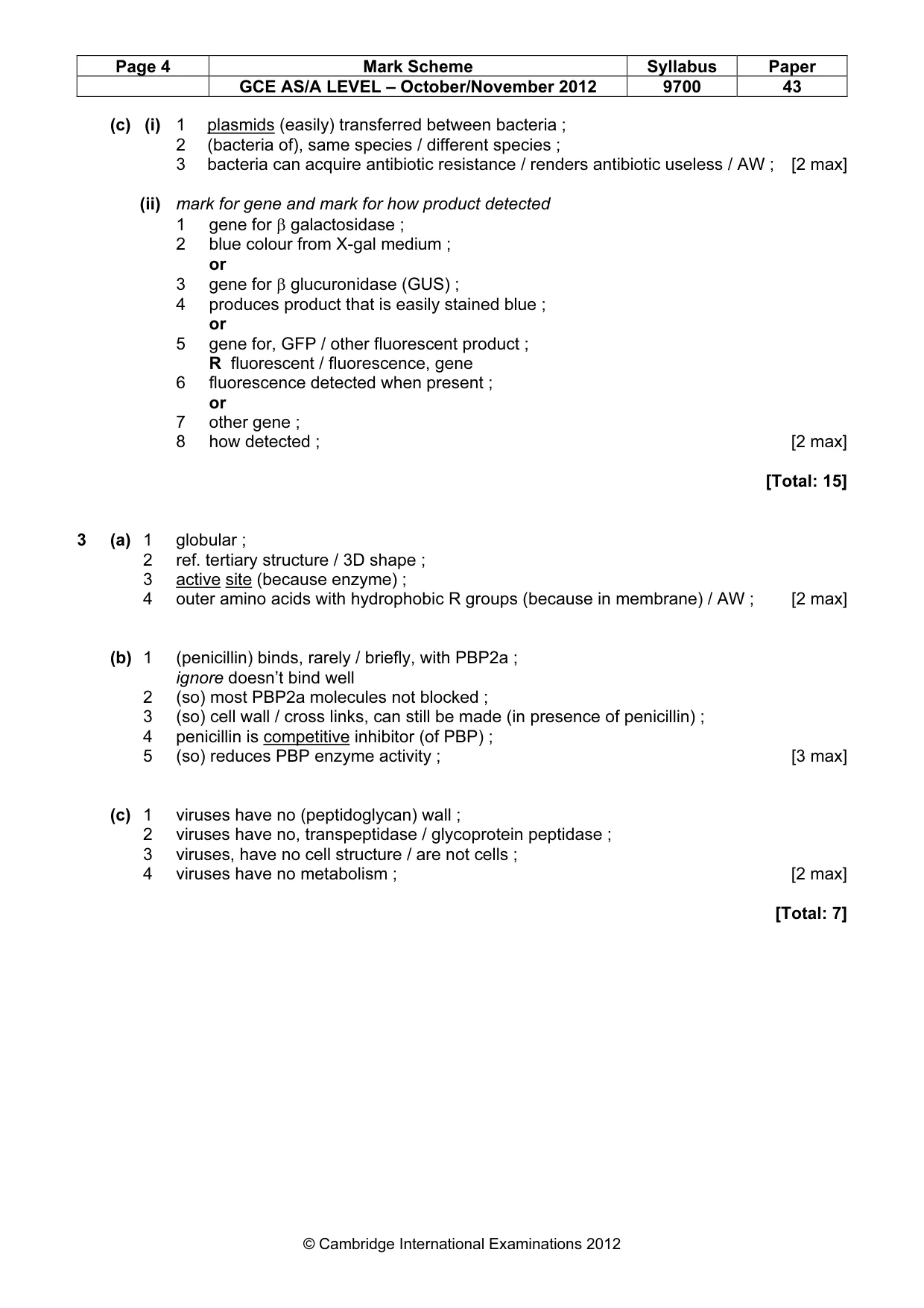
Page 4 Mark Scheme Syllabus Paper GCE AS/A LEVEL – October/November 2012 9700 43 © Cambridge International Examinations 2012 (c) (i) 1 plasmids (easily) transferred between bacteria ; 2 (bacteria of), same species / different species ; 3 bacteria can acquire antibiotic resistance / renders antibiotic useless / AW ; [2 max] (ii) mark for gene and mark for how product detected 1 gene for β galactosidase ; 2 blue colour from X-gal medium ; or 3 gene for β glucuronidase (GUS) ; 4 produces product that is easily stained blue ; or 5 gene for, GFP / other fluorescent product ; R fluorescent / fluorescence, gene 6 fluorescence detected when present ; or 7 other gene ; 8 how detected ; [2 max] [Total: 15] 3 (a) 1 globular ; 2 ref. tertiary structure / 3D shape ; 3 active site (because enzyme) ; 4 outer amino acids with hydrophobic R groups (because in membrane) / AW ; [2 max] (b) 1 (penicillin) binds, rarely / briefly, with PBP2a ; ignore doesn’t bind well 2 (so) most PBP2a molecules not blocked ; 3 (so) cell wall / cross links, can still be made (in presence of penicillin) ; 4 penicillin is competitive inhibitor (of PBP) ; 5 (so) reduces PBP enzyme activity ; [3 max] (c) 1 viruses have no (peptidoglycan) wall ; 2 viruses have no, transpeptidase / glycoprotein peptidase ; 3 viruses, have no cell structure / are not cells ; 4 viruses have no metabolism ; [2 max] [Total: 7]
Mark scheme, page 5
Page 5 Mark Scheme Syllabus Paper GCE AS/A LEVEL – October/November 2012 9700 43 © Cambridge International Examinations 2012 4 (a) [3] (b) 1 protein higher in whole grain flour because protein is in aleurone layer ; 2 parts containing protein / aleurone layer, not removed (as in white flour) ; 3 dietary fibre higher in whole grain flour because (most) fibre is in, pericarp / testa ; 4 pericarp / testa, has not been removed (as in white flour) ; 5 carbohydrate content lower in whole grain flour because outer parts not removed ; accept ora throughout [3 max] (c) (i) starch must be digested (to glucose) before it is absorbed / digestion of starch takes time ; [1] (ii) 1 amylose has 1–4 bonds / amylopectin has 1–4 bonds plus 1–6 bonds ; 2 amylose, digested / broken down to glucose / acted on by amylase, more slowly ; 3 because fewer sites for enzyme to work on / AW ; accept ora for mp2 and mp3 [2 max] A B C
Mark scheme, page 6
Page 6 Mark Scheme Syllabus Paper GCE AS/A LEVEL – October/November 2012 9700 43 © Cambridge International Examinations 2012 (d) (i) 1 increasing intake (of whole cereal grains) decreases risk (of developing type II diabetes) ; 2 use of figures supporting this relationship ; 3 not all values fit the trend / reference to this not being a linear effect ; 4 reference to higher risk at 19.0 – 24.5 intake ; [3 max] (ii) 1 idea that the risk of 1.00 for each food group is not the same risk ; 2 no info on size of servings / no indications that same units used for each group ; 3 intervals of range of intake not consistent – different intervals may give different results ; [2 max] (iii) 1 fruits contain, sugars / glucose / fructose ; 2 sugar has a high GI ; [2] [Total: 16] 5 (a) 1 ref. to suitable container e.g. dish or ref. suitable medium ; 2 ref. to addition of, sperm / semen, to oocytes ; [2] A ICSI (b) advantage better chance of survival / more certain of getting a good-quality embryo / better chance of implantation ; disadvantage may be difficult to keep embryos alive for this time / embryos may become less viable / less chance of implantation ; [2] only allow one mark for ref. to implantation (c) (i) 1 higher % of pregnancies than the other methods ; 2 2. 35.1 % versus 22 .1 % or 35.1 % versus 34.6 % ; 3 little difference in the success rate of single top quality embryo transfer compared to multiple embryo transfer ; 4 multiple embryos increases risk of problems during pregnancy / birth ; [3 max] (ii) 1 could lead to selection of features desired by parents / society or less chance of a child being born with features seen as undesirable ; 2 ref. to discarding other embryos ; [1 max] [Total: 8]
Mark scheme, page 7
Page 7 Mark Scheme Syllabus Paper GCE AS/A LEVEL – October/November 2012 9700 43 © Cambridge International Examinations 2012 6 (a) (i) accept answers in a genetic diagram where genotypes are linked to phenotypes 1 agouti allele / Ca, dominant to black allele / Cb ; ora 2 black parents homozygous recessive ; 3 agouti parents heterozygous or homozygous ; [2 max] (ii) accept answers in a genetic diagram where genotypes are linked to phenotypes 1 yellow allele / Cy, dominant to, black allele / Cb ; 2 ref. to modified 3:1 ; 3 (homozygous) genotype Cy Cy , lethal / does not survive ; [2 max] (iii) accept answers in a genetic diagram where genotypes are linked to phenotypes 1 yellow allele / Cy, dominant to all others ; 2 agouti / Ca or black and tan / Cbt, allele, dominant to black allele ; A black allele recessive to all other alleles 3 yellow mice all heterozygous (must be stated) ; [2 max] (b) 1 cross (black and tan mouse) with, black mouse / homozygous recessive mouse / Cb Cb ; 2 if all offspring black and tan then parent, Cbt Cbt / homozygous ; 3 if some offspring are black (and some are black and tan) then parent, CbtC* / heterozygous ; [2 max] [Total: 8] 7 (a) 1 idea of genetic variation ; 2 increased heterozygosity / decreased homozygosity ; 3 hybrid vigour / decreased inbreeding depression ; 4 able to adapt to changing conditions ; 5 idea of some individuals surviving ; 6 AVP ; e.g. reduced risk of expression of harmful recessive alleles [3 max] (b) (i) most affected almond, because, 100% / all / only, pollinated by honey bee ; least affected orange, because only 25% pollinated by honey bee / 75% pollinated by other methods [2] (ii) any three from 1 parasites / mites / viruses / bacteria ; A disease 2 detail of climate change ; e.g. temperature change 3 pollution qualified ; e.g. increased use of pesticides / increased sulfur dioxide concentration in air 4 inbreeding ; 5 competition for food / food shortage ; 6 increase in predator numbers ; 7 AVP ; e.g. ref. killer bees / plant monoculture provides limited nutrition [3 max] [Total: 8]
Mark scheme, page 8
Page 8 Mark Scheme Syllabus Paper GCE AS/A LEVEL – October/November 2012 9700 43 © Cambridge International Examinations 2012 8 (a) (i) cytoplasm / cytosol ; [1] (ii) 1 NAD regenerated ; 2 so glycolysis can continue ; 3 to produce ATP ; [2 max] (iii) lactate dehydrogenase ; [1] (iv) reaction - condensation / polymerisation ; bond - glycosidic ; [2] (b) in yeast 1 decarboxylation / CO2 removed ; 2 ethanal (as intermediate step) ; 3 ethanol produced ; 4 two steps (from pyruvate) ; 5 ethanol dehydrogenase ; 6 not a reversible reaction / ethanol cannot be converted back to pyruvate ; 7 idea of process less energy efficient ; allow ora for mp1, mp4, mp5, mp6 and mp7 [4 max] (c) (i) carbon dioxide produced divided by oxygen consumed ; volume / number of moles (of both gases) ; [2] (ii) carbohydrate = 1.0 ; lipid = 0.7 ; [2] (iii) increase / go above one / infinity ; [1] [Total: 15] 9 (a) 1 occur during meiosis I ; crossing over 2 between non-sister chromatids ; 3 of, (a pair of) homologous chromosomes / a bivalent ; 4 in prophase 1 ; 5 at chiasma(ta) ; 6 exchange of genetic material / AW ; R genes unqualified 7 linkage groups broken / AW ; 8 new combination of alleles (within each chromosome) ; independent assortment 9 of homologous chromosomes pairs / bivalents ; 10 each pair lines up independently of others ; 11 line up on equator ; 12 (during) metaphase 1 ; 13 results in gametes that are genetically unique / AW ; [9 max]
Mark scheme, page 9
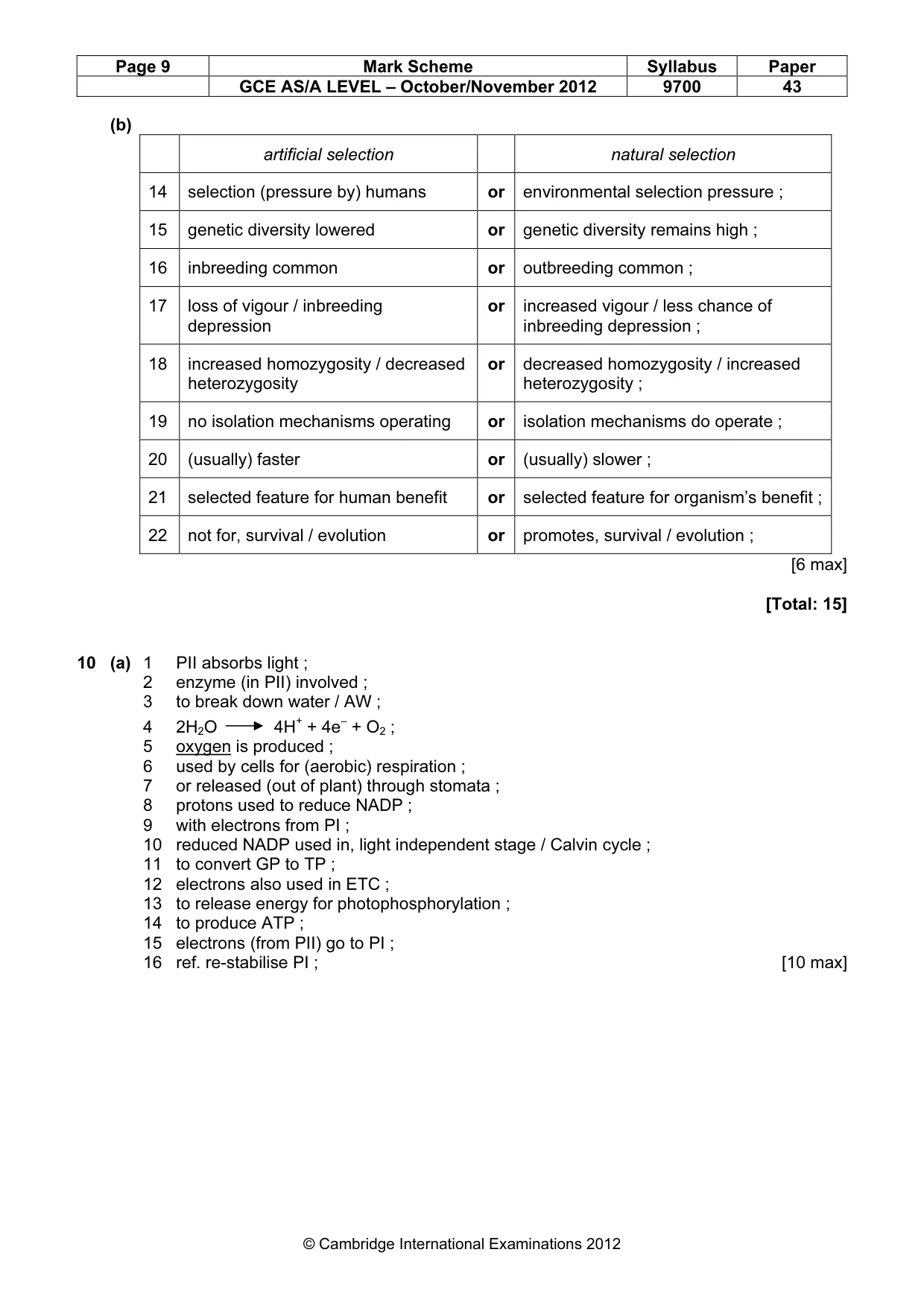
Page 9 Mark Scheme Syllabus Paper GCE AS/A LEVEL – October/November 2012 9700 43 © Cambridge International Examinations 2012 (b) artificial selection natural selection 14 selection (pressure by) humans or environmental selection pressure ; 15 genetic diversity lowered or genetic diversity remains high ; 16 inbreeding common or outbreeding common ; 17 loss of vigour / inbreeding depression or increased vigour / less chance of inbreeding depression ; 18 increased homozygosity / decreased heterozygosity or decreased homozygosity / increased heterozygosity ; 19 no isolation mechanisms operating or isolation mechanisms do operate ; 20 (usually) faster or (usually) slower ; 21 selected feature for human benefit or selected feature for organism’s benefit ; 22 not for, survival / evolution or promotes, survival / evolution ; [6 max] [Total: 15] 10 (a) 1 PII absorbs light ; 2 enzyme (in PII) involved ; 3 to break down water / AW ; 4 2H2O 4H+ + 4e– + O2 ; 5 oxygen is produced ; 6 used by cells for (aerobic) respiration ; 7 or released (out of plant) through stomata ; 8 protons used to reduce NADP ; 9 with electrons from PI ; 10 reduced NADP used in, light independent stage / Calvin cycle ; 11 to convert GP to TP ; 12 electrons also used in ETC ; 13 to release energy for photophosphorylation ; 14 to produce ATP ; 15 electrons (from PII) go to PI ; 16 ref. re-stabilise PI ; [10 max]
Mark scheme, page 10
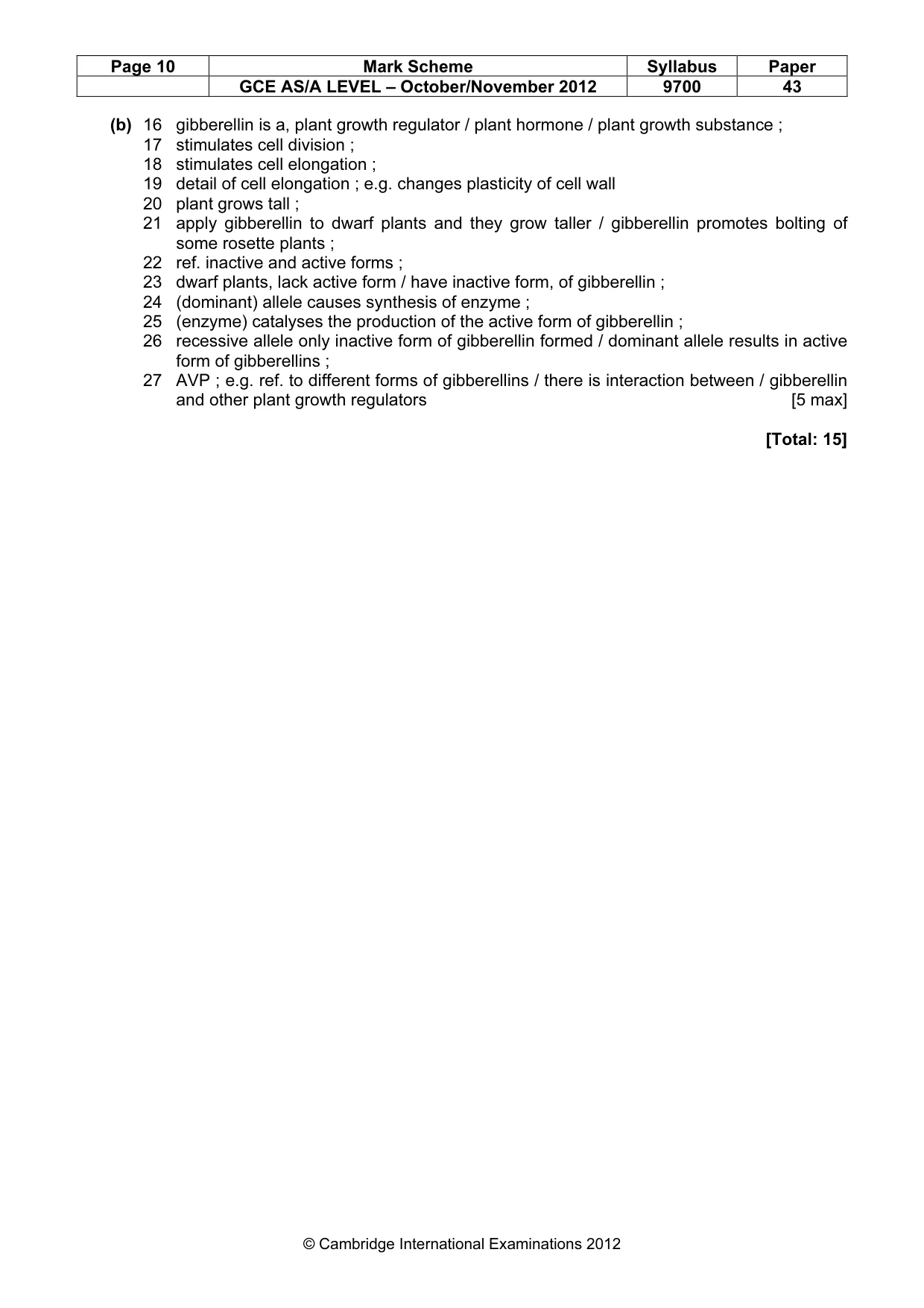
Page 10 Mark Scheme Syllabus Paper GCE AS/A LEVEL – October/November 2012 9700 43 © Cambridge International Examinations 2012 (b) 16 gibberellin is a, plant growth regulator / plant hormone / plant growth substance ; 17 stimulates cell division ; 18 stimulates cell elongation ; 19 detail of cell elongation ; e.g. changes plasticity of cell wall 20 plant grows tall ; 21 apply gibberellin to dwarf plants and they grow taller / gibberellin promotes bolting of some rosette plants ; 22 ref. inactive and active forms ; 23 dwarf plants, lack active form / have inactive form, of gibberellin ; 24 (dominant) allele causes synthesis of enzyme ; 25 (enzyme) catalyses the production of the active form of gibberellin ; 26 recessive allele only inactive form of gibberellin formed / dominant allele results in active form of gibberellins ; 27 AVP ; e.g. ref. to different forms of gibberellins / there is interaction between / gibberellin and other plant growth regulators [5 max] [Total: 15]
What you needed in this session
Cambridge’s own grade thresholds for 2012 Oct/Nov, Paper 4 · Variant 3. A higher threshold means an easier paper — the bar moves with how the cohort did.