Cambridge A Level Biology 9700 — 2012 May/June Paper 4 · Variant 2
9700/42/M/J/12 · 100 marks · ≈113 min
The question paper and its mark scheme, free to read here and free to download. This is Cambridge’s own paper, exactly as it was sat.
Question paper28 pages





Mark scheme14 pages
Answers below. Sit the paper first if you are practising.
Paper as text
Question paper, page 1
This document consists of 23 printed pages, 3 lined pages and 2 blank pages. DC (NH/SW) 49057/4 © UCLES 2012 [Turn over * 3 6 4 2 9 2 8 8 7 5 * BIOLOGY 9700/42 Paper 4 A2 Structured Questions May/June 2012 2 hours Candidates answer on the Question Paper. Additional Materials: Answer Paper available on request. READ THESE INSTRUCTIONS FIRST Write your Centre number, candidate number and name on all the work you hand in. Write in dark blue or black ink. You may use a pencil for any diagrams, graphs, or rough working. Do not use staples, paper clips, highlighters, glue or correction fluid. DO NOT WRITE IN ANY BARCODES. Answer all questions in Section A and one question from Section B. Circle the number of the Section B question you have answered in the grid below. At the end of the examination, fasten all your work securely together. The number of marks is given in brackets [ ] at the end of each question or part question. UNIVERSITY OF CAMBRIDGE INTERNATIONAL EXAMINATIONS General Certificate of Education Advanced Level For Examiner’s Use Section A 1 2 3 4 5 6 7 8 Section B 9 or 10 Total
Question paper, page 2
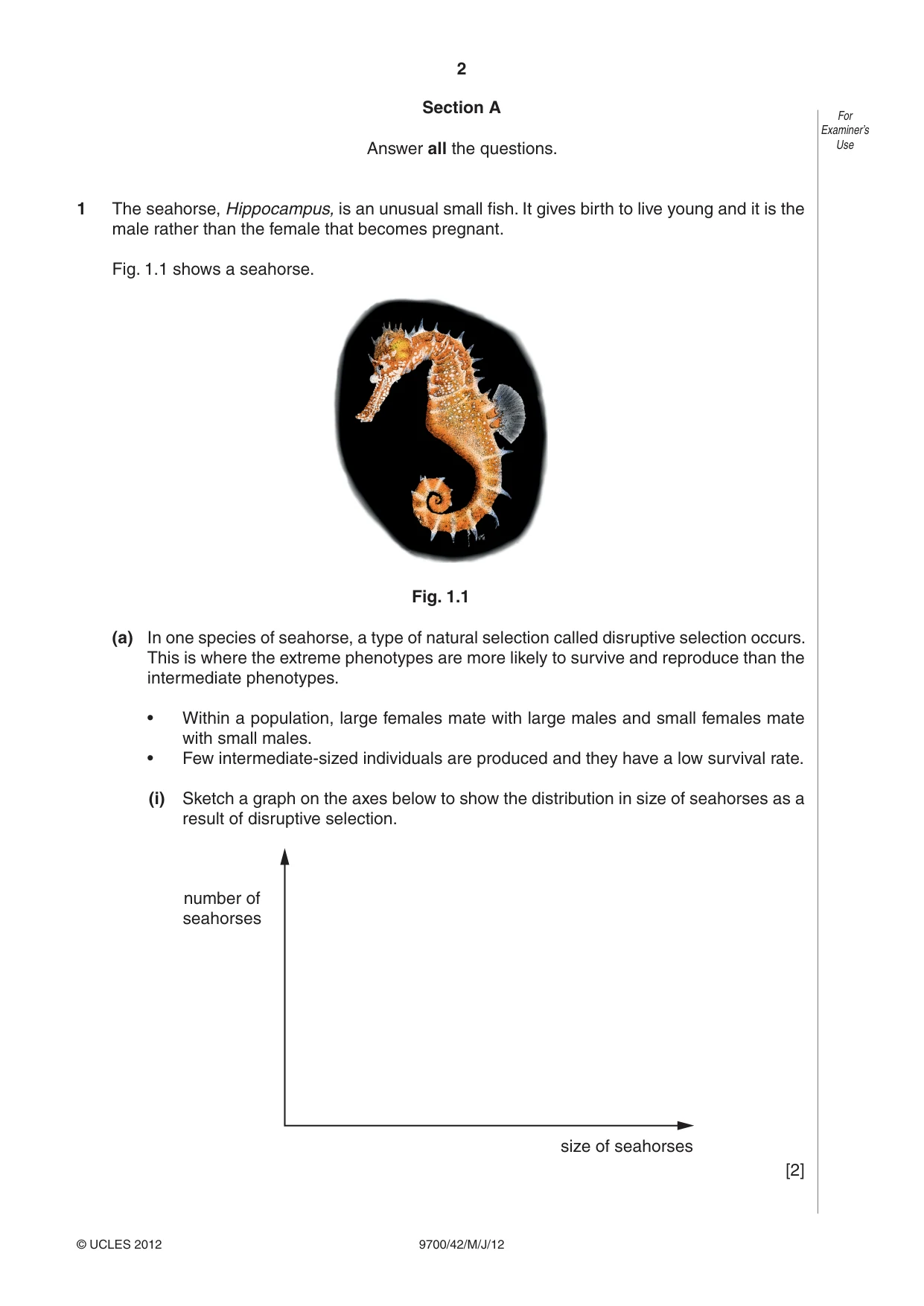
2 9700/42/M/J/12 © UCLES 2012 For Examiner’s Use Section A Answer all the questions. 1 The seahorse, Hippocampus, is an unusual small fish. It gives birth to live young and it is the male rather than the female that becomes pregnant. Fig. 1.1 shows a seahorse. Fig. 1.1 (a) In one species of seahorse, a type of natural selection called disruptive selection occurs. This is where the extreme phenotypes are more likely to survive and reproduce than the intermediate phenotypes. • Within a population, large females mate with large males and small females mate with small males. • Few intermediate-sized individuals are produced and they have a low survival rate. (i) Sketch a graph on the axes below to show the distribution in size of seahorses as a result of disruptive selection. number of seahorses size of seahorses [2]
Question paper, page 3
3 9700/42/M/J/12 © UCLES 2012 [Turn over For Examiner’s Use (ii) Explain how disruptive selection has been maintained in this species of seahorse. … … … … … …[3] (iii) State the term given to the type of selection where variation in a characteristic is maintained in its existing form over time. …[1]
Question paper, page 4
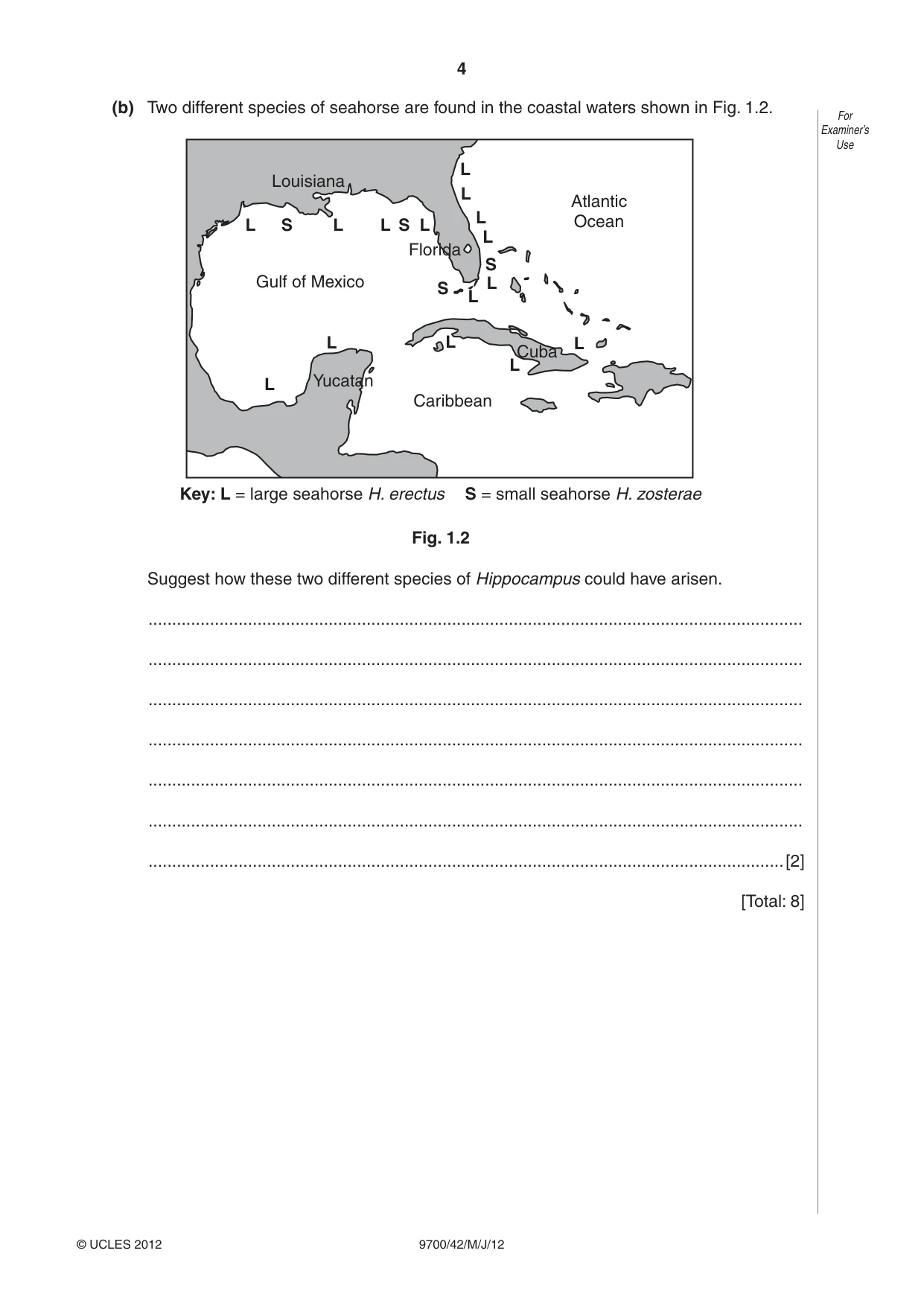
4 9700/42/M/J/12 © UCLES 2012 For Examiner’s Use (b) Two different species of seahorse are found in the coastal waters shown in Fig. 1.2. Yucatan Cuba Florida Atlantic Ocean Caribbean Gulf of Mexico Louisiana L S L L S S S L L L L L L L L L L L L Key: L = large seahorse H. erectus S = small seahorse H. zosterae Fig. 1.2 Suggest how these two different species of Hippocampus could have arisen. … … … … … … …[2] [Total: 8]
Question paper, page 5
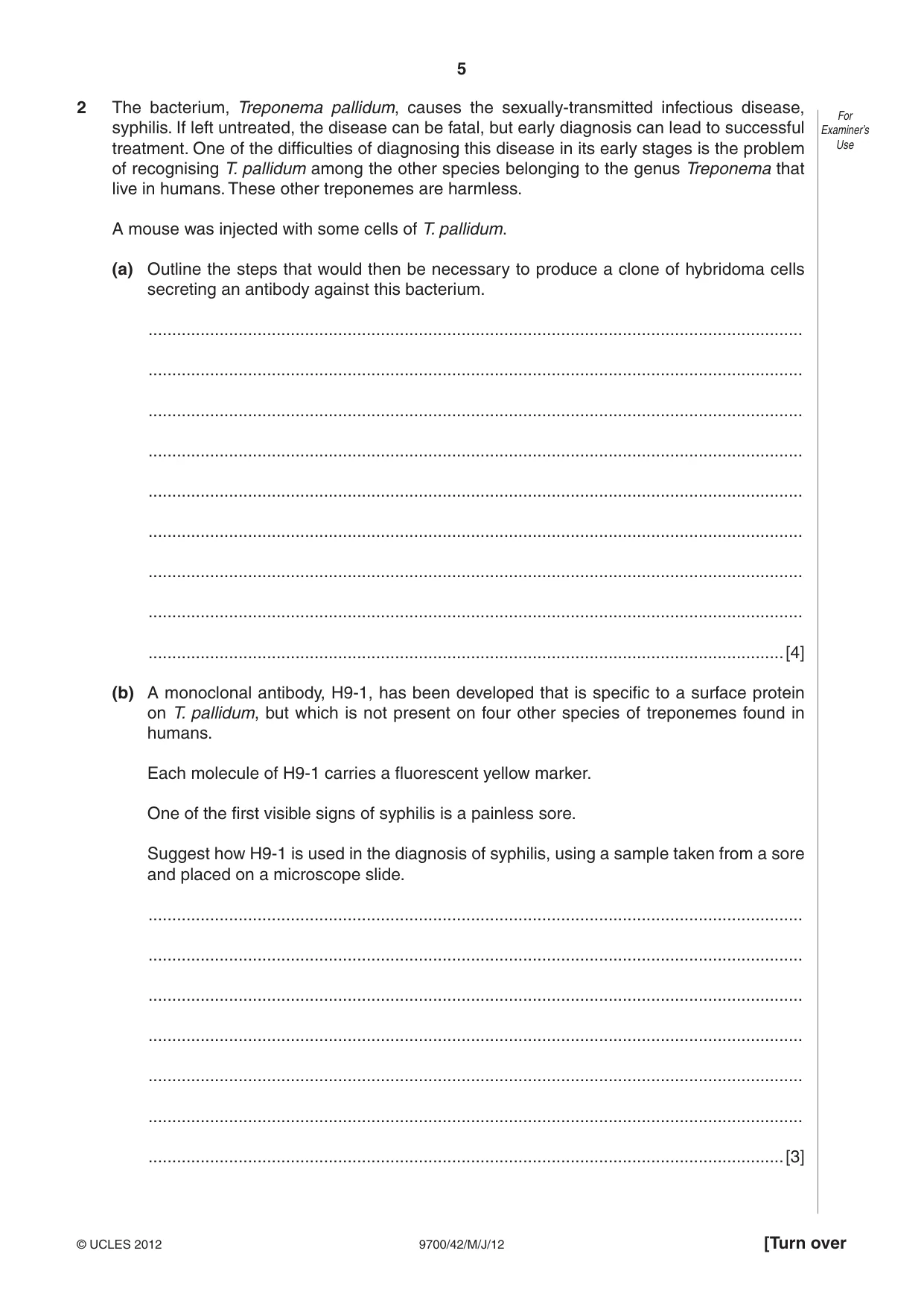
5 9700/42/M/J/12 © UCLES 2012 [Turn over For Examiner’s Use 2 The bacterium, Treponema pallidum, causes the sexually-transmitted infectious disease, syphilis. If left untreated, the disease can be fatal, but early diagnosis can lead to successful treatment. One of the difficulties of diagnosing this disease in its early stages is the problem of recognising T. pallidum among the other species belonging to the genus Treponema that live in humans. These other treponemes are harmless. A mouse was injected with some cells of T. pallidum. (a) Outline the steps that would then be necessary to produce a clone of hybridoma cells secreting an antibody against this bacterium. … … … … … … … … …[4] (b) A monoclonal antibody, H9-1, has been developed that is specific to a surface protein on T. pallidum, but which is not present on four other species of treponemes found in humans. Each molecule of H9-1 carries a fluorescent yellow marker. One of the first visible signs of syphilis is a painless sore. Suggest how H9-1 is used in the diagnosis of syphilis, using a sample taken from a sore and placed on a microscope slide. … … … … … … …[3]
Question paper, page 6
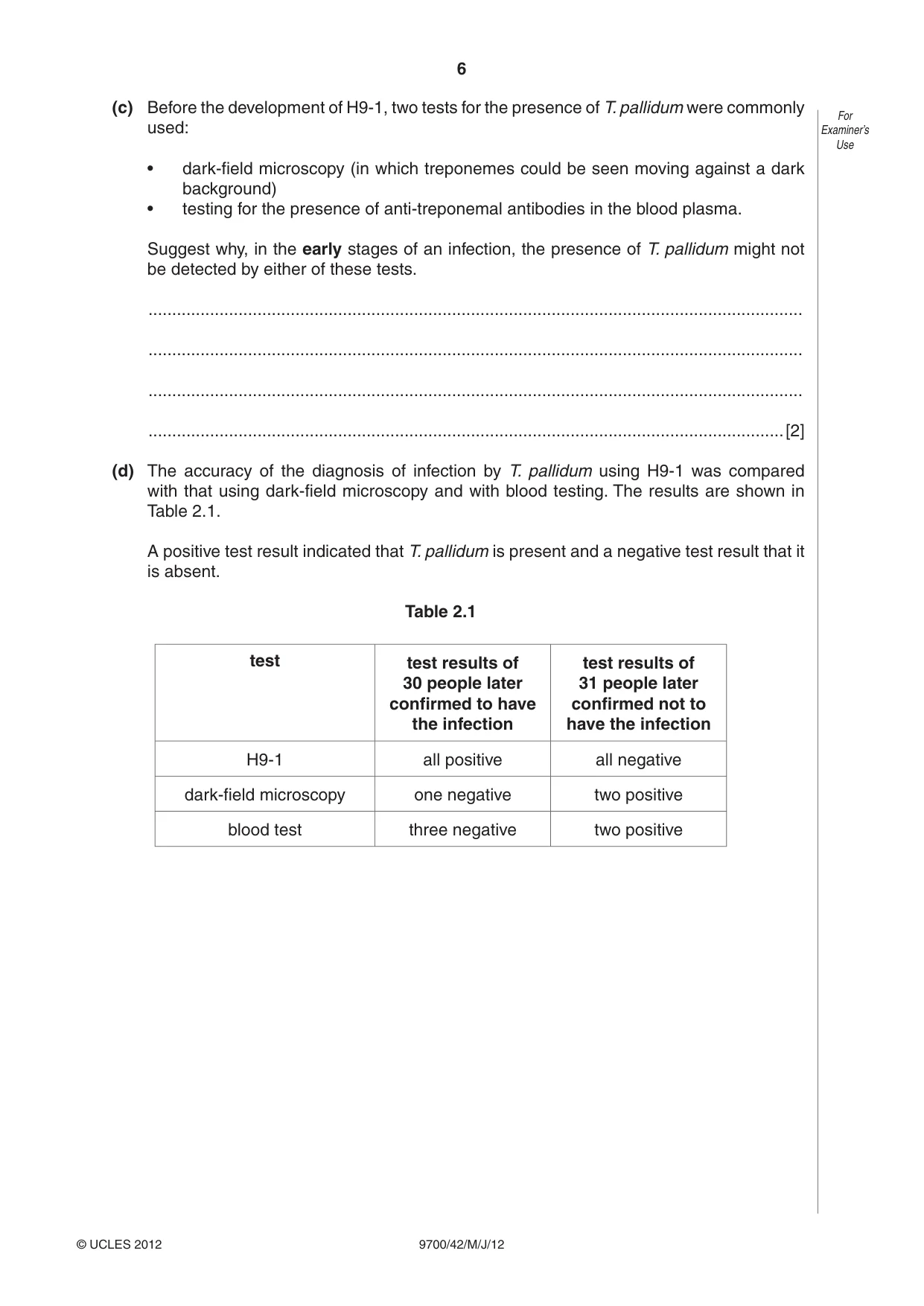
6 9700/42/M/J/12 © UCLES 2012 For Examiner’s Use (c) Before the development of H9-1, two tests for the presence of T. pallidum were commonly used: • dark-field microscopy (in which treponemes could be seen moving against a dark background) • testing for the presence of anti-treponemal antibodies in the blood plasma. Suggest why, in the early stages of an infection, the presence of T. pallidum might not be detected by either of these tests. … … … …[2] (d) The accuracy of the diagnosis of infection by T. pallidum using H9-1 was compared with that using dark-field microscopy and with blood testing. The results are shown in Table 2.1. A positive test result indicated that T. pallidum is present and a negative test result that it is absent. Table 2.1 test test results of 30 people later confirmed to have the infection test results of 31 people later confirmed not to have the infection H9-1 all positive all negative dark-field microscopy one negative two positive blood test three negative two positive
Question paper, page 7
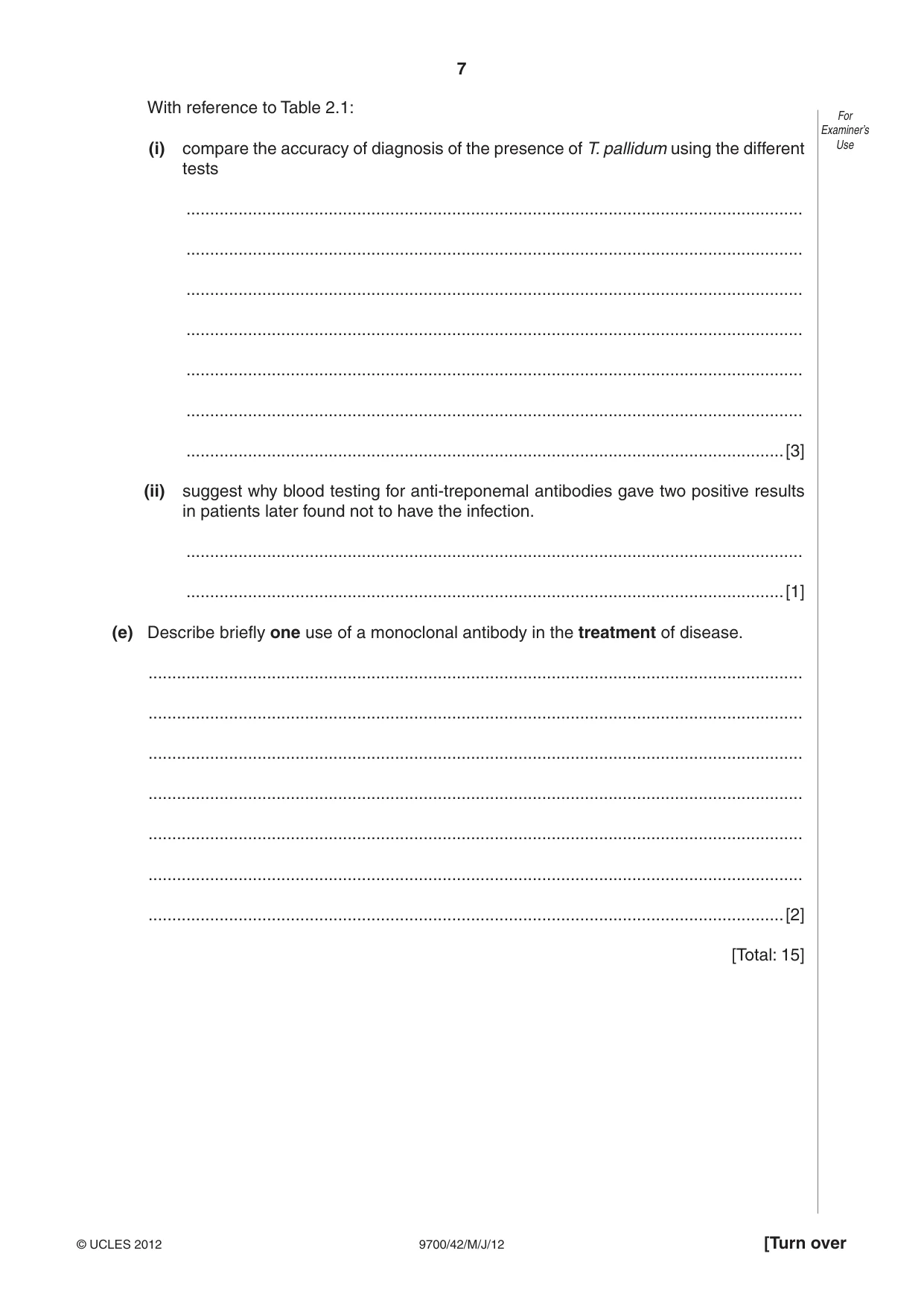
7 9700/42/M/J/12 © UCLES 2012 [Turn over For Examiner’s Use With reference to Table 2.1: (i) compare the accuracy of diagnosis of the presence of T. pallidum using the different tests … … … … … … …[3] (ii) suggest why blood testing for anti-treponemal antibodies gave two positive results in patients later found not to have the infection. … …[1] (e) Describe briefly one use of a monoclonal antibody in the treatment of disease. … … … … … … …[2] [Total: 15]
Question paper, page 8
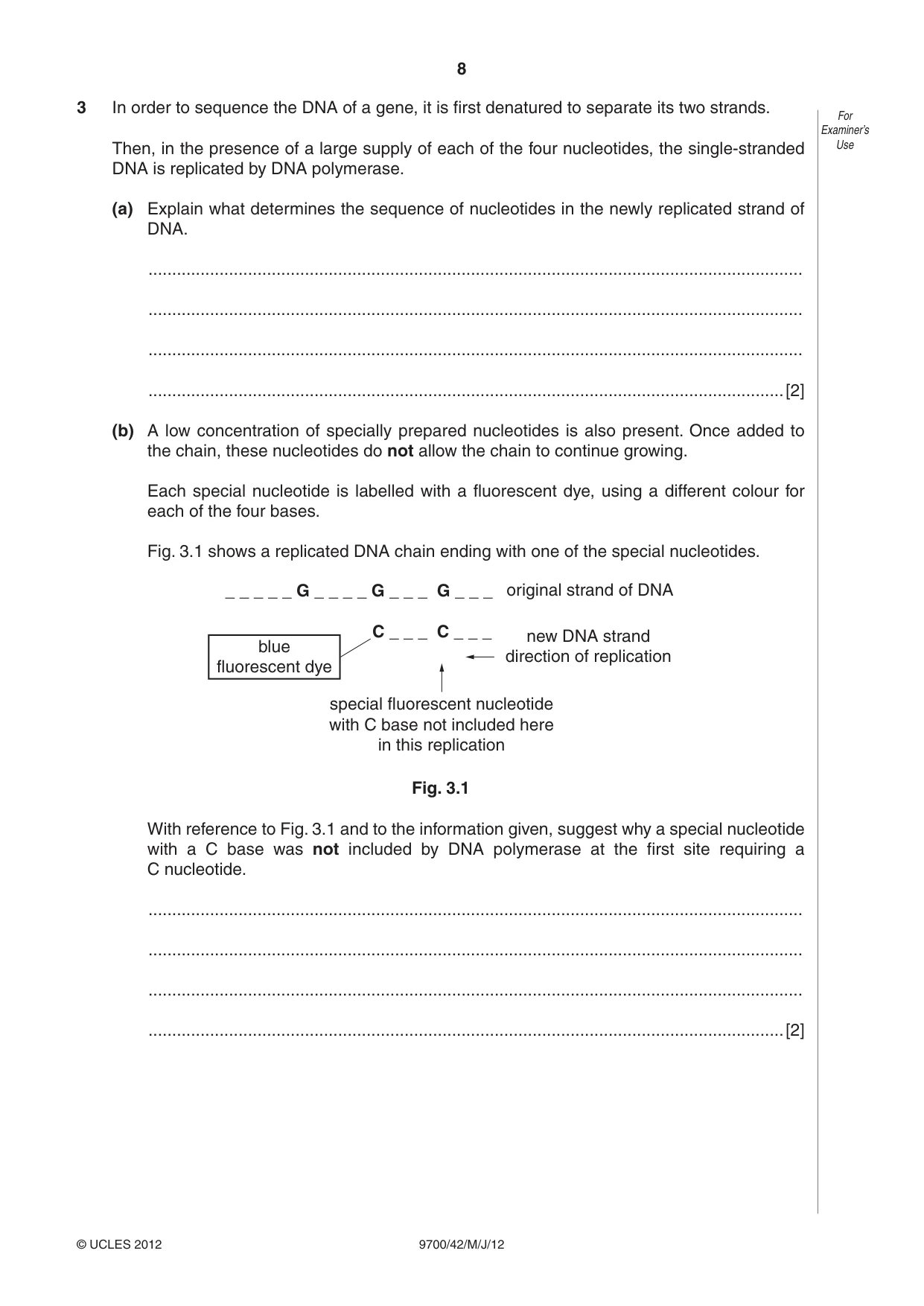
8 9700/42/M/J/12 © UCLES 2012 For Examiner’s Use 3 In order to sequence the DNA of a gene, it is first denatured to separate its two strands. Then, in the presence of a large supply of each of the four nucleotides, the single-stranded DNA is replicated by DNA polymerase. (a) Explain what determines the sequence of nucleotides in the newly replicated strand of DNA. … … … …[2] (b) A low concentration of specially prepared nucleotides is also present. Once added to the chain, these nucleotides do not allow the chain to continue growing. Each special nucleotide is labelled with a fluorescent dye, using a different colour for each of the four bases. Fig. 3.1 shows a replicated DNA chain ending with one of the special nucleotides. _ _ _ _ _ G _ _ _ _ G _ _ _ G _ _ _ C _ _ _ C _ _ _ special fluorescent nucleotide with C base not included here in this replication original strand of DNA new DNA strand direction of replication blue fluorescent dye Fig. 3.1 With reference to Fig. 3.1 and to the information given, suggest why a special nucleotide with a C base was not included by DNA polymerase at the first site requiring a C nucleotide. … … … …[2]
Question paper, page 9
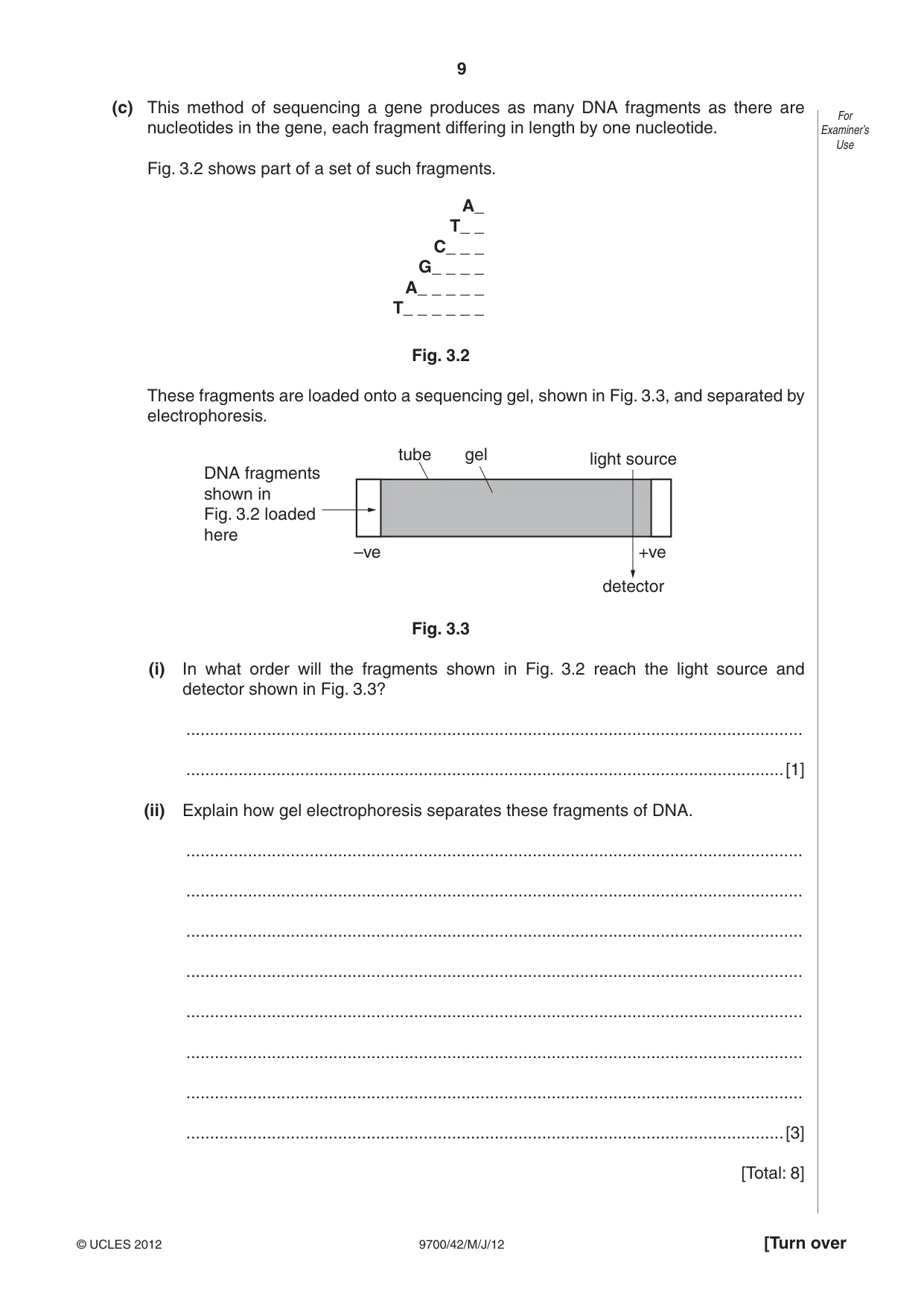
9 9700/42/M/J/12 © UCLES 2012 [Turn over For Examiner’s Use (c) This method of sequencing a gene produces as many DNA fragments as there are nucleotides in the gene, each fragment differing in length by one nucleotide. Fig. 3.2 shows part of a set of such fragments. A_ T_ _ C_ _ _ G_ _ _ _ A_ _ _ _ _ T_ _ _ _ _ _ Fig. 3.2 These fragments are loaded onto a sequencing gel, shown in Fig. 3.3, and separated by electrophoresis. DNA fragments shown in Fig. 3.2 loaded here –ve +ve detector light source tube gel Fig. 3.3 (i) In what order will the fragments shown in Fig. 3.2 reach the light source and detector shown in Fig. 3.3? … …[1] (ii) Explain how gel electrophoresis separates these fragments of DNA. … … … … … … … …[3] [Total: 8]
Question paper, page 10
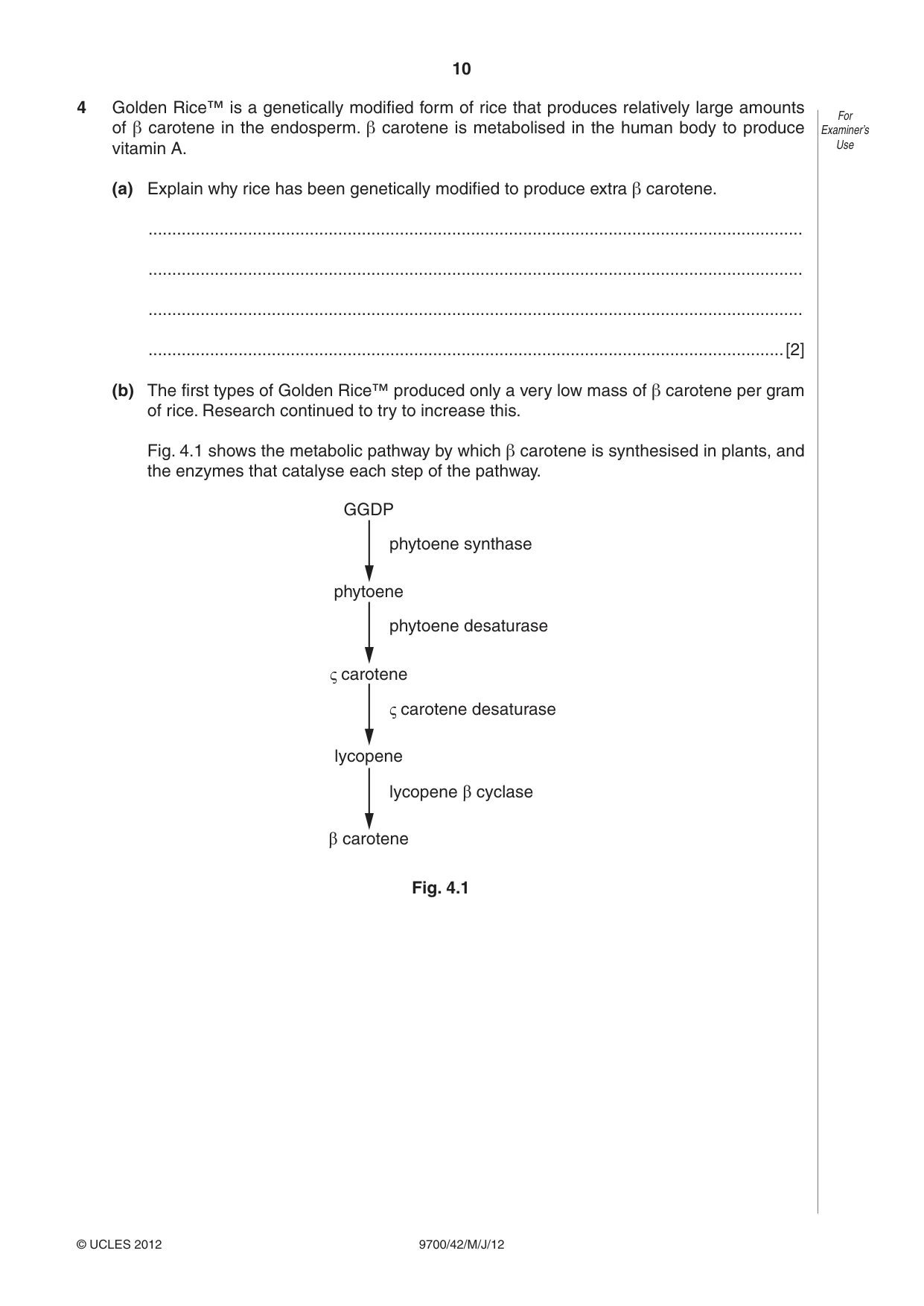
10 9700/42/M/J/12 © UCLES 2012 For Examiner’s Use 4 Golden Rice™ is a genetically modified form of rice that produces relatively large amounts of β carotene in the endosperm. β carotene is metabolised in the human body to produce vitamin A. (a) Explain why rice has been genetically modified to produce extra β carotene. … … … …[2] (b) The first types of Golden Rice™ produced only a very low mass of β carotene per gram of rice. Research continued to try to increase this. Fig. 4.1 shows the metabolic pathway by which β carotene is synthesised in plants, and the enzymes that catalyse each step of the pathway. GGDP phytoene Ȣ carotene lycopene ȕ carotene phytoene synthase phytoene desaturase Ȣ carotene desaturase lycopene ȕ cyclase Fig. 4.1
Question paper, page 11
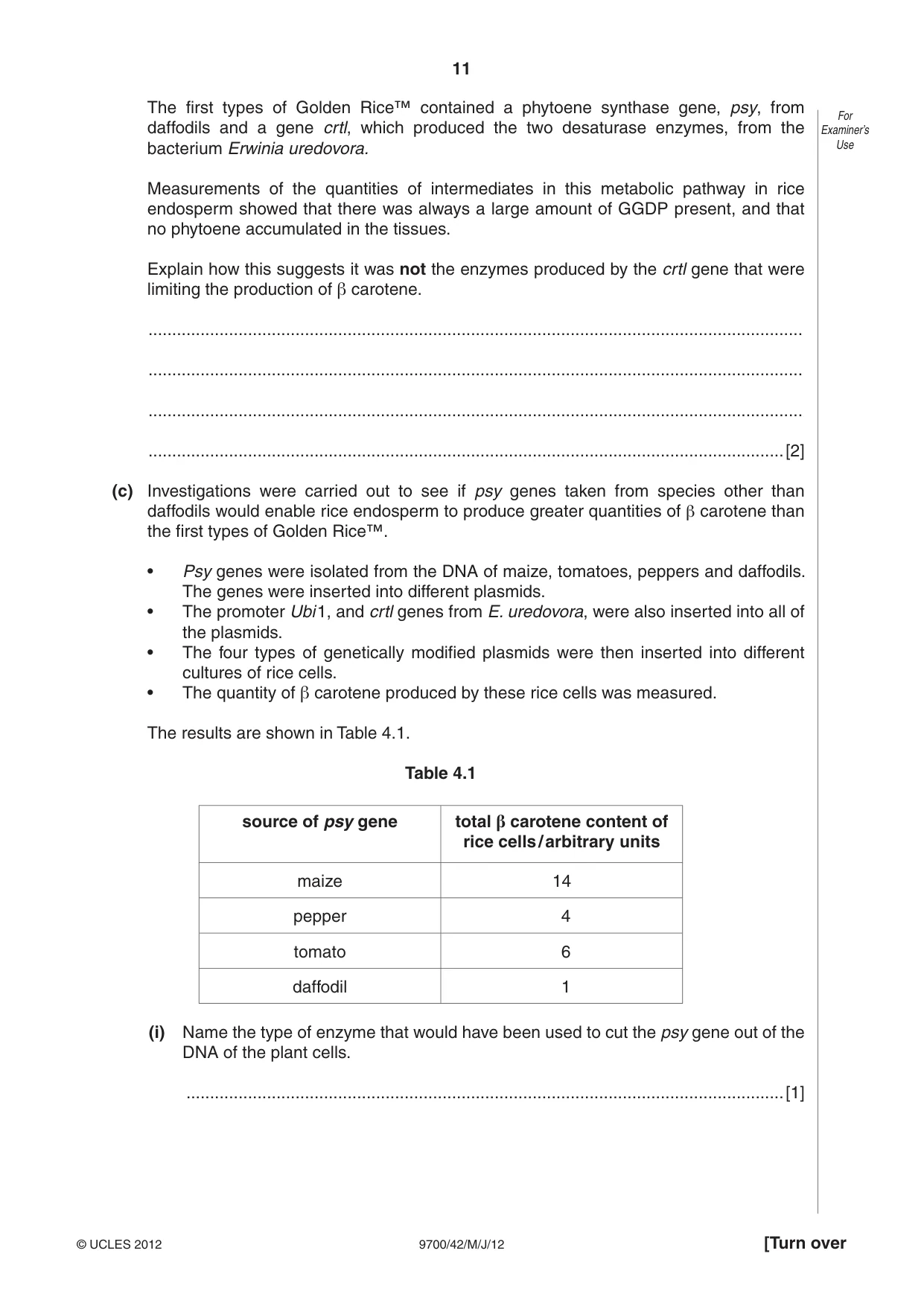
11 9700/42/M/J/12 © UCLES 2012 [Turn over For Examiner’s Use The first types of Golden Rice™ contained a phytoene synthase gene, psy, from daffodils and a gene crtl, which produced the two desaturase enzymes, from the bacterium Erwinia uredovora. Measurements of the quantities of intermediates in this metabolic pathway in rice endosperm showed that there was always a large amount of GGDP present, and that no phytoene accumulated in the tissues. Explain how this suggests it was not the enzymes produced by the crtl gene that were limiting the production of β carotene. … … … …[2] (c) Investigations were carried out to see if psy genes taken from species other than daffodils would enable rice endosperm to produce greater quantities of β carotene than the first types of Golden Rice™. • Psy genes were isolated from the DNA of maize, tomatoes, peppers and daffodils. The genes were inserted into different plasmids. • The promoter Ubi1, and crtl genes from E. uredovora, were also inserted into all of the plasmids. • The four types of genetically modified plasmids were then inserted into different cultures of rice cells. • The quantity of β carotene produced by these rice cells was measured. The results are shown in Table 4.1. Table 4.1 source of psy gene total β carotene content of rice cells / arbitrary units maize 14 pepper 4 tomato 6 daffodil 1 (i) Name the type of enzyme that would have been used to cut the psy gene out of the DNA of the plant cells. …[1]
Question paper, page 12
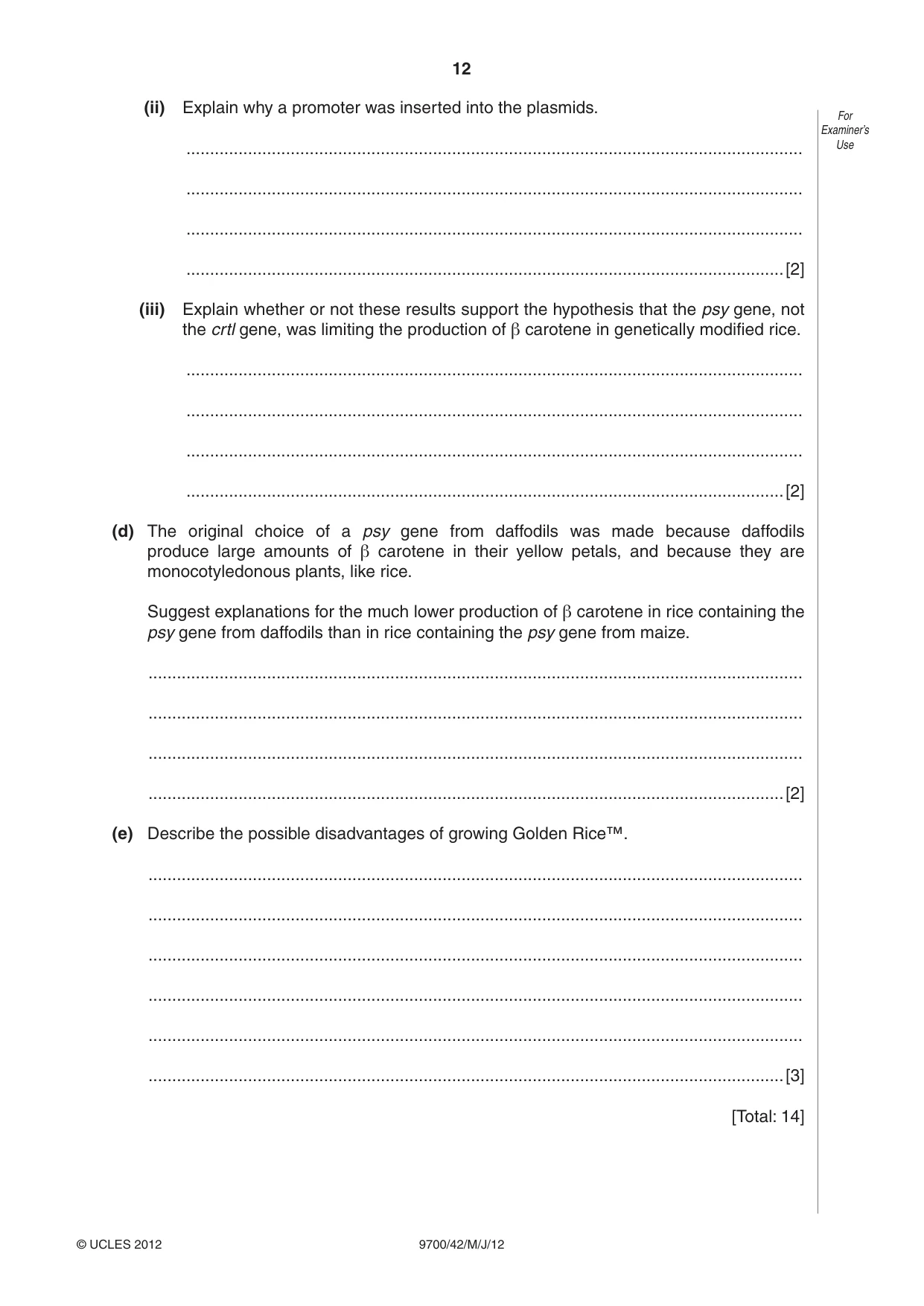
12 9700/42/M/J/12 © UCLES 2012 For Examiner’s Use (ii) Explain why a promoter was inserted into the plasmids. … … … …[2] (iii) Explain whether or not these results support the hypothesis that the psy gene, not the crtl gene, was limiting the production of β carotene in genetically modified rice. … … … …[2] (d) The original choice of a psy gene from daffodils was made because daffodils produce large amounts of β carotene in their yellow petals, and because they are monocotyledonous plants, like rice. Suggest explanations for the much lower production of β carotene in rice containing the psy gene from daffodils than in rice containing the psy gene from maize. … … … …[2] (e) Describe the possible disadvantages of growing Golden Rice™. … … … … … …[3] [Total: 14]
Question paper, page 13
13 9700/42/M/J/12 © UCLES 2012 [Turn over BLANK PAGE Question 5 starts on page 14
Question paper, page 14
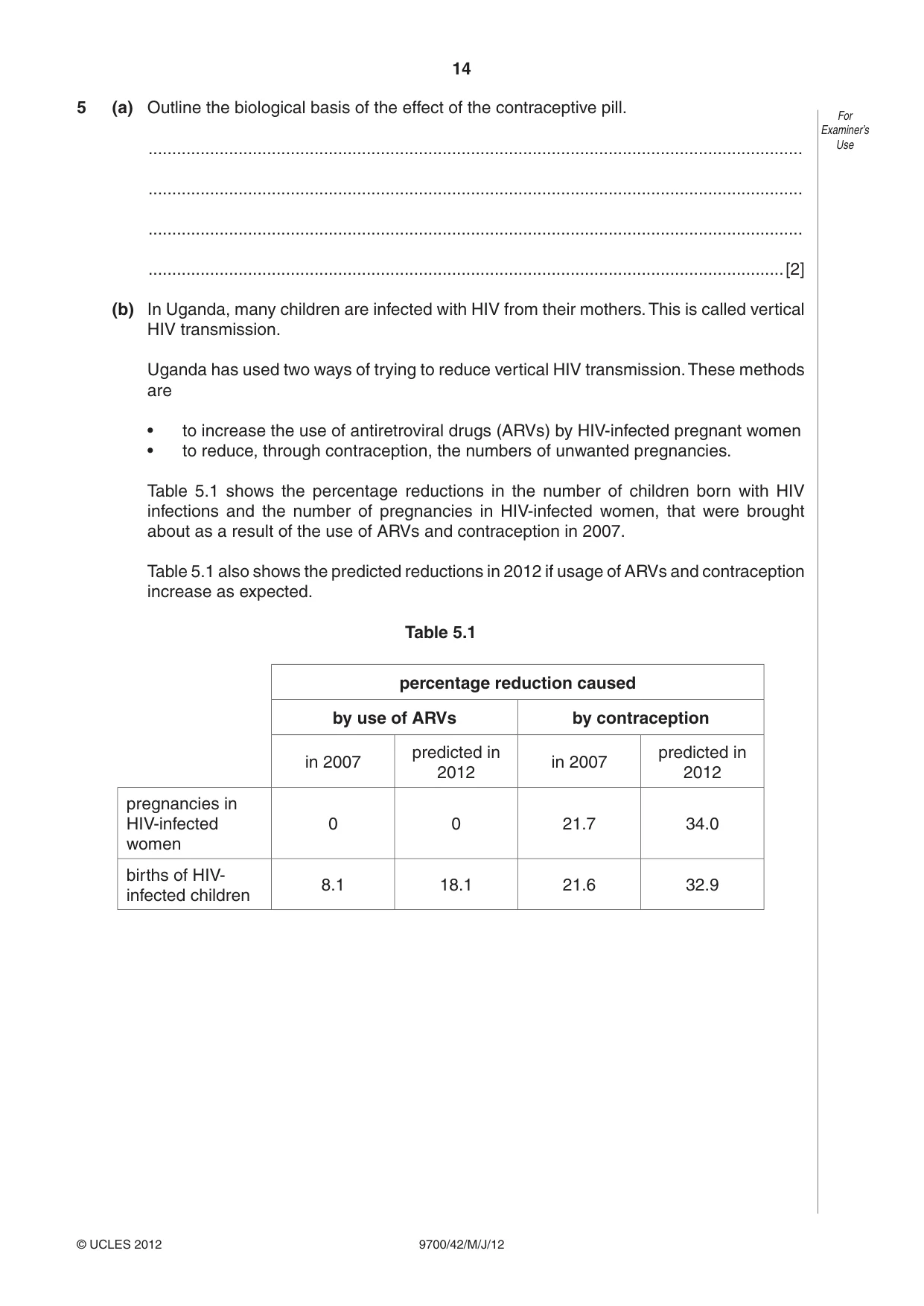
14 9700/42/M/J/12 © UCLES 2012 For Examiner’s Use 5 (a) Outline the biological basis of the effect of the contraceptive pill. … … … …[2] (b) In Uganda, many children are infected with HIV from their mothers. This is called vertical HIV transmission. Uganda has used two ways of trying to reduce vertical HIV transmission. These methods are • to increase the use of antiretroviral drugs (ARVs) by HIV-infected pregnant women • to reduce, through contraception, the numbers of unwanted pregnancies. Table 5.1 shows the percentage reductions in the number of children born with HIV infections and the number of pregnancies in HIV-infected women, that were brought about as a result of the use of ARVs and contraception in 2007. Table 5.1 also shows the predicted reductions in 2012 if usage of ARVs and contraception increase as expected. Table 5.1 percentage reduction caused by use of ARVs by contraception in 2007 predicted in 2012 in 2007 predicted in 2012 pregnancies in HIV-infected women 0 0 21.7 34.0 births of HIV- infected children 8.1 18.1 21.6 32.9
Question paper, page 15
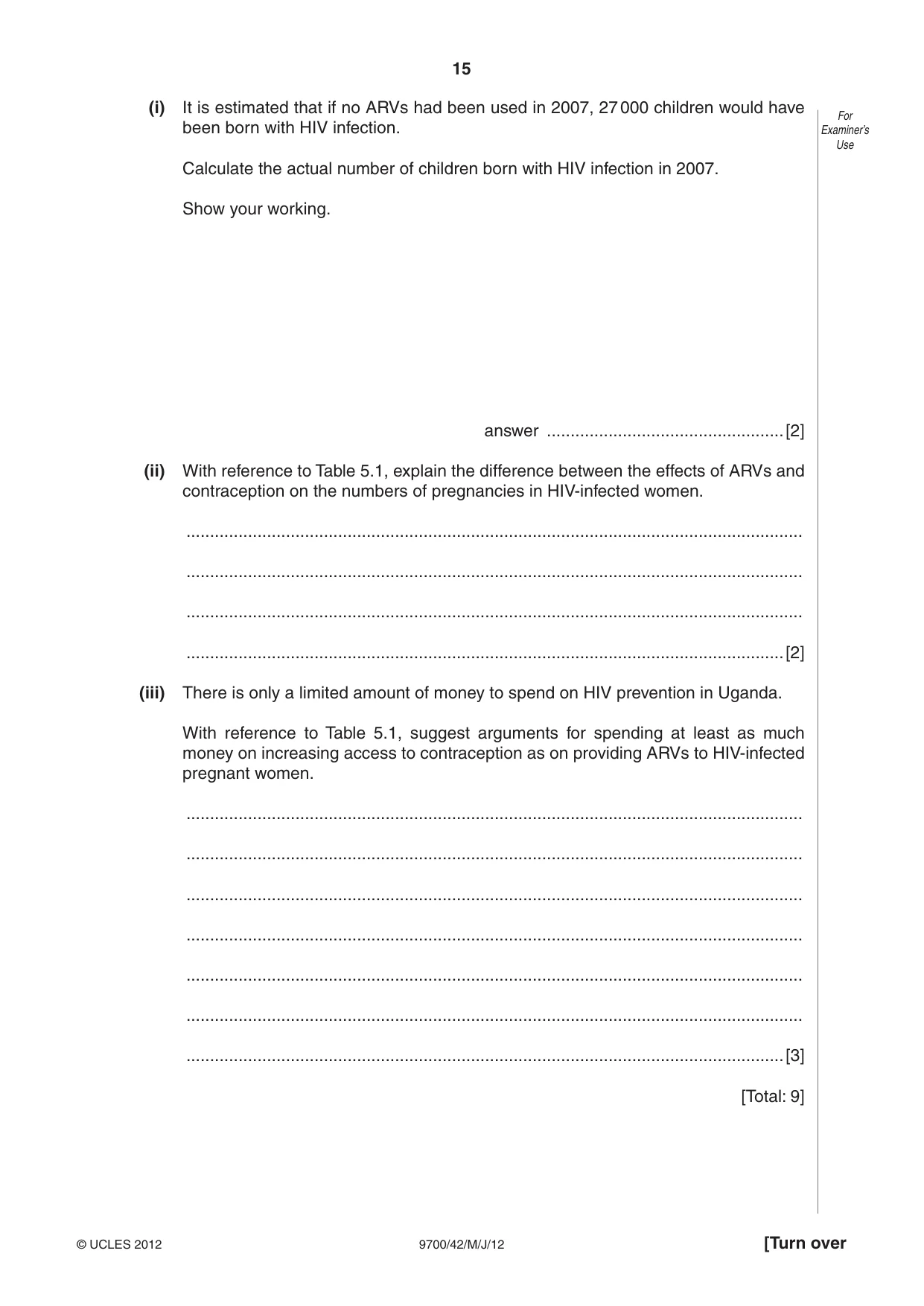
15 9700/42/M/J/12 © UCLES 2012 [Turn over For Examiner’s Use (i) It is estimated that if no ARVs had been used in 2007, 27 000 children would have been born with HIV infection. Calculate the actual number of children born with HIV infection in 2007. Show your working. answer …[2] (ii) With reference to Table 5.1, explain the difference between the effects of ARVs and contraception on the numbers of pregnancies in HIV-infected women. … … … …[2] (iii) There is only a limited amount of money to spend on HIV prevention in Uganda. With reference to Table 5.1, suggest arguments for spending at least as much money on increasing access to contraception as on providing ARVs to HIV-infected pregnant women. … … … … … … …[3] [Total: 9]
Question paper, page 16
16 9700/42/M/J/12 © UCLES 2012 For Examiner’s Use 6 (a) The Millennium Seed Bank is located in the UK. So far it has successfully stored seeds from 10% of the world’s wild plant species. (i) Suggest the benefits to humans of conserving plant species. … … … … … …[3] (ii) In the wild, seeds may be subjected to conditions that can be hostile to successful germination and growth. Suggest how the seeds should be stored in the seed bank to keep them viable for future use. … …[1]
Question paper, page 17
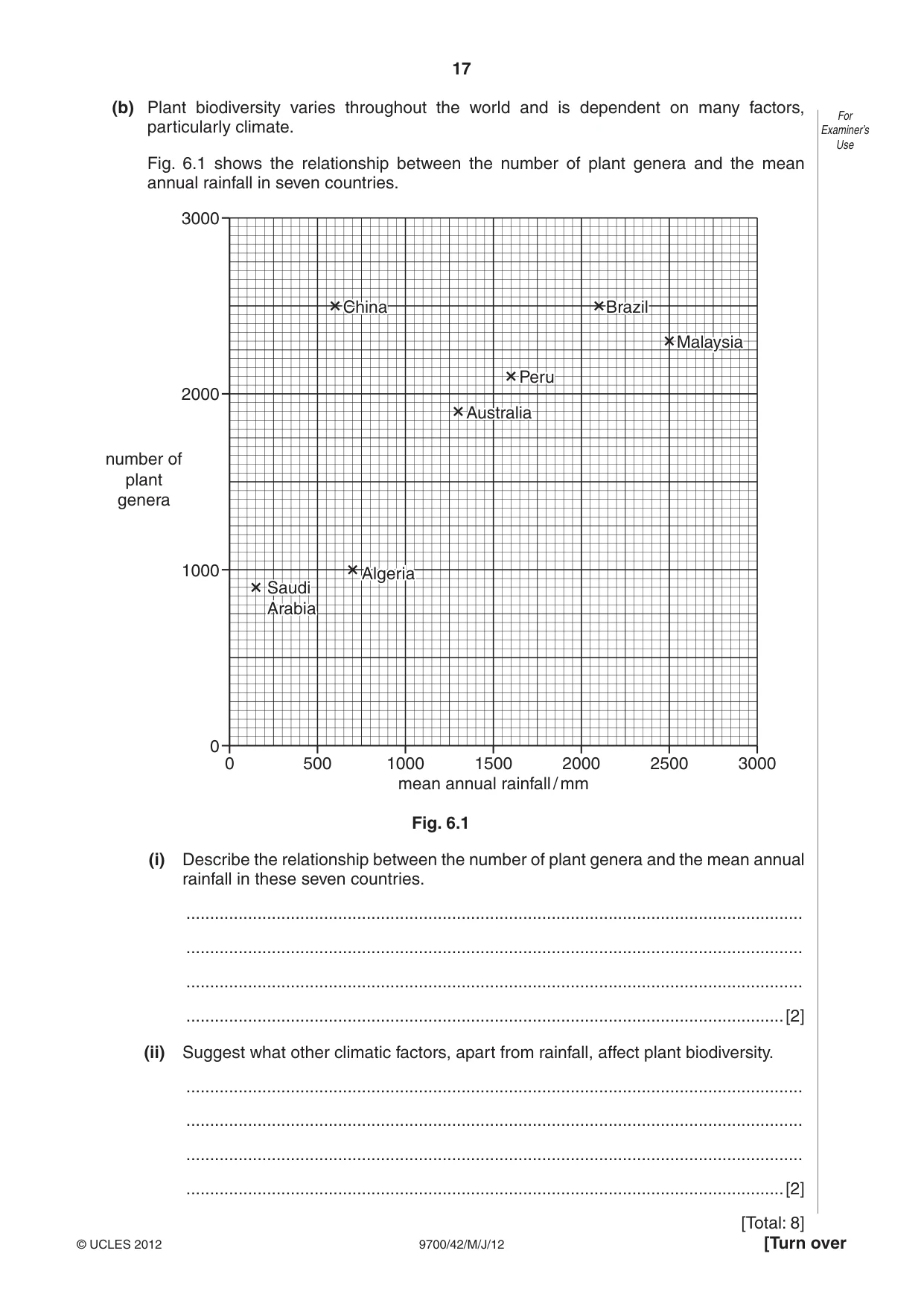
17 9700/42/M/J/12 © UCLES 2012 [Turn over For Examiner’s Use (b) Plant biodiversity varies throughout the world and is dependent on many factors, particularly climate. Fig. 6.1 shows the relationship between the number of plant genera and the mean annual rainfall in seven countries. 0 0 1000 2000 3000 500 1000 1500 mean annual rainfall / mm number of plant genera 2000 2500 3000 Saudi Arabia Algeria China Australia Peru Brazil Malaysia Fig. 6.1 (i) Describe the relationship between the number of plant genera and the mean annual rainfall in these seven countries. … … … …[2] (ii) Suggest what other climatic factors, apart from rainfall, affect plant biodiversity. … … … …[2] [Total: 8]
Question paper, page 18
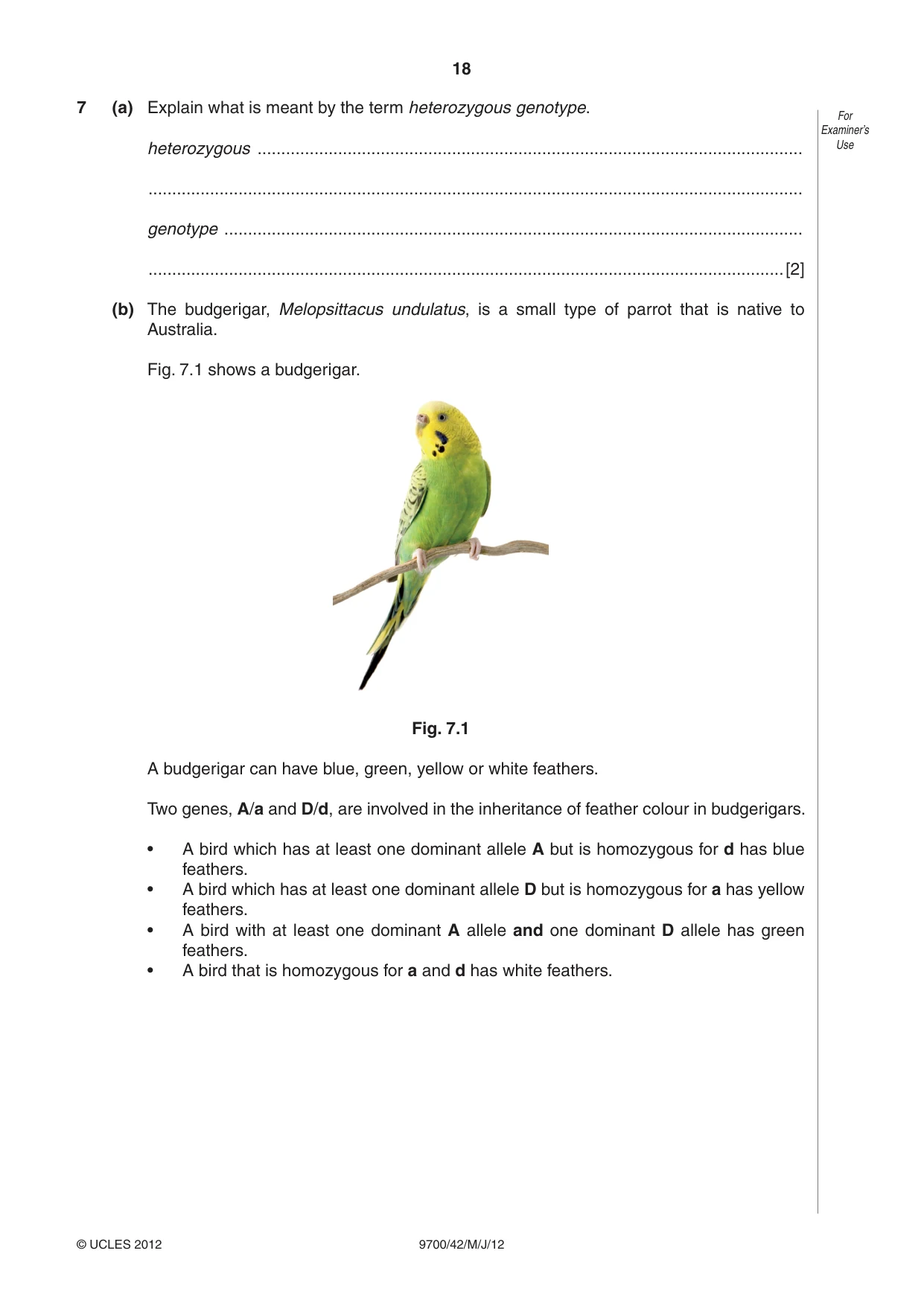
18 9700/42/M/J/12 © UCLES 2012 For Examiner’s Use 7 (a) Explain what is meant by the term heterozygous genotype. heterozygous … … genotype … …[2] (b) The budgerigar, Melopsittacus undulatus, is a small type of parrot that is native to Australia. Fig. 7.1 shows a budgerigar. Fig. 7.1 A budgerigar can have blue, green, yellow or white feathers. Two genes, A/a and D/d, are involved in the inheritance of feather colour in budgerigars. • A bird which has at least one dominant allele A but is homozygous for d has blue feathers. • A bird which has at least one dominant allele D but is homozygous for a has yellow feathers. • A bird with at least one dominant A allele and one dominant D allele has green feathers. • A bird that is homozygous for a and d has white feathers.
Question paper, page 19
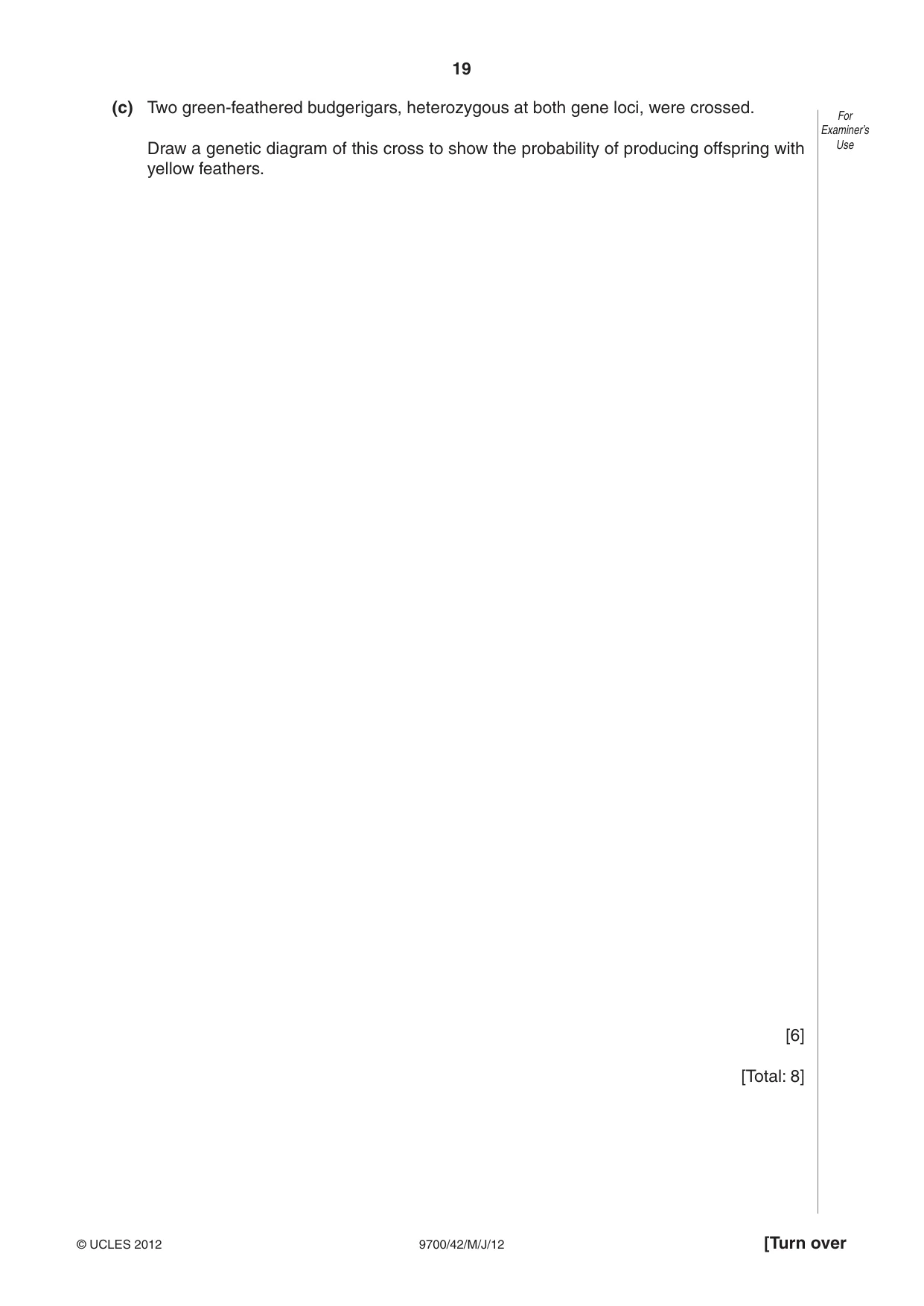
19 9700/42/M/J/12 © UCLES 2012 [Turn over For Examiner’s Use (c) Two green-feathered budgerigars, heterozygous at both gene loci, were crossed. Draw a genetic diagram of this cross to show the probability of producing offspring with yellow feathers. [6] [Total: 8]
Question paper, page 20
20 9700/42/M/J/12 © UCLES 2012 BLANK PAGE Question 8 starts on page 21
Question paper, page 21
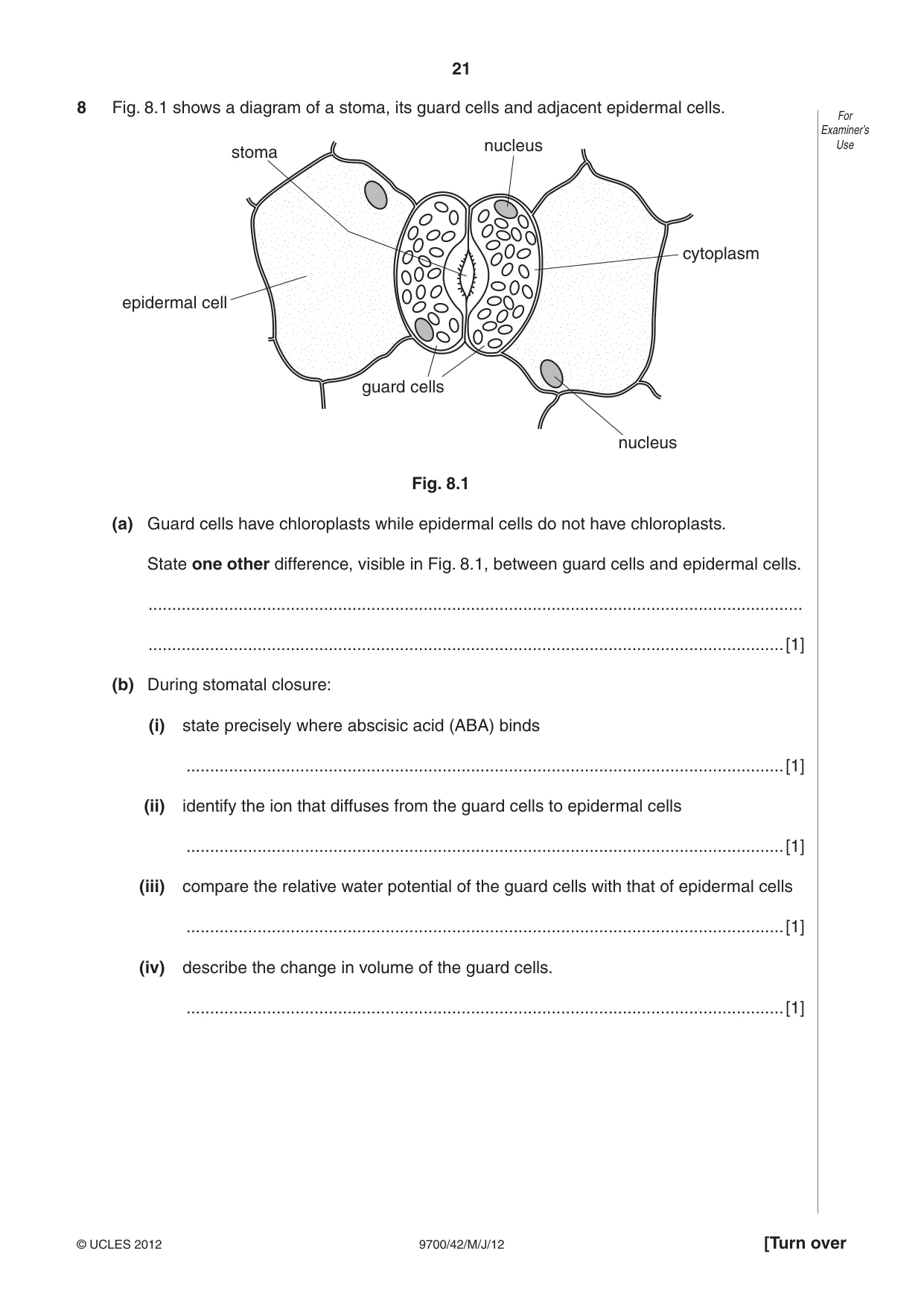
21 9700/42/M/J/12 © UCLES 2012 [Turn over For Examiner’s Use 8 Fig. 8.1 shows a diagram of a stoma, its guard cells and adjacent epidermal cells. stoma epidermal cell guard cells nucleus cytoplasm nucleus Fig. 8.1 (a) Guard cells have chloroplasts while epidermal cells do not have chloroplasts. State one other difference, visible in Fig. 8.1, between guard cells and epidermal cells. … …[1] (b) During stomatal closure: (i) state precisely where abscisic acid (ABA) binds …[1] (ii) identify the ion that diffuses from the guard cells to epidermal cells …[1] (iii) compare the relative water potential of the guard cells with that of epidermal cells …[1] (iv) describe the change in volume of the guard cells. …[1]
Question paper, page 22
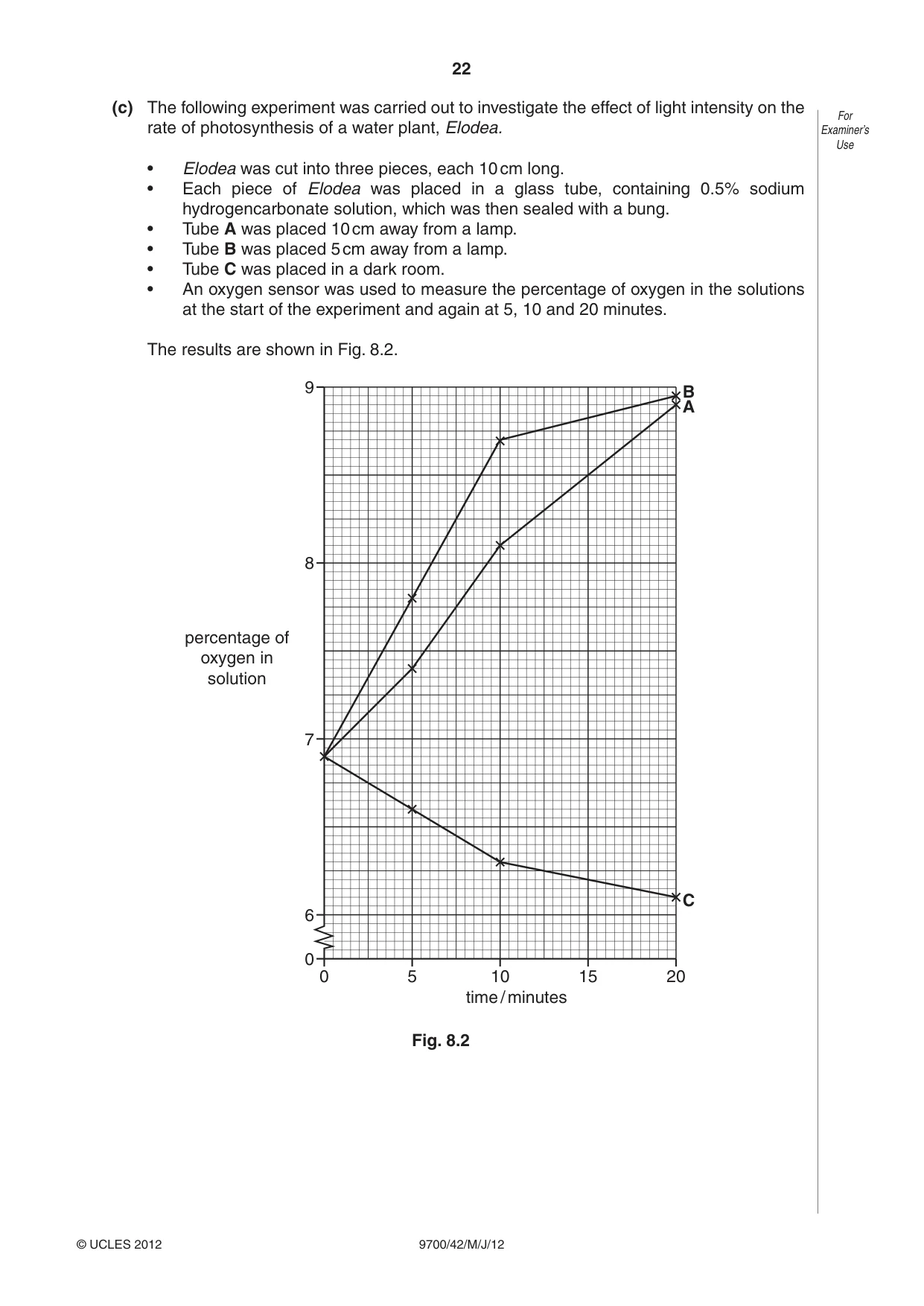
22 9700/42/M/J/12 © UCLES 2012 For Examiner’s Use (c) The following experiment was carried out to investigate the effect of light intensity on the rate of photosynthesis of a water plant, Elodea. • Elodea was cut into three pieces, each 10 cm long. • Each piece of Elodea was placed in a glass tube, containing 0.5% sodium hydrogencarbonate solution, which was then sealed with a bung. • Tube A was placed 10 cm away from a lamp. • Tube B was placed 5 cm away from a lamp. • Tube C was placed in a dark room. • An oxygen sensor was used to measure the percentage of oxygen in the solutions at the start of the experiment and again at 5, 10 and 20 minutes. The results are shown in Fig. 8.2. 0 0 6 7 8 9 5 10 15 time / minutes percentage of oxygen in solution 20 A B C Fig. 8.2
Question paper, page 23
23 9700/42/M/J/12 © UCLES 2012 [Turn over For Examiner’s Use (i) State why sodium hydrogencarbonate solution was used. … …[1] (ii) Calculate the mean rate of oxygen production for tube A for the 20 minutes of the experiment. Show your working. answer …[2] (iii) Compare the results for tubes A and B. … … … …[2] (iv) Explain the results for tube C. … … … …[2] (v) Suggest what factor, which may have an effect on the rate of photosynthesis, was not taken into account in this experiment. …[1]
Question paper, page 24
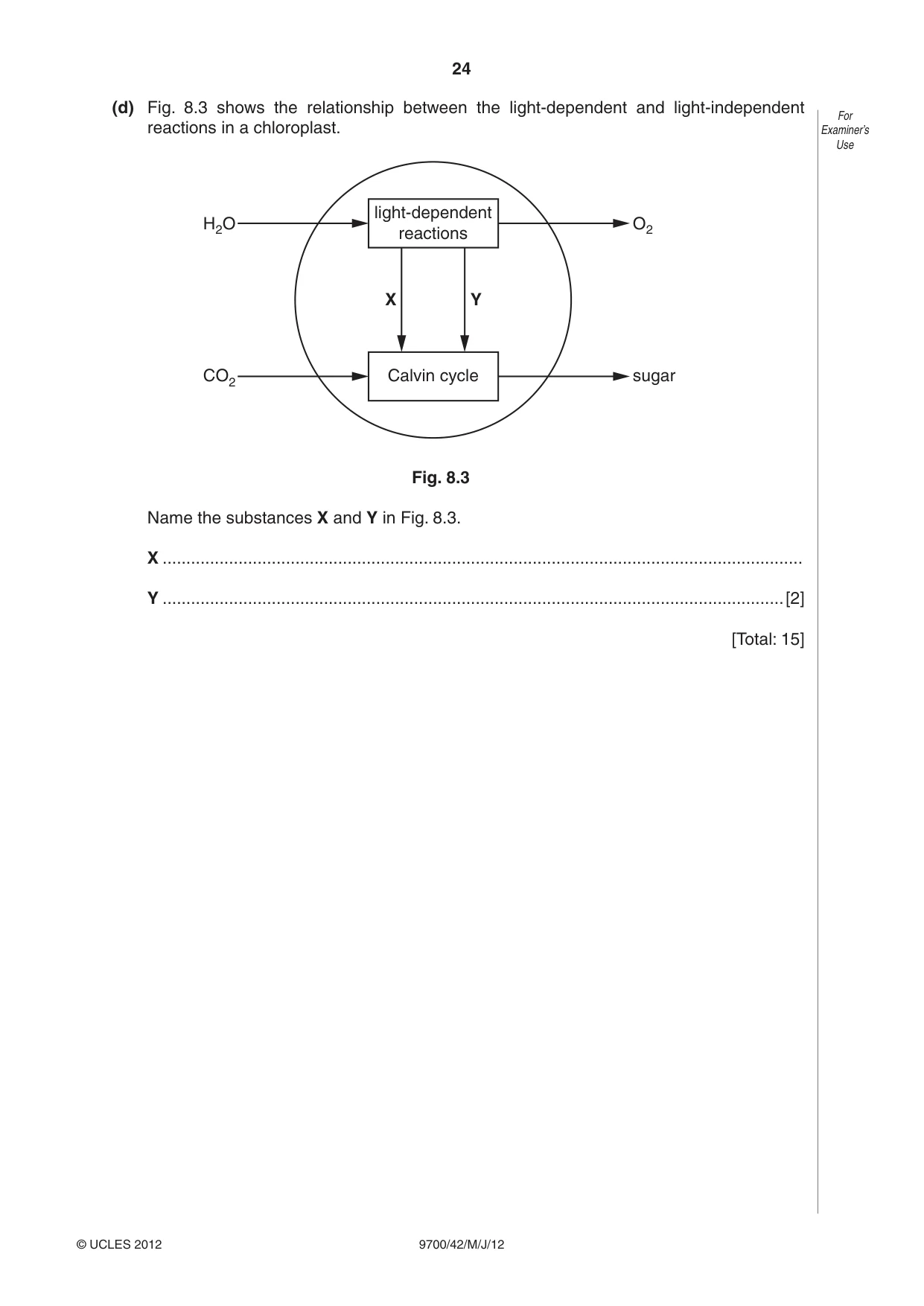
24 9700/42/M/J/12 © UCLES 2012 For Examiner’s Use (d) Fig. 8.3 shows the relationship between the light-dependent and light-independent reactions in a chloroplast. Calvin cycle light-dependent reactions X H2O CO2 O2 sugar Y Fig. 8.3 Name the substances X and Y in Fig. 8.3. X … Y …[2] [Total: 15]
Question paper, page 25
25 9700/42/M/J/12 © UCLES 2012 [Turn over For Examiner’s Use Section B Answer one question. 9 (a) Explain the role of ATP in active transport of ions and in named anabolic reactions. [7] (b) Outline the process of anaerobic respiration in both mammal and yeast cells. [8] [Total: 15] 10 (a) Outline, with reference to blood glucose concentration, the principles of homeostasis in mammals. [6] (b) Describe the roles of the endocrine and nervous systems in control and coordination in mammals. [9] [Total: 15] … … … … … … … … … … … … … … … … … …
Question paper, page 26
26 9700/42/M/J/12 © UCLES 2012 For Examiner’s Use … … … … … … … … … … … … … … … … … … … … … … … … … … … …
Question paper, page 27
27 9700/42/M/J/12 © UCLES 2012 [Turn over For Examiner’s Use … … … … … … … … … … … … … … … … … … … … … … … … … … … …
Question paper, page 28
28 9700/42/M/J/12 © UCLES 2012 For Examiner’s Use … … … … … … … … … … … … … … … … … … … … … … … Copyright Acknowledgements: Question 1 Photograph © Roger Hall; Thorny Seahorse; Ref: C003/7781; Science Photo Library Ltd. Question 7 Photograph © GlobalP; Yellow and Green Budgie; Ref: 2667245; iStock. Permission to reproduce items where third-party owned material protected by copyright is included has been sought and cleared where possible. Every reasonable effort has been made by the publisher (UCLES) to trace copyright holders, but if any items requiring clearance have unwittingly been included, the publisher will be pleased to make amends at the earliest possible opportunity. University of Cambridge International Examinations is part of the Cambridge Assessment Group. Cambridge Assessment is the brand name of University of Cambridge Local Examinations Syndicate (UCLES), which is itself a department of the University of Cambridge.
Mark scheme, page 1
UNIVERSITY OF CAMBRIDGE INTERNATIONAL EXAMINATIONS GCE Advanced Subsidiary Level and GCE Advanced Level MARK SCHEME for the May/June 2012 question paper for the guidance of teachers 9700 BIOLOGY 9700/42 Paper 4 (A2 Structured Questions), maximum raw mark 100 This mark scheme is published as an aid to teachers and candidates, to indicate the requirements of the examination. It shows the basis on which Examiners were instructed to award marks. It does not indicate the details of the discussions that took place at an Examiners’ meeting before marking began, which would have considered the acceptability of alternative answers. Mark schemes must be read in conjunction with the question papers and the report on the examination. • Cambridge will not enter into discussions or correspondence in connection with these mark schemes. Cambridge is publishing the mark schemes for the May/June 2012 question papers for most IGCSE, GCE Advanced Level and Advanced Subsidiary Level syllabuses and some Ordinary Level syllabuses.
Mark scheme, page 2
Page 2 Mark Scheme: Teachers’ version Syllabus Paper GCE AS/A LEVEL – May/June 2012 9700 42 © University of Cambridge International Examinations 2012 Mark scheme abbreviations: ; separates marking points / alternative answers for the same point R reject A accept (for answers correctly cued by the question, or by extra guidance) AW alternative wording (where responses vary more than usual) underline actual word given must be used by candidate (grammatical variants excepted) max indicates the maximum number of marks that can be given ora or reverse argument mp marking point (with relevant number) ecf error carried forward I ignore AVP Alternative valid point (examples given as guidance)
Mark scheme, page 3
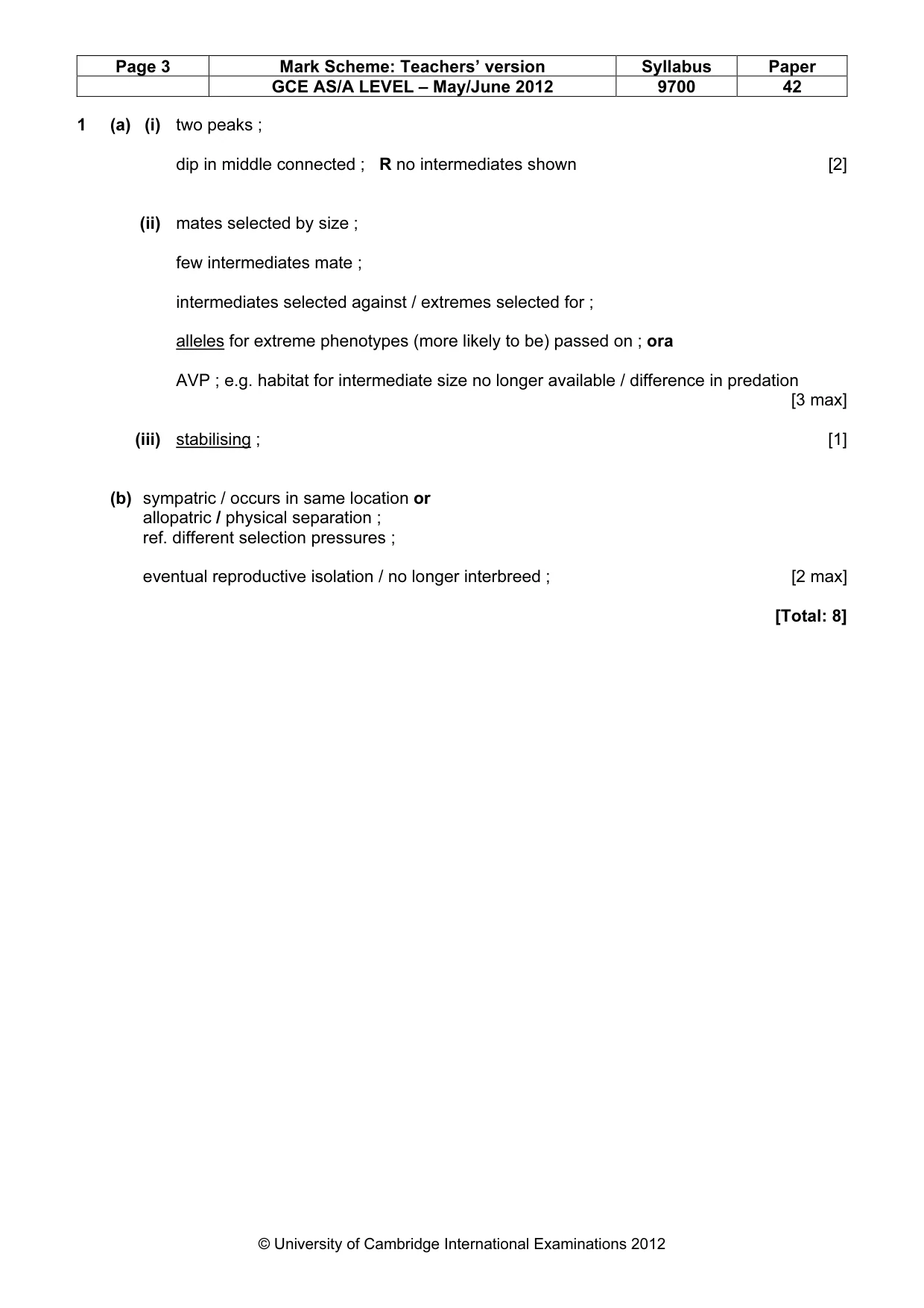
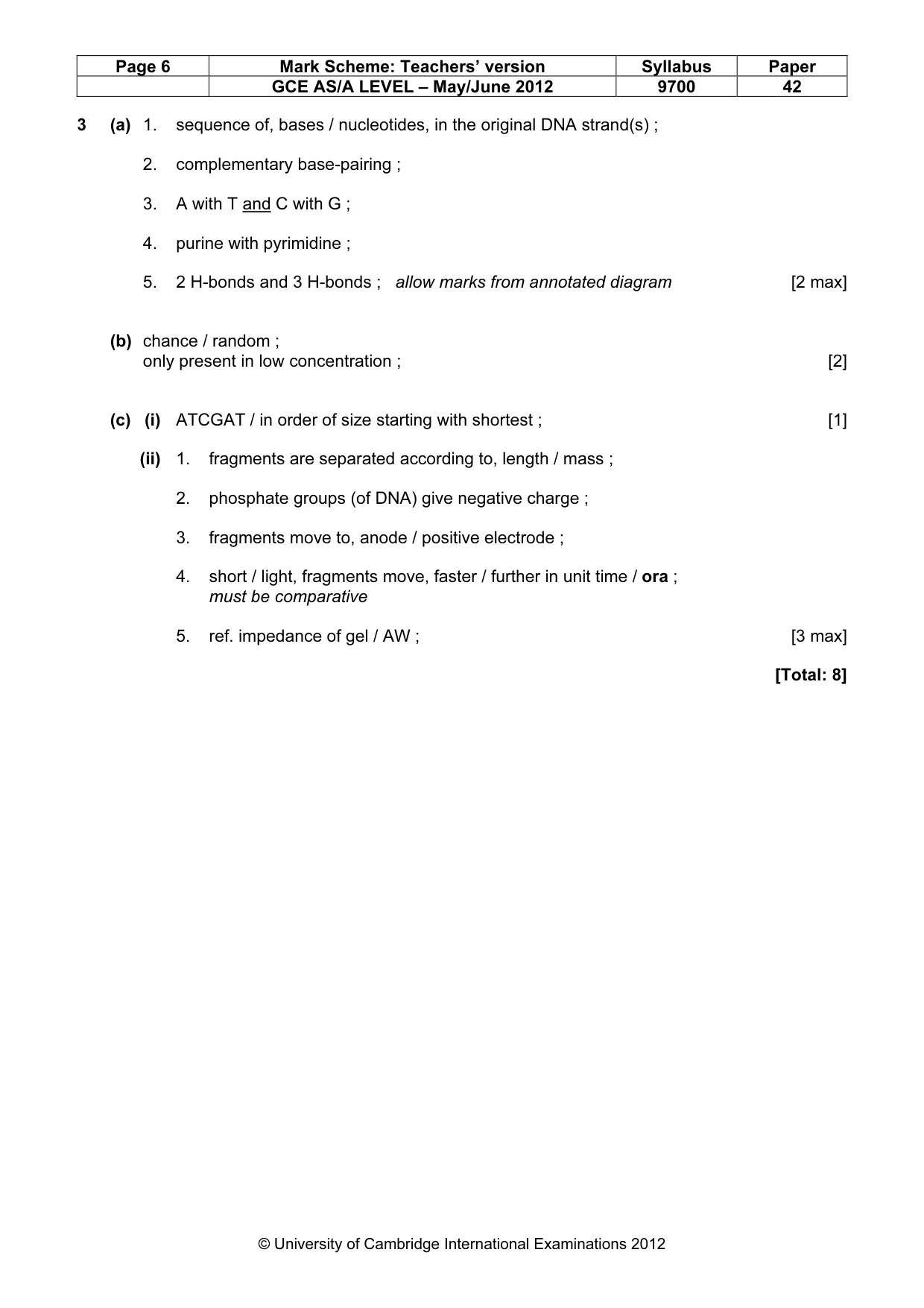
Page 3 Mark Scheme: Teachers’ version Syllabus Paper GCE AS/A LEVEL – May/June 2012 9700 42 © University of Cambridge International Examinations 2012 1 (a) (i) two peaks ; dip in middle connected ; R no intermediates shown [2] (ii) mates selected by size ; few intermediates mate ; intermediates selected against / extremes selected for ; alleles for extreme phenotypes (more likely to be) passed on ; ora AVP ; e.g. habitat for intermediate size no longer available / difference in predation [3 max] (iii) stabilising ; [1] (b) sympatric / occurs in same location or allopatric / physical separation ; ref. different selection pressures ; eventual reproductive isolation / no longer interbreed ; [2 max] [Total: 8]
Mark scheme, page 4
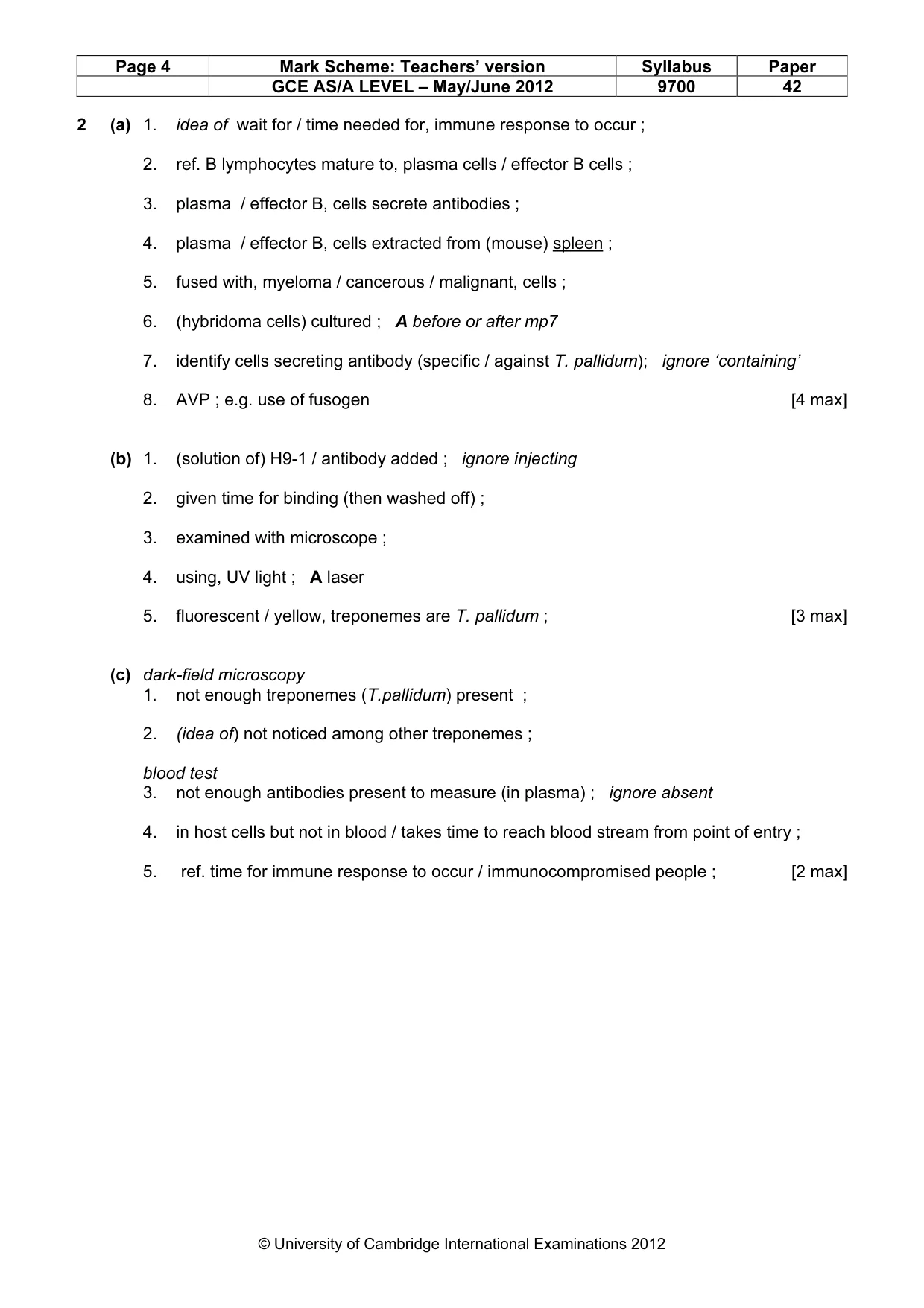
Page 4 Mark Scheme: Teachers’ version Syllabus Paper GCE AS/A LEVEL – May/June 2012 9700 42 © University of Cambridge International Examinations 2012 2 (a) 1. idea of wait for / time needed for, immune response to occur ; 2. ref. B lymphocytes mature to, plasma cells / effector B cells ; 3. plasma / effector B, cells secrete antibodies ; 4. plasma / effector B, cells extracted from (mouse) spleen ; 5. fused with, myeloma / cancerous / malignant, cells ; 6. (hybridoma cells) cultured ; A before or after mp7 7. identify cells secreting antibody (specific / against T. pallidum); ignore ‘containing’ 8. AVP ; e.g. use of fusogen [4 max] (b) 1. (solution of) H9-1 / antibody added ; ignore injecting 2. given time for binding (then washed off) ; 3. examined with microscope ; 4. using, UV light ; A laser 5. fluorescent / yellow, treponemes are T. pallidum ; [3 max] (c) dark-field microscopy 1. not enough treponemes (T.pallidum) present ; 2. (idea of) not noticed among other treponemes ; blood test 3. not enough antibodies present to measure (in plasma) ; ignore absent 4. in host cells but not in blood / takes time to reach blood stream from point of entry ; 5. ref. time for immune response to occur / immunocompromised people ; [2 max]
Mark scheme, page 5
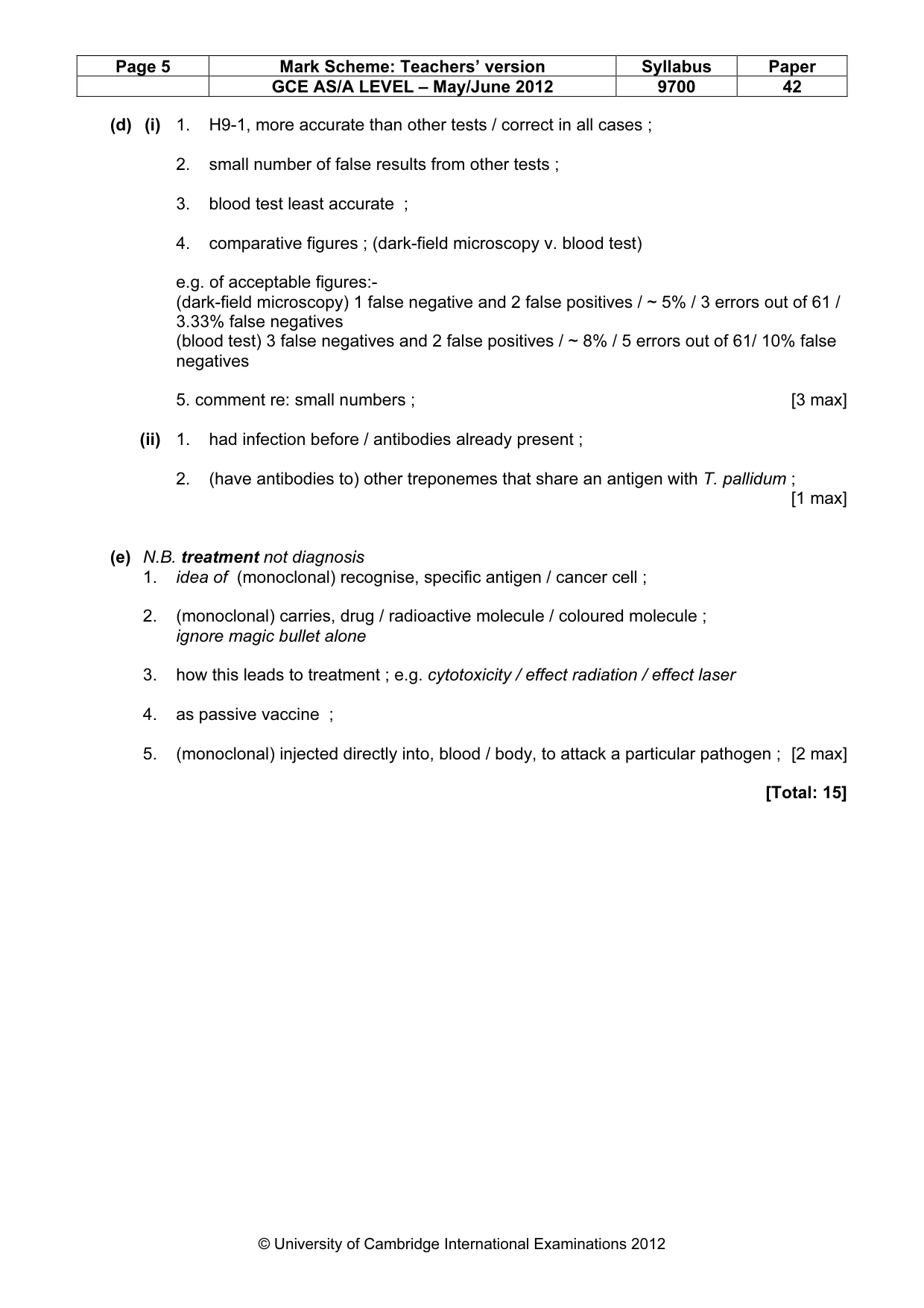
Page 5 Mark Scheme: Teachers’ version Syllabus Paper GCE AS/A LEVEL – May/June 2012 9700 42 © University of Cambridge International Examinations 2012 (d) (i) 1. H9-1, more accurate than other tests / correct in all cases ; 2. small number of false results from other tests ; 3. blood test least accurate ; 4. comparative figures ; (dark-field microscopy v. blood test) e.g. of acceptable figures:- (dark-field microscopy) 1 false negative and 2 false positives / ~ 5% / 3 errors out of 61 / 3.33% false negatives (blood test) 3 false negatives and 2 false positives / ~ 8% / 5 errors out of 61/ 10% false negatives 5. comment re: small numbers ; [3 max] (ii) 1. had infection before / antibodies already present ; 2. (have antibodies to) other treponemes that share an antigen with T. pallidum ; [1 max] (e) N.B. treatment not diagnosis 1. idea of (monoclonal) recognise, specific antigen / cancer cell ; 2. (monoclonal) carries, drug / radioactive molecule / coloured molecule ; ignore magic bullet alone 3. how this leads to treatment ; e.g. cytotoxicity / effect radiation / effect laser 4. as passive vaccine ; 5. (monoclonal) injected directly into, blood / body, to attack a particular pathogen ; [2 max] [Total: 15]
Mark scheme, page 6
Page 6 Mark Scheme: Teachers’ version Syllabus Paper GCE AS/A LEVEL – May/June 2012 9700 42 © University of Cambridge International Examinations 2012 3 (a) 1. sequence of, bases / nucleotides, in the original DNA strand(s) ; 2. complementary base-pairing ; 3. A with T and C with G ; 4. purine with pyrimidine ; 5. 2 H-bonds and 3 H-bonds ; allow marks from annotated diagram [2 max] (b) chance / random ; only present in low concentration ; [2] (c) (i) ATCGAT / in order of size starting with shortest ; [1] (ii) 1. fragments are separated according to, length / mass ; 2. phosphate groups (of DNA) give negative charge ; 3. fragments move to, anode / positive electrode ; 4. short / light, fragments move, faster / further in unit time / ora ; must be comparative 5. ref. impedance of gel / AW ; [3 max] [Total: 8]
Mark scheme, page 7
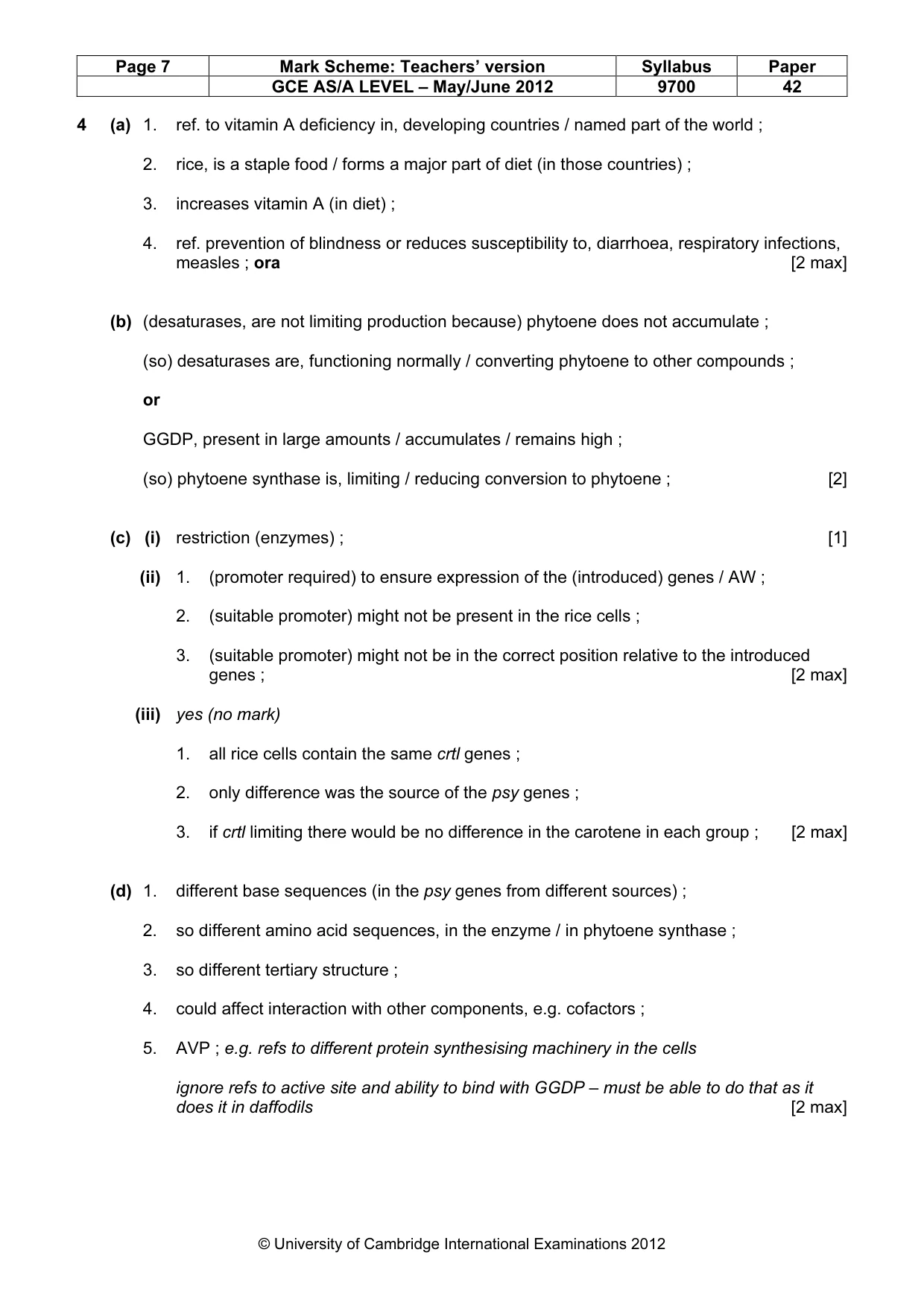
Page 7 Mark Scheme: Teachers’ version Syllabus Paper GCE AS/A LEVEL – May/June 2012 9700 42 © University of Cambridge International Examinations 2012 4 (a) 1. ref. to vitamin A deficiency in, developing countries / named part of the world ; 2. rice, is a staple food / forms a major part of diet (in those countries) ; 3. increases vitamin A (in diet) ; 4. ref. prevention of blindness or reduces susceptibility to, diarrhoea, respiratory infections, measles ; ora [2 max] (b) (desaturases, are not limiting production because) phytoene does not accumulate ; (so) desaturases are, functioning normally / converting phytoene to other compounds ; or GGDP, present in large amounts / accumulates / remains high ; (so) phytoene synthase is, limiting / reducing conversion to phytoene ; [2] (c) (i) restriction (enzymes) ; [1] (ii) 1. (promoter required) to ensure expression of the (introduced) genes / AW ; 2. (suitable promoter) might not be present in the rice cells ; 3. (suitable promoter) might not be in the correct position relative to the introduced genes ; [2 max] (iii) yes (no mark) 1. all rice cells contain the same crtl genes ; 2. only difference was the source of the psy genes ; 3. if crtl limiting there would be no difference in the carotene in each group ; [2 max] (d) 1. different base sequences (in the psy genes from different sources) ; 2. so different amino acid sequences, in the enzyme / in phytoene synthase ; 3. so different tertiary structure ; 4. could affect interaction with other components, e.g. cofactors ; 5. AVP ; e.g. refs to different protein synthesising machinery in the cells ignore refs to active site and ability to bind with GGDP – must be able to do that as it does it in daffodils [2 max]
Mark scheme, page 8
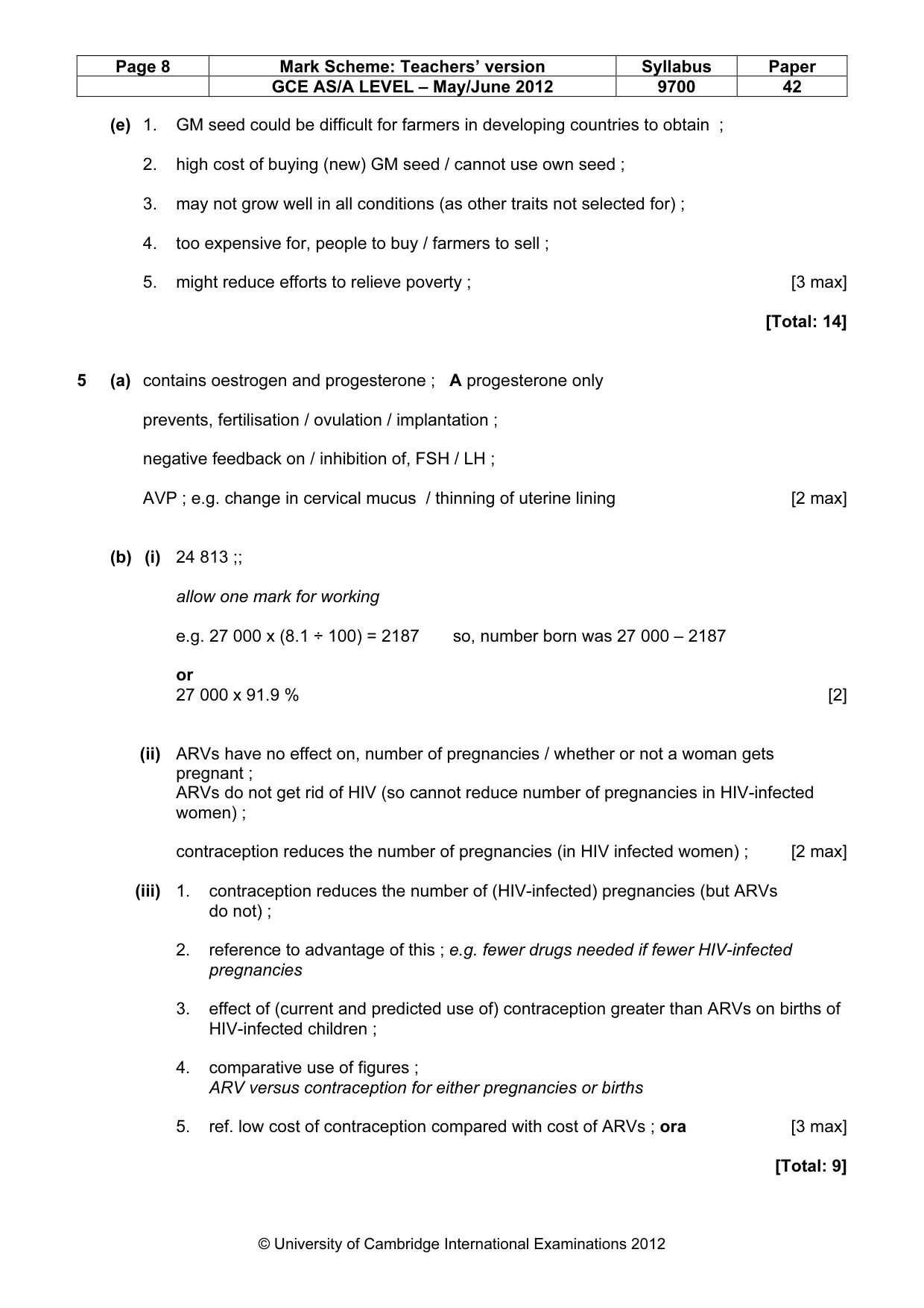
Page 8 Mark Scheme: Teachers’ version Syllabus Paper GCE AS/A LEVEL – May/June 2012 9700 42 © University of Cambridge International Examinations 2012 (e) 1. GM seed could be difficult for farmers in developing countries to obtain ; 2. high cost of buying (new) GM seed / cannot use own seed ; 3. may not grow well in all conditions (as other traits not selected for) ; 4. too expensive for, people to buy / farmers to sell ; 5. might reduce efforts to relieve poverty ; [3 max] [Total: 14] 5 (a) contains oestrogen and progesterone ; A progesterone only prevents, fertilisation / ovulation / implantation ; negative feedback on / inhibition of, FSH / LH ; AVP ; e.g. change in cervical mucus / thinning of uterine lining [2 max] (b) (i) 24 813 ;; allow one mark for working e.g. 27 000 x (8.1 ÷ 100) = 2187 so, number born was 27 000 – 2187 or 27 000 x 91.9 % [2] (ii) ARVs have no effect on, number of pregnancies / whether or not a woman gets pregnant ; ARVs do not get rid of HIV (so cannot reduce number of pregnancies in HIV-infected women) ; contraception reduces the number of pregnancies (in HIV infected women) ; [2 max] (iii) 1. contraception reduces the number of (HIV-infected) pregnancies (but ARVs do not) ; 2. reference to advantage of this ; e.g. fewer drugs needed if fewer HIV-infected pregnancies 3. effect of (current and predicted use of) contraception greater than ARVs on births of HIV-infected children ; 4. comparative use of figures ; ARV versus contraception for either pregnancies or births 5. ref. low cost of contraception compared with cost of ARVs ; ora [3 max] [Total: 9]
Mark scheme, page 9
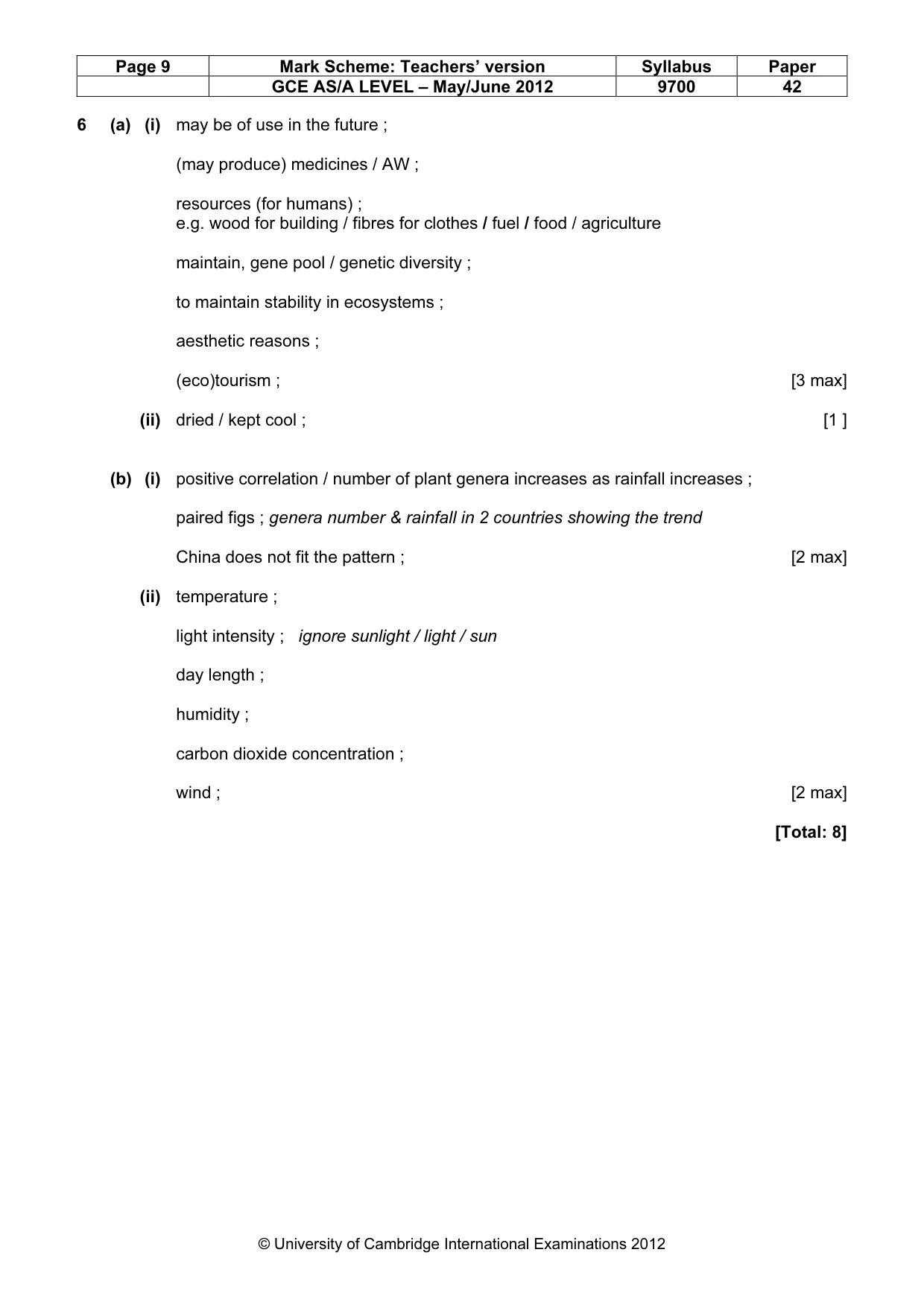
Page 9 Mark Scheme: Teachers’ version Syllabus Paper GCE AS/A LEVEL – May/June 2012 9700 42 © University of Cambridge International Examinations 2012 6 (a) (i) may be of use in the future ; (may produce) medicines / AW ; resources (for humans) ; e.g. wood for building / fibres for clothes / fuel / food / agriculture maintain, gene pool / genetic diversity ; to maintain stability in ecosystems ; aesthetic reasons ; (eco)tourism ; [3 max] (ii) dried / kept cool ; [1 ] (b) (i) positive correlation / number of plant genera increases as rainfall increases ; paired figs ; genera number & rainfall in 2 countries showing the trend China does not fit the pattern ; [2 max] (ii) temperature ; light intensity ; ignore sunlight / light / sun day length ; humidity ; carbon dioxide concentration ; wind ; [2 max] [Total: 8]
Mark scheme, page 10
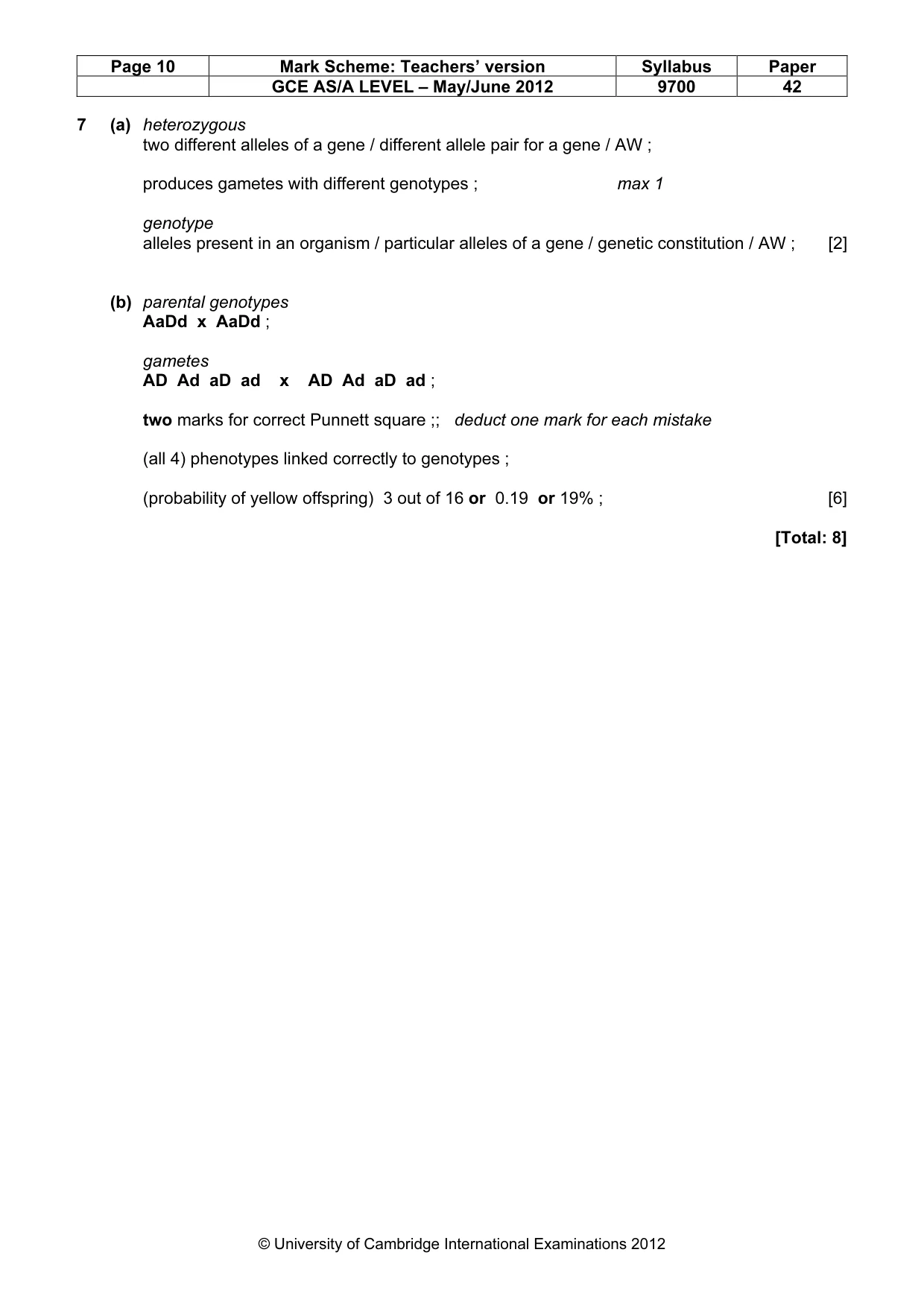
Page 10 Mark Scheme: Teachers’ version Syllabus Paper GCE AS/A LEVEL – May/June 2012 9700 42 © University of Cambridge International Examinations 2012 7 (a) heterozygous two different alleles of a gene / different allele pair for a gene / AW ; produces gametes with different genotypes ; max 1 genotype alleles present in an organism / particular alleles of a gene / genetic constitution / AW ; [2] (b) parental genotypes AaDd x AaDd ; gametes AD Ad aD ad x AD Ad aD ad ; two marks for correct Punnett square ;; deduct one mark for each mistake (all 4) phenotypes linked correctly to genotypes ; (probability of yellow offspring) 3 out of 16 or 0.19 or 19% ; [6] [Total: 8]
Mark scheme, page 11
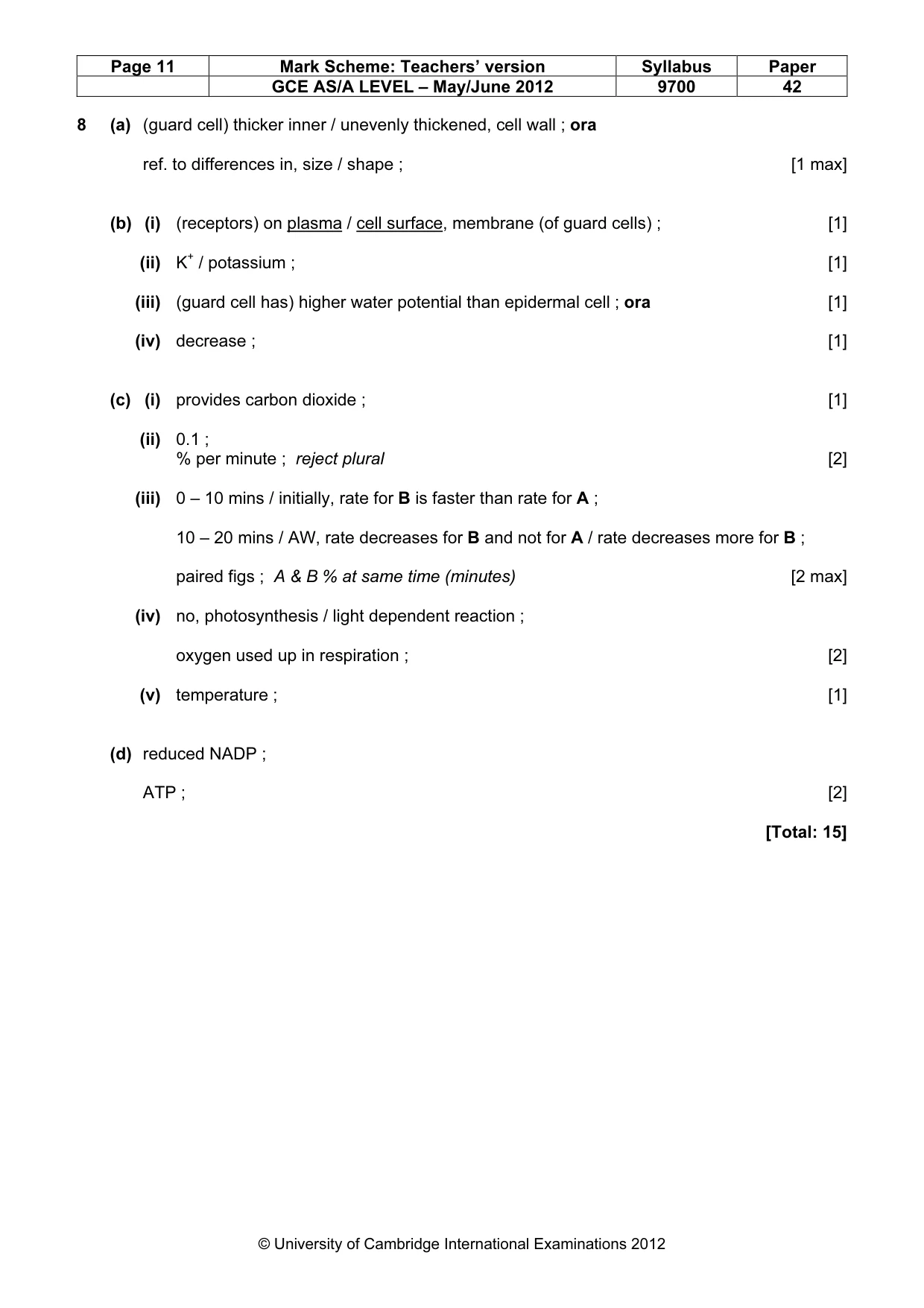
Page 11 Mark Scheme: Teachers’ version Syllabus Paper GCE AS/A LEVEL – May/June 2012 9700 42 © University of Cambridge International Examinations 2012 8 (a) (guard cell) thicker inner / unevenly thickened, cell wall ; ora ref. to differences in, size / shape ; [1 max] (b) (i) (receptors) on plasma / cell surface, membrane (of guard cells) ; [1] (ii) K+ / potassium ; [1] (iii) (guard cell has) higher water potential than epidermal cell ; ora [1] (iv) decrease ; [1] (c) (i) provides carbon dioxide ; [1] (ii) 0.1 ; % per minute ; reject plural [2] (iii) 0 – 10 mins / initially, rate for B is faster than rate for A ; 10 – 20 mins / AW, rate decreases for B and not for A / rate decreases more for B ; paired figs ; A & B % at same time (minutes) [2 max] (iv) no, photosynthesis / light dependent reaction ; oxygen used up in respiration ; [2] (v) temperature ; [1] (d) reduced NADP ; ATP ; [2] [Total: 15]
Mark scheme, page 12
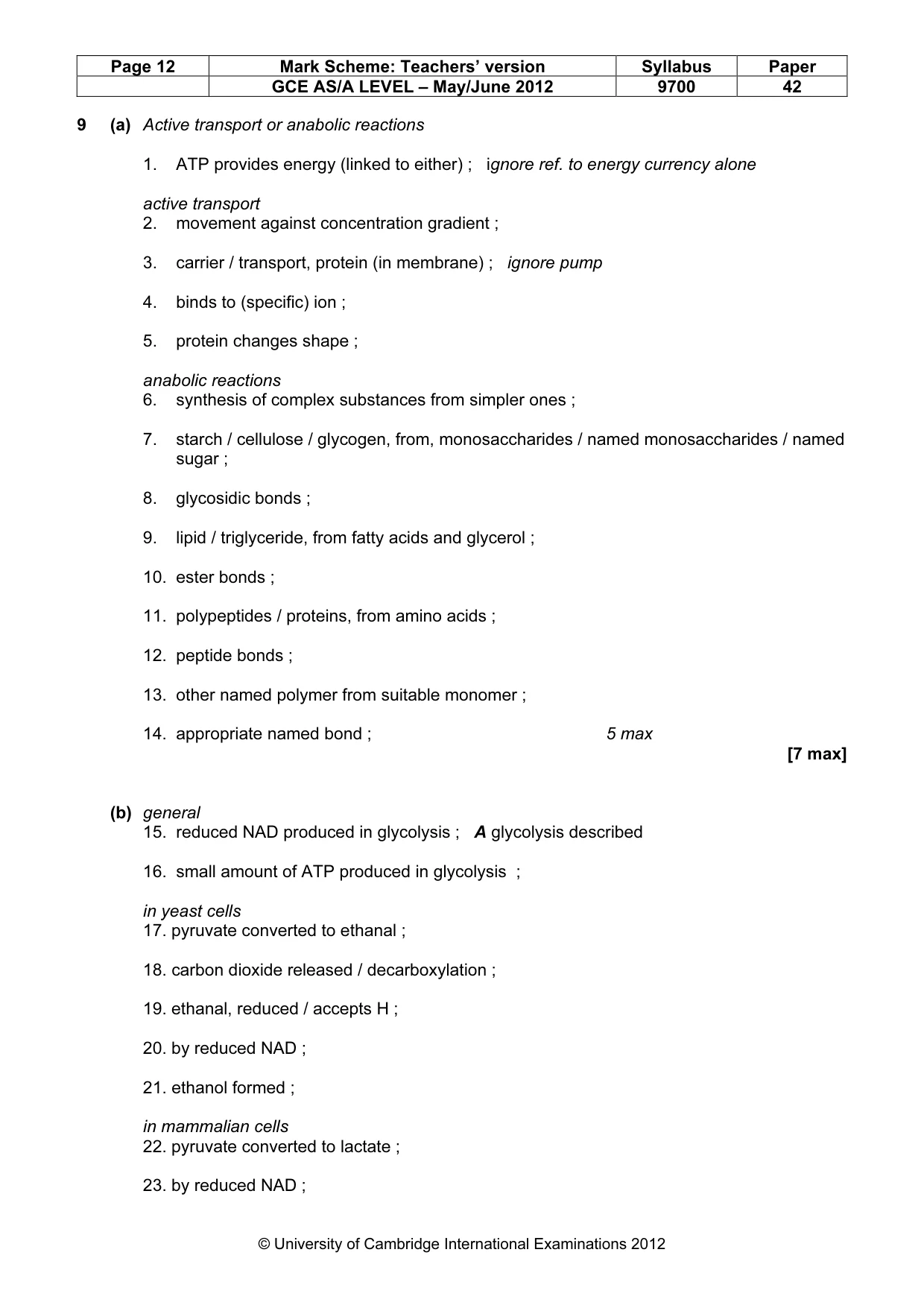
Page 12 Mark Scheme: Teachers’ version Syllabus Paper GCE AS/A LEVEL – May/June 2012 9700 42 © University of Cambridge International Examinations 2012 9 (a) Active transport or anabolic reactions 1. ATP provides energy (linked to either) ; ignore ref. to energy currency alone active transport 2. movement against concentration gradient ; 3. carrier / transport, protein (in membrane) ; ignore pump 4. binds to (specific) ion ; 5. protein changes shape ; anabolic reactions 6. synthesis of complex substances from simpler ones ; 7. starch / cellulose / glycogen, from, monosaccharides / named monosaccharides / named sugar ; 8. glycosidic bonds ; 9. lipid / triglyceride, from fatty acids and glycerol ; 10. ester bonds ; 11. polypeptides / proteins, from amino acids ; 12. peptide bonds ; 13. other named polymer from suitable monomer ; 14. appropriate named bond ; 5 max [7 max] (b) general 15. reduced NAD produced in glycolysis ; A glycolysis described 16. small amount of ATP produced in glycolysis ; in yeast cells 17. pyruvate converted to ethanal ; 18. carbon dioxide released / decarboxylation ; 19. ethanal, reduced / accepts H ; 20. by reduced NAD ; 21. ethanol formed ; in mammalian cells 22. pyruvate converted to lactate ; 23. by reduced NAD ;
Mark scheme, page 13
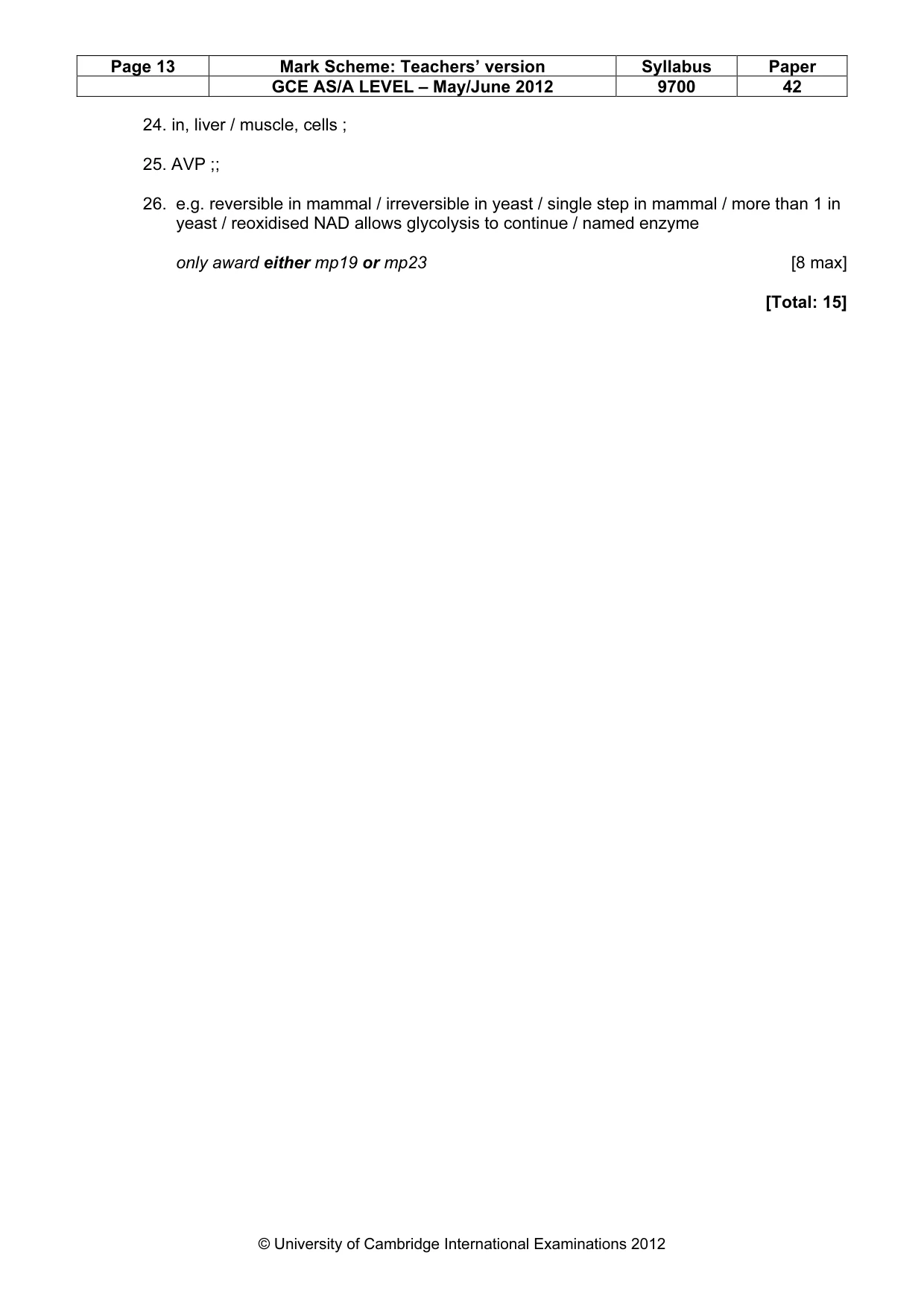
Page 13 Mark Scheme: Teachers’ version Syllabus Paper GCE AS/A LEVEL – May/June 2012 9700 42 © University of Cambridge International Examinations 2012 24. in, liver / muscle, cells ; 25. AVP ;; 26. e.g. reversible in mammal / irreversible in yeast / single step in mammal / more than 1 in yeast / reoxidised NAD allows glycolysis to continue / named enzyme only award either mp19 or mp23 [8 max] [Total: 15]
Mark scheme, page 14
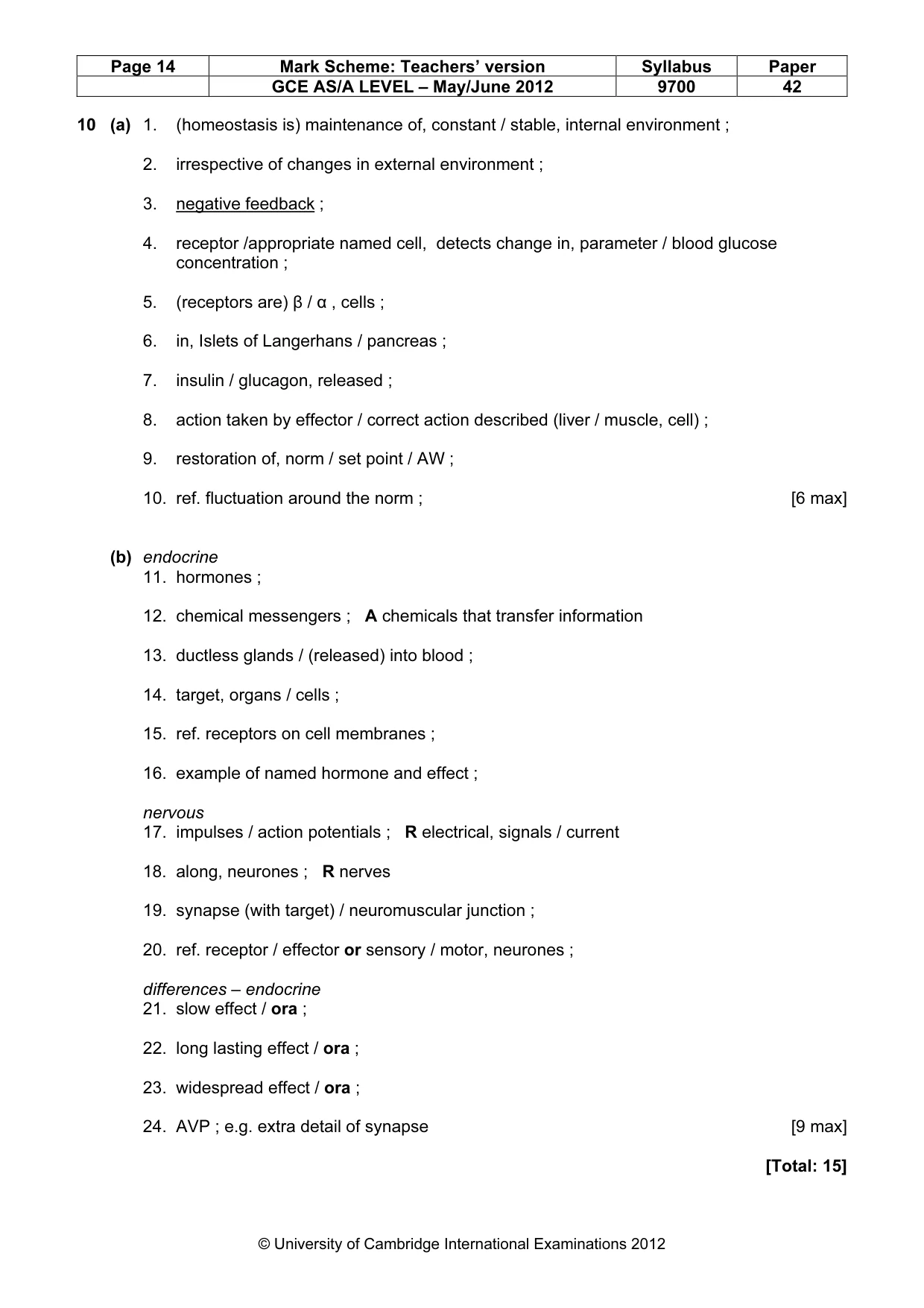
Page 14 Mark Scheme: Teachers’ version Syllabus Paper GCE AS/A LEVEL – May/June 2012 9700 42 © University of Cambridge International Examinations 2012 10 (a) 1. (homeostasis is) maintenance of, constant / stable, internal environment ; 2. irrespective of changes in external environment ; 3. negative feedback ; 4. receptor /appropriate named cell, detects change in, parameter / blood glucose concentration ; 5. (receptors are) β / α , cells ; 6. in, Islets of Langerhans / pancreas ; 7. insulin / glucagon, released ; 8. action taken by effector / correct action described (liver / muscle, cell) ; 9. restoration of, norm / set point / AW ; 10. ref. fluctuation around the norm ; [6 max] (b) endocrine 11. hormones ; 12. chemical messengers ; A chemicals that transfer information 13. ductless glands / (released) into blood ; 14. target, organs / cells ; 15. ref. receptors on cell membranes ; 16. example of named hormone and effect ; nervous 17. impulses / action potentials ; R electrical, signals / current 18. along, neurones ; R nerves 19. synapse (with target) / neuromuscular junction ; 20. ref. receptor / effector or sensory / motor, neurones ; differences – endocrine 21. slow effect / ora ; 22. long lasting effect / ora ; 23. widespread effect / ora ; 24. AVP ; e.g. extra detail of synapse [9 max] [Total: 15]
What you needed in this session
Cambridge’s own grade thresholds for 2012 May/June, Paper 4 · Variant 2. A higher threshold means an easier paper — the bar moves with how the cohort did.