Cambridge A Level Biology 9700 — 2012 May/June Paper 4 · Variant 1
9700/41/M/J/12 · 100 marks · ≈113 min
The question paper and its mark scheme, free to read here and free to download. This is Cambridge’s own paper, exactly as it was sat.
Question paper28 pages



Mark scheme16 pages
Answers below. Sit the paper first if you are practising.
Paper as text
Question paper, page 1
This document consists of 24 printed pages and 4 lined pages. DC (NH/SW) 49056/3 © UCLES 2012 [Turn over * 4 9 4 0 5 9 0 7 1 9 * BIOLOGY 9700/41 Paper 4 A2 Structured Questions May/June 2012 2 hours Candidates answer on the Question Paper. Additional Materials: Answer Paper available on request. READ THESE INSTRUCTIONS FIRST Write your Centre number, candidate number and name on all the work you hand in. Write in dark blue or black ink. You may use a pencil for any diagrams, graphs, or rough working. Do not use staples, paper clips, highlighters, glue or correction fluid. DO NOT WRITE IN ANY BARCODES. Answer all questions in Section A and one question from Section B. Circle the number of the Section B question you have answered in the grid below. At the end of the examination, fasten all your work securely together. The number of marks is given in brackets [ ] at the end of each question or part question. UNIVERSITY OF CAMBRIDGE INTERNATIONAL EXAMINATIONS General Certificate of Education Advanced Level For Examiner’s Use Section A 1 2 3 4 5 6 7 8 Section B 9 or 10 Total
Question paper, page 2
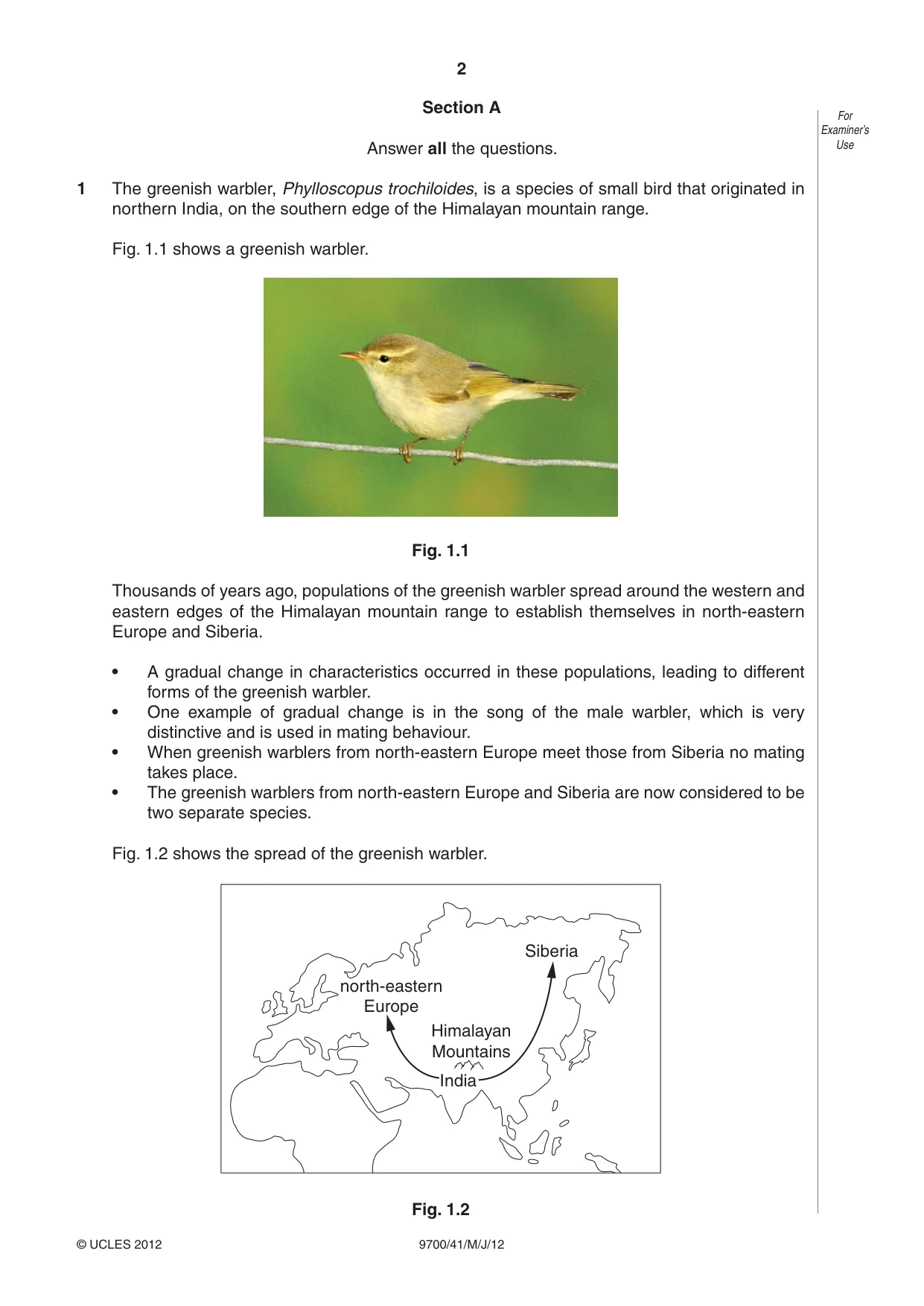
2 9700/41/M/J/12 © UCLES 2012 For Examiner’s Use Section A Answer all the questions. 1 The greenish warbler, Phylloscopus trochiloides, is a species of small bird that originated in northern India, on the southern edge of the Himalayan mountain range. Fig. 1.1 shows a greenish warbler. Fig. 1.1 Thousands of years ago, populations of the greenish warbler spread around the western and eastern edges of the Himalayan mountain range to establish themselves in north-eastern Europe and Siberia. • A gradual change in characteristics occurred in these populations, leading to different forms of the greenish warbler. • One example of gradual change is in the song of the male warbler, which is very distinctive and is used in mating behaviour. • When greenish warblers from north-eastern Europe meet those from Siberia no mating takes place. • The greenish warblers from north-eastern Europe and Siberia are now considered to be two separate species. Fig. 1.2 shows the spread of the greenish warbler. India Himalayan Mountains north-eastern Europe Siberia Fig. 1.2
Question paper, page 3
3 9700/41/M/J/12 © UCLES 2012 [Turn over For Examiner’s Use (a) Explain what is meant by the term species. … … … …[2] (b) State the likely isolating mechanism taking place in populations of the greenish warbler. …[1] (c) Explain how the process of speciation occurred in the greenish warbler populations. … … … … … … … … … …[5] [Total: 8]
Question paper, page 4
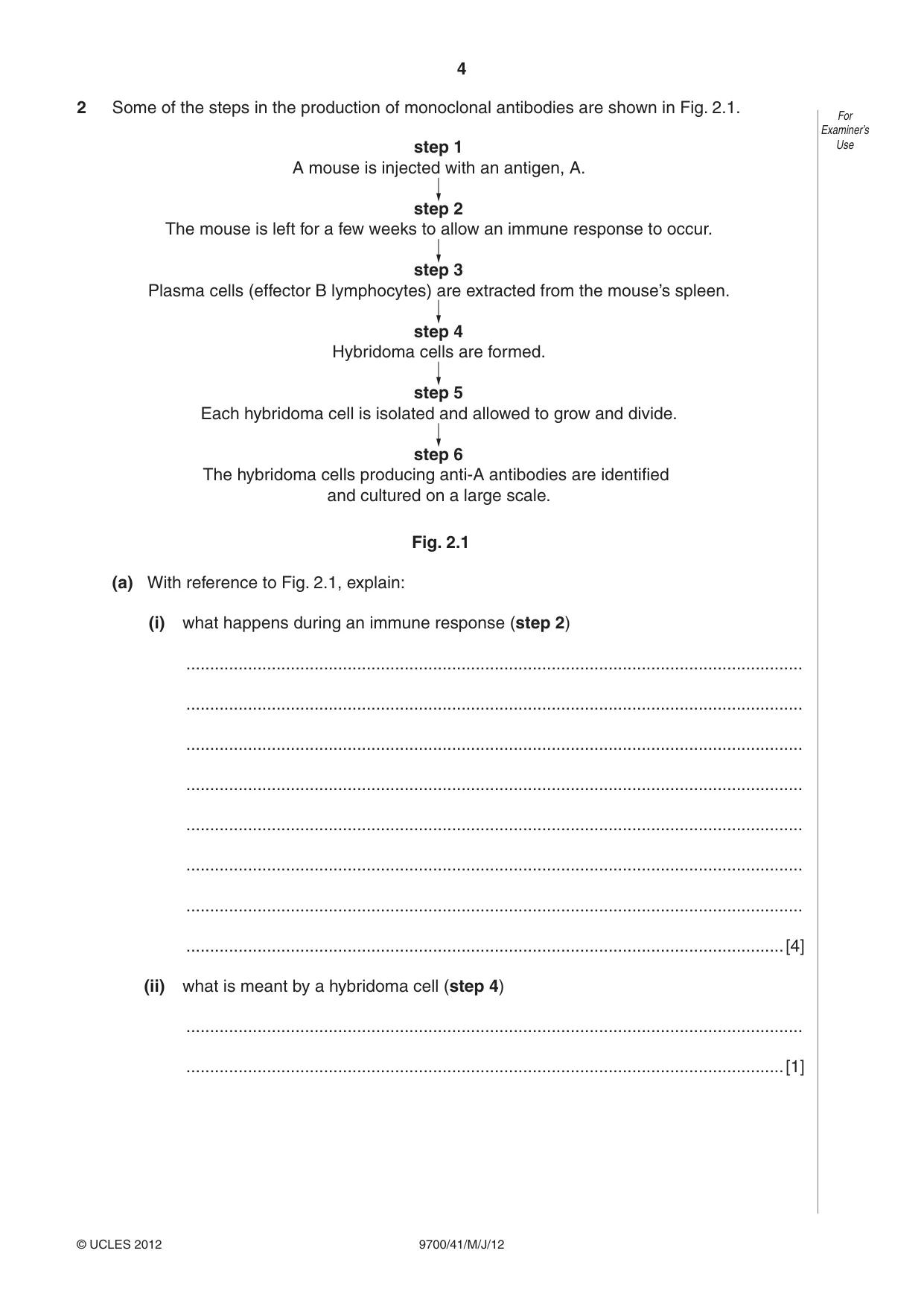
4 9700/41/M/J/12 © UCLES 2012 For Examiner’s Use 2 Some of the steps in the production of monoclonal antibodies are shown in Fig. 2.1. step 1 A mouse is injected with an antigen, A. step 2 The mouse is left for a few weeks to allow an immune response to occur. step 3 Plasma cells (effector B lymphocytes) are extracted from the mouse’s spleen. step 4 Hybridoma cells are formed. step 5 Each hybridoma cell is isolated and allowed to grow and divide. step 6 The hybridoma cells producing anti-A antibodies are identified and cultured on a large scale. Fig. 2.1 (a) With reference to Fig. 2.1, explain: (i) what happens during an immune response (step 2) … … … … … … … …[4] (ii) what is meant by a hybridoma cell (step 4) … …[1]
Question paper, page 5
5 9700/41/M/J/12 © UCLES 2012 [Turn over For Examiner’s Use (iii) why hybridoma cells need to be formed (step 4) … … … …[2] (iv) how hybridoma cells producing anti-A antibody can be identified. … …[1]
Question paper, page 6
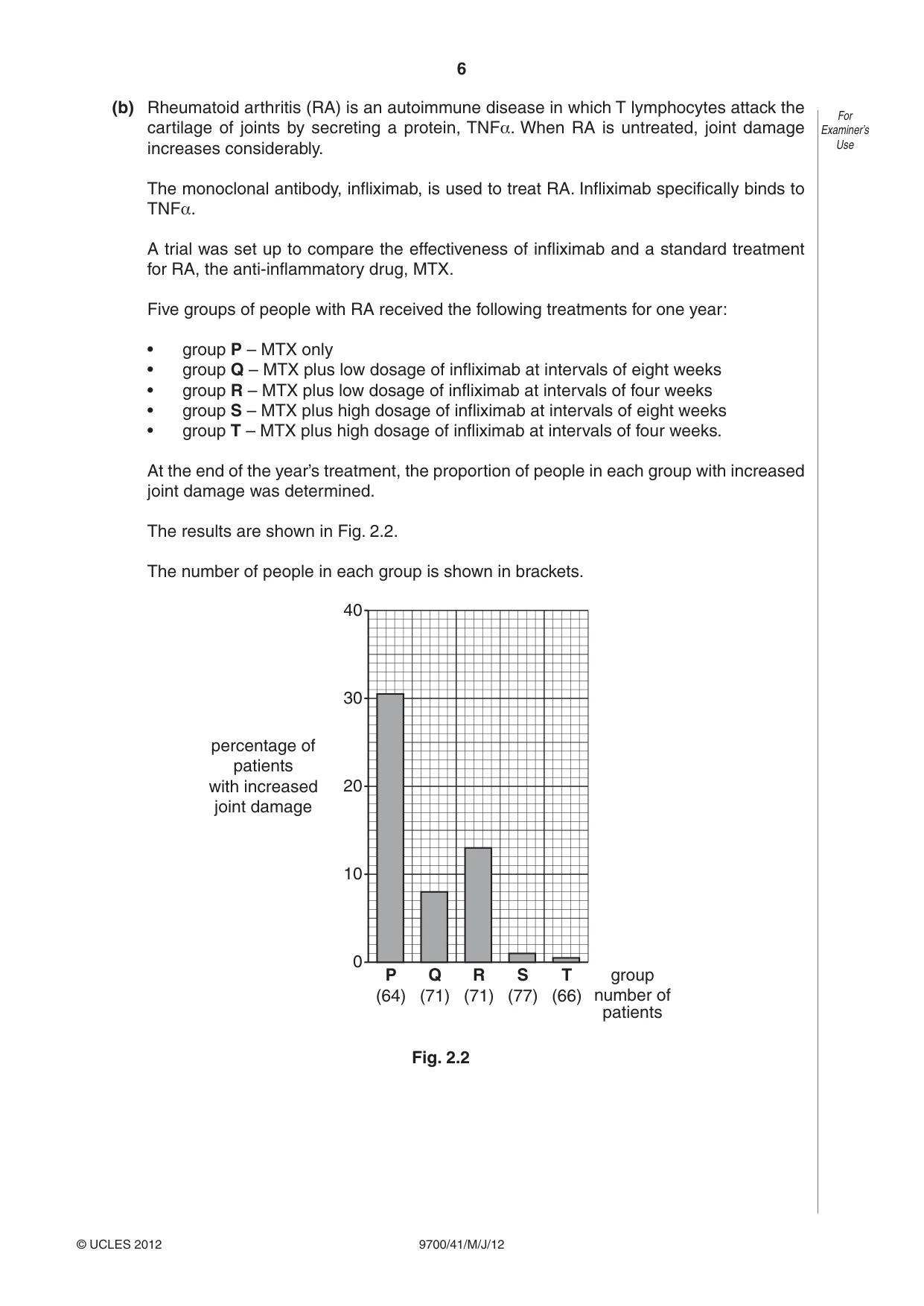
6 9700/41/M/J/12 © UCLES 2012 For Examiner’s Use (b) Rheumatoid arthritis (RA) is an autoimmune disease in which T lymphocytes attack the cartilage of joints by secreting a protein, TNFα. When RA is untreated, joint damage increases considerably. The monoclonal antibody, infliximab, is used to treat RA. Infliximab specifically binds to TNFα. A trial was set up to compare the effectiveness of infliximab and a standard treatment for RA, the anti-inflammatory drug, MTX. Five groups of people with RA received the following treatments for one year: • group P – MTX only • group Q – MTX plus low dosage of infliximab at intervals of eight weeks • group R – MTX plus low dosage of infliximab at intervals of four weeks • group S – MTX plus high dosage of infliximab at intervals of eight weeks • group T – MTX plus high dosage of infliximab at intervals of four weeks. At the end of the year’s treatment, the proportion of people in each group with increased joint damage was determined. The results are shown in Fig. 2.2. The number of people in each group is shown in brackets. 0 10 20 30 40 P (64) Q (71) R (71) S (77) T (66) group percentage of patients with increased joint damage number of patients Fig. 2.2
Question paper, page 7
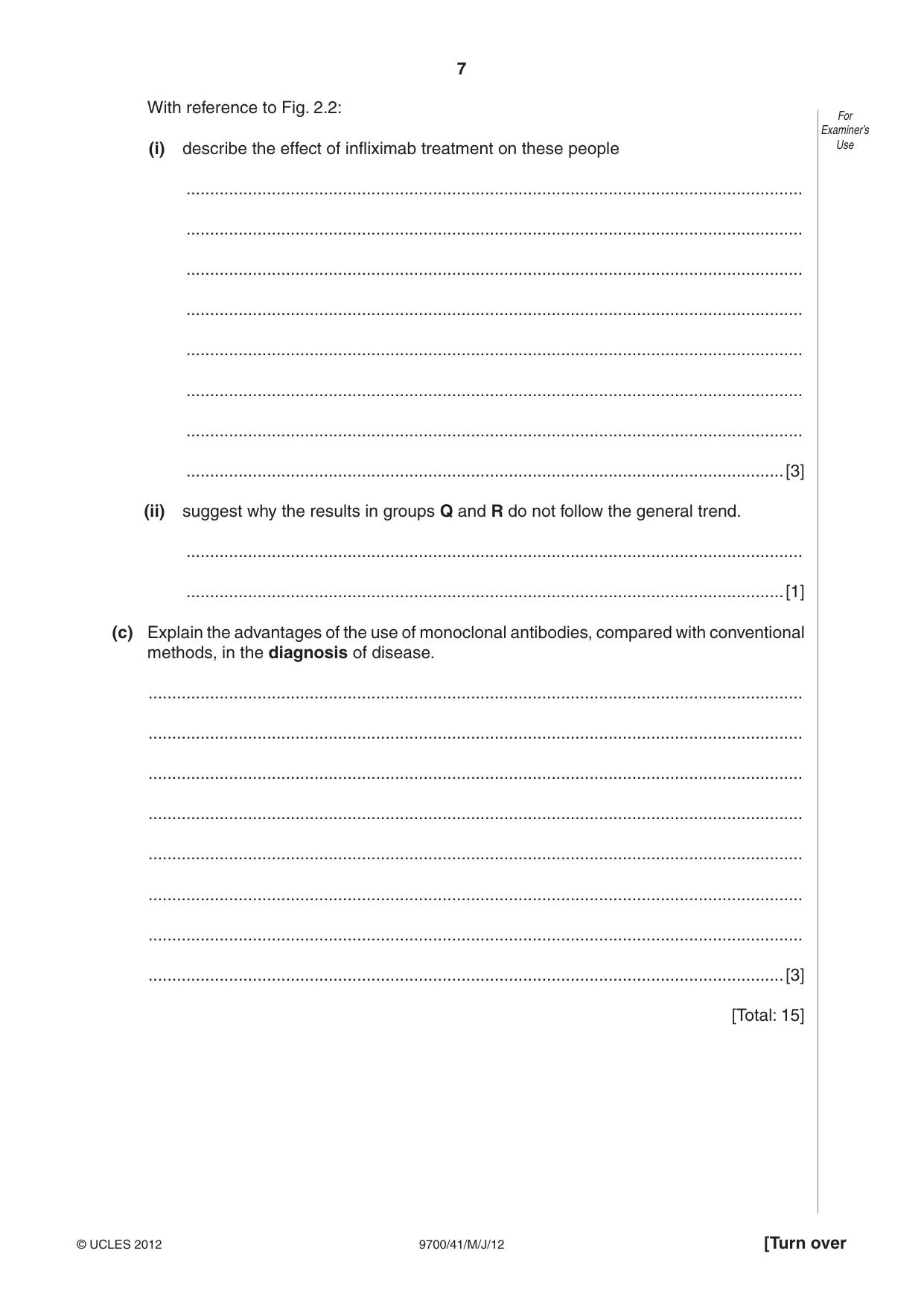
7 9700/41/M/J/12 © UCLES 2012 [Turn over For Examiner’s Use With reference to Fig. 2.2: (i) describe the effect of infliximab treatment on these people … … … … … … … …[3] (ii) suggest why the results in groups Q and R do not follow the general trend. … …[1] (c) Explain the advantages of the use of monoclonal antibodies, compared with conventional methods, in the diagnosis of disease. … … … … … … … …[3] [Total: 15]
Question paper, page 8
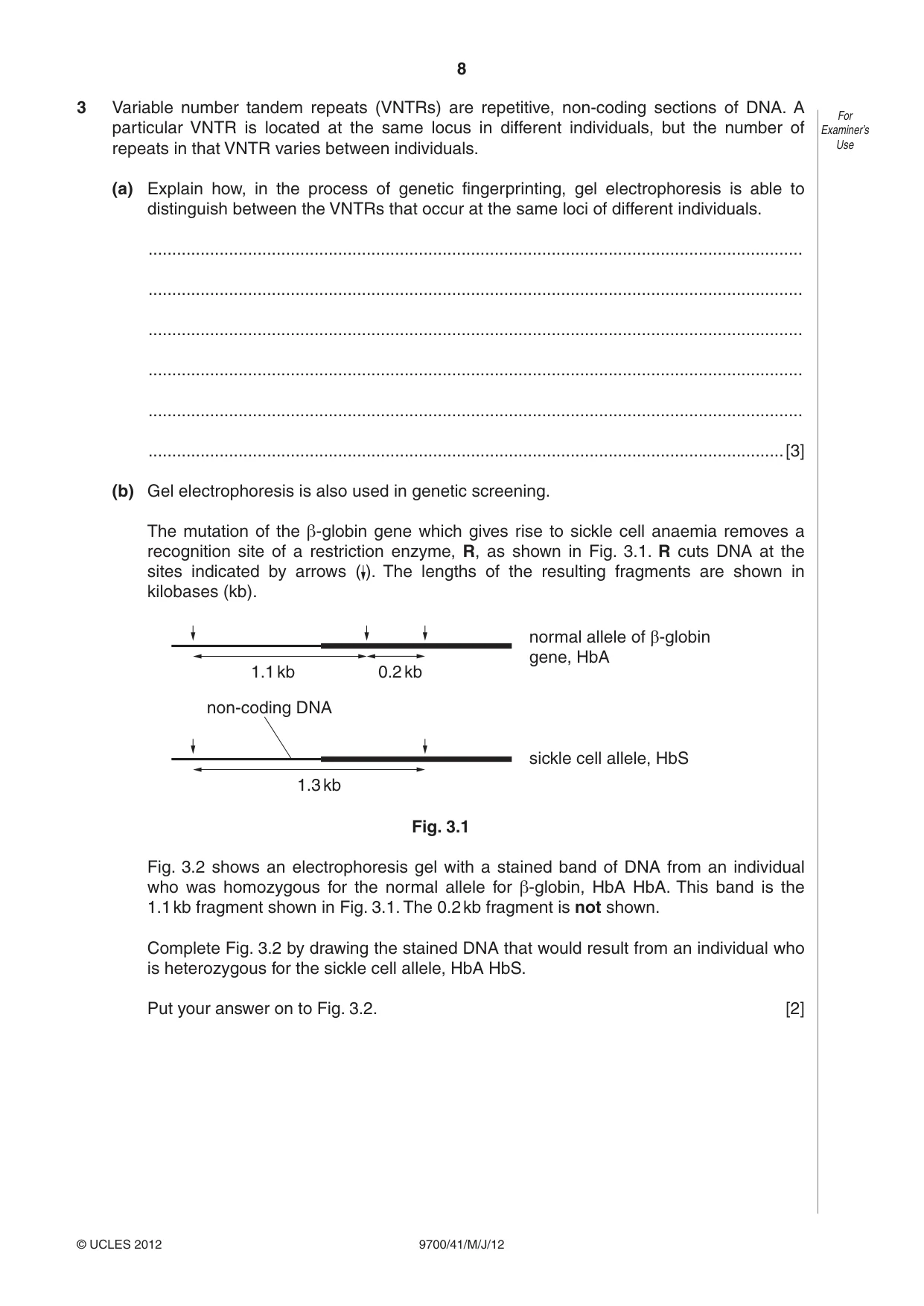
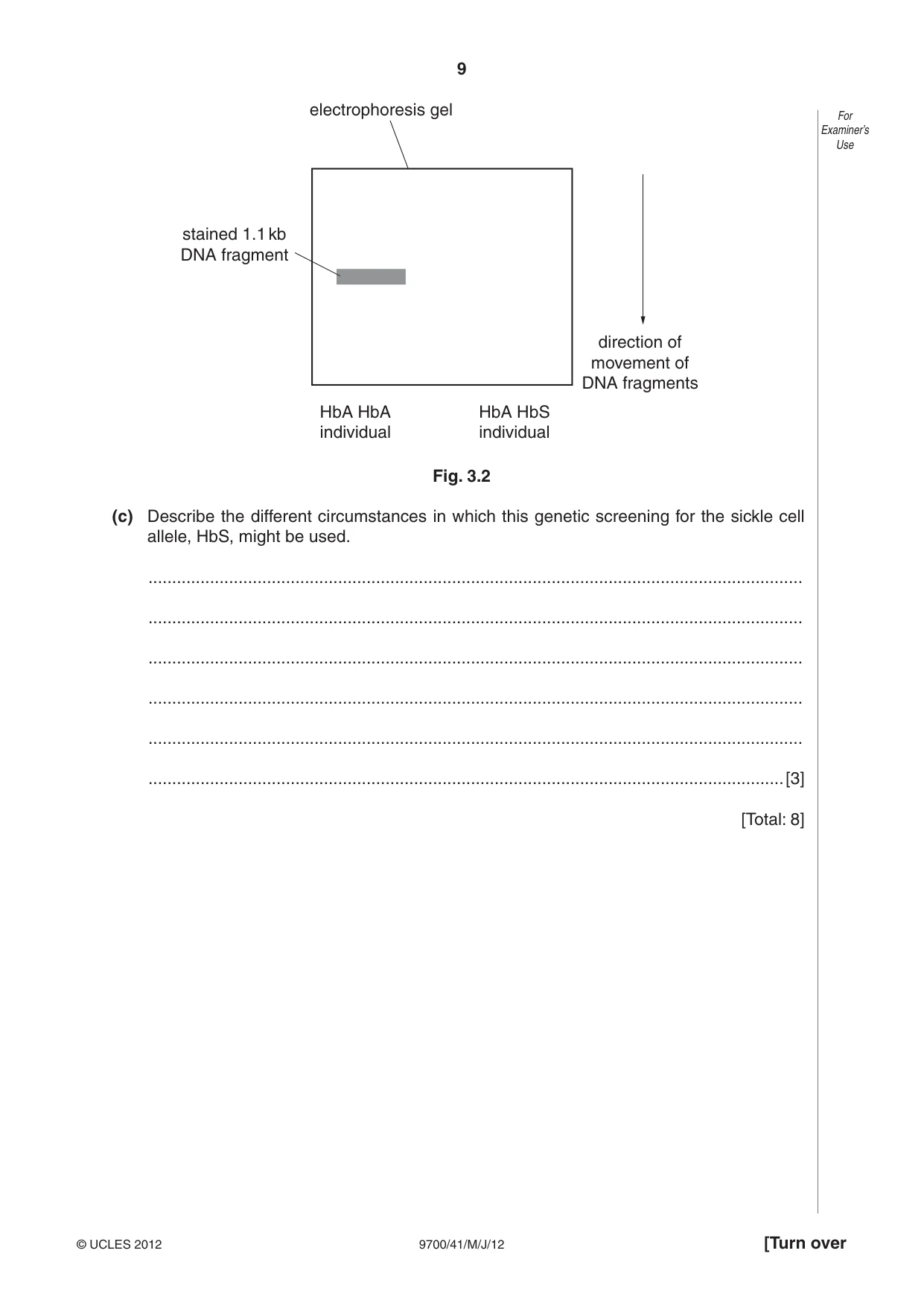
8 9700/41/M/J/12 © UCLES 2012 For Examiner’s Use 3 Variable number tandem repeats (VNTRs) are repetitive, non-coding sections of DNA. A particular VNTR is located at the same locus in different individuals, but the number of repeats in that VNTR varies between individuals. (a) Explain how, in the process of genetic fingerprinting, gel electrophoresis is able to distinguish between the VNTRs that occur at the same loci of different individuals. … … … … … …[3] (b) Gel electrophoresis is also used in genetic screening. The mutation of the β-globin gene which gives rise to sickle cell anaemia removes a recognition site of a restriction enzyme, R, as shown in Fig. 3.1. R cuts DNA at the sites indicated by arrows ( ). The lengths of the resulting fragments are shown in kilobases (kb). 1.1 kb normal allele of ȕ-globin gene, HbA sickle cell allele, HbS 0.2 kb 1.3 kb non-coding DNA Fig. 3.1 Fig. 3.2 shows an electrophoresis gel with a stained band of DNA from an individual who was homozygous for the normal allele for β-globin, HbA HbA. This band is the 1.1 kb fragment shown in Fig. 3.1. The 0.2 kb fragment is not shown. Complete Fig. 3.2 by drawing the stained DNA that would result from an individual who is heterozygous for the sickle cell allele, HbA HbS. Put your answer on to Fig. 3.2. [2]
Question paper, page 9
9 9700/41/M/J/12 © UCLES 2012 [Turn over For Examiner’s Use stained 1.1 kb DNA fragment HbA HbA individual HbA HbS individual direction of movement of DNA fragments electrophoresis gel Fig. 3.2 (c) Describe the different circumstances in which this genetic screening for the sickle cell allele, HbS, might be used. … … … … … …[3] [Total: 8]
Question paper, page 10
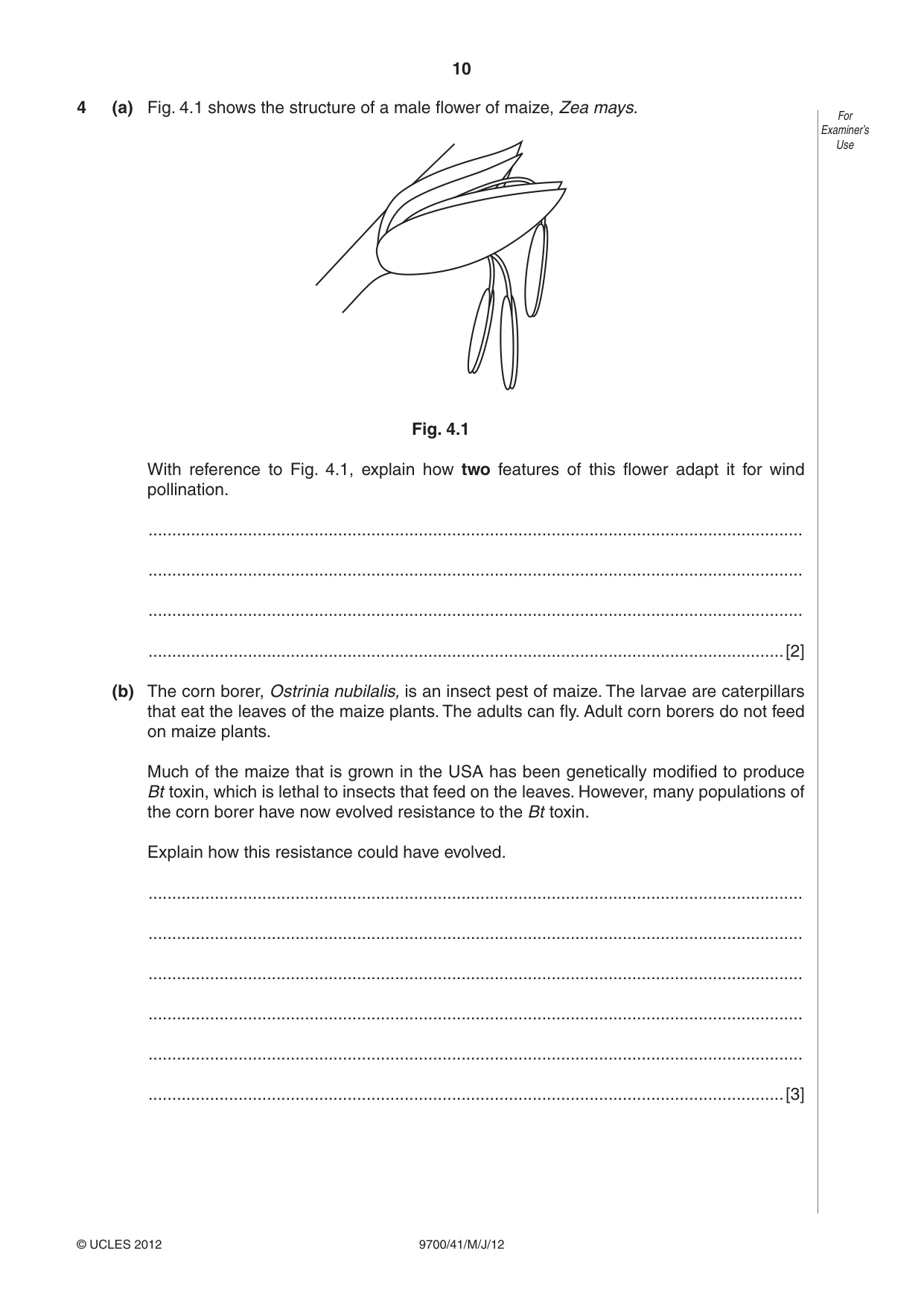
10 9700/41/M/J/12 © UCLES 2012 For Examiner’s Use 4 (a) Fig. 4.1 shows the structure of a male flower of maize, Zea mays. Fig. 4.1 With reference to Fig. 4.1, explain how two features of this flower adapt it for wind pollination. … … … …[2] (b) The corn borer, Ostrinia nubilalis, is an insect pest of maize. The larvae are caterpillars that eat the leaves of the maize plants. The adults can fly. Adult corn borers do not feed on maize plants. Much of the maize that is grown in the USA has been genetically modified to produce Bt toxin, which is lethal to insects that feed on the leaves. However, many populations of the corn borer have now evolved resistance to the Bt toxin. Explain how this resistance could have evolved. … … … … … …[3]
Question paper, page 11
11 9700/41/M/J/12 © UCLES 2012 [Turn over For Examiner’s Use (c) The recessive allele, r, of the gene in corn borers confers resistance to Bt toxin. Larvae that are homozygous for the normal, dominant allele R, or that are heterozygous, are killed when they feed on Bt maize. State the genotype of the corn borers that successfully turn from larvae into adults in the fields where Bt maize is grown. … [1] (d) In order to reduce the number of corn borers resistant to Bt toxin, farmers in the USA are required to grow up to 50% of their maize as non-Bt varieties. The non-Bt maize is grown in separate areas, called ‘refuges’, close to the fields of Bt maize. This is called the HDR strategy. Almost all corn borer larvae feeding on this non-Bt maize have the genotypes RR or Rr. The HDR strategy assumes that, when these become adults, they will interbreed with the adults developing in the Bt maize fields. Explain how the HDR strategy could reduce the proportion of corn borers that are resistant to the Bt toxin. … … … … …[2]
Question paper, page 12
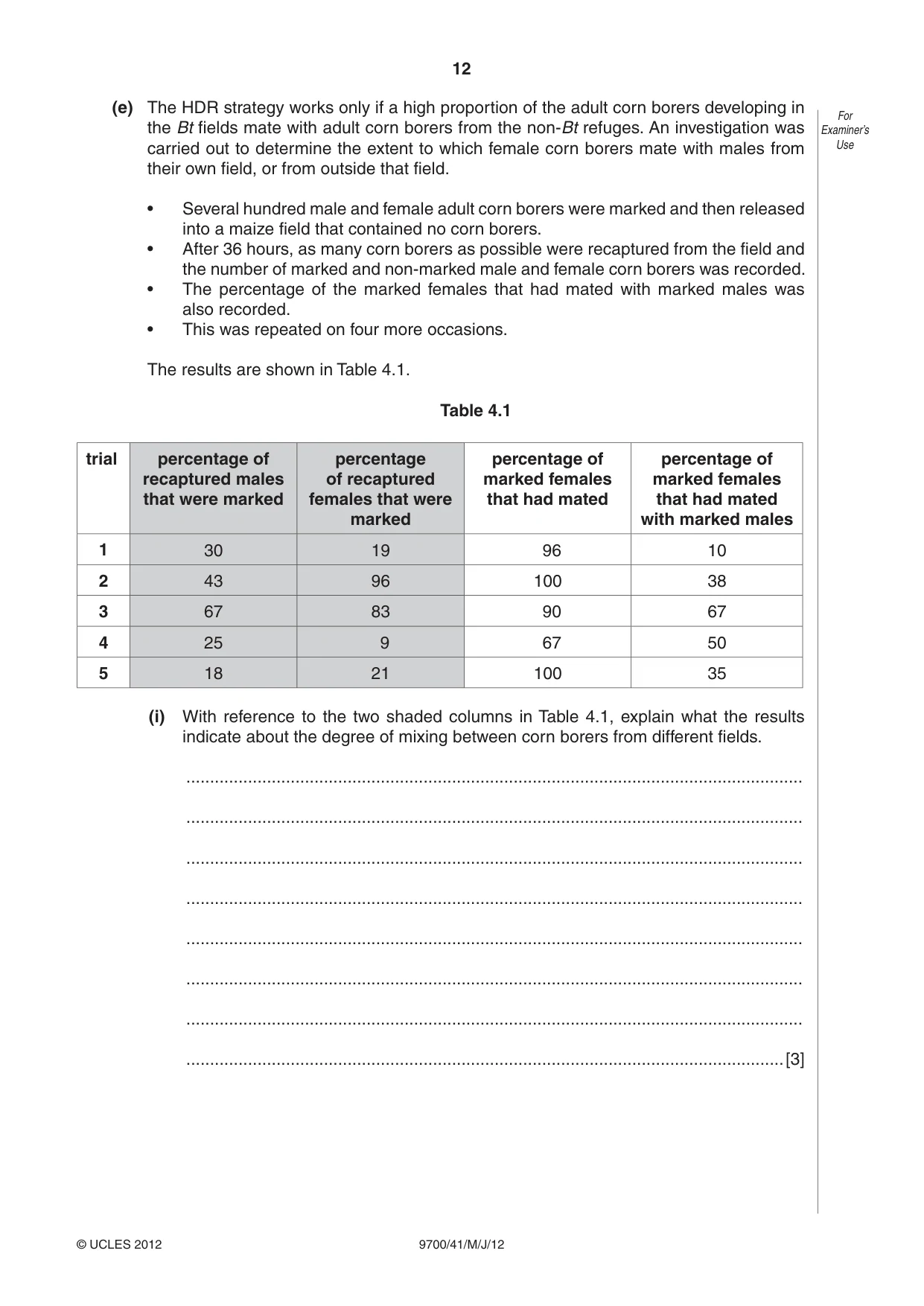
12 9700/41/M/J/12 © UCLES 2012 For Examiner’s Use (e) The HDR strategy works only if a high proportion of the adult corn borers developing in the Bt fields mate with adult corn borers from the non-Bt refuges. An investigation was carried out to determine the extent to which female corn borers mate with males from their own field, or from outside that field. • Several hundred male and female adult corn borers were marked and then released into a maize field that contained no corn borers. • After 36 hours, as many corn borers as possible were recaptured from the field and the number of marked and non-marked male and female corn borers was recorded. • The percentage of the marked females that had mated with marked males was also recorded. • This was repeated on four more occasions. The results are shown in Table 4.1. Table 4.1 trial percentage of recaptured males that were marked percentage of recaptured females that were marked percentage of marked females that had mated percentage of marked females that had mated with marked males 1 30 19 96 10 2 43 96 100 38 3 67 83 90 67 4 25 9 67 50 5 18 21 100 35 (i) With reference to the two shaded columns in Table 4.1, explain what the results indicate about the degree of mixing between corn borers from different fields. … … … … … … … …[3]
Question paper, page 13
13 9700/41/M/J/12 © UCLES 2012 [Turn over For Examiner’s Use (ii) With reference to Table 4.1, suggest and explain the implications of the results of this investigation for the effectiveness of the HDR strategy. … … … … … … … …[4] [Total: 15] 5 (a) In girls, the first menstrual cycle occurs at the onset of puberty. Outline the role of progesterone in the human menstrual cycle. … … … … … … … …[3]
Question paper, page 14
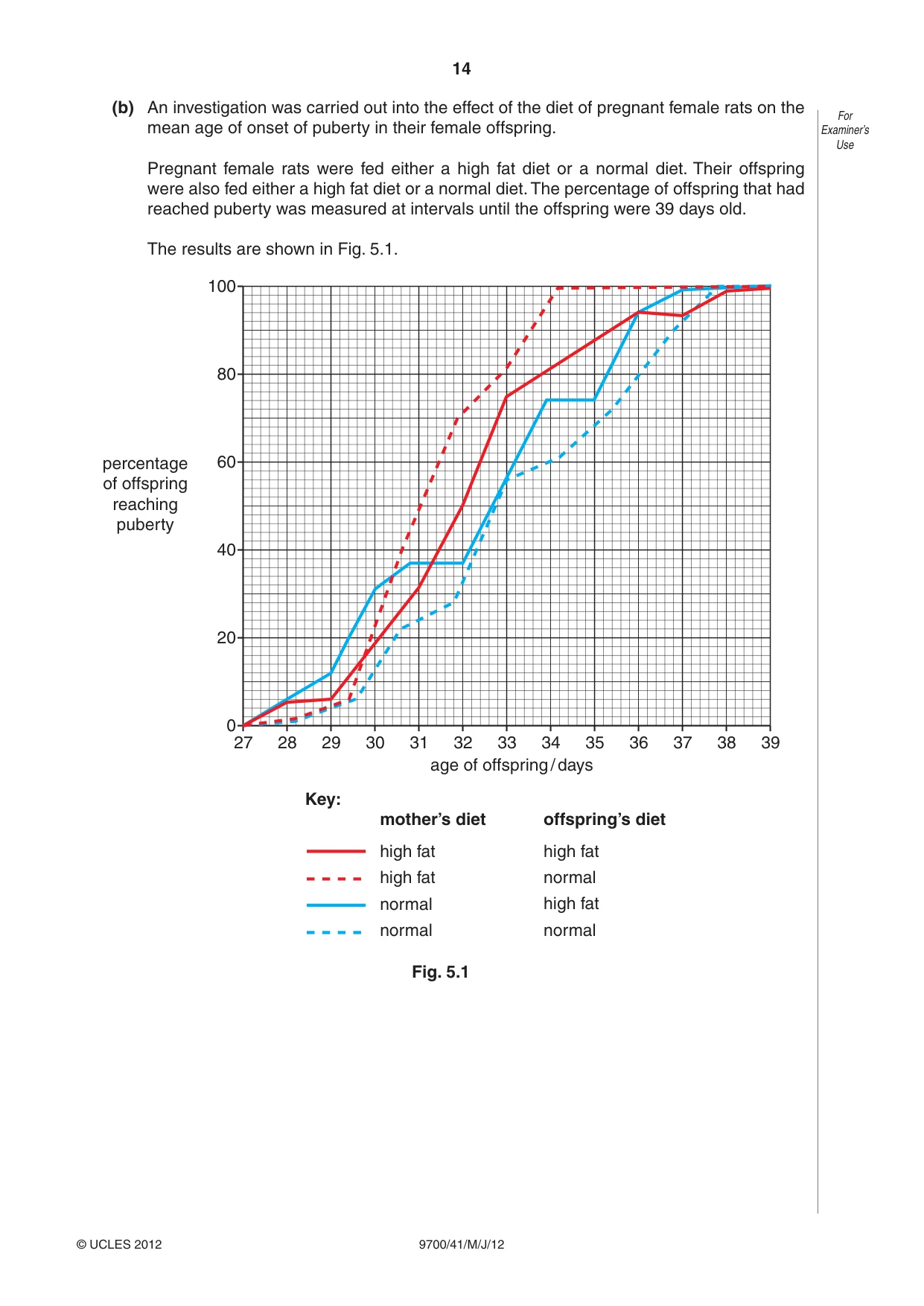
14 9700/41/M/J/12 © UCLES 2012 For Examiner’s Use (b) An investigation was carried out into the effect of the diet of pregnant female rats on the mean age of onset of puberty in their female offspring. Pregnant female rats were fed either a high fat diet or a normal diet. Their offspring were also fed either a high fat diet or a normal diet. The percentage of offspring that had reached puberty was measured at intervals until the offspring were 39 days old. The results are shown in Fig. 5.1. 27 0 20 40 60 80 100 28 29 30 31 32 33 34 35 36 37 38 39 age of offspring / days percentage of offspring reaching puberty high fat high fat normal normal mother’s diet Key: high fat normal high fat normal offspring’s diet Fig. 5.1
Question paper, page 15
15 9700/41/M/J/12 © UCLES 2012 [Turn over For Examiner’s Use (i) State the age at which 50% of offspring reached puberty when both the mother and her offspring ate a normal diet. …[1] (ii) During the 20th century, the average age of onset of puberty in European girls decreased from about 17 years to about 12 years of age. It has been suggested that a change to a richer diet is largely responsible for this decrease. With reference to the data in Fig. 5.1, discuss the evidence that changes in diet may be responsible for this decrease in the age of onset of puberty in European girls. … … … … … … … …[4] [Total: 8]
Question paper, page 16
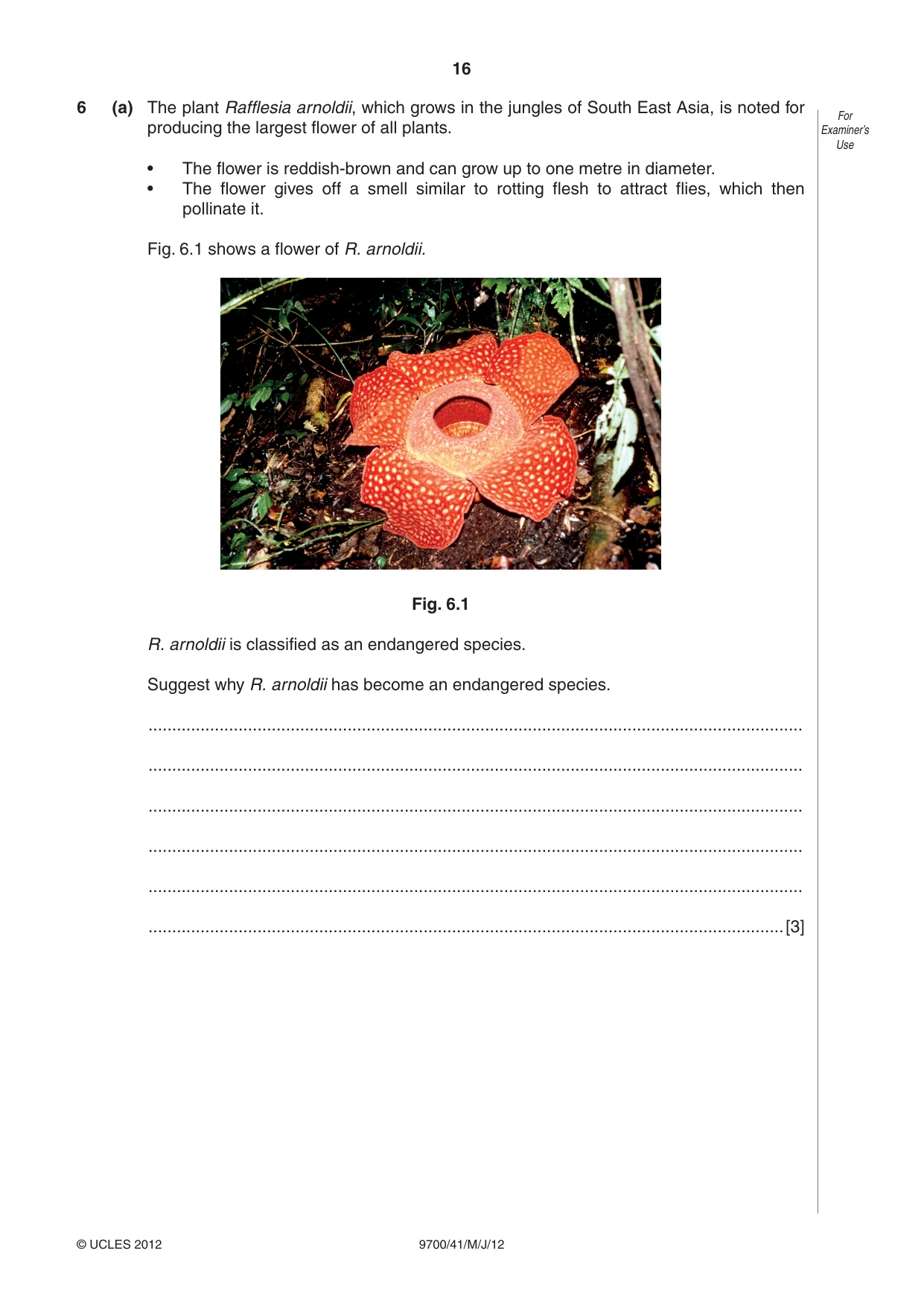
16 9700/41/M/J/12 © UCLES 2012 For Examiner’s Use 6 (a) The plant Rafflesia arnoldii, which grows in the jungles of South East Asia, is noted for producing the largest flower of all plants. • The flower is reddish-brown and can grow up to one metre in diameter. • The flower gives off a smell similar to rotting flesh to attract flies, which then pollinate it. Fig. 6.1 shows a flower of R. arnoldii. Fig. 6.1 R. arnoldii is classified as an endangered species. Suggest why R. arnoldii has become an endangered species. … … … … … …[3]
Question paper, page 17
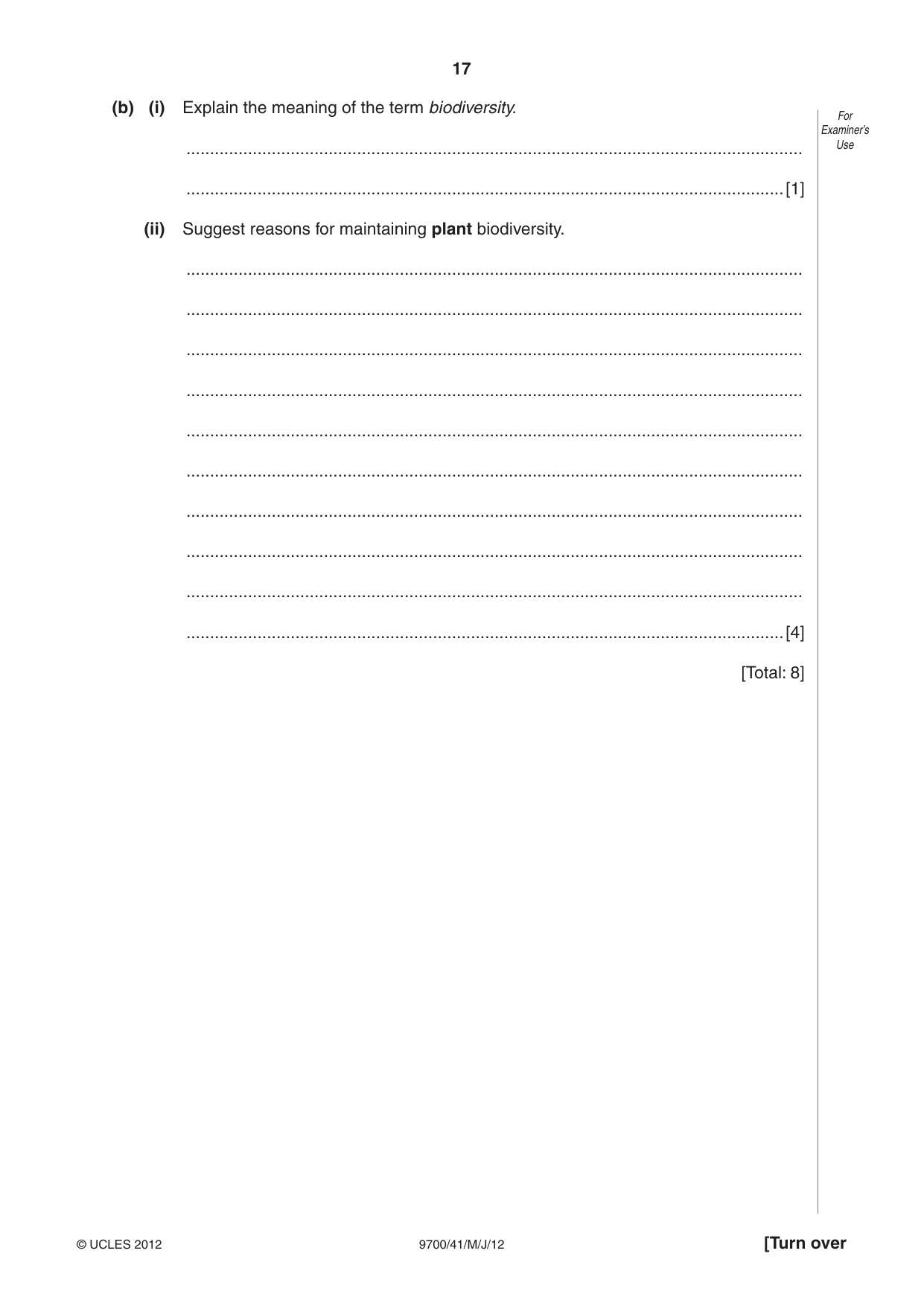
17 9700/41/M/J/12 © UCLES 2012 [Turn over For Examiner’s Use (b) (i) Explain the meaning of the term biodiversity. … …[1] (ii) Suggest reasons for maintaining plant biodiversity. … … … … … … … … … …[4] [Total: 8]
Question paper, page 18
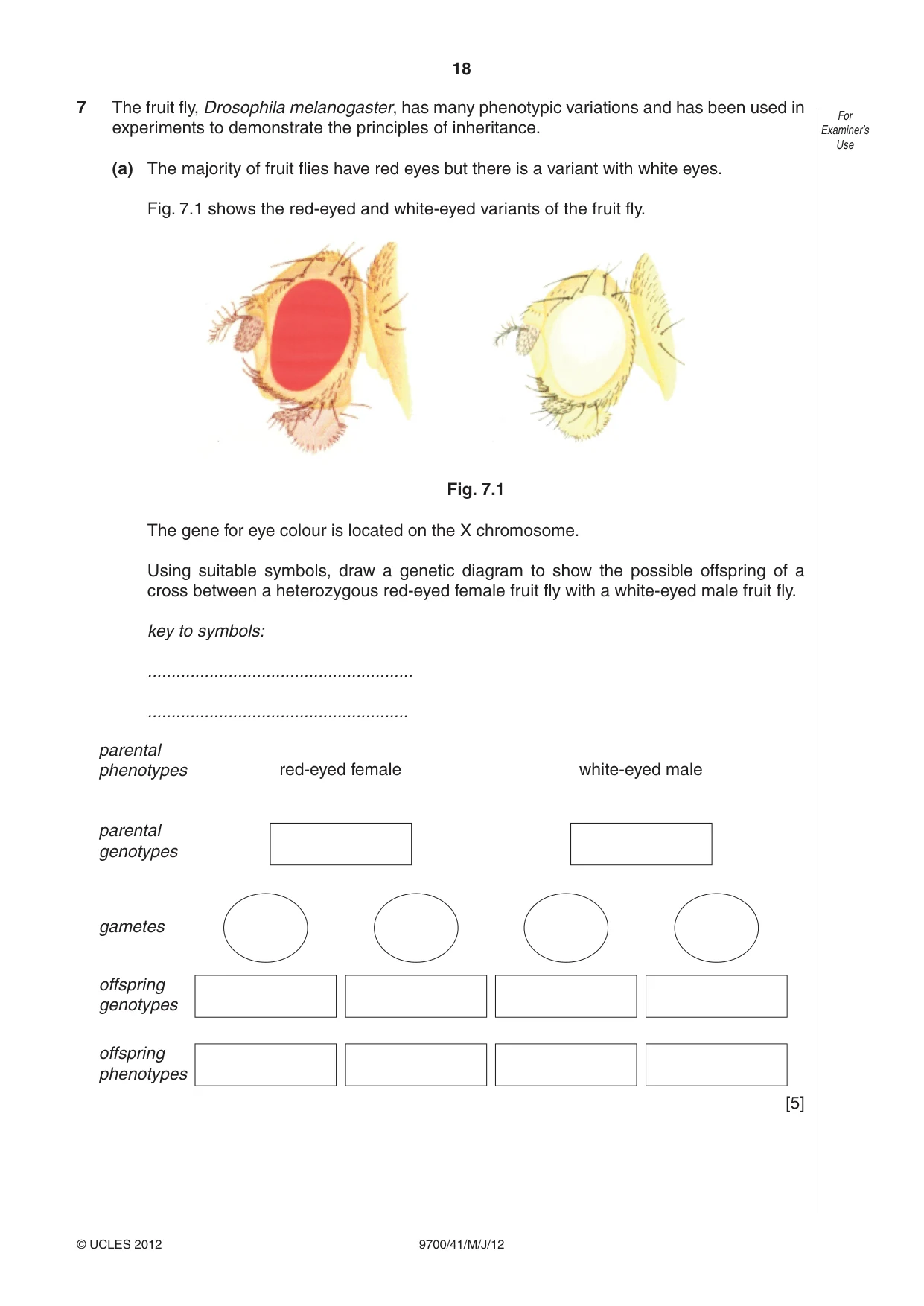
18 9700/41/M/J/12 © UCLES 2012 For Examiner’s Use 7 The fruit fly, Drosophila melanogaster, has many phenotypic variations and has been used in experiments to demonstrate the principles of inheritance. (a) The majority of fruit flies have red eyes but there is a variant with white eyes. Fig. 7.1 shows the red-eyed and white-eyed variants of the fruit fly. Fig. 7.1 The gene for eye colour is located on the X chromosome. Using suitable symbols, draw a genetic diagram to show the possible offspring of a cross between a heterozygous red-eyed female fruit fly with a white-eyed male fruit fly. key to symbols: … … parental phenotypes red-eyed female parental genotypes gametes offspring genotypes offspring phenotypes white-eyed male [5]
Question paper, page 19
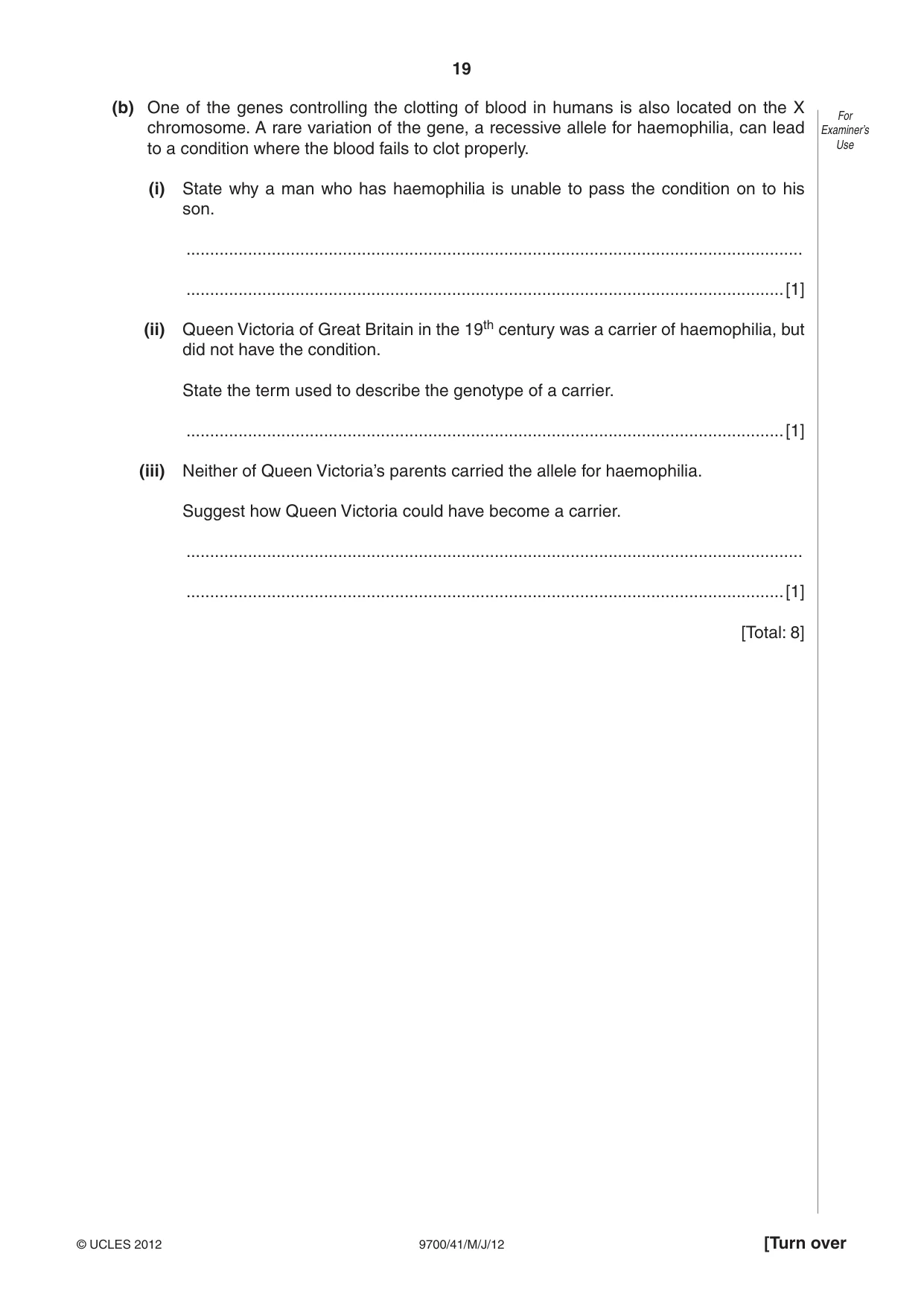
19 9700/41/M/J/12 © UCLES 2012 [Turn over For Examiner’s Use (b) One of the genes controlling the clotting of blood in humans is also located on the X chromosome. A rare variation of the gene, a recessive allele for haemophilia, can lead to a condition where the blood fails to clot properly. (i) State why a man who has haemophilia is unable to pass the condition on to his son. … …[1] (ii) Queen Victoria of Great Britain in the 19th century was a carrier of haemophilia, but did not have the condition. State the term used to describe the genotype of a carrier. …[1] (iii) Neither of Queen Victoria’s parents carried the allele for haemophilia. Suggest how Queen Victoria could have become a carrier. … …[1] [Total: 8]
Question paper, page 20
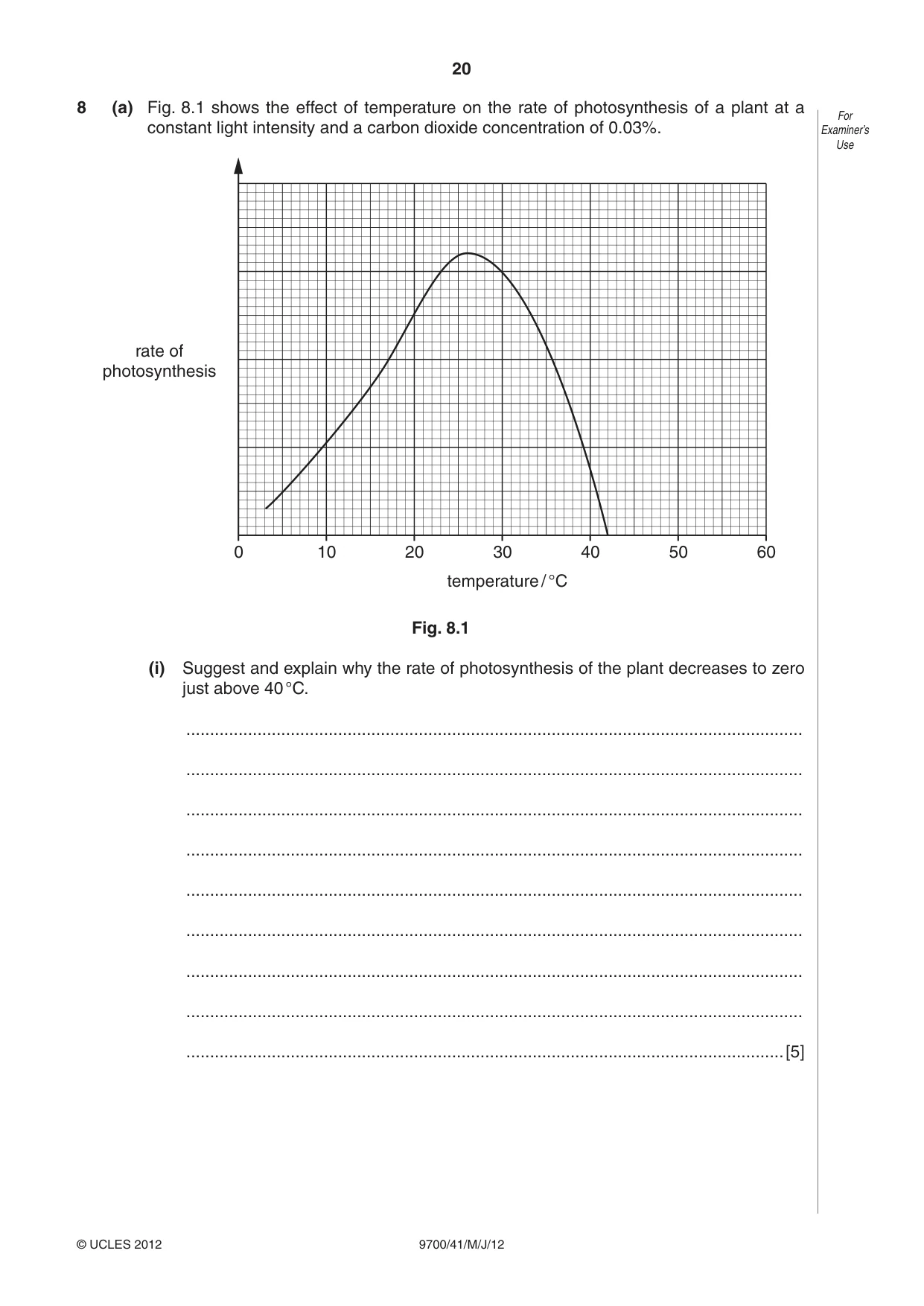
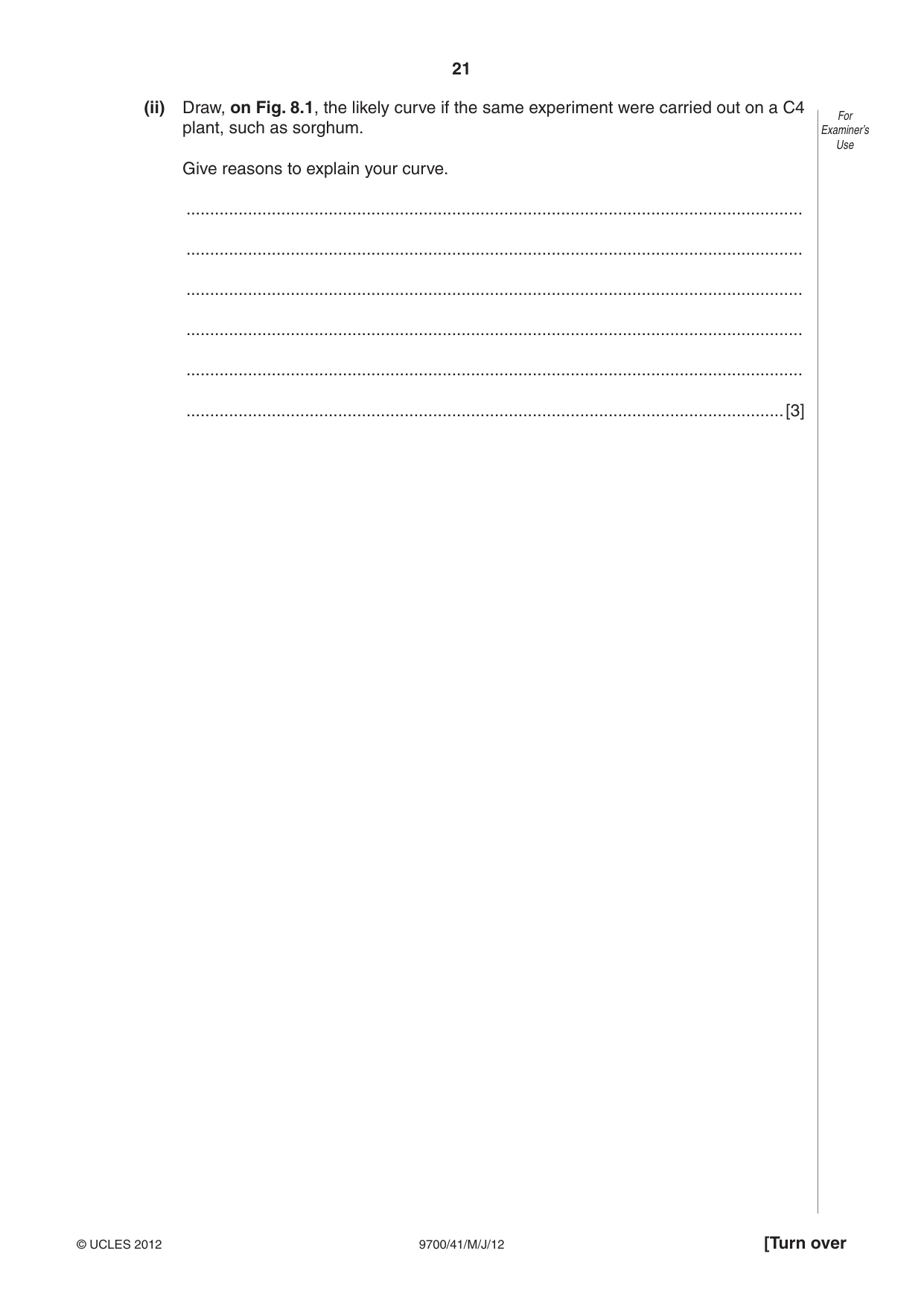
20 9700/41/M/J/12 © UCLES 2012 For Examiner’s Use 8 (a) Fig. 8.1 shows the effect of temperature on the rate of photosynthesis of a plant at a constant light intensity and a carbon dioxide concentration of 0.03%. 0 10 20 30 40 50 60 temperature / °C rate of photosynthesis Fig. 8.1 (i) Suggest and explain why the rate of photosynthesis of the plant decreases to zero just above 40 °C. … … … … … … … … …[5]
Question paper, page 21
21 9700/41/M/J/12 © UCLES 2012 [Turn over For Examiner’s Use (ii) Draw, on Fig. 8.1, the likely curve if the same experiment were carried out on a C4 plant, such as sorghum. Give reasons to explain your curve. … … … … … …[3]
Question paper, page 22
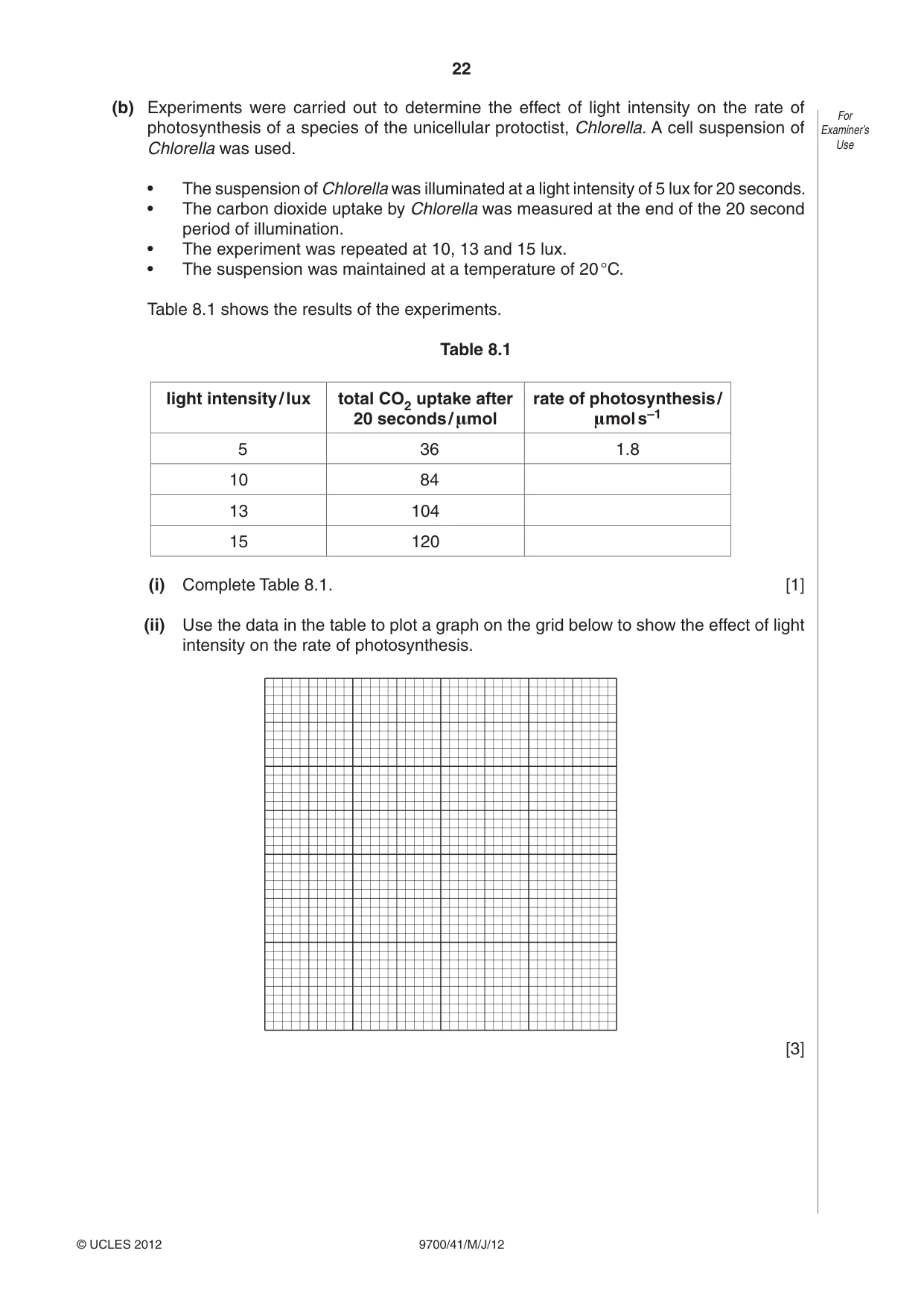
22 9700/41/M/J/12 © UCLES 2012 For Examiner’s Use (b) Experiments were carried out to determine the effect of light intensity on the rate of photosynthesis of a species of the unicellular protoctist, Chlorella. A cell suspension of Chlorella was used. • The suspension of Chlorella was illuminated at a light intensity of 5 lux for 20 seconds. • The carbon dioxide uptake by Chlorella was measured at the end of the 20 second period of illumination. • The experiment was repeated at 10, 13 and 15 lux. • The suspension was maintained at a temperature of 20 °C. Table 8.1 shows the results of the experiments. Table 8.1 light intensity / lux total CO2 uptake after 20 seconds / μmol rate of photosynthesis / μmol s–1 5 36 1.8 10 84 13 104 15 120 (i) Complete Table 8.1. [1] (ii) Use the data in the table to plot a graph on the grid below to show the effect of light intensity on the rate of photosynthesis. [3]
Question paper, page 23
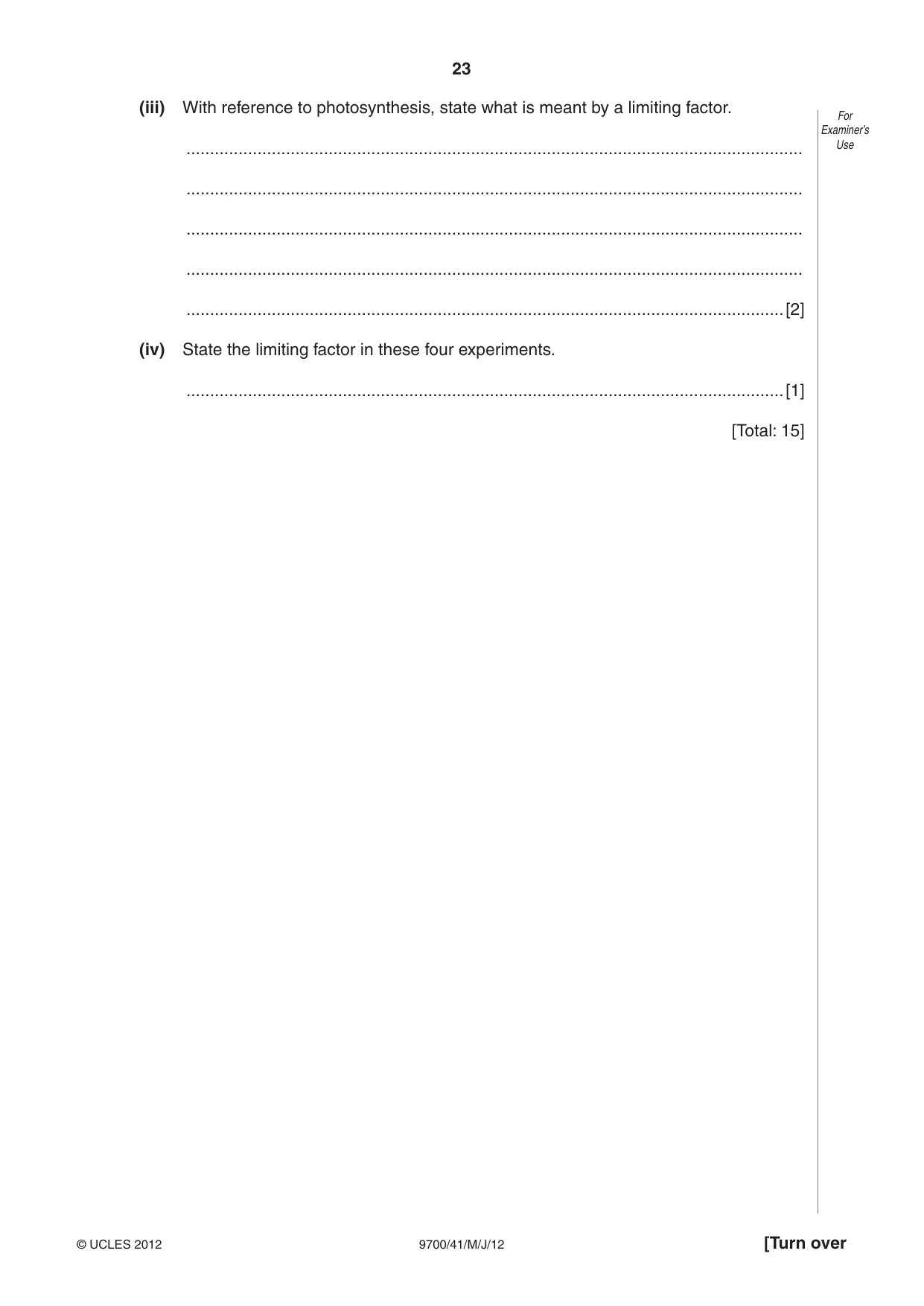
23 9700/41/M/J/12 © UCLES 2012 [Turn over For Examiner’s Use (iii) With reference to photosynthesis, state what is meant by a limiting factor. … … … … …[2] (iv) State the limiting factor in these four experiments. …[1] [Total: 15]
Question paper, page 24
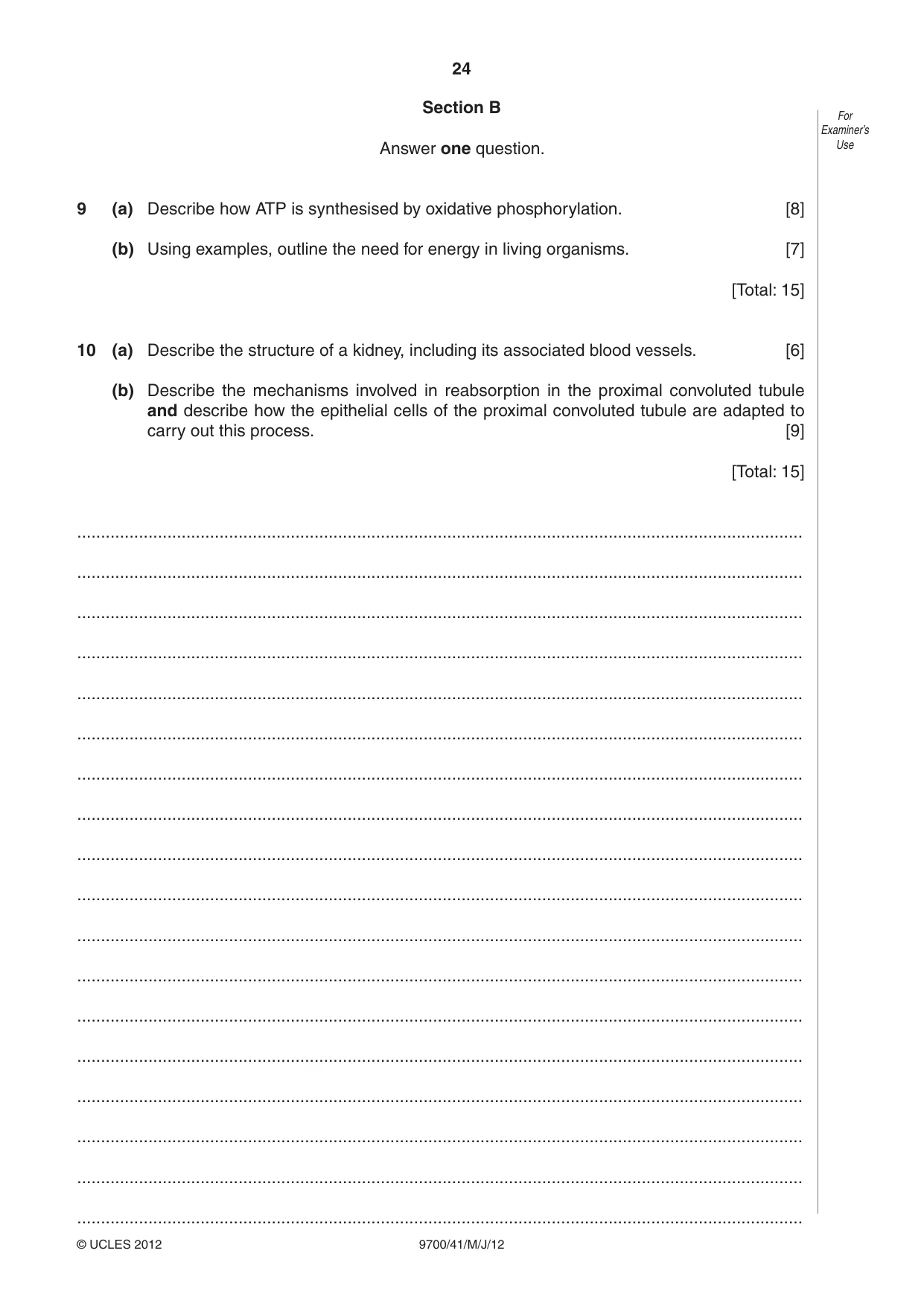
24 9700/41/M/J/12 © UCLES 2012 For Examiner’s Use Section B Answer one question. 9 (a) Describe how ATP is synthesised by oxidative phosphorylation. [8] (b) Using examples, outline the need for energy in living organisms. [7] [Total: 15] 10 (a) Describe the structure of a kidney, including its associated blood vessels. [6] (b) Describe the mechanisms involved in reabsorption in the proximal convoluted tubule and describe how the epithelial cells of the proximal convoluted tubule are adapted to carry out this process. [9] [Total: 15] … … … … … … … … … … … … … … … … … …
Question paper, page 25
25 9700/41/M/J/12 © UCLES 2012 [Turn over For Examiner’s Use … … … … … … … … … … … … … … … … … … … … … … … … … … … …
Question paper, page 26
26 9700/41/M/J/12 © UCLES 2012 For Examiner’s Use … … … … … … … … … … … … … … … … … … … … … … … … … … … …
Question paper, page 27
27 9700/41/M/J/12 © UCLES 2012 [Turn over For Examiner’s Use … … … … … … … … … … … … … … … … … … … … … … … … … … … …
Question paper, page 28
28 9700/41/M/J/12 © UCLES 2012 For Examiner’s Use … … … … … … … … … … … … … … … … … … … … … … … Copyright Acknowledgements: Question 1 Fig. 1.1 © Fair Isle Bird Observatory; www.fairislebirdobs.co.uk/Sightings/2006/PAAB/Greenish-Warbler1_19-08-06.jpg; 17/03/2010. Question 6 Fig. 6.1 © KJELL B. SANDVED / SCIENCE PHOTO LIBRARY. Permission to reproduce items where third-party owned material protected by copyright is included has been sought and cleared where possible. Every reasonable effort has been made by the publisher (UCLES) to trace copyright holders, but if any items requiring clearance have unwittingly been included, the publisher will be pleased to make amends at the earliest possible opportunity. University of Cambridge International Examinations is part of the Cambridge Assessment Group. Cambridge Assessment is the brand name of University of Cambridge Local Examinations Syndicate (UCLES), which is itself a department of the University of Cambridge.
Mark scheme, page 1
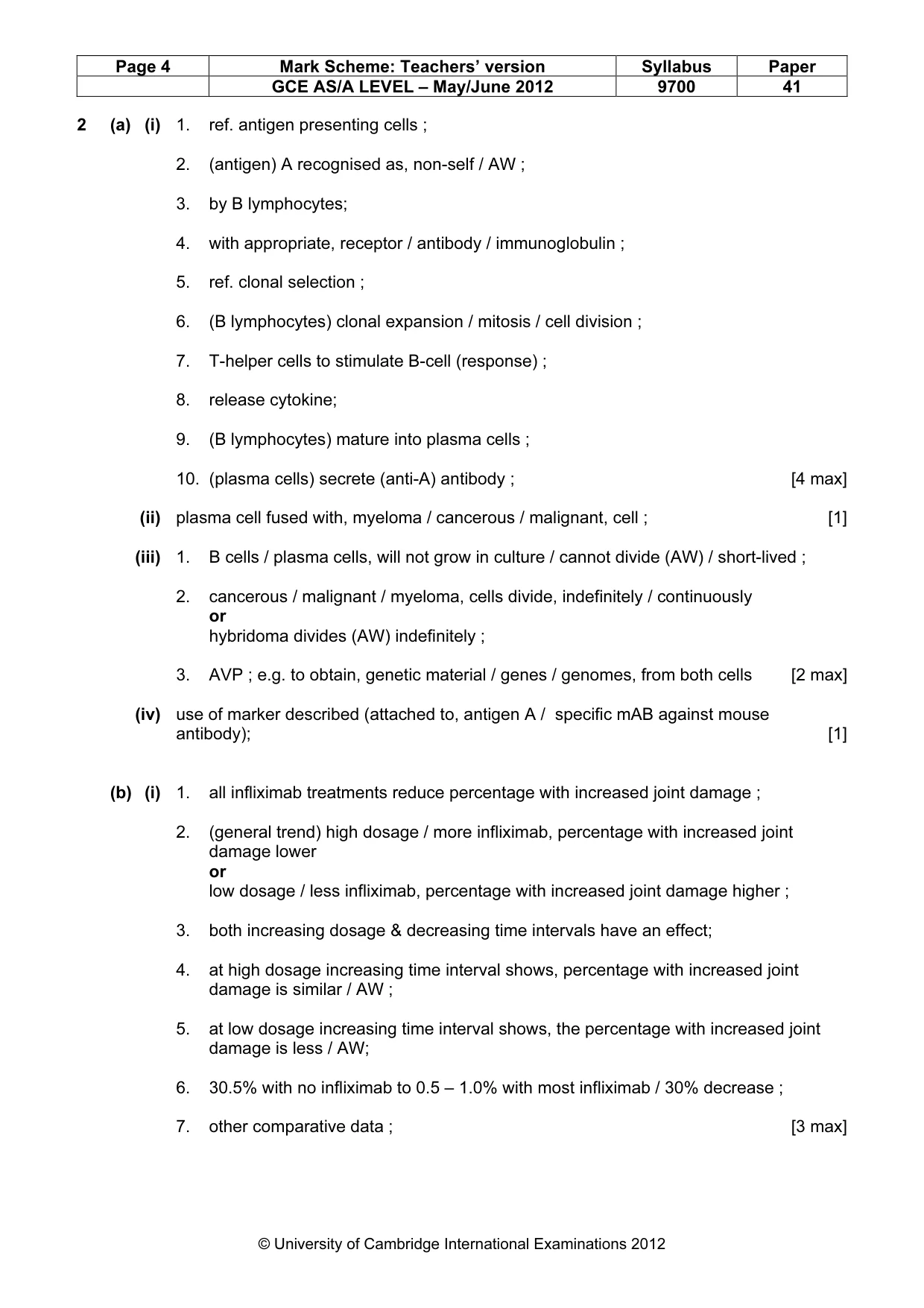
UNIVERSITY OF CAMBRIDGE INTERNATIONAL EXAMINATIONS GCE Advanced Subsidiary Level and GCE Advanced Level MARK SCHEME for the May/June 2012 question paper for the guidance of teachers 9700 BIOLOGY 9700/41 Paper 4 (A2 Structured Questions), maximum raw mark 100 This mark scheme is published as an aid to teachers and candidates, to indicate the requirements of the examination. It shows the basis on which Examiners were instructed to award marks. It does not indicate the details of the discussions that took place at an Examiners’ meeting before marking began, which would have considered the acceptability of alternative answers. Mark schemes must be read in conjunction with the question papers and the report on the examination. • Cambridge will not enter into discussions or correspondence in connection with these mark schemes. Cambridge is publishing the mark schemes for the May/June 2012 question papers for most IGCSE, GCE Advanced Level and Advanced Subsidiary Level syllabuses and some Ordinary Level syllabuses.
Mark scheme, page 2
Page 2 Mark Scheme: Teachers’ version Syllabus Paper GCE AS/A LEVEL – May/June 2012 9700 41 © University of Cambridge International Examinations 2012 Mark scheme abbreviations: ; separates marking points / alternative answers for the same point R reject A accept (for answers correctly cued by the question, or by extra guidance) AW alternative wording (where responses vary more than usual) underline actual word given must be used by candidate (grammatical variants excepted) max indicates the maximum number of marks that can be given ora or reverse argument mp marking point (with relevant number) ecf error carried forward I ignore AVP Alternative valid point (examples given as guidance)
Mark scheme, page 3
Page 3 Mark Scheme: Teachers’ version Syllabus Paper GCE AS/A LEVEL – May/June 2012 9700 41 © University of Cambridge International Examinations 2012 1 (a) 1. similar, morphological / physiological / biochemical / behavioural, features ; 2. interbreed / reproduce, to produce fertile offspring ; 3. occupy same niche ; 4. reproductively isolated ; [2 max] (b) isolating mechanism – geographical / land barrier / AW or behavioural / AW ; [1] (c) 1. no, breeding / gene flow, between populations ; 2. (gene) mutations occur ; 3. different selection pressures / different (environmental) conditions ; 4. genetic change ; e.g. different alleles selected for / change in allele frequency / change in gene pool / advantageous alleles passed on ; 5. different chromosome numbers ; 6. genetic drift ; 7. do not recognise song ; 8. therefore cannot interbreed ; 9. allopatric (speciation) ; [5 max] [Total: 8]
Mark scheme, page 4
Page 4 Mark Scheme: Teachers’ version Syllabus Paper GCE AS/A LEVEL – May/June 2012 9700 41 © University of Cambridge International Examinations 2012 2 (a) (i) 1. ref. antigen presenting cells ; 2. (antigen) A recognised as, non-self / AW ; 3. by B lymphocytes; 4. with appropriate, receptor / antibody / immunoglobulin ; 5. ref. clonal selection ; 6. (B lymphocytes) clonal expansion / mitosis / cell division ; 7. T-helper cells to stimulate B-cell (response) ; 8. release cytokine; 9. (B lymphocytes) mature into plasma cells ; 10. (plasma cells) secrete (anti-A) antibody ; [4 max] (ii) plasma cell fused with, myeloma / cancerous / malignant, cell ; [1] (iii) 1. B cells / plasma cells, will not grow in culture / cannot divide (AW) / short-lived ; 2. cancerous / malignant / myeloma, cells divide, indefinitely / continuously or hybridoma divides (AW) indefinitely ; 3. AVP ; e.g. to obtain, genetic material / genes / genomes, from both cells [2 max] (iv) use of marker described (attached to, antigen A / specific mAB against mouse antibody); [1] (b) (i) 1. all infliximab treatments reduce percentage with increased joint damage ; 2. (general trend) high dosage / more infliximab, percentage with increased joint damage lower or low dosage / less infliximab, percentage with increased joint damage higher ; 3. both increasing dosage & decreasing time intervals have an effect; 4. at high dosage increasing time interval shows, percentage with increased joint damage is similar / AW ; 5. at low dosage increasing time interval shows, the percentage with increased joint damage is less / AW; 6. 30.5% with no infliximab to 0.5 – 1.0% with most infliximab / 30% decrease ; 7. other comparative data ; [3 max]
Mark scheme, page 5
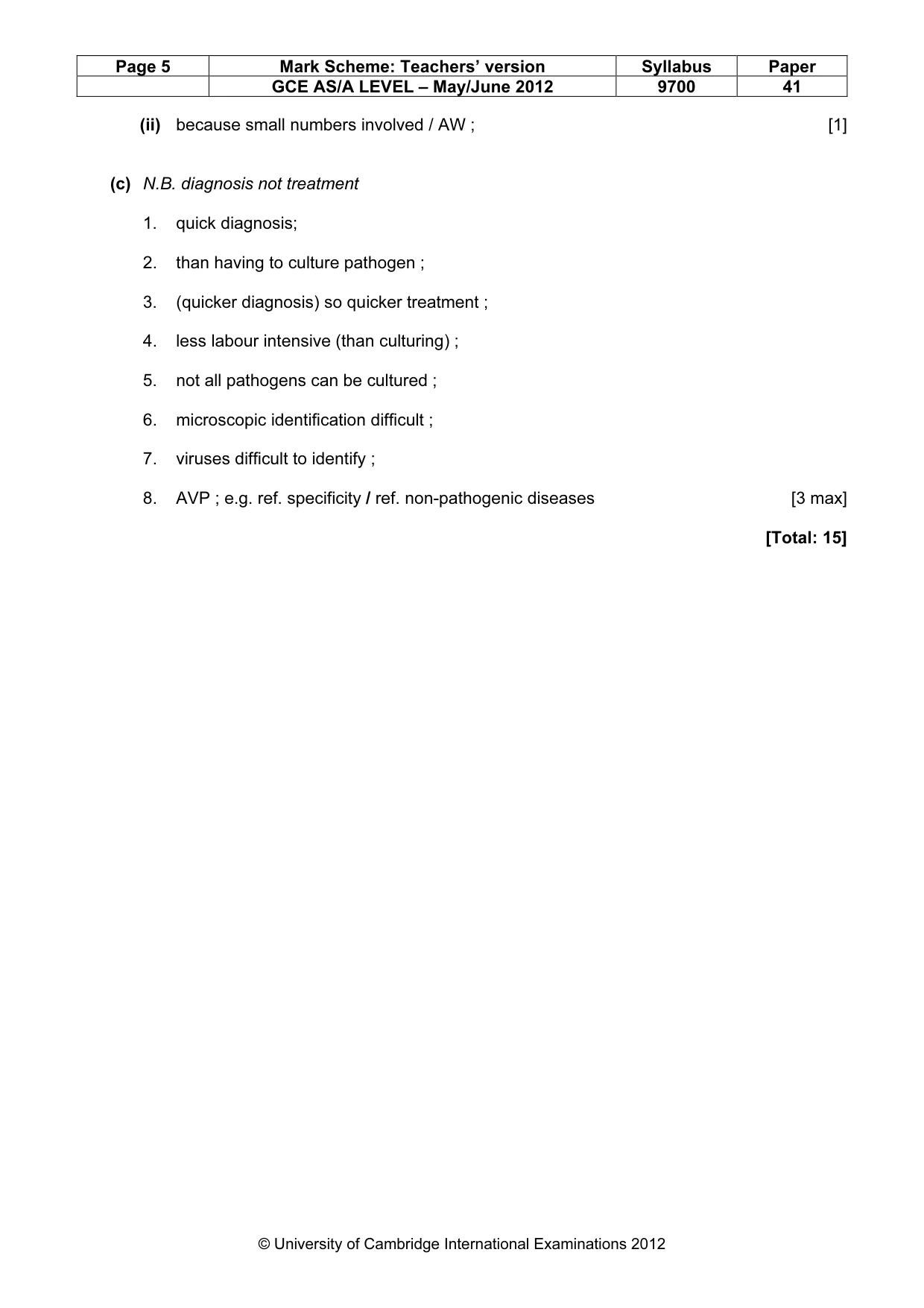
Page 5 Mark Scheme: Teachers’ version Syllabus Paper GCE AS/A LEVEL – May/June 2012 9700 41 © University of Cambridge International Examinations 2012 (ii) because small numbers involved / AW ; [1] (c) N.B. diagnosis not treatment 1. quick diagnosis; 2. than having to culture pathogen ; 3. (quicker diagnosis) so quicker treatment ; 4. less labour intensive (than culturing) ; 5. not all pathogens can be cultured ; 6. microscopic identification difficult ; 7. viruses difficult to identify ; 8. AVP ; e.g. ref. specificity / ref. non-pathogenic diseases [3 max] [Total: 15]
Mark scheme, page 6
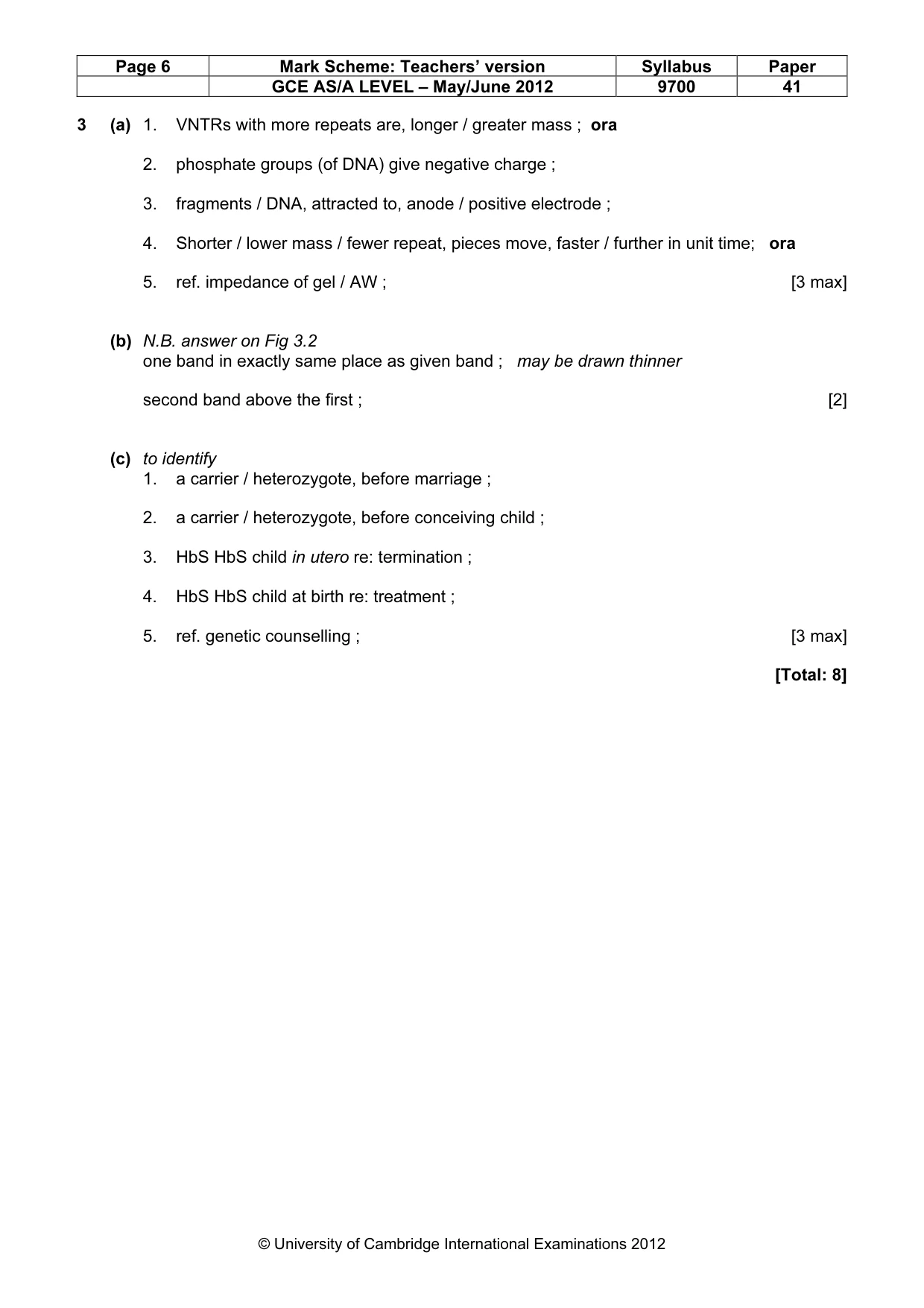
Page 6 Mark Scheme: Teachers’ version Syllabus Paper GCE AS/A LEVEL – May/June 2012 9700 41 © University of Cambridge International Examinations 2012 3 (a) 1. VNTRs with more repeats are, longer / greater mass ; ora 2. phosphate groups (of DNA) give negative charge ; 3. fragments / DNA, attracted to, anode / positive electrode ; 4. Shorter / lower mass / fewer repeat, pieces move, faster / further in unit time; ora 5. ref. impedance of gel / AW ; [3 max] (b) N.B. answer on Fig 3.2 one band in exactly same place as given band ; may be drawn thinner second band above the first ; [2] (c) to identify 1. a carrier / heterozygote, before marriage ; 2. a carrier / heterozygote, before conceiving child ; 3. HbS HbS child in utero re: termination ; 4. HbS HbS child at birth re: treatment ; 5. ref. genetic counselling ; [3 max] [Total: 8]
Mark scheme, page 7
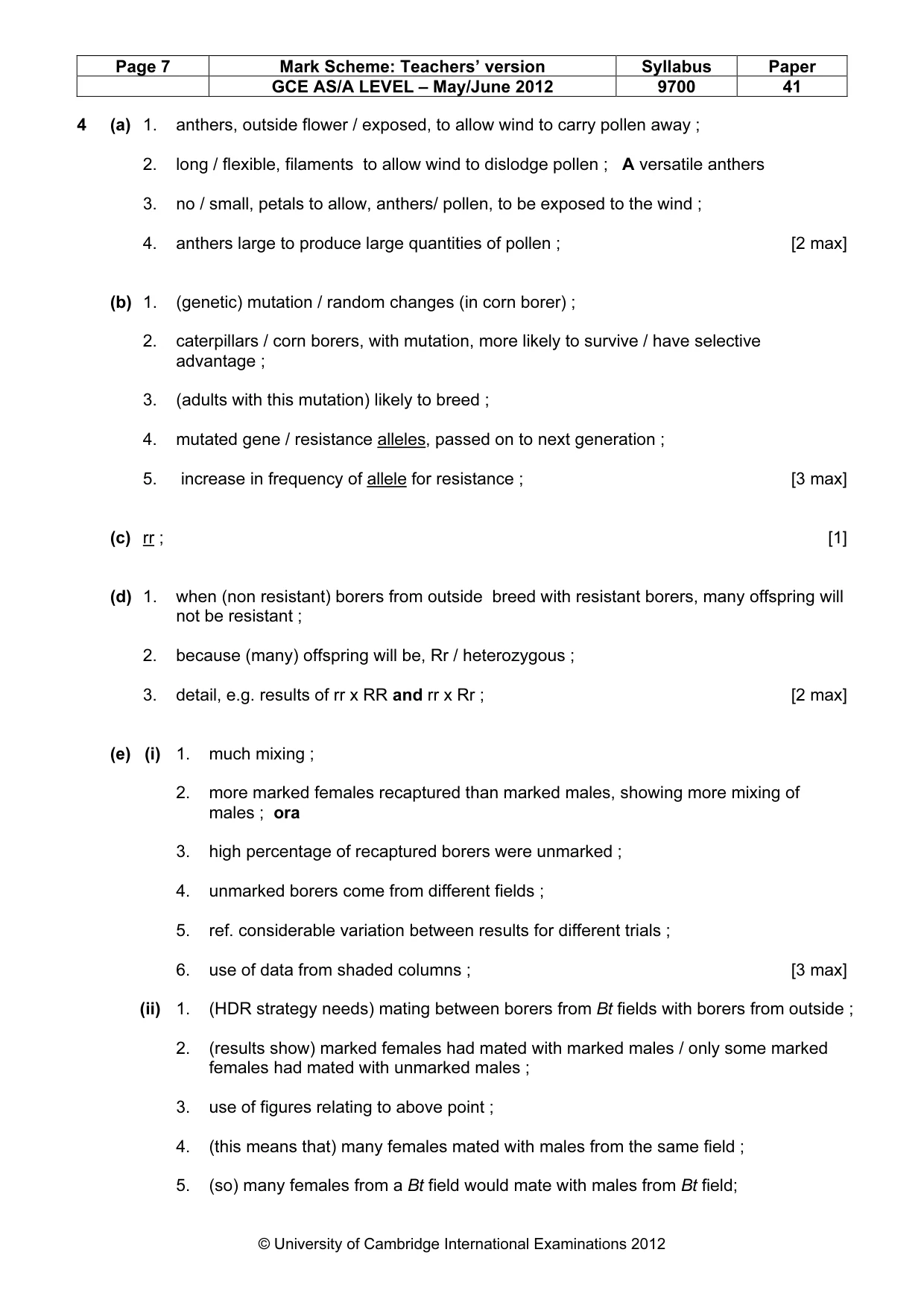
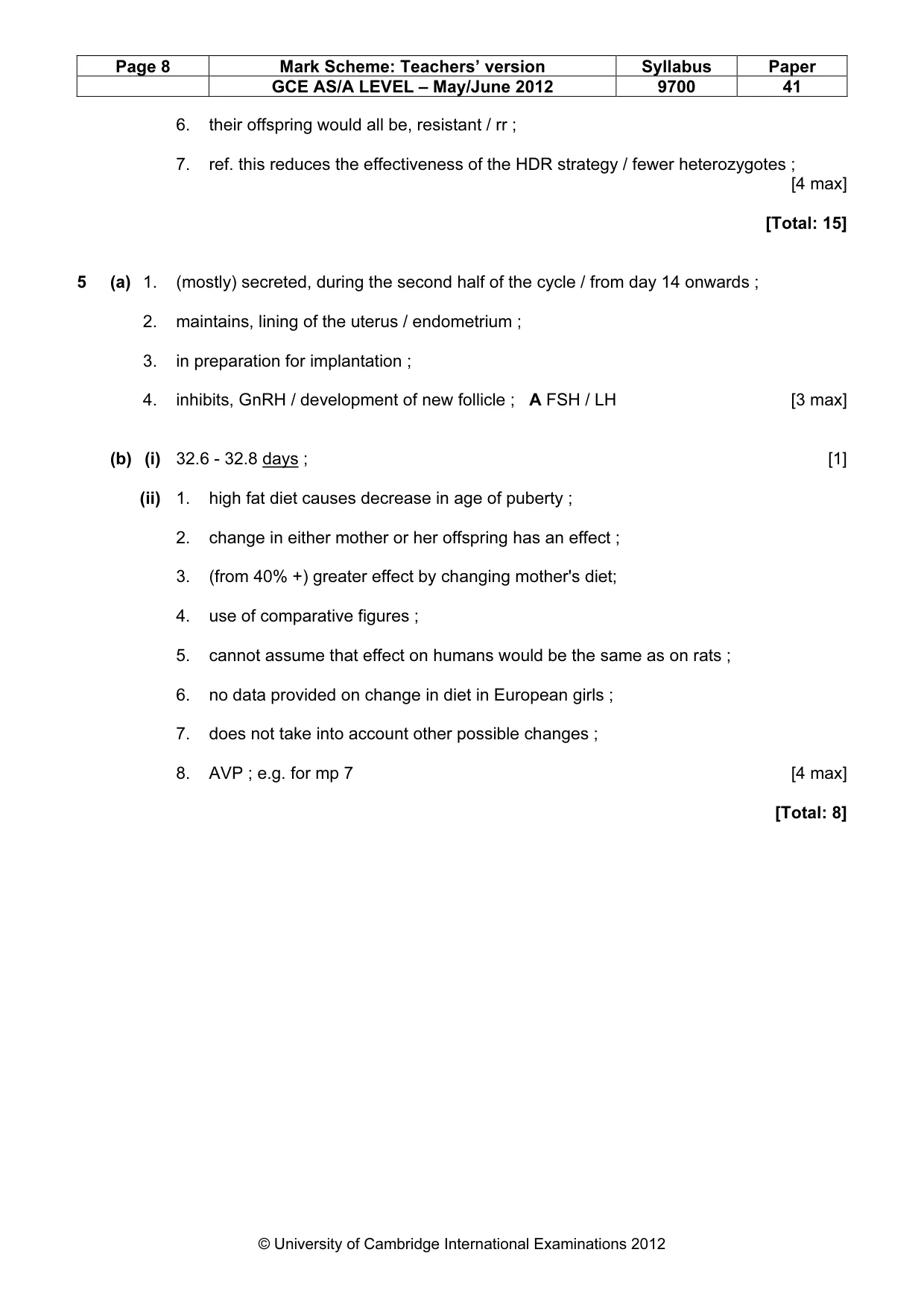
Page 7 Mark Scheme: Teachers’ version Syllabus Paper GCE AS/A LEVEL – May/June 2012 9700 41 © University of Cambridge International Examinations 2012 4 (a) 1. anthers, outside flower / exposed, to allow wind to carry pollen away ; 2. long / flexible, filaments to allow wind to dislodge pollen ; A versatile anthers 3. no / small, petals to allow, anthers/ pollen, to be exposed to the wind ; 4. anthers large to produce large quantities of pollen ; [2 max] (b) 1. (genetic) mutation / random changes (in corn borer) ; 2. caterpillars / corn borers, with mutation, more likely to survive / have selective advantage ; 3. (adults with this mutation) likely to breed ; 4. mutated gene / resistance alleles, passed on to next generation ; 5. increase in frequency of allele for resistance ; [3 max] (c) rr ; [1] (d) 1. when (non resistant) borers from outside breed with resistant borers, many offspring will not be resistant ; 2. because (many) offspring will be, Rr / heterozygous ; 3. detail, e.g. results of rr x RR and rr x Rr ; [2 max] (e) (i) 1. much mixing ; 2. more marked females recaptured than marked males, showing more mixing of males ; ora 3. high percentage of recaptured borers were unmarked ; 4. unmarked borers come from different fields ; 5. ref. considerable variation between results for different trials ; 6. use of data from shaded columns ; [3 max] (ii) 1. (HDR strategy needs) mating between borers from Bt fields with borers from outside ; 2. (results show) marked females had mated with marked males / only some marked females had mated with unmarked males ; 3. use of figures relating to above point ; 4. (this means that) many females mated with males from the same field ; 5. (so) many females from a Bt field would mate with males from Bt field;
Mark scheme, page 8
Page 8 Mark Scheme: Teachers’ version Syllabus Paper GCE AS/A LEVEL – May/June 2012 9700 41 © University of Cambridge International Examinations 2012 6. their offspring would all be, resistant / rr ; 7. ref. this reduces the effectiveness of the HDR strategy / fewer heterozygotes ; [4 max] [Total: 15] 5 (a) 1. (mostly) secreted, during the second half of the cycle / from day 14 onwards ; 2. maintains, lining of the uterus / endometrium ; 3. in preparation for implantation ; 4. inhibits, GnRH / development of new follicle ; A FSH / LH [3 max] (b) (i) 32.6 - 32.8 days ; [1] (ii) 1. high fat diet causes decrease in age of puberty ; 2. change in either mother or her offspring has an effect ; 3. (from 40% +) greater effect by changing mother's diet; 4. use of comparative figures ; 5. cannot assume that effect on humans would be the same as on rats ; 6. no data provided on change in diet in European girls ; 7. does not take into account other possible changes ; 8. AVP ; e.g. for mp 7 [4 max] [Total: 8]
Mark scheme, page 9
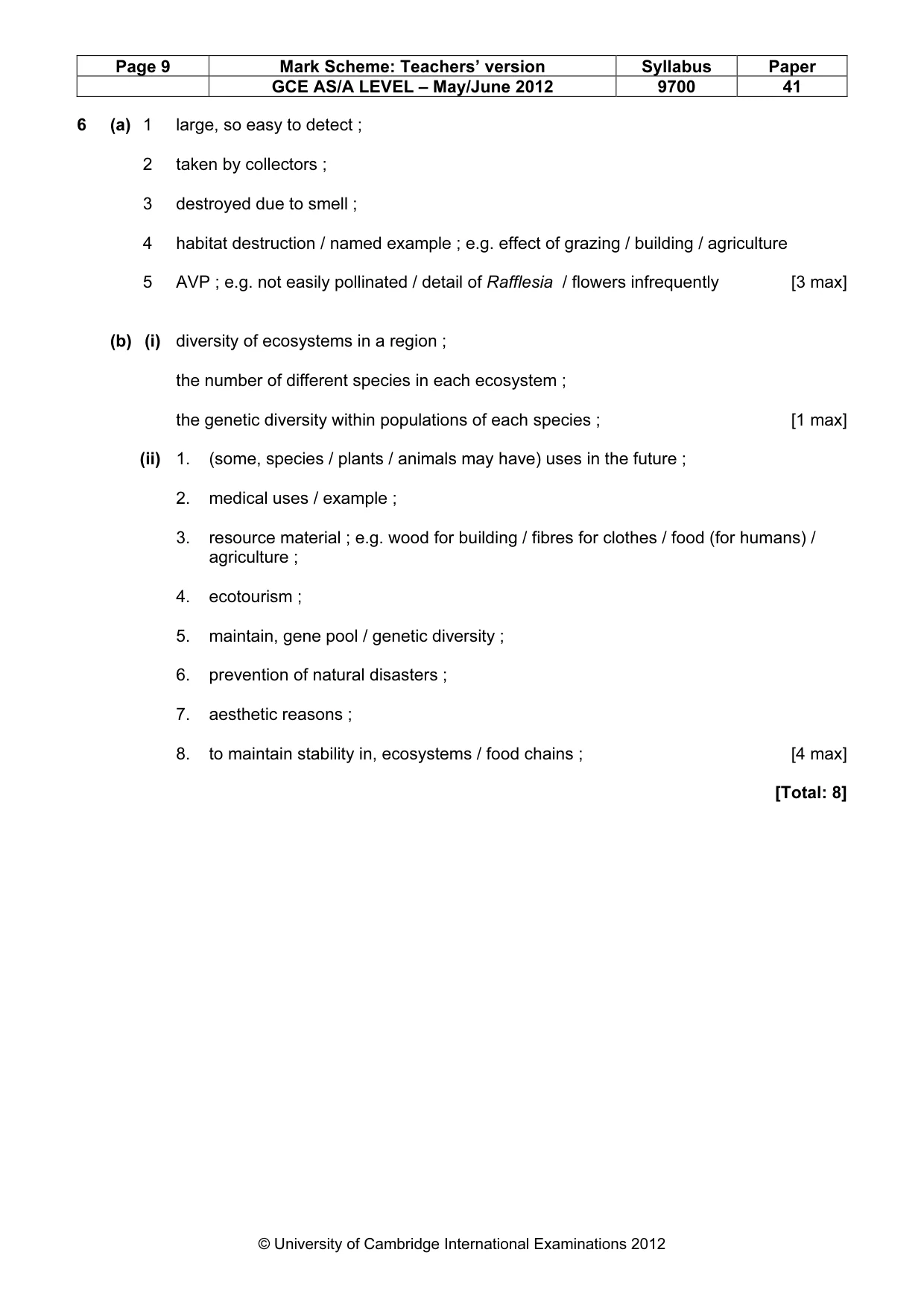
Page 9 Mark Scheme: Teachers’ version Syllabus Paper GCE AS/A LEVEL – May/June 2012 9700 41 © University of Cambridge International Examinations 2012 6 (a) 1 large, so easy to detect ; 2 taken by collectors ; 3 destroyed due to smell ; 4 habitat destruction / named example ; e.g. effect of grazing / building / agriculture 5 AVP ; e.g. not easily pollinated / detail of Rafflesia / flowers infrequently [3 max] (b) (i) diversity of ecosystems in a region ; the number of different species in each ecosystem ; the genetic diversity within populations of each species ; [1 max] (ii) 1. (some, species / plants / animals may have) uses in the future ; 2. medical uses / example ; 3. resource material ; e.g. wood for building / fibres for clothes / food (for humans) / agriculture ; 4. ecotourism ; 5. maintain, gene pool / genetic diversity ; 6. prevention of natural disasters ; 7. aesthetic reasons ; 8. to maintain stability in, ecosystems / food chains ; [4 max] [Total: 8]
Mark scheme, page 10
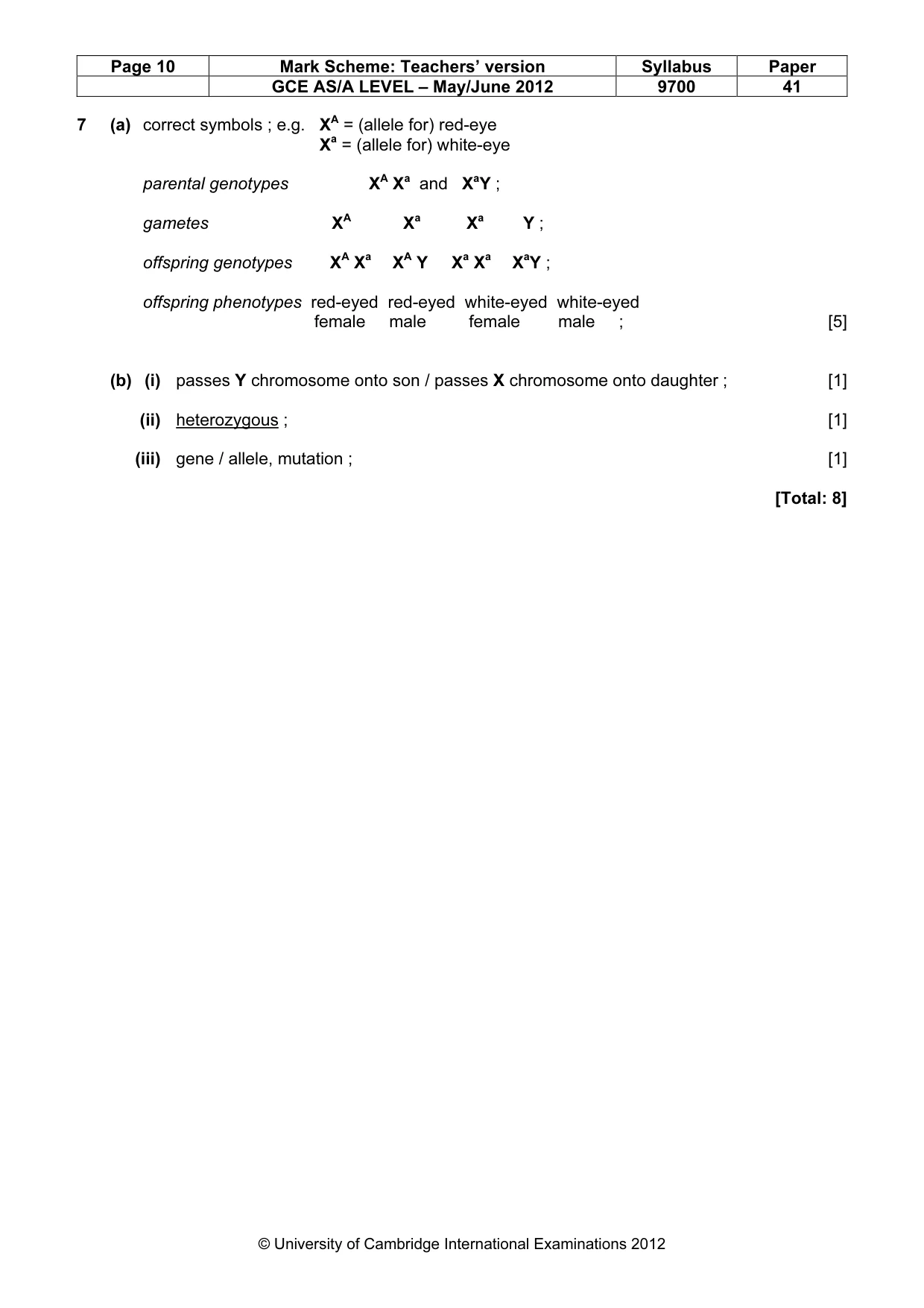
Page 10 Mark Scheme: Teachers’ version Syllabus Paper GCE AS/A LEVEL – May/June 2012 9700 41 © University of Cambridge International Examinations 2012 7 (a) correct symbols ; e.g. XA = (allele for) red-eye Xa = (allele for) white-eye parental genotypes XA Xa and XaY ; gametes XA Xa Xa Y ; offspring genotypes XA Xa XA Y Xa Xa XaY ; offspring phenotypes red-eyed red-eyed white-eyed white-eyed female male female male ; [5] (b) (i) passes Y chromosome onto son / passes X chromosome onto daughter ; [1] (ii) heterozygous ; [1] (iii) gene / allele, mutation ; [1] [Total: 8]
Mark scheme, page 11
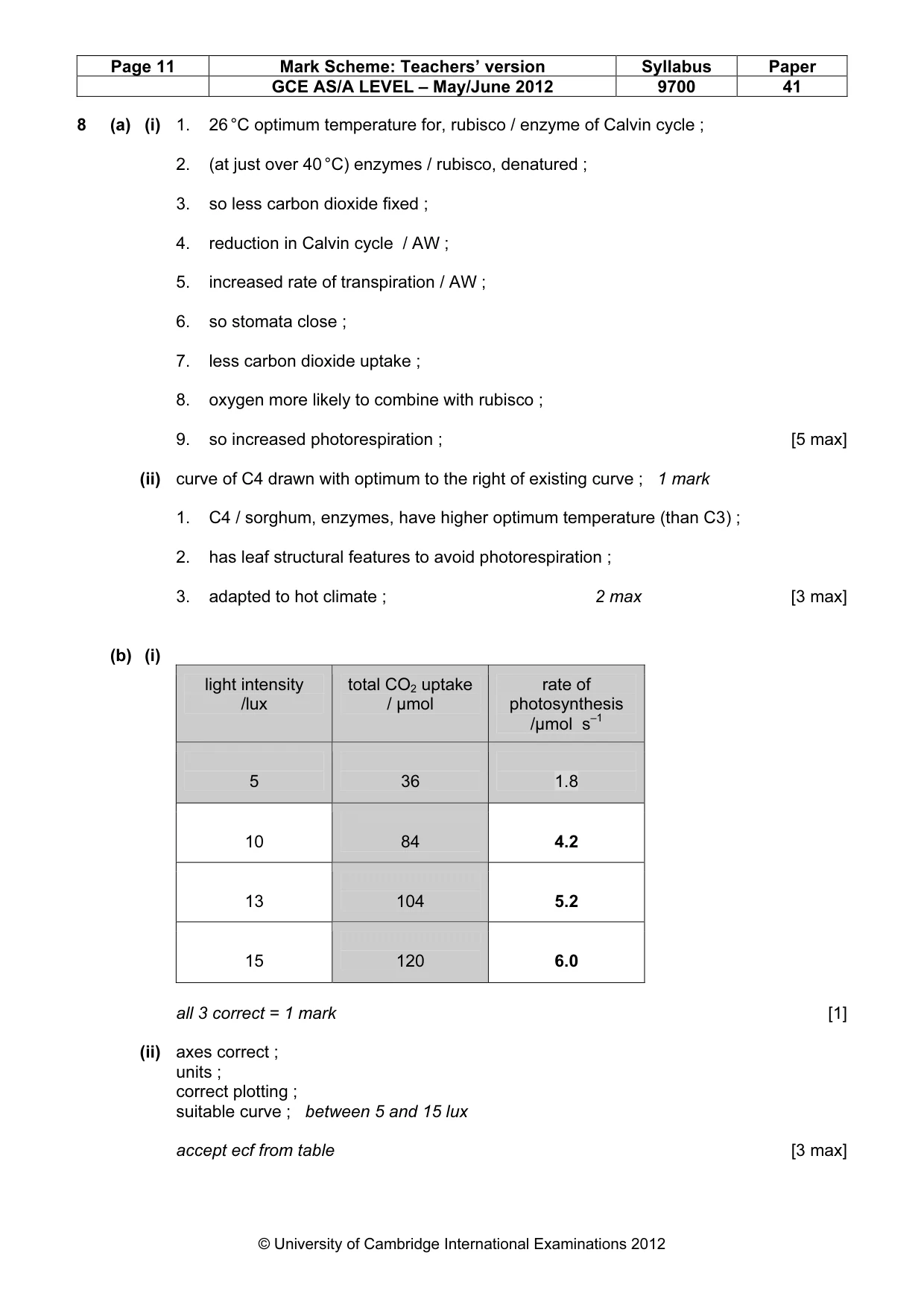
Page 11 Mark Scheme: Teachers’ version Syllabus Paper GCE AS/A LEVEL – May/June 2012 9700 41 © University of Cambridge International Examinations 2012 8 (a) (i) 1. 26 °C optimum temperature for, rubisco / enzyme of Calvin cycle ; 2. (at just over 40 °C) enzymes / rubisco, denatured ; 3. so less carbon dioxide fixed ; 4. reduction in Calvin cycle / AW ; 5. increased rate of transpiration / AW ; 6. so stomata close ; 7. less carbon dioxide uptake ; 8. oxygen more likely to combine with rubisco ; 9. so increased photorespiration ; [5 max] (ii) curve of C4 drawn with optimum to the right of existing curve ; 1 mark 1. C4 / sorghum, enzymes, have higher optimum temperature (than C3) ; 2. has leaf structural features to avoid photorespiration ; 3. adapted to hot climate ; 2 max [3 max] (b) (i) light intensity /lux total CO2 uptake / µmol rate of photosynthesis /µmol s–1 5 36 1.8 10 84 4.2 13 104 5.2 15 120 6.0 all 3 correct = 1 mark [1] (ii) axes correct ; units ; correct plotting ; suitable curve ; between 5 and 15 lux accept ecf from table [3 max]
Mark scheme, page 12
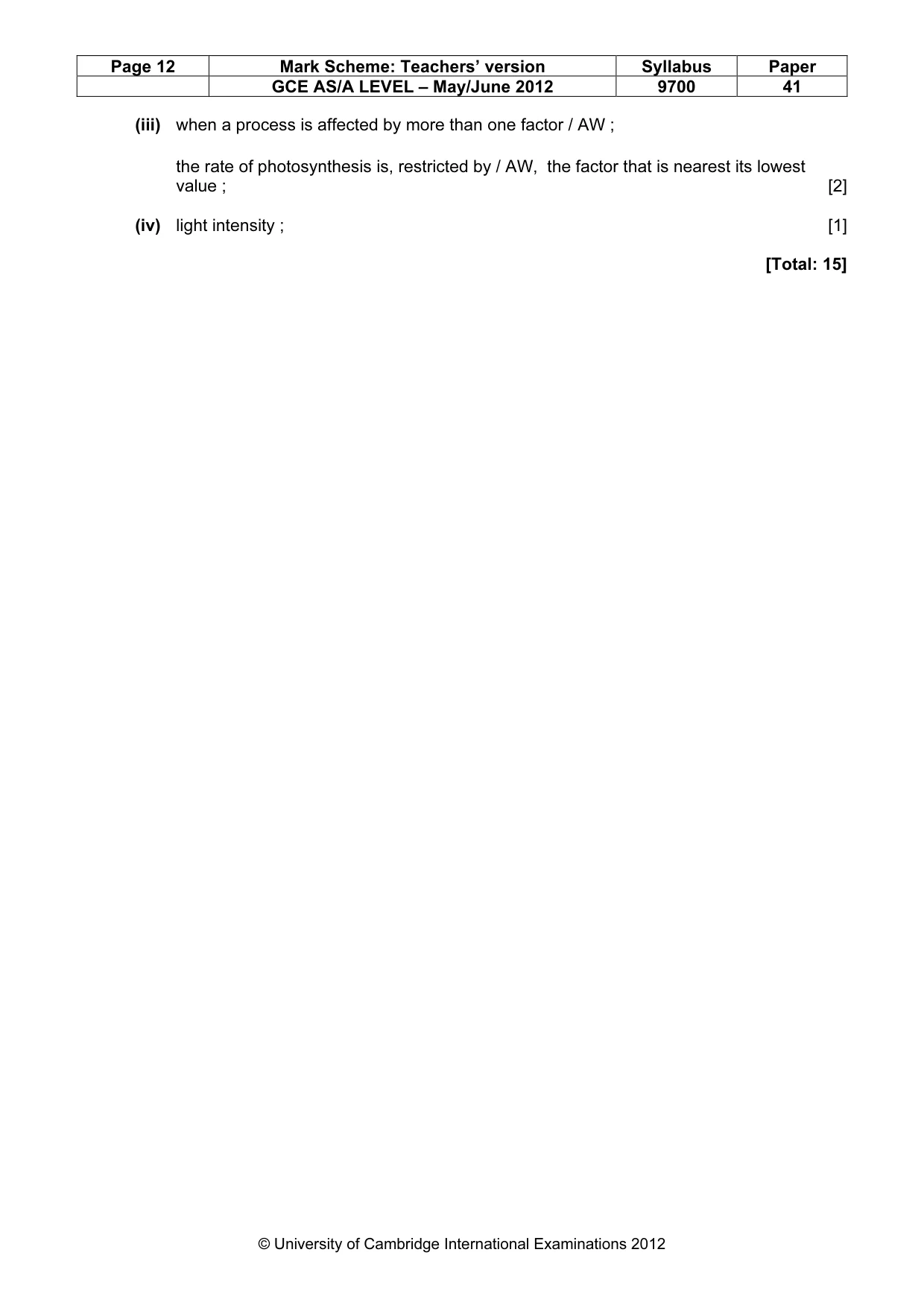
Page 12 Mark Scheme: Teachers’ version Syllabus Paper GCE AS/A LEVEL – May/June 2012 9700 41 © University of Cambridge International Examinations 2012 (iii) when a process is affected by more than one factor / AW ; the rate of photosynthesis is, restricted by / AW, the factor that is nearest its lowest value ; [2] (iv) light intensity ; [1] [Total: 15]
Mark scheme, page 13
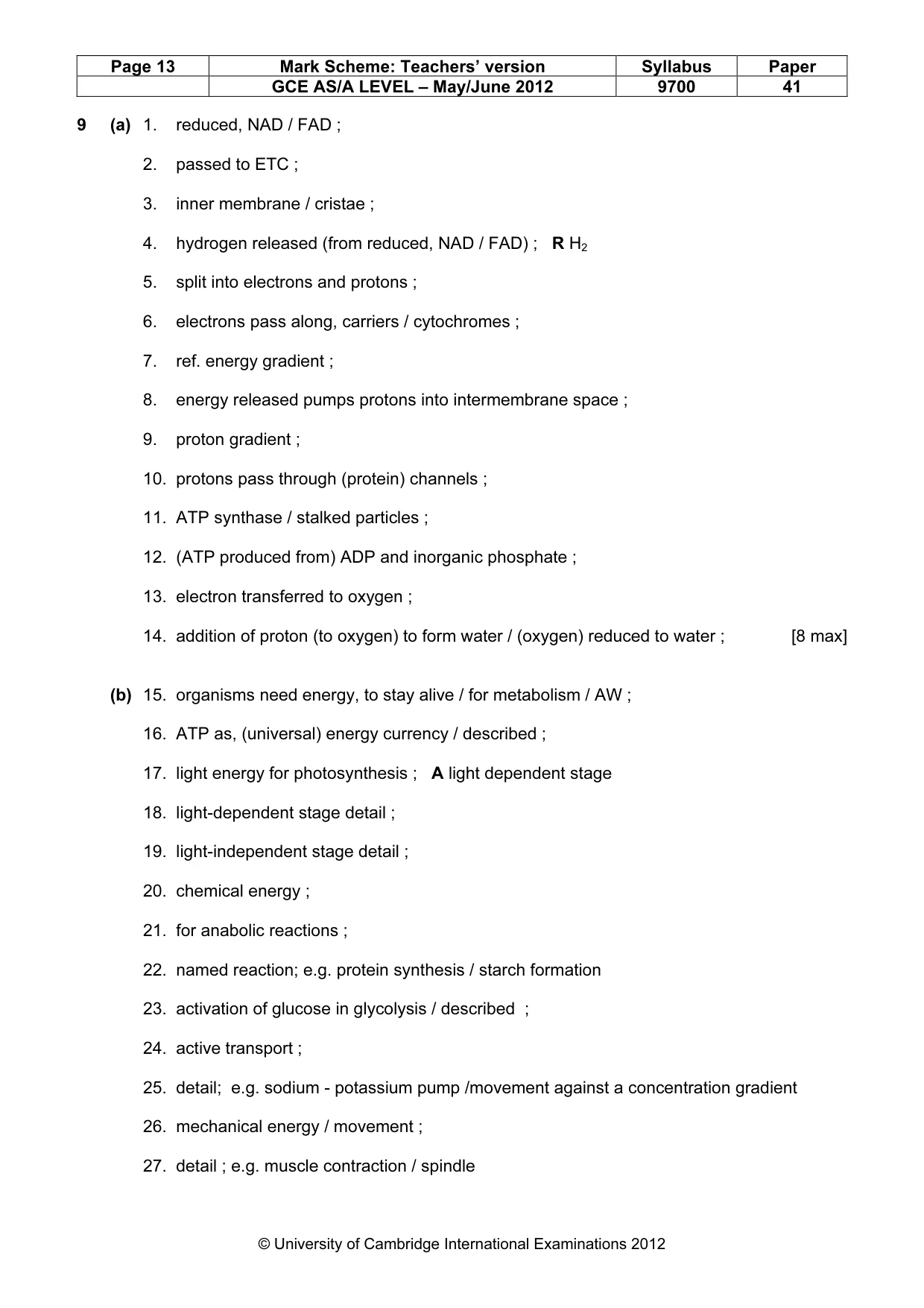
Page 13 Mark Scheme: Teachers’ version Syllabus Paper GCE AS/A LEVEL – May/June 2012 9700 41 © University of Cambridge International Examinations 2012 9 (a) 1. reduced, NAD / FAD ; 2. passed to ETC ; 3. inner membrane / cristae ; 4. hydrogen released (from reduced, NAD / FAD) ; R H2 5. split into electrons and protons ; 6. electrons pass along, carriers / cytochromes ; 7. ref. energy gradient ; 8. energy released pumps protons into intermembrane space ; 9. proton gradient ; 10. protons pass through (protein) channels ; 11. ATP synthase / stalked particles ; 12. (ATP produced from) ADP and inorganic phosphate ; 13. electron transferred to oxygen ; 14. addition of proton (to oxygen) to form water / (oxygen) reduced to water ; [8 max] (b) 15. organisms need energy, to stay alive / for metabolism / AW ; 16. ATP as, (universal) energy currency / described ; 17. light energy for photosynthesis ; A light dependent stage 18. light-dependent stage detail ; 19. light-independent stage detail ; 20. chemical energy ; 21. for anabolic reactions ; 22. named reaction; e.g. protein synthesis / starch formation 23. activation of glucose in glycolysis / described ; 24. active transport ; 25. detail; e.g. sodium - potassium pump /movement against a concentration gradient 26. mechanical energy / movement ; 27. detail ; e.g. muscle contraction / spindle
Mark scheme, page 14
Page 14 Mark Scheme: Teachers’ version Syllabus Paper GCE AS/A LEVEL – May/June 2012 9700 41 © University of Cambridge International Examinations 2012 28. temperature regulation ; 29. AVP ; e.g. bioluminescence / electrical discharge [7 max] [Total: 15]
Mark scheme, page 15
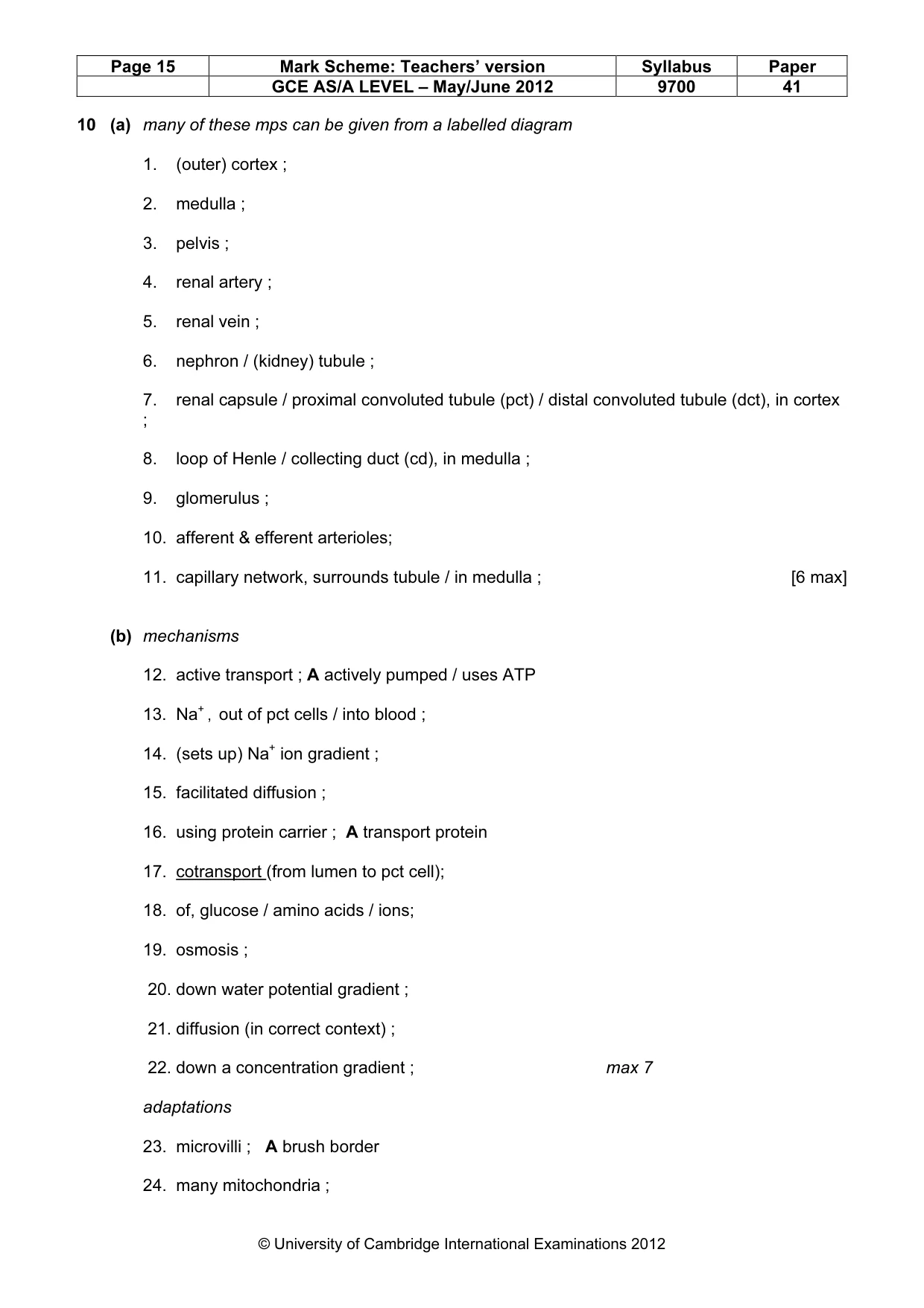
Page 15 Mark Scheme: Teachers’ version Syllabus Paper GCE AS/A LEVEL – May/June 2012 9700 41 © University of Cambridge International Examinations 2012 10 (a) many of these mps can be given from a labelled diagram 1. (outer) cortex ; 2. medulla ; 3. pelvis ; 4. renal artery ; 5. renal vein ; 6. nephron / (kidney) tubule ; 7. renal capsule / proximal convoluted tubule (pct) / distal convoluted tubule (dct), in cortex ; 8. loop of Henle / collecting duct (cd), in medulla ; 9. glomerulus ; 10. afferent & efferent arterioles; 11. capillary network, surrounds tubule / in medulla ; [6 max] (b) mechanisms 12. active transport ; A actively pumped / uses ATP 13. Na+ , out of pct cells / into blood ; 14. (sets up) Na+ ion gradient ; 15. facilitated diffusion ; 16. using protein carrier ; A transport protein 17. cotransport (from lumen to pct cell); 18. of, glucose / amino acids / ions; 19. osmosis ; 20. down water potential gradient ; 21. diffusion (in correct context) ; 22. down a concentration gradient ; max 7 adaptations 23. microvilli ; A brush border 24. many mitochondria ;
Mark scheme, page 16
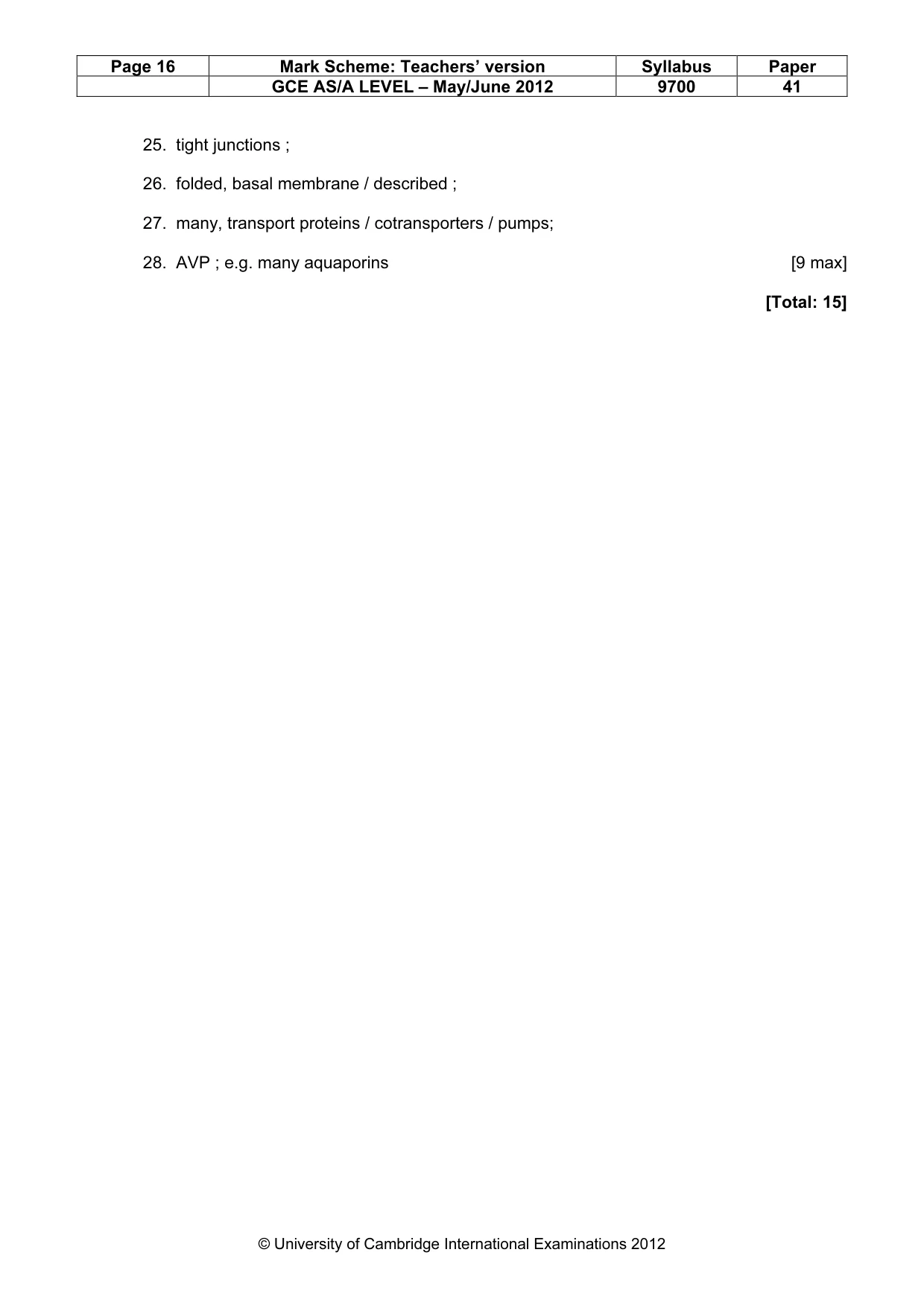
Page 16 Mark Scheme: Teachers’ version Syllabus Paper GCE AS/A LEVEL – May/June 2012 9700 41 © University of Cambridge International Examinations 2012 25. tight junctions ; 26. folded, basal membrane / described ; 27. many, transport proteins / cotransporters / pumps; 28. AVP ; e.g. many aquaporins [9 max] [Total: 15]
What you needed in this session
Cambridge’s own grade thresholds for 2012 May/June, Paper 4 · Variant 1. A higher threshold means an easier paper — the bar moves with how the cohort did.