Cambridge A Level Biology 9700 — 2012 May/June Paper 2 · Variant 3
9700/23/M/J/12 · 60 marks · ≈68 min
The question paper and its mark scheme, free to read here and free to download. This is Cambridge’s own paper, exactly as it was sat.
Question paper16 pages


Mark scheme7 pages
Answers below. Sit the paper first if you are practising.
Paper as text
Question paper, page 1
This document consists of 13 printed pages and 3 blank pages. DC (SM/SW) 47766/5 © UCLES 2012 [Turn over UNIVERSITY OF CAMBRIDGE INTERNATIONAL EXAMINATIONS General Certificate of Education Advanced Subsidiary Level and Advanced Level * 5 1 9 7 5 0 8 2 9 4 * BIOLOGY 9700/23 Paper 2 Structured Questions AS May/June 2012 1 hour 15 minutes Candidates answer on the Question Paper. No Additional Materials are required. READ THESE INSTRUCTIONS FIRST Write your Centre number, candidate number and name in the spaces provided at the top of this page. Write in dark blue or black ink. You may use a soft pencil for any diagrams, graphs or rough working. Do not use red ink, staples, paper clips, highlighters, glue or correction fluid. DO NOT WRITE IN ANY BARCODES. Answer all questions. At the end of the examination, fasten all your work securely together. The number of marks is given in brackets [ ] at the end of each question or part question. For Examiner’s Use 1 2 3 4 5 6 Total
Question paper, page 2
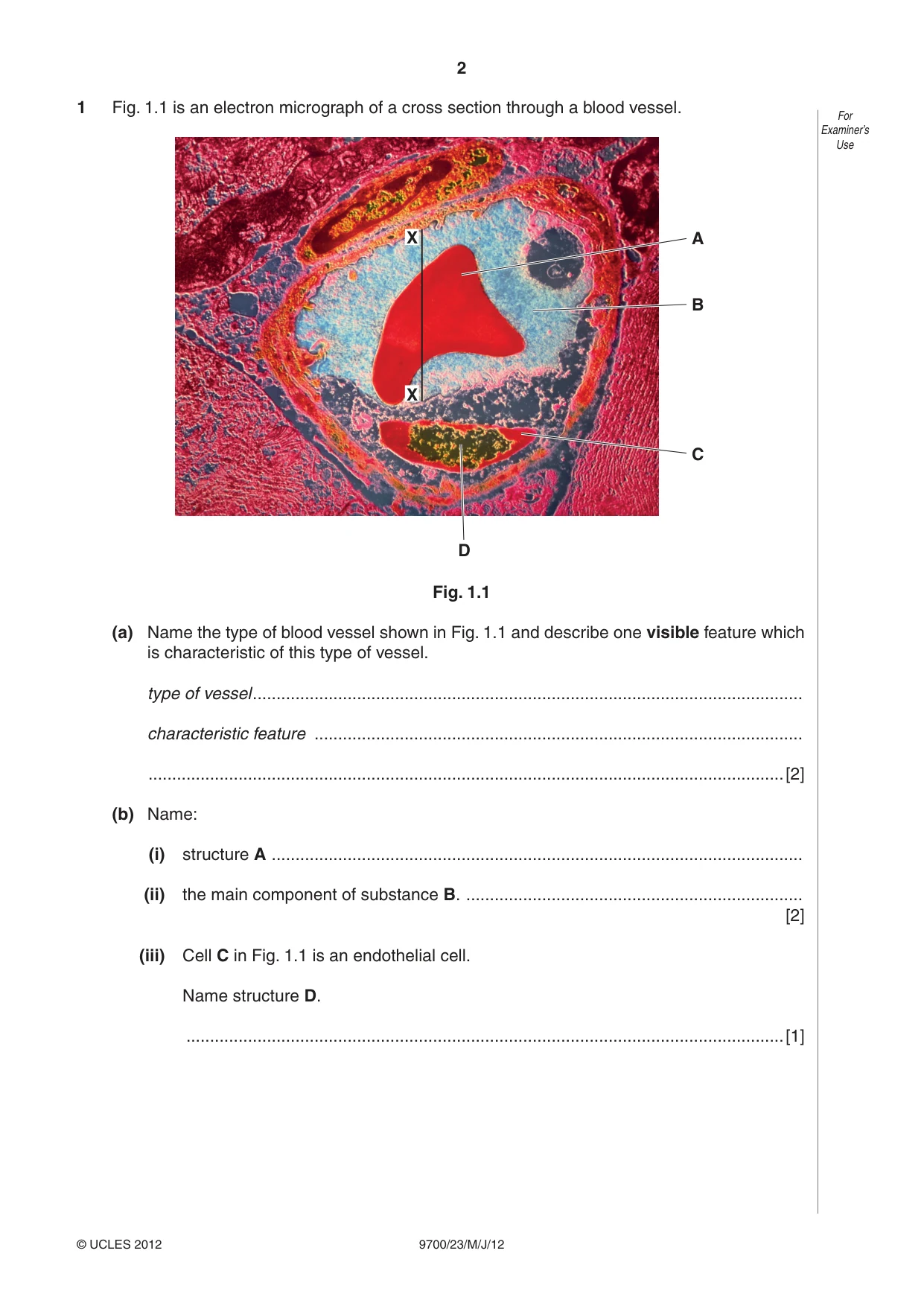
2 9700/23/M/J/12 © UCLES 2012 For Examiner’s Use 1 Fig. 1.1 is an electron micrograph of a cross section through a blood vessel. X X A B C D Fig. 1.1 (a) Name the type of blood vessel shown in Fig. 1.1 and describe one visible feature which is characteristic of this type of vessel. type of vessel … characteristic feature … …[2] (b) Name: (i) structure A … (ii) the main component of substance B. … [2] (iii) Cell C in Fig. 1.1 is an endothelial cell. Name structure D. …[1]
Question paper, page 3
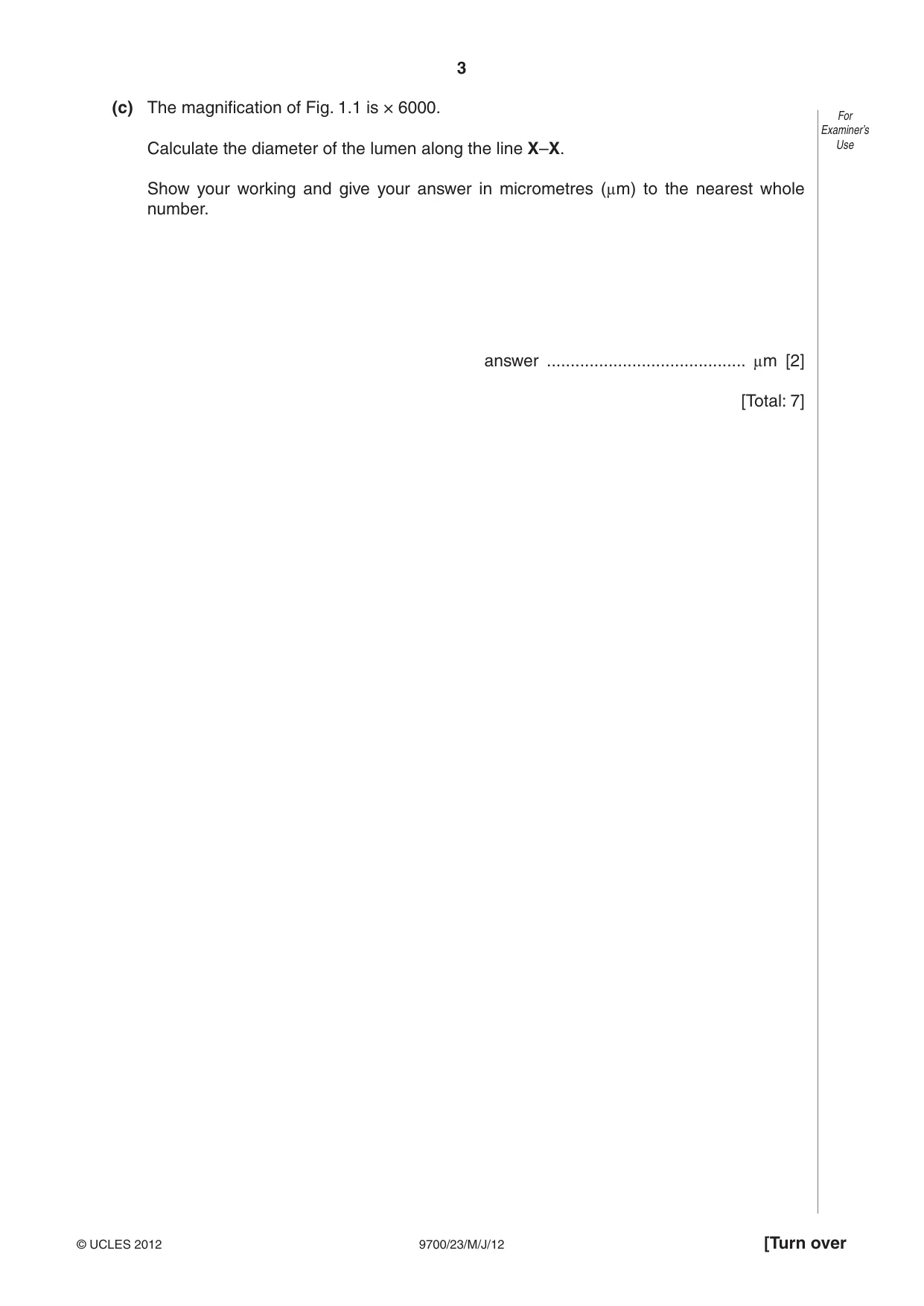
3 9700/23/M/J/12 © UCLES 2012 [Turn over For Examiner’s Use (c) The magnification of Fig. 1.1 is × 6000. Calculate the diameter of the lumen along the line X–X. Show your working and give your answer in micrometres (μm) to the nearest whole number. answer … μm [2] [Total: 7]
Question paper, page 4
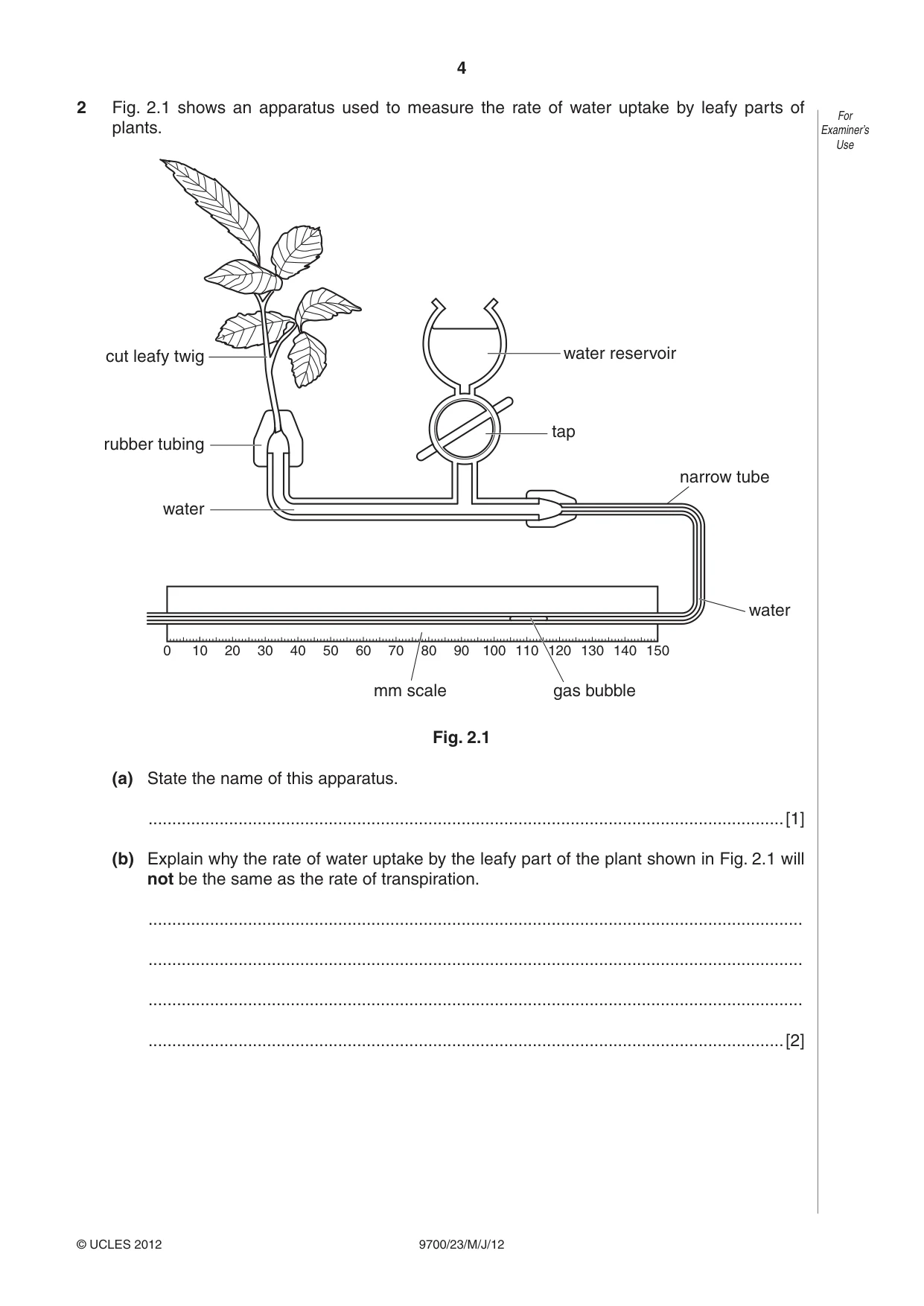
4 9700/23/M/J/12 © UCLES 2012 For Examiner’s Use 2 Fig. 2.1 shows an apparatus used to measure the rate of water uptake by leafy parts of plants. 0 10 20 30 40 50 60 70 80 90 100 110 120 130 140 150 mm scale gas bubble water narrow tube tap water reservoir cut leafy twig rubber tubing water Fig. 2.1 (a) State the name of this apparatus. …[1] (b) Explain why the rate of water uptake by the leafy part of the plant shown in Fig. 2.1 will not be the same as the rate of transpiration. … … … …[2]
Question paper, page 5
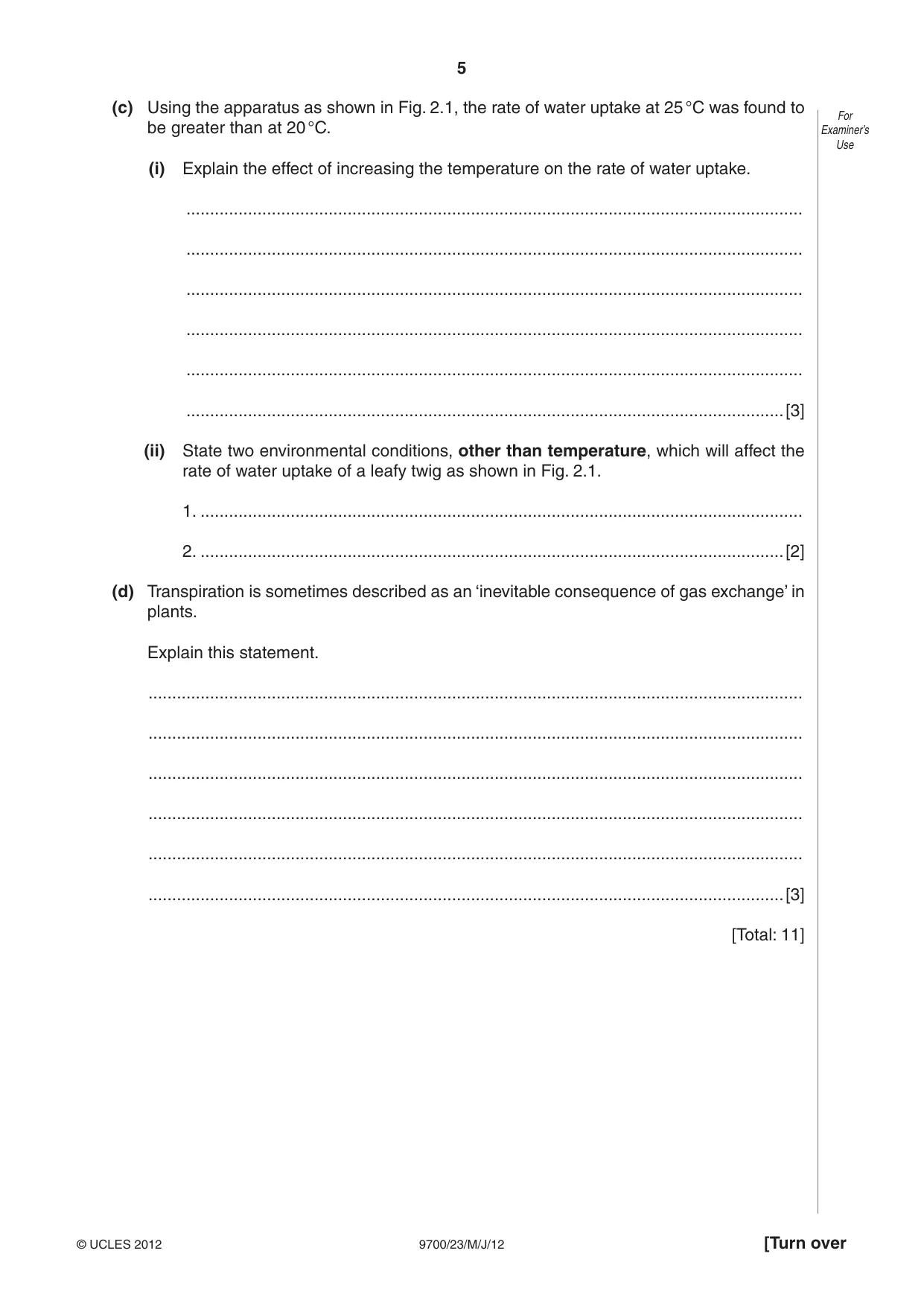
5 9700/23/M/J/12 © UCLES 2012 [Turn over For Examiner’s Use (c) Using the apparatus as shown in Fig. 2.1, the rate of water uptake at 25 °C was found to be greater than at 20 °C. (i) Explain the effect of increasing the temperature on the rate of water uptake. … … … … … …[3] (ii) State two environmental conditions, other than temperature, which will affect the rate of water uptake of a leafy twig as shown in Fig. 2.1. 1. … 2. …[2] (d) Transpiration is sometimes described as an ‘inevitable consequence of gas exchange’ in plants. Explain this statement. … … … … … …[3] [Total: 11]
Question paper, page 6
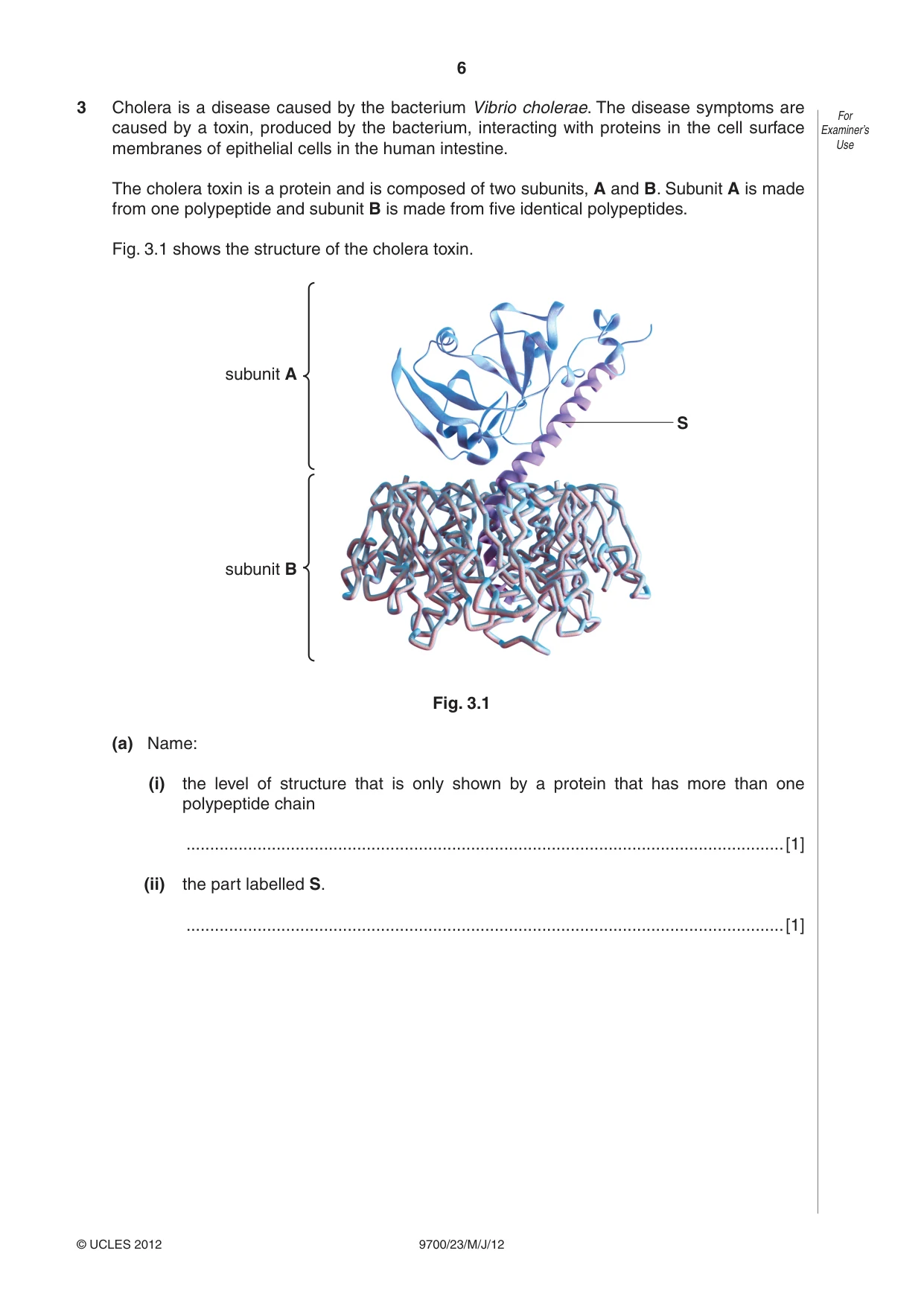
6 9700/23/M/J/12 © UCLES 2012 For Examiner’s Use 3 Cholera is a disease caused by the bacterium Vibrio cholerae. The disease symptoms are caused by a toxin, produced by the bacterium, interacting with proteins in the cell surface membranes of epithelial cells in the human intestine. The cholera toxin is a protein and is composed of two subunits, A and B. Subunit A is made from one polypeptide and subunit B is made from five identical polypeptides. Fig. 3.1 shows the structure of the cholera toxin. subunit A subunit B S Fig. 3.1 (a) Name: (i) the level of structure that is only shown by a protein that has more than one polypeptide chain …[1] (ii) the part labelled S. …[1]
Question paper, page 7
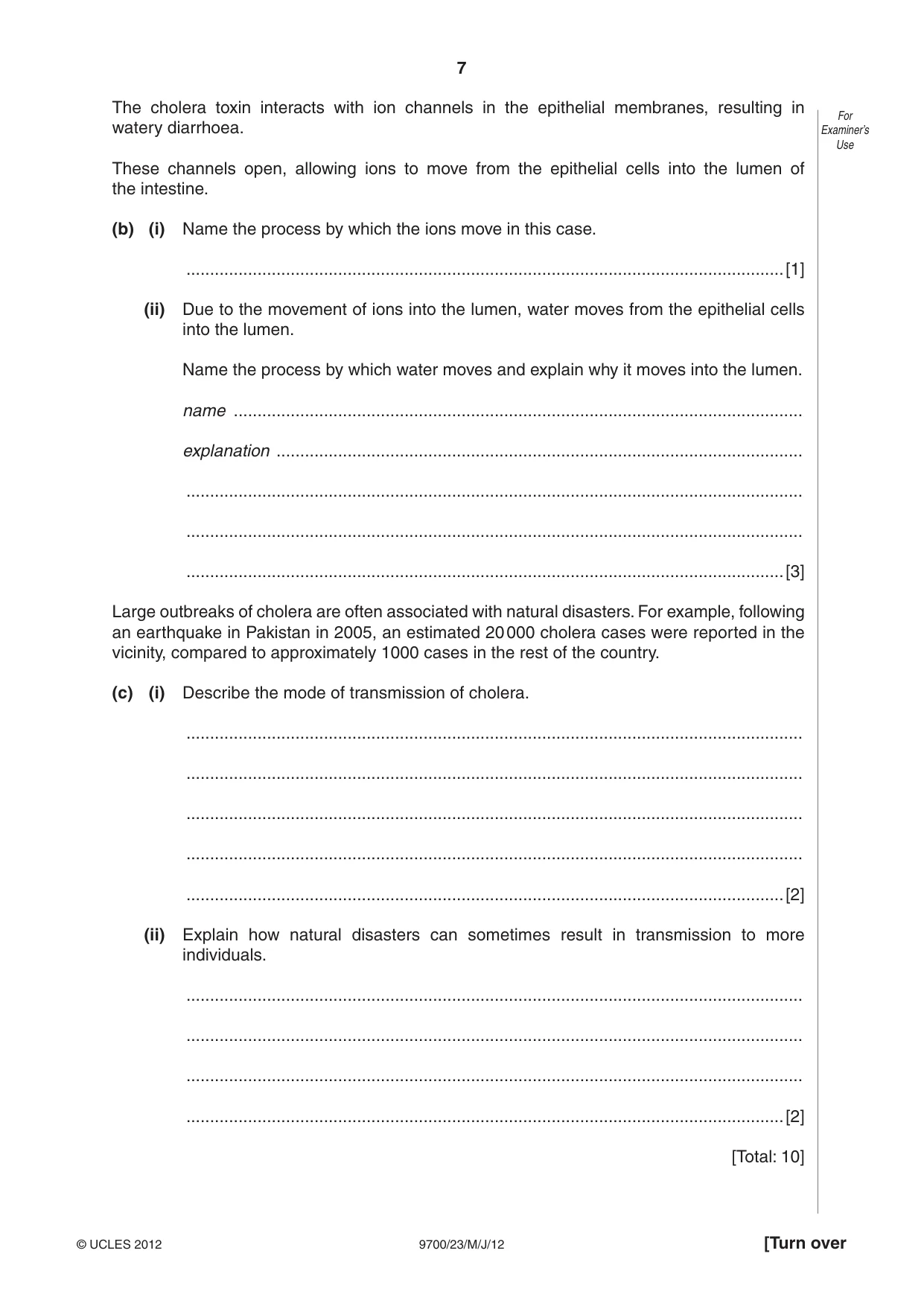
7 9700/23/M/J/12 © UCLES 2012 [Turn over For Examiner’s Use The cholera toxin interacts with ion channels in the epithelial membranes, resulting in watery diarrhoea. These channels open, allowing ions to move from the epithelial cells into the lumen of the intestine. (b) (i) Name the process by which the ions move in this case. …[1] (ii) Due to the movement of ions into the lumen, water moves from the epithelial cells into the lumen. Name the process by which water moves and explain why it moves into the lumen. name … explanation … … … …[3] Large outbreaks of cholera are often associated with natural disasters. For example, following an earthquake in Pakistan in 2005, an estimated 20 000 cholera cases were reported in the vicinity, compared to approximately 1000 cases in the rest of the country. (c) (i) Describe the mode of transmission of cholera. … … … … …[2] (ii) Explain how natural disasters can sometimes result in transmission to more individuals. … … … …[2] [Total: 10]
Question paper, page 8
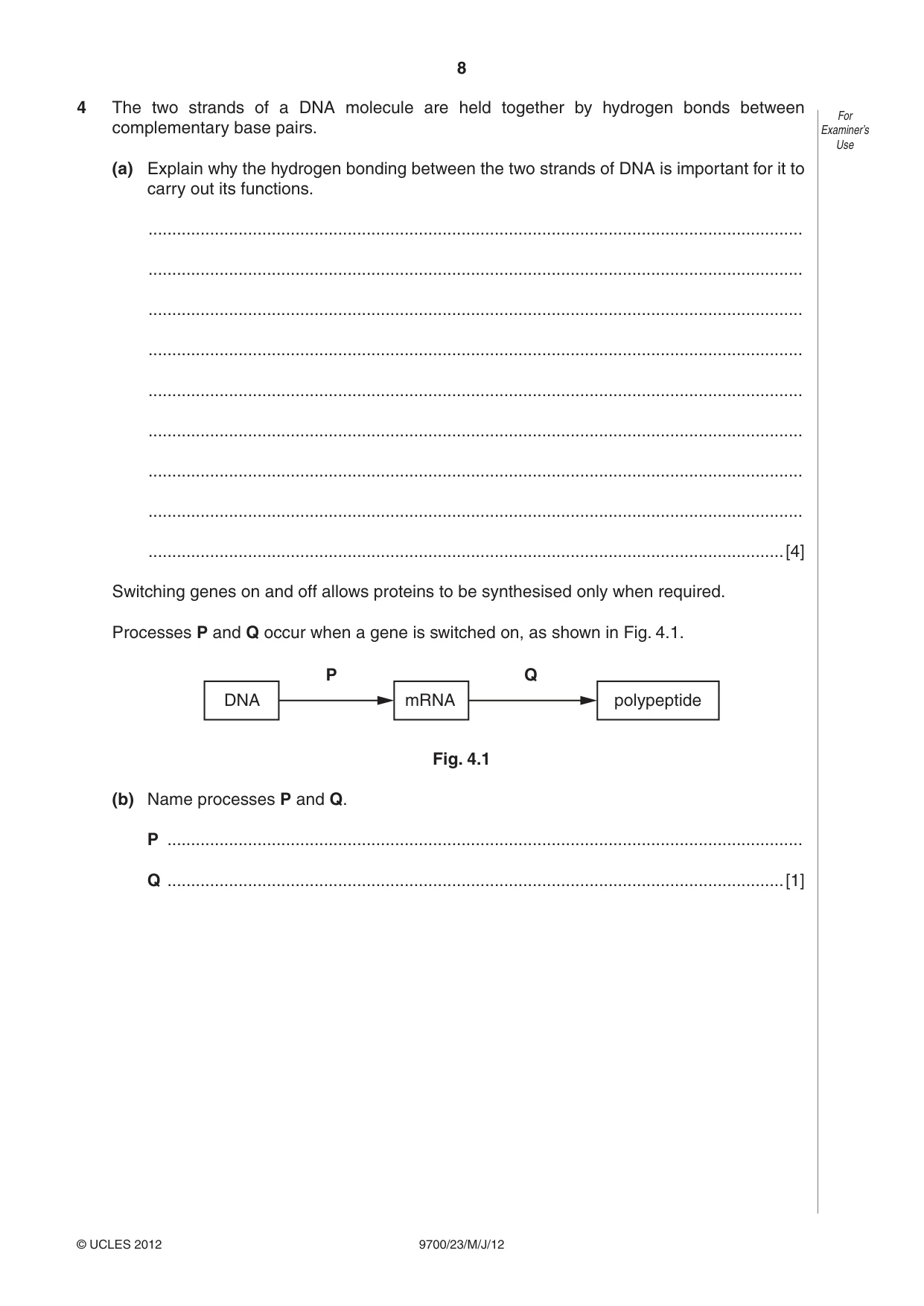
8 9700/23/M/J/12 © UCLES 2012 For Examiner’s Use 4 The two strands of a DNA molecule are held together by hydrogen bonds between complementary base pairs. (a) Explain why the hydrogen bonding between the two strands of DNA is important for it to carry out its functions. … … … … … … … … …[4] Switching genes on and off allows proteins to be synthesised only when required. Processes P and Q occur when a gene is switched on, as shown in Fig. 4.1. DNA mRNA polypeptide P Q Fig. 4.1 (b) Name processes P and Q. P … Q …[1]
Question paper, page 9
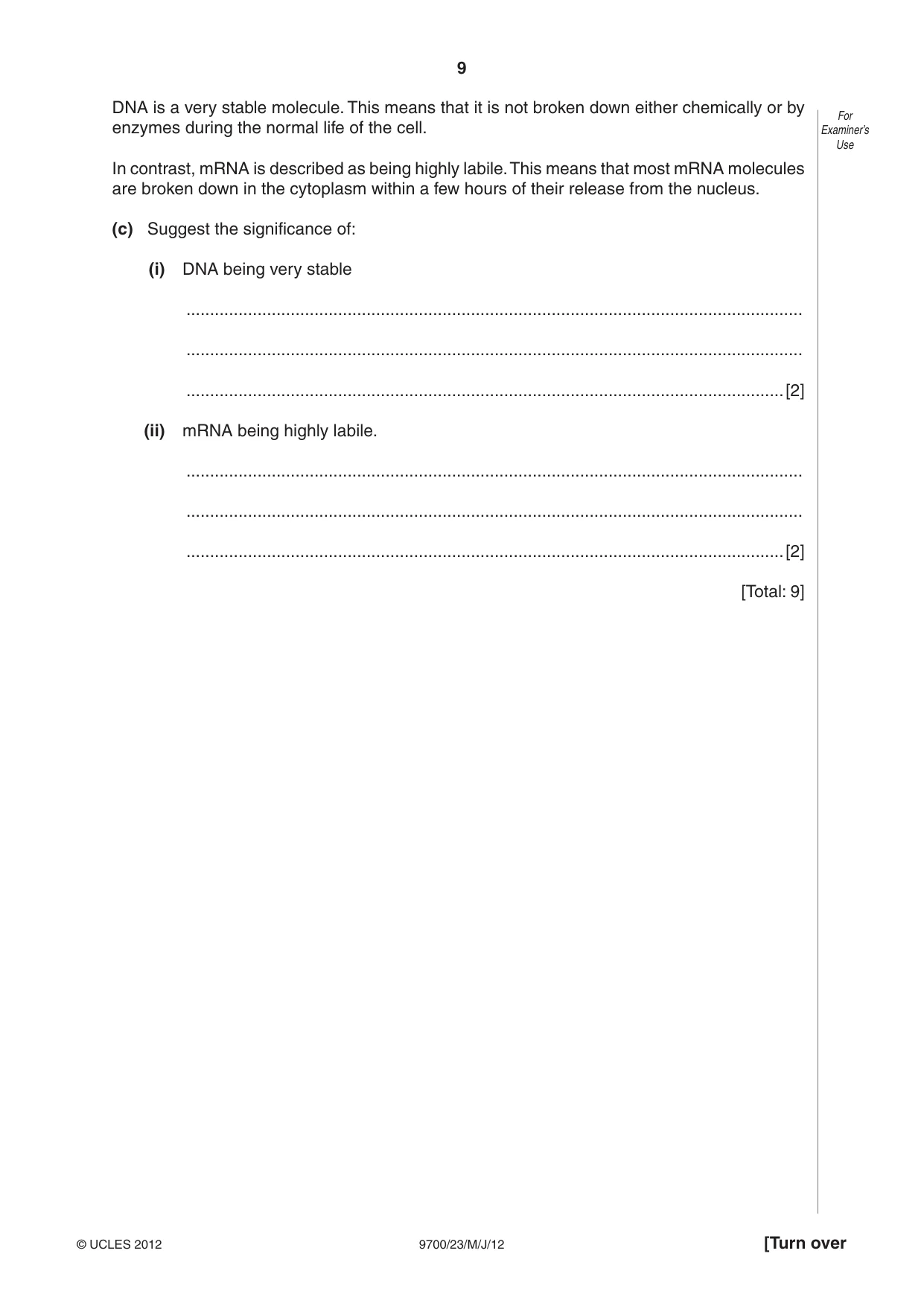
9 9700/23/M/J/12 © UCLES 2012 [Turn over For Examiner’s Use DNA is a very stable molecule. This means that it is not broken down either chemically or by enzymes during the normal life of the cell. In contrast, mRNA is described as being highly labile. This means that most mRNA molecules are broken down in the cytoplasm within a few hours of their release from the nucleus. (c) Suggest the significance of: (i) DNA being very stable … … …[2] (ii) mRNA being highly labile. … … …[2] [Total: 9]
Question paper, page 10
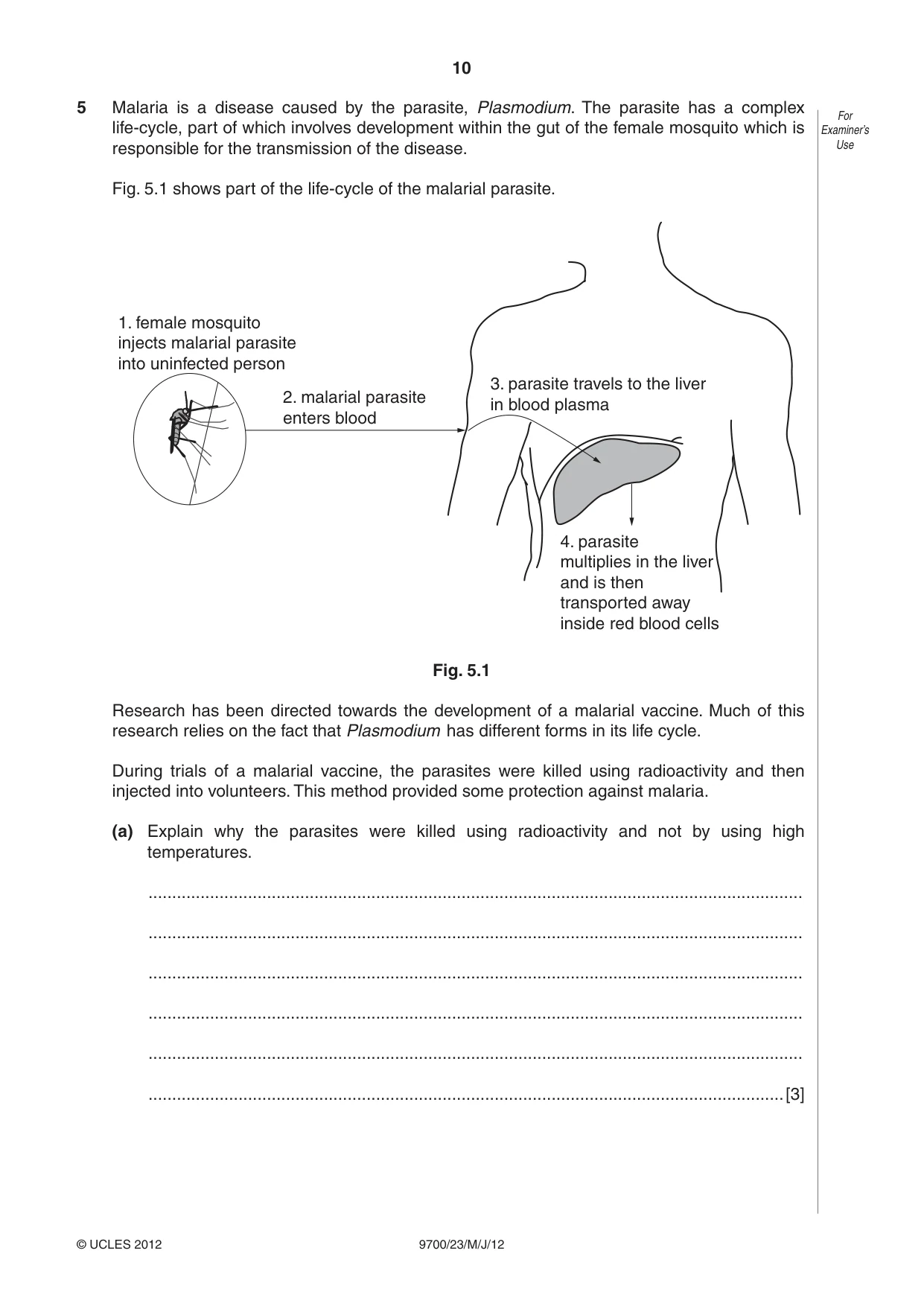
10 9700/23/M/J/12 © UCLES 2012 For Examiner’s Use 5 Malaria is a disease caused by the parasite, Plasmodium. The parasite has a complex life-cycle, part of which involves development within the gut of the female mosquito which is responsible for the transmission of the disease. Fig. 5.1 shows part of the life-cycle of the malarial parasite. 3. parasite travels to the liver in blood plasma 4. parasite multiplies in the liver and is then transported away inside red blood cells 2. malarial parasite enters blood 1. female mosquito injects malarial parasite into uninfected person Fig. 5.1 Research has been directed towards the development of a malarial vaccine. Much of this research relies on the fact that Plasmodium has different forms in its life cycle. During trials of a malarial vaccine, the parasites were killed using radioactivity and then injected into volunteers. This method provided some protection against malaria. (a) Explain why the parasites were killed using radioactivity and not by using high temperatures. … … … … … …[3]
Question paper, page 11
11 9700/23/M/J/12 © UCLES 2012 [Turn over For Examiner’s Use (b) With reference to Fig. 5.1, explain why the researchers decided to use the form of the parasite which is injected by mosquitoes and not the form which leaves the liver. … … … … … … …[3] (c) The volunteers who were injected with the killed parasites produced antibodies, which provided some protection against the disease. Outline the events that occur following injection of the parasites, which lead to the production of antibodies. … … … … … … … … … … …[5] [Total: 11]
Question paper, page 12
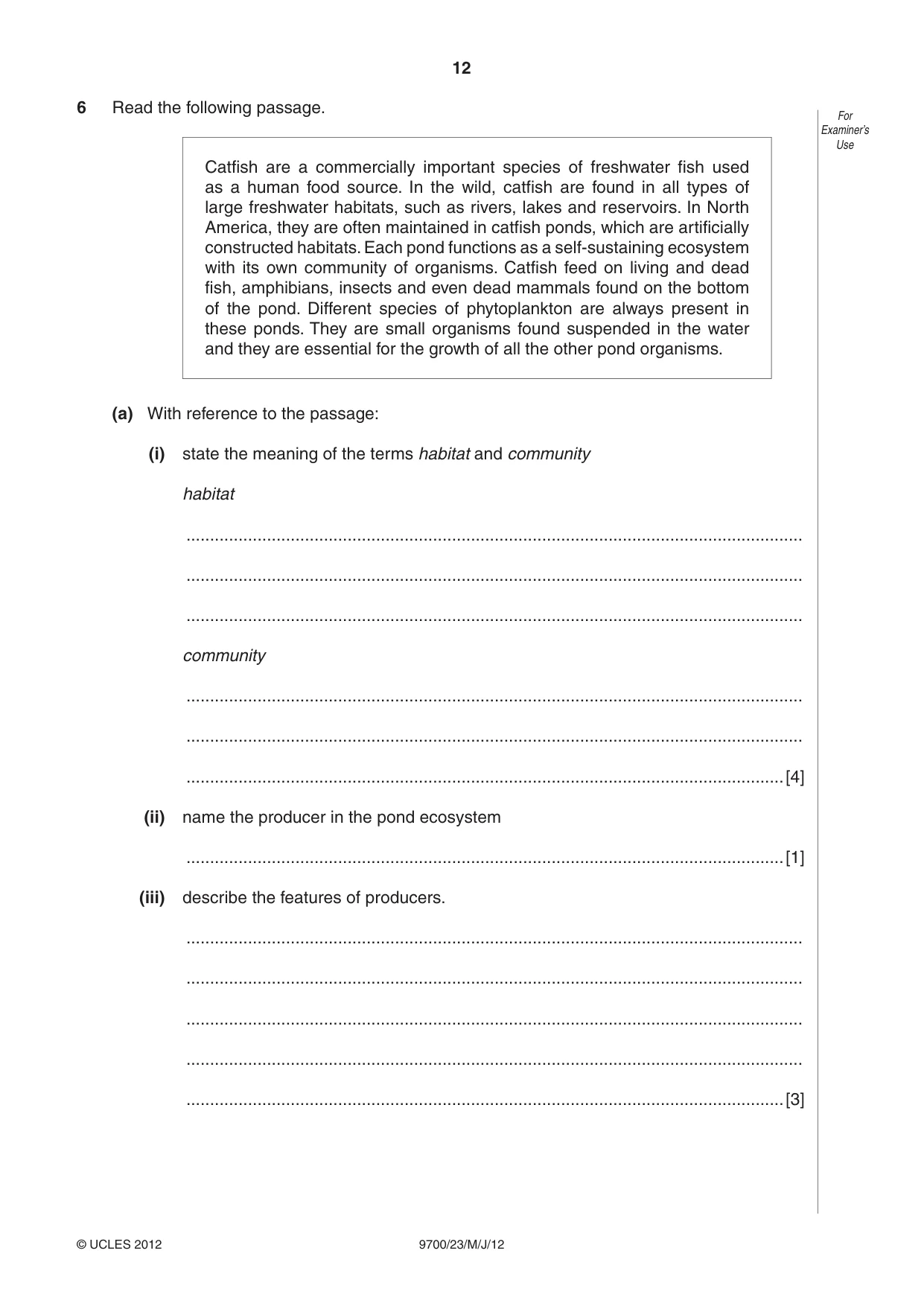
12 9700/23/M/J/12 © UCLES 2012 For Examiner’s Use 6 Read the following passage. Catfish are a commercially important species of freshwater fish used as a human food source. In the wild, catfish are found in all types of large freshwater habitats, such as rivers, lakes and reservoirs. In North America, they are often maintained in catfish ponds, which are artificially constructed habitats. Each pond functions as a self-sustaining ecosystem with its own community of organisms. Catfish feed on living and dead fish, amphibians, insects and even dead mammals found on the bottom of the pond. Different species of phytoplankton are always present in these ponds. They are small organisms found suspended in the water and they are essential for the growth of all the other pond organisms. (a) With reference to the passage: (i) state the meaning of the terms habitat and community habitat … … … community … … …[4] (ii) name the producer in the pond ecosystem …[1] (iii) describe the features of producers. … … … … …[3]
Question paper, page 13
13 9700/23/M/J/12 © UCLES 2012 For Examiner’s Use (b) Studies on the energy efficiency of raising catfish in ponds have shown that only 15–20% of the energy taken in by the catfish population in their food is used to increase their total biomass. (i) Explain why only some of the energy taken in by the catfish is used to increase biomass. … … … … … …[3] (ii) In the wild, only about 10% of the energy taken in by the catfish in their food is used to increase biomass. Suggest why this percentage is lower in the wild than in the pond. … … …[1] [Total: 12]
Question paper, page 14
14 9700/23/M/J/12 © UCLES 2012 BLANK PAGE
Question paper, page 15
15 9700/23/M/J/12 © UCLES 2012 BLANK PAGE
Question paper, page 16
16 9700/23/M/J/12 © UCLES 2012 BLANK PAGE Copyright Acknowledgements: Question 1, Fig. 1.1 © CNRI / SCIENCE PHOTO LIBRARY. Question 3, Fig. 3.1 © PHANTATOMIX / SCIENCE PHOTO LIBRARY. Permission to reproduce items where third-party owned material protected by copyright is included has been sought and cleared where possible. Every reasonable effort has been made by the publisher (UCLES) to trace copyright holders, but if any items requiring clearance have unwittingly been included, the publisher will be pleased to make amends at the earliest possible opportunity. University of Cambridge International Examinations is part of the Cambridge Assessment Group. Cambridge Assessment is the brand name of University of Cambridge Local Examinations Syndicate (UCLES), which is itself a department of the University of Cambridge.
Mark scheme, page 1
UNIVERSITY OF CAMBRIDGE INTERNATIONAL EXAMINATIONS GCE Advanced Subsidiary Level and GCE Advanced Level MARK SCHEME for the May/June 2012 question paper for the guidance of teachers 9700 BIOLOGY 9700/23 Paper 2 (AS Structured Questions), maximum raw mark 60 This mark scheme is published as an aid to teachers and candidates, to indicate the requirements of the examination. It shows the basis on which Examiners were instructed to award marks. It does not indicate the details of the discussions that took place at an Examiners’ meeting before marking began, which would have considered the acceptability of alternative answers. Mark schemes must be read in conjunction with the question papers and the report on the examination. • Cambridge will not enter into discussions or correspondence in connection with these mark schemes. Cambridge is publishing the mark schemes for the May/June 2012 question papers for most IGCSE, GCE Advanced Level and Advanced Subsidiary Level syllabuses and some Ordinary Level syllabuses.
Mark scheme, page 2
Page 2 Mark Scheme: Teachers’ version Syllabus Paper GCE AS/A LEVEL – May/June 2012 9700 23 © University of Cambridge International Examinations 2012 Mark scheme abbreviations: ; separates marking points / alternative answers for the same point R reject A accept (for answers correctly cued by the question, or by extra guidance) AW alternative wording (where responses vary more than usual) underline actual word given must be used by candidate (grammatical variants excepted) max indicates the maximum number of marks that can be given ora or reverse argument mp marking point (with relevant number) ecf error carried forward I ignore
Mark scheme, page 3
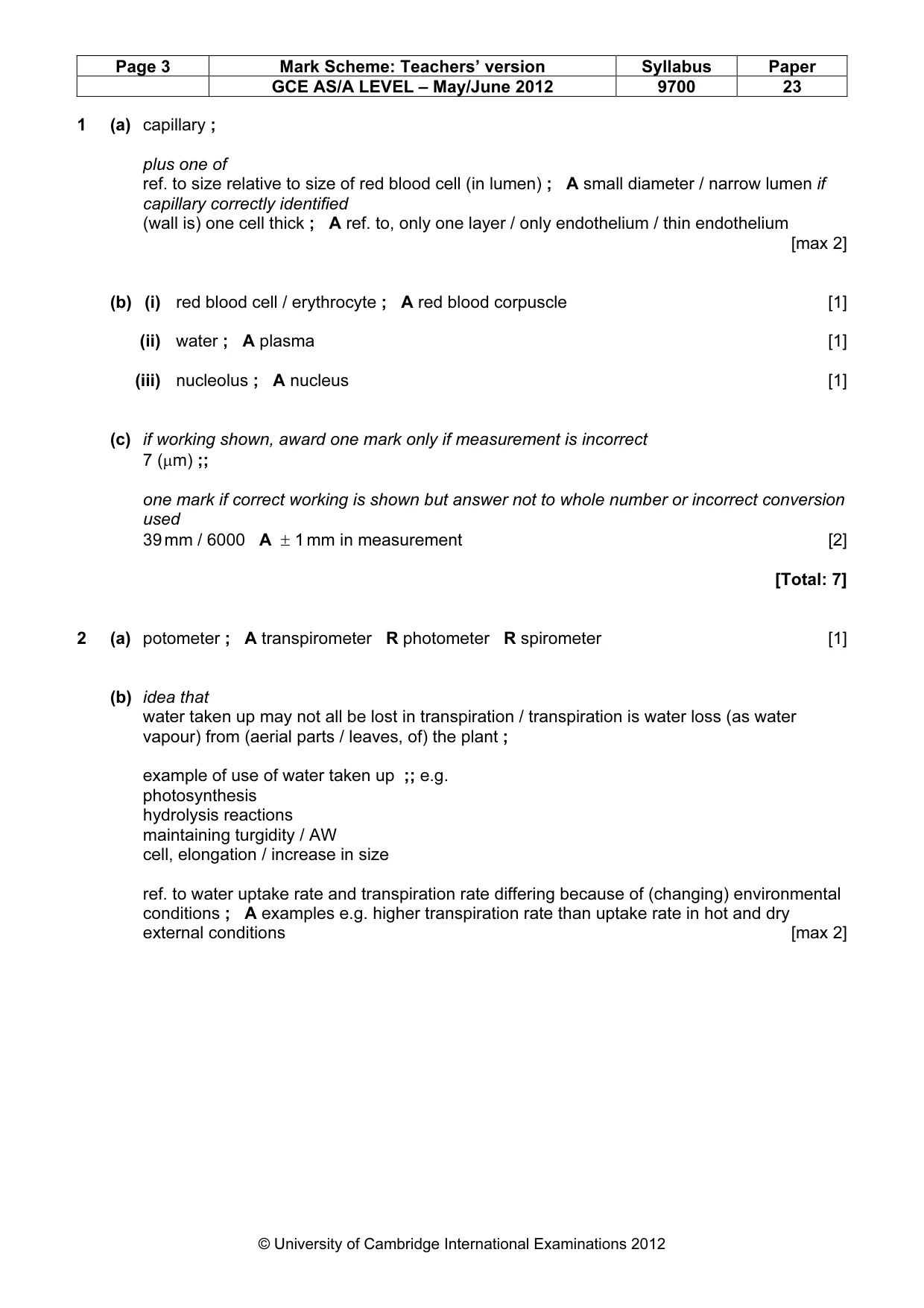
Page 3 Mark Scheme: Teachers’ version Syllabus Paper GCE AS/A LEVEL – May/June 2012 9700 23 © University of Cambridge International Examinations 2012 1 (a) capillary ; plus one of ref. to size relative to size of red blood cell (in lumen) ; A small diameter / narrow lumen if capillary correctly identified (wall is) one cell thick ; A ref. to, only one layer / only endothelium / thin endothelium [max 2] (b) (i) red blood cell / erythrocyte ; A red blood corpuscle [1] (ii) water ; A plasma [1] (iii) nucleolus ; A nucleus [1] (c) if working shown, award one mark only if measurement is incorrect 7 (µm) ;; one mark if correct working is shown but answer not to whole number or incorrect conversion used 39 mm / 6000 A ± 1 mm in measurement [2] [Total: 7] 2 (a) potometer ; A transpirometer R photometer R spirometer [1] (b) idea that water taken up may not all be lost in transpiration / transpiration is water loss (as water vapour) from (aerial parts / leaves, of) the plant ; example of use of water taken up ;; e.g. photosynthesis hydrolysis reactions maintaining turgidity / AW cell, elongation / increase in size ref. to water uptake rate and transpiration rate differing because of (changing) environmental conditions ; A examples e.g. higher transpiration rate than uptake rate in hot and dry external conditions [max 2]
Mark scheme, page 4
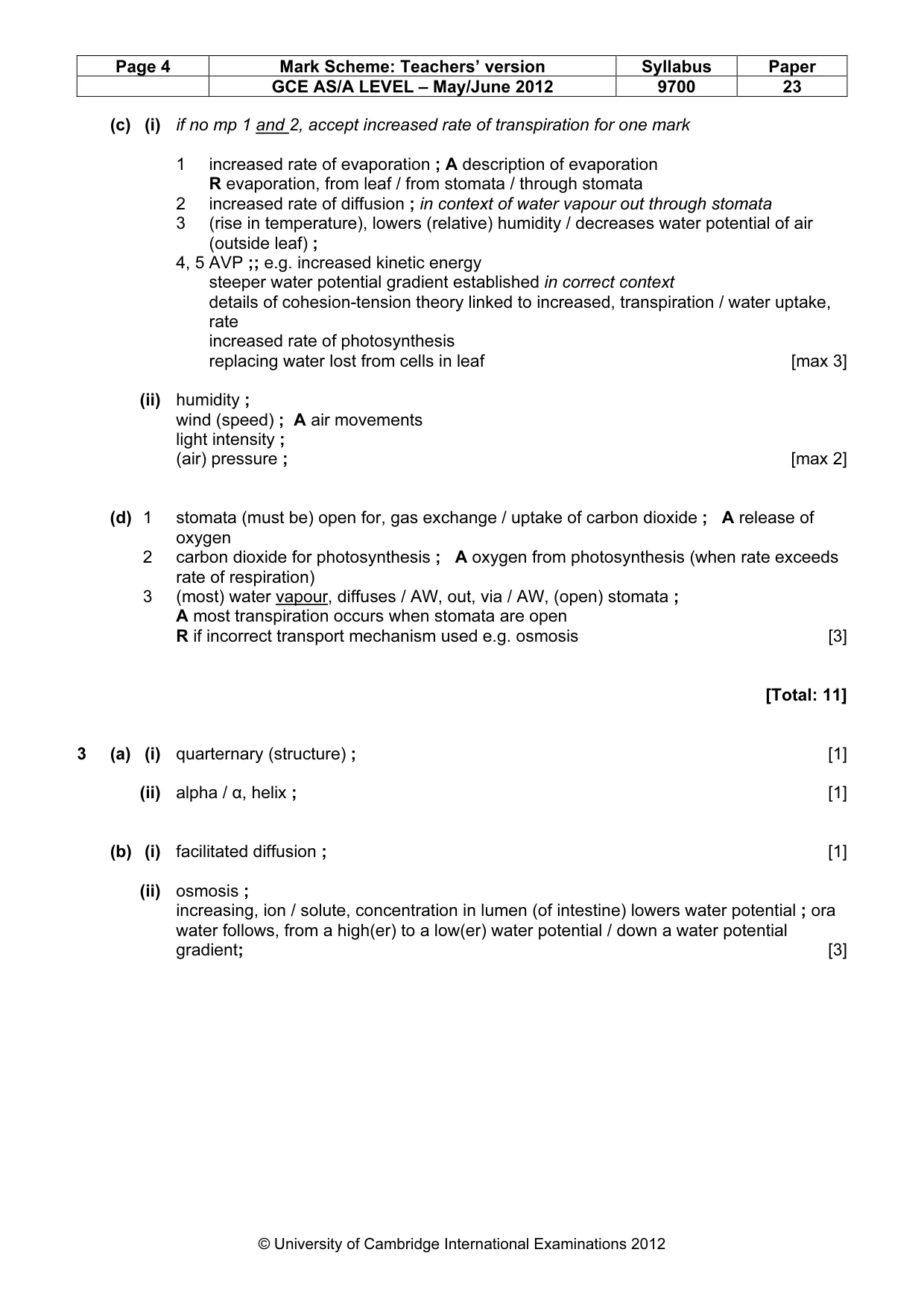
Page 4 Mark Scheme: Teachers’ version Syllabus Paper GCE AS/A LEVEL – May/June 2012 9700 23 © University of Cambridge International Examinations 2012 (c) (i) if no mp 1 and 2, accept increased rate of transpiration for one mark 1 increased rate of evaporation ; A description of evaporation R evaporation, from leaf / from stomata / through stomata 2 increased rate of diffusion ; in context of water vapour out through stomata 3 (rise in temperature), lowers (relative) humidity / decreases water potential of air (outside leaf) ; 4, 5 AVP ;; e.g. increased kinetic energy steeper water potential gradient established in correct context details of cohesion-tension theory linked to increased, transpiration / water uptake, rate increased rate of photosynthesis replacing water lost from cells in leaf [max 3] (ii) humidity ; wind (speed) ; A air movements light intensity ; (air) pressure ; [max 2] (d) 1 stomata (must be) open for, gas exchange / uptake of carbon dioxide ; A release of oxygen 2 carbon dioxide for photosynthesis ; A oxygen from photosynthesis (when rate exceeds rate of respiration) 3 (most) water vapour, diffuses / AW, out, via / AW, (open) stomata ; A most transpiration occurs when stomata are open R if incorrect transport mechanism used e.g. osmosis [3] [Total: 11] 3 (a) (i) quarternary (structure) ; [1] (ii) alpha / α, helix ; [1] (b) (i) facilitated diffusion ; [1] (ii) osmosis ; increasing, ion / solute, concentration in lumen (of intestine) lowers water potential ; ora water follows, from a high(er) to a low(er) water potential / down a water potential gradient; [3]
Mark scheme, page 5
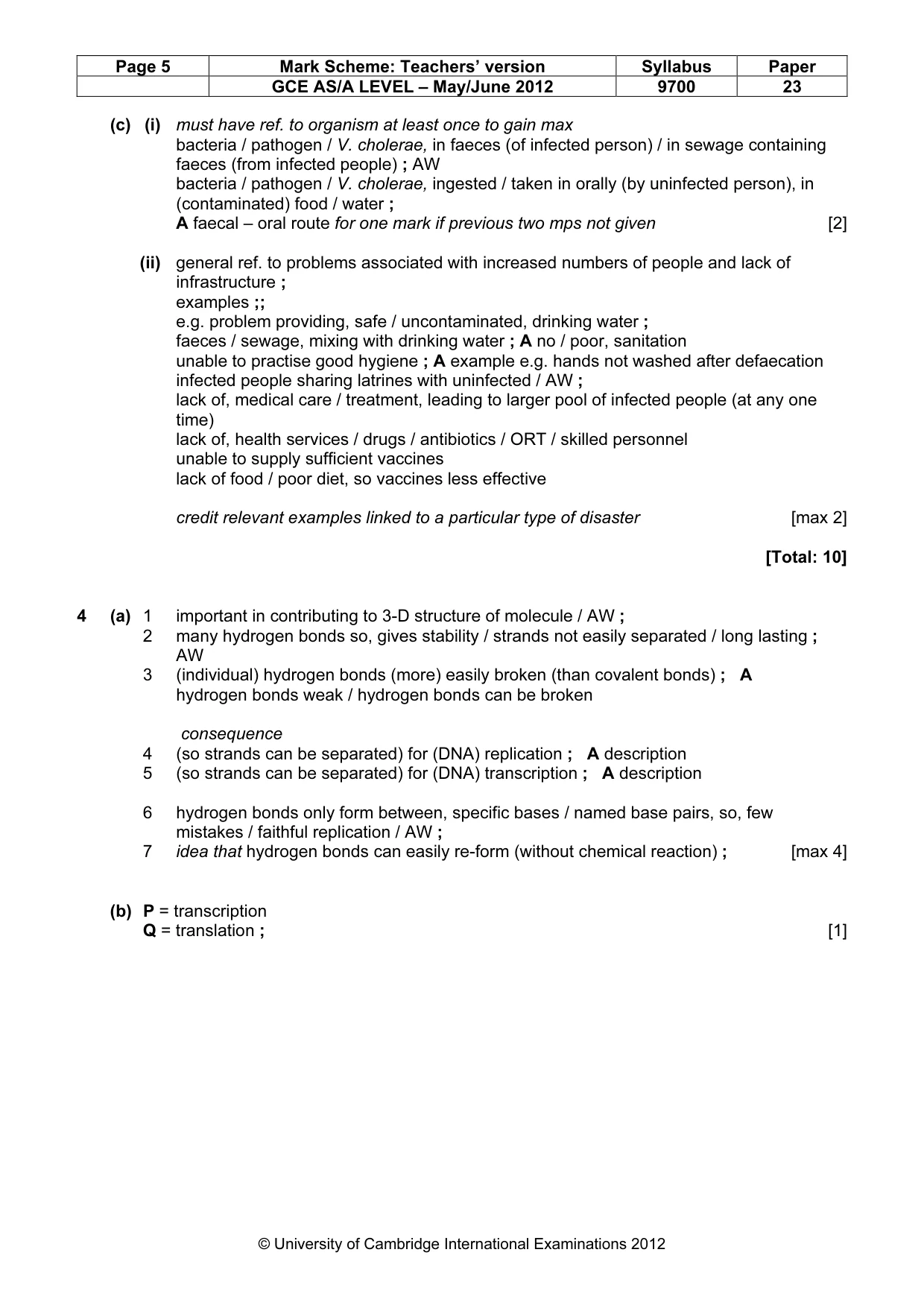
Page 5 Mark Scheme: Teachers’ version Syllabus Paper GCE AS/A LEVEL – May/June 2012 9700 23 © University of Cambridge International Examinations 2012 (c) (i) must have ref. to organism at least once to gain max bacteria / pathogen / V. cholerae, in faeces (of infected person) / in sewage containing faeces (from infected people) ; AW bacteria / pathogen / V. cholerae, ingested / taken in orally (by uninfected person), in (contaminated) food / water ; A faecal – oral route for one mark if previous two mps not given [2] (ii) general ref. to problems associated with increased numbers of people and lack of infrastructure ; examples ;; e.g. problem providing, safe / uncontaminated, drinking water ; faeces / sewage, mixing with drinking water ; A no / poor, sanitation unable to practise good hygiene ; A example e.g. hands not washed after defaecation infected people sharing latrines with uninfected / AW ; lack of, medical care / treatment, leading to larger pool of infected people (at any one time) lack of, health services / drugs / antibiotics / ORT / skilled personnel unable to supply sufficient vaccines lack of food / poor diet, so vaccines less effective credit relevant examples linked to a particular type of disaster [max 2] [Total: 10] 4 (a) 1 important in contributing to 3-D structure of molecule / AW ; 2 many hydrogen bonds so, gives stability / strands not easily separated / long lasting ; AW 3 (individual) hydrogen bonds (more) easily broken (than covalent bonds) ; A hydrogen bonds weak / hydrogen bonds can be broken consequence 4 (so strands can be separated) for (DNA) replication ; A description 5 (so strands can be separated) for (DNA) transcription ; A description 6 hydrogen bonds only form between, specific bases / named base pairs, so, few mistakes / faithful replication / AW ; 7 idea that hydrogen bonds can easily re-form (without chemical reaction) ; [max 4] (b) P = transcription Q = translation ; [1]
Mark scheme, page 6
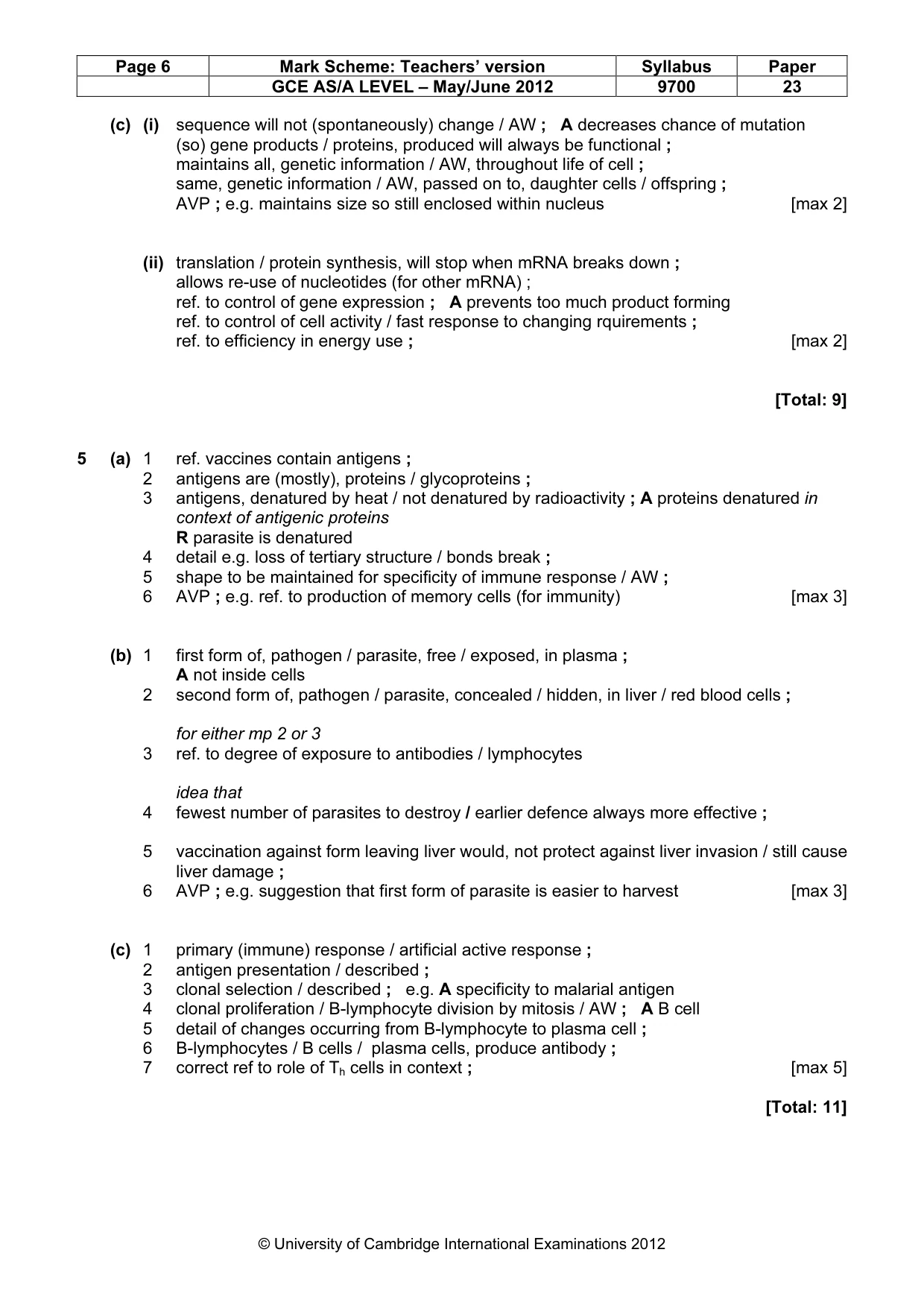
Page 6 Mark Scheme: Teachers’ version Syllabus Paper GCE AS/A LEVEL – May/June 2012 9700 23 © University of Cambridge International Examinations 2012 (c) (i) sequence will not (spontaneously) change / AW ; A decreases chance of mutation (so) gene products / proteins, produced will always be functional ; maintains all, genetic information / AW, throughout life of cell ; same, genetic information / AW, passed on to, daughter cells / offspring ; AVP ; e.g. maintains size so still enclosed within nucleus [max 2] (ii) translation / protein synthesis, will stop when mRNA breaks down ; allows re-use of nucleotides (for other mRNA) ; ref. to control of gene expression ; A prevents too much product forming ref. to control of cell activity / fast response to changing rquirements ; ref. to efficiency in energy use ; [max 2] [Total: 9] 5 (a) 1 ref. vaccines contain antigens ; 2 antigens are (mostly), proteins / glycoproteins ; 3 antigens, denatured by heat / not denatured by radioactivity ; A proteins denatured in context of antigenic proteins R parasite is denatured 4 detail e.g. loss of tertiary structure / bonds break ; 5 shape to be maintained for specificity of immune response / AW ; 6 AVP ; e.g. ref. to production of memory cells (for immunity) [max 3] (b) 1 first form of, pathogen / parasite, free / exposed, in plasma ; A not inside cells 2 second form of, pathogen / parasite, concealed / hidden, in liver / red blood cells ; for either mp 2 or 3 3 ref. to degree of exposure to antibodies / lymphocytes idea that 4 fewest number of parasites to destroy / earlier defence always more effective ; 5 vaccination against form leaving liver would, not protect against liver invasion / still cause liver damage ; 6 AVP ; e.g. suggestion that first form of parasite is easier to harvest [max 3] (c) 1 primary (immune) response / artificial active response ; 2 antigen presentation / described ; 3 clonal selection / described ; e.g. A specificity to malarial antigen 4 clonal proliferation / B-lymphocyte division by mitosis / AW ; A B cell 5 detail of changes occurring from B-lymphocyte to plasma cell ; 6 B-lymphocytes / B cells / plasma cells, produce antibody ; 7 correct ref to role of Th cells in context ; [max 5] [Total: 11]
Mark scheme, page 7
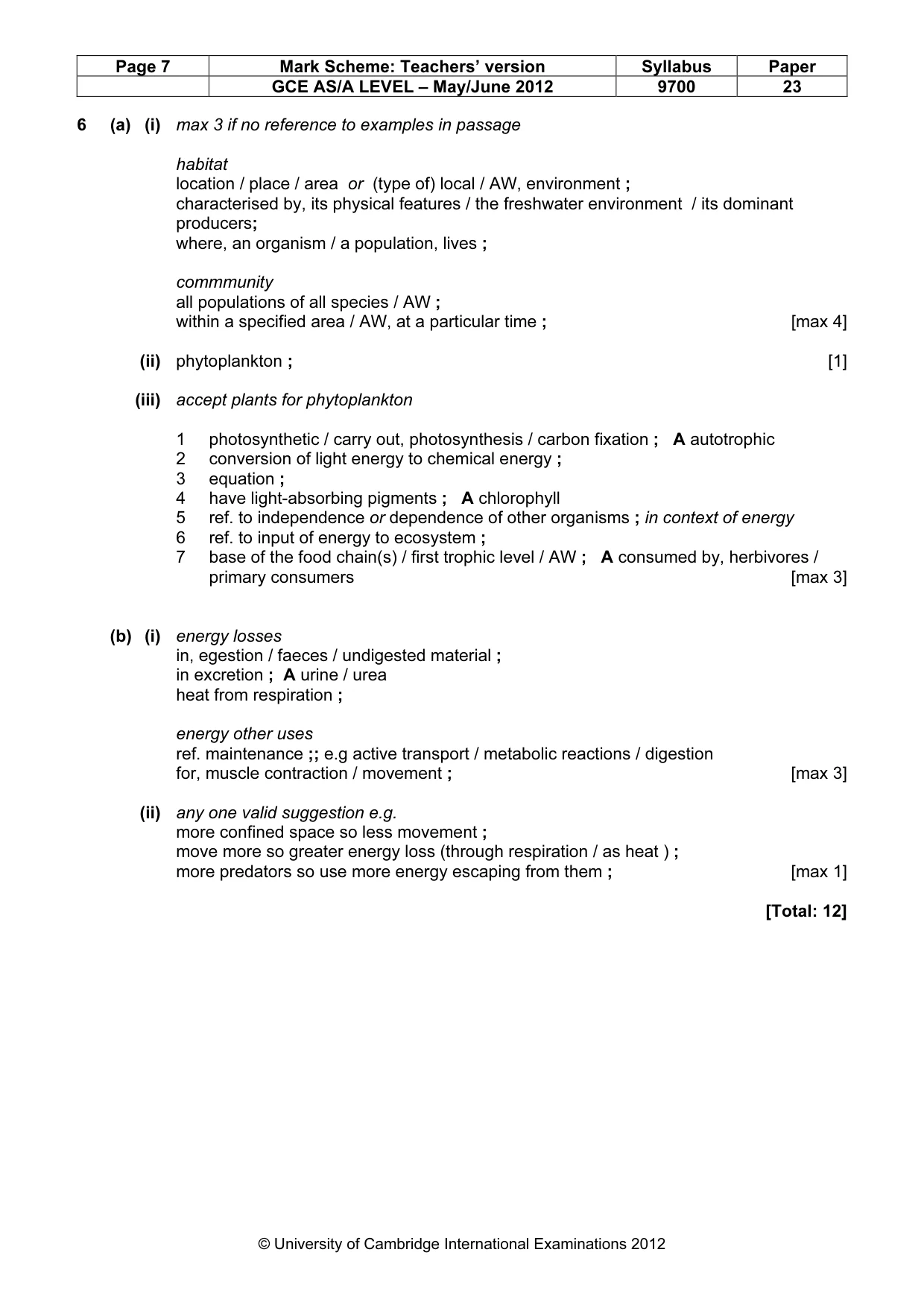
Page 7 Mark Scheme: Teachers’ version Syllabus Paper GCE AS/A LEVEL – May/June 2012 9700 23 © University of Cambridge International Examinations 2012 6 (a) (i) max 3 if no reference to examples in passage habitat location / place / area or (type of) local / AW, environment ; characterised by, its physical features / the freshwater environment / its dominant producers; where, an organism / a population, lives ; commmunity all populations of all species / AW ; within a specified area / AW, at a particular time ; [max 4] (ii) phytoplankton ; [1] (iii) accept plants for phytoplankton 1 photosynthetic / carry out, photosynthesis / carbon fixation ; A autotrophic 2 conversion of light energy to chemical energy ; 3 equation ; 4 have light-absorbing pigments ; A chlorophyll 5 ref. to independence or dependence of other organisms ; in context of energy 6 ref. to input of energy to ecosystem ; 7 base of the food chain(s) / first trophic level / AW ; A consumed by, herbivores / primary consumers [max 3] (b) (i) energy losses in, egestion / faeces / undigested material ; in excretion ; A urine / urea heat from respiration ; energy other uses ref. maintenance ;; e.g active transport / metabolic reactions / digestion for, muscle contraction / movement ; [max 3] (ii) any one valid suggestion e.g. more confined space so less movement ; move more so greater energy loss (through respiration / as heat ) ; more predators so use more energy escaping from them ; [max 1] [Total: 12]
What you needed in this session
Cambridge’s own grade thresholds for 2012 May/June, Paper 2 · Variant 3. A higher threshold means an easier paper — the bar moves with how the cohort did.