Cambridge A Level Biology 9700 — 2011 Oct/Nov Paper 4 · Variant 1
9700/41/O/N/11 · 100 marks · ≈113 min
The question paper and its mark scheme, free to read here and free to download. This is Cambridge’s own paper, exactly as it was sat.
Question paper24 pages


Mark scheme9 pages
Answers below. Sit the paper first if you are practising.
Paper as text
Question paper, page 1
This document consists of 19 printed pages, 3 lined pages and 2 blank pages. DC (NH/JG) 34048/6 © UCLES 2011 [Turn over UNIVERSITY OF CAMBRIDGE INTERNATIONAL EXAMINATIONS General Certificate of Education Advanced Level READ THESE INSTRUCTIONS FIRST Write your Centre number, candidate number and name in the spaces provided at the top of this page. Write in dark blue or black ink. Do not use staples, paper clips, highlighters, glue or correction fluid. DO NOT WRITE IN ANY BARCODES. Section A Answer all questions. Section B Answer one question Circle the number of the Section B question you have answered in the grid below. At the end of the examination, fasten all your work securely together. The number of marks is given in brackets [ ] at the end of each question or part question. * 2 7 7 5 9 0 9 1 8 3 * BIOLOGY 9700/41 Paper 4 A2 Structured Questions October/November 2011 2 hours Candidates answer on the Question Paper. No Additional Materials are required. For Examiner’s Use Section A 1 2 3 4 5 6 7 8 9 Section B 10 or 11 Total
Question paper, page 2
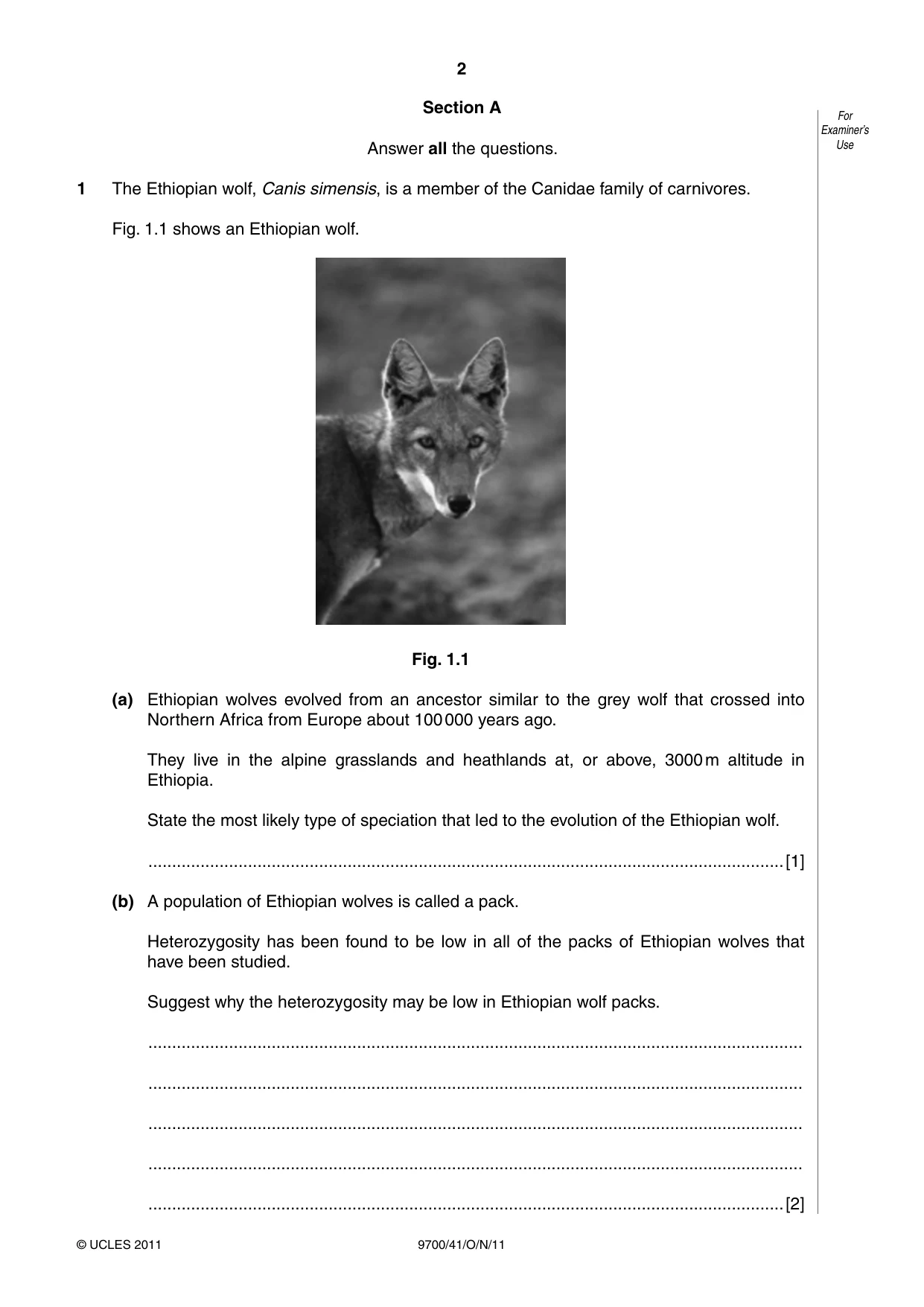
2 © UCLES 2011 9700/41/O/N/11 For Examiner’s Use Section A Answer all the questions. 1 The Ethiopian wolf, Canis simensis, is a member of the Canidae family of carnivores. Fig. 1.1 shows an Ethiopian wolf. Fig. 1.1 (a) Ethiopian wolves evolved from an ancestor similar to the grey wolf that crossed into Northern Africa from Europe about 100 000 years ago. They live in the alpine grasslands and heathlands at, or above, 3000 m altitude in Ethiopia. State the most likely type of speciation that led to the evolution of the Ethiopian wolf. …[1] (b) A population of Ethiopian wolves is called a pack. Heterozygosity has been found to be low in all of the packs of Ethiopian wolves that have been studied. Suggest why the heterozygosity may be low in Ethiopian wolf packs. … … … … …[2]
Question paper, page 3
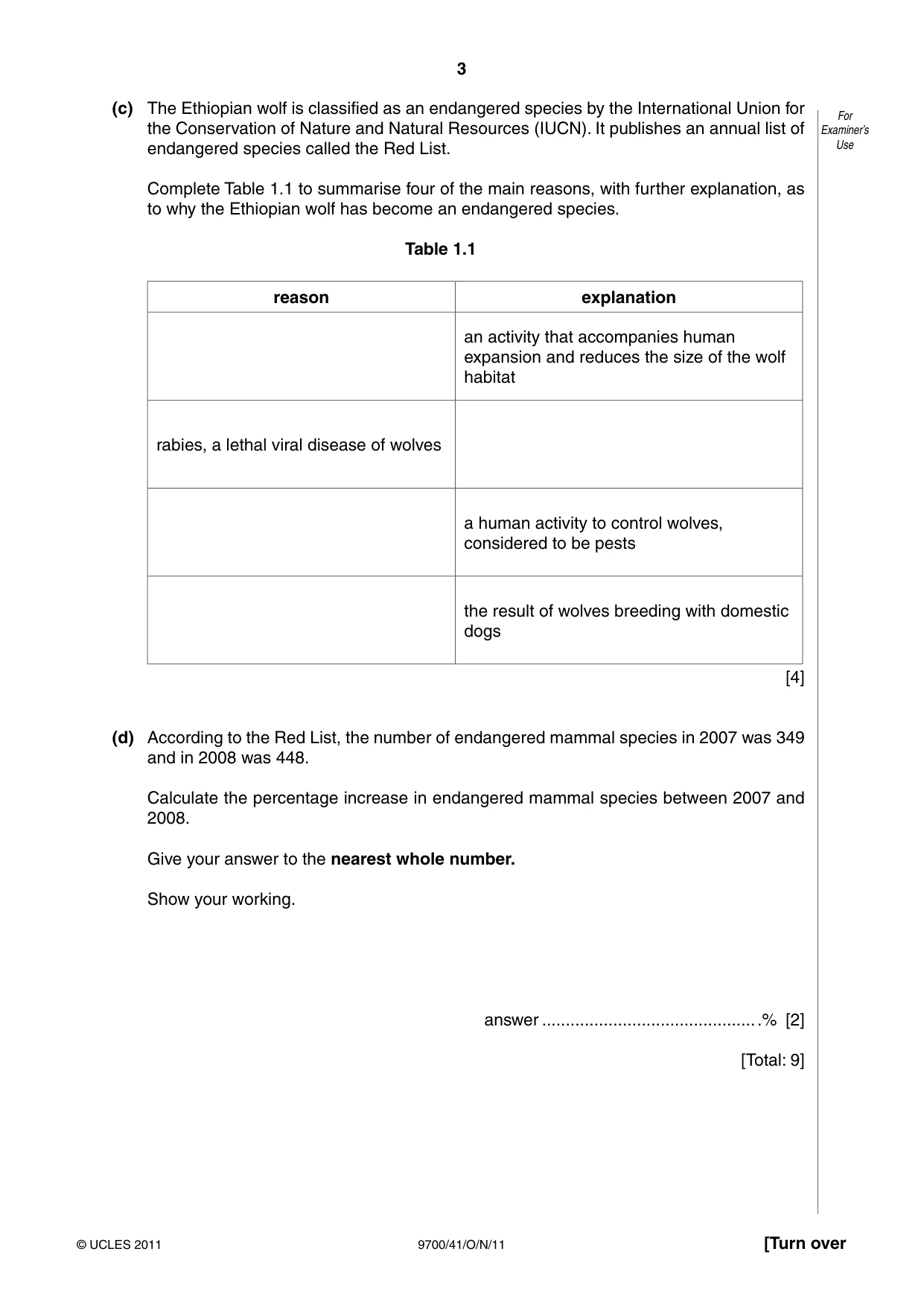
3 © UCLES 2011 [Turn over 9700/41/O/N/11 For Examiner’s Use (c) The Ethiopian wolf is classified as an endangered species by the International Union for the Conservation of Nature and Natural Resources (IUCN). It publishes an annual list of endangered species called the Red List. Complete Table 1.1 to summarise four of the main reasons, with further explanation, as to why the Ethiopian wolf has become an endangered species. Table 1.1 reason explanation an activity that accompanies human expansion and reduces the size of the wolf habitat rabies, a lethal viral disease of wolves a human activity to control wolves, considered to be pests the result of wolves breeding with domestic dogs [4] (d) According to the Red List, the number of endangered mammal species in 2007 was 349 and in 2008 was 448. Calculate the percentage increase in endangered mammal species between 2007 and 2008. Give your answer to the nearest whole number. Show your working. answer …% [2] [Total: 9]
Question paper, page 4
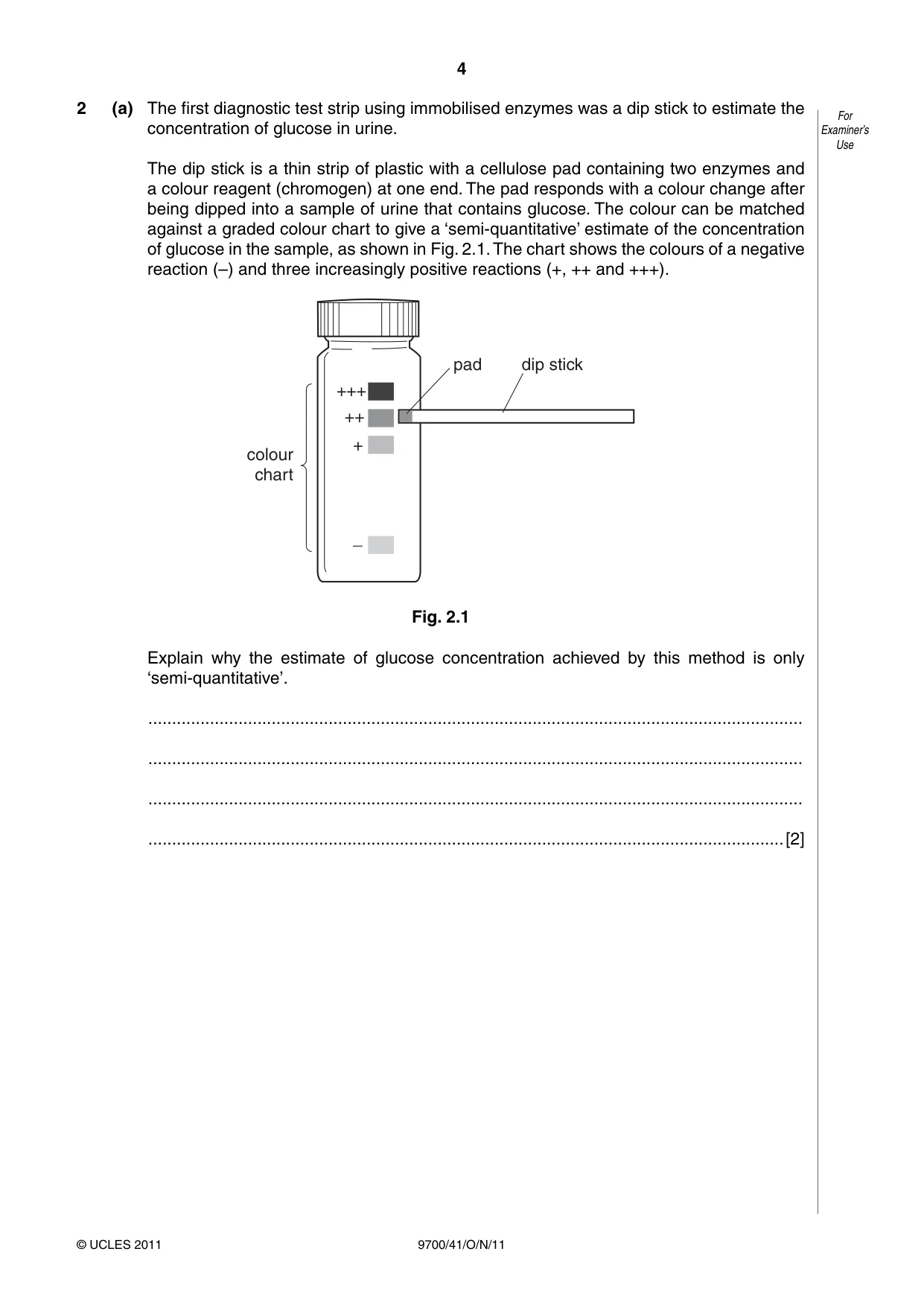
4 © UCLES 2011 9700/41/O/N/11 For Examiner’s Use 2 (a) The first diagnostic test strip using immobilised enzymes was a dip stick to estimate the concentration of glucose in urine. The dip stick is a thin strip of plastic with a cellulose pad containing two enzymes and a colour reagent (chromogen) at one end. The pad responds with a colour change after being dipped into a sample of urine that contains glucose. The colour can be matched against a graded colour chart to give a ‘semi-quantitative’ estimate of the concentration of glucose in the sample, as shown in Fig. 2.1. The chart shows the colours of a negative reaction (–) and three increasingly positive reactions (+, ++ and +++). pad colour chart dip stick +++ ++ + _ Fig. 2.1 Explain why the estimate of glucose concentration achieved by this method is only ‘semi-quantitative’. … … … …[2]
Question paper, page 5
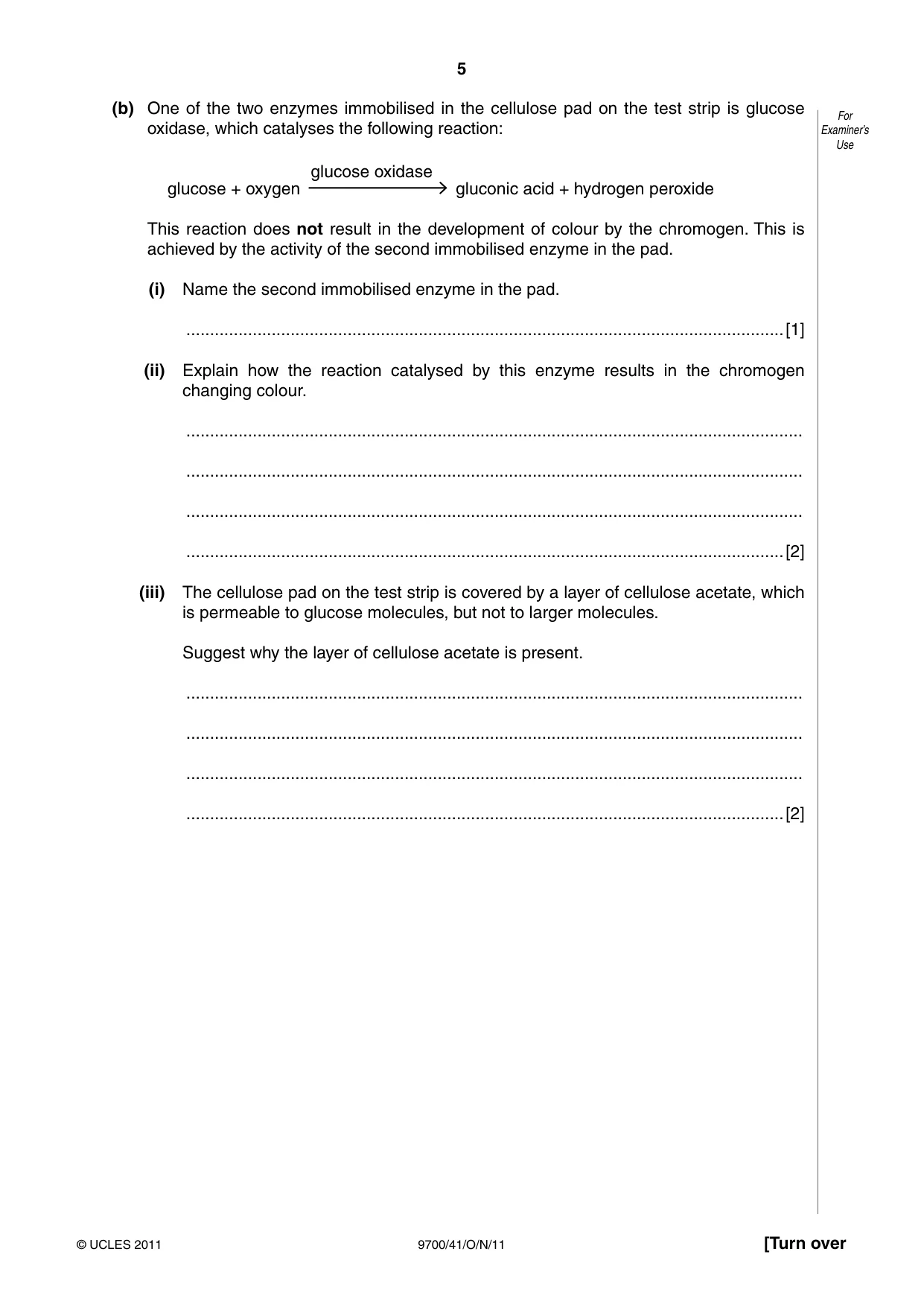
5 © UCLES 2011 [Turn over 9700/41/O/N/11 For Examiner’s Use (b) One of the two enzymes immobilised in the cellulose pad on the test strip is glucose oxidase, which catalyses the following reaction: glucose oxidase glucose + oxygen gluconic acid + hydrogen peroxide This reaction does not result in the development of colour by the chromogen. This is achieved by the activity of the second immobilised enzyme in the pad. (i) Name the second immobilised enzyme in the pad. …[1] (ii) Explain how the reaction catalysed by this enzyme results in the chromogen changing colour. … … … …[2] (iii) The cellulose pad on the test strip is covered by a layer of cellulose acetate, which is permeable to glucose molecules, but not to larger molecules. Suggest why the layer of cellulose acetate is present. … … … …[2]
Question paper, page 6
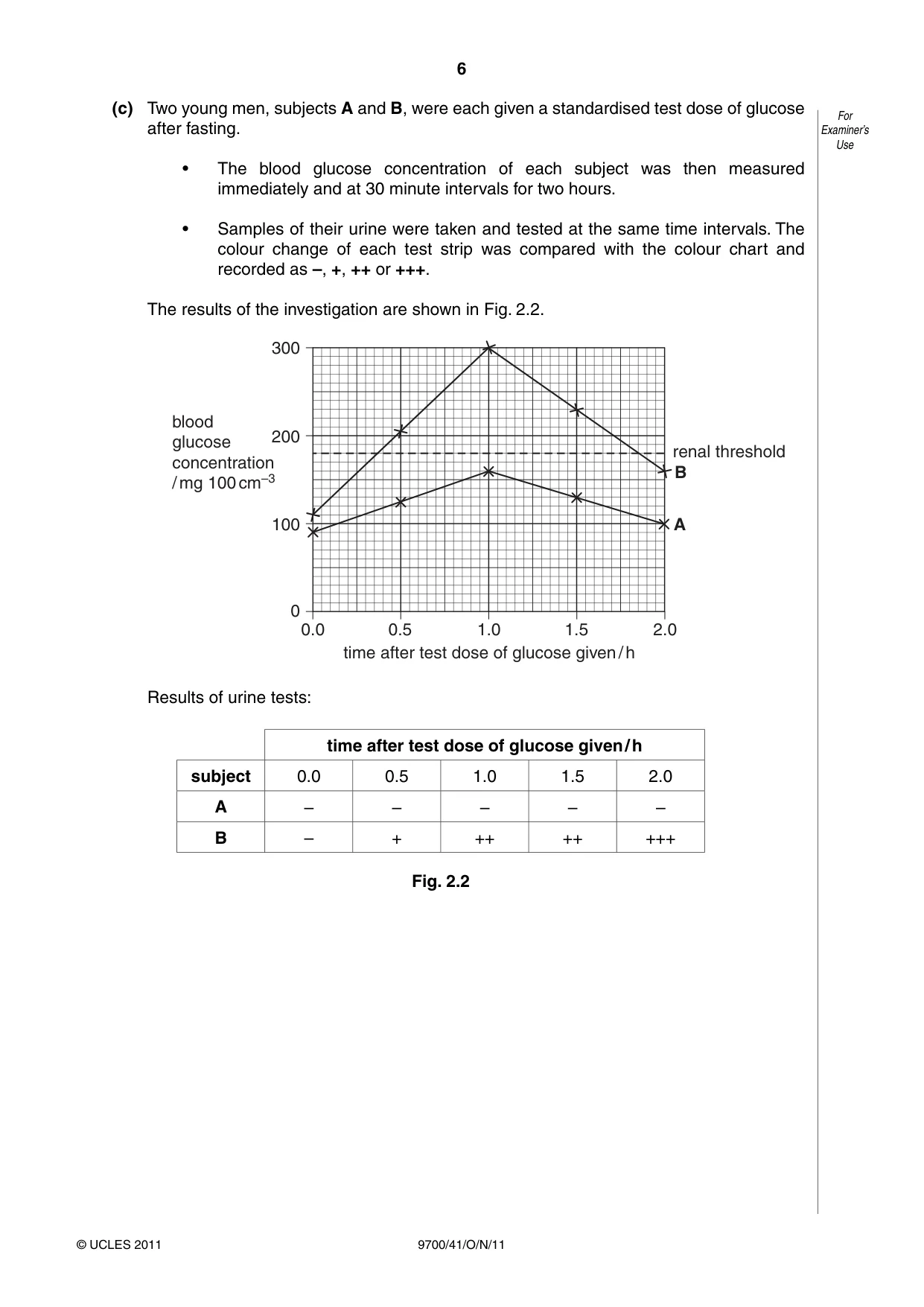
6 © UCLES 2011 9700/41/O/N/11 For Examiner’s Use (c) Two young men, subjects A and B, were each given a standardised test dose of glucose after fasting. • The blood glucose concentration of each subject was then measured immediately and at 30 minute intervals for two hours. • Samples of their urine were taken and tested at the same time intervals. The colour change of each test strip was compared with the colour chart and recorded as –, +, ++ or +++. The results of the investigation are shown in Fig. 2.2. 0.0 0 100 200 300 0.5 1.0 1.5 2.0 blood glucose concentration / mg 100 cm–3 time after test dose of glucose given / h renal threshold A B Results of urine tests: time after test dose of glucose given / h subject 0.0 0.5 1.0 1.5 2.0 A – – – – – B – + ++ ++ +++ Fig. 2.2
Question paper, page 7
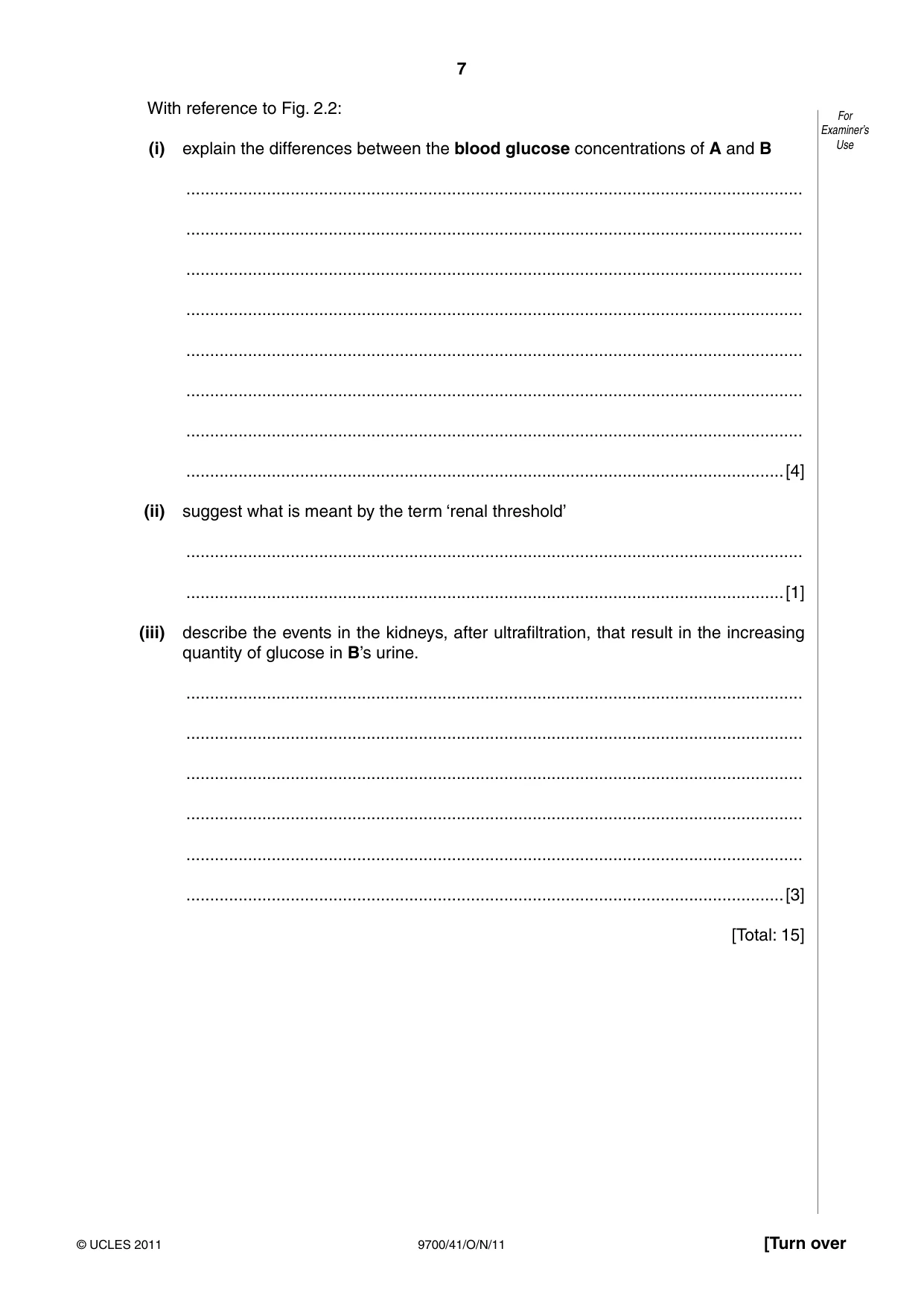
7 © UCLES 2011 [Turn over 9700/41/O/N/11 For Examiner’s Use With reference to Fig. 2.2: (i) explain the differences between the blood glucose concentrations of A and B … … … … … … … …[4] (ii) suggest what is meant by the term ‘renal threshold’ … …[1] (iii) describe the events in the kidneys, after ultrafiltration, that result in the increasing quantity of glucose in B’s urine. … … … … … …[3] [Total: 15]
Question paper, page 8
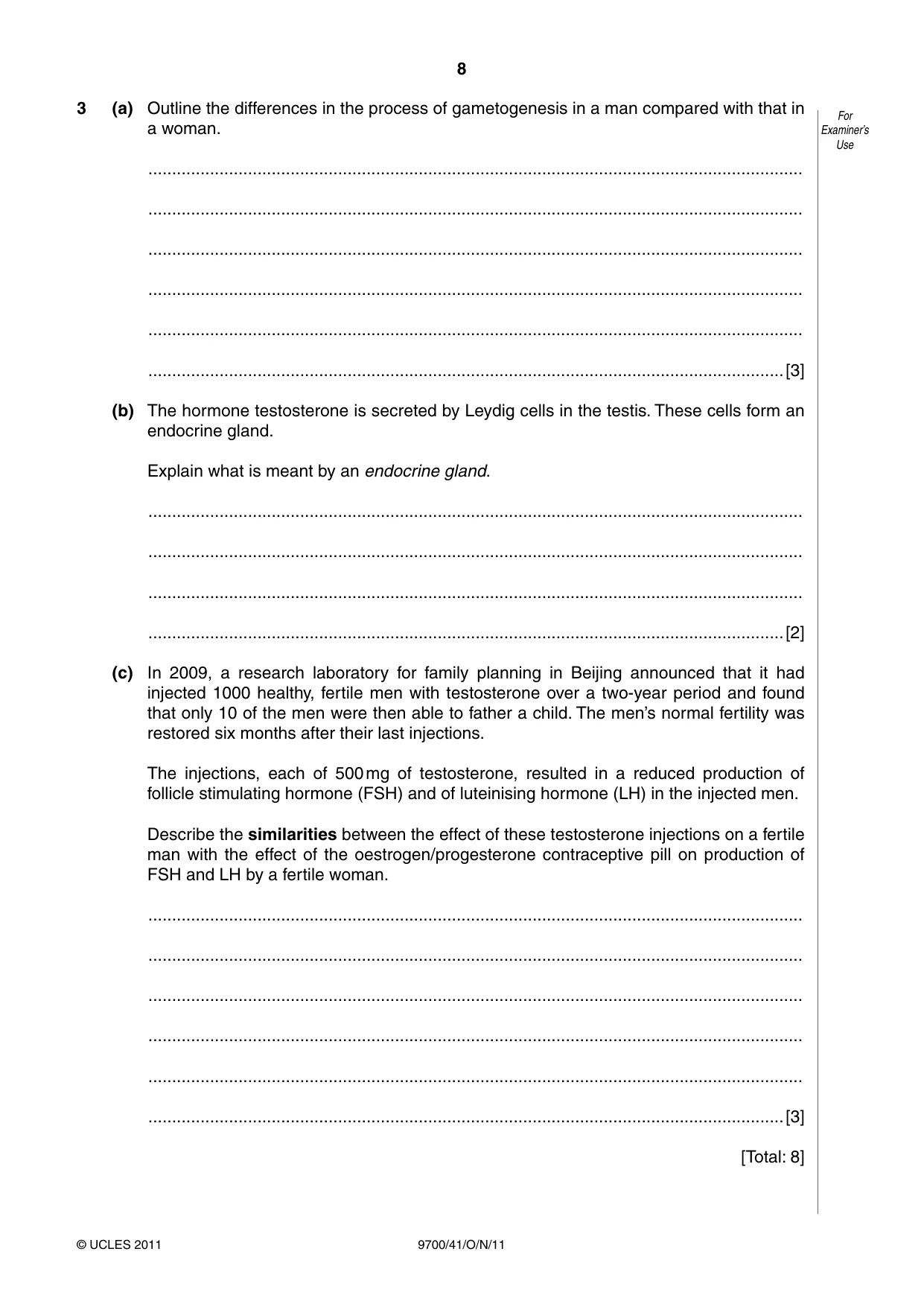
8 © UCLES 2011 9700/41/O/N/11 For Examiner’s Use 3 (a) Outline the differences in the process of gametogenesis in a man compared with that in a woman. … … … … … …[3] (b) The hormone testosterone is secreted by Leydig cells in the testis. These cells form an endocrine gland. Explain what is meant by an endocrine gland. … … … …[2] (c) In 2009, a research laboratory for family planning in Beijing announced that it had injected 1000 healthy, fertile men with testosterone over a two-year period and found that only 10 of the men were then able to father a child. The men’s normal fertility was restored six months after their last injections. The injections, each of 500 mg of testosterone, resulted in a reduced production of follicle stimulating hormone (FSH) and of luteinising hormone (LH) in the injected men. Describe the similarities between the effect of these testosterone injections on a fertile man with the effect of the oestrogen/progesterone contraceptive pill on production of FSH and LH by a fertile woman. … … … … … …[3] [Total: 8]
Question paper, page 9
9 9700/41/M/J/11 © UCLES 2011 [Turn over BLANK PAGE Question 4 starts on page 10
Question paper, page 10
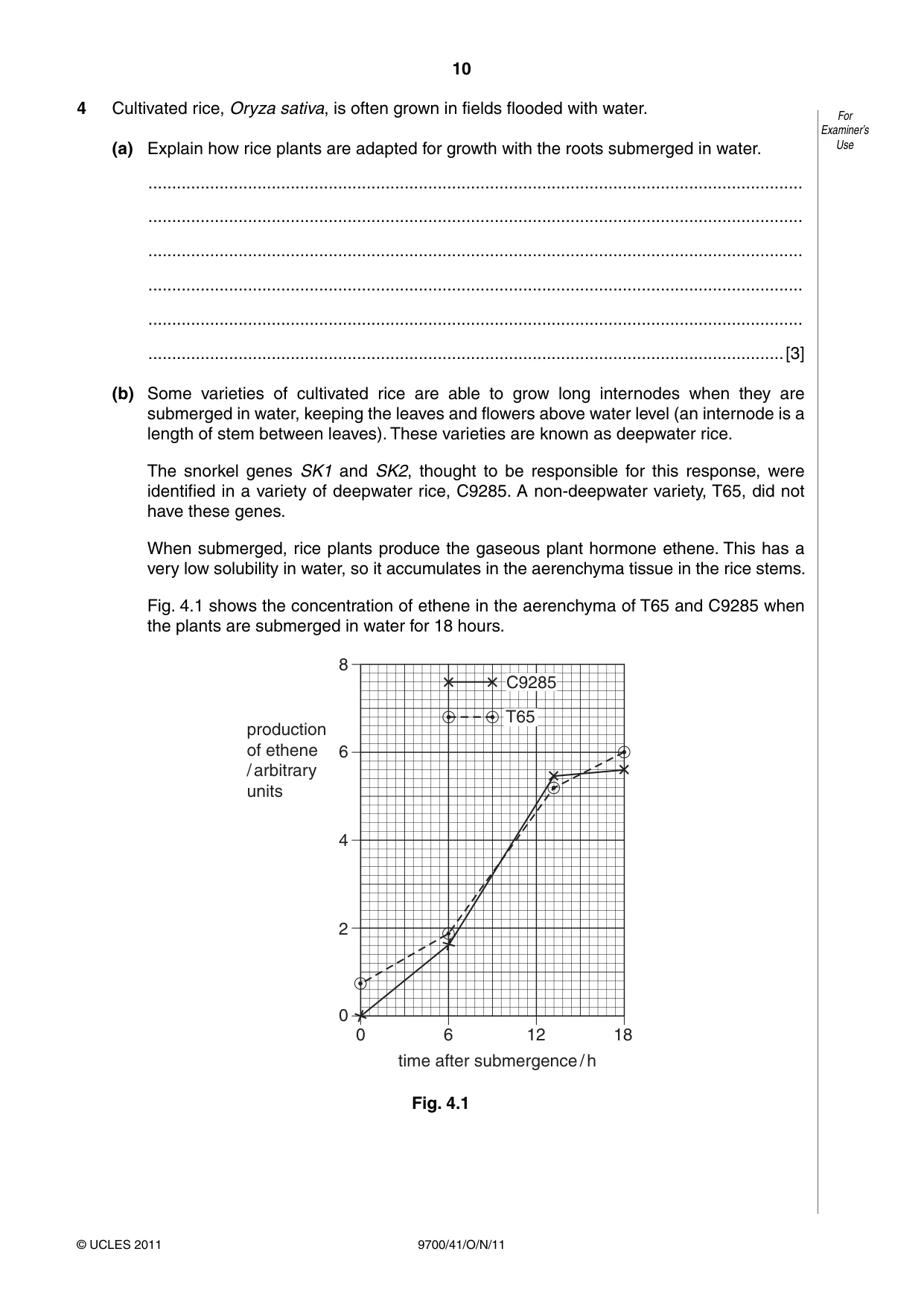
10 © UCLES 2011 9700/41/O/N/11 For Examiner’s Use 4 Cultivated rice, Oryza sativa, is often grown in fields flooded with water. (a) Explain how rice plants are adapted for growth with the roots submerged in water. … … … … … …[3] (b) Some varieties of cultivated rice are able to grow long internodes when they are submerged in water, keeping the leaves and flowers above water level (an internode is a length of stem between leaves). These varieties are known as deepwater rice. The snorkel genes SK1 and SK2, thought to be responsible for this response, were identified in a variety of deepwater rice, C9285. A non-deepwater variety, T65, did not have these genes. When submerged, rice plants produce the gaseous plant hormone ethene. This has a very low solubility in water, so it accumulates in the aerenchyma tissue in the rice stems. Fig. 4.1 shows the concentration of ethene in the aerenchyma of T65 and C9285 when the plants are submerged in water for 18 hours. 8 6 4 2 0 0 6 12 18 time after submergence / h production of ethene / arbitrary units C9285 T65 Fig. 4.1
Question paper, page 11
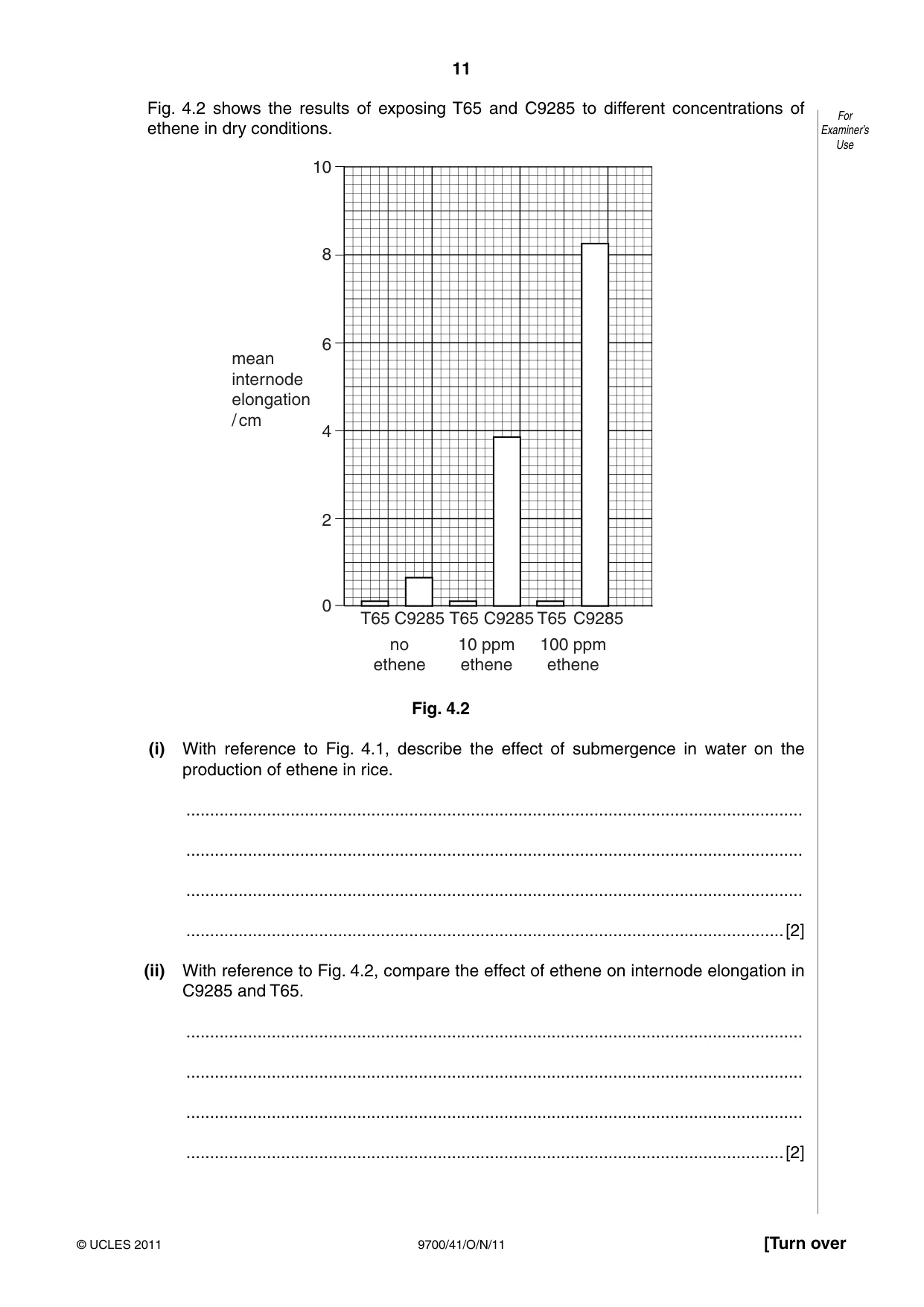
11 © UCLES 2011 [Turn over 9700/41/O/N/11 For Examiner’s Use Fig. 4.2 shows the results of exposing T65 and C9285 to different concentrations of ethene in dry conditions. 10 8 6 4 2 0 T65 T65 T65 C9285 C9285 C9285 no ethene 10 ppm ethene 100 ppm ethene mean internode elongation / cm Fig. 4.2 (i) With reference to Fig. 4.1, describe the effect of submergence in water on the production of ethene in rice. … … … …[2] (ii) With reference to Fig. 4.2, compare the effect of ethene on internode elongation in C9285 and T65. … … … …[2]
Question paper, page 12
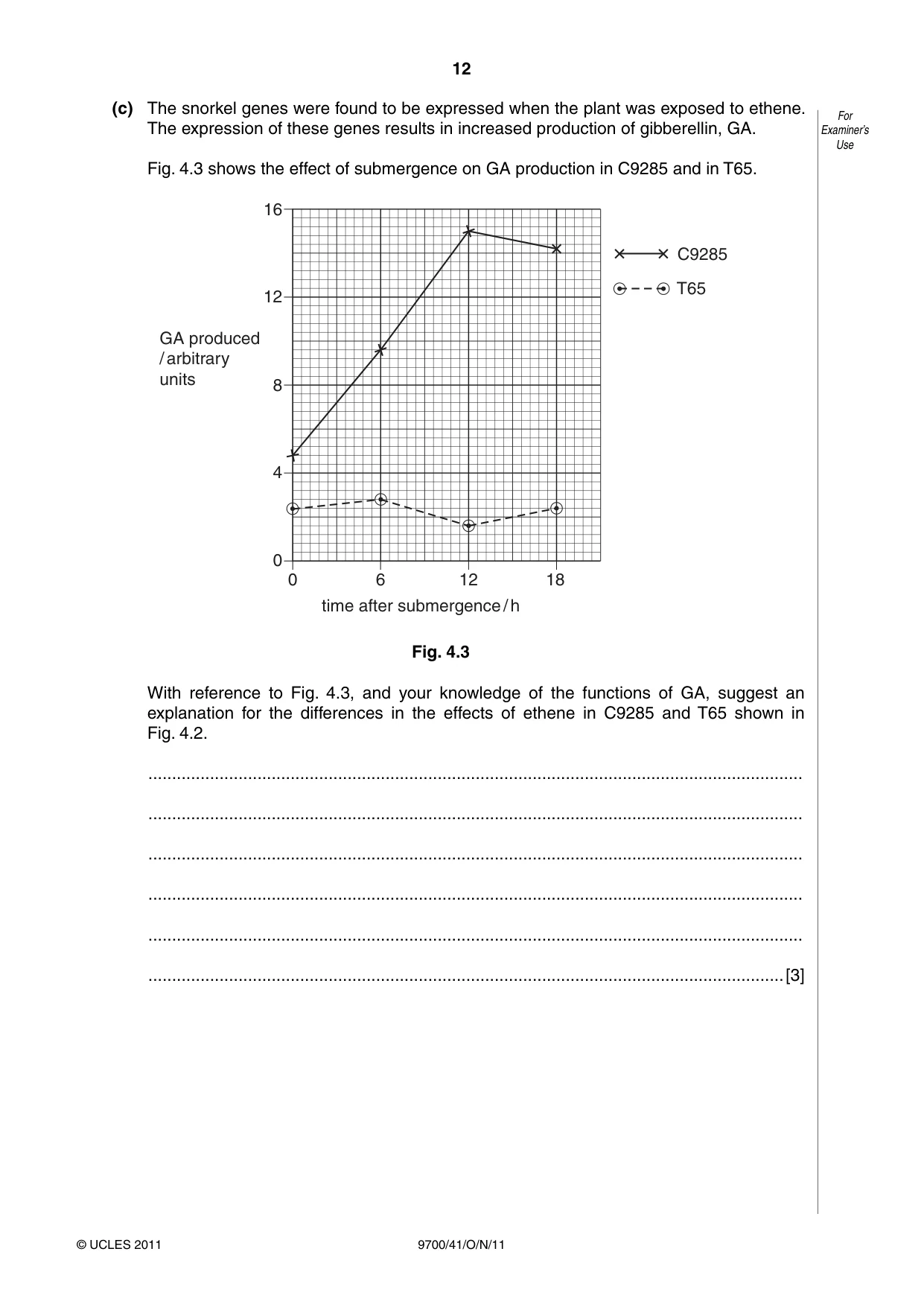
12 © UCLES 2011 9700/41/O/N/11 For Examiner’s Use (c) The snorkel genes were found to be expressed when the plant was exposed to ethene. The expression of these genes results in increased production of gibberellin, GA. Fig. 4.3 shows the effect of submergence on GA production in C9285 and in T65. 0 0 4 8 12 16 6 12 18 time after submergence / h C9285 T65 GA produced / arbitrary units Fig. 4.3 With reference to Fig. 4.3, and your knowledge of the functions of GA, suggest an explanation for the differences in the effects of ethene in C9285 and T65 shown in Fig. 4.2. … … … … … …[3]
Question paper, page 13
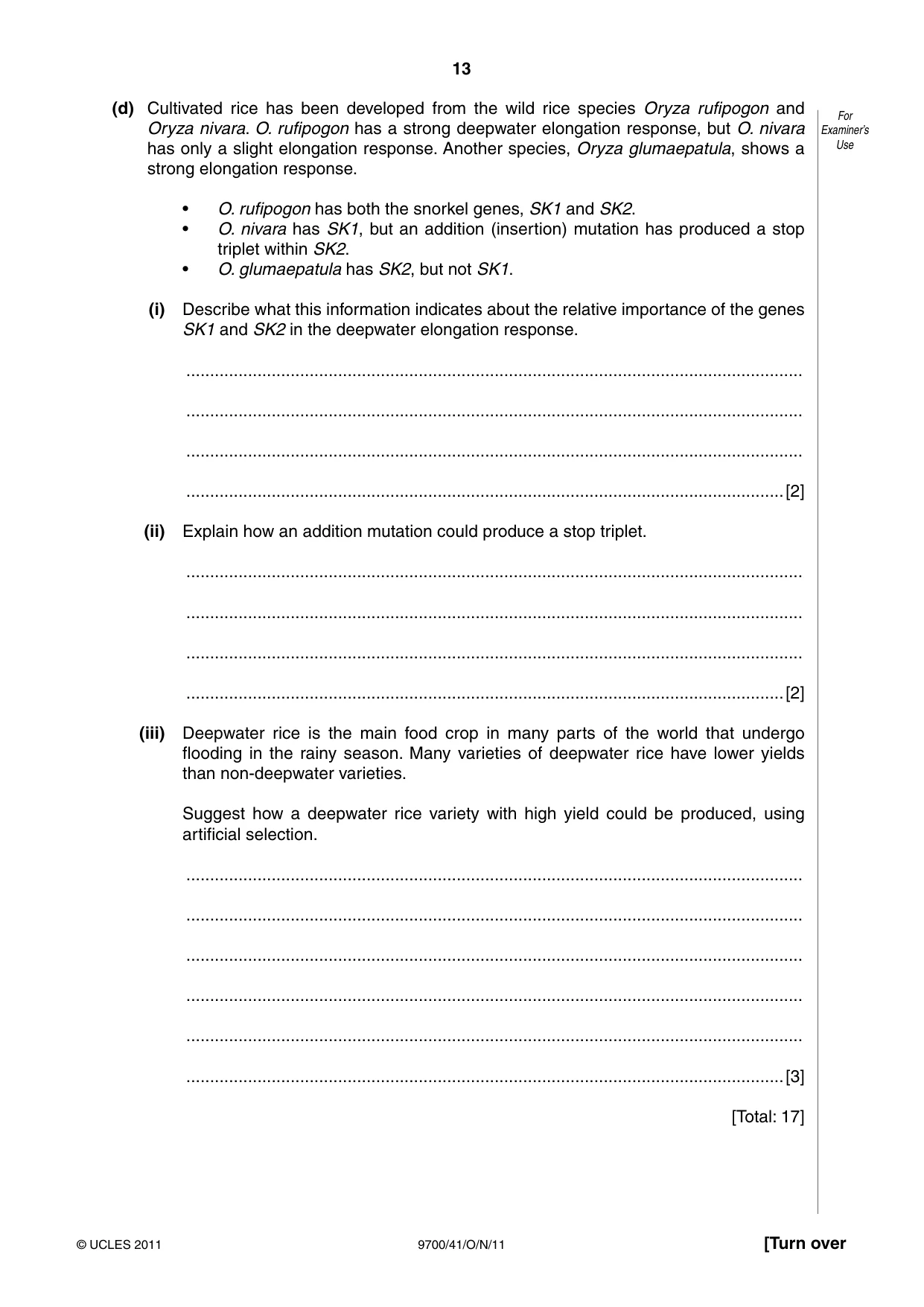
13 © UCLES 2011 [Turn over 9700/41/O/N/11 For Examiner’s Use (d) Cultivated rice has been developed from the wild rice species Oryza rufipogon and Oryza nivara. O. rufipogon has a strong deepwater elongation response, but O. nivara has only a slight elongation response. Another species, Oryza glumaepatula, shows a strong elongation response. • O. rufipogon has both the snorkel genes, SK1 and SK2. • O. nivara has SK1, but an addition (insertion) mutation has produced a stop triplet within SK2. • O. glumaepatula has SK2, but not SK1. (i) Describe what this information indicates about the relative importance of the genes SK1 and SK2 in the deepwater elongation response. … … … …[2] (ii) Explain how an addition mutation could produce a stop triplet. … … … …[2] (iii) Deepwater rice is the main food crop in many parts of the world that undergo flooding in the rainy season. Many varieties of deepwater rice have lower yields than non-deepwater varieties. Suggest how a deepwater rice variety with high yield could be produced, using artificial selection. … … … … … …[3] [Total: 17]
Question paper, page 14
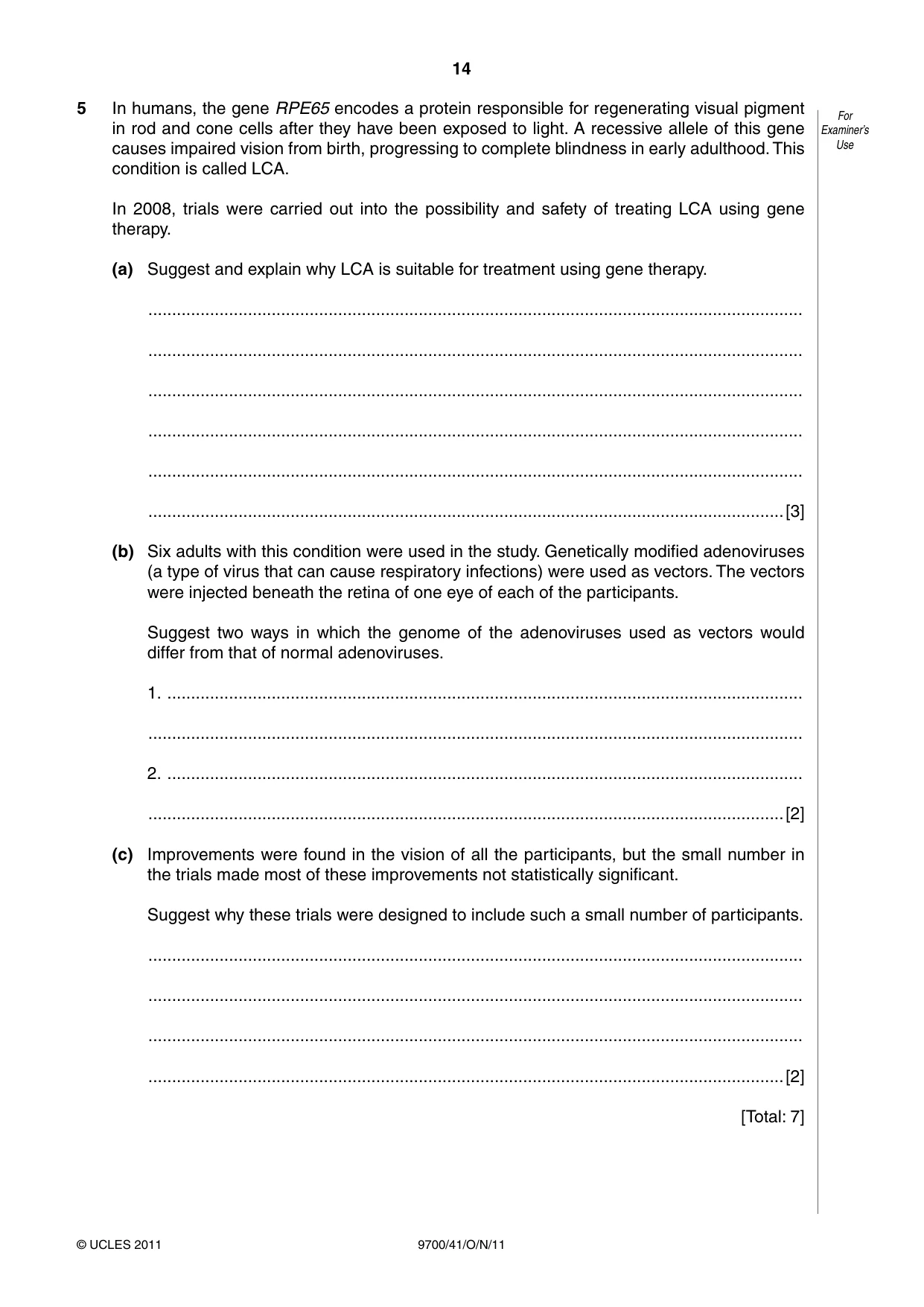
14 © UCLES 2011 9700/41/O/N/11 For Examiner’s Use 5 In humans, the gene RPE65 encodes a protein responsible for regenerating visual pigment in rod and cone cells after they have been exposed to light. A recessive allele of this gene causes impaired vision from birth, progressing to complete blindness in early adulthood. This condition is called LCA. In 2008, trials were carried out into the possibility and safety of treating LCA using gene therapy. (a) Suggest and explain why LCA is suitable for treatment using gene therapy. … … … … … …[3] (b) Six adults with this condition were used in the study. Genetically modified adenoviruses (a type of virus that can cause respiratory infections) were used as vectors. The vectors were injected beneath the retina of one eye of each of the participants. Suggest two ways in which the genome of the adenoviruses used as vectors would differ from that of normal adenoviruses. 1. … … 2. … …[2] (c) Improvements were found in the vision of all the participants, but the small number in the trials made most of these improvements not statistically significant. Suggest why these trials were designed to include such a small number of participants. … … … …[2] [Total: 7]
Question paper, page 15
15 9700/41/M/J/11 © UCLES 2011 [Turn over BLANK PAGE Question 6 starts on page 16
Question paper, page 16
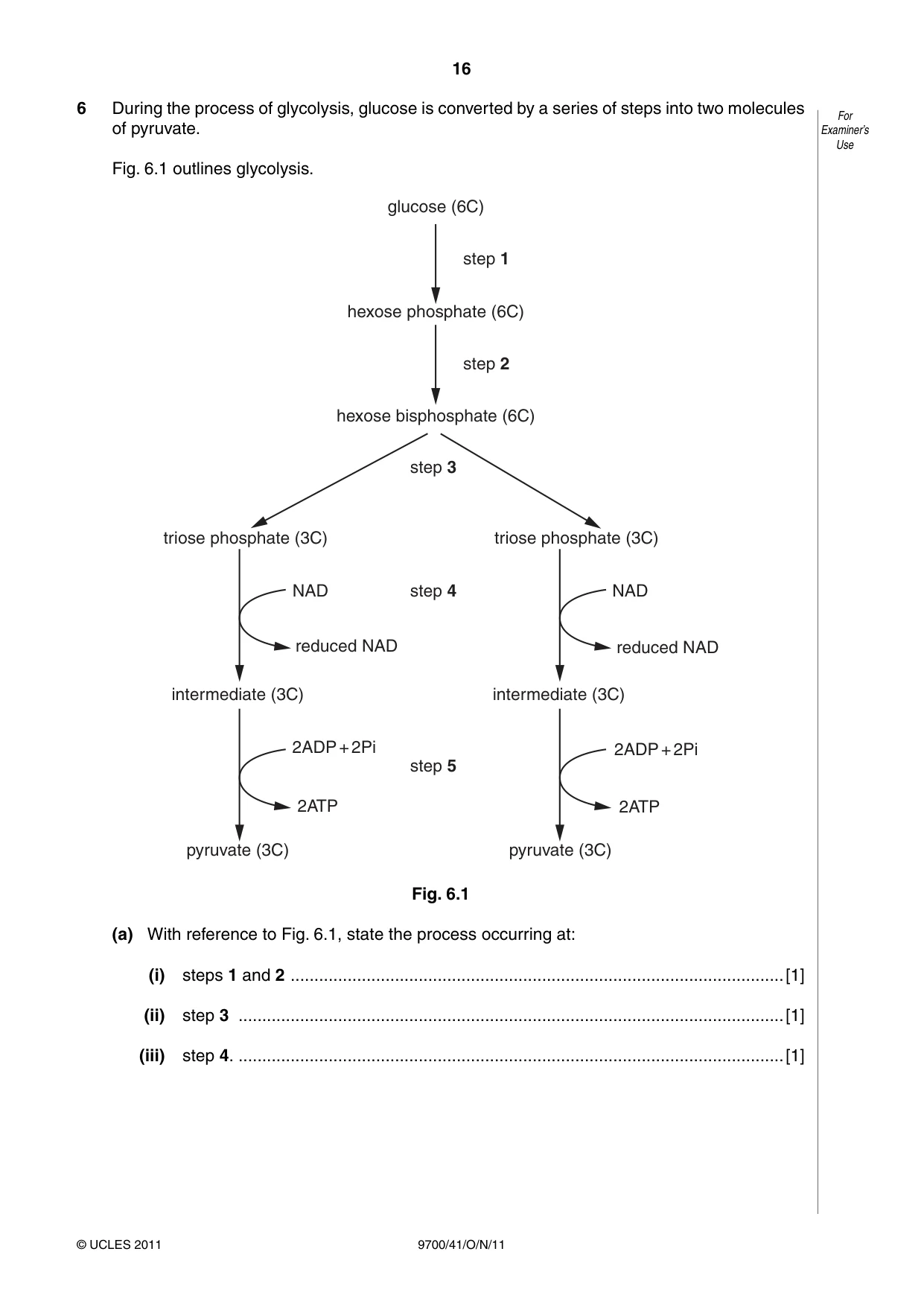
16 © UCLES 2011 9700/41/O/N/11 For Examiner’s Use 6 During the process of glycolysis, glucose is converted by a series of steps into two molecules of pyruvate. Fig. 6.1 outlines glycolysis. glucose (6C) hexose phosphate (6C) hexose bisphosphate (6C) triose phosphate (3C) intermediate (3C) pyruvate (3C) pyruvate (3C) intermediate (3C) triose phosphate (3C) step 1 step 2 step 3 step 4 step 5 NAD NAD reduced NAD reduced NAD 2ADP + 2Pi 2ADP + 2Pi 2ATP 2ATP Fig. 6.1 (a) With reference to Fig. 6.1, state the process occurring at: (i) steps 1 and 2 …[1] (ii) step 3 …[1] (iii) step 4. …[1]
Question paper, page 17
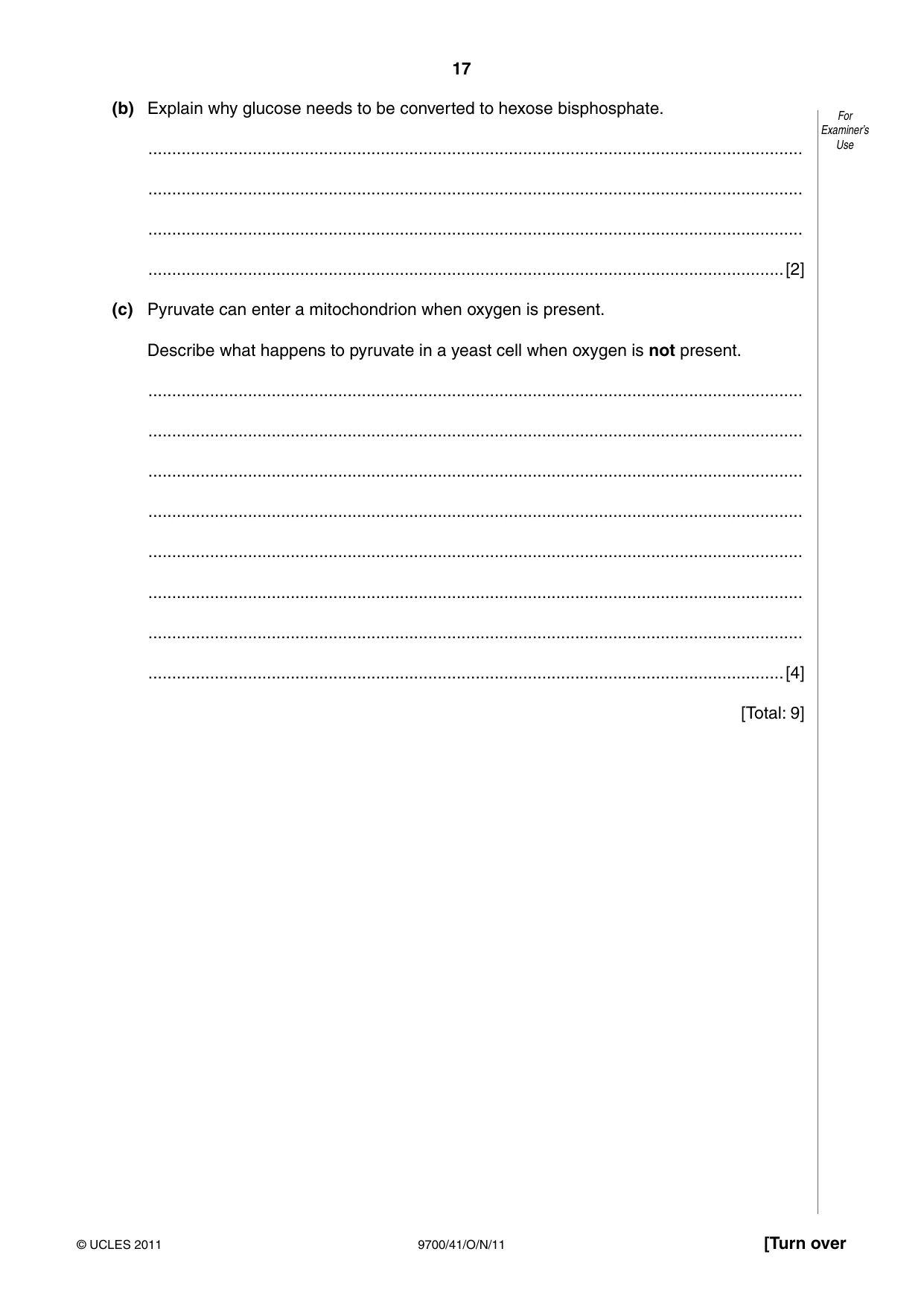
17 © UCLES 2011 [Turn over 9700/41/O/N/11 For Examiner’s Use (b) Explain why glucose needs to be converted to hexose bisphosphate. … … … …[2] (c) Pyruvate can enter a mitochondrion when oxygen is present. Describe what happens to pyruvate in a yeast cell when oxygen is not present. … … … … … … … …[4] [Total: 9]
Question paper, page 18
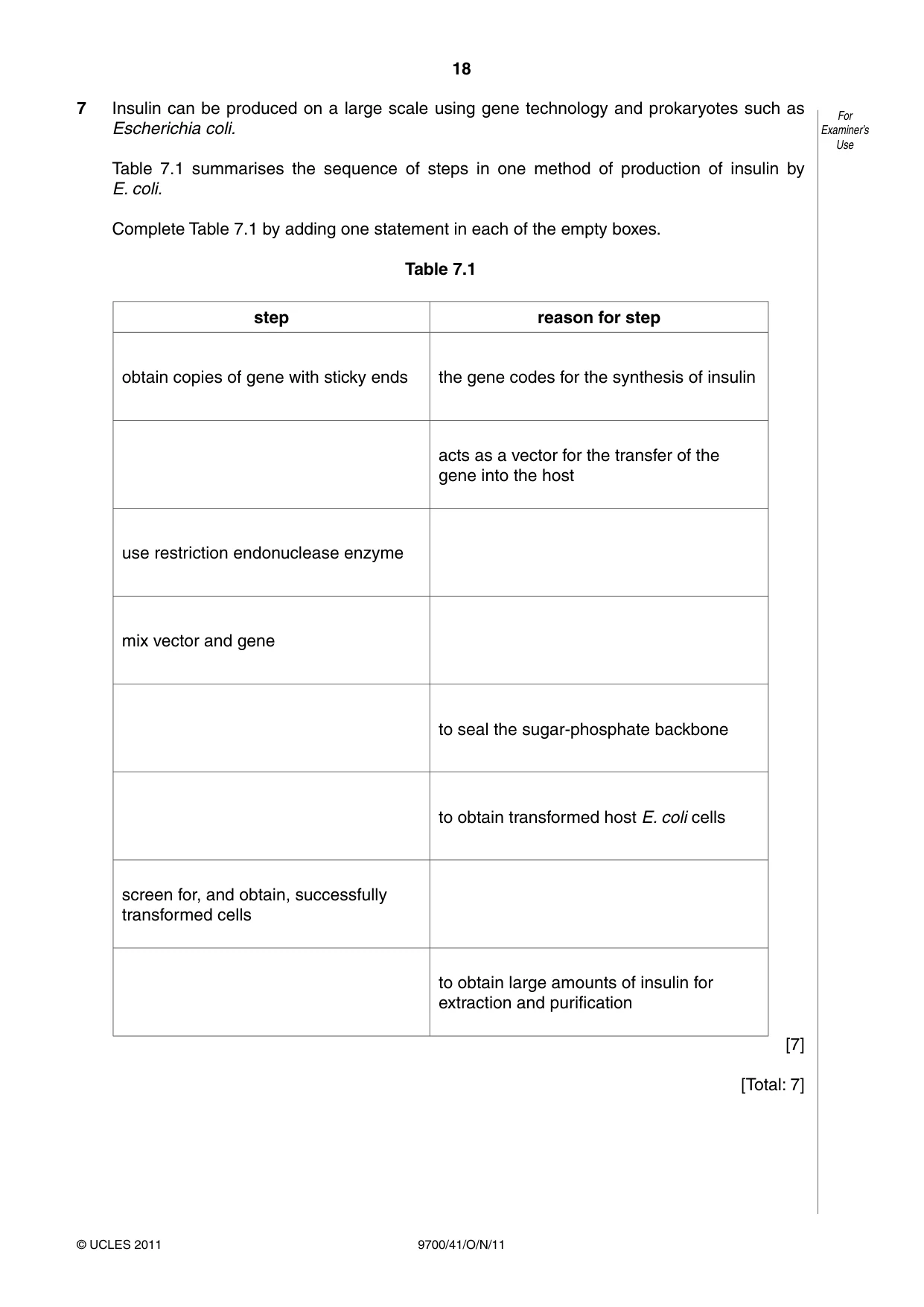
18 © UCLES 2011 9700/41/O/N/11 For Examiner’s Use 7 Insulin can be produced on a large scale using gene technology and prokaryotes such as Escherichia coli. Table 7.1 summarises the sequence of steps in one method of production of insulin by E. coli. Complete Table 7.1 by adding one statement in each of the empty boxes. Table 7.1 step reason for step obtain copies of gene with sticky ends the gene codes for the synthesis of insulin acts as a vector for the transfer of the gene into the host use restriction endonuclease enzyme mix vector and gene to seal the sugar-phosphate backbone to obtain transformed host E. coli cells screen for, and obtain, successfully transformed cells to obtain large amounts of insulin for extraction and purification [7] [Total: 7]
Question paper, page 19
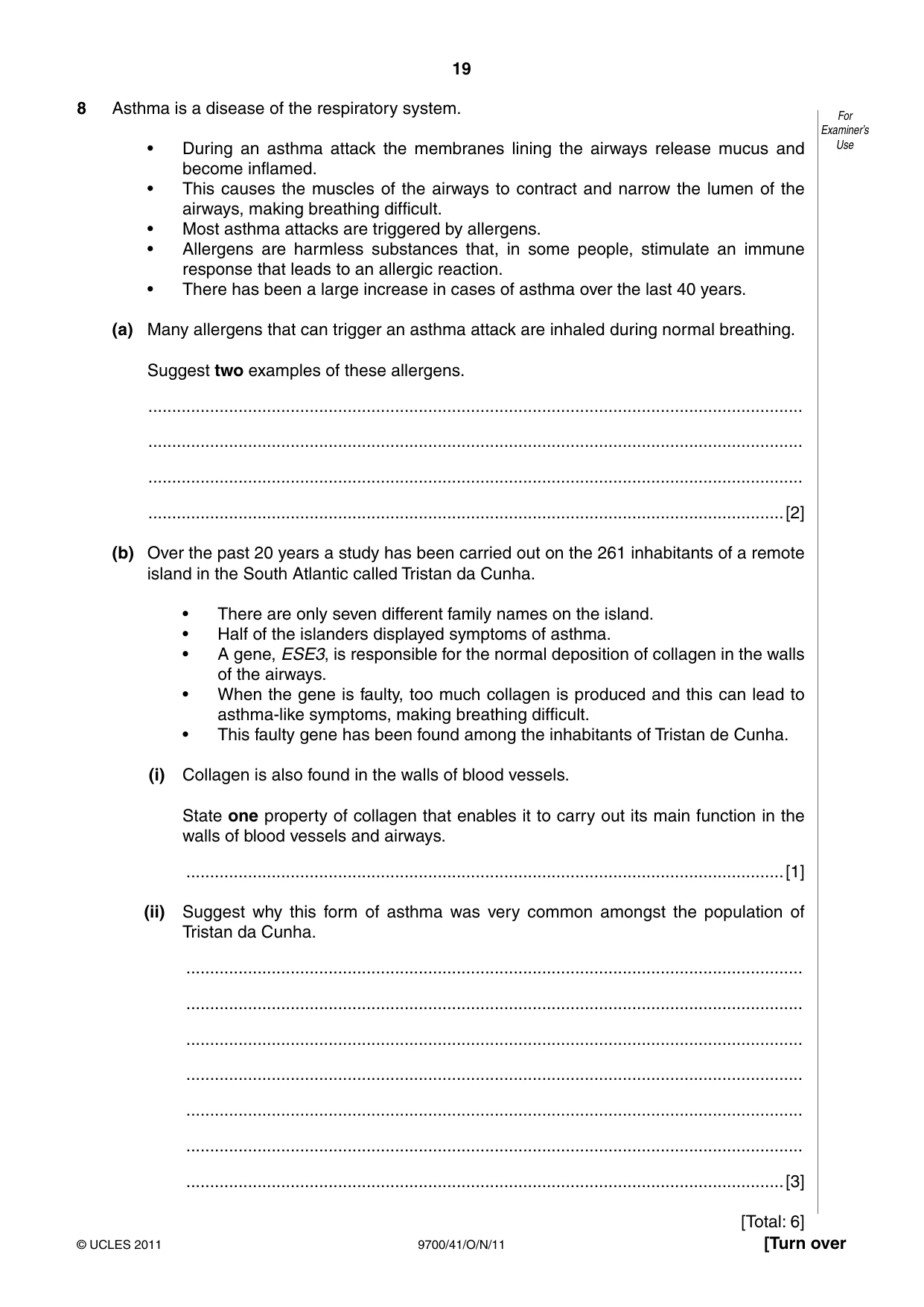
19 © UCLES 2011 [Turn over 9700/41/O/N/11 For Examiner’s Use 8 Asthma is a disease of the respiratory system. • During an asthma attack the membranes lining the airways release mucus and become inflamed. • This causes the muscles of the airways to contract and narrow the lumen of the airways, making breathing difficult. • Most asthma attacks are triggered by allergens. • Allergens are harmless substances that, in some people, stimulate an immune response that leads to an allergic reaction. • There has been a large increase in cases of asthma over the last 40 years. (a) Many allergens that can trigger an asthma attack are inhaled during normal breathing. Suggest two examples of these allergens. … … … …[2] (b) Over the past 20 years a study has been carried out on the 261 inhabitants of a remote island in the South Atlantic called Tristan da Cunha. • There are only seven different family names on the island. • Half of the islanders displayed symptoms of asthma. • A gene, ESE3, is responsible for the normal deposition of collagen in the walls of the airways. • When the gene is faulty, too much collagen is produced and this can lead to asthma-like symptoms, making breathing difficult. • This faulty gene has been found among the inhabitants of Tristan de Cunha. (i) Collagen is also found in the walls of blood vessels. State one property of collagen that enables it to carry out its main function in the walls of blood vessels and airways. …[1] (ii) Suggest why this form of asthma was very common amongst the population of Tristan da Cunha. … … … … … … …[3] [Total: 6]
Question paper, page 20
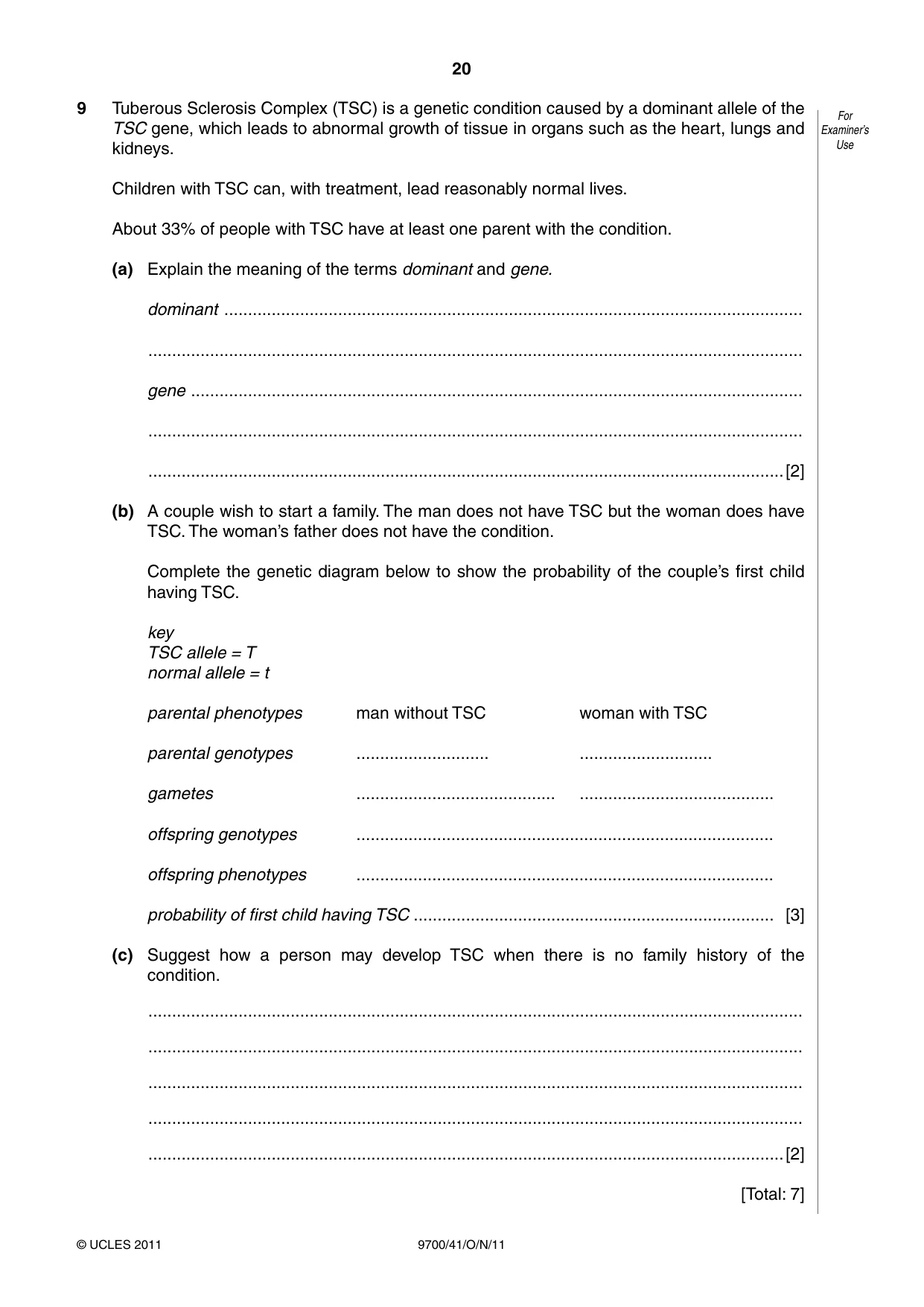
20 © UCLES 2011 9700/41/O/N/11 For Examiner’s Use 9 Tuberous Sclerosis Complex (TSC) is a genetic condition caused by a dominant allele of the TSC gene, which leads to abnormal growth of tissue in organs such as the heart, lungs and kidneys. Children with TSC can, with treatment, lead reasonably normal lives. About 33% of people with TSC have at least one parent with the condition. (a) Explain the meaning of the terms dominant and gene. dominant … … gene … … …[2] (b) A couple wish to start a family. The man does not have TSC but the woman does have TSC. The woman’s father does not have the condition. Complete the genetic diagram below to show the probability of the couple’s first child having TSC. key TSC allele = T normal allele = t parental phenotypes man without TSC woman with TSC parental genotypes … … gametes … … offspring genotypes … offspring phenotypes … probability of first child having TSC … [3] (c) Suggest how a person may develop TSC when there is no family history of the condition. … … … … …[2] [Total: 7]
Question paper, page 21
21 © UCLES 2011 [Turn over 9700/41/O/N/11 For Examiner’s Use Section B Answer one question. 10 (a) Describe how the structure of a chloroplast is related to its functions. [9] (b) Describe how you would separate chloroplast pigments using chromatography. [6] [Total: 15] 11 (a) Describe how a resting potential is maintained in an axon. [9] (b) Describe, using named examples, how sensory receptors in mammals generate action potentials. [6] [Total: 15] … … … … … … … … … … … … … … … … … …
Question paper, page 22
22 © UCLES 2011 9700/41/O/N/11 For Examiner’s Use … … … … … … … … … … … … … … … … … … … … … … … … … … … …
Question paper, page 23
23 © UCLES 2011 [Turn over 9700/41/O/N/11 For Examiner’s Use … … … … … … … … … … … … … … … … … … … … … … … … … … … …
Question paper, page 24
24 © UCLES 2011 9700/41/O/N/11 For Examiner’s Use … … … … … … … … … … … … … … … … … … … … … … … … Copyright Acknowledgements: Question 1 © Photograph, EWCP, www.ethiopianwolf.org Permission to reproduce items where third-party owned material protected by copyright is included has been sought and cleared where possible. Every reasonable effort has been made by the publisher (UCLES) to trace copyright holders, but if any items requiring clearance have unwittingly been included, the publisher will be pleased to make amends at the earliest possible opportunity. University of Cambridge International Examinations is part of the Cambridge Assessment Group. Cambridge Assessment is the brand name of University of Cambridge Local Examinations Syndicate (UCLES), which is itself a department of the University of Cambridge.
Mark scheme, page 1
UNIVERSITY OF CAMBRIDGE INTERNATIONAL EXAMINATIONS GCE Advanced Subsidiary Level and GCE Advanced Level MARK SCHEME for the October/November 2011 question paper for the guidance of teachers 9700 BIOLOGY 9700/41 Paper 4 (A2 Structured Questions), maximum raw mark 100 This mark scheme is published as an aid to teachers and candidates, to indicate the requirements of the examination. It shows the basis on which Examiners were instructed to award marks. It does not indicate the details of the discussions that took place at an Examiners’ meeting before marking began, which would have considered the acceptability of alternative answers. Mark schemes must be read in conjunction with the question papers and the report on the examination. • Cambridge will not enter into discussions or correspondence in connection with these mark schemes. Cambridge is publishing the mark schemes for the October/November 2011 question papers for most IGCSE, GCE Advanced Level and Advanced Subsidiary Level syllabuses and some Ordinary Level syllabuses.
Mark scheme, page 2
Page 2 Mark Scheme: Teachers’ version Syllabus Paper GCE AS/A LEVEL – October/November 2011 9700 41 © University of Cambridge International Examinations 2011 Mark scheme abbreviations: ; separates marking points / alternative answers for the same point R reject A accept (for answers correctly cued by the question, or by extra guidance) AW alternative wording (where responses vary more than usual) underline actual word given must be used by candidate (grammatical variants excepted) max indicates the maximum number of marks that can be given ora or reverse argument mp marking point (with relevant number) ecf error carried forward I ignore AVP Alternative valid point (examples given as guidance)
Mark scheme, page 3
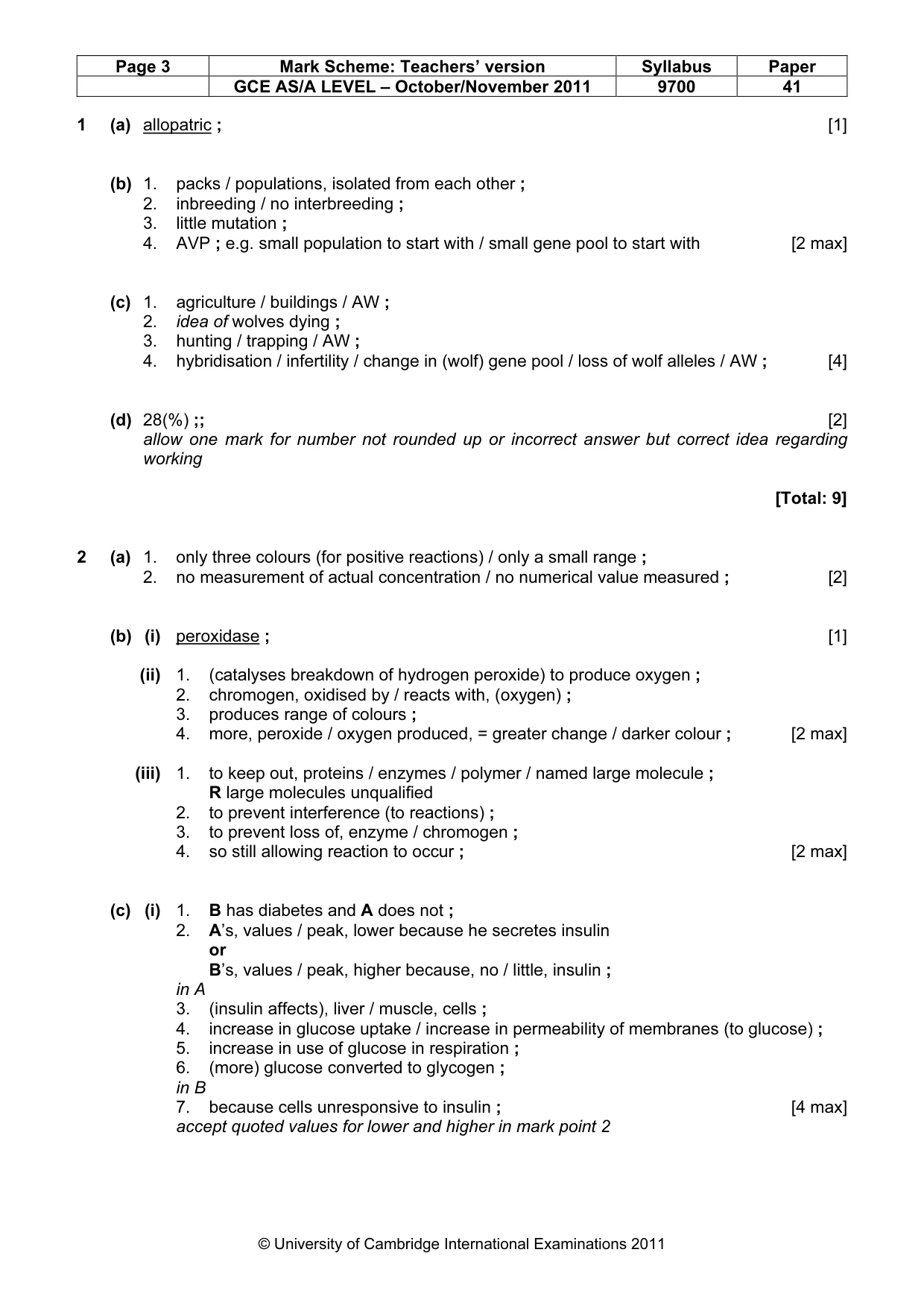
Page 3 Mark Scheme: Teachers’ version Syllabus Paper GCE AS/A LEVEL – October/November 2011 9700 41 © University of Cambridge International Examinations 2011 1 (a) allopatric ; [1] (b) 1. packs / populations, isolated from each other ; 2. inbreeding / no interbreeding ; 3. little mutation ; 4. AVP ; e.g. small population to start with / small gene pool to start with [2 max] (c) 1. agriculture / buildings / AW ; 2. idea of wolves dying ; 3. hunting / trapping / AW ; 4. hybridisation / infertility / change in (wolf) gene pool / loss of wolf alleles / AW ; [4] (d) 28(%) ;; [2] allow one mark for number not rounded up or incorrect answer but correct idea regarding working [Total: 9] 2 (a) 1. only three colours (for positive reactions) / only a small range ; 2. no measurement of actual concentration / no numerical value measured ; [2] (b) (i) peroxidase ; [1] (ii) 1. (catalyses breakdown of hydrogen peroxide) to produce oxygen ; 2. chromogen, oxidised by / reacts with, (oxygen) ; 3. produces range of colours ; 4. more, peroxide / oxygen produced, = greater change / darker colour ; [2 max] (iii) 1. to keep out, proteins / enzymes / polymer / named large molecule ; R large molecules unqualified 2. to prevent interference (to reactions) ; 3. to prevent loss of, enzyme / chromogen ; 4. so still allowing reaction to occur ; [2 max] (c) (i) 1. B has diabetes and A does not ; 2. A’s, values / peak, lower because he secretes insulin or B’s, values / peak, higher because, no / little, insulin ; in A 3. (insulin affects), liver / muscle, cells ; 4. increase in glucose uptake / increase in permeability of membranes (to glucose) ; 5. increase in use of glucose in respiration ; 6. (more) glucose converted to glycogen ; in B 7. because cells unresponsive to insulin ; [4 max] accept quoted values for lower and higher in mark point 2
Mark scheme, page 4
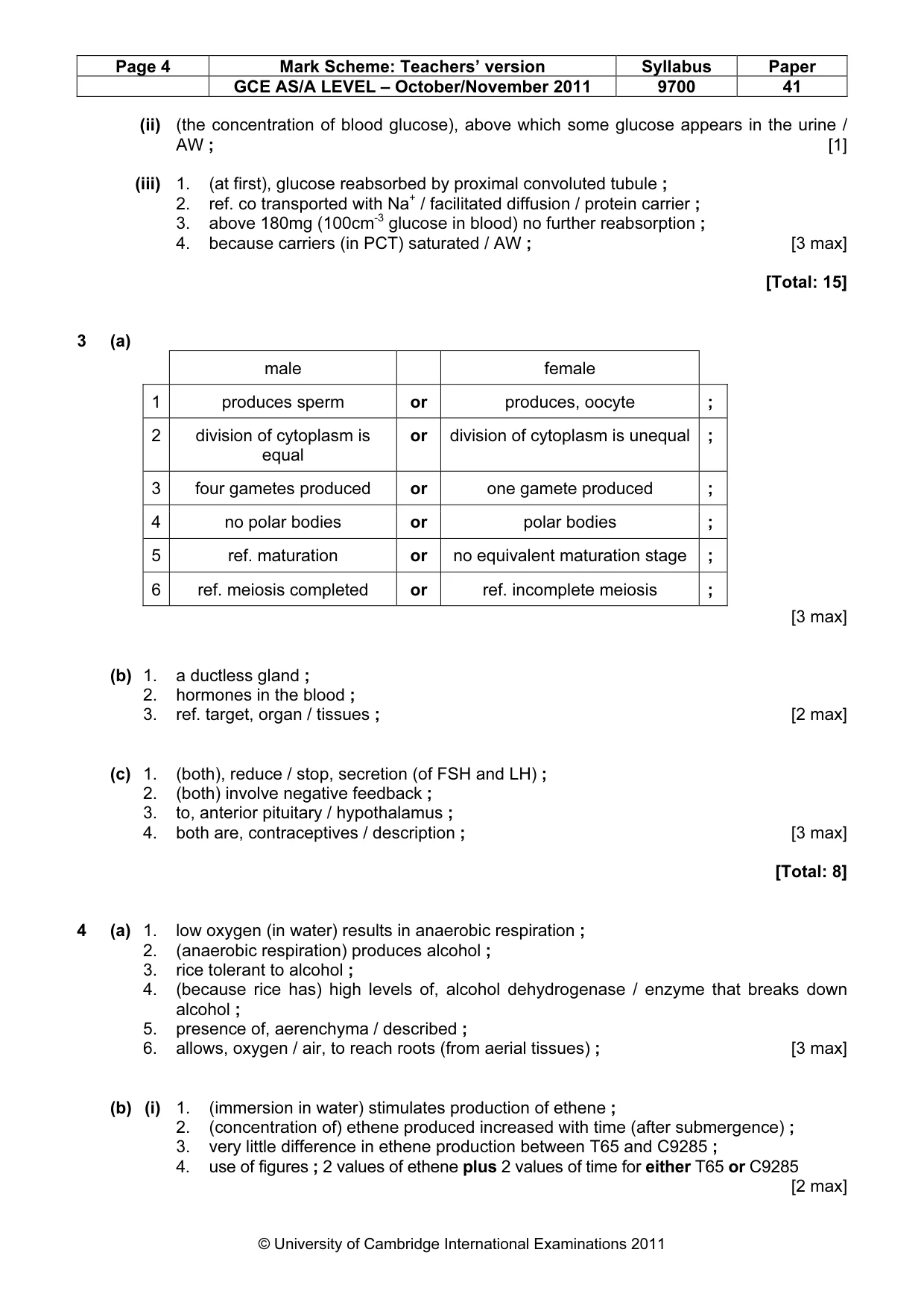
Page 4 Mark Scheme: Teachers’ version Syllabus Paper GCE AS/A LEVEL – October/November 2011 9700 41 © University of Cambridge International Examinations 2011 (ii) (the concentration of blood glucose), above which some glucose appears in the urine / AW ; [1] (iii) 1. (at first), glucose reabsorbed by proximal convoluted tubule ; 2. ref. co transported with Na+ / facilitated diffusion / protein carrier ; 3. above 180mg (100cm-3 glucose in blood) no further reabsorption ; 4. because carriers (in PCT) saturated / AW ; [3 max] [Total: 15] 3 (a) male female 1 produces sperm or produces, oocyte ; 2 division of cytoplasm is equal or division of cytoplasm is unequal ; 3 four gametes produced or one gamete produced ; 4 no polar bodies or polar bodies ; 5 ref. maturation or no equivalent maturation stage ; 6 ref. meiosis completed or ref. incomplete meiosis ; [3 max] (b) 1. a ductless gland ; 2. hormones in the blood ; 3. ref. target, organ / tissues ; [2 max] (c) 1. (both), reduce / stop, secretion (of FSH and LH) ; 2. (both) involve negative feedback ; 3. to, anterior pituitary / hypothalamus ; 4. both are, contraceptives / description ; [3 max] [Total: 8] 4 (a) 1. low oxygen (in water) results in anaerobic respiration ; 2. (anaerobic respiration) produces alcohol ; 3. rice tolerant to alcohol ; 4. (because rice has) high levels of, alcohol dehydrogenase / enzyme that breaks down alcohol ; 5. presence of, aerenchyma / described ; 6. allows, oxygen / air, to reach roots (from aerial tissues) ; [3 max] (b) (i) 1. (immersion in water) stimulates production of ethene ; 2. (concentration of) ethene produced increased with time (after submergence) ; 3. very little difference in ethene production between T65 and C9285 ; 4. use of figures ; 2 values of ethene plus 2 values of time for either T65 or C9285 [2 max]
Mark scheme, page 5
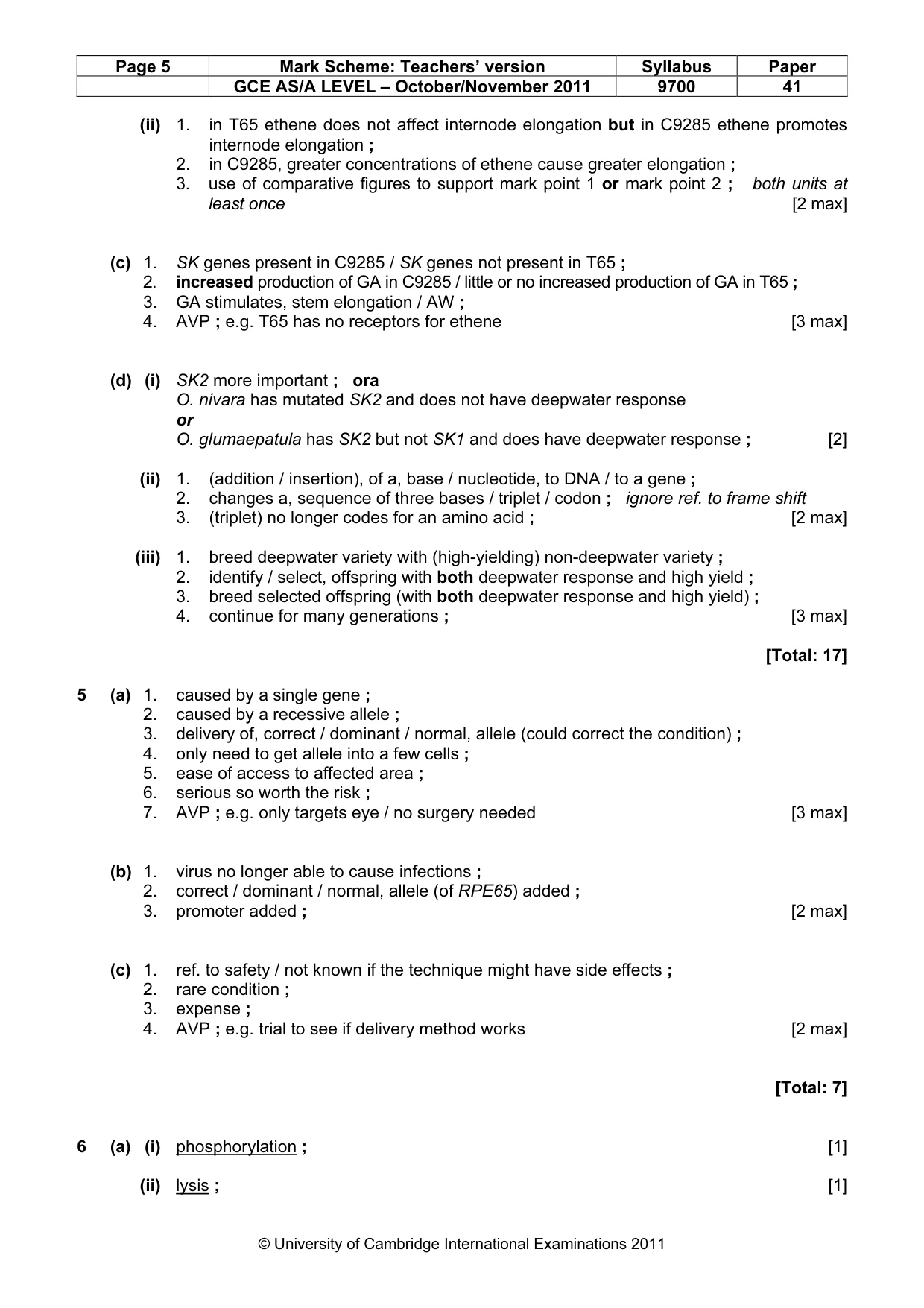
Page 5 Mark Scheme: Teachers’ version Syllabus Paper GCE AS/A LEVEL – October/November 2011 9700 41 © University of Cambridge International Examinations 2011 (ii) 1. in T65 ethene does not affect internode elongation but in C9285 ethene promotes internode elongation ; 2. in C9285, greater concentrations of ethene cause greater elongation ; 3. use of comparative figures to support mark point 1 or mark point 2 ; both units at least once [2 max] (c) 1. SK genes present in C9285 / SK genes not present in T65 ; 2. increased production of GA in C9285 / little or no increased production of GA in T65 ; 3. GA stimulates, stem elongation / AW ; 4. AVP ; e.g. T65 has no receptors for ethene [3 max] (d) (i) SK2 more important ; ora O. nivara has mutated SK2 and does not have deepwater response or O. glumaepatula has SK2 but not SK1 and does have deepwater response ; [2] (ii) 1. (addition / insertion), of a, base / nucleotide, to DNA / to a gene ; 2. changes a, sequence of three bases / triplet / codon ; ignore ref. to frame shift 3. (triplet) no longer codes for an amino acid ; [2 max] (iii) 1. breed deepwater variety with (high-yielding) non-deepwater variety ; 2. identify / select, offspring with both deepwater response and high yield ; 3. breed selected offspring (with both deepwater response and high yield) ; 4. continue for many generations ; [3 max] [Total: 17] 5 (a) 1. caused by a single gene ; 2. caused by a recessive allele ; 3. delivery of, correct / dominant / normal, allele (could correct the condition) ; 4. only need to get allele into a few cells ; 5. ease of access to affected area ; 6. serious so worth the risk ; 7. AVP ; e.g. only targets eye / no surgery needed [3 max] (b) 1. virus no longer able to cause infections ; 2. correct / dominant / normal, allele (of RPE65) added ; 3. promoter added ; [2 max] (c) 1. ref. to safety / not known if the technique might have side effects ; 2. rare condition ; 3. expense ; 4. AVP ; e.g. trial to see if delivery method works [2 max] [Total: 7] 6 (a) (i) phosphorylation ; [1] (ii) lysis ; [1]
Mark scheme, page 6
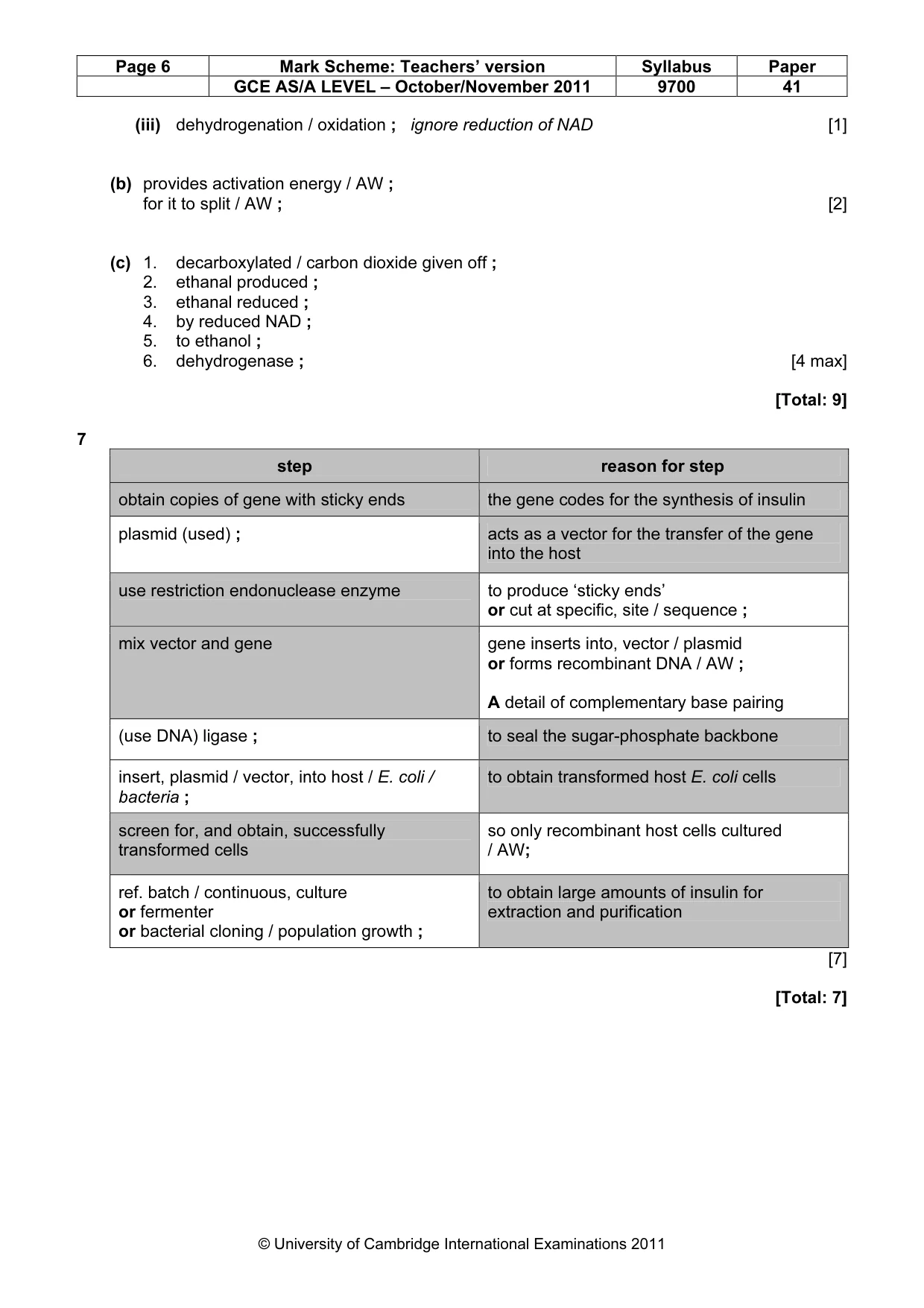
Page 6 Mark Scheme: Teachers’ version Syllabus Paper GCE AS/A LEVEL – October/November 2011 9700 41 © University of Cambridge International Examinations 2011 (iii) dehydrogenation / oxidation ; ignore reduction of NAD [1] (b) provides activation energy / AW ; for it to split / AW ; [2] (c) 1. decarboxylated / carbon dioxide given off ; 2. ethanal produced ; 3. ethanal reduced ; 4. by reduced NAD ; 5. to ethanol ; 6. dehydrogenase ; [4 max] [Total: 9] 7 step reason for step obtain copies of gene with sticky ends the gene codes for the synthesis of insulin plasmid (used) ; acts as a vector for the transfer of the gene into the host use restriction endonuclease enzyme to produce ‘sticky ends’ or cut at specific, site / sequence ; mix vector and gene gene inserts into, vector / plasmid or forms recombinant DNA / AW ; A detail of complementary base pairing (use DNA) ligase ; to seal the sugar-phosphate backbone insert, plasmid / vector, into host / E. coli / bacteria ; to obtain transformed host E. coli cells screen for, and obtain, successfully transformed cells so only recombinant host cells cultured / AW; ref. batch / continuous, culture or fermenter or bacterial cloning / population growth ; to obtain large amounts of insulin for extraction and purification [7] [Total: 7]
Mark scheme, page 7
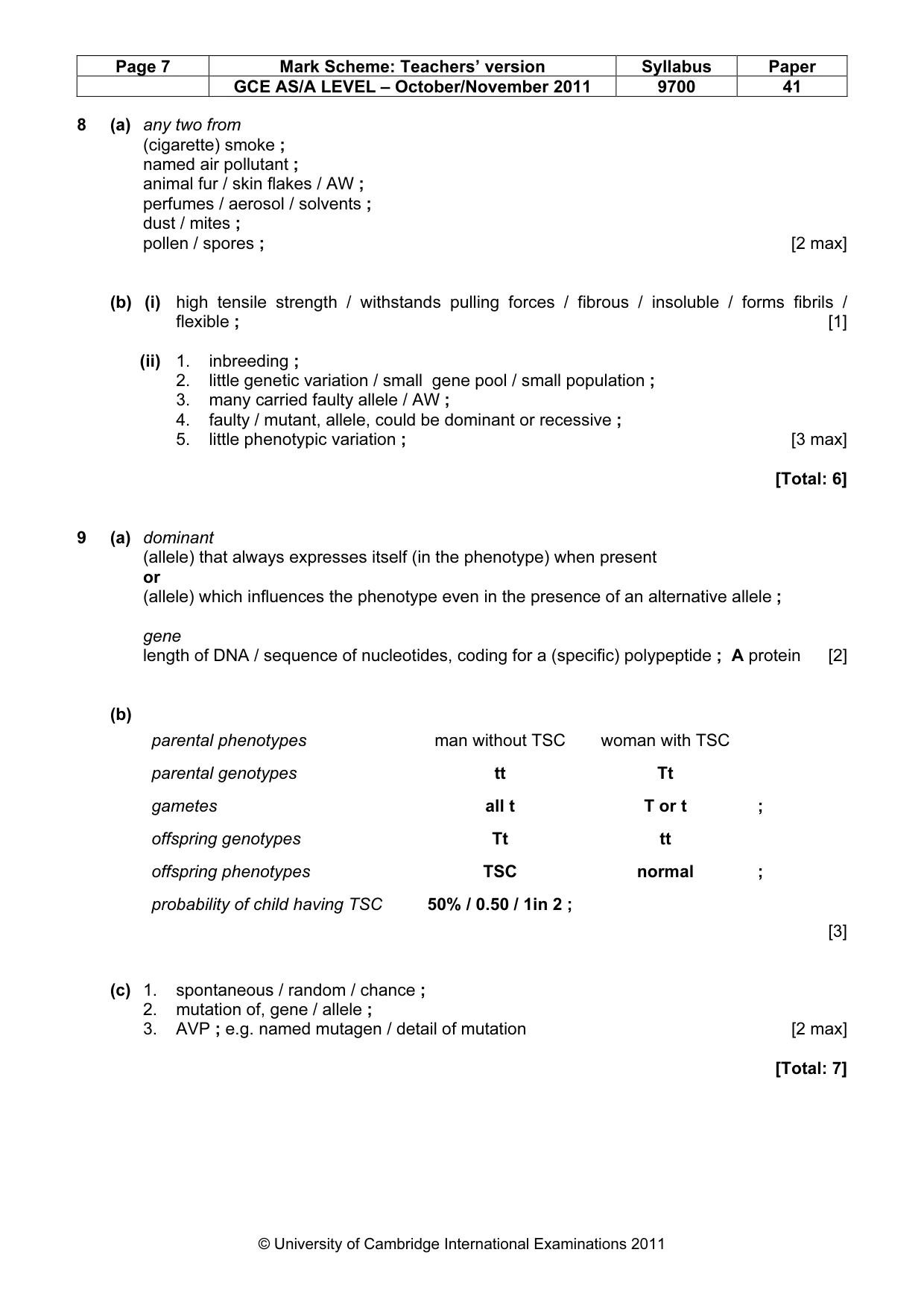
Page 7 Mark Scheme: Teachers’ version Syllabus Paper GCE AS/A LEVEL – October/November 2011 9700 41 © University of Cambridge International Examinations 2011 8 (a) any two from (cigarette) smoke ; named air pollutant ; animal fur / skin flakes / AW ; perfumes / aerosol / solvents ; dust / mites ; pollen / spores ; [2 max] (b) (i) high tensile strength / withstands pulling forces / fibrous / insoluble / forms fibrils / flexible ; [1] (ii) 1. inbreeding ; 2. little genetic variation / small gene pool / small population ; 3. many carried faulty allele / AW ; 4. faulty / mutant, allele, could be dominant or recessive ; 5. little phenotypic variation ; [3 max] [Total: 6] 9 (a) dominant (allele) that always expresses itself (in the phenotype) when present or (allele) which influences the phenotype even in the presence of an alternative allele ; gene length of DNA / sequence of nucleotides, coding for a (specific) polypeptide ; A protein [2] (b) parental phenotypes man without TSC woman with TSC parental genotypes tt Tt gametes all t T or t ; offspring genotypes Tt tt offspring phenotypes TSC normal ; probability of child having TSC 50% / 0.50 / 1in 2 ; [3] (c) 1. spontaneous / random / chance ; 2. mutation of, gene / allele ; 3. AVP ; e.g. named mutagen / detail of mutation [2 max] [Total: 7]
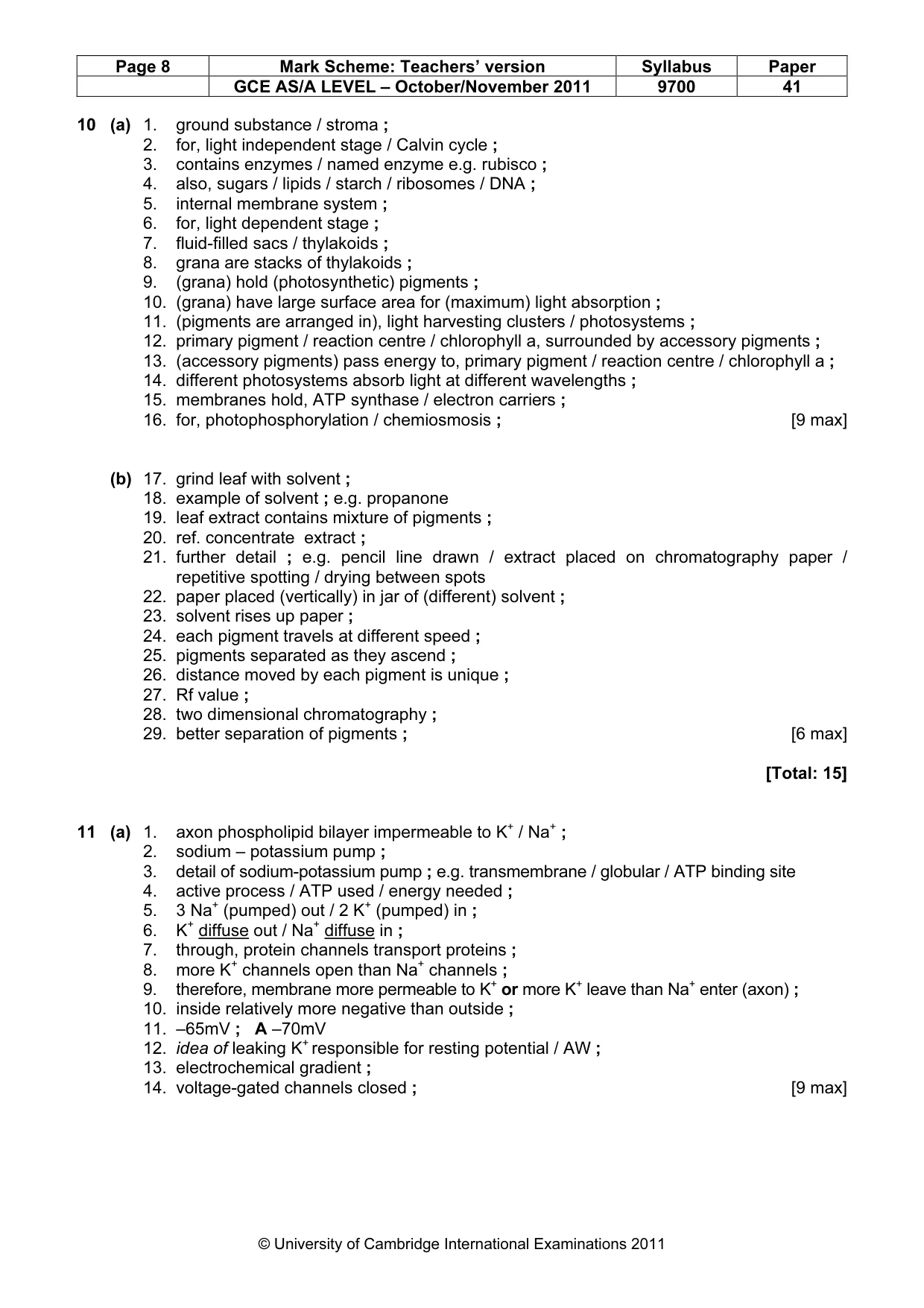
Mark scheme, page 8
Page 8 Mark Scheme: Teachers’ version Syllabus Paper GCE AS/A LEVEL – October/November 2011 9700 41 © University of Cambridge International Examinations 2011 10 (a) 1. ground substance / stroma ; 2. for, light independent stage / Calvin cycle ; 3. contains enzymes / named enzyme e.g. rubisco ; 4. also, sugars / lipids / starch / ribosomes / DNA ; 5. internal membrane system ; 6. for, light dependent stage ; 7. fluid-filled sacs / thylakoids ; 8. grana are stacks of thylakoids ; 9. (grana) hold (photosynthetic) pigments ; 10. (grana) have large surface area for (maximum) light absorption ; 11. (pigments are arranged in), light harvesting clusters / photosystems ; 12. primary pigment / reaction centre / chlorophyll a, surrounded by accessory pigments ; 13. (accessory pigments) pass energy to, primary pigment / reaction centre / chlorophyll a ; 14. different photosystems absorb light at different wavelengths ; 15. membranes hold, ATP synthase / electron carriers ; 16. for, photophosphorylation / chemiosmosis ; [9 max] (b) 17. grind leaf with solvent ; 18. example of solvent ; e.g. propanone 19. leaf extract contains mixture of pigments ; 20. ref. concentrate extract ; 21. further detail ; e.g. pencil line drawn / extract placed on chromatography paper / repetitive spotting / drying between spots 22. paper placed (vertically) in jar of (different) solvent ; 23. solvent rises up paper ; 24. each pigment travels at different speed ; 25. pigments separated as they ascend ; 26. distance moved by each pigment is unique ; 27. Rf value ; 28. two dimensional chromatography ; 29. better separation of pigments ; [6 max] [Total: 15] 11 (a) 1. axon phospholipid bilayer impermeable to K+ / Na+ ; 2. sodium – potassium pump ; 3. detail of sodium-potassium pump ; e.g. transmembrane / globular / ATP binding site 4. active process / ATP used / energy needed ; 5. 3 Na+ (pumped) out / 2 K+ (pumped) in ; 6. K+ diffuse out / Na+ diffuse in ; 7. through, protein channels transport proteins ; 8. more K+ channels open than Na+ channels ; 9. therefore, membrane more permeable to K+ or more K+ leave than Na+ enter (axon) ; 10. inside relatively more negative than outside ; 11. –65mV ; A –70mV 12. idea of leaking K+ responsible for resting potential / AW ; 13. electrochemical gradient ; 14. voltage-gated channels closed ; [9 max]
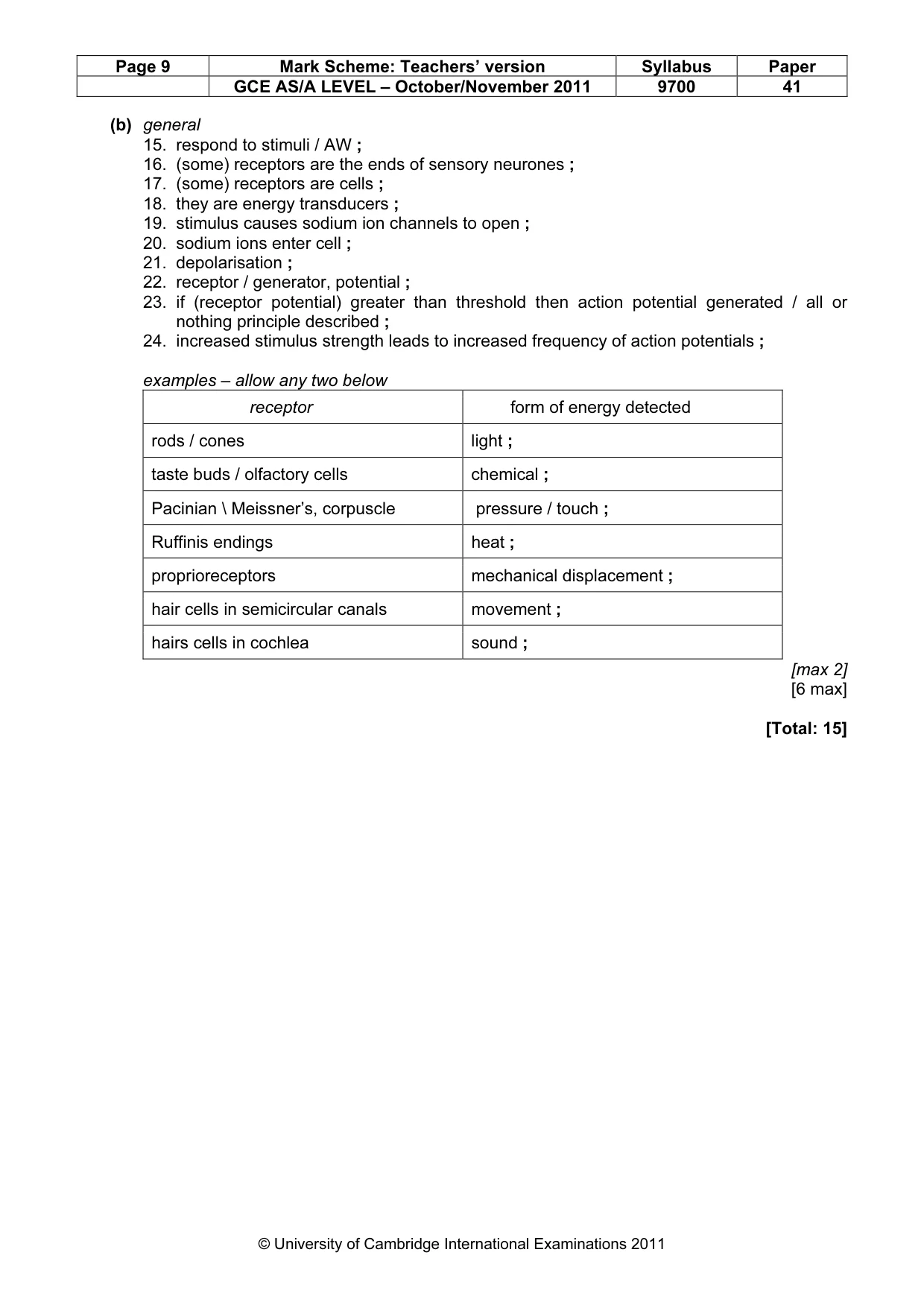
Mark scheme, page 9
Page 9 Mark Scheme: Teachers’ version Syllabus Paper GCE AS/A LEVEL – October/November 2011 9700 41 © University of Cambridge International Examinations 2011 (b) general 15. respond to stimuli / AW ; 16. (some) receptors are the ends of sensory neurones ; 17. (some) receptors are cells ; 18. they are energy transducers ; 19. stimulus causes sodium ion channels to open ; 20. sodium ions enter cell ; 21. depolarisation ; 22. receptor / generator, potential ; 23. if (receptor potential) greater than threshold then action potential generated / all or nothing principle described ; 24. increased stimulus strength leads to increased frequency of action potentials ; examples – allow any two below receptor form of energy detected rods / cones light ; taste buds / olfactory cells chemical ; Pacinian \ Meissner’s, corpuscle pressure / touch ; Ruffinis endings heat ; proprioreceptors mechanical displacement ; hair cells in semicircular canals movement ; hairs cells in cochlea sound ; [max 2] [6 max] [Total: 15]
What you needed in this session
Cambridge’s own grade thresholds for 2011 Oct/Nov, Paper 4 · Variant 1. A higher threshold means an easier paper — the bar moves with how the cohort did.