Cambridge A Level Biology 9700 — 2011 Oct/Nov Paper 4 · Variant 3
9700/43/O/N/11 · 100 marks · ≈113 min
The question paper and its mark scheme, free to read here and free to download. This is Cambridge’s own paper, exactly as it was sat.
Question paper24 pages



Mark scheme10 pages
Answers below. Sit the paper first if you are practising.
Paper as text
Question paper, page 1
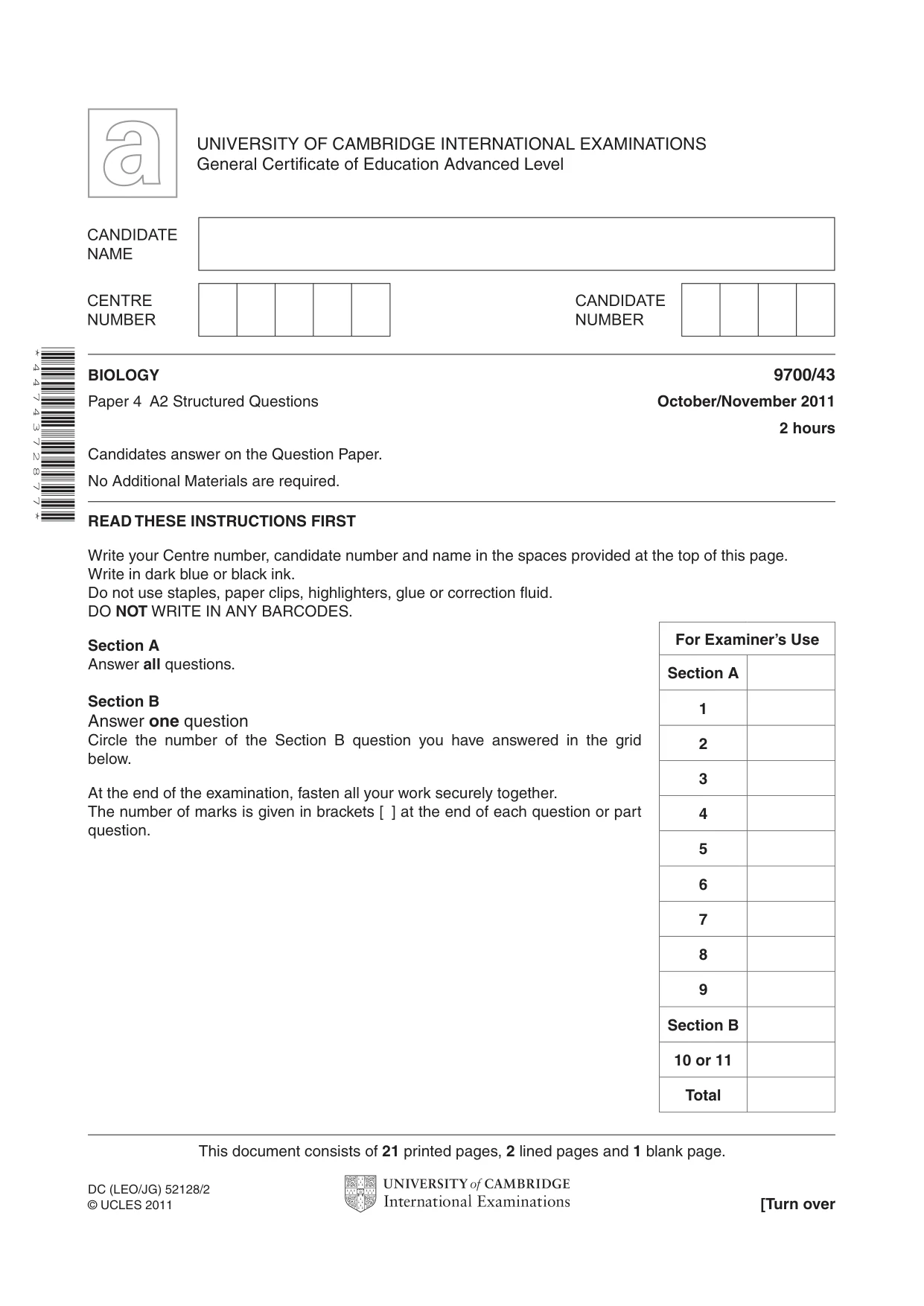
This document consists of 21 printed pages, 2 lined pages and 1 blank page. DC (LEO/JG) 52128/2 © UCLES 2011 [Turn over UNIVERSITY OF CAMBRIDGE INTERNATIONAL EXAMINATIONS General Certificate of Education Advanced Level READ THESE INSTRUCTIONS FIRST Write your Centre number, candidate number and name in the spaces provided at the top of this page. Write in dark blue or black ink. Do not use staples, paper clips, highlighters, glue or correction fluid. DO NOT WRITE IN ANY BARCODES. Section A Answer all questions. Section B Answer one question Circle the number of the Section B question you have answered in the grid below. At the end of the examination, fasten all your work securely together. The number of marks is given in brackets [ ] at the end of each question or part question. * 4 4 7 4 3 7 2 8 7 7 * BIOLOGY 9700/43 Paper 4 A2 Structured Questions October/November 2011 2 hours Candidates answer on the Question Paper. No Additional Materials are required. For Examiner’s Use Section A 1 2 3 4 5 6 7 8 9 Section B 10 or 11 Total
Question paper, page 2
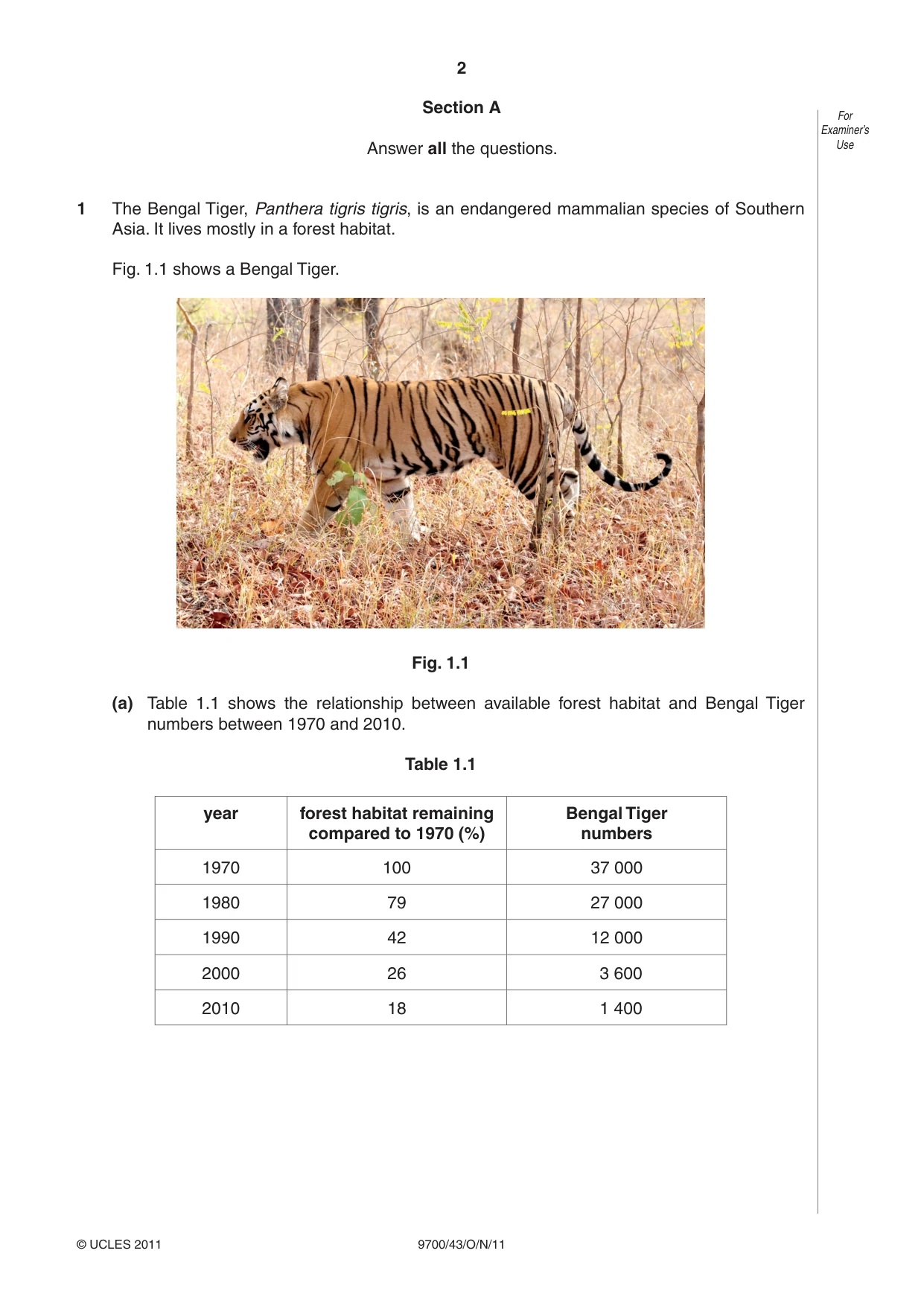
2 © UCLES 2011 9700/43/O/N/11 For Examiner’s Use Section A Answer all the questions. 1 The Bengal Tiger, Panthera tigris tigris, is an endangered mammalian species of Southern Asia. It lives mostly in a forest habitat. Fig. 1.1 shows a Bengal Tiger. Fig. 1.1 (a) Table 1.1 shows the relationship between available forest habitat and Bengal Tiger numbers between 1970 and 2010. Table 1.1 year forest habitat remaining compared to 1970 (%) Bengal Tiger numbers 1970 100 37 000 1980 79 27 000 1990 42 12 000 2000 26 3 600 2010 18 1 400
Question paper, page 3
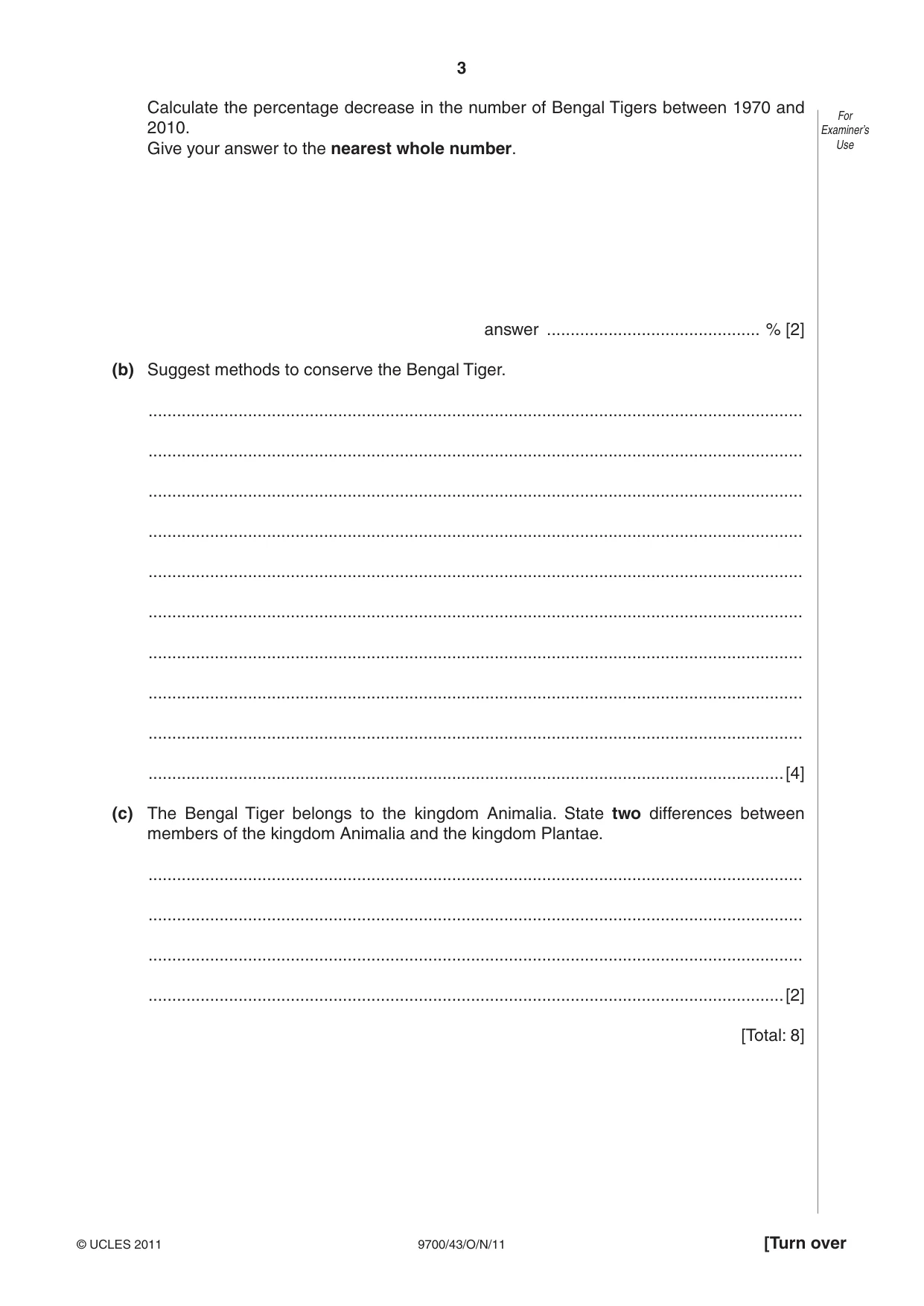
3 © UCLES 2011 [Turn over 9700/43/O/N/11 For Examiner’s Use Calculate the percentage decrease in the number of Bengal Tigers between 1970 and 2010. Give your answer to the nearest whole number. answer … % [2] (b) Suggest methods to conserve the Bengal Tiger. … … … … … … … … … …[4] (c) The Bengal Tiger belongs to the kingdom Animalia. State two differences between members of the kingdom Animalia and the kingdom Plantae. … … … …[2] [Total: 8]
Question paper, page 4
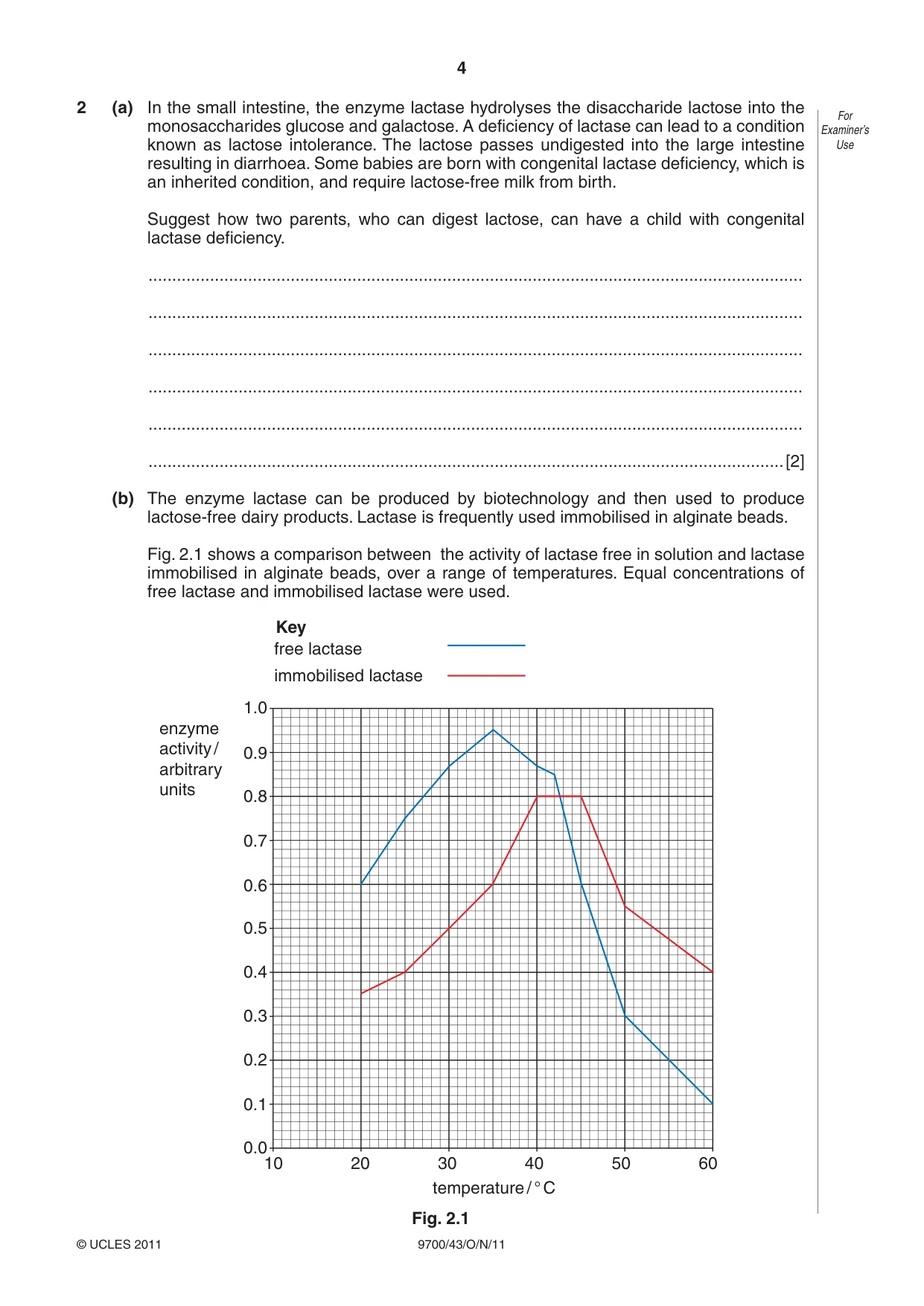
4 © UCLES 2011 9700/43/O/N/11 For Examiner’s Use 2 (a) In the small intestine, the enzyme lactase hydrolyses the disaccharide lactose into the monosaccharides glucose and galactose. A deficiency of lactase can lead to a condition known as lactose intolerance. The lactose passes undigested into the large intestine resulting in diarrhoea. Some babies are born with congenital lactase deficiency, which is an inherited condition, and require lactose-free milk from birth. Suggest how two parents, who can digest lactose, can have a child with congenital lactase deficiency. … … … … … …[2] (b) The enzyme lactase can be produced by biotechnology and then used to produce lactose-free dairy products. Lactase is frequently used immobilised in alginate beads. Fig. 2.1 shows a comparison between the activity of lactase free in solution and lactase immobilised in alginate beads, over a range of temperatures. Equal concentrations of free lactase and immobilised lactase were used. 0.0 10 20 30 40 50 60 0.1 0.2 0.3 0.4 0.5 0.6 0.7 0.8 0.9 1.0 temperature / ° C enzyme activity / arbitrary units Key free lactase immobilised lactase Fig. 2.1
Question paper, page 5
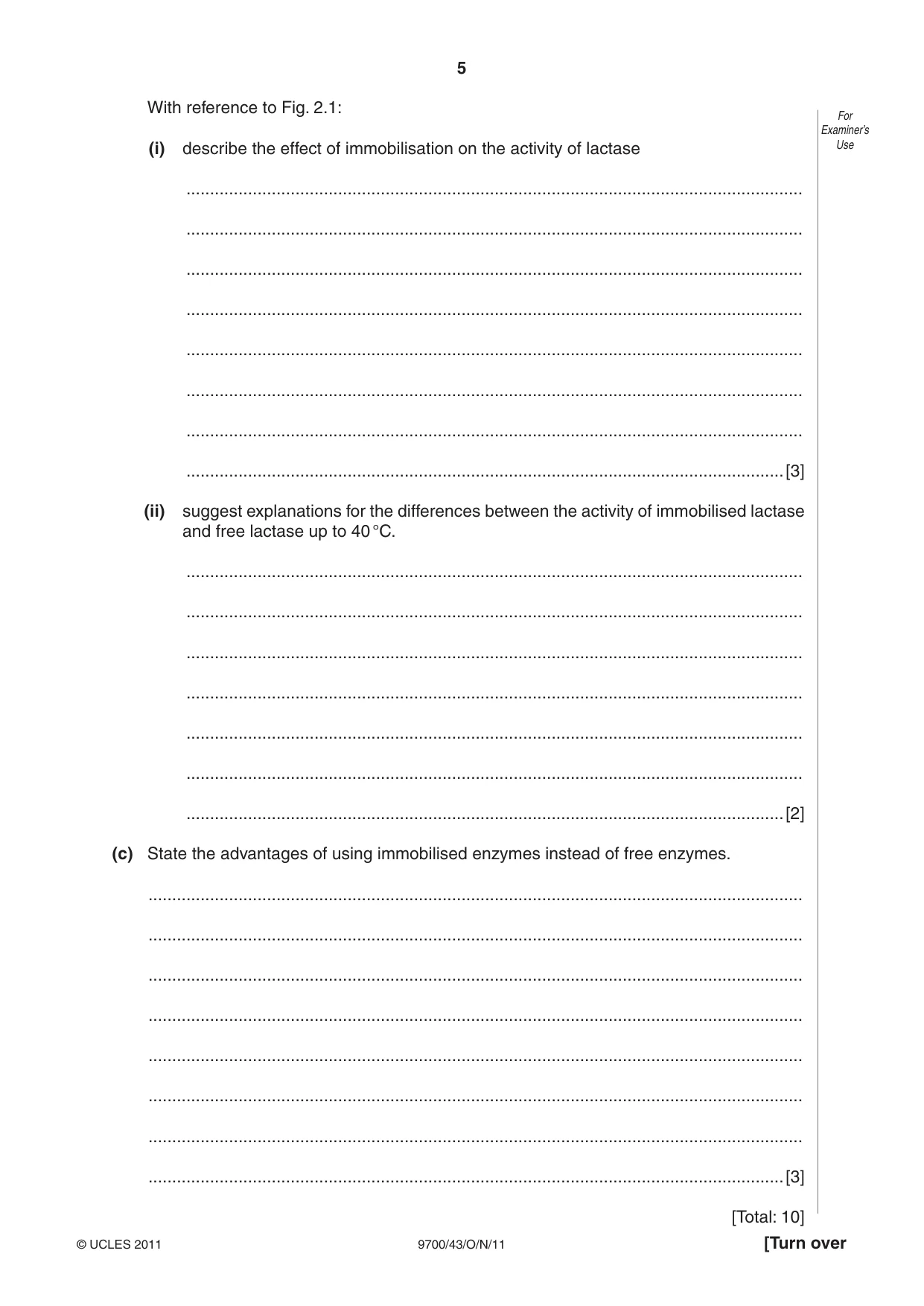
5 © UCLES 2011 [Turn over 9700/43/O/N/11 For Examiner’s Use With reference to Fig. 2.1: (i) describe the effect of immobilisation on the activity of lactase … … … … … … … …[3] (ii) suggest explanations for the differences between the activity of immobilised lactase and free lactase up to 40 °C. … … … … … … …[2] (c) State the advantages of using immobilised enzymes instead of free enzymes. … … … … … … … …[3] [Total: 10]
Question paper, page 6
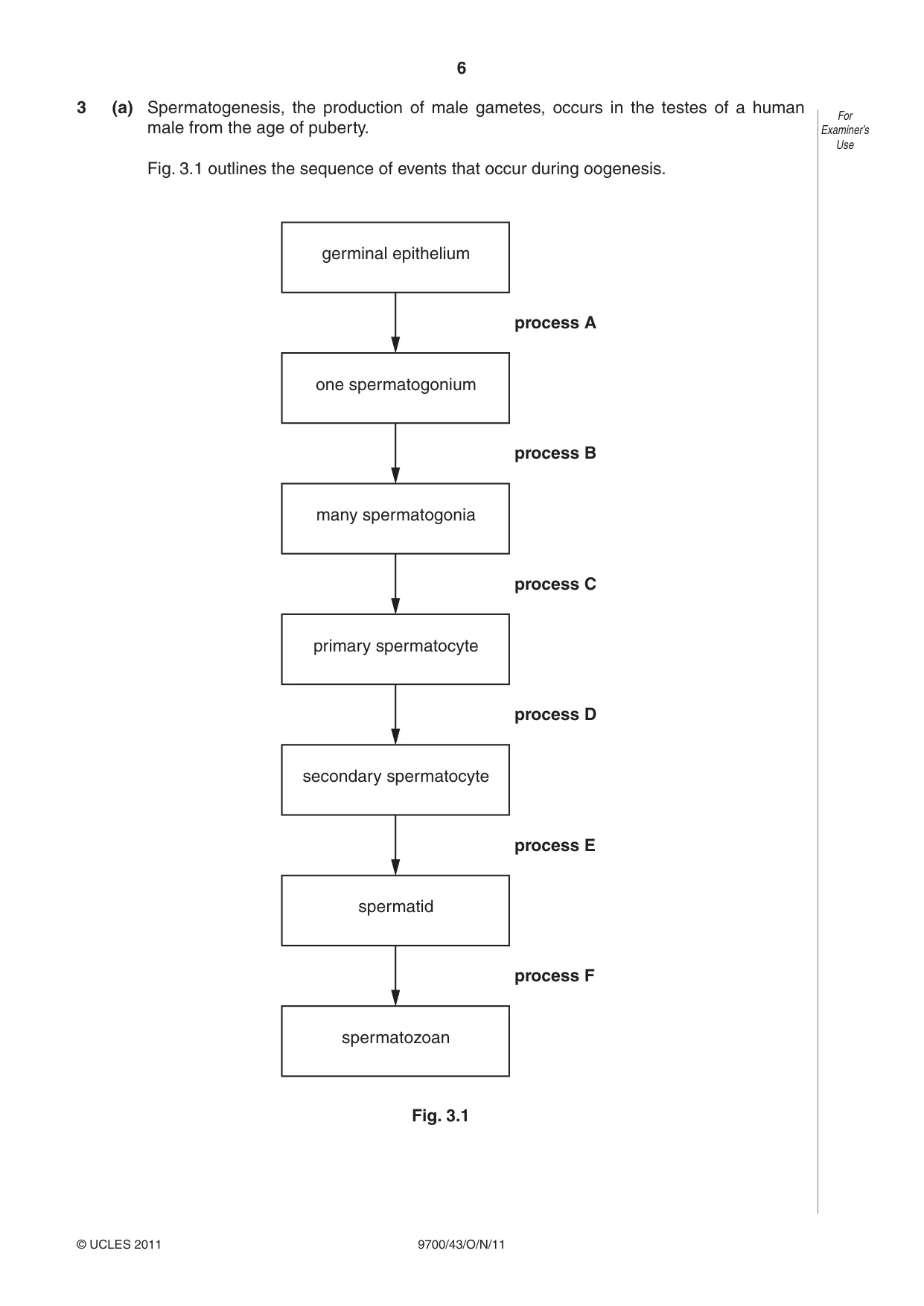
6 © UCLES 2011 9700/43/O/N/11 For Examiner’s Use 3 (a) Spermatogenesis, the production of male gametes, occurs in the testes of a human male from the age of puberty. Fig. 3.1 outlines the sequence of events that occur during oogenesis. germinal epithelium process A one spermatogonium process B many spermatogonia process C primary spermatocyte process D secondary spermatocyte process E spermatid process F spermatozoan Fig. 3.1
Question paper, page 7
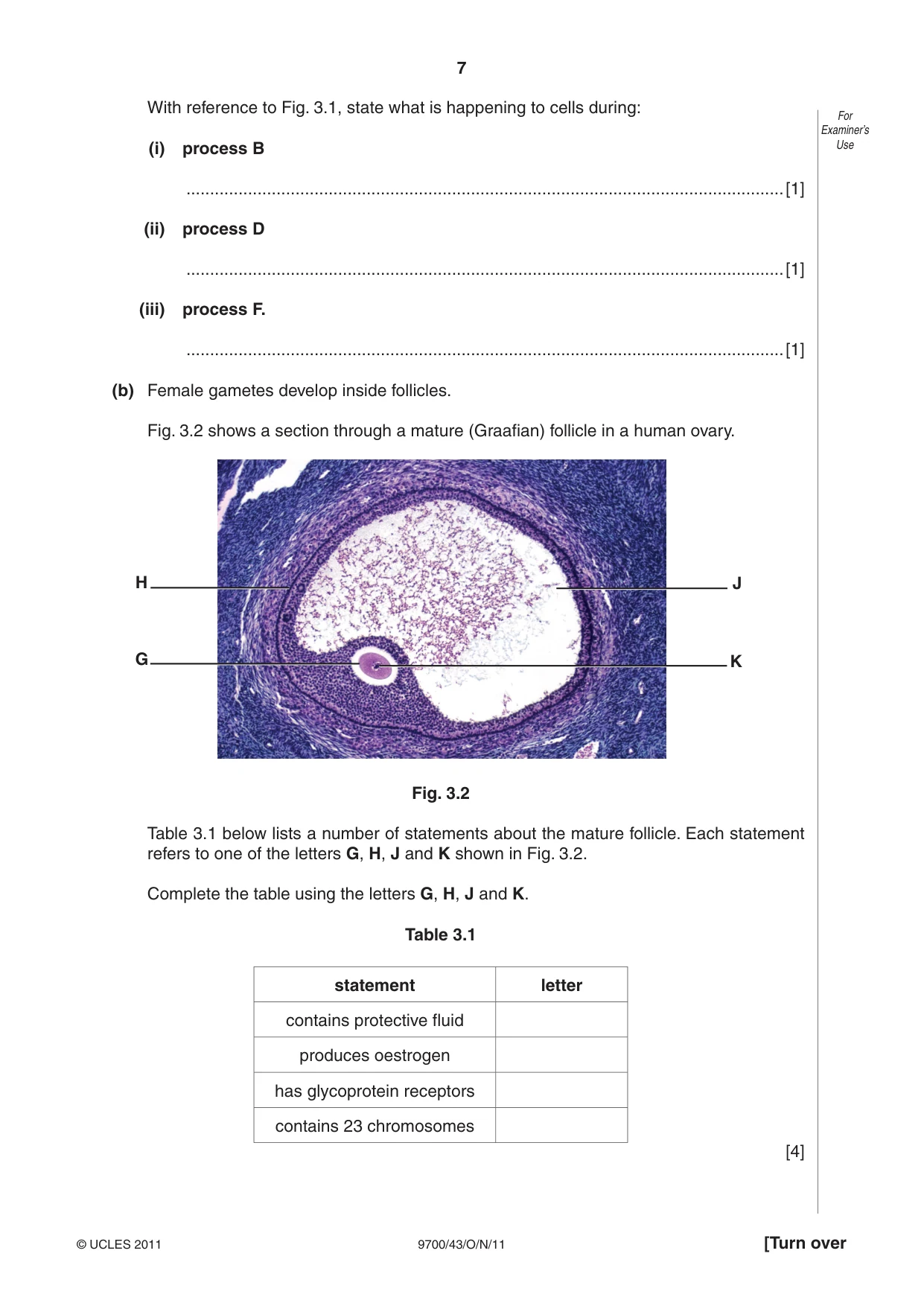
7 © UCLES 2011 [Turn over 9700/43/O/N/11 For Examiner’s Use With reference to Fig. 3.1, state what is happening to cells during: (i) process B …[1] (ii) process D …[1] (iii) process F. …[1] (b) Female gametes develop inside follicles. Fig. 3.2 shows a section through a mature (Graafian) follicle in a human ovary. H G J K Fig. 3.2 Table 3.1 below lists a number of statements about the mature follicle. Each statement refers to one of the letters G, H, J and K shown in Fig. 3.2. Complete the table using the letters G, H, J and K. Table 3.1 statement letter contains protective fluid produces oestrogen has glycoprotein receptors contains 23 chromosomes [4]
Question paper, page 8
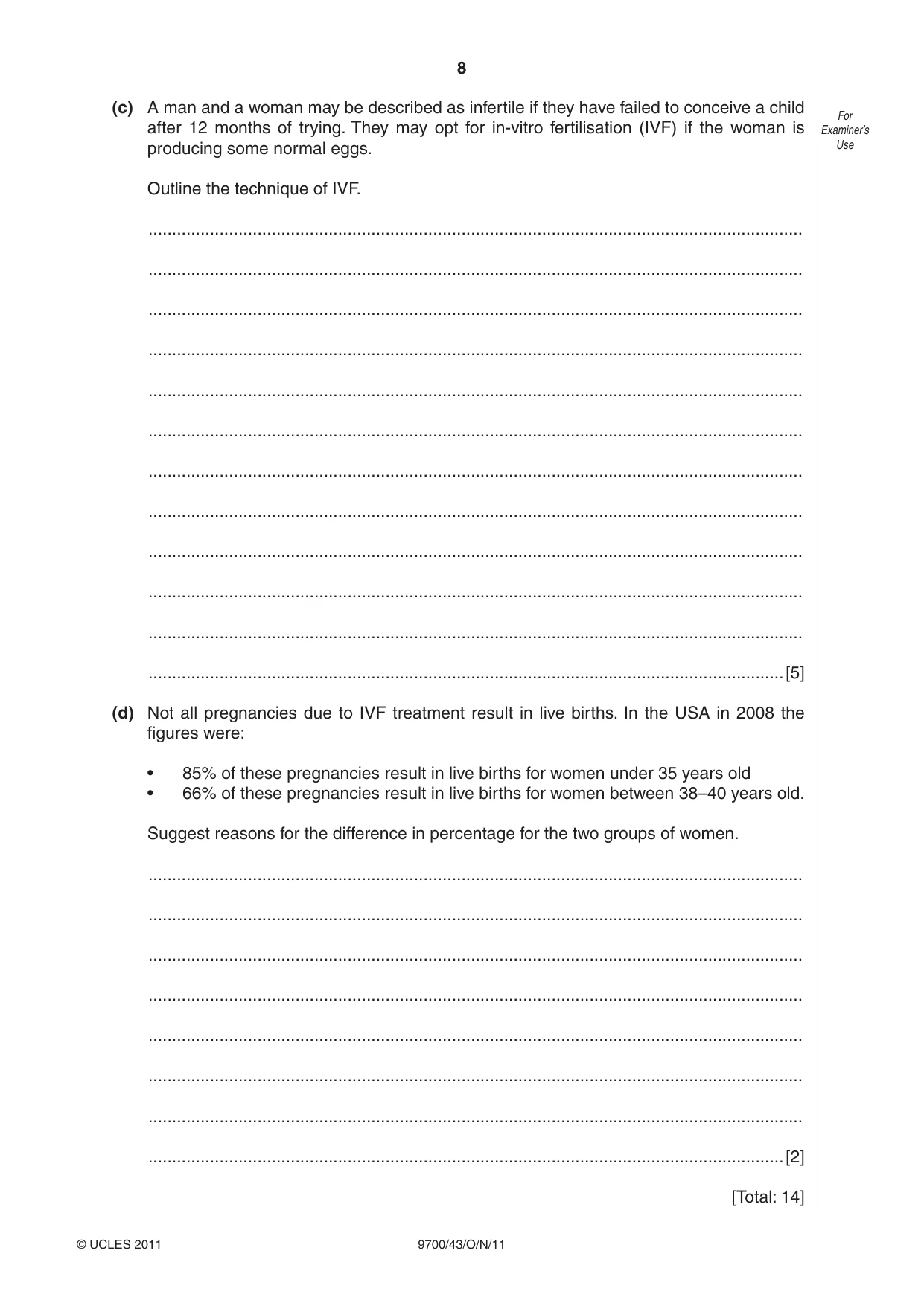
8 © UCLES 2011 9700/43/O/N/11 For Examiner’s Use (c) A man and a woman may be described as infertile if they have failed to conceive a child after 12 months of trying. They may opt for in-vitro fertilisation (IVF) if the woman is producing some normal eggs. Outline the technique of IVF. … … … … … … … … … … … …[5] (d) Not all pregnancies due to IVF treatment result in live births. In the USA in 2008 the figures were: • 85% of these pregnancies result in live births for women under 35 years old • 66% of these pregnancies result in live births for women between 38–40 years old. Suggest reasons for the difference in percentage for the two groups of women. … … … … … … … …[2] [Total: 14]
Question paper, page 9
9 9700/43/O/N/11 © UCLES 2011 [Turn over BLANK PAGE Question 4 starts on page 10
Question paper, page 10
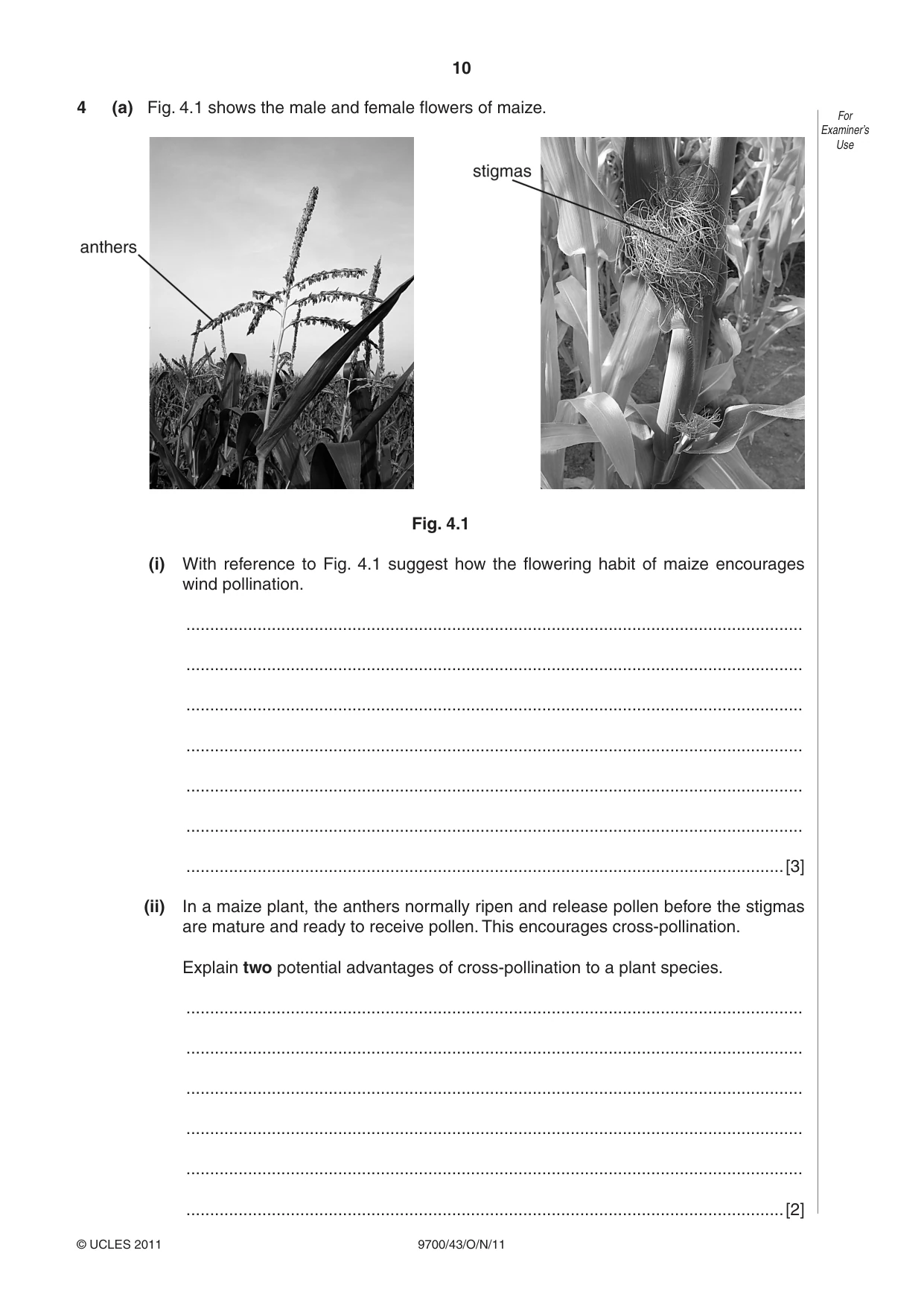
10 © UCLES 2011 9700/43/O/N/11 For Examiner’s Use 4 (a) Fig. 4.1 shows the male and female flowers of maize. Fig. 4.1 (i) With reference to Fig. 4.1 suggest how the flowering habit of maize encourages wind pollination. … … … … … … …[3] (ii) In a maize plant, the anthers normally ripen and release pollen before the stigmas are mature and ready to receive pollen. This encourages cross-pollination. Explain two potential advantages of cross-pollination to a plant species. … … … … … …[2]
Question paper, page 11
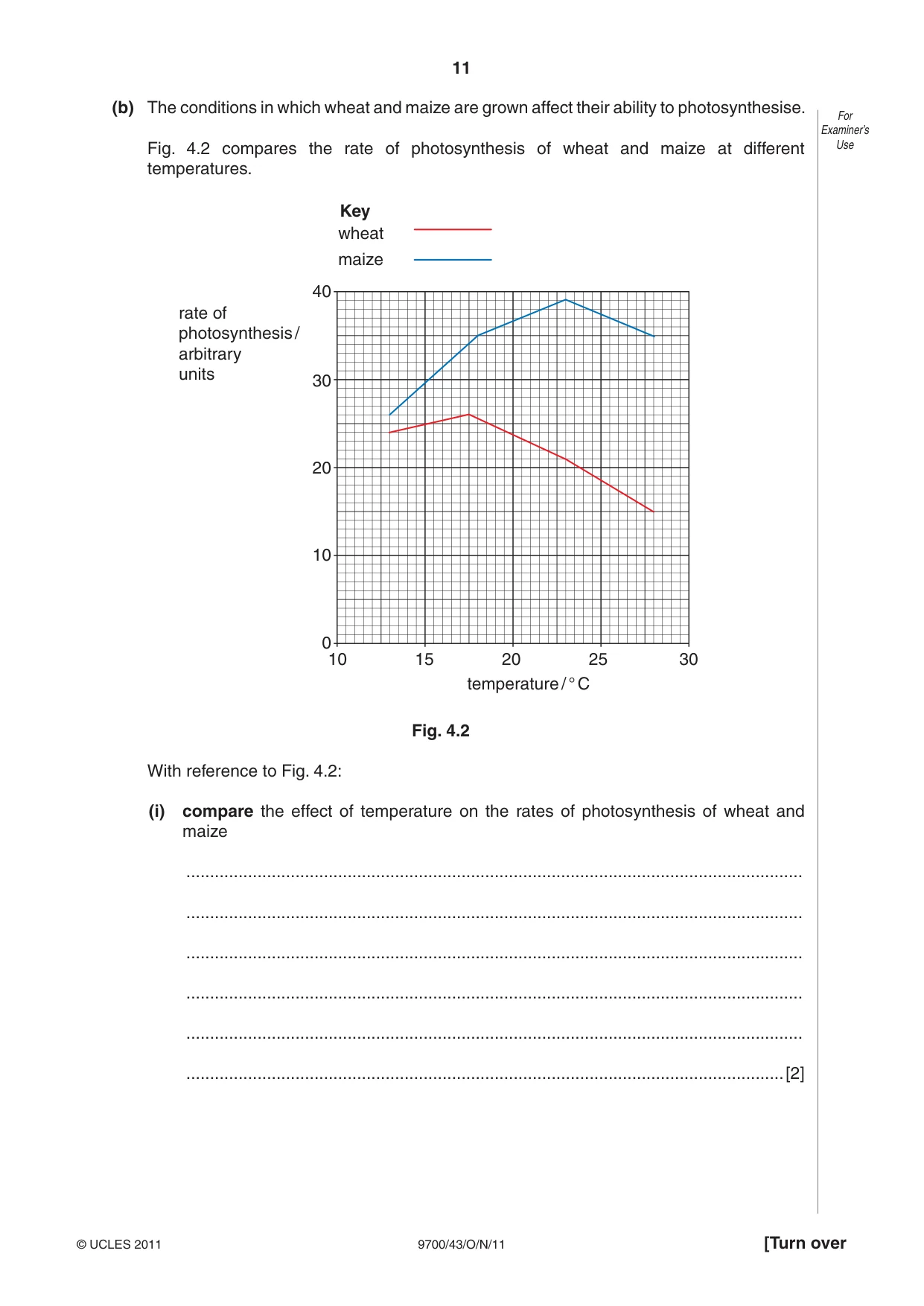
11 © UCLES 2011 [Turn over 9700/43/O/N/11 For Examiner’s Use (b) The conditions in which wheat and maize are grown affect their ability to photosynthesise. Fig. 4.2 compares the rate of photosynthesis of wheat and maize at different temperatures. 0 10 15 20 25 30 10 20 30 40 temperature / ° C rate of photosynthesis / arbitrary units Key wheat maize Fig. 4.2 With reference to Fig. 4.2: (i) compare the effect of temperature on the rates of photosynthesis of wheat and maize … … … … … …[2]
Question paper, page 12
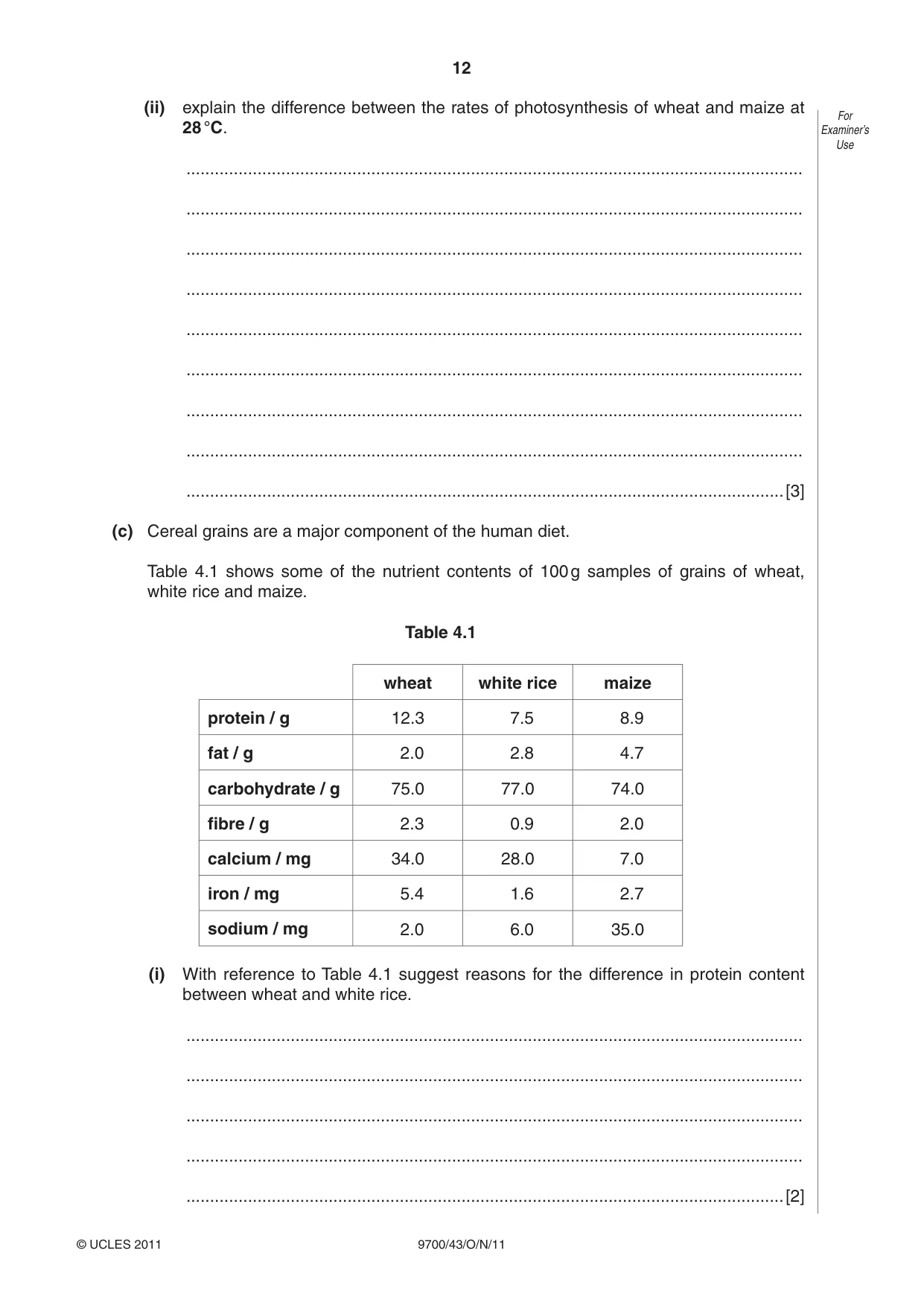
12 © UCLES 2011 9700/43/O/N/11 For Examiner’s Use (ii) explain the difference between the rates of photosynthesis of wheat and maize at 28 °C. … … … … … … … … …[3] (c) Cereal grains are a major component of the human diet. Table 4.1 shows some of the nutrient contents of 100 g samples of grains of wheat, white rice and maize. Table 4.1 wheat white rice maize protein / g 12.3 7.5 8.9 fat / g 2.0 2.8 4.7 carbohydrate / g 75.0 77.0 74.0 fibre / g 2.3 0.9 2.0 calcium / mg 34.0 28.0 7.0 iron / mg 5.4 1.6 2.7 sodium / mg 2.0 6.0 35.0 (i) With reference to Table 4.1 suggest reasons for the difference in protein content between wheat and white rice. … … … … …[2]
Question paper, page 13
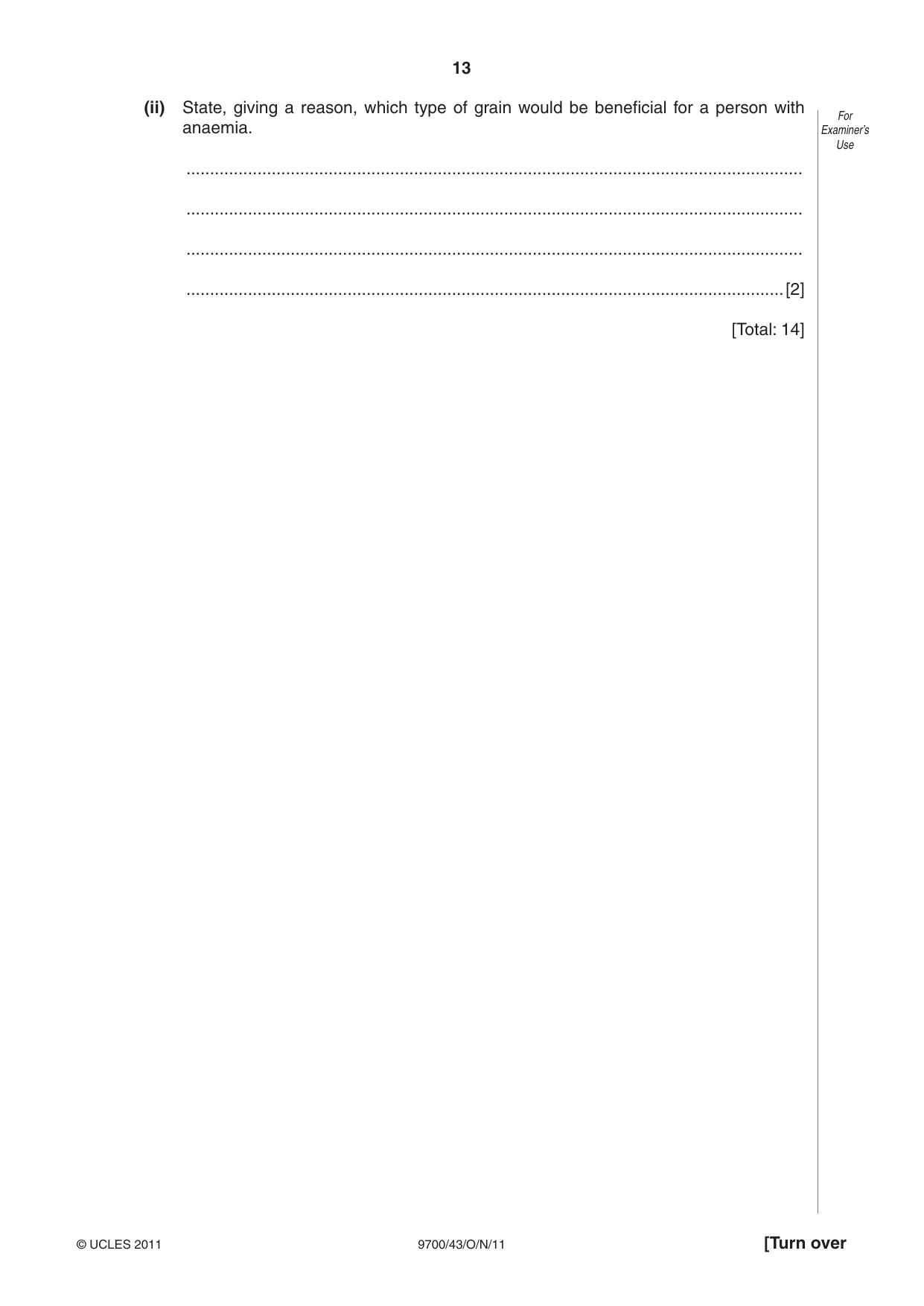
13 © UCLES 2011 [Turn over 9700/43/O/N/11 For Examiner’s Use (ii) State, giving a reason, which type of grain would be beneficial for a person with anaemia. … … … …[2] [Total: 14]
Question paper, page 14
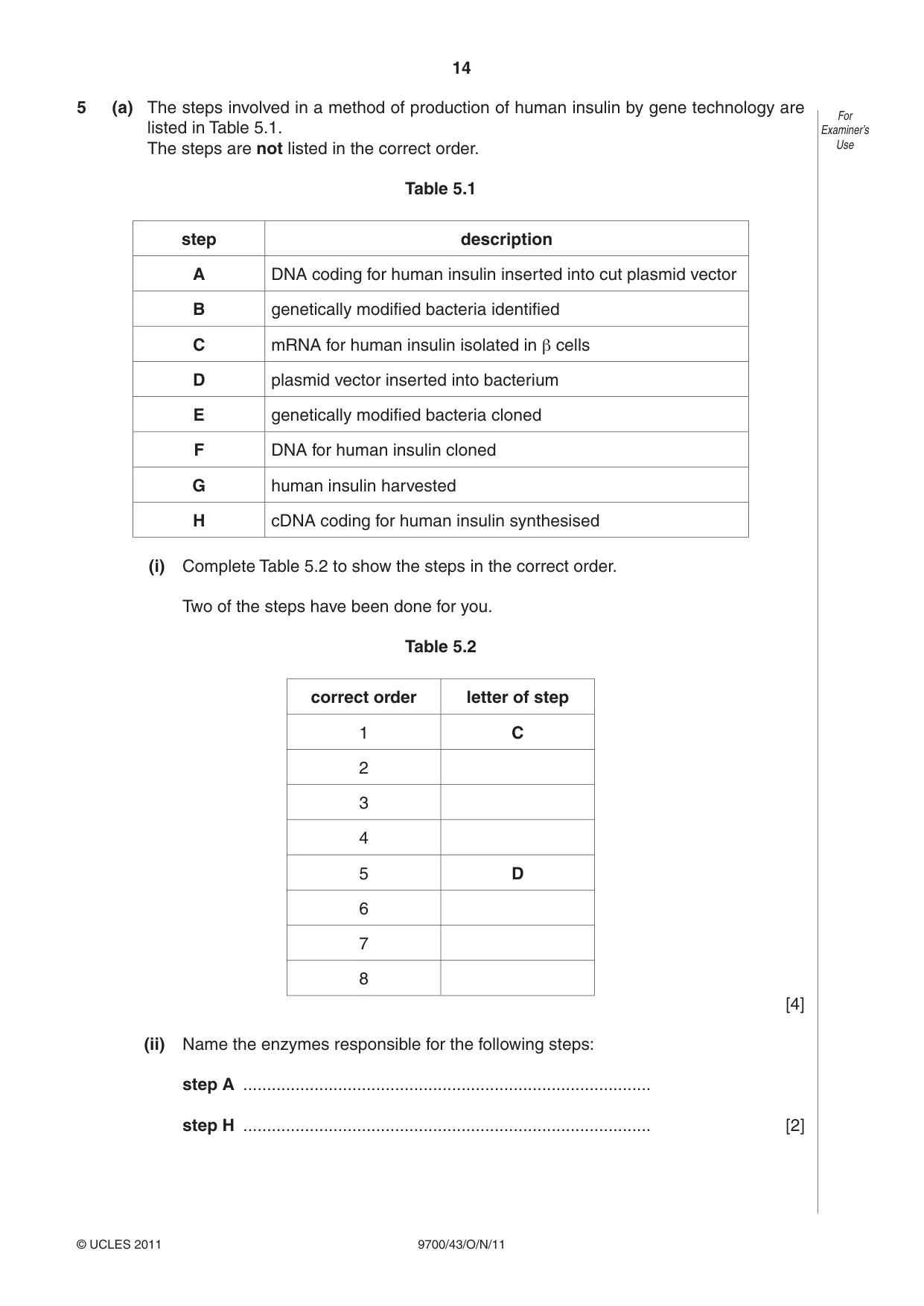
14 © UCLES 2011 9700/43/O/N/11 For Examiner’s Use 5 (a) The steps involved in a method of production of human insulin by gene technology are listed in Table 5.1. The steps are not listed in the correct order. Table 5.1 step description A DNA coding for human insulin inserted into cut plasmid vector B genetically modified bacteria identified C mRNA for human insulin isolated in β cells D plasmid vector inserted into bacterium E genetically modified bacteria cloned F DNA for human insulin cloned G human insulin harvested H cDNA coding for human insulin synthesised (i) Complete Table 5.2 to show the steps in the correct order. Two of the steps have been done for you. Table 5.2 correct order letter of step 1 C 2 3 4 5 D 6 7 8 [4] (ii) Name the enzymes responsible for the following steps: step A … step H … [2]
Question paper, page 15
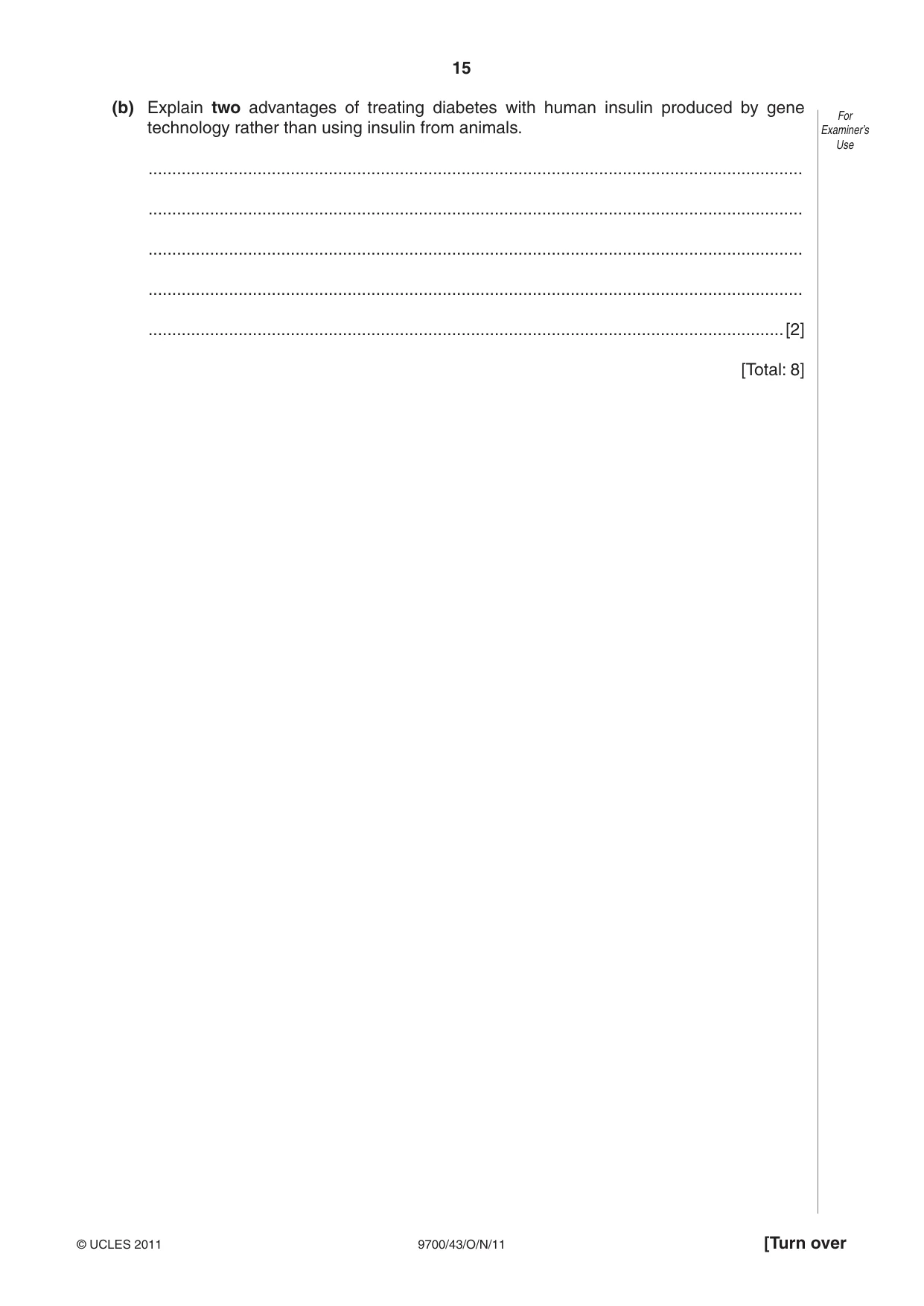
15 © UCLES 2011 [Turn over 9700/43/O/N/11 For Examiner’s Use (b) Explain two advantages of treating diabetes with human insulin produced by gene technology rather than using insulin from animals. … … … … …[2] [Total: 8]
Question paper, page 16
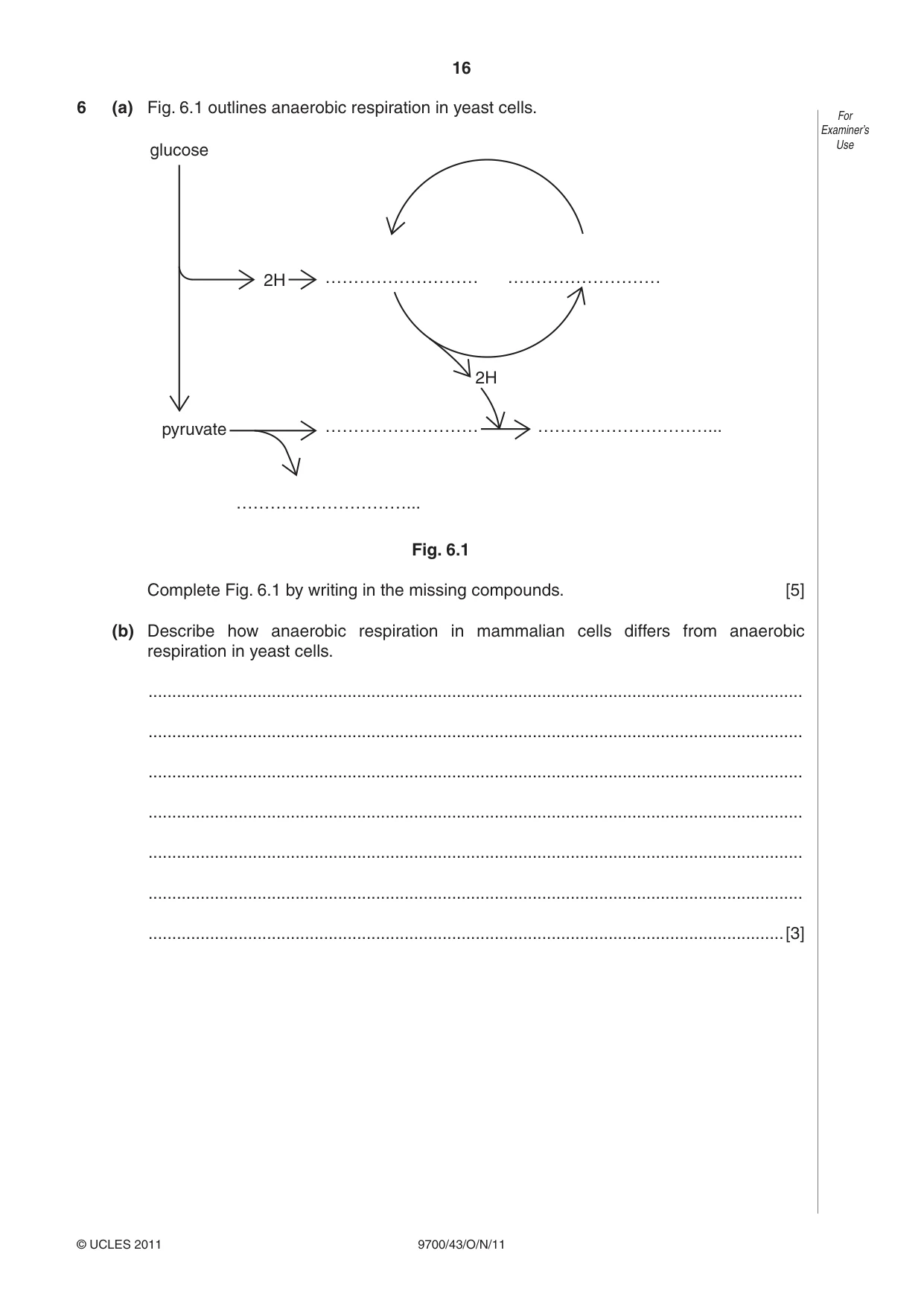
16 © UCLES 2011 9700/43/O/N/11 For Examiner’s Use 6 (a) Fig. 6.1 outlines anaerobic respiration in yeast cells. 2H 2H pyruvate ……………………… ……………………… …………………………... …………………………... ……………………… glucose Fig. 6.1 Complete Fig. 6.1 by writing in the missing compounds. [5] (b) Describe how anaerobic respiration in mammalian cells differs from anaerobic respiration in yeast cells. … … … … … … …[3]
Question paper, page 17
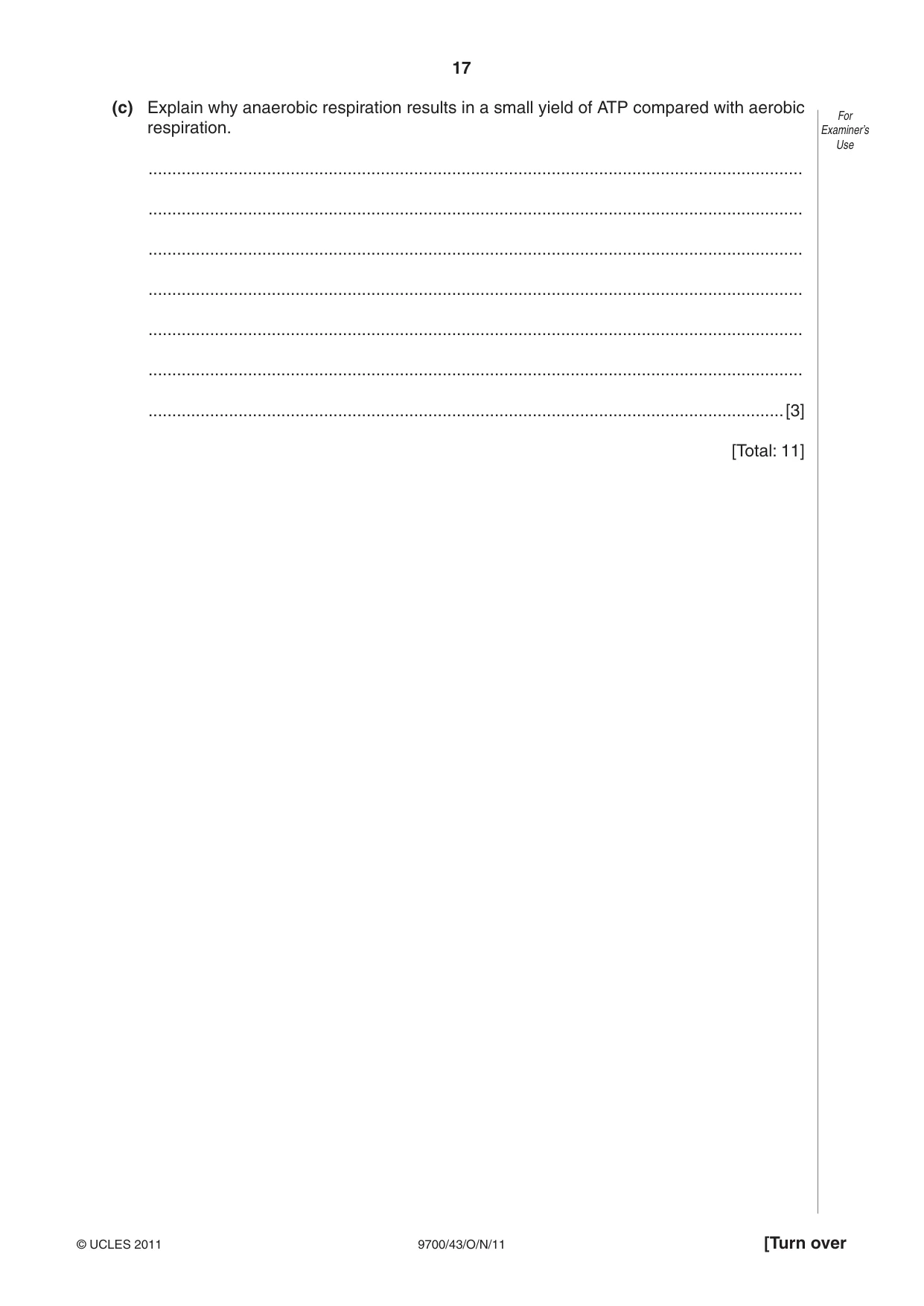
17 © UCLES 2011 [Turn over 9700/43/O/N/11 For Examiner’s Use (c) Explain why anaerobic respiration results in a small yield of ATP compared with aerobic respiration. … … … … … … …[3] [Total: 11]
Question paper, page 18
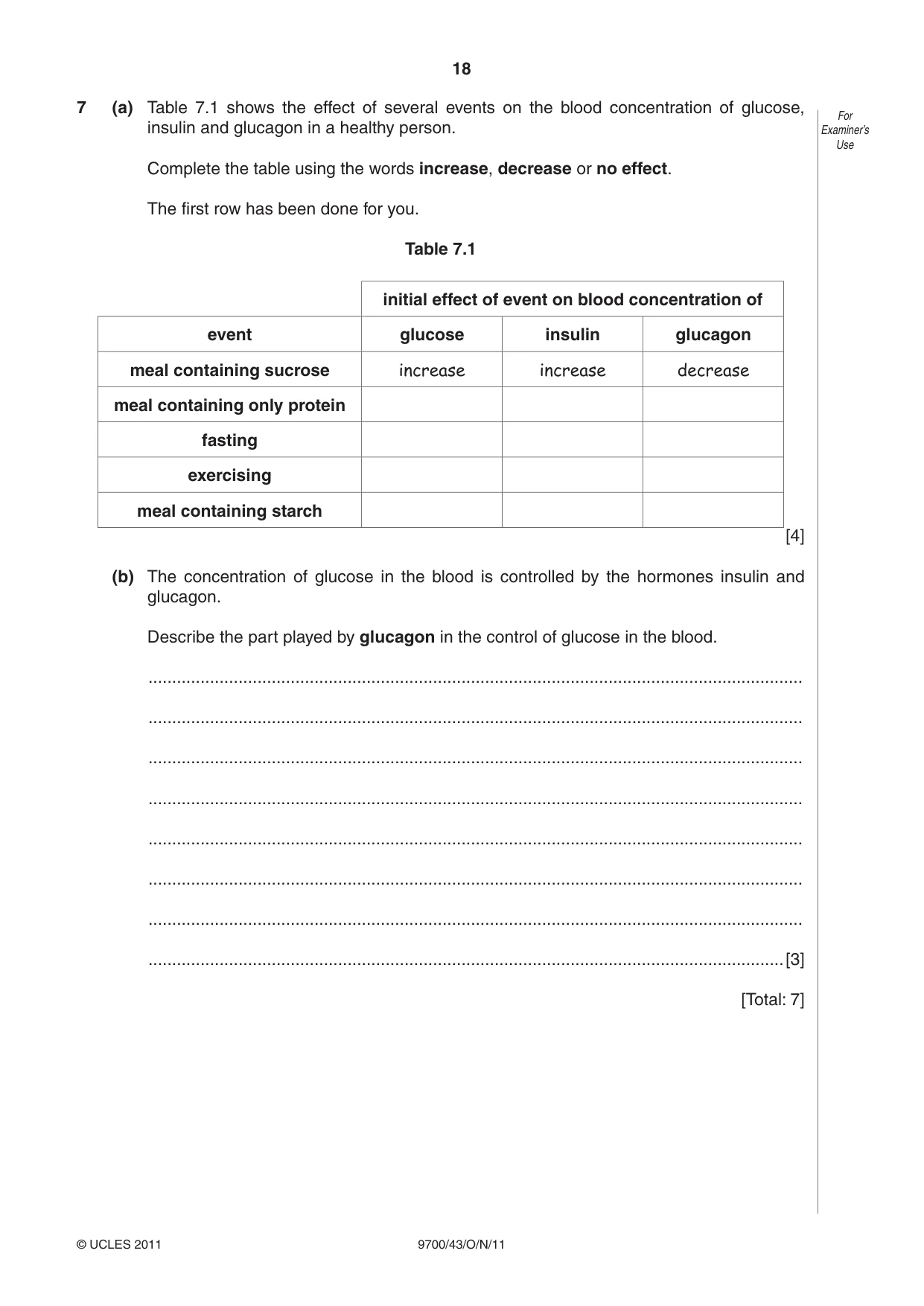
18 © UCLES 2011 9700/43/O/N/11 For Examiner’s Use 7 (a) Table 7.1 shows the effect of several events on the blood concentration of glucose, insulin and glucagon in a healthy person. Complete the table using the words increase, decrease or no effect. The first row has been done for you. Table 7.1 initial effect of event on blood concentration of event glucose insulin glucagon meal containing sucrose increase increase decrease meal containing only protein fasting exercising meal containing starch [4] (b) The concentration of glucose in the blood is controlled by the hormones insulin and glucagon. Describe the part played by glucagon in the control of glucose in the blood. … … … … … … … …[3] [Total: 7]
Question paper, page 19
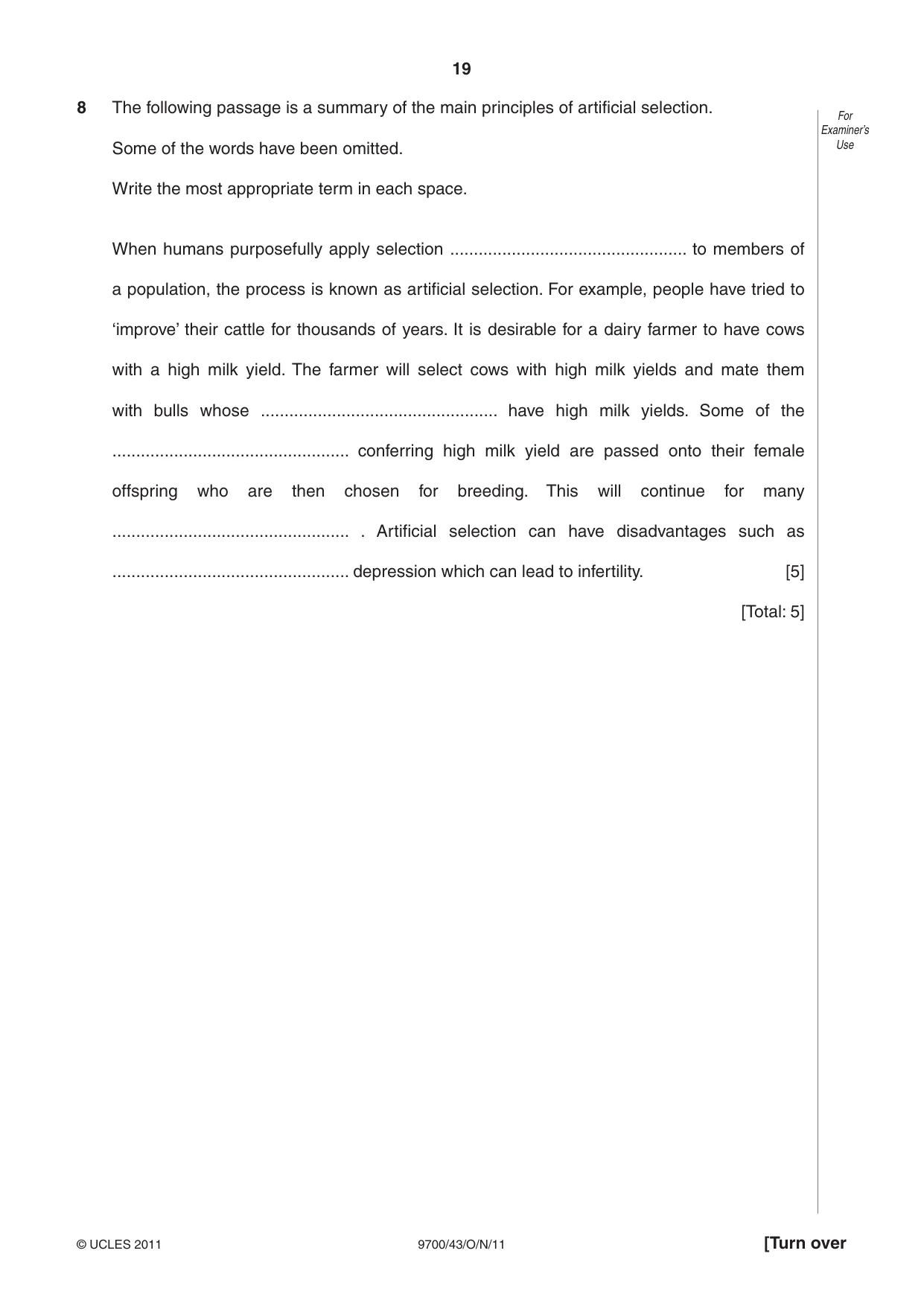
19 © UCLES 2011 [Turn over 9700/43/O/N/11 For Examiner’s Use 8 The following passage is a summary of the main principles of artificial selection. Some of the words have been omitted. Write the most appropriate term in each space. When humans purposefully apply selection … to members of a population, the process is known as artificial selection. For example, people have tried to ‘improve’ their cattle for thousands of years. It is desirable for a dairy farmer to have cows with a high milk yield. The farmer will select cows with high milk yields and mate them with bulls whose … have high milk yields. Some of the … conferring high milk yield are passed onto their female offspring who are then chosen for breeding. This will continue for many … . Artificial selection can have disadvantages such as … depression which can lead to infertility. [5] [Total: 5]
Question paper, page 20
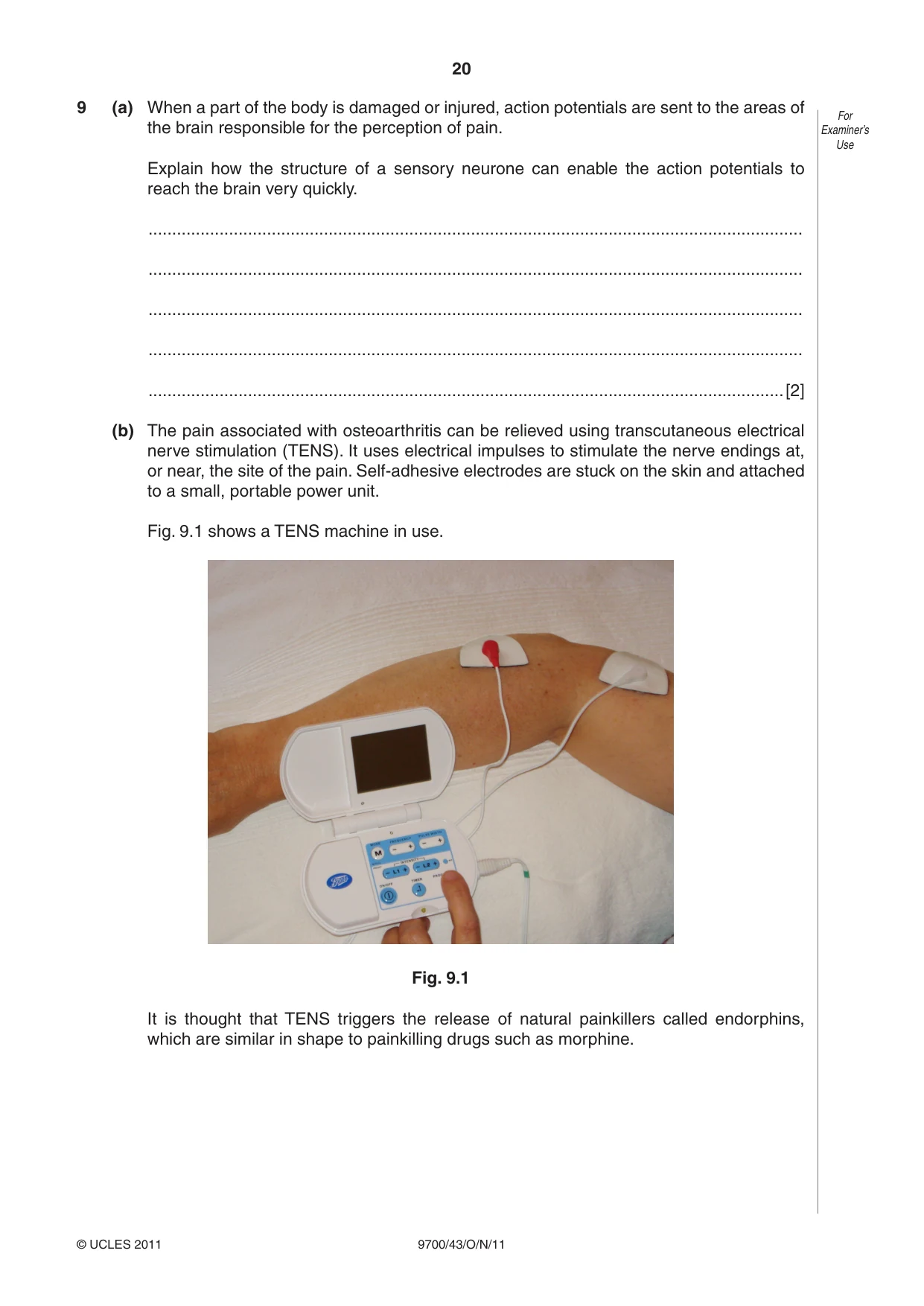
20 © UCLES 2011 9700/43/O/N/11 For Examiner’s Use 9 (a) When a part of the body is damaged or injured, action potentials are sent to the areas of the brain responsible for the perception of pain. Explain how the structure of a sensory neurone can enable the action potentials to reach the brain very quickly. … … … … …[2] (b) The pain associated with osteoarthritis can be relieved using transcutaneous electrical nerve stimulation (TENS). It uses electrical impulses to stimulate the nerve endings at, or near, the site of the pain. Self-adhesive electrodes are stuck on the skin and attached to a small, portable power unit. Fig. 9.1 shows a TENS machine in use. Fig. 9.1 It is thought that TENS triggers the release of natural painkillers called endorphins, which are similar in shape to painkilling drugs such as morphine.
Question paper, page 21
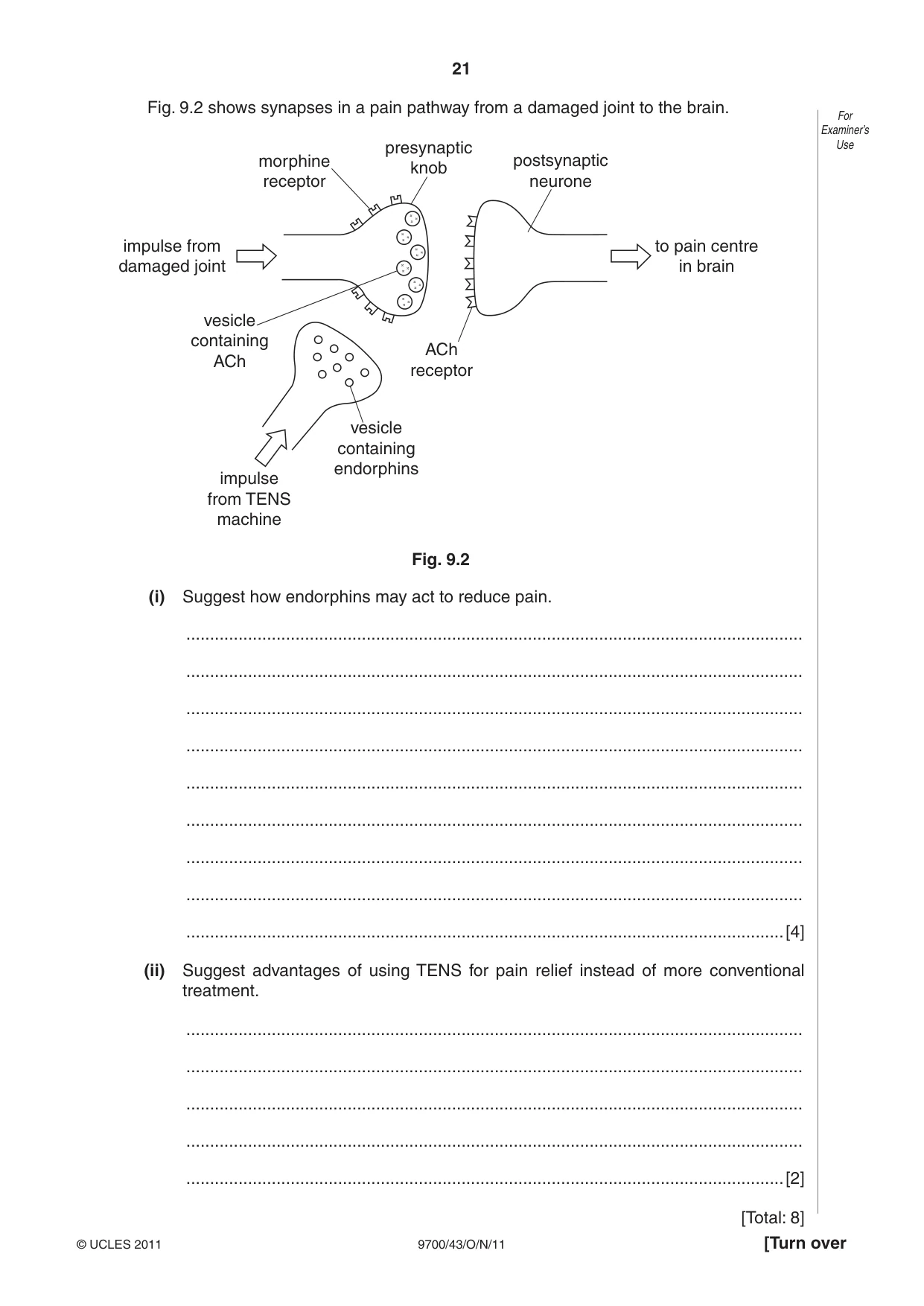
21 © UCLES 2011 [Turn over 9700/43/O/N/11 For Examiner’s Use Fig. 9.2 shows synapses in a pain pathway from a damaged joint to the brain. presynaptic knob postsynaptic neurone to pain centre in brain impulse from damaged joint morphine receptor ACh receptor vesicle containing endorphins impulse from TENS machine vesicle containing ACh Fig. 9.2 (i) Suggest how endorphins may act to reduce pain. … … … … … … … … …[4] (ii) Suggest advantages of using TENS for pain relief instead of more conventional treatment. … … … … …[2] [Total: 8]
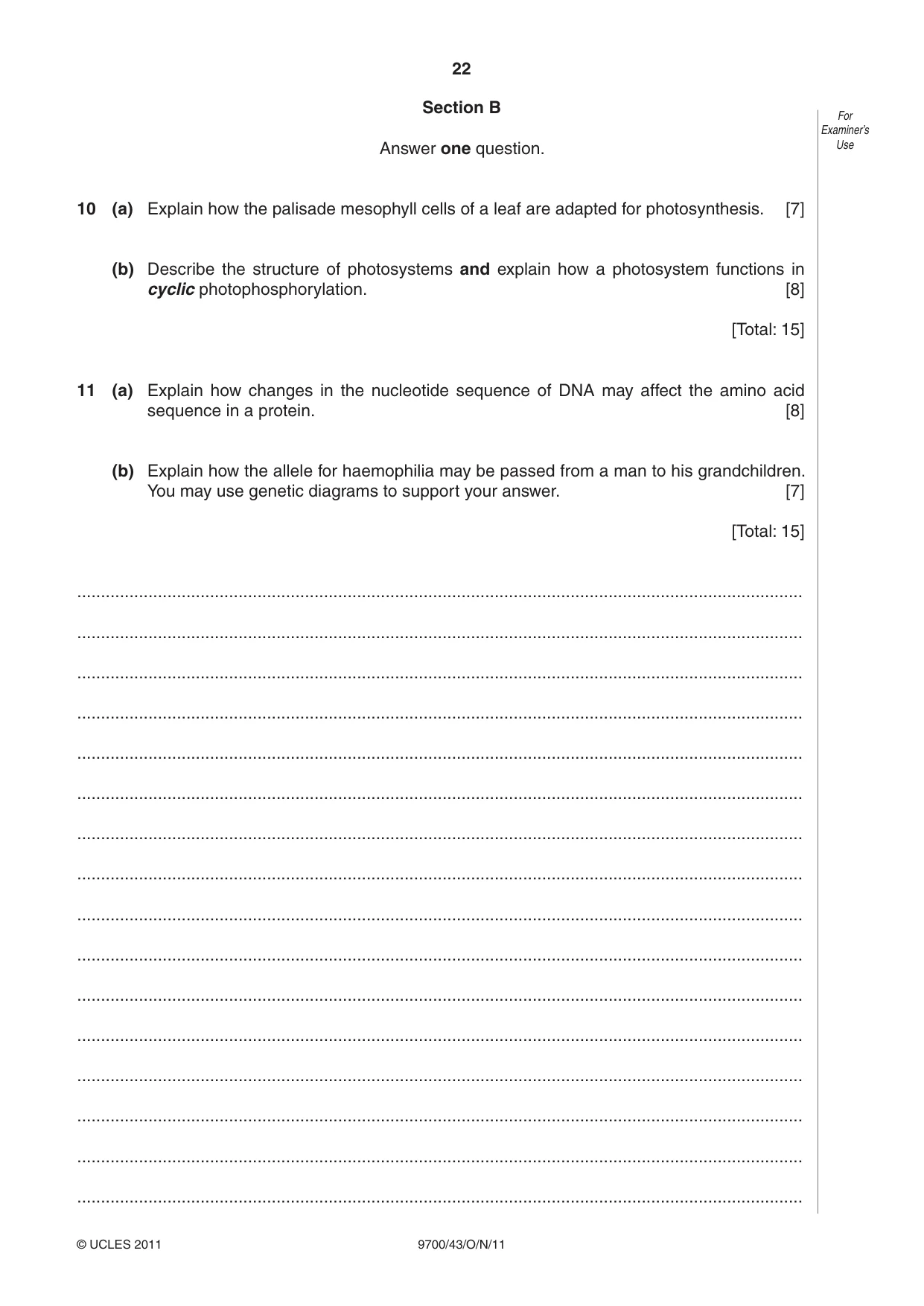
Question paper, page 22
22 © UCLES 2011 9700/43/O/N/11 For Examiner’s Use Section B Answer one question. 10 (a) Explain how the palisade mesophyll cells of a leaf are adapted for photosynthesis. [7] (b) Describe the structure of photosystems and explain how a photosystem functions in cyclic photophosphorylation. [8] [Total: 15] 11 (a) Explain how changes in the nucleotide sequence of DNA may affect the amino acid sequence in a protein. [8] (b) Explain how the allele for haemophilia may be passed from a man to his grandchildren. You may use genetic diagrams to support your answer. [7] [Total: 15] … … … … … … … … … … … … … … … …
Question paper, page 23
23 © UCLES 2011 [Turn over 9700/43/O/N/11 For Examiner’s Use … … … … … … … … … … … … … … … … … … … … … … … … … … … …
Question paper, page 24
24 © UCLES 2011 9700/43/O/N/11 For Examiner’s Use … … … … … … … … … … … … … … … … … … … … … … … Copyright Acknowledgements: Fig. 1.1 Photograph © Alan Bennett.; Bengal Tiger; © UCLES. Fig. 3.2 © ALAIN GOUGEON/ISM/SCIENCE PHOTO LIBRARY. Permission to reproduce items where third-party owned material protected by copyright is included has been sought and cleared where possible. Every reasonable effort has been made by the publisher (UCLES) to trace copyright holders, but if any items requiring clearance have unwittingly been included, the publisher will be pleased to make amends at the earliest possible opportunity. University of Cambridge International Examinations is part of the Cambridge Assessment Group. Cambridge Assessment is the brand name of University of Cambridge Local Examinations Syndicate (UCLES), which is itself a department of the University of Cambridge.
Mark scheme, page 1
UNIVERSITY OF CAMBRIDGE INTERNATIONAL EXAMINATIONS GCE Advanced Subsidiary Level and GCE Advanced Level MARK SCHEME for the October/November 2011 question paper for the guidance of teachers 9700 BIOLOGY 9700/43 Paper 4 (A2 Structured Questions), maximum raw mark 100 This mark scheme is published as an aid to teachers and candidates, to indicate the requirements of the examination. It shows the basis on which Examiners were instructed to award marks. It does not indicate the details of the discussions that took place at an Examiners’ meeting before marking began, which would have considered the acceptability of alternative answers. Mark schemes must be read in conjunction with the question papers and the report on the examination. • Cambridge will not enter into discussions or correspondence in connection with these mark schemes. Cambridge is publishing the mark schemes for the October/November 2011 question papers for most IGCSE, GCE Advanced Level and Advanced Subsidiary Level syllabuses and some Ordinary Level syllabuses.
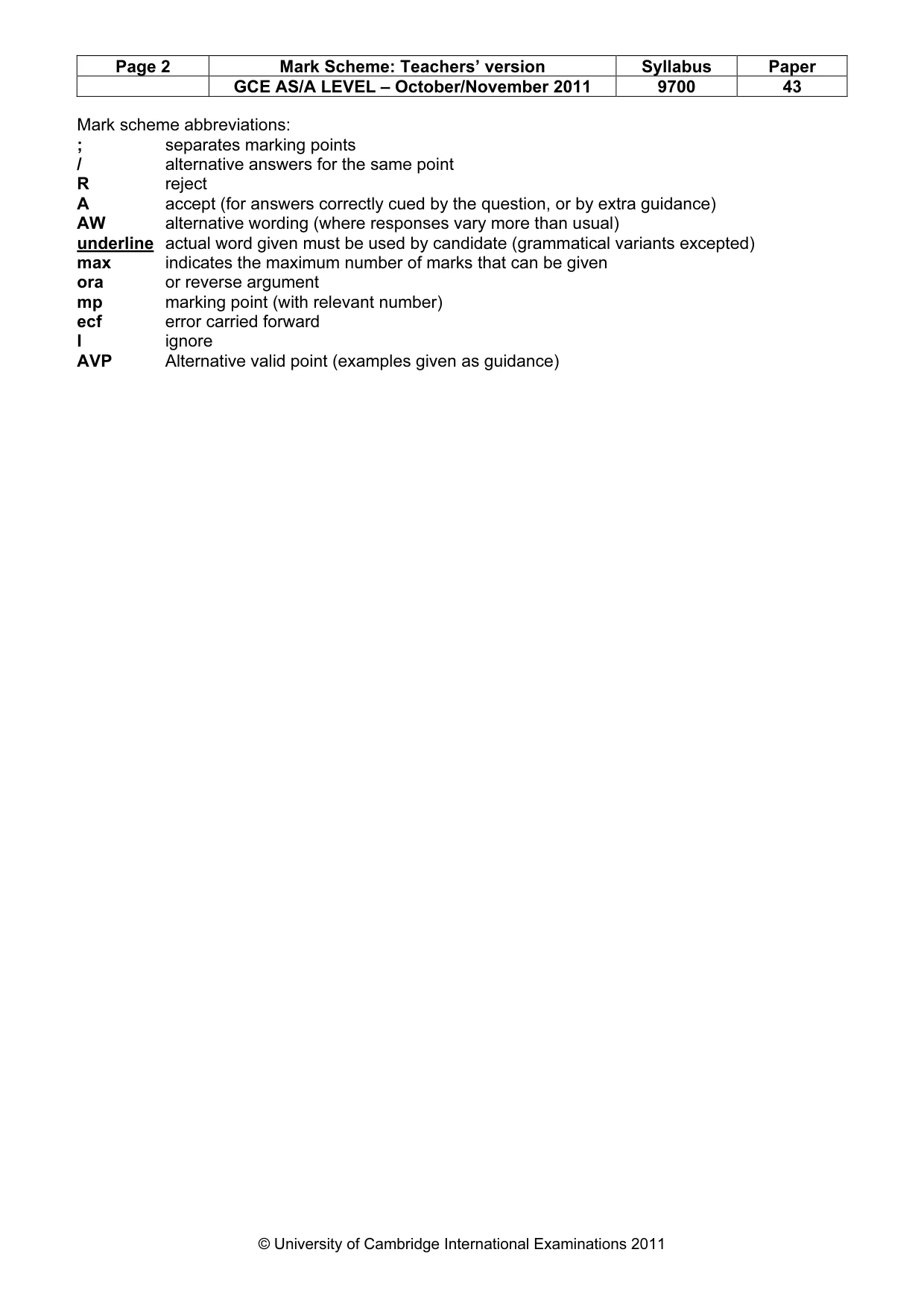
Mark scheme, page 2
Page 2 Mark Scheme: Teachers’ version Syllabus Paper GCE AS/A LEVEL – October/November 2011 9700 43 © University of Cambridge International Examinations 2011 Mark scheme abbreviations: ; separates marking points / alternative answers for the same point R reject A accept (for answers correctly cued by the question, or by extra guidance) AW alternative wording (where responses vary more than usual) underline actual word given must be used by candidate (grammatical variants excepted) max indicates the maximum number of marks that can be given ora or reverse argument mp marking point (with relevant number) ecf error carried forward I ignore AVP Alternative valid point (examples given as guidance)
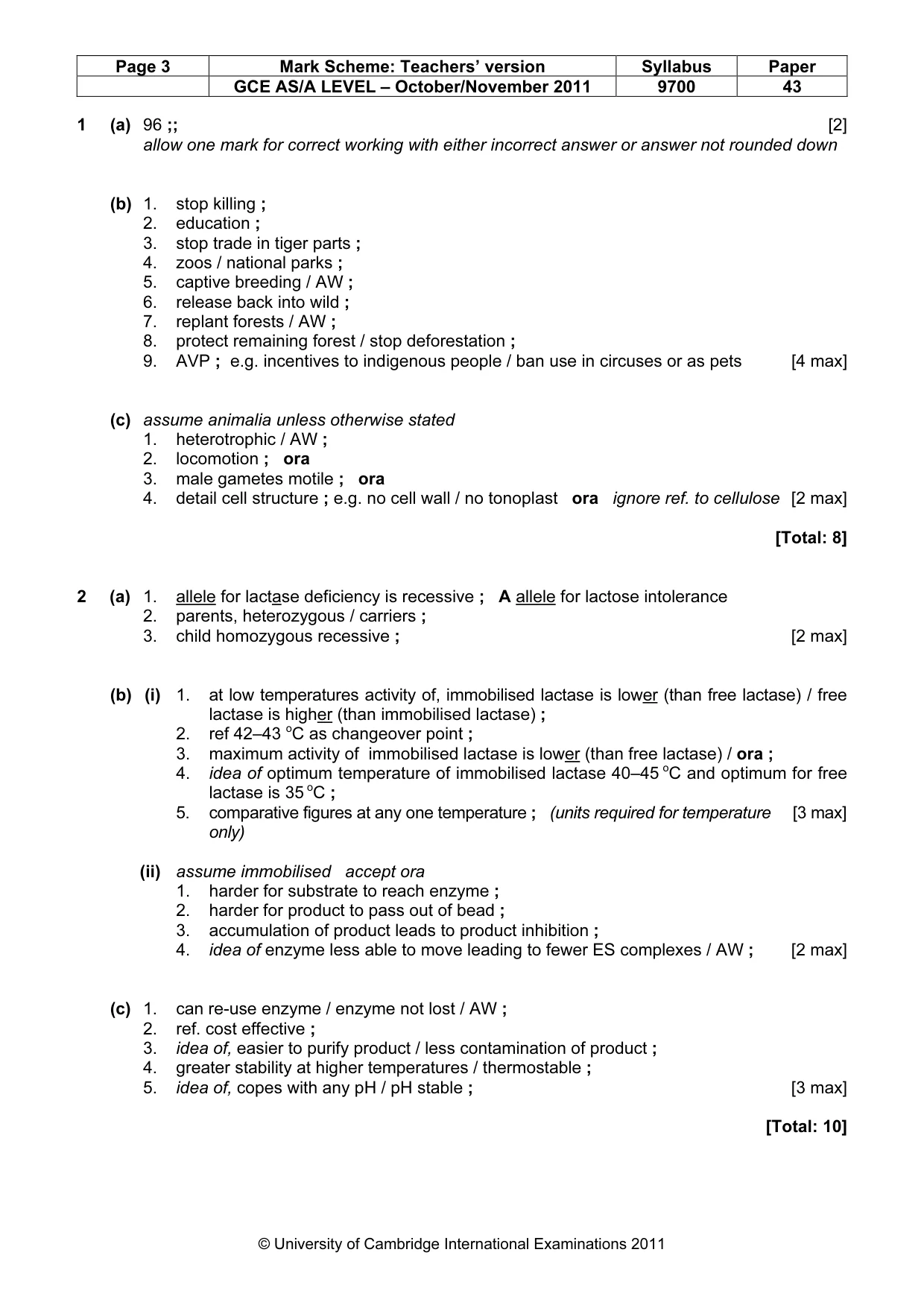
Mark scheme, page 3
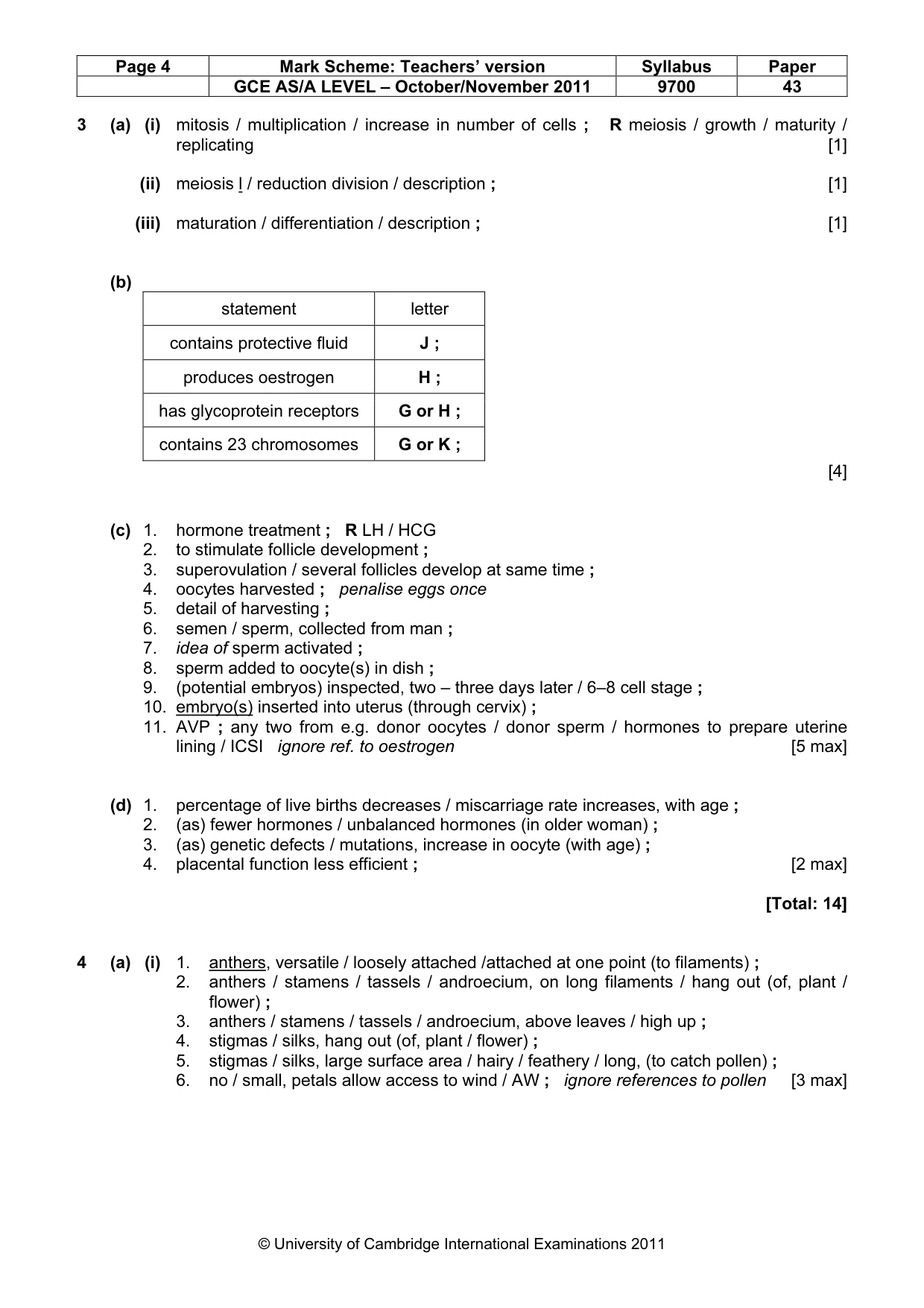
Page 3 Mark Scheme: Teachers’ version Syllabus Paper GCE AS/A LEVEL – October/November 2011 9700 43 © University of Cambridge International Examinations 2011 1 (a) 96 ;; [2] allow one mark for correct working with either incorrect answer or answer not rounded down (b) 1. stop killing ; 2. education ; 3. stop trade in tiger parts ; 4. zoos / national parks ; 5. captive breeding / AW ; 6. release back into wild ; 7. replant forests / AW ; 8. protect remaining forest / stop deforestation ; 9. AVP ; e.g. incentives to indigenous people / ban use in circuses or as pets [4 max] (c) assume animalia unless otherwise stated 1. heterotrophic / AW ; 2. locomotion ; ora 3. male gametes motile ; ora 4. detail cell structure ; e.g. no cell wall / no tonoplast ora ignore ref. to cellulose [2 max] [Total: 8] 2 (a) 1. allele for lactase deficiency is recessive ; A allele for lactose intolerance 2. parents, heterozygous / carriers ; 3. child homozygous recessive ; [2 max] (b) (i) 1. at low temperatures activity of, immobilised lactase is lower (than free lactase) / free lactase is higher (than immobilised lactase) ; 2. ref 42–43 oC as changeover point ; 3. maximum activity of immobilised lactase is lower (than free lactase) / ora ; 4. idea of optimum temperature of immobilised lactase 40–45 oC and optimum for free lactase is 35 oC ; 5. comparative figures at any one temperature ; (units required for temperature [3 max] only) (ii) assume immobilised accept ora 1. harder for substrate to reach enzyme ; 2. harder for product to pass out of bead ; 3. accumulation of product leads to product inhibition ; 4. idea of enzyme less able to move leading to fewer ES complexes / AW ; [2 max] (c) 1. can re-use enzyme / enzyme not lost / AW ; 2. ref. cost effective ; 3. idea of, easier to purify product / less contamination of product ; 4. greater stability at higher temperatures / thermostable ; 5. idea of, copes with any pH / pH stable ; [3 max] [Total: 10]
Mark scheme, page 4
Page 4 Mark Scheme: Teachers’ version Syllabus Paper GCE AS/A LEVEL – October/November 2011 9700 43 © University of Cambridge International Examinations 2011 3 (a) (i) mitosis / multiplication / increase in number of cells ; R meiosis / growth / maturity / replicating [1] (ii) meiosis l / reduction division / description ; [1] (iii) maturation / differentiation / description ; [1] (b) statement letter contains protective fluid J ; produces oestrogen H ; has glycoprotein receptors G or H ; contains 23 chromosomes G or K ; [4] (c) 1. hormone treatment ; R LH / HCG 2. to stimulate follicle development ; 3. superovulation / several follicles develop at same time ; 4. oocytes harvested ; penalise eggs once 5. detail of harvesting ; 6. semen / sperm, collected from man ; 7. idea of sperm activated ; 8. sperm added to oocyte(s) in dish ; 9. (potential embryos) inspected, two – three days later / 6–8 cell stage ; 10. embryo(s) inserted into uterus (through cervix) ; 11. AVP ; any two from e.g. donor oocytes / donor sperm / hormones to prepare uterine lining / ICSI ignore ref. to oestrogen [5 max] (d) 1. percentage of live births decreases / miscarriage rate increases, with age ; 2. (as) fewer hormones / unbalanced hormones (in older woman) ; 3. (as) genetic defects / mutations, increase in oocyte (with age) ; 4. placental function less efficient ; [2 max] [Total: 14] 4 (a) (i) 1. anthers, versatile / loosely attached /attached at one point (to filaments) ; 2. anthers / stamens / tassels / androecium, on long filaments / hang out (of, plant / flower) ; 3. anthers / stamens / tassels / androecium, above leaves / high up ; 4. stigmas / silks, hang out (of, plant / flower) ; 5. stigmas / silks, large surface area / hairy / feathery / long, (to catch pollen) ; 6. no / small, petals allow access to wind / AW ; ignore references to pollen [3 max]
Mark scheme, page 5
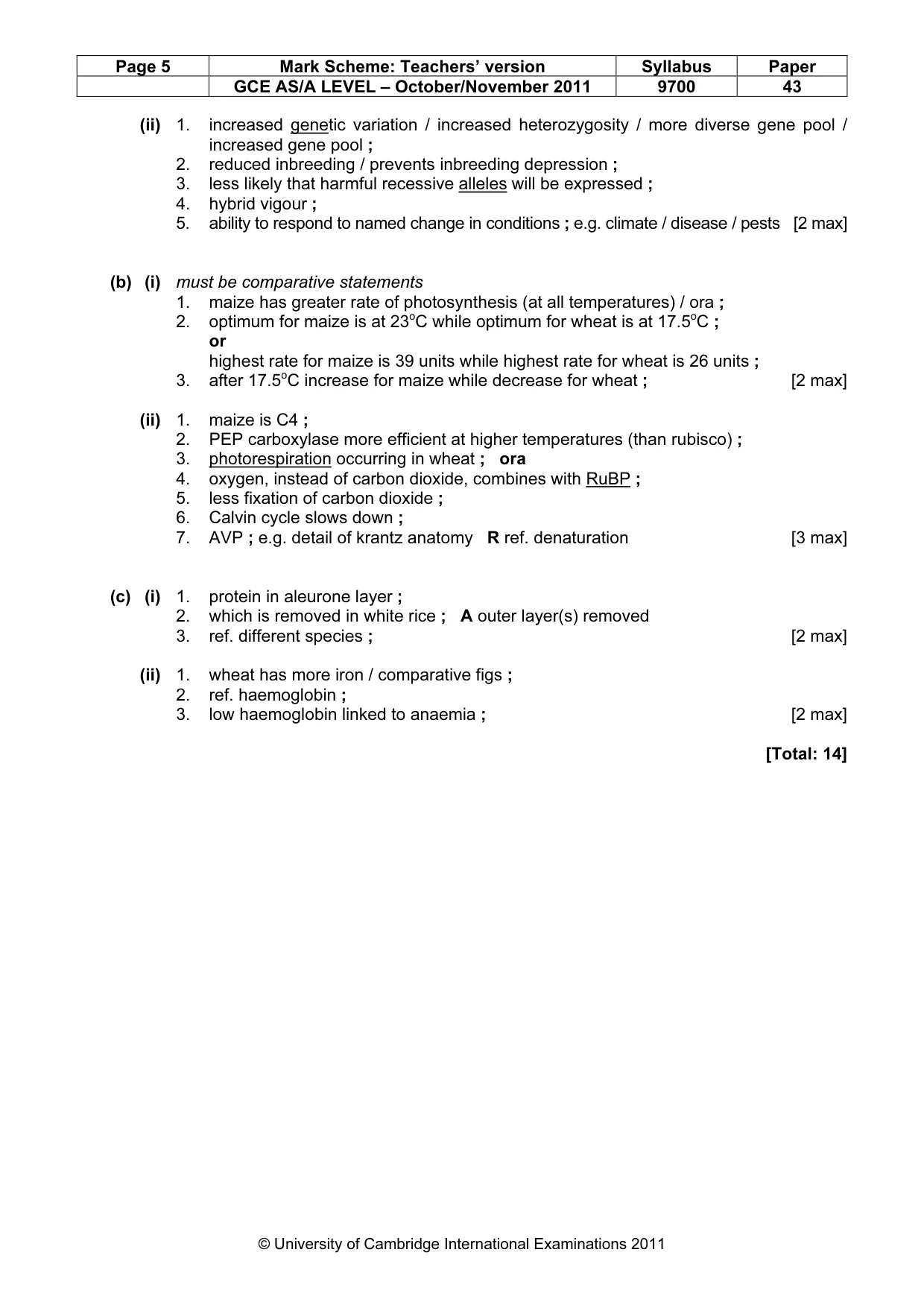
Page 5 Mark Scheme: Teachers’ version Syllabus Paper GCE AS/A LEVEL – October/November 2011 9700 43 © University of Cambridge International Examinations 2011 (ii) 1. increased genetic variation / increased heterozygosity / more diverse gene pool / increased gene pool ; 2. reduced inbreeding / prevents inbreeding depression ; 3. less likely that harmful recessive alleles will be expressed ; 4. hybrid vigour ; 5. ability to respond to named change in conditions ; e.g. climate / disease / pests [2 max] (b) (i) must be comparative statements 1. maize has greater rate of photosynthesis (at all temperatures) / ora ; 2. optimum for maize is at 23oC while optimum for wheat is at 17.5oC ; or highest rate for maize is 39 units while highest rate for wheat is 26 units ; 3. after 17.5oC increase for maize while decrease for wheat ; [2 max] (ii) 1. maize is C4 ; 2. PEP carboxylase more efficient at higher temperatures (than rubisco) ; 3. photorespiration occurring in wheat ; ora 4. oxygen, instead of carbon dioxide, combines with RuBP ; 5. less fixation of carbon dioxide ; 6. Calvin cycle slows down ; 7. AVP ; e.g. detail of krantz anatomy R ref. denaturation [3 max] (c) (i) 1. protein in aleurone layer ; 2. which is removed in white rice ; A outer layer(s) removed 3. ref. different species ; [2 max] (ii) 1. wheat has more iron / comparative figs ; 2. ref. haemoglobin ; 3. low haemoglobin linked to anaemia ; [2 max] [Total: 14]
Mark scheme, page 6
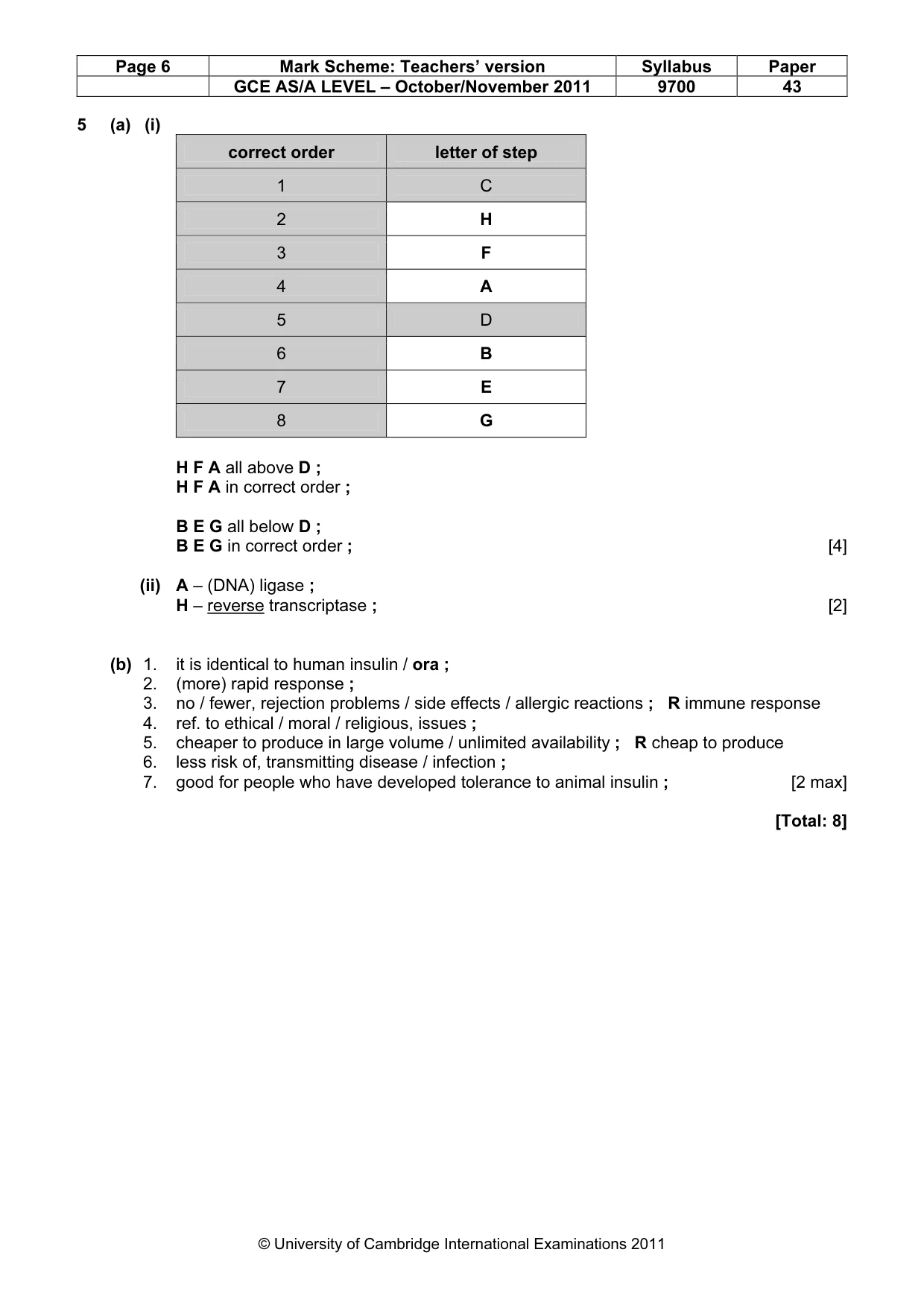
Page 6 Mark Scheme: Teachers’ version Syllabus Paper GCE AS/A LEVEL – October/November 2011 9700 43 © University of Cambridge International Examinations 2011 5 (a) (i) correct order letter of step 1 C 2 H 3 F 4 A 5 D 6 B 7 E 8 G H F A all above D ; H F A in correct order ; B E G all below D ; B E G in correct order ; [4] (ii) A – (DNA) ligase ; H – reverse transcriptase ; [2] (b) 1. it is identical to human insulin / ora ; 2. (more) rapid response ; 3. no / fewer, rejection problems / side effects / allergic reactions ; R immune response 4. ref. to ethical / moral / religious, issues ; 5. cheaper to produce in large volume / unlimited availability ; R cheap to produce 6. less risk of, transmitting disease / infection ; 7. good for people who have developed tolerance to animal insulin ; [2 max] [Total: 8]
Mark scheme, page 7
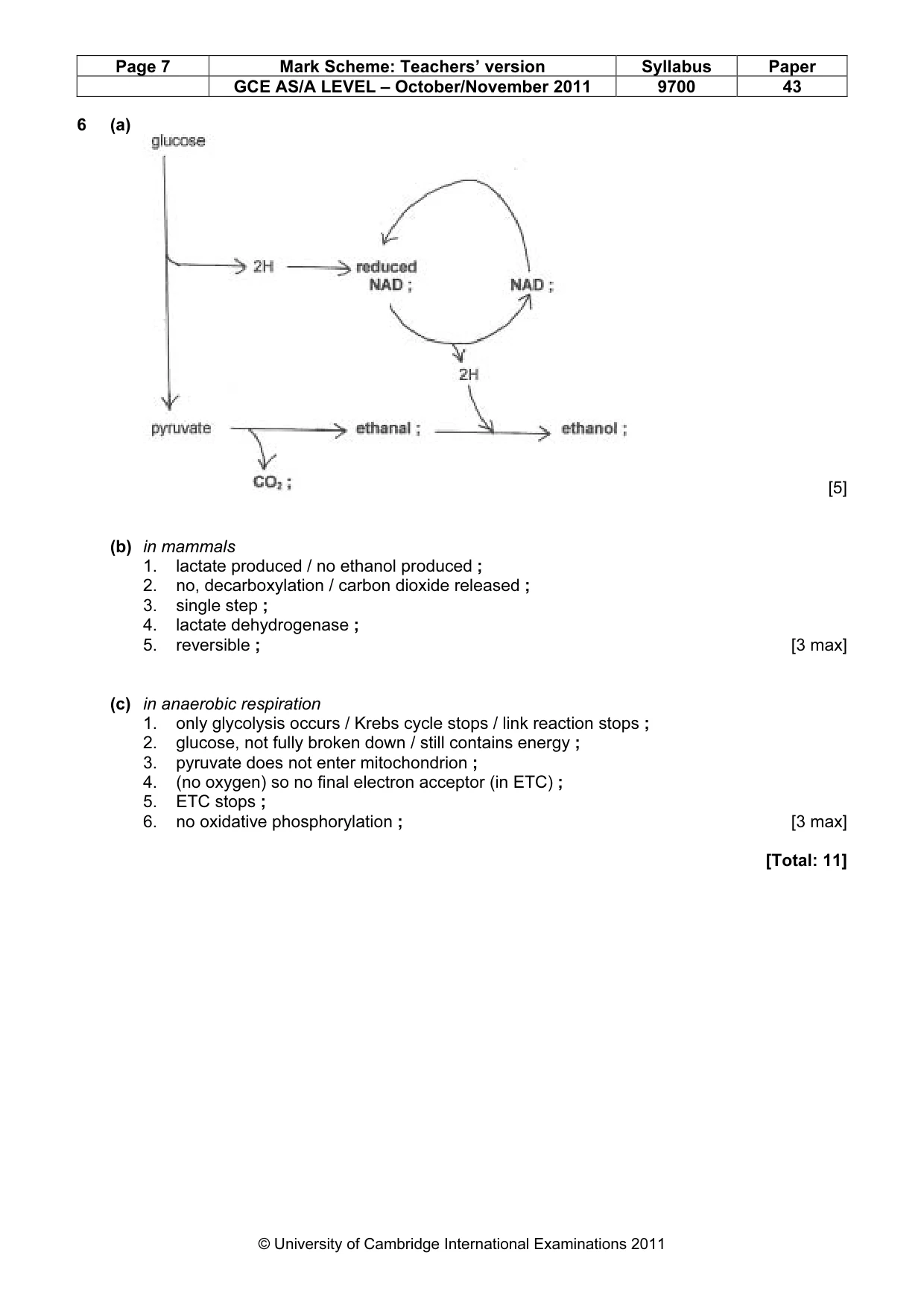
Page 7 Mark Scheme: Teachers’ version Syllabus Paper GCE AS/A LEVEL – October/November 2011 9700 43 © University of Cambridge International Examinations 2011 6 (a) [5] (b) in mammals 1. lactate produced / no ethanol produced ; 2. no, decarboxylation / carbon dioxide released ; 3. single step ; 4. lactate dehydrogenase ; 5. reversible ; [3 max] (c) in anaerobic respiration 1. only glycolysis occurs / Krebs cycle stops / link reaction stops ; 2. glucose, not fully broken down / still contains energy ; 3. pyruvate does not enter mitochondrion ; 4. (no oxygen) so no final electron acceptor (in ETC) ; 5. ETC stops ; 6. no oxidative phosphorylation ; [3 max] [Total: 11]
Mark scheme, page 8
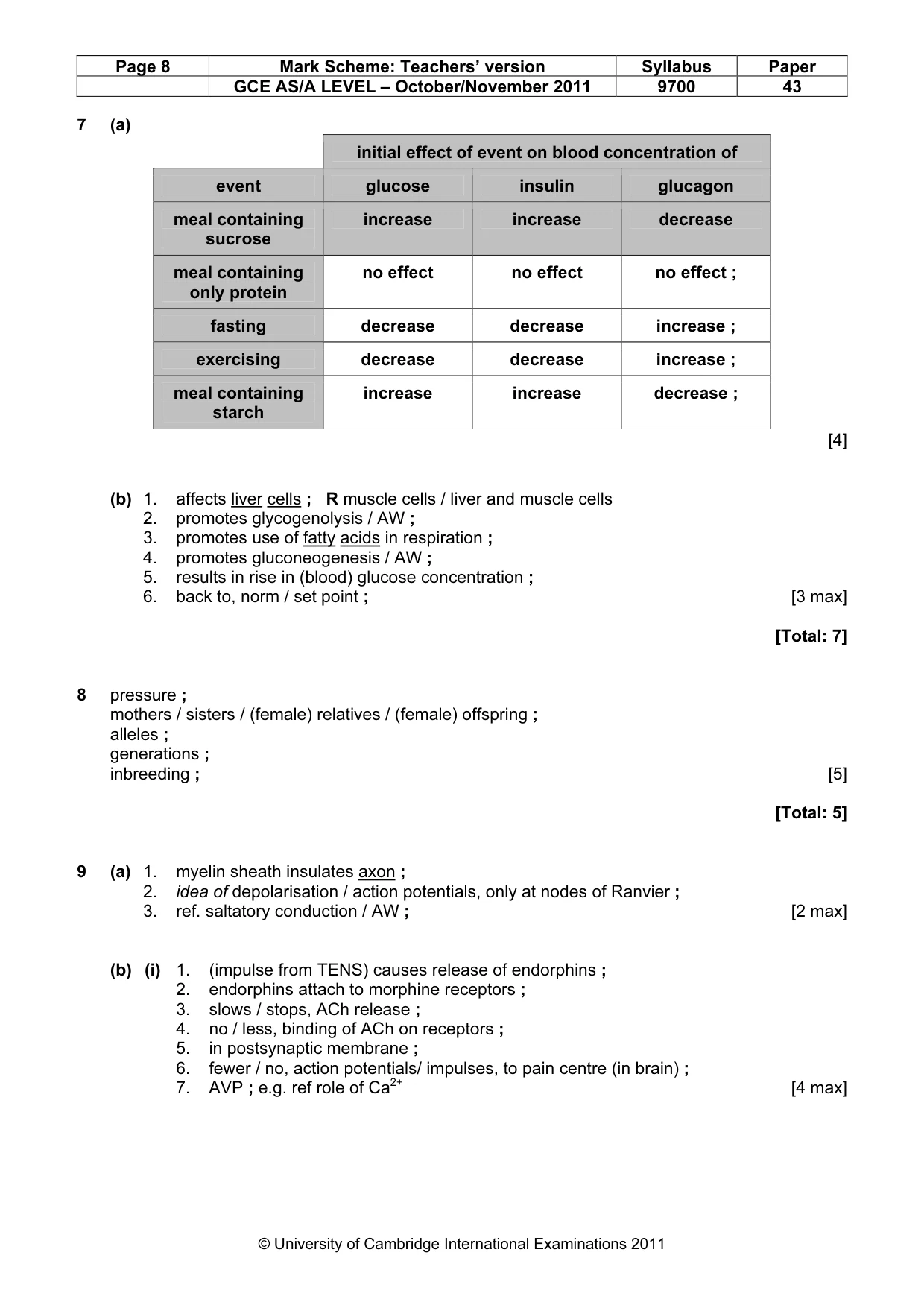
Page 8 Mark Scheme: Teachers’ version Syllabus Paper GCE AS/A LEVEL – October/November 2011 9700 43 © University of Cambridge International Examinations 2011 7 (a) initial effect of event on blood concentration of event glucose insulin glucagon meal containing sucrose increase increase decrease meal containing only protein no effect no effect no effect ; fasting decrease decrease increase ; exercising decrease decrease increase ; meal containing starch increase increase decrease ; [4] (b) 1. affects liver cells ; R muscle cells / liver and muscle cells 2. promotes glycogenolysis / AW ; 3. promotes use of fatty acids in respiration ; 4. promotes gluconeogenesis / AW ; 5. results in rise in (blood) glucose concentration ; 6. back to, norm / set point ; [3 max] [Total: 7] 8 pressure ; mothers / sisters / (female) relatives / (female) offspring ; alleles ; generations ; inbreeding ; [5] [Total: 5] 9 (a) 1. myelin sheath insulates axon ; 2. idea of depolarisation / action potentials, only at nodes of Ranvier ; 3. ref. saltatory conduction / AW ; [2 max] (b) (i) 1. (impulse from TENS) causes release of endorphins ; 2. endorphins attach to morphine receptors ; 3. slows / stops, ACh release ; 4. no / less, binding of ACh on receptors ; 5. in postsynaptic membrane ; 6. fewer / no, action potentials/ impulses, to pain centre (in brain) ; 7. AVP ; e.g. ref role of Ca2+ [4 max]
Mark scheme, page 9
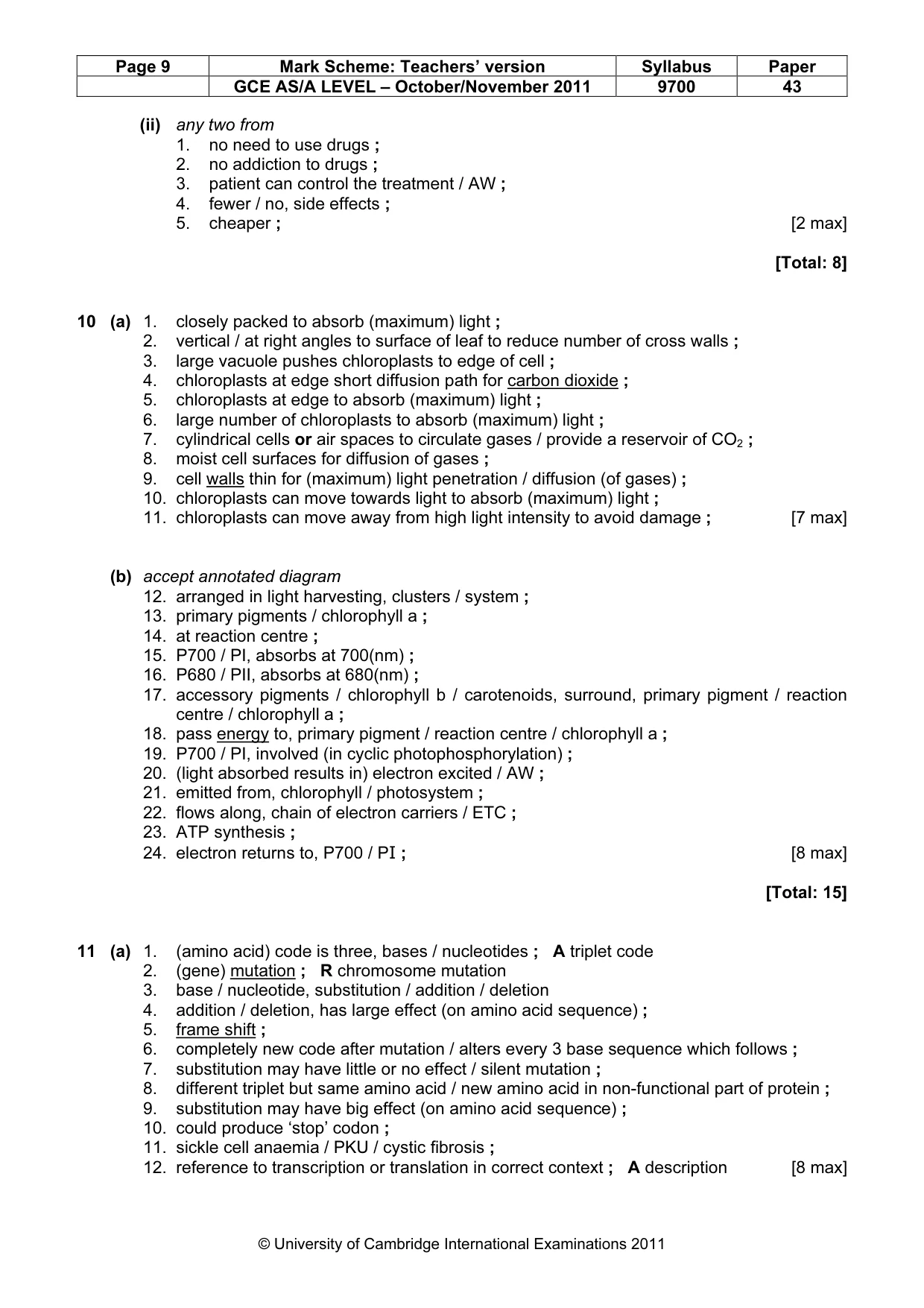
Page 9 Mark Scheme: Teachers’ version Syllabus Paper GCE AS/A LEVEL – October/November 2011 9700 43 © University of Cambridge International Examinations 2011 (ii) any two from 1. no need to use drugs ; 2. no addiction to drugs ; 3. patient can control the treatment / AW ; 4. fewer / no, side effects ; 5. cheaper ; [2 max] [Total: 8] 10 (a) 1. closely packed to absorb (maximum) light ; 2. vertical / at right angles to surface of leaf to reduce number of cross walls ; 3. large vacuole pushes chloroplasts to edge of cell ; 4. chloroplasts at edge short diffusion path for carbon dioxide ; 5. chloroplasts at edge to absorb (maximum) light ; 6. large number of chloroplasts to absorb (maximum) light ; 7. cylindrical cells or air spaces to circulate gases / provide a reservoir of CO2 ; 8. moist cell surfaces for diffusion of gases ; 9. cell walls thin for (maximum) light penetration / diffusion (of gases) ; 10. chloroplasts can move towards light to absorb (maximum) light ; 11. chloroplasts can move away from high light intensity to avoid damage ; [7 max] (b) accept annotated diagram 12. arranged in light harvesting, clusters / system ; 13. primary pigments / chlorophyll a ; 14. at reaction centre ; 15. P700 / PI, absorbs at 700(nm) ; 16. P680 / PII, absorbs at 680(nm) ; 17. accessory pigments / chlorophyll b / carotenoids, surround, primary pigment / reaction centre / chlorophyll a ; 18. pass energy to, primary pigment / reaction centre / chlorophyll a ; 19. P700 / PI, involved (in cyclic photophosphorylation) ; 20. (light absorbed results in) electron excited / AW ; 21. emitted from, chlorophyll / photosystem ; 22. flows along, chain of electron carriers / ETC ; 23. ATP synthesis ; 24. electron returns to, P700 / PI ; [8 max] [Total: 15] 11 (a) 1. (amino acid) code is three, bases / nucleotides ; A triplet code 2. (gene) mutation ; R chromosome mutation 3. base / nucleotide, substitution / addition / deletion 4. addition / deletion, has large effect (on amino acid sequence) ; 5. frame shift ; 6. completely new code after mutation / alters every 3 base sequence which follows ; 7. substitution may have little or no effect / silent mutation ; 8. different triplet but same amino acid / new amino acid in non-functional part of protein ; 9. substitution may have big effect (on amino acid sequence) ; 10. could produce ‘stop’ codon ; 11. sickle cell anaemia / PKU / cystic fibrosis ; 12. reference to transcription or translation in correct context ; A description [8 max]
Mark scheme, page 10
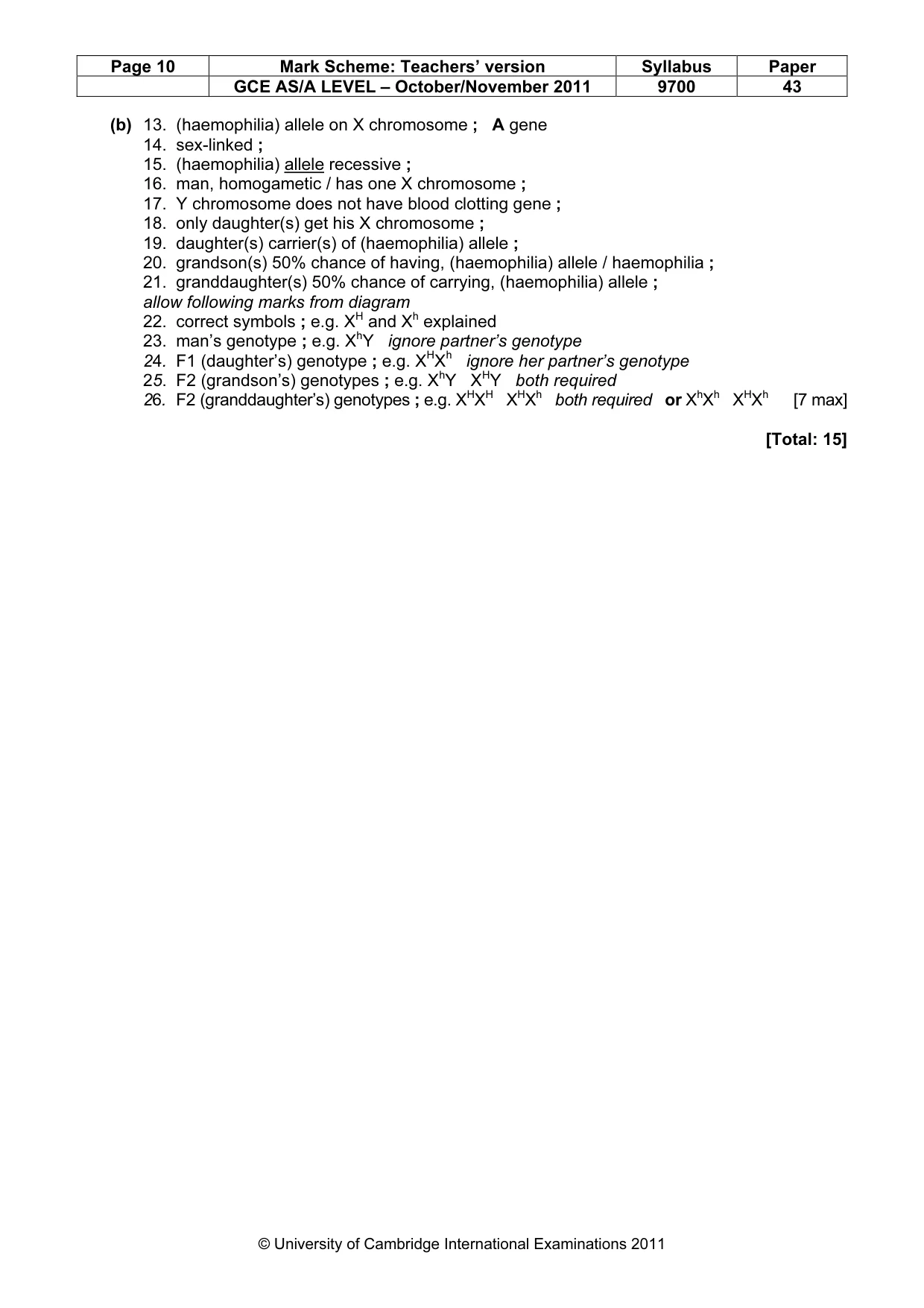
Page 10 Mark Scheme: Teachers’ version Syllabus Paper GCE AS/A LEVEL – October/November 2011 9700 43 © University of Cambridge International Examinations 2011 (b) 13. (haemophilia) allele on X chromosome ; A gene 14. sex-linked ; 15. (haemophilia) allele recessive ; 16. man, homogametic / has one X chromosome ; 17. Y chromosome does not have blood clotting gene ; 18. only daughter(s) get his X chromosome ; 19. daughter(s) carrier(s) of (haemophilia) allele ; 20. grandson(s) 50% chance of having, (haemophilia) allele / haemophilia ; 21. granddaughter(s) 50% chance of carrying, (haemophilia) allele ; allow following marks from diagram 22. correct symbols ; e.g. XH and Xh explained 23. man’s genotype ; e.g. XhY ignore partner’s genotype 24. F1 (daughter’s) genotype ; e.g. XHXh ignore her partner’s genotype 25. F2 (grandson’s) genotypes ; e.g. XhY XHY both required 26. F2 (granddaughter’s) genotypes ; e.g. XHXH XHXh both required or XhXh XHXh [7 max] [Total: 15]
What you needed in this session
Cambridge’s own grade thresholds for 2011 Oct/Nov, Paper 4 · Variant 3. A higher threshold means an easier paper — the bar moves with how the cohort did.