Cambridge A Level Biology 9700 — 2010 Oct/Nov Paper 4 · Variant 1
9700/41/O/N/10 · 100 marks · ≈113 min
The question paper and its mark scheme, free to read here and free to download. This is Cambridge’s own paper, exactly as it was sat.
Question paper24 pages



Mark scheme13 pages
Answers below. Sit the paper first if you are practising.
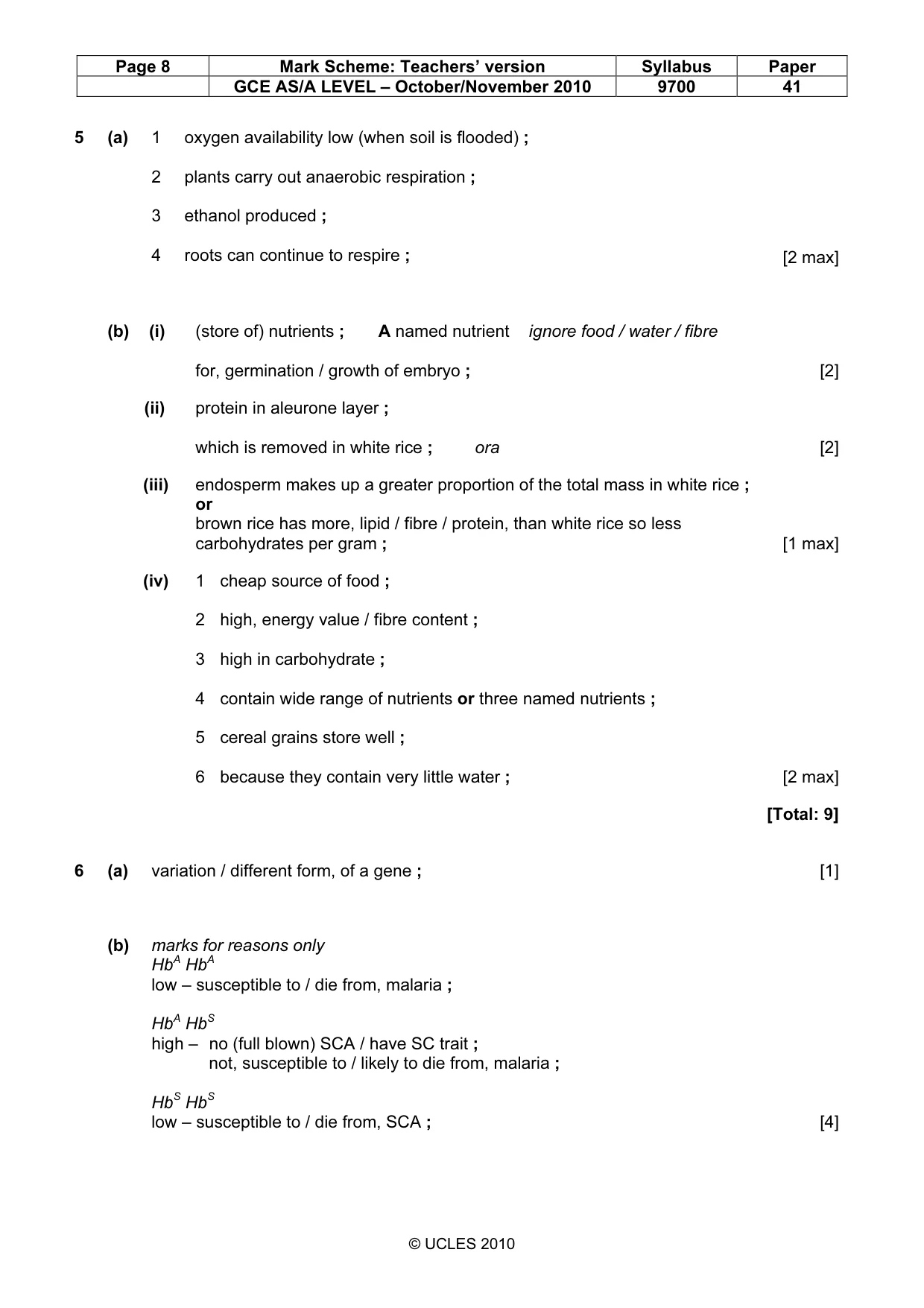
Paper as text
Question paper, page 1
This document consists of 20 printed pages, 2 lined pages and 2 blank pages. DC (AT/KN) 13964/5 © UCLES 2010 [Turn over UNIVERSITY OF CAMBRIDGE INTERNATIONAL EXAMINATIONS General Certificate of Education Advanced Level READ THESE INSTRUCTIONS FIRST Write your Centre number, candidate number and name in the spaces provided at the top of this page. Write in dark blue or black pen. Do not use staples, paper clips, highlighters, glue or correction fluid. DO NOT WRITE IN ANY BARCODES. Section A Answer all questions. Section B Answer one question Circle the number of the Section B question you have answered in the grid below. At the end of the examination, fasten all your work securely together. The number of marks is given in brackets [ ] at the end of each question or part question. * 3 2 1 6 2 1 5 5 4 2 * BIOLOGY 9700/41 Paper 4 Structured Questions A2 Core October/November 2010 2 hours Candidates answer on the Question Paper. No Additional Materials are required. For Examiner’s Use Section A 1 2 3 4 5 6 7 8 Section B 9 or 10 Total
Question paper, page 2
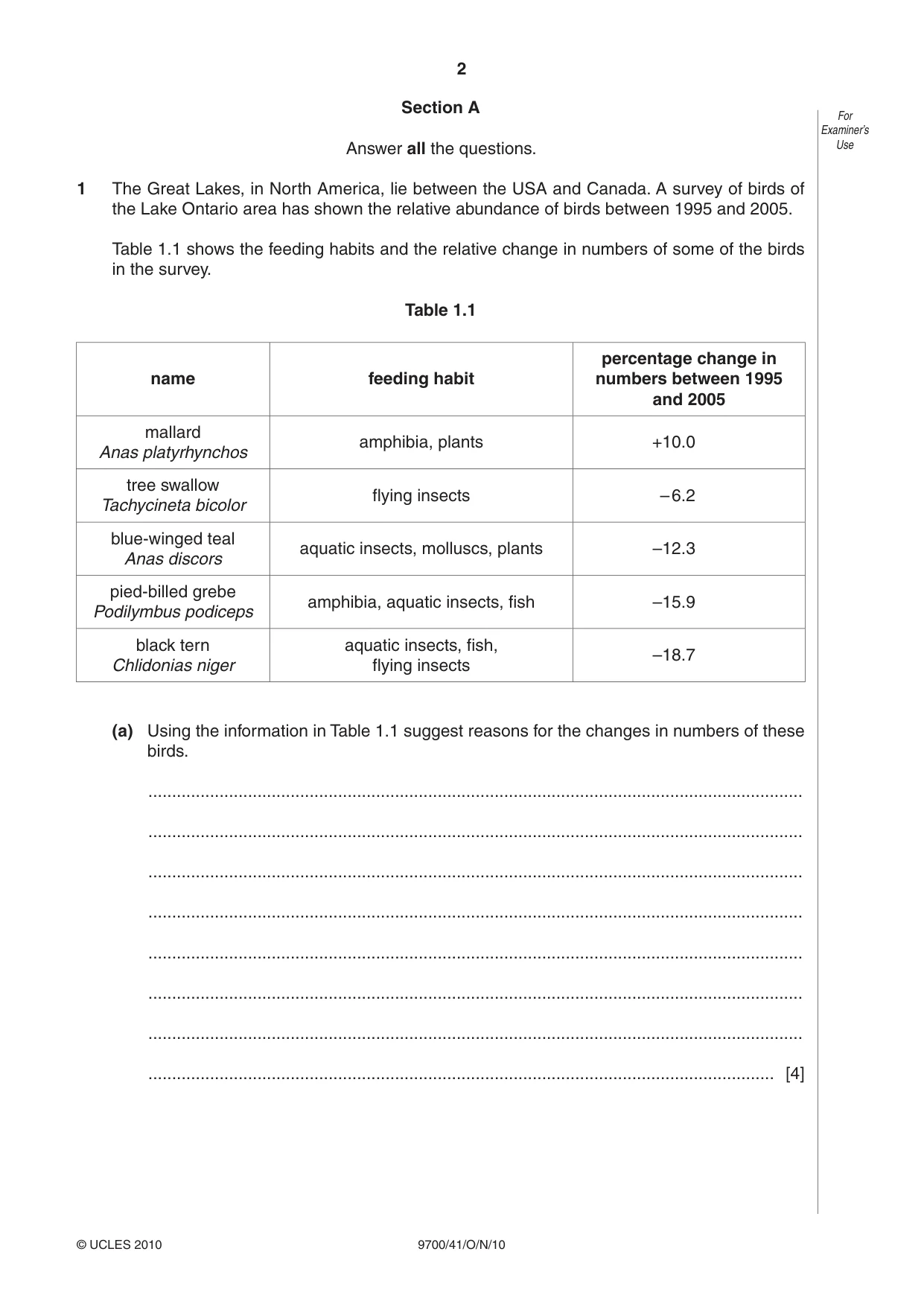
2 © UCLES 2010 9700/41/O/N/10 For Examiner’s Use Section A Answer all the questions. 1 The Great Lakes, in North America, lie between the USA and Canada. A survey of birds of the Lake Ontario area has shown the relative abundance of birds between 1995 and 2005. Table 1.1 shows the feeding habits and the relative change in numbers of some of the birds in the survey. Table 1.1 name feeding habit percentage change in numbers between 1995 and 2005 mallard Anas platyrhynchos amphibia, plants +10.0 tree swallow Tachycineta bicolor flying insects – 6.2 blue-winged teal Anas discors aquatic insects, molluscs, plants –12.3 pied-billed grebe Podilymbus podiceps amphibia, aquatic insects, fish –15.9 black tern Chlidonias niger aquatic insects, fish, flying insects –18.7 (a) Using the information in Table 1.1 suggest reasons for the changes in numbers of these birds. … … … … … … … … [4]
Question paper, page 3
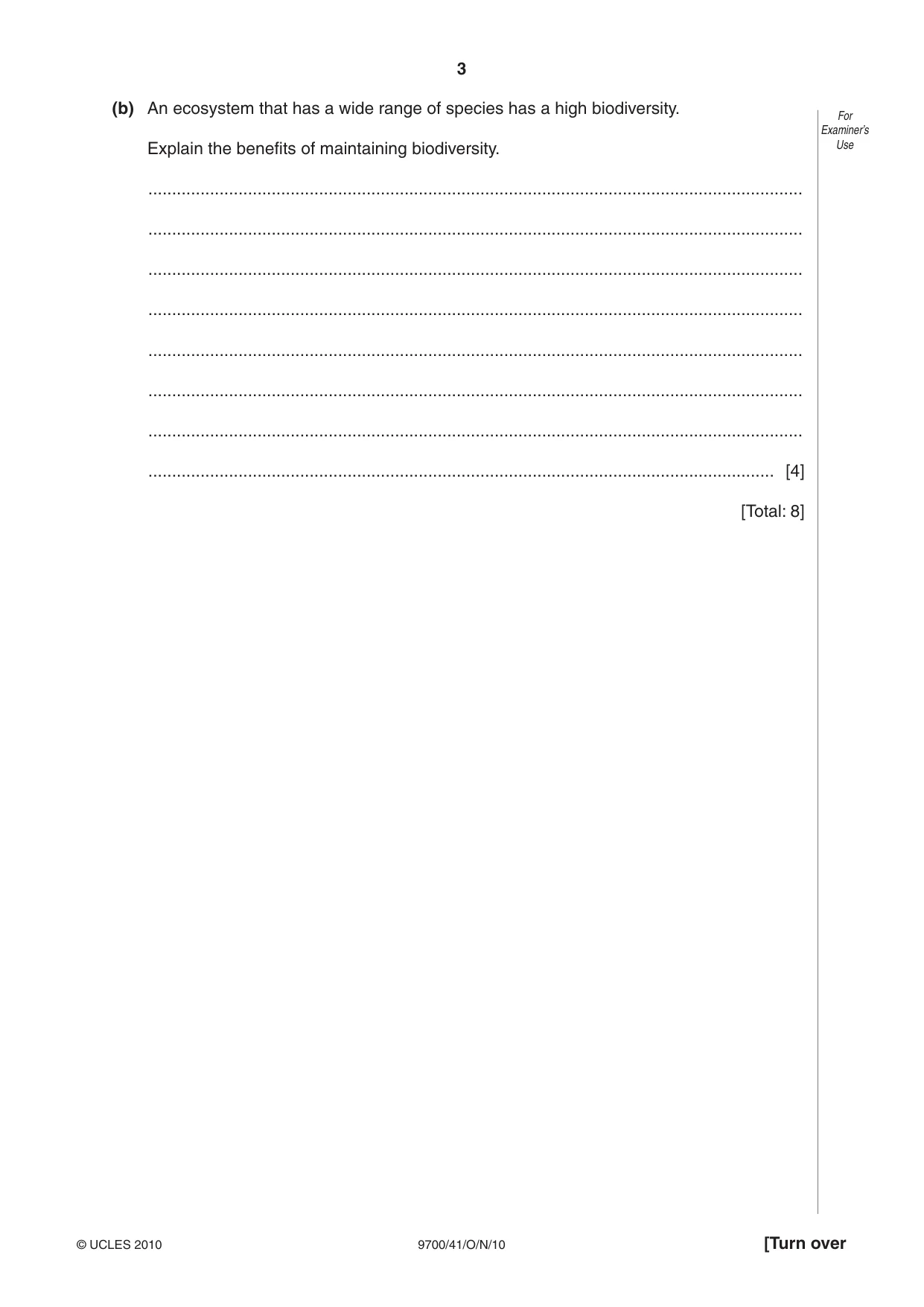
3 © UCLES 2010 [Turn over 9700/41/O/N/10 For Examiner’s Use (b) An ecosystem that has a wide range of species has a high biodiversity. Explain the benefits of maintaining biodiversity. … … … … … … … … [4] [Total: 8]
Question paper, page 4
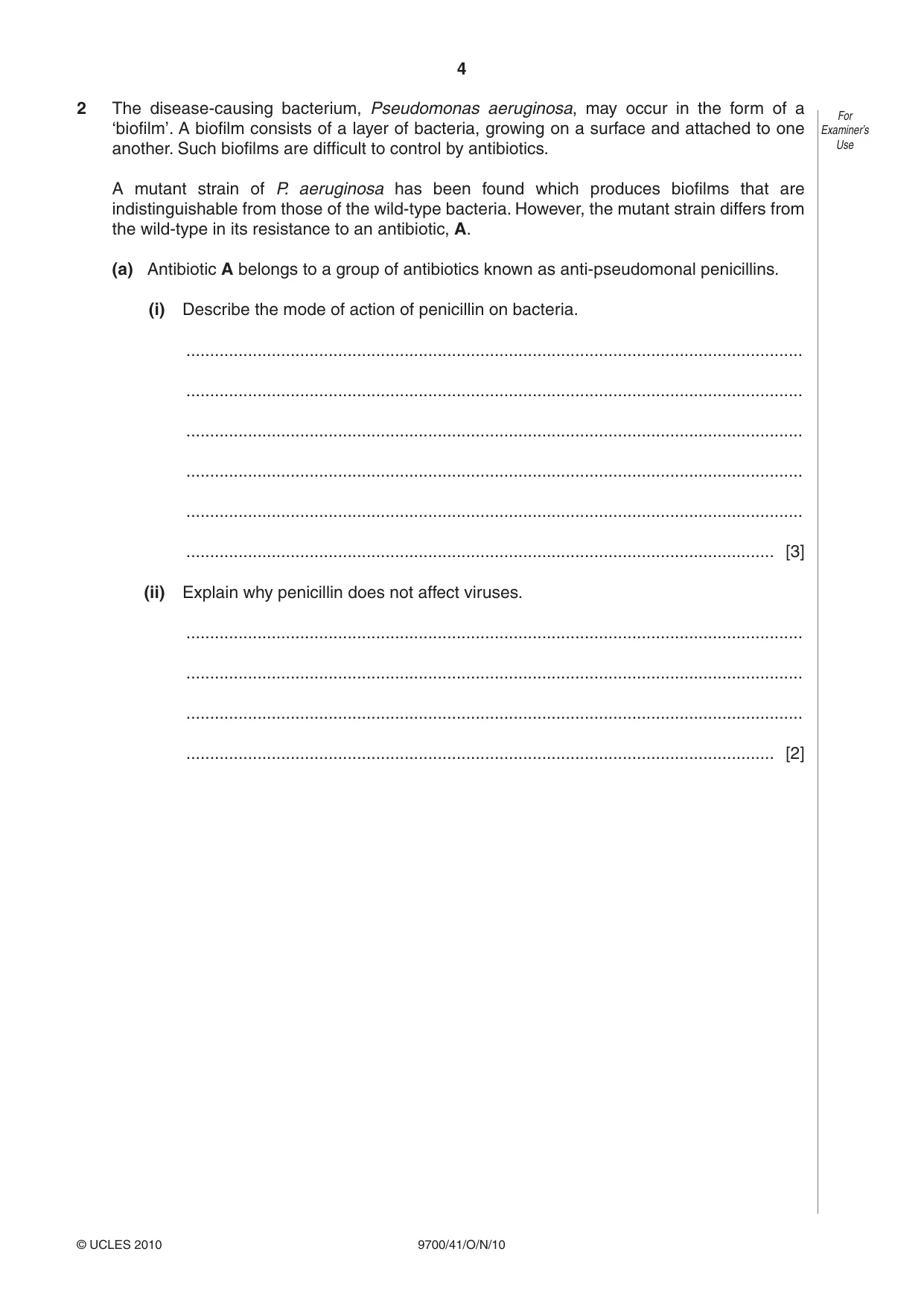
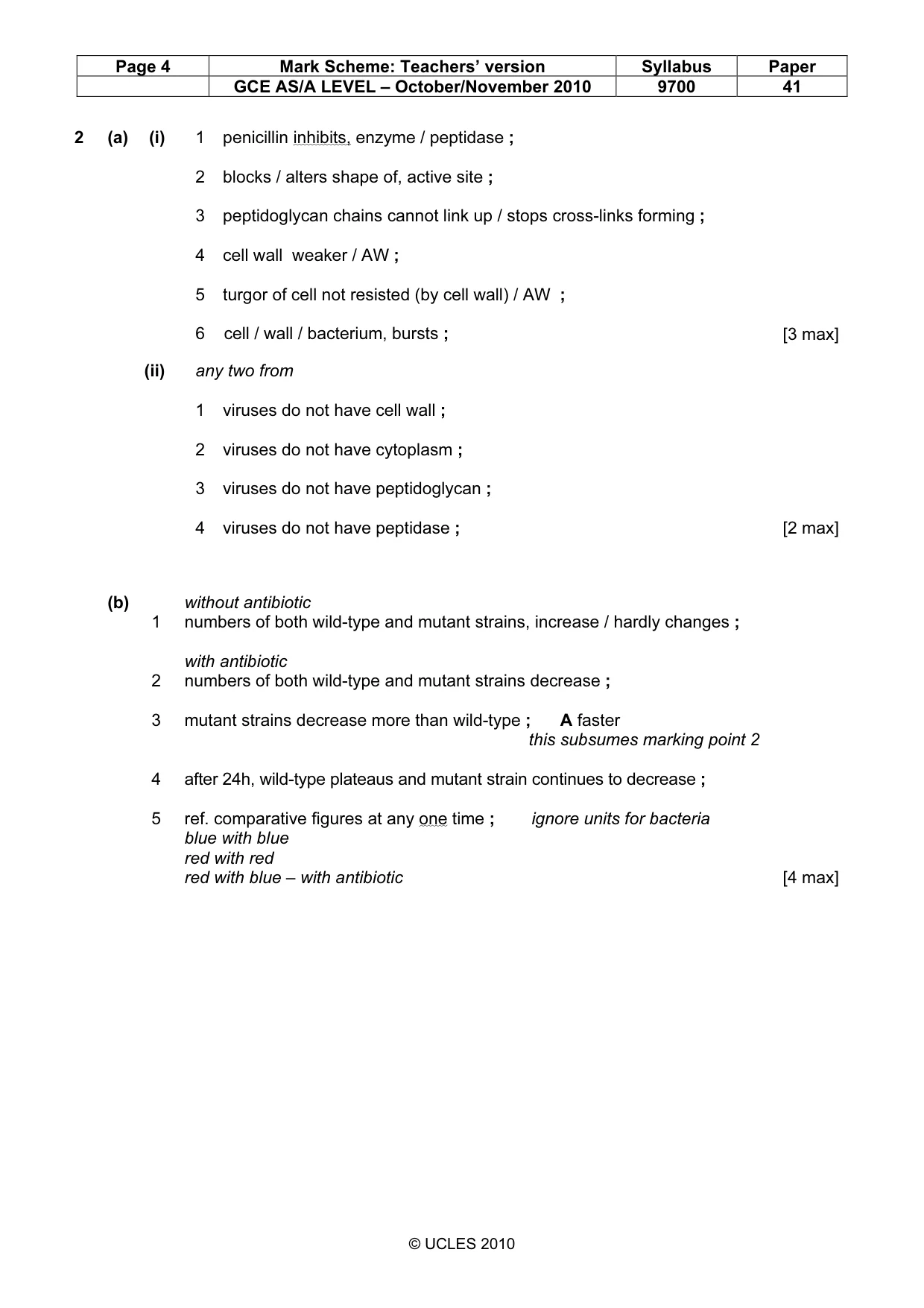
4 © UCLES 2010 9700/41/O/N/10 For Examiner’s Use 2 The disease-causing bacterium, Pseudomonas aeruginosa, may occur in the form of a ‘biofilm’. A biofilm consists of a layer of bacteria, growing on a surface and attached to one another. Such biofilms are difficult to control by antibiotics. A mutant strain of P. aeruginosa has been found which produces biofilms that are indistinguishable from those of the wild-type bacteria. However, the mutant strain differs from the wild-type in its resistance to an antibiotic, A. (a) Antibiotic A belongs to a group of antibiotics known as anti-pseudomonal penicillins. (i) Describe the mode of action of penicillin on bacteria. … … … … … … [3] (ii) Explain why penicillin does not affect viruses. … … … … [2]
Question paper, page 5
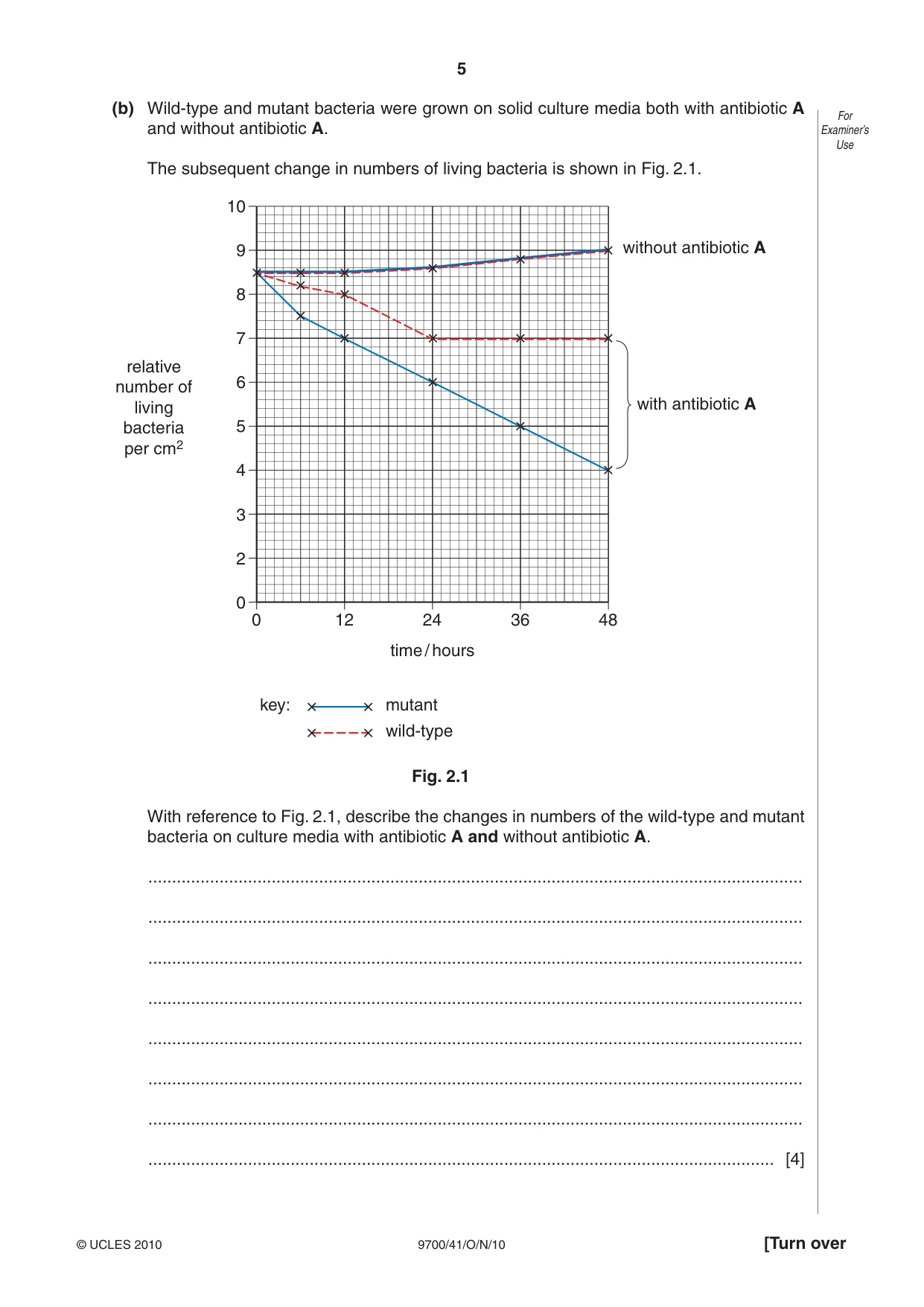
5 © UCLES 2010 [Turn over 9700/41/O/N/10 For Examiner’s Use (b) Wild-type and mutant bacteria were grown on solid culture media both with antibiotic A and without antibiotic A. The subsequent change in numbers of living bacteria is shown in Fig. 2.1. 2 0 0 12 24 36 48 3 4 5 6 7 8 10 9 relative number of living bacteria per cm2 time / hours × × without antibiotic A with antibiotic A key: mutant × × wild-type × × × × × × × × × × × × × × × × Fig. 2.1 With reference to Fig. 2.1, describe the changes in numbers of the wild-type and mutant bacteria on culture media with antibiotic A and without antibiotic A. … … … … … … … … [4]
Question paper, page 6
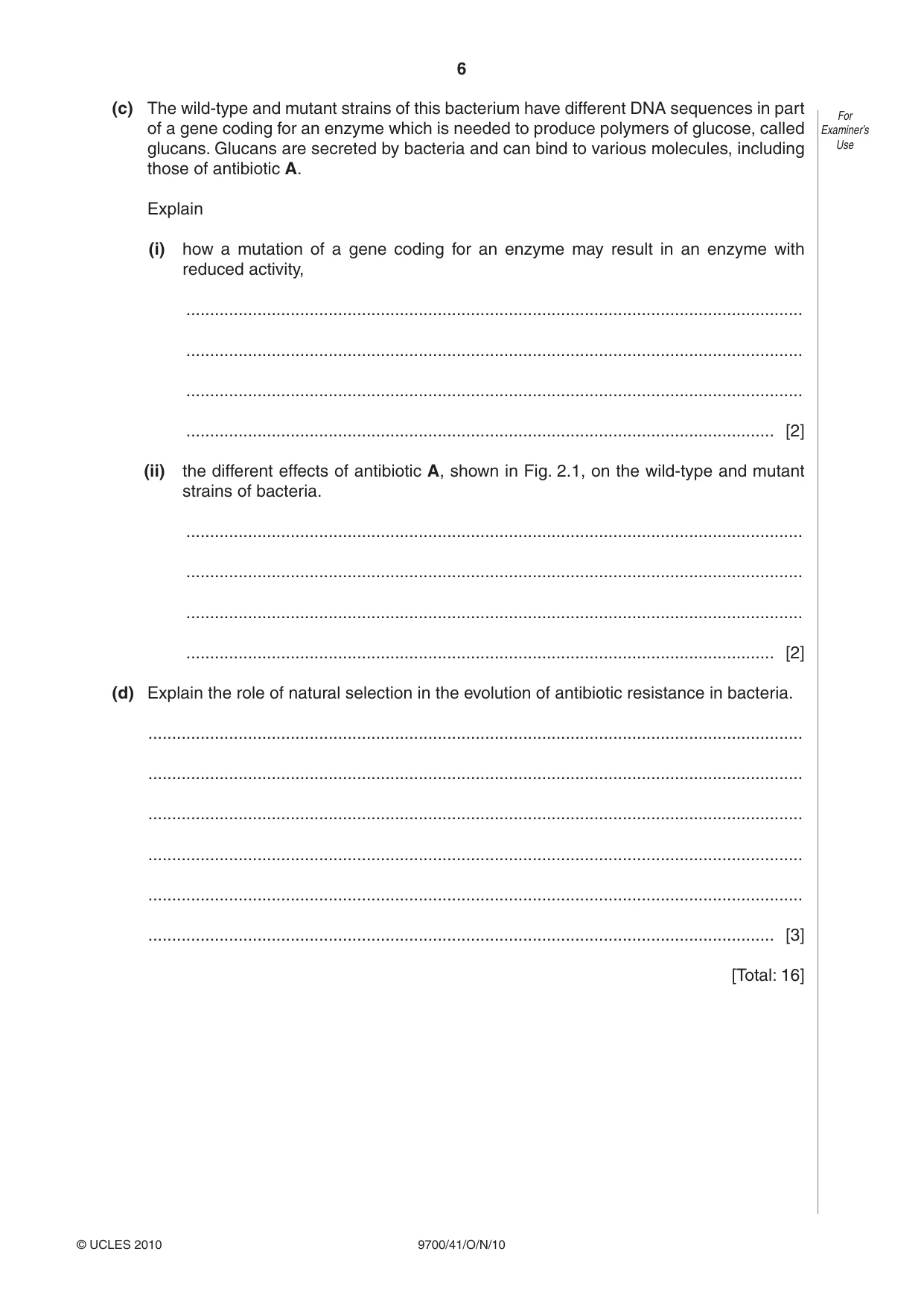
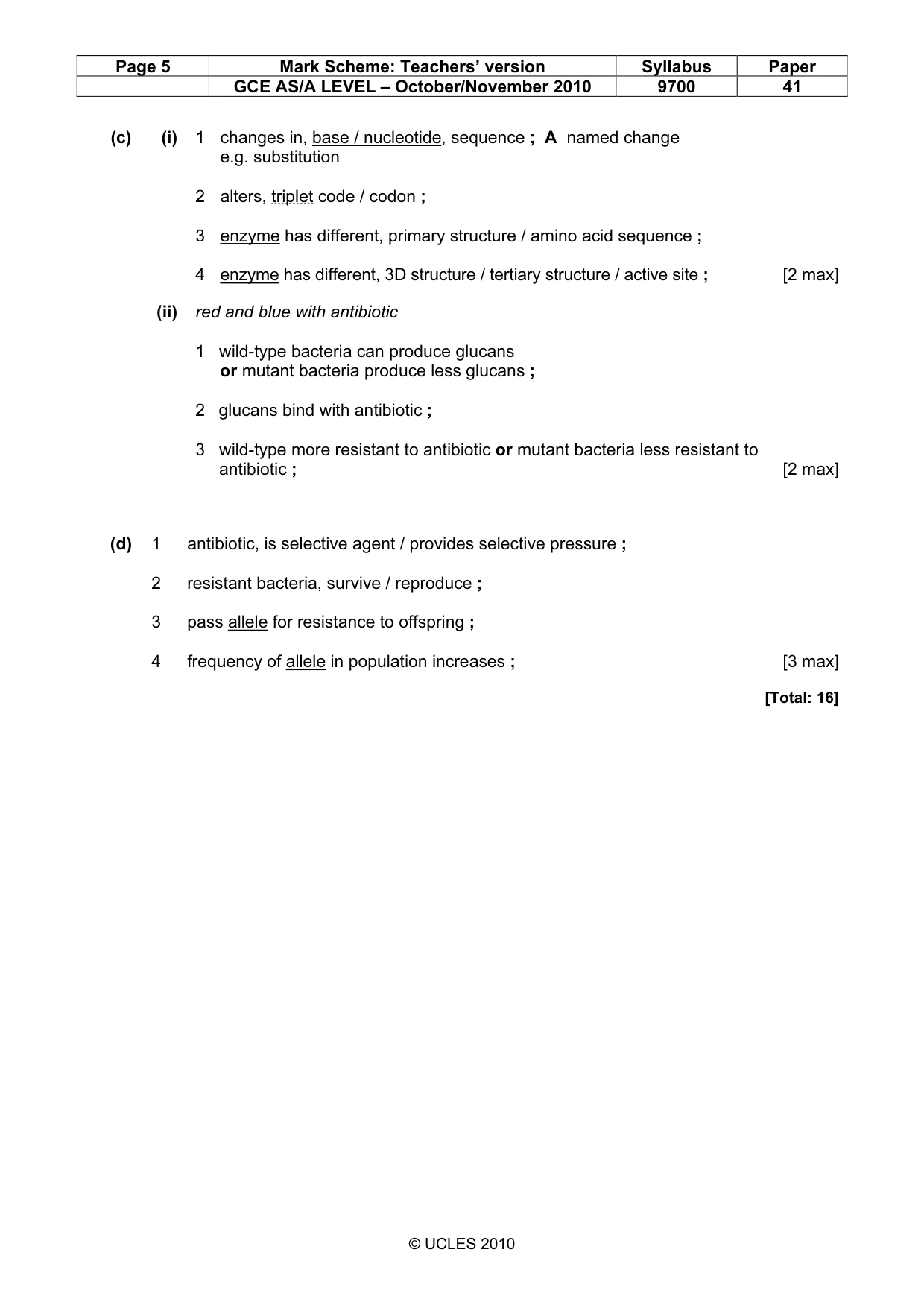
6 © UCLES 2010 9700/41/O/N/10 For Examiner’s Use (c) The wild-type and mutant strains of this bacterium have different DNA sequences in part of a gene coding for an enzyme which is needed to produce polymers of glucose, called glucans. Glucans are secreted by bacteria and can bind to various molecules, including those of antibiotic A. Explain (i) how a mutation of a gene coding for an enzyme may result in an enzyme with reduced activity, … … … … [2] (ii) the different effects of antibiotic A, shown in Fig. 2.1, on the wild-type and mutant strains of bacteria. … … … … [2] (d) Explain the role of natural selection in the evolution of antibiotic resistance in bacteria. … … … … … … [3] [Total: 16]
Question paper, page 7
7 © UCLES 2010 [Turn over 9700/41/O/N/10 BLANK PAGE
Question paper, page 8
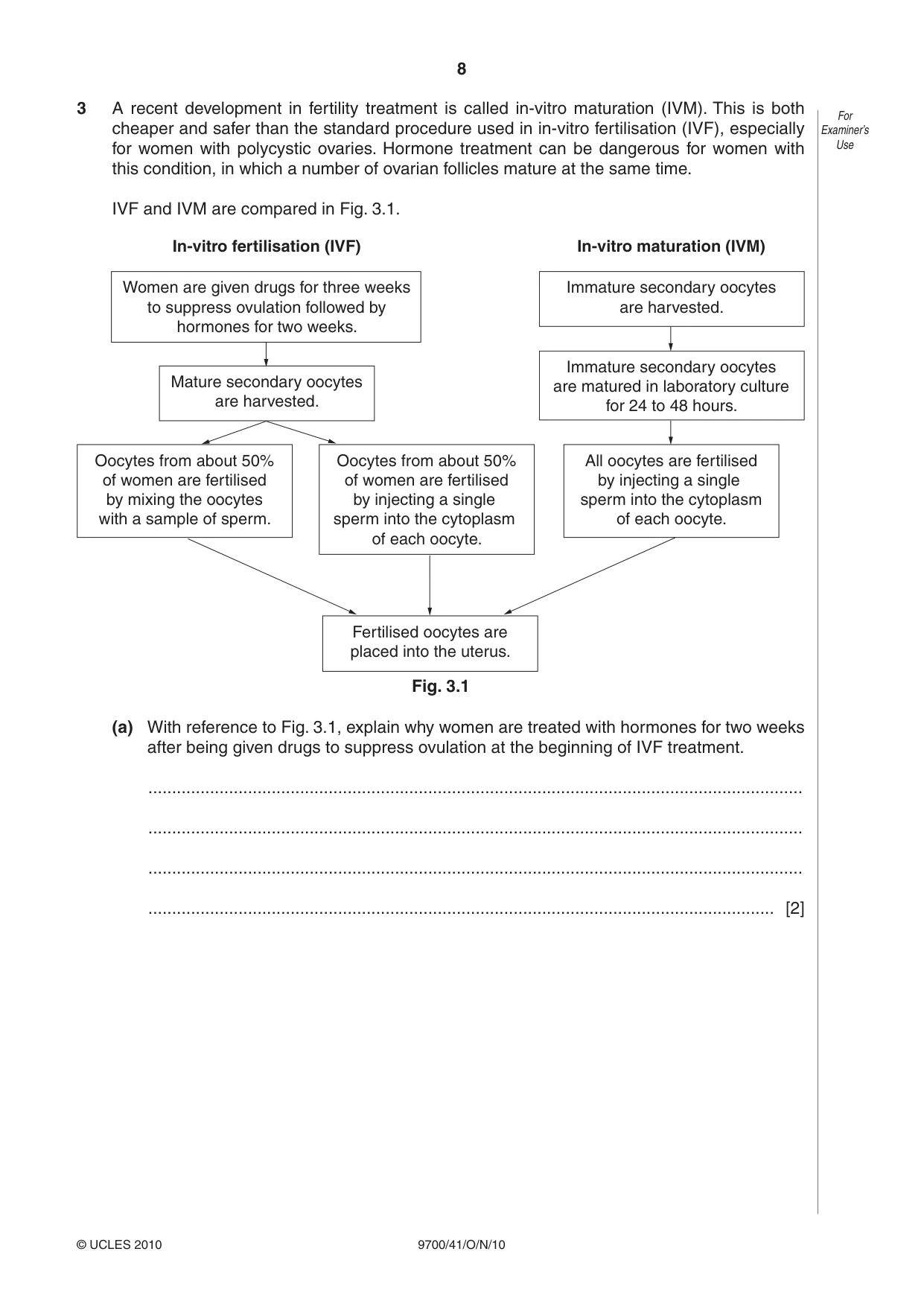
8 © UCLES 2010 9700/41/O/N/10 For Examiner’s Use 3 A recent development in fertility treatment is called in-vitro maturation (IVM). This is both cheaper and safer than the standard procedure used in in-vitro fertilisation (IVF), especially for women with polycystic ovaries. Hormone treatment can be dangerous for women with this condition, in which a number of ovarian follicles mature at the same time. IVF and IVM are compared in Fig. 3.1. In-vitro fertilisation (IVF) Women are given drugs for three weeks to suppress ovulation followed by hormones for two weeks. Mature secondary oocytes are harvested. In-vitro maturation (IVM) Immature secondary oocytes are harvested. Immature secondary oocytes are matured in laboratory culture for 24 to 48 hours. Oocytes from about 50% of women are fertilised by mixing the oocytes with a sample of sperm. Oocytes from about 50% of women are fertilised by injecting a single sperm into the cytoplasm of each oocyte. Fertilised oocytes are placed into the uterus. All oocytes are fertilised by injecting a single sperm into the cytoplasm of each oocyte. Fig. 3.1 (a) With reference to Fig. 3.1, explain why women are treated with hormones for two weeks after being given drugs to suppress ovulation at the beginning of IVF treatment. … … … … [2]
Question paper, page 9
9 © UCLES 2010 [Turn over 9700/41/O/N/10 For Examiner’s Use (b) State the roles of mitosis and meiosis in producing an immature secondary oocyte. … … … … … … [3] (c) Suggest one advantage and one possible disadvantage of fertilising an oocyte by injecting a sperm into its cytoplasm instead of mixing the oocyte with a sample of sperm. advantage … … disadvantage … … [2] [Total: 7]
Question paper, page 10
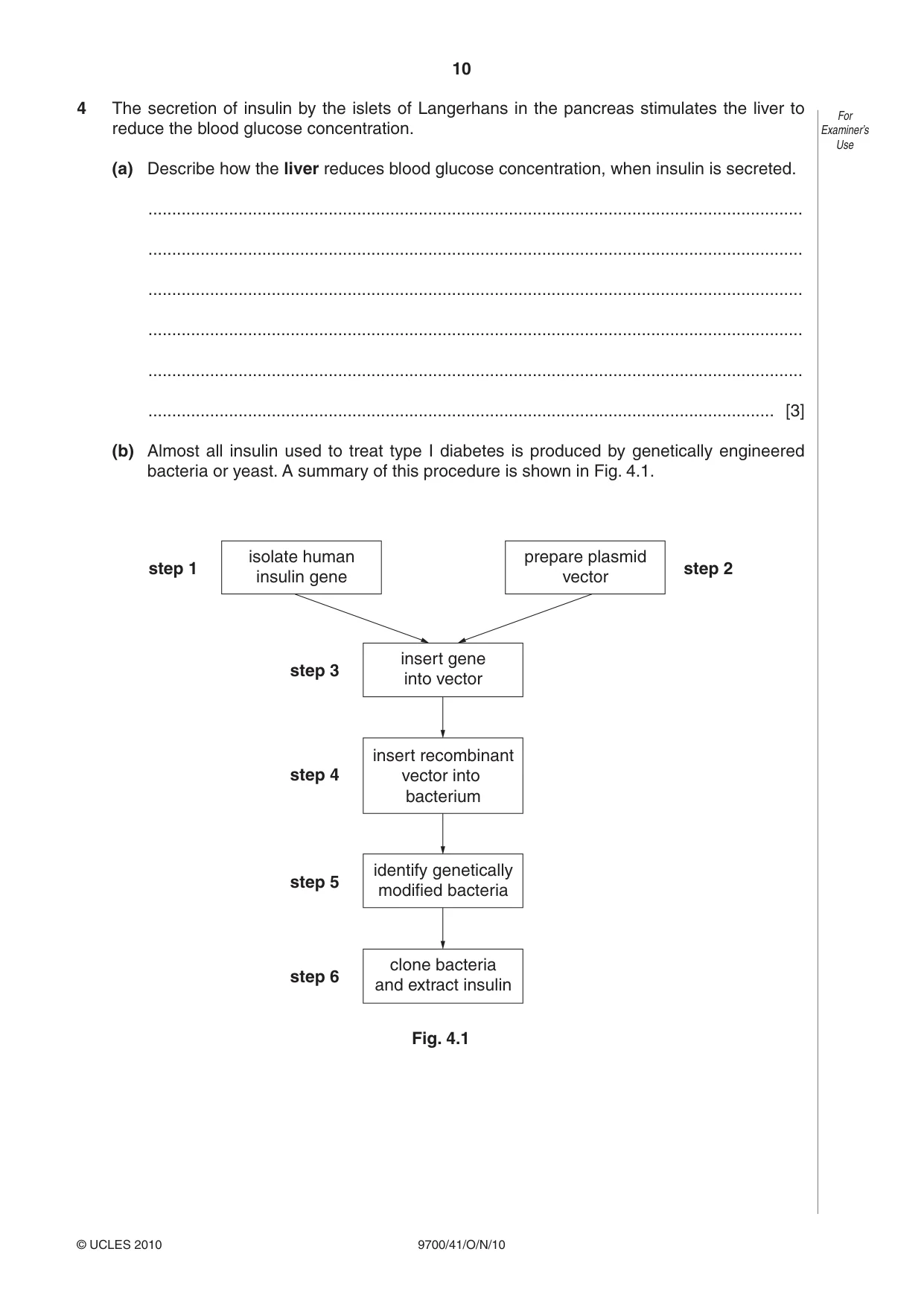
10 © UCLES 2010 9700/41/O/N/10 For Examiner’s Use 4 The secretion of insulin by the islets of Langerhans in the pancreas stimulates the liver to reduce the blood glucose concentration. (a) Describe how the liver reduces blood glucose concentration, when insulin is secreted. … … … … … … [3] (b) Almost all insulin used to treat type I diabetes is produced by genetically engineered bacteria or yeast. A summary of this procedure is shown in Fig. 4.1. isolate human insulin gene prepare plasmid vector step 1 step 2 insert gene into vector step 3 insert recombinant vector into bacterium step 4 identify genetically modified bacteria step 5 clone bacteria and extract insulin step 6 Fig. 4.1
Question paper, page 11
11 © UCLES 2010 [Turn over 9700/41/O/N/10 For Examiner’s Use (i) One way of carrying out step 1 is to collect mRNA from β cells from the pancreas. The relevant mRNA is then isolated and used to make DNA. Suggest why isolating the mRNA coding for insulin in a β cell is easier than isolating the DNA for insulin in a β cell. … … … … [2] (ii) Outline the use of restriction enzymes in step 2. … … … … [2]
Question paper, page 12
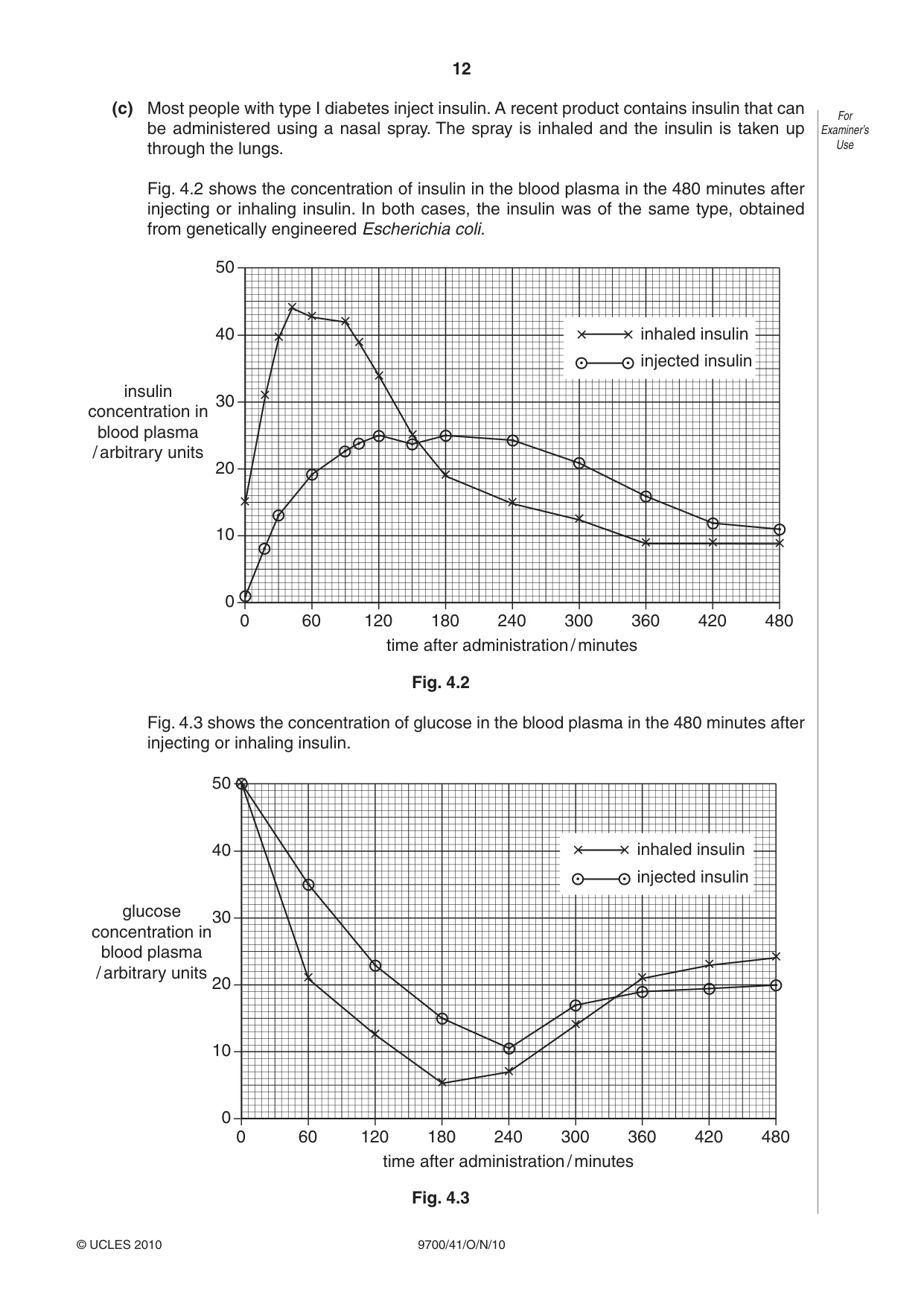
12 © UCLES 2010 9700/41/O/N/10 For Examiner’s Use (c) Most people with type I diabetes inject insulin. A recent product contains insulin that can be administered using a nasal spray. The spray is inhaled and the insulin is taken up through the lungs. Fig. 4.2 shows the concentration of insulin in the blood plasma in the 480 minutes after injecting or inhaling insulin. In both cases, the insulin was of the same type, obtained from genetically engineered Escherichia coli. 0 10 20 30 40 50 insulin concentration in blood plasma / arbitrary units 0 60 120 180 240 time after administration / minutes 300 360 420 480 × × × × × × × × × × × × × × × × × inhaled insulin injected insulin Fig. 4.2 Fig. 4.3 shows the concentration of glucose in the blood plasma in the 480 minutes after injecting or inhaling insulin. 0 10 20 30 40 50 glucose concentration in blood plasma / arbitrary units 0 60 120 180 240 time after administration / minutes 300 360 420 480 × × × × × × × × × × inhaled insulin injected insulin × Fig. 4.3
Question paper, page 13
13 © UCLES 2010 [Turn over 9700/41/O/N/10 For Examiner’s Use (i) Compare the results for injected insulin and inhaled insulin shown in Fig. 4.2. … … … … … … [3] (ii) With reference to Fig. 4.2, explain the differences in the blood glucose levels after injecting or inhaling insulin shown in Fig. 4.3. … … … … … … [3] (iii) With reference to Figs. 4.2 and 4.3, suggest one advantage and one disadvantage of inhaling insulin rather than injecting it. advantage … … disadvantage … … [2] [Total: 15]
Question paper, page 14
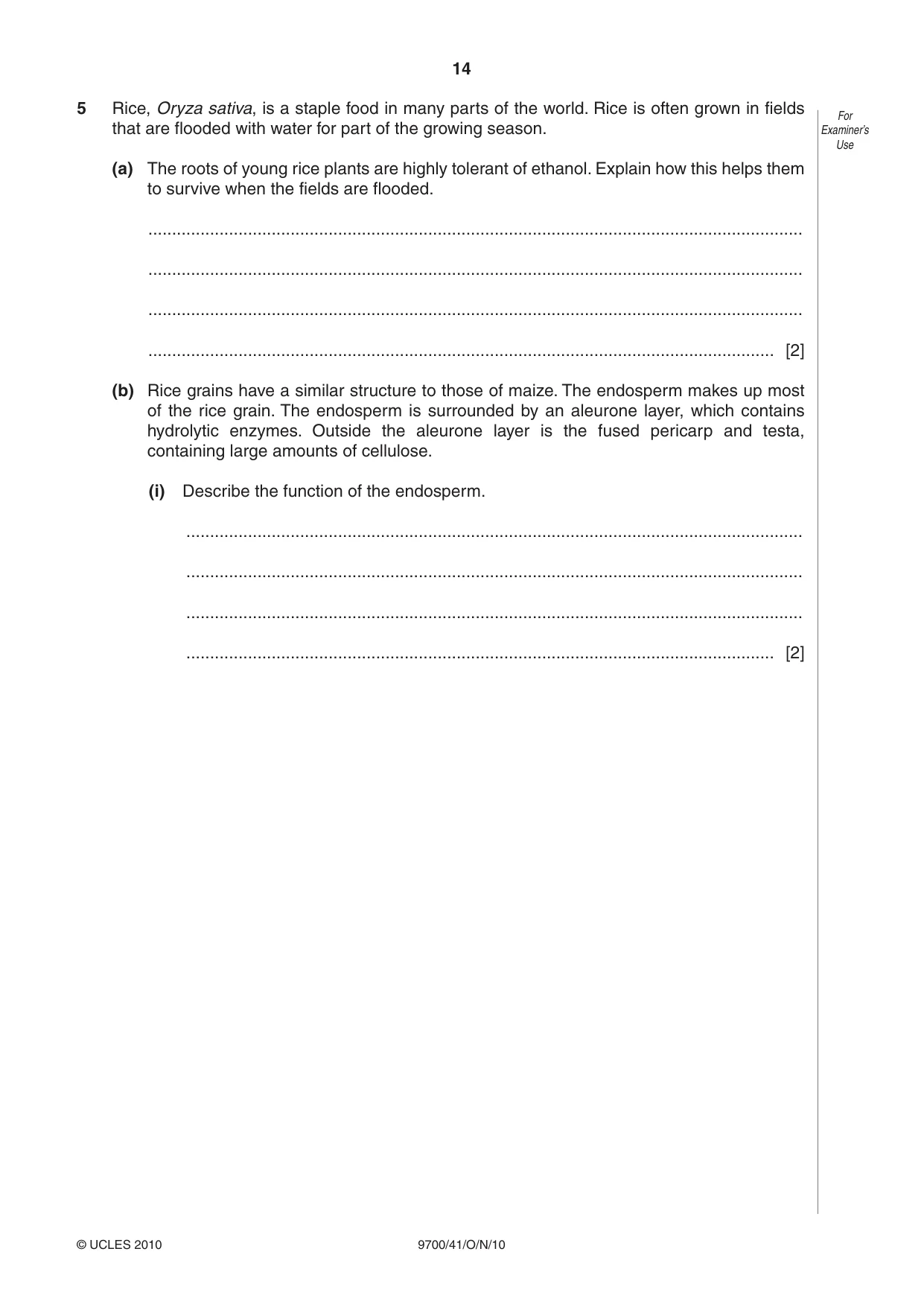
14 © UCLES 2010 9700/41/O/N/10 For Examiner’s Use 5 Rice, Oryza sativa, is a staple food in many parts of the world. Rice is often grown in fields that are flooded with water for part of the growing season. (a) The roots of young rice plants are highly tolerant of ethanol. Explain how this helps them to survive when the fields are flooded. … … … … [2] (b) Rice grains have a similar structure to those of maize. The endosperm makes up most of the rice grain. The endosperm is surrounded by an aleurone layer, which contains hydrolytic enzymes. Outside the aleurone layer is the fused pericarp and testa, containing large amounts of cellulose. (i) Describe the function of the endosperm. … … … … [2]
Question paper, page 15
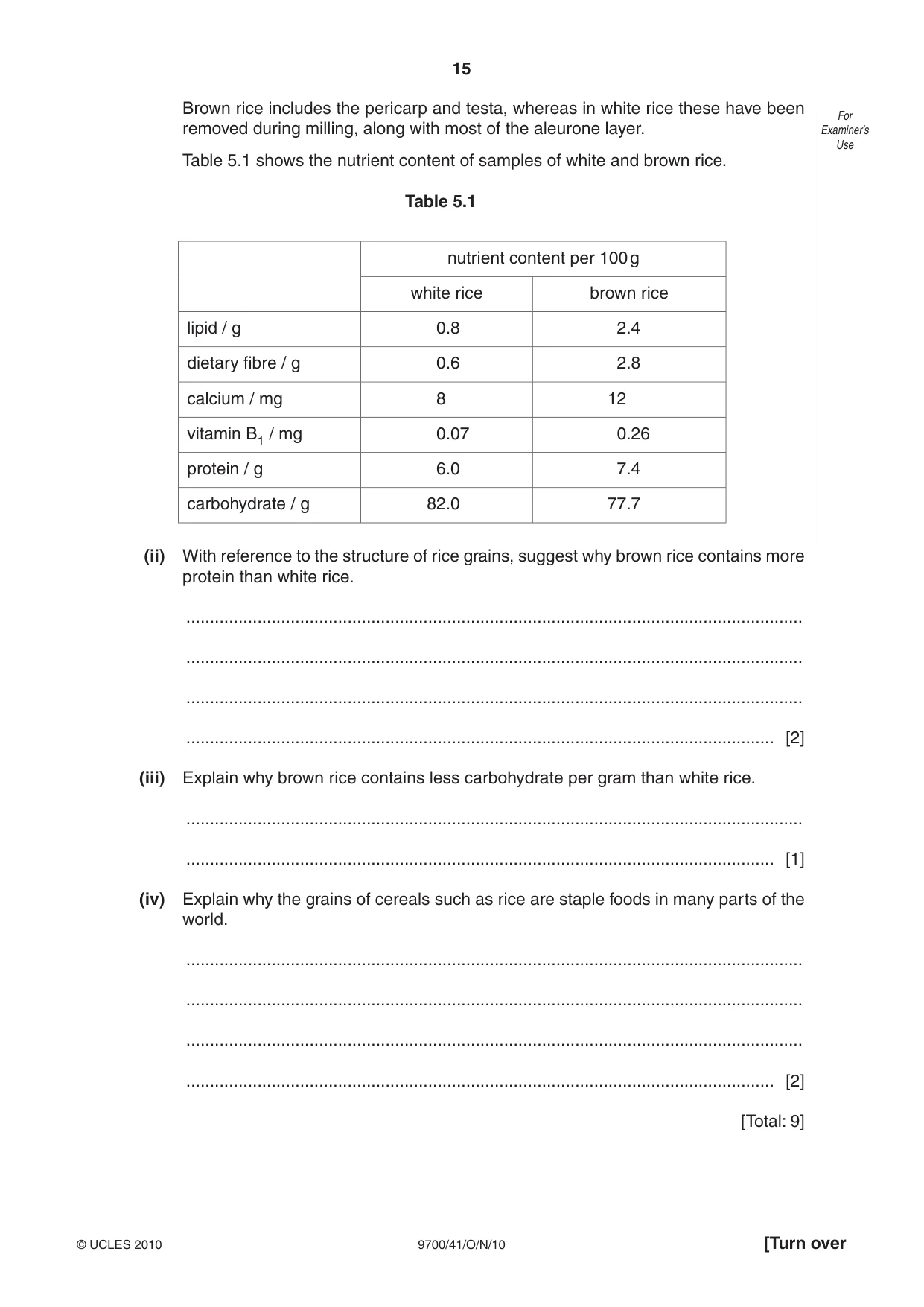
15 © UCLES 2010 [Turn over 9700/41/O/N/10 For Examiner’s Use Brown rice includes the pericarp and testa, whereas in white rice these have been removed during milling, along with most of the aleurone layer. Table 5.1 shows the nutrient content of samples of white and brown rice. Table 5.1 nutrient content per 100 g white rice brown rice lipid / g 0.8 2.4 dietary fibre / g 0.6 2.8 calcium / mg 8 12 vitamin B1 / mg 0.07 0.26 protein / g 6.0 7.4 carbohydrate / g 82.0 77.7 (ii) With reference to the structure of rice grains, suggest why brown rice contains more protein than white rice. … … … … [2] (iii) Explain why brown rice contains less carbohydrate per gram than white rice. … … [1] (iv) Explain why the grains of cereals such as rice are staple foods in many parts of the world. … … … … [2] [Total: 9]
Question paper, page 16
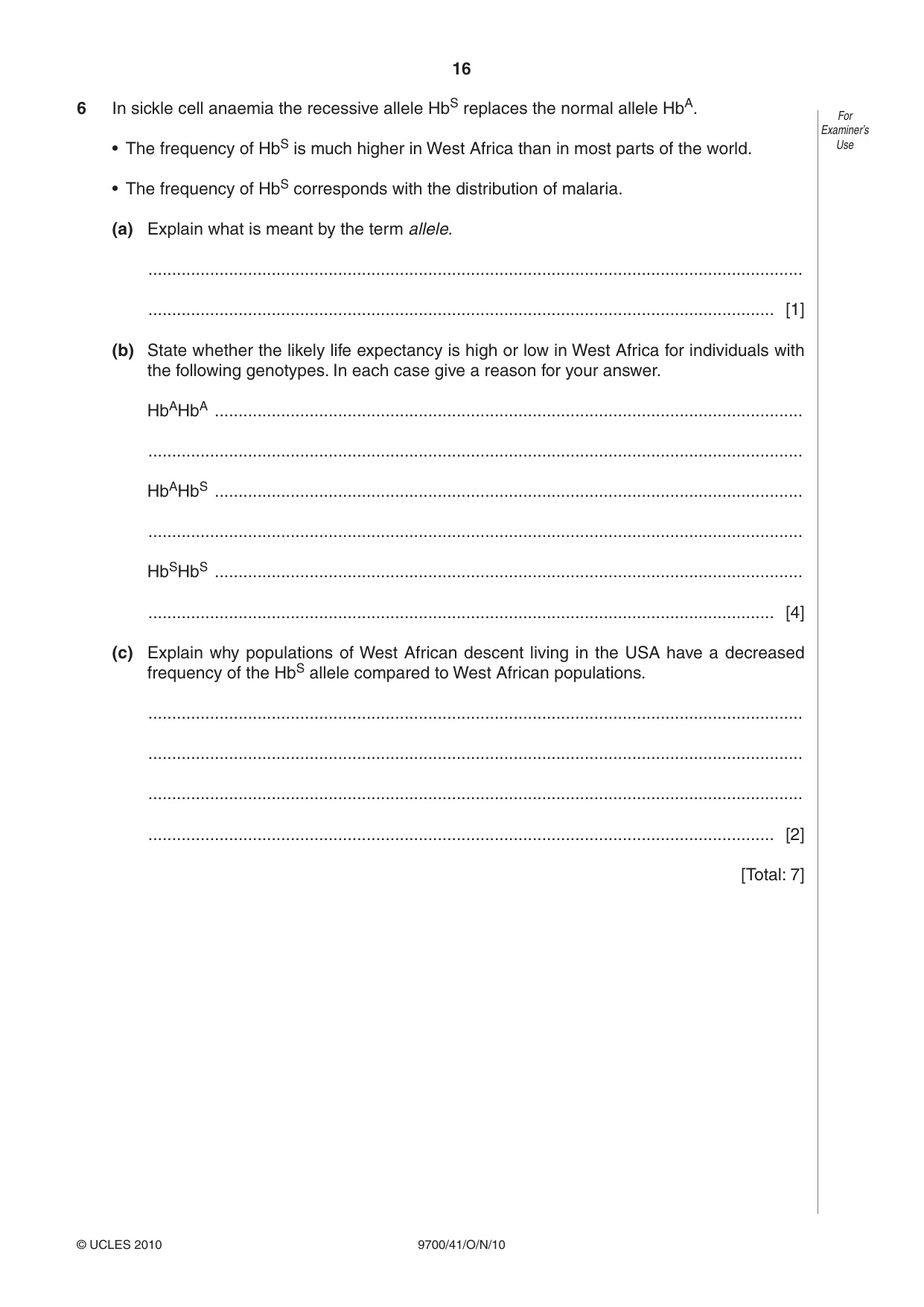
16 © UCLES 2010 9700/41/O/N/10 For Examiner’s Use 6 In sickle cell anaemia the recessive allele HbS replaces the normal allele HbA. • The frequency of HbS is much higher in West Africa than in most parts of the world. • The frequency of HbS corresponds with the distribution of malaria. (a) Explain what is meant by the term allele. … … [1] (b) State whether the likely life expectancy is high or low in West Africa for individuals with the following genotypes. In each case give a reason for your answer. HbAHbA … … HbAHbS … … HbSHbS … … [4] (c) Explain why populations of West African descent living in the USA have a decreased frequency of the HbS allele compared to West African populations. … … … … [2] [Total: 7]
Question paper, page 17
17 9700/41/M/J/10 © UCLES 2010 [Turn over BLANK PAGE
Question paper, page 18
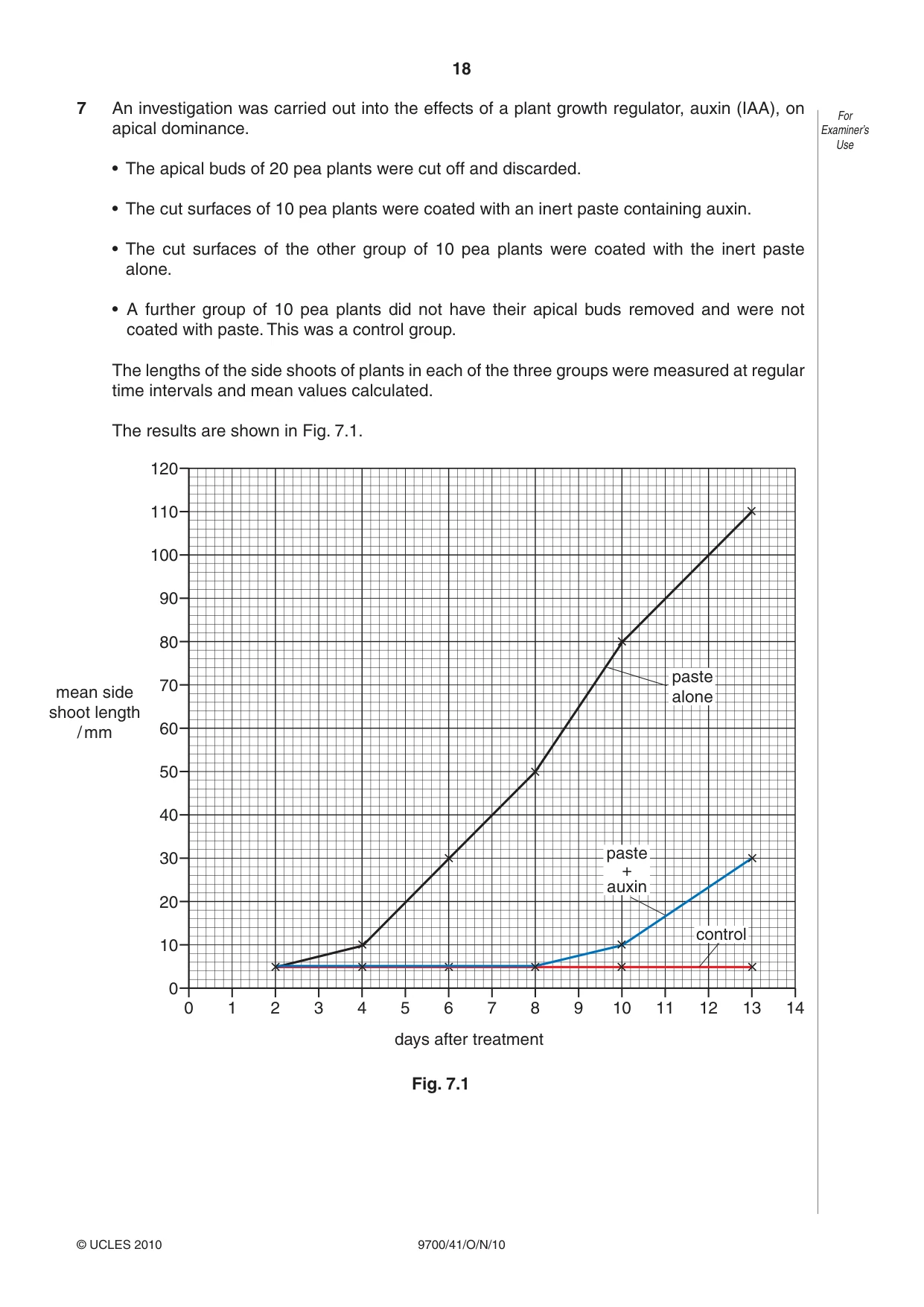
18 © UCLES 2010 9700/41/O/N/10 For Examiner’s Use 7 An investigation was carried out into the effects of a plant growth regulator, auxin (IAA), on apical dominance. • The apical buds of 20 pea plants were cut off and discarded. • The cut surfaces of 10 pea plants were coated with an inert paste containing auxin. • The cut surfaces of the other group of 10 pea plants were coated with the inert paste alone. • A further group of 10 pea plants did not have their apical buds removed and were not coated with paste. This was a control group. The lengths of the side shoots of plants in each of the three groups were measured at regular time intervals and mean values calculated. The results are shown in Fig. 7.1. paste paste alone alone paste paste + auxin auxin control control 0 0 1 2 3 4 5 6 7 8 9 10 11 12 13 14 10 20 30 40 50 60 70 80 90 100 110 120 mean side shoot length / mm days after treatment × × × × × × × × × × × × × control paste + auxin paste alone Fig. 7.1
Question paper, page 19
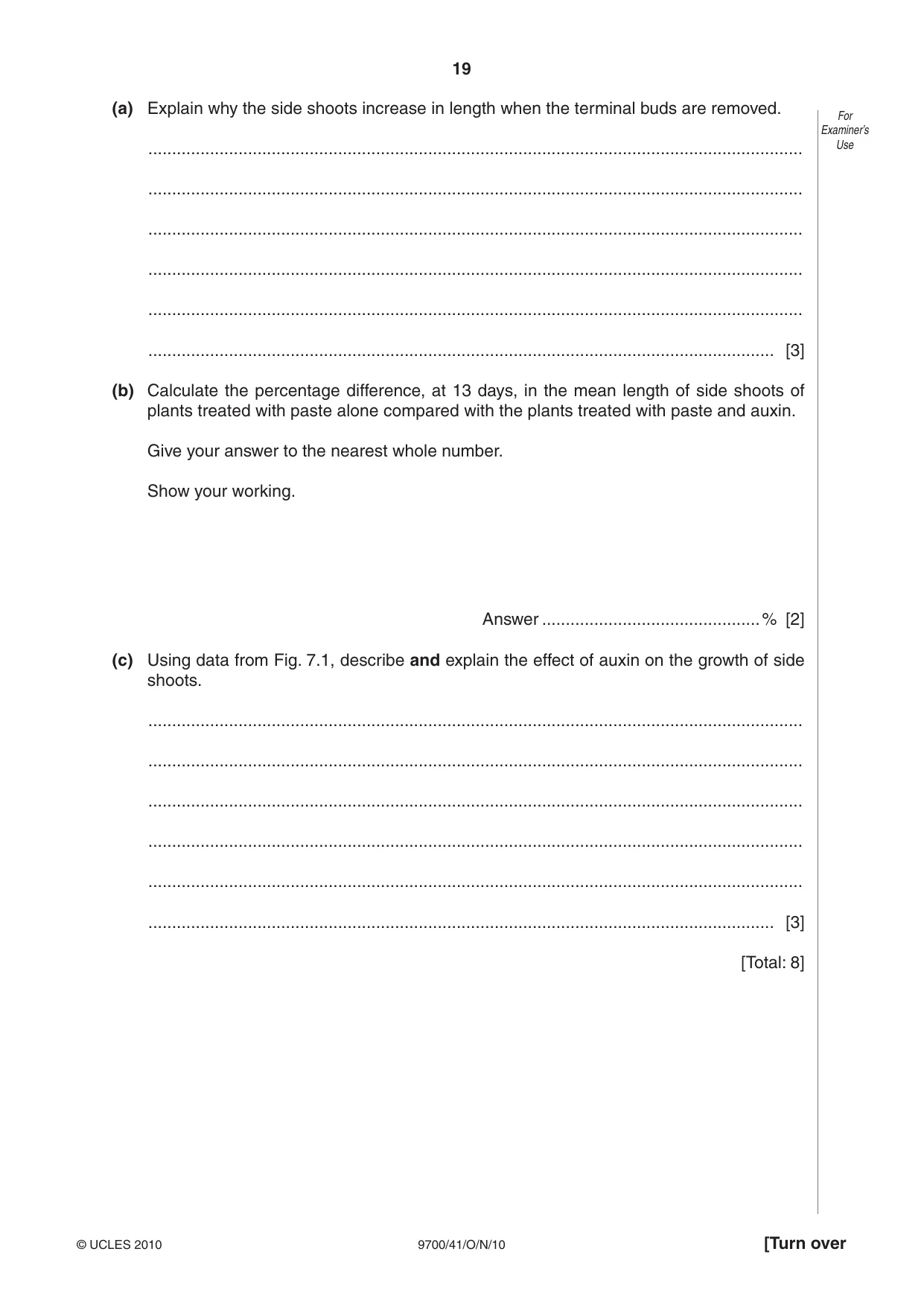
19 © UCLES 2010 [Turn over 9700/41/O/N/10 For Examiner’s Use (a) Explain why the side shoots increase in length when the terminal buds are removed. … … … … … … [3] (b) Calculate the percentage difference, at 13 days, in the mean length of side shoots of plants treated with paste alone compared with the plants treated with paste and auxin. Give your answer to the nearest whole number. Show your working. Answer …% [2] (c) Using data from Fig. 7.1, describe and explain the effect of auxin on the growth of side shoots. … … … … … … [3] [Total: 8]
Question paper, page 20
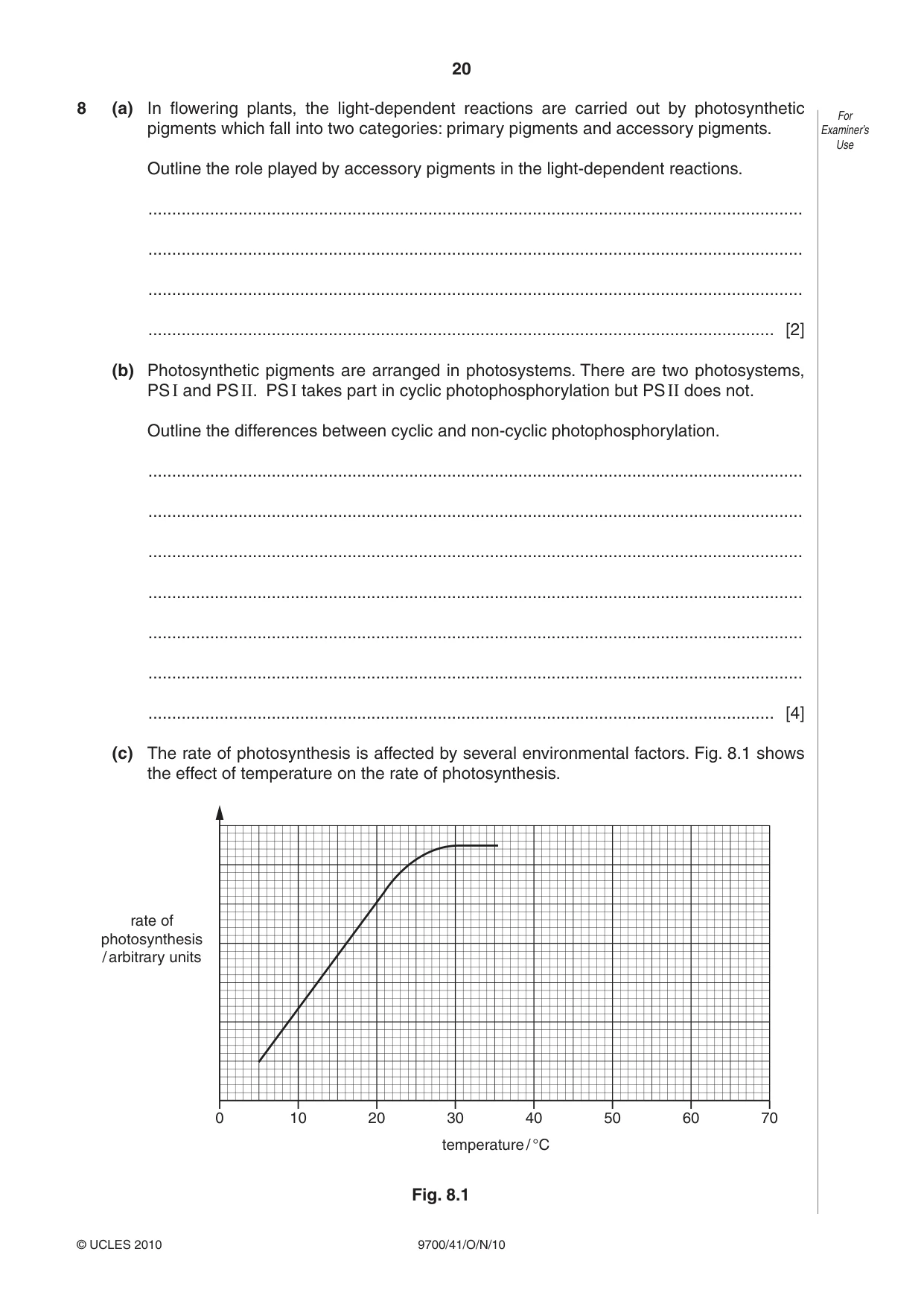
20 © UCLES 2010 9700/41/O/N/10 For Examiner’s Use 8 (a) In flowering plants, the light-dependent reactions are carried out by photosynthetic pigments which fall into two categories: primary pigments and accessory pigments. Outline the role played by accessory pigments in the light-dependent reactions. … … … … [2] (b) Photosynthetic pigments are arranged in photosystems. There are two photosystems, PS I and PS II. PS I takes part in cyclic photophosphorylation but PS II does not. Outline the differences between cyclic and non-cyclic photophosphorylation. … … … … … … … [4] (c) The rate of photosynthesis is affected by several environmental factors. Fig. 8.1 shows the effect of temperature on the rate of photosynthesis. 0 10 20 30 40 50 60 70 temperature / °C rate of photosynthesis / arbitrary units Fig. 8.1
Question paper, page 21
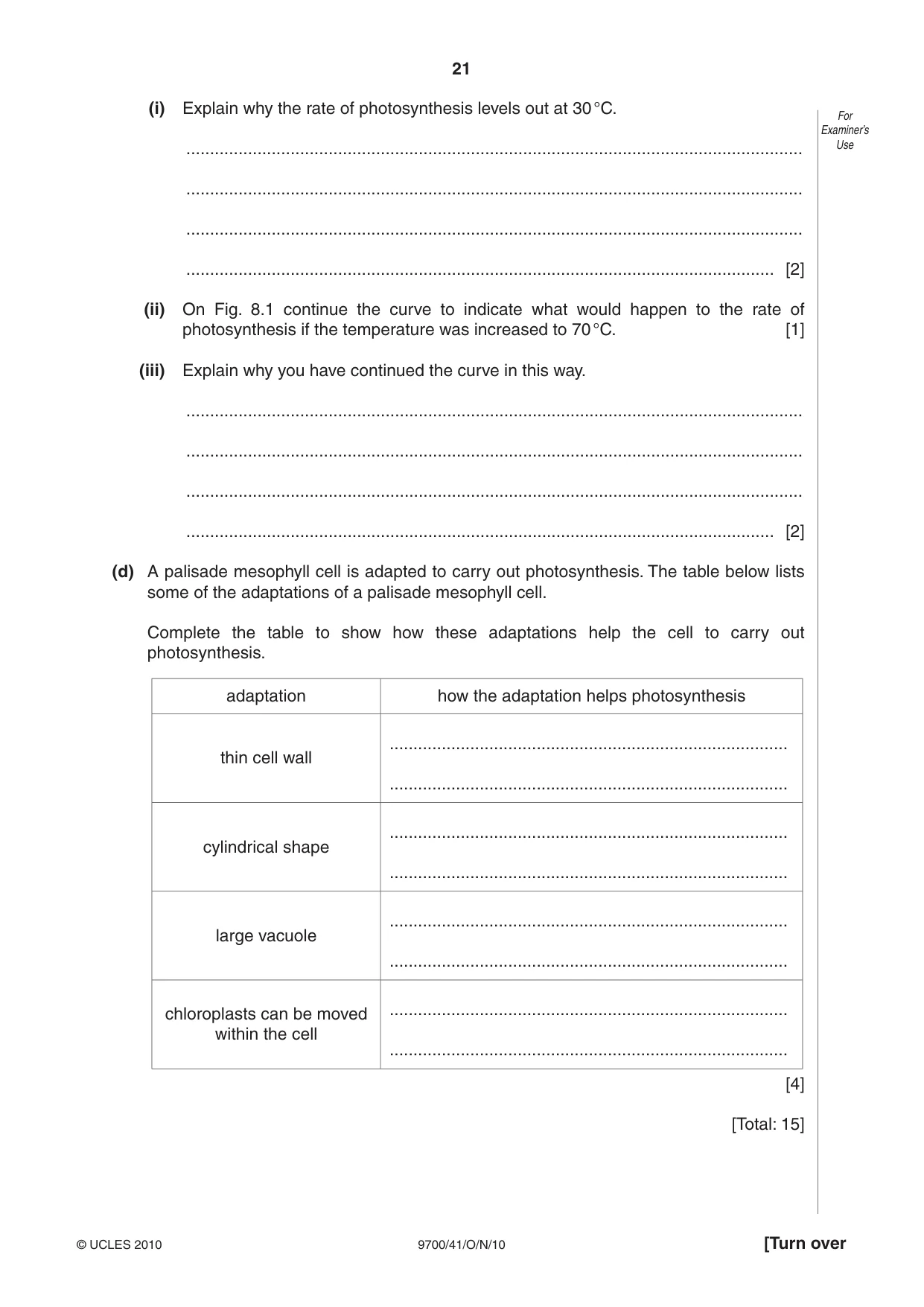
21 © UCLES 2010 [Turn over 9700/41/O/N/10 For Examiner’s Use (i) Explain why the rate of photosynthesis levels out at 30 °C. … … … … [2] (ii) On Fig. 8.1 continue the curve to indicate what would happen to the rate of photosynthesis if the temperature was increased to 70 °C. [1] (iii) Explain why you have continued the curve in this way. … … … … [2] (d) A palisade mesophyll cell is adapted to carry out photosynthesis. The table below lists some of the adaptations of a palisade mesophyll cell. Complete the table to show how these adaptations help the cell to carry out photosynthesis. adaptation how the adaptation helps photosynthesis thin cell wall … … cylindrical shape … … large vacuole … … chloroplasts can be moved within the cell … … [4] [Total: 15]
Question paper, page 22
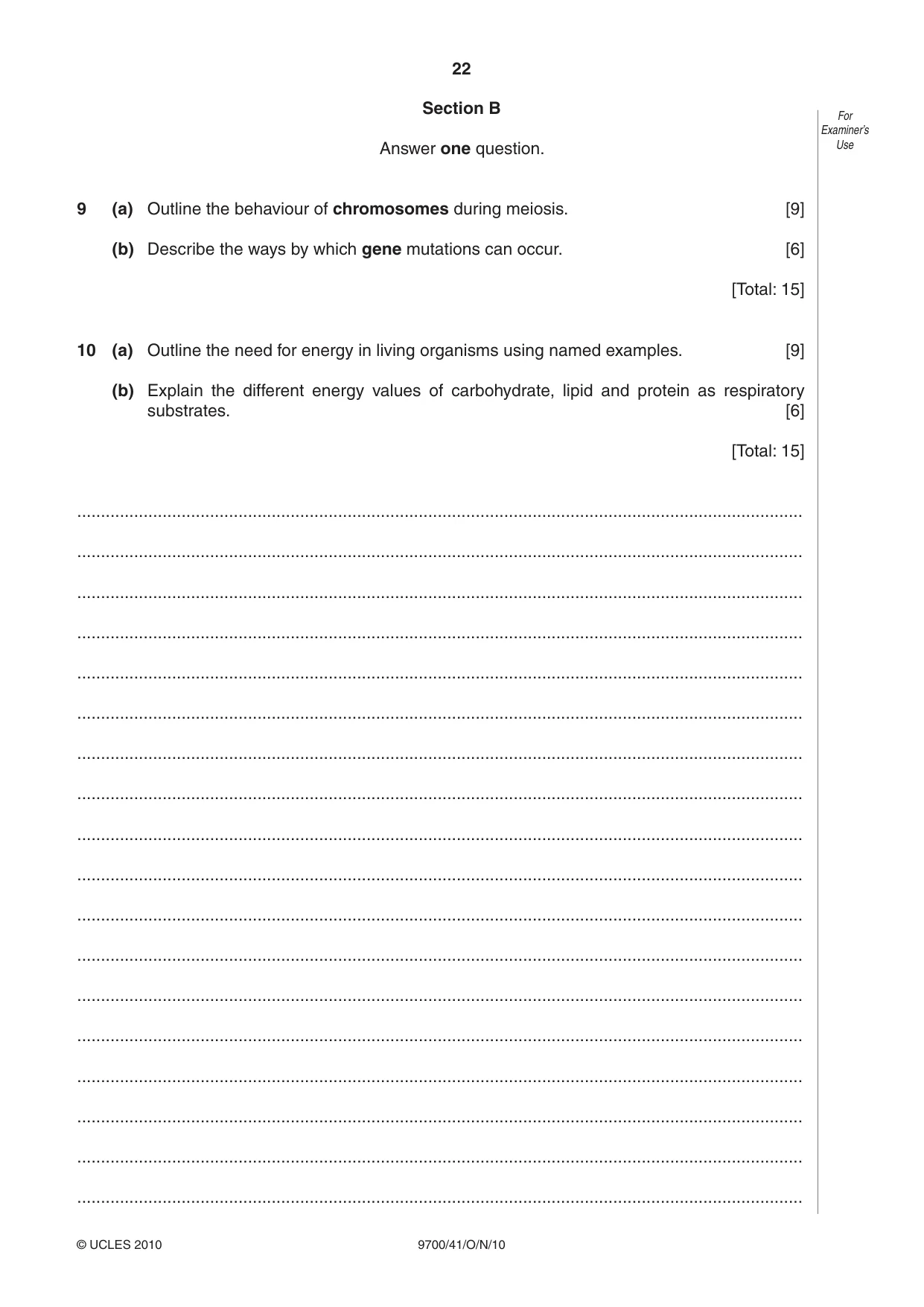
22 © UCLES 2010 9700/41/O/N/10 For Examiner’s Use Section B Answer one question. 9 (a) Outline the behaviour of chromosomes during meiosis. [9] (b) Describe the ways by which gene mutations can occur. [6] [Total: 15] 10 (a) Outline the need for energy in living organisms using named examples. [9] (b) Explain the different energy values of carbohydrate, lipid and protein as respiratory substrates. [6] [Total: 15] … … … … … … … … … … … … … … … … … …
Question paper, page 23
23 © UCLES 2010 [Turn over 9700/41/O/N/10 For Examiner’s Use … … … … … … … … … … … … … … … … … … … … … … … … … … … …
Question paper, page 24
24 © UCLES 2010 9700/41/O/N/10 For Examiner’s Use … … … … … … … … … … … … … … … … … … … … … … … … … Permission to reproduce items where third-party owned material protected by copyright is included has been sought and cleared where possible. Every reasonable effort has been made by the publisher (UCLES) to trace copyright holders, but if any items requiring clearance have unwittingly been included, the publisher will be pleased to make amends at the earliest possible opportunity. University of Cambridge International Examinations is part of the Cambridge Assessment Group. Cambridge Assessment is the brand name of University of Cambridge Local Examinations Syndicate (UCLES), which is itself a department of the University of Cambridge.
Mark scheme, page 1
UNIVERSITY OF CAMBRIDGE INTERNATIONAL EXAMINATIONS GCE Advanced Subsidiary Level and GCE Advanced Level MARK SCHEME for the October/November 2010 question paper for the guidance of teachers 9700 BIOLOGY 9700/41 Paper 4 (A2 Structured Questions), maximum raw mark 100 This mark scheme is published as an aid to teachers and candidates, to indicate the requirements of the examination. It shows the basis on which Examiners were instructed to award marks. It does not indicate the details of the discussions that took place at an Examiners’ meeting before marking began, which would have considered the acceptability of alternative answers. Mark schemes must be read in conjunction with the question papers and the report on the examination. • CIE will not enter into discussions or correspondence in connection with these mark schemes. CIE is publishing the mark schemes for the October/November 2010 question papers for most IGCSE, GCE Advanced Level and Advanced Subsidiary Level syllabuses and some Ordinary Level syllabuses.
Mark scheme, page 2
Page 2 Mark Scheme: Teachers’ version Syllabus Paper GCE AS/A LEVEL – October/November 2010 9700 41 © UCLES 2010 Mark scheme abbreviations: ; separates marking points / alternative answers for the same point R reject A accept (for answers correctly cued by the question or guidance on the mark scheme) AW alternative wording (where responses may vary more than usual) underline actual word given must be used by the candidate (grammatical variants excepted) max indicates the maximum number of marks that can be given ora or reverse argument
Mark scheme, page 3
Page 3 Mark Scheme: Teachers’ version Syllabus Paper GCE AS/A LEVEL – October/November 2010 9700 41 © UCLES 2010 1 (a) 1 2 3 4 5 6 7 8 mallard numbers have increased and the others have decreased ; decrease due to pesticides / pollution / fertilisers ; change in temperature or pH of water ; lack of named food source ; increased competition / AW ; direct human interference on lake ; e.g. fishing / sailing etc not related to marking point 2 mallard increase due to doesn’t eat, insects / molluscs / fish ; less other birds so less competition ; [4 max] (b) 1 2 3 4 5 6 7 8 9 10 cultural / aesthetic / leisure, reasons ; moral / ethical, reasons ; e.g. right to exist / prevent extinction resource material ; e.g. wood for building / fibres for clothes / food for humans ecotourism ; economic benefits ; ref. resource / species, may have use in future / AW ; e.g. medical use maintains, food webs / food chains ; A description nutrient cycling / protection against erosion ; climate stability ; maintains, large gene pool / genetic variation ; [4 max] [Total: 8]
Mark scheme, page 4
Page 4 Mark Scheme: Teachers’ version Syllabus Paper GCE AS/A LEVEL – October/November 2010 9700 41 © UCLES 2010 2 (a) (i) 1 penicillin inhibits, enzyme / peptidase ; 2 blocks / alters shape of, active site ; 3 peptidoglycan chains cannot link up / stops cross-links forming ; 4 cell wall weaker / AW ; 5 turgor of cell not resisted (by cell wall) / AW ; 6 cell / wall / bacterium, bursts ; [3 max] (ii) any two from 1 viruses do not have cell wall ; 2 viruses do not have cytoplasm ; 3 viruses do not have peptidoglycan ; 4 viruses do not have peptidase ; [2 max] (b) 1 2 3 4 5 without antibiotic numbers of both wild-type and mutant strains, increase / hardly changes ; with antibiotic numbers of both wild-type and mutant strains decrease ; mutant strains decrease more than wild-type ; A faster this subsumes marking point 2 after 24h, wild-type plateaus and mutant strain continues to decrease ; ref. comparative figures at any one time ; ignore units for bacteria blue with blue red with red red with blue – with antibiotic [4 max]
Mark scheme, page 5
Page 5 Mark Scheme: Teachers’ version Syllabus Paper GCE AS/A LEVEL – October/November 2010 9700 41 © UCLES 2010 (c) (i) 1 changes in, base / nucleotide, sequence ; A named change e.g. substitution 2 alters, triplet code / codon ; 3 enzyme has different, primary structure / amino acid sequence ; 4 enzyme has different, 3D structure / tertiary structure / active site ; [2 max] (ii) red and blue with antibiotic 1 wild-type bacteria can produce glucans or mutant bacteria produce less glucans ; 2 glucans bind with antibiotic ; 3 wild-type more resistant to antibiotic or mutant bacteria less resistant to antibiotic ; [2 max] (d) 1 2 3 4 antibiotic, is selective agent / provides selective pressure ; resistant bacteria, survive / reproduce ; pass allele for resistance to offspring ; frequency of allele in population increases ; [3 max] [Total: 16]
Mark scheme, page 6
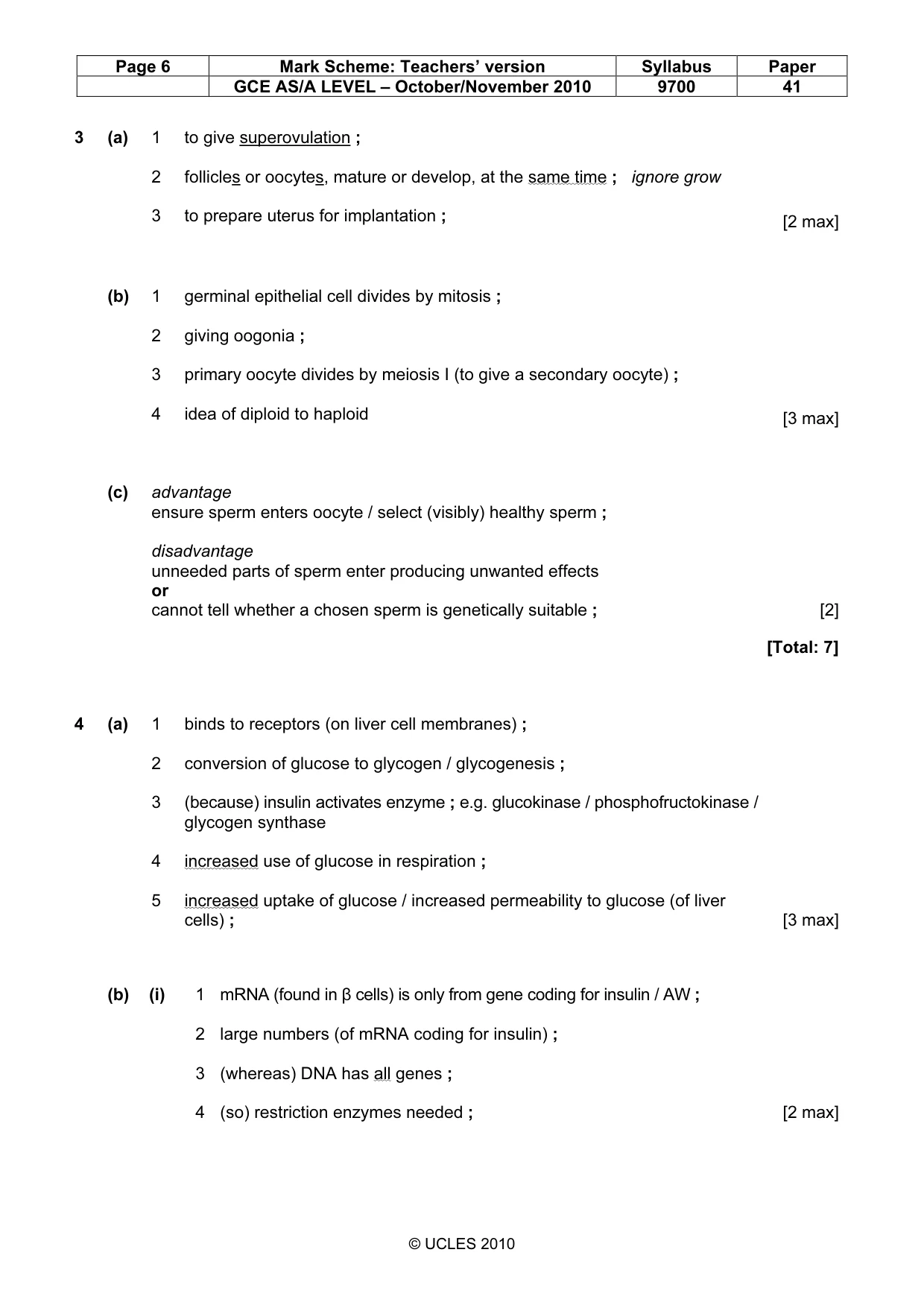
Page 6 Mark Scheme: Teachers’ version Syllabus Paper GCE AS/A LEVEL – October/November 2010 9700 41 © UCLES 2010 3 (a) 1 2 3 to give superovulation ; follicles or oocytes, mature or develop, at the same time ; ignore grow to prepare uterus for implantation ; [2 max] (b) 1 2 3 4 germinal epithelial cell divides by mitosis ; giving oogonia ; primary oocyte divides by meiosis I (to give a secondary oocyte) ; idea of diploid to haploid [3 max] (c) advantage ensure sperm enters oocyte / select (visibly) healthy sperm ; disadvantage unneeded parts of sperm enter producing unwanted effects or cannot tell whether a chosen sperm is genetically suitable ; [2] [Total: 7] 4 (a) 1 2 3 4 5 binds to receptors (on liver cell membranes) ; conversion of glucose to glycogen / glycogenesis ; (because) insulin activates enzyme ; e.g. glucokinase / phosphofructokinase / glycogen synthase increased use of glucose in respiration ; increased uptake of glucose / increased permeability to glucose (of liver cells) ; [3 max] (b) (i) 1 mRNA (found in β cells) is only from gene coding for insulin / AW ; 2 large numbers (of mRNA coding for insulin) ; 3 (whereas) DNA has all genes ; 4 (so) restriction enzymes needed ; [2 max]
Mark scheme, page 7
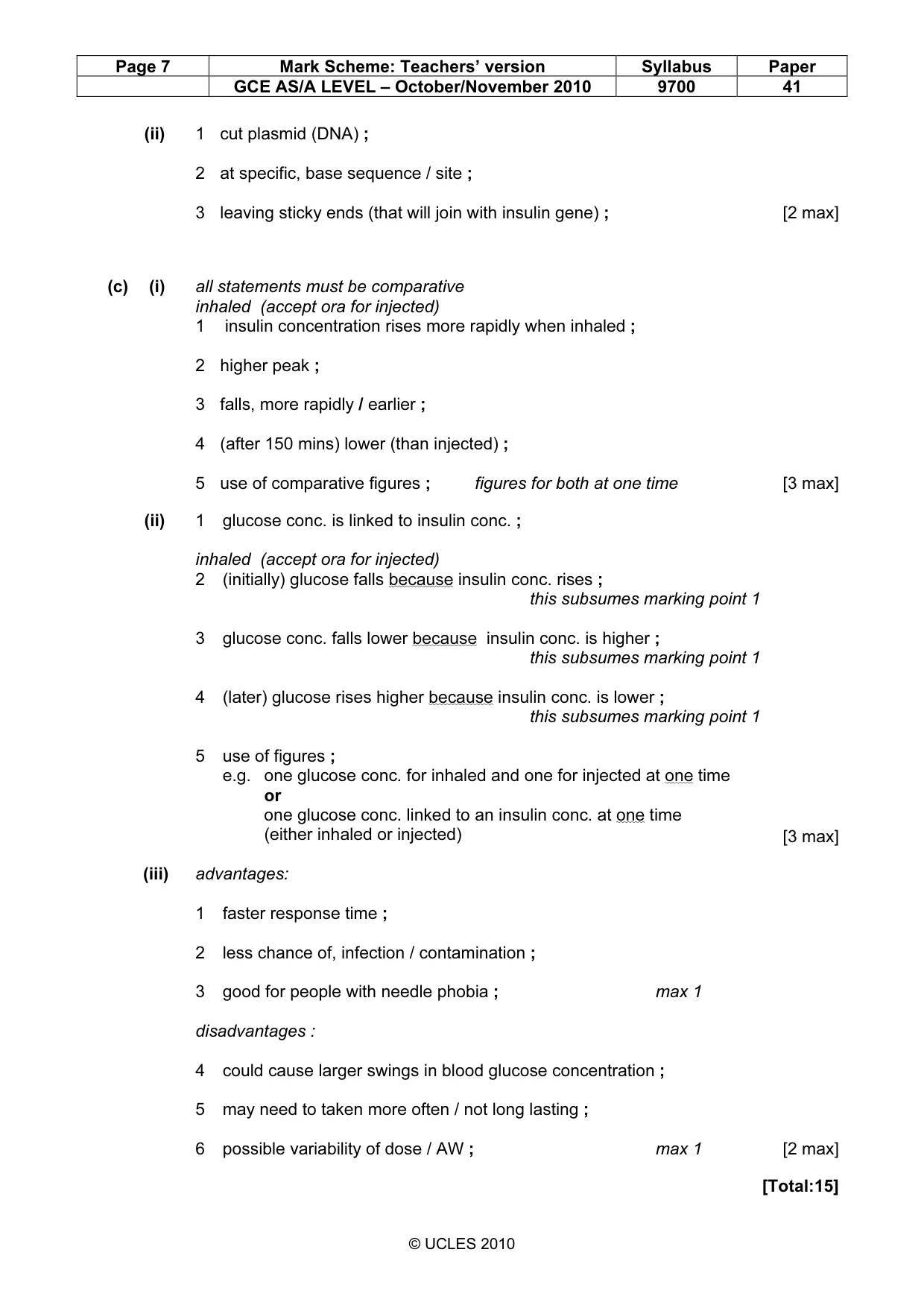
Page 7 Mark Scheme: Teachers’ version Syllabus Paper GCE AS/A LEVEL – October/November 2010 9700 41 © UCLES 2010 (ii) 1 cut plasmid (DNA) ; 2 at specific, base sequence / site ; 3 leaving sticky ends (that will join with insulin gene) ; [2 max] (c) (i) all statements must be comparative inhaled (accept ora for injected) 1 insulin concentration rises more rapidly when inhaled ; 2 higher peak ; 3 falls, more rapidly / earlier ; 4 (after 150 mins) lower (than injected) ; 5 use of comparative figures ; figures for both at one time [3 max] (ii) 1 glucose conc. is linked to insulin conc. ; inhaled (accept ora for injected) 2 (initially) glucose falls because insulin conc. rises ; this subsumes marking point 1 3 glucose conc. falls lower because insulin conc. is higher ; this subsumes marking point 1 4 (later) glucose rises higher because insulin conc. is lower ; this subsumes marking point 1 5 use of figures ; e.g. one glucose conc. for inhaled and one for injected at one time or one glucose conc. linked to an insulin conc. at one time (either inhaled or injected) [3 max] (iii) advantages: 1 faster response time ; 2 less chance of, infection / contamination ; 3 good for people with needle phobia ; max 1 disadvantages : 4 could cause larger swings in blood glucose concentration ; 5 may need to taken more often / not long lasting ; 6 possible variability of dose / AW ; max 1 [2 max] [Total:15]
Mark scheme, page 8
Page 8 Mark Scheme: Teachers’ version Syllabus Paper GCE AS/A LEVEL – October/November 2010 9700 41 © UCLES 2010 5 (a) 1 2 3 4 oxygen availability low (when soil is flooded) ; plants carry out anaerobic respiration ; ethanol produced ; roots can continue to respire ; [2 max] (b) (i) (store of) nutrients ; A named nutrient ignore food / water / fibre for, germination / growth of embryo ; [2] (ii) protein in aleurone layer ; which is removed in white rice ; ora [2] (iii) endosperm makes up a greater proportion of the total mass in white rice ; or brown rice has more, lipid / fibre / protein, than white rice so less carbohydrates per gram ; [1 max] (iv) 1 cheap source of food ; 2 high, energy value / fibre content ; 3 high in carbohydrate ; 4 contain wide range of nutrients or three named nutrients ; 5 cereal grains store well ; 6 because they contain very little water ; [2 max] [Total: 9] 6 (a) variation / different form, of a gene ; [1] (b) marks for reasons only HbA HbA low – susceptible to / die from, malaria ; HbA HbS high – no (full blown) SCA / have SC trait ; not, susceptible to / likely to die from, malaria ; HbS HbS low – susceptible to / die from, SCA ; [4]
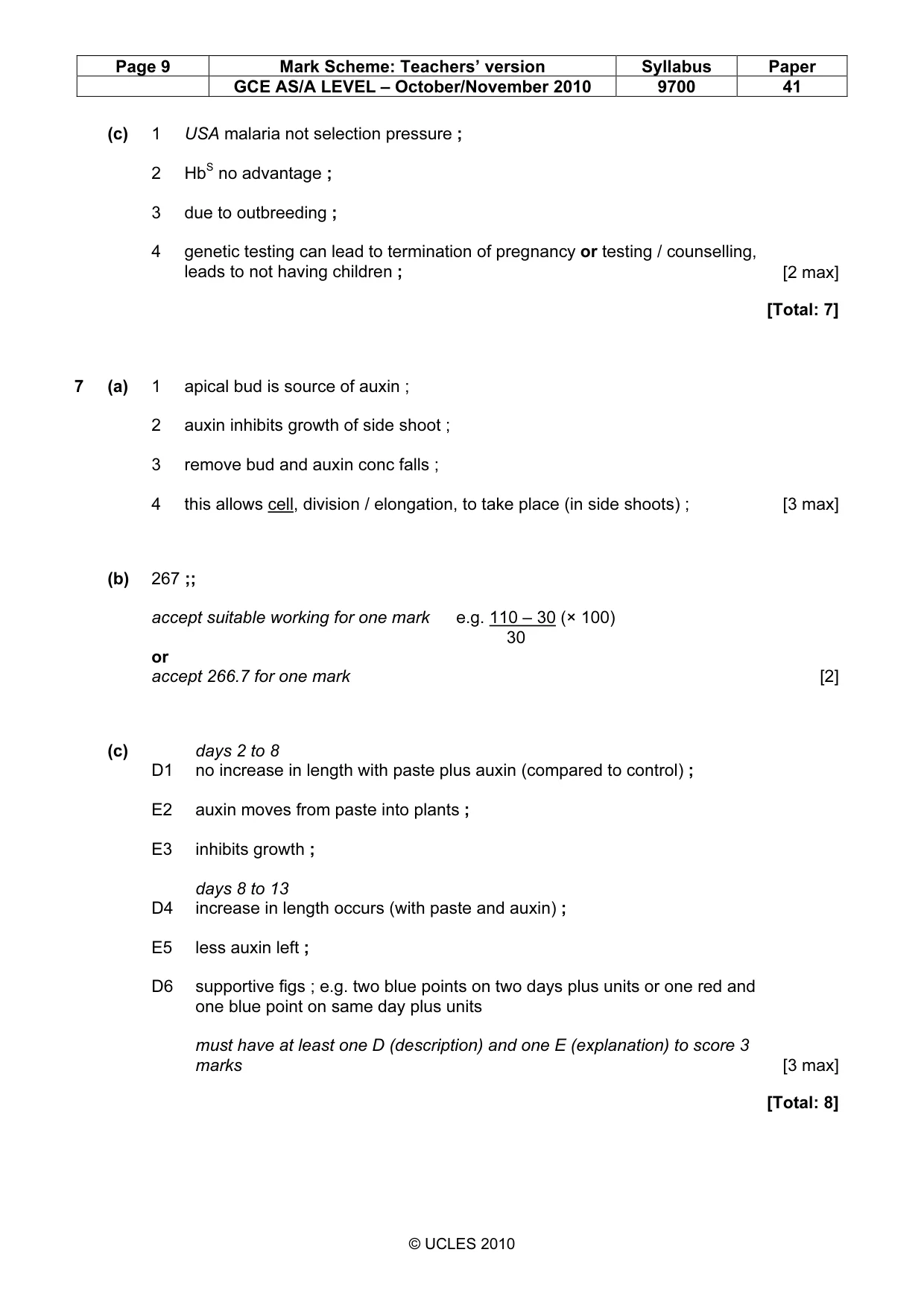
Mark scheme, page 9
Page 9 Mark Scheme: Teachers’ version Syllabus Paper GCE AS/A LEVEL – October/November 2010 9700 41 © UCLES 2010 (c) 1 2 3 4 USA malaria not selection pressure ; HbS no advantage ; due to outbreeding ; genetic testing can lead to termination of pregnancy or testing / counselling, leads to not having children ; [2 max] [Total: 7] 7 (a) 1 2 3 4 apical bud is source of auxin ; auxin inhibits growth of side shoot ; remove bud and auxin conc falls ; this allows cell, division / elongation, to take place (in side shoots) ; [3 max] (b) 267 ;; accept suitable working for one mark e.g. 110 – 30 (× 100) 30 or accept 266.7 for one mark [2] (c) D1 E2 E3 D4 E5 D6 days 2 to 8 no increase in length with paste plus auxin (compared to control) ; auxin moves from paste into plants ; inhibits growth ; days 8 to 13 increase in length occurs (with paste and auxin) ; less auxin left ; supportive figs ; e.g. two blue points on two days plus units or one red and one blue point on same day plus units must have at least one D (description) and one E (explanation) to score 3 marks [3 max] [Total: 8]
Mark scheme, page 10
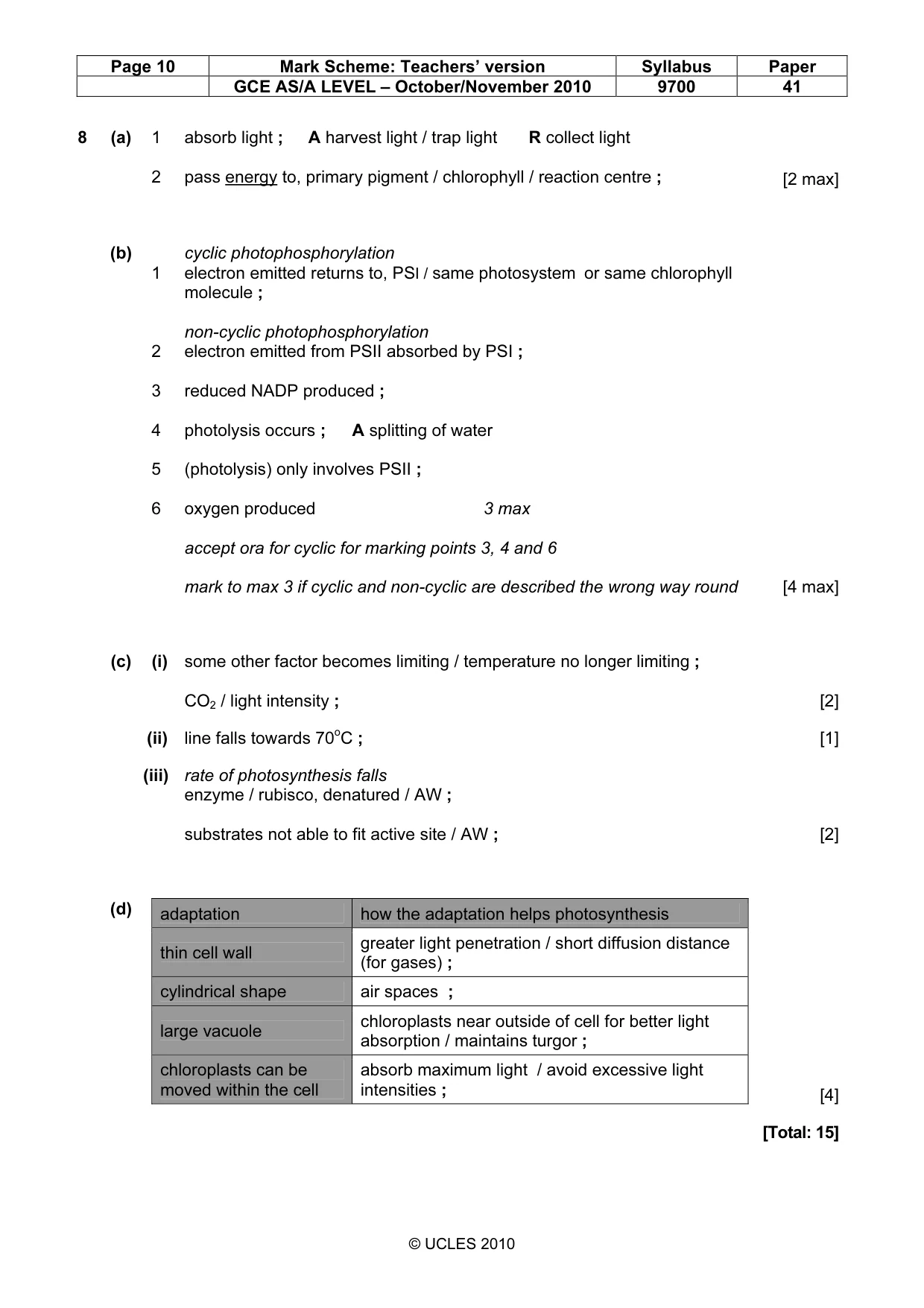
Page 10 Mark Scheme: Teachers’ version Syllabus Paper GCE AS/A LEVEL – October/November 2010 9700 41 © UCLES 2010 8 (a) 1 2 absorb light ; A harvest light / trap light R collect light pass energy to, primary pigment / chlorophyll / reaction centre ; [2 max] (b) 1 2 3 4 5 6 cyclic photophosphorylation electron emitted returns to, PSI / same photosystem or same chlorophyll molecule ; non-cyclic photophosphorylation electron emitted from PSII absorbed by PSI ; reduced NADP produced ; photolysis occurs ; A splitting of water (photolysis) only involves PSII ; oxygen produced 3 max accept ora for cyclic for marking points 3, 4 and 6 mark to max 3 if cyclic and non-cyclic are described the wrong way round [4 max] (c) (i) some other factor becomes limiting / temperature no longer limiting ; CO2 / light intensity ; [2] (ii) line falls towards 70oC ; [1] (iii) rate of photosynthesis falls enzyme / rubisco, denatured / AW ; substrates not able to fit active site / AW ; [2] (d) adaptation how the adaptation helps photosynthesis thin cell wall greater light penetration / short diffusion distance (for gases) ; cylindrical shape air spaces ; large vacuole chloroplasts near outside of cell for better light absorption / maintains turgor ; chloroplasts can be moved within the cell absorb maximum light / avoid excessive light intensities ; [4] [Total: 15]
Mark scheme, page 11
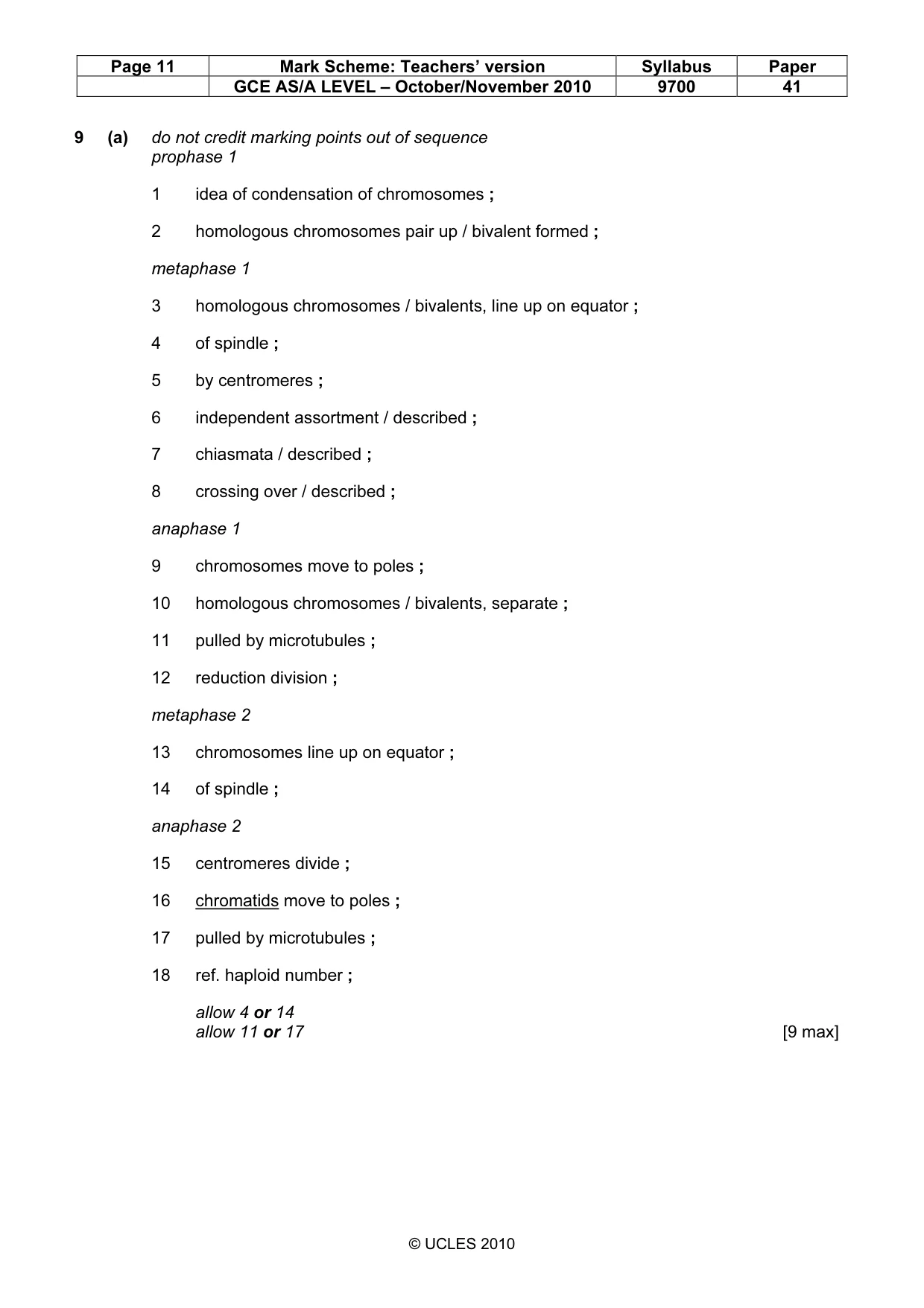
Page 11 Mark Scheme: Teachers’ version Syllabus Paper GCE AS/A LEVEL – October/November 2010 9700 41 © UCLES 2010 do not credit marking points out of sequence prophase 1 1 idea of condensation of chromosomes ; 2 homologous chromosomes pair up / bivalent formed ; metaphase 1 3 homologous chromosomes / bivalents, line up on equator ; 4 of spindle ; 5 by centromeres ; 6 independent assortment / described ; 7 chiasmata / described ; 8 crossing over / described ; anaphase 1 9 chromosomes move to poles ; 10 homologous chromosomes / bivalents, separate ; 11 pulled by microtubules ; 12 reduction division ; metaphase 2 13 chromosomes line up on equator ; 14 of spindle ; anaphase 2 15 centromeres divide ; 16 chromatids move to poles ; 17 pulled by microtubules ; 9 (a) 18 ref. haploid number ; allow 4 or 14 allow 11 or 17 [9 max]
Mark scheme, page 12
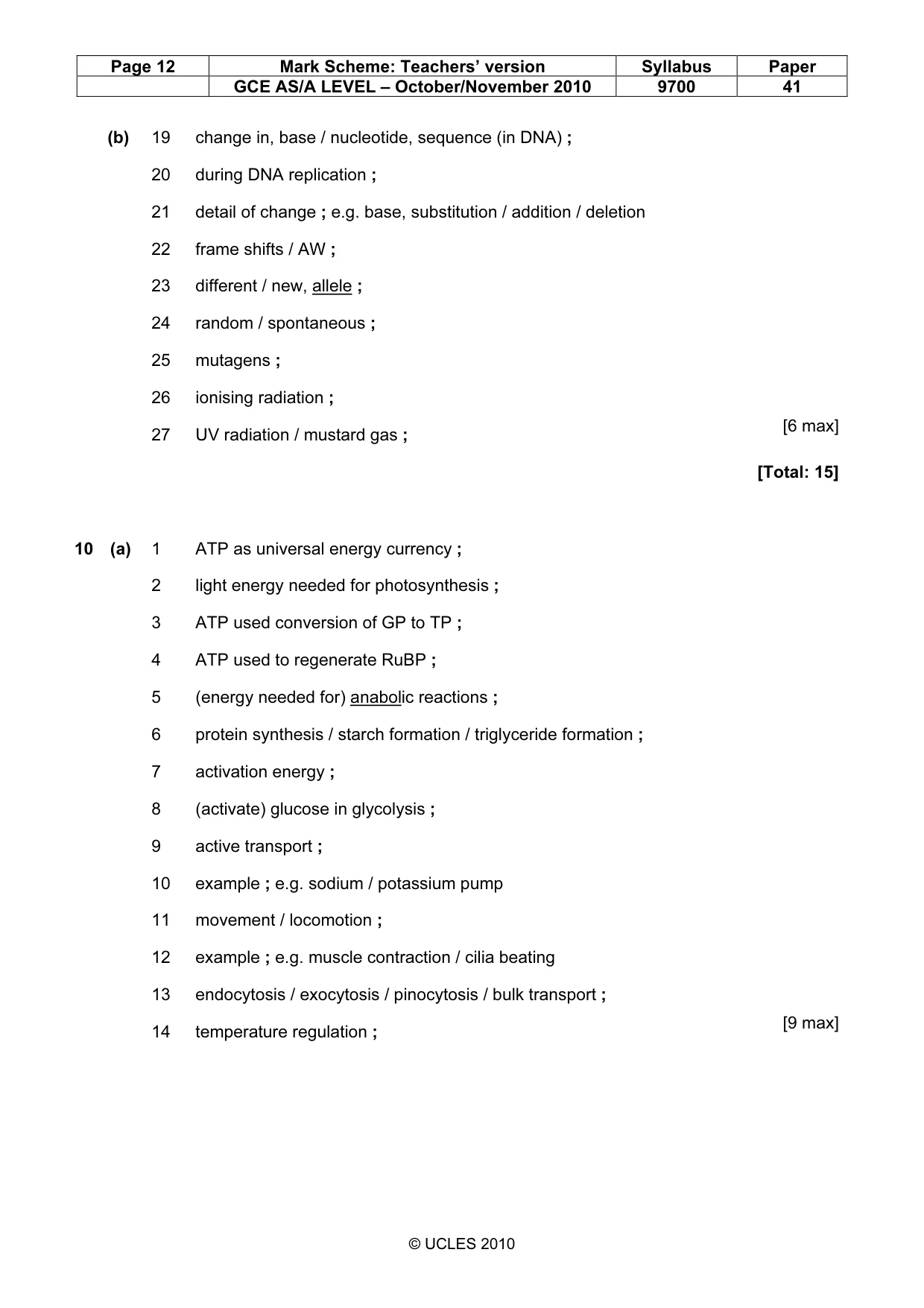
Page 12 Mark Scheme: Teachers’ version Syllabus Paper GCE AS/A LEVEL – October/November 2010 9700 41 © UCLES 2010 19 change in, base / nucleotide, sequence (in DNA) ; 20 during DNA replication ; 21 detail of change ; e.g. base, substitution / addition / deletion 22 frame shifts / AW ; 23 different / new, allele ; 24 random / spontaneous ; 25 mutagens ; 26 ionising radiation ; (b) 27 UV radiation / mustard gas ; [6 max] [Total: 15] 1 ATP as universal energy currency ; 2 light energy needed for photosynthesis ; 3 ATP used conversion of GP to TP ; 4 ATP used to regenerate RuBP ; 5 (energy needed for) anabolic reactions ; 6 protein synthesis / starch formation / triglyceride formation ; 7 activation energy ; 8 (activate) glucose in glycolysis ; 9 active transport ; 10 example ; e.g. sodium / potassium pump 11 movement / locomotion ; 12 example ; e.g. muscle contraction / cilia beating 13 endocytosis / exocytosis / pinocytosis / bulk transport ; 10 (a) 14 temperature regulation ; [9 max]
Mark scheme, page 13
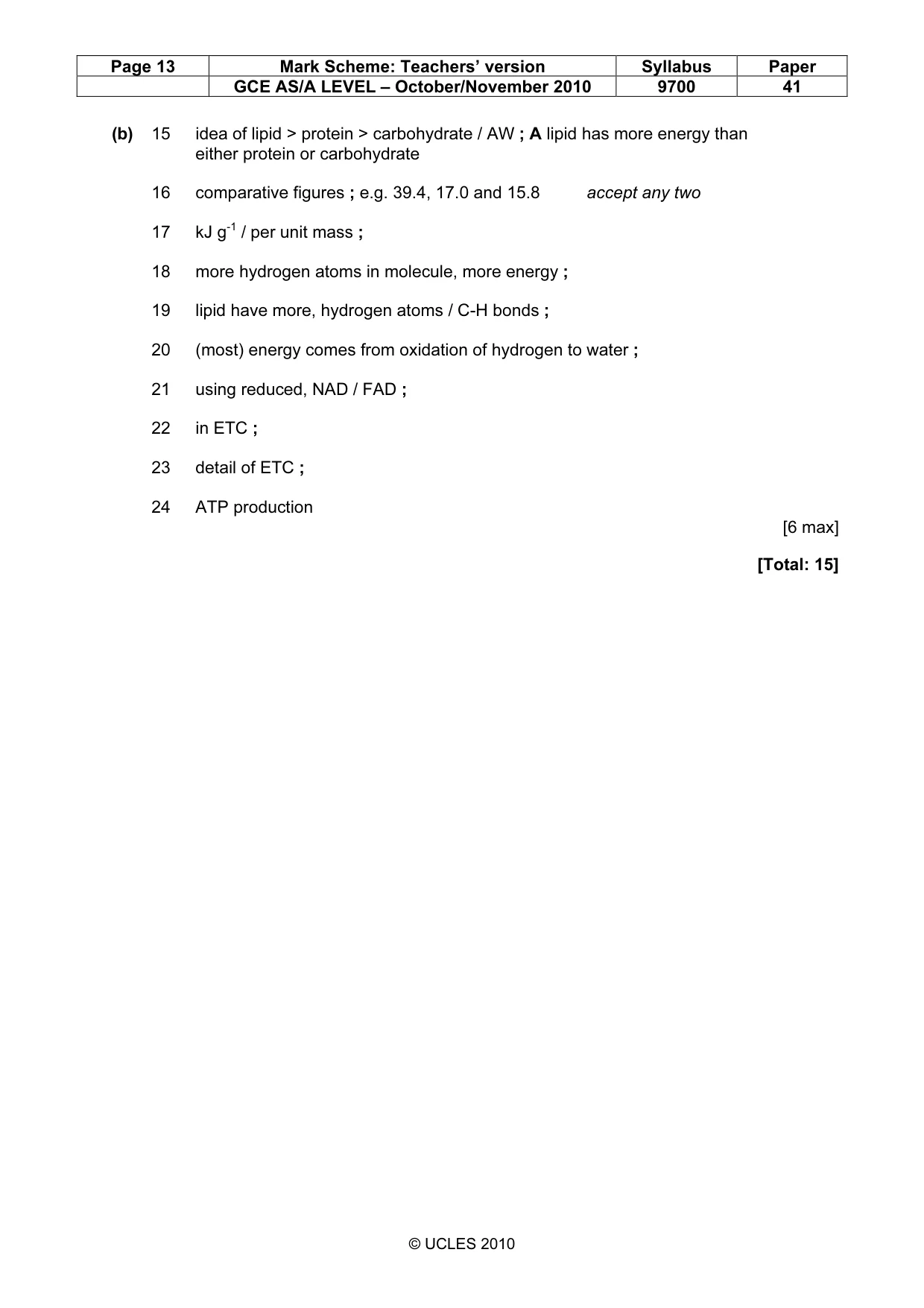
Page 13 Mark Scheme: Teachers’ version Syllabus Paper GCE AS/A LEVEL – October/November 2010 9700 41 © UCLES 2010 (b) 15 16 17 18 19 20 21 22 23 24 idea of lipid > protein > carbohydrate / AW ; A lipid has more energy than either protein or carbohydrate comparative figures ; e.g. 39.4, 17.0 and 15.8 accept any two kJ g-1 / per unit mass ; more hydrogen atoms in molecule, more energy ; lipid have more, hydrogen atoms / C-H bonds ; (most) energy comes from oxidation of hydrogen to water ; using reduced, NAD / FAD ; in ETC ; detail of ETC ; ATP production [6 max] [Total: 15]
What you needed in this session
Cambridge’s own grade thresholds for 2010 Oct/Nov, Paper 4 · Variant 1. A higher threshold means an easier paper — the bar moves with how the cohort did.