Cambridge A Level Biology 9700 — 2010 Oct/Nov Paper 4 · Variant 3
9700/43/O/N/10 · 100 marks · ≈113 min
The question paper and its mark scheme, free to read here and free to download. This is Cambridge’s own paper, exactly as it was sat.
Question paper24 pages




Mark scheme13 pages
Answers below. Sit the paper first if you are practising.
Paper as text
Question paper, page 1
This document consists of 19 printed pages and 5 lined pages. DC (LEO/SW) 20359/5 © UCLES 2010 [Turn over UNIVERSITY OF CAMBRIDGE INTERNATIONAL EXAMINATIONS General Certificate of Education Advanced Level BIOLOGY 9700/43 Paper 4 Structured Questions A2 October/November 2010 2 hours Candidates answer on the Question Paper. No Additional Materials are required. READ THESE INSTRUCTIONS FIRST Write your Centre number, candidate number and name in the spaces provided at the top of this page. Write in dark blue or black pen. Do not use staples, paper clips, highlighters, glue or correction fluid. DO NOT WRITE IN ANY BARCODES. Section A Answer all questions. Section B Answer one question. Circle the number of the Section B question you have answered in the grid below. At the end of the examination, fasten all your work securely together. The number of marks is given in brackets [ ] at the end of each question or part question. For Examiner’s Use 1 2 3 4 5 6 7 8 Section B 9 or 10 Total * 1 0 5 3 4 6 2 4 2 6 *
Question paper, page 2
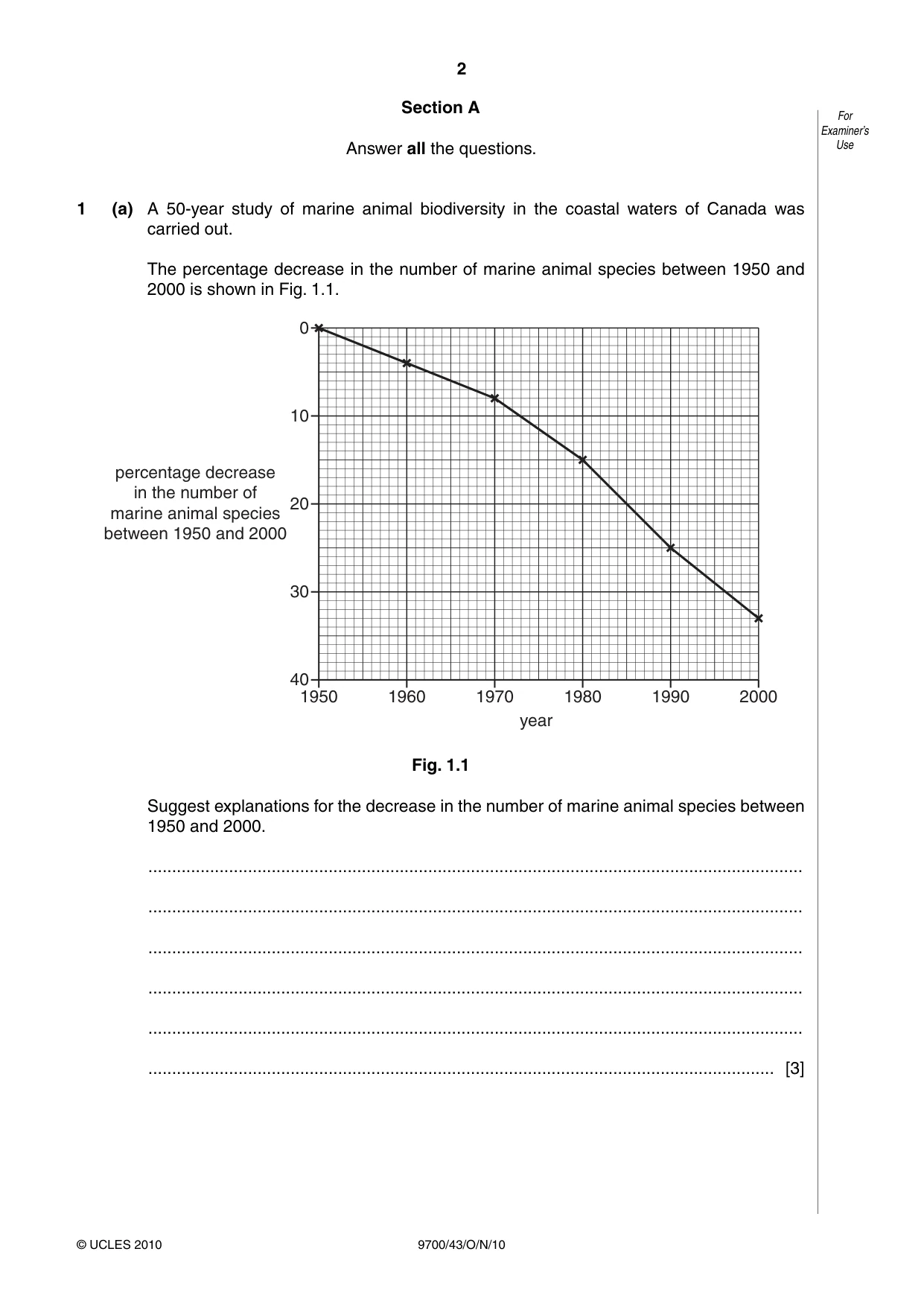
2 9700/43/O/N/10 © UCLES 2010 For Examiner’s Use Section A Answer all the questions. 1 (a) A 50-year study of marine animal biodiversity in the coastal waters of Canada was carried out. The percentage decrease in the number of marine animal species between 1950 and 2000 is shown in Fig. 1.1. 1950 40 30 20 10 0 1960 1970 1980 year percentage decrease in the number of marine animal species between 1950 and 2000 1990 2000 Fig. 1.1 Suggest explanations for the decrease in the number of marine animal species between 1950 and 2000. … … … … … … [3]
Question paper, page 3
3 9700/43/O/N/10 © UCLES 2010 [Turn over For Examiner’s Use (b) Explain what is meant by the term biodiversity. … … … … [2] (c) Discuss the benefits of maintaining the biodiversity of a marine ecosystem, such as that in the coastal waters of Canada. … … … … … … [3] [Total: 8]
Question paper, page 4
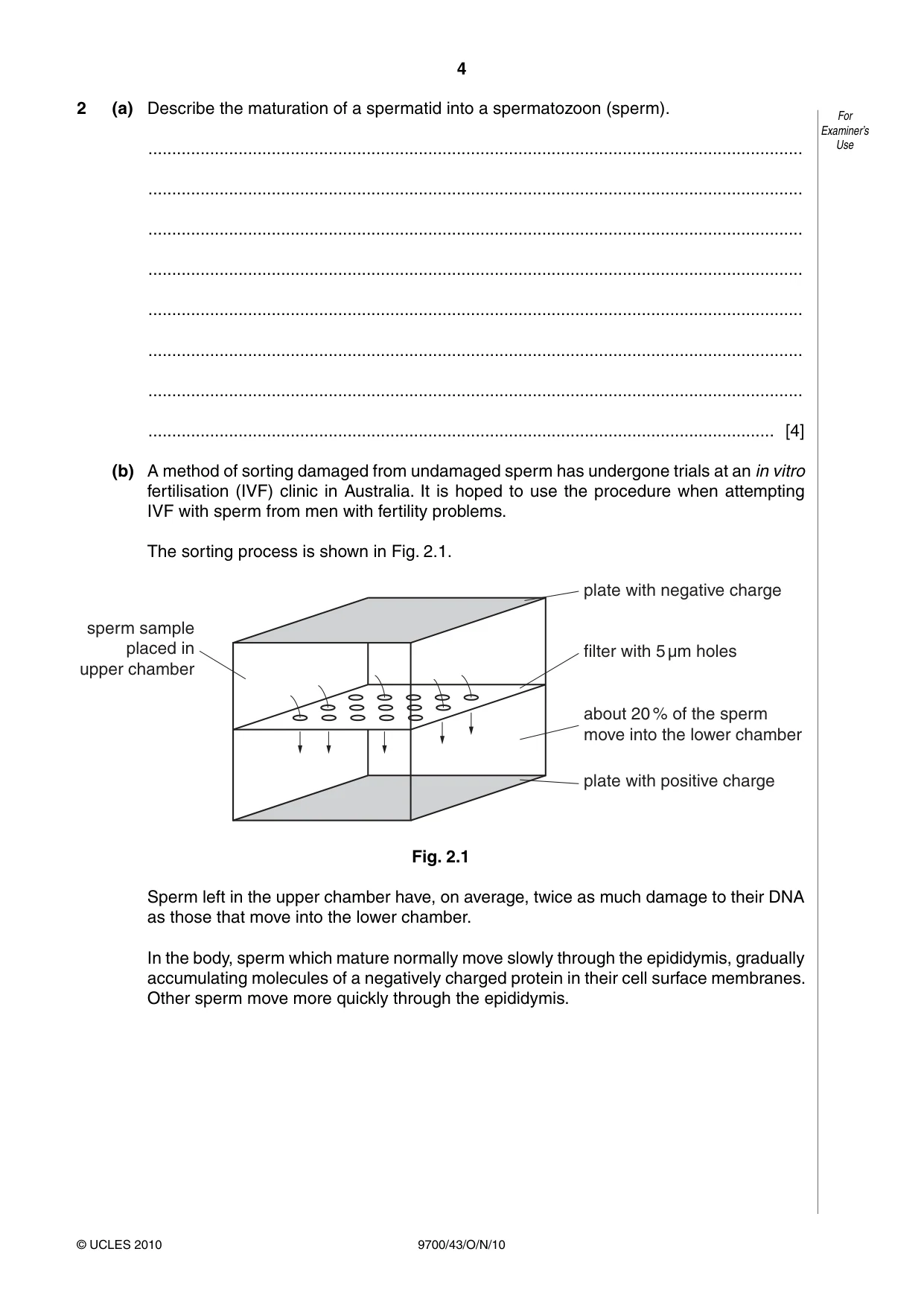
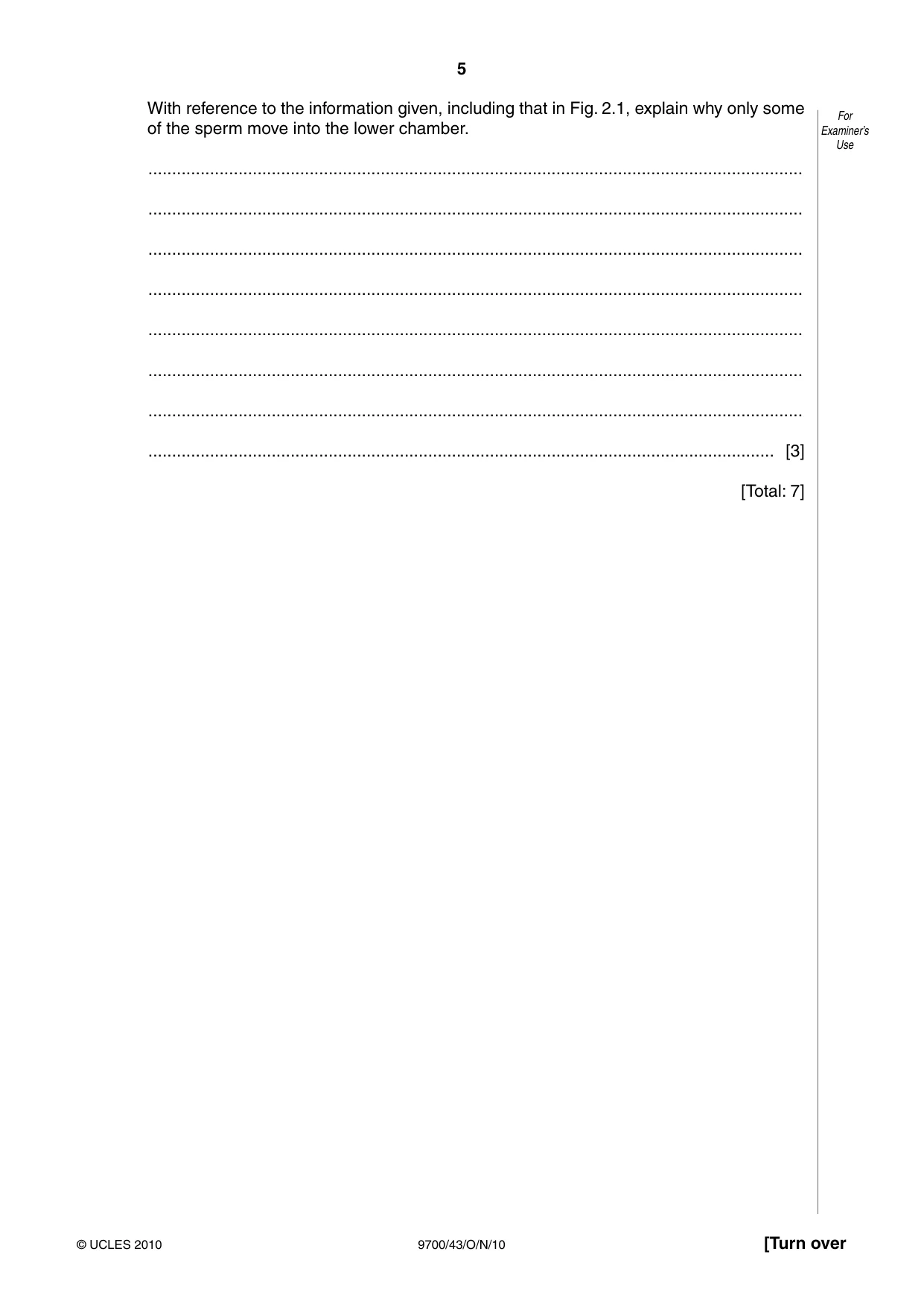
4 9700/43/O/N/10 © UCLES 2010 For Examiner’s Use 2 (a) Describe the maturation of a spermatid into a spermatozoon (sperm). … … … … … … … … [4] (b) A method of sorting damaged from undamaged sperm has undergone trials at an in vitro fertilisation (IVF) clinic in Australia. It is hoped to use the procedure when attempting IVF with sperm from men with fertility problems. The sorting process is shown in Fig. 2.1. sperm sample placed in upper chamber plate with negative charge filter with 5 µm holes about 20 % of the sperm move into the lower chamber plate with positive charge Fig. 2.1 Sperm left in the upper chamber have, on average, twice as much damage to their DNA as those that move into the lower chamber. In the body, sperm which mature normally move slowly through the epididymis, gradually accumulating molecules of a negatively charged protein in their cell surface membranes. Other sperm move more quickly through the epididymis.
Question paper, page 5
5 9700/43/O/N/10 © UCLES 2010 [Turn over For Examiner’s Use With reference to the information given, including that in Fig. 2.1, explain why only some of the sperm move into the lower chamber. … … … … … … … … [3] [Total: 7]
Question paper, page 6
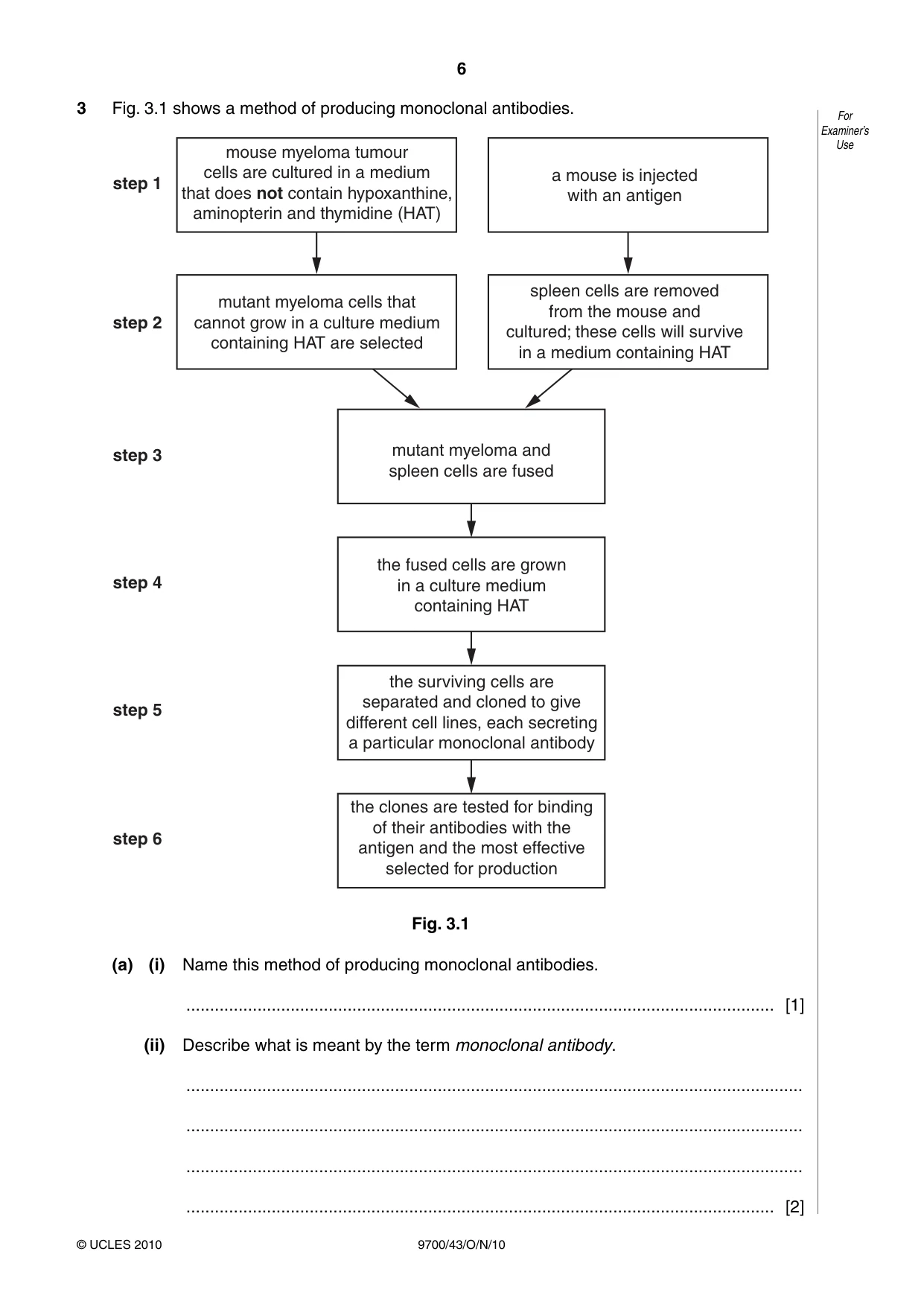
6 9700/43/O/N/10 © UCLES 2010 For Examiner’s Use 3 Fig. 3.1 shows a method of producing monoclonal antibodies. mouse myeloma tumour cells are cultured in a medium that does not contain hypoxanthine, aminopterin and thymidine (HAT) a mouse is injected with an antigen mutant myeloma cells that cannot grow in a culture medium containing HAT are selected spleen cells are removed from the mouse and cultured; these cells will survive in a medium containing HAT mutant myeloma and spleen cells are fused the fused cells are grown in a culture medium containing HAT the surviving cells are separated and cloned to give different cell lines, each secreting a particular monoclonal antibody the clones are tested for binding of their antibodies with the antigen and the most effective selected for production step 1 step 2 step 3 step 4 step 5 step 6 Fig. 3.1 (a) (i) Name this method of producing monoclonal antibodies. … [1] (ii) Describe what is meant by the term monoclonal antibody. … … … … [2]
Question paper, page 7
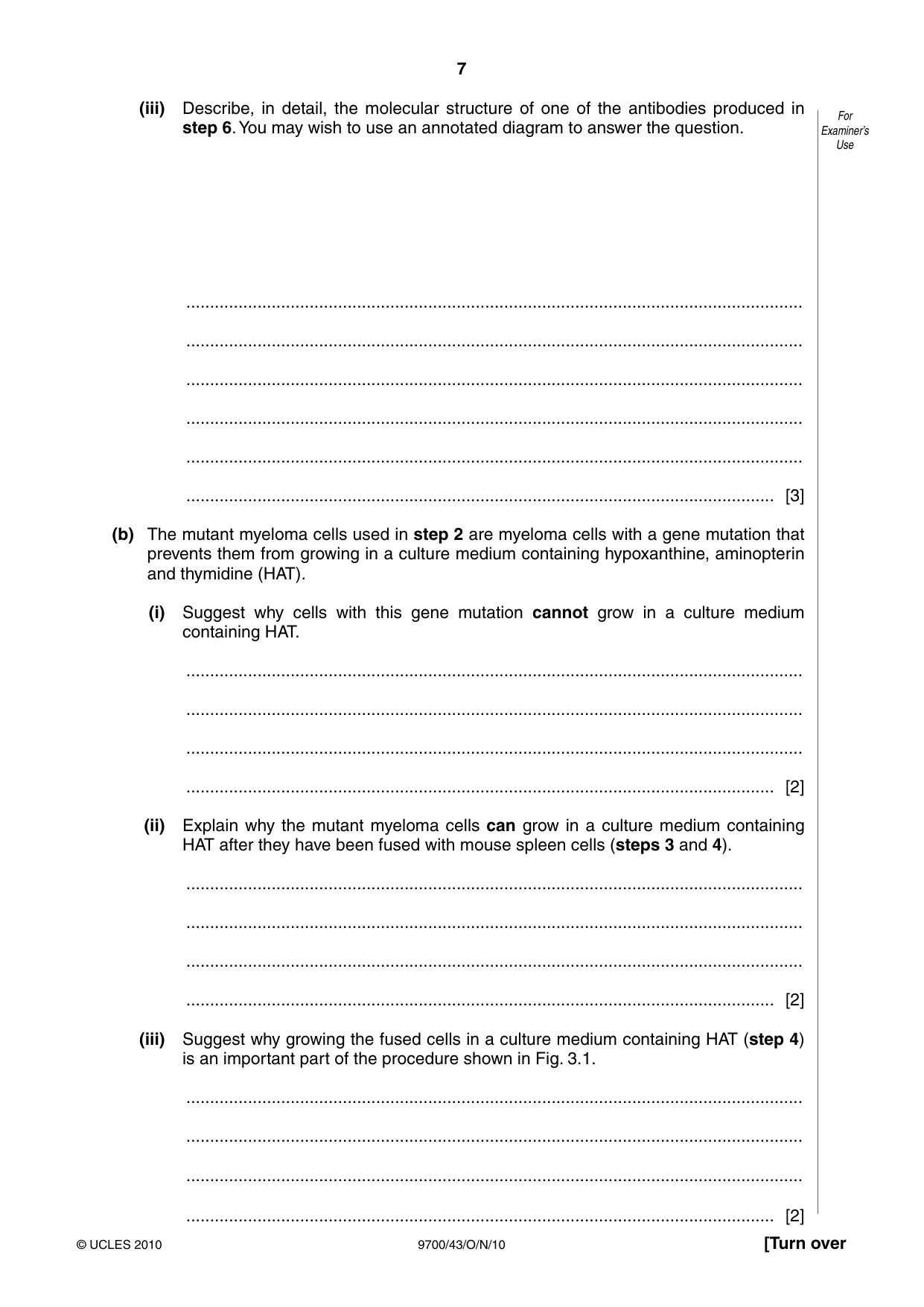
7 9700/43/O/N/10 © UCLES 2010 [Turn over For Examiner’s Use (iii) Describe, in detail, the molecular structure of one of the antibodies produced in step 6. You may wish to use an annotated diagram to answer the question. … … … … … … [3] (b) The mutant myeloma cells used in step 2 are myeloma cells with a gene mutation that prevents them from growing in a culture medium containing hypoxanthine, aminopterin and thymidine (HAT). (i) Suggest why cells with this gene mutation cannot grow in a culture medium containing HAT. … … … … [2] (ii) Explain why the mutant myeloma cells can grow in a culture medium containing HAT after they have been fused with mouse spleen cells (steps 3 and 4). … … … … [2] (iii) Suggest why growing the fused cells in a culture medium containing HAT (step 4) is an important part of the procedure shown in Fig. 3.1. … … … … [2]
Question paper, page 8
8 9700/43/O/N/10 © UCLES 2010 For Examiner’s Use (c) Suggest advantages of using monoclonal antibodies for pregnancy testing. … … … … … … … … [4] [Total: 16]
Question paper, page 9
9 9700/43/O/N/10 © UCLES 2010 [Turn over BLANK PAGE
Question paper, page 10
10 9700/43/O/N/10 © UCLES 2010 For Examiner’s Use 4 Maize, Zea mays, is a cereal crop that is adapted for growth at high temperatures. However, it does not cope with drought as well as some other crops, such as sorghum. An investigation was carried out into the effect of low water availability on the activity of mitochondria taken from maize seedlings. Young seedlings were uprooted and left in dry air for varying periods of time to reduce the water potential of their tissues. (a) Explain why this treatment reduced the water potential of the maize seedling tissues. … … … … [2] (b) After drying in air, mitochondria were extracted from the tissues of the seedlings. The extracted mitochondria were provided with succinate, which is one of the intermediate compounds in the Krebs cycle, and also with ADP and inorganic phosphate. The rate at which the extracted mitochondria took up oxygen was measured. The results are shown in Fig. 4.1. –30 0 50 100 150 200 250 –25 –20 –15 –10 –5 0 +5 +10 rate of oxygen uptake by extracted mitochondria / arbitrary units water potential of the tissues from which the mitochondria were extracted / kPa Fig. 4.1
Question paper, page 11
11 9700/43/O/N/10 © UCLES 2010 [Turn over For Examiner’s Use (i) Describe the results shown in Fig. 4.1. … … … … [2] (ii) The mitochondria take up oxygen. Explain how this oxygen, plus the succinate, ADP and inorganic phosphate, are used by the mitochondria. … … … … … … … … [4] (c) In a further experiment, it was found that mitochondrial membranes lost their normal structure when the water potential was low. (i) Suggest why membranes in cells lose their normal structure when the water potential is low. … … … … … … [3]
Question paper, page 12
12 9700/43/O/N/10 © UCLES 2010 For Examiner’s Use (ii) Suggest how this could explain the results shown in Fig. 4.1. … … … … … … [3] (d) In tissues where water potential is low, the mitochondria of sorghum are affected in a very similar way to those of maize. Describe two ways in which sorghum plants are adapted to prevent the development of low water potentials in their tissues during drought conditions. 1. … … 2. … … [2] [Total: 16]
Question paper, page 13
13 9700/43/O/N/10 © UCLES 2010 [Turn over For Examiner’s Use 5 Many attempts have been made to find methods of using gene therapy to treat cystic fibrosis. One approach uses viruses to deliver normal alleles of the CFTR gene into epithelial cells of the airways. Viral delivery systems have two main problems: • The virus may trigger an immune response which destroys the infected cells. • Most non-pathogenic viruses are not very good at getting into cells, so very few cells receive the allele. A team of researchers in the USA developed a new strain (AAV2.5T) of AAV, a non- pathogenic virus. AAV2.5T has an improved ability to bind with epithelial cells of the airways. Genes for the CFTR protein and for an enzyme, luciferase, were added to the DNA of the viruses. Luciferase produces a fluorescent green protein when luciferin is added. The normal AAV strain and the AAV2.5T strain were added to cultures of epithelial cells from the airways. After adding luciferin, the numbers of cells that had taken up the viral genes was estimated using the intensity of the green fluorescence which developed. The results are shown in Fig. 5.1. 0 0 5 10 15 5 10 15 20 25 30 intensity of green fluorescence / arbitrary units time / days AAV AAV2.5T Fig. 5.1 (a) With reference to Fig. 5.1, compare the ability of the two viral strains, AAV and AAV2.5T, to infect epithelial cells from the airways. … … … … [2]
Question paper, page 14
14 9700/43/O/N/10 © UCLES 2010 For Examiner’s Use (b) Explain why the researchers added a gene for luciferase to the viral DNA. … … … … [2] (c) Suggest how delivering normal alleles of the CFTR gene into epithelial cells in the airways could relieve the symptoms of cystic fibrosis. … … … … … … … … [4] [Total: 8]
Question paper, page 15
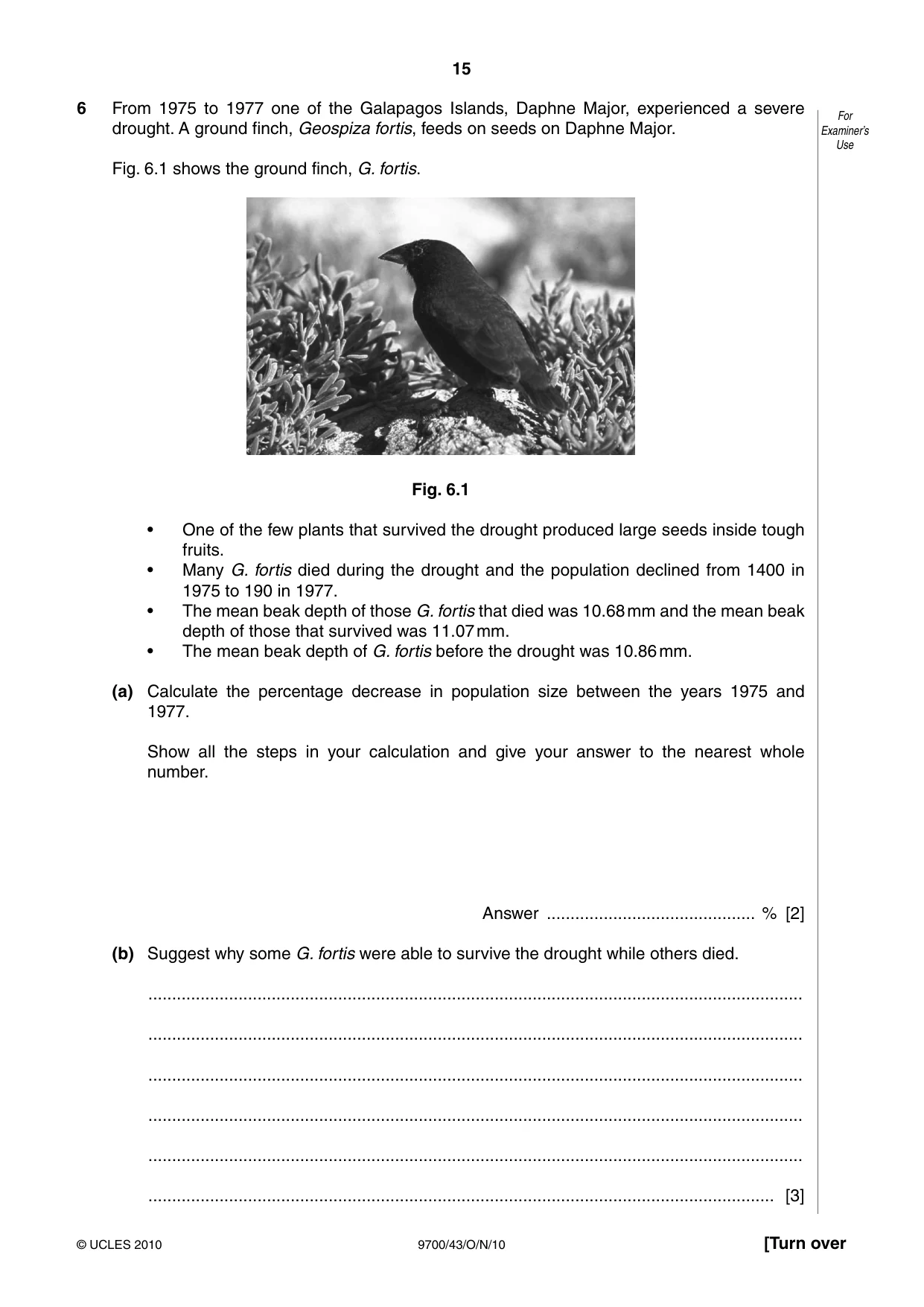
15 9700/43/O/N/10 © UCLES 2010 [Turn over For Examiner’s Use 6 From 1975 to 1977 one of the Galapagos Islands, Daphne Major, experienced a severe drought. A ground finch, Geospiza fortis, feeds on seeds on Daphne Major. Fig. 6.1 shows the ground finch, G. fortis. Fig. 6.1 • One of the few plants that survived the drought produced large seeds inside tough fruits. • Many G. fortis died during the drought and the population declined from 1400 in 1975 to 190 in 1977. • The mean beak depth of those G. fortis that died was 10.68 mm and the mean beak depth of those that survived was 11.07 mm. • The mean beak depth of G. fortis before the drought was 10.86 mm. (a) Calculate the percentage decrease in population size between the years 1975 and 1977. Show all the steps in your calculation and give your answer to the nearest whole number. Answer … % [2] (b) Suggest why some G. fortis were able to survive the drought while others died. … … … … … … [3]
Question paper, page 16
16 9700/43/O/N/10 © UCLES 2010 For Examiner’s Use (c) Natural selection was taking place on Daphne Major. State the type of natural selection operating on G. fortis during the drought and explain your answer. type of natural selection … explanation … … [2] [Total: 7]
Question paper, page 17
17 9700/43/O/N/10 © UCLES 2010 [Turn over For Examiner’s Use 7 Urea is the main nitrogenous waste product in humans. It is made in the liver and excreted by the kidneys in urine. (a) Define the term excretion. … … … … [2] (b) The kidneys regulate the water potential of body fluids. This is known as osmoregulation and involves a negative feedback system. Outline the role of negative feedback in osmoregulation. … … … … … … … … [4] (c) Investigations have shown that when a person remains in a cold environment for more than 15 minutes there is increased urine production. This is called cold diuresis. Suggest how exposure to cold can lead to cold diuresis. … … … … [2] [Total: 8]
Question paper, page 18
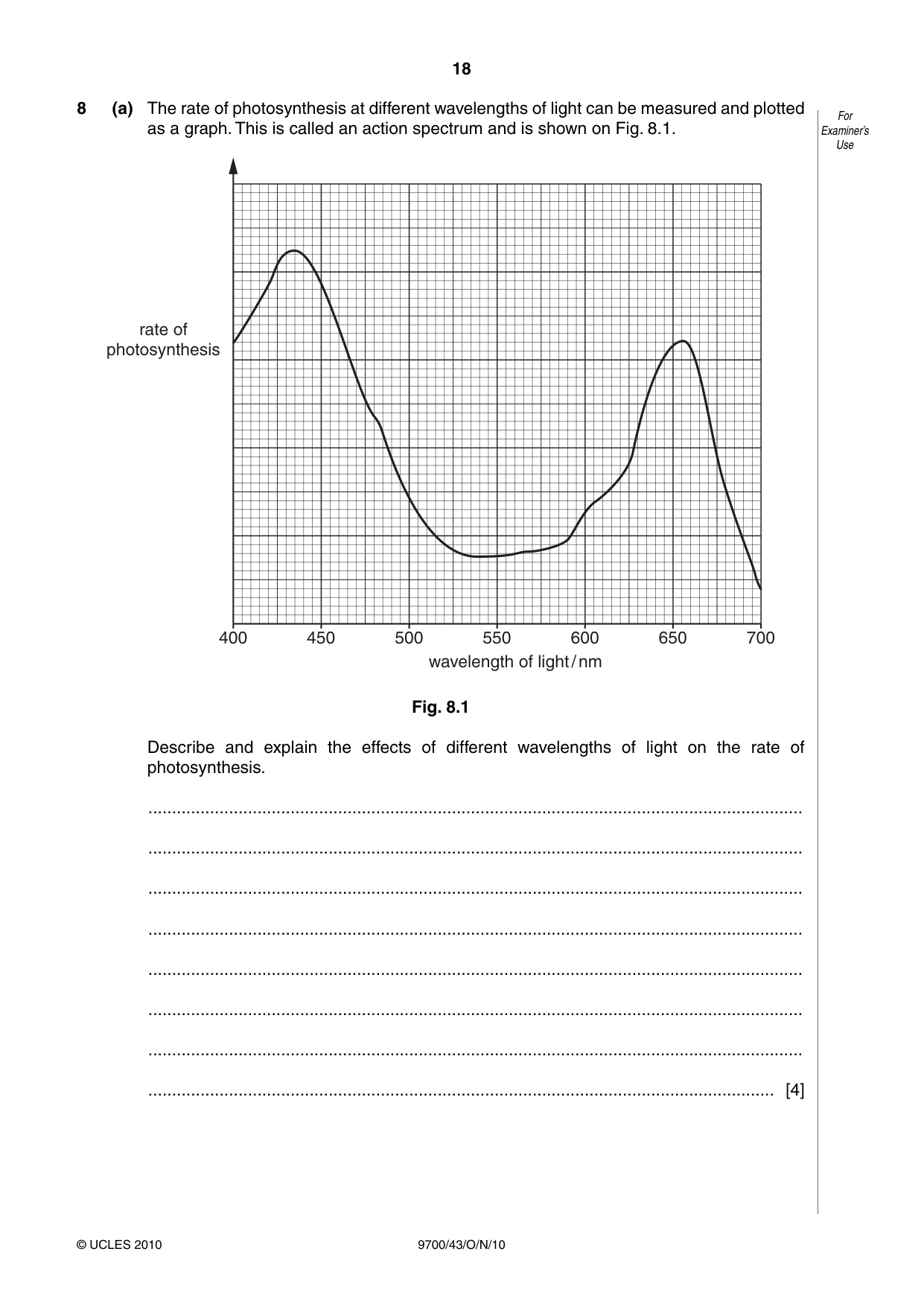
18 9700/43/O/N/10 © UCLES 2010 For Examiner’s Use 8 (a) The rate of photosynthesis at different wavelengths of light can be measured and plotted as a graph. This is called an action spectrum and is shown on Fig. 8.1. 400 450 500 550 600 650 700 rate of photosynthesis wavelength of light / nm Fig. 8.1 Describe and explain the effects of different wavelengths of light on the rate of photosynthesis. … … … … … … … … [4]
Question paper, page 19
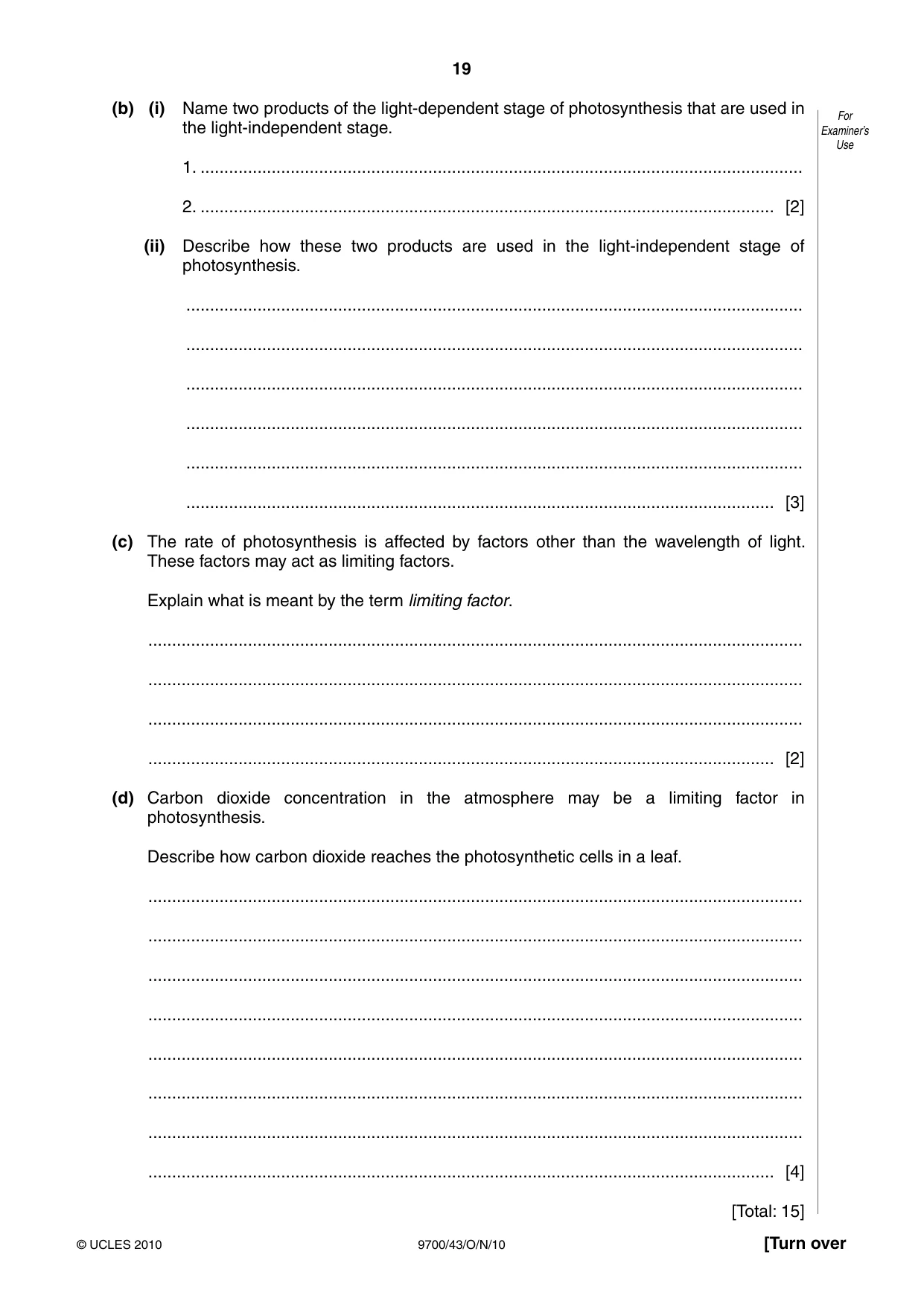
19 9700/43/O/N/10 © UCLES 2010 [Turn over For Examiner’s Use (b) (i) Name two products of the light-dependent stage of photosynthesis that are used in the light-independent stage. 1. … 2. … [2] (ii) Describe how these two products are used in the light-independent stage of photosynthesis. … … … … … … [3] (c) The rate of photosynthesis is affected by factors other than the wavelength of light. These factors may act as limiting factors. Explain what is meant by the term limiting factor. … … … … [2] (d) Carbon dioxide concentration in the atmosphere may be a limiting factor in photosynthesis. Describe how carbon dioxide reaches the photosynthetic cells in a leaf. … … … … … … … … [4] [Total: 15]
Question paper, page 20
20 9700/43/O/N/10 © UCLES 2010 For Examiner’s Use Section B Answer one question. 9 (a) Explain how meiosis and fertilisation may result in genetic variation in offspring. [7] (b) Explain, using examples, how the environment may affect the phenotype of an organism. [8] [Total: 15] 10 (a) Describe the structure of ATP and the role of ATP as the energy currency in all living organisms. [8] (b) Outline anaerobic respiration in mammalian cells and describe how it differs from anaerobic respiration in yeast cells. [7] [Total: 15] … … … … … … … … … … … … … … … … …
Question paper, page 21
21 9700/43/O/N/10 © UCLES 2010 [Turn over For Examiner’s Use … … … … … … … … … … … … … … … … … … … … … … … … … … …
Question paper, page 22
22 9700/43/O/N/10 © UCLES 2010 For Examiner’s Use … … … … … … … … … … … … … … … … … … … … … … … … … … …
Question paper, page 23
23 9700/43/O/N/10 © UCLES 2010 [Turn over For Examiner’s Use … … … … … … … … … … … … … … … … … … … … … … … … … … …
Question paper, page 24
24 9700/43/O/N/10 © UCLES 2010 For Examiner’s Use … … … … … … … … … … … … … … … … … … … … … … … … Copyright Acknowledgements: Question 6 Figure 6.1 © Photograph of Ground Finch; http://www.justbirds.it/. Permission to reproduce items where third-party owned material protected by copyright is included has been sought and cleared where possible. Every reasonable effort has been made by the publisher (UCLES) to trace copyright holders, but if any items requiring clearance have unwittingly been included, the publisher will be pleased to make amends at the earliest possible opportunity. University of Cambridge International Examinations is part of the Cambridge Assessment Group. Cambridge Assessment is the brand name of University of Cambridge Local Examinations Syndicate (UCLES), which is itself a department of the University of Cambridge.
Mark scheme, page 1
UNIVERSITY OF CAMBRIDGE INTERNATIONAL EXAMINATIONS GCE Advanced Subsidiary Level and GCE Advanced Level MARK SCHEME for the October/November 2010 question paper for the guidance of teachers 9700 BIOLOGY 9700/43 Paper 4 (A2 Structured Questions), maximum raw mark 100 This mark scheme is published as an aid to teachers and candidates, to indicate the requirements of the examination. It shows the basis on which Examiners were instructed to award marks. It does not indicate the details of the discussions that took place at an Examiners’ meeting before marking began, which would have considered the acceptability of alternative answers. Mark schemes must be read in conjunction with the question papers and the report on the examination. • CIE will not enter into discussions or correspondence in connection with these mark schemes. CIE is publishing the mark schemes for the October/November 2010 question papers for most IGCSE, GCE Advanced Level and Advanced Subsidiary Level syllabuses and some Ordinary Level syllabuses.
Mark scheme, page 2
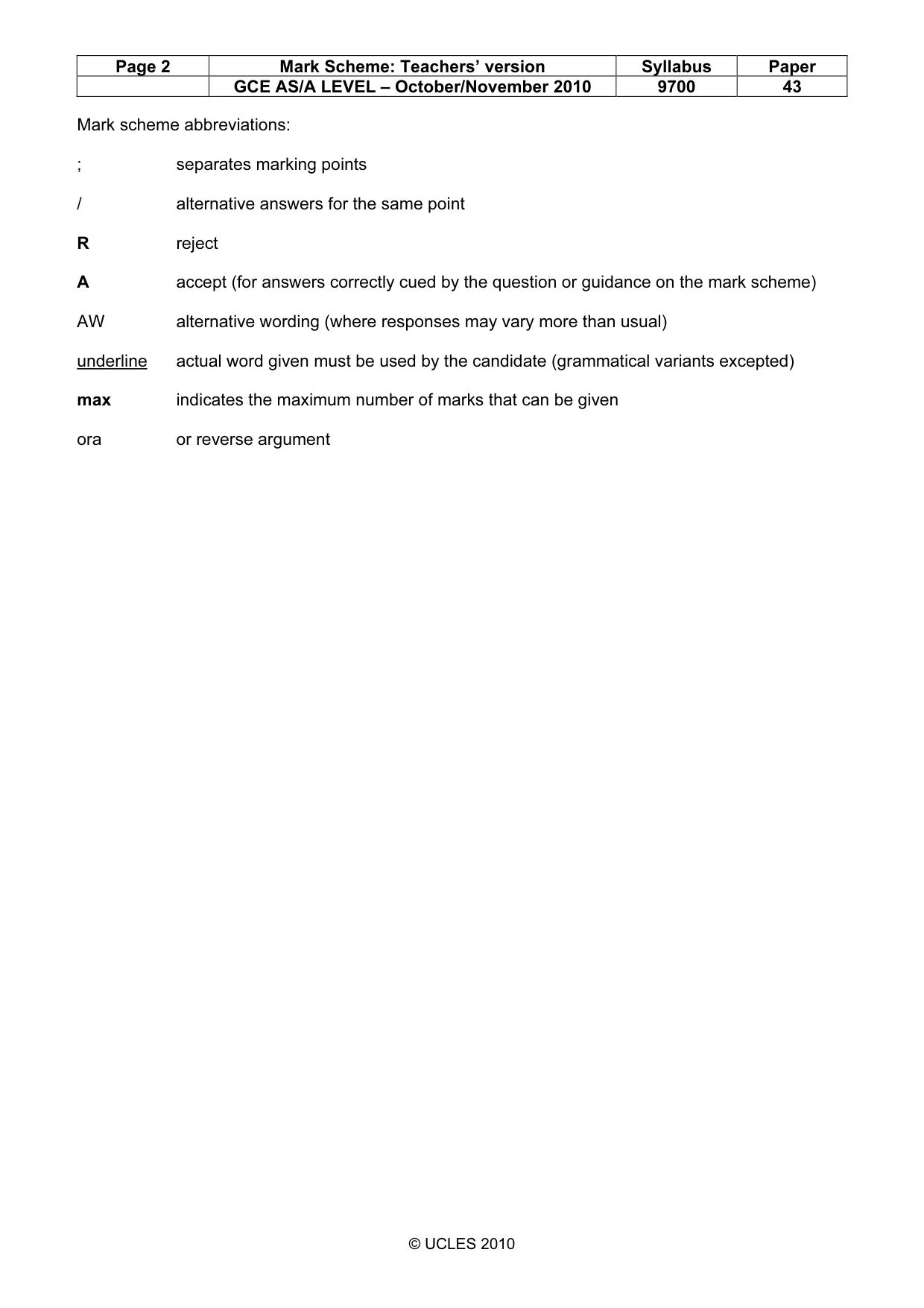
Page 2 Mark Scheme: Teachers’ version Syllabus Paper GCE AS/A LEVEL – October/November 2010 9700 43 © UCLES 2010 Mark scheme abbreviations: ; separates marking points / alternative answers for the same point R reject A accept (for answers correctly cued by the question or guidance on the mark scheme) AW alternative wording (where responses may vary more than usual) underline actual word given must be used by the candidate (grammatical variants excepted) max indicates the maximum number of marks that can be given ora or reverse argument
Mark scheme, page 3
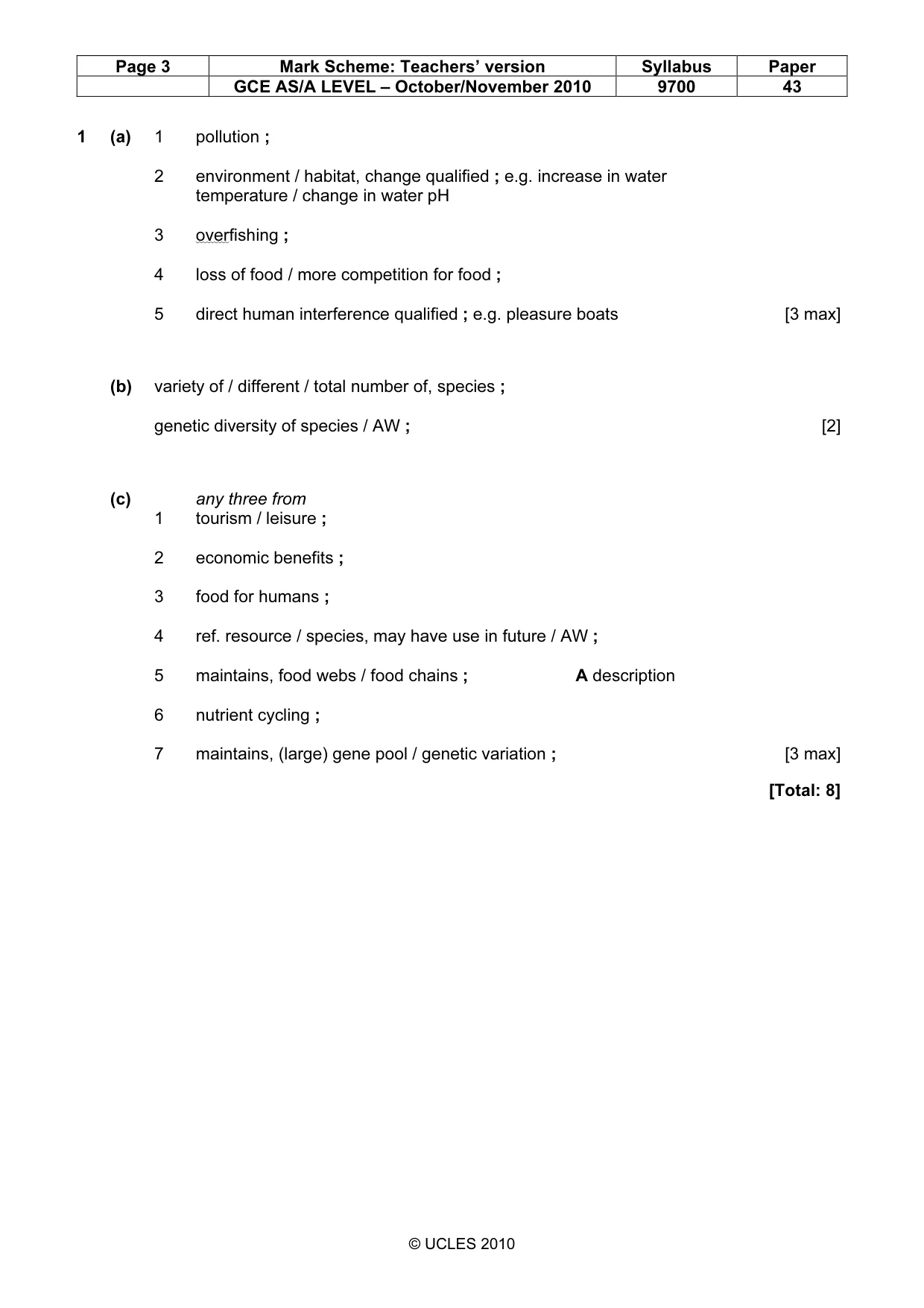
Page 3 Mark Scheme: Teachers’ version Syllabus Paper GCE AS/A LEVEL – October/November 2010 9700 43 © UCLES 2010 1 (a) 1 2 3 4 5 pollution ; environment / habitat, change qualified ; e.g. increase in water temperature / change in water pH overfishing ; loss of food / more competition for food ; direct human interference qualified ; e.g. pleasure boats [3 max] (b) variety of / different / total number of, species ; genetic diversity of species / AW ; [2] (c) 1 2 3 4 5 6 7 any three from tourism / leisure ; economic benefits ; food for humans ; ref. resource / species, may have use in future / AW ; maintains, food webs / food chains ; A description nutrient cycling ; maintains, (large) gene pool / genetic variation ; [3 max] [Total: 8]
Mark scheme, page 4
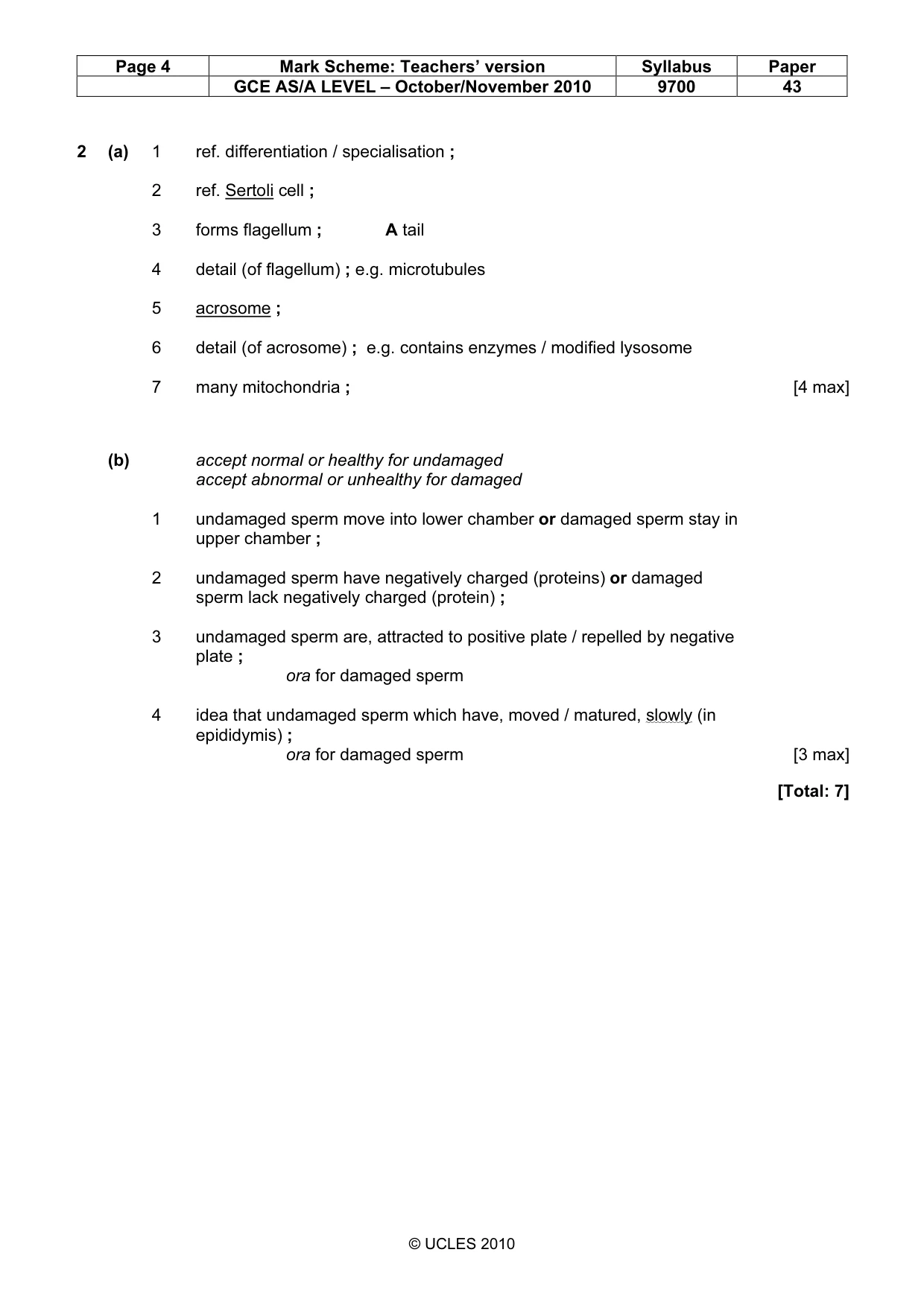
Page 4 Mark Scheme: Teachers’ version Syllabus Paper GCE AS/A LEVEL – October/November 2010 9700 43 © UCLES 2010 2 (a) 1 2 3 4 5 6 7 ref. differentiation / specialisation ; ref. Sertoli cell ; forms flagellum ; A tail detail (of flagellum) ; e.g. microtubules acrosome ; detail (of acrosome) ; e.g. contains enzymes / modified lysosome many mitochondria ; [4 max] (b) 1 2 3 4 accept normal or healthy for undamaged accept abnormal or unhealthy for damaged undamaged sperm move into lower chamber or damaged sperm stay in upper chamber ; undamaged sperm have negatively charged (proteins) or damaged sperm lack negatively charged (protein) ; undamaged sperm are, attracted to positive plate / repelled by negative plate ; ora for damaged sperm idea that undamaged sperm which have, moved / matured, slowly (in epididymis) ; ora for damaged sperm [3 max] [Total: 7]
Mark scheme, page 5
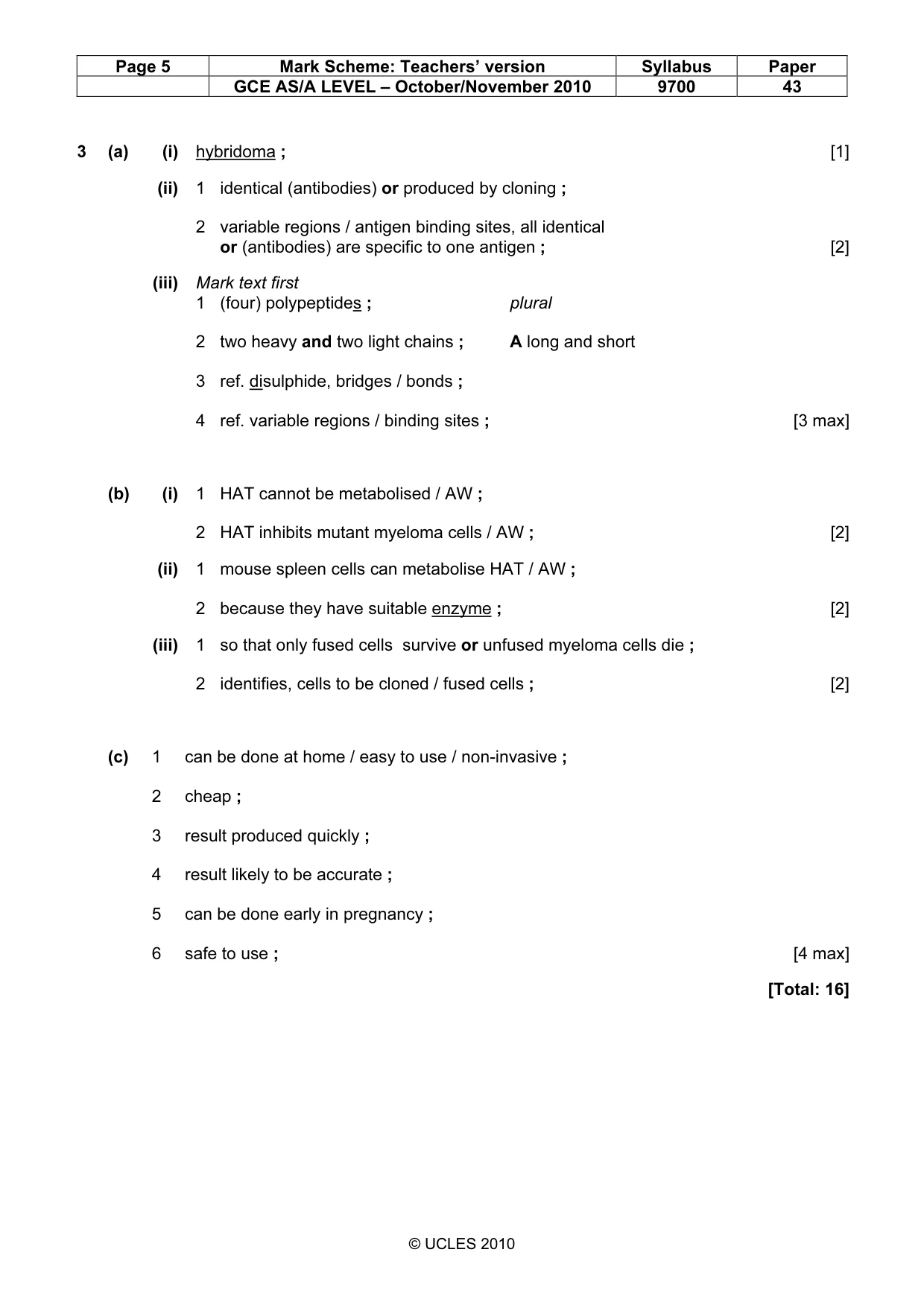
Page 5 Mark Scheme: Teachers’ version Syllabus Paper GCE AS/A LEVEL – October/November 2010 9700 43 © UCLES 2010 3 (a) (i) hybridoma ; [1] (ii) 1 identical (antibodies) or produced by cloning ; 2 variable regions / antigen binding sites, all identical or (antibodies) are specific to one antigen ; [2] (iii) Mark text first 1 (four) polypeptides ; plural 2 two heavy and two light chains ; A long and short 3 ref. disulphide, bridges / bonds ; 4 ref. variable regions / binding sites ; [3 max] (b) (i) 1 HAT cannot be metabolised / AW ; 2 HAT inhibits mutant myeloma cells / AW ; [2] (ii) 1 mouse spleen cells can metabolise HAT / AW ; 2 because they have suitable enzyme ; [2] (iii) 1 so that only fused cells survive or unfused myeloma cells die ; 2 identifies, cells to be cloned / fused cells ; [2] (c) 1 2 3 4 5 6 can be done at home / easy to use / non-invasive ; cheap ; result produced quickly ; result likely to be accurate ; can be done early in pregnancy ; safe to use ; [4 max] [Total: 16]
Mark scheme, page 6
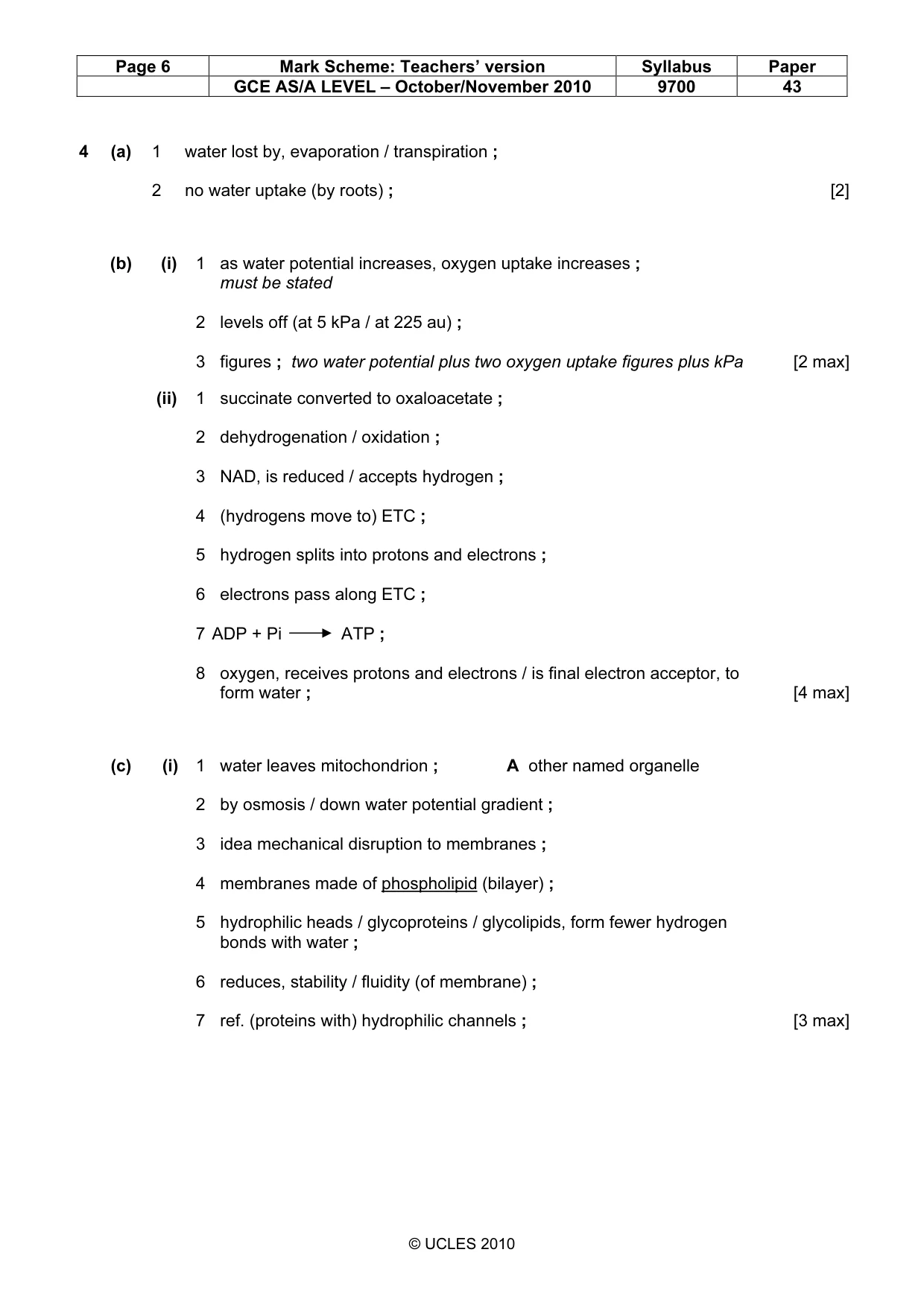
Page 6 Mark Scheme: Teachers’ version Syllabus Paper GCE AS/A LEVEL – October/November 2010 9700 43 © UCLES 2010 4 (a) 1 2 water lost by, evaporation / transpiration ; no water uptake (by roots) ; [2] (b) (i) 1 as water potential increases, oxygen uptake increases ; must be stated 2 levels off (at 5 kPa / at 225 au) ; 3 figures ; two water potential plus two oxygen uptake figures plus kPa [2 max] (ii) 1 succinate converted to oxaloacetate ; 2 dehydrogenation / oxidation ; 3 NAD, is reduced / accepts hydrogen ; 4 (hydrogens move to) ETC ; 5 hydrogen splits into protons and electrons ; 6 electrons pass along ETC ; 7 ADP + Pi ATP ; 8 oxygen, receives protons and electrons / is final electron acceptor, to form water ; [4 max] (c) (i) 1 water leaves mitochondrion ; A other named organelle 2 by osmosis / down water potential gradient ; 3 idea mechanical disruption to membranes ; 4 membranes made of phospholipid (bilayer) ; 5 hydrophilic heads / glycoproteins / glycolipids, form fewer hydrogen bonds with water ; 6 reduces, stability / fluidity (of membrane) ; 7 ref. (proteins with) hydrophilic channels ; [3 max]
Mark scheme, page 7
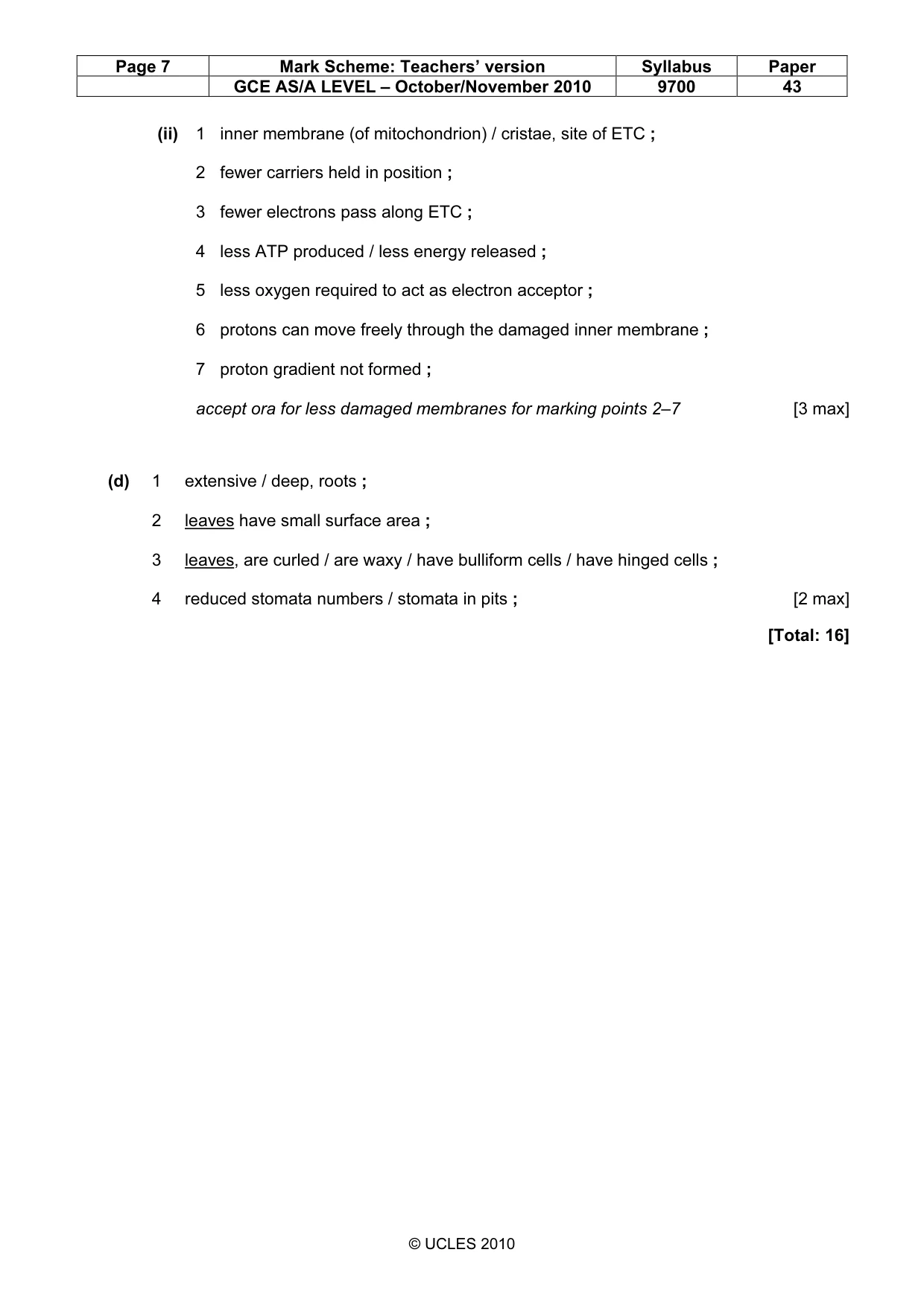
Page 7 Mark Scheme: Teachers’ version Syllabus Paper GCE AS/A LEVEL – October/November 2010 9700 43 © UCLES 2010 (ii) 1 inner membrane (of mitochondrion) / cristae, site of ETC ; 2 fewer carriers held in position ; 3 fewer electrons pass along ETC ; 4 less ATP produced / less energy released ; 5 less oxygen required to act as electron acceptor ; 6 protons can move freely through the damaged inner membrane ; 7 proton gradient not formed ; accept ora for less damaged membranes for marking points 2–7 [3 max] (d) 1 2 3 4 extensive / deep, roots ; leaves have small surface area ; leaves, are curled / are waxy / have bulliform cells / have hinged cells ; reduced stomata numbers / stomata in pits ; [2 max] [Total: 16]
Mark scheme, page 8
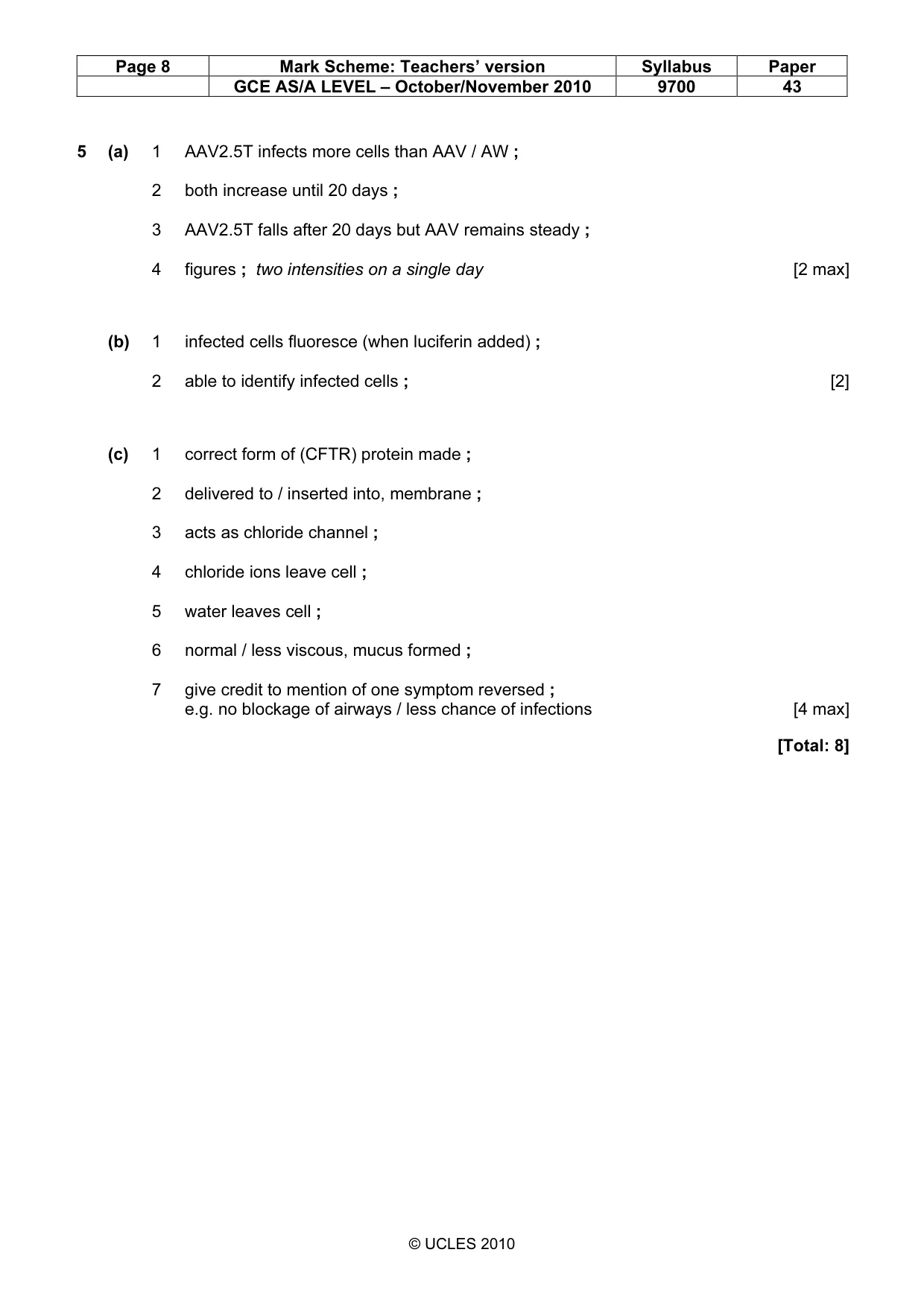
Page 8 Mark Scheme: Teachers’ version Syllabus Paper GCE AS/A LEVEL – October/November 2010 9700 43 © UCLES 2010 5 (a) 1 2 3 4 AAV2.5T infects more cells than AAV / AW ; both increase until 20 days ; AAV2.5T falls after 20 days but AAV remains steady ; figures ; two intensities on a single day [2 max] (b) 1 2 infected cells fluoresce (when luciferin added) ; able to identify infected cells ; [2] (c) 1 2 3 4 5 6 7 correct form of (CFTR) protein made ; delivered to / inserted into, membrane ; acts as chloride channel ; chloride ions leave cell ; water leaves cell ; normal / less viscous, mucus formed ; give credit to mention of one symptom reversed ; e.g. no blockage of airways / less chance of infections [4 max] [Total: 8]
Mark scheme, page 9
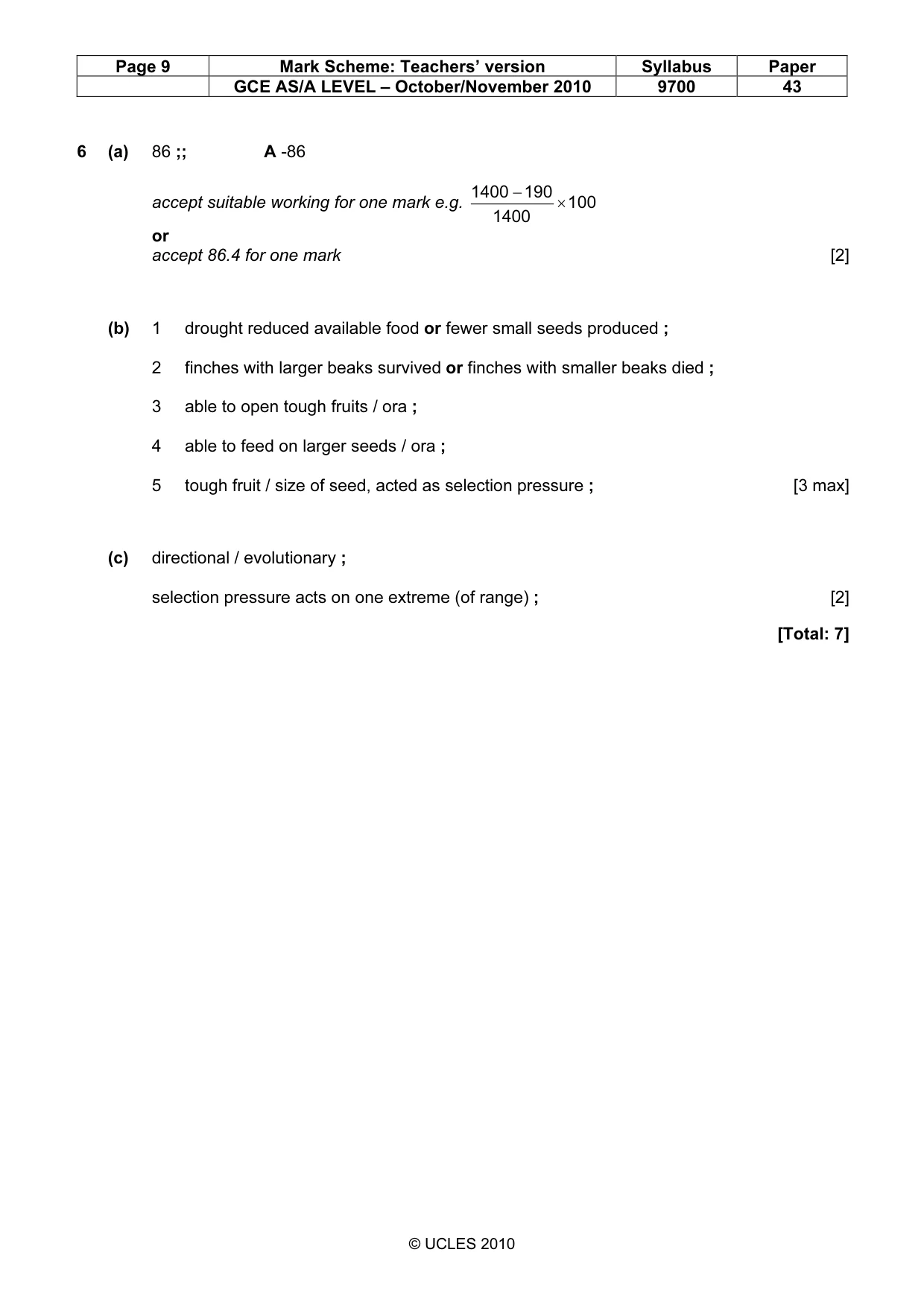
Page 9 Mark Scheme: Teachers’ version Syllabus Paper GCE AS/A LEVEL – October/November 2010 9700 43 © UCLES 2010 6 (a) 86 ;; A -86 accept suitable working for one mark e.g. 100 1400 190 1400 × − or accept 86.4 for one mark [2] (b) 1 2 3 4 5 drought reduced available food or fewer small seeds produced ; finches with larger beaks survived or finches with smaller beaks died ; able to open tough fruits / ora ; able to feed on larger seeds / ora ; tough fruit / size of seed, acted as selection pressure ; [3 max] (c) directional / evolutionary ; selection pressure acts on one extreme (of range) ; [2] [Total: 7]
Mark scheme, page 10
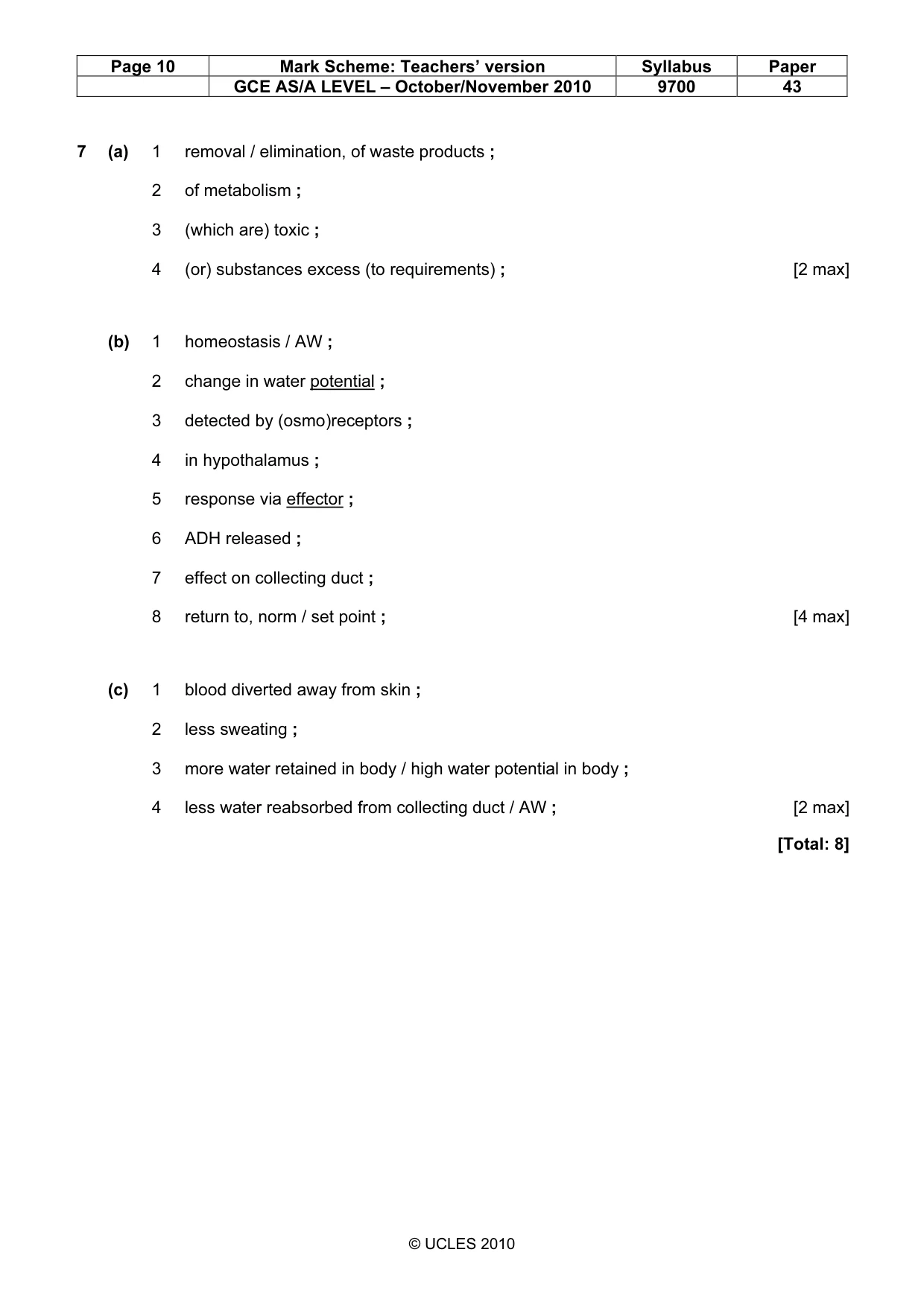
Page 10 Mark Scheme: Teachers’ version Syllabus Paper GCE AS/A LEVEL – October/November 2010 9700 43 © UCLES 2010 7 (a) 1 2 3 4 removal / elimination, of waste products ; of metabolism ; (which are) toxic ; (or) substances excess (to requirements) ; [2 max] (b) 1 2 3 4 5 6 7 8 homeostasis / AW ; change in water potential ; detected by (osmo)receptors ; in hypothalamus ; response via effector ; ADH released ; effect on collecting duct ; return to, norm / set point ; [4 max] (c) 1 2 3 4 blood diverted away from skin ; less sweating ; more water retained in body / high water potential in body ; less water reabsorbed from collecting duct / AW ; [2 max] [Total: 8]
Mark scheme, page 11
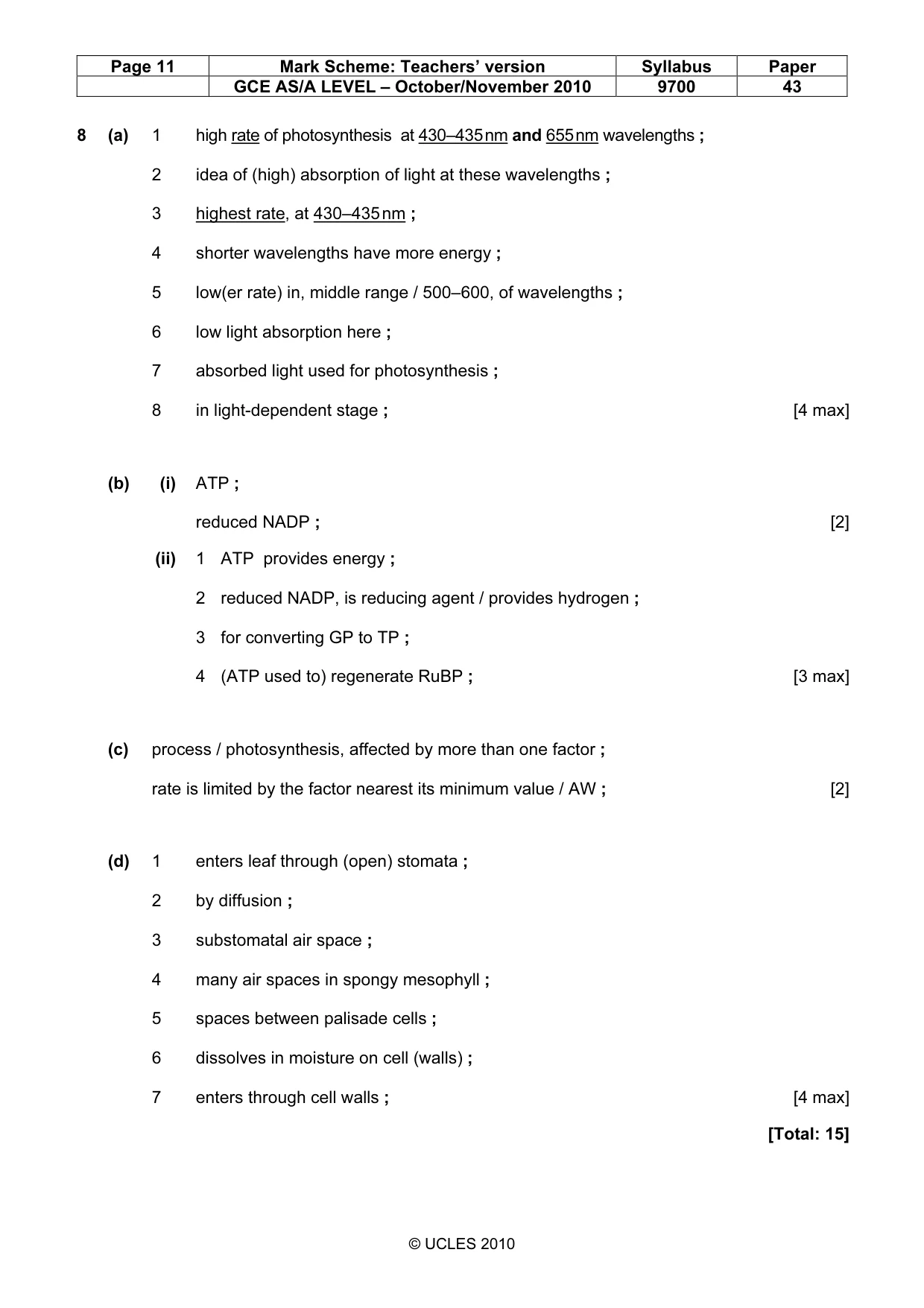
Page 11 Mark Scheme: Teachers’ version Syllabus Paper GCE AS/A LEVEL – October/November 2010 9700 43 © UCLES 2010 8 (a) 1 2 3 4 5 6 7 8 high rate of photosynthesis at 430–435 nm and 655 nm wavelengths ; idea of (high) absorption of light at these wavelengths ; highest rate, at 430–435 nm ; shorter wavelengths have more energy ; low(er rate) in, middle range / 500–600, of wavelengths ; low light absorption here ; absorbed light used for photosynthesis ; in light-dependent stage ; [4 max] (b) (i) ATP ; reduced NADP ; [2] (ii) 1 ATP provides energy ; 2 reduced NADP, is reducing agent / provides hydrogen ; 3 for converting GP to TP ; 4 (ATP used to) regenerate RuBP ; [3 max] (c) process / photosynthesis, affected by more than one factor ; rate is limited by the factor nearest its minimum value / AW ; [2] (d) 1 2 3 4 5 6 7 enters leaf through (open) stomata ; by diffusion ; substomatal air space ; many air spaces in spongy mesophyll ; spaces between palisade cells ; dissolves in moisture on cell (walls) ; enters through cell walls ; [4 max] [Total: 15]
Mark scheme, page 12
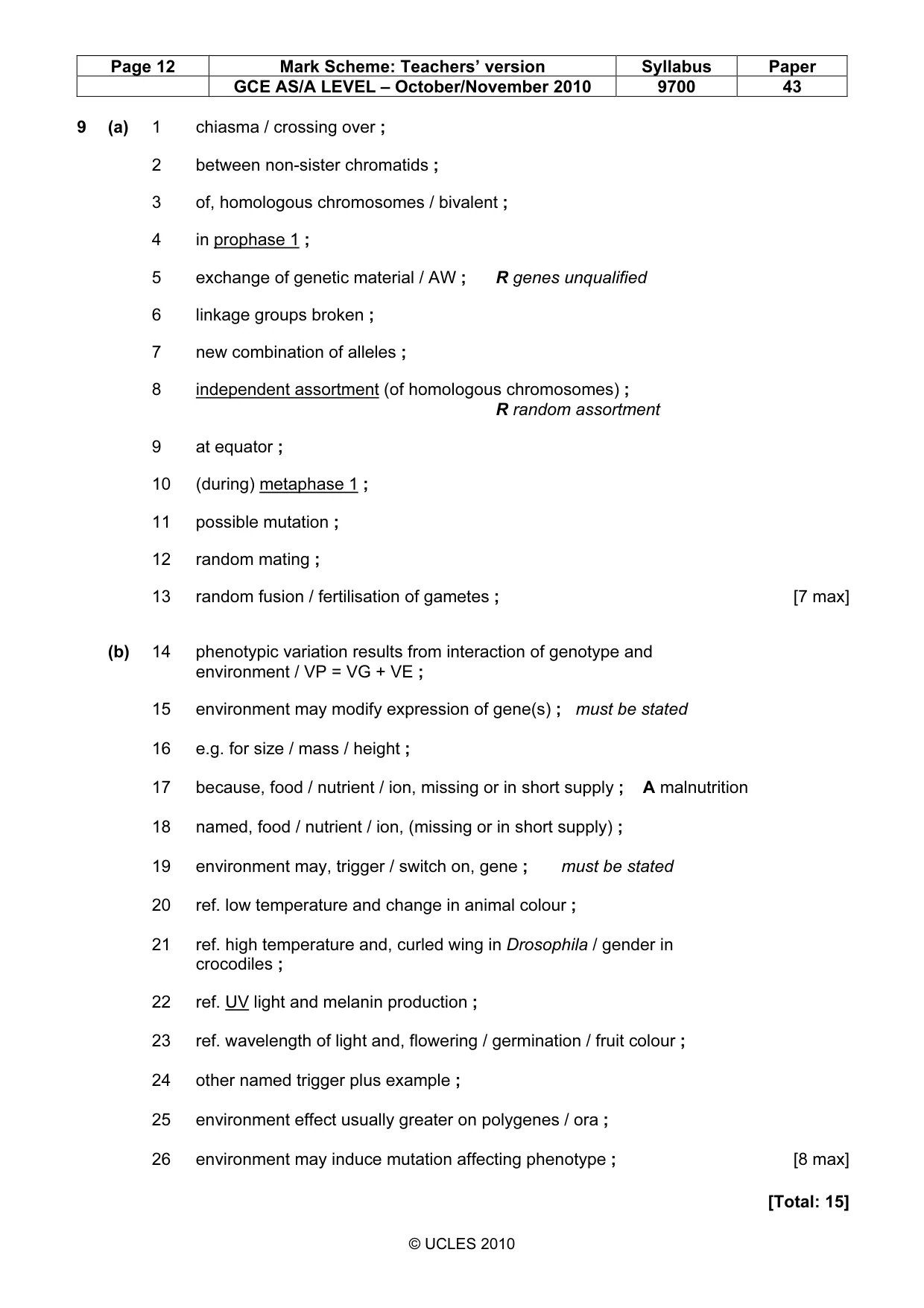
Page 12 Mark Scheme: Teachers’ version Syllabus Paper GCE AS/A LEVEL – October/November 2010 9700 43 © UCLES 2010 9 (a) 1 2 3 4 5 6 7 8 9 10 11 12 13 chiasma / crossing over ; between non-sister chromatids ; of, homologous chromosomes / bivalent ; in prophase 1 ; exchange of genetic material / AW ; R genes unqualified linkage groups broken ; new combination of alleles ; independent assortment (of homologous chromosomes) ; R random assortment at equator ; (during) metaphase 1 ; possible mutation ; random mating ; random fusion / fertilisation of gametes ; [7 max] (b) 14 15 16 17 18 19 20 21 22 23 24 25 26 phenotypic variation results from interaction of genotype and environment / VP = VG + VE ; environment may modify expression of gene(s) ; must be stated e.g. for size / mass / height ; because, food / nutrient / ion, missing or in short supply ; A malnutrition named, food / nutrient / ion, (missing or in short supply) ; environment may, trigger / switch on, gene ; must be stated ref. low temperature and change in animal colour ; ref. high temperature and, curled wing in Drosophila / gender in crocodiles ; ref. UV light and melanin production ; ref. wavelength of light and, flowering / germination / fruit colour ; other named trigger plus example ; environment effect usually greater on polygenes / ora ; environment may induce mutation affecting phenotype ; [8 max] [Total: 15]
Mark scheme, page 13
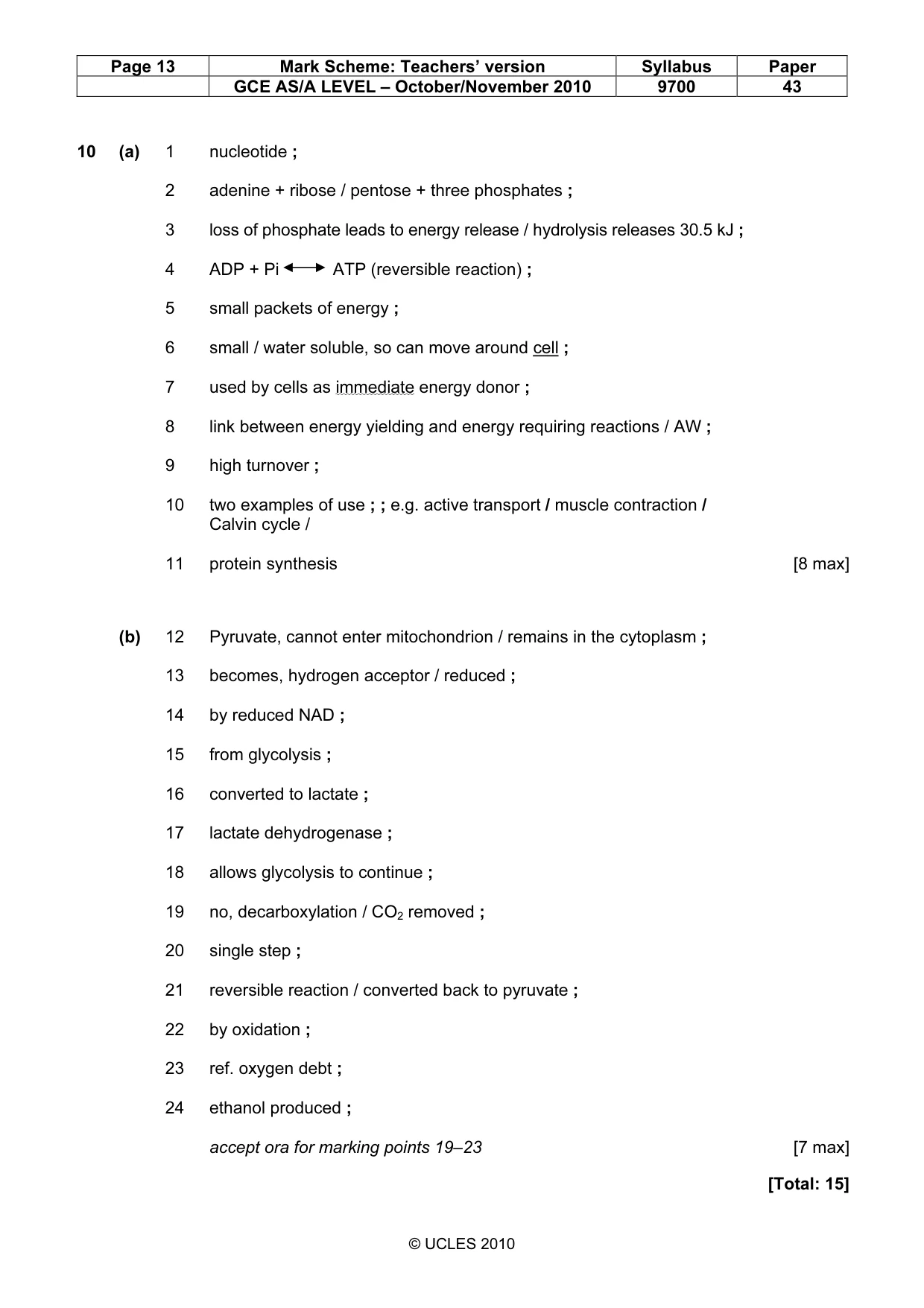
Page 13 Mark Scheme: Teachers’ version Syllabus Paper GCE AS/A LEVEL – October/November 2010 9700 43 © UCLES 2010 10 (a) 1 2 3 4 5 6 7 8 9 10 11 nucleotide ; adenine + ribose / pentose + three phosphates ; loss of phosphate leads to energy release / hydrolysis releases 30.5 kJ ; ADP + Pi ATP (reversible reaction) ; small packets of energy ; small / water soluble, so can move around cell ; used by cells as immediate energy donor ; link between energy yielding and energy requiring reactions / AW ; high turnover ; two examples of use ; ; e.g. active transport / muscle contraction / Calvin cycle / protein synthesis [8 max] (b) 12 13 14 15 16 17 18 19 20 21 22 23 24 Pyruvate, cannot enter mitochondrion / remains in the cytoplasm ; becomes, hydrogen acceptor / reduced ; by reduced NAD ; from glycolysis ; converted to lactate ; lactate dehydrogenase ; allows glycolysis to continue ; no, decarboxylation / CO2 removed ; single step ; reversible reaction / converted back to pyruvate ; by oxidation ; ref. oxygen debt ; ethanol produced ; accept ora for marking points 19–23 [7 max] [Total: 15]
What you needed in this session
Cambridge’s own grade thresholds for 2010 Oct/Nov, Paper 4 · Variant 3. A higher threshold means an easier paper — the bar moves with how the cohort did.