Cambridge A Level Biology 9700 — 2010 Oct/Nov Paper 2 · Variant 3
9700/23/O/N/10 · 60 marks · ≈68 min
The question paper and its mark scheme, free to read here and free to download. This is Cambridge’s own paper, exactly as it was sat.
Question paper16 pages



Mark scheme8 pages
Answers below. Sit the paper first if you are practising.
Paper as text
Question paper, page 1
This document consists of 13 printed pages and 3 blank pages. DC (SM/SW) 29322/2 © UCLES 2010 [Turn over UNIVERSITY OF CAMBRIDGE INTERNATIONAL EXAMINATIONS General Certificate of Education Advanced Subsidiary Level and Advanced Level READ THESE INSTRUCTIONS FIRST Write your Centre number, candidate number and name in the spaces provided at the top of this page. Write in dark blue or black pen. You may use a soft pencil for any diagrams, graphs or rough working. Do not use staples, paper clips, highlighters, glue or correction fluid. DO NOT WRITE IN ANY BARCODES. Answer all questions. At the end of the examination, fasten all your work securely together. The number of marks is given in brackets [ ] at the end of each question or part question. * 2 9 2 6 9 0 8 0 1 0 * BIOLOGY 9700/23 Paper 2 Structured Questions AS October/November 2010 1 hour 15 minutes Candidates answer on the Question Paper. No Additional Materials are required. For Examiner’s Use 1 2 3 4 5 6 Total
Question paper, page 2
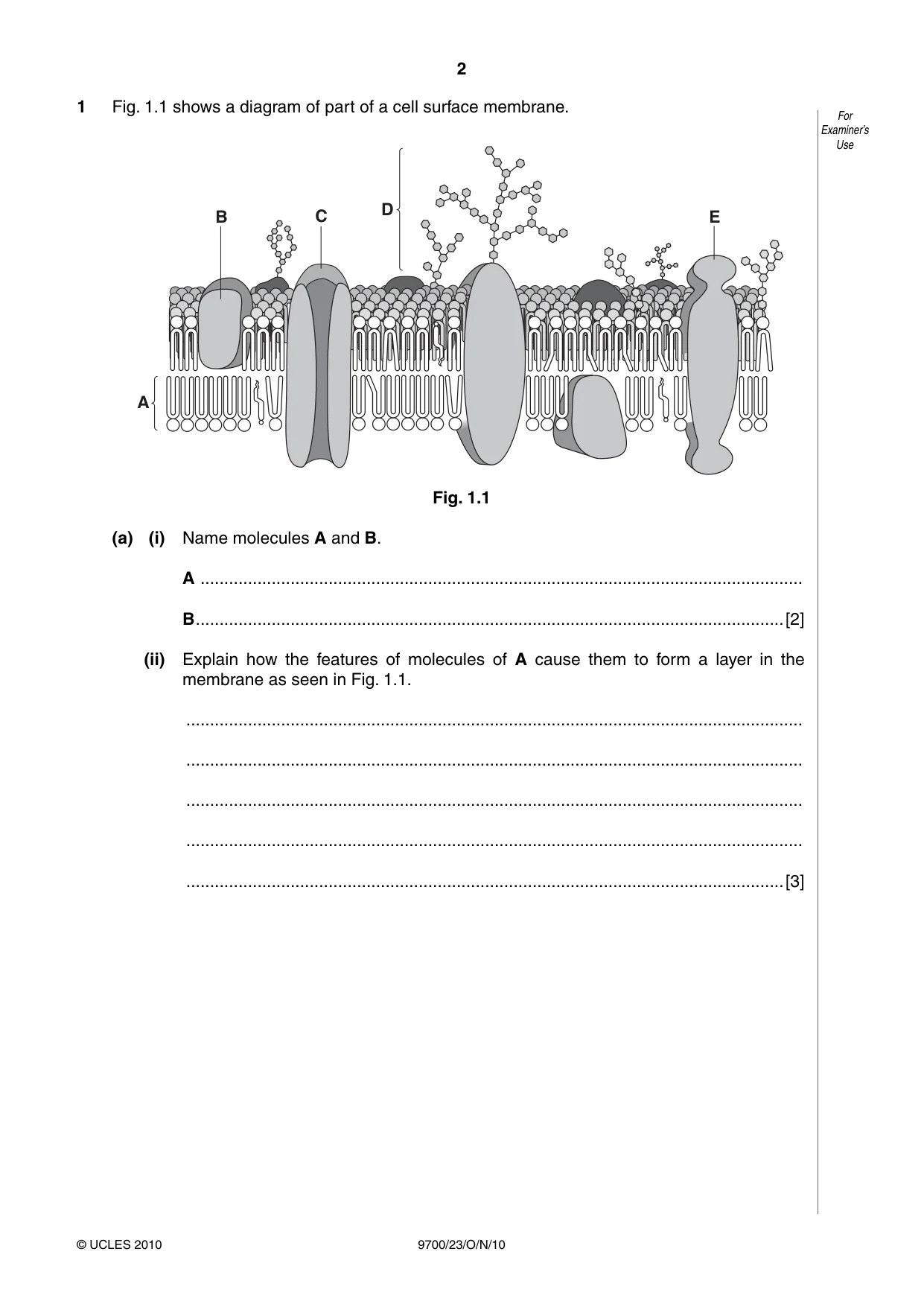
2 9700/23/O/N/10 © UCLES 2010 For Examiner’s Use 1 Fig. 1.1 shows a diagram of part of a cell surface membrane. A D B C E Fig. 1.1 (a) (i) Name molecules A and B. A … B …[2] (ii) Explain how the features of molecules of A cause them to form a layer in the membrane as seen in Fig. 1.1. … … … … …[3]
Question paper, page 3
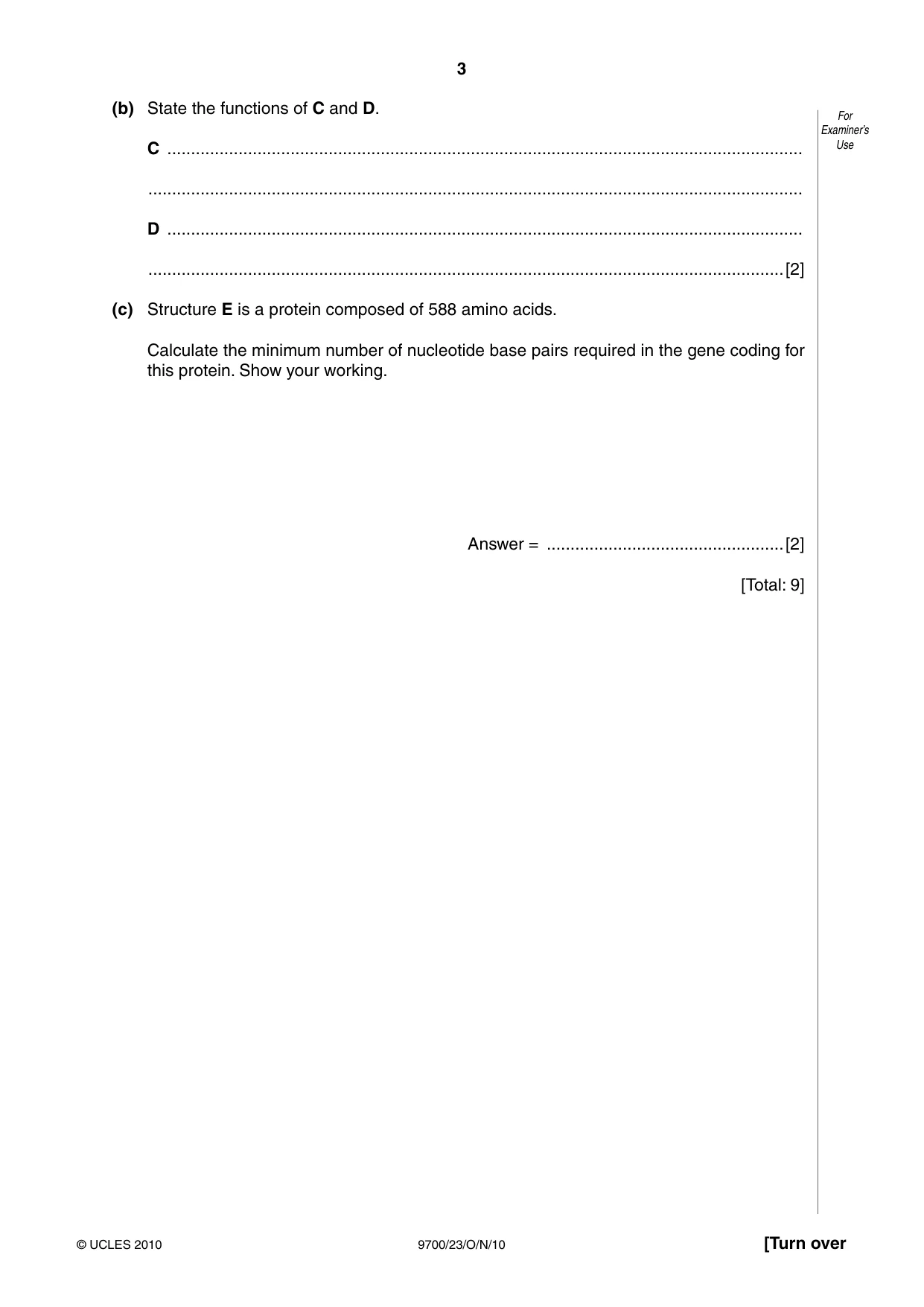
3 9700/23/O/N/10 © UCLES 2010 [Turn over For Examiner’s Use (b) State the functions of C and D. C … … D … …[2] (c) Structure E is a protein composed of 588 amino acids. Calculate the minimum number of nucleotide base pairs required in the gene coding for this protein. Show your working. Answer = …[2] [Total: 9]
Question paper, page 4
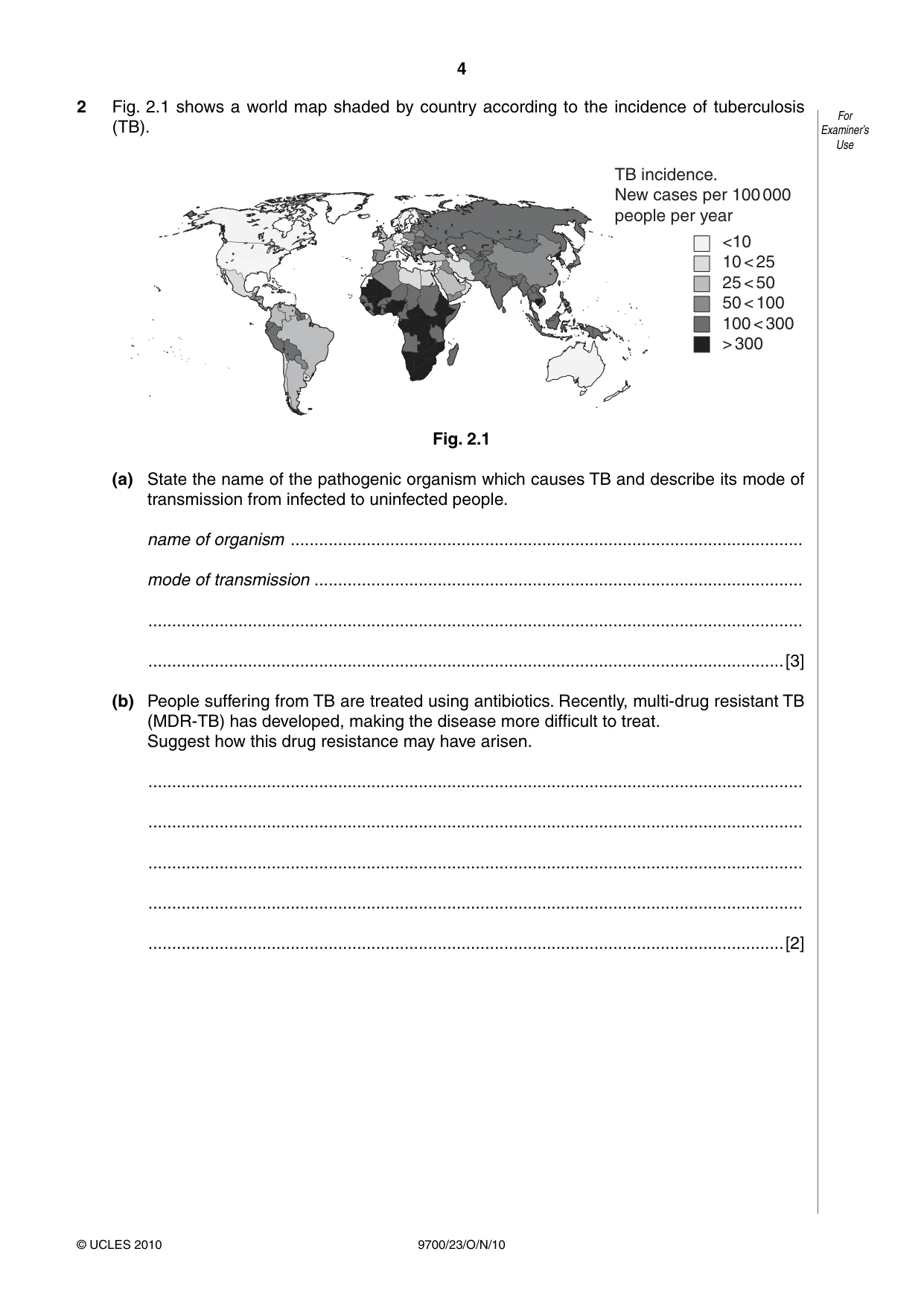
4 9700/23/O/N/10 © UCLES 2010 For Examiner’s Use 2 Fig. 2.1 shows a world map shaded by country according to the incidence of tuberculosis (TB). <10 10 < 25 25 < 50 50 < 100 100 < 300 > 300 TB incidence. New cases per 100 000 people per year Fig. 2.1 (a) State the name of the pathogenic organism which causes TB and describe its mode of transmission from infected to uninfected people. name of organism … mode of transmission … … …[3] (b) People suffering from TB are treated using antibiotics. Recently, multi-drug resistant TB (MDR-TB) has developed, making the disease more difficult to treat. Suggest how this drug resistance may have arisen. … … … … …[2]
Question paper, page 5
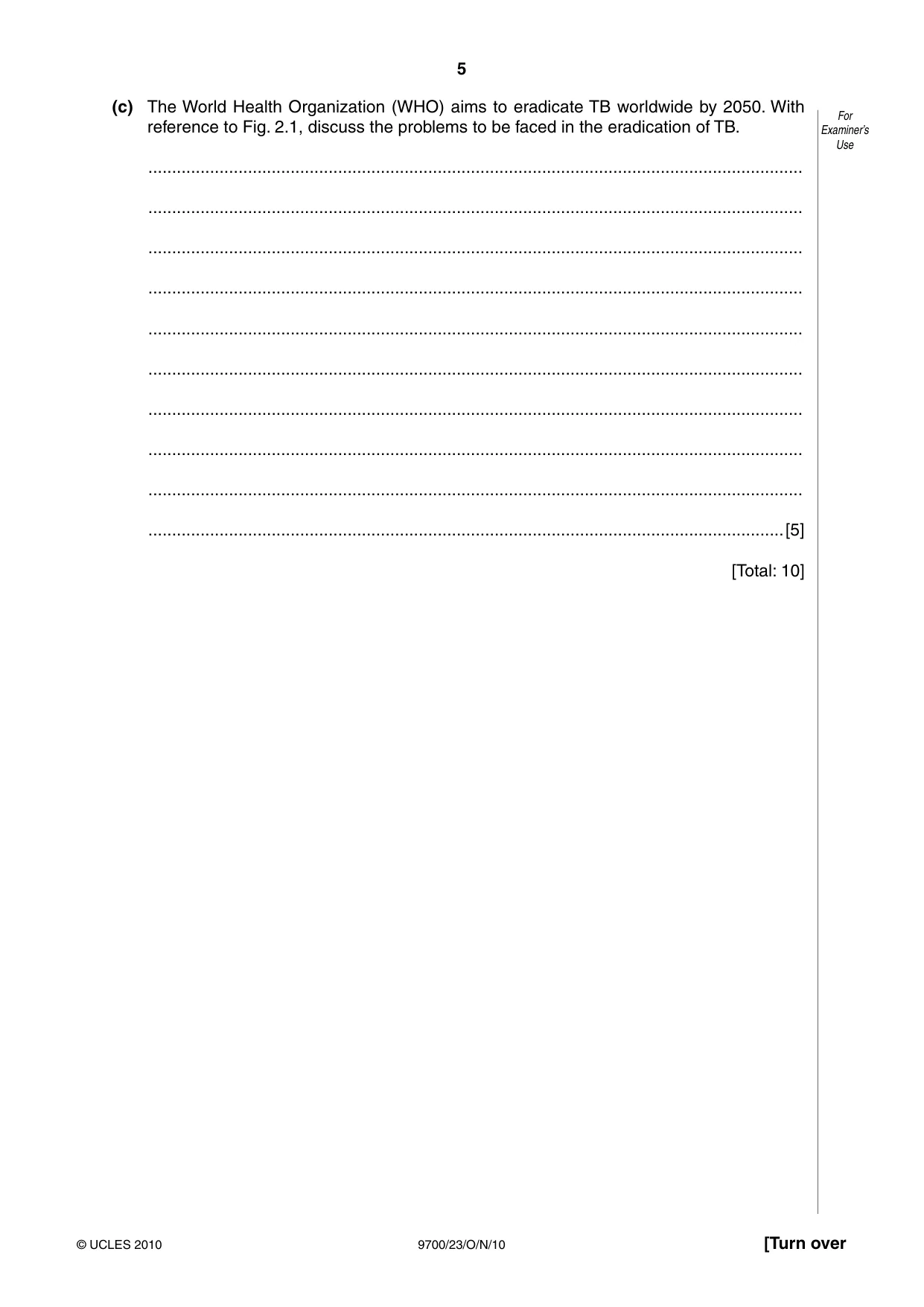
5 9700/23/O/N/10 © UCLES 2010 [Turn over For Examiner’s Use (c) The World Health Organization (WHO) aims to eradicate TB worldwide by 2050. With reference to Fig. 2.1, discuss the problems to be faced in the eradication of TB. … … … … … … … … … …[5] [Total: 10]
Question paper, page 6
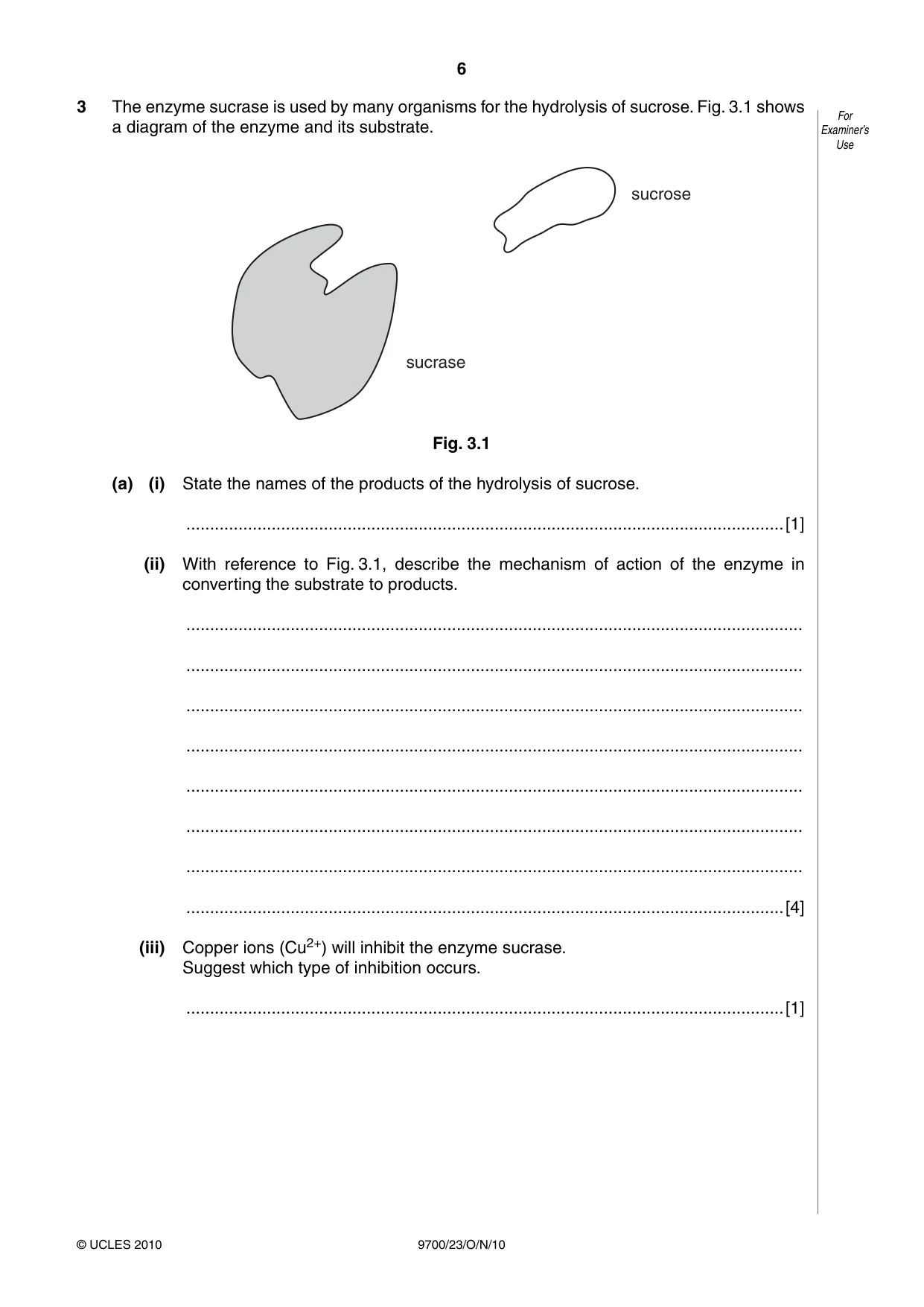
6 9700/23/O/N/10 © UCLES 2010 For Examiner’s Use 3 The enzyme sucrase is used by many organisms for the hydrolysis of sucrose. Fig. 3.1 shows a diagram of the enzyme and its substrate. sucrase sucrose Fig. 3.1 (a) (i) State the names of the products of the hydrolysis of sucrose. …[1] (ii) With reference to Fig. 3.1, describe the mechanism of action of the enzyme in converting the substrate to products. … … … … … … … …[4] (iii) Copper ions (Cu2+) will inhibit the enzyme sucrase. Suggest which type of inhibition occurs. …[1]
Question paper, page 7
7 9700/23/O/N/10 © UCLES 2010 [Turn over For Examiner’s Use (b) Sucrose is one of the assimilates transported in the phloem sieve tubes of plants from source to sink. Sucrase is found in sinks. (i) Suggest the role played by sucrase in the process of unloading of sucrose at sinks. … … … … … …[2] (ii) Plant sink organs convert excess products of sucrose hydrolysis to storage molecules, such as starch. Explain why these products of hydrolysis themselves cannot be stored in plant tissue. … … … … … …[3] [Total: 11]
Question paper, page 8
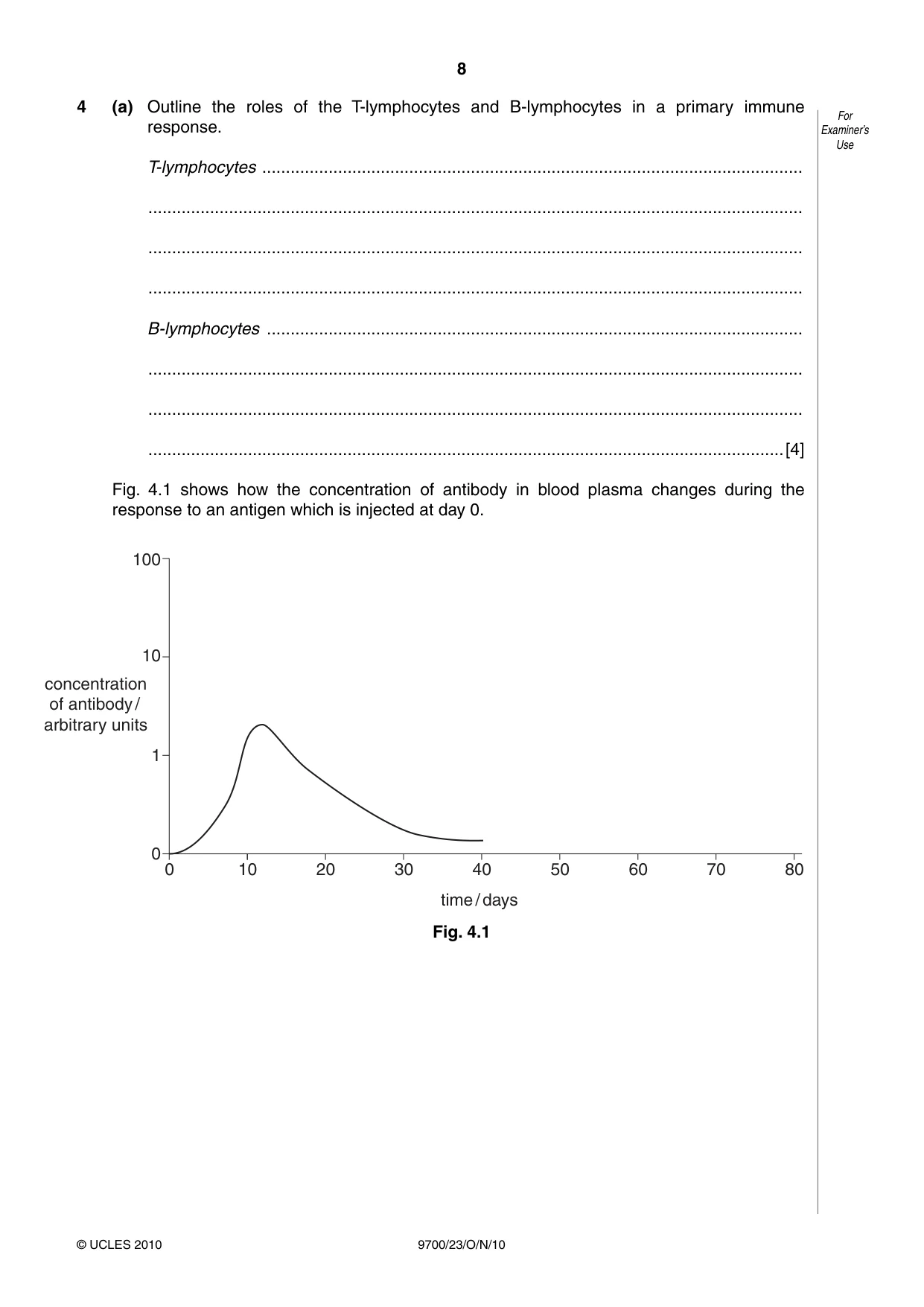
8 9700/23/O/N/10 © UCLES 2010 For Examiner’s Use 4 (a) Outline the roles of the T-lymphocytes and B-lymphocytes in a primary immune response. T-lymphocytes … … … … B-lymphocytes … … … …[4] Fig. 4.1 shows how the concentration of antibody in blood plasma changes during the response to an antigen which is injected at day 0. 0 0 1 10 100 10 20 30 40 50 time / days concentration of antibody / arbitrary units 60 70 80 Fig. 4.1
Question paper, page 9
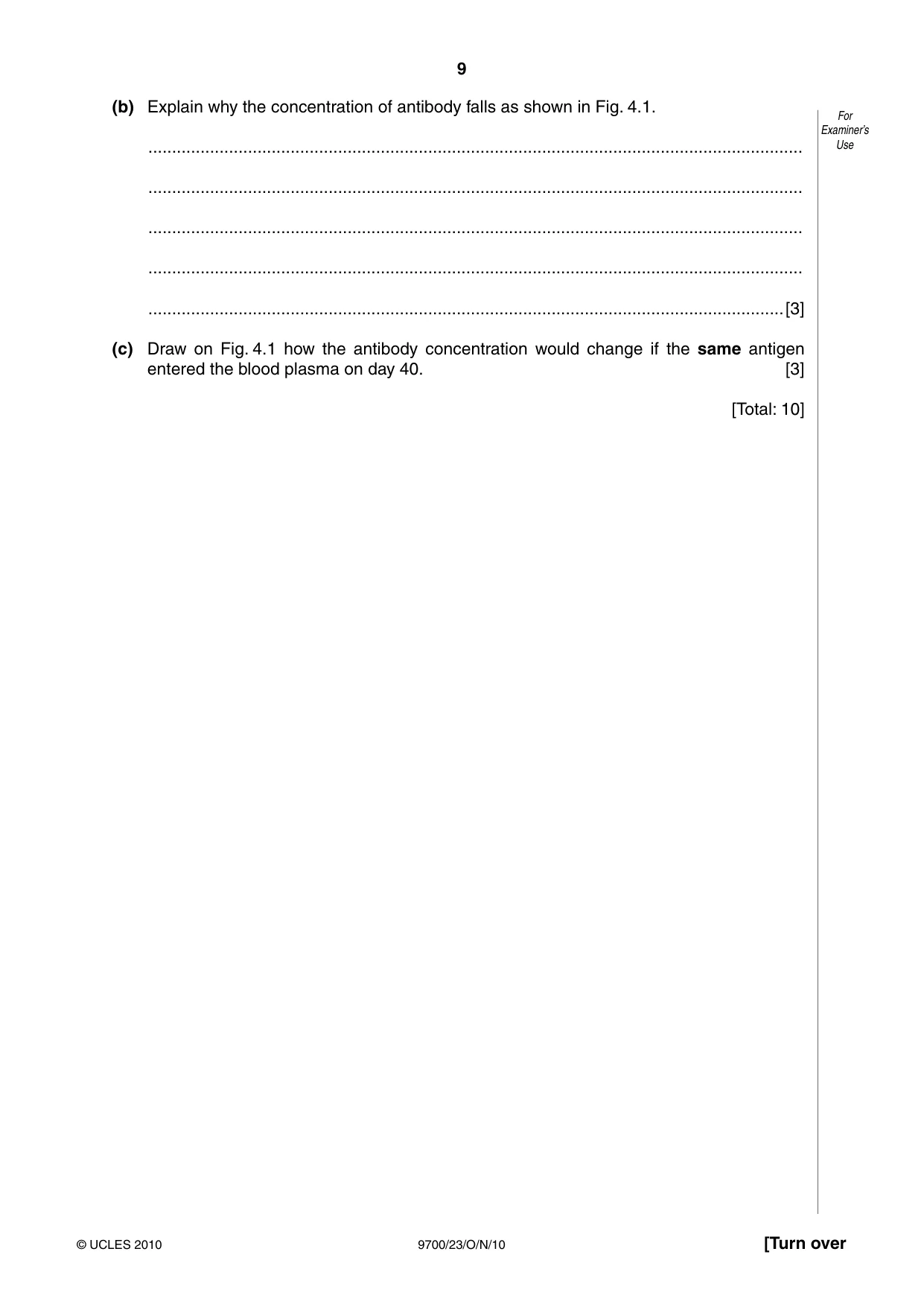
9 9700/23/O/N/10 © UCLES 2010 [Turn over For Examiner’s Use (b) Explain why the concentration of antibody falls as shown in Fig. 4.1. … … … … …[3] (c) Draw on Fig. 4.1 how the antibody concentration would change if the same antigen entered the blood plasma on day 40. [3] [Total: 10]
Question paper, page 10
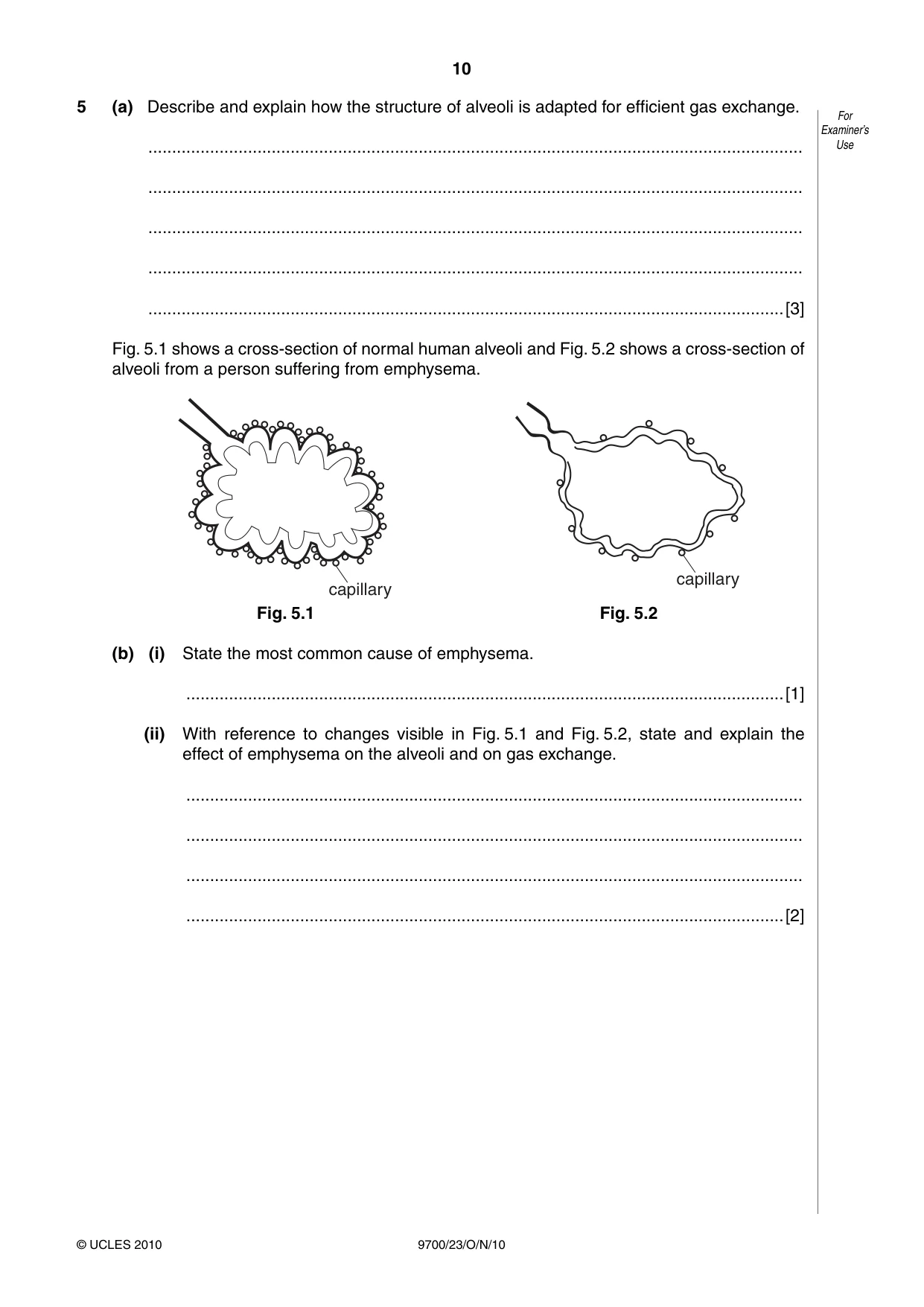
10 9700/23/O/N/10 © UCLES 2010 For Examiner’s Use 5 (a) Describe and explain how the structure of alveoli is adapted for efficient gas exchange. … … … … …[3] Fig. 5.1 shows a cross-section of normal human alveoli and Fig. 5.2 shows a cross-section of alveoli from a person suffering from emphysema. capillary capillary Fig. 5.1 Fig. 5.2 (b) (i) State the most common cause of emphysema. …[1] (ii) With reference to changes visible in Fig. 5.1 and Fig. 5.2, state and explain the effect of emphysema on the alveoli and on gas exchange. … … … …[2]
Question paper, page 11
11 9700/23/O/N/10 © UCLES 2010 [Turn over For Examiner’s Use (c) State three symptoms of emphysema. 1. … … 2. … … 3. … …[3] [Total: 9]
Question paper, page 12
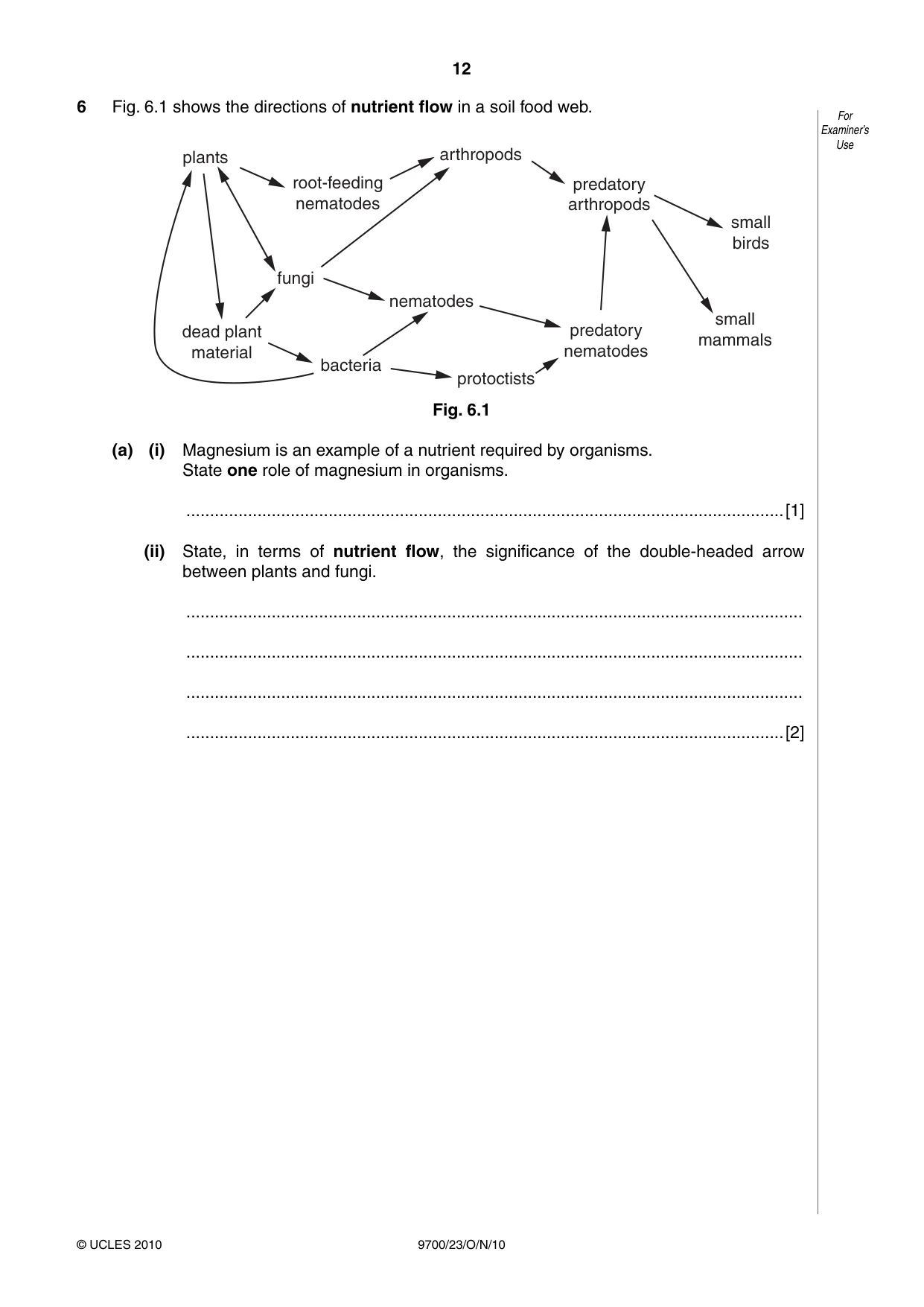
12 9700/23/O/N/10 © UCLES 2010 For Examiner’s Use 6 Fig. 6.1 shows the directions of nutrient flow in a soil food web. plants root-feeding nematodes fungi dead plant material bacteria protoctists nematodes predatory nematodes small mammals arthropods predatory arthropods small birds Fig. 6.1 (a) (i) Magnesium is an example of a nutrient required by organisms. State one role of magnesium in organisms. …[1] (ii) State, in terms of nutrient flow, the significance of the double-headed arrow between plants and fungi. … … … …[2]
Question paper, page 13
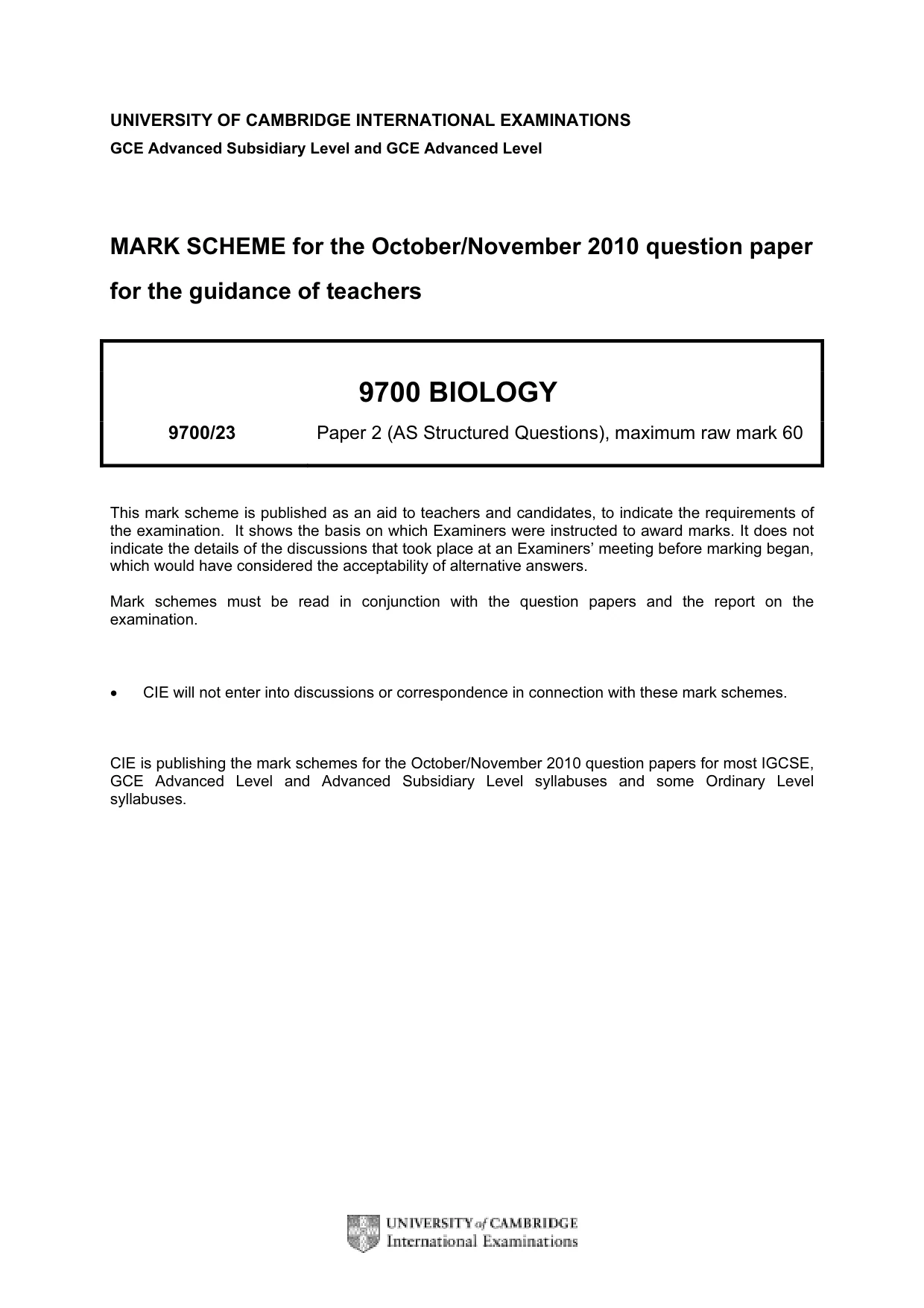
13 9700/23/O/N/10 © UCLES 2010 For Examiner’s Use (b) The small birds shown in Fig. 6.1 are preyed upon by larger birds. (i) State which trophic level these larger birds occupy. …[1] (ii) Some large animals feed on more than one trophic level. Suggest why this is so. … … … …[2] (c) Communities of organisms, in soil habitats, have been described by biologists as “the driving force for the environment”. (i) Define the terms community … … habitat … …[2] (ii) Suggest what is meant by the term “driving force for the environment”. … … … … … …[3] [Total: 11]
Question paper, page 14
14 9700/23/O/N/10 © UCLES 2010 BLANK PAGE
Question paper, page 15
15 9700/23/O/N/10 © UCLES 2010 BLANK PAGE
Question paper, page 16
16 9700/23/O/N/10 © UCLES 2010 BLANK PAGE Permission to reproduce items where third-party owned material protected by copyright is included has been sought and cleared where possible. Every reasonable effort has been made by the publisher (UCLES) to trace copyright holders, but if any items requiring clearance have unwittingly been included, the publisher will be pleased to make amends at the earliest possible opportunity. University of Cambridge International Examinations is part of the Cambridge Assessment Group. Cambridge Assessment is the brand name of University of Cambridge Local Examinations Syndicate (UCLES), which is itself a department of the University of Cambridge.
Mark scheme, page 1
UNIVERSITY OF CAMBRIDGE INTERNATIONAL EXAMINATIONS GCE Advanced Subsidiary Level and GCE Advanced Level MARK SCHEME for the October/November 2010 question paper for the guidance of teachers 9700 BIOLOGY 9700/23 Paper 2 (AS Structured Questions), maximum raw mark 60 This mark scheme is published as an aid to teachers and candidates, to indicate the requirements of the examination. It shows the basis on which Examiners were instructed to award marks. It does not indicate the details of the discussions that took place at an Examiners’ meeting before marking began, which would have considered the acceptability of alternative answers. Mark schemes must be read in conjunction with the question papers and the report on the examination. • CIE will not enter into discussions or correspondence in connection with these mark schemes. CIE is publishing the mark schemes for the October/November 2010 question papers for most IGCSE, GCE Advanced Level and Advanced Subsidiary Level syllabuses and some Ordinary Level syllabuses.
Mark scheme, page 2
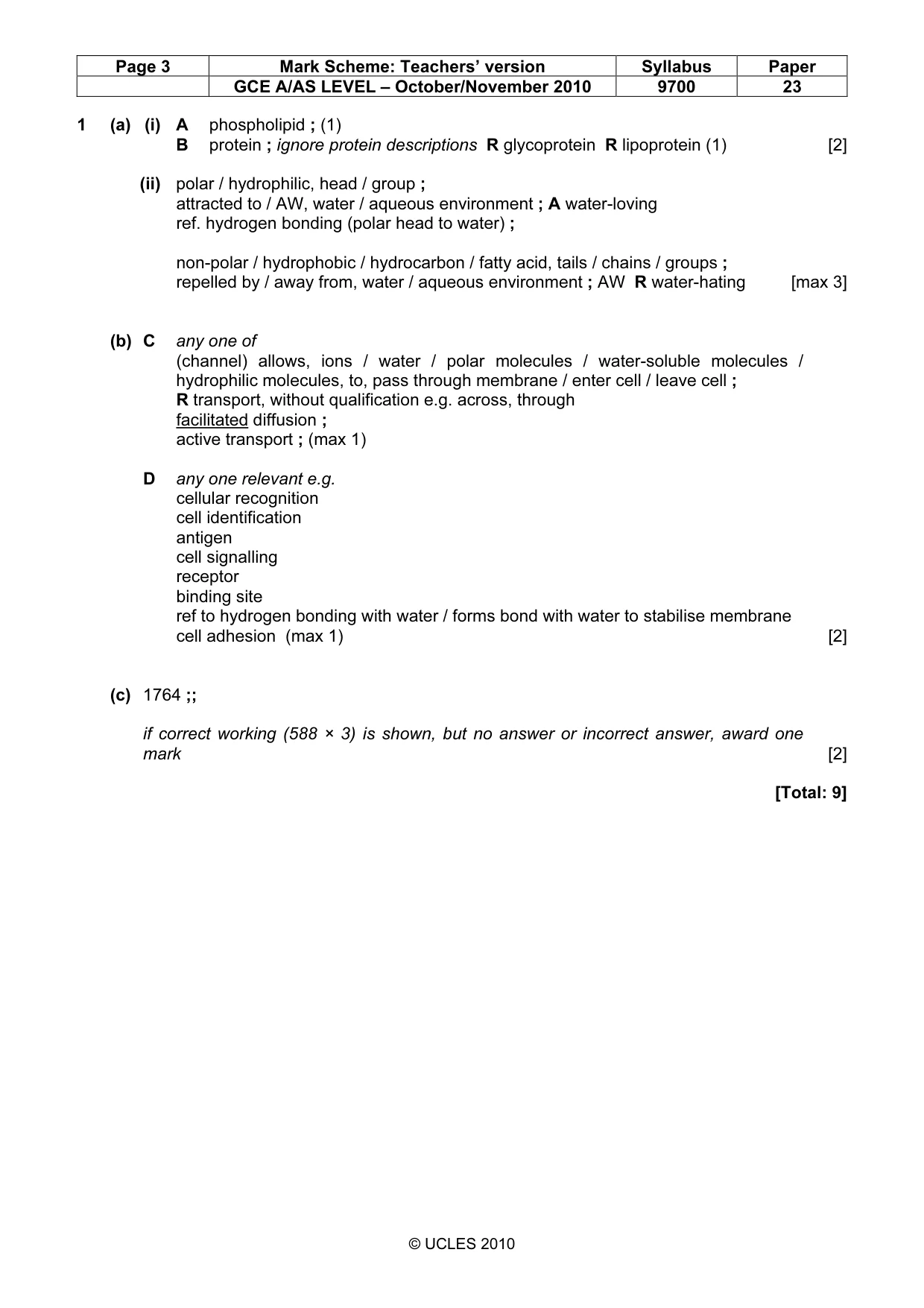
Page 2 Mark Scheme: Teachers’ version Syllabus Paper GCE A/AS LEVEL – October/November 2010 9700 23 © UCLES 2010 Mark Scheme abbreviations: ; separates marking points / alternative answers for the same point R reject A accept (for answers correctly cued by the question or guidance on the mark scheme) AW alternative wording (where responses may vary more than usual) underline actual word given must be used by the candidate (grammatical variants excepted) max indicates the maximum number of marks that can be given ora or reverse argument
Mark scheme, page 3
Page 3 Mark Scheme: Teachers’ version Syllabus Paper GCE A/AS LEVEL – October/November 2010 9700 23 © UCLES 2010 1 (a) (i) A phospholipid ; (1) B protein ; ignore protein descriptions R glycoprotein R lipoprotein (1) [2] (ii) polar / hydrophilic, head / group ; attracted to / AW, water / aqueous environment ; A water-loving ref. hydrogen bonding (polar head to water) ; non-polar / hydrophobic / hydrocarbon / fatty acid, tails / chains / groups ; repelled by / away from, water / aqueous environment ; AW R water-hating [max 3] (b) C any one of (channel) allows, ions / water / polar molecules / water-soluble molecules / hydrophilic molecules, to, pass through membrane / enter cell / leave cell ; R transport, without qualification e.g. across, through facilitated diffusion ; active transport ; (max 1) D any one relevant e.g. cellular recognition cell identification antigen cell signalling receptor binding site ref to hydrogen bonding with water / forms bond with water to stabilise membrane cell adhesion (max 1) [2] (c) 1764 ;; if correct working (588 × 3) is shown, but no answer or incorrect answer, award one mark [2] [Total: 9]
Mark scheme, page 4
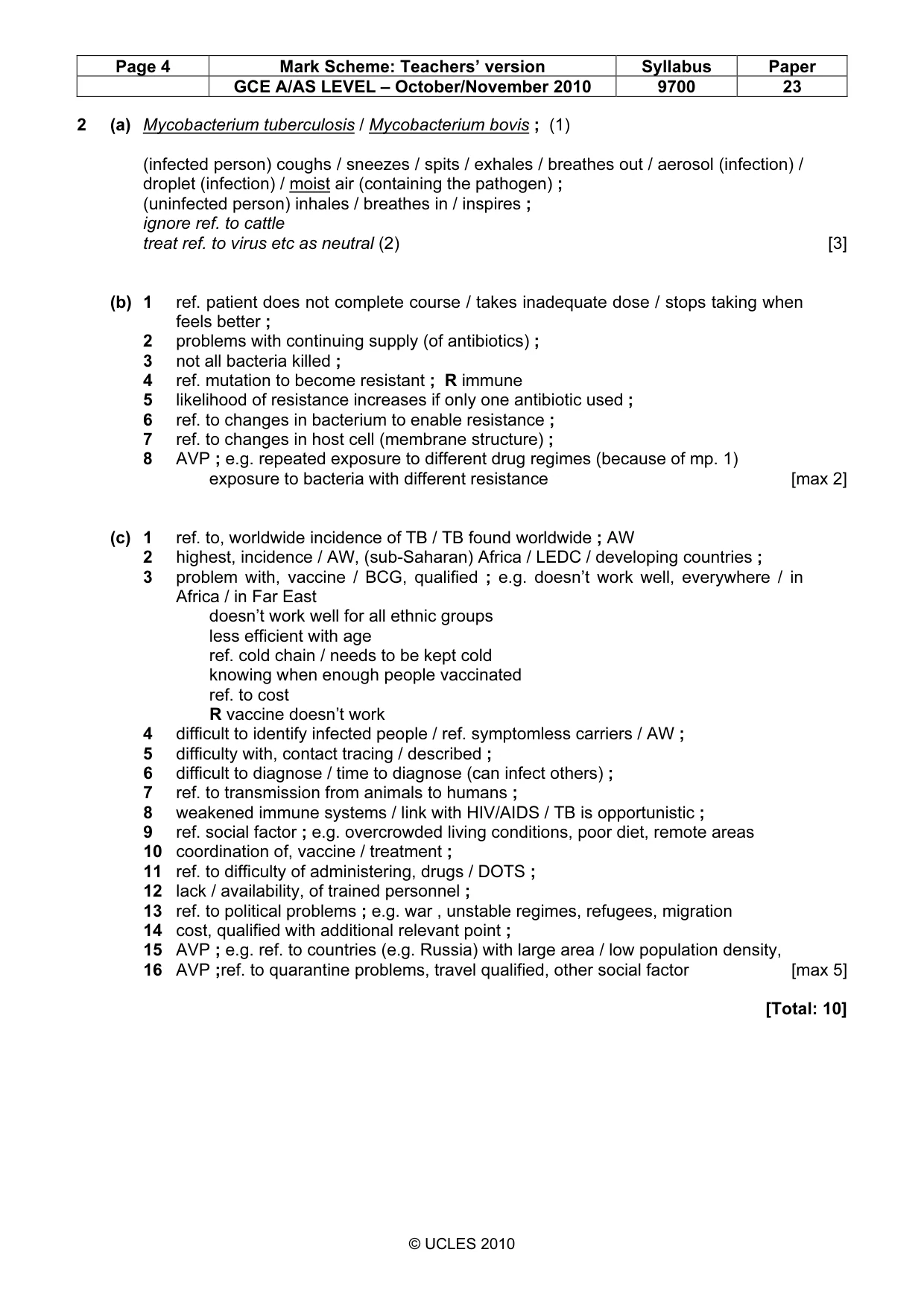
Page 4 Mark Scheme: Teachers’ version Syllabus Paper GCE A/AS LEVEL – October/November 2010 9700 23 © UCLES 2010 2 (a) Mycobacterium tuberculosis / Mycobacterium bovis ; (1) (infected person) coughs / sneezes / spits / exhales / breathes out / aerosol (infection) / droplet (infection) / moist air (containing the pathogen) ; (uninfected person) inhales / breathes in / inspires ; ignore ref. to cattle treat ref. to virus etc as neutral (2) [3] (b) 1 ref. patient does not complete course / takes inadequate dose / stops taking when feels better ; 2 problems with continuing supply (of antibiotics) ; 3 not all bacteria killed ; 4 ref. mutation to become resistant ; R immune 5 likelihood of resistance increases if only one antibiotic used ; 6 ref. to changes in bacterium to enable resistance ; 7 ref. to changes in host cell (membrane structure) ; 8 AVP ; e.g. repeated exposure to different drug regimes (because of mp. 1) exposure to bacteria with different resistance [max 2] (c) 1 ref. to, worldwide incidence of TB / TB found worldwide ; AW 2 highest, incidence / AW, (sub-Saharan) Africa / LEDC / developing countries ; 3 problem with, vaccine / BCG, qualified ; e.g. doesn’t work well, everywhere / in Africa / in Far East doesn’t work well for all ethnic groups less efficient with age ref. cold chain / needs to be kept cold knowing when enough people vaccinated ref. to cost R vaccine doesn’t work 4 difficult to identify infected people / ref. symptomless carriers / AW ; 5 difficulty with, contact tracing / described ; 6 difficult to diagnose / time to diagnose (can infect others) ; 7 ref. to transmission from animals to humans ; 8 weakened immune systems / link with HIV/AIDS / TB is opportunistic ; 9 ref. social factor ; e.g. overcrowded living conditions, poor diet, remote areas 10 coordination of, vaccine / treatment ; 11 ref. to difficulty of administering, drugs / DOTS ; 12 lack / availability, of trained personnel ; 13 ref. to political problems ; e.g. war , unstable regimes, refugees, migration 14 cost, qualified with additional relevant point ; 15 AVP ; e.g. ref. to countries (e.g. Russia) with large area / low population density, 16 AVP ;ref. to quarantine problems, travel qualified, other social factor [max 5] [Total: 10]
Mark scheme, page 5
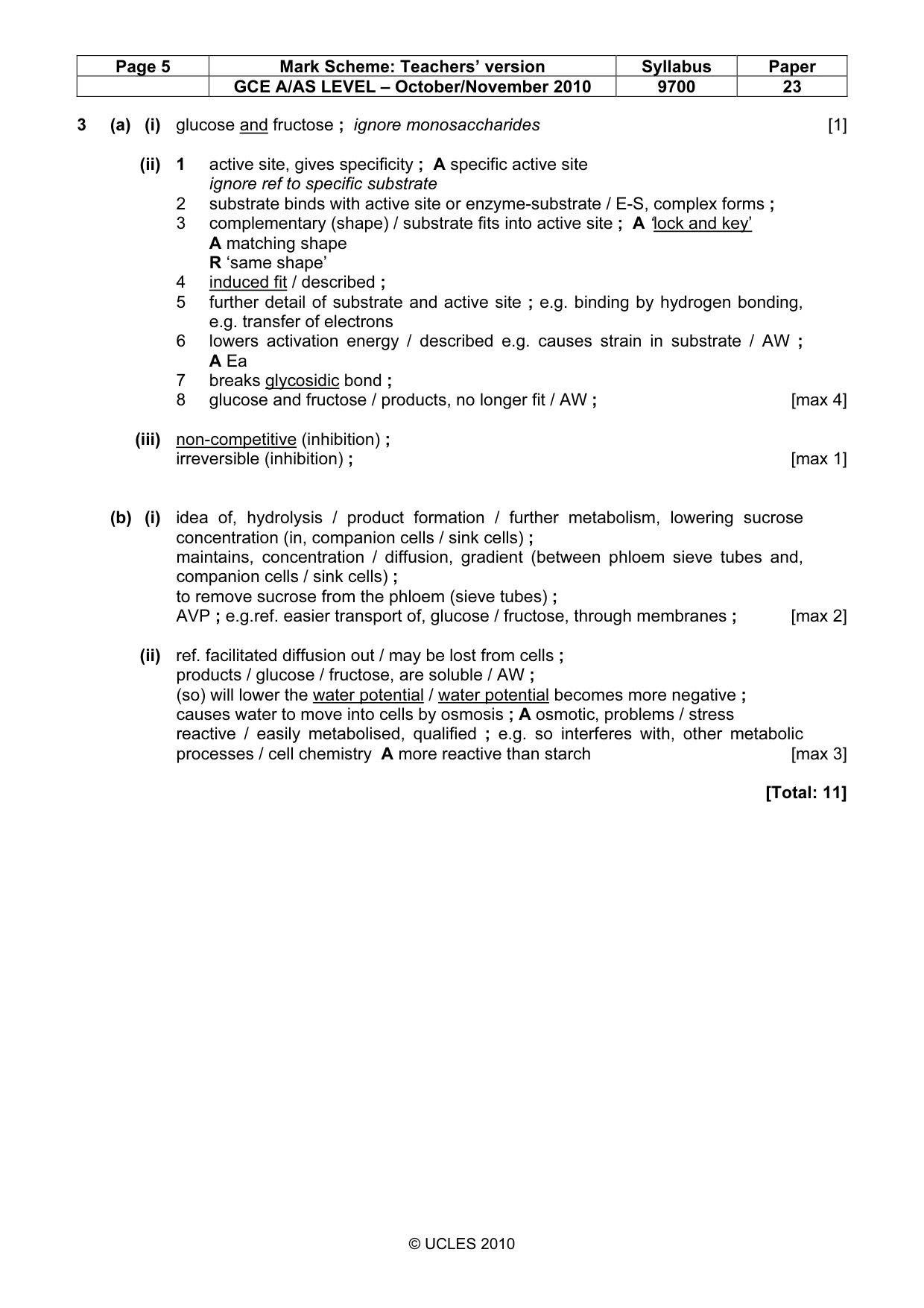
Page 5 Mark Scheme: Teachers’ version Syllabus Paper GCE A/AS LEVEL – October/November 2010 9700 23 © UCLES 2010 3 (a) (i) glucose and fructose ; ignore monosaccharides [1] (ii) 1 active site, gives specificity ; A specific active site ignore ref to specific substrate 2 substrate binds with active site or enzyme-substrate / E-S, complex forms ; 3 complementary (shape) / substrate fits into active site ; A ‘lock and key’ A matching shape R ‘same shape’ 4 induced fit / described ; 5 further detail of substrate and active site ; e.g. binding by hydrogen bonding, e.g. transfer of electrons 6 lowers activation energy / described e.g. causes strain in substrate / AW ; A Ea 7 breaks glycosidic bond ; 8 glucose and fructose / products, no longer fit / AW ; [max 4] (iii) non-competitive (inhibition) ; irreversible (inhibition) ; [max 1] (b) (i) idea of, hydrolysis / product formation / further metabolism, lowering sucrose concentration (in, companion cells / sink cells) ; maintains, concentration / diffusion, gradient (between phloem sieve tubes and, companion cells / sink cells) ; to remove sucrose from the phloem (sieve tubes) ; AVP ; e.g.ref. easier transport of, glucose / fructose, through membranes ; [max 2] (ii) ref. facilitated diffusion out / may be lost from cells ; products / glucose / fructose, are soluble / AW ; (so) will lower the water potential / water potential becomes more negative ; causes water to move into cells by osmosis ; A osmotic, problems / stress reactive / easily metabolised, qualified ; e.g. so interferes with, other metabolic processes / cell chemistry A more reactive than starch [max 3] [Total: 11]
Mark scheme, page 6
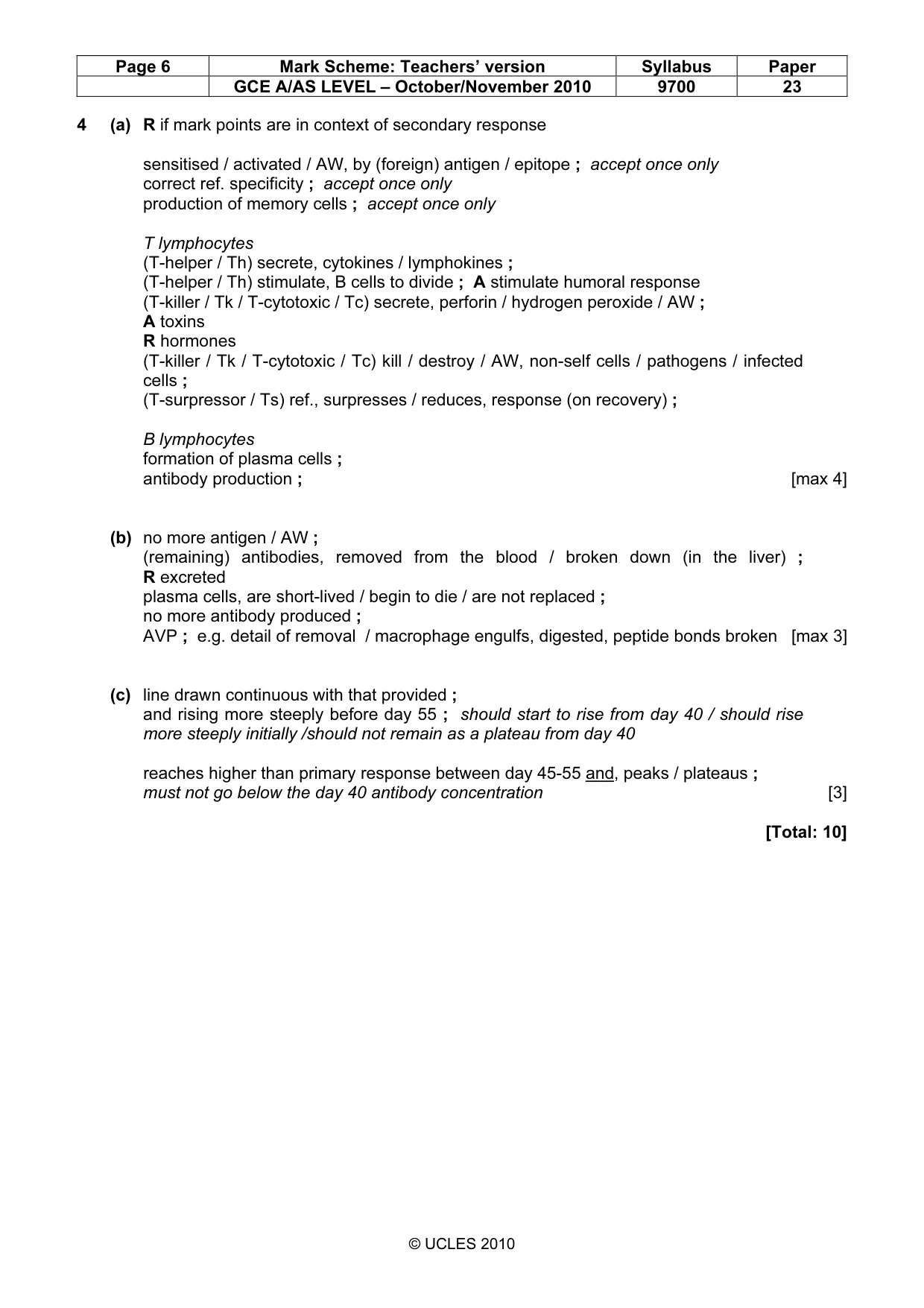
Page 6 Mark Scheme: Teachers’ version Syllabus Paper GCE A/AS LEVEL – October/November 2010 9700 23 © UCLES 2010 4 (a) R if mark points are in context of secondary response sensitised / activated / AW, by (foreign) antigen / epitope ; accept once only correct ref. specificity ; accept once only production of memory cells ; accept once only T lymphocytes (T-helper / Th) secrete, cytokines / lymphokines ; (T-helper / Th) stimulate, B cells to divide ; A stimulate humoral response (T-killer / Tk / T-cytotoxic / Tc) secrete, perforin / hydrogen peroxide / AW ; A toxins R hormones (T-killer / Tk / T-cytotoxic / Tc) kill / destroy / AW, non-self cells / pathogens / infected cells ; (T-surpressor / Ts) ref., surpresses / reduces, response (on recovery) ; B lymphocytes formation of plasma cells ; antibody production ; [max 4] (b) no more antigen / AW ; (remaining) antibodies, removed from the blood / broken down (in the liver) ; R excreted plasma cells, are short-lived / begin to die / are not replaced ; no more antibody produced ; AVP ; e.g. detail of removal / macrophage engulfs, digested, peptide bonds broken [max 3] (c) line drawn continuous with that provided ; and rising more steeply before day 55 ; should start to rise from day 40 / should rise more steeply initially /should not remain as a plateau from day 40 reaches higher than primary response between day 45-55 and, peaks / plateaus ; must not go below the day 40 antibody concentration [3] [Total: 10]
Mark scheme, page 7
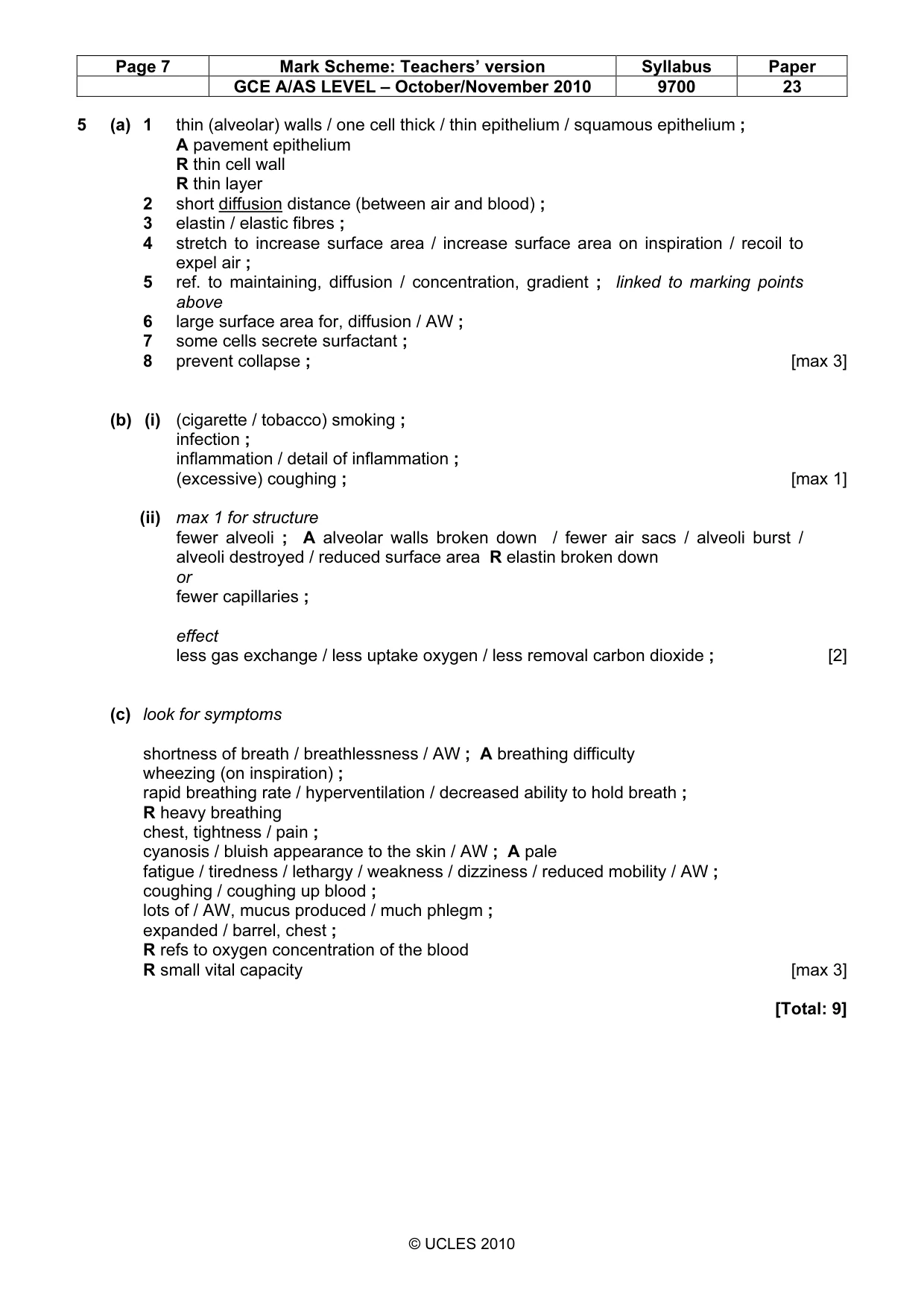
Page 7 Mark Scheme: Teachers’ version Syllabus Paper GCE A/AS LEVEL – October/November 2010 9700 23 © UCLES 2010 5 (a) 1 thin (alveolar) walls / one cell thick / thin epithelium / squamous epithelium ; A pavement epithelium R thin cell wall R thin layer 2 short diffusion distance (between air and blood) ; 3 elastin / elastic fibres ; 4 stretch to increase surface area / increase surface area on inspiration / recoil to expel air ; 5 ref. to maintaining, diffusion / concentration, gradient ; linked to marking points above 6 large surface area for, diffusion / AW ; 7 some cells secrete surfactant ; 8 prevent collapse ; [max 3] (b) (i) (cigarette / tobacco) smoking ; infection ; inflammation / detail of inflammation ; (excessive) coughing ; [max 1] (ii) max 1 for structure fewer alveoli ; A alveolar walls broken down / fewer air sacs / alveoli burst / alveoli destroyed / reduced surface area R elastin broken down or fewer capillaries ; effect less gas exchange / less uptake oxygen / less removal carbon dioxide ; [2] (c) look for symptoms shortness of breath / breathlessness / AW ; A breathing difficulty wheezing (on inspiration) ; rapid breathing rate / hyperventilation / decreased ability to hold breath ; R heavy breathing chest, tightness / pain ; cyanosis / bluish appearance to the skin / AW ; A pale fatigue / tiredness / lethargy / weakness / dizziness / reduced mobility / AW ; coughing / coughing up blood ; lots of / AW, mucus produced / much phlegm ; expanded / barrel, chest ; R refs to oxygen concentration of the blood R small vital capacity [max 3] [Total: 9]
Mark scheme, page 8
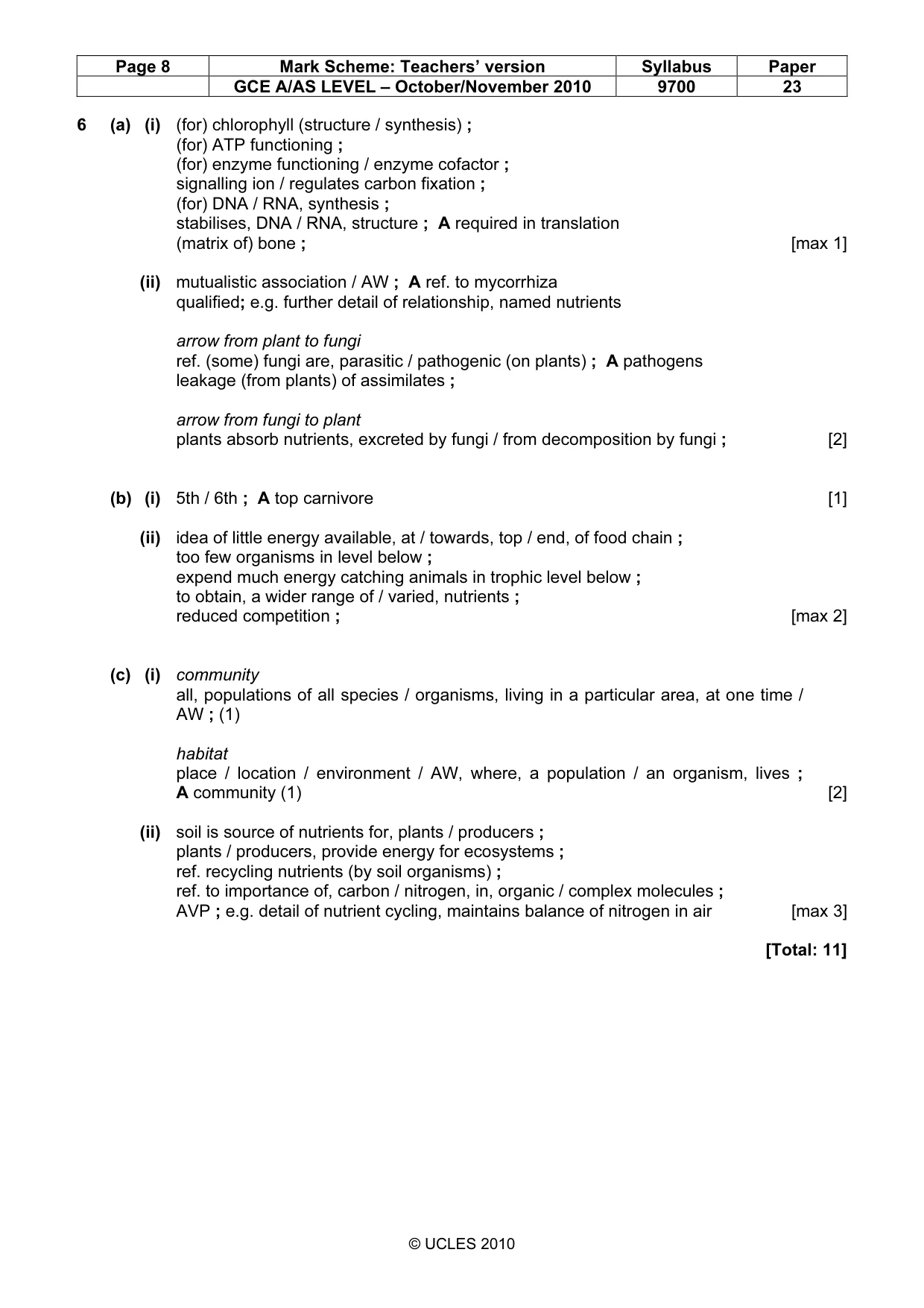
Page 8 Mark Scheme: Teachers’ version Syllabus Paper GCE A/AS LEVEL – October/November 2010 9700 23 © UCLES 2010 6 (a) (i) (for) chlorophyll (structure / synthesis) ; (for) ATP functioning ; (for) enzyme functioning / enzyme cofactor ; signalling ion / regulates carbon fixation ; (for) DNA / RNA, synthesis ; stabilises, DNA / RNA, structure ; A required in translation (matrix of) bone ; [max 1] (ii) mutualistic association / AW ; A ref. to mycorrhiza qualified; e.g. further detail of relationship, named nutrients arrow from plant to fungi ref. (some) fungi are, parasitic / pathogenic (on plants) ; A pathogens leakage (from plants) of assimilates ; arrow from fungi to plant plants absorb nutrients, excreted by fungi / from decomposition by fungi ; [2] (b) (i) 5th / 6th ; A top carnivore [1] (ii) idea of little energy available, at / towards, top / end, of food chain ; too few organisms in level below ; expend much energy catching animals in trophic level below ; to obtain, a wider range of / varied, nutrients ; reduced competition ; [max 2] (c) (i) community all, populations of all species / organisms, living in a particular area, at one time / AW ; (1) habitat place / location / environment / AW, where, a population / an organism, lives ; A community (1) [2] (ii) soil is source of nutrients for, plants / producers ; plants / producers, provide energy for ecosystems ; ref. recycling nutrients (by soil organisms) ; ref. to importance of, carbon / nitrogen, in, organic / complex molecules ; AVP ; e.g. detail of nutrient cycling, maintains balance of nitrogen in air [max 3] [Total: 11]
What you needed in this session
Cambridge’s own grade thresholds for 2010 Oct/Nov, Paper 2 · Variant 3. A higher threshold means an easier paper — the bar moves with how the cohort did.