Cambridge A Level Biology 9700 — 2010 Oct/Nov Paper 2 · Variant 2
9700/22/O/N/10 · 60 marks · ≈68 min
The question paper and its mark scheme, free to read here and free to download. This is Cambridge’s own paper, exactly as it was sat.
Question paper16 pages

Mark scheme9 pages
Answers below. Sit the paper first if you are practising.
Paper as text
Question paper, page 1
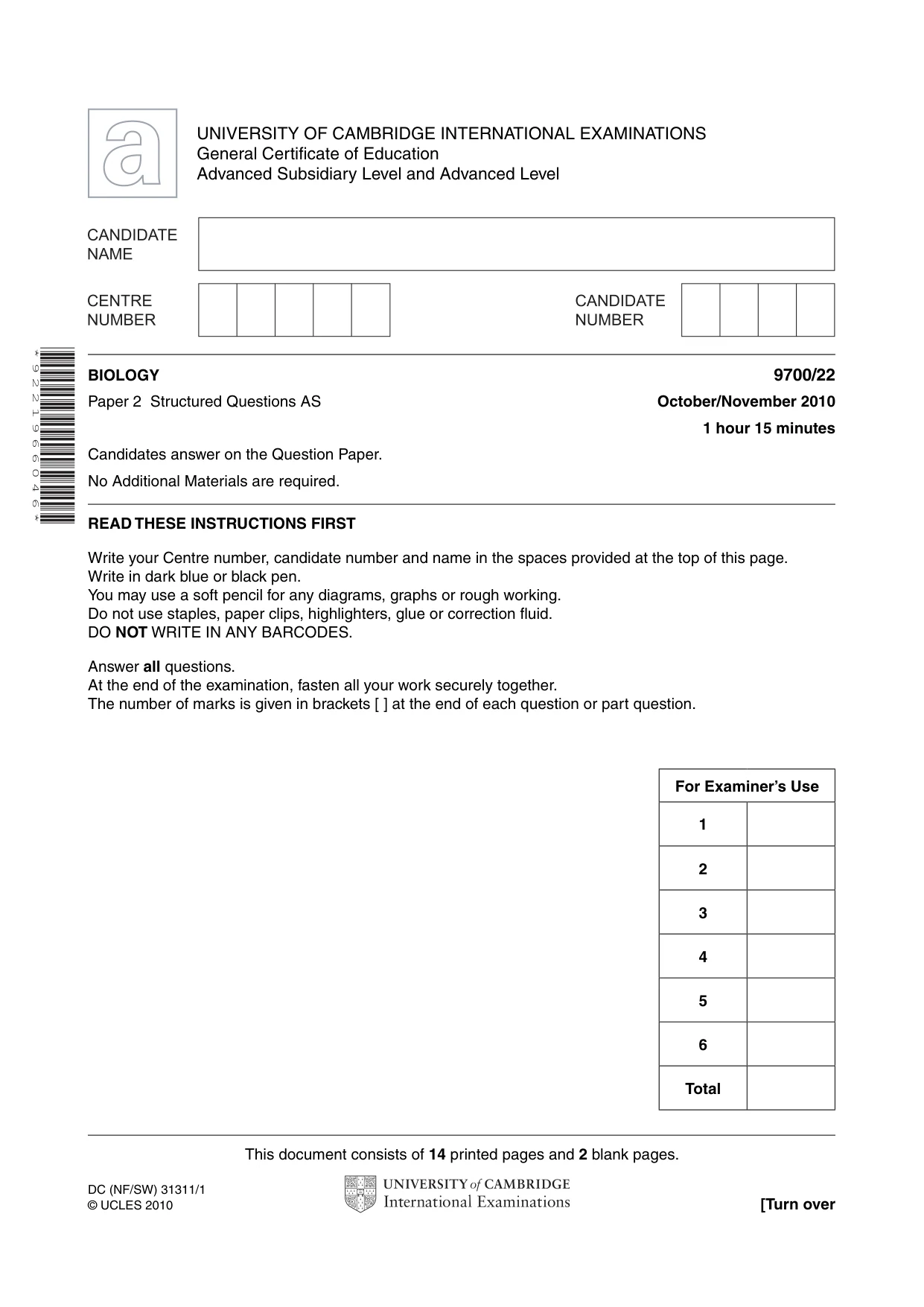
This document consists of 14 printed pages and 2 blank pages. DC (NF/SW) 31311/1 © UCLES 2010 [Turn over UNIVERSITY OF CAMBRIDGE INTERNATIONAL EXAMINATIONS General Certificate of Education Advanced Subsidiary Level and Advanced Level * 9 2 2 1 9 6 6 0 4 6 * BIOLOGY 9700/22 Paper 2 Structured Questions AS October/November 2010 1 hour 15 minutes Candidates answer on the Question Paper. No Additional Materials are required. READ THESE INSTRUCTIONS FIRST Write your Centre number, candidate number and name in the spaces provided at the top of this page. Write in dark blue or black pen. You may use a soft pencil for any diagrams, graphs or rough working. Do not use staples, paper clips, highlighters, glue or correction fluid. DO NOT WRITE IN ANY BARCODES. Answer all questions. At the end of the examination, fasten all your work securely together. The number of marks is given in brackets [ ] at the end of each question or part question. For Examiner’s Use 1 2 3 4 5 6 Total
Question paper, page 2
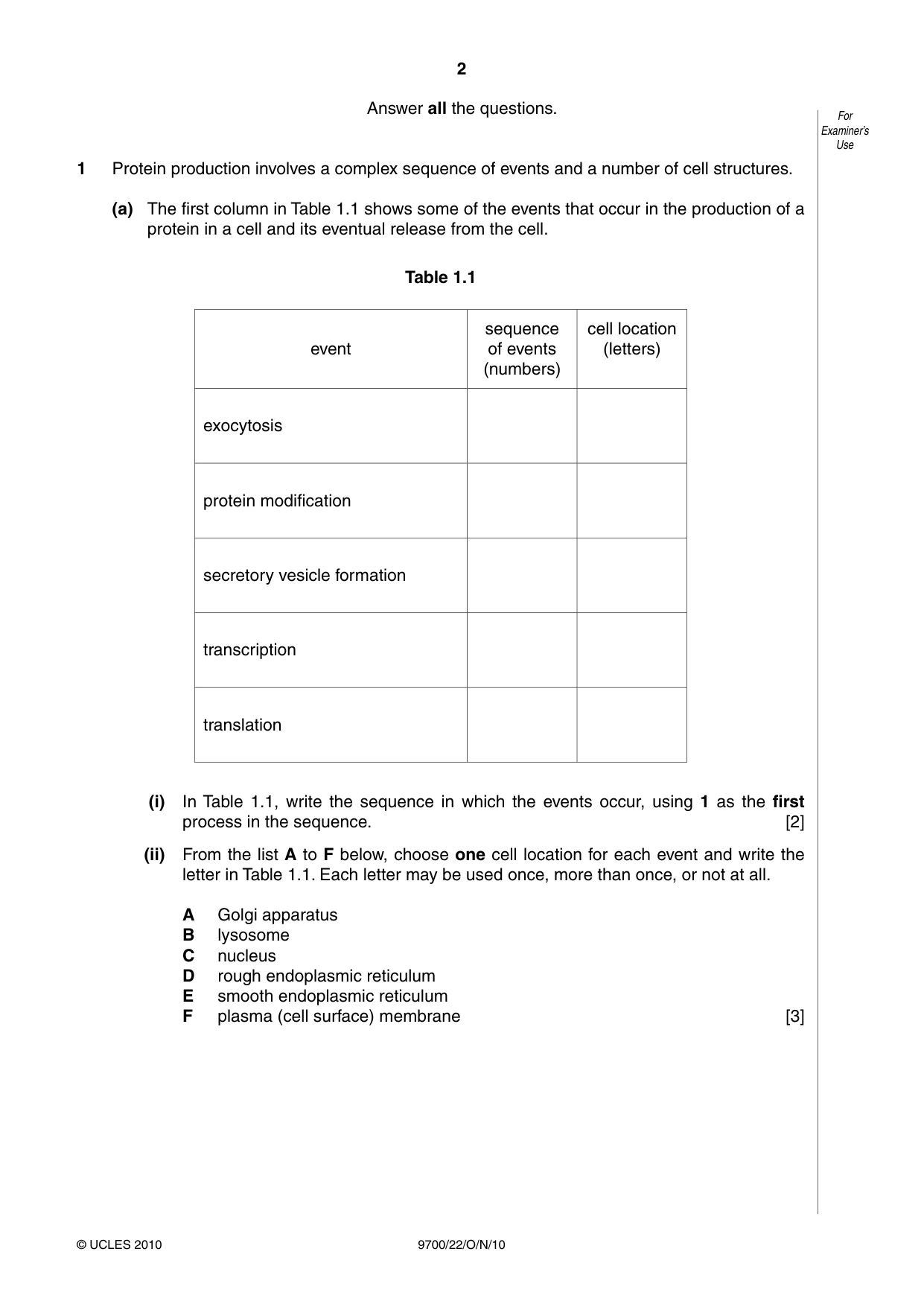
2 9700/22/O/N/10 © UCLES 2010 For Examiner’s Use Answer all the questions. 1 Protein production involves a complex sequence of events and a number of cell structures. (a) The first column in Table 1.1 shows some of the events that occur in the production of a protein in a cell and its eventual release from the cell. Table 1.1 event sequence of events (numbers) cell location (letters) exocytosis protein modification secretory vesicle formation transcription translation (i) In Table 1.1, write the sequence in which the events occur, using 1 as the first process in the sequence. [2] (ii) From the list A to F below, choose one cell location for each event and write the letter in Table 1.1. Each letter may be used once, more than once, or not at all. A Golgi apparatus B lysosome C nucleus D rough endoplasmic reticulum E smooth endoplasmic reticulum F plasma (cell surface) membrane [3]
Question paper, page 3
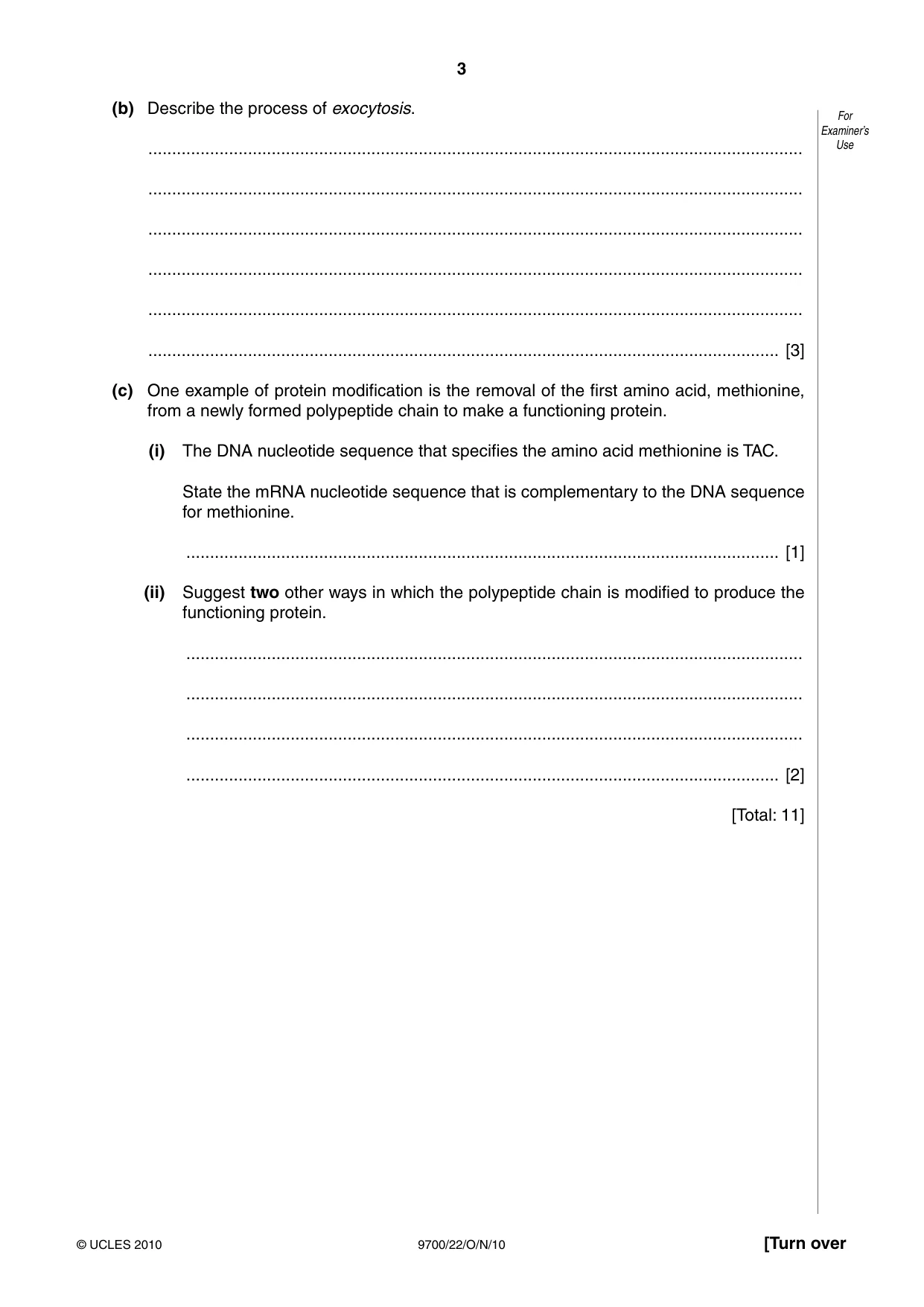
3 9700/22/O/N/10 © UCLES 2010 [Turn over For Examiner’s Use (b) Describe the process of exocytosis. … … … … … … [3] (c) One example of protein modification is the removal of the first amino acid, methionine, from a newly formed polypeptide chain to make a functioning protein. (i) The DNA nucleotide sequence that specifies the amino acid methionine is TAC. State the mRNA nucleotide sequence that is complementary to the DNA sequence for methionine. … [1] (ii) Suggest two other ways in which the polypeptide chain is modified to produce the functioning protein. … … … … [2] [Total: 11]
Question paper, page 4
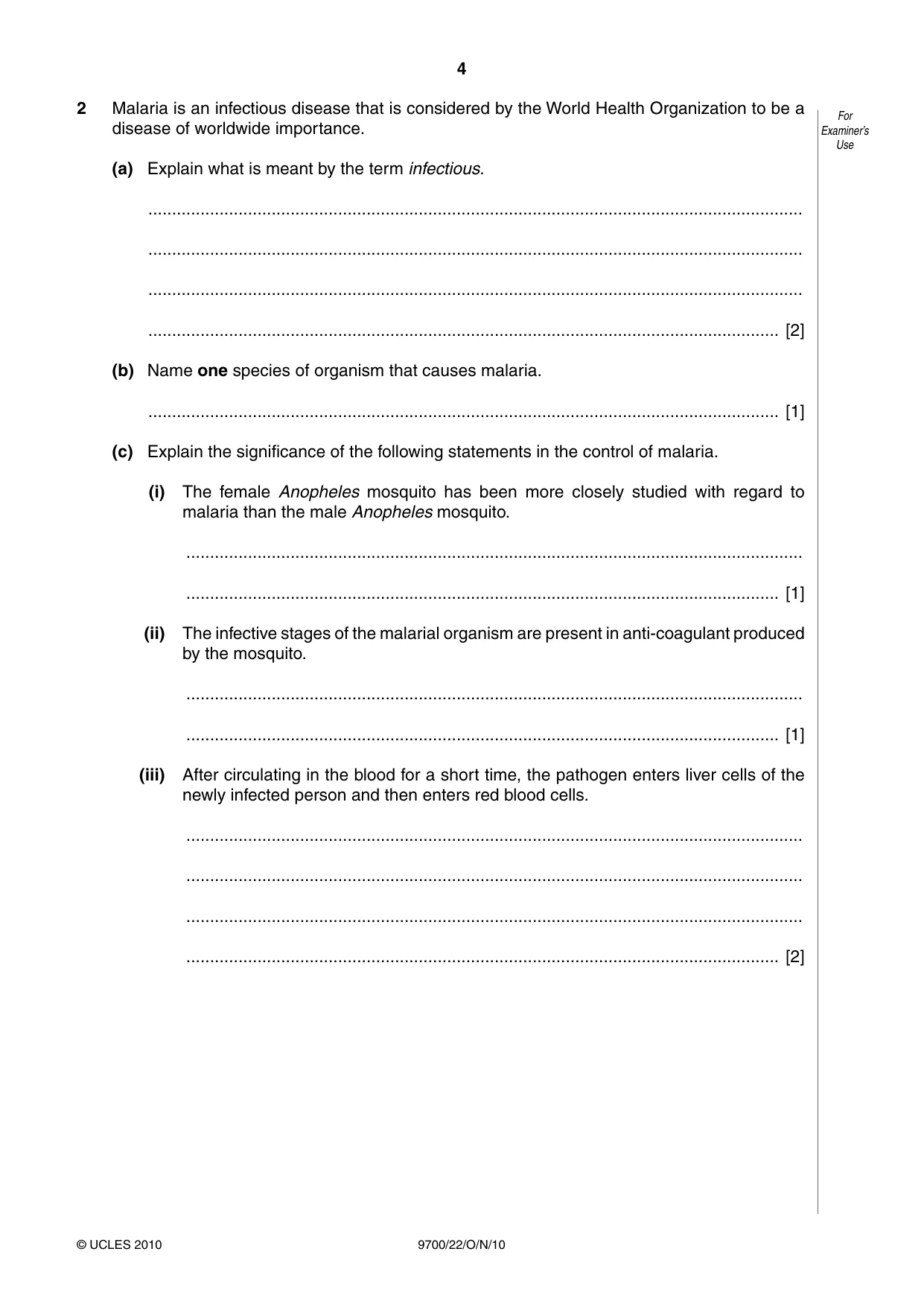
4 9700/22/O/N/10 © UCLES 2010 For Examiner’s Use 2 Malaria is an infectious disease that is considered by the World Health Organization to be a disease of worldwide importance. (a) Explain what is meant by the term infectious. … … … … [2] (b) Name one species of organism that causes malaria. … [1] (c) Explain the significance of the following statements in the control of malaria. (i) The female Anopheles mosquito has been more closely studied with regard to malaria than the male Anopheles mosquito. … … [1] (ii) The infective stages of the malarial organism are present in anti-coagulant produced by the mosquito. … … [1] (iii) After circulating in the blood for a short time, the pathogen enters liver cells of the newly infected person and then enters red blood cells. … … … … [2]
Question paper, page 5
5 9700/22/O/N/10 © UCLES 2010 [Turn over For Examiner’s Use (d) Discuss the factors that determine the distribution of malaria worldwide. … … … … … … … … … [4] [Total: 11]
Question paper, page 6
6 9700/22/O/N/10 © UCLES 2010 For Examiner’s Use 3 (a) Enzymes are globular proteins that catalyse metabolic reactions. Describe the features of globular proteins. … … … … … … [3] (b) Enzymes can be used to remove cell walls from plant and fungal cells. The cells are incubated in a solution that contains a mixture of enzymes. (i) Suggest an explanation for the fact that a different mixture of enzymes is required to remove the walls of plant cells compared to the walls of fungal cells. … … … … … [2] (ii) Explain why, when plant cells are incubated with enzymes to remove their cell walls, it is important to maintain an optimum pH. … … … … … … … [3]
Question paper, page 7
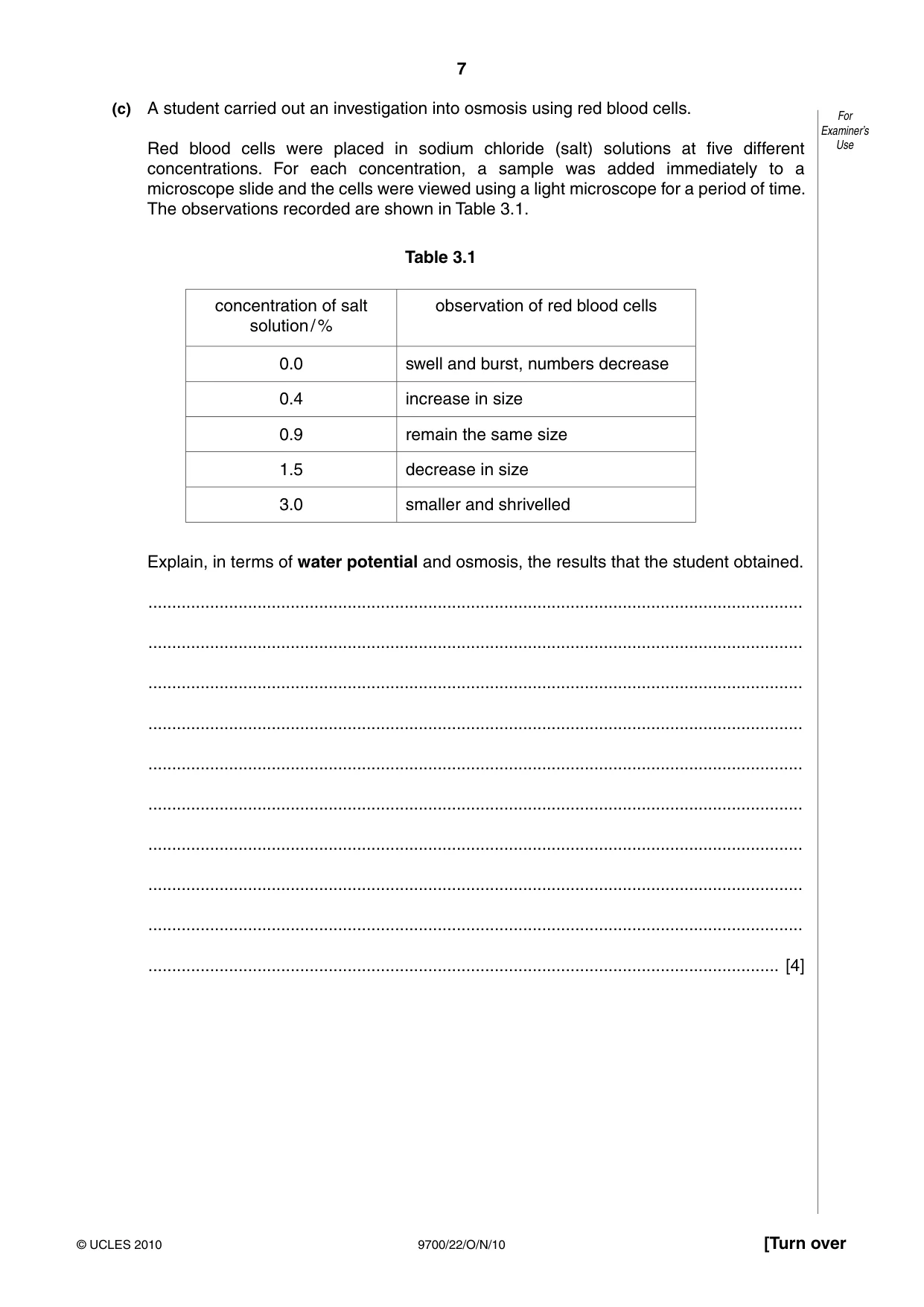
7 9700/22/O/N/10 © UCLES 2010 [Turn over For Examiner’s Use (c) A student carried out an investigation into osmosis using red blood cells. Red blood cells were placed in sodium chloride (salt) solutions at five different concentrations. For each concentration, a sample was added immediately to a microscope slide and the cells were viewed using a light microscope for a period of time. The observations recorded are shown in Table 3.1. Table 3.1 concentration of salt solution / % observation of red blood cells 0.0 swell and burst, numbers decrease 0.4 increase in size 0.9 remain the same size 1.5 decrease in size 3.0 smaller and shrivelled Explain, in terms of water potential and osmosis, the results that the student obtained. … … … … … … … … … … [4]
Question paper, page 8
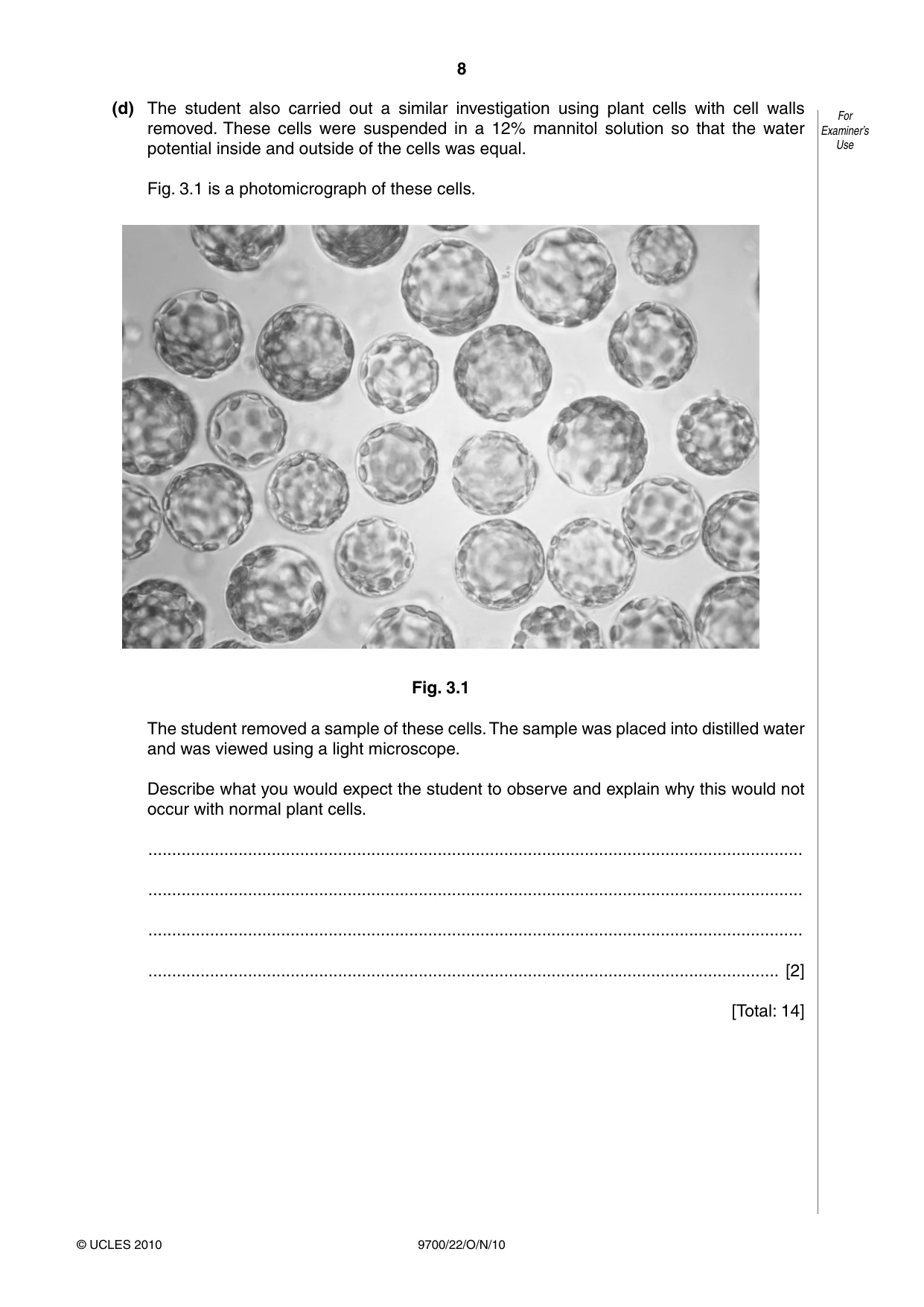
8 9700/22/O/N/10 © UCLES 2010 For Examiner’s Use (d) The student also carried out a similar investigation using plant cells with cell walls removed. These cells were suspended in a 12% mannitol solution so that the water potential inside and outside of the cells was equal. Fig. 3.1 is a photomicrograph of these cells. Fig. 3.1 The student removed a sample of these cells. The sample was placed into distilled water and was viewed using a light microscope. Describe what you would expect the student to observe and explain why this would not occur with normal plant cells. … … … … [2] [Total: 14]
Question paper, page 9
9 9700/22/O/N/10 © UCLES 2010 [Turn over BLANK PAGE
Question paper, page 10
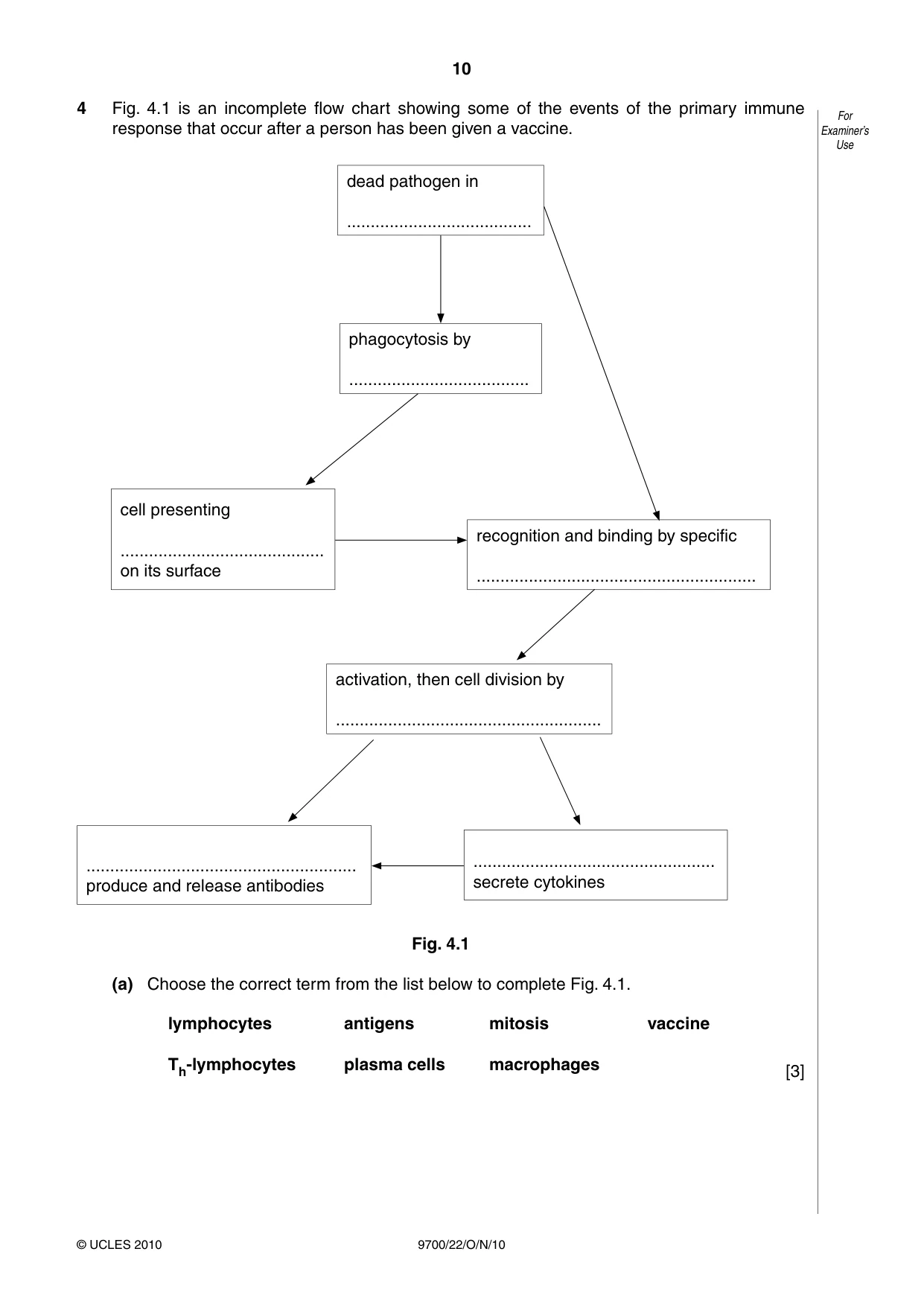
10 9700/22/O/N/10 © UCLES 2010 For Examiner’s Use 4 Fig. 4.1 is an incomplete flow chart showing some of the events of the primary immune response that occur after a person has been given a vaccine. dead pathogen in … phagocytosis by … cell presenting … on its surface recognition and binding by specific … activation, then cell division by … … produce and release antibodies … secrete cytokines Fig. 4.1 (a) Choose the correct term from the list below to complete Fig. 4.1. lymphocytes antigens mitosis vaccine Th-lymphocytes plasma cells macrophages [3]
Question paper, page 11
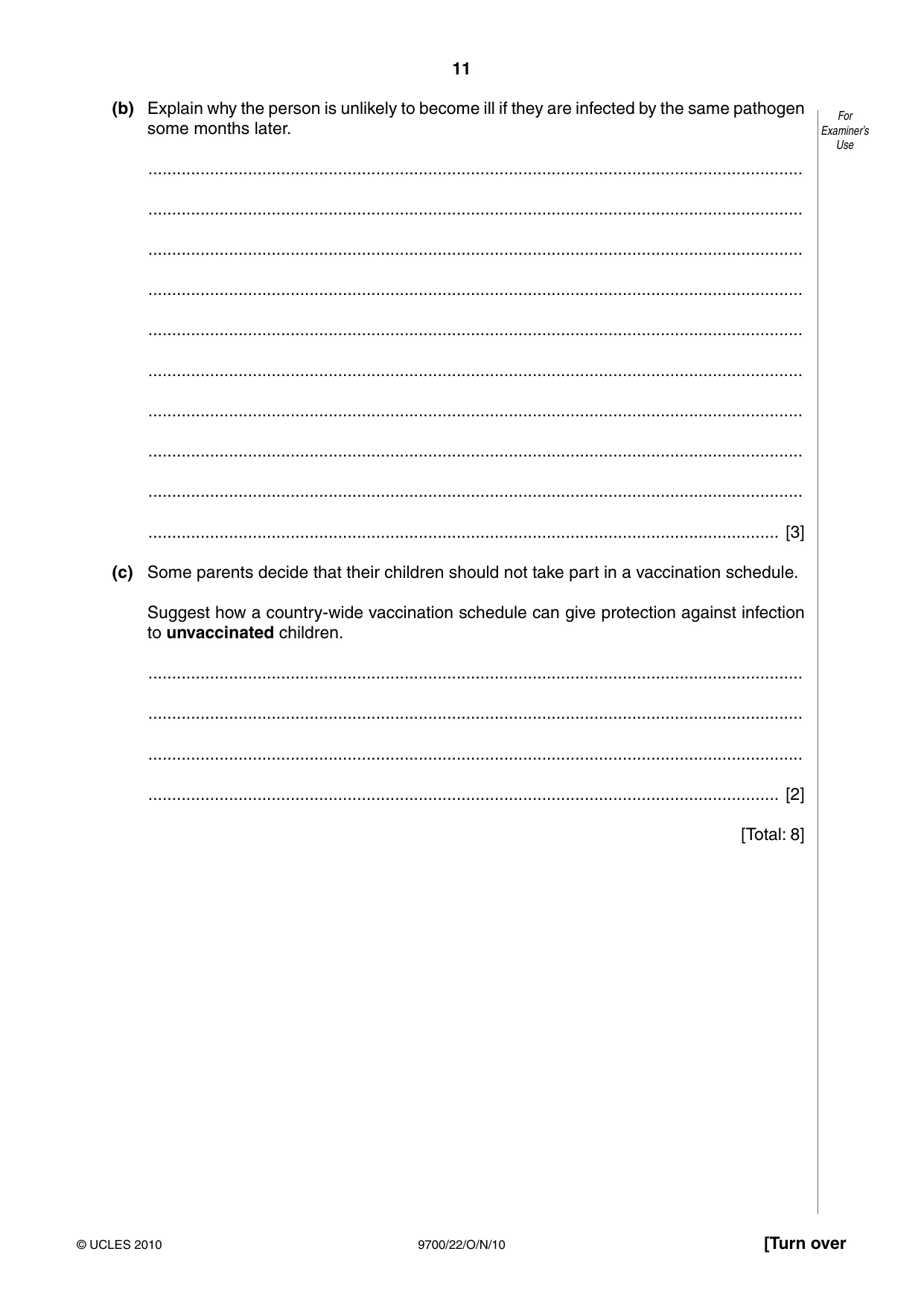
11 9700/22/O/N/10 © UCLES 2010 [Turn over For Examiner’s Use (b) Explain why the person is unlikely to become ill if they are infected by the same pathogen some months later. … … … … … … … … … … [3] (c) Some parents decide that their children should not take part in a vaccination schedule. Suggest how a country-wide vaccination schedule can give protection against infection to unvaccinated children. … … … … [2] [Total: 8]
Question paper, page 12
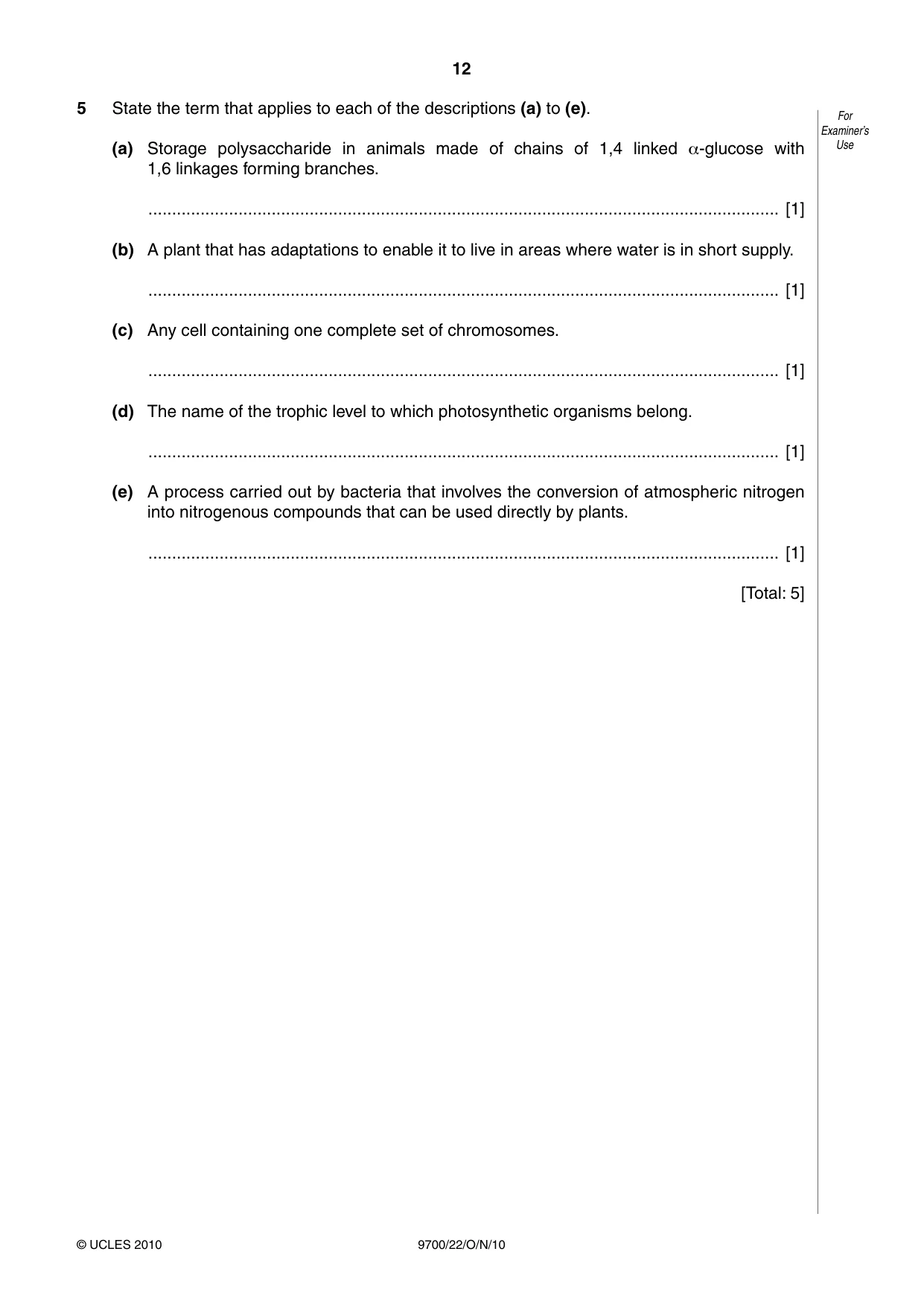
12 9700/22/O/N/10 © UCLES 2010 For Examiner’s Use 5 State the term that applies to each of the descriptions (a) to (e). (a) Storage polysaccharide in animals made of chains of 1,4 linked α-glucose with 1,6 linkages forming branches. … [1] (b) A plant that has adaptations to enable it to live in areas where water is in short supply. … [1] (c) Any cell containing one complete set of chromosomes. … [1] (d) The name of the trophic level to which photosynthetic organisms belong. … [1] (e) A process carried out by bacteria that involves the conversion of atmospheric nitrogen into nitrogenous compounds that can be used directly by plants. … [1] [Total: 5]
Question paper, page 13
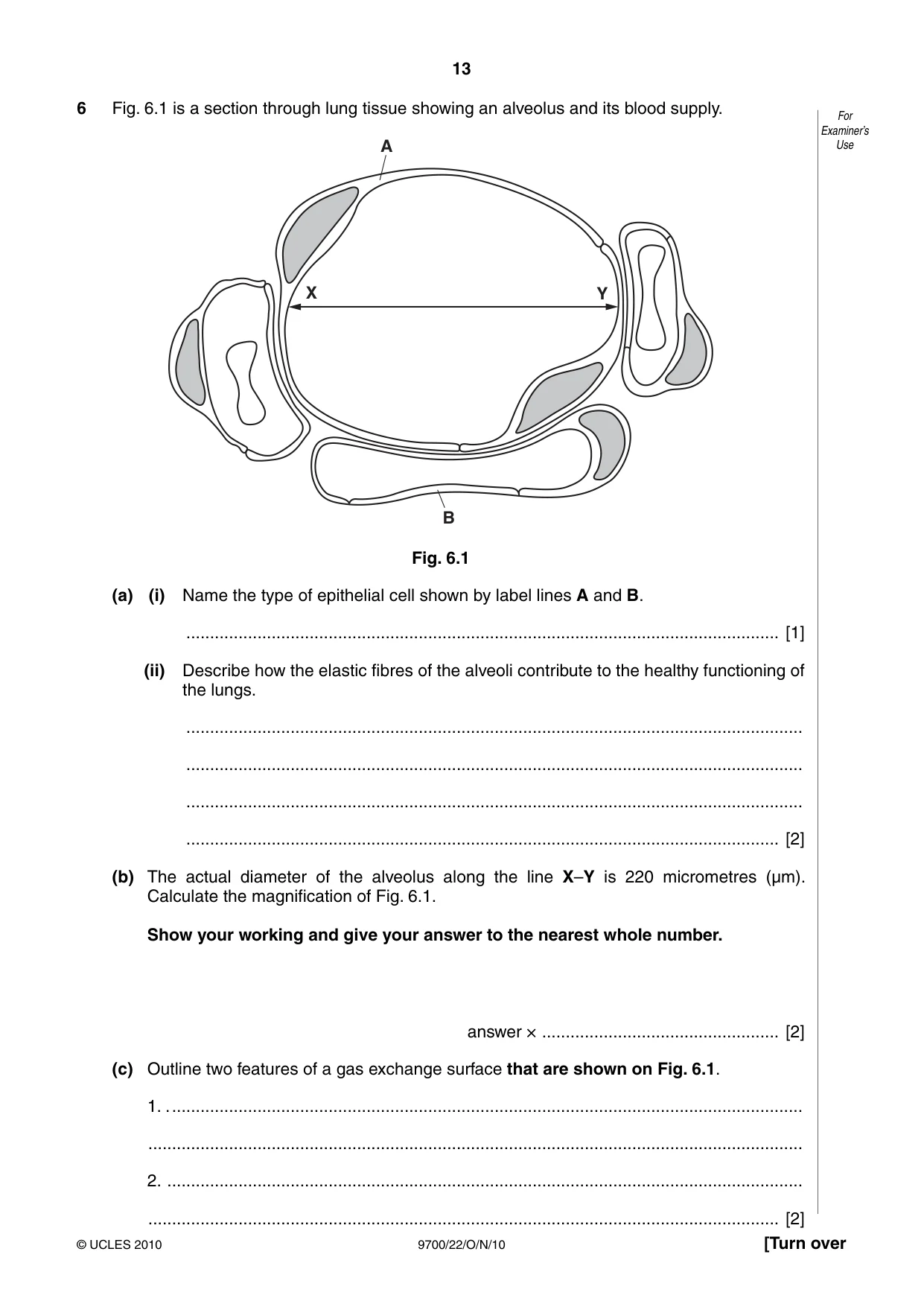
13 9700/22/O/N/10 © UCLES 2010 [Turn over For Examiner’s Use 6 Fig. 6.1 is a section through lung tissue showing an alveolus and its blood supply. X Y A B Fig. 6.1 (a) (i) Name the type of epithelial cell shown by label lines A and B. … [1] (ii) Describe how the elastic fibres of the alveoli contribute to the healthy functioning of the lungs. … … … … [2] (b) The actual diameter of the alveolus along the line X–Y is 220 micrometres (µm). Calculate the magnification of Fig. 6.1. Show your working and give your answer to the nearest whole number. answer × … [2] (c) Outline two features of a gas exchange surface that are shown on Fig. 6.1. 1. . … … 2. … … [2]
Question paper, page 14
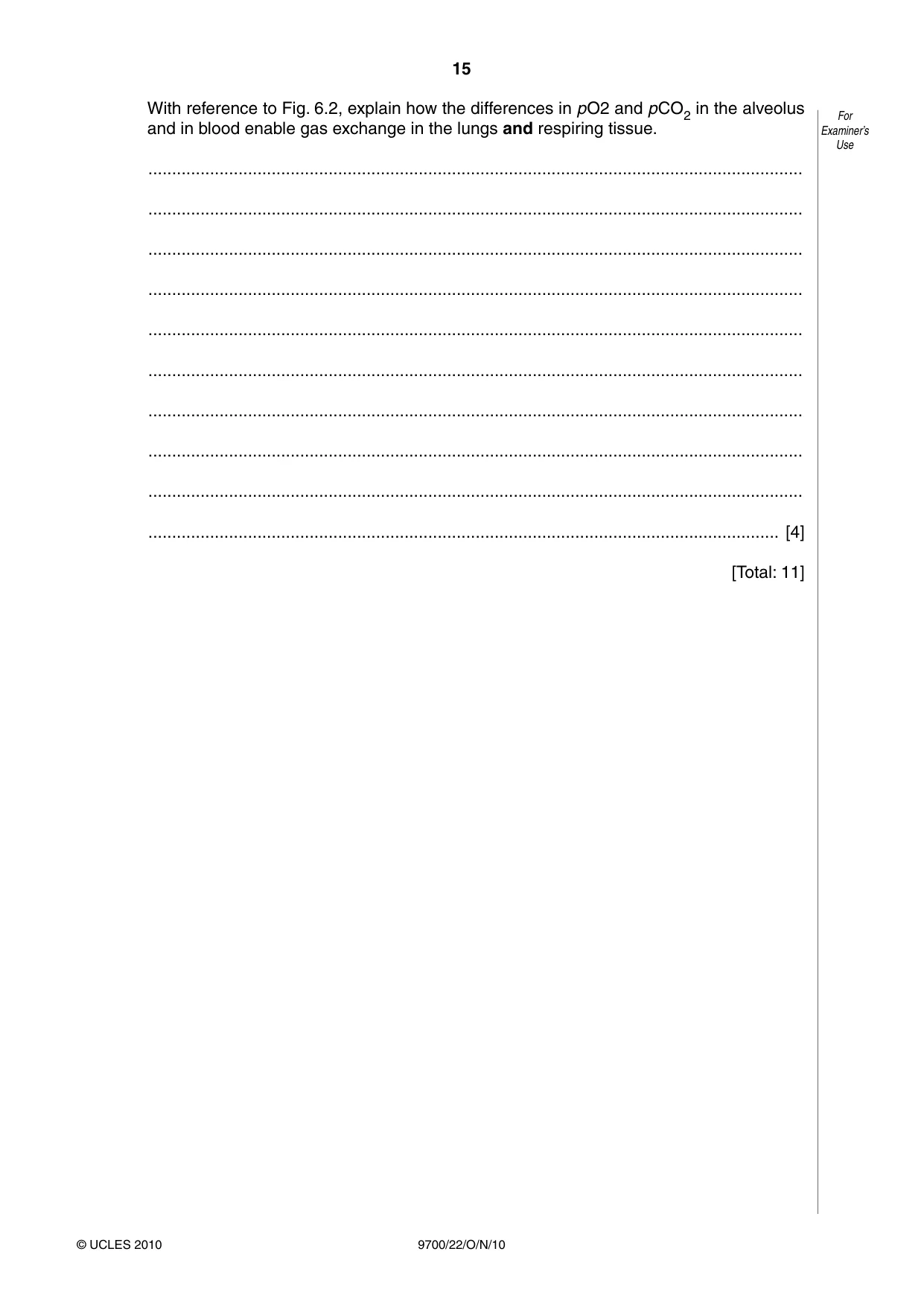
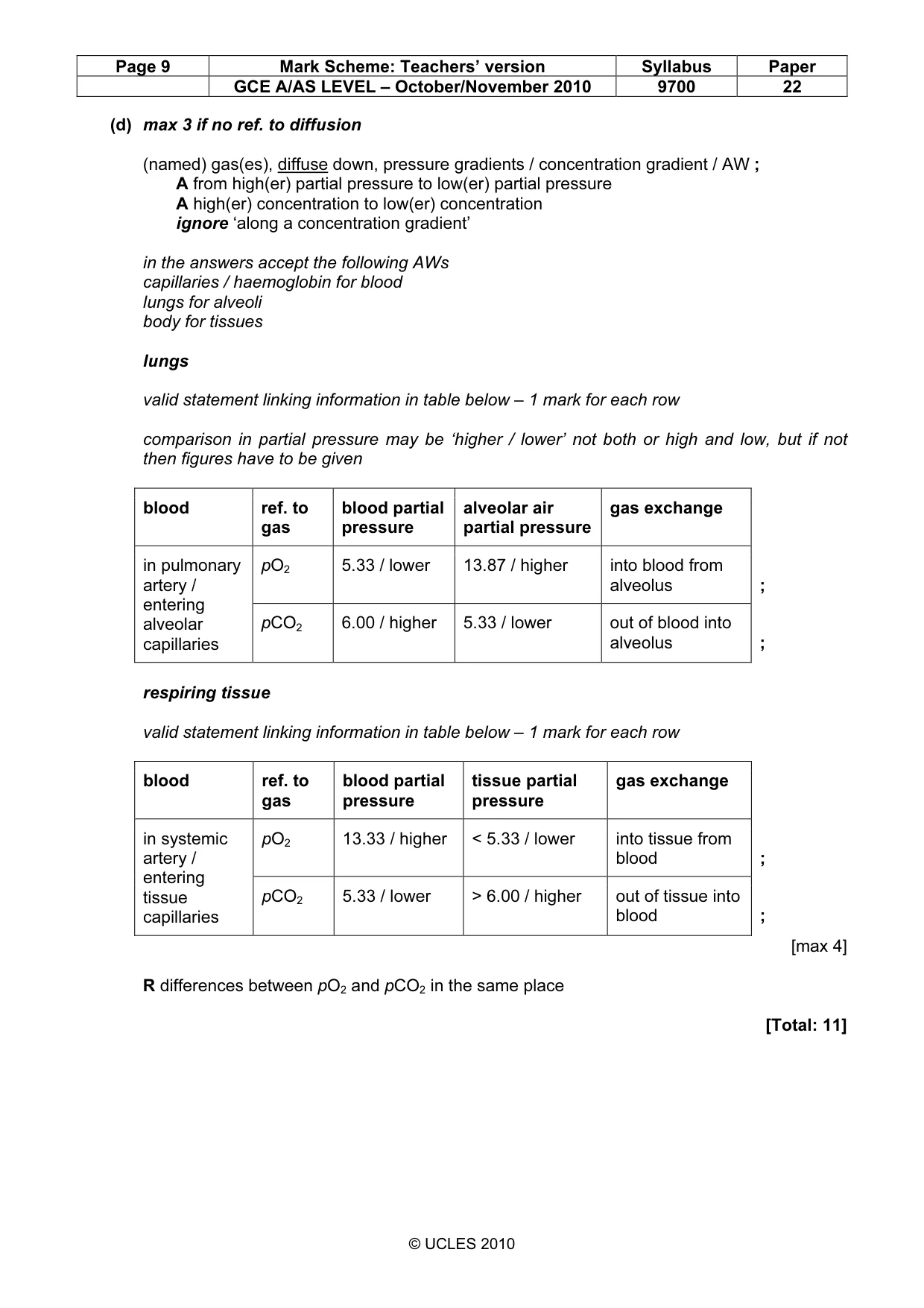
14 9700/22/O/N/10 © UCLES 2010 For Examiner’s Use (d) Fig. 6.2 is a simplified diagram of the circulatory system of a human, showing gas exchange in the lungs and in respiring tissue. The partial pressures of oxygen (pO2) and carbon dioxide (pCO2) at four locations are also shown. branch of pulmonary artery pCO2 6.00 kPa pO2 5.33 kPa pCO2 5.33 kPa pO2 13.87 kPa capillary network (venous end) pCO2 6.00 kPa pO2 5.33 kPa capillary network (arterial end) pCO2 5.33 kPa pO2 13.33 kPa not to scale branch of pulmonary vein alveolus body tissue heart pCO2 5.33 kPa pO2 13.87 kPa Fig. 6.2
Question paper, page 15
15 9700/22/O/N/10 © UCLES 2010 For Examiner’s Use With reference to Fig. 6.2, explain how the differences in pO2 and pCO2 in the alveolus and in blood enable gas exchange in the lungs and respiring tissue. … … … … … … … … … … [4] [Total: 11]
Question paper, page 16
16 9700/22/O/N/10 © UCLES 2010 BLANK PAGE Copyright Acknowledgements: Question 3 Figure 3.1 © Dr. Jeremy Burgess/Science Photo Library. Permission to reproduce items where third-party owned material protected by copyright is included has been sought and cleared where possible. Every reasonable effort has been made by the publisher (UCLES) to trace copyright holders, but if any items requiring clearance have unwittingly been included, the publisher will be pleased to make amends at the earliest possible opportunity. University of Cambridge International Examinations is part of the Cambridge Assessment Group. Cambridge Assessment is the brand name of University of Cambridge Local Examinations Syndicate (UCLES), which is itself a department of the University of Cambridge.
Mark scheme, page 1
UNIVERSITY OF CAMBRIDGE INTERNATIONAL EXAMINATIONS GCE Advanced Subsidiary Level and GCE Advanced Level MARK SCHEME for the October/November 2010 question paper for the guidance of teachers 9700 BIOLOGY 9700/22 Paper 2 (AS Structured Questions), maximum raw mark 60 This mark scheme is published as an aid to teachers and candidates, to indicate the requirements of the examination. It shows the basis on which Examiners were instructed to award marks. It does not indicate the details of the discussions that took place at an Examiners’ meeting before marking began, which would have considered the acceptability of alternative answers. Mark schemes must be read in conjunction with the question papers and the report on the examination. • CIE will not enter into discussions or correspondence in connection with these mark schemes. CIE is publishing the mark schemes for the October/November 2010 question papers for most IGCSE, GCE Advanced Level and Advanced Subsidiary Level syllabuses and some Ordinary Level syllabuses.
Mark scheme, page 2
Page 2 Mark Scheme: Teachers’ version Syllabus Paper GCE A/AS LEVEL – October/November 2010 9700 22 © UCLES 2010 Mark Scheme abbreviations: ; separates marking points / alternative answers for the same point R reject A accept (for answers correctly cued by the question or guidance on the mark scheme AW alternative wording (where responses may vary more than usual) underline actual word given must be used by the candidate (grammatical variants excepted) max indicates the maximum number of marks that can be given ora or reverse argument
Mark scheme, page 3
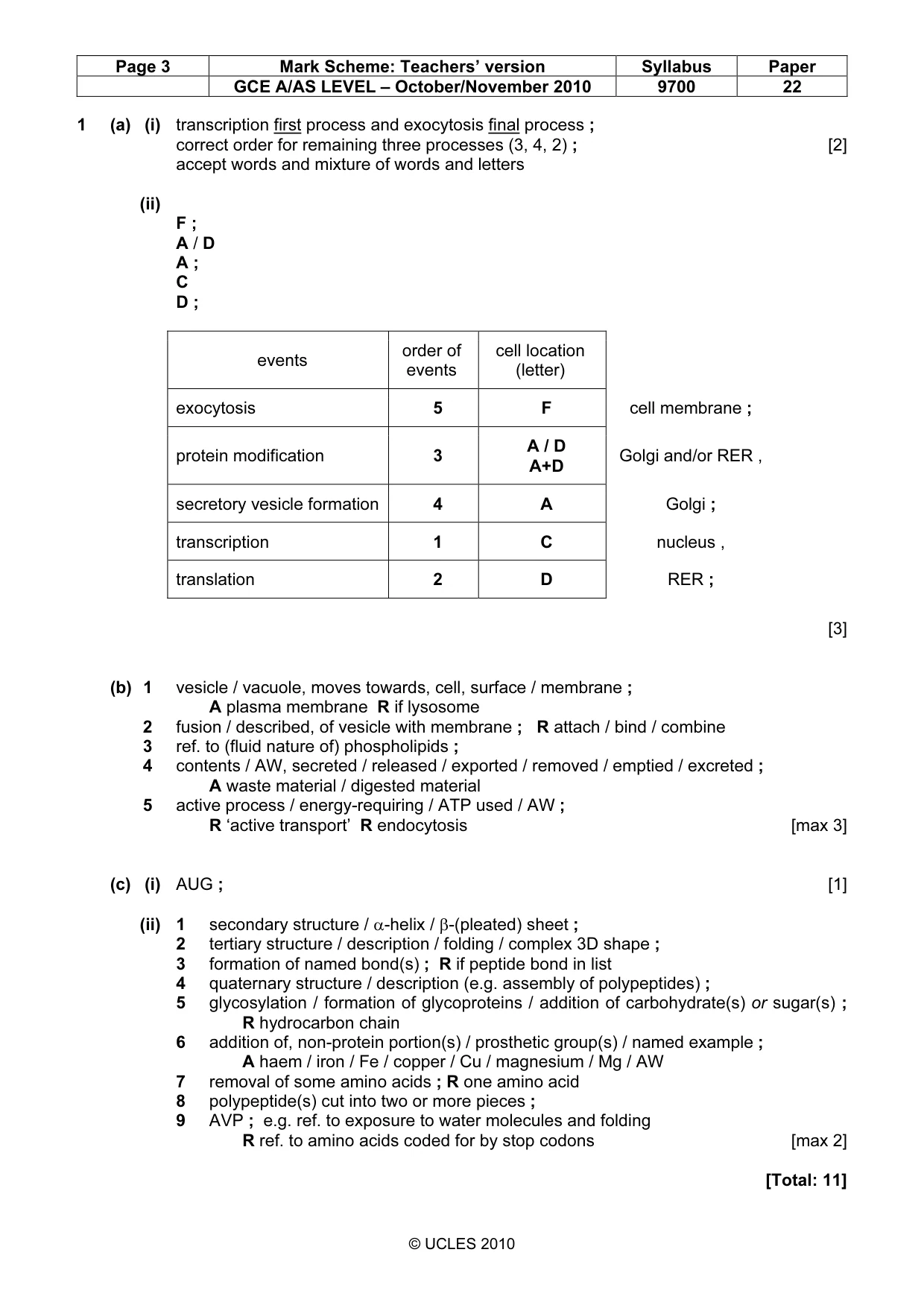
Page 3 Mark Scheme: Teachers’ version Syllabus Paper GCE A/AS LEVEL – October/November 2010 9700 22 © UCLES 2010 1 (a) (i) transcription first process and exocytosis final process ; correct order for remaining three processes (3, 4, 2) ; [2] accept words and mixture of words and letters (ii) F ; A / D A ; C D ; events order of events cell location (letter) exocytosis 5 F cell membrane ; protein modification 3 A / D A+D Golgi and/or RER , secretory vesicle formation 4 A Golgi ; transcription 1 C nucleus , translation 2 D RER ; [3] (b) 1 vesicle / vacuole, moves towards, cell, surface / membrane ; A plasma membrane R if lysosome 2 fusion / described, of vesicle with membrane ; R attach / bind / combine 3 ref. to (fluid nature of) phospholipids ; 4 contents / AW, secreted / released / exported / removed / emptied / excreted ; A waste material / digested material 5 active process / energy-requiring / ATP used / AW ; R ‘active transport’ R endocytosis [max 3] (c) (i) AUG ; [1] (ii) 1 secondary structure / α-helix / β-(pleated) sheet ; 2 tertiary structure / description / folding / complex 3D shape ; 3 formation of named bond(s) ; R if peptide bond in list 4 quaternary structure / description (e.g. assembly of polypeptides) ; 5 glycosylation / formation of glycoproteins / addition of carbohydrate(s) or sugar(s) ; R hydrocarbon chain 6 addition of, non-protein portion(s) / prosthetic group(s) / named example ; A haem / iron / Fe / copper / Cu / magnesium / Mg / AW 7 removal of some amino acids ; R one amino acid 8 polypeptide(s) cut into two or more pieces ; 9 AVP ; e.g. ref. to exposure to water molecules and folding R ref. to amino acids coded for by stop codons [max 2] [Total: 11]
Mark scheme, page 4
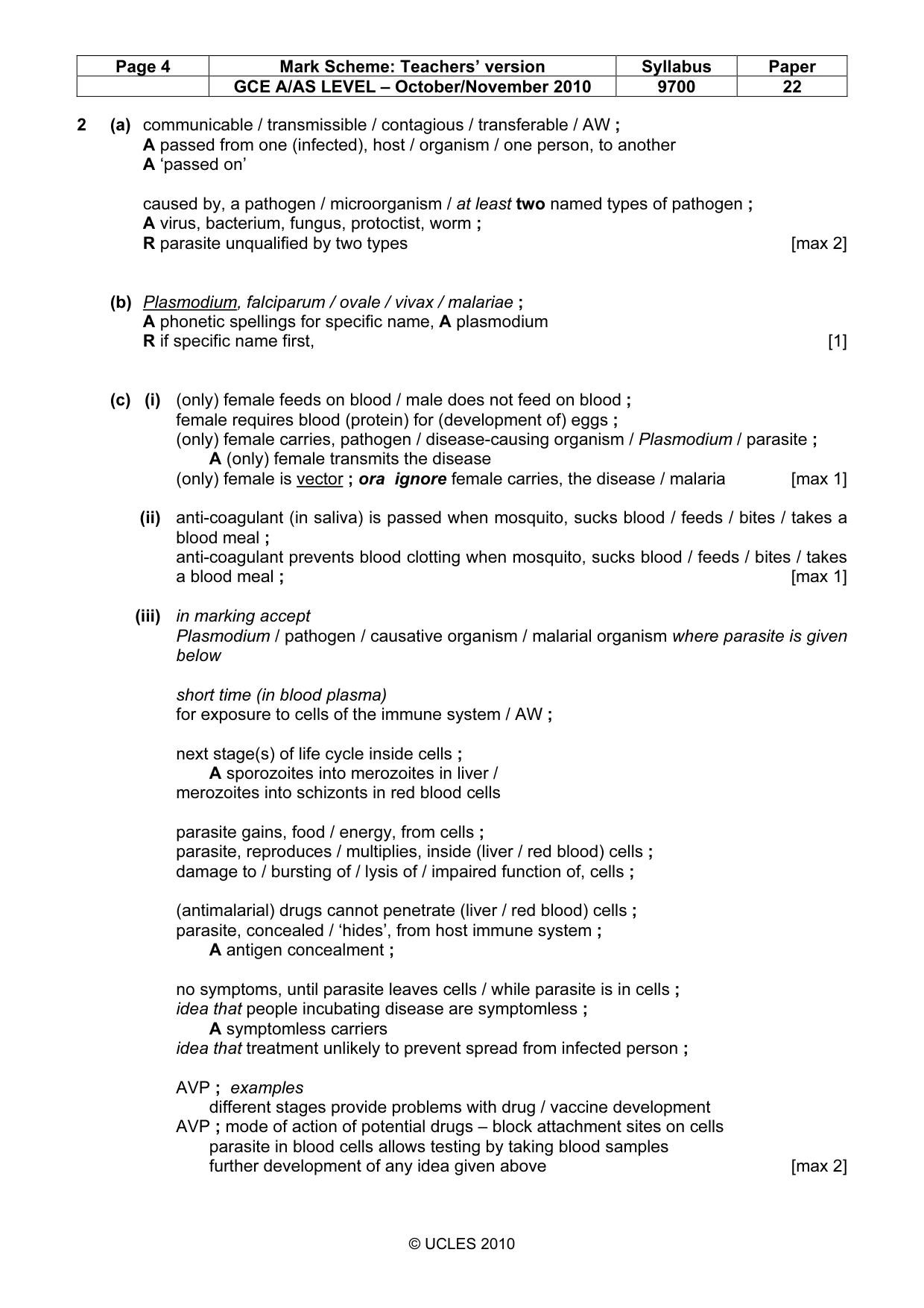
Page 4 Mark Scheme: Teachers’ version Syllabus Paper GCE A/AS LEVEL – October/November 2010 9700 22 © UCLES 2010 2 (a) communicable / transmissible / contagious / transferable / AW ; A passed from one (infected), host / organism / one person, to another A ‘passed on’ caused by, a pathogen / microorganism / at least two named types of pathogen ; A virus, bacterium, fungus, protoctist, worm ; R parasite unqualified by two types [max 2] (b) Plasmodium, falciparum / ovale / vivax / malariae ; A phonetic spellings for specific name, A plasmodium R if specific name first, [1] (c) (i) (only) female feeds on blood / male does not feed on blood ; female requires blood (protein) for (development of) eggs ; (only) female carries, pathogen / disease-causing organism / Plasmodium / parasite ; A (only) female transmits the disease (only) female is vector ; ora ignore female carries, the disease / malaria [max 1] (ii) anti-coagulant (in saliva) is passed when mosquito, sucks blood / feeds / bites / takes a blood meal ; anti-coagulant prevents blood clotting when mosquito, sucks blood / feeds / bites / takes a blood meal ; [max 1] (iii) in marking accept Plasmodium / pathogen / causative organism / malarial organism where parasite is given below short time (in blood plasma) for exposure to cells of the immune system / AW ; next stage(s) of life cycle inside cells ; A sporozoites into merozoites in liver / merozoites into schizonts in red blood cells parasite gains, food / energy, from cells ; parasite, reproduces / multiplies, inside (liver / red blood) cells ; damage to / bursting of / lysis of / impaired function of, cells ; (antimalarial) drugs cannot penetrate (liver / red blood) cells ; parasite, concealed / ‘hides’, from host immune system ; A antigen concealment ; no symptoms, until parasite leaves cells / while parasite is in cells ; idea that people incubating disease are symptomless ; A symptomless carriers idea that treatment unlikely to prevent spread from infected person ; AVP ; examples different stages provide problems with drug / vaccine development AVP ; mode of action of potential drugs – block attachment sites on cells parasite in blood cells allows testing by taking blood samples further development of any idea given above [max 2]
Mark scheme, page 5
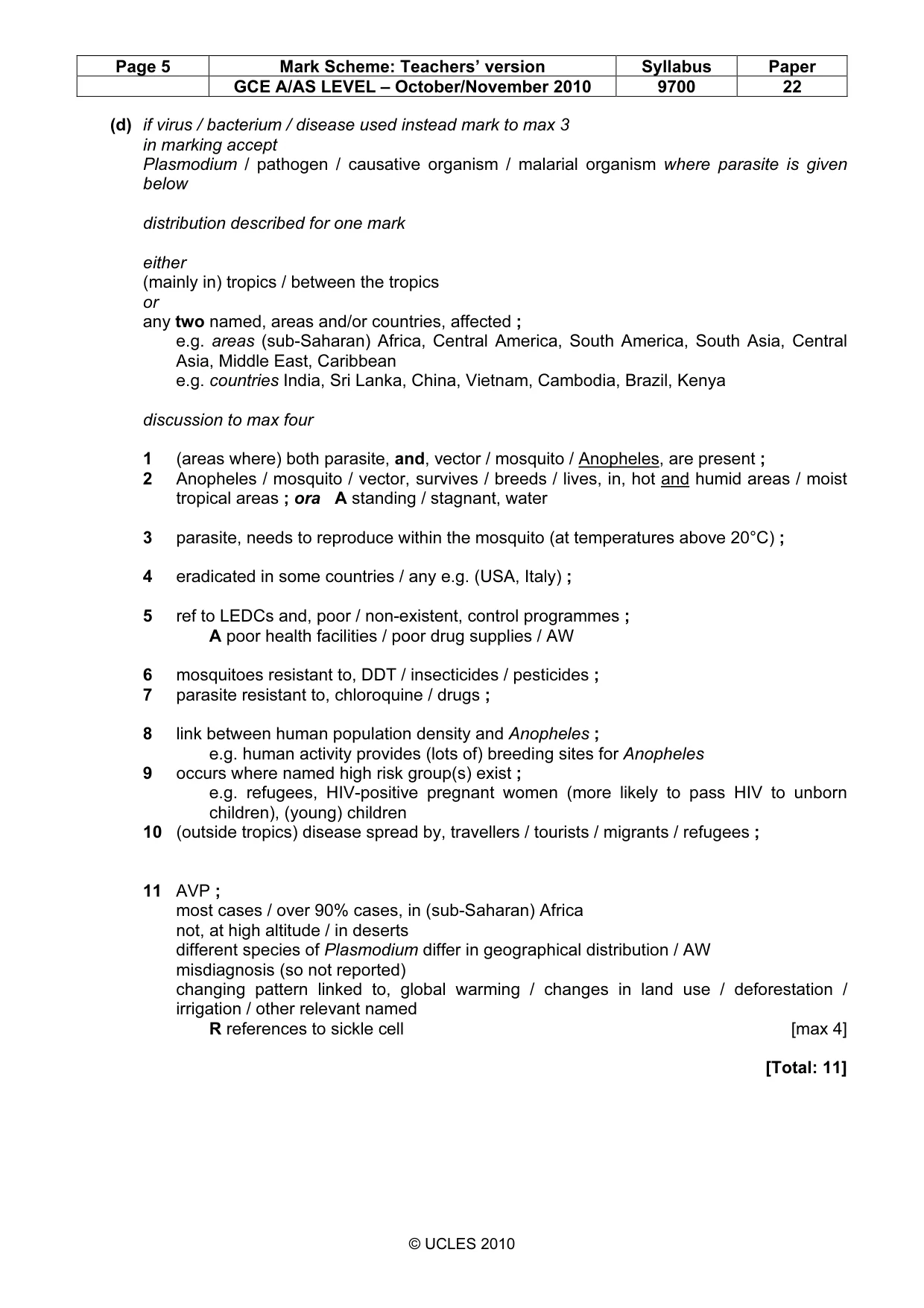
Page 5 Mark Scheme: Teachers’ version Syllabus Paper GCE A/AS LEVEL – October/November 2010 9700 22 © UCLES 2010 (d) if virus / bacterium / disease used instead mark to max 3 in marking accept Plasmodium / pathogen / causative organism / malarial organism where parasite is given below distribution described for one mark either (mainly in) tropics / between the tropics or any two named, areas and/or countries, affected ; e.g. areas (sub-Saharan) Africa, Central America, South America, South Asia, Central Asia, Middle East, Caribbean e.g. countries India, Sri Lanka, China, Vietnam, Cambodia, Brazil, Kenya discussion to max four 1 (areas where) both parasite, and, vector / mosquito / Anopheles, are present ; 2 Anopheles / mosquito / vector, survives / breeds / lives, in, hot and humid areas / moist tropical areas ; ora A standing / stagnant, water 3 parasite, needs to reproduce within the mosquito (at temperatures above 20°C) ; 4 eradicated in some countries / any e.g. (USA, Italy) ; 5 ref to LEDCs and, poor / non-existent, control programmes ; A poor health facilities / poor drug supplies / AW 6 mosquitoes resistant to, DDT / insecticides / pesticides ; 7 parasite resistant to, chloroquine / drugs ; 8 link between human population density and Anopheles ; e.g. human activity provides (lots of) breeding sites for Anopheles 9 occurs where named high risk group(s) exist ; e.g. refugees, HIV-positive pregnant women (more likely to pass HIV to unborn children), (young) children 10 (outside tropics) disease spread by, travellers / tourists / migrants / refugees ; 11 AVP ; most cases / over 90% cases, in (sub-Saharan) Africa not, at high altitude / in deserts different species of Plasmodium differ in geographical distribution / AW misdiagnosis (so not reported) changing pattern linked to, global warming / changes in land use / deforestation / irrigation / other relevant named R references to sickle cell [max 4] [Total: 11]
Mark scheme, page 6
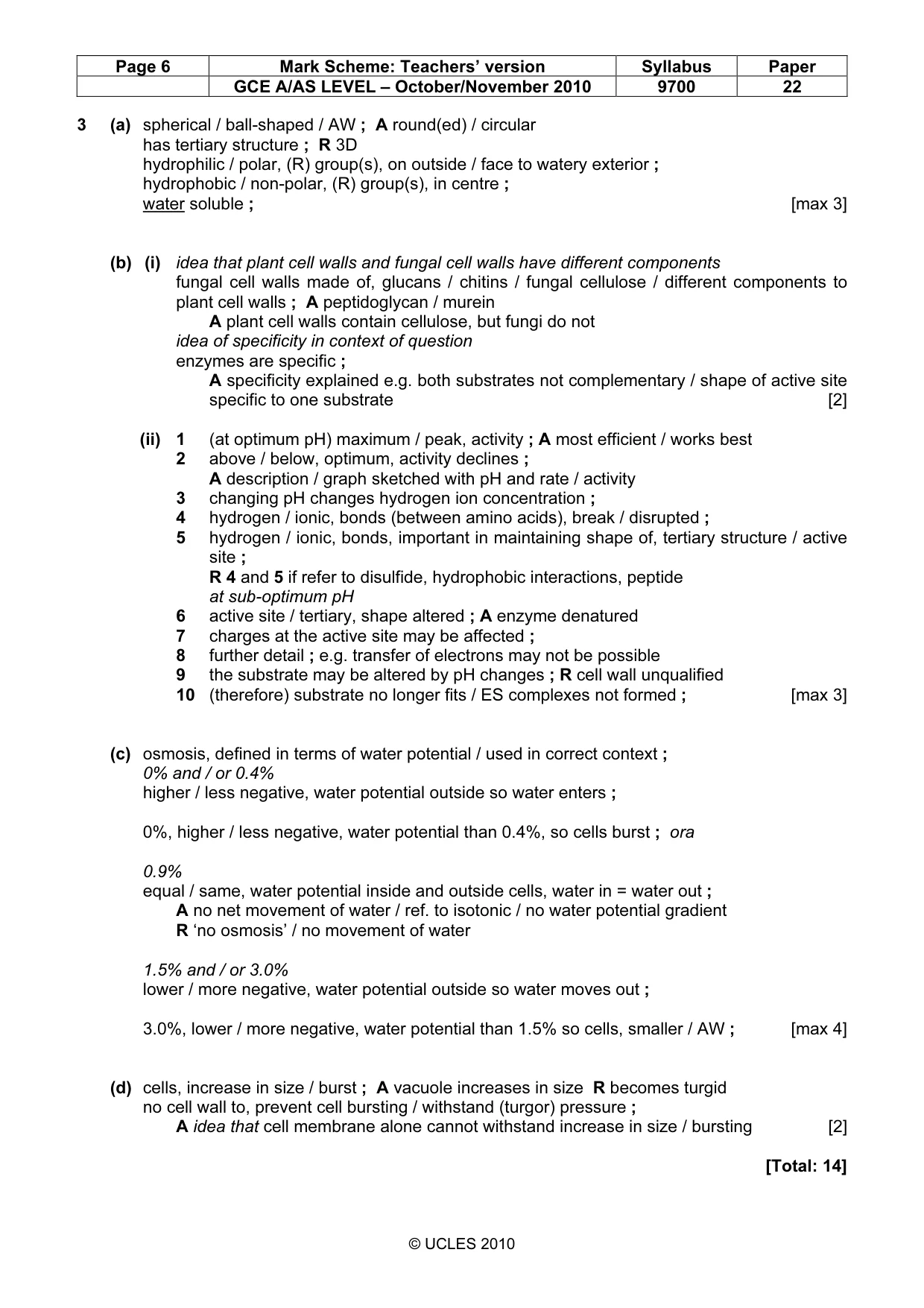
Page 6 Mark Scheme: Teachers’ version Syllabus Paper GCE A/AS LEVEL – October/November 2010 9700 22 © UCLES 2010 3 (a) spherical / ball-shaped / AW ; A round(ed) / circular has tertiary structure ; R 3D hydrophilic / polar, (R) group(s), on outside / face to watery exterior ; hydrophobic / non-polar, (R) group(s), in centre ; water soluble ; [max 3] (b) (i) idea that plant cell walls and fungal cell walls have different components fungal cell walls made of, glucans / chitins / fungal cellulose / different components to plant cell walls ; A peptidoglycan / murein A plant cell walls contain cellulose, but fungi do not idea of specificity in context of question enzymes are specific ; A specificity explained e.g. both substrates not complementary / shape of active site specific to one substrate [2] (ii) 1 (at optimum pH) maximum / peak, activity ; A most efficient / works best 2 above / below, optimum, activity declines ; A description / graph sketched with pH and rate / activity 3 changing pH changes hydrogen ion concentration ; 4 hydrogen / ionic, bonds (between amino acids), break / disrupted ; 5 hydrogen / ionic, bonds, important in maintaining shape of, tertiary structure / active site ; R 4 and 5 if refer to disulfide, hydrophobic interactions, peptide at sub-optimum pH 6 active site / tertiary, shape altered ; A enzyme denatured 7 charges at the active site may be affected ; 8 further detail ; e.g. transfer of electrons may not be possible 9 the substrate may be altered by pH changes ; R cell wall unqualified 10 (therefore) substrate no longer fits / ES complexes not formed ; [max 3] (c) osmosis, defined in terms of water potential / used in correct context ; 0% and / or 0.4% higher / less negative, water potential outside so water enters ; 0%, higher / less negative, water potential than 0.4%, so cells burst ; ora 0.9% equal / same, water potential inside and outside cells, water in = water out ; A no net movement of water / ref. to isotonic / no water potential gradient R ‘no osmosis’ / no movement of water 1.5% and / or 3.0% lower / more negative, water potential outside so water moves out ; 3.0%, lower / more negative, water potential than 1.5% so cells, smaller / AW ; [max 4] (d) cells, increase in size / burst ; A vacuole increases in size R becomes turgid no cell wall to, prevent cell bursting / withstand (turgor) pressure ; A idea that cell membrane alone cannot withstand increase in size / bursting [2] [Total: 14]
Mark scheme, page 7
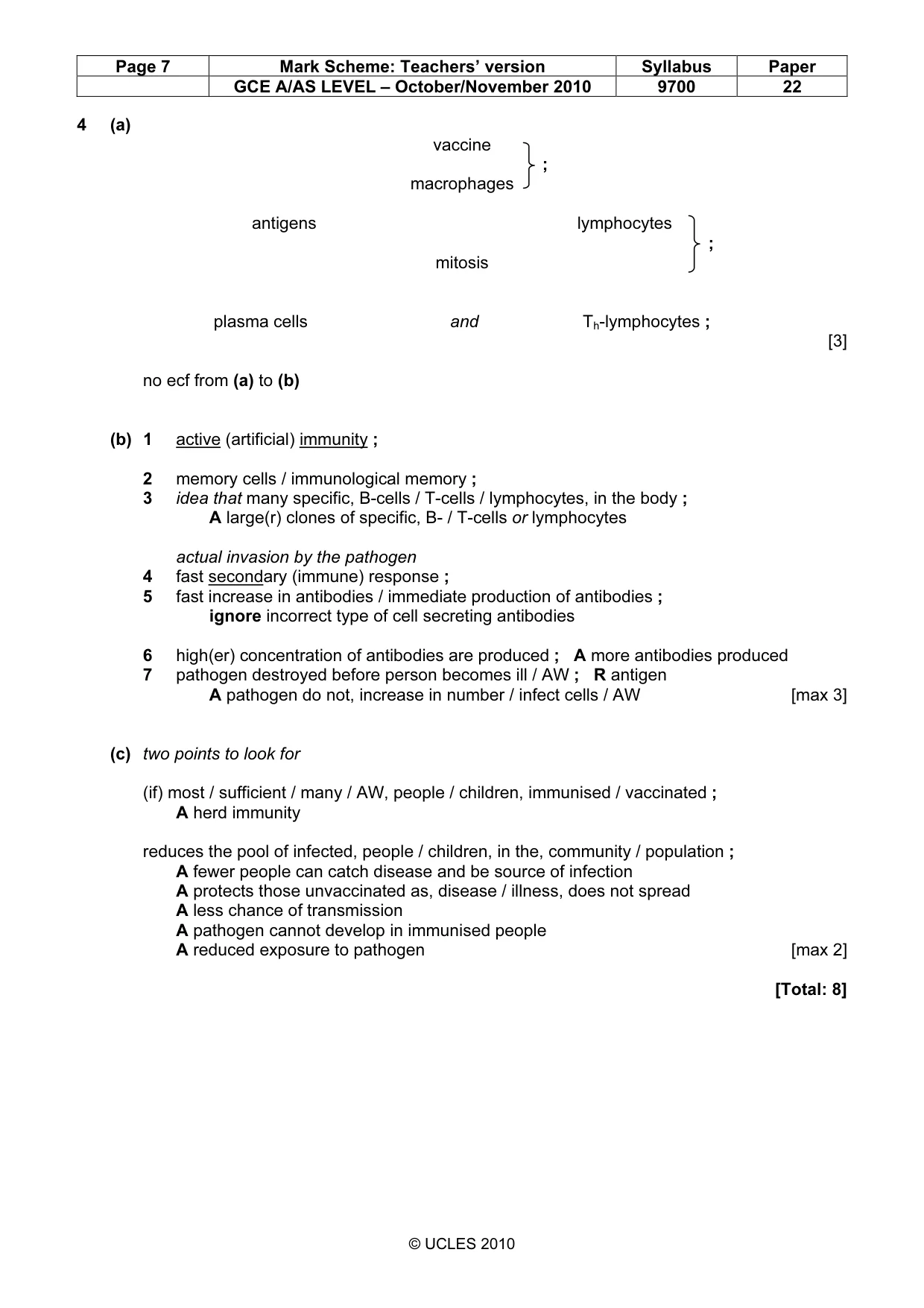
Page 7 Mark Scheme: Teachers’ version Syllabus Paper GCE A/AS LEVEL – October/November 2010 9700 22 © UCLES 2010 4 (a) vaccine ; macrophages antigens lymphocytes ; mitosis plasma cells and Th-lymphocytes ; [3] no ecf from (a) to (b) (b) 1 active (artificial) immunity ; 2 memory cells / immunological memory ; 3 idea that many specific, B-cells / T-cells / lymphocytes, in the body ; A large(r) clones of specific, B- / T-cells or lymphocytes actual invasion by the pathogen 4 fast secondary (immune) response ; 5 fast increase in antibodies / immediate production of antibodies ; ignore incorrect type of cell secreting antibodies 6 high(er) concentration of antibodies are produced ; A more antibodies produced 7 pathogen destroyed before person becomes ill / AW ; R antigen A pathogen do not, increase in number / infect cells / AW [max 3] (c) two points to look for (if) most / sufficient / many / AW, people / children, immunised / vaccinated ; A herd immunity reduces the pool of infected, people / children, in the, community / population ; A fewer people can catch disease and be source of infection A protects those unvaccinated as, disease / illness, does not spread A less chance of transmission A pathogen cannot develop in immunised people A reduced exposure to pathogen [max 2] [Total: 8]
Mark scheme, page 8
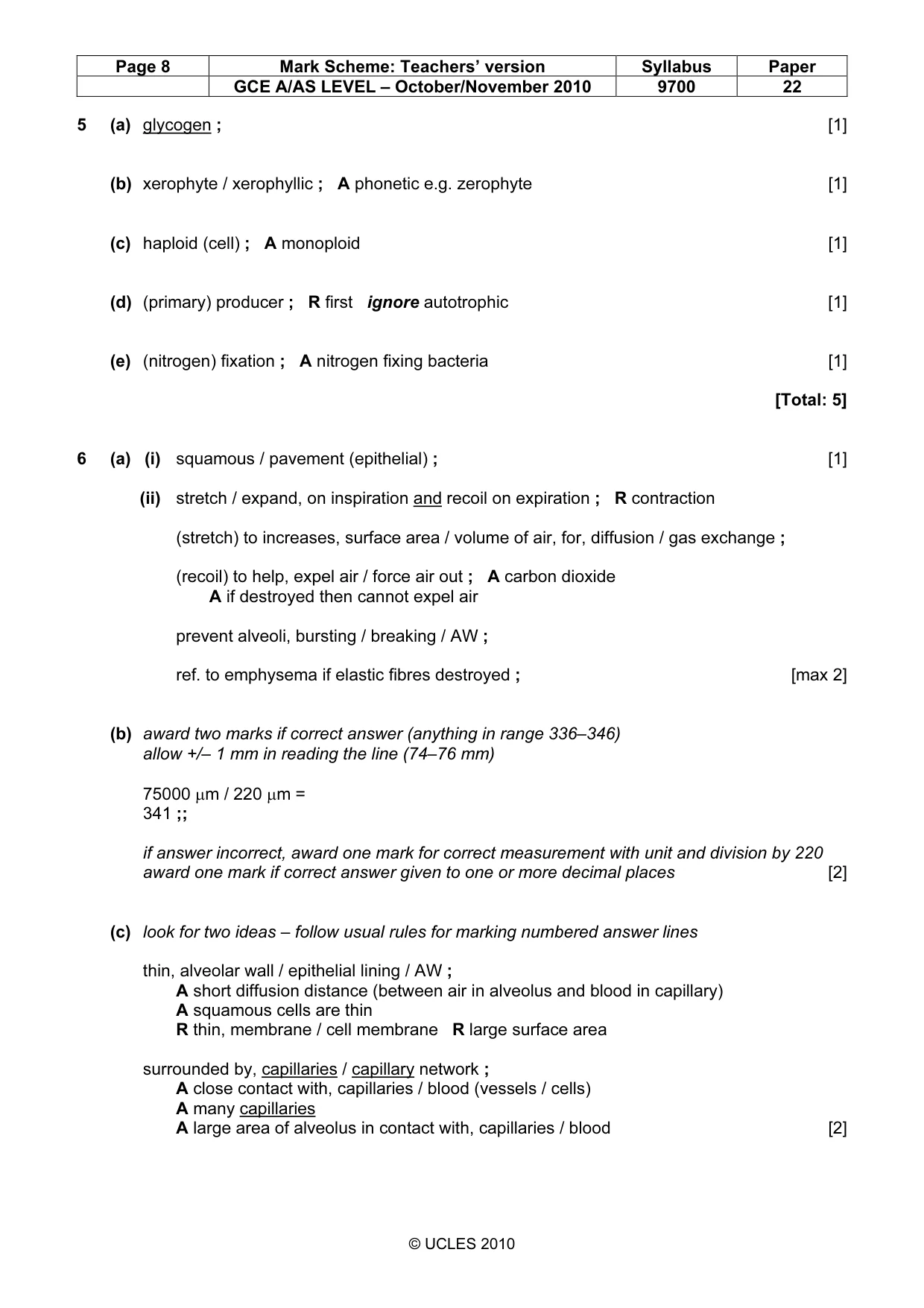
Page 8 Mark Scheme: Teachers’ version Syllabus Paper GCE A/AS LEVEL – October/November 2010 9700 22 © UCLES 2010 5 (a) glycogen ; [1] (b) xerophyte / xerophyllic ; A phonetic e.g. zerophyte [1] (c) haploid (cell) ; A monoploid [1] (d) (primary) producer ; R first ignore autotrophic [1] (e) (nitrogen) fixation ; A nitrogen fixing bacteria [1] [Total: 5] 6 (a) (i) squamous / pavement (epithelial) ; [1] (ii) stretch / expand, on inspiration and recoil on expiration ; R contraction (stretch) to increases, surface area / volume of air, for, diffusion / gas exchange ; (recoil) to help, expel air / force air out ; A carbon dioxide A if destroyed then cannot expel air prevent alveoli, bursting / breaking / AW ; ref. to emphysema if elastic fibres destroyed ; [max 2] (b) award two marks if correct answer (anything in range 336–346) allow +/– 1 mm in reading the line (74–76 mm) 75000 µm / 220 µm = 341 ;; if answer incorrect, award one mark for correct measurement with unit and division by 220 award one mark if correct answer given to one or more decimal places [2] (c) look for two ideas – follow usual rules for marking numbered answer lines thin, alveolar wall / epithelial lining / AW ; A short diffusion distance (between air in alveolus and blood in capillary) A squamous cells are thin R thin, membrane / cell membrane R large surface area surrounded by, capillaries / capillary network ; A close contact with, capillaries / blood (vessels / cells) A many capillaries A large area of alveolus in contact with, capillaries / blood [2]
Mark scheme, page 9
Page 9 Mark Scheme: Teachers’ version Syllabus Paper GCE A/AS LEVEL – October/November 2010 9700 22 © UCLES 2010 (d) max 3 if no ref. to diffusion (named) gas(es), diffuse down, pressure gradients / concentration gradient / AW ; A from high(er) partial pressure to low(er) partial pressure A high(er) concentration to low(er) concentration ignore ‘along a concentration gradient’ in the answers accept the following AWs capillaries / haemoglobin for blood lungs for alveoli body for tissues lungs valid statement linking information in table below – 1 mark for each row comparison in partial pressure may be ‘higher / lower’ not both or high and low, but if not then figures have to be given blood ref. to gas blood partial pressure alveolar air partial pressure gas exchange pO2 5.33 / lower 13.87 / higher into blood from alveolus ; in pulmonary artery / entering alveolar capillaries pCO2 6.00 / higher 5.33 / lower out of blood into alveolus ; respiring tissue valid statement linking information in table below – 1 mark for each row blood ref. to gas blood partial pressure tissue partial pressure gas exchange pO2 13.33 / higher < 5.33 / lower into tissue from blood ; in systemic artery / entering tissue capillaries pCO2 5.33 / lower > 6.00 / higher out of tissue into blood ; [max 4] R differences between pO2 and pCO2 in the same place [Total: 11]
What you needed in this session
Cambridge’s own grade thresholds for 2010 Oct/Nov, Paper 2 · Variant 2. A higher threshold means an easier paper — the bar moves with how the cohort did.