Cambridge A Level Biology 9700 — 2009 Oct/Nov Paper 2 · Variant 2
9700/22/O/N/09
The question paper and its mark scheme, free to read here and free to download. This is Cambridge’s own paper, exactly as it was sat.
Question paper16 pages


Mark scheme7 pages
Answers below. Sit the paper first if you are practising.
Paper as text
Question paper, page 1
This document consists of 13 printed pages and 3 blank pages. DC (SLM/SW) 14803/3 © UCLES 2009 [Turn over UNIVERSITY OF CAMBRIDGE INTERNATIONAL EXAMINATIONS General Certificate of Education Advanced Subsidiary Level and Advanced Level READ THESE INSTRUCTIONS FIRST Write your Centre number, candidate number and name in the spaces provided at the top of this page. Write in dark blue or black pen. You may use a soft pencil for any diagrams, graphs or rough working. Do not use staples, paper clips, highlighters, glue or correction fluid. DO NOT WRITE IN ANY BARCODES. Answer all questions. At the end of the examination, fasten all your work securely together. The number of marks is given in brackets [ ] at the end of each question or part question. * 6 9 0 1 3 9 6 3 1 9 * BIOLOGY 9700/22 Paper 2 Structured Questions AS October/November 2009 1 hour 15 minutes Candidates answer on the Question Paper. Additional Materials: Electronic calculator Ruler (cm/mm) For Examiner’s Use 1 2 3 4 5 6 Total
Question paper, page 2
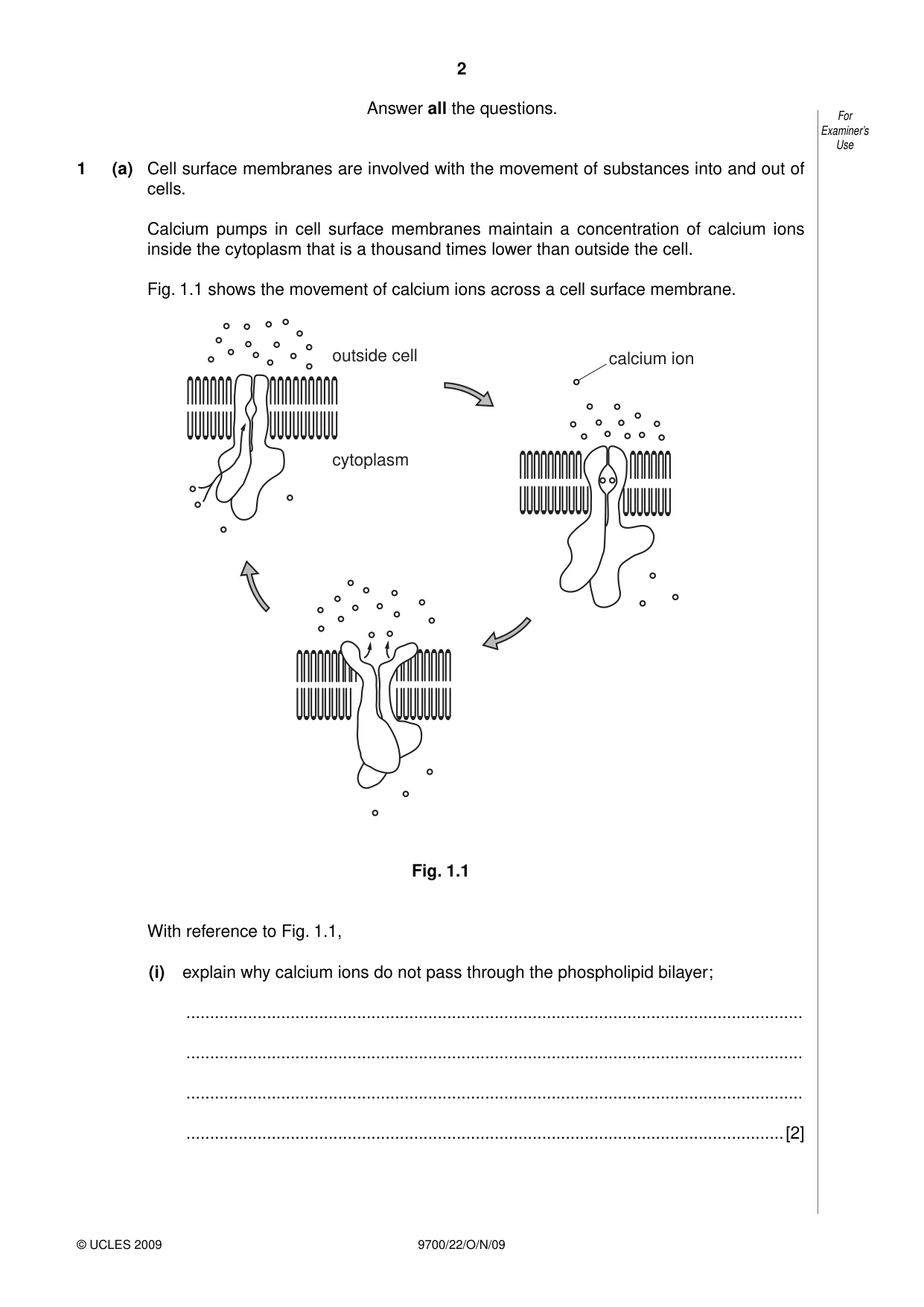
2 9700/22/O/N/09 © UCLES 2009 For Examiner’s Use Answer all the questions. 1 (a) Cell surface membranes are involved with the movement of substances into and out of cells. Calcium pumps in cell surface membranes maintain a concentration of calcium ions inside the cytoplasm that is a thousand times lower than outside the cell. Fig. 1.1 shows the movement of calcium ions across a cell surface membrane. cytoplasm outside cell calcium ion Fig. 1.1 With reference to Fig. 1.1, (i) explain why calcium ions do not pass through the phospholipid bilayer; … … … …[2]
Question paper, page 3
3 9700/22/O/N/09 © UCLES 2009 [Turn over For Examiner’s Use (ii) name and describe the process by which calcium ions are moved across the membrane. name … description … … … … …[3] (b) Phagocytosis is the process by which bacteria are ingested by cells. Describe the role of the cell surface membrane during phagocytosis. … … … … … …[3] (c) Phagocytic cells contain many lysosomes. Describe the function of lysosomes in destroying ingested bacterial cells. … … … … … … … …[4] [Total: 12]
Question paper, page 4
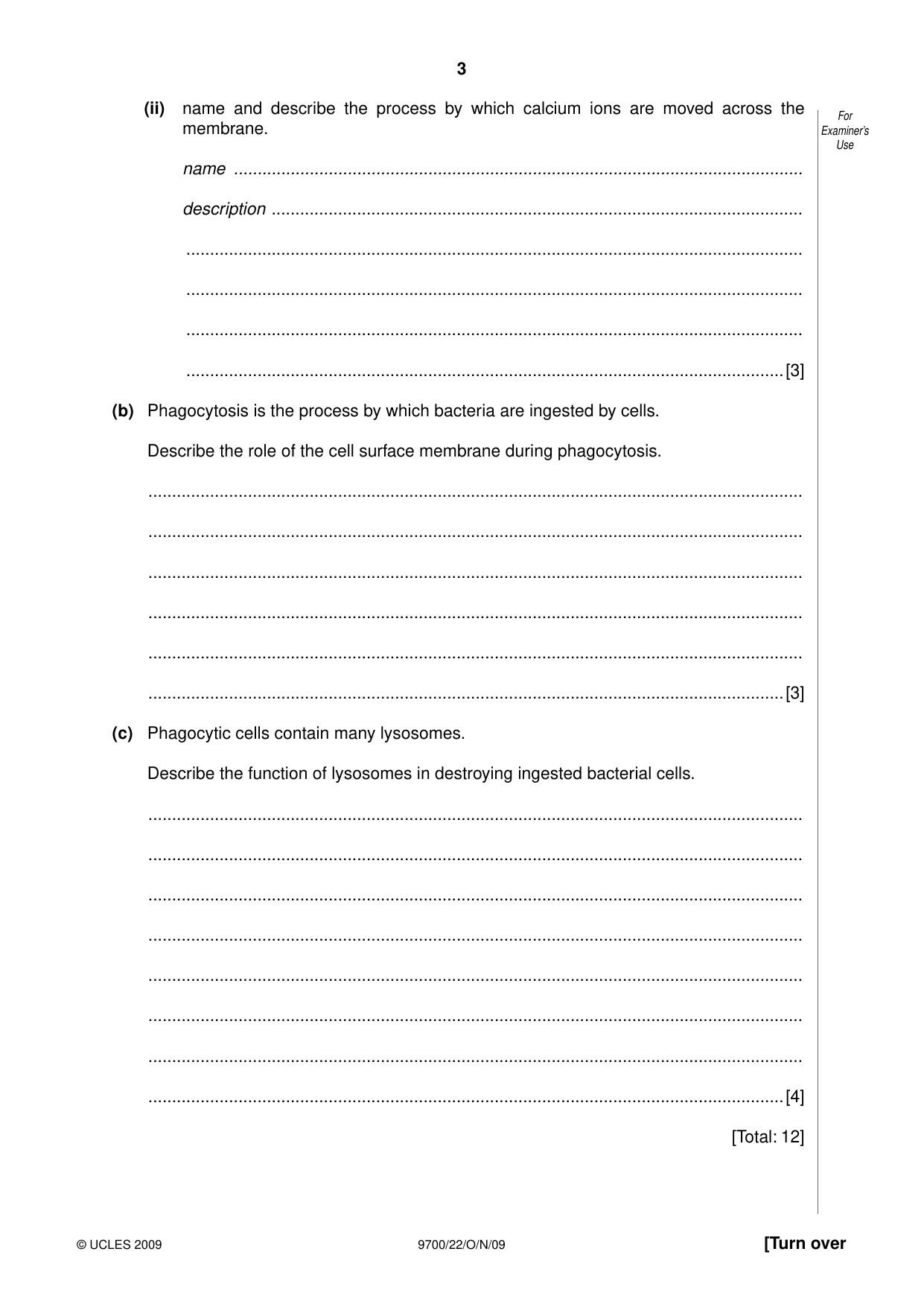
4 9700/22/O/N/09 © UCLES 2009 For Examiner’s Use 2 Sucrase is the enzyme that catalyses the hydrolysis of sucrose. A student investigated the effect of substrate concentration on the activity of this enzyme. Six test-tubes were set up each containing 10 cm3 of different concentrations of sucrose solutions. The test-tubes were left in a water bath at 30 °C for ten minutes. After ten minutes, 5 cm3 of a sucrase solution at 30 °C was added to each test-tube and the reaction mixtures were stirred. After a further five minutes, the temperature of the water-bath was raised to above 85 °C and the same volume of Benedict’s solution added to each test-tube in turn. The student recorded the time when a green colour first became visible in each test-tube. The concentrations used and the student’s results are shown in Table 2.1. Table 2.1 concentration of sucrose / g dm–3 time taken for green colour to appear / s 5 278 10 145 15 95 20 75 50 47 100 45 (a) Explain why the temperature of the water-bath was raised to above 85 °C. … … … …[2]
Question paper, page 5
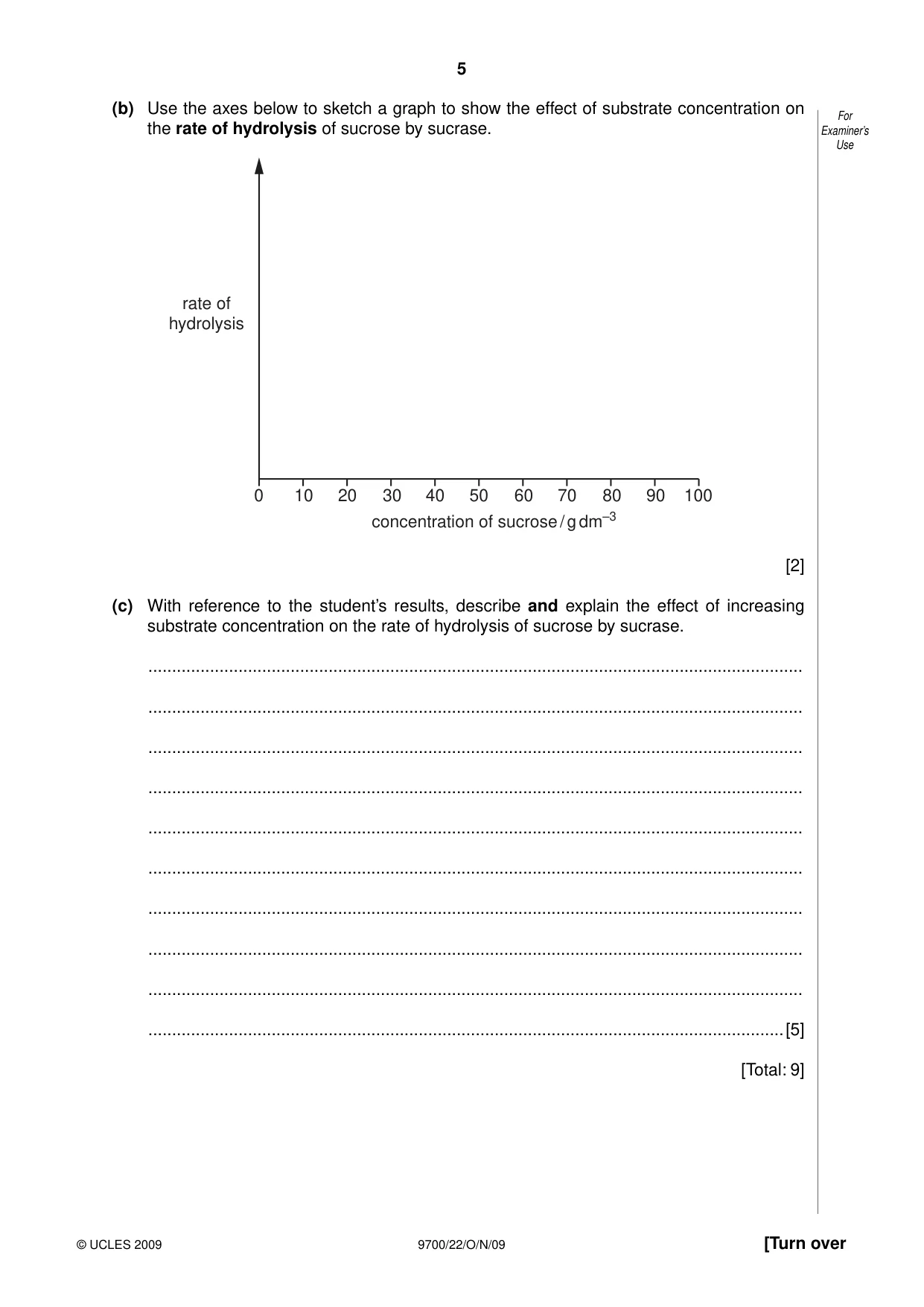
5 9700/22/O/N/09 © UCLES 2009 [Turn over For Examiner’s Use (b) Use the axes below to sketch a graph to show the effect of substrate concentration on the rate of hydrolysis of sucrose by sucrase. 0 10 20 30 40 50 concentration of sucrose / g dm–3 rate of hydrolysis 60 70 80 90 100 [2] (c) With reference to the student’s results, describe and explain the effect of increasing substrate concentration on the rate of hydrolysis of sucrose by sucrase. … … … … … … … … … …[5] [Total: 9]
Question paper, page 6
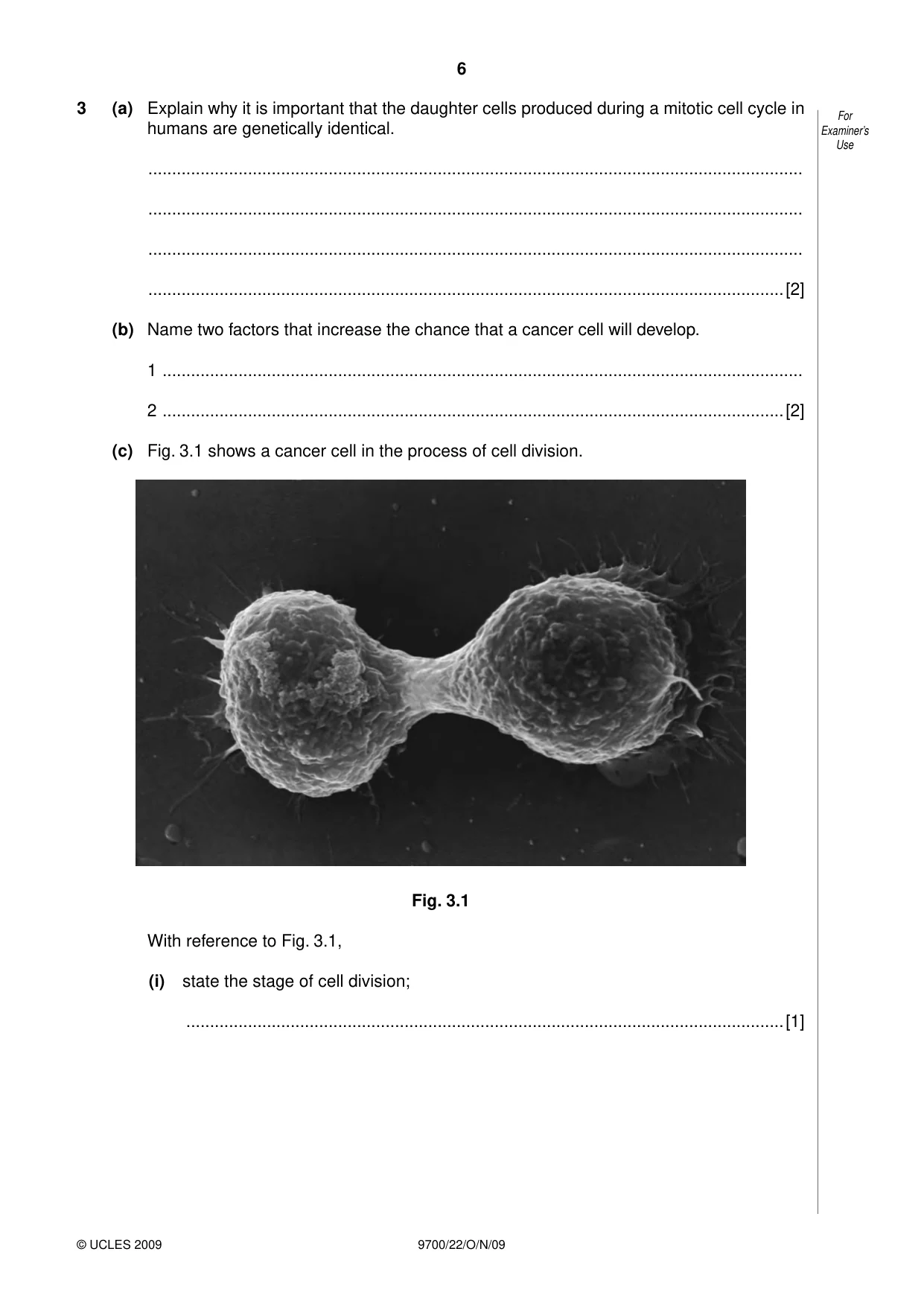
6 9700/22/O/N/09 © UCLES 2009 For Examiner’s Use 3 (a) Explain why it is important that the daughter cells produced during a mitotic cell cycle in humans are genetically identical. … … … …[2] (b) Name two factors that increase the chance that a cancer cell will develop. 1 … 2 …[2] (c) Fig. 3.1 shows a cancer cell in the process of cell division. Fig. 3.1 With reference to Fig. 3.1, (i) state the stage of cell division; …[1]
Question paper, page 7
7 9700/22/O/N/09 © UCLES 2009 [Turn over For Examiner’s Use (ii) describe what is happening to the cell during this stage of cell division; … … … … … … …[3] (iii) describe how these cells develop into a tumour. … … … … …[2] [Total: 10]
Question paper, page 8
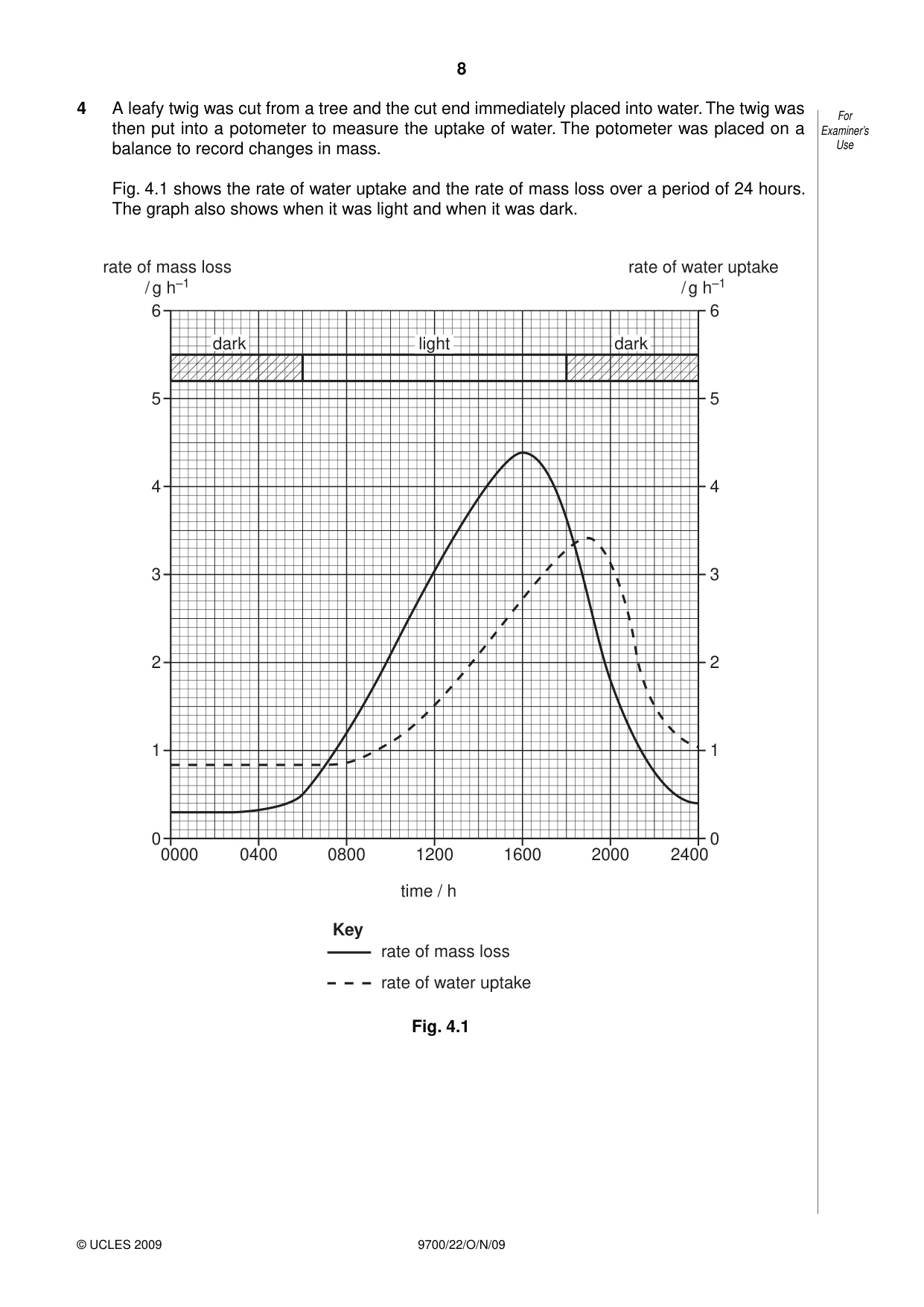
8 9700/22/O/N/09 © UCLES 2009 For Examiner’s Use 4 A leafy twig was cut from a tree and the cut end immediately placed into water. The twig was then put into a potometer to measure the uptake of water. The potometer was placed on a balance to record changes in mass. Fig. 4.1 shows the rate of water uptake and the rate of mass loss over a period of 24 hours. The graph also shows when it was light and when it was dark. 0000 0 1 2 3 4 5 6 0 1 2 3 4 5 6 0400 0800 1200 time / h Key rate of mass loss rate of water uptake rate of water uptake / g h–1 rate of mass loss / g h–1 1600 2000 2400 dark dark light Fig. 4.1
Question paper, page 9
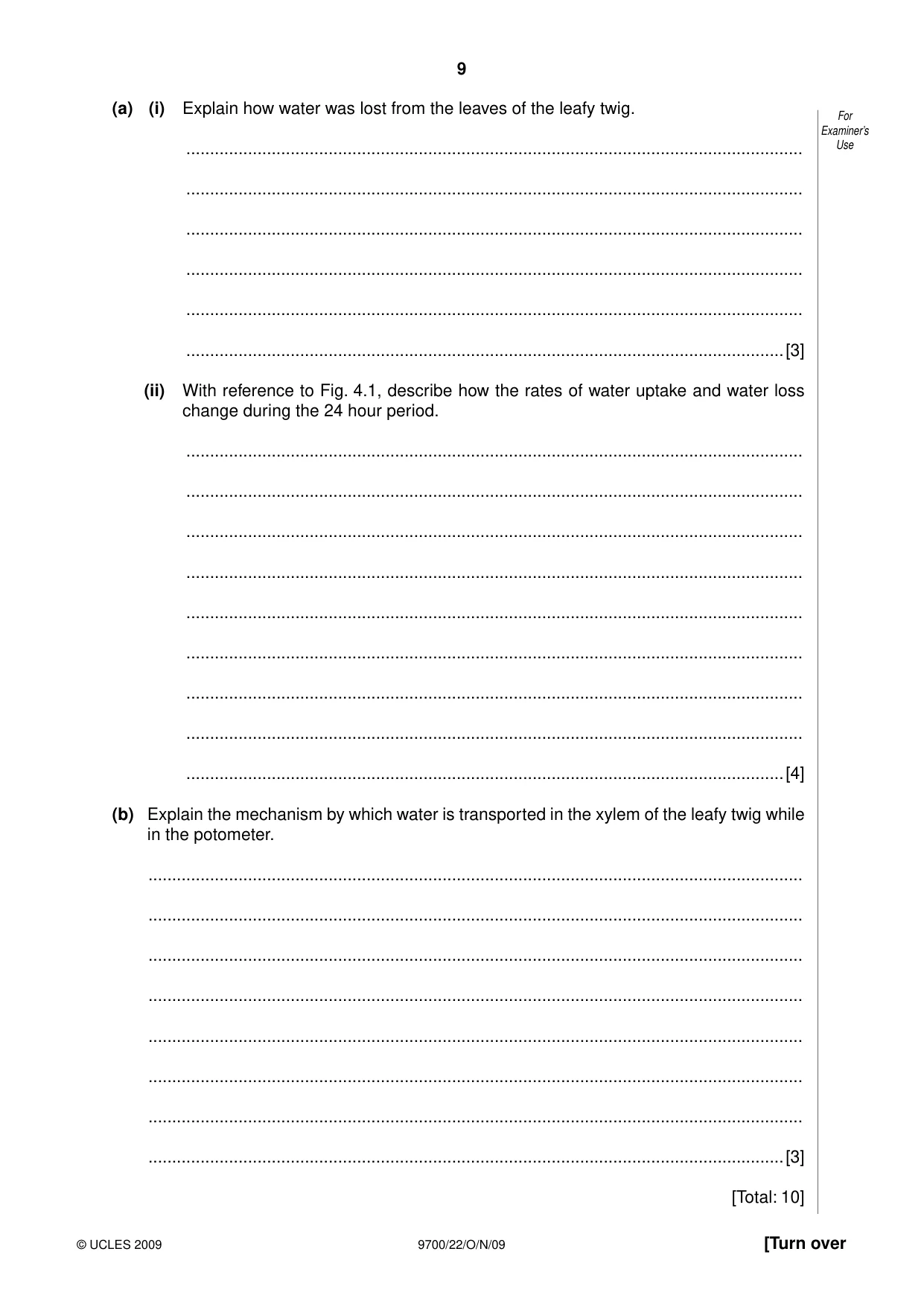
9 9700/22/O/N/09 © UCLES 2009 [Turn over For Examiner’s Use (a) (i) Explain how water was lost from the leaves of the leafy twig. … … … … … …[3] (ii) With reference to Fig. 4.1, describe how the rates of water uptake and water loss change during the 24 hour period. … … … … … … … … …[4] (b) Explain the mechanism by which water is transported in the xylem of the leafy twig while in the potometer. … … … … … … … …[3] [Total: 10]
Question paper, page 10
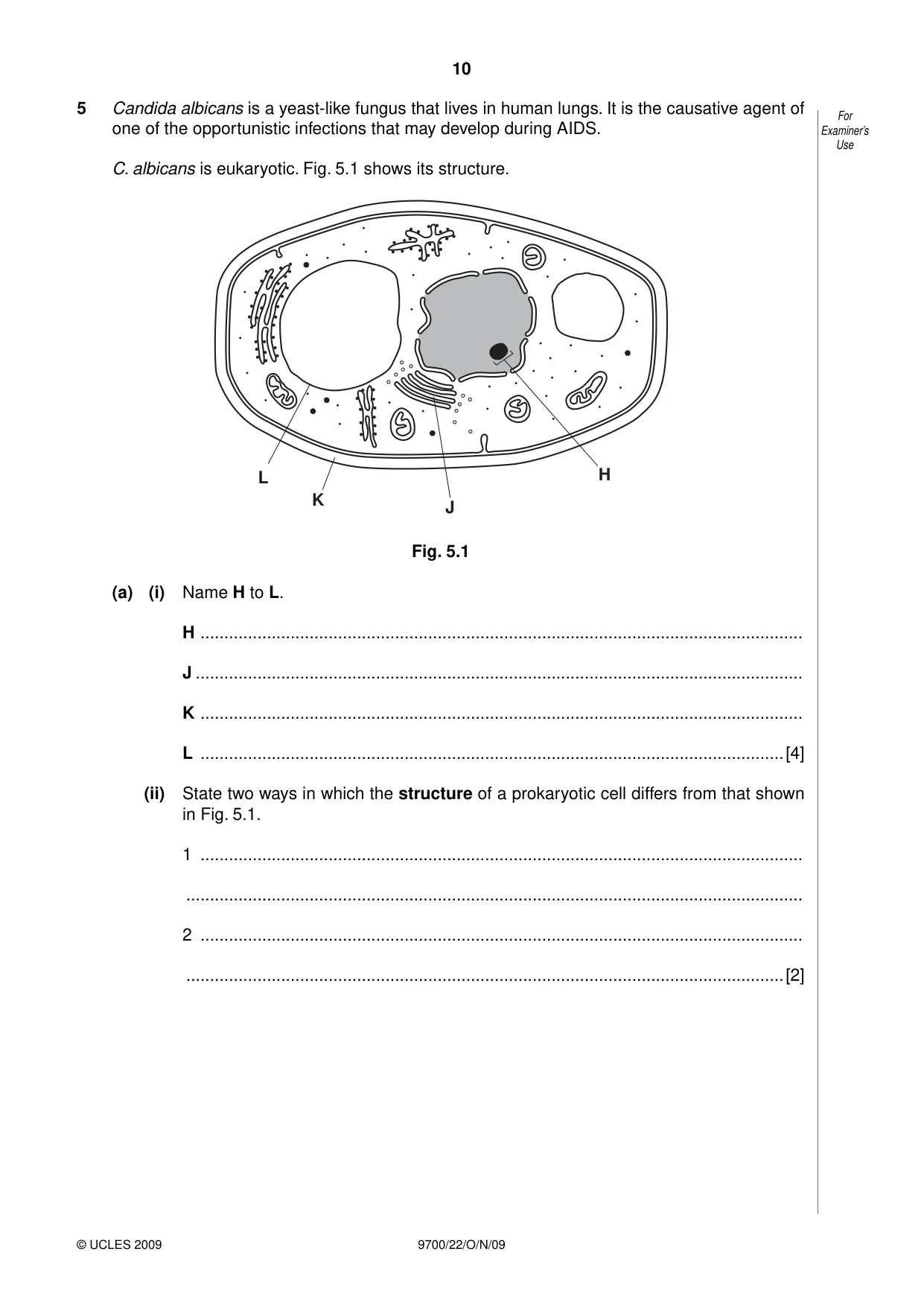
10 9700/22/O/N/09 © UCLES 2009 For Examiner’s Use 5 Candida albicans is a yeast-like fungus that lives in human lungs. It is the causative agent of one of the opportunistic infections that may develop during AIDS. C. albicans is eukaryotic. Fig. 5.1 shows its structure. L K J H Fig. 5.1 (a) (i) Name H to L. H … J … K … L …[4] (ii) State two ways in which the structure of a prokaryotic cell differs from that shown in Fig. 5.1. 1 … … 2 … …[2]
Question paper, page 11
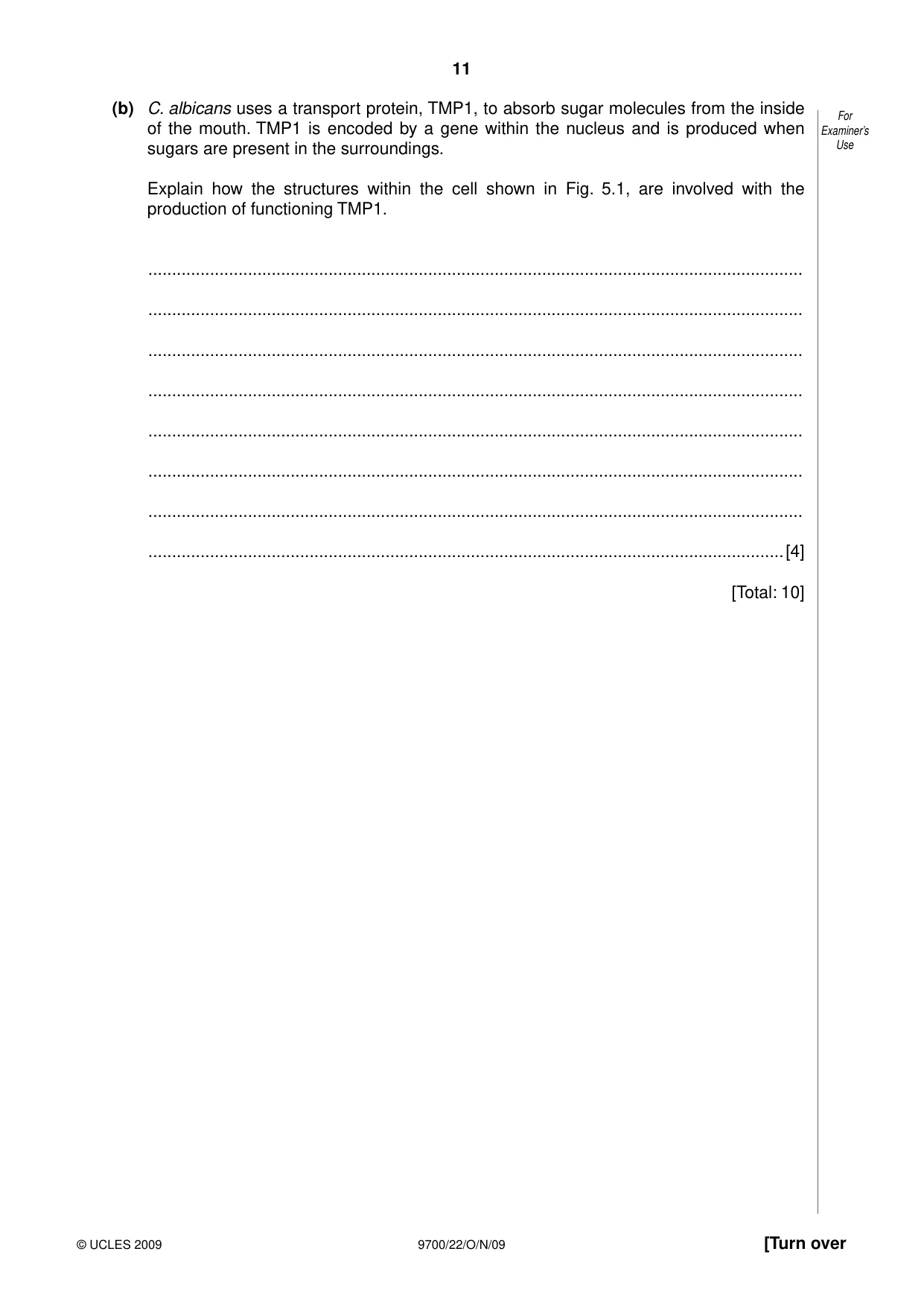
11 9700/22/O/N/09 © UCLES 2009 [Turn over For Examiner’s Use (b) C. albicans uses a transport protein, TMP1, to absorb sugar molecules from the inside of the mouth. TMP1 is encoded by a gene within the nucleus and is produced when sugars are present in the surroundings. Explain how the structures within the cell shown in Fig. 5.1, are involved with the production of functioning TMP1. … … … … … … … …[4] [Total: 10]
Question paper, page 12
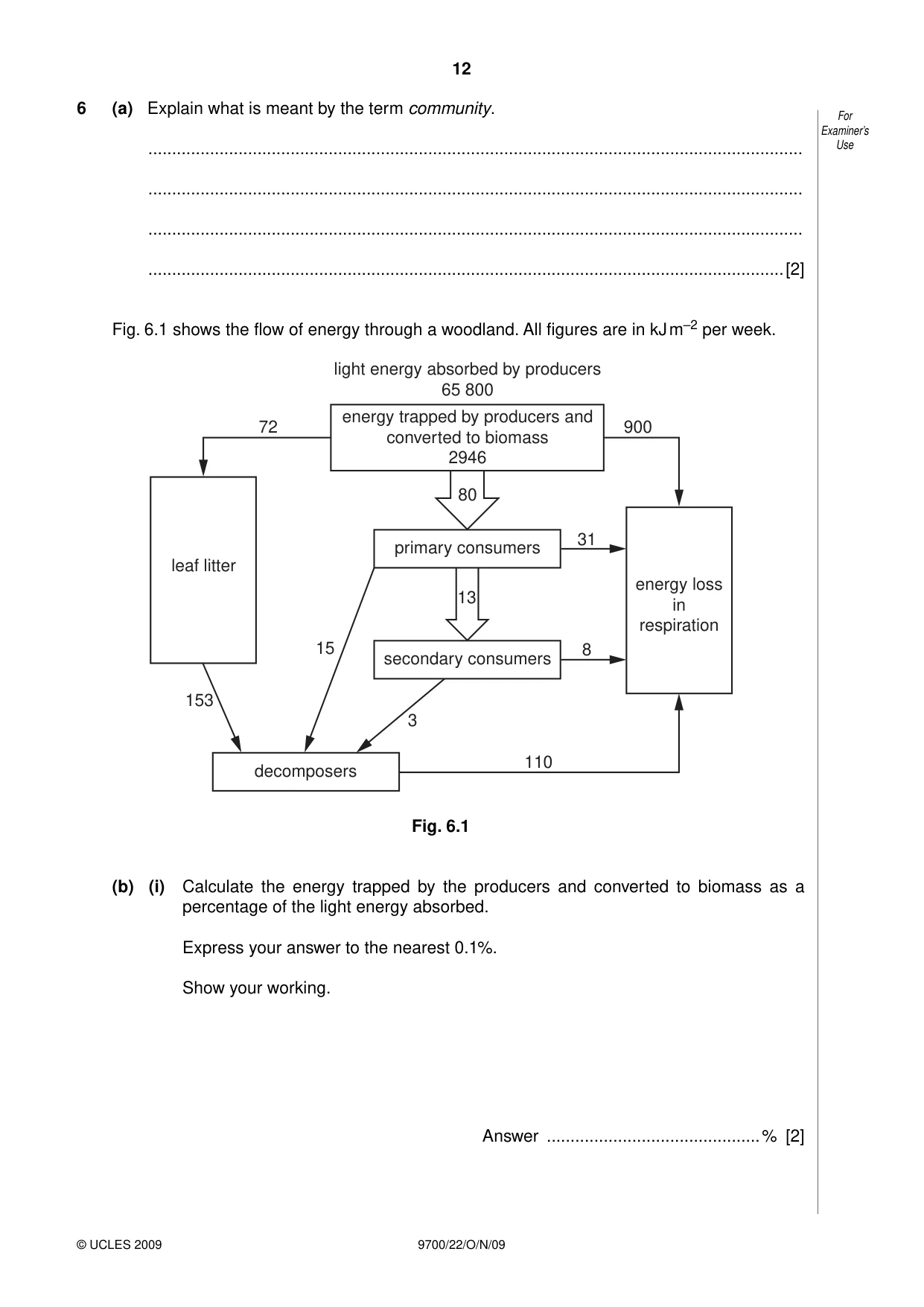
12 9700/22/O/N/09 © UCLES 2009 For Examiner’s Use 6 (a) Explain what is meant by the term community. … … … …[2] Fig. 6.1 shows the flow of energy through a woodland. All figures are in kJ m–2 per week. 13 80 light energy absorbed by producers 65 800 900 31 8 110 3 15 153 72 primary consumers secondary consumers energy loss in respiration leaf litter energy trapped by producers and converted to biomass 2946 decomposers Fig. 6.1 (b) (i) Calculate the energy trapped by the producers and converted to biomass as a percentage of the light energy absorbed. Express your answer to the nearest 0.1%. Show your working. Answer …% [2]
Question paper, page 13
13 9700/22/O/N/09 © UCLES 2009 For Examiner’s Use (ii) Suggest, in terms of energy flow, why there are no tertiary consumers in the woodland. … … … …[2] (iii) Leaf litter is composed of dead leaves and twigs. The total energy in the leaf litter was 15 899 kJ m–2 but only 153 kJ m–2 per week is transferred to decomposers. When animal wastes rich in nitrogen were mixed with the leaf litter the energy flow to decomposers increased significantly. Suggest why the addition of animal wastes rich in nitrogen increased the energy flow to decomposers. … … … … … …[3] [Total: 9]
Question paper, page 16
16 9700/22/O/N/09 BLANK PAGE Copyright Acknowledgements: Question 3 Fig. 3.1 © M122/283; Breast cancer cells, SEM; Science Photo Library. Permission to reproduce items where third-party owned material protected by copyright is included has been sought and cleared where possible. Every reasonable effort has been made by the publisher (UCLES) to trace copyright holders, but if any items requiring clearance have unwittingly been included, the publisher will be pleased to make amends at the earliest possible opportunity. University of Cambridge International Examinations is part of the Cambridge Assessment Group. Cambridge Assessment is the brand name of University of Cambridge Local Examinations Syndicate (UCLES), which is itself a department of the University of Cambridge.
Mark scheme, page 1
UNIVERSITY OF CAMBRIDGE INTERNATIONAL EXAMINATIONS GCE Advanced Subsidiary Level and GCE Advanced Level MARK SCHEME for the October/November 2009 question paper for the guidance of teachers 9700 BIOLOGY 9700/22 Paper 2 (Structured Questions AS), maximum raw mark 60 This mark scheme is published as an aid to teachers and candidates, to indicate the requirements of the examination. It shows the basis on which Examiners were instructed to award marks. It does not indicate the details of the discussions that took place at an Examiners’ meeting before marking began, which would have considered the acceptability of alternative answers. Mark schemes must be read in conjunction with the question papers and the report on the examination. • CIE will not enter into discussions or correspondence in connection with these mark schemes. CIE is publishing the mark schemes for the October/November 2009 question papers for most IGCSE, GCE Advanced Level and Advanced Subsidiary Level syllabuses and some Ordinary Level syllabuses.
Mark scheme, page 2
Page 2 Mark Scheme: Teachers’ version Syllabus Paper GCE A/AS LEVEL – October/November 2009 9700 22 © UCLES 2009 1 (a) (i) calcium ions are, water soluble / charged / not, fat / lipid, soluble / hydrophilic / ionic ; A not oil soluble phospholipid bilayer / AW, is hydrophobic / AW ; [2] (ii) active transport / active uptake ; [1] (calcium ions) moved against their concentration gradient ; ref. to, carrier protein / transport protein / pump protein ; ignore ion pump R channel protein ref. to calcium ions combine with binding site ; carrier protein, changes shape / conformational change ; ref. to ATP ; [2 max] (b) bacteria / antigen / epitope, combine(s) with / attach to/ recognition by, receptor ; antibody on bacteria combines with receptor ; opsonisation / opsonisation described ; e.g. facilitates phagocytosis ref. to constant region ; membrane infolds / invaginates / envelops / engulfs / enclose / AW ; accept answers without ‘membrane’ where implied previously / later membrane fuses ; to form, vacuole / vesicle / phagosome (enclosing bacteria) ; [3 max] (c) lysosomes fuse with, vacuole / vesicle / phagosome ; A form secondary lysosomes lysosomes contain, enzymes / named digestive enzyme ; (catalyse) hydrolysis / digestion ; A breakdown (digests / breaks down) protein / murein (or peptidoglycan) / carbohydrate / lipid / phospholipid / nucleic acid / DNA / RNA ; named bond ; e.g. peptide, glycosidic, ester, phosphodiester [4 max] [Total: 12] www.OnlineExamHelp.com
Mark scheme, page 3
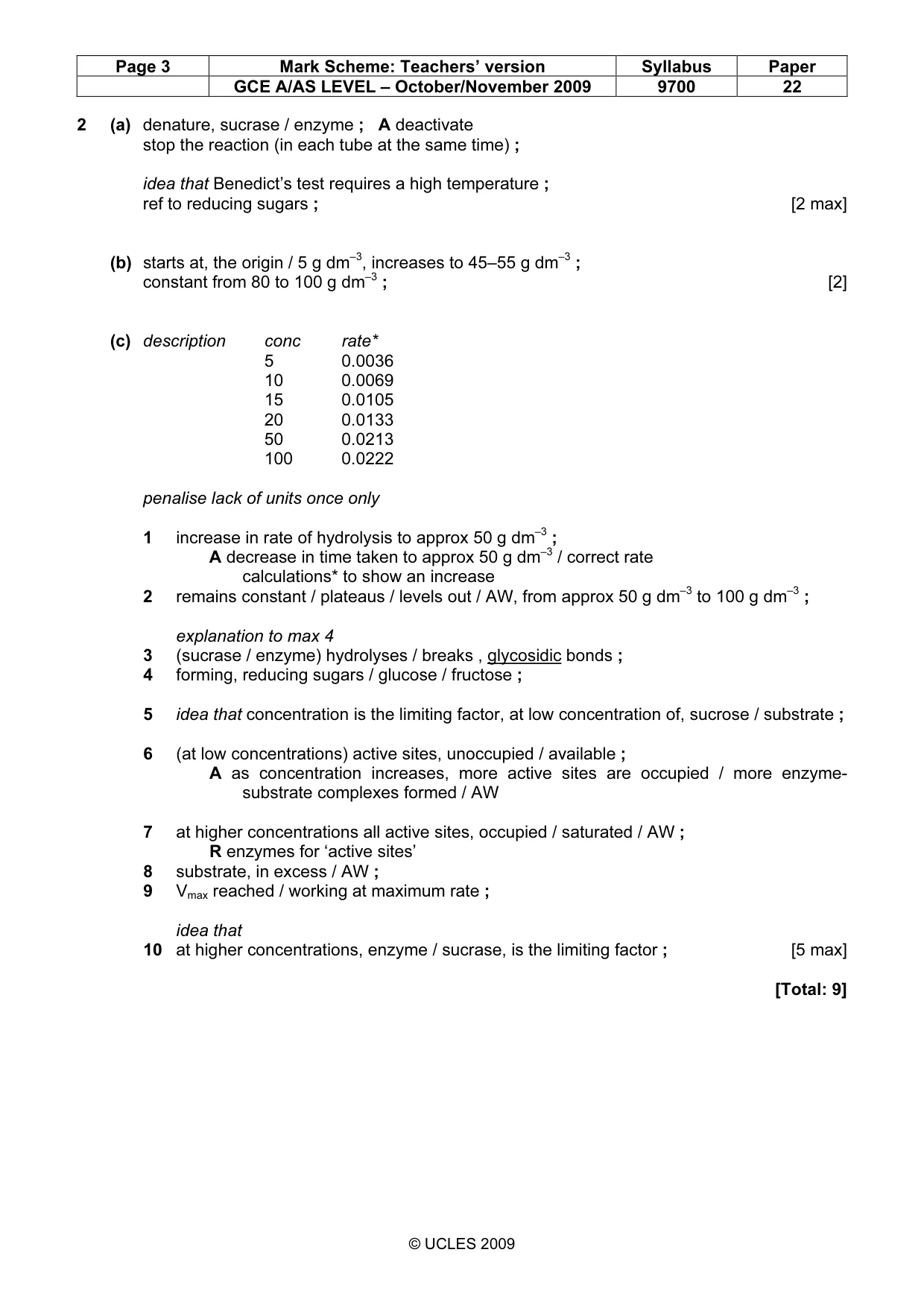
Page 3 Mark Scheme: Teachers’ version Syllabus Paper GCE A/AS LEVEL – October/November 2009 9700 22 © UCLES 2009 2 (a) denature, sucrase / enzyme ; A deactivate stop the reaction (in each tube at the same time) ; idea that Benedict’s test requires a high temperature ; ref to reducing sugars ; [2 max] (b) starts at, the origin / 5 g dm–3, increases to 45–55 g dm–3 ; constant from 80 to 100 g dm–3 ; [2] (c) description conc rate* 5 0.0036 10 0.0069 15 0.0105 20 0.0133 50 0.0213 100 0.0222 penalise lack of units once only 1 increase in rate of hydrolysis to approx 50 g dm–3 ; A decrease in time taken to approx 50 g dm–3 / correct rate calculations* to show an increase 2 remains constant / plateaus / levels out / AW, from approx 50 g dm–3 to 100 g dm–3 ; explanation to max 4 3 (sucrase / enzyme) hydrolyses / breaks , glycosidic bonds ; 4 forming, reducing sugars / glucose / fructose ; 5 idea that concentration is the limiting factor, at low concentration of, sucrose / substrate ; 6 (at low concentrations) active sites, unoccupied / available ; A as concentration increases, more active sites are occupied / more enzyme- substrate complexes formed / AW 7 at higher concentrations all active sites, occupied / saturated / AW ; R enzymes for ‘active sites’ 8 substrate, in excess / AW ; 9 Vmax reached / working at maximum rate ; idea that 10 at higher concentrations, enzyme / sucrase, is the limiting factor ; [5 max] [Total: 9]
Mark scheme, page 4
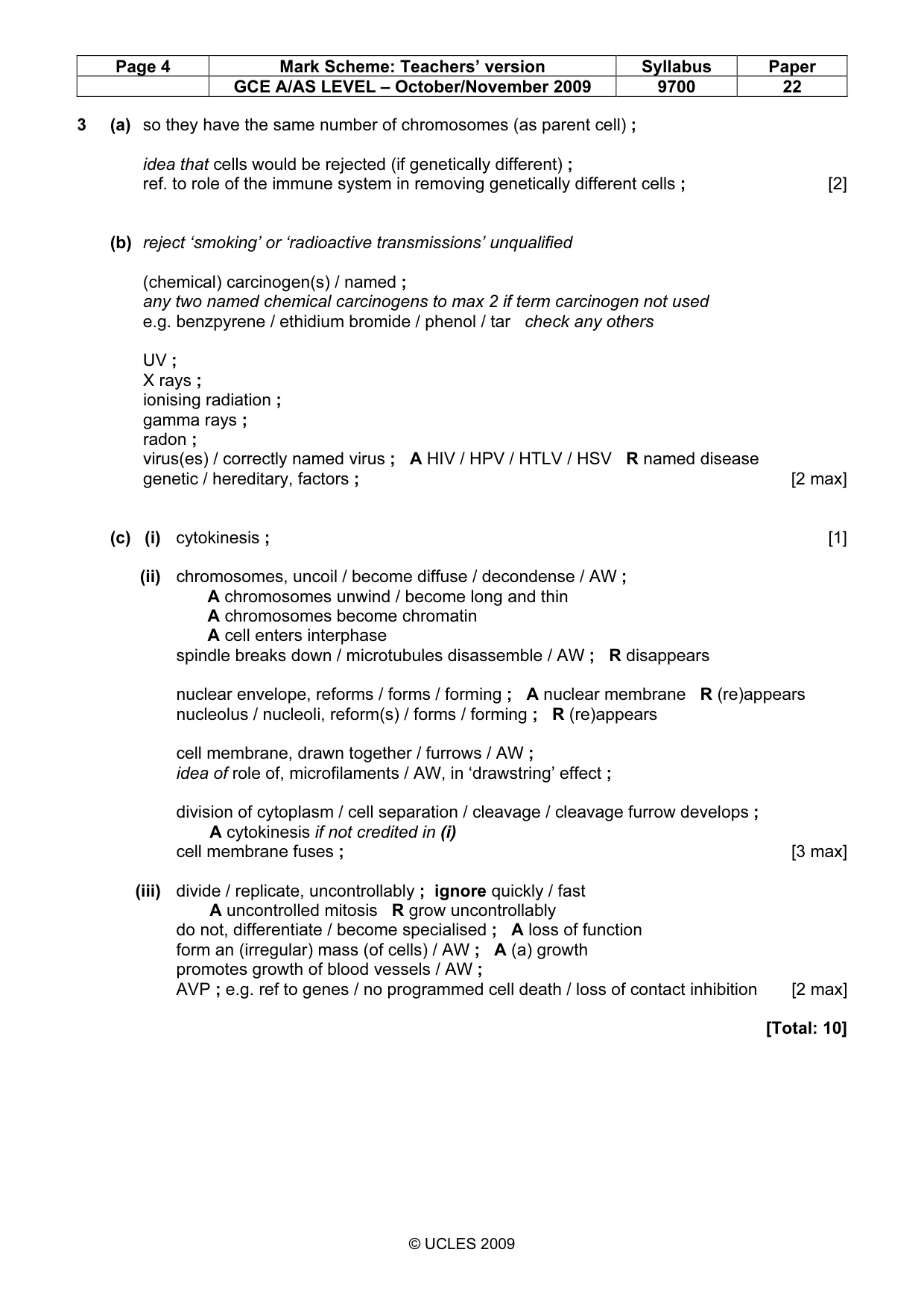
Page 4 Mark Scheme: Teachers’ version Syllabus Paper GCE A/AS LEVEL – October/November 2009 9700 22 © UCLES 2009 3 (a) so they have the same number of chromosomes (as parent cell) ; idea that cells would be rejected (if genetically different) ; ref. to role of the immune system in removing genetically different cells ; [2] (b) reject ‘smoking’ or ‘radioactive transmissions’ unqualified (chemical) carcinogen(s) / named ; any two named chemical carcinogens to max 2 if term carcinogen not used e.g. benzpyrene / ethidium bromide / phenol / tar check any others UV ; X rays ; ionising radiation ; gamma rays ; radon ; virus(es) / correctly named virus ; A HIV / HPV / HTLV / HSV R named disease genetic / hereditary, factors ; [2 max] (c) (i) cytokinesis ; [1] (ii) chromosomes, uncoil / become diffuse / decondense / AW ; A chromosomes unwind / become long and thin A chromosomes become chromatin A cell enters interphase spindle breaks down / microtubules disassemble / AW ; R disappears nuclear envelope, reforms / forms / forming ; A nuclear membrane R (re)appears nucleolus / nucleoli, reform(s) / forms / forming ; R (re)appears cell membrane, drawn together / furrows / AW ; idea of role of, microfilaments / AW, in ‘drawstring’ effect ; division of cytoplasm / cell separation / cleavage / cleavage furrow develops ; A cytokinesis if not credited in (i) cell membrane fuses ; [3 max] (iii) divide / replicate, uncontrollably ; ignore quickly / fast A uncontrolled mitosis R grow uncontrollably do not, differentiate / become specialised ; A loss of function form an (irregular) mass (of cells) / AW ; A (a) growth promotes growth of blood vessels / AW ; AVP ; e.g. ref to genes / no programmed cell death / loss of contact inhibition [2 max] [Total: 10]
Mark scheme, page 5
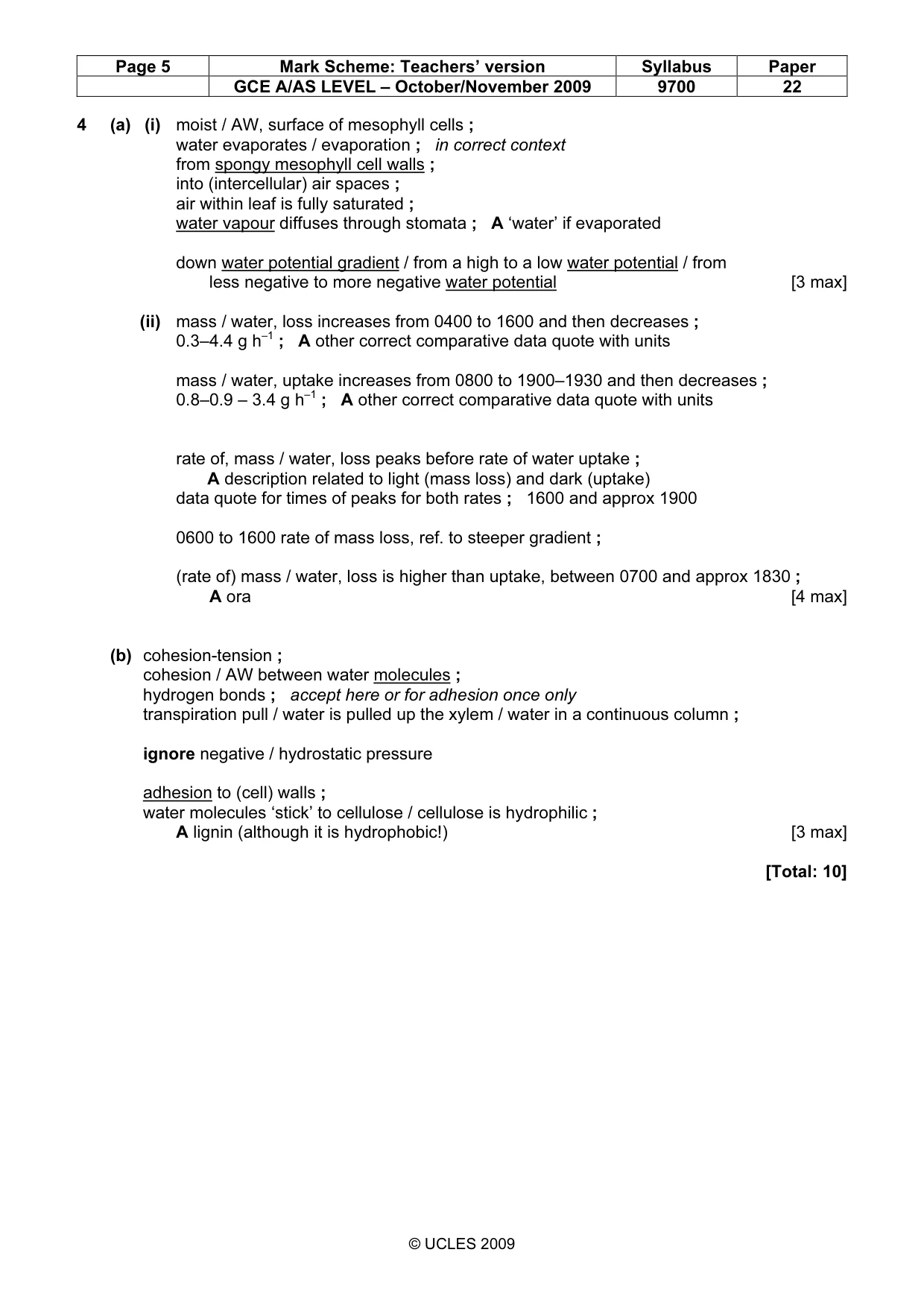
Page 5 Mark Scheme: Teachers’ version Syllabus Paper GCE A/AS LEVEL – October/November 2009 9700 22 © UCLES 2009 4 (a) (i) moist / AW, surface of mesophyll cells ; water evaporates / evaporation ; in correct context from spongy mesophyll cell walls ; into (intercellular) air spaces ; air within leaf is fully saturated ; water vapour diffuses through stomata ; A ‘water’ if evaporated down water potential gradient / from a high to a low water potential / from less negative to more negative water potential [3 max] (ii) mass / water, loss increases from 0400 to 1600 and then decreases ; 0.3–4.4 g h–1 ; A other correct comparative data quote with units mass / water, uptake increases from 0800 to 1900–1930 and then decreases ; 0.8–0.9 – 3.4 g h–1 ; A other correct comparative data quote with units rate of, mass / water, loss peaks before rate of water uptake ; A description related to light (mass loss) and dark (uptake) data quote for times of peaks for both rates ; 1600 and approx 1900 0600 to 1600 rate of mass loss, ref. to steeper gradient ; (rate of) mass / water, loss is higher than uptake, between 0700 and approx 1830 ; A ora [4 max] (b) cohesion-tension ; cohesion / AW between water molecules ; hydrogen bonds ; accept here or for adhesion once only transpiration pull / water is pulled up the xylem / water in a continuous column ; ignore negative / hydrostatic pressure adhesion to (cell) walls ; water molecules ‘stick’ to cellulose / cellulose is hydrophilic ; A lignin (although it is hydrophobic!) [3 max] [Total: 10]
Mark scheme, page 6
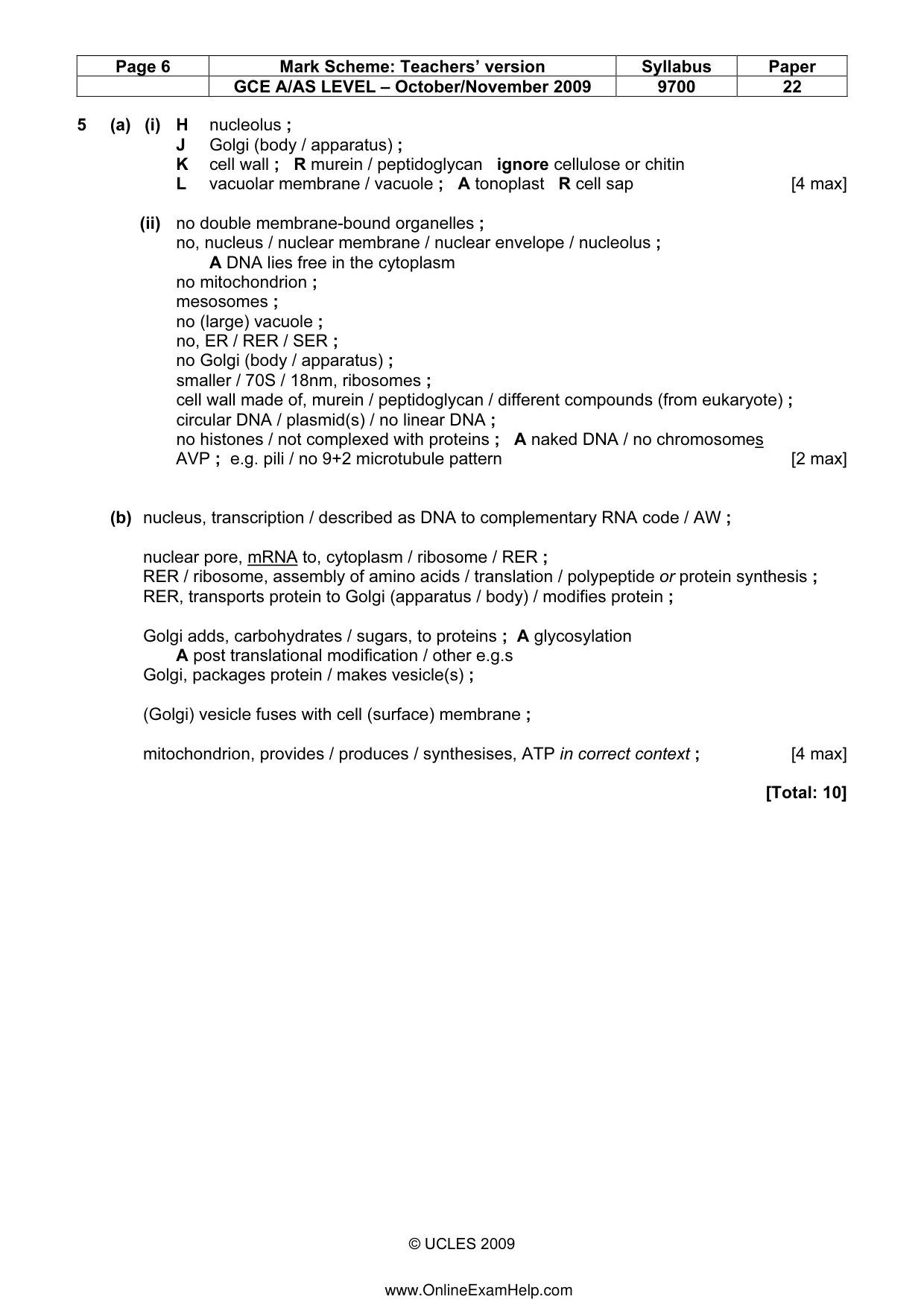
Page 6 Mark Scheme: Teachers’ version Syllabus Paper GCE A/AS LEVEL – October/November 2009 9700 22 © UCLES 2009 5 (a) (i) H nucleolus ; J Golgi (body / apparatus) ; K cell wall ; R murein / peptidoglycan ignore cellulose or chitin L vacuolar membrane / vacuole ; A tonoplast R cell sap [4 max] (ii) no double membrane-bound organelles ; no, nucleus / nuclear membrane / nuclear envelope / nucleolus ; A DNA lies free in the cytoplasm no mitochondrion ; mesosomes ; no (large) vacuole ; no, ER / RER / SER ; no Golgi (body / apparatus) ; smaller / 70S / 18nm, ribosomes ; cell wall made of, murein / peptidoglycan / different compounds (from eukaryote) ; circular DNA / plasmid(s) / no linear DNA ; no histones / not complexed with proteins ; A naked DNA / no chromosomes AVP ; e.g. pili / no 9+2 microtubule pattern [2 max] (b) nucleus, transcription / described as DNA to complementary RNA code / AW ; nuclear pore, mRNA to, cytoplasm / ribosome / RER ; RER / ribosome, assembly of amino acids / translation / polypeptide or protein synthesis ; RER, transports protein to Golgi (apparatus / body) / modifies protein ; Golgi adds, carbohydrates / sugars, to proteins ; A glycosylation A post translational modification / other e.g.s Golgi, packages protein / makes vesicle(s) ; (Golgi) vesicle fuses with cell (surface) membrane ; mitochondrion, provides / produces / synthesises, ATP in correct context ; [4 max] [Total: 10] www.OnlineExamHelp.com
Mark scheme, page 7
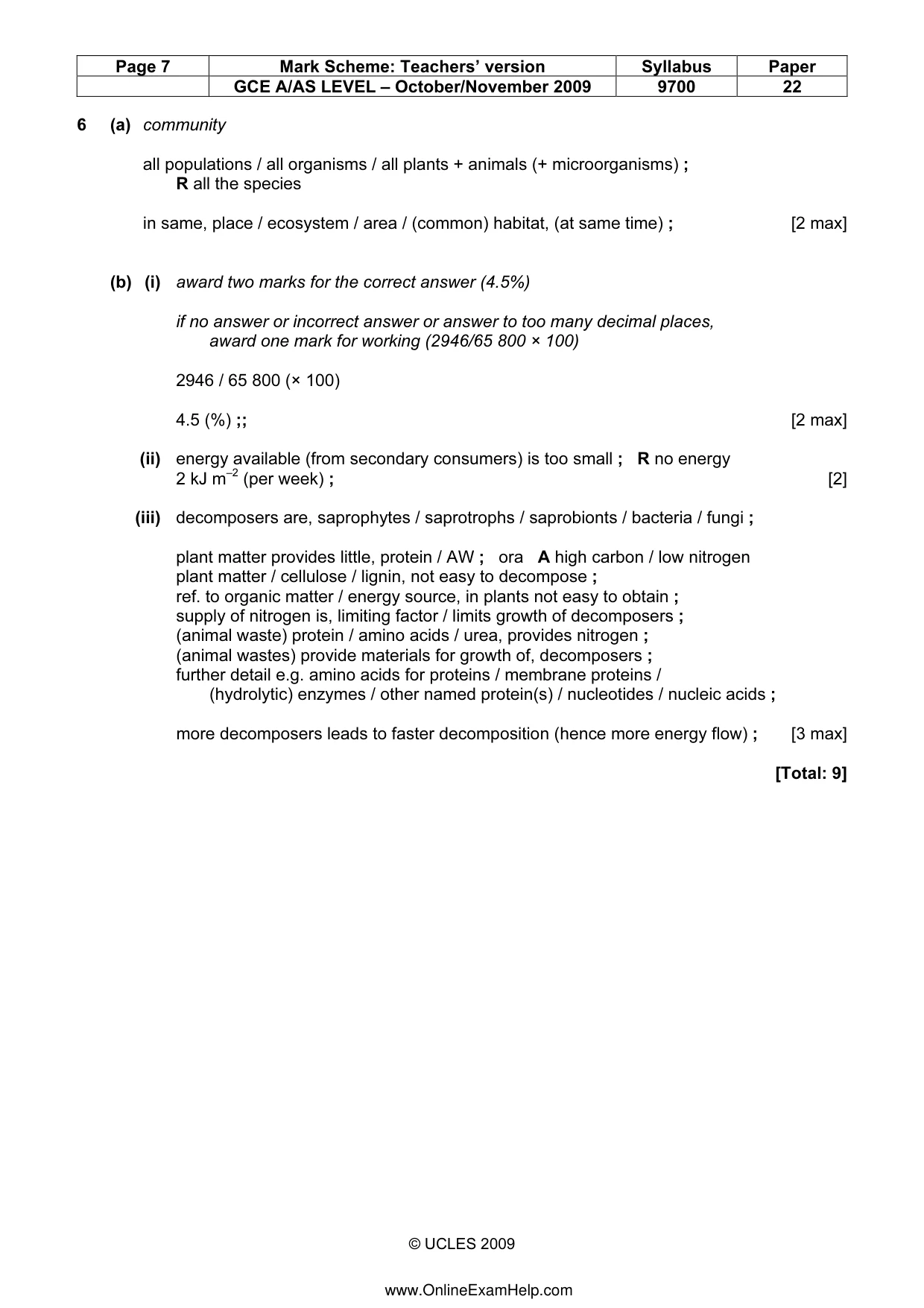
Page 7 Mark Scheme: Teachers’ version Syllabus Paper GCE A/AS LEVEL – October/November 2009 9700 22 © UCLES 2009 6 (a) community all populations / all organisms / all plants + animals (+ microorganisms) ; R all the species in same, place / ecosystem / area / (common) habitat, (at same time) ; [2 max] (b) (i) award two marks for the correct answer (4.5%) if no answer or incorrect answer or answer to too many decimal places, award one mark for working (2946/65 800 × 100) 2946 / 65 800 (× 100) 4.5 (%) ;; [2 max] (ii) energy available (from secondary consumers) is too small ; R no energy 2 kJ m–2 (per week) ; [2] (iii) decomposers are, saprophytes / saprotrophs / saprobionts / bacteria / fungi ; plant matter provides little, protein / AW ; ora A high carbon / low nitrogen plant matter / cellulose / lignin, not easy to decompose ; ref. to organic matter / energy source, in plants not easy to obtain ; supply of nitrogen is, limiting factor / limits growth of decomposers ; (animal waste) protein / amino acids / urea, provides nitrogen ; (animal wastes) provide materials for growth of, decomposers ; further detail e.g. amino acids for proteins / membrane proteins / (hydrolytic) enzymes / other named protein(s) / nucleotides / nucleic acids ; more decomposers leads to faster decomposition (hence more energy flow) ; [3 max] [Total: 9] www.OnlineExamHelp.com