Cambridge A Level Accounting 9706 — 2023 May/June Paper 4 · Variant 3
9706/43/M/J/23 · 2 questions · 50 marks · ≈56 min
The question paper and its mark scheme, free to read here and free to download. This is Cambridge’s own paper, exactly as it was sat.
Question paper8 pages



Mark scheme11 pages
Answers below. Sit the paper first if you are practising.
Questions as text
Q1 · Read Source A in the insert
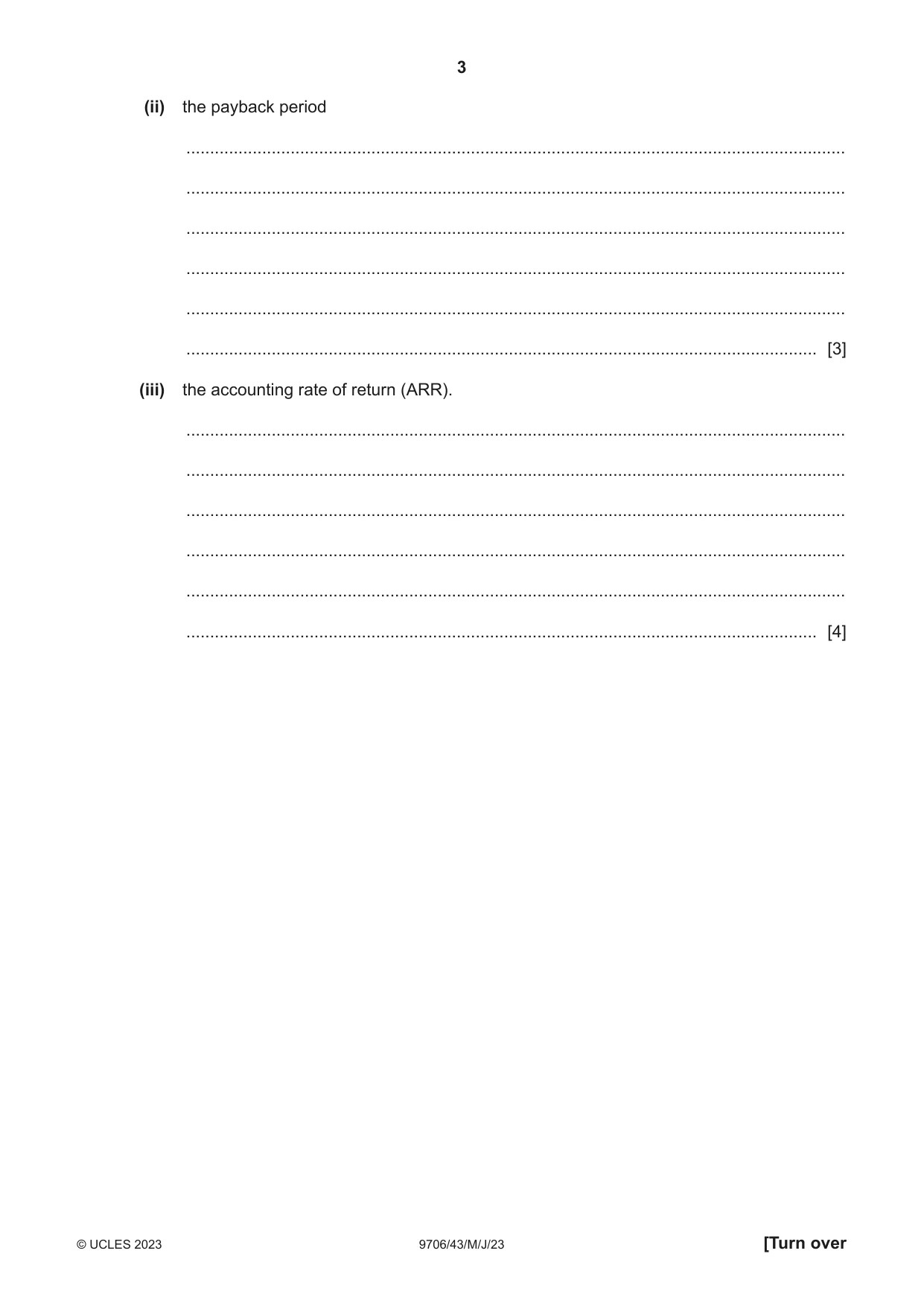
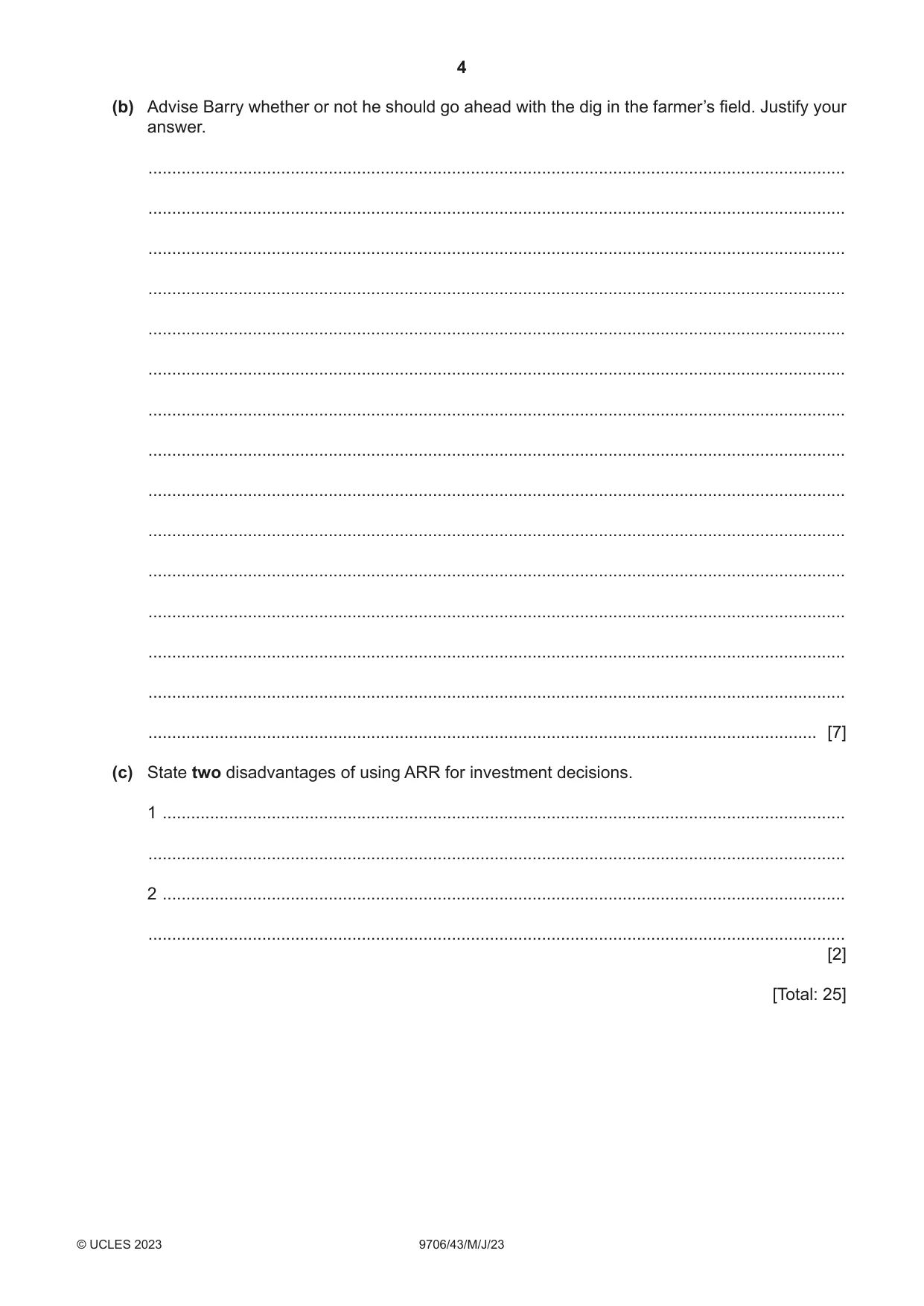
1 Read Source A in the insert. (a) Calculate: (i) the net present value (NPV) of the dig ........................................................................................................................................... ........................................................................................................................................... ........................................................................................................................................... ........................................................................................................................................... ........................................................................................................................................... ........................................................................................................................................... ........................................................................................................................................... ........................................................................................................................................... ........................................................................................................................................... ........................................................................................................................................... ........................................................................................................................................... ........................................................................................................................................... ........................................................................................................................................... ........................................................................................................................................... ........................................................................................................................................... ........................................................................................................................................... ........................................................................................................................................... ........................................................................................................................................... ........................................................................................................................................... ........................................................................................................................................... ........................................................................................................................................... ........................................................................................................................................... ........................................................................................................................................... ........................................................................................................................................... ..................................................................................................................................... [9] (ii) the payback period ........................................................................................................................................... ........................................................................................................................................... ........................................................................................................................................... ........................................................................................................................................... ........................................................................................................................................... ..................................................................................................................................... [3] (iii) the accounting rate of return (ARR). ........................................................................................................................................... ........................................................................................................................................... ........................................................................................................................................... ........................................................................................................................................... ........................................................................................................................................... ..................................................................................................................................... [4] (b) Advise Barry whether or not he should go ahead with the dig in the farmer’s field. Justify your answer. ................................................................................................................................................... ................................................................................................................................................... ................................................................................................................................................... ................................................................................................................................................... ................................................................................................................................................... ................................................................................................................................................... ................................................................................................................................................... ................................................................................................................................................... ................................................................................................................................................... ................................................................................................................................................... ................................................................................................................................................... ................................................................................................................................................... ................................................................................................................................................... ................................................................................................................................................... ............................................................................................................................................. [7] (c) State two disadvantages of using ARR for investment decisions. 1 ................................................................................................................................................ ................................................................................................................................................... 2 ................................................................................................................................................ ................................................................................................................................................... [2] [Total: 25]
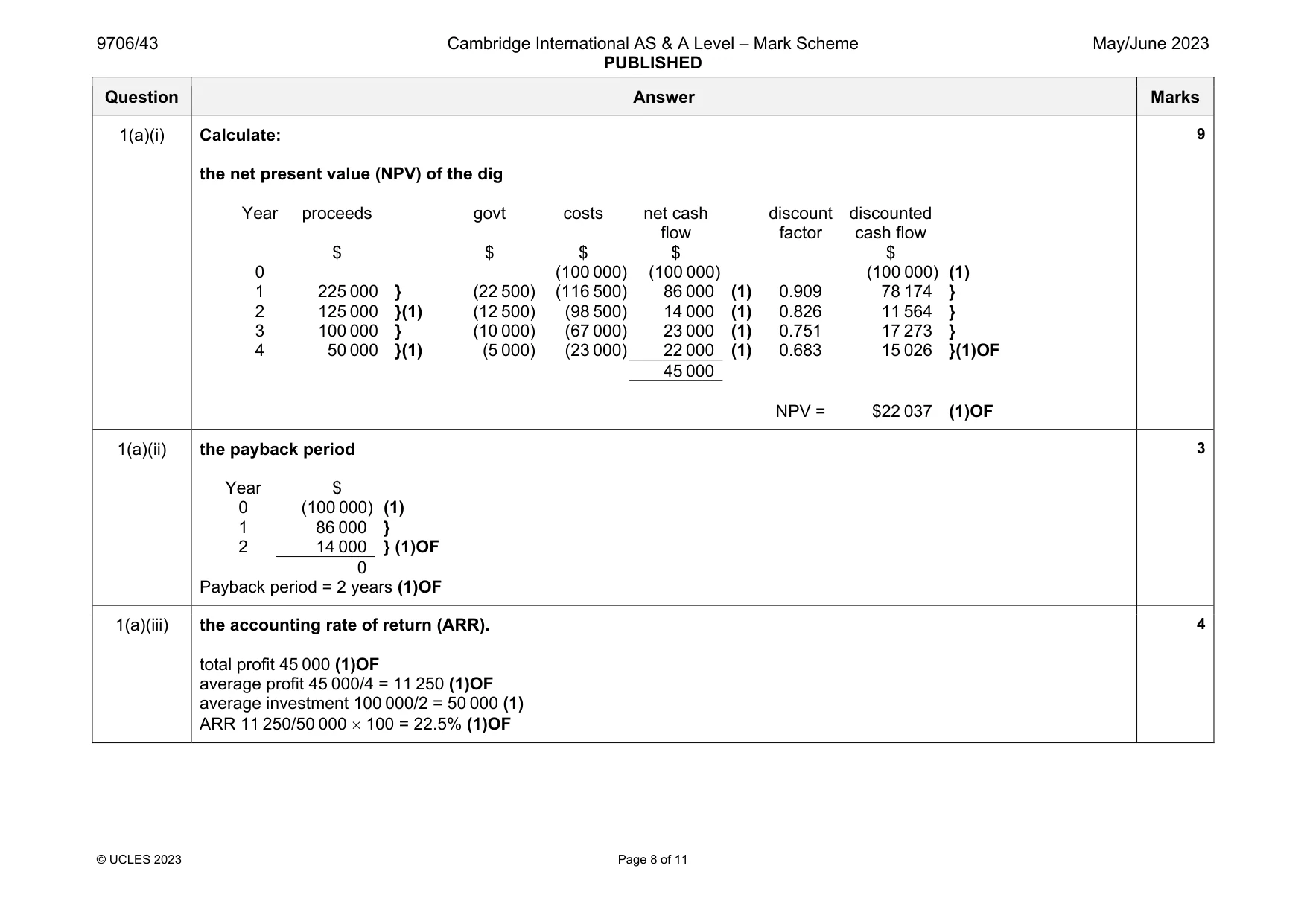
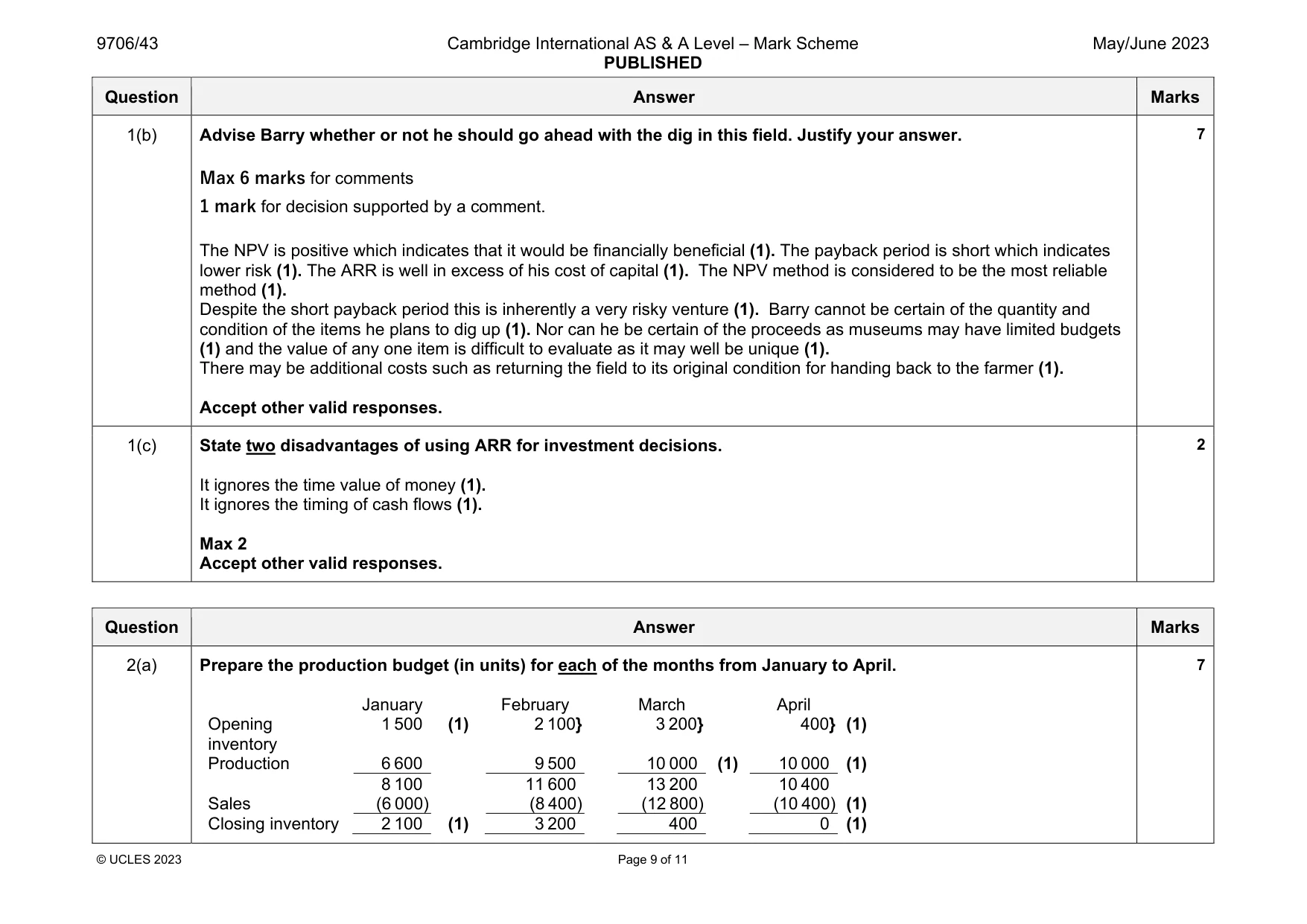
Mark scheme: 1(a)(i) Calculate: the net present value (NPV) of the dig Year proceeds $ govt $ costs $ net cash flow $ discount factor discounted cash flow $ 0 (100 000) (100 000) (100 000) (1) 1 225 000 } (22 500) (116 500) 86 000 (1) 0.909 78 174 } 2 125 000 }(1) (12 500) (98 500) 14 000 (1) 0.826 11 564 } 3 100 000 } (10 000) (67 000) 23 000 (1) 0.751 17 273 } 4 50 000 }(1) (5 000) (23 000) 22 000 (1) 0.683 15 026 }(1)OF 45 000 NPV = $22 037 (1)OF 1(a)(ii) the payback period Year $ 0 (100 000) (1) 1 86 000 } 2 14 000 } (1)OF 0 Payback period = 2 years (1)OF 3 1(a)(iii) the accounting rate of return (ARR). total profit 45 000 (1)OF average profit 45 000/4 = 11 250 (1)OF average investment 100 000/2 = 50 000 (1) ARR 11 250/50 000 100 = 22.5% (1)OF 4 Question Answer Marks 1(b) Advise Barry whether or not he should go ahead with the dig in this field. Justify your answer. Max 6 marks for comments 1 mark for decision supported by a comment. The NPV is positive which indicates that it would be financially beneficial (1). The payback period is short which indicates lower risk (1). The ARR is well in excess of his cost of capital (1). The NPV method is considered to be the most reliable method (1). Despite the short payback period this is inherently a very risky venture (1). Barry cannot be certain of the quantity and condition of the items he plans to dig up (1). Nor can he be certain of the proceeds as museums may have limited budgets (1) and the value of any one item is difficult to evaluate as it may well be unique (1). There may be additional costs such as returning the field to its original condition for handing back to the farmer (1). Accept other valid responses. 7 1(c) State two disadvantages of using ARR for investment decisions. It ignores the time value of money (1). It ignores the timing of cash flows (1). Max 2 Accept other valid responses. 2
Q2 · Read Source B in the insert
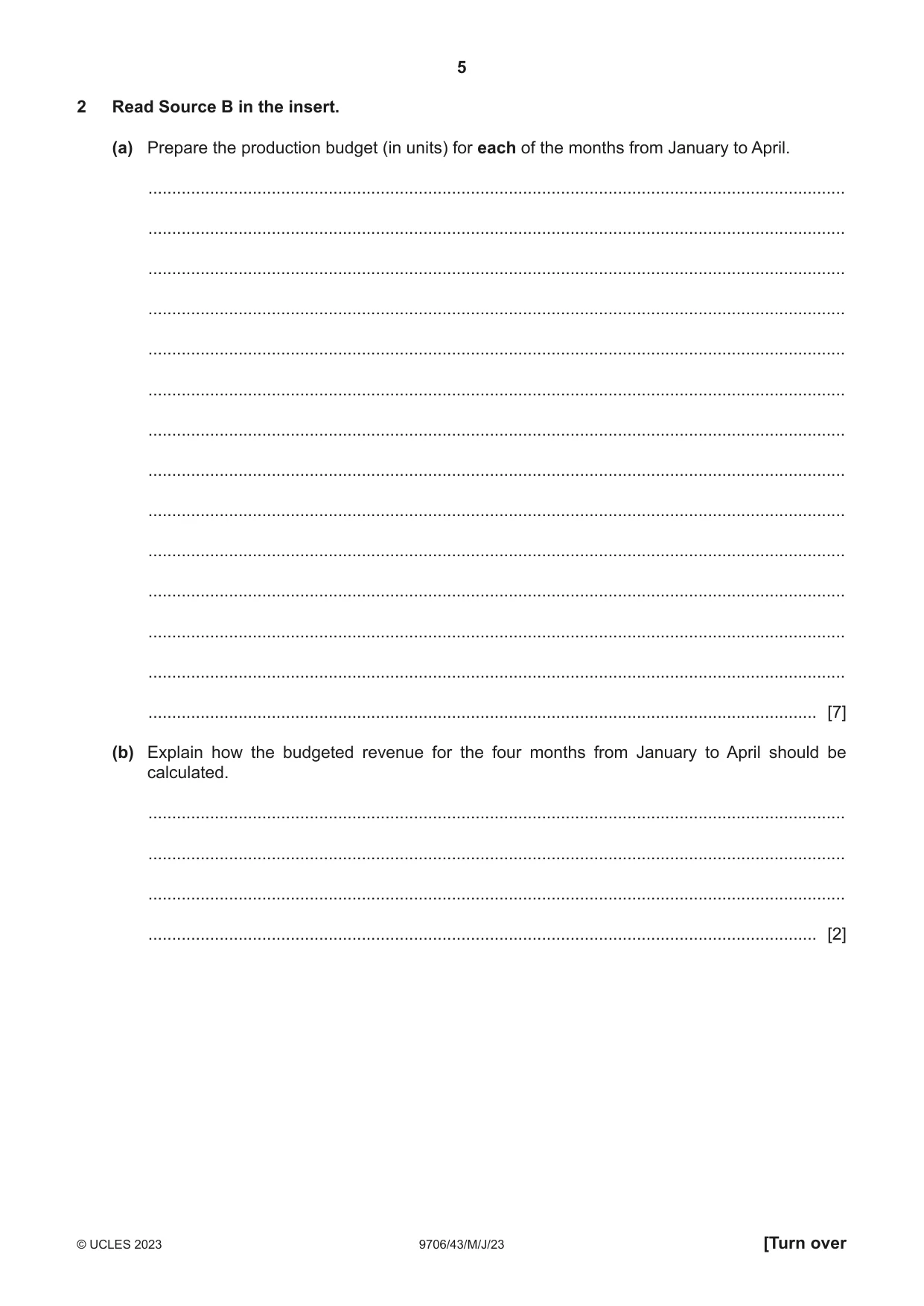
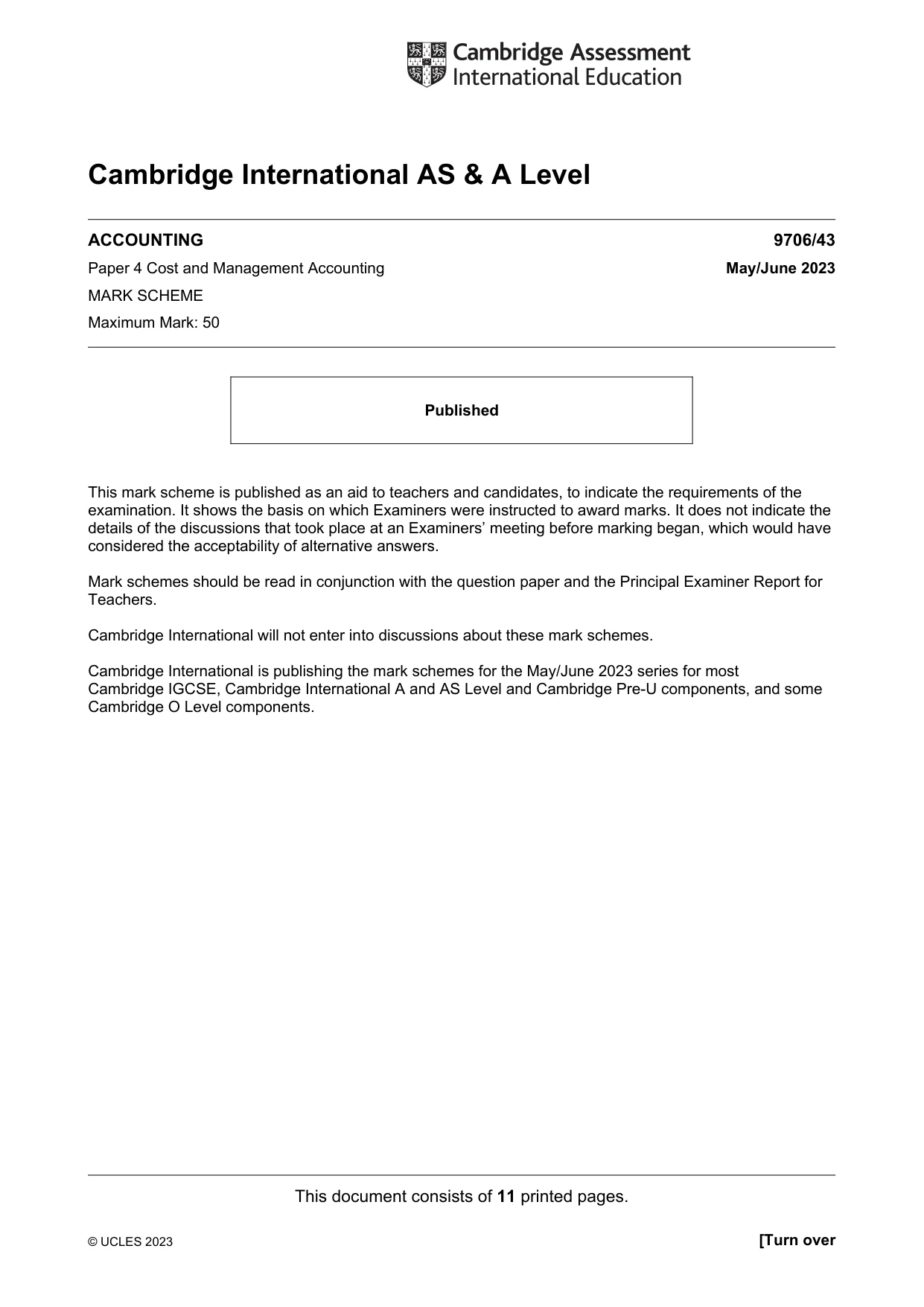
2 Read Source B in the insert. (a) Prepare the production budget (in units) for each of the months from January to April. ................................................................................................................................................... ................................................................................................................................................... ................................................................................................................................................... ................................................................................................................................................... ................................................................................................................................................... ................................................................................................................................................... ................................................................................................................................................... ................................................................................................................................................... ................................................................................................................................................... ................................................................................................................................................... ................................................................................................................................................... ................................................................................................................................................... ................................................................................................................................................... ............................................................................................................................................. [7] (b) Explain how the budgeted revenue for the four months from January to April should be calculated. ................................................................................................................................................... ................................................................................................................................................... ................................................................................................................................................... ............................................................................................................................................. [2] Additional information At present, storage space is limited, such that the maximum number of units which can be held in inventory is 3200. (c) Advise the directors of the company whether or not they should invest in a new, larger storage facility. Justify your answer. ................................................................................................................................................... ................................................................................................................................................... ................................................................................................................................................... ................................................................................................................................................... ................................................................................................................................................... ................................................................................................................................................... ................................................................................................................................................... ................................................................................................................................................... ................................................................................................................................................... ................................................................................................................................................... ................................................................................................................................................... ................................................................................................................................................... ................................................................................................................................................... ............................................................................................................................................. [7] Additional information Each unit requires two kilos of direct material. The production manager expects that this material will cost $6 per kilo in January and $7 per kilo thereafter. No inventory of direct material is kept. Half of the purchases are paid for in the month of purchase. The remainder are paid for in the following month. (d) Prepare the trade payables budget for each of the months of February and March. Include the balance of trade payables at the beginning and the end of each month. Assume that production is still as in your answer to part (a). ................................................................................................................................................... ................................................................................................................................................... ................................................................................................................................................... ................................................................................................................................................... ................................................................................................................................................... ................................................................................................................................................... ................................................................................................................................................... ................................................................................................................................................... ................................................................................................................................................... ................................................................................................................................................... ................................................................................................................................................... ................................................................................................................................................... ................................................................................................................................................... ............................................................................................................................................. [7] Additional information The directors are considering asking the company’s suppliers to introduce a cash discount of 4% on payments made in the month of purchase. (e) Explain how this change would affect the budgeted statement of profit or loss. ................................................................................................................................................... ................................................................................................................................................... ................................................................................................................................................... ............................................................................................................................................. [2]
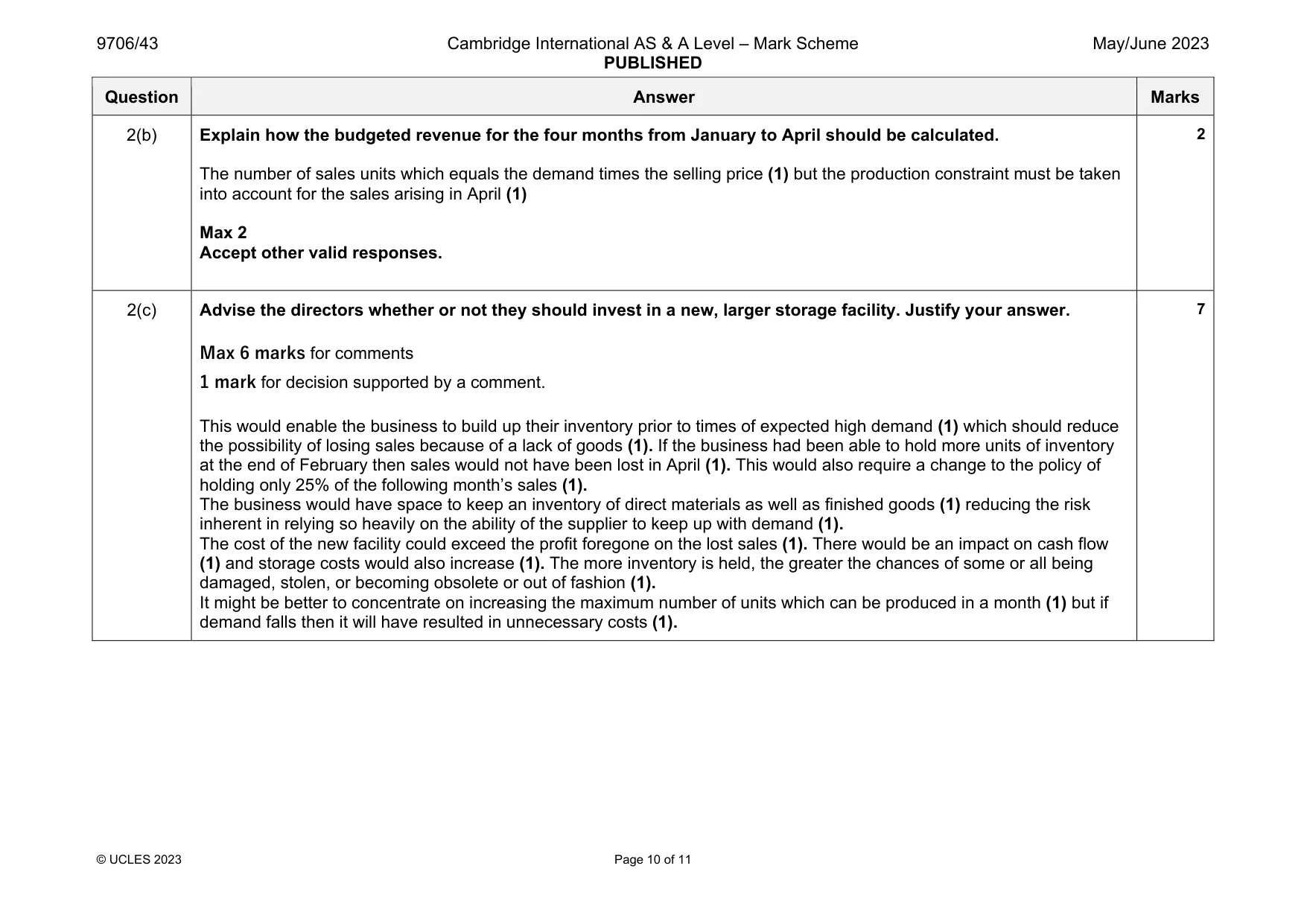
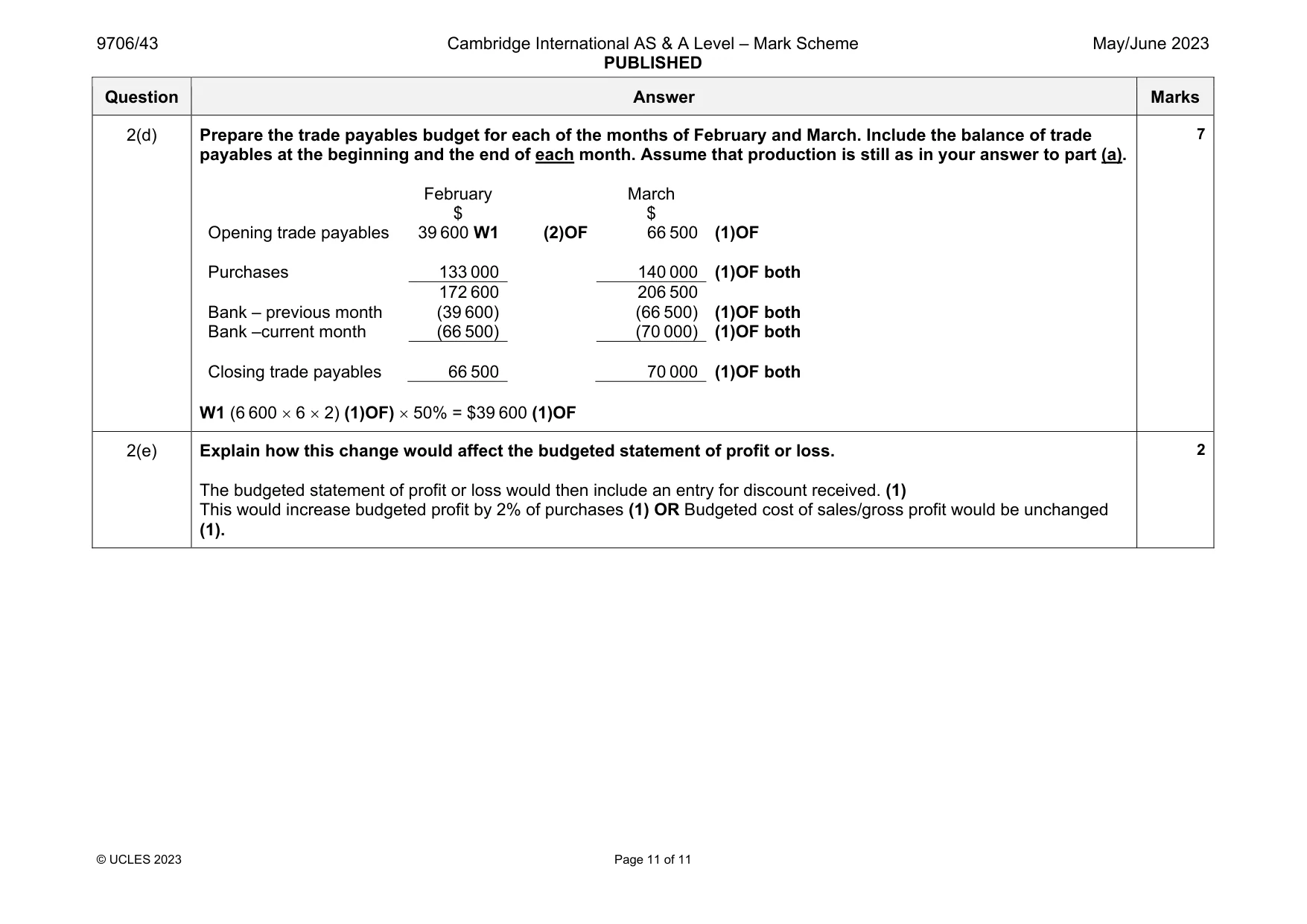
Mark scheme: 2(a) Prepare the production budget (in units) for each of the months from January to April. January February March April Opening inventory 1 500 (1) 2 100} 3 200} 400} (1) Production 6 600 9 500 10 000 (1) 10 000 (1) 8 100 11 600 13 200 10 400 Sales (6 000) (8 400) (12 800) (10 400) (1) Closing inventory 2 100 (1) 3 200 400 0 (1) Question Answer Marks 2(b) Explain how the budgeted revenue for the four months from January to April should be calculated. The number of sales units which equals the demand times the selling price (1) but the production constraint must be taken into account for the sales arising in April (1) Max 2 Accept other valid responses. 2 2(c) Advise the directors whether or not they should invest in a new, larger storage facility. Justify your answer. Max 6 marks for comments 1 mark for decision supported by a comment. This would enable the business to build up their inventory prior to times of expected high demand (1) which should reduce the possibility of losing sales because of a lack of goods (1). If the business had been able to hold more units of inventory at the end of February then sales would not have been lost in April (1). This would also require a change to the policy of holding only 25% of the following month’s sales (1). The business would have space to keep an inventory of direct materials as well as finished goods (1) reducing the risk inherent in relying so heavily on the ability of the supplier to keep up with demand (1). The cost of the new facility could exceed the profit foregone on the lost sales (1). There would be an impact on cash flow (1) and storage costs would also increase (1). The more inventory is held, the greater the chances of some or all being damaged, stolen, or becoming obsolete or out of fashion (1). It might be better to concentrate on increasing the maximum number of units which can be produced in a month (1) but if demand falls then it will have resulted in unnecessary costs (1). 7 Question Answer Marks 2(d) Prepare the trade payables budget for each of the months of February and March. Include the balance of trade payables at the beginning and the end of each month. Assume that production is still as in your answer to part (a). February $ March $ Opening trade payables 39 600 W1 (2)OF 66 500 (1)OF Purchases 133 000 140 000 (1)OF both 172 600 206 500 Bank – previous month (39 600) (66 500) (1)OF both Bank –current month (66 500) (70 000) (1)OF both Closing trade payables 66 500 70 000 (1)OF both W1 (6 600 6 2) (1)OF) 50% = $39 600 (1)OF 7 2(e) Explain how this change would affect the budgeted statement of profit or loss. The budgeted statement of profit or loss would then include an entry for discount received. (1) This would increase budgeted profit by 2% of purchases (1) OR Budgeted cost of sales/gross profit would be unchanged (1). 2
What was in this paper
The subtopics covered by these 2 questions, and how many questions each got. Open one in a new tab to see every Cambridge question on it.
What you needed in this session
Cambridge’s own grade thresholds for 2023 May/June, Paper 4 · Variant 3. A higher threshold means an easier paper — the bar moves with how the cohort did.