Cambridge A Level Accounting 9706 — 2023 Oct/Nov Paper 4 · Variant 3
9706/43/O/N/23 · 2 questions · 50 marks · ≈56 min
The question paper and its mark scheme, free to read here and free to download. This is Cambridge’s own paper, exactly as it was sat.
Question paper12 pages
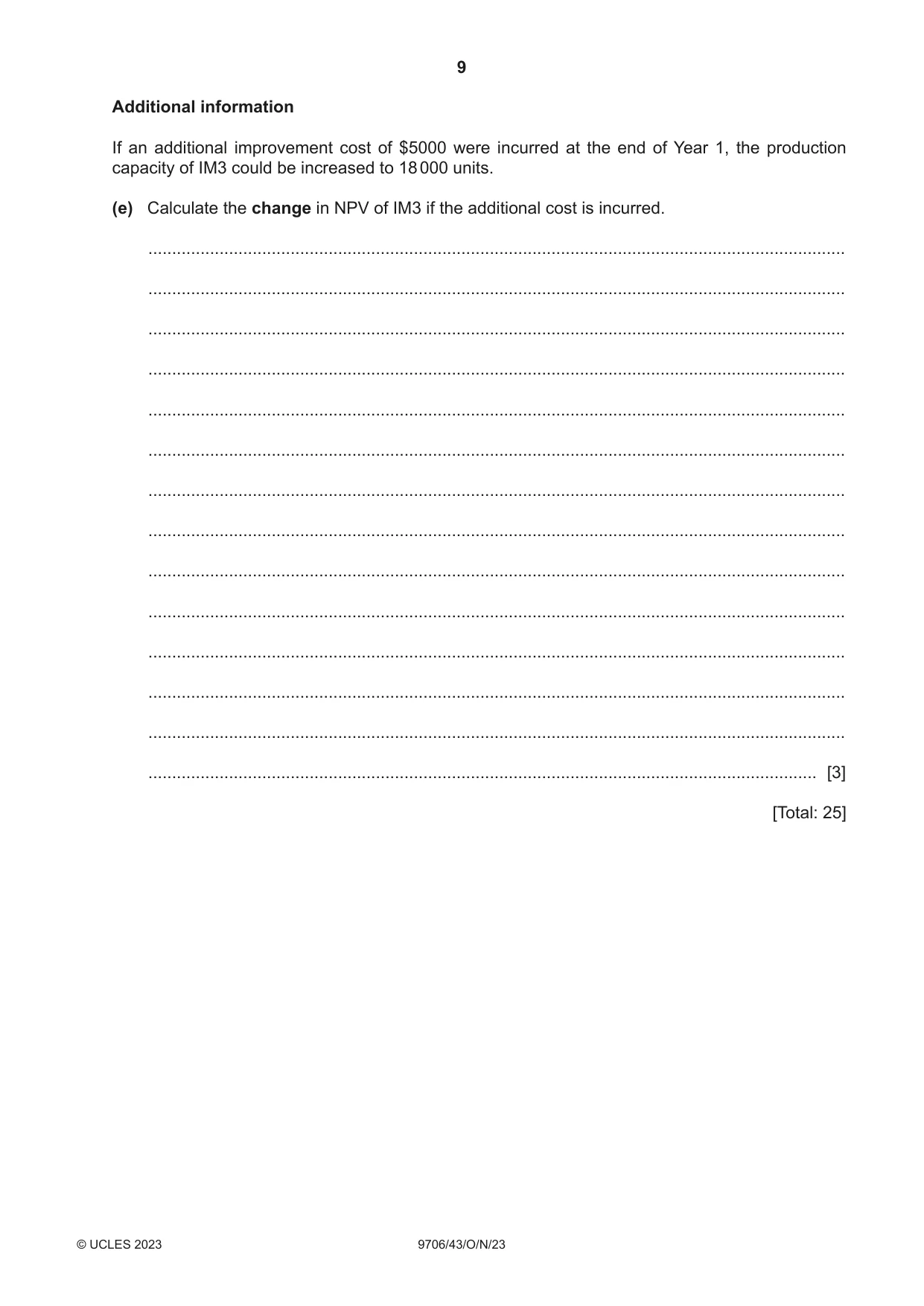


Mark scheme14 pages
Answers below. Sit the paper first if you are practising.
Questions as text
Q1 · Read Source A in the insert
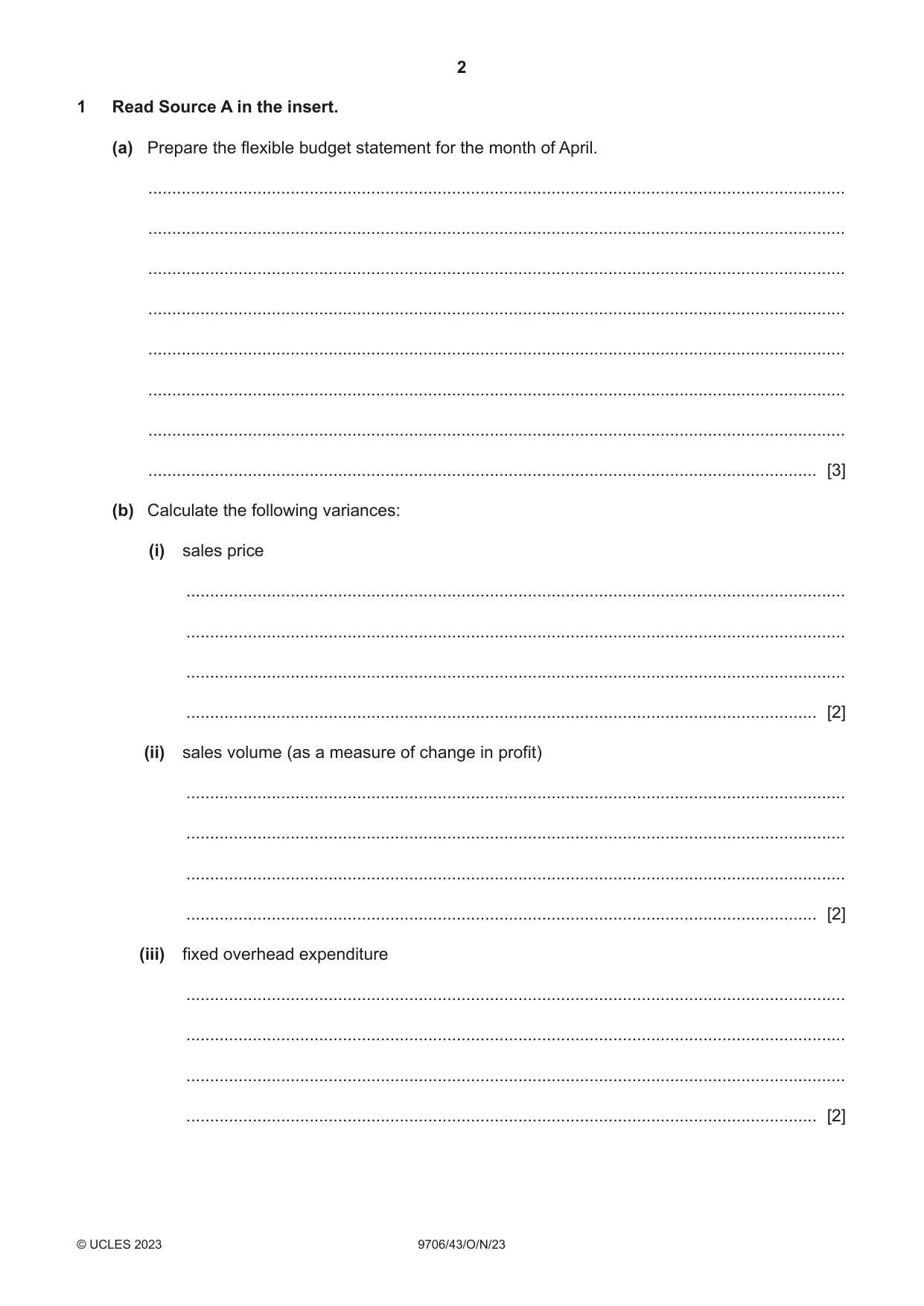
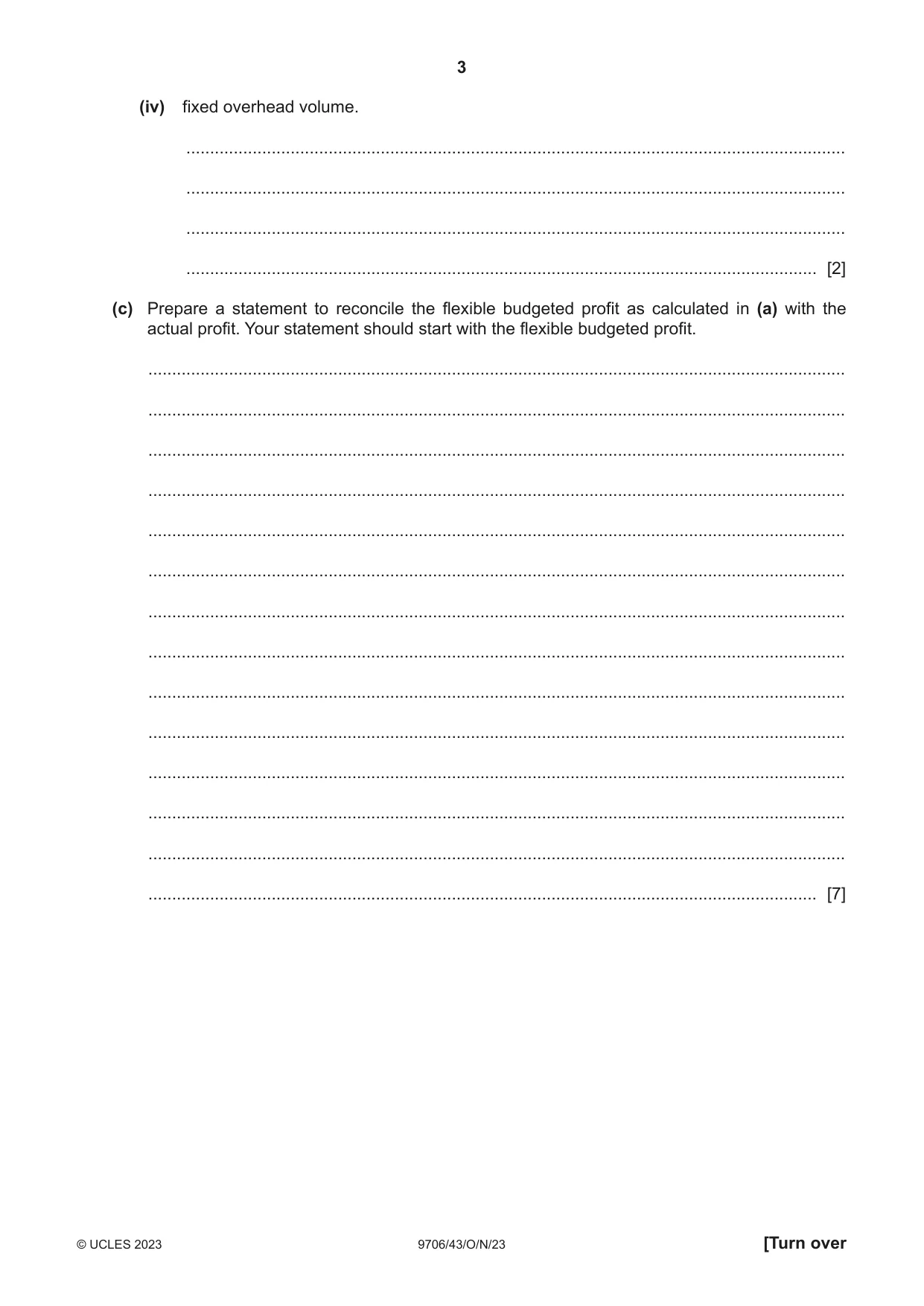
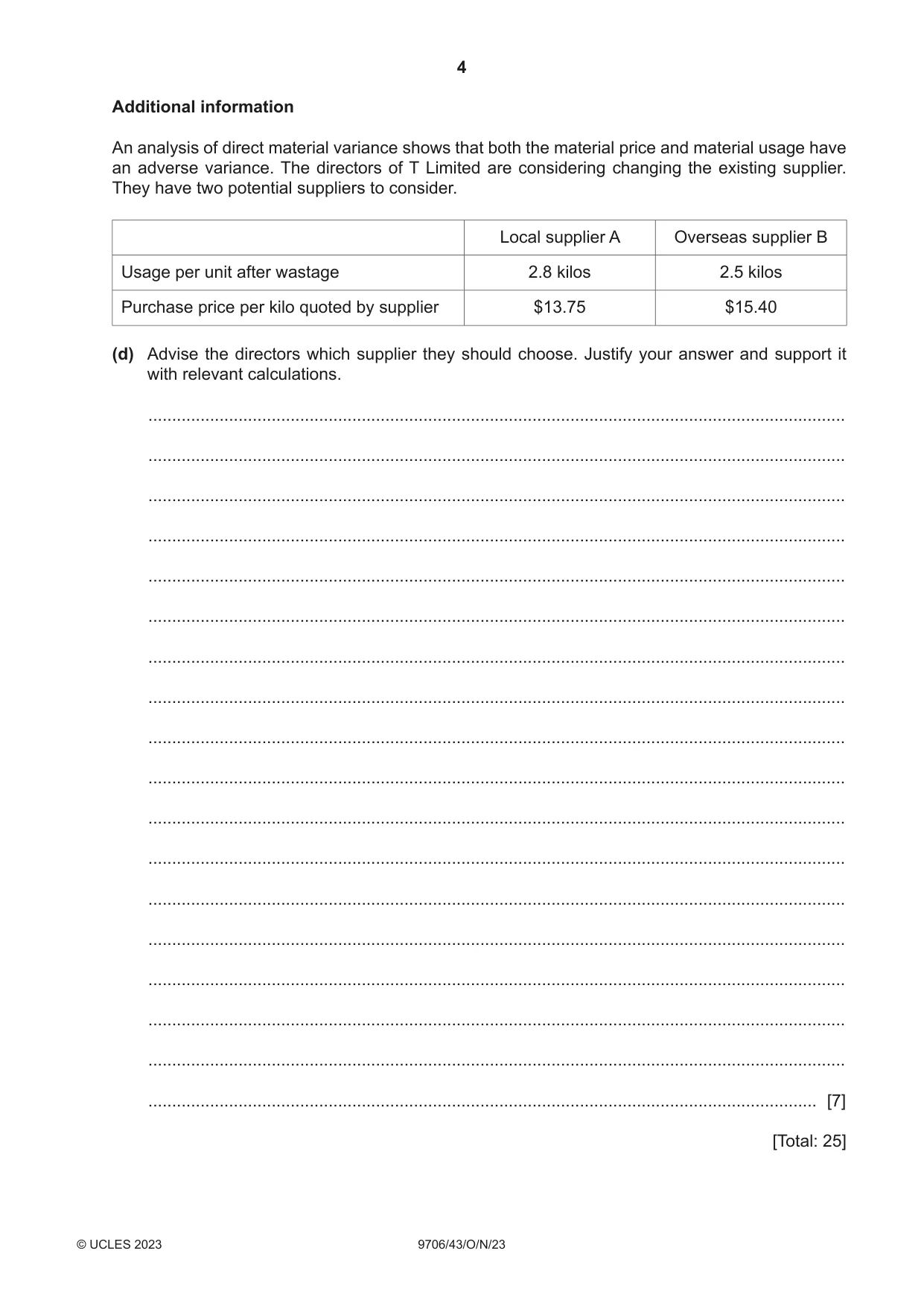
1 Read Source A in the insert. (a) Prepare the flexible budget statement for the month of April. ................................................................................................................................................... ................................................................................................................................................... ................................................................................................................................................... ................................................................................................................................................... ................................................................................................................................................... ................................................................................................................................................... ................................................................................................................................................... ............................................................................................................................................. [3] (b) Calculate the following variances: (i) sales price ........................................................................................................................................... ........................................................................................................................................... ........................................................................................................................................... ..................................................................................................................................... [2] (ii) sales volume (as a measure of change in profit) ........................................................................................................................................... ........................................................................................................................................... ........................................................................................................................................... ..................................................................................................................................... [2] (iii) fixed overhead expenditure ........................................................................................................................................... ........................................................................................................................................... ........................................................................................................................................... ..................................................................................................................................... [2] (iv) fixed overhead volume. ........................................................................................................................................... ........................................................................................................................................... ........................................................................................................................................... ..................................................................................................................................... [2] (c) Prepare a statement to reconcile the flexible budgeted profit as calculated in (a) with the actual profit. Your statement should start with the flexible budgeted profit. ................................................................................................................................................... ................................................................................................................................................... ................................................................................................................................................... ................................................................................................................................................... ................................................................................................................................................... ................................................................................................................................................... ................................................................................................................................................... ................................................................................................................................................... ................................................................................................................................................... ................................................................................................................................................... ................................................................................................................................................... ................................................................................................................................................... ................................................................................................................................................... ............................................................................................................................................. [7] Additional information An analysis of direct material variance shows that both the material price and material usage have an adverse variance. The directors of T Limited are considering changing the existing supplier. They have two potential suppliers to consider. Local supplier A Overseas supplier B Usage per unit after wastage 2.8 kilos 2.5 kilos Purchase price per kilo quoted by supplier $13.75 $15.40 (d) Advise the directors which supplier they should choose. Justify your answer and support it with relevant calculations. ................................................................................................................................................... ................................................................................................................................................... ................................................................................................................................................... ................................................................................................................................................... ................................................................................................................................................... ................................................................................................................................................... ................................................................................................................................................... ................................................................................................................................................... ................................................................................................................................................... ................................................................................................................................................... ................................................................................................................................................... ................................................................................................................................................... ................................................................................................................................................... ................................................................................................................................................... ................................................................................................................................................... ................................................................................................................................................... ................................................................................................................................................... ............................................................................................................................................. [7] [Total: 25]
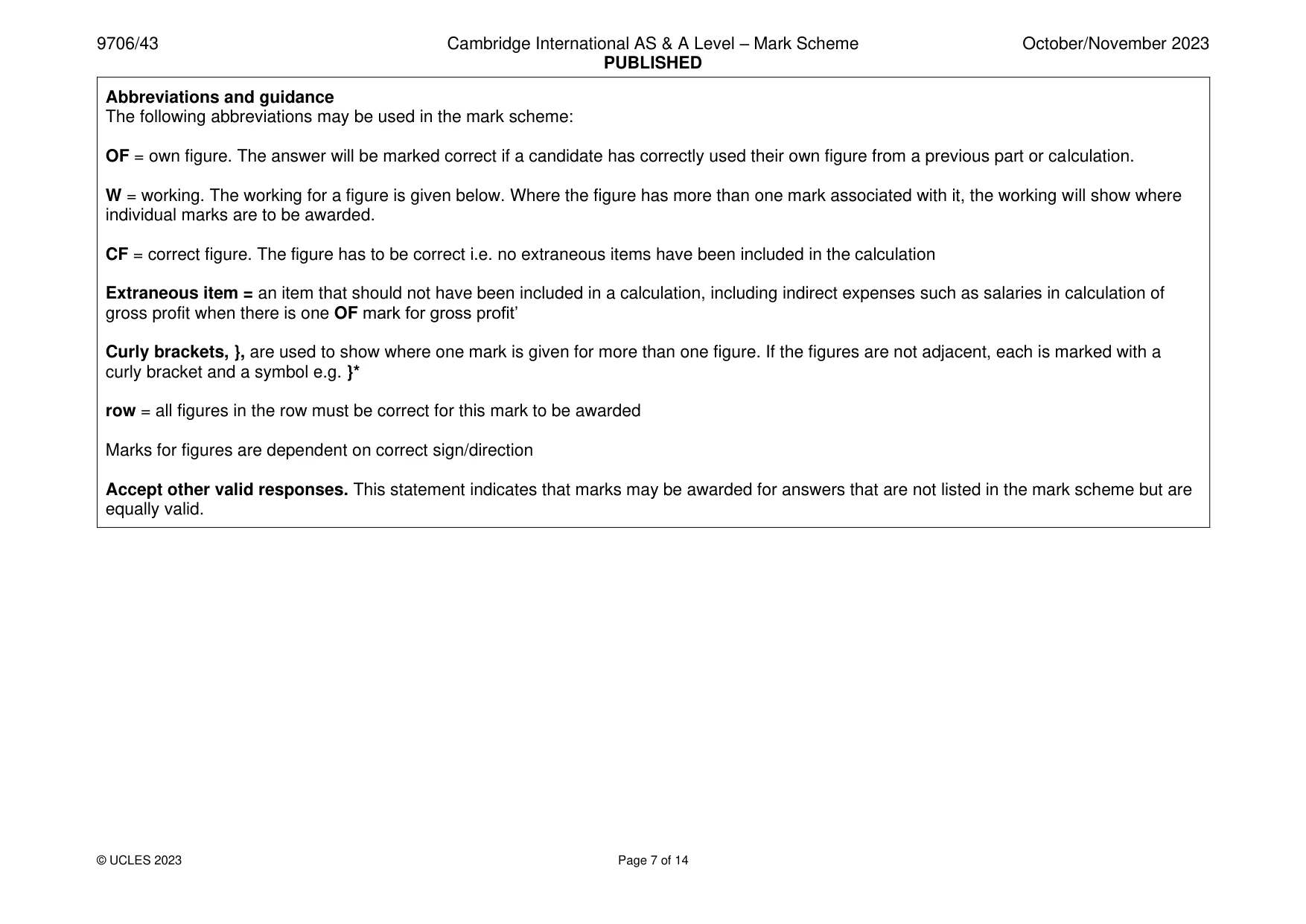
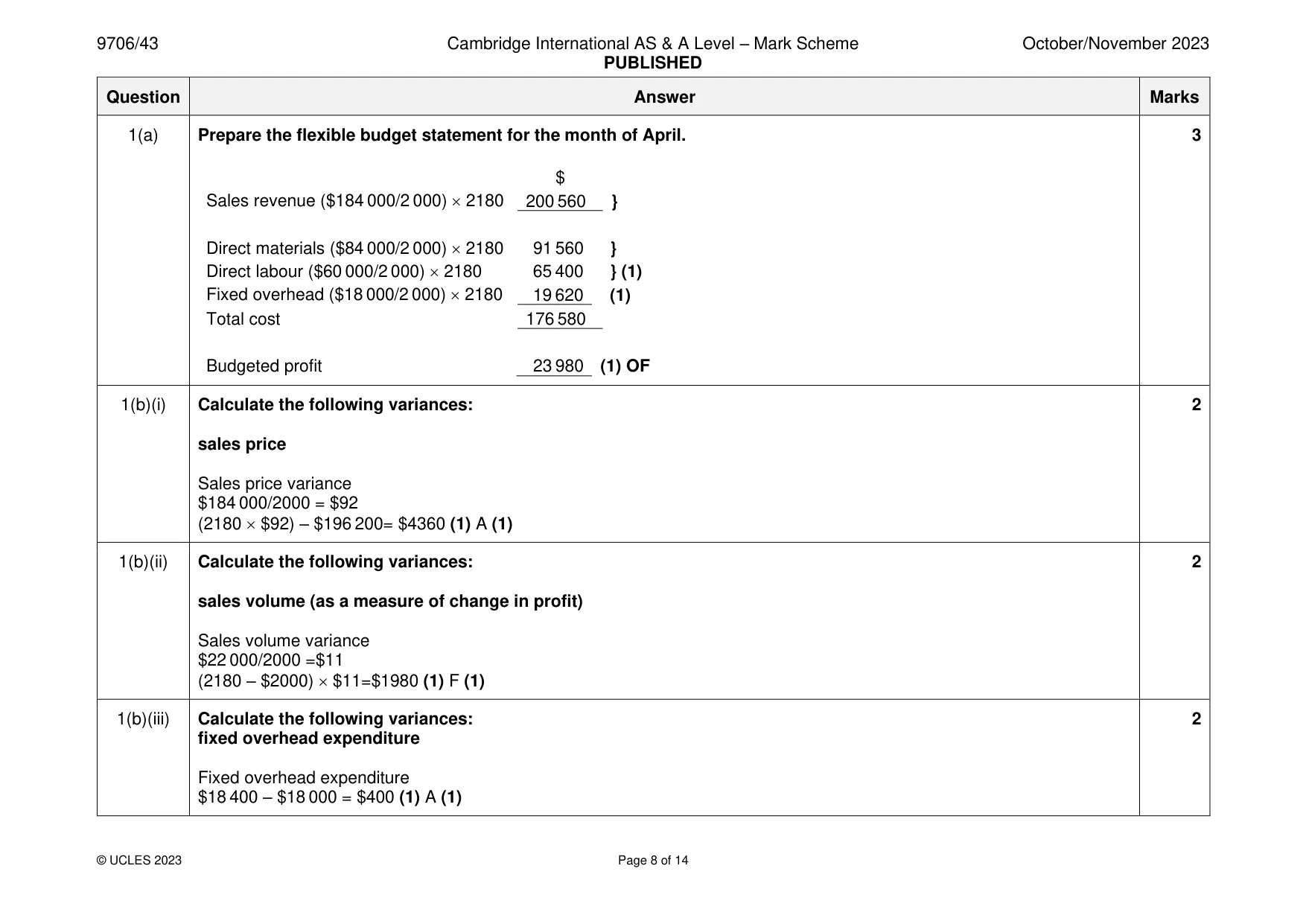
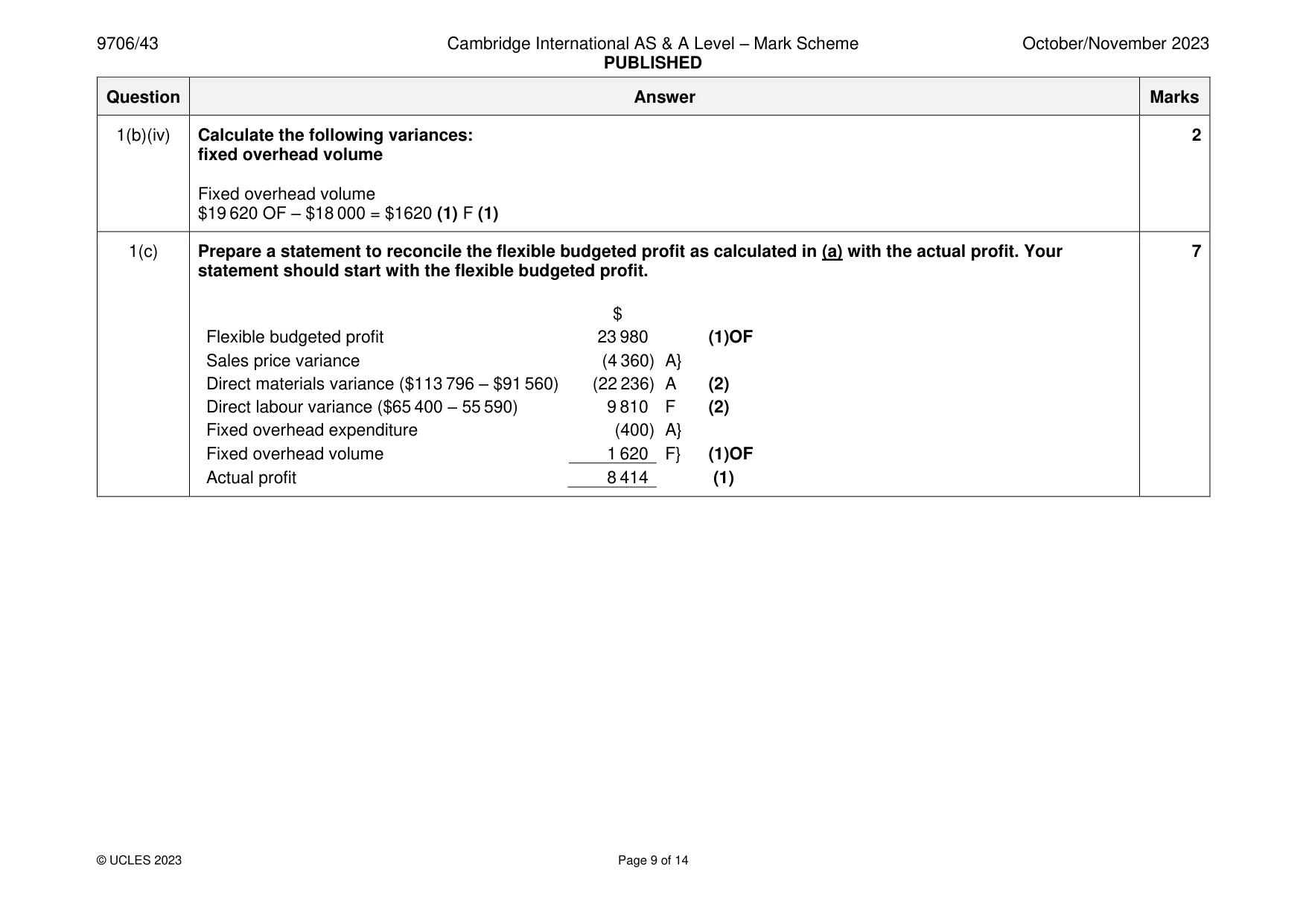
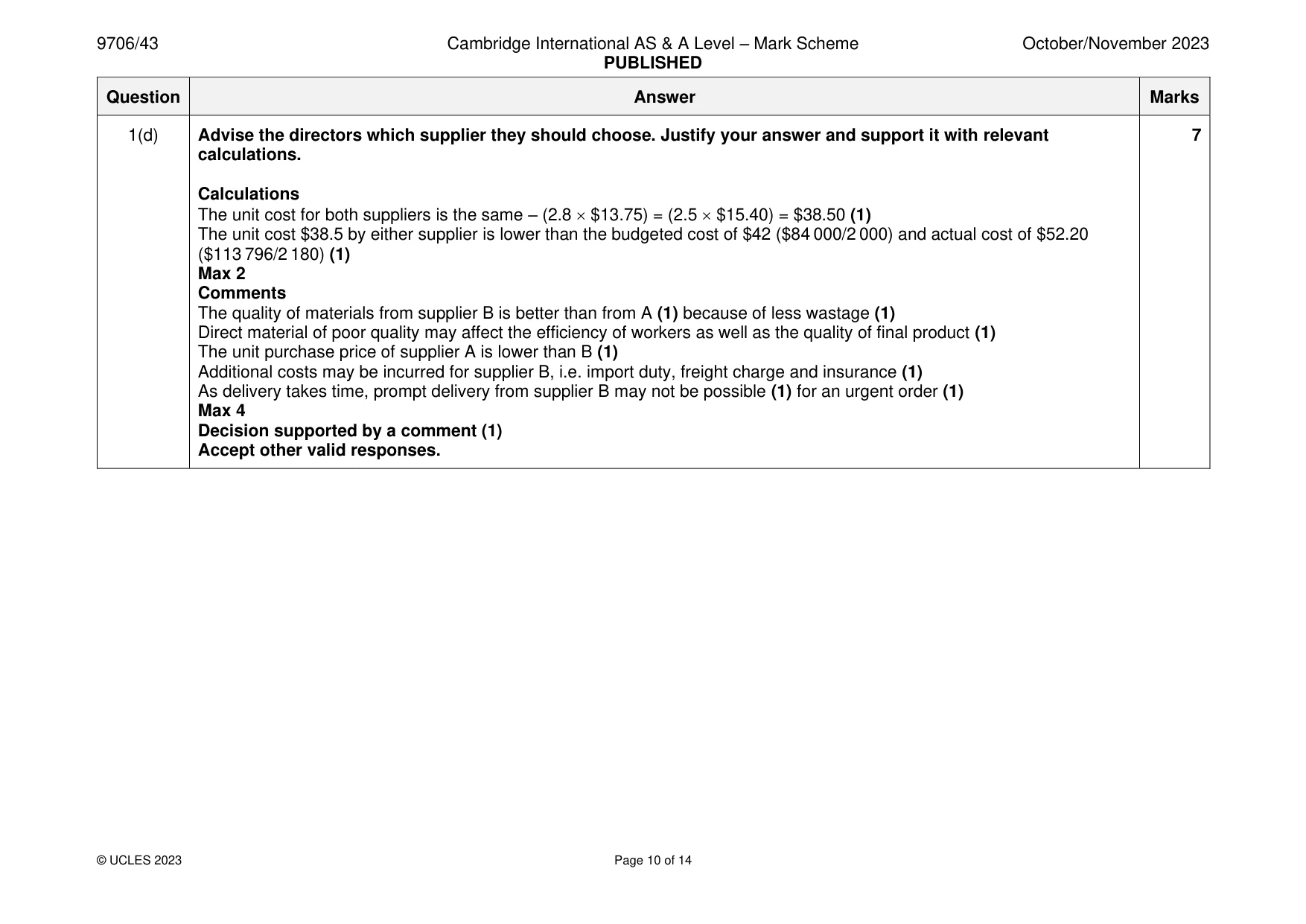
Mark scheme: Question Answer Marks 1(a) Prepare the flexible budget statement for the month of April. 3 $ Sales revenue ($184 000/2 000) 2180 200 560 } Direct materials ($84 000/2 000) 2180 91 560 } Direct labour ($60 000/2 000) 2180 65 400 } (1) Fixed overhead ($18 000/2 000) 2180 19 620 (1) Total cost 176 580 Budgeted profit 23 980 (1) OF 1(b)(i) Calculate the following variances: 2 sales price Sales price variance $184 000/2000 = $92 (2180 $92) – $196 200= $4360 (1) A (1) 1(b)(ii) Calculate the following variances: 2 sales volume (as a measure of change in profit) Sales volume variance $22 000/2000 =$11 (2180 – $2000) $11=$1980 (1) F (1) 1(b)(iii) Calculate the following variances: 2 fixed overhead expenditure Fixed overhead expenditure $18 400 – $18 000 = $400 (1) A (1) 1(b)(iv) Calculate the following variances: 2 fixed overhead volume Fixed overhead volume $19 620 OF – $18 000 = $1620 (1) F (1) 1(c) Prepare a statement to reconcile the flexible budgeted profit as calculated in (a) with the actual profit. Your 7 statement should start with the flexible budgeted profit. $ Flexible budgeted profit 23 980 (1)OF Sales price variance (4 360) A} Direct materials variance ($113 796 – $91 560) (22 236) A (2) Direct labour variance ($65 400 – 55 590) 9 810 F (2) Fixed overhead expenditure (400) A} Fixed overhead volume 1 620 F} (1)OF Actual profit 8 414 (1) 1(d) Advise the directors which supplier they should choose. Justify your answer and support it with relevant 7 calculations. Calculations The unit cost for both suppliers is the same – (2.8 $13.75) = (2.5 $15.40) = $38.50 (1) The unit cost $38.5 by either supplier is lower than the budgeted cost of $42 ($84 000/2 000) and actual cost of $52.20 ($113 796/2 180) (1) Max 2 Comments The quality of materials from supplier B is better than from A (1) because of less wastage (1) Direct material of poor quality may affect the efficiency of workers as well as the quality of final product (1) The unit purchase price of supplier A is lower than B (1) Additional costs may be incurred for supplier B, i.e. import duty, freight charge and insurance (1) As delivery takes time, prompt delivery from supplier B may not be possible (1) for an urgent order (1) Max 4 Decision supported by a comment (1) Accept other valid responses.
Q2 · Read Source B in the insert
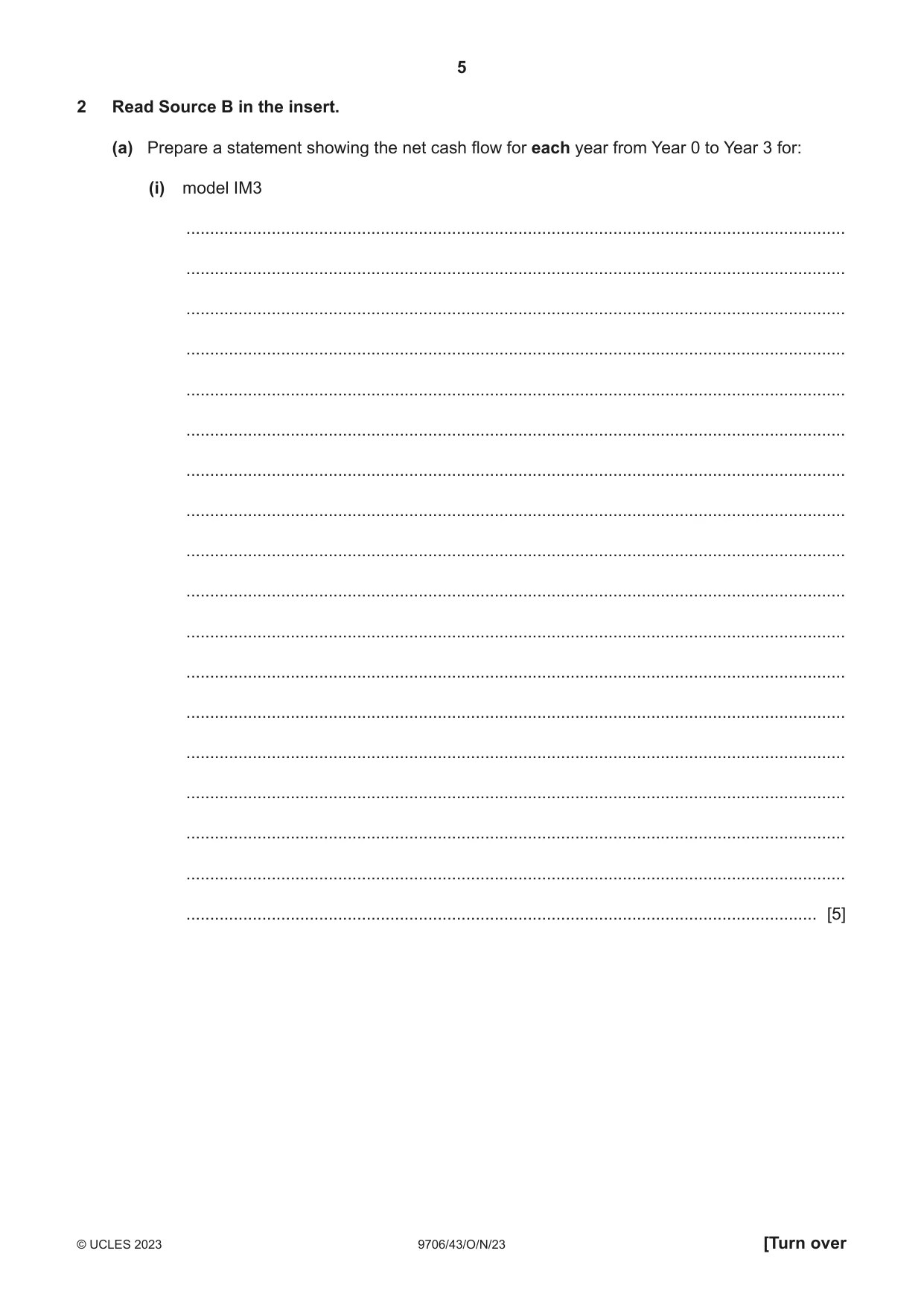
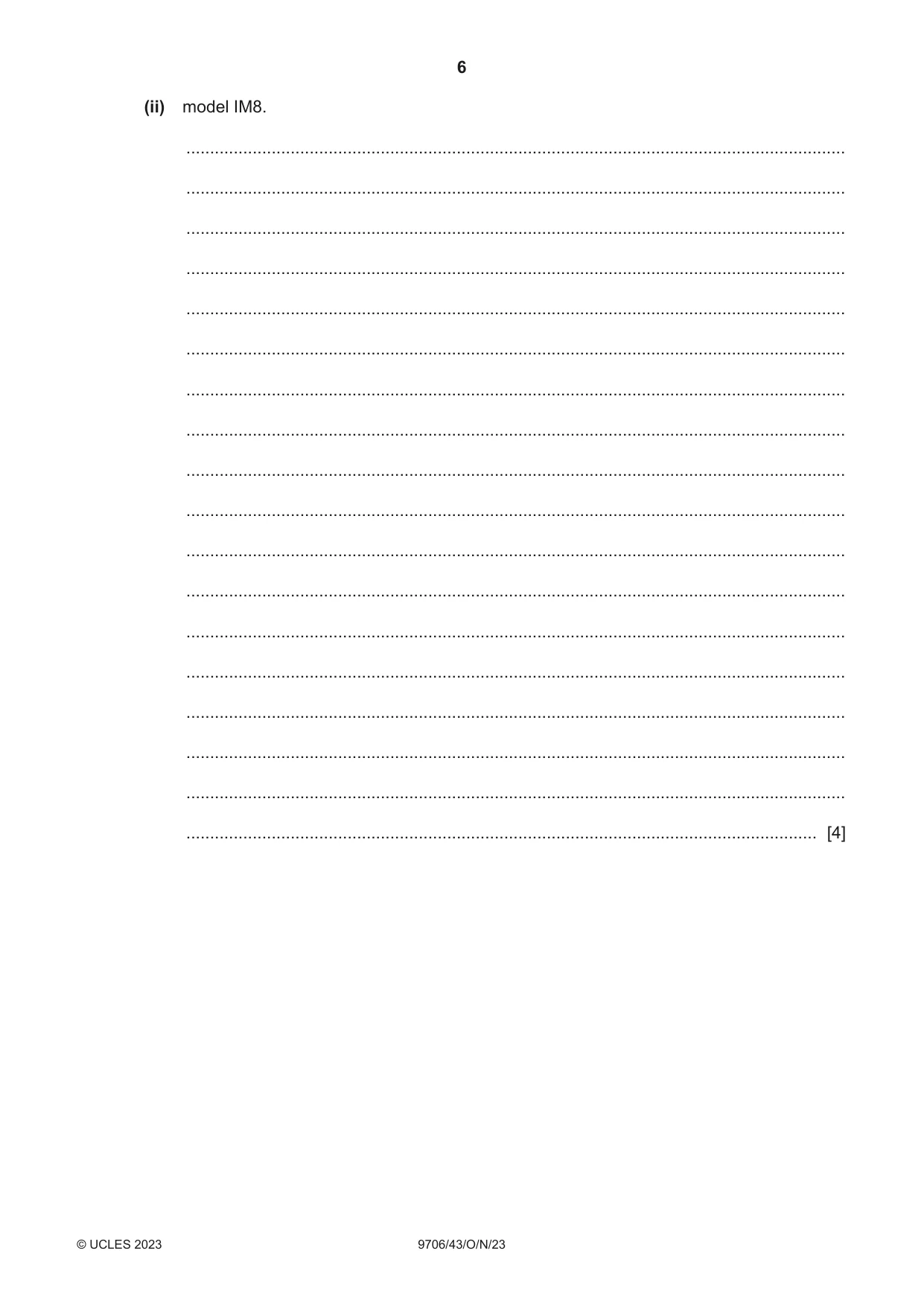
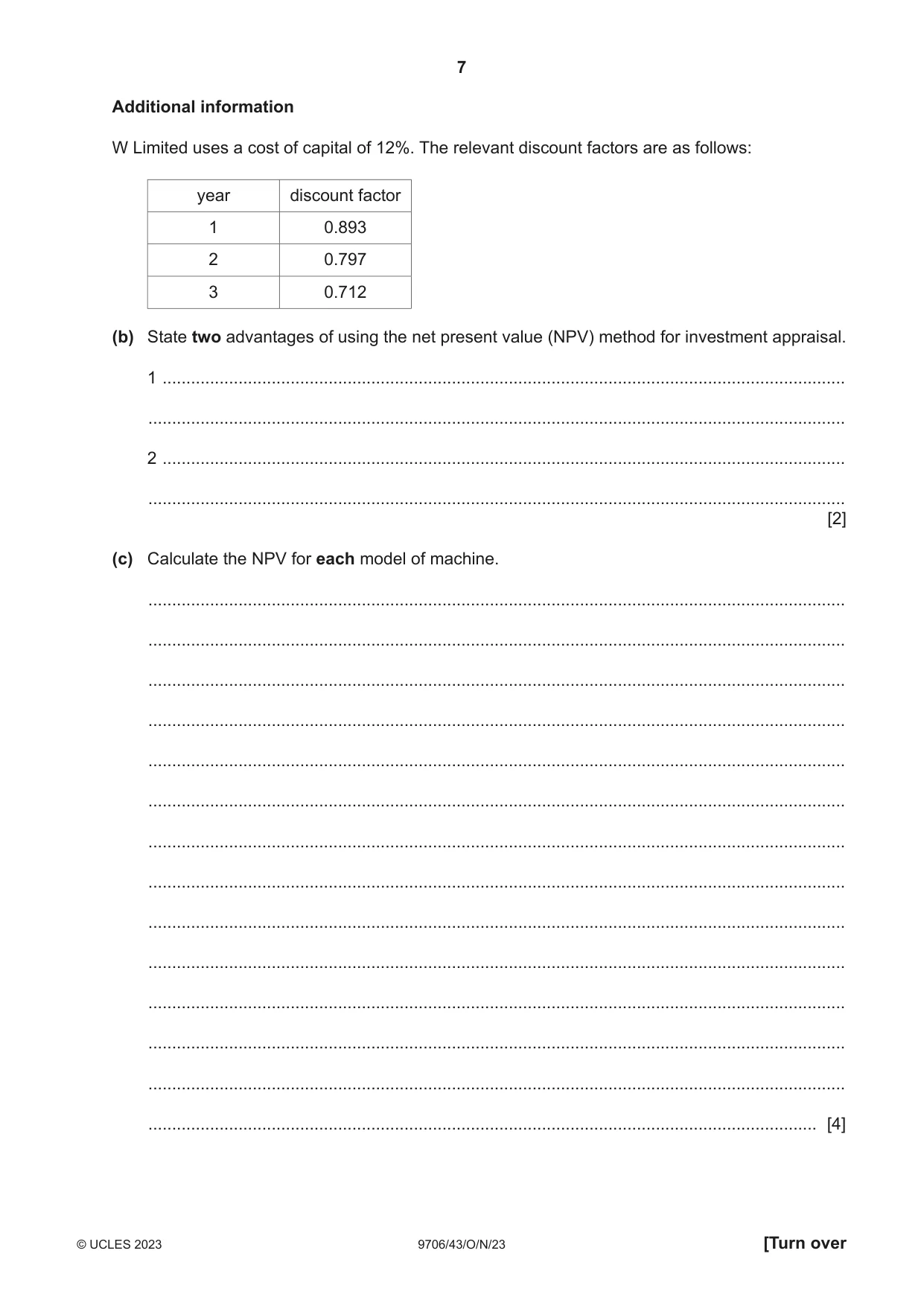
2 Read Source B in the insert. (a) Prepare a statement showing the net cash flow for each year from Year 0 to Year 3 for: (i) model IM3 ........................................................................................................................................... ........................................................................................................................................... ........................................................................................................................................... ........................................................................................................................................... ........................................................................................................................................... ........................................................................................................................................... ........................................................................................................................................... ........................................................................................................................................... ........................................................................................................................................... ........................................................................................................................................... ........................................................................................................................................... ........................................................................................................................................... ........................................................................................................................................... ........................................................................................................................................... ........................................................................................................................................... ........................................................................................................................................... ........................................................................................................................................... ..................................................................................................................................... [5] (ii) model IM8. ........................................................................................................................................... ........................................................................................................................................... ........................................................................................................................................... ........................................................................................................................................... ........................................................................................................................................... ........................................................................................................................................... ........................................................................................................................................... ........................................................................................................................................... ........................................................................................................................................... ........................................................................................................................................... ........................................................................................................................................... ........................................................................................................................................... ........................................................................................................................................... ........................................................................................................................................... ........................................................................................................................................... ........................................................................................................................................... ........................................................................................................................................... ..................................................................................................................................... [4] Additional information W Limited uses a cost of capital of 12%. The relevant discount factors are as follows: year discount factor 1 0.893 2 0.797 3 0.712 (b) State two advantages of using the net present value (NPV) method for investment appraisal. 1 ................................................................................................................................................ ................................................................................................................................................... 2 ................................................................................................................................................ ................................................................................................................................................... [2] (c) Calculate the NPV for each model of machine. ................................................................................................................................................... ................................................................................................................................................... ................................................................................................................................................... ................................................................................................................................................... ................................................................................................................................................... ................................................................................................................................................... ................................................................................................................................................... ................................................................................................................................................... ................................................................................................................................................... ................................................................................................................................................... ................................................................................................................................................... ................................................................................................................................................... ................................................................................................................................................... ............................................................................................................................................. [4]
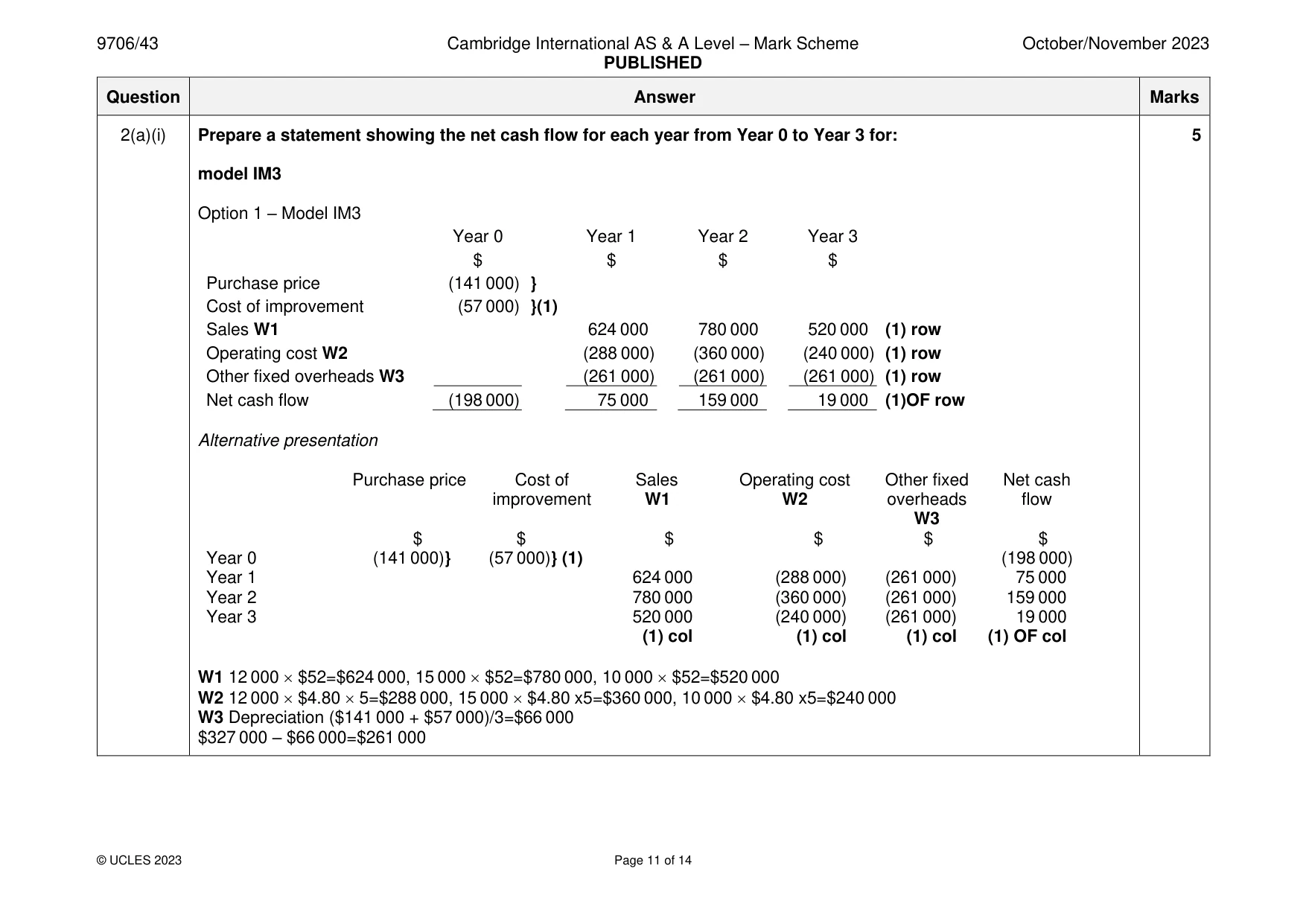
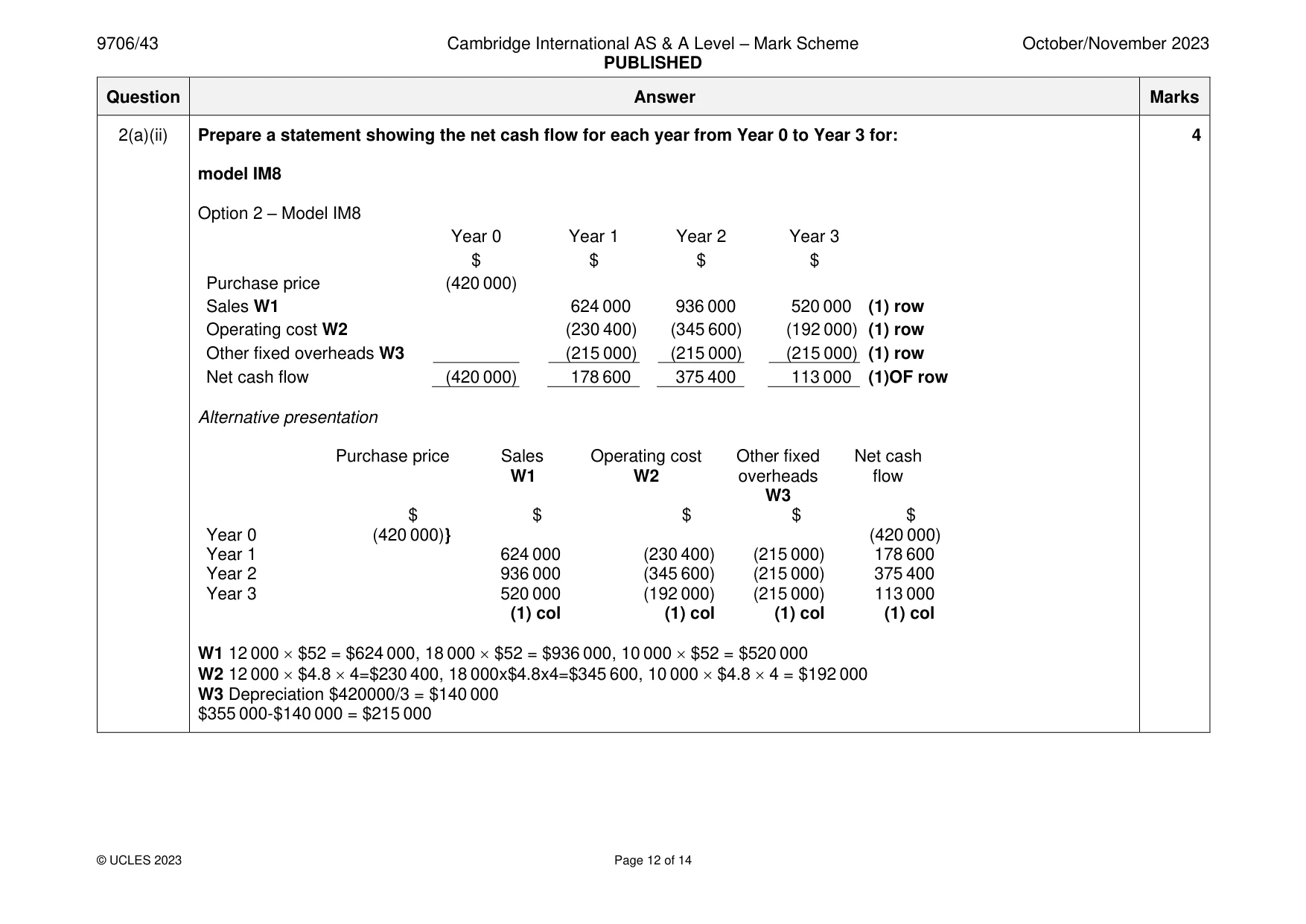
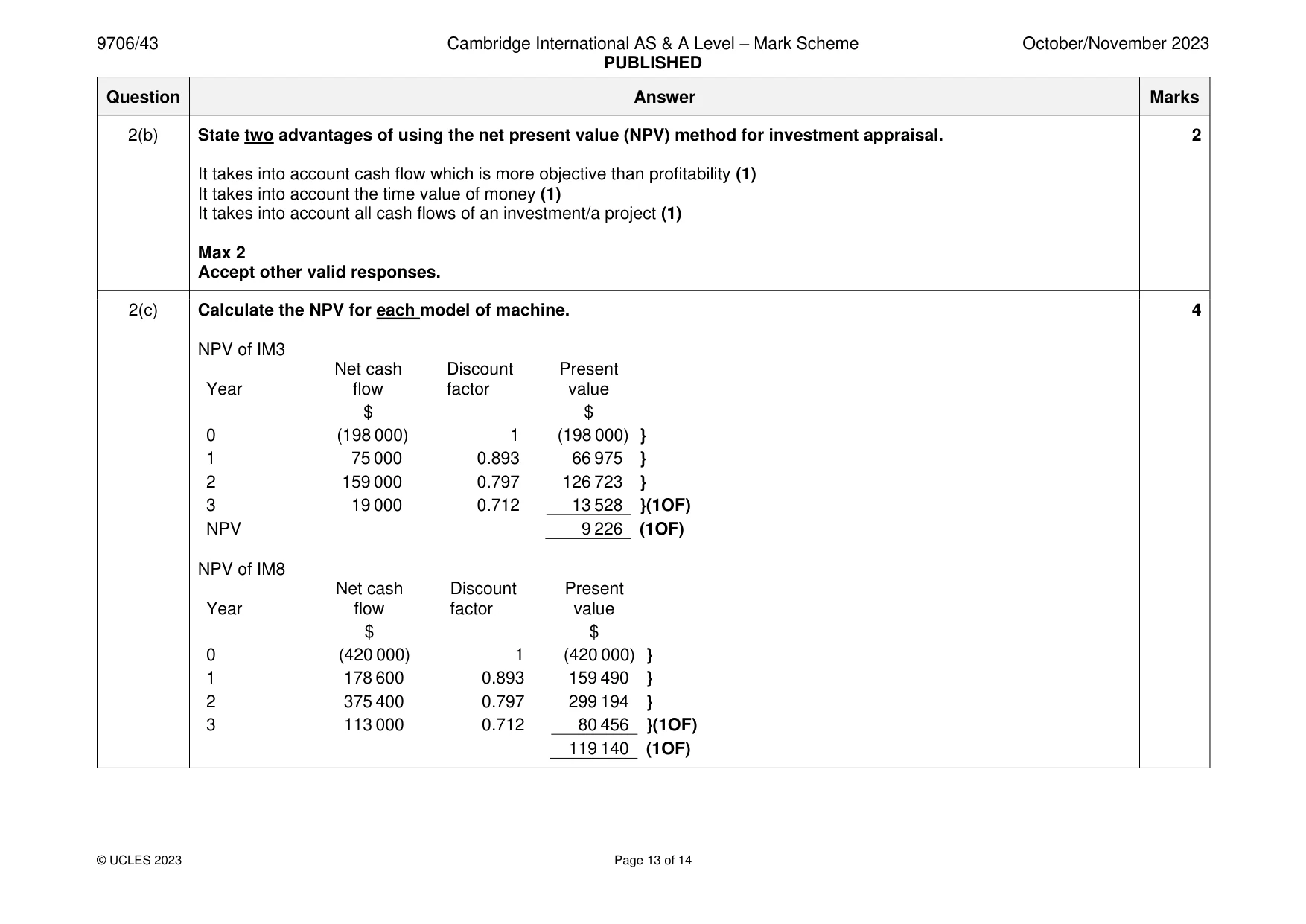
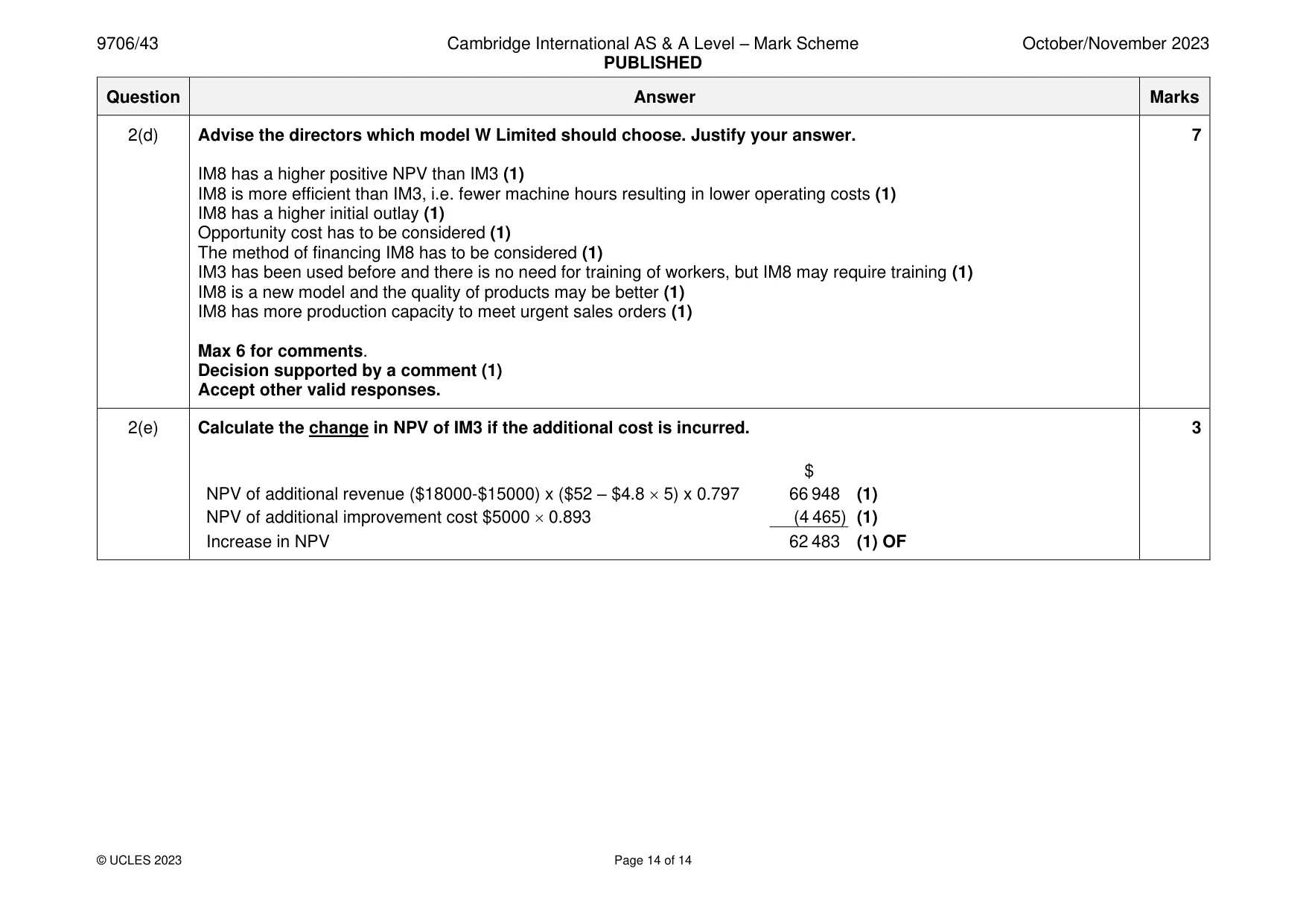
Mark scheme: 2(a)(i) Prepare a statement showing the net cash flow for each year from Year 0 to Year 3 for: 5 model IM3 Option 1 – Model IM3 Year 0 Year 1 Year 2 Year 3 $ $ $ $ Purchase price (141 000) } Cost of improvement (57 000) }(1) Sales W1 624 000 780 000 520 000 (1) row Operating cost W2 (288 000) (360 000) (240 000) (1) row Other fixed overheads W3 (261 000) (261 000) (261 000) (1) row Net cash flow (198 000) 75 000 159 000 19 000 (1)OF row Alternative presentation Purchase price Cost of Sales Operating cost Other fixed Net cash improvement W1 W2 overheads flow W3 $ $ $ $ $ $ Year 0 (141 000)} (57 000)} (1) (198 000) Year 1 624 000 (288 000) (261 000) 75 000 Year 2 780 000 (360 000) (261 000) 159 000 Year 3 520 000 (240 000) (261 000) 19 000 (1) col (1) col (1) col (1) OF col W1 12 000 $52=$624 000, 15 000 $52=$780 000, 10 000 $52=$520 000 W2 12 000 $4.80 5=$288 000, 15 000 $4.80 x5=$360 000, 10 000 $4.80 x5=$240 000 W3 Depreciation ($141 000 + $57 000)/3=$66 000 $327 000 – $66 000=$261 000 2(a)(ii) Prepare a statement showing the net cash flow for each year from Year 0 to Year 3 for: 4 model IM8 Option 2 – Model IM8 Year 0 Year 1 Year 2 Year 3 $ $ $ $ Purchase price (420 000) Sales W1 624 000 936 000 520 000 (1) row Operating cost W2 (230 400) (345 600) (192 000) (1) row Other fixed overheads W3 (215 000) (215 000) (215 000) (1) row Net cash flow (420 000) 178 600 375 400 113 000 (1)OF row Alternative presentation Purchase price Sales Operating cost Other fixed Net cash W1 W2 overheads flow W3 $ $ $ $ $ Year 0 (420 000)} (420 000) Year 1 624 000 (230 400) (215 000) 178 600 Year 2 936 000 (345 600) (215 000) 375 400 Year 3 520 000 (192 000) (215 000) 113 000 (1) col (1) col (1) col (1) col W1 12 000 $52 = $624 000, 18 000 $52 = $936 000, 10 000 $52 = $520 000 W2 12 000 $4.8 4=$230 400, 18 000x$4.8x4=$345 600, 10 000 $4.8 4 = $192 000 W3 Depreciation $420000/3 = $140 000 $355 000-$140 000 = $215 000 2(b) State two advantages of using the net present value (NPV) method for investment appraisal. 2 It takes into account cash flow which is more objective than profitability (1) It takes into account the time value of money (1) It takes into account all cash flows of an investment/a project (1) Max 2 Accept other valid responses. 2(c) Calculate the NPV for each model of machine. 4 NPV of IM3 Net cash Discount Present Year flow factor value $ $ 0 (198 000) 1 (198 000) } 1 75 000 0.893 66 975 } 2 159 000 0.797 126 723 } 3 19 000 0.712 13 528 }(1OF) NPV 9 226 (1OF) NPV of IM8 Net cash Discount Present Year flow factor value $ $ 0 (420 000) 1 (420 000) } 1 178 600 0.893 159 490 } 2 375 400 0.797 299 194 } 3 113 000 0.712 80 456 }(1OF) 119 140 (1OF) 2(d) Advise the directors which model W Limited should choose. Justify your answer. 7 IM8 has a higher positive NPV than IM3 (1) IM8 is more efficient than IM3, i.e. fewer machine hours resulting in lower operating costs (1) IM8 has a higher initial outlay (1) Opportunity cost has to be considered (1) The method of financing IM8 has to be considered (1) IM3 has been used before and there is no need for training of workers, but IM8 may require training (1) IM8 is a new model and the quality of products may be better (1) IM8 has more production capacity to meet urgent sales orders (1) Max 6 for comments. Decision supported by a comment (1) Accept other valid responses. 2(e) Calculate the change in NPV of IM3 if the additional cost is incurred. 3 $ NPV of additional revenue ($18000-$15000) x ($52 – $4.8 5) x 0.797 66 948 (1) NPV of additional improvement cost $5000 0.893 (4 465) (1) Increase in NPV 62 483 (1) OF
What was in this paper
The subtopics covered by these 2 questions, and how many questions each got. Open one in a new tab to see every Cambridge question on it.
What you needed in this session
Cambridge’s own grade thresholds for 2023 Oct/Nov, Paper 4 · Variant 3. A higher threshold means an easier paper — the bar moves with how the cohort did.