Cambridge A Level Accounting 9706 — 2024 May/June Paper 4 · Variant 3
9706/43/M/J/24 · 2 questions · 50 marks · ≈56 min
The question paper and its mark scheme, free to read here and free to download. This is Cambridge’s own paper, exactly as it was sat.
Question paper8 pages
Mark scheme12 pages
Answers below. Sit the paper first if you are practising.
Questions as text
Q1 · Read Source A in the insert
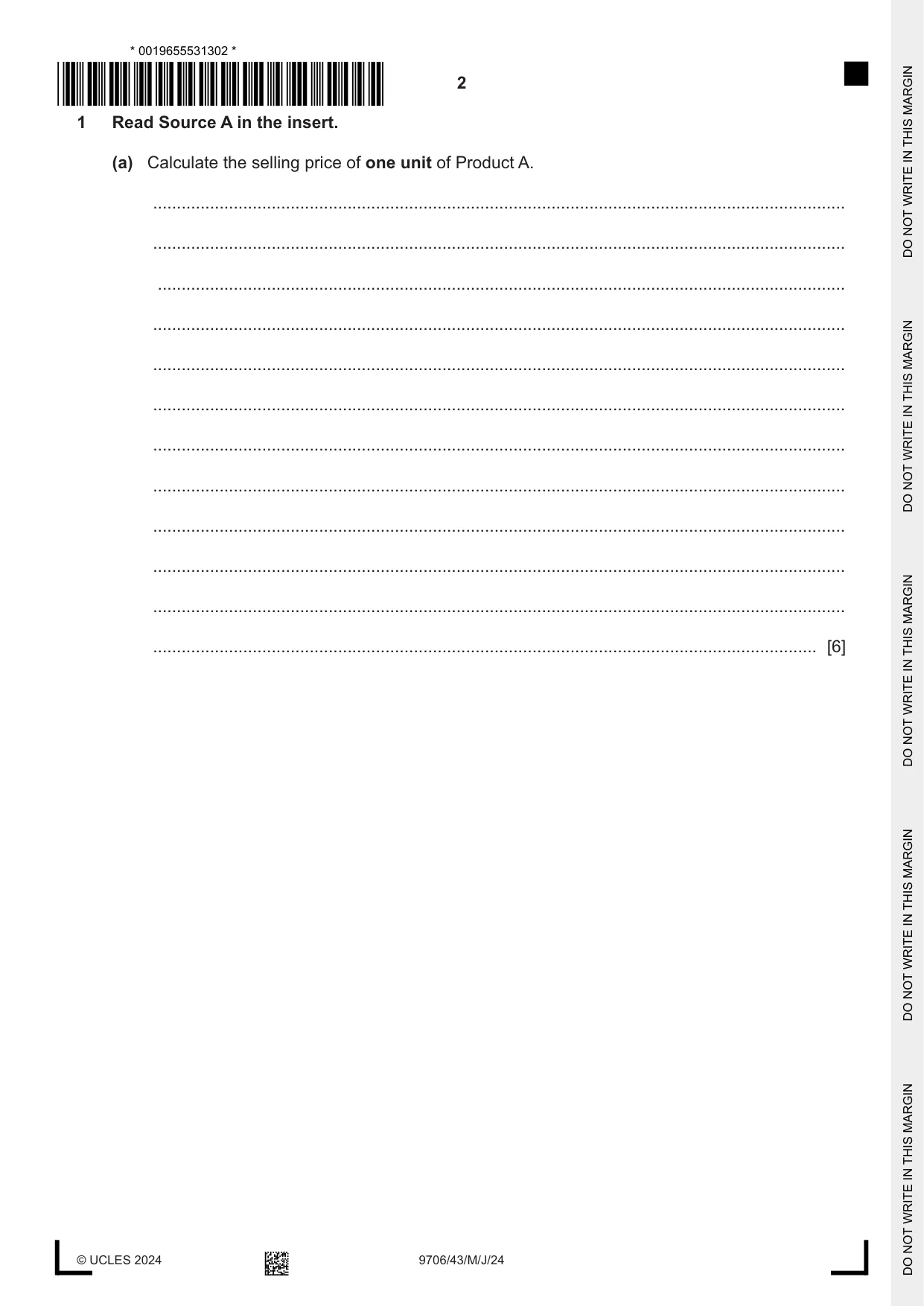
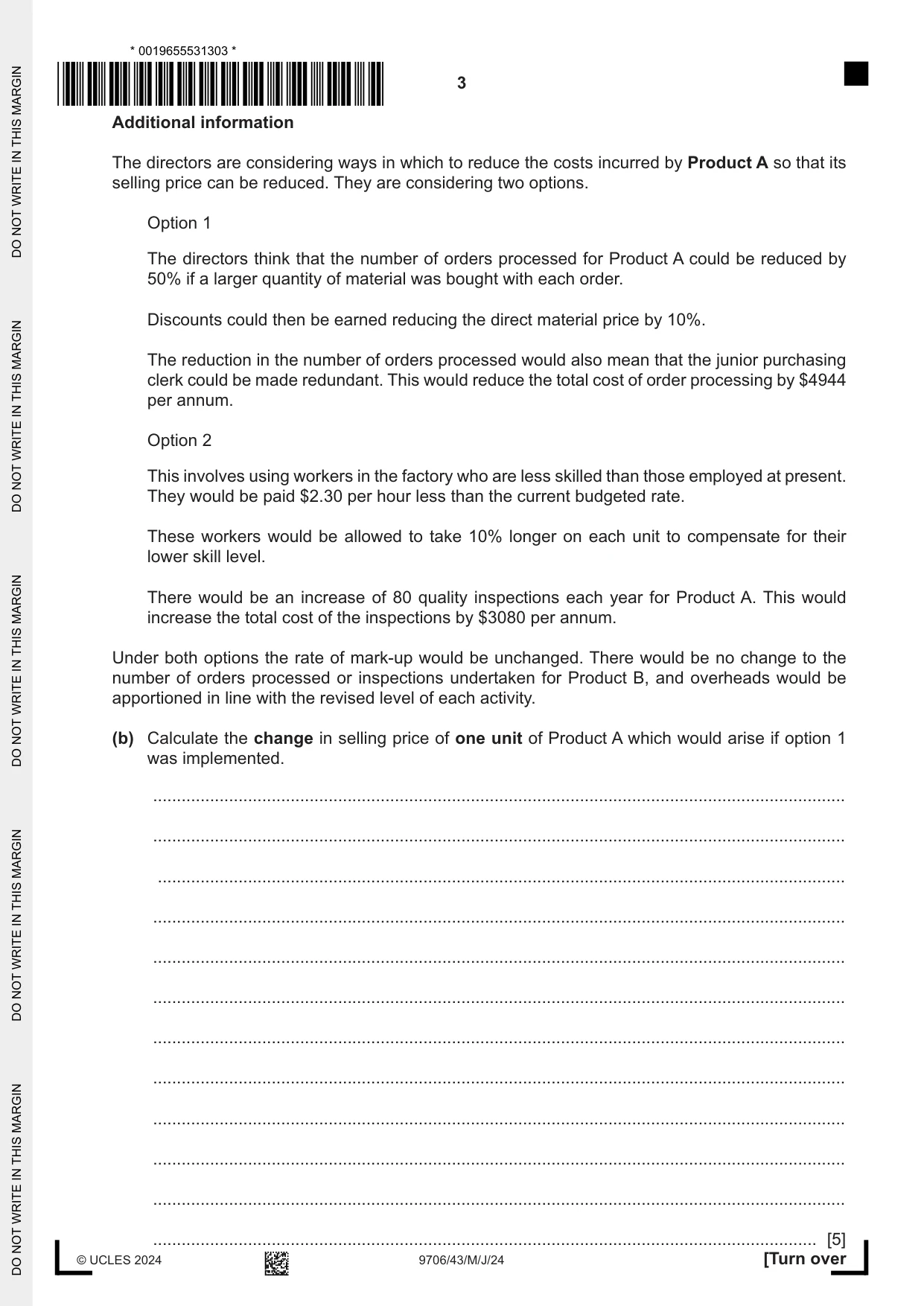
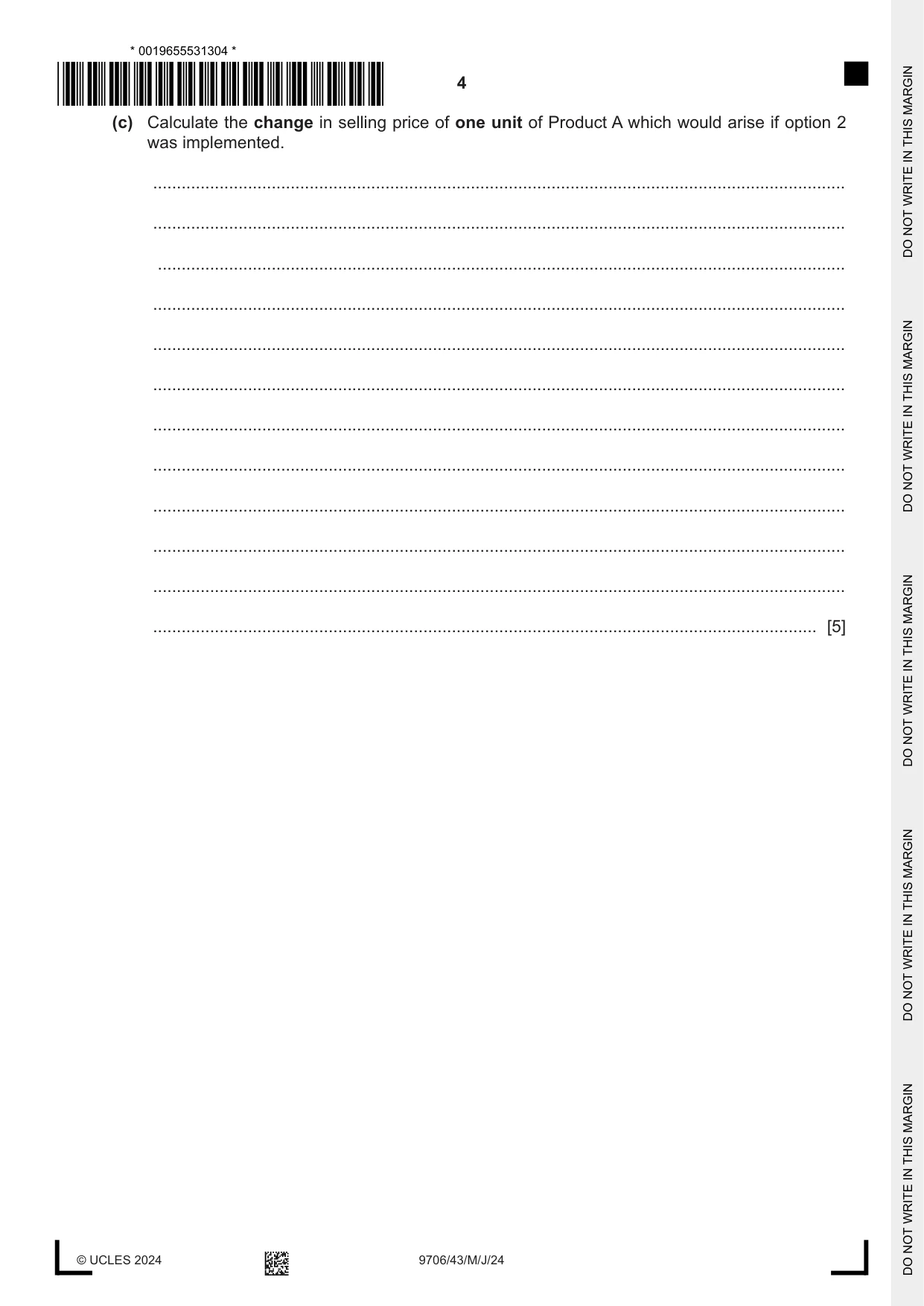
1 Read Source A in the insert. (a) Calculate the selling price of one unit of Product A. .................................................................................................................................................. .................................................................................................................................................. ................................................................................................................................................. .................................................................................................................................................. .................................................................................................................................................. .................................................................................................................................................. .................................................................................................................................................. .................................................................................................................................................. .................................................................................................................................................. .................................................................................................................................................. .................................................................................................................................................. ............................................................................................................................................ [6] Additional information The directors are considering ways in which to reduce the costs incurred by Product A so that its selling price can be reduced. They are considering two options. Option 1 The directors think that the number of orders processed for Product A could be reduced by 50% if a larger quantity of material was bought with each order. Discounts could then be earned reducing the direct material price by 10%. The reduction in the number of orders processed would also mean that the junior purchasing clerk could be made redundant. This would reduce the total cost of order processing by $4944 per annum. Option 2 This involves using workers in the factory who are less skilled than those employed at present. They would be paid $2.30 per hour less than the current budgeted rate. These workers would be allowed to take 10% longer on each unit to compensate for their lower skill level. There would be an increase of 80 quality inspections each year for Product A. This would increase the total cost of the inspections by $3080 per annum. Under both options the rate of mark-up would be unchanged. There would be no change to the number of orders processed or inspections undertaken for Product B, and overheads would be apportioned in line with the revised level of each activity. (b) Calculate the change in selling price of one unit of Product A which would arise if option 1 was implemented. .................................................................................................................................................. .................................................................................................................................................. ................................................................................................................................................. .................................................................................................................................................. .................................................................................................................................................. .................................................................................................................................................. .................................................................................................................................................. .................................................................................................................................................. .................................................................................................................................................. .................................................................................................................................................. .................................................................................................................................................. ....................... ............................................................................................................... [5] (c) Calculate the change in selling price of one unit of Product A which would arise if option 2 was implemented. .................................................................................................................................................. .................................................................................................................................................. ................................................................................................................................................. .................................................................................................................................................. .................................................................................................................................................. .................................................................................................................................................. .................................................................................................................................................. .................................................................................................................................................. .................................................................................................................................................. .................................................................................................................................................. .................................................................................................................................................. ............................................................................................................................................ [5] (d) Advise the directors whether or not they should implement either option 1 or option 2. Justify your answer. .................................................................................................................................................. .................................................................................................................................................. ................................................................................................................................................. .................................................................................................................................................. ................................................................................................................................................... ................................................................................................................................................... ................................................................................................................................................... .................................................................................................................................................. .................................................................................................................................................. .................................................................................................................................................. .................................................................................................................................................. .................................................................................................................................................. .................................................................................................................................................. .................................................................................................................................................. ............................................................................................................................................ [7] (e) Suggest two reasons why the directors had chosen to use activity based costing (ABC) rather than traditional costing methods in setting the selling prices. 1 ................................................................................................................................................ ................................................................................................................................................... 2 ................................................................................................................................................ ................................................................................................................................................... [2] [Total: 25]
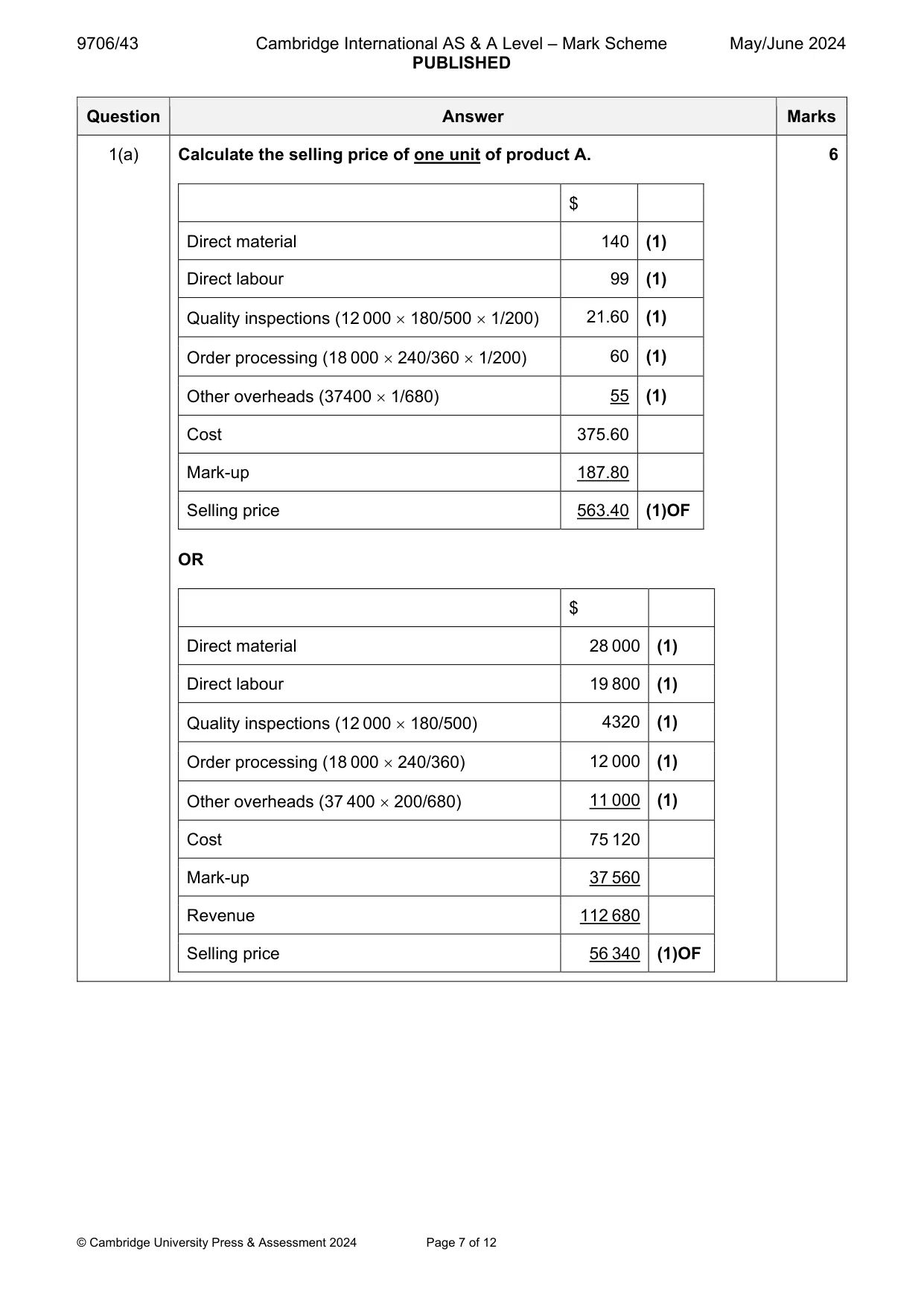
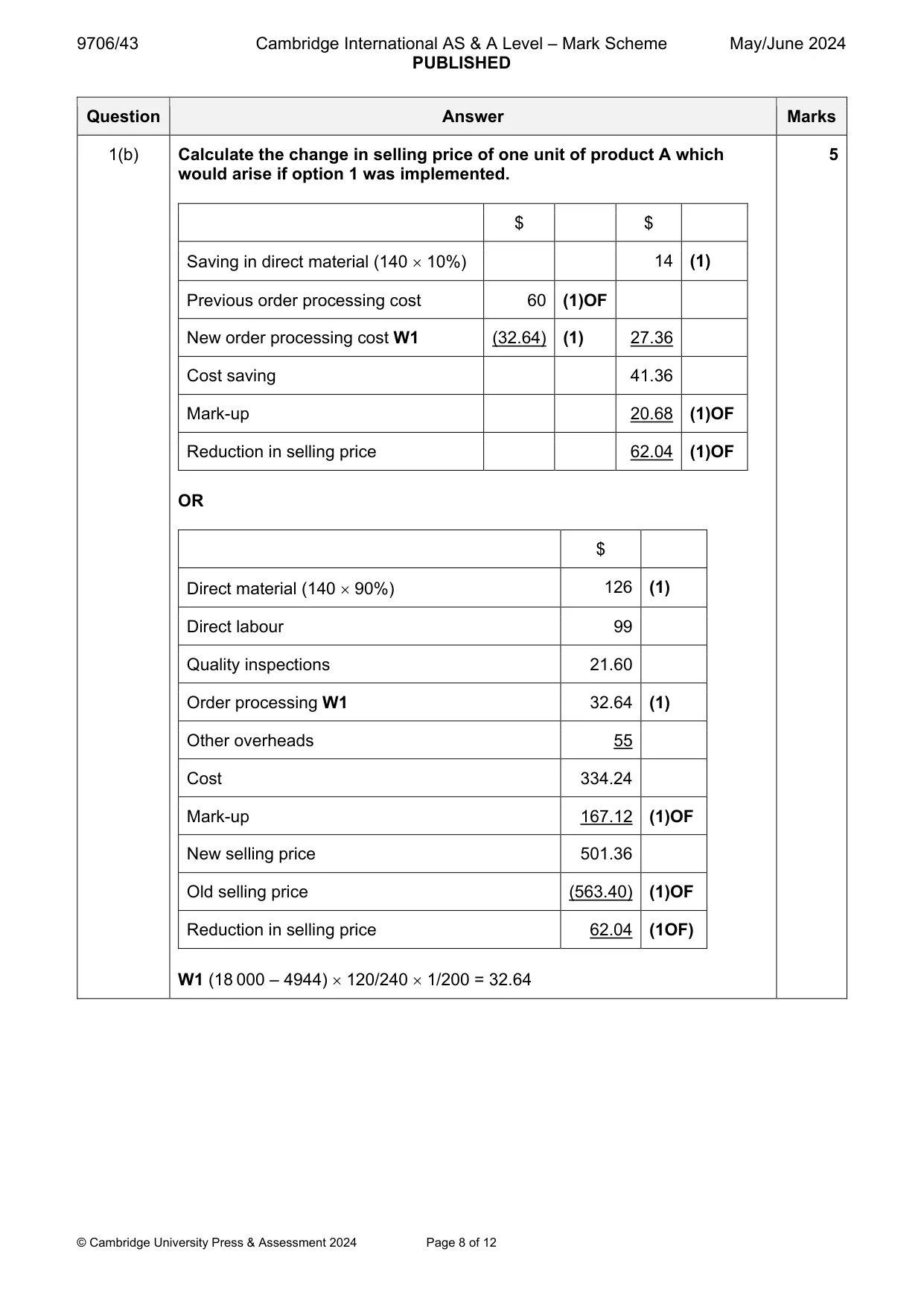
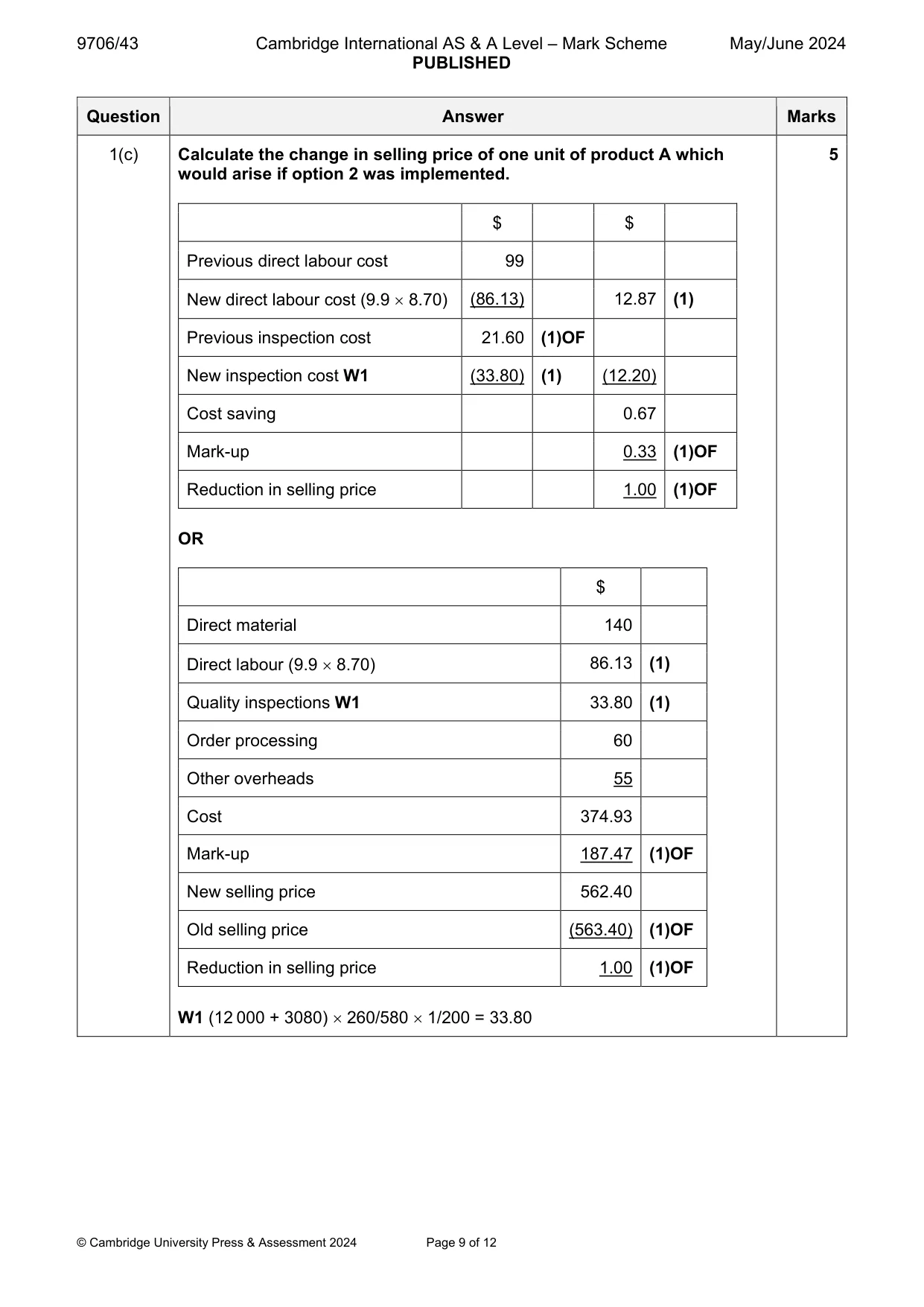
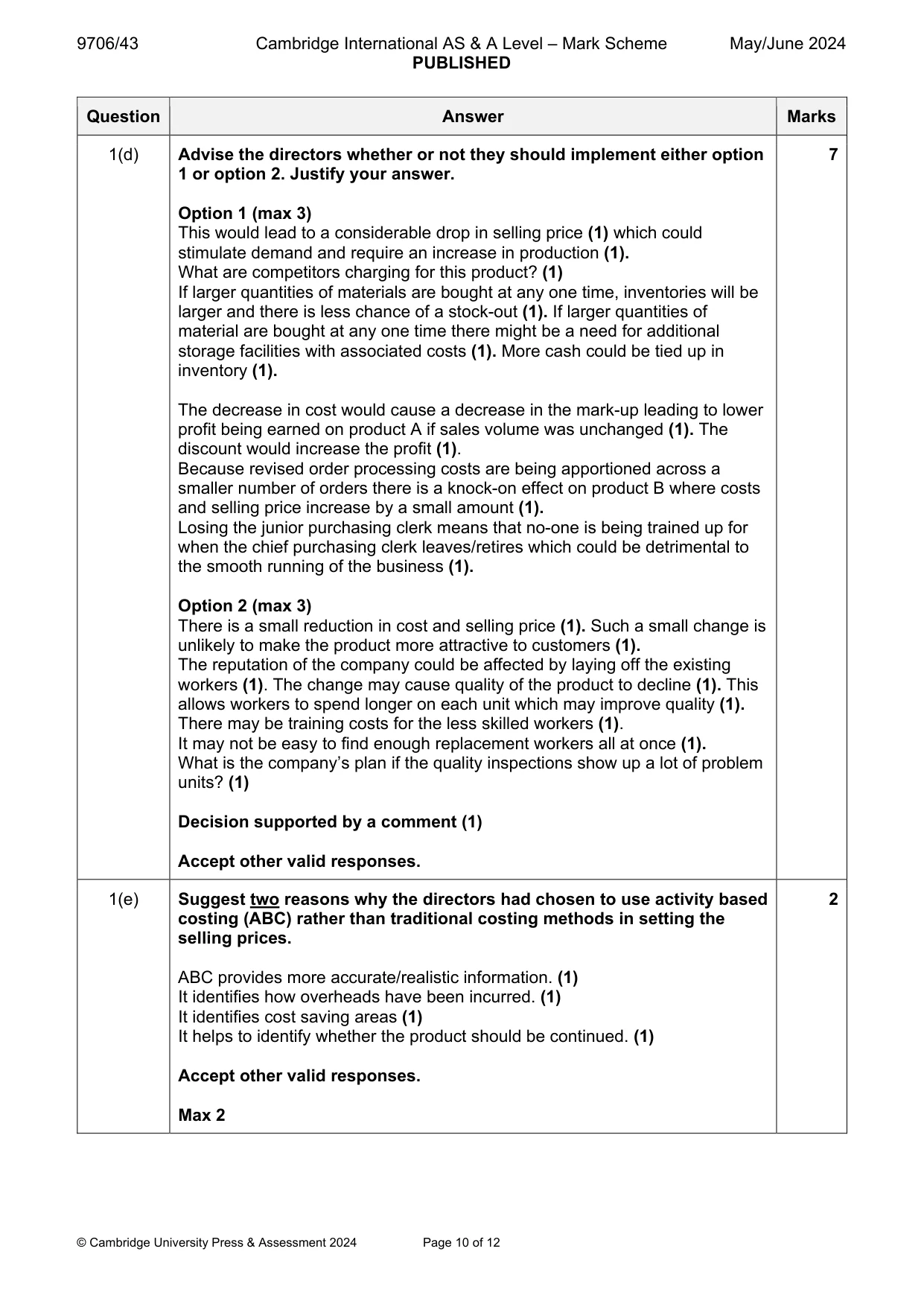
Mark scheme: Question Answer Marks 1(a) Calculate the selling price of one unit of product A. 6 $ Direct material 140 (1) Direct labour 99 (1) Quality inspections (12 000 180/500 1/200) 21.60 (1) Order processing (18 000 240/360 1/200) 60 (1) Other overheads (37400 1/680) 55 (1) Cost 375.60 Mark-up 187.80 Selling price 563.40 (1)OF OR $ Direct material 28 000 (1) Direct labour 19 800 (1) Quality inspections (12 000 180/500) 4320 (1) Order processing (18 000 240/360) 12 000 (1) Other overheads (37 400 200/680) 11 000 (1) Cost 75 120 Mark-up 37 560 Revenue 112 680 Selling price 56 340 (1)OF 1(b) Calculate the change in selling price of one unit of product A which 5 would arise if option 1 was implemented. $ $ Saving in direct material (140 10%) 14 (1) Previous order processing cost 60 (1)OF New order processing cost W1 (32.64) (1) 27.36 Cost saving 41.36 Mark-up 20.68 (1)OF Reduction in selling price 62.04 (1)OF OR $ Direct material (140 90%) 126 (1) Direct labour 99 Quality inspections 21.60 Order processing W1 32.64 (1) Other overheads 55 Cost 334.24 Mark-up 167.12 (1)OF New selling price 501.36 Old selling price (563.40) (1)OF Reduction in selling price 62.04 (1OF) W1 (18 000 – 4944) 120/240 1/200 = 32.64 1(c) Calculate the change in selling price of one unit of product A which 5 would arise if option 2 was implemented. $ $ Previous direct labour cost 99 New direct labour cost (9.9 8.70) (86.13) 12.87 (1) Previous inspection cost 21.60 (1)OF New inspection cost W1 (33.80) (1) (12.20) Cost saving 0.67 Mark-up 0.33 (1)OF Reduction in selling price 1.00 (1)OF OR $ Direct material 140 Direct labour (9.9 8.70) 86.13 (1) Quality inspections W1 33.80 (1) Order processing 60 Other overheads 55 Cost 374.93 Mark-up 187.47 (1)OF New selling price 562.40 Old selling price (563.40) (1)OF Reduction in selling price 1.00 (1)OF W1 (12 000 + 3080) 260/580 1/200 = 33.80 1(d) Advise the directors whether or not they should implement either option 7 1 or option 2. Justify your answer. Option 1 (max 3) This would lead to a considerable drop in selling price (1) which could stimulate demand and require an increase in production (1). What are competitors charging for this product? (1) If larger quantities of materials are bought at any one time, inventories will be larger and there is less chance of a stock-out (1). If larger quantities of material are bought at any one time there might be a need for additional storage facilities with associated costs (1). More cash could be tied up in inventory (1). The decrease in cost would cause a decrease in the mark-up leading to lower profit being earned on product A if sales volume was unchanged (1). The discount would increase the profit (1). Because revised order processing costs are being apportioned across a smaller number of orders there is a knock-on effect on product B where costs and selling price increase by a small amount (1). Losing the junior purchasing clerk means that no-one is being trained up for when the chief purchasing clerk leaves/retires which could be detrimental to the smooth running of the business (1). Option 2 (max 3) There is a small reduction in cost and selling price (1). Such a small change is unlikely to make the product more attractive to customers (1). The reputation of the company could be affected by laying off the existing workers (1). The change may cause quality of the product to decline (1). This allows workers to spend longer on each unit which may improve quality (1). There may be training costs for the less skilled workers (1). It may not be easy to find enough replacement workers all at once (1). What is the company’s plan if the quality inspections show up a lot of problem units? (1) Decision supported by a comment (1) Accept other valid responses. 1(e) Suggest two reasons why the directors had chosen to use activity based 2 costing (ABC) rather than traditional costing methods in setting the selling prices. ABC provides more accurate/realistic information. (1) It identifies how overheads have been incurred. (1) It identifies cost saving areas (1) It helps to identify whether the product should be continued. (1) Accept other valid responses. Max 2
Q2 · Read Source B in the insert
2 Read Source B in the insert. (a) Calculate: (i) the actual unit selling price .......................................................................................................................................... .......................................................................................................................................... .......................................................................................................................................... .................................................................................................................................... [2] (ii) the unit selling price which would have given the same actual total contribution in April 2024 as the standard total contribution for the month .......................................................................................................................................... .......................................................................................................................................... .......................................................................................................................................... .......................................................................................................................................... .......................................................................................................................................... .................................................................................................................................... [3] (iii) the actual total quantity of direct materials used (in kilos) .......................................................................................................................................... .......................................................................................................................................... .......................................................................................................................................... .......................................................................................................................................... .......................................................................................................................................... .................................................................................................................................... [3] (iv) the actual price paid per kilo of direct material .......................................................................................................................................... .......................................................................................................................................... .......................................................................................................................................... .................................................................................................................................... [2] (v) the actual hours used by direct labour per unit. .......................................................................................................................................... .......................................................................................................................................... .......................................................................................................................................... .......................................................................................................................................... .......................................................................................................................................... .................................................................................................................................... [3] (b) Name the budget which P Limited would have prepared if actual sales units had been more or less than the budgeted 11 000 units. ............................................................................................................................................. [1] (c) Suggest four reasons why the company uses standard costs. 1 ................................................................................................................................................ ................................................................................................................................................... 2 ................................................................................................................................................ ................................................................................................................................................... 3 ................................................................................................................................................ ................................................................................................................................................... 4 ................................................................................................................................................ ................................................................................................................................................... [4] Additional information P Limited has always prepared all its budgets manually. The directors are now considering the use of spreadsheets in preparing the budgets. (d) Advise the directors whether or not they should use spreadsheets in the preparation of the company’s budgets. Justify your answer. .................................................................................................................................................. .................................................................................................................................................. .................................................................................................................................................. .................................................................................................................................................. .................................................................................................................................................. .................................................................................................................................................. .................................................................................................................................................. .................................................................................................................................................. .................................................................................................................................................. .................................................................................................................................................. .................................................................................................................................................. .................................................................................................................................................. .................................................................................................................................................. ............................................................................................................................................ [7] [Total: 25]
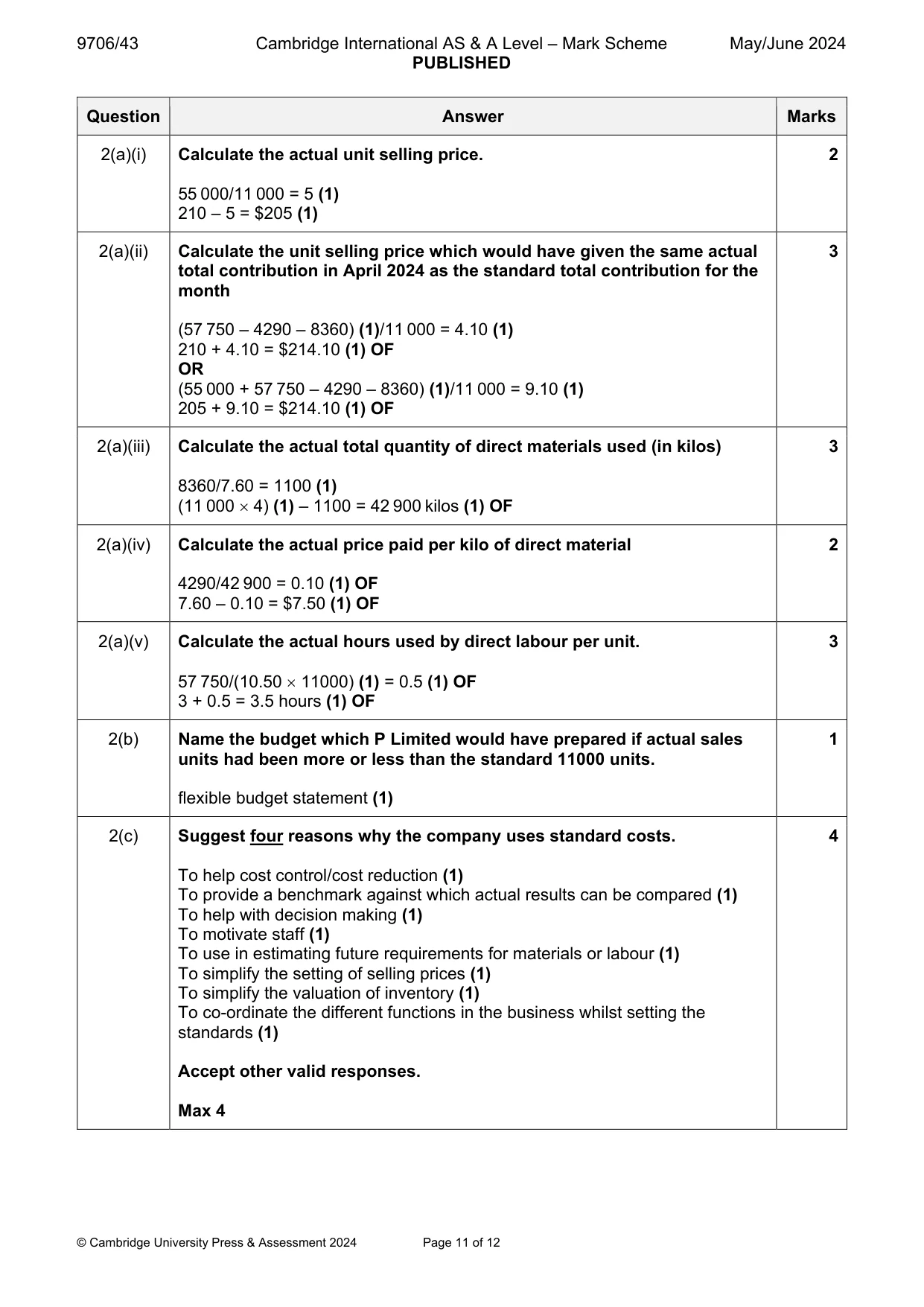
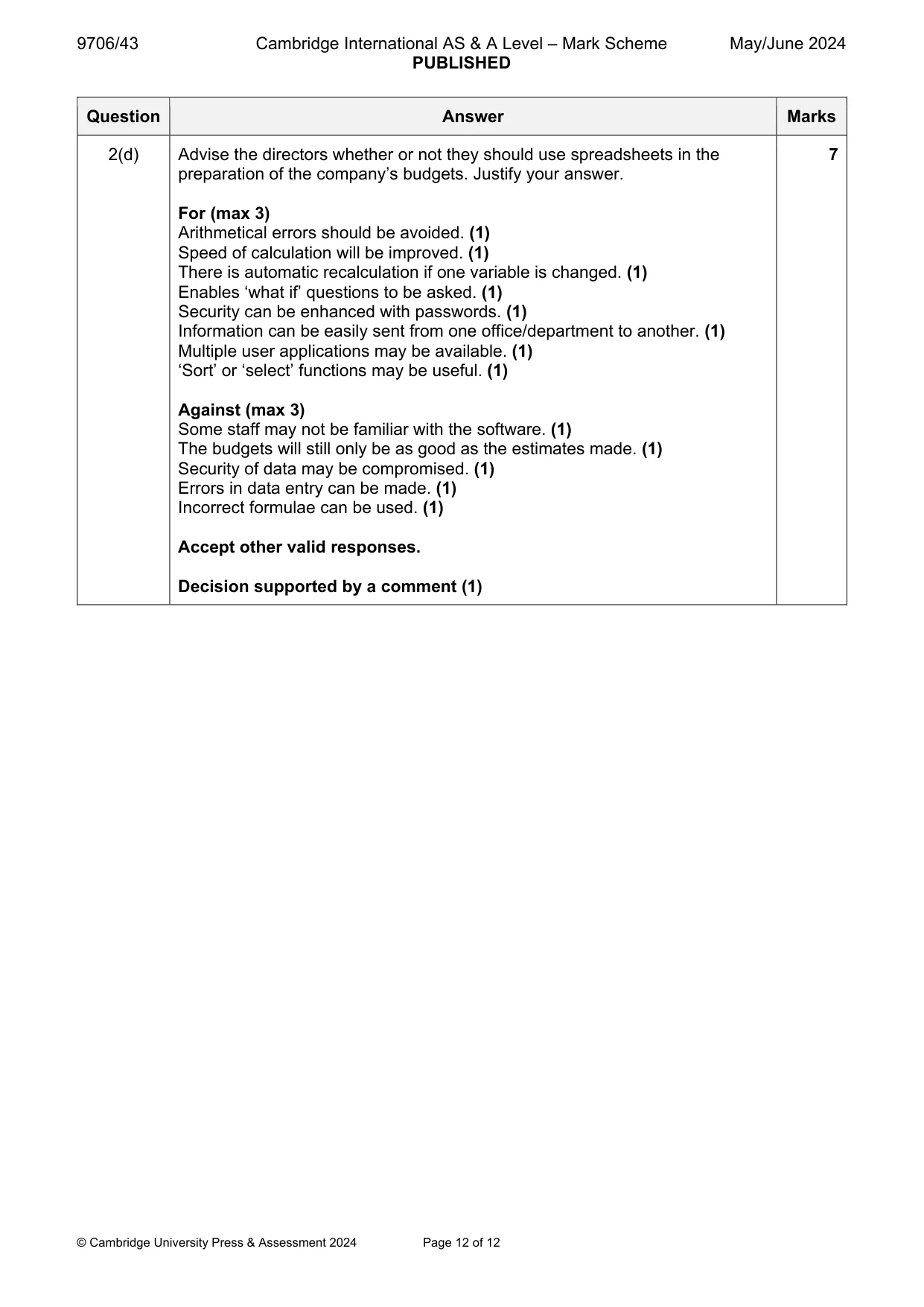
Mark scheme: 2(a)(i) Calculate the actual unit selling price. 2 55 000/11 000 = 5 (1) 210 – 5 = $205 (1) 2(a)(ii) Calculate the unit selling price which would have given the same actual 3 total contribution in April 2024 as the standard total contribution for the month (57 750 – 4290 – 8360) (1)/11 000 = 4.10 (1) 210 + 4.10 = $214.10 (1) OF OR (55 000 + 57 750 – 4290 – 8360) (1)/11 000 = 9.10 (1) 205 + 9.10 = $214.10 (1) OF 2(a)(iii) Calculate the actual total quantity of direct materials used (in kilos) 3 8360/7.60 = 1100 (1) (11 000 4) (1) – 1100 = 42 900 kilos (1) OF 2(a)(iv) Calculate the actual price paid per kilo of direct material 2 4290/42 900 = 0.10 (1) OF 7.60 – 0.10 = $7.50 (1) OF 2(a)(v) Calculate the actual hours used by direct labour per unit. 3 57 750/(10.50 11000) (1) = 0.5 (1) OF 3 + 0.5 = 3.5 hours (1) OF 2(b) Name the budget which P Limited would have prepared if actual sales 1 units had been more or less than the standard 11000 units. flexible budget statement (1) 2(c) Suggest four reasons why the company uses standard costs. 4 To help cost control/cost reduction (1) To provide a benchmark against which actual results can be compared (1) To help with decision making (1) To motivate staff (1) To use in estimating future requirements for materials or labour (1) To simplify the setting of selling prices (1) To simplify the valuation of inventory (1) To co-ordinate the different functions in the business whilst setting the standards (1) Accept other valid responses. Max 4 2(d) Advise the directors whether or not they should use spreadsheets in the 7 preparation of the company’s budgets. Justify your answer. For (max 3) Arithmetical errors should be avoided. (1) Speed of calculation will be improved. (1) There is automatic recalculation if one variable is changed. (1) Enables ‘what if’ questions to be asked. (1) Security can be enhanced with passwords. (1) Information can be easily sent from one office/department to another. (1) Multiple user applications may be available. (1) ‘Sort’ or ‘select’ functions may be useful. (1) Against (max 3) Some staff may not be familiar with the software. (1) The budgets will still only be as good as the estimates made. (1) Security of data may be compromised. (1) Errors in data entry can be made. (1) Incorrect formulae can be used. (1) Accept other valid responses. Decision supported by a comment (1)
What was in this paper
The subtopics covered by these 2 questions, and how many questions each got. Open one in a new tab to see every Cambridge question on it.
What you needed in this session
Cambridge’s own grade thresholds for 2024 May/June, Paper 4 · Variant 3. A higher threshold means an easier paper — the bar moves with how the cohort did.