Cambridge A Level Accounting 9706 — 2025 May/June Paper 4 · Variant 1
9706/41/M/J/25 · 2 questions · 50 marks · ≈56 min
The question paper and its mark scheme, free to read here and free to download. This is Cambridge’s own paper, exactly as it was sat.
Question paper12 pages



Mark scheme16 pages
Answers below. Sit the paper first if you are practising.
Questions as text
Q1 · Read Source A in the insert
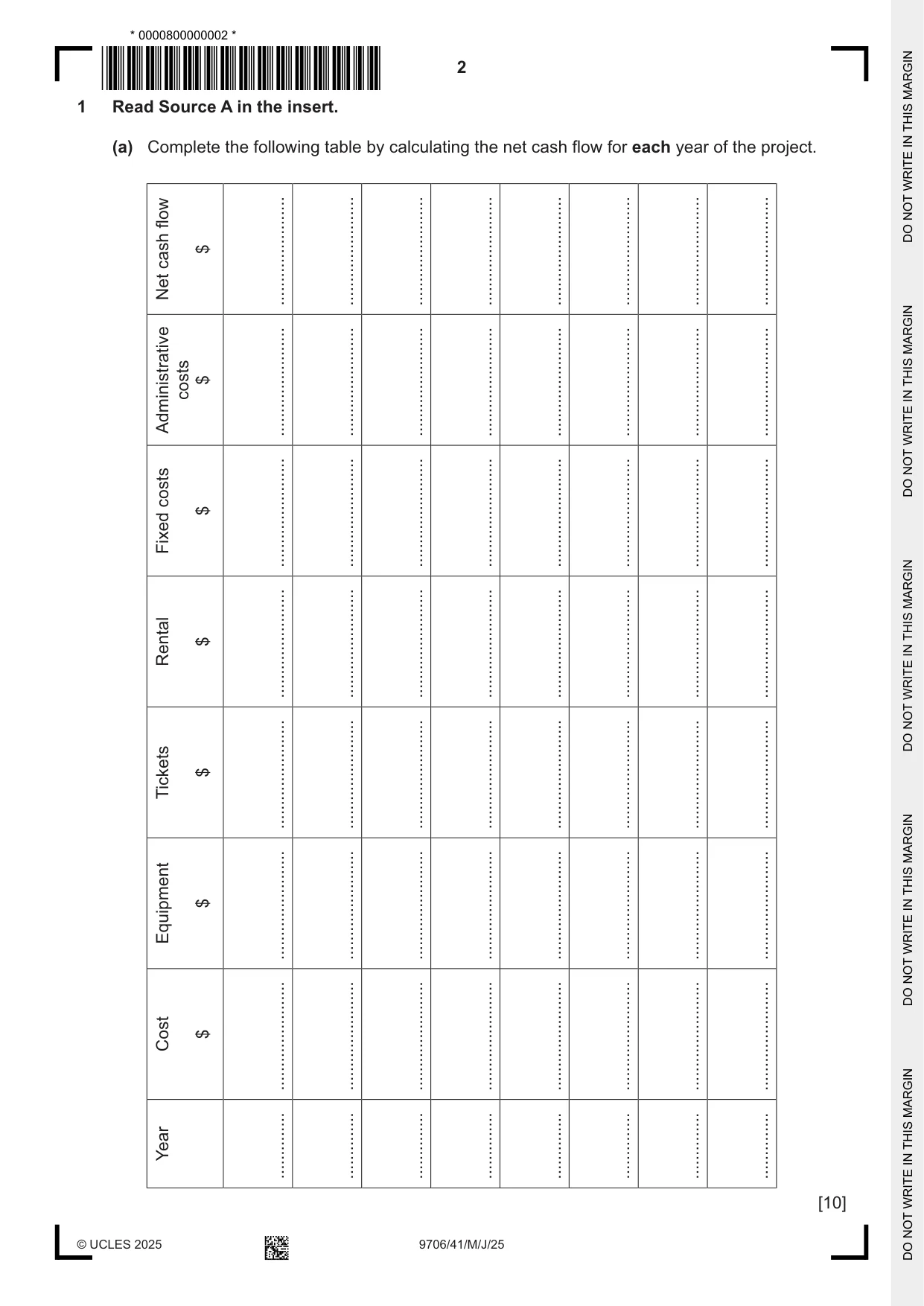
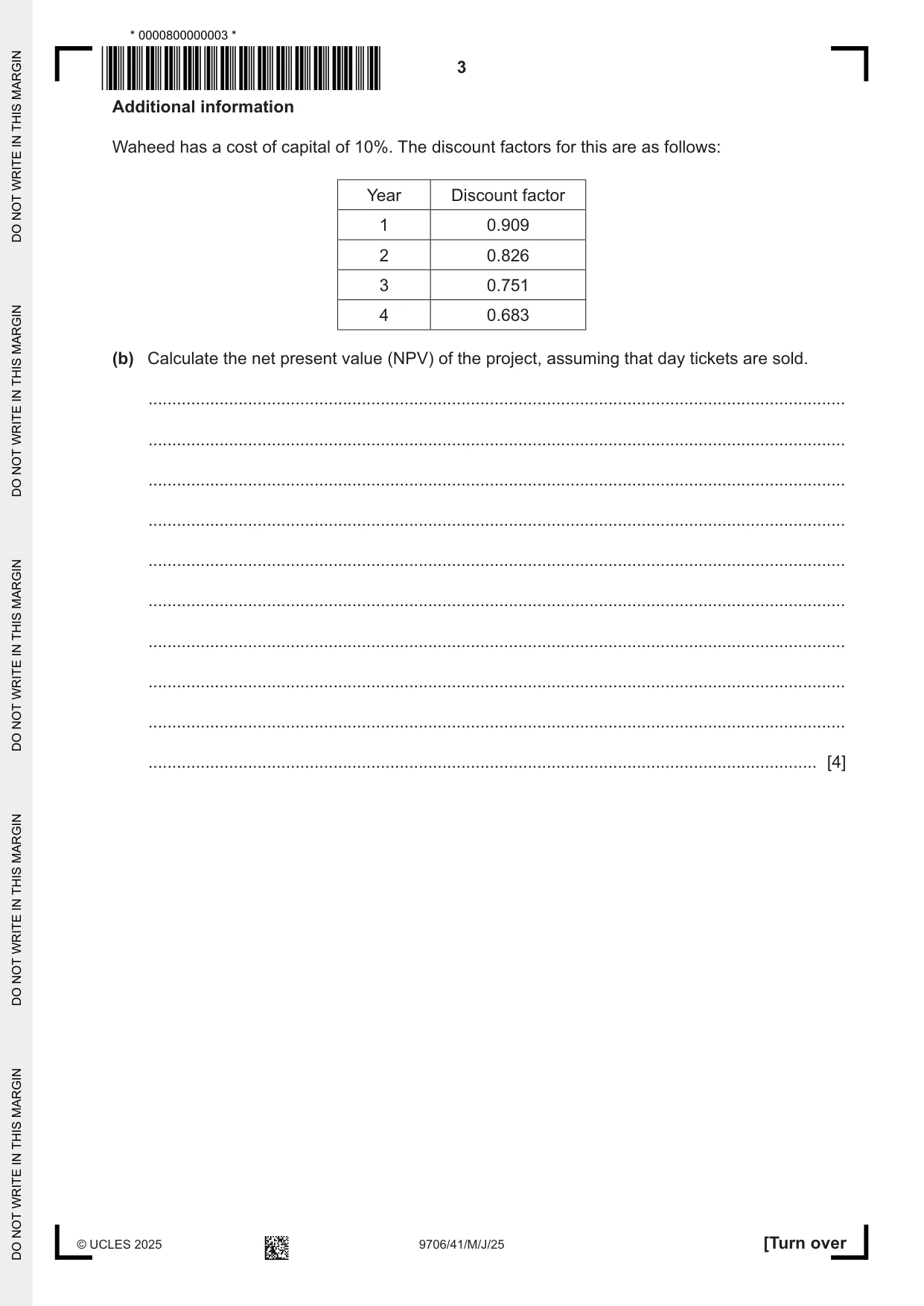
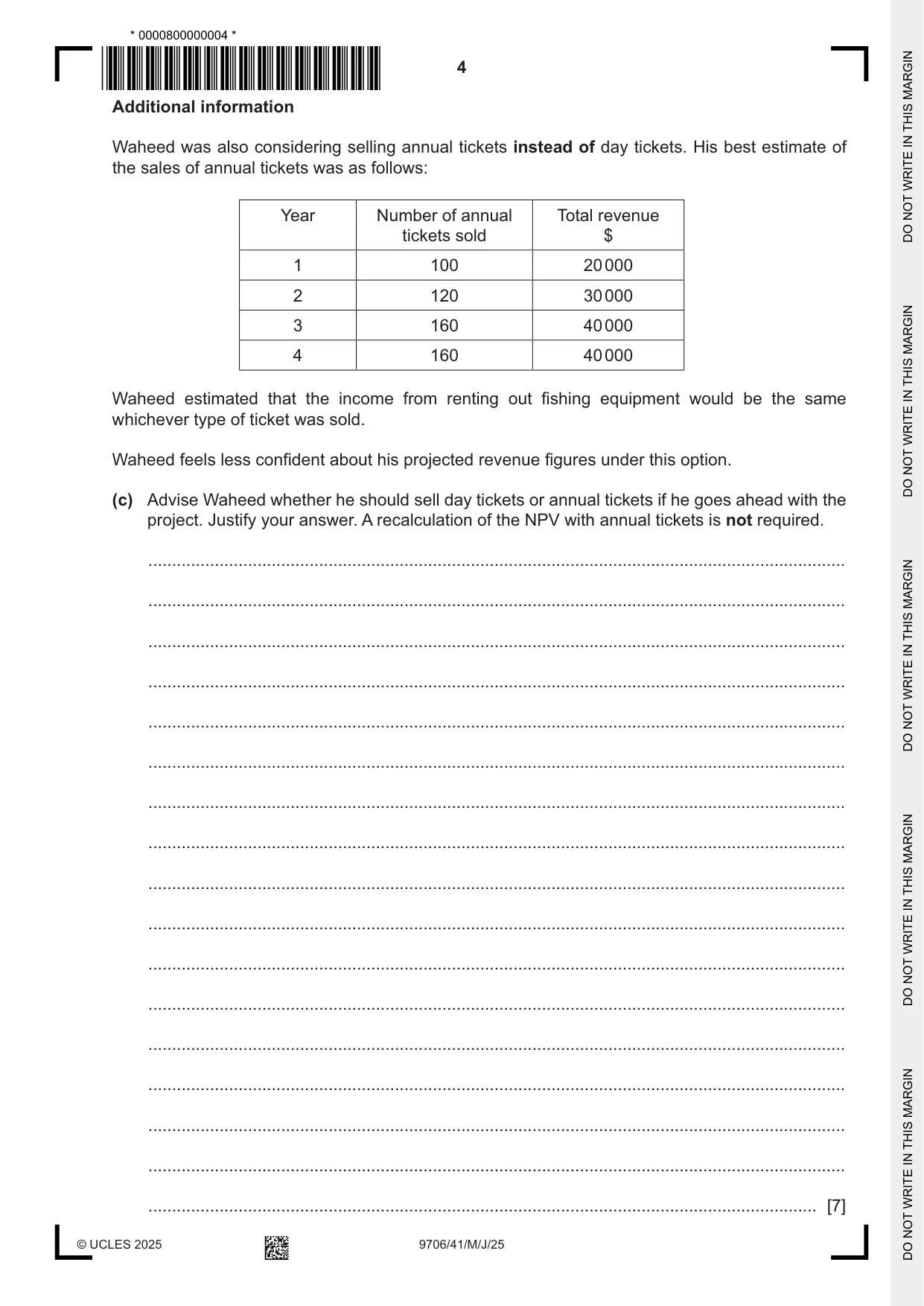
1 Read Source A in the insert. (a) Complete the following table by calculating the net cash flow for each year of the project. flow $ cash Net ....................... ....................... ....................... ....................... ....................... ....................... ....................... ....................... $ costs Administrative ....................... ....................... ....................... ....................... ....................... ....................... ....................... ....................... costs $ Fixed ....................... ....................... ....................... ....................... ....................... ....................... ....................... ....................... $ Rental ....................... ....................... ....................... ....................... ....................... ....................... ....................... ....................... $ Tickets ....................... ....................... ....................... ....................... ....................... ....................... ....................... ....................... $ Equipment ....................... ....................... ....................... ....................... ....................... ....................... ....................... ....................... $ Cost ....................... ....................... ....................... ....................... ....................... ....................... ....................... ....................... Year .............. .............. .............. .............. .............. .............. .............. .............. [10] Additional information Waheed has a cost of capital of 10%. The discount factors for this are as follows: Year Discount factor 1 0.909 2 0.826 3 0.751 4 0.683 (b) Calculate the net present value (NPV) of the project, assuming that day tickets are sold. ................................................................................................................................................... ................................................................................................................................................... ................................................................................................................................................... ................................................................................................................................................... ................................................................................................................................................... ................................................................................................................................................... ................................................................................................................................................... ................................................................................................................................................... ................................................................................................................................................... ............................................................................................................................................. [4] Additional information Waheed was also considering selling annual tickets instead of day tickets. His best estimate of the sales of annual tickets was as follows: Year Number of annual Total revenue tickets sold $ 1 100 20 000 2 120 30 000 3 160 40 000 4 160 40 000 Waheed estimated that the income from renting out fishing equipment would be the same whichever type of ticket was sold. Waheed feels less confident about his projected revenue figures under this option. (c) Advise Waheed whether he should sell day tickets or annual tickets if he goes ahead with the project. Justify your answer. A recalculation of the NPV with annual tickets is not required. ................................................................................................................................................... ................................................................................................................................................... ................................................................................................................................................... ................................................................................................................................................... ................................................................................................................................................... ................................................................................................................................................... ................................................................................................................................................... ................................................................................................................................................... ................................................................................................................................................... ................................................................................................................................................... ................................................................................................................................................... ................................................................................................................................................... ................................................................................................................................................... ................................................................................................................................................... ................................................................................................................................................... ................................................................................................................................................... ............................................................................................................................................. [7] Additional information Waheed’s brother uses the accounting rate of return (ARR) when considering his projects. (d) State two advantages and two disadvantages of using ARR. Advantages 1 ................................................................................................................................................ ................................................................................................................................................... 2 ................................................................................................................................................ ................................................................................................................................................... Disadvantages 1 ................................................................................................................................................ ................................................................................................................................................... 2 ................................................................................................................................................ ................................................................................................................................................... [4] [Total: 25]
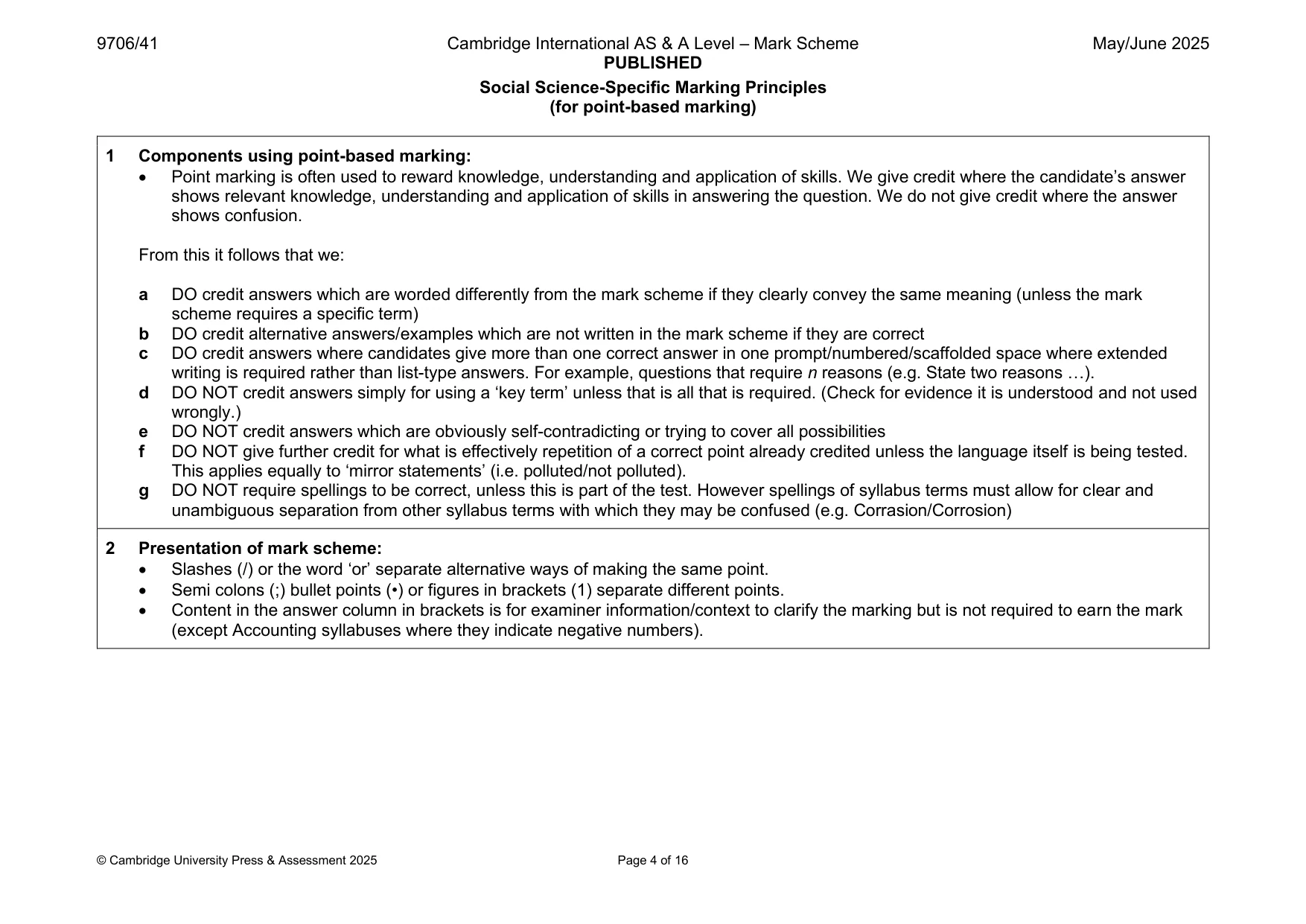
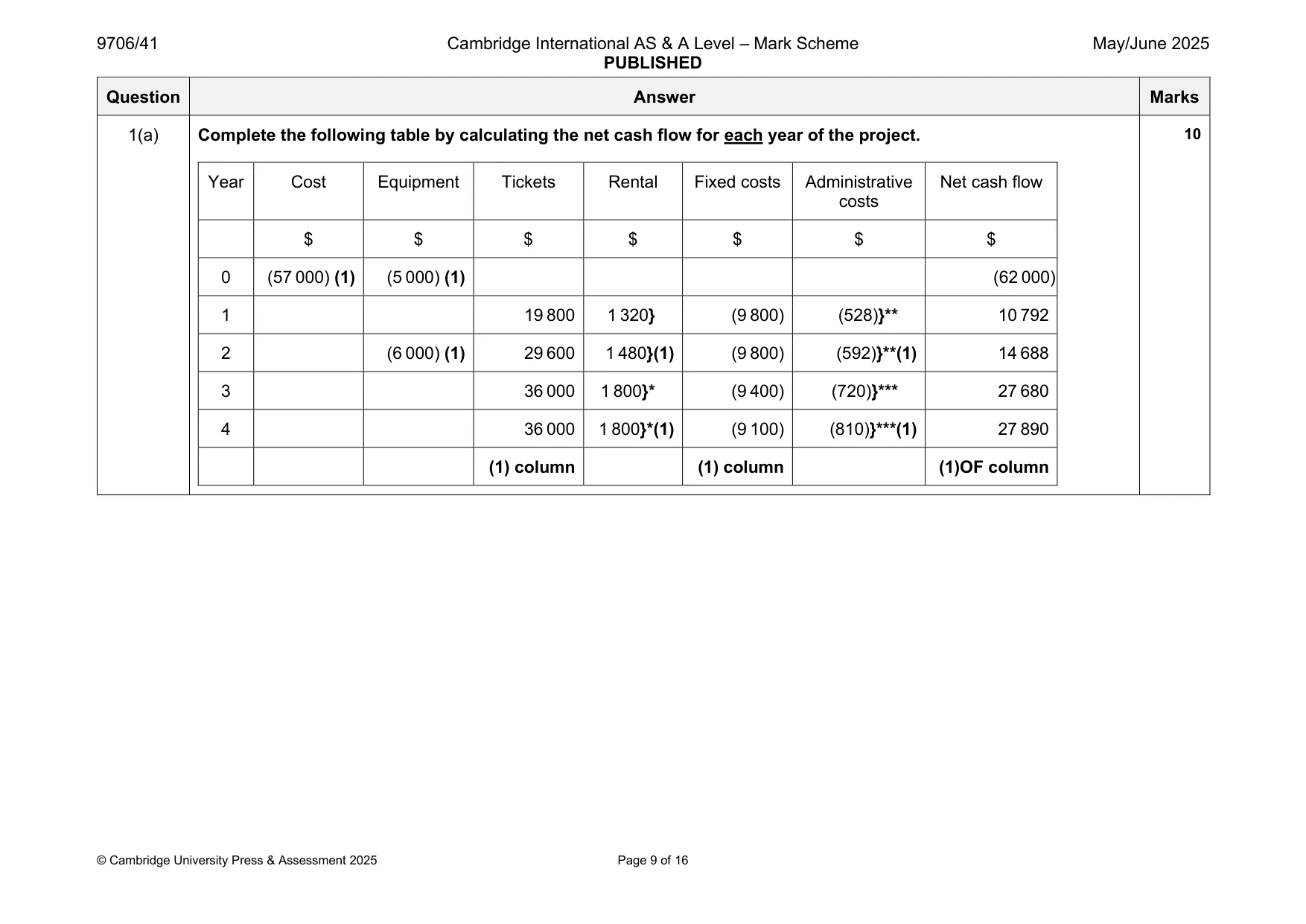
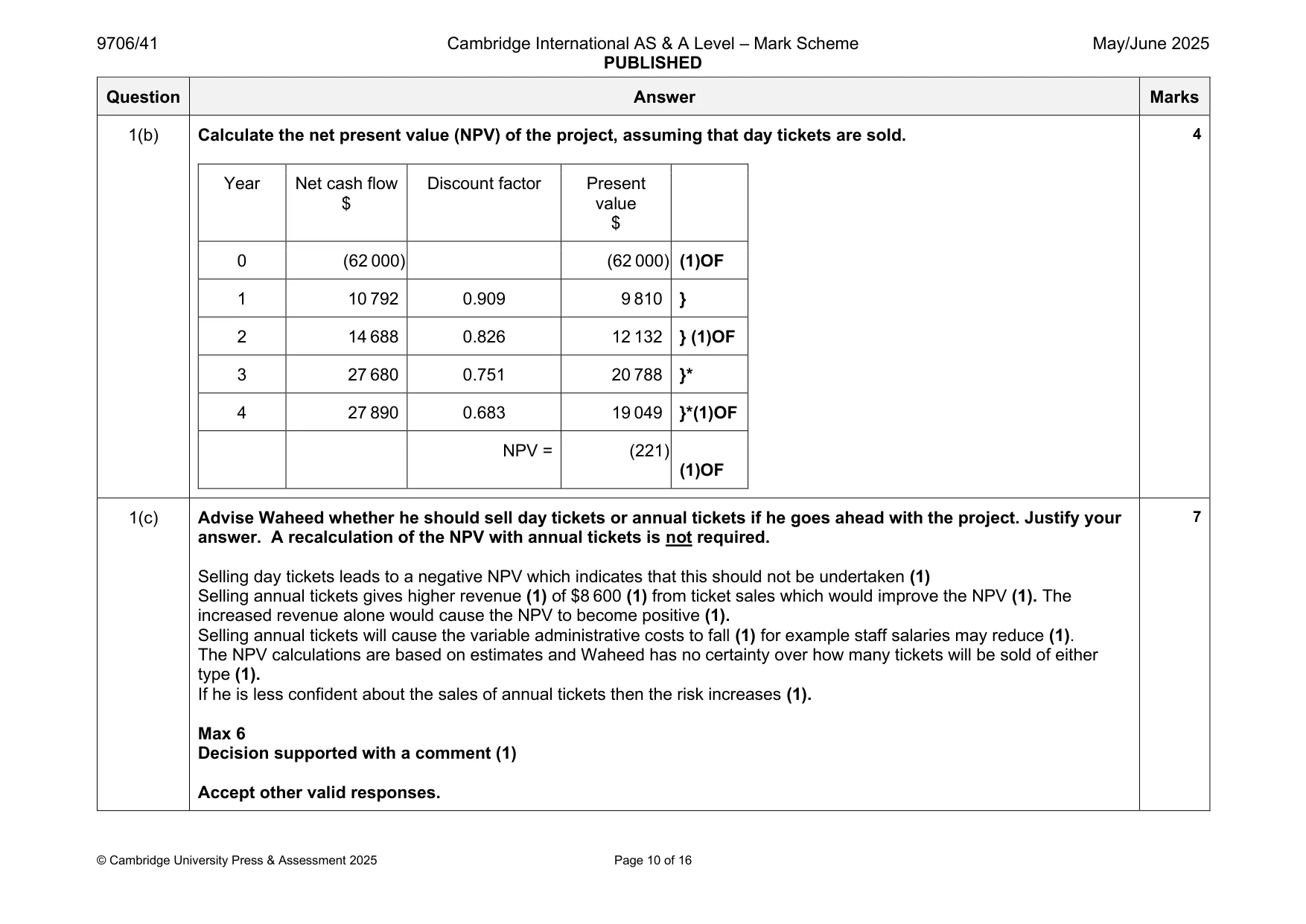
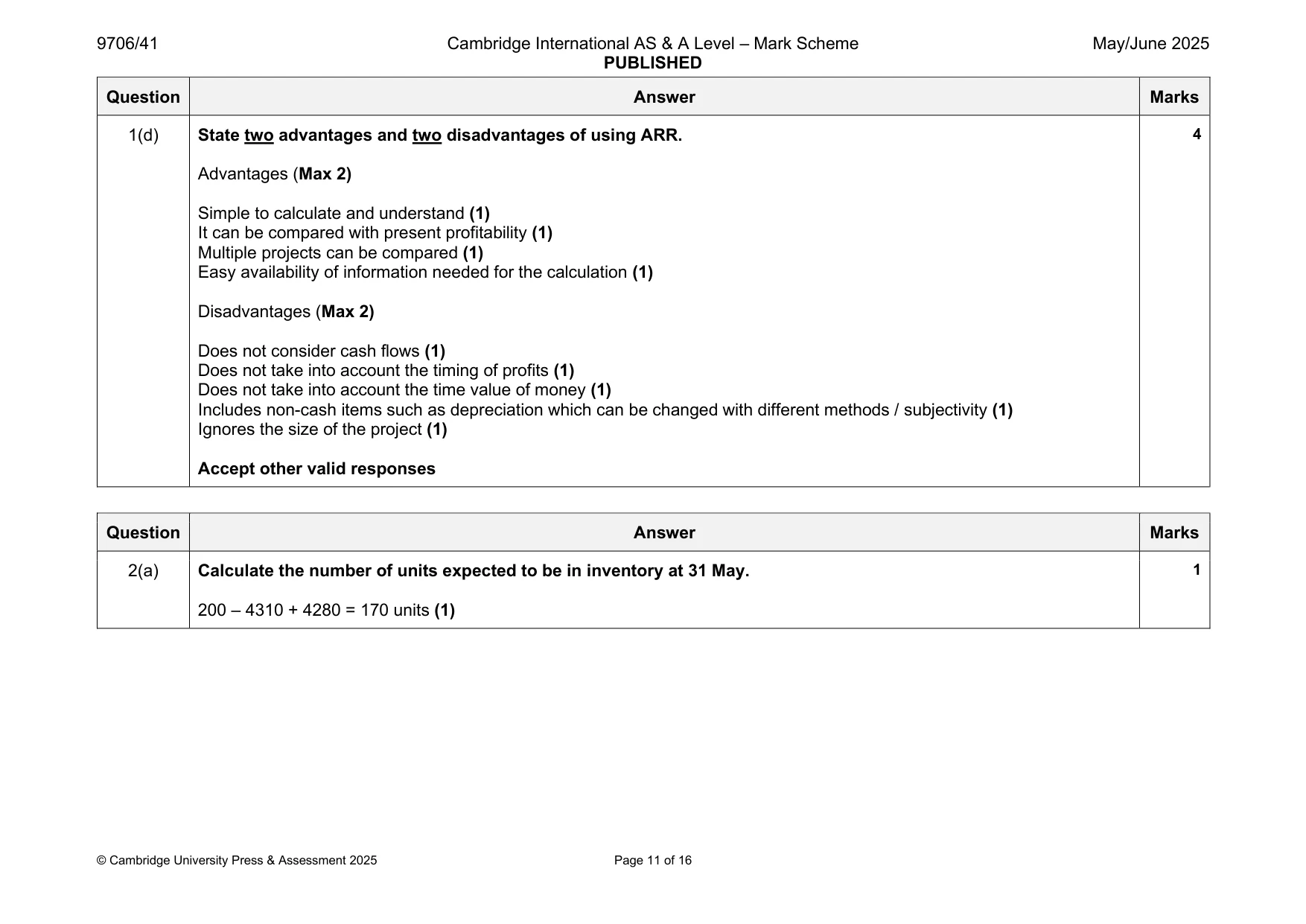
Mark scheme: Question Answer Marks 1(a) Complete the following table by calculating the net cash flow for each year of the project. 10 Year Cost Equipment Tickets Rental Fixed costs Administrative Net cash flow costs $ $ $ $ $ $ $ 0 (57 000) (1) (5 000) (1) (62 000) 1 19 800 1 320} (9 800) (528)}** 10 792 2 (6 000) (1) 29 600 1 480}(1) (9 800) (592)}**(1) 14 688 3 36 000 1 800}* (9 400) (720)}*** 27 680 4 36 000 1 800}*(1) (9 100) (810)}***(1) 27 890 (1) column (1) column (1)OF column 1(b) Calculate the net present value (NPV) of the project, assuming that day tickets are sold. 4 Year Net cash flow Discount factor Present $ value $ 0 (62 000) (62 000) (1)OF 1 10 792 0.909 9 810 } 2 14 688 0.826 12 132 } (1)OF 3 27 680 0.751 20 788 }* 4 27 890 0.683 19 049 }*(1)OF NPV = (221) (1)OF 1(c) Advise Waheed whether he should sell day tickets or annual tickets if he goes ahead with the project. Justify your 7 answer. A recalculation of the NPV with annual tickets is not required. Selling day tickets leads to a negative NPV which indicates that this should not be undertaken (1) Selling annual tickets gives higher revenue (1) of $8 600 (1) from ticket sales which would improve the NPV (1). The increased revenue alone would cause the NPV to become positive (1). Selling annual tickets will cause the variable administrative costs to fall (1) for example staff salaries may reduce (1). The NPV calculations are based on estimates and Waheed has no certainty over how many tickets will be sold of either type (1). If he is less confident about the sales of annual tickets then the risk increases (1). Max 6 Decision supported with a comment (1) Accept other valid responses. 1(d) State two advantages and two disadvantages of using ARR. 4 Advantages (Max 2) Simple to calculate and understand (1) It can be compared with present profitability (1) Multiple projects can be compared (1) Easy availability of information needed for the calculation (1) Disadvantages (Max 2) Does not consider cash flows (1) Does not take into account the timing of profits (1) Does not take into account the time value of money (1) Includes non-cash items such as depreciation which can be changed with different methods / subjectivity (1) Ignores the size of the project (1) Accept other valid responses
Q2 · Read Source B in the insert
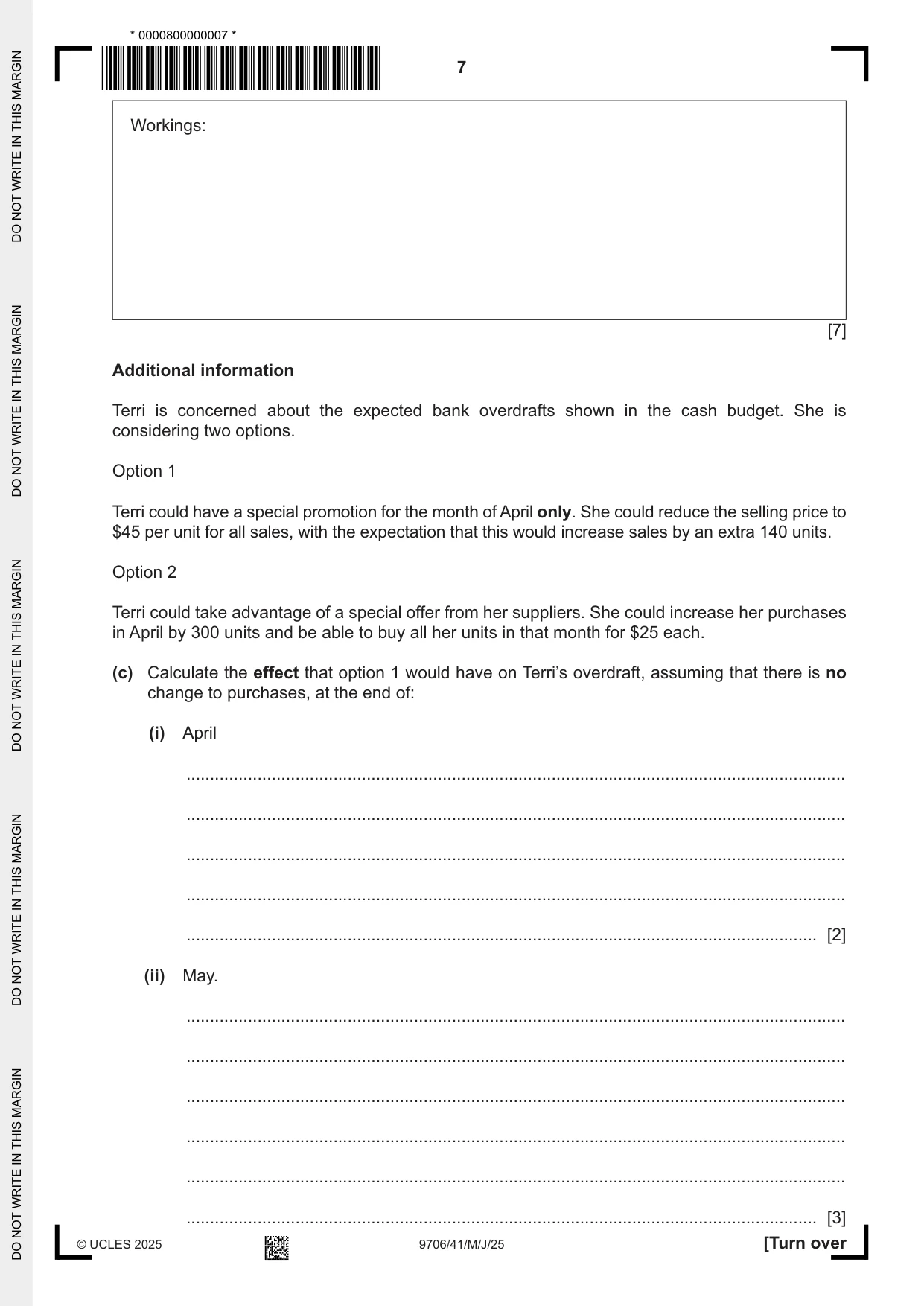
2 Read Source B in the insert. (a) Calculate the number of units expected to be in inventory at 31 May. ................................................................................................................................................... ............................................................................................................................................. [1] (b) Calculate the total amount shown in the cash budget in March for expenditure, other than payments to suppliers. ................................................................................................................................................... ................................................................................................................................................... ................................................................................................................................................... ................................................................................................................................................... ................................................................................................................................................... ................................................................................................................................................... ................................................................................................................................................... ................................................................................................................................................... ................................................................................................................................................... ................................................................................................................................................... ................................................................................................................................................... ................................................................................................................................................... ................................................................................................................................................... ................................................................................................................................................... ................................................................................................................................................... ................................................................................................................................................... ................................................................................................................................................... ................................................................................................................................................... Workings: [7] Additional information Terri is concerned about the expected bank overdrafts shown in the cash budget. She is considering two options. Option 1 Terri could have a special promotion for the month of April only. She could reduce the selling price to $45 per unit for all sales, with the expectation that this would increase sales by an extra 140 units. Option 2 Terri could take advantage of a special offer from her suppliers. She could increase her purchases in April by 300 units and be able to buy all her units in that month for $25 each. (c) Calculate the effect that option 1 would have on Terri’s overdraft, assuming that there is no change to purchases, at the end of: (i) April ........................................................................................................................................... ........................................................................................................................................... ........................................................................................................................................... ........................................................................................................................................... ..................................................................................................................................... [2] (ii) May. ........................................................................................................................................... ........................................................................................................................................... ........................................................................................................................................... ........................................................................................................................................... ........................................................................................................................................... ..................................................................................................................................... [3] (d) Calculate the effect that option 2 would have on Terri’s overdraft, assuming there is no change to sales, at the end of: (i) April ........................................................................................................................................... ........................................................................................................................................... ........................................................................................................................................... ..................................................................................................................................... [2] (ii) May. ........................................................................................................................................... ........................................................................................................................................... ........................................................................................................................................... ........................................................................................................................................... ........................................................................................................................................... ........................................................................................................................................... ........................................................................................................................................... ..................................................................................................................................... [3]
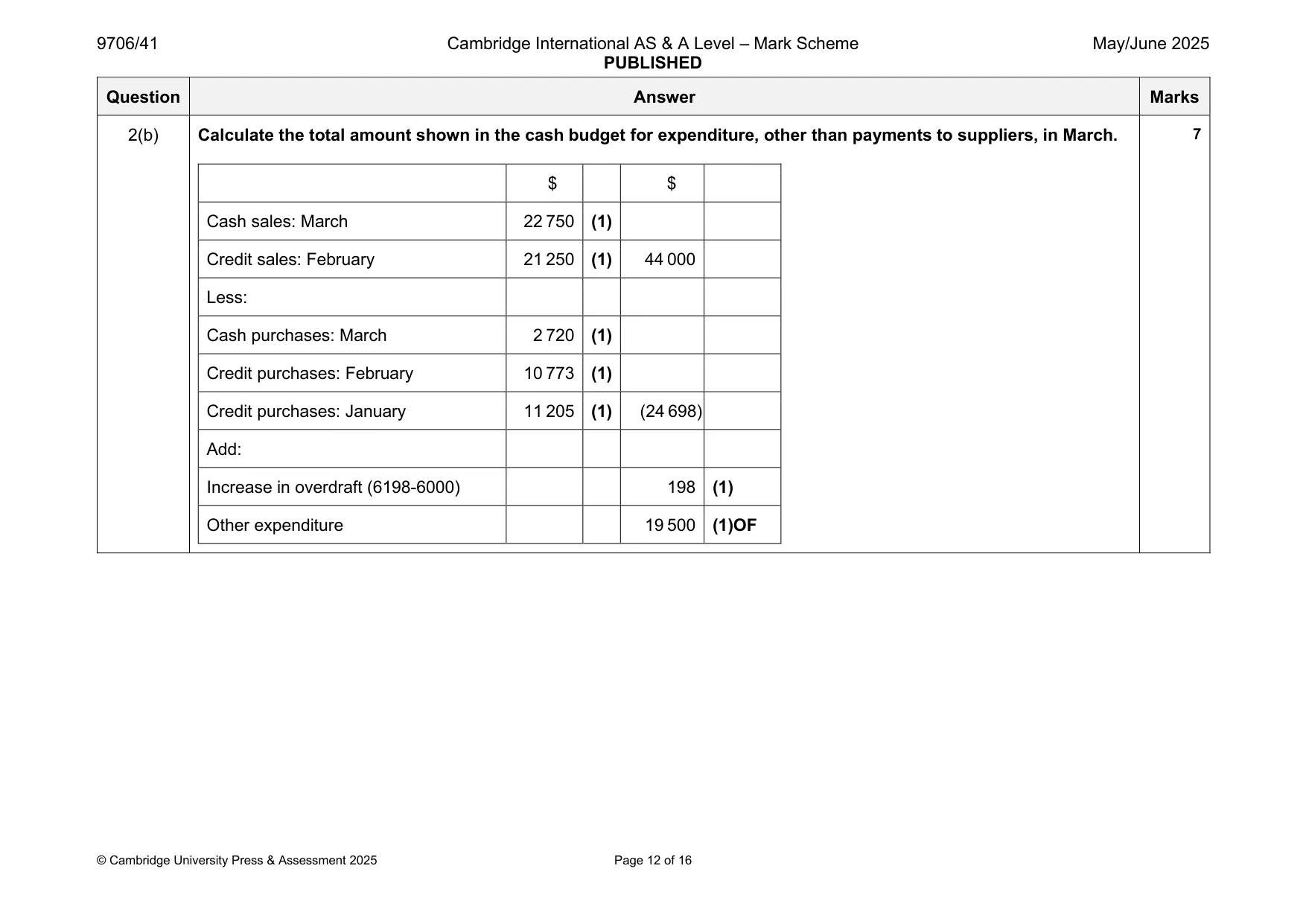
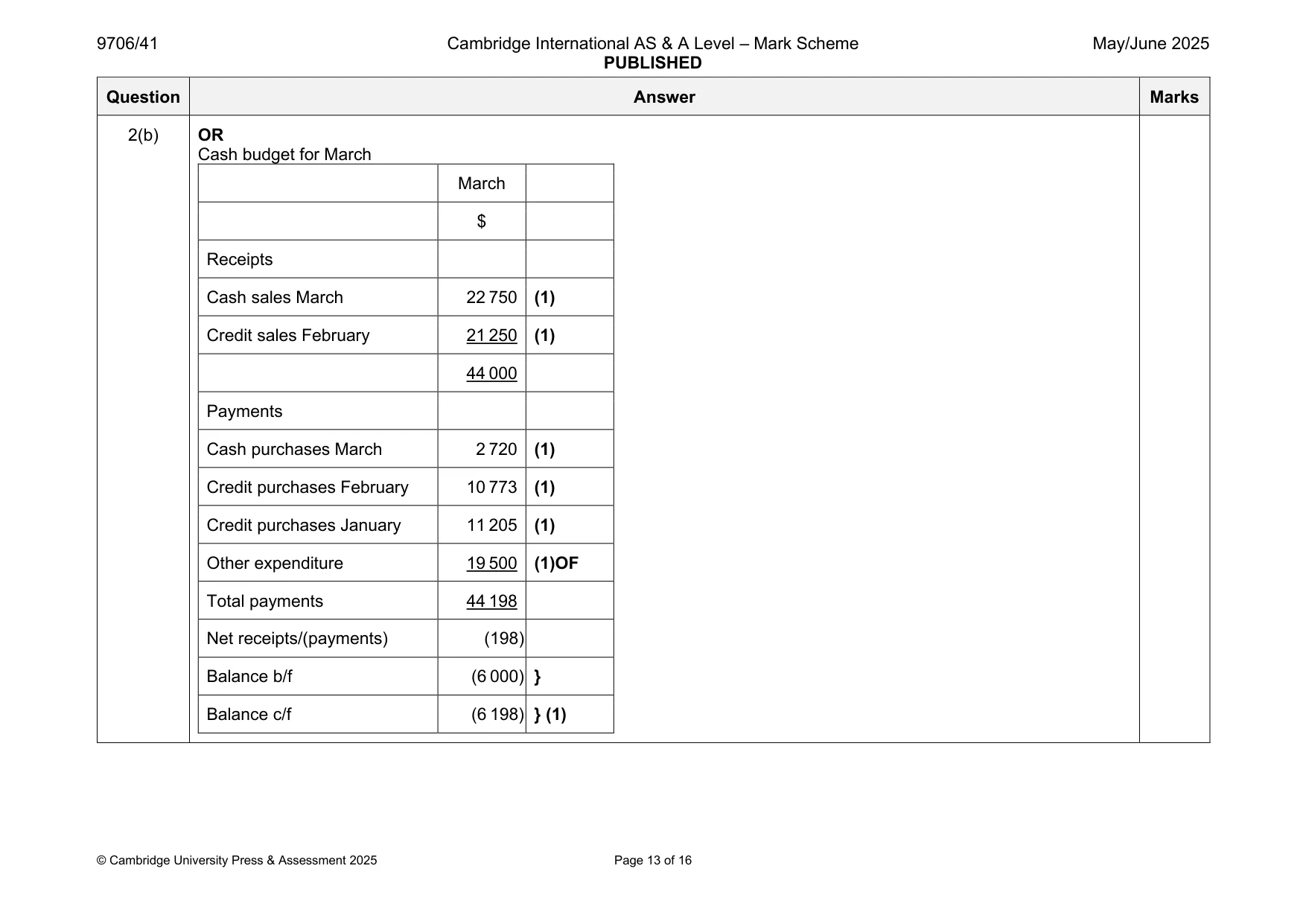
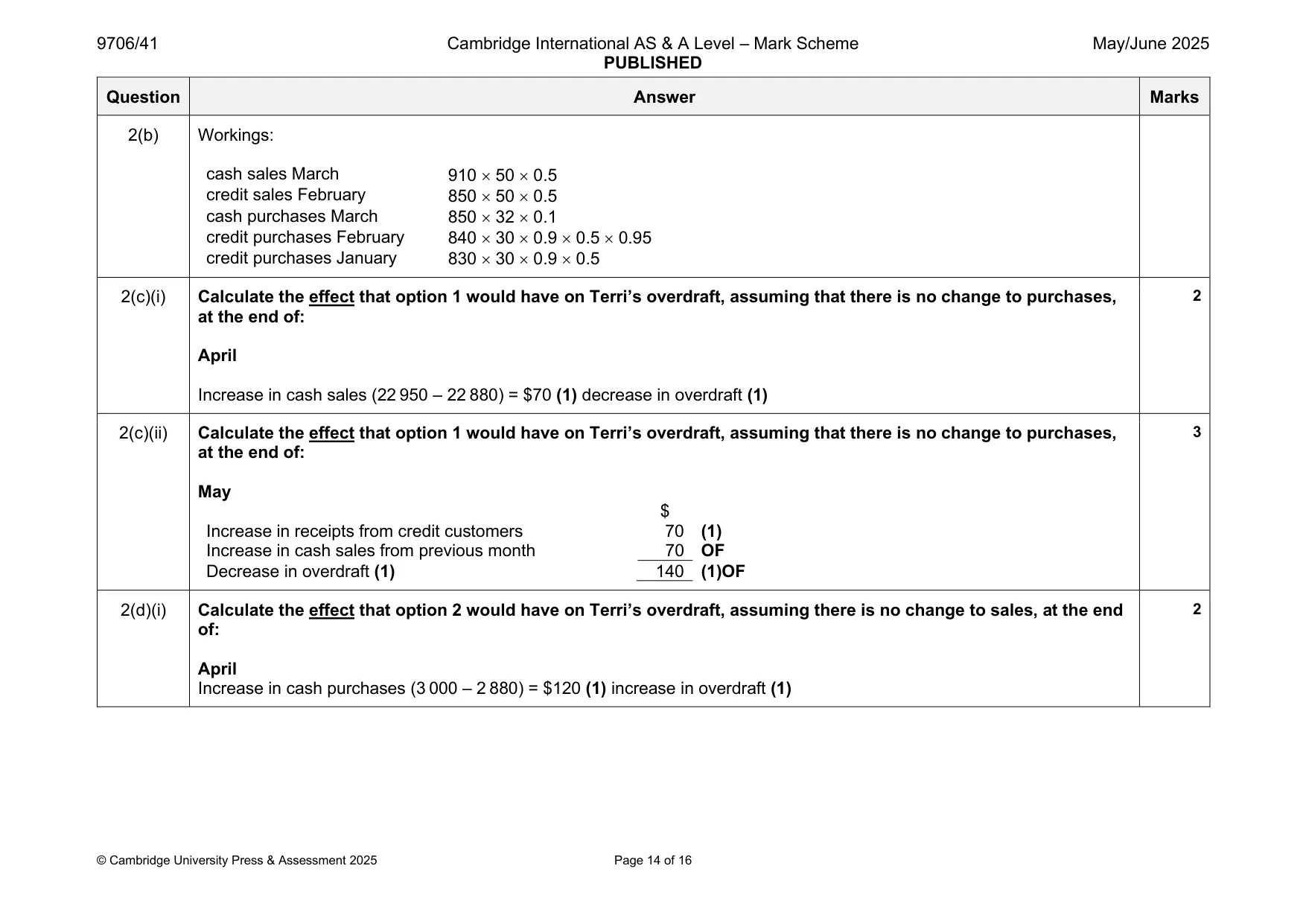
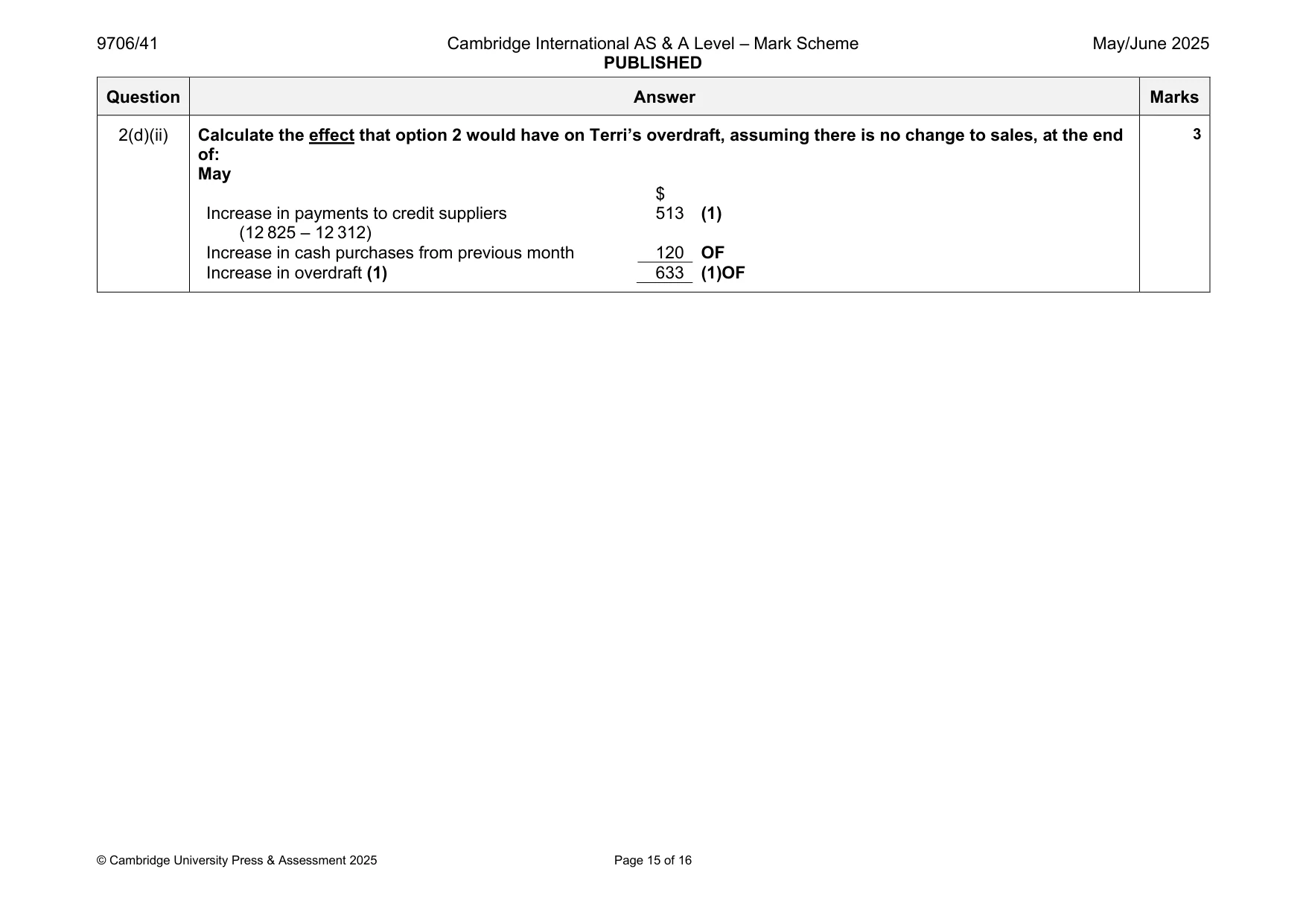
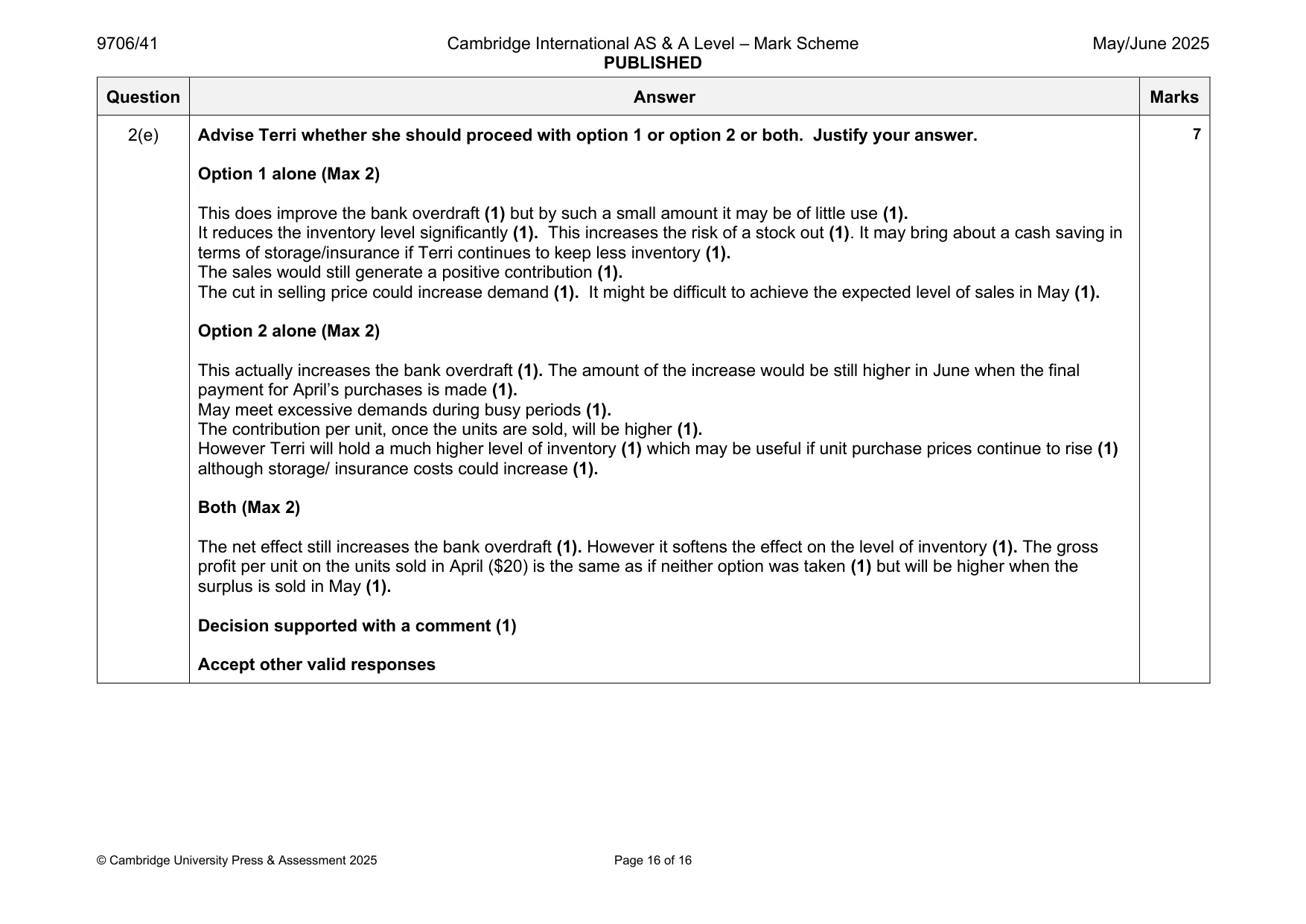
Mark scheme: 2(a) Calculate the number of units expected to be in inventory at 31 May. 1 200 – 4310 + 4280 = 170 units (1) 2(b) Calculate the total amount shown in the cash budget for expenditure, other than payments to suppliers, in March. 7 $ $ Cash sales: March 22 750 (1) Credit sales: February 21 250 (1) 44 000 Less: Cash purchases: March 2 720 (1) Credit purchases: February 10 773 (1) Credit purchases: January 11 205 (1) (24 698) Add: Increase in overdraft (6198-6000) 198 (1) Other expenditure 19 500 (1)OF 2(b) OR Cash budget for March March $ Receipts Cash sales March 22 750 (1) Credit sales February 21 250 (1) 44 000 Payments Cash purchases March 2 720 (1) Credit purchases February 10 773 (1) Credit purchases January 11 205 (1) Other expenditure 19 500 (1)OF Total payments 44 198 Net receipts/(payments) (198) Balance b/f (6 000) } Balance c/f (6 198) } (1) 2(b) Workings: cash sales March 910 50 0.5 credit sales February 850 50 0.5 cash purchases March 850 32 0.1 credit purchases February 840 30 0.9 0.5 0.95 credit purchases January 830 30 0.9 0.5 2(c)(i) Calculate the effect that option 1 would have on Terri’s overdraft, assuming that there is no change to purchases, 2 at the end of: April Increase in cash sales (22 950 – 22 880) = $70 (1) decrease in overdraft (1) 2(c)(ii) Calculate the effect that option 1 would have on Terri’s overdraft, assuming that there is no change to purchases, 3 at the end of: May $ Increase in receipts from credit customers 70 (1) Increase in cash sales from previous month 70 OF Decrease in overdraft (1) 140 (1)OF 2(d)(i) Calculate the effect that option 2 would have on Terri’s overdraft, assuming there is no change to sales, at the end 2 of: April Increase in cash purchases (3 000 – 2 880) = $120 (1) increase in overdraft (1) 2(d)(ii) Calculate the effect that option 2 would have on Terri’s overdraft, assuming there is no change to sales, at the end 3 of: May $ Increase in payments to credit suppliers 513 (1) (12 825 – 12 312) Increase in cash purchases from previous month 120 OF Increase in overdraft (1) 633 (1)OF 2(e) Advise Terri whether she should proceed with option 1 or option 2 or both. Justify your answer. 7 Option 1 alone (Max 2) This does improve the bank overdraft (1) but by such a small amount it may be of little use (1). It reduces the inventory level significantly (1). This increases the risk of a stock out (1). It may bring about a cash saving in terms of storage/insurance if Terri continues to keep less inventory (1). The sales would still generate a positive contribution (1). The cut in selling price could increase demand (1). It might be difficult to achieve the expected level of sales in May (1). Option 2 alone (Max 2) This actually increases the bank overdraft (1). The amount of the increase would be still higher in June when the final payment for April’s purchases is made (1). May meet excessive demands during busy periods (1). The contribution per unit, once the units are sold, will be higher (1). However Terri will hold a much higher level of inventory (1) which may be useful if unit purchase prices continue to rise (1) although storage/ insurance costs could increase (1). Both (Max 2) The net effect still increases the bank overdraft (1). However it softens the effect on the level of inventory (1). The gross profit per unit on the units sold in April ($20) is the same as if neither option was taken (1) but will be higher when the surplus is sold in May (1). Decision supported with a comment (1) Accept other valid responses
What was in this paper
The subtopics covered by these 2 questions, and how many questions each got. Open one in a new tab to see every Cambridge question on it.
What you needed in this session
Cambridge’s own grade thresholds for 2025 May/June, Paper 4 · Variant 1. A higher threshold means an easier paper — the bar moves with how the cohort did.