Cambridge A Level Accounting 9706 — 2023 Oct/Nov Paper 4 · Variant 1
9706/41/O/N/23 · 2 questions · 50 marks · ≈56 min
The question paper and its mark scheme, free to read here and free to download. This is Cambridge’s own paper, exactly as it was sat.
Question paper8 pages
Mark scheme14 pages
Answers below. Sit the paper first if you are practising.
Questions as text
Q1 · Read Source A in the insert
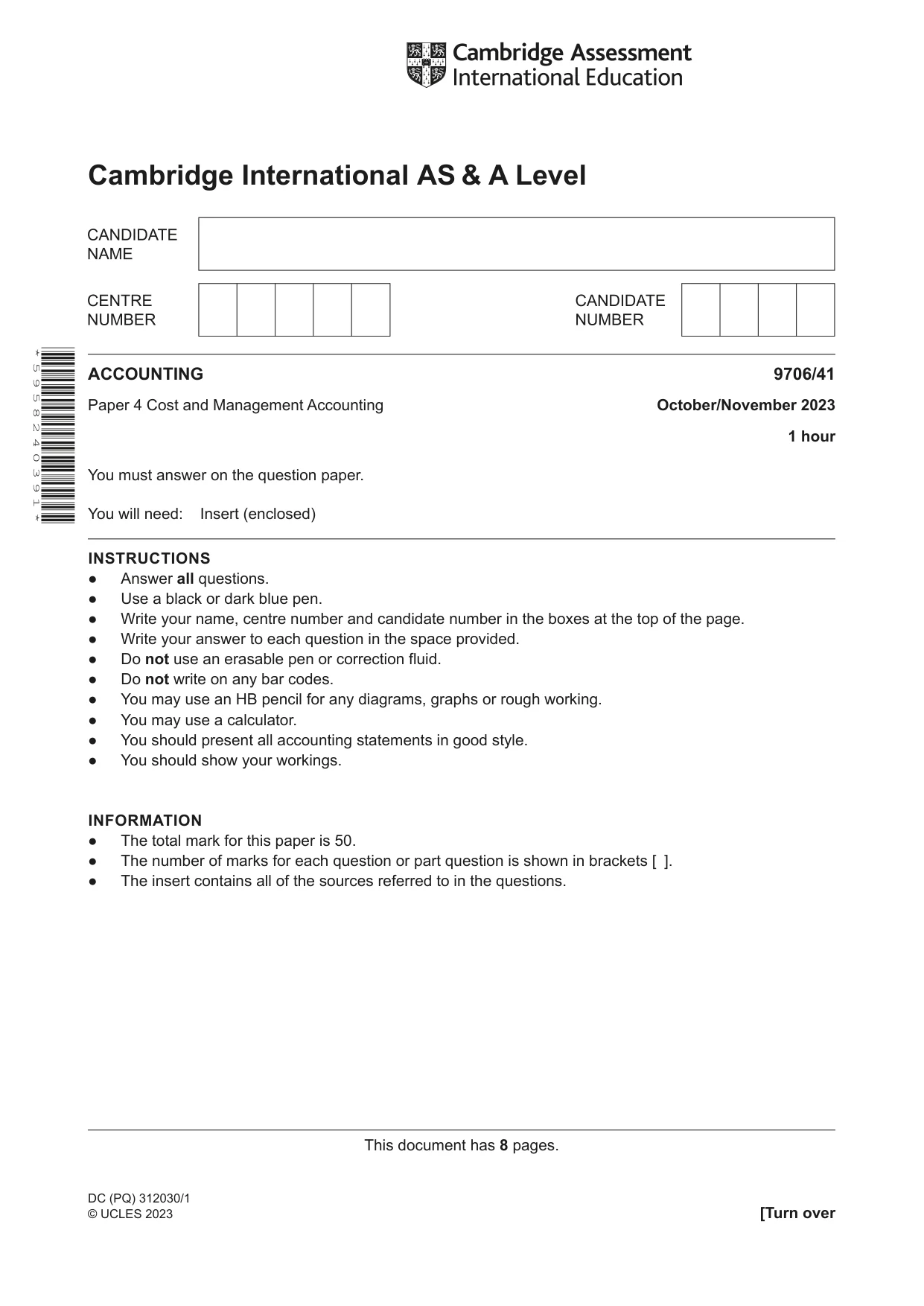
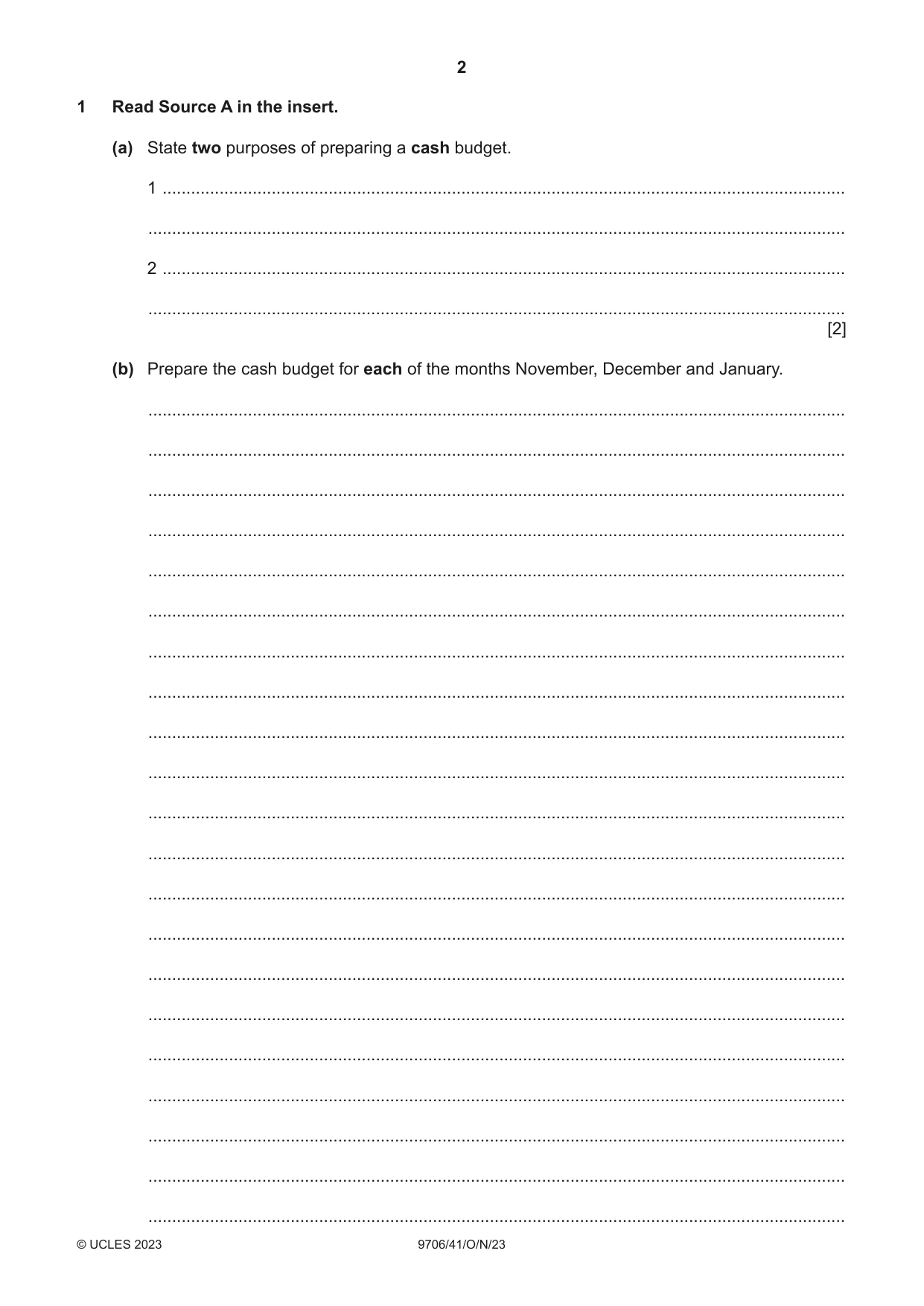
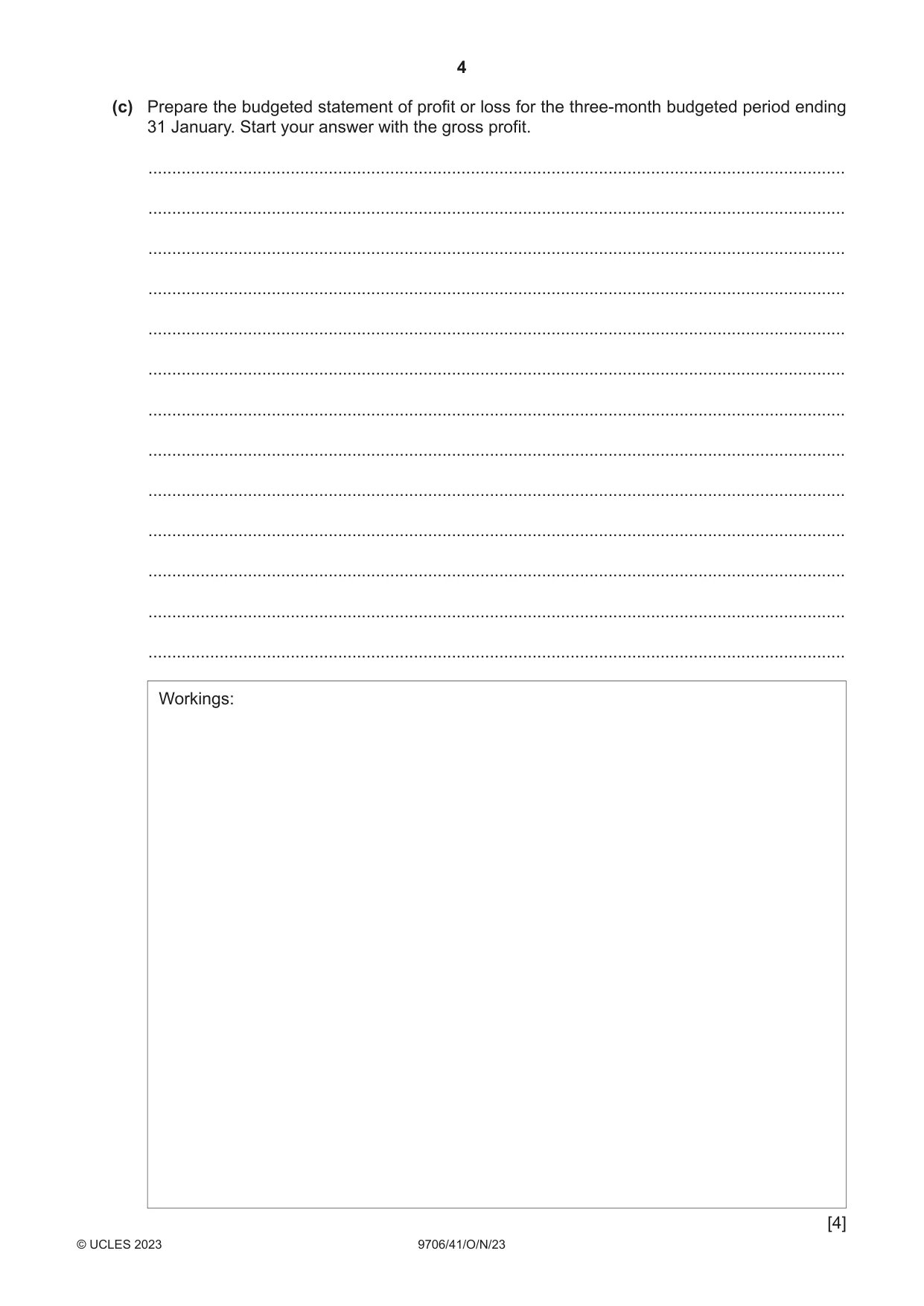
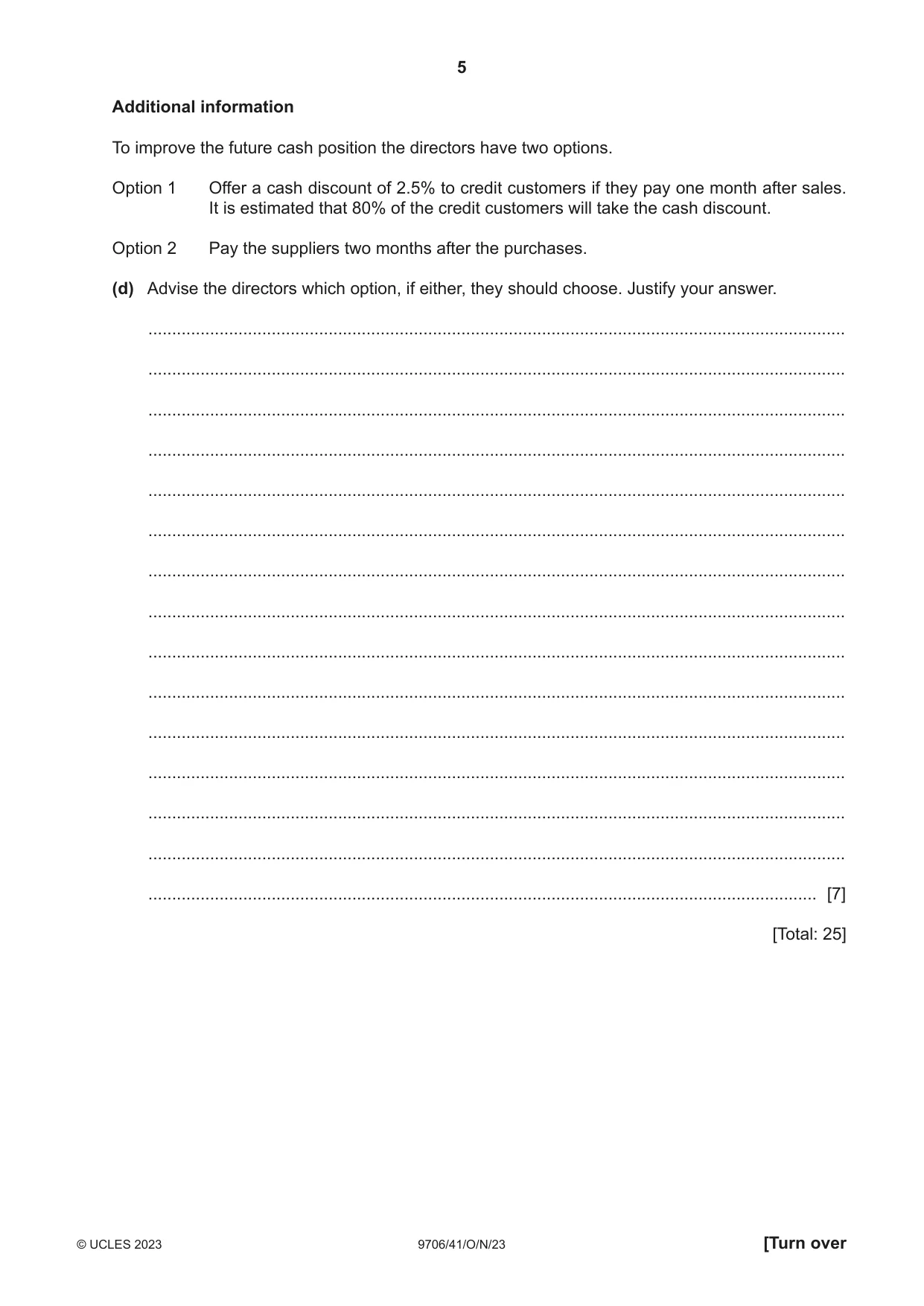
1 Read Source A in the insert. (a) State two purposes of preparing a cash budget. 1 ................................................................................................................................................ ................................................................................................................................................... 2 ................................................................................................................................................ ................................................................................................................................................... [2] (b) Prepare the cash budget for each of the months November, December and January. ................................................................................................................................................... ................................................................................................................................................... ................................................................................................................................................... ................................................................................................................................................... ................................................................................................................................................... ................................................................................................................................................... ................................................................................................................................................... ................................................................................................................................................... ................................................................................................................................................... ................................................................................................................................................... ................................................................................................................................................... ................................................................................................................................................... ................................................................................................................................................... ................................................................................................................................................... ................................................................................................................................................... ................................................................................................................................................... ................................................................................................................................................... ................................................................................................................................................... ................................................................................................................................................... ................................................................................................................................................... ................................................................................................................................................... ................................................................................................................................................... ................................................................................................................................................... ................................................................................................................................................... ................................................................................................................................................... ................................................................................................................................................... ................................................................................................................................................... ................................................................................................................................................... Workings: [12] (c) Prepare the budgeted statement of profit or loss for the three-month budgeted period ending 31 January. Start your answer with the gross profit. ................................................................................................................................................... ................................................................................................................................................... ................................................................................................................................................... ................................................................................................................................................... ................................................................................................................................................... ................................................................................................................................................... ................................................................................................................................................... ................................................................................................................................................... ................................................................................................................................................... ................................................................................................................................................... ................................................................................................................................................... ................................................................................................................................................... ................................................................................................................................................... Workings: [4] Additional information To improve the future cash position the directors have two options. Option 1 Offer a cash discount of 2.5% to credit customers if they pay one month after sales. It is estimated that 80% of the credit customers will take the cash discount. Option 2 Pay the suppliers two months after the purchases. (d) Advise the directors which option, if either, they should choose. Justify your answer. ................................................................................................................................................... ................................................................................................................................................... ................................................................................................................................................... ................................................................................................................................................... ................................................................................................................................................... ................................................................................................................................................... ................................................................................................................................................... ................................................................................................................................................... ................................................................................................................................................... ................................................................................................................................................... ................................................................................................................................................... ................................................................................................................................................... ................................................................................................................................................... ................................................................................................................................................... ............................................................................................................................................. [7] [Total: 25]
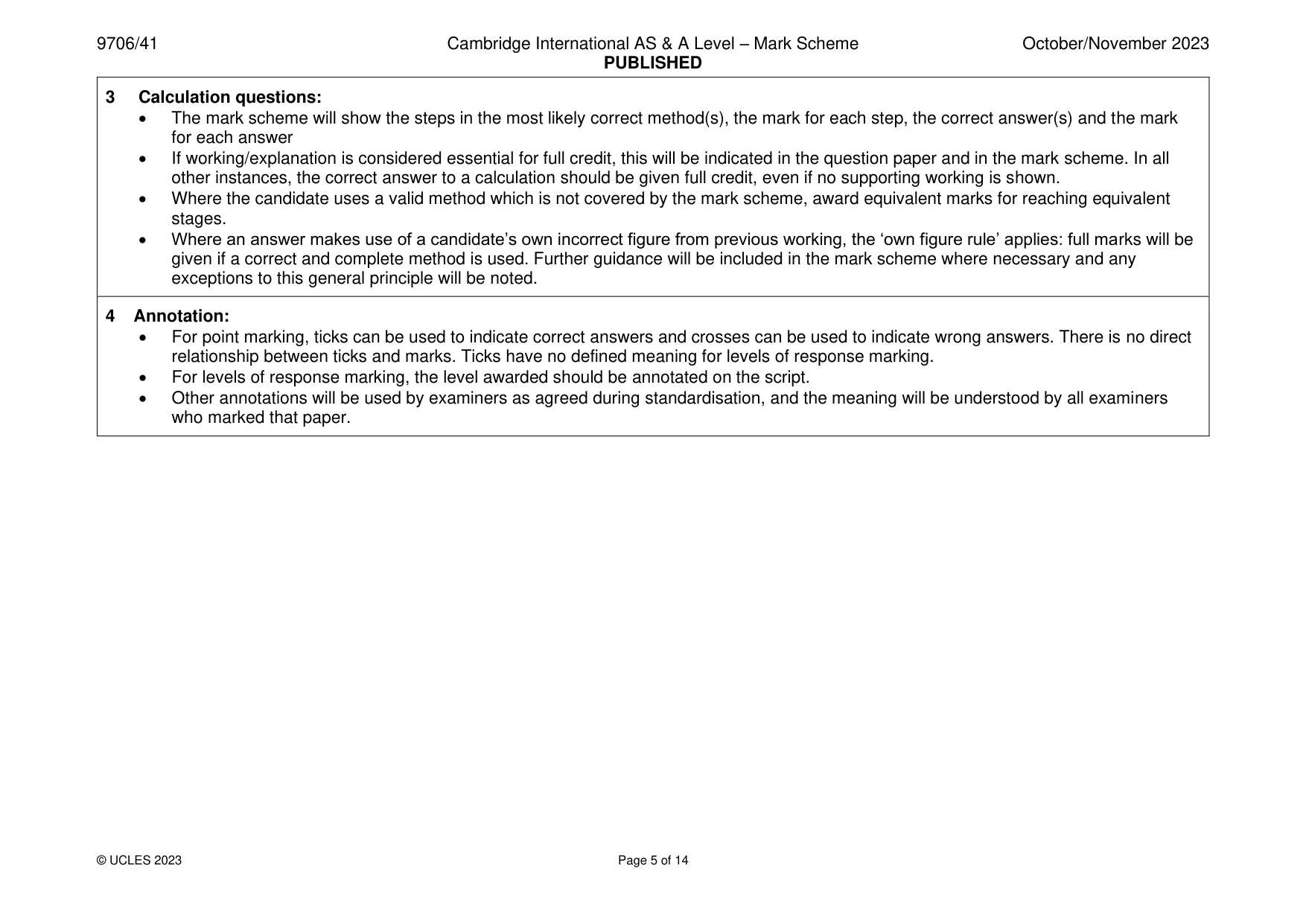
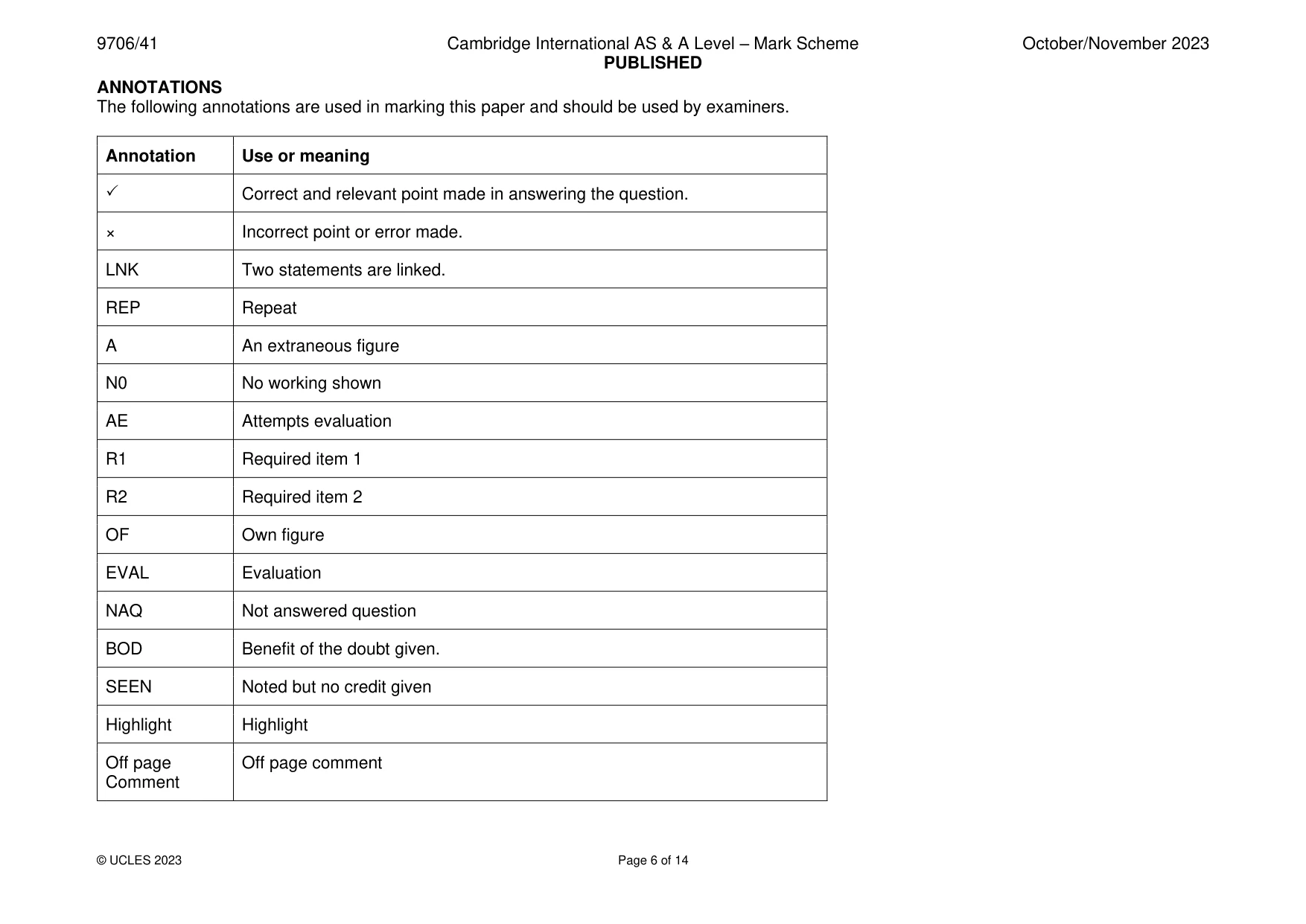
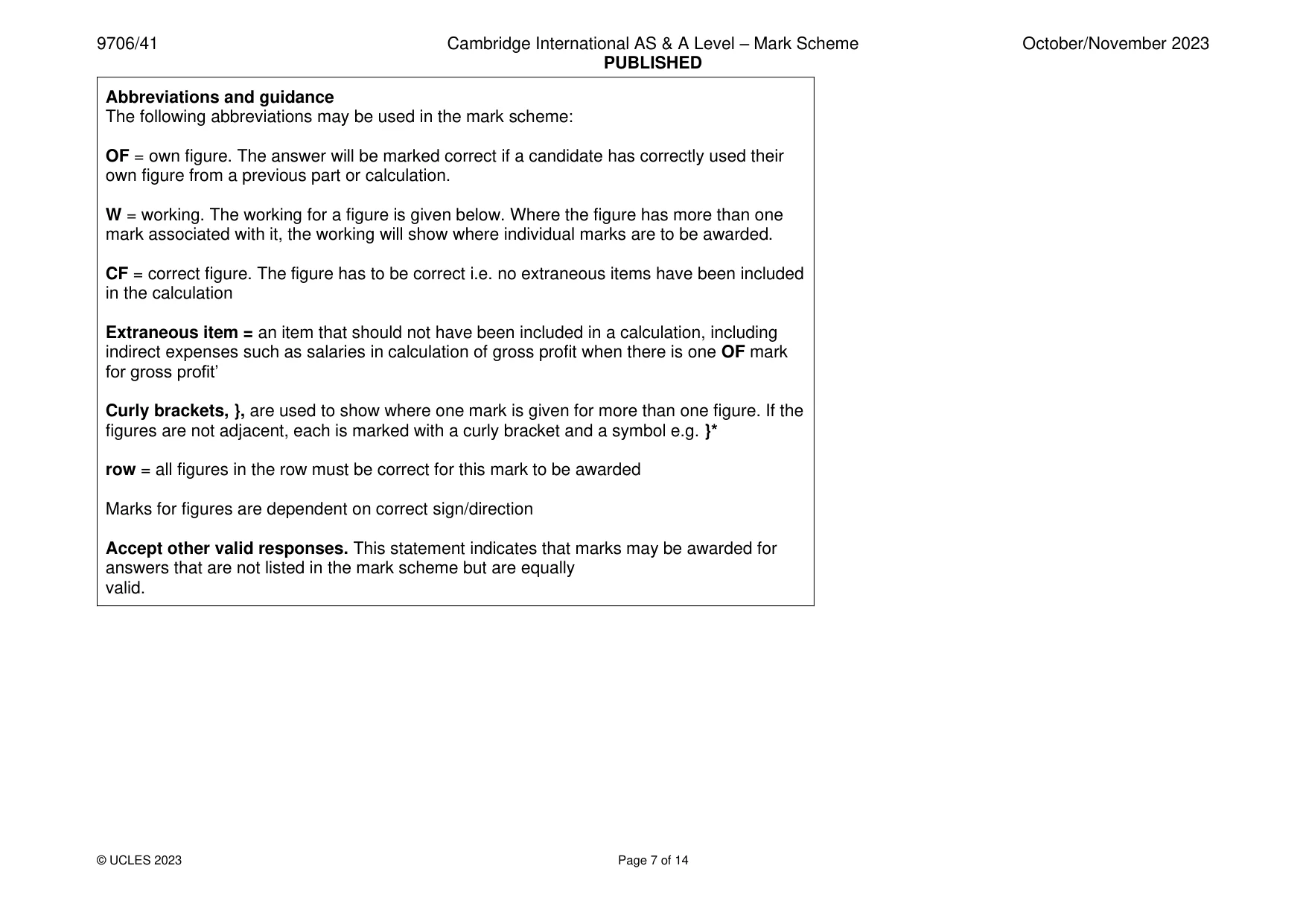
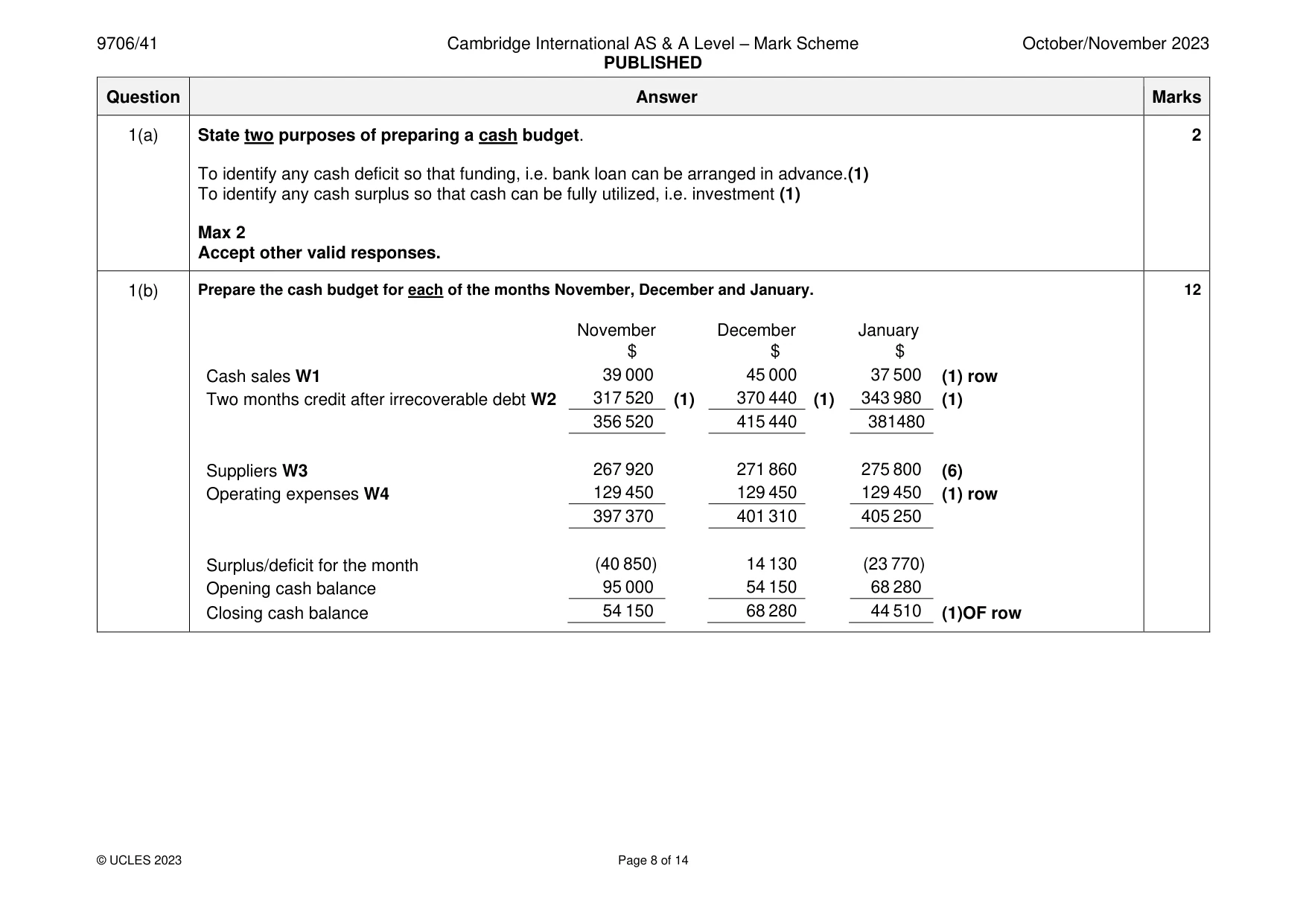
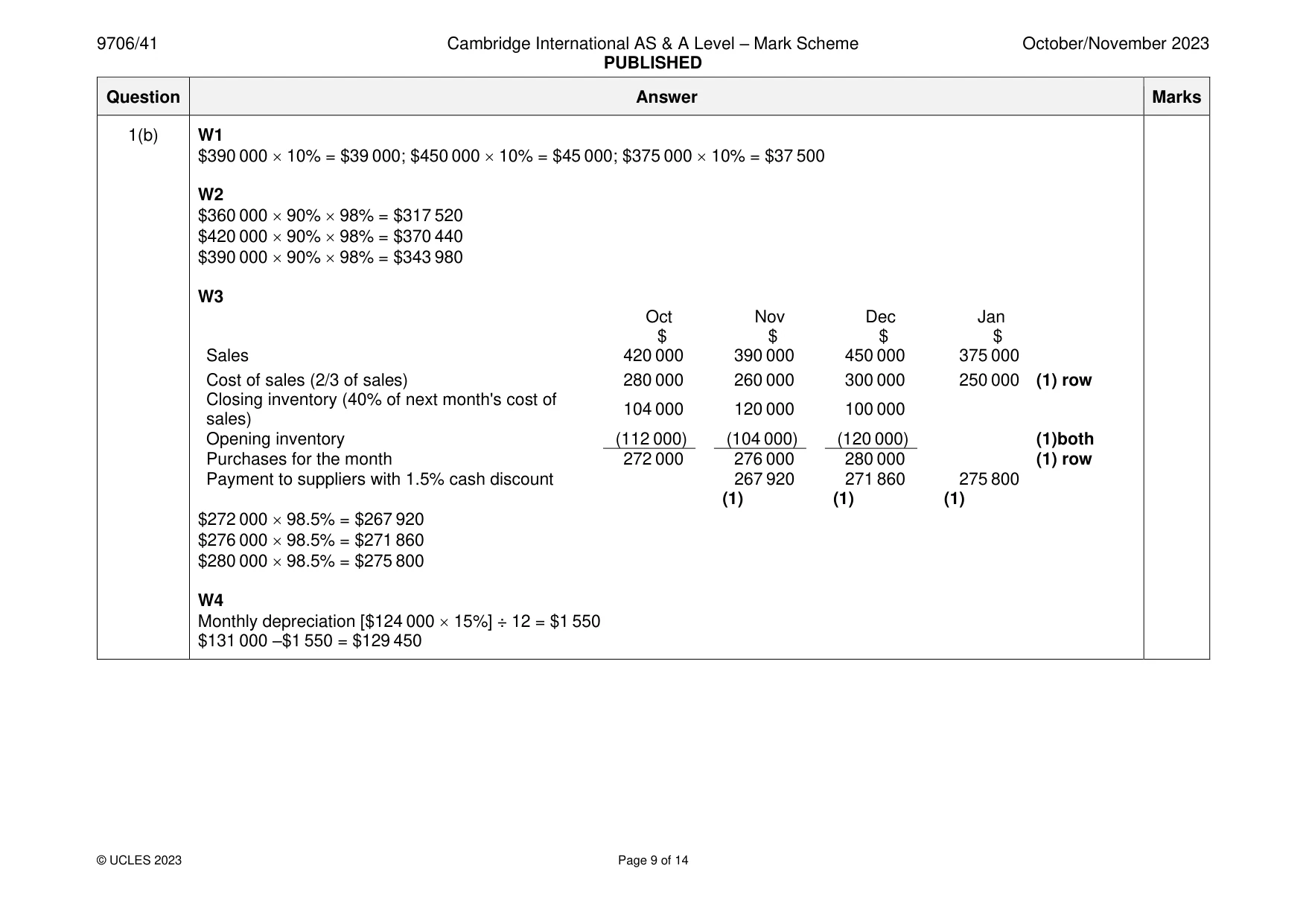
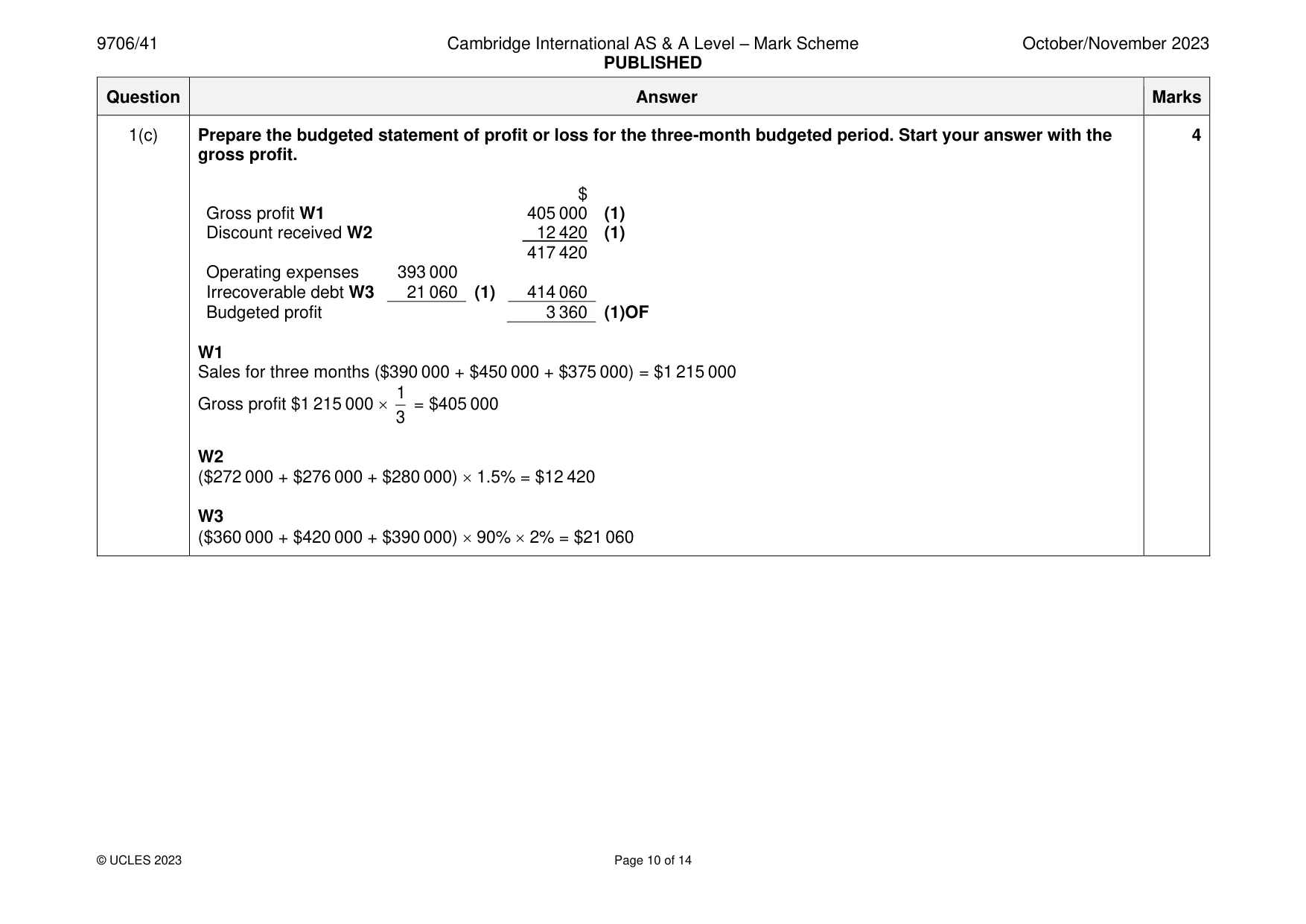
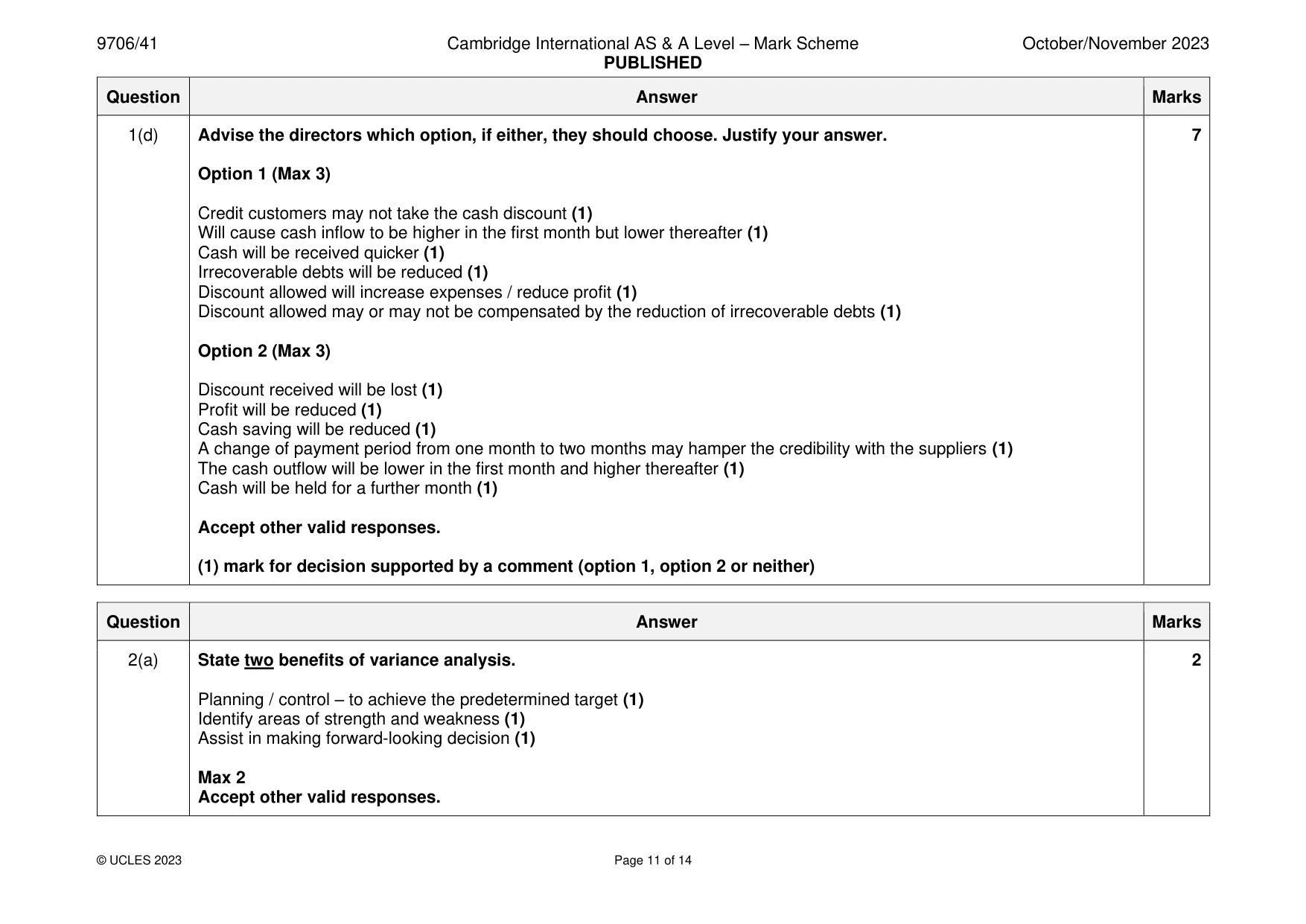
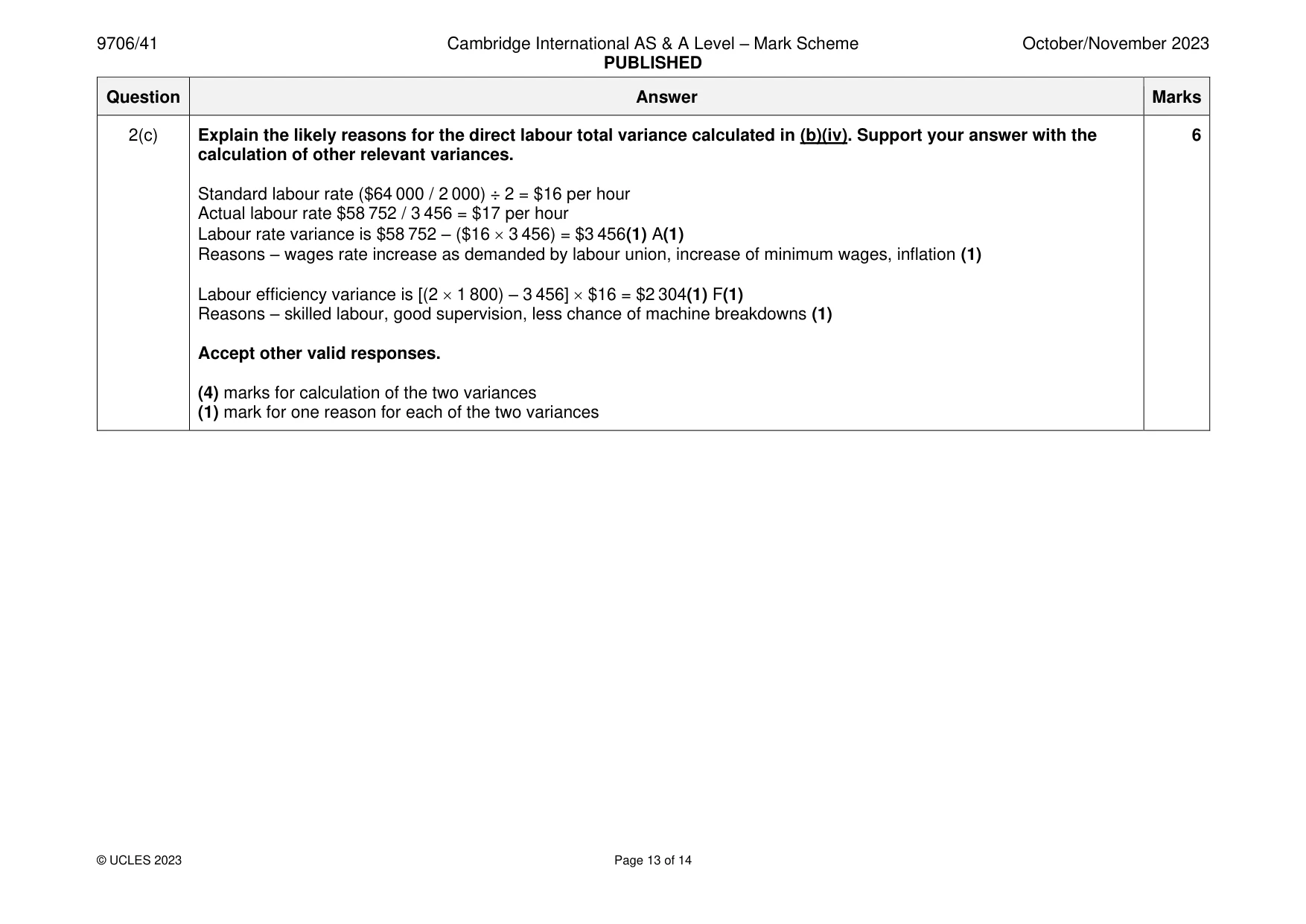
Mark scheme: Question Answer Marks 1(a) State two purposes of preparing a cash budget. 2 To identify any cash deficit so that funding, i.e. bank loan can be arranged in advance.(1) To identify any cash surplus so that cash can be fully utilized, i.e. investment (1) Max 2 Accept other valid responses. 1(b) Prepare the cash budget for each of the months November, December and January. 12 November December January $ $ $ Cash sales W1 39 000 45 000 37 500 (1) row Two months credit after irrecoverable debt W2 317 520 (1) 370 440 (1) 343 980 (1) 356 520 415 440 381480 Suppliers W3 267 920 271 860 275 800 (6) Operating expenses W4 129 450 129 450 129 450 (1) row 397 370 401 310 405 250 Surplus/deficit for the month (40 850) 14 130 (23 770) Opening cash balance 95 000 54 150 68 280 Closing cash balance 54 150 68 280 44 510 (1)OF row 1(b) W1 $390 000 10% = $39 000; $450 000 10% = $45 000; $375 000 10% = $37 500 W2 $360 000 90% 98% = $317 520 $420 000 90% 98% = $370 440 $390 000 90% 98% = $343 980 W3 Oct Nov Dec Jan $ $ $ $ Sales 420 000 390 000 450 000 375 000 Cost of sales (2/3 of sales) 280 000 260 000 300 000 250 000 (1) row Closing inventory (40% of next month's cost of 104 000 120 000 100 000 sales) Opening inventory (112 000) (104 000) (120 000) (1)both Purchases for the month 272 000 276 000 280 000 (1) row Payment to suppliers with 1.5% cash discount 267 920 271 860 275 800 (1) (1) (1) $272 000 98.5% = $267 920 $276 000 98.5% = $271 860 $280 000 98.5% = $275 800 W4 Monthly depreciation [$124 000 15%] ÷ 12 = $1 550 $131 000 –$1 550 = $129 450 1(c) Prepare the budgeted statement of profit or loss for the three-month budgeted period. Start your answer with the 4 gross profit. $ Gross profit W1 405 000 (1) Discount received W2 12 420 (1) 417 420 Operating expenses 393 000 Irrecoverable debt W3 21 060 (1) 414 060 Budgeted profit 3 360 (1)OF W1 Sales for three months ($390 000 + $450 000 + $375 000) = $1 215 000 1 Gross profit $1 215 000 = $405 000 3 W2 ($272 000 + $276 000 + $280 000) 1.5% = $12 420 W3 ($360 000 + $420 000 + $390 000) 90% 2% = $21 060 1(d) Advise the directors which option, if either, they should choose. Justify your answer. 7 Option 1 (Max 3) Credit customers may not take the cash discount (1) Will cause cash inflow to be higher in the first month but lower thereafter (1) Cash will be received quicker (1) Irrecoverable debts will be reduced (1) Discount allowed will increase expenses / reduce profit (1) Discount allowed may or may not be compensated by the reduction of irrecoverable debts (1) Option 2 (Max 3) Discount received will be lost (1) Profit will be reduced (1) Cash saving will be reduced (1) A change of payment period from one month to two months may hamper the credibility with the suppliers (1) The cash outflow will be lower in the first month and higher thereafter (1) Cash will be held for a further month (1) Accept other valid responses. (1) mark for decision supported by a comment (option 1, option 2 or neither)
Q2 · Read Source B in the insert
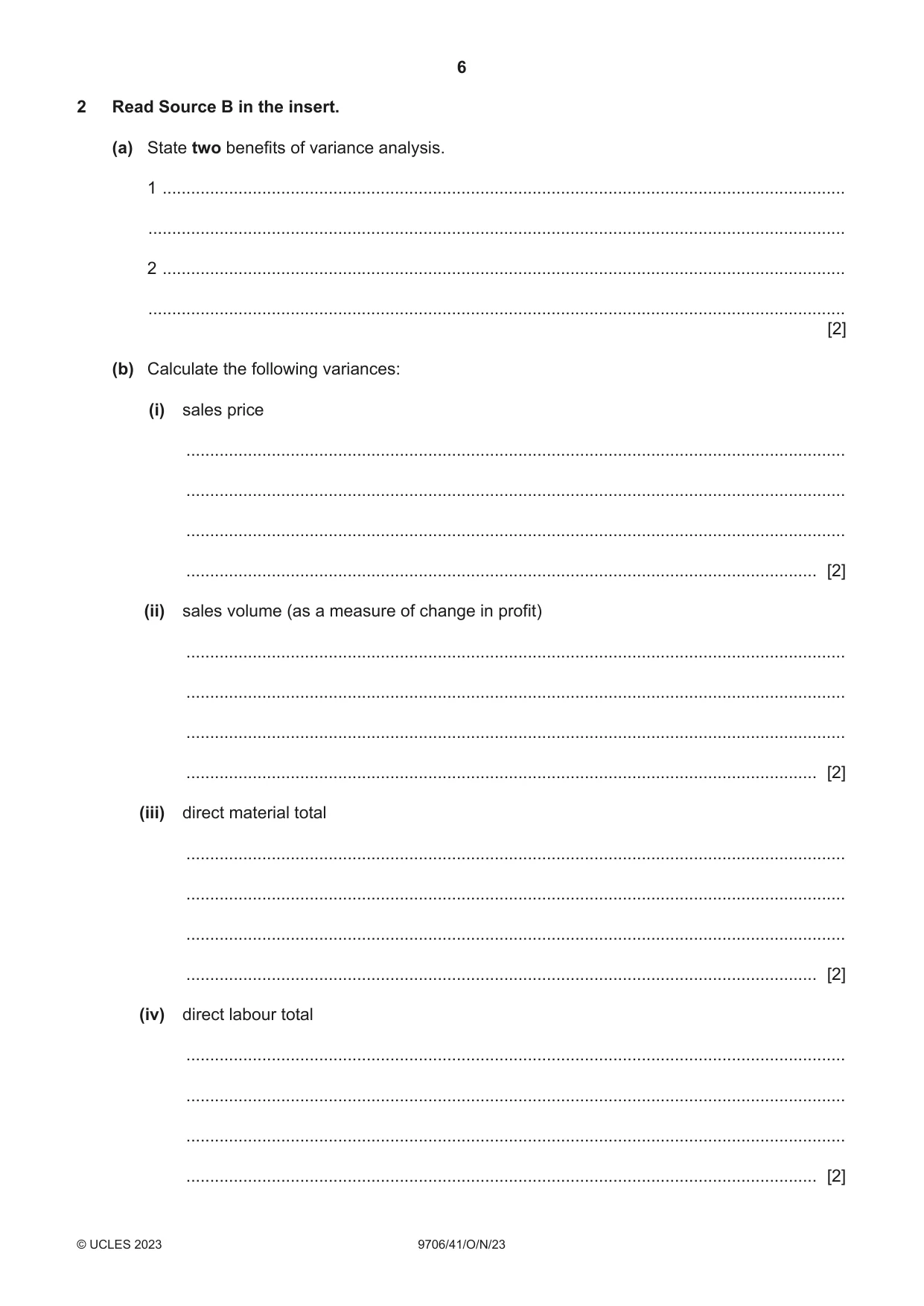
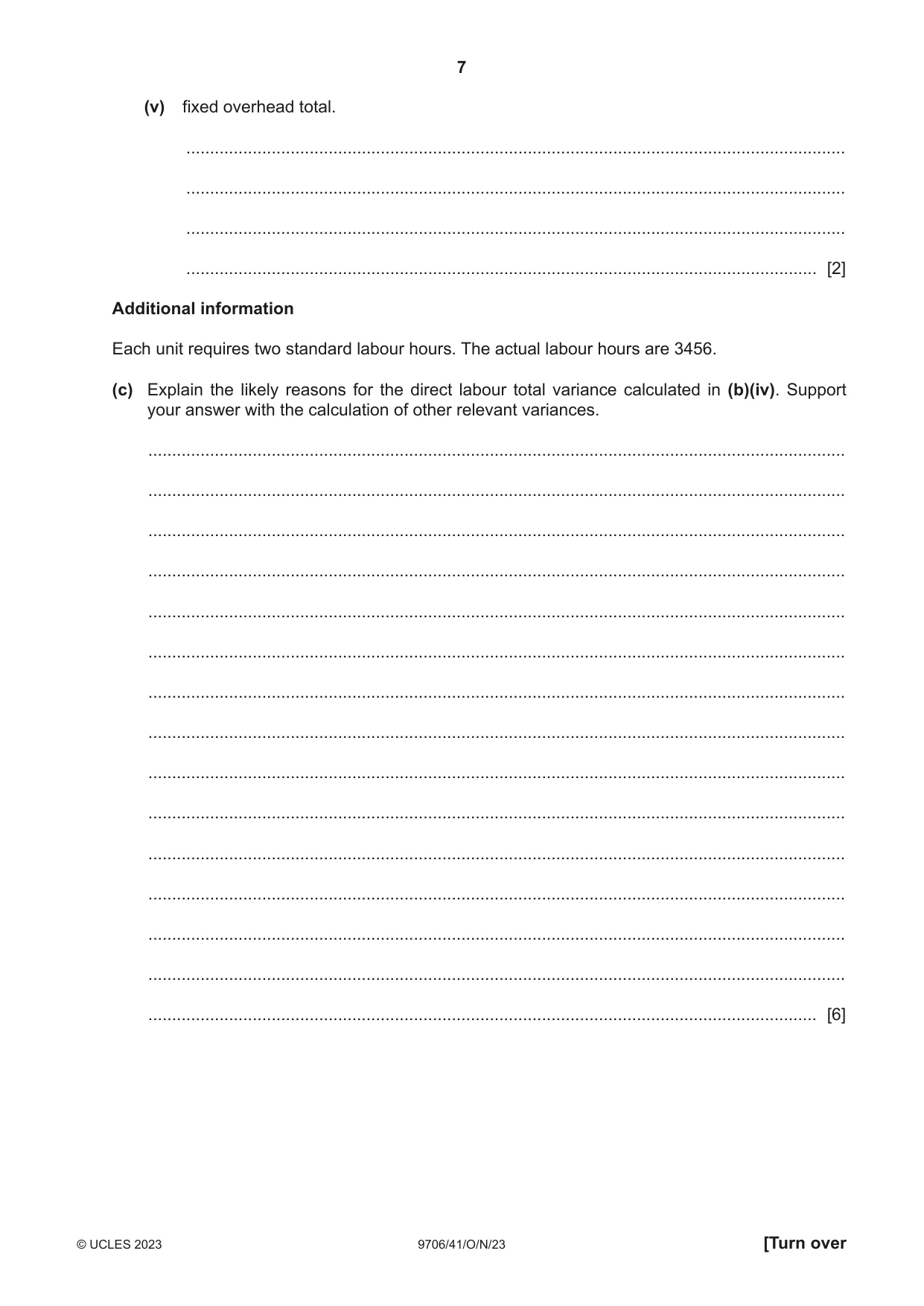
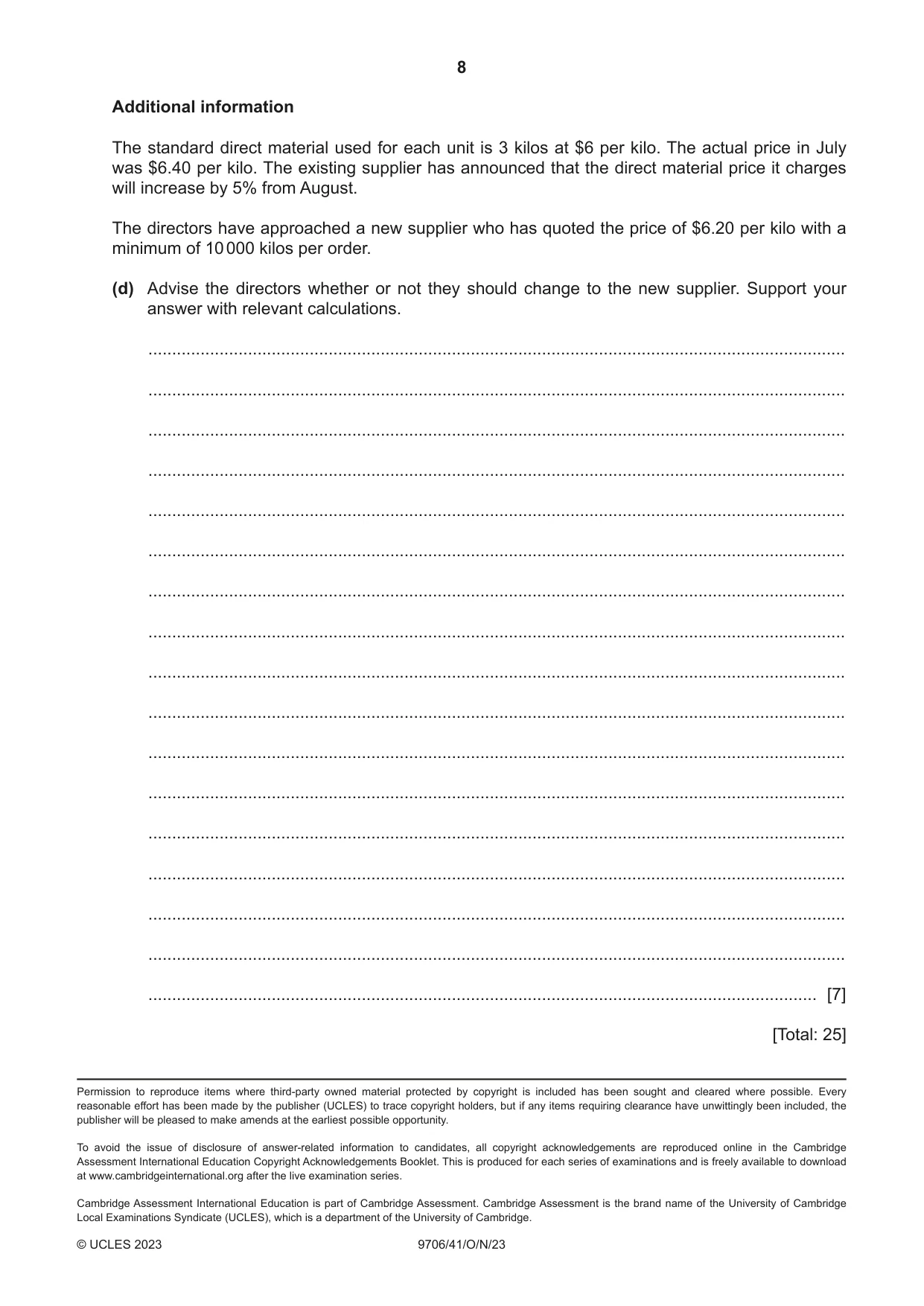
2 Read Source B in the insert. (a) State two benefits of variance analysis. 1 ................................................................................................................................................ ................................................................................................................................................... 2 ................................................................................................................................................ ................................................................................................................................................... [2] (b) Calculate the following variances: (i) sales price ........................................................................................................................................... ........................................................................................................................................... ........................................................................................................................................... ..................................................................................................................................... [2] (ii) sales volume (as a measure of change in profit) ........................................................................................................................................... ........................................................................................................................................... ........................................................................................................................................... ..................................................................................................................................... [2] (iii) direct material total ........................................................................................................................................... ........................................................................................................................................... ........................................................................................................................................... ..................................................................................................................................... [2] (iv) direct labour total ........................................................................................................................................... ........................................................................................................................................... ........................................................................................................................................... ..................................................................................................................................... [2] (v) fixed overhead total. ........................................................................................................................................... ........................................................................................................................................... ........................................................................................................................................... ..................................................................................................................................... [2] Additional information Each unit requires two standard labour hours. The actual labour hours are 3456. (c) Explain the likely reasons for the direct labour total variance calculated in (b)(iv). Support your answer with the calculation of other relevant variances. ................................................................................................................................................... ................................................................................................................................................... ................................................................................................................................................... ................................................................................................................................................... ................................................................................................................................................... ................................................................................................................................................... ................................................................................................................................................... ................................................................................................................................................... ................................................................................................................................................... ................................................................................................................................................... ................................................................................................................................................... ................................................................................................................................................... ................................................................................................................................................... ................................................................................................................................................... ............................................................................................................................................. [6] Additional information The standard direct material used for each unit is 3 kilos at $6 per kilo. The actual price in July was $6.40 per kilo. The existing supplier has announced that the direct material price it charges will increase by 5% from August. The directors have approached a new supplier who has quoted the price of $6.20 per kilo with a minimum of 10 000 kilos per order. (d) Advise the directors whether or not they should change to the new supplier. Support your answer with relevant calculations. ................................................................................................................................................... ................................................................................................................................................... ................................................................................................................................................... ................................................................................................................................................... ................................................................................................................................................... ................................................................................................................................................... ................................................................................................................................................... ................................................................................................................................................... ................................................................................................................................................... ................................................................................................................................................... ................................................................................................................................................... ................................................................................................................................................... ................................................................................................................................................... ................................................................................................................................................... ................................................................................................................................................... ................................................................................................................................................... ............................................................................................................................................. [7] [Total: 25]
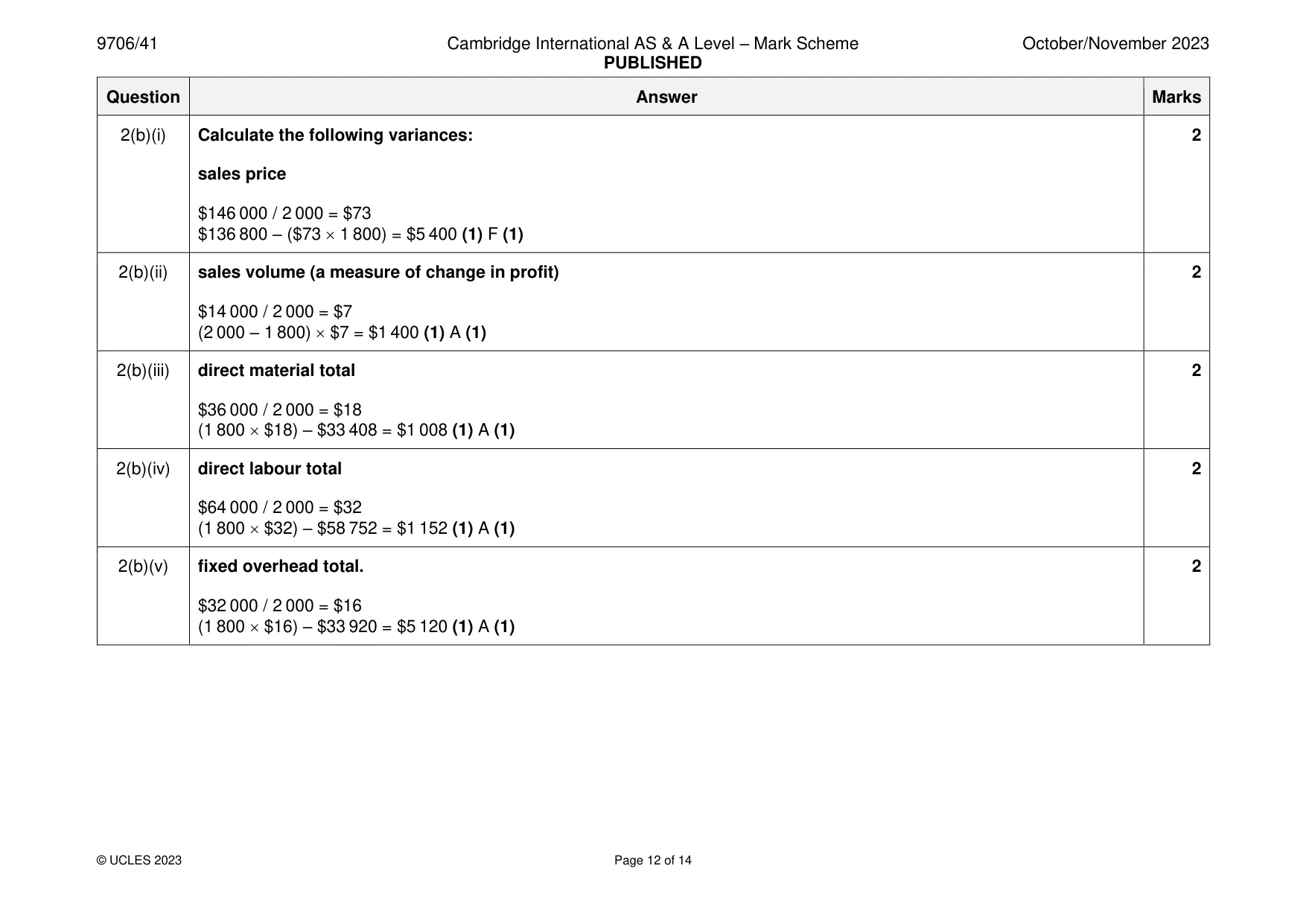
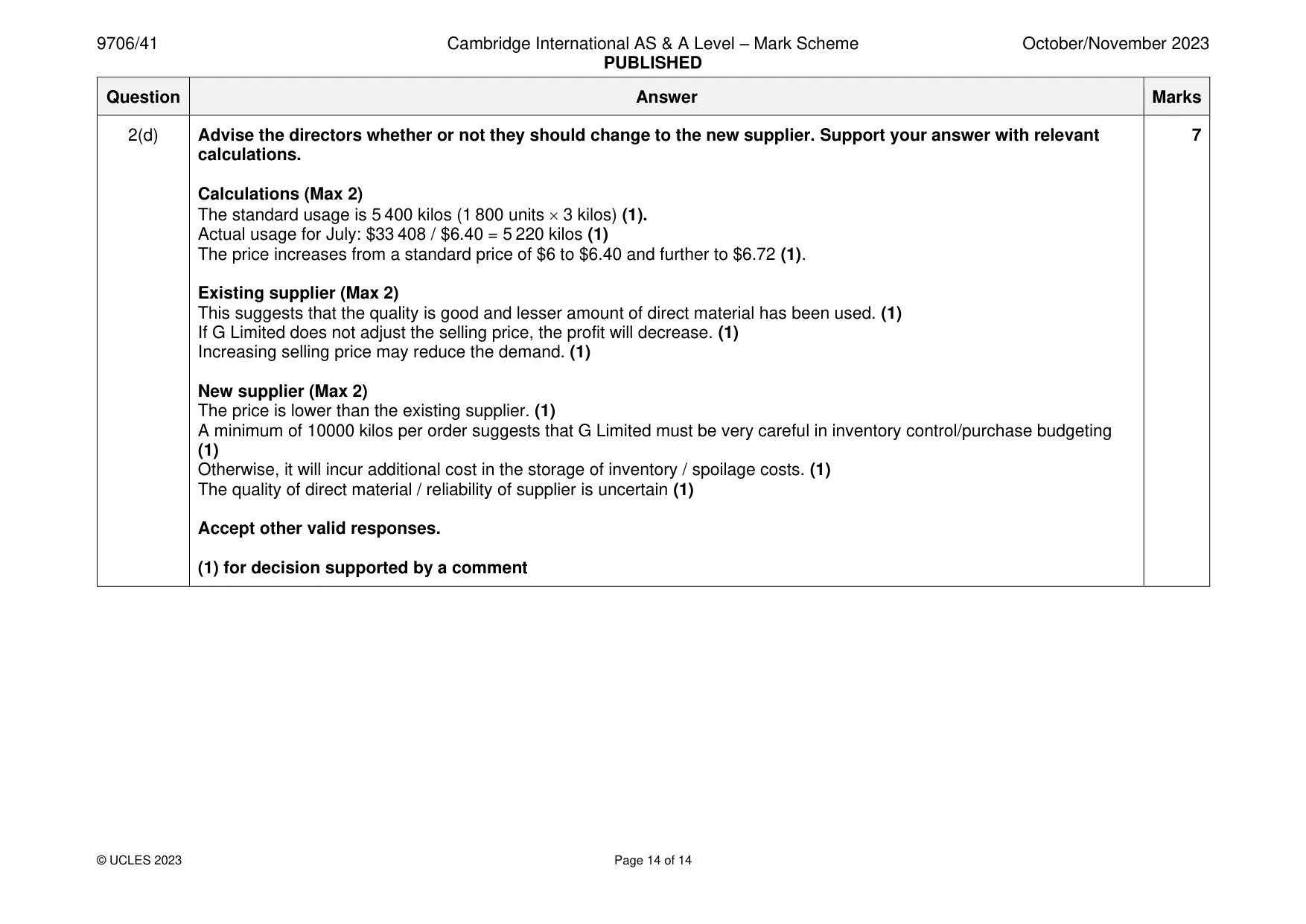
Mark scheme: 2(a) State two benefits of variance analysis. 2 Planning / control – to achieve the predetermined target (1) Identify areas of strength and weakness (1) Assist in making forward-looking decision (1) Max 2 Accept other valid responses. 2(b)(i) Calculate the following variances: 2 sales price $146 000 / 2 000 = $73 $136 800 – ($73 1 800) = $5 400 (1) F (1) 2(b)(ii) sales volume (a measure of change in profit) 2 $14 000 / 2 000 = $7 (2 000 – 1 800) $7 = $1 400 (1) A (1) 2(b)(iii) direct material total 2 $36 000 / 2 000 = $18 (1 800 $18) – $33 408 = $1 008 (1) A (1) 2(b)(iv) direct labour total 2 $64 000 / 2 000 = $32 (1 800 $32) – $58 752 = $1 152 (1) A (1) 2(b)(v) fixed overhead total. 2 $32 000 / 2 000 = $16 (1 800 $16) – $33 920 = $5 120 (1) A (1) 2(c) Explain the likely reasons for the direct labour total variance calculated in (b)(iv). Support your answer with the 6 calculation of other relevant variances. Standard labour rate ($64 000 / 2 000) ÷ 2 = $16 per hour Actual labour rate $58 752 / 3 456 = $17 per hour Labour rate variance is $58 752 – ($16 3 456) = $3 456(1) A(1) Reasons – wages rate increase as demanded by labour union, increase of minimum wages, inflation (1) Labour efficiency variance is [(2 1 800) – 3 456] $16 = $2 304(1) F(1) Reasons – skilled labour, good supervision, less chance of machine breakdowns (1) Accept other valid responses. (4) marks for calculation of the two variances (1) mark for one reason for each of the two variances 2(d) Advise the directors whether or not they should change to the new supplier. Support your answer with relevant 7 calculations. Calculations (Max 2) The standard usage is 5 400 kilos (1 800 units 3 kilos) (1). Actual usage for July: $33 408 / $6.40 = 5 220 kilos (1) The price increases from a standard price of $6 to $6.40 and further to $6.72 (1). Existing supplier (Max 2) This suggests that the quality is good and lesser amount of direct material has been used. (1) If G Limited does not adjust the selling price, the profit will decrease. (1) Increasing selling price may reduce the demand. (1) New supplier (Max 2) The price is lower than the existing supplier. (1) A minimum of 10000 kilos per order suggests that G Limited must be very careful in inventory control/purchase budgeting (1) Otherwise, it will incur additional cost in the storage of inventory / spoilage costs. (1) The quality of direct material / reliability of supplier is uncertain (1) Accept other valid responses. (1) for decision supported by a comment
What was in this paper
The subtopics covered by these 2 questions, and how many questions each got. Open one in a new tab to see every Cambridge question on it.
What you needed in this session
Cambridge’s own grade thresholds for 2023 Oct/Nov, Paper 4 · Variant 1. A higher threshold means an easier paper — the bar moves with how the cohort did.