Cambridge A Level Accounting 9706 — 2018 Oct/Nov Paper 2 · Variant 3
9706/23/O/N/18 · 4 questions · 90 marks · ≈101 min
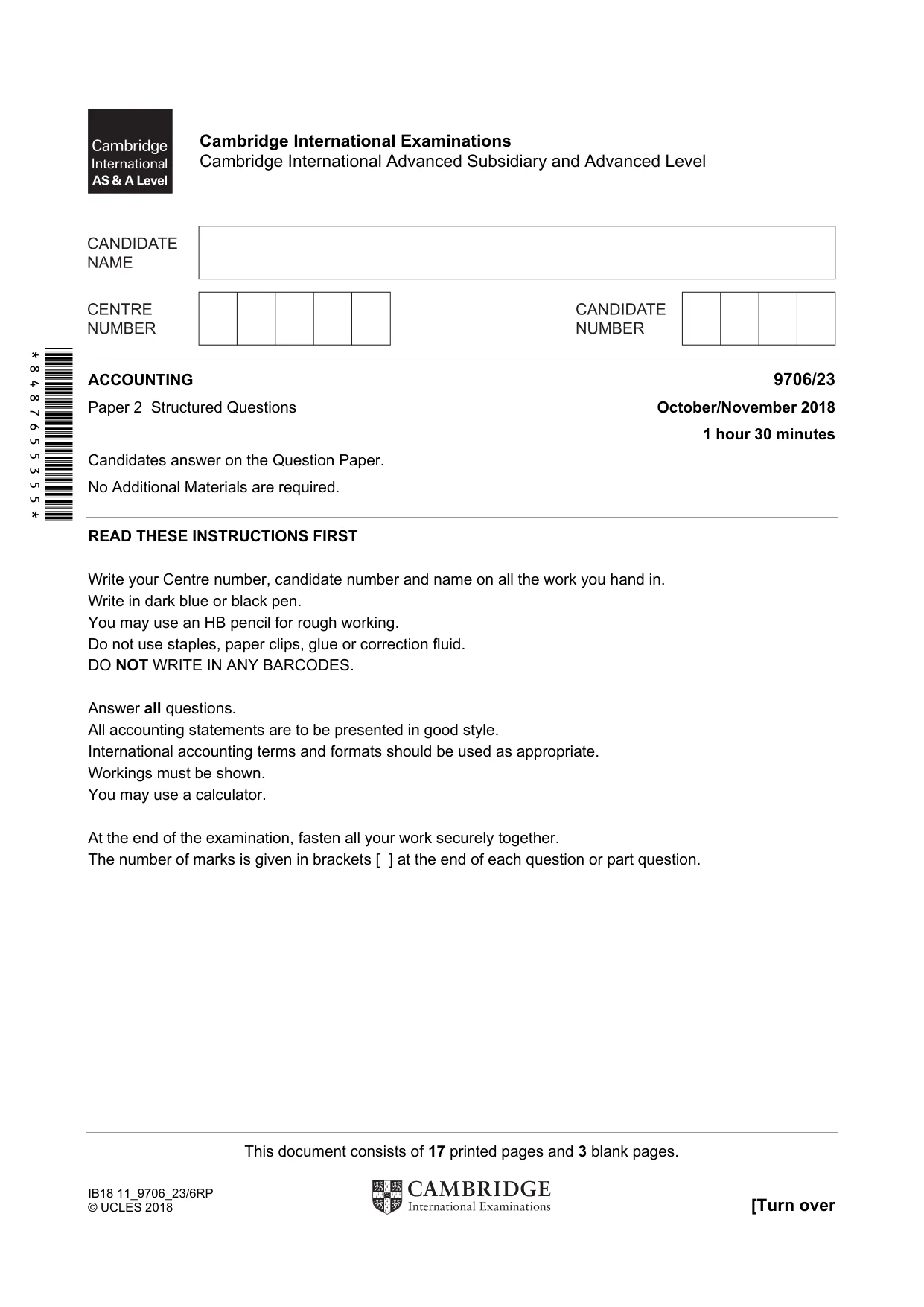
The question paper and its mark scheme, free to read here and free to download. This is Cambridge’s own paper, exactly as it was sat.
Question paper20 pages

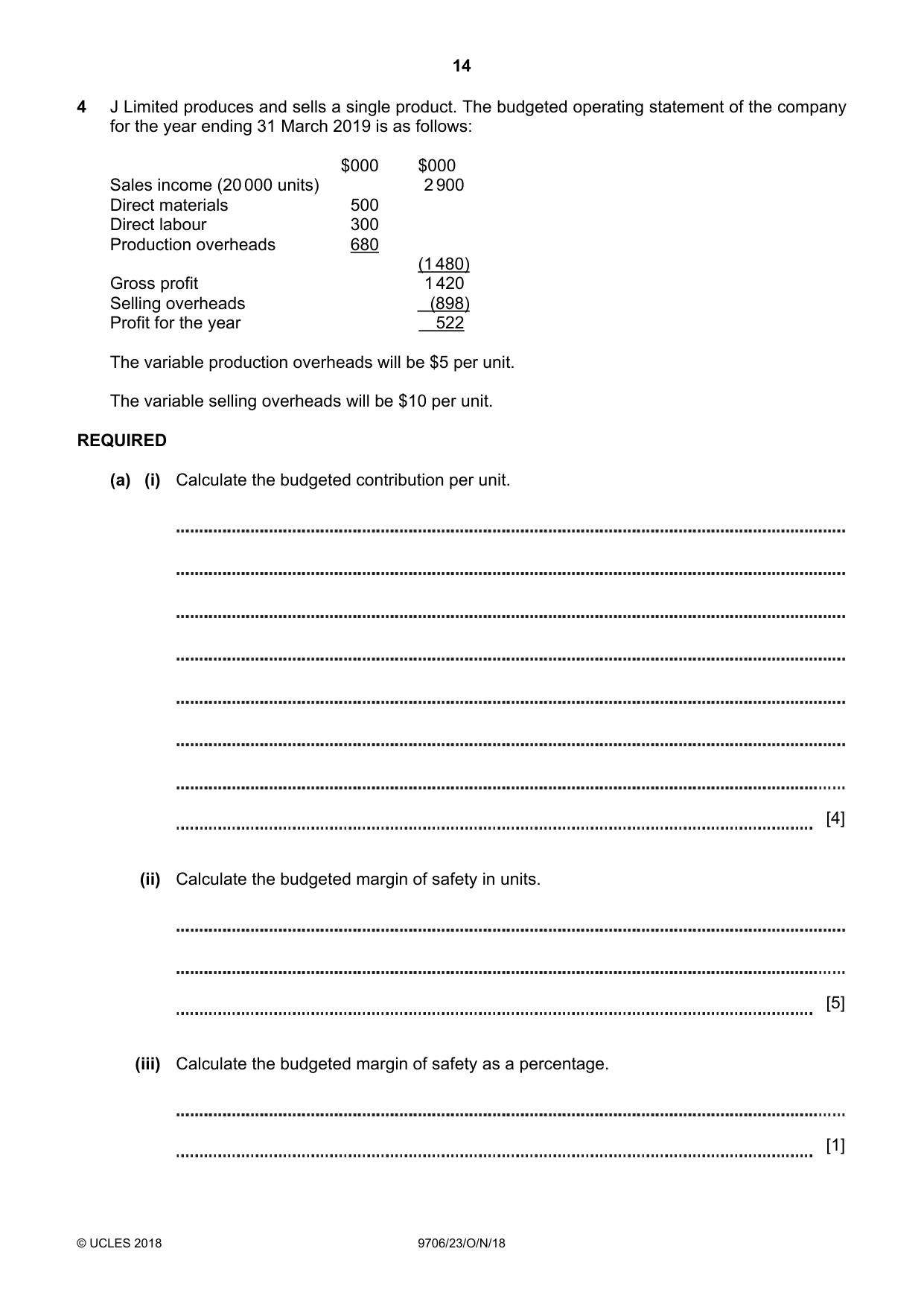
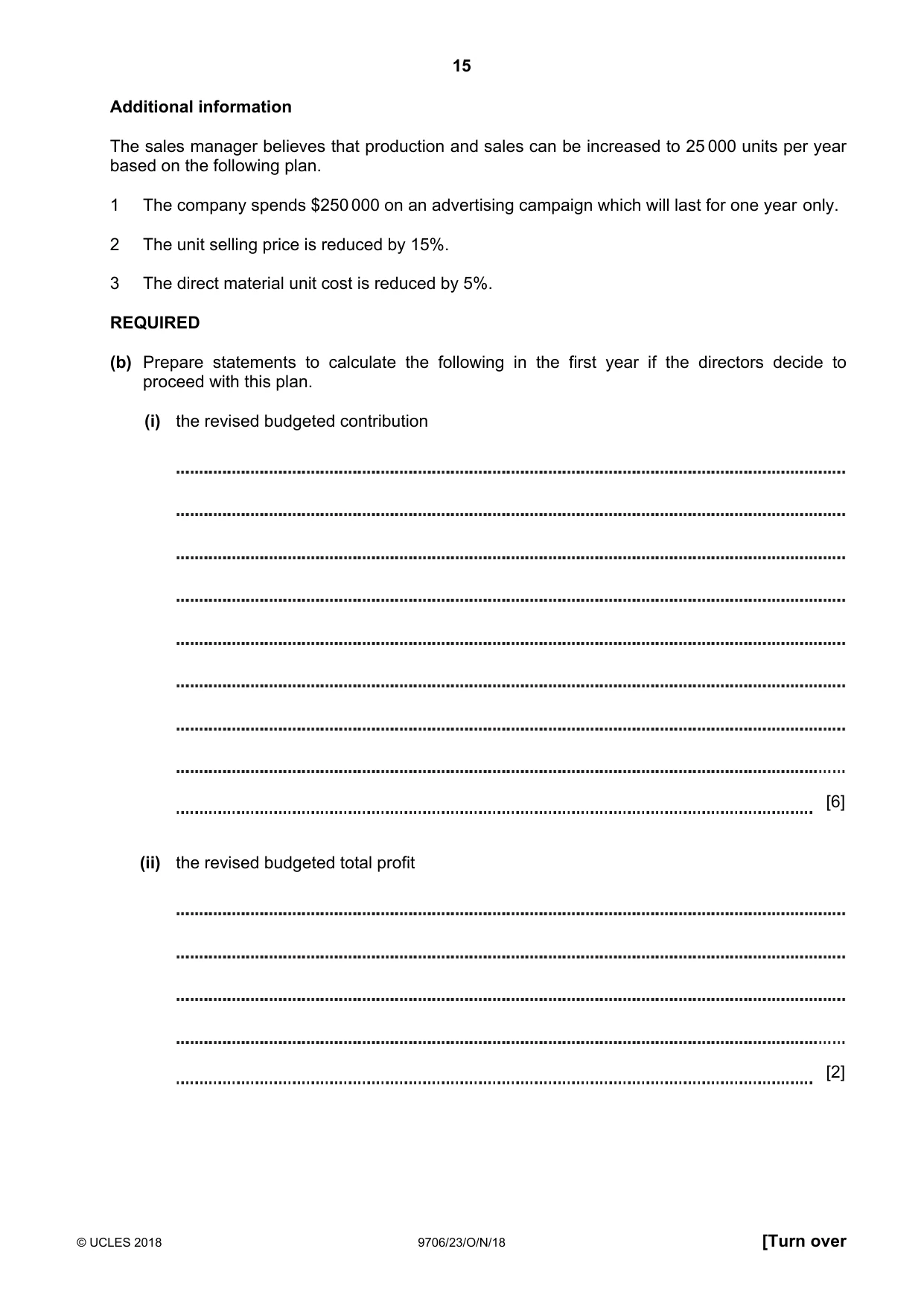
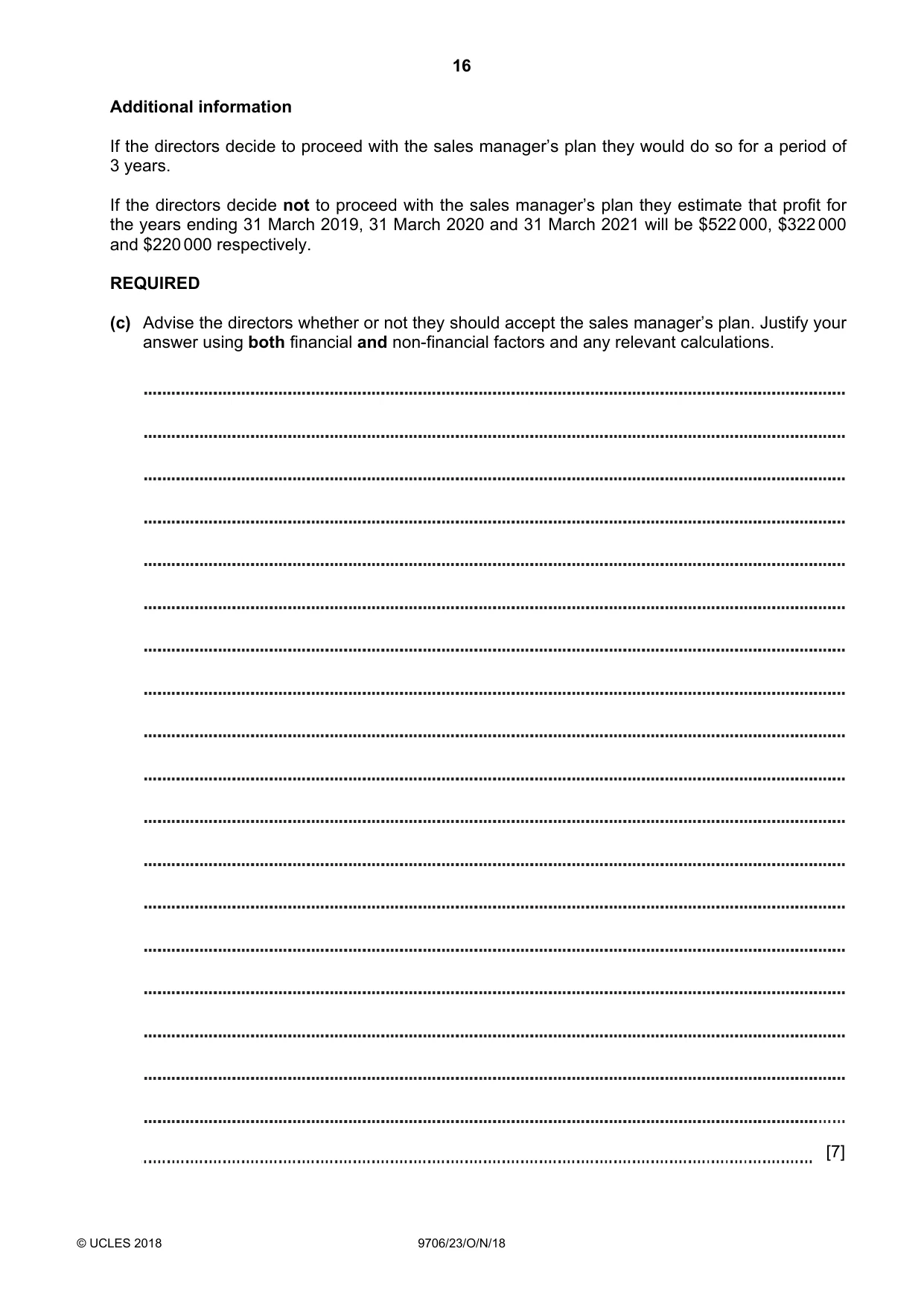
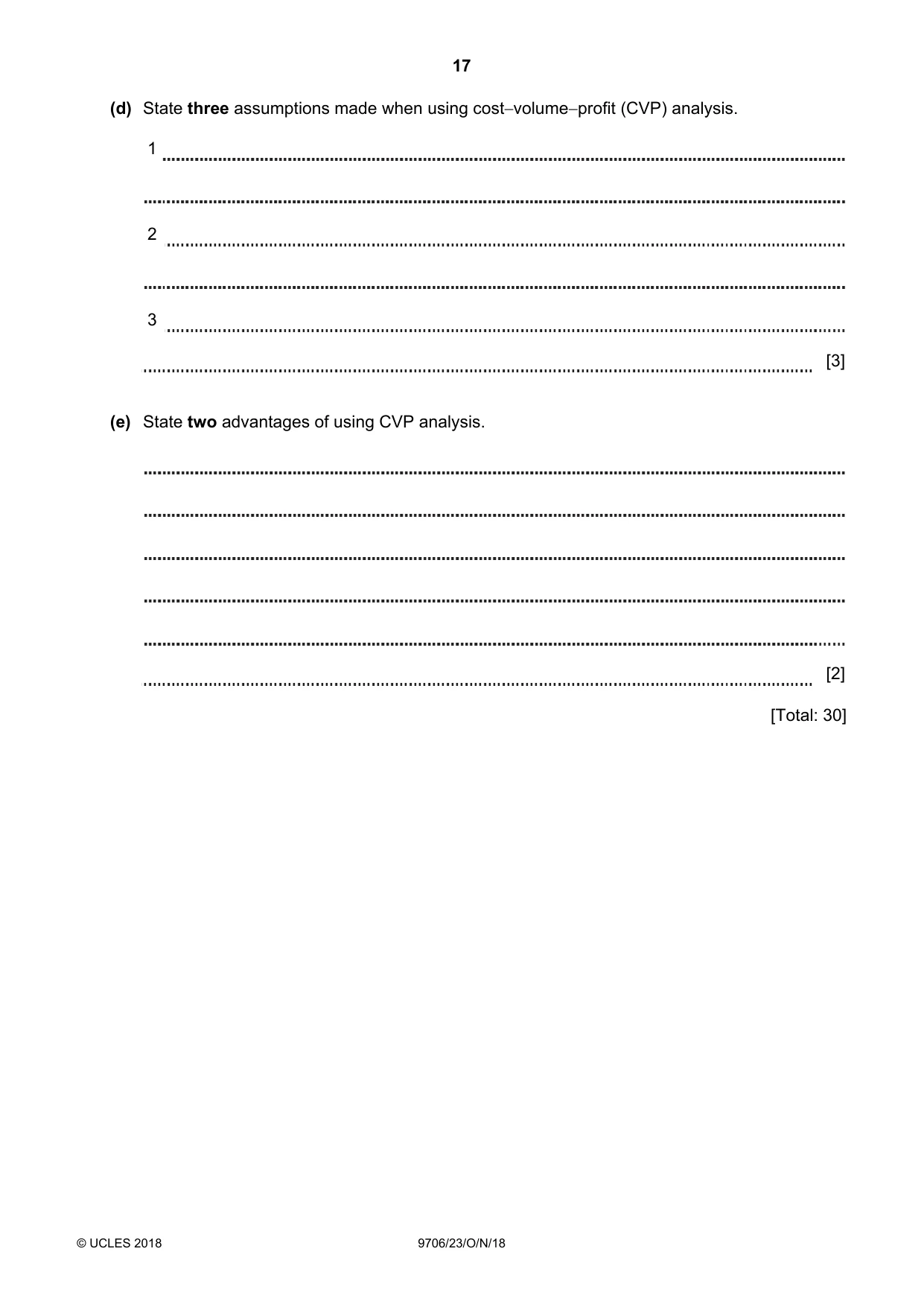


Mark scheme9 pages
Answers below. Sit the paper first if you are practising.
Questions as text
Q1 · From time to time M Limited issues shares
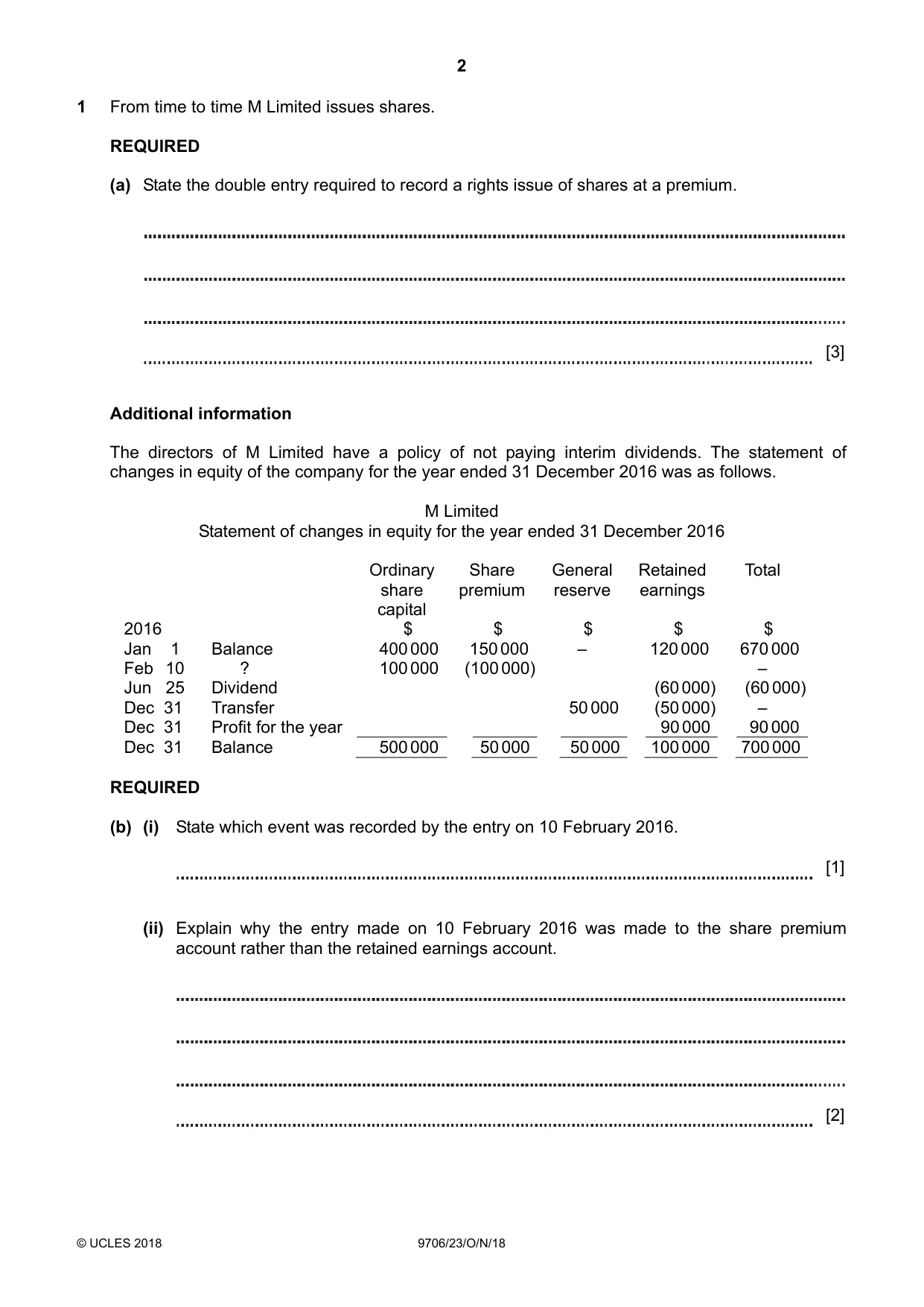
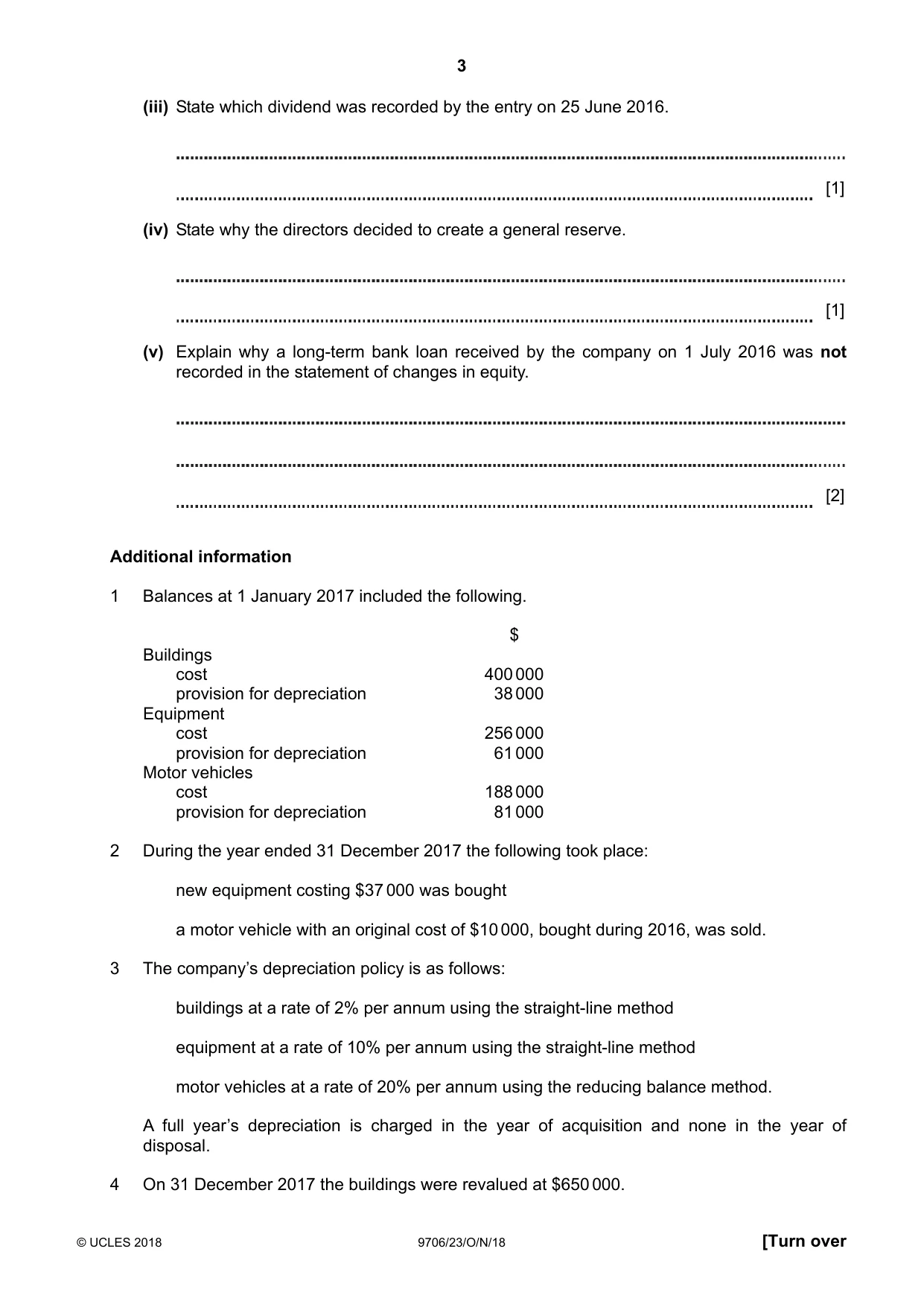
1 From time to time M Limited issues shares. REQUIRED (a) State the double entry required to record a rights issue of shares at a premium. [3] Additional information The directors of M Limited have a policy of not paying interim dividends. The statement of changes in equity of the company for the year ended 31 December 2016 was as follows. M Limited Statement of changes in equity for the year ended 31 December 2016 Ordinary Share General Retained Total share premium reserve earnings capital 2016 $ $ $ $ $ Jan 1 Balance 400 000 150 000 – 120 000 670 000 Feb 10 ? 100 000 (100 000) – Jun 25 Dividend (60 000) (60 000) Dec 31 Transfer 50 000 (50 000) – Dec 31 Profit for the year 90 000 90 000 Dec 31 Balance 500 000 50 000 50 000 100 000 700 000 REQUIRED (b) (i) State which event was recorded by the entry on 10 February 2016. [1] (ii) Explain why the entry made on 10 February 2016 was made to the share premium account rather than the retained earnings account. [2] (iii) State which dividend was recorded by the entry on 25 June 2016. [1] (iv) State why the directors decided to create a general reserve. [1] (v) Explain why a long-term bank loan received by the company on 1 July 2016 was not recorded in the statement of changes in equity. [2] Additional information 1 Balances at 1 January 2017 included the following. $ Buildings cost 400 000 provision for depreciation 38 000 Equipment cost 256 000 provision for depreciation 61 000 Motor vehicles cost 188 000 provision for depreciation 81 000
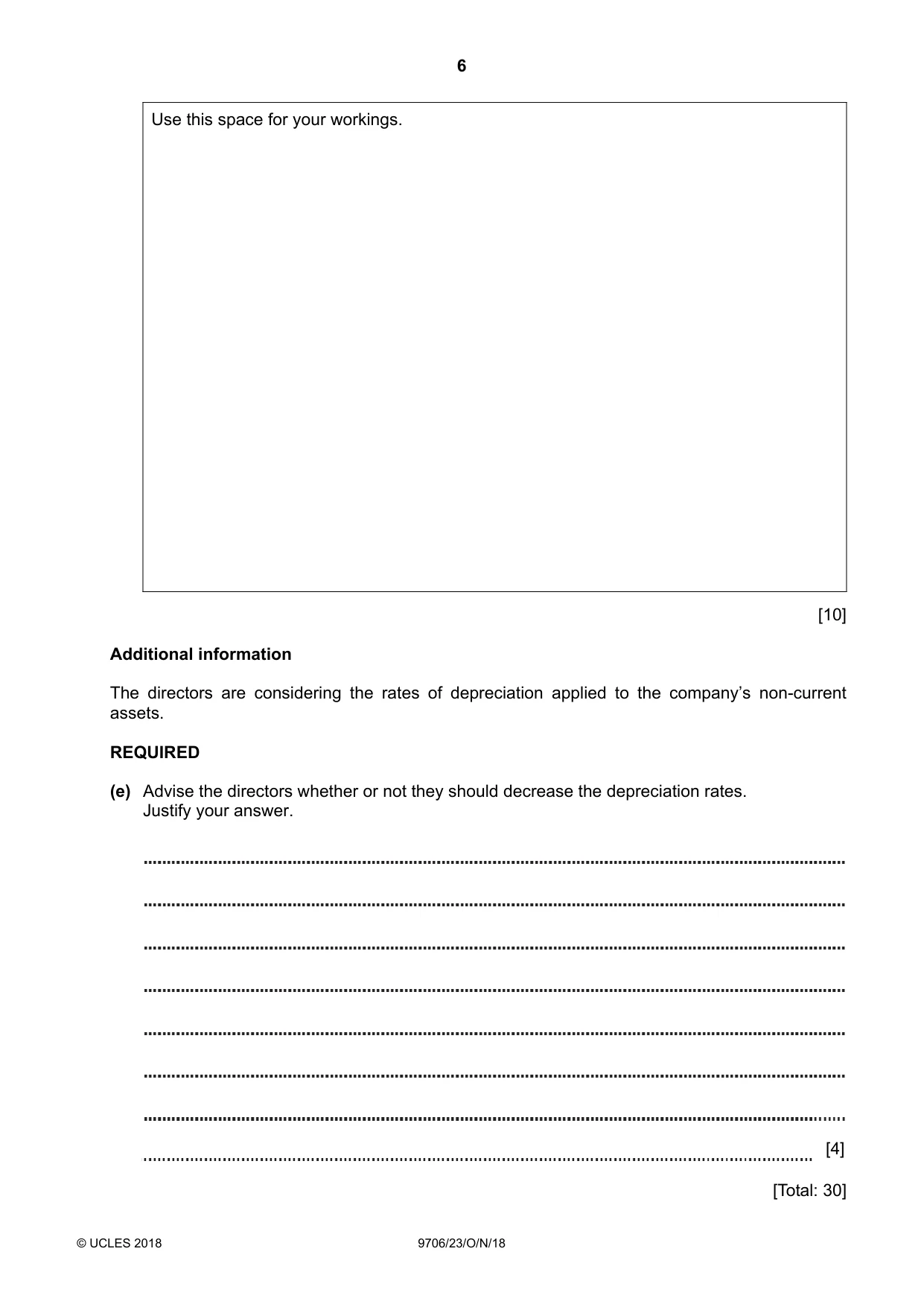
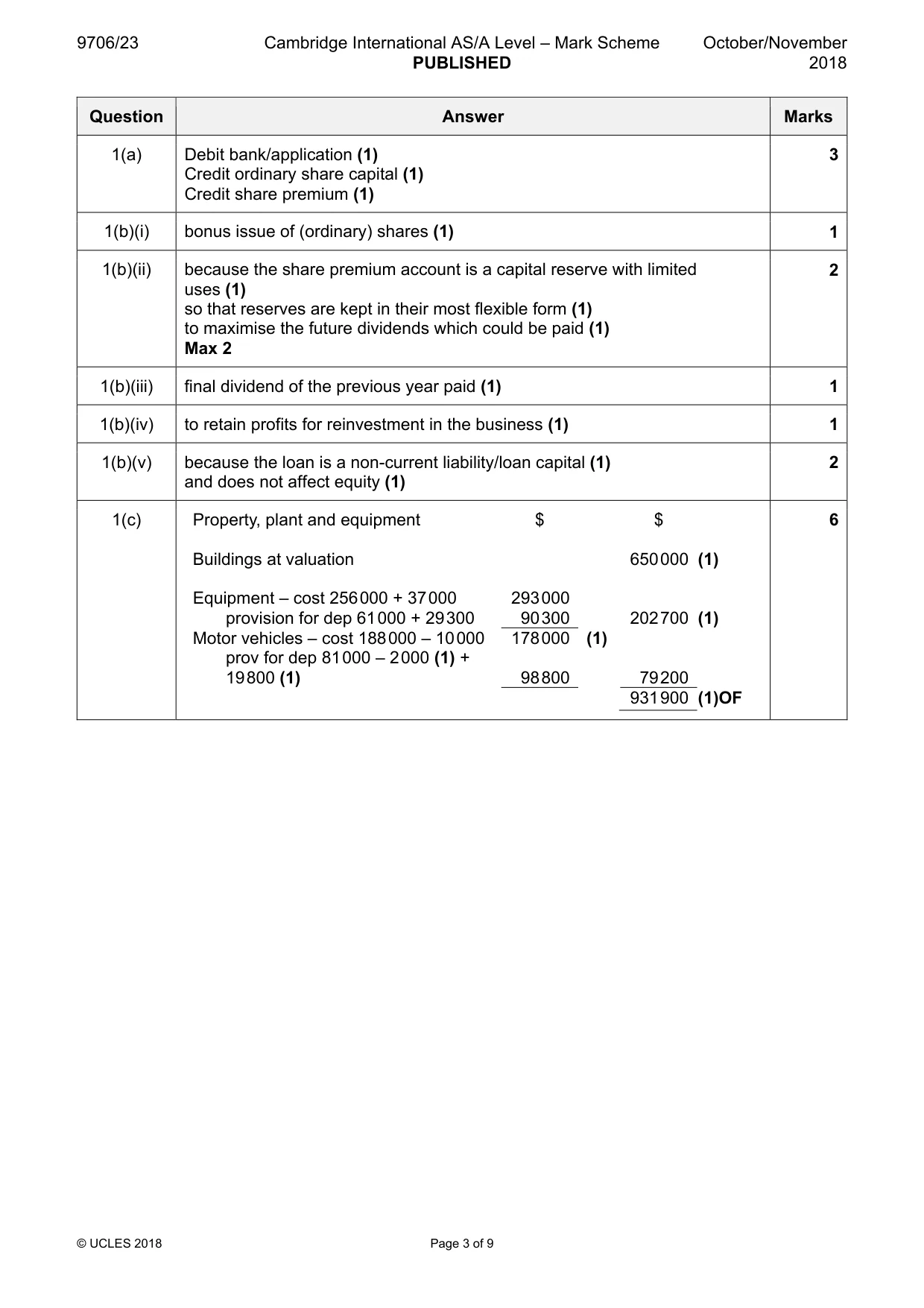
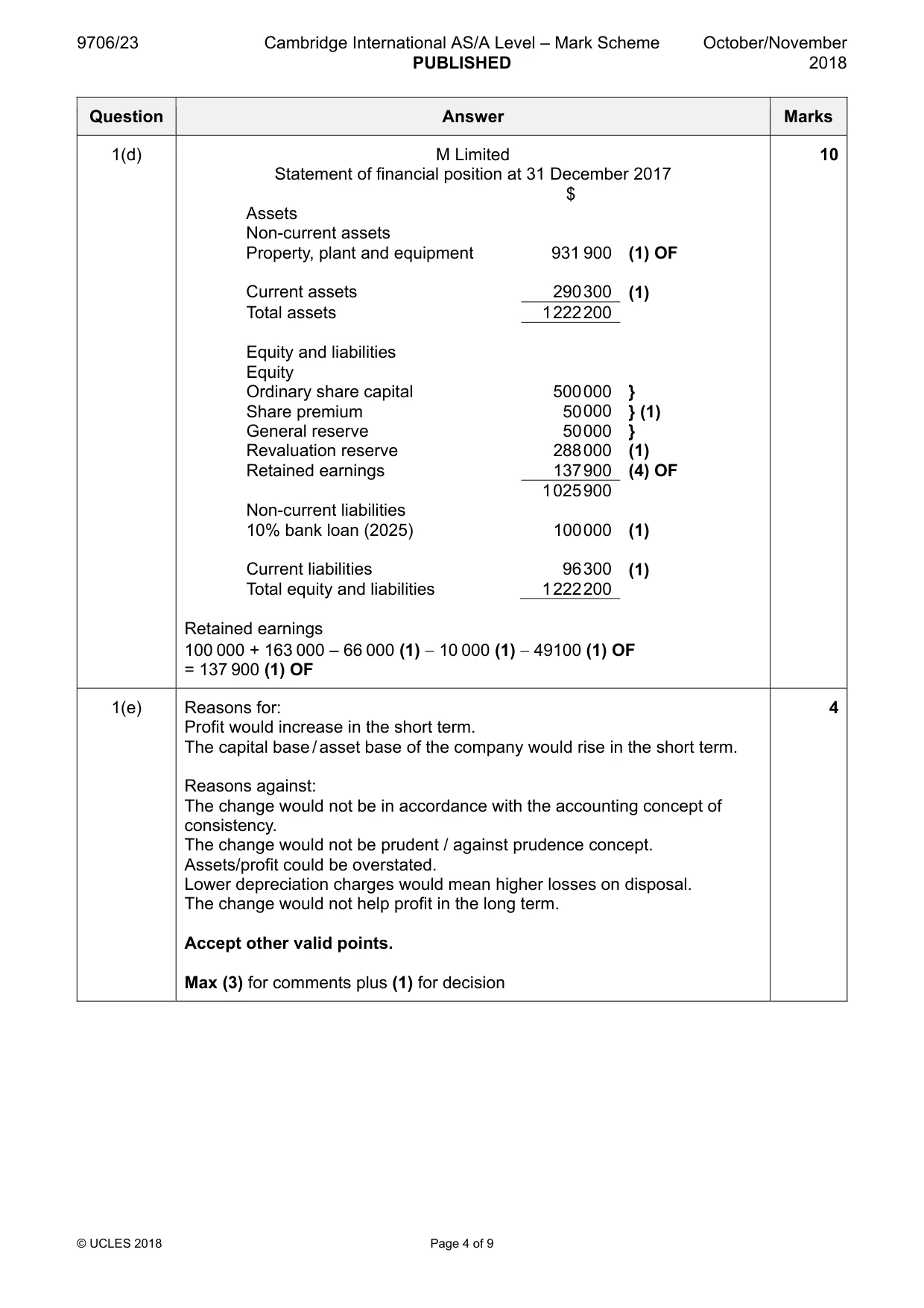
Mark scheme: Question Answer Marks 1(a) Debit bank/application (1) 3 Credit ordinary share capital (1) Credit share premium (1) 1(b)(i) bonus issue of (ordinary) shares (1) 1 1(b)(ii) because the share premium account is a capital reserve with limited 2 uses (1) so that reserves are kept in their most flexible form (1) to maximise the future dividends which could be paid (1) Max 2 1(b)(iii) final dividend of the previous year paid (1) 1 1(b)(iv) to retain profits for reinvestment in the business (1) 1 1(b)(v) because the loan is a non-current liability/loan capital (1) 2 and does not affect equity (1) 1(c) Property, plant and equipment $ $ 6 Buildings at valuation 650 000 (1) Equipment – cost 256 000 + 37 000 293 000 provision for dep 61 000 + 29 300 90 300 202 700 (1) Motor vehicles – cost 188 000 – 10 000 178 000 (1) prov for dep 81 000 – 2 000 (1) + 19 800 (1) 98 800 79 200 931 900 (1)OF 1(d) M Limited 10 Statement of financial position at 31 December 2017 $ Assets Non-current assets Property, plant and equipment 931 900 (1) OF Current assets 290 300 (1) Total assets 1 222 200 Equity and liabilities Equity Ordinary share capital 500 000 } Share premium 50 000 } (1) General reserve 50 000 } Revaluation reserve 288 000 (1) Retained earnings 137 900 (4) OF 1 025 900 Non-current liabilities 10% bank loan (2025) 100 000 (1) Current liabilities 96 300 (1) Total equity and liabilities 1 222 200 Retained earnings 100 000 + 163 000 – 66 000 (1) − 10 000 (1) − 49100 (1) OF = 137 900 (1) OF 1(e) Reasons for: 4 Profit would increase in the short term. The capital base / asset base of the company would rise in the short term. Reasons against: The change would not be in accordance with the accounting concept of consistency. The change would not be prudent / against prudence concept. Assets/profit could be overstated. Lower depreciation charges would mean higher losses on disposal. The change would not help profit in the long term. Accept other valid points. Max (3) for comments plus (1) for decision
Q2 · During the year ended 31 December 2017 the following took place: new equipment costing…
2 During the year ended 31 December 2017 the following took place: new equipment costing $37 000 was bought a motor vehicle with an original cost of $10 000, bought during 2016, was sold.
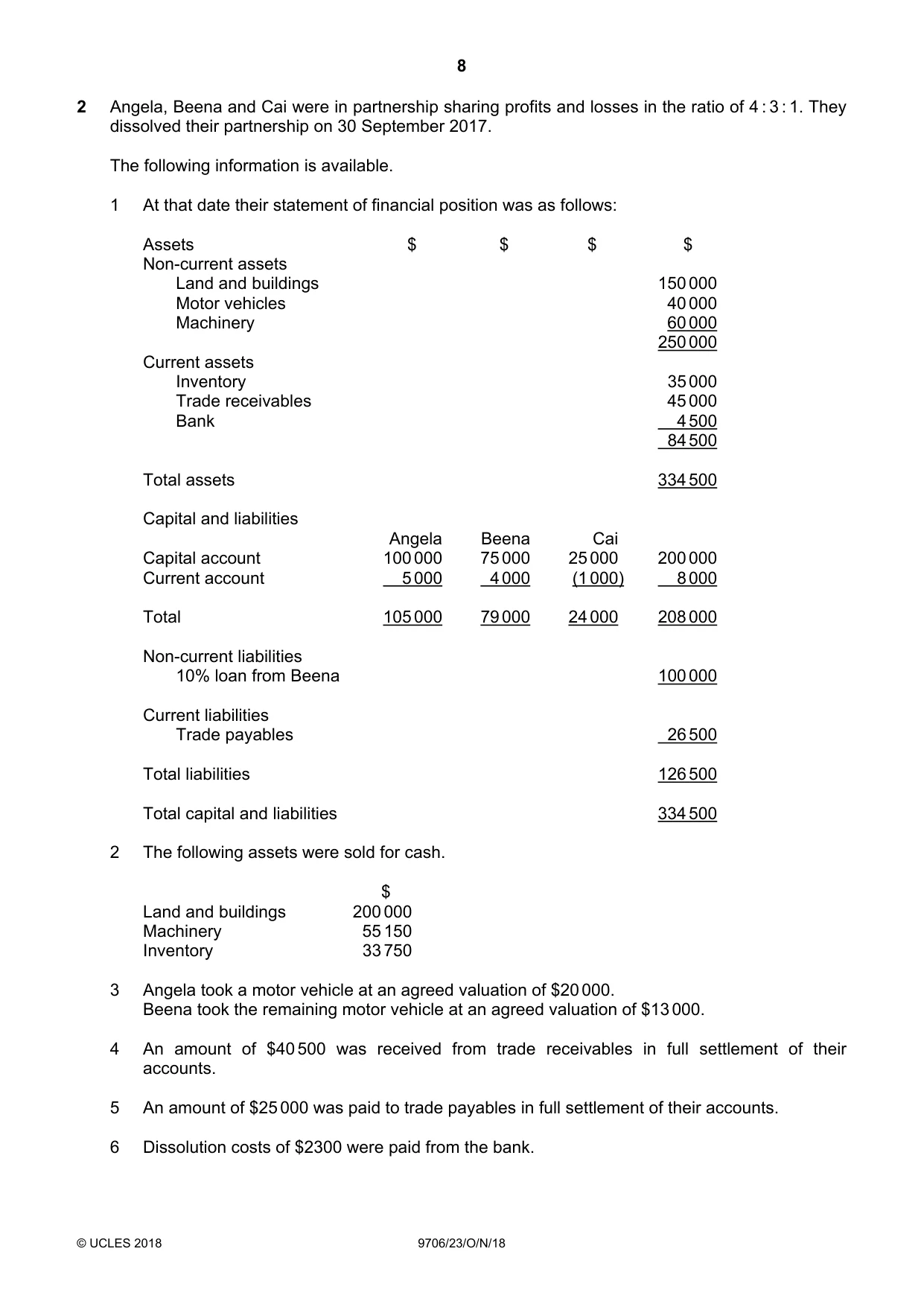
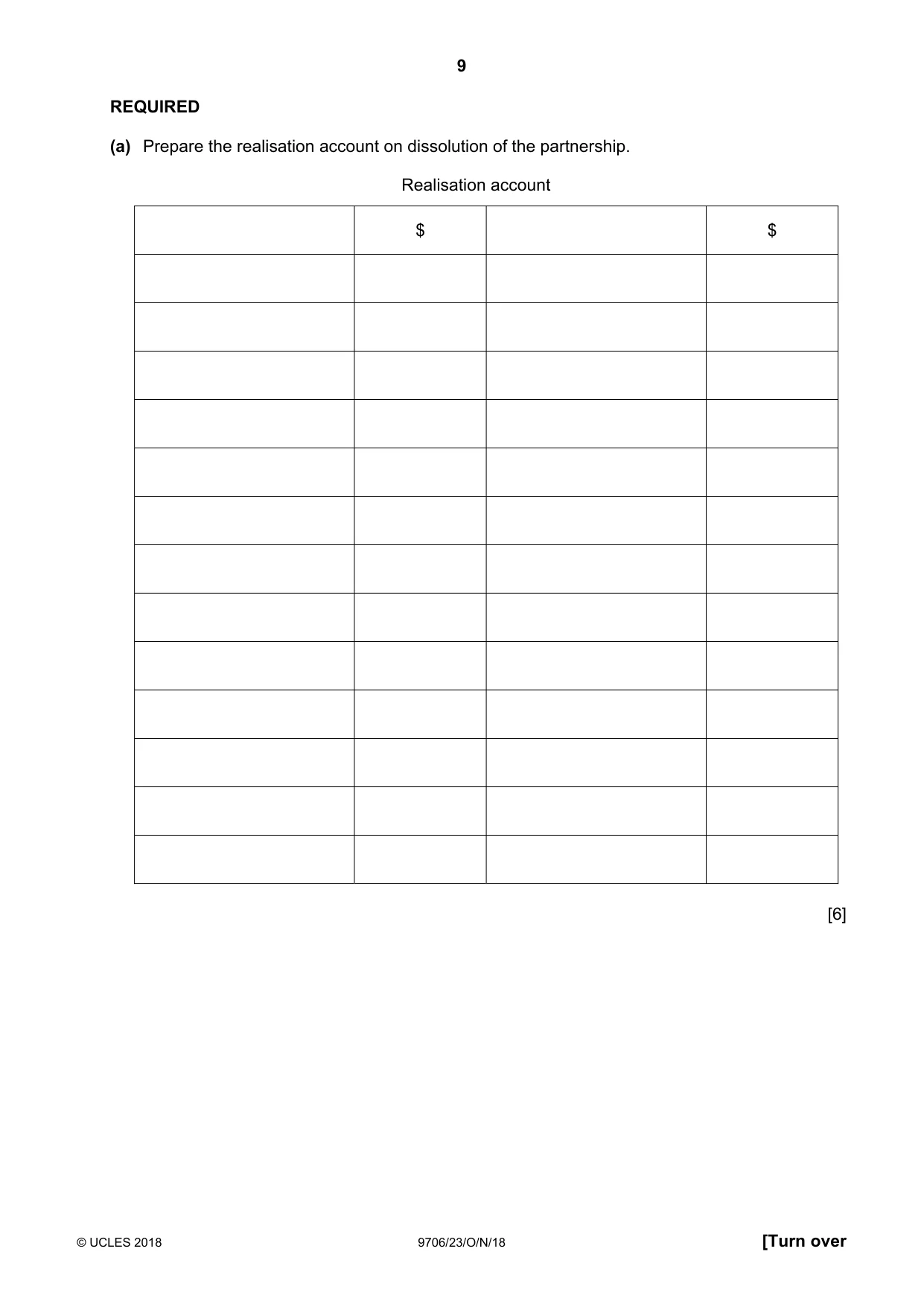
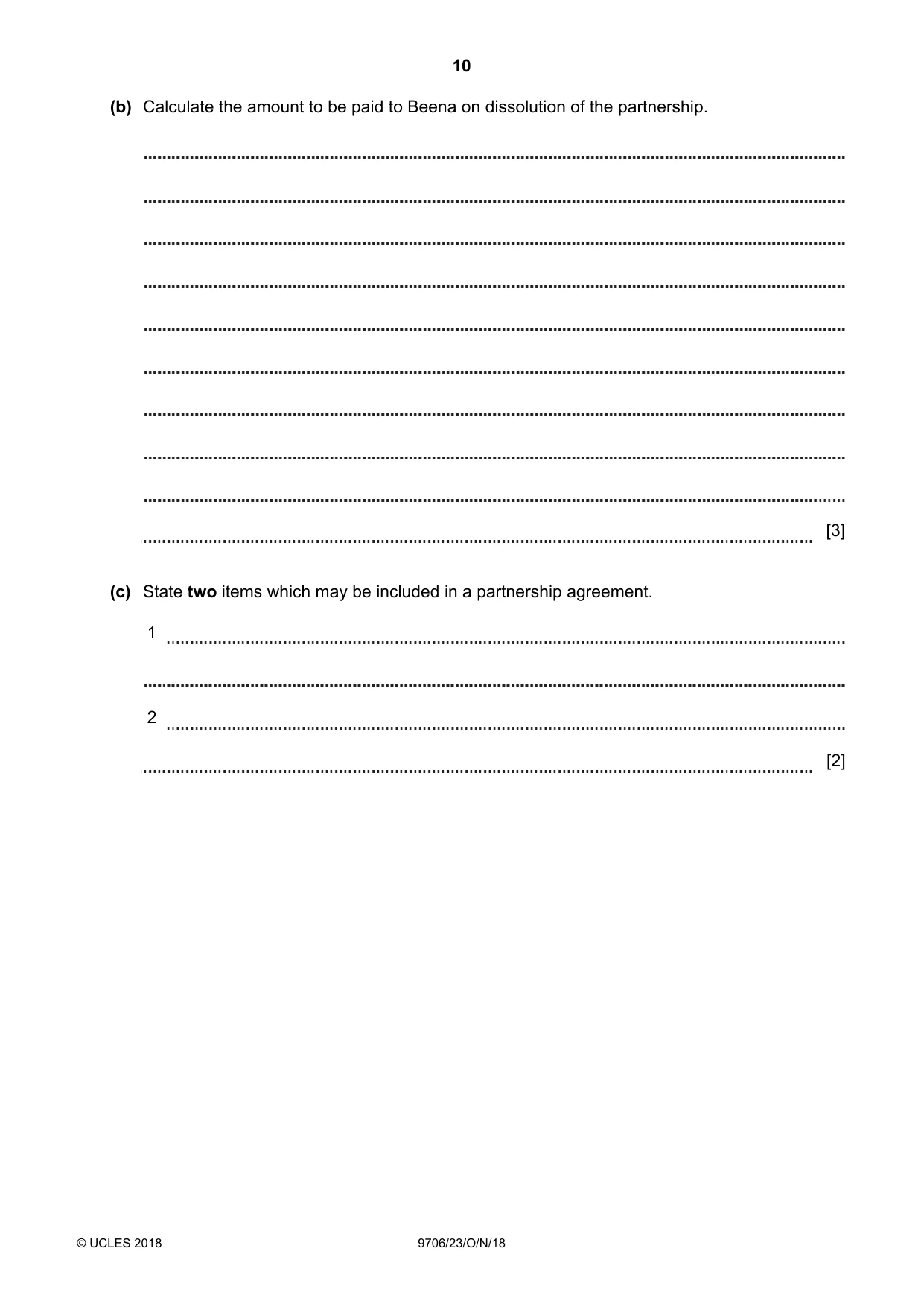
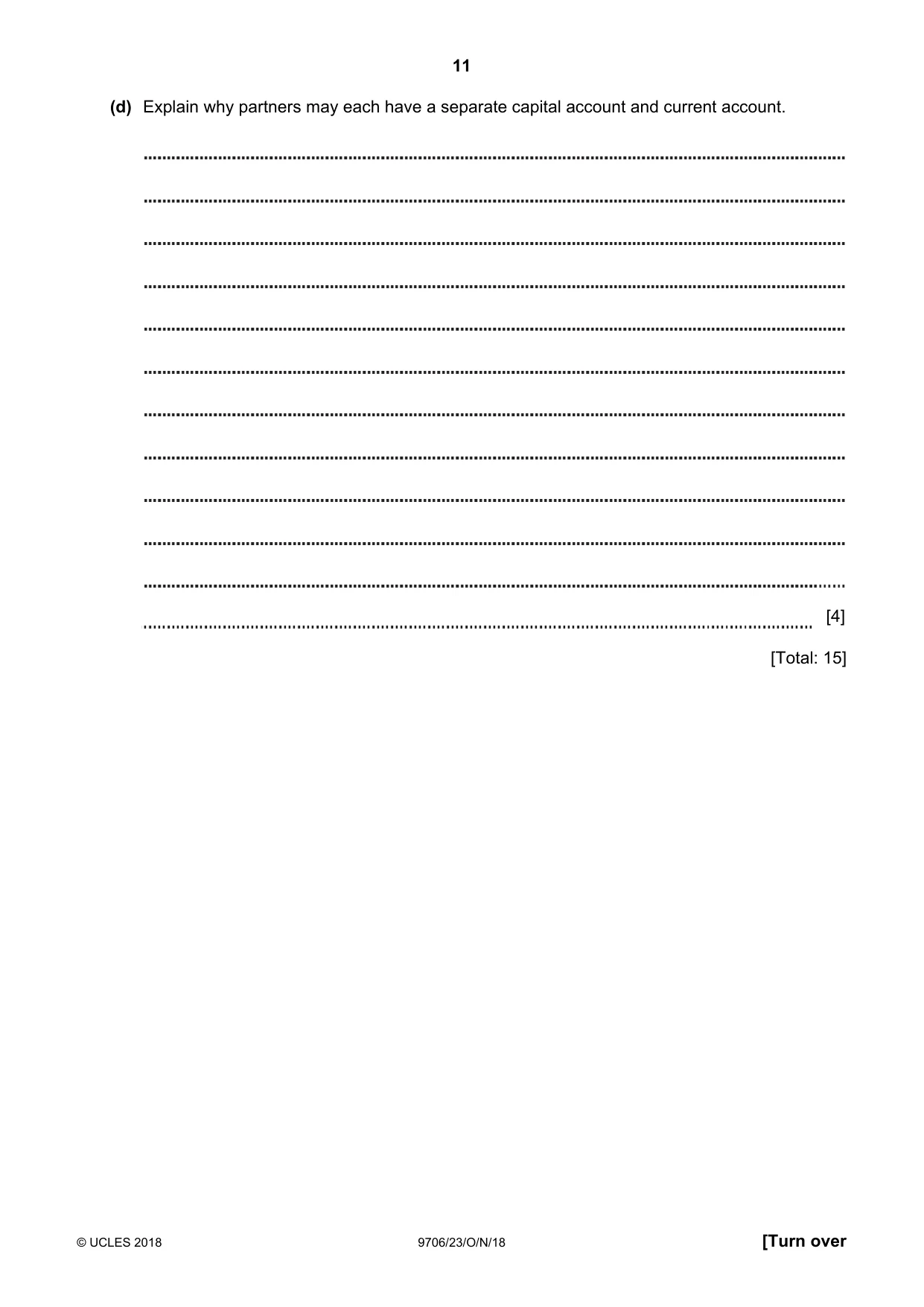
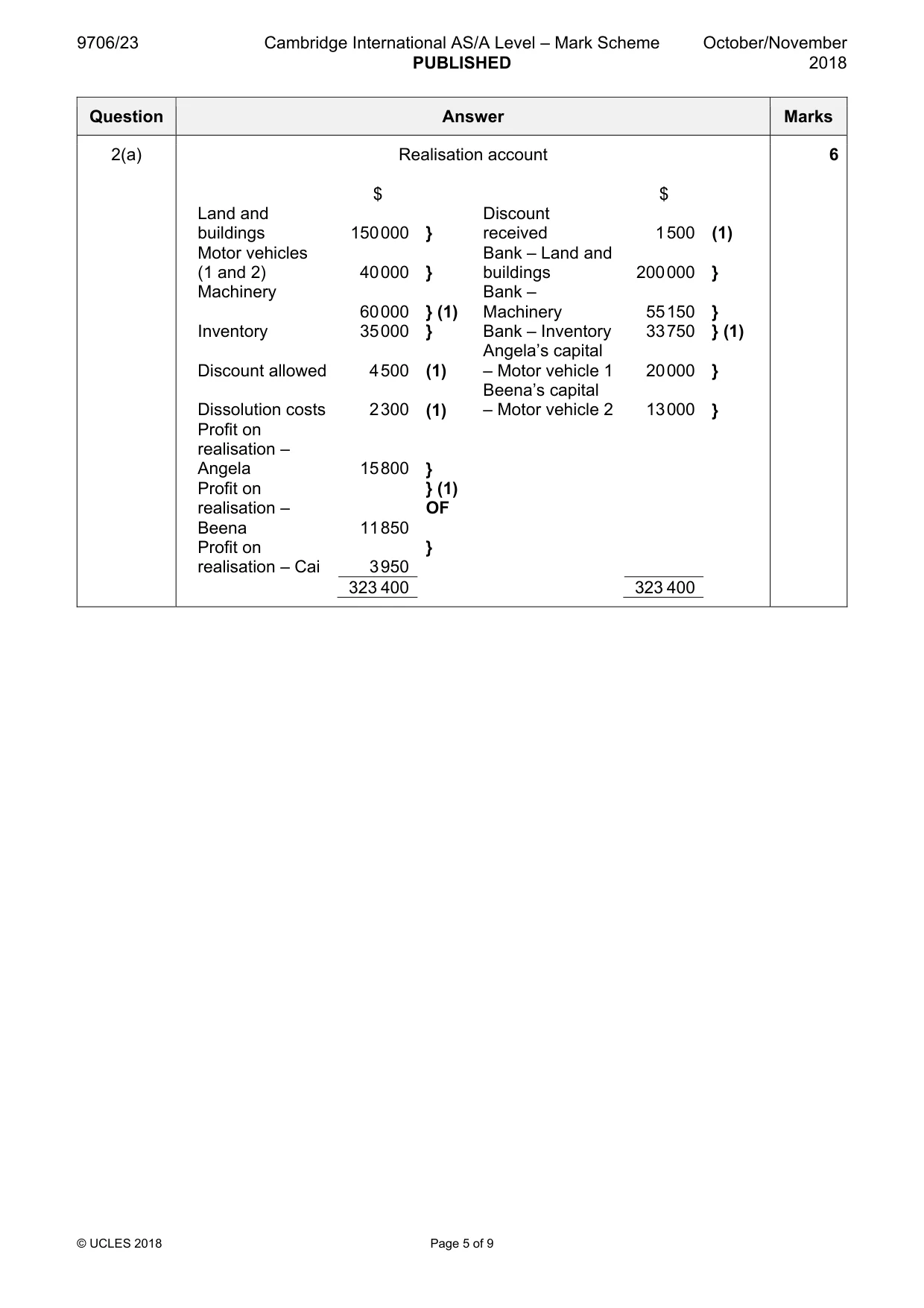
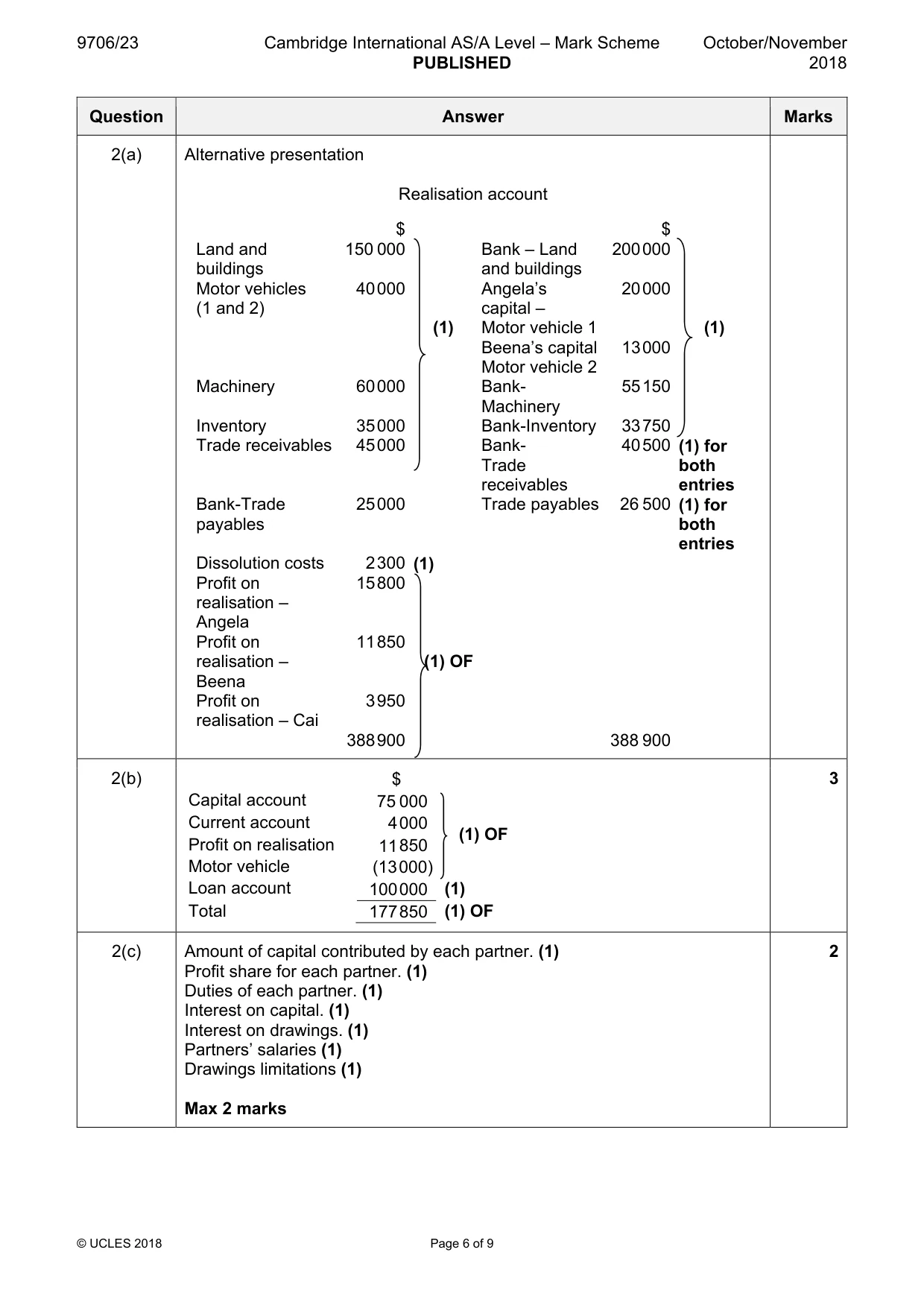
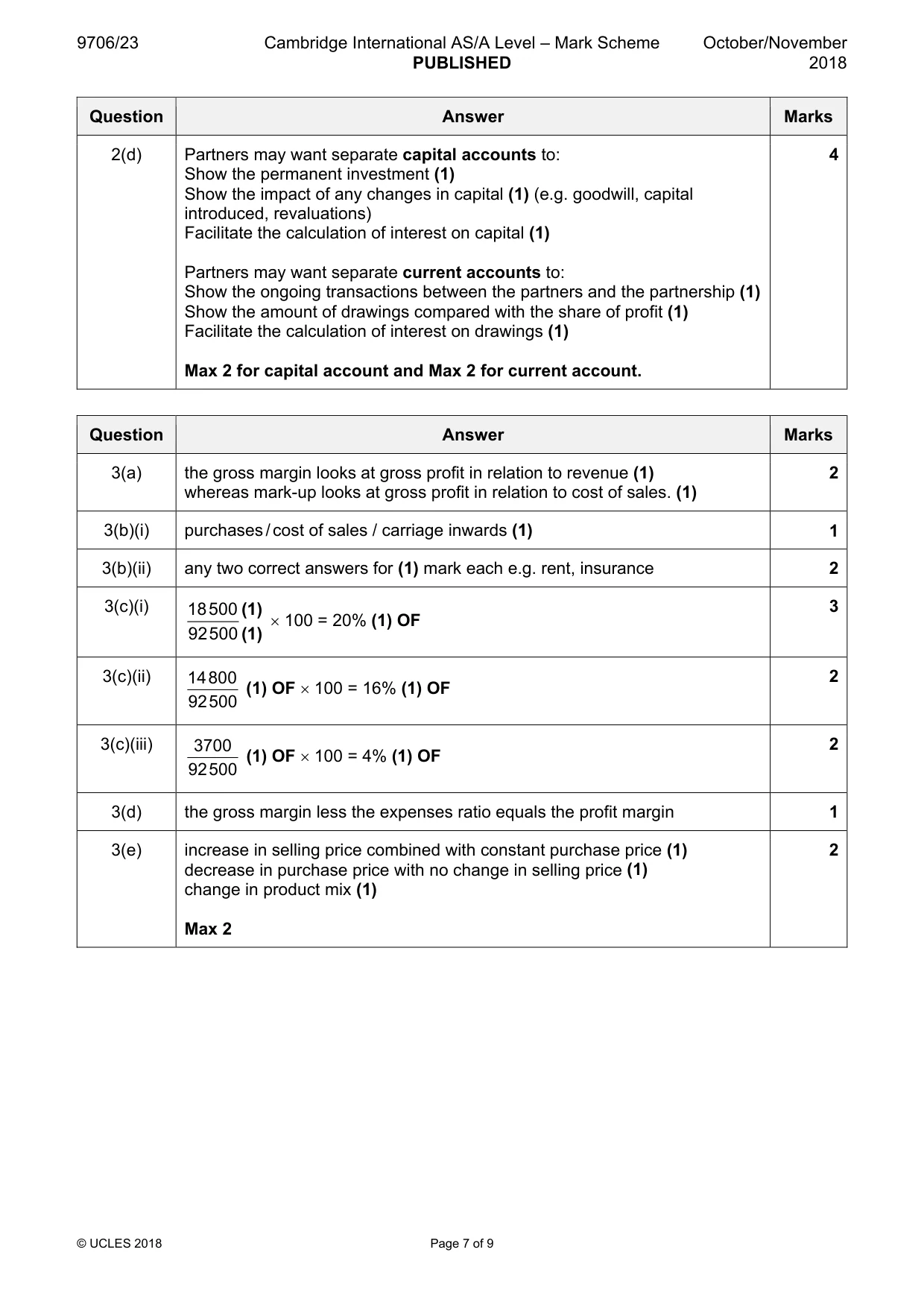
Mark scheme: 2(a) Realisation account 6 $ $ Land and Discount buildings 150 000 } received 1 500 (1) Motor vehicles Bank – Land and (1 and 2) 40 000 } buildings 200 000 } Machinery Bank – 60 000 } (1) Machinery 55 150 } Inventory 35 000 } Bank – Inventory 33 750 } (1) Angela’s capital Discount allowed 4 500 (1) – Motor vehicle 1 20 000 } Beena’s capital Dissolution costs 2 300 (1) – Motor vehicle 2 13 000 } Profit on realisation – Angela 15 800 } Profit on } (1) realisation – OF Beena 11 850 Profit on } realisation – Cai 3 950 323 400 323 400 2(a) Alternative presentation Realisation account $ $ Land and 150 000 Bank – Land 200 000 buildings and buildings Motor vehicles 40 000 Angela’s 20 000 (1 and 2) capital – (1) Motor vehicle 1 (1) Beena’s capital 13 000 Motor vehicle 2 Machinery 60 000 Bank- 55 150 Machinery Inventory 35 000 Bank-Inventory 33 750 Trade receivables 45 000 Bank- 40 500 (1) for Trade both receivables entries Bank-Trade 25 000 Trade payables 26 500 (1) for payables both entries Dissolution costs 2 300 (1) Profit on 15 800 realisation – Angela Profit on 11 850 realisation – (1) OF Beena Profit on 3 950 realisation – Cai 388 900 388 900 2(b) $ 3 Capital account 75 000 Current account 4 000 (1) OF Profit on realisation 11 850 Motor vehicle (13 000) Loan account 100 000 (1) Total 177 850 (1) OF 2(c) Amount of capital contributed by each partner. (1) 2 Profit share for each partner. (1) Duties of each partner. (1) Interest on capital. (1) Interest on drawings. (1) Partners’ salaries (1) Drawings limitations (1) Max 2 marks 2(d) Partners may want separate capital accounts to: 4 Show the permanent investment (1) Show the impact of any changes in capital (1) (e.g. goodwill, capital introduced, revaluations) Facilitate the calculation of interest on capital (1) Partners may want separate current accounts to: Show the ongoing transactions between the partners and the partnership (1) Show the amount of drawings compared with the share of profit (1) Facilitate the calculation of interest on drawings (1) Max 2 for capital account and Max 2 for current account.
Q3 · The company’s depreciation policy is as follows: buildings at a rate of 2% per annum…
3 The company’s depreciation policy is as follows: buildings at a rate of 2% per annum using the straight-line method equipment at a rate of 10% per annum using the straight-line method motor vehicles at a rate of 20% per annum using the reducing balance method. A full year’s depreciation is charged in the year of acquisition and none in the year of disposal.
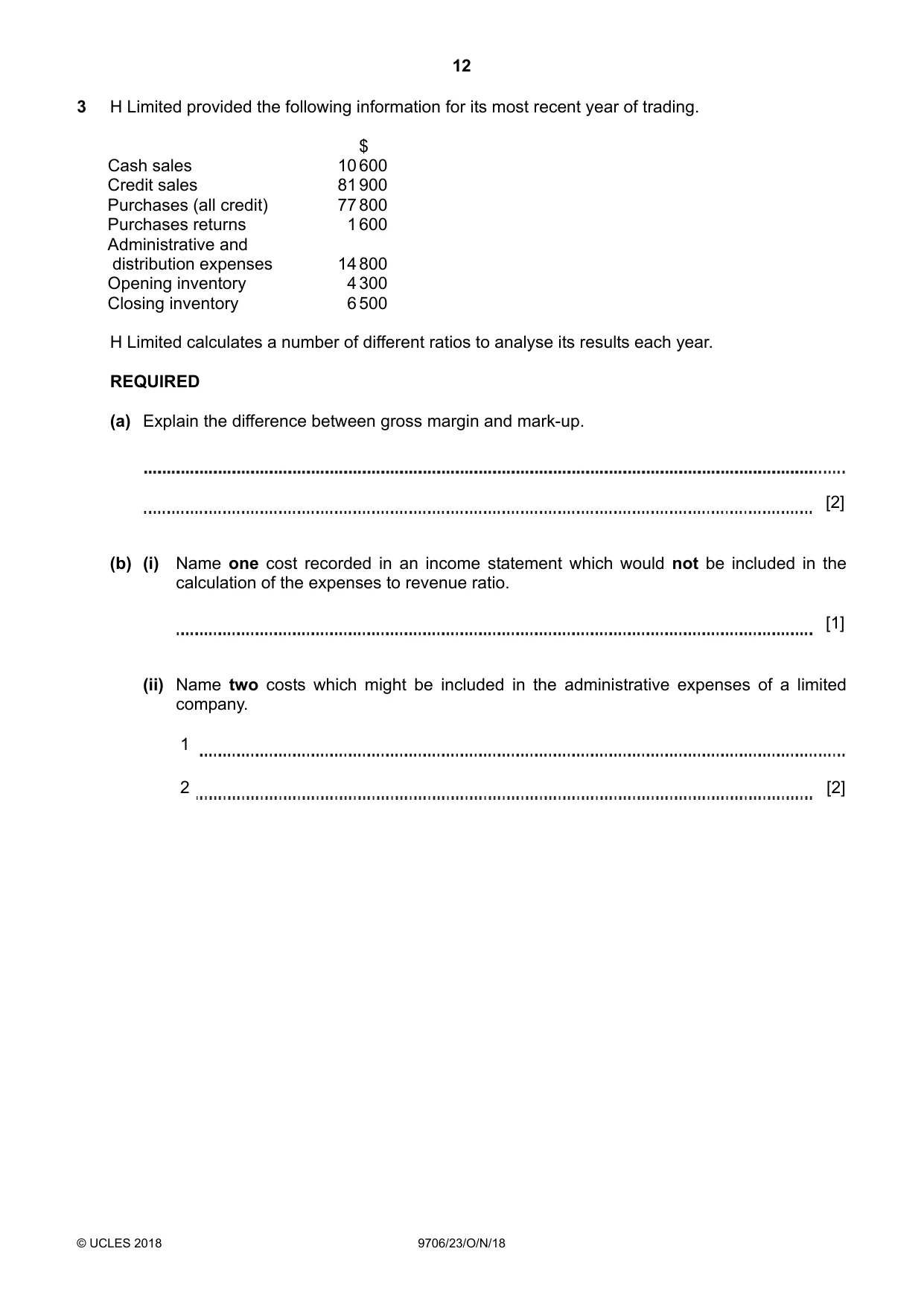
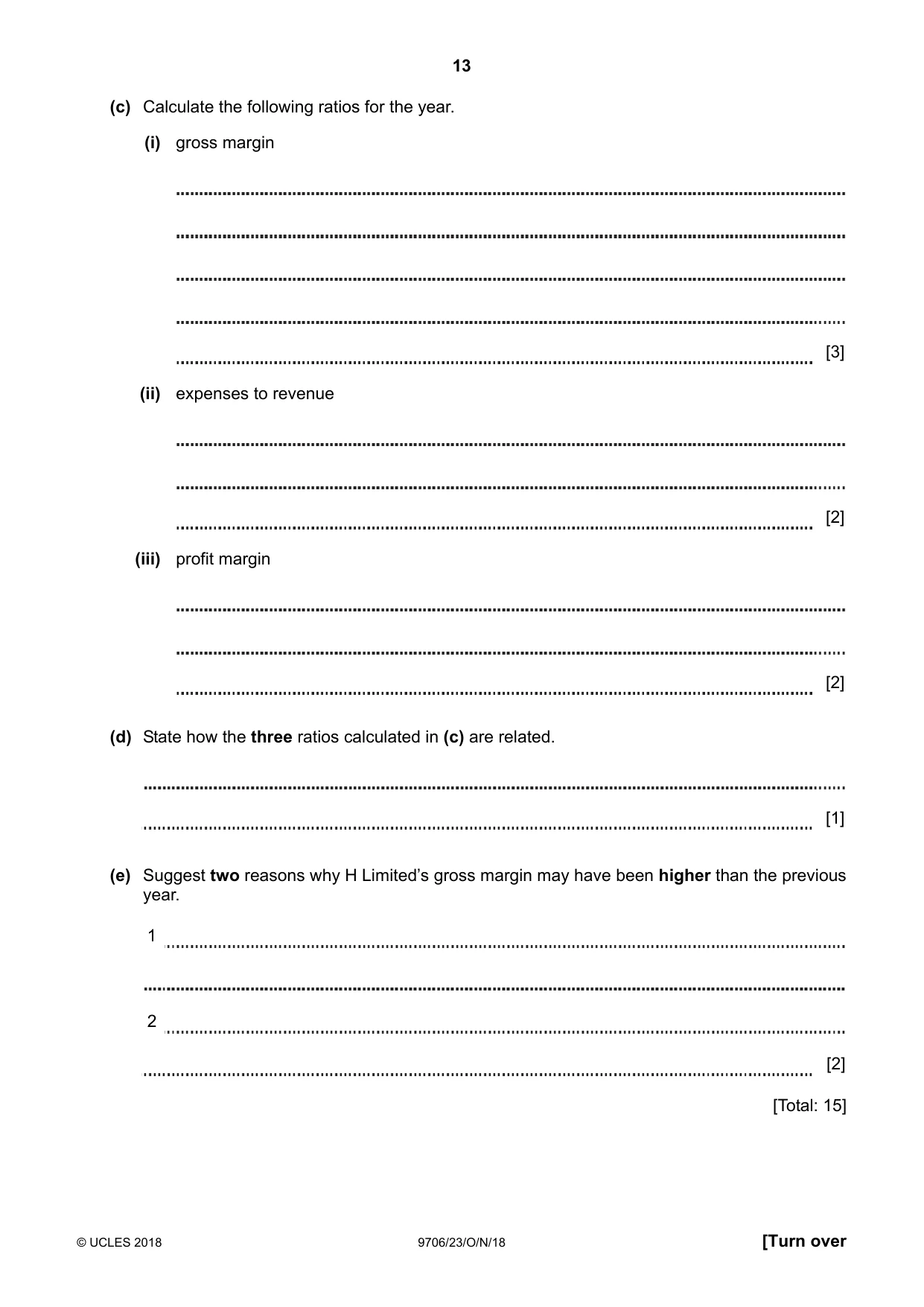
Mark scheme: 3(a) the gross margin looks at gross profit in relation to revenue (1) 2 whereas mark-up looks at gross profit in relation to cost of sales. (1) 3(b)(i) purchases / cost of sales / carriage inwards (1) 1 3(b)(ii) any two correct answers for (1) mark each e.g. rent, insurance 2 3(c)(i) 18500 (1) 3 × 100 = 20% (1) OF 92500 (1) 3(c)(ii) 14800 2 (1) OF × 100 = 16% (1) OF 92500 3(c)(iii) 3700 2 (1) OF × 100 = 4% (1) OF 92500 3(d) the gross margin less the expenses ratio equals the profit margin 1 3(e) increase in selling price combined with constant purchase price (1) 2 decrease in purchase price with no change in selling price (1) change in product mix (1) Max 2
Q4 · REQUIRED (c) Calculate the net book value of non-current assets which will appear in the…
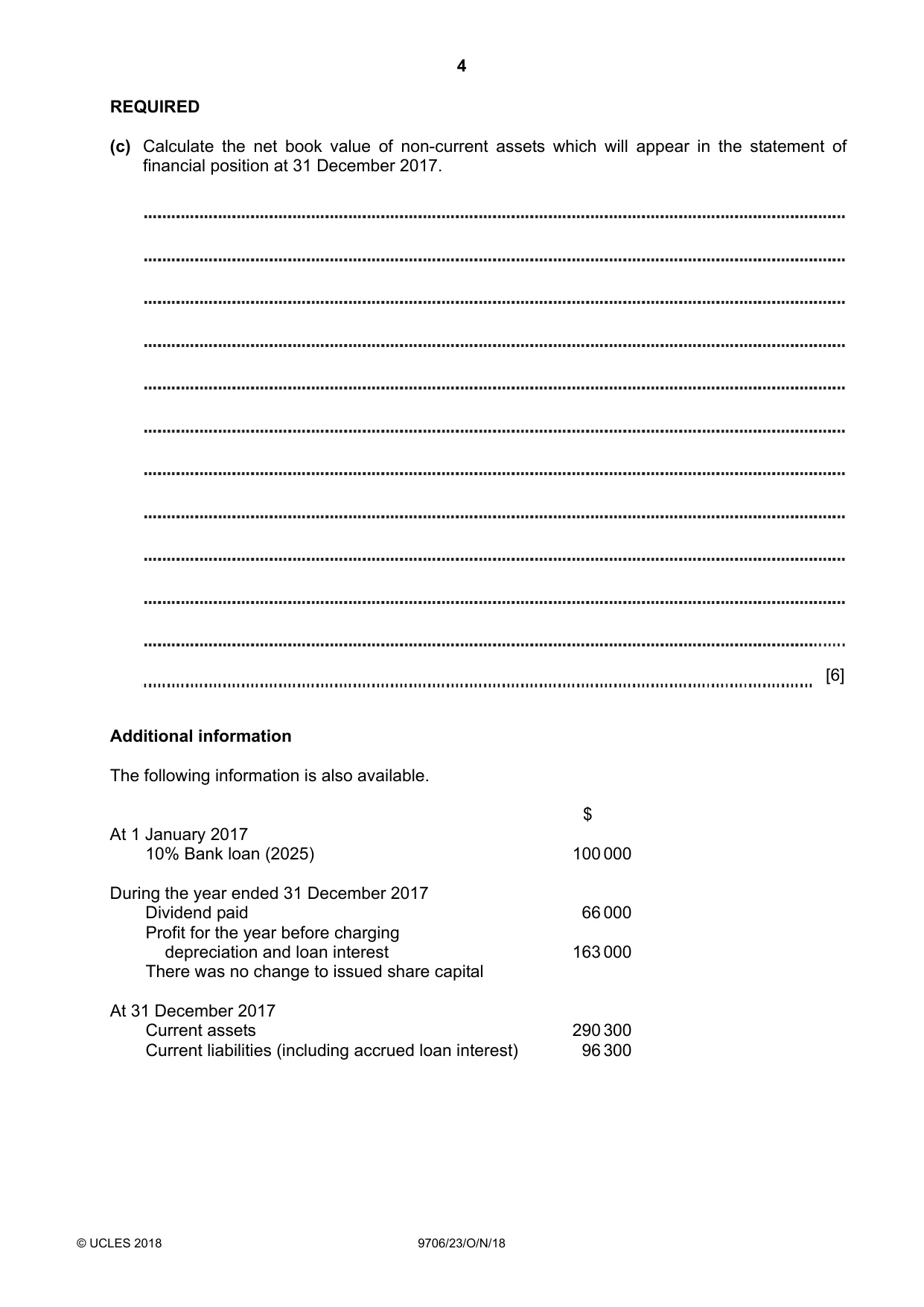
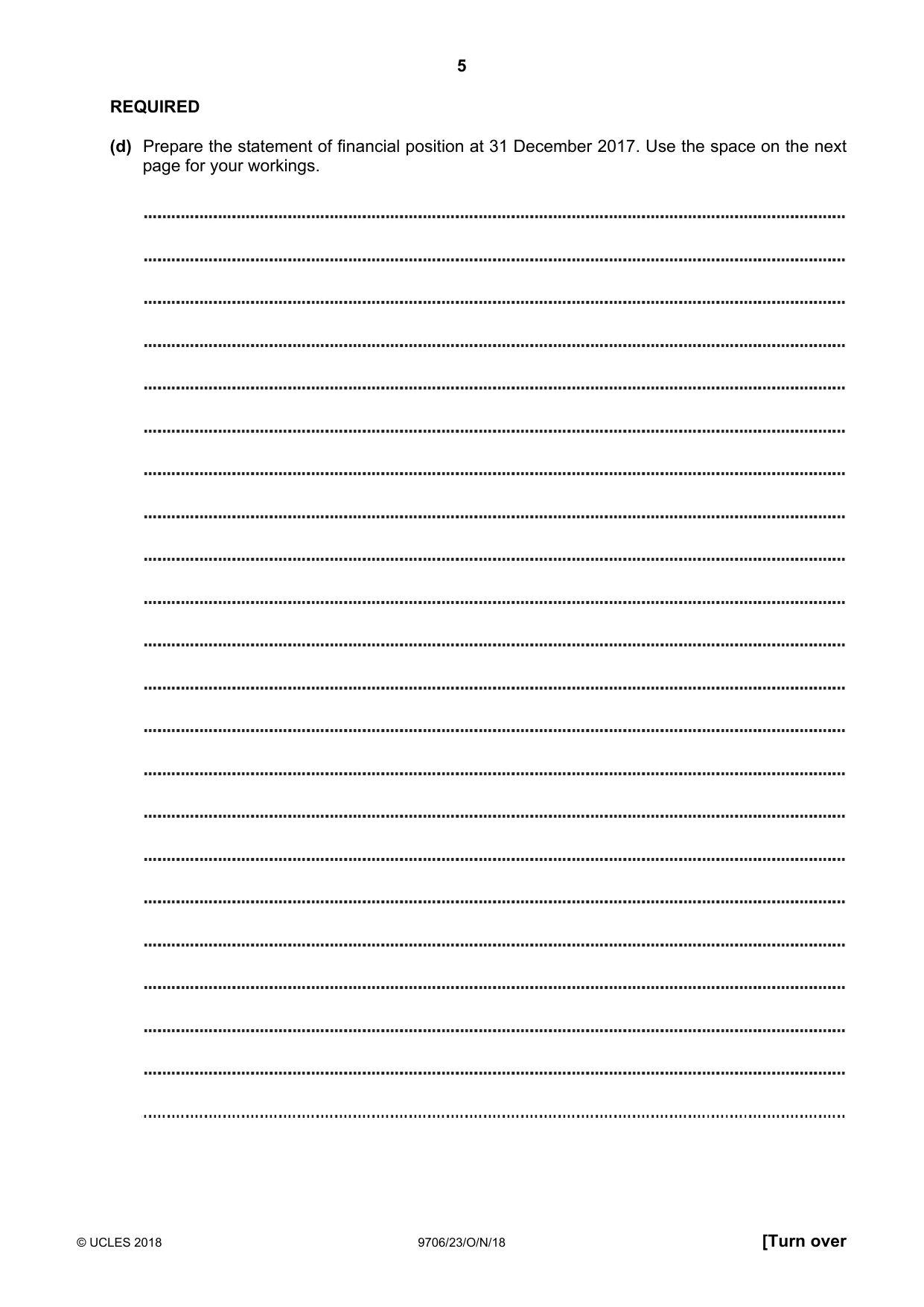
REQUIRED (c) Calculate the net book value of non-current assets which will appear in the statement of financial position at 31 December 2017. [6] Additional information The following information is also available. $ At 1 January 2017 10% Bank loan (2025) 100 000 During the year ended 31 December 2017 Dividend paid 66 000 Profit for the year before charging depreciation and loan interest 163 000 There was no change to issued share capital At 31 December 2017 Current assets 290 300 Current liabilities (including accrued loan interest) 96 300 REQUIRED (d) Prepare the statement of financial position at 31 December 2017. Use the space on the next page for your workings.
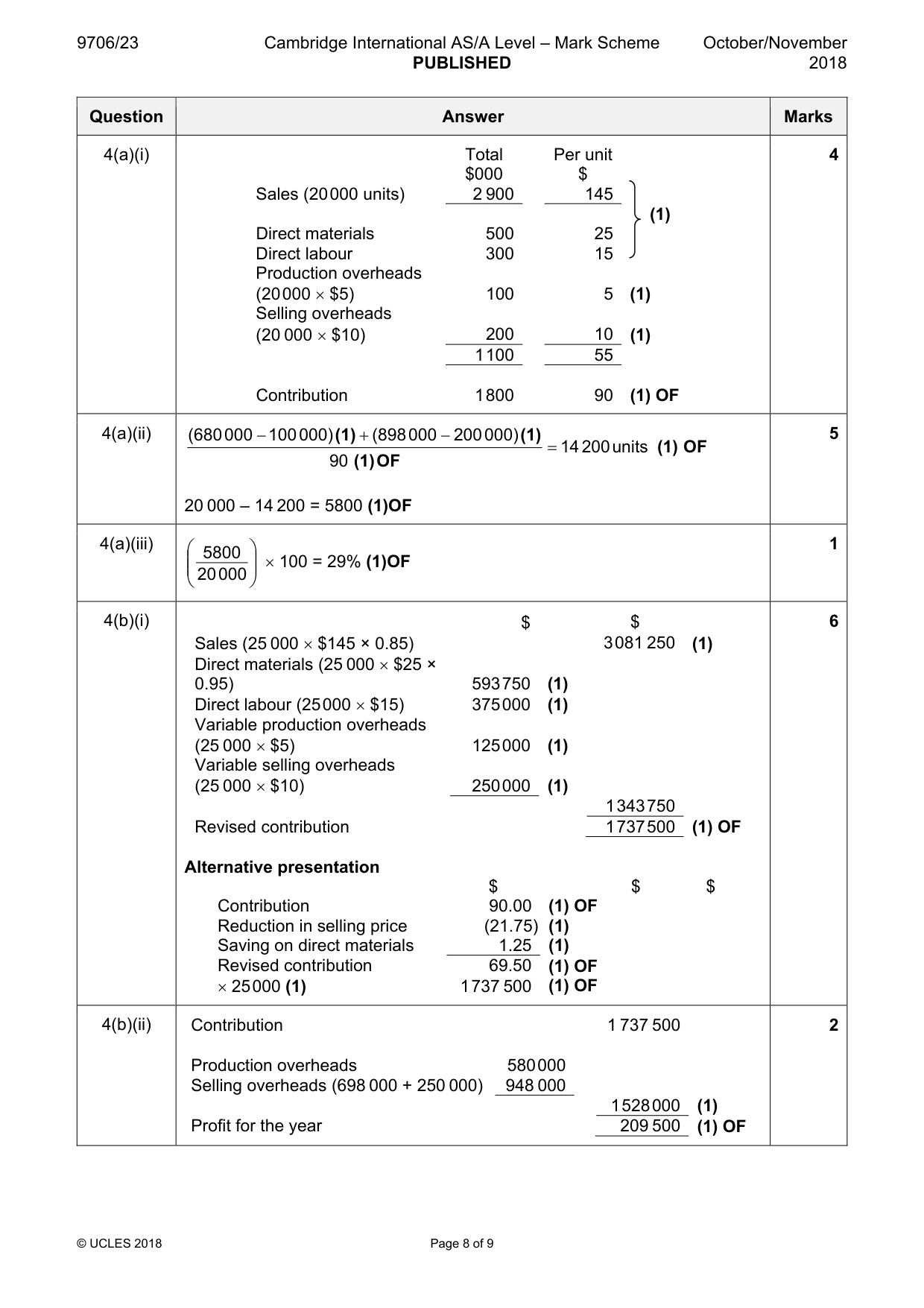
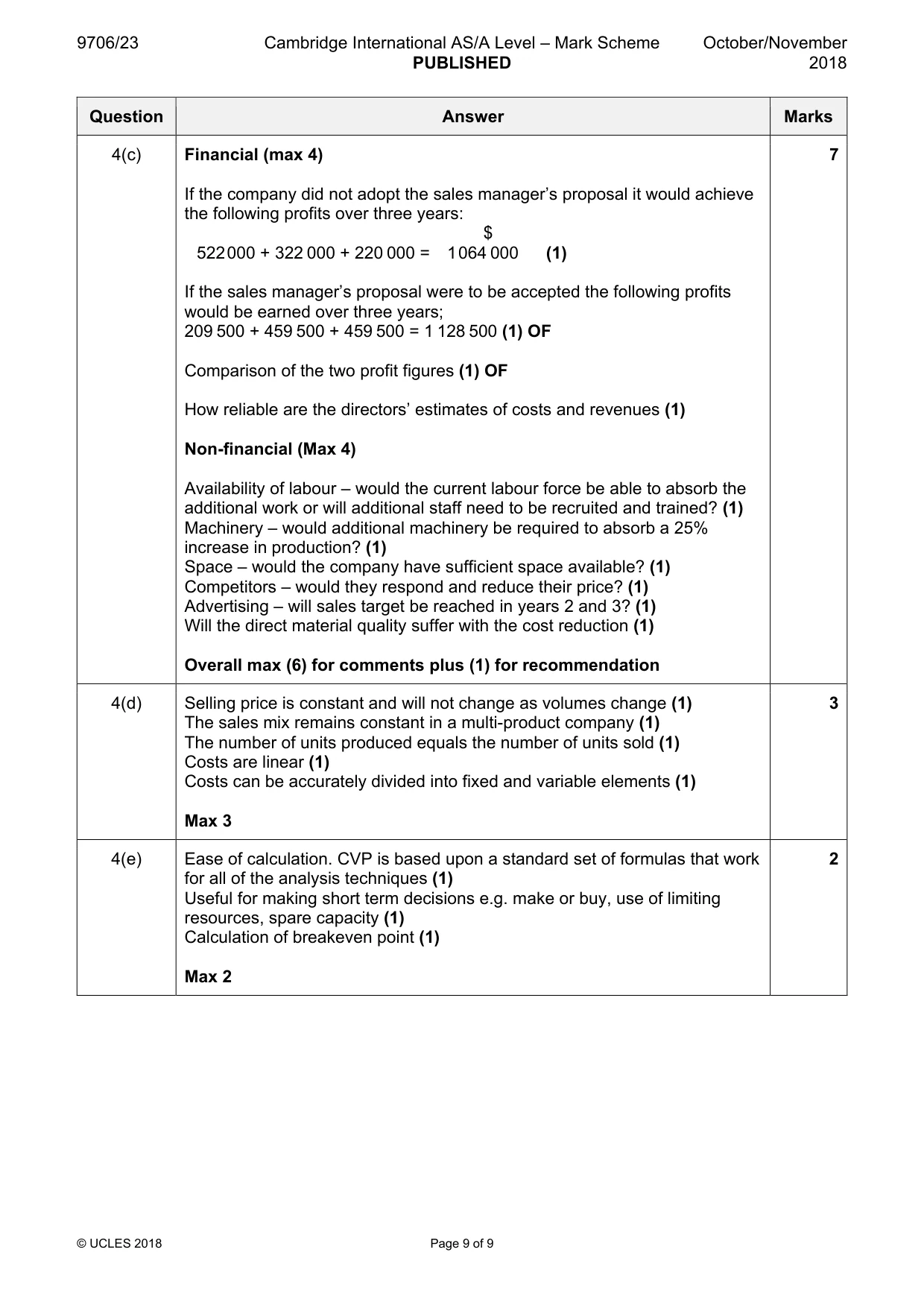
Mark scheme: 4(a)(i) Total Per unit 4 $000 $ Sales (20 000 units) 2 900 145 (1) Direct materials 500 25 Direct labour 300 15 Production overheads (20 000 × $5) 100 5 (1) Selling overheads (20 000 × $10) 200 10 (1) 1 100 55 Contribution 1 800 90 (1) OF 4(a)(ii) (680 000 − 100 000) (1) + (898 000 − 200 000) (1) 5 = 14 200 units (1) OF 90 (1) OF 20 000 – 14 200 = 5800 (1)OF 4(a)(iii) 5800 1 × 100 = 29% (1)OF 20 000 4(b)(i) $ $ 6 Sales (25 000 × $145 × 0.85) 3 081 250 (1) Direct materials (25 000 × $25 × 0.95) 593 750 (1) Direct labour (25 000 × $15) 375 000 (1) Variable production overheads (25 000 × $5) 125 000 (1) Variable selling overheads (25 000 × $10) 250 000 (1) 1 343 750 Revised contribution 1 737 500 (1) OF Alternative presentation $ $ $ Contribution 90.00 (1) OF Reduction in selling price (21.75) (1) Saving on direct materials 1.25 (1) Revised contribution 69.50 (1) OF × 25 000 (1) 1 737 500 (1) OF 4(b)(ii) Contribution 1 737 500 2 Production overheads 580 000 Selling overheads (698 000 + 250 000) 948 000 1 528 000 (1) Profit for the year 209 500 (1) OF 4(c) Financial (max 4) 7 If the company did not adopt the sales manager’s proposal it would achieve the following profits over three years: $ 522 000 + 322 000 + 220 000 = 1 064 000 (1) If the sales manager’s proposal were to be accepted the following profits would be earned over three years; 209 500 + 459 500 + 459 500 = 1 128 500 (1) OF Comparison of the two profit figures (1) OF How reliable are the directors’ estimates of costs and revenues (1) Non-financial (Max 4) Availability of labour – would the current labour force be able to absorb the additional work or will additional staff need to be recruited and trained? (1) Machinery – would additional machinery be required to absorb a 25% increase in production? (1) Space – would the company have sufficient space available? (1) Competitors – would they respond and reduce their price? (1) Advertising – will sales target be reached in years 2 and 3? (1) Will the direct material quality suffer with the cost reduction (1) Overall max (6) for comments plus (1) for recommendation 4(d) Selling price is constant and will not change as volumes change (1) 3 The sales mix remains constant in a multi-product company (1) The number of units produced equals the number of units sold (1) Costs are linear (1) Costs can be accurately divided into fixed and variable elements (1) Max 3 4(e) Ease of calculation. CVP is based upon a standard set of formulas that work 2 for all of the analysis techniques (1) Useful for making short term decisions e.g. make or buy, use of limiting resources, spare capacity (1) Calculation of breakeven point (1) Max 2
What was in this paper
The subtopics covered by these 4 questions, and how many questions each got. Open one in a new tab to see every Cambridge question on it.
What you needed in this session
Cambridge’s own grade thresholds for 2018 Oct/Nov, Paper 2 · Variant 3. A higher threshold means an easier paper — the bar moves with how the cohort did.