Cambridge A Level Accounting 9706 — 2017 May/June Paper 2 · Variant 3
9706/23/M/J/17 · 4 questions · 90 marks · ≈101 min
The question paper and its mark scheme, free to read here and free to download. This is Cambridge’s own paper, exactly as it was sat.
Question paper16 pages
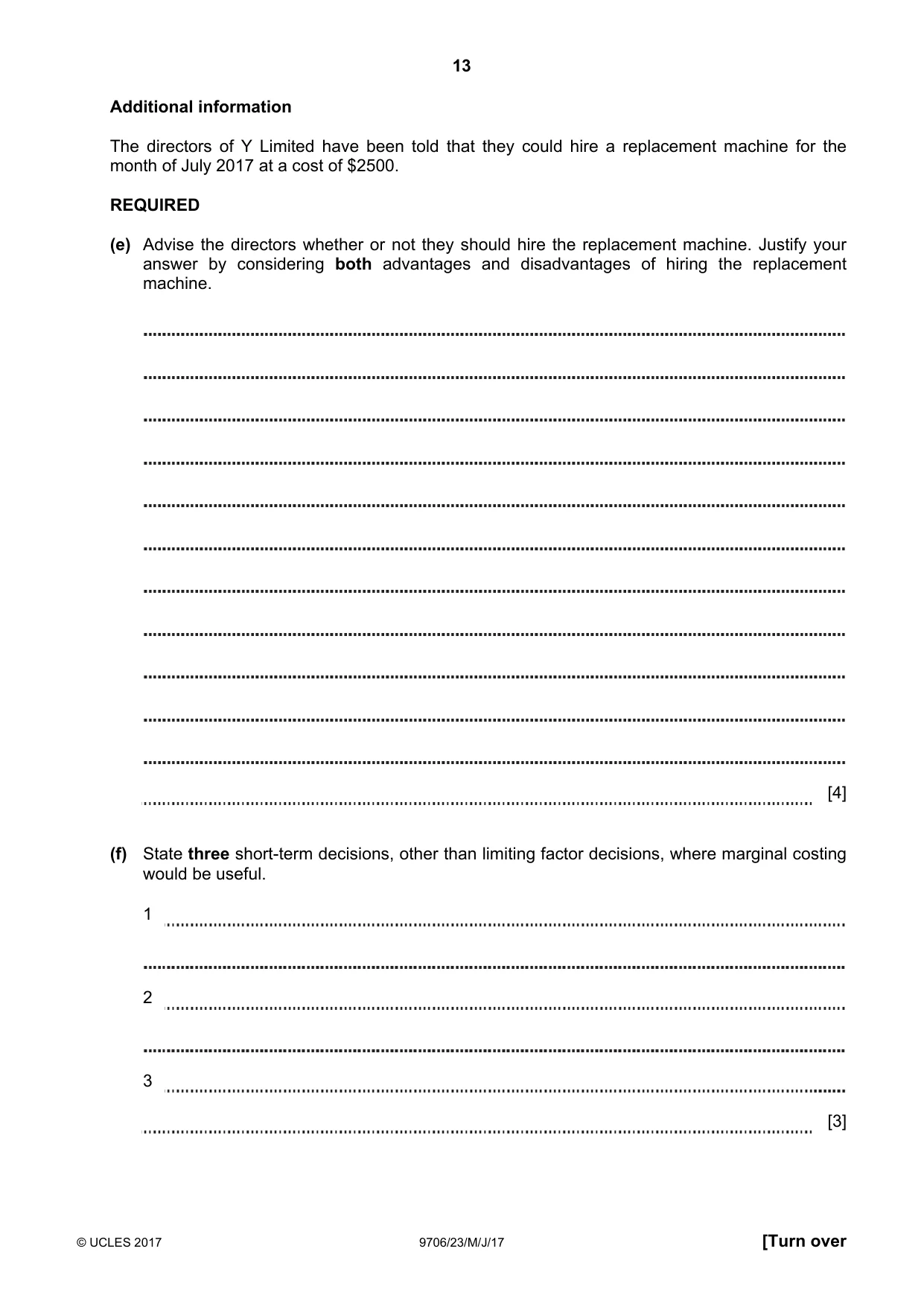
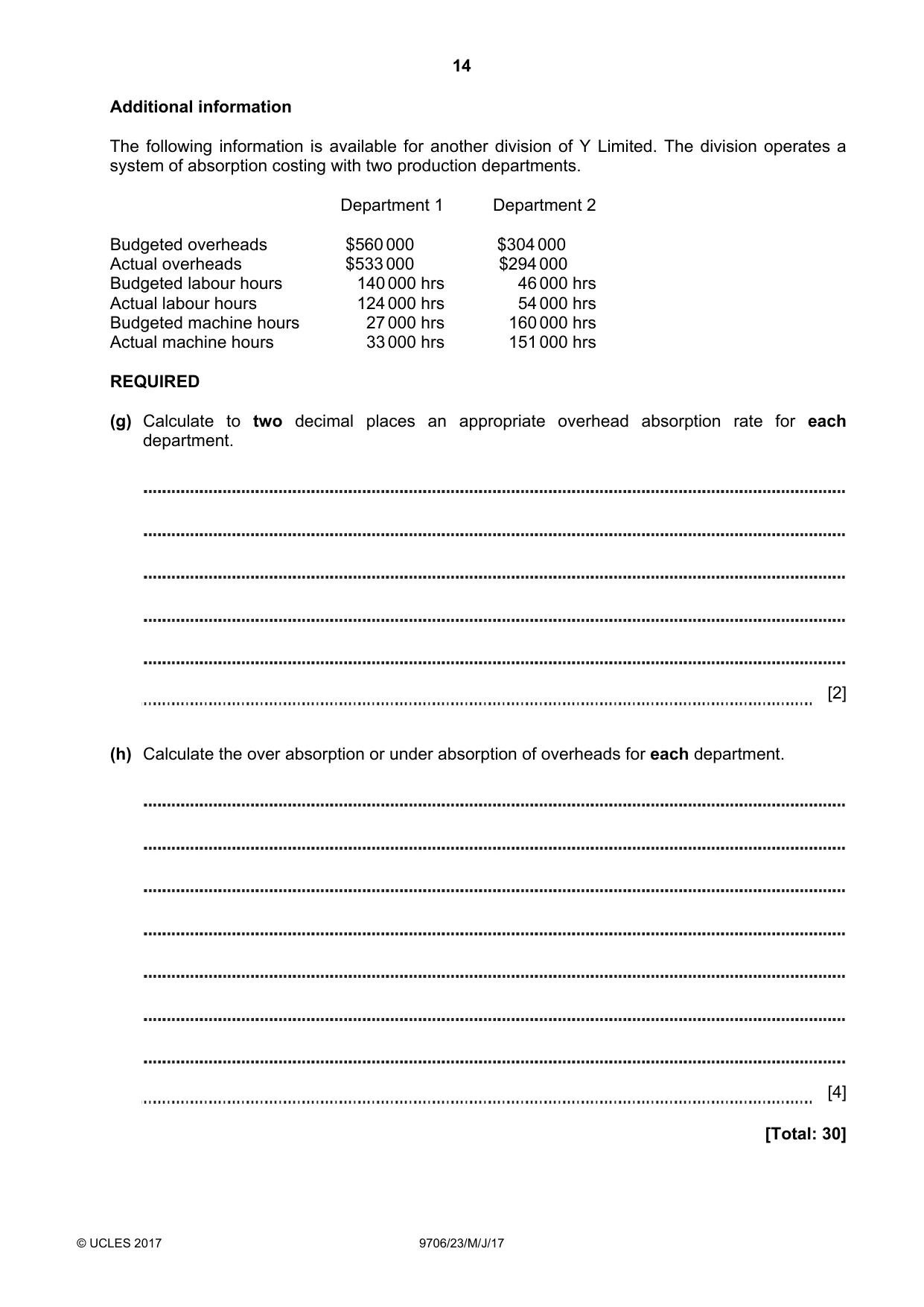


Mark scheme5 pages
Answers below. Sit the paper first if you are practising.
Questions as text
Q1 · Ramadhin, Statham and Trueman formed a partnership on 1 January 2016
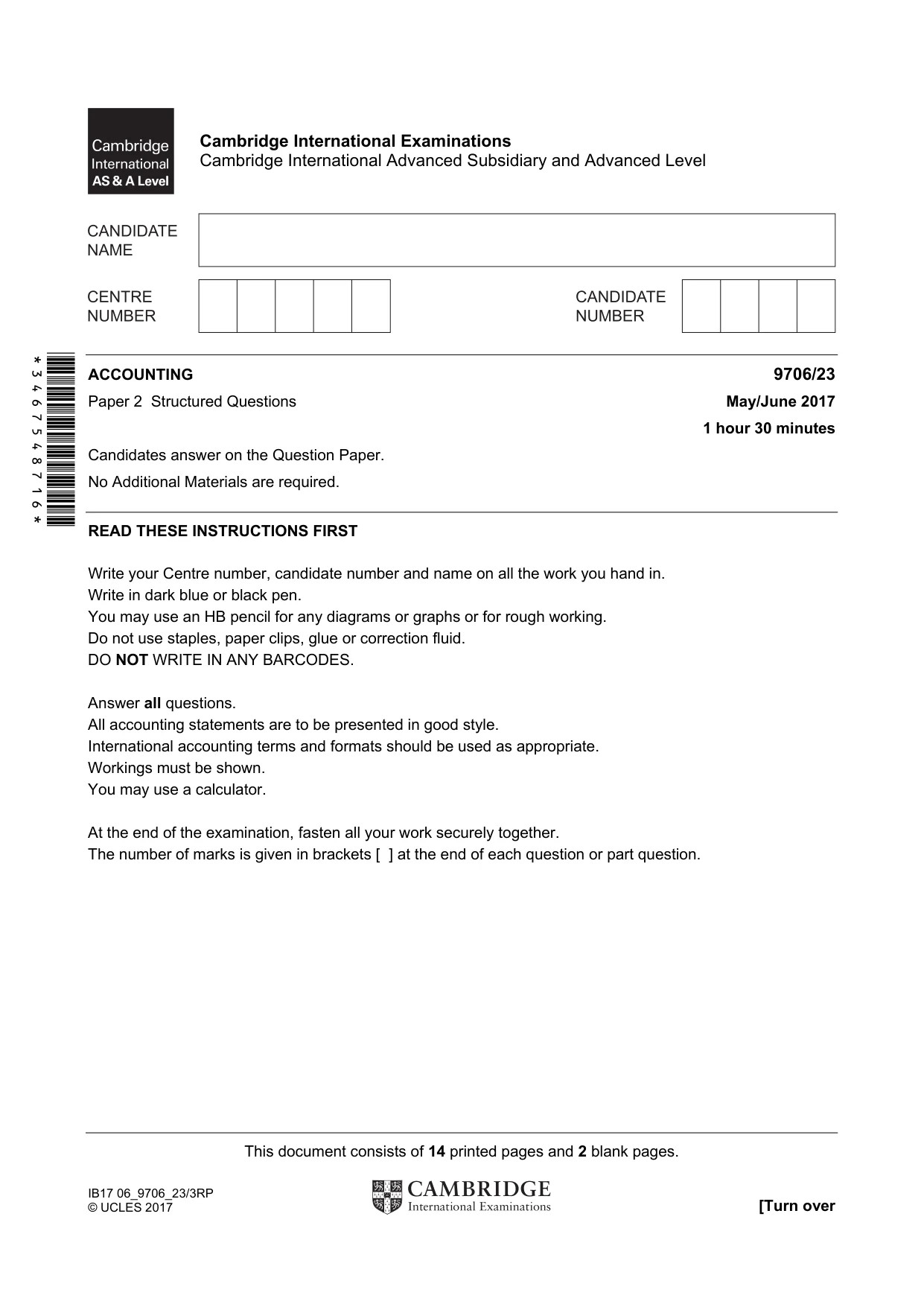
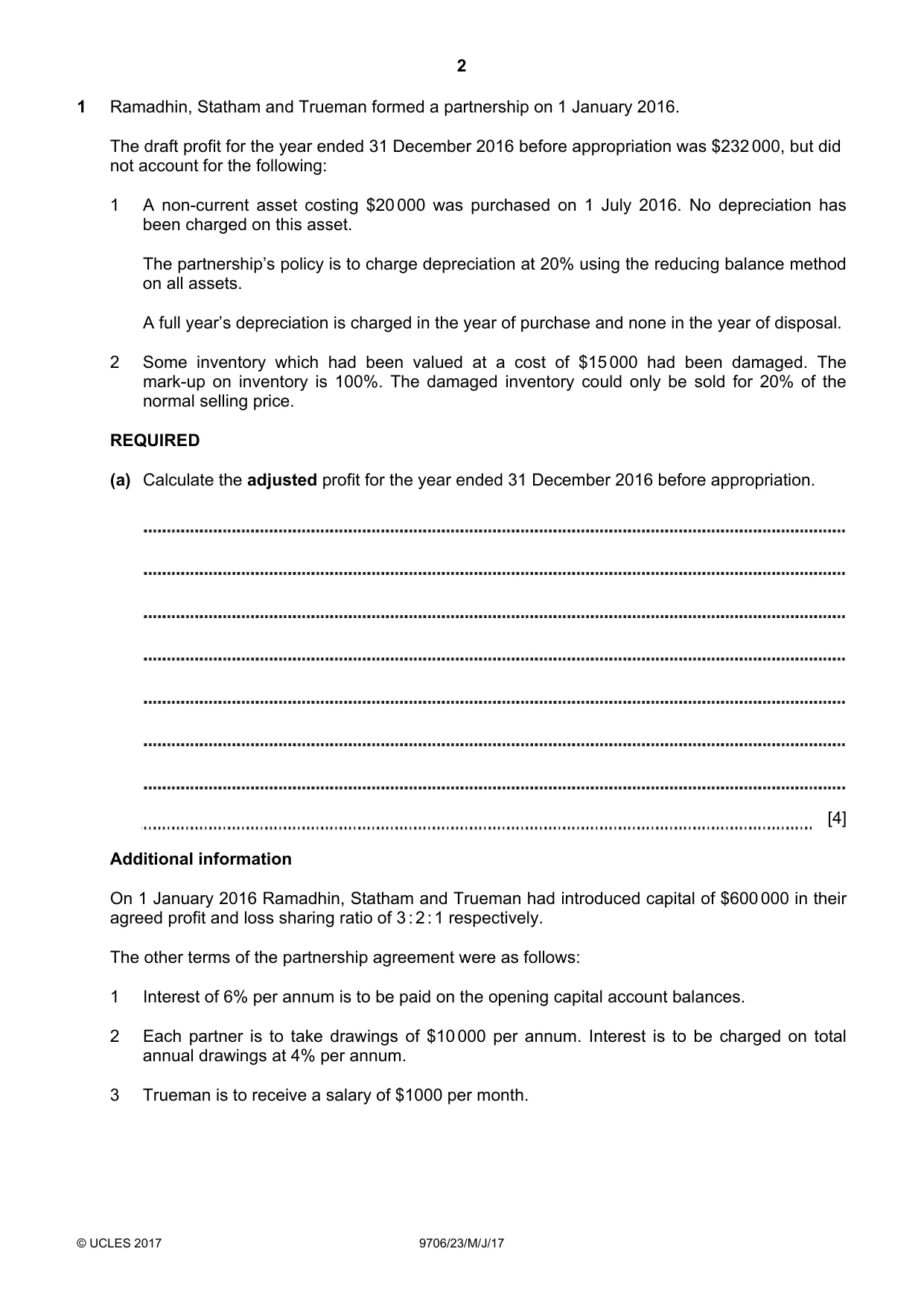
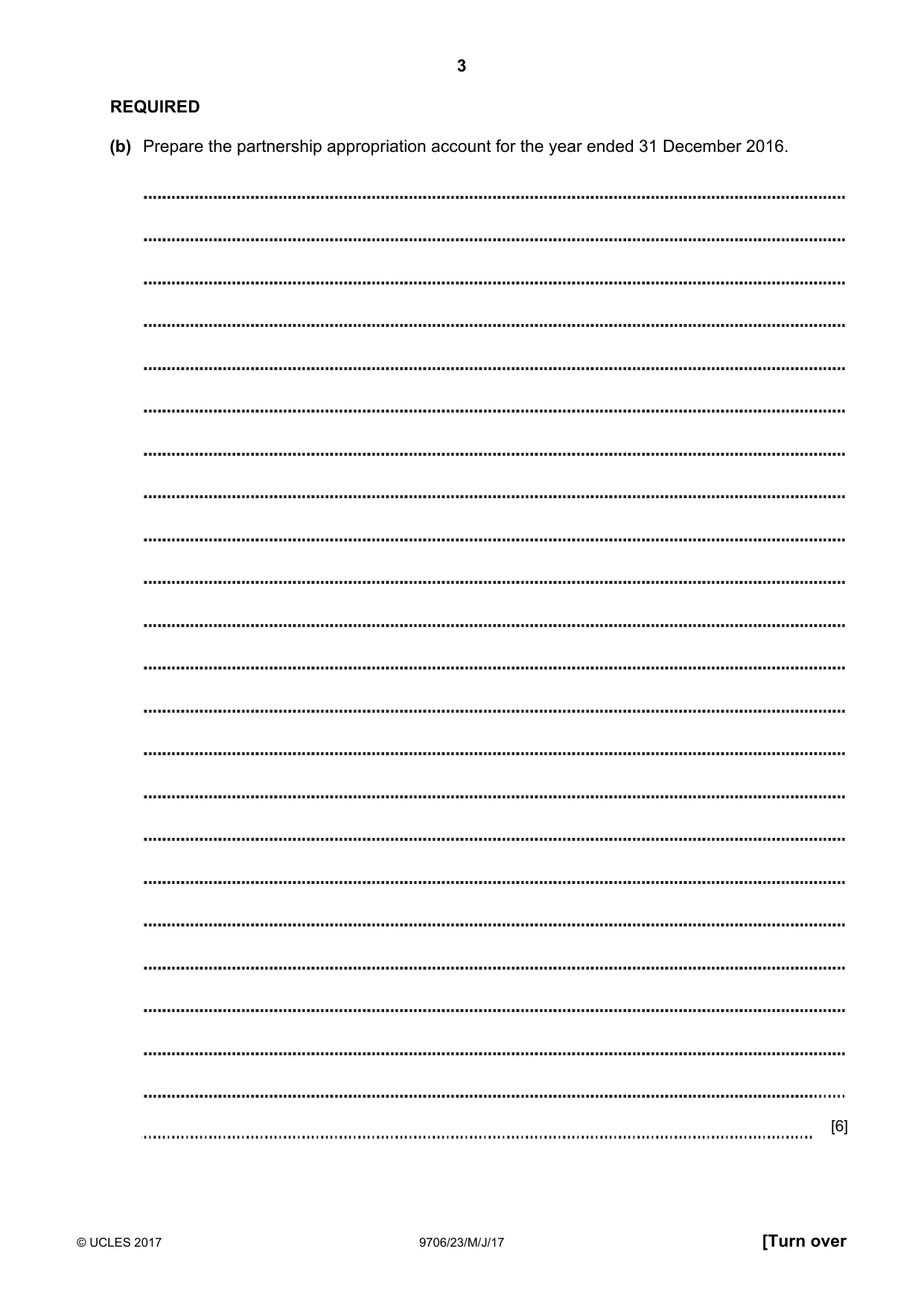
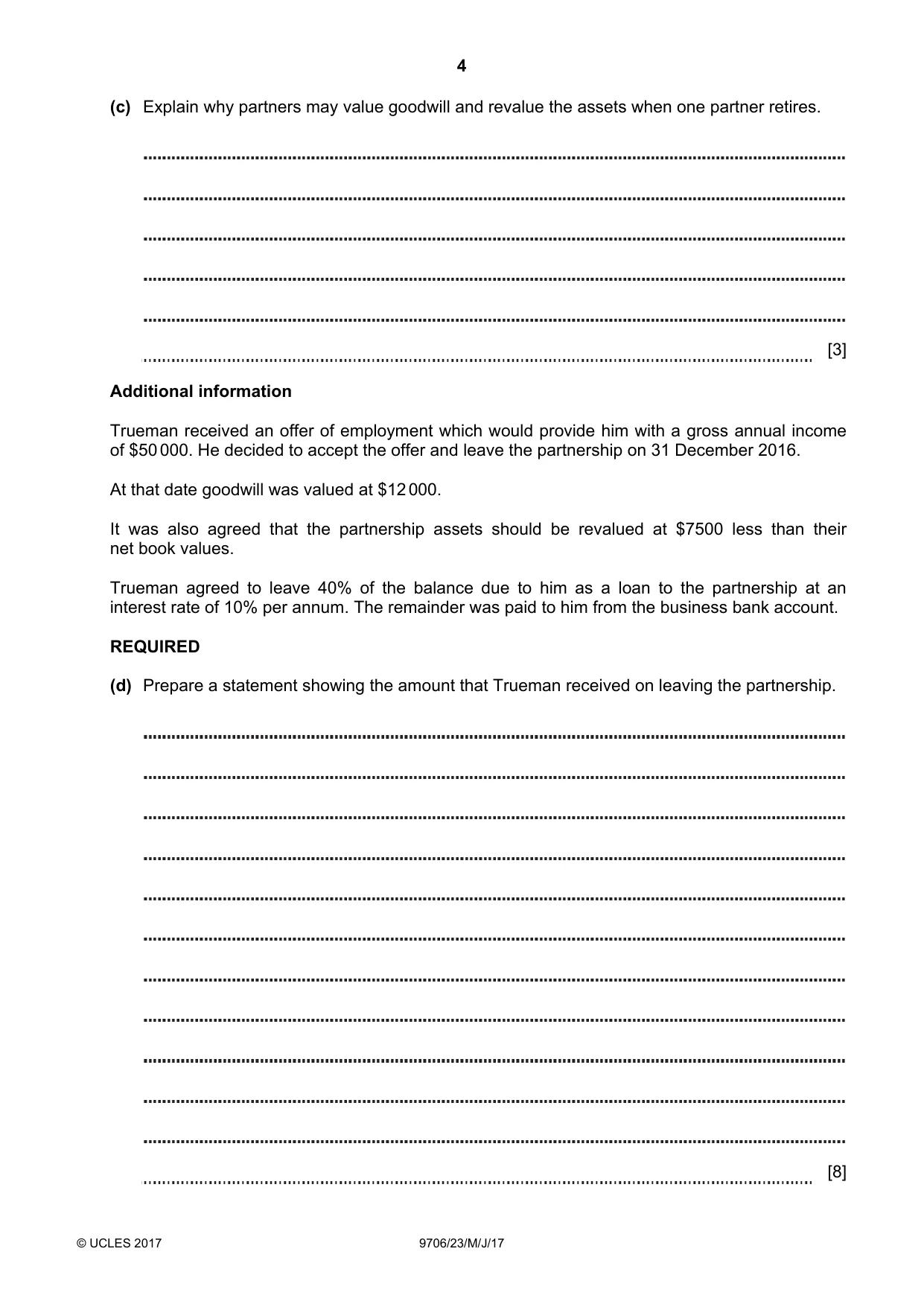
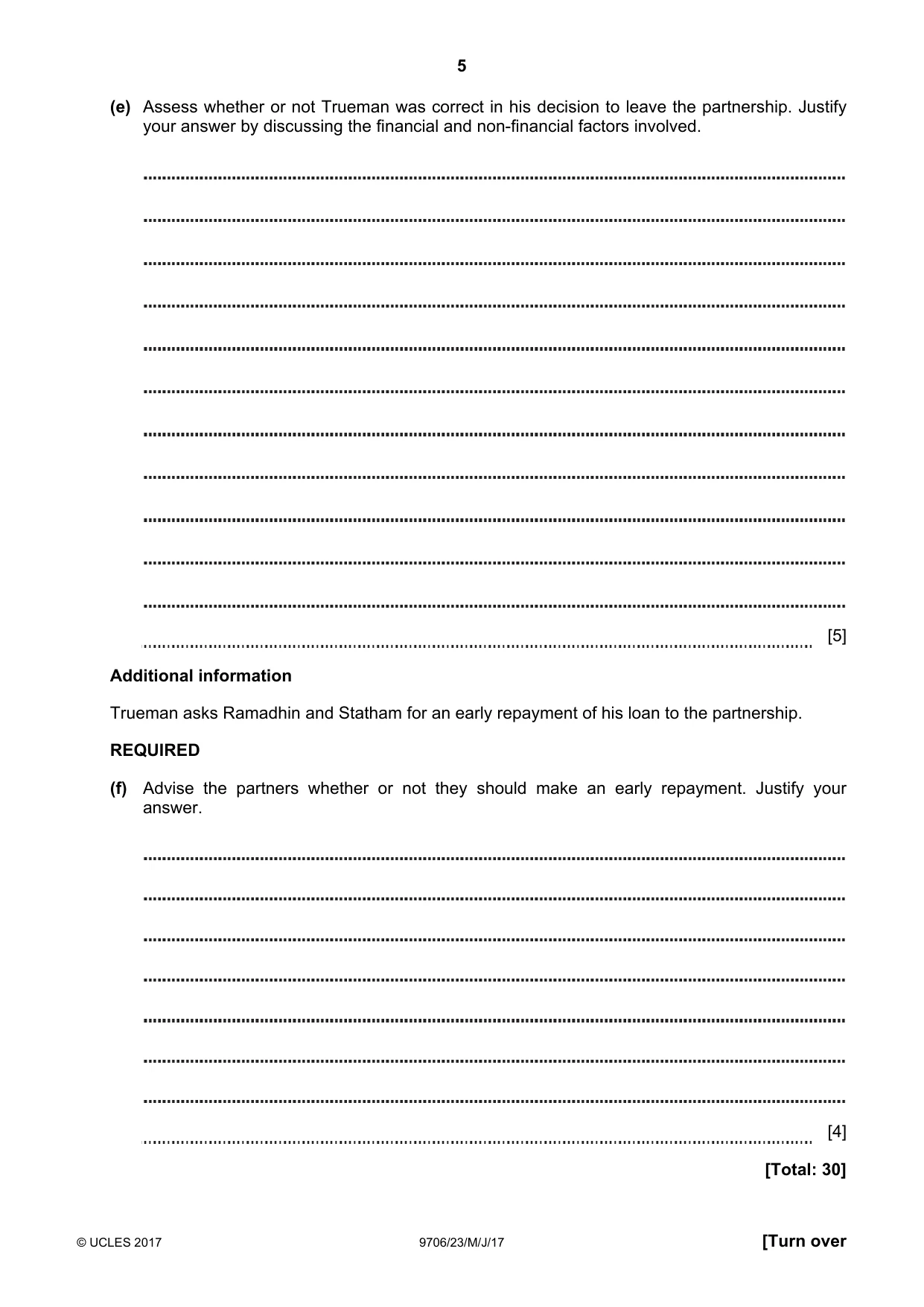
1 Ramadhin, Statham and Trueman formed a partnership on 1 January 2016. The draft profit for the year ended 31 December 2016 before appropriation was $232 000, but did not account for the following: 1 A non-current asset costing $20 000 was purchased on 1 July 2016. No depreciation has been charged on this asset. The partnership’s policy is to charge depreciation at 20% using the reducing balance method on all assets. A full year’s depreciation is charged in the year of purchase and none in the year of disposal. 2 Some inventory which had been valued at a cost of $15 000 had been damaged. The mark-up on inventory is 100%. The damaged inventory could only be sold for 20% of the normal selling price. REQUIRED (a) Calculate the adjusted profit for the year ended 31 December 2016 before appropriation. [4] Additional information On 1 January 2016 Ramadhin, Statham and Trueman had introduced capital of $600 000 in their agreed profit and loss sharing ratio of 3 : 2 : 1 respectively. The other terms of the partnership agreement were as follows: 1 Interest of 6% per annum is to be paid on the opening capital account balances. 2 Each partner is to take drawings of $10 000 per annum. Interest is to be charged on total annual drawings at 4% per annum. 3 Trueman is to receive a salary of $1000 per month. REQUIRED (b) Prepare the partnership appropriation account for the year ended 31 December 2016. [6] (c) Explain why partners may value goodwill and revalue the assets when one partner retires. [3] Additional information Trueman received an offer of employment which would provide him with a gross annual income of $50 000. He decided to accept the offer and leave the partnership on 31 December 2016. At that date goodwill was valued at $12 000. It was also agreed that the partnership assets should be revalued at $7500 less than their net book values. Trueman agreed to leave 40% of the balance due to him as a loan to the partnership at an interest rate of 10% per annum. The remainder was paid to him from the business bank account. REQUIRED (d) Prepare a statement showing the amount that Trueman received on leaving the partnership. [8] (e) Assess whether or not Trueman was correct in his decision to leave the partnership. Justify your answer by discussing the financial and non-financial factors involved. [5] Additional information Trueman asks Ramadhin and Statham for an early repayment of his loan to the partnership. REQUIRED (f) Advise the partners whether or not they should make an early repayment. Justify your answer. [4] [Total: 30]
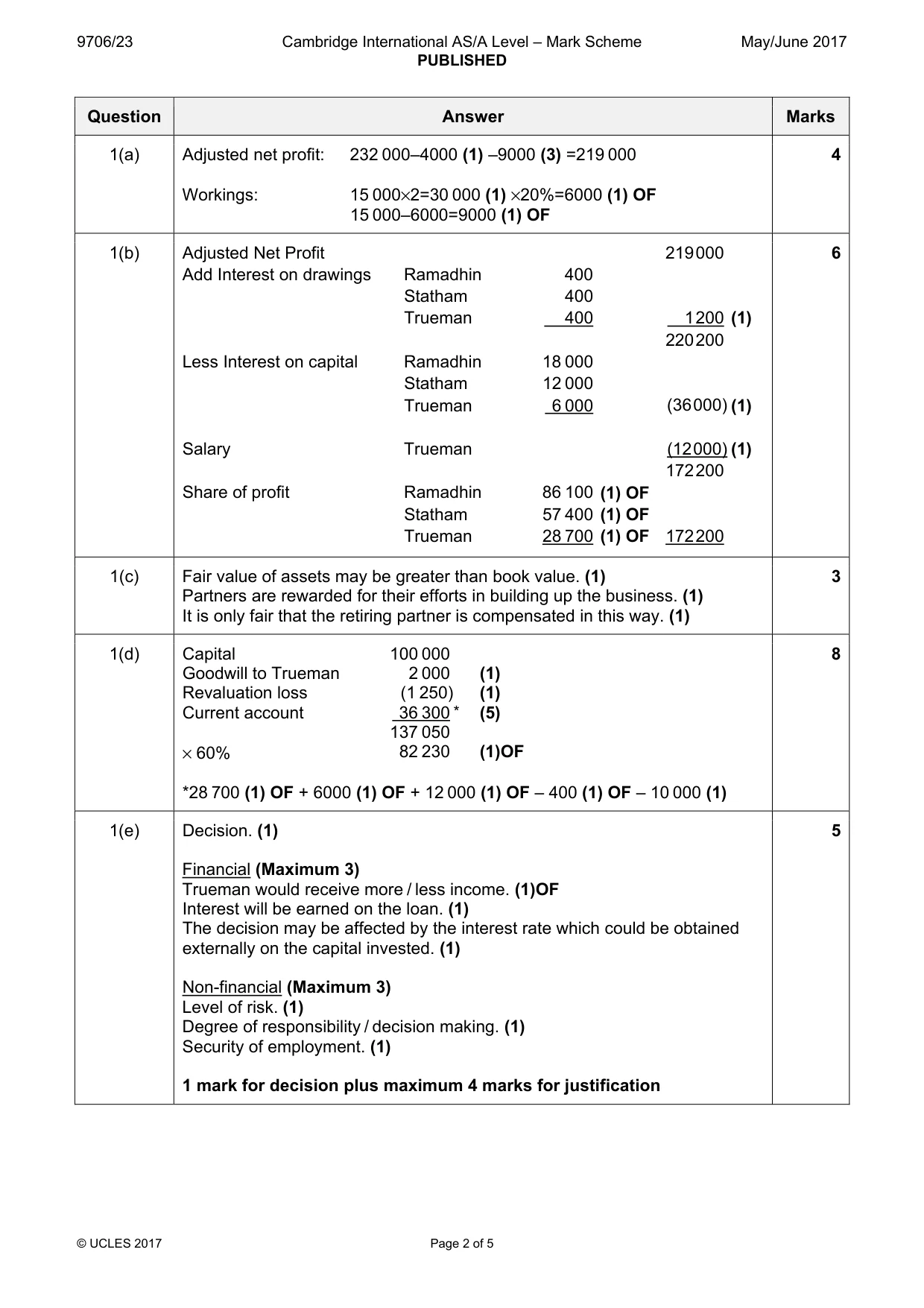
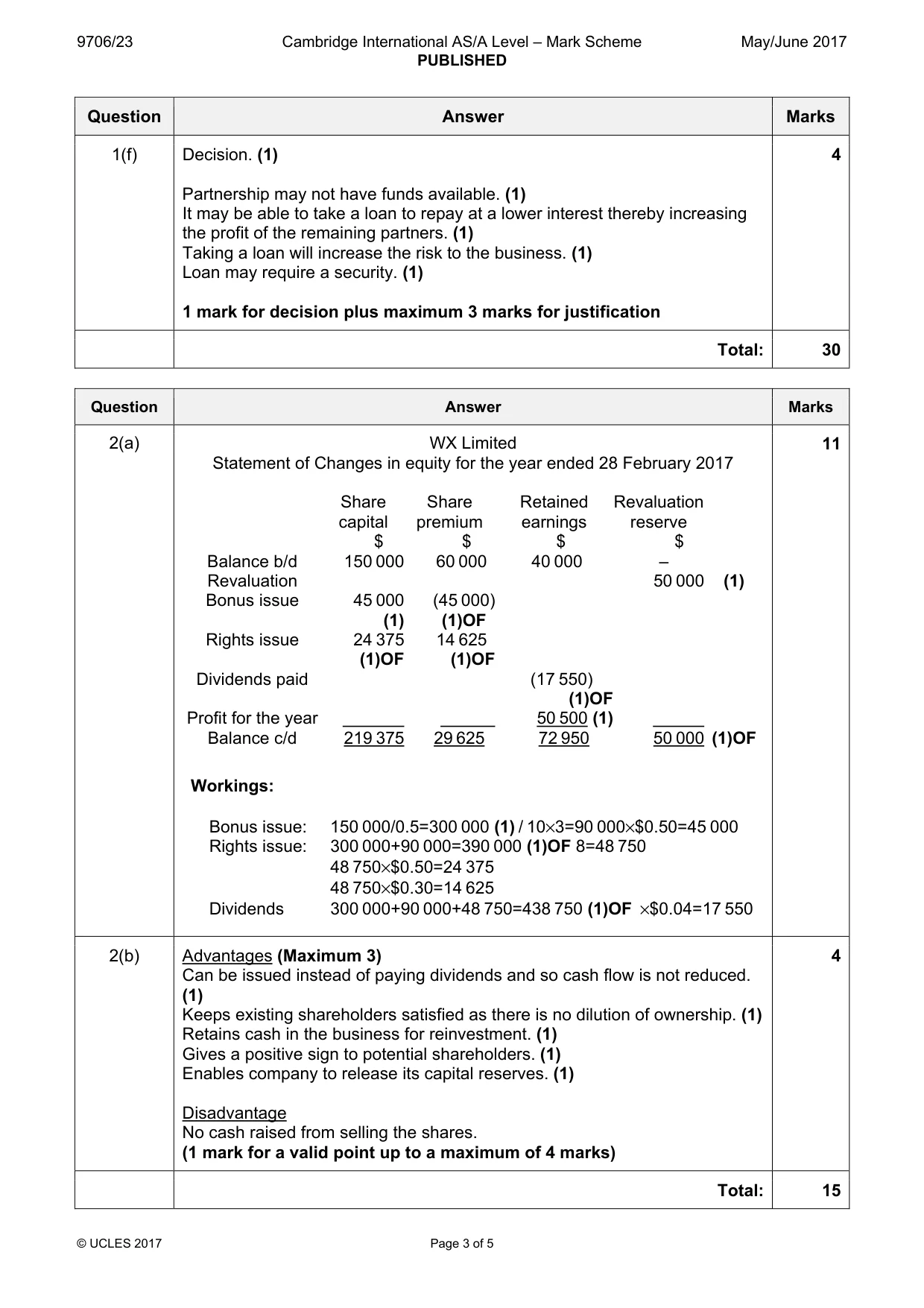
Mark scheme: Question Answer Marks 1(a) Adjusted net profit: 232 000–4000 (1) –9000 (3) =219 000 4 Workings: 15 000×2=30 000 (1) ×20%=6000 (1) OF 15 000–6000=9000 (1) OF 1(b) Adjusted Net Profit 219 000 6 Add Interest on drawings Ramadhin 400 Statham 400 Trueman 400 1 200 (1) 220 200 Less Interest on capital Ramadhin 18 000 Statham 12 000 Trueman 6 000 (36 000) (1) Salary Trueman (12 000) (1) 172 200 Share of profit Ramadhin 86 100 (1) OF Statham 57 400 (1) OF Trueman 28 700 (1) OF 172 200 1(c) Fair value of assets may be greater than book value. (1) 3 Partners are rewarded for their efforts in building up the business. (1) It is only fair that the retiring partner is compensated in this way. (1) 1(d) Capital 100 000 8 Goodwill to Trueman 2 000 (1) Revaluation loss (1 250) (1) Current account 36 300 * (5) 137 050 × 60% 82 230 (1)OF *28 700 (1) OF + 6000 (1) OF + 12 000 (1) OF – 400 (1) OF – 10 000 (1) 1(e) Decision. (1) 5 Financial (Maximum 3) Trueman would receive more / less income. (1)OF Interest will be earned on the loan. (1) The decision may be affected by the interest rate which could be obtained externally on the capital invested. (1) Non-financial (Maximum 3) Level of risk. (1) Degree of responsibility / decision making. (1) Security of employment. (1) 1 mark for decision plus maximum 4 marks for justification 1(f) Decision. (1) 4 Partnership may not have funds available. (1) It may be able to take a loan to repay at a lower interest thereby increasing the profit of the remaining partners. (1) Taking a loan will increase the risk to the business. (1) Loan may require a security. (1) 1 mark for decision plus maximum 3 marks for justification Total: 30
Q2 · The following is an extract from the statement of financial position of WX Limited at 1…
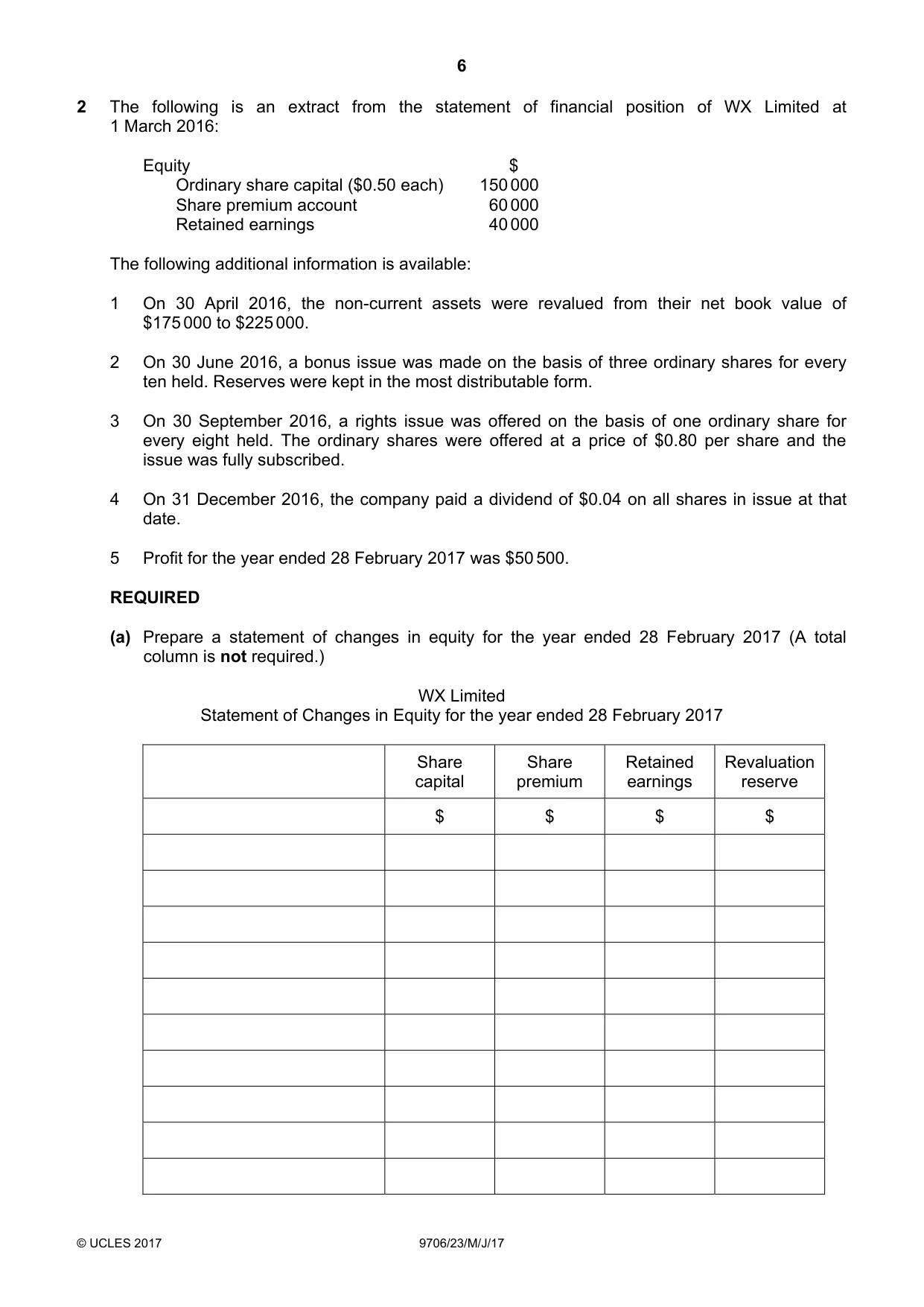
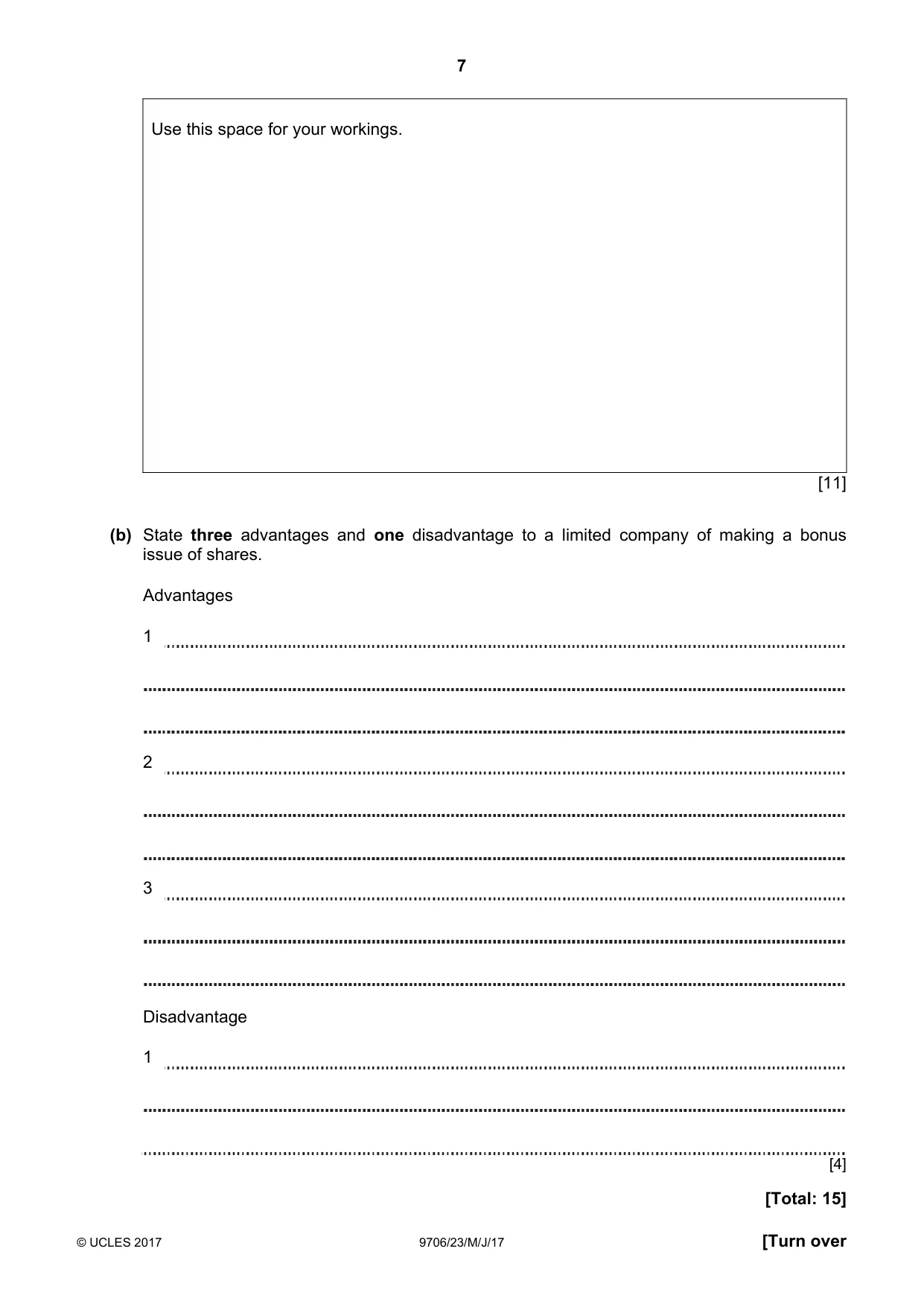
2 The following is an extract from the statement of financial position of WX Limited at 1 March 2016: Equity $ Ordinary share capital ($0.50 each) 150 000 Share premium account 60 000 Retained earnings 40 000 The following additional information is available: 1 On 30 April 2016, the non-current assets were revalued from their net book value of $175 000 to $225 000. 2 On 30 June 2016, a bonus issue was made on the basis of three ordinary shares for every ten held. Reserves were kept in the most distributable form. 3 On 30 September 2016, a rights issue was offered on the basis of one ordinary share for every eight held. The ordinary shares were offered at a price of $0.80 per share and the issue was fully subscribed. 4 On 31 December 2016, the company paid a dividend of $0.04 on all shares in issue at that date. 5 Profit for the year ended 28 February 2017 was $50 500. REQUIRED (a) Prepare a statement of changes in equity for the year ended 28 February 2017 (A total column is not required.) WX Limited Statement of Changes in Equity for the year ended 28 February 2017 Share Share Retained Revaluation capital premium earnings reserve $ $ $ $ Use this space for your workings. [11] (b) State three advantages and one disadvantage to a limited company of making a bonus issue of shares. Advantages 1 2 3 Disadvantage 1 [4] [Total: 15]
Mark scheme: 2(a) WX Limited 11 Statement of Changes in equity for the year ended 28 February 2017 Share Share Retained Revaluation capital premium earnings reserve $ $ $ $ Balance b/d 150 000 60 000 40 000 – Revaluation 50 000 (1) Bonus issue 45 000 (45 000) (1) (1)OF Rights issue 24 375 14 625 (1)OF (1)OF Dividends paid (17 550) (1)OF Profit for the year 50 500 (1) Balance c/d 219 375 29 625 72 950 50 000 (1)OF Workings: Bonus issue: 150 000/0.5=300 000 (1) / 10×3=90 000×$0.50=45 000 Rights issue: 300 000+90 000=390 000 (1)OF 8=48 750 48 750×$0.50=24 375 48 750×$0.30=14 625 Dividends 300 000+90 000+48 750=438 750 (1)OF ×$0.04=17 550 2(b) Advantages (Maximum 3) 4 Can be issued instead of paying dividends and so cash flow is not reduced. (1) Keeps existing shareholders satisfied as there is no dilution of ownership. (1) Retains cash in the business for reinvestment. (1) Gives a positive sign to potential shareholders. (1) Enables company to release its capital reserves. (1) Disadvantage No cash raised from selling the shares. (1 mark for a valid point up to a maximum of 4 marks) Total: 15
Q3 · Stapleton provided the following information for the year ended 30 April 2016: $ Opening…
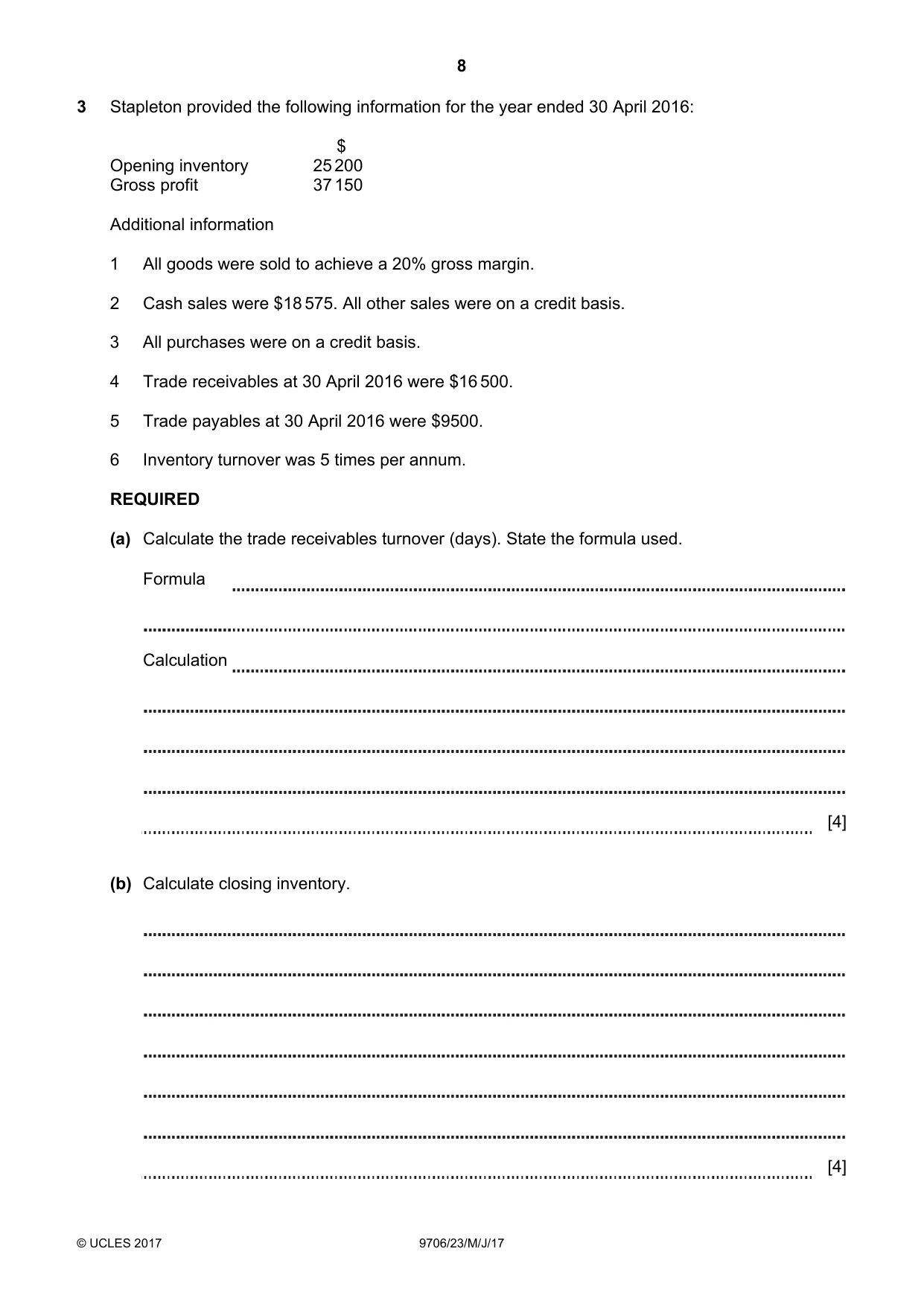
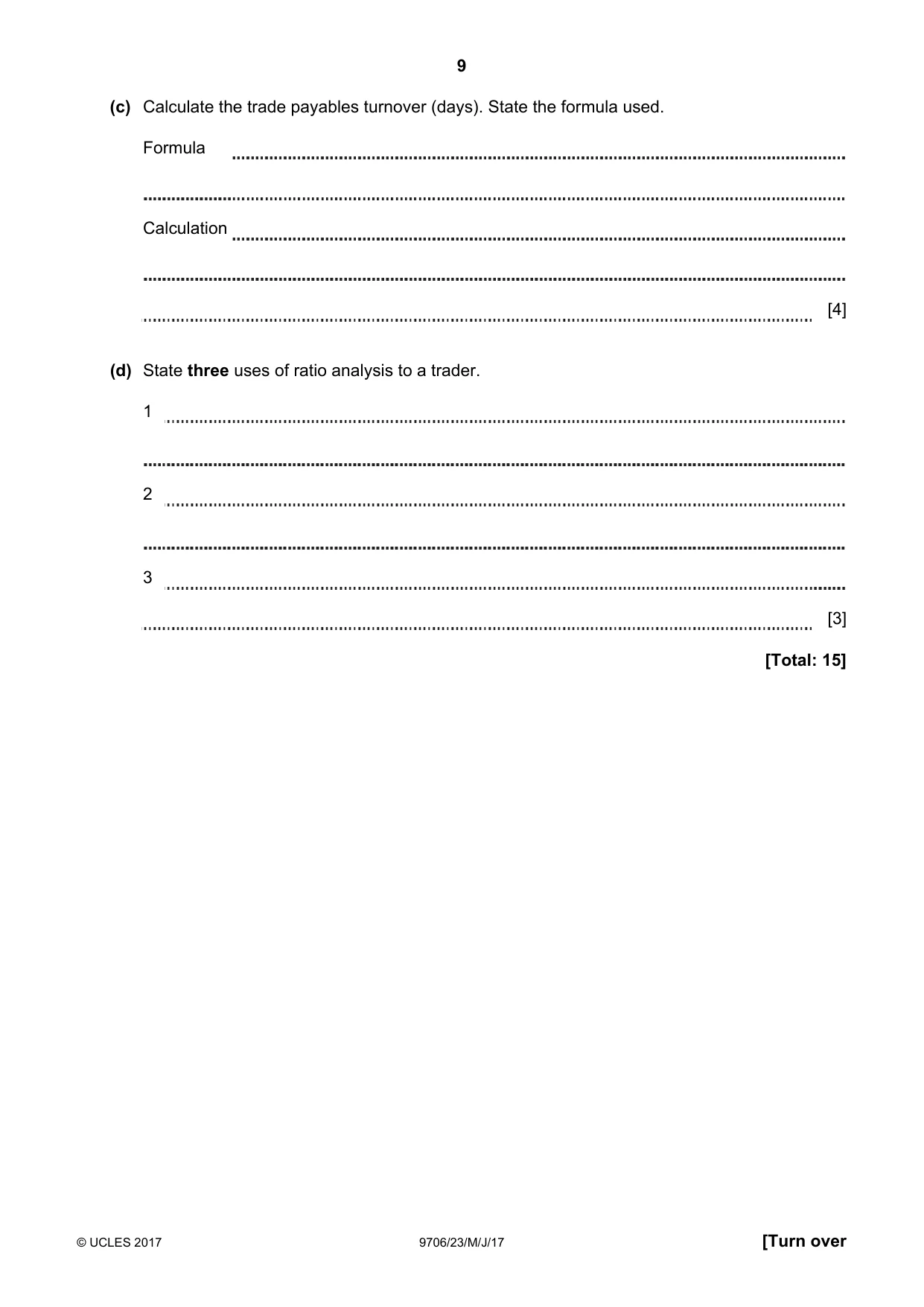
3 Stapleton provided the following information for the year ended 30 April 2016: $ Opening inventory 25 200 Gross profit 37 150 Additional information 1 All goods were sold to achieve a 20% gross margin. 2 Cash sales were $18 575. All other sales were on a credit basis. 3 All purchases were on a credit basis. 4 Trade receivables at 30 April 2016 were $16 500. 5 Trade payables at 30 April 2016 were $9500. 6 Inventory turnover was 5 times per annum. REQUIRED (a) Calculate the trade receivables turnover (days). State the formula used. Formula Calculation [4] (b) Calculate closing inventory. [4] (c) Calculate the trade payables turnover (days). State the formula used. Formula Calculation [4] (d) State three uses of ratio analysis to a trader. 1 2 3 [3] [Total: 15]
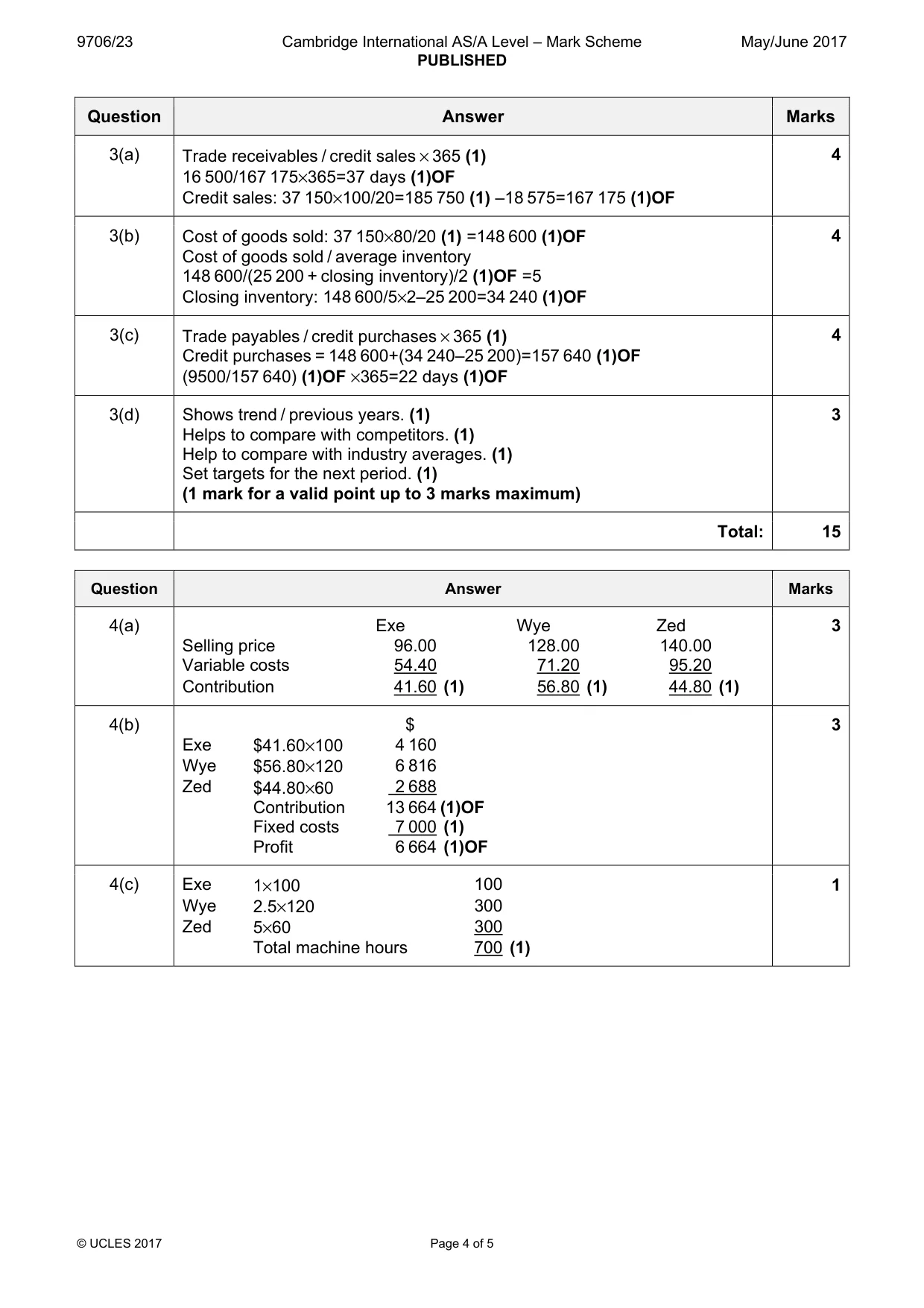
Mark scheme: 3(a) Trade receivables / credit sales × 365 (1) 4 16 500/167 175×365=37 days (1)OF Credit sales: 37 150×100/20=185 750 (1) –18 575=167 175 (1)OF 3(b) Cost of goods sold: 37 150×80/20 (1) =148 600 (1)OF 4 Cost of goods sold / average inventory 148 600/(25 200 + closing inventory)/2 (1)OF =5 Closing inventory: 148 600/5×2–25 200=34 240 (1)OF 3(c) Trade payables / credit purchases × 365 (1) 4 Credit purchases = 148 600+(34 240–25 200)=157 640 (1)OF (9500/157 640) (1)OF ×365=22 days (1)OF 3(d) Shows trend / previous years. (1) 3 Helps to compare with competitors. (1) Help to compare with industry averages. (1) Set targets for the next period. (1) (1 mark for a valid point up to 3 marks maximum) Total: 15
More questions on Analysis and communication of accounting information
Q4 · Y Limited manufactures three products, Exe, Wye and Zed
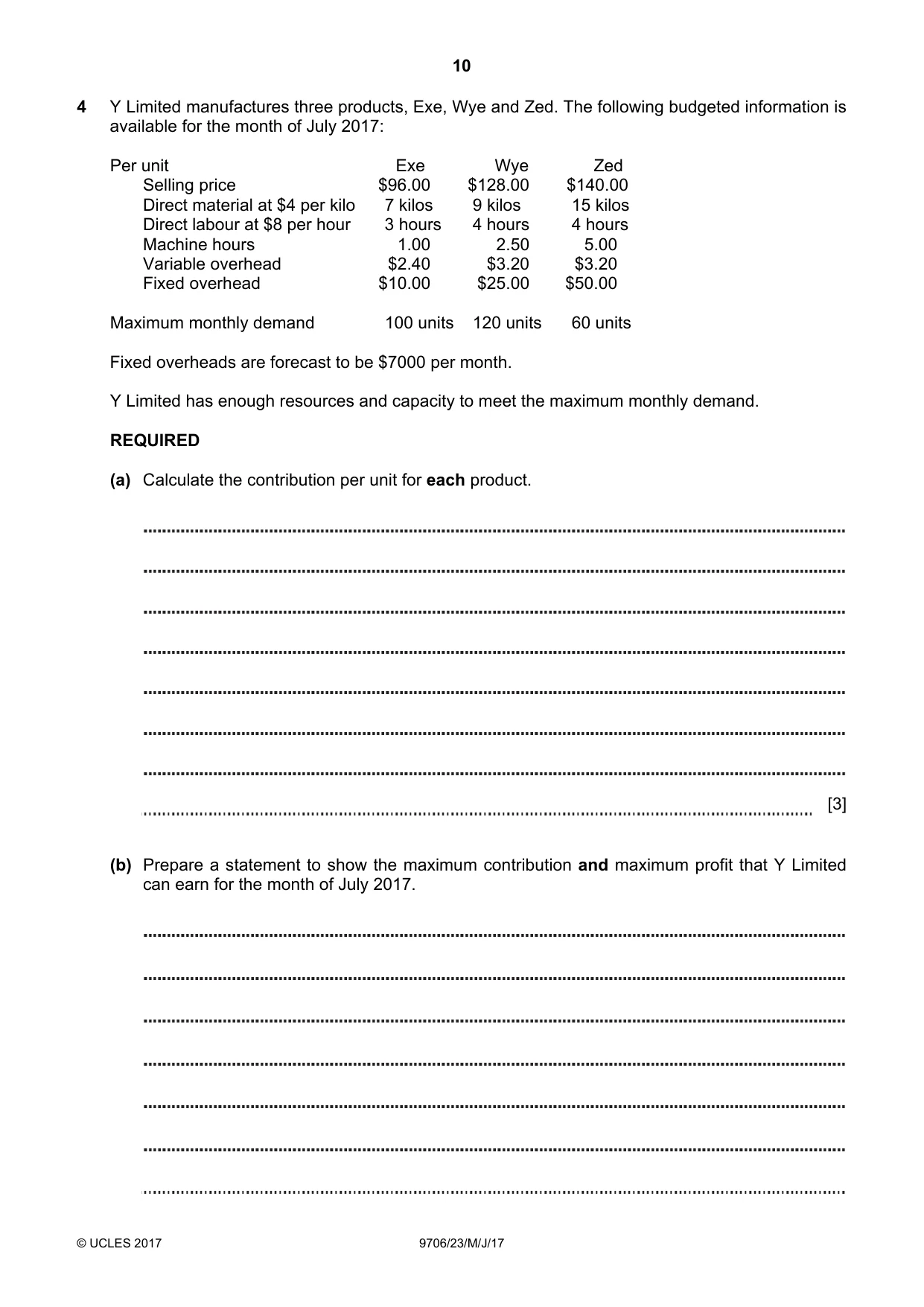
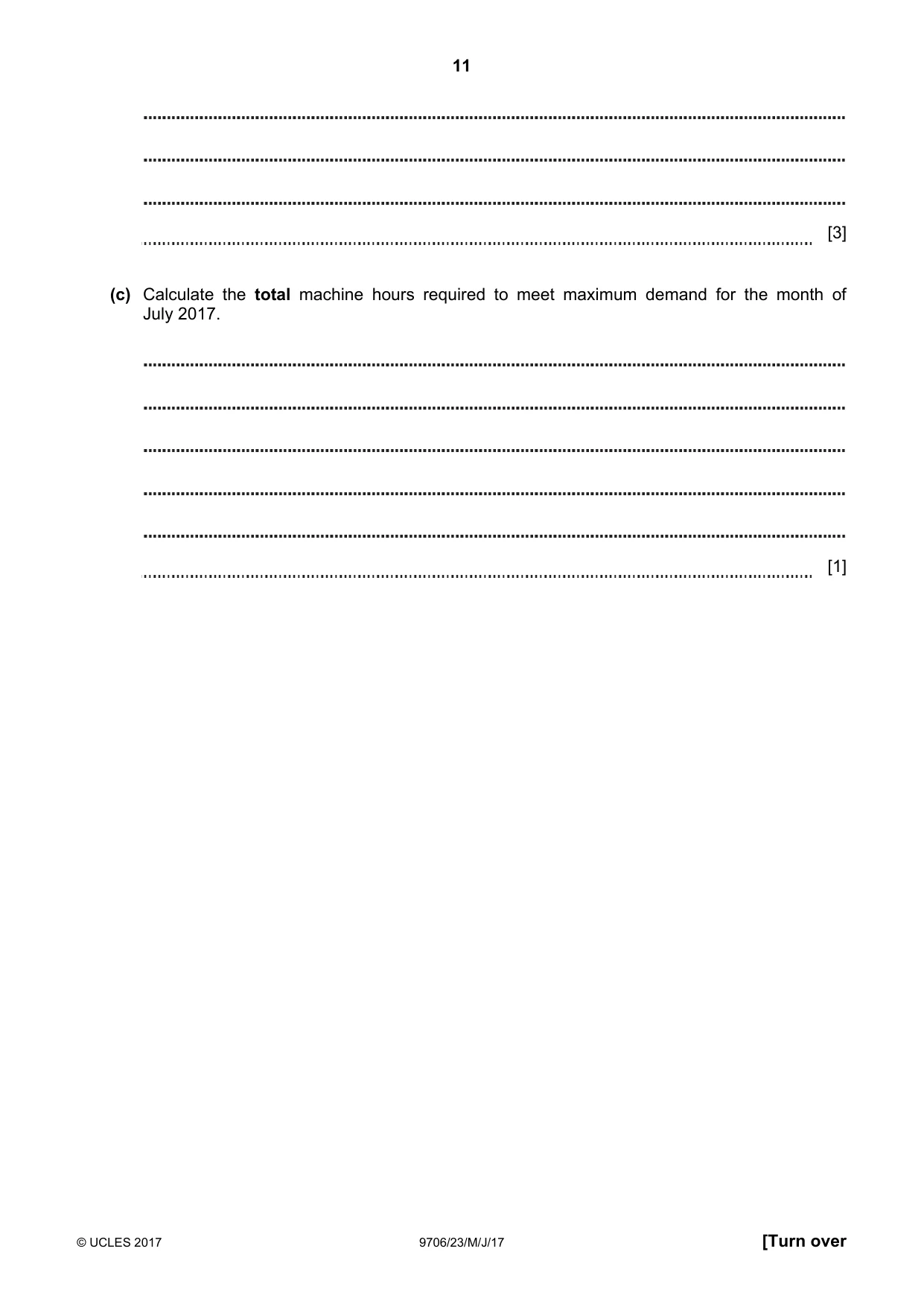
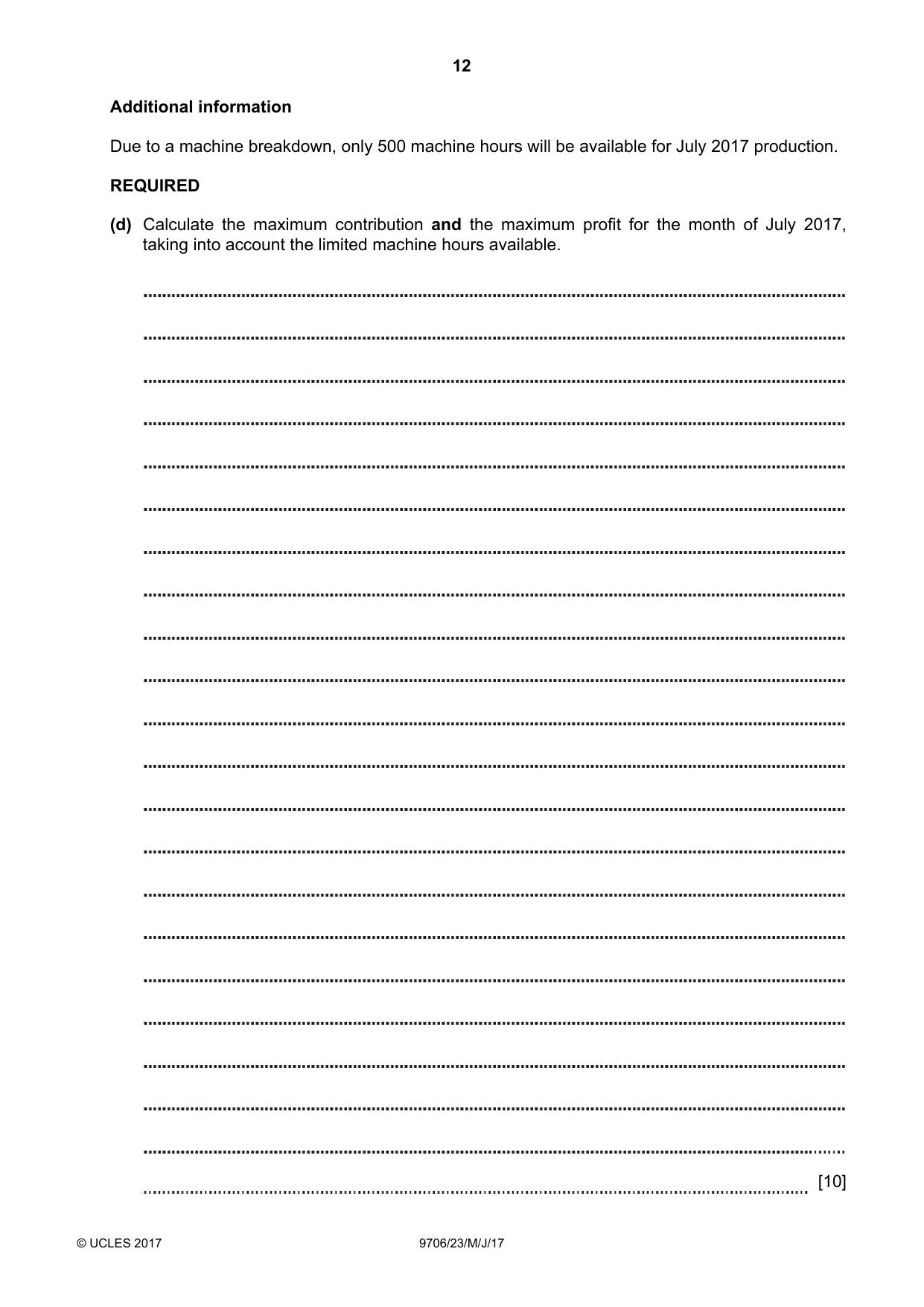
4 Y Limited manufactures three products, Exe, Wye and Zed. The following budgeted information is available for the month of July 2017: Per unit Exe Wye Zed Selling price $96.00 $128.00 $140.00 Direct material at $4 per kilo 7 kilos 9 kilos 15 kilos Direct labour at $8 per hour 3 hours 4 hours 4 hours Machine hours 1.00 2.50 5.00 Variable overhead $2.40 $3.20 $3.20 Fixed overhead $10.00 $25.00 $50.00 Maximum monthly demand 100 units 120 units 60 units Fixed overheads are forecast to be $7000 per month. Y Limited has enough resources and capacity to meet the maximum monthly demand. REQUIRED (a) Calculate the contribution per unit for each product. [3] (b) Prepare a statement to show the maximum contribution and maximum profit that Y Limited can earn for the month of July 2017. [3] (c) Calculate the total machine hours required to meet maximum demand for the month of July 2017. [1] Additional information Due to a machine breakdown, only 500 machine hours will be available for July 2017 production. REQUIRED (d) Calculate the maximum contribution and the maximum profit for the month of July 2017, taking into account the limited machine hours available. [10]
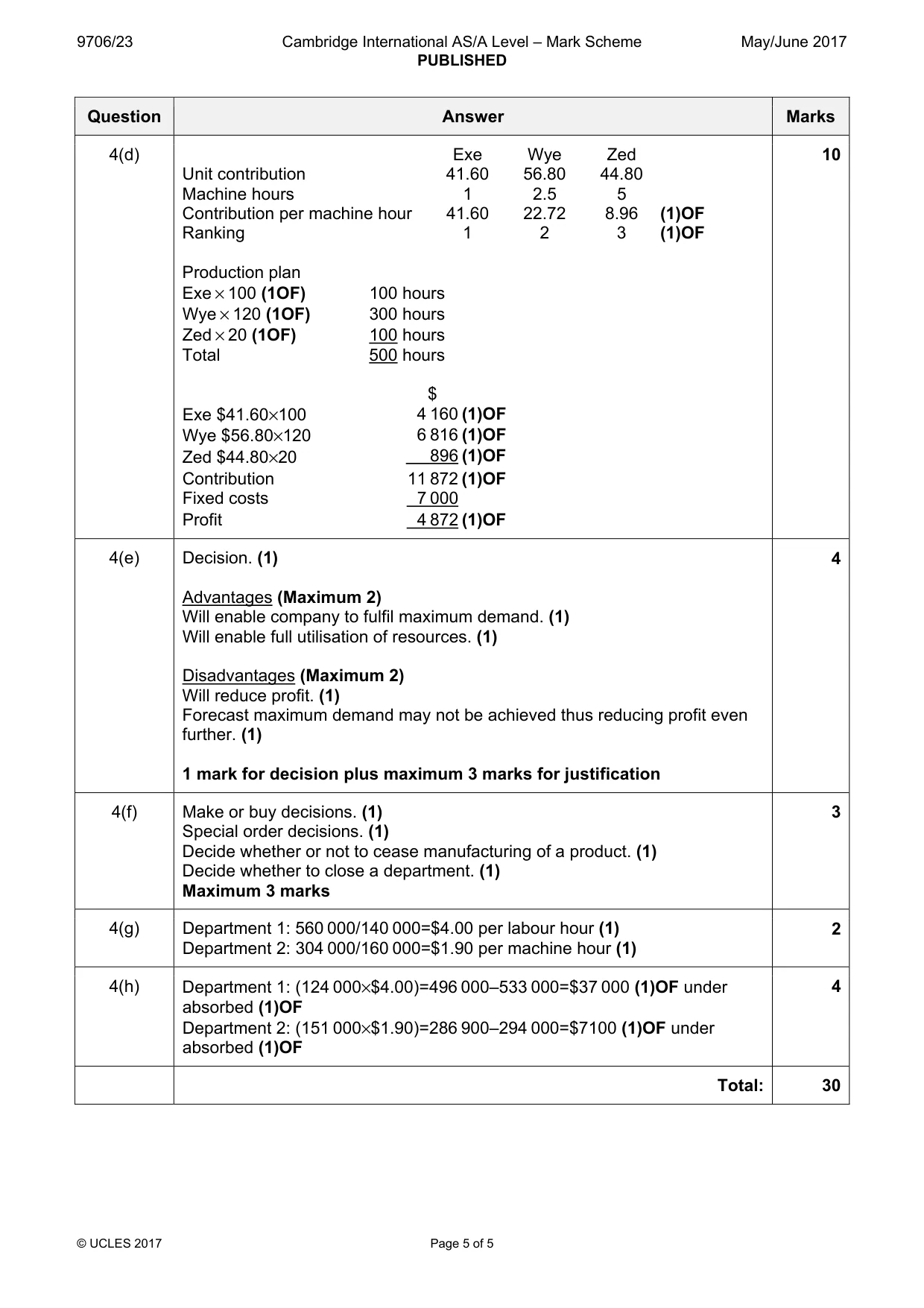
Mark scheme: 4(a) Exe Wye Zed 3 Selling price 96.00 128.00 140.00 Variable costs 54.40 71.20 95.20 Contribution 41.60 (1) 56.80 (1) 44.80 (1) 4(b) $ 3 Exe $41.60×100 4 160 Wye $56.80×120 6 816 Zed $44.80×60 2 688 Contribution 13 664 (1)OF Fixed costs 7 000 (1) Profit 6 664 (1)OF 4(c) Exe 1×100 100 1 Wye 2.5×120 300 Zed 5×60 300 Total machine hours 700 (1) 4(d) Exe Wye Zed 10 Unit contribution 41.60 56.80 44.80 Machine hours 1 2.5 5 Contribution per machine hour 41.60 22.72 8.96 (1)OF Ranking 1 2 3 (1)OF Production plan Exe × 100 (1OF) 100 hours Wye × 120 (1OF) 300 hours Zed × 20 (1OF) 100 hours Total 500 hours $ Exe $41.60×100 4 160 (1)OF Wye $56.80×120 6 816 (1)OF Zed $44.80×20 896 (1)OF Contribution 11 872 (1)OF Fixed costs 7 000 Profit 4 872 (1)OF 4(e) Decision. (1) 4 Advantages (Maximum 2) Will enable company to fulfil maximum demand. (1) Will enable full utilisation of resources. (1) Disadvantages (Maximum 2) Will reduce profit. (1) Forecast maximum demand may not be achieved thus reducing profit even further. (1) 1 mark for decision plus maximum 3 marks for justification 4(f) Make or buy decisions. (1) 3 Special order decisions. (1) Decide whether or not to cease manufacturing of a product. (1) Decide whether to close a department. (1) Maximum 3 marks 4(g) Department 1: 560 000/140 000=$4.00 per labour hour (1) 2 Department 2: 304 000/160 000=$1.90 per machine hour (1) 4(h) Department 1: (124 000×$4.00)=496 000–533 000=$37 000 (1)OF under 4 absorbed (1)OF Department 2: (151 000×$1.90)=286 900–294 000=$7100 (1)OF under absorbed (1)OF Total: 30
What was in this paper
The subtopics covered by these 4 questions, and how many questions each got. Open one in a new tab to see every Cambridge question on it.
What you needed in this session
Cambridge’s own grade thresholds for 2017 May/June, Paper 2 · Variant 3. A higher threshold means an easier paper — the bar moves with how the cohort did.