Cambridge IGCSE Science - Combined 0653 — 2024 Feb/March Paper 4 · Variant 2
0653/42/F/M/24 · 9 questions · 80 marks · ≈90 min
The question paper and its mark scheme, free to read here and free to download. This is Cambridge’s own paper, exactly as it was sat.
Question paper20 pages


Mark scheme10 pages
Answers below. Sit the paper first if you are practising.
Questions as text
Q1 · Part of the human alimentary canal and associated organs
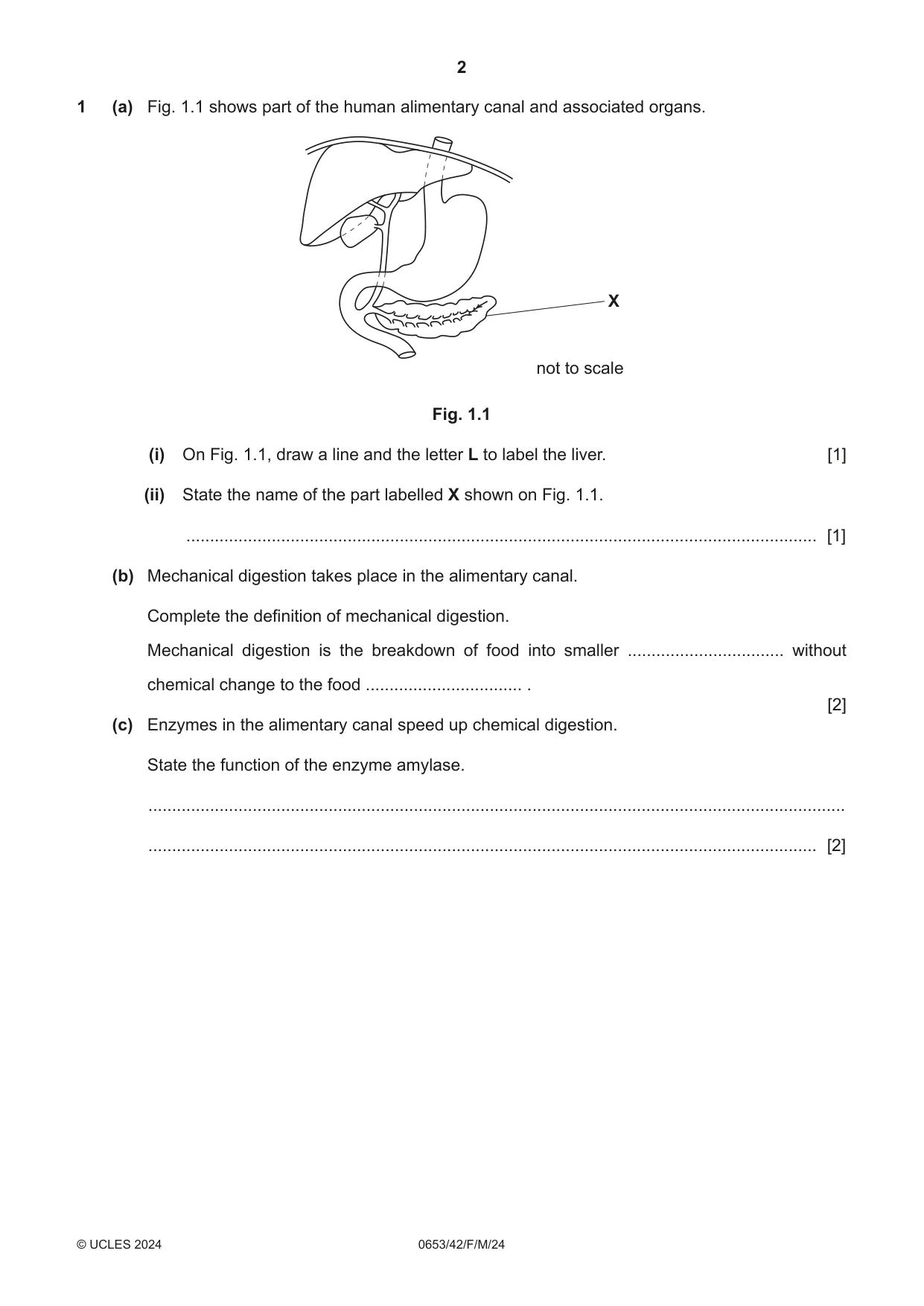
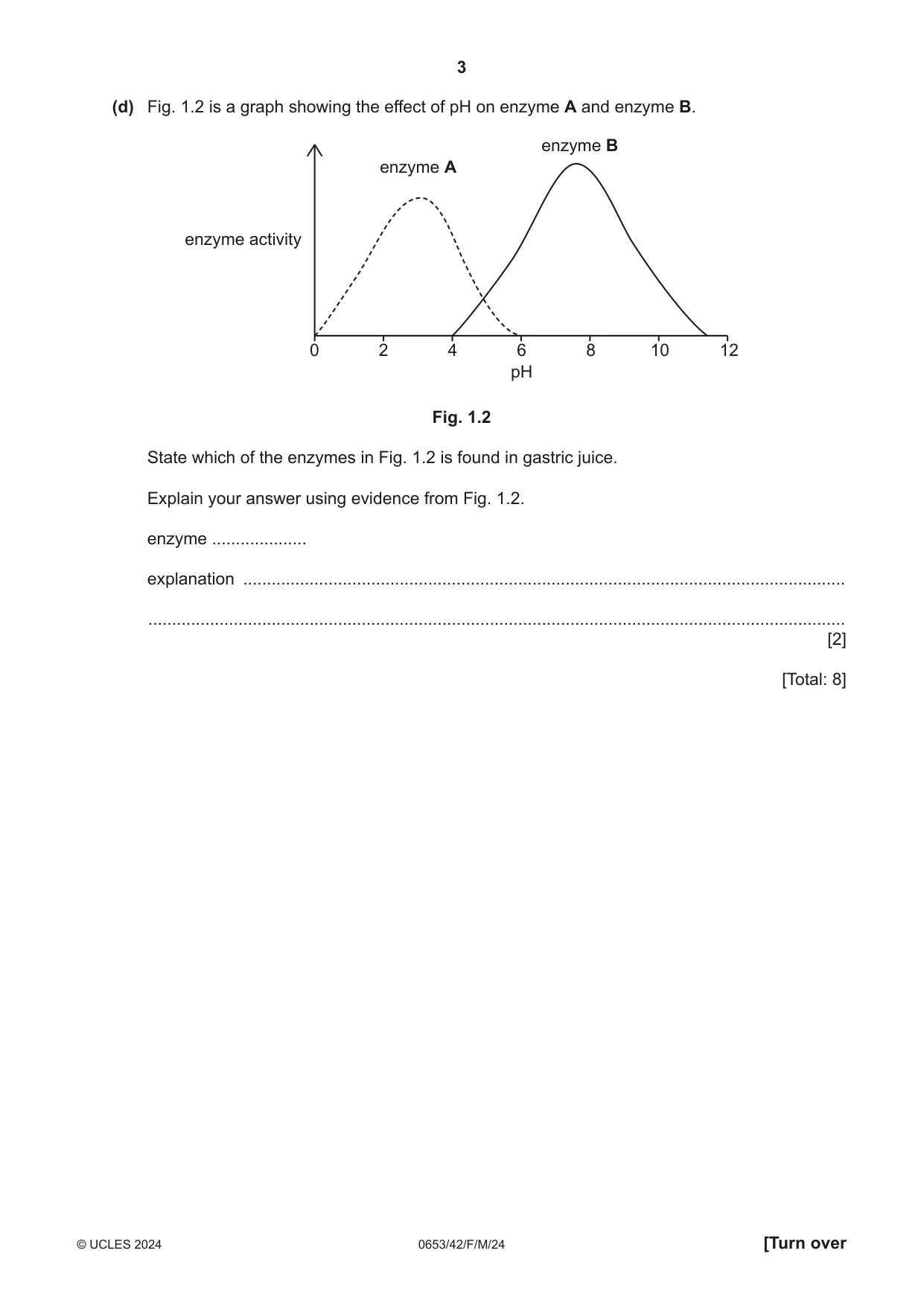
1 (a) Fig. 1.1 shows part of the human alimentary canal and associated organs. X not to scale Fig. 1.1 (i) On Fig. 1.1, draw a line and the letter L to label the liver. [1] (ii) State the name of the part labelled X shown on Fig. 1.1. ..................................................................................................................................... [1] (b) Mechanical digestion takes place in the alimentary canal. Complete the definition of mechanical digestion. Mechanical digestion is the breakdown of food into smaller ................................. without chemical change to the food ................................. . [2] (c) Enzymes in the alimentary canal speed up chemical digestion. State the function of the enzyme amylase. ................................................................................................................................................... ............................................................................................................................................. [2] (d) Fig. 1.2 is a graph showing the effect of pH on enzyme A and enzyme B. enzyme B enzyme A enzyme activity 0 2 4 6 8 10 12 pH Fig. 1.2 State which of the enzymes in Fig. 1.2 is found in gastric juice. Explain your answer using evidence from Fig. 1.2. enzyme .................... explanation ............................................................................................................................... ................................................................................................................................................... [2] [Total: 8]
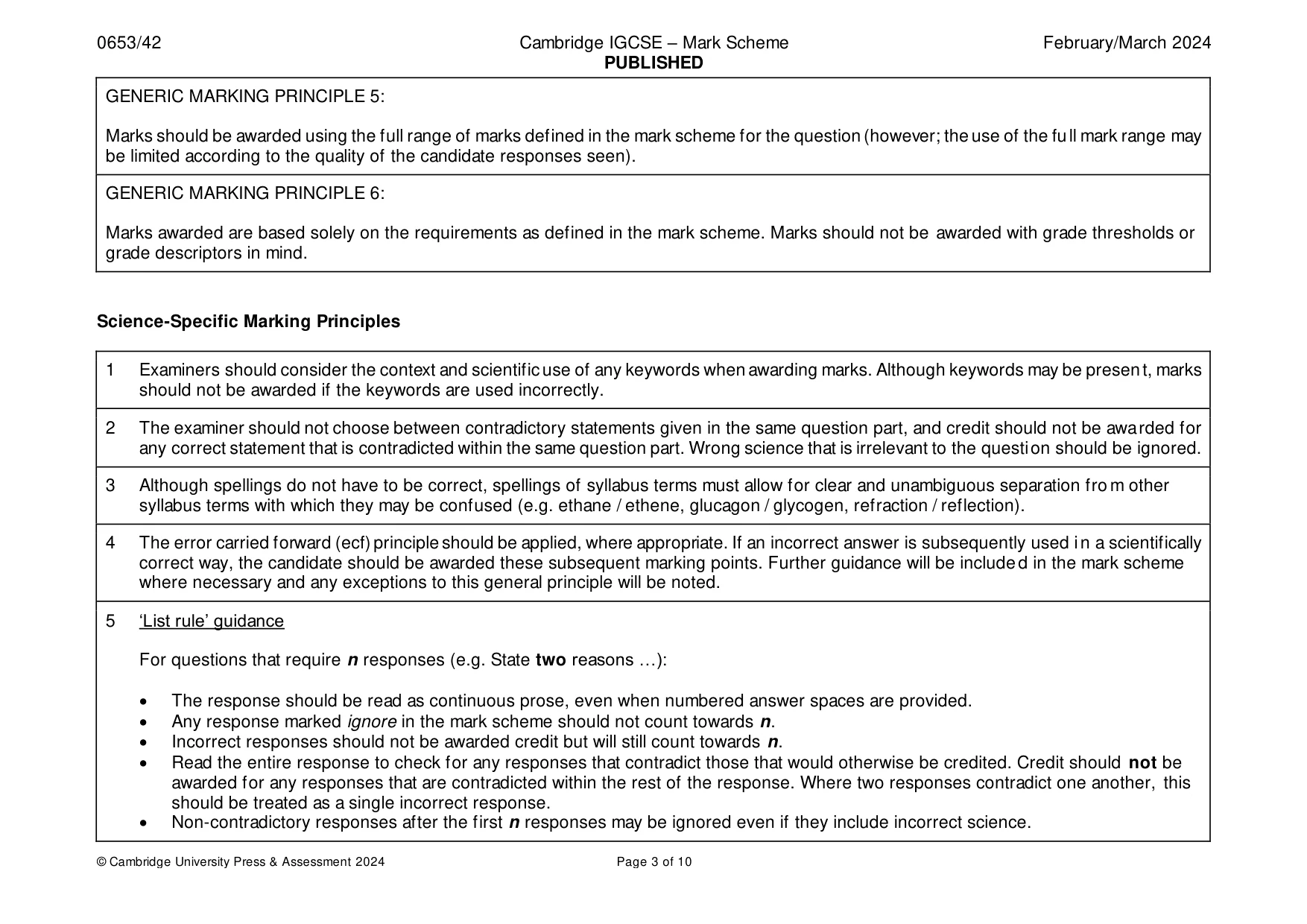
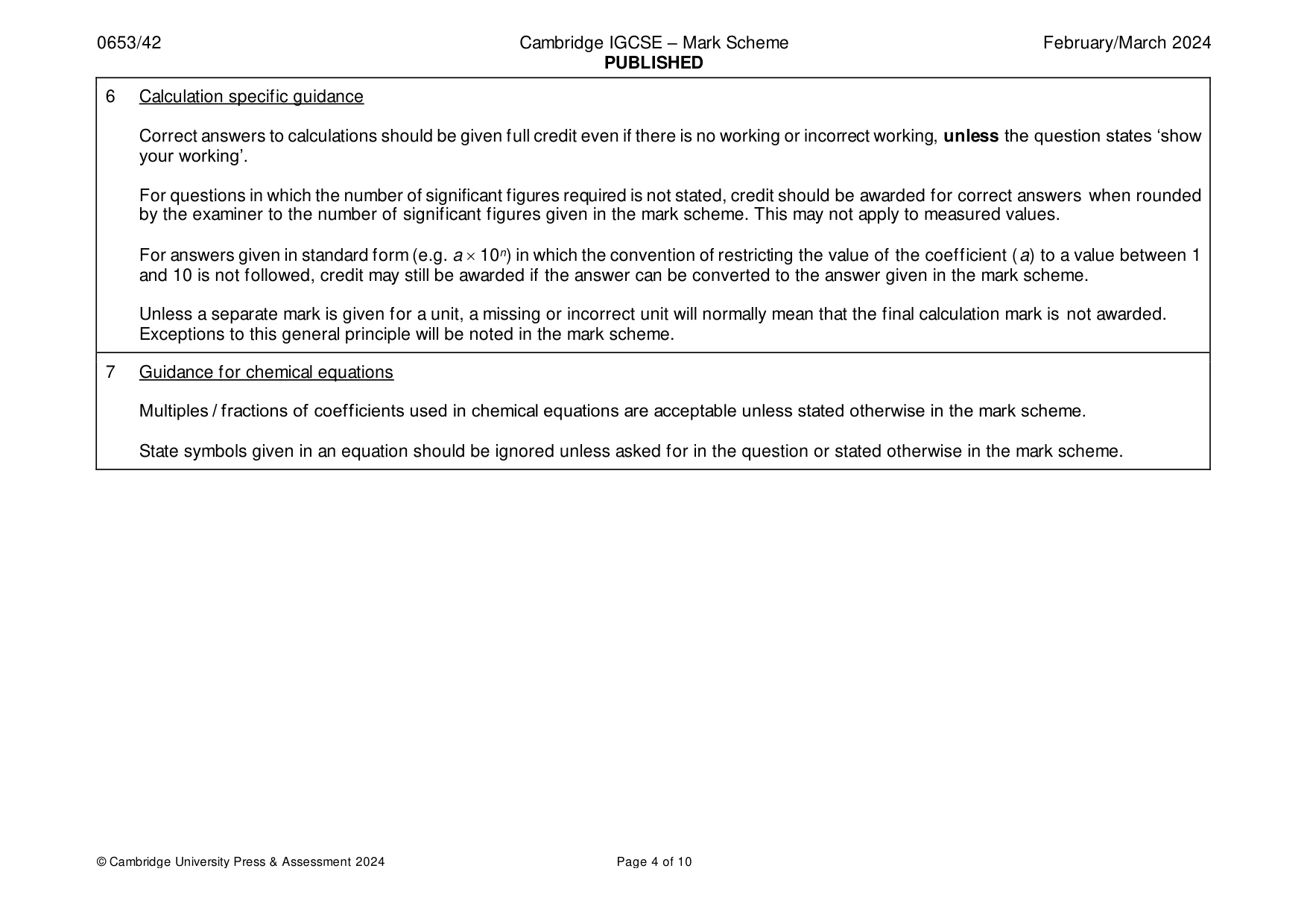
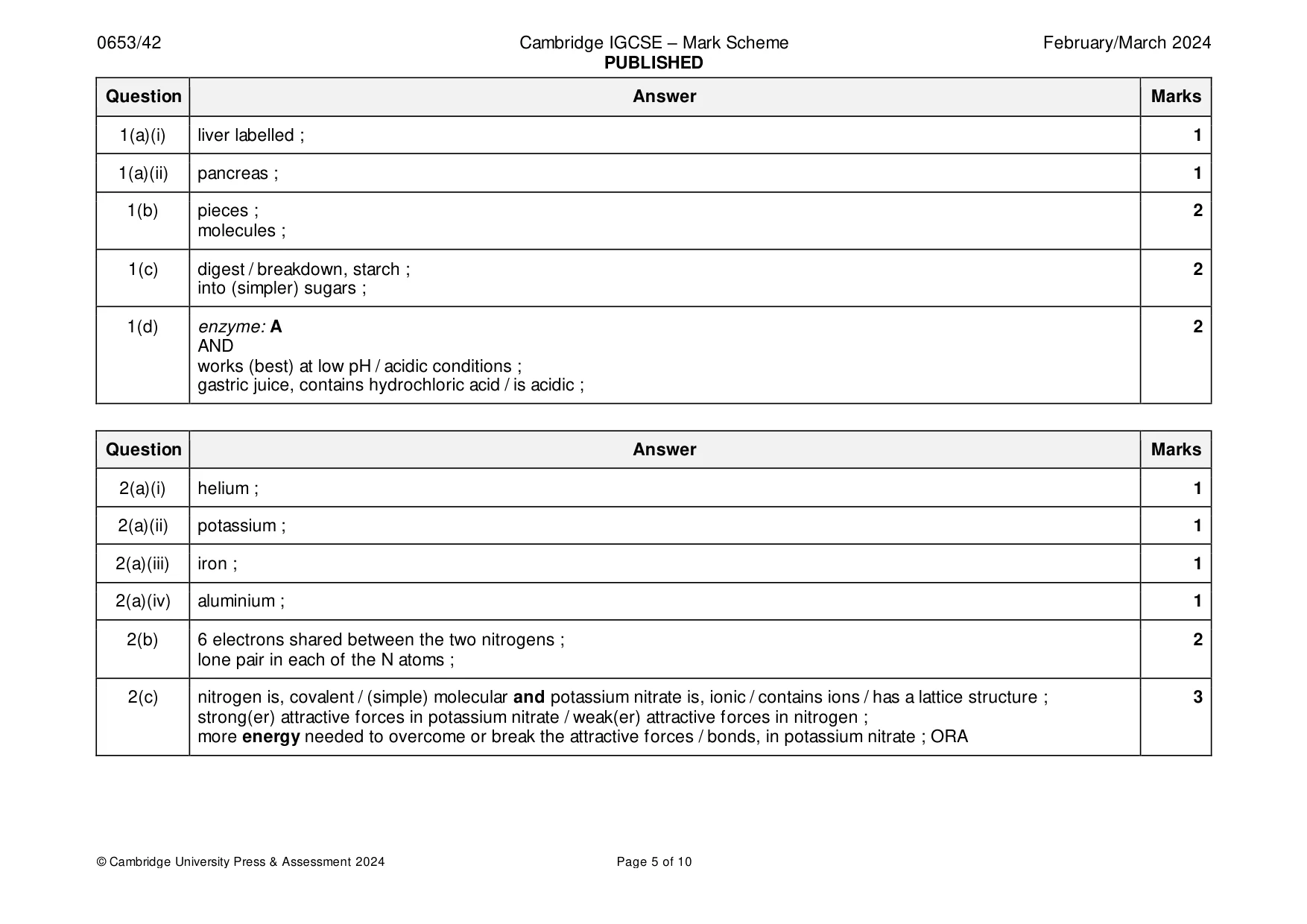
Mark scheme: Question Answer Marks 1(a)(i) liver labelled ; 1 1(a)(ii) pancreas ; 1 1(b) pieces ; 2 molecules ; 1(c) digest / breakdown, starch ; 2 into (simpler) sugars ; 1(d) enzyme: A 2 AND works (best) at low pH / acidic conditions ; gastric juice, contains hydrochloric acid / is acidic ;
Q2 · Answer the following questions using only the elements from this list
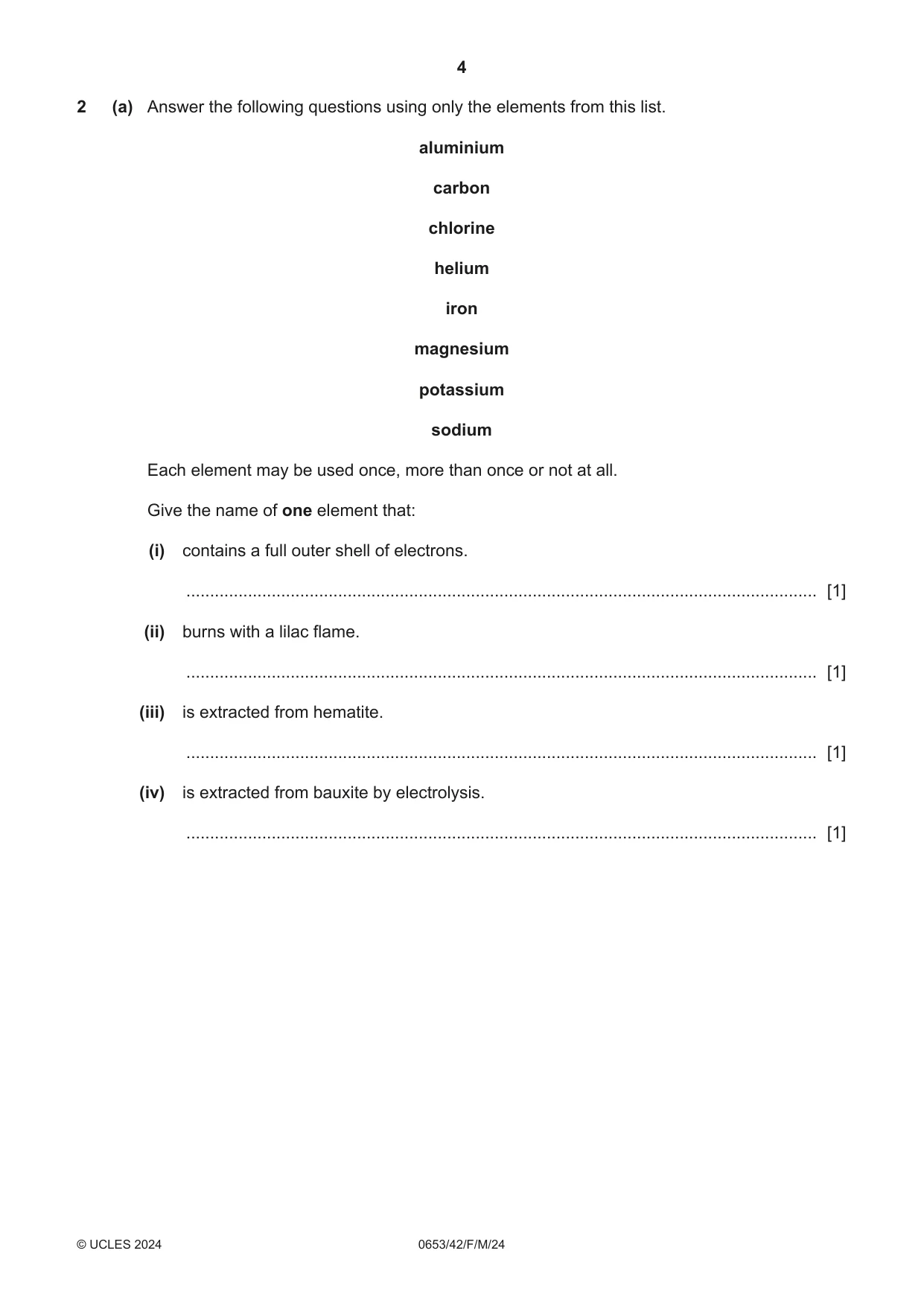
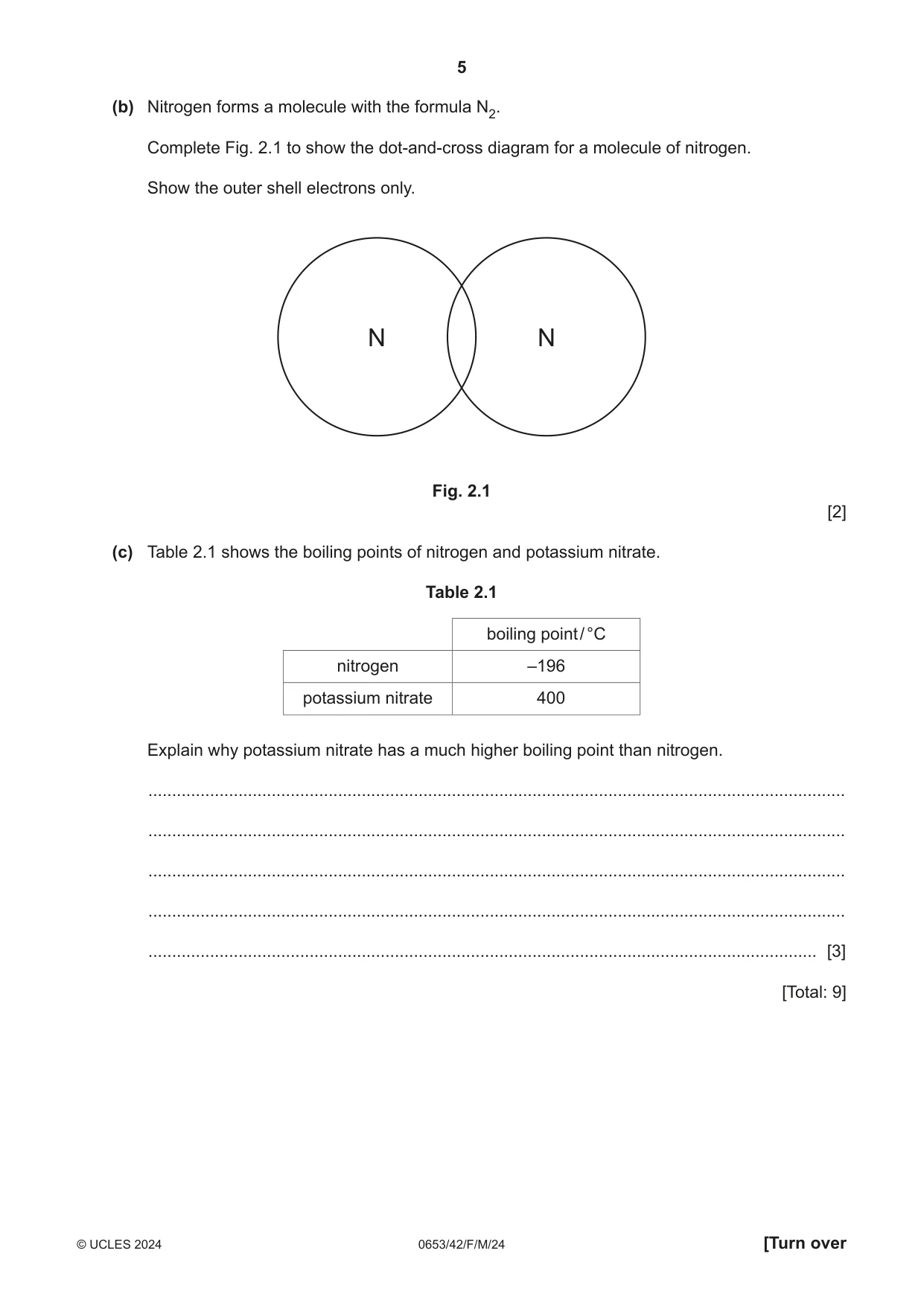
2 (a) Answer the following questions using only the elements from this list. aluminium carbon chlorine helium iron magnesium potassium sodium Each element may be used once, more than once or not at all. Give the name of one element that: (i) contains a full outer shell of electrons. ..................................................................................................................................... [1] (ii) burns with a lilac flame. ..................................................................................................................................... [1] (iii) is extracted from hematite. ..................................................................................................................................... [1] (iv) is extracted from bauxite by electrolysis. ..................................................................................................................................... [1] (b) Nitrogen forms a molecule with the formula N2. Complete Fig. 2.1 to show the dot-and-cross diagram for a molecule of nitrogen. Show the outer shell electrons only. N N Fig. 2.1 [2] (c) Table 2.1 shows the boiling points of nitrogen and potassium nitrate. Table 2.1 boiling point / °C nitrogen –196 potassium nitrate 400 Explain why potassium nitrate has a much higher boiling point than nitrogen. ................................................................................................................................................... ................................................................................................................................................... ................................................................................................................................................... ................................................................................................................................................... ............................................................................................................................................. [3] [Total: 9]
Mark scheme: 2(a)(i) helium ; 1 2(a)(ii) potassium ; 1 2(a)(iii) iron ; 1 2(a)(iv) aluminium ; 1 2(b) 6 electrons shared between the two nitrogens ; 2 lone pair in each of the N atoms ; 2(c) nitrogen is, covalent / (simple) molecular and potassium nitrate is, ionic / contains ions / has a lattice structure ; 3 strong(er) attractive forces in potassium nitrate / weak(er) attractive forces in nitrogen ; more energy needed to overcome or break the attractive forces / bonds, in potassium nitrate ; ORA
Q3 · The Parker Solar Probe is a spacecraft designed to study the Sun and the planet Venus
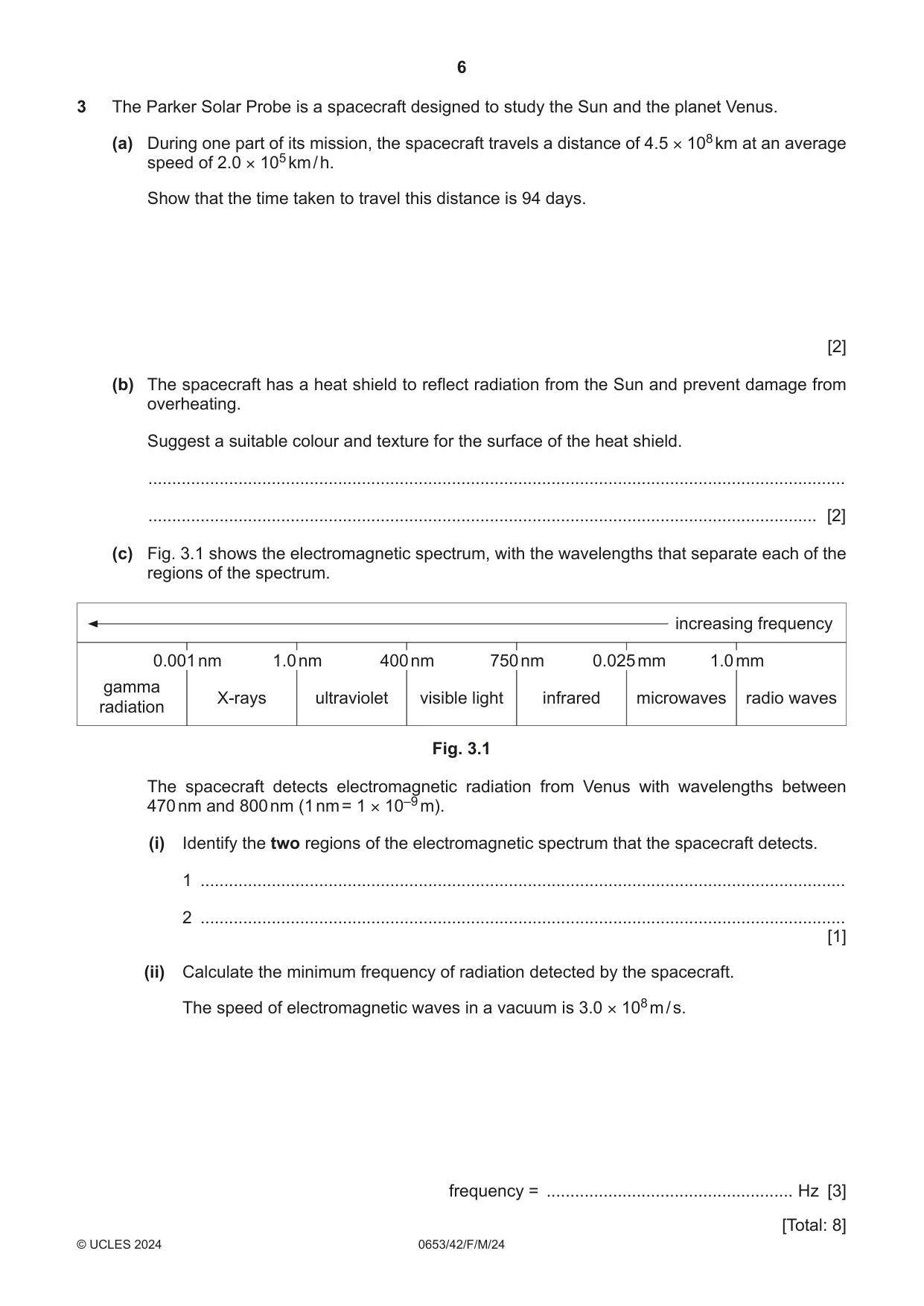
3 The Parker Solar Probe is a spacecraft designed to study the Sun and the planet Venus. (a) During one part of its mission, the spacecraft travels a distance of 4.5 × 10⁸ km at an average speed of 2.0 × 10⁵ km / h. Show that the time taken to travel this distance is 94 days. [2] (b) The spacecraft has a heat shield to reflect radiation from the Sun and prevent damage from overheating. Suggest a suitable colour and texture for the surface of the heat shield. ................................................................................................................................................... ............................................................................................................................................. [2] (c) Fig. 3.1 shows the electromagnetic spectrum, with the wavelengths that separate each of the regions of the spectrum. increasing frequency 0.001 nm 1.0 nm 400 nm 750 nm 0.025 mm 1.0 mm gamma X-rays ultraviolet visible light infrared microwaves radio waves radiation Fig. 3.1 The spacecraft detects electromagnetic radiation from Venus with wavelengths between 470 nm and 800 nm (1 nm = 1 × 10⁻⁹ m). (i) Identify the two regions of the electromagnetic spectrum that the spacecraft detects. 1 ........................................................................................................................................ 2 ........................................................................................................................................ [1] (ii) Calculate the minimum frequency of radiation detected by the spacecraft. The speed of electromagnetic waves in a vacuum is 3.0 × 10⁸ m / s. frequency = .................................................... Hz [3] [Total: 8]
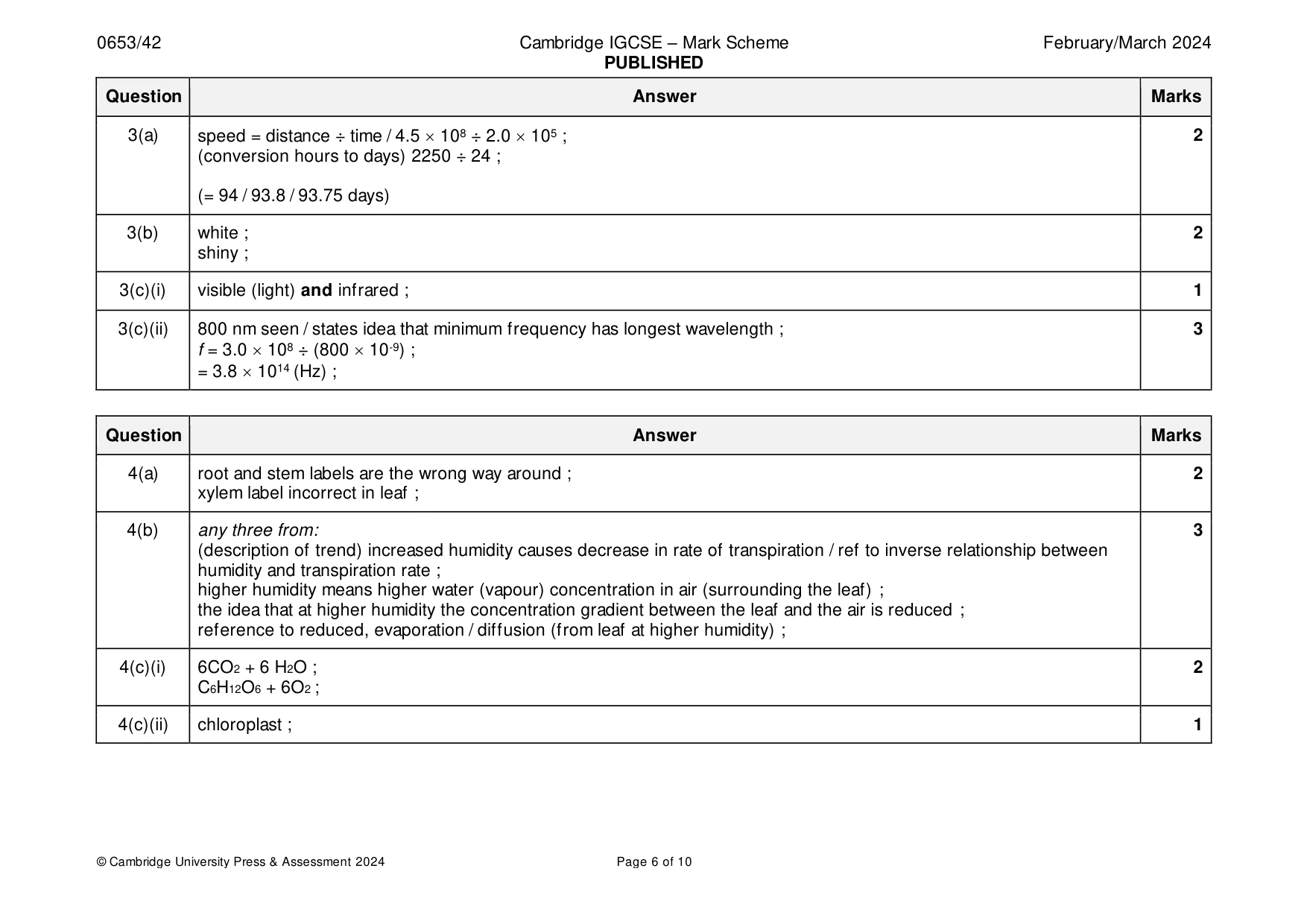
Mark scheme: 3(a) speed = distance ÷ time / 4.5 108 ÷ 2.0 105 ; 2 (conversion hours to days) 2250 ÷ 24 ; (= 94 / 93.8 / 93.75 days) 3(b) white ; 2 shiny ; 3(c)(i) visible (light) and infrared ; 1 3(c)(ii) 800 nm seen / states idea that minimum frequency has longest wavelength ; 3 f = 3.0 108 ÷ (800 10-9) ; = 3.8 1014 (Hz) ;
Q4 · A student draws diagrams to show the position of xylem in different parts of a plant
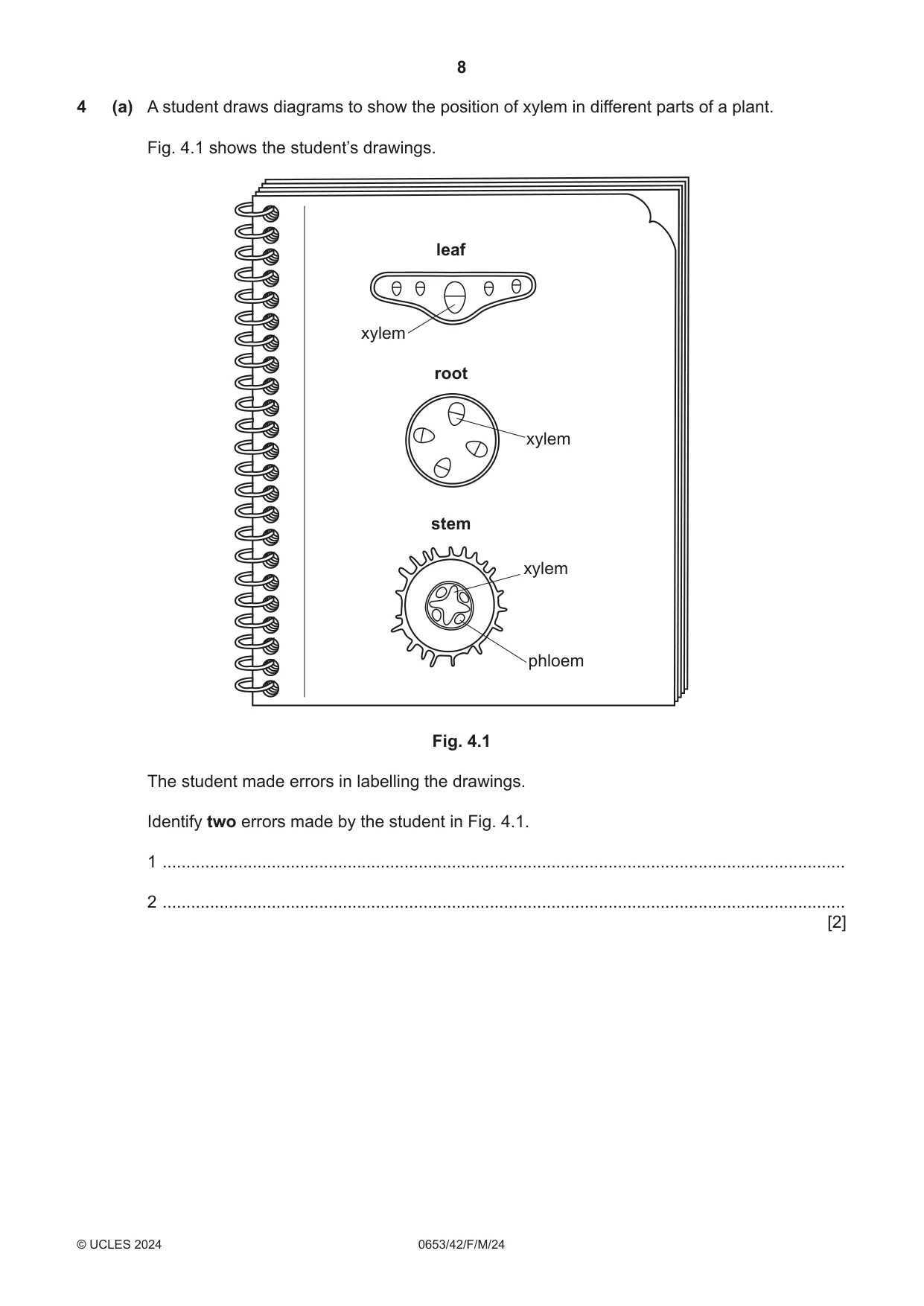
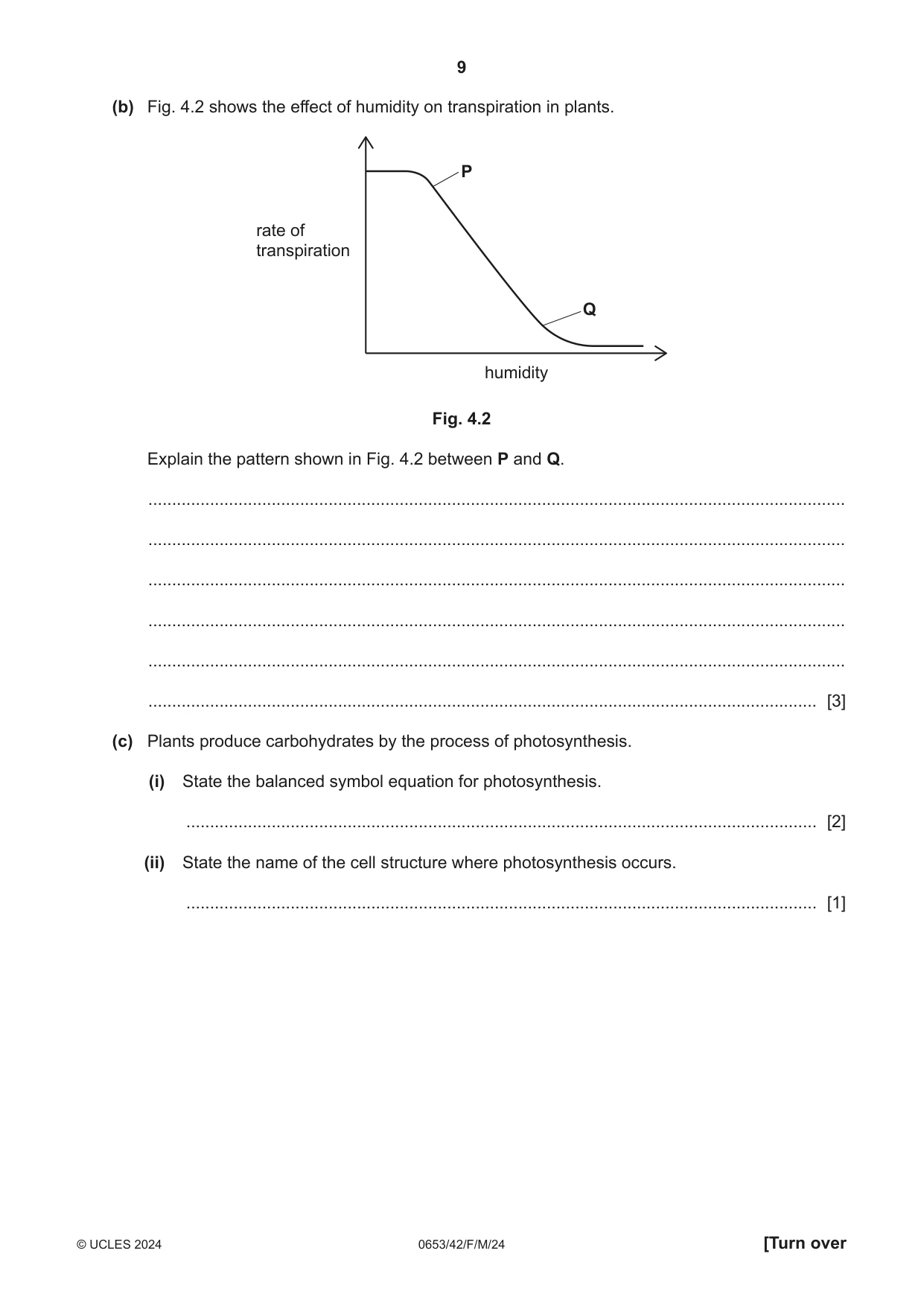
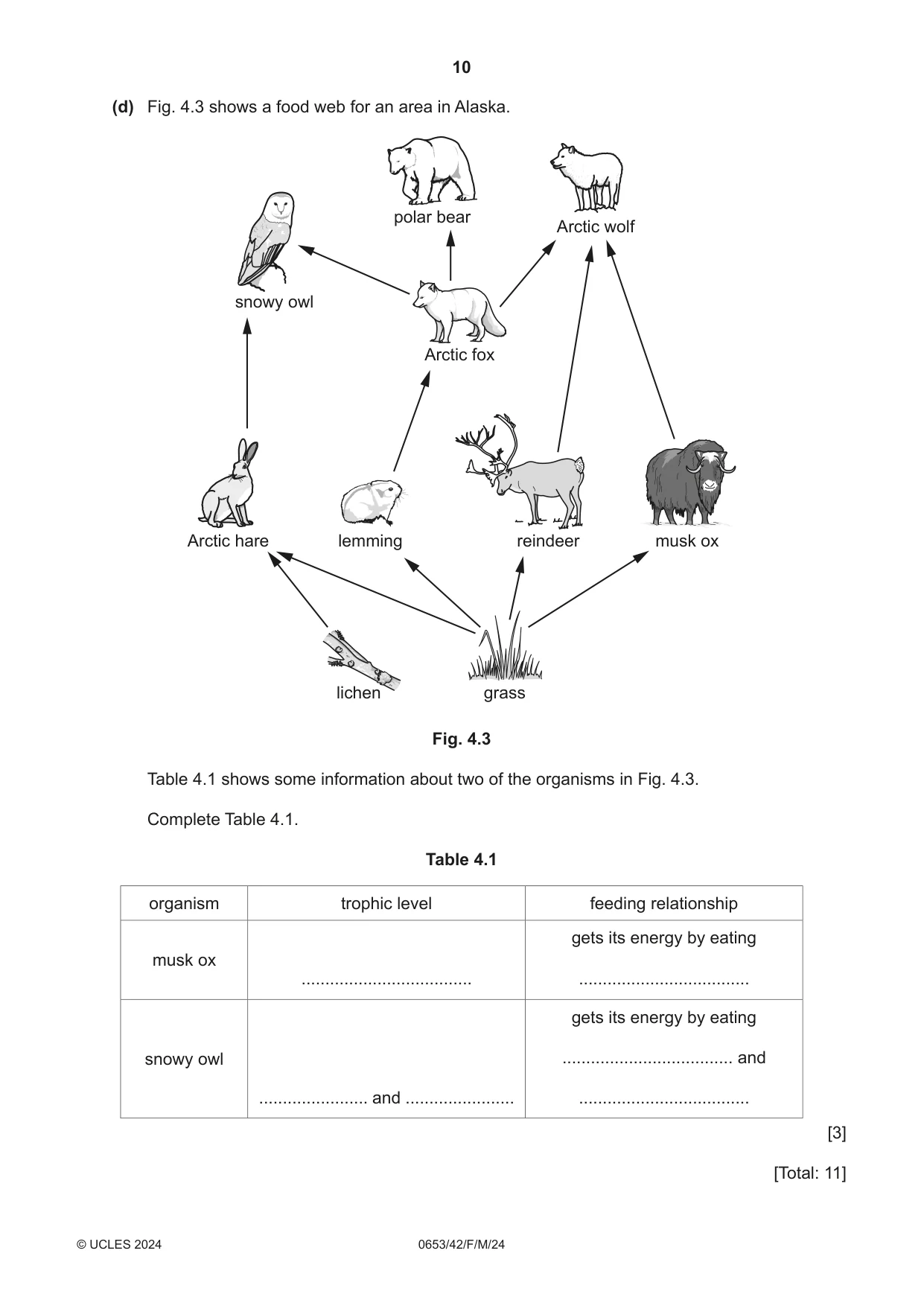
4 (a) A student draws diagrams to show the position of xylem in different parts of a plant. Fig. 4.1 shows the student’s drawings. leaf xylem root xylem stem xylem phloem Fig. 4.1 The student made errors in labelling the drawings. Identify two errors made by the student in Fig. 4.1. 1 ................................................................................................................................................ 2 ................................................................................................................................................ [2] (b) Fig. 4.2 shows the effect of humidity on transpiration in plants. P rate of transpiration Q humidity Fig. 4.2 Explain the pattern shown in Fig. 4.2 between P and Q. ................................................................................................................................................... ................................................................................................................................................... ................................................................................................................................................... ................................................................................................................................................... ................................................................................................................................................... ............................................................................................................................................. [3] (c) Plants produce carbohydrates by the process of photosynthesis. (i) State the balanced symbol equation for photosynthesis. ..................................................................................................................................... [2] (ii) State the name of the cell structure where photosynthesis occurs. ..................................................................................................................................... [1] (d) Fig. 4.3 shows a food web for an area in Alaska. polar bear Arctic wolf snowy owl Arctic fox Arctic hare lemming reindeer musk ox lichen grass Fig. 4.3 Table 4.1 shows some information about two of the organisms in Fig. 4.3. Complete Table 4.1. Table 4.1 organism trophic level feeding relationship gets its energy by eating musk ox .................................... .................................... gets its energy by eating snowy owl .................................... and ....................... and ....................... .................................... [3] [Total: 11]
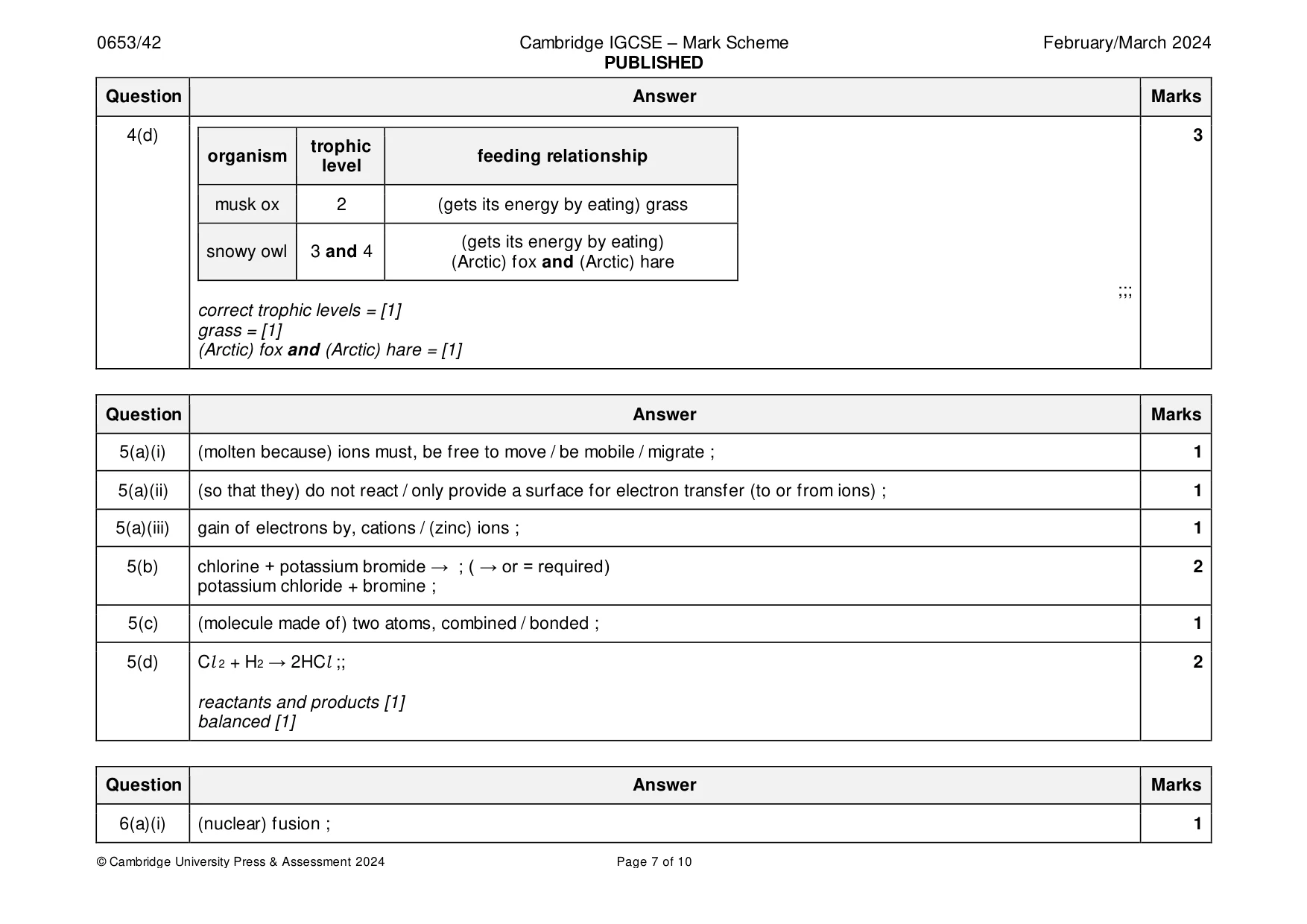
Mark scheme: 4(a) root and stem labels are the wrong way around ; 2 xylem label incorrect in leaf ; 4(b) any three from: 3 (description of trend) increased humidity causes decrease in rate of transpiration / ref to inverse relationship between humidity and transpiration rate ; higher humidity means higher water (vapour) concentration in air (surrounding the leaf) ; the idea that at higher humidity the concentration gradient between the leaf and the air is reduced ; reference to reduced, evaporation / diffusion (from leaf at higher humidity) ; 4(c)(i) 6CO2 + 6 H2O ; 2 C6H12O6 + 6O2 ; 4(c)(ii) chloroplast ; 1 4(d) 3 trophic organism feeding relationship level musk ox 2 (gets its energy by eating) grass (gets its energy by eating) snowy owl 3 and 4 (Arctic) fox and (Arctic) hare ;;; correct trophic levels = [1] grass = [1] (Arctic) fox and (Arctic) hare = [1]
Q5 · The electrolysis of molten zinc chloride using inert electrodes
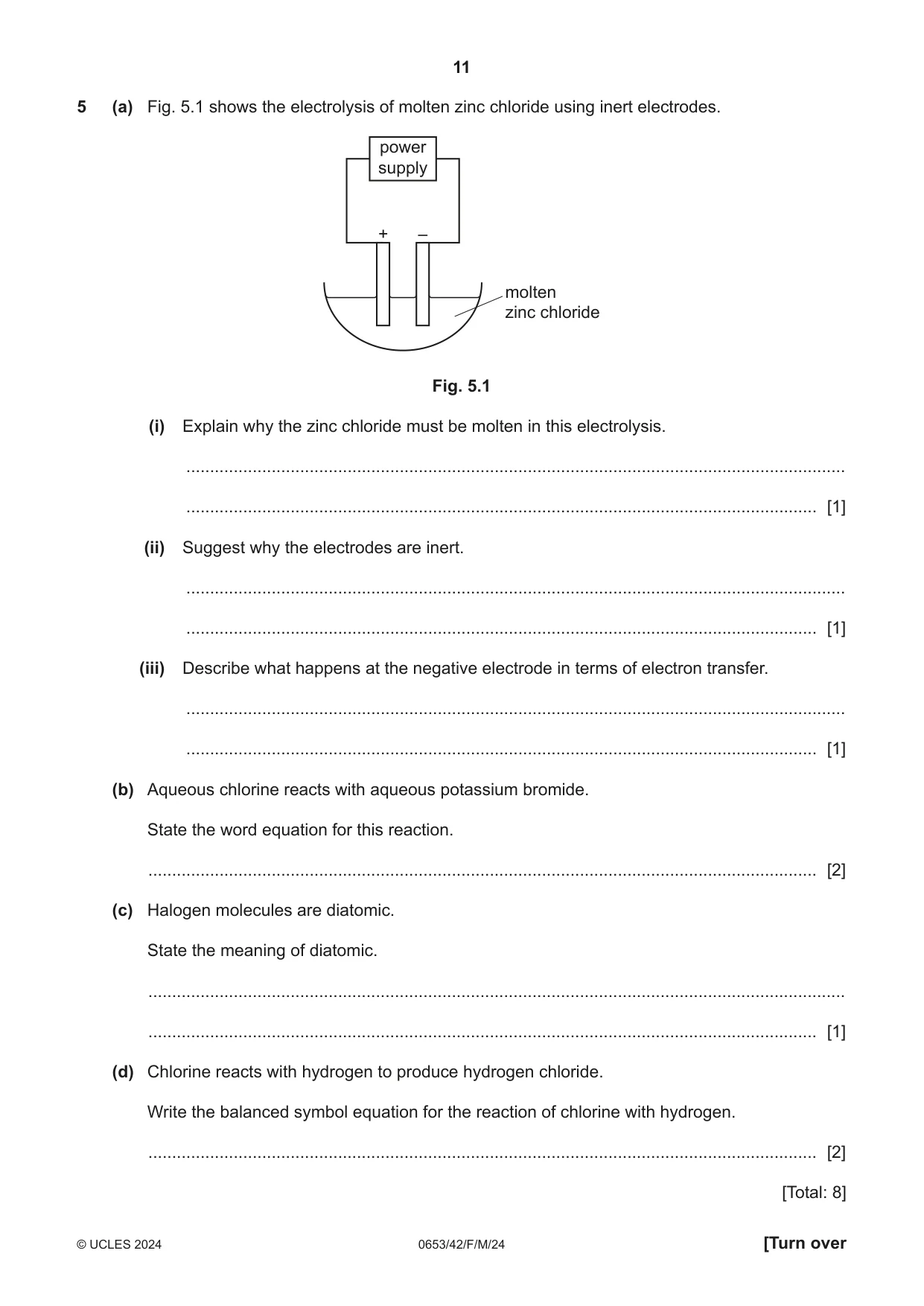
5 (a) Fig. 5.1 shows the electrolysis of molten zinc chloride using inert electrodes. power supply + – molten zinc chloride Fig. 5.1 (i) Explain why the zinc chloride must be molten in this electrolysis. ........................................................................................................................................... ..................................................................................................................................... [1] (ii) Suggest why the electrodes are inert. ........................................................................................................................................... ..................................................................................................................................... [1] (iii) Describe what happens at the negative electrode in terms of electron transfer. ........................................................................................................................................... ..................................................................................................................................... [1] (b) Aqueous chlorine reacts with aqueous potassium bromide. State the word equation for this reaction. ............................................................................................................................................. [2] (c) Halogen molecules are diatomic. State the meaning of diatomic. ................................................................................................................................................... ............................................................................................................................................. [1] (d) Chlorine reacts with hydrogen to produce hydrogen chloride. Write the balanced symbol equation for the reaction of chlorine with hydrogen. ............................................................................................................................................. [2] [Total: 8]
Mark scheme: 5(a)(i) (molten because) ions must, be free to move / be mobile / migrate ; 1 5(a)(ii) (so that they) do not react / only provide a surface for electron transfer (to or from ions) ; 1 5(a)(iii) gain of electrons by, cations / (zinc) ions ; 1 5(b) chlorine + potassium bromide → ; ( → or = required) 2 potassium chloride + bromine ; 5(c) (molecule made of) two atoms, combined / bonded ; 1 5(d) Cl 2 + H2 → 2HCl ;; 2 reactants and products [1] balanced [1]
Q6 · The Sun is the source of energy for most of our energy resources
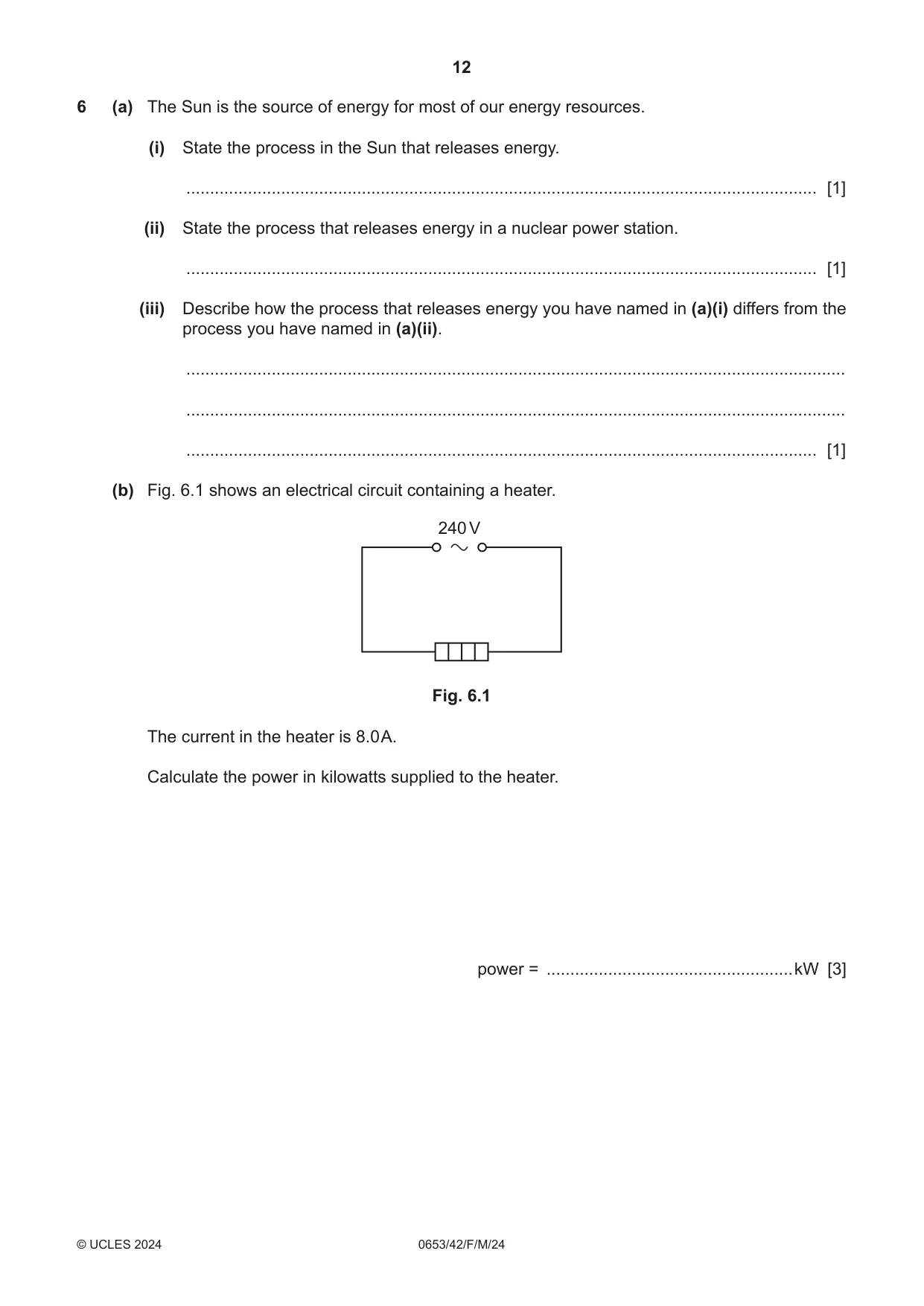
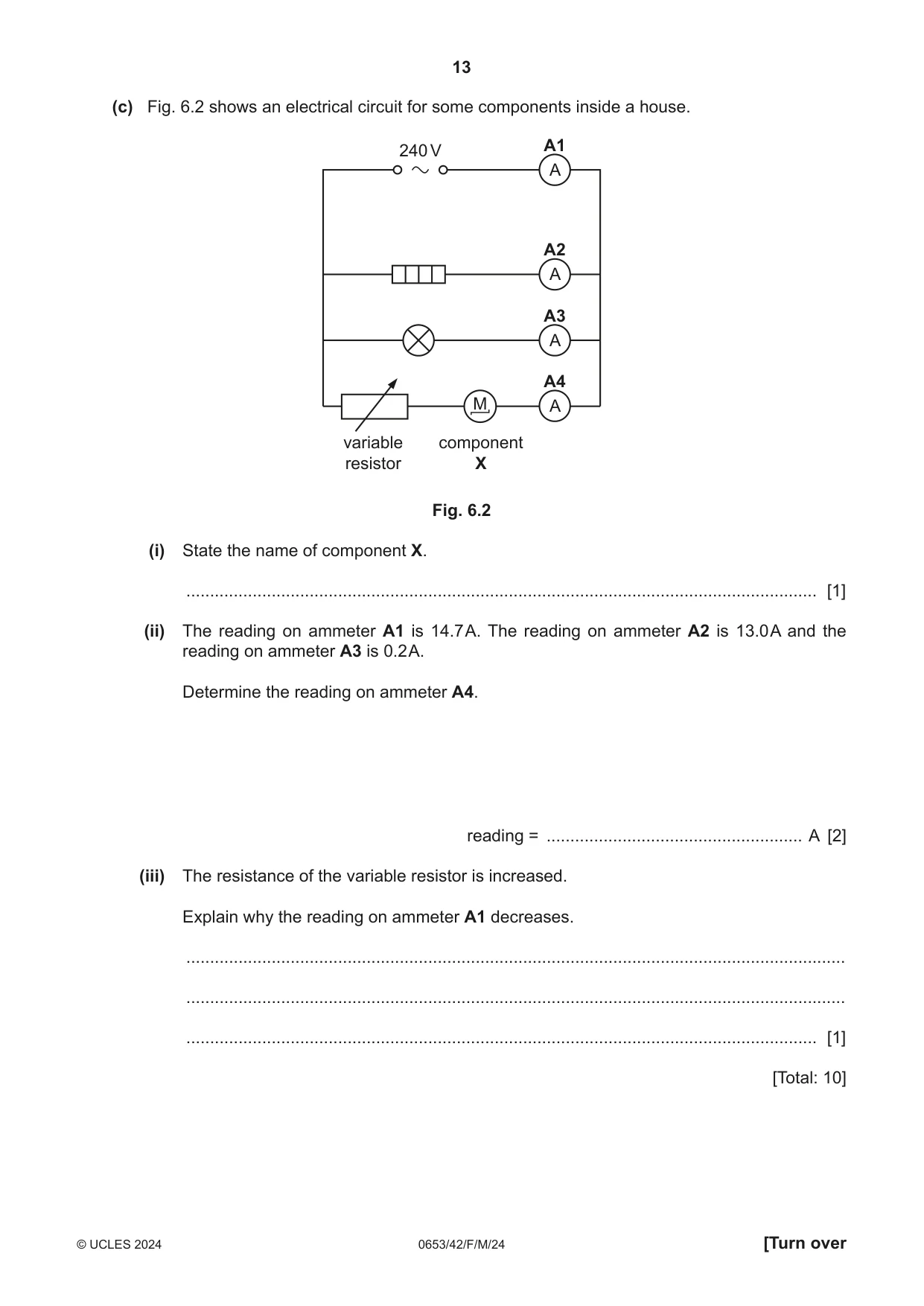
6 (a) The Sun is the source of energy for most of our energy resources. (i) State the process in the Sun that releases energy. ..................................................................................................................................... [1] (ii) State the process that releases energy in a nuclear power station. ..................................................................................................................................... [1] (iii) Describe how the process that releases energy you have named in (a)(i) differs from the process you have named in (a)(ii). ........................................................................................................................................... ........................................................................................................................................... ..................................................................................................................................... [1] (b) Fig. 6.1 shows an electrical circuit containing a heater. 240 V Fig. 6.1 The current in the heater is 8.0 A. Calculate the power in kilowatts supplied to the heater. power = ....................................................kW [3] (c) Fig. 6.2 shows an electrical circuit for some components inside a house. A1 240 V A A2 A A3 A A4 M A variable component resistor X Fig. 6.2 (i) State the name of component X. ..................................................................................................................................... [1] (ii) The reading on ammeter A1 is 14.7 A. The reading on ammeter A2 is 13.0 A and the reading on ammeter A3 is 0.2 A. Determine the reading on ammeter A4. reading = ...................................................... A [2] (iii) The resistance of the variable resistor is increased. Explain why the reading on ammeter A1 decreases. ........................................................................................................................................... ........................................................................................................................................... ..................................................................................................................................... [1] [Total: 10]
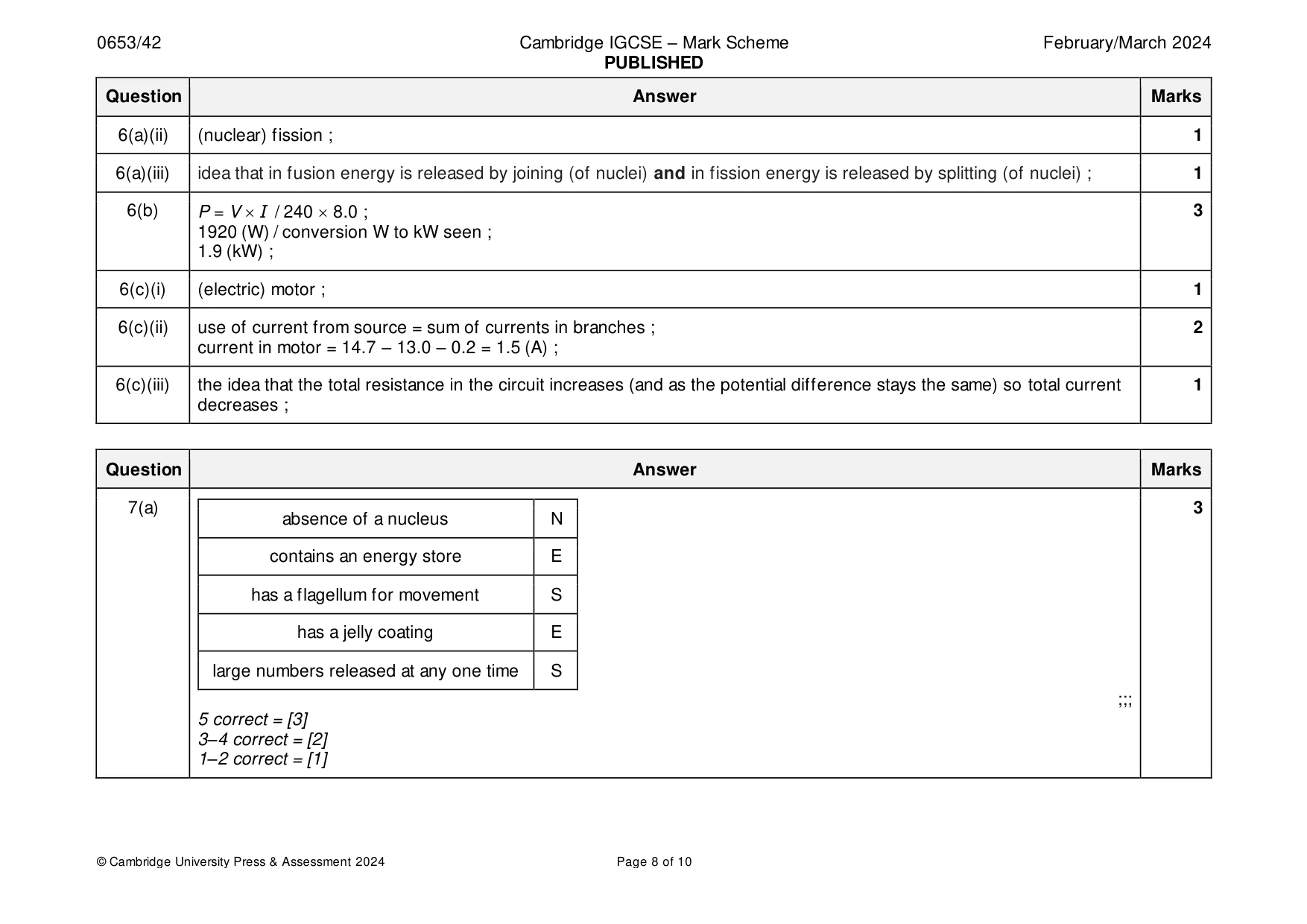
Mark scheme: 6(a)(i) (nuclear) fusion ; 1 6(a)(ii) (nuclear) fission ; 1 6(a)(iii) idea that in fusion energy is released by joining (of nuclei) and in fission energy is released by splitting (of nuclei) ; 1 6(b) P = V I / 240 8.0 ; 3 1920 (W) / conversion W to kW seen ; 1.9 (kW) ; 6(c)(i) (electric) motor ; 1 6(c)(ii) use of current from source = sum of currents in branches ; 2 current in motor = 14.7 – 13.0 – 0.2 = 1.5 (A) ; 6(c)(iii) the idea that the total resistance in the circuit increases (and as the potential difference stays the same) so total current 1 decreases ;
Q7 · Egg cells and sperm cells are the gametes in human reproduction
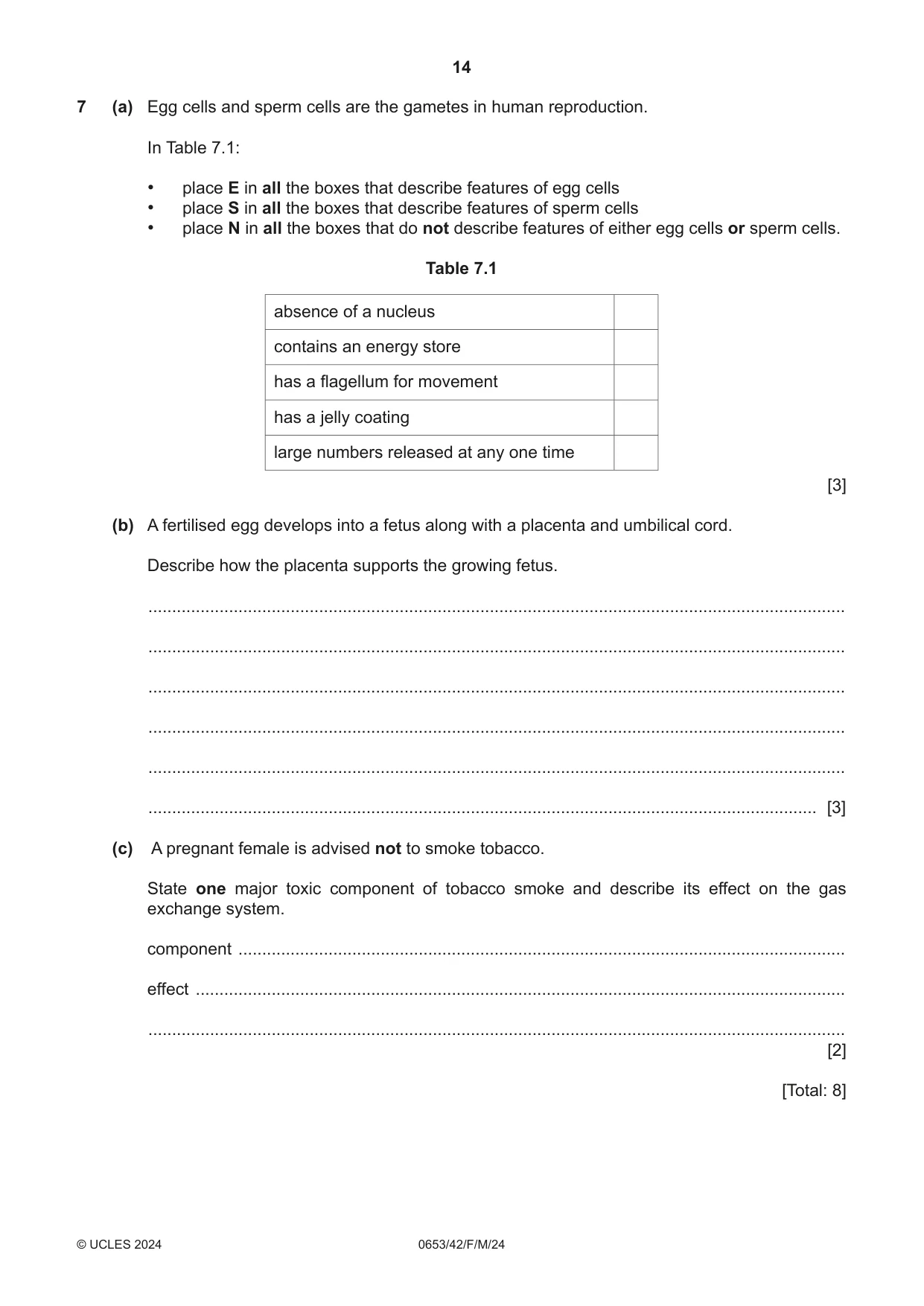
7 (a) Egg cells and sperm cells are the gametes in human reproduction. In Table 7.1: • place E in all the boxes that describe features of egg cells • place S in all the boxes that describe features of sperm cells • place N in all the boxes that do not describe features of either egg cells or sperm cells. Table 7.1 absence of a nucleus contains an energy store has a flagellum for movement has a jelly coating large numbers released at any one time [3] (b) A fertilised egg develops into a fetus along with a placenta and umbilical cord. Describe how the placenta supports the growing fetus. ................................................................................................................................................... ................................................................................................................................................... ................................................................................................................................................... ................................................................................................................................................... ................................................................................................................................................... ............................................................................................................................................. [3] (c) A pregnant female is advised not to smoke tobacco. State one major toxic component of tobacco smoke and describe its effect on the gas exchange system. component ................................................................................................................................ effect ......................................................................................................................................... ................................................................................................................................................... [2] [Total: 8]
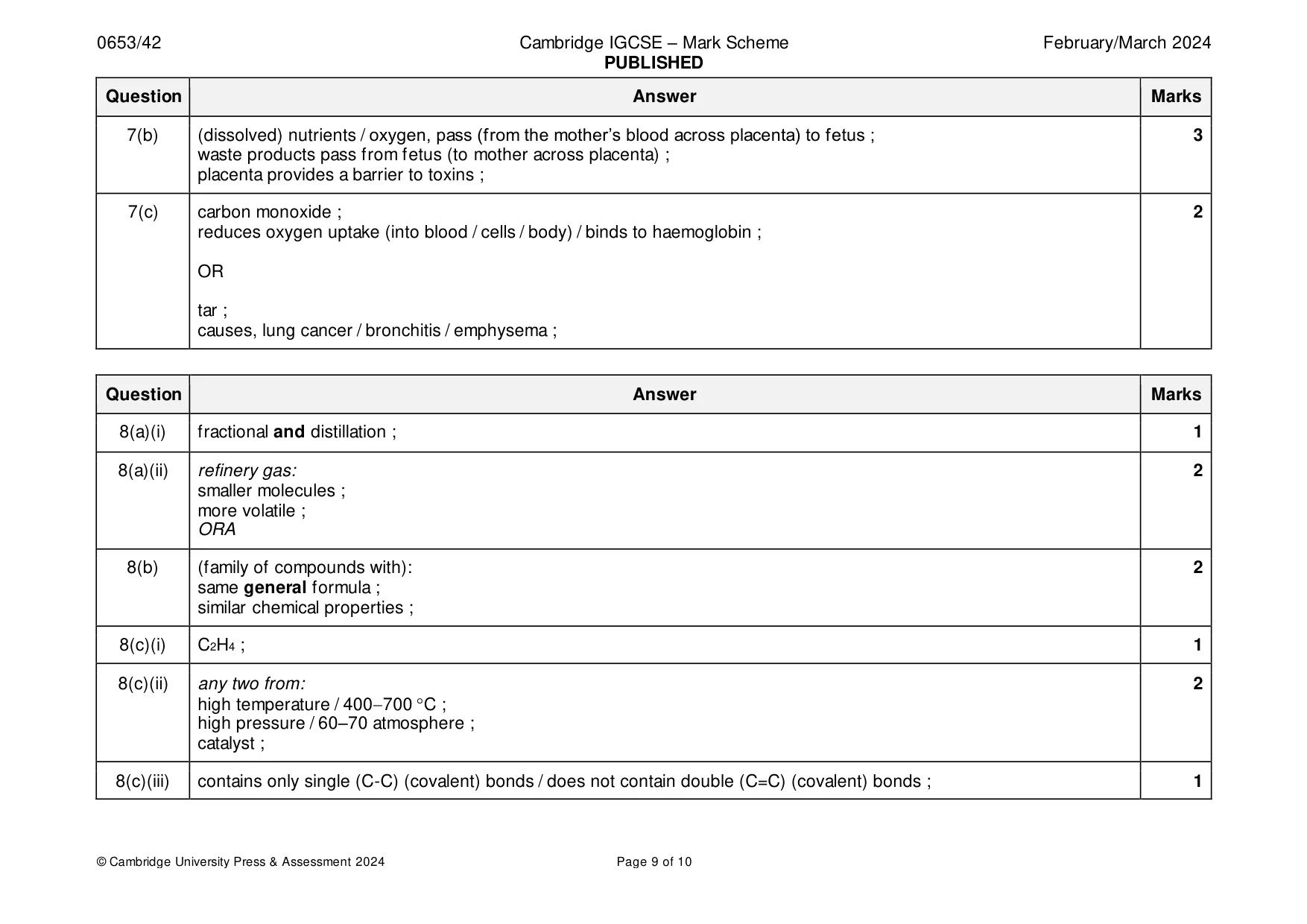
Mark scheme: 7(a) 3 absence of a nucleus N contains an energy store E has a flagellum for movement S has a jelly coating E large numbers released at any one time S ;;; 5 correct = [3] 3–4 correct = [2] 1–2 correct = [1] 7(b) (dissolved) nutrients / oxygen, pass (from the mother’s blood across placenta) to fetus ; 3 waste products pass from fetus (to mother across placenta) ; placenta provides a barrier to toxins ; 7(c) carbon monoxide ; 2 reduces oxygen uptake (into blood / cells / body) / binds to haemoglobin ; OR tar ; causes, lung cancer / bronchitis / emphysema ;
Q8 · Petroleum contains a mixture of hydrocarbons
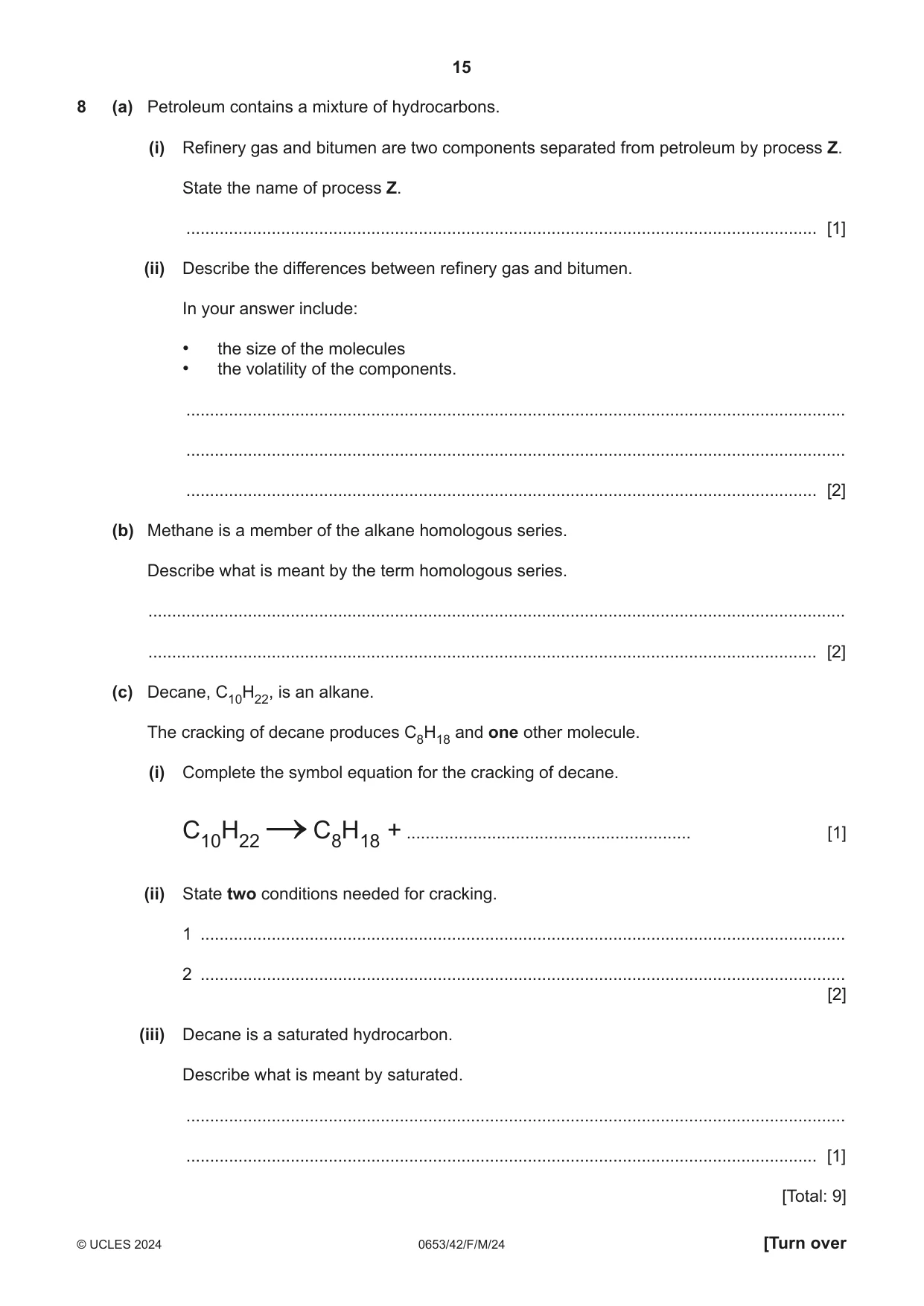
8 (a) Petroleum contains a mixture of hydrocarbons. (i) Refinery gas and bitumen are two components separated from petroleum by process Z. State the name of process Z. ..................................................................................................................................... [1] (ii) Describe the differences between refinery gas and bitumen. In your answer include: • the size of the molecules • the volatility of the components. ........................................................................................................................................... ........................................................................................................................................... ..................................................................................................................................... [2] (b) Methane is a member of the alkane homologous series. Describe what is meant by the term homologous series. ................................................................................................................................................... ............................................................................................................................................. [2] (c) Decane, C10H22, is an alkane. The cracking of decane produces C8H18 and one other molecule. (i) Complete the symbol equation for the cracking of decane. ............................................................ [1] C10H22 C8H18 + (ii) State two conditions needed for cracking. 1 ........................................................................................................................................ 2 ........................................................................................................................................ [2] (iii) Decane is a saturated hydrocarbon. Describe what is meant by saturated. ........................................................................................................................................... ..................................................................................................................................... [1] [Total: 9]
Mark scheme: 8(a)(i) fractional and distillation ; 1 8(a)(ii) refinery gas: 2 smaller molecules ; more volatile ; ORA 8(b) (family of compounds with): 2 same general formula ; similar chemical properties ; 8(c)(i) C2H4 ; 1 8(c)(ii) any two from: 2 high temperature / 400−700 C ; high pressure / 60–70 atmosphere ; catalyst ; 8(c)(iii) contains only single (C-C) (covalent) bonds / does not contain double (C=C) (covalent) bonds ; 1
Q9 · The forces P, Q, R and S acting on a boat at sea
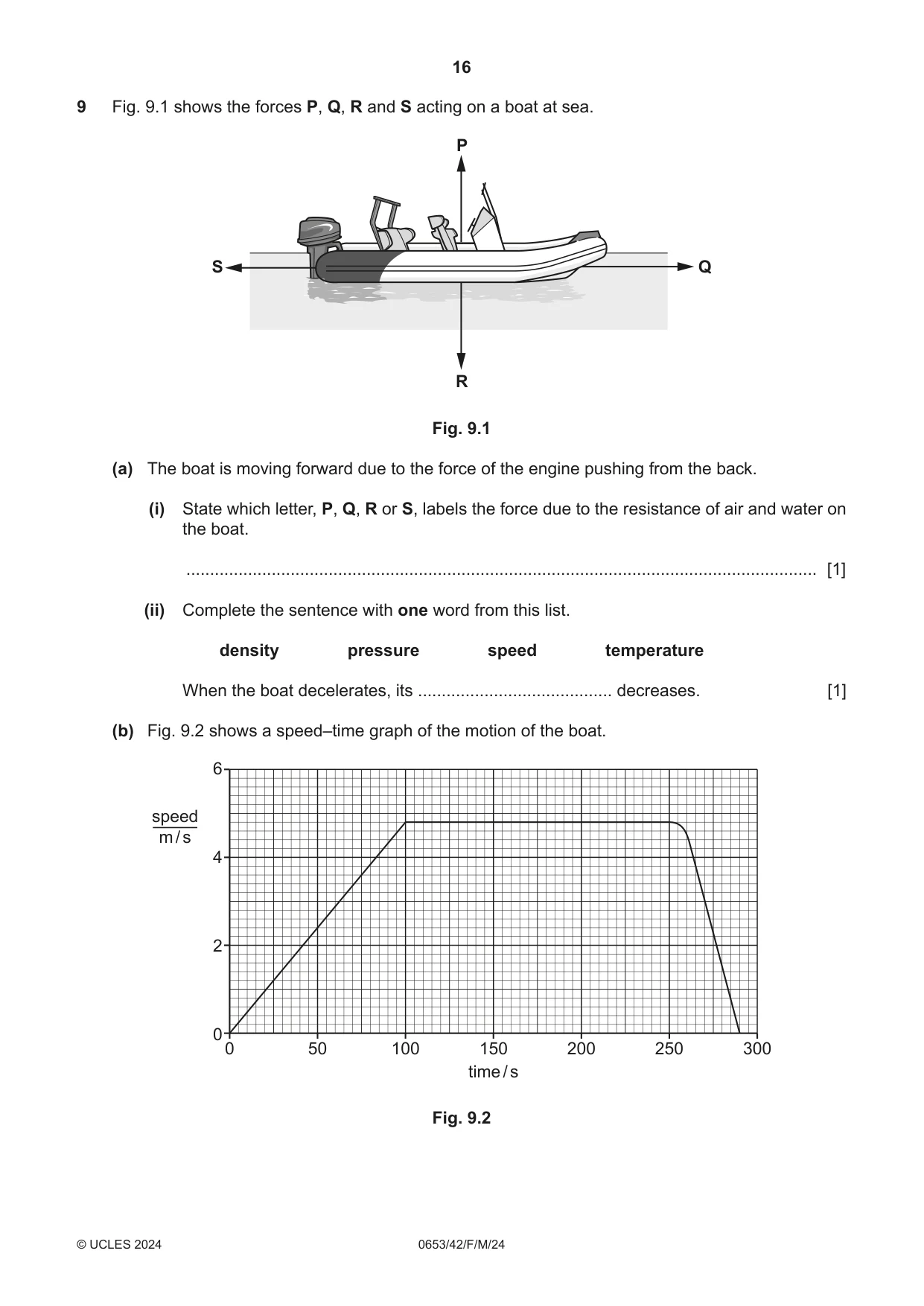
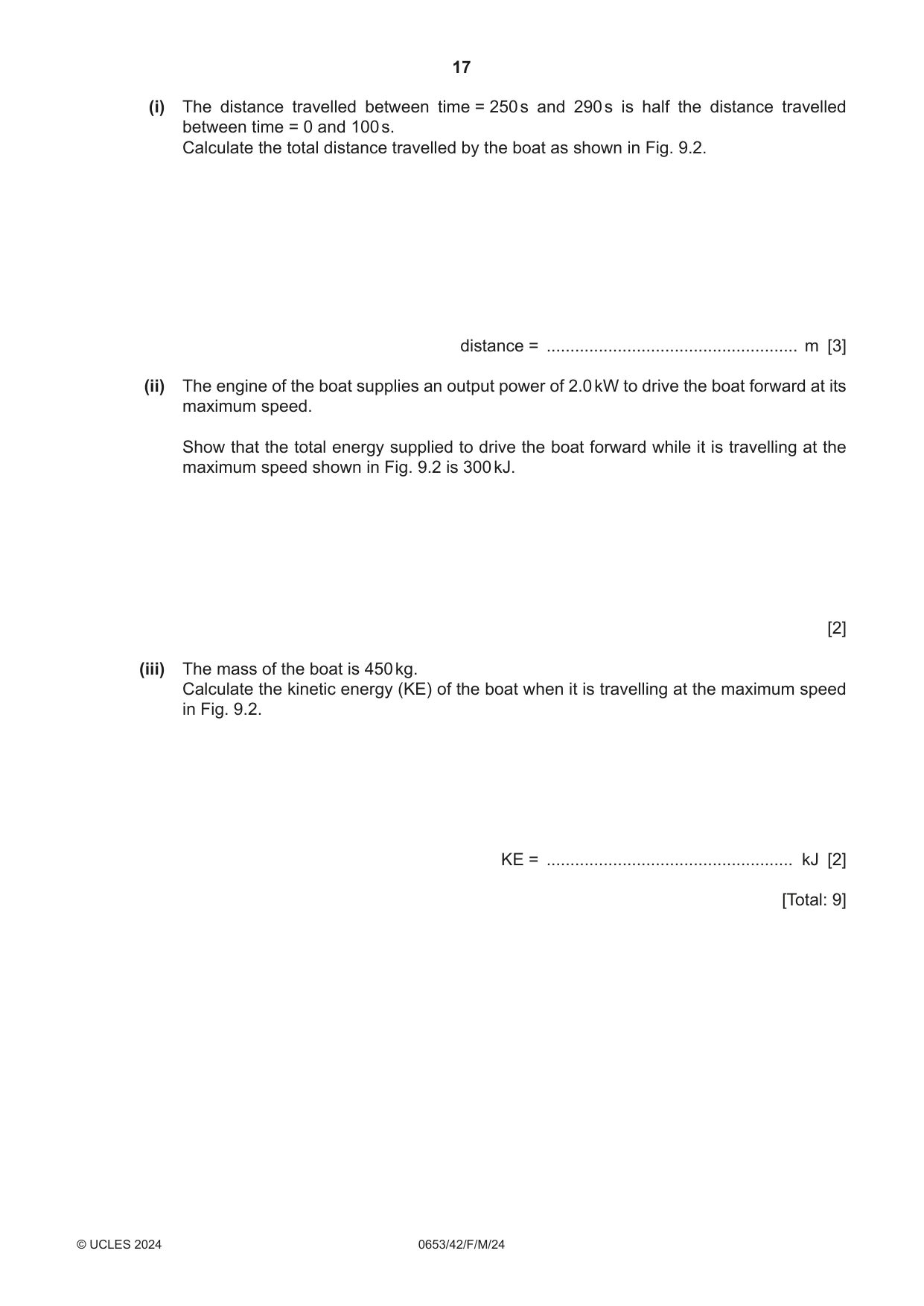
9 Fig. 9.1 shows the forces P, Q, R and S acting on a boat at sea. P S Q R Fig. 9.1 (a) The boat is moving forward due to the force of the engine pushing from the back. (i) State which letter, P, Q, R or S, labels the force due to the resistance of air and water on the boat. ..................................................................................................................................... [1] (ii) Complete the sentence with one word from this list. density pressure speed temperature When the boat decelerates, its ......................................... decreases. [1] (b) Fig. 9.2 shows a speed–time graph of the motion of the boat. 6 speed m / s 4 2 0 0 50 100 150 200 250 300 time / s Fig. 9.2 (i) The distance travelled between time = 250 s and 290 s is half the distance travelled between time = 0 and 100 s. Calculate the total distance travelled by the boat as shown in Fig. 9.2. distance = ..................................................... m [3] (ii) The engine of the boat supplies an output power of 2.0 kW to drive the boat forward at its maximum speed. Show that the total energy supplied to drive the boat forward while it is travelling at the maximum speed shown in Fig. 9.2 is 300 kJ. [2] (iii) The mass of the boat is 450 kg. Calculate the kinetic energy (KE) of the boat when it is travelling at the maximum speed in Fig. 9.2. KE = .................................................... kJ [2] [Total: 9]
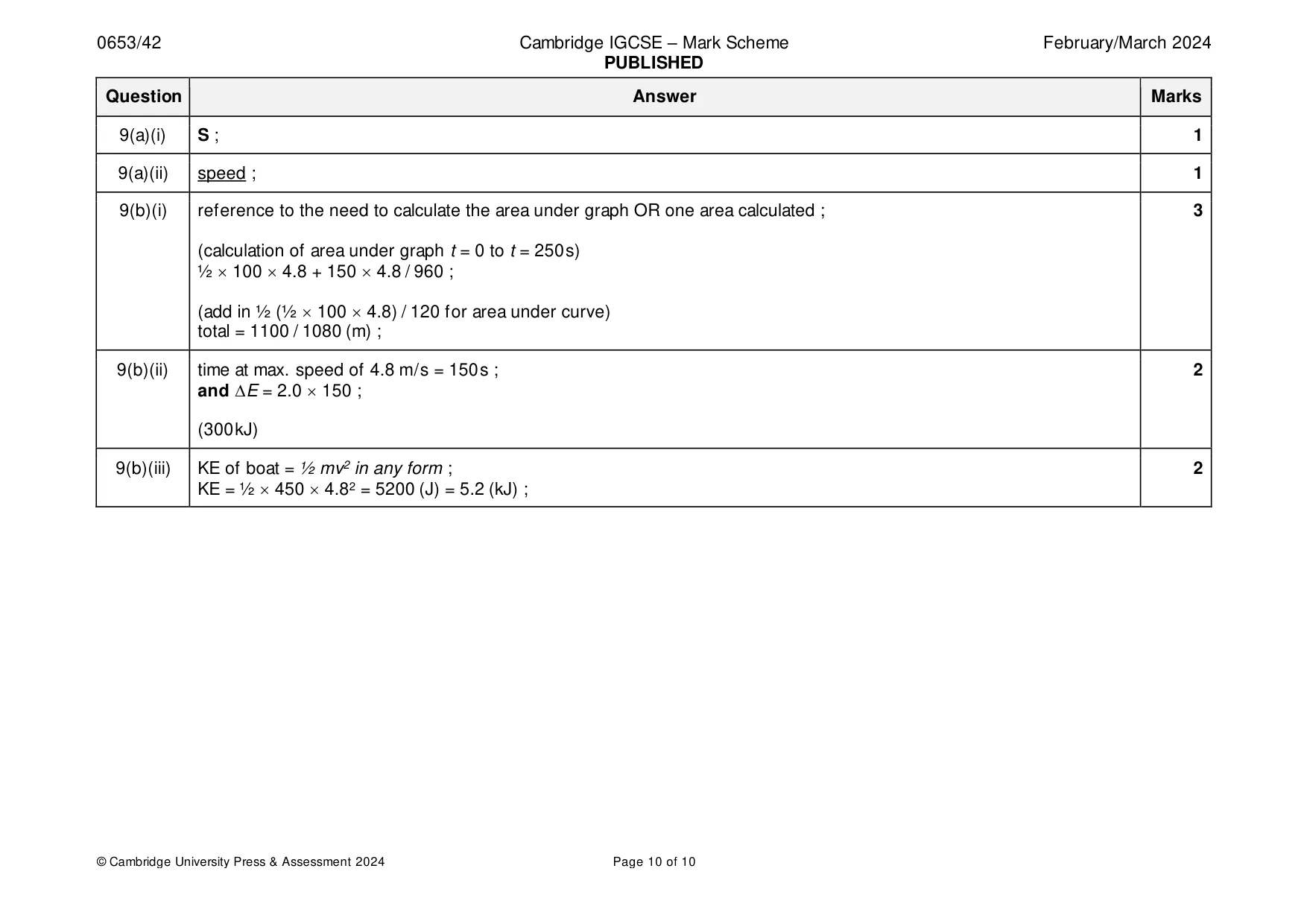
Mark scheme: 9(a)(i) S ; 1 9(a)(ii) speed ; 1 9(b)(i) reference to the need to calculate the area under graph OR one area calculated ; 3 (calculation of area under graph t = 0 to t = 250 s) ½ 100 4.8 + 150 4.8 / 960 ; (add in ½ (½ 100 4.8) / 120 for area under curve) total = 1100 / 1080 (m) ; 9(b)(ii) time at max. speed of 4.8 m / s = 150 s ; 2 and E = 2.0 150 ; (300 kJ) 9(b)(iii) KE of boat = ½ mv2 in any form ; 2 KE = ½ 450 4.82 = 5200 (J) = 5.2 (kJ) ;
What was in this paper
The subtopics covered by these 9 questions, and how many questions each got. Open one in a new tab to see every Cambridge question on it.
What you needed in this session
Cambridge’s own grade thresholds for 2024 Feb/March, Paper 4 · Variant 2. A higher threshold means an easier paper — the bar moves with how the cohort did.