Cambridge IGCSE Science - Combined 0653 — 2018 Feb/March Paper 4 · Variant 2
0653/42/F/M/18 · 9 questions · 80 marks · ≈90 min
The question paper and its mark scheme, free to read here and free to download. This is Cambridge’s own paper, exactly as it was sat.
Question paper20 pages
Mark scheme9 pages
Answers below. Sit the paper first if you are practising.
Questions as text
Q1 · A diagram of the female reproductive system and some events that take place before and…
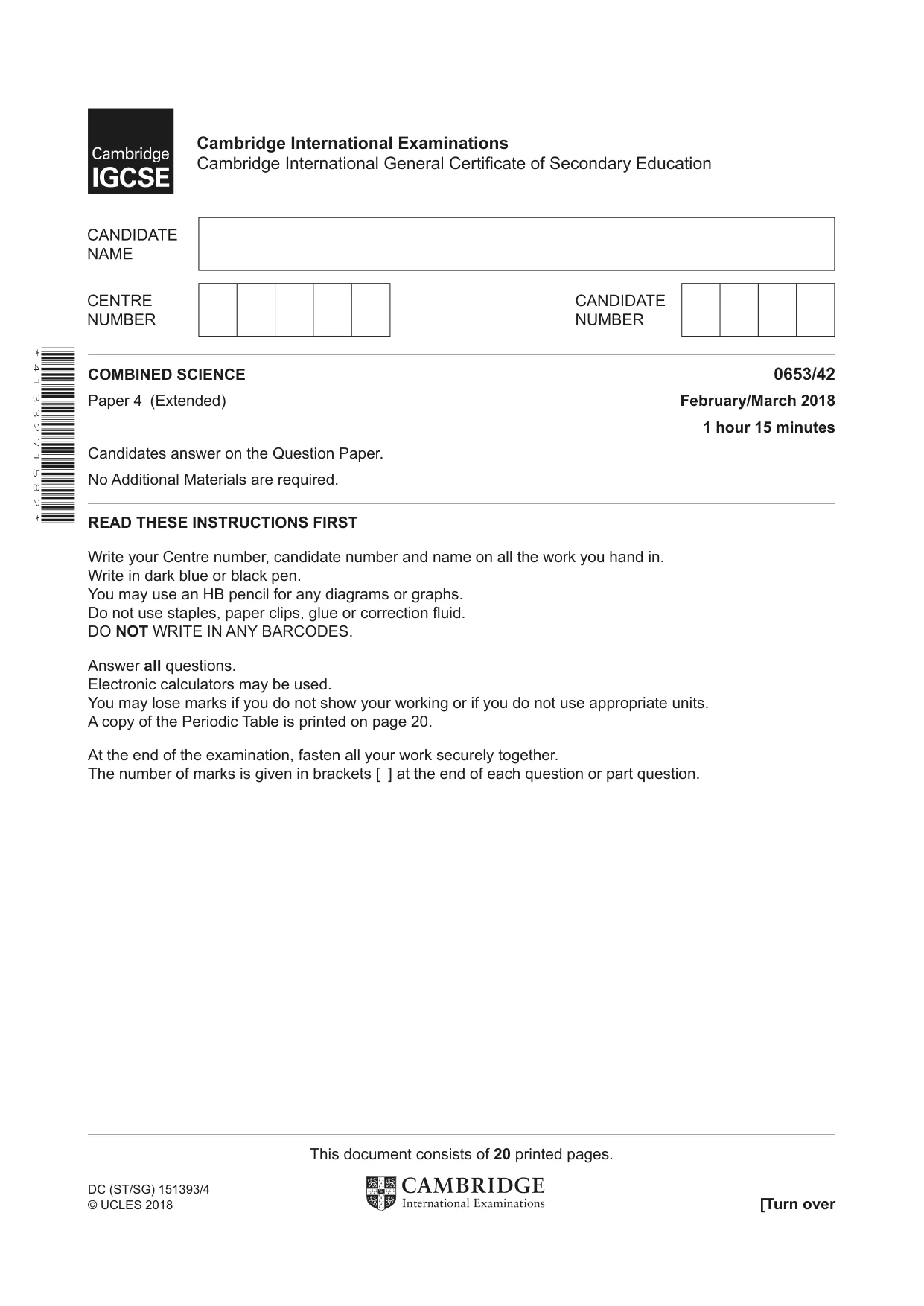
1 Fig. 1.1 shows a diagram of the female reproductive system and some events that take place before and during early pregnancy. The fetus is the name for the developing baby. event 2 event 3 event 1 fetus C placenta Fig. 1.1 (a) (i) State what happens during events 1 and 2. event 1 .............................................................................................................................. event 2 .............................................................................................................................. [2] (ii) Name structure C in Fig. 1.1 and state its function. name of C .......................................................................................................................... function of C ...................................................................................................................... ........................................................................................................................................... [2] (b) Exchange of substances between blood in the fetus and the mother’s blood takes place at the placenta. Some materials that are transferred across the placenta are shown. amino acids carbon dioxide fatty acids glucose oxygen (i) Name one substance from the list that shows net movement from the fetus into the mother’s blood. .......................................................................................................................................[1] (ii) State the source of this substance in the fetus. ........................................................................................................................................... .......................................................................................................................................[1] (iii) Describe how the blood in the fetus reaches the placenta. .......................................................................................................................................[1] (c) Nicotine and carbon monoxide are taken into the blood when a person smokes. Carbon monoxide combines with haemoglobin. This prevents oxygen from being carried in the red blood cells. Suggest why carbon monoxide in the mother’s blood is harmful to the fetus. ................................................................................................................................................... ................................................................................................................................................... ...............................................................................................................................................[2]
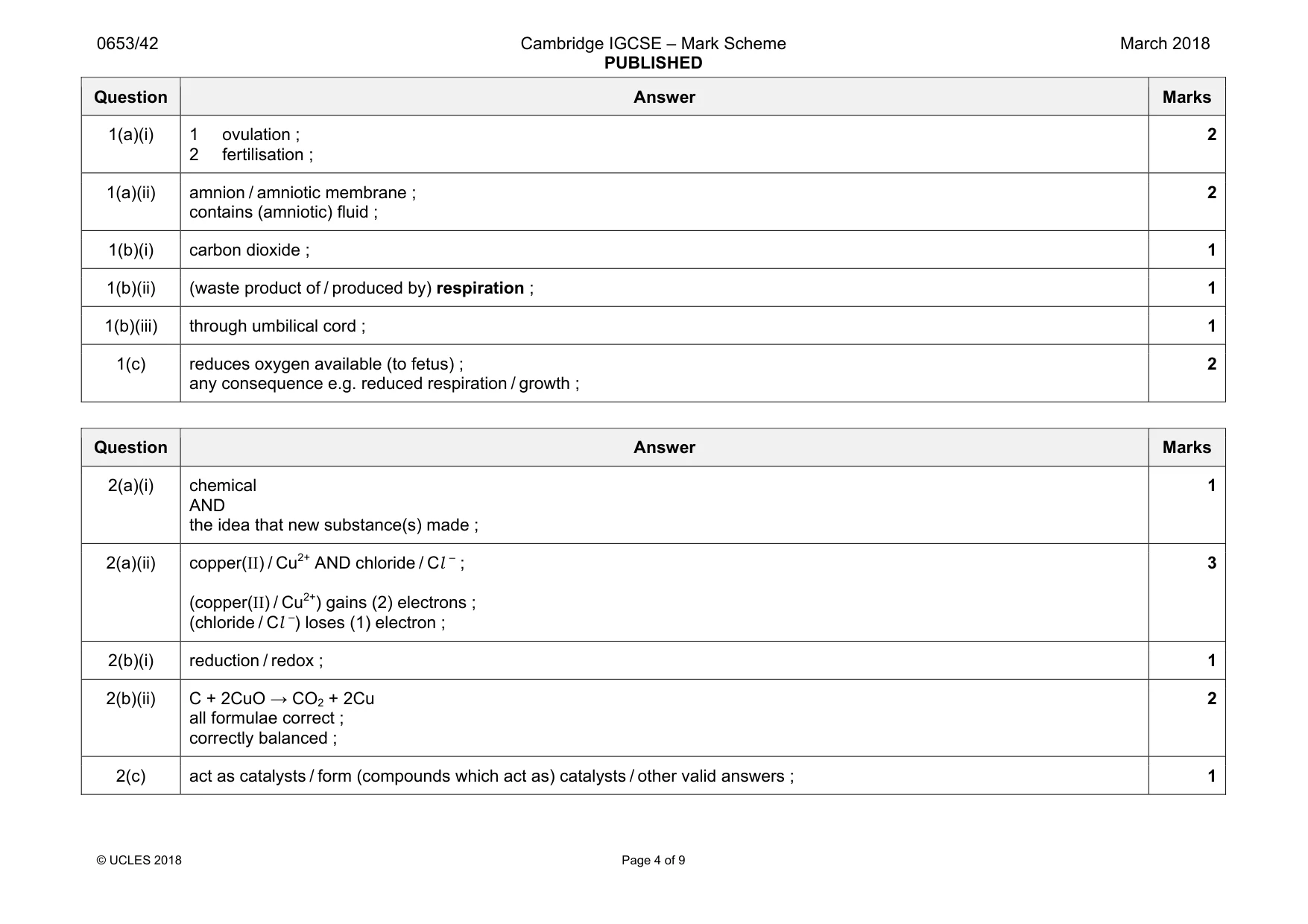
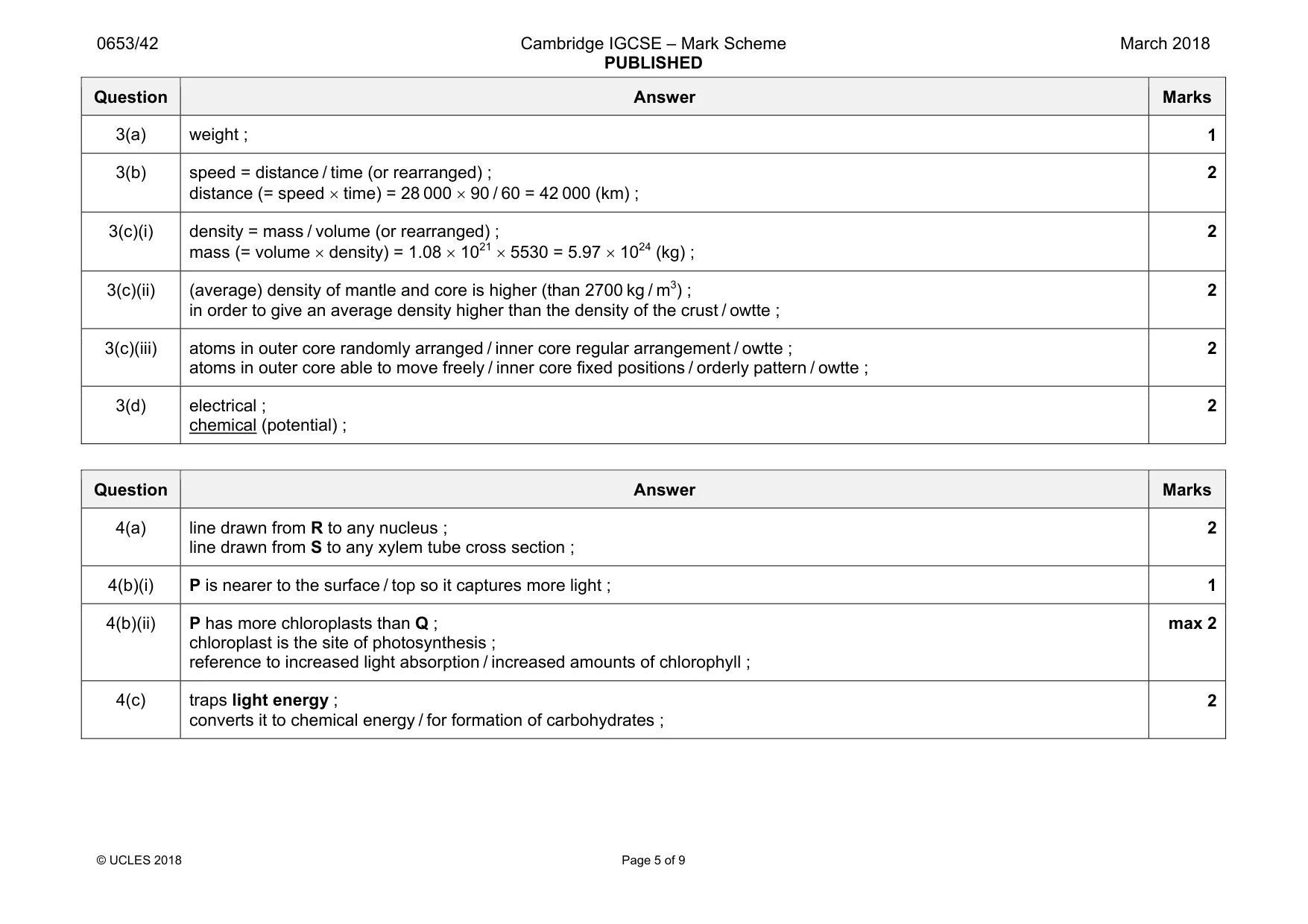
Mark scheme: 1(a)(i) 1 ovulation ; 2 fertilisation ; 2 1(a)(ii) amnion / amniotic membrane ; contains (amniotic) fluid ; 2 1(b)(i) carbon dioxide ; 1 1(b)(ii) (waste product of / produced by) respiration ; 1 1(b)(iii) through umbilical cord ; 1 1(c) reduces oxygen available (to fetus) ; any consequence e.g. reduced respiration / growth ; 2
Q2 · Copper is extracted from molten copper chloride using electrolysis
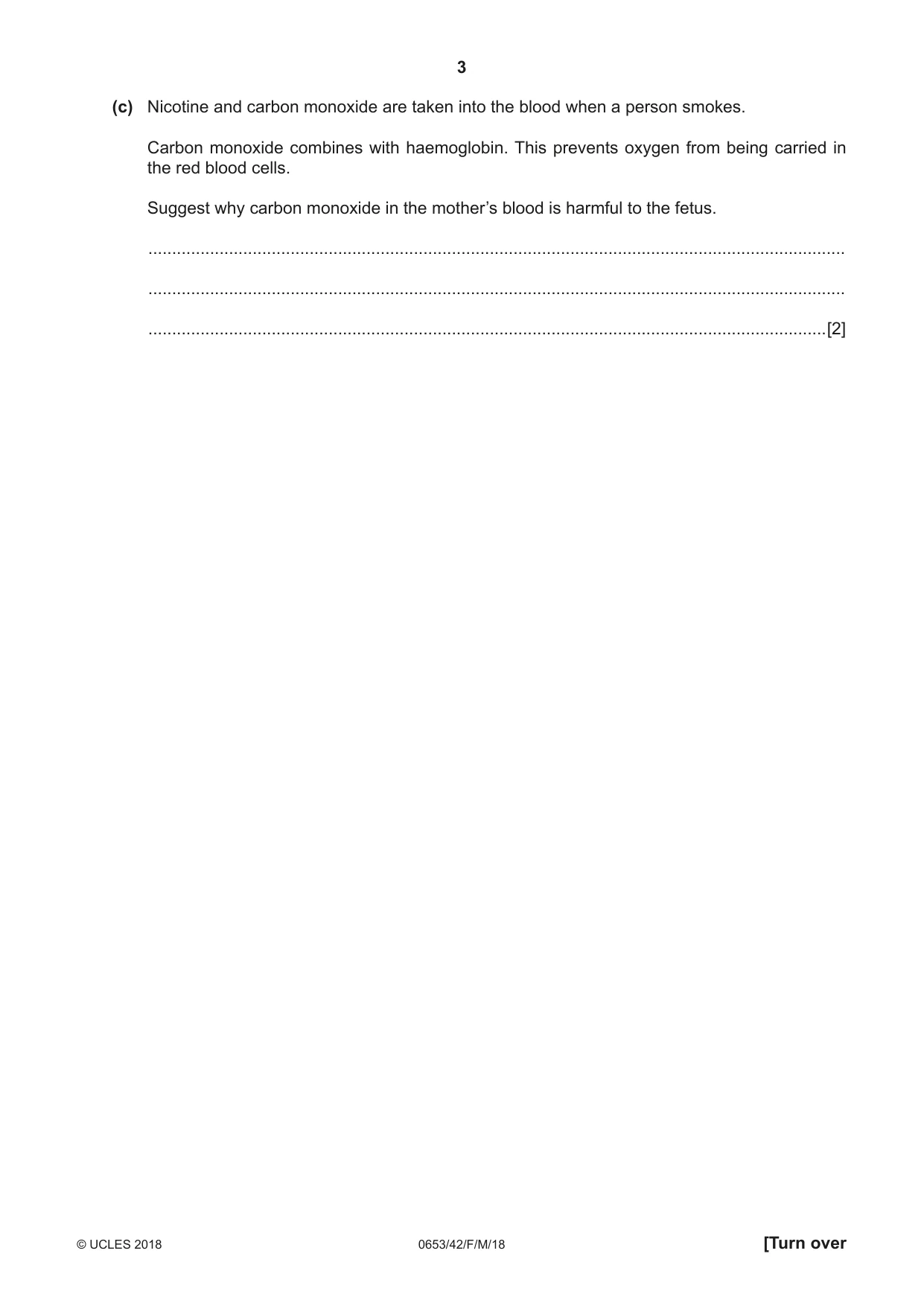
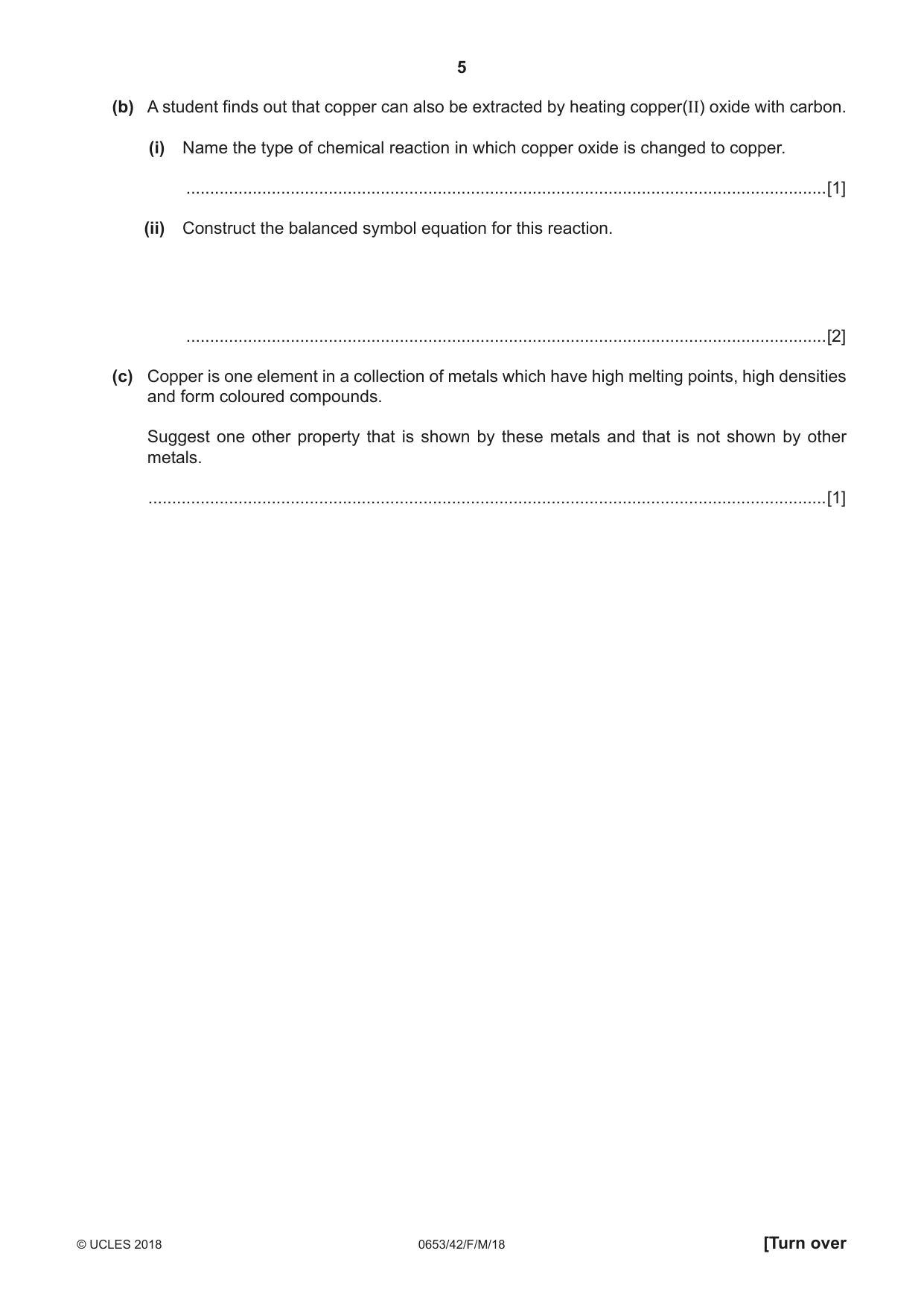
2 (a) Copper is extracted from molten copper chloride using electrolysis. The apparatus is shown in Fig. 2.1. low voltage d.c. supply − + cathode anode electrolyte Fig. 2.1 (i) State whether this process for the extraction of copper involves a chemical change or a physical change. Explain your answer. change .............................................................................................................................. explanation ........................................................................................................................ ........................................................................................................................................... [1] (ii) Identify the two ions present in the electrolyte and describe, in terms of electrons, the changes to these ions at the electrodes. first ion .............................................. change .............................................................................................................................. ........................................................................................................................................... second ion .............................................. change .............................................................................................................................. ........................................................................................................................................... [3] (b) A student finds out that copper can also be extracted by heating copper(II) oxide with carbon. (i) Name the type of chemical reaction in which copper oxide is changed to copper. .......................................................................................................................................[1] (ii) Construct the balanced symbol equation for this reaction. .......................................................................................................................................[2] (c) Copper is one element in a collection of metals which have high melting points, high densities and form coloured compounds. Suggest one other property that is shown by these metals and that is not shown by other metals. ...............................................................................................................................................[1]
Mark scheme: 2(a)(i) chemical AND the idea that new substance(s) made ; 1 2(a)(ii) copper(II) / Cu2+ AND chloride / Cl – ; (copper(II) / Cu2+) gains (2) electrons ; (chloride / Cl –) loses (1) electron ; 3 2(b)(i) reduction / redox ; 1 2(b)(ii) C + 2CuO → CO2 + 2Cu all formulae correct ; correctly balanced ; 2 2(c) act as catalysts / form (compounds which act as) catalysts / other valid answers ; 1
Q3 · The International Space Station orbiting the Earth
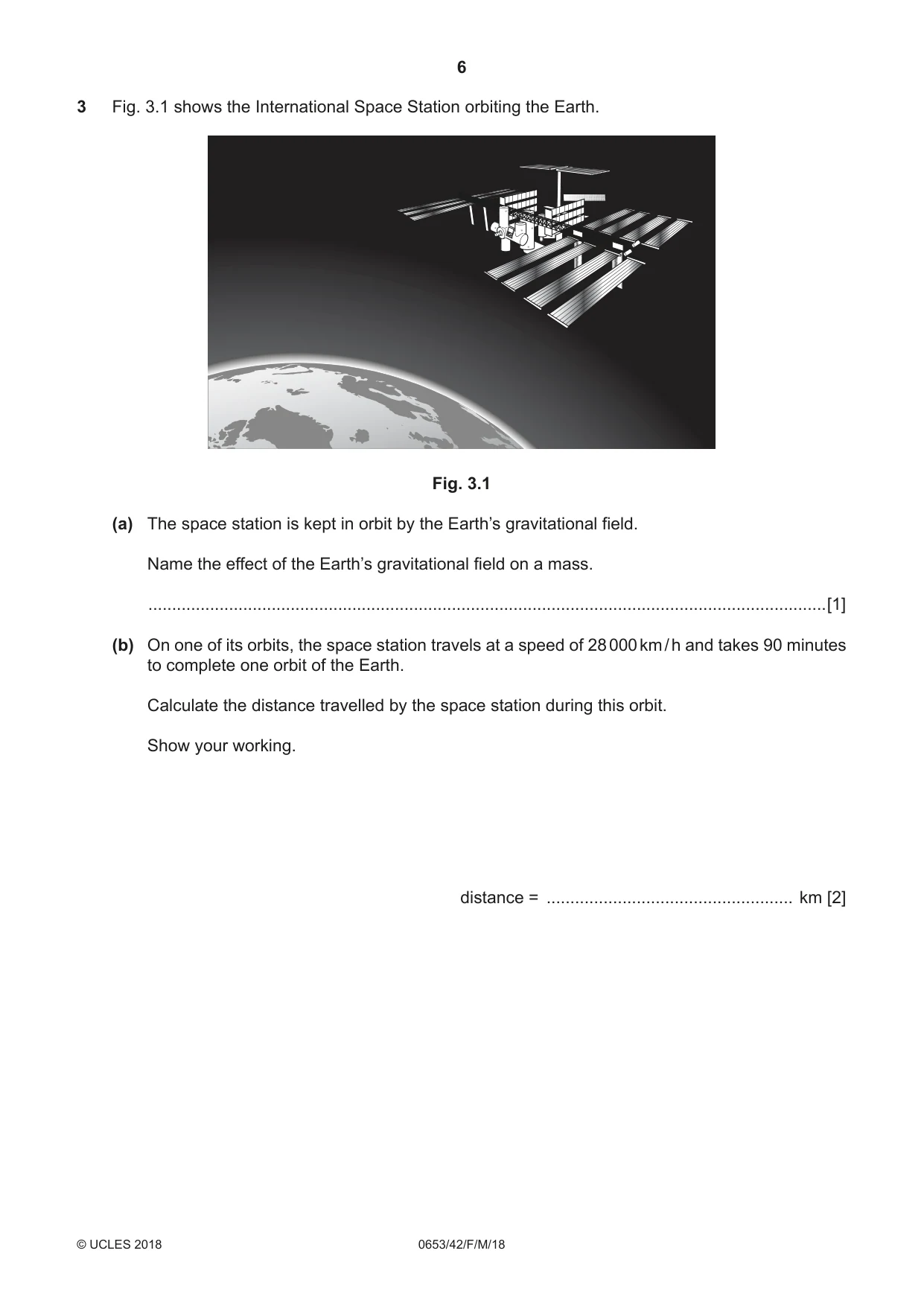
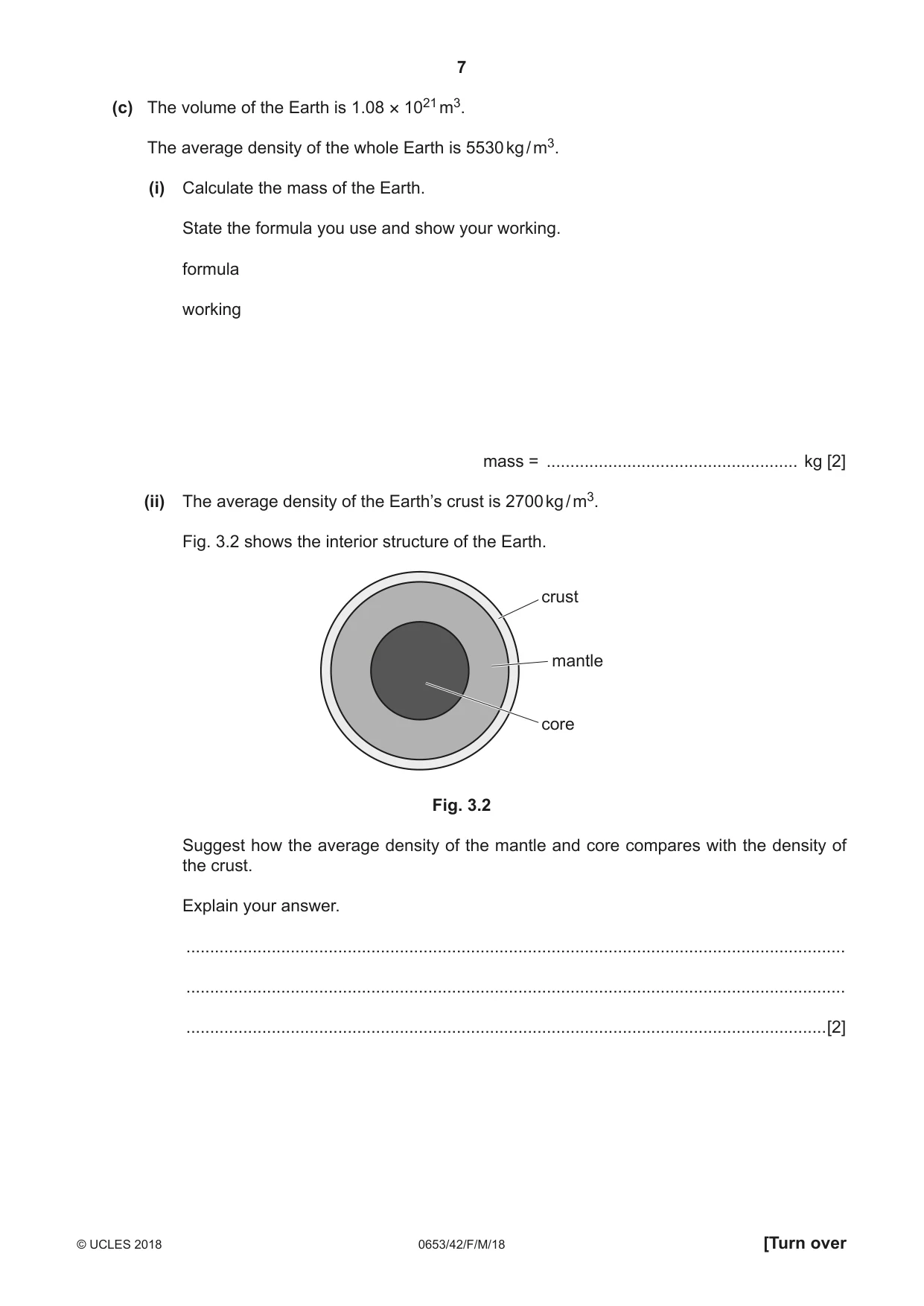
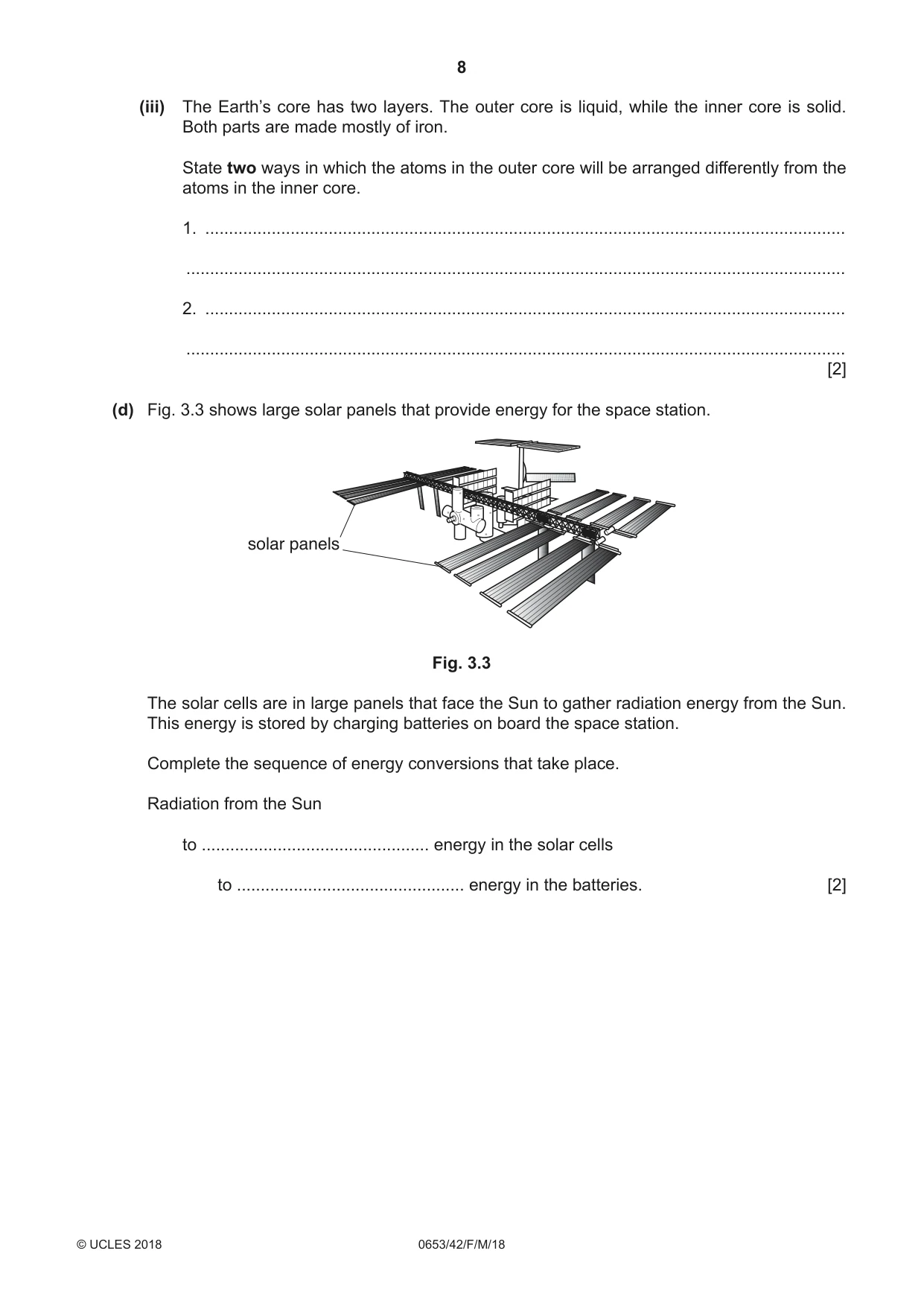
3 Fig. 3.1 shows the International Space Station orbiting the Earth. Fig. 3.1 (a) The space station is kept in orbit by the Earth’s gravitational field. Name the effect of the Earth’s gravitational field on a mass. ...............................................................................................................................................[1] (b) On one of its orbits, the space station travels at a speed of 28 000 km / h and takes 90 minutes to complete one orbit of the Earth. Calculate the distance travelled by the space station during this orbit. Show your working. distance = .................................................... km [2] (c) The volume of the Earth is 1.08 × 10²¹ m3. The average density of the whole Earth is 5530 kg / m3. (i) Calculate the mass of the Earth. State the formula you use and show your working. formula working mass = ..................................................... kg [2] (ii) The average density of the Earth’s crust is 2700 kg / m3. Fig. 3.2 shows the interior structure of the Earth. crust mantle core Fig. 3.2 Suggest how the average density of the mantle and core compares with the density of the crust. Explain your answer. ........................................................................................................................................... ........................................................................................................................................... .......................................................................................................................................[2] (iii) The Earth’s core has two layers. The outer core is liquid, while the inner core is solid. Both parts are made mostly of iron. State two ways in which the atoms in the outer core will be arranged differently from the atoms in the inner core. 1. ....................................................................................................................................... ........................................................................................................................................... 2. ....................................................................................................................................... ........................................................................................................................................... [2] (d) Fig. 3.3 shows large solar panels that provide energy for the space station. solar panels Fig. 3.3 The solar cells are in large panels that face the Sun to gather radiation energy from the Sun. This energy is stored by charging batteries on board the space station. Complete the sequence of energy conversions that take place. Radiation from the Sun to ................................................ energy in the solar cells to ................................................ energy in the batteries. [2]
Mark scheme: 3(a) weight ; 1 3(b) speed = distance / time (or rearranged) ; distance (= speed × time) = 28 000 × 90 / 60 = 42 000 (km) ; 2 3(c)(i) density = mass / volume (or rearranged) ; mass (= volume × density) = 1.08 × 1021 × 5530 = 5.97 × 1024 (kg) ; 2 3(c)(ii) (average) density of mantle and core is higher (than 2700 kg / m3) ; in order to give an average density higher than the density of the crust / owtte ; 2 3(c)(iii) atoms in outer core randomly arranged / inner core regular arrangement / owtte ; atoms in outer core able to move freely / inner core fixed positions / orderly pattern / owtte ; 2 3(d) electrical ; chemical (potential) ; 2
Q4 · A cross-section of a leaf
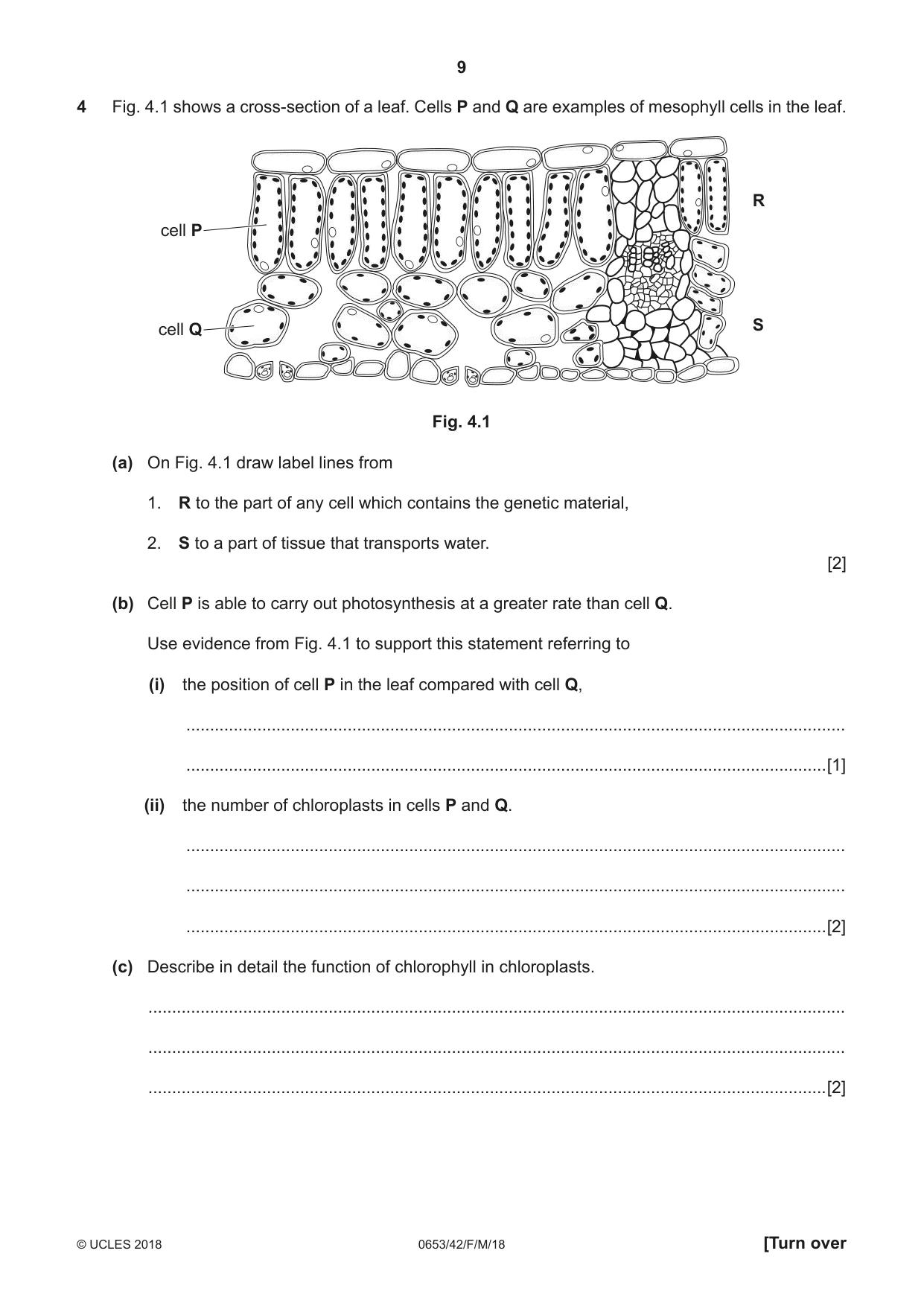
4 Fig. 4.1 shows a cross-section of a leaf. Cells P and Q are examples of mesophyll cells in the leaf. R cell P cell Q S Fig. 4.1 (a) On Fig. 4.1 draw label lines from 1. R to the part of any cell which contains the genetic material, 2. S to a part of tissue that transports water. [2] (b) Cell P is able to carry out photosynthesis at a greater rate than cell Q. Use evidence from Fig. 4.1 to support this statement referring to (i) the position of cell P in the leaf compared with cell Q, ........................................................................................................................................... .......................................................................................................................................[1] (ii) the number of chloroplasts in cells P and Q. ........................................................................................................................................... ........................................................................................................................................... .......................................................................................................................................[2] (c) Describe in detail the function of chlorophyll in chloroplasts. ................................................................................................................................................... ................................................................................................................................................... ...............................................................................................................................................[2]
Mark scheme: 4(a) line drawn from R to any nucleus ; line drawn from S to any xylem tube cross section ; 2 4(b)(i) P is nearer to the surface / top so it captures more light ; 1 4(b)(ii) P has more chloroplasts than Q ; chloroplast is the site of photosynthesis ; reference to increased light absorption / increased amounts of chlorophyll ; max 2 4(c) traps light energy ; converts it to chemical energy / for formation of carbohydrates ; 2
Q5 · An atom of bromine is represented by the symbol 3579Br (i) State the number of electrons…
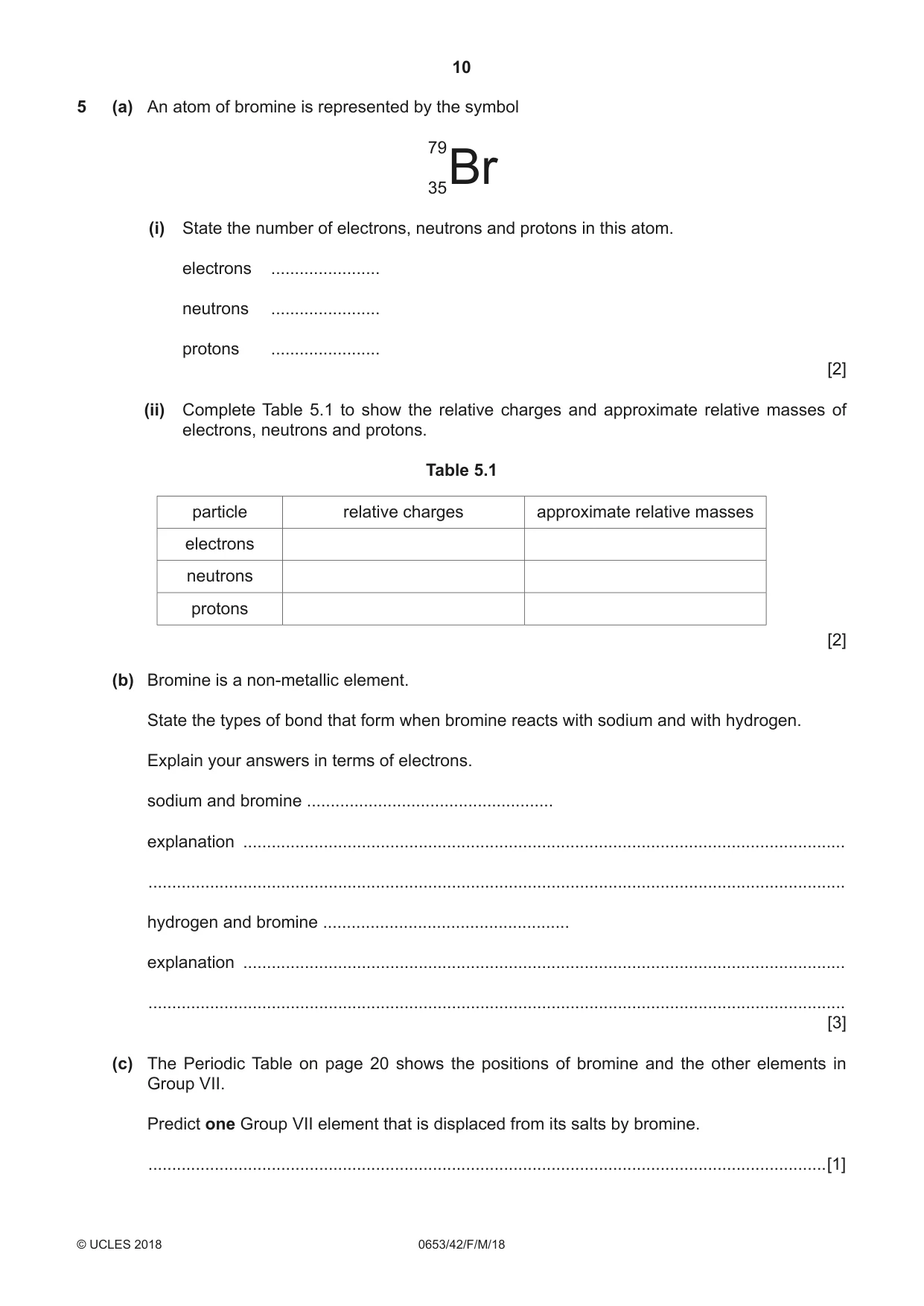
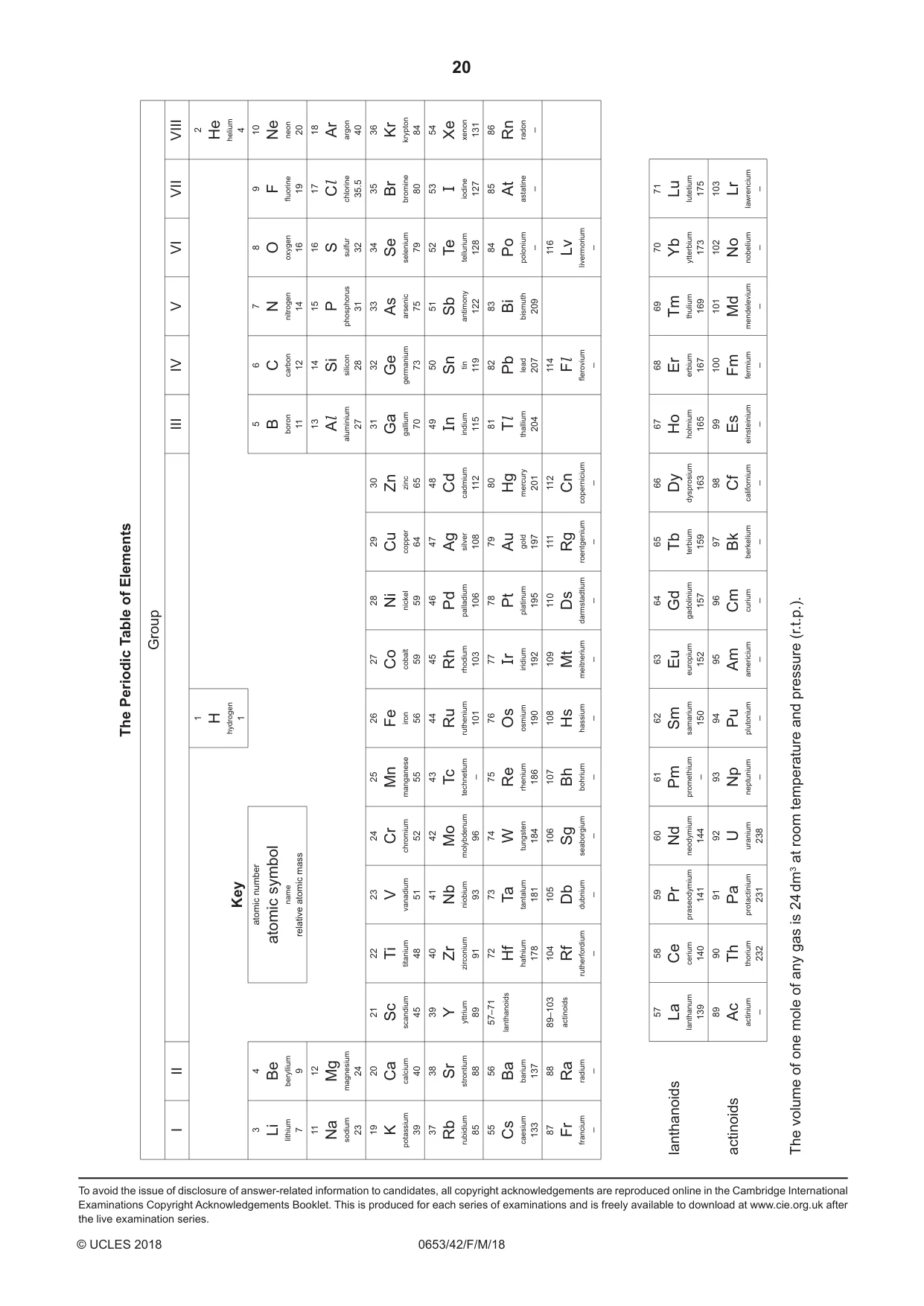
5 (a) An atom of bromine is represented by the symbol 3579Br (i) State the number of electrons, neutrons and protons in this atom. electrons ....................... neutrons ....................... protons ....................... [2] (ii) Complete Table 5.1 to show the relative charges and approximate relative masses of electrons, neutrons and protons. Table 5.1 particle relative charges approximate relative masses electrons neutrons protons [2] (b) Bromine is a non-metallic element. State the types of bond that form when bromine reacts with sodium and with hydrogen. Explain your answers in terms of electrons. sodium and bromine .................................................... explanation ............................................................................................................................... ................................................................................................................................................... hydrogen and bromine .................................................... explanation ............................................................................................................................... ................................................................................................................................................... [3] (c) The Periodic Table on page 20 shows the positions of bromine and the other elements in Group VII. Predict one Group VII element that is displaced from its salts by bromine. ...............................................................................................................................................[1] (d) Argon is a noble gas. The noble gases are in Group VIII of the Periodic Table. (i) State the electronic structure of an atom of argon. .......................................................................................................................................[1] (ii) State one use of argon. .......................................................................................................................................[1]
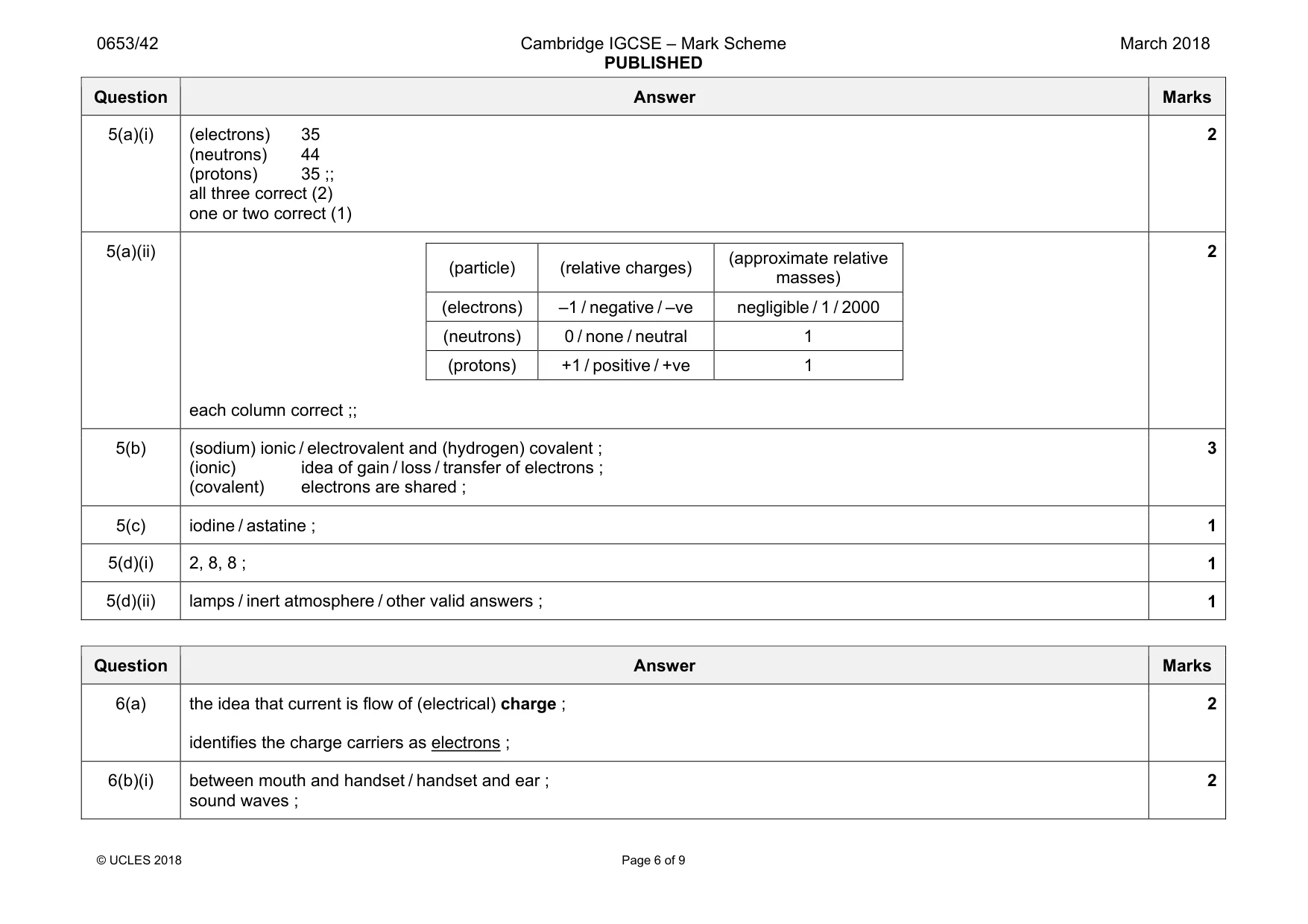
Mark scheme: 5(a)(i) (electrons) 35 (neutrons) 44 (protons) 35 ;; all three correct (2) one or two correct (1) 2 5(a)(ii) (particle) (relative charges) (approximate relative masses) (electrons) –1 / negative / –ve negligible / 1 / 2000 (neutrons) 0 / none / neutral 1 (protons) +1 / positive / +ve 1 each column correct ;; 2 5(b) (sodium) ionic / electrovalent and (hydrogen) covalent ; (ionic) idea of gain / loss / transfer of electrons ; (covalent) electrons are shared ; 3 5(c) iodine / astatine ; 1 5(d)(i) 2, 8, 8 ; 1 5(d)(ii) lamps / inert atmosphere / other valid answers ; 1
Q6 · Two people talking to each other using cordless telephones over a link to a…
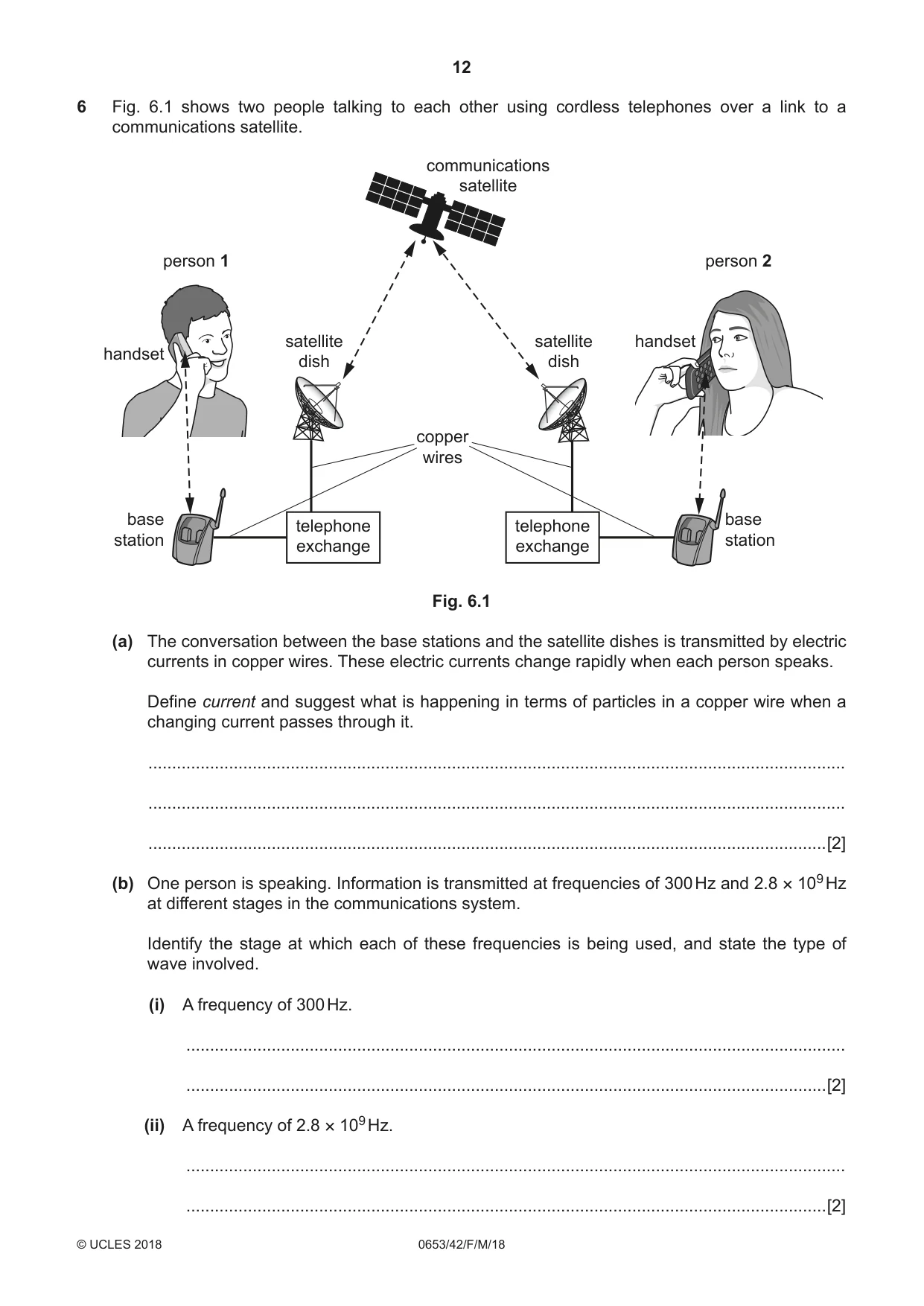
6 Fig. 6.1 shows two people talking to each other using cordless telephones over a link to a communications satellite. communications satellite person 1 person 2 satellite satellite handset handset dish dish copper wires base base telephone telephone station station exchange exchange Fig. 6.1 (a) The conversation between the base stations and the satellite dishes is transmitted by electric currents in copper wires. These electric currents change rapidly when each person speaks. Define current and suggest what is happening in terms of particles in a copper wire when a changing current passes through it. ................................................................................................................................................... ................................................................................................................................................... ...............................................................................................................................................[2] (b) One person is speaking. Information is transmitted at frequencies of 300 Hz and 2.8 × 10⁹ Hz at different stages in the communications system. Identify the stage at which each of these frequencies is being used, and state the type of wave involved. (i) A frequency of 300 Hz. ........................................................................................................................................... .......................................................................................................................................[2] (ii) A frequency of 2.8 × 10⁹ Hz. ........................................................................................................................................... .......................................................................................................................................[2] (c) When a satellite telephone is used, there is a delay of about 0.1 s between one person speaking and the other person hearing. Explain why this delay happens. ................................................................................................................................................... ................................................................................................................................................... ...............................................................................................................................................[2]
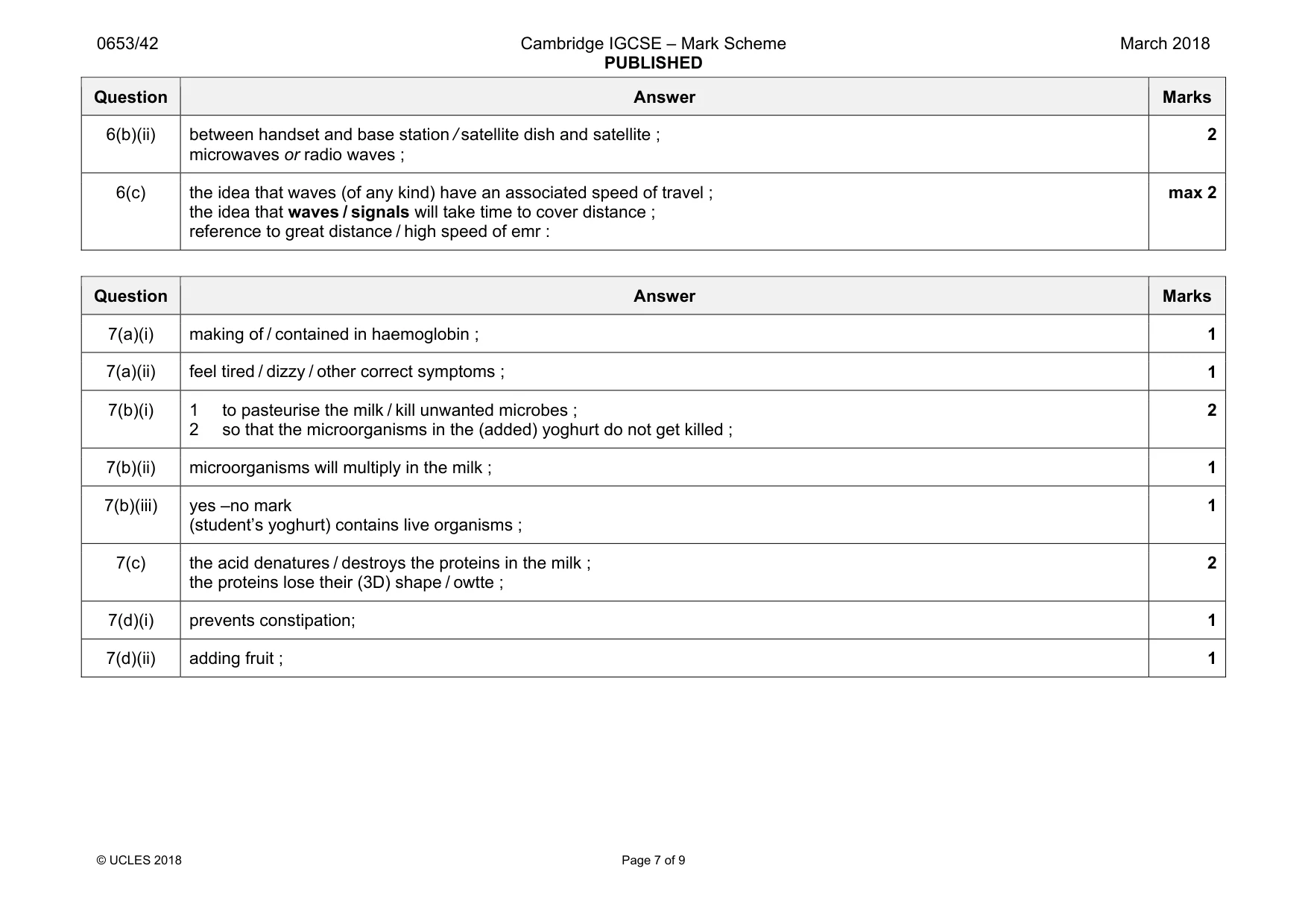
Mark scheme: 6(a) the idea that current is flow of (electrical) charge ; identifies the charge carriers as electrons ; 2 6(b)(i) between mouth and handset / handset and ear ; sound waves ; 2 Question Answer Marks 6(b)(ii) between handset and base station / satellite dish and satellite ; microwaves or radio waves ; 2 6(c) the idea that waves (of any kind) have an associated speed of travel ; the idea that waves / signals will take time to cover distance ; reference to great distance / high speed of emr : max 2
Q7 · Breast milk contains all the nutrients needed for a newborn baby
7 (a) Breast milk contains all the nutrients needed for a newborn baby. One mineral contained in milk is iron. (i) State the role of iron in the body. ........................................................................................................................................... .......................................................................................................................................[1] (ii) Anaemia occurs due to a shortage of iron in the body. Describe one symptom of anaemia. .......................................................................................................................................[1] (b) A student uses milk to make yoghurt at home. The stages below show the method he uses. stage 1 He heats some milk to 90 °C, then allows it to cool. stage 2 He adds a small amount of yoghurt which he bought in a supermarket. The yoghurt contains live microorganisms. stage 3 He stirs the mixture then leaves it in an oven set at 45 °C for several hours. stage 4 When the mixture thickens the yoghurt is ready and the student places it in a fridge. (i) Explain why the student carries out the following processes in stage 1. 1. Heating the milk to 90 °C. ........................................................................................................................................... 2. Allowing the milk to cool. ........................................................................................................................................... ........................................................................................................................................... [2] (ii) Suggest why the student only needs to use a small amount of the yoghurt in stage 2. ........................................................................................................................................... .......................................................................................................................................[1] (iii) Predict whether the student can use some of the yoghurt he has made to repeat stages 1 to 4. Explain your answer. ........................................................................................................................................... .......................................................................................................................................[1] (c) Microorganisms in the yoghurt feed on the sugar in the milk and make lactic acid. The acid affects the proteins in the milk and the yoghurt becomes thick. Suggest and describe in detail what happens to the protein molecules in the milk. ................................................................................................................................................... ................................................................................................................................................... ...............................................................................................................................................[2] (d) There is no fibre present in the yoghurt. (i) Explain why fibre is needed in a balanced diet. ........................................................................................................................................... .......................................................................................................................................[1] (ii) Suggest a way of including fibre in the yoghurt. .......................................................................................................................................[1]
Mark scheme: 7(a)(i) making of / contained in haemoglobin ; 1 7(a)(ii) feel tired / dizzy / other correct symptoms ; 1 7(b)(i) 1 to pasteurise the milk / kill unwanted microbes ; 2 so that the microorganisms in the (added) yoghurt do not get killed ; 2 7(b)(ii) microorganisms will multiply in the milk ; 1 7(b)(iii) yes –no mark (student’s yoghurt) contains live organisms ; 1 7(c) the acid denatures / destroys the proteins in the milk ; the proteins lose their (3D) shape / owtte ; 2 7(d)(i) prevents constipation; 1 7(d)(ii) adding fruit ; 1
Q8 · Petroleum is separated into useful fractions by fractional distillation
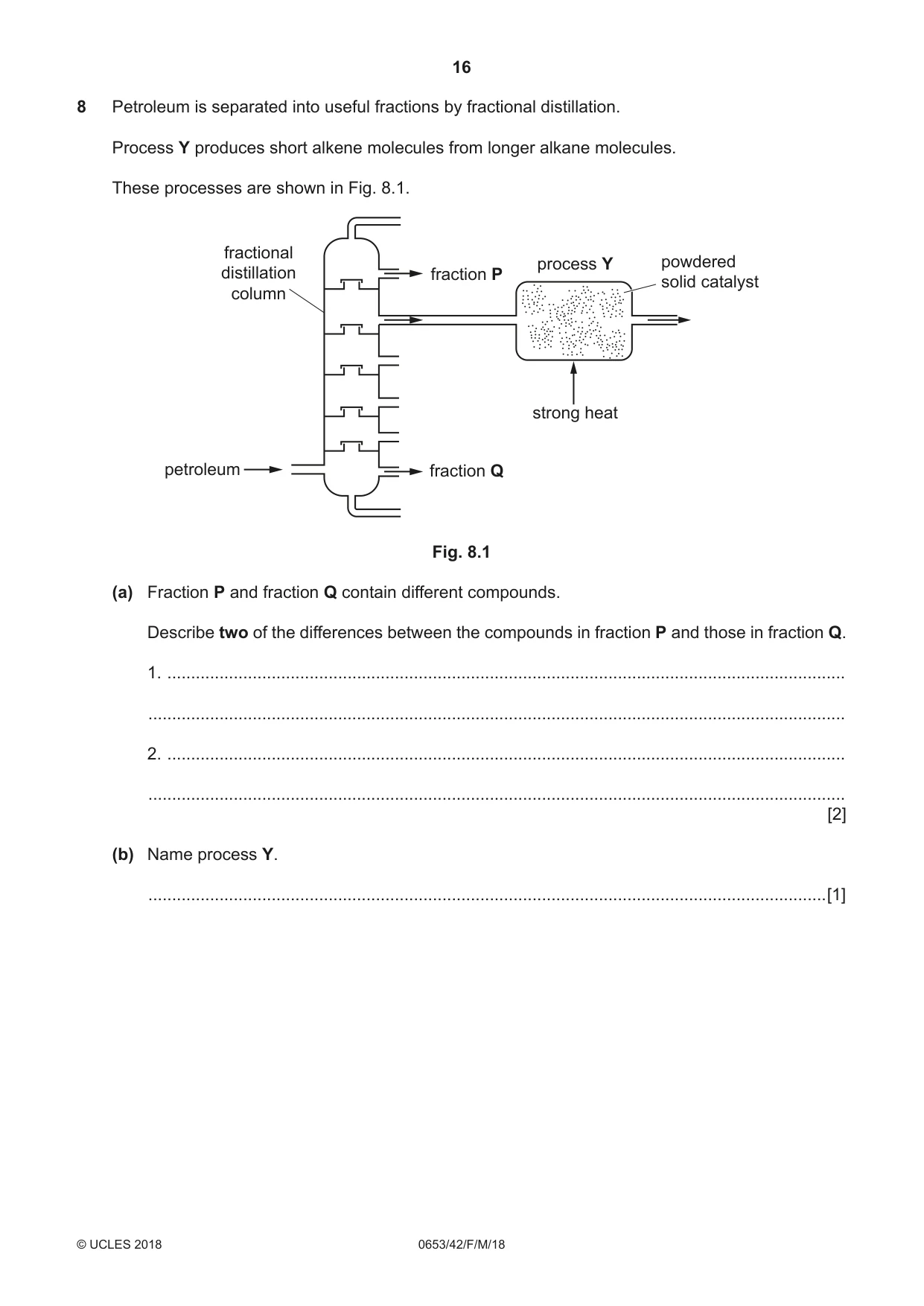
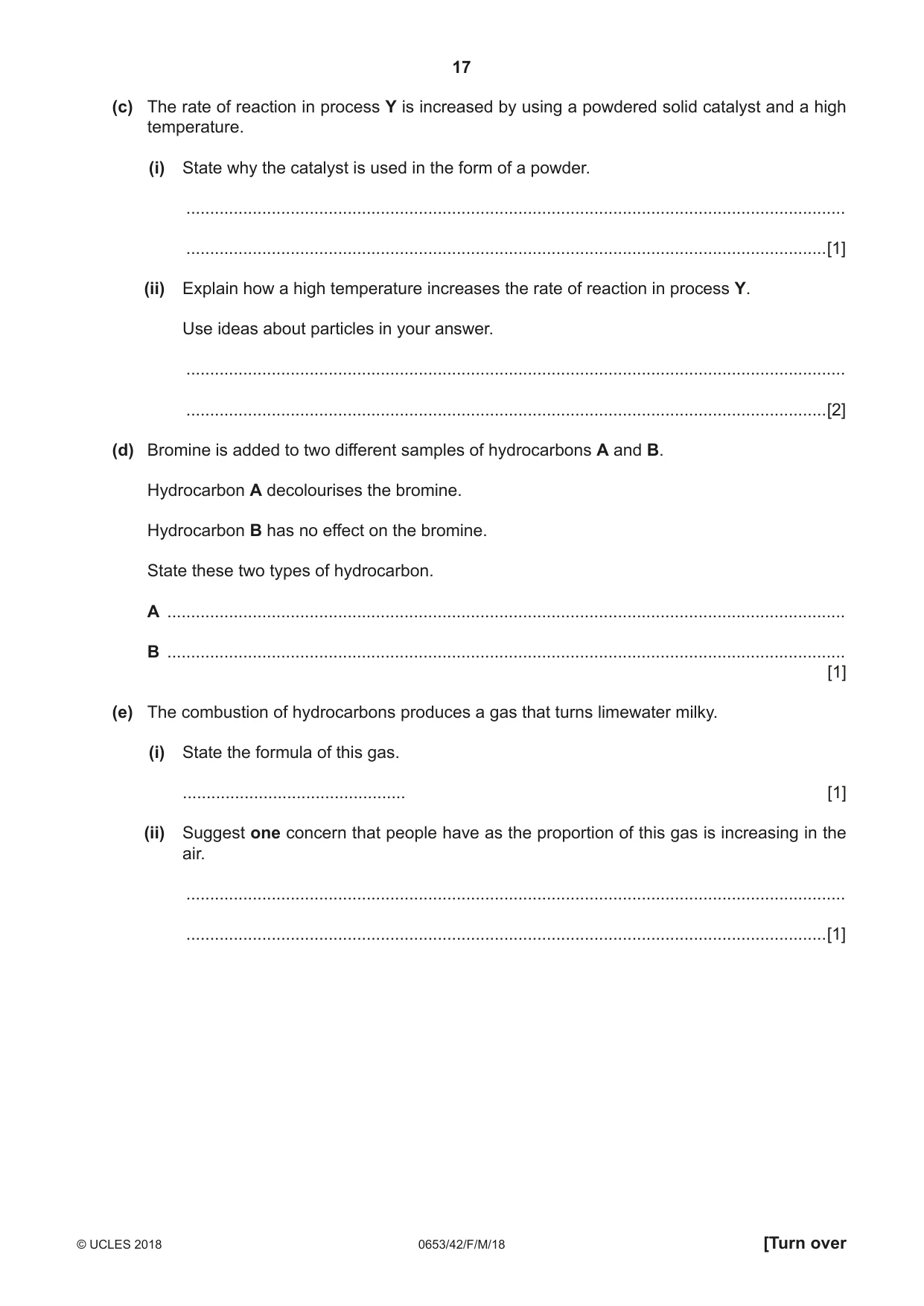
8 Petroleum is separated into useful fractions by fractional distillation. Process Y produces short alkene molecules from longer alkane molecules. These processes are shown in Fig. 8.1. fractional process Y powdered distillation fraction P solid catalyst column strong heat petroleum fraction Q Fig. 8.1 (a) Fraction P and fraction Q contain different compounds. Describe two of the differences between the compounds in fraction P and those in fraction Q. 1. ............................................................................................................................................... ................................................................................................................................................... 2. ............................................................................................................................................... ................................................................................................................................................... [2] (b) Name process Y. ...............................................................................................................................................[1] (c) The rate of reaction in process Y is increased by using a powdered solid catalyst and a high temperature. (i) State why the catalyst is used in the form of a powder. ........................................................................................................................................... .......................................................................................................................................[1] (ii) Explain how a high temperature increases the rate of reaction in process Y. Use ideas about particles in your answer. ........................................................................................................................................... .......................................................................................................................................[2] (d) Bromine is added to two different samples of hydrocarbons A and B. Hydrocarbon A decolourises the bromine. Hydrocarbon B has no effect on the bromine. State these two types of hydrocarbon. A ............................................................................................................................................... B ............................................................................................................................................... [1] (e) The combustion of hydrocarbons produces a gas that turns limewater milky. (i) State the formula of this gas. ............................................... [1] (ii) Suggest one concern that people have as the proportion of this gas is increasing in the air. ........................................................................................................................................... .......................................................................................................................................[1]
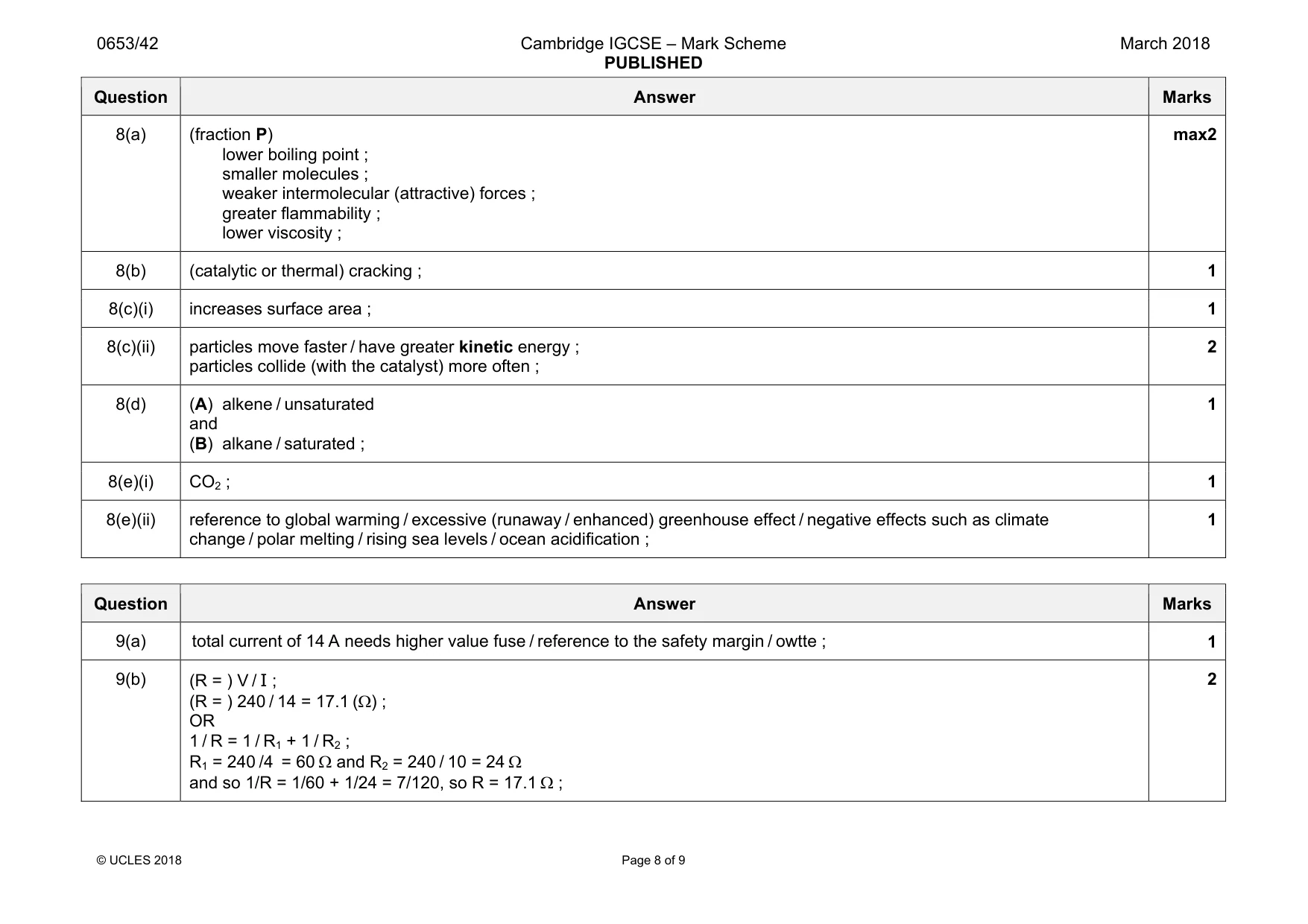
Mark scheme: 8(a) (fraction P) lower boiling point ; smaller molecules ; weaker intermolecular (attractive) forces ; greater flammability ; lower viscosity ; max2 8(b) (catalytic or thermal) cracking ; 1 8(c)(i) increases surface area ; 1 8(c)(ii) particles move faster / have greater kinetic energy ; particles collide (with the catalyst) more often ; 2 8(d) (A) alkene / unsaturated and (B) alkane / saturated ; 1 8(e)(i) CO2 ; 1 8(e)(ii) reference to global warming / excessive (runaway / enhanced) greenhouse effect / negative effects such as climate change / polar melting / rising sea levels / ocean acidification ; 1
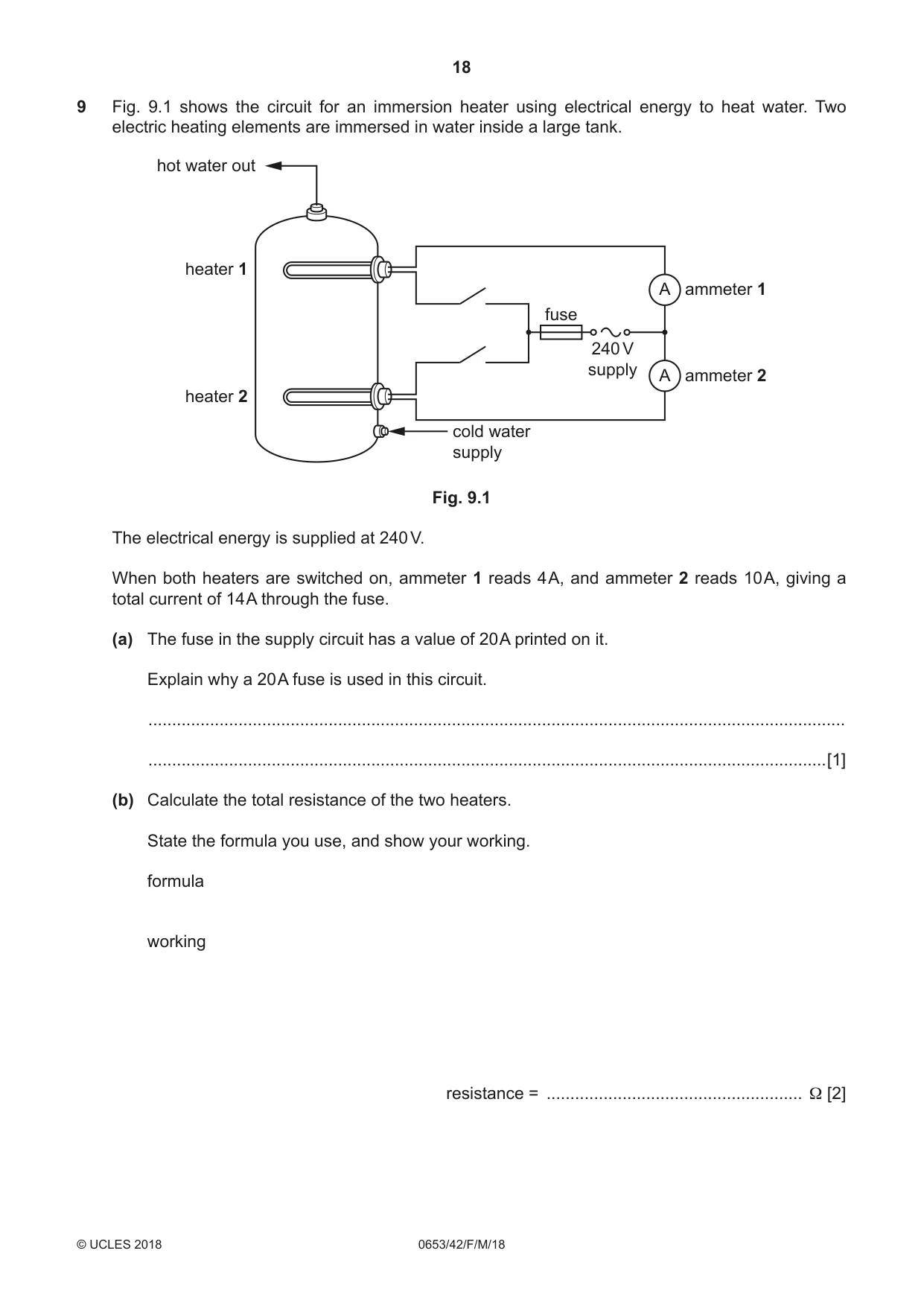
Q9 · The circuit for an immersion heater using electrical energy to heat water
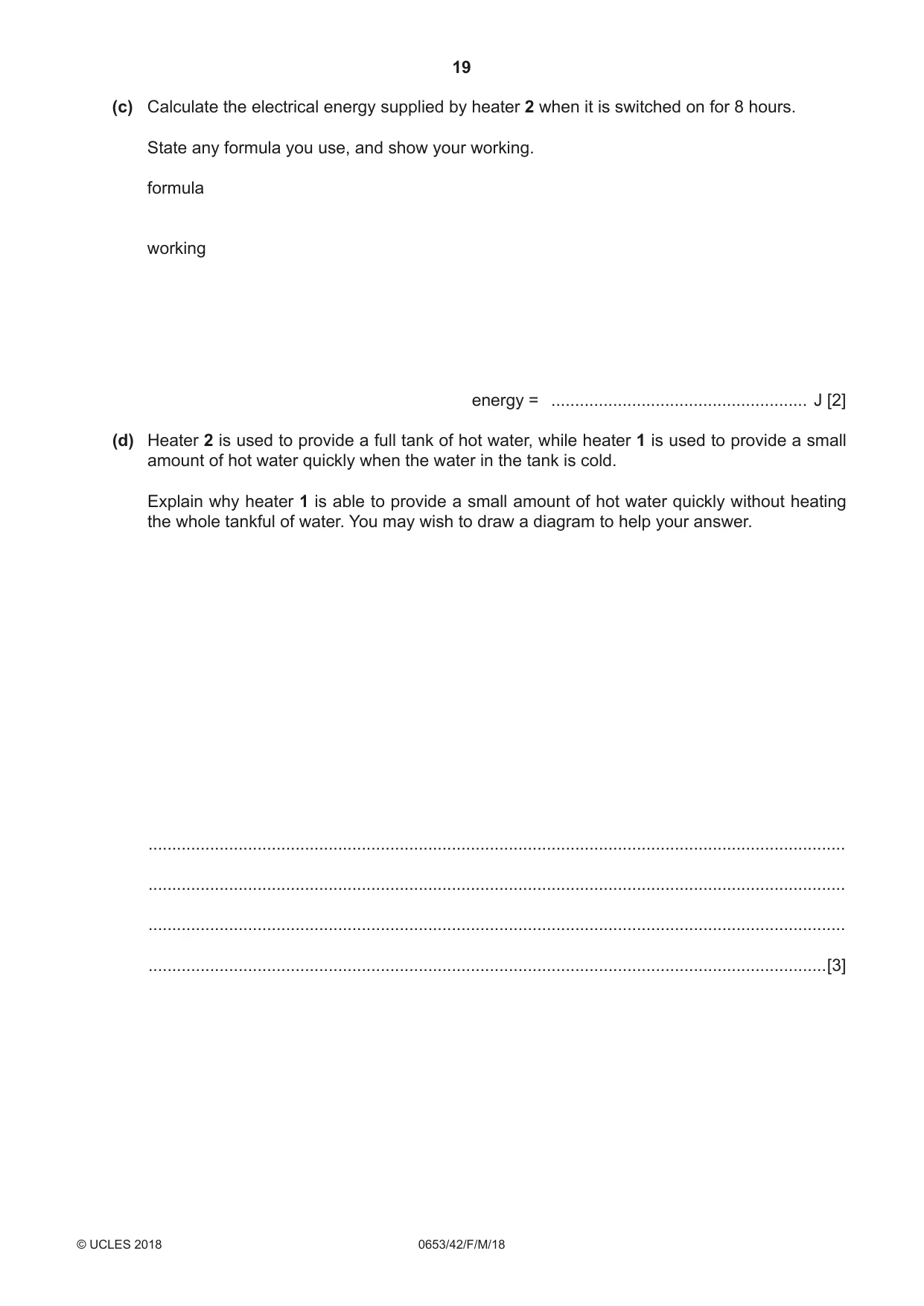
9 Fig. 9.1 shows the circuit for an immersion heater using electrical energy to heat water. Two electric heating elements are immersed in water inside a large tank. hot water out heater 1 A ammeter 1 fuse 240 V supply A ammeter 2 heater 2 cold water supply Fig. 9.1 The electrical energy is supplied at 240 V. When both heaters are switched on, ammeter 1 reads 4 A, and ammeter 2 reads 10 A, giving a total current of 14 A through the fuse. (a) The fuse in the supply circuit has a value of 20 A printed on it. Explain why a 20 A fuse is used in this circuit. ................................................................................................................................................... ...............................................................................................................................................[1] (b) Calculate the total resistance of the two heaters. State the formula you use, and show your working. formula working resistance = ...................................................... Ω [2] (c) Calculate the electrical energy supplied by heater 2 when it is switched on for 8 hours. State any formula you use, and show your working. formula working energy = ...................................................... J [2] (d) Heater 2 is used to provide a full tank of hot water, while heater 1 is used to provide a small amount of hot water quickly when the water in the tank is cold. Explain why heater 1 is able to provide a small amount of hot water quickly without heating the whole tankful of water. You may wish to draw a diagram to help your answer. ................................................................................................................................................... ................................................................................................................................................... ................................................................................................................................................... ...............................................................................................................................................[3]
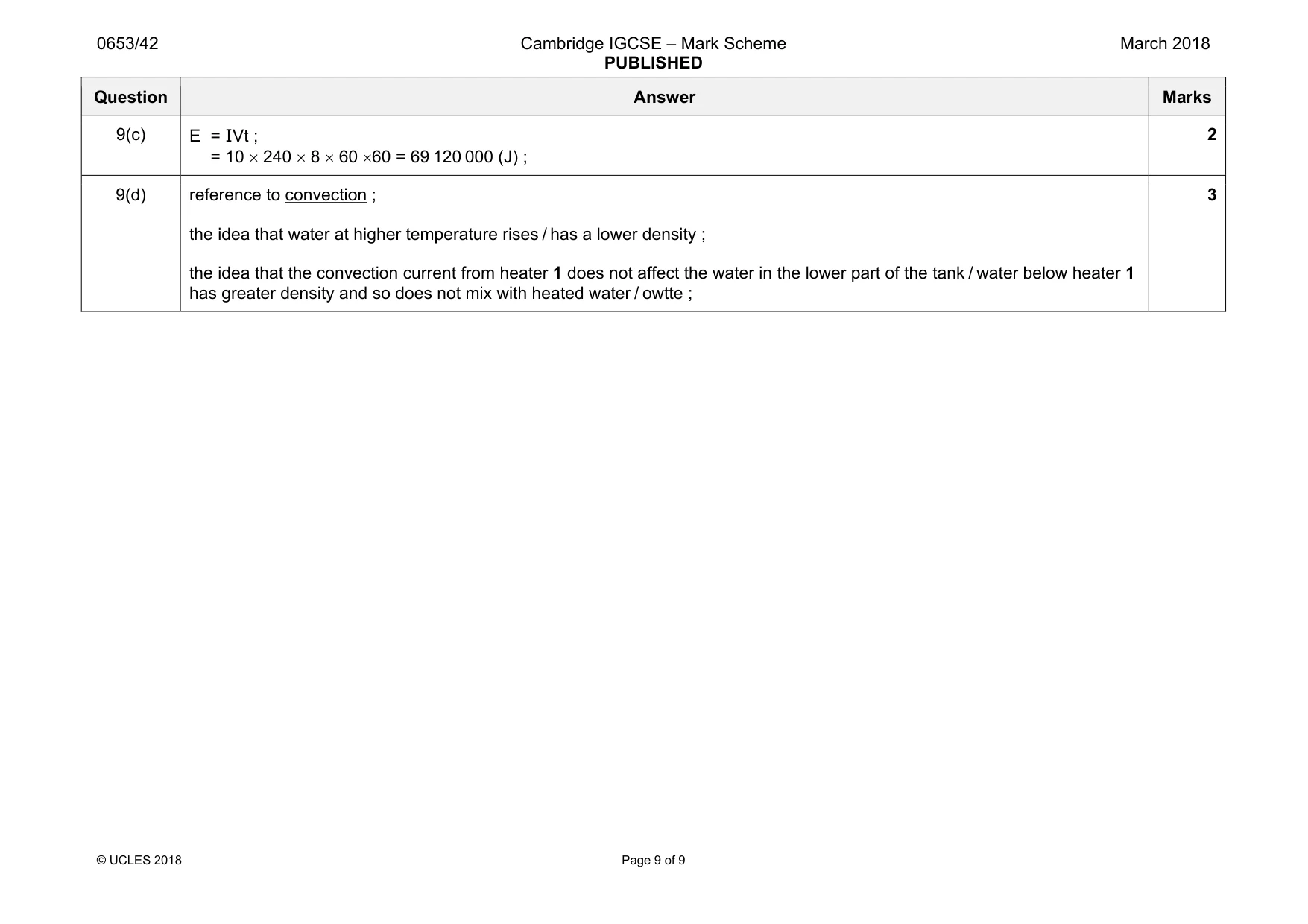
Mark scheme: 9(a) total current of 14 A needs higher value fuse / reference to the safety margin / owtte ; 1 9(b) (R = ) V / I ; (R = ) 240 / 14 = 17.1 (Ω) ; OR 1 / R = 1 / R1 + 1 / R2 ; R1 = 240 /4 = 60 Ω and R2 = 240 / 10 = 24 Ω and so 1/R = 1/60 + 1/24 = 7/120, so R = 17.1 Ω ; 2 Question Answer Marks 9(c) E = IVt ; = 10 × 240 × 8 × 60 ×60 = 69 120 000 (J) ; 2 9(d) reference to convection ; the idea that water at higher temperature rises / has a lower density ; the idea that the convection current from heater 1 does not affect the water in the lower part of the tank / water below heater 1 has greater density and so does not mix with heated water / owtte ; 3
What was in this paper
The subtopics covered by these 9 questions, and how many questions each got. Open one in a new tab to see every Cambridge question on it.
What you needed in this session
Cambridge’s own grade thresholds for 2018 Feb/March, Paper 4 · Variant 2. A higher threshold means an easier paper — the bar moves with how the cohort did.