Cambridge IGCSE Science - Combined 0653 — 2017 Feb/March Paper 4 · Variant 2
0653/42/F/M/17 · 9 questions · 80 marks · ≈90 min
The question paper and its mark scheme, free to read here and free to download. This is Cambridge’s own paper, exactly as it was sat.
Question paper20 pages

Mark scheme7 pages
Answers below. Sit the paper first if you are practising.
Questions as text
Q1 · Use lines to connect the box on the left to different boxes on the right
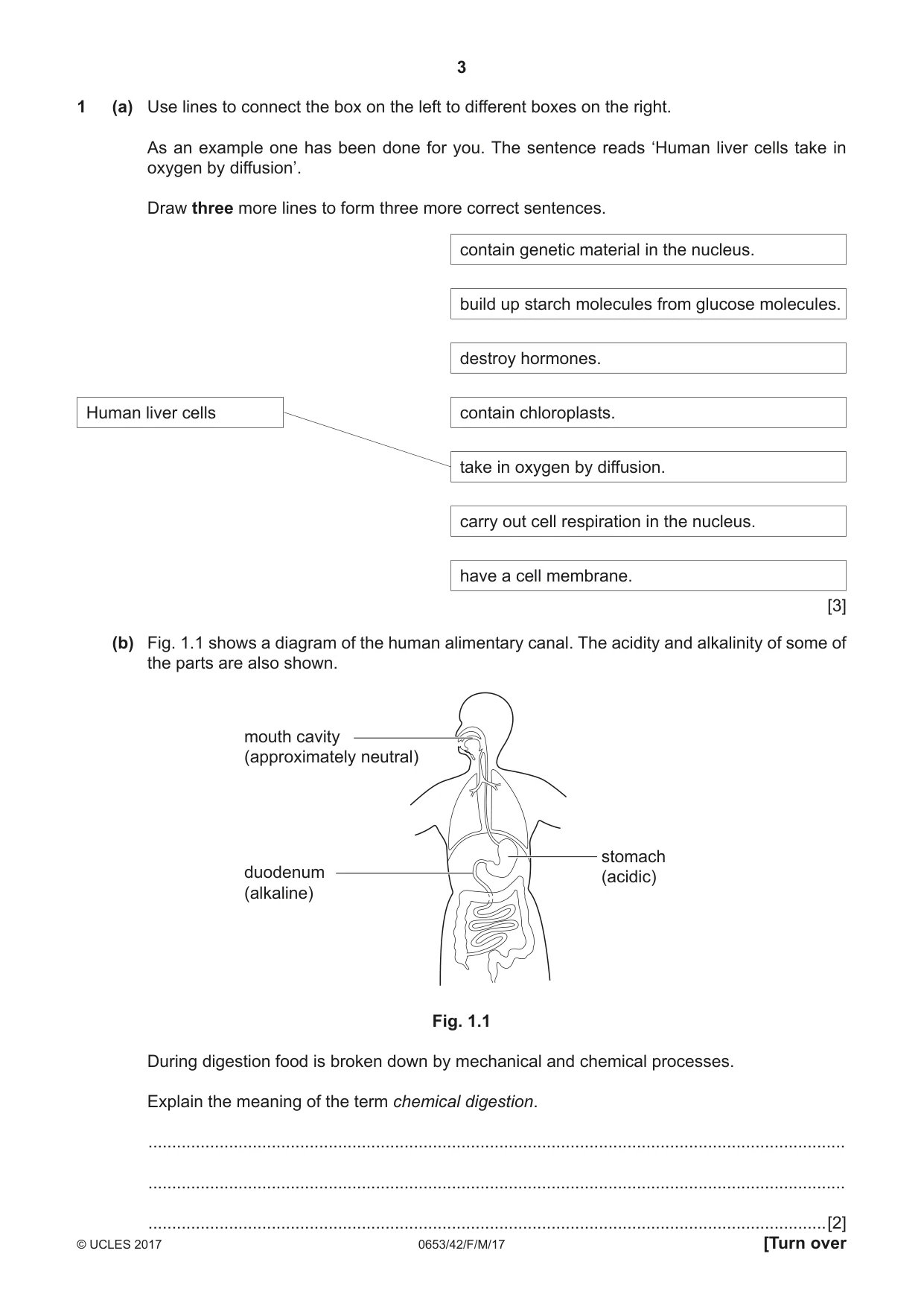
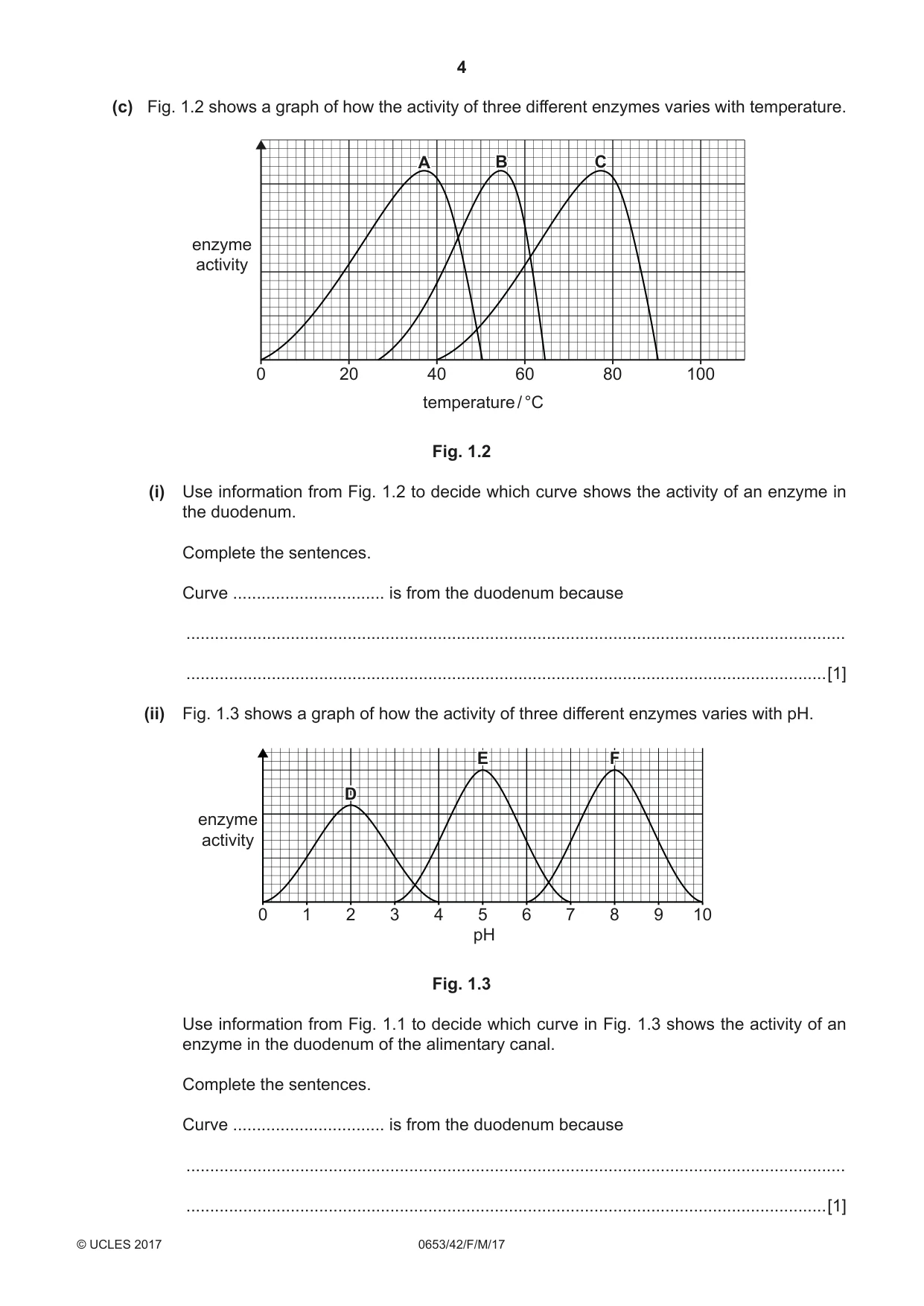
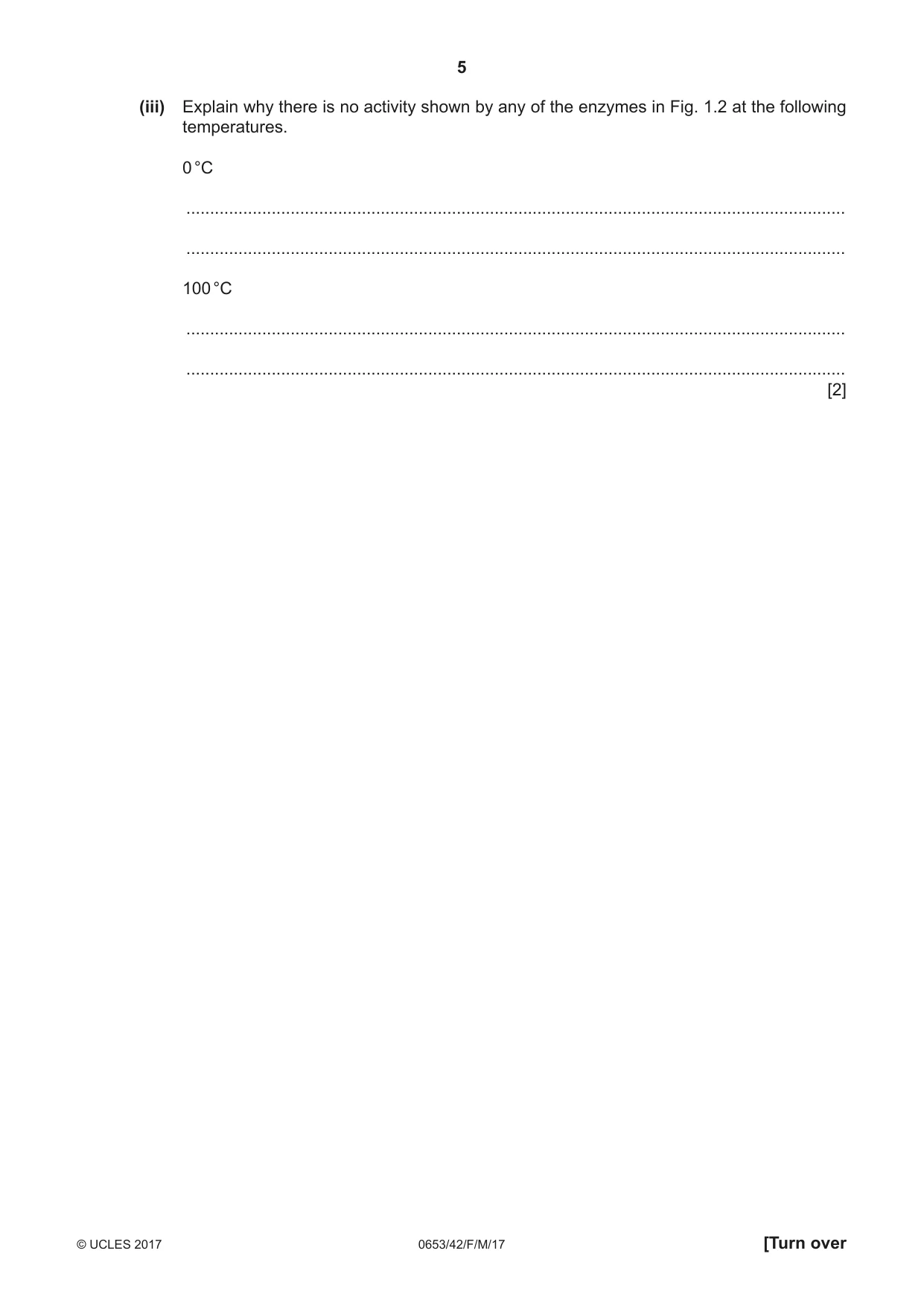
1 (a) Use lines to connect the box on the left to different boxes on the right. As an example one has been done for you. The sentence reads ‘Human liver cells take in oxygen by diffusion’. Draw three more lines to form three more correct sentences. contain genetic material in the nucleus. build up starch molecules from glucose molecules. destroy hormones. Human liver cells contain chloroplasts. take in oxygen by diffusion. carry out cell respiration in the nucleus. have a cell membrane. [3] (b) Fig. 1.1 shows a diagram of the human alimentary canal. The acidity and alkalinity of some of the parts are also shown. mouth cavity (approximately neutral) stomach duodenum (acidic) (alkaline) Fig. 1.1 During digestion food is broken down by mechanical and chemical processes. Explain the meaning of the term chemical digestion. ................................................................................................................................................... ................................................................................................................................................... (c) Fig. 1.2 shows a graph of how the activity of three different enzymes varies with temperature. AA BB CC enzyme activity 0 20 40 60 80 100 temperature / °C Fig. 1.2 (i) Use information from Fig. 1.2 to decide which curve shows the activity of an enzyme in the duodenum. Complete the sentences. Curve ................................ is from the duodenum because ........................................................................................................................................... .......................................................................................................................................[1] (ii) Fig. 1.3 shows a graph of how the activity of three different enzymes varies with pH. E F DD enzyme activity 0 1 2 3 4 5 6 7 8 9 10 pH Fig. 1.3 Use information from Fig. 1.1 to decide which curve in Fig. 1.3 shows the activity of an enzyme in the duodenum of the alimentary canal. Complete the sentences. Curve ................................ is from the duodenum because ........................................................................................................................................... .......................................................................................................................................[1] (iii) Explain why there is no activity shown by any of the enzymes in Fig. 1.2 at the following temperatures. 0 °C ........................................................................................................................................... ........................................................................................................................................... 100 °C ........................................................................................................................................... ........................................................................................................................................... [2]
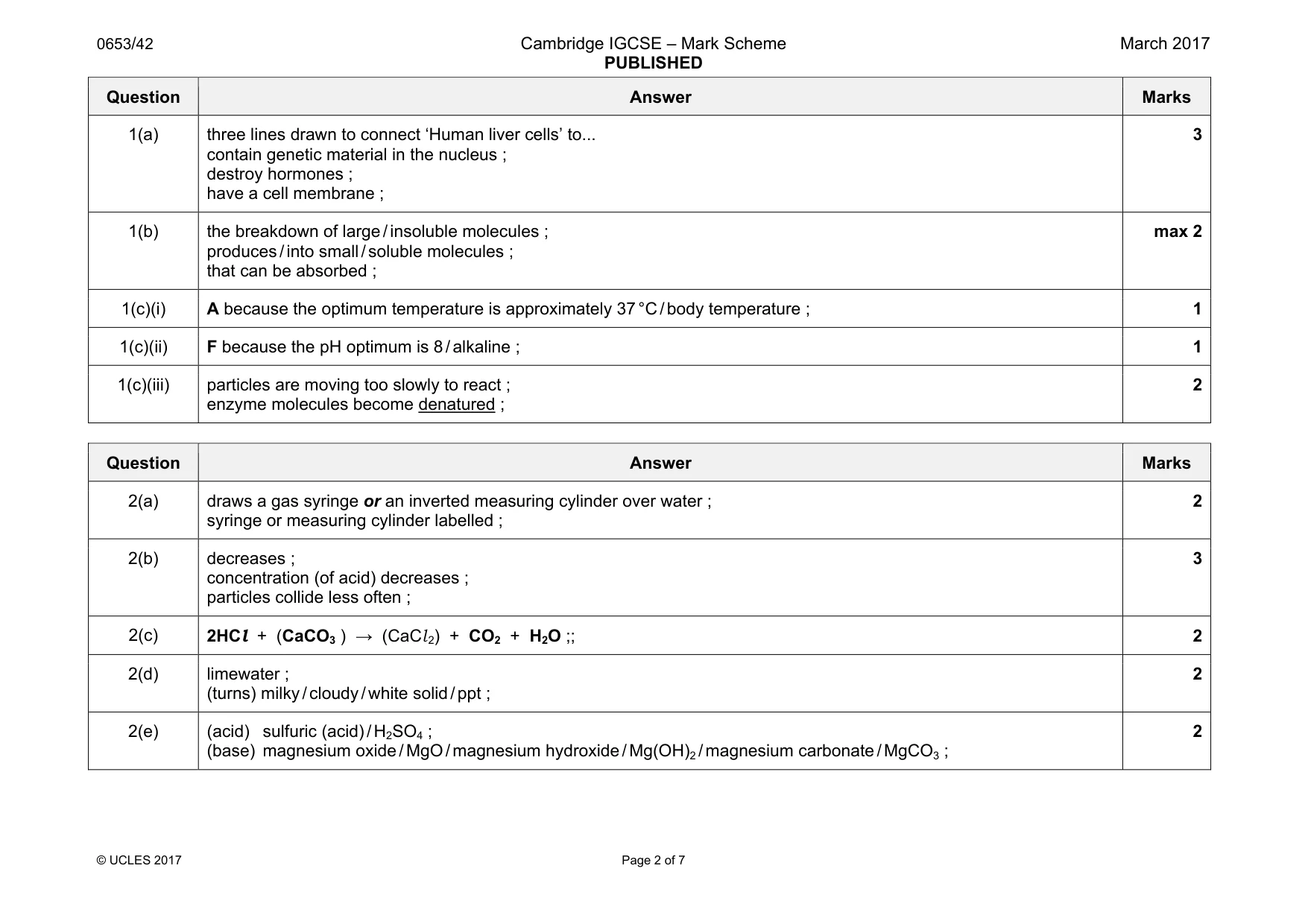
Mark scheme: 1(a) three lines drawn to connect ‘Human liver cells’ to... contain genetic material in the nucleus ; destroy hormones ; have a cell membrane ; 3 1(b) the breakdown of large / insoluble molecules ; produces / into small / soluble molecules ; that can be absorbed ; max 2 1(c)(i) A because the optimum temperature is approximately 37 °C / body temperature ; 1 1(c)(ii) F because the pH optimum is 8 / alkaline ; 1 1(c)(iii) particles are moving too slowly to react ; enzyme molecules become denatured ; 2
Q2 · A student investigates the rate of reaction between calcium carbonate and dilute…
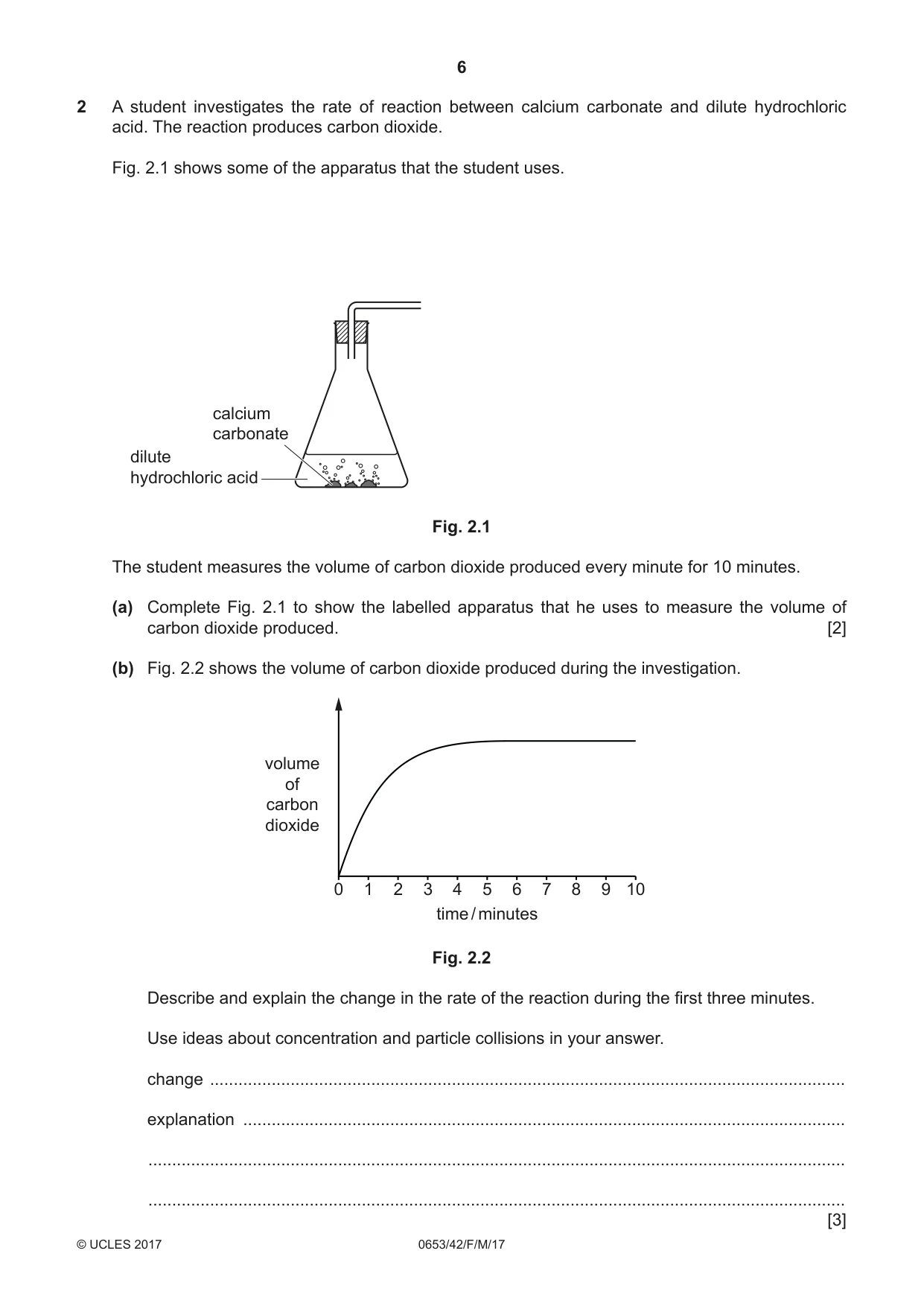
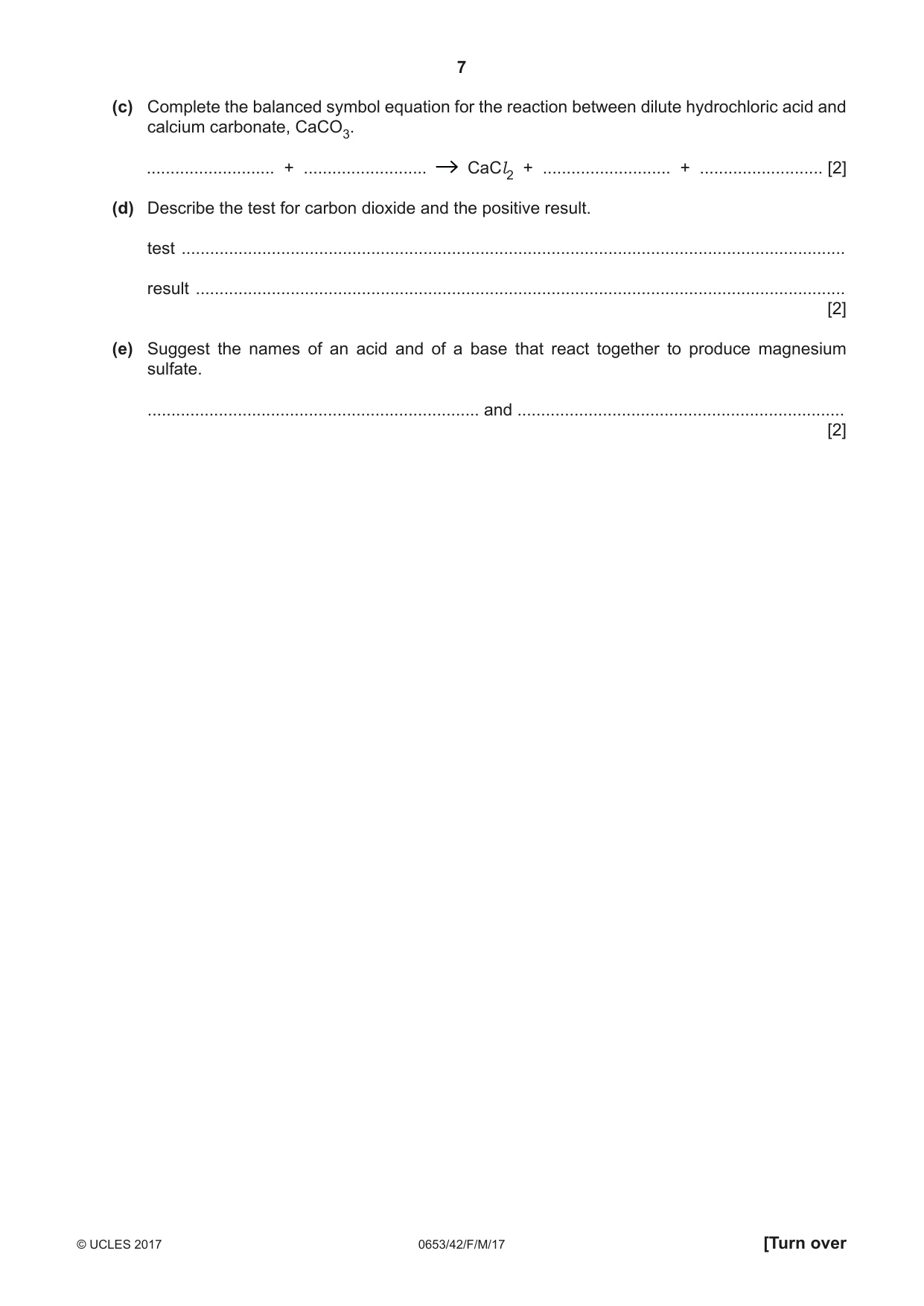
2 A student investigates the rate of reaction between calcium carbonate and dilute hydrochloric acid. The reaction produces carbon dioxide. Fig. 2.1 shows some of the apparatus that the student uses. calcium carbonate dilute hydrochloric acid Fig. 2.1 The student measures the volume of carbon dioxide produced every minute for 10 minutes. (a) Complete Fig. 2.1 to show the labelled apparatus that he uses to measure the volume of carbon dioxide produced. [2] (b) Fig. 2.2 shows the volume of carbon dioxide produced during the investigation. volume of carbon dioxide 0 1 2 3 4 5 6 7 8 9 10 time / minutes Fig. 2.2 Describe and explain the change in the rate of the reaction during the first three minutes. Use ideas about concentration and particle collisions in your answer. change ...................................................................................................................................... explanation ............................................................................................................................... ................................................................................................................................................... ................................................................................................................................................... [3] (c) Complete the balanced symbol equation for the reaction between dilute hydrochloric acid and calcium carbonate, CaCO3. ........................... + .......................... CaCl2 + ........................... + .......................... [2] (d) Describe the test for carbon dioxide and the positive result. test ............................................................................................................................................ result ......................................................................................................................................... [2] (e) Suggest the names of an acid and of a base that react together to produce magnesium sulfate. ...................................................................... and ..................................................................... [2]
Mark scheme: 2(a) draws a gas syringe or an inverted measuring cylinder over water ; syringe or measuring cylinder labelled ; 2 2(b) decreases ; concentration (of acid) decreases ; particles collide less often ; 3 2(c) 2HCl + (CaCO3 ) → (CaCl 2) + CO2 + H2O ;; 2 2(d) limewater ; (turns) milky / cloudy / white solid / ppt ; 2 2(e) (acid) sulfuric (acid) / H2SO4 ; (base) magnesium oxide / MgO / magnesium hydroxide / Mg(OH)2 / magnesium carbonate / MgCO3 ; 2
Q3 · An elevator (lift) which takes people to different floors in a tall building
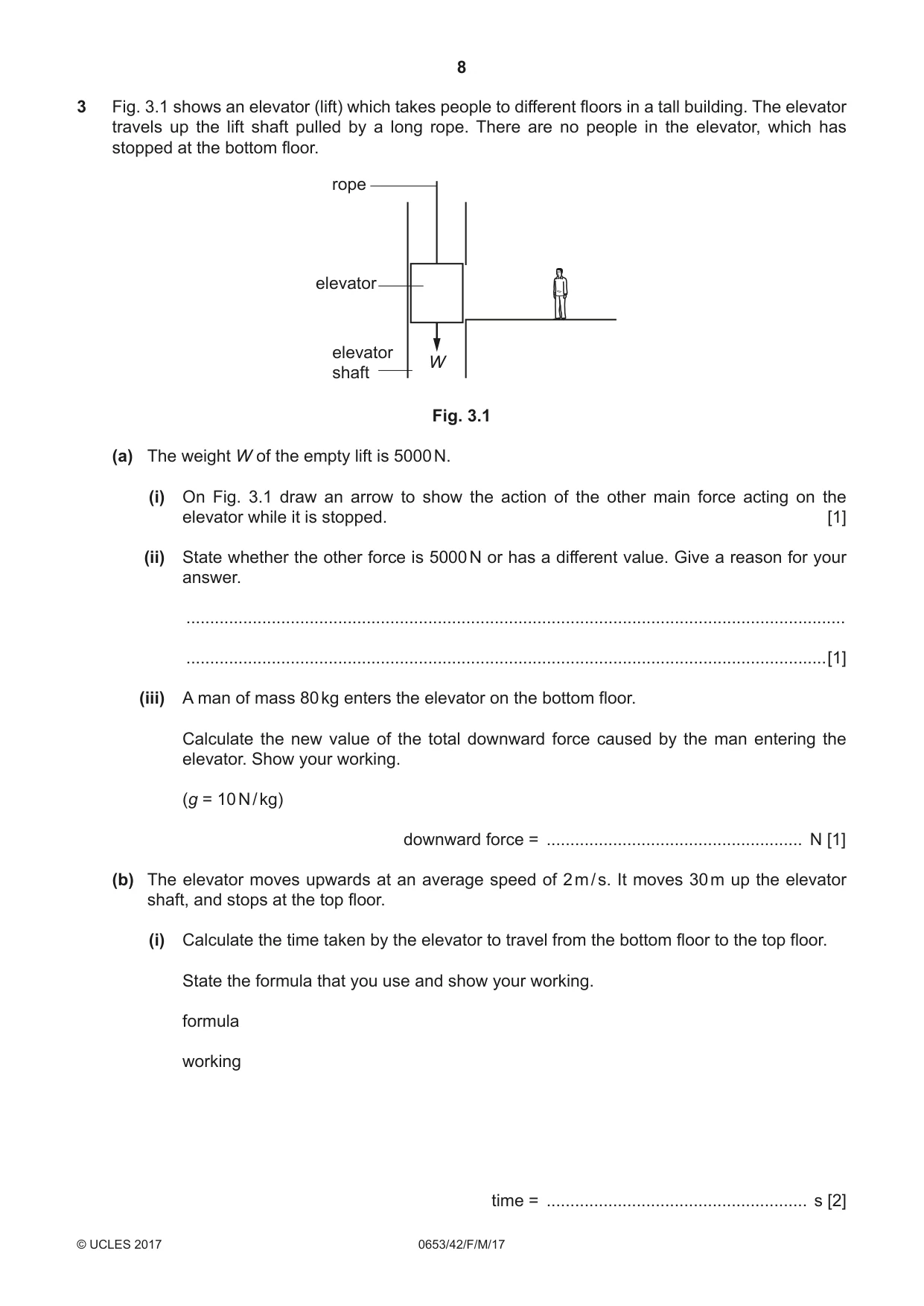
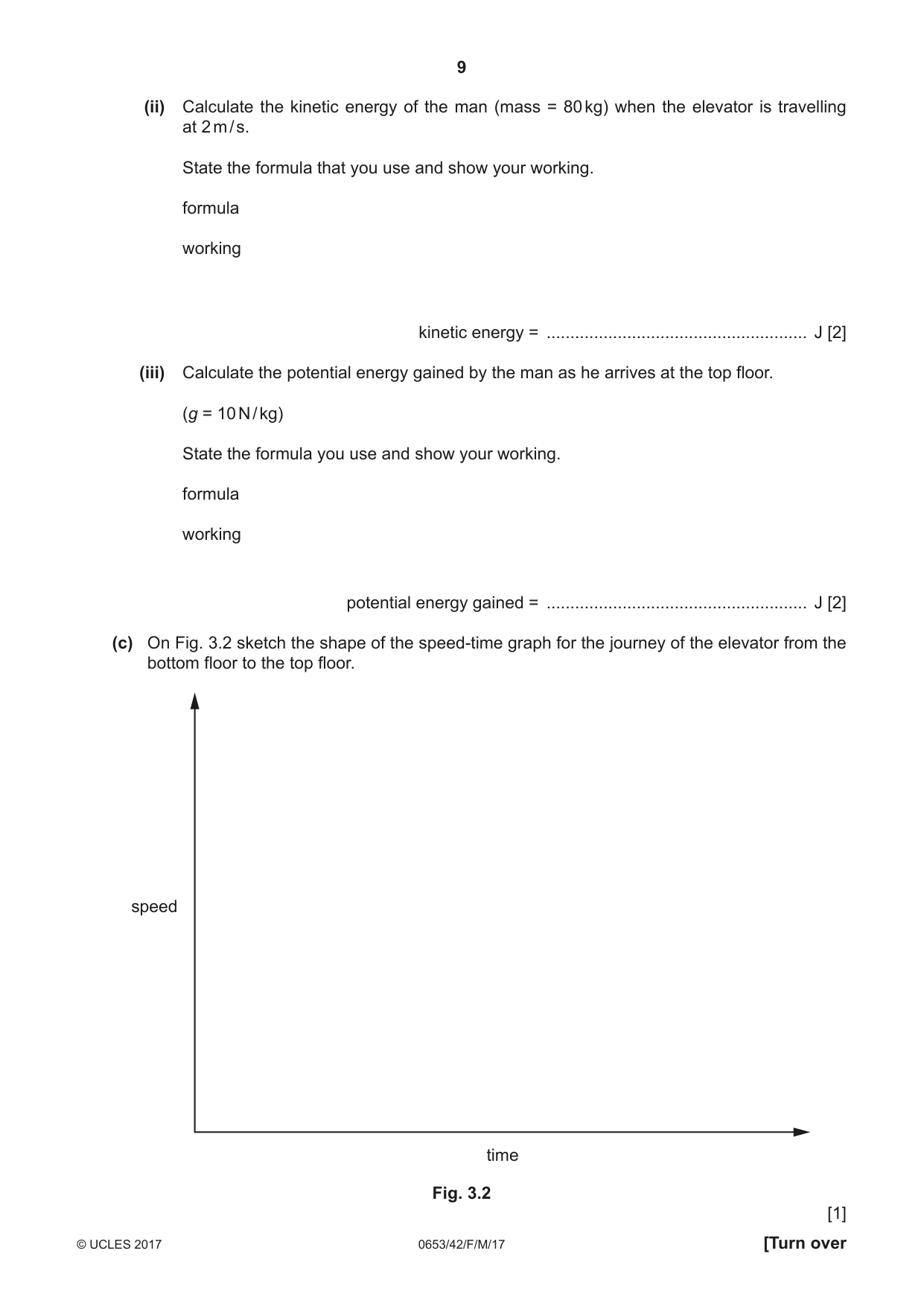
3 Fig. 3.1 shows an elevator (lift) which takes people to different floors in a tall building. The elevator travels up the lift shaft pulled by a long rope. There are no people in the elevator, which has stopped at the bottom floor. rope elevator elevator W shaft Fig. 3.1 (a) The weight W of the empty lift is 5000 N. (i) On Fig. 3.1 draw an arrow to show the action of the other main force acting on the elevator while it is stopped. [1] (ii) State whether the other force is 5000 N or has a different value. Give a reason for your answer. ........................................................................................................................................... .......................................................................................................................................[1] (iii) A man of mass 80 kg enters the elevator on the bottom floor. Calculate the new value of the total downward force caused by the man entering the elevator. Show your working. (g = 10 N / kg) downward force = ...................................................... N [1] (b) The elevator moves upwards at an average speed of 2 m / s. It moves 30 m up the elevator shaft, and stops at the top floor. (i) Calculate the time taken by the elevator to travel from the bottom floor to the top floor. State the formula that you use and show your working. formula working time = ....................................................... s [2] (ii) Calculate the kinetic energy of the man (mass = 80 kg) when the elevator is travelling at 2 m / s. State the formula that you use and show your working. formula working kinetic energy = ....................................................... J [2] (iii) Calculate the potential energy gained by the man as he arrives at the top floor. (g = 10 N / kg) State the formula you use and show your working. formula working potential energy gained = ....................................................... J [2] (c) On Fig. 3.2 sketch the shape of the speed-time graph for the journey of the elevator from the bottom floor to the top floor. speed time Fig. 3.2 [1]
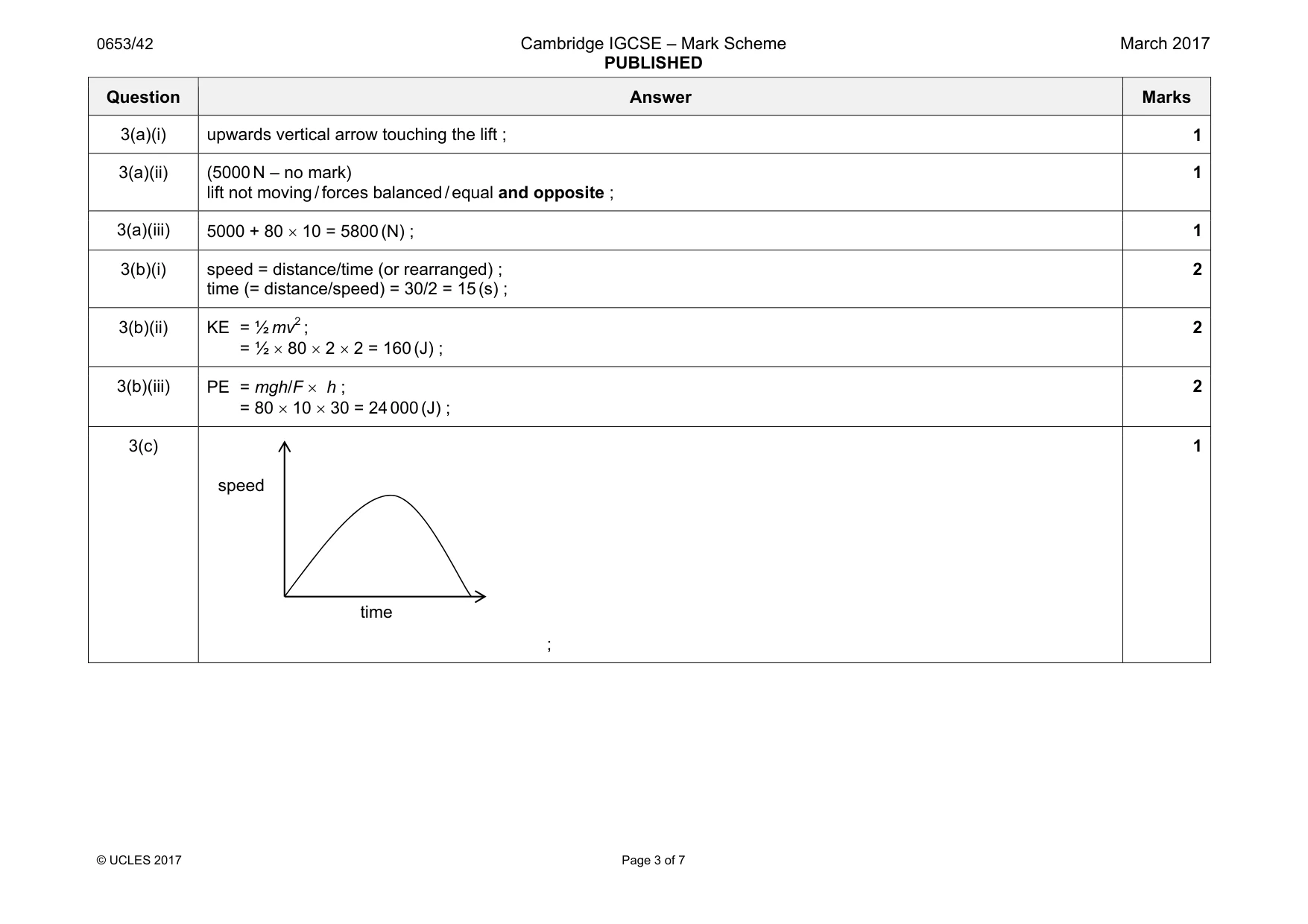
Mark scheme: 3(a)(i) upwards vertical arrow touching the lift ; 1 3(a)(ii) (5000 N – no mark) lift not moving / forces balanced / equal and opposite ; 1 3(a)(iii) 5000 + 80 × 10 = 5800 (N) ; 1 3(b)(i) speed = distance/time (or rearranged) ; time (= distance/speed) = 30/2 = 15 (s) ; 2 3(b)(ii) KE = ½ mv2 ; = ½ × 80 × 2 × 2 = 160 (J) ; 2 3(b)(iii) PE = mgh/F × h ; = 80 × 10 × 30 = 24 000 (J) ; 2 3(c) ; 1 time speed
Q4 · A diagram of part of the carbon cycle
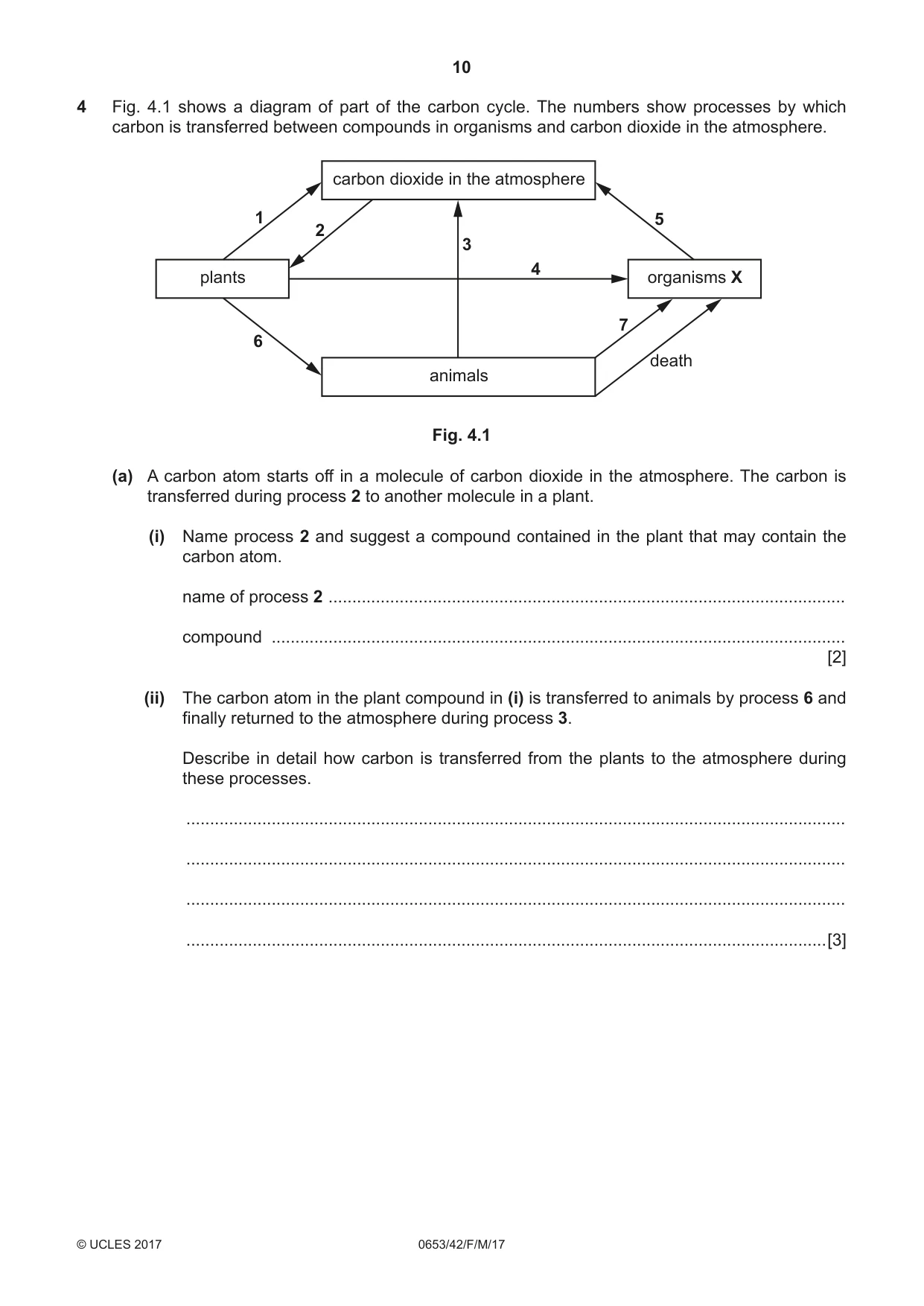
4 Fig. 4.1 shows a diagram of part of the carbon cycle. The numbers show processes by which carbon is transferred between compounds in organisms and carbon dioxide in the atmosphere. carbon dioxide in the atmosphere 1 5 2 3 4 plants organisms X 7 6 death animals Fig. 4.1 (a) A carbon atom starts off in a molecule of carbon dioxide in the atmosphere. The carbon is transferred during process 2 to another molecule in a plant. (i) Name process 2 and suggest a compound contained in the plant that may contain the carbon atom. name of process 2 ............................................................................................................. compound ......................................................................................................................... [2] (ii) The carbon atom in the plant compound in (i) is transferred to animals by process 6 and finally returned to the atmosphere during process 3. Describe in detail how carbon is transferred from the plants to the atmosphere during these processes. ........................................................................................................................................... ........................................................................................................................................... ........................................................................................................................................... .......................................................................................................................................[3] (b) (i) Organisms X obtain their energy and nutrients from dead organisms and their waste products. Identify the organisms X. .......................................................................................................................................[1] (ii) Describe how carbon is transferred from animals to organisms X by process 7. ........................................................................................................................................... ........................................................................................................................................... .......................................................................................................................................[2] (c) Carbon and sulfur are contained in fossil fuels. When the fossil fuels are burned these elements are oxidised to carbon dioxide and sulfur dioxide. These products are released to the atmosphere. (i) Describe how the carbon dioxide released contributes to global warming. ........................................................................................................................................... ........................................................................................................................................... .......................................................................................................................................[2] (ii) Describe the harmful effects caused by releasing sulfur dioxide to the atmosphere. ........................................................................................................................................... ........................................................................................................................................... .......................................................................................................................................[2]
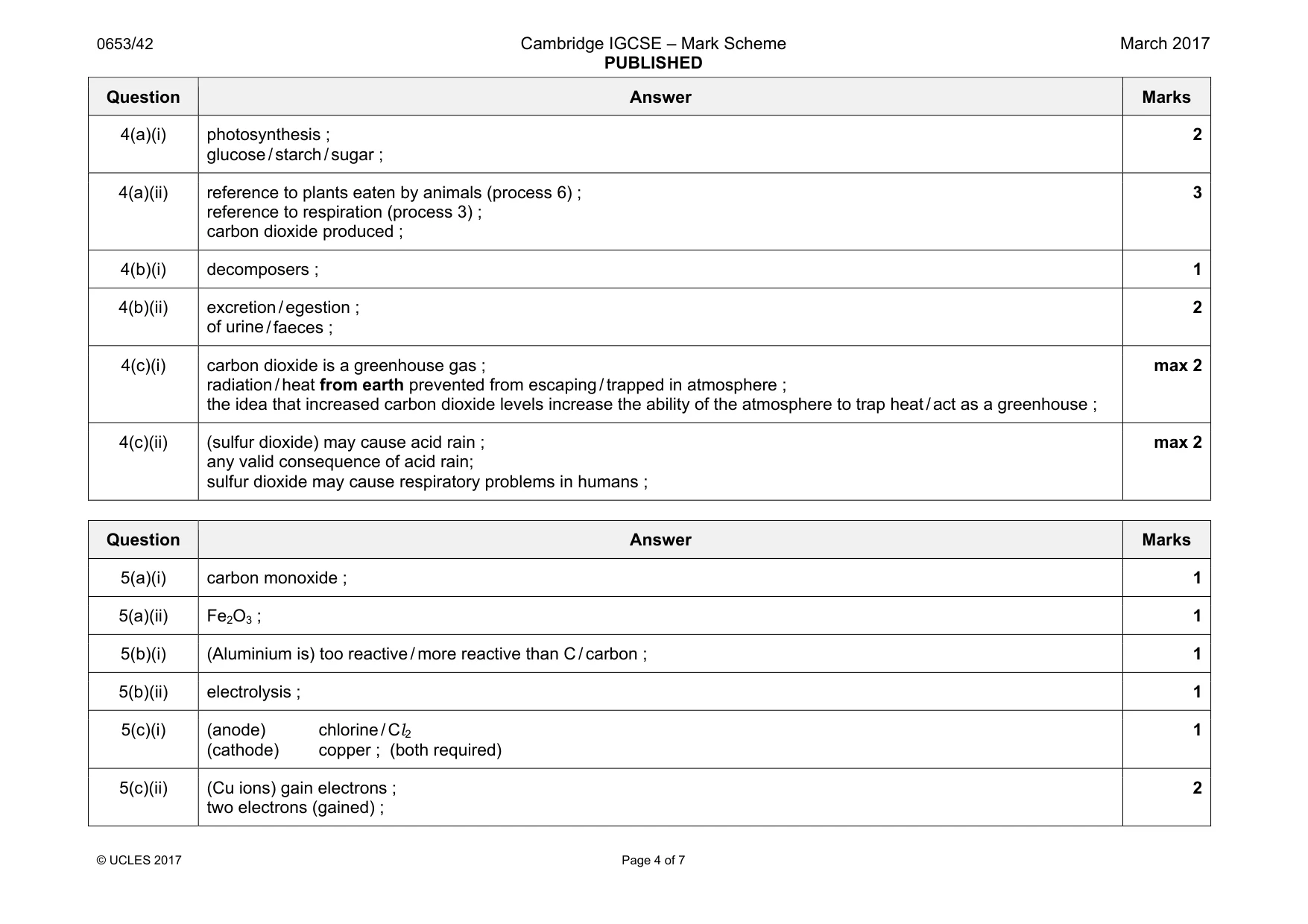
Mark scheme: 4(a)(i) photosynthesis ; glucose / starch / sugar ; 2 4(a)(ii) reference to plants eaten by animals (process 6) ; reference to respiration (process 3) ; carbon dioxide produced ; 3 4(b)(i) decomposers ; 1 4(b)(ii) excretion / egestion ; of urine / faeces ; 2 4(c)(i) carbon dioxide is a greenhouse gas ; radiation / heat from earth prevented from escaping / trapped in atmosphere ; the idea that increased carbon dioxide levels increase the ability of the atmosphere to trap heat / act as a greenhouse ; max 2 4(c)(ii) (sulfur dioxide) may cause acid rain ; any valid consequence of acid rain; sulfur dioxide may cause respiratory problems in humans ; max 2
Q5 · Iron is extracted from iron oxide in the blast furnace, as shown in Fig
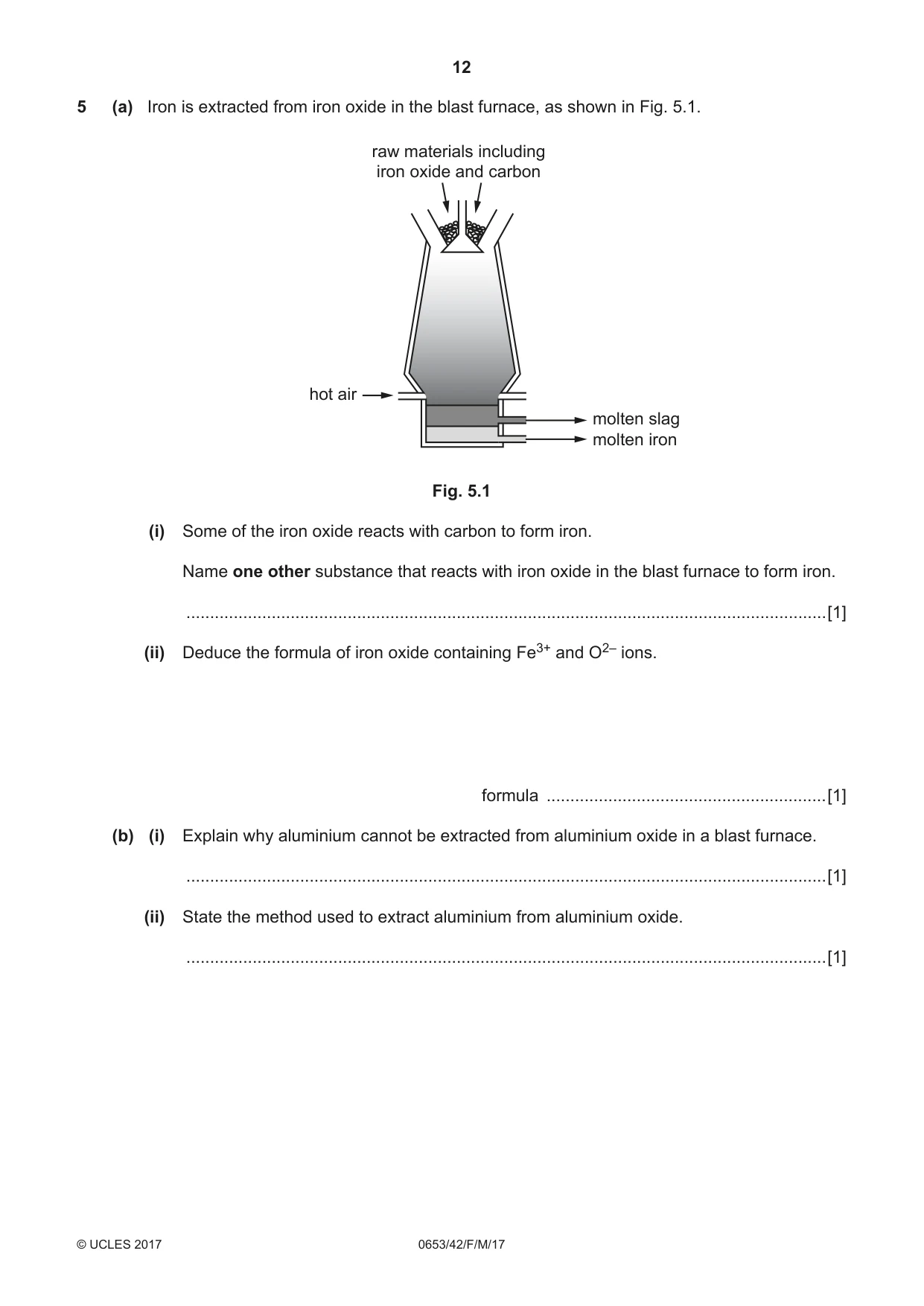
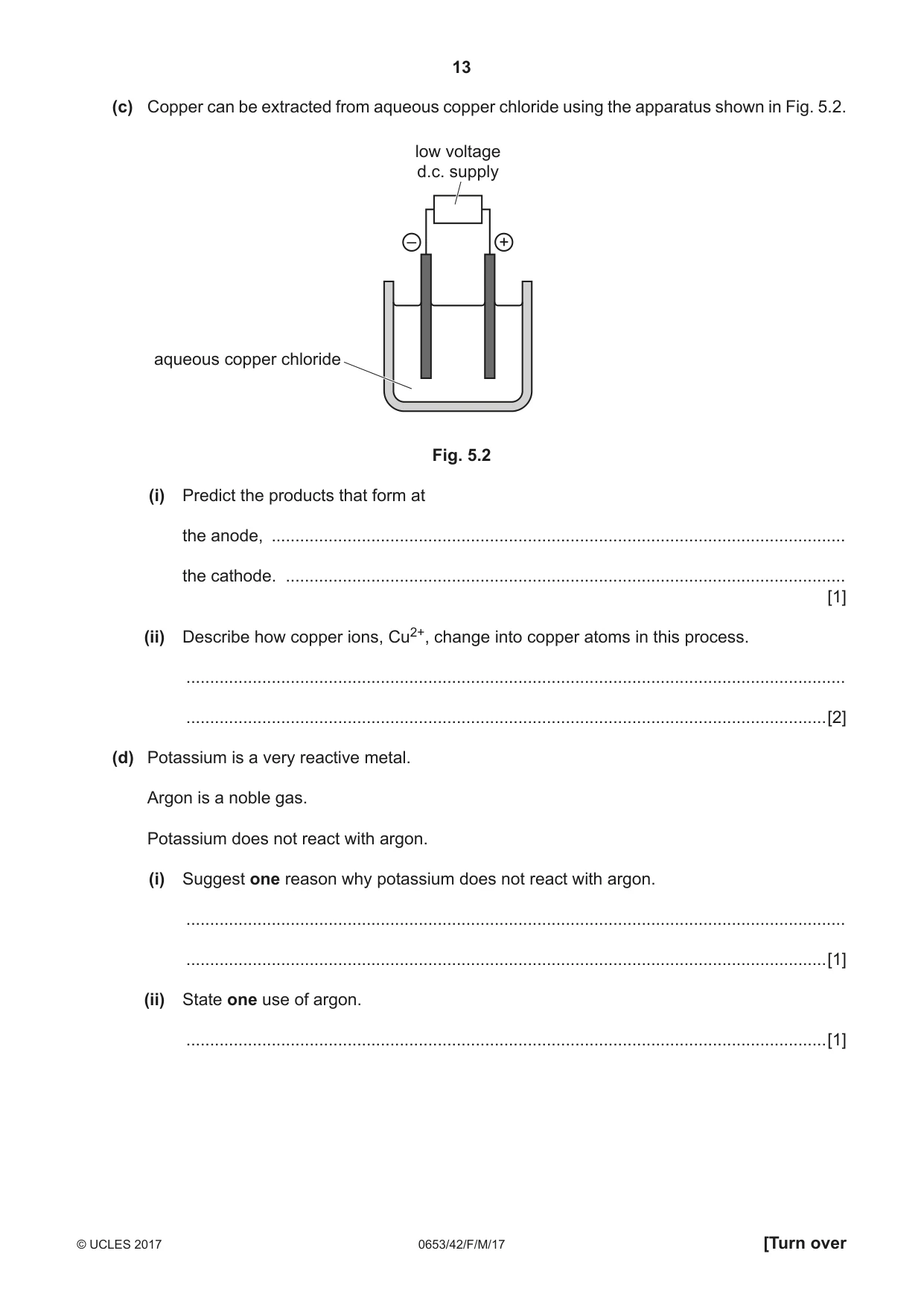
5 (a) Iron is extracted from iron oxide in the blast furnace, as shown in Fig. 5.1. raw materials including iron oxide and carbon hot air molten slag molten iron Fig. 5.1 (i) Some of the iron oxide reacts with carbon to form iron. Name one other substance that reacts with iron oxide in the blast furnace to form iron. .......................................................................................................................................[1] (ii) Deduce the formula of iron oxide containing Fe3+ and O2– ions. formula ...........................................................[1] (b) (i) Explain why aluminium cannot be extracted from aluminium oxide in a blast furnace. .......................................................................................................................................[1] (ii) State the method used to extract aluminium from aluminium oxide. .......................................................................................................................................[1] (c) Copper can be extracted from aqueous copper chloride using the apparatus shown in Fig. 5.2. low voltage d.c. supply – + aqueous copper chloride Fig. 5.2 (i) Predict the products that form at the anode, ......................................................................................................................... the cathode. ...................................................................................................................... [1] (ii) Describe how copper ions, Cu2+, change into copper atoms in this process. ........................................................................................................................................... .......................................................................................................................................[2] (d) Potassium is a very reactive metal. Argon is a noble gas. Potassium does not react with argon. (i) Suggest one reason why potassium does not react with argon. ........................................................................................................................................... .......................................................................................................................................[1] (ii) State one use of argon. .......................................................................................................................................[1]
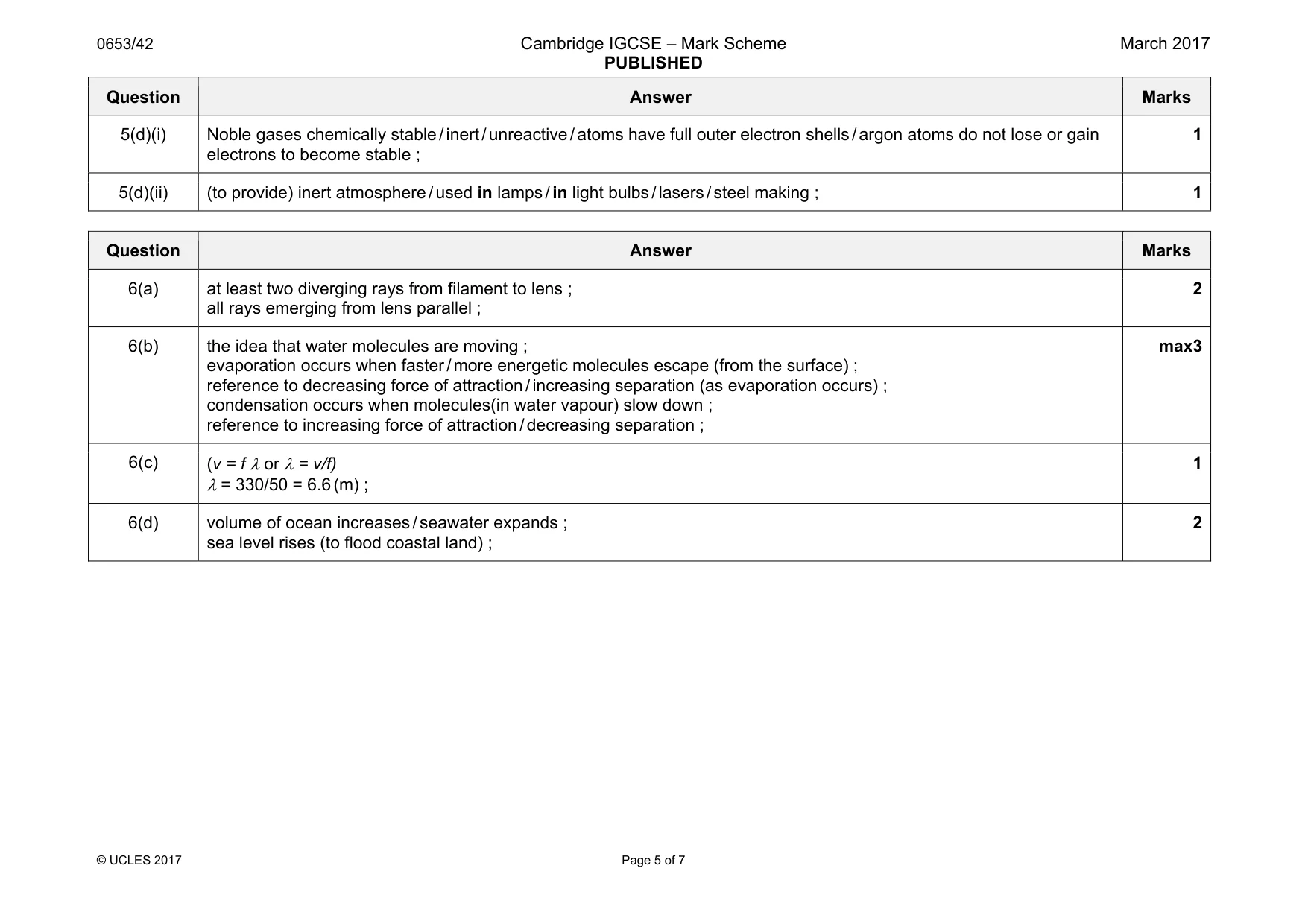
Mark scheme: 5(a)(i) carbon monoxide ; 1 5(a)(ii) Fe2O3 ; 1 5(b)(i) (Aluminium is) too reactive / more reactive than C / carbon ; 1 5(b)(ii) electrolysis ; 1 5(c)(i) (anode) chlorine / Cl2 (cathode) copper ; (both required) 1 5(c)(ii) (Cu ions) gain electrons ; two electrons (gained) ; 2 Question Answer Marks 5(d)(i) Noble gases chemically stable / inert / unreactive / atoms have full outer electron shells / argon atoms do not lose or gain electrons to become stable ; 1 5(d)(ii) (to provide) inert atmosphere / used in lamps / in light bulbs / lasers / steel making ; 1
Q6 · A boat sailing near a lighthouse at night
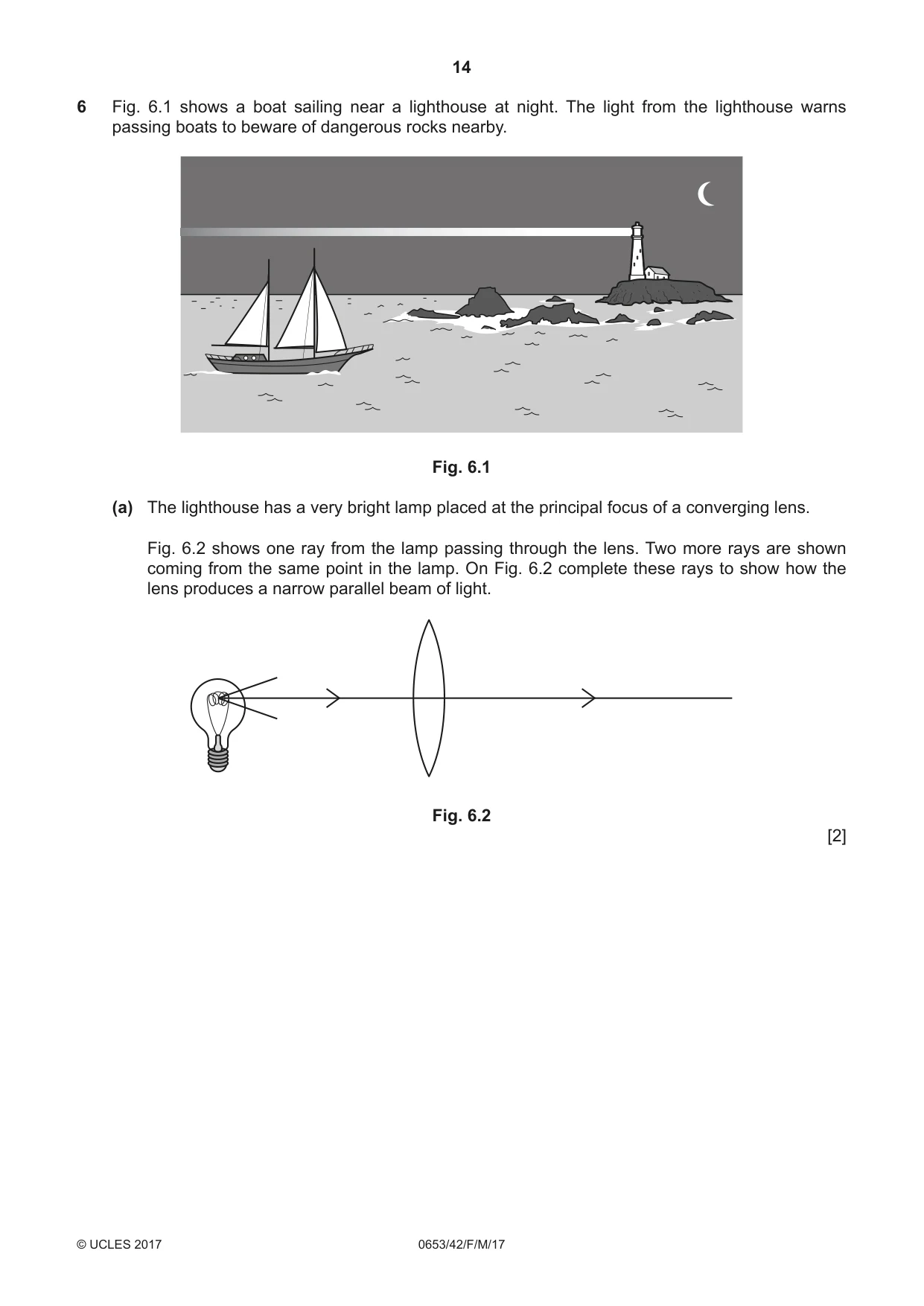
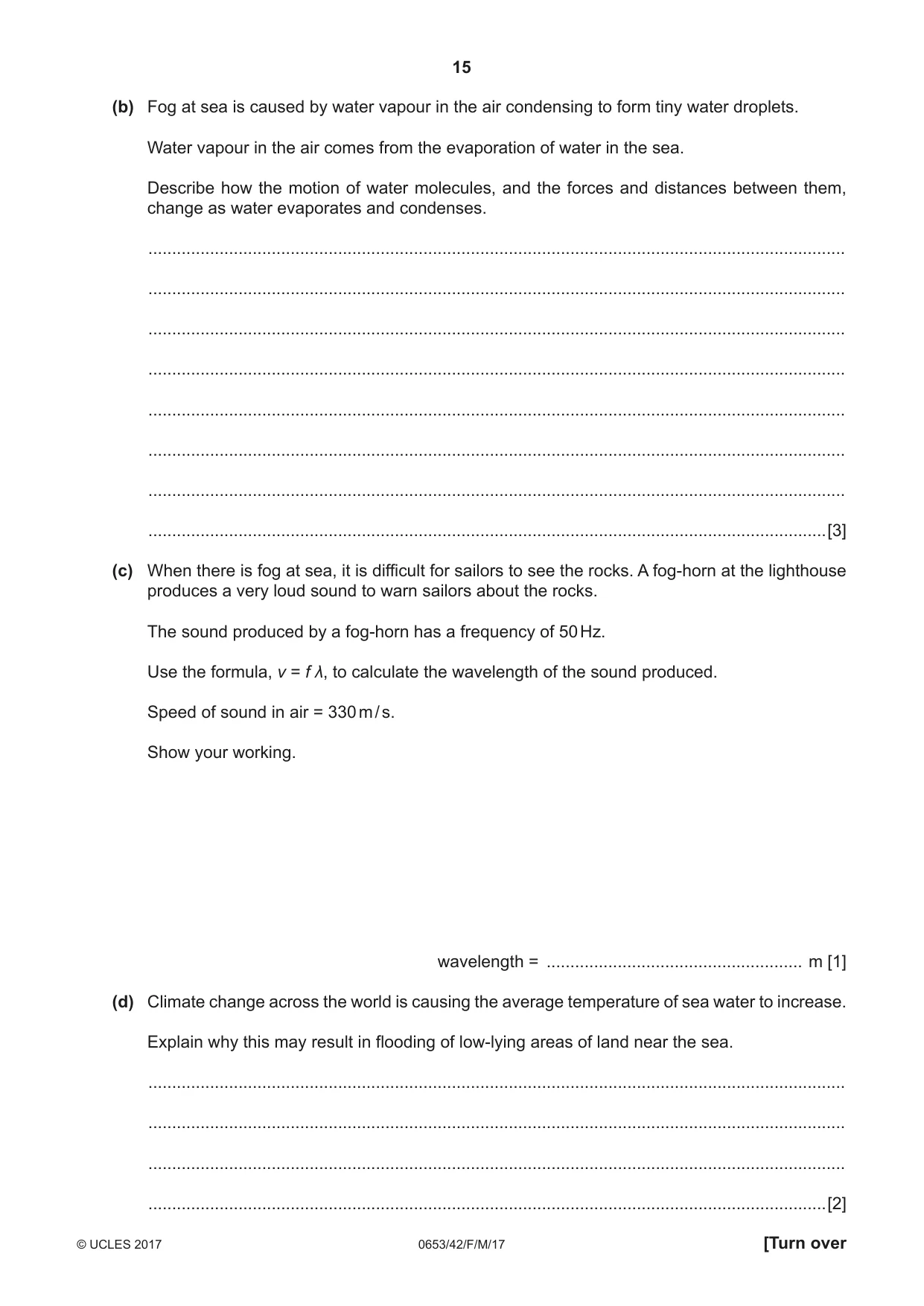
6 Fig. 6.1 shows a boat sailing near a lighthouse at night. The light from the lighthouse warns passing boats to beware of dangerous rocks nearby. Fig. 6.1 (a) The lighthouse has a very bright lamp placed at the principal focus of a converging lens. Fig. 6.2 shows one ray from the lamp passing through the lens. Two more rays are shown coming from the same point in the lamp. On Fig. 6.2 complete these rays to show how the lens produces a narrow parallel beam of light. Fig. 6.2 [2] (b) Fog at sea is caused by water vapour in the air condensing to form tiny water droplets. Water vapour in the air comes from the evaporation of water in the sea. Describe how the motion of water molecules, and the forces and distances between them, change as water evaporates and condenses. ................................................................................................................................................... ................................................................................................................................................... ................................................................................................................................................... ................................................................................................................................................... ................................................................................................................................................... ................................................................................................................................................... ................................................................................................................................................... ...............................................................................................................................................[3] (c) When there is fog at sea, it is difficult for sailors to see the rocks. A fog-horn at the lighthouse produces a very loud sound to warn sailors about the rocks. The sound produced by a fog-horn has a frequency of 50 Hz. Use the formula, v = f λ, to calculate the wavelength of the sound produced. Speed of sound in air = 330 m / s. Show your working. wavelength = ...................................................... m [1] (d) Climate change across the world is causing the average temperature of sea water to increase. Explain why this may result in flooding of low-lying areas of land near the sea. ................................................................................................................................................... ................................................................................................................................................... ................................................................................................................................................... ...............................................................................................................................................[2]
Mark scheme: 6(a) at least two diverging rays from filament to lens ; all rays emerging from lens parallel ; 2 6(b) the idea that water molecules are moving ; evaporation occurs when faster / more energetic molecules escape (from the surface) ; reference to decreasing force of attraction / increasing separation (as evaporation occurs) ; condensation occurs when molecules(in water vapour) slow down ; reference to increasing force of attraction / decreasing separation ; max3 6(c) (v = f λ or λ = v/f) λ = 330/50 = 6.6 (m) ; 1 6(d) volume of ocean increases / seawater expands ; sea level rises (to flood coastal land) ; 2
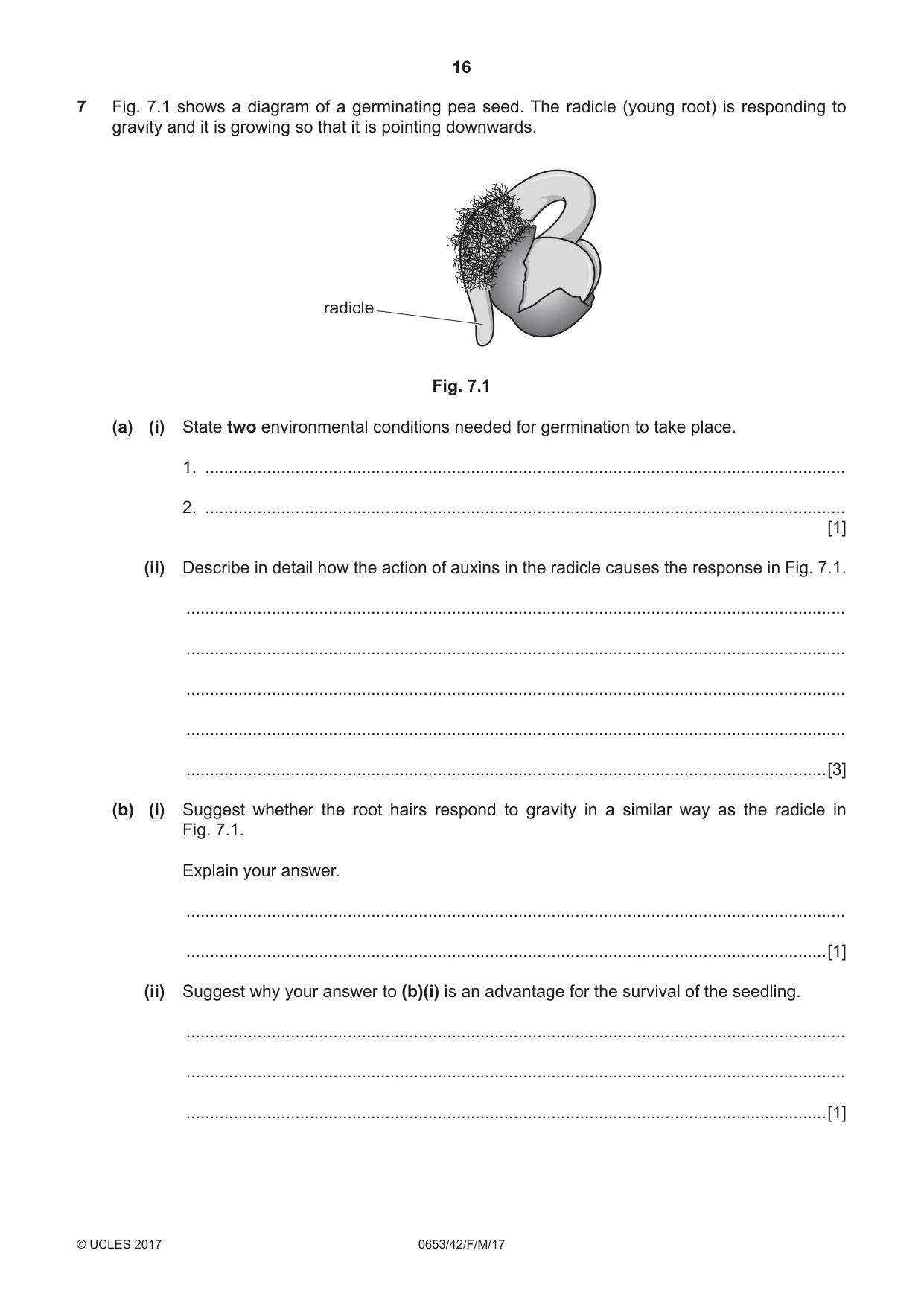
Q7 · A diagram of a germinating pea seed
7 Fig. 7.1 shows a diagram of a germinating pea seed. The radicle (young root) is responding to gravity and it is growing so that it is pointing downwards. radicle Fig. 7.1 (a) (i) State two environmental conditions needed for germination to take place. 1. ....................................................................................................................................... 2. ....................................................................................................................................... [1] (ii) Describe in detail how the action of auxins in the radicle causes the response in Fig. 7.1. ........................................................................................................................................... ........................................................................................................................................... ........................................................................................................................................... ........................................................................................................................................... .......................................................................................................................................[3] (b) (i) Suggest whether the root hairs respond to gravity in a similar way as the radicle in Fig. 7.1. Explain your answer. ........................................................................................................................................... .......................................................................................................................................[1] (ii) Suggest why your answer to (b)(i) is an advantage for the survival of the seedling. ........................................................................................................................................... ........................................................................................................................................... .......................................................................................................................................[1]
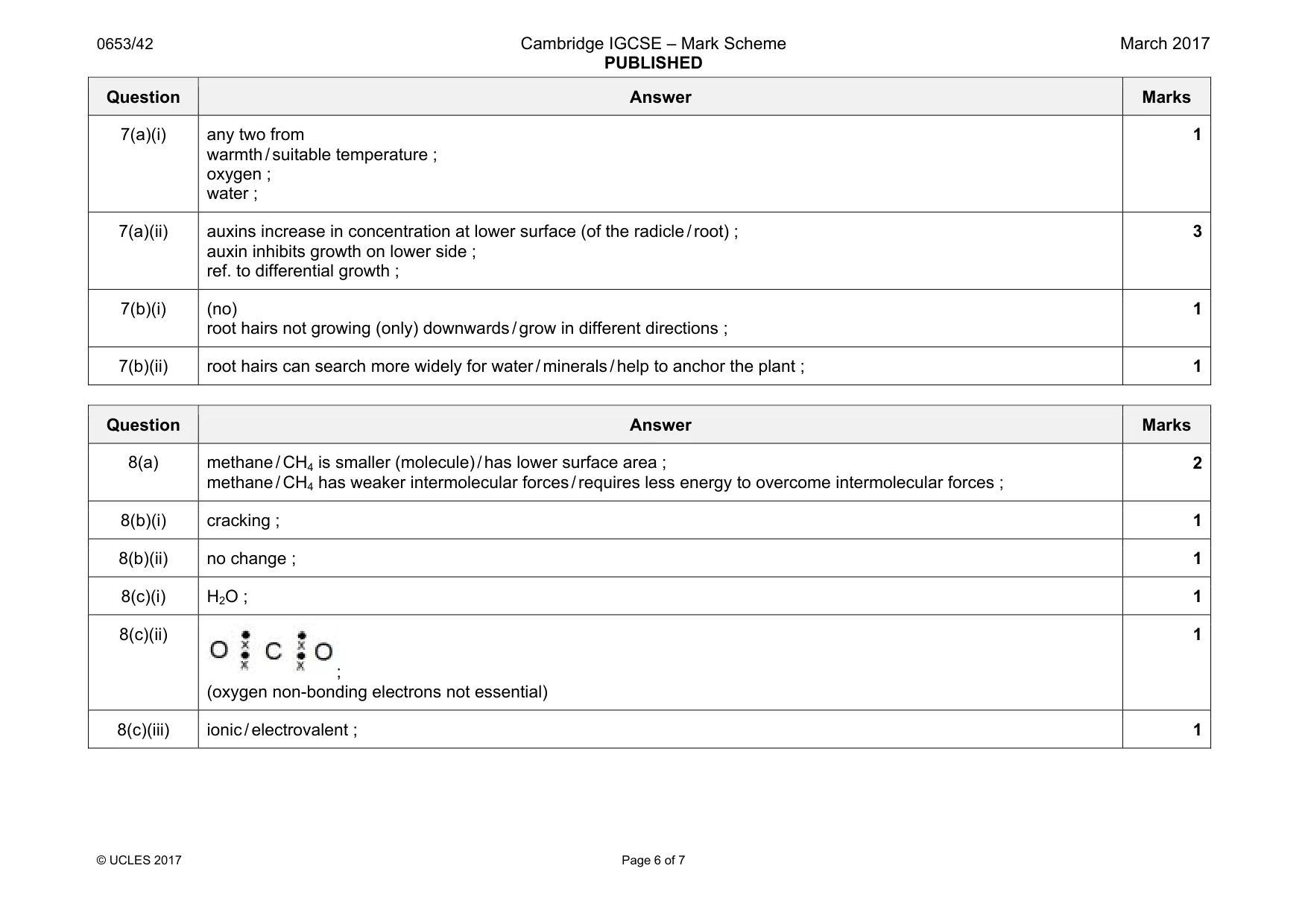
Mark scheme: 7(a)(i) any two from warmth / suitable temperature ; oxygen ; water ; 1 7(a)(ii) auxins increase in concentration at lower surface (of the radicle / root) ; auxin inhibits growth on lower side ; ref. to differential growth ; 3 7(b)(i) (no) root hairs not growing (only) downwards / grow in different directions ; 1 7(b)(ii) root hairs can search more widely for water / minerals / help to anchor the plant ; 1
Q8 · Methane, CH4, and butane, C4H10, are both alkanes
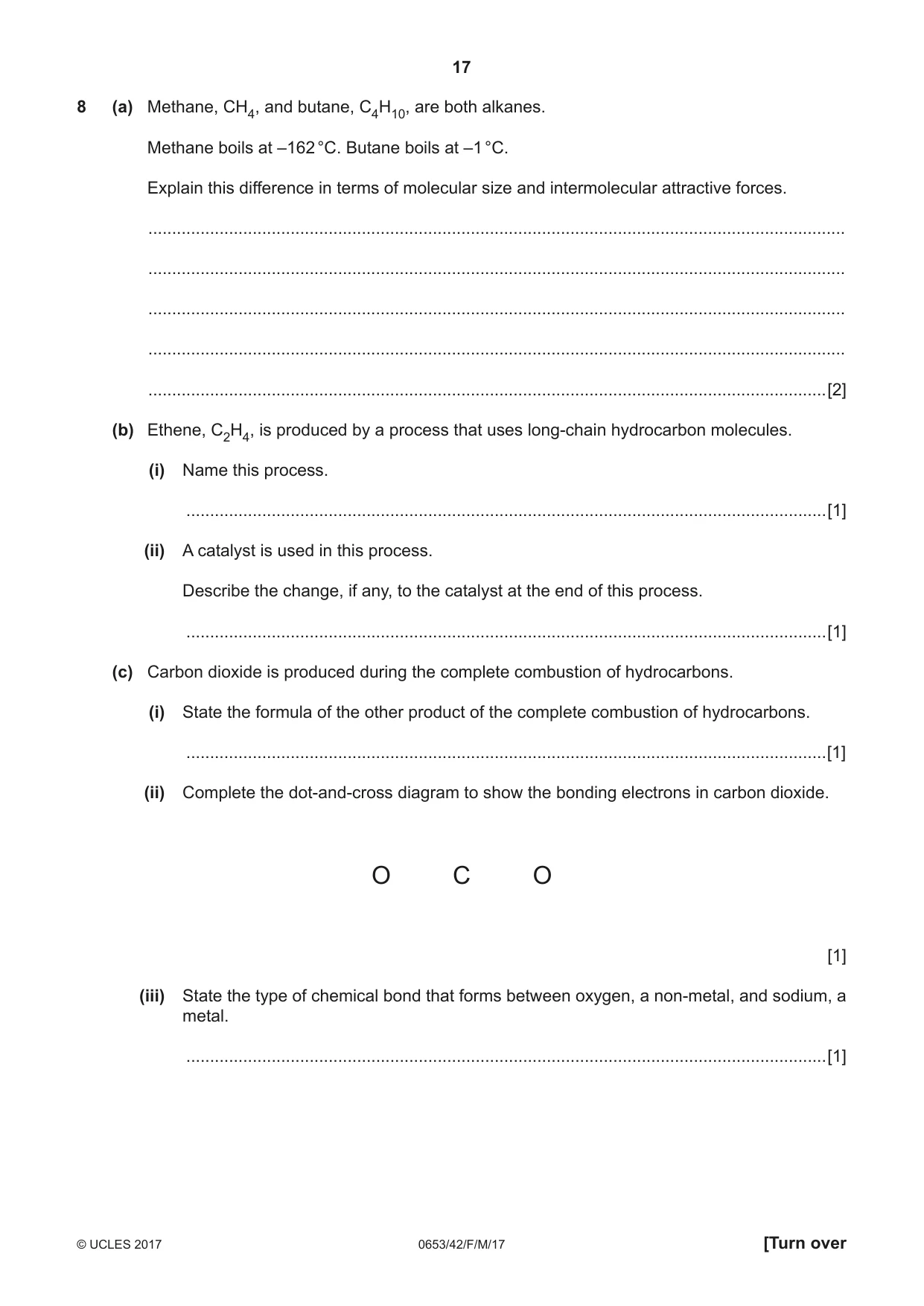
8 (a) Methane, CH4, and butane, C4H10, are both alkanes. Methane boils at –162 °C. Butane boils at –1 °C. Explain this difference in terms of molecular size and intermolecular attractive forces. ................................................................................................................................................... ................................................................................................................................................... ................................................................................................................................................... ................................................................................................................................................... ...............................................................................................................................................[2] (b) Ethene, C2H4, is produced by a process that uses long-chain hydrocarbon molecules. (i) Name this process. .......................................................................................................................................[1] (ii) A catalyst is used in this process. Describe the change, if any, to the catalyst at the end of this process. .......................................................................................................................................[1] (c) Carbon dioxide is produced during the complete combustion of hydrocarbons. (i) State the formula of the other product of the complete combustion of hydrocarbons. .......................................................................................................................................[1] (ii) Complete the dot-and-cross diagram to show the bonding electrons in carbon dioxide. O C O [1] (iii) State the type of chemical bond that forms between oxygen, a non-metal, and sodium, a metal. .......................................................................................................................................[1]
Mark scheme: 8(a) methane / CH4 is smaller (molecule) / has lower surface area ; methane / CH4 has weaker intermolecular forces / requires less energy to overcome intermolecular forces ; 2 8(b)(i) cracking ; 1 8(b)(ii) no change ; 1 8(c)(i) H2O ; 1 8(c)(ii) ; (oxygen non-bonding electrons not essential) 1 8(c)(iii) ionic / electrovalent ; 1
Q9 · A simple circuit set up to investigate the electrical properties of a lamp
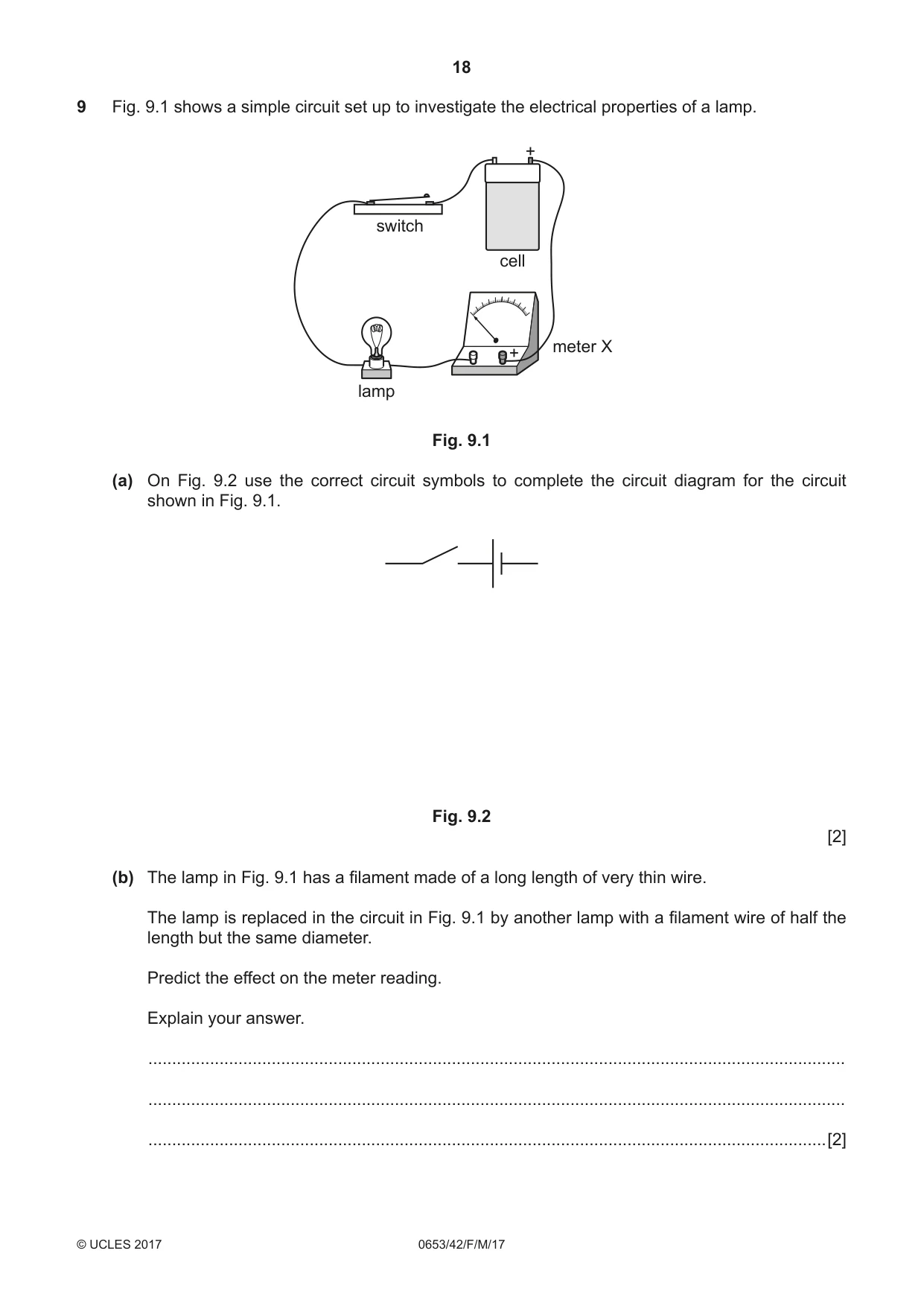
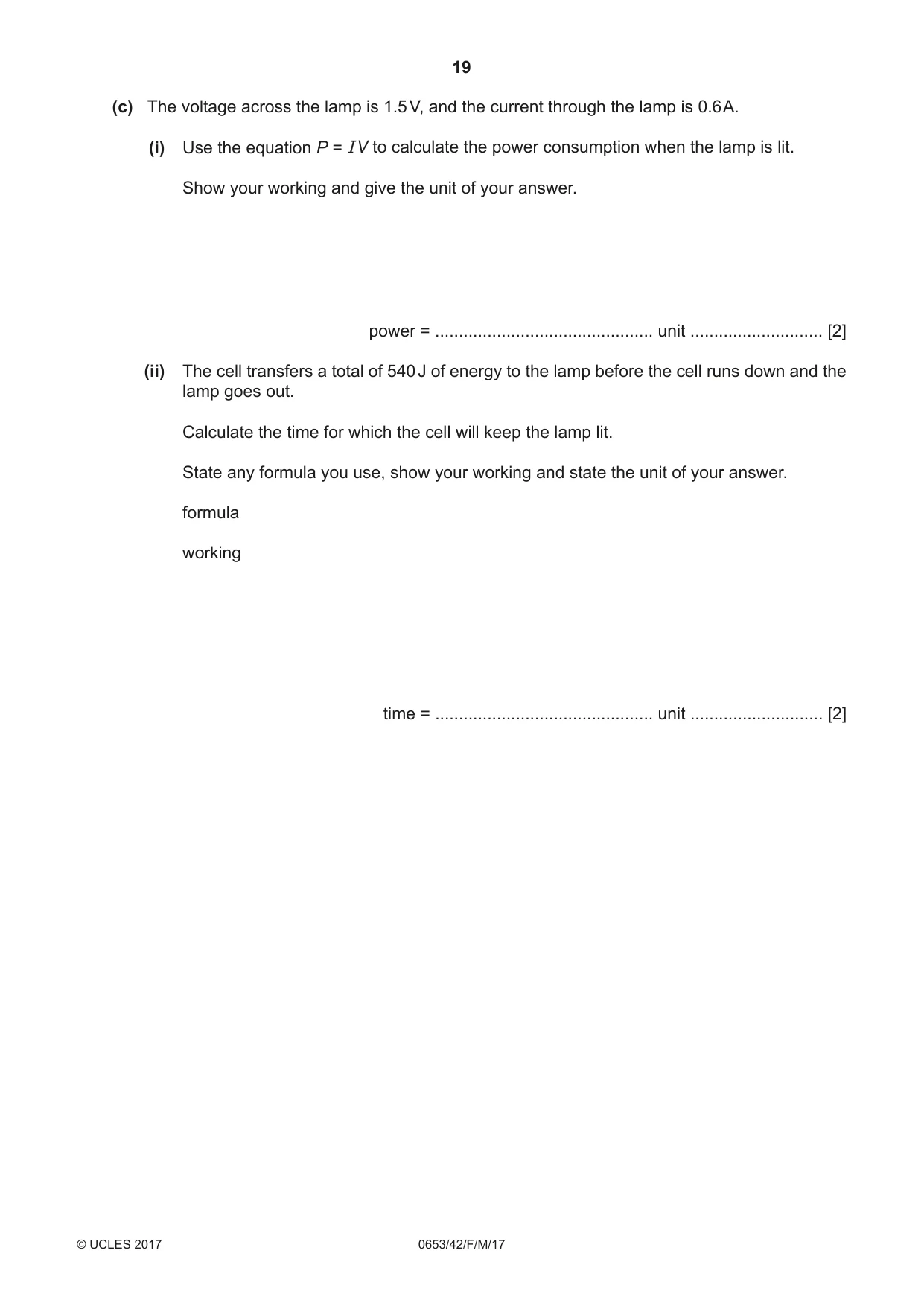
9 Fig. 9.1 shows a simple circuit set up to investigate the electrical properties of a lamp. + switch cell meter X + lamp Fig. 9.1 (a) On Fig. 9.2 use the correct circuit symbols to complete the circuit diagram for the circuit shown in Fig. 9.1. Fig. 9.2 [2] (b) The lamp in Fig. 9.1 has a filament made of a long length of very thin wire. The lamp is replaced in the circuit in Fig. 9.1 by another lamp with a filament wire of half the length but the same diameter. Predict the effect on the meter reading. Explain your answer. ................................................................................................................................................... ................................................................................................................................................... ...............................................................................................................................................[2] (c) The voltage across the lamp is 1.5 V, and the current through the lamp is 0.6 A. (i) Use the equation P = IV to calculate the power consumption when the lamp is lit. Show your working and give the unit of your answer. power = .............................................. unit ............................ [2] (ii) The cell transfers a total of 540 J of energy to the lamp before the cell runs down and the lamp goes out. Calculate the time for which the cell will keep the lamp lit. State any formula you use, show your working and state the unit of your answer. formula working time = .............................................. unit ............................ [2]
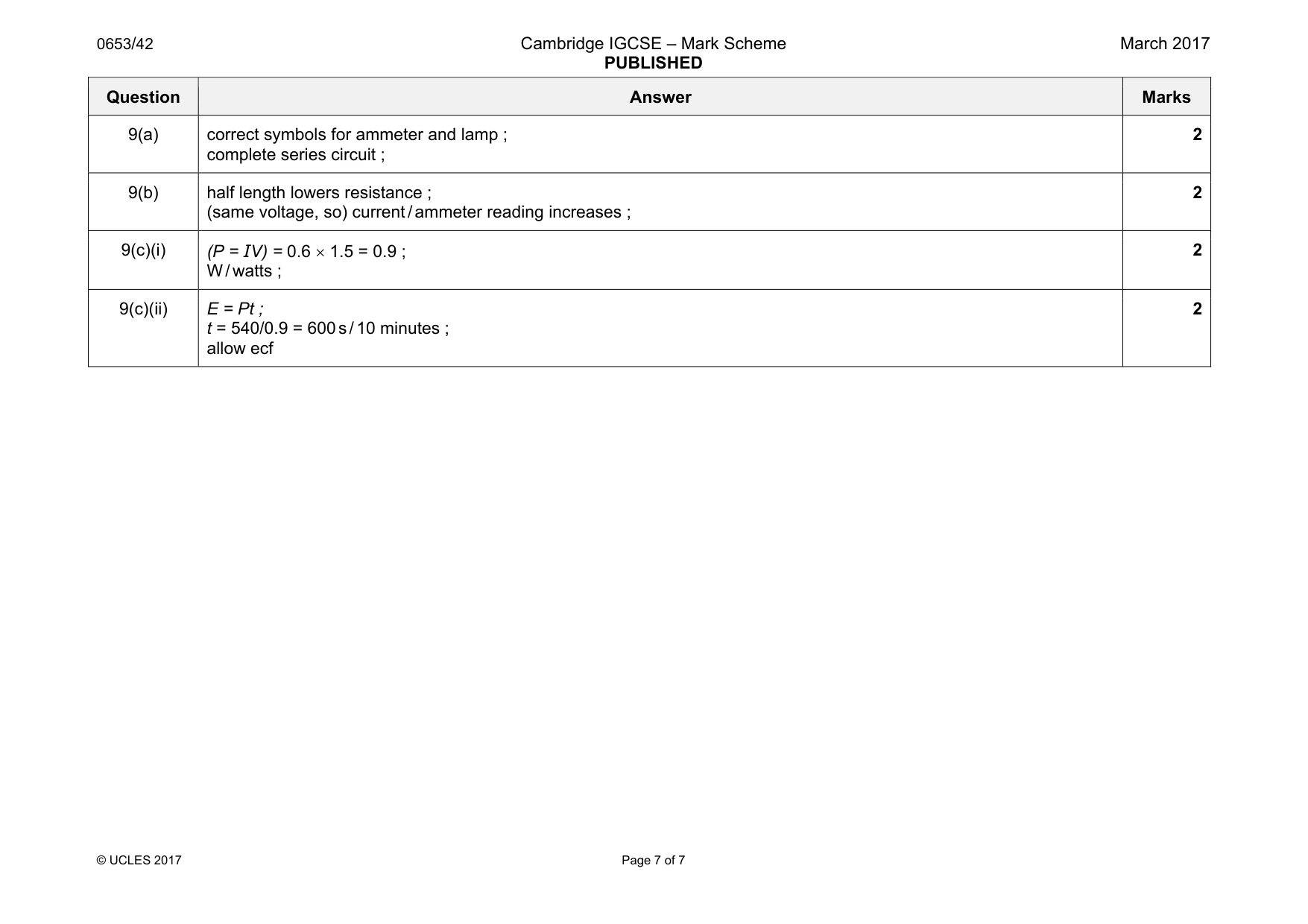
Mark scheme: 9(a) correct symbols for ammeter and lamp ; complete series circuit ; 2 9(b) half length lowers resistance ; (same voltage, so) current / ammeter reading increases ; 2 9(c)(i) (P = IV) = 0.6 × 1.5 = 0.9 ; W / watts ; 2 9(c)(ii) E = Pt ; t = 540/0.9 = 600 s / 10 minutes ; allow ecf 2
What was in this paper
The subtopics covered by these 9 questions, and how many questions each got. Open one in a new tab to see every Cambridge question on it.
What you needed in this session
Cambridge’s own grade thresholds for 2017 Feb/March, Paper 4 · Variant 2. A higher threshold means an easier paper — the bar moves with how the cohort did.