Cambridge IGCSE Environmental Management 0680 — 2019 Oct/Nov Paper 2 · Variant 3
0680/23/O/N/19 · 2 questions · 80 marks · ≈90 min
The question paper and its mark scheme, free to read here and free to download. This is Cambridge’s own paper, exactly as it was sat.
Question paper24 pages




Mark scheme11 pages
Answers below. Sit the paper first if you are practising.

Questions as text
Q1 · Calculate the number of people living in urban areas in Madagascar in 2017
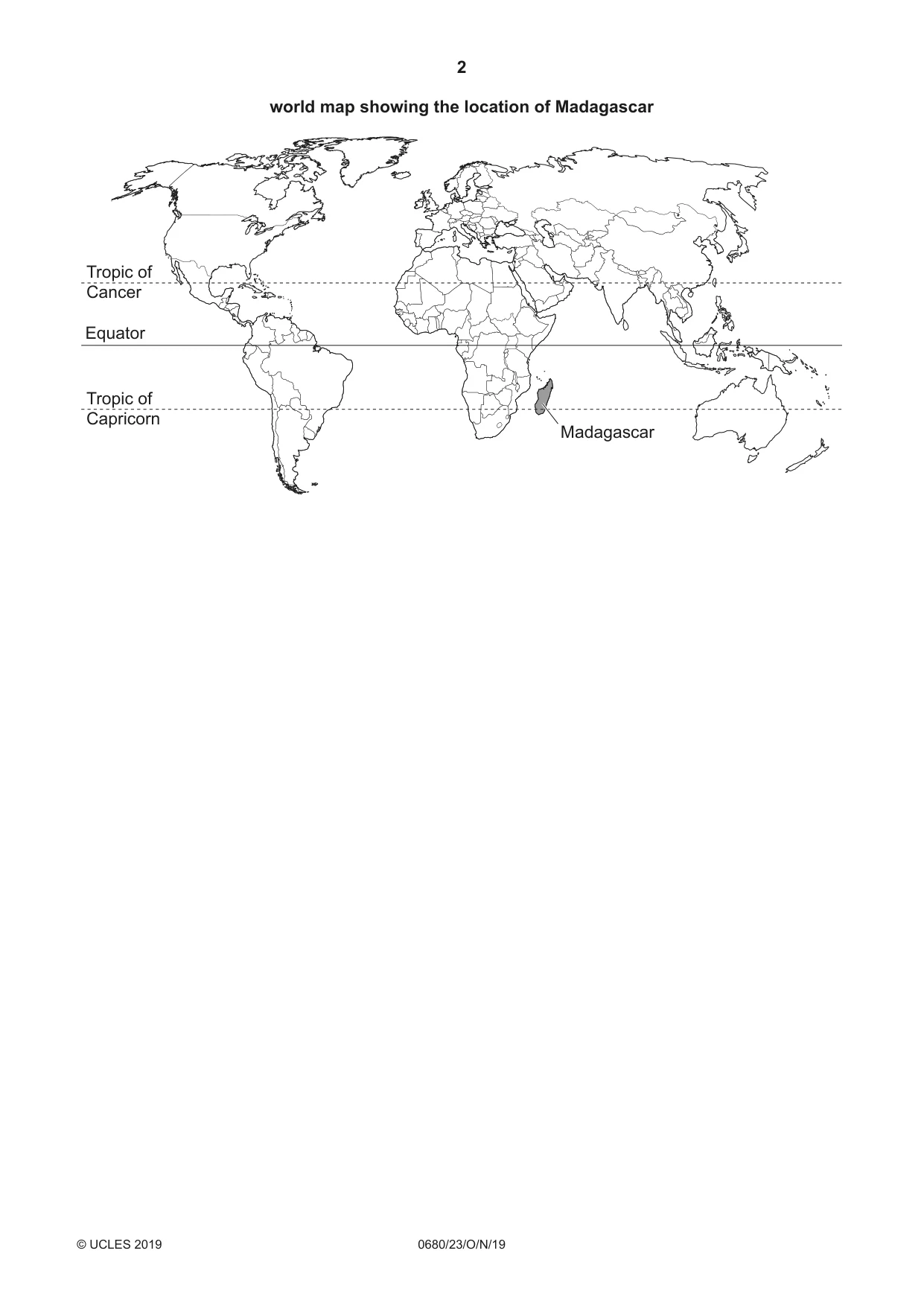
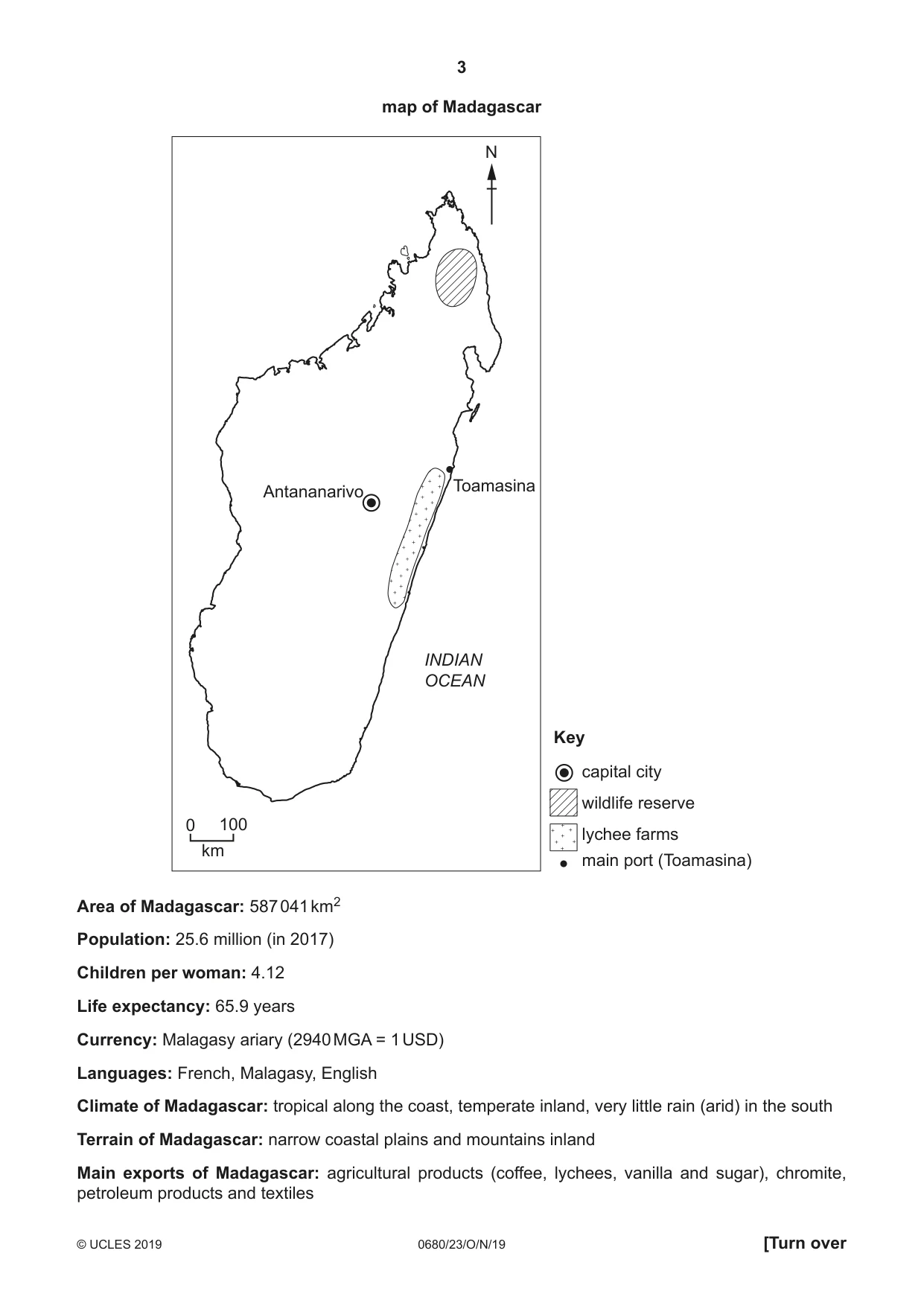
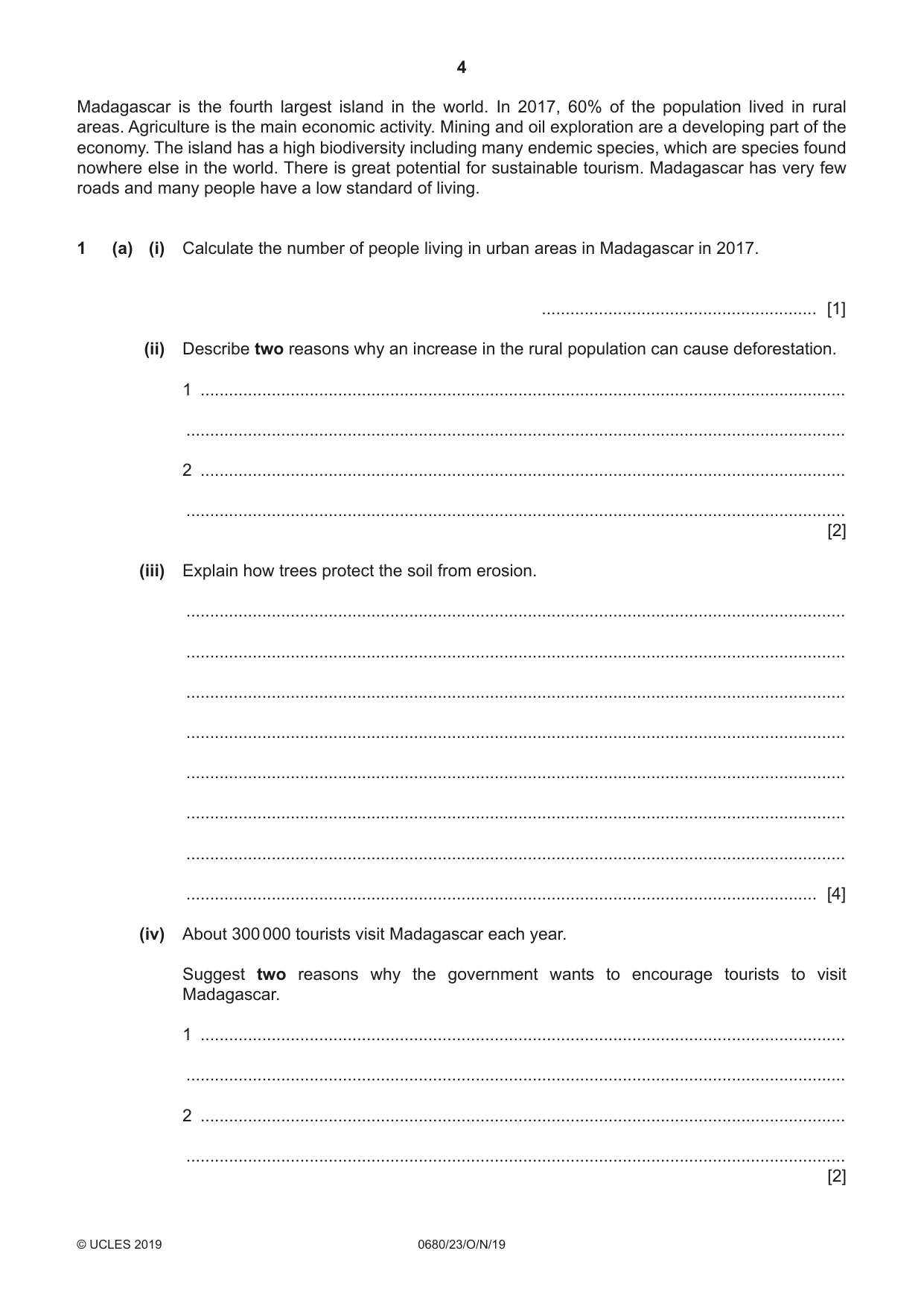
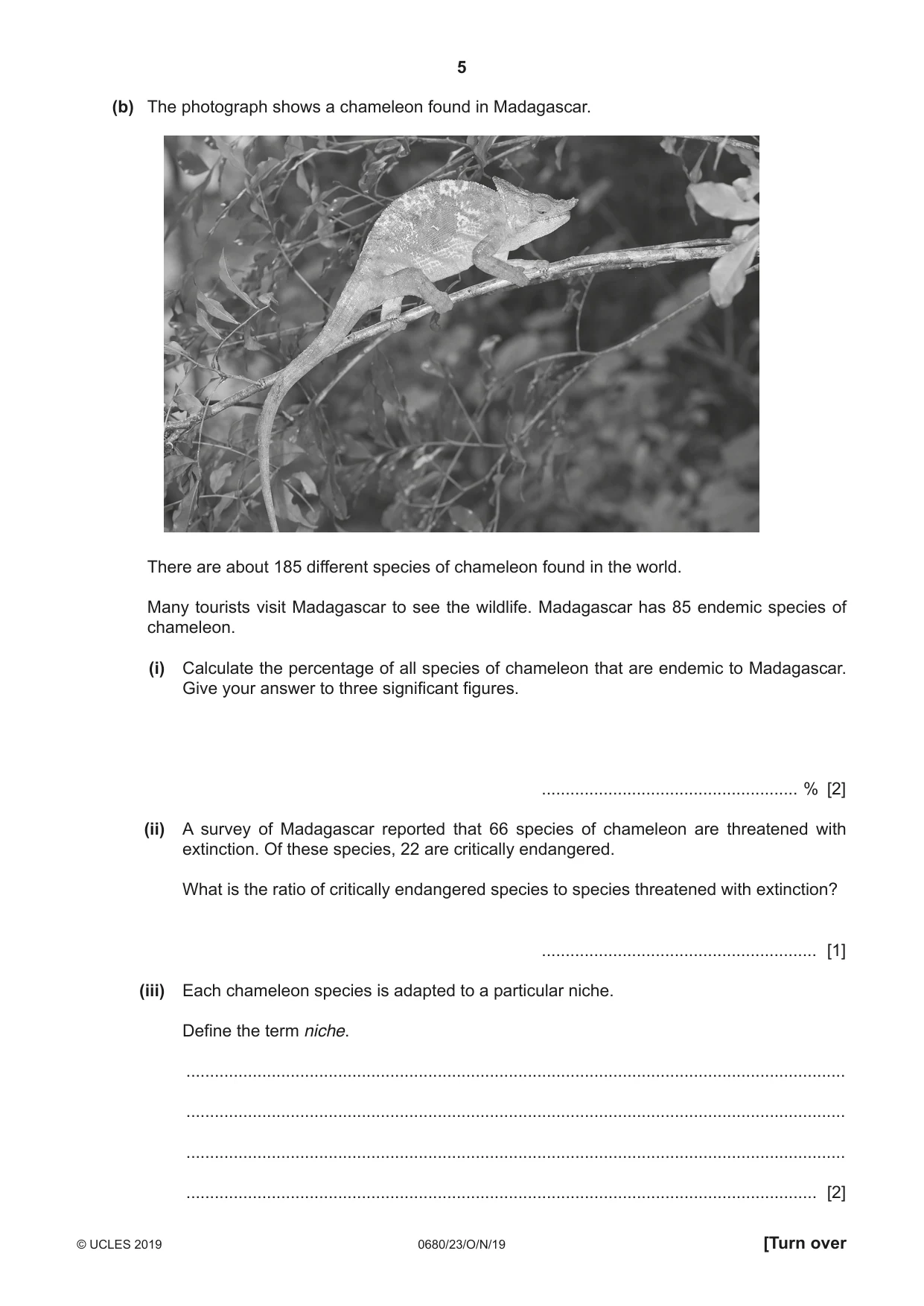
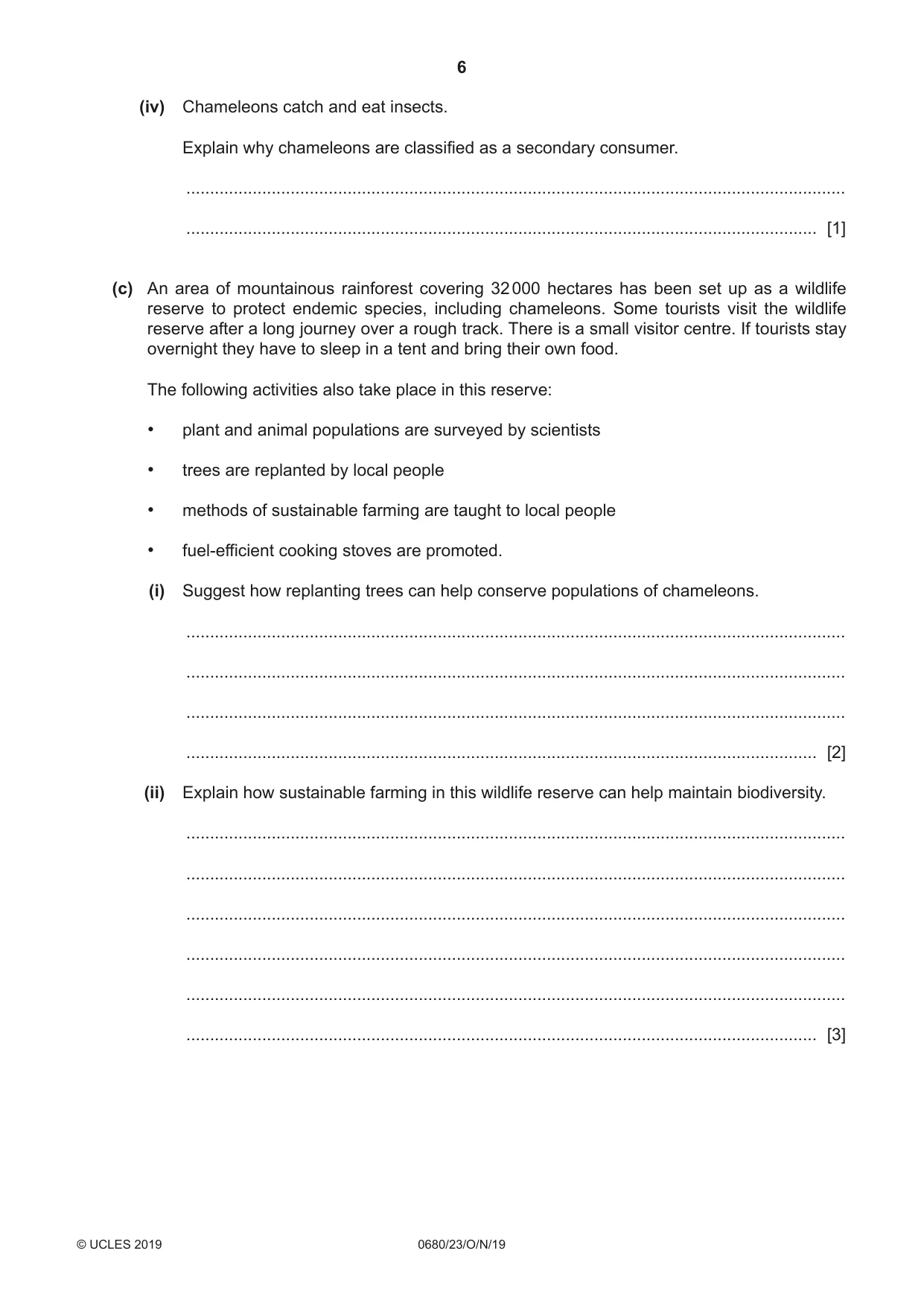
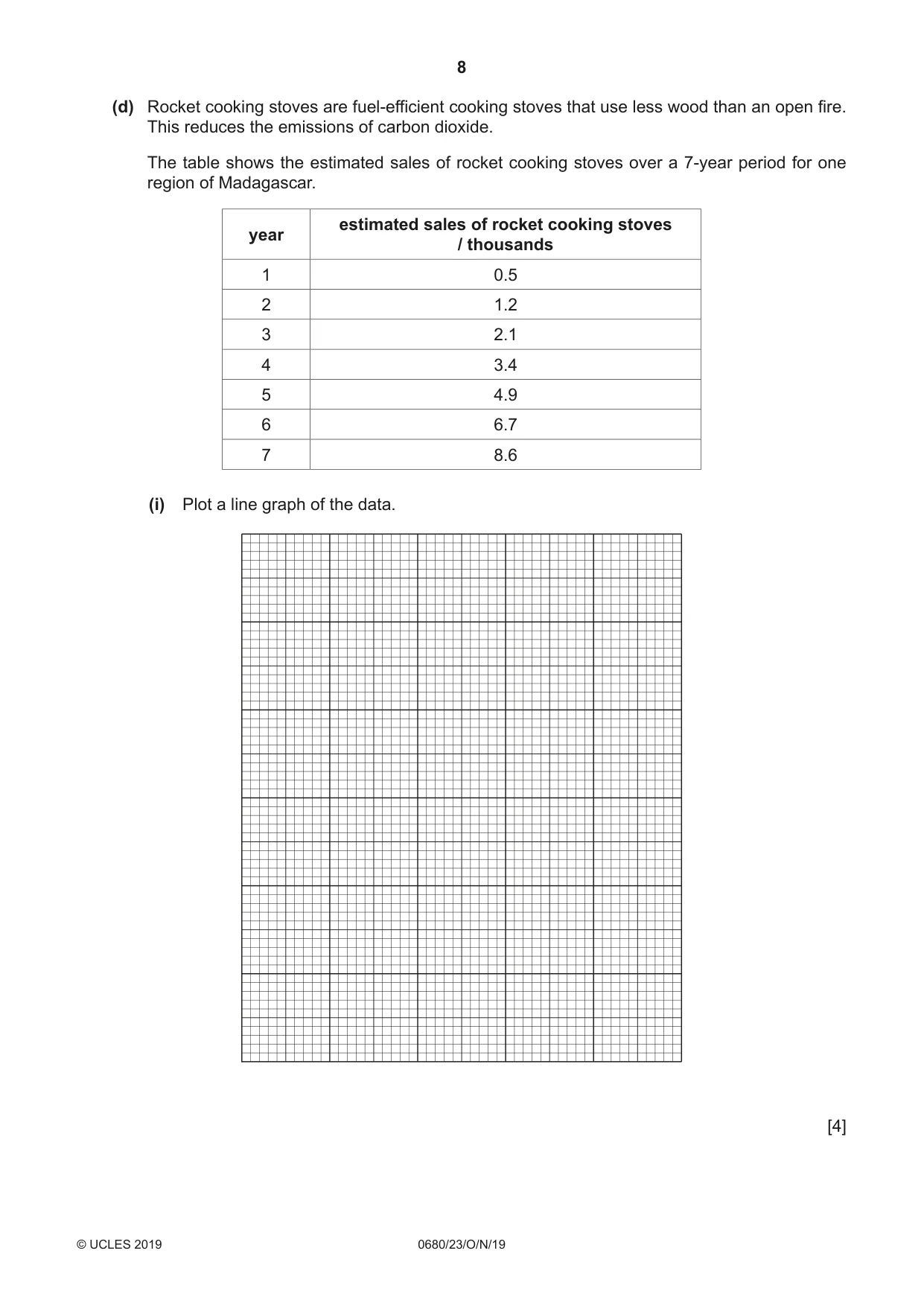
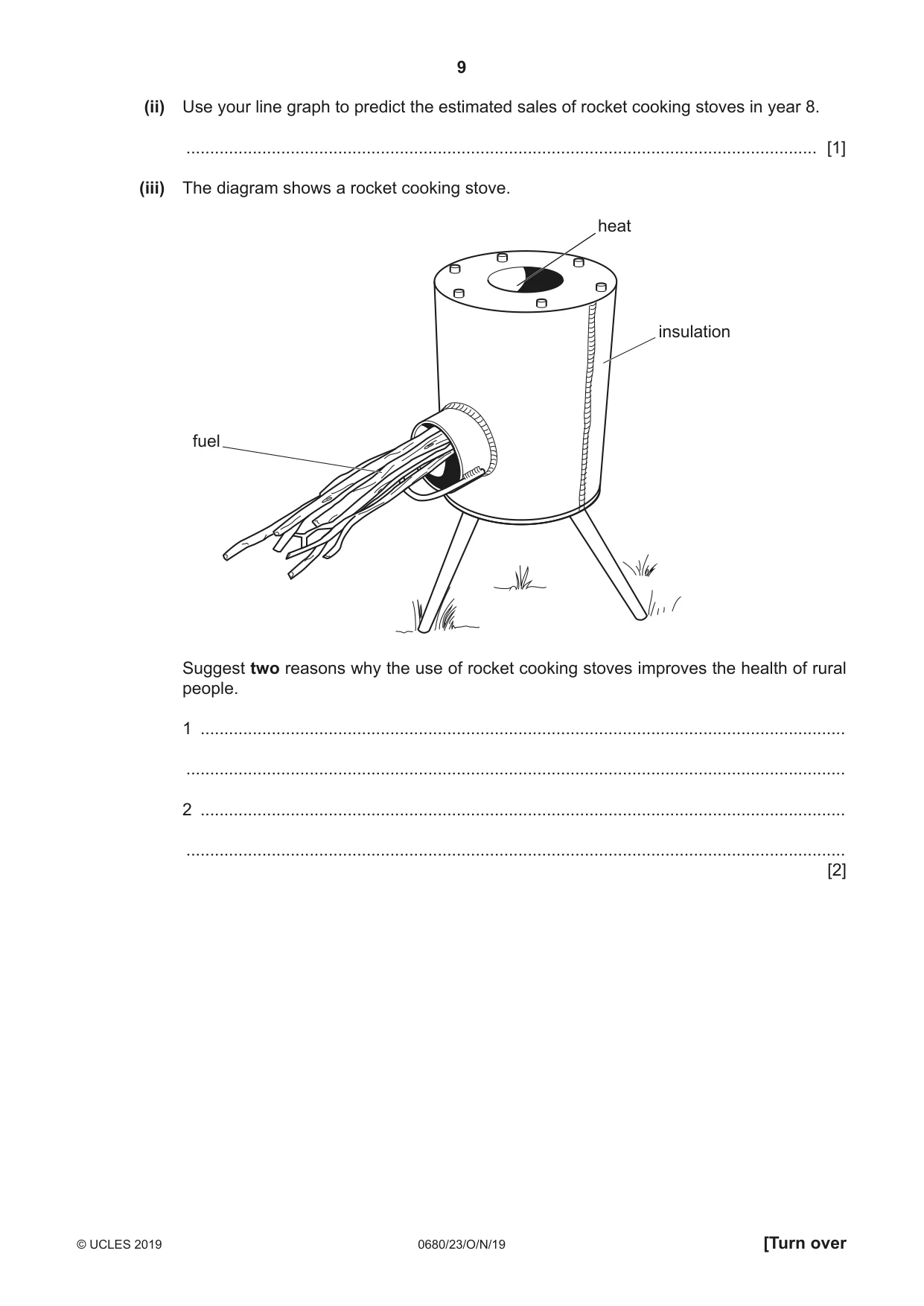
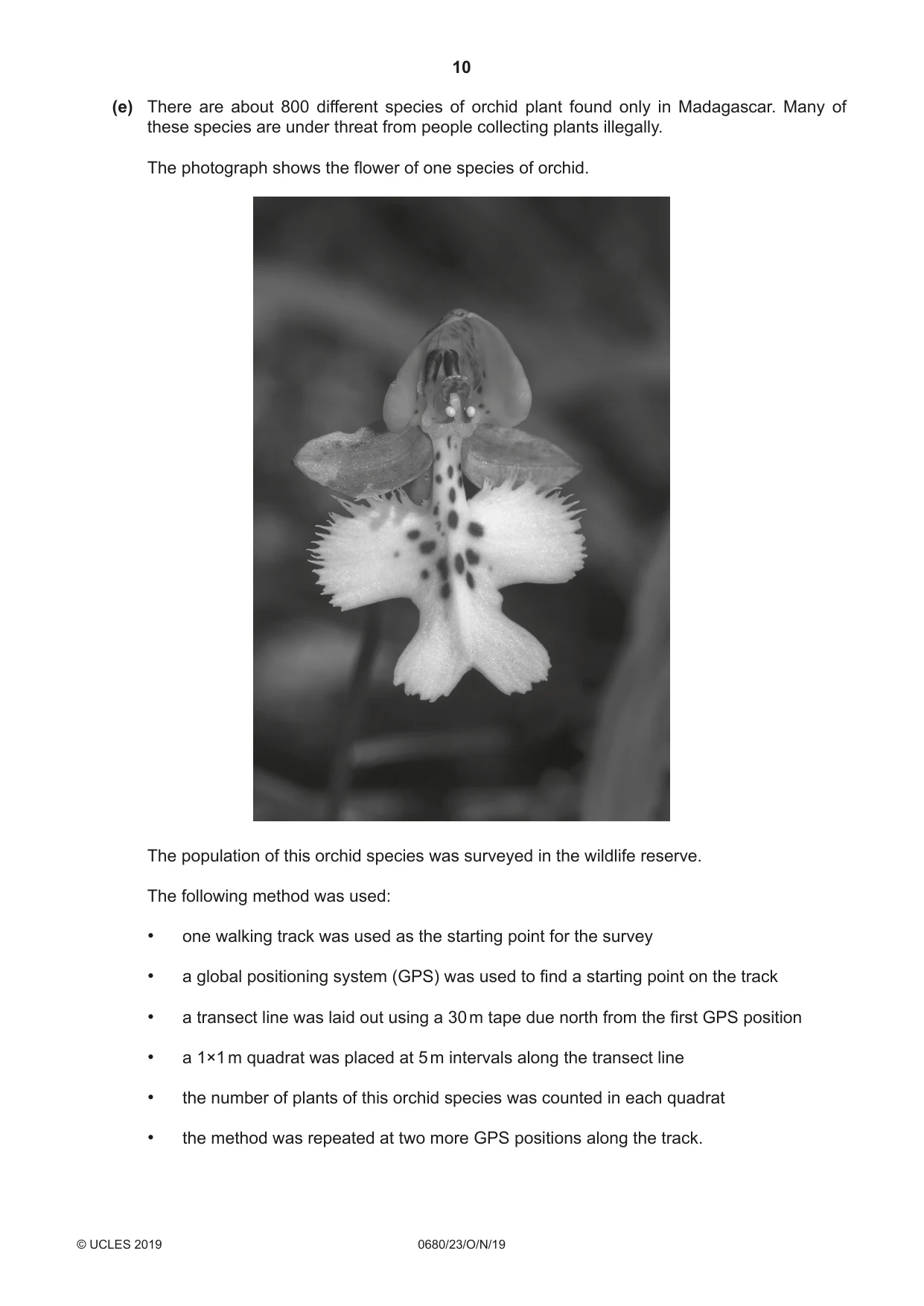
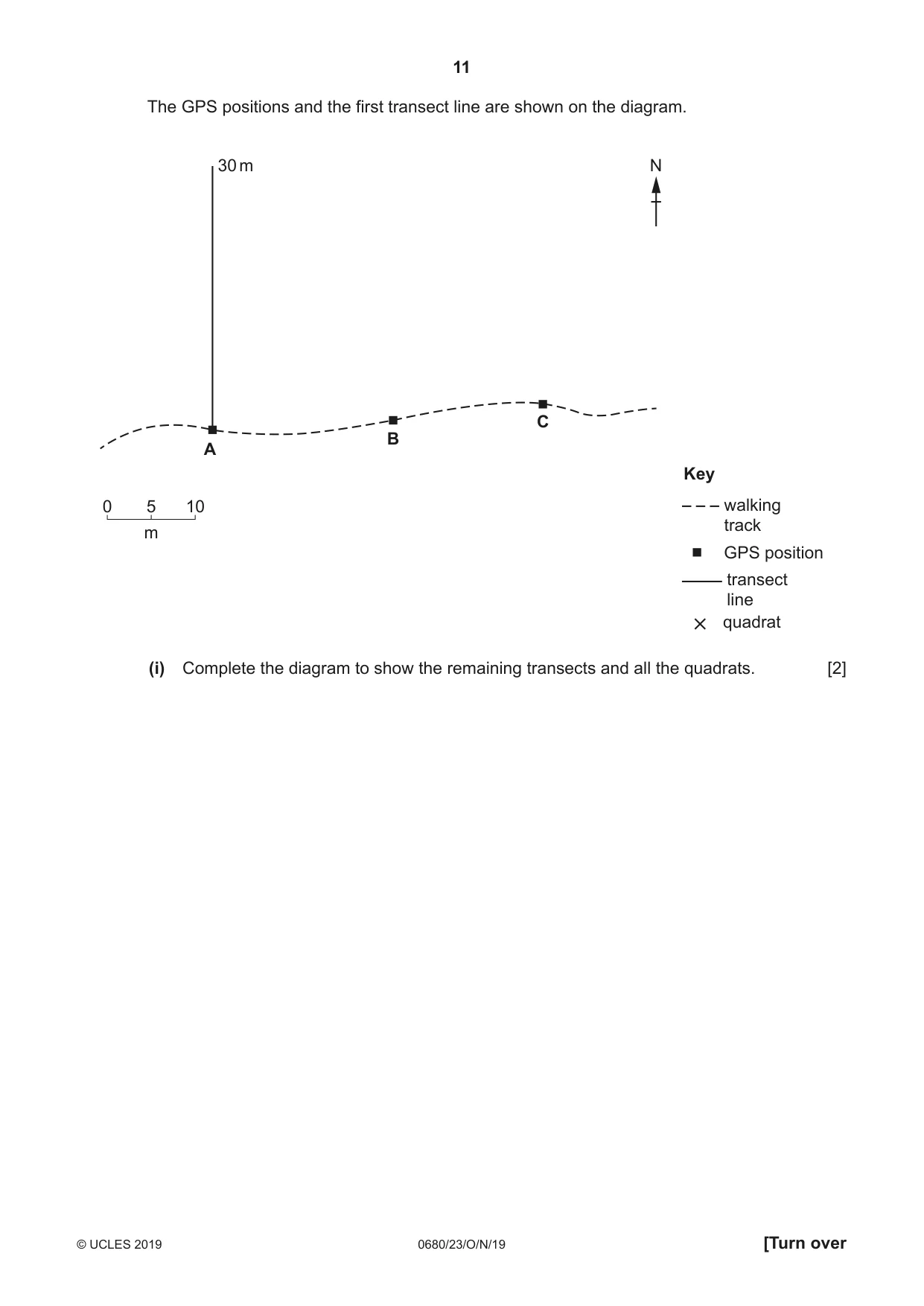
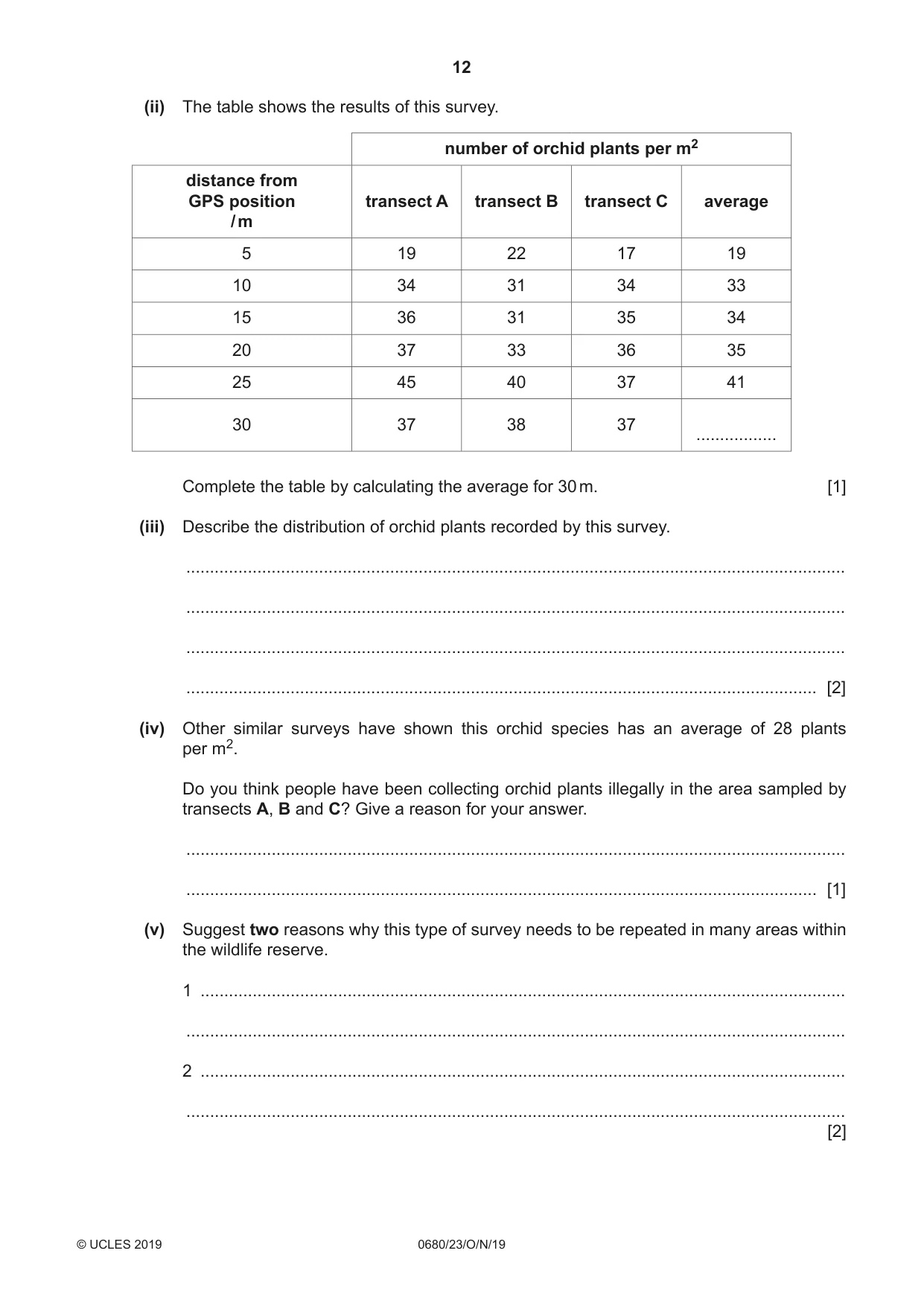
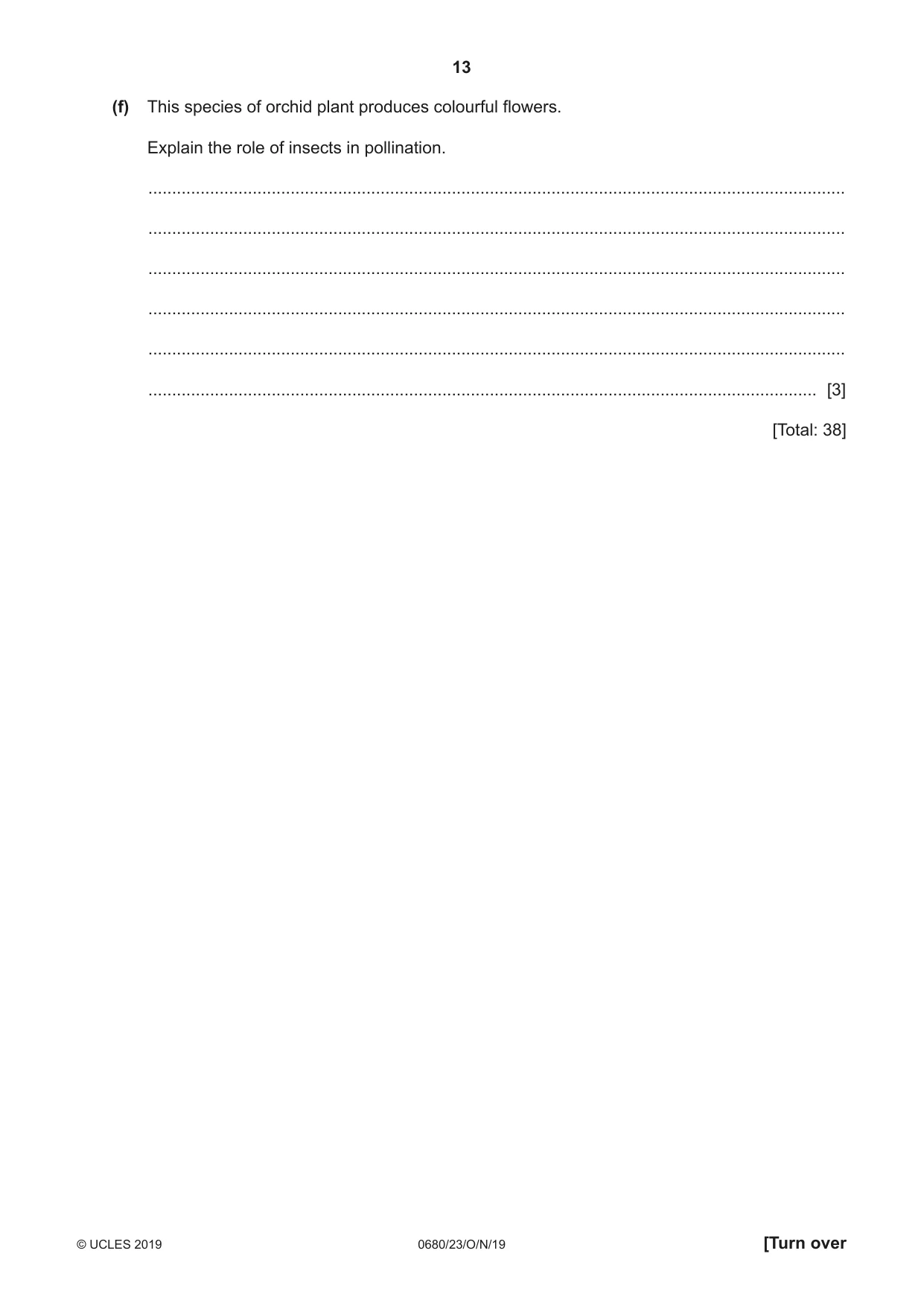
1 (a) (i) Calculate the number of people living in urban areas in Madagascar in 2017. .......................................................... [1] (ii) Describe two reasons why an increase in the rural population can cause deforestation. 1 ........................................................................................................................................ ........................................................................................................................................... 2 ........................................................................................................................................ ........................................................................................................................................... [2] (iii) Explain how trees protect the soil from erosion. ........................................................................................................................................... ........................................................................................................................................... ........................................................................................................................................... ........................................................................................................................................... ........................................................................................................................................... ........................................................................................................................................... ........................................................................................................................................... ..................................................................................................................................... [4] (iv) About 300 000 tourists visit Madagascar each year. Suggest two reasons why the government wants to encourage tourists to visit Madagascar. 1 ........................................................................................................................................ ........................................................................................................................................... 2 ........................................................................................................................................ ........................................................................................................................................... [2] (b) The photograph shows a chameleon found in Madagascar. There are about 185 different species of chameleon found in the world. Many tourists visit Madagascar to see the wildlife. Madagascar has 85 endemic species of chameleon. (i) Calculate the percentage of all species of chameleon that are endemic to Madagascar. Give your answer to three significant figures. ...................................................... % [2] (ii) A survey of Madagascar reported that 66 species of chameleon are threatened with extinction. Of these species, 22 are critically endangered. What is the ratio of critically endangered species to species threatened with extinction? .......................................................... [1] (iii) Each chameleon species is adapted to a particular niche. Define the term niche. ........................................................................................................................................... ........................................................................................................................................... ........................................................................................................................................... ..................................................................................................................................... [2] (iv) Chameleons catch and eat insects. Explain why chameleons are classified as a secondary consumer. ........................................................................................................................................... ..................................................................................................................................... [1] (c) An area of mountainous rainforest covering 32 000 hectares has been set up as a wildlife reserve to protect endemic species, including chameleons. Some tourists visit the wildlife reserve after a long journey over a rough track. There is a small visitor centre. If tourists stay overnight they have to sleep in a tent and bring their own food. The following activities also take place in this reserve: • plant and animal populations are surveyed by scientists • trees are replanted by local people • methods of sustainable farming are taught to local people • fuel-efficient cooking stoves are promoted. (i) Suggest how replanting trees can help conserve populations of chameleons. ........................................................................................................................................... ........................................................................................................................................... ........................................................................................................................................... ..................................................................................................................................... [2] (ii) Explain how sustainable farming in this wildlife reserve can help maintain biodiversity. ........................................................................................................................................... ........................................................................................................................................... ........................................................................................................................................... ........................................................................................................................................... ........................................................................................................................................... ..................................................................................................................................... [3] (d) Rocket cooking stoves are fuel-efficient cooking stoves that use less wood than an open fire. This reduces the emissions of carbon dioxide. The table shows the estimated sales of rocket cooking stoves over a 7-year period for one region of Madagascar. estimated sales of rocket cooking stoves year / thousands 1 0.5 2 1.2 3 2.1 4 3.4 5 4.9 6 6.7 7 8.6 (i) Plot a line graph of the data. [4] (ii) Use your line graph to predict the estimated sales of rocket cooking stoves in year 8. ..................................................................................................................................... [1] (iii) The diagram shows a rocket cooking stove. heat insulation fuel Suggest two reasons why the use of rocket cooking stoves improves the health of rural people. 1 ........................................................................................................................................ ........................................................................................................................................... 2 ........................................................................................................................................ ........................................................................................................................................... [2] (e) There are about 800 different species of orchid plant found only in Madagascar. Many of these species are under threat from people collecting plants illegally. The photograph shows the flower of one species of orchid. The population of this orchid species was surveyed in the wildlife reserve. The following method was used: • one walking track was used as the starting point for the survey • a global positioning system (GPS) was used to find a starting point on the track • a transect line was laid out using a 30 m tape due north from the first GPS position • a 1×1 m quadrat was placed at 5 m intervals along the transect line • the number of plants of this orchid species was counted in each quadrat • the method was repeated at two more GPS positions along the track. The GPS positions and the first transect line are shown on the diagram. 30 m N C B A Key 0 5 10 walking track m GPS position transect line quadrat (i) Complete the diagram to show the remaining transects and all the quadrats. [2] (ii) The table shows the results of this survey. number of orchid plants per m2 distance from GPS position transect A transect B transect C average / m 5 19 22 17 19 10 34 31 34 33 15 36 31 35 34 20 37 33 36 35 25 45 40 37 41 30 37 38 37 ................. Complete the table by calculating the average for 30 m. [1] (iii) Describe the distribution of orchid plants recorded by this survey. ........................................................................................................................................... ........................................................................................................................................... ........................................................................................................................................... ..................................................................................................................................... [2] (iv) Other similar surveys have shown this orchid species has an average of 28 plants per m2. Do you think people have been collecting orchid plants illegally in the area sampled by transects A, B and C? Give a reason for your answer. ........................................................................................................................................... ..................................................................................................................................... [1] (v) Suggest two reasons why this type of survey needs to be repeated in many areas within the wildlife reserve. 1 ........................................................................................................................................ ........................................................................................................................................... 2 ........................................................................................................................................ ........................................................................................................................................... [2] (f) This species of orchid plant produces colourful flowers. Explain the role of insects in pollination. ................................................................................................................................................... ................................................................................................................................................... ................................................................................................................................................... ................................................................................................................................................... ................................................................................................................................................... ............................................................................................................................................. [3] [Total: 38]
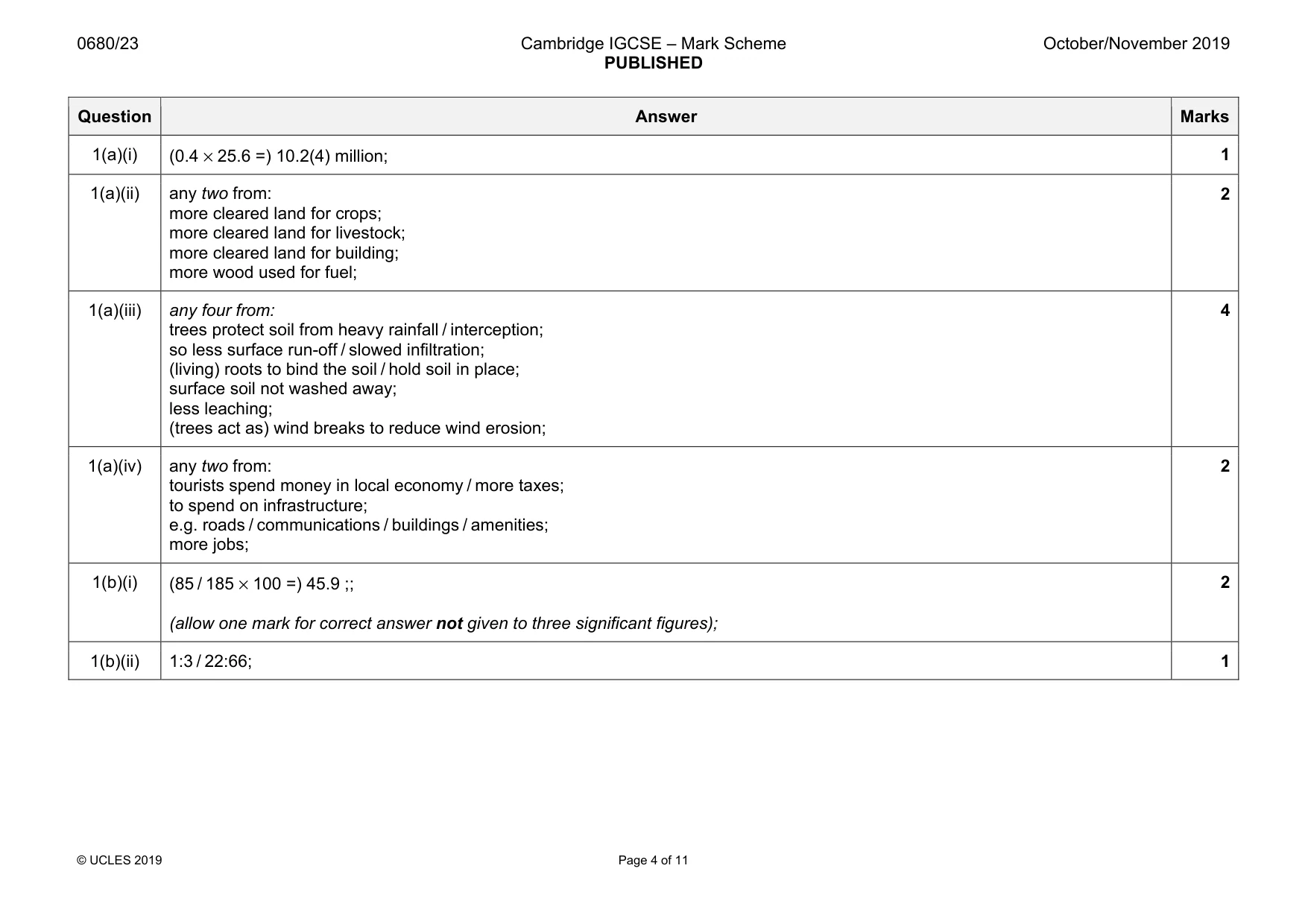
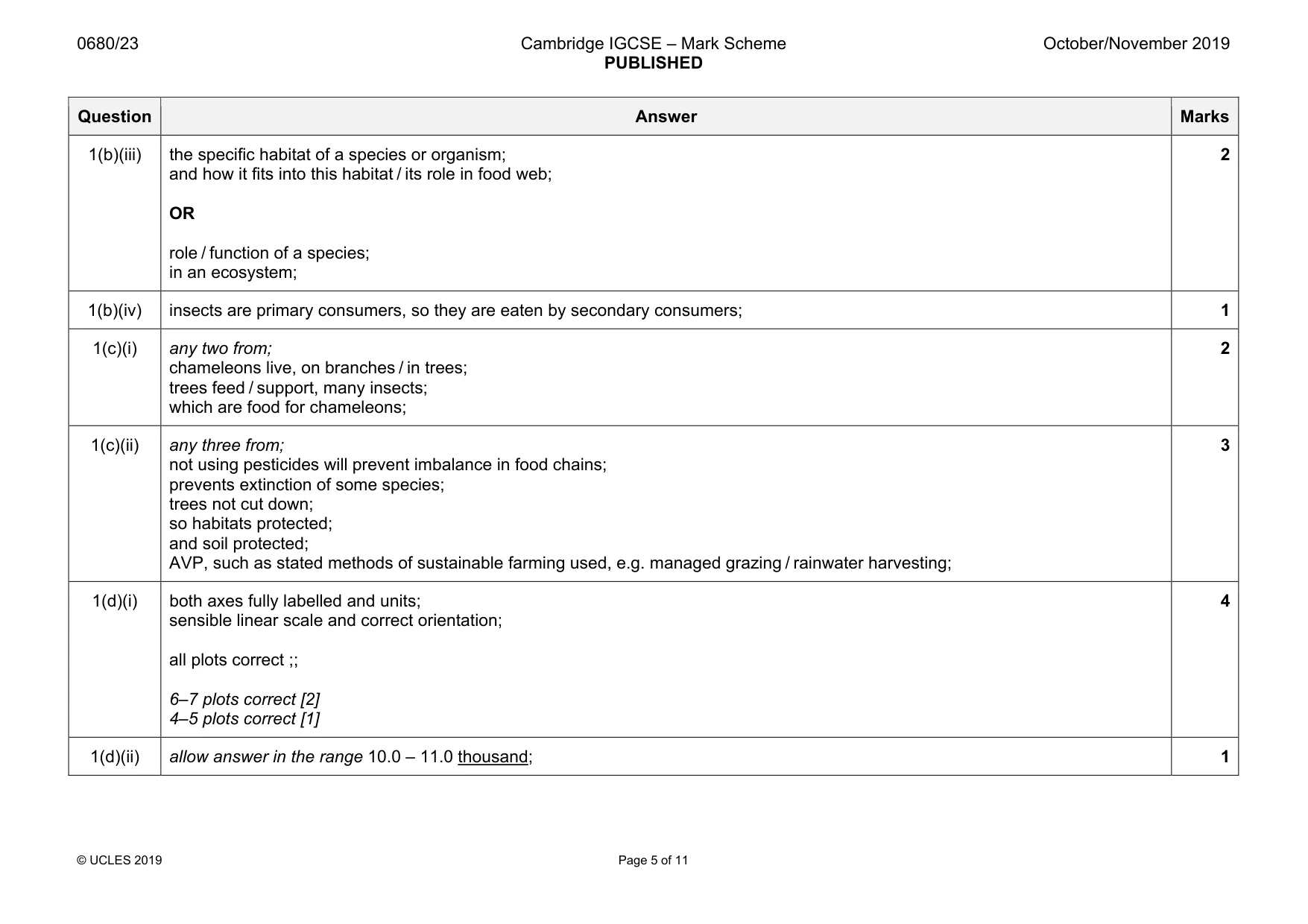
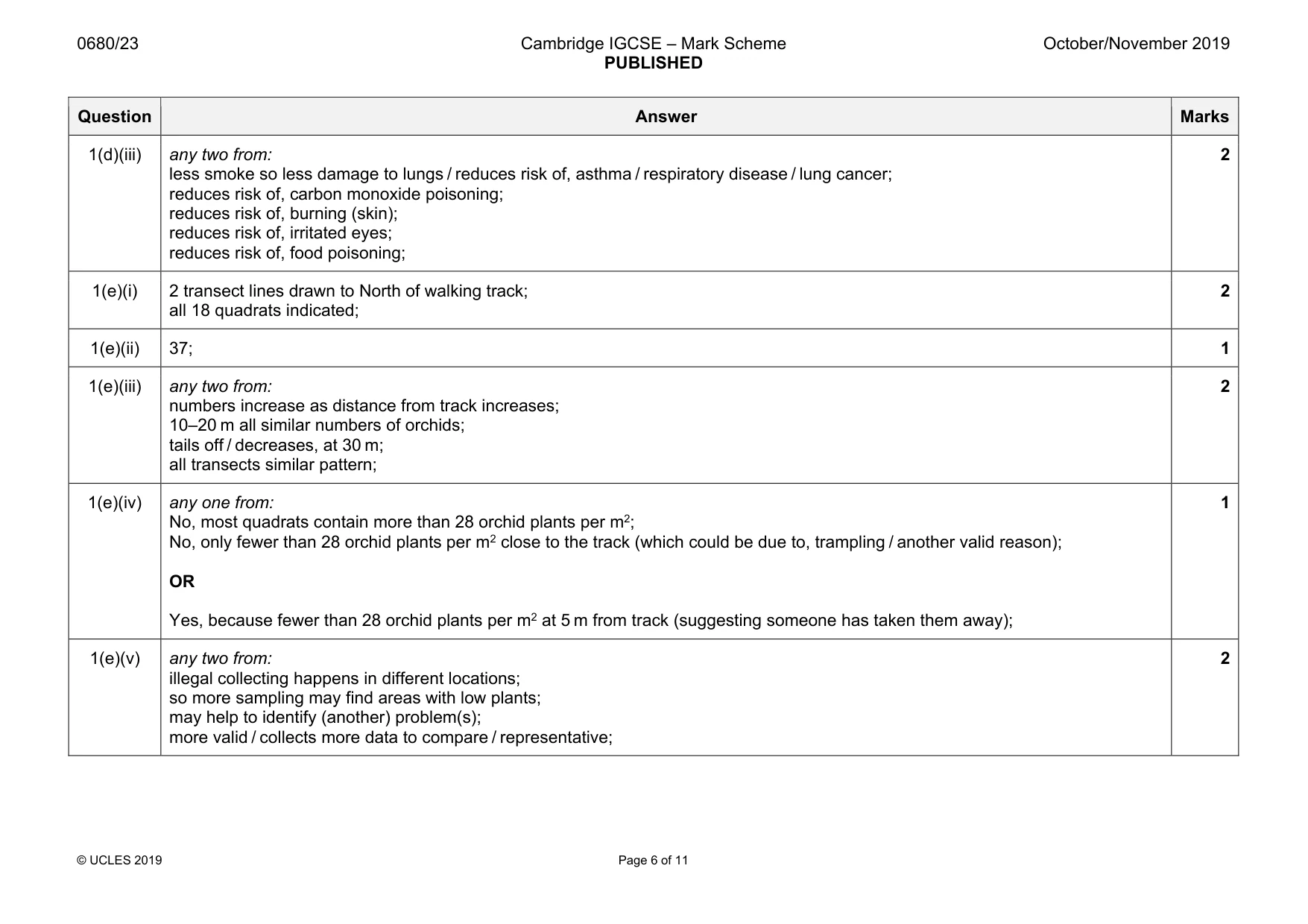
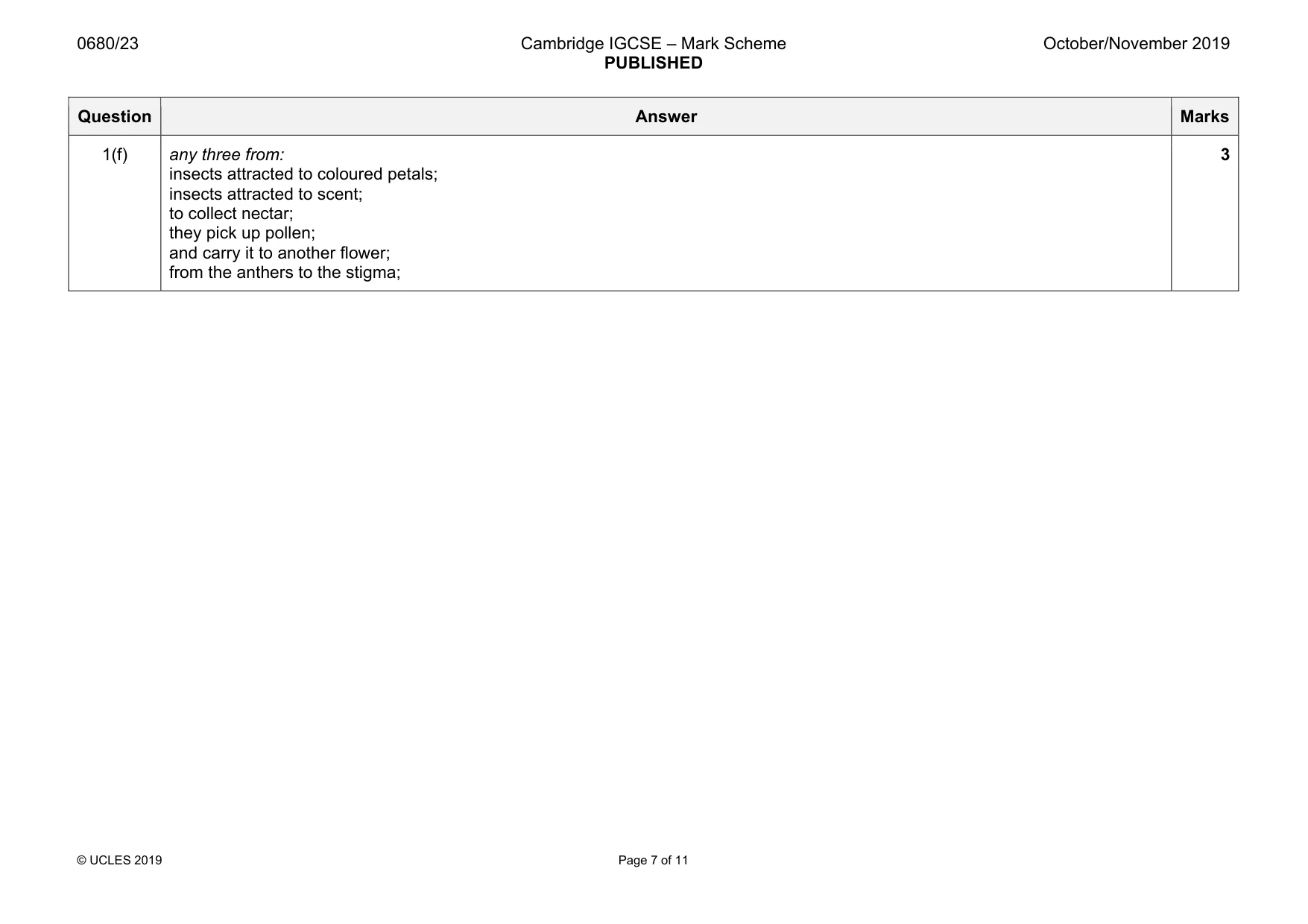
Mark scheme: 1(a)(i) 1 1(a)(ii) any two from: more cleared land for crops; more cleared land for livestock; more cleared land for building; more wood used for fuel; 2 1(a)(iii) any four from: trees protect soil from heavy rainfall / interception; so less surface run-off / slowed infiltration; (living) roots to bind the soil / hold soil in place; surface soil not washed away; less leaching; (trees act as) wind breaks to reduce wind erosion; 4 1(a)(iv) any two from: tourists spend money in local economy / more taxes; to spend on infrastructure; e.g. roads / communications / buildings / amenities; more jobs; 2 1(b)(i) (85 / 185 × 100 =) 45.9 ;; (allow one mark for correct answer not given to three significant figures); 2 1(b)(ii) 1:3 / 22:66; 1 Question Answer Marks 1(b)(iii) the specific habitat of a species or organism; and how it fits into this habitat / its role in food web; OR role / function of a species; in an ecosystem; 2 1(b)(iv) insects are primary consumers, so they are eaten by secondary consumers; 1 1(c)(i) any two from; chameleons live, on branches / in trees; trees feed / support, many insects; which are food for chameleons; 2 1(c)(ii) any three from; not using pesticides will prevent imbalance in food chains; prevents extinction of some species; trees not cut down; so habitats protected; and soil protected; AVP, such as stated methods of sustainable farming used, e.g. managed grazing / rainwater harvesting; 3 1(d)(i) both axes fully labelled and units; sensible linear scale and correct orientation; all plots correct ;; 6–7 plots correct [2] 4–5 plots correct [1] 4 1(d)(ii) allow answer in the range 10.0 – 11.0 thousand; 1 Question Answer Marks 1(d)(iii) any two from: less smoke so less damage to lungs / reduces risk of, asthma / respiratory disease / lung cancer; reduces risk of, carbon monoxide poisoning; reduces risk of, burning (skin); reduces risk of, irritated eyes; reduces risk of, food poisoning; 2 1(e)(i) 2 transect lines drawn to North of walking track; all 18 quadrats indicated; 2 1(e)(ii) 37; 1 1(e)(iii) any two from: numbers increase as distance from track increases; 10–20 m all similar numbers of orchids; tails off / decreases, at 30 m; all transects similar pattern; 2 1(e)(iv) any one from: No, most quadrats contain more than 28 orchid plants per m2; No, only fewer than 28 orchid plants per m2 close to the track (which could be due to, trampling / another valid reason); OR Yes, because fewer than 28 orchid plants per m2 at 5 m from track (suggesting someone has taken them away); 1 1(e)(v) any two from: illegal collecting happens in different locations; so more sampling may find areas with low plants; may help to identify (another) problem(s); more valid / collects more data to compare / representative; 2 Question Answer Marks 1(f) any three from: insects attracted to coloured petals; insects attracted to scent; to collect nectar; they pick up pollen; and carry it to another flower; from the anthers to the stigma; 3
Q2 · The photographs show some lychee fruits and some lychee trees
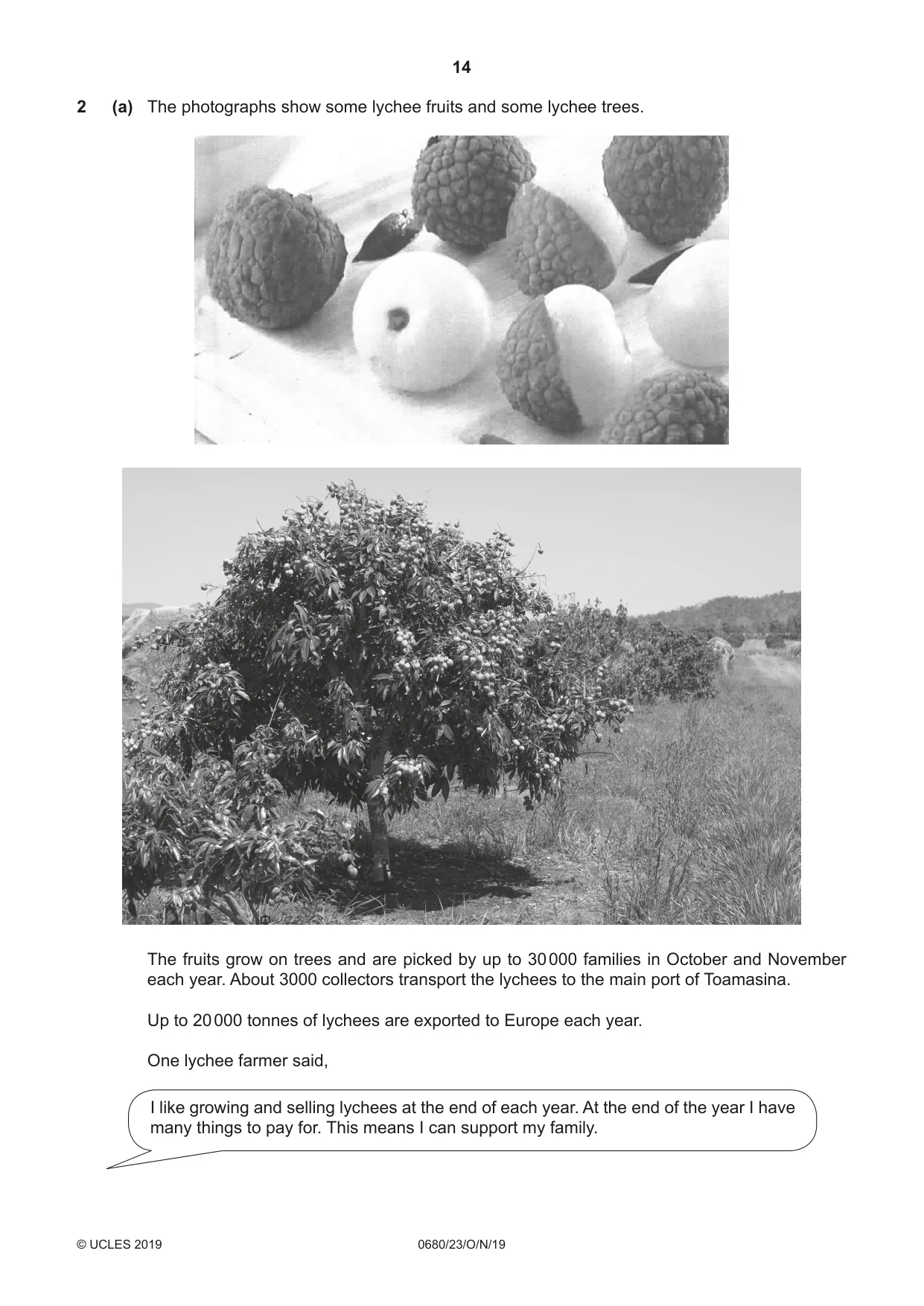
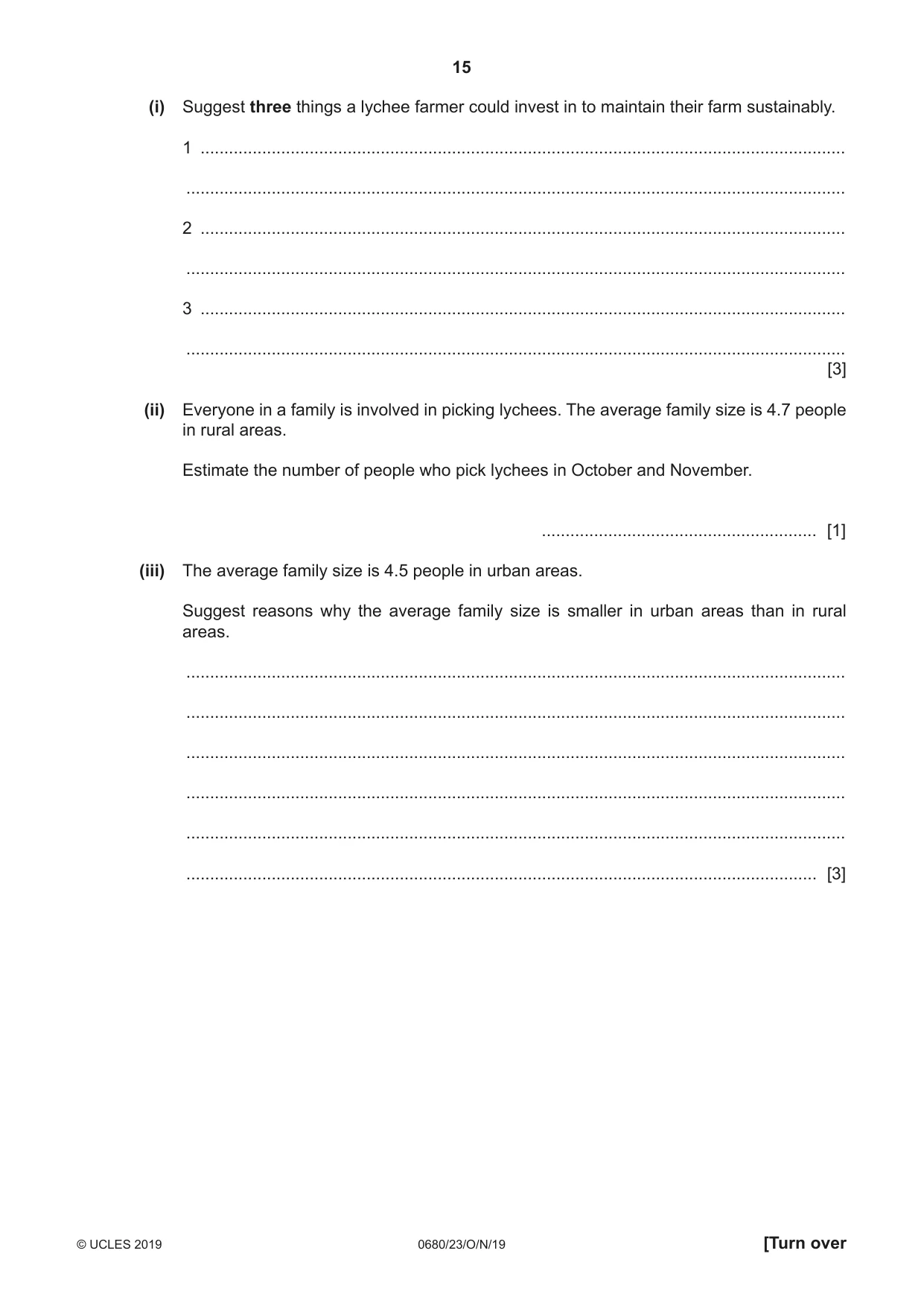
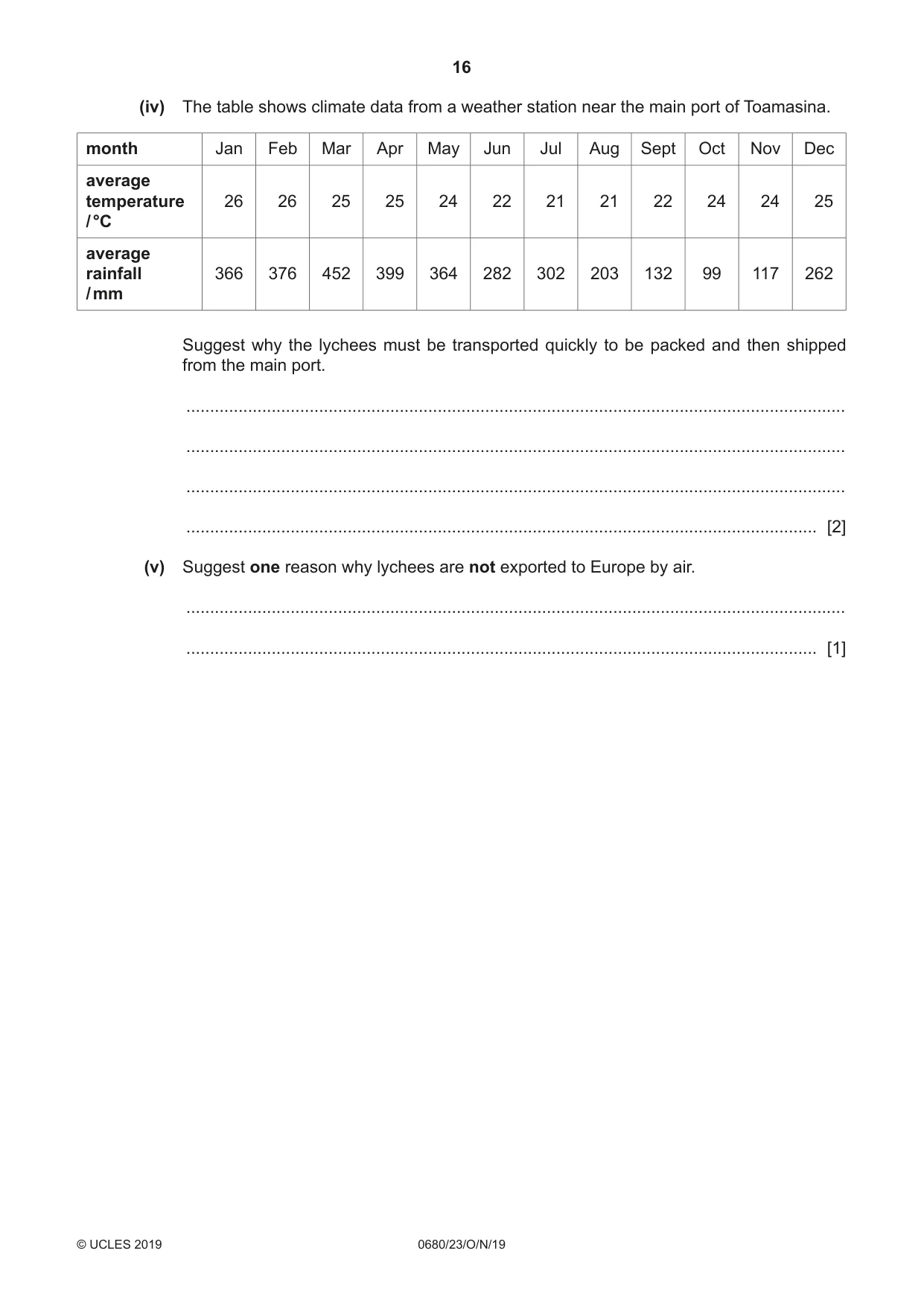
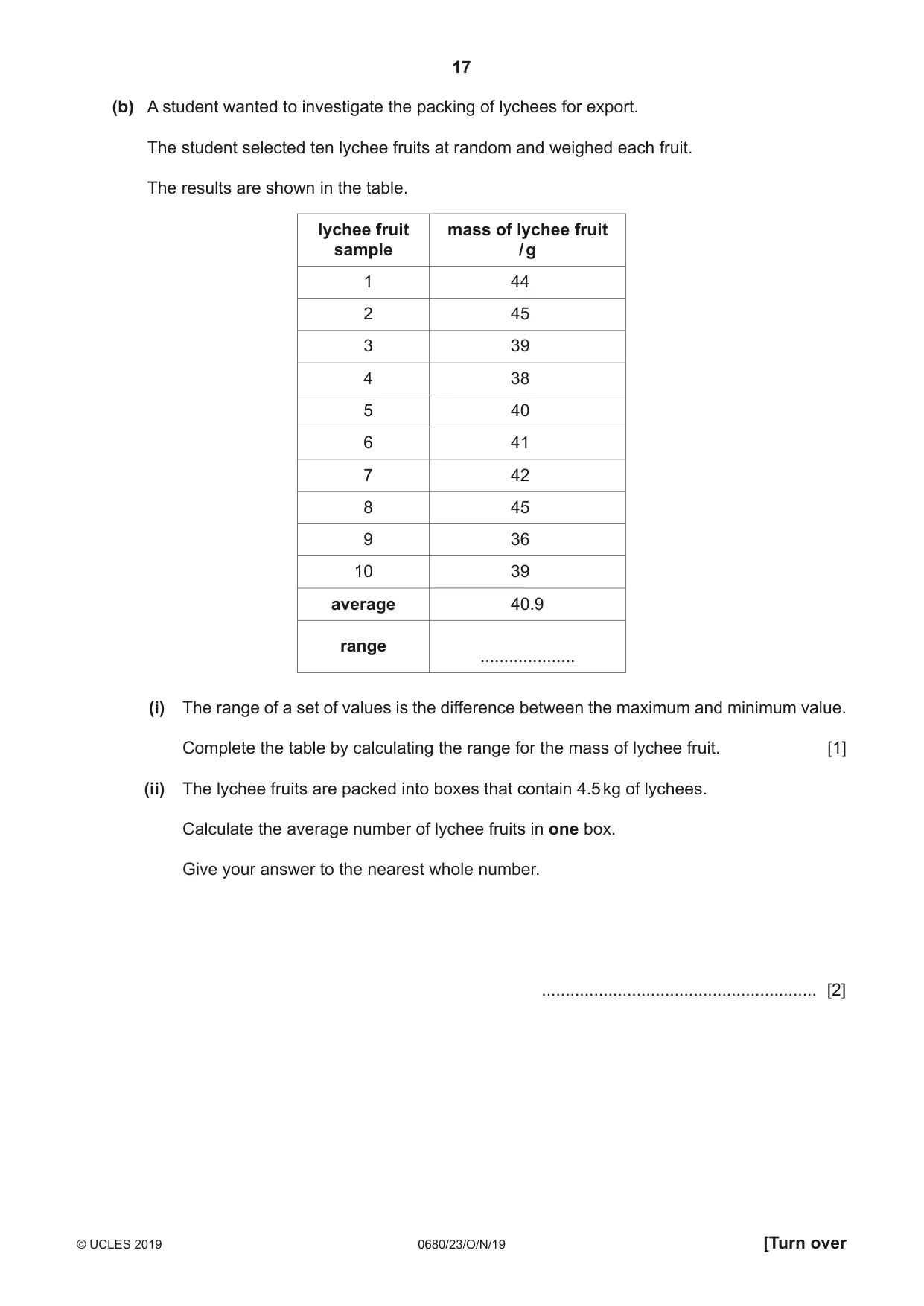
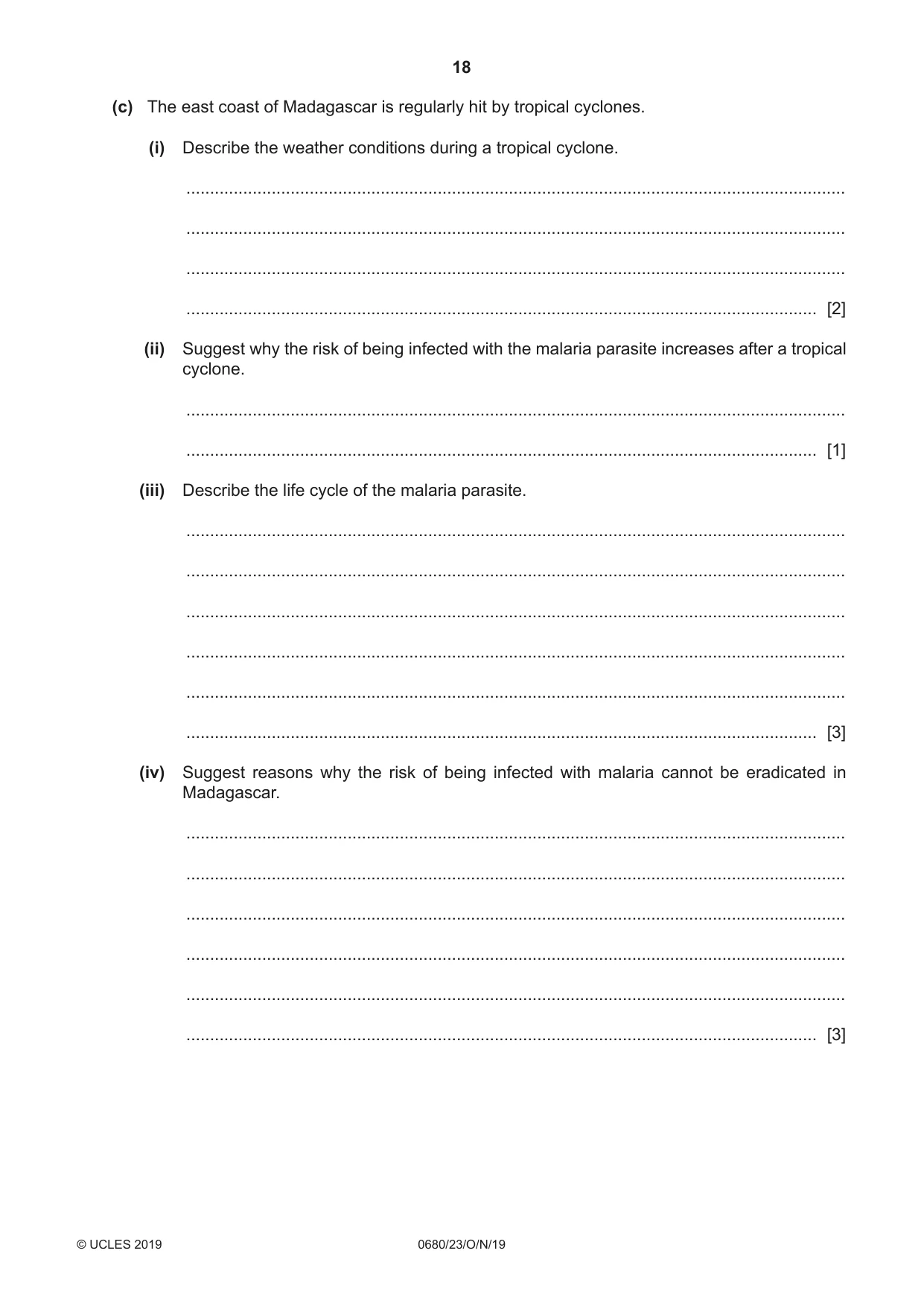
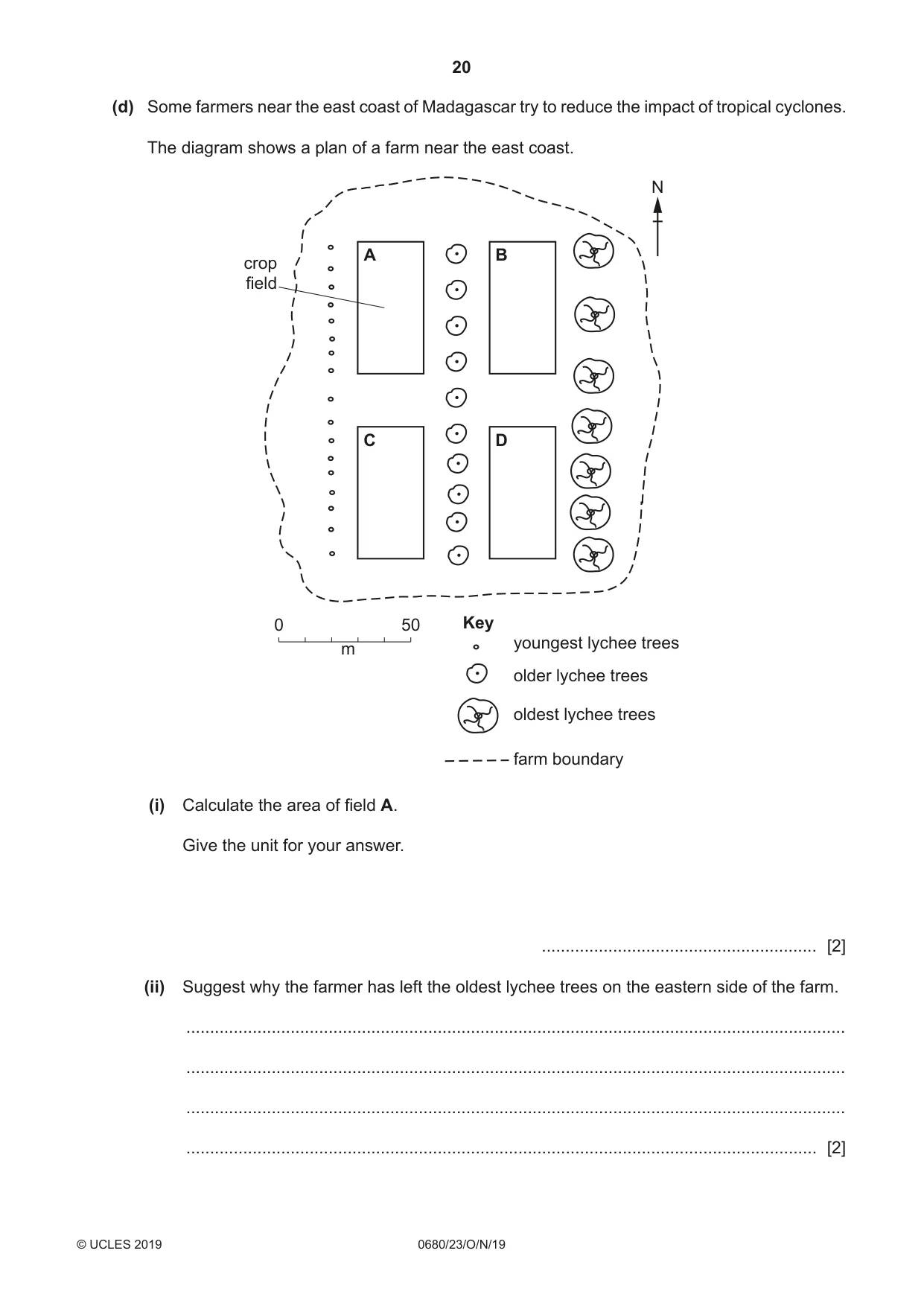
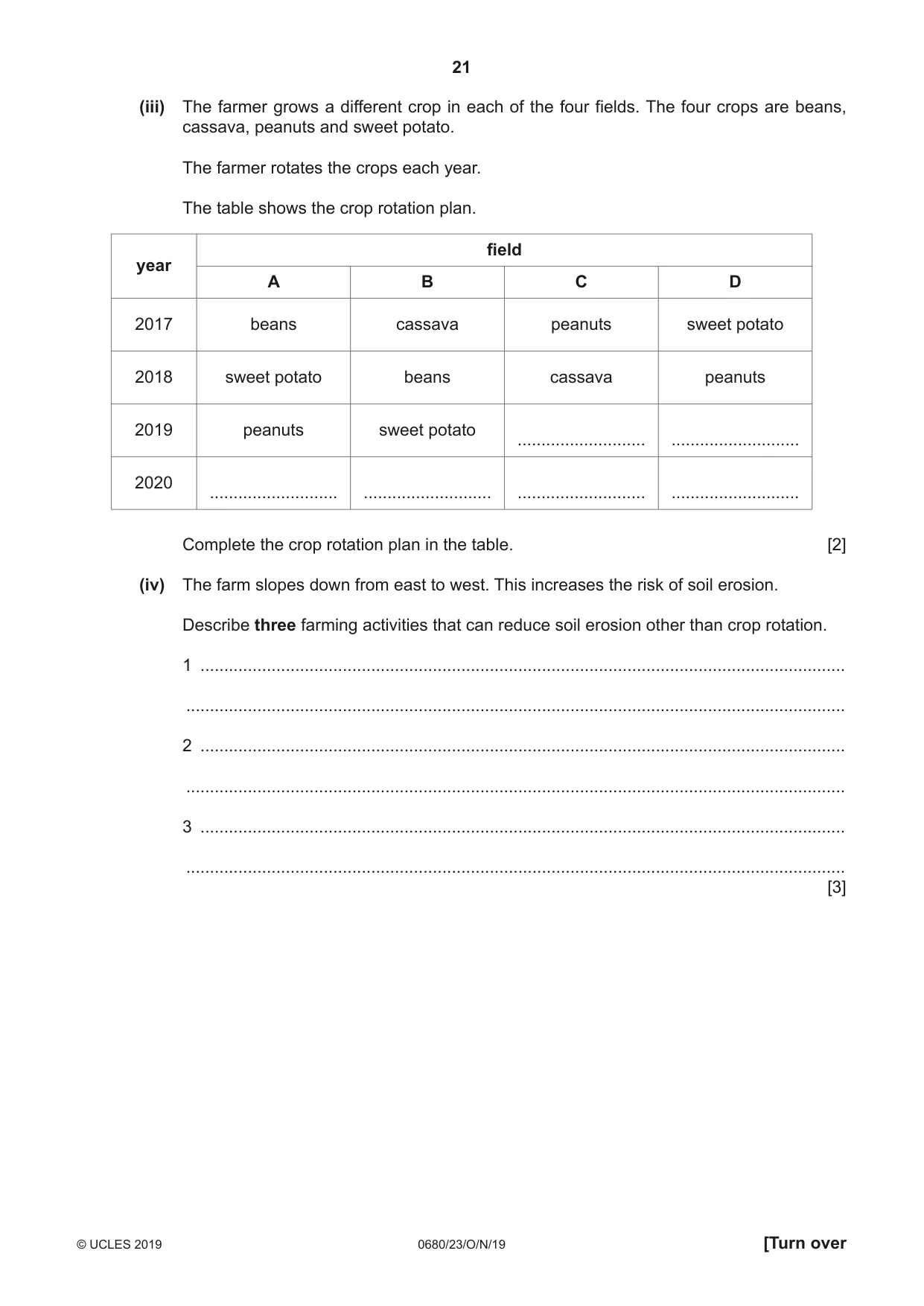
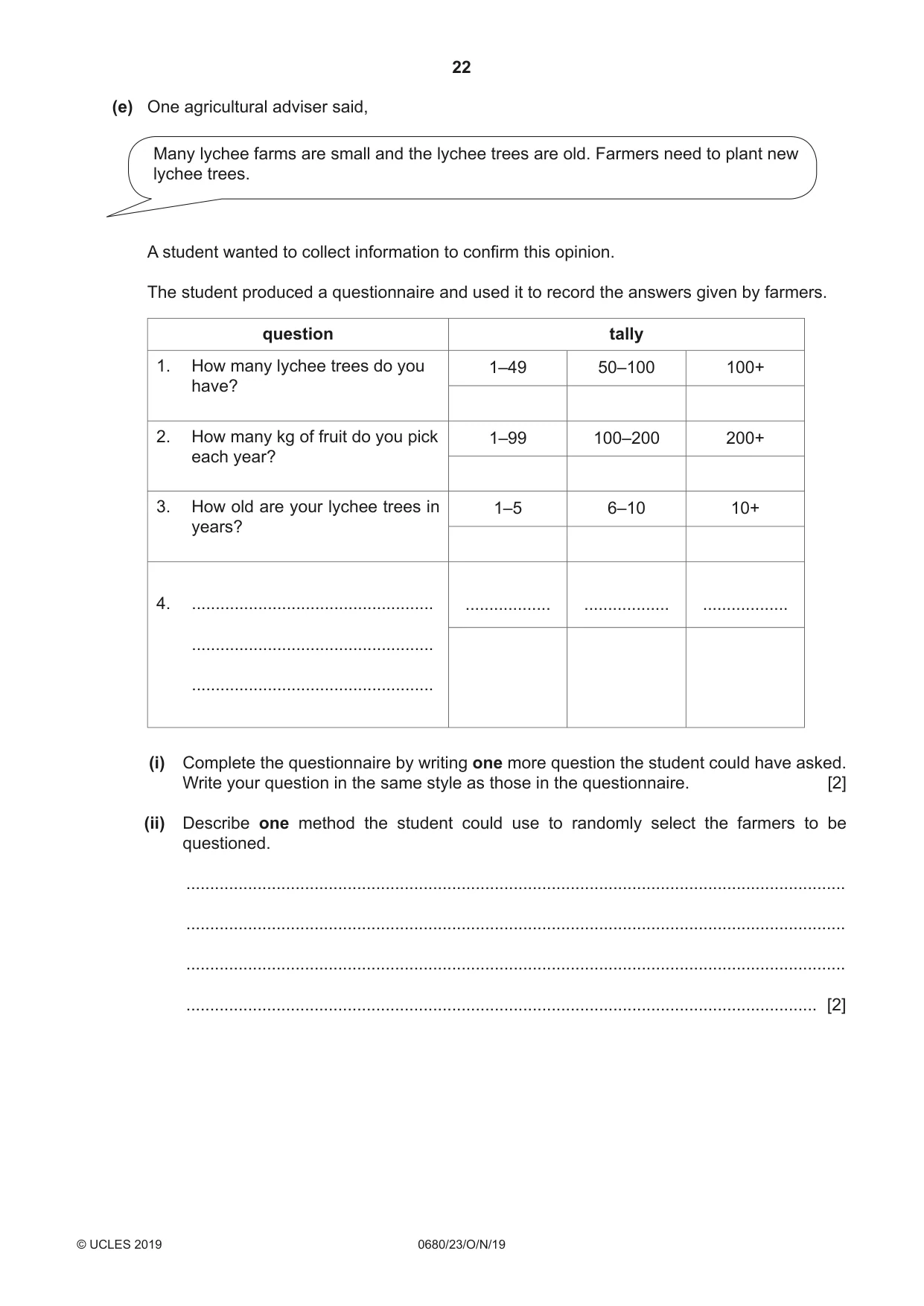
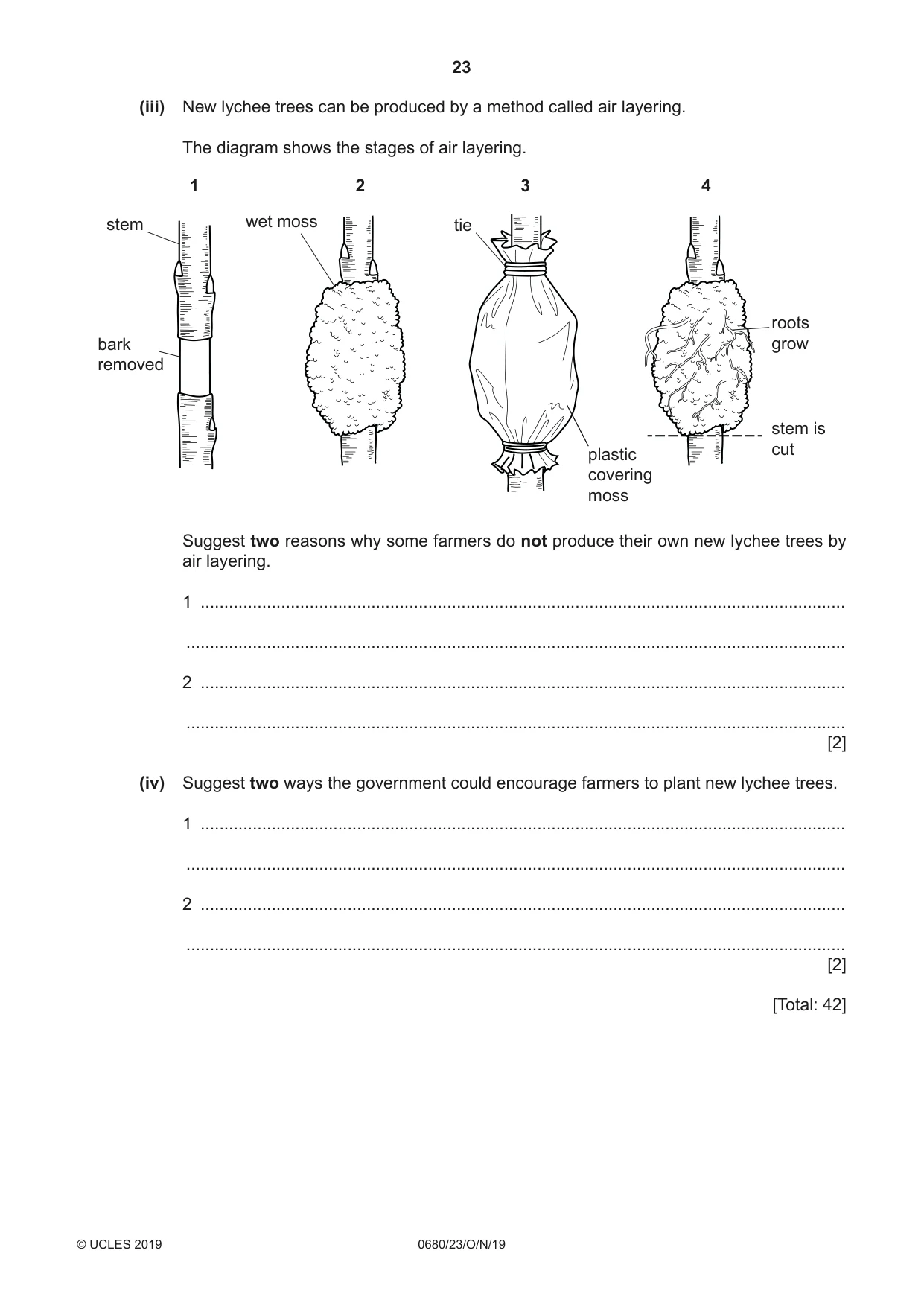
2 (a) The photographs show some lychee fruits and some lychee trees. The fruits grow on trees and are picked by up to 30 000 families in October and November each year. About 3000 collectors transport the lychees to the main port of Toamasina. Up to 20 000 tonnes of lychees are exported to Europe each year. One lychee farmer said, I like growing and selling lychees at the end of each year. At the end of the year I have many things to pay for. This means I can support my family. (i) Suggest three things a lychee farmer could invest in to maintain their farm sustainably. 1 ........................................................................................................................................ ........................................................................................................................................... 2 ........................................................................................................................................ ........................................................................................................................................... 3 ........................................................................................................................................ ........................................................................................................................................... [3] (ii) Everyone in a family is involved in picking lychees. The average family size is 4.7 people in rural areas. Estimate the number of people who pick lychees in October and November. .......................................................... [1] (iii) The average family size is 4.5 people in urban areas. Suggest reasons why the average family size is smaller in urban areas than in rural areas. ........................................................................................................................................... ........................................................................................................................................... ........................................................................................................................................... ........................................................................................................................................... ........................................................................................................................................... ..................................................................................................................................... [3] (iv) The table shows climate data from a weather station near the main port of Toamasina. month Jan Feb Mar Apr May Jun Jul Aug Sept Oct Nov Dec average temperature 26 26 25 25 24 22 21 21 22 24 24 25 / °C average rainfall 366 376 452 399 364 282 302 203 132 99 117 262 / mm Suggest why the lychees must be transported quickly to be packed and then shipped from the main port. ........................................................................................................................................... ........................................................................................................................................... ........................................................................................................................................... ..................................................................................................................................... [2] (v) Suggest one reason why lychees are not exported to Europe by air. ........................................................................................................................................... ..................................................................................................................................... [1]
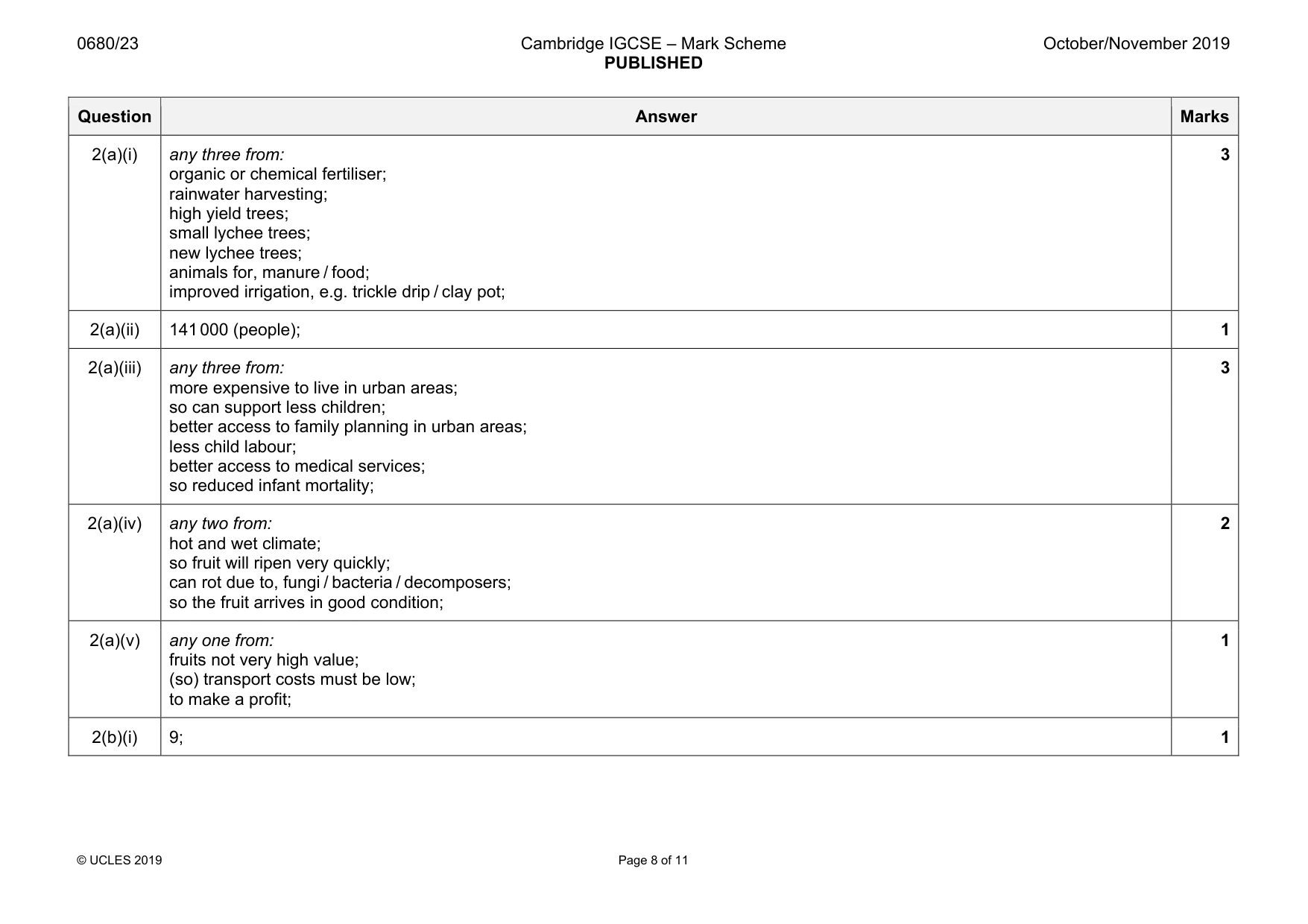
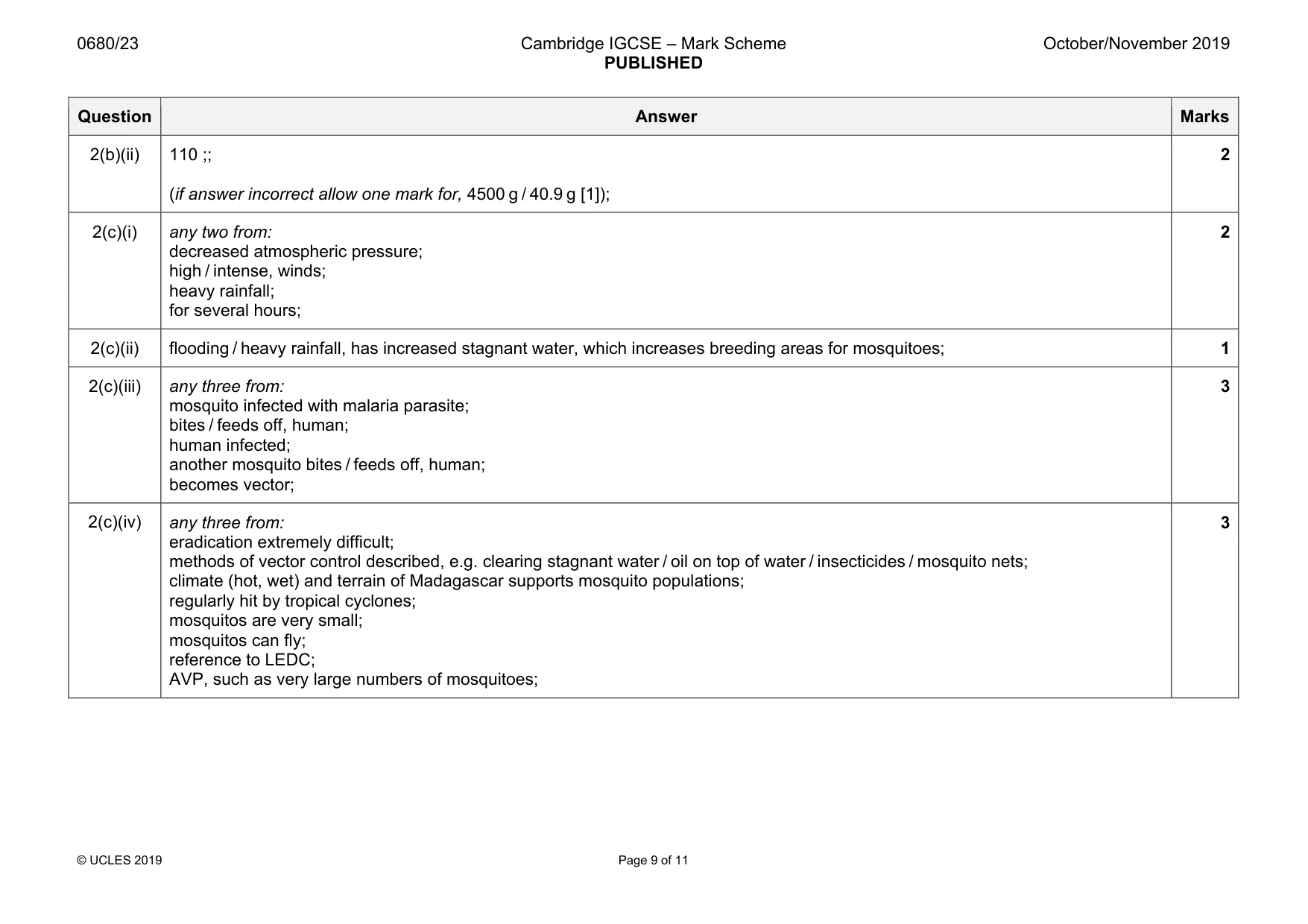
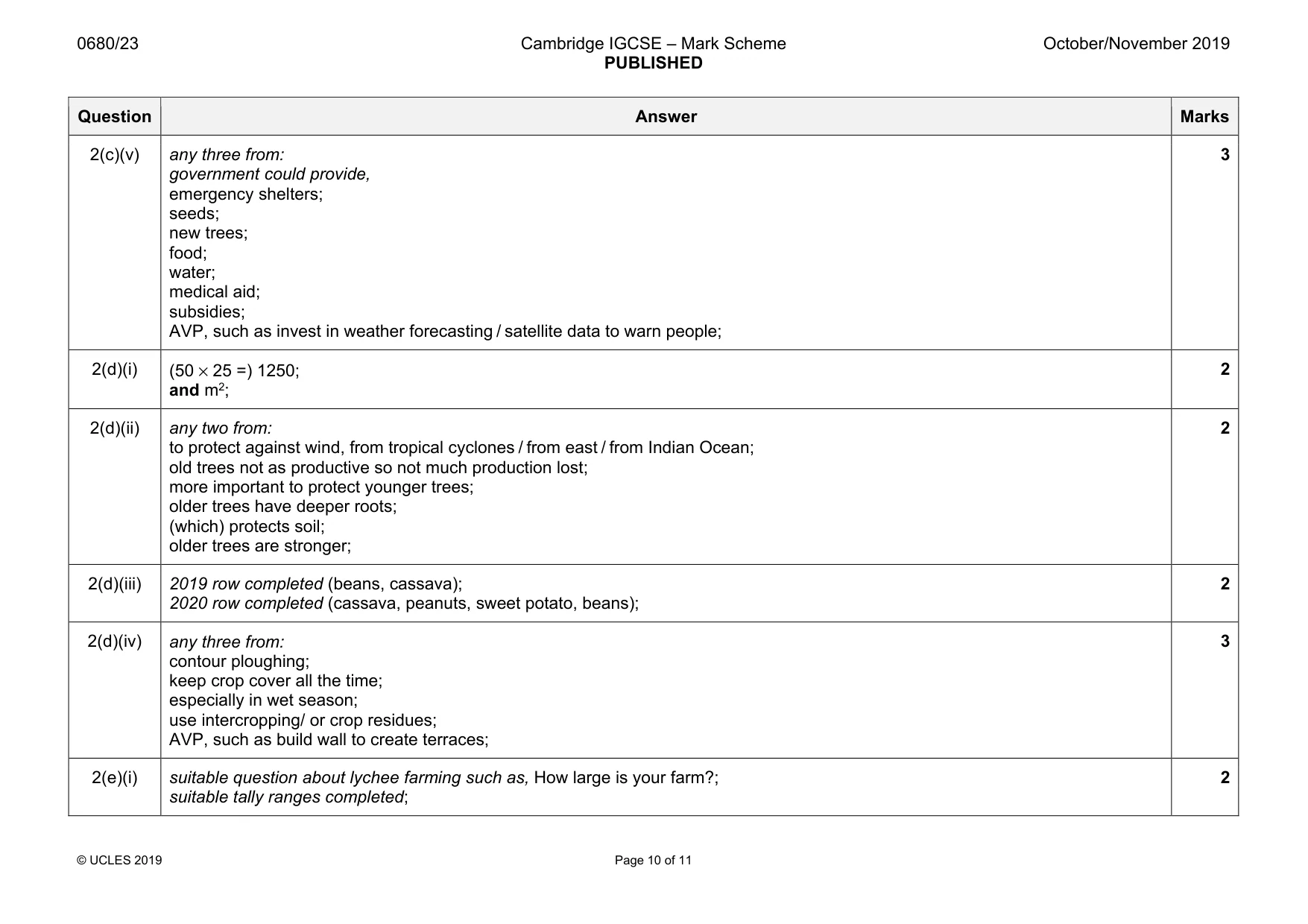
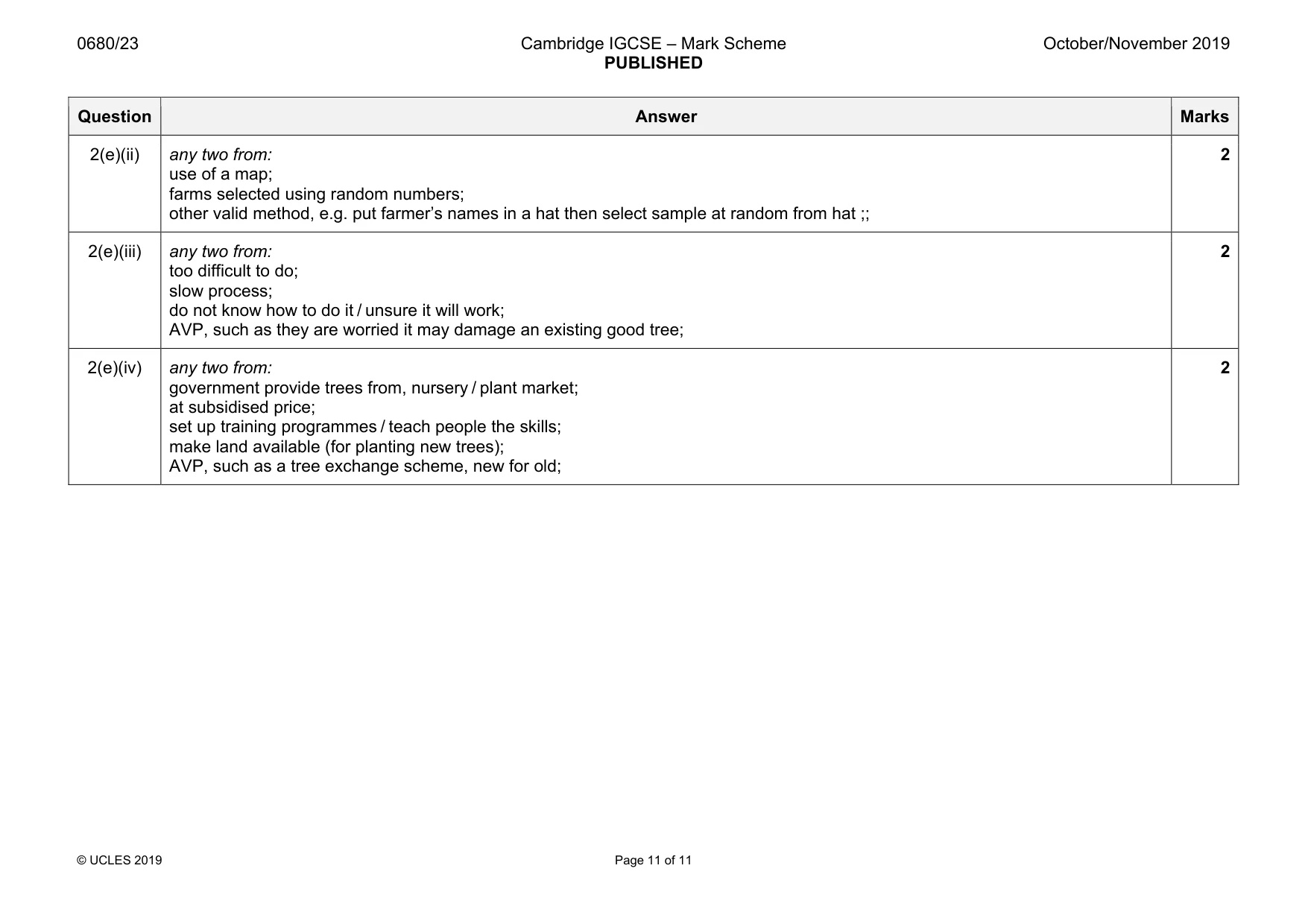
Mark scheme: 2(a)(i) any three from: organic or chemical fertiliser; rainwater harvesting; high yield trees; small lychee trees; new lychee trees; animals for, manure / food; improved irrigation, e.g. trickle drip / clay pot; 3 2(a)(ii) 141000 (people); 1 2(a)(iii) any three from: more expensive to live in urban areas; so can support less children; better access to family planning in urban areas; less child labour; better access to medical services; so reduced infant mortality; 3 2(a)(iv) any two from: hot and wet climate; so fruit will ripen very quickly; can rot due to, fungi / bacteria / decomposers; so the fruit arrives in good condition; 2 2(a)(v) any one from: fruits not very high value; (so) transport costs must be low; to make a profit; 1 2(b)(i) 9; 1 Question Answer Marks 2(b)(ii) 110 ;; (if answer incorrect allow one mark for, 4500 g / 40.9 g [1]); 2 2(c)(i) any two from: decreased atmospheric pressure; high / intense, winds; heavy rainfall; for several hours; 2 2(c)(ii) flooding / heavy rainfall, has increased stagnant water, which increases breeding areas for mosquitoes; 1 2(c)(iii) any three from: mosquito infected with malaria parasite; bites / feeds off, human; human infected; another mosquito bites / feeds off, human; becomes vector; 3 2(c)(iv) any three from: eradication extremely difficult; methods of vector control described, e.g. clearing stagnant water / oil on top of water / insecticides / mosquito nets; climate (hot, wet) and terrain of Madagascar supports mosquito populations; regularly hit by tropical cyclones; mosquitos are very small; mosquitos can fly; reference to LEDC; AVP, such as very large numbers of mosquitoes; 3 Question Answer Marks 2(c)(v) any three from: government could provide, emergency shelters; seeds; new trees; food; water; medical aid; subsidies; AVP, such as invest in weather forecasting / satellite data to warn people; 3 2(d)(i) (50 × 25 =) 1250; and m2; 2 2(d)(ii) any two from: to protect against wind, from tropical cyclones / from east / from Indian Ocean; old trees not as productive so not much production lost; more important to protect younger trees; older trees have deeper roots; (which) protects soil; older trees are stronger; 2 2(d)(iii) 2019 row completed (beans, cassava); 2020 row completed (cassava, peanuts, sweet potato, beans); 2 2(d)(iv) any three from: contour ploughing; keep crop cover all the time; especially in wet season; use intercropping/ or crop residues; AVP, such as build wall to create terraces; 3 2(e)(i) suitable question about lychee farming such as, How large is your farm?; suitable tally ranges completed; 2 Question Answer Marks 2(e)(ii) any two from: use of a map; farms selected using random numbers; other valid method, e.g. put farmer’s names in a hat then select sample at random from hat ;; 2 2(e)(iii) any two from: too difficult to do; slow process; do not know how to do it / unsure it will work; AVP, such as they are worried it may damage an existing good tree; 2 2(e)(iv) any two from: government provide trees from, nursery / plant market; at subsidised price; set up training programmes / teach people the skills; make land available (for planting new trees); AVP, such as a tree exchange scheme, new for old; 2
What was in this paper
The subtopics covered by these 2 questions, and how many questions each got. Open one in a new tab to see every Cambridge question on it.
What you needed in this session
Cambridge’s own grade thresholds for 2019 Oct/Nov, Paper 2 · Variant 3. A higher threshold means an easier paper — the bar moves with how the cohort did.