Cambridge IGCSE Environmental Management 0680 — 2019 Feb/March Paper 2 · Variant 2
0680/22/F/M/19 · 2 questions · 80 marks · ≈90 min
The question paper and its mark scheme, free to read here and free to download. This is Cambridge’s own paper, exactly as it was sat.
Question paper20 pages

Mark scheme10 pages
Answers below. Sit the paper first if you are practising.
Questions as text
Q1 · Calculate the percentage of people with a low standard of living in Ecuador
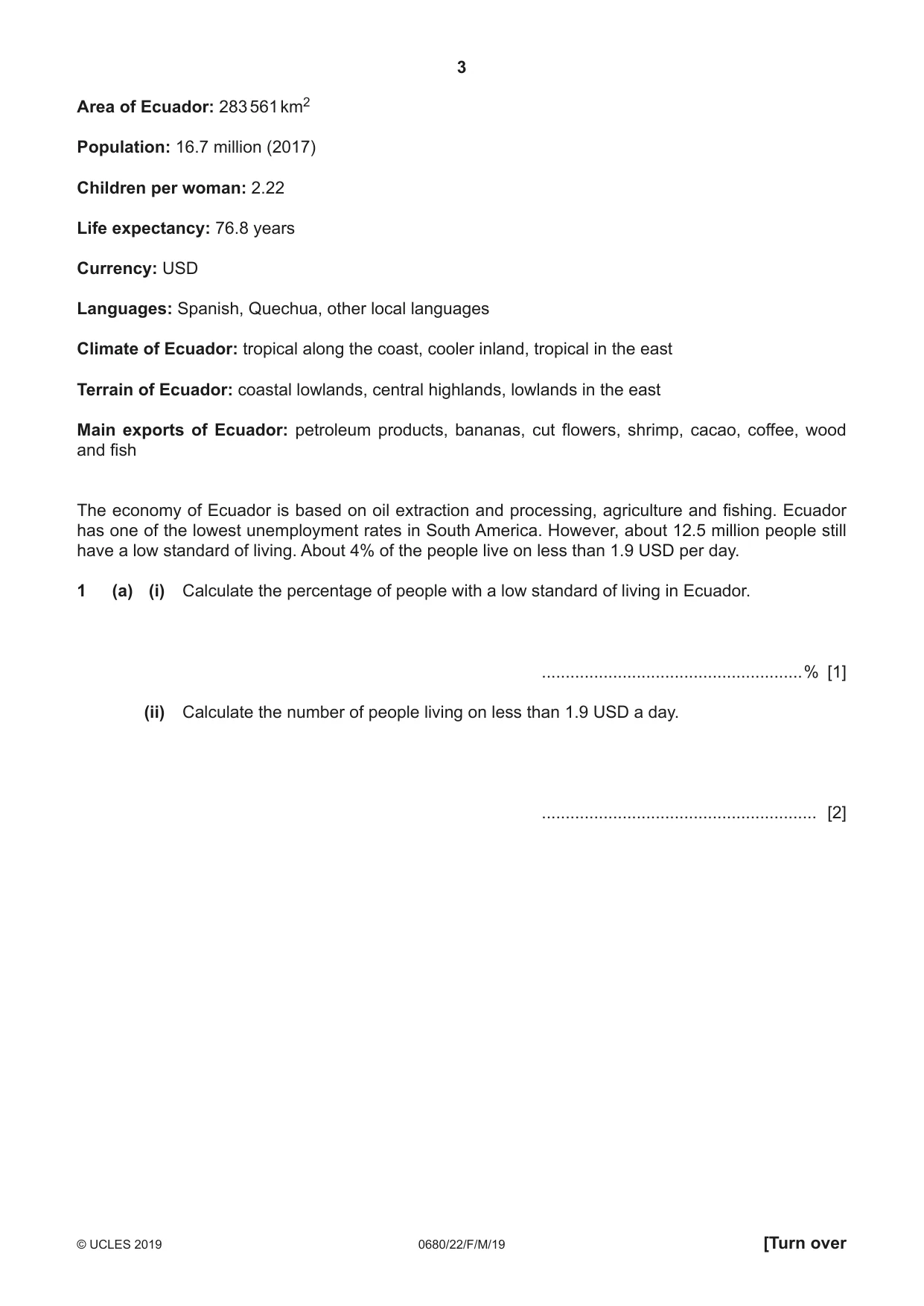
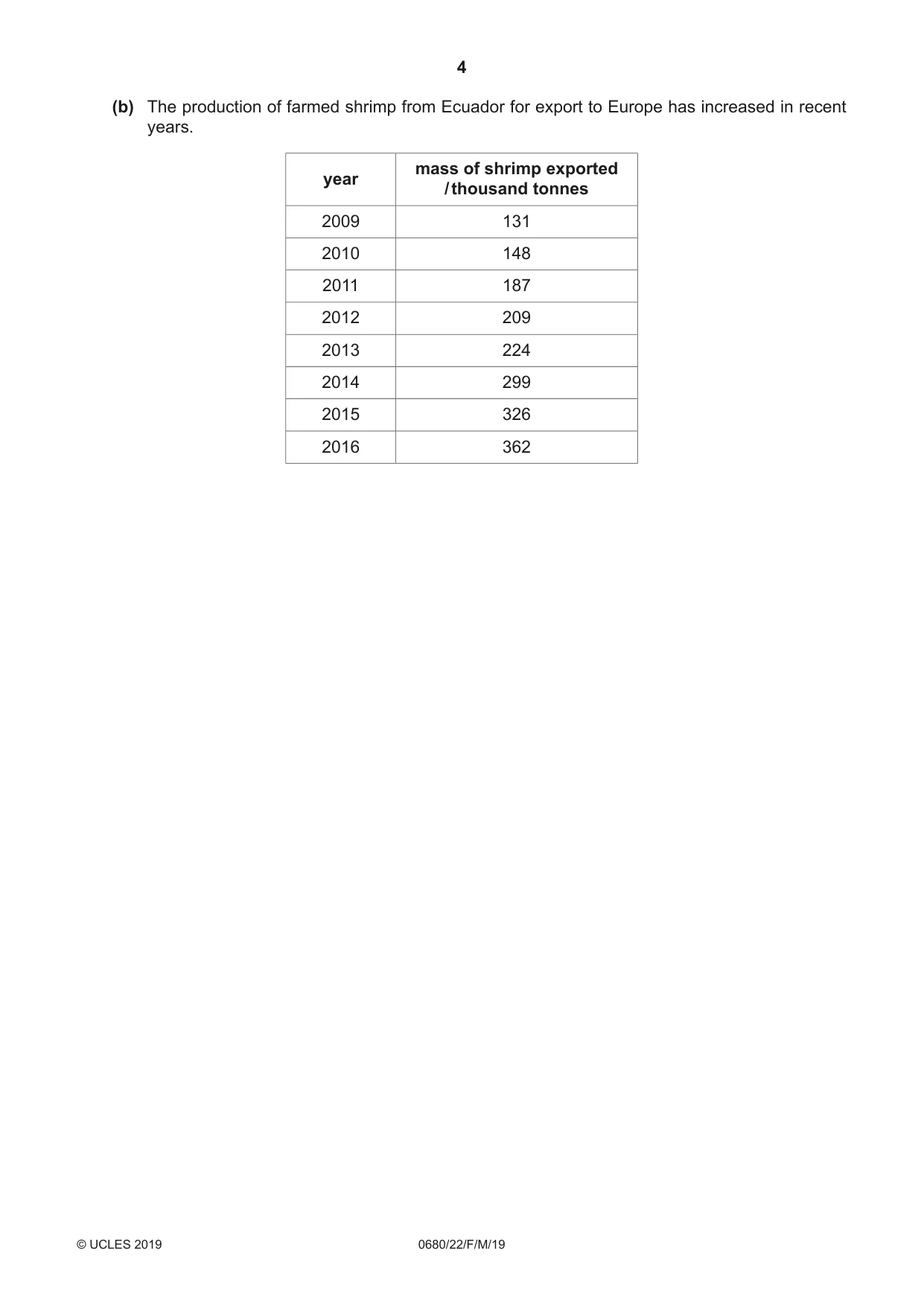
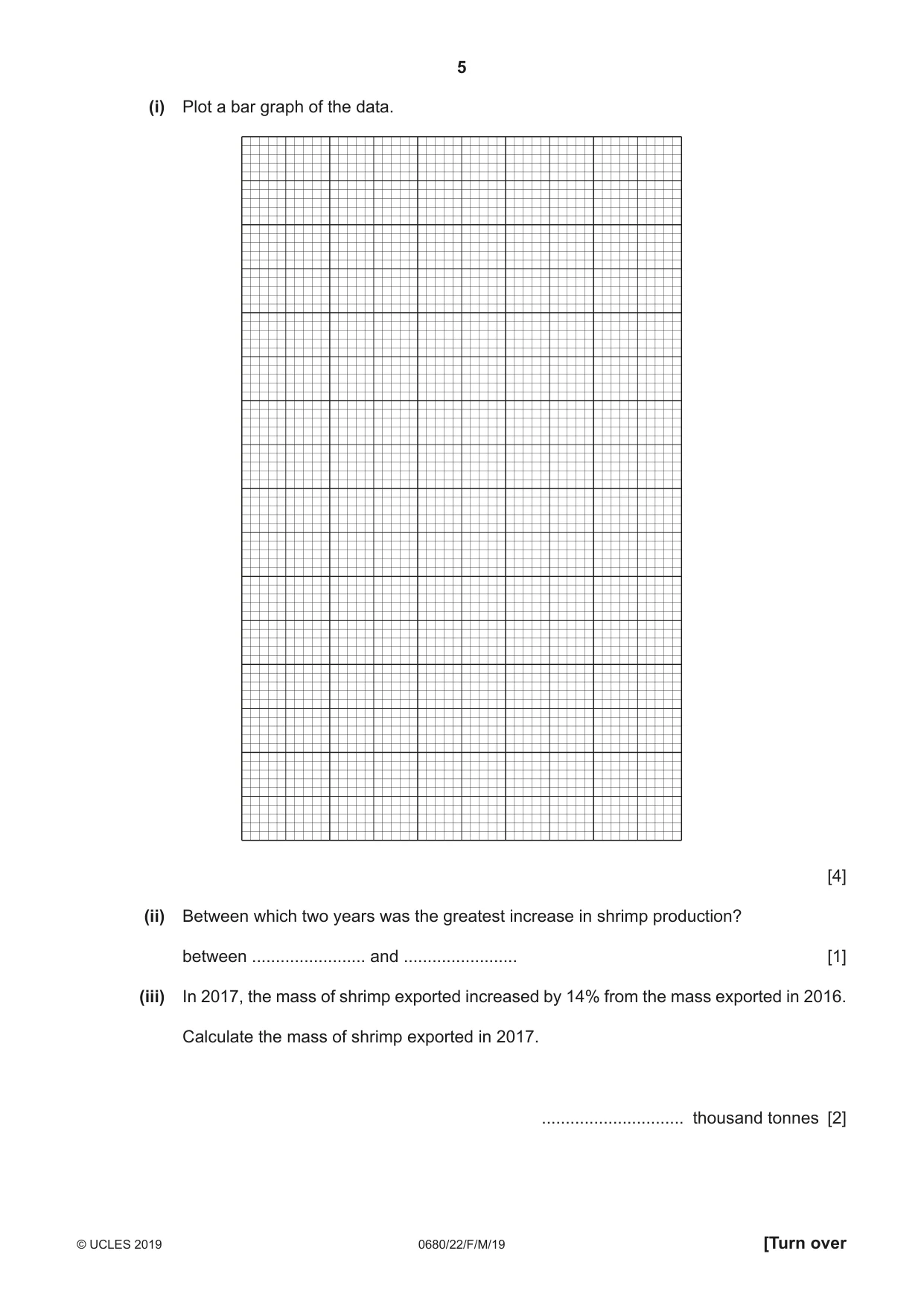
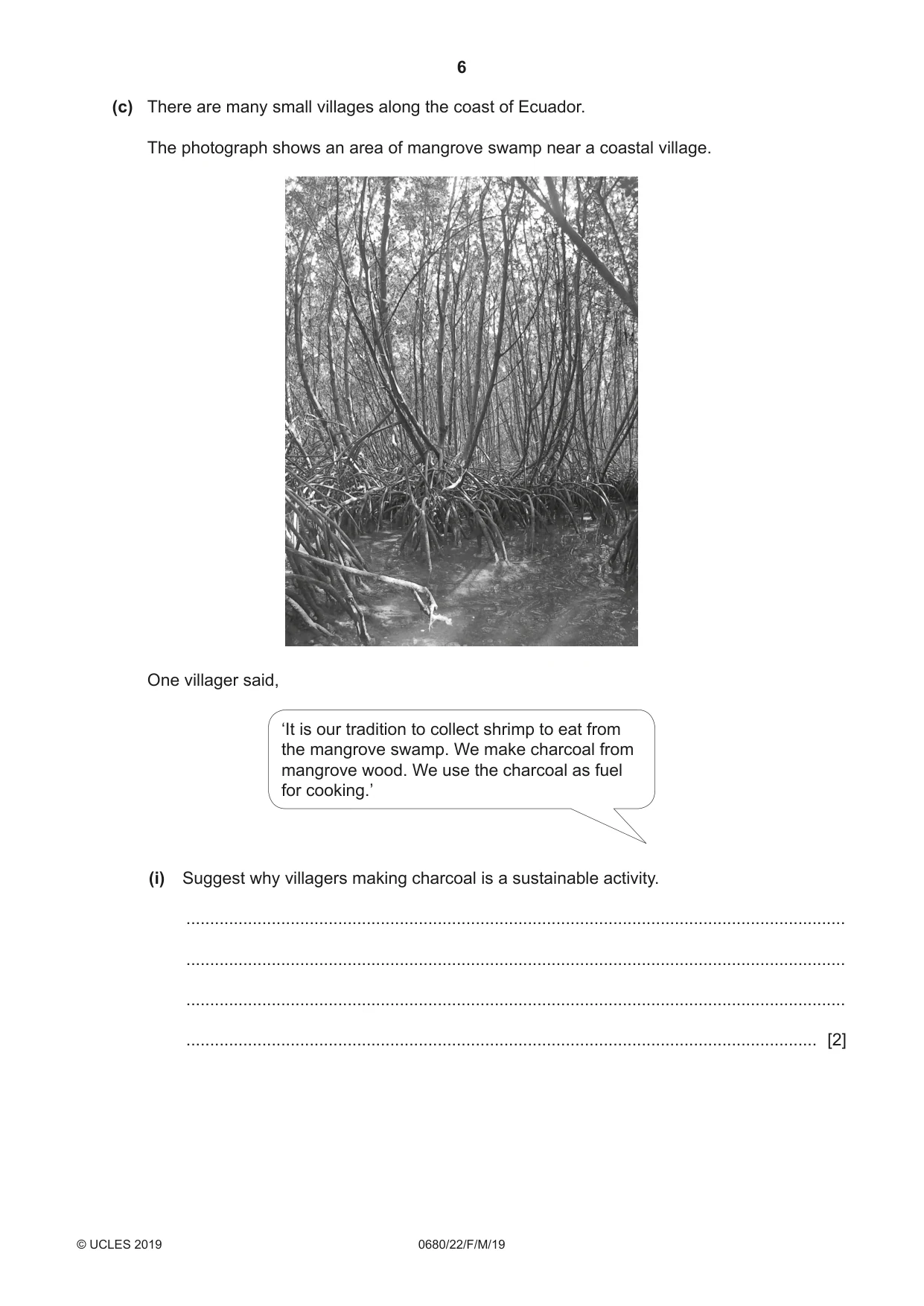
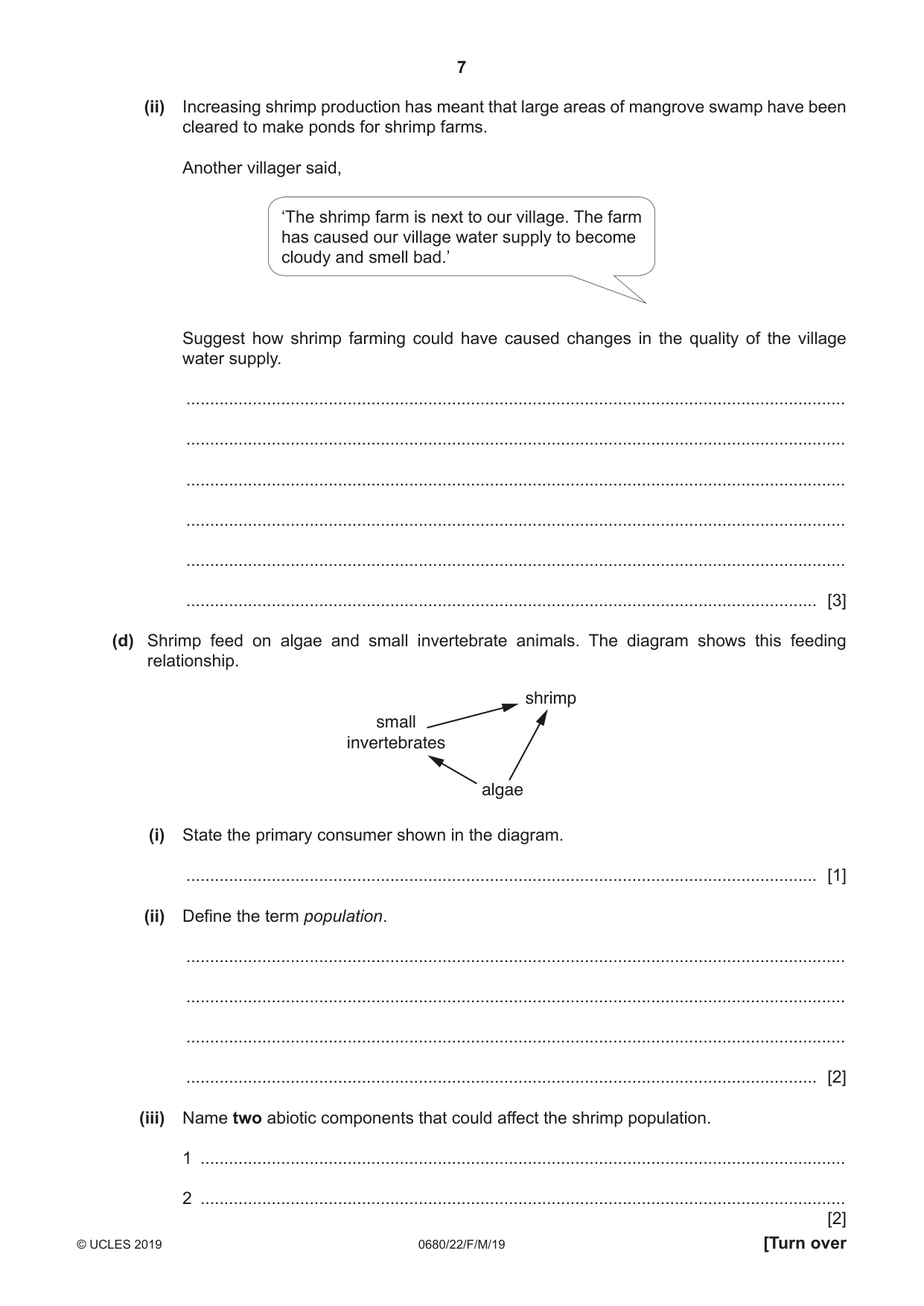
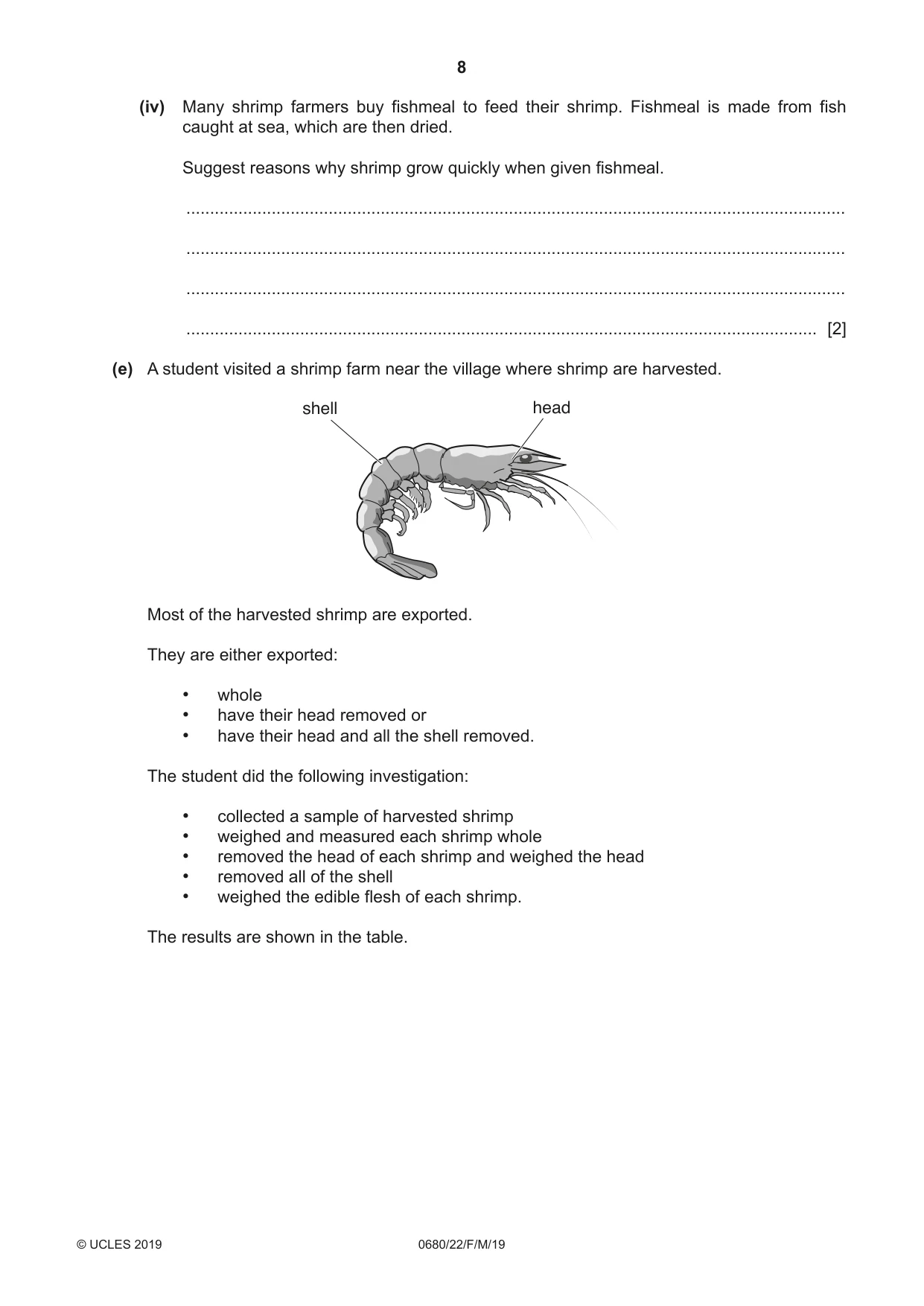
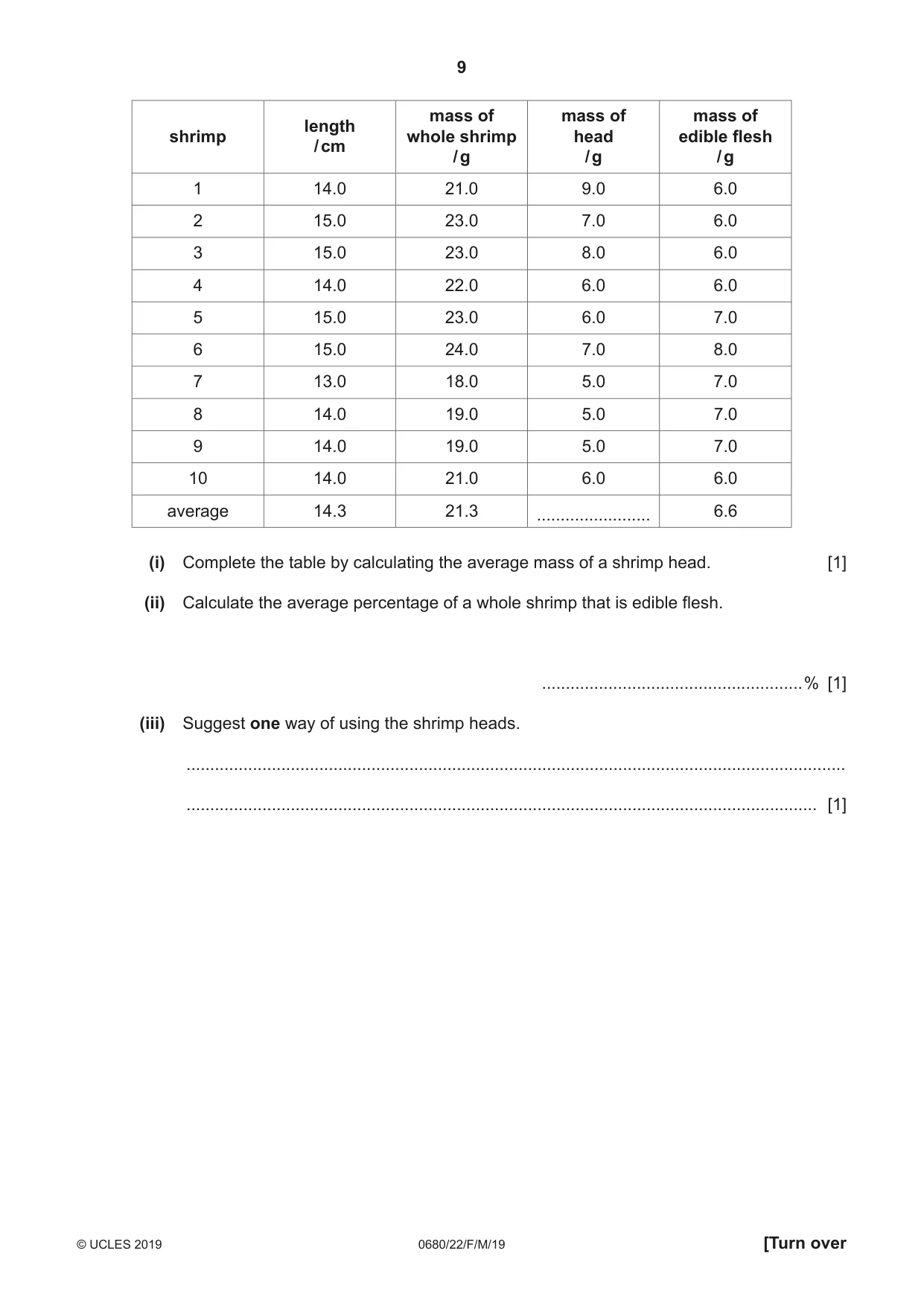
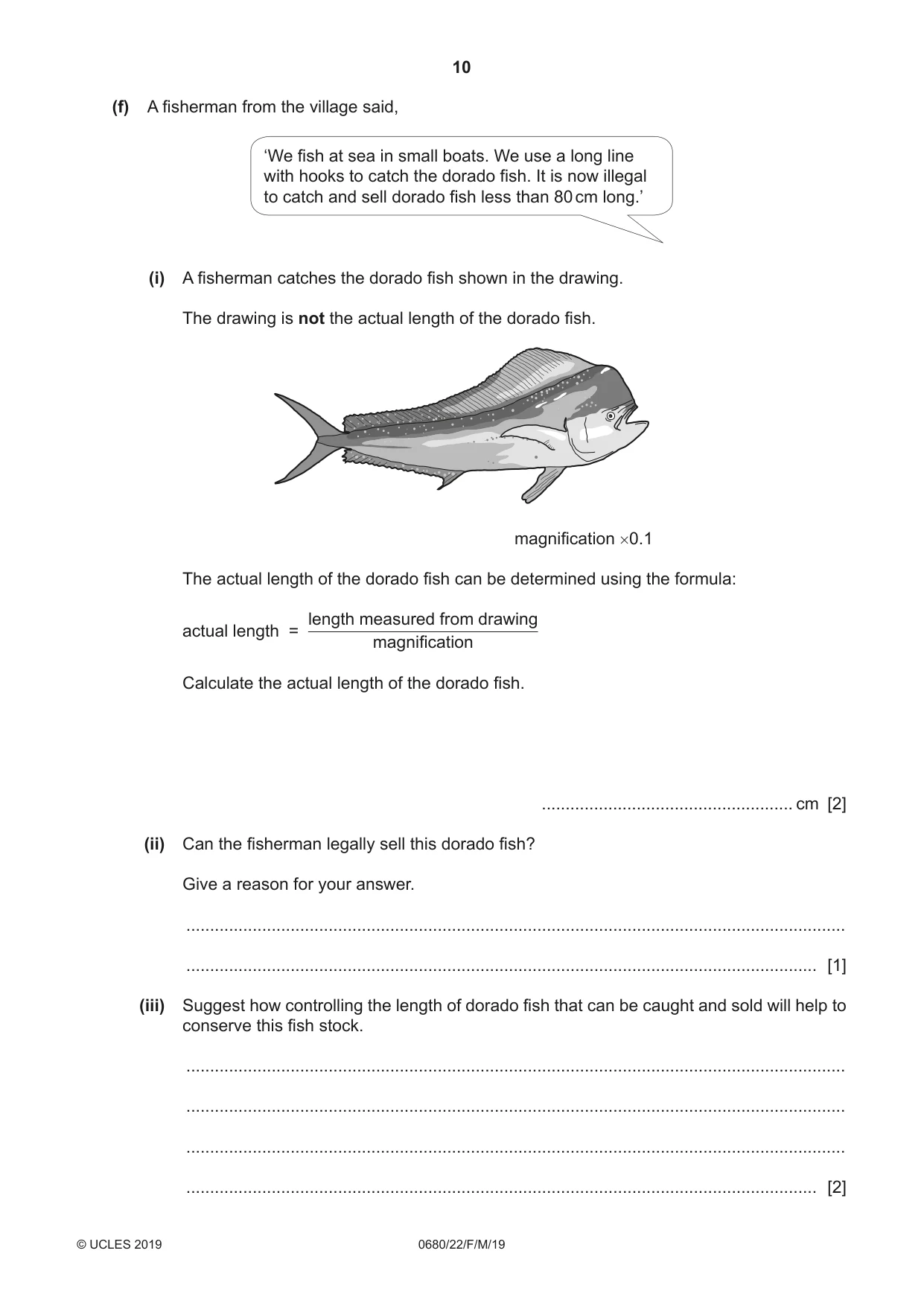
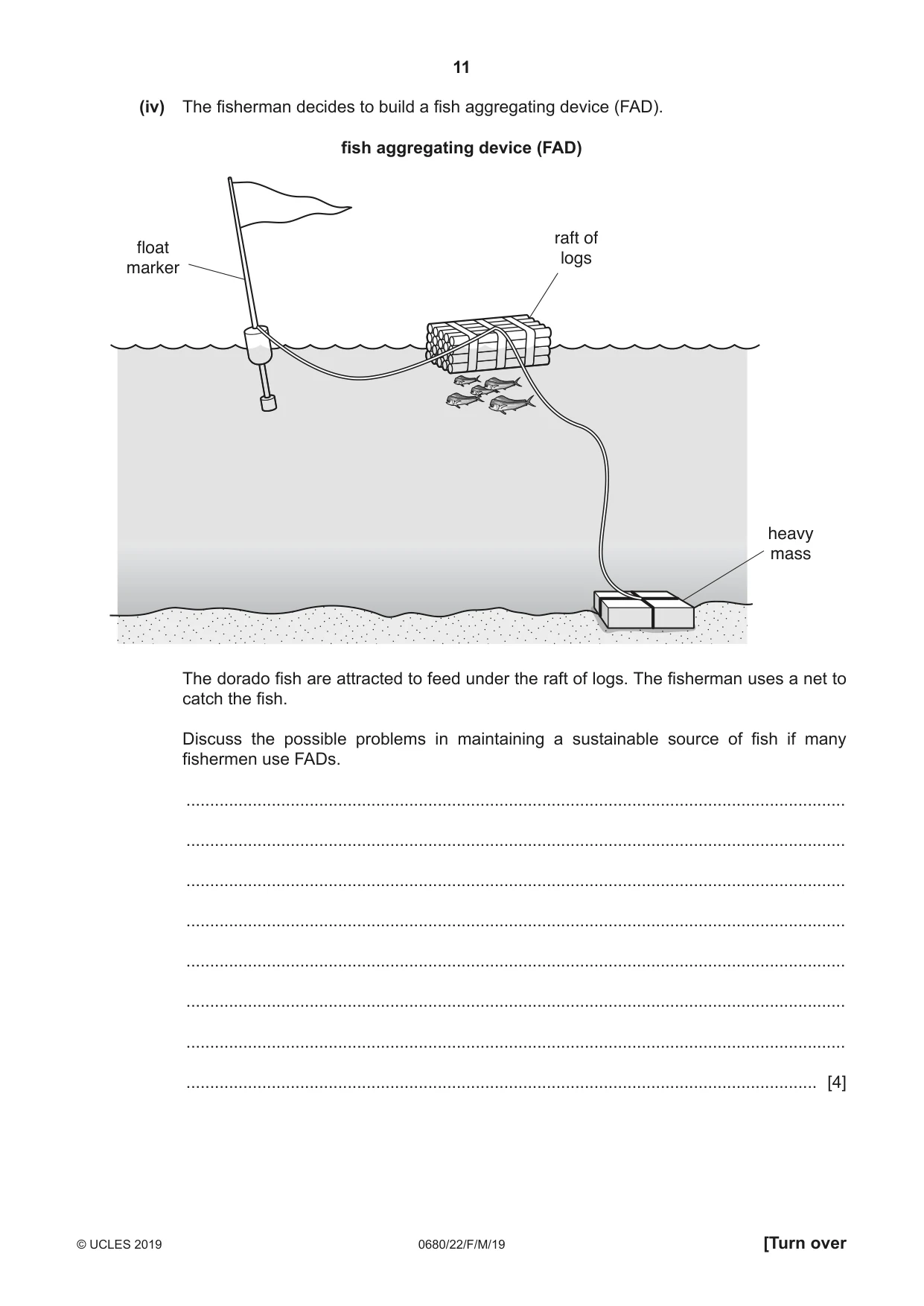
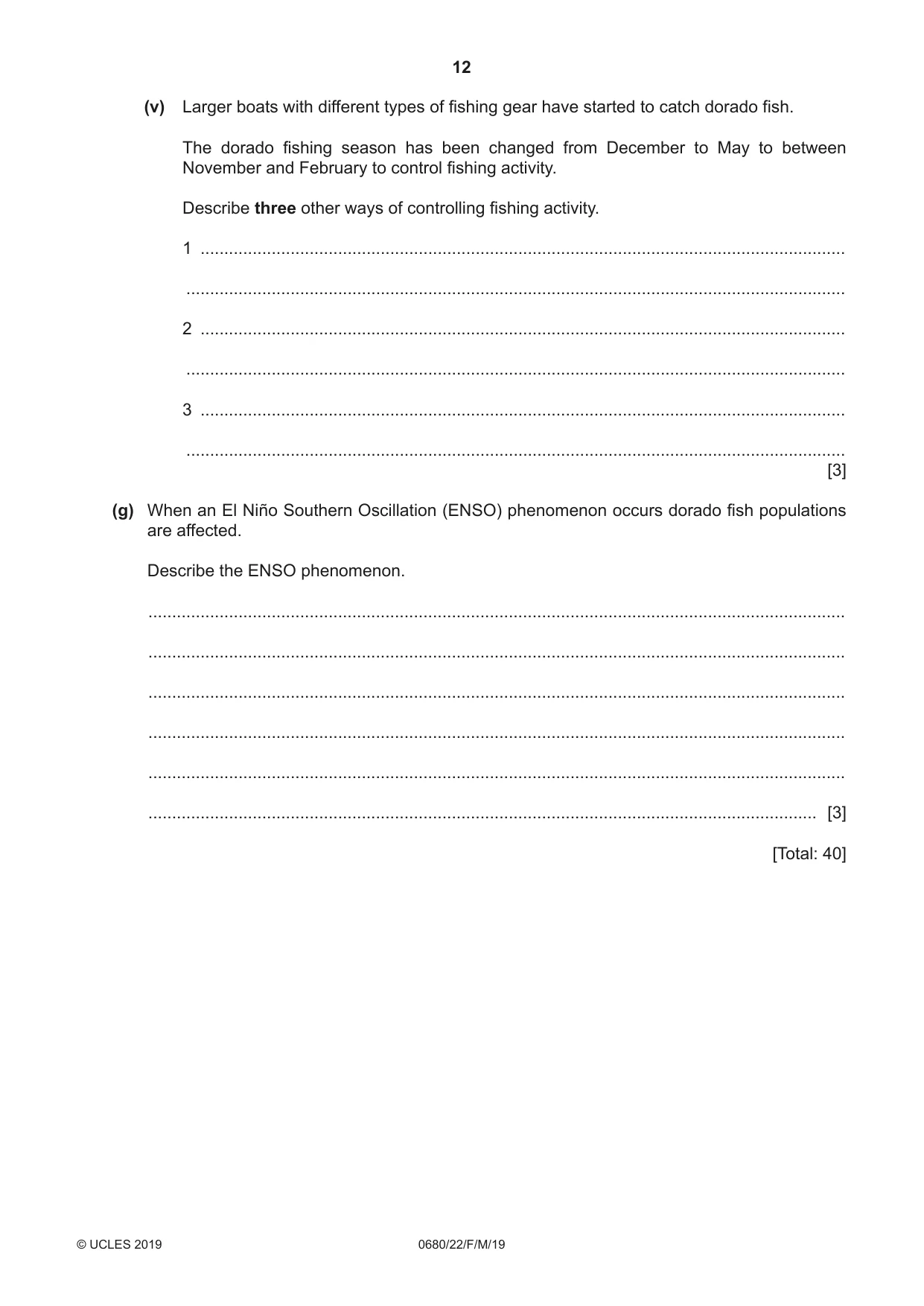
1 (a) (i) Calculate the percentage of people with a low standard of living in Ecuador. .......................................................% [1] (ii) Calculate the number of people living on less than 1.9 USD a day. .......................................................... [2] (b) The production of farmed shrimp from Ecuador for export to Europe has increased in recent years. mass of shrimp exported year / thousand tonnes 2009 131 2010 148 2011 187 2012 209 2013 224 2014 299 2015 326 2016 362 (i) Plot a bar graph of the data. [4] (ii) Between which two years was the greatest increase in shrimp production? between ........................ and ........................ [1] (iii) In 2017, the mass of shrimp exported increased by 14% from the mass exported in 2016. Calculate the mass of shrimp exported in 2017. .............................. thousand tonnes [2] (c) There are many small villages along the coast of Ecuador. The photograph shows an area of mangrove swamp near a coastal village. One villager said, ‘It is our tradition to collect shrimp to eat from the mangrove swamp. We make charcoal from mangrove wood. We use the charcoal as fuel for cooking.’ (i) Suggest why villagers making charcoal is a sustainable activity. ........................................................................................................................................... ........................................................................................................................................... ........................................................................................................................................... ..................................................................................................................................... [2] (ii) Increasing shrimp production has meant that large areas of mangrove swamp have been cleared to make ponds for shrimp farms. Another villager said, ‘The shrimp farm is next to our village. The farm has caused our village water supply to become cloudy and smell bad.’ Suggest how shrimp farming could have caused changes in the quality of the village water supply. ........................................................................................................................................... ........................................................................................................................................... ........................................................................................................................................... ........................................................................................................................................... ........................................................................................................................................... ..................................................................................................................................... [3] (d) Shrimp feed on algae and small invertebrate animals. The diagram shows this feeding relationship. shrimp small invertebrates algae (i) State the primary consumer shown in the diagram. ..................................................................................................................................... [1] (ii) Define the term population. ........................................................................................................................................... ........................................................................................................................................... ........................................................................................................................................... ..................................................................................................................................... [2] (iii) Name two abiotic components that could affect the shrimp population. 1 ........................................................................................................................................ 2 ........................................................................................................................................ [2] (iv) Many shrimp farmers buy fishmeal to feed their shrimp. Fishmeal is made from fish caught at sea, which are then dried. Suggest reasons why shrimp grow quickly when given fishmeal. ........................................................................................................................................... ........................................................................................................................................... ........................................................................................................................................... ..................................................................................................................................... [2] (e) A student visited a shrimp farm near the village where shrimp are harvested. shell head Most of the harvested shrimp are exported. They are either exported: • whole • have their head removed or • have their head and all the shell removed. The student did the following investigation: • collected a sample of harvested shrimp • weighed and measured each shrimp whole • removed the head of each shrimp and weighed the head • removed all of the shell • weighed the edible flesh of each shrimp. The results are shown in the table. mass of mass of mass of length shrimp whole shrimp head edible flesh / cm / g / g / g 1 14.0 21.0 9.0 6.0 2 15.0 23.0 7.0 6.0 3 15.0 23.0 8.0 6.0 4 14.0 22.0 6.0 6.0 5 15.0 23.0 6.0 7.0 6 15.0 24.0 7.0 8.0 7 13.0 18.0 5.0 7.0 8 14.0 19.0 5.0 7.0 9 14.0 19.0 5.0 7.0 10 14.0 21.0 6.0 6.0 average 14.3 21.3 ........................ 6.6 (i) Complete the table by calculating the average mass of a shrimp head. [1] (ii) Calculate the average percentage of a whole shrimp that is edible flesh. .......................................................% [1] (iii) Suggest one way of using the shrimp heads. ........................................................................................................................................... ..................................................................................................................................... [1] (f) A fisherman from the village said, ‘We fish at sea in small boats. We use a long line with hooks to catch the dorado fish. It is now illegal to catch and sell dorado fish less than 80 cm long.’ (i) A fisherman catches the dorado fish shown in the drawing. The drawing is not the actual length of the dorado fish. magnification #0.1 The actual length of the dorado fish can be determined using the formula: length measured from drawing actual length = magnification Calculate the actual length of the dorado fish. ..................................................... cm [2] (ii) Can the fisherman legally sell this dorado fish? Give a reason for your answer. ........................................................................................................................................... ..................................................................................................................................... [1] (iii) Suggest how controlling the length of dorado fish that can be caught and sold will help to conserve this fish stock. ........................................................................................................................................... ........................................................................................................................................... ........................................................................................................................................... ..................................................................................................................................... [2] (iv) The fisherman decides to build a fish aggregating device (FAD). fish aggregating device (FAD) raft of float logsmarker heavy mass The dorado fish are attracted to feed under the raft of logs. The fisherman uses a net to catch the fish. Discuss the possible problems in maintaining a sustainable source of fish if many fishermen use FADs. ........................................................................................................................................... ........................................................................................................................................... ........................................................................................................................................... ........................................................................................................................................... ........................................................................................................................................... ........................................................................................................................................... ........................................................................................................................................... ..................................................................................................................................... [4] (v) Larger boats with different types of fishing gear have started to catch dorado fish. The dorado fishing season has been changed from December to May to between November and February to control fishing activity. Describe three other ways of controlling fishing activity. 1 ........................................................................................................................................ ........................................................................................................................................... 2 ........................................................................................................................................ ........................................................................................................................................... 3 ........................................................................................................................................ ........................................................................................................................................... [3] (g) When an El Niño Southern Oscillation (ENSO) phenomenon occurs dorado fish populations are affected. Describe the ENSO phenomenon. ................................................................................................................................................... ................................................................................................................................................... ................................................................................................................................................... ................................................................................................................................................... ................................................................................................................................................... ............................................................................................................................................. [3] [Total: 40]
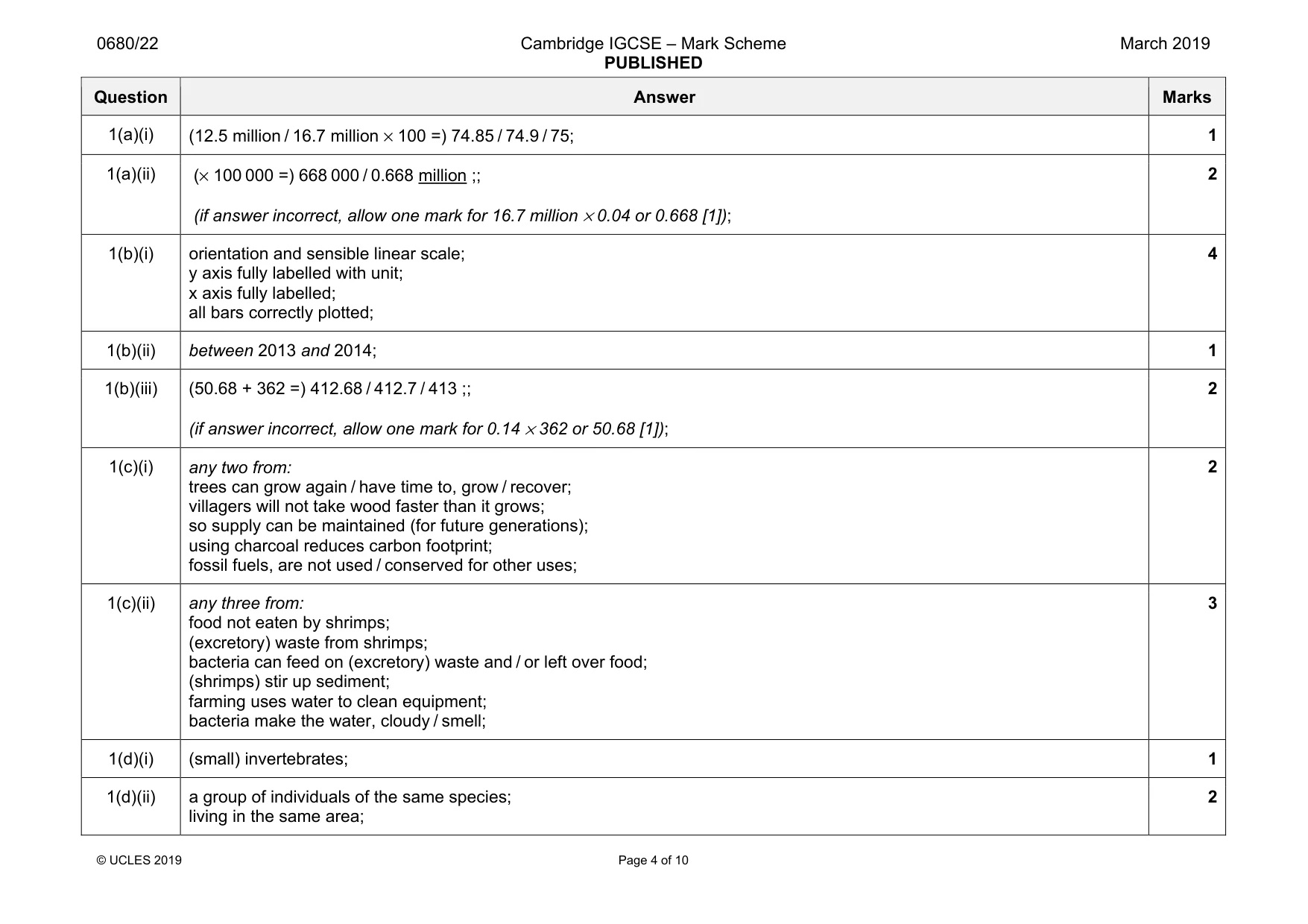
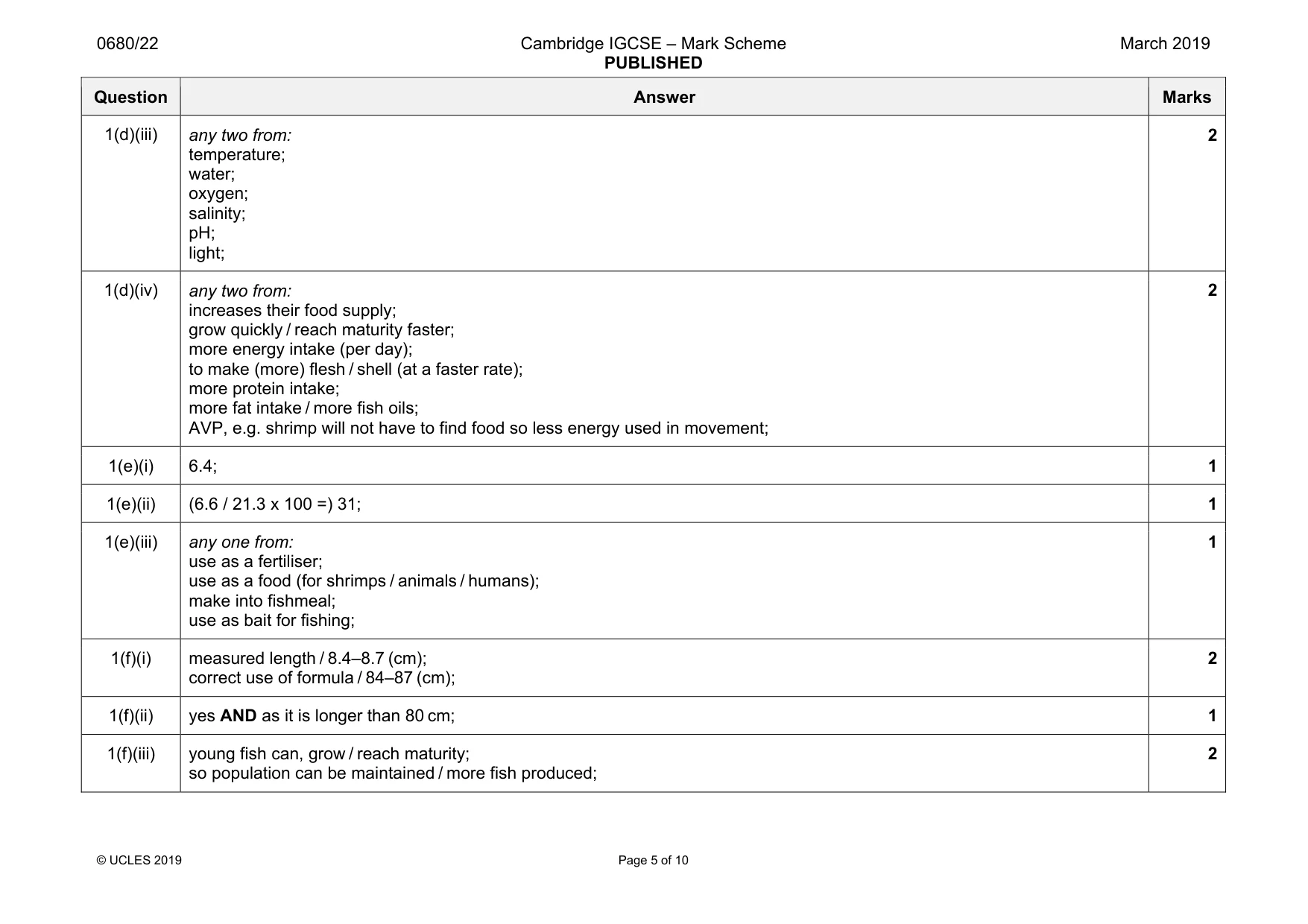
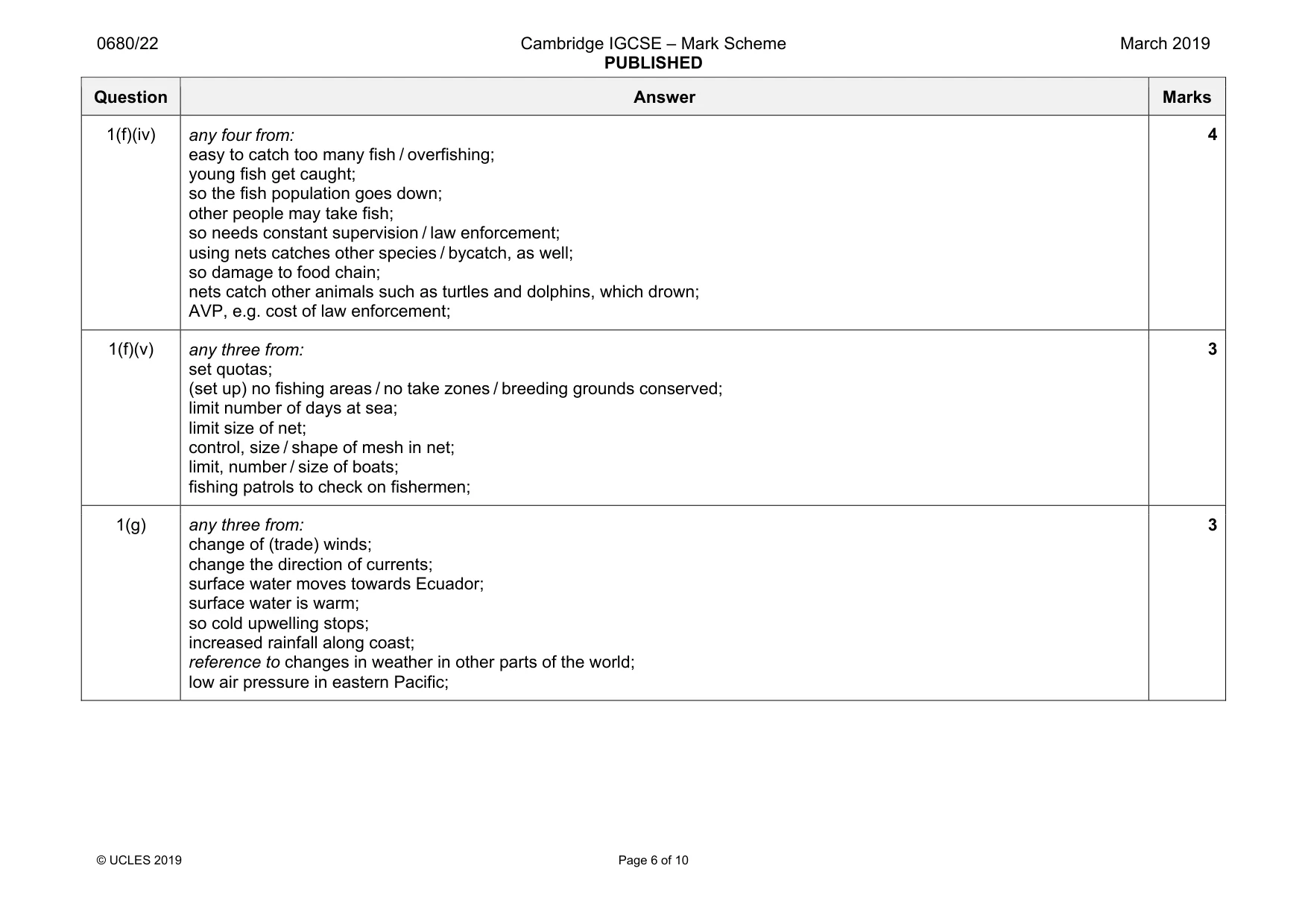
Mark scheme: 1(a)(i) 1 1(a)(ii) (× 100 000 =) 668 000 / 0.668 million ;; (if answer incorrect, allow one mark for 16.7 million × 0.04 or 0.668 [1]); 2 1(b)(i) orientation and sensible linear scale; y axis fully labelled with unit; x axis fully labelled; all bars correctly plotted; 4 1(b)(ii) between 2013 and 2014; 1 1(b)(iii) (50.68 + 362 =) 412.68 / 412.7 / 413 ;; (if answer incorrect, allow one mark for 0.14 × 362 or 50.68 [1]); 2 1(c)(i) any two from: trees can grow again / have time to, grow / recover; villagers will not take wood faster than it grows; so supply can be maintained (for future generations); using charcoal reduces carbon footprint; fossil fuels, are not used / conserved for other uses; 2 1(c)(ii) any three from: food not eaten by shrimps; (excretory) waste from shrimps; bacteria can feed on (excretory) waste and / or left over food; (shrimps) stir up sediment; farming uses water to clean equipment; bacteria make the water, cloudy / smell; 3 1(d)(i) (small) invertebrates; 1 1(d)(ii) a group of individuals of the same species; living in the same area; 2 Question Answer Marks 1(d)(iii) any two from: temperature; water; oxygen; salinity; pH; light; 2 1(d)(iv) any two from: increases their food supply; grow quickly / reach maturity faster; more energy intake (per day); to make (more) flesh / shell (at a faster rate); more protein intake; more fat intake / more fish oils; AVP, e.g. shrimp will not have to find food so less energy used in movement; 2 1(e)(i) 6.4; 1 1(e)(ii) (6.6 / 21.3 x 100 =) 31; 1 1(e)(iii) any one from: use as a fertiliser; use as a food (for shrimps / animals / humans); make into fishmeal; use as bait for fishing; 1 1(f)(i) measured length / 8.4–8.7 (cm); correct use of formula / 84–87 (cm); 2 1(f)(ii) yes AND as it is longer than 80 cm; 1 1(f)(iii) young fish can, grow / reach maturity; so population can be maintained / more fish produced; 2 Question Answer Marks 1(f)(iv) any four from: easy to catch too many fish / overfishing; young fish get caught; so the fish population goes down; other people may take fish; so needs constant supervision / law enforcement; using nets catches other species / bycatch, as well; so damage to food chain; nets catch other animals such as turtles and dolphins, which drown; AVP, e.g. cost of law enforcement; 4 1(f)(v) any three from: set quotas; (set up) no fishing areas / no take zones / breeding grounds conserved; limit number of days at sea; limit size of net; control, size / shape of mesh in net; limit, number / size of boats; fishing patrols to check on fishermen; 3 1(g) any three from: change of (trade) winds; change the direction of currents; surface water moves towards Ecuador; surface water is warm; so cold upwelling stops; increased rainfall along coast; reference to changes in weather in other parts of the world; low air pressure in eastern Pacific; 3
Q2 · Ecuador is an oil exporting country
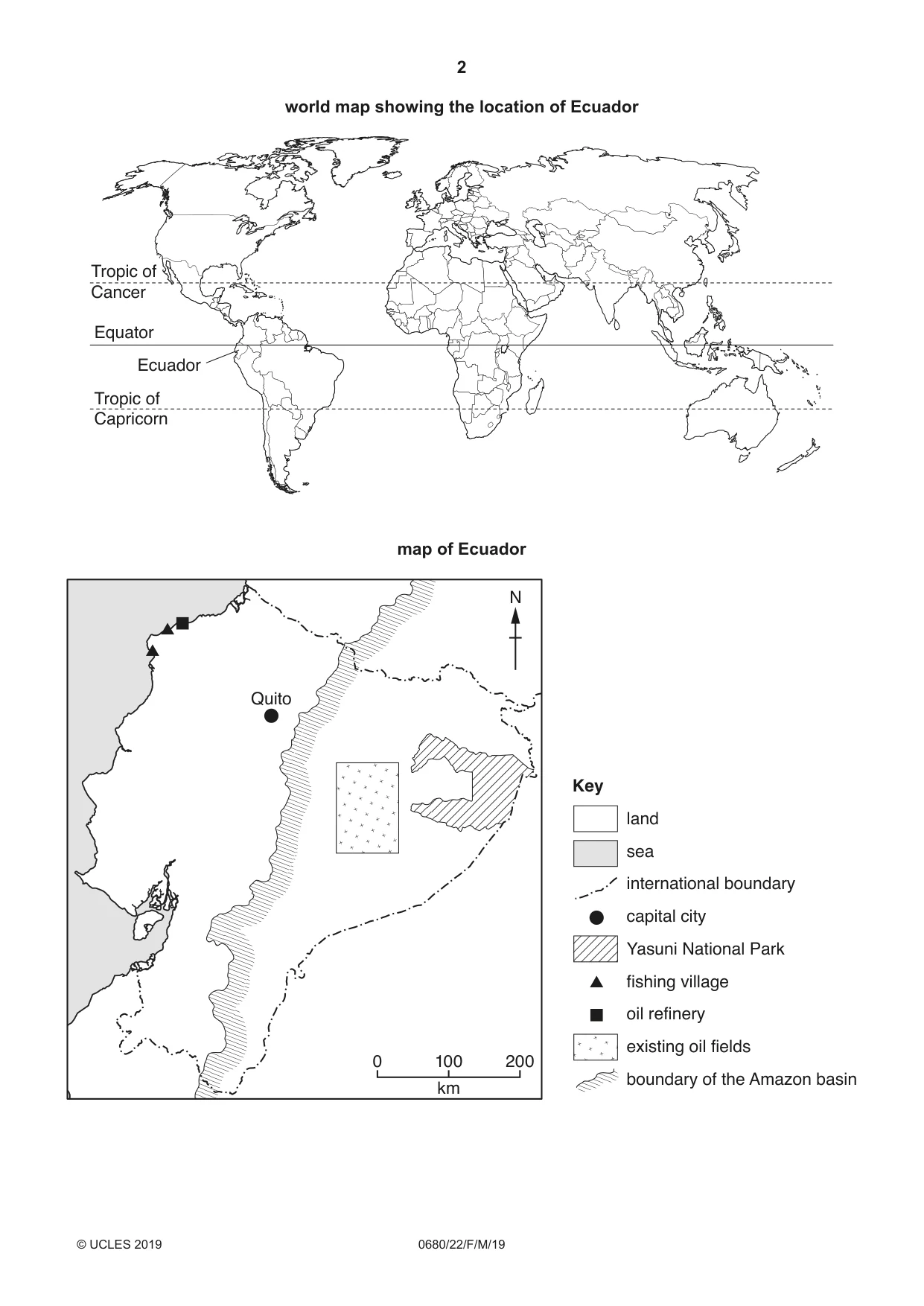
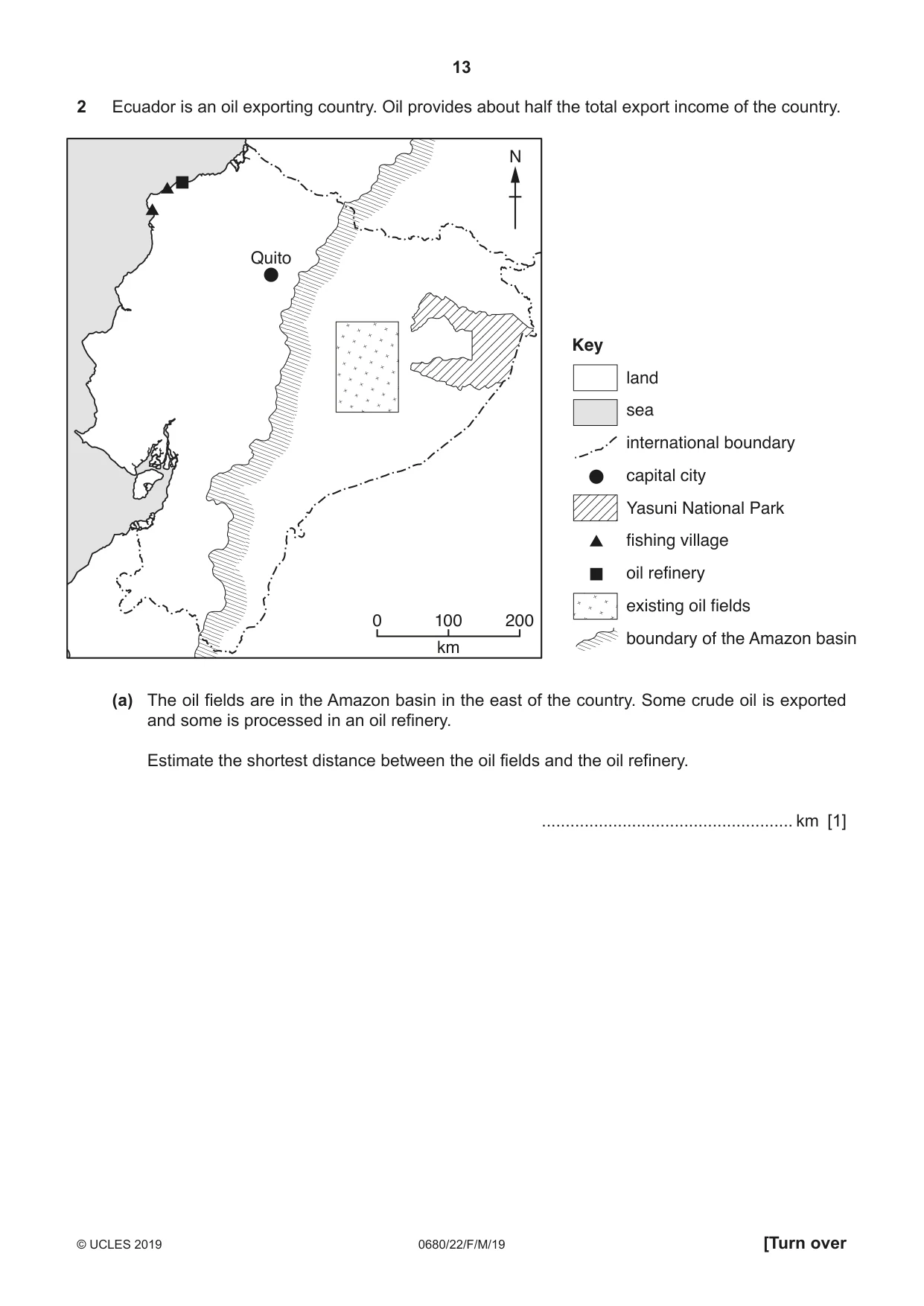
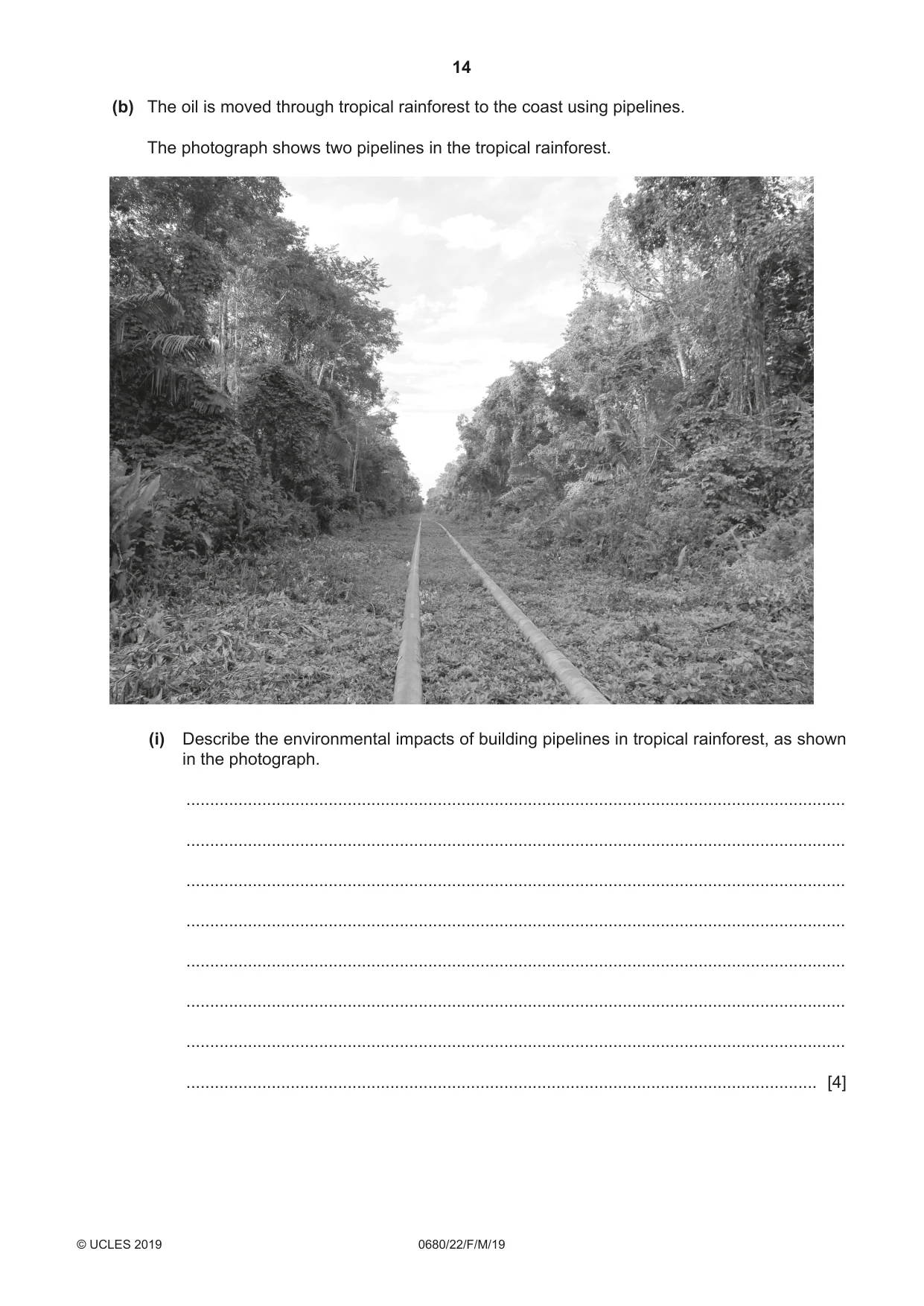
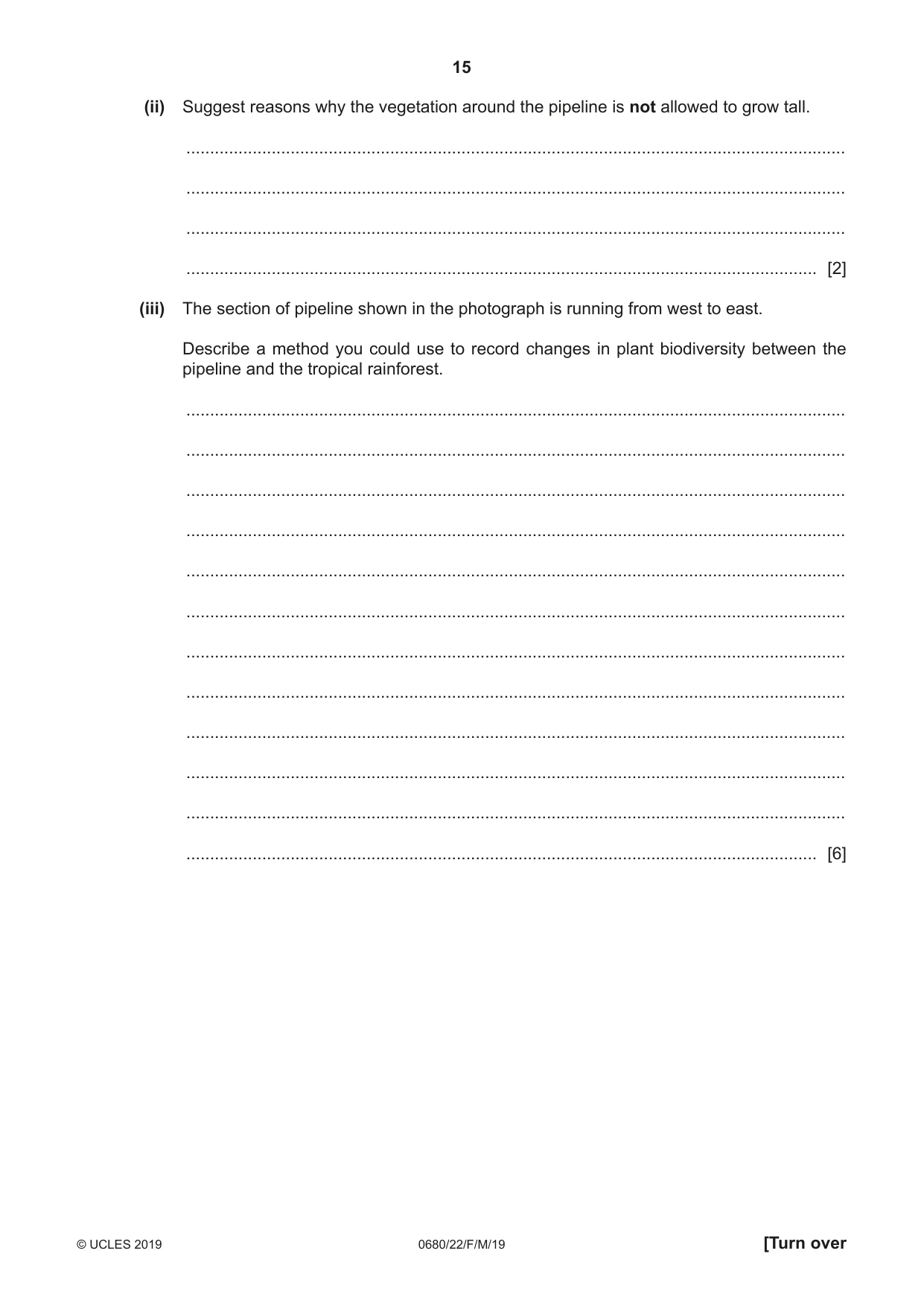
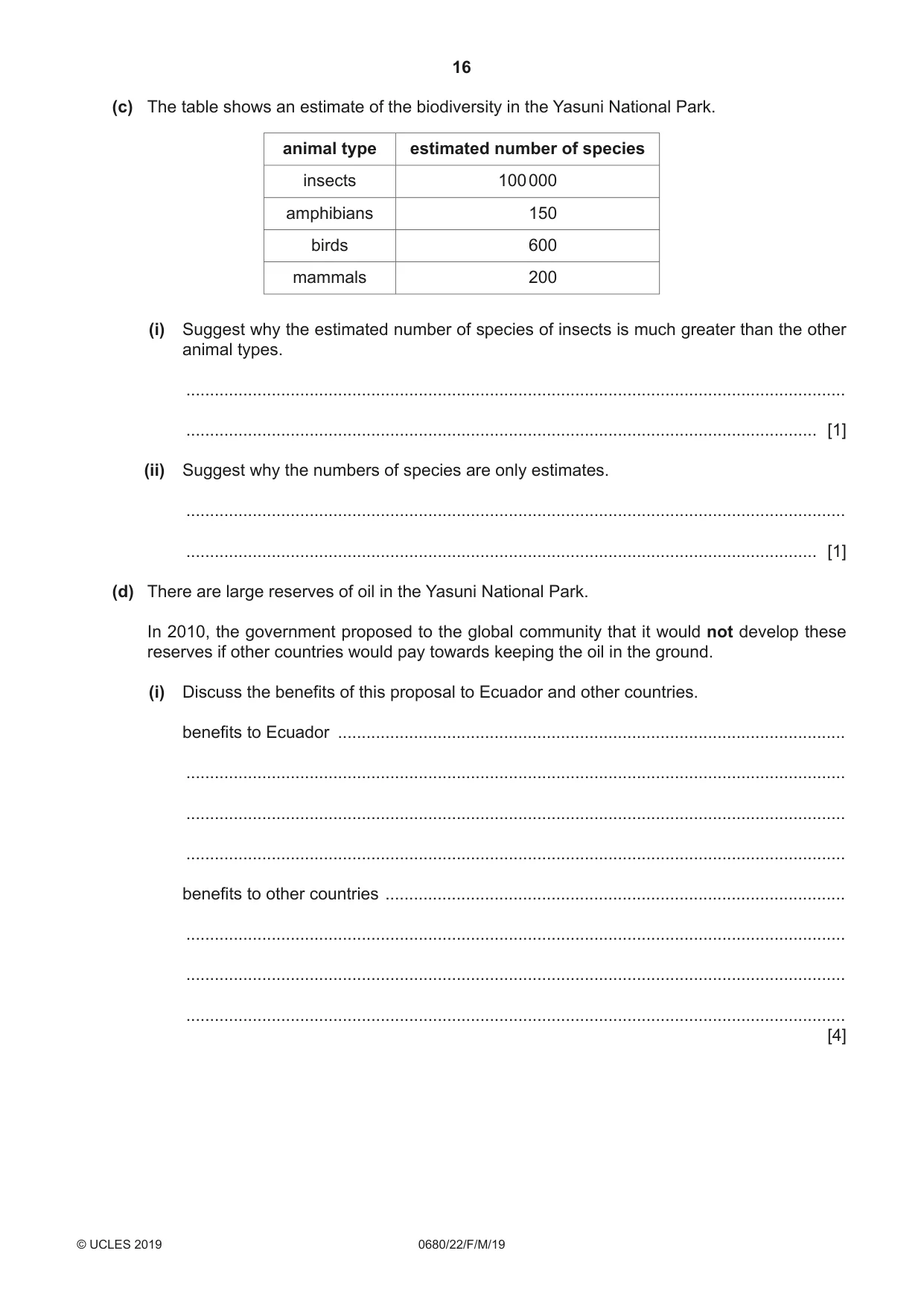
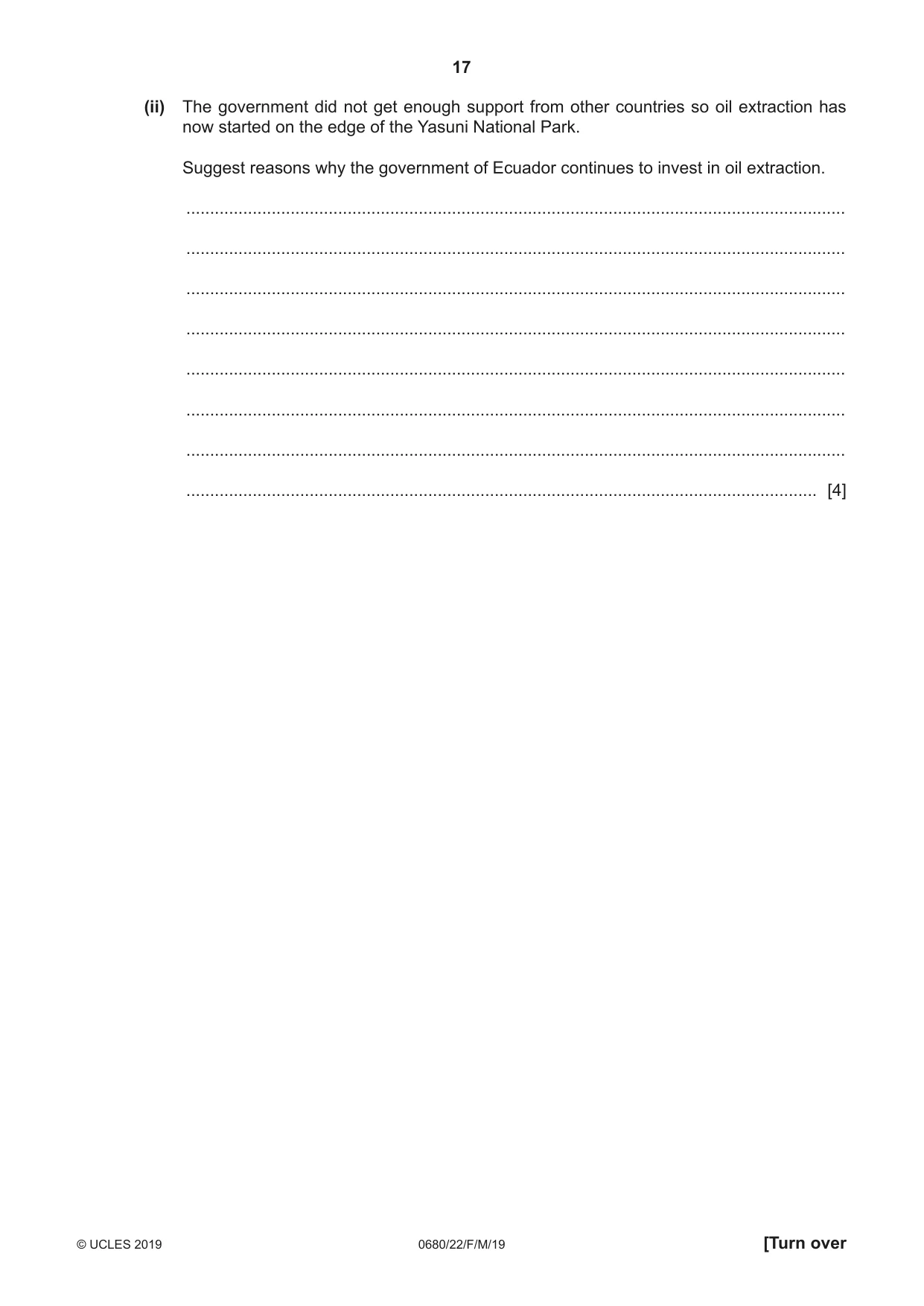
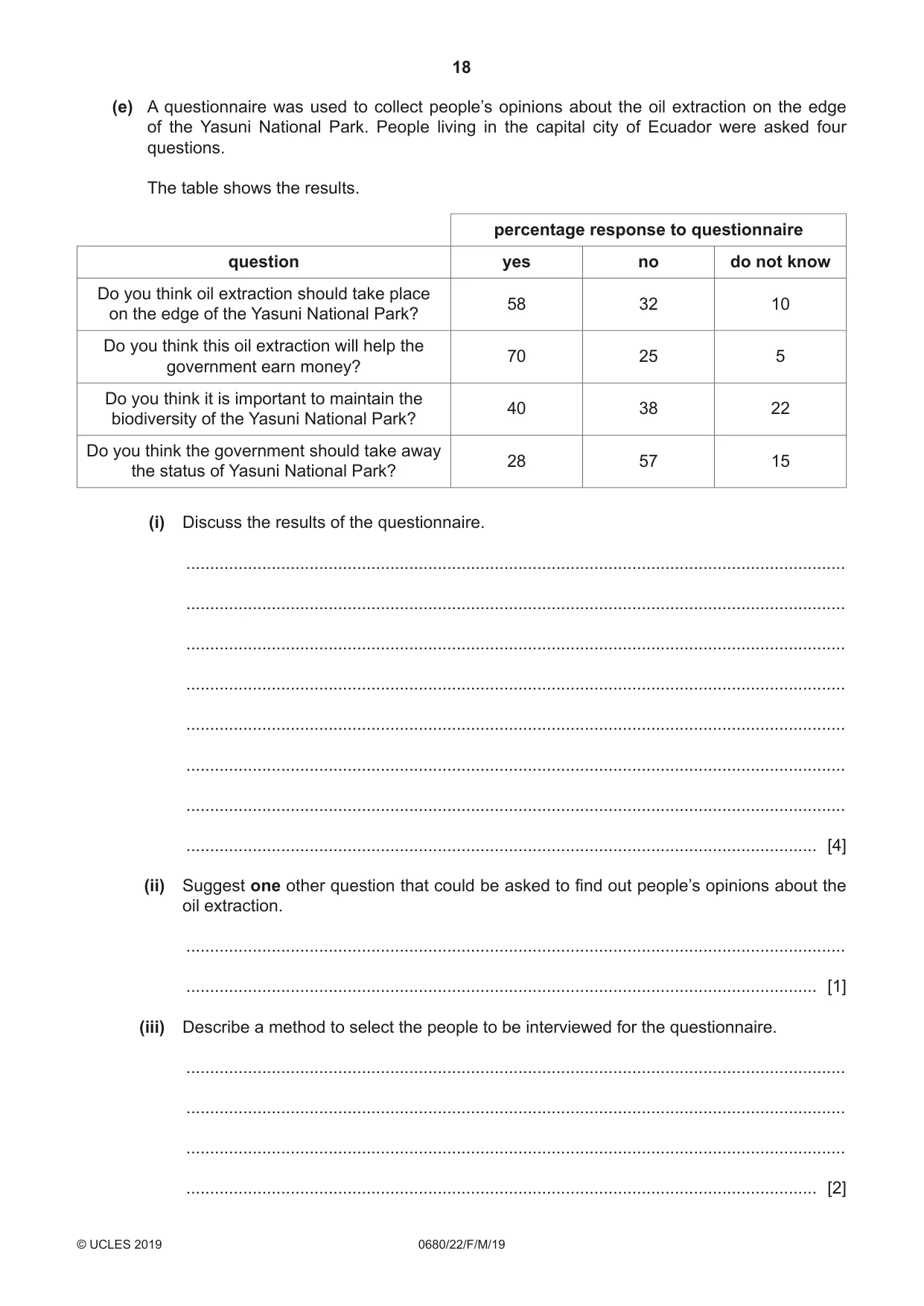
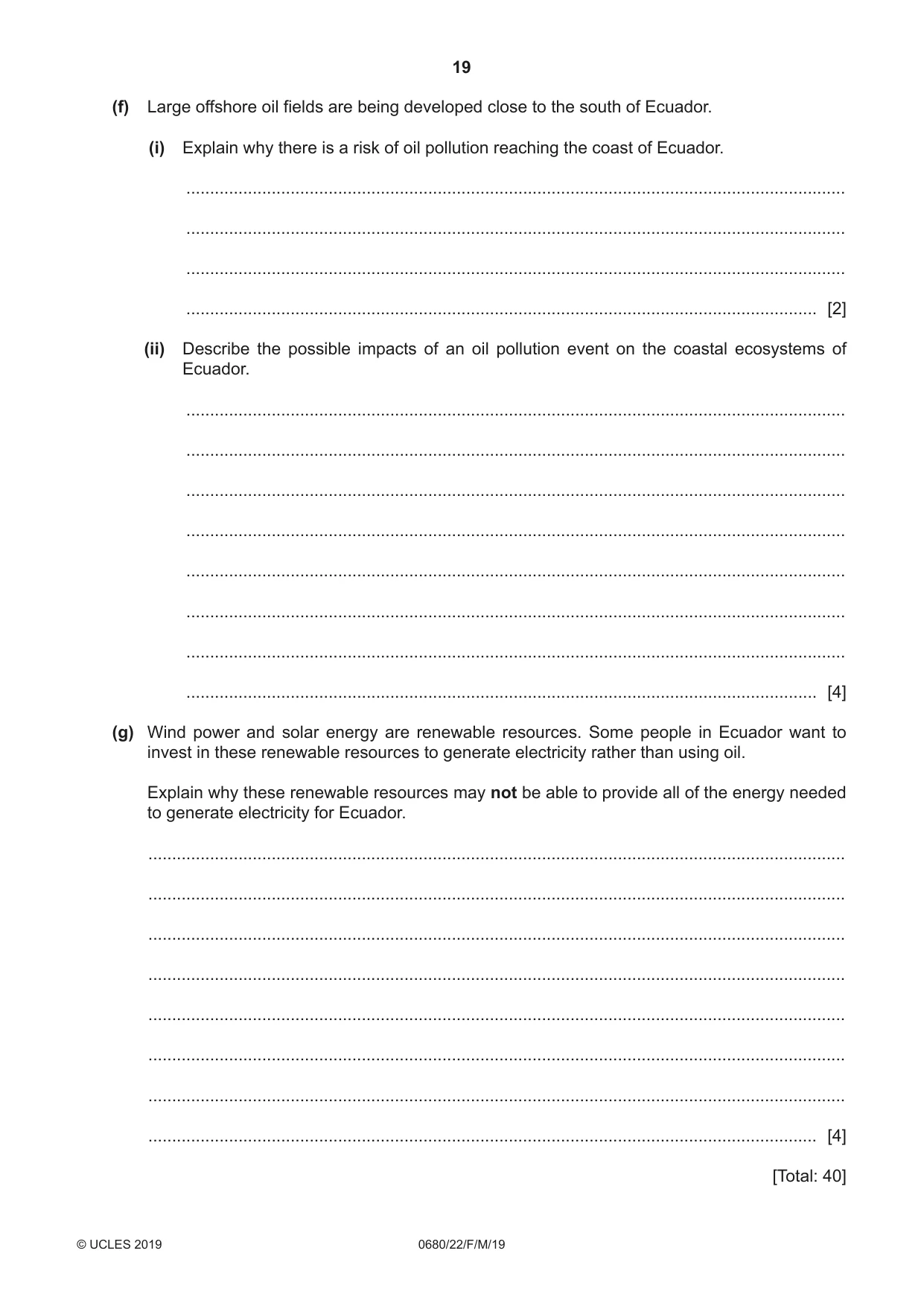
2 Ecuador is an oil exporting country. Oil provides about half the total export income of the country. N Quito Key land sea international boundary capital city Yasuni National Park fishing village oil refinery existing oil fields 0 100 200 boundary of the Amazon basin km (a) The oil fields are in the Amazon basin in the east of the country. Some crude oil is exported and some is processed in an oil refinery. Estimate the shortest distance between the oil fields and the oil refinery. ..................................................... km [1] (b) The oil is moved through tropical rainforest to the coast using pipelines. The photograph shows two pipelines in the tropical rainforest. (i) Describe the environmental impacts of building pipelines in tropical rainforest, as shown in the photograph. ........................................................................................................................................... ........................................................................................................................................... ........................................................................................................................................... ........................................................................................................................................... ........................................................................................................................................... ........................................................................................................................................... ........................................................................................................................................... ..................................................................................................................................... [4] (ii) Suggest reasons why the vegetation around the pipeline is not allowed to grow tall. ........................................................................................................................................... ........................................................................................................................................... ........................................................................................................................................... ..................................................................................................................................... [2] (iii) The section of pipeline shown in the photograph is running from west to east. Describe a method you could use to record changes in plant biodiversity between the pipeline and the tropical rainforest. ........................................................................................................................................... ........................................................................................................................................... ........................................................................................................................................... ........................................................................................................................................... ........................................................................................................................................... ........................................................................................................................................... ........................................................................................................................................... ........................................................................................................................................... ........................................................................................................................................... ........................................................................................................................................... ........................................................................................................................................... ..................................................................................................................................... [6]
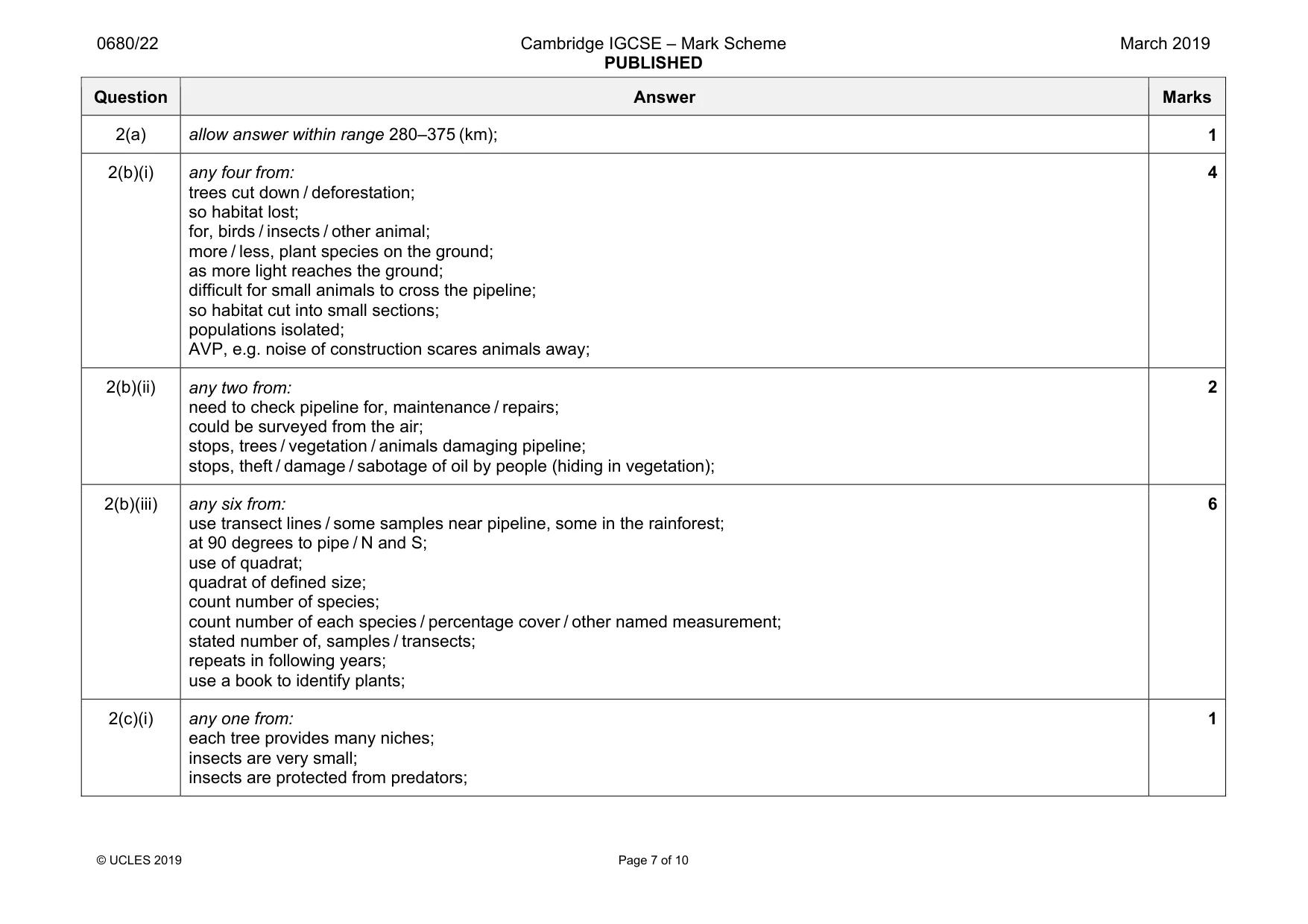
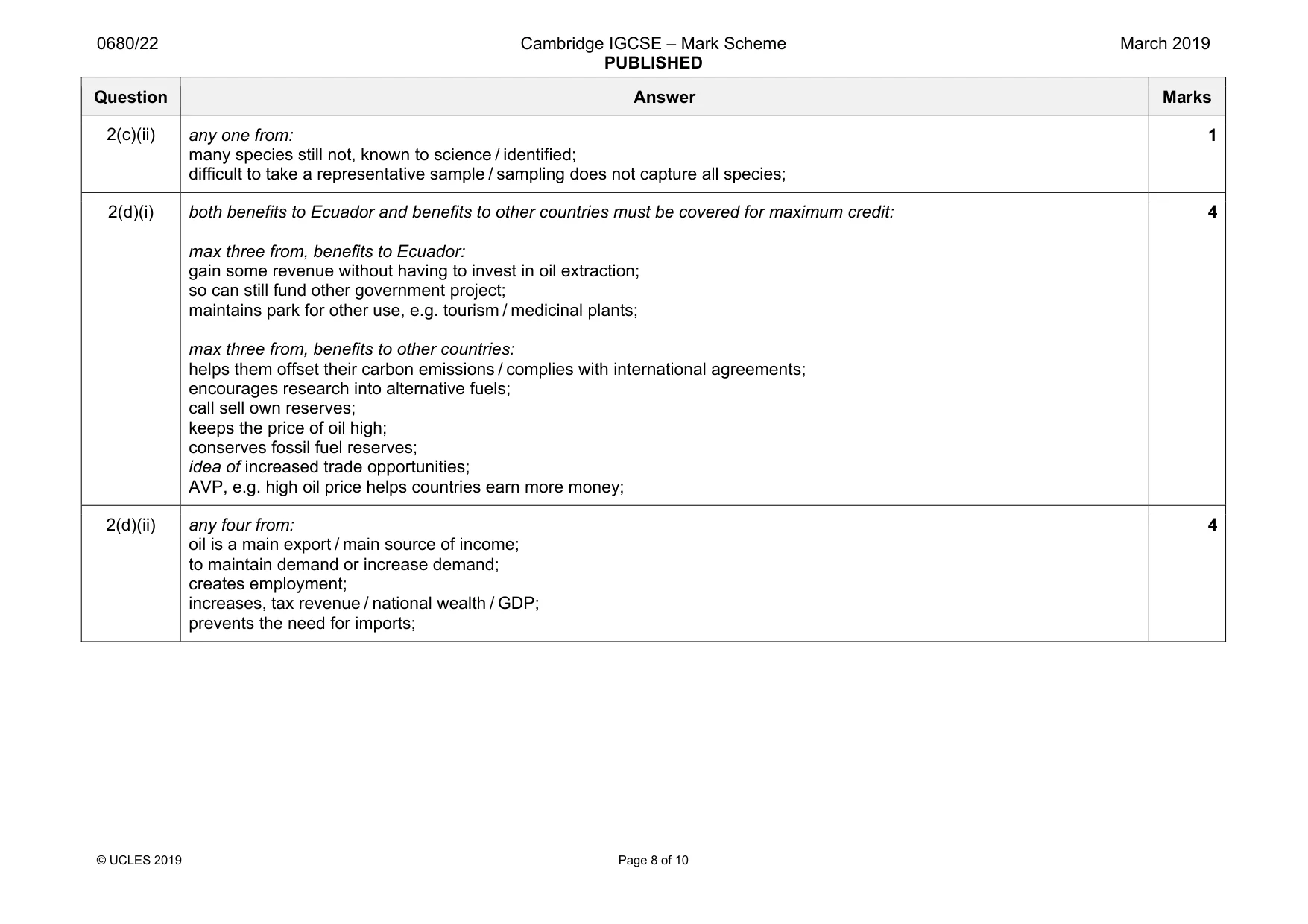
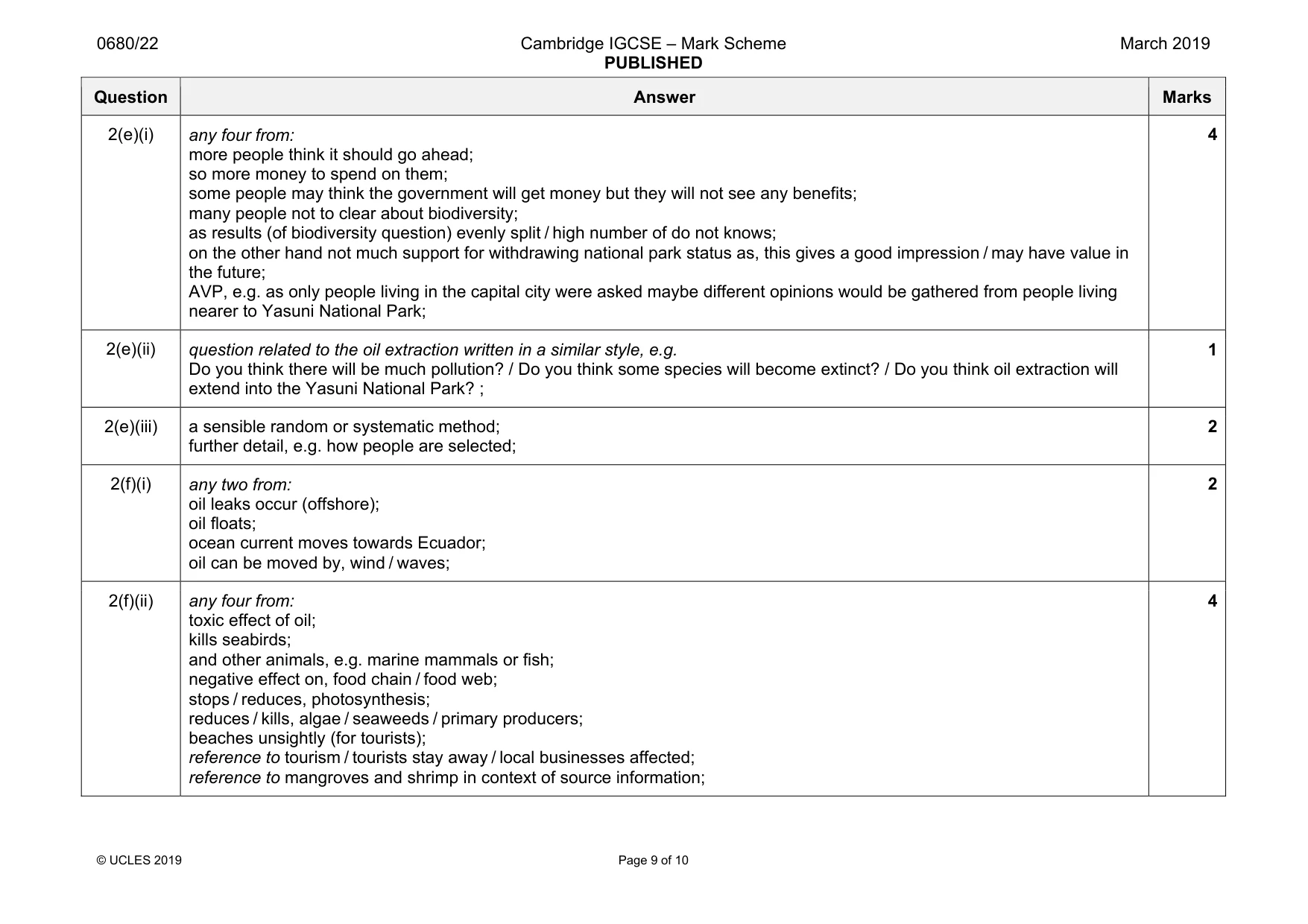
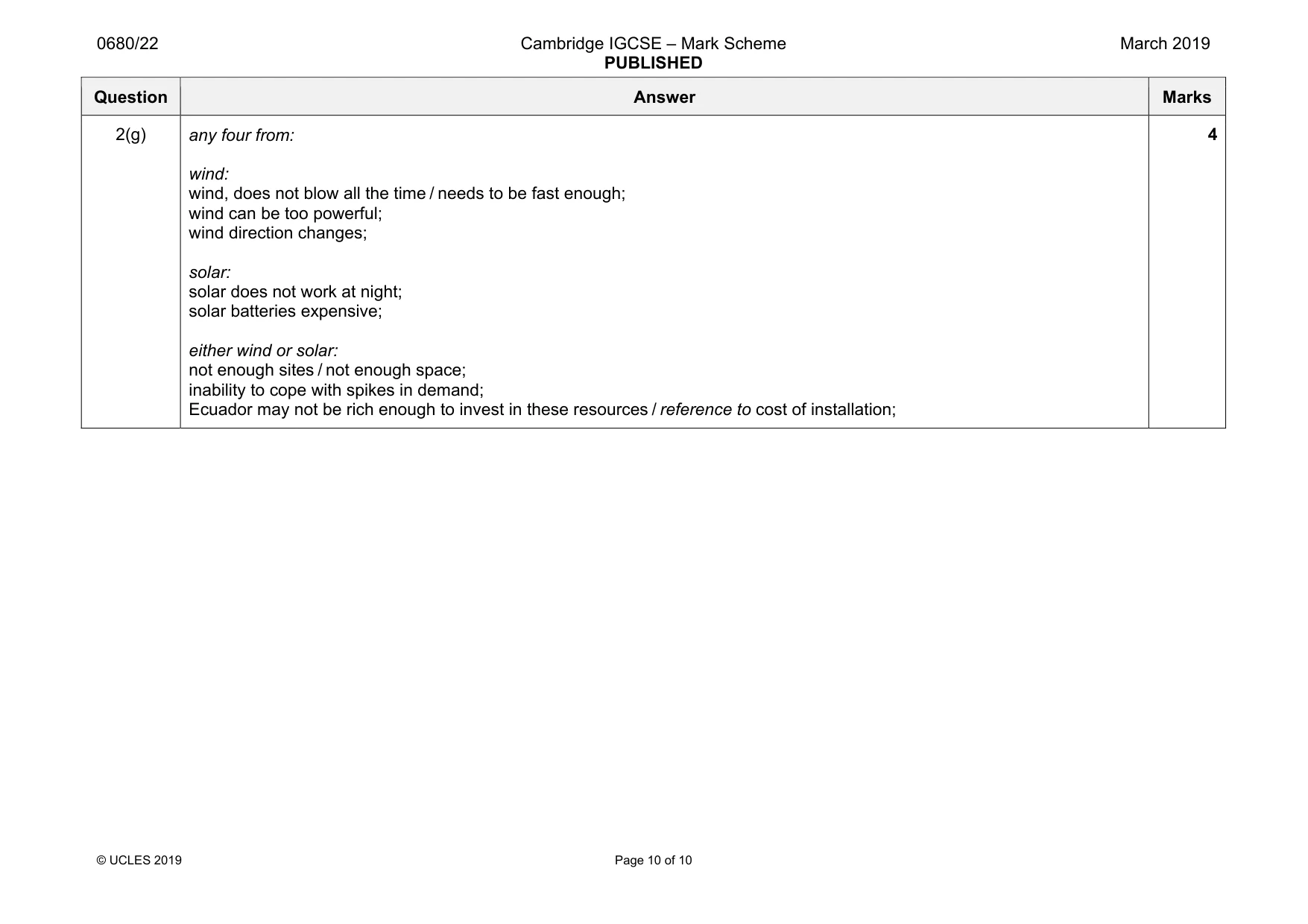
Mark scheme: 2(a) allow answer within range 280–375 (km); 1 2(b)(i) any four from: trees cut down / deforestation; so habitat lost; for, birds / insects / other animal; more / less, plant species on the ground; as more light reaches the ground; difficult for small animals to cross the pipeline; so habitat cut into small sections; populations isolated; AVP, e.g. noise of construction scares animals away; 4 2(b)(ii) any two from: need to check pipeline for, maintenance / repairs; could be surveyed from the air; stops, trees / vegetation / animals damaging pipeline; stops, theft / damage / sabotage of oil by people (hiding in vegetation); 2 2(b)(iii) any six from: use transect lines / some samples near pipeline, some in the rainforest; at 90 degrees to pipe / N and S; use of quadrat; quadrat of defined size; count number of species; count number of each species / percentage cover / other named measurement; stated number of, samples / transects; repeats in following years; use a book to identify plants; 6 2(c)(i) any one from: each tree provides many niches; insects are very small; insects are protected from predators; 1 Question Answer Marks 2(c)(ii) any one from: many species still not, known to science / identified; difficult to take a representative sample / sampling does not capture all species; 1 2(d)(i) both benefits to Ecuador and benefits to other countries must be covered for maximum credit: max three from, benefits to Ecuador: gain some revenue without having to invest in oil extraction; so can still fund other government project; maintains park for other use, e.g. tourism / medicinal plants; max three from, benefits to other countries: helps them offset their carbon emissions / complies with international agreements; encourages research into alternative fuels; call sell own reserves; keeps the price of oil high; conserves fossil fuel reserves; idea of increased trade opportunities; AVP, e.g. high oil price helps countries earn more money; 4 2(d)(ii) any four from: oil is a main export / main source of income; to maintain demand or increase demand; creates employment; increases, tax revenue / national wealth / GDP; prevents the need for imports; 4 Question Answer Marks 2(e)(i) any four from: more people think it should go ahead; so more money to spend on them; some people may think the government will get money but they will not see any benefits; many people not to clear about biodiversity; as results (of biodiversity question) evenly split / high number of do not knows; on the other hand not much support for withdrawing national park status as, this gives a good impression / may have value in the future; AVP, e.g. as only people living in the capital city were asked maybe different opinions would be gathered from people living nearer to Yasuni National Park; 4 2(e)(ii) question related to the oil extraction written in a similar style, e.g. Do you think there will be much pollution? / Do you think some species will become extinct? / Do you think oil extraction will extend into the Yasuni National Park? ; 1 2(e)(iii) a sensible random or systematic method; further detail, e.g. how people are selected; 2 2(f)(i) any two from: oil leaks occur (offshore); oil floats; ocean current moves towards Ecuador; oil can be moved by, wind / waves; 2 2(f)(ii) any four from: toxic effect of oil; kills seabirds; and other animals, e.g. marine mammals or fish; negative effect on, food chain / food web; stops / reduces, photosynthesis; reduces / kills, algae / seaweeds / primary producers; beaches unsightly (for tourists); reference to tourism / tourists stay away / local businesses affected; reference to mangroves and shrimp in context of source information; 4 Question Answer Marks 2(g) any four from: wind: wind, does not blow all the time / needs to be fast enough; wind can be too powerful; wind direction changes; solar: solar does not work at night; solar batteries expensive; either wind or solar: not enough sites / not enough space; inability to cope with spikes in demand; Ecuador may not be rich enough to invest in these resources / reference to cost of installation; 4
What was in this paper
The subtopics covered by these 2 questions, and how many questions each got. Open one in a new tab to see every Cambridge question on it.
What you needed in this session
Cambridge’s own grade thresholds for 2019 Feb/March, Paper 2 · Variant 2. A higher threshold means an easier paper — the bar moves with how the cohort did.