Cambridge IGCSE Economics 0455 — 2013 Oct/Nov Paper 3 · Variant 1
0455/31/O/N/13 · 2 questions · 40 marks · ≈45 min
The question paper and its mark scheme, free to read here and free to download. This is Cambridge’s own paper, exactly as it was sat.
Question paper8 pages
Mark scheme5 pages
Answers below. Sit the paper first if you are practising.
Questions as text
Question 1
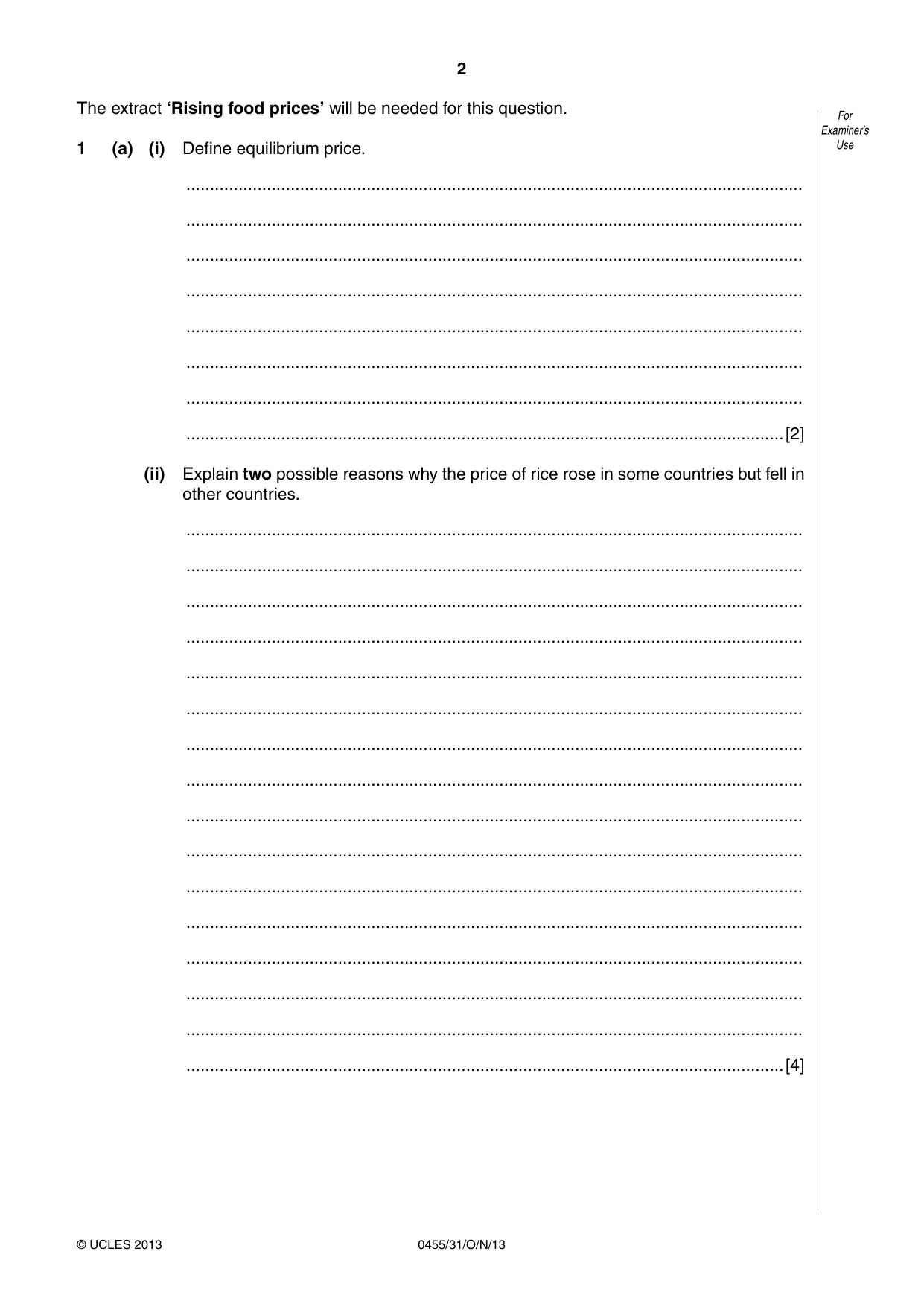
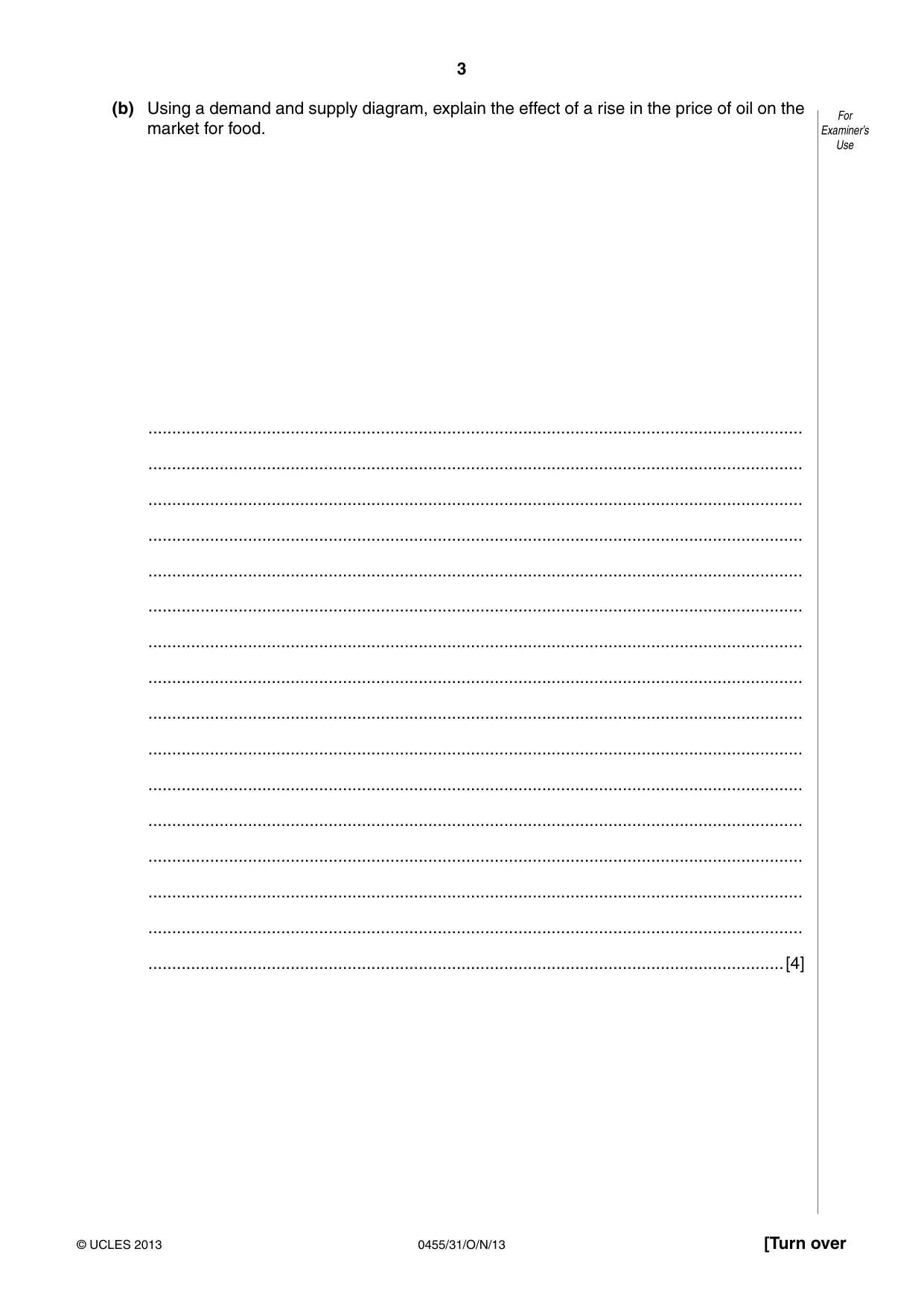
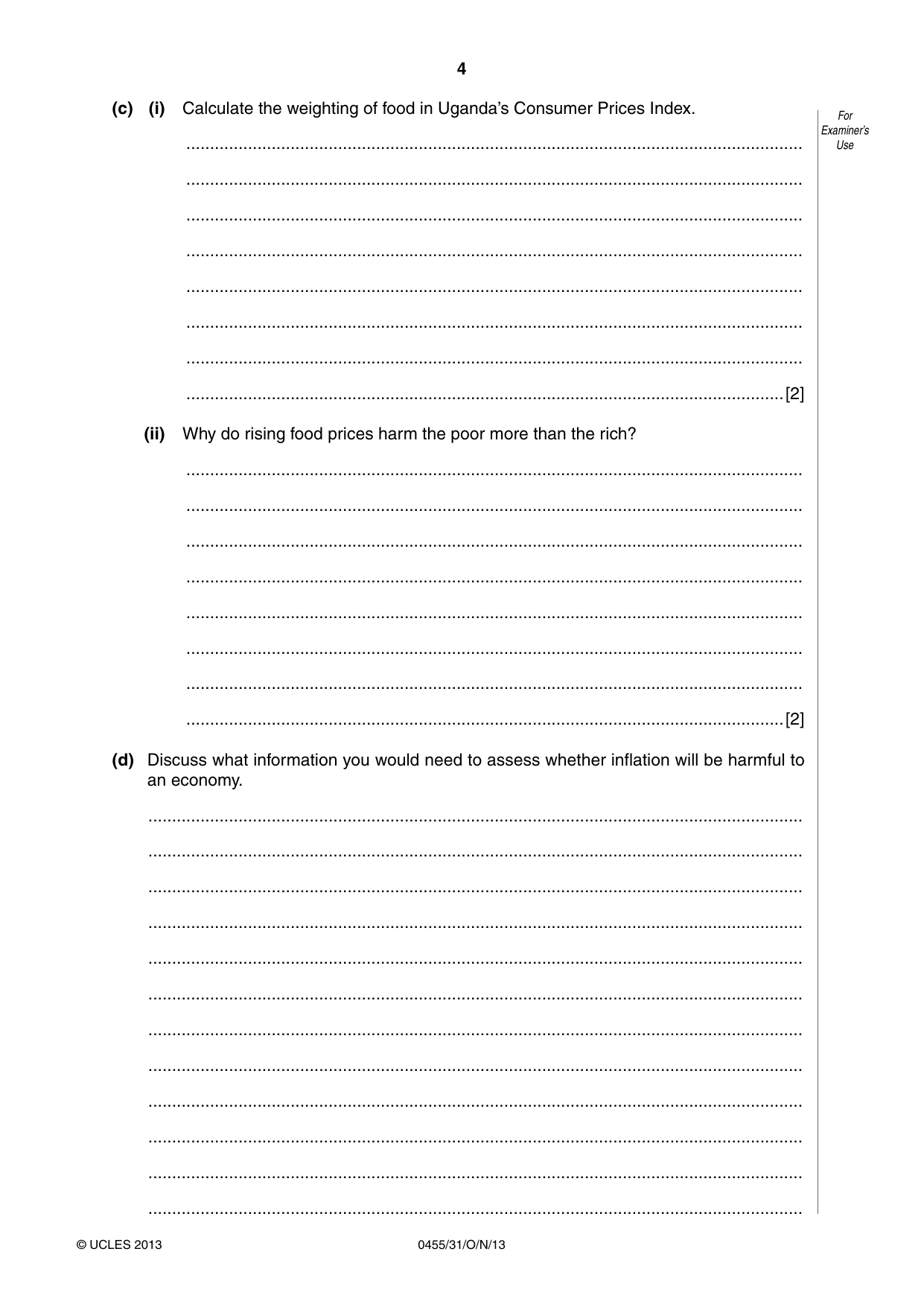
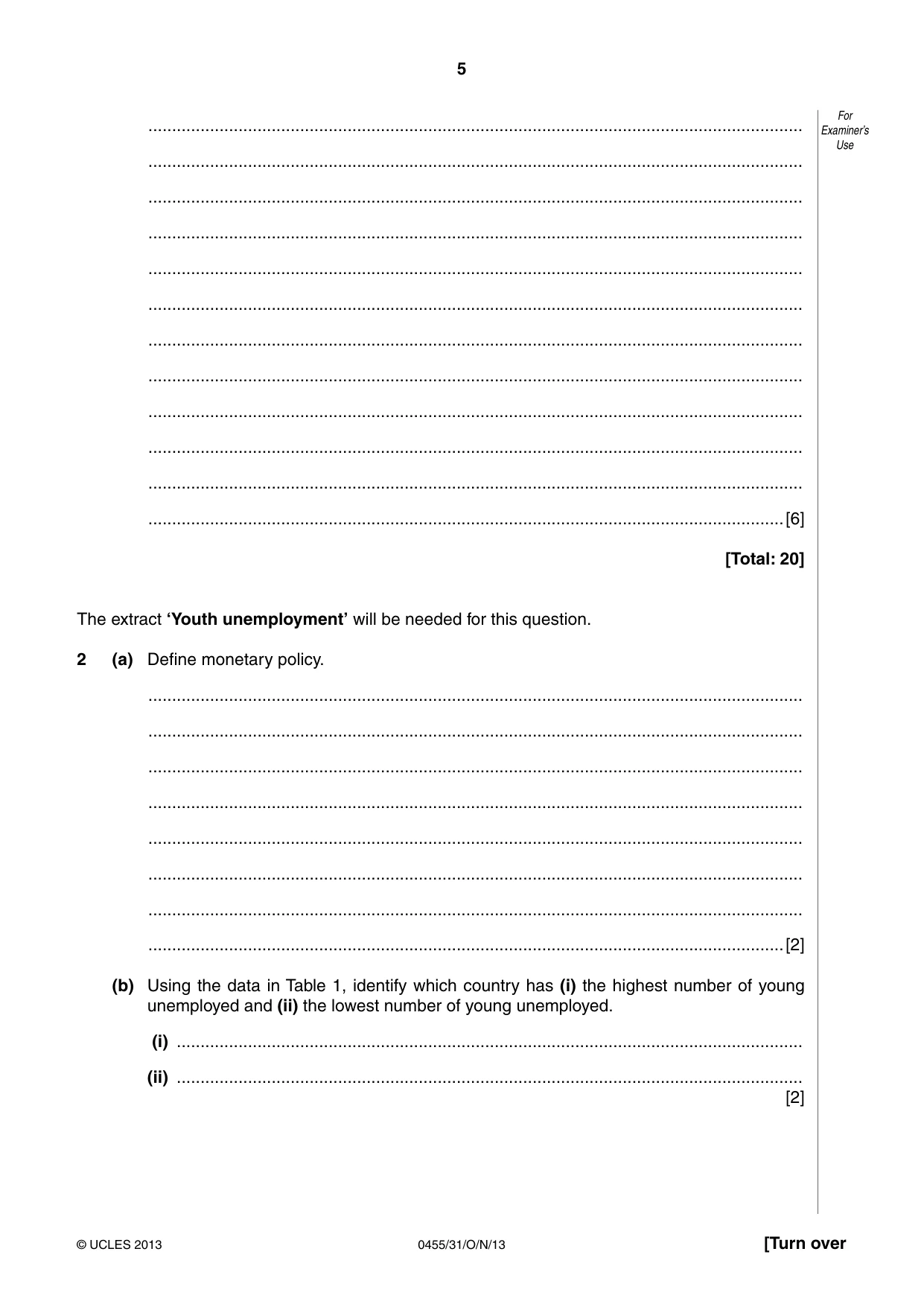
1 (a) (i) Define equilibrium price. .................................................................................................................................. .................................................................................................................................. .................................................................................................................................. .................................................................................................................................. .................................................................................................................................. .................................................................................................................................. .................................................................................................................................. ..............................................................................................................................[2] (ii) Explain two possible reasons why the price of rice rose in some countries but fell in other countries. .................................................................................................................................. .................................................................................................................................. .................................................................................................................................. .................................................................................................................................. .................................................................................................................................. .................................................................................................................................. .................................................................................................................................. .................................................................................................................................. .................................................................................................................................. .................................................................................................................................. .................................................................................................................................. .................................................................................................................................. .................................................................................................................................. .................................................................................................................................. .................................................................................................................................. ..............................................................................................................................[4] (b) Using a demand and supply diagram, explain the effect of a rise in the price of oil on the market for food. .......................................................................................................................................... .......................................................................................................................................... .......................................................................................................................................... .......................................................................................................................................... .......................................................................................................................................... .......................................................................................................................................... .......................................................................................................................................... .......................................................................................................................................... .......................................................................................................................................... .......................................................................................................................................... .......................................................................................................................................... .......................................................................................................................................... .......................................................................................................................................... .......................................................................................................................................... .......................................................................................................................................... ......................................................................................................................................[4] (c) (i) Calculate the weighting of food in Uganda’s Consumer Prices Index. .................................................................................................................................. .................................................................................................................................. .................................................................................................................................. .................................................................................................................................. .................................................................................................................................. .................................................................................................................................. .................................................................................................................................. ..............................................................................................................................[2] (ii) Why do rising food prices harm the poor more than the rich? .................................................................................................................................. .................................................................................................................................. .................................................................................................................................. .................................................................................................................................. .................................................................................................................................. .................................................................................................................................. .................................................................................................................................. ..............................................................................................................................[2] (d) Discuss what information you would need to assess whether inflation will be harmful to an economy. .......................................................................................................................................... .......................................................................................................................................... .......................................................................................................................................... .......................................................................................................................................... .......................................................................................................................................... .......................................................................................................................................... .......................................................................................................................................... .......................................................................................................................................... .......................................................................................................................................... .......................................................................................................................................... .......................................................................................................................................... .......................................................................................................................................... .......................................................................................................................................... .......................................................................................................................................... .......................................................................................................................................... .......................................................................................................................................... .......................................................................................................................................... .......................................................................................................................................... .......................................................................................................................................... .......................................................................................................................................... .......................................................................................................................................... .......................................................................................................................................... .......................................................................................................................................... ......................................................................................................................................[6] [Total: 20] The extract ‘Youth unemployment’ will be needed for this question.
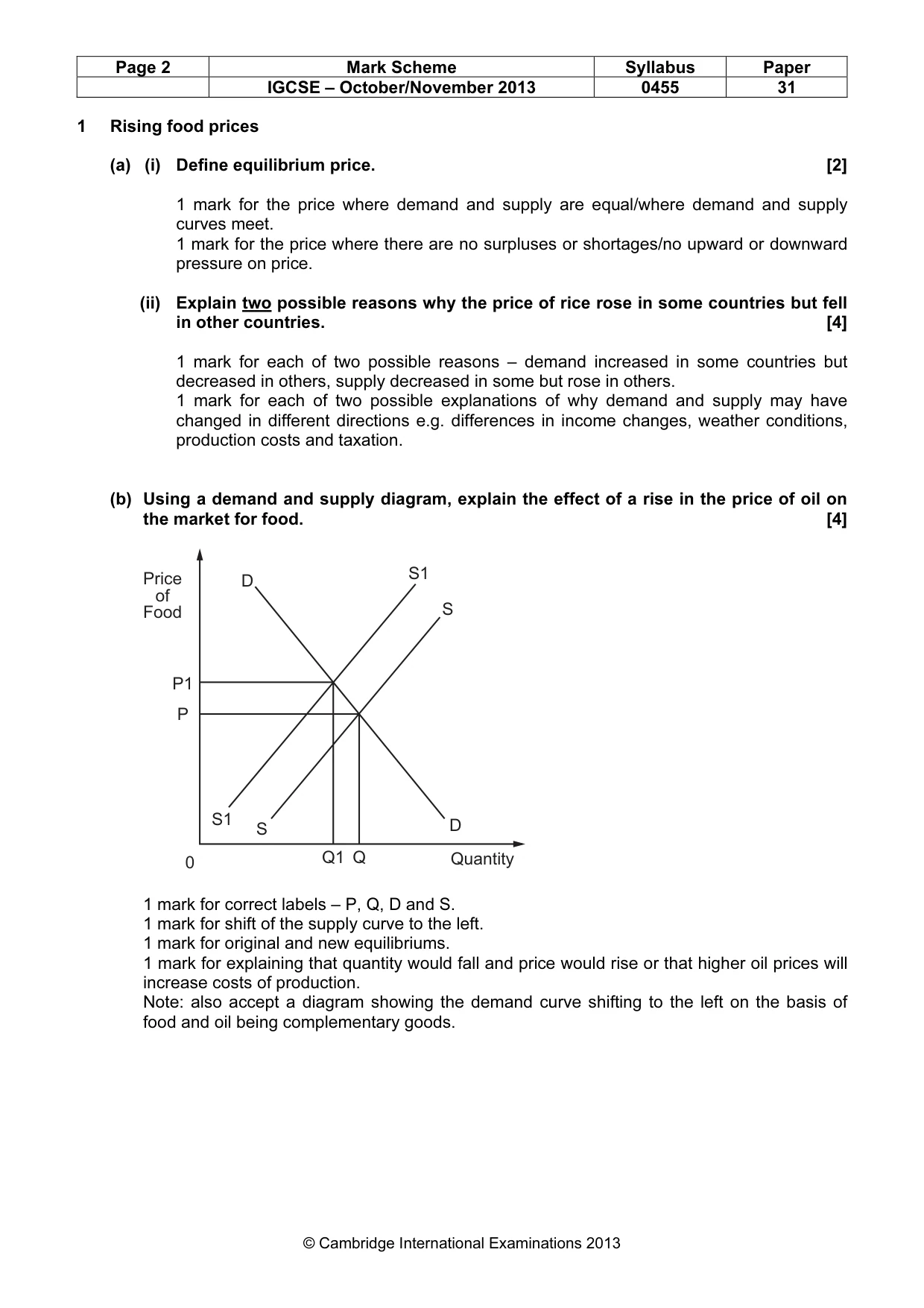
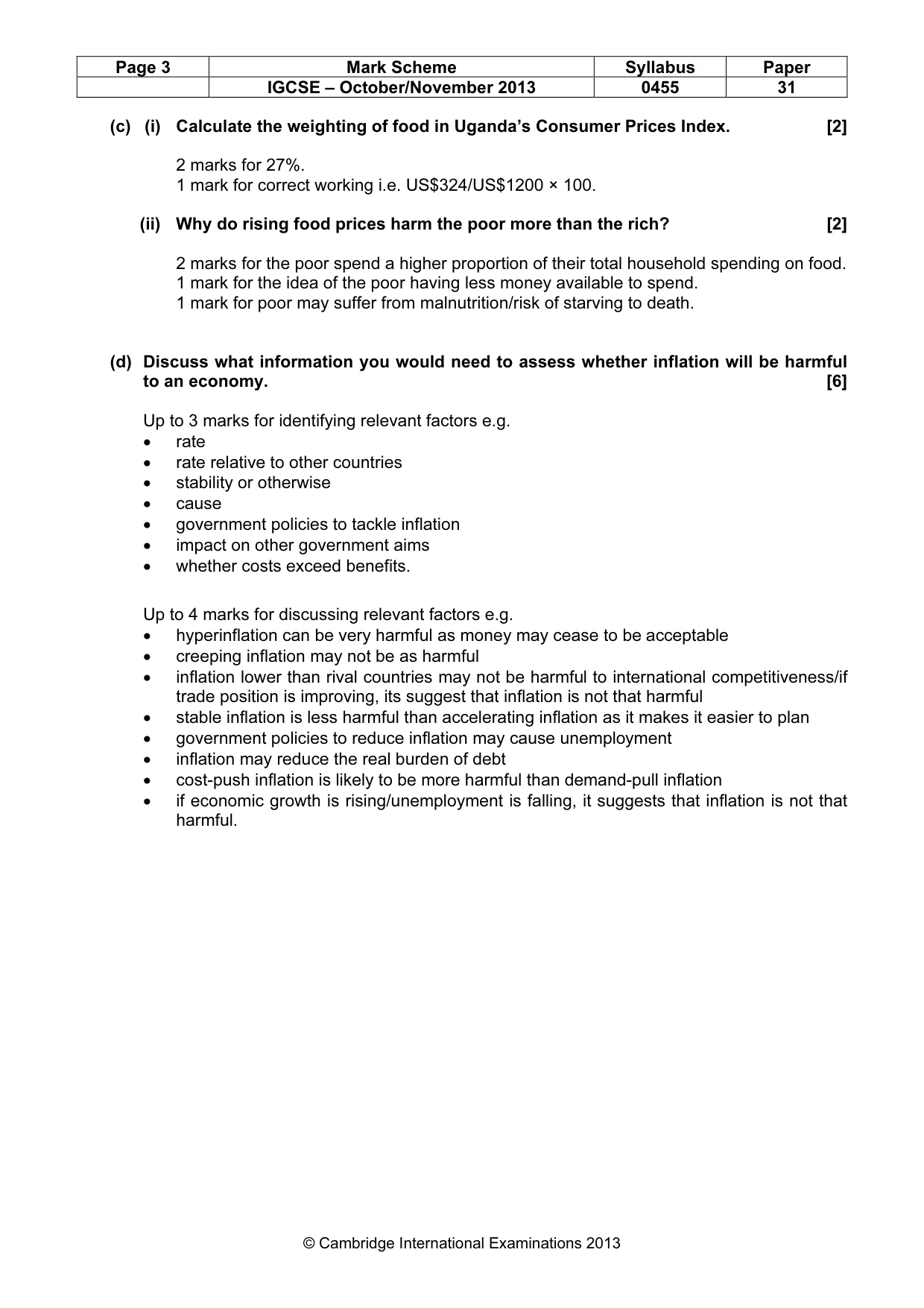
Mark scheme: 1 Rising food prices (a) (i) Define equilibrium price. [2] 1 mark for the price where demand and supply are equal/where demand and supply curves meet. 1 mark for the price where there are no surpluses or shortages/no upward or downward pressure on price. (ii) Explain two possible reasons why the price of rice rose in some countries but fell in other countries. [4] 1 mark for each of two possible reasons – demand increased in some countries but decreased in others, supply decreased in some but rose in others. 1 mark for each of two possible explanations of why demand and supply may have changed in different directions e.g. differences in income changes, weather conditions, production costs and taxation. (b) Using a demand and supply diagram, explain the effect of a rise in the price of oil on the market for food. [4] S1 Price D of Food S P1 P S1 S D Q1 Q Quantity 0 1 mark for correct labels – P, Q, D and S. 1 mark for shift of the supply curve to the left. 1 mark for original and new equilibriums. 1 mark for explaining that quantity would fall and price would rise or that higher oil prices will increase costs of production. Note: also accept a diagram showing the demand curve shifting to the left on the basis of food and oil being complementary goods. IGCSE – October/November 2013 0455 31 (c) (i) Calculate the weighting of food in Uganda’s Consumer Prices Index. [2] 2 marks for 27%. 1 mark for correct working i.e. US$324/US$1200 × 100. (ii) Why do rising food prices harm the poor more than the rich? [2] 2 marks for the poor spend a higher proportion of their total household spending on food. 1 mark for the idea of the poor having less money available to spend. 1 mark for poor may suffer from malnutrition/risk of starving to death. (d) Discuss what information you would need to assess whether inflation will be harmful to an economy. [6] Up to 3 marks for identifying relevant factors e.g. • rate • rate relative to other countries • stability or otherwise • cause • government policies to tackle inflation • impact on other government aims • whether costs exceed benefits. Up to 4 marks for discussing relevant factors e.g. • hyperinflation can be very harmful as money may cease to be acceptable • creeping inflation may not be as harmful • inflation lower than rival countries may not be harmful to international competitiveness/if trade position is improving, its suggest that inflation is not that harmful • stable inflation is less harmful than accelerating inflation as it makes it easier to plan • government policies to reduce inflation may cause unemployment • inflation may reduce the real burden of debt • cost-push inflation is likely to be more harmful than demand-pull inflation • if economic growth is rising/unemployment is falling, it suggests that inflation is not that harmful. IGCSE – October/November 2013 0455 31
Question 2
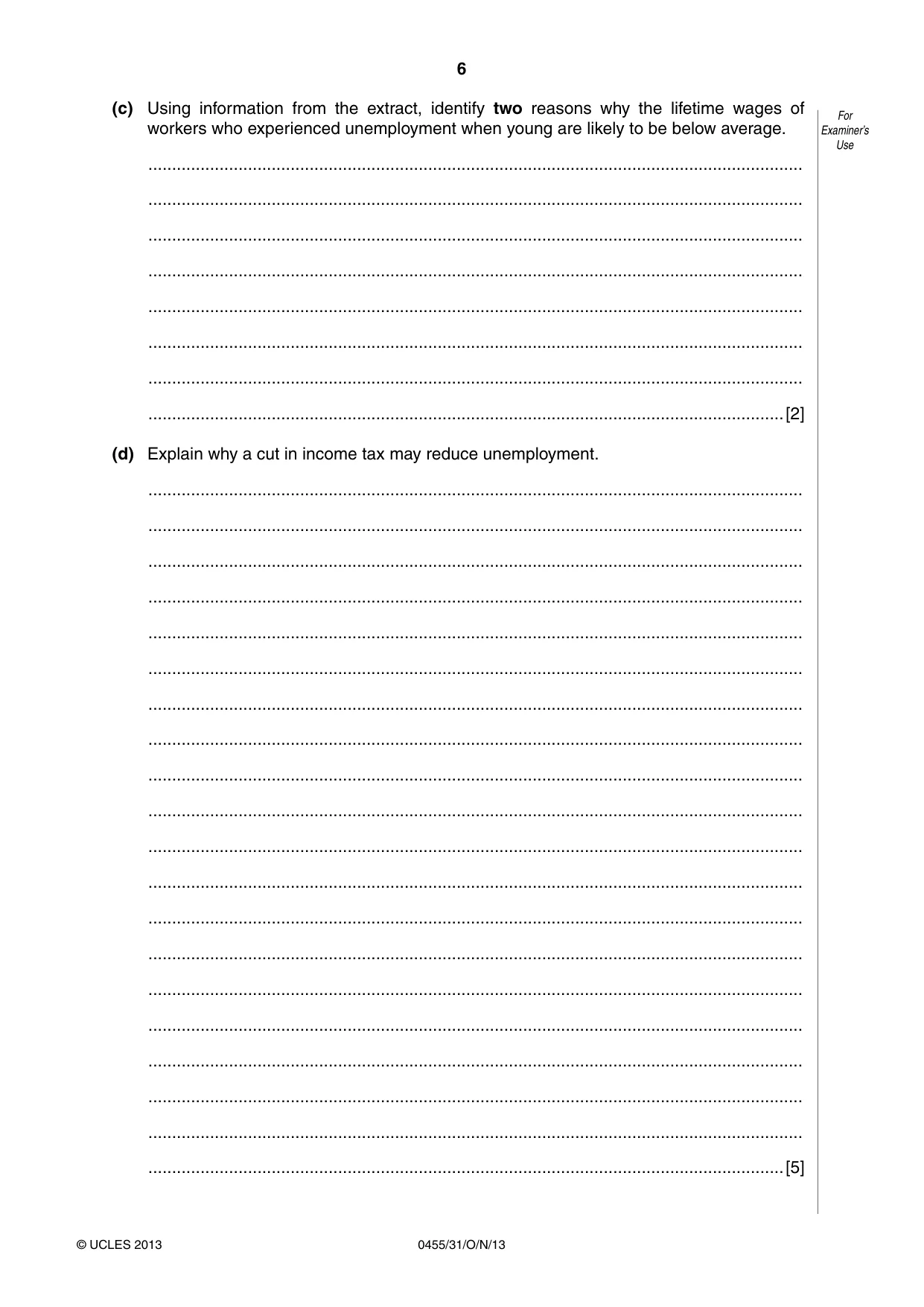
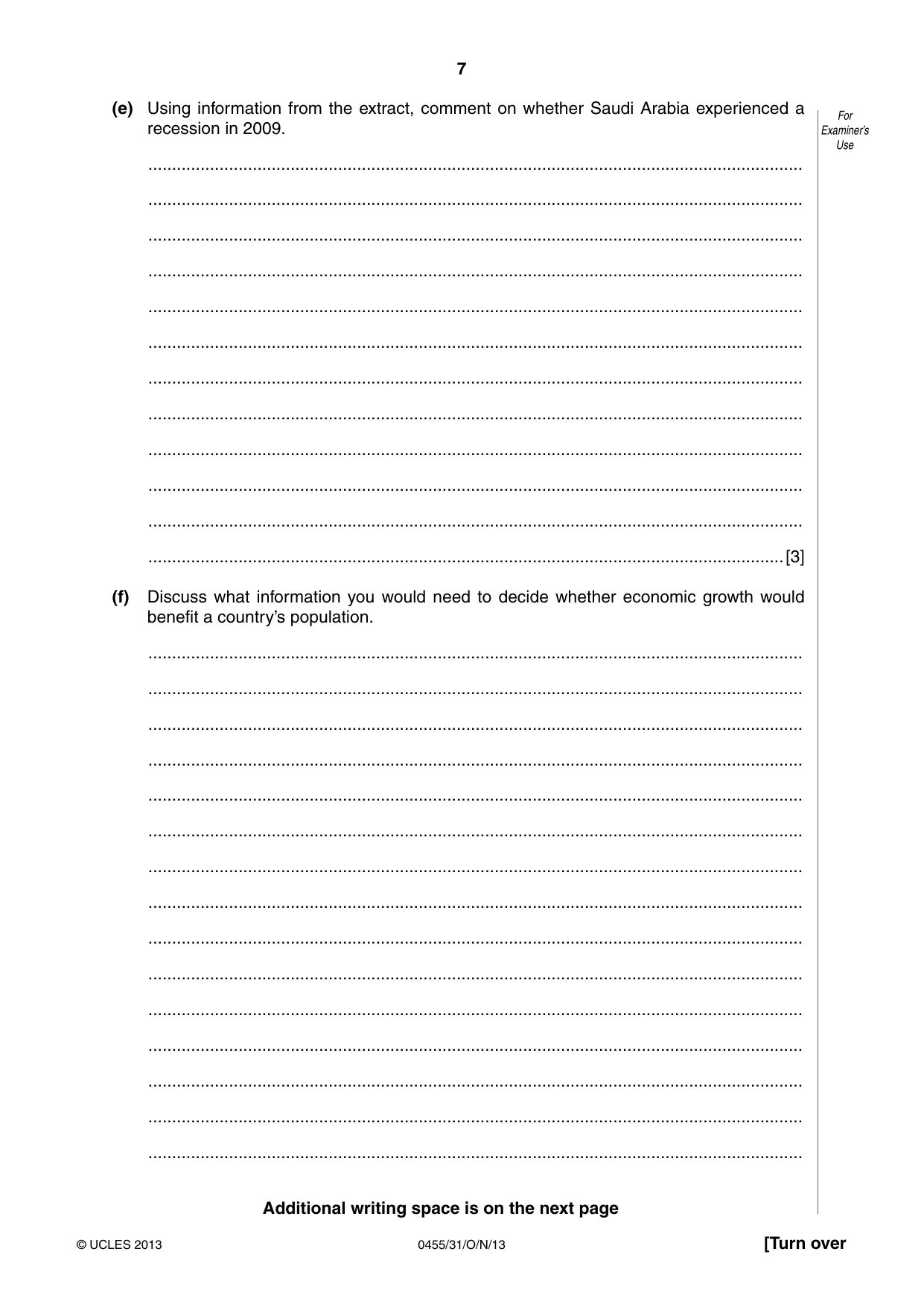
2 (a) Define monetary policy. .......................................................................................................................................... .......................................................................................................................................... .......................................................................................................................................... .......................................................................................................................................... .......................................................................................................................................... .......................................................................................................................................... .......................................................................................................................................... ......................................................................................................................................[2] (b) Using the data in Table 1, identify which country has (i) the highest number of young unemployed and (ii) the lowest number of young unemployed. (i) .................................................................................................................................... (ii) .................................................................................................................................... [2] (c) Using information from the extract, identify two reasons why the lifetime wages of workers who experienced unemployment when young are likely to be below average. .......................................................................................................................................... .......................................................................................................................................... .......................................................................................................................................... .......................................................................................................................................... .......................................................................................................................................... .......................................................................................................................................... .......................................................................................................................................... ......................................................................................................................................[2] (d) Explain why a cut in income tax may reduce unemployment. .......................................................................................................................................... .......................................................................................................................................... .......................................................................................................................................... .......................................................................................................................................... .......................................................................................................................................... .......................................................................................................................................... .......................................................................................................................................... .......................................................................................................................................... .......................................................................................................................................... .......................................................................................................................................... .......................................................................................................................................... .......................................................................................................................................... .......................................................................................................................................... .......................................................................................................................................... .......................................................................................................................................... .......................................................................................................................................... .......................................................................................................................................... .......................................................................................................................................... .......................................................................................................................................... ......................................................................................................................................[5] (e) Using information from the extract, comment on whether Saudi Arabia experienced a recession in 2009. .......................................................................................................................................... .......................................................................................................................................... .......................................................................................................................................... .......................................................................................................................................... .......................................................................................................................................... .......................................................................................................................................... .......................................................................................................................................... .......................................................................................................................................... .......................................................................................................................................... .......................................................................................................................................... .......................................................................................................................................... ......................................................................................................................................[3] (f) Discuss what information you would need to decide whether economic growth would benefit a country’s population. .......................................................................................................................................... .......................................................................................................................................... .......................................................................................................................................... .......................................................................................................................................... .......................................................................................................................................... .......................................................................................................................................... .......................................................................................................................................... .......................................................................................................................................... .......................................................................................................................................... .......................................................................................................................................... .......................................................................................................................................... .......................................................................................................................................... .......................................................................................................................................... .......................................................................................................................................... .......................................................................................................................................... Additional writing space is on the next page
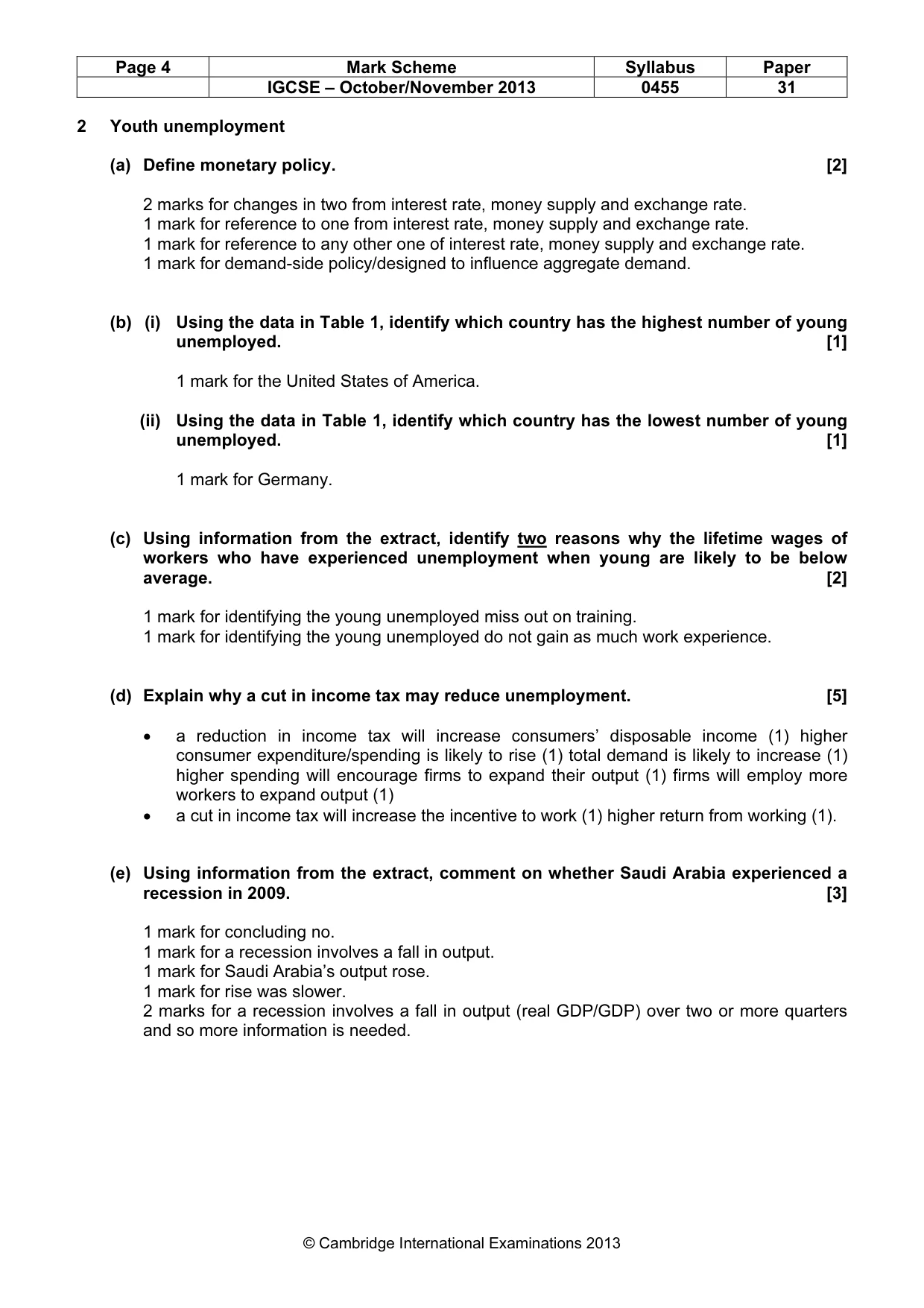
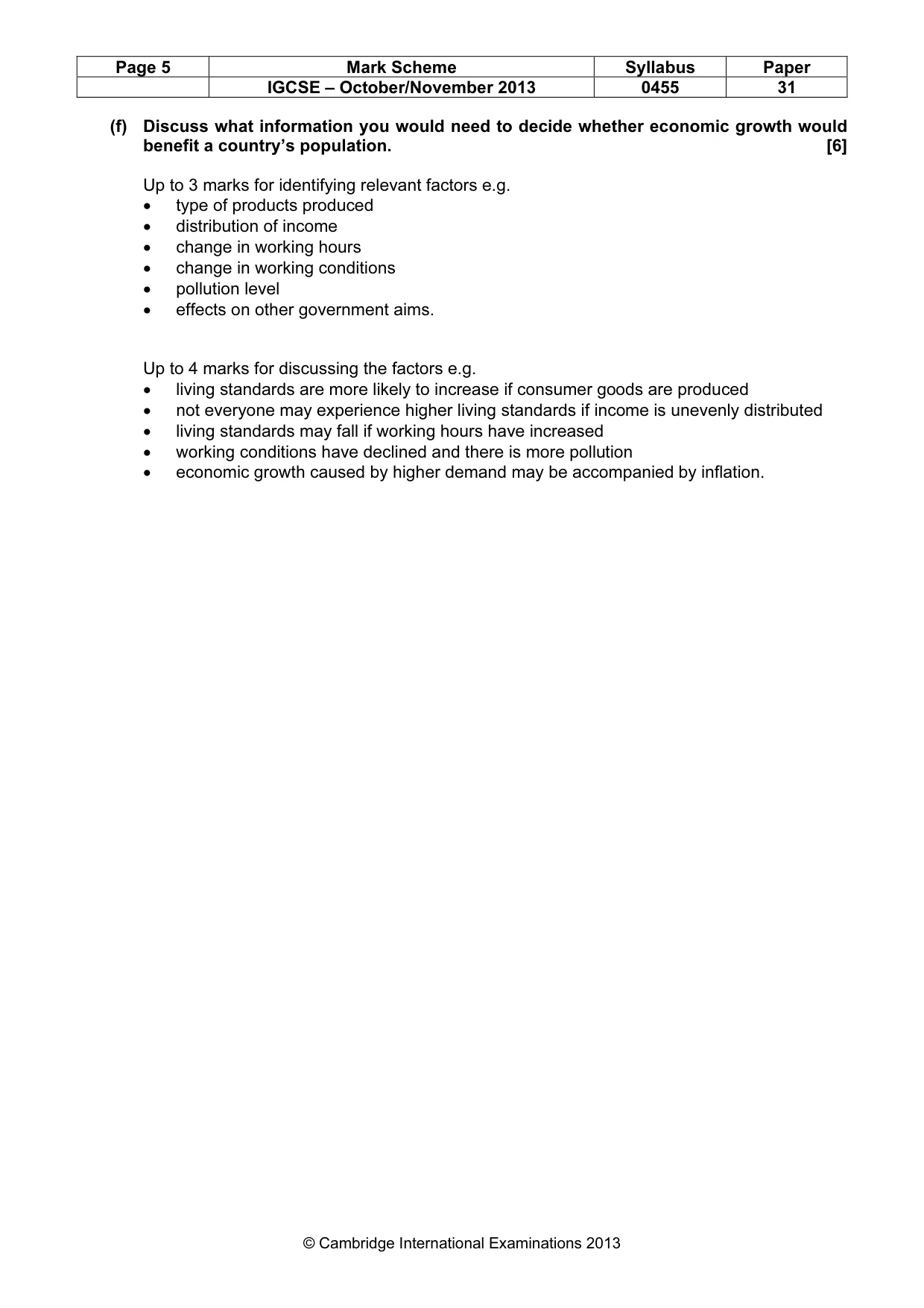
Mark scheme: 2 Youth unemployment (a) Define monetary policy. [2] 2 marks for changes in two from interest rate, money supply and exchange rate. 1 mark for reference to one from interest rate, money supply and exchange rate. 1 mark for reference to any other one of interest rate, money supply and exchange rate. 1 mark for demand-side policy/designed to influence aggregate demand. (b) (i) Using the data in Table 1, identify which country has the highest number of young unemployed. [1] 1 mark for the United States of America. (ii) Using the data in Table 1, identify which country has the lowest number of young unemployed. [1] 1 mark for Germany. (c) Using information from the extract, identify two reasons why the lifetime wages of workers who have experienced unemployment when young are likely to be below average. [2] 1 mark for identifying the young unemployed miss out on training. 1 mark for identifying the young unemployed do not gain as much work experience. (d) Explain why a cut in income tax may reduce unemployment. [5] • a reduction in income tax will increase consumers’ disposable income (1) higher consumer expenditure/spending is likely to rise (1) total demand is likely to increase (1) higher spending will encourage firms to expand their output (1) firms will employ more workers to expand output (1) • a cut in income tax will increase the incentive to work (1) higher return from working (1). (e) Using information from the extract, comment on whether Saudi Arabia experienced a recession in 2009. [3] 1 mark for concluding no. 1 mark for a recession involves a fall in output. 1 mark for Saudi Arabia’s output rose. 1 mark for rise was slower. 2 marks for a recession involves a fall in output (real GDP/GDP) over two or more quarters and so more information is needed. IGCSE – October/November 2013 0455 31 (f) Discuss what information you would need to decide whether economic growth would benefit a country’s population. [6] Up to 3 marks for identifying relevant factors e.g. • type of products produced • distribution of income • change in working hours • change in working conditions • pollution level • effects on other government aims. Up to 4 marks for discussing the factors e.g. • living standards are more likely to increase if consumer goods are produced • not everyone may experience higher living standards if income is unevenly distributed • living standards may fall if working hours have increased • working conditions have declined and there is more pollution • economic growth caused by higher demand may be accompanied by inflation.
What was in this paper
The subtopics covered by these 2 questions, and how many questions each got. Open one in a new tab to see every Cambridge question on it.
What you needed in this session
Cambridge’s own grade thresholds for 2013 Oct/Nov, Paper 3 · Variant 1. A higher threshold means an easier paper — the bar moves with how the cohort did.