Cambridge IGCSE Economics 0455 — 2011 May/June Paper 3 · Variant 1
0455/31/M/J/11 · 2 questions · 40 marks · ≈45 min
The question paper and its mark scheme, free to read here and free to download. This is Cambridge’s own paper, exactly as it was sat.
Question paper8 pages
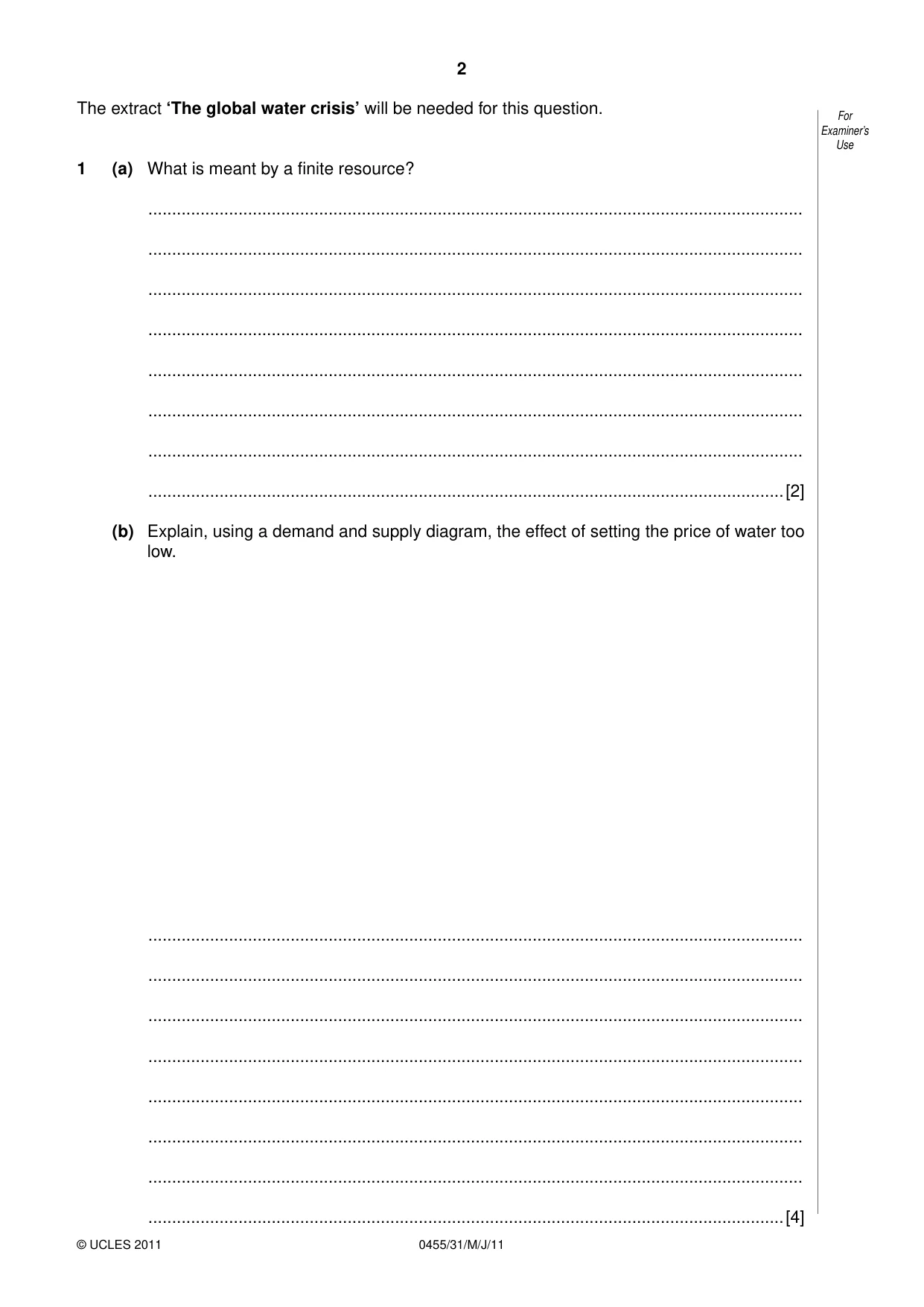
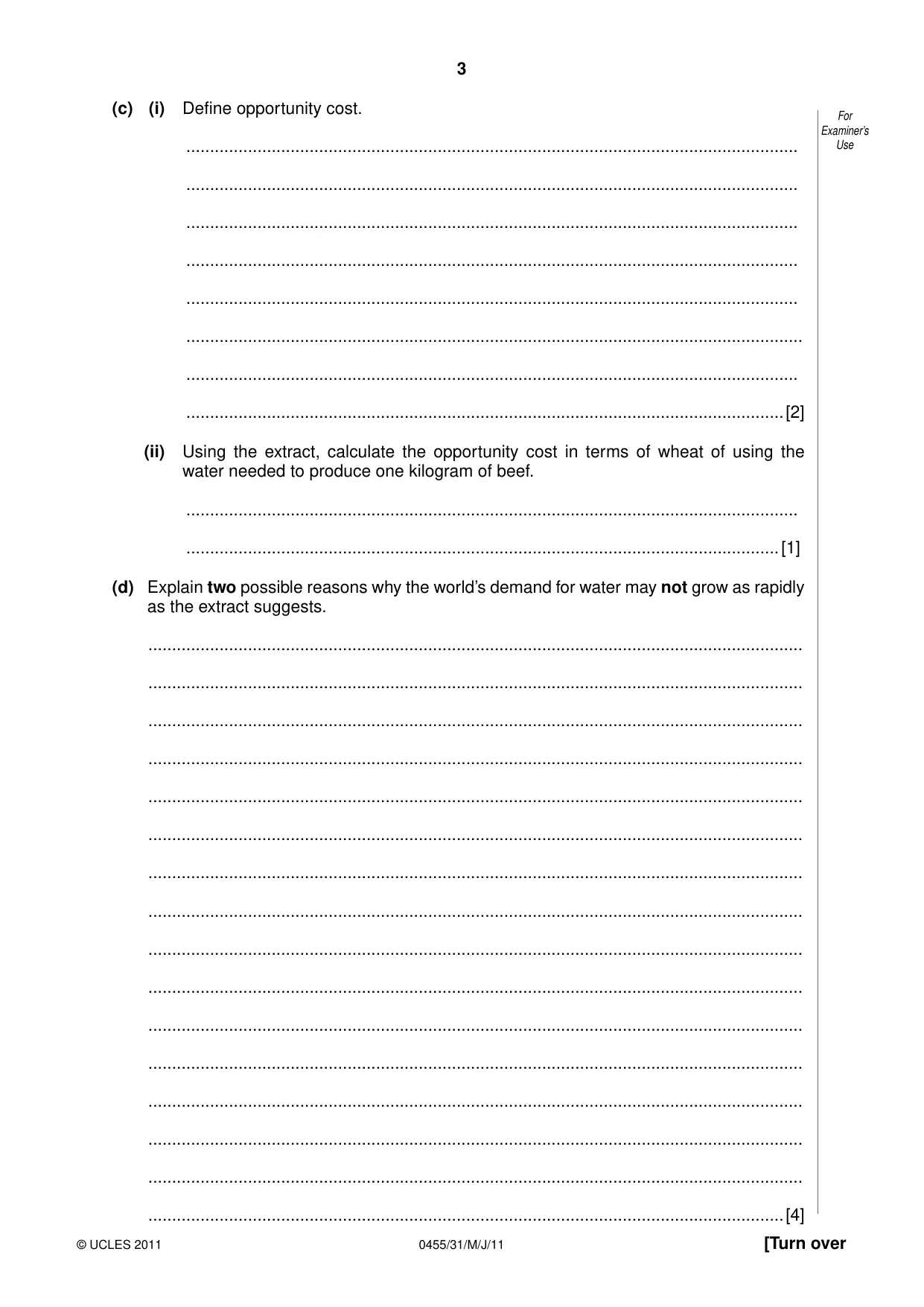
Mark scheme4 pages
Answers below. Sit the paper first if you are practising.
Questions as text
Q1 · What is meant by a finite resource?
1 (a) What is meant by a finite resource? .......................................................................................................................................... .......................................................................................................................................... .......................................................................................................................................... .......................................................................................................................................... .......................................................................................................................................... .......................................................................................................................................... .......................................................................................................................................... ......................................................................................................................................[2] (b) Explain, using a demand and supply diagram, the effect of setting the price of water too low. .......................................................................................................................................... .......................................................................................................................................... .......................................................................................................................................... .......................................................................................................................................... .......................................................................................................................................... .......................................................................................................................................... .......................................................................................................................................... ......................................................................................................................................[4] (c) (i) Define opportunity cost. ................................................................................................................................. ................................................................................................................................. ................................................................................................................................. ................................................................................................................................. ................................................................................................................................. .................................................................................................................................. ................................................................................................................................. ..............................................................................................................................[2] (ii) Using the extract, calculate the opportunity cost in terms of wheat of using the water needed to produce one kilogram of beef. ................................................................................................................................. .............................................................................................................................[1] (d) Explain two possible reasons why the world’s demand for water may not grow as rapidly as the extract suggests. .......................................................................................................................................... .......................................................................................................................................... .......................................................................................................................................... .......................................................................................................................................... .......................................................................................................................................... .......................................................................................................................................... .......................................................................................................................................... .......................................................................................................................................... .......................................................................................................................................... .......................................................................................................................................... .......................................................................................................................................... .......................................................................................................................................... .......................................................................................................................................... .......................................................................................................................................... .......................................................................................................................................... ......................................................................................................................................[4] (e) Discuss the arguments for and against taxing household use of water. .......................................................................................................................................... .......................................................................................................................................... .......................................................................................................................................... .......................................................................................................................................... .......................................................................................................................................... .......................................................................................................................................... .......................................................................................................................................... .......................................................................................................................................... .......................................................................................................................................... .......................................................................................................................................... .......................................................................................................................................... .......................................................................................................................................... .......................................................................................................................................... .......................................................................................................................................... .......................................................................................................................................... .......................................................................................................................................... .......................................................................................................................................... .......................................................................................................................................... .......................................................................................................................................... .......................................................................................................................................... .......................................................................................................................................... .......................................................................................................................................... .......................................................................................................................................... .......................................................................................................................................... .......................................................................................................................................... .......................................................................................................................................... .......................................................................................................................................... ......................................................................................................................................[7] [Total: 20] The extract ‘Economic challenges facing Brazil’ will be needed for this question.
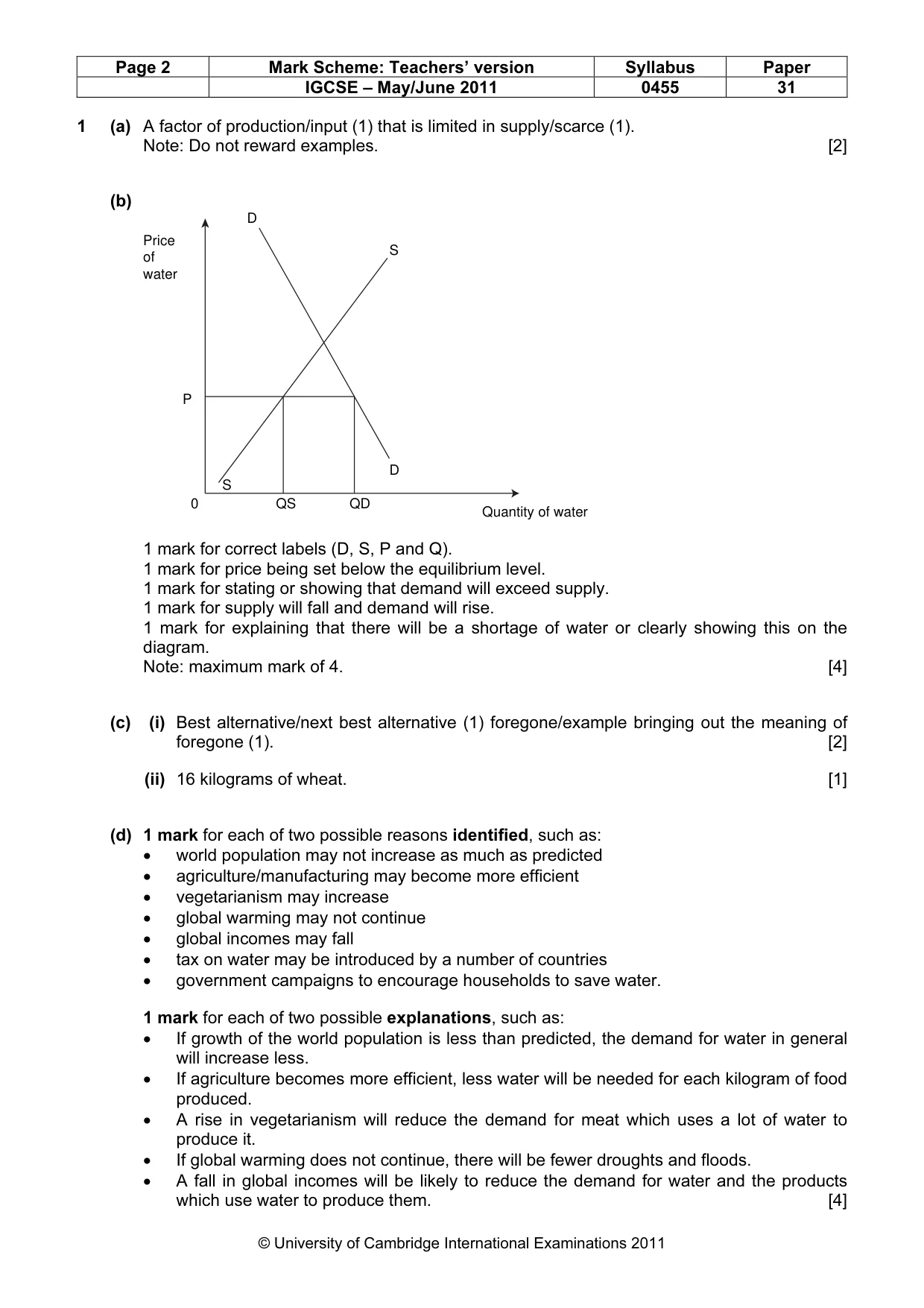
Mark scheme: 1 (a) A factor of production/input (1) that is limited in supply/scarce (1). Note: Do not reward examples. [2] (b) D Price S of water P D S 0 QS QD Quantity of water 1 mark for correct labels (D, S, P and Q). 1 mark for price being set below the equilibrium level. 1 mark for stating or showing that demand will exceed supply. 1 mark for supply will fall and demand will rise. 1 mark for explaining that there will be a shortage of water or clearly showing this on the diagram. Note: maximum mark of 4. [4] (c) (i) Best alternative/next best alternative (1) foregone/example bringing out the meaning of foregone (1). [2] (ii) 16 kilograms of wheat. [1] (d) 1 mark for each of two possible reasons identified, such as: • world population may not increase as much as predicted • agriculture/manufacturing may become more efficient • vegetarianism may increase • global warming may not continue • global incomes may fall • tax on water may be introduced by a number of countries • government campaigns to encourage households to save water. 1 mark for each of two possible explanations, such as: • If growth of the world population is less than predicted, the demand for water in general will increase less. • If agriculture becomes more efficient, less water will be needed for each kilogram of food produced. • A rise in vegetarianism will reduce the demand for meat which uses a lot of water to produce it. • If global warming does not continue, there will be fewer droughts and floods. • A fall in global incomes will be likely to reduce the demand for water and the products which use water to produce them. [4] IGCSE – May/June 2011 0455 31 (e) Arguments for taxing household use of water, such as: • may move price to the equilibrium level • would ration a scarce resource • would encourage people not to waste water • would raise revenue. Arguments against taxing household use of water, such as: • difficult to know where to set the tax • the tax will be regressive • the rich may prove unresponsive to the price rise • the tax may cause health problems • agriculture and manufacturing use more water. Up to 5 marks for a one-sided approach. Maximum of 4 marks for a list. [7] $
Q2 · What is meant by the exchange rate?
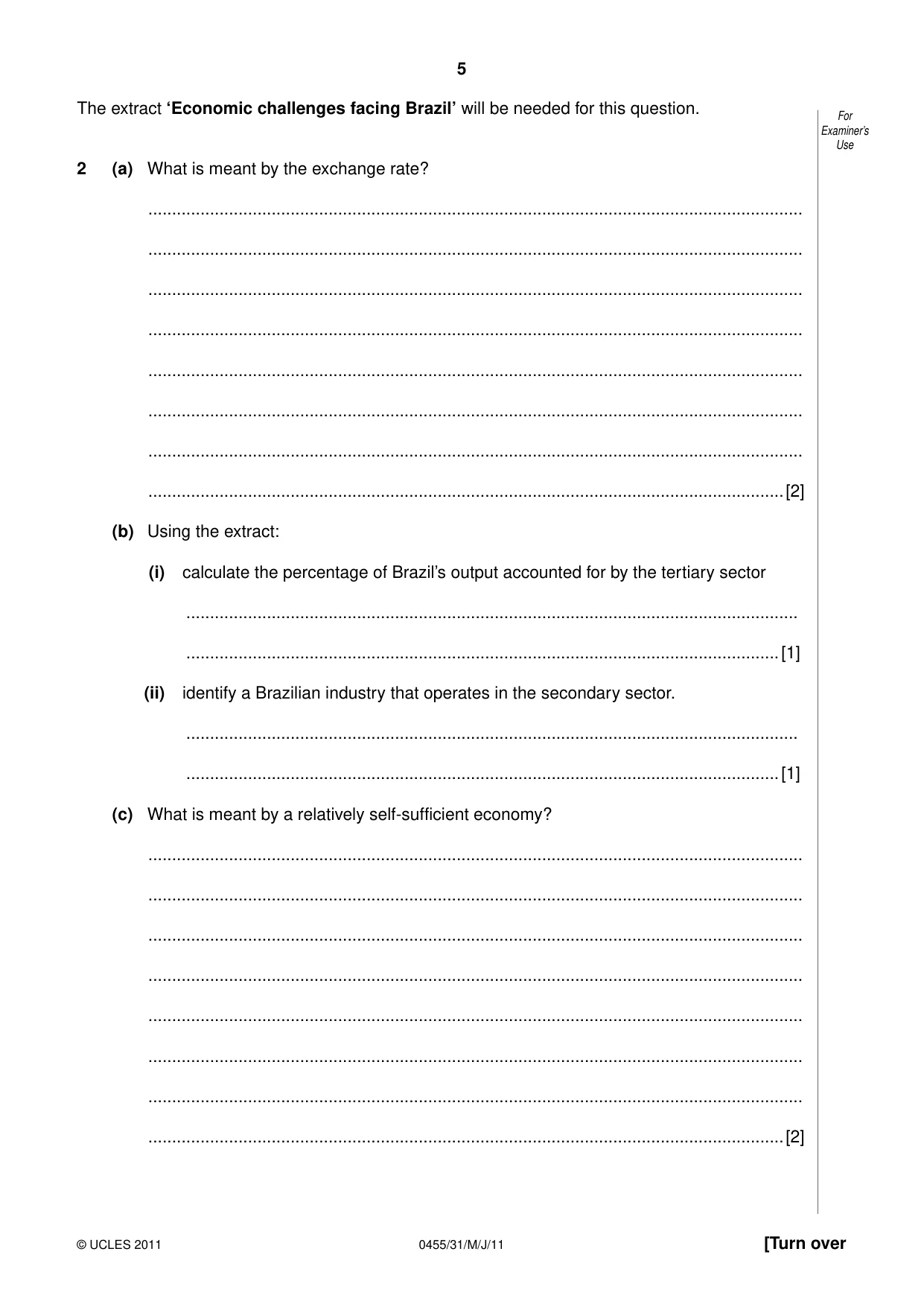
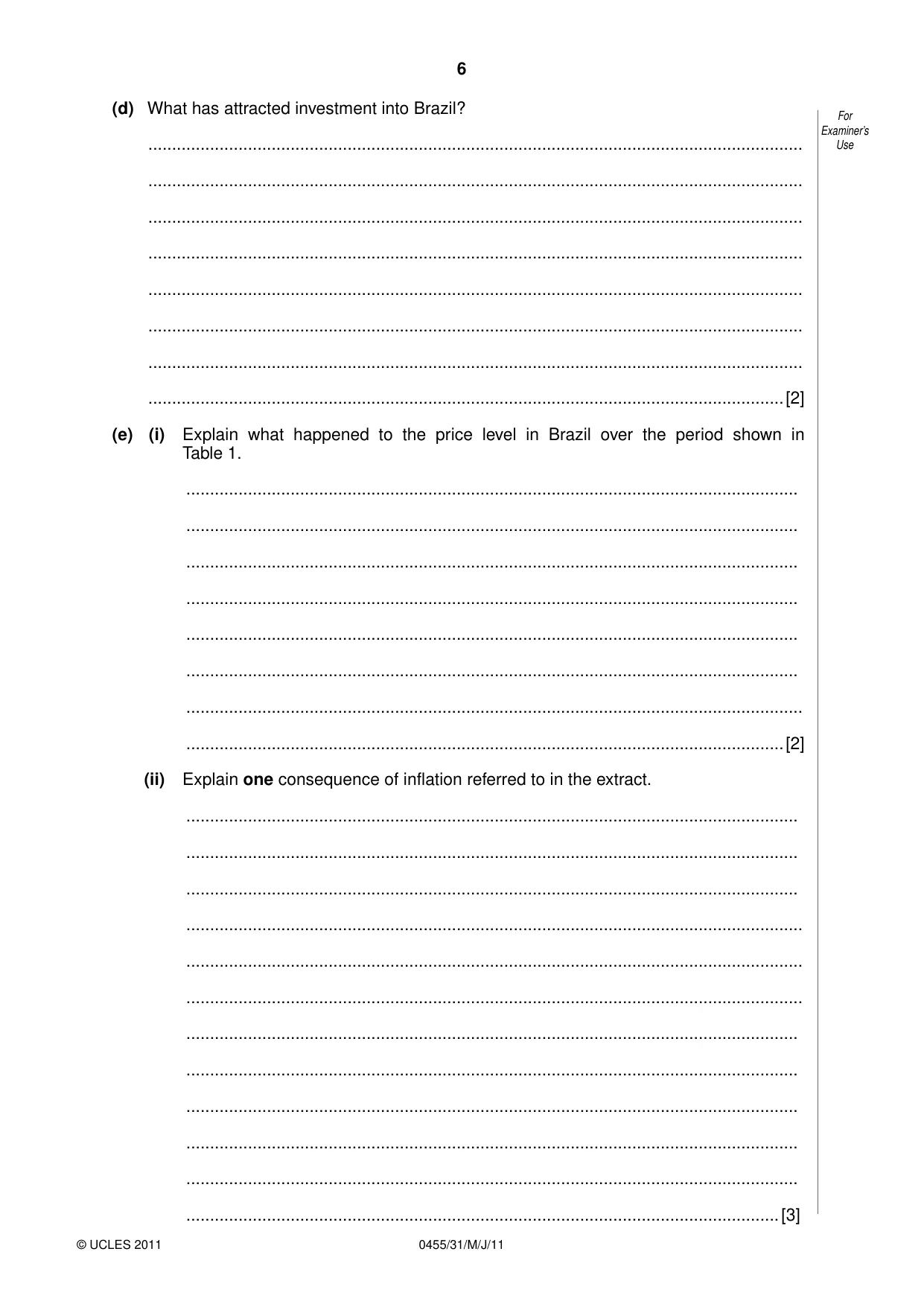
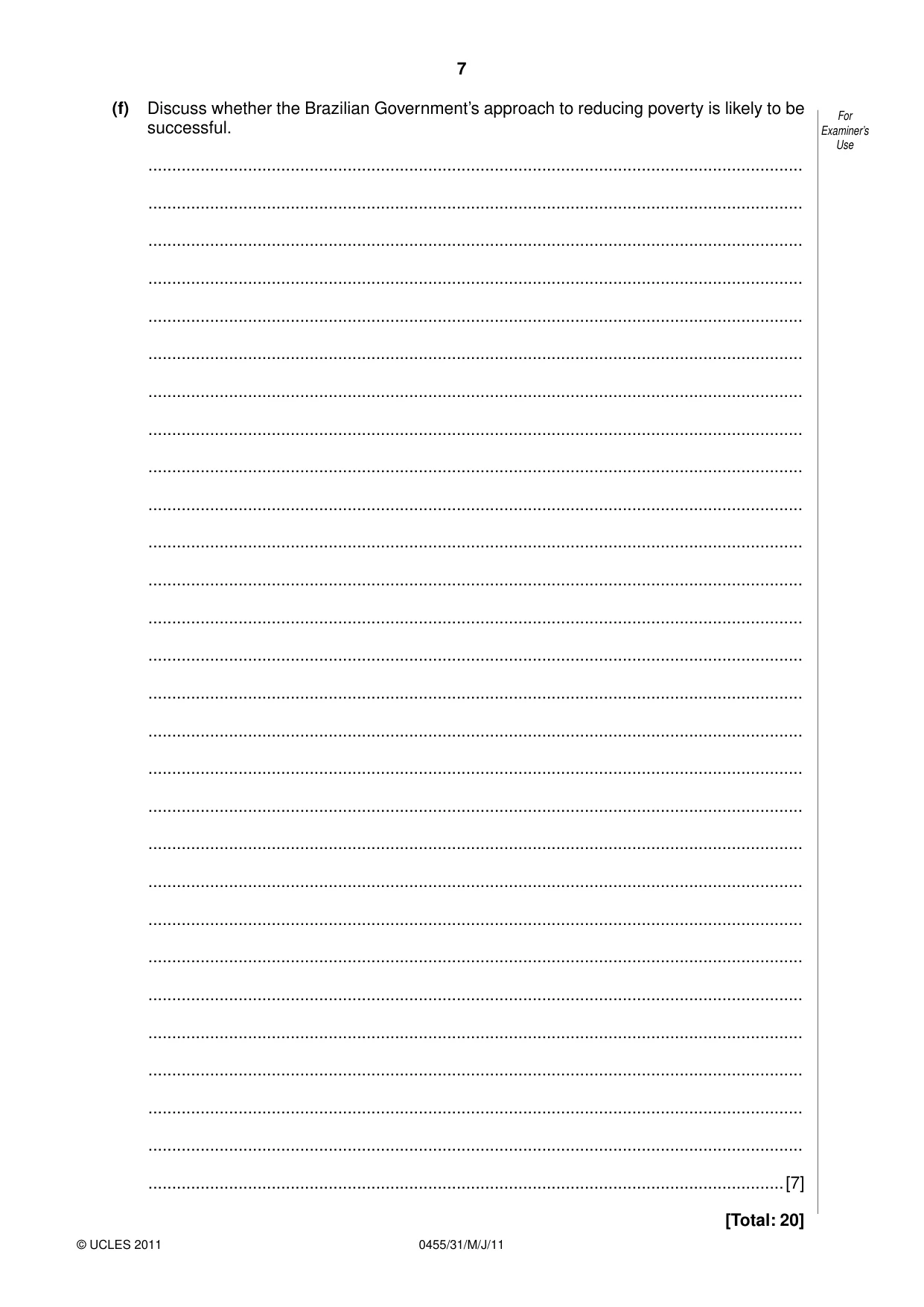
2 (a) What is meant by the exchange rate? .......................................................................................................................................... .......................................................................................................................................... .......................................................................................................................................... .......................................................................................................................................... .......................................................................................................................................... .......................................................................................................................................... .......................................................................................................................................... ......................................................................................................................................[2] (b) Using the extract: (i) calculate the percentage of Brazil’s output accounted for by the tertiary sector ................................................................................................................................. .............................................................................................................................[1] (ii) identify a Brazilian industry that operates in the secondary sector. ................................................................................................................................. .............................................................................................................................[1] (c) What is meant by a relatively self-sufficient economy? .......................................................................................................................................... .......................................................................................................................................... .......................................................................................................................................... .......................................................................................................................................... .......................................................................................................................................... .......................................................................................................................................... .......................................................................................................................................... ......................................................................................................................................[2] (d) What has attracted investment into Brazil? .......................................................................................................................................... .......................................................................................................................................... .......................................................................................................................................... .......................................................................................................................................... .......................................................................................................................................... .......................................................................................................................................... .......................................................................................................................................... ......................................................................................................................................[2] (e) (i) Explain what happened to the price level in Brazil over the period shown in Table 1. ................................................................................................................................. ................................................................................................................................. ................................................................................................................................. ................................................................................................................................. ................................................................................................................................. ................................................................................................................................. .................................................................................................................................. ..............................................................................................................................[2] (ii) Explain one consequence of inflation referred to in the extract. ................................................................................................................................. ................................................................................................................................. ................................................................................................................................. .................................................................................................................................. .................................................................................................................................. .................................................................................................................................. ................................................................................................................................. ................................................................................................................................. ................................................................................................................................. ................................................................................................................................. ................................................................................................................................. .............................................................................................................................[3] (f) Discuss whether the Brazilian Government’s approach to reducing poverty is likely to be successful. .......................................................................................................................................... .......................................................................................................................................... .......................................................................................................................................... .......................................................................................................................................... .......................................................................................................................................... .......................................................................................................................................... .......................................................................................................................................... .......................................................................................................................................... .......................................................................................................................................... .......................................................................................................................................... .......................................................................................................................................... .......................................................................................................................................... .......................................................................................................................................... .......................................................................................................................................... .......................................................................................................................................... .......................................................................................................................................... .......................................................................................................................................... .......................................................................................................................................... .......................................................................................................................................... .......................................................................................................................................... .......................................................................................................................................... .......................................................................................................................................... .......................................................................................................................................... .......................................................................................................................................... .......................................................................................................................................... .......................................................................................................................................... .......................................................................................................................................... ......................................................................................................................................[7]
Mark scheme: 2 (a) Price/value/cost of one currency (1) in terms of another currency/currencies (1) e.g. £1 = $2 (1). Note: maximum mark of 2. [2] (b) (i) 62% [1] (ii) Machinery industry or electrical equipment industry (1). Also allow reference to coffee, cotton, iron ore, maize, soya if in the context of processing the commodity, e.g. a coffee factory/industry. Do not accept manufacturing or construction. Also do not accept coffee or any other commodity on its own nor a reference to producers of a commodity. [1] (c) An economy that produces most of what it consumes (1) and does not import much from abroad/does not trade much (1). [2] (d) Two from, e.g. • seen as having considerable growth potential • rising GDP/rising demand for Brazil’s products • rising consumer expenditure • high exchange rate • good supply of raw materials • increased demand for Brazilian commodities • low wages in Brazil. (There is information in the extract but a valid reason not drawing upon the extract can be accepted.) [2] IGCSE – May/June 2011 0455 31 (e) (i) It rose (1) at different rates or most rapidly at the start/more stable in later years (1). Note: do not give any marks for just a year by year description. [2] (ii) 1 mark for identifying one from: • loss of international competitiveness • uncertainty • claims for wage rises. Up to 2 marks for explanation: • If the rate of inflation is higher than in rival countries, the demand for exports is likely to fall whilst the demand for imports is likely to rise. • Inflation can create uncertainty as people and firms will not be sure what prices will be in the future/uncertainty may discourage investment. • Inflation reduces the value of real wages and so workers may press for wage rises to maintain the purchasing power/may lead to industrial disputes. [3] (f) 1 mark for recognising it is increasing its spending on education. This must be mentioned to access the other marks. Up to 3 marks for explaining why a rise in government spending on education may reduce poverty, such as: • raise the skills and qualifications of workers • increase the chances of gaining employment • increase earning potential • may result in better health • more control over family size. Note: up to 3 marks for one strong explanation. Up to 3 marks for considering what will influence its likelihood of being successful, such as: • the amount spent • opportunity cost involved • what type of education it is spent on • implied multiplier effect • who can access the education • educated workers may emigrate • the time period it will take • whether an alternative policy measure might be more successful. Note: up to 3 marks for strong discussion of one factor. Maximum of 4 marks for a list. Note: if no mention of education, no marks can be gained. [7]
What was in this paper
The subtopics covered by these 2 questions, and how many questions each got. Open one in a new tab to see every Cambridge question on it.
What you needed in this session
Cambridge’s own grade thresholds for 2011 May/June, Paper 3 · Variant 1. A higher threshold means an easier paper — the bar moves with how the cohort did.