Cambridge IGCSE Economics 0455 — 2013 Oct/Nov Paper 3 · Variant 3
0455/33/O/N/13 · 2 questions · 40 marks · ≈45 min
The question paper and its mark scheme, free to read here and free to download. This is Cambridge’s own paper, exactly as it was sat.
Question paper8 pages
Mark scheme5 pages
Answers below. Sit the paper first if you are practising.
Questions as text
Question 1
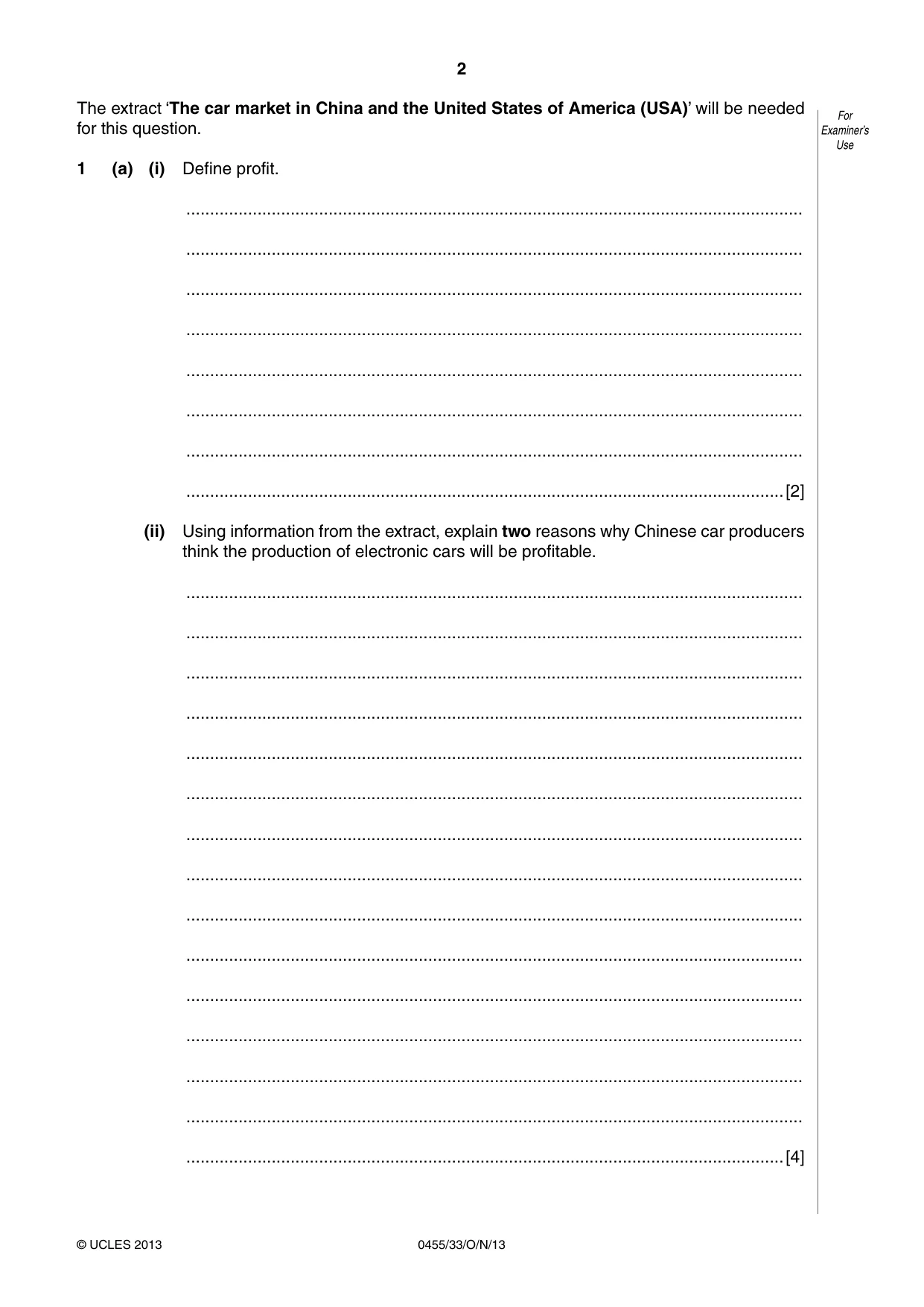
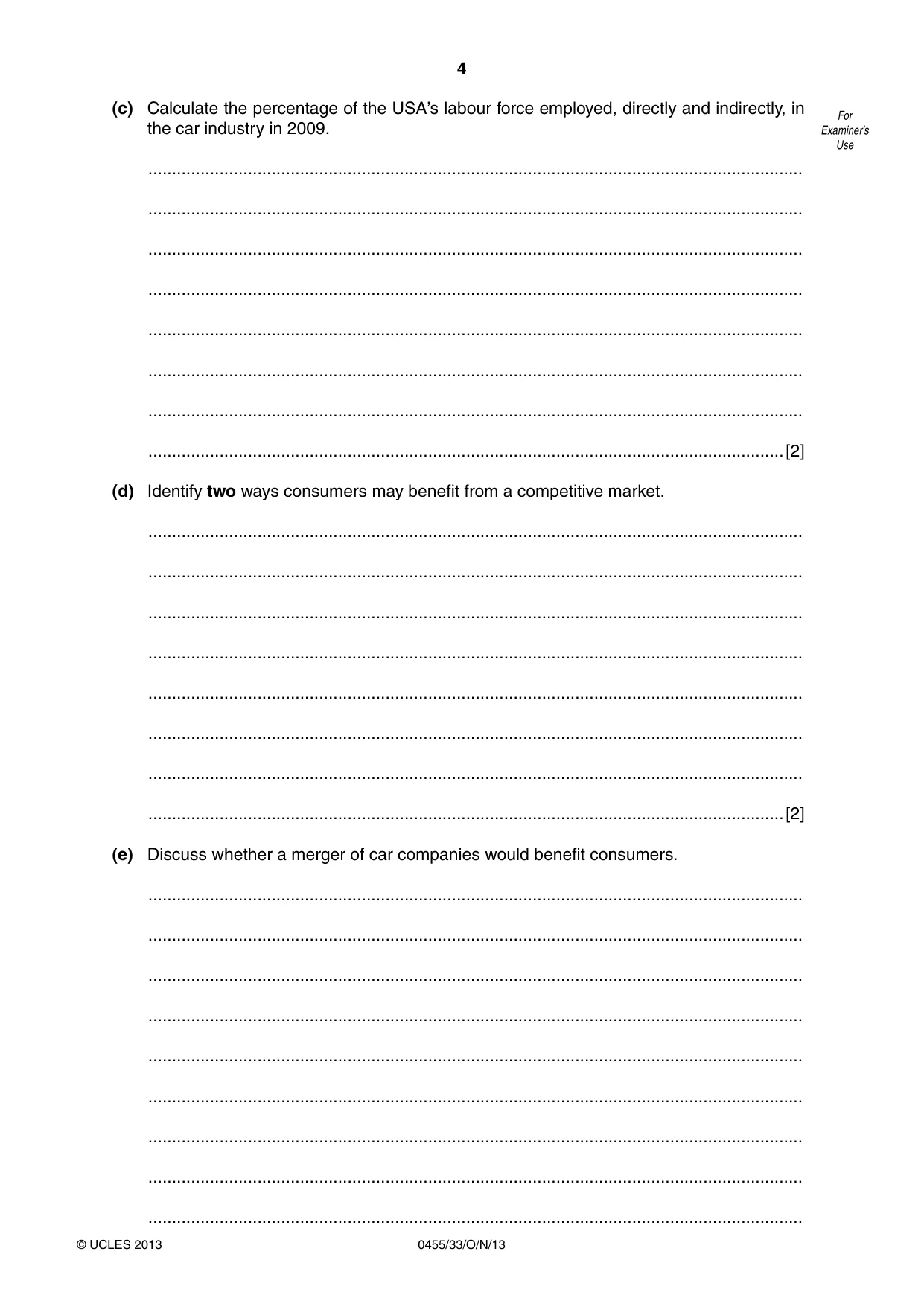
1 (a) (i) Define profit. .................................................................................................................................. .................................................................................................................................. .................................................................................................................................. .................................................................................................................................. .................................................................................................................................. .................................................................................................................................. .................................................................................................................................. ..............................................................................................................................[2] (ii) Using information from the extract, explain two reasons why Chinese car producers think the production of electronic cars will be profitable. .................................................................................................................................. .................................................................................................................................. .................................................................................................................................. .................................................................................................................................. .................................................................................................................................. .................................................................................................................................. .................................................................................................................................. .................................................................................................................................. .................................................................................................................................. .................................................................................................................................. .................................................................................................................................. .................................................................................................................................. .................................................................................................................................. .................................................................................................................................. ..............................................................................................................................[4] (b) Using a demand and supply diagram, explain why car sales fell in the USA in 2009. .......................................................................................................................................... .......................................................................................................................................... .......................................................................................................................................... .......................................................................................................................................... .......................................................................................................................................... .......................................................................................................................................... .......................................................................................................................................... .......................................................................................................................................... .......................................................................................................................................... .......................................................................................................................................... .......................................................................................................................................... .......................................................................................................................................... .......................................................................................................................................... .......................................................................................................................................... .......................................................................................................................................... ......................................................................................................................................[4] (c) Calculate the percentage of the USA’s labour force employed, directly and indirectly, in the car industry in 2009. .......................................................................................................................................... .......................................................................................................................................... .......................................................................................................................................... .......................................................................................................................................... .......................................................................................................................................... .......................................................................................................................................... .......................................................................................................................................... ......................................................................................................................................[2] (d) Identify two ways consumers may benefit from a competitive market. .......................................................................................................................................... .......................................................................................................................................... .......................................................................................................................................... .......................................................................................................................................... .......................................................................................................................................... .......................................................................................................................................... .......................................................................................................................................... ......................................................................................................................................[2] (e) Discuss whether a merger of car companies would benefit consumers. .......................................................................................................................................... .......................................................................................................................................... .......................................................................................................................................... .......................................................................................................................................... .......................................................................................................................................... .......................................................................................................................................... .......................................................................................................................................... .......................................................................................................................................... .......................................................................................................................................... .......................................................................................................................................... .......................................................................................................................................... .......................................................................................................................................... .......................................................................................................................................... .......................................................................................................................................... .......................................................................................................................................... .......................................................................................................................................... .......................................................................................................................................... .......................................................................................................................................... .......................................................................................................................................... .......................................................................................................................................... .......................................................................................................................................... .......................................................................................................................................... .......................................................................................................................................... ......................................................................................................................................[6] [Total: 20] The extract ‘A brighter future for Nigeria?’ will be needed for this question.
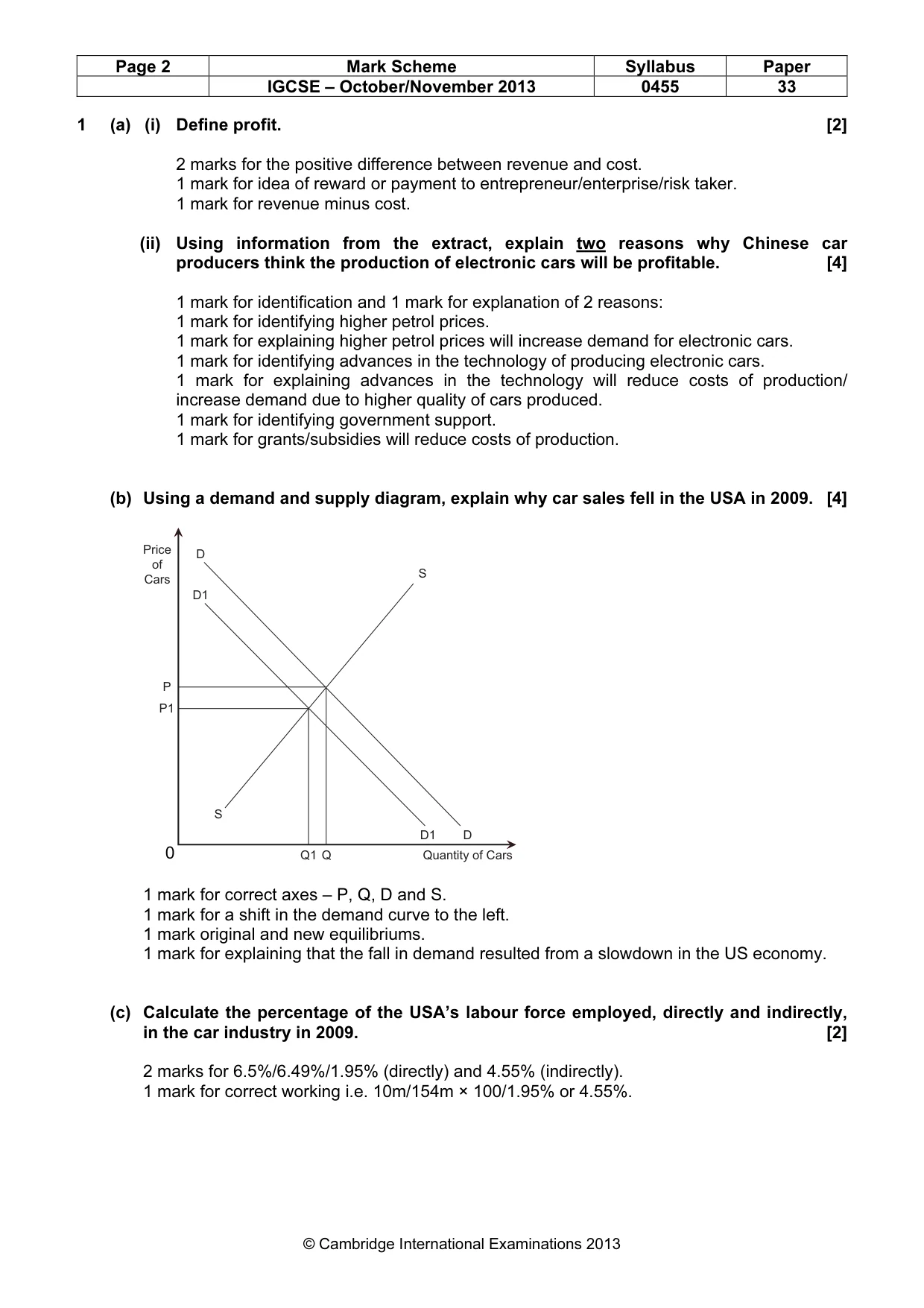
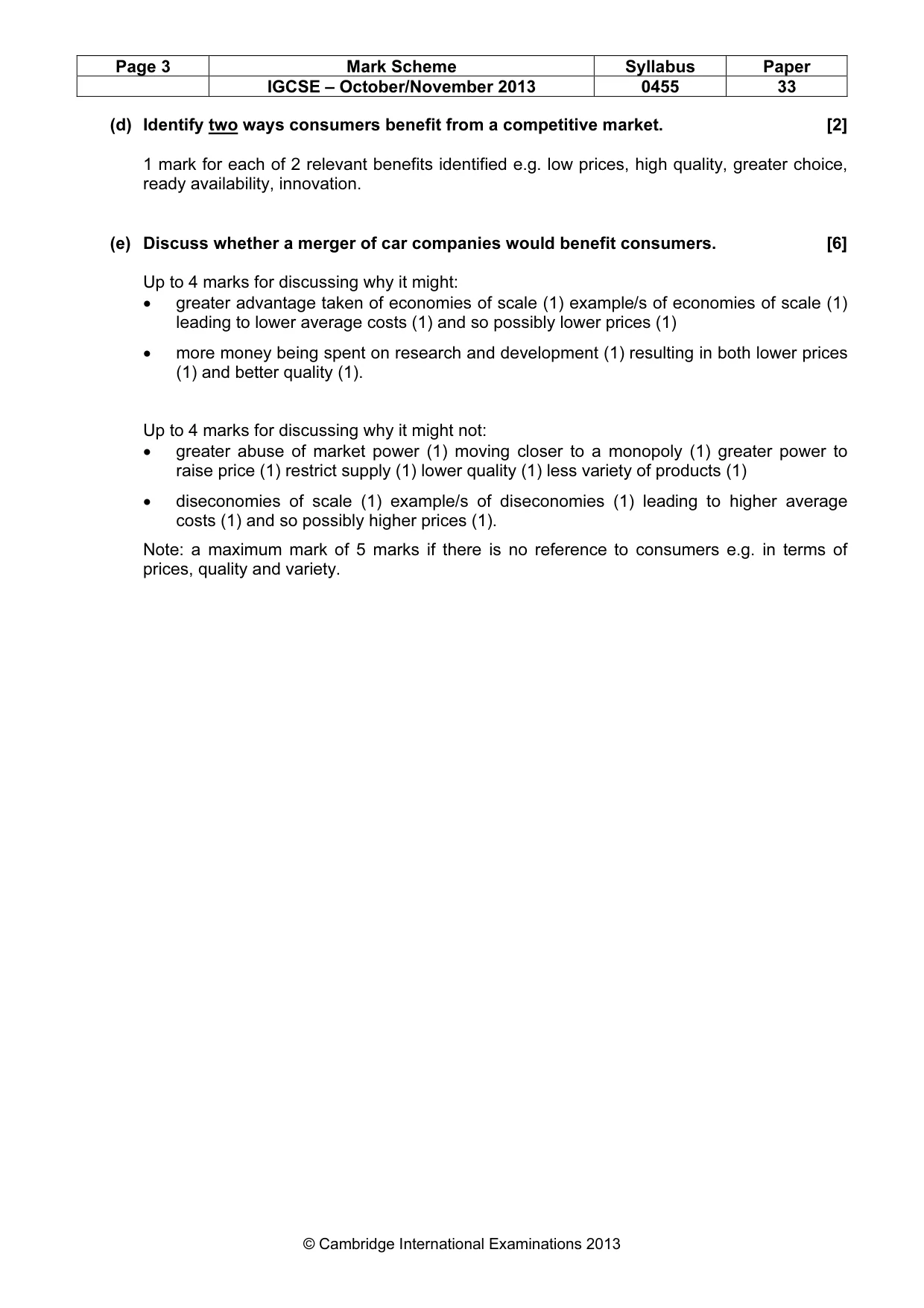
Mark scheme: 1 (a) (i) Define profit. [2] 2 marks for the positive difference between revenue and cost. 1 mark for idea of reward or payment to entrepreneur/enterprise/risk taker. 1 mark for revenue minus cost. (ii) Using information from the extract, explain two reasons why Chinese car producers think the production of electronic cars will be profitable. [4] 1 mark for identification and 1 mark for explanation of 2 reasons: 1 mark for identifying higher petrol prices. 1 mark for explaining higher petrol prices will increase demand for electronic cars. 1 mark for identifying advances in the technology of producing electronic cars. 1 mark for explaining advances in the technology will reduce costs of production/ increase demand due to higher quality of cars produced. 1 mark for identifying government support. 1 mark for grants/subsidies will reduce costs of production. (b) Using a demand and supply diagram, explain why car sales fell in the USA in 2009. [4] Price D of S Cars D1 P P1 S D1 D 0 Q1 Q Quantity of Cars 1 mark for correct axes – P, Q, D and S. 1 mark for a shift in the demand curve to the left. 1 mark original and new equilibriums. 1 mark for explaining that the fall in demand resulted from a slowdown in the US economy. (c) Calculate the percentage of the USA’s labour force employed, directly and indirectly, in the car industry in 2009. [2] 2 marks for 6.5%/6.49%/1.95% (directly) and 4.55% (indirectly). 1 mark for correct working i.e. 10m/154m × 100/1.95% or 4.55%. IGCSE – October/November 2013 0455 33 (d) Identify two ways consumers benefit from a competitive market. [2] 1 mark for each of 2 relevant benefits identified e.g. low prices, high quality, greater choice, ready availability, innovation. (e) Discuss whether a merger of car companies would benefit consumers. [6] Up to 4 marks for discussing why it might: • greater advantage taken of economies of scale (1) example/s of economies of scale (1) leading to lower average costs (1) and so possibly lower prices (1) • more money being spent on research and development (1) resulting in both lower prices (1) and better quality (1). Up to 4 marks for discussing why it might not: • greater abuse of market power (1) moving closer to a monopoly (1) greater power to raise price (1) restrict supply (1) lower quality (1) less variety of products (1) • diseconomies of scale (1) example/s of diseconomies (1) leading to higher average costs (1) and so possibly higher prices (1). Note: a maximum mark of 5 marks if there is no reference to consumers e.g. in terms of prices, quality and variety. IGCSE – October/November 2013 0455 33
Question 2
2 (a) (i) Define supply-side policy. .................................................................................................................................. .................................................................................................................................. .................................................................................................................................. .................................................................................................................................. .................................................................................................................................. .................................................................................................................................. .................................................................................................................................. ..............................................................................................................................[2] (a) (ii) Explain how two supply-side policy measures that the Nigerian Government implemented may have promoted economic growth. .................................................................................................................................. .................................................................................................................................. .................................................................................................................................. .................................................................................................................................. .................................................................................................................................. .................................................................................................................................. .................................................................................................................................. .................................................................................................................................. .................................................................................................................................. .................................................................................................................................. .................................................................................................................................. .................................................................................................................................. .................................................................................................................................. .................................................................................................................................. .................................................................................................................................. ..............................................................................................................................[4] (b) Using information from the extract, explain two reasons why Nigeria is classified as a developing country. .......................................................................................................................................... .......................................................................................................................................... .......................................................................................................................................... .......................................................................................................................................... .......................................................................................................................................... .......................................................................................................................................... .......................................................................................................................................... .......................................................................................................................................... .......................................................................................................................................... .......................................................................................................................................... .......................................................................................................................................... .......................................................................................................................................... .......................................................................................................................................... .......................................................................................................................................... .......................................................................................................................................... ......................................................................................................................................[4] (c) Using information from the extract, identify three disadvantages Nigeria may experience as a result of a fall in the demand for oil. .......................................................................................................................................... .......................................................................................................................................... .......................................................................................................................................... .......................................................................................................................................... .......................................................................................................................................... .......................................................................................................................................... .......................................................................................................................................... .......................................................................................................................................... .......................................................................................................................................... .......................................................................................................................................... .......................................................................................................................................... ......................................................................................................................................[3] (d) Calculate the value of ECOWAS’s GDP in 2010. .......................................................................................................................................... .......................................................................................................................................... .......................................................................................................................................... ......................................................................................................................................[1] Question 2(e) is on the next page
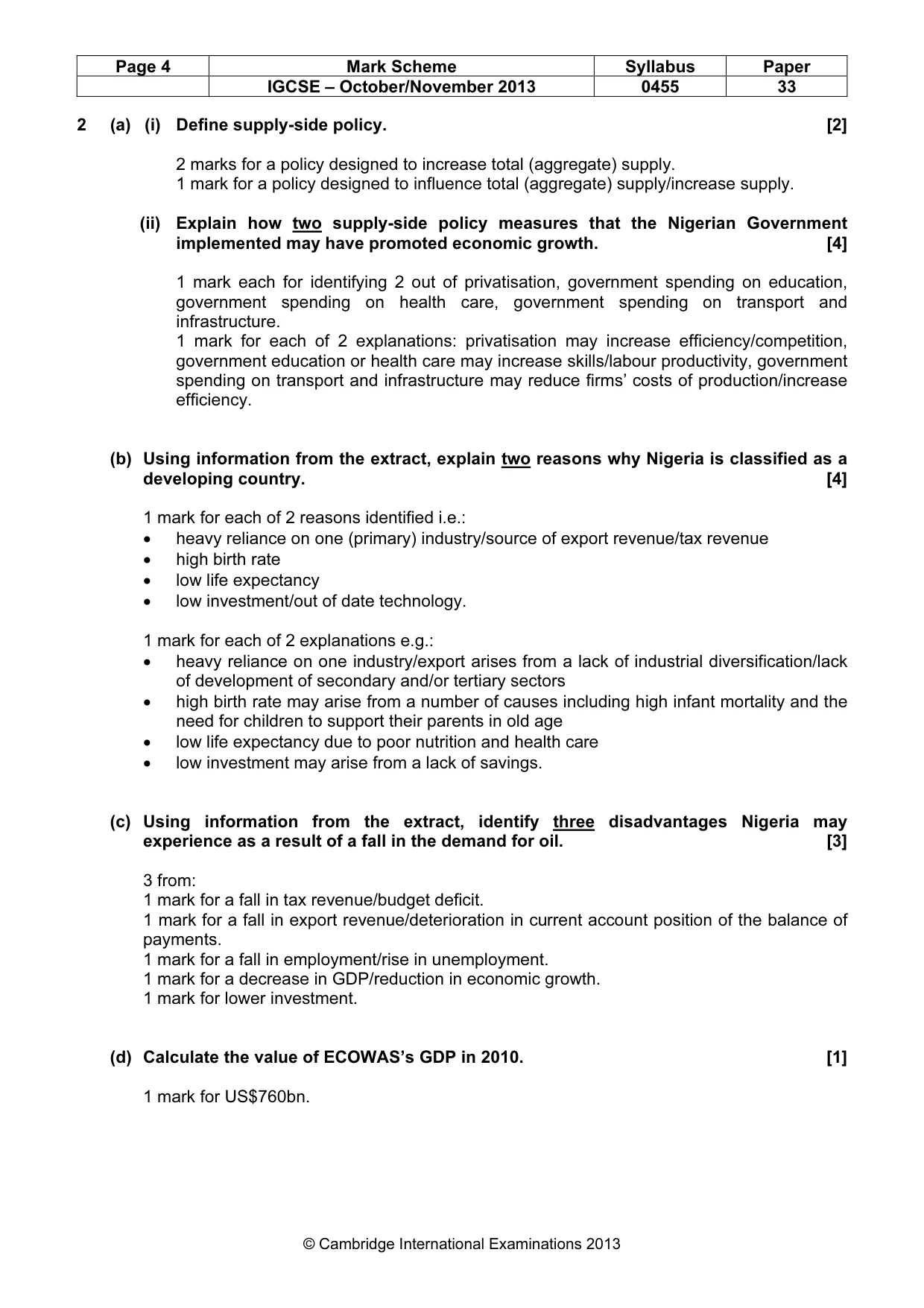
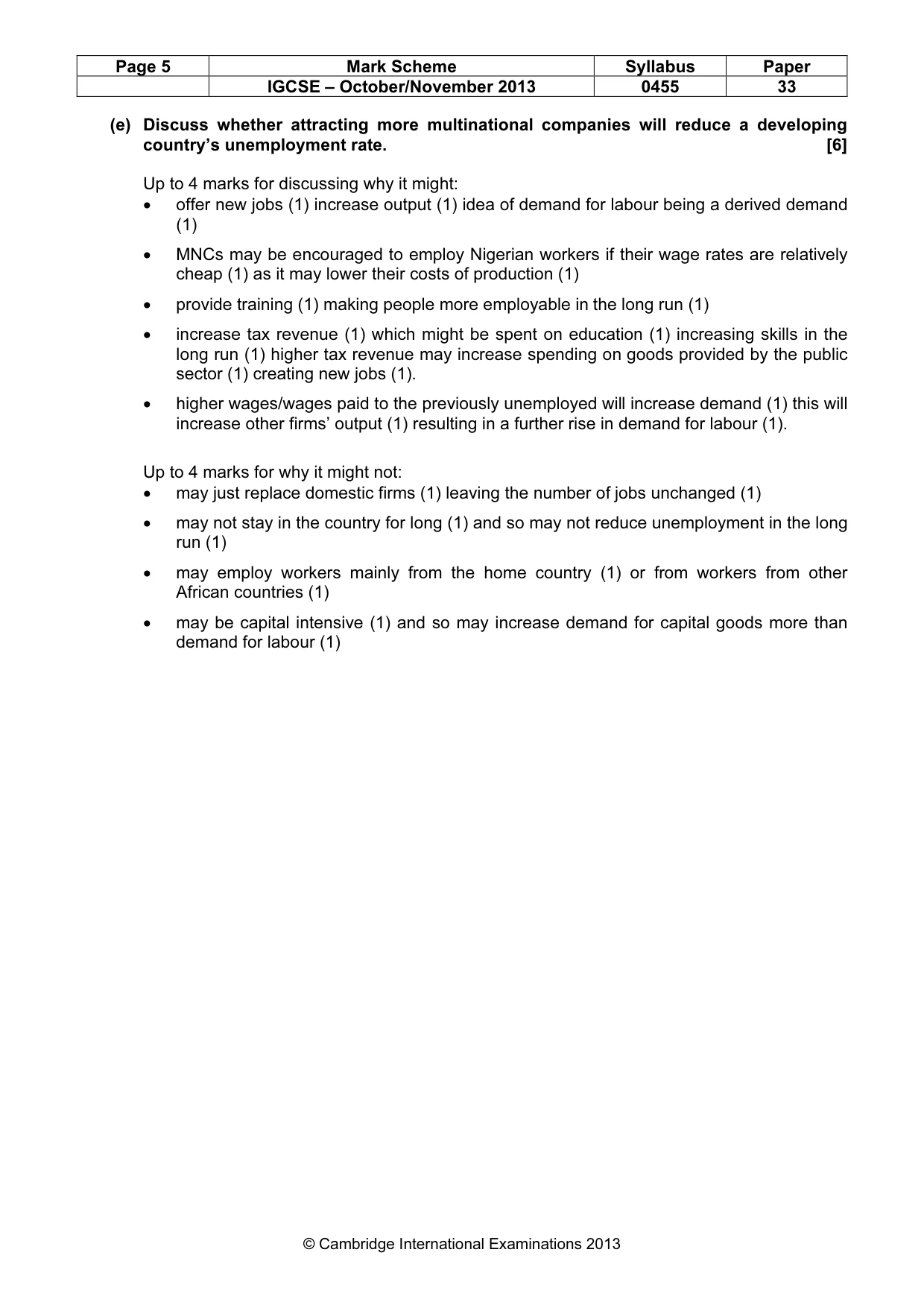
Mark scheme: 2 (a) (i) Define supply-side policy. [2] 2 marks for a policy designed to increase total (aggregate) supply. 1 mark for a policy designed to influence total (aggregate) supply/increase supply. (ii) Explain how two supply-side policy measures that the Nigerian Government implemented may have promoted economic growth. [4] 1 mark each for identifying 2 out of privatisation, government spending on education, government spending on health care, government spending on transport and infrastructure. 1 mark for each of 2 explanations: privatisation may increase efficiency/competition, government education or health care may increase skills/labour productivity, government spending on transport and infrastructure may reduce firms’ costs of production/increase efficiency. (b) Using information from the extract, explain two reasons why Nigeria is classified as a developing country. [4] 1 mark for each of 2 reasons identified i.e.: • heavy reliance on one (primary) industry/source of export revenue/tax revenue • high birth rate • low life expectancy • low investment/out of date technology. 1 mark for each of 2 explanations e.g.: • heavy reliance on one industry/export arises from a lack of industrial diversification/lack of development of secondary and/or tertiary sectors • high birth rate may arise from a number of causes including high infant mortality and the need for children to support their parents in old age • low life expectancy due to poor nutrition and health care • low investment may arise from a lack of savings. (c) Using information from the extract, identify three disadvantages Nigeria may experience as a result of a fall in the demand for oil. [3] 3 from: 1 mark for a fall in tax revenue/budget deficit. 1 mark for a fall in export revenue/deterioration in current account position of the balance of payments. 1 mark for a fall in employment/rise in unemployment. 1 mark for a decrease in GDP/reduction in economic growth. 1 mark for lower investment. (d) Calculate the value of ECOWAS’s GDP in 2010. [1] 1 mark for US$760bn. IGCSE – October/November 2013 0455 33 (e) Discuss whether attracting more multinational companies will reduce a developing country’s unemployment rate. [6] Up to 4 marks for discussing why it might: • offer new jobs (1) increase output (1) idea of demand for labour being a derived demand (1) • MNCs may be encouraged to employ Nigerian workers if their wage rates are relatively cheap (1) as it may lower their costs of production (1) • provide training (1) making people more employable in the long run (1) • increase tax revenue (1) which might be spent on education (1) increasing skills in the long run (1) higher tax revenue may increase spending on goods provided by the public sector (1) creating new jobs (1). • higher wages/wages paid to the previously unemployed will increase demand (1) this will increase other firms’ output (1) resulting in a further rise in demand for labour (1). Up to 4 marks for why it might not: • may just replace domestic firms (1) leaving the number of jobs unchanged (1) • may not stay in the country for long (1) and so may not reduce unemployment in the long run (1) • may employ workers mainly from the home country (1) or from workers from other African countries (1) • may be capital intensive (1) and so may increase demand for capital goods more than demand for labour (1)
What was in this paper
The subtopics covered by these 2 questions, and how many questions each got. Open one in a new tab to see every Cambridge question on it.
What you needed in this session
Cambridge’s own grade thresholds for 2013 Oct/Nov, Paper 3 · Variant 3. A higher threshold means an easier paper — the bar moves with how the cohort did.