Cambridge IGCSE Economics 0455 — 2012 May/June Paper 3 · Variant 1
0455/31/M/J/12 · 2 questions · 40 marks · ≈45 min
The question paper and its mark scheme, free to read here and free to download. This is Cambridge’s own paper, exactly as it was sat.
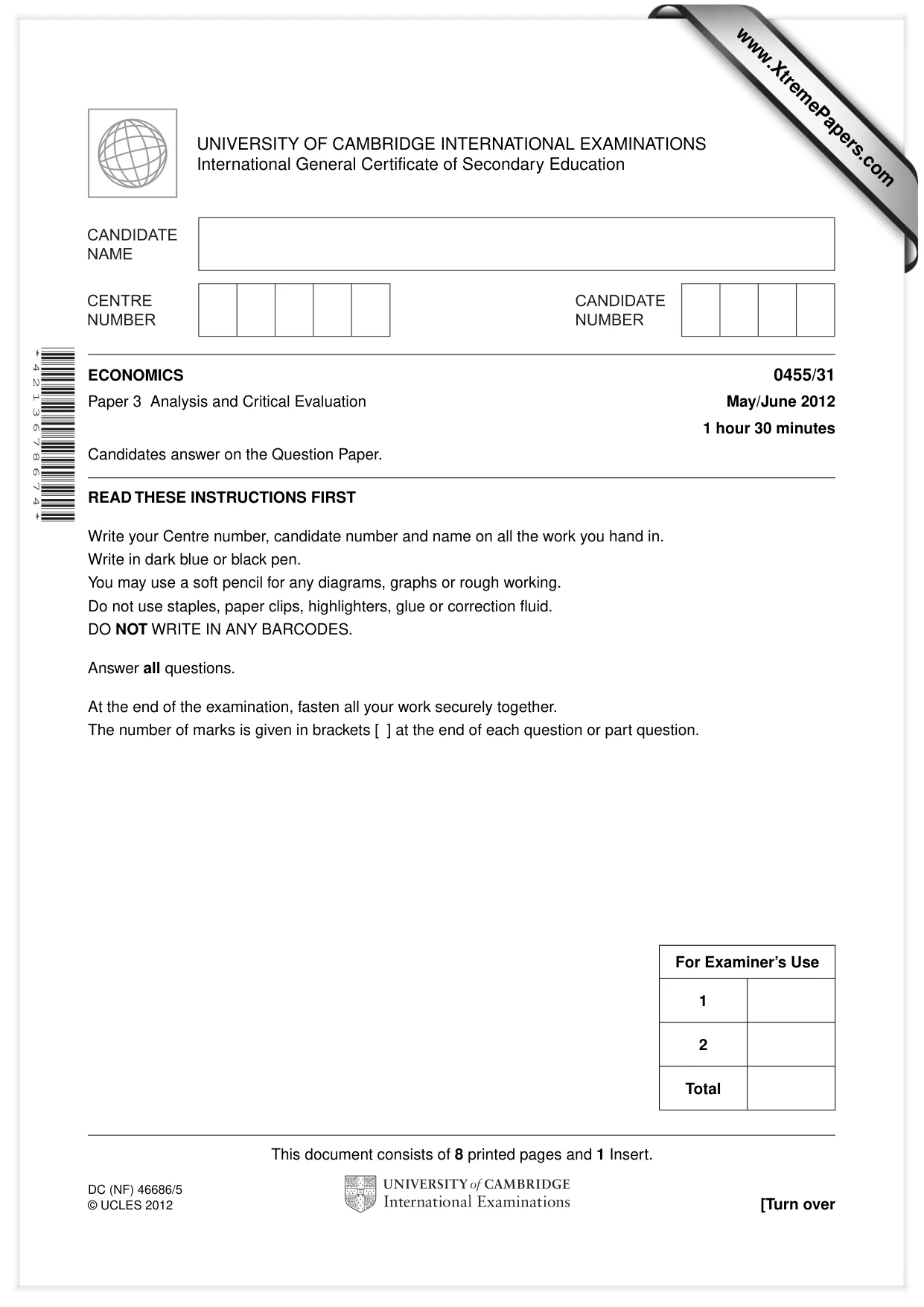
Question paper8 pages
Mark scheme4 pages
Answers below. Sit the paper first if you are practising.
Questions as text
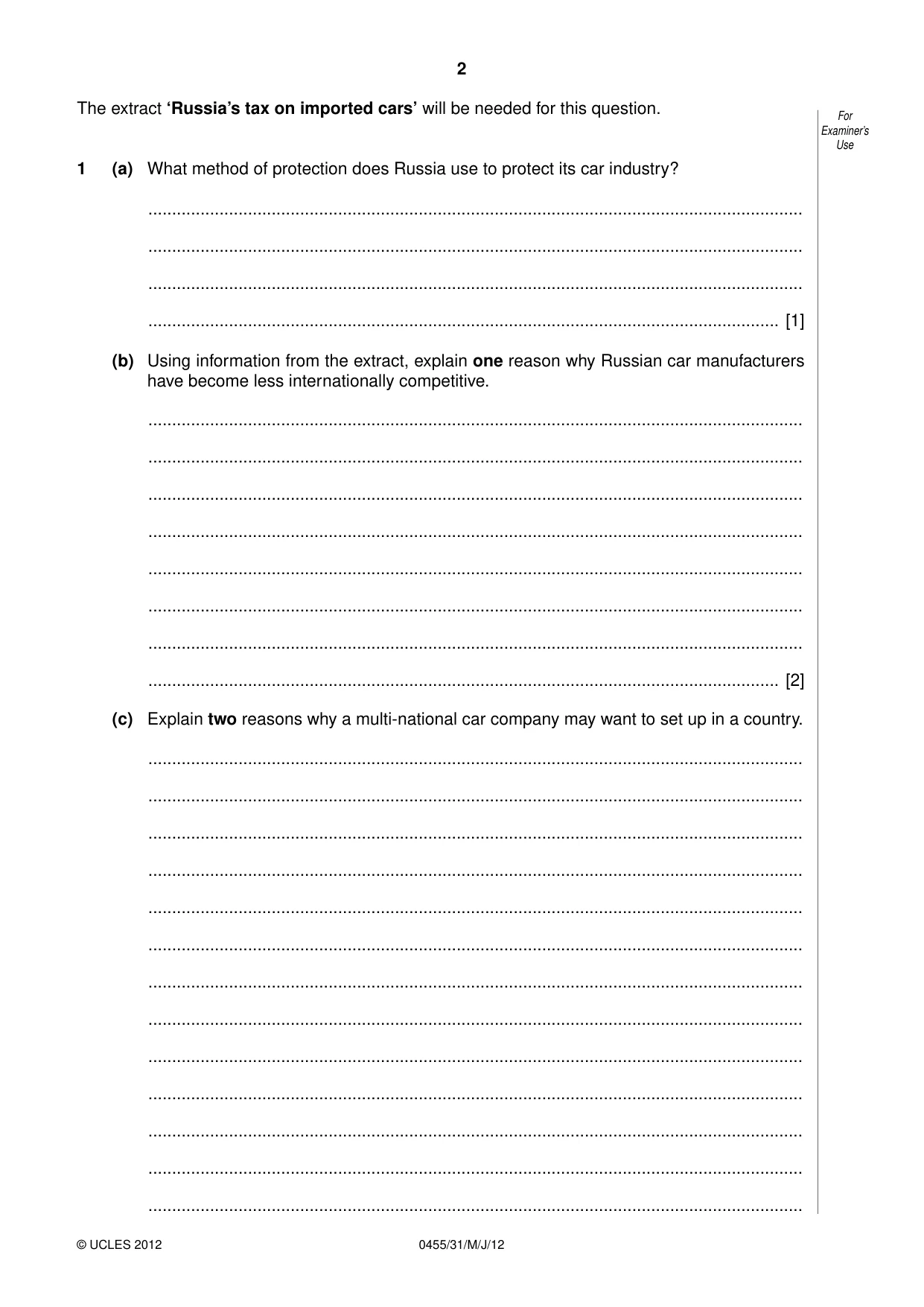
Q1 · What method of protection does Russia use to protect its car industry?
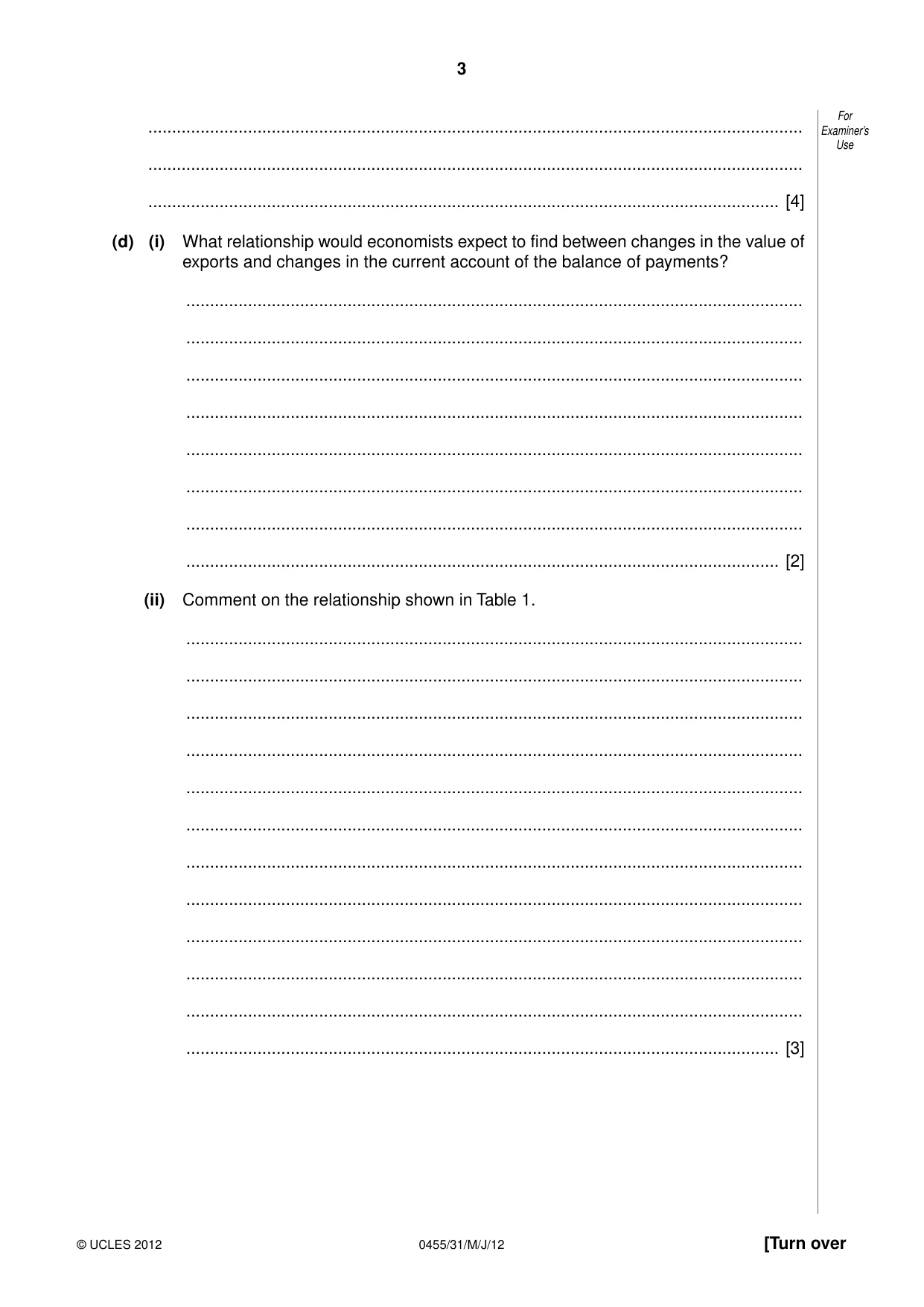
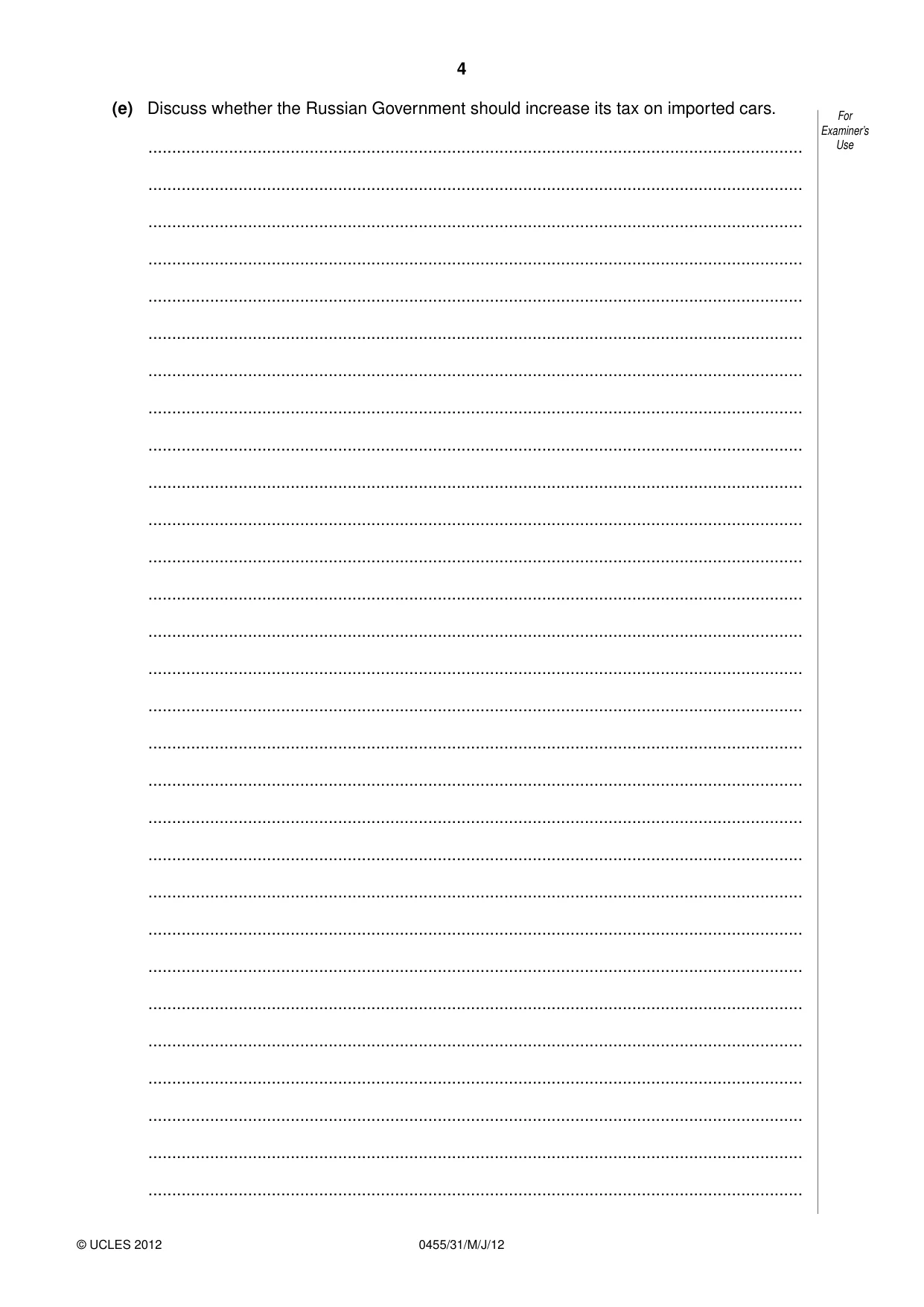
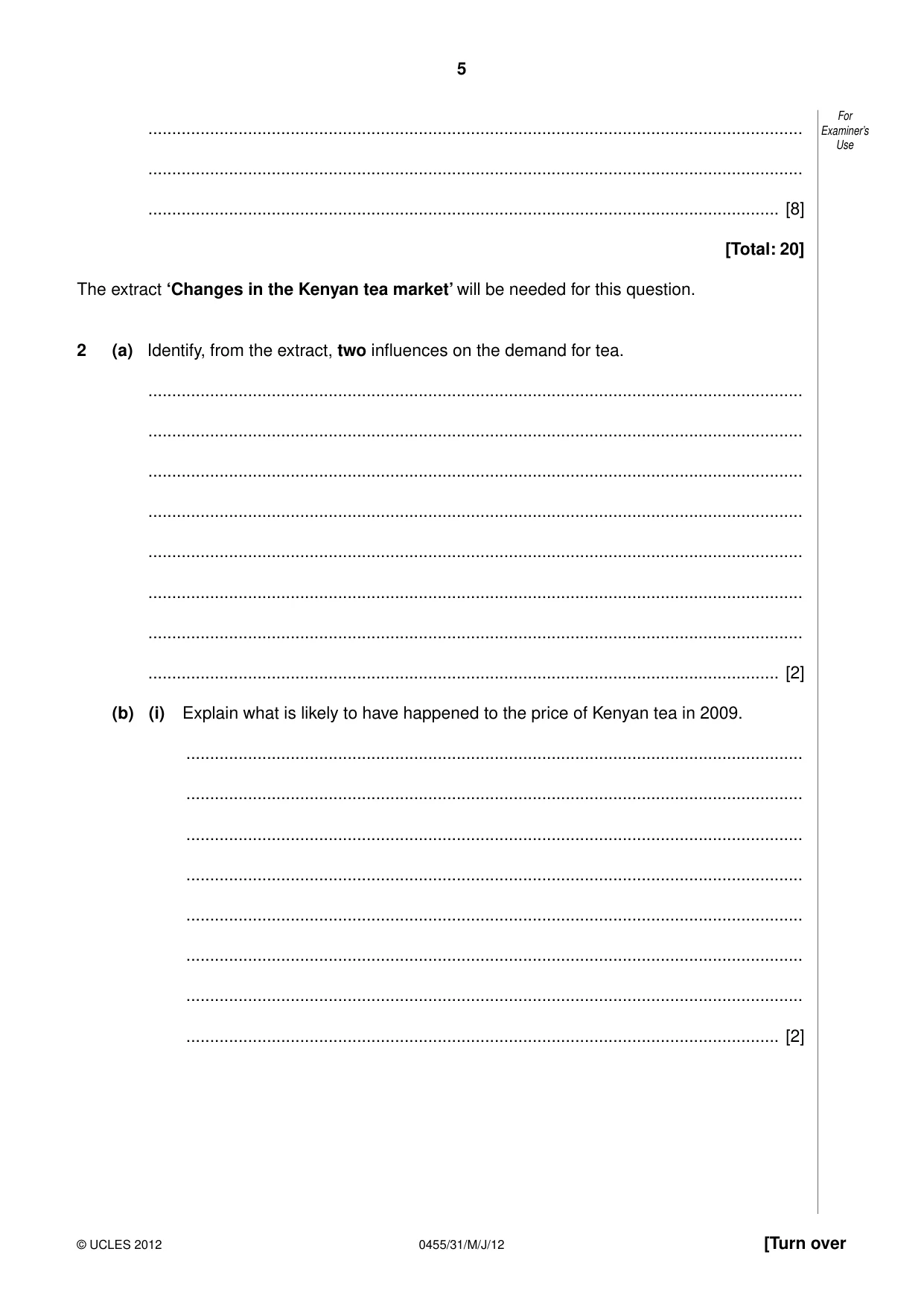
1 (a) What method of protection does Russia use to protect its car industry? .......................................................................................................................................... .......................................................................................................................................... .......................................................................................................................................... ..................................................................................................................................... [1] (b) Using information from the extract, explain one reason why Russian car manufacturers have become less internationally competitive. .......................................................................................................................................... .......................................................................................................................................... .......................................................................................................................................... .......................................................................................................................................... .......................................................................................................................................... .......................................................................................................................................... .......................................................................................................................................... ..................................................................................................................................... [2] (c) Explain two reasons why a multi-national car company may want to set up in a country. .......................................................................................................................................... .......................................................................................................................................... .......................................................................................................................................... .......................................................................................................................................... .......................................................................................................................................... .......................................................................................................................................... .......................................................................................................................................... .......................................................................................................................................... .......................................................................................................................................... .......................................................................................................................................... .......................................................................................................................................... .......................................................................................................................................... .......................................................................................................................................... .......................................................................................................................................... .......................................................................................................................................... ..................................................................................................................................... [4] (d) (i) What relationship would economists expect to find between changes in the value of exports and changes in the current account of the balance of payments? .................................................................................................................................. .................................................................................................................................. .................................................................................................................................. .................................................................................................................................. .................................................................................................................................. .................................................................................................................................. .................................................................................................................................. ............................................................................................................................. [2] (ii) Comment on the relationship shown in Table 1. .................................................................................................................................. .................................................................................................................................. .................................................................................................................................. .................................................................................................................................. .................................................................................................................................. .................................................................................................................................. .................................................................................................................................. .................................................................................................................................. .................................................................................................................................. .................................................................................................................................. .................................................................................................................................. ............................................................................................................................. [3] (e) Discuss whether the Russian Government should increase its tax on imported cars. .......................................................................................................................................... .......................................................................................................................................... .......................................................................................................................................... .......................................................................................................................................... .......................................................................................................................................... .......................................................................................................................................... .......................................................................................................................................... .......................................................................................................................................... .......................................................................................................................................... .......................................................................................................................................... .......................................................................................................................................... .......................................................................................................................................... .......................................................................................................................................... .......................................................................................................................................... .......................................................................................................................................... .......................................................................................................................................... .......................................................................................................................................... .......................................................................................................................................... .......................................................................................................................................... .......................................................................................................................................... .......................................................................................................................................... .......................................................................................................................................... .......................................................................................................................................... .......................................................................................................................................... .......................................................................................................................................... .......................................................................................................................................... .......................................................................................................................................... .......................................................................................................................................... .......................................................................................................................................... .......................................................................................................................................... .......................................................................................................................................... ..................................................................................................................................... [8] [Total: 20] The extract ‘Changes in the Kenyan tea market’ will be needed for this question.
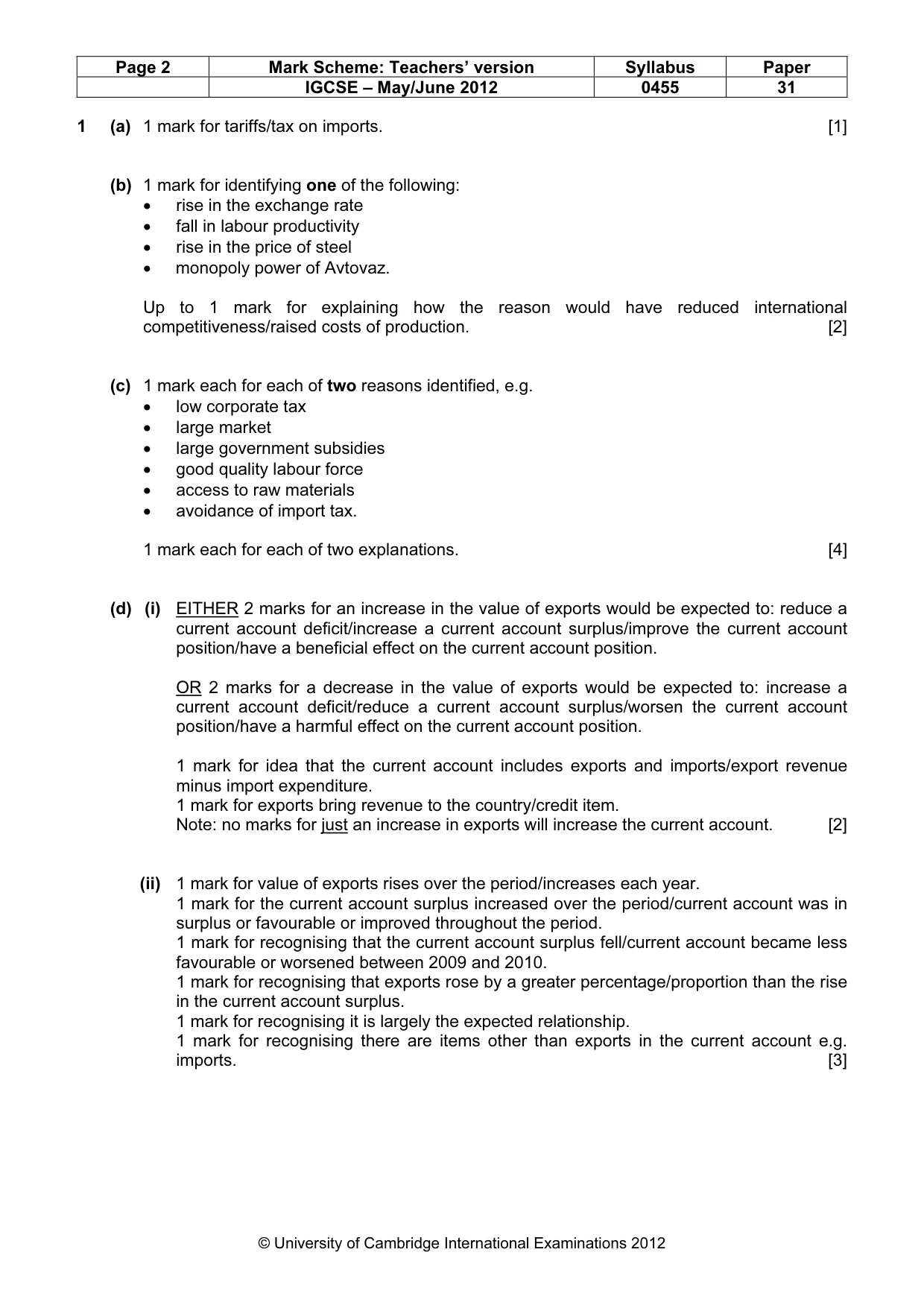
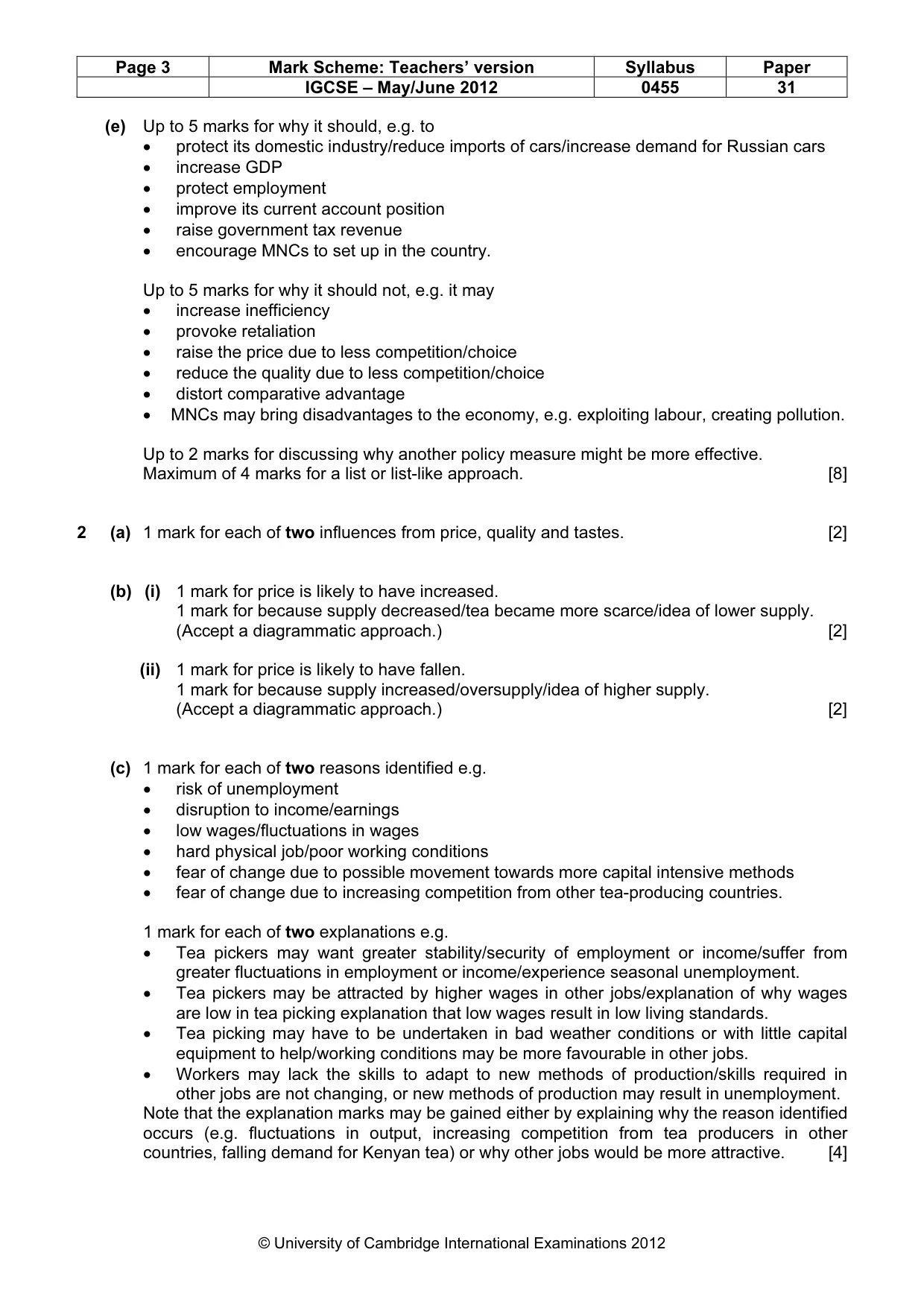
Mark scheme: 1 (a) 1 mark for tariffs/tax on imports. [1] (b) 1 mark for identifying one of the following: • rise in the exchange rate • fall in labour productivity • rise in the price of steel • monopoly power of Avtovaz. Up to 1 mark for explaining how the reason would have reduced international competitiveness/raised costs of production. [2] (c) 1 mark each for each of two reasons identified, e.g. • low corporate tax • large market • large government subsidies • good quality labour force • access to raw materials • avoidance of import tax. 1 mark each for each of two explanations. [4] (d) (i) EITHER 2 marks for an increase in the value of exports would be expected to: reduce a current account deficit/increase a current account surplus/improve the current account position/have a beneficial effect on the current account position. OR 2 marks for a decrease in the value of exports would be expected to: increase a current account deficit/reduce a current account surplus/worsen the current account position/have a harmful effect on the current account position. 1 mark for idea that the current account includes exports and imports/export revenue minus import expenditure. 1 mark for exports bring revenue to the country/credit item. Note: no marks for just an increase in exports will increase the current account. [2] (ii) 1 mark for value of exports rises over the period/increases each year. 1 mark for the current account surplus increased over the period/current account was in surplus or favourable or improved throughout the period. 1 mark for recognising that the current account surplus fell/current account became less favourable or worsened between 2009 and 2010. 1 mark for recognising that exports rose by a greater percentage/proportion than the rise in the current account surplus. 1 mark for recognising it is largely the expected relationship. 1 mark for recognising there are items other than exports in the current account e.g. imports. [3] IGCSE – May/June 2012 0455 31 (e) Up to 5 marks for why it should, e.g. to • protect its domestic industry/reduce imports of cars/increase demand for Russian cars • increase GDP • protect employment • improve its current account position • raise government tax revenue • encourage MNCs to set up in the country. Up to 5 marks for why it should not, e.g. it may • increase inefficiency • provoke retaliation • raise the price due to less competition/choice • reduce the quality due to less competition/choice • distort comparative advantage • MNCs may bring disadvantages to the economy, e.g. exploiting labour, creating pollution. Up to 2 marks for discussing why another policy measure might be more effective. Maximum of 4 marks for a list or list-like approach. [8]
Q2 · Identify, from the extract, two influences on the demand for tea
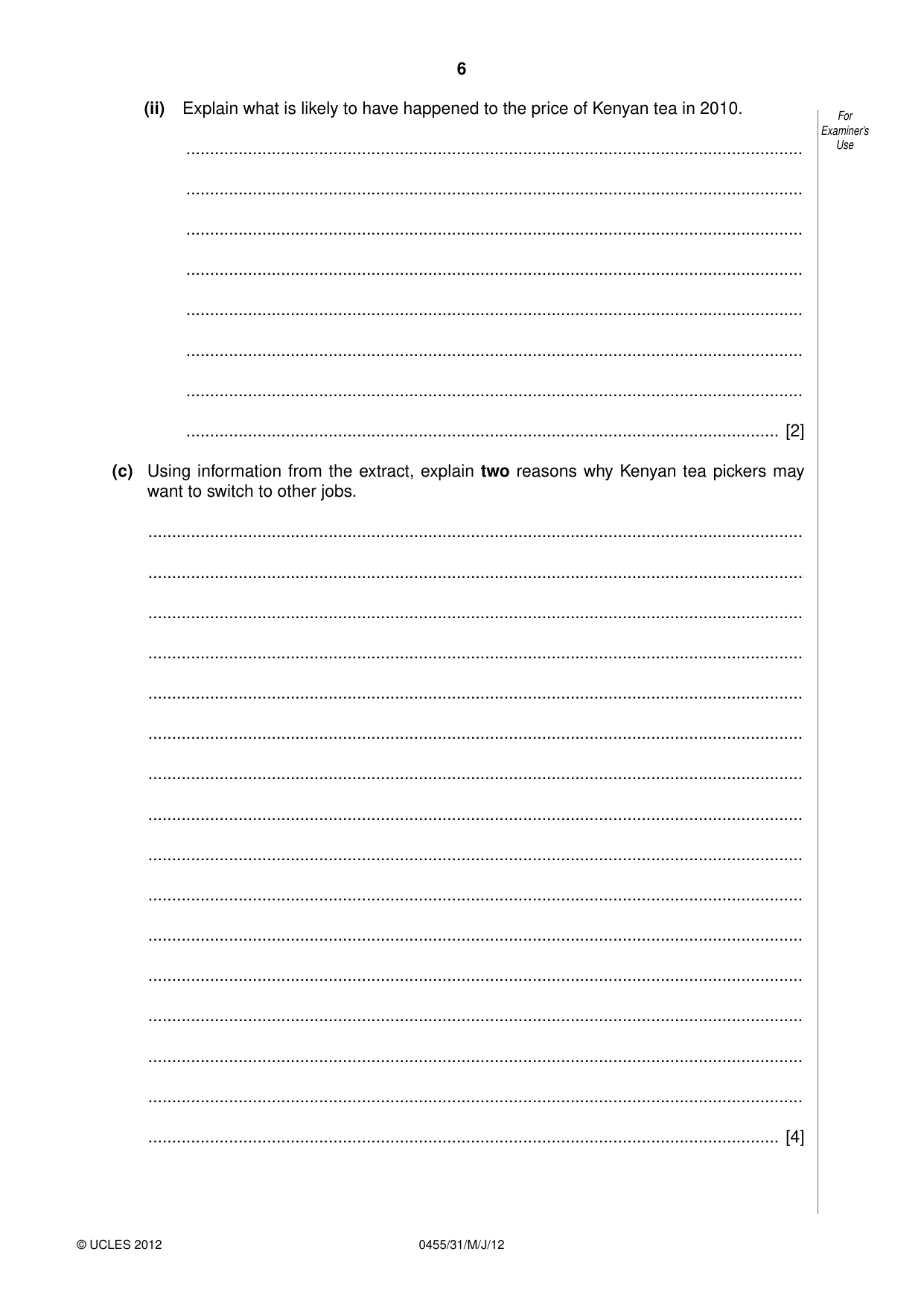
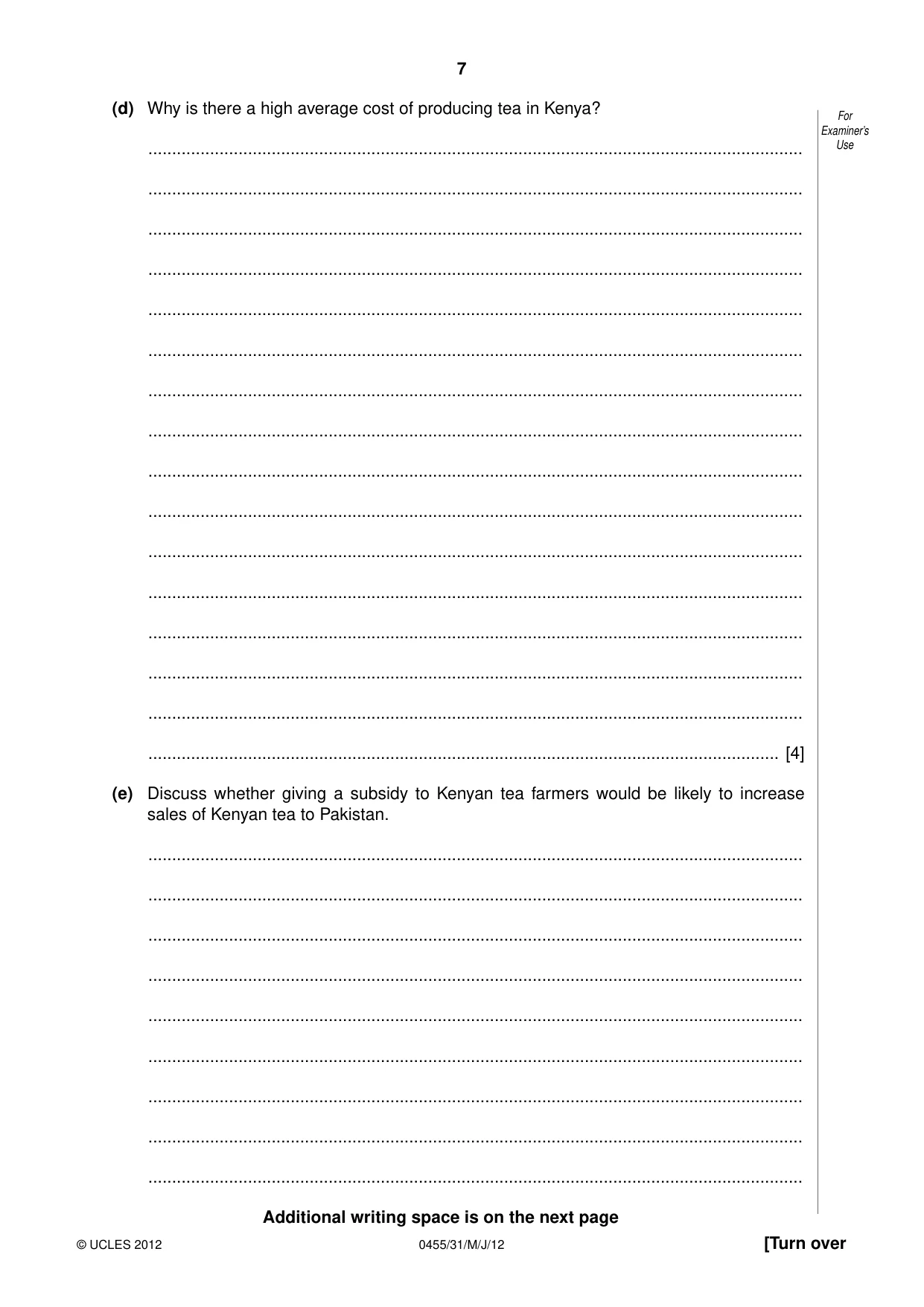
2 (a) Identify, from the extract, two influences on the demand for tea. .......................................................................................................................................... .......................................................................................................................................... .......................................................................................................................................... .......................................................................................................................................... .......................................................................................................................................... .......................................................................................................................................... .......................................................................................................................................... ..................................................................................................................................... [2] (b) (i) Explain what is likely to have happened to the price of Kenyan tea in 2009. .................................................................................................................................. .................................................................................................................................. .................................................................................................................................. .................................................................................................................................. .................................................................................................................................. .................................................................................................................................. .................................................................................................................................. ............................................................................................................................. [2] (ii) Explain what is likely to have happened to the price of Kenyan tea in 2010. .................................................................................................................................. .................................................................................................................................. .................................................................................................................................. .................................................................................................................................. .................................................................................................................................. .................................................................................................................................. .................................................................................................................................. ............................................................................................................................. [2] (c) Using information from the extract, explain two reasons why Kenyan tea pickers may want to switch to other jobs. .......................................................................................................................................... .......................................................................................................................................... .......................................................................................................................................... .......................................................................................................................................... .......................................................................................................................................... .......................................................................................................................................... .......................................................................................................................................... .......................................................................................................................................... .......................................................................................................................................... .......................................................................................................................................... .......................................................................................................................................... .......................................................................................................................................... .......................................................................................................................................... .......................................................................................................................................... .......................................................................................................................................... ..................................................................................................................................... [4] (d) Why is there a high average cost of producing tea in Kenya? .......................................................................................................................................... .......................................................................................................................................... .......................................................................................................................................... .......................................................................................................................................... .......................................................................................................................................... .......................................................................................................................................... .......................................................................................................................................... .......................................................................................................................................... .......................................................................................................................................... .......................................................................................................................................... .......................................................................................................................................... .......................................................................................................................................... .......................................................................................................................................... .......................................................................................................................................... .......................................................................................................................................... ..................................................................................................................................... [4] (e) Discuss whether giving a subsidy to Kenyan tea farmers would be likely to increase sales of Kenyan tea to Pakistan. .......................................................................................................................................... .......................................................................................................................................... .......................................................................................................................................... .......................................................................................................................................... .......................................................................................................................................... .......................................................................................................................................... .......................................................................................................................................... .......................................................................................................................................... ..........................................................................................................................................
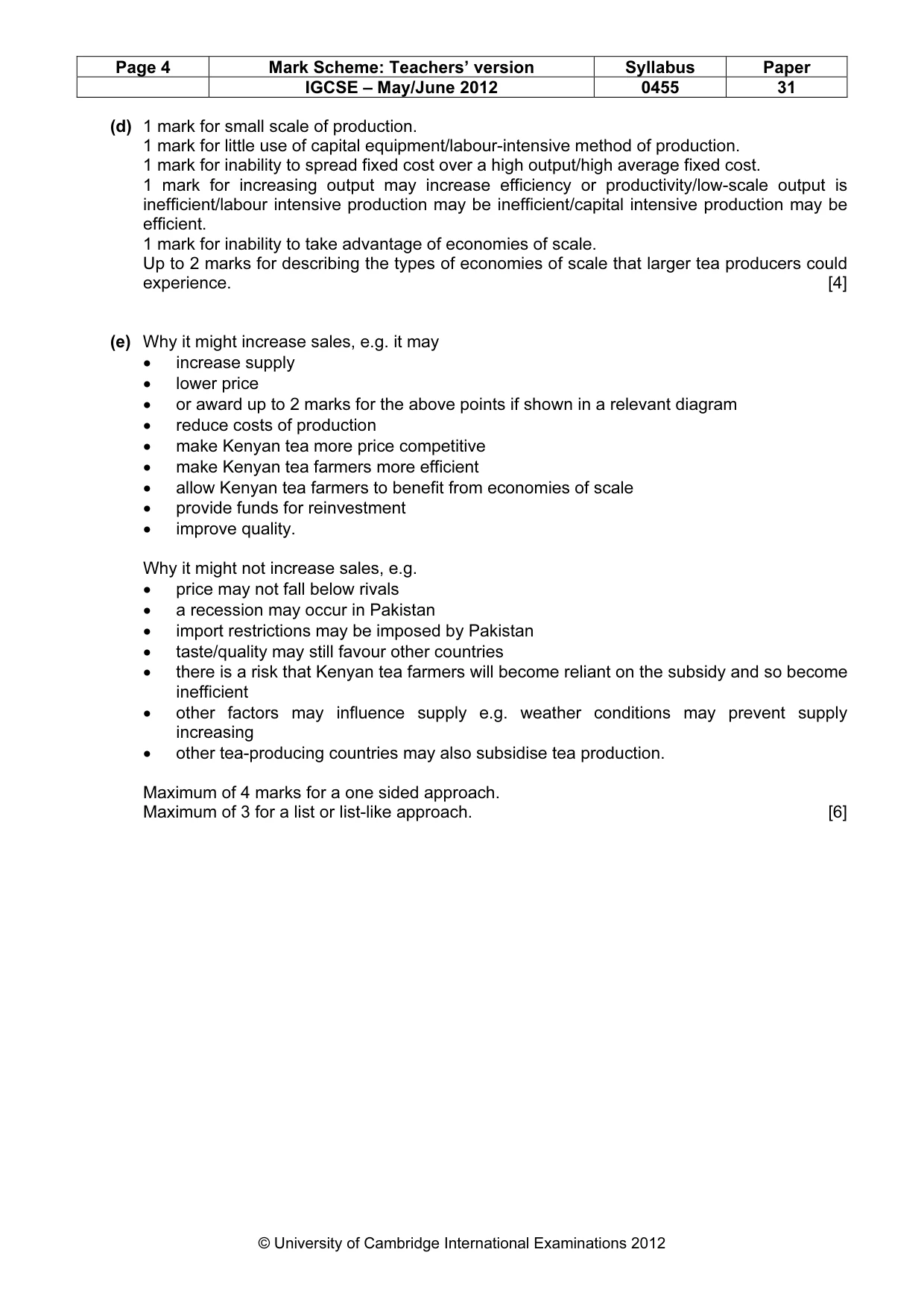
Mark scheme: 2 (a) 1 mark for each of two influences from price, quality and tastes. [2] (b) (i) 1 mark for price is likely to have increased. 1 mark for because supply decreased/tea became more scarce/idea of lower supply. (Accept a diagrammatic approach.) [2] (ii) 1 mark for price is likely to have fallen. 1 mark for because supply increased/oversupply/idea of higher supply. (Accept a diagrammatic approach.) [2] (c) 1 mark for each of two reasons identified e.g. • risk of unemployment • disruption to income/earnings • low wages/fluctuations in wages • hard physical job/poor working conditions • fear of change due to possible movement towards more capital intensive methods • fear of change due to increasing competition from other tea-producing countries. 1 mark for each of two explanations e.g. • Tea pickers may want greater stability/security of employment or income/suffer from greater fluctuations in employment or income/experience seasonal unemployment. • Tea pickers may be attracted by higher wages in other jobs/explanation of why wages are low in tea picking explanation that low wages result in low living standards. • Tea picking may have to be undertaken in bad weather conditions or with little capital equipment to help/working conditions may be more favourable in other jobs. • Workers may lack the skills to adapt to new methods of production/skills required in other jobs are not changing, or new methods of production may result in unemployment. Note that the explanation marks may be gained either by explaining why the reason identified occurs (e.g. fluctuations in output, increasing competition from tea producers in other countries, falling demand for Kenyan tea) or why other jobs would be more attractive. [4] IGCSE – May/June 2012 0455 31 (d) 1 mark for small scale of production. 1 mark for little use of capital equipment/labour-intensive method of production. 1 mark for inability to spread fixed cost over a high output/high average fixed cost. 1 mark for increasing output may increase efficiency or productivity/low-scale output is inefficient/labour intensive production may be inefficient/capital intensive production may be efficient. 1 mark for inability to take advantage of economies of scale. Up to 2 marks for describing the types of economies of scale that larger tea producers could experience. [4] (e) Why it might increase sales, e.g. it may • increase supply • lower price • or award up to 2 marks for the above points if shown in a relevant diagram • reduce costs of production • make Kenyan tea more price competitive • make Kenyan tea farmers more efficient • allow Kenyan tea farmers to benefit from economies of scale • provide funds for reinvestment • improve quality. Why it might not increase sales, e.g. • price may not fall below rivals • a recession may occur in Pakistan • import restrictions may be imposed by Pakistan • taste/quality may still favour other countries • there is a risk that Kenyan tea farmers will become reliant on the subsidy and so become inefficient • other factors may influence supply e.g. weather conditions may prevent supply increasing • other tea-producing countries may also subsidise tea production. Maximum of 4 marks for a one sided approach. Maximum of 3 for a list or list-like approach. [6]
What was in this paper
The subtopics covered by these 2 questions, and how many questions each got. Open one in a new tab to see every Cambridge question on it.
What you needed in this session
Cambridge’s own grade thresholds for 2012 May/June, Paper 3 · Variant 1. A higher threshold means an easier paper — the bar moves with how the cohort did.