Cambridge IGCSE Economics 0455 — 2013 May/June Paper 3 · Variant 1
0455/31/M/J/13 · 2 questions · 40 marks · ≈45 min
The question paper and its mark scheme, free to read here and free to download. This is Cambridge’s own paper, exactly as it was sat.
Question paper8 pages
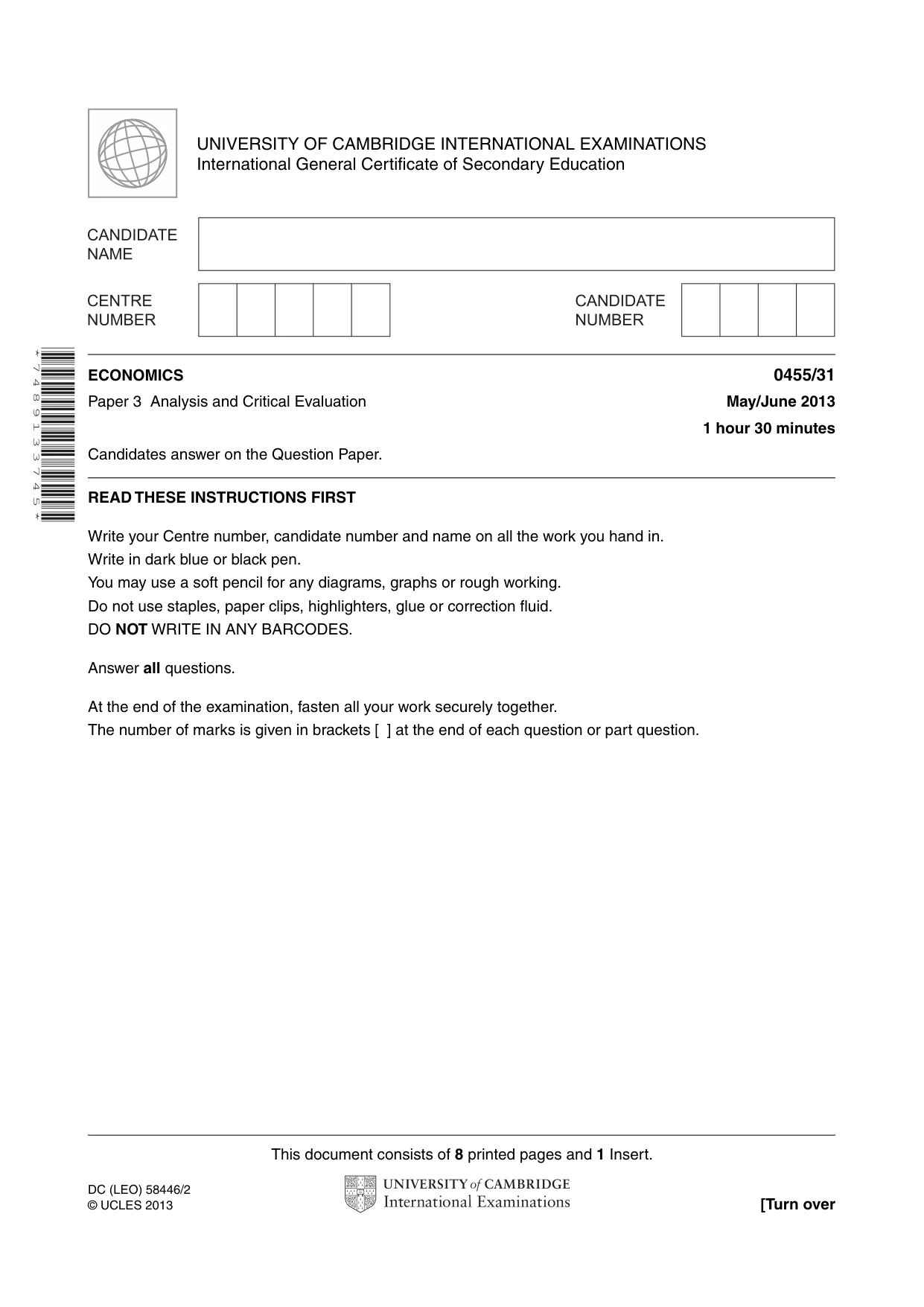
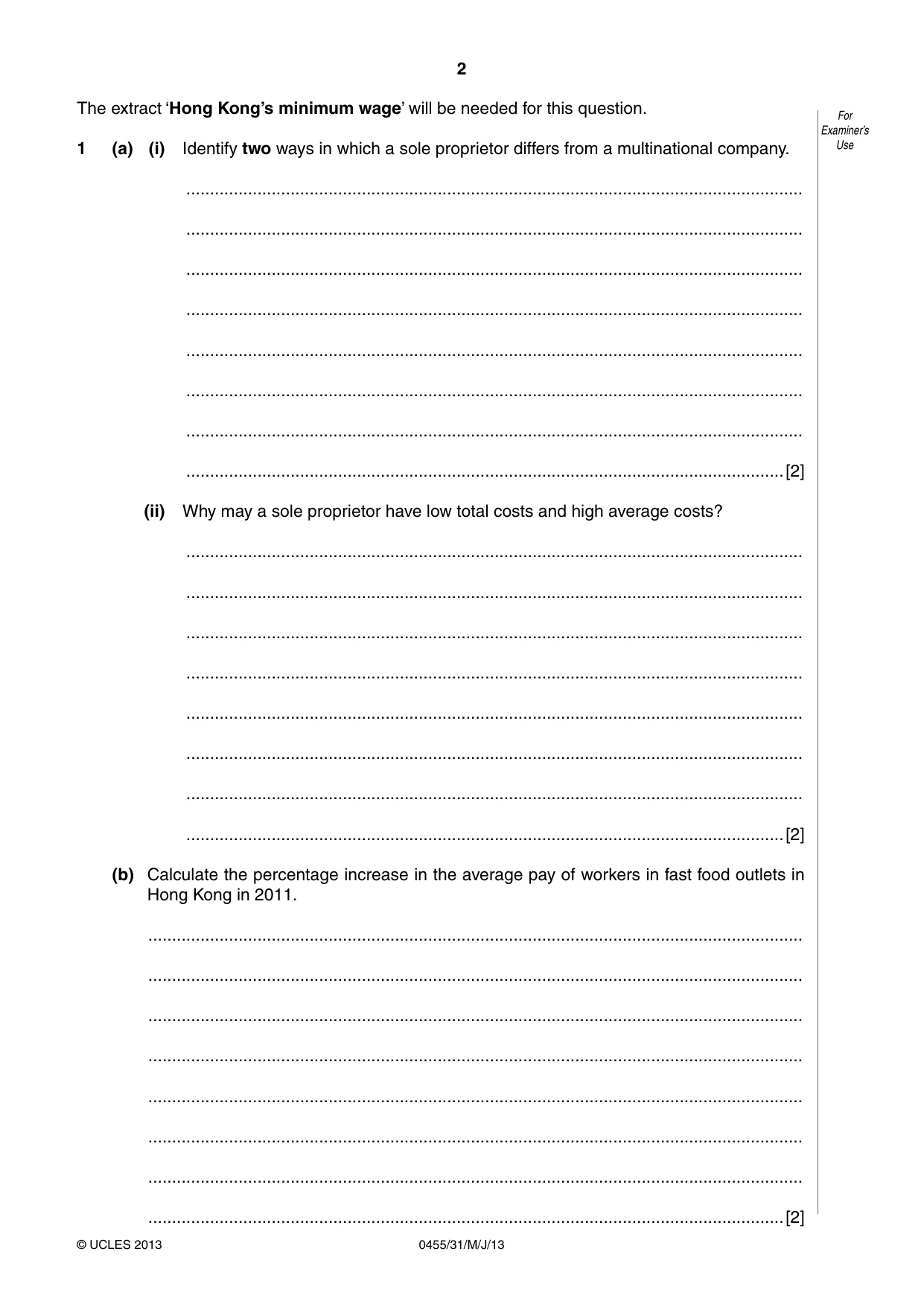
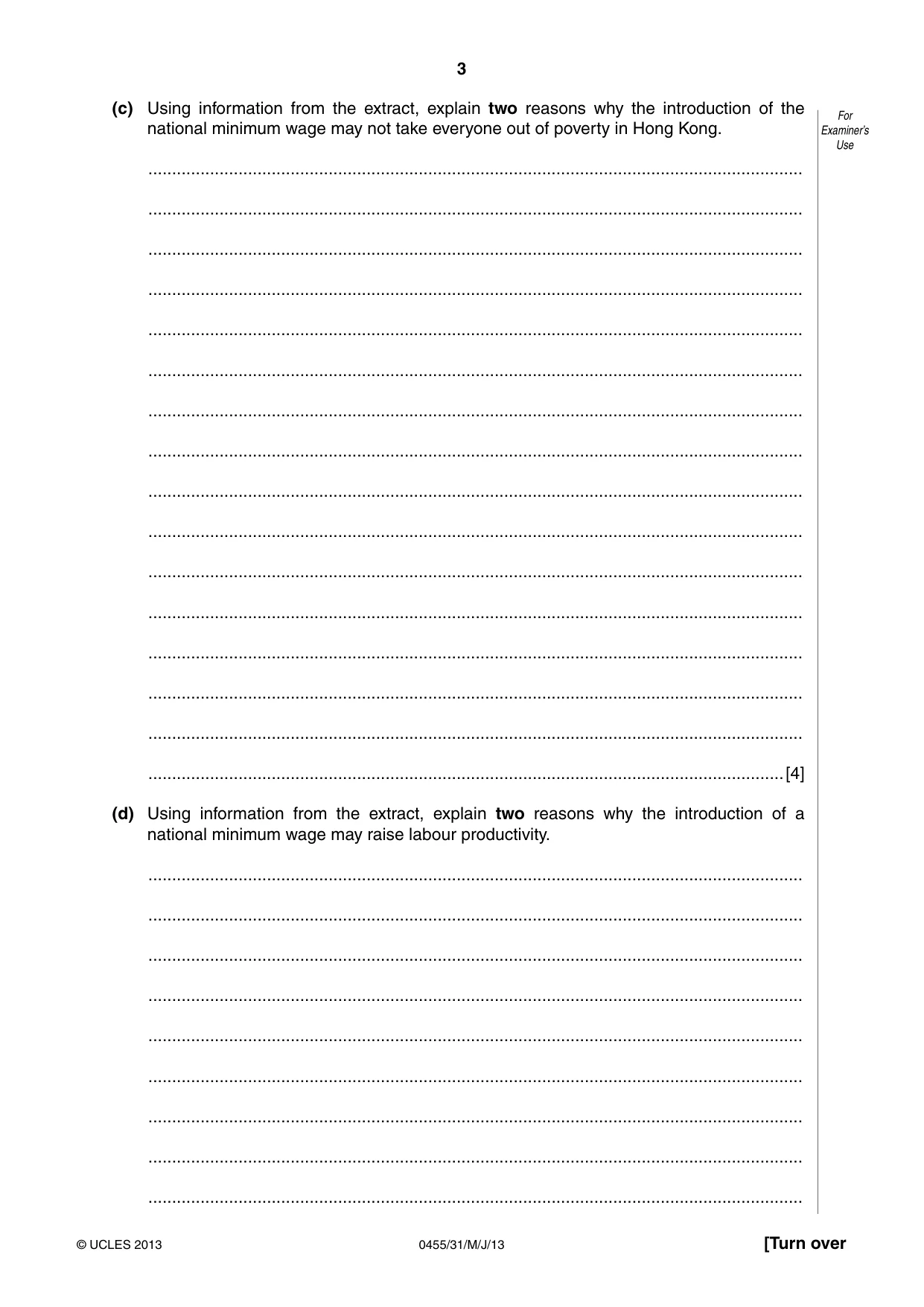
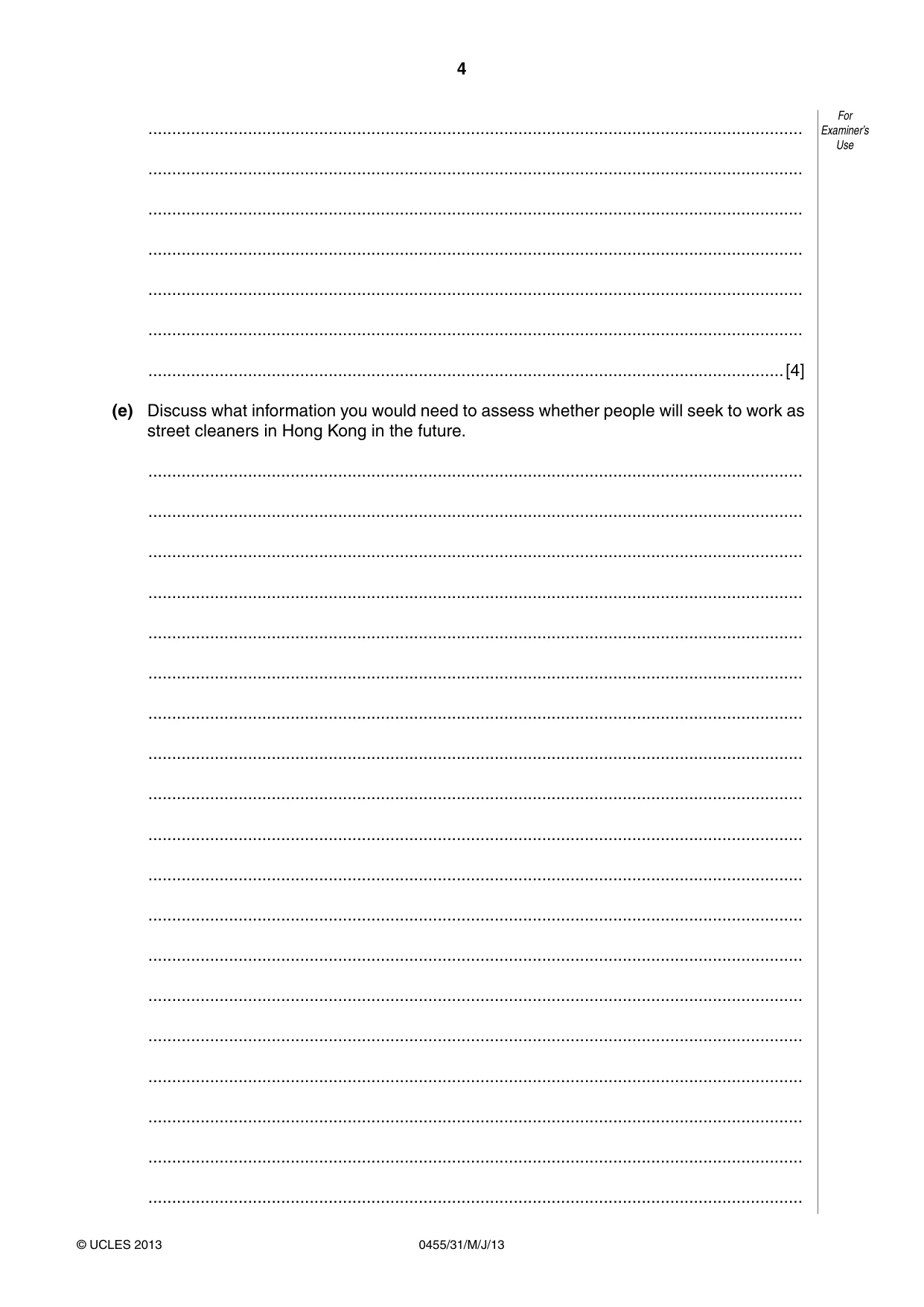
Mark scheme5 pages
Answers below. Sit the paper first if you are practising.
Questions as text
Q1 · Identify two ways in which a sole proprietor differs from a multinational company
1 (a) (i) Identify two ways in which a sole proprietor differs from a multinational company. .................................................................................................................................. .................................................................................................................................. .................................................................................................................................. .................................................................................................................................. .................................................................................................................................. .................................................................................................................................. .................................................................................................................................. ..............................................................................................................................[2] (ii) Why may a sole proprietor have low total costs and high average costs? .................................................................................................................................. .................................................................................................................................. .................................................................................................................................. .................................................................................................................................. .................................................................................................................................. .................................................................................................................................. .................................................................................................................................. ..............................................................................................................................[2] (b) Calculate the percentage increase in the average pay of workers in fast food outlets in Hong Kong in 2011. .......................................................................................................................................... .......................................................................................................................................... .......................................................................................................................................... .......................................................................................................................................... .......................................................................................................................................... .......................................................................................................................................... .......................................................................................................................................... ......................................................................................................................................[2] (c) Using information from the extract, explain two reasons why the introduction of the national minimum wage may not take everyone out of poverty in Hong Kong. .......................................................................................................................................... .......................................................................................................................................... .......................................................................................................................................... .......................................................................................................................................... .......................................................................................................................................... .......................................................................................................................................... .......................................................................................................................................... .......................................................................................................................................... .......................................................................................................................................... .......................................................................................................................................... .......................................................................................................................................... .......................................................................................................................................... .......................................................................................................................................... .......................................................................................................................................... .......................................................................................................................................... ......................................................................................................................................[4] (d) Using information from the extract, explain two reasons why the introduction of a national minimum wage may raise labour productivity. .......................................................................................................................................... .......................................................................................................................................... .......................................................................................................................................... .......................................................................................................................................... .......................................................................................................................................... .......................................................................................................................................... .......................................................................................................................................... .......................................................................................................................................... .......................................................................................................................................... .......................................................................................................................................... .......................................................................................................................................... .......................................................................................................................................... .......................................................................................................................................... .......................................................................................................................................... .......................................................................................................................................... ......................................................................................................................................[4] (e) Discuss what information you would need to assess whether people will seek to work as street cleaners in Hong Kong in the future. .......................................................................................................................................... .......................................................................................................................................... .......................................................................................................................................... .......................................................................................................................................... .......................................................................................................................................... .......................................................................................................................................... .......................................................................................................................................... .......................................................................................................................................... .......................................................................................................................................... .......................................................................................................................................... .......................................................................................................................................... .......................................................................................................................................... .......................................................................................................................................... .......................................................................................................................................... .......................................................................................................................................... .......................................................................................................................................... .......................................................................................................................................... .......................................................................................................................................... .......................................................................................................................................... .......................................................................................................................................... .......................................................................................................................................... .......................................................................................................................................... .......................................................................................................................................... ......................................................................................................................................[6] [Total: 20] The extract ‘Does Iran’s future lie with oil?’ will be needed for this question.
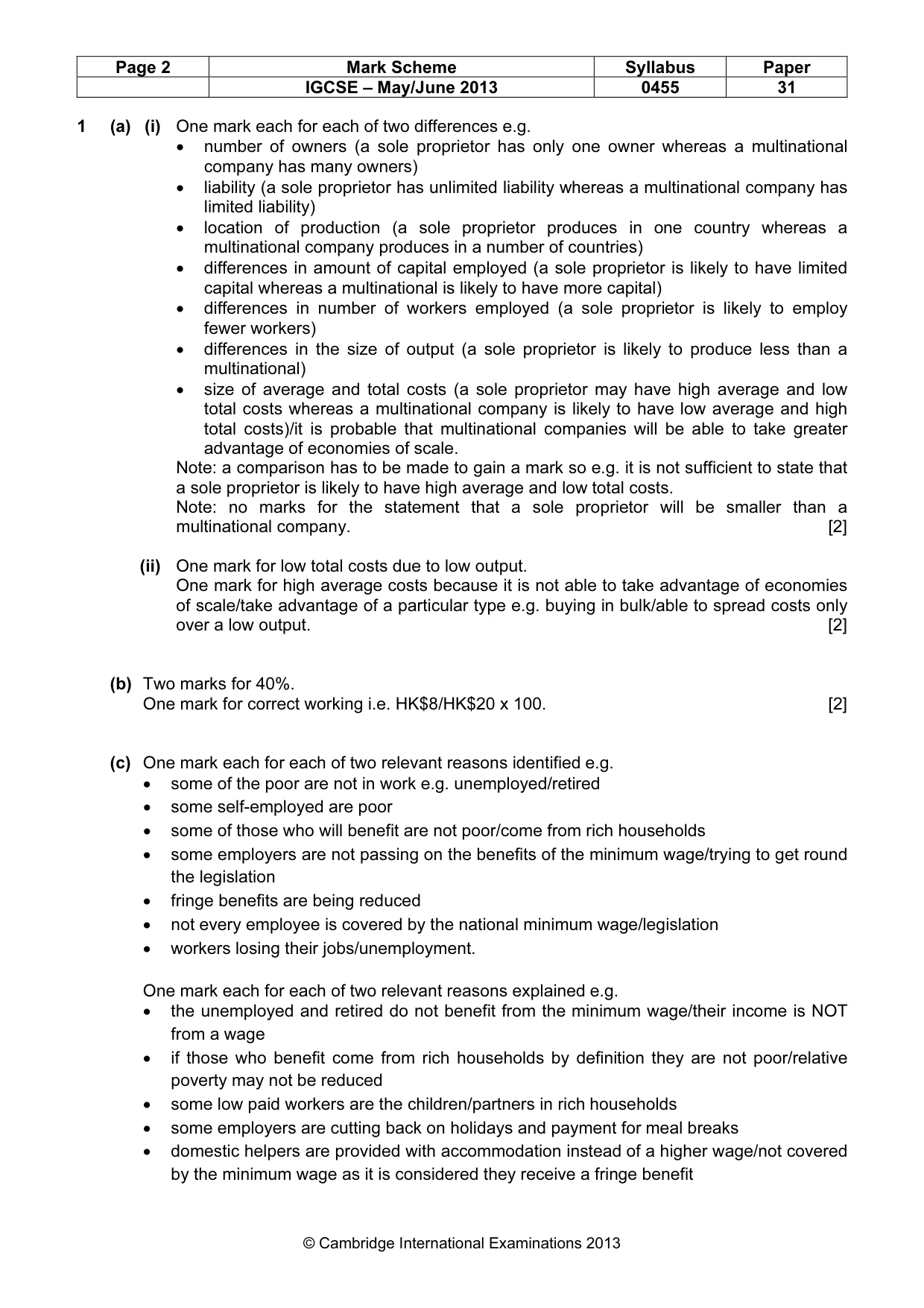
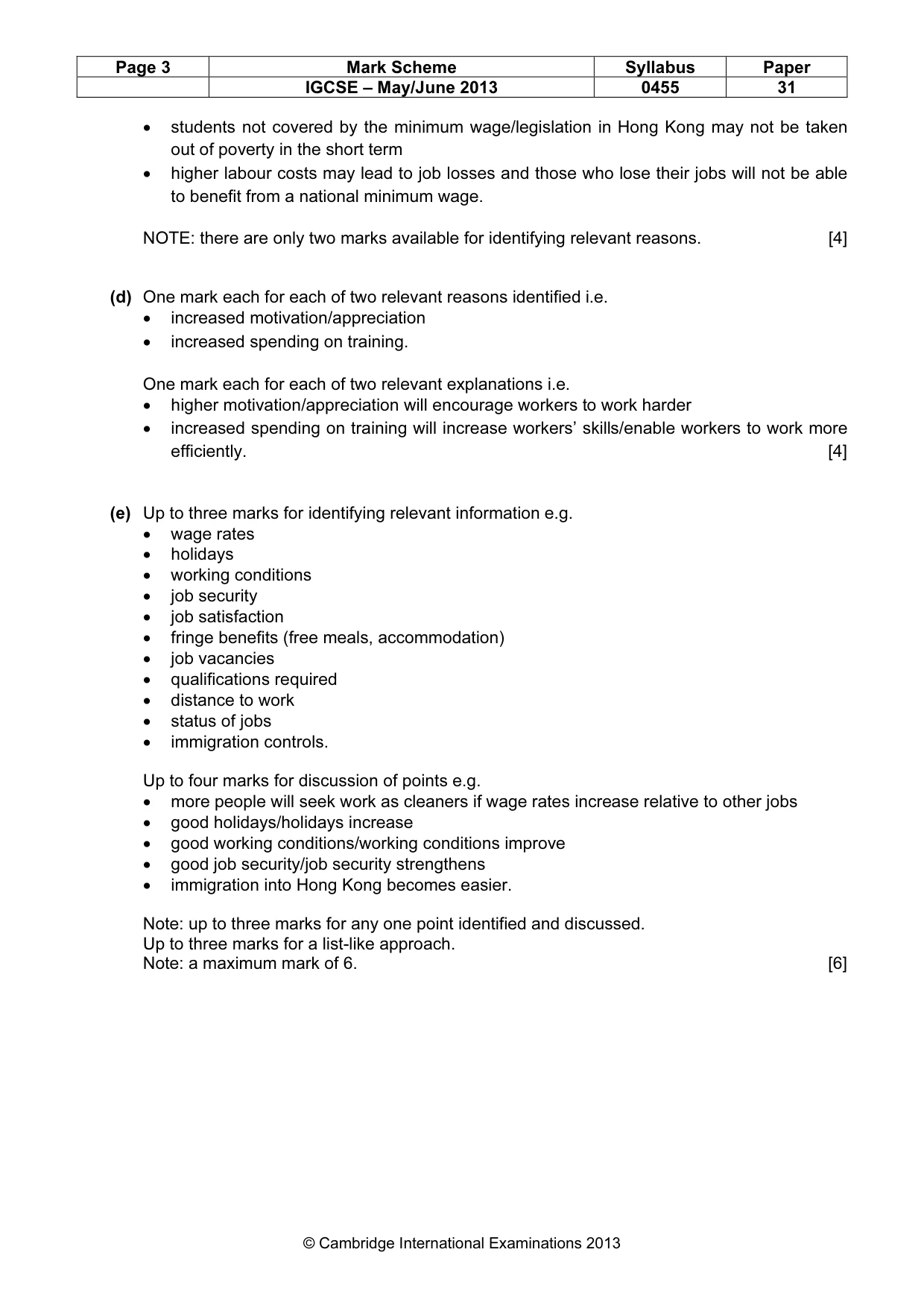
Mark scheme: 1 (a) (i) One mark each for each of two differences e.g. • number of owners (a sole proprietor has only one owner whereas a multinational company has many owners) • liability (a sole proprietor has unlimited liability whereas a multinational company has limited liability) • location of production (a sole proprietor produces in one country whereas a multinational company produces in a number of countries) • differences in amount of capital employed (a sole proprietor is likely to have limited capital whereas a multinational is likely to have more capital) • differences in number of workers employed (a sole proprietor is likely to employ fewer workers) • differences in the size of output (a sole proprietor is likely to produce less than a multinational) • size of average and total costs (a sole proprietor may have high average and low total costs whereas a multinational company is likely to have low average and high total costs)/it is probable that multinational companies will be able to take greater advantage of economies of scale. Note: a comparison has to be made to gain a mark so e.g. it is not sufficient to state that a sole proprietor is likely to have high average and low total costs. Note: no marks for the statement that a sole proprietor will be smaller than a multinational company. [2] (ii) One mark for low total costs due to low output. One mark for high average costs because it is not able to take advantage of economies of scale/take advantage of a particular type e.g. buying in bulk/able to spread costs only over a low output. [2] (b) Two marks for 40%. One mark for correct working i.e. HK$8/HK$20 x 100. [2] (c) One mark each for each of two relevant reasons identified e.g. • some of the poor are not in work e.g. unemployed/retired • some self-employed are poor • some of those who will benefit are not poor/come from rich households • some employers are not passing on the benefits of the minimum wage/trying to get round the legislation • fringe benefits are being reduced • not every employee is covered by the national minimum wage/legislation • workers losing their jobs/unemployment. One mark each for each of two relevant reasons explained e.g. • the unemployed and retired do not benefit from the minimum wage/their income is NOT from a wage • if those who benefit come from rich households by definition they are not poor/relative poverty may not be reduced • some low paid workers are the children/partners in rich households • some employers are cutting back on holidays and payment for meal breaks • domestic helpers are provided with accommodation instead of a higher wage/not covered by the minimum wage as it is considered they receive a fringe benefit IGCSE – May/June 2013 0455 31 • students not covered by the minimum wage/legislation in Hong Kong may not be taken out of poverty in the short term • higher labour costs may lead to job losses and those who lose their jobs will not be able to benefit from a national minimum wage. NOTE: there are only two marks available for identifying relevant reasons. [4] (d) One mark each for each of two relevant reasons identified i.e. • increased motivation/appreciation • increased spending on training. One mark each for each of two relevant explanations i.e. • higher motivation/appreciation will encourage workers to work harder • increased spending on training will increase workers’ skills/enable workers to work more efficiently. [4] (e) Up to three marks for identifying relevant information e.g. • wage rates • holidays • working conditions • job security • job satisfaction • fringe benefits (free meals, accommodation) • job vacancies • qualifications required • distance to work • status of jobs • immigration controls. Up to four marks for discussion of points e.g. • more people will seek work as cleaners if wage rates increase relative to other jobs • good holidays/holidays increase • good working conditions/working conditions improve • good job security/job security strengthens • immigration into Hong Kong becomes easier. Note: up to three marks for any one point identified and discussed. Up to three marks for a list-like approach. Note: a maximum mark of 6. [6] IGCSE – May/June 2013 0455 31
Q2 · What percentage of the global output of oil in 2010 was produced by Iran?
2 (a) What percentage of the global output of oil in 2010 was produced by Iran? .......................................................................................................................................... .......................................................................................................................................... .......................................................................................................................................... .......................................................................................................................................... .......................................................................................................................................... .......................................................................................................................................... .......................................................................................................................................... ......................................................................................................................................[2] (b) Using information from the extract, comment on whether Iran was producing on or inside its production possibility curve in 2011. .......................................................................................................................................... .......................................................................................................................................... .......................................................................................................................................... .......................................................................................................................................... .......................................................................................................................................... .......................................................................................................................................... .......................................................................................................................................... ......................................................................................................................................[2] (c) Using the data in Table 1, and assuming production continues at the same rate as in 2010, state which country would (i) run out of reserves first, .................................................................................................................................. .................................................................................................................................. .................................................................................................................................. ..............................................................................................................................[1] (ii) be able to continue to produce oil for the longest period of time. .................................................................................................................................. .................................................................................................................................. .................................................................................................................................. ..............................................................................................................................[1] (d) Explain two reasons why governments impose taxes. .......................................................................................................................................... .......................................................................................................................................... .......................................................................................................................................... .......................................................................................................................................... .......................................................................................................................................... .......................................................................................................................................... .......................................................................................................................................... .......................................................................................................................................... .......................................................................................................................................... .......................................................................................................................................... .......................................................................................................................................... .......................................................................................................................................... .......................................................................................................................................... .......................................................................................................................................... .......................................................................................................................................... ......................................................................................................................................[4] (e) Using a demand and supply diagram, explain the effect of an increase in income on the market for a luxury product. .......................................................................................................................................... .......................................................................................................................................... .......................................................................................................................................... .......................................................................................................................................... .......................................................................................................................................... .......................................................................................................................................... .......................................................................................................................................... .......................................................................................................................................... .......................................................................................................................................... .......................................................................................................................................... .......................................................................................................................................... .......................................................................................................................................... .......................................................................................................................................... .......................................................................................................................................... .......................................................................................................................................... ......................................................................................................................................[4] Question 2(f) is on the next page.
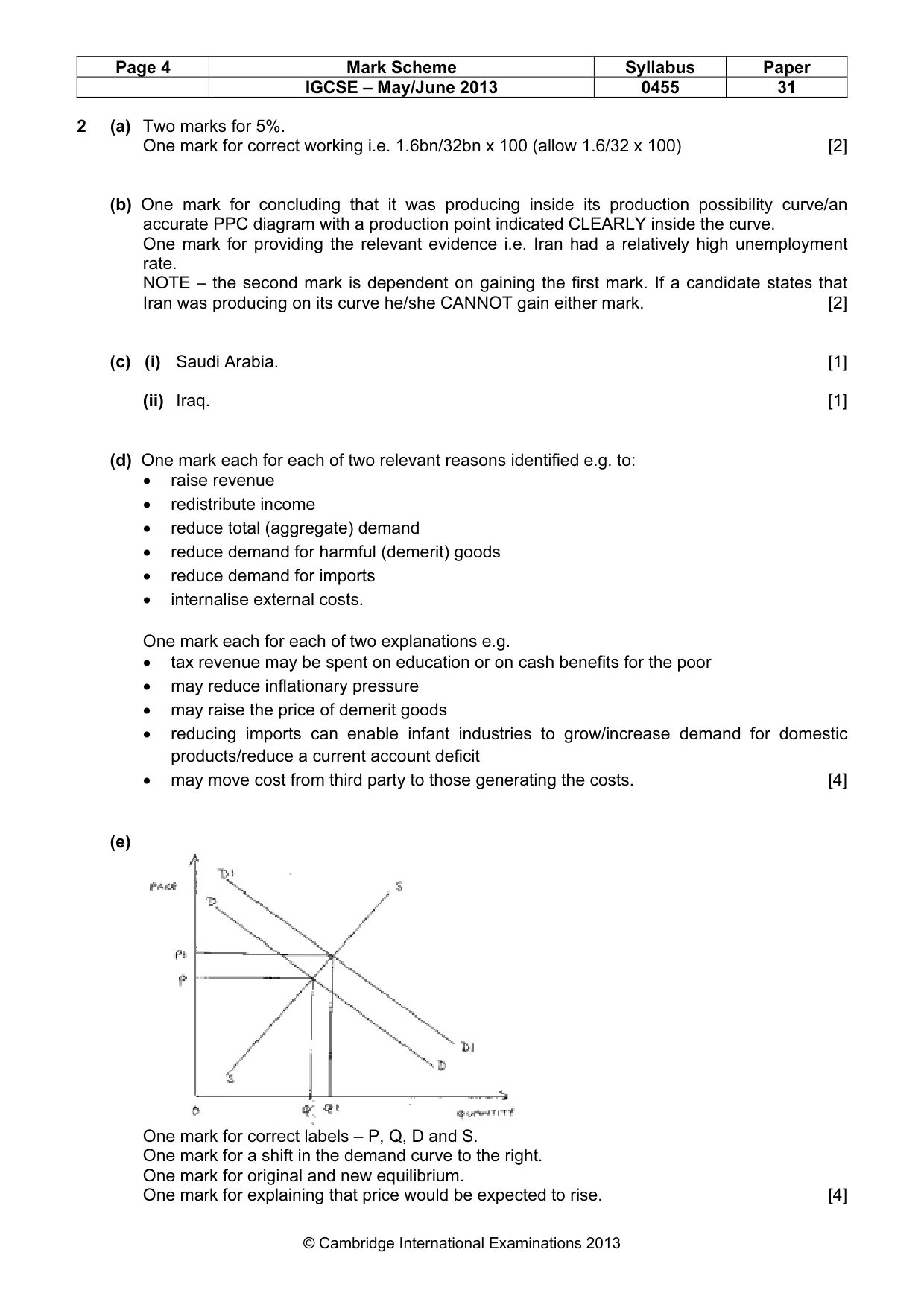
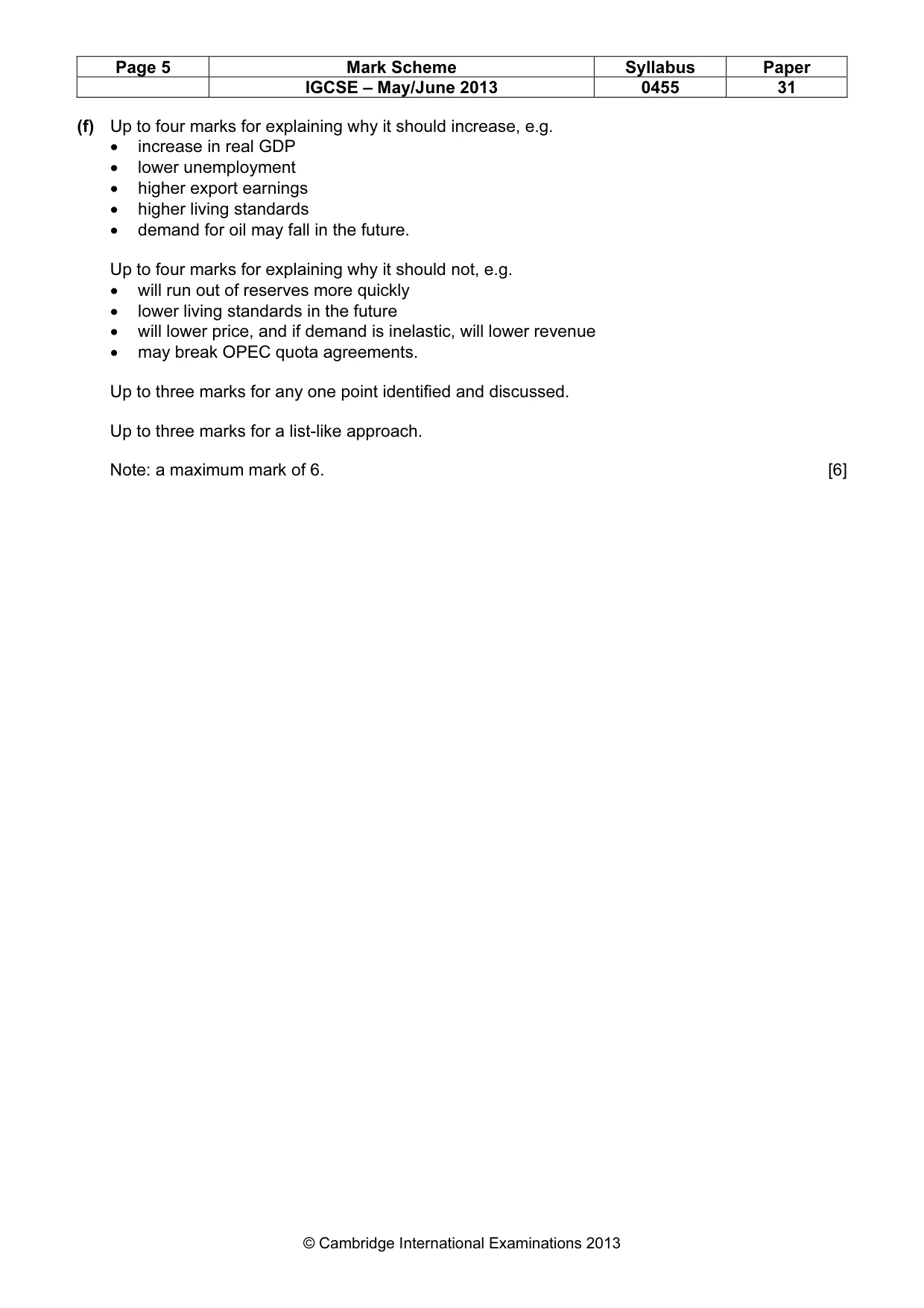
Mark scheme: 2 (a) Two marks for 5%. One mark for correct working i.e. 1.6bn/32bn x 100 (allow 1.6/32 x 100) [2] (b) One mark for concluding that it was producing inside its production possibility curve/an accurate PPC diagram with a production point indicated CLEARLY inside the curve. One mark for providing the relevant evidence i.e. Iran had a relatively high unemployment rate. NOTE – the second mark is dependent on gaining the first mark. If a candidate states that Iran was producing on its curve he/she CANNOT gain either mark. [2] (c) (i) Saudi Arabia. [1] (ii) Iraq. [1] (d) One mark each for each of two relevant reasons identified e.g. to: • raise revenue • redistribute income • reduce total (aggregate) demand • reduce demand for harmful (demerit) goods • reduce demand for imports • internalise external costs. One mark each for each of two explanations e.g. • tax revenue may be spent on education or on cash benefits for the poor • may reduce inflationary pressure • may raise the price of demerit goods • reducing imports can enable infant industries to grow/increase demand for domestic products/reduce a current account deficit • may move cost from third party to those generating the costs. [4] (e) One mark for correct labels – P, Q, D and S. One mark for a shift in the demand curve to the right. One mark for original and new equilibrium. One mark for explaining that price would be expected to rise. [4] IGCSE – May/June 2013 0455 31 (f) Up to four marks for explaining why it should increase, e.g. • increase in real GDP • lower unemployment • higher export earnings • higher living standards • demand for oil may fall in the future. Up to four marks for explaining why it should not, e.g. • will run out of reserves more quickly • lower living standards in the future • will lower price, and if demand is inelastic, will lower revenue • may break OPEC quota agreements. Up to three marks for any one point identified and discussed. Up to three marks for a list-like approach. Note: a maximum mark of 6. [6]
What was in this paper
The subtopics covered by these 2 questions, and how many questions each got. Open one in a new tab to see every Cambridge question on it.
What you needed in this session
Cambridge’s own grade thresholds for 2013 May/June, Paper 3 · Variant 1. A higher threshold means an easier paper — the bar moves with how the cohort did.