Cambridge IGCSE Economics 0455 — 2011 Oct/Nov Paper 3 · Variant 1
0455/31/O/N/11 · 2 questions · 40 marks · ≈45 min
The question paper and its mark scheme, free to read here and free to download. This is Cambridge’s own paper, exactly as it was sat.
Question paper8 pages
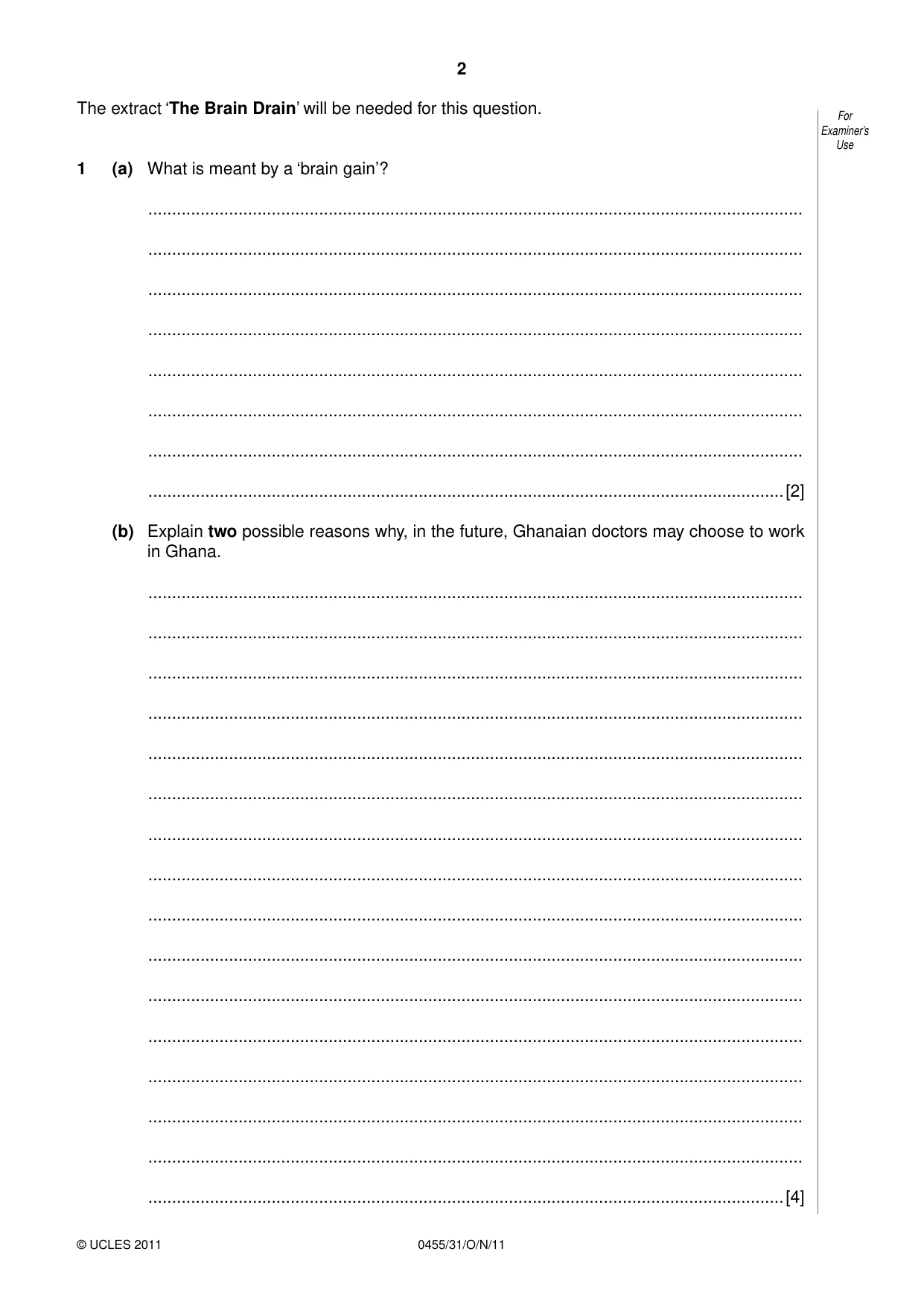
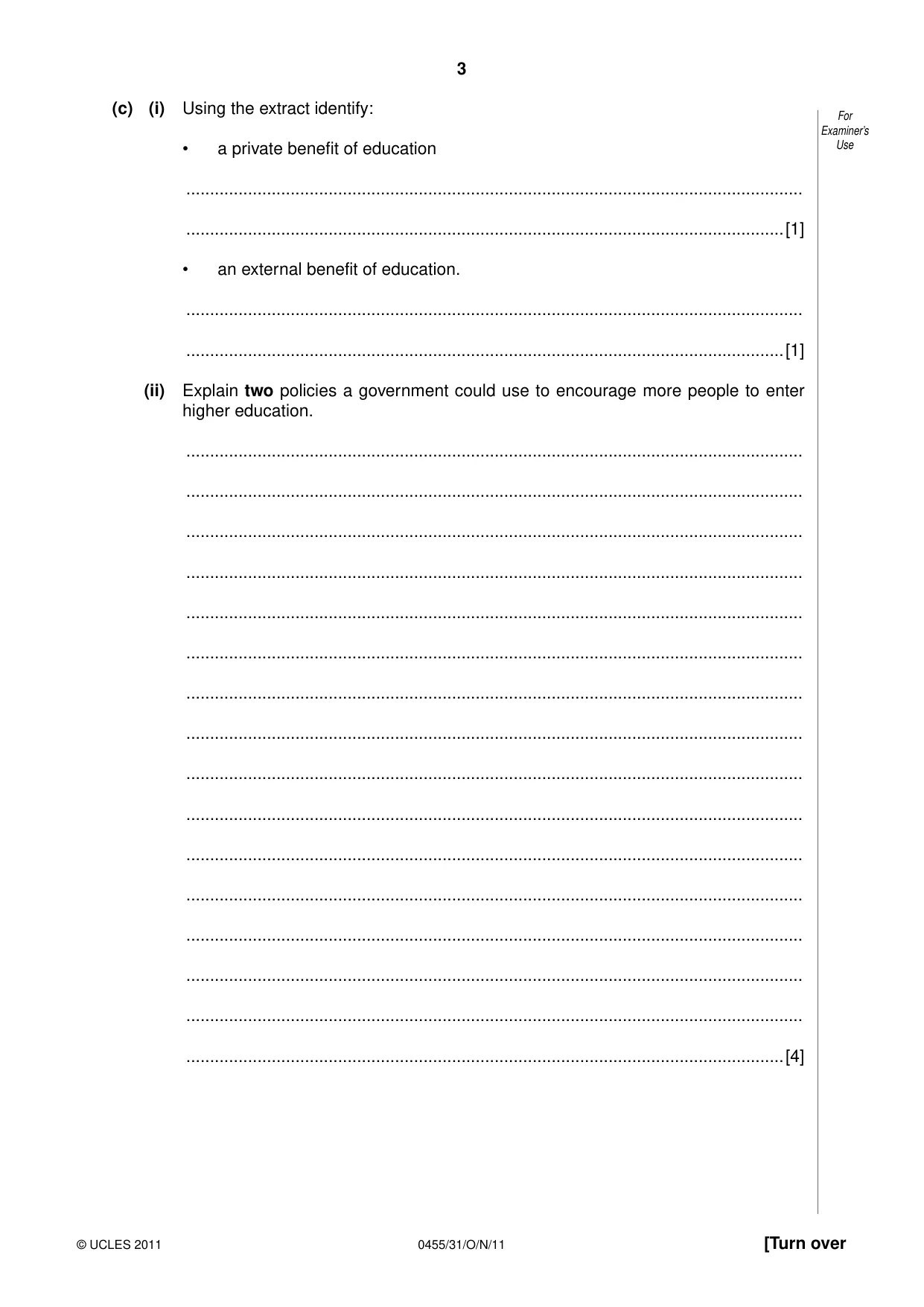
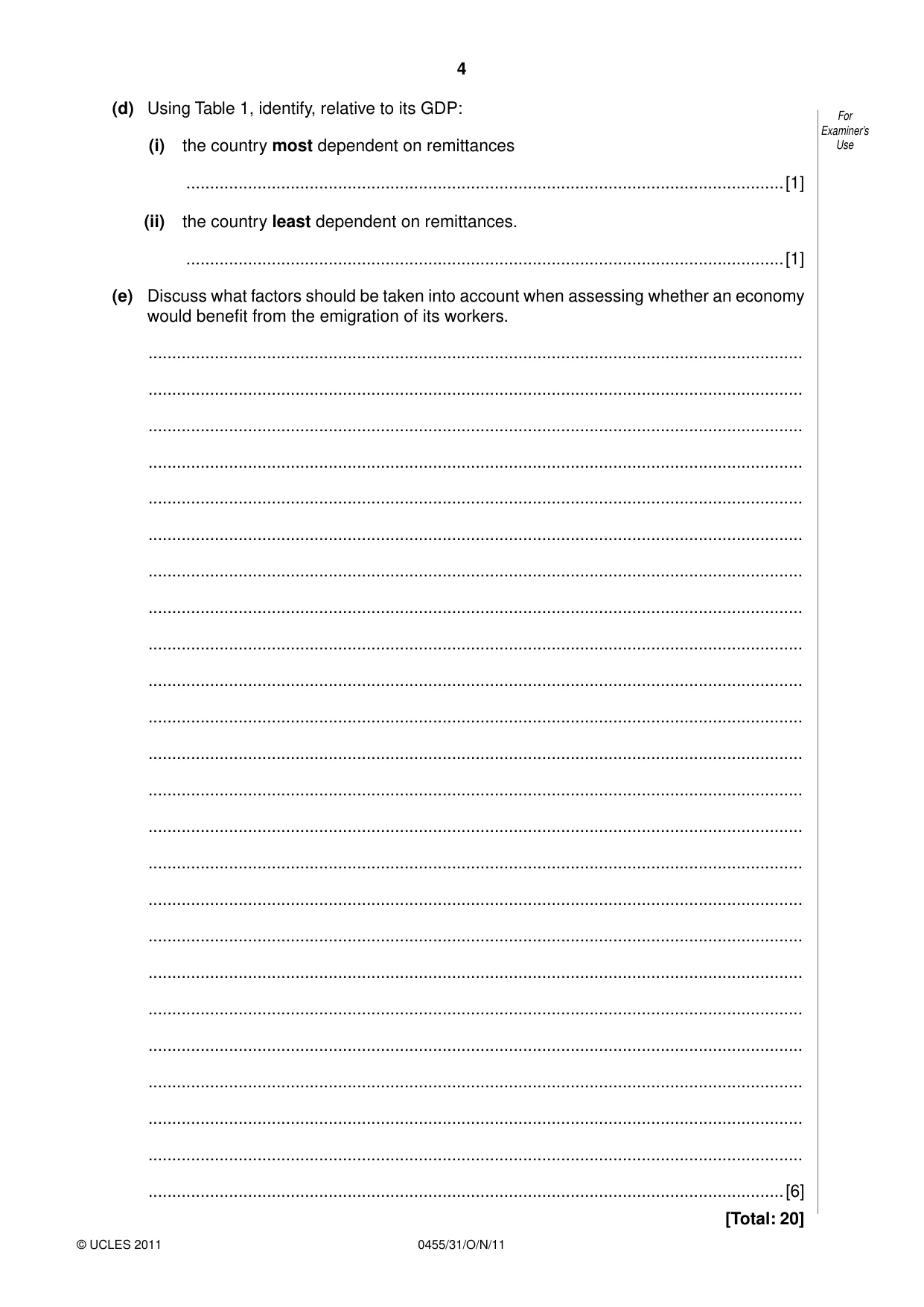
Mark scheme4 pages
Answers below. Sit the paper first if you are practising.
Questions as text
Q1 · What is meant by a ‘brain gain’?
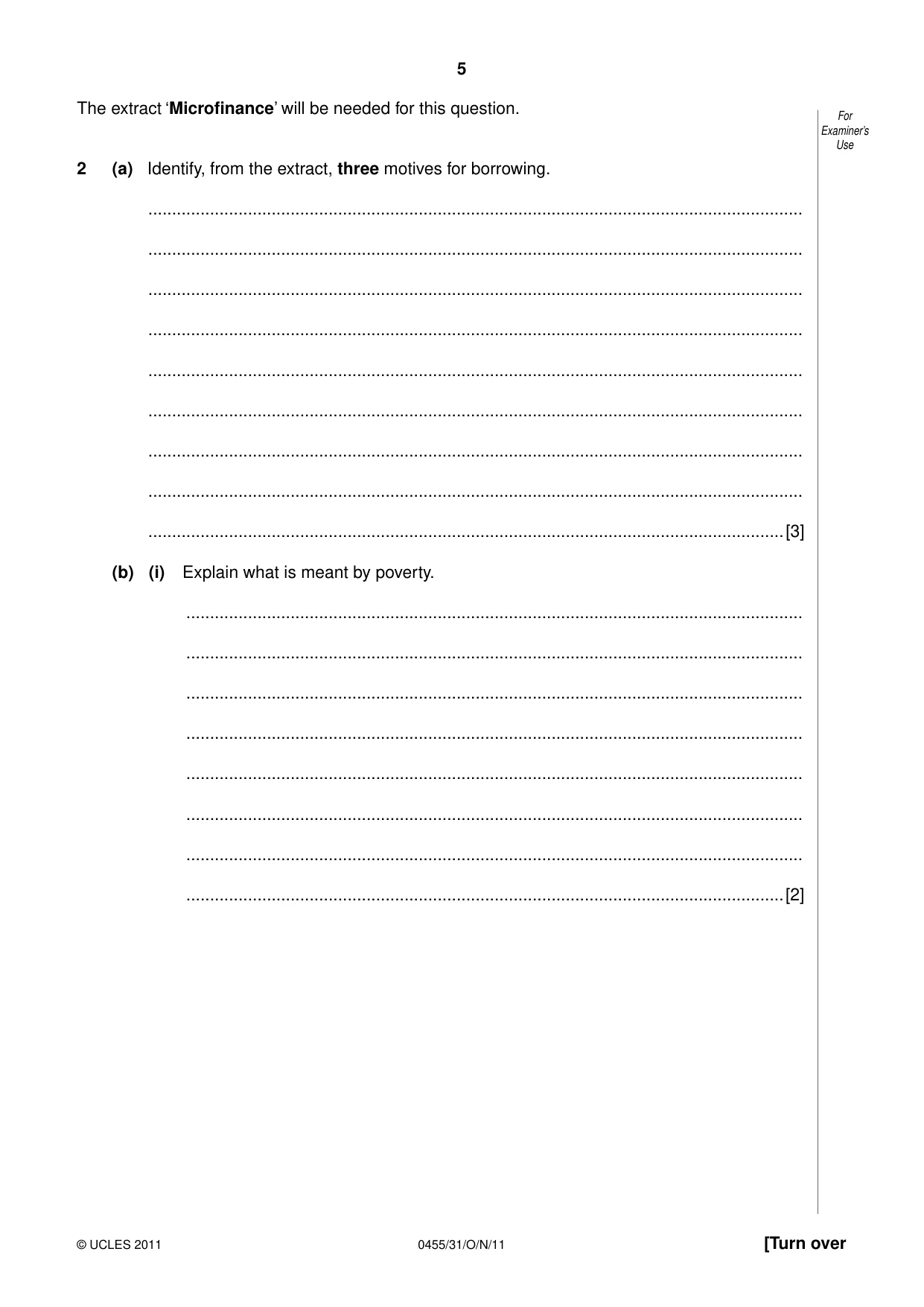
1 (a) What is meant by a ‘brain gain’? .......................................................................................................................................... .......................................................................................................................................... .......................................................................................................................................... .......................................................................................................................................... .......................................................................................................................................... .......................................................................................................................................... .......................................................................................................................................... ......................................................................................................................................[2] (b) Explain two possible reasons why, in the future, Ghanaian doctors may choose to work in Ghana. .......................................................................................................................................... .......................................................................................................................................... .......................................................................................................................................... .......................................................................................................................................... .......................................................................................................................................... .......................................................................................................................................... .......................................................................................................................................... .......................................................................................................................................... .......................................................................................................................................... .......................................................................................................................................... .......................................................................................................................................... .......................................................................................................................................... .......................................................................................................................................... .......................................................................................................................................... .......................................................................................................................................... ......................................................................................................................................[4] (c) (i) Using the extract identify: • a private benefit of education .................................................................................................................................. ..............................................................................................................................[1] • an external benefit of education. .................................................................................................................................. ..............................................................................................................................[1] (ii) Explain two policies a government could use to encourage more people to enter higher education. .................................................................................................................................. .................................................................................................................................. .................................................................................................................................. .................................................................................................................................. .................................................................................................................................. .................................................................................................................................. .................................................................................................................................. .................................................................................................................................. .................................................................................................................................. .................................................................................................................................. .................................................................................................................................. .................................................................................................................................. .................................................................................................................................. .................................................................................................................................. .................................................................................................................................. ..............................................................................................................................[4] (d) Using Table 1, identify, relative to its GDP: (i) the country most dependent on remittances ..............................................................................................................................[1] (ii) the country least dependent on remittances. ..............................................................................................................................[1] (e) Discuss what factors should be taken into account when assessing whether an economy would benefit from the emigration of its workers. .......................................................................................................................................... .......................................................................................................................................... .......................................................................................................................................... .......................................................................................................................................... .......................................................................................................................................... .......................................................................................................................................... .......................................................................................................................................... .......................................................................................................................................... .......................................................................................................................................... .......................................................................................................................................... .......................................................................................................................................... .......................................................................................................................................... .......................................................................................................................................... .......................................................................................................................................... .......................................................................................................................................... .......................................................................................................................................... .......................................................................................................................................... .......................................................................................................................................... .......................................................................................................................................... .......................................................................................................................................... .......................................................................................................................................... .......................................................................................................................................... .......................................................................................................................................... ......................................................................................................................................[6] [Total: 20] The extract ‘Microfinance’ will be needed for this question.
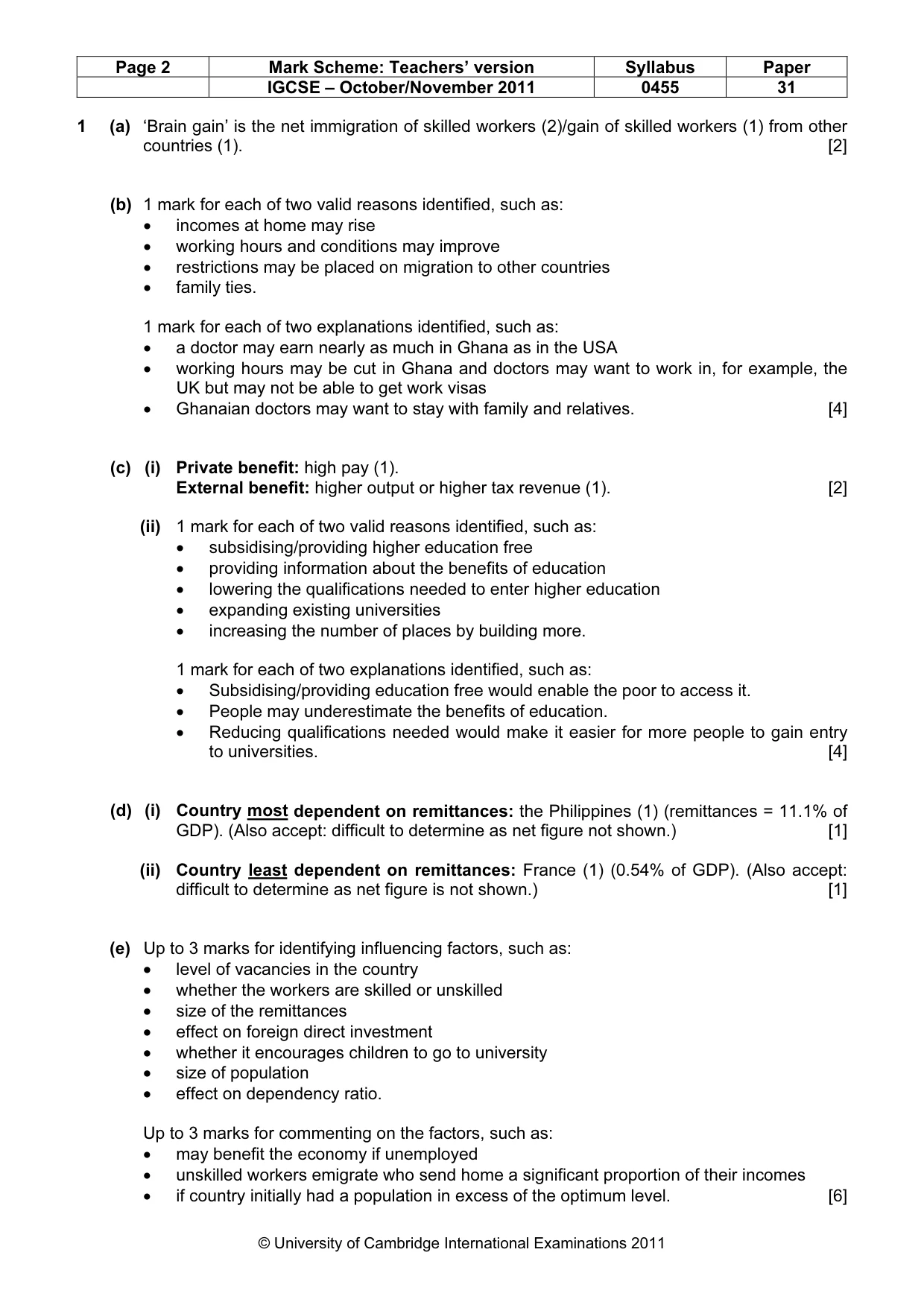
Mark scheme: 1 (a) ‘Brain gain’ is the net immigration of skilled workers (2)/gain of skilled workers (1) from other countries (1). [2] (b) 1 mark for each of two valid reasons identified, such as: • incomes at home may rise • working hours and conditions may improve • restrictions may be placed on migration to other countries • family ties. 1 mark for each of two explanations identified, such as: • a doctor may earn nearly as much in Ghana as in the USA • working hours may be cut in Ghana and doctors may want to work in, for example, the UK but may not be able to get work visas • Ghanaian doctors may want to stay with family and relatives. [4] (c) (i) Private benefit: high pay (1). External benefit: higher output or higher tax revenue (1). [2] (ii) 1 mark for each of two valid reasons identified, such as: • subsidising/providing higher education free • providing information about the benefits of education • lowering the qualifications needed to enter higher education • expanding existing universities • increasing the number of places by building more. 1 mark for each of two explanations identified, such as: • Subsidising/providing education free would enable the poor to access it. • People may underestimate the benefits of education. • Reducing qualifications needed would make it easier for more people to gain entry to universities. [4] (d) (i) Country most dependent on remittances: the Philippines (1) (remittances = 11.1% of GDP). (Also accept: difficult to determine as net figure not shown.) [1] (ii) Country least dependent on remittances: France (1) (0.54% of GDP). (Also accept: difficult to determine as net figure is not shown.) [1] (e) Up to 3 marks for identifying influencing factors, such as: • level of vacancies in the country • whether the workers are skilled or unskilled • size of the remittances • effect on foreign direct investment • whether it encourages children to go to university • size of population • effect on dependency ratio. Up to 3 marks for commenting on the factors, such as: • may benefit the economy if unemployed • unskilled workers emigrate who send home a significant proportion of their incomes • if country initially had a population in excess of the optimum level. [6] IGCSE – October/November 2011 0455 31
Q2 · Identify, from the extract, three motives for borrowing
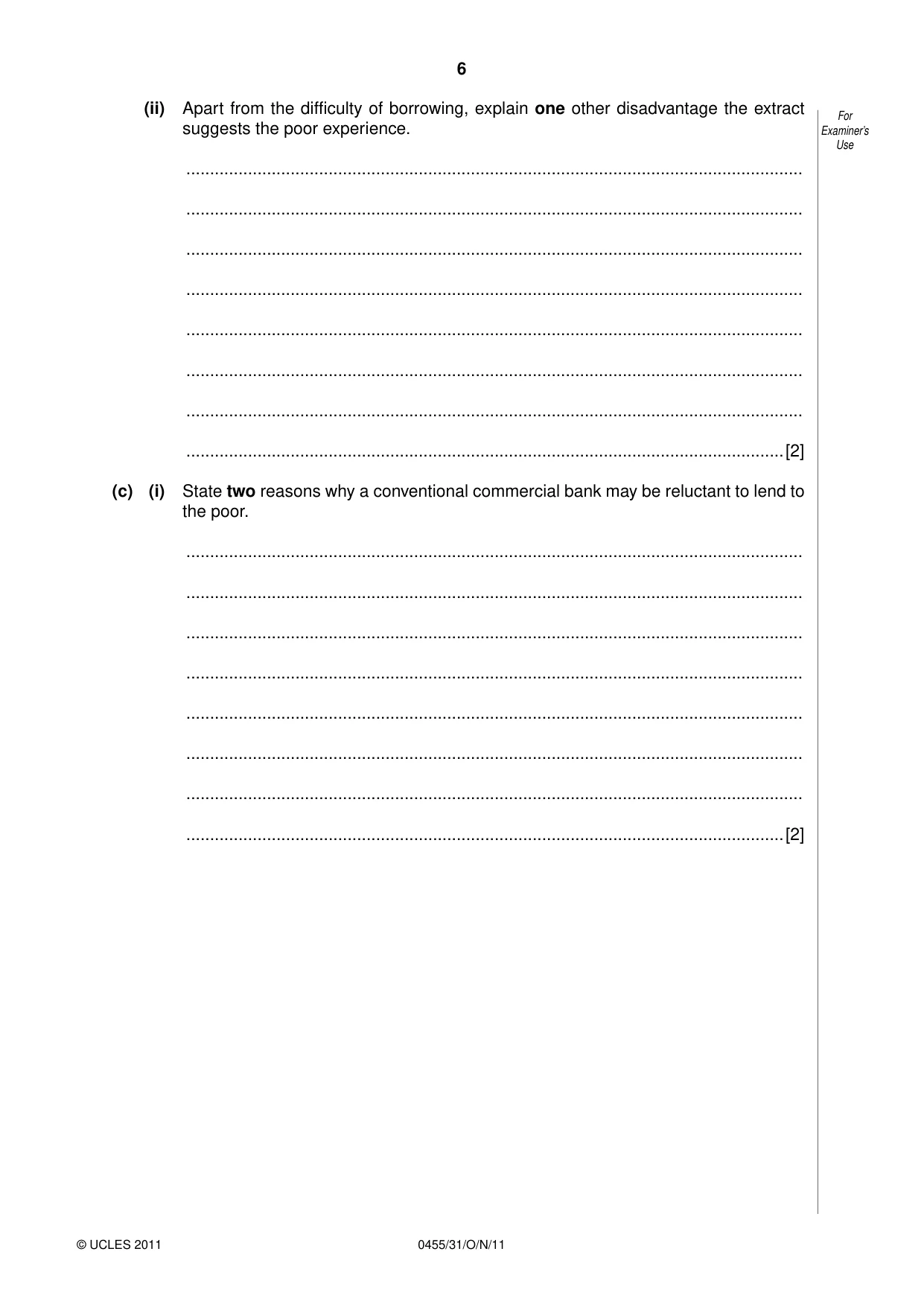
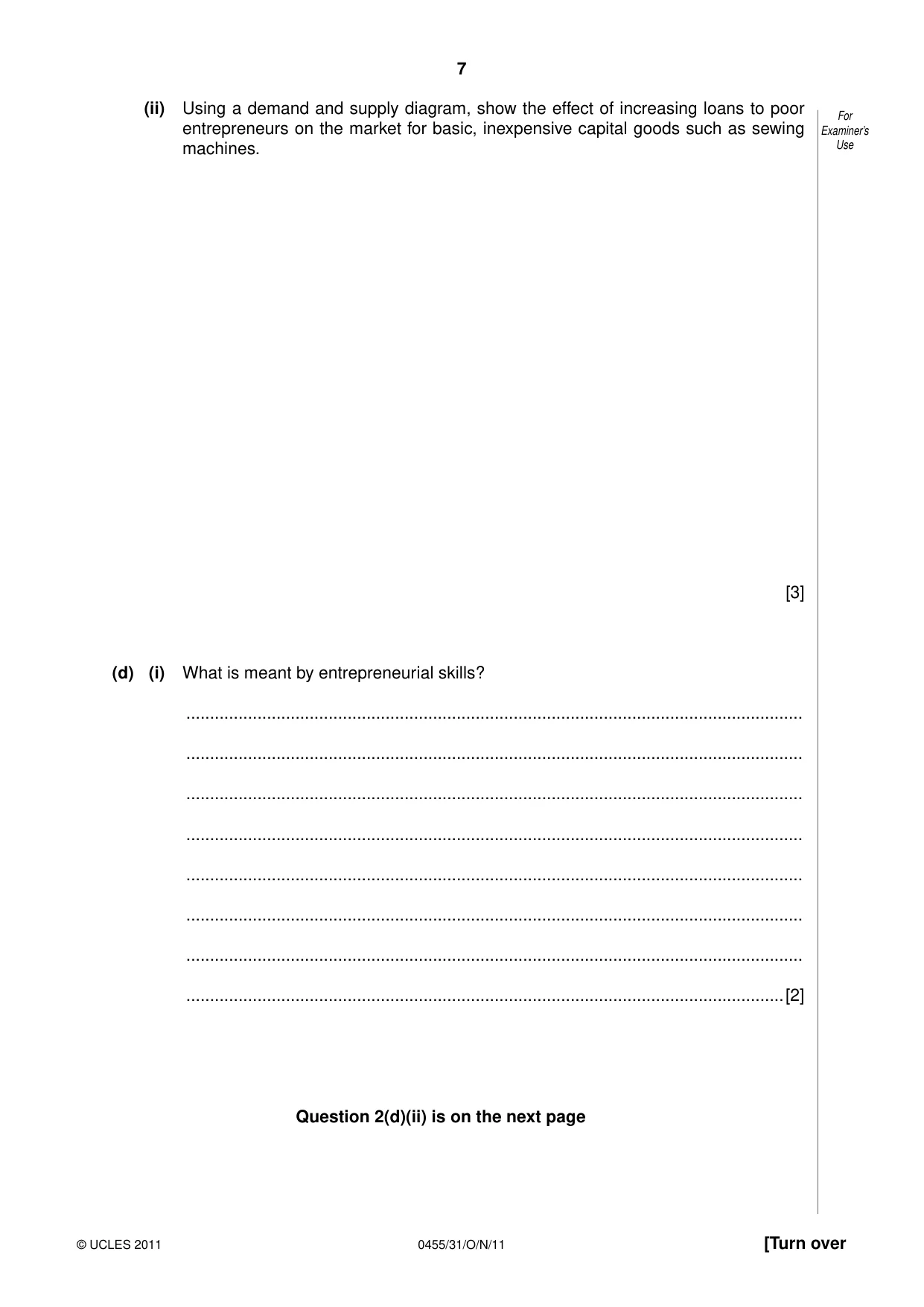
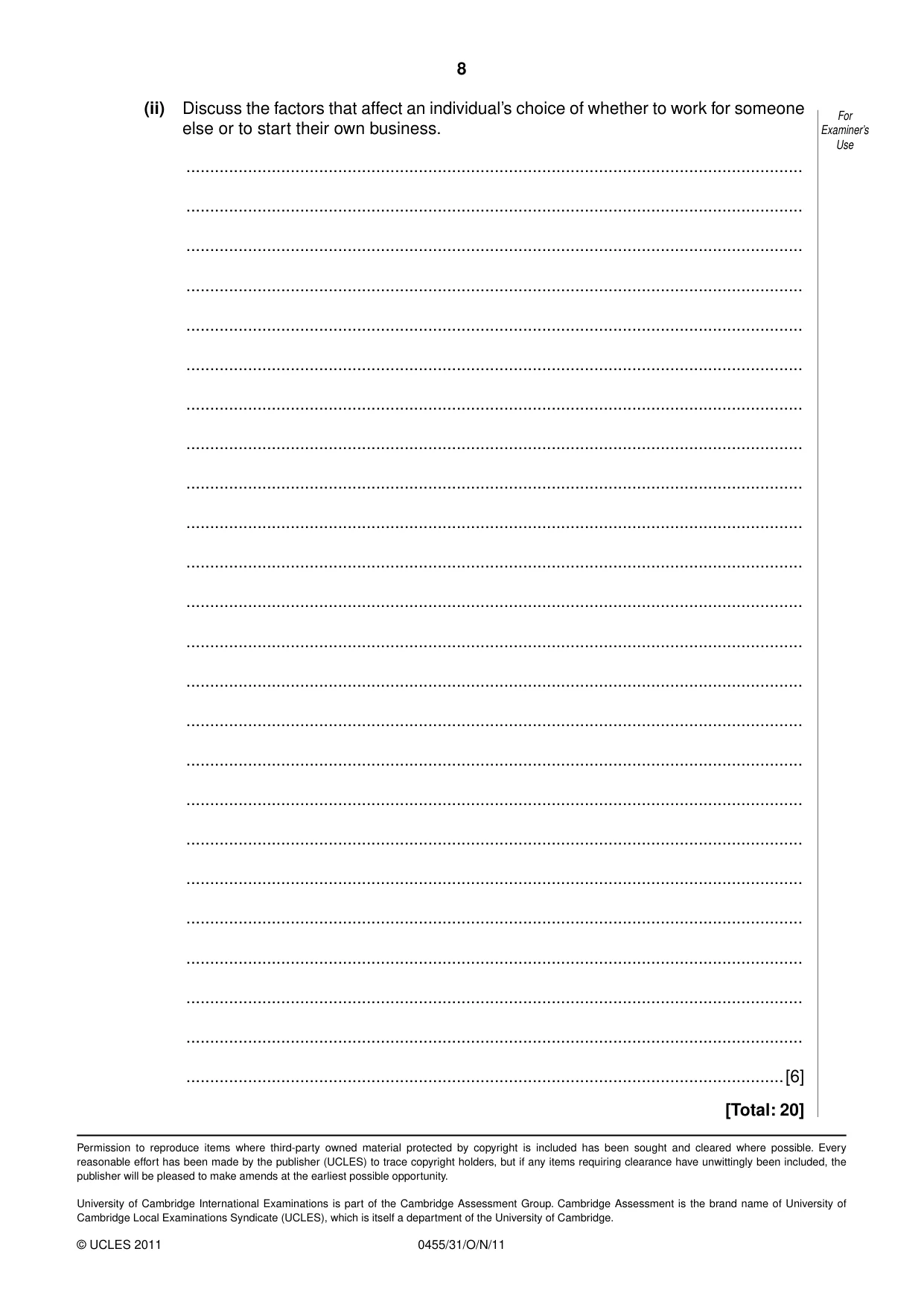
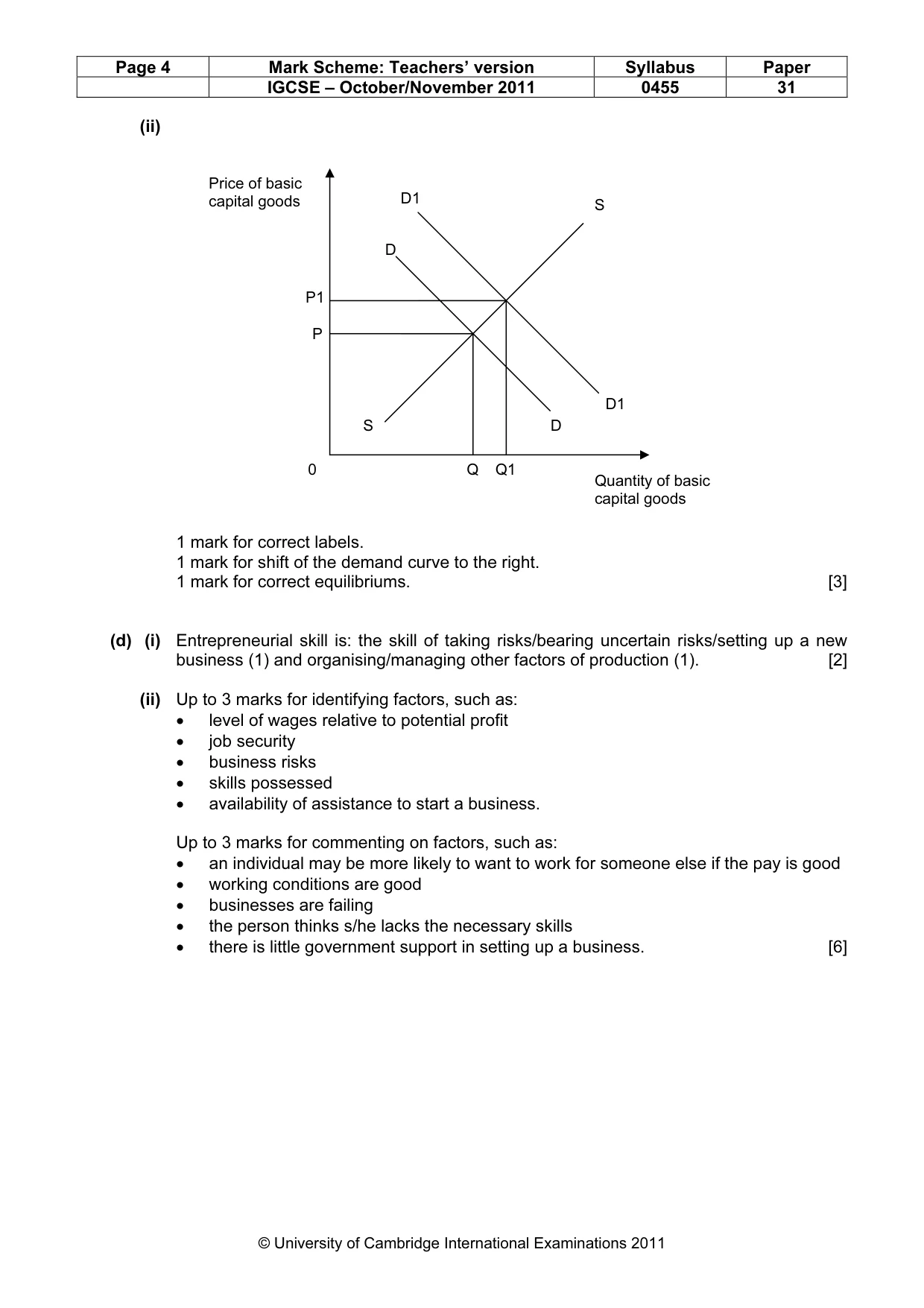
2 (a) Identify, from the extract, three motives for borrowing. .......................................................................................................................................... .......................................................................................................................................... .......................................................................................................................................... .......................................................................................................................................... .......................................................................................................................................... .......................................................................................................................................... .......................................................................................................................................... .......................................................................................................................................... ......................................................................................................................................[3] (b) (i) Explain what is meant by poverty. .................................................................................................................................. .................................................................................................................................. .................................................................................................................................. .................................................................................................................................. .................................................................................................................................. .................................................................................................................................. .................................................................................................................................. ..............................................................................................................................[2] (ii) Apart from the difficulty of borrowing, explain one other disadvantage the extract suggests the poor experience. .................................................................................................................................. .................................................................................................................................. .................................................................................................................................. .................................................................................................................................. .................................................................................................................................. .................................................................................................................................. .................................................................................................................................. ..............................................................................................................................[2] (c) (i) State two reasons why a conventional commercial bank may be reluctant to lend to the poor. .................................................................................................................................. .................................................................................................................................. .................................................................................................................................. .................................................................................................................................. .................................................................................................................................. .................................................................................................................................. .................................................................................................................................. ..............................................................................................................................[2] (ii) Using a demand and supply diagram, show the effect of increasing loans to poor entrepreneurs on the market for basic, inexpensive capital goods such as sewing machines. [3] (d) (i) What is meant by entrepreneurial skills? .................................................................................................................................. .................................................................................................................................. .................................................................................................................................. .................................................................................................................................. .................................................................................................................................. .................................................................................................................................. .................................................................................................................................. ..............................................................................................................................[2] Question 2(d)(ii) is on the next page
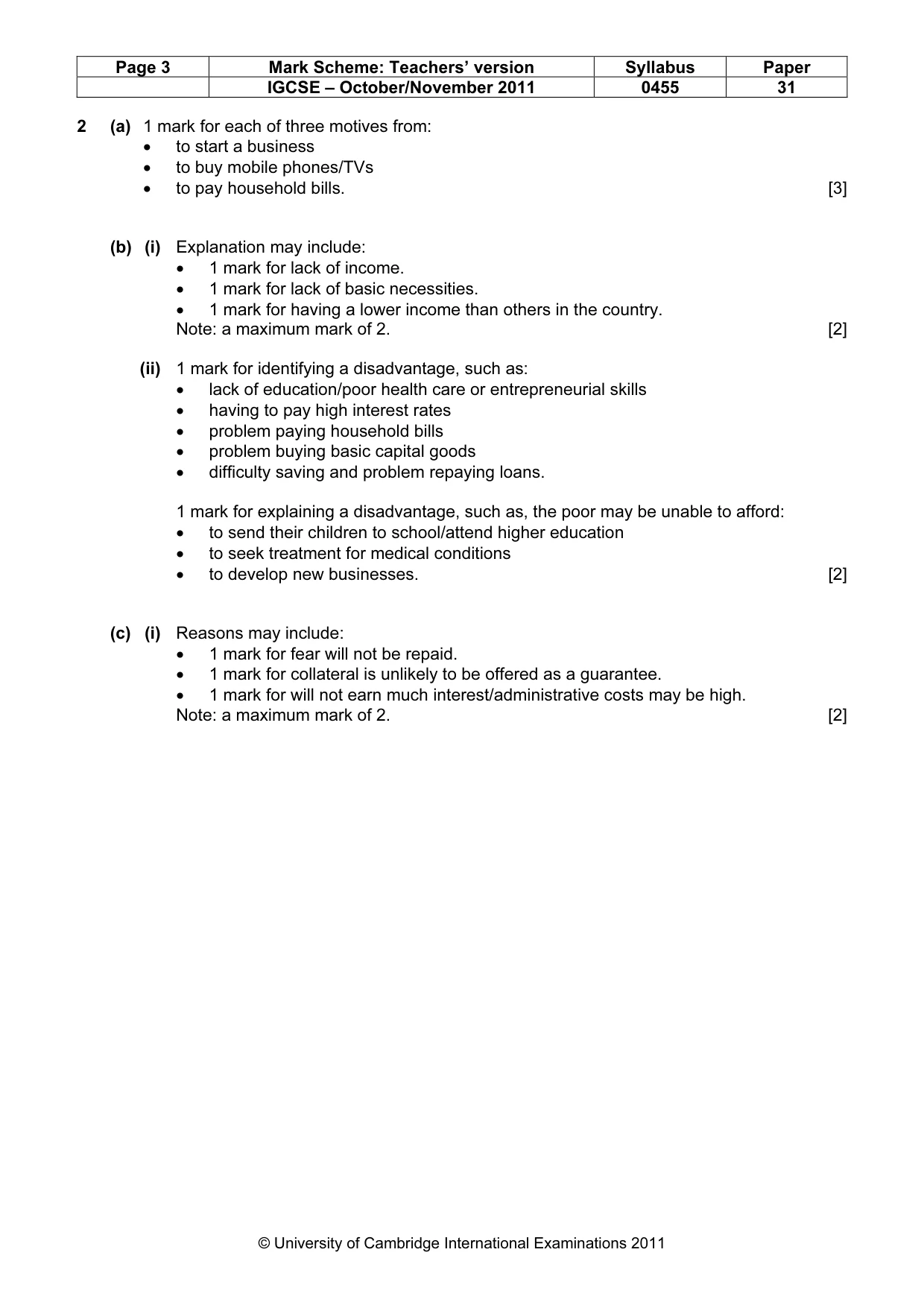
Mark scheme: 2 (a) 1 mark for each of three motives from: • to start a business • to buy mobile phones/TVs • to pay household bills. [3] (b) (i) Explanation may include: • 1 mark for lack of income. • 1 mark for lack of basic necessities. • 1 mark for having a lower income than others in the country. Note: a maximum mark of 2. [2] (ii) 1 mark for identifying a disadvantage, such as: • lack of education/poor health care or entrepreneurial skills • having to pay high interest rates • problem paying household bills • problem buying basic capital goods • difficulty saving and problem repaying loans. 1 mark for explaining a disadvantage, such as, the poor may be unable to afford: • to send their children to school/attend higher education • to seek treatment for medical conditions • to develop new businesses. [2] (c) (i) Reasons may include: • 1 mark for fear will not be repaid. • 1 mark for collateral is unlikely to be offered as a guarantee. • 1 mark for will not earn much interest/administrative costs may be high. Note: a maximum mark of 2. [2] IGCSE – October/November 2011 0455 31 (ii) Price of basic capital goods D1 S D P1 P D1 S D 0 Q Q1 Quantity of basic capital goods 1 mark for correct labels. 1 mark for shift of the demand curve to the right. 1 mark for correct equilibriums. [3] (d) (i) Entrepreneurial skill is: the skill of taking risks/bearing uncertain risks/setting up a new business (1) and organising/managing other factors of production (1). [2] (ii) Up to 3 marks for identifying factors, such as: • level of wages relative to potential profit • job security • business risks • skills possessed • availability of assistance to start a business. Up to 3 marks for commenting on factors, such as: • an individual may be more likely to want to work for someone else if the pay is good • working conditions are good • businesses are failing • the person thinks s/he lacks the necessary skills • there is little government support in setting up a business. [6]
What was in this paper
The subtopics covered by these 2 questions, and how many questions each got. Open one in a new tab to see every Cambridge question on it.
What you needed in this session
Cambridge’s own grade thresholds for 2011 Oct/Nov, Paper 3 · Variant 1. A higher threshold means an easier paper — the bar moves with how the cohort did.