Cambridge IGCSE Economics 0455 — 2005 Oct/Nov Paper 6 · Variant 1
0455/61/O/N/05 · 2 questions · 40 marks · ≈45 min
The question paper and its mark scheme, free to read here and free to download. This is Cambridge’s own paper, exactly as it was sat.
Question paper4 pages
Mark scheme2 pages
Answers below. Sit the paper first if you are practising.
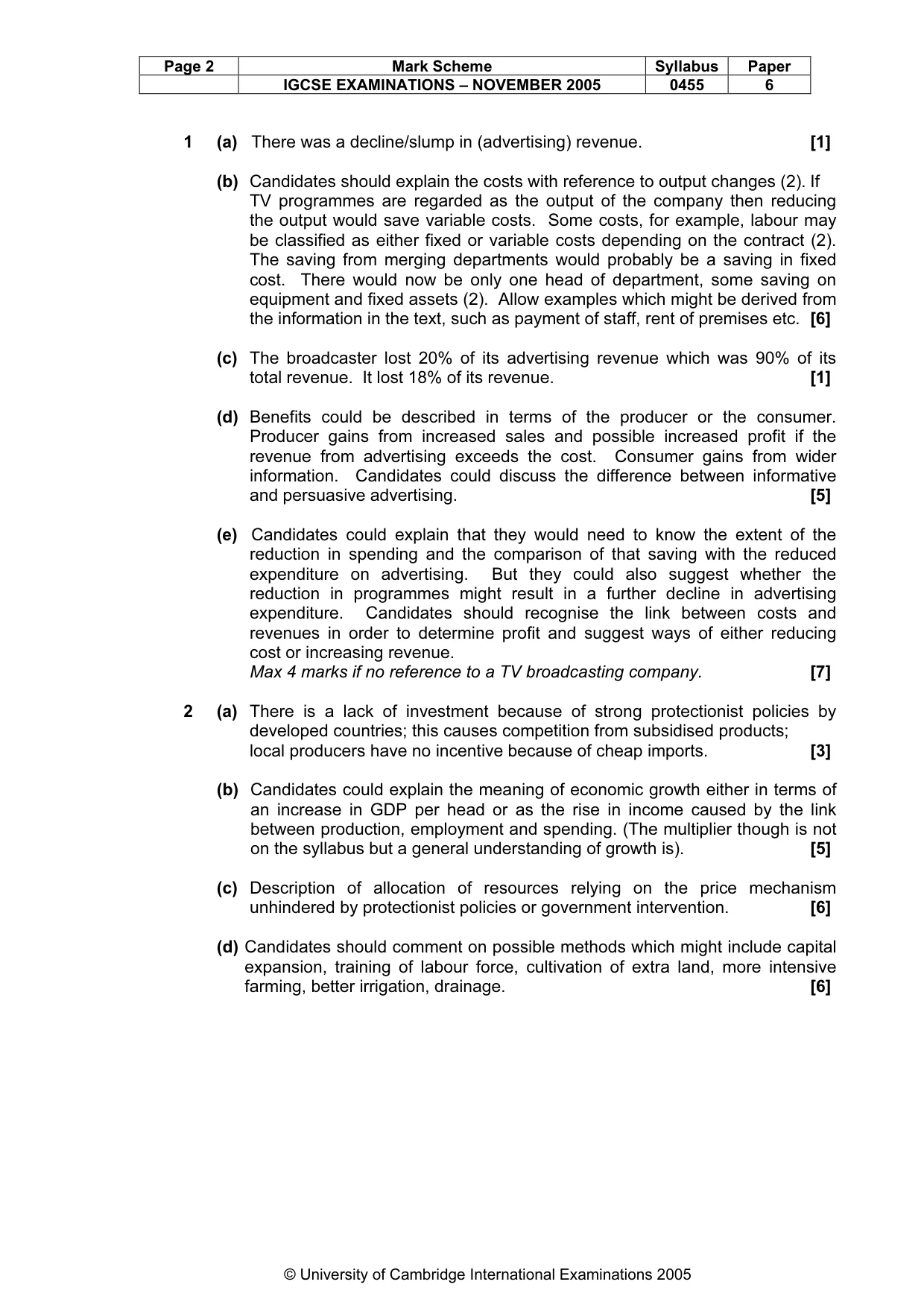
Questions as text
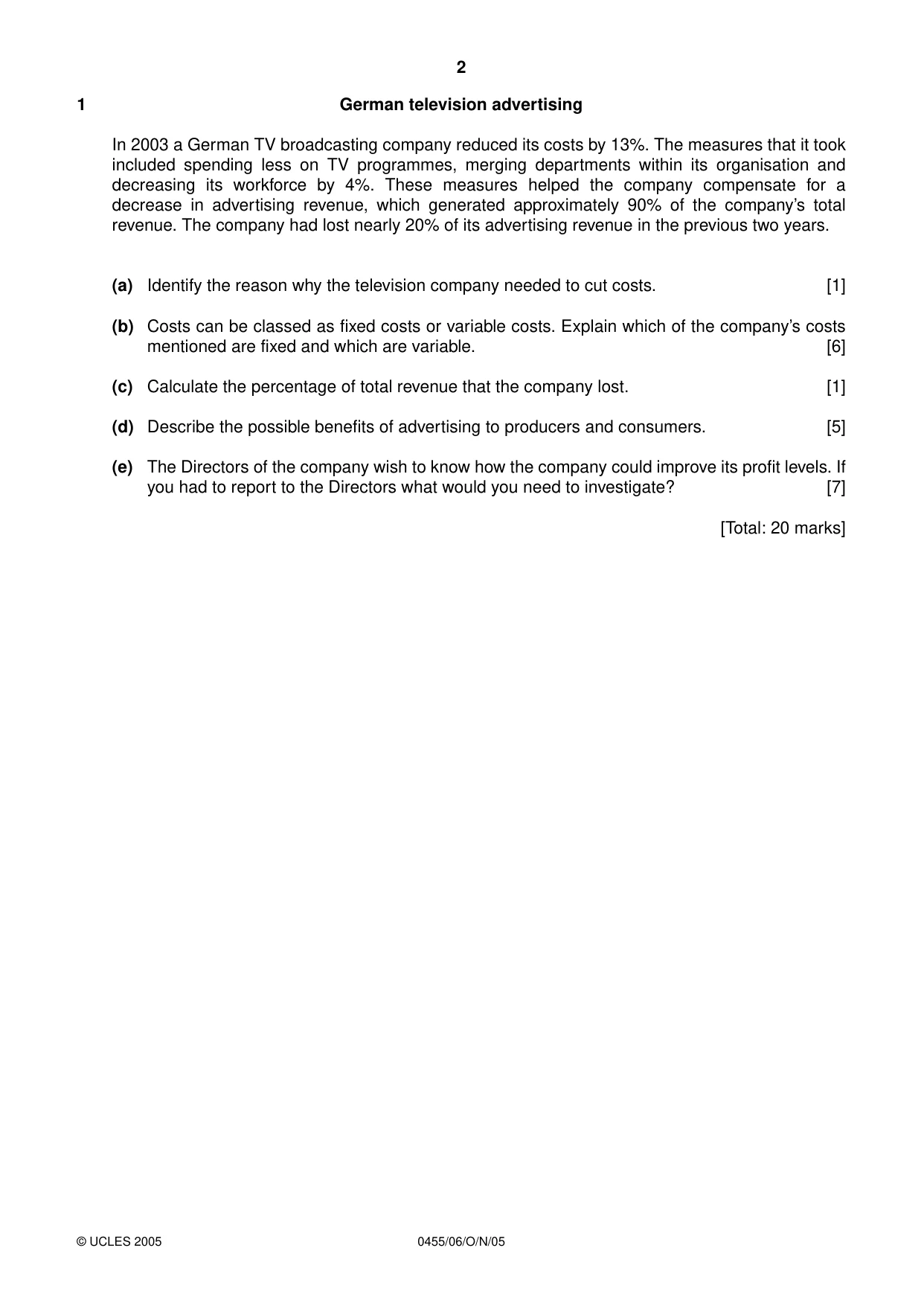
Q1 · German television advertising In 2003 a German TV broadcasting company reduced its costs…
1 German television advertising In 2003 a German TV broadcasting company reduced its costs by 13%. The measures that it took included spending less on TV programmes, merging departments within its organisation and decreasing its workforce by 4%. These measures helped the company compensate for a decrease in advertising revenue, which generated approximately 90% of the company’s total revenue. The company had lost nearly 20% of its advertising revenue in the previous two years. (a) Identify the reason why the television company needed to cut costs. [1] (b) Costs can be classed as fixed costs or variable costs. Explain which of the company’s costs mentioned are fixed and which are variable. [6] (c) Calculate the percentage of total revenue that the company lost. [1] (d) Describe the possible benefits of advertising to producers and consumers. [5] (e) The Directors of the company wish to know how the company could improve its profit levels. If you had to report to the Directors what would you need to investigate? [7] [Total: 20 marks]
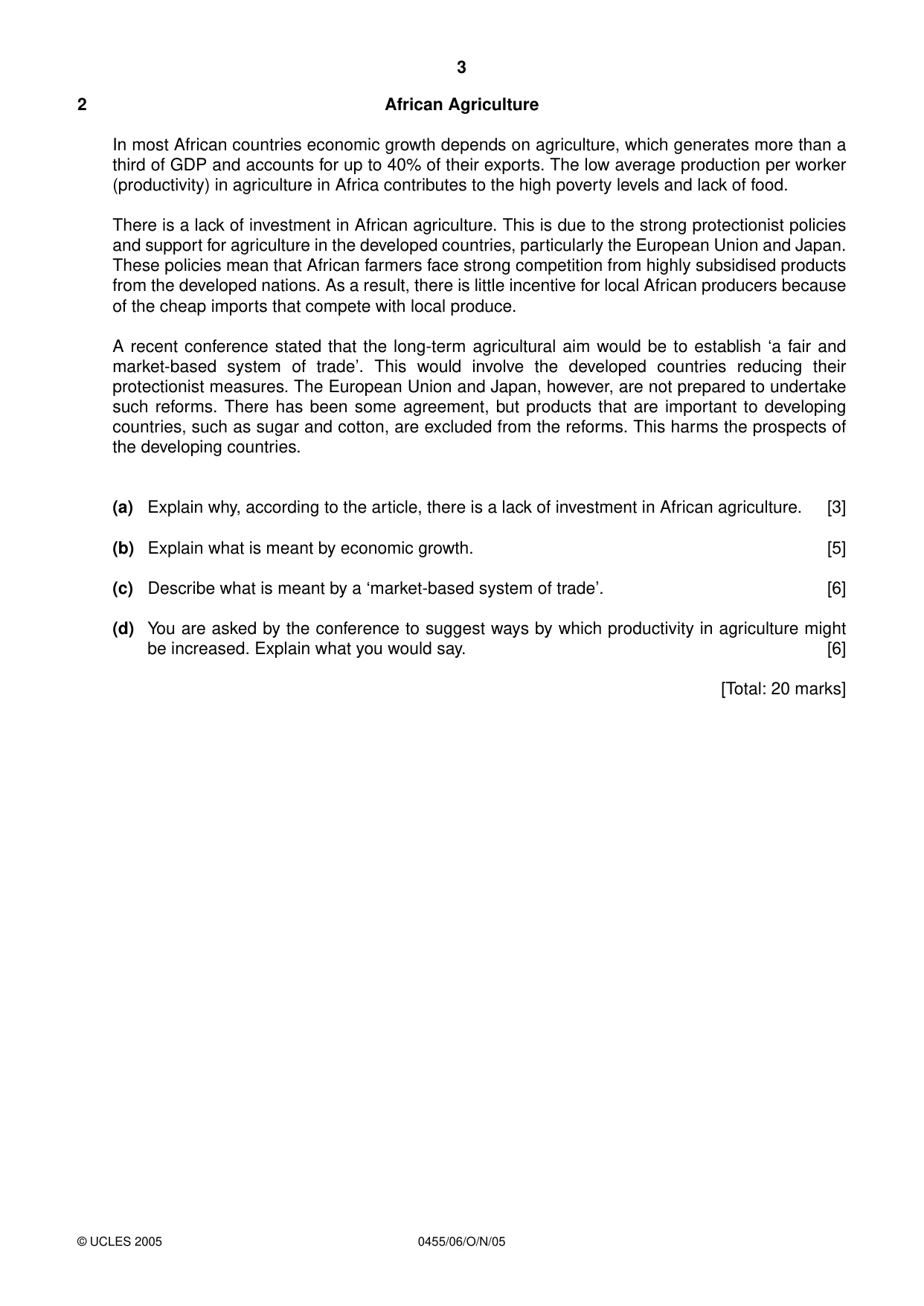
Q2 · African Agriculture In most African countries economic growth depends on agriculture…
2 African Agriculture In most African countries economic growth depends on agriculture, which generates more than a third of GDP and accounts for up to 40% of their exports. The low average production per worker (productivity) in agriculture in Africa contributes to the high poverty levels and lack of food. There is a lack of investment in African agriculture. This is due to the strong protectionist policies and support for agriculture in the developed countries, particularly the European Union and Japan. These policies mean that African farmers face strong competition from highly subsidised products from the developed nations. As a result, there is little incentive for local African producers because of the cheap imports that compete with local produce. A recent conference stated that the long-term agricultural aim would be to establish ‘a fair and market-based system of trade’. This would involve the developed countries reducing their protectionist measures. The European Union and Japan, however, are not prepared to undertake such reforms. There has been some agreement, but products that are important to developing countries, such as sugar and cotton, are excluded from the reforms. This harms the prospects of the developing countries. (a) Explain why, according to the article, there is a lack of investment in African agriculture. [3] (b) Explain what is meant by economic growth. [5] (c) Describe what is meant by a ‘market-based system of trade’. [6] (d) You are asked by the conference to suggest ways by which productivity in agriculture might be increased. Explain what you would say. [6] [Total: 20 marks]
What was in this paper
The subtopics covered by these 2 questions, and how many questions each got. Open one in a new tab to see every Cambridge question on it.