Cambridge IGCSE Chemistry (9-1) 0971 — 2019 Oct/Nov Paper 4 · Variant 2
0971/42/O/N/19 · 5 questions · 80 marks · ≈90 min
The question paper and its mark scheme, free to read here and free to download. This is Cambridge’s own paper, exactly as it was sat.
Question paper12 pages
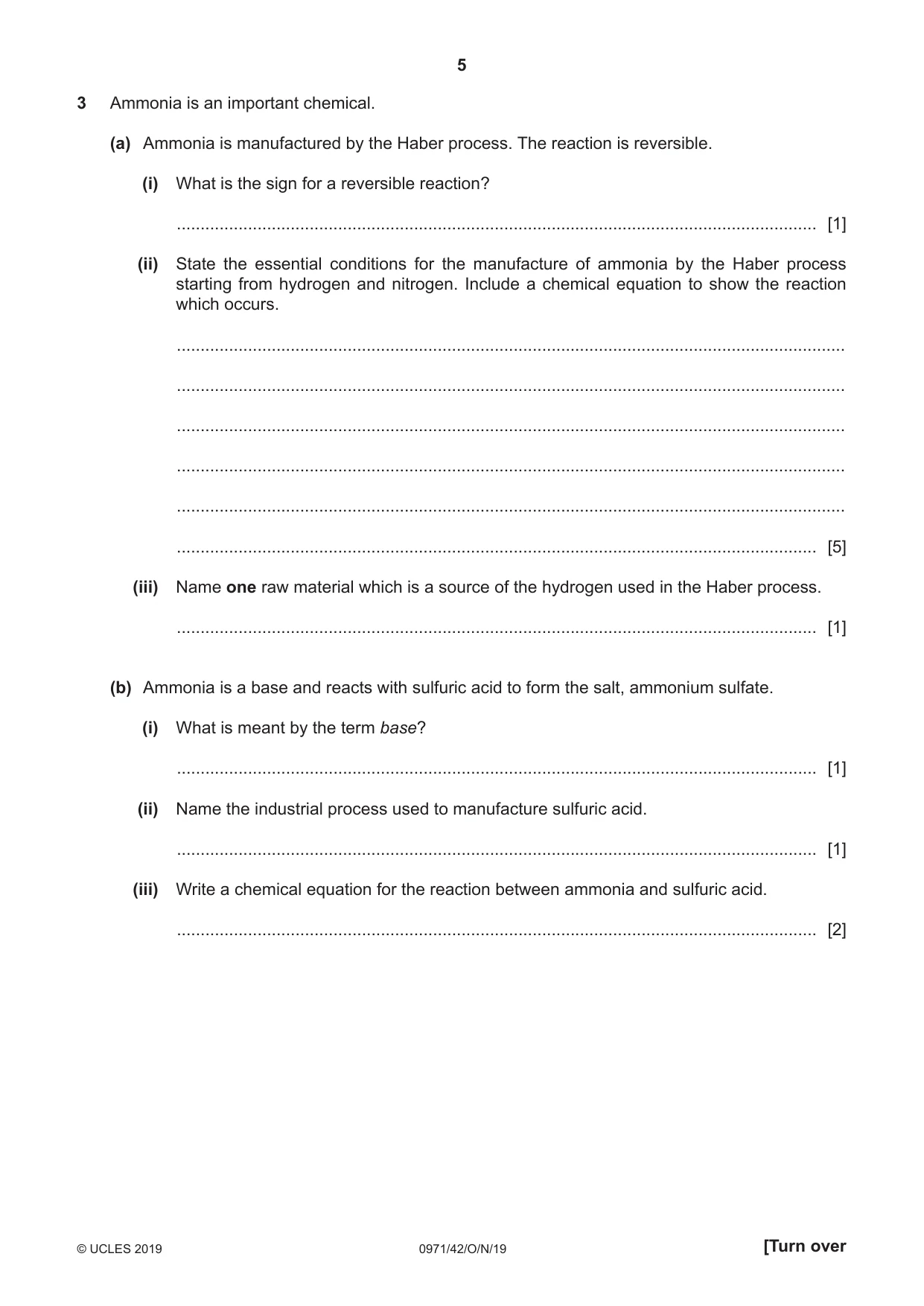
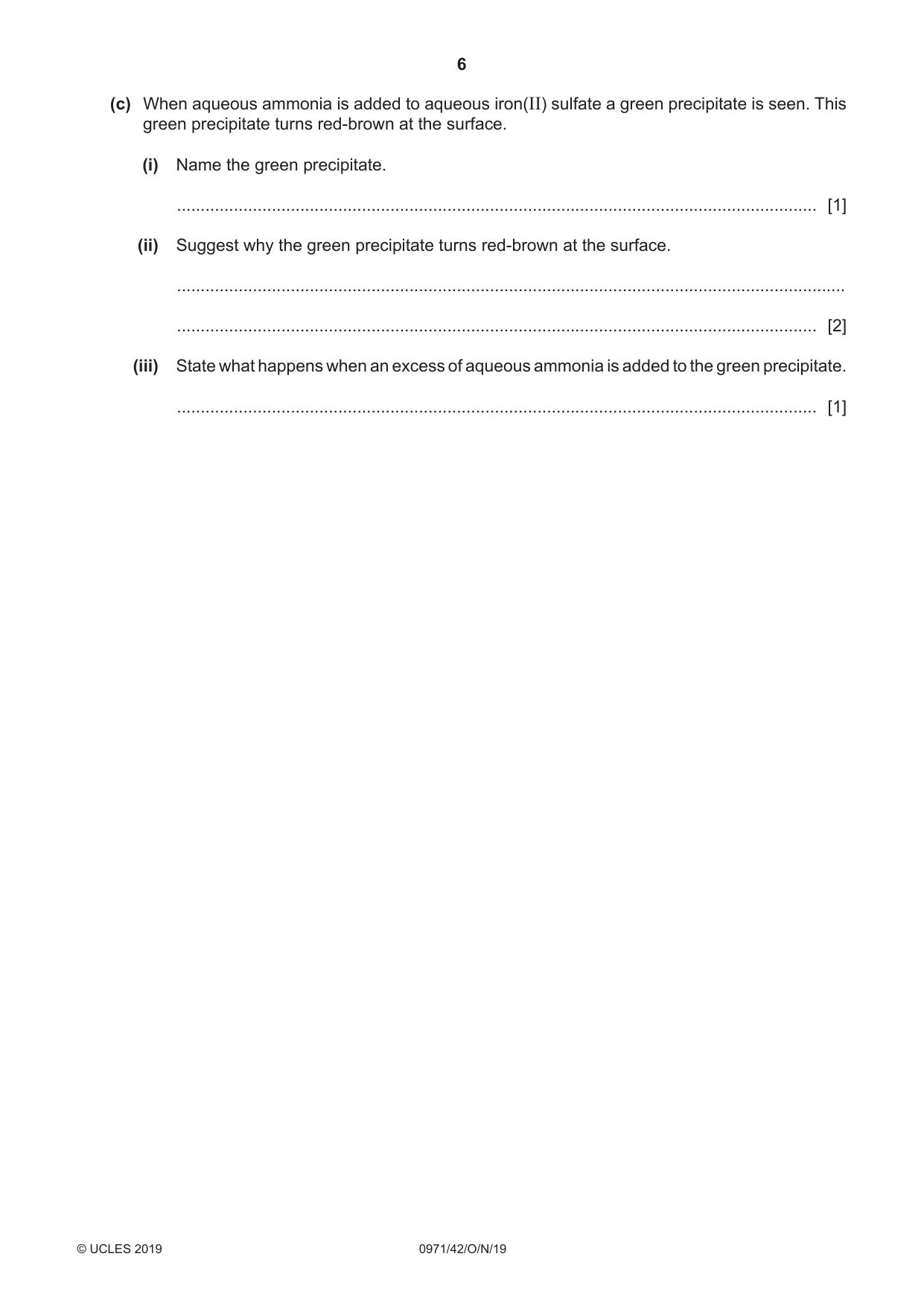
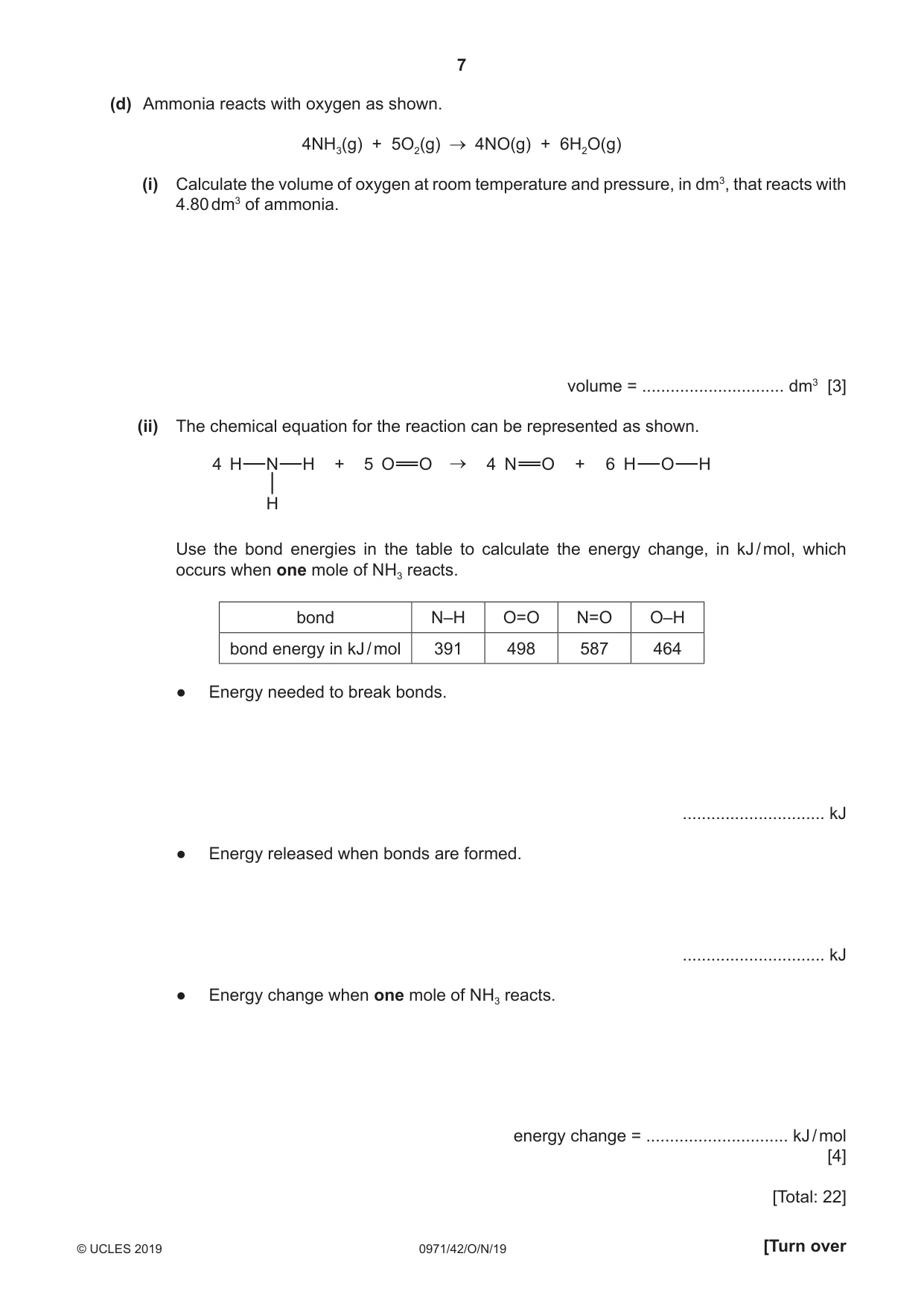
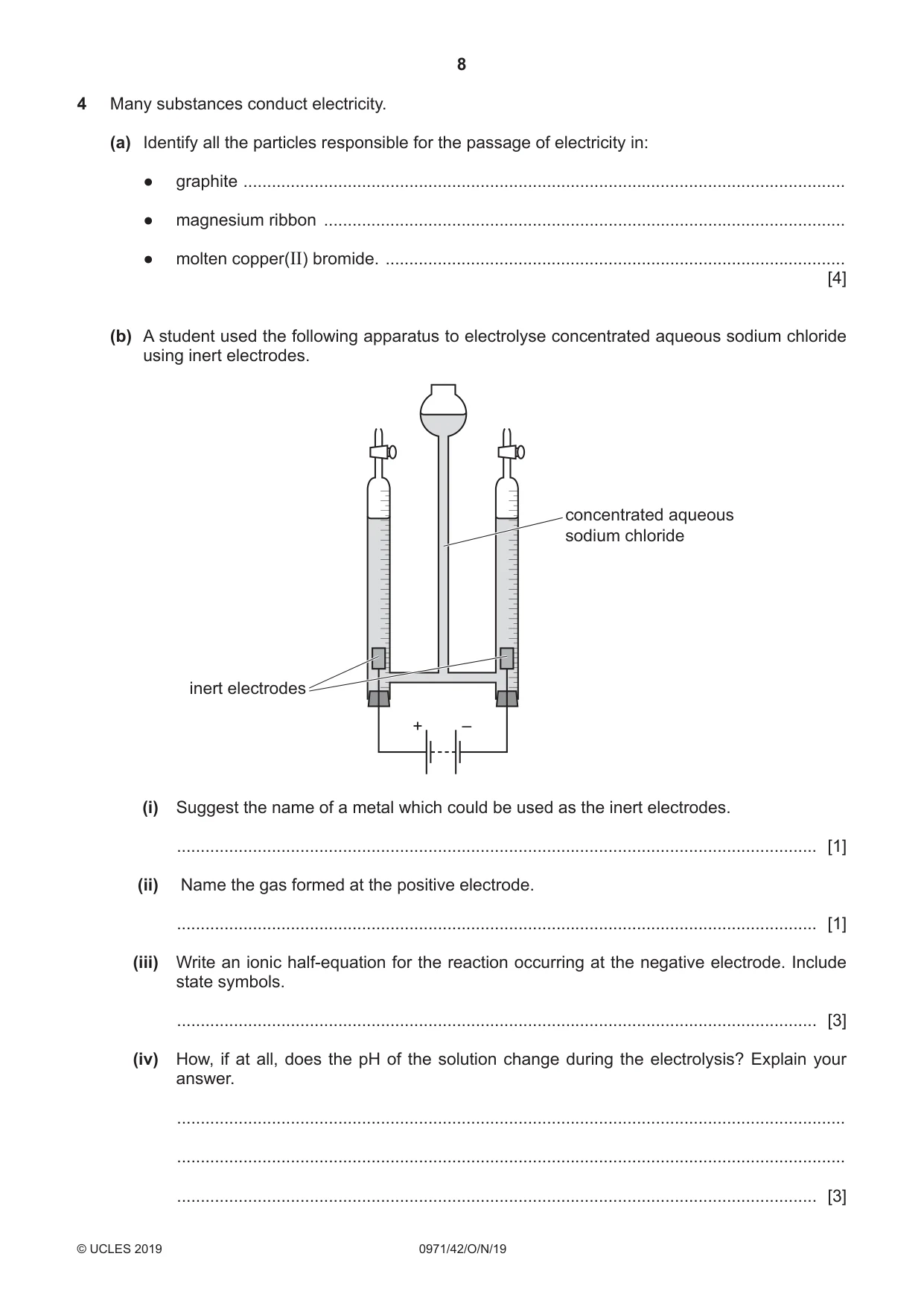
Mark scheme9 pages
Answers below. Sit the paper first if you are practising.
Questions as text
Q1 · The Periodic Table is very useful to chemists
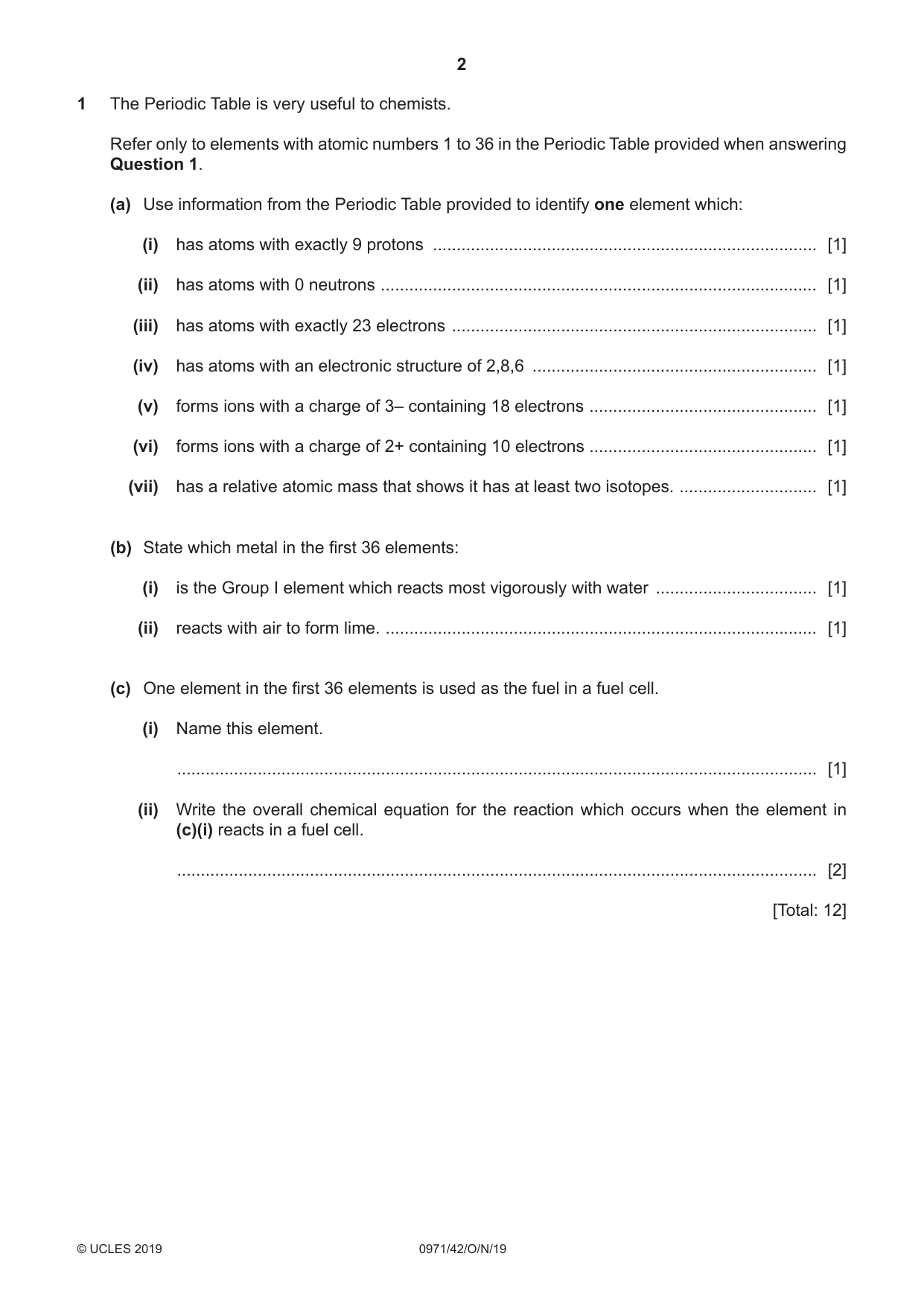
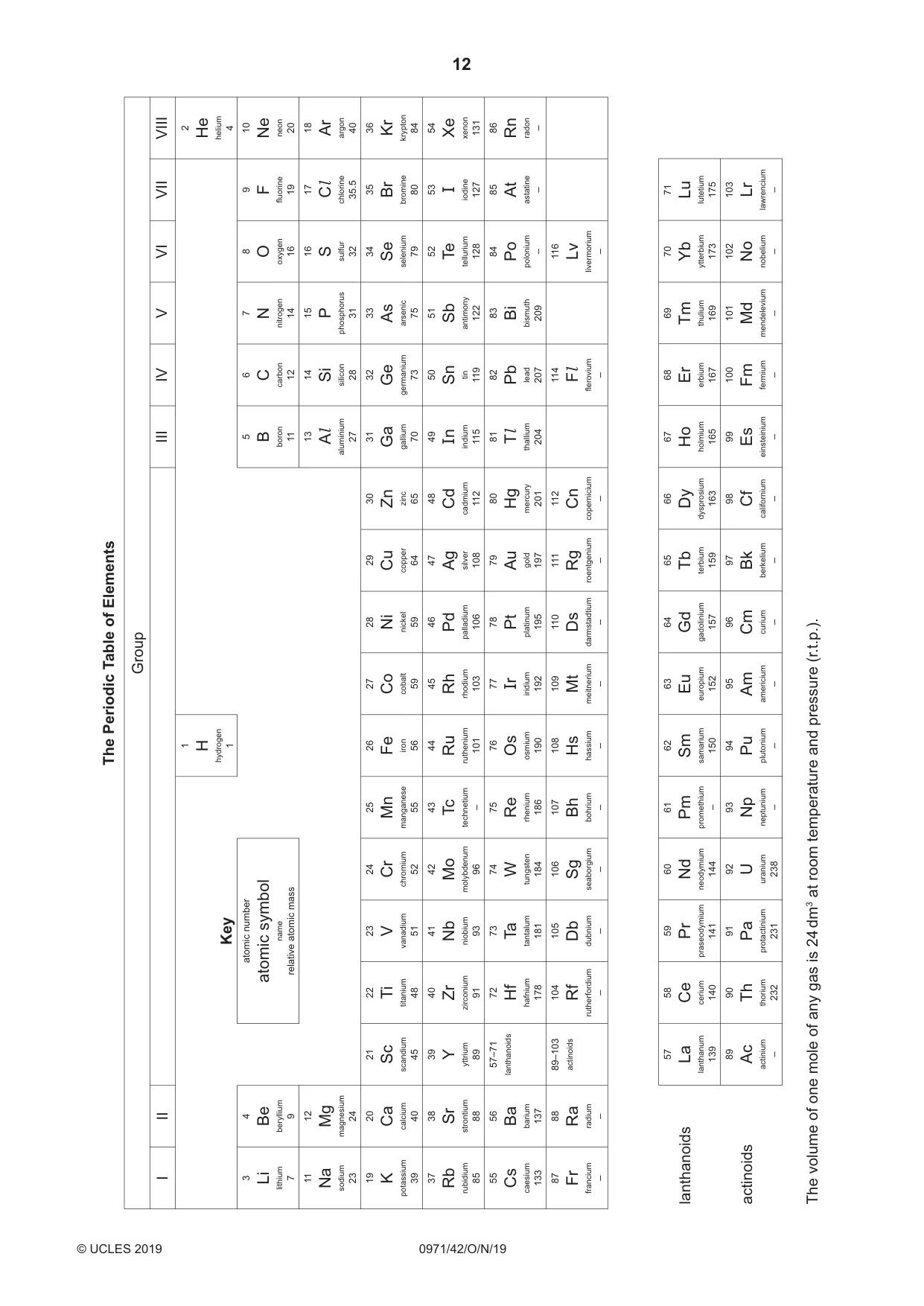
1 The Periodic Table is very useful to chemists. Refer only to elements with atomic numbers 1 to 36 in the Periodic Table provided when answering Question 1. (a) Use information from the Periodic Table provided to identify one element which: (i) has atoms with exactly 9 protons .................................................................................. [1] (ii) has atoms with 0 neutrons ............................................................................................ [1] (iii) has atoms with exactly 23 electrons ............................................................................. [1] (iv) has atoms with an electronic structure of 2,8,6 ............................................................. [1] (v) forms ions with a charge of 3– containing 18 electrons ................................................ [1] (vi) forms ions with a charge of 2+ containing 10 electrons ................................................ [1] (vii) has a relative atomic mass that shows it has at least two isotopes. ............................. [1] (b) State which metal in the first 36 elements: (i) is the Group I element which reacts most vigorously with water ................................... [1] (ii) reacts with air to form lime. ........................................................................................... [1] (c) One element in the first 36 elements is used as the fuel in a fuel cell. (i) Name this element. ....................................................................................................................................... [1] (ii) Write the overall chemical equation for the reaction which occurs when the element in (c)(i) reacts in a fuel cell. ....................................................................................................................................... [2] [Total: 12]
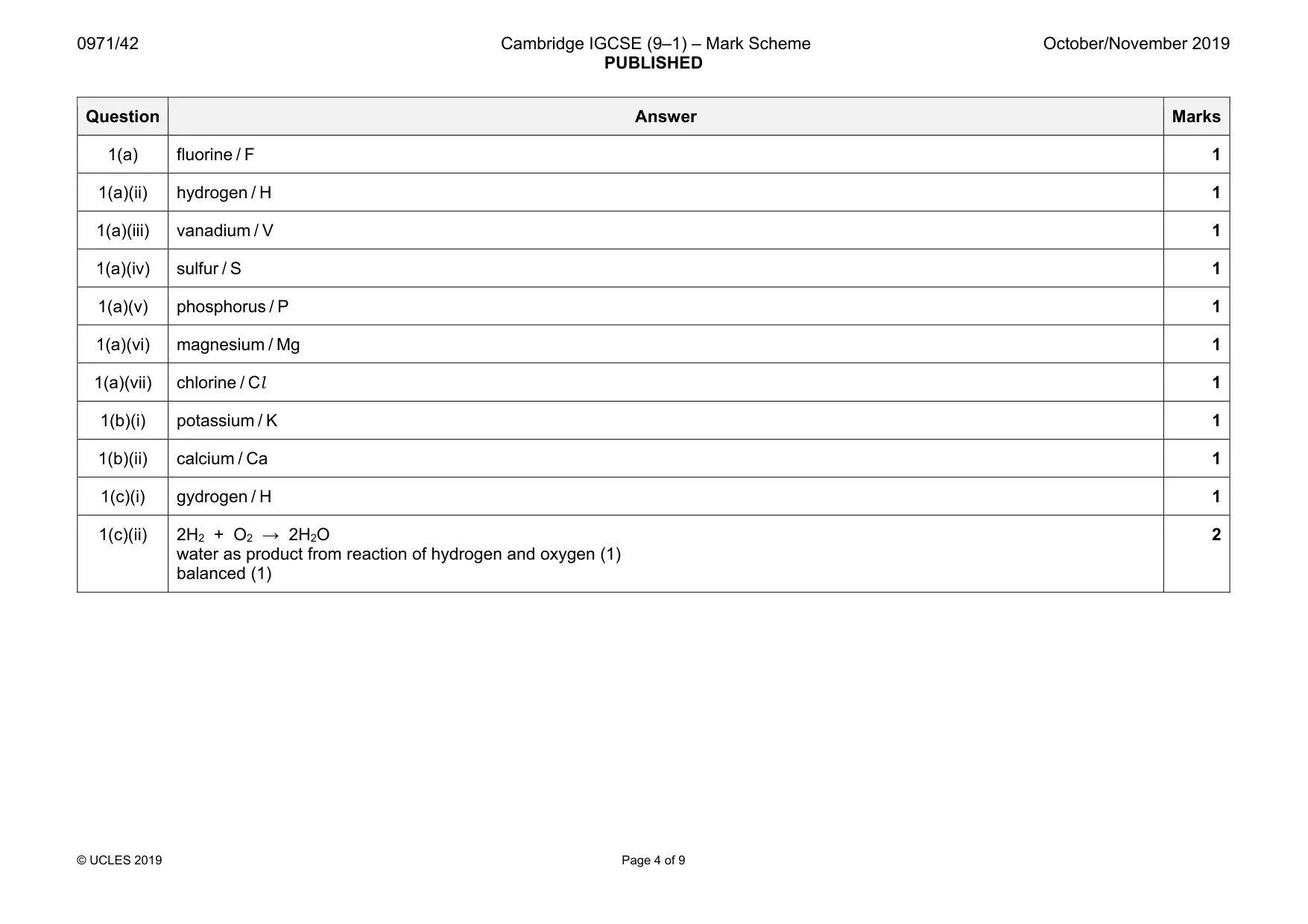
Mark scheme: 1(a) fluorine / F 1 1(a)(ii) hydrogen / H 1 1(a)(iii) vanadium / V 1 1(a)(iv) sulfur / S 1 1(a)(v) phosphorus / P 1 1(a)(vi) magnesium / Mg 1 1(a)(vii) chlorine / Cl 1 1(b)(i) potassium / K 1 1(b)(ii) calcium / Ca 1 1(c)(i) gydrogen / H 1 1(c)(ii) 2H2 + O2 → 2H2O water as product from reaction of hydrogen and oxygen (1) balanced (1) 2
Q2 · The gases Ar, CO2, N2 and O2 are in clean, dry air
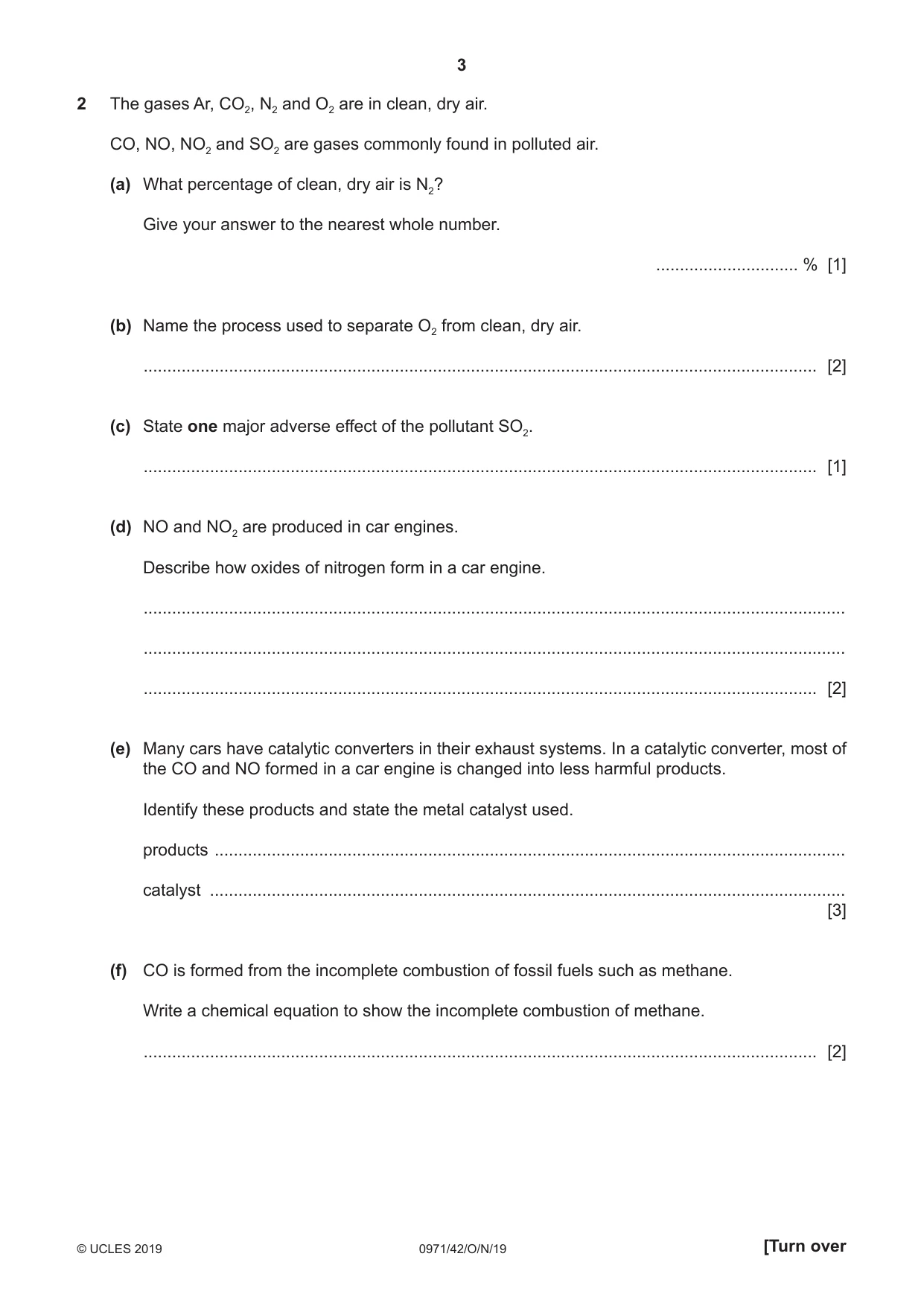
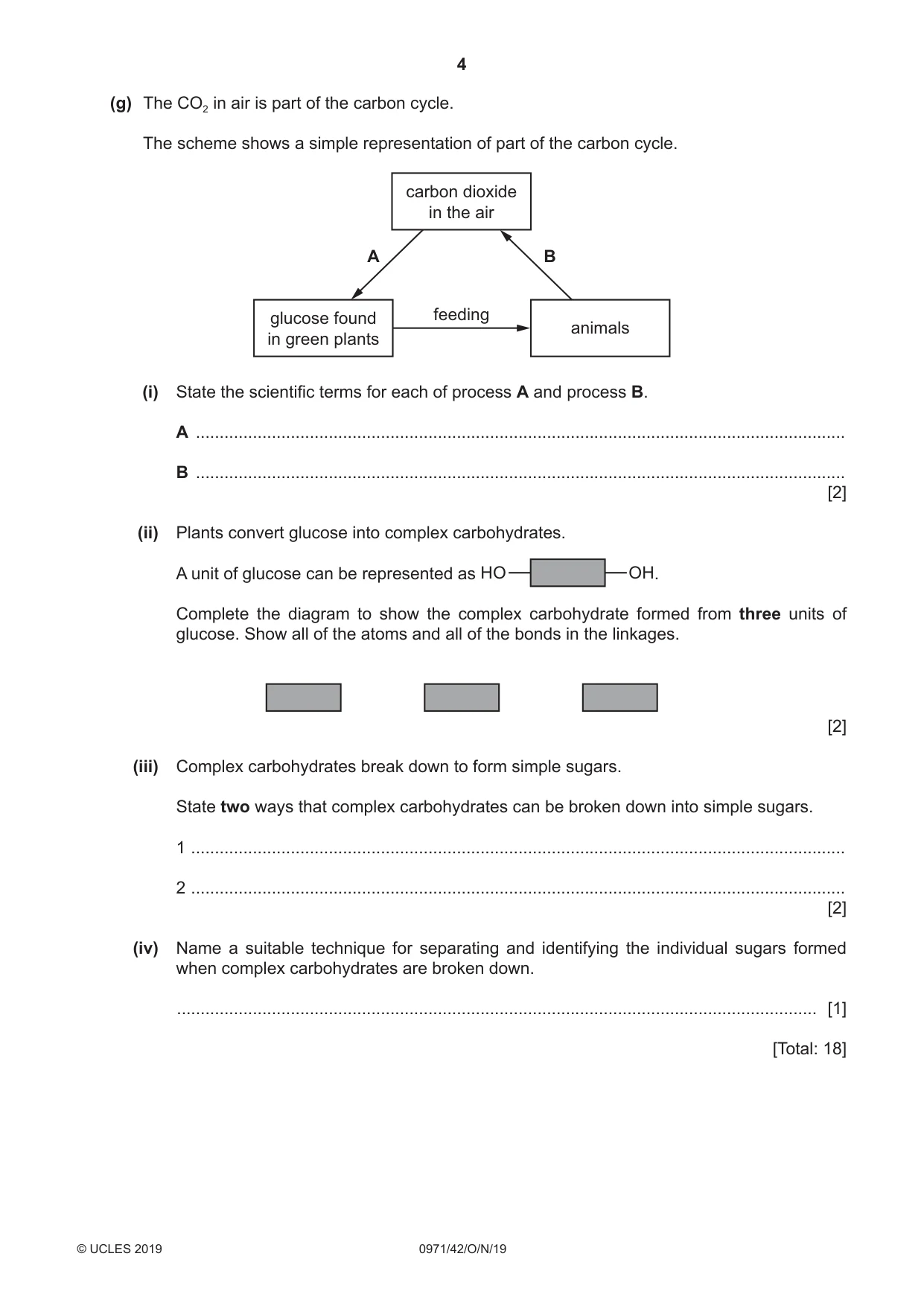
2 The gases Ar, CO2, N2 and O2 are in clean, dry air. CO, NO, NO2 and SO2 are gases commonly found in polluted air. (a) What percentage of clean, dry air is N2? Give your answer to the nearest whole number. .............................. % [1] (b) Name the process used to separate O2 from clean, dry air. .............................................................................................................................................. [2] (c) State one major adverse effect of the pollutant SO2. .............................................................................................................................................. [1] (d) NO and NO2 are produced in car engines. Describe how oxides of nitrogen form in a car engine. .................................................................................................................................................... .................................................................................................................................................... .............................................................................................................................................. [2] (e) Many cars have catalytic converters in their exhaust systems. In a catalytic converter, most of the CO and NO formed in a car engine is changed into less harmful products. Identify these products and state the metal catalyst used. products ..................................................................................................................................... catalyst ....................................................................................................................................... [3] (f) CO is formed from the incomplete combustion of fossil fuels such as methane. Write a chemical equation to show the incomplete combustion of methane. .............................................................................................................................................. [2] (g) The CO2 in air is part of the carbon cycle. The scheme shows a simple representation of part of the carbon cycle. carbon dioxide in the air A B glucose found feeding animals in green plants (i) State the scientific terms for each of process A and process B. A .......................................................................................................................................... B .......................................................................................................................................... [2] (ii) Plants convert glucose into complex carbohydrates. A unit of glucose can be represented as HO OH. Complete the diagram to show the complex carbohydrate formed from three units of glucose. Show all of the atoms and all of the bonds in the linkages. [2] (iii) Complex carbohydrates break down to form simple sugars. State two ways that complex carbohydrates can be broken down into simple sugars. 1 .......................................................................................................................................... 2 .......................................................................................................................................... [2] (iv) Name a suitable technique for separating and identifying the individual sugars formed when complex carbohydrates are broken down. ....................................................................................................................................... [1] [Total: 18]
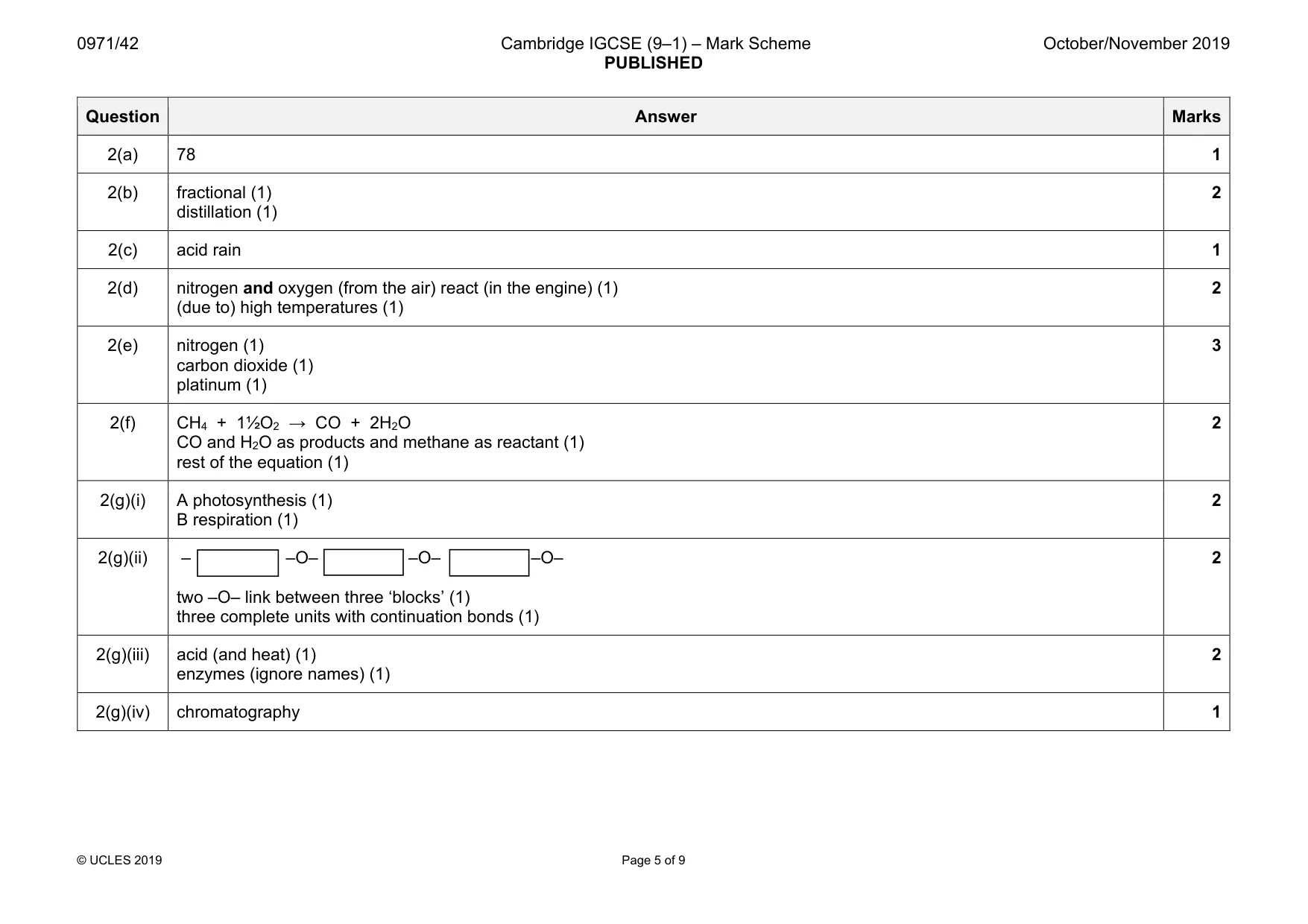
Mark scheme: 2(a) 78 1 2(b) fractional (1) distillation (1) 2 2(c) acid rain 1 2(d) nitrogen and oxygen (from the air) react (in the engine) (1) (due to) high temperatures (1) 2 2(e) nitrogen (1) carbon dioxide (1) platinum (1) 3 2(f) CH4 + 1½O2 → CO + 2H2O CO and H2O as products and methane as reactant (1) rest of the equation (1) 2 2(g)(i) A photosynthesis (1) B respiration (1) 2 2(g)(ii) – –O– –O– –O– two –O– link between three ‘blocks’ (1) three complete units with continuation bonds (1) 2 2(g)(iii) acid (and heat) (1) enzymes (ignore names) (1) 2 2(g)(iv) chromatography 1
Q3 · Ammonia is an important chemical
3 Ammonia is an important chemical. (a) Ammonia is manufactured by the Haber process. The reaction is reversible. (i) What is the sign for a reversible reaction? ....................................................................................................................................... [1] (ii) State the essential conditions for the manufacture of ammonia by the Haber process starting from hydrogen and nitrogen. Include a chemical equation to show the reaction which occurs. ............................................................................................................................................. ............................................................................................................................................. ............................................................................................................................................. ............................................................................................................................................. ............................................................................................................................................. ....................................................................................................................................... [5] (iii) Name one raw material which is a source of the hydrogen used in the Haber process. ....................................................................................................................................... [1] (b) Ammonia is a base and reacts with sulfuric acid to form the salt, ammonium sulfate. (i) What is meant by the term base? ....................................................................................................................................... [1] (ii) Name the industrial process used to manufacture sulfuric acid. ....................................................................................................................................... [1] (iii) Write a chemical equation for the reaction between ammonia and sulfuric acid. ....................................................................................................................................... [2] (c) When aqueous ammonia is added to aqueous iron(II) sulfate a green precipitate is seen. This green precipitate turns red-brown at the surface. (i) Name the green precipitate. ....................................................................................................................................... [1] (ii) Suggest why the green precipitate turns red-brown at the surface. ............................................................................................................................................. ....................................................................................................................................... [2] (iii) State what happens when an excess of aqueous ammonia is added to the green precipitate. ....................................................................................................................................... [1] (d) Ammonia reacts with oxygen as shown. 4NH3(g) + 5O2(g) 4NO(g) + 6H2O(g) (i) Calculate the volume of oxygen at room temperature and pressure, in dm3, that reacts with 4.80 dm3 of ammonia. volume = .............................. dm3 [3] (ii) The chemical equation for the reaction can be represented as shown. 4 H N H + 5 O O 4 N O + 6 H O H H Use the bond energies in the table to calculate the energy change, in kJ / mol, which occurs when one mole of NH3 reacts. bond N–H O=O N=O O–H bond energy in kJ / mol 391 498 587 464 ●● Energy needed to break bonds. .............................. kJ ●● Energy released when bonds are formed. .............................. kJ ●● Energy change when one mole of NH3 reacts. energy change = .............................. kJ / mol [4] [Total: 22]
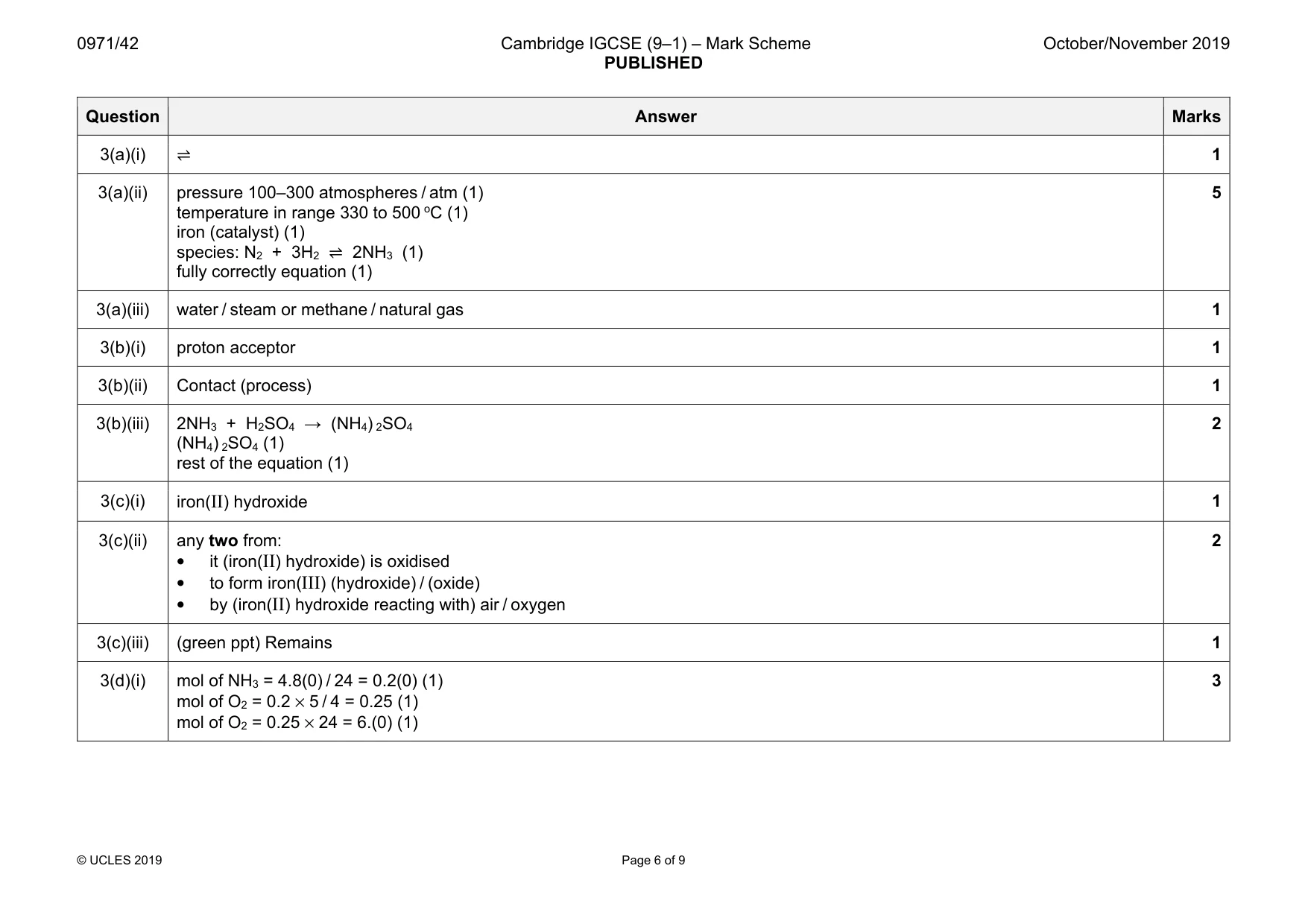
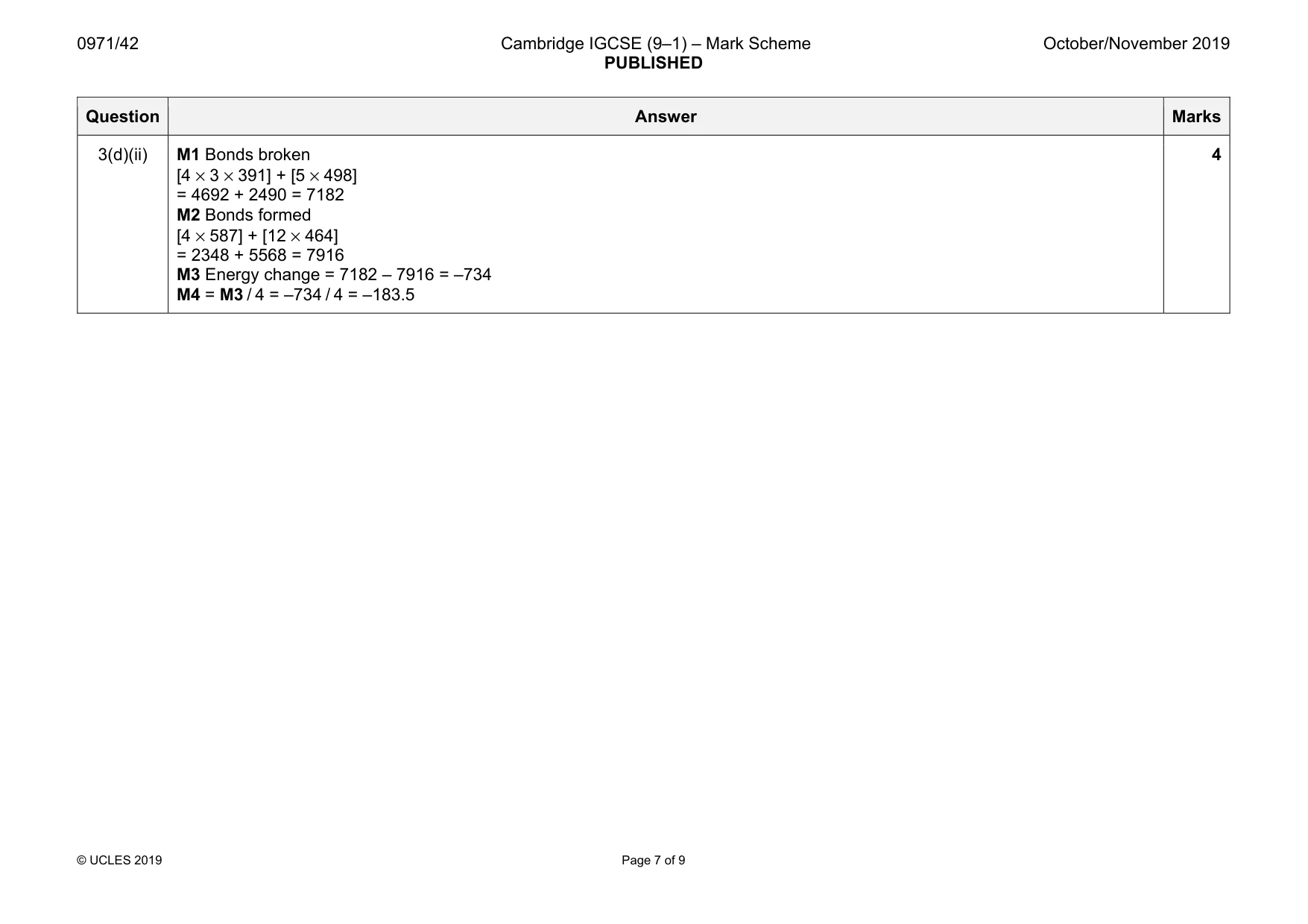
Mark scheme: 3(a)(i) 1 3(a)(ii) pressure 100–300 atmospheres / atm (1) temperature in range 330 to 500 oC (1) iron (catalyst) (1) species: N2 + 3H2 ⇌ 2NH3 (1) fully correctly equation (1) 5 3(a)(iii) water / steam or methane / natural gas 1 3(b)(i) proton acceptor 1 3(b)(ii) Contact (process) 1 3(b)(iii) 2NH3 + H2SO4 → (NH4) 2SO4 (NH4) 2SO4 (1) rest of the equation (1) 2 3(c)(i) iron(II) hydroxide 1 3(c)(ii) any two from: • it (iron(II) hydroxide) is oxidised • to form iron(III) (hydroxide) / (oxide) • by (iron(II) hydroxide reacting with) air / oxygen 2 3(c)(iii) (green ppt) Remains 1 3(d)(i) mol of NH3 = 4.8(0) / 24 = 0.2(0) (1) mol of O2 = 0.2 × 5 / 4 = 0.25 (1) mol of O2 = 0.25 × 24 = 6.(0) (1) 3 Question Answer Marks 3(d)(ii) M1 Bonds broken [4 × 3 × 391] + [5 × 498] = 4692 + 2490 = 7182 M2 Bonds formed [4 × 587] + [12 × 464] = 2348 + 5568 = 7916 M3 Energy change = 7182 – 7916 = –734 M4 = M3 / 4 = –734 / 4 = –183.5 4
Q4 · Many substances conduct electricity
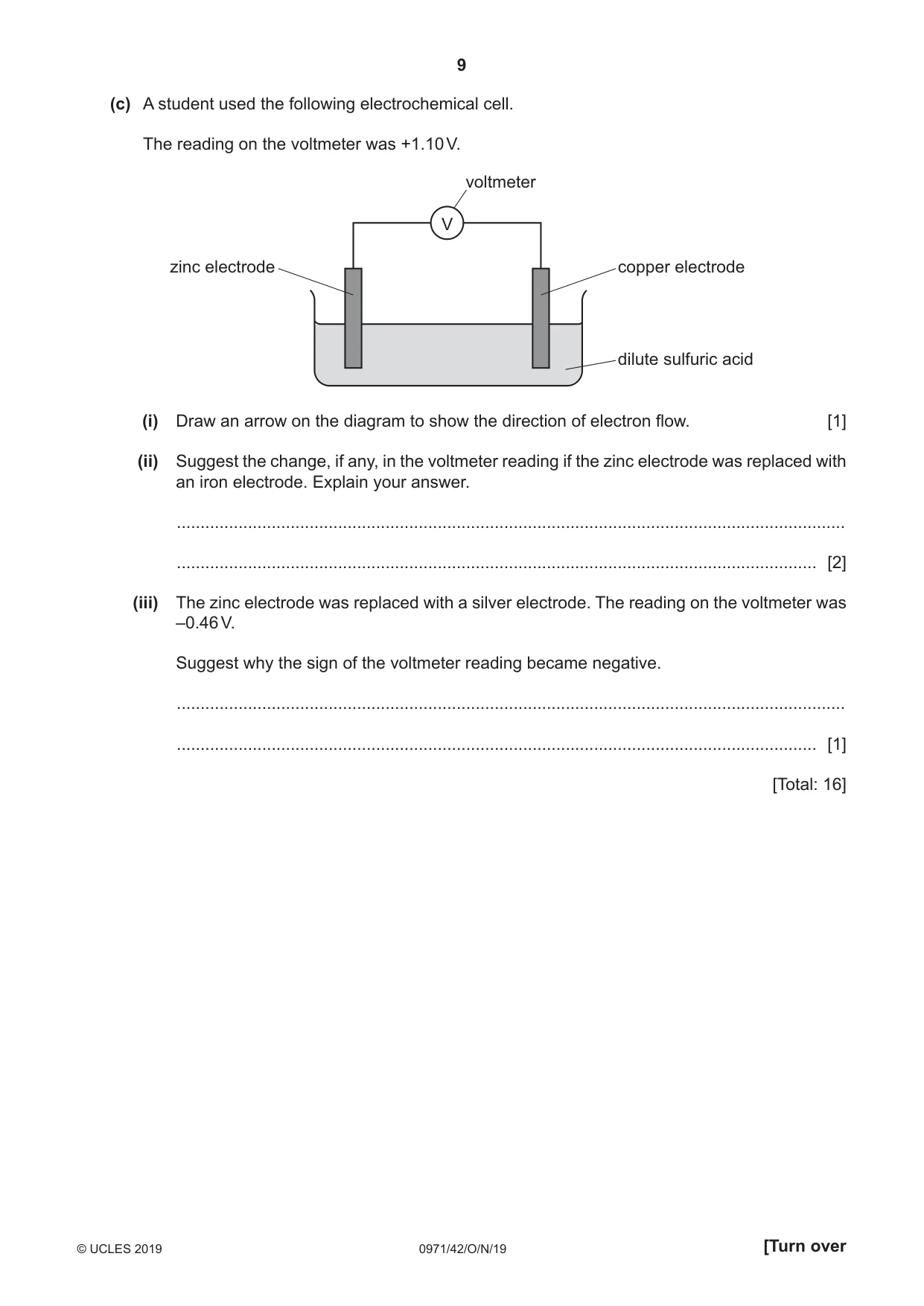
4 Many substances conduct electricity. (a) Identify all the particles responsible for the passage of electricity in: ● graphite ............................................................................................................................... ● magnesium ribbon ............................................................................................................... ● molten copper(II) bromide. ................................................................................................. [4] (b) A student used the following apparatus to electrolyse concentrated aqueous sodium chloride using inert electrodes. concentrated aqueous sodium chloride inert electrodes + – (i) Suggest the name of a metal which could be used as the inert electrodes. ....................................................................................................................................... [1] (ii) Name the gas formed at the positive electrode. ....................................................................................................................................... [1] (iii) Write an ionic half-equation for the reaction occurring at the negative electrode. Include state symbols. ....................................................................................................................................... [3] (iv) How, if at all, does the pH of the solution change during the electrolysis? Explain your answer. ............................................................................................................................................. ............................................................................................................................................. ....................................................................................................................................... [3] (c) A student used the following electrochemical cell. The reading on the voltmeter was +1.10 V. voltmeter V zinc electrode copper electrode dilute sulfuric acid (i) Draw an arrow on the diagram to show the direction of electron flow. [1] (ii) Suggest the change, if any, in the voltmeter reading if the zinc electrode was replaced with an iron electrode. Explain your answer. ............................................................................................................................................. ....................................................................................................................................... [2] (iii) The zinc electrode was replaced with a silver electrode. The reading on the voltmeter was –0.46 V. Suggest why the sign of the voltmeter reading became negative. ............................................................................................................................................. ....................................................................................................................................... [1] [Total: 16]
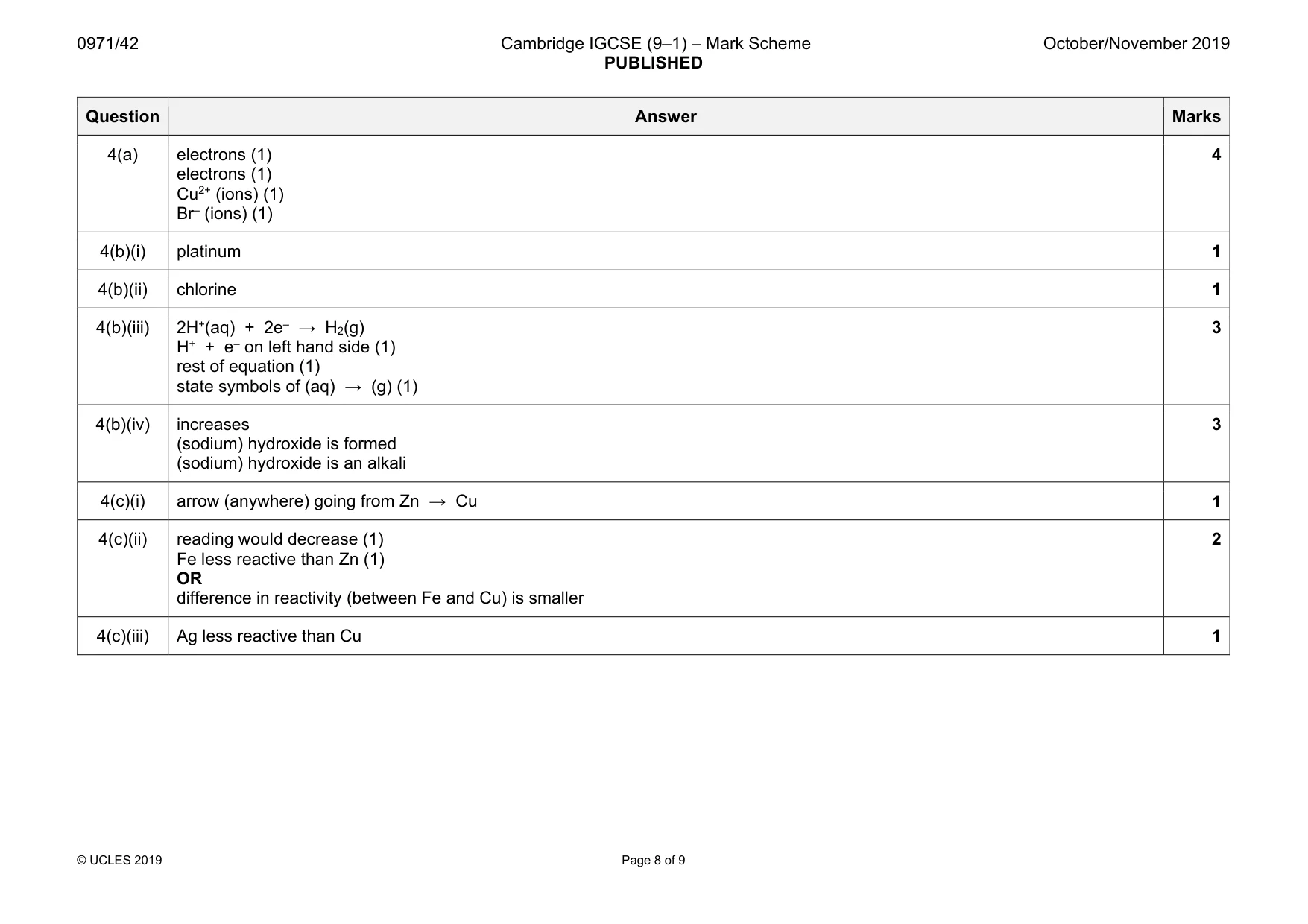
Mark scheme: 4(a) electrons (1) electrons (1) Cu2+ (ions) (1) Br– (ions) (1) 4 4(b)(i) platinum 1 4(b)(ii) chlorine 1 4(b)(iii) 2H+(aq) + 2e– → H2(g) H+ + e– on left hand side (1) rest of equation (1) state symbols of (aq) → (g) (1) 3 4(b)(iv) increases (sodium) hydroxide is formed (sodium) hydroxide is an alkali 3 4(c)(i) arrow (anywhere) going from Zn → Cu 1 4(c)(ii) reading would decrease (1) Fe less reactive than Zn (1) OR difference in reactivity (between Fe and Cu) is smaller 2 4(c)(iii) Ag less reactive than Cu 1
Q5 · Methanol, CH3OH, is a member of the homologous series of alcohols
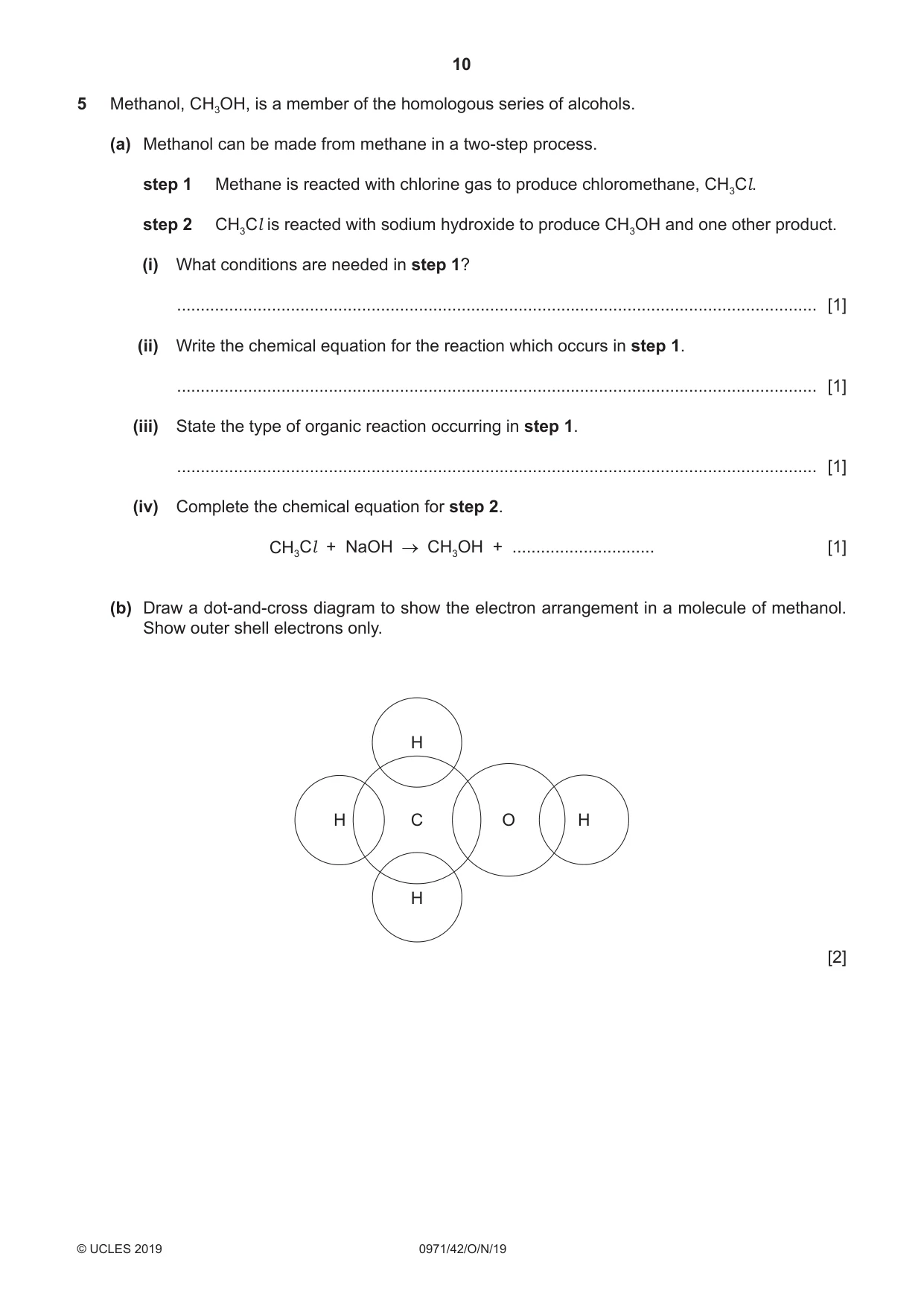
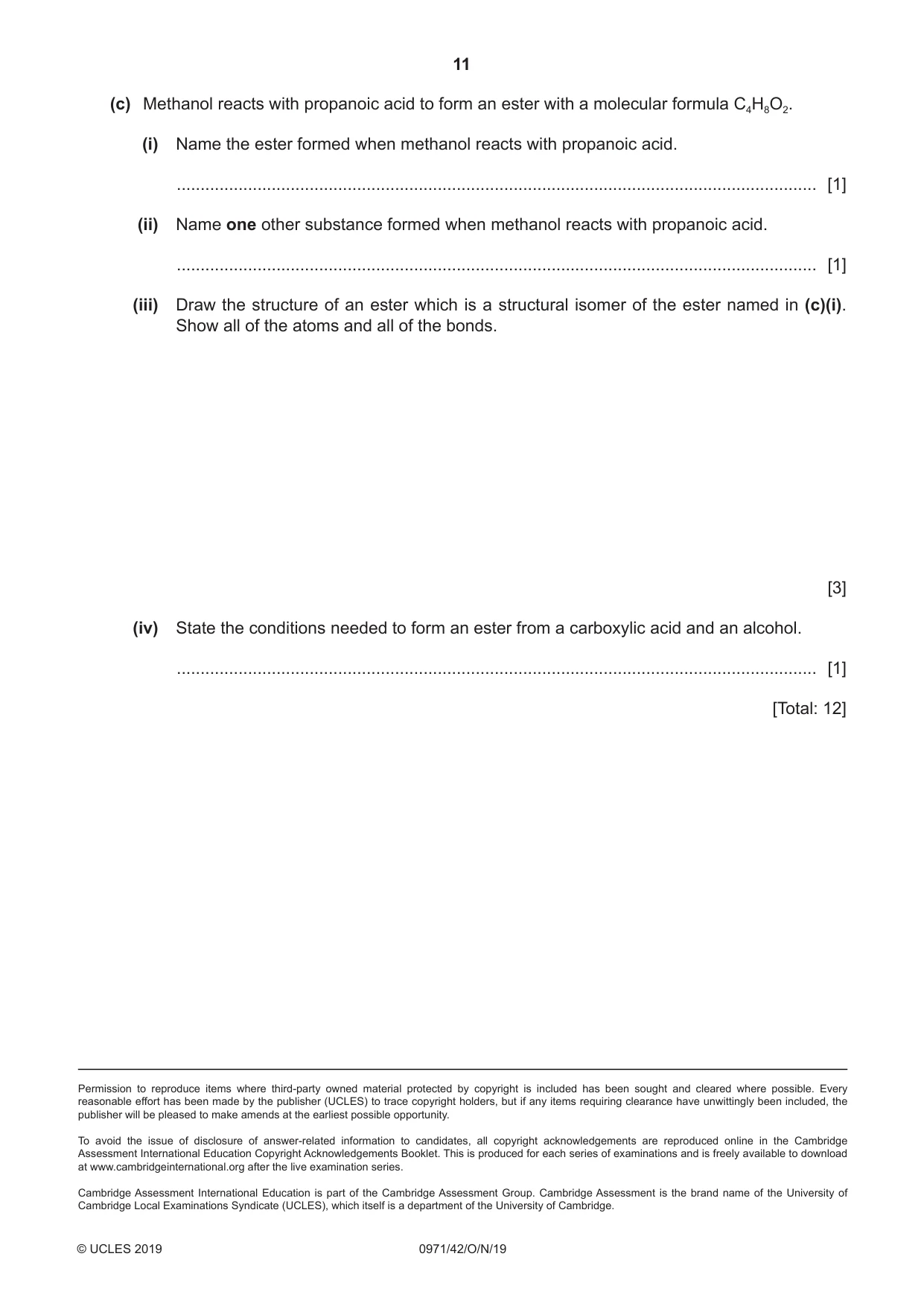
5 Methanol, CH3OH, is a member of the homologous series of alcohols. (a) Methanol can be made from methane in a two-step process. step 1 Methane is reacted with chlorine gas to produce chloromethane, CH3Cl. step 2 CH3Cl is reacted with sodium hydroxide to produce CH3OH and one other product. (i) What conditions are needed in step 1? ....................................................................................................................................... [1] (ii) Write the chemical equation for the reaction which occurs in step 1. ....................................................................................................................................... [1] (iii) State the type of organic reaction occurring in step 1. ....................................................................................................................................... [1] (iv) Complete the chemical equation for step 2. CH3Cl + NaOH CH3OH + .............................. [1] (b) Draw a dot-and-cross diagram to show the electron arrangement in a molecule of methanol. Show outer shell electrons only. H H C O H H [2] (c) Methanol reacts with propanoic acid to form an ester with a molecular formula C4H8O2. (i) Name the ester formed when methanol reacts with propanoic acid. ....................................................................................................................................... [1] (ii) Name one other substance formed when methanol reacts with propanoic acid. ....................................................................................................................................... [1] (iii) Draw the structure of an ester which is a structural isomer of the ester named in (c)(i). Show all of the atoms and all of the bonds. [3] (iv) State the conditions needed to form an ester from a carboxylic acid and an alcohol. ....................................................................................................................................... [1] [Total: 12]
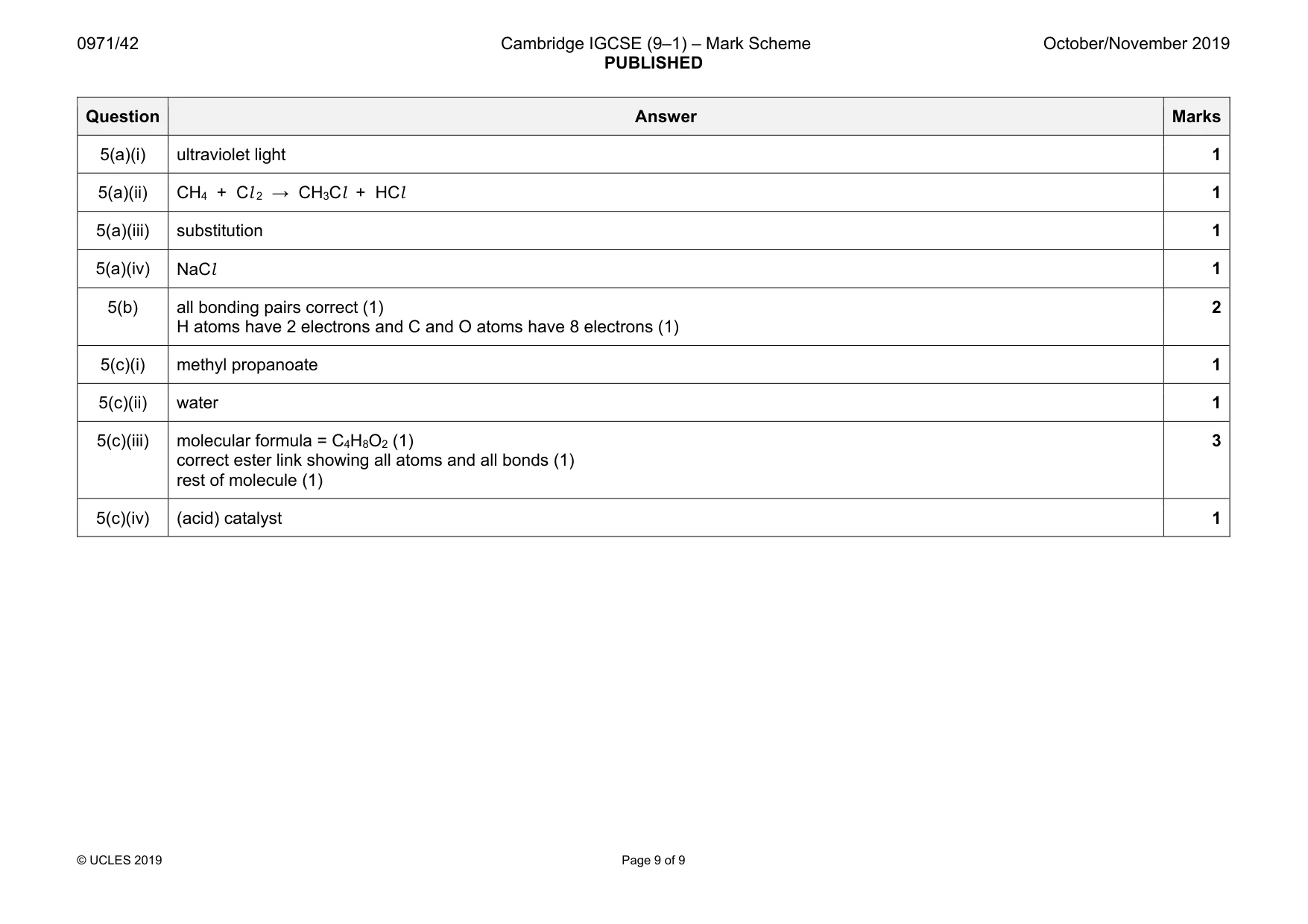
Mark scheme: 5(a)(i) ultraviolet light 1 5(a)(ii) CH4 + Cl 2 → CH3Cl + HCl 1 5(a)(iii) substitution 1 5(a)(iv) NaCl 1 5(b) all bonding pairs correct (1) H atoms have 2 electrons and C and O atoms have 8 electrons (1) 2 5(c)(i) methyl propanoate 1 5(c)(ii) water 1 5(c)(iii) molecular formula = C4H8O2 (1) correct ester link showing all atoms and all bonds (1) rest of molecule (1) 3 5(c)(iv) (acid) catalyst 1
What was in this paper
The subtopics covered by these 5 questions, and how many questions each got. Open one in a new tab to see every Cambridge question on it.
What you needed in this session
Cambridge’s own grade thresholds for 2019 Oct/Nov, Paper 4 · Variant 2. A higher threshold means an easier paper — the bar moves with how the cohort did.