Cambridge IGCSE Biology (9-1) 0970 — 2023 Oct/Nov Paper 4 · Variant 2
0970/42/O/N/23 · 6 questions · 80 marks · ≈90 min
The question paper and its mark scheme, free to read here and free to download. This is Cambridge’s own paper, exactly as it was sat.
Question paper20 pages
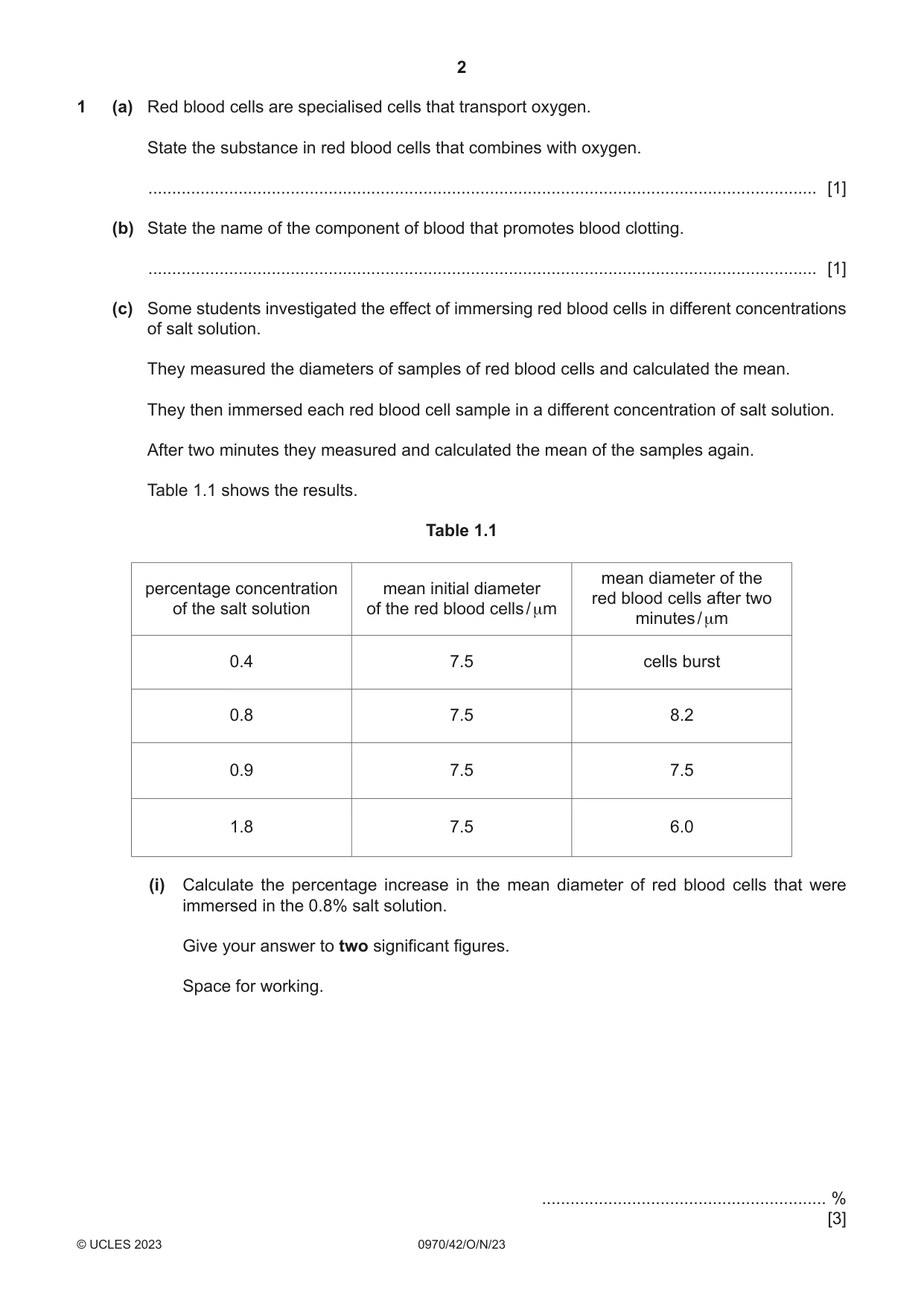
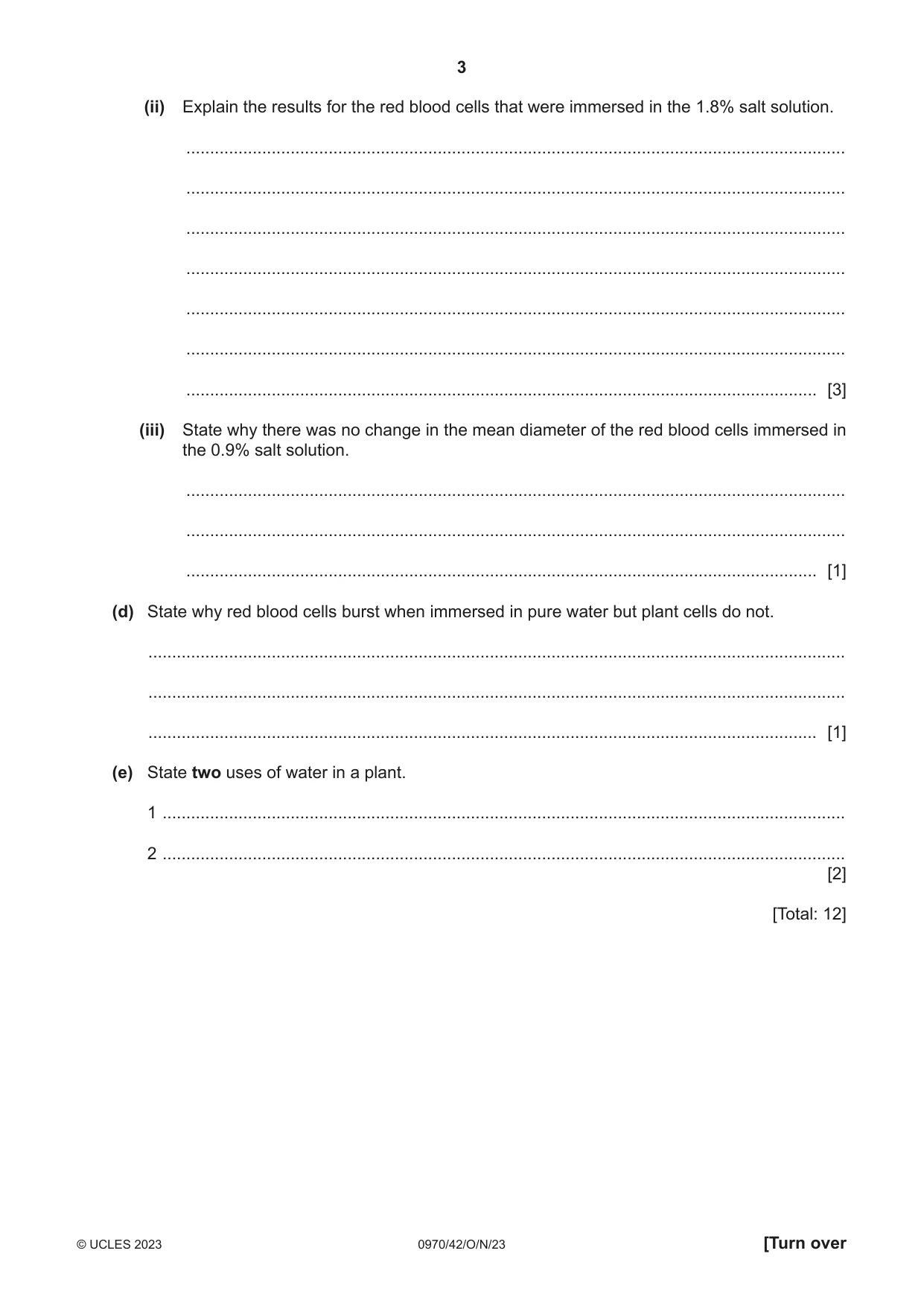
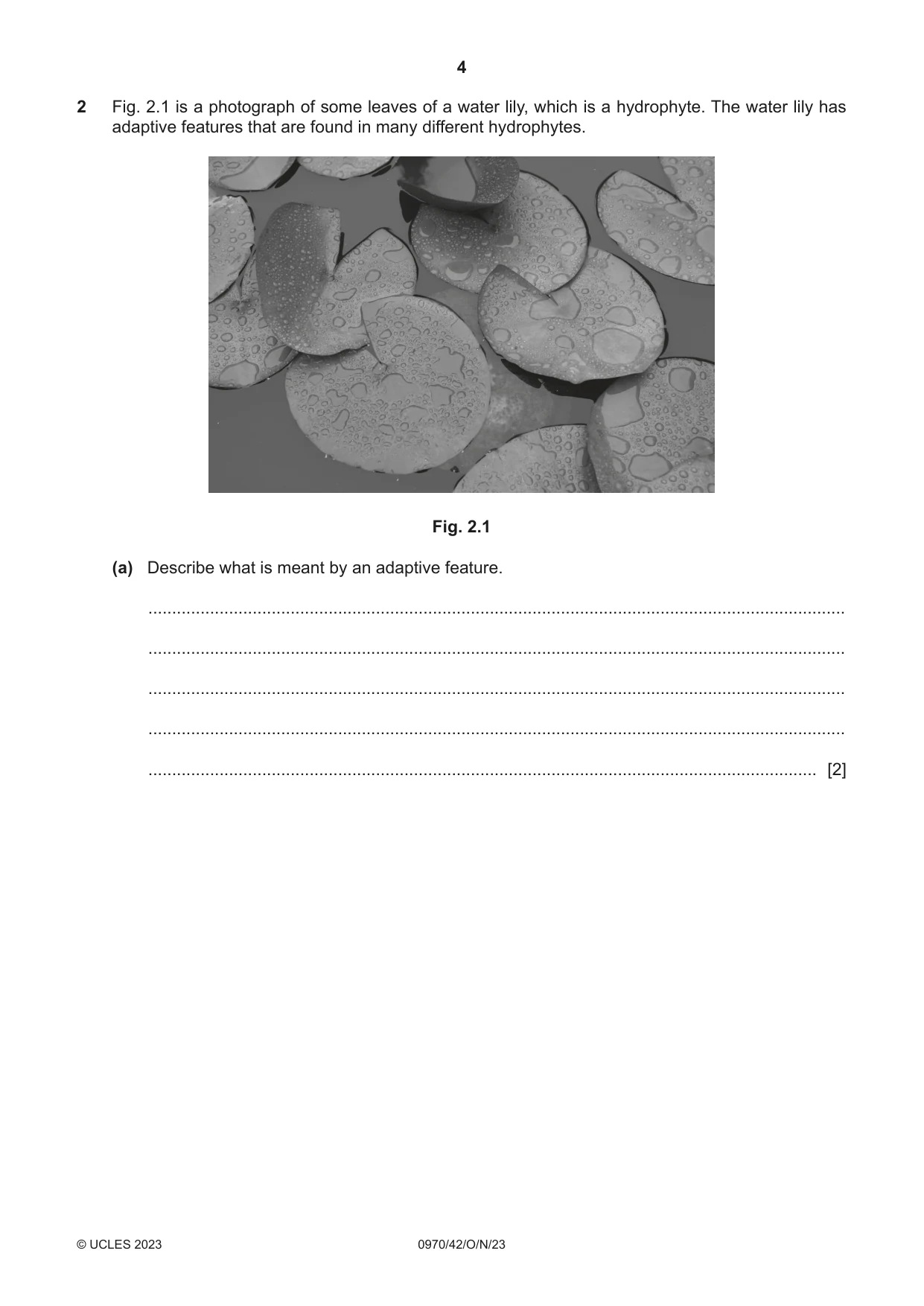



Mark scheme13 pages
Answers below. Sit the paper first if you are practising.
Questions as text
Q1 · Red blood cells are specialised cells that transport oxygen
1 (a) Red blood cells are specialised cells that transport oxygen. State the substance in red blood cells that combines with oxygen. ............................................................................................................................................. [1] (b) State the name of the component of blood that promotes blood clotting. ............................................................................................................................................. [1] (c) Some students investigated the effect of immersing red blood cells in different concentrations of salt solution. They measured the diameters of samples of red blood cells and calculated the mean. They then immersed each red blood cell sample in a different concentration of salt solution. After two minutes they measured and calculated the mean of the samples again. Table 1.1 shows the results. Table 1.1 mean diameter of the percentage concentration mean initial diameter red blood cells after two of the salt solution of the red blood cells / µm minutes / µm 0.4 7.5 cells burst 0.8 7.5 8.2 0.9 7.5 7.5 1.8 7.5 6.0 (i) Calculate the percentage increase in the mean diameter of red blood cells that were immersed in the 0.8% salt solution. Give your answer to two significant figures. Space for working. ............................................................ % [3] (ii) Explain the results for the red blood cells that were immersed in the 1.8% salt solution. ........................................................................................................................................... ........................................................................................................................................... ........................................................................................................................................... ........................................................................................................................................... ........................................................................................................................................... ........................................................................................................................................... ..................................................................................................................................... [3] (iii) State why there was no change in the mean diameter of the red blood cells immersed in the 0.9% salt solution. ........................................................................................................................................... ........................................................................................................................................... ..................................................................................................................................... [1] (d) State why red blood cells burst when immersed in pure water but plant cells do not. ................................................................................................................................................... ................................................................................................................................................... ............................................................................................................................................. [1] (e) State two uses of water in a plant. 1 ................................................................................................................................................ 2 ................................................................................................................................................ [2] [Total: 12]
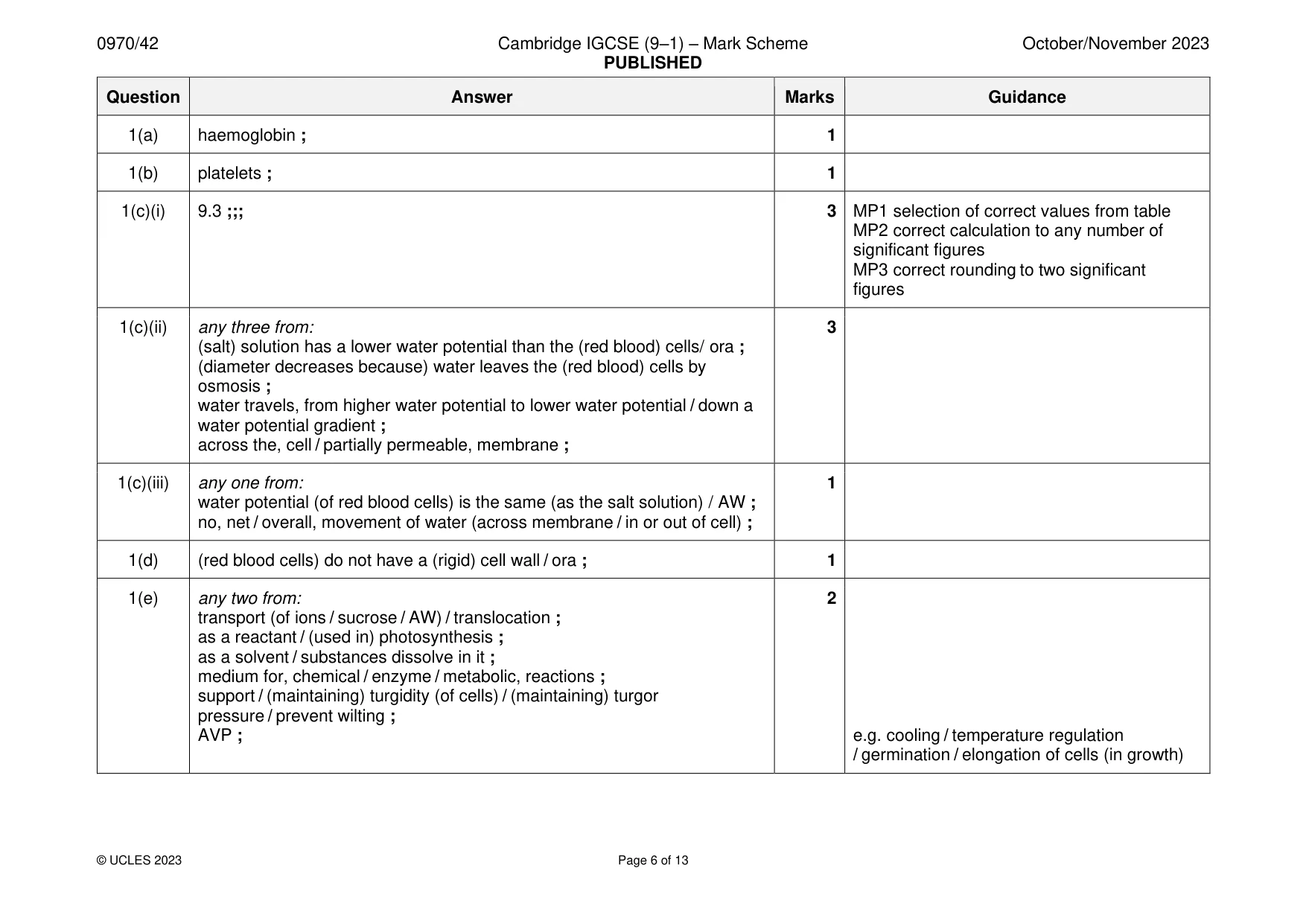
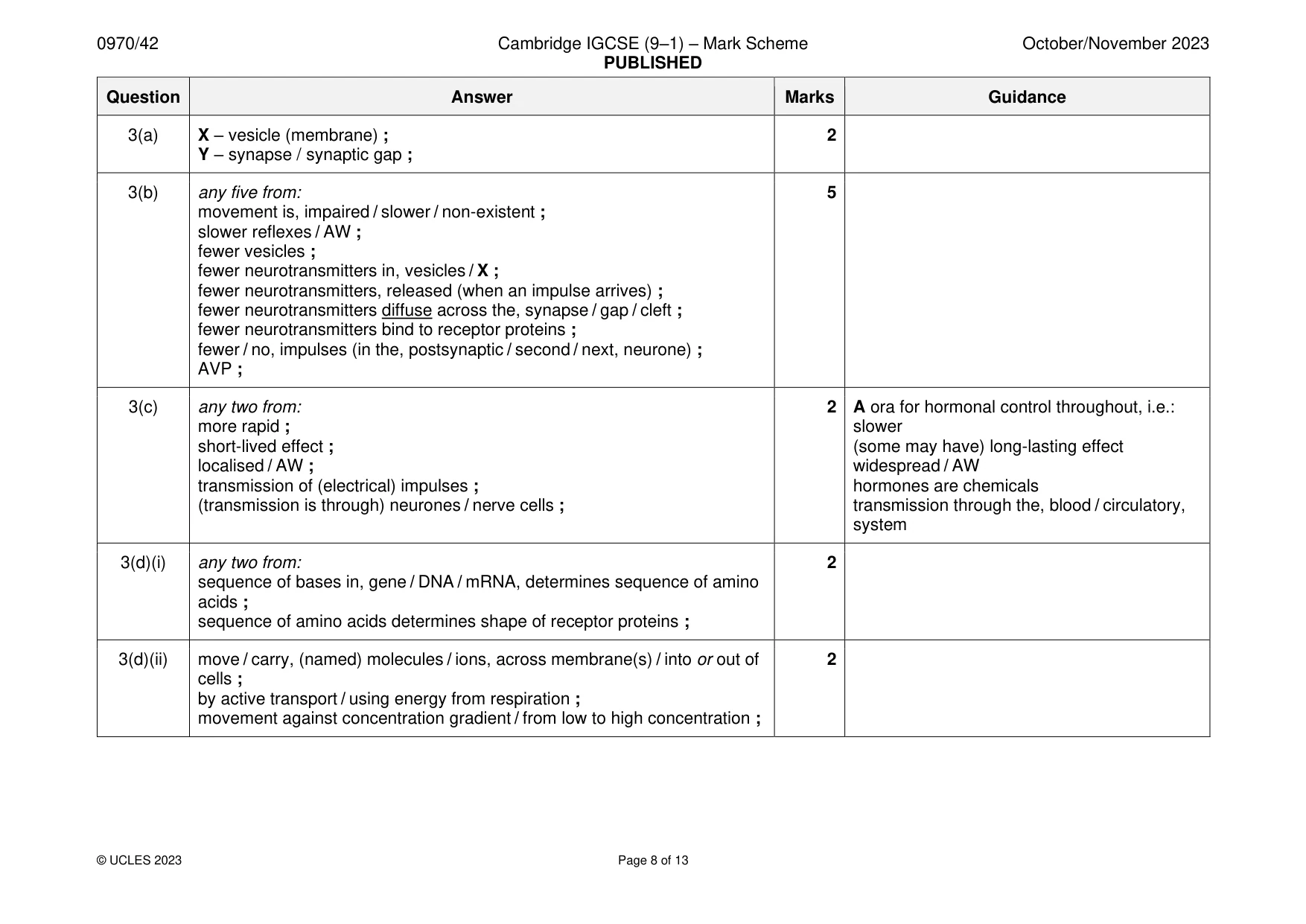
Mark scheme: Question Answer Marks Guidance 1(a) haemoglobin ; 1 1(b) platelets ; 1 1(c)(i) 9.3 ;;; 3 MP1 selection of correct values from table MP2 correct calculation to any number of significant figures MP3 correct rounding to two significant figures 1(c)(ii) any three from: 3 (salt) solution has a lower water potential than the (red blood) cells/ ora ; (diameter decreases because) water leaves the (red blood) cells by osmosis ; water travels, from higher water potential to lower water potential / down a water potential gradient ; across the, cell / partially permeable, membrane ; 1(c)(iii) any one from: 1 water potential (of red blood cells) is the same (as the salt solution) / AW ; no, net / overall, movement of water (across membrane / in or out of cell) ; 1(d) (red blood cells) do not have a (rigid) cell wall / ora ; 1 1(e) any two from: 2 transport (of ions / sucrose / AW) / translocation ; as a reactant / (used in) photosynthesis ; as a solvent / substances dissolve in it ; medium for, chemical / enzyme / metabolic, reactions ; support / (maintaining) turgidity (of cells) / (maintaining) turgor pressure / prevent wilting ; AVP ; e.g. cooling / temperature regulation / germination / elongation of cells (in growth)
Q2 · A photograph of some leaves of a water lily, which is a hydrophyte
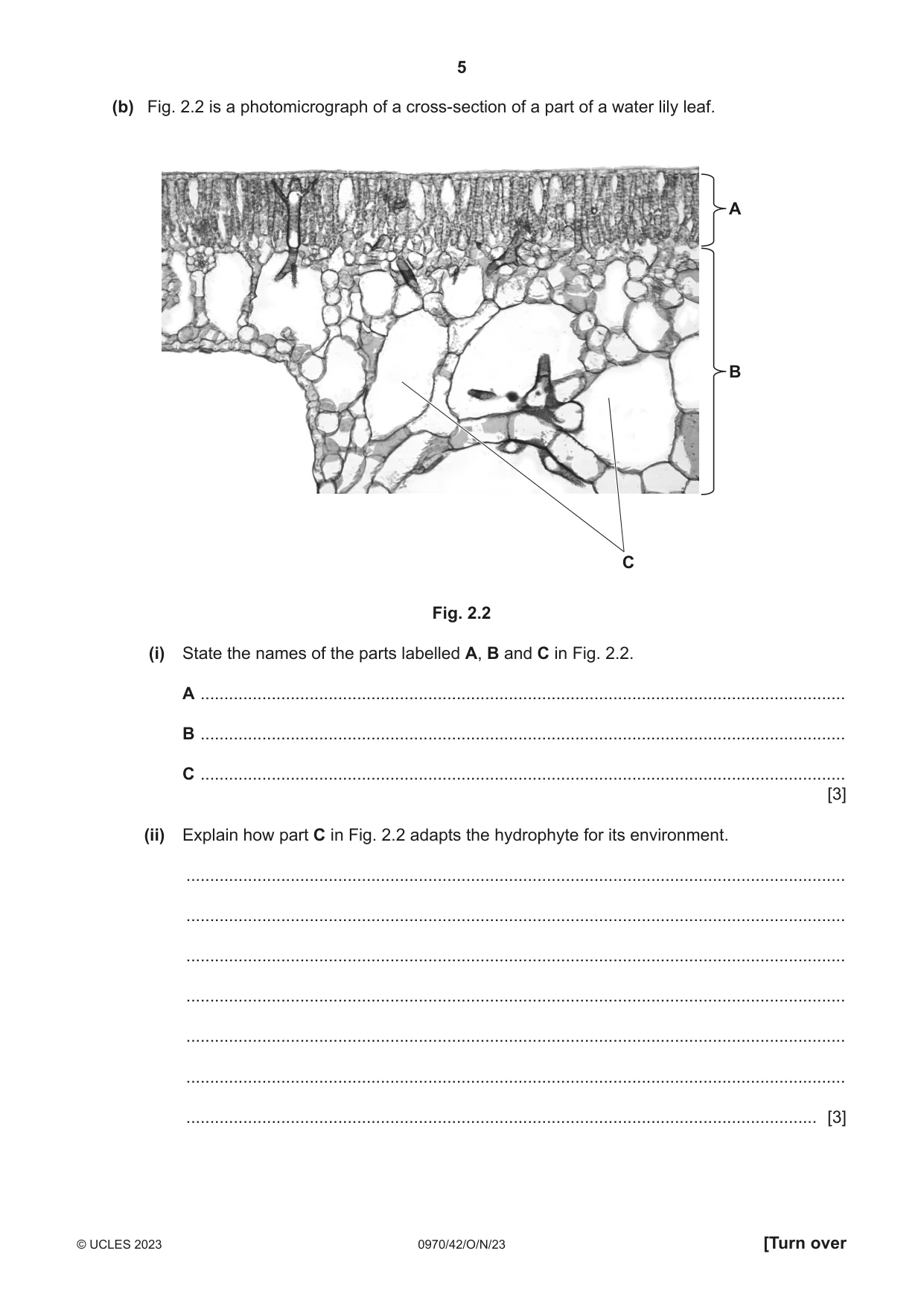
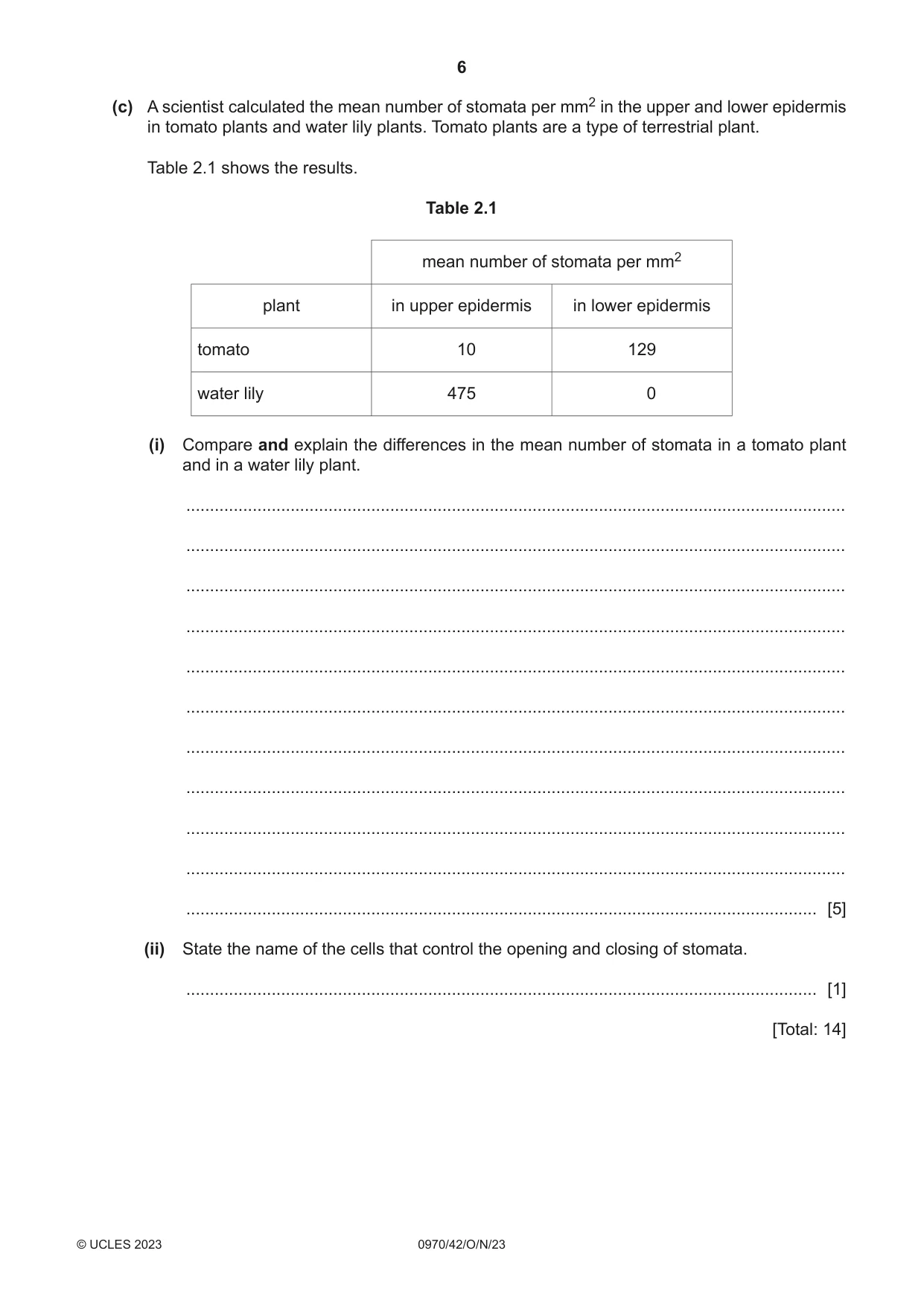
2 Fig. 2.1 is a photograph of some leaves of a water lily, which is a hydrophyte. The water lily has adaptive features that are found in many different hydrophytes. Fig. 2.1 (a) Describe what is meant by an adaptive feature. ................................................................................................................................................... ................................................................................................................................................... ................................................................................................................................................... ................................................................................................................................................... ............................................................................................................................................. [2] (b) Fig. 2.2 is a photomicrograph of a cross-section of a part of a water lily leaf. A B C Fig. 2.2 (i) State the names of the parts labelled A, B and C in Fig. 2.2. A ........................................................................................................................................ B ........................................................................................................................................ C ........................................................................................................................................ [3] (ii) Explain how part C in Fig. 2.2 adapts the hydrophyte for its environment. ........................................................................................................................................... ........................................................................................................................................... ........................................................................................................................................... ........................................................................................................................................... ........................................................................................................................................... ........................................................................................................................................... ..................................................................................................................................... [3] (c) A scientist calculated the mean number of stomata per mm2 in the upper and lower epidermis in tomato plants and water lily plants. Tomato plants are a type of terrestrial plant. Table 2.1 shows the results. Table 2.1 mean number of stomata per mm2 plant in upper epidermis in lower epidermis tomato 10 129 water lily 475 0 (i) Compare and explain the differences in the mean number of stomata in a tomato plant and in a water lily plant. ........................................................................................................................................... ........................................................................................................................................... ........................................................................................................................................... ........................................................................................................................................... ........................................................................................................................................... ........................................................................................................................................... ........................................................................................................................................... ........................................................................................................................................... ........................................................................................................................................... ........................................................................................................................................... ..................................................................................................................................... [5] (ii) State the name of the cells that control the opening and closing of stomata. ..................................................................................................................................... [1] [Total: 14]
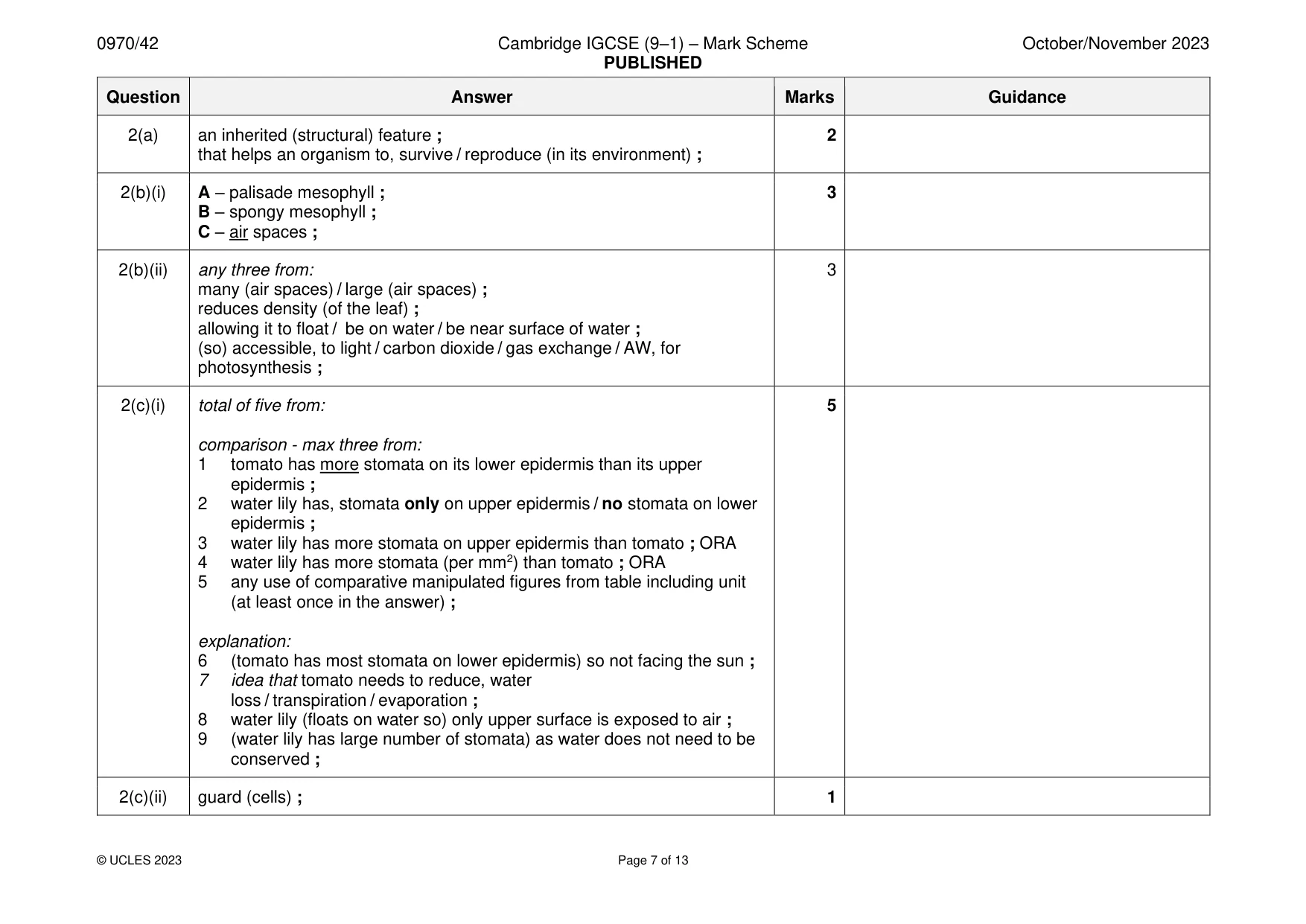
Mark scheme: 2(a) an inherited (structural) feature ; 2 that helps an organism to, survive / reproduce (in its environment) ; 2(b)(i) A – palisade mesophyll ; 3 B – spongy mesophyll ; C – air spaces ; 2(b)(ii) any three from: 3 many (air spaces) / large (air spaces) ; reduces density (of the leaf) ; allowing it to float / be on water / be near surface of water ; (so) accessible, to light / carbon dioxide / gas exchange / AW, for photosynthesis ; 2(c)(i) total of five from: 5 comparison - max three from: 1 tomato has more stomata on its lower epidermis than its upper epidermis ; 2 water lily has, stomata only on upper epidermis / no stomata on lower epidermis ; 3 water lily has more stomata on upper epidermis than tomato ; ORA 4 water lily has more stomata (per mm2) than tomato ; ORA 5 any use of comparative manipulated figures from table including unit (at least once in the answer) ; explanation: 6 (tomato has most stomata on lower epidermis) so not facing the sun ; 7 idea that tomato needs to reduce, water loss / transpiration / evaporation ; 8 water lily (floats on water so) only upper surface is exposed to air ; 9 (water lily has large number of stomata) as water does not need to be conserved ; 2(c)(ii) guard (cells) ; 1
Q3 · A diagram of the junction between two neurones in a healthy person
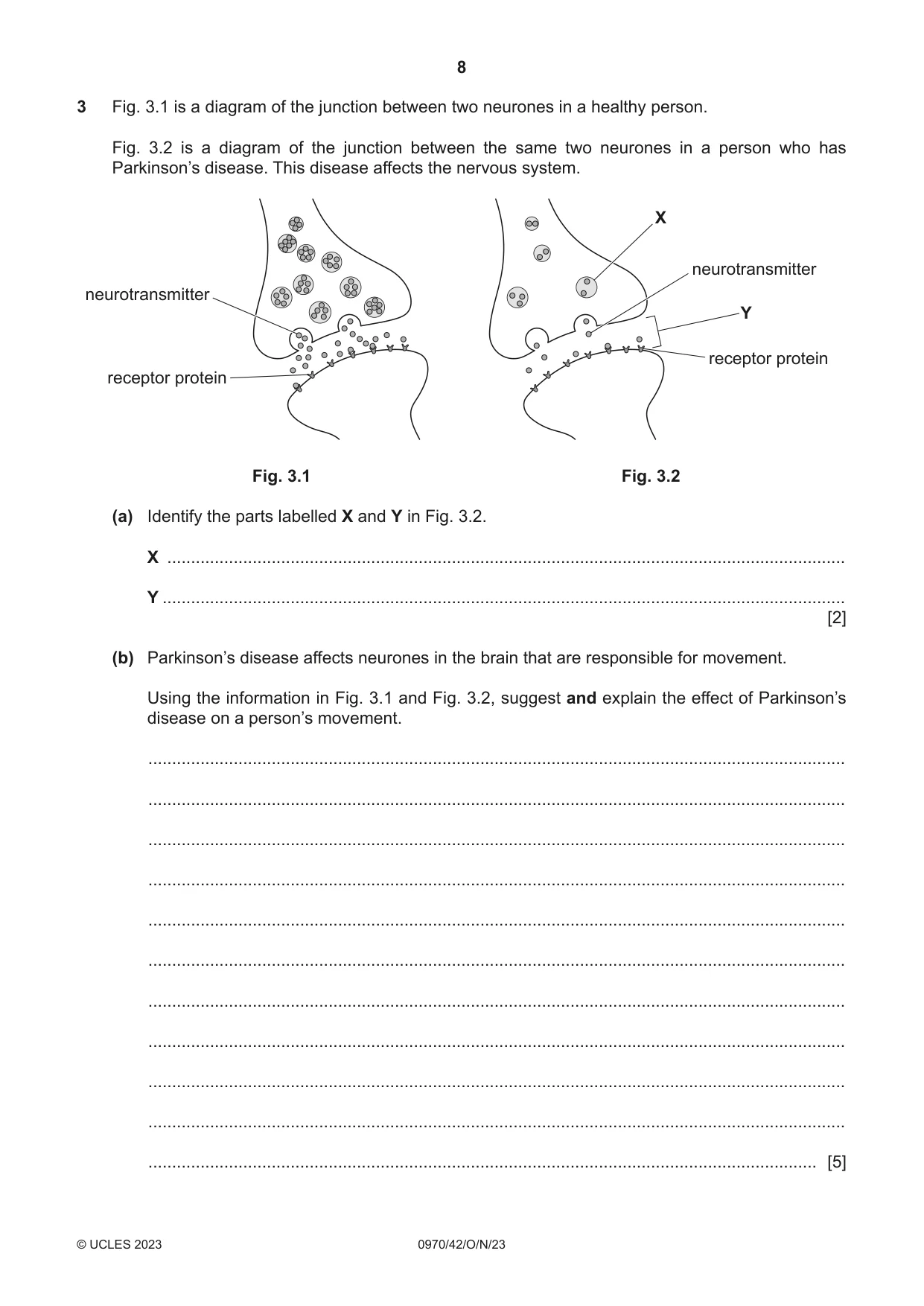
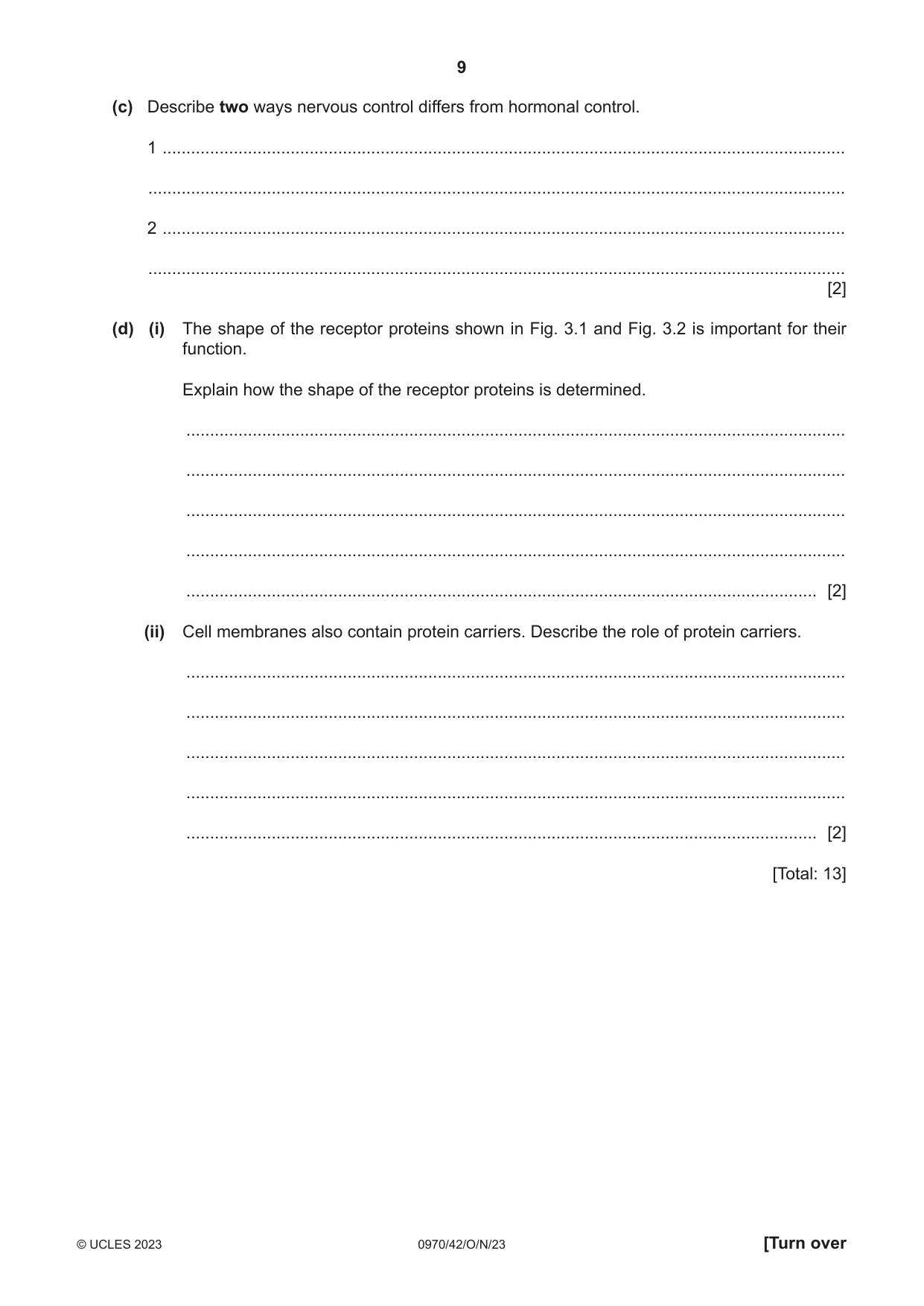
3 Fig. 3.1 is a diagram of the junction between two neurones in a healthy person. Fig. 3.2 is a diagram of the junction between the same two neurones in a person who has Parkinson’s disease. This disease affects the nervous system. X neurotransmitter neurotransmitter Y receptor protein receptor protein Fig. 3.1 Fig. 3.2 (a) Identify the parts labelled X and Y in Fig. 3.2. X ............................................................................................................................................... Y ................................................................................................................................................ [2] (b) Parkinson’s disease affects neurones in the brain that are responsible for movement. Using the information in Fig. 3.1 and Fig. 3.2, suggest and explain the effect of Parkinson’s disease on a person’s movement. ................................................................................................................................................... ................................................................................................................................................... ................................................................................................................................................... ................................................................................................................................................... ................................................................................................................................................... ................................................................................................................................................... ................................................................................................................................................... ................................................................................................................................................... ................................................................................................................................................... ................................................................................................................................................... ............................................................................................................................................. [5] (c) Describe two ways nervous control differs from hormonal control. 1 ................................................................................................................................................ ................................................................................................................................................... 2 ................................................................................................................................................ ................................................................................................................................................... [2] (d) (i) The shape of the receptor proteins shown in Fig. 3.1 and Fig. 3.2 is important for their function. Explain how the shape of the receptor proteins is determined. ........................................................................................................................................... ........................................................................................................................................... ........................................................................................................................................... ........................................................................................................................................... ..................................................................................................................................... [2] (ii) Cell membranes also contain protein carriers. Describe the role of protein carriers. ........................................................................................................................................... ........................................................................................................................................... ........................................................................................................................................... ........................................................................................................................................... ..................................................................................................................................... [2] [Total: 13]
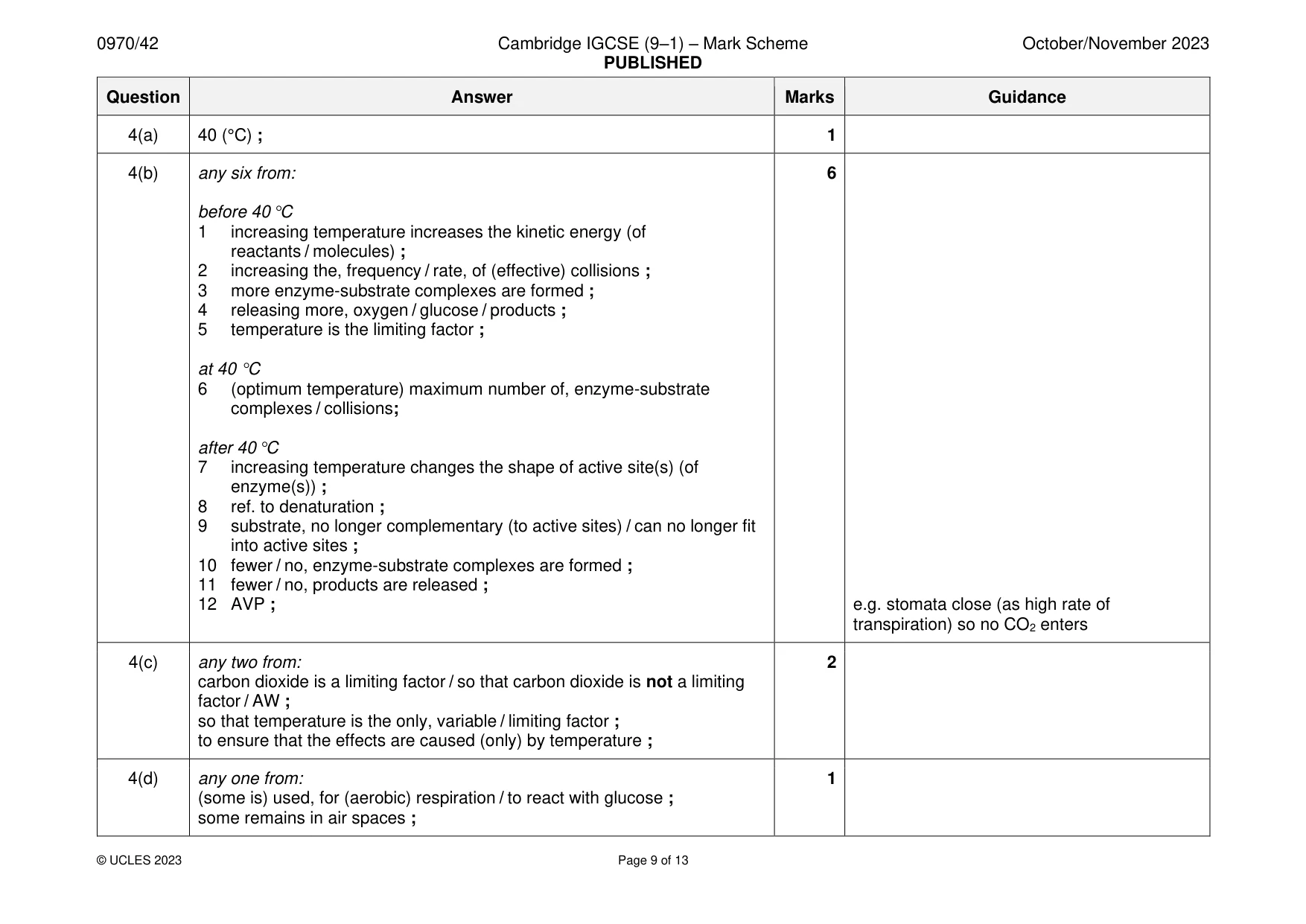
Mark scheme: 3(a) X – vesicle (membrane) ; 2 Y – synapse / synaptic gap ; 3(b) any five from: 5 movement is, impaired / slower / non-existent ; slower reflexes / AW ; fewer vesicles ; fewer neurotransmitters in, vesicles / X ; fewer neurotransmitters, released (when an impulse arrives) ; fewer neurotransmitters diffuse across the, synapse / gap / cleft ; fewer neurotransmitters bind to receptor proteins ; fewer / no, impulses (in the, postsynaptic / second / next, neurone) ; AVP ; 3(c) any two from: 2 A ora for hormonal control throughout, i.e.: more rapid ; slower short-lived effect ; (some may have) long-lasting effect localised / AW ; widespread / AW transmission of (electrical) impulses ; hormones are chemicals (transmission is through) neurones / nerve cells ; transmission through the, blood / circulatory, system 3(d)(i) any two from: 2 sequence of bases in, gene / DNA / mRNA, determines sequence of amino acids ; sequence of amino acids determines shape of receptor proteins ; 3(d)(ii) move / carry, (named) molecules / ions, across membrane(s) / into or out of 2 cells ; by active transport / using energy from respiration ; movement against concentration gradient / from low to high concentration ;
Q4 · A scientist investigated the effect of temperature on the rate of photosynthesis in one…
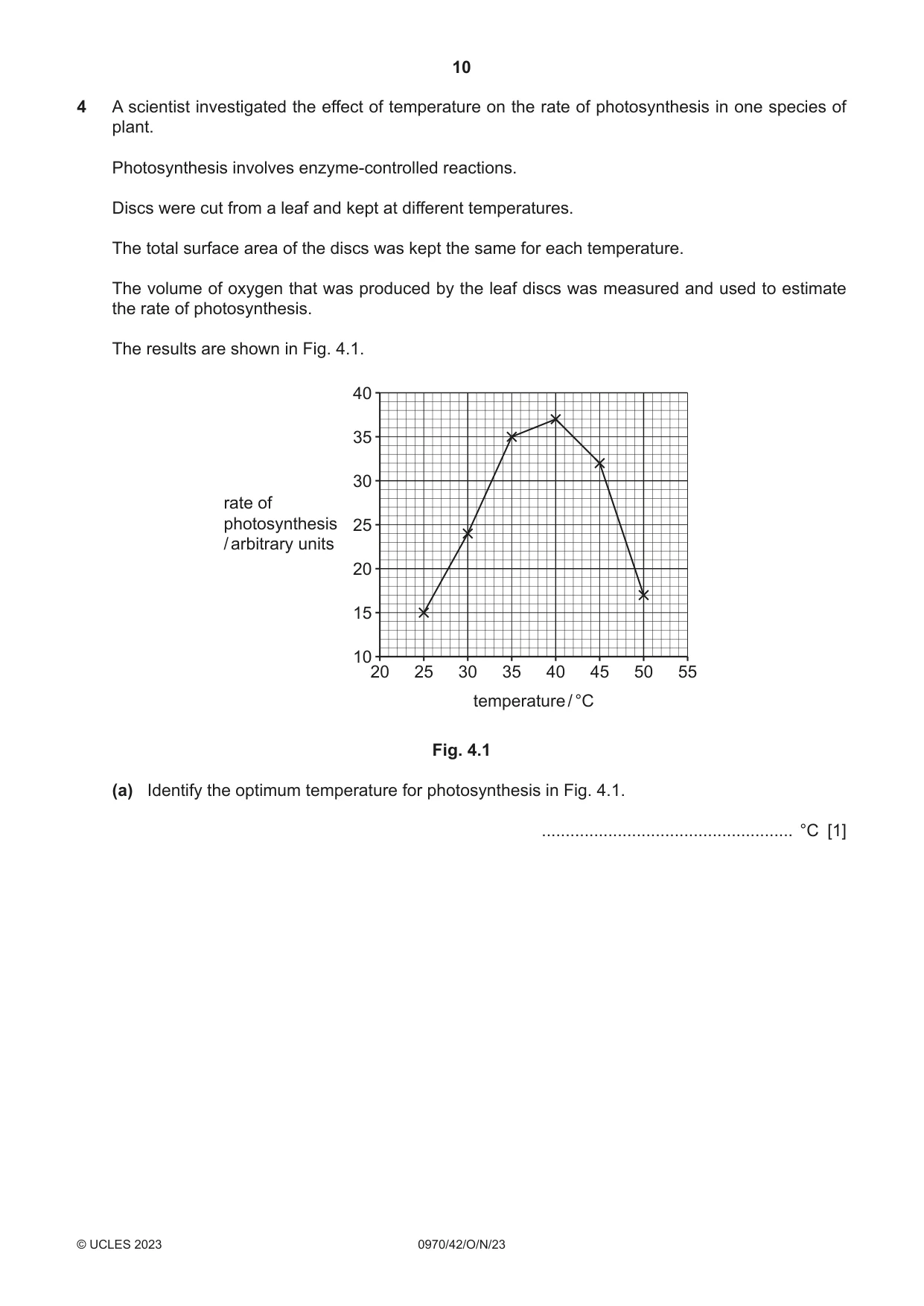
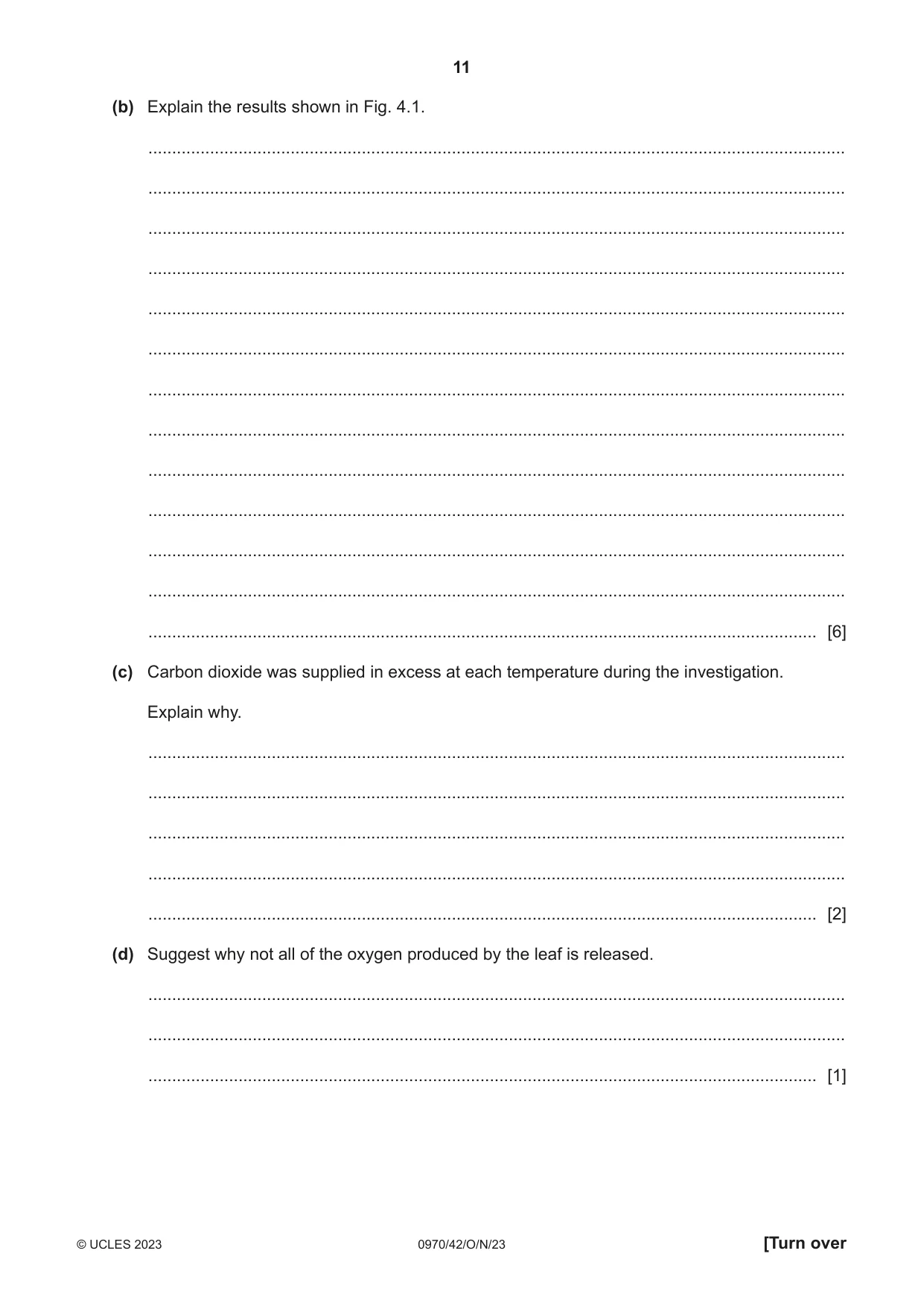
4 A scientist investigated the effect of temperature on the rate of photosynthesis in one species of plant. Photosynthesis involves enzyme-controlled reactions. Discs were cut from a leaf and kept at different temperatures. The total surface area of the discs was kept the same for each temperature. The volume of oxygen that was produced by the leaf discs was measured and used to estimate the rate of photosynthesis. The results are shown in Fig. 4.1. 40 35 30 rate of photosynthesis 25 / arbitrary units 20 15 10 20 25 30 35 40 45 50 55 temperature / °C Fig. 4.1 (a) Identify the optimum temperature for photosynthesis in Fig. 4.1. ..................................................... °C [1] (b) Explain the results shown in Fig. 4.1. ................................................................................................................................................... ................................................................................................................................................... ................................................................................................................................................... ................................................................................................................................................... ................................................................................................................................................... ................................................................................................................................................... ................................................................................................................................................... ................................................................................................................................................... ................................................................................................................................................... ................................................................................................................................................... ................................................................................................................................................... ................................................................................................................................................... ............................................................................................................................................. [6] (c) Carbon dioxide was supplied in excess at each temperature during the investigation. Explain why. ................................................................................................................................................... ................................................................................................................................................... ................................................................................................................................................... ................................................................................................................................................... ............................................................................................................................................. [2] (d) Suggest why not all of the oxygen produced by the leaf is released. ................................................................................................................................................... ................................................................................................................................................... ............................................................................................................................................. [1] (e) Describe the role of chlorophyll in photosynthesis. ................................................................................................................................................... ................................................................................................................................................... ................................................................................................................................................... ................................................................................................................................................... ............................................................................................................................................. [2] [Total: 12]
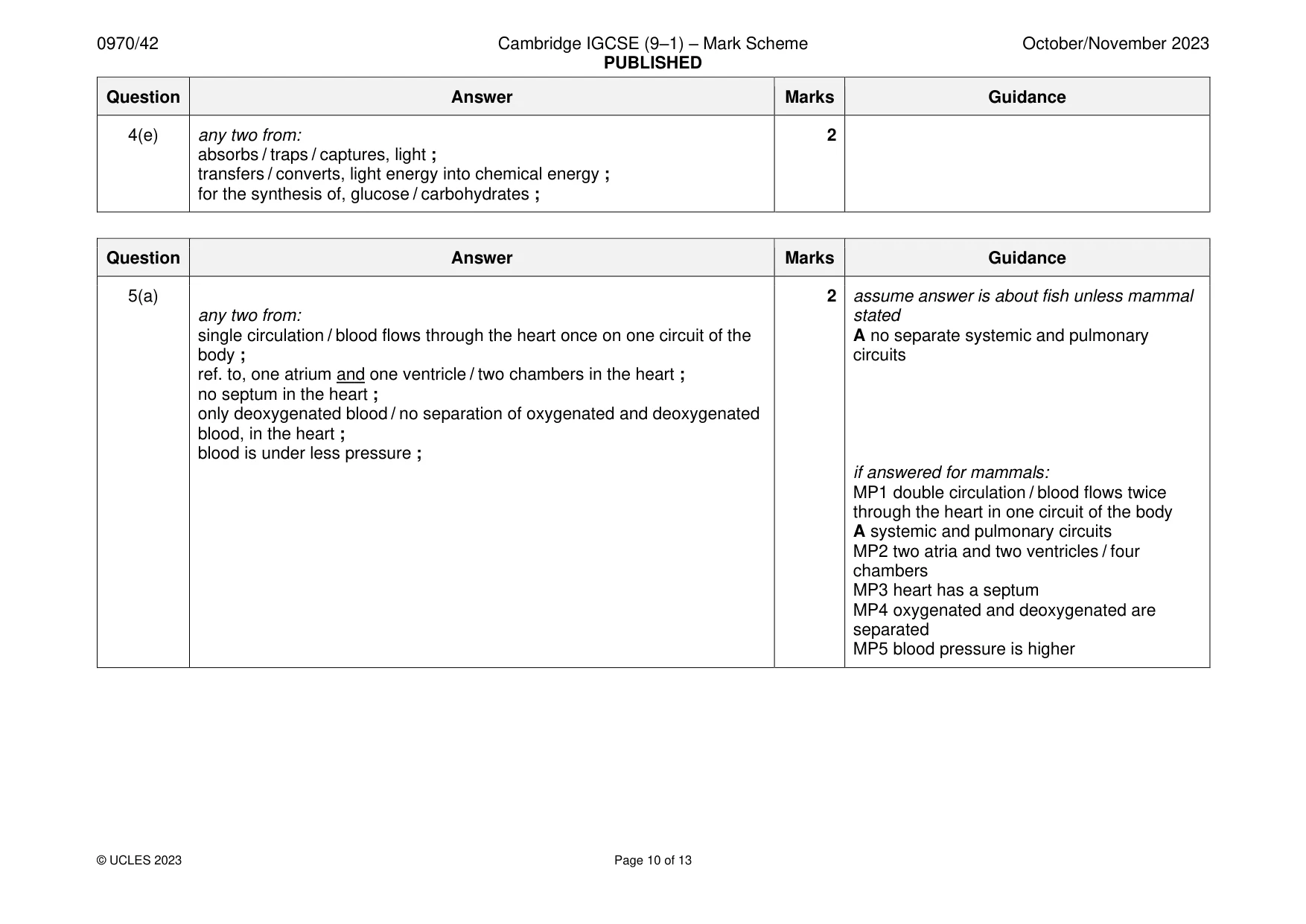
Mark scheme: 4(a) 40 (°C) ; 1 4(b) any six from: 6 before 40 °C 1 increasing temperature increases the kinetic energy (of reactants / molecules) ; 2 increasing the, frequency / rate, of (effective) collisions ; 3 more enzyme-substrate complexes are formed ; 4 releasing more, oxygen / glucose / products ; 5 temperature is the limiting factor ; at 40 °C 6 (optimum temperature) maximum number of, enzyme-substrate complexes / collisions; after 40 °C 7 increasing temperature changes the shape of active site(s) (of enzyme(s)) ; 8 ref. to denaturation ; 9 substrate, no longer complementary (to active sites) / can no longer fit into active sites ; 10 fewer / no, enzyme-substrate complexes are formed ; 11 fewer / no, products are released ; 12 AVP ; e.g. stomata close (as high rate of transpiration) so no CO2 enters 4(c) any two from: 2 carbon dioxide is a limiting factor / so that carbon dioxide is not a limiting factor / AW ; so that temperature is the only, variable / limiting factor ; to ensure that the effects are caused (only) by temperature ; 4(d) any one from: 1 (some is) used, for (aerobic) respiration / to react with glucose ; some remains in air spaces ; 4(e) any two from: 2 absorbs / traps / captures, light ; transfers / converts, light energy into chemical energy ; for the synthesis of, glucose / carbohydrates ;
Q5 · Describe two ways in which the circulatory system of a fish is different from the…
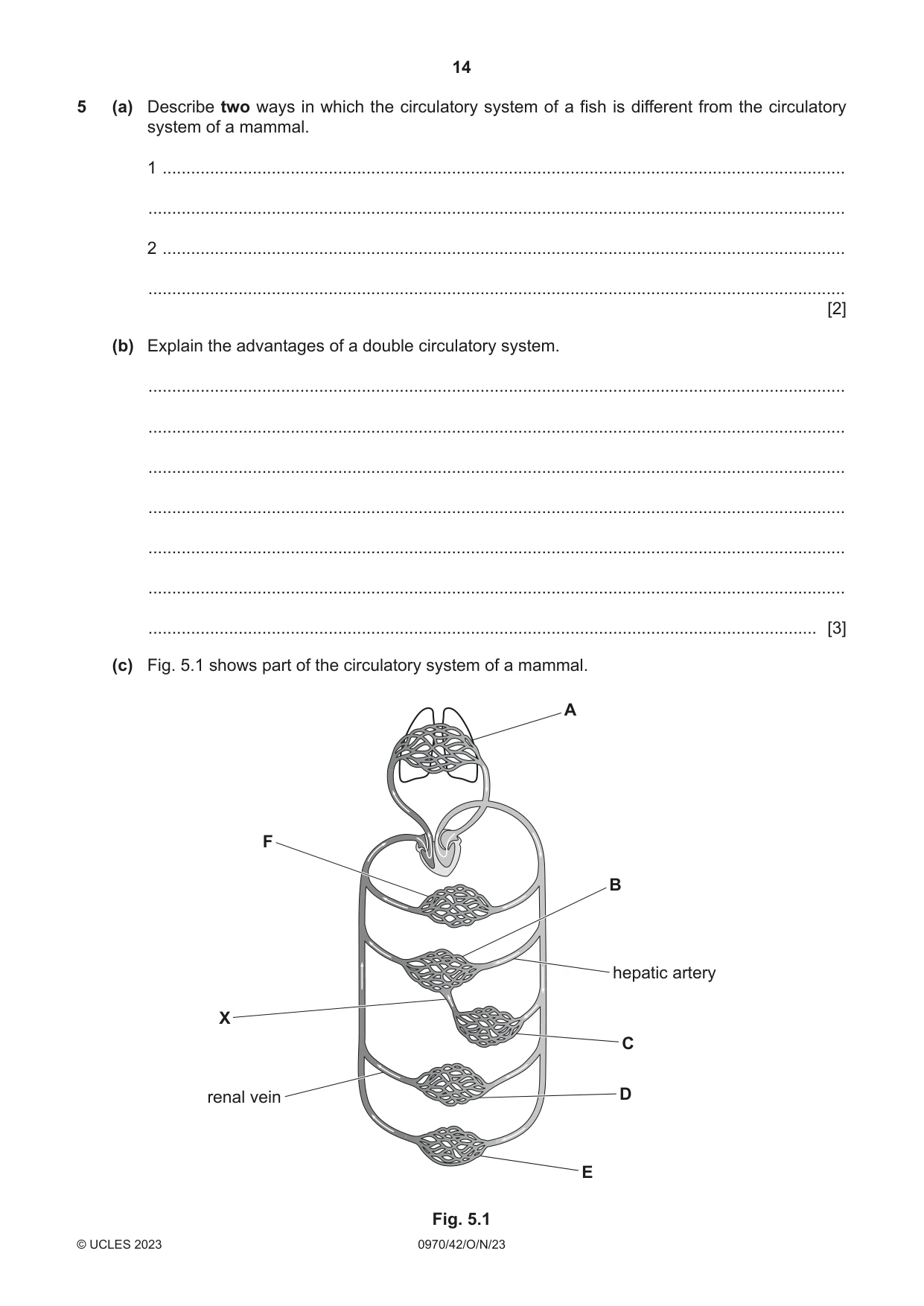
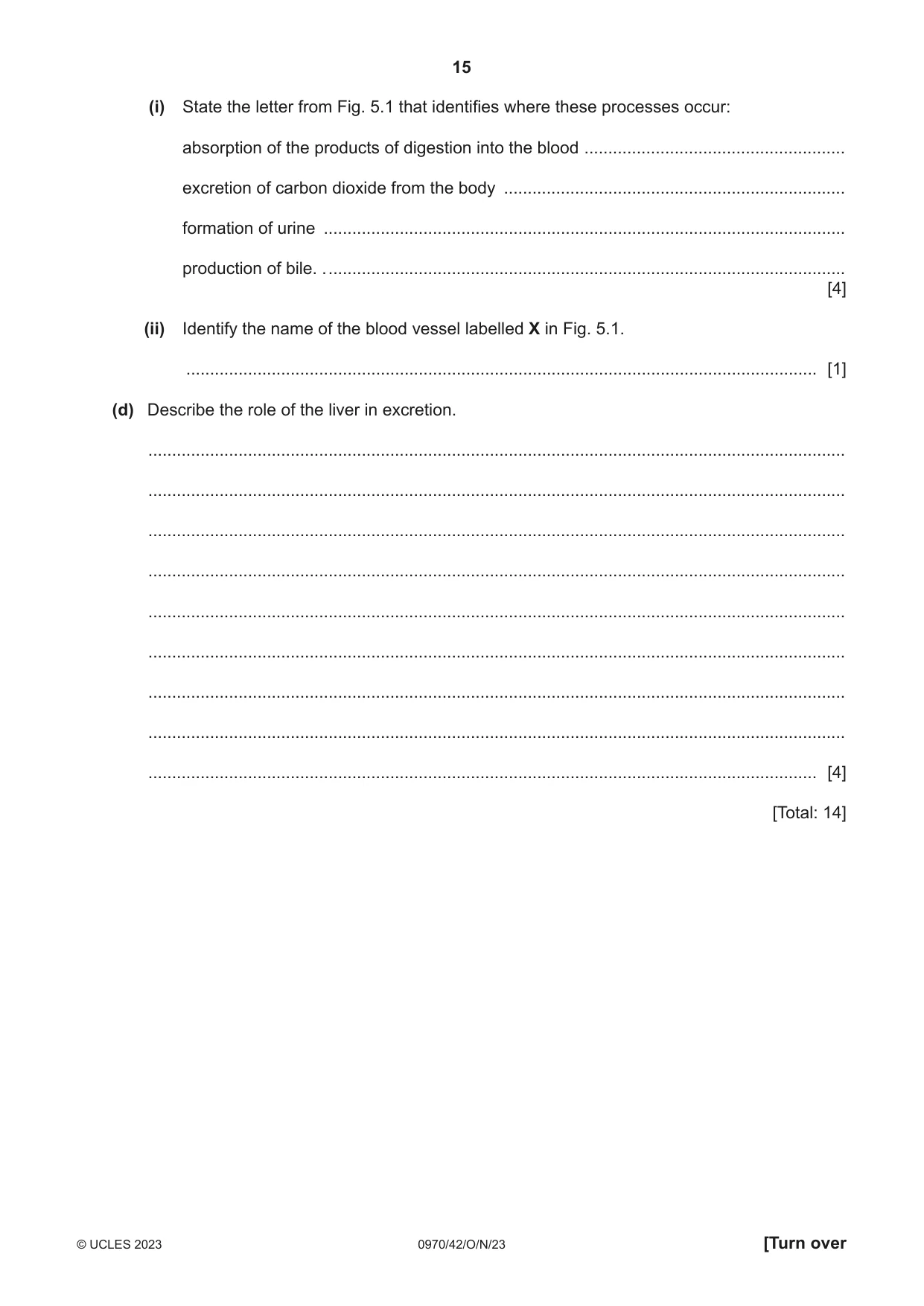
5 (a) Describe two ways in which the circulatory system of a fish is different from the circulatory system of a mammal. 1 ................................................................................................................................................ ................................................................................................................................................... 2 ................................................................................................................................................ ................................................................................................................................................... [2] (b) Explain the advantages of a double circulatory system. ................................................................................................................................................... ................................................................................................................................................... ................................................................................................................................................... ................................................................................................................................................... ................................................................................................................................................... ................................................................................................................................................... ............................................................................................................................................. [3] (c) Fig. 5.1 shows part of the circulatory system of a mammal. A F B hepatic artery X C renal vein D E Fig. 5.1 (i) State the letter from Fig. 5.1 that identifies where these processes occur: absorption of the products of digestion into the blood ....................................................... excretion of carbon dioxide from the body ........................................................................ formation of urine .............................................................................................................. production of bile. . ............................................................................................................. [4] (ii) Identify the name of the blood vessel labelled X in Fig. 5.1. ..................................................................................................................................... [1] (d) Describe the role of the liver in excretion. ................................................................................................................................................... ................................................................................................................................................... ................................................................................................................................................... ................................................................................................................................................... ................................................................................................................................................... ................................................................................................................................................... ................................................................................................................................................... ................................................................................................................................................... ............................................................................................................................................. [4] [Total: 14]
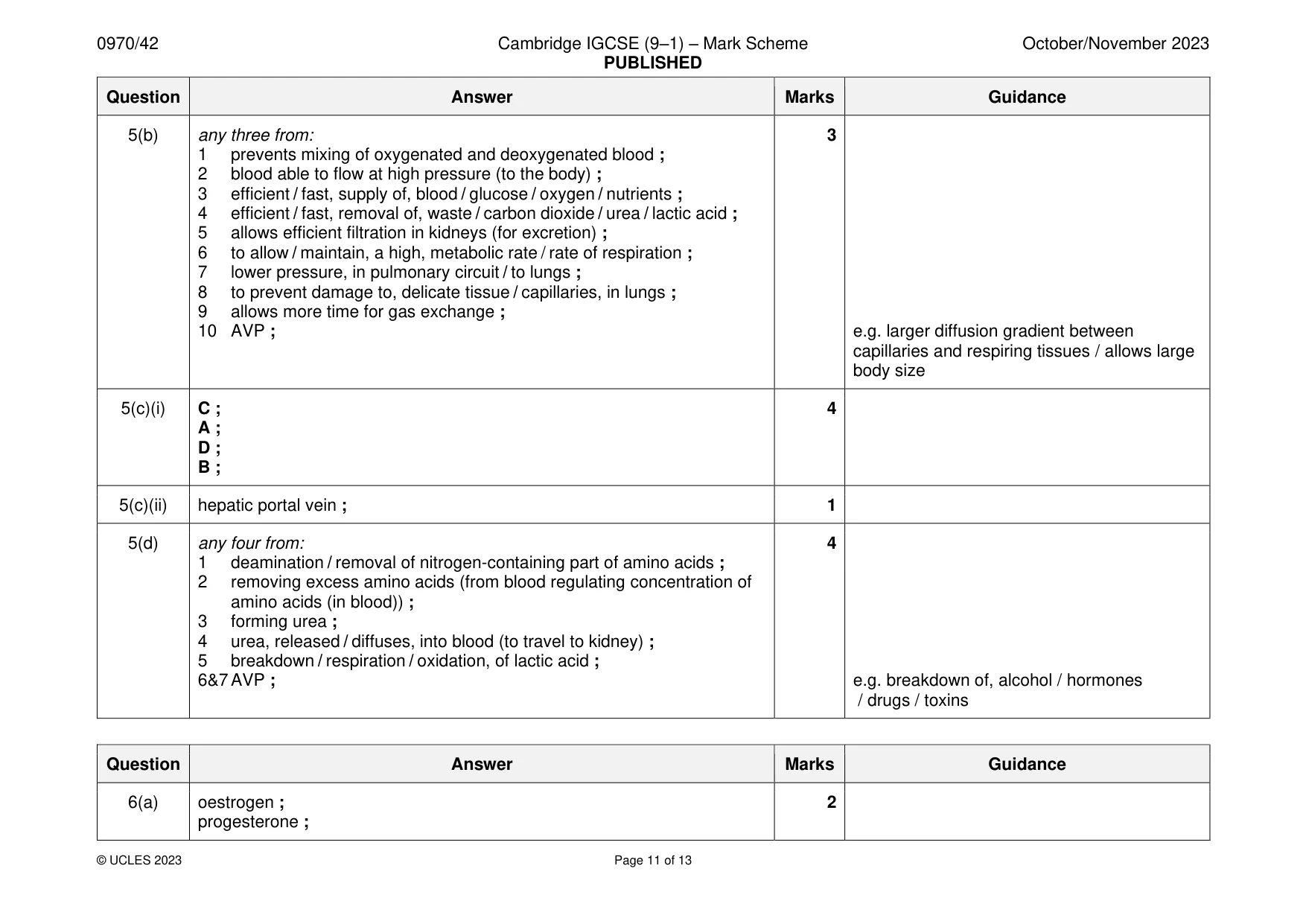
Mark scheme: 5(a) 2 assume answer is about fish unless mammal any two from: stated single circulation / blood flows through the heart once on one circuit of the A no separate systemic and pulmonary body ; circuits ref. to, one atrium and one ventricle / two chambers in the heart ; no septum in the heart ; only deoxygenated blood / no separation of oxygenated and deoxygenated blood, in the heart ; blood is under less pressure ; if answered for mammals: MP1 double circulation / blood flows twice through the heart in one circuit of the body A systemic and pulmonary circuits MP2 two atria and two ventricles / four chambers MP3 heart has a septum MP4 oxygenated and deoxygenated are separated MP5 blood pressure is higher 5(b) any three from: 3 1 prevents mixing of oxygenated and deoxygenated blood ; 2 blood able to flow at high pressure (to the body) ; 3 efficient / fast, supply of, blood / glucose / oxygen / nutrients ; 4 efficient / fast, removal of, waste / carbon dioxide / urea / lactic acid ; 5 allows efficient filtration in kidneys (for excretion) ; 6 to allow / maintain, a high, metabolic rate / rate of respiration ; 7 lower pressure, in pulmonary circuit / to lungs ; 8 to prevent damage to, delicate tissue / capillaries, in lungs ; 9 allows more time for gas exchange ; 10 AVP ; e.g. larger diffusion gradient between capillaries and respiring tissues / allows large body size 5(c)(i) C ; 4 A ; D ; B ; 5(c)(ii) hepatic portal vein ; 1 5(d) any four from: 4 1 deamination / removal of nitrogen-containing part of amino acids ; 2 removing excess amino acids (from blood regulating concentration of amino acids (in blood)) ; 3 forming urea ; 4 urea, released / diffuses, into blood (to travel to kidney) ; 5 breakdown / respiration / oxidation, of lactic acid ; 6&7 AVP ; e.g. breakdown of, alcohol / hormones / drugs / toxins
Q6 · State the names of two hormones released by the ovaries
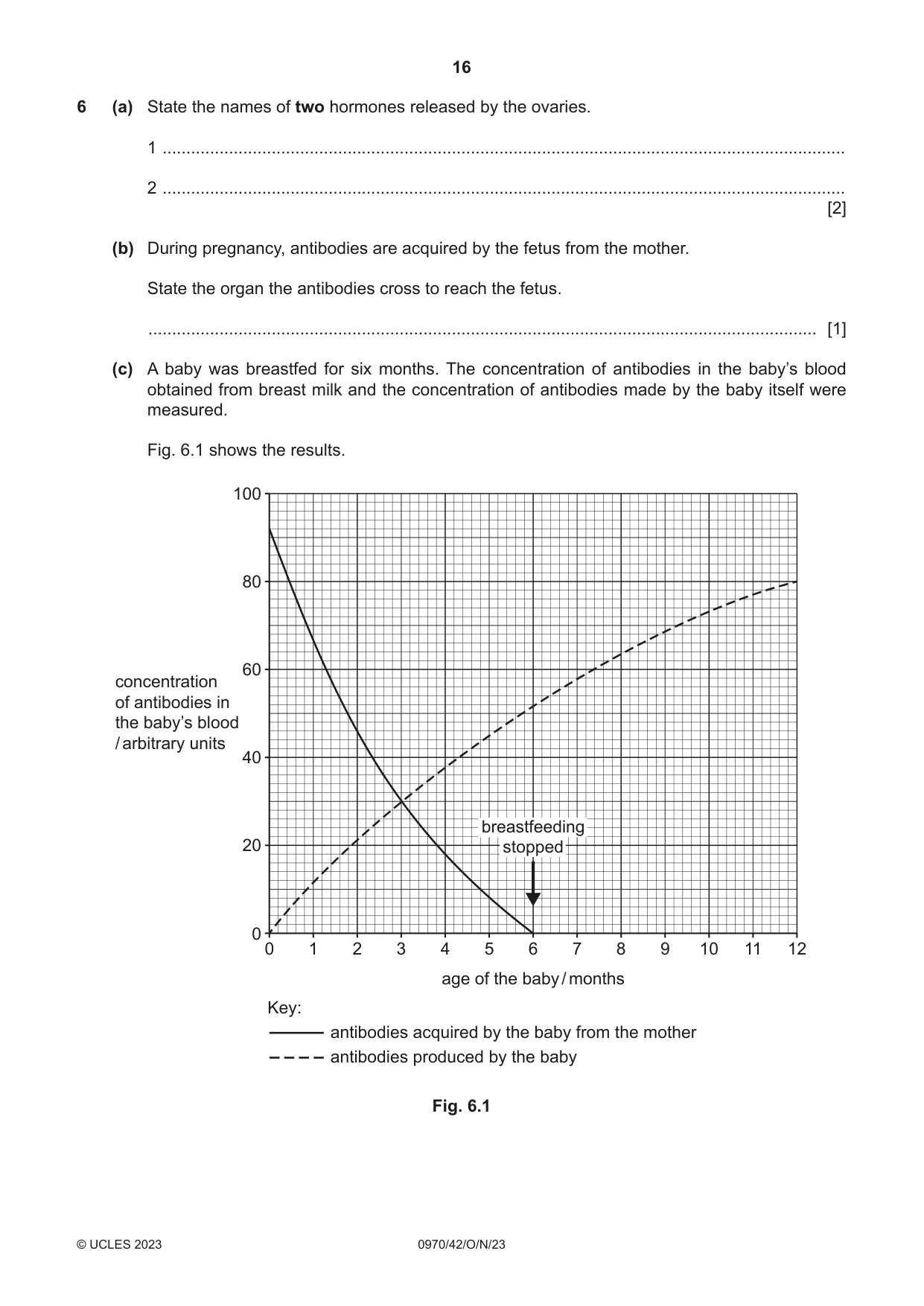
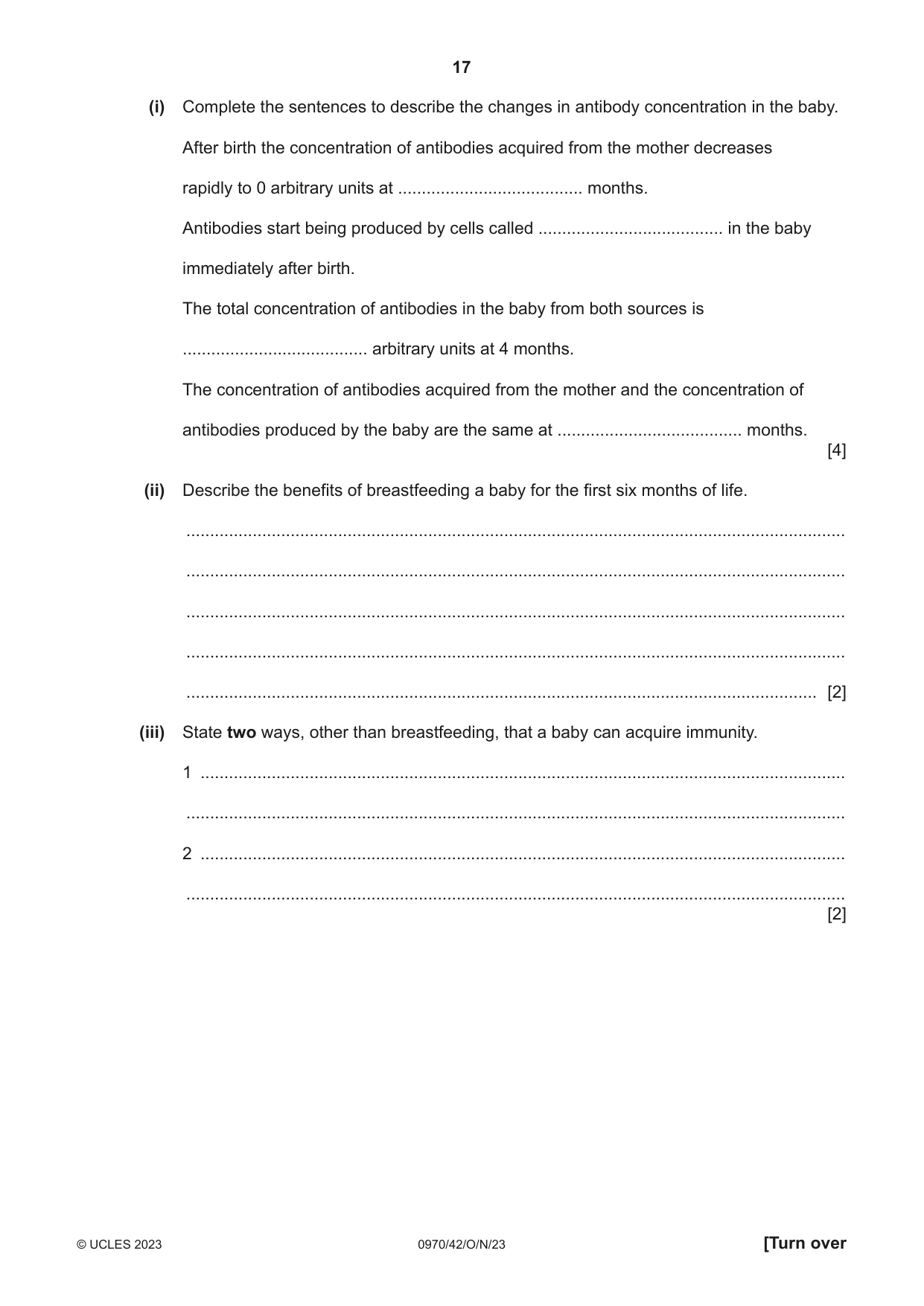
6 (a) State the names of two hormones released by the ovaries. 1 ................................................................................................................................................ 2 ................................................................................................................................................ [2] (b) During pregnancy, antibodies are acquired by the fetus from the mother. State the organ the antibodies cross to reach the fetus. ............................................................................................................................................. [1] (c) A baby was breastfed for six months. The concentration of antibodies in the baby’s blood obtained from breast milk and the concentration of antibodies made by the baby itself were measured. Fig. 6.1 shows the results. 100 80 60 concentration of antibodies in the baby’s blood / arbitrary units 40 breastfeeding 20 stopped 0 0 1 2 3 4 5 6 7 8 9 10 11 12 age of the baby / months Key: antibodies acquired by the baby from the mother antibodies produced by the baby Fig. 6.1 (i) Complete the sentences to describe the changes in antibody concentration in the baby. After birth the concentration of antibodies acquired from the mother decreases rapidly to 0 arbitrary units at ....................................... months. Antibodies start being produced by cells called ....................................... in the baby immediately after birth. The total concentration of antibodies in the baby from both sources is ....................................... arbitrary units at 4 months. The concentration of antibodies acquired from the mother and the concentration of antibodies produced by the baby are the same at ....................................... months. [4] (ii) Describe the benefits of breastfeeding a baby for the first six months of life. ........................................................................................................................................... ........................................................................................................................................... ........................................................................................................................................... ........................................................................................................................................... ..................................................................................................................................... [2] (iii) State two ways, other than breastfeeding, that a baby can acquire immunity. 1 ........................................................................................................................................ ........................................................................................................................................... 2 ........................................................................................................................................ ........................................................................................................................................... [2] (d) Explain the importance of the shape of an antibody. ................................................................................................................................................... ................................................................................................................................................... ................................................................................................................................................... ................................................................................................................................................... ................................................................................................................................................... ................................................................................................................................................... ............................................................................................................................................. [3] (e) Antibodies are proteins. State the chemical elements present in all proteins that are also found in carbohydrates and fats. ............................................................................................................................................. [1] [Total: 15]
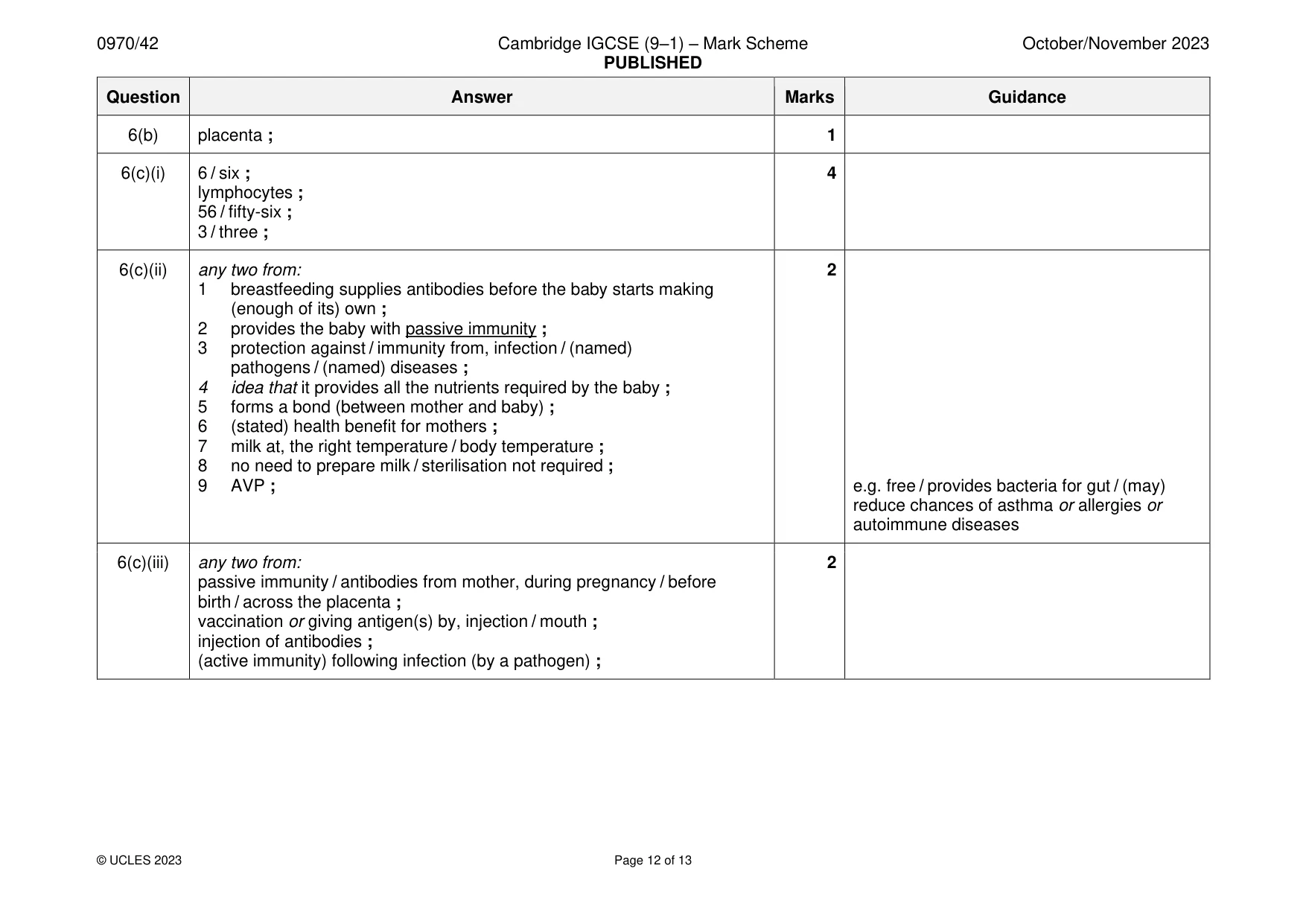
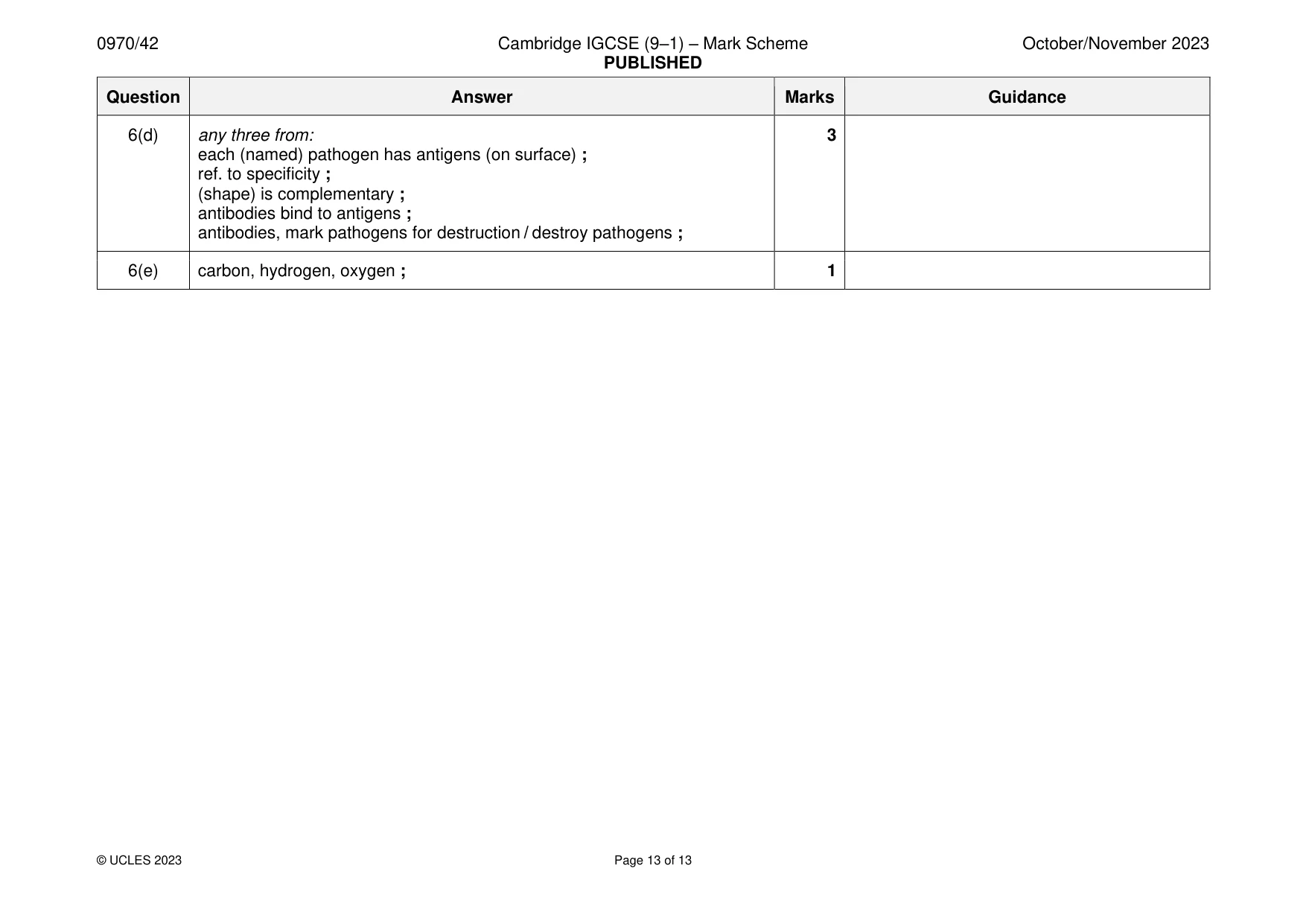
Mark scheme: 6(a) oestrogen ; 2 progesterone ; 6(b) placenta ; 1 6(c)(i) 6 / six ; 4 lymphocytes ; 56 / fifty-six ; 3 / three ; 6(c)(ii) any two from: 2 1 breastfeeding supplies antibodies before the baby starts making (enough of its) own ; 2 provides the baby with passive immunity ; 3 protection against / immunity from, infection / (named) pathogens / (named) diseases ; 4 idea that it provides all the nutrients required by the baby ; 5 forms a bond (between mother and baby) ; 6 (stated) health benefit for mothers ; 7 milk at, the right temperature / body temperature ; 8 no need to prepare milk / sterilisation not required ; 9 AVP ; e.g. free / provides bacteria for gut / (may) reduce chances of asthma or allergies or autoimmune diseases 6(c)(iii) any two from: 2 passive immunity / antibodies from mother, during pregnancy / before birth / across the placenta ; vaccination or giving antigen(s) by, injection / mouth ; injection of antibodies ; (active immunity) following infection (by a pathogen) ; 6(d) any three from: 3 each (named) pathogen has antigens (on surface) ; ref. to specificity ; (shape) is complementary ; antibodies bind to antigens ; antibodies, mark pathogens for destruction / destroy pathogens ; 6(e) carbon, hydrogen, oxygen ; 1
What was in this paper
The subtopics covered by these 6 questions, and how many questions each got. Open one in a new tab to see every Cambridge question on it.
What you needed in this session
Cambridge’s own grade thresholds for 2023 Oct/Nov, Paper 4 · Variant 2. A higher threshold means an easier paper — the bar moves with how the cohort did.