Cambridge IGCSE Biology (9-1) 0970 — 2020 Oct/Nov Paper 4 · Variant 2
0970/42/O/N/20 · 5 questions · 80 marks · ≈90 min
The question paper and its mark scheme, free to read here and free to download. This is Cambridge’s own paper, exactly as it was sat.
Question paper20 pages
Mark scheme13 pages
Answers below. Sit the paper first if you are practising.
Questions as text
Q1 · Sensitivity is one of the characteristics of life
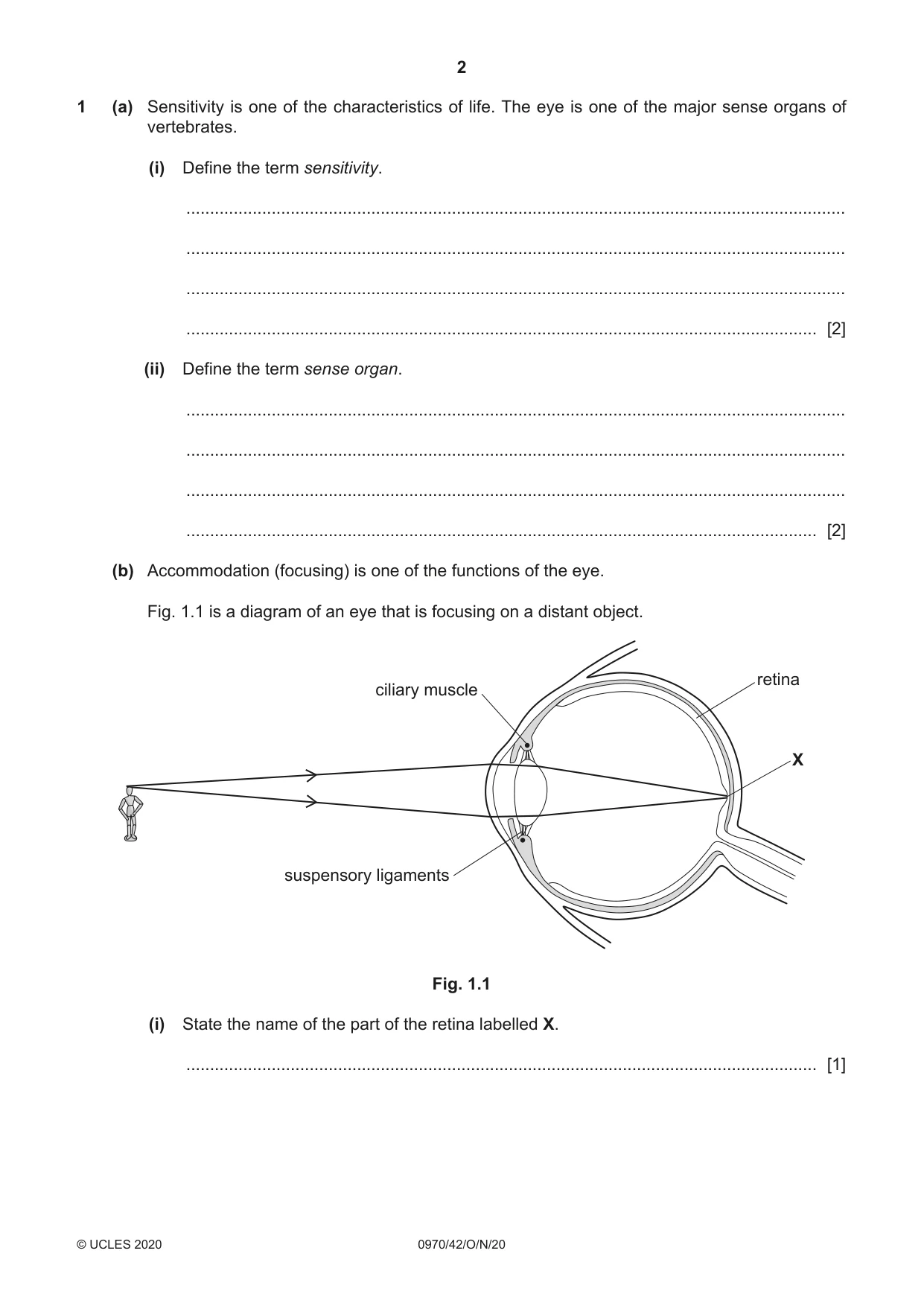
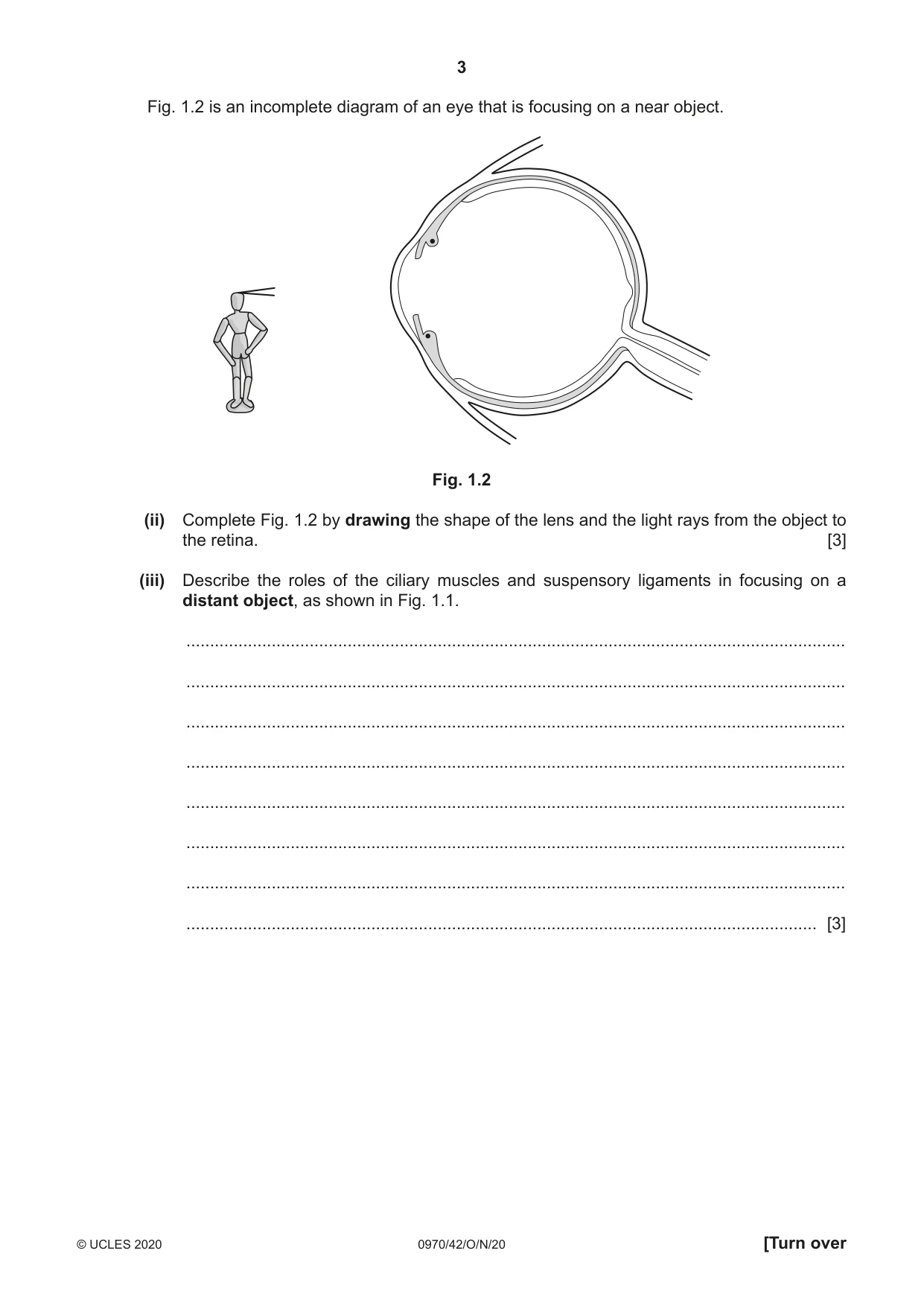
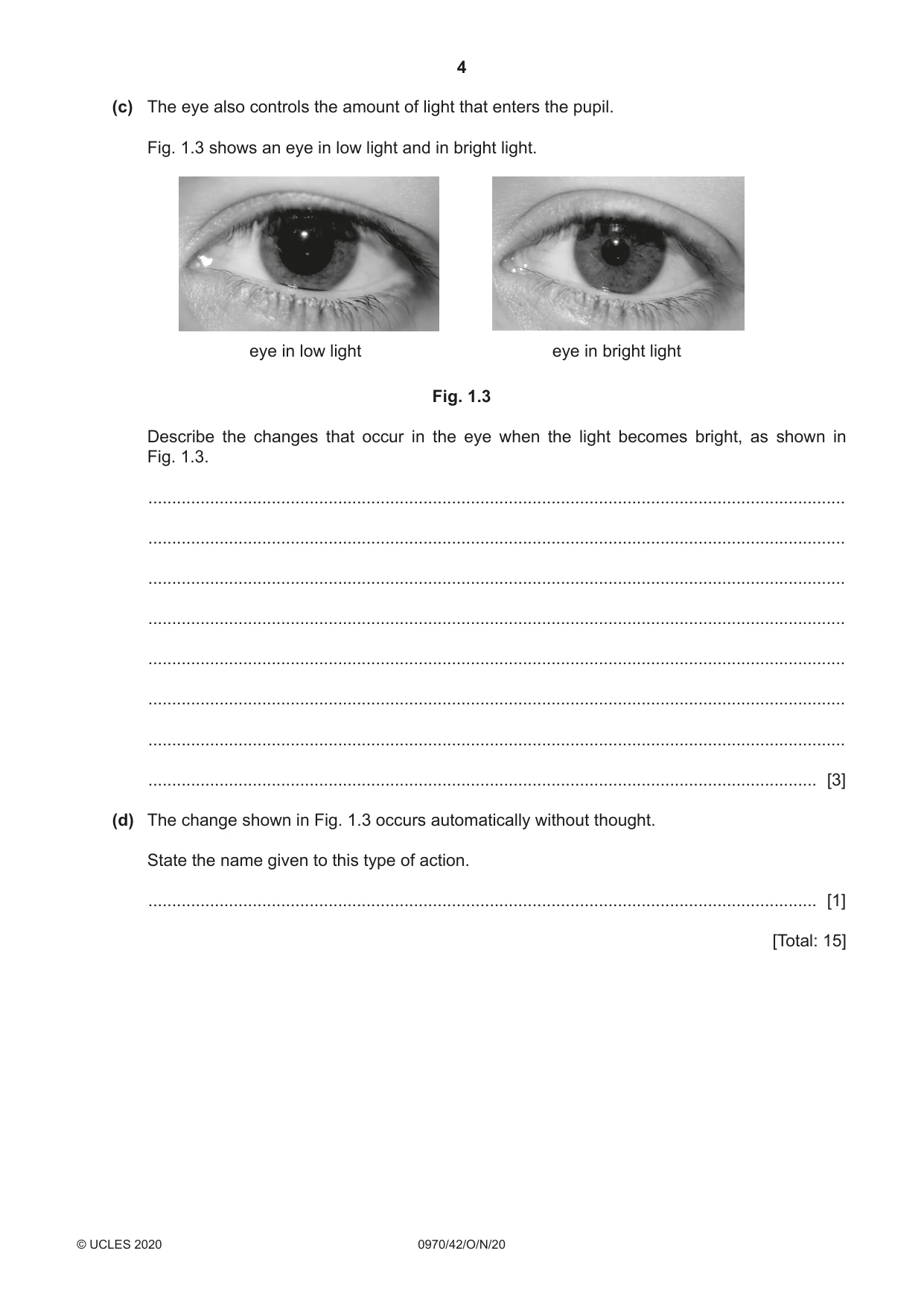
1 (a) Sensitivity is one of the characteristics of life. The eye is one of the major sense organs of vertebrates. (i) Define the term sensitivity. ........................................................................................................................................... ........................................................................................................................................... ........................................................................................................................................... ..................................................................................................................................... [2] (ii) Define the term sense organ. ........................................................................................................................................... ........................................................................................................................................... ........................................................................................................................................... ..................................................................................................................................... [2] (b) Accommodation (focusing) is one of the functions of the eye. Fig. 1.1 is a diagram of an eye that is focusing on a distant object. retina ciliary muscle X suspensory ligaments Fig. 1.1 (i) State the name of the part of the retina labelled X. ..................................................................................................................................... [1] Fig. 1.2 is an incomplete diagram of an eye that is focusing on a near object. Fig. 1.2 (ii) Complete Fig. 1.2 by drawing the shape of the lens and the light rays from the object to the retina. [3] (iii) Describe the roles of the ciliary muscles and suspensory ligaments in focusing on a distant object, as shown in Fig. 1.1. ........................................................................................................................................... ........................................................................................................................................... ........................................................................................................................................... ........................................................................................................................................... ........................................................................................................................................... ........................................................................................................................................... ........................................................................................................................................... ..................................................................................................................................... [3] (c) The eye also controls the amount of light that enters the pupil. Fig. 1.3 shows an eye in low light and in bright light. eye in low light eye in bright light Fig. 1.3 Describe the changes that occur in the eye when the light becomes bright, as shown in Fig. 1.3. ................................................................................................................................................... ................................................................................................................................................... ................................................................................................................................................... ................................................................................................................................................... ................................................................................................................................................... ................................................................................................................................................... ................................................................................................................................................... ............................................................................................................................................. [3] (d) The change shown in Fig. 1.3 occurs automatically without thought. State the name given to this type of action. ............................................................................................................................................. [1] [Total: 15]
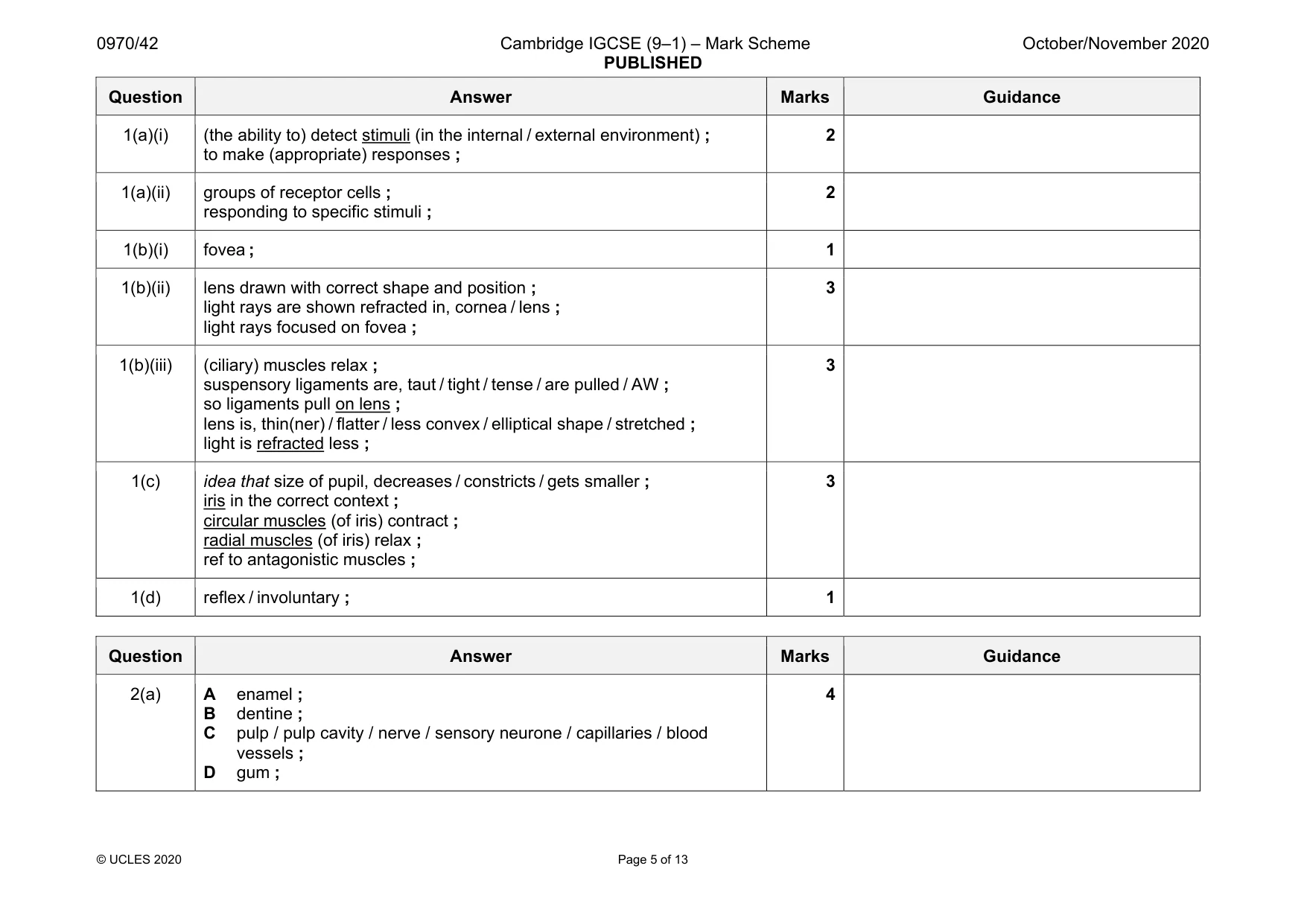
Mark scheme: 1(a)(i) (the ability to) detect stimuli (in the internal / external environment) ; to make (appropriate) responses ; 2 1(a)(ii) groups of receptor cells ; responding to specific stimuli ; 2 1(b)(i) fovea ; 1 1(b)(ii) lens drawn with correct shape and position ; light rays are shown refracted in, cornea / lens ; light rays focused on fovea ; 3 1(b)(iii) (ciliary) muscles relax ; suspensory ligaments are, taut / tight / tense / are pulled / AW ; so ligaments pull on lens ; lens is, thin(ner) / flatter / less convex / elliptical shape / stretched ; light is refracted less ; 3 1(c) idea that size of pupil, decreases / constricts / gets smaller ; iris in the correct context ; circular muscles (of iris) contract ; radial muscles (of iris) relax ; ref to antagonistic muscles ; 3 1(d) reflex / involuntary ; 1
Q2 · A vertical section of a human molar tooth and surrounding structures
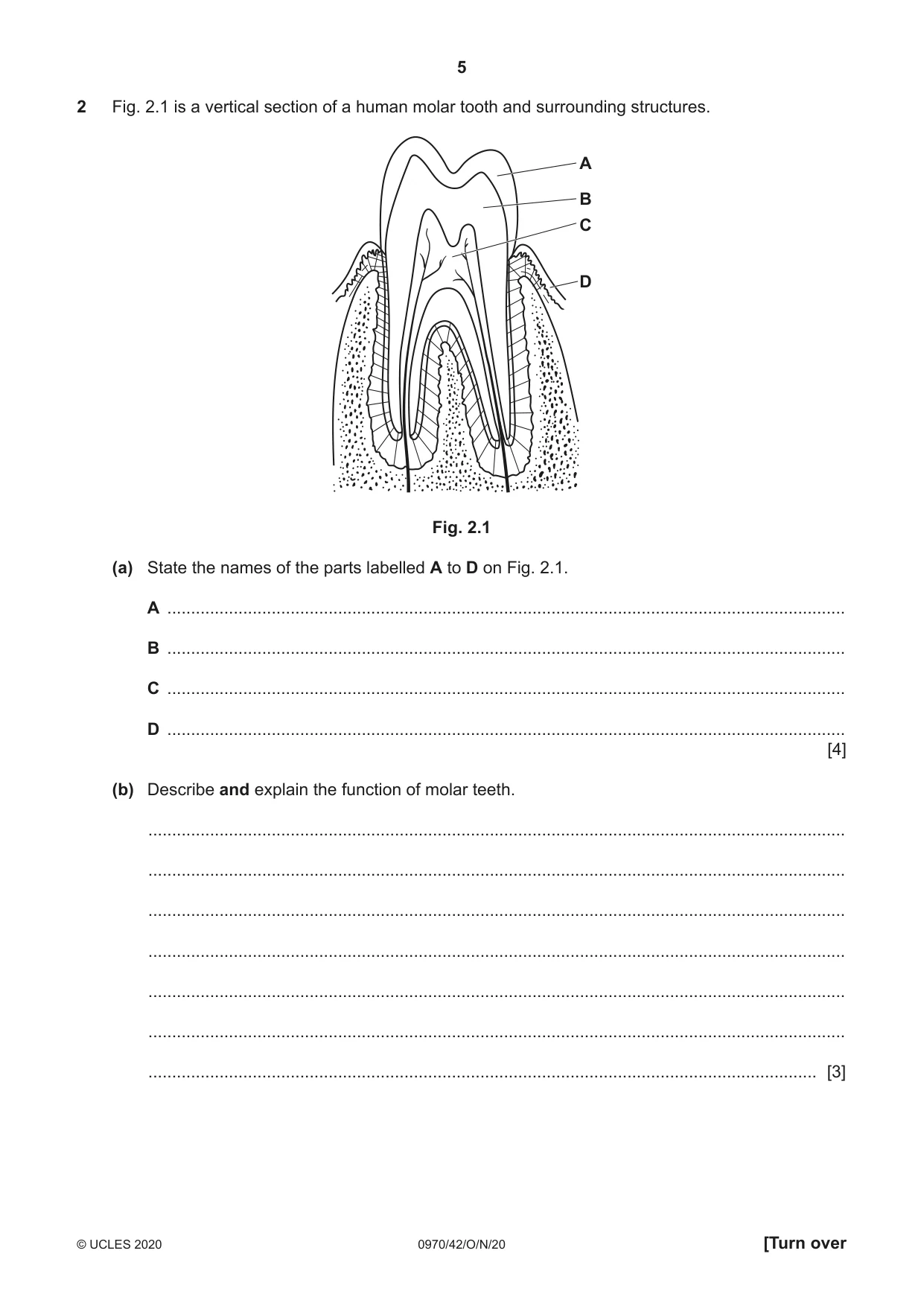
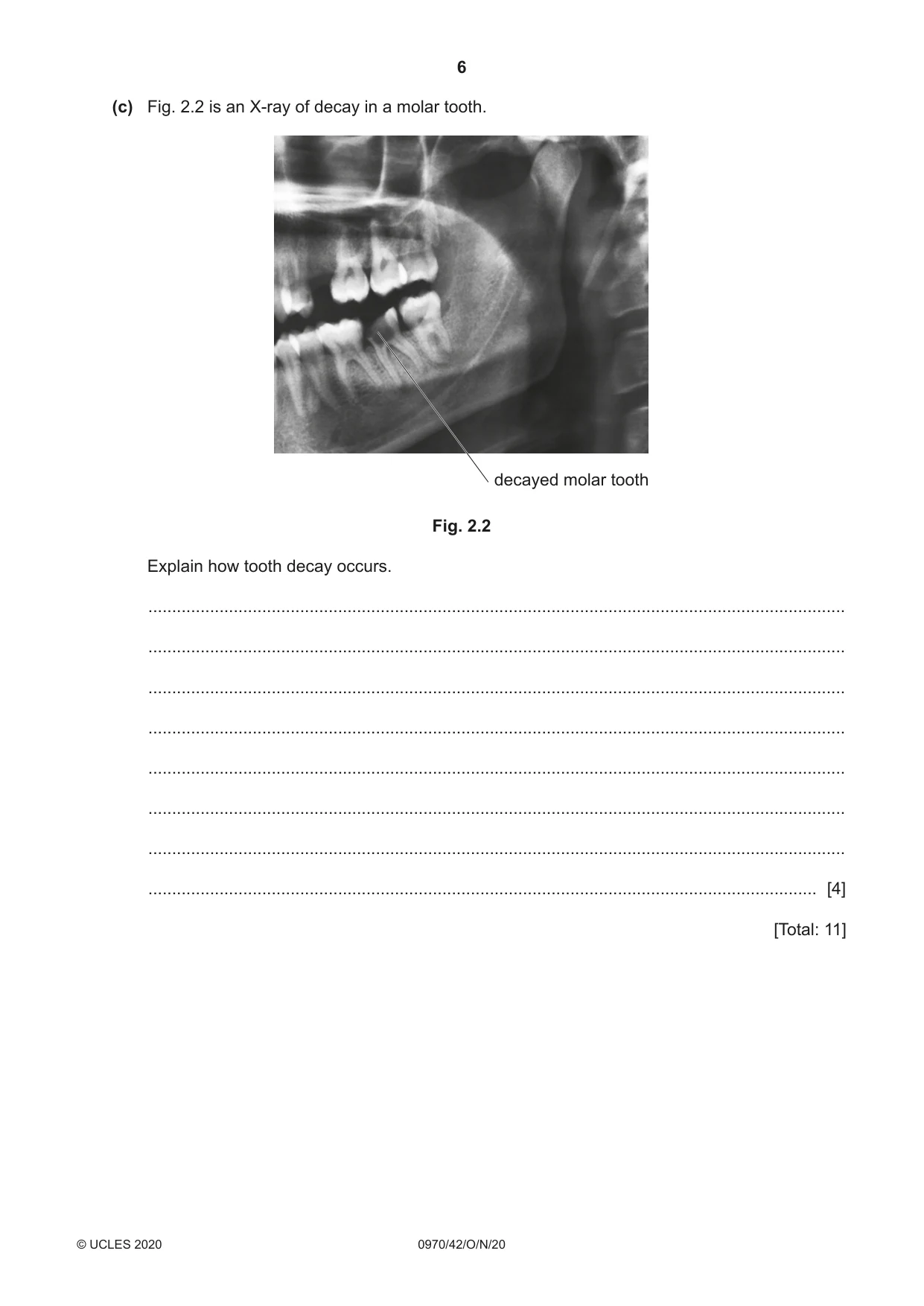
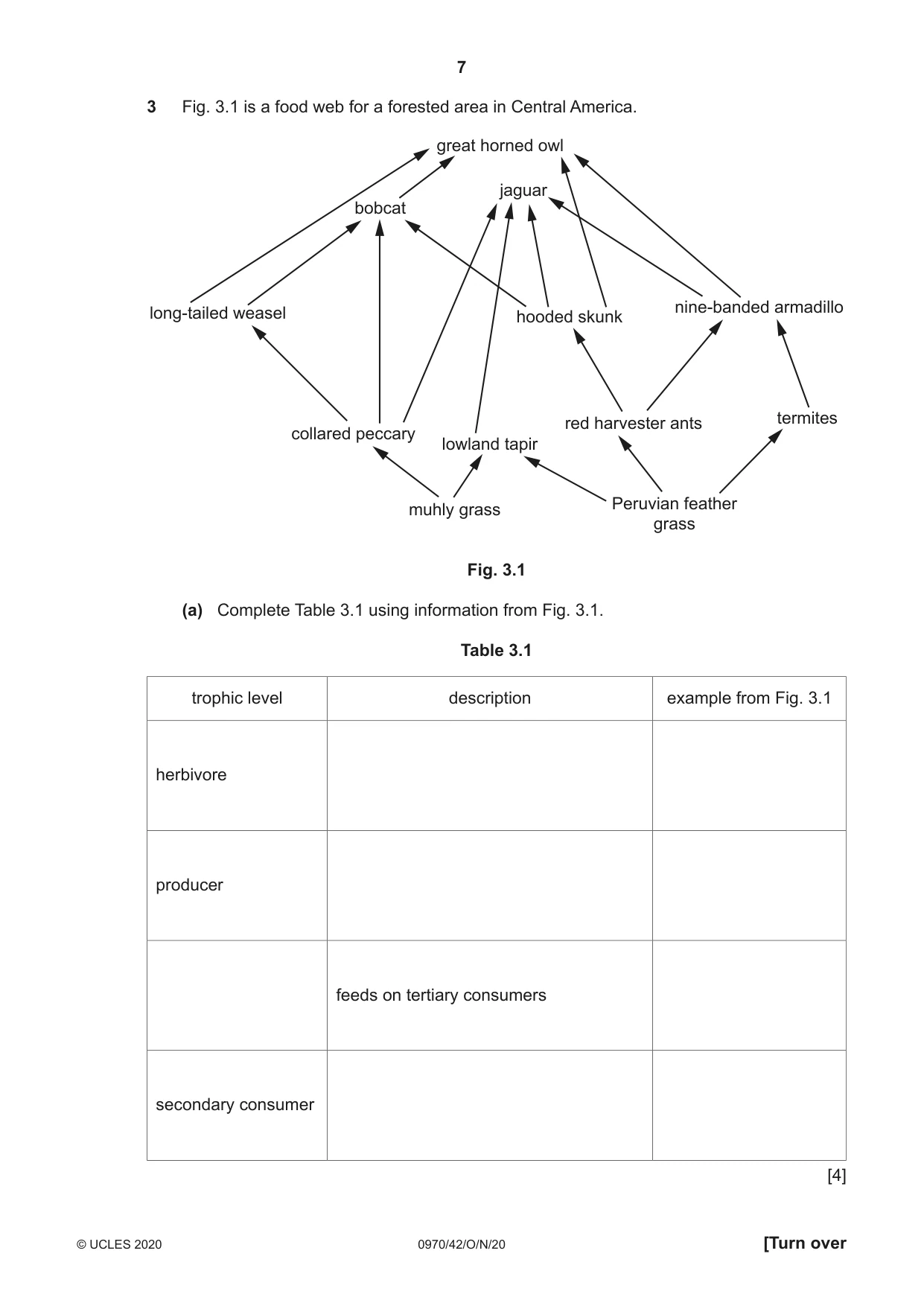
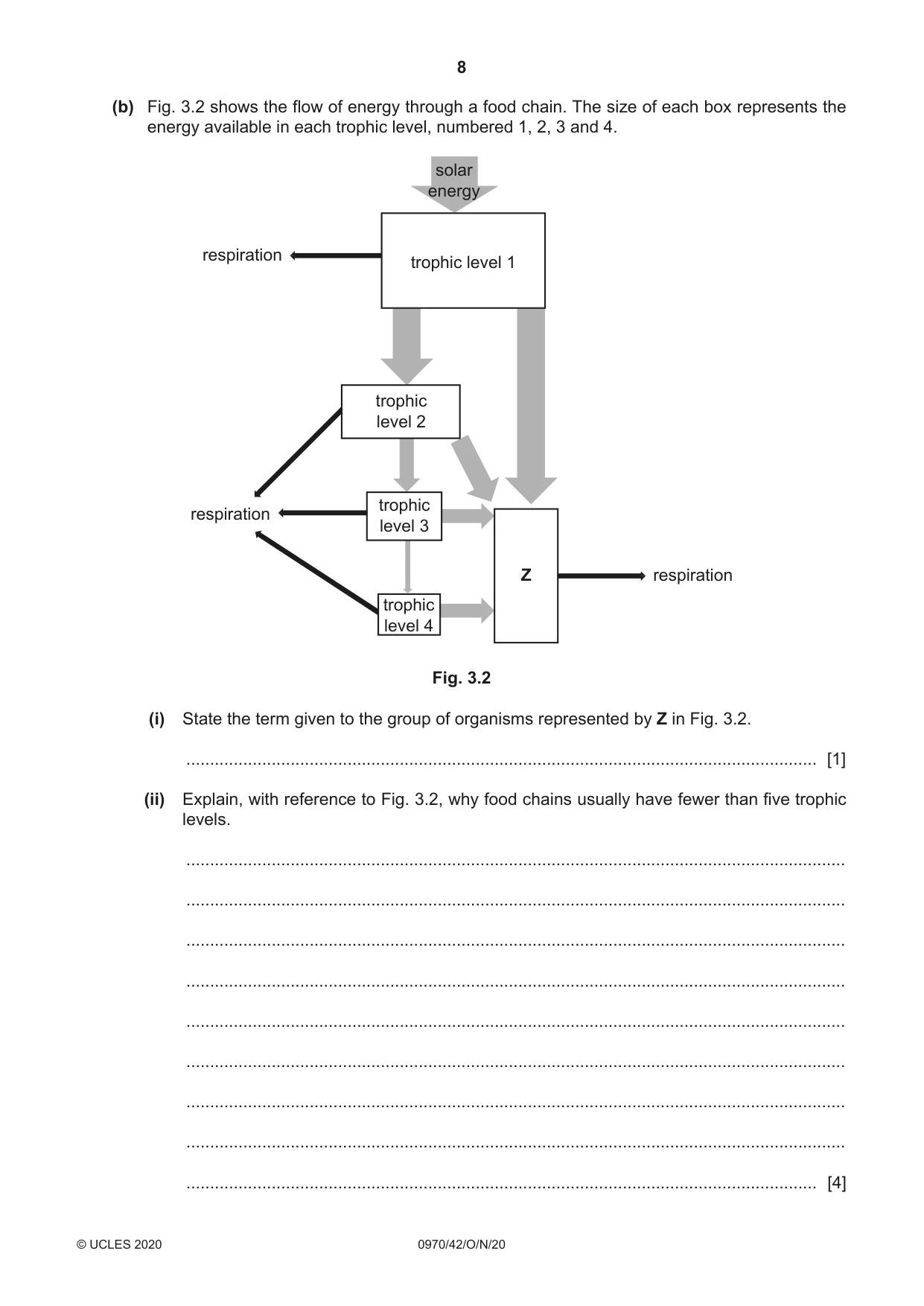
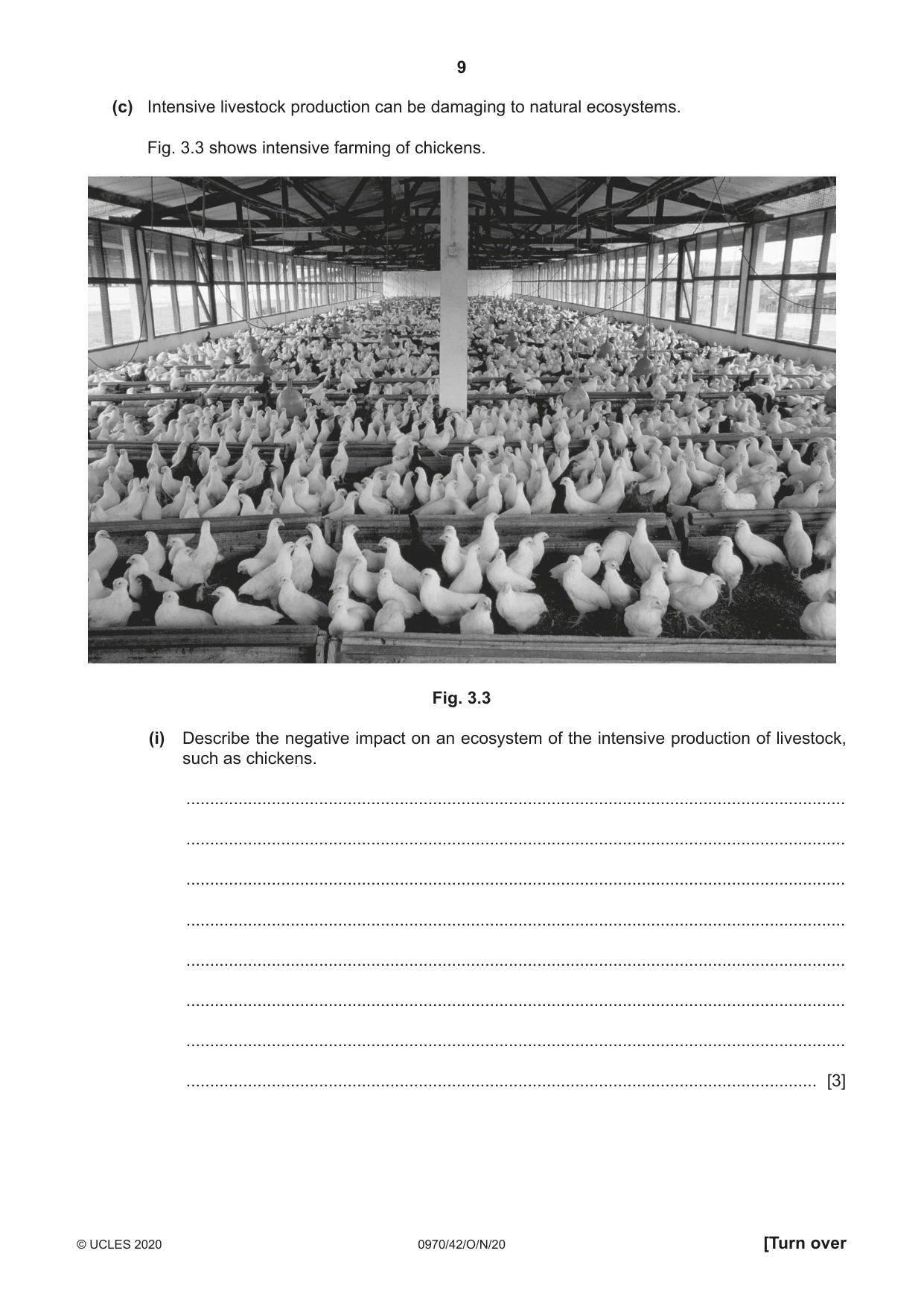
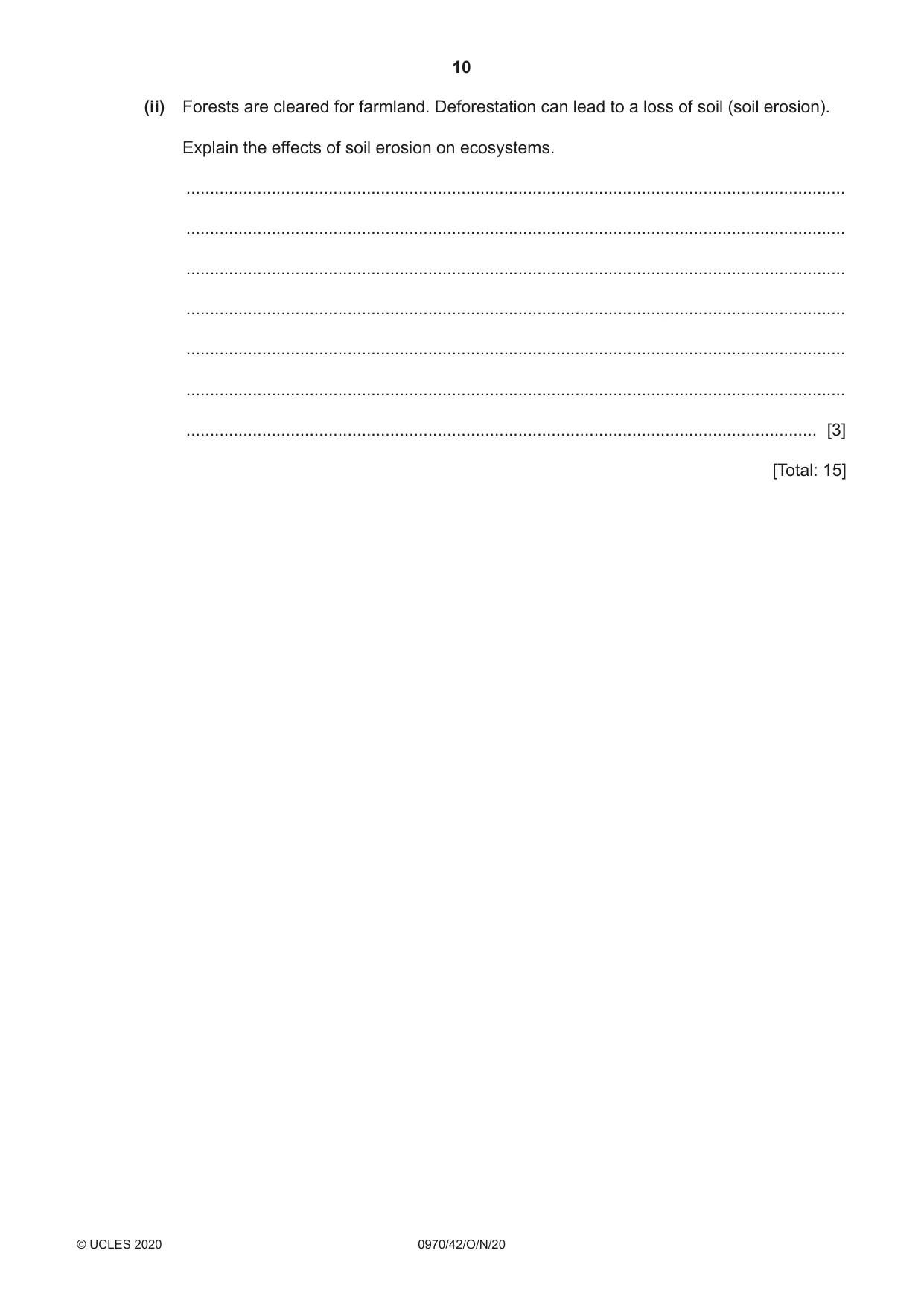
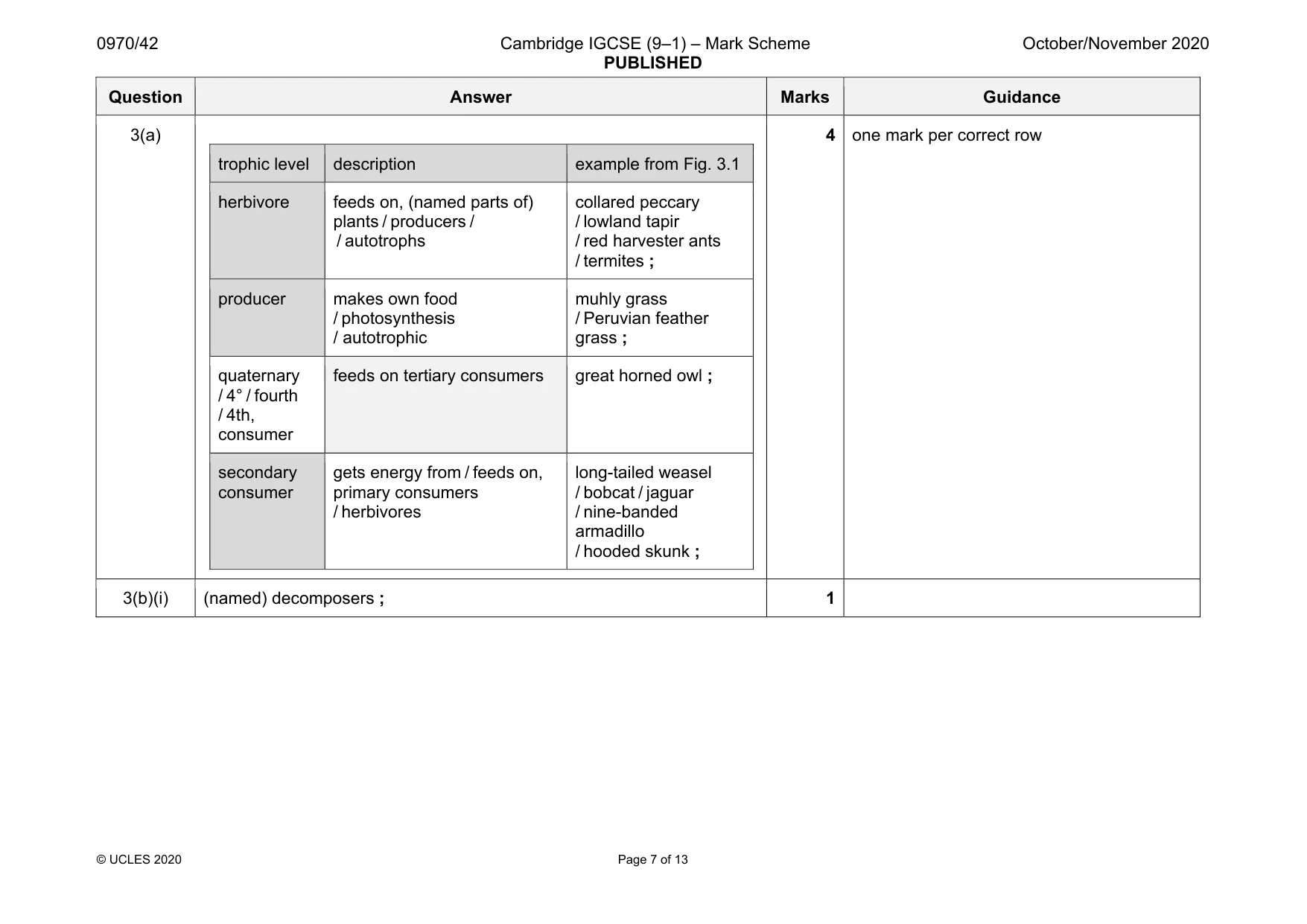
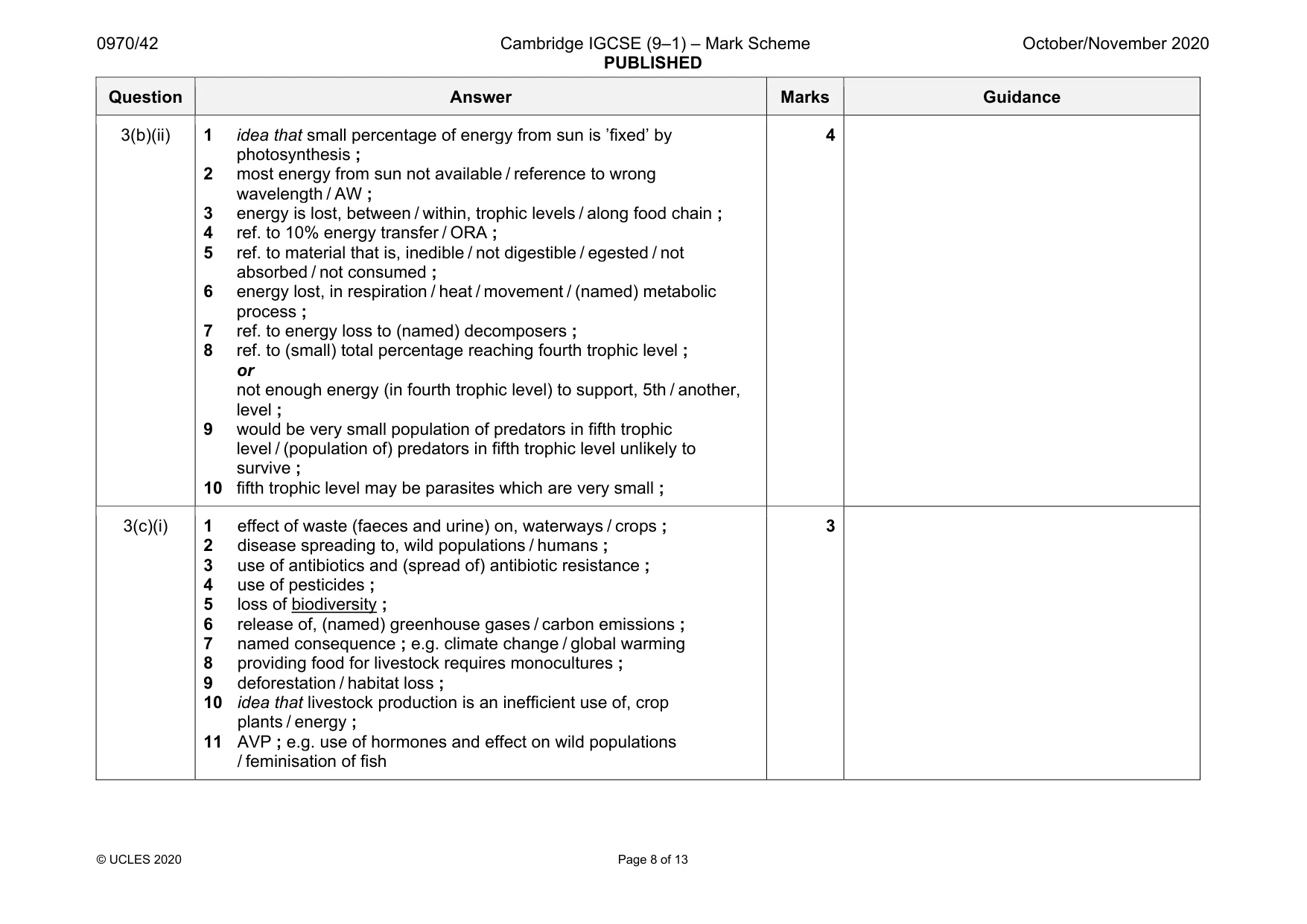
2 Fig. 2.1 is a vertical section of a human molar tooth and surrounding structures. A B C D Fig. 2.1 (a) State the names of the parts labelled A to D on Fig. 2.1. A ............................................................................................................................................... B ............................................................................................................................................... C ............................................................................................................................................... D ............................................................................................................................................... [4] (b) Describe and explain the function of molar teeth. ................................................................................................................................................... ................................................................................................................................................... ................................................................................................................................................... ................................................................................................................................................... ................................................................................................................................................... ................................................................................................................................................... ............................................................................................................................................. [3] (c) Fig. 2.2 is an X-ray of decay in a molar tooth. decayed molar tooth Fig. 2.2 Explain how tooth decay occurs. ................................................................................................................................................... ................................................................................................................................................... ................................................................................................................................................... ................................................................................................................................................... ................................................................................................................................................... ................................................................................................................................................... ................................................................................................................................................... ............................................................................................................................................. [4] [Total: 11] 3 Fig. 3.1 is a food web for a forested area in Central America. great horned owl jaguar bobcat nine-banded armadillolong-tailed weasel hooded skunk termites red harvester ants collared peccary lowland tapir Peruvian feather muhly grass grass Fig. 3.1 (a) Complete Table 3.1 using information from Fig. 3.1. Table 3.1 trophic level description example from Fig. 3.1 herbivore producer feeds on tertiary consumers secondary consumer [4] (b) Fig. 3.2 shows the flow of energy through a food chain. The size of each box represents the energy available in each trophic level, numbered 1, 2, 3 and 4. solar energy respiration trophic level 1 trophic level 2 trophic respiration level 3 Z respiration trophic level 4 Fig. 3.2 (i) State the term given to the group of organisms represented by Z in Fig. 3.2. ..................................................................................................................................... [1] (ii) Explain, with reference to Fig. 3.2, why food chains usually have fewer than five trophic levels. ........................................................................................................................................... ........................................................................................................................................... ........................................................................................................................................... ........................................................................................................................................... ........................................................................................................................................... ........................................................................................................................................... ........................................................................................................................................... ........................................................................................................................................... ..................................................................................................................................... [4] (c) Intensive livestock production can be damaging to natural ecosystems. Fig. 3.3 shows intensive farming of chickens. Fig. 3.3 (i) Describe the negative impact on an ecosystem of the intensive production of livestock, such as chickens. ........................................................................................................................................... ........................................................................................................................................... ........................................................................................................................................... ........................................................................................................................................... ........................................................................................................................................... ........................................................................................................................................... ........................................................................................................................................... ..................................................................................................................................... [3] (ii) Forests are cleared for farmland. Deforestation can lead to a loss of soil (soil erosion). Explain the effects of soil erosion on ecosystems. ........................................................................................................................................... ........................................................................................................................................... ........................................................................................................................................... ........................................................................................................................................... ........................................................................................................................................... ........................................................................................................................................... ..................................................................................................................................... [3] [Total: 15]
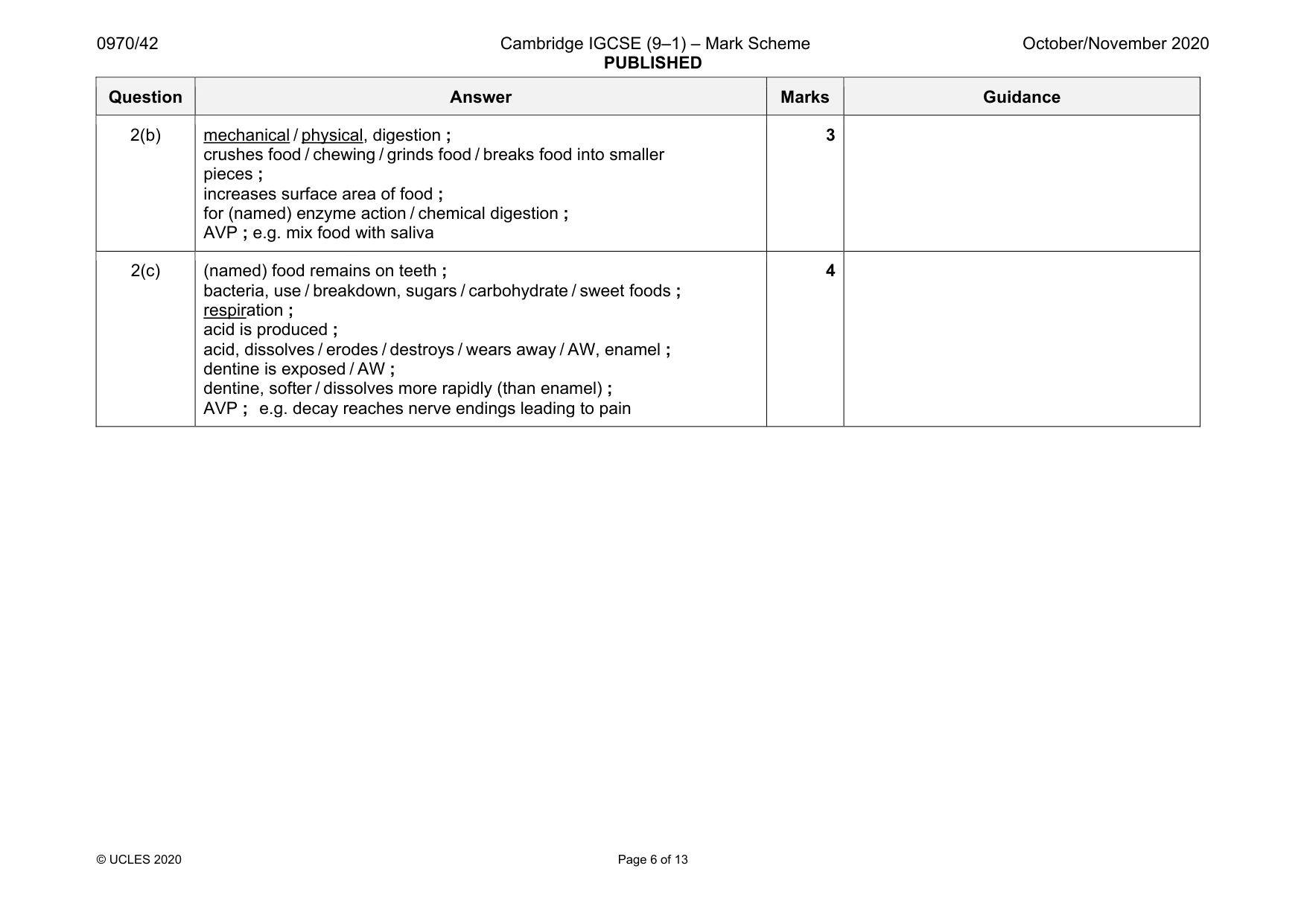
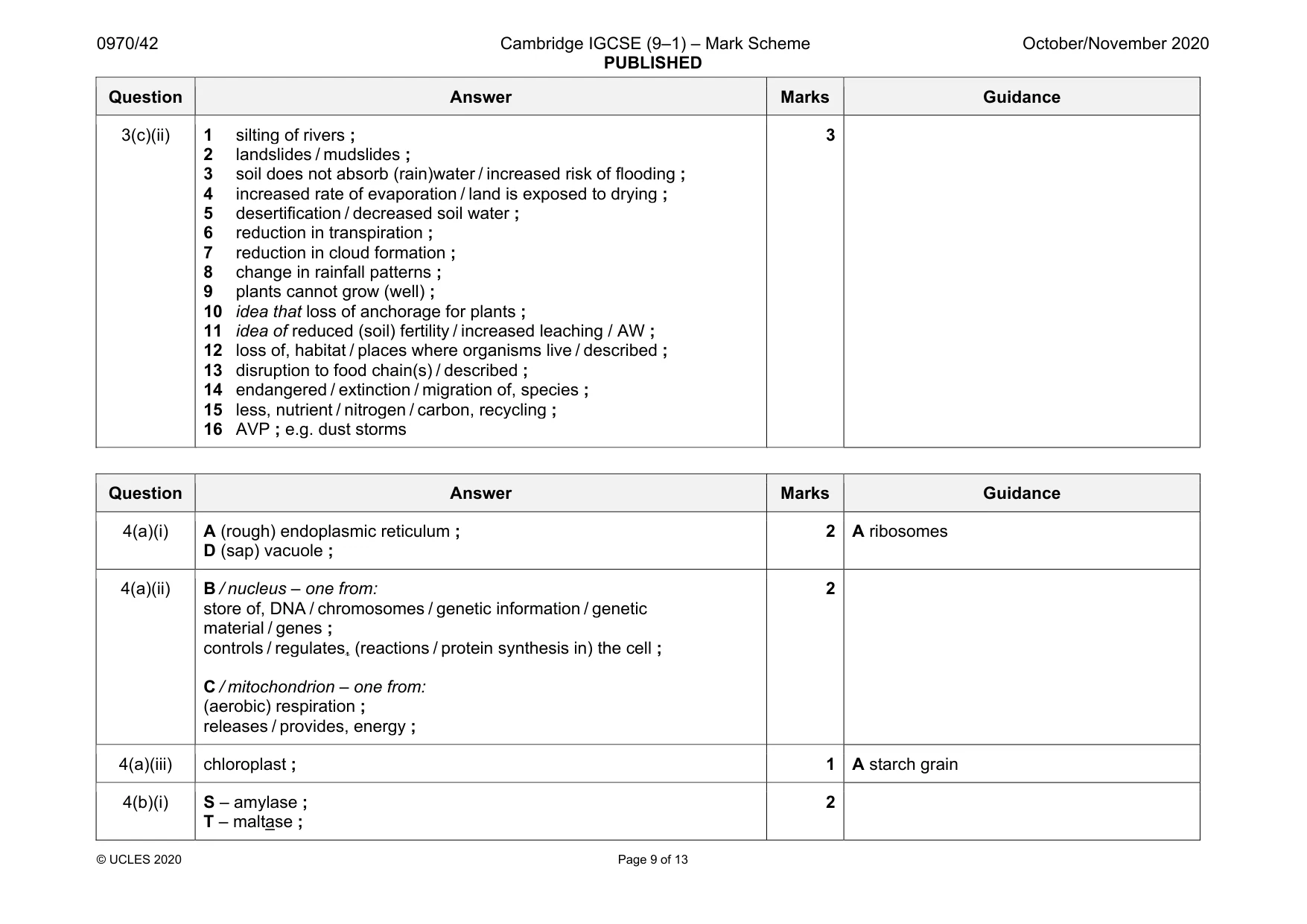
Mark scheme: 2(a) A enamel ; B dentine ; C pulp / pulp cavity / nerve / sensory neurone / capillaries / blood vessels ; D gum ; 4 Question Answer Marks Guidance 2(b) mechanical / physical, digestion ; crushes food / chewing / grinds food / breaks food into smaller pieces ; increases surface area of food ; for (named) enzyme action / chemical digestion ; AVP ; e.g. mix food with saliva 3 2(c) (named) food remains on teeth ; bacteria, use / breakdown, sugars / carbohydrate / sweet foods ; respiration ; acid is produced ; acid, dissolves / erodes / destroys / wears away / AW, enamel ; dentine is exposed / AW ; dentine, softer / dissolves more rapidly (than enamel) ; AVP ; e.g. decay reaches nerve endings leading to pain 4
Q4 · Yeast cells have many structures in common with a plant cell
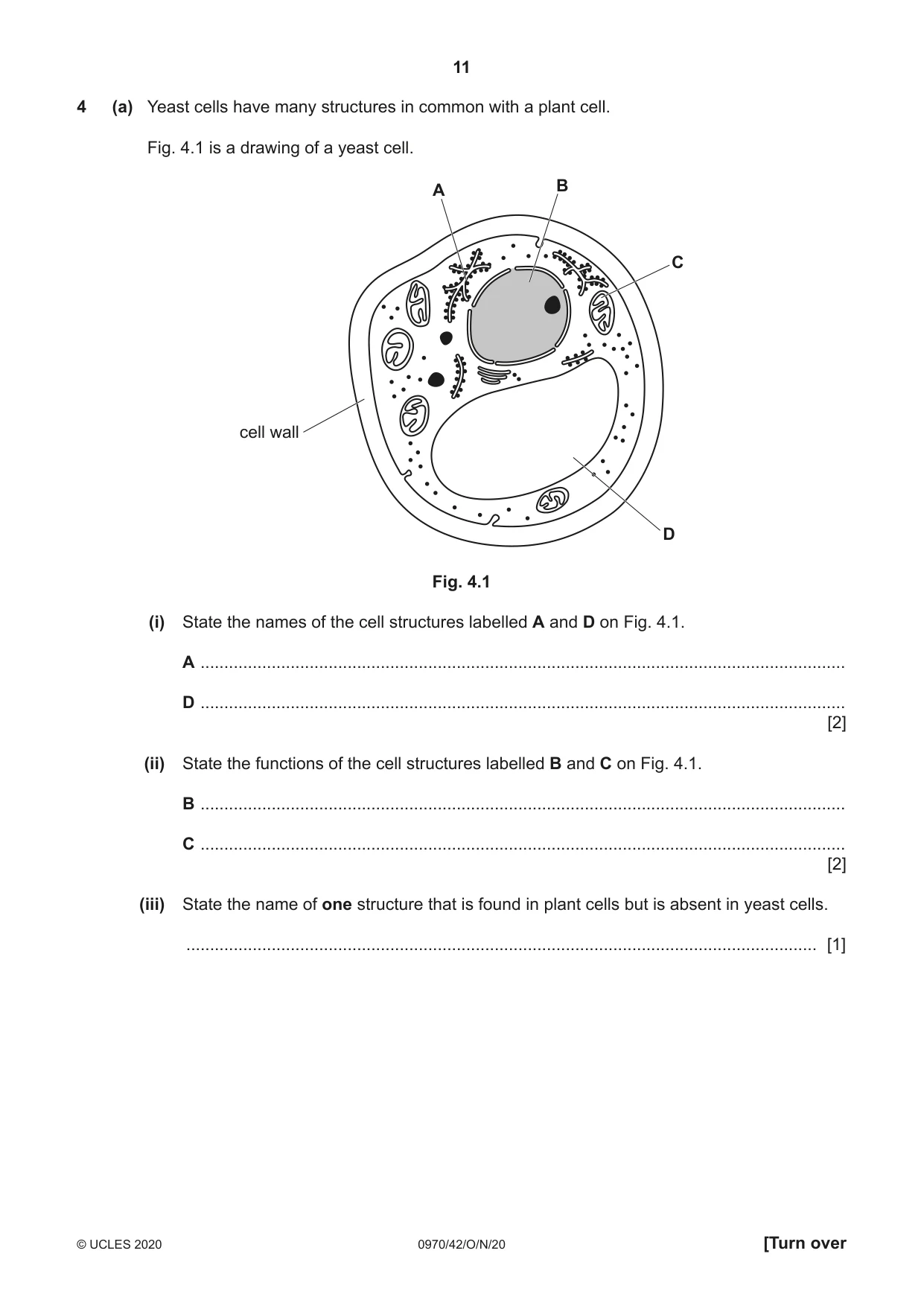
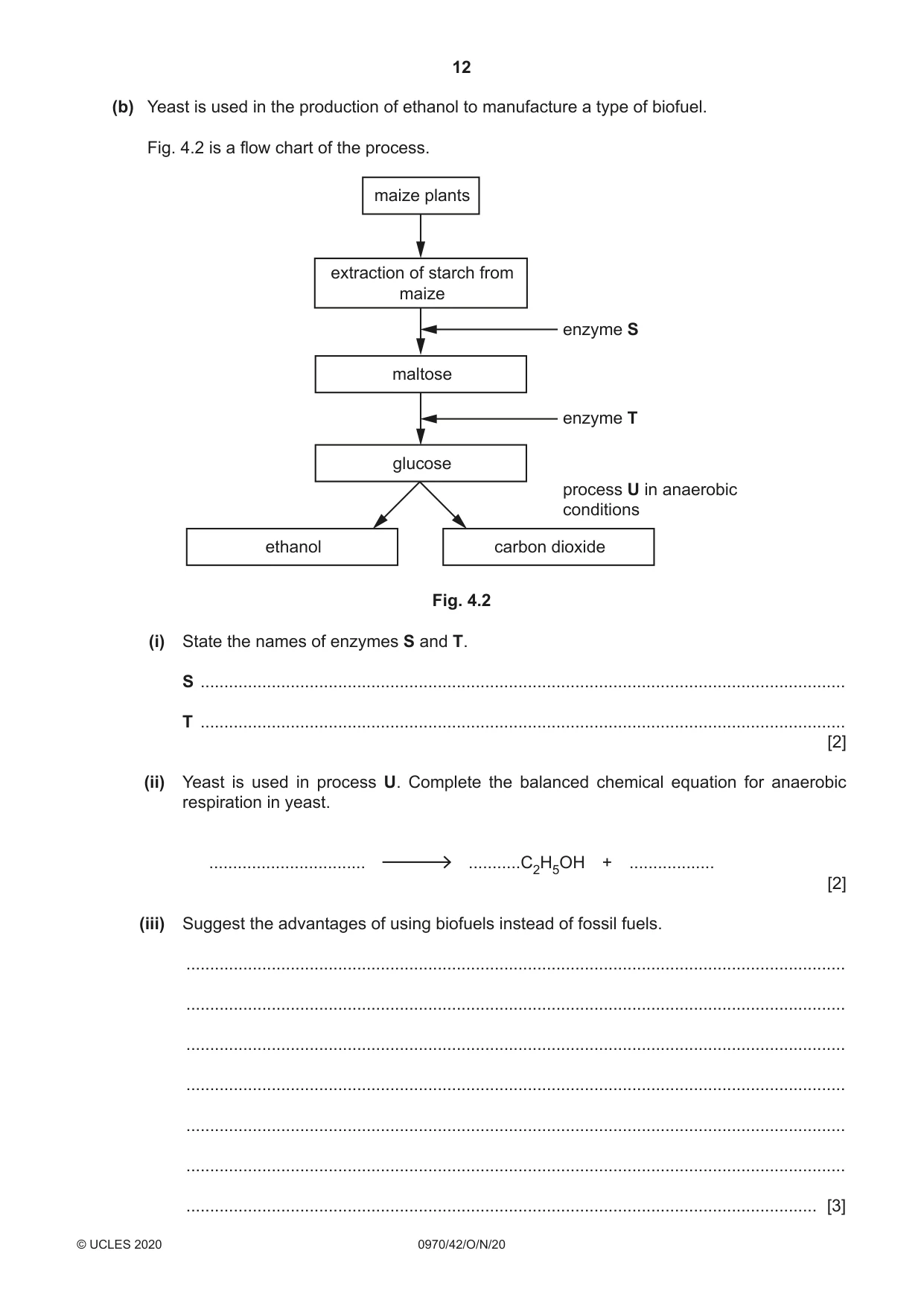
4 (a) Yeast cells have many structures in common with a plant cell. Fig. 4.1 is a drawing of a yeast cell. B A C cell wall D Fig. 4.1 (i) State the names of the cell structures labelled A and D on Fig. 4.1. A ........................................................................................................................................ D ........................................................................................................................................ [2] (ii) State the functions of the cell structures labelled B and C on Fig. 4.1. B ........................................................................................................................................ C ........................................................................................................................................ [2] (iii) State the name of one structure that is found in plant cells but is absent in yeast cells. ..................................................................................................................................... [1] (b) Yeast is used in the production of ethanol to manufacture a type of biofuel. Fig. 4.2 is a flow chart of the process. maize plants extraction of starch from maize enzyme S maltose enzyme T glucose process U in anaerobic conditions ethanol carbon dioxide Fig. 4.2 (i) State the names of enzymes S and T. S ........................................................................................................................................ T ........................................................................................................................................ [2] (ii) Yeast is used in process U. Complete the balanced chemical equation for anaerobic respiration in yeast. ................................. ...........C2H5OH + .................. [2] (iii) Suggest the advantages of using biofuels instead of fossil fuels. ........................................................................................................................................... ........................................................................................................................................... ........................................................................................................................................... ........................................................................................................................................... ........................................................................................................................................... ........................................................................................................................................... ..................................................................................................................................... [3] (iv) Carbon dioxide may be collected from process U and sold for use in glasshouses. Explain why carbon dioxide is used in glasshouses. ........................................................................................................................................... ........................................................................................................................................... ........................................................................................................................................... ........................................................................................................................................... ........................................................................................................................................... ........................................................................................................................................... ........................................................................................................................................... ..................................................................................................................................... [4] [Total: 16]
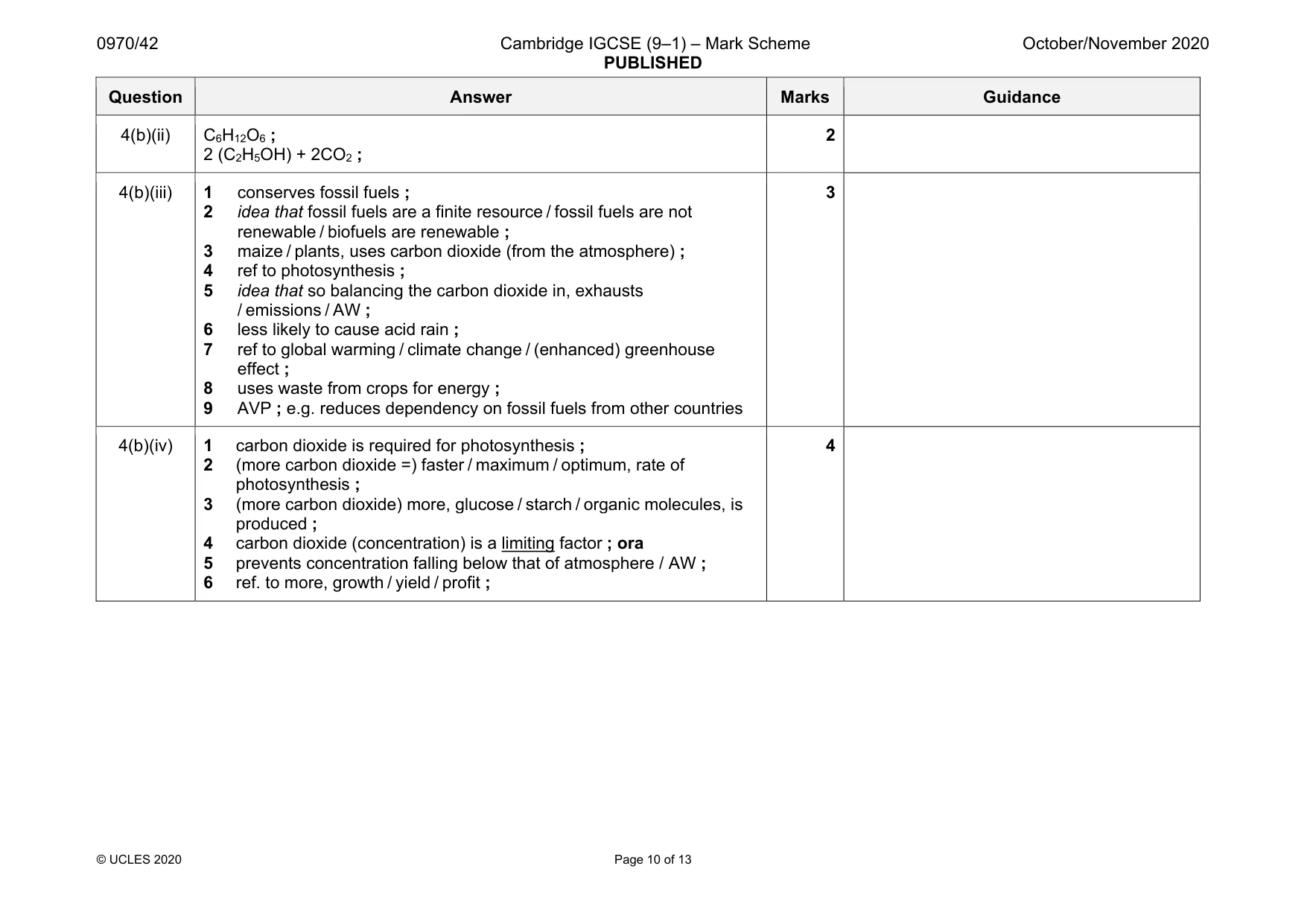
Mark scheme: 4(a)(i) A (rough) endoplasmic reticulum ; D (sap) vacuole ; 2 A ribosomes 4(a)(ii) B / nucleus – one from: store of, DNA / chromosomes / genetic information / genetic material / genes ; controls / regulates, (reactions / protein synthesis in) the cell ; C / mitochondrion – one from: (aerobic) respiration ; releases / provides, energy ; 2 4(a)(iii) chloroplast ; 1 A starch grain 4(b)(i) S – amylase ; T – maltase ; 2 Question Answer Marks Guidance 4(b)(ii) C6H12O6 ; 2 (C2H5OH) + 2CO2 ; 2 4(b)(iii) 1 conserves fossil fuels ; 2 idea that fossil fuels are a finite resource / fossil fuels are not renewable / biofuels are renewable ; 3 maize / plants, uses carbon dioxide (from the atmosphere) ; 4 ref to photosynthesis ; 5 idea that so balancing the carbon dioxide in, exhausts / emissions / AW ; 6 less likely to cause acid rain ; 7 ref to global warming / climate change / (enhanced) greenhouse effect ; 8 uses waste from crops for energy ; 9 AVP ; e.g. reduces dependency on fossil fuels from other countries 3 4(b)(iv) 1 carbon dioxide is required for photosynthesis ; 2 (more carbon dioxide =) faster / maximum / optimum, rate of photosynthesis ; 3 (more carbon dioxide) more, glucose / starch / organic molecules, is produced ; 4 carbon dioxide (concentration) is a limiting factor ; ora 5 prevents concentration falling below that of atmosphere / AW ; 6 ref. to more, growth / yield / profit ; 4
Q5 · The activities of the ovaries and the uterus are regulated by the hormones FSH, LH…
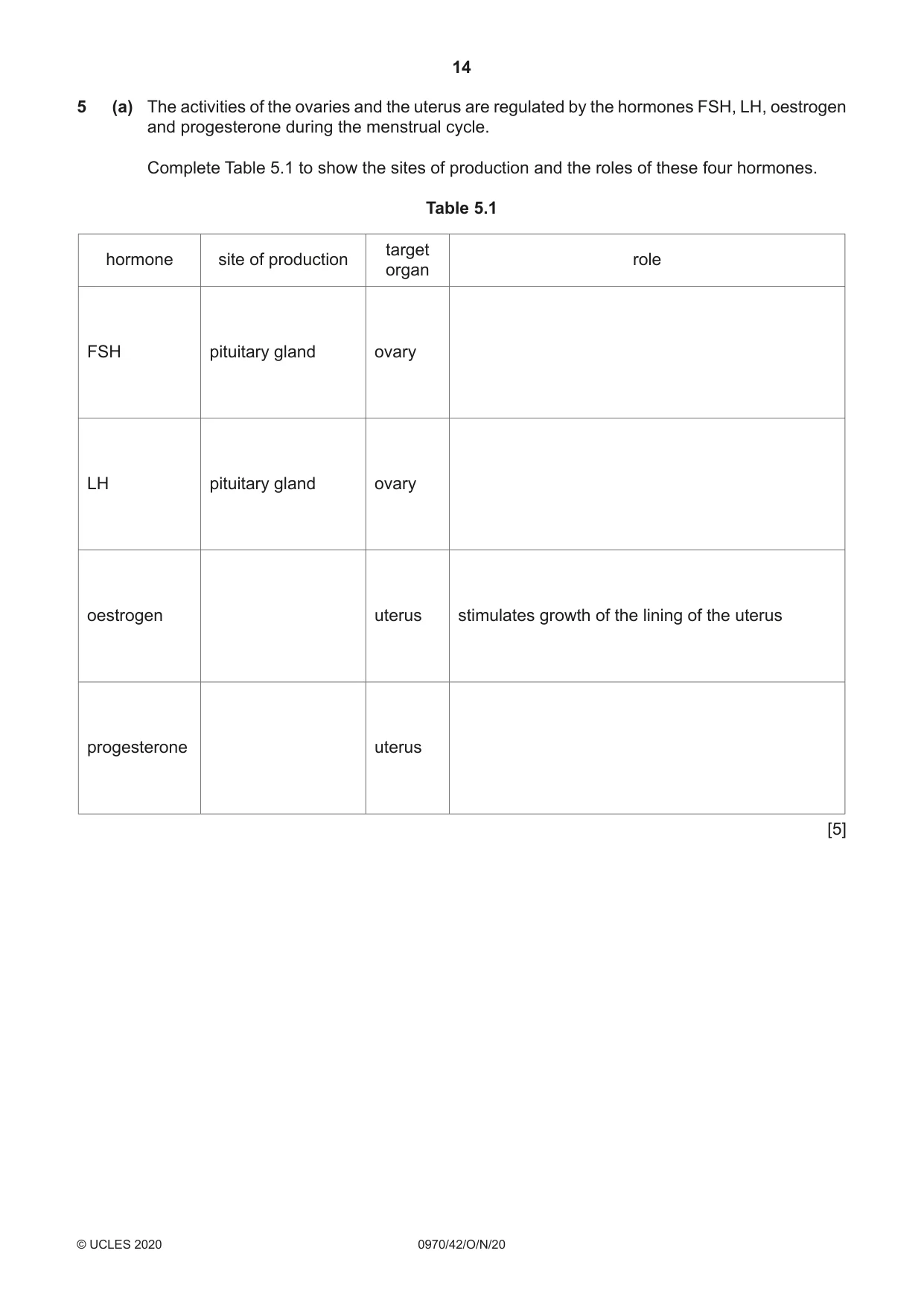
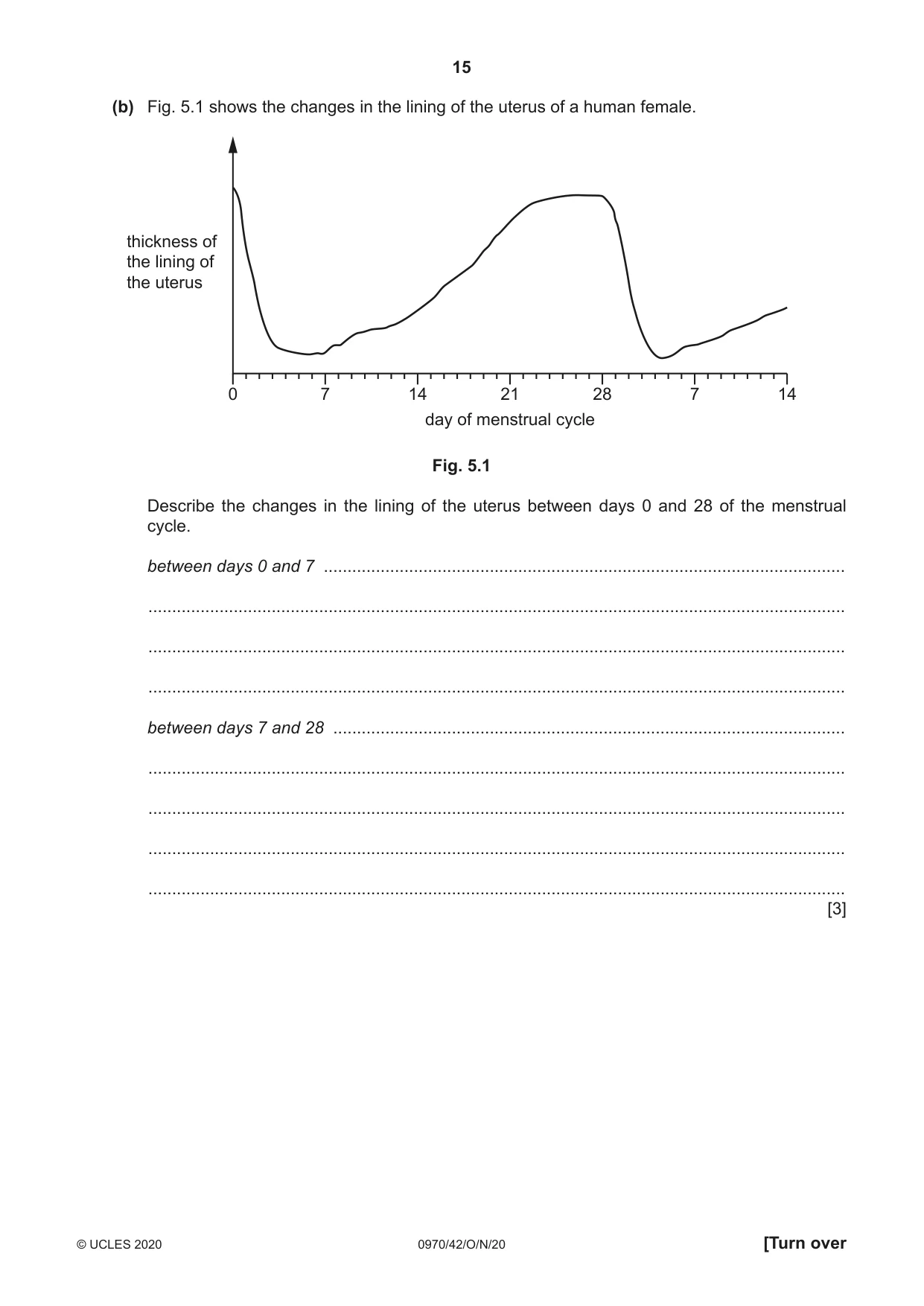
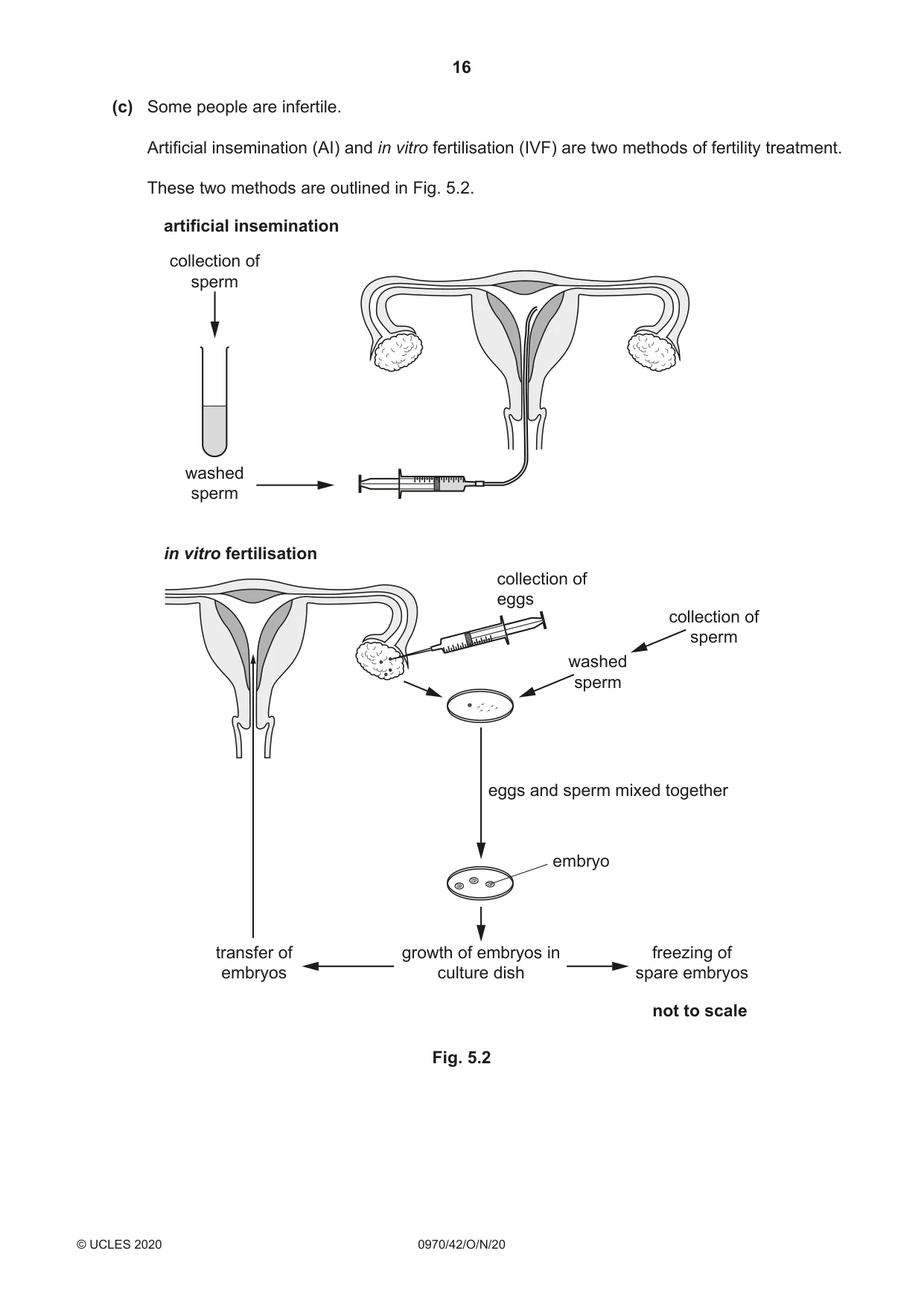
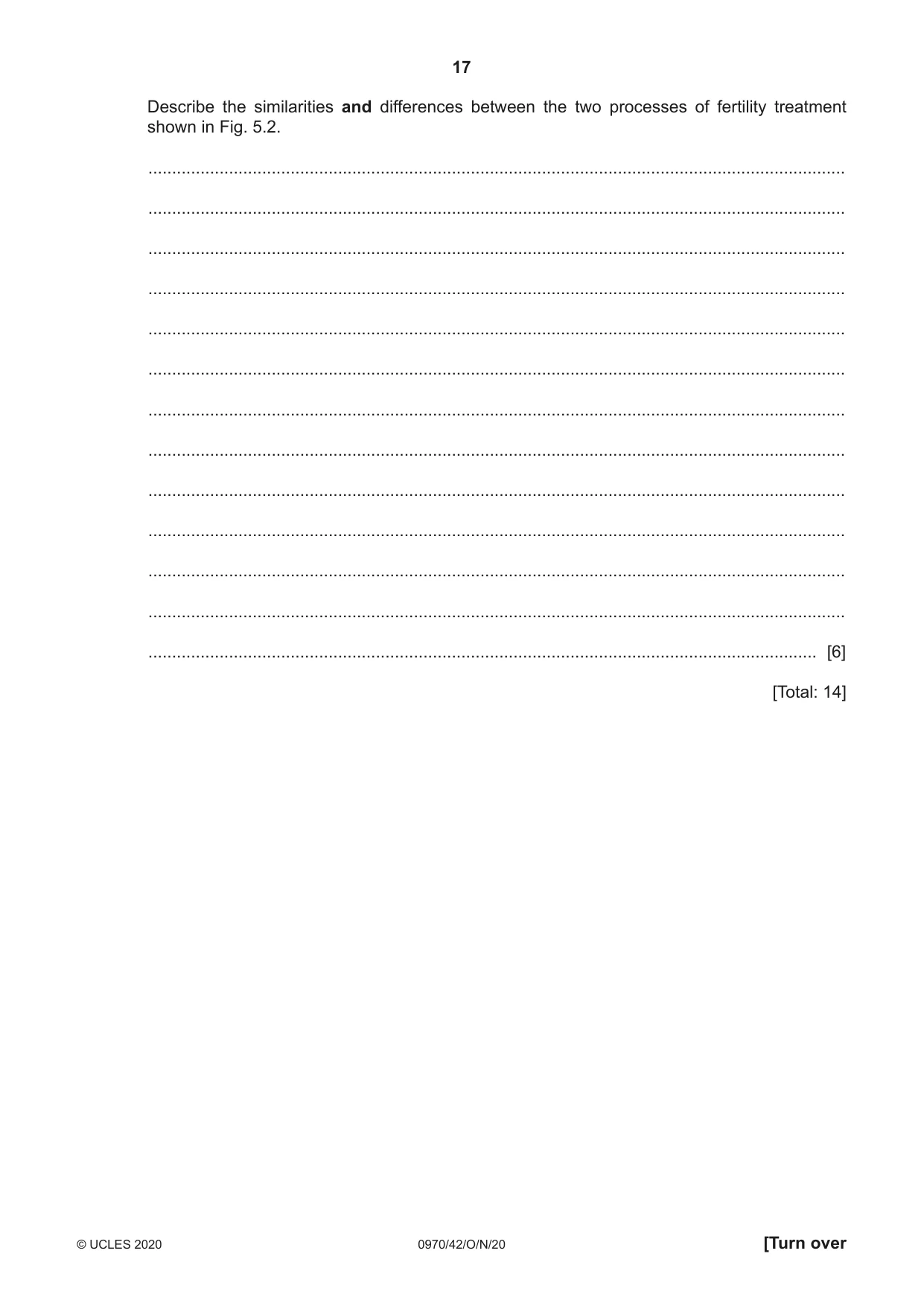
5 (a) The activities of the ovaries and the uterus are regulated by the hormones FSH, LH, oestrogen and progesterone during the menstrual cycle. Complete Table 5.1 to show the sites of production and the roles of these four hormones. Table 5.1 target hormone site of production role organ FSH pituitary gland ovary LH pituitary gland ovary oestrogen uterus stimulates growth of the lining of the uterus progesterone uterus [5] (b) Fig. 5.1 shows the changes in the lining of the uterus of a human female. thickness of the lining of the uterus 0 7 14 21 28 7 14 day of menstrual cycle Fig. 5.1 Describe the changes in the lining of the uterus between days 0 and 28 of the menstrual cycle. between days 0 and 7 .............................................................................................................. ................................................................................................................................................... ................................................................................................................................................... ................................................................................................................................................... between days 7 and 28 ............................................................................................................ ................................................................................................................................................... ................................................................................................................................................... ................................................................................................................................................... ................................................................................................................................................... [3] (c) Some people are infertile. Artificial insemination (AI) and in vitro fertilisation (IVF) are two methods of fertility treatment. These two methods are outlined in Fig. 5.2. artificial insemination collection of sperm washed sperm in vitro fertilisation collection of eggs collection of sperm washed sperm eggs and sperm mixed together embryo transfer of growth of embryos in freezing of embryos culture dish spare embryos not to scale Fig. 5.2 Describe the similarities and differences between the two processes of fertility treatment shown in Fig. 5.2. ................................................................................................................................................... ................................................................................................................................................... ................................................................................................................................................... ................................................................................................................................................... ................................................................................................................................................... ................................................................................................................................................... ................................................................................................................................................... ................................................................................................................................................... ................................................................................................................................................... ................................................................................................................................................... ................................................................................................................................................... ................................................................................................................................................... ............................................................................................................................................. [6] [Total: 14]
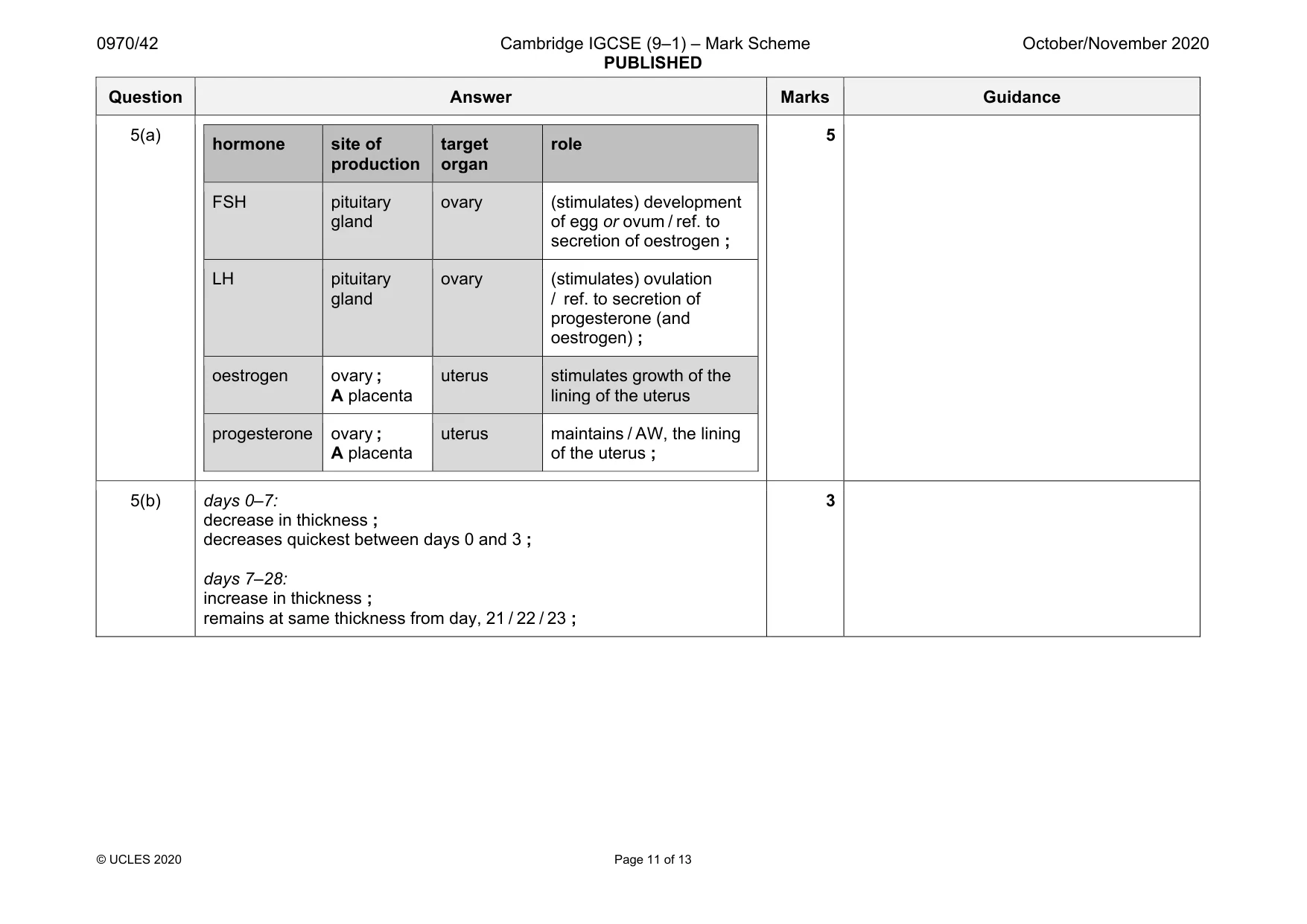
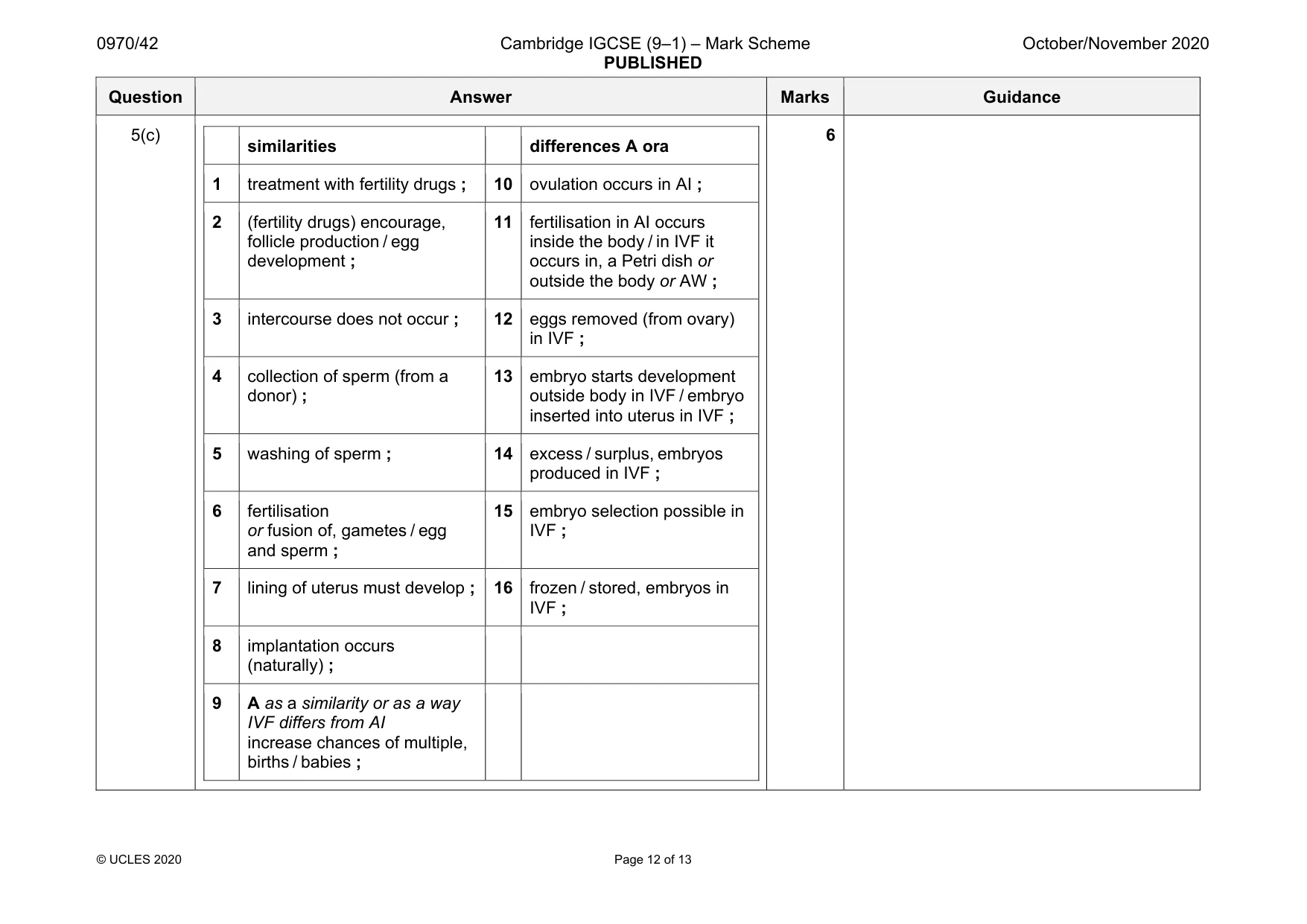
Mark scheme: 5(a) hormone site of production target organ role FSH pituitary gland ovary (stimulates) development of egg or ovum / ref. to secretion of oestrogen ; LH pituitary gland ovary (stimulates) ovulation / ref. to secretion of progesterone (and oestrogen) ; oestrogen ovary ; A placenta uterus stimulates growth of the lining of the uterus progesterone ovary ; A placenta uterus maintains / AW, the lining of the uterus ; 5 5(b) days 0–7: decrease in thickness ; decreases quickest between days 0 and 3 ; days 7–28: increase in thickness ; remains at same thickness from day, 21 / 22 / 23 ; 3 Question Answer Marks Guidance 5(c) similarities differences A ora 1 treatment with fertility drugs ; 10 ovulation occurs in AI ; 2 (fertility drugs) encourage, follicle production / egg development ; 11 fertilisation in AI occurs inside the body / in IVF it occurs in, a Petri dish or outside the body or AW ; 3 intercourse does not occur ; 12 eggs removed (from ovary) in IVF ; 4 collection of sperm (from a donor) ; 13 embryo starts development outside body in IVF / embryo inserted into uterus in IVF ; 5 washing of sperm ; 14 excess / surplus, embryos produced in IVF ; 6 fertilisation or fusion of, gametes / egg and sperm ; 15 embryo selection possible in IVF ; 7 lining of uterus must develop ; 16 frozen / stored, embryos in IVF ; 8 implantation occurs (naturally) ; 9 A as a similarity or as a way IVF differs from AI increase chances of multiple, births / babies ; 6
Q6 · A diagram of DNA
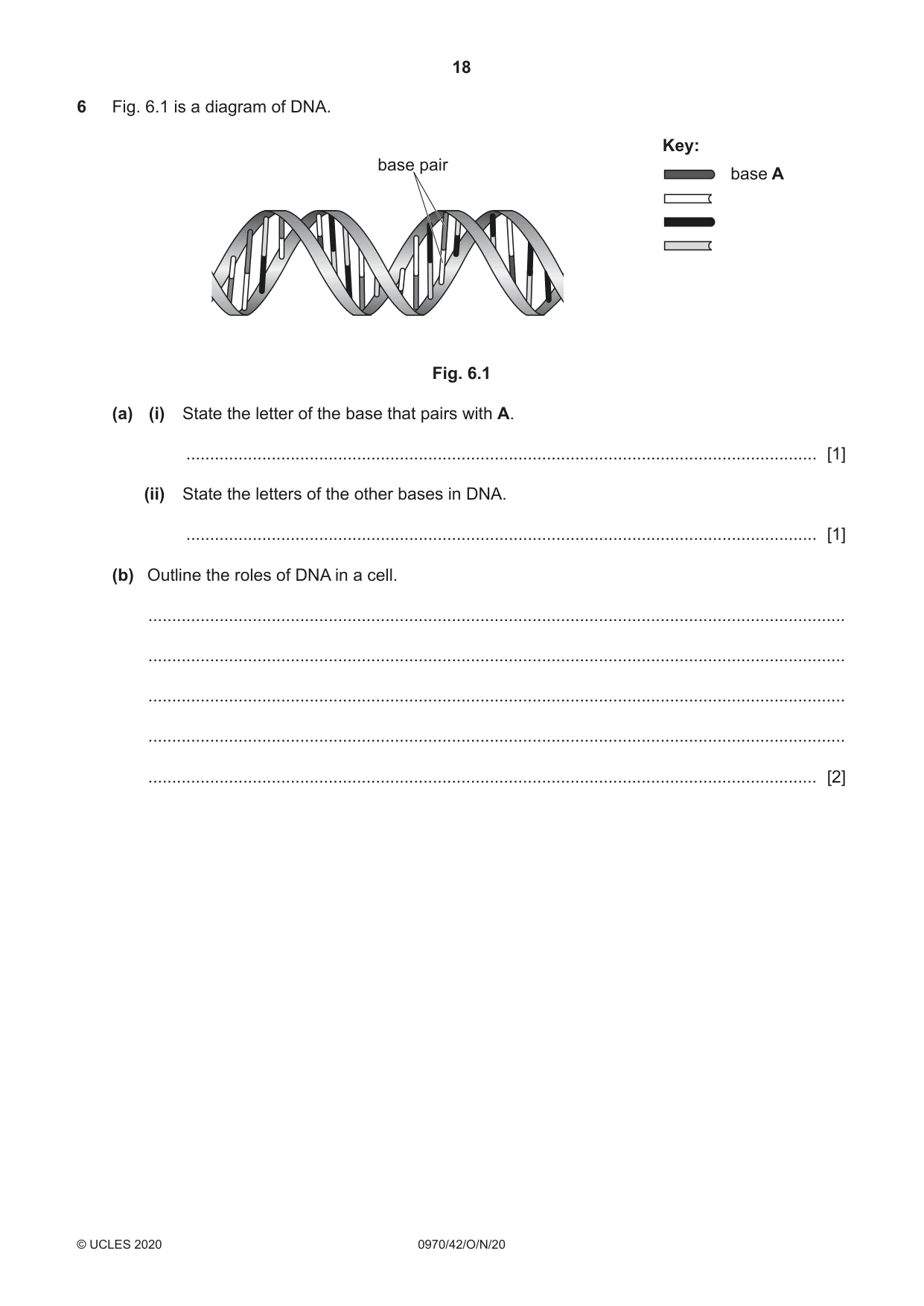
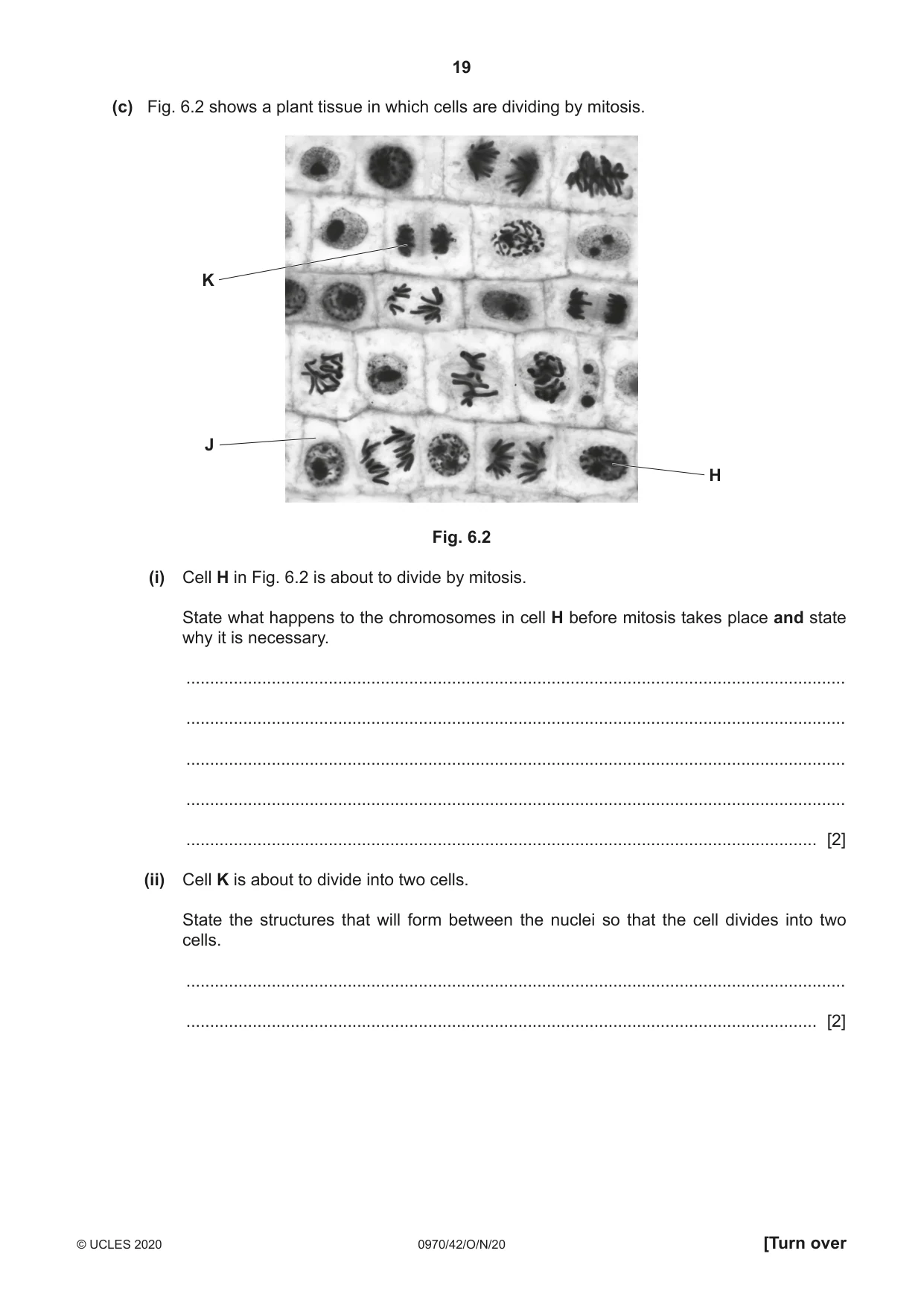
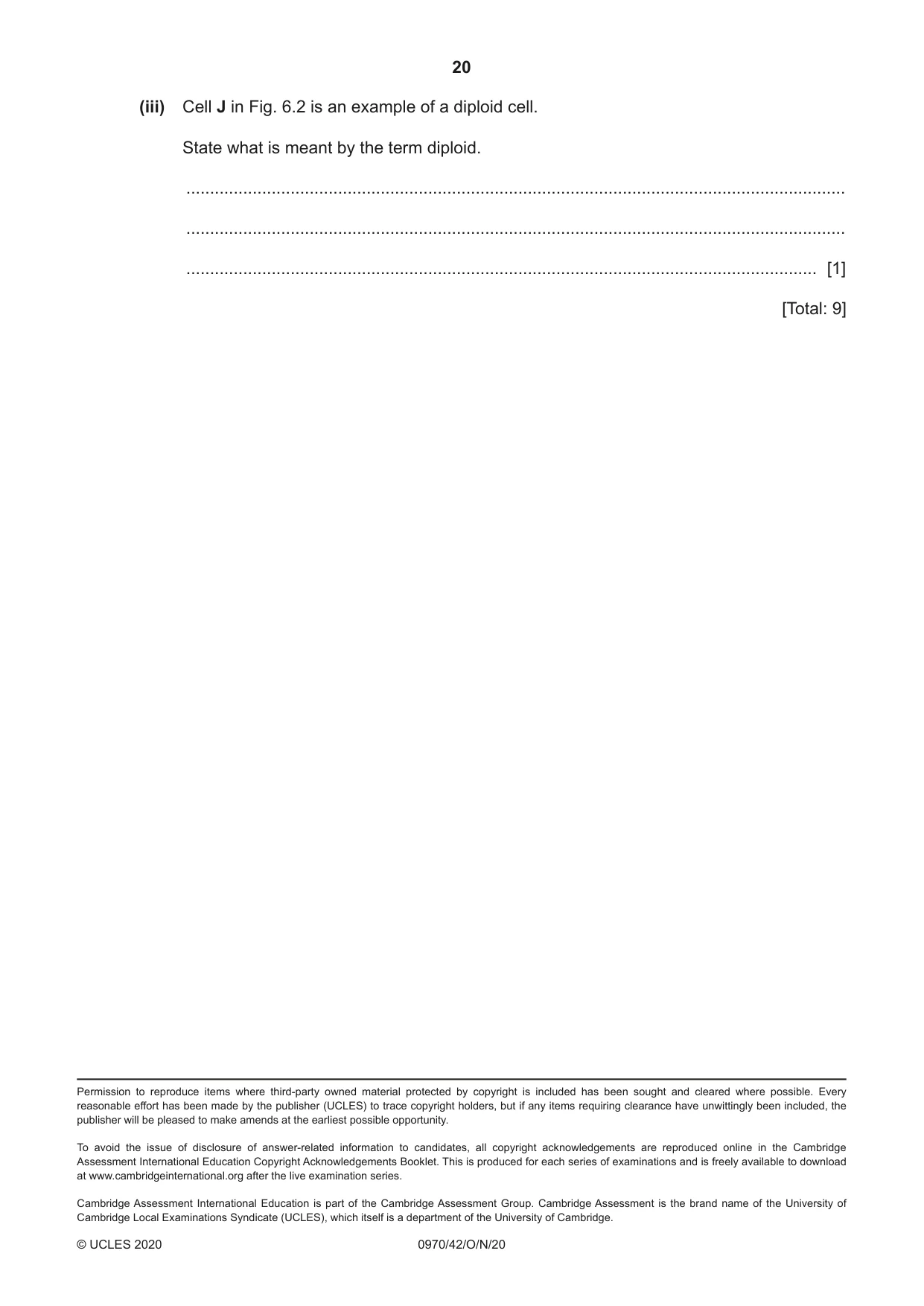
6 Fig. 6.1 is a diagram of DNA. Key: base pair base A Fig. 6.1 (a) (i) State the letter of the base that pairs with A. ..................................................................................................................................... [1] (ii) State the letters of the other bases in DNA. ..................................................................................................................................... [1] (b) Outline the roles of DNA in a cell. ................................................................................................................................................... ................................................................................................................................................... ................................................................................................................................................... ................................................................................................................................................... ............................................................................................................................................. [2] (c) Fig. 6.2 shows a plant tissue in which cells are dividing by mitosis. K J H Fig. 6.2 (i) Cell H in Fig. 6.2 is about to divide by mitosis. State what happens to the chromosomes in cell H before mitosis takes place and state why it is necessary. ........................................................................................................................................... ........................................................................................................................................... ........................................................................................................................................... ........................................................................................................................................... ..................................................................................................................................... [2] (ii) Cell K is about to divide into two cells. State the structures that will form between the nuclei so that the cell divides into two cells. ........................................................................................................................................... ..................................................................................................................................... [2] (iii) Cell J in Fig. 6.2 is an example of a diploid cell. State what is meant by the term diploid. ........................................................................................................................................... ........................................................................................................................................... ..................................................................................................................................... [1] [Total: 9]
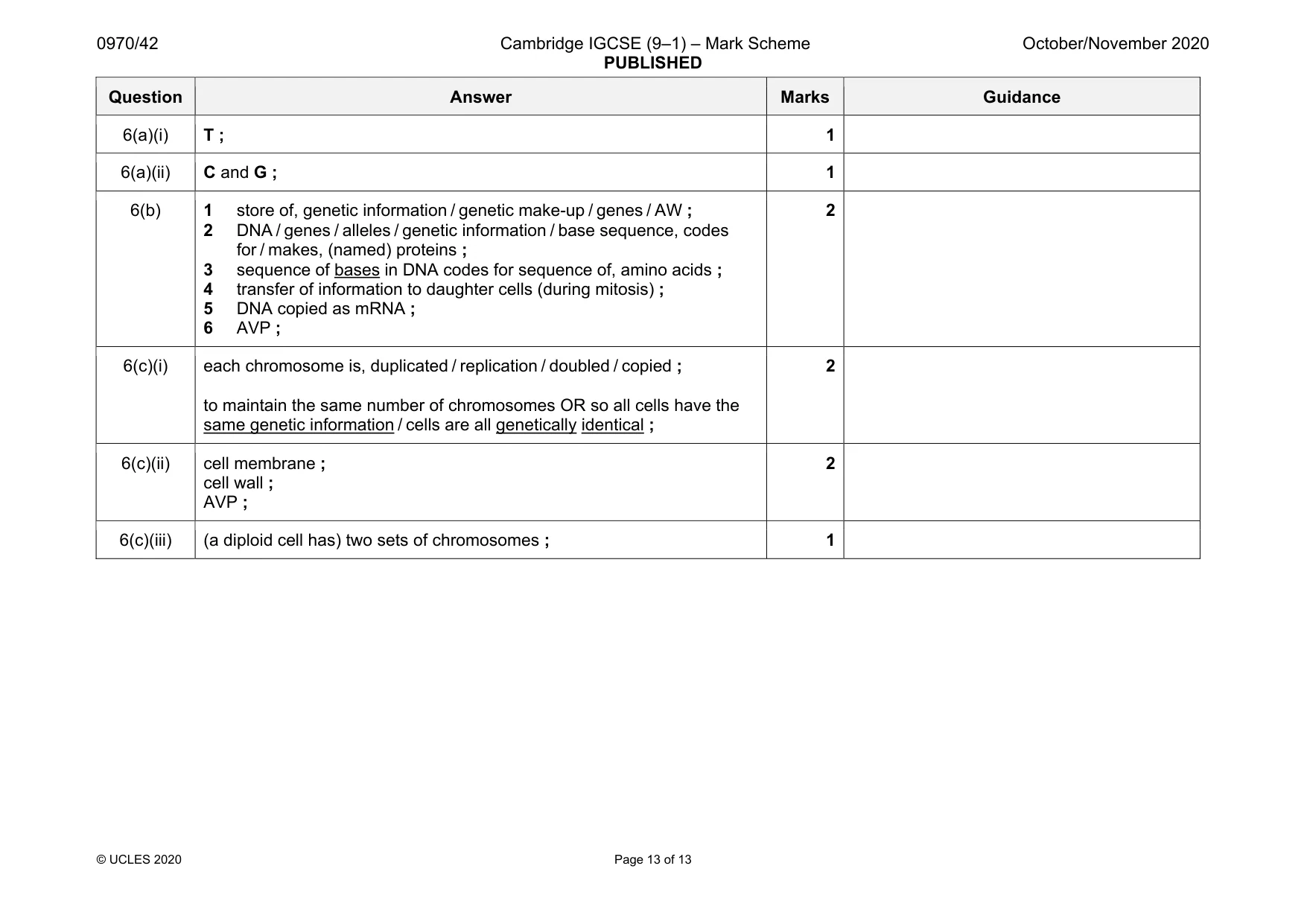
Mark scheme: 6(a)(i) T ; 1 6(a)(ii) C and G ; 1 6(b) 1 store of, genetic information / genetic make-up / genes / AW ; 2 DNA / genes / alleles / genetic information / base sequence, codes for / makes, (named) proteins ; 3 sequence of bases in DNA codes for sequence of, amino acids ; 4 transfer of information to daughter cells (during mitosis) ; 5 DNA copied as mRNA ; 6 AVP ; 2 6(c)(i) each chromosome is, duplicated / replication / doubled / copied ; to maintain the same number of chromosomes OR so all cells have the same genetic information / cells are all genetically identical ; 2 6(c)(ii) cell membrane ; cell wall ; AVP ; 2 6(c)(iii) (a diploid cell has) two sets of chromosomes ; 1
What was in this paper
The subtopics covered by these 5 questions, and how many questions each got. Open one in a new tab to see every Cambridge question on it.
What you needed in this session
Cambridge’s own grade thresholds for 2020 Oct/Nov, Paper 4 · Variant 2. A higher threshold means an easier paper — the bar moves with how the cohort did.