Cambridge IGCSE Biology (9-1) 0970 — 2019 May/June Paper 4 · Variant 1
0970/41/M/J/19 · 6 questions · 80 marks · ≈90 min
The question paper and its mark scheme, free to read here and free to download. This is Cambridge’s own paper, exactly as it was sat.
Question paper20 pages



Mark scheme14 pages
Answers below. Sit the paper first if you are practising.
Questions as text
Q1 · All commercial breeds of sheep belong to the species Ovis aries
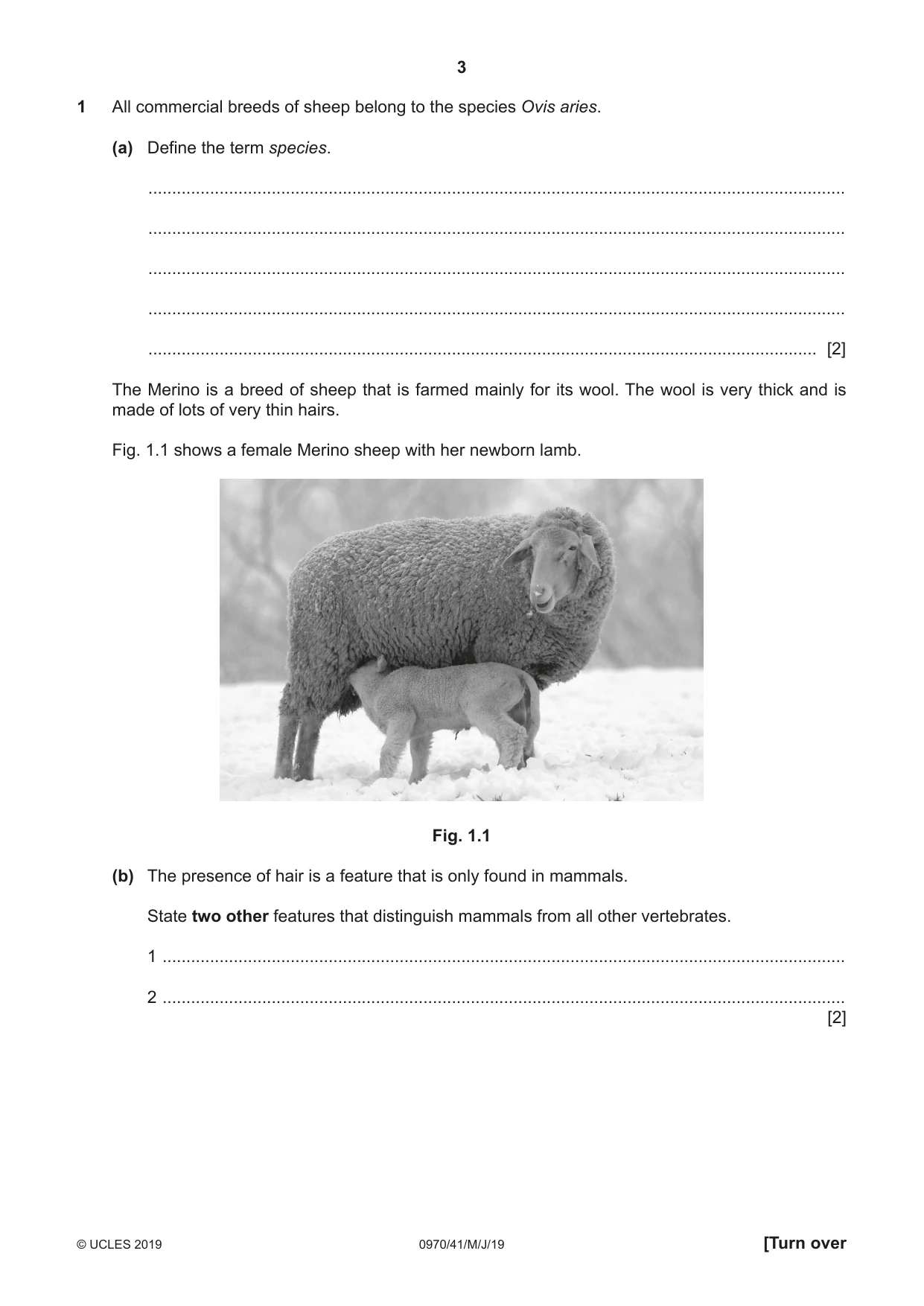
1 All commercial breeds of sheep belong to the species Ovis aries. (a) Define the term species. ................................................................................................................................................... ................................................................................................................................................... ................................................................................................................................................... ................................................................................................................................................... ............................................................................................................................................. [2] The Merino is a breed of sheep that is farmed mainly for its wool. The wool is very thick and is made of lots of very thin hairs. Fig. 1.1 shows a female Merino sheep with her newborn lamb. Fig. 1.1 (b) The presence of hair is a feature that is only found in mammals. State two other features that distinguish mammals from all other vertebrates. 1 ................................................................................................................................................ 2 ................................................................................................................................................ [2] (c) Merino sheep in South Africa have high quality wool with very thin hairs. Breeders in New Zealand have used selective breeding programmes to improve the wool of their sheep to match the quality of South African wool. Describe the steps that breeders would take to breed sheep that have wool with very thin hairs. ................................................................................................................................................... ................................................................................................................................................... ................................................................................................................................................... ................................................................................................................................................... ................................................................................................................................................... ................................................................................................................................................... ................................................................................................................................................... ................................................................................................................................................... ................................................................................................................................................... ................................................................................................................................................... ................................................................................................................................................... ............................................................................................................................................. [5] (d) Explain how natural selection differs from selective breeding. ................................................................................................................................................... ................................................................................................................................................... ................................................................................................................................................... ................................................................................................................................................... ................................................................................................................................................... ................................................................................................................................................... ............................................................................................................................................. [3] [Total: 12]
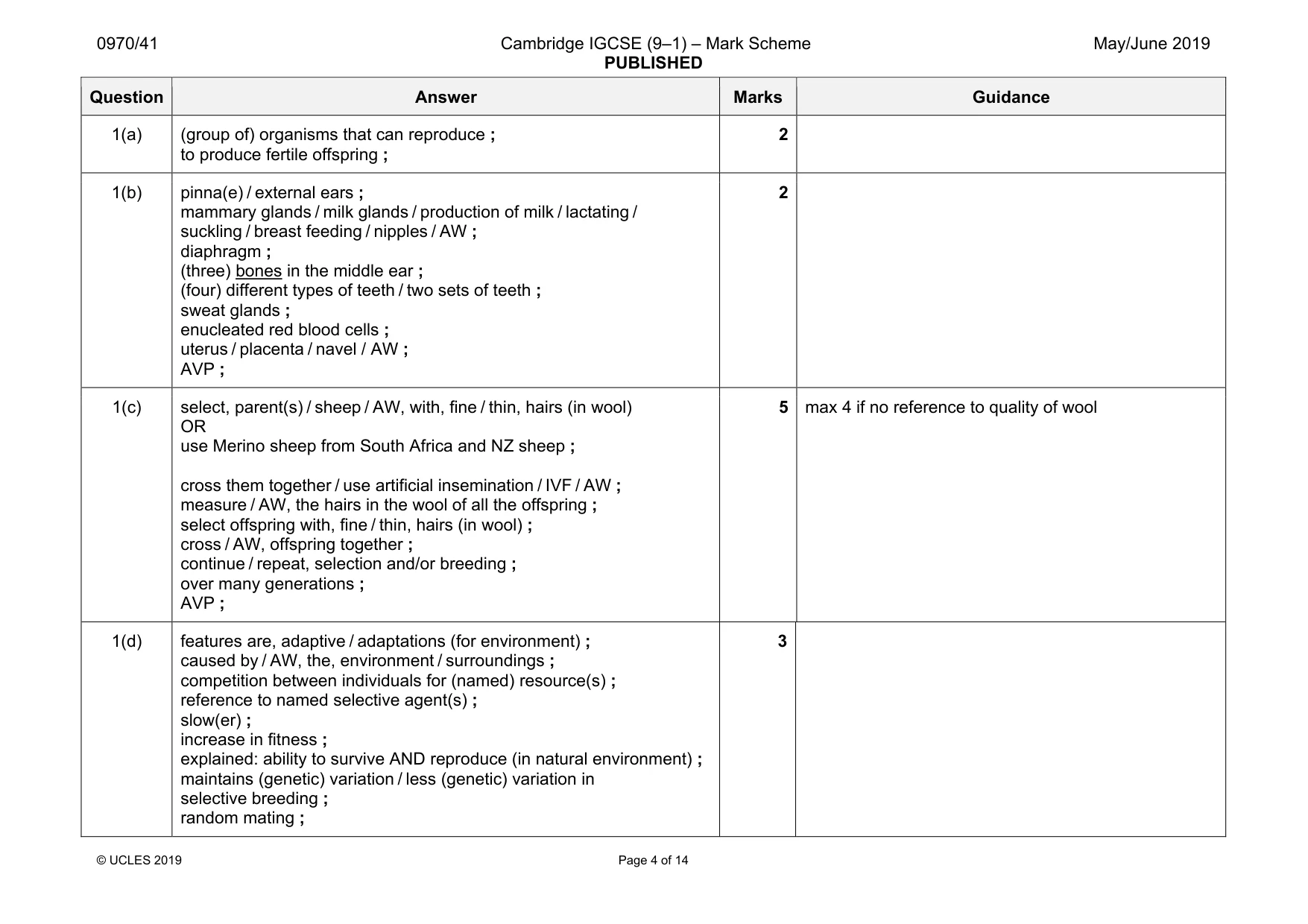
Mark scheme: 1(a) (group of) organisms that can reproduce ; to produce fertile offspring ; 2 1(b) pinna(e) / external ears ; mammary glands / milk glands / production of milk / lactating / suckling / breast feeding / nipples / AW ; diaphragm ; (three) bones in the middle ear ; (four) different types of teeth / two sets of teeth ; sweat glands ; enucleated red blood cells ; uterus / placenta / navel / AW ; AVP ; 2 1(c) select, parent(s) / sheep / AW, with, fine / thin, hairs (in wool) OR use Merino sheep from South Africa and NZ sheep ; cross them together / use artificial insemination / IVF / AW ; measure / AW, the hairs in the wool of all the offspring ; select offspring with, fine / thin, hairs (in wool) ; cross / AW, offspring together ; continue / repeat, selection and/or breeding ; over many generations ; AVP ; 5 max 4 if no reference to quality of wool 1(d) features are, adaptive / adaptations (for environment) ; caused by / AW, the, environment / surroundings ; competition between individuals for (named) resource(s) ; reference to named selective agent(s) ; slow(er) ; increase in fitness ; explained: ability to survive AND reproduce (in natural environment) ; maintains (genetic) variation / less (genetic) variation in selective breeding ; random mating ; 3
Q2 · The rate of photosynthesis of terrestrial plants can be determined by measuring the…
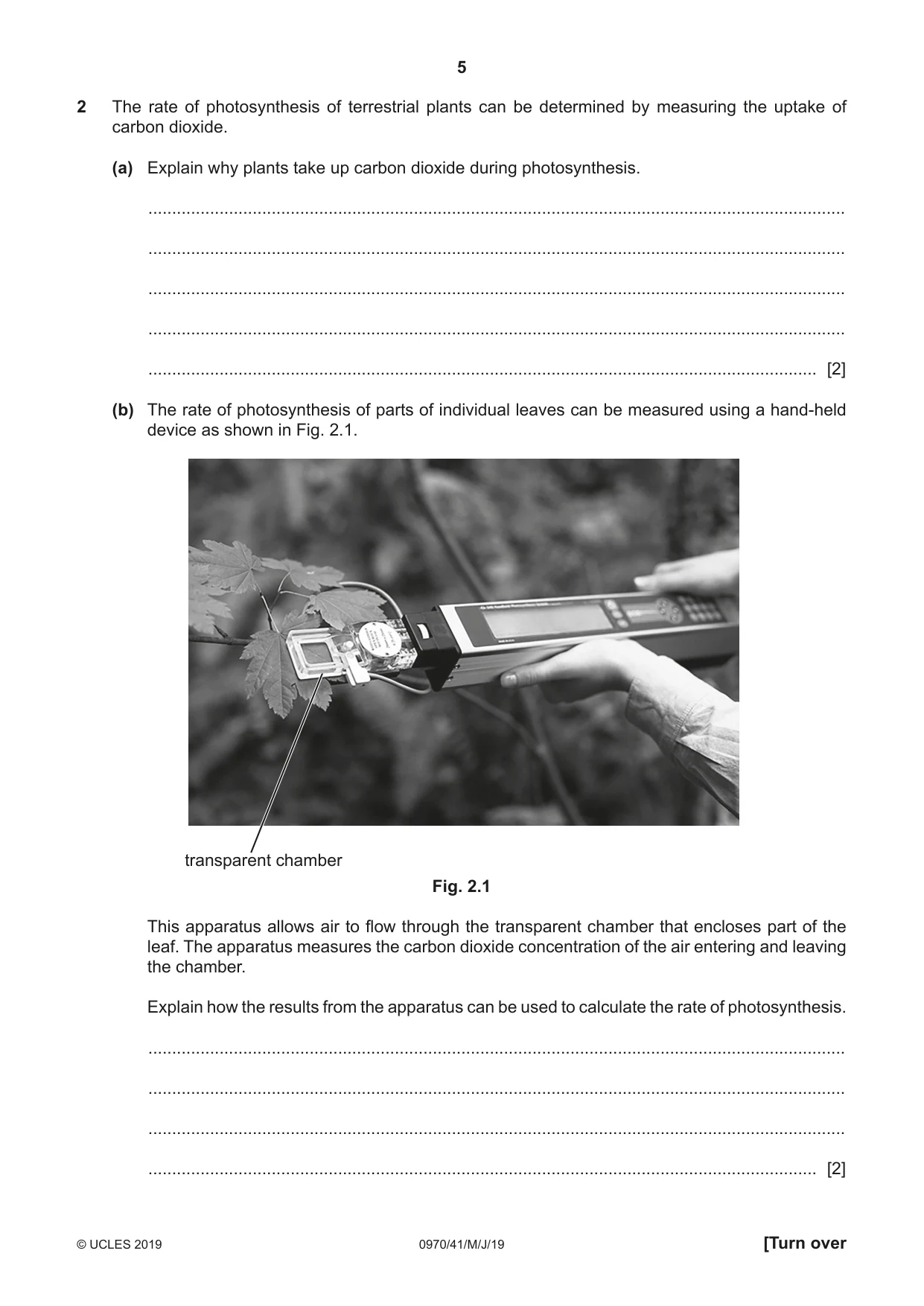
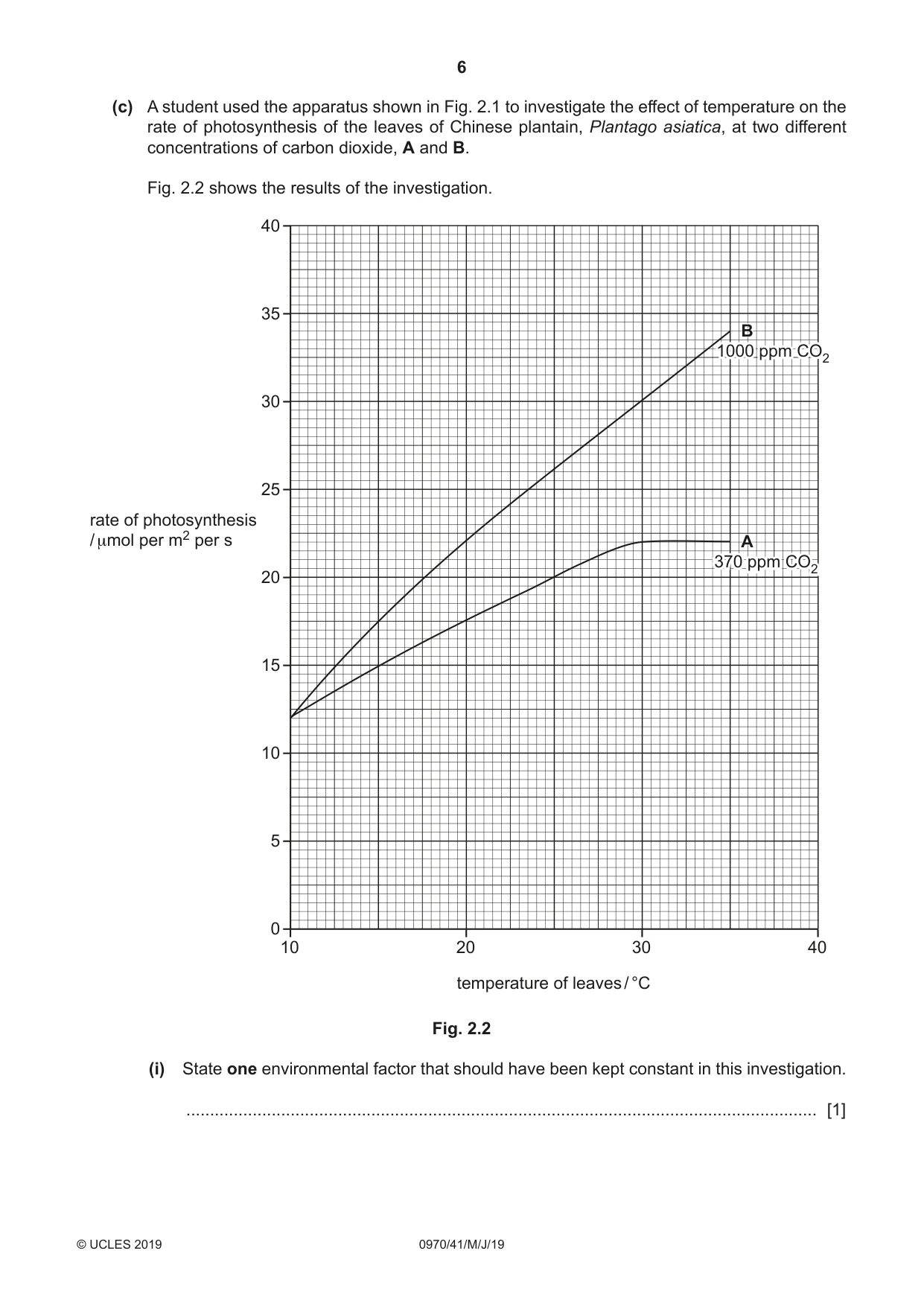
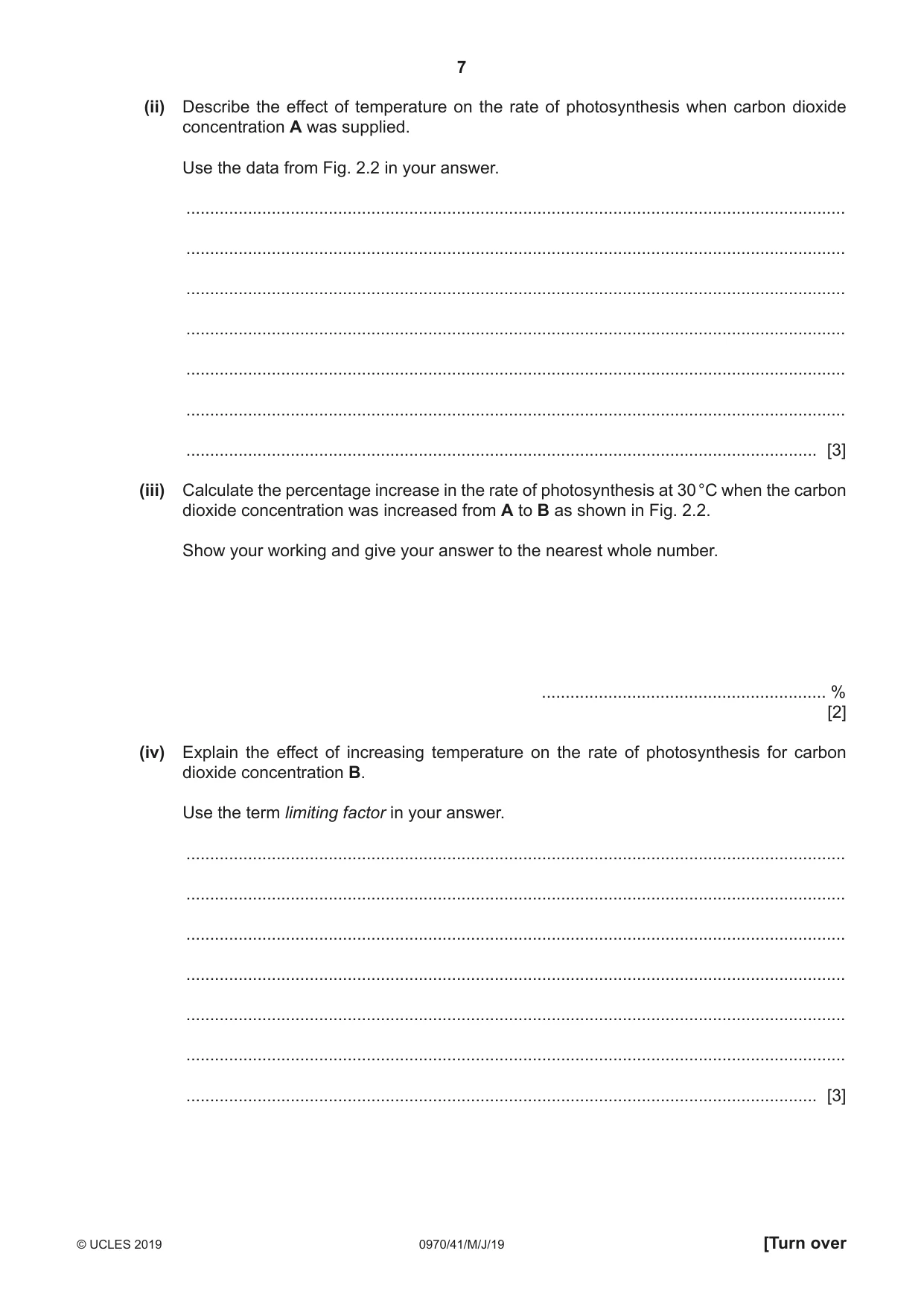
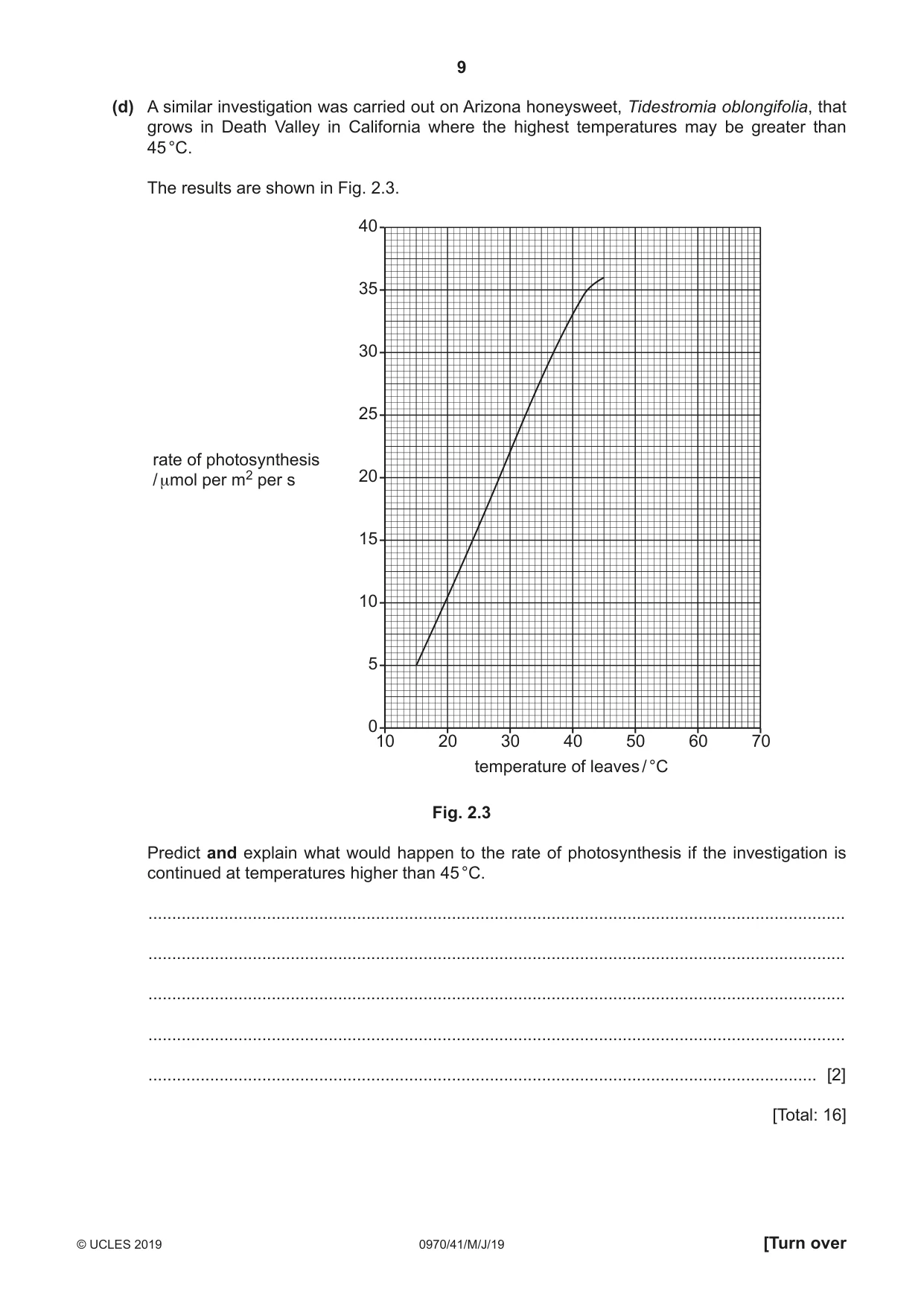
2 The rate of photosynthesis of terrestrial plants can be determined by measuring the uptake of carbon dioxide. (a) Explain why plants take up carbon dioxide during photosynthesis. ................................................................................................................................................... ................................................................................................................................................... ................................................................................................................................................... ................................................................................................................................................... ............................................................................................................................................. [2] (b) The rate of photosynthesis of parts of individual leaves can be measured using a hand-held device as shown in Fig. 2.1. transparent chamber Fig. 2.1 This apparatus allows air to flow through the transparent chamber that encloses part of the leaf. The apparatus measures the carbon dioxide concentration of the air entering and leaving the chamber. Explain how the results from the apparatus can be used to calculate the rate of photosynthesis. ................................................................................................................................................... ................................................................................................................................................... ................................................................................................................................................... ............................................................................................................................................. [2] (c) A student used the apparatus shown in Fig. 2.1 to investigate the effect of temperature on the rate of photosynthesis of the leaves of Chinese plantain, Plantago asiatica, at two different concentrations of carbon dioxide, A and B. Fig. 2.2 shows the results of the investigation. 40 35 BB 10001000 ppmppm CO2CO2 30 25 rate of photosynthesis / μmol per m2 per s AA 370370 ppmppm CO2CO2 20 15 10 5 0 10 20 30 40 temperature of leaves / °C Fig. 2.2 (i) State one environmental factor that should have been kept constant in this investigation. ..................................................................................................................................... [1] (ii) Describe the effect of temperature on the rate of photosynthesis when carbon dioxide concentration A was supplied. Use the data from Fig. 2.2 in your answer. ........................................................................................................................................... ........................................................................................................................................... ........................................................................................................................................... ........................................................................................................................................... ........................................................................................................................................... ........................................................................................................................................... ..................................................................................................................................... [3] (iii) Calculate the percentage increase in the rate of photosynthesis at 30 °C when the carbon dioxide concentration was increased from A to B as shown in Fig. 2.2. Show your working and give your answer to the nearest whole number. ............................................................ % [2] (iv) Explain the effect of increasing temperature on the rate of photosynthesis for carbon dioxide concentration B. Use the term limiting factor in your answer. ........................................................................................................................................... ........................................................................................................................................... ........................................................................................................................................... ........................................................................................................................................... ........................................................................................................................................... ........................................................................................................................................... ..................................................................................................................................... [3] (v) The student concluded that carbon dioxide concentration is the factor limiting the rate of photosynthesis between 30 °C and 35 °C for the results shown for A in Fig. 2.2. State the evidence for this conclusion. ........................................................................................................................................... ........................................................................................................................................... ..................................................................................................................................... [1] (d) A similar investigation was carried out on Arizona honeysweet, Tidestromia oblongifolia, that grows in Death Valley in California where the highest temperatures may be greater than 45 °C. The results are shown in Fig. 2.3. 40 35 30 25 rate of photosynthesis / μmol per m2 per s 20 15 10 5 0 10 20 30 40 50 60 70 temperature of leaves / °C Fig. 2.3 Predict and explain what would happen to the rate of photosynthesis if the investigation is continued at temperatures higher than 45 °C. ................................................................................................................................................... ................................................................................................................................................... ................................................................................................................................................... ................................................................................................................................................... ............................................................................................................................................. [2] [Total: 16]
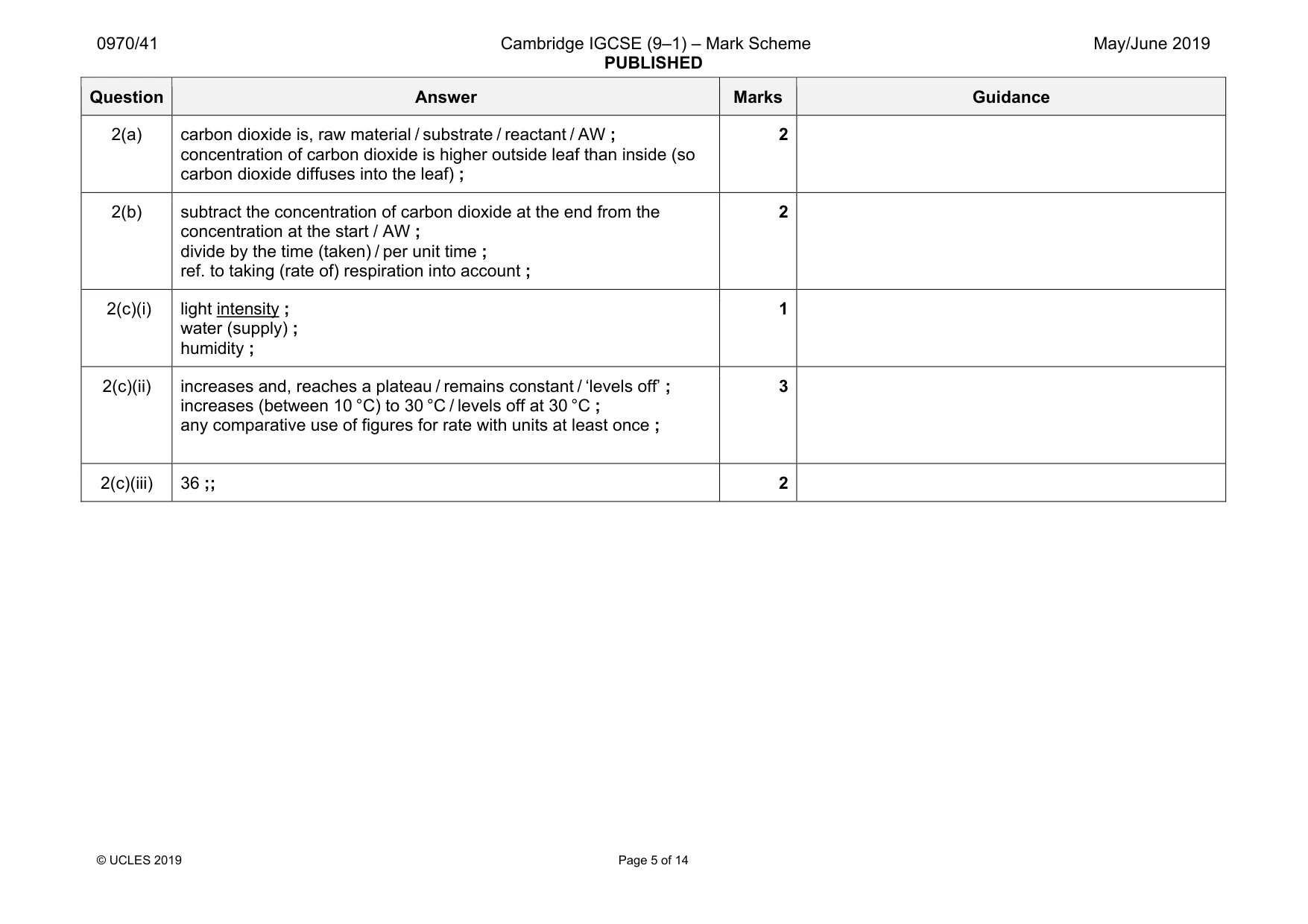
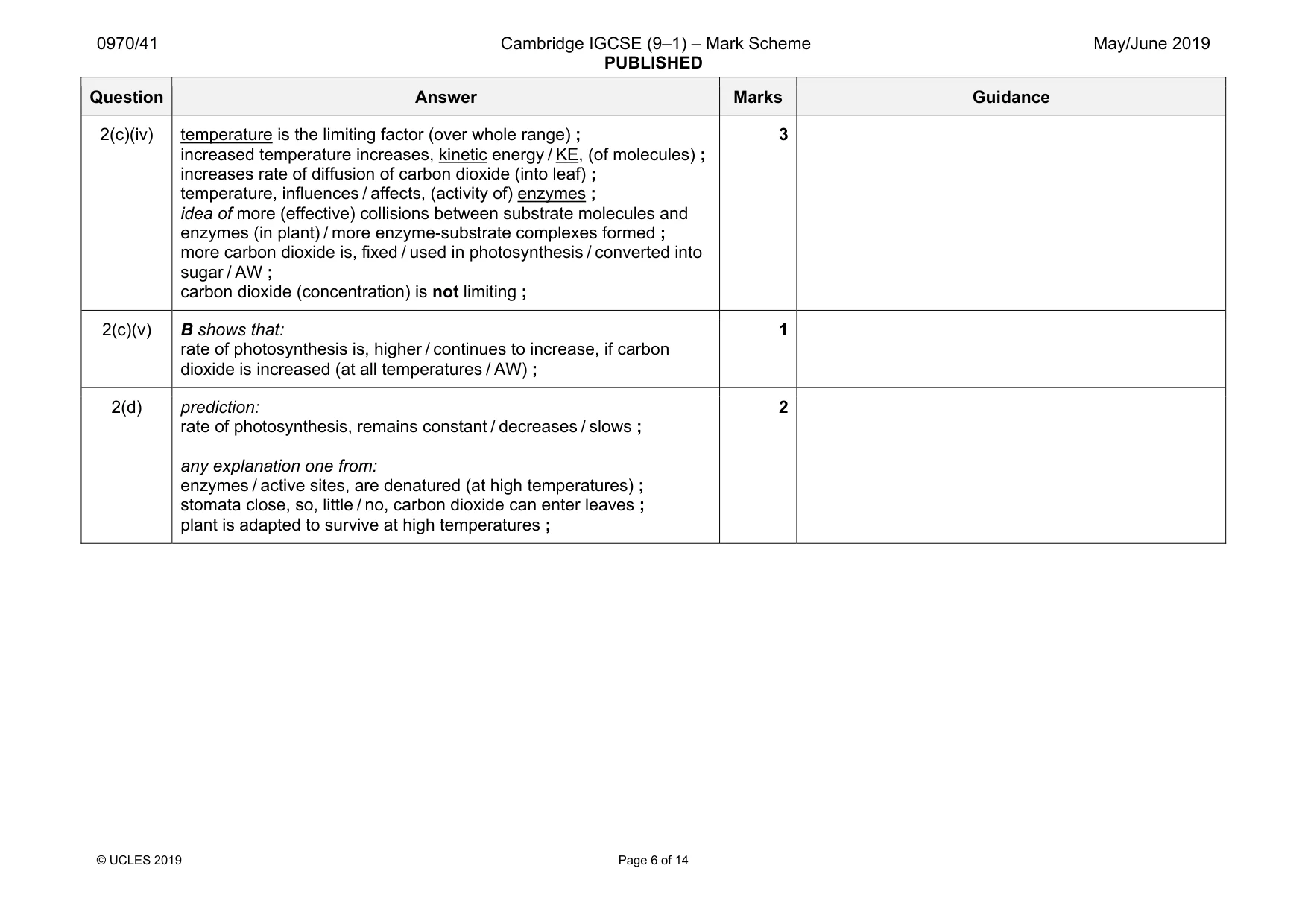
Mark scheme: 2(a) carbon dioxide is, raw material / substrate / reactant / AW ; concentration of carbon dioxide is higher outside leaf than inside (so carbon dioxide diffuses into the leaf) ; 2 2(b) subtract the concentration of carbon dioxide at the end from the concentration at the start / AW ; divide by the time (taken) / per unit time ; ref. to taking (rate of) respiration into account ; 2 2(c)(i) light intensity ; water (supply) ; humidity ; 1 2(c)(ii) increases and, reaches a plateau / remains constant / ‘levels off’ ; increases (between 10 °C) to 30 °C / levels off at 30 °C ; any comparative use of figures for rate with units at least once ; 3 2(c)(iii) 36 ;; 2 Question Answer Marks Guidance 2(c)(iv) temperature is the limiting factor (over whole range) ; increased temperature increases, kinetic energy / KE, (of molecules) ; increases rate of diffusion of carbon dioxide (into leaf) ; temperature, influences / affects, (activity of) enzymes ; idea of more (effective) collisions between substrate molecules and enzymes (in plant) / more enzyme-substrate complexes formed ; more carbon dioxide is, fixed / used in photosynthesis / converted into sugar / AW ; carbon dioxide (concentration) is not limiting ; 3 2(c)(v) B shows that: rate of photosynthesis is, higher / continues to increase, if carbon dioxide is increased (at all temperatures / AW) ; 1 2(d) prediction: rate of photosynthesis, remains constant / decreases / slows ; any explanation one from: enzymes / active sites, are denatured (at high temperatures) ; stomata close, so, little / no, carbon dioxide can enter leaves ; plant is adapted to survive at high temperatures ; 2
Q3 · Complete the five sentences about the eye and the nervous system
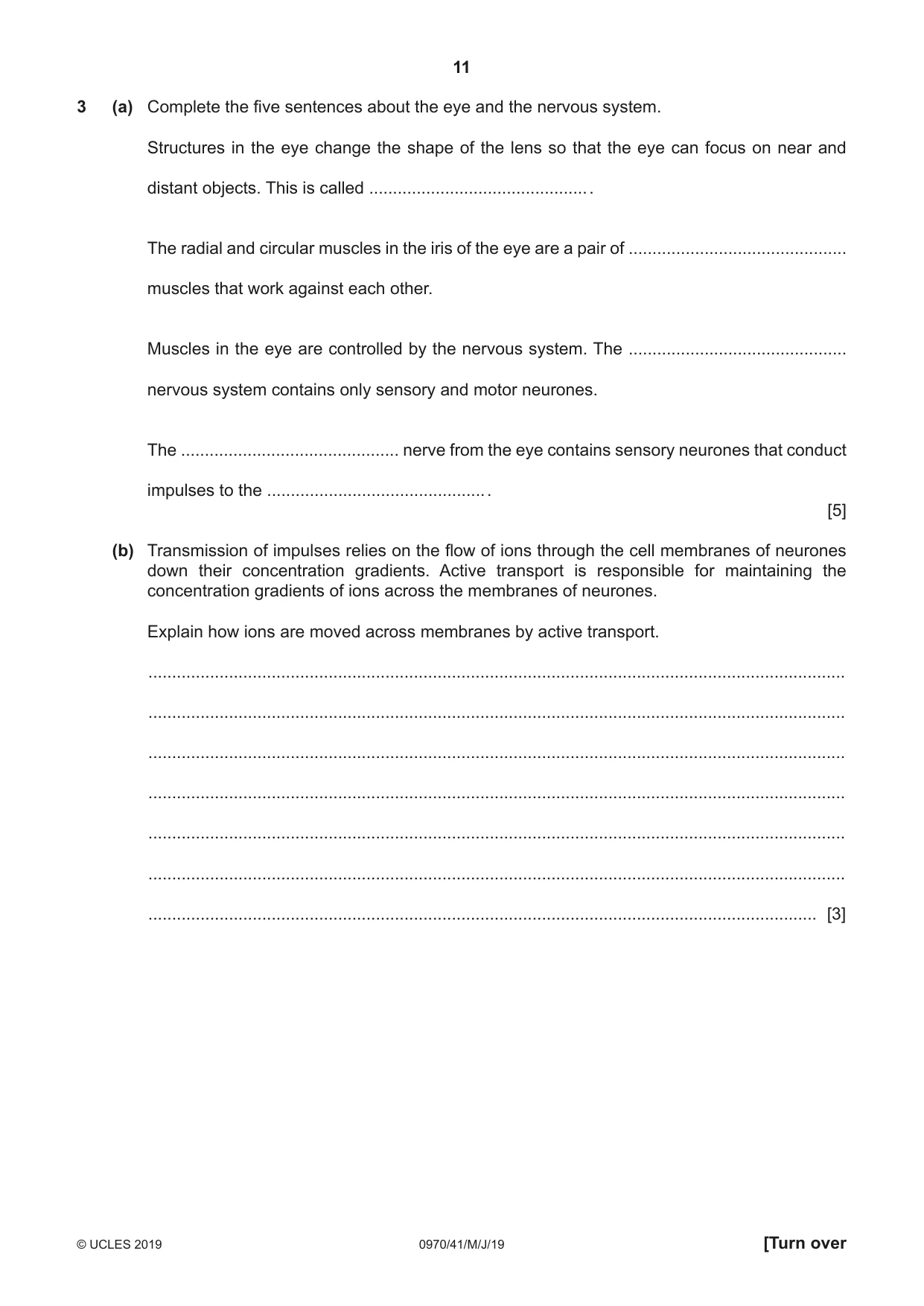
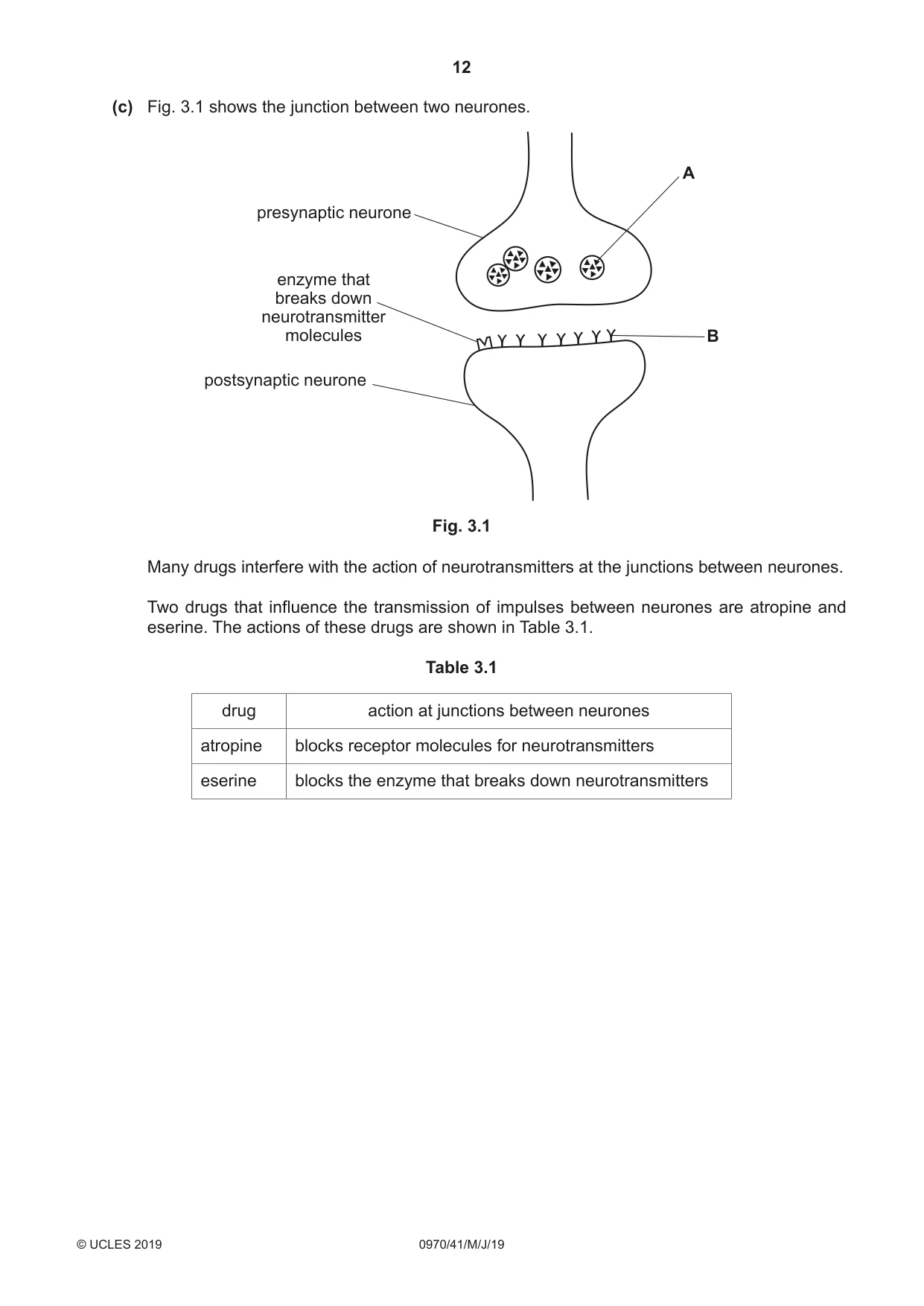
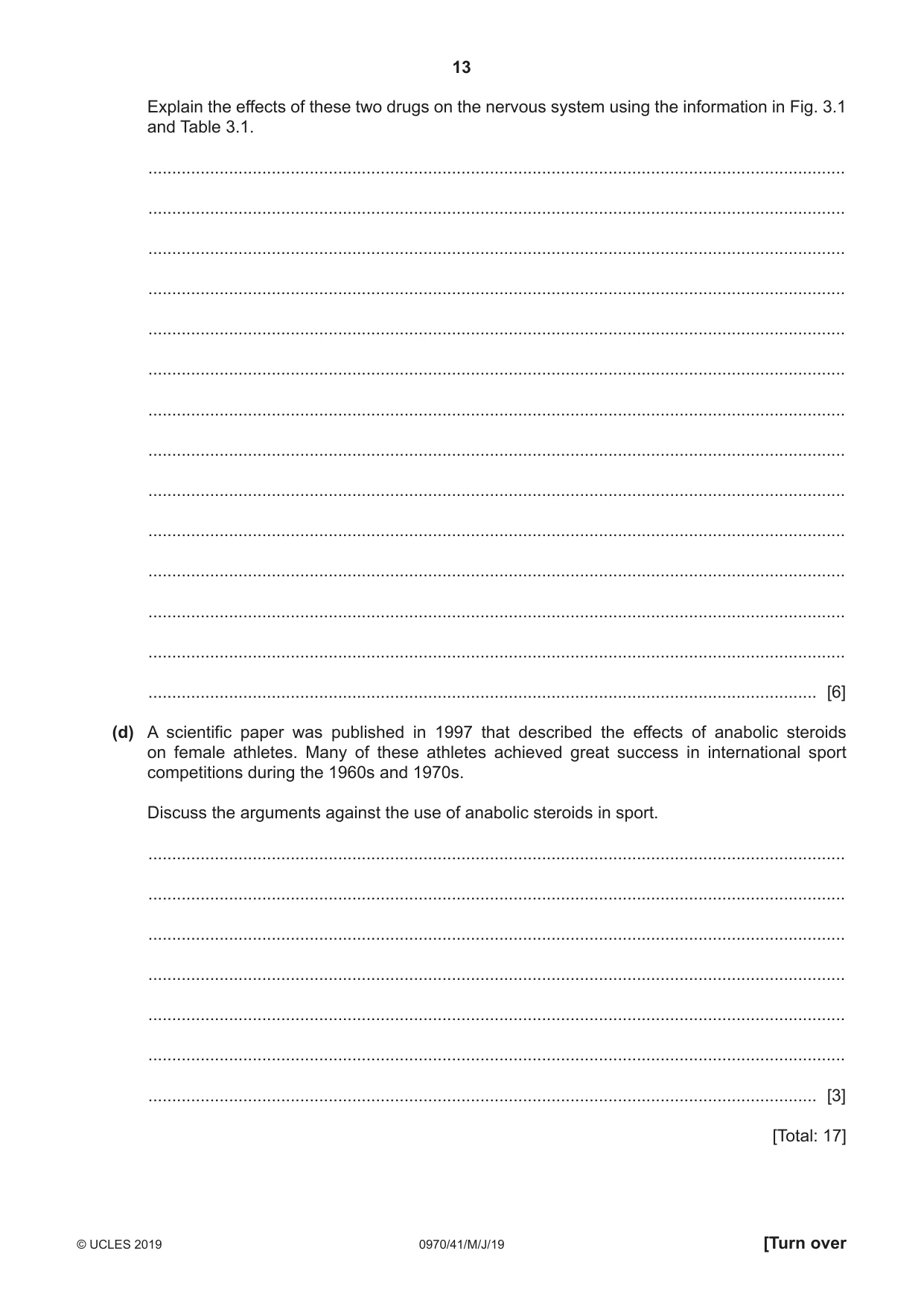
3 (a) Complete the five sentences about the eye and the nervous system. Structures in the eye change the shape of the lens so that the eye can focus on near and distant objects. This is called .............................................. . The radial and circular muscles in the iris of the eye are a pair of .............................................. muscles that work against each other. Muscles in the eye are controlled by the nervous system. The .............................................. nervous system contains only sensory and motor neurones. The .............................................. nerve from the eye contains sensory neurones that conduct impulses to the .............................................. . [5] (b) Transmission of impulses relies on the flow of ions through the cell membranes of neurones down their concentration gradients. Active transport is responsible for maintaining the concentration gradients of ions across the membranes of neurones. Explain how ions are moved across membranes by active transport. ................................................................................................................................................... ................................................................................................................................................... ................................................................................................................................................... ................................................................................................................................................... ................................................................................................................................................... ................................................................................................................................................... ............................................................................................................................................. [3] (c) Fig. 3.1 shows the junction between two neurones. A presynaptic neurone enzyme that breaks down neurotransmitter molecules B postsynaptic neurone Fig. 3.1 Many drugs interfere with the action of neurotransmitters at the junctions between neurones. Two drugs that influence the transmission of impulses between neurones are atropine and eserine. The actions of these drugs are shown in Table 3.1. Table 3.1 drug action at junctions between neurones atropine blocks receptor molecules for neurotransmitters eserine blocks the enzyme that breaks down neurotransmitters Explain the effects of these two drugs on the nervous system using the information in Fig. 3.1 and Table 3.1. ................................................................................................................................................... ................................................................................................................................................... ................................................................................................................................................... ................................................................................................................................................... ................................................................................................................................................... ................................................................................................................................................... ................................................................................................................................................... ................................................................................................................................................... ................................................................................................................................................... ................................................................................................................................................... ................................................................................................................................................... ................................................................................................................................................... ................................................................................................................................................... ............................................................................................................................................. [6] (d) A scientific paper was published in 1997 that described the effects of anabolic steroids on female athletes. Many of these athletes achieved great success in international sport competitions during the 1960s and 1970s. Discuss the arguments against the use of anabolic steroids in sport. ................................................................................................................................................... ................................................................................................................................................... ................................................................................................................................................... ................................................................................................................................................... ................................................................................................................................................... ................................................................................................................................................... ............................................................................................................................................. [3] [Total: 17]
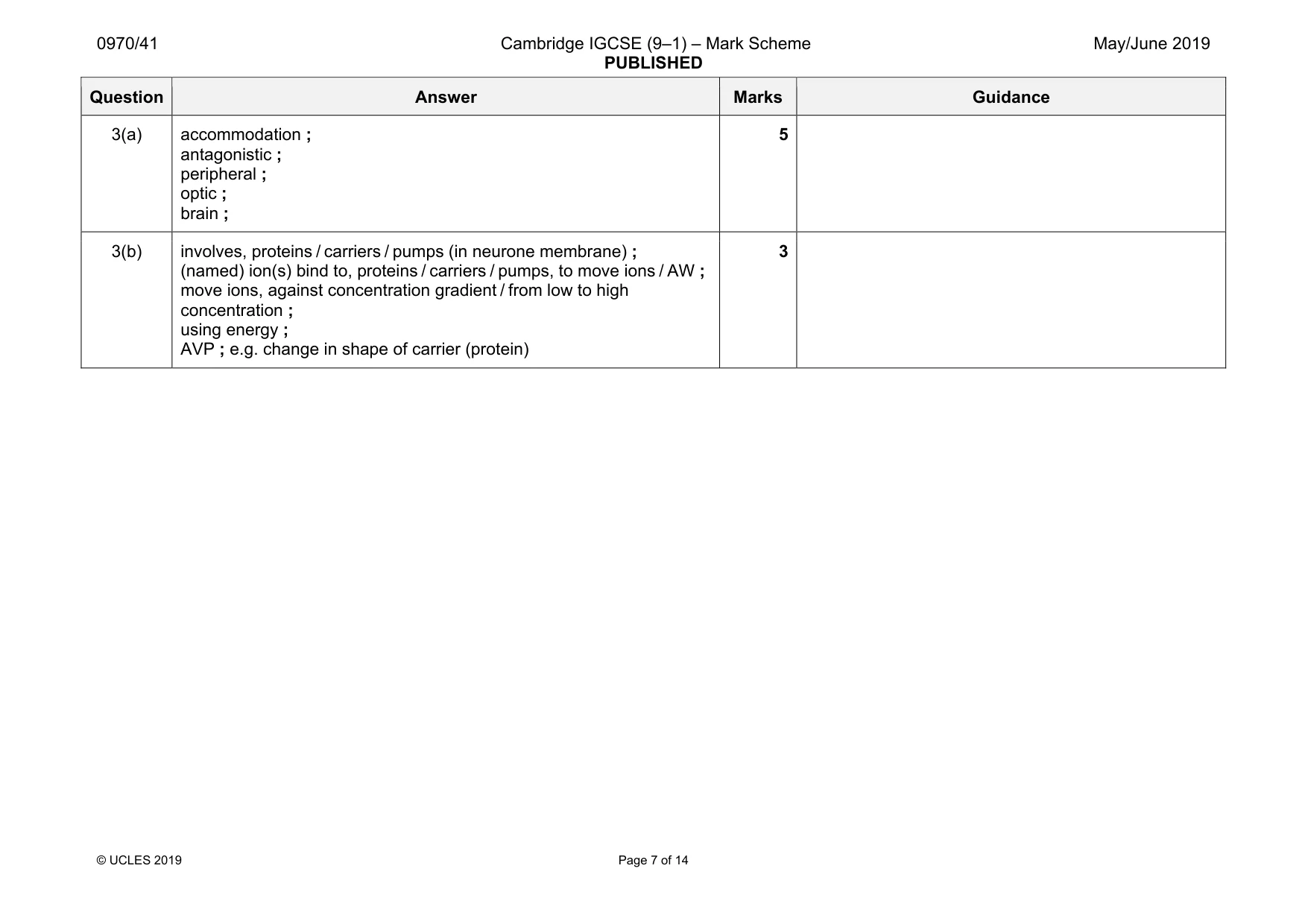
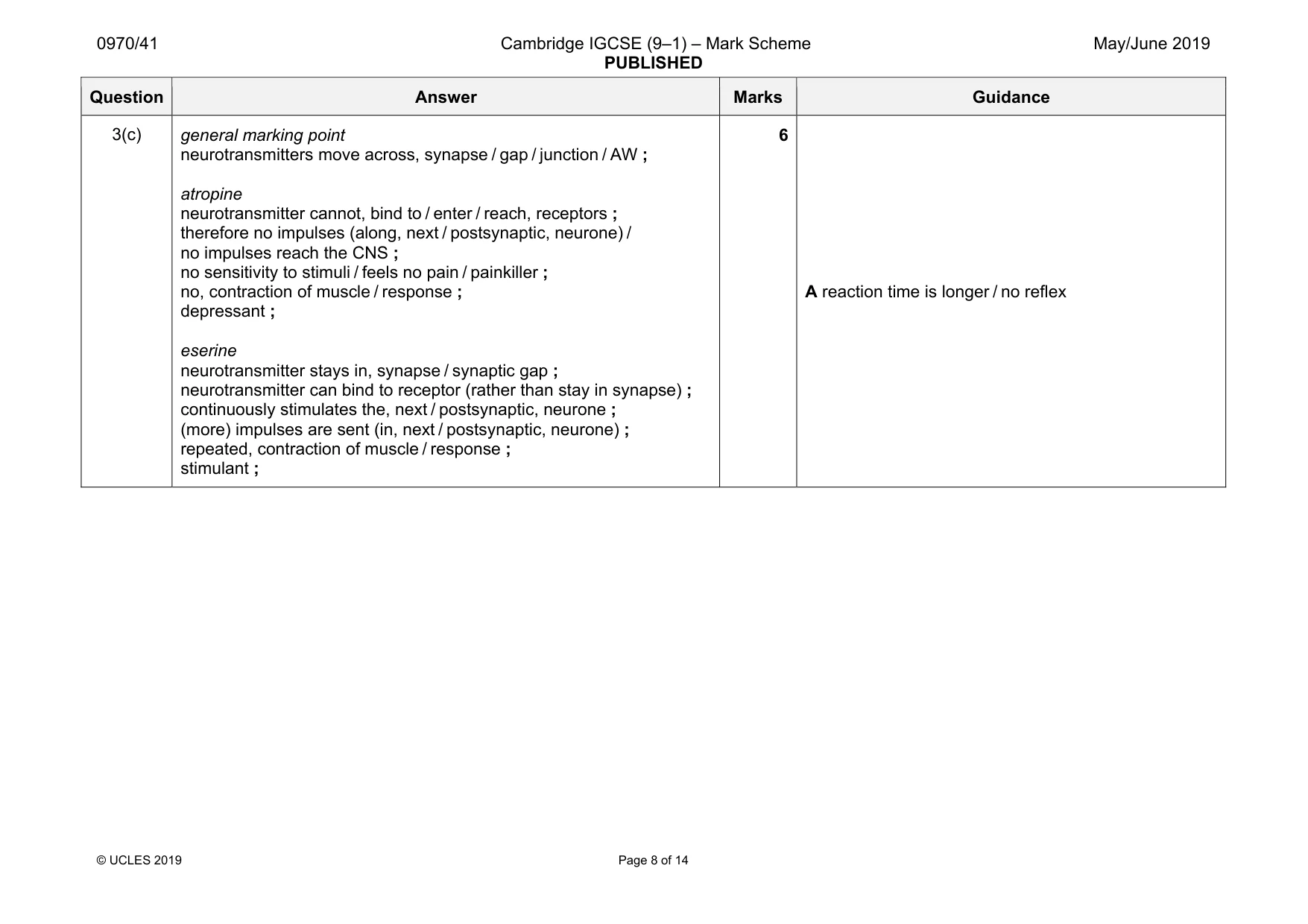
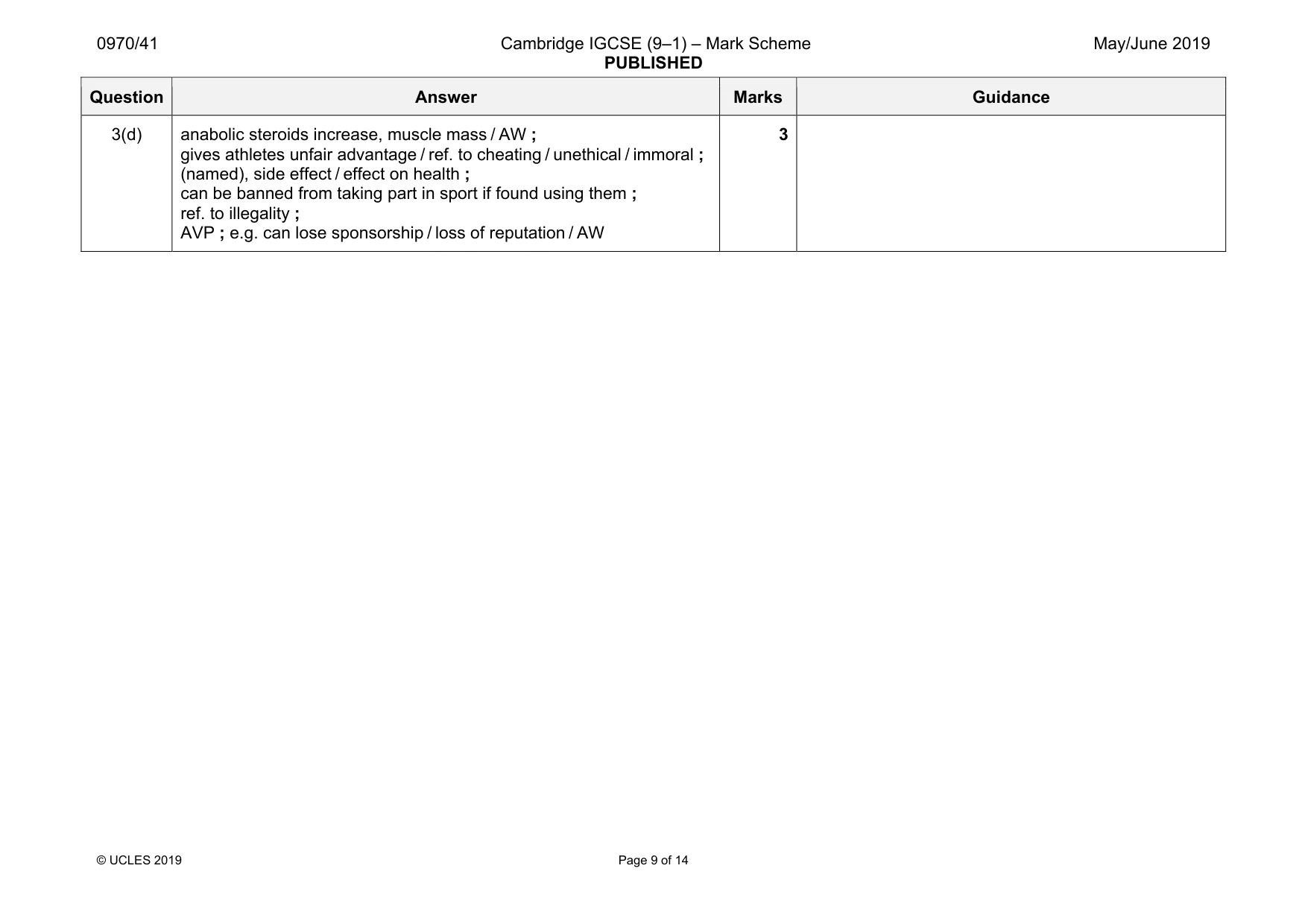
Mark scheme: 3(a) accommodation ; antagonistic ; peripheral ; optic ; brain ; 5 3(b) involves, proteins / carriers / pumps (in neurone membrane) ; (named) ion(s) bind to, proteins / carriers / pumps, to move ions / AW ; move ions, against concentration gradient / from low to high concentration ; using energy ; AVP ; e.g. change in shape of carrier (protein) 3 Question Answer Marks Guidance 3(c) general marking point neurotransmitters move across, synapse / gap / junction / AW ; atropine neurotransmitter cannot, bind to / enter / reach, receptors ; therefore no impulses (along, next / postsynaptic, neurone) / no impulses reach the CNS ; no sensitivity to stimuli / feels no pain / painkiller ; no, contraction of muscle / response ; depressant ; eserine neurotransmitter stays in, synapse / synaptic gap ; neurotransmitter can bind to receptor (rather than stay in synapse) ; continuously stimulates the, next / postsynaptic, neurone ; (more) impulses are sent (in, next / postsynaptic, neurone) ; repeated, contraction of muscle / response ; stimulant ; 6 A reaction time is longer / no reflex Question Answer Marks Guidance 3(d) anabolic steroids increase, muscle mass / AW ; gives athletes unfair advantage / ref. to cheating / unethical / immoral ; (named), side effect / effect on health ; can be banned from taking part in sport if found using them ; ref. to illegality ; AVP ; e.g. can lose sponsorship / loss of reputation / AW 3
Q4 · Four structures associated with the human male reproductive system
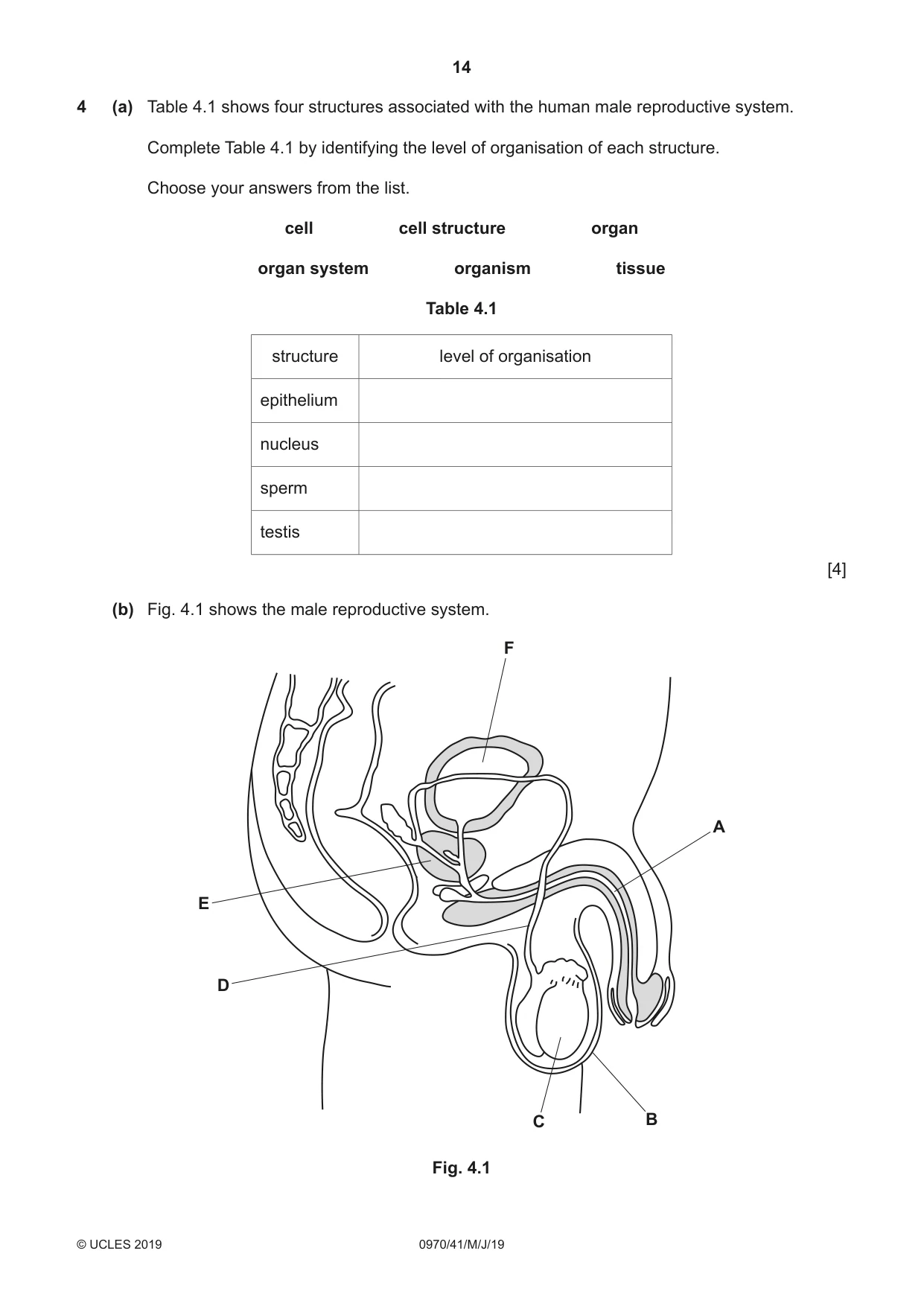
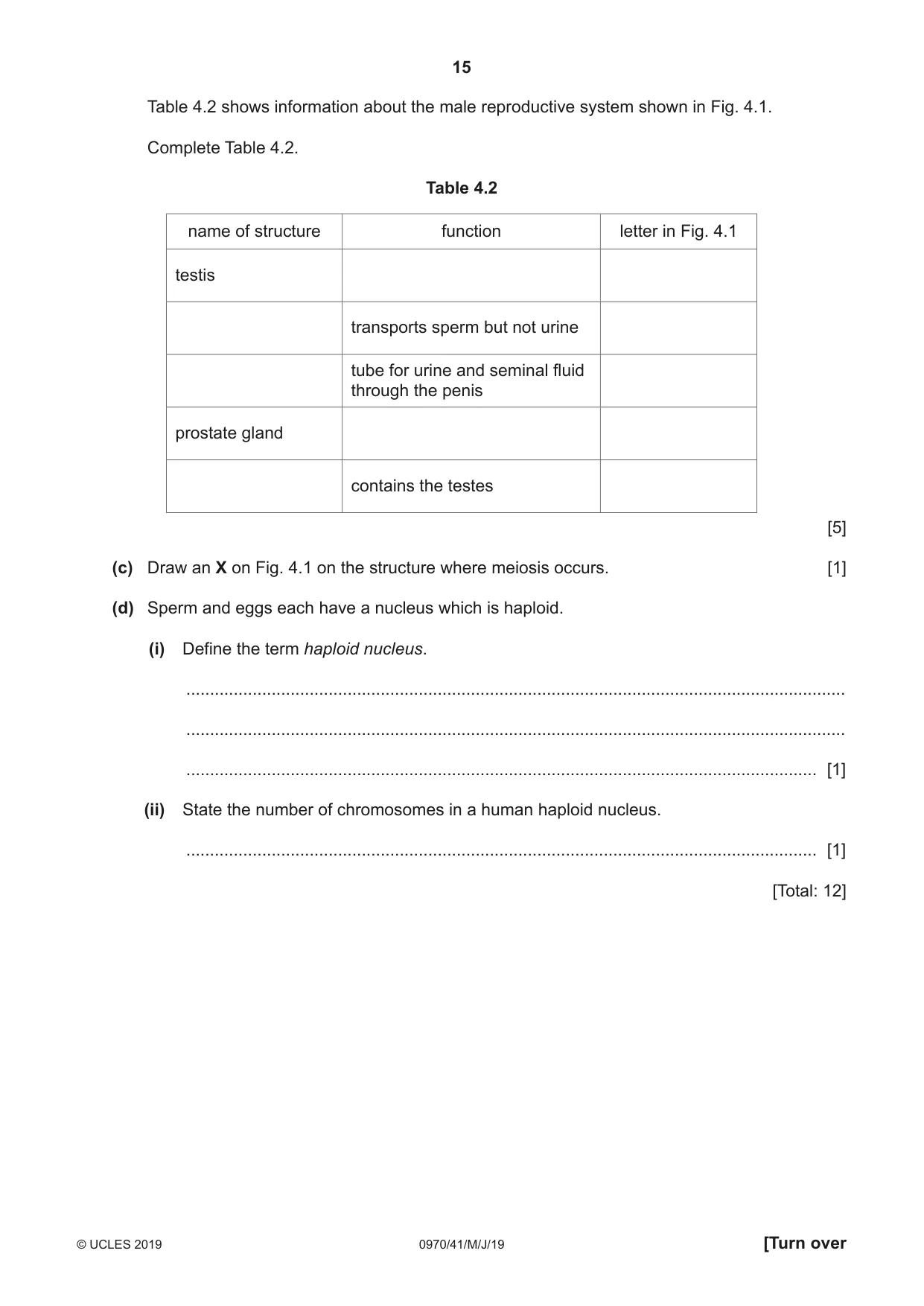
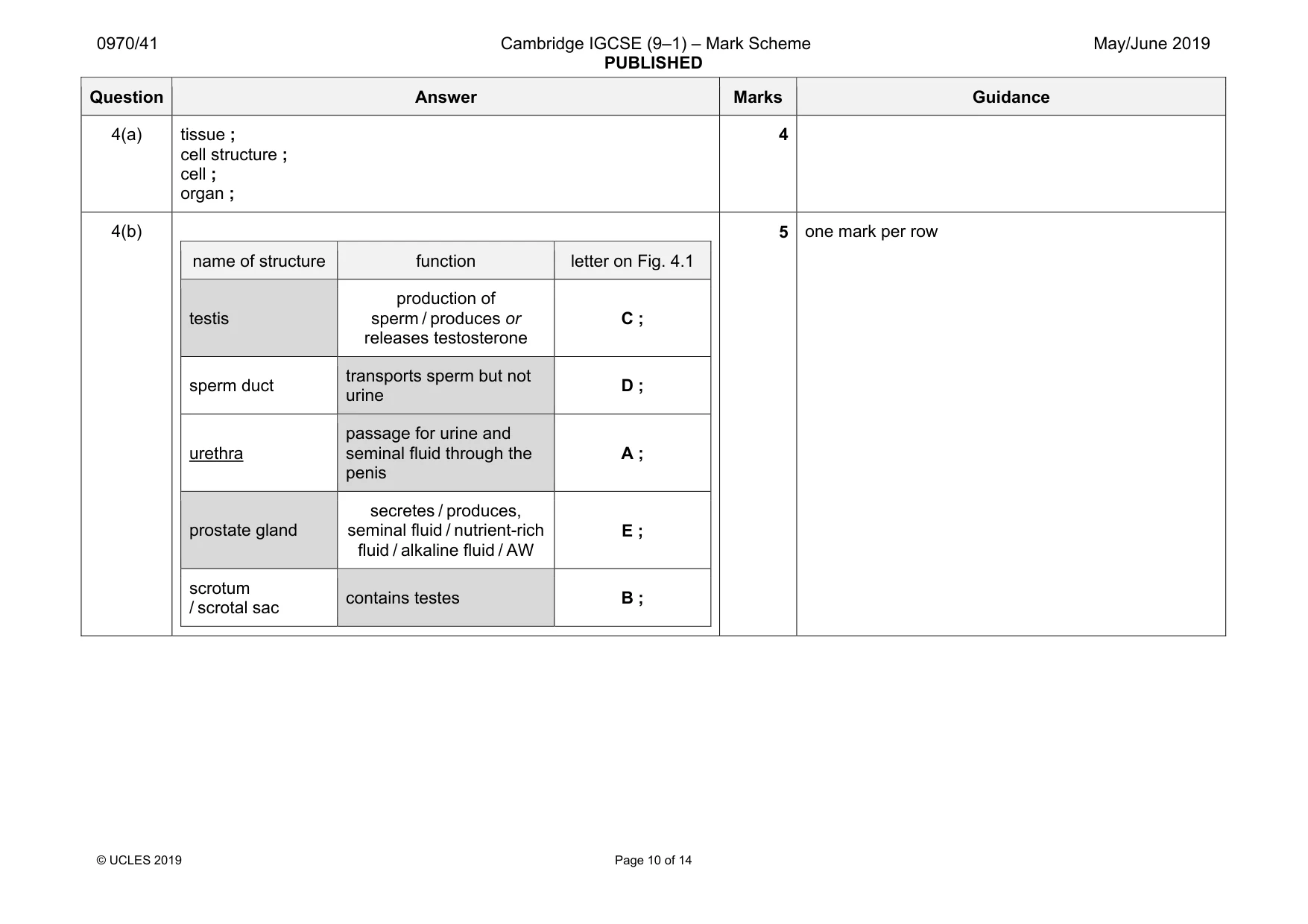
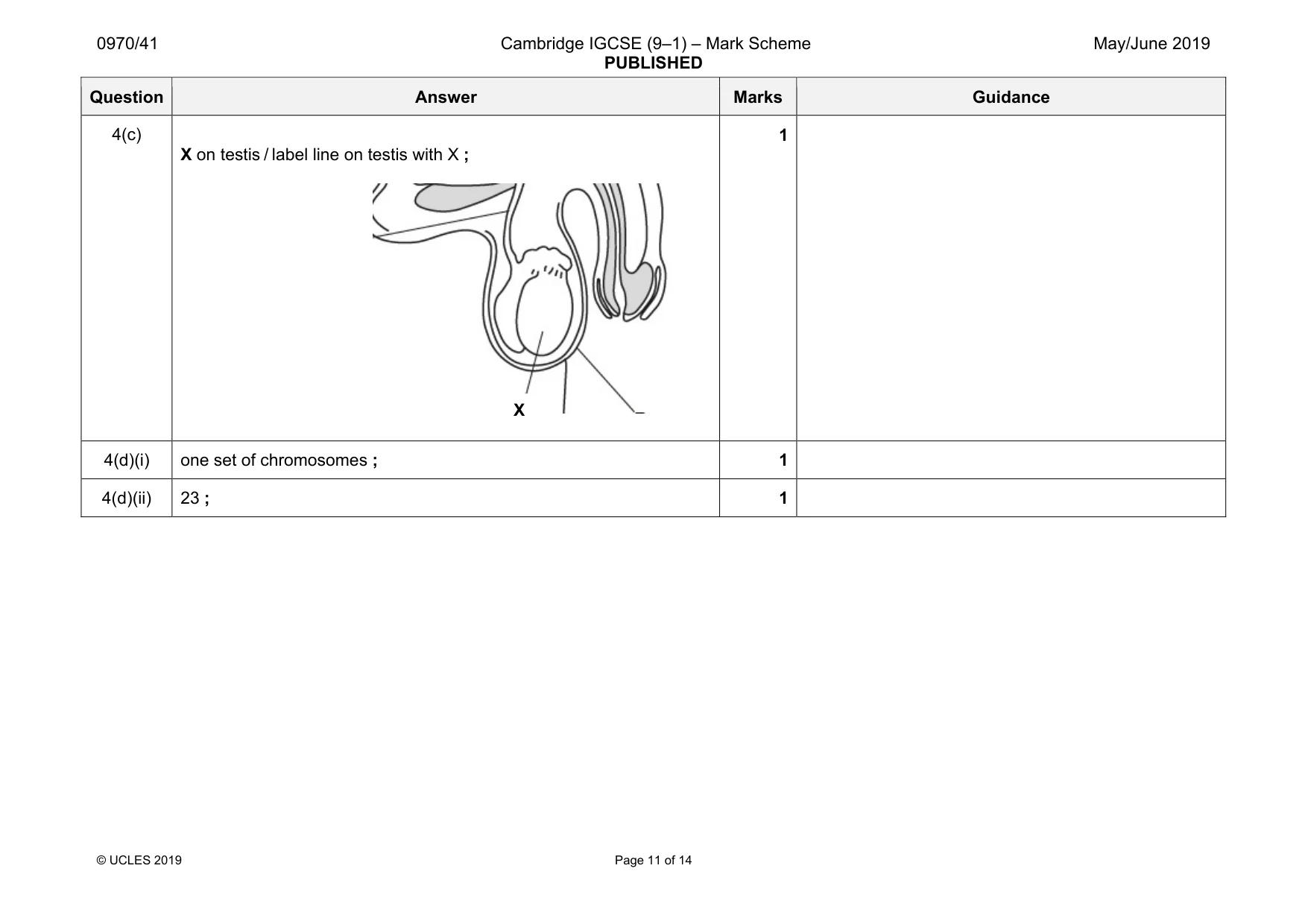
4 (a) Table 4.1 shows four structures associated with the human male reproductive system. Complete Table 4.1 by identifying the level of organisation of each structure. Choose your answers from the list. cell cell structure organ organ system organism tissue Table 4.1 structure level of organisation epithelium nucleus sperm testis [4] (b) Fig. 4.1 shows the male reproductive system. F A E D C B Fig. 4.1 Table 4.2 shows information about the male reproductive system shown in Fig. 4.1. Complete Table 4.2. Table 4.2 name of structure function letter in Fig. 4.1 testis transports sperm but not urine tube for urine and seminal fluid through the penis prostate gland contains the testes [5] (c) Draw an X on Fig. 4.1 on the structure where meiosis occurs. [1] (d) Sperm and eggs each have a nucleus which is haploid. (i) Define the term haploid nucleus. ........................................................................................................................................... ........................................................................................................................................... ..................................................................................................................................... [1] (ii) State the number of chromosomes in a human haploid nucleus. ..................................................................................................................................... [1] [Total: 12]
Mark scheme: 4(a) tissue ; cell structure ; cell ; organ ; 4 4(b) name of structure function letter on Fig. 4.1 testis production of sperm / produces or releases testosterone C ; sperm duct transports sperm but not urine D ; urethra passage for urine and seminal fluid through the penis A ; prostate gland secretes / produces, seminal fluid / nutrient-rich fluid / alkaline fluid / AW E ; scrotum / scrotal sac contains testes B ; 5 one mark per row Question Answer Marks Guidance 4(c) X on testis / label line on testis with X ; 1 4(d)(i) one set of chromosomes ; 1 4(d)(ii) 23 ; 1 X
Q5 · Tissue plasminogen activators (TPAs) are human proteins that are used as drugs to break…
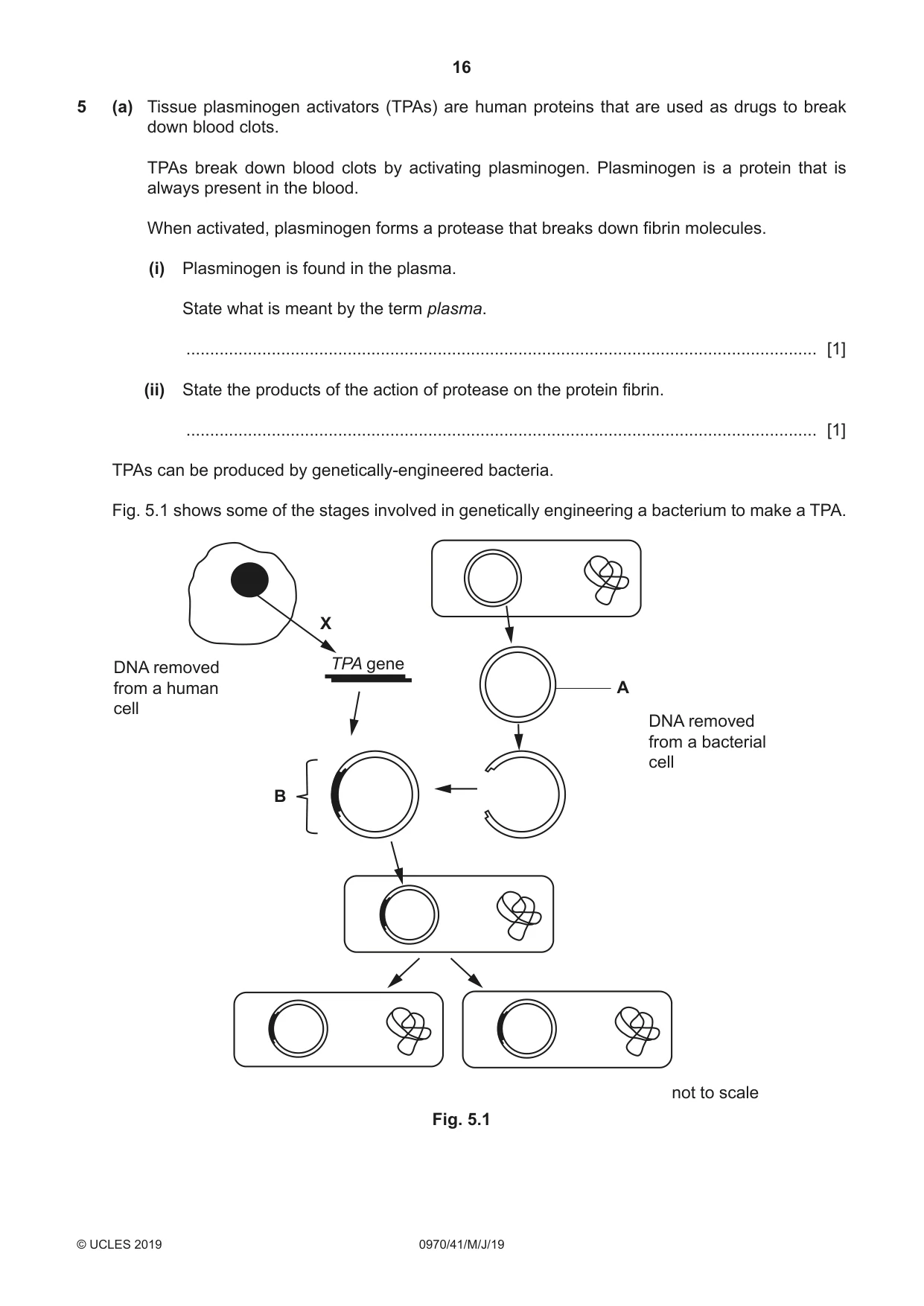
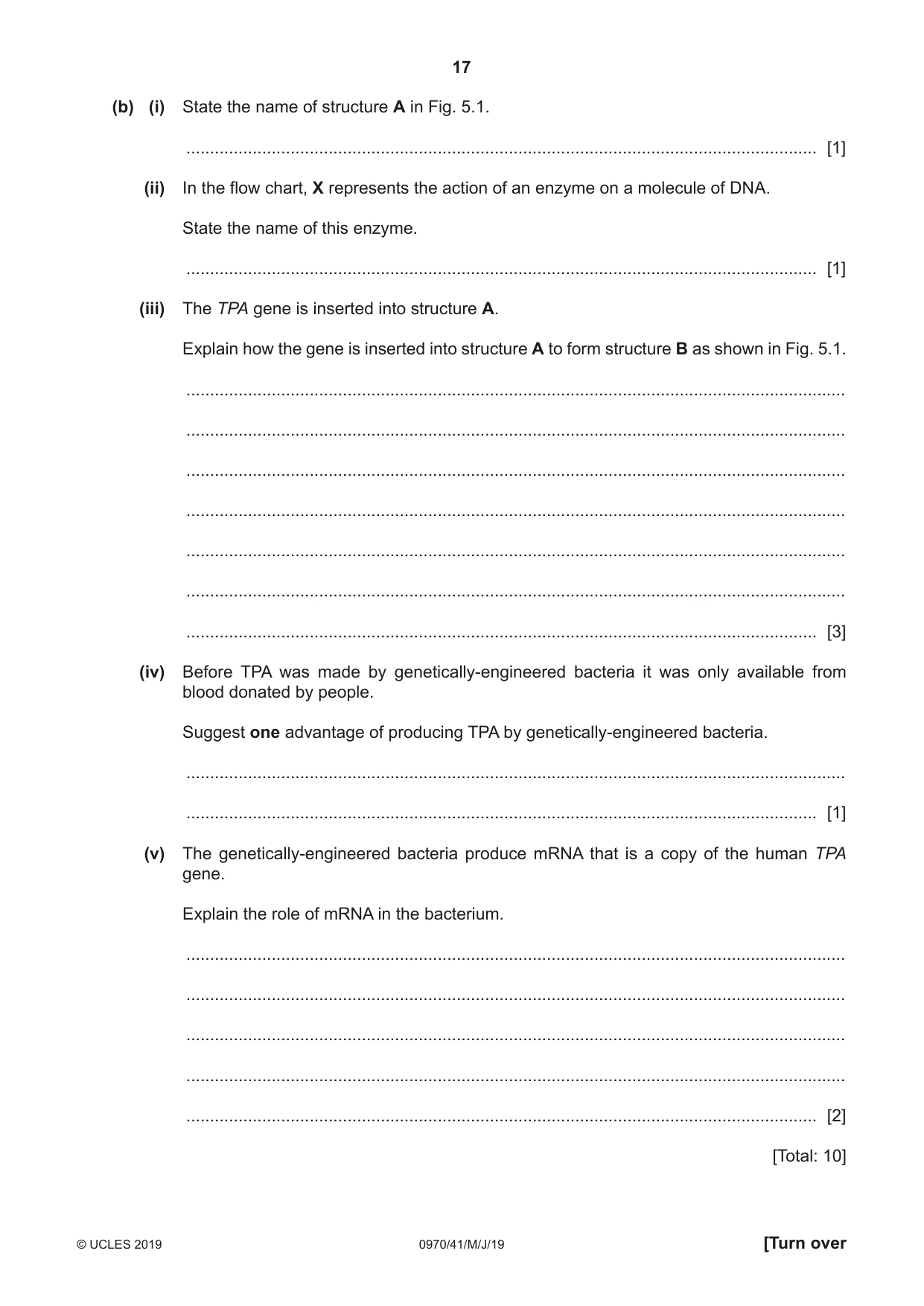
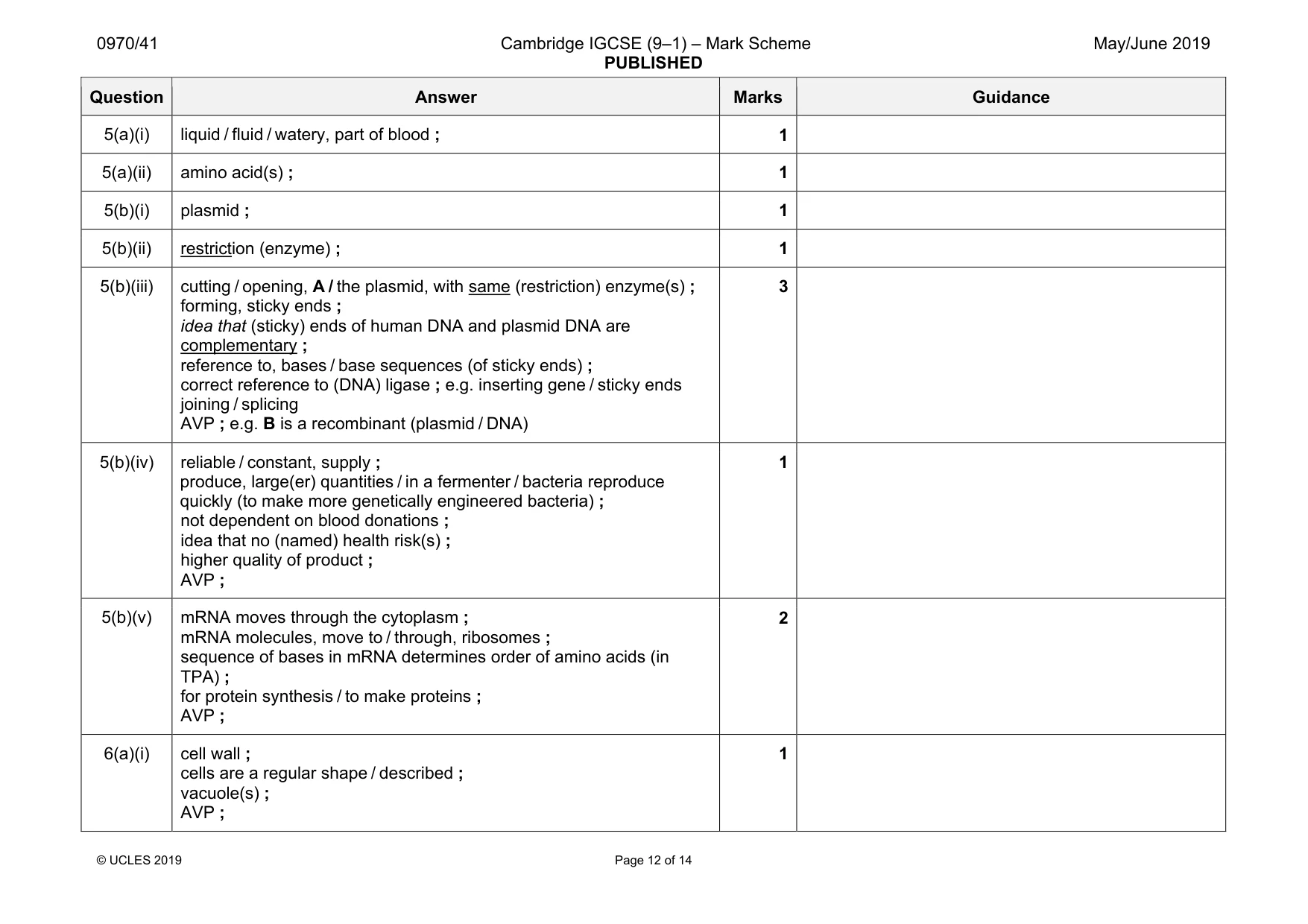
5 (a) Tissue plasminogen activators (TPAs) are human proteins that are used as drugs to break down blood clots. TPAs break down blood clots by activating plasminogen. Plasminogen is a protein that is always present in the blood. When activated, plasminogen forms a protease that breaks down fibrin molecules. (i) Plasminogen is found in the plasma. State what is meant by the term plasma. ..................................................................................................................................... [1] (ii) State the products of the action of protease on the protein fibrin. ..................................................................................................................................... [1] TPAs can be produced by genetically-engineered bacteria. Fig. 5.1 shows some of the stages involved in genetically engineering a bacterium to make a TPA. X DNA removed TPA gene from a human A cell DNA removed from a bacterial cell B not to scale Fig. 5.1 (b) (i) State the name of structure A in Fig. 5.1. ..................................................................................................................................... [1] (ii) In the flow chart, X represents the action of an enzyme on a molecule of DNA. State the name of this enzyme. ..................................................................................................................................... [1] (iii) The TPA gene is inserted into structure A. Explain how the gene is inserted into structure A to form structure B as shown in Fig. 5.1. ........................................................................................................................................... ........................................................................................................................................... ........................................................................................................................................... ........................................................................................................................................... ........................................................................................................................................... ........................................................................................................................................... ..................................................................................................................................... [3] (iv) Before TPA was made by genetically-engineered bacteria it was only available from blood donated by people. Suggest one advantage of producing TPA by genetically-engineered bacteria. ........................................................................................................................................... ..................................................................................................................................... [1] (v) The genetically-engineered bacteria produce mRNA that is a copy of the human TPA gene. Explain the role of mRNA in the bacterium. ........................................................................................................................................... ........................................................................................................................................... ........................................................................................................................................... ........................................................................................................................................... ..................................................................................................................................... [2] [Total: 10]
Mark scheme: 5(a)(i) liquid / fluid / watery, part of blood ; 1 5(a)(ii) amino acid(s) ; 1 5(b)(i) plasmid ; 1 5(b)(ii) restriction (enzyme) ; 1 5(b)(iii) cutting / opening, A / the plasmid, with same (restriction) enzyme(s) ; forming, sticky ends ; idea that (sticky) ends of human DNA and plasmid DNA are complementary ; reference to, bases / base sequences (of sticky ends) ; correct reference to (DNA) ligase ; e.g. inserting gene / sticky ends joining / splicing AVP ; e.g. B is a recombinant (plasmid / DNA) 3 5(b)(iv) reliable / constant, supply ; produce, large(er) quantities / in a fermenter / bacteria reproduce quickly (to make more genetically engineered bacteria) ; not dependent on blood donations ; idea that no (named) health risk(s) ; higher quality of product ; AVP ; 1 5(b)(v) mRNA moves through the cytoplasm ; mRNA molecules, move to / through, ribosomes ; sequence of bases in mRNA determines order of amino acids (in TPA) ; for protein synthesis / to make proteins ; AVP ; 2
Q6 · Some cells from the shoot tip of an onion, Allium cepa
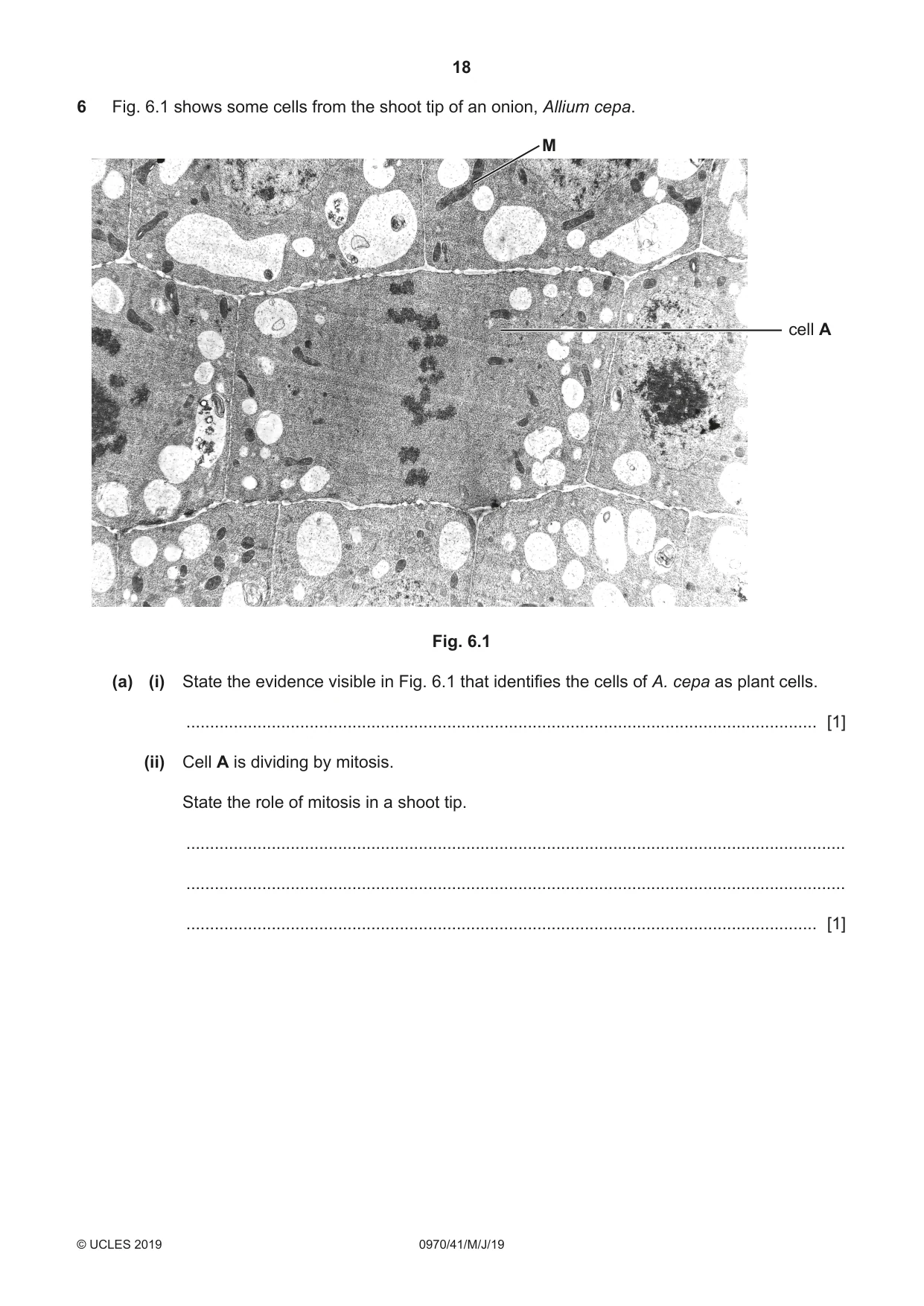
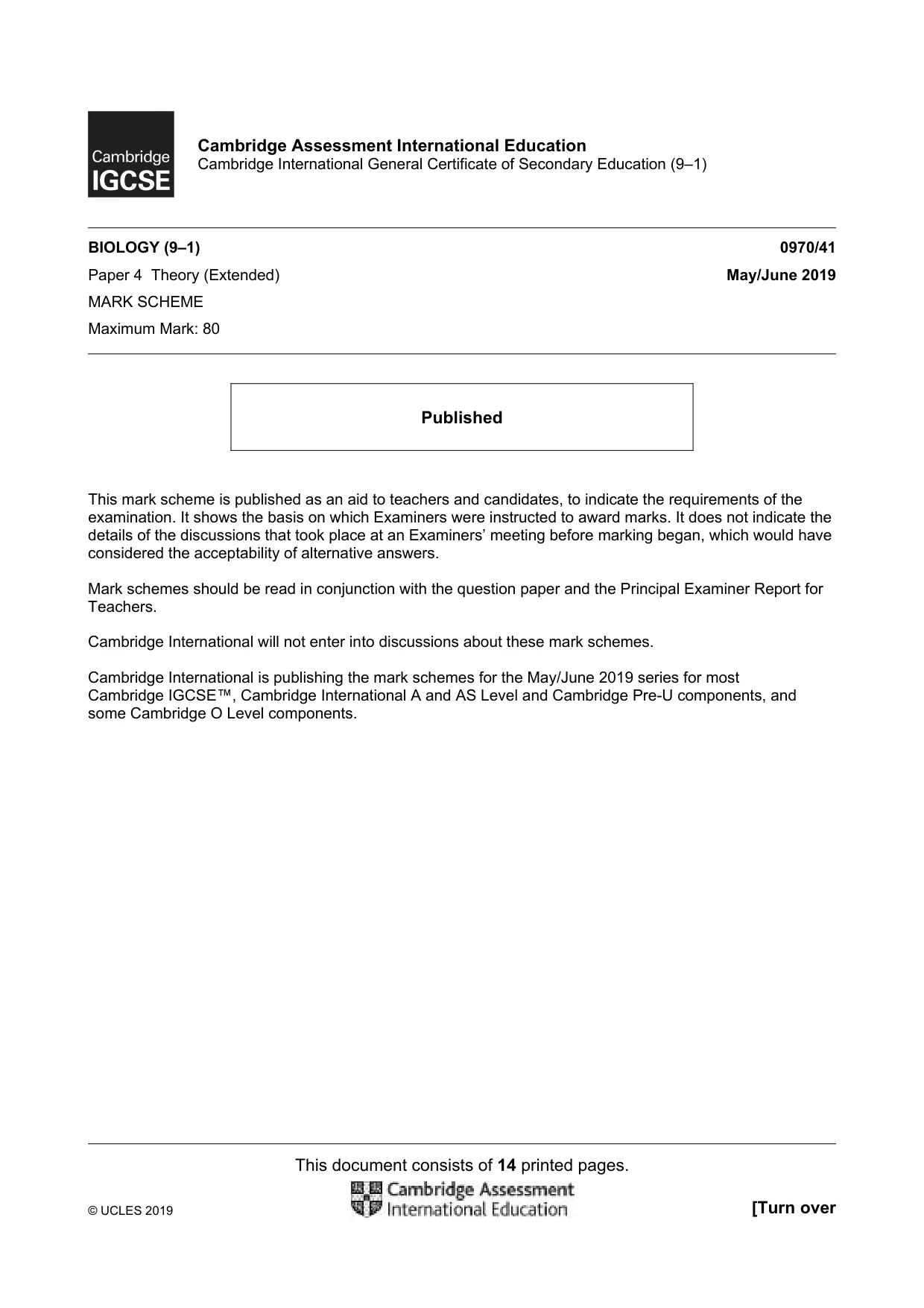
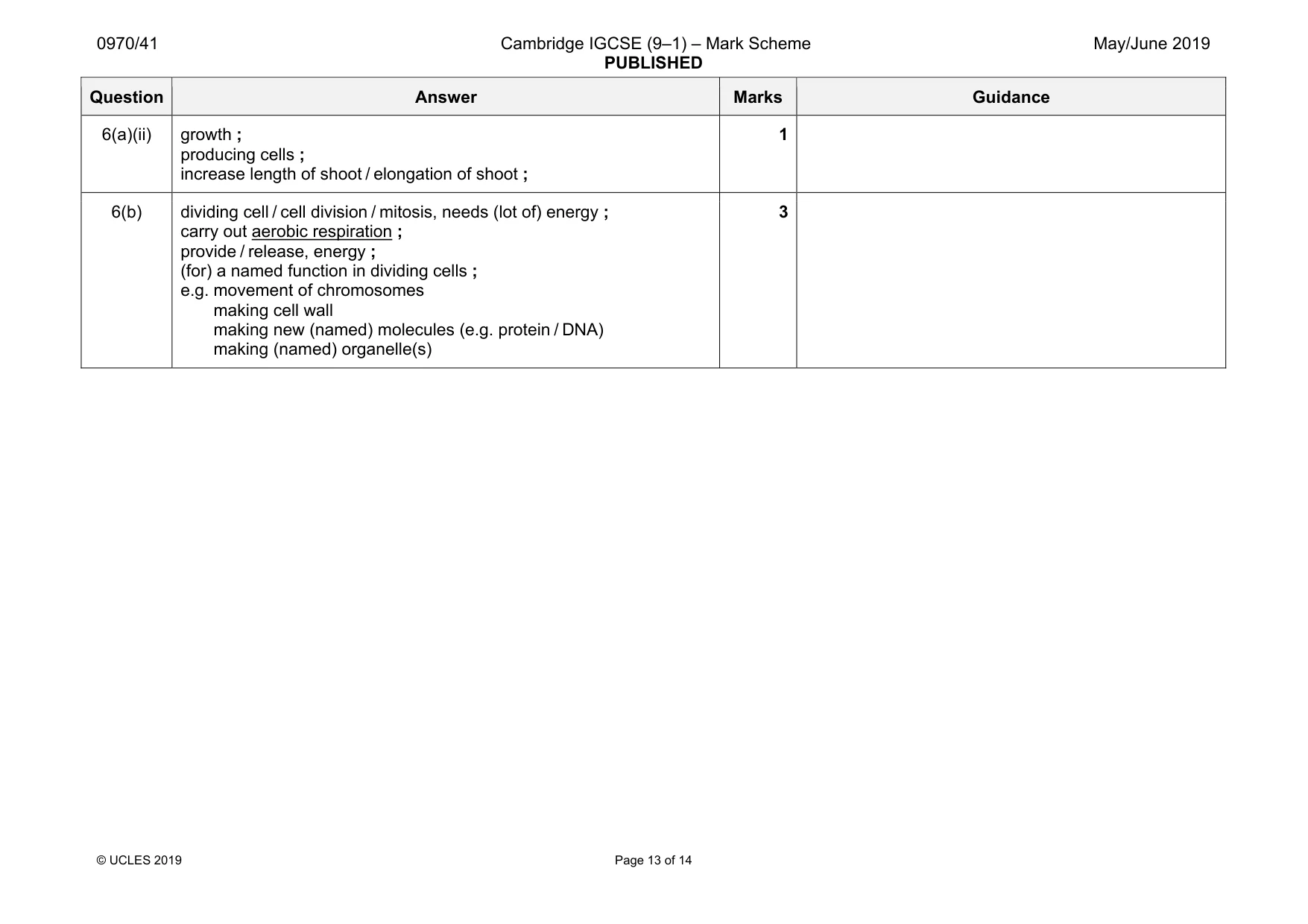
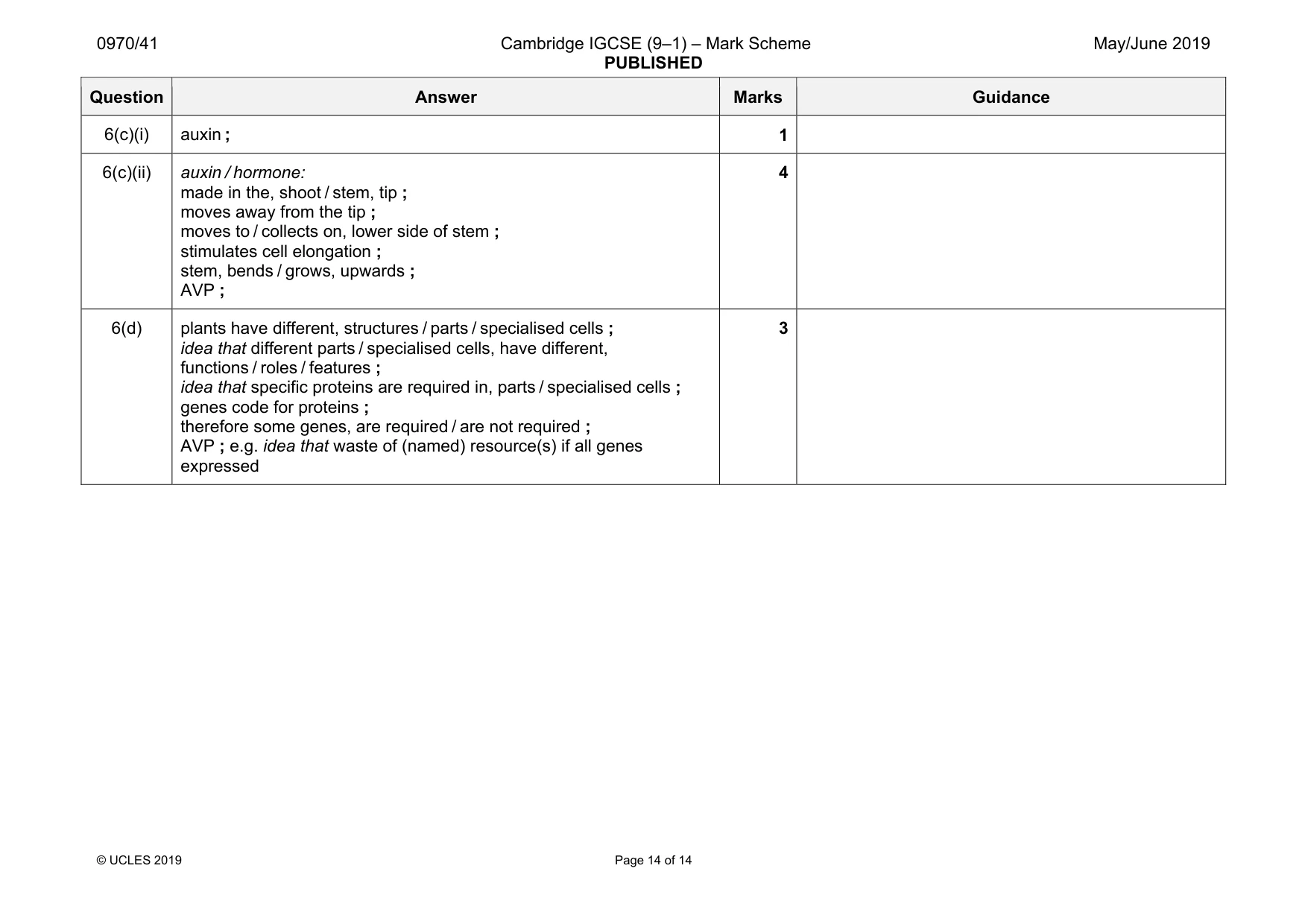
6 Fig. 6.1 shows some cells from the shoot tip of an onion, Allium cepa. M cell A Fig. 6.1 (a) (i) State the evidence visible in Fig. 6.1 that identifies the cells of A. cepa as plant cells. ..................................................................................................................................... [1] (ii) Cell A is dividing by mitosis. State the role of mitosis in a shoot tip. ........................................................................................................................................... ........................................................................................................................................... ..................................................................................................................................... [1] (b) The area labelled M is a mitochondrion. Explain why mitochondria have an important role in dividing cells. ................................................................................................................................................... ................................................................................................................................................... ................................................................................................................................................... ................................................................................................................................................... ................................................................................................................................................... ................................................................................................................................................... ............................................................................................................................................. [3] (c) Cells just behind a shoot tip absorb water and grow in length. A plant hormone stimulates cell elongation and controls the response of stems to gravity. (i) State the name of the plant hormone that stimulates cell elongation in stems. ..................................................................................................................................... [1] (ii) Explain how the response of stems to gravity is controlled. ........................................................................................................................................... ........................................................................................................................................... ........................................................................................................................................... ........................................................................................................................................... ........................................................................................................................................... ........................................................................................................................................... ........................................................................................................................................... ........................................................................................................................................... ..................................................................................................................................... [4] (d) Some cells in shoot tips become leaf cells and others become cells in the stem or in flowers. Explain why it is important that only some of the genes in cell A are expressed in these cells. ................................................................................................................................................... ................................................................................................................................................... ................................................................................................................................................... ................................................................................................................................................... ................................................................................................................................................... ................................................................................................................................................... ............................................................................................................................................. [3] [Total: 13]
Mark scheme: 6(a)(i) cell wall ; cells are a regular shape / described ; vacuole(s) ; AVP ; 1 Question Answer Marks Guidance 6(a)(ii) growth ; producing cells ; increase length of shoot / elongation of shoot ; 1 6(b) dividing cell / cell division / mitosis, needs (lot of) energy ; carry out aerobic respiration ; provide / release, energy ; (for) a named function in dividing cells ; e.g. movement of chromosomes making cell wall making new (named) molecules (e.g. protein / DNA) making (named) organelle(s) 3 Question Answer Marks Guidance 6(c)(i) auxin ; 1 6(c)(ii) auxin / hormone: made in the, shoot / stem, tip ; moves away from the tip ; moves to / collects on, lower side of stem ; stimulates cell elongation ; stem, bends / grows, upwards ; AVP ; 4 6(d) plants have different, structures / parts / specialised cells ; idea that different parts / specialised cells, have different, functions / roles / features ; idea that specific proteins are required in, parts / specialised cells ; genes code for proteins ; therefore some genes, are required / are not required ; AVP ; e.g. idea that waste of (named) resource(s) if all genes expressed 3
What was in this paper
The subtopics covered by these 6 questions, and how many questions each got. Open one in a new tab to see every Cambridge question on it.
What you needed in this session
Cambridge’s own grade thresholds for 2019 May/June, Paper 4 · Variant 1. A higher threshold means an easier paper — the bar moves with how the cohort did.