Cambridge IGCSE Biology (9-1) 0970 — 2018 Oct/Nov Paper 4 · Variant 2
0970/42/O/N/18 · 6 questions · 80 marks · ≈90 min
The question paper and its mark scheme, free to read here and free to download. This is Cambridge’s own paper, exactly as it was sat.
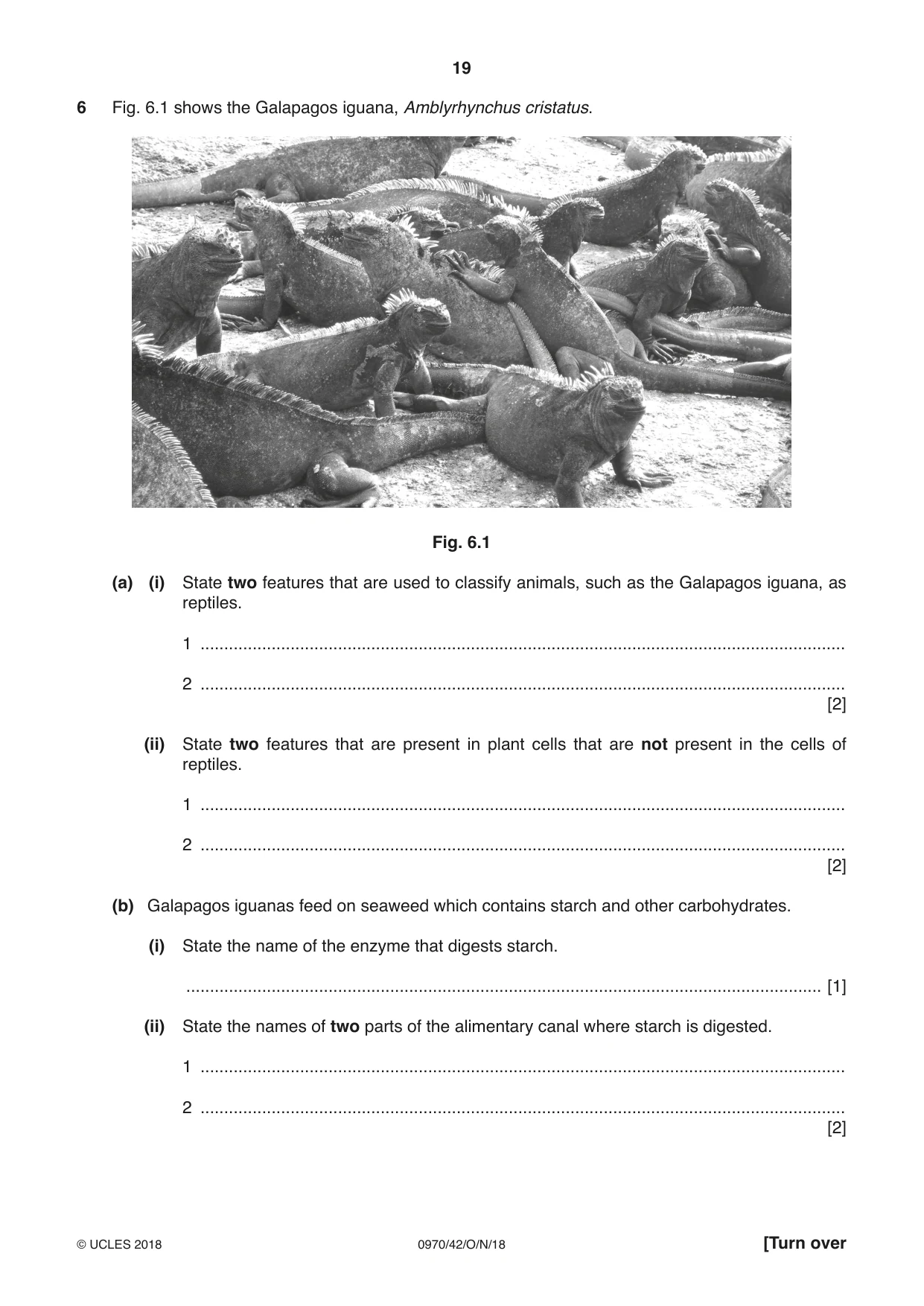
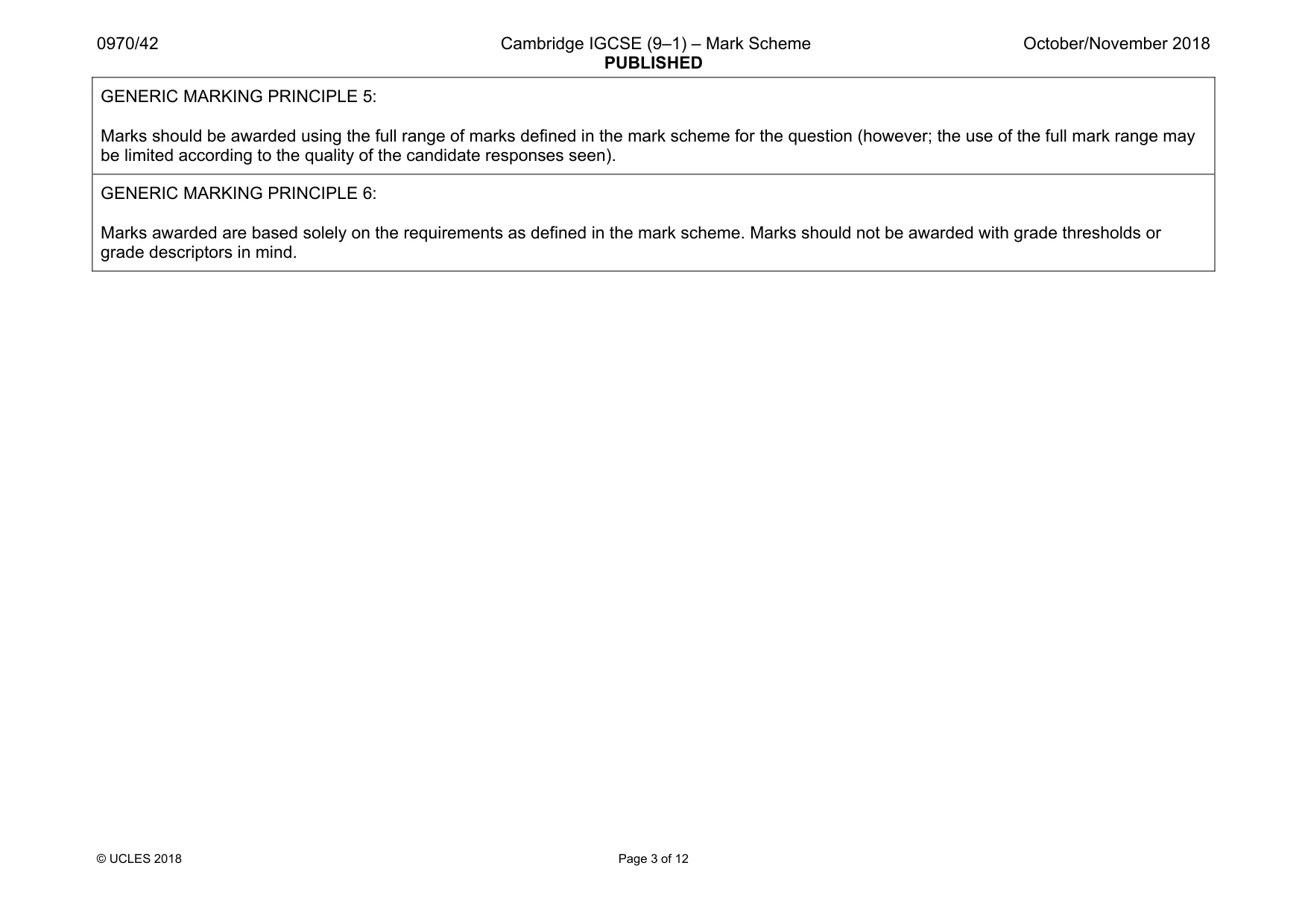
Question paper20 pages


Mark scheme12 pages
Answers below. Sit the paper first if you are practising.
Questions as text
Q1 · Wetlands are important ecosystems
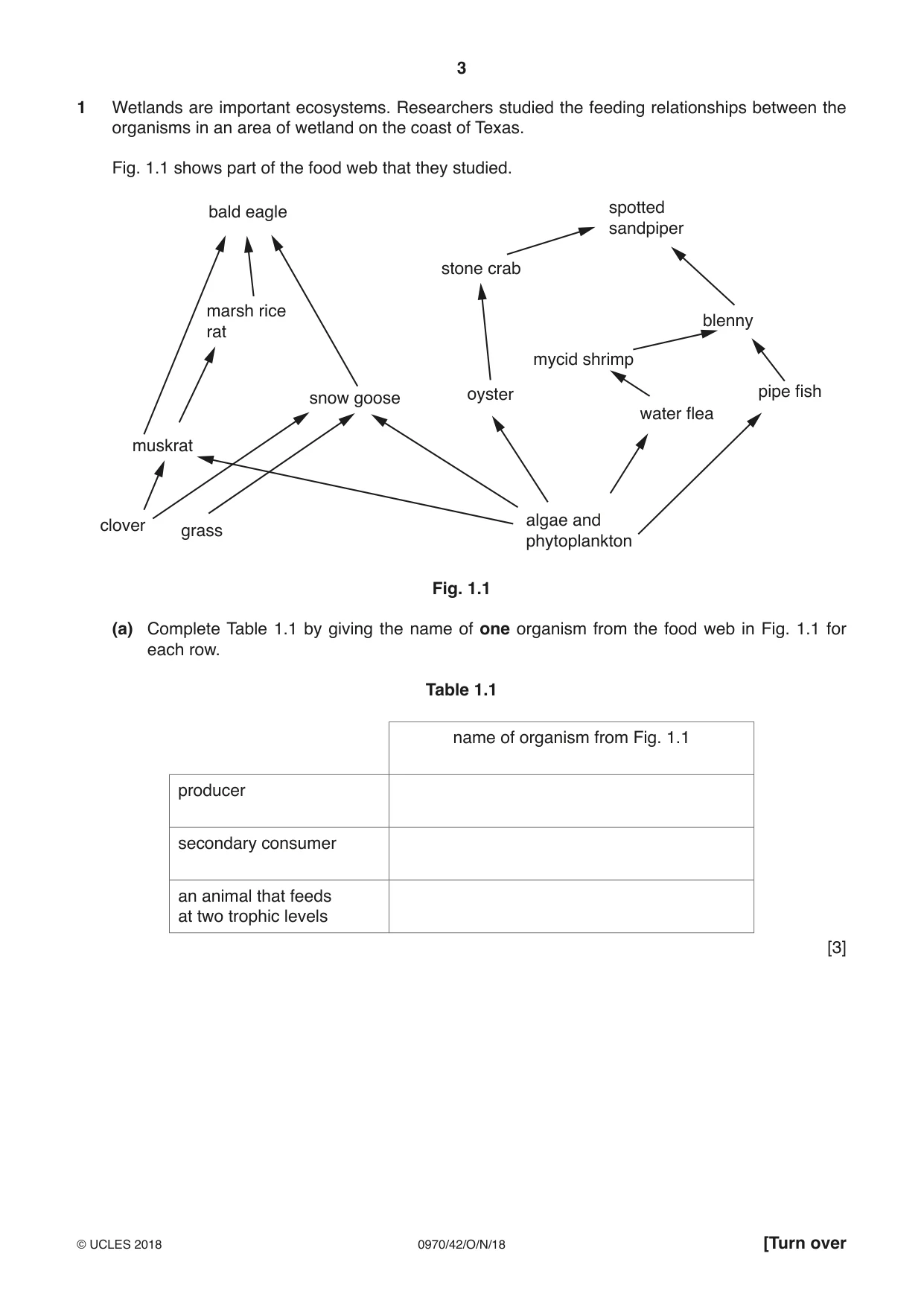
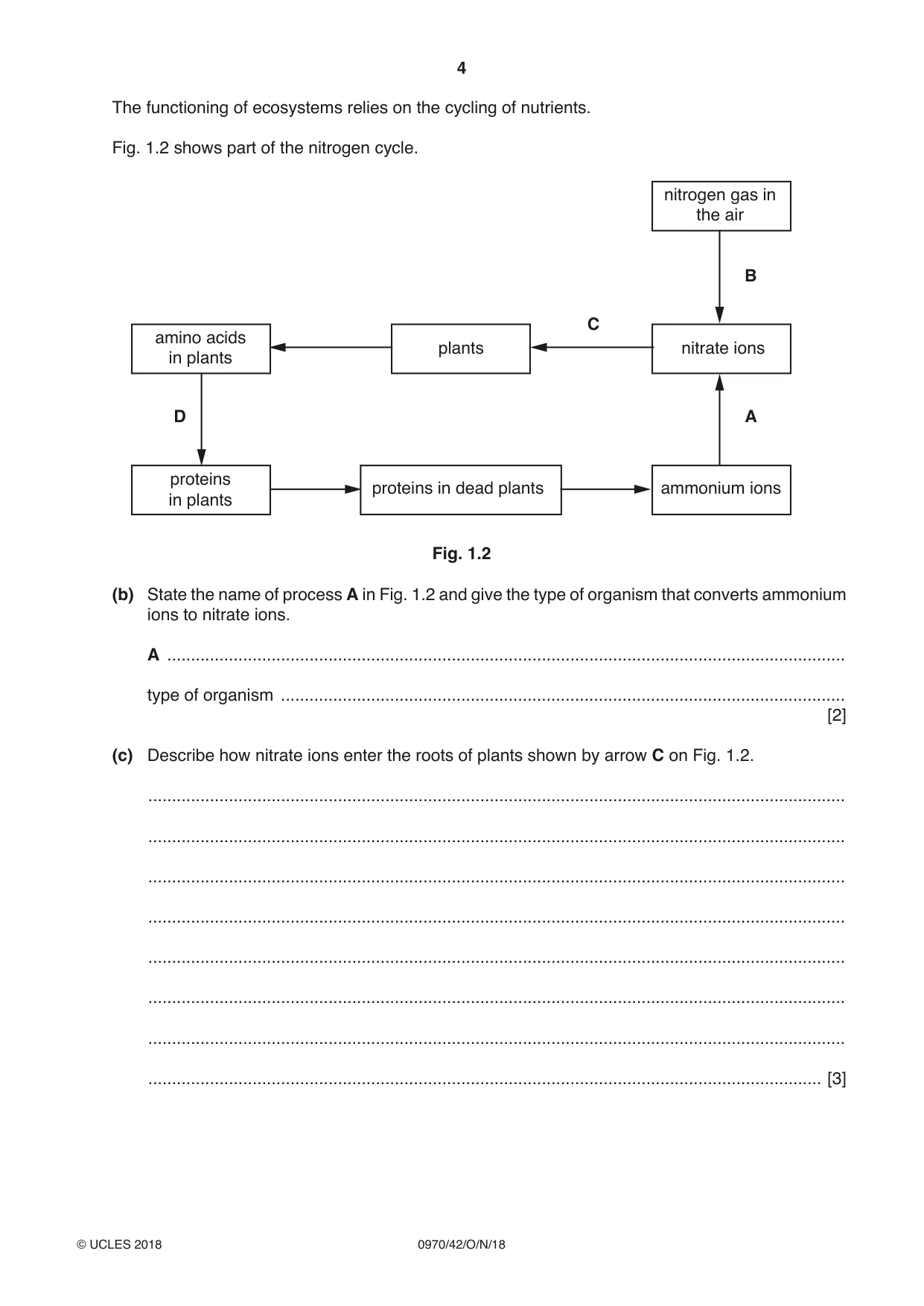
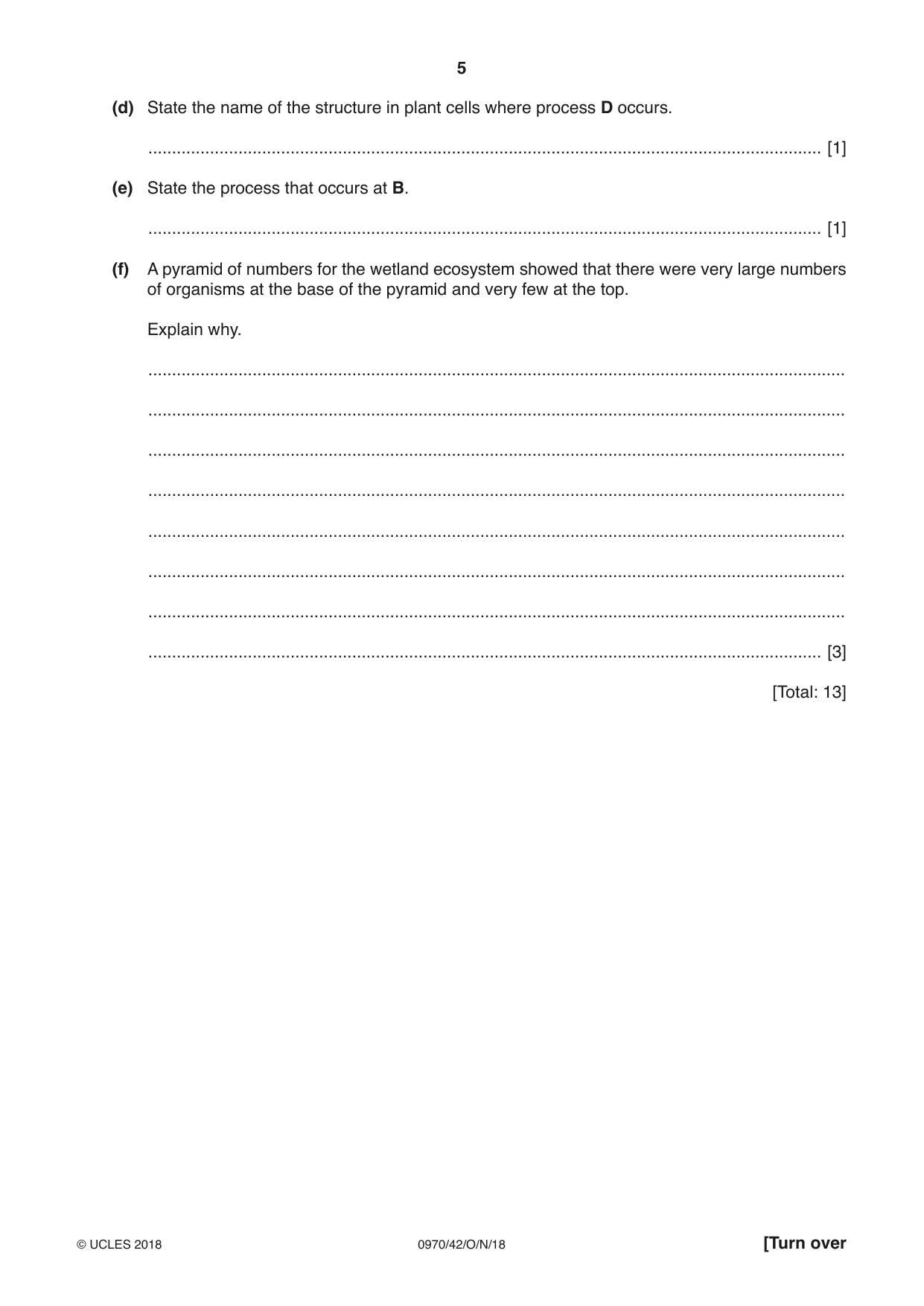
1 Wetlands are important ecosystems. Researchers studied the feeding relationships between the organisms in an area of wetland on the coast of Texas. Fig. 1.1 shows part of the food web that they studied. spotted bald eagle sandpiper stone crab marsh rice blenny rat mycid shrimp snow goose oyster pipe fish water flea muskrat algae and clover grass phytoplankton Fig. 1.1 (a) Complete Table 1.1 by giving the name of one organism from the food web in Fig. 1.1 for each row. Table 1.1 name of organism from Fig. 1.1 producer secondary consumer an animal that feeds at two trophic levels [3] The functioning of ecosystems relies on the cycling of nutrients. Fig. 1.2 shows part of the nitrogen cycle. nitrogen gas in the air B C amino acids plants nitrate ions in plants D A proteins proteins in dead plants ammonium ions in plants Fig. 1.2 (b) State the name of process A in Fig. 1.2 and give the type of organism that converts ammonium ions to nitrate ions. A ............................................................................................................................................... type of organism ....................................................................................................................... [2] (c) Describe how nitrate ions enter the roots of plants shown by arrow C on Fig. 1.2. ................................................................................................................................................... ................................................................................................................................................... ................................................................................................................................................... ................................................................................................................................................... ................................................................................................................................................... ................................................................................................................................................... ................................................................................................................................................... .............................................................................................................................................. [3] (d) State the name of the structure in plant cells where process D occurs. .............................................................................................................................................. [1] (e) State the process that occurs at B. .............................................................................................................................................. [1] (f) A pyramid of numbers for the wetland ecosystem showed that there were very large numbers of organisms at the base of the pyramid and very few at the top. Explain why. ................................................................................................................................................... ................................................................................................................................................... ................................................................................................................................................... ................................................................................................................................................... ................................................................................................................................................... ................................................................................................................................................... ................................................................................................................................................... .............................................................................................................................................. [3] [Total: 13]
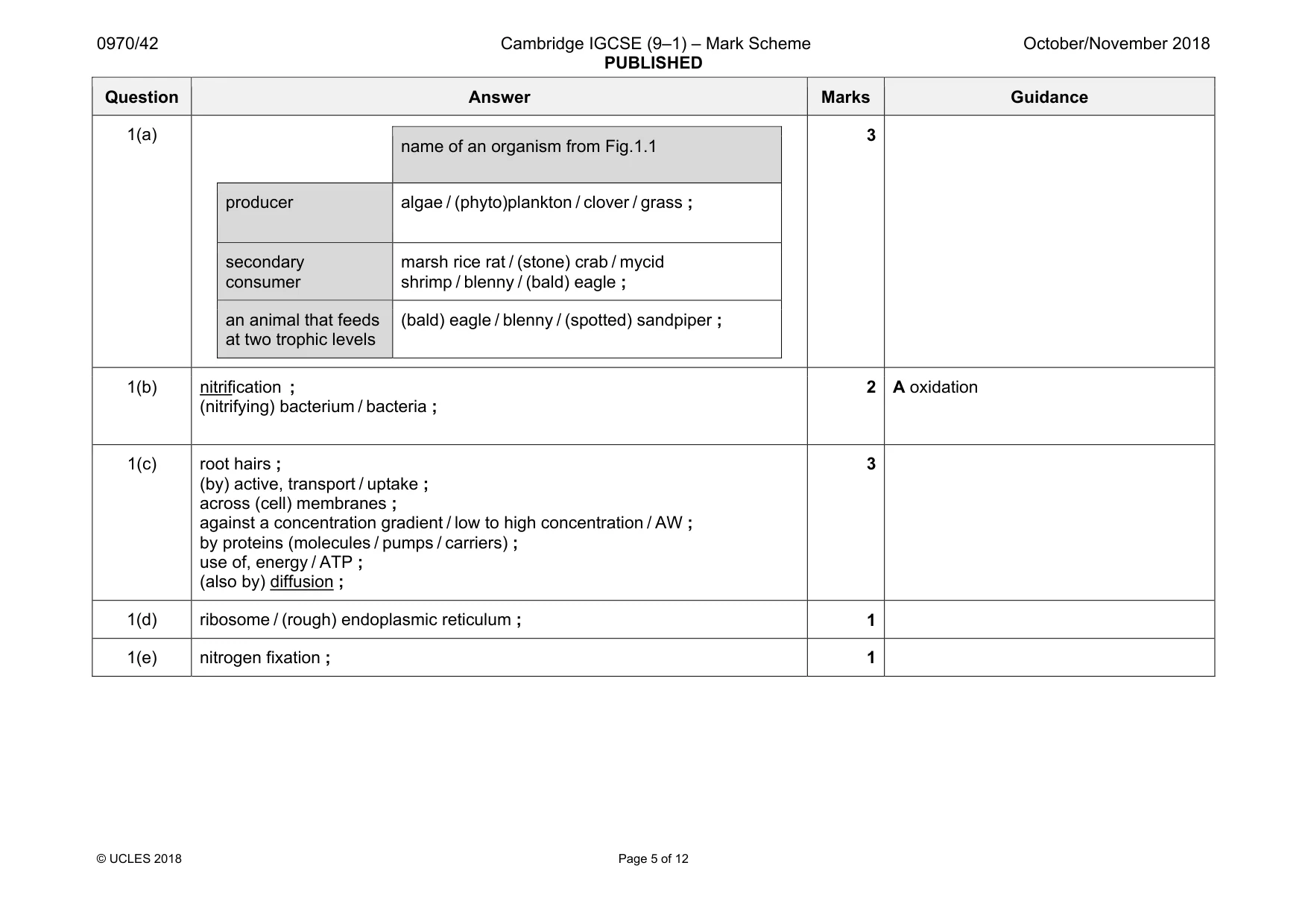
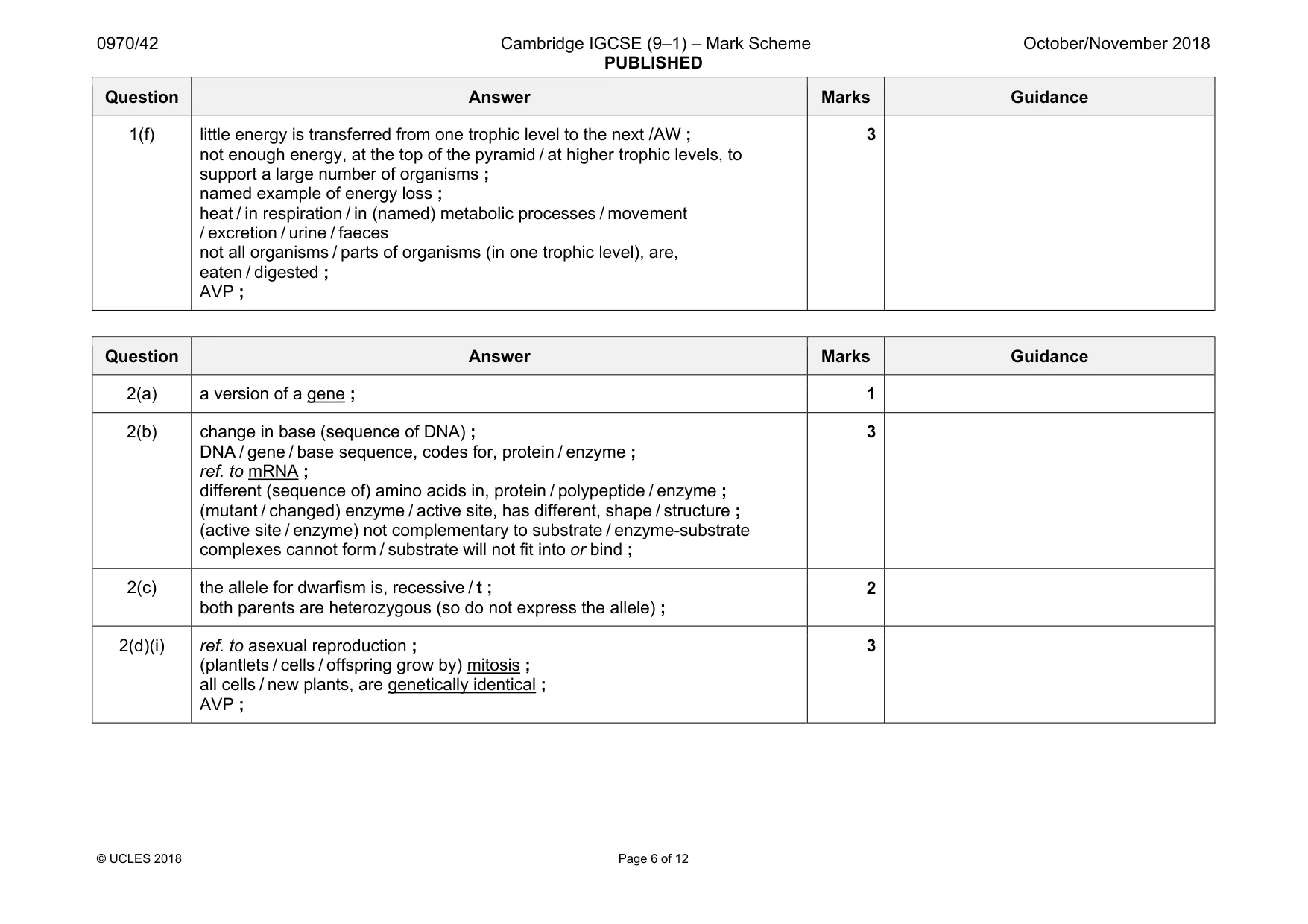
Mark scheme: 1(a) name of an organism from Fig.1.1 producer algae / (phyto)plankton / clover / grass ; secondary consumer marsh rice rat / (stone) crab / mycid shrimp / blenny / (bald) eagle ; an animal that feeds at two trophic levels (bald) eagle / blenny / (spotted) sandpiper ; 3 1(b) nitrification ; (nitrifying) bacterium / bacteria ; 2 A oxidation 1(c) root hairs ; (by) active, transport / uptake ; across (cell) membranes ; against a concentration gradient / low to high concentration / AW ; by proteins (molecules / pumps / carriers) ; use of, energy / ATP ; (also by) diffusion ; 3 1(d) ribosome / (rough) endoplasmic reticulum ; 1 1(e) nitrogen fixation ; 1 Question Answer Marks Guidance 1(f) little energy is transferred from one trophic level to the next /AW ; not enough energy, at the top of the pyramid / at higher trophic levels, to support a large number of organisms ; named example of energy loss ; heat / in respiration / in (named) metabolic processes / movement / excretion / urine / faeces not all organisms / parts of organisms (in one trophic level), are, eaten / digested ; AVP ; 3
Q2 · A dwarf sunflower and a tall sunflower, Helianthus annuus
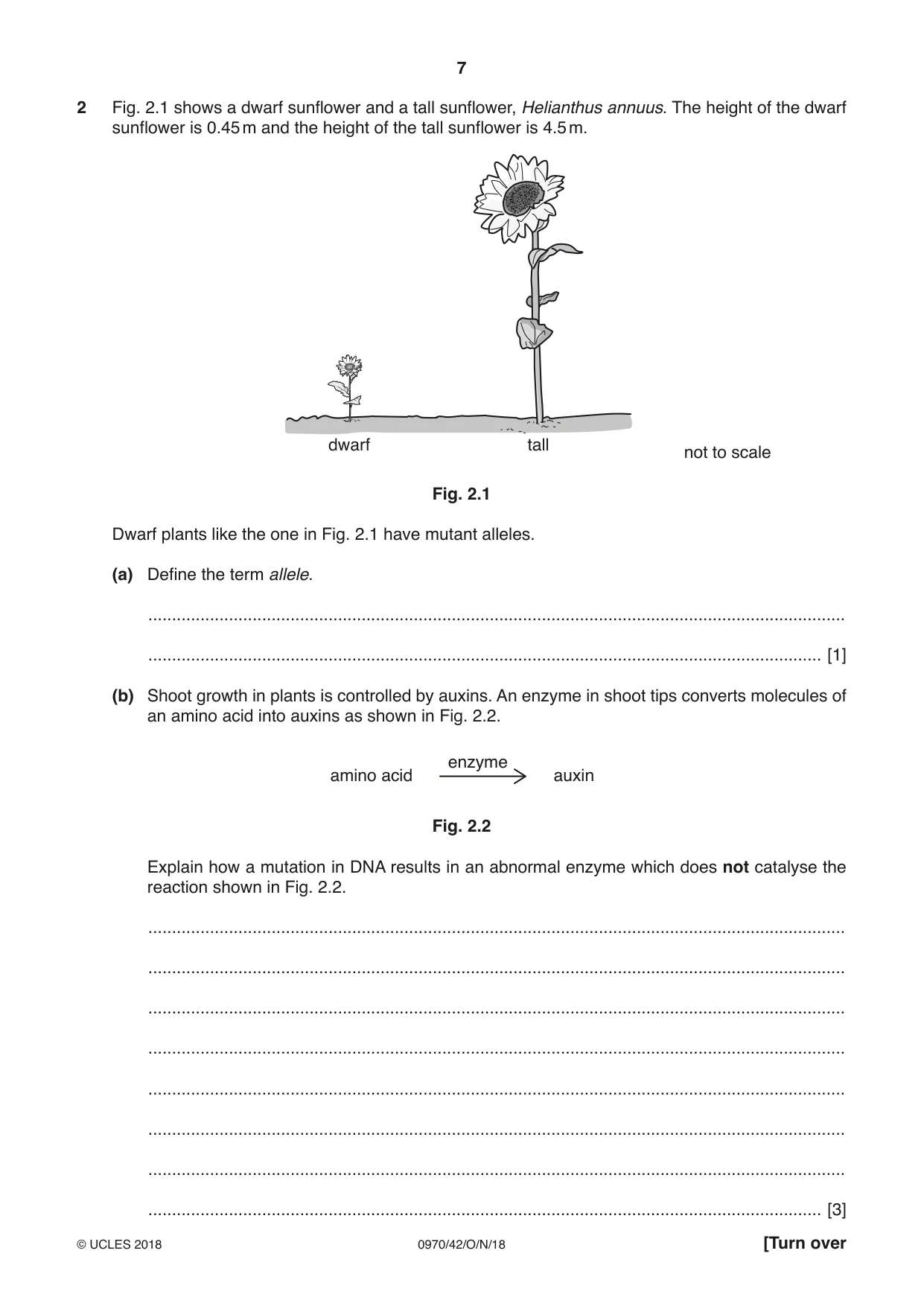
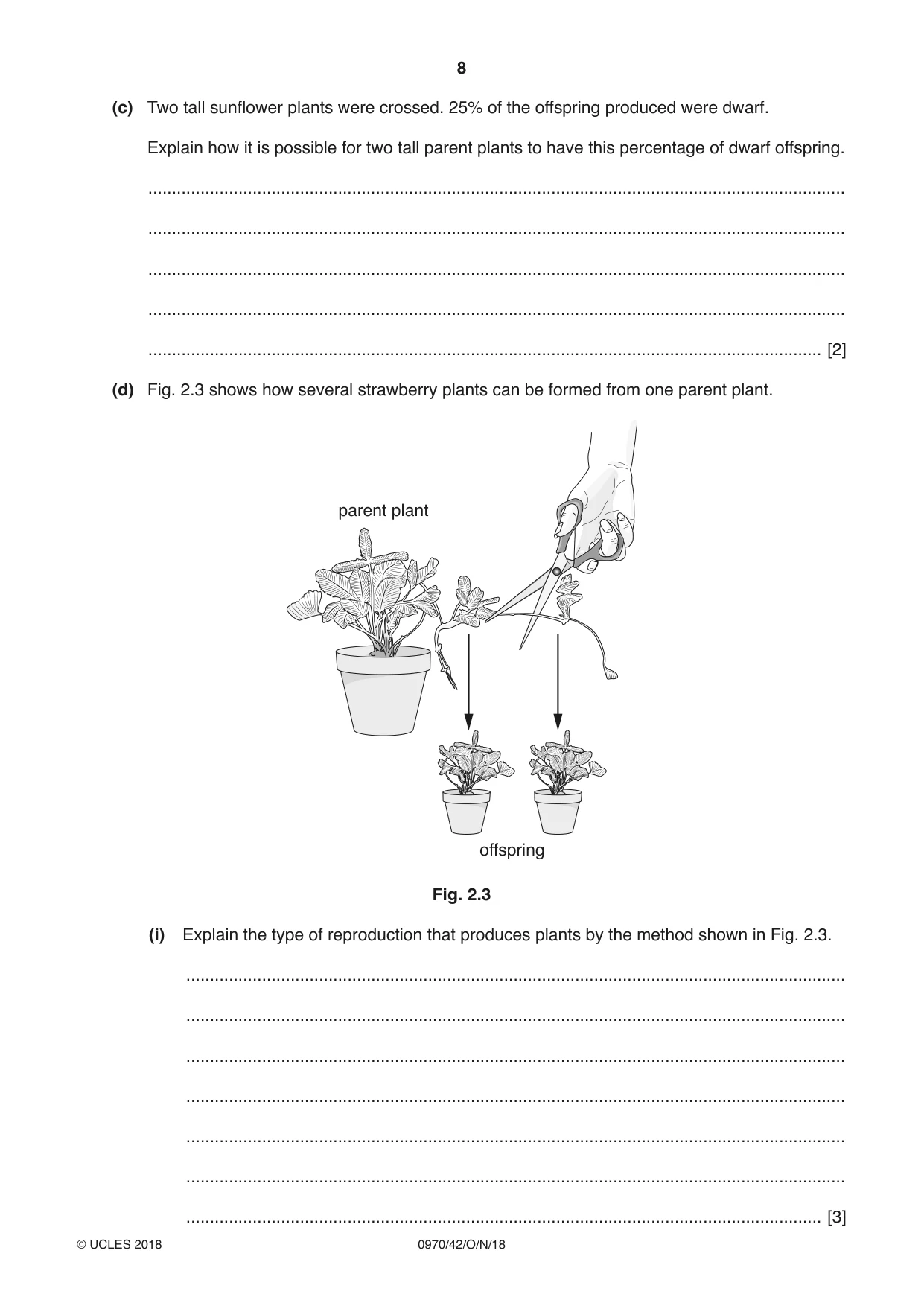
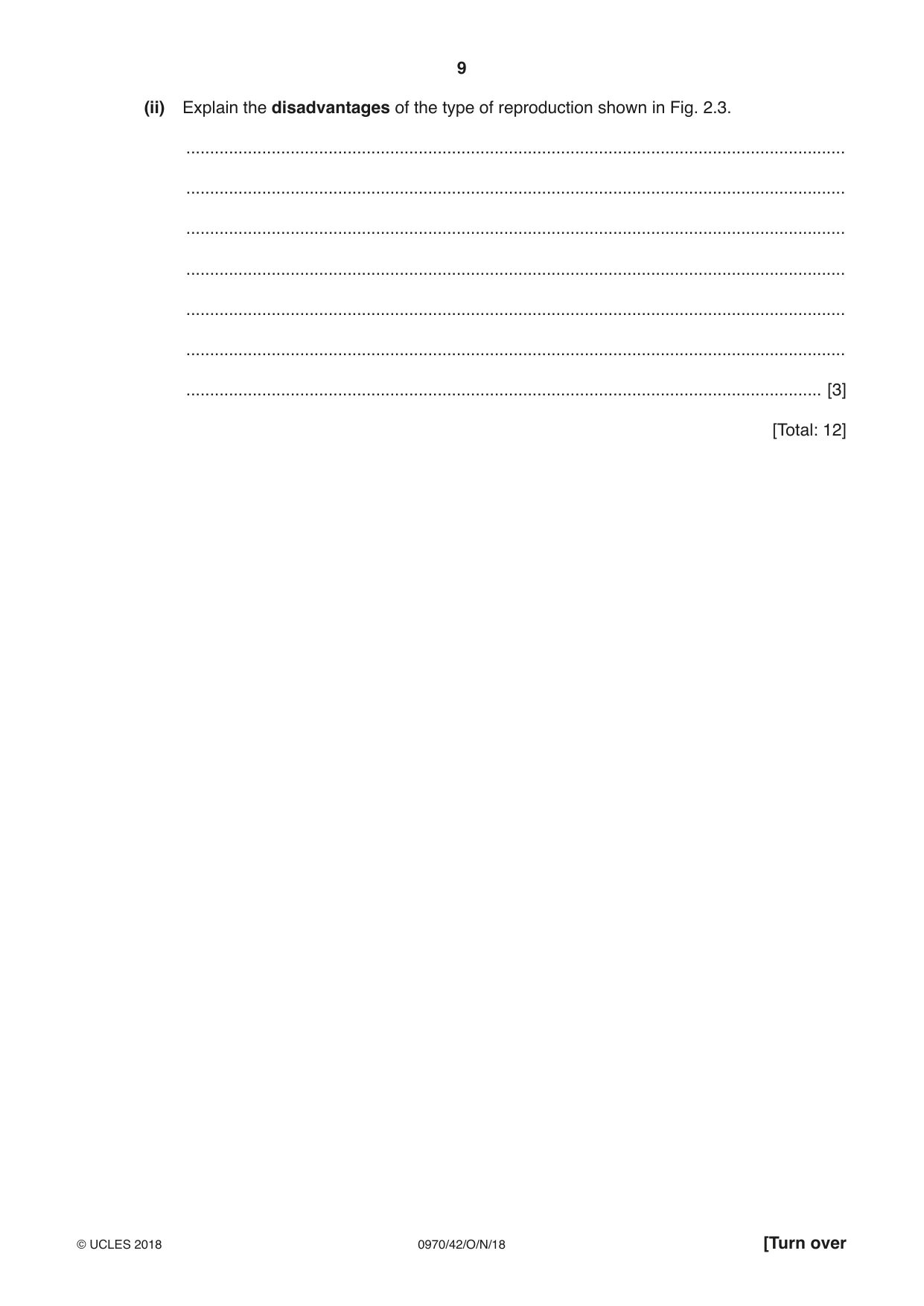
2 Fig. 2.1 shows a dwarf sunflower and a tall sunflower, Helianthus annuus. The height of the dwarf sunflower is 0.45 m and the height of the tall sunflower is 4.5 m. dwarf tall not to scale Fig. 2.1 Dwarf plants like the one in Fig. 2.1 have mutant alleles. (a) Define the term allele. ................................................................................................................................................... .............................................................................................................................................. [1] (b) Shoot growth in plants is controlled by auxins. An enzyme in shoot tips converts molecules of an amino acid into auxins as shown in Fig. 2.2. enzyme amino acid auxin Fig. 2.2 Explain how a mutation in DNA results in an abnormal enzyme which does not catalyse the reaction shown in Fig. 2.2. ................................................................................................................................................... ................................................................................................................................................... ................................................................................................................................................... ................................................................................................................................................... ................................................................................................................................................... ................................................................................................................................................... ................................................................................................................................................... .............................................................................................................................................. [3] (c) Two tall sunflower plants were crossed. 25% of the offspring produced were dwarf. Explain how it is possible for two tall parent plants to have this percentage of dwarf offspring. ................................................................................................................................................... ................................................................................................................................................... ................................................................................................................................................... ................................................................................................................................................... .............................................................................................................................................. [2] (d) Fig. 2.3 shows how several strawberry plants can be formed from one parent plant. parent plant offspring Fig. 2.3 (i) Explain the type of reproduction that produces plants by the method shown in Fig. 2.3. ........................................................................................................................................... ........................................................................................................................................... ........................................................................................................................................... ........................................................................................................................................... ........................................................................................................................................... ........................................................................................................................................... ...................................................................................................................................... [3] (ii) Explain the disadvantages of the type of reproduction shown in Fig. 2.3. ........................................................................................................................................... ........................................................................................................................................... ........................................................................................................................................... ........................................................................................................................................... ........................................................................................................................................... ........................................................................................................................................... ...................................................................................................................................... [3] [Total: 12]
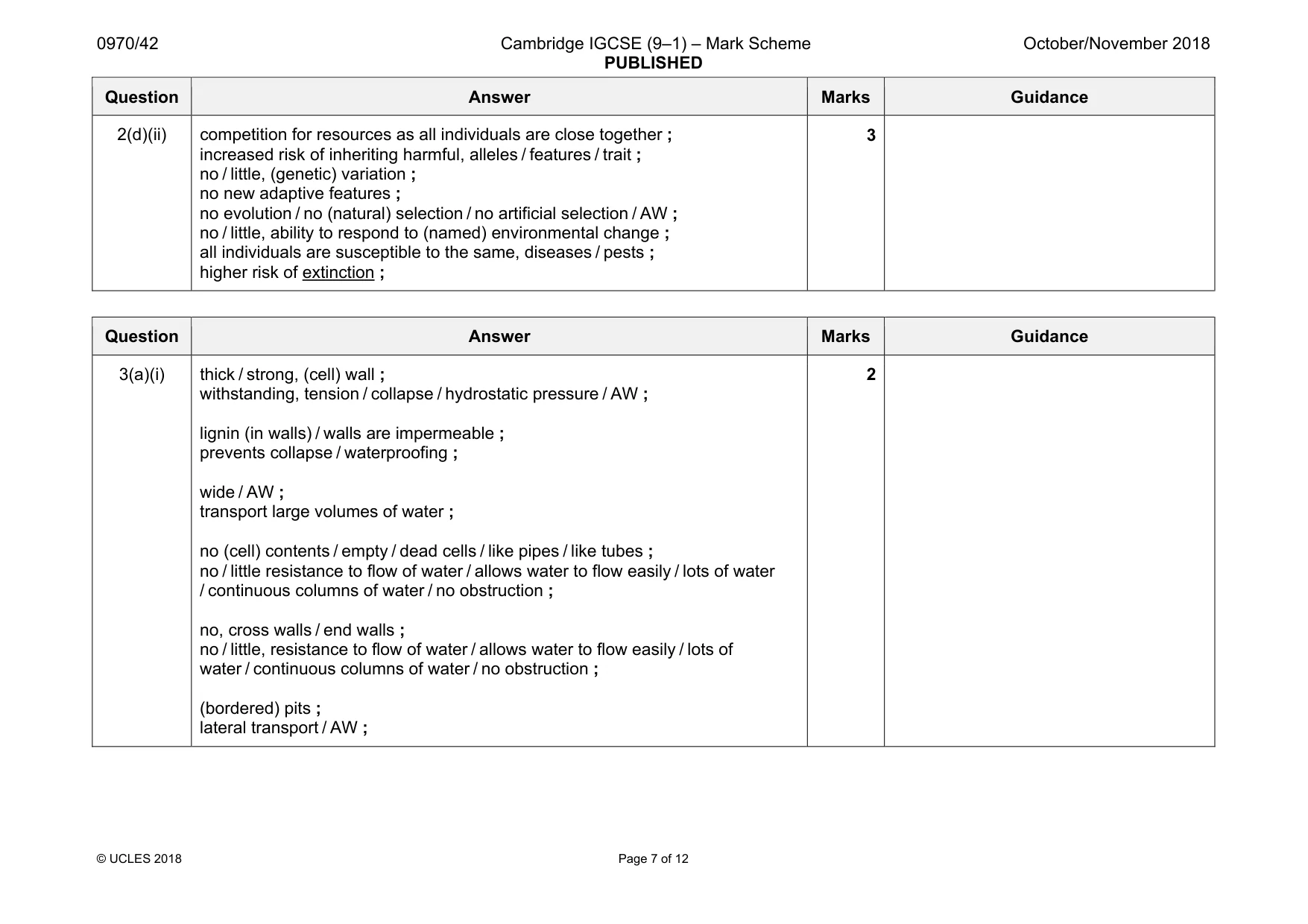
Mark scheme: 2(a) a version of a gene ; 1 2(b) change in base (sequence of DNA) ; DNA / gene / base sequence, codes for, protein / enzyme ; ref. to mRNA ; different (sequence of) amino acids in, protein / polypeptide / enzyme ; (mutant / changed) enzyme / active site, has different, shape / structure ; (active site / enzyme) not complementary to substrate / enzyme-substrate complexes cannot form / substrate will not fit into or bind ; 3 2(c) the allele for dwarfism is, recessive / t ; both parents are heterozygous (so do not express the allele) ; 2 2(d)(i) ref. to asexual reproduction ; (plantlets / cells / offspring grow by) mitosis ; all cells / new plants, are genetically identical ; AVP ; 3 Question Answer Marks Guidance 2(d)(ii) competition for resources as all individuals are close together ; increased risk of inheriting harmful, alleles / features / trait ; no / little, (genetic) variation ; no new adaptive features ; no evolution / no (natural) selection / no artificial selection / AW ; no / little, ability to respond to (named) environmental change ; all individuals are susceptible to the same, diseases / pests ; higher risk of extinction ; 3
Q3 · A photomicrograph of some xylem vessels
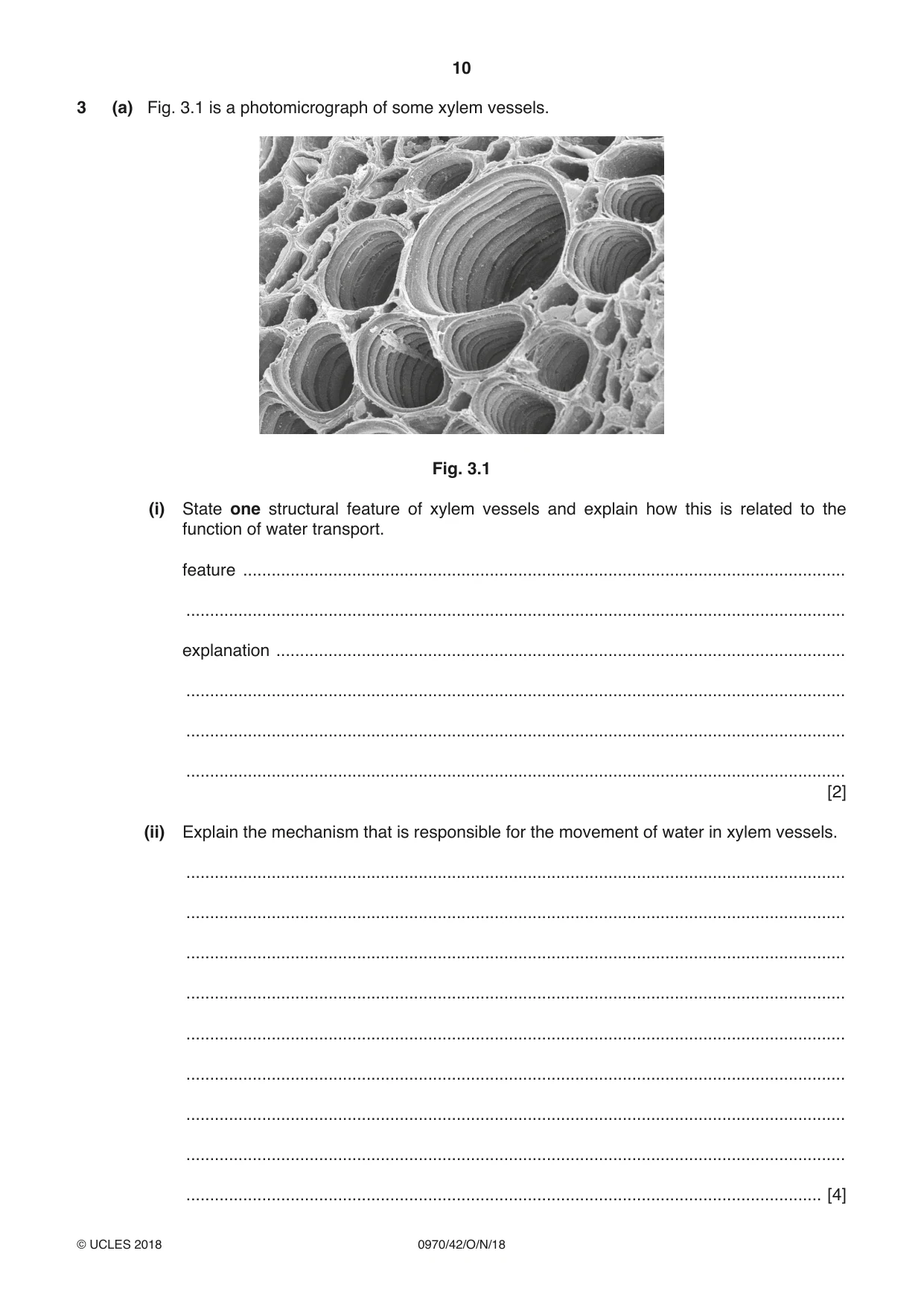
3 (a) Fig. 3.1 is a photomicrograph of some xylem vessels. Fig. 3.1 (i) State one structural feature of xylem vessels and explain how this is related to the function of water transport. feature ............................................................................................................................... ........................................................................................................................................... explanation ........................................................................................................................ ........................................................................................................................................... ........................................................................................................................................... ........................................................................................................................................... [2] (ii) Explain the mechanism that is responsible for the movement of water in xylem vessels. ........................................................................................................................................... ........................................................................................................................................... ........................................................................................................................................... ........................................................................................................................................... ........................................................................................................................................... ........................................................................................................................................... ........................................................................................................................................... ........................................................................................................................................... ...................................................................................................................................... [4] (iii) State one role of xylem vessels other than transport. ...................................................................................................................................... [1] (b) The rate of transpiration is affected by several factors including the temperature and the humidity of the air. State and explain the effect of an increase in temperature on the rate of transpiration. ................................................................................................................................................... ................................................................................................................................................... ................................................................................................................................................... ................................................................................................................................................... ................................................................................................................................................... ................................................................................................................................................... ................................................................................................................................................... .............................................................................................................................................. [3] [Total: 10]
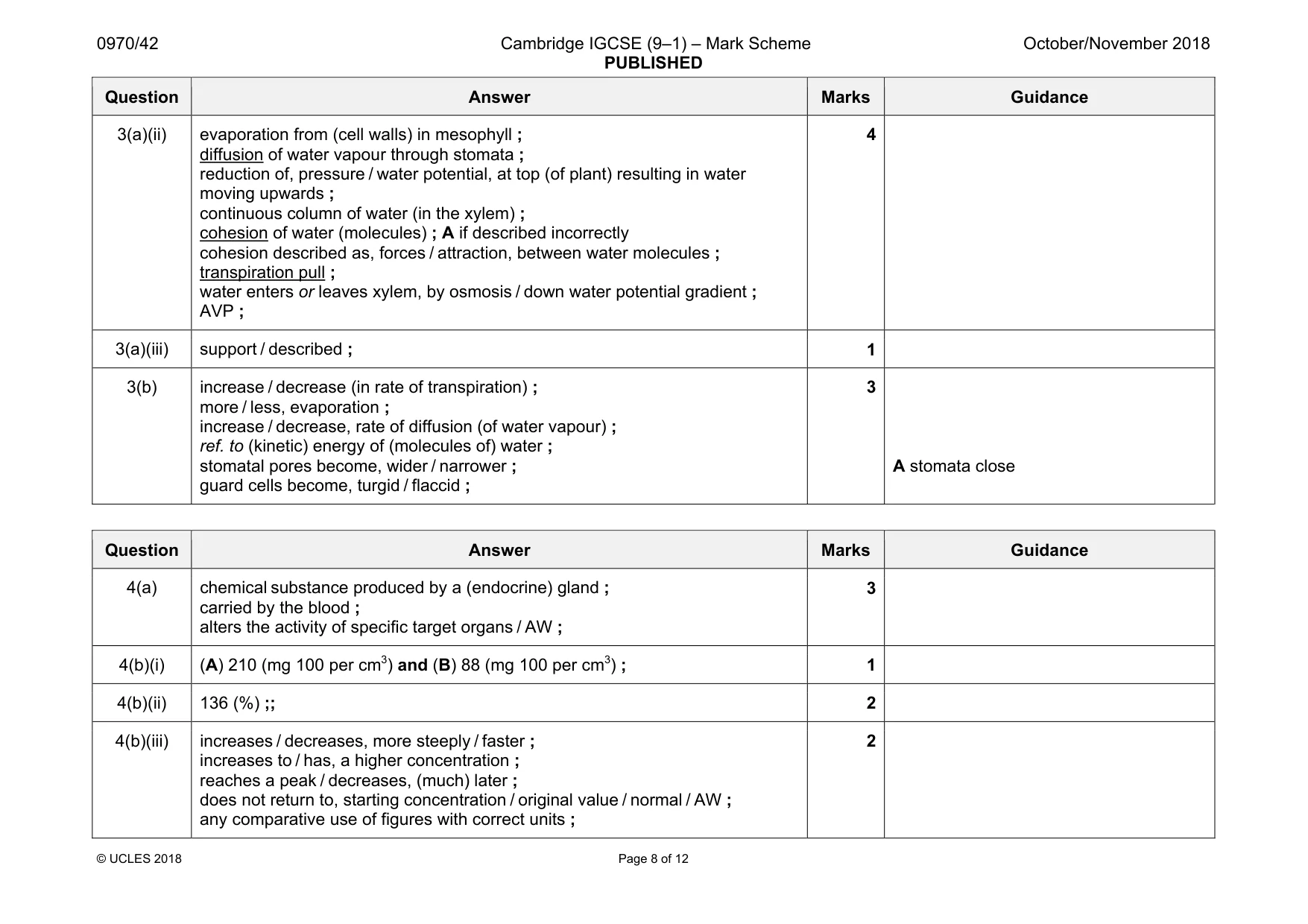
Mark scheme: 3(a)(i) thick / strong, (cell) wall ; withstanding, tension / collapse / hydrostatic pressure / AW ; lignin (in walls) / walls are impermeable ; prevents collapse / waterproofing ; wide / AW ; transport large volumes of water ; no (cell) contents / empty / dead cells / like pipes / like tubes ; no / little resistance to flow of water / allows water to flow easily / lots of water / continuous columns of water / no obstruction ; no, cross walls / end walls ; no / little, resistance to flow of water / allows water to flow easily / lots of water / continuous columns of water / no obstruction ; (bordered) pits ; lateral transport / AW ; 2 Question Answer Marks Guidance 3(a)(ii) evaporation from (cell walls) in mesophyll ; diffusion of water vapour through stomata ; reduction of, pressure / water potential, at top (of plant) resulting in water moving upwards ; continuous column of water (in the xylem) ; cohesion of water (molecules) ; A if described incorrectly cohesion described as, forces / attraction, between water molecules ; transpiration pull ; water enters or leaves xylem, by osmosis / down water potential gradient ; AVP ; 4 3(a)(iii) support / described ; 1 3(b) increase / decrease (in rate of transpiration) ; more / less, evaporation ; increase / decrease, rate of diffusion (of water vapour) ; ref. to (kinetic) energy of (molecules of) water ; stomatal pores become, wider / narrower ; guard cells become, turgid / flaccid ; 3 A stomata close
Q4 · Insulin is a hormone that regulates the concentration of glucose in the blood
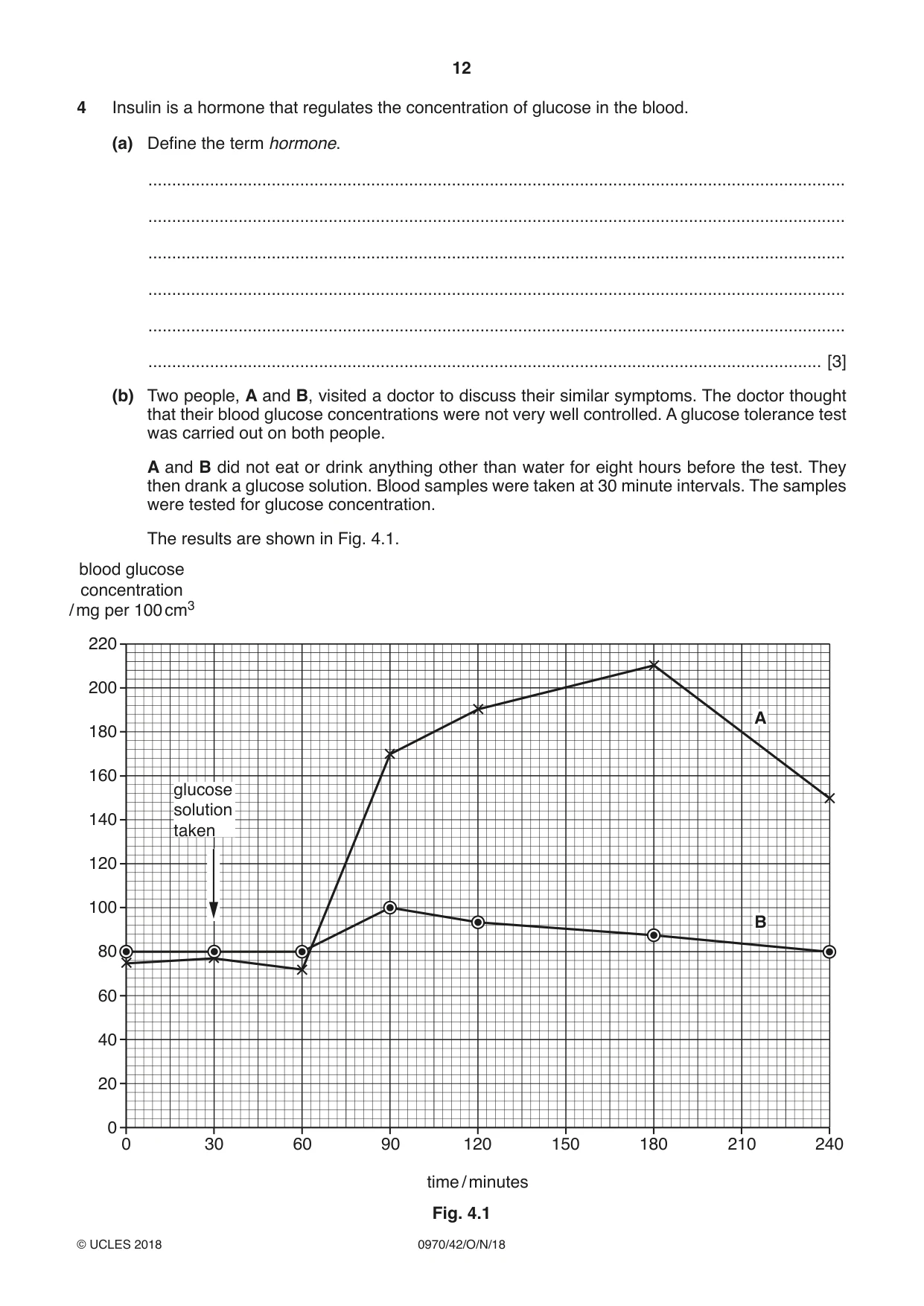
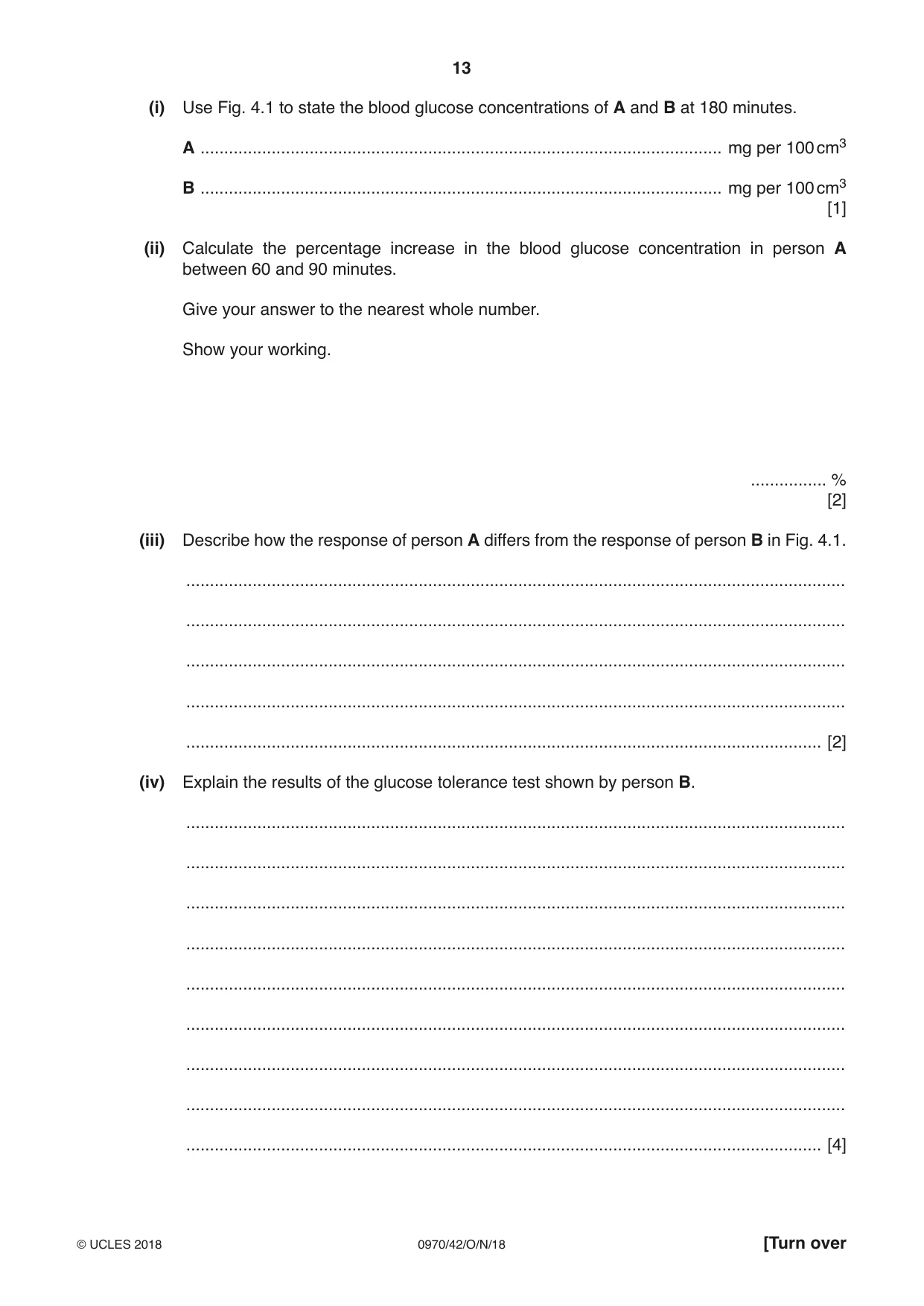
4 Insulin is a hormone that regulates the concentration of glucose in the blood. (a) Define the term hormone. ................................................................................................................................................... ................................................................................................................................................... ................................................................................................................................................... ................................................................................................................................................... ................................................................................................................................................... .............................................................................................................................................. [3] (b) Two people, A and B, visited a doctor to discuss their similar symptoms. The doctor thought that their blood glucose concentrations were not very well controlled. A glucose tolerance test was carried out on both people. A and B did not eat or drink anything other than water for eight hours before the test. They then drank a glucose solution. Blood samples were taken at 30 minute intervals. The samples were tested for glucose concentration. The results are shown in Fig. 4.1. blood glucose concentration / mg per 100 cm3 220 200 A 180 160 glucose solution 140 taken 120 100 B 80 60 40 20 0 0 30 60 90 120 150 180 210 240 time / minutes Fig. 4.1 (i) Use Fig. 4.1 to state the blood glucose concentrations of A and B at 180 minutes. A .............................................................................................................. mg per 100 cm3 B .............................................................................................................. mg per 100 cm3 [1] (ii) Calculate the percentage increase in the blood glucose concentration in person A between 60 and 90 minutes. Give your answer to the nearest whole number. Show your working. ................ % [2] (iii) Describe how the response of person A differs from the response of person B in Fig. 4.1. ........................................................................................................................................... ........................................................................................................................................... ........................................................................................................................................... ........................................................................................................................................... ...................................................................................................................................... [2] (iv) Explain the results of the glucose tolerance test shown by person B. ........................................................................................................................................... ........................................................................................................................................... ........................................................................................................................................... ........................................................................................................................................... ........................................................................................................................................... ........................................................................................................................................... ........................................................................................................................................... ........................................................................................................................................... ...................................................................................................................................... [4] (v) The doctor thought that person A had Type 1 diabetes. Describe three symptoms of Type 1 diabetes. ........................................................................................................................................... ........................................................................................................................................... ........................................................................................................................................... ........................................................................................................................................... ...................................................................................................................................... [3] [Total: 15]
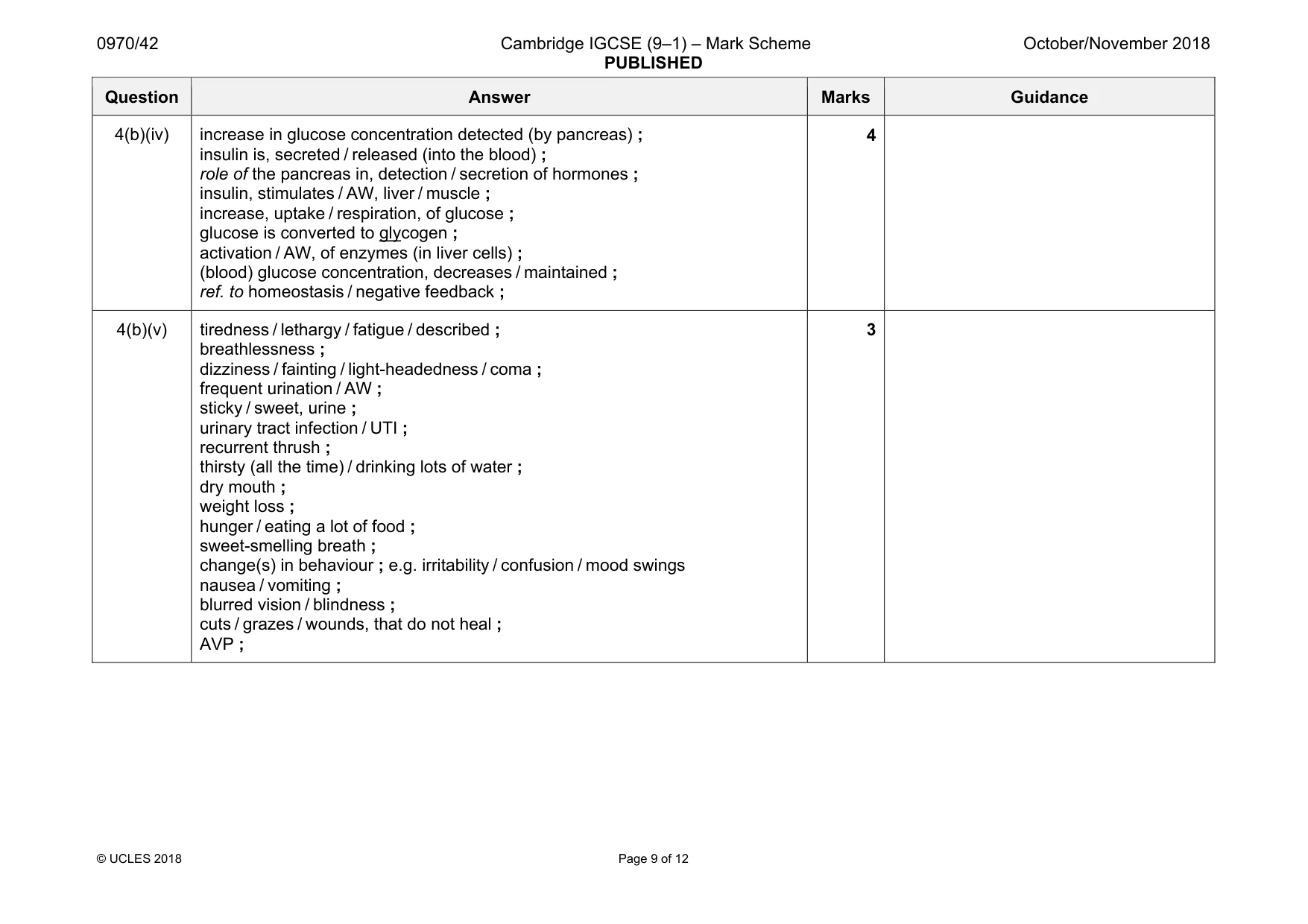
Mark scheme: 4(a) chemical substance produced by a (endocrine) gland ; carried by the blood ; alters the activity of specific target organs / AW ; 3 4(b)(i) (A) 210 (mg 100 per cm3) and (B) 88 (mg 100 per cm3) ; 1 4(b)(ii) 136 (%) ;; 2 4(b)(iii) increases / decreases, more steeply / faster ; increases to / has, a higher concentration ; reaches a peak / decreases, (much) later ; does not return to, starting concentration / original value / normal / AW ; any comparative use of figures with correct units ; 2 Question Answer Marks Guidance 4(b)(iv) increase in glucose concentration detected (by pancreas) ; insulin is, secreted / released (into the blood) ; role of the pancreas in, detection / secretion of hormones ; insulin, stimulates / AW, liver / muscle ; increase, uptake / respiration, of glucose ; glucose is converted to glycogen ; activation / AW, of enzymes (in liver cells) ; (blood) glucose concentration, decreases / maintained ; ref. to homeostasis / negative feedback ; 4 4(b)(v) tiredness / lethargy / fatigue / described ; breathlessness ; dizziness / fainting / light-headedness / coma ; frequent urination / AW ; sticky / sweet, urine ; urinary tract infection / UTI ; recurrent thrush ; thirsty (all the time) / drinking lots of water ; dry mouth ; weight loss ; hunger / eating a lot of food ; sweet-smelling breath ; change(s) in behaviour ; e.g. irritability / confusion / mood swings nausea / vomiting ; blurred vision / blindness ; cuts / grazes / wounds, that do not heal ; AVP ; 3
Q5 · A photomicrograph of human blood
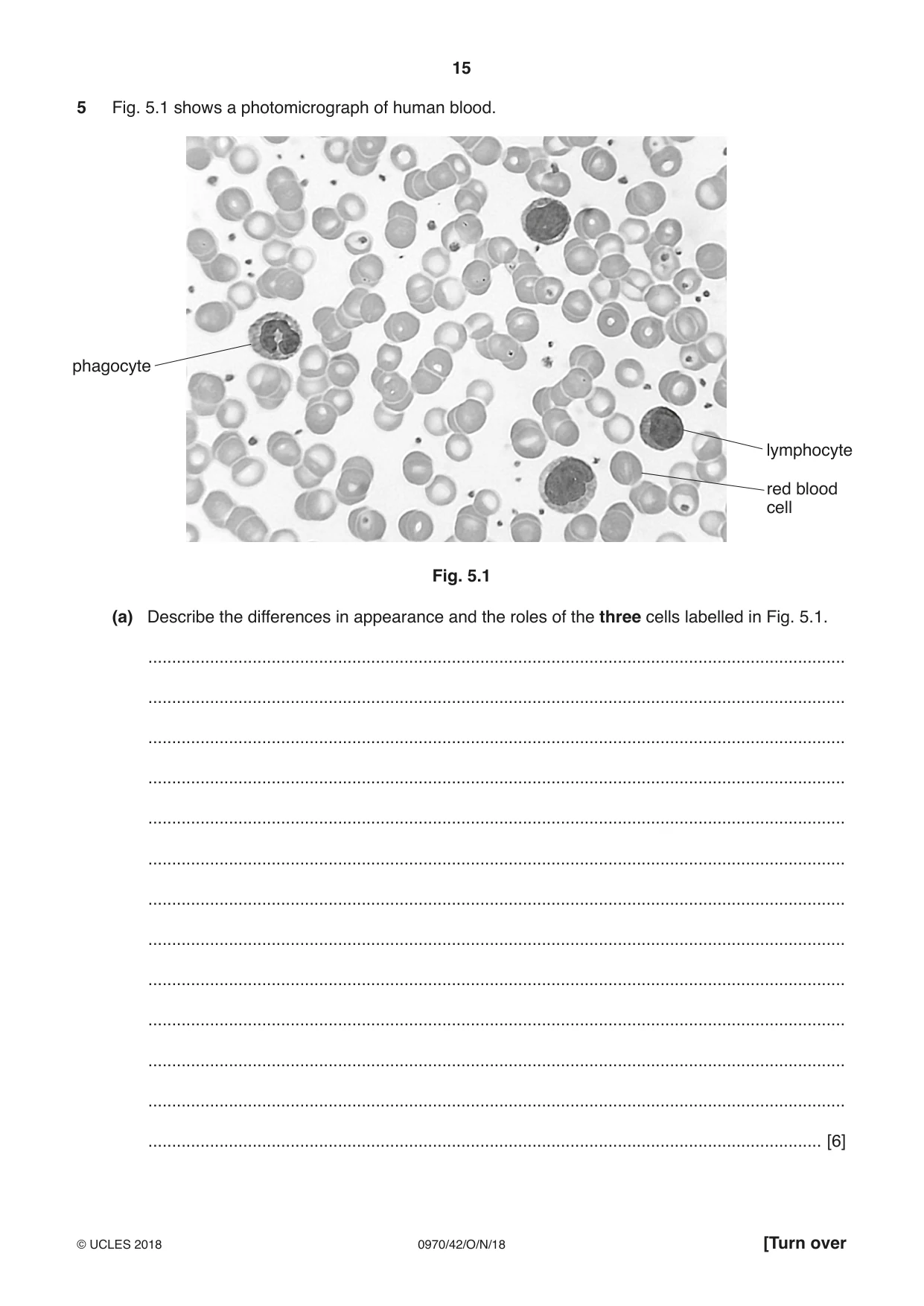
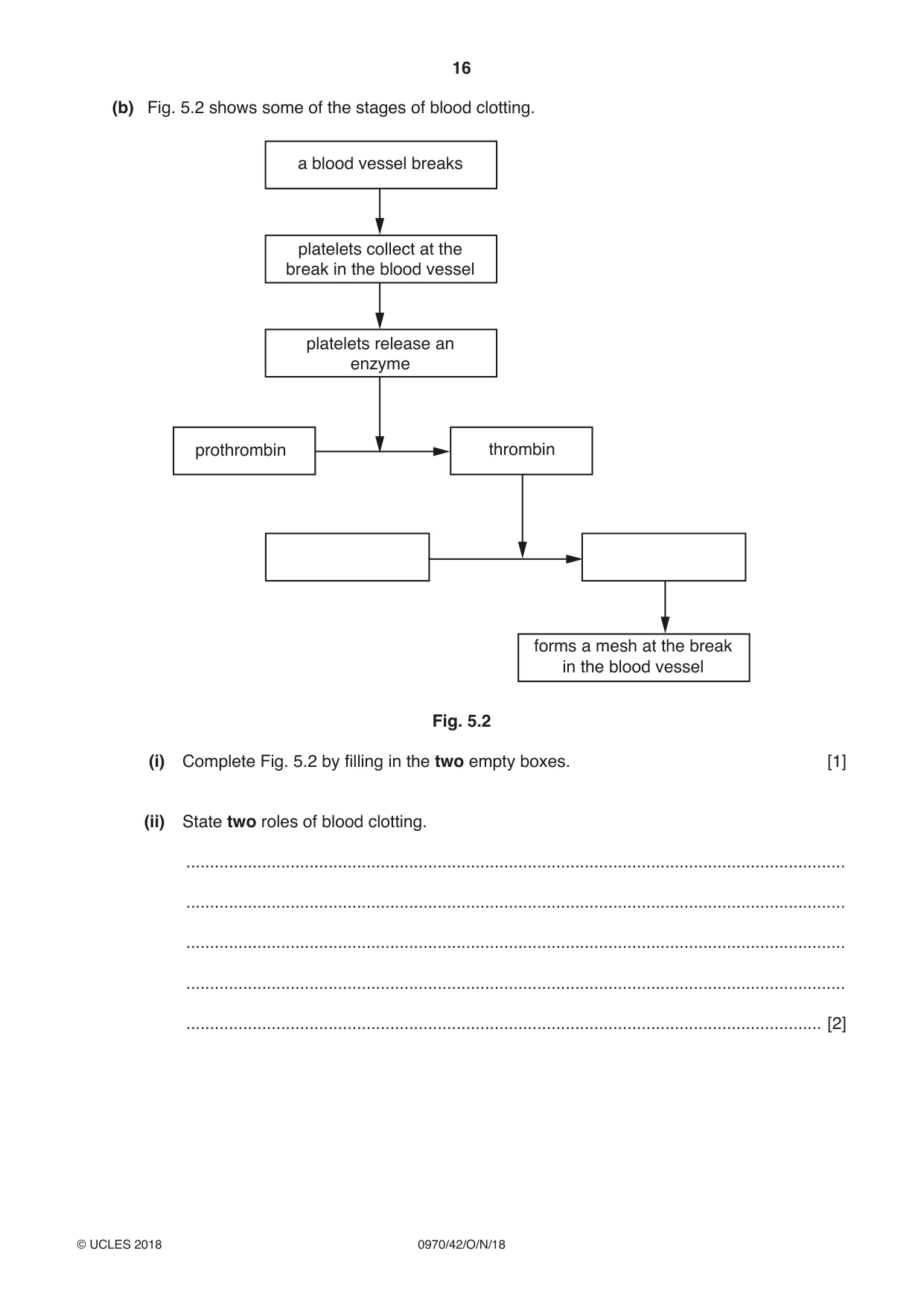
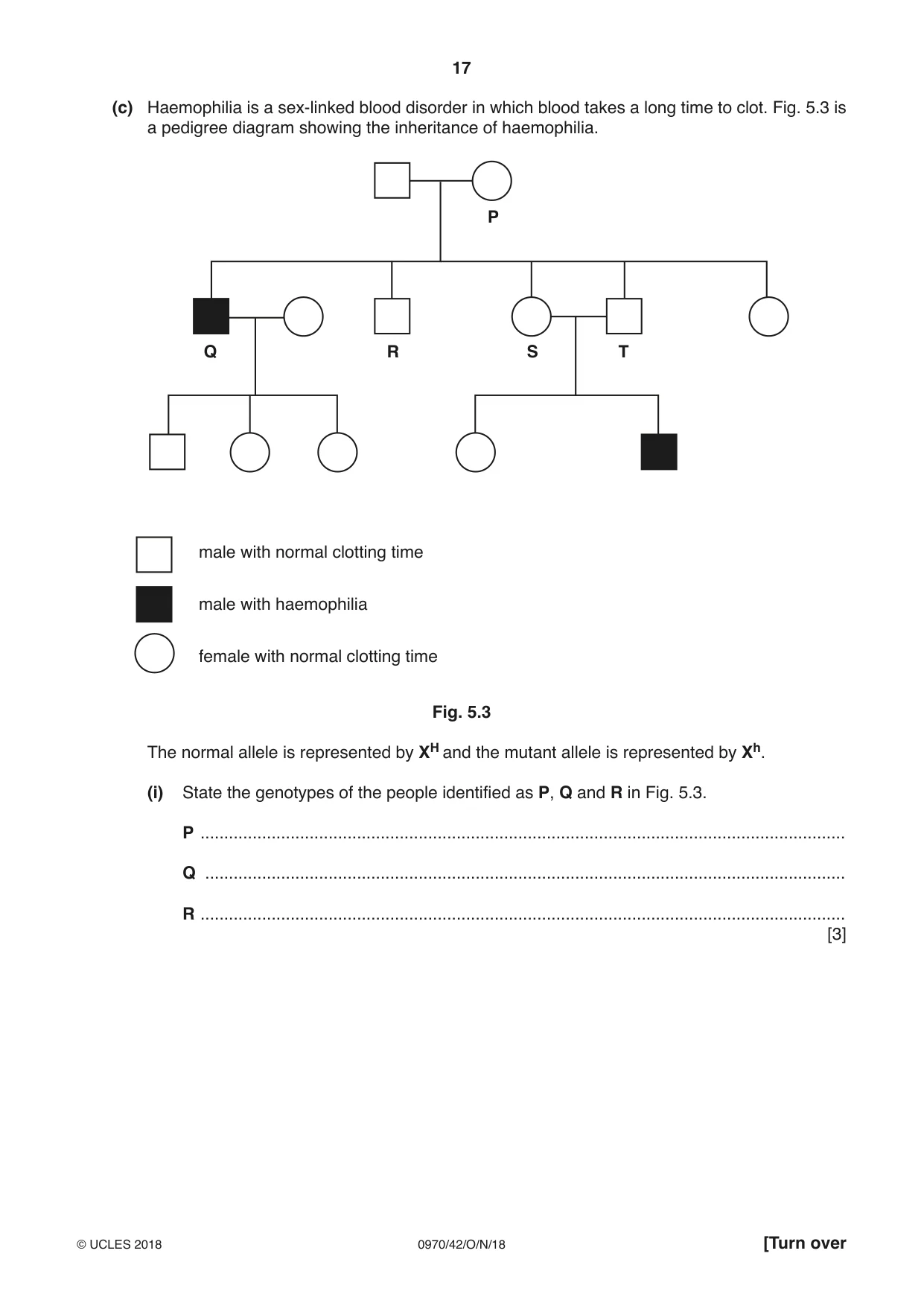
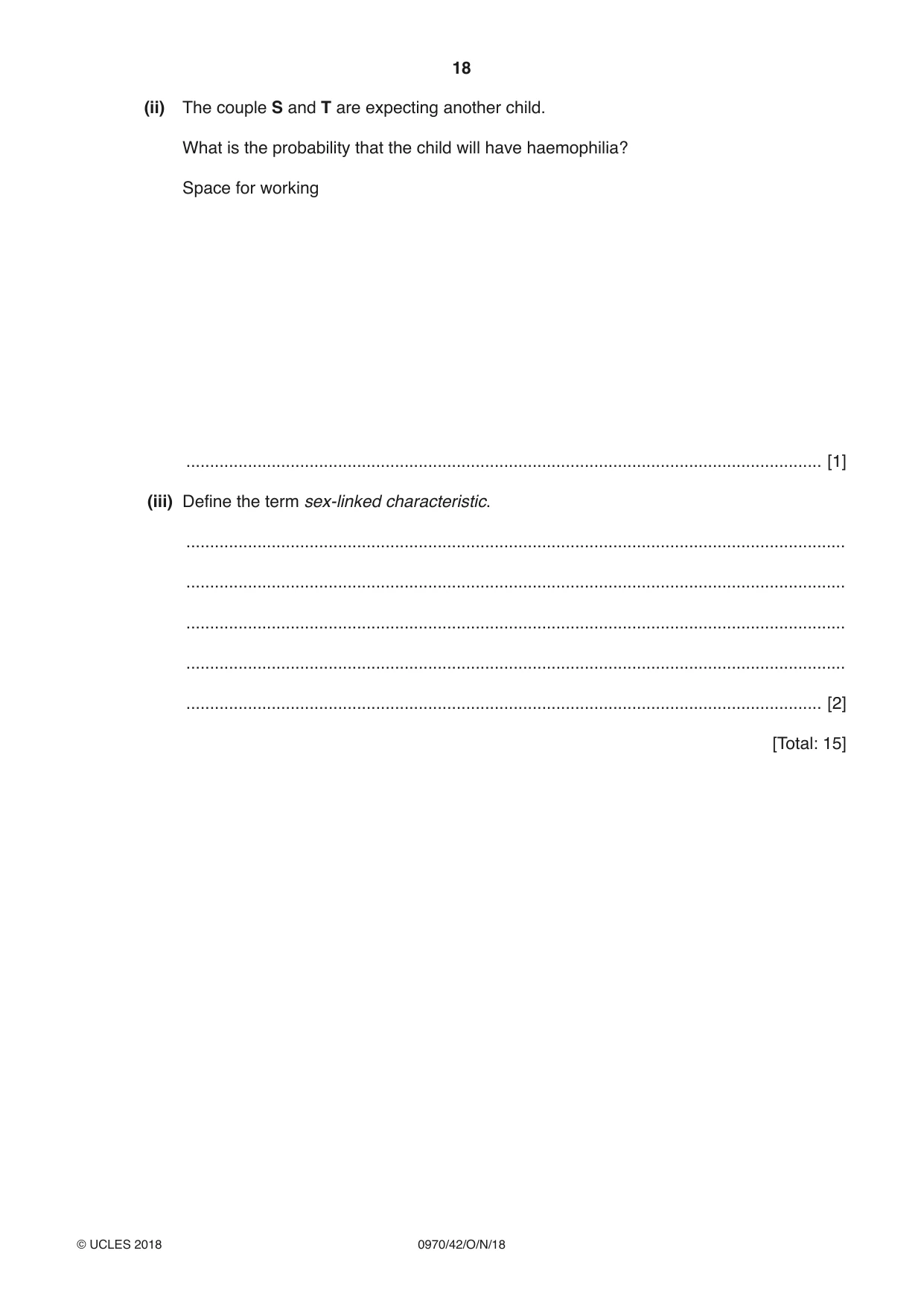
5 Fig. 5.1 shows a photomicrograph of human blood. phagocyte lymphocyte red blood cell Fig. 5.1 (a) Describe the differences in appearance and the roles of the three cells labelled in Fig. 5.1. ................................................................................................................................................... ................................................................................................................................................... ................................................................................................................................................... ................................................................................................................................................... ................................................................................................................................................... ................................................................................................................................................... ................................................................................................................................................... ................................................................................................................................................... ................................................................................................................................................... ................................................................................................................................................... ................................................................................................................................................... ................................................................................................................................................... .............................................................................................................................................. [6] (b) Fig. 5.2 shows some of the stages of blood clotting. a blood vessel breaks platelets collect at the break in the blood vessel platelets release an enzyme prothrombin thrombin forms a mesh at the break in the blood vessel Fig. 5.2 (i) Complete Fig. 5.2 by filling in the two empty boxes. [1] (ii) State two roles of blood clotting. ........................................................................................................................................... ........................................................................................................................................... ........................................................................................................................................... ........................................................................................................................................... ...................................................................................................................................... [2] (c) Haemophilia is a sex-linked blood disorder in which blood takes a long time to clot. Fig. 5.3 is a pedigree diagram showing the inheritance of haemophilia. P Q R S T male with normal clotting time male with haemophilia female with normal clotting time Fig. 5.3 The normal allele is represented by XH and the mutant allele is represented by Xh. (i) State the genotypes of the people identified as P, Q and R in Fig. 5.3. P ........................................................................................................................................ Q ....................................................................................................................................... R ........................................................................................................................................ [3] (ii) The couple S and T are expecting another child. What is the probability that the child will have haemophilia? Space for working ...................................................................................................................................... [1] (iii) Define the term sex-linked characteristic. ........................................................................................................................................... ........................................................................................................................................... ........................................................................................................................................... ........................................................................................................................................... ...................................................................................................................................... [2] [Total: 15]
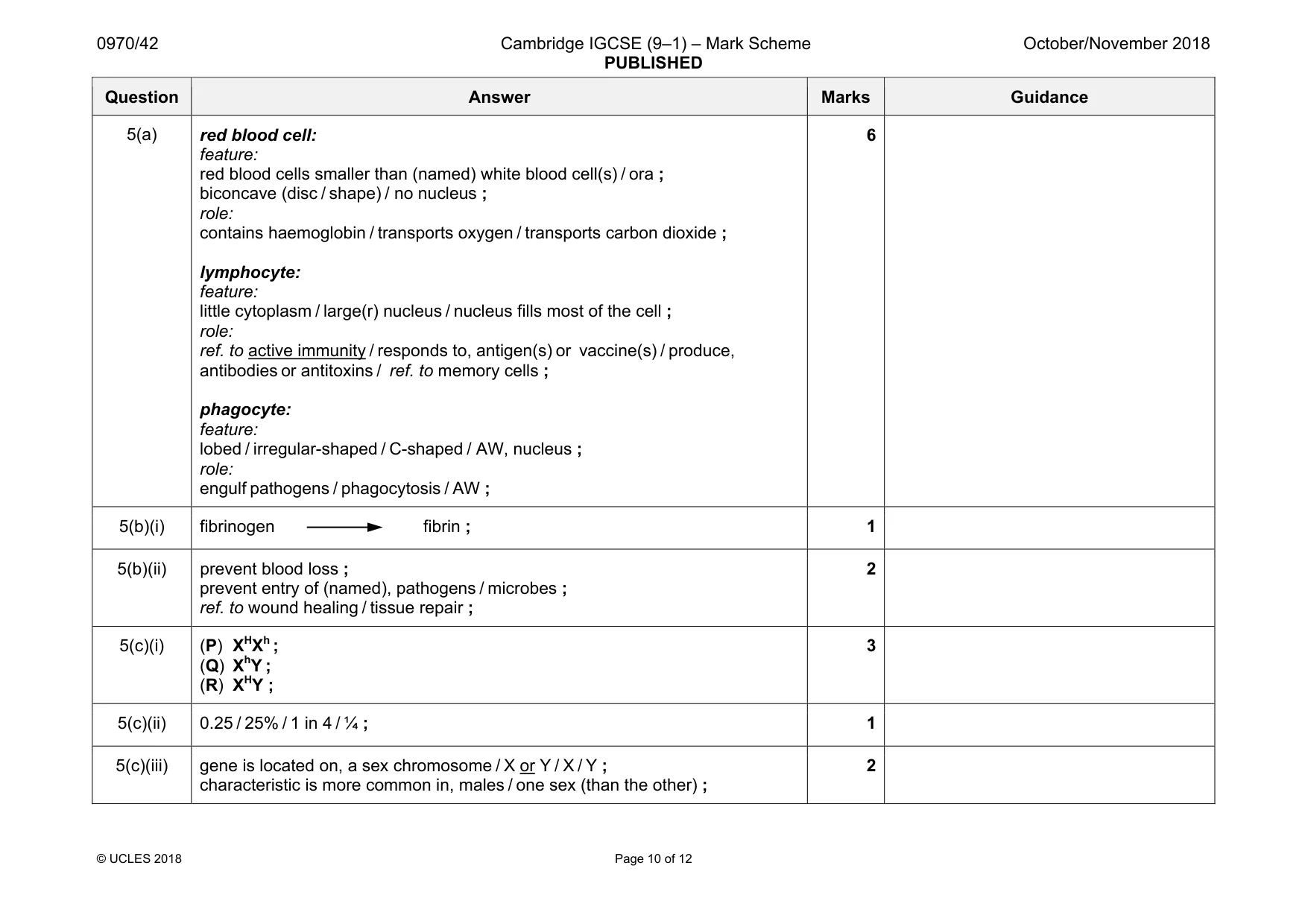
Mark scheme: 5(a) red blood cell: feature: red blood cells smaller than (named) white blood cell(s) / ora ; biconcave (disc / shape) / no nucleus ; role: contains haemoglobin / transports oxygen / transports carbon dioxide ; lymphocyte: feature: little cytoplasm / large(r) nucleus / nucleus fills most of the cell ; role: ref. to active immunity / responds to, antigen(s) or vaccine(s) / produce, antibodies or antitoxins / ref. to memory cells ; phagocyte: feature: lobed / irregular-shaped / C-shaped / AW, nucleus ; role: engulf pathogens / phagocytosis / AW ; 6 5(b)(i) fibrinogen fibrin ; 1 5(b)(ii) prevent blood loss ; prevent entry of (named), pathogens / microbes ; ref. to wound healing / tissue repair ; 2 5(c)(i) (P) XHXh ; (Q) XhY ; (R) XHY ; 3 5(c)(ii) 0.25 / 25% / 1 in 4 / ¼ ; 1 5(c)(iii) gene is located on, a sex chromosome / X or Y / X / Y ; characteristic is more common in, males / one sex (than the other) ; 2
Q6 · The Galapagos iguana, Amblyrhynchus cristatus
6 Fig. 6.1 shows the Galapagos iguana, Amblyrhynchus cristatus. Fig. 6.1 (a) (i) State two features that are used to classify animals, such as the Galapagos iguana, as reptiles. 1 ........................................................................................................................................ 2 ........................................................................................................................................ [2] (ii) State two features that are present in plant cells that are not present in the cells of reptiles. 1 ........................................................................................................................................ 2 ........................................................................................................................................ [2] (b) Galapagos iguanas feed on seaweed which contains starch and other carbohydrates. (i) State the name of the enzyme that digests starch. ...................................................................................................................................... [1] (ii) State the names of two parts of the alimentary canal where starch is digested. 1 ........................................................................................................................................ 2 ........................................................................................................................................ [2] (c) There are many threats to wildlife in the Galapagos. Describe ways in which endangered species can be conserved. ................................................................................................................................................... ................................................................................................................................................... ................................................................................................................................................... ................................................................................................................................................... ................................................................................................................................................... ................................................................................................................................................... ................................................................................................................................................... ................................................................................................................................................... ................................................................................................................................................... ................................................................................................................................................... .............................................................................................................................................. [5] (d) One aim of conservation is to maintain resources in natural ecosystems. State three resources that natural ecosystems provide for humans. 1 ................................................................................................................................................ 2 ................................................................................................................................................ 3 ................................................................................................................................................ [3] [Total: 15]
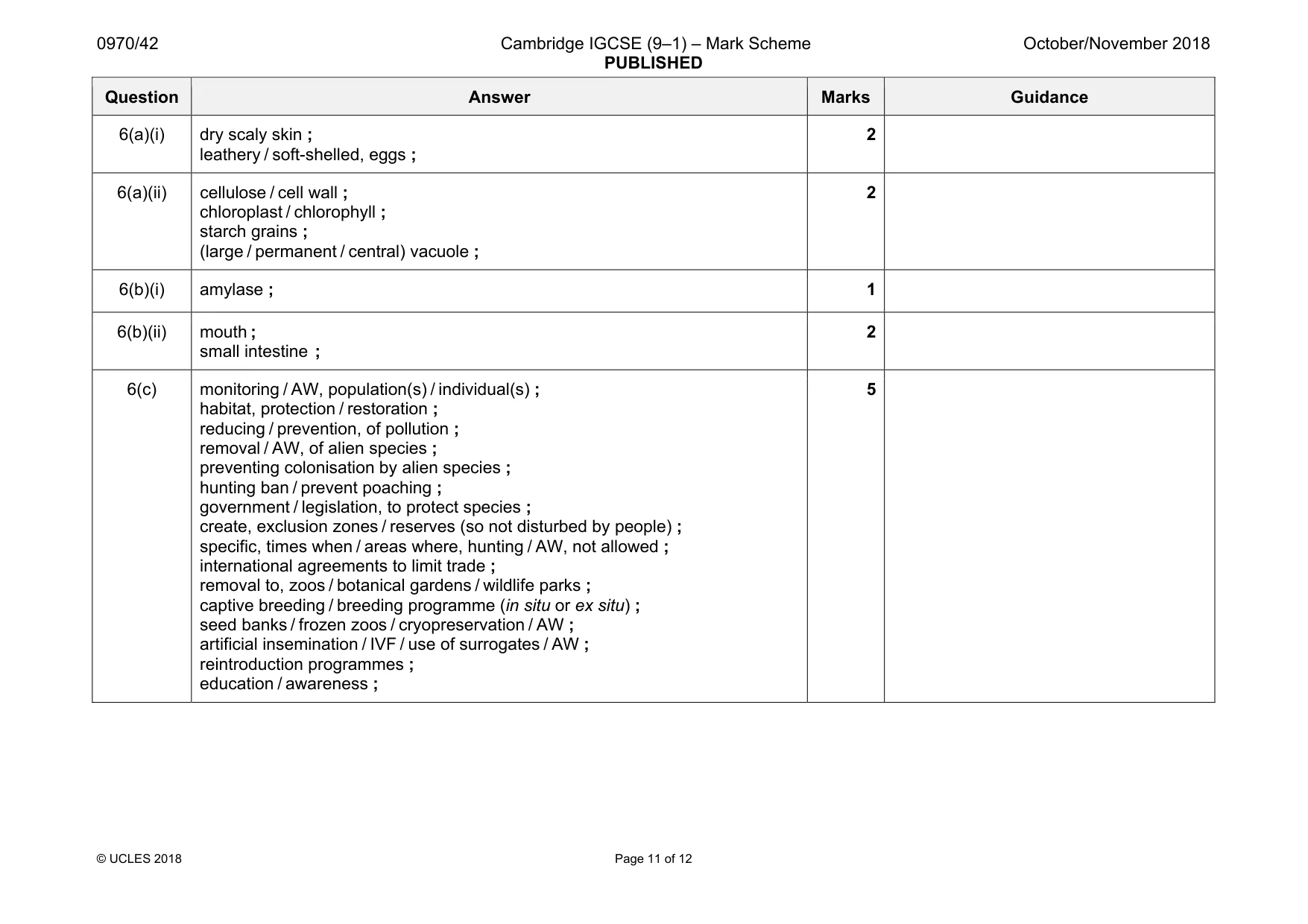
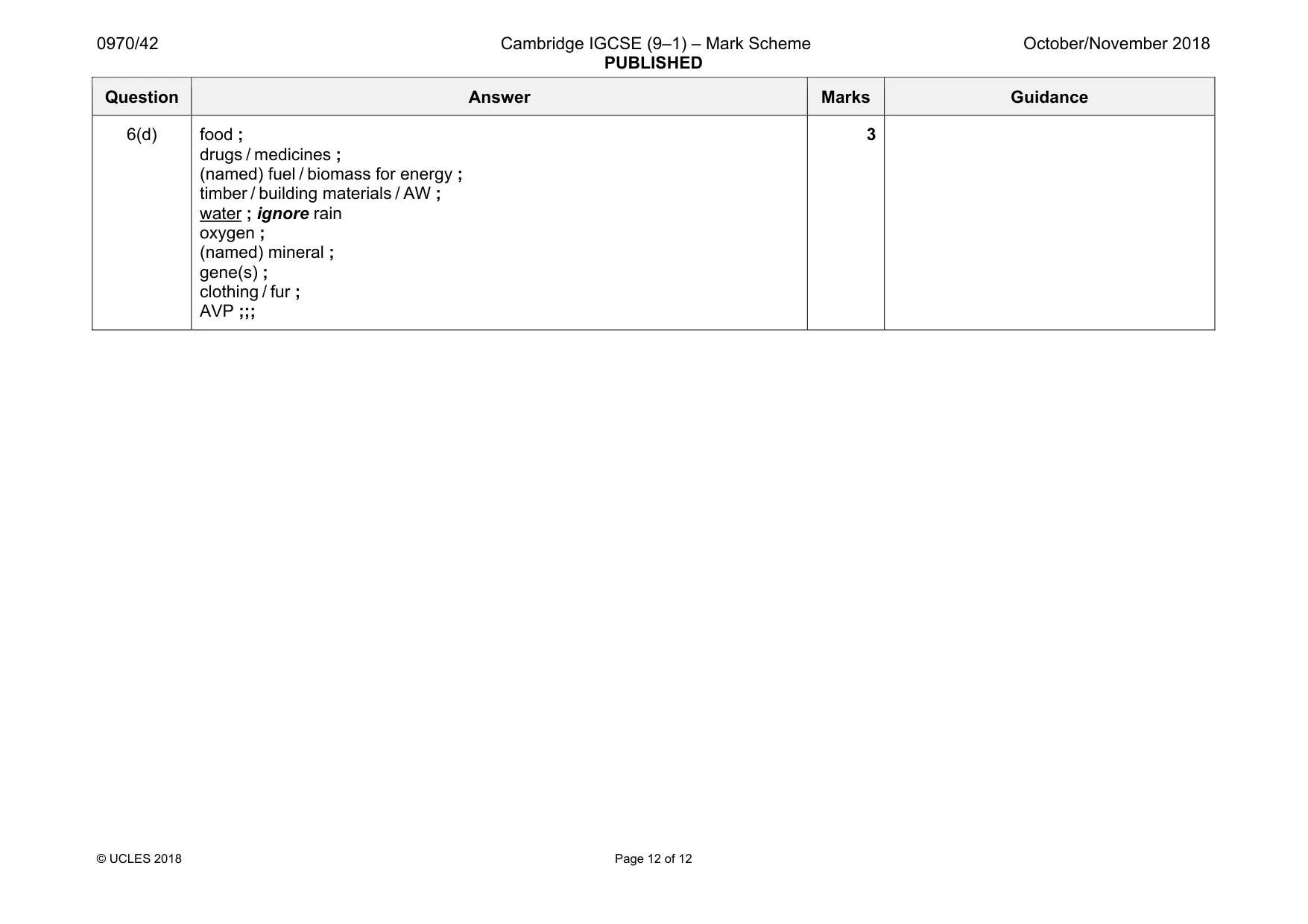
Mark scheme: 6(a)(i) dry scaly skin ; leathery / soft-shelled, eggs ; 2 6(a)(ii) cellulose / cell wall ; chloroplast / chlorophyll ; starch grains ; (large / permanent / central) vacuole ; 2 6(b)(i) amylase ; 1 6(b)(ii) mouth ; small intestine ; 2 6(c) monitoring / AW, population(s) / individual(s) ; habitat, protection / restoration ; reducing / prevention, of pollution ; removal / AW, of alien species ; preventing colonisation by alien species ; hunting ban / prevent poaching ; government / legislation, to protect species ; create, exclusion zones / reserves (so not disturbed by people) ; specific, times when / areas where, hunting / AW, not allowed ; international agreements to limit trade ; removal to, zoos / botanical gardens / wildlife parks ; captive breeding / breeding programme (in situ or ex situ) ; seed banks / frozen zoos / cryopreservation / AW ; artificial insemination / IVF / use of surrogates / AW ; reintroduction programmes ; education / awareness ; 5 Question Answer Marks Guidance 6(d) food ; drugs / medicines ; (named) fuel / biomass for energy ; timber / building materials / AW ; water ; ignore rain oxygen ; (named) mineral ; gene(s) ; clothing / fur ; AVP ;;; 3
What was in this paper
The subtopics covered by these 6 questions, and how many questions each got. Open one in a new tab to see every Cambridge question on it.
What you needed in this session
Cambridge’s own grade thresholds for 2018 Oct/Nov, Paper 4 · Variant 2. A higher threshold means an easier paper — the bar moves with how the cohort did.