Cambridge IGCSE Biology (9-1) 0970 — 2018 May/June Paper 3 · Variant 1
0970/31/M/J/18 · 10 questions · 80 marks · ≈90 min
The question paper and its mark scheme, free to read here and free to download. This is Cambridge’s own paper, exactly as it was sat.
Question paper20 pages


Mark scheme13 pages
Answers below. Sit the paper first if you are practising.
Questions as text
Q1 · The boxes on the left describe processes carried out by cells
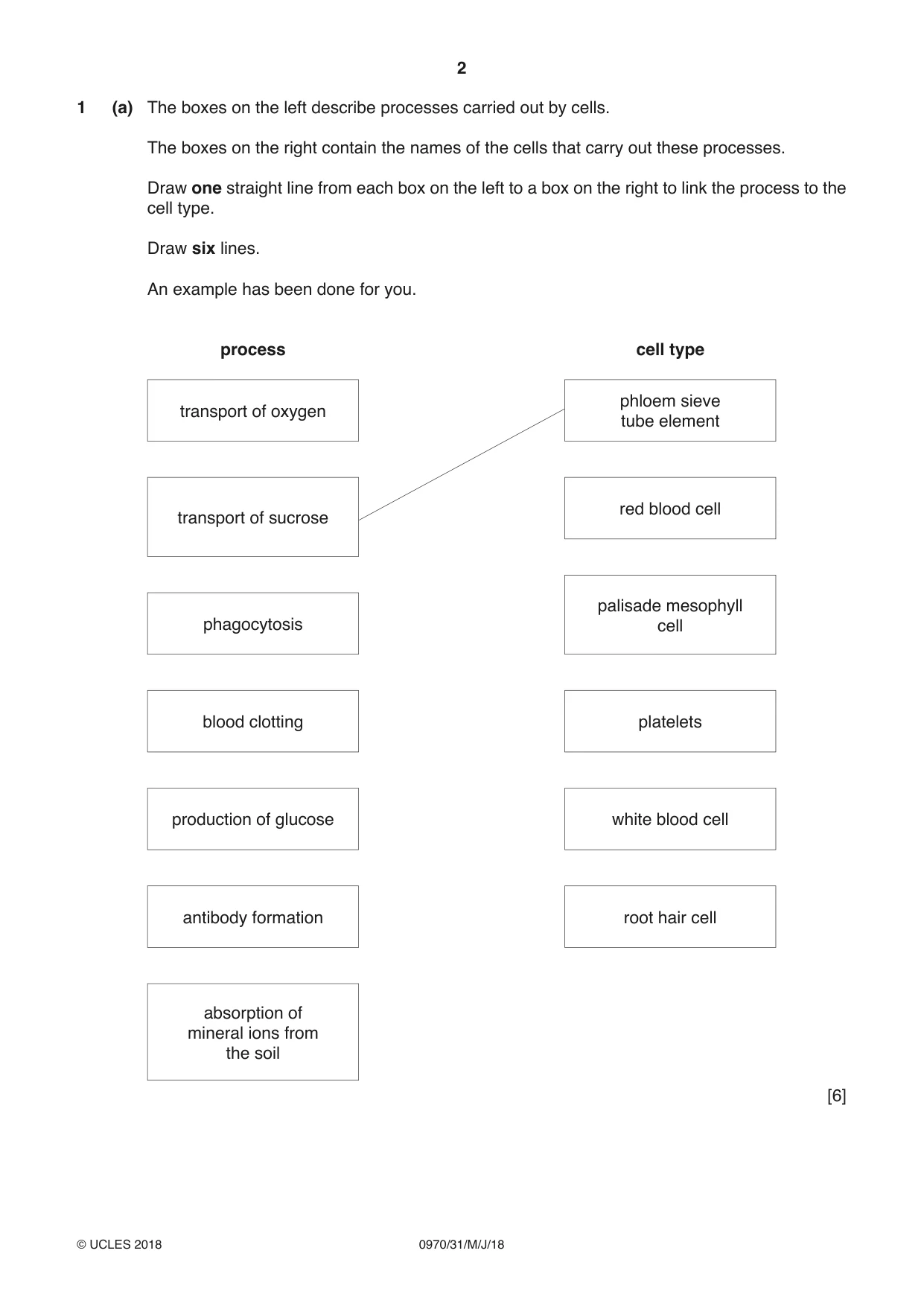
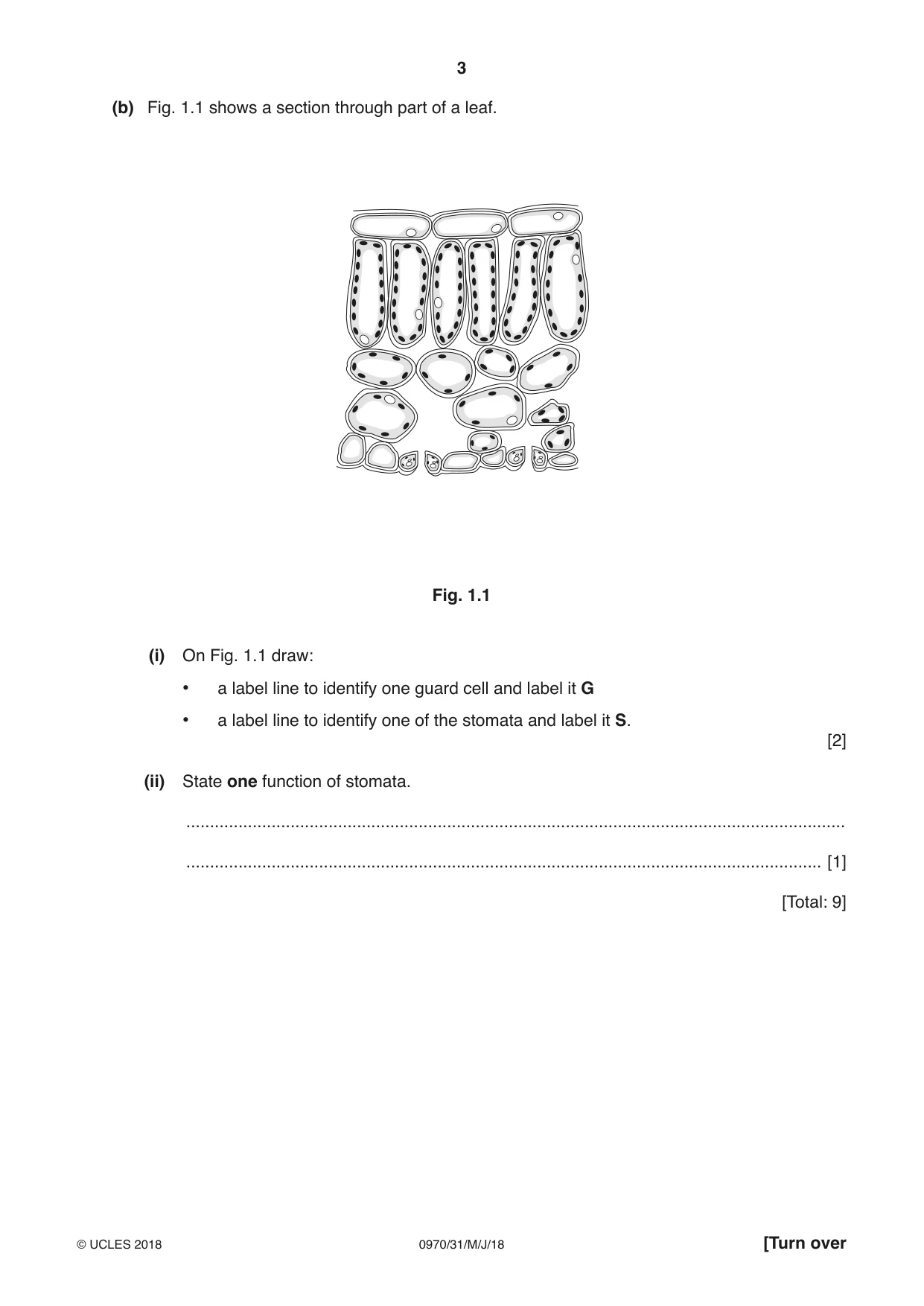
1 (a) The boxes on the left describe processes carried out by cells. The boxes on the right contain the names of the cells that carry out these processes. Draw one straight line from each box on the left to a box on the right to link the process to the cell type. Draw six lines. An example has been done for you. process cell type phloem sieve transport of oxygen tube element red blood cell transport of sucrose palisade mesophyll phagocytosis cell blood clotting platelets production of glucose white blood cell antibody formation root hair cell absorption of mineral ions from the soil [6] (b) Fig. 1.1 shows a section through part of a leaf. Fig. 1.1 (i) On Fig. 1.1 draw: • a label line to identify one guard cell and label it G • a label line to identify one of the stomata and label it S. [2] (ii) State one function of stomata. ........................................................................................................................................... ...................................................................................................................................... [1] [Total: 9]
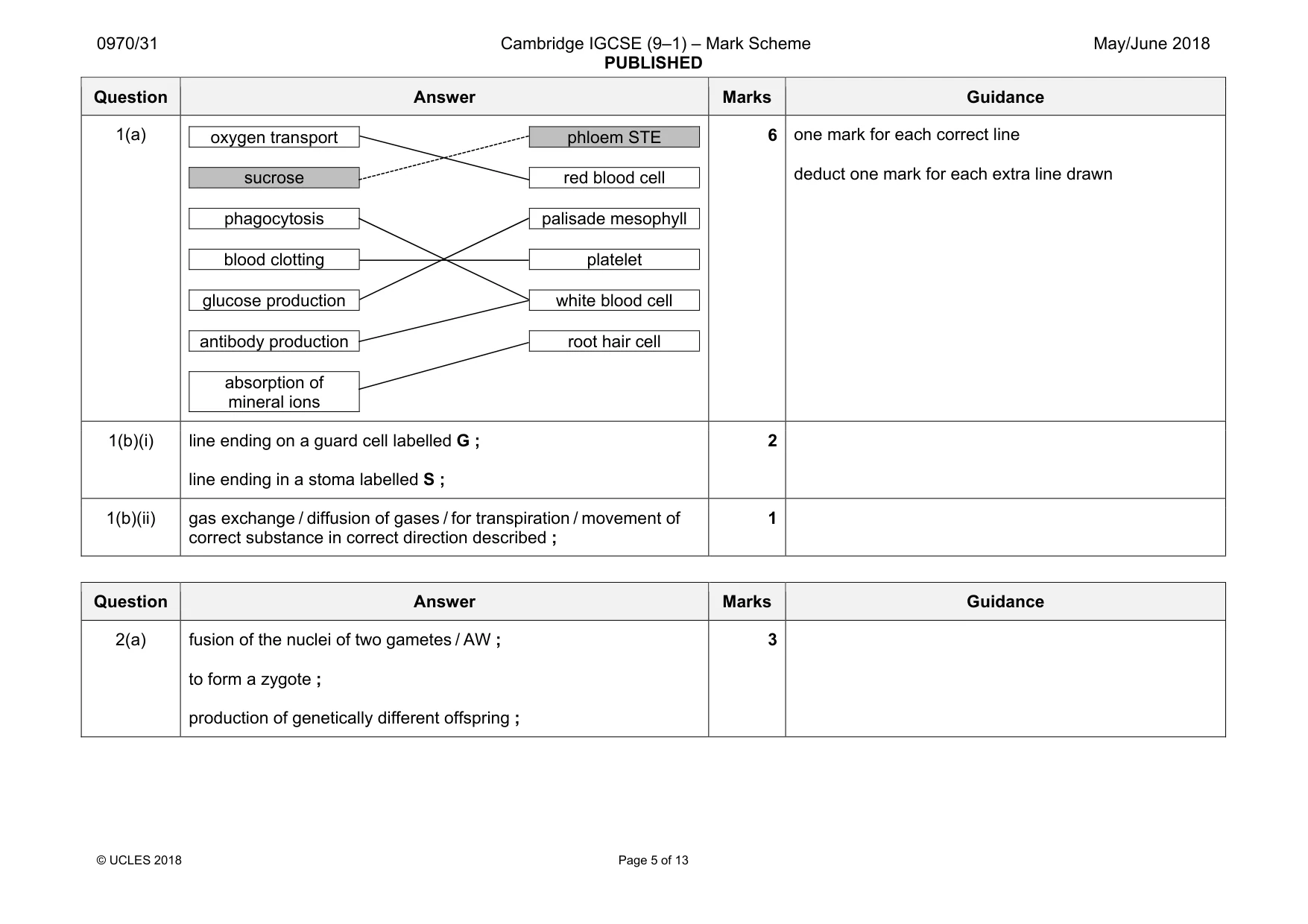
Mark scheme: 1(a) oxygen transport phloem STE sucrose red blood cell phagocytosis palisade mesophyll blood clotting platelet glucose production white blood cell antibody production root hair cell absorption of mineral ions 6 deduct one mark for each extra line drawn 1(b)(i) line ending on a guard cell labelled G ; line ending in a stoma labelled S ; 2 1(b)(ii) gas exchange / diffusion of gases / for transpiration / movement of correct substance in correct direction described ; 1
Q2 · Define the term sexual reproduction
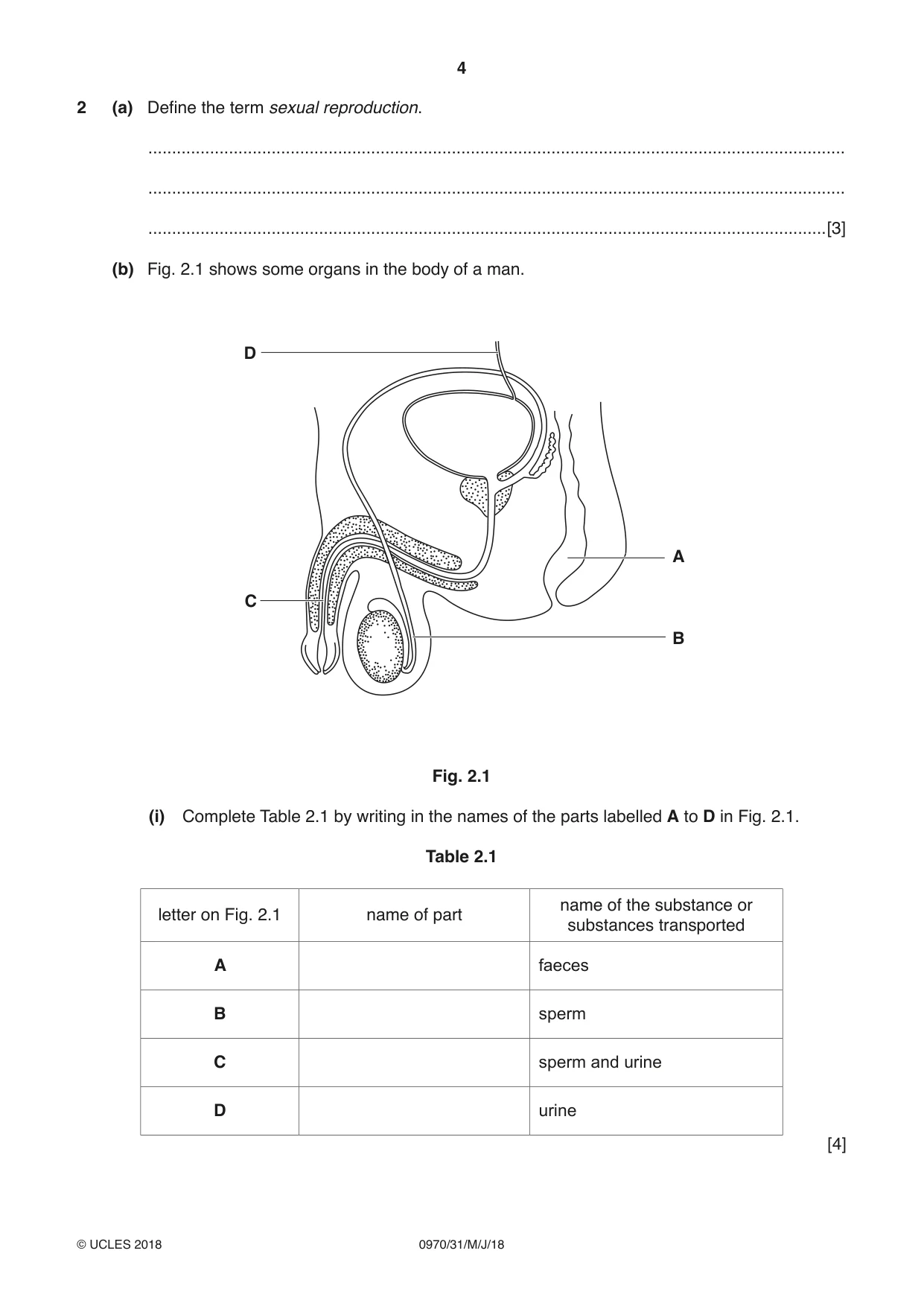
2 (a) Define the term sexual reproduction. ................................................................................................................................................... ................................................................................................................................................... ...............................................................................................................................................[3] (b) Fig. 2.1 shows some organs in the body of a man. D A C B Fig. 2.1 (i) Complete Table 2.1 by writing in the names of the parts labelled A to D in Fig. 2.1. Table 2.1 name of the substance or letter on Fig. 2.1 name of part substances transported A faeces B sperm C sperm and urine D urine [4] (ii) On Fig. 2.1 draw a label line to the prostate gland and label it P. [1] (c) State the function of the scrotum. ................................................................................................................................................... ................................................................................................................................................... ...............................................................................................................................................[1] [Total: 9]
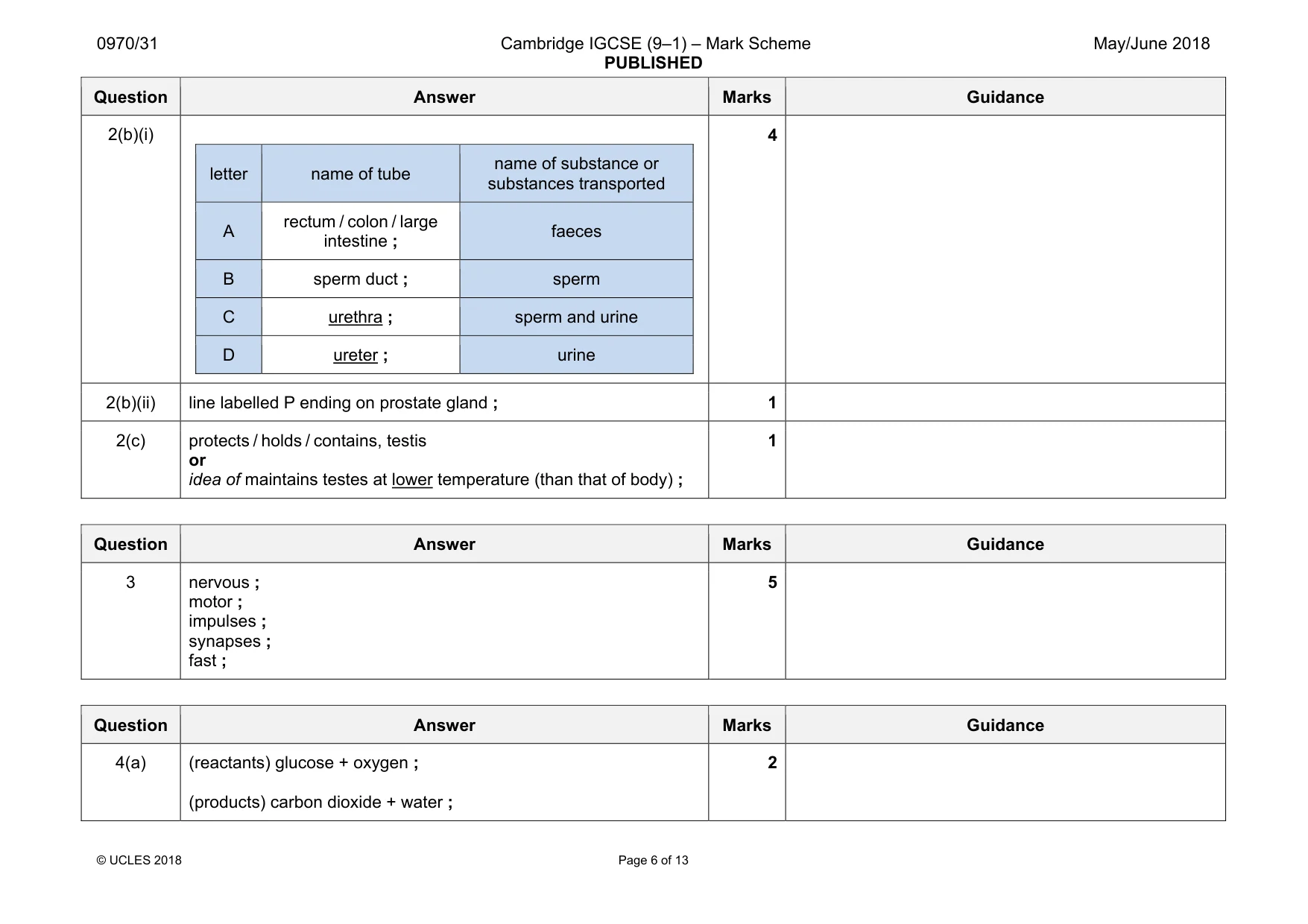
Mark scheme: 2(a) fusion of the nuclei of two gametes / AW ; to form a zygote ; production of genetically different offspring ; 3 Question Answer Marks Guidance 2(b)(i) letter name of tube name of substance or substances transported A rectum / colon / large intestine ; faeces B sperm duct ; sperm C urethra ; sperm and urine D ureter ; urine 4 2(b)(ii) line labelled P ending on prostate gland ; 1 2(c) protects / holds / contains, testis or idea of maintains testes at lower temperature (than that of body) ; 1
Q3 · This question is about neurones and reflex actions
3 This question is about neurones and reflex actions. Choose words from the list to complete the sentences. Each word may be used once, more than once, or not at all. endocrine fast impulses motor nervous receptor sensory slow stimuli synapses Neurones are cells that are part of the ............................................... system. There are three types of neurone involved in a simple reflex action: a sensory neurone, a relay neurone and a ............................................... neurone. The nerves conduct electrical ............................................... . These are transmitted from one neurone to the next at junctions called ............................................... . A reflex action is automatic, co-ordinated and ............................................... . [5] [Total: 5]
Mark scheme: 3 nervous ; motor ; impulses ; synapses ; fast ; 5
Question 4
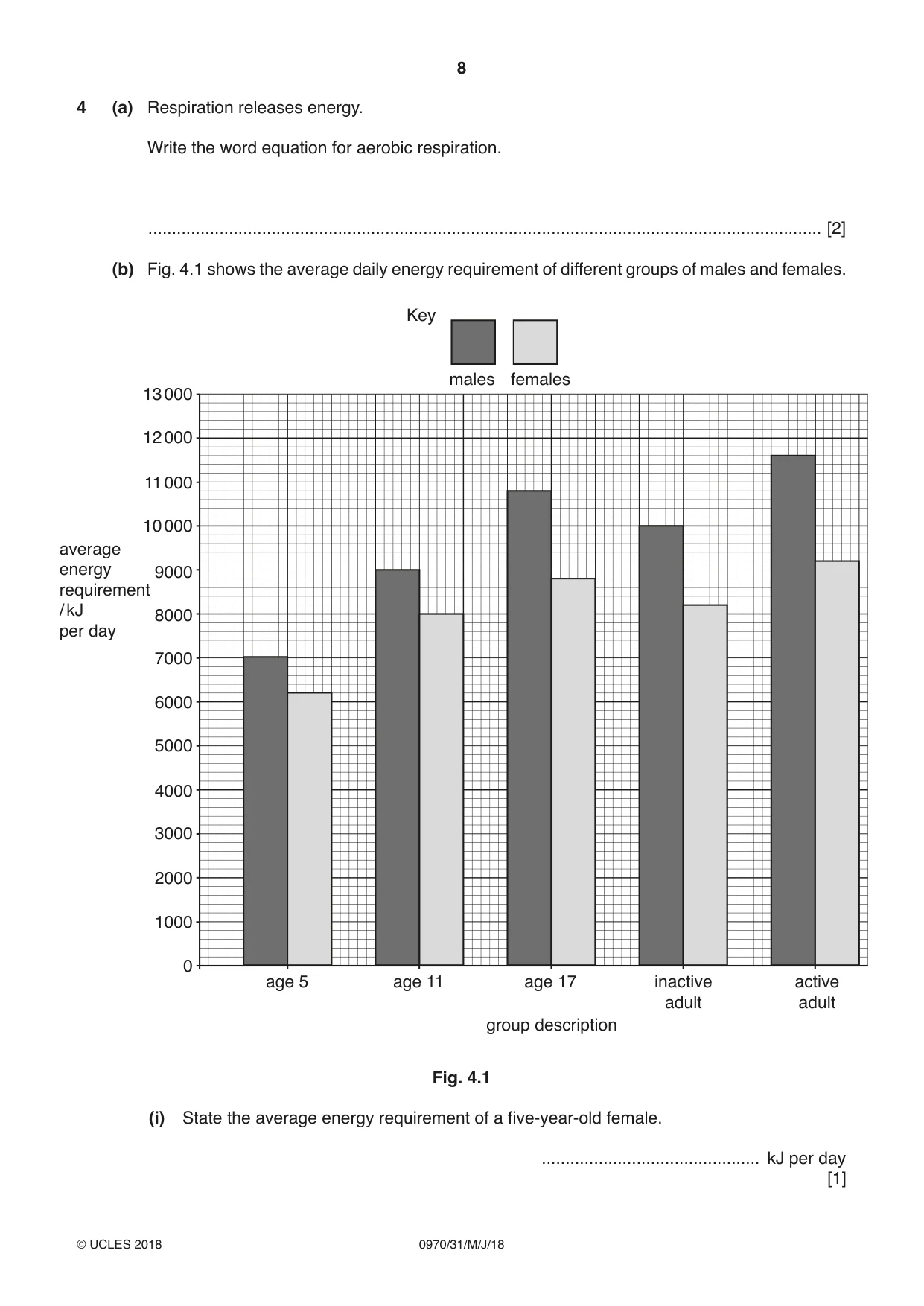
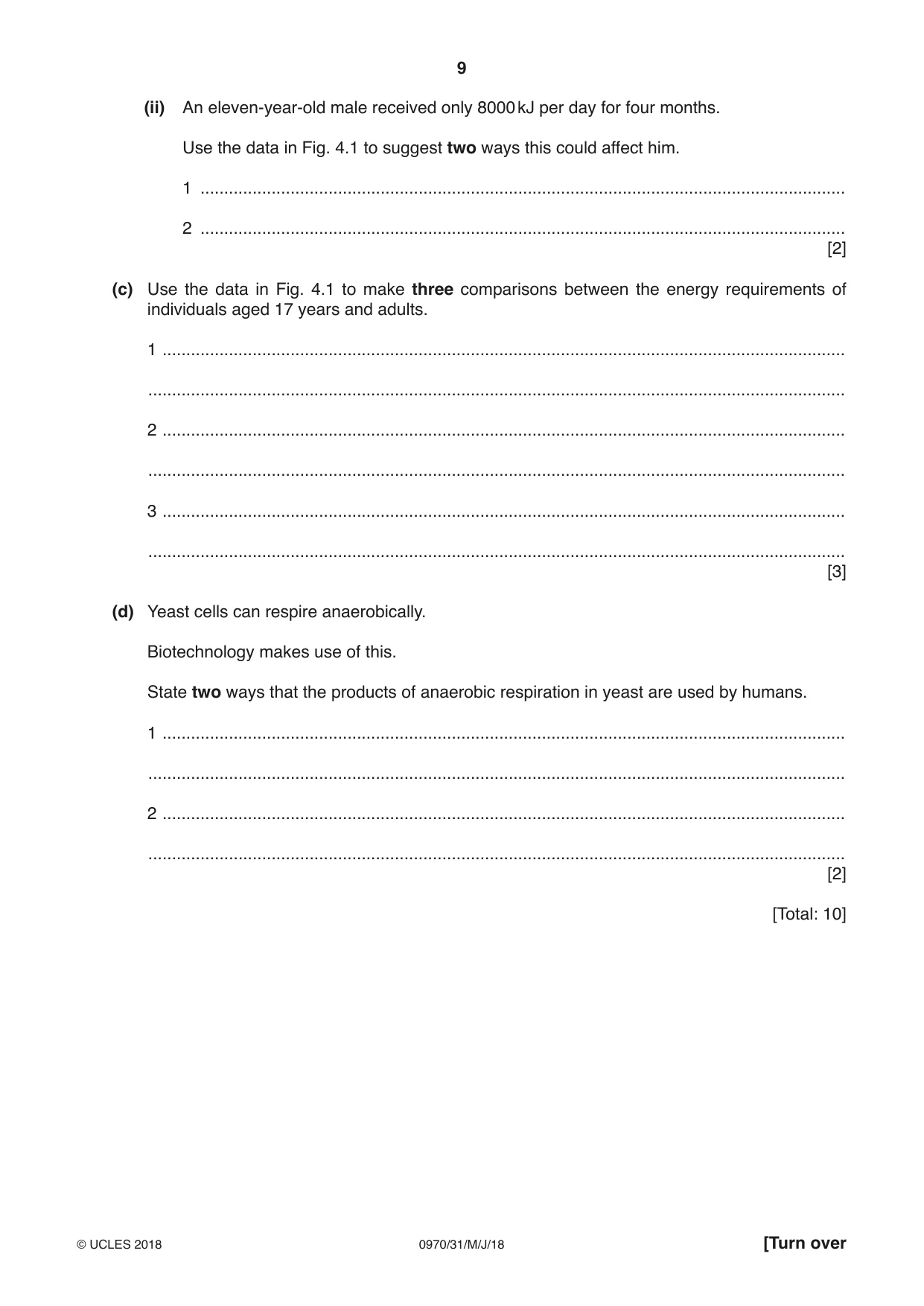
4 (a) Respiration releases energy. Write the word equation for aerobic respiration. .............................................................................................................................................. [2] (b) Fig. 4.1 shows the average daily energy requirement of different groups of males and females. Key males females 13 000 12 000 11 000 10 000 average energy 9000 requirement / kJ 8000 per day 7000 6000 5000 4000 3000 2000 1000 0 age 5 age 11 age 17 inactive active adult adult group description Fig. 4.1 (i) State the average energy requirement of a five-year-old female. .............................................. kJ per day [1] (ii) An eleven-year-old male received only 8000 kJ per day for four months. Use the data in Fig. 4.1 to suggest two ways this could affect him. 1 ........................................................................................................................................ 2 ........................................................................................................................................ [2] (c) Use the data in Fig. 4.1 to make three comparisons between the energy requirements of individuals aged 17 years and adults. 1 ................................................................................................................................................ ................................................................................................................................................... 2 ................................................................................................................................................ ................................................................................................................................................... 3 ................................................................................................................................................ ................................................................................................................................................... [3] (d) Yeast cells can respire anaerobically. Biotechnology makes use of this. State two ways that the products of anaerobic respiration in yeast are used by humans. 1 ................................................................................................................................................ ................................................................................................................................................... 2 ................................................................................................................................................ ................................................................................................................................................... [2] [Total: 10]
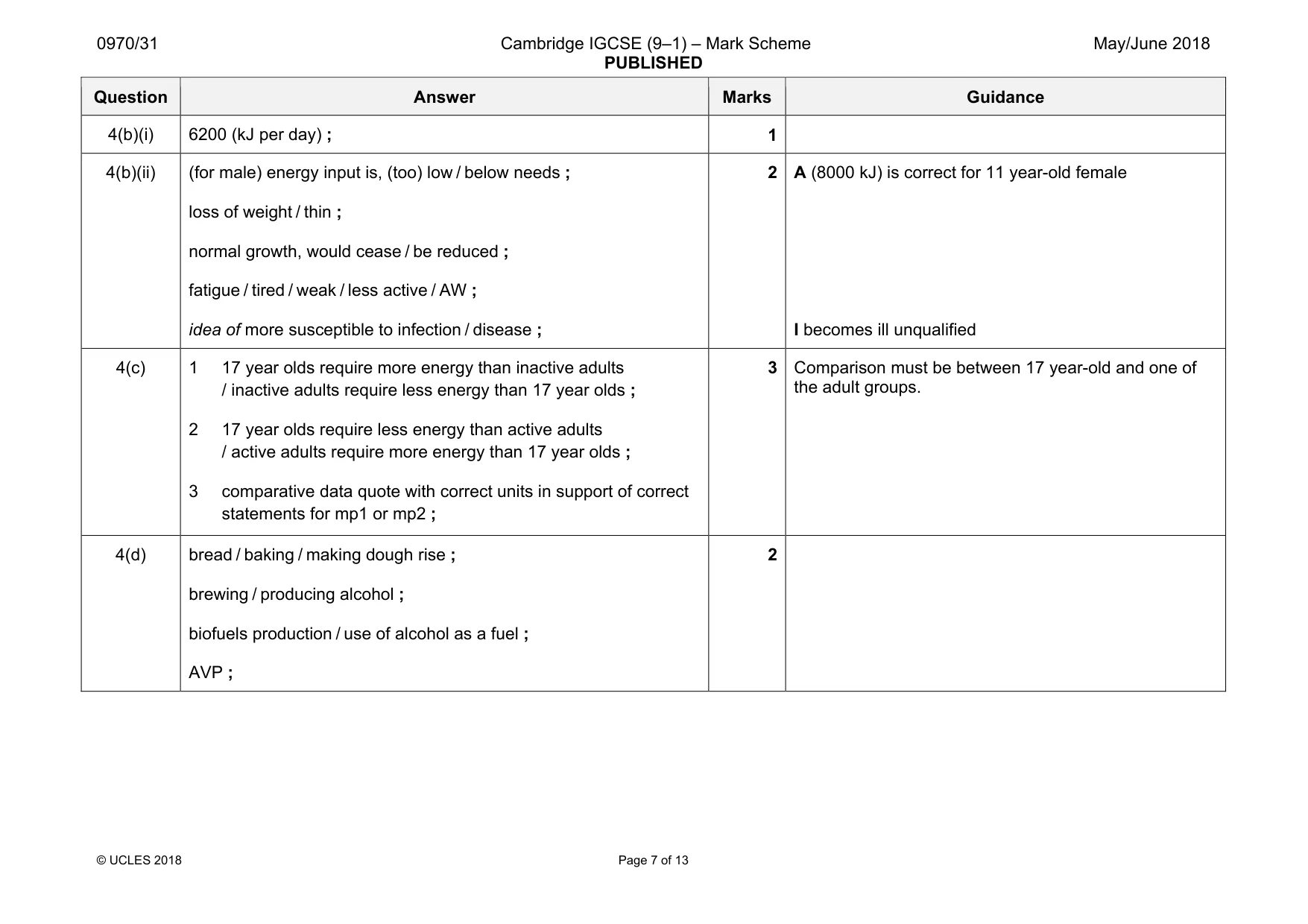
Mark scheme: 4(a) (reactants) glucose + oxygen ; (products) carbon dioxide + water ; 2 Question Answer Marks Guidance 4(b)(i) 6200 (kJ per day) ; 1 4(b)(ii) (for male) energy input is, (too) low / below needs ; loss of weight / thin ; normal growth, would cease / be reduced ; fatigue / tired / weak / less active / AW ; idea of more susceptible to infection / disease ; 2 A (8000 kJ) is correct for 11 year-old female I becomes ill unqualified 4(c) 1 17 year olds require more energy than inactive adults / inactive adults require less energy than 17 year olds ; 2 17 year olds require less energy than active adults / active adults require more energy than 17 year olds ; 3 comparative data quote with correct units in support of correct statements for mp1 or mp2 ; 3 Comparison must be between 17 year-old and one of the adult groups. 4(d) bread / baking / making dough rise ; brewing / producing alcohol ; biofuels production / use of alcohol as a fuel ; AVP ; 2
Q5 · The sentences in the box describe the feeding relationships between four organisms
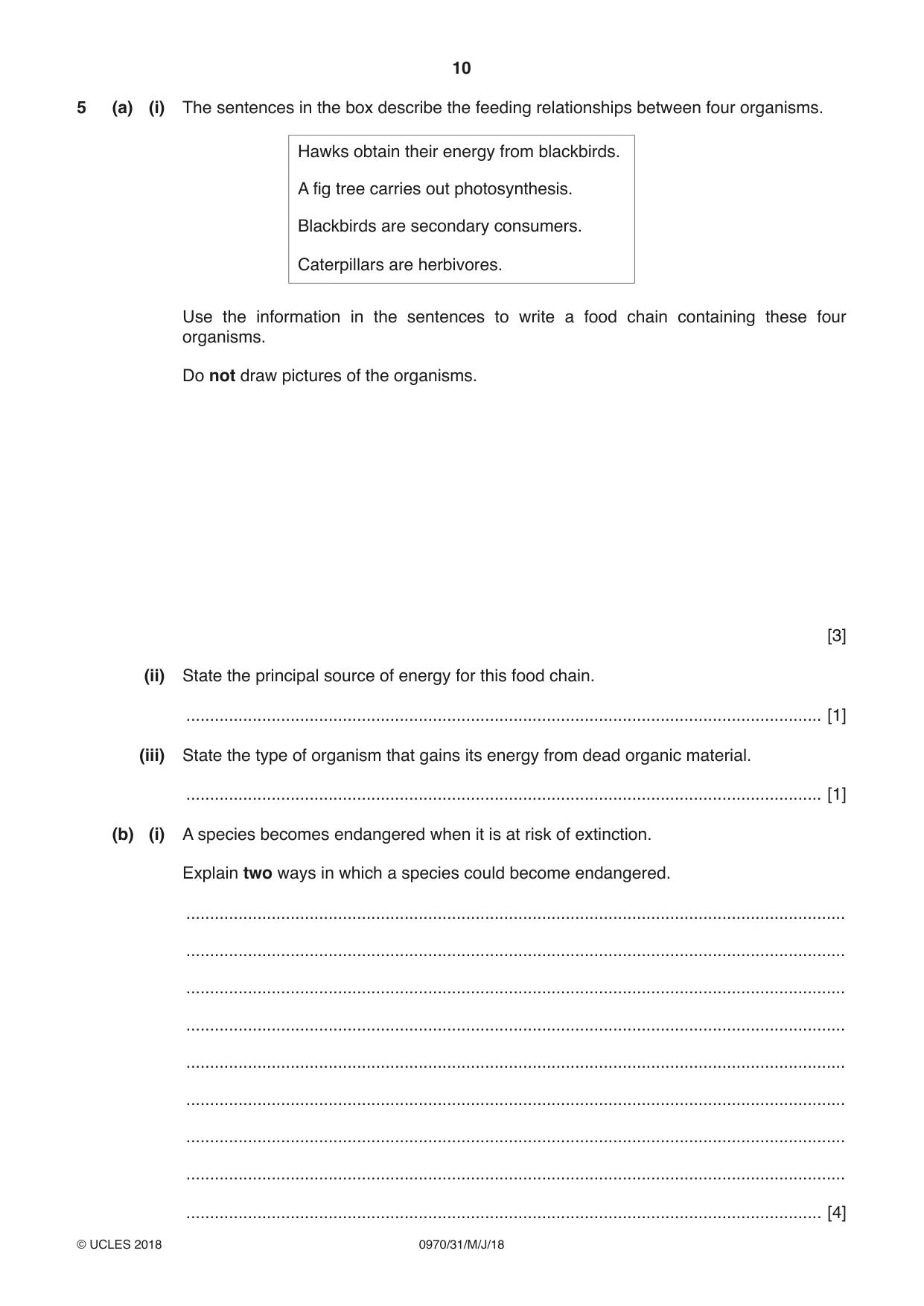
5 (a) (i) The sentences in the box describe the feeding relationships between four organisms. Hawks obtain their energy from blackbirds. A fig tree carries out photosynthesis. Blackbirds are secondary consumers. Caterpillars are herbivores. Use the information in the sentences to write a food chain containing these four organisms. Do not draw pictures of the organisms. [3] (ii) State the principal source of energy for this food chain. ...................................................................................................................................... [1] (iii) State the type of organism that gains its energy from dead organic material. ...................................................................................................................................... [1] (b) (i) A species becomes endangered when it is at risk of extinction. Explain two ways in which a species could become endangered. ........................................................................................................................................... ........................................................................................................................................... ........................................................................................................................................... ........................................................................................................................................... ........................................................................................................................................... ........................................................................................................................................... ........................................................................................................................................... ........................................................................................................................................... ...................................................................................................................................... [4] (ii) State one way in which endangered species can be conserved. ........................................................................................................................................... ........................................................................................................................................... .......................................................................................................................................[1] [Total: 10]
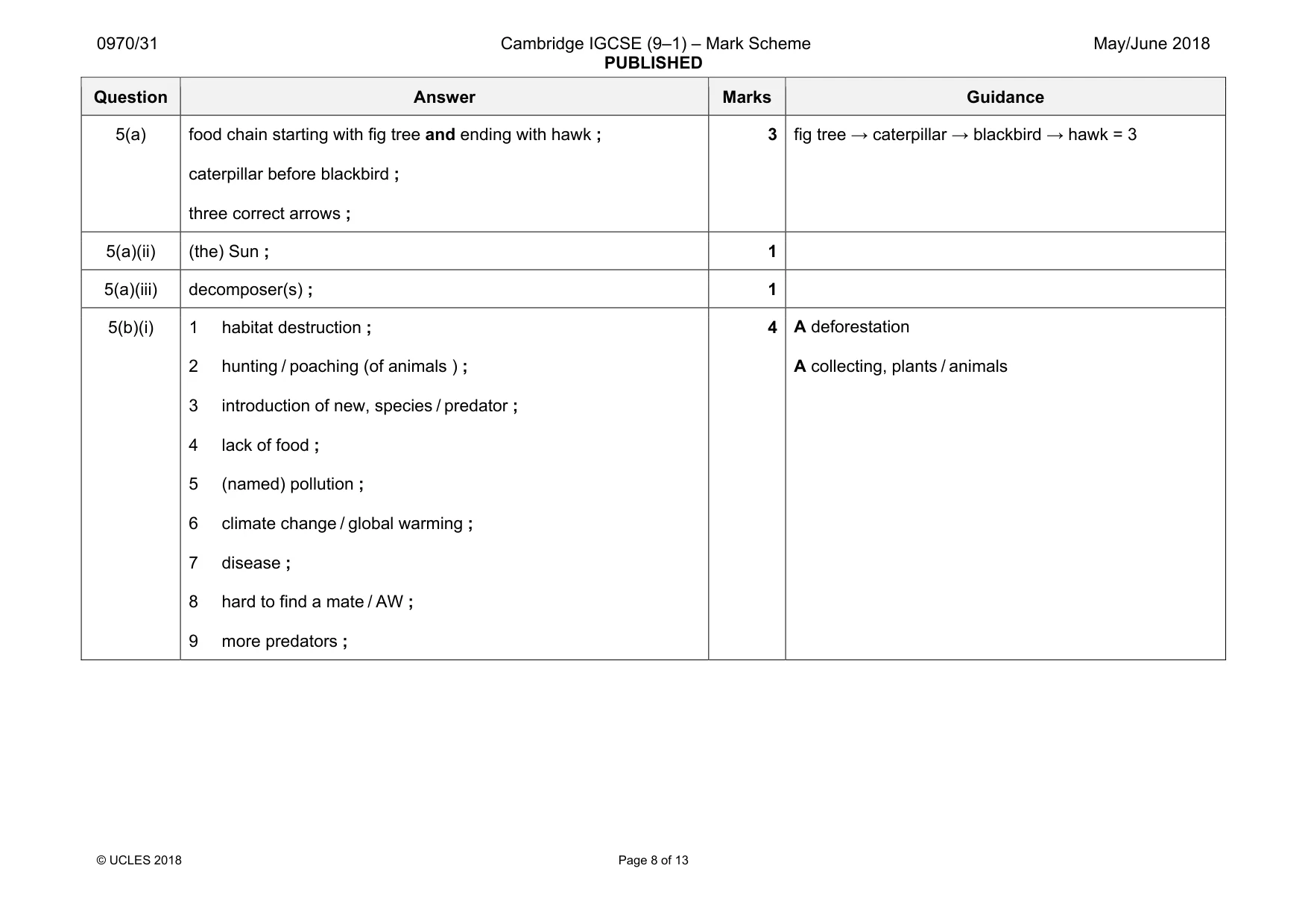
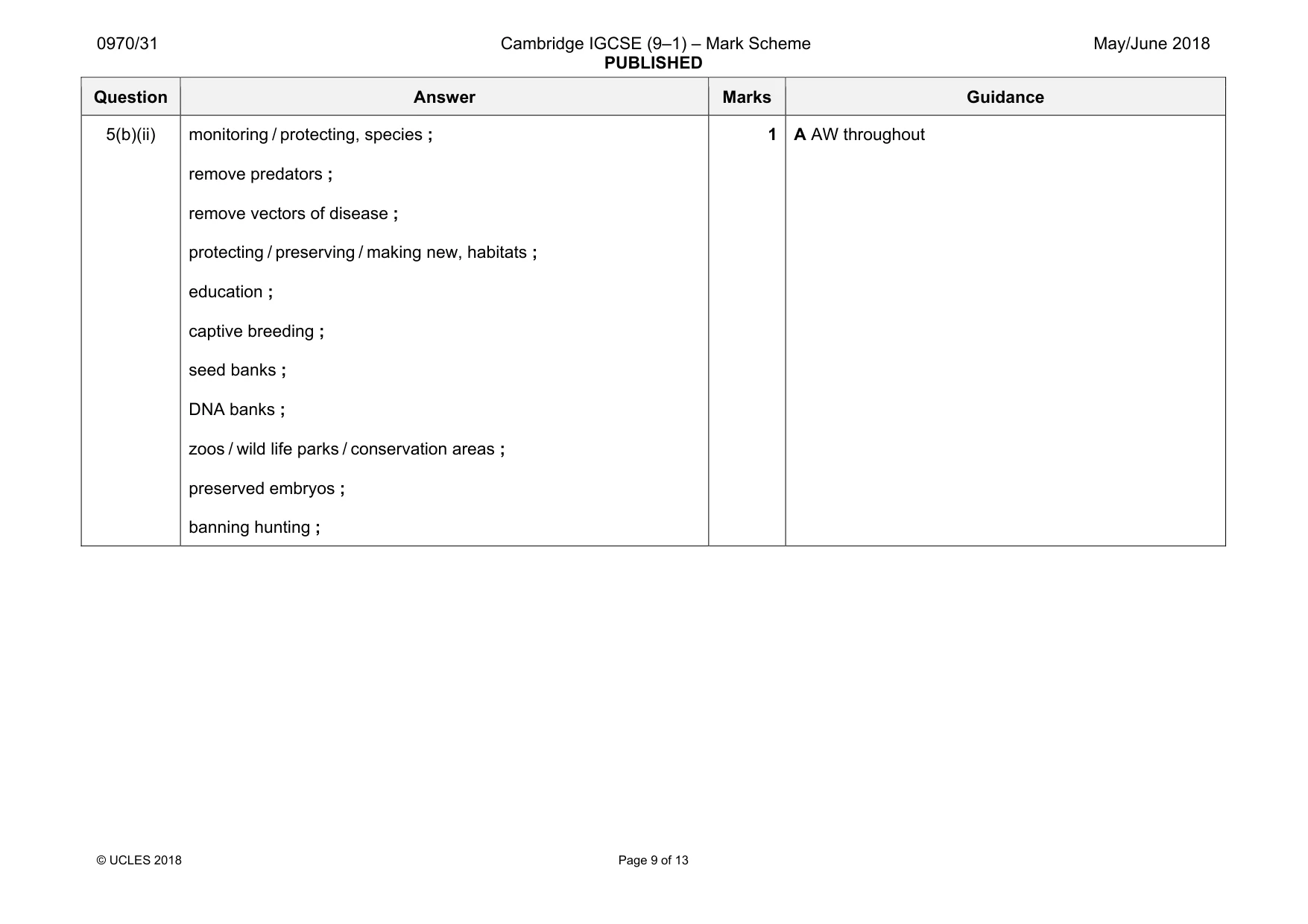
Mark scheme: 5(a) food chain starting with fig tree and ending with hawk ; caterpillar before blackbird ; three correct arrows ; 3 5(a)(ii) (the) Sun ; 1 5(a)(iii) decomposer(s) ; 1 5(b)(i) 1 habitat destruction ; 2 hunting / poaching (of animals ) ; 3 introduction of new, species / predator ; 4 lack of food ; 5 (named) pollution ; 6 climate change / global warming ; 7 disease ; 8 hard to find a mate / AW ; 9 more predators ; 4 A deforestation A collecting, plants / animals Question Answer Marks Guidance 5(b)(ii) monitoring / protecting, species ; remove predators ; remove vectors of disease ; protecting / preserving / making new, habitats ; education ; captive breeding ; seed banks ; DNA banks ; zoos / wild life parks / conservation areas ; preserved embryos ; banning hunting ; 1 A AW throughout
Q6 · A section through a tooth
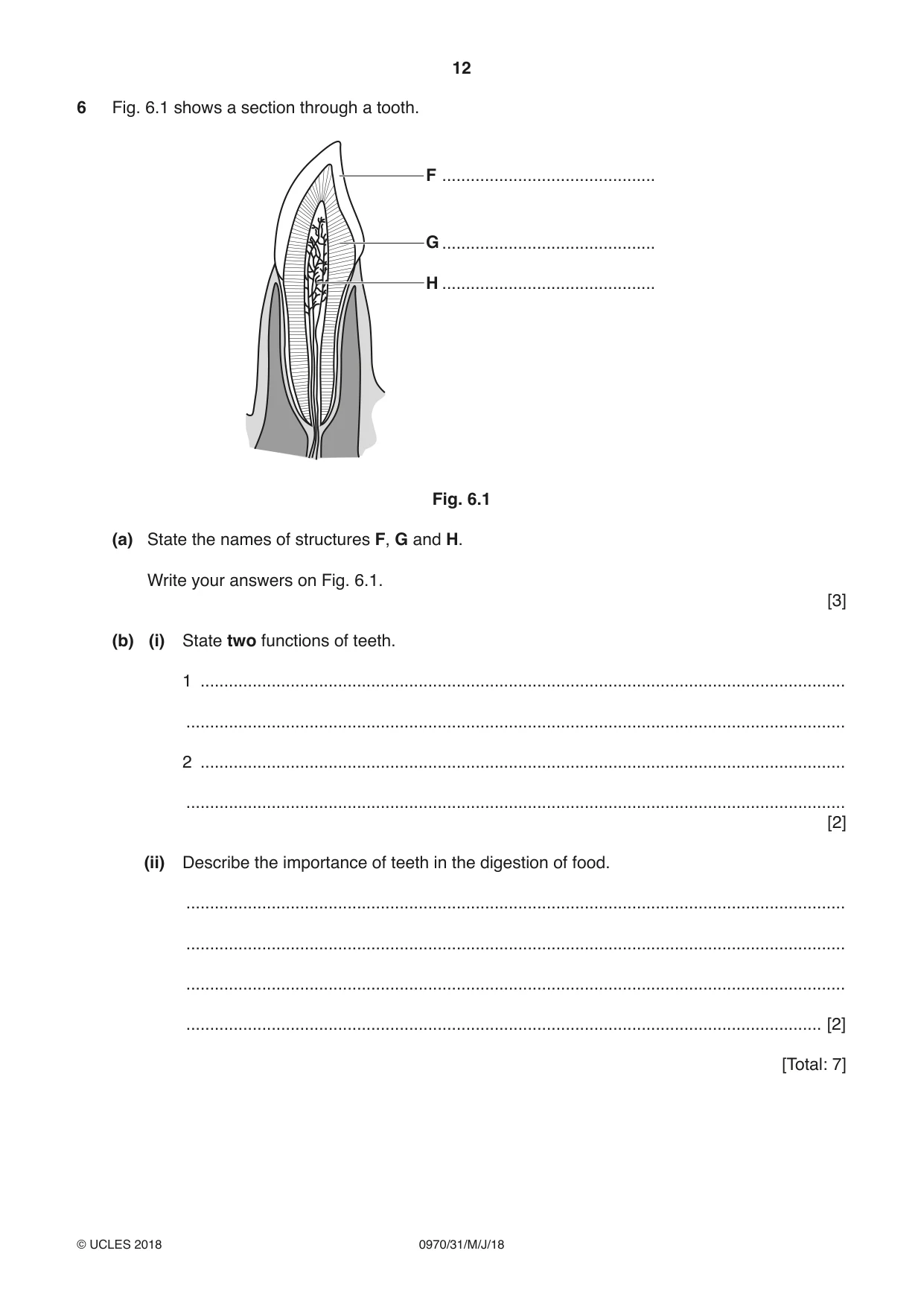
6 Fig. 6.1 shows a section through a tooth. F ............................................. G ............................................. H ............................................. Fig. 6.1 (a) State the names of structures F, G and H. Write your answers on Fig. 6.1. [3] (b) (i) State two functions of teeth. 1 ........................................................................................................................................ ........................................................................................................................................... 2 ........................................................................................................................................ ........................................................................................................................................... [2] (ii) Describe the importance of teeth in the digestion of food. ........................................................................................................................................... ........................................................................................................................................... ........................................................................................................................................... ...................................................................................................................................... [2] [Total: 7]
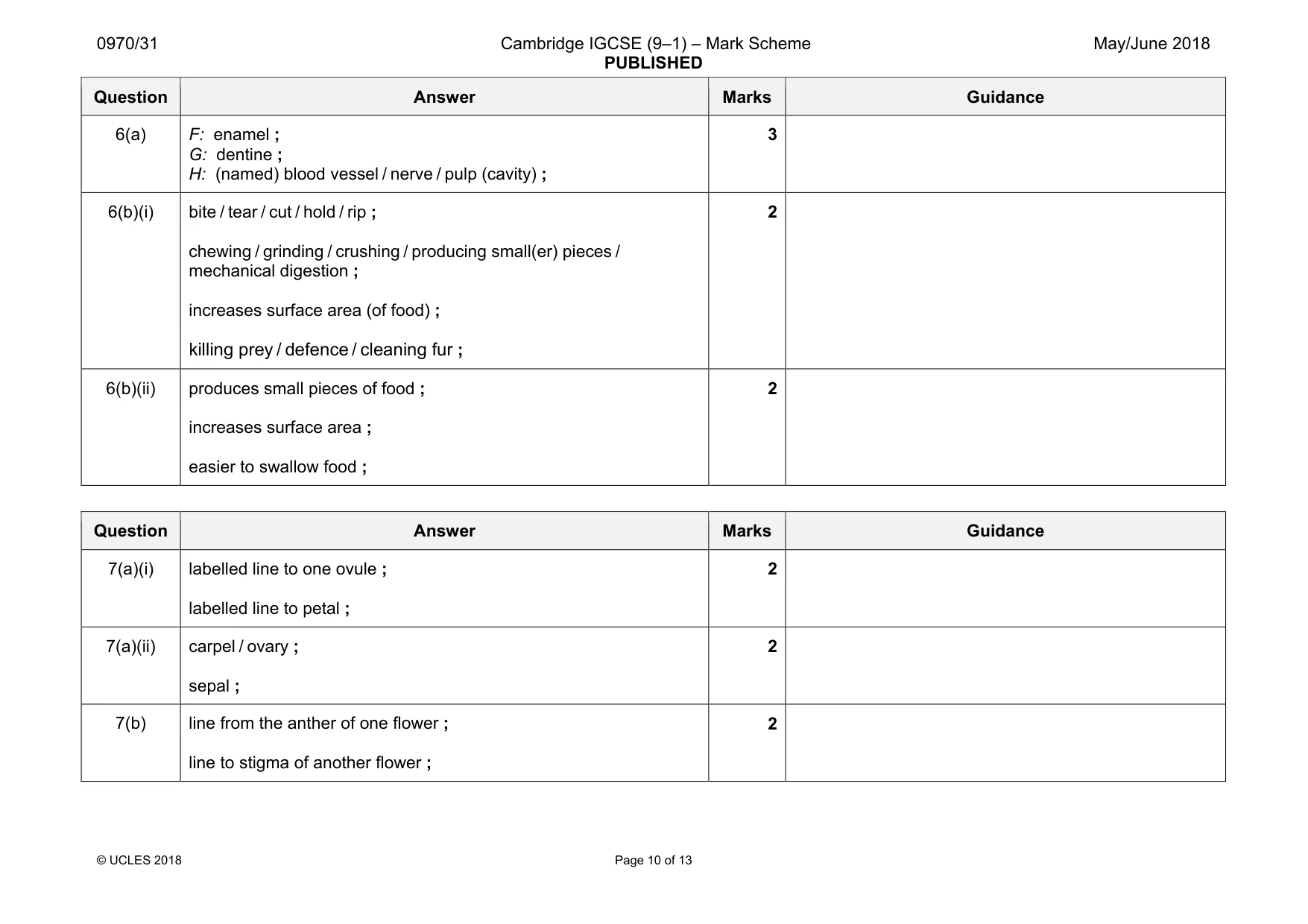
Mark scheme: 6(a) F: enamel ; G: dentine ; H: (named) blood vessel / nerve / pulp (cavity) ; 3 6(b)(i) bite / tear / cut / hold / rip ; chewing / grinding / crushing / producing small(er) pieces / mechanical digestion ; increases surface area (of food) ; killing prey / defence / cleaning fur ; 2 6(b)(ii) produces small pieces of food ; increases surface area ; easier to swallow food ; 2
Q7 · Sections of two flowers, K and L, from the same species
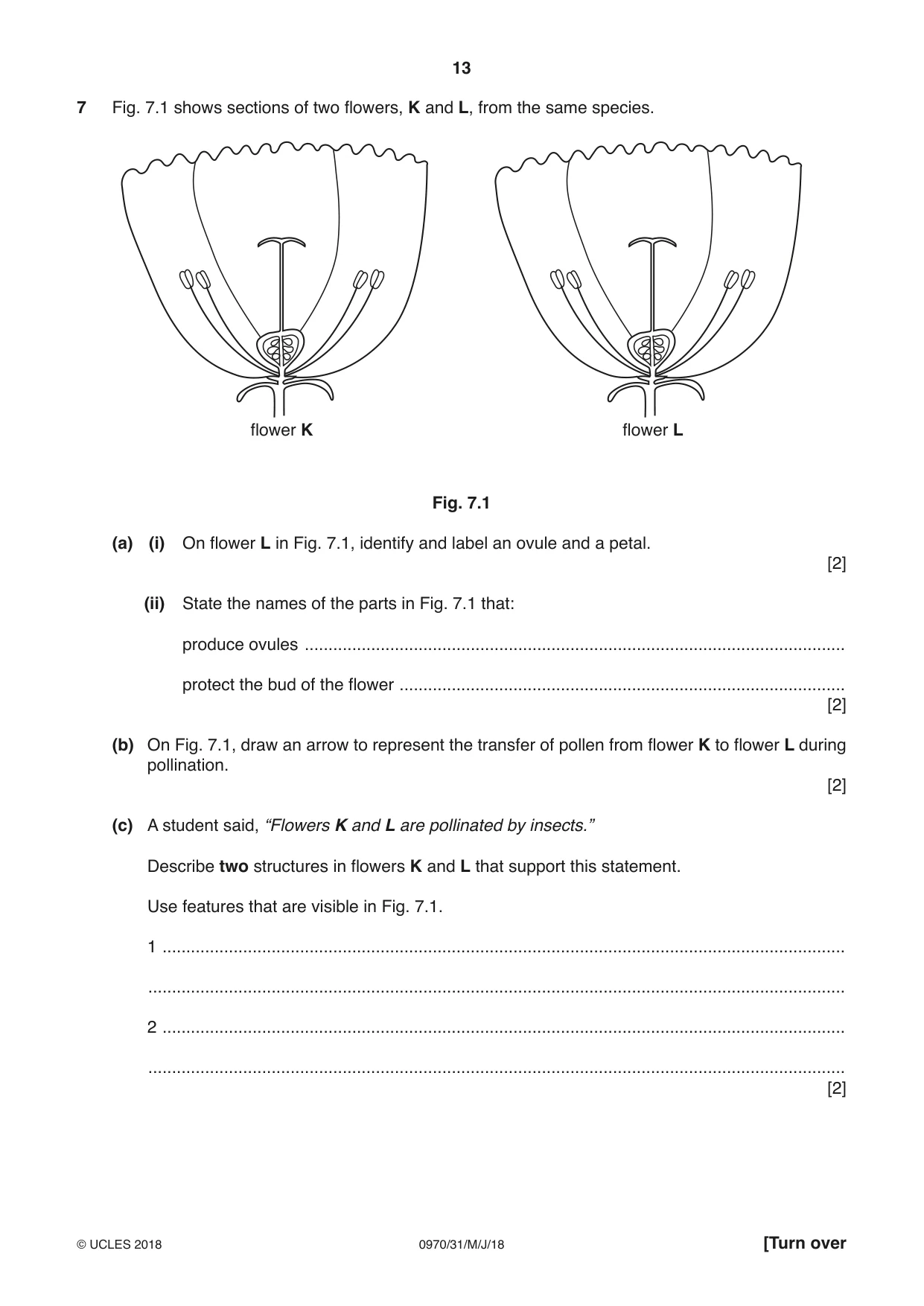
7 Fig. 7.1 shows sections of two flowers, K and L, from the same species. flower K flower L Fig. 7.1 (a) (i) On flower L in Fig. 7.1, identify and label an ovule and a petal. [2] (ii) State the names of the parts in Fig. 7.1 that: produce ovules .................................................................................................................. protect the bud of the flower .............................................................................................. [2] (b) On Fig. 7.1, draw an arrow to represent the transfer of pollen from flower K to flower L during pollination. [2] (c) A student said, “Flowers K and L are pollinated by insects.” Describe two structures in flowers K and L that support this statement. Use features that are visible in Fig. 7.1. 1 ................................................................................................................................................ ................................................................................................................................................... 2 ................................................................................................................................................ ................................................................................................................................................... [2] (d) Describe the pathway water takes in a plant, as it moves from the soil to a leaf. ................................................................................................................................................... ................................................................................................................................................... ................................................................................................................................................... ................................................................................................................................................... ................................................................................................................................................... ................................................................................................................................................... ................................................................................................................................................... ................................................................................................................................................... .............................................................................................................................................. [4] [Total: 12]
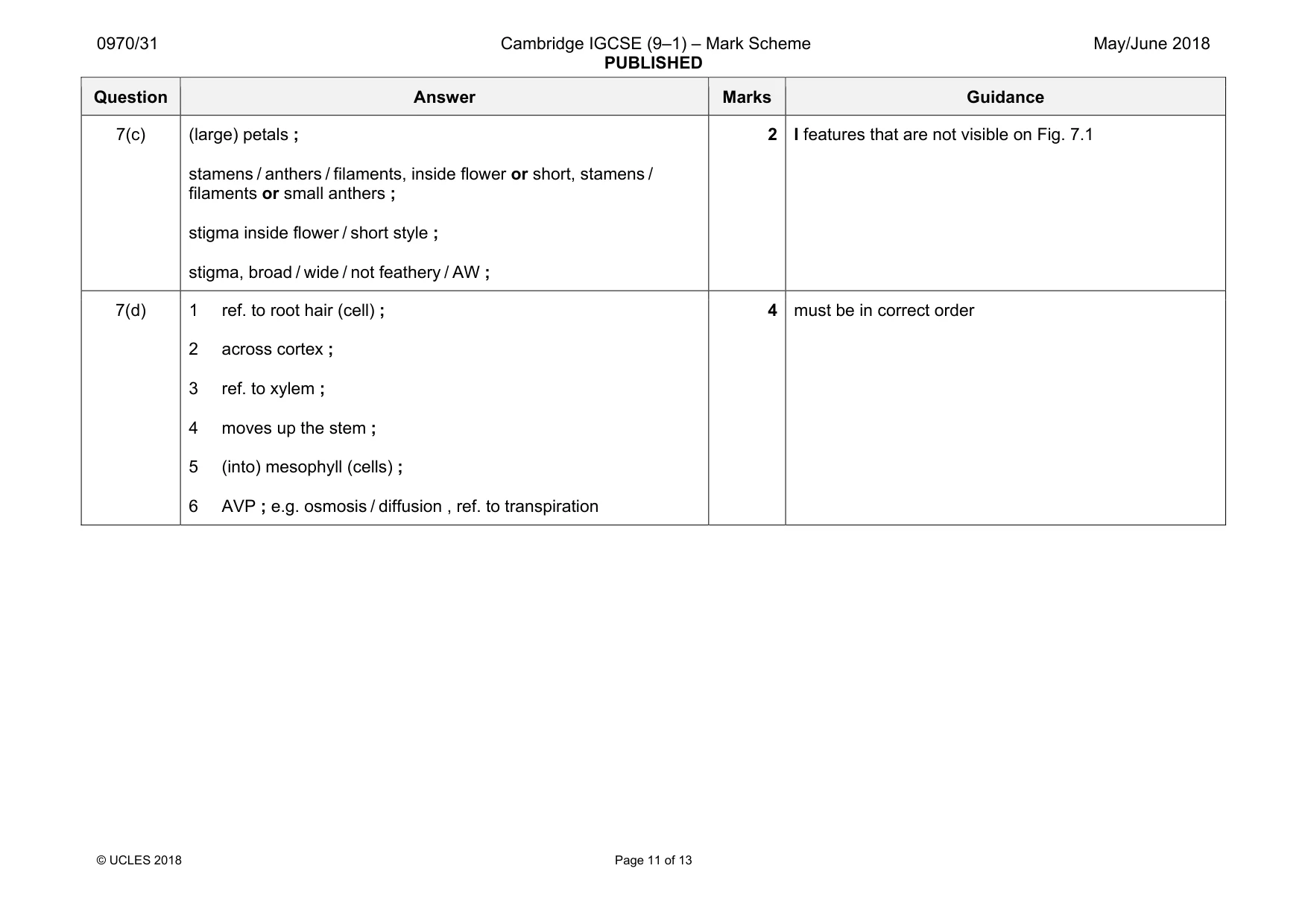
Mark scheme: 7(a)(i) labelled line to one ovule ; labelled line to petal ; 2 7(a)(ii) carpel / ovary ; sepal ; 2 7(b) line from the anther of one flower ; line to stigma of another flower ; 2 Question Answer Marks Guidance 7(c) (large) petals ; stamens / anthers / filaments, inside flower or short, stamens / filaments or small anthers ; stigma inside flower / short style ; stigma, broad / wide / not feathery / AW ; 2 I features that are not visible on Fig. 7.1 7(d) 1 ref. to root hair (cell) ; 2 across cortex ; 3 ref. to xylem ; 4 moves up the stem ; 5 (into) mesophyll (cells) ; 6 AVP ; e.g. osmosis / diffusion , ref. to transpiration 4 must be in correct order
Q8 · During digestion enzymes act on different types of food to produce simpler substances…
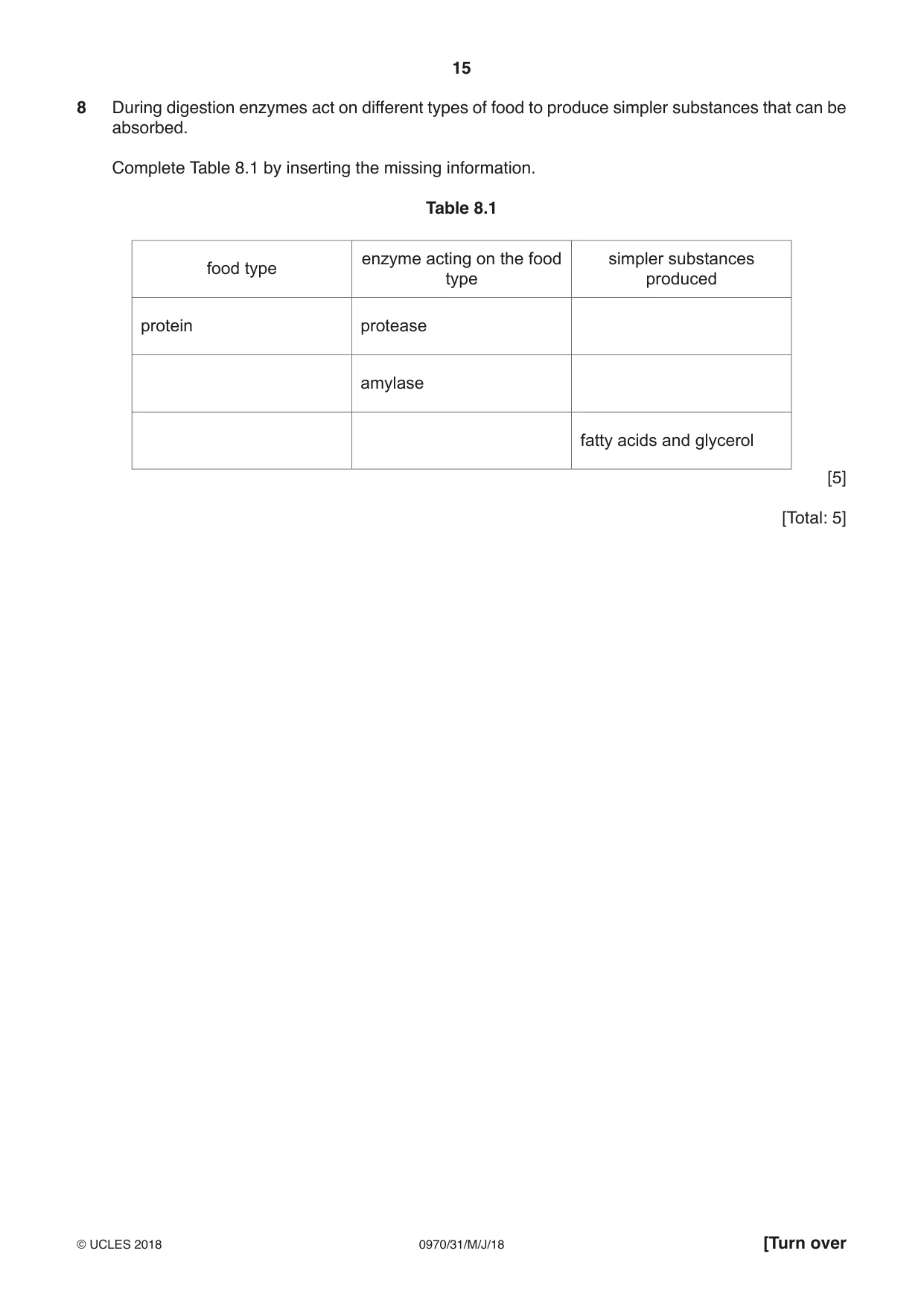
8 During digestion enzymes act on different types of food to produce simpler substances that can be absorbed. Complete Table 8.1 by inserting the missing information. Table 8.1 enzyme acting on the food simpler substances food type type produced protein protease amylase fatty acids and glycerol [5] [Total: 5]
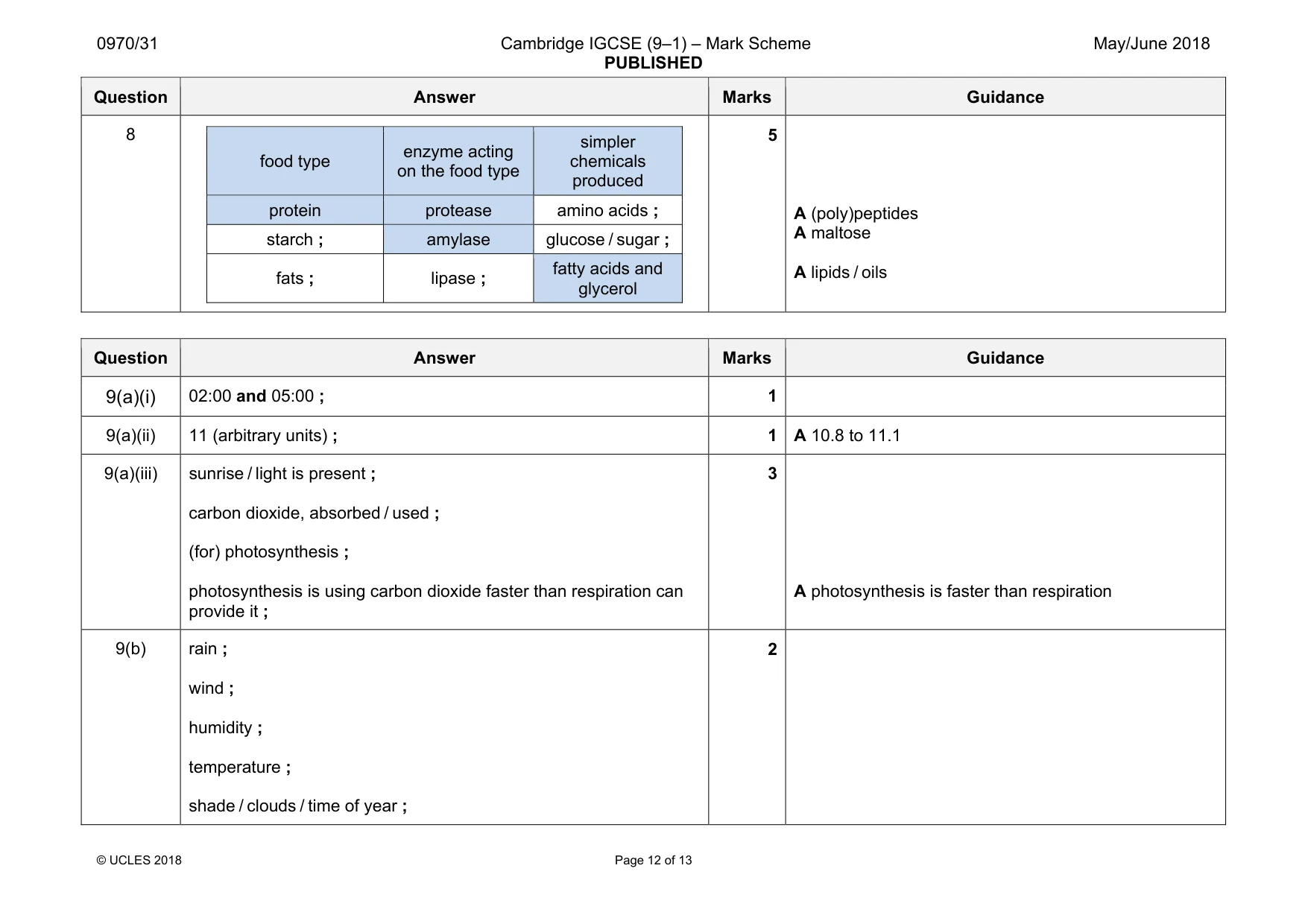
Mark scheme: 8 food type enzyme acting on the food type simpler chemicals produced protein protease amino acids ; starch ; amylase glucose / sugar ; fats ; lipase ; fatty acids and glycerol 5 A (poly)peptides A maltose A lipids / oils
Q9 · In an investigation, the carbon dioxide concentration in the air above a crop of maize…
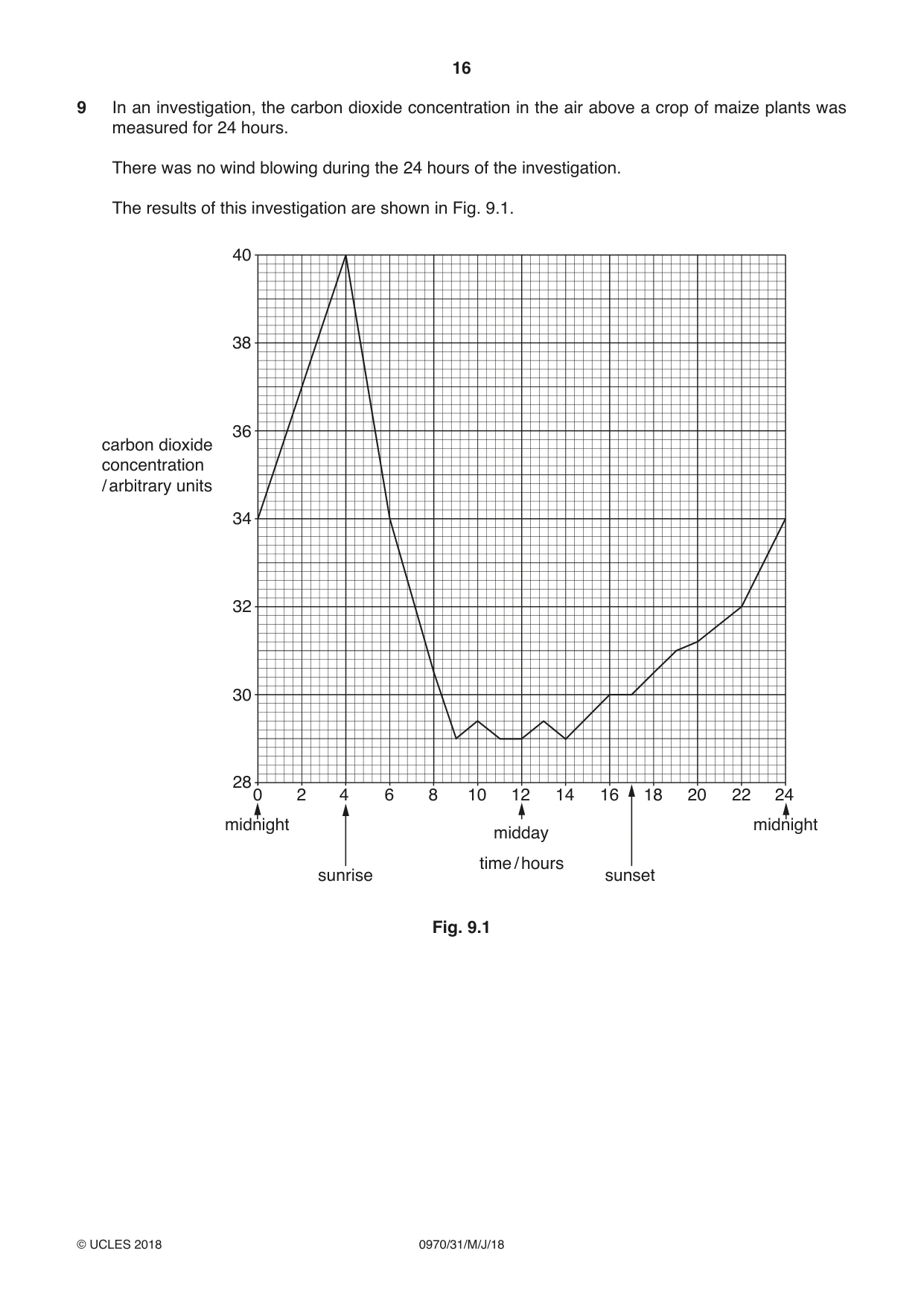
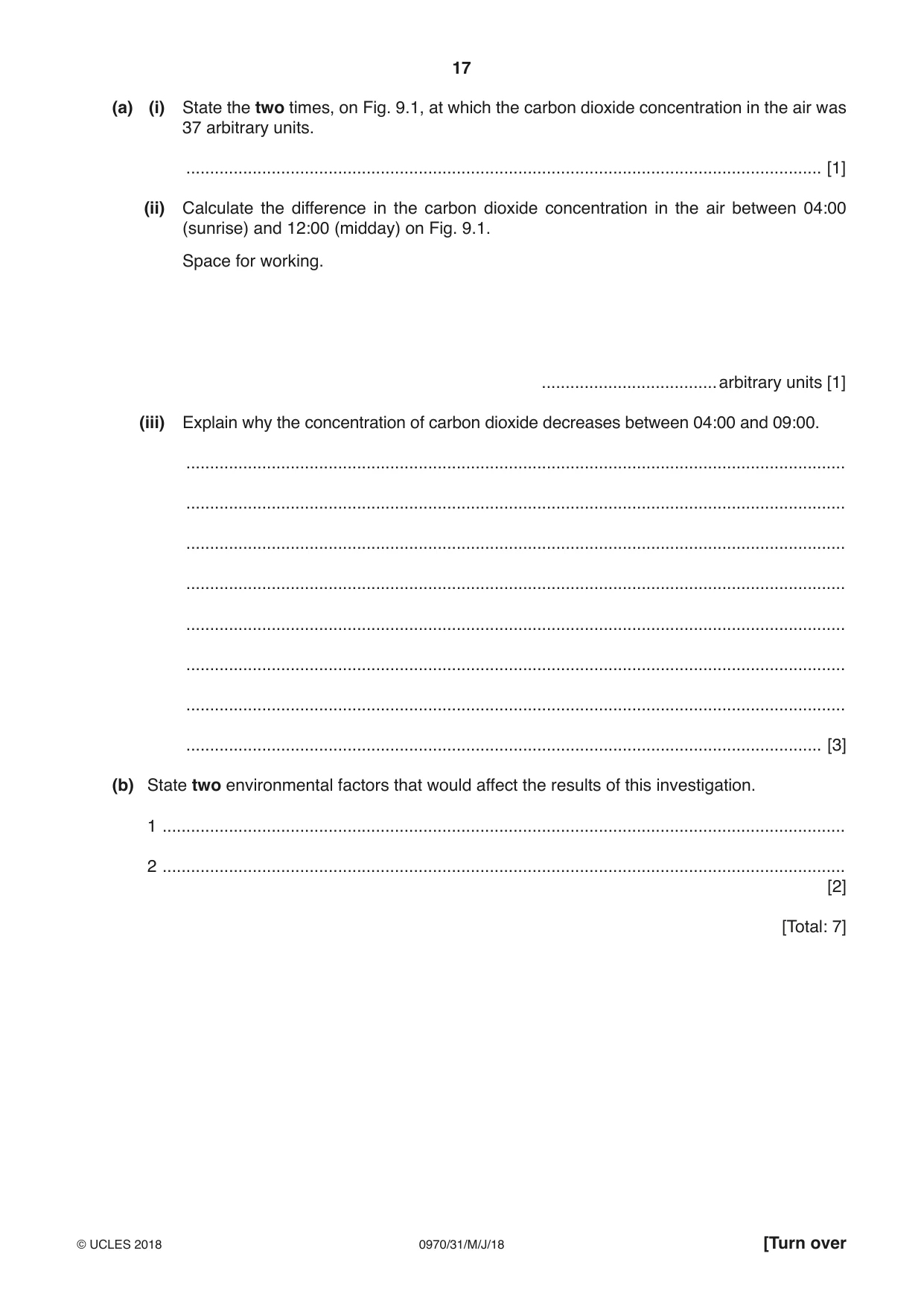
9 In an investigation, the carbon dioxide concentration in the air above a crop of maize plants was measured for 24 hours. There was no wind blowing during the 24 hours of the investigation. The results of this investigation are shown in Fig. 9.1. 40 38 36 carbon dioxide concentration / arbitrary units 34 32 30 28 0 2 4 6 8 10 12 14 16 18 20 22 24 midnight midnight midday time / hours sunrise sunset Fig. 9.1 (a) (i) State the two times, on Fig. 9.1, at which the carbon dioxide concentration in the air was 37 arbitrary units. ...................................................................................................................................... [1] (ii) Calculate the difference in the carbon dioxide concentration in the air between 04:00 (sunrise) and 12:00 (midday) on Fig. 9.1. Space for working. .....................................arbitrary units [1] (iii) Explain why the concentration of carbon dioxide decreases between 04:00 and 09:00. ........................................................................................................................................... ........................................................................................................................................... ........................................................................................................................................... ........................................................................................................................................... ........................................................................................................................................... ........................................................................................................................................... ........................................................................................................................................... ...................................................................................................................................... [3] (b) State two environmental factors that would affect the results of this investigation. 1 ................................................................................................................................................ 2 ................................................................................................................................................ [2] [Total: 7]
Mark scheme: 9(a)(i) 02:00 and 05:00 ; 1 9(a)(ii) 11 (arbitrary units) ; 1 A 10.8 to 11.1 9(a)(iii) sunrise / light is present ; carbon dioxide, absorbed / used ; (for) photosynthesis ; photosynthesis is using carbon dioxide faster than respiration can provide it ; 3 A photosynthesis is faster than respiration 9(b) rain ; wind ; humidity ; temperature ; shade / clouds / time of year ; 2
Q10 · Selective breeding of animals is very important to farmers
10 Selective breeding of animals is very important to farmers. Many different breeds of sheep have been produced by selective breeding. Fig. 10.1 shows a flock of Merino sheep. This breed of sheep was produced by selective breeding. Fig. 10.1 (a) Sheep are important animals in many parts of the world as they produce meat, wool and milk. Table 10.1 describes some characteristics of five different breeds of sheep. Table 10.1 breed of sheep wool yield wool quality meat yield milk yield Arapawa average good poor average Awassi average poor average very good Blackbelly poor poor very good average Merino good very good good poor Tsurcana average good average average A farmer wants to sell both meat and wool. Suggest which breed of sheep in Table 10.1 is the most suitable for this farmer. Give a reason for your choice. breed of sheep .......................................................................................................................... reason ....................................................................................................................................... ................................................................................................................................................... ................................................................................................................................................... [2] (b) Another farmer wants to produce a new breed of sheep with both a very good milk yield and a very good quality of wool. The farmer is able to buy any of the breeds of sheep shown in Table 10.1. Describe the process this farmer would use to produce the new breed of sheep on her farm. ................................................................................................................................................... ................................................................................................................................................... ................................................................................................................................................... ................................................................................................................................................... ................................................................................................................................................... ................................................................................................................................................... ................................................................................................................................................... ................................................................................................................................................... ................................................................................................................................................... .............................................................................................................................................. [4] [Total: 6]
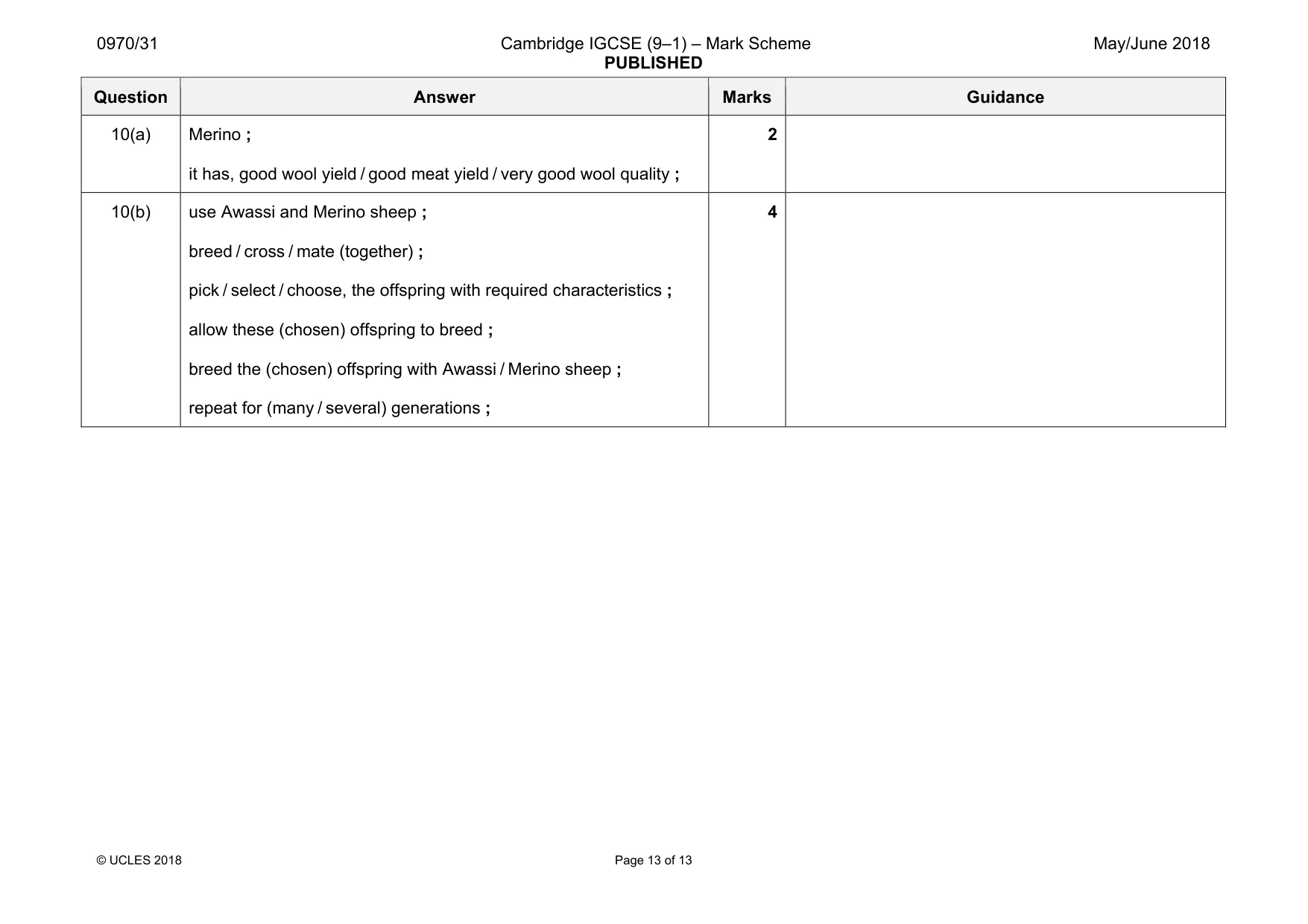
Mark scheme: 10(a) Merino ; it has, good wool yield / good meat yield / very good wool quality ; 2 10(b) use Awassi and Merino sheep ; breed / cross / mate (together) ; pick / select / choose, the offspring with required characteristics ; allow these (chosen) offspring to breed ; breed the (chosen) offspring with Awassi / Merino sheep ; repeat for (many / several) generations ; 4
What was in this paper
The subtopics covered by these 10 questions, and how many questions each got. Open one in a new tab to see every Cambridge question on it.
What you needed in this session
Cambridge’s own grade thresholds for 2018 May/June, Paper 3 · Variant 1. A higher threshold means an easier paper — the bar moves with how the cohort did.