Cambridge A Level Psychology (from 2018) 9990 — 2019 Feb/March Paper 2 · Variant 2
9990/22/F/M/19 · 10 questions · 60 marks · ≈68 min
The question paper and its mark scheme, free to read here and free to download. This is Cambridge’s own paper, exactly as it was sat.
Question paper12 pages
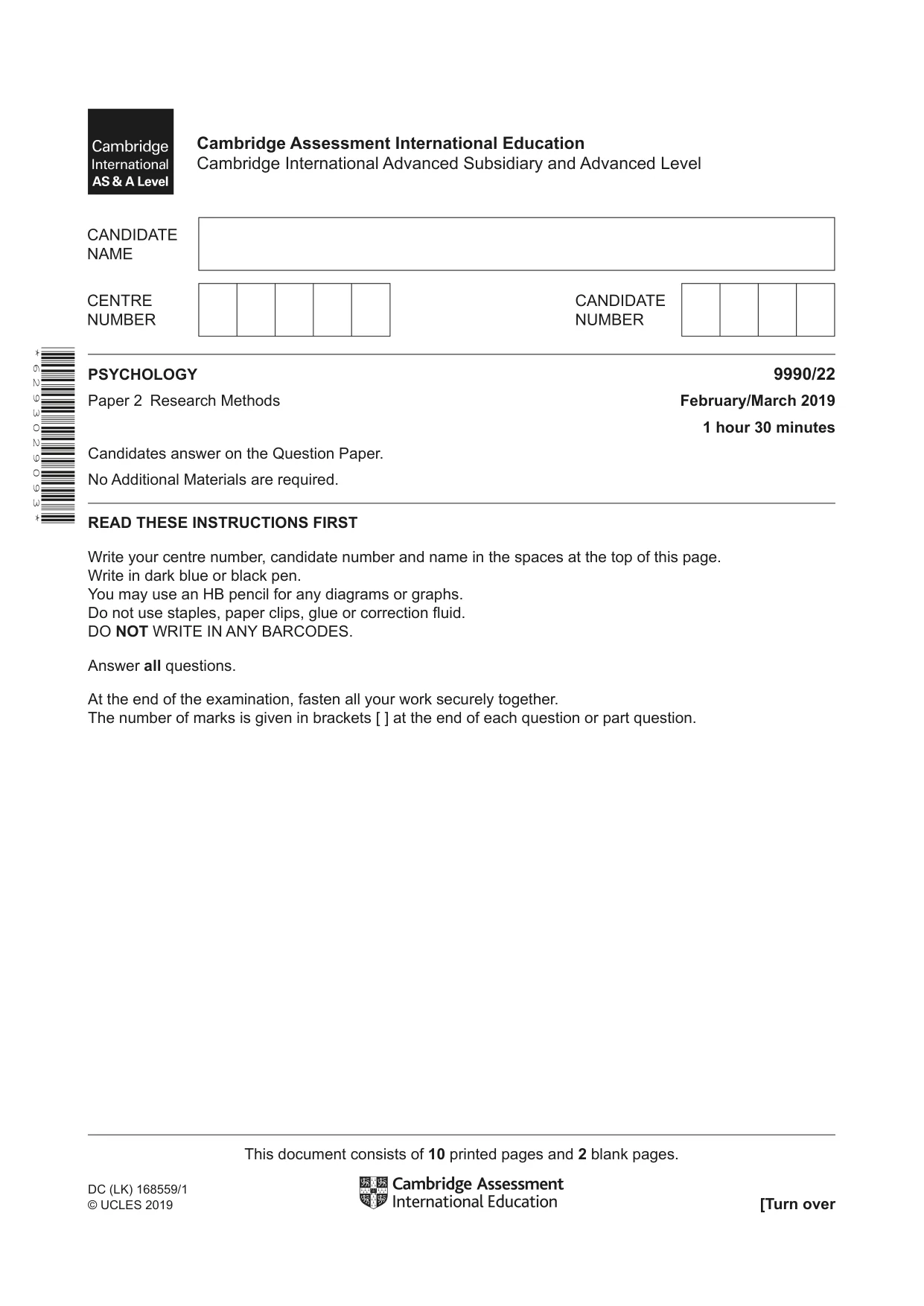



Mark scheme17 pages
Answers below. Sit the paper first if you are practising.
Questions as text
Q1 · Ethical guidelines should be followed in all psychological research
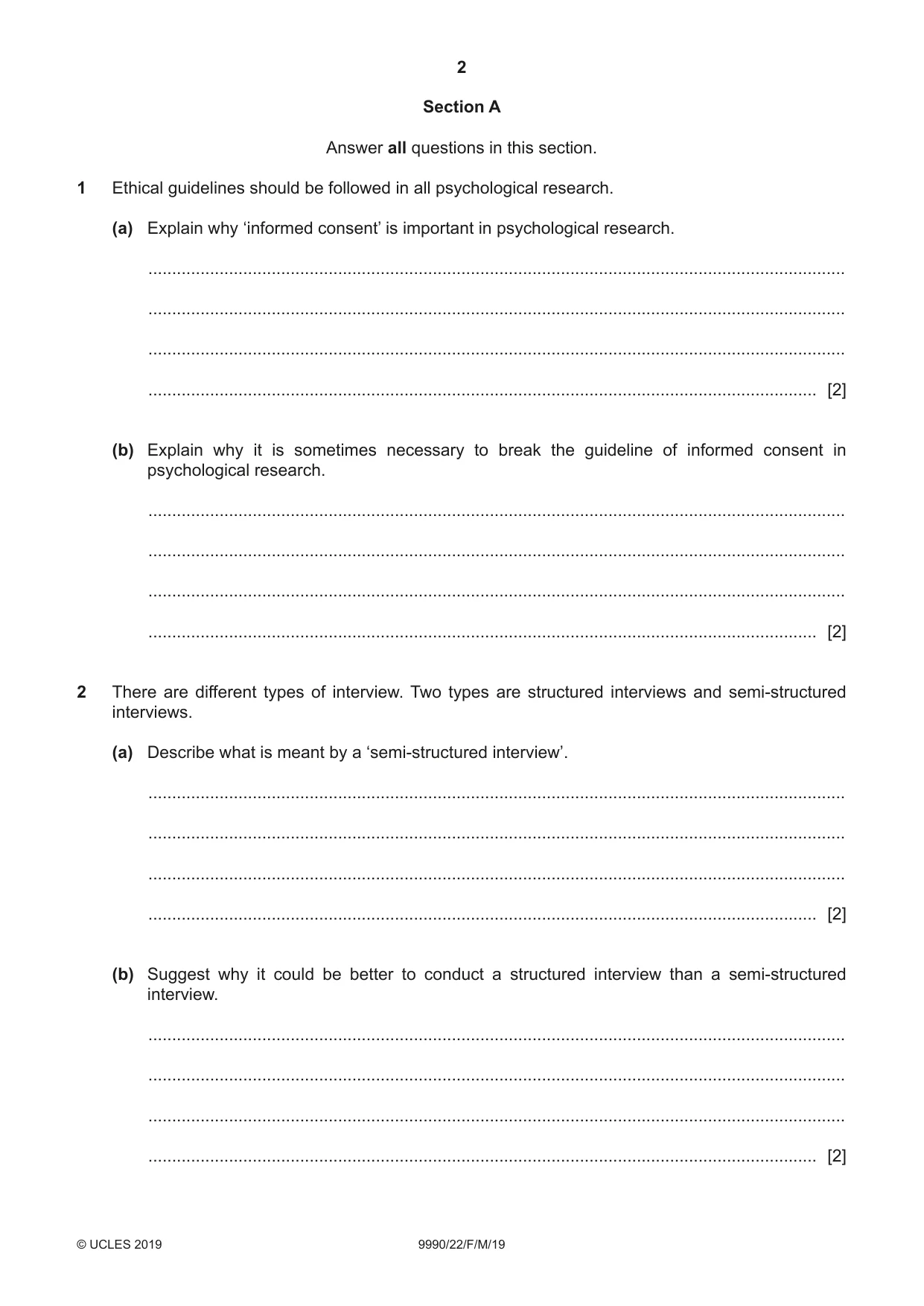
1 Ethical guidelines should be followed in all psychological research. (a) Explain why ‘informed consent’ is important in psychological research. ................................................................................................................................................... ................................................................................................................................................... ................................................................................................................................................... ............................................................................................................................................. [2] (b) Explain why it is sometimes necessary to break the guideline of informed consent in psychological research. ................................................................................................................................................... ................................................................................................................................................... ................................................................................................................................................... ............................................................................................................................................. [2]
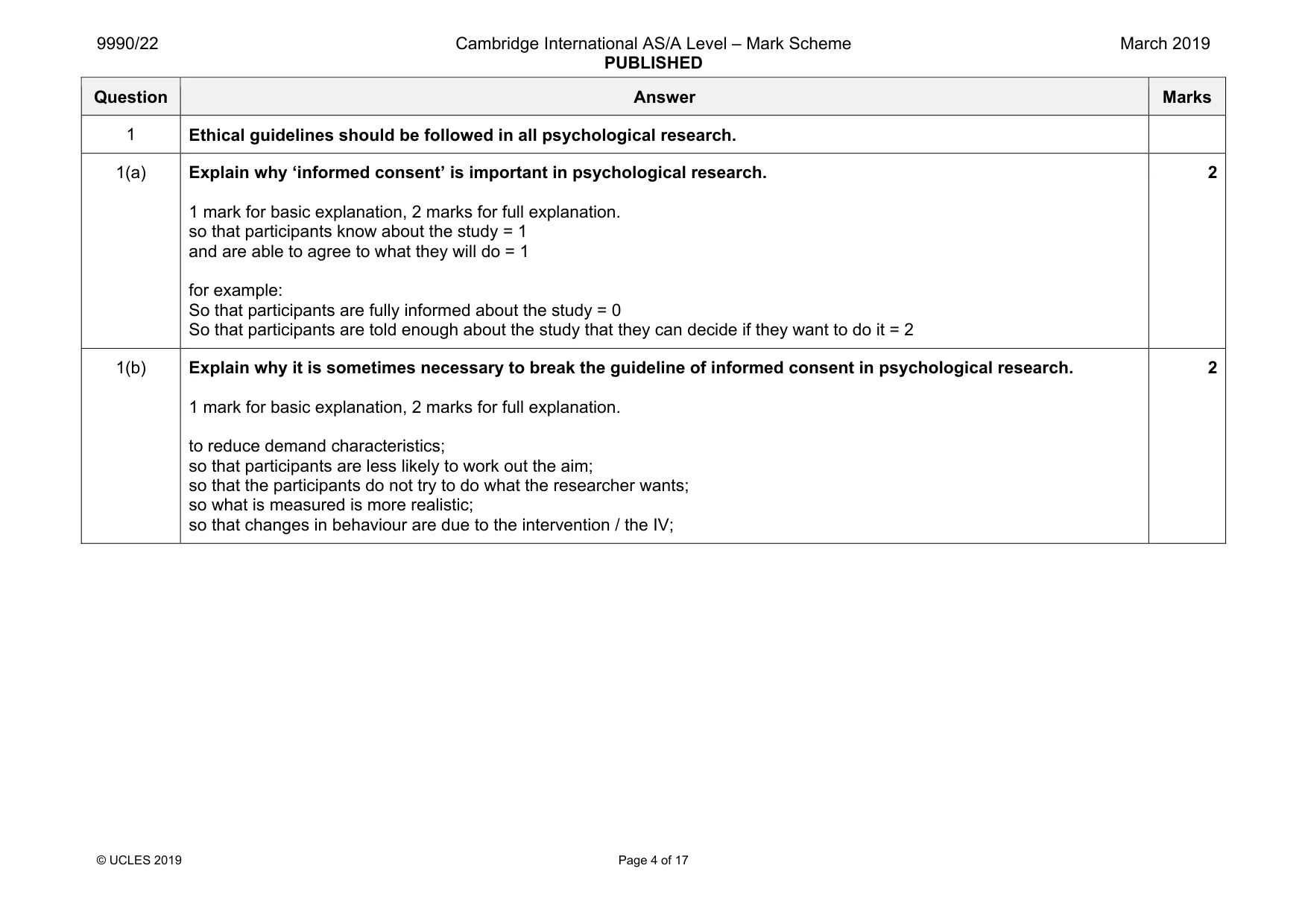
Mark scheme: 1 Ethical guidelines should be followed in all psychological research. 1(a) Explain why ‘informed consent’ is important in psychological research. 1 mark for basic explanation, 2 marks for full explanation. so that participants know about the study = 1 and are able to agree to what they will do = 1 for example: So that participants are fully informed about the study = 0 So that participants are told enough about the study that they can decide if they want to do it = 2 2 1(b) Explain why it is sometimes necessary to break the guideline of informed consent in psychological research. 1 mark for basic explanation, 2 marks for full explanation. to reduce demand characteristics; so that participants are less likely to work out the aim; so that the participants do not try to do what the researcher wants; so what is measured is more realistic; so that changes in behaviour are due to the intervention / the IV; 2
Q2 · There are different types of interview
2 There are different types of interview. Two types are structured interviews and semi-structured interviews. (a) Describe what is meant by a ‘semi-structured interview’. ................................................................................................................................................... ................................................................................................................................................... ................................................................................................................................................... ............................................................................................................................................. [2] (b) Suggest why it could be better to conduct a structured interview than a semi-structured interview. ................................................................................................................................................... ................................................................................................................................................... ................................................................................................................................................... ............................................................................................................................................. [2]
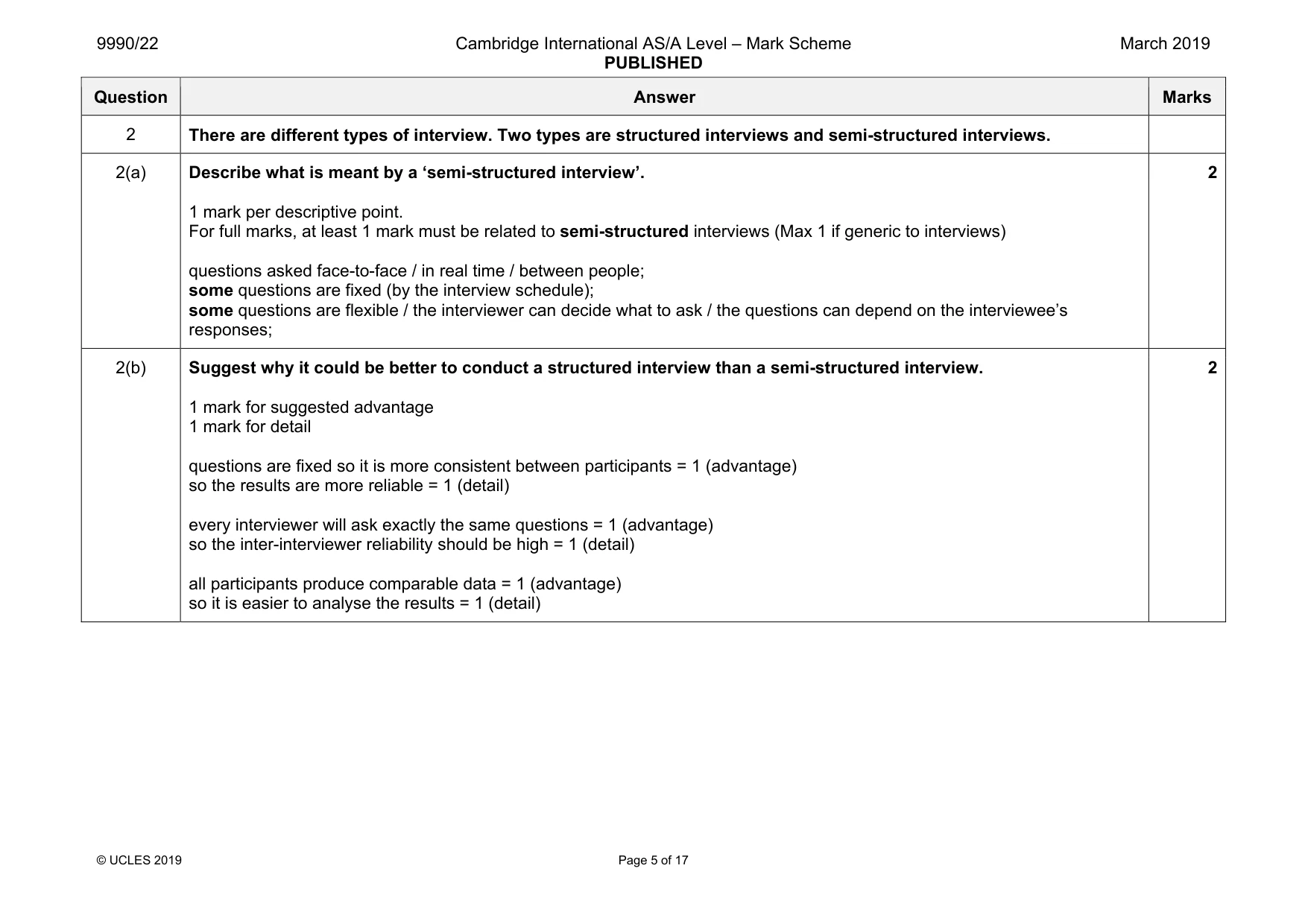
Mark scheme: 2 There are different types of interview. Two types are structured interviews and semi-structured interviews. 2(a) Describe what is meant by a ‘semi-structured interview’. 1 mark per descriptive point. For full marks, at least 1 mark must be related to semi-structured interviews (Max 1 if generic to interviews) questions asked face-to-face / in real time / between people; some questions are fixed (by the interview schedule); some questions are flexible / the interviewer can decide what to ask / the questions can depend on the interviewee’s responses; 2 2(b) Suggest why it could be better to conduct a structured interview than a semi-structured interview. 1 mark for suggested advantage 1 mark for detail questions are fixed so it is more consistent between participants = 1 (advantage) so the results are more reliable = 1 (detail) every interviewer will ask exactly the same questions = 1 (advantage) so the inter-interviewer reliability should be high = 1 (detail) all participants produce comparable data = 1 (advantage) so it is easier to analyse the results = 1 (detail) 2
Question 3
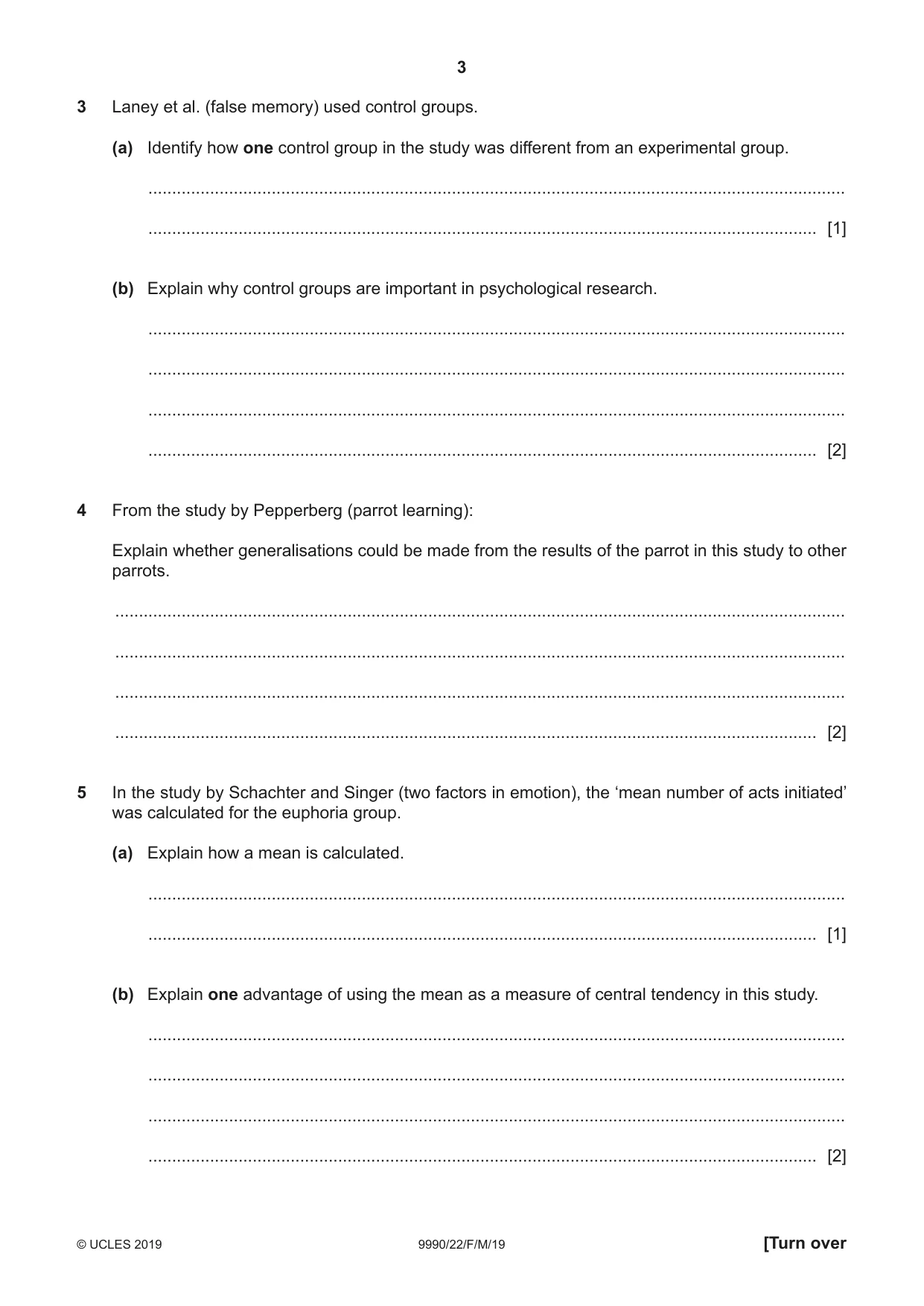
3 Laney et al. (false memory) used control groups. (a) Identify how one control group in the study was different from an experimental group. ................................................................................................................................................... ............................................................................................................................................. [1] (b) Explain why control groups are important in psychological research. ................................................................................................................................................... ................................................................................................................................................... ................................................................................................................................................... ............................................................................................................................................. [2]
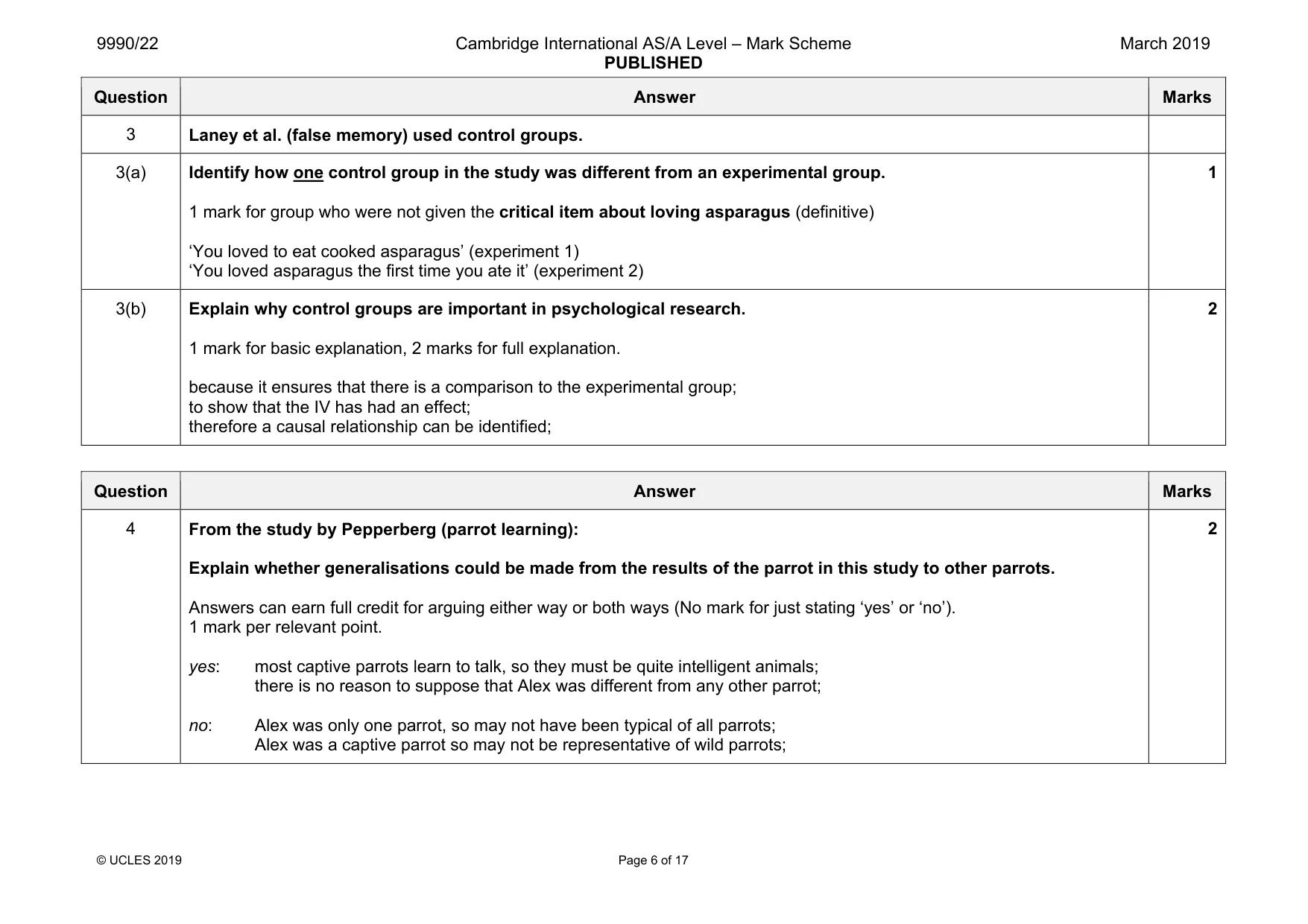
Mark scheme: 3 Laney et al. (false memory) used control groups. 3(a) Identify how one control group in the study was different from an experimental group. 1 mark for group who were not given the critical item about loving asparagus (definitive) ‘You loved to eat cooked asparagus’ (experiment 1) ‘You loved asparagus the first time you ate it’ (experiment 2) 1 3(b) Explain why control groups are important in psychological research. 1 mark for basic explanation, 2 marks for full explanation. because it ensures that there is a comparison to the experimental group; to show that the IV has had an effect; therefore a causal relationship can be identified; 2
Q4 · From the study by Pepperberg (parrot learning): Explain whether generalisations could be…
4 From the study by Pepperberg (parrot learning): Explain whether generalisations could be made from the results of the parrot in this study to other parrots. .......................................................................................................................................................... .......................................................................................................................................................... .......................................................................................................................................................... .................................................................................................................................................... [2]
Mark scheme: 4 From the study by Pepperberg (parrot learning): Explain whether generalisations could be made from the results of the parrot in this study to other parrots. Answers can earn full credit for arguing either way or both ways (No mark for just stating ‘yes’ or ‘no’). 1 mark per relevant point. yes: most captive parrots learn to talk, so they must be quite intelligent animals; there is no reason to suppose that Alex was different from any other parrot; no: Alex was only one parrot, so may not have been typical of all parrots; Alex was a captive parrot so may not be representative of wild parrots; 2
Q5 · In the study by Schachter and Singer (two factors in emotion), the ‘mean number of acts…
5 In the study by Schachter and Singer (two factors in emotion), the ‘mean number of acts initiated’ was calculated for the euphoria group. (a) Explain how a mean is calculated. ................................................................................................................................................... ............................................................................................................................................. [1] (b) Explain one advantage of using the mean as a measure of central tendency in this study. ................................................................................................................................................... ................................................................................................................................................... ................................................................................................................................................... ............................................................................................................................................. [2]
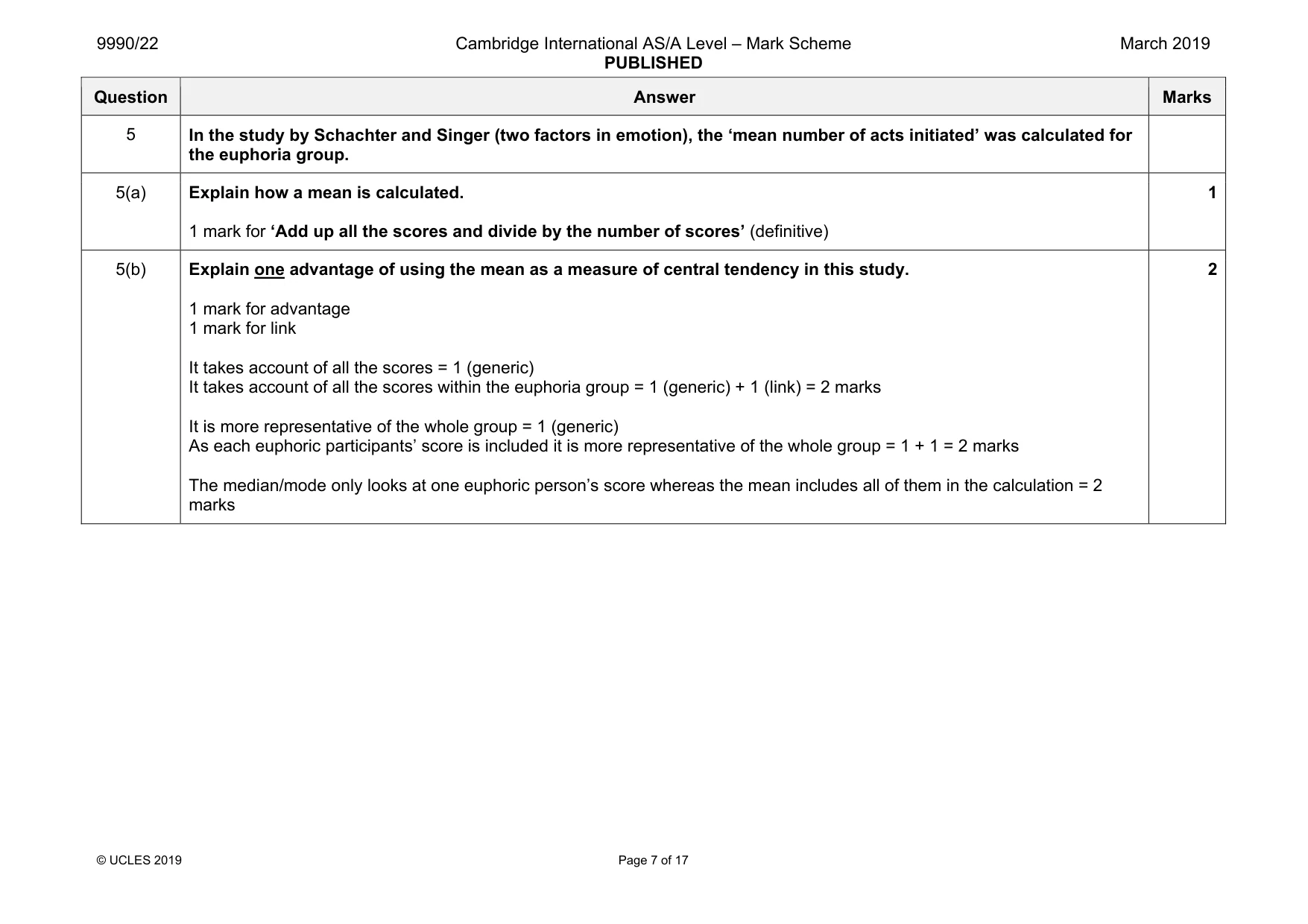
Mark scheme: 5 In the study by Schachter and Singer (two factors in emotion), the ‘mean number of acts initiated’ was calculated for the euphoria group. 5(a) Explain how a mean is calculated. 1 mark for ‘Add up all the scores and divide by the number of scores’ (definitive) 1 5(b) Explain one advantage of using the mean as a measure of central tendency in this study. 1 mark for advantage 1 mark for link It takes account of all the scores = 1 (generic) It takes account of all the scores within the euphoria group = 1 (generic) + 1 (link) = 2 marks It is more representative of the whole group = 1 (generic) As each euphoric participants’ score is included it is more representative of the whole group = 1 + 1 = 2 marks The median/mode only looks at one euphoric person’s score whereas the mean includes all of them in the calculation = 2 marks 2
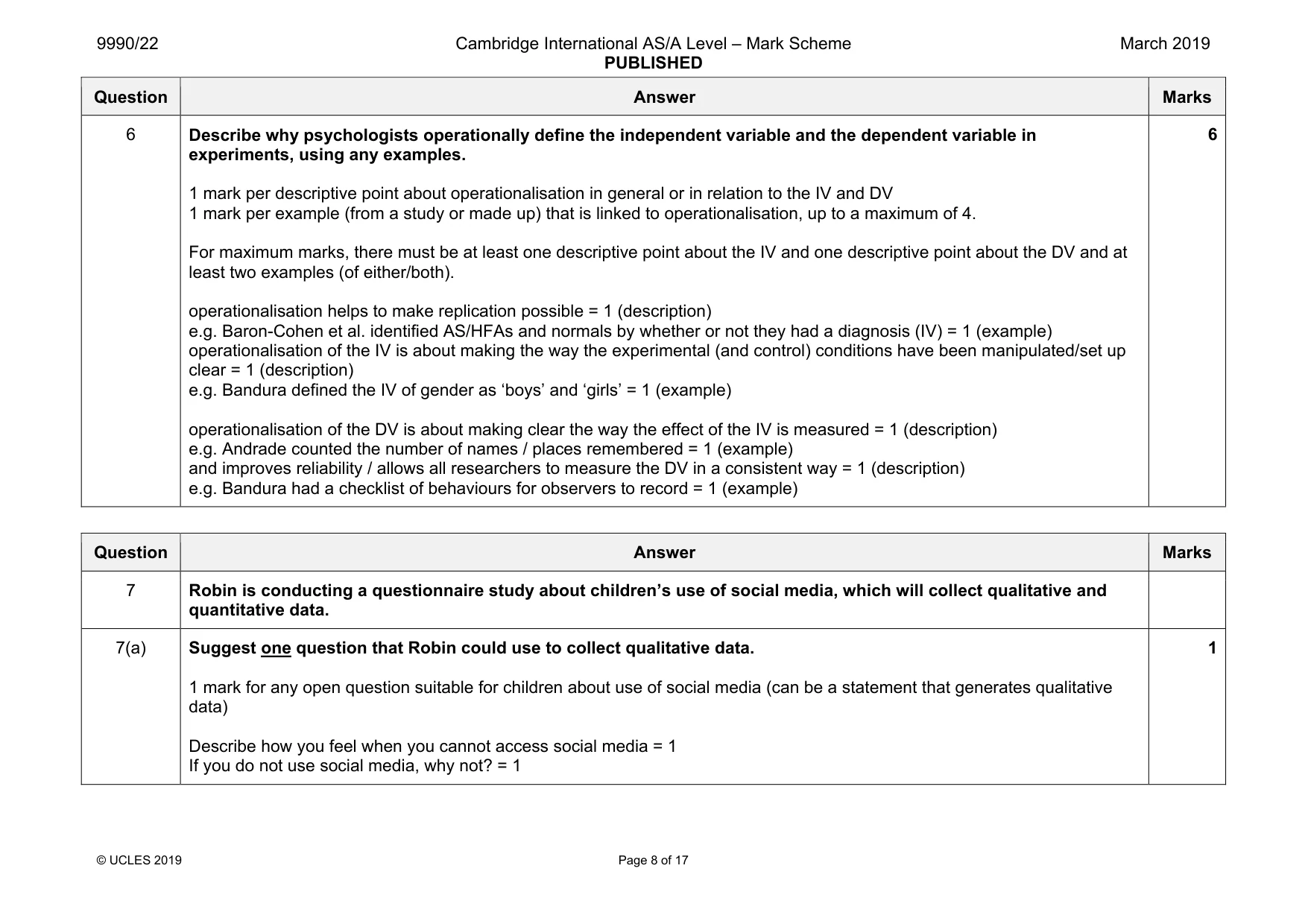
Q6 · Describe why psychologists operationally define the independent variable and the…
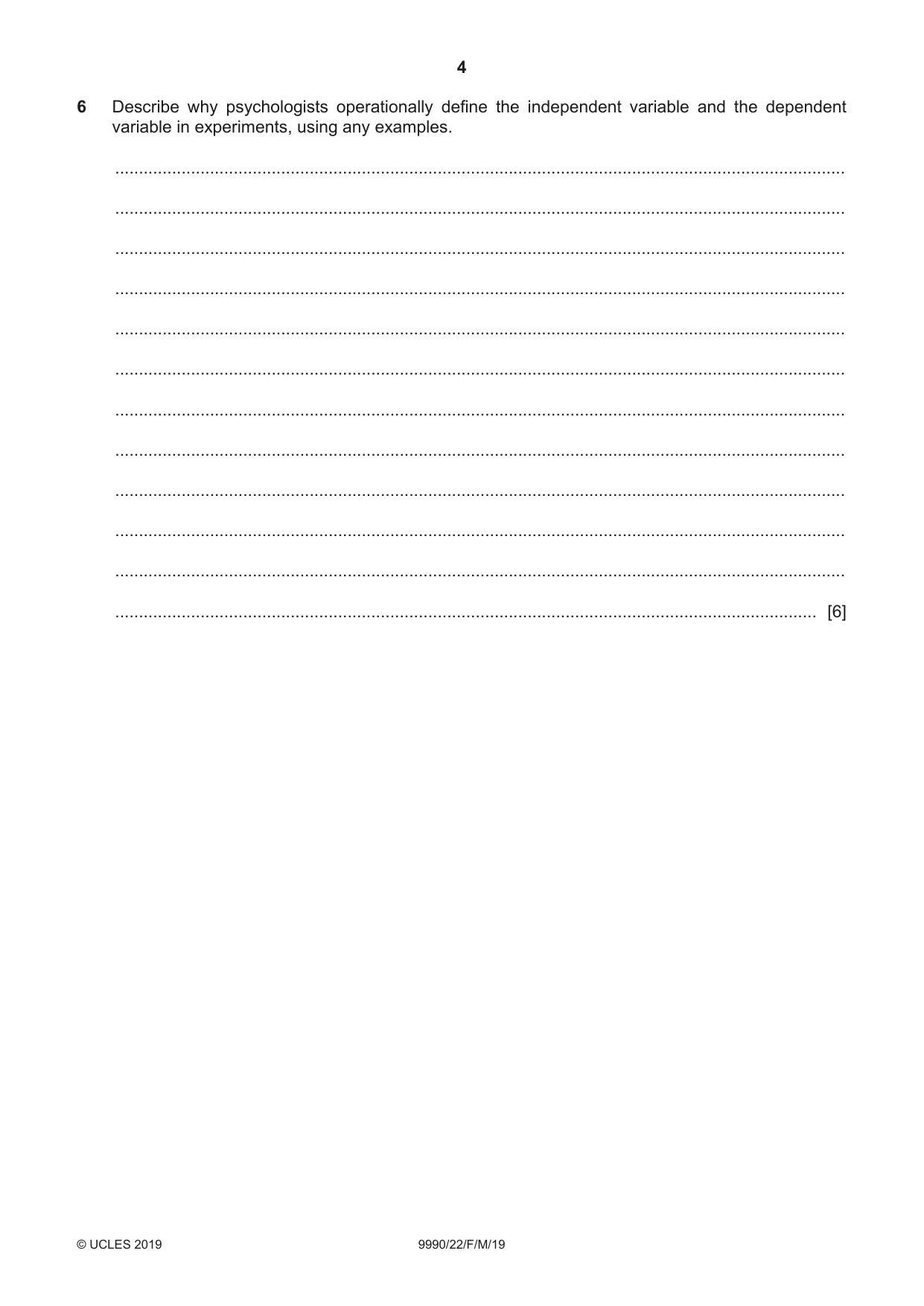
6 Describe why psychologists operationally define the independent variable and the dependent variable in experiments, using any examples. .......................................................................................................................................................... .......................................................................................................................................................... .......................................................................................................................................................... .......................................................................................................................................................... .......................................................................................................................................................... .......................................................................................................................................................... .......................................................................................................................................................... .......................................................................................................................................................... .......................................................................................................................................................... .......................................................................................................................................................... .......................................................................................................................................................... .................................................................................................................................................... [6]
Mark scheme: 6 Describe why psychologists operationally define the independent variable and the dependent variable in experiments, using any examples. 1 mark per descriptive point about operationalisation in general or in relation to the IV and DV 1 mark per example (from a study or made up) that is linked to operationalisation, up to a maximum of 4. For maximum marks, there must be at least one descriptive point about the IV and one descriptive point about the DV and at least two examples (of either/both). operationalisation helps to make replication possible = 1 (description) e.g. Baron-Cohen et al. identified AS/HFAs and normals by whether or not they had a diagnosis (IV) = 1 (example) operationalisation of the IV is about making the way the experimental (and control) conditions have been manipulated/set up clear = 1 (description) e.g. Bandura defined the IV of gender as ‘boys’ and ‘girls’ = 1 (example) operationalisation of the DV is about making clear the way the effect of the IV is measured = 1 (description) e.g. Andrade counted the number of names / places remembered = 1 (example) and improves reliability / allows all researchers to measure the DV in a consistent way = 1 (description) e.g. Bandura had a checklist of behaviours for observers to record = 1 (example) 6
Q7 · Robin is conducting a questionnaire study about children’s use of social media, which…
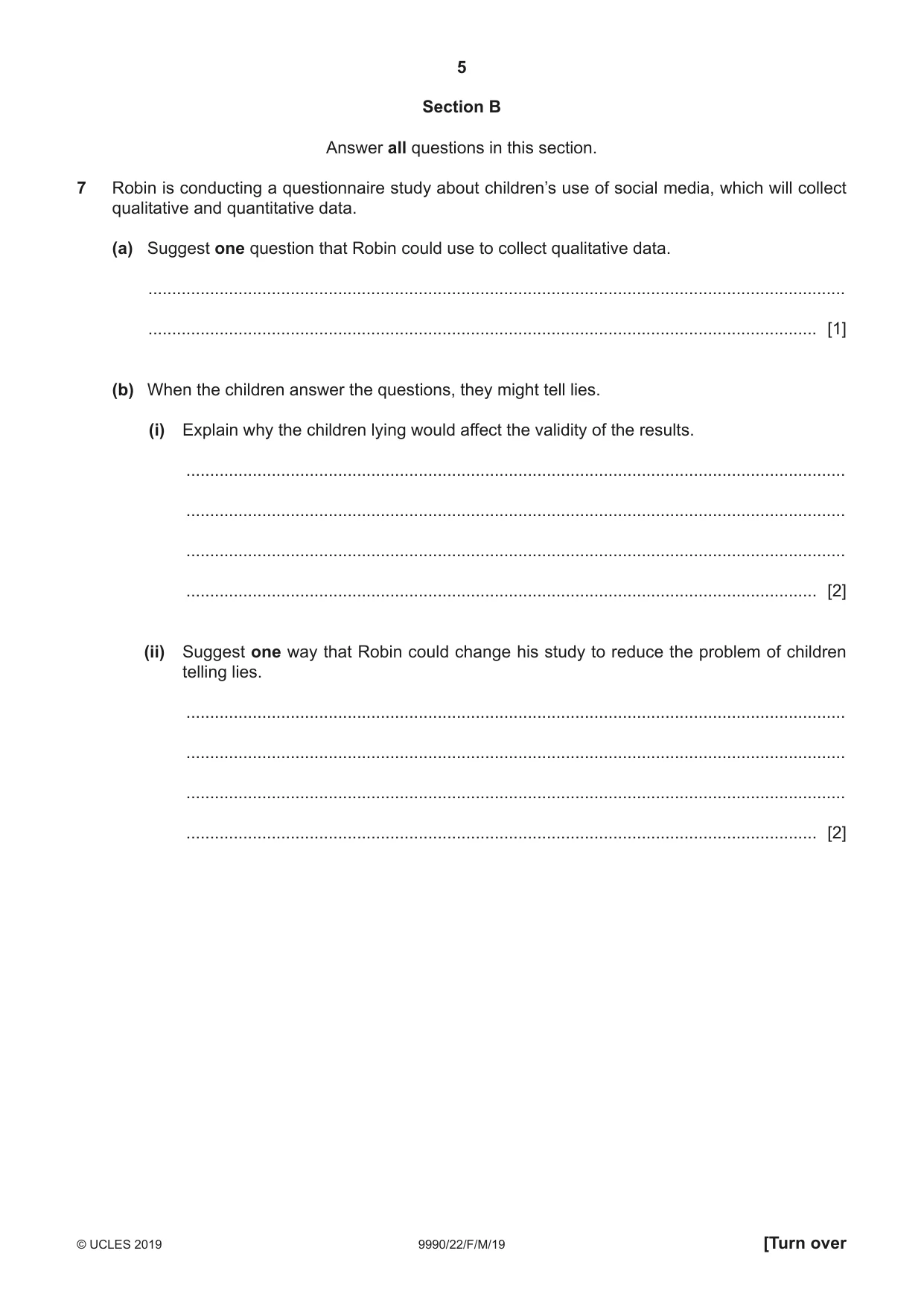
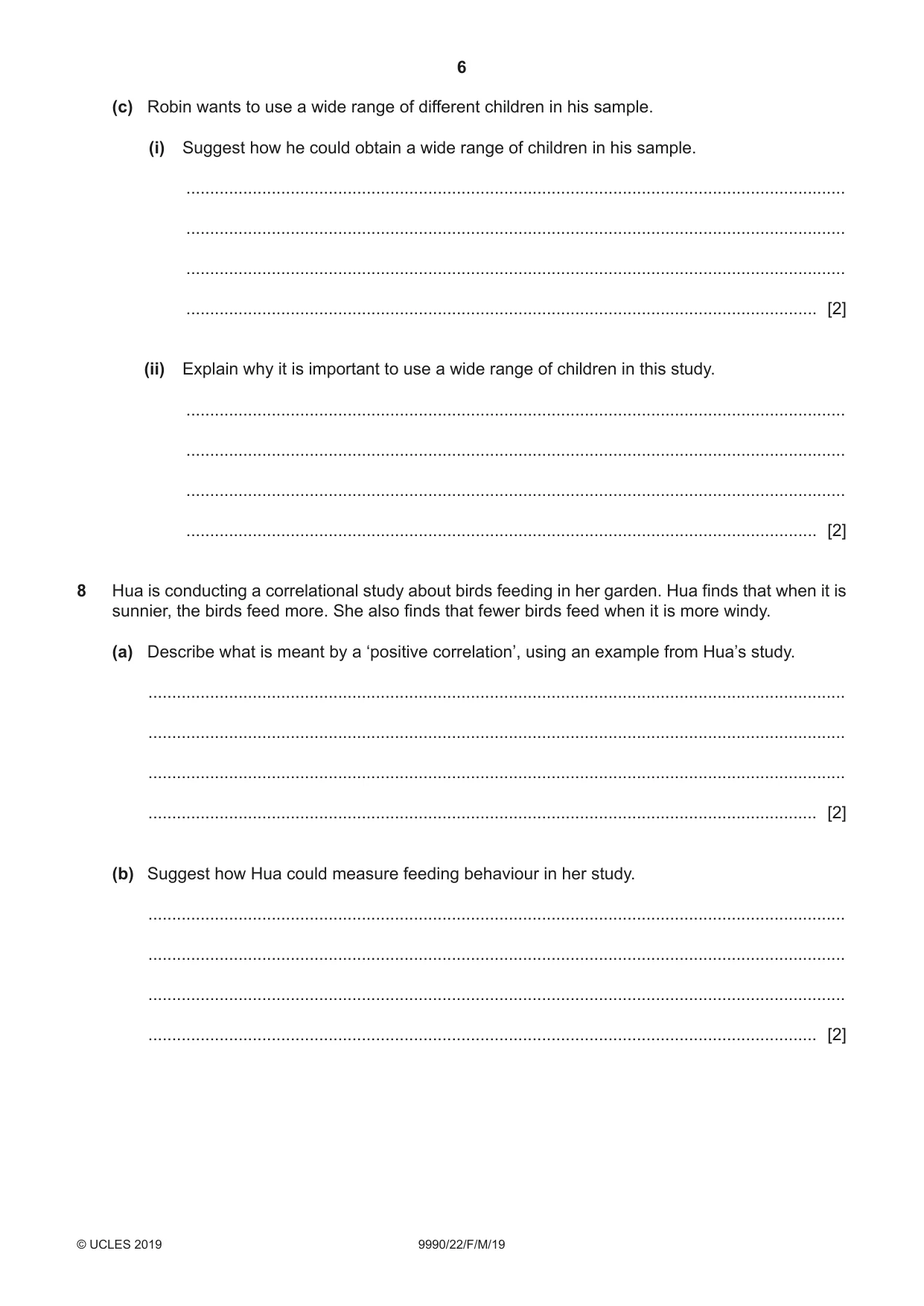
7 Robin is conducting a questionnaire study about children’s use of social media, which will collect qualitative and quantitative data. (a) Suggest one question that Robin could use to collect qualitative data. ................................................................................................................................................... ............................................................................................................................................. [1] (b) When the children answer the questions, they might tell lies. (i) Explain why the children lying would affect the validity of the results. ........................................................................................................................................... ........................................................................................................................................... ........................................................................................................................................... ..................................................................................................................................... [2] (ii) Suggest one way that Robin could change his study to reduce the problem of children telling lies. ........................................................................................................................................... ........................................................................................................................................... ........................................................................................................................................... ..................................................................................................................................... [2] (c) Robin wants to use a wide range of different children in his sample. (i) Suggest how he could obtain a wide range of children in his sample. ........................................................................................................................................... ........................................................................................................................................... ........................................................................................................................................... ..................................................................................................................................... [2] (ii) Explain why it is important to use a wide range of children in this study. ........................................................................................................................................... ........................................................................................................................................... ........................................................................................................................................... ..................................................................................................................................... [2]
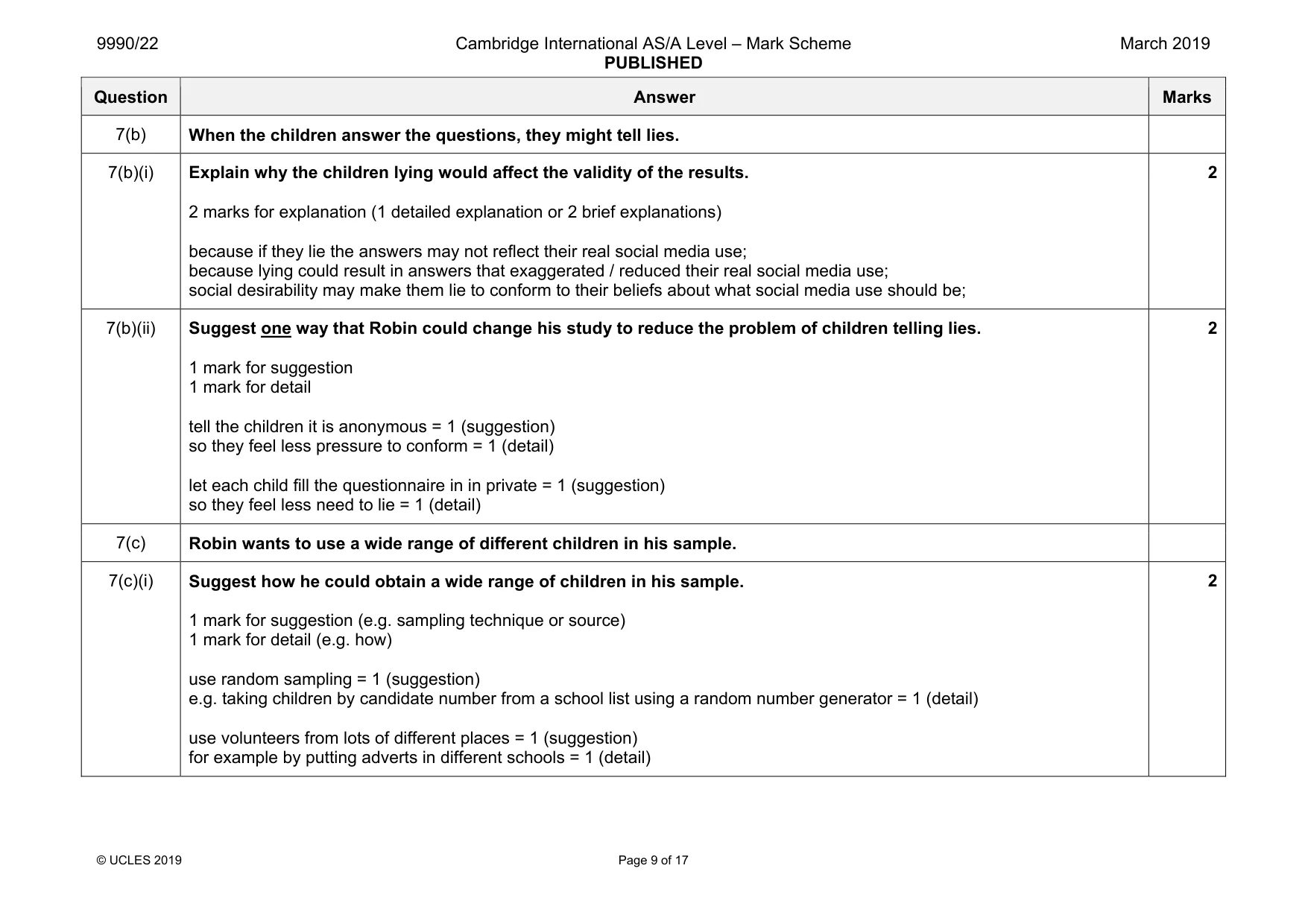
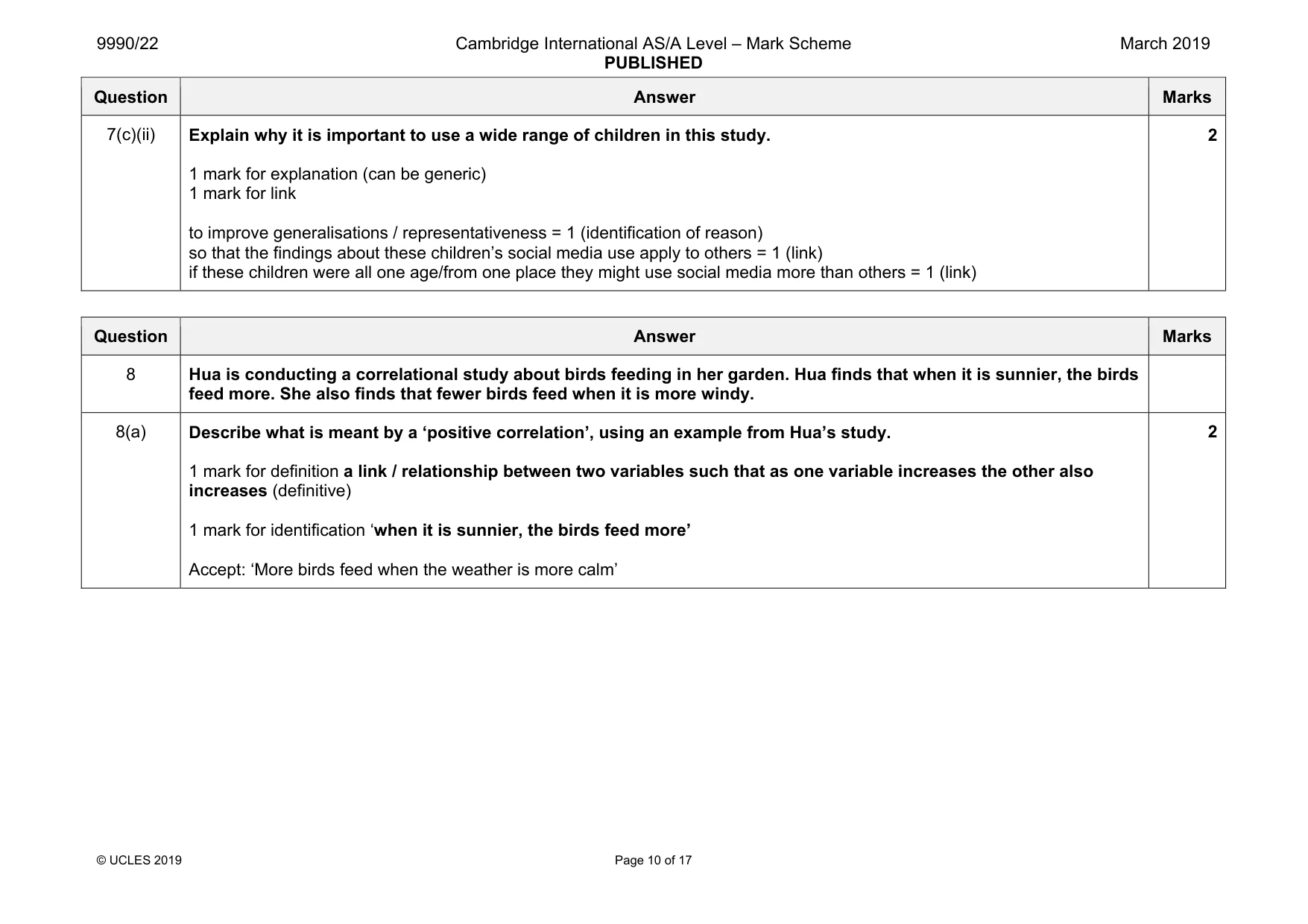
Mark scheme: 7 Robin is conducting a questionnaire study about children’s use of social media, which will collect qualitative and quantitative data. 7(a) Suggest one question that Robin could use to collect qualitative data. 1 mark for any open question suitable for children about use of social media (can be a statement that generates qualitative data) Describe how you feel when you cannot access social media = 1 If you do not use social media, why not? = 1 1 Question Answer Marks 7(b) When the children answer the questions, they might tell lies. 7(b)(i) Explain why the children lying would affect the validity of the results. 2 marks for explanation (1 detailed explanation or 2 brief explanations) because if they lie the answers may not reflect their real social media use; because lying could result in answers that exaggerated / reduced their real social media use; social desirability may make them lie to conform to their beliefs about what social media use should be; 2 7(b)(ii) Suggest one way that Robin could change his study to reduce the problem of children telling lies. 1 mark for suggestion 1 mark for detail tell the children it is anonymous = 1 (suggestion) so they feel less pressure to conform = 1 (detail) let each child fill the questionnaire in in private = 1 (suggestion) so they feel less need to lie = 1 (detail) 2 7(c) Robin wants to use a wide range of different children in his sample. 7(c)(i) Suggest how he could obtain a wide range of children in his sample. 1 mark for suggestion (e.g. sampling technique or source) 1 mark for detail (e.g. how) use random sampling = 1 (suggestion) e.g. taking children by candidate number from a school list using a random number generator = 1 (detail) use volunteers from lots of different places = 1 (suggestion) for example by putting adverts in different schools = 1 (detail) 2 Question Answer Marks 7(c)(ii) Explain why it is important to use a wide range of children in this study. 1 mark for explanation (can be generic) 1 mark for link to improve generalisations / representativeness = 1 (identification of reason) so that the findings about these children’s social media use apply to others = 1 (link) if these children were all one age/from one place they might use social media more than others = 1 (link) 2
Q8 · Hua is conducting a correlational study about birds feeding in her garden
8 Hua is conducting a correlational study about birds feeding in her garden. Hua finds that when it is sunnier, the birds feed more. She also finds that fewer birds feed when it is more windy. (a) Describe what is meant by a ‘positive correlation’, using an example from Hua’s study. ................................................................................................................................................... ................................................................................................................................................... ................................................................................................................................................... ............................................................................................................................................. [2] (b) Suggest how Hua could measure feeding behaviour in her study. ................................................................................................................................................... ................................................................................................................................................... ................................................................................................................................................... ............................................................................................................................................. [2]
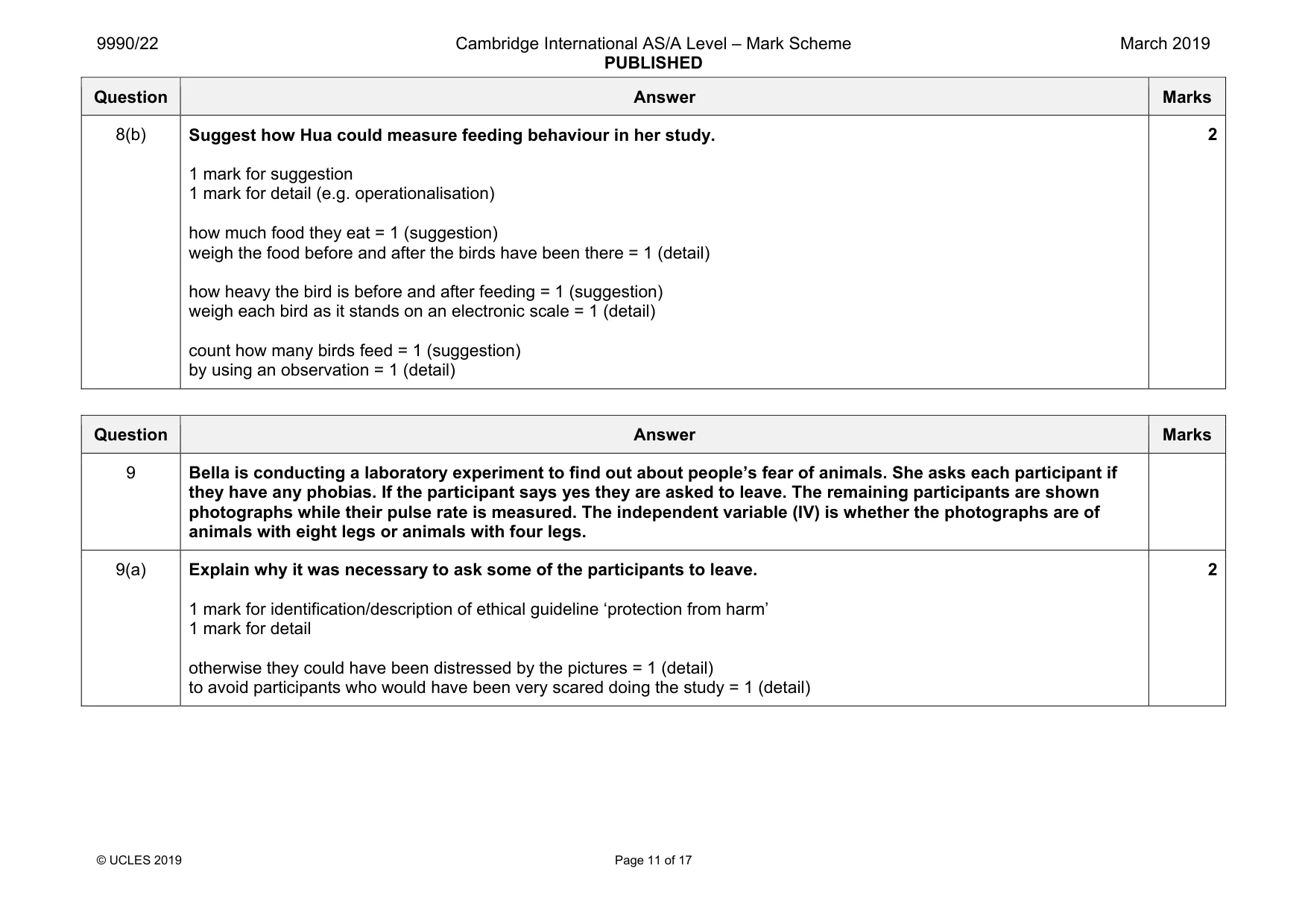
Mark scheme: 8 Hua is conducting a correlational study about birds feeding in her garden. Hua finds that when it is sunnier, the birds feed more. She also finds that fewer birds feed when it is more windy. 8(a) Describe what is meant by a ‘positive correlation’, using an example from Hua’s study. 1 mark for definition a link / relationship between two variables such that as one variable increases the other also increases (definitive) 1 mark for identification ‘when it is sunnier, the birds feed more’ Accept: ‘More birds feed when the weather is more calm’ 2 Question Answer Marks 8(b) Suggest how Hua could measure feeding behaviour in her study. 1 mark for suggestion 1 mark for detail (e.g. operationalisation) how much food they eat = 1 (suggestion) weigh the food before and after the birds have been there = 1 (detail) how heavy the bird is before and after feeding = 1 (suggestion) weigh each bird as it stands on an electronic scale = 1 (detail) count how many birds feed = 1 (suggestion) by using an observation = 1 (detail) 2
Q9 · Bella is conducting a laboratory experiment to find out about people’s fear of animals
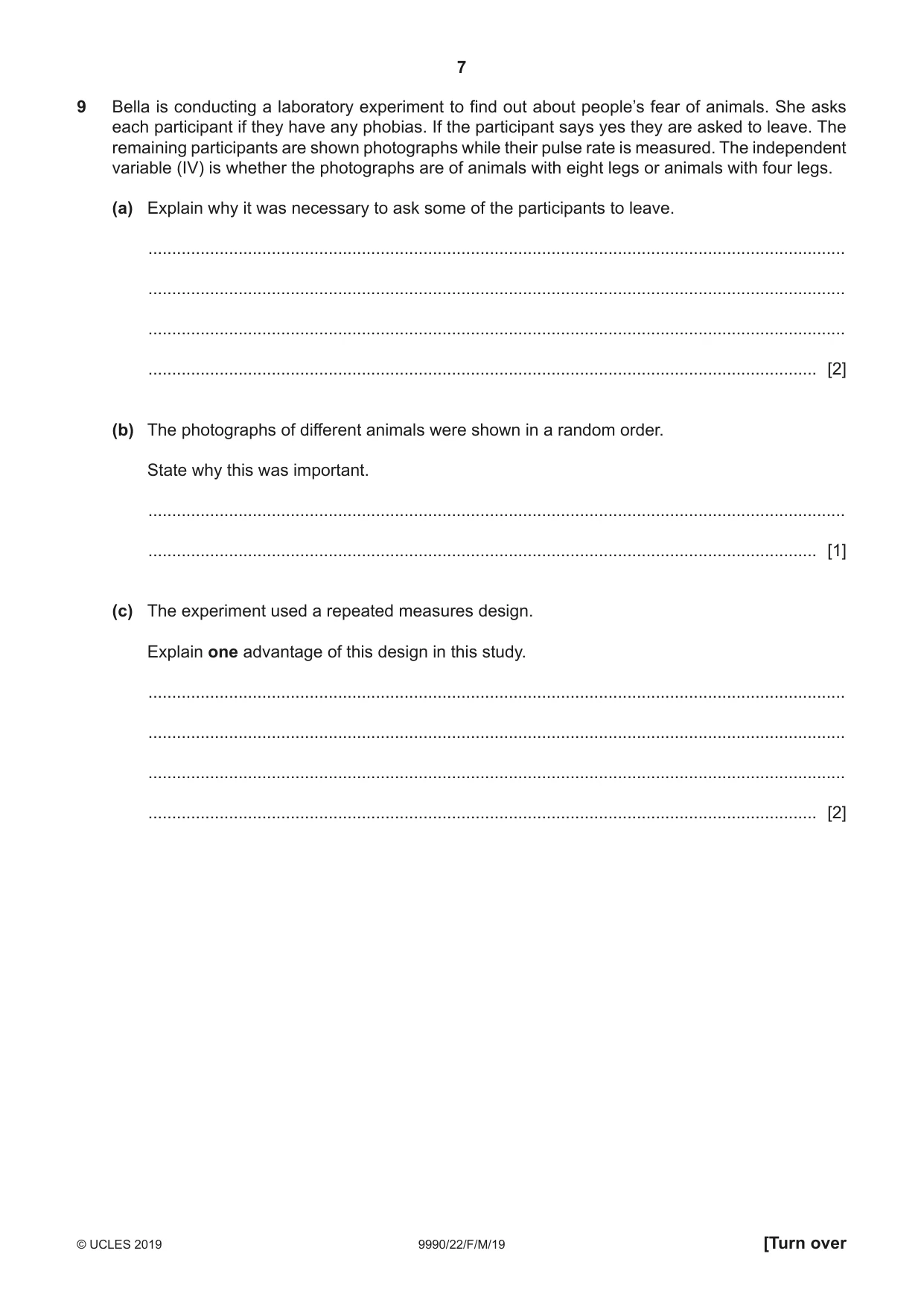
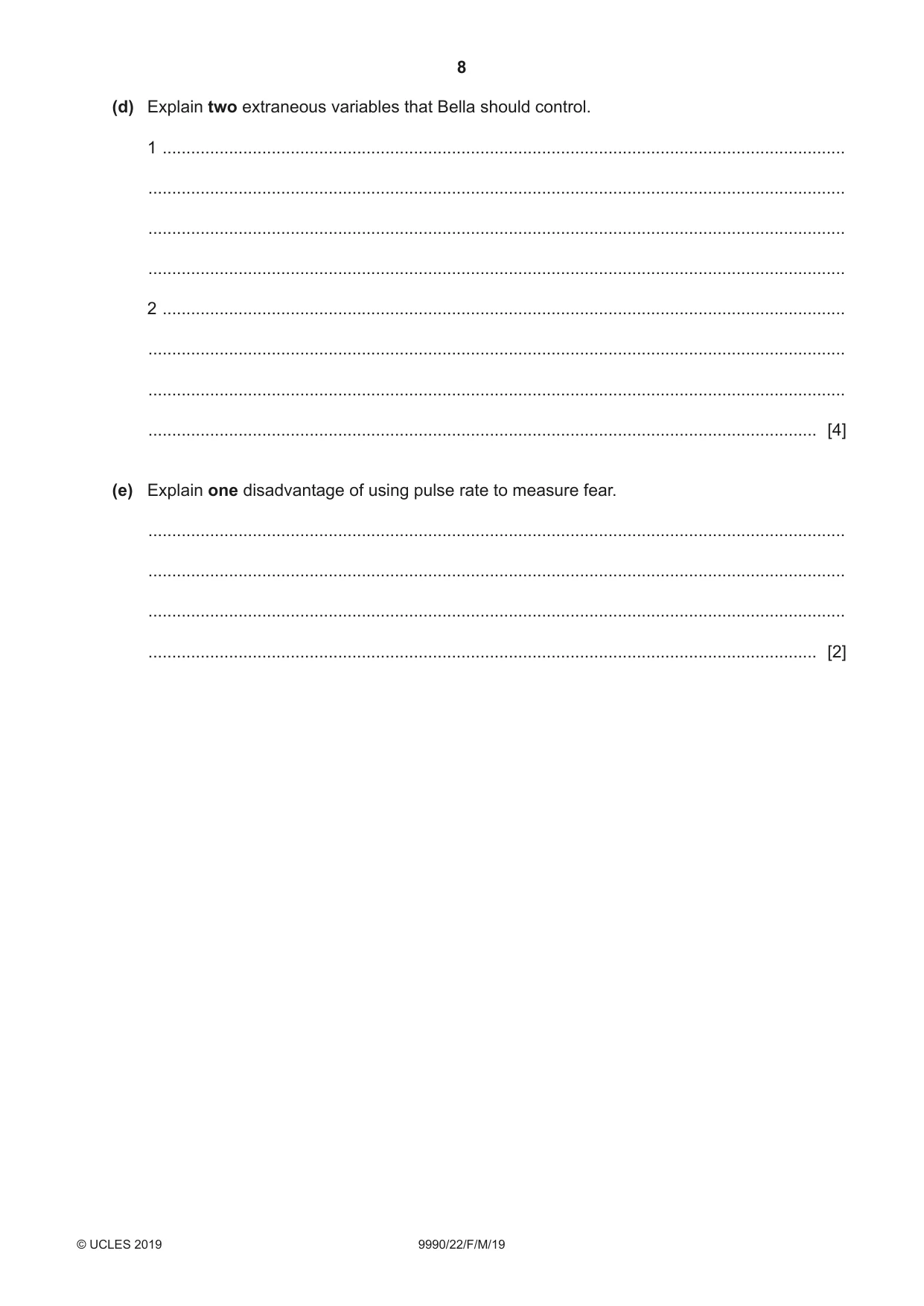
9 Bella is conducting a laboratory experiment to find out about people’s fear of animals. She asks each participant if they have any phobias. If the participant says yes they are asked to leave. The remaining participants are shown photographs while their pulse rate is measured. The independent variable (IV) is whether the photographs are of animals with eight legs or animals with four legs. (a) Explain why it was necessary to ask some of the participants to leave. ................................................................................................................................................... ................................................................................................................................................... ................................................................................................................................................... ............................................................................................................................................. [2] (b) The photographs of different animals were shown in a random order. State why this was important. ................................................................................................................................................... ............................................................................................................................................. [1] (c) The experiment used a repeated measures design. Explain one advantage of this design in this study. ................................................................................................................................................... ................................................................................................................................................... ................................................................................................................................................... ............................................................................................................................................. [2] (d) Explain two extraneous variables that Bella should control. 1 ................................................................................................................................................ ................................................................................................................................................... ................................................................................................................................................... ................................................................................................................................................... 2 ................................................................................................................................................ ................................................................................................................................................... ................................................................................................................................................... ............................................................................................................................................. [4] (e) Explain one disadvantage of using pulse rate to measure fear. ................................................................................................................................................... ................................................................................................................................................... ................................................................................................................................................... ............................................................................................................................................. [2] Section C Answer all questions in this section.
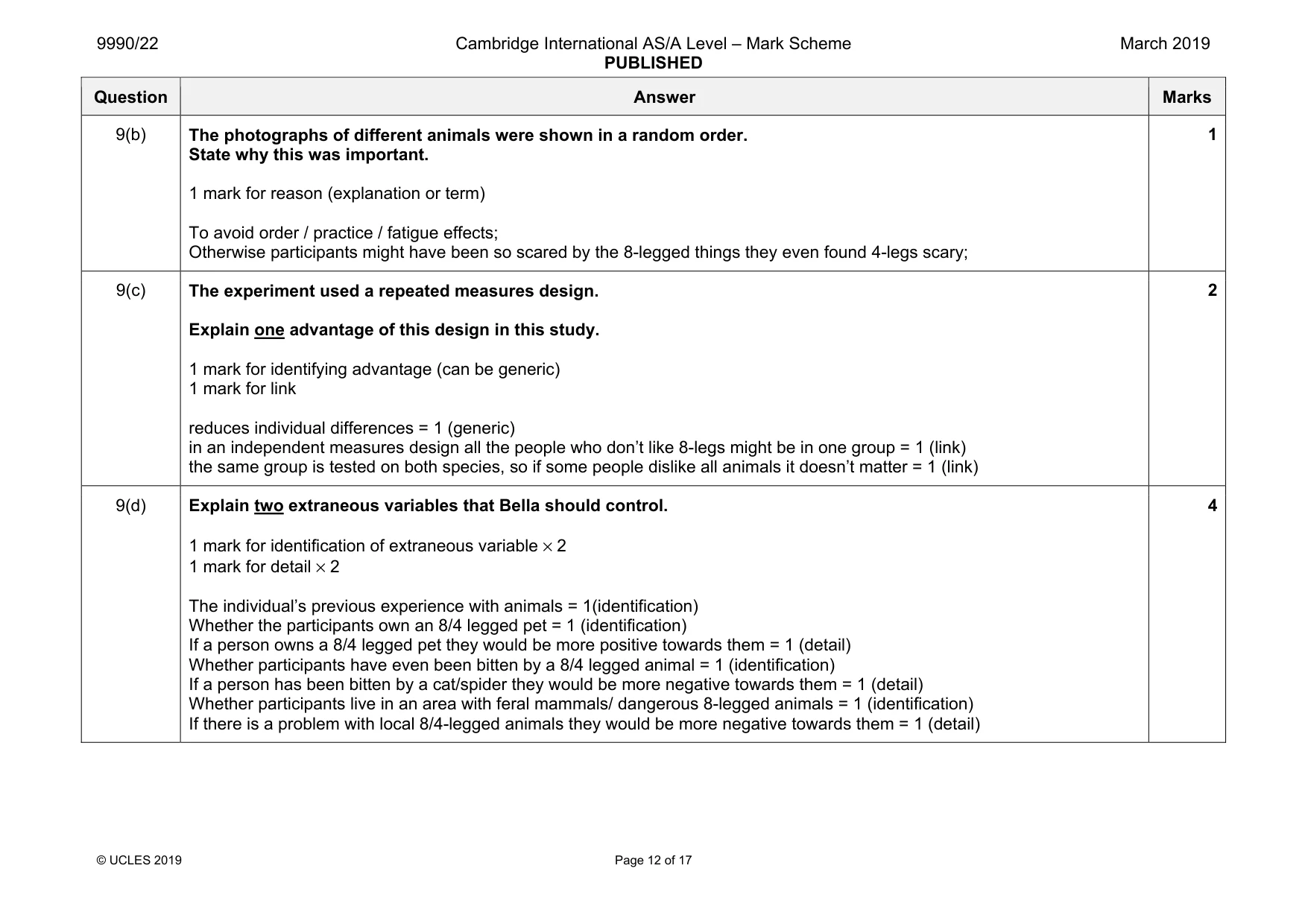
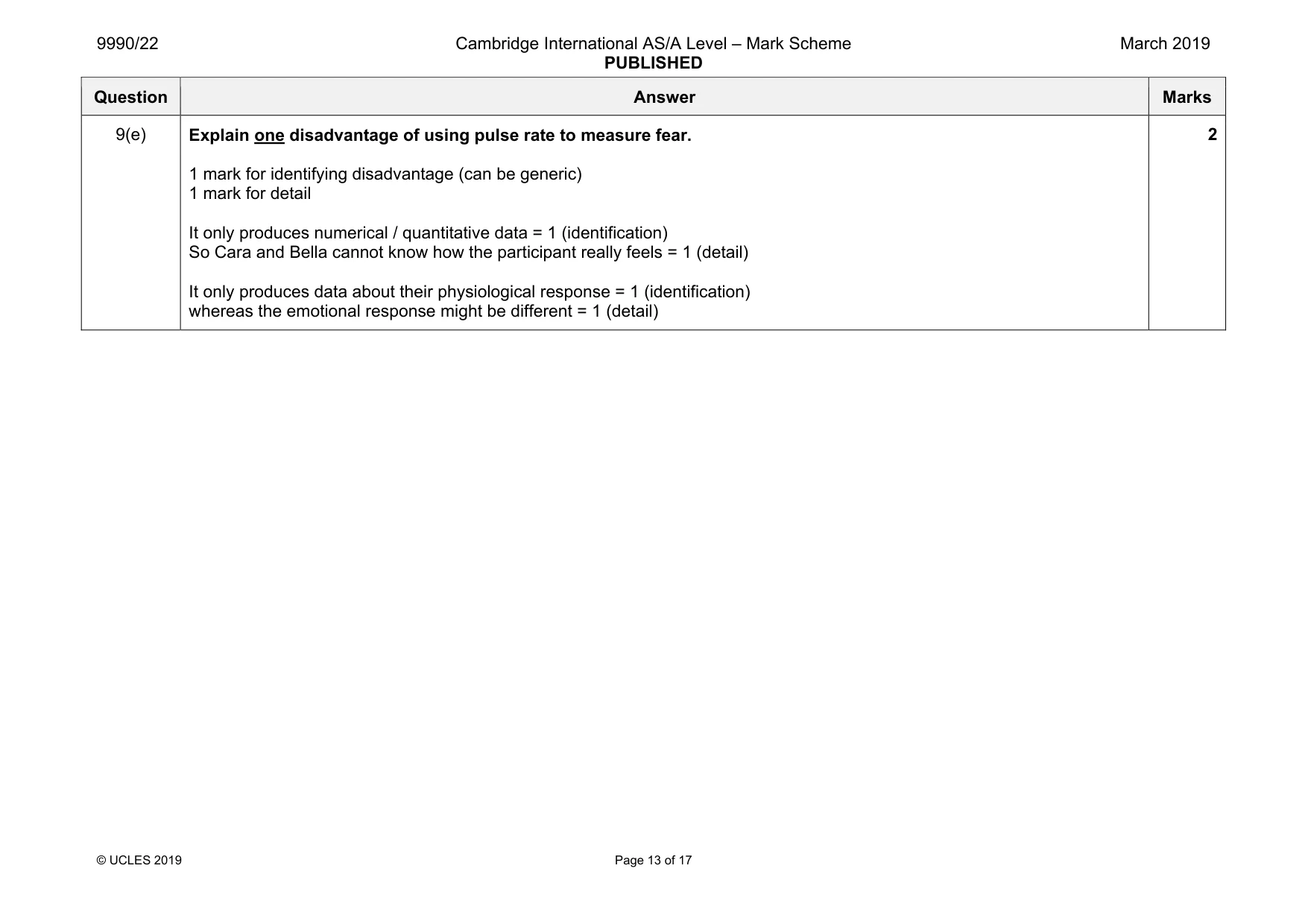
Mark scheme: 9 Bella is conducting a laboratory experiment to find out about people’s fear of animals. She asks each participant if they have any phobias. If the participant says yes they are asked to leave. The remaining participants are shown photographs while their pulse rate is measured. The independent variable (IV) is whether the photographs are of animals with eight legs or animals with four legs. 9(a) Explain why it was necessary to ask some of the participants to leave. 1 mark for identification/description of ethical guideline ‘protection from harm’ 1 mark for detail otherwise they could have been distressed by the pictures = 1 (detail) to avoid participants who would have been very scared doing the study = 1 (detail) 2 Question Answer Marks 9(b) The photographs of different animals were shown in a random order. State why this was important. 1 mark for reason (explanation or term) To avoid order / practice / fatigue effects; Otherwise participants might have been so scared by the 8-legged things they even found 4-legs scary; 1 9(c) The experiment used a repeated measures design. Explain one advantage of this design in this study. 1 mark for identifying advantage (can be generic) 1 mark for link reduces individual differences = 1 (generic) in an independent measures design all the people who don’t like 8-legs might be in one group = 1 (link) the same group is tested on both species, so if some people dislike all animals it doesn’t matter = 1 (link) 2 9(d) Explain two extraneous variables that Bella should control. 1 mark for identification of extraneous variable × 2 1 mark for detail × 2 The individual’s previous experience with animals = 1(identification) Whether the participants own an 8/4 legged pet = 1 (identification) If a person owns a 8/4 legged pet they would be more positive towards them = 1 (detail) Whether participants have even been bitten by a 8/4 legged animal = 1 (identification) If a person has been bitten by a cat/spider they would be more negative towards them = 1 (detail) Whether participants live in an area with feral mammals/ dangerous 8-legged animals = 1 (identification) If there is a problem with local 8/4-legged animals they would be more negative towards them = 1 (detail) 4 Question Answer Marks 9(e) Explain one disadvantage of using pulse rate to measure fear. 1 mark for identifying disadvantage (can be generic) 1 mark for detail It only produces numerical / quantitative data = 1 (identification) So Cara and Bella cannot know how the participant really feels = 1 (detail) It only produces data about their physiological response = 1 (identification) whereas the emotional response might be different = 1 (detail) 2
More questions on Anxiety disorders and fear-related disorders
Q10 · Jim is planning an observational study about the way people respond to facial expressions
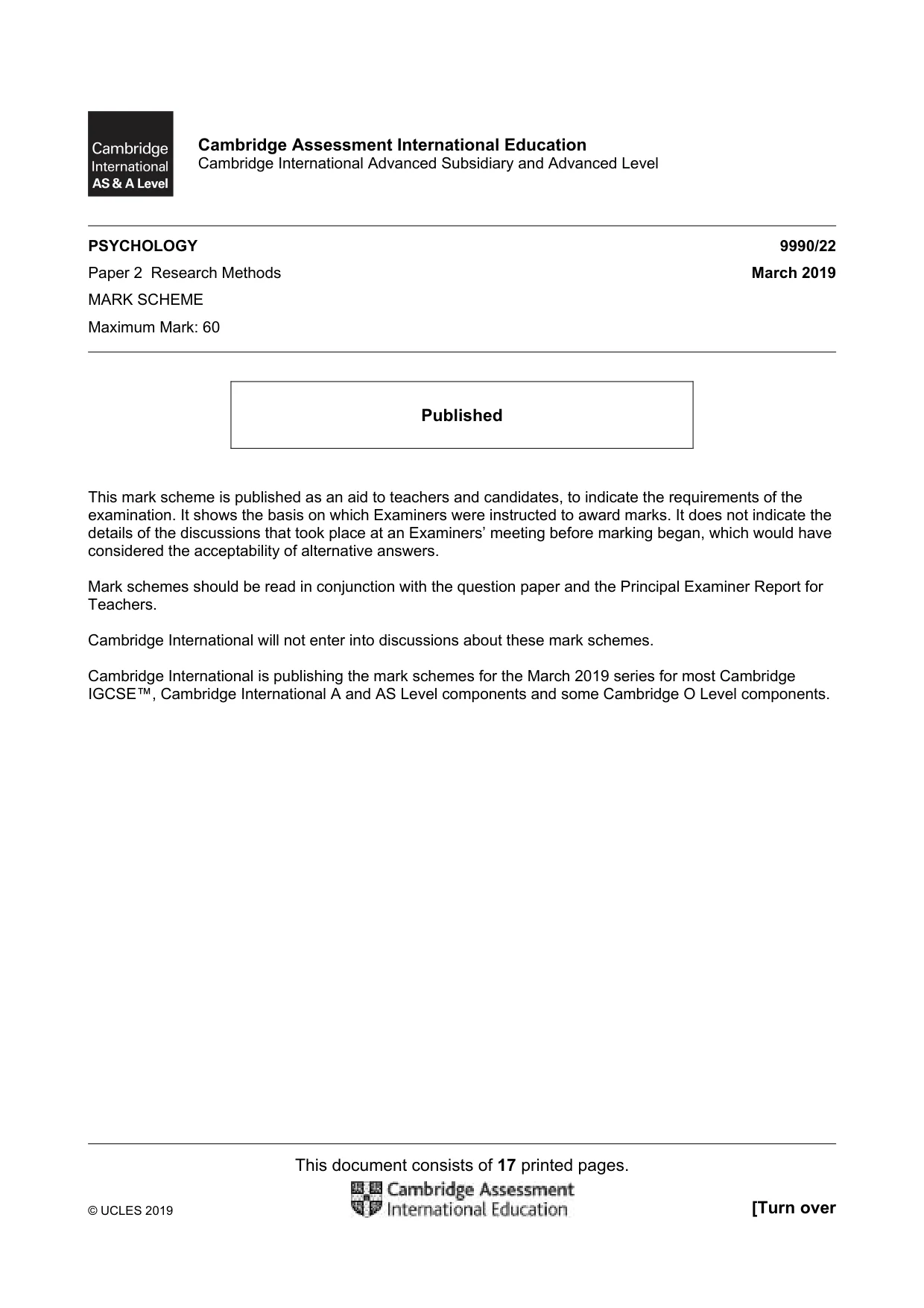
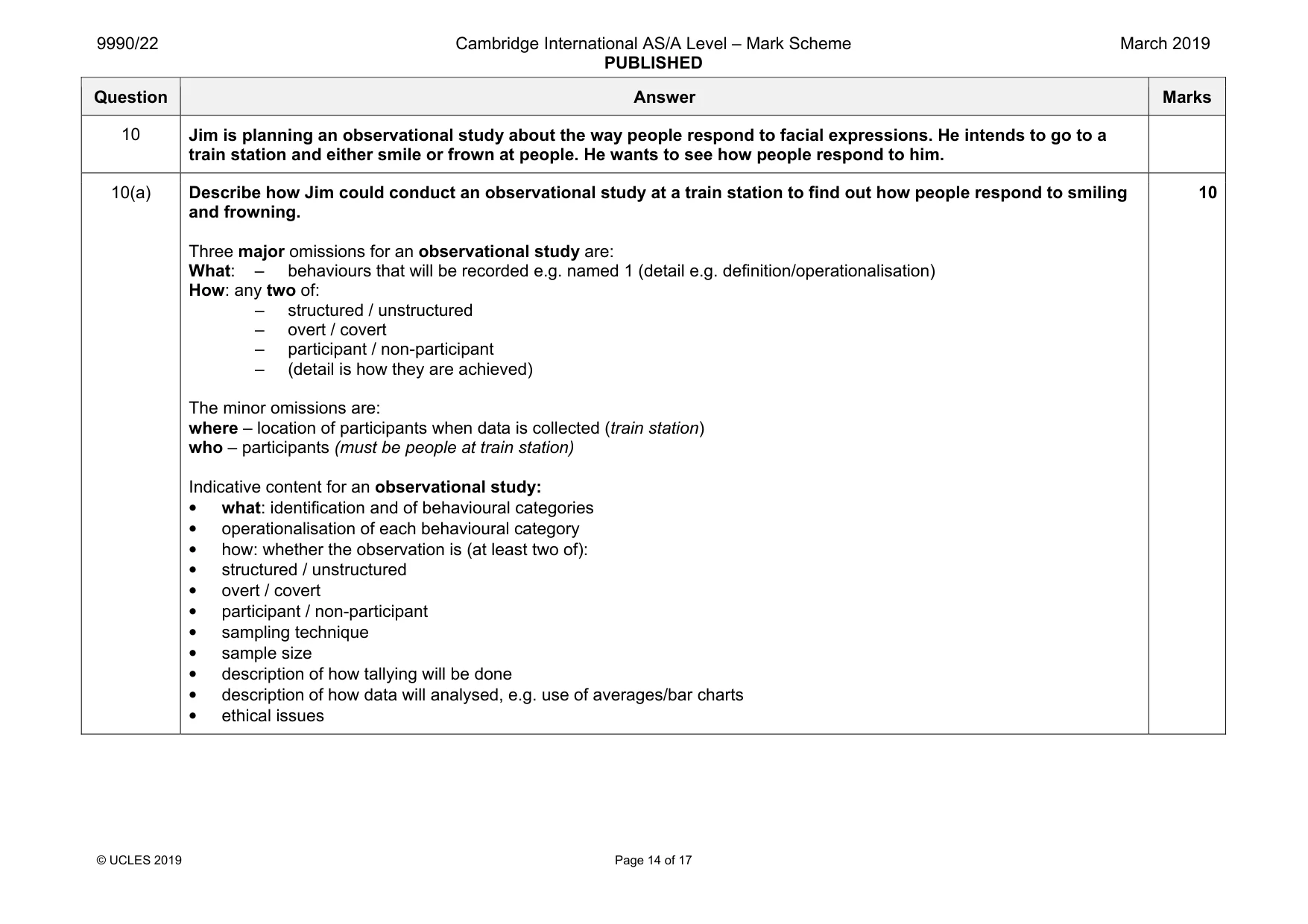
10 Jim is planning an observational study about the way people respond to facial expressions. He intends to go to a train station and either smile or frown at people. He wants to see how people respond to him. (a) Describe how Jim could conduct an observational study at a train station to find out how people respond to smiling and frowning. ................................................................................................................................................... ................................................................................................................................................... ................................................................................................................................................... ................................................................................................................................................... ................................................................................................................................................... ................................................................................................................................................... ................................................................................................................................................... ................................................................................................................................................... ................................................................................................................................................... ................................................................................................................................................... ................................................................................................................................................... ................................................................................................................................................... ................................................................................................................................................... ................................................................................................................................................... ................................................................................................................................................... ................................................................................................................................................... ................................................................................................................................................... ................................................................................................................................................... ........................................................................................................................................... [10] (b) Identify one weakness/limitation with the procedure you have described in your answer to part (a) and suggest how your study might be done differently to overcome the problem. ................................................................................................................................................... ................................................................................................................................................... ................................................................................................................................................... ................................................................................................................................................... ................................................................................................................................................... ................................................................................................................................................... ................................................................................................................................................... ............................................................................................................................................. [4]
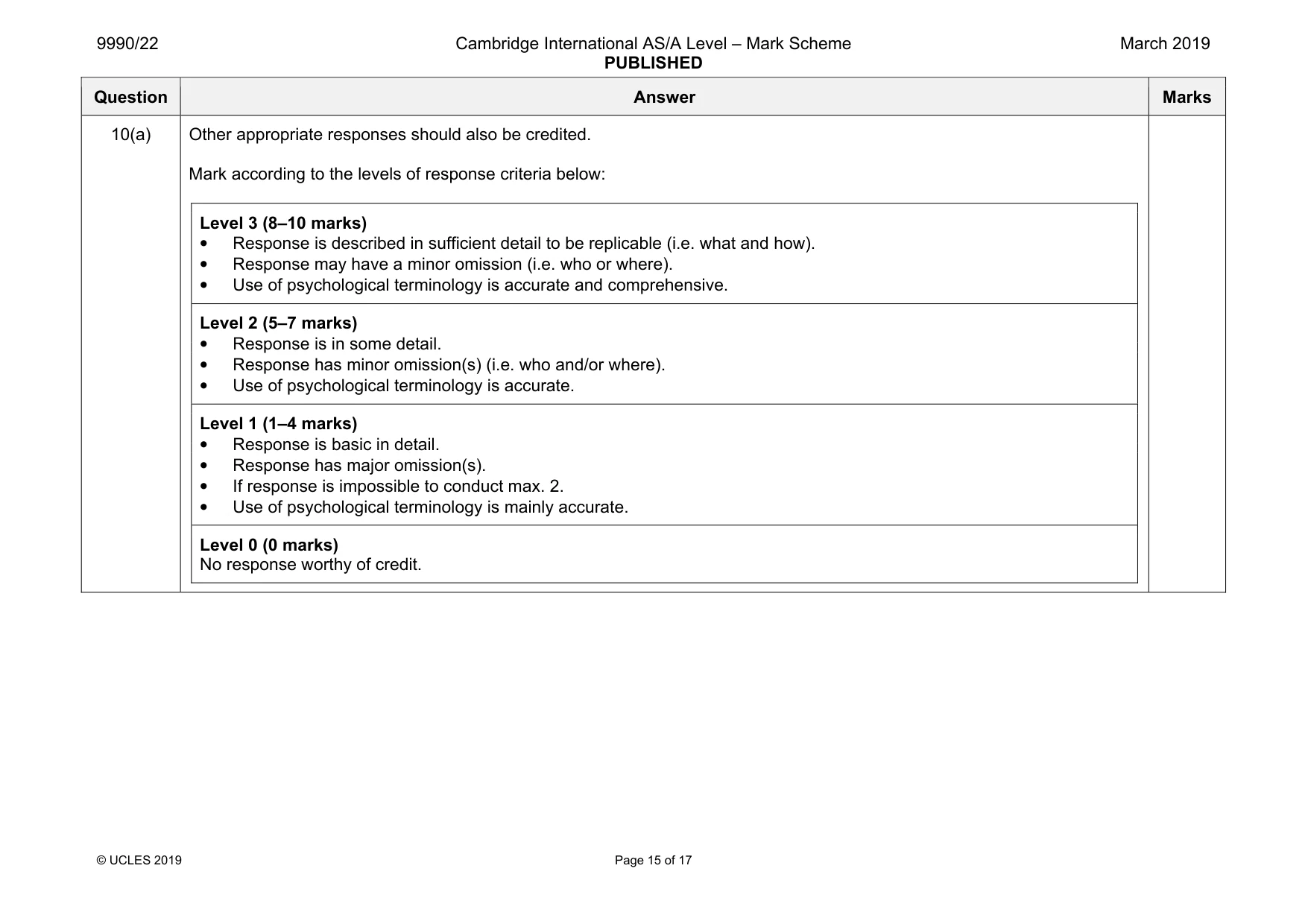
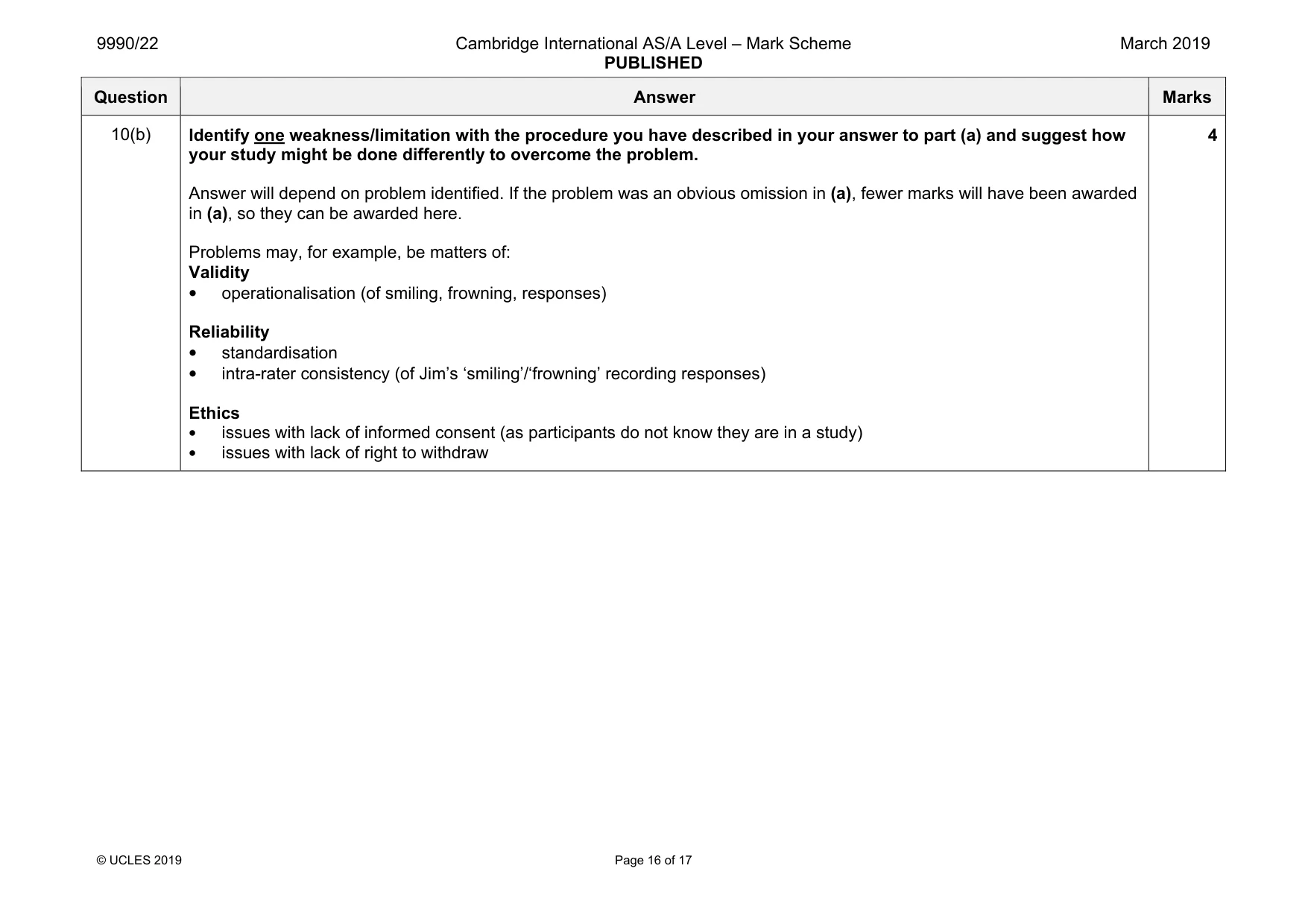
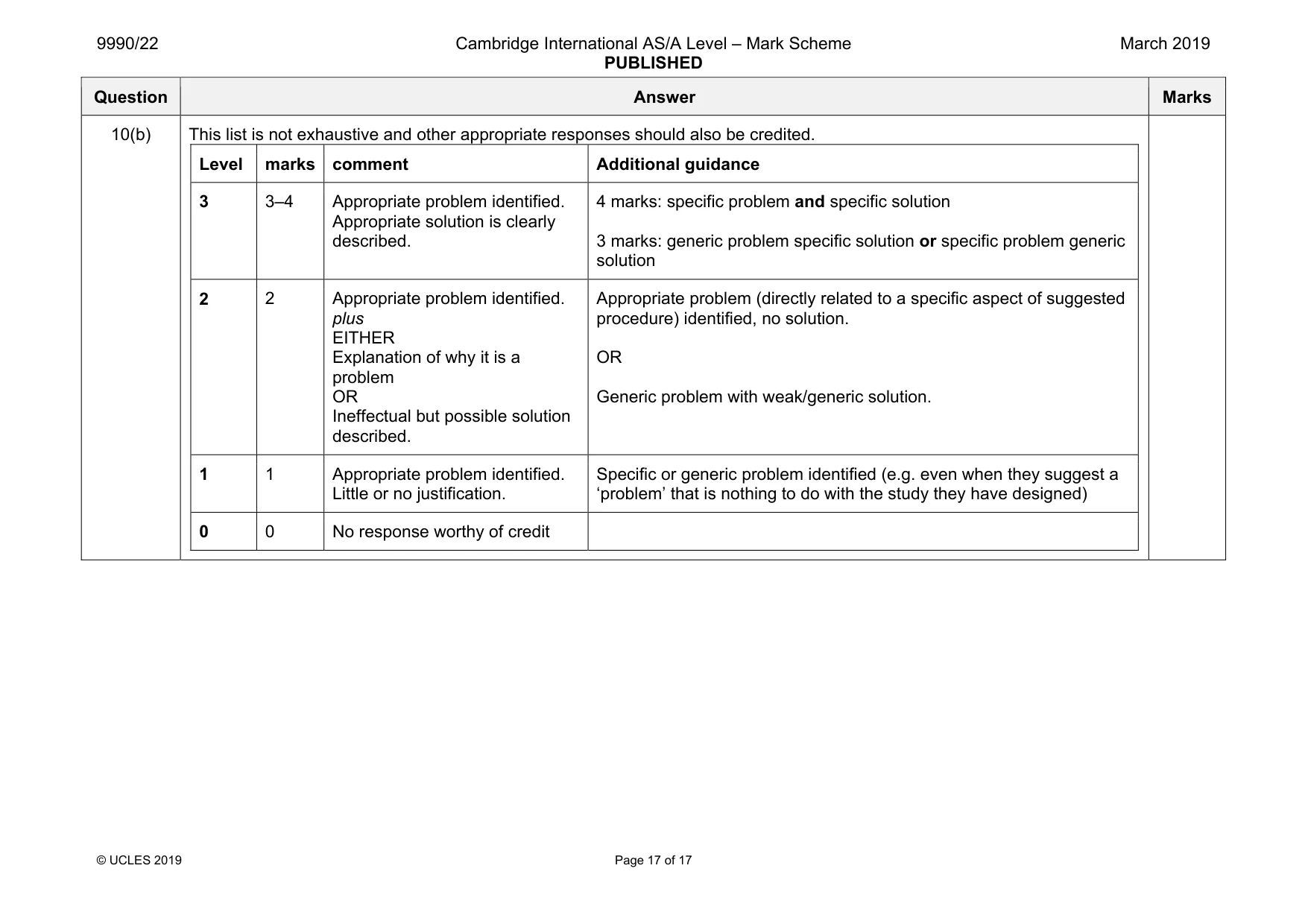
Mark scheme: 10 Jim is planning an observational study about the way people respond to facial expressions. He intends to go to a train station and either smile or frown at people. He wants to see how people respond to him. 10(a) Describe how Jim could conduct an observational study at a train station to find out how people respond to smiling and frowning. Three major omissions for an observational study are: What: – behaviours that will be recorded e.g. named 1 (detail e.g. definition/operationalisation) How: any two of: – structured / unstructured – overt / covert – participant / non-participant – (detail is how they are achieved) The minor omissions are: where – location of participants when data is collected (train station) who – participants (must be people at train station) Indicative content for an observational study: • what: identification and of behavioural categories • operationalisation of each behavioural category • how: whether the observation is (at least two of): • structured / unstructured • overt / covert • participant / non-participant • sampling technique • sample size • description of how tallying will be done • description of how data will analysed, e.g. use of averages/bar charts • ethical issues 10 Question Answer Marks 10(a) Other appropriate responses should also be credited. Mark according to the levels of response criteria below: Level 3 (8–10 marks) • Response is described in sufficient detail to be replicable (i.e. what and how). • Response may have a minor omission (i.e. who or where). • Use of psychological terminology is accurate and comprehensive. Level 2 (5–7 marks) • Response is in some detail. • Response has minor omission(s) (i.e. who and/or where). • Use of psychological terminology is accurate. Level 1 (1–4 marks) • Response is basic in detail. • Response has major omission(s). • If response is impossible to conduct max. 2. • Use of psychological terminology is mainly accurate. Level 0 (0 marks) No response worthy of credit. Question Answer Marks 10(b) Identify one weakness/limitation with the procedure you have described in your answer to part (a) and suggest how your study might be done differently to overcome the problem. Answer will depend on problem identified. If the problem was an obvious omission in (a), fewer marks will have been awarded in (a), so they can be awarded here. Problems may, for example, be matters of: Validity • operationalisation (of smiling, frowning, responses) Reliability • standardisation • intra-rater consistency (of Jim’s ‘smiling’/‘frowning’ recording responses) Ethics • issues with lack of informed consent (as participants do not know they are in a study) • issues with lack of right to withdraw 4 Question Answer Marks 10(b) This list is not exhaustive and other appropriate responses should also be credited. Level marks comment Additional guidance 3 3–4 Appropriate problem identified. Appropriate solution is clearly described. 4 marks: specific problem and specific solution 3 marks: generic problem specific solution or specific problem generic solution 2 2 Appropriate problem identified. plus EITHER Explanation of why it is a problem OR Ineffectual but possible solution described. Appropriate problem (directly related to a specific aspect of suggested procedure) identified, no solution. OR Generic problem with weak/generic solution. 1 1 Appropriate problem identified. Little or no justification. Specific or generic problem identified (e.g. even when they suggest a ‘problem’ that is nothing to do with the study they have designed) 0 0 No response worthy of credit
What was in this paper
The subtopics covered by these 10 questions, and how many questions each got. Open one in a new tab to see every Cambridge question on it.
What you needed in this session
Cambridge’s own grade thresholds for 2019 Feb/March, Paper 2 · Variant 2. A higher threshold means an easier paper — the bar moves with how the cohort did.