Cambridge A Level Psychology (from 2018) 9990 — 2018 Feb/March Paper 2 · Variant 2
9990/22/F/M/18 · 10 questions · 60 marks · ≈68 min
The question paper and its mark scheme, free to read here and free to download. This is Cambridge’s own paper, exactly as it was sat.
Question paper12 pages



Mark scheme14 pages
Answers below. Sit the paper first if you are practising.

Questions as text
Q1 · One of the aims of the study by Schachter and Singer (two factors in emotion) was to find…
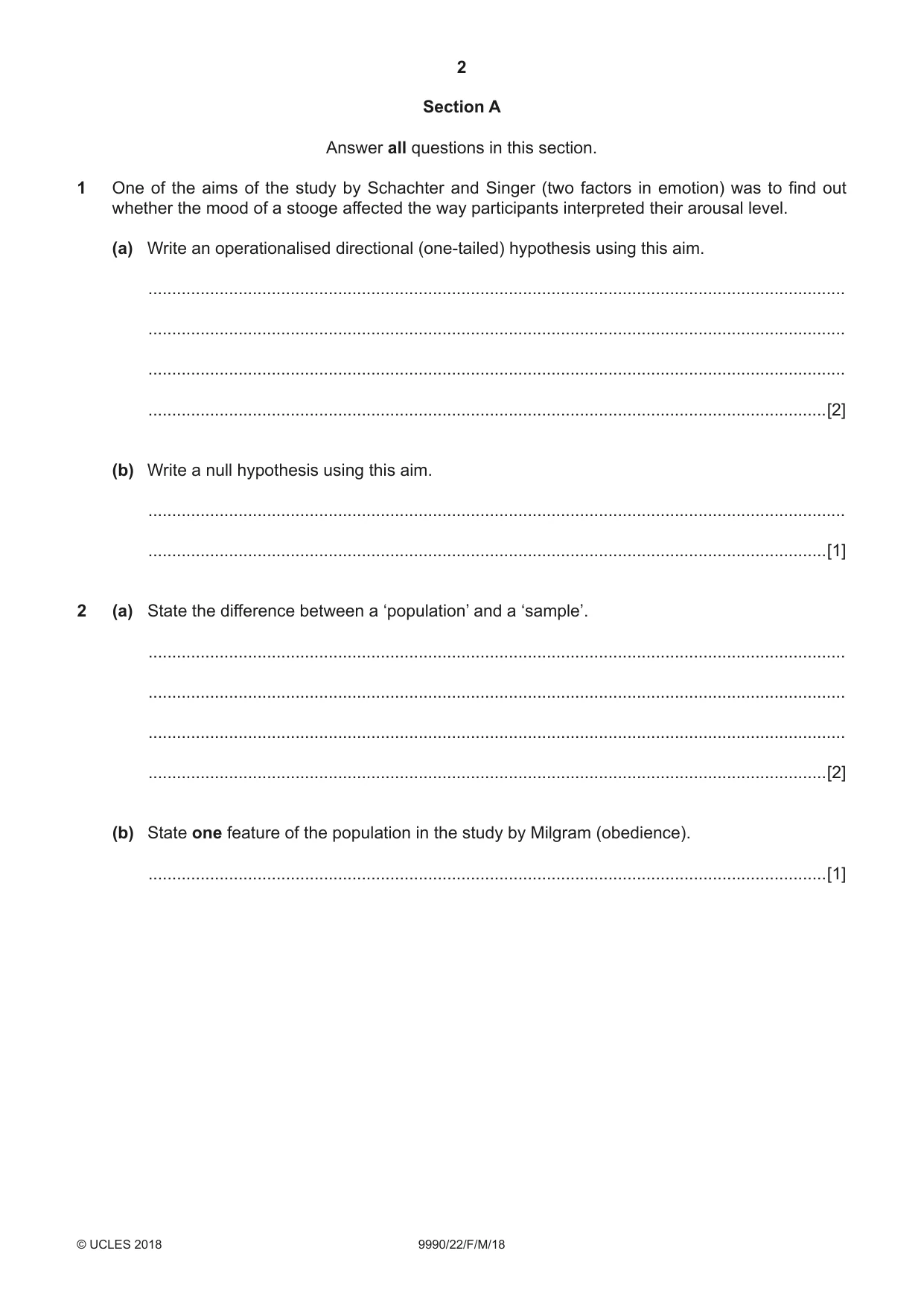
1 One of the aims of the study by Schachter and Singer (two factors in emotion) was to find out whether the mood of a stooge affected the way participants interpreted their arousal level. (a) Write an operationalised directional (one-tailed) hypothesis using this aim. ................................................................................................................................................... ................................................................................................................................................... ................................................................................................................................................... ...............................................................................................................................................[2] (b) Write a null hypothesis using this aim. ................................................................................................................................................... ...............................................................................................................................................[1]
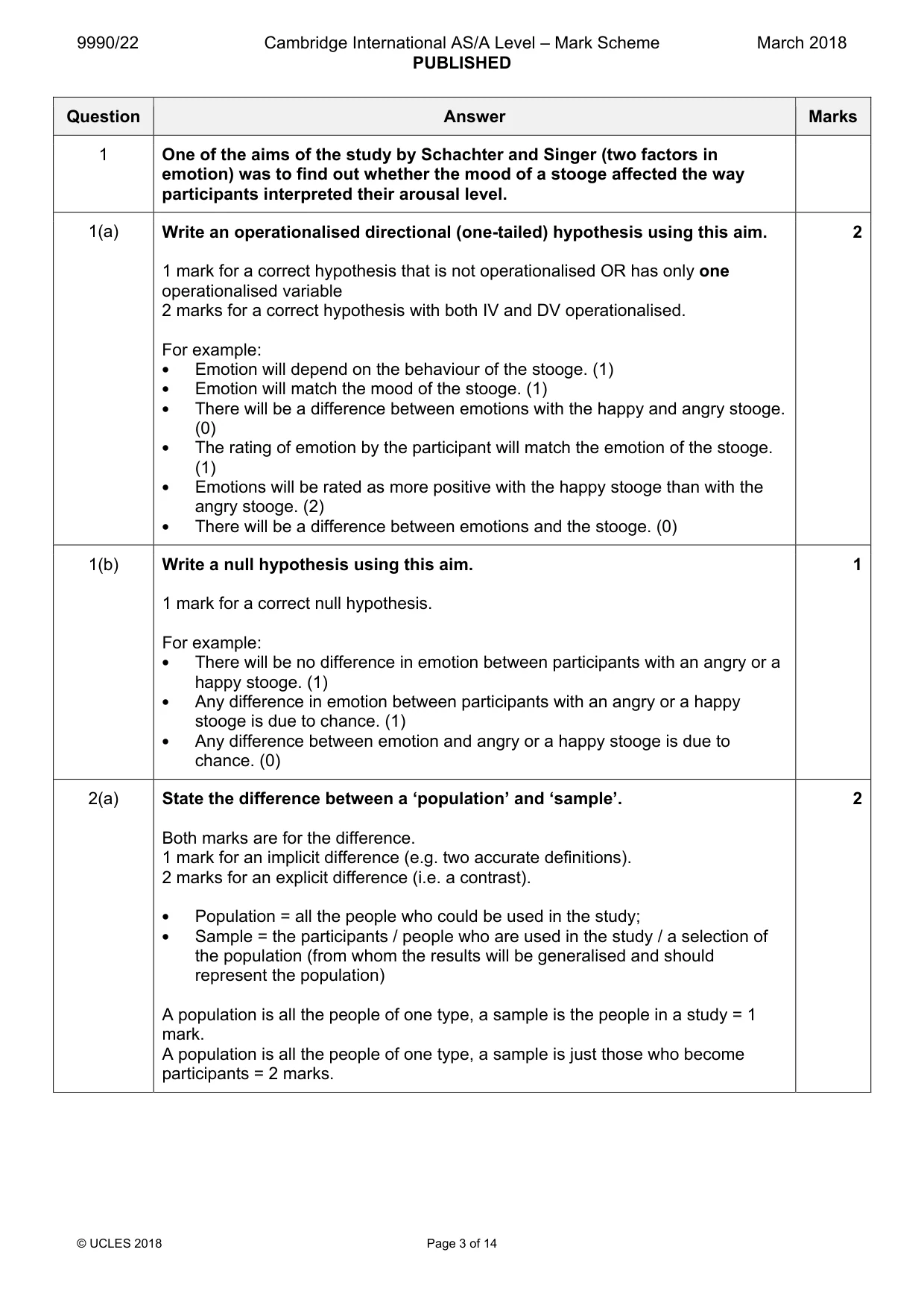
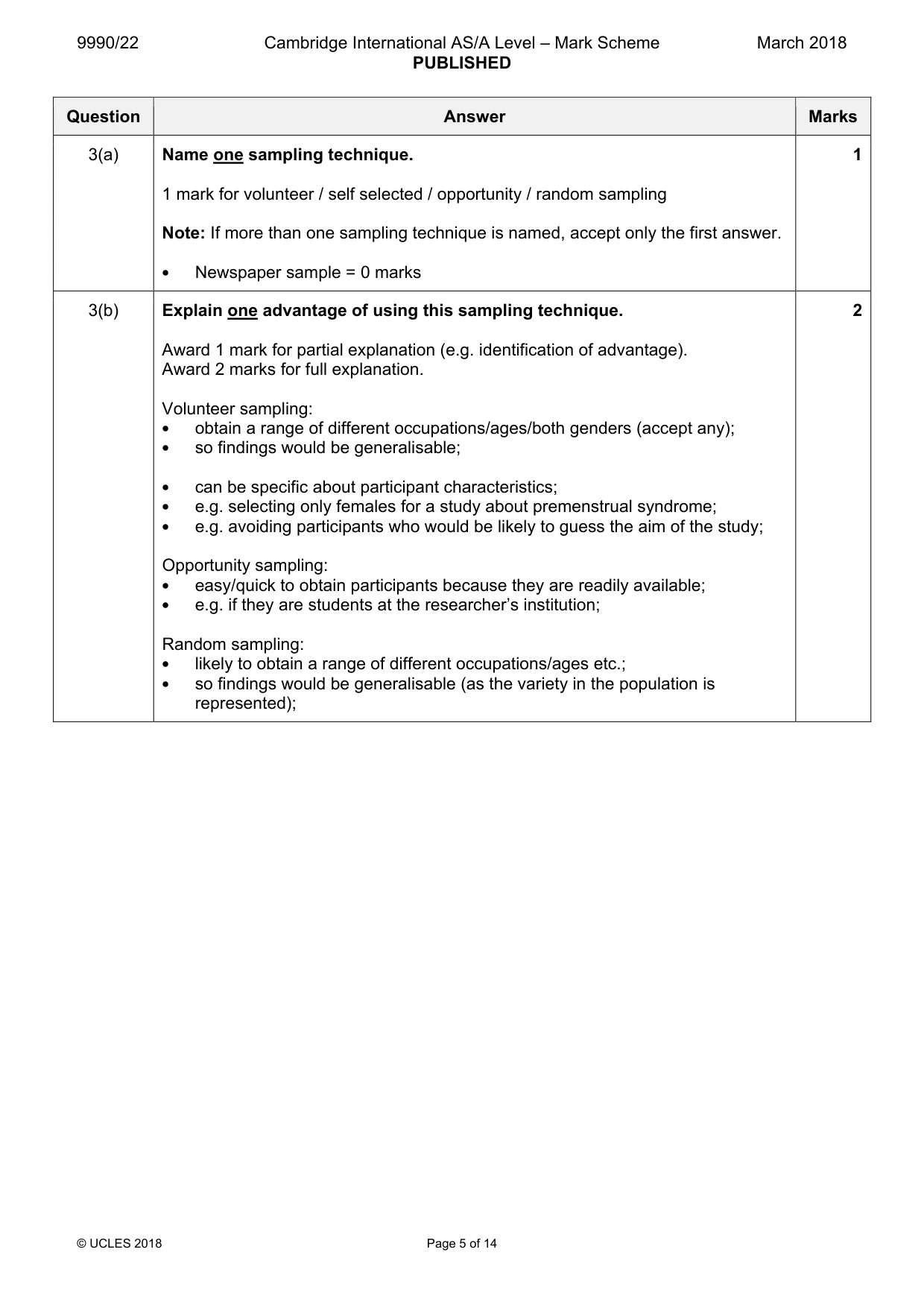
Mark scheme: Question Answer Marks 1 One of the aims of the study by Schachter and Singer (two factors in emotion) was to find out whether the mood of a stooge affected the way participants interpreted their arousal level. 1(a) Write an operationalised directional (one-tailed) hypothesis using this aim. 2 1 mark for a correct hypothesis that is not operationalised OR has only one operationalised variable 2 marks for a correct hypothesis with both IV and DV operationalised. For example: • Emotion will depend on the behaviour of the stooge. (1) • Emotion will match the mood of the stooge. (1) • There will be a difference between emotions with the happy and angry stooge. (0) • The rating of emotion by the participant will match the emotion of the stooge. (1) • Emotions will be rated as more positive with the happy stooge than with the angry stooge. (2) • There will be a difference between emotions and the stooge. (0) 1(b) Write a null hypothesis using this aim. 1 1 mark for a correct null hypothesis. For example: • There will be no difference in emotion between participants with an angry or a happy stooge. (1) • Any difference in emotion between participants with an angry or a happy stooge is due to chance. (1) • Any difference between emotion and angry or a happy stooge is due to chance. (0)
Q2 · State the difference between a ‘population’ and a ‘sample’
2 (a) State the difference between a ‘population’ and a ‘sample’. ................................................................................................................................................... ................................................................................................................................................... ................................................................................................................................................... ...............................................................................................................................................[2] (b) State one feature of the population in the study by Milgram (obedience). ...............................................................................................................................................[1]
Mark scheme: 2(a) State the difference between a ‘population’ and ‘sample’. 2 Both marks are for the difference. 1 mark for an implicit difference (e.g. two accurate definitions). 2 marks for an explicit difference (i.e. a contrast). • Population = all the people who could be used in the study; • Sample = the participants / people who are used in the study / a selection of the population (from whom the results will be generalised and should represent the population) A population is all the people of one type, a sample is the people in a study = 1 mark. A population is all the people of one type, a sample is just those who become participants = 2 marks. 2(b) State one feature of the population in the study by Milgram (obedience). 1 1 mark for the population, i.e. the general category • American; • male; • New Haven residents; • newspaper readers; • aged 20–50 years; • a range of occupations;
Q3 · Name one sampling technique
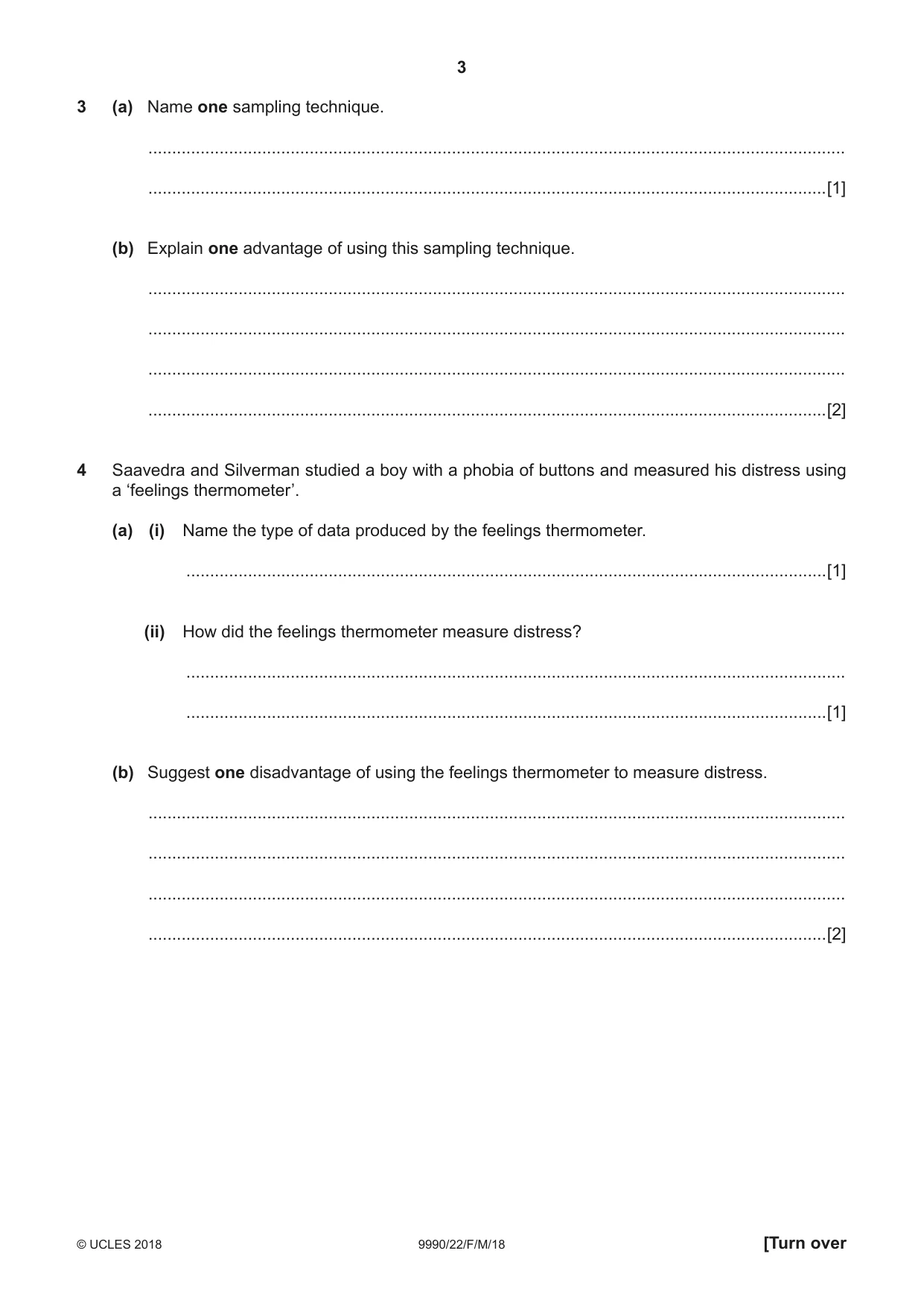
3 (a) Name one sampling technique. ................................................................................................................................................... ...............................................................................................................................................[1] (b) Explain one advantage of using this sampling technique. ................................................................................................................................................... ................................................................................................................................................... ................................................................................................................................................... ...............................................................................................................................................[2]
Mark scheme: 3(a) Name one sampling technique. 1 1 mark for volunteer / self selected / opportunity / random sampling Note: If more than one sampling technique is named, accept only the first answer. • Newspaper sample = 0 marks 3(b) Explain one advantage of using this sampling technique. 2 Award 1 mark for partial explanation (e.g. identification of advantage). Award 2 marks for full explanation. Volunteer sampling: • obtain a range of different occupations/ages/both genders (accept any); • so findings would be generalisable; • can be specific about participant characteristics; • e.g. selecting only females for a study about premenstrual syndrome; • e.g. avoiding participants who would be likely to guess the aim of the study; Opportunity sampling: • easy/quick to obtain participants because they are readily available; • e.g. if they are students at the researcher’s institution; Random sampling: • likely to obtain a range of different occupations/ages etc.; • so findings would be generalisable (as the variety in the population is represented);
Q4 · Saavedra and Silverman studied a boy with a phobia of buttons and measured his distress…
4 Saavedra and Silverman studied a boy with a phobia of buttons and measured his distress using a ‘feelings thermometer’. (a) (i) Name the type of data produced by the feelings thermometer. .......................................................................................................................................[1] (ii) How did the feelings thermometer measure distress? ........................................................................................................................................... .......................................................................................................................................[1] (b) Suggest one disadvantage of using the feelings thermometer to measure distress. ................................................................................................................................................... ................................................................................................................................................... ................................................................................................................................................... ...............................................................................................................................................[2]
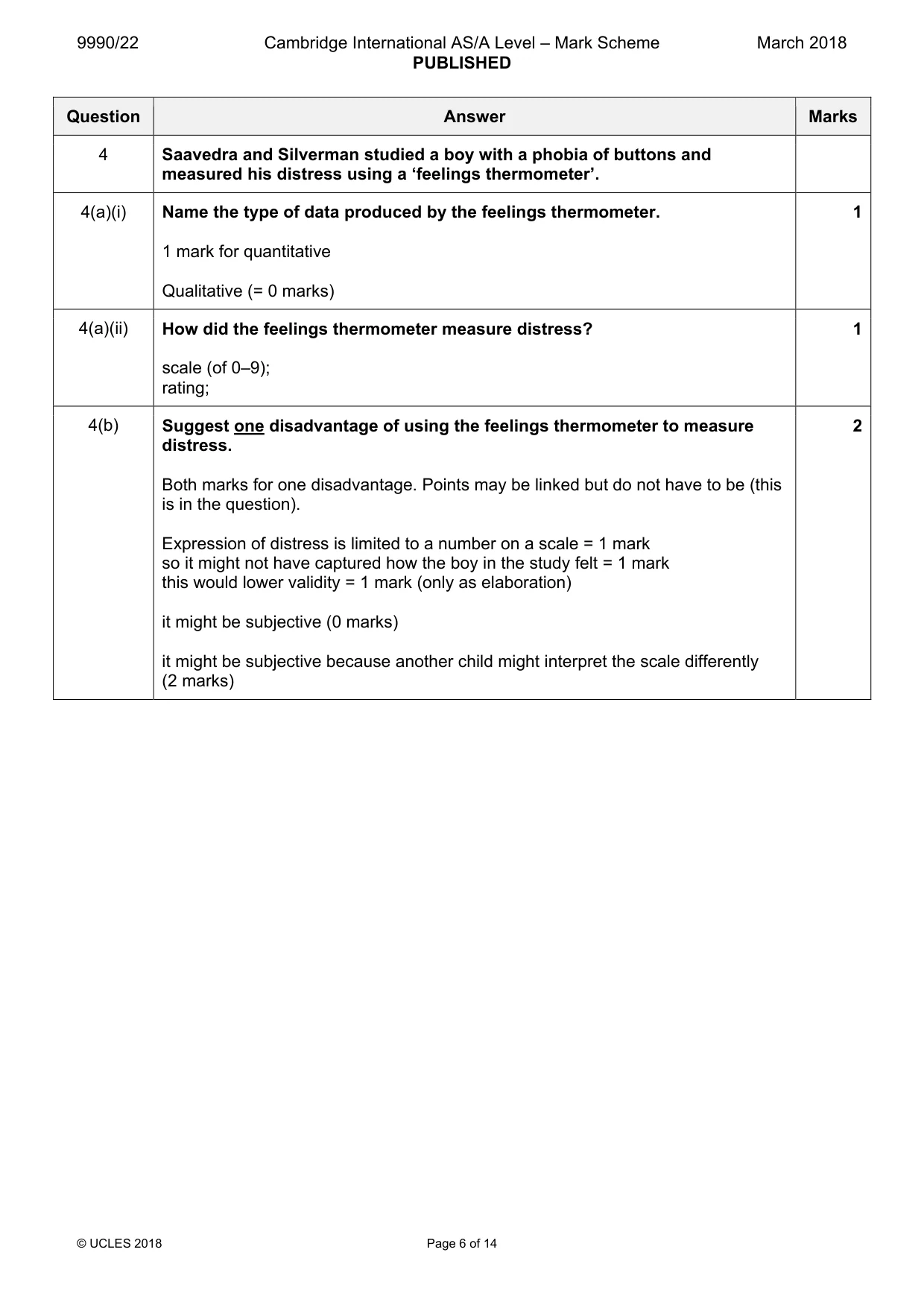
Mark scheme: 4(a)(i) Name the type of data produced by the feelings thermometer. 1 1 mark for quantitative Qualitative (= 0 marks) 4(a)(ii) How did the feelings thermometer measure distress? 1 scale (of 0–9); rating; 4(b) Suggest one disadvantage of using the feelings thermometer to measure 2 distress. Both marks for one disadvantage. Points may be linked but do not have to be (this is in the question). Expression of distress is limited to a number on a scale = 1 mark so it might not have captured how the boy in the study felt = 1 mark this would lower validity = 1 mark (only as elaboration) it might be subjective (0 marks) it might be subjective because another child might interpret the scale differently (2 marks)
More questions on Anxiety disorders and fear-related disorders
Q5 · In the study by Baron-Cohen et al
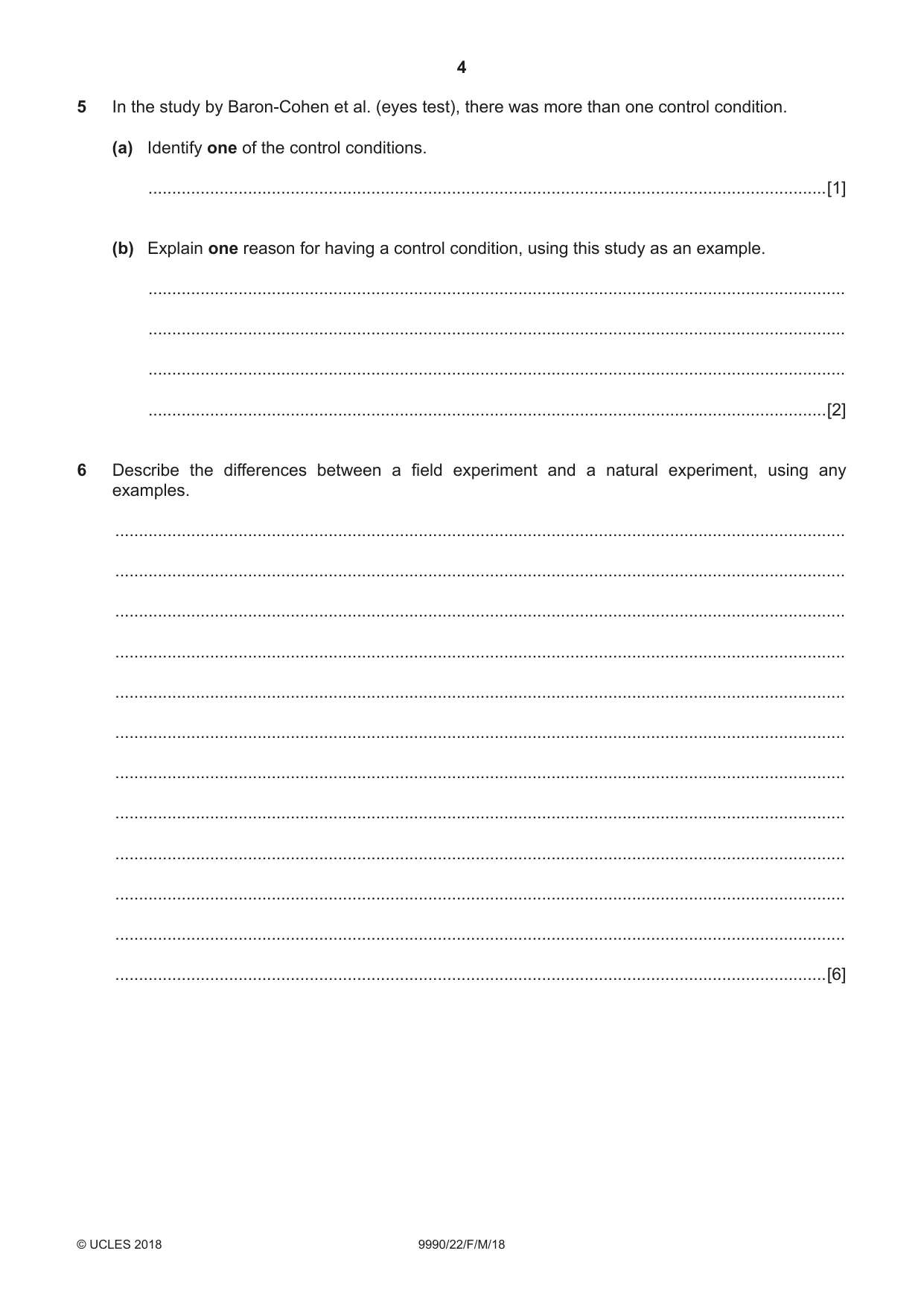
5 In the study by Baron-Cohen et al. (eyes test), there was more than one control condition. (a) Identify one of the control conditions. ...............................................................................................................................................[1] (b) Explain one reason for having a control condition, using this study as an example. ................................................................................................................................................... ................................................................................................................................................... ................................................................................................................................................... ...............................................................................................................................................[2]
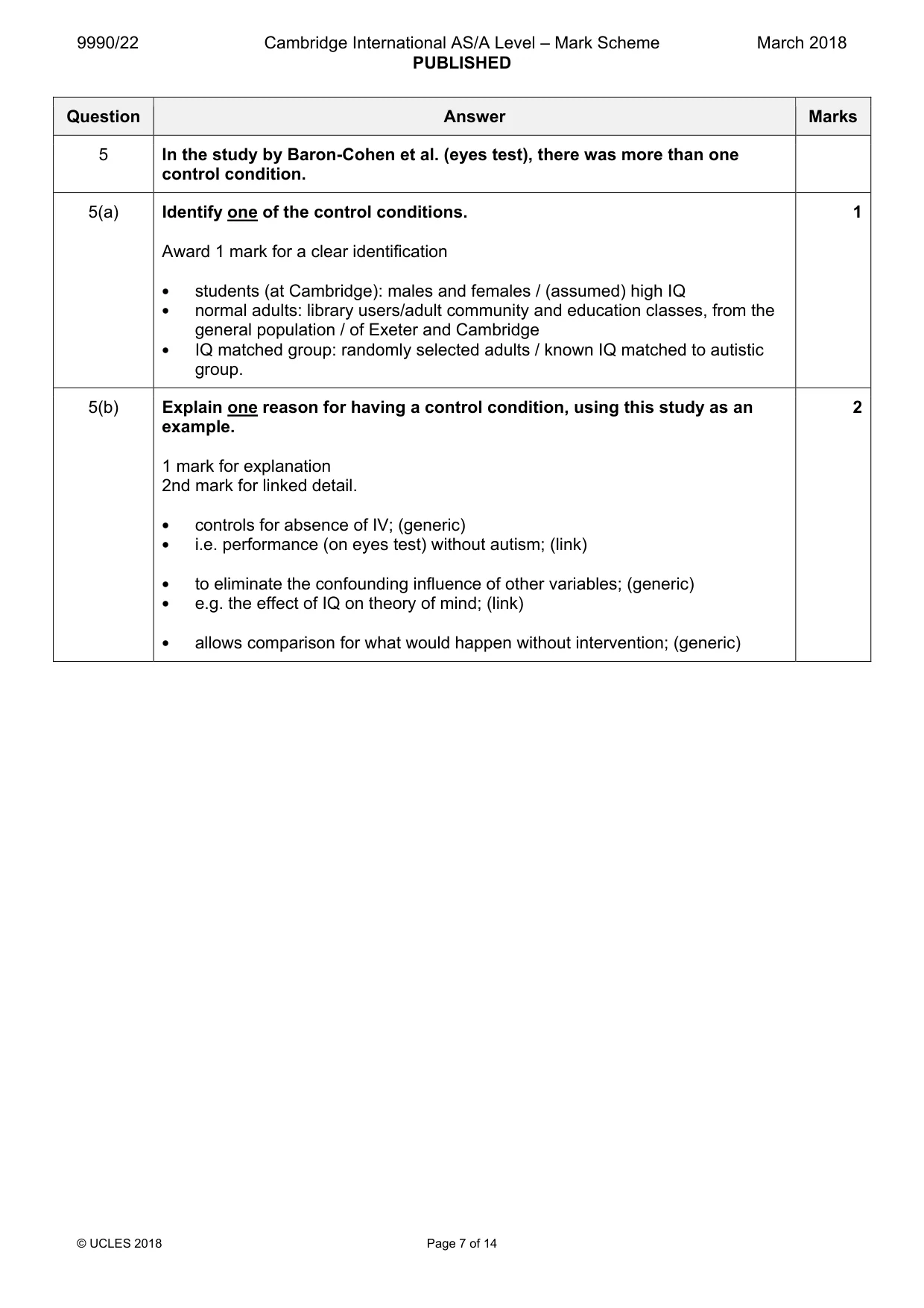
Mark scheme: 5(a) Identify one of the control conditions. 1 Award 1 mark for a clear identification • students (at Cambridge): males and females / (assumed) high IQ • normal adults: library users/adult community and education classes, from the general population / of Exeter and Cambridge • IQ matched group: randomly selected adults / known IQ matched to autistic group. 5(b) Explain one reason for having a control condition, using this study as an 2 example. 1 mark for explanation 2nd mark for linked detail. • controls for absence of IV; (generic) • i.e. performance (on eyes test) without autism; (link) • to eliminate the confounding influence of other variables; (generic) • e.g. the effect of IQ on theory of mind; (link) • allows comparison for what would happen without intervention; (generic)
Q6 · Describe the differences between a field experiment and a natural experiment, using any…
6 Describe the differences between a field experiment and a natural experiment, using any examples. .......................................................................................................................................................... .......................................................................................................................................................... .......................................................................................................................................................... .......................................................................................................................................................... .......................................................................................................................................................... .......................................................................................................................................................... .......................................................................................................................................................... .......................................................................................................................................................... .......................................................................................................................................................... .......................................................................................................................................................... .......................................................................................................................................................... ......................................................................................................................................................[6] Question 7 appears on the following page.
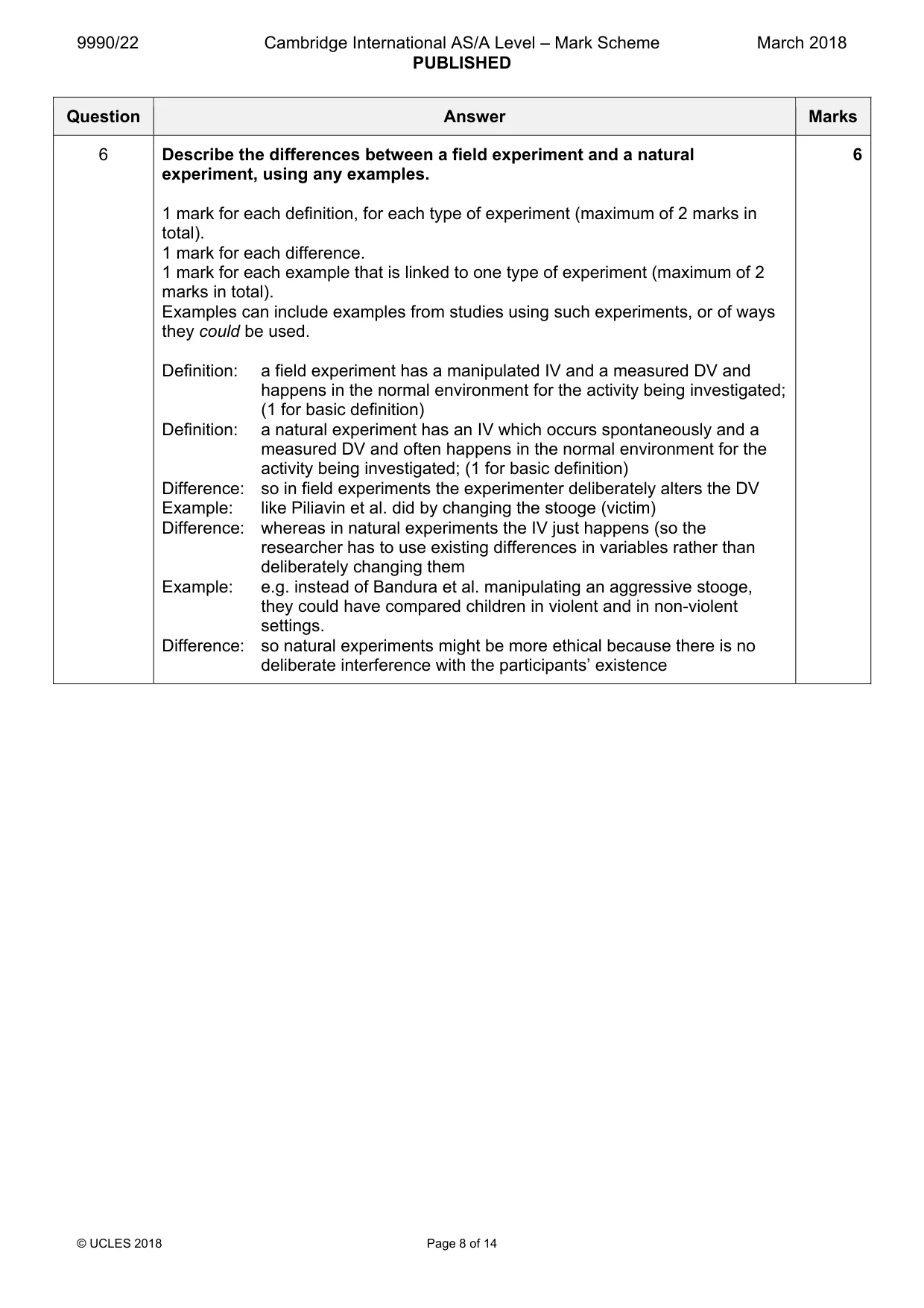
Mark scheme: 6 Describe the differences between a field experiment and a natural 6 experiment, using any examples. 1 mark for each definition, for each type of experiment (maximum of 2 marks in total). 1 mark for each difference. 1 mark for each example that is linked to one type of experiment (maximum of 2 marks in total). Examples can include examples from studies using such experiments, or of ways they could be used. Definition: a field experiment has a manipulated IV and a measured DV and happens in the normal environment for the activity being investigated; (1 for basic definition) Definition: a natural experiment has an IV which occurs spontaneously and a measured DV and often happens in the normal environment for the activity being investigated; (1 for basic definition) Difference: so in field experiments the experimenter deliberately alters the DV Example: like Piliavin et al. did by changing the stooge (victim) Difference: whereas in natural experiments the IV just happens (so the researcher has to use existing differences in variables rather than deliberately changing them Example: e.g. instead of Bandura et al. manipulating an aggressive stooge, they could have compared children in violent and in non-violent settings. Difference: so natural experiments might be more ethical because there is no deliberate interference with the participants’ existence
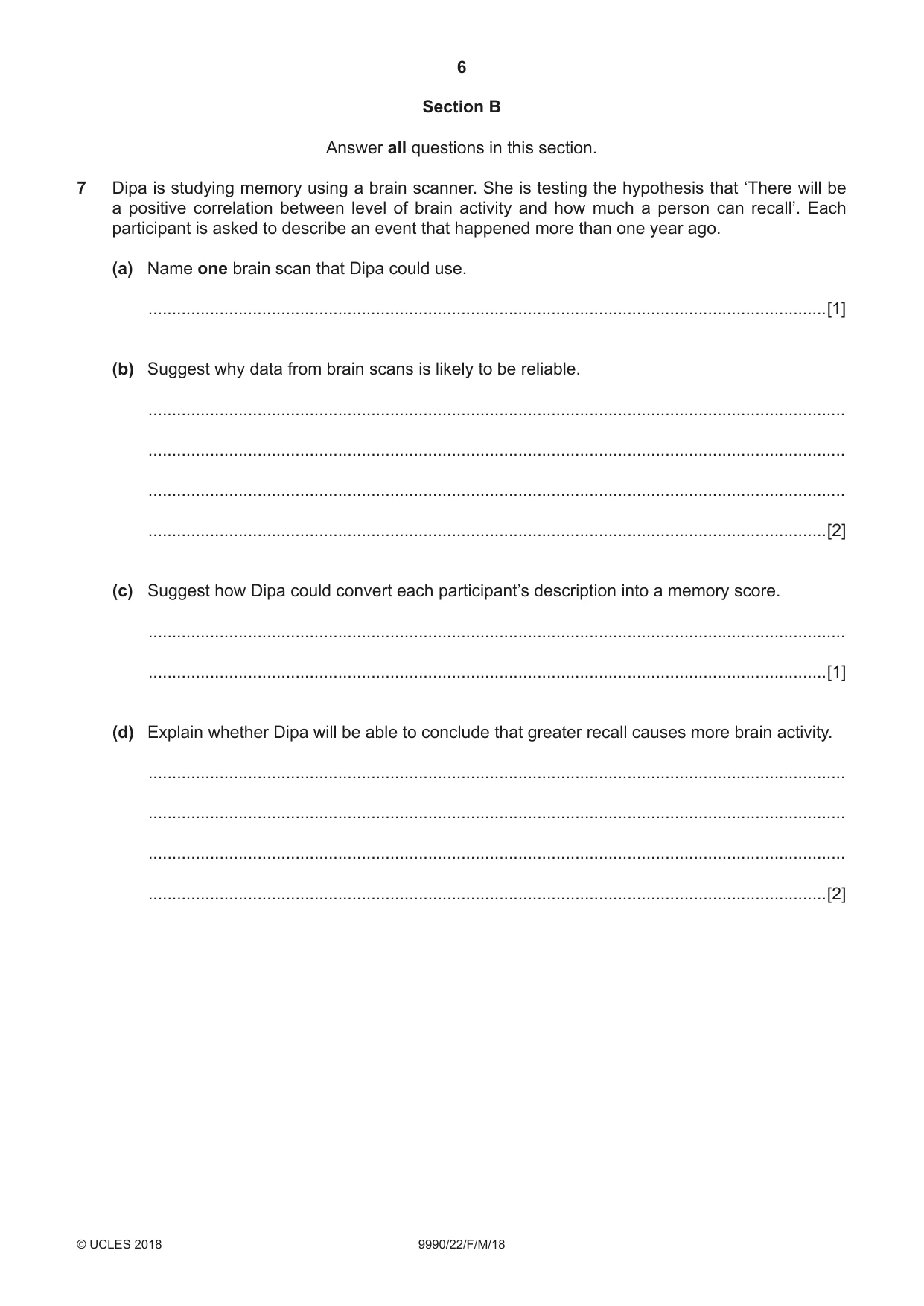
Q7 · Dipa is studying memory using a brain scanner
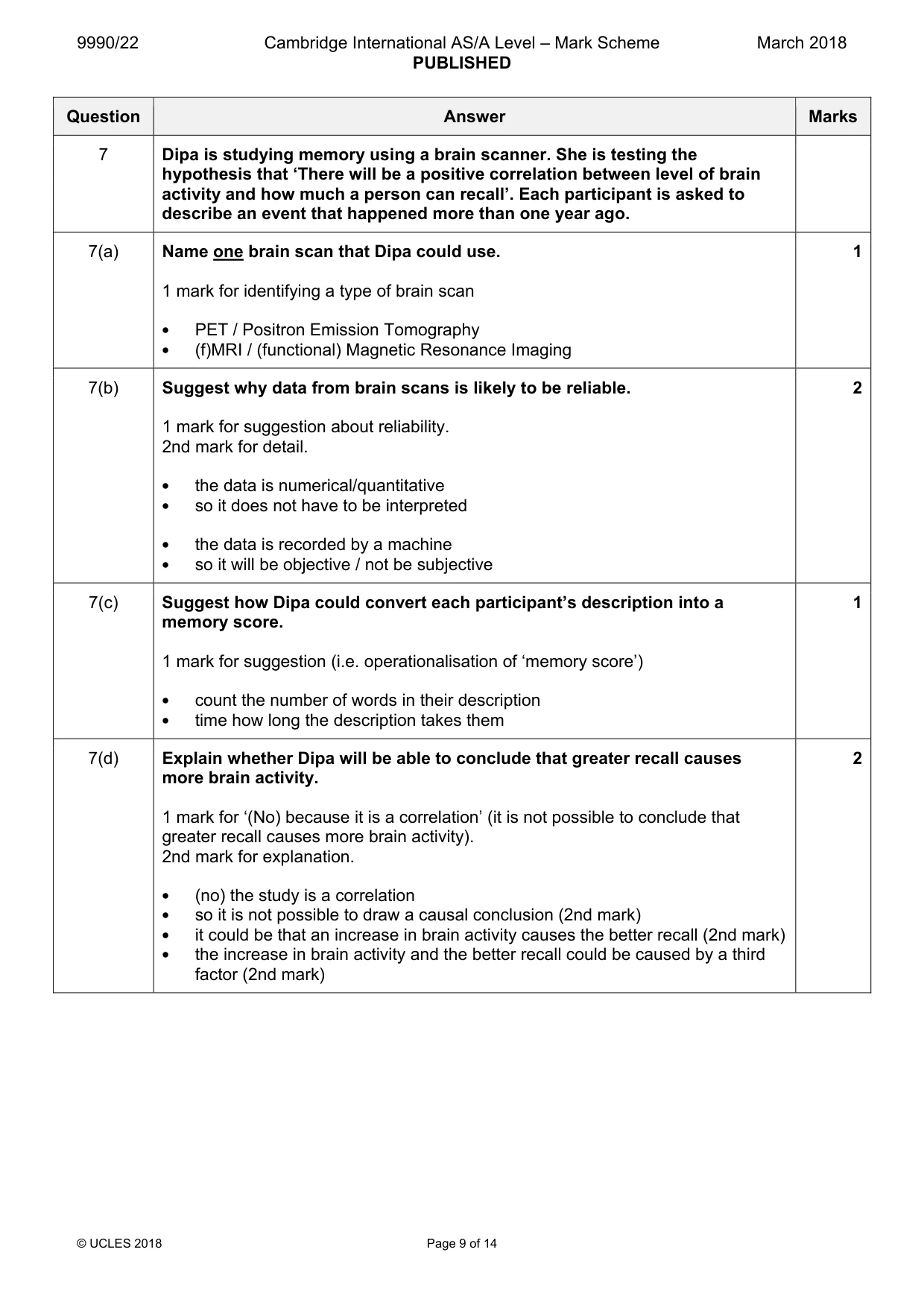
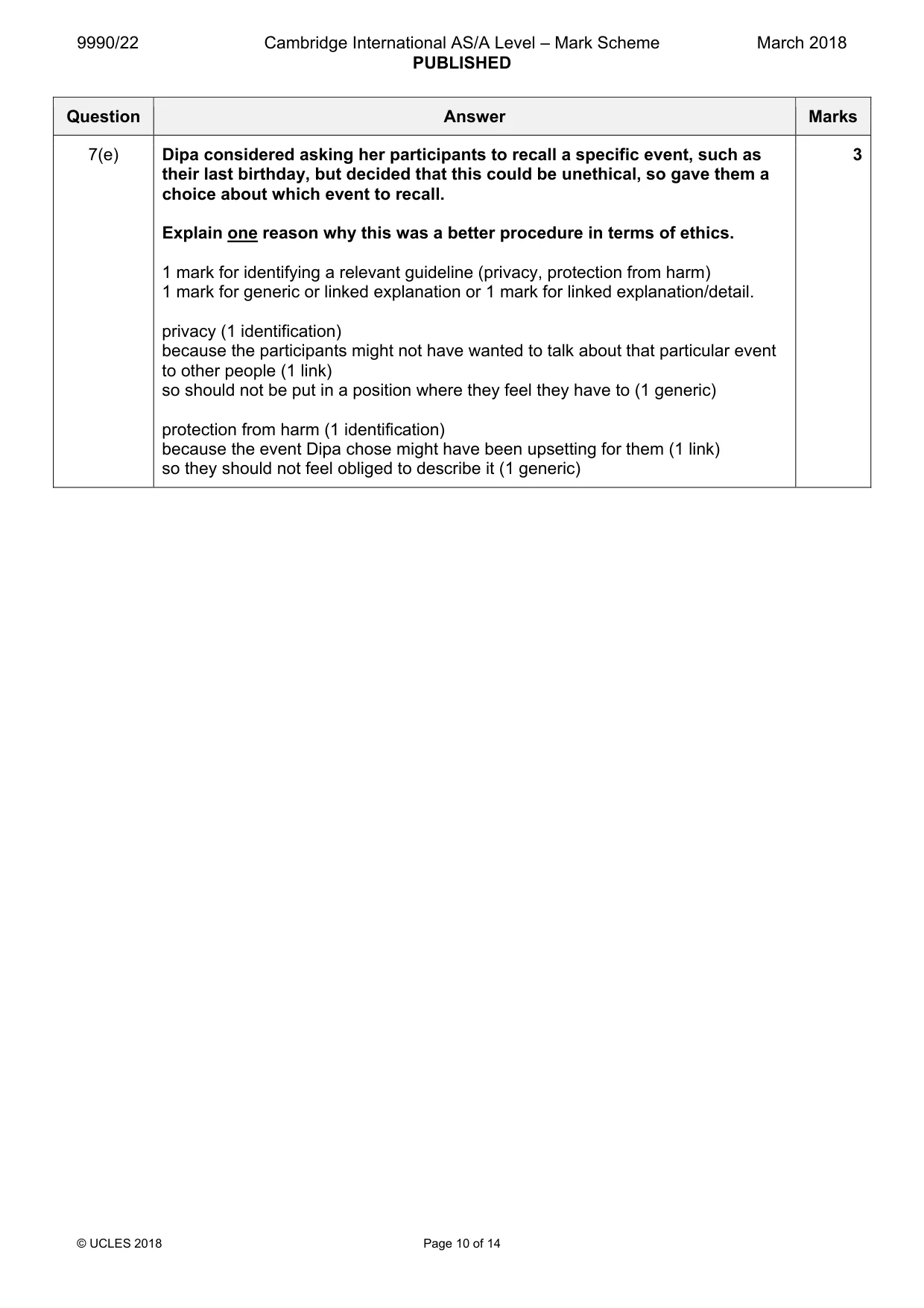
7 Dipa is studying memory using a brain scanner. She is testing the hypothesis that ‘There will be a positive correlation between level of brain activity and how much a person can recall’. Each participant is asked to describe an event that happened more than one year ago. (a) Name one brain scan that Dipa could use. ...............................................................................................................................................[1] (b) Suggest why data from brain scans is likely to be reliable. ................................................................................................................................................... ................................................................................................................................................... ................................................................................................................................................... ...............................................................................................................................................[2] (c) Suggest how Dipa could convert each participant’s description into a memory score. ................................................................................................................................................... ...............................................................................................................................................[1] (d) Explain whether Dipa will be able to conclude that greater recall causes more brain activity. ................................................................................................................................................... ................................................................................................................................................... ................................................................................................................................................... ...............................................................................................................................................[2] (e) Dipa considered asking her participants to recall a specific event, such as their last birthday, but decided that this could be unethical, so gave them a choice about which event to recall. Explain one reason why this was a better procedure in terms of ethics. ................................................................................................................................................... ................................................................................................................................................... ................................................................................................................................................... ................................................................................................................................................... ................................................................................................................................................... ...............................................................................................................................................[3]
Mark scheme: 7(a) Name one brain scan that Dipa could use. 1 1 mark for identifying a type of brain scan • PET / Positron Emission Tomography • (f)MRI / (functional) Magnetic Resonance Imaging 7(b) Suggest why data from brain scans is likely to be reliable. 2 1 mark for suggestion about reliability. 2nd mark for detail. • the data is numerical/quantitative • so it does not have to be interpreted • the data is recorded by a machine • so it will be objective / not be subjective 7(c) Suggest how Dipa could convert each participant’s description into a 1 memory score. 1 mark for suggestion (i.e. operationalisation of ‘memory score’) • count the number of words in their description • time how long the description takes them 7(d) Explain whether Dipa will be able to conclude that greater recall causes 2 more brain activity. 1 mark for ‘(No) because it is a correlation’ (it is not possible to conclude that greater recall causes more brain activity). 2nd mark for explanation. • (no) the study is a correlation • so it is not possible to draw a causal conclusion (2nd mark) • it could be that an increase in brain activity causes the better recall (2nd mark) • the increase in brain activity and the better recall could be caused by a third factor (2nd mark) 7(e) Dipa considered asking her participants to recall a specific event, such as 3 their last birthday, but decided that this could be unethical, so gave them a choice about which event to recall. Explain one reason why this was a better procedure in terms of ethics. 1 mark for identifying a relevant guideline (privacy, protection from harm) 1 mark for generic or linked explanation or 1 mark for linked explanation/detail. privacy (1 identification) because the participants might not have wanted to talk about that particular event to other people (1 link) so should not be put in a position where they feel they have to (1 generic) protection from harm (1 identification) because the event Dipa chose might have been upsetting for them (1 link) so they should not feel obliged to describe it (1 generic)
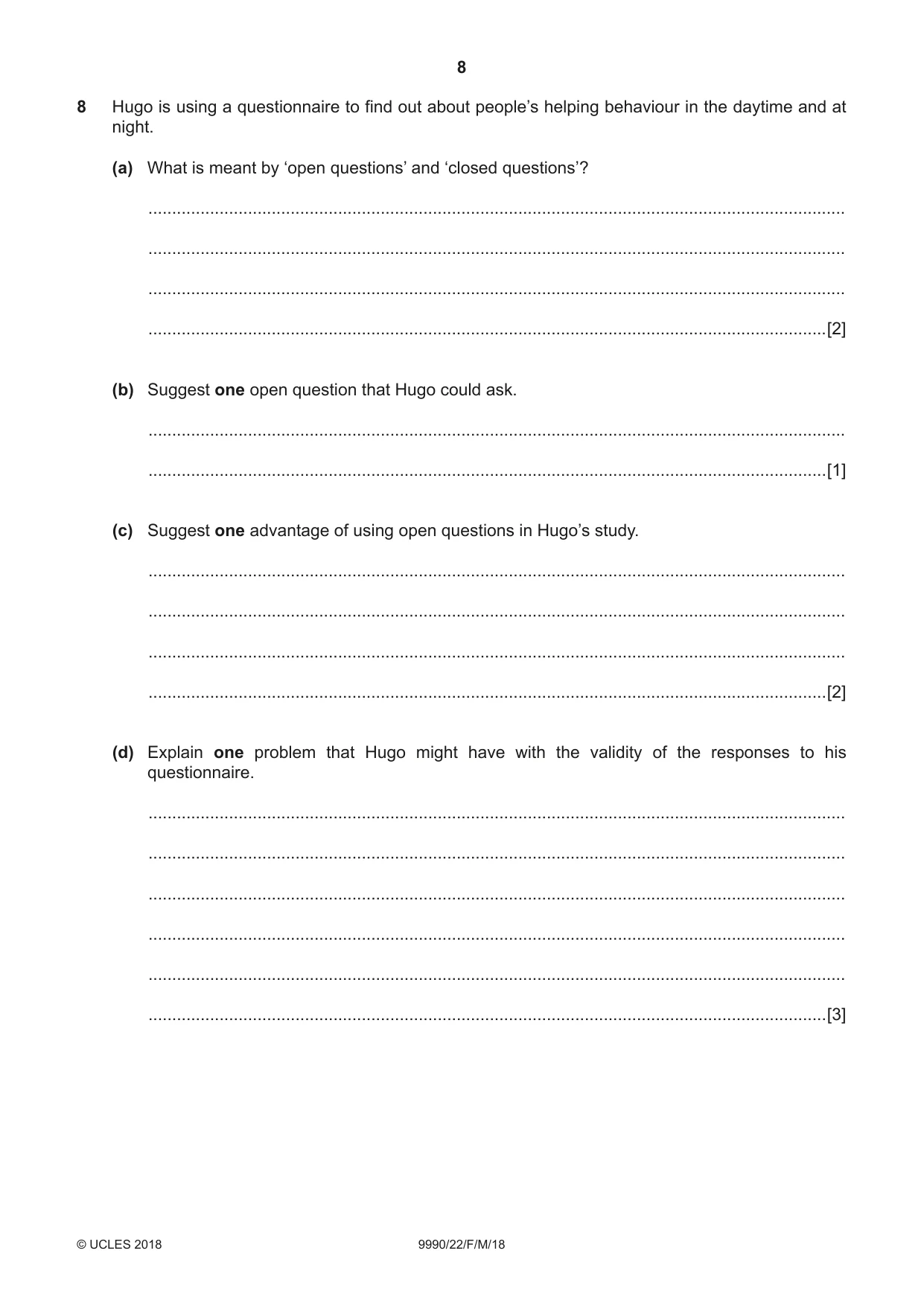
Q8 · Hugo is using a questionnaire to find out about people’s helping behaviour in the daytime…
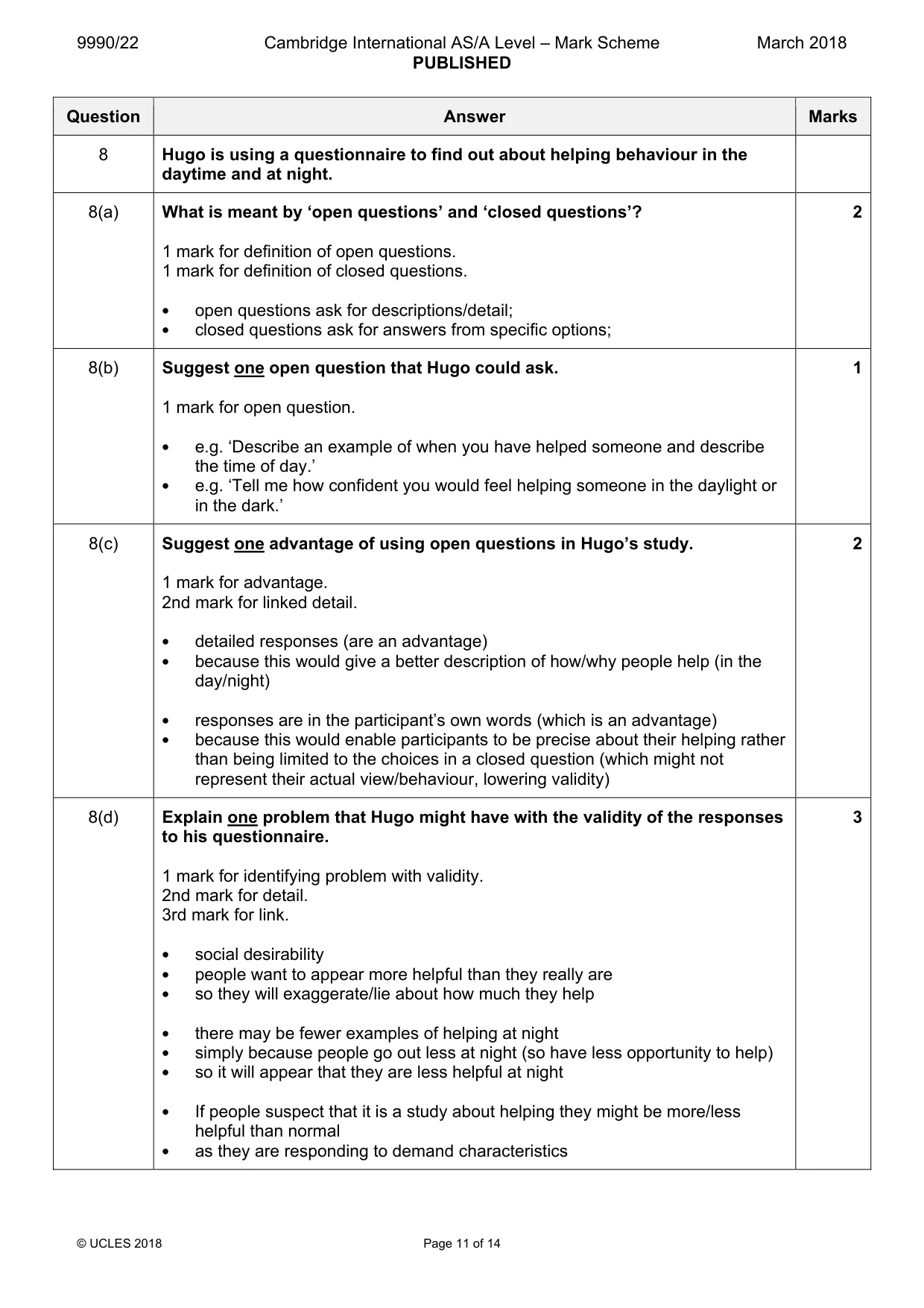
8 Hugo is using a questionnaire to find out about people’s helping behaviour in the daytime and at night. (a) What is meant by ‘open questions’ and ‘closed questions’? ................................................................................................................................................... ................................................................................................................................................... ................................................................................................................................................... ...............................................................................................................................................[2] (b) Suggest one open question that Hugo could ask. ................................................................................................................................................... ...............................................................................................................................................[1] (c) Suggest one advantage of using open questions in Hugo’s study. ................................................................................................................................................... ................................................................................................................................................... ................................................................................................................................................... ...............................................................................................................................................[2] (d) Explain one problem that Hugo might have with the validity of the responses to his questionnaire. ................................................................................................................................................... ................................................................................................................................................... ................................................................................................................................................... ................................................................................................................................................... ................................................................................................................................................... ...............................................................................................................................................[3]
Mark scheme: 8(a) What is meant by ‘open questions’ and ‘closed questions’? 2 1 mark for definition of open questions. 1 mark for definition of closed questions. • open questions ask for descriptions/detail; • closed questions ask for answers from specific options; 8(b) Suggest one open question that Hugo could ask. 1 1 mark for open question. • e.g. ‘Describe an example of when you have helped someone and describe the time of day.’ • e.g. ‘Tell me how confident you would feel helping someone in the daylight or in the dark.’ 8(c) Suggest one advantage of using open questions in Hugo’s study. 2 1 mark for advantage. 2nd mark for linked detail. • detailed responses (are an advantage) • because this would give a better description of how/why people help (in the day/night) • responses are in the participant’s own words (which is an advantage) • because this would enable participants to be precise about their helping rather than being limited to the choices in a closed question (which might not represent their actual view/behaviour, lowering validity) 8(d) Explain one problem that Hugo might have with the validity of the responses 3 to his questionnaire. 1 mark for identifying problem with validity. 2nd mark for detail. 3rd mark for link. • social desirability • people want to appear more helpful than they really are • so they will exaggerate/lie about how much they help • there may be fewer examples of helping at night • simply because people go out less at night (so have less opportunity to help) • so it will appear that they are less helpful at night • If people suspect that it is a study about helping they might be more/less helpful than normal • as they are responding to demand characteristics
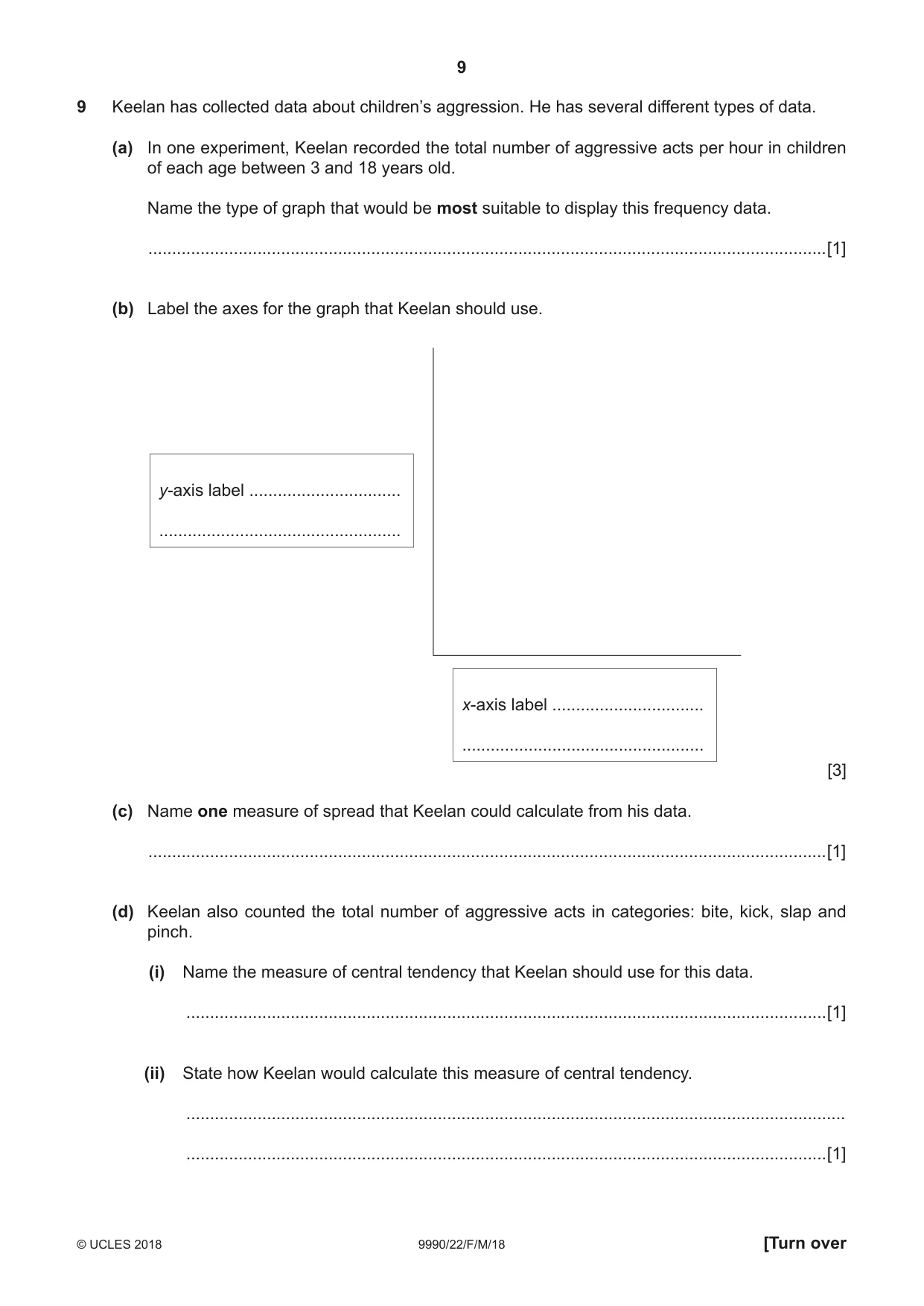
Q9 · Keelan has collected data about children’s aggression
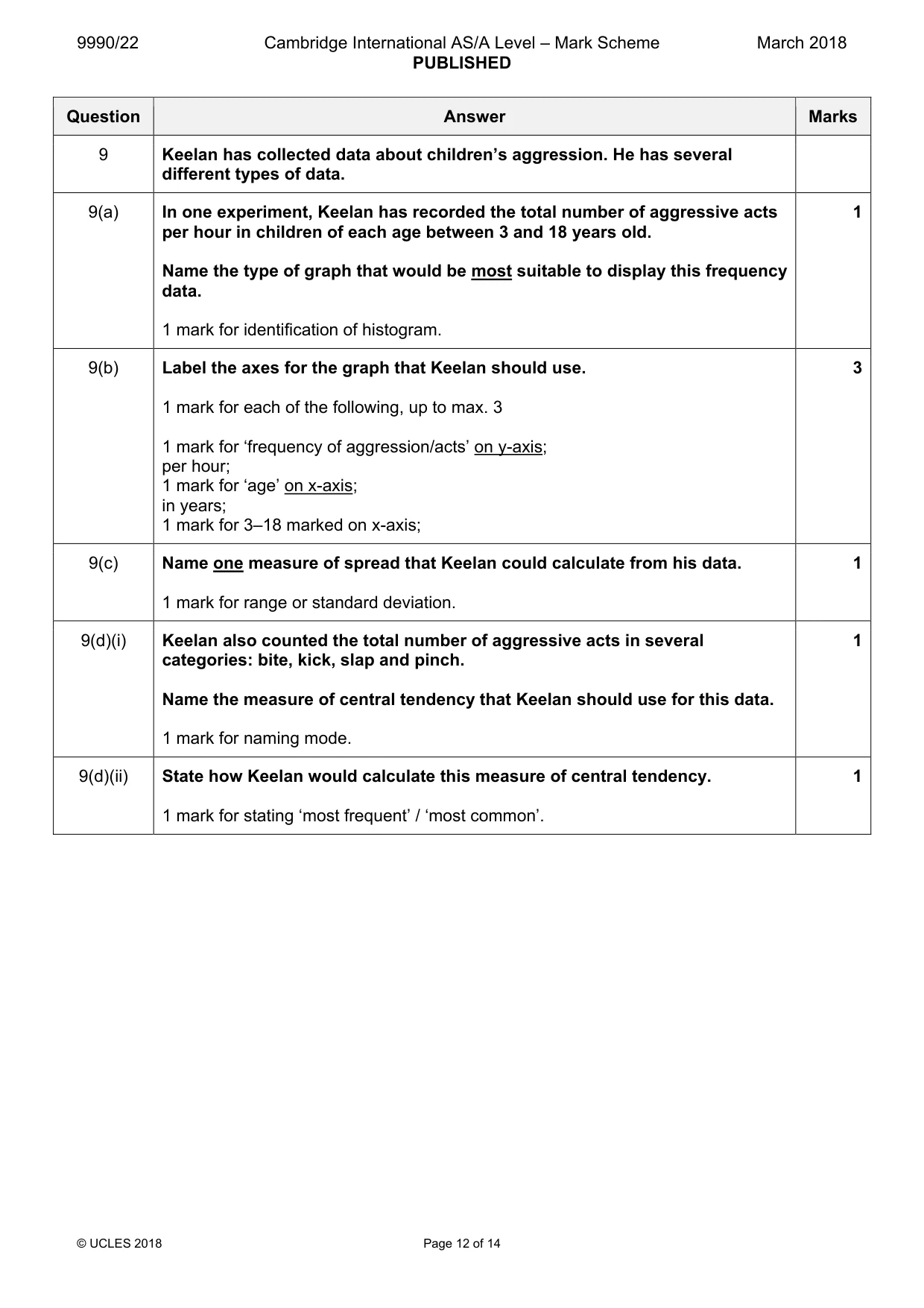
9 Keelan has collected data about children’s aggression. He has several different types of data. (a) In one experiment, Keelan recorded the total number of aggressive acts per hour in children of each age between 3 and 18 years old. Name the type of graph that would be most suitable to display this frequency data. ...............................................................................................................................................[1] (b) Label the axes for the graph that Keelan should use. y-axis label ................................ ................................................... x-axis label ................................ ................................................... [3] (c) Name one measure of spread that Keelan could calculate from his data. ...............................................................................................................................................[1] (d) Keelan also counted the total number of aggressive acts in categories: bite, kick, slap and pinch. (i) Name the measure of central tendency that Keelan should use for this data. .......................................................................................................................................[1] (ii) State how Keelan would calculate this measure of central tendency. ........................................................................................................................................... .......................................................................................................................................[1] Section C Answer all questions in this section.
Mark scheme: 9(a) In one experiment, Keelan has recorded the total number of aggressive acts 1 per hour in children of each age between 3 and 18 years old. Name the type of graph that would be most suitable to display this frequency data. 1 mark for identification of histogram. 9(b) Label the axes for the graph that Keelan should use. 3 1 mark for each of the following, up to max. 3 1 mark for ‘frequency of aggression/acts’ on y-axis; per hour; 1 mark for ‘age’ on x-axis; in years; 1 mark for 3–18 marked on x-axis; 9(c) Name one measure of spread that Keelan could calculate from his data. 1 1 mark for range or standard deviation. 9(d)(i) Keelan also counted the total number of aggressive acts in several 1 categories: bite, kick, slap and pinch. Name the measure of central tendency that Keelan should use for this data. 1 mark for naming mode. 9(d)(ii) State how Keelan would calculate this measure of central tendency. 1 1 mark for stating ‘most frequent’ / ‘most common’.
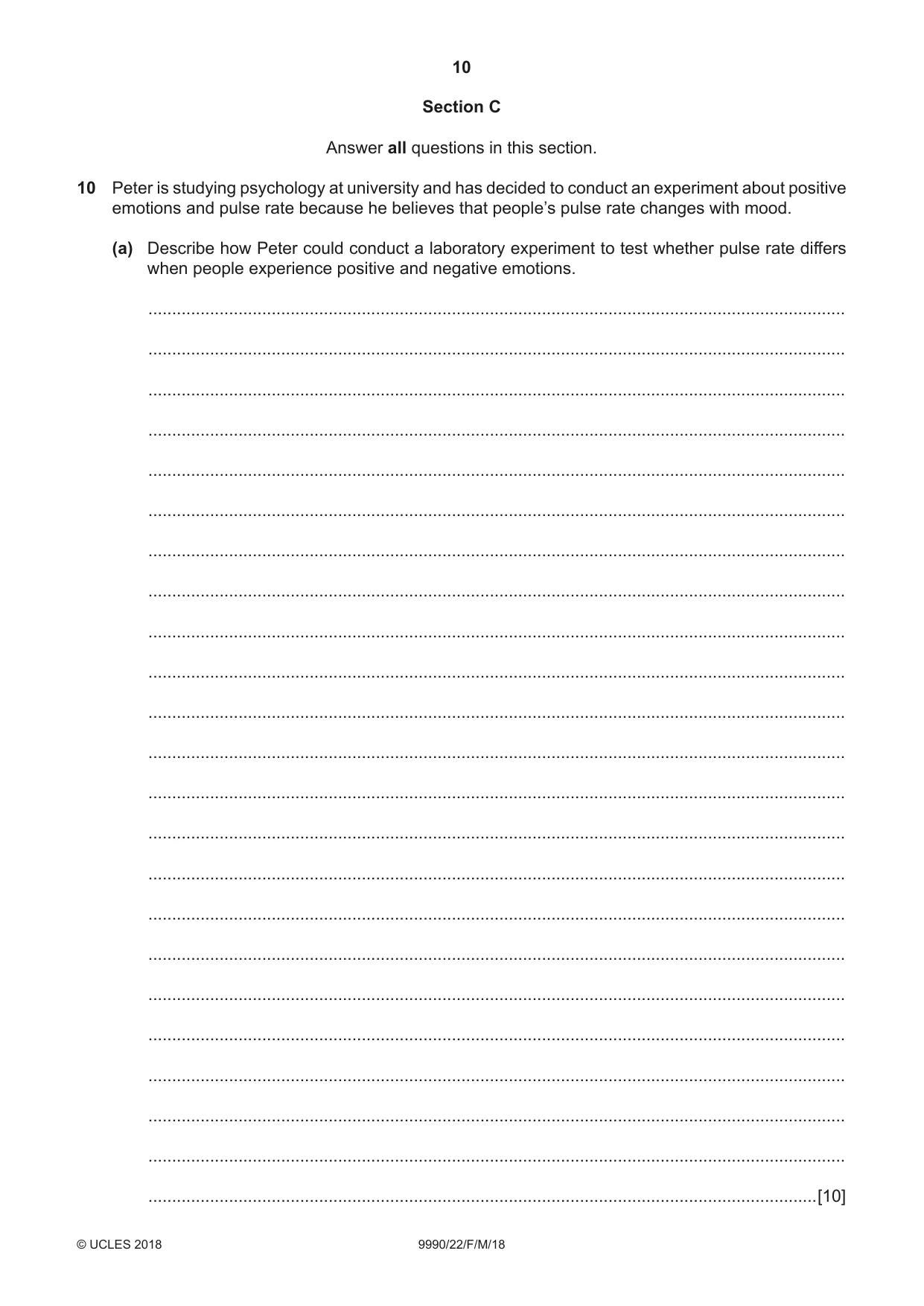
Q10 · Peter is studying psychology at university and has decided to conduct an experiment about…
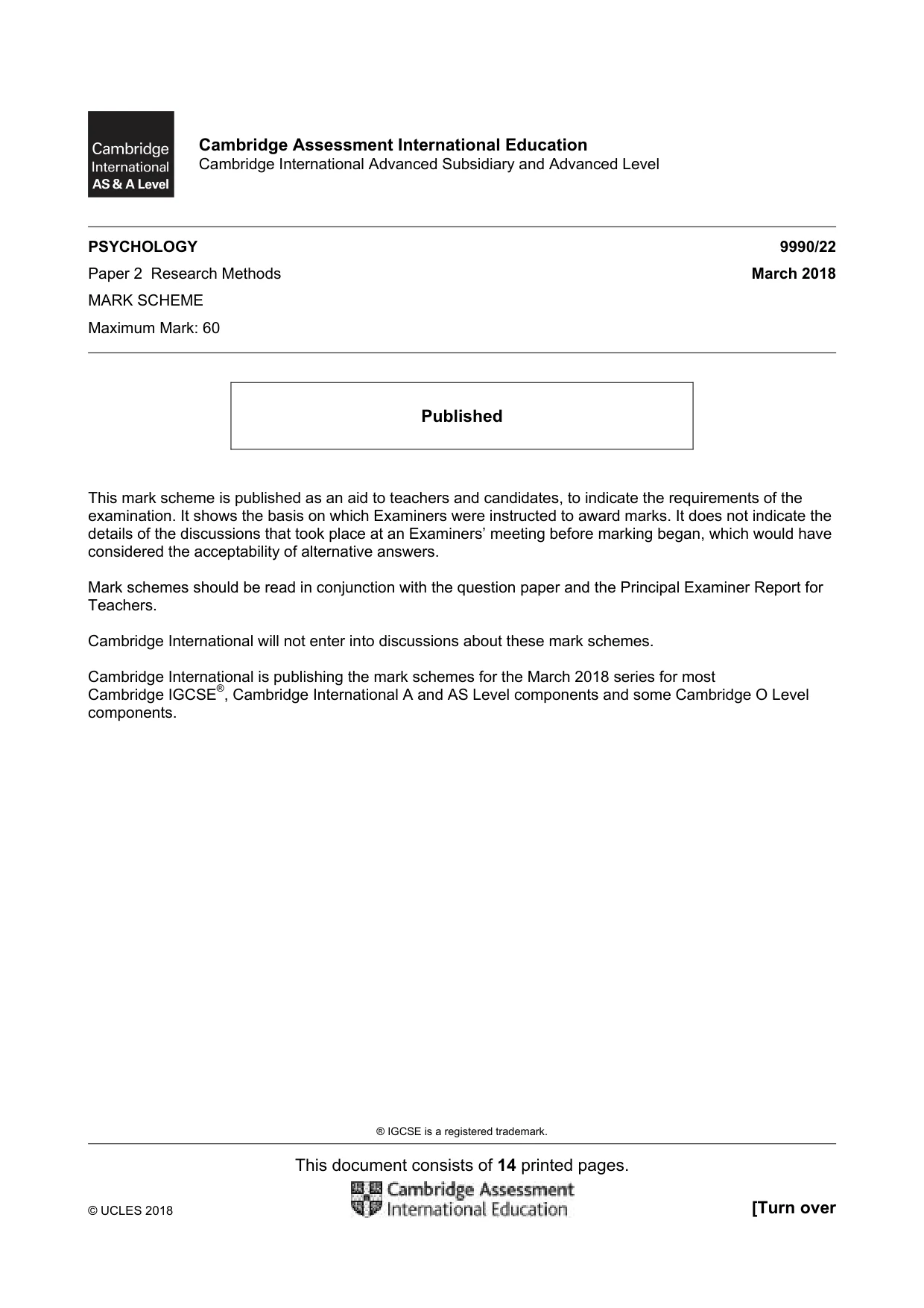
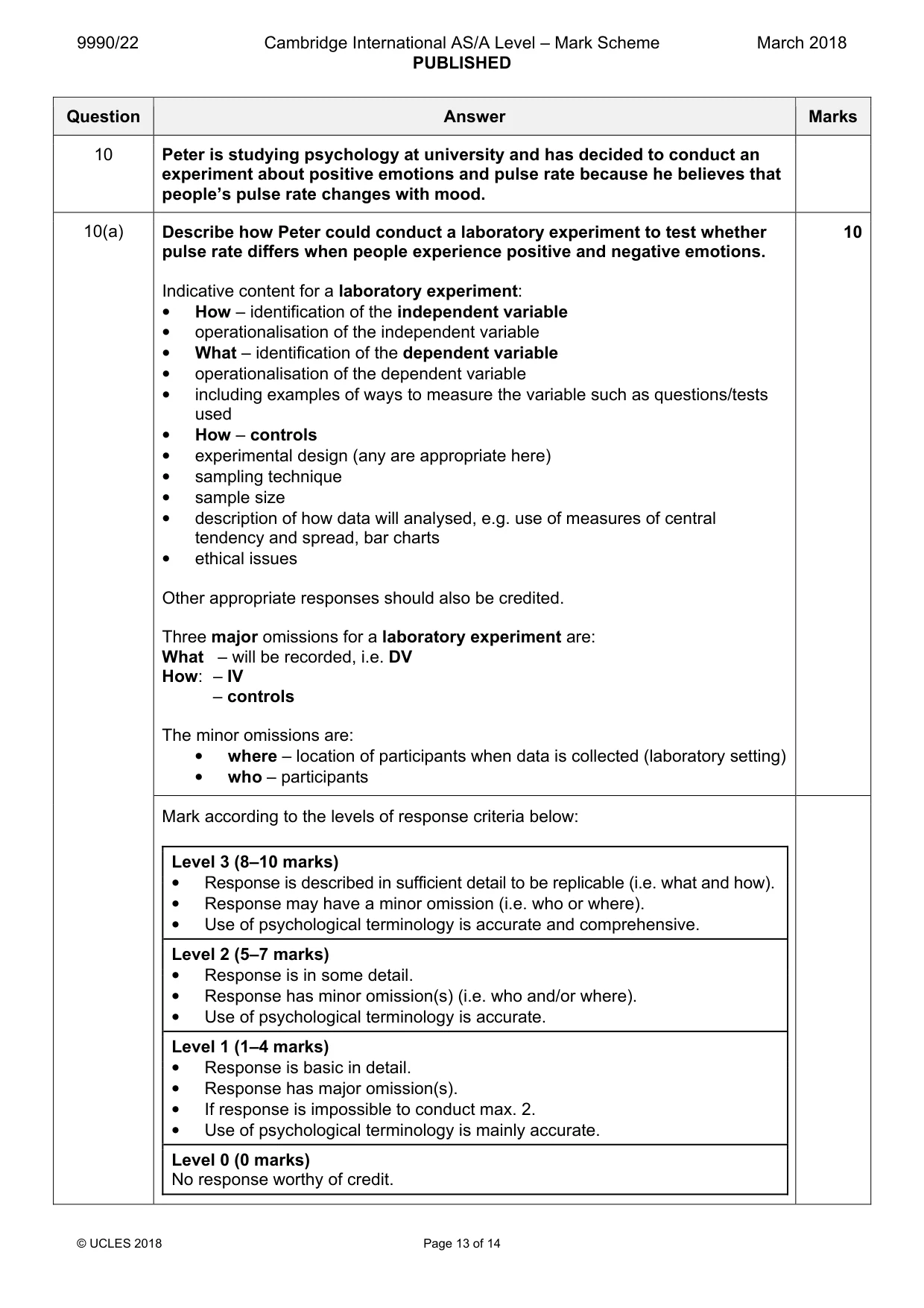
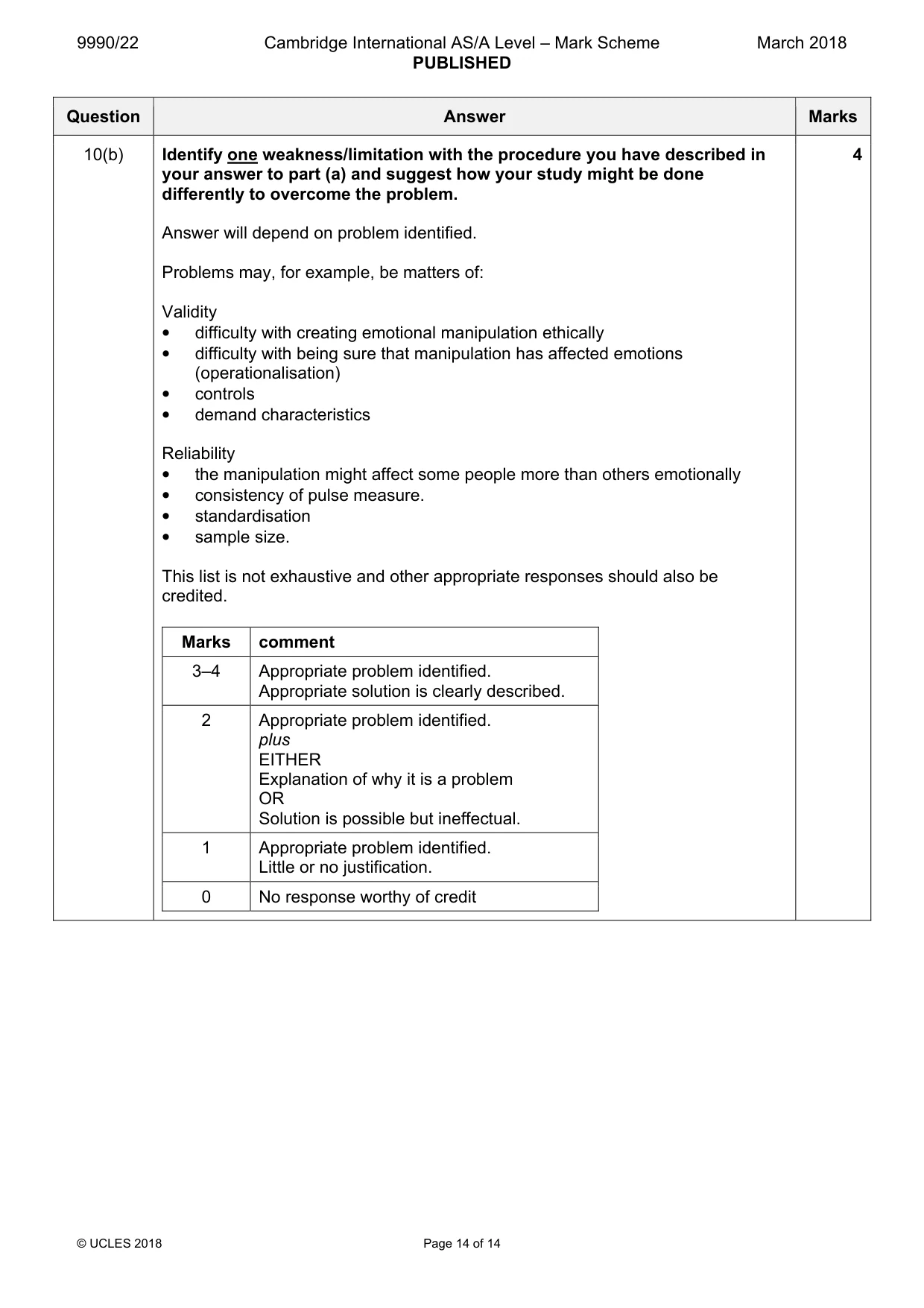
10 Peter is studying psychology at university and has decided to conduct an experiment about positive emotions and pulse rate because he believes that people’s pulse rate changes with mood. (a) Describe how Peter could conduct a laboratory experiment to test whether pulse rate differs when people experience positive and negative emotions. ................................................................................................................................................... ................................................................................................................................................... ................................................................................................................................................... ................................................................................................................................................... ................................................................................................................................................... ................................................................................................................................................... ................................................................................................................................................... ................................................................................................................................................... ................................................................................................................................................... ................................................................................................................................................... ................................................................................................................................................... ................................................................................................................................................... ................................................................................................................................................... ................................................................................................................................................... ................................................................................................................................................... ................................................................................................................................................... ................................................................................................................................................... ................................................................................................................................................... ................................................................................................................................................... ................................................................................................................................................... ................................................................................................................................................... ................................................................................................................................................... .............................................................................................................................................[10] (b) Identify one weakness/limitation with the procedure you have described in your answer to part (a) and suggest how your study might be done differently to overcome the problem. ................................................................................................................................................... ................................................................................................................................................... ................................................................................................................................................... ................................................................................................................................................... ................................................................................................................................................... ................................................................................................................................................... ................................................................................................................................................... ...............................................................................................................................................[4]
Mark scheme: 10(a) Describe how Peter could conduct a laboratory experiment to test whether 10 pulse rate differs when people experience positive and negative emotions. Indicative content for a laboratory experiment: • How – identification of the independent variable • operationalisation of the independent variable • What – identification of the dependent variable • operationalisation of the dependent variable • including examples of ways to measure the variable such as questions/tests used • How – controls • experimental design (any are appropriate here) • sampling technique • sample size • description of how data will analysed, e.g. use of measures of central tendency and spread, bar charts • ethical issues Other appropriate responses should also be credited. Three major omissions for a laboratory experiment are: What – will be recorded, i.e. DV How: – IV – controls The minor omissions are: • where – location of participants when data is collected (laboratory setting) • who – participants Mark according to the levels of response criteria below: Level 3 (8–10 marks) • Response is described in sufficient detail to be replicable (i.e. what and how). • Response may have a minor omission (i.e. who or where). • Use of psychological terminology is accurate and comprehensive. Level 2 (5–7 marks) • Response is in some detail. • Response has minor omission(s) (i.e. who and/or where). • Use of psychological terminology is accurate. Level 1 (1–4 marks) • Response is basic in detail. • Response has major omission(s). • If response is impossible to conduct max. 2. • Use of psychological terminology is mainly accurate. Level 0 (0 marks) No response worthy of credit. 10(b) Identify one weakness/limitation with the procedure you have described in 4 your answer to part (a) and suggest how your study might be done differently to overcome the problem. Answer will depend on problem identified. Problems may, for example, be matters of: Validity • difficulty with creating emotional manipulation ethically • difficulty with being sure that manipulation has affected emotions (operationalisation) • controls • demand characteristics Reliability • the manipulation might affect some people more than others emotionally • consistency of pulse measure. • standardisation • sample size. This list is not exhaustive and other appropriate responses should also be credited. Marks comment 3–4 Appropriate problem identified. Appropriate solution is clearly described. 2 Appropriate problem identified. plus EITHER Explanation of why it is a problem OR Solution is possible but ineffectual. 1 Appropriate problem identified. Little or no justification. 0 No response worthy of credit
What was in this paper
The subtopics covered by these 10 questions, and how many questions each got. Open one in a new tab to see every Cambridge question on it.
What you needed in this session
Cambridge’s own grade thresholds for 2018 Feb/March, Paper 2 · Variant 2. A higher threshold means an easier paper — the bar moves with how the cohort did.