Questions as text
Q1 · The polynomial x4 + 3x2 + a, where a is a constant, is denoted by p(x) 9709/31 Oct/Nov 2007
2 The polynomial x4 + 3x2 + a, where a is a constant, is denoted by p(x). It is given that x2 + x + 2 is a factor of p(x). Find the value of a and the other quadratic factor of p(x). [4]
4 marks
Mark scheme: 2 EITHER: Attempt division by x 2 + x + 2 reaching a partial quotient of x 2 + kx M1 Complete the division and obtain quotient x 2 −x + 2 A1 Equate constant remainder to zero and solve for a M1 Obtain answer a = 4 A1 OR: Calling the unknown factor x 2 + bx + c , obtain an equation in b and/or c, or state without working two coefficients with the correct moduli M1 Obtain factor x 2 −x + 2 A1 Use a = 2c to find a M1 Obtain answer a = 4 A1 [4] 1 ∫
This question in 9709/31 Oct/Nov 2007
Q2 · Solve the inequality where a is a positive constant 9709/31 May/June 2010
1 Solve the inequality where a is a positive constant. [4] |x + 3a| > 2|x −2a|,
4 marks
Mark scheme: 1 EITHER: State or imply non-modular inequality ( x + 3a ) 2 > ( 2( x − 2 a )) 2 , or corresponding quadratic equation, or pair of linear equations ( x + 3a ) = ± 2 ( x − 2 a ) B1 Make reasonable solution attempt at a 3-term quadratic, or solve two linear equations M1 Obtain critical values x = 13 a and x = 7a A1 State answer 13 a < x < 7 a A1 OR: Obtain the critical value x = 7a from a graphical method, or by inspection, or by solving a linear equation or inequality B1 Obtain the critical value x = 13 a similarly B2 State answer 13 a < x < 7 a B1 [4] [Do not condone Y for <; accept 0.33 for 13 .]
This question in 9709/31 May/June 2010
Q3 · Solve the inequality [4] |x −3| > 2|x + 1| 9709/33 May/June 2010
1 Solve the inequality [4] |x −3| > 2|x + 1|.
4 marks
Mark scheme: 1 EITHER: State or imply non-modular inequality (x – 3)2 > (2(x + 1))2 , or corresponding quadratic equation, or pair of linear equations (x – 3) = ± 2(x + 1) B1 Make reasonable solution attempt at a 3-term quadratic, or solve two linear equations M1 Obtain critical values −5 and 13 A1 State answer − 5 < x < 13 A1 OR: Obtain the critical value x = −5 from a graphical method, or by inspection, or by solving a linear equation or inequality B1 Obtain the critical value x = 13 similarly B2 State answer − 5 < x < 13 B1 [4] [Do not condone ≤ for <; accept 0.33 for 13 .]
This question in 9709/33 May/June 2010
Q4 · Solve the inequality [4] 2|x −3| > |3x + 1| 9709/31 Oct/Nov 2010
1 Solve the inequality [4] 2|x −3| > |3x + 1|.
4 marks
Mark scheme: 1 EITHER: State or imply non-modular inequality (2(x – 3))2 > (3x + 1)2, or corresponding quadratic equation, or pair of linear equations 2(x – 3) = ±(3x + 1) B1 Make reasonable solution attempt at a 3-term quadratic, or solve two linear equations M1 Obtain critical values x = –7 and x = 1 A1 State answer –7 < x < 1 A1 OR: Obtain critical value x = –7 or x = 1 from a graphical method, or by inspection, or by solving a linear equation or inequality B1 Obtain critical values x = –7 and x = 1 B2 State answer –7 < x < 1 B1 [4] [Do not condone: < for <.]
This question in 9709/31 Oct/Nov 2010
Q5 · X 8 Let f(x) = (1 + x)(1 + 2x2) 9709/31 Oct/Nov 2010
3x 8 Let f(x) = (1 + x)(1 + 2x2). (i) Express in partial fractions. [5] f(x) (ii) Hence obtain the expansion of in ascending powers of x, up to and including the term in x3. f(x) [5] [Questions 9 and 10 are printed on the next page.]
10 marks
Mark scheme: A Bx + C 8 (i) State or imply the form + 2 B1 1 + x 1 + 2 x Use any relevant method to evaluate a constant M1 Obtain one of A = –1, B = 2, C = 1 A1 Obtain a second value A1 Obtain the third value A1 [5] (ii) Use correct method to obtain the first two terms of the expansion of (1 + x )−1 or (1 + 2 x 2 )−1 M1 Obtain correct expansion of each partial fraction as far as necessary A1√ + A1√ Multiply out fully by Bx + C, where BC Þ 0 M1 Obtain answer 3x – 3x2 – 3x3 A1 [5] − 1 [Symbolic binomial coefficients, e.g., are not sufficient for the first M1. The f.t. 1 is on A, B, C.] [If B or C omitted from the form of fractions, give B0M1A0A0A0 in (i); M1A1√A1√ in (ii), max 4/10.] [If a constant D is added to the correct form, give M1A1A1A1 and B1 if and only if D = 0 is stated.] [If an extra term D/(1 + 2x2) is added, give B1M1A1A1, and A1 if C + D = 1 is resolved to 1/(1 + 2x2).] [In the case of an attempt to expand 3x(1 + x)–1(1 + 2x2)–1, give M1A1A1 for the expansions up to the term in x2, M1 for multiplying out fully, and A1 for the final answer.] [For the identity 3x ≡ (1 + x + 2x2 + 2x3)(a + bx + cx2 + dx3) give M1A1; then M1A1 for using a relevant method to find two of a = 0, b = 3, c = –3 and d = –3; and then A1 for the final answer in series form.]
This question in 9709/31 Oct/Nov 2010
Q6 · Solve the equation 10, giving your answer correct to 3 significant figures 9709/31 May/June 2012
1 Solve the equation 10, giving your answer correct to 3 significant figures. [3] |4 −2x| =
3 marks
Mark scheme: 1 State or imply 4 − 2 x = −10 and 10 B1 Use correct method for solving equation of form 2 x = a M1 Obtain 3.81 A1 [3] 2 1
This question in 9709/31 May/June 2012
Q7 · Find the set of values of x satisfying the inequality [4] 3|x −1| < |2x + 1| 9709/31 Oct/Nov 2012
1 Find the set of values of x satisfying the inequality [4] 3|x −1| < |2x + 1|.
4 marks
Mark scheme: 1 EITHER State or imply non-modular inequality (3(x – 1))2 < (2x + 1)2 or corresponding quadratic equation, or pair of linear equations 3(x – 1) = ± (2x + 1) B1 Make reasonable solution attempt at a 3-term quadratic, or solve two linear equations M1 2 Obtain critical values x = 5 and x = 4 A1 2 State answer 5 < x < 4 A1 2 OR Obtain critical value x = 5 or x = 4 from a graphical method, or by inspection, or by solving a linear equation or inequality B1 2 Obtain critical values x = 5 and x = 4 B2 2 State answer 5 < x < 4 B1 [4] [Do not condone for .] 1
This question in 9709/31 Oct/Nov 2012
Q8 · Solve the inequality |4.x + 3| > |x| 9709/33 May/June 2013
1 Solve the inequality |4.x + 3| > |x|. [4]
4 marks
Mark scheme: 1 EITHER: State or imply non-modular inequality (4x + 3)2 > x2, or corresponding equation or pair of equations 4x + 3 = ± x M1 Obtain a critical value, e.g. –1 A1 3 Obtain a second critical value, e.g. − A1 5 3 State final answer x < –1, x > − A1 5 OR: Obtain critical value x = –1, by solving a linear equation or inequality, or from a graphical method or by inspection B1 3 Obtain the critical value − similarly B2 5 3 State final answer x < –1, x > − B1 [4] 5 [Do not condone ≤or ≥ .]
This question in 9709/33 May/June 2013
Q9 · Solve the inequality x 2x [4] −2 > −3 9709/33 May/June 2015
2 Solve the inequality x 2x [4] −2 > −3.
4 marks
Mark scheme: 2 EITHER: State or imply non-modular inequality ( x − 2 ) 2 > ( 2 x − 3) 2 , or corresponding equation B1 Solve a 3-term quadratic, as in Q1. M1 5 Obtain critical value x = A1 3 5 State final answer x < only A1 3 OR1: State the relevant critical linear inequality ( 2 − x ) > ( 2 x − 3) , or corresponding equation B1 Solve inequality or equation for x M1 5 Obtain critical value x = A1 3 5 State final answer x < only A1 3 OR2: Make recognisable sketches of y = 2x – 3 and y = x − 2 on a single diagram B1 Find x-coordinate of the intersection M1 5 Obtain x = A1 3 5 State final answer x < only A1 4 3
This question in 9709/33 May/June 2015
Q10 · Solve the inequality 2x −5 > 3 2x + 1 9709/32 Oct/Nov 2015
1 Solve the inequality 2x −5 > 3 2x + 1 . [4]
4 marks
Mark scheme: 1 EITHER: State or imply non-modular inequality ( 2 x − 5) 2 > ((3 2 x + 1)) 2 , or corresponding quadratic equation, or pair of linear equations ( 2 x − 5) = ±3( 2 x + )1 B1 Make reasonable solution attempt at a 3-term quadratic, or solve two linear equations for x M1 1 A1 Obtain critical values –2 and 4 1 A1 State final answer − 2 < x < 4 OR: Obtain critical value x = −2 from a graphical method, or by inspection, or by solving a linear equation or inequality B1 1 similarly B2 Obtain critical value x = 4 State final answer − 2 < x < 14 B1 [4] [Do not condone ⩽ for < ]
This question in 9709/32 Oct/Nov 2015
Q11 · The equation x5 x2 0 has one positive root 9709/32 Feb/March 2016
3 The equation x5 x2 0 has one positive root. −3x3 + −4 = (i) Verify by calculation that this root lies between 1 and 2. [2] (ii) Show that the equation can be rearranged in the form O@ A 3 4 x 3x . [1] = + x2 −1 (iii) Use an iterative formula based on this rearrangement to determine the positive root correct to 2 decimal places. Give the result of each iteration to 4 decimal places. [3]
6 marks
Mark scheme: 3 (i) Consider sign of x 5 − 3 x 3 + x 2 − 4 at x = 1 and x = 2, or equivalent M1 Complete the argument correctly with correct calculated values A1 [2] (ii) Rearrange the given quintic equation in the given form, or work vice versa B1 [1] (iii) Use the iterative formula correctly at least once M1 Obtain final answer 1.78 A1 Show sufficient iterations to 4 d.p. to justify 1.78 to 2 d.p., or show there is a sign change in the interval (1.775, 1.785) A1 [3]
This question in 9709/32 Feb/March 2016
Q12 · Solve the inequality x 2 3x 1 9709/32 Feb/March 2017
2 Solve the inequality x 2 3x 1 . [4] −4 < + … … … … … … … … … … … … … … … … … … … … … … … … …
4 marks
Mark scheme: 2 EITHER: State or imply non-modular inequality ( x − 4) 2 < (2(3 x + 1)) 2 , or corresponding (B1 quadratic equation, or pair of linear equations x − 4 = ±2(3 x + 1) Make reasonable solution attempt at a 3-term quadratic, or solve two linear M1 equations for x Obtain critical values x = − 65 and x = 72 A1 State final answer x < − 65 , x > 72 A1) OR: Obtain critical value x = − 65 from a graphical method, or by inspection, or by (B1 solving a linear equation or inequality Obtain critical value x = 72 similarly B2 State final answer x < − 65 , x > 72 B1) Total: 4
This question in 9709/32 Feb/March 2017
Q13 · Find the quotient and remainder when x4 is divided by x2 2x [3] + −1 9709/31 Oct/Nov 2017
1 Find the quotient and remainder when x4 is divided by x2 2x [3] + −1. … … … … … … … … … … … … … … … … … … … … … … … … …
3 marks
Mark scheme: Question Answer Marks 1 Commence division and reach a partial quotient x 2 + kx M1 Obtain quotient x 2 − 2 x + 5 A1 Obtain remainder − 12 x + 5 A1 3
This question in 9709/31 Oct/Nov 2017
Q14 · Find the set of values of x satisfying the inequality 2 2x x 3a , where a is a positive… 9709/31 Oct/Nov 2018
1 Find the set of values of x satisfying the inequality 2 2x x 3a , where a is a positive constant. −a < + [4] … … … … … … … … … … … … … … … … … … … … … … … … …
4 marks
Mark scheme: 1 EITHER: State or imply non-modular inequality ( ) ( ) 2 2 2 2 2 3 x a x a − < + , or corresponding quadratic equation, or pair of linear equations 2(2x – a) = ± (x + 3a) B1 Make reasonable attempt at solving a 3-term quadratic, or solve two linear equations for x M1 Obtain critical values 5 3 x a = and 1 5 x a = − A1 State final answer 1 5 5 3 a x a − < < A1 OR: Obtain critical value 5 3 x a = from a graphical method, or by inspection, or by solving a linear equation or an inequality B1 Obtain critical value 1 5 x a = − similarly B2 State final answer 1 5 5 3 a x a − < < [Do not condone ⩽ for < in the final answer.] B1 4
This question in 9709/31 Oct/Nov 2018
Q15 · Solve the inequality 2x 4 x 1 9709/31 Oct/Nov 2019
2 Solve the inequality 2x 4 x 1 . [4] −3 > + … … … … … … … … … … … … … … … … … … … … … … … … …
4 marks
Mark scheme: 2 State or imply non-modular inequality ( ) ( ) 2 2 2 2 3 4 1 x x − > + , or corresponding quadratic equation, or pair of linear equations ( ) ( ) 2 3 4 1 x x − =± + B1 2 12 44 7 0 x x + + < Make reasonable attempt at solving a 3-term quadratic, or solve two linear equations for x M1 Correct method seen, or implied by correct answers Obtain critical values x = 7 2 − and x = 1 6 − A1 State final answer 7 1 2 6 x − < < − A1 Alternative method for question 2 Obtain critical value x = 7 2 − from a graphical method, or by inspection, or by solving a linear equation or an inequality B1 Obtain critical value 1 6 x = − similarly B2 State final answer 7 1 2 6 x − < < − B1 4
This question in 9709/31 Oct/Nov 2019
Q16 · Solve the inequality 2x 3 x 2 9709/33 May/June 2020
1 Solve the inequality 2x 3 x 2 . [4] −1 > + … … … … … … … … … … … … … … … … … … … … … … … … …
4 marks
Mark scheme: 1 Make reasonable attempt at solving a 3-term quadratic, or solve two linear equations for x M1 Obtain critical values x = –7 and x = –1 A1 State final answer –7 < x < –1 A1 Alternative method for question 1 Obtain critical value x = –1 from a graphical method, or by solving a linear equation or linear inequality B1 Obtain critical value x = –7 similarly B2 State final answer –7 < x < –1 [Do not condone ⩽ for < in the final answer.] B1 4
This question in 9709/33 May/June 2020
Q17 · Solve the inequality 3x 2 x 2a , where a is a positive constant 9709/32 Oct/Nov 2021
2 Solve the inequality 3x 2 x 2a , where a is a positive constant. [4] −a > + … … … … … … … … … … … … … … … … … … … … … … … … …
4 marks
Mark scheme: 2 State or imply non-modular inequality ( ) ( ) 2 2 2 3 2 2 x a x a − > + , or corresponding quadratic equation, or pair of linear equations or linear inequalities B1 Need 2 2 seen or implied. Make reasonable attempt to solve a 3-term quadratic, or solve two linear equations for x in terms of a M1 ( ) 2 2 5 22 15 0 x ax a − − = Obtain critical values x = 5a and x = 3 5 a − and no others A1 OE Accept incorrect inequalities with correct critical values. Must state 2 values i.e. a b c ± is not sufficient. State final answer x > 5a, x < 3 5 a − A1 Do not condone ⩾ for > or ⩽ for < in the final answer. 3 5 5a x a < < − is A0, ‘and’ is A0. Alternative method for Question 2 Obtain critical value x = 5a from a graphical method, or by solving a linear equation or linear inequality B1 Obtain critical value x = 3 5 a − similarly B2 Maximum 2 marks if more than 2 critical values. State final answer x > 5a , x < 3 5 a − B1 Do not condone ≥ for > or ≤ for < in the final answer. 3 5 5a x a < < − is B0, ‘and’ is B0. 4
This question in 9709/32 Oct/Nov 2021
Q18 · Find the quotient and remainder when 2x4 1 is divided by x2 2 9709/33 Oct/Nov 2021
1 Find the quotient and remainder when 2x4 1 is divided by x2 2. [3] + −x + … … … … … … … … … … … … … … … … … … … … … … … … …
3 marks
Mark scheme: 1 Commence division and reach partial quotient of the form 2 2x kx + M1 Obtain quotient 2 2 2 2 x x + − A1 Obtain remainder 6 5 x − + A1 3
This question in 9709/33 Oct/Nov 2021
Q19 · A balloon in the shape of a sphere has volume V and radius r 9709/32 Oct/Nov 2024
10 A balloon in the shape of a sphere has volume V and radius r. Air is pumped into the balloon at a constant rate of 40r starting when time t = 0 and r = 0 . At the same time, air begins to flow out of the balloon at a rate of 0.8rr . The balloon remains a sphere at all times. (a) Show that r and t satisfy the differential equation dr 50 - r = . [3] td 5r 2 … … … … … … … … … … … (b) Find the quotient and remainder when 5r 2 is divided by 50- r . [3] … … … … … … … … … … … … (c) Solve the differential equation in part (a), obtaining an expression for t in terms of r. [6] … … … … … … … … … … … … … … … … … … … … … … (d) Find the value of t when the radius of the balloon is 12. [1] … … … …
13 marks
Mark scheme: 10(a) dV B1 Need a complete correct statement seen or Obtain = 40π − 0.8πr or equivalent implied. dt dV 2 dV 2 dr B1 Need a complete correct statement seen or Obtain = 4πr or equivalent e.g. = 4 r implied. dr dt dt Use the chain rule to obtain given answer (including the derivative) B1 dr 50 − r dr 40 − 0.8r Allow if = follows = dt 5r 2 dt 4 r 2 without further explanation (π already cancelled) and no incorrect statements seen. 3 10(b) Commence division and reach quotient of the form M1 Allow M1 if divide by r − 50 to obtain –5r ± 250 5r 250 . or 5r2 = (50 – r)(Ar + B) + C and reach A = –5 and B = ± 250 Obtain quotient –5r – 250 A1 Do not need to state which is quotient and which is remainder. However, if clearly muddled, then M1A1A0 for both expressions correct. Obtain remainder 12 500 A1 Note: 12 500 following division by r – 50 is correct and scores this A1 ISW. SC B1 only for correct use of remainder theorem to obtain correct remainder. 3 10(c) Prepare to integrate e.g. separate variables correctly B1FT 2 5 r 1d t d r = 2 50 − r d t 5 r 12500 Condone missing dr, dt or missing integral Or express in the form = = − ( 5 r + 250 ) + dr 50 − r 50 − r signs, but not both. Follow their division in (b) if substitute before separating. Obtain term t DB1 A 2 M1 C Obtain terms r + Br − Cln ( 50 − r ) From their Ar + B + in (b) where 2 50 − r ABC ≠ 0. Allow a single slip in the coefficients. 5 2 A1FT FT their (b), provided of the correct form. Obtain terms − r − 250r − 12500ln(50 − r ) 2 Use t = 0, r = 0 to evaluate a constant or as limits in a solution containing terms of M1 the form r2, r, ln(50 – r) and t 5 2 A1 OE Obtain final answer t = − r − 250r − 12500ln(50 − r ) + 12500ln50 Must be t = ….. 2 Allow with 12500ln50 = 48900 or better. 6 10(d) Obtain t = 70.5 B1 May be more accurate (70.4605…). 1
This question in 9709/32 Oct/Nov 2024
Q20 · Find the quotient and remainder when x 4 + 16 is divided by x 2 + 4 9709/33 Oct/Nov 2024
9 (a) Find the quotient and remainder when x 4 + 16 is divided by x 2 + 4 . [3] … … … … … … … … … … … … … … … … … … … … … … … … … … … c 2 3 4 x + 16 4 (b) Hence show that dd 2 dx = ( r + 4 ) . [5] x + 4 3 e2 … … … … … … … … … … … … … … … … … … … … … … … … … …
8 marks
Mark scheme: 9(a) Divide to obtain quotient x 2 + k M1 k is a constant. Obtain quotient x 2 − 4 A1 If quotient stated separately, mark at this stage. Obtain remainder 32 A1 If remainder stated separately, mark at this stage. Need not state which is quotient and remainder, but if stated wrongly, max 2/3. After a correct division, still allow the marks if 2 32 then written as x − 4 + . x 2 + 4 Alternative Method for Question 9(a) Expands brackets to get B = 0 M1 ( x 2 + 4 )( x 2 + Bx + C ) + D = 2 + 4 Bx + 4C + D x 4 + Bx 3 + ( C + 4 ) x C = – 4 A1 D = 32 A1 Need not state which is quotient and remainder, but if stated wrongly, max 2/3. 3 9(b) 1 3 B1 FT Follow their quotient of form Ax2 + B. x − 4 x 3 1 1 M1 Obtain p tan− qx where q = 2 or q = 2 −1 1 A1 FT Follow their constant remainder, Obtain 16tan x 2 their constant remainder −1 1 i.e. tan x. 2 2 1 1 M1 Terms need not be evaluated, e.g. Use limits correctly in an expression containing p tan− qx where q = 2 or q = 8 2 8 3 − 8 3 + 16tan −1 3 − − 8 + 16tan −1 1 3 and rx + sx 3 8 16 −1 16π or − 8 can be − , 16tan 3 can be , 3 3 3 16tan −1 1 can be 4π. 4 A1 AG Obtain ( π + 4 ) from full and correct working 3 5
This question in 9709/33 Oct/Nov 2024
Q21 · Find the quotient and remainder when x2 is divided by 1 + 4x 2 9709/32 May/June 2025
10 (a) Find the quotient and remainder when x2 is divided by 1 + 4x 2 . [2] … … … … … … … … … … … … … … … … … … 0 .5 (b) Find the exact value of ; x tan -1 ( 2 x) d x . [6] 0 … … … … … … … … … … … … … … … … … … … … … … … … … … … … … … … … … … … …
8 marks
Mark scheme: 10(a) 1 B1 Could be found by using long division or by writing Obtain quotient 2 2 4 x = q 1 + 4 x + r and comparing coefficients: ( ) 1 = 4q, 0 = q + r. 1 B1 Allow B1B1 if implied by correct division and no Obtain remainder − further working, but do not ISW. 4 Allow for a correct statement of the identity, but not for an incorrect statement of the remainder. 2 10(b) 2 −1 2 B *M1 OE 2 Commence integration by parts and reach Ax tan 2 x x C + Dx dx 1 2 −1 x 2 A1 OE dx 2 Obtain 2 x tan 2 x − 1 + 4 x x 2 −1 DM1 2 Integrate 1 + 4 x dx to obtain an expression of the form p tan 2 x + qx Complete integration and obtain 12 x 2 tan −1 2 x + 18 tan −1 2 x − 14 x A1 FT OE FT their constant quotient and remainder from (a), 2 k − 1 k kx and 8 tan 2 x − 4 x from their 2 . 1 + 4 x Substitute limits correctly in an expression of the form DM1 Need some evidence that they have considered the Fx 2 tan −1 2 x + G tan −1 2 x + Hx lower limit, e.g. sight of 0 in the working. No need to evaluate trigonometry. If in stages, then the 0 needs to be seen for each part. Obtain answer 161 π − 81 or exact one- or two-term equivalent with trigonometry A1 evaluated 6
This question in 9709/32 May/June 2025
Q22 · X 3 + 2x - 11 10 Let f ( x) = 9709/31 Oct/Nov 2025
x 3 + 2x - 11 10 Let f ( x) = . ( 3 + x) `2 + x 2j (a) Express f ( x) in partial fractions. [6] … … … … … … … … … … … … … … … … … … … … … … … … … (b) Hence obtain the expansion of f ( x) in ascending powers of x, up to and including the term in x2. [5] … … … … … … … … … … … … … … … … … … … … … … … … … … …
11 marks
Mark scheme: 10(a) B Cx + D B1 State or imply the form A + + 3 + x 2 + x 2 Use a correct method for finding a constant M1 −3 x 2 − 17 Might be working from 1 + . (3 + x )(2 + x 2 ) Obtain one of A = 1, B = –4, C = 1 and D = –3 A1 SC: If B0 scored due to missing term(s), then a maximum of M1A1 is available for a correct method leading to a correct value. Obtain a second value A1 SC if obtaining A = 1 and then scoring B0, they can score maximum M1A1 + A1 for a correct value for one other constant. Obtain a third value A1 Obtain all four correct values A1 6 10(b) Use a correct method to find the first two terms in the expansion of (3 + x) –1, M1 Symbolic binomial coefficients not sufficient for the −1 2 −1 M1. x –1 x 1 + , (2 + x2) or 1 + 3 2 Obtain correct unsimplified expansions up to the term in x2 of each partial A1 FT FT B, C and D. fraction A1 FT B x x 2 Cx + D x 2 E.g. 1 − + and 1 − . 3 3 9 2 2 −1 −1 2 M1 2 x x Multiply (Cx + D) by the expansion of 1 + up to the term in x2 where Expansion of 1 + . 2 2 CD ≠ 0 Must be of the form 1 + Qx². Multiplication must include 3 relevant terms. 11 17 65 2 A1 Or exact equivalent. Obtain final answer − + x + x Do not ISW attempts to multiply expression by, e.g., 6 18 108 108. 5
This question in 9709/31 Oct/Nov 2025
Q23 · Sketch the graph of y = x + 3a , where a is a positive constant 9709/32 Oct/Nov 2025
1 (a) Sketch the graph of y = x + 3a , where a is a positive constant. [1] (b) Hence or otherwise solve the inequality x + 3a 2 a - 2 x . [2] … … … … … … … … … … … …
3 marks
Mark scheme: Question Answer Marks Guidance 1(a) y B1 Roughly symmetrical. Condone some inaccuracy, but needs to look as if they intended symmetry and straight lines. If not, then B0. Needs to be in the correct position. 3a Needs to have two solid line segments. Needs to exist in both quadrants above the axis. Ignore dotted lines below the axis. Solid line below the axis is B0. -3a O x Condone if no scale shown, but need to see 3a and -3a marked. Ignore y = a − 2 x if seen. 1 1(b) Obtain critical value − 23a from x + 3a = a − 2x B1 Ignore x = 4a if seen. State final answer x − 23a B1 Need a clear conclusion – must imply rejection of x = 4a. B0 if using ⩾. Alternative Method for Question 1(b) Obtain critical value − 23a from ( x + 3a ) 2 = ( a − 2 x ) 2 B1 Ignore x = 4a if seen. State final answer x − 23a B1 Need a clear conclusion – must imply rejection of x = 4a. B0 if using ⩾. 2
This question in 9709/32 Oct/Nov 2025
Q24 · Find the quotient and the remainder when 3x 4 - 2 x 2 is divided by x + 1 9709/33 Oct/Nov 2025
2 Find the quotient and the remainder when 3x 4 - 2 x 2 is divided by x + 1. [3] … … … … … … … … … … … … … … … … … … … … … … … … … … …
3 marks
Mark scheme: 2 Commence division and reach partial quotient of the form 3x3 ± 3x2 M1 May be seen in synthetic division. or 3x4 – 2x2 ≡ (x + 1)(Ax3 + Bx2 + Cx + D) + Ex + F, and reach A = 3 and B = ± 3 Obtain quotient 3x3 – 3x2 + x – 1 Do not ISW A1 Don’t need to state which is the quotient and which is remainder. However, if clearly muddled, then M1A1A0 for both expressions correct. Obtain remainder of 1 A1 Do not ISW. 1 Allow e.g. 3x3 – 3x2 + x – 1 + but NOT x + 1 1 remainder = . x + 1 Alternative Method for Question 2 f (–1) = 3 – 2 = 1 = remainder B1 Do not ISW. Use division or inspection or compare coefficients M1 3x4 − 2x2 – 1 ≡ (x + 1)(3x3 – 3x2 + x – 1) Obtain quotient 3x3 – 3x2 + x – 1 A1 Do not ISW. 1 Allow e.g. 3x3 – 3x2 + x – 1 + but NOT x + 1 1 remainder = . x + 1 3
This question in 9709/33 Oct/Nov 2025
Q25 · Sketch the graph of y = 3x - 6 9709/35 Oct/Nov 2025
1 (a) Sketch the graph of y = 3x - 6 . [1] (b) Solve the inequality 5x - 3 1 3x - 6 . [3] … … … … … … … … … … … … … …
4 marks
Mark scheme: Question Answer Marks Guidance 1(a) y B1 Straight lines. Symmetrical, and extending into the second quadrant. 2 and 6 marked correctly on the axes. Ignore y = 3 x − 6 below the axis if intention is 6 clear, e.g. dotted line or the required lines are clearly bolder. O 2 x Ignore any attempt to sketch y = 5 x − 3. 1 1(b) Solve the linear equation 6 − 3x = 5 x − 3, or solve the quadratic equation M1 Or corresponding inequality. ( 5 x − 3) 2 = ( 3x − 6 ) 2 Obtain critical value x = 98 A1 Ignore x = − 32 if seen. Obtain final answer x 98 A1 No other answer. 3
This question in 9709/35 Oct/Nov 2025

![Question 2: Solve the inequality where a is a positive constant. [4] |x + 3a| > 2|x −2a|,](https://img.pastlit.com/crops/e436ecdb-8004-4507-8bb3-da1f1234f122/q1.webp)
![Question 3: Solve the inequality [4] |x −3| > 2|x + 1|.](https://img.pastlit.com/crops/539b23c9-b1a5-4b95-8a55-b17909a49e1f/q1.webp)
![Question 4: Solve the inequality [4] 2|x −3| > |3x + 1|.](https://img.pastlit.com/crops/ed54a6ac-ac76-4a16-95e7-9bc8d4a671b9/q1.webp)
![Question 5: x 8 Let f(x) = (1 + x)(1 + 2x2). (i) Express in partial fractions. [5] f(x) (ii) Hence obtain the expansion of in ascending powers of x, up…](https://img.pastlit.com/crops/ed54a6ac-ac76-4a16-95e7-9bc8d4a671b9/q8.webp)
![Question 6: Solve the equation 10, giving your answer correct to 3 significant figures. [3] |4 −2x| =](https://img.pastlit.com/crops/eb1ffb76-7688-4dc9-97bb-4f11caac8ca1/q1.webp)
![Question 7: Find the set of values of x satisfying the inequality [4] 3|x −1| < |2x + 1|.](https://img.pastlit.com/crops/993bc930-69c0-462c-906f-7f46ed9923c3/q1.webp)
![Question 8: Solve the inequality |4.x + 3| > |x|. [4]](https://img.pastlit.com/crops/769b6d1e-bb98-4046-92a7-422cf192132f/q1.webp) 1 / 20
1 / 20![Question 9: Solve the inequality x 2x [4] −2 > −3.](https://img.pastlit.com/crops/af344e17-464c-42e4-b905-2acf2efee49b/q2.webp)
![Question 10: Solve the inequality 2x −5 > 3 2x + 1 . [4]](https://img.pastlit.com/crops/0d81a824-1f05-490d-a1a3-f820e9953d0a/q1.webp)
![Question 11: The equation x5 x2 0 has one positive root. −3x3 + −4 = (i) Verify by calculation that this root lies between 1 and 2. [2] (ii) Show that t…](https://img.pastlit.com/crops/ff8aa728-aaab-4ae9-be2f-bf21fcc3e33b/q3.webp) 2 / 20
2 / 20![Question 12: Solve the inequality x 2 3x 1 . [4] −4 < + ................................................................................................…](https://img.pastlit.com/crops/e2f48fc6-5c6d-48a8-adb0-4c290b30855c/q2.webp) 3 / 20
3 / 20![Question 13: Find the quotient and remainder when x4 is divided by x2 2x [3] + −1. .....................................................................…](https://img.pastlit.com/crops/fd0d695e-fc7e-46a9-b8e0-3d27d83b07fe/q1.webp) 4 / 20
4 / 20![Question 14: Find the set of values of x satisfying the inequality 2 2x x 3a , where a is a positive constant. −a < + [4] ..............................…](https://img.pastlit.com/crops/ad7fc026-6630-470a-930d-95edc11b46e6/q1.webp) 5 / 20
5 / 20![Question 15: Solve the inequality 2x 4 x 1 . [4] −3 > + ................................................................................................…](https://img.pastlit.com/crops/41a66a7b-32ed-45ba-bb75-e79b982b31e2/q2.webp) 6 / 20
6 / 20![Question 16: Solve the inequality 2x 3 x 2 . [4] −1 > + ................................................................................................…](https://img.pastlit.com/crops/429d7d53-ff50-4de2-970b-2bc2d3d65c0c/q1.webp) 7 / 20
7 / 20![Question 17: Solve the inequality 3x 2 x 2a , where a is a positive constant. [4] −a > + ...............................................................…](https://img.pastlit.com/crops/c694a642-2dba-4c8d-8dcc-a02633c52944/q2.webp) 8 / 20
8 / 20![Question 18: Find the quotient and remainder when 2x4 1 is divided by x2 2. [3] + −x + .................................................................…](https://img.pastlit.com/crops/3443591c-60a0-4c06-9ba4-3336b6467ced/q1.webp) 9 / 20
9 / 20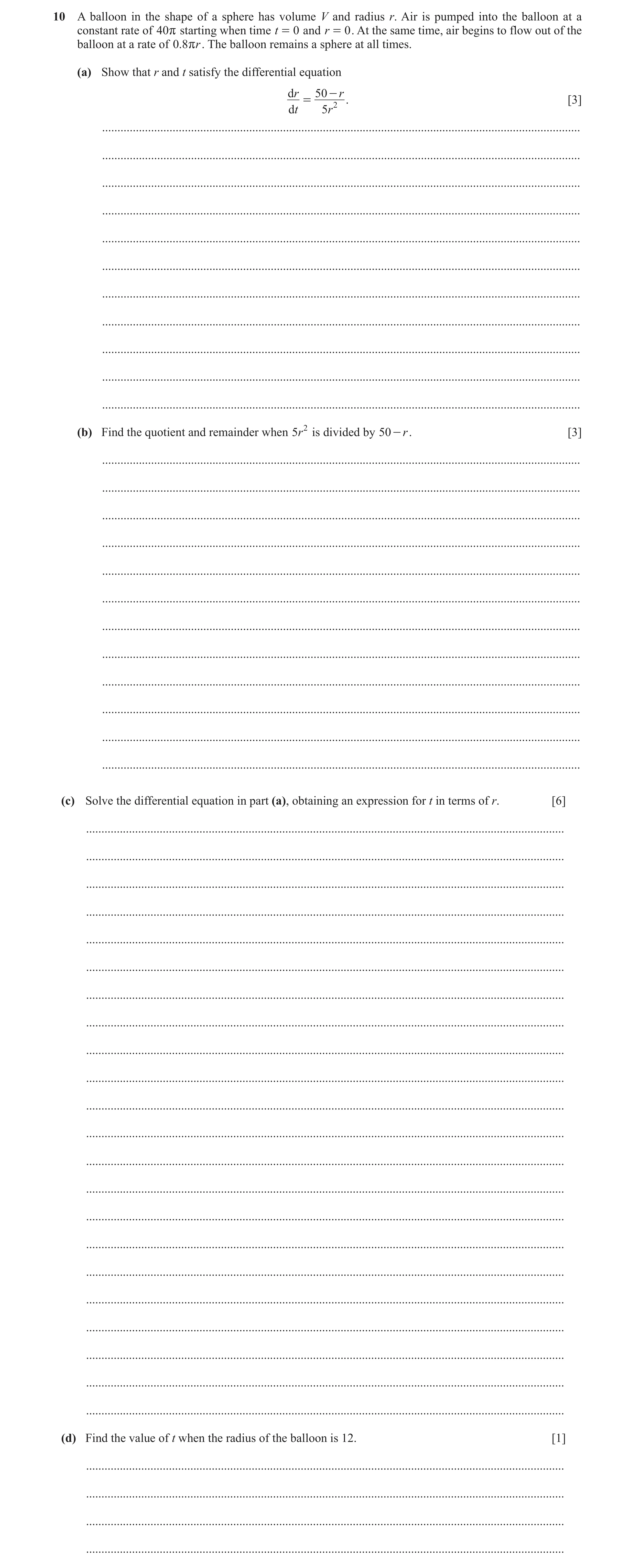
![Question 20: (a) Find the quotient and remainder when x 4 + 16 is divided by x 2 + 4 . [3] .............................................................…](https://img.pastlit.com/crops/0e06fcb7-d82e-40ae-b193-314a4df26a57/q9.webp)
![Question 21: (a) Find the quotient and remainder when x2 is divided by 1 + 4x 2 . [2] ..................................................................…](https://img.pastlit.com/crops/839eb451-3c89-4685-8cb5-2dc929ba7724/q10.webp)
![Question 22: x 3 + 2x - 11 10 Let f ( x) = . ( 3 + x) `2 + x 2j (a) Express f ( x) in partial fractions. [6] ...........................................…](https://img.pastlit.com/crops/97d6c821-d580-4248-92cc-fc88ec663f2f/q10.webp)
![Question 23: (a) Sketch the graph of y = x + 3a , where a is a positive constant. [1] (b) Hence or otherwise solve the inequality x + 3a 2 a - 2 x . [2]…](https://img.pastlit.com/crops/f5e004ff-26c4-46a2-a338-e8ed2bf9d1b6/q1.webp) 18 / 20
18 / 20![Question 24: Find the quotient and the remainder when 3x 4 - 2 x 2 is divided by x + 1. [3] ............................................................…](https://img.pastlit.com/crops/a04cea19-353d-4ed0-876c-c4b4619e09a6/q2.webp) 19 / 20
19 / 20![Question 25: (a) Sketch the graph of y = 3x - 6 . [1] (b) Solve the inequality 5x - 3 1 3x - 6 . [3] ...................................................…](https://img.pastlit.com/crops/b8c83517-d7f2-49a3-959c-4199641a00a3/q1.webp) 20 / 20
20 / 20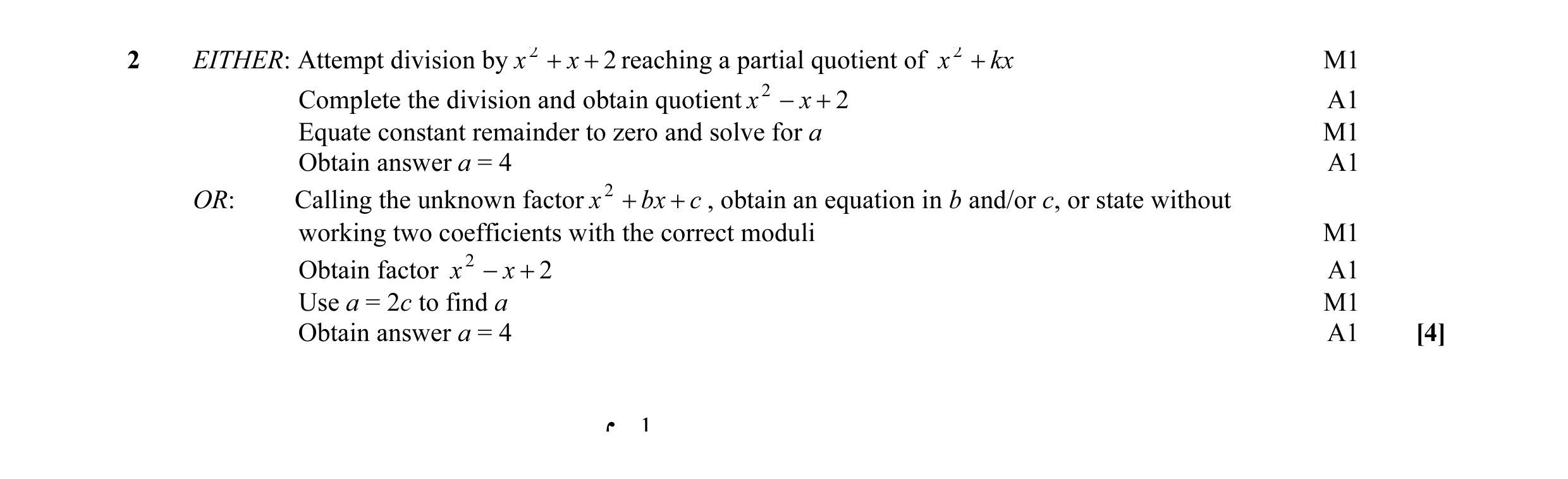 4
4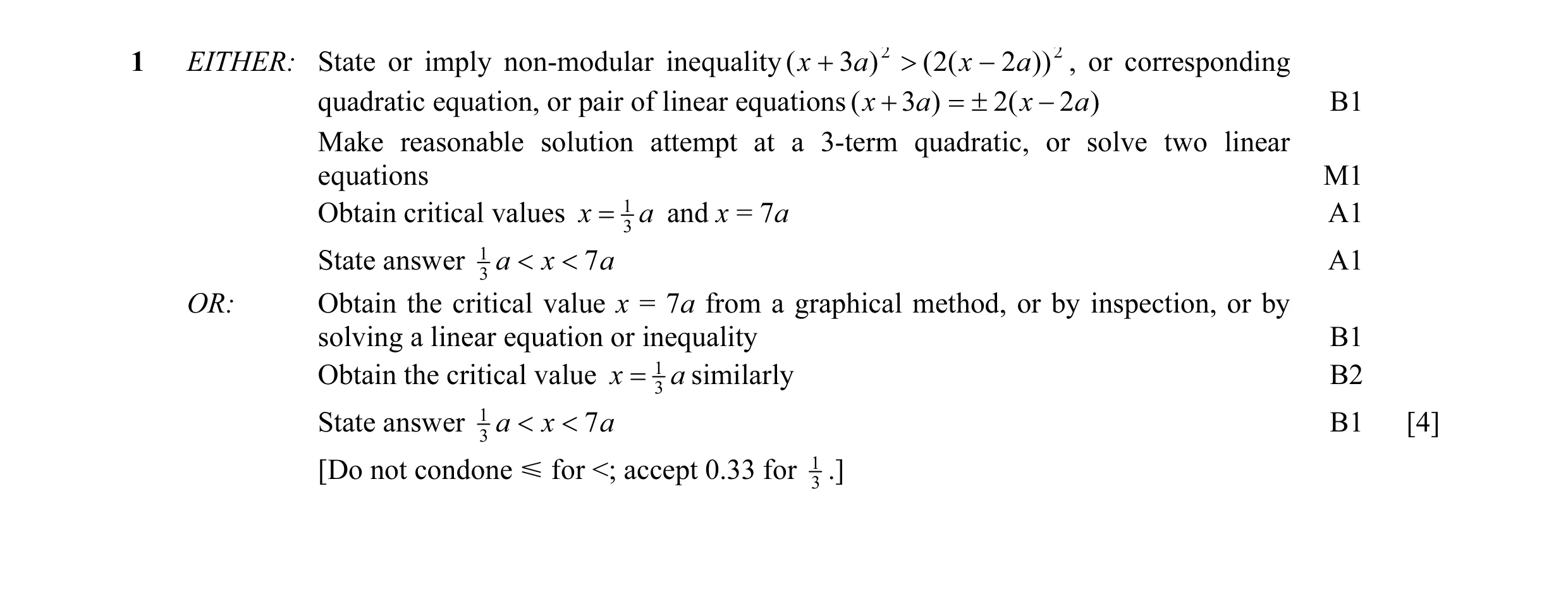 4
4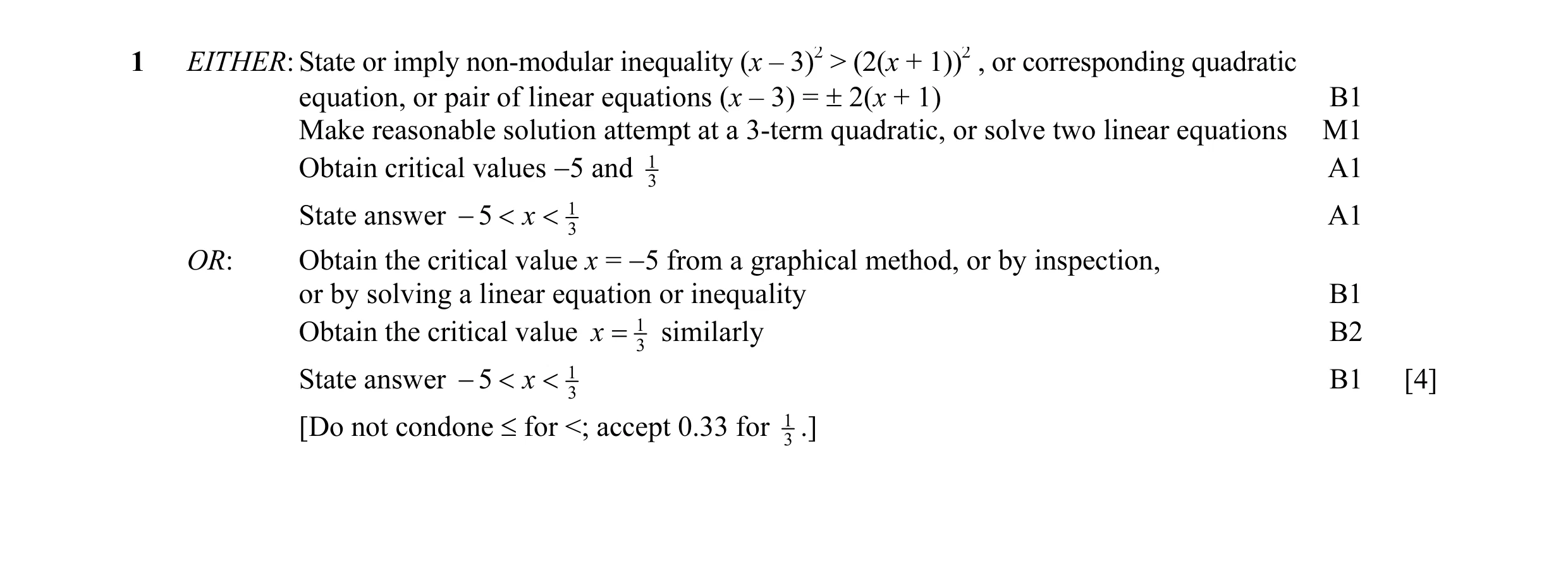 4
4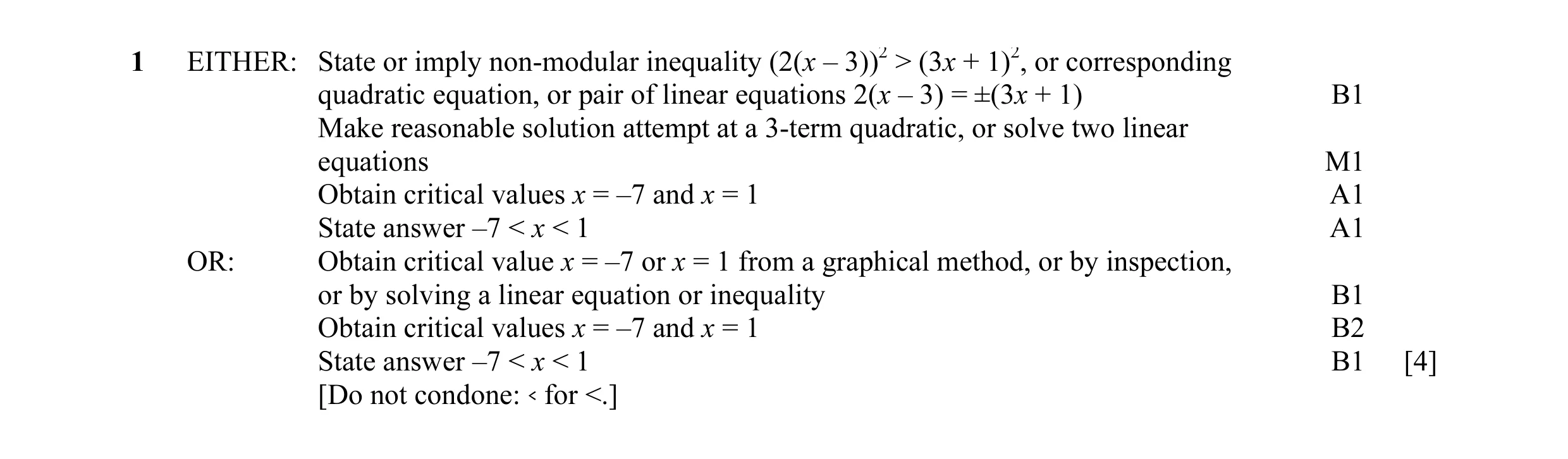 4
4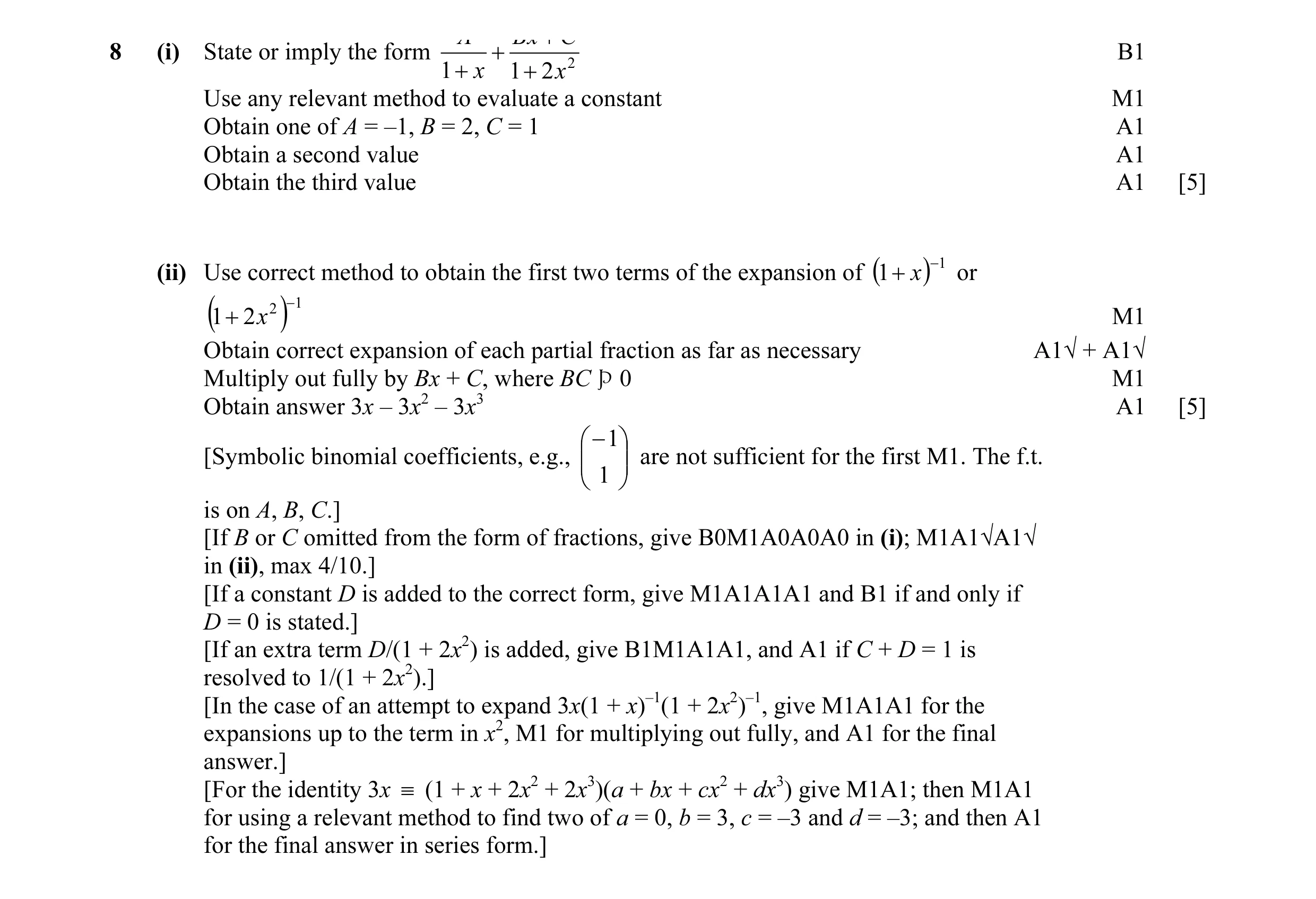 10
10 3
3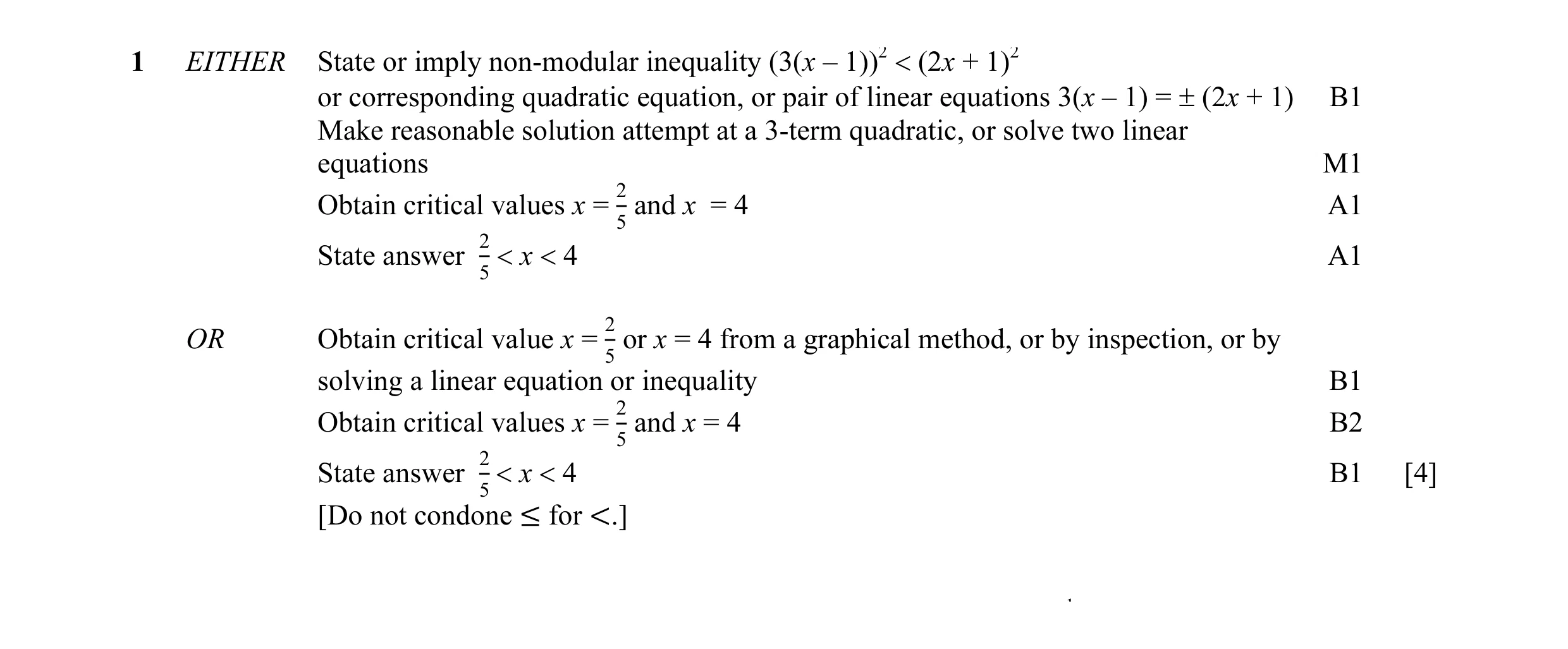 4
4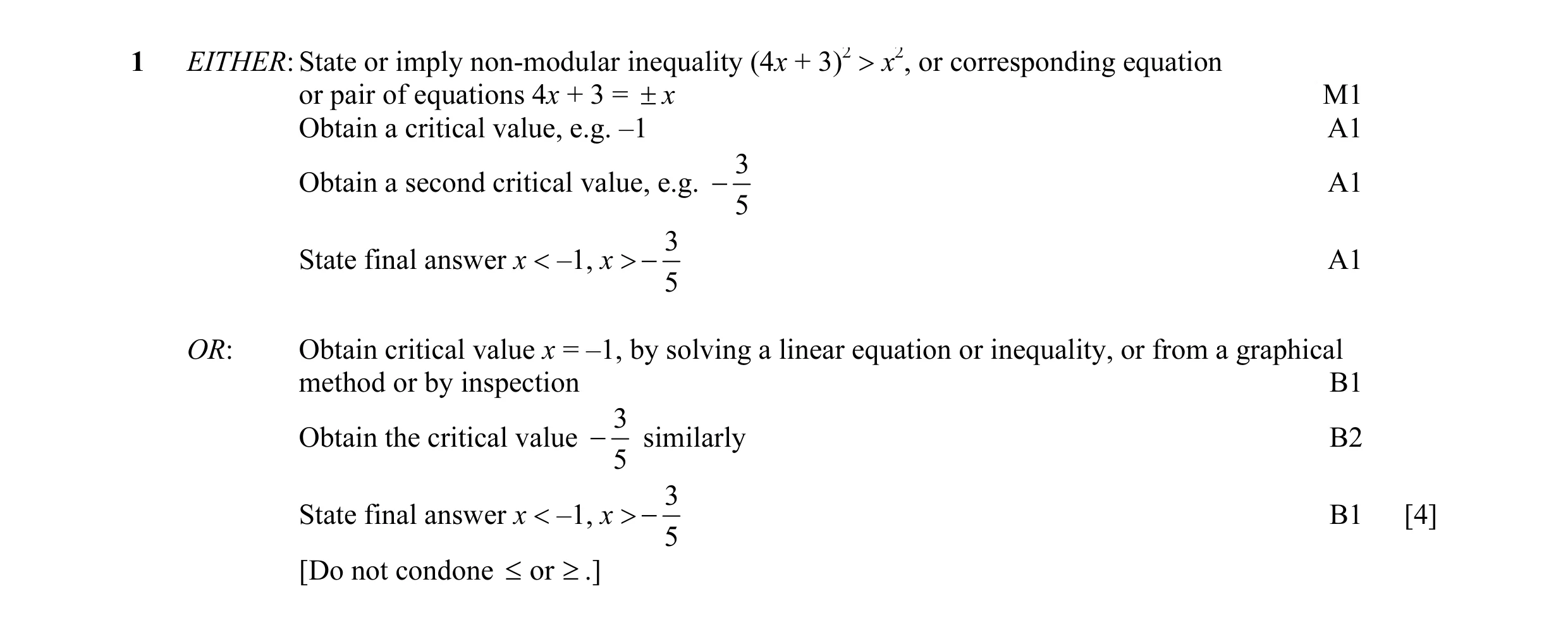 4
4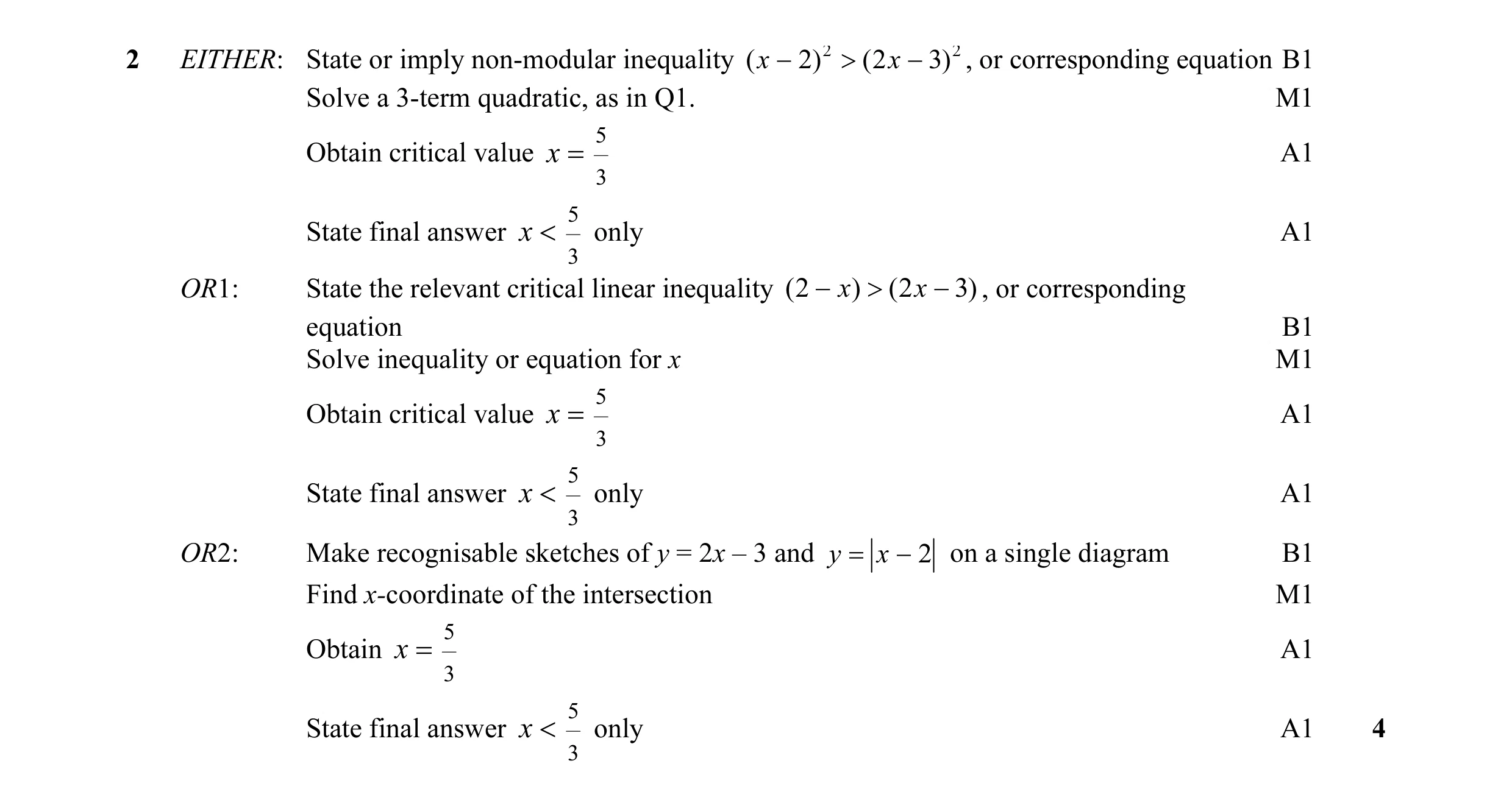 4
4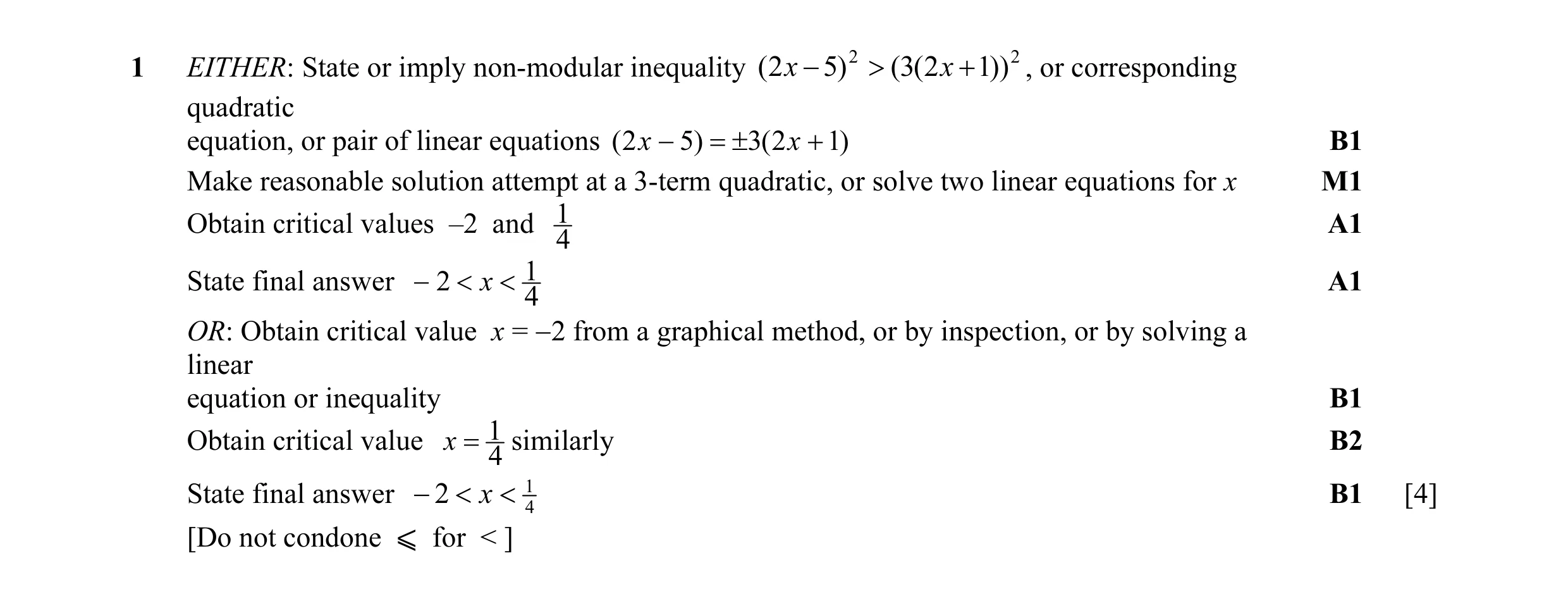 4
4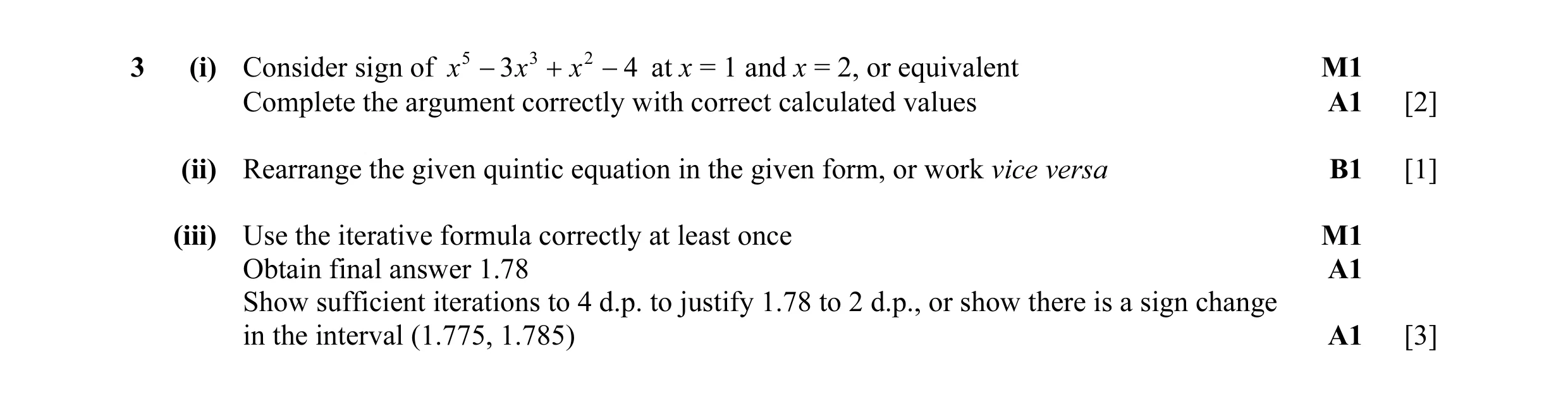 6
6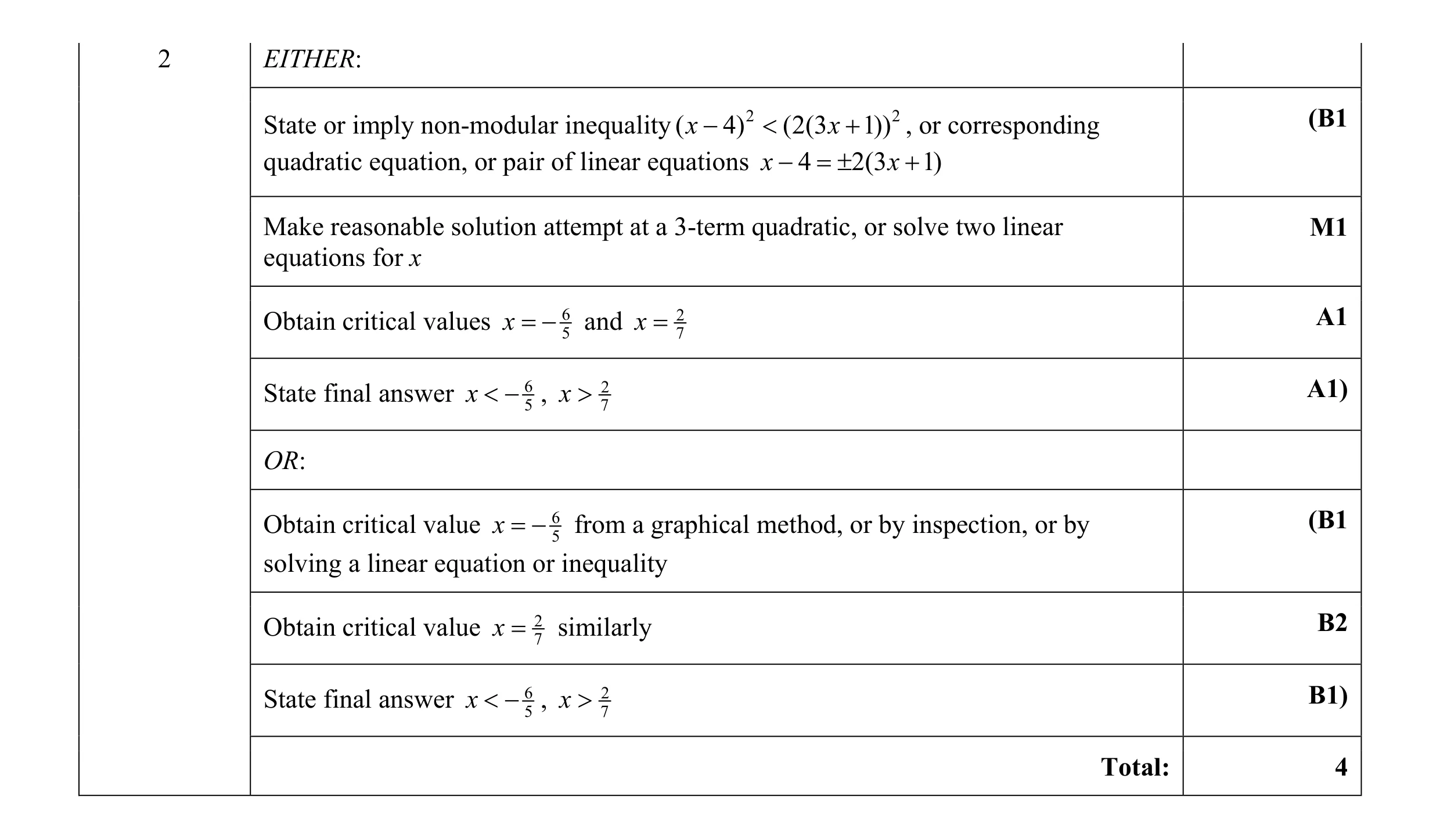 4
4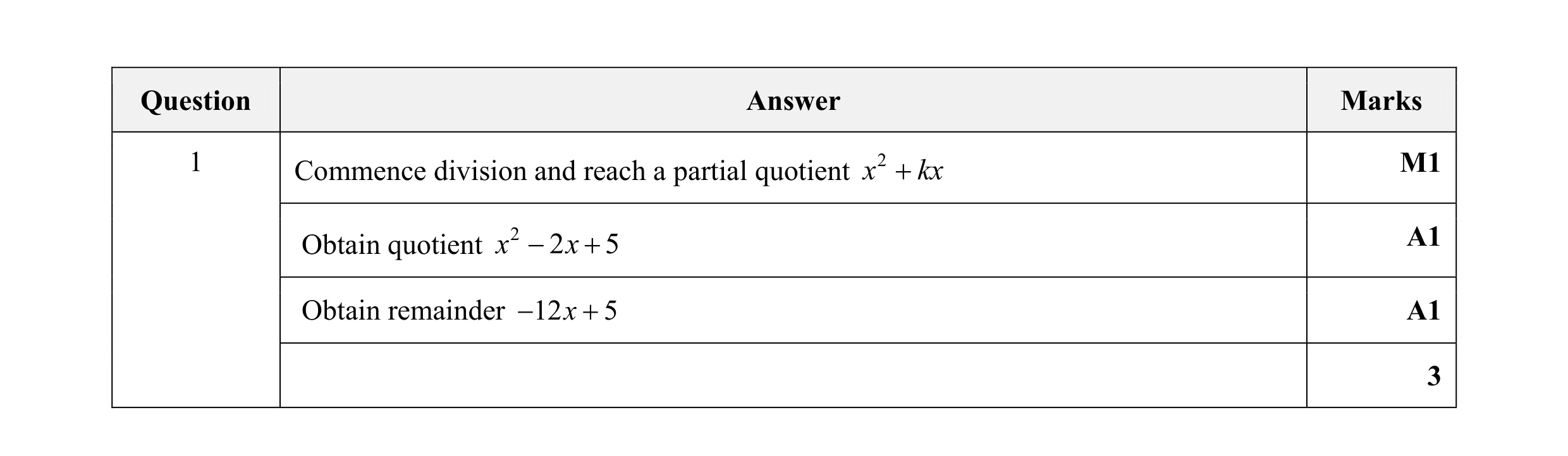 3
3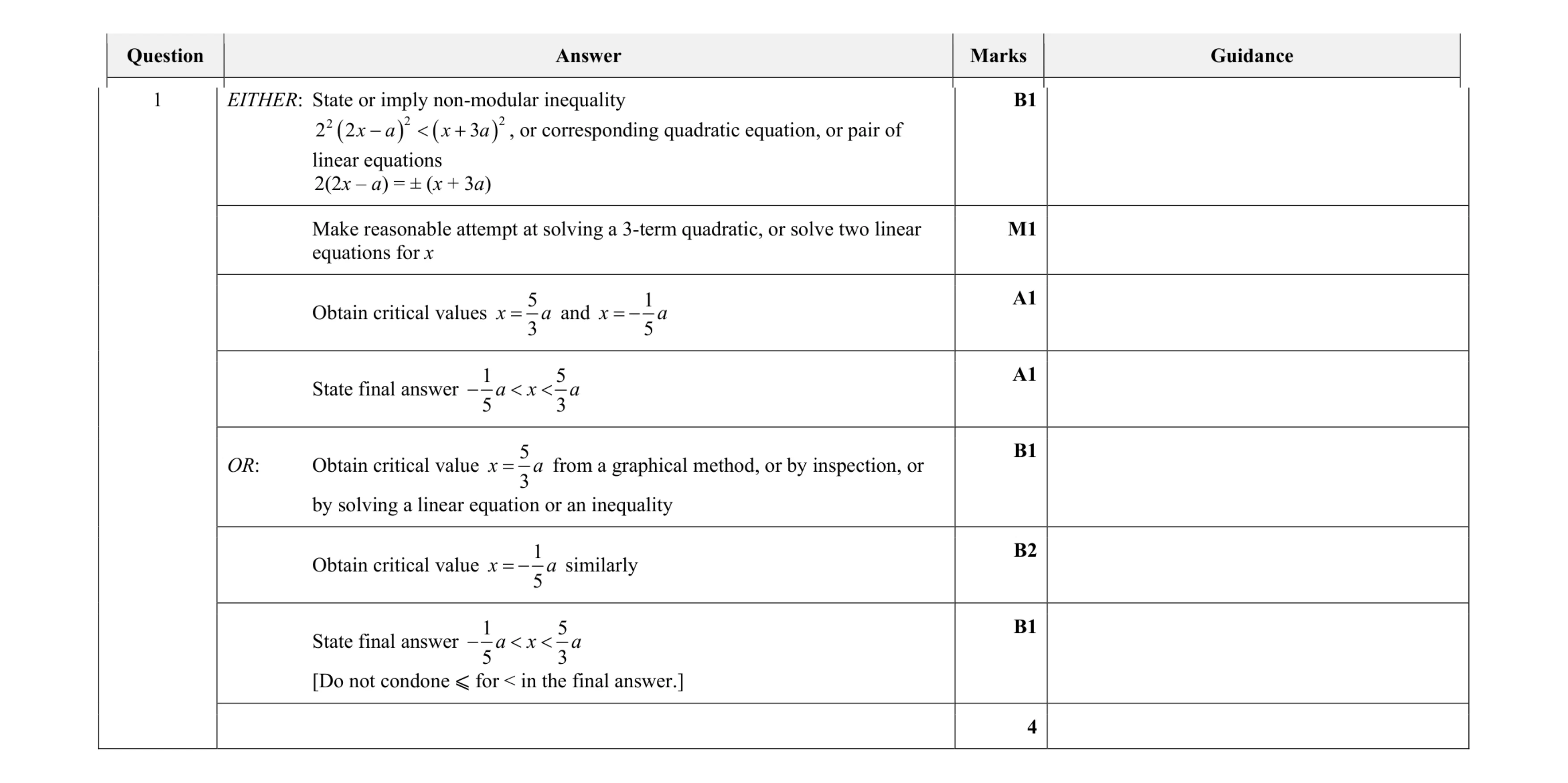 4
4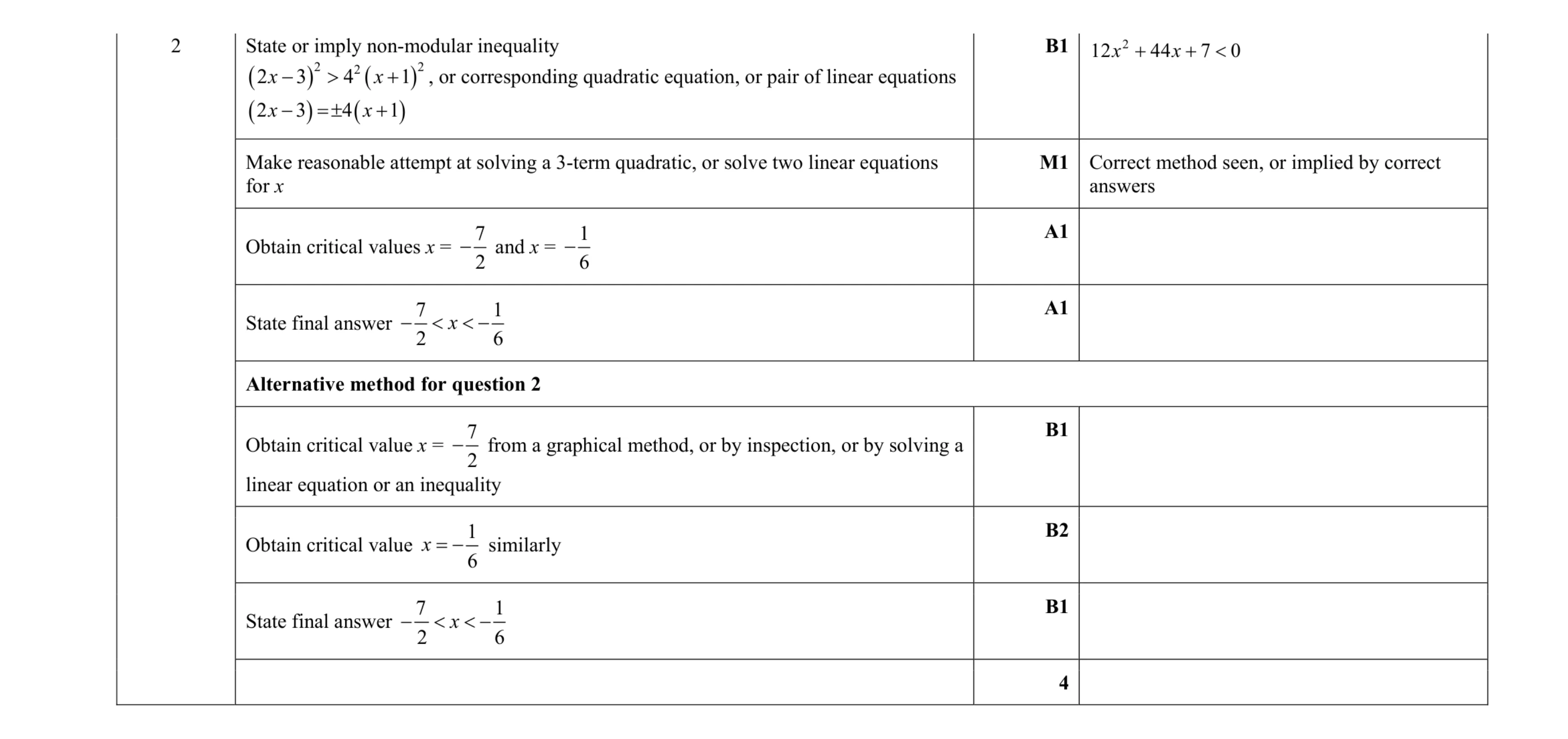 4
4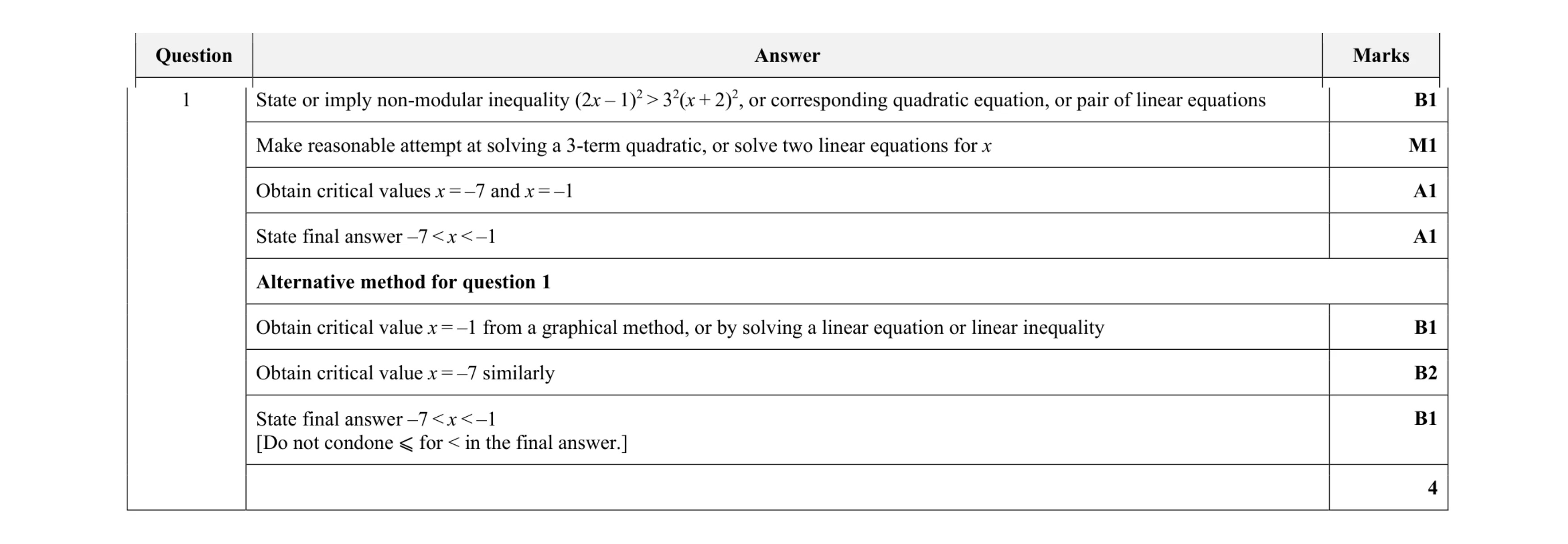 4
4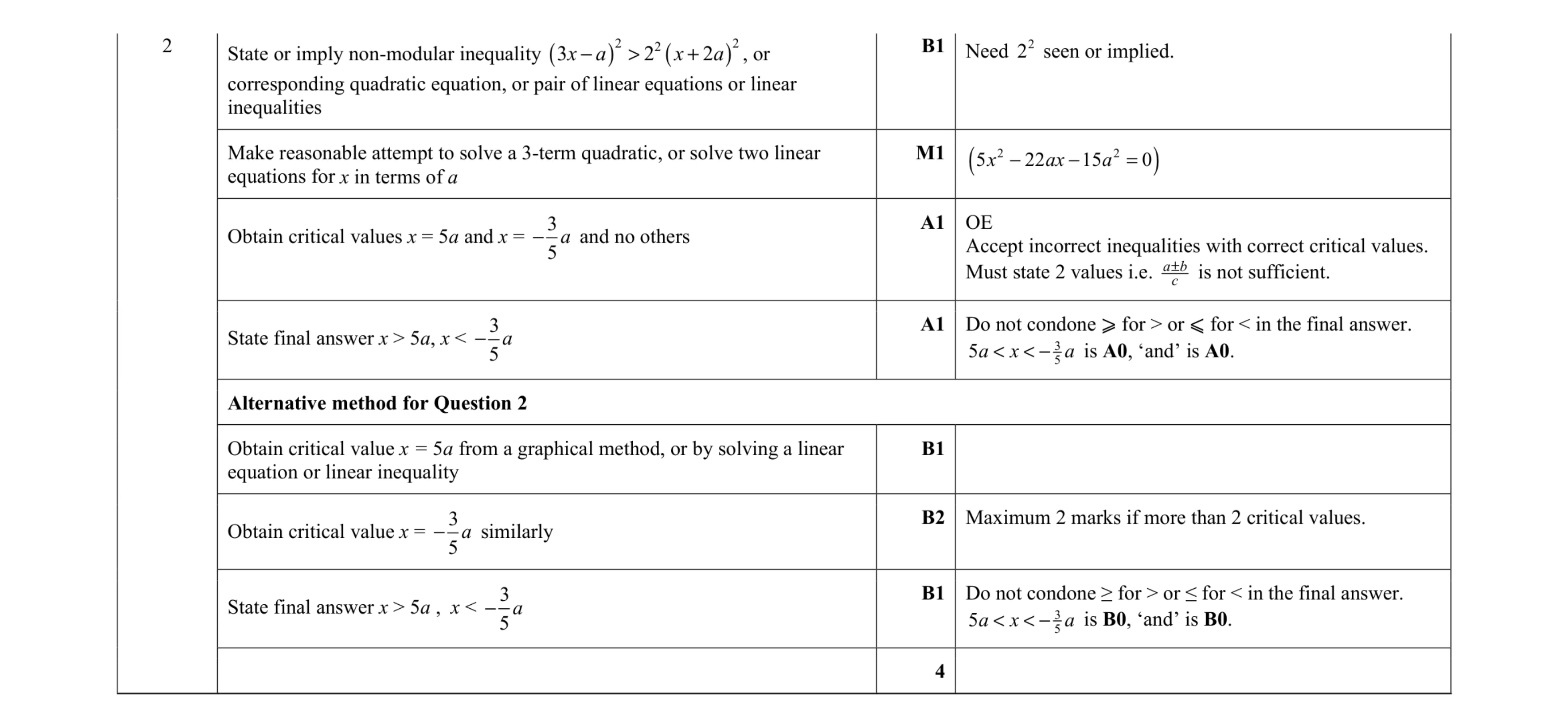 4
4 3
3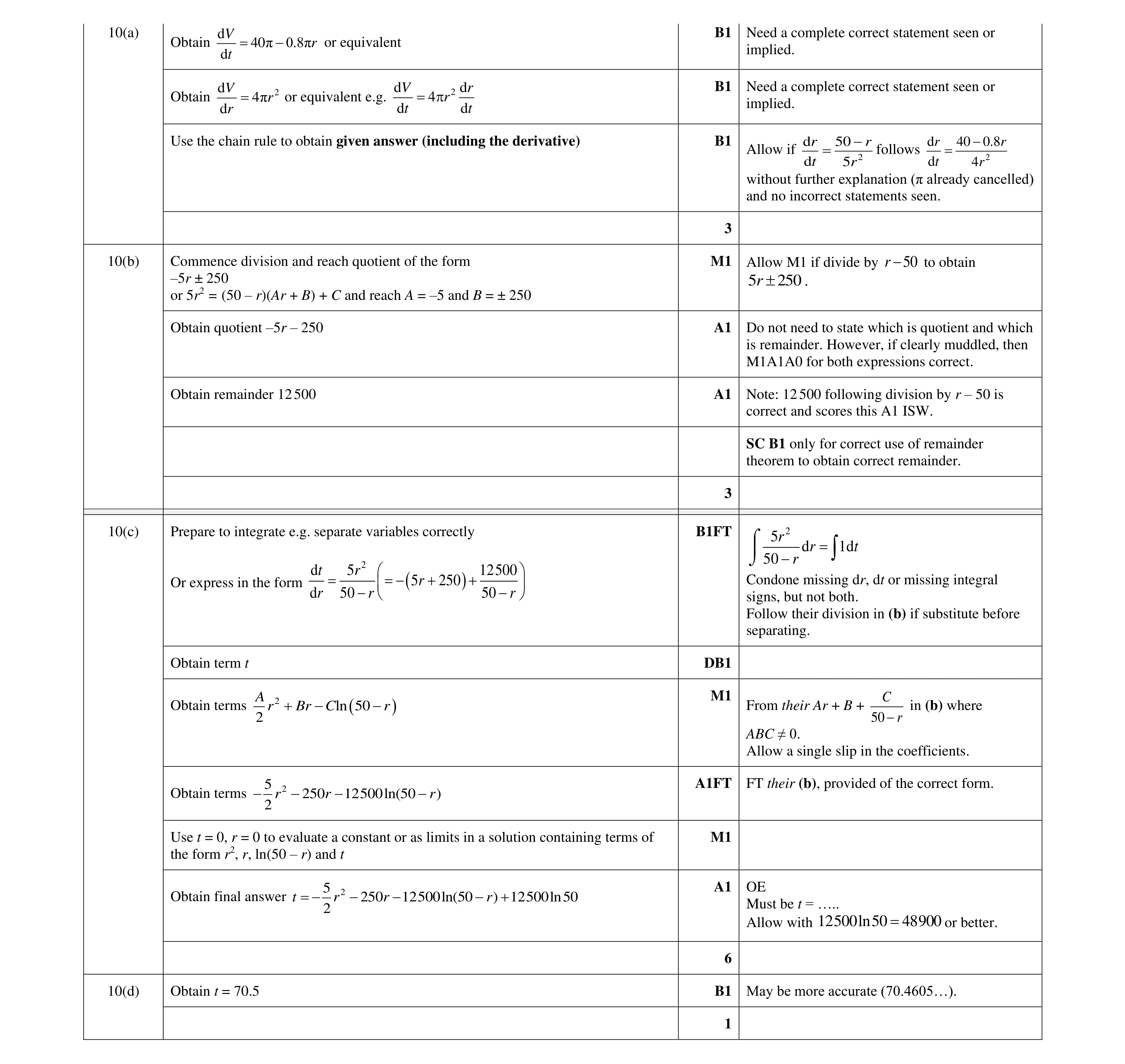 13
13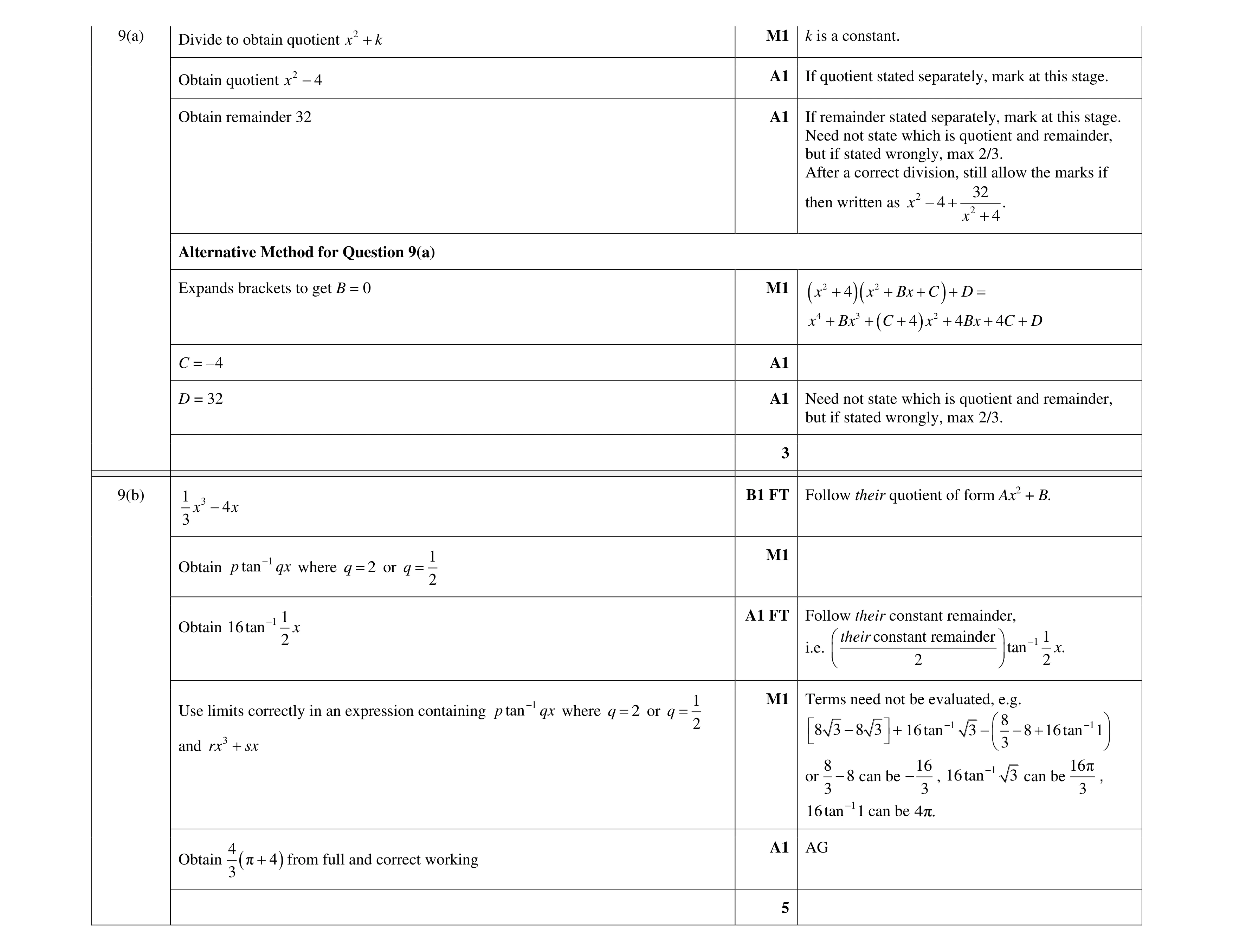 8
8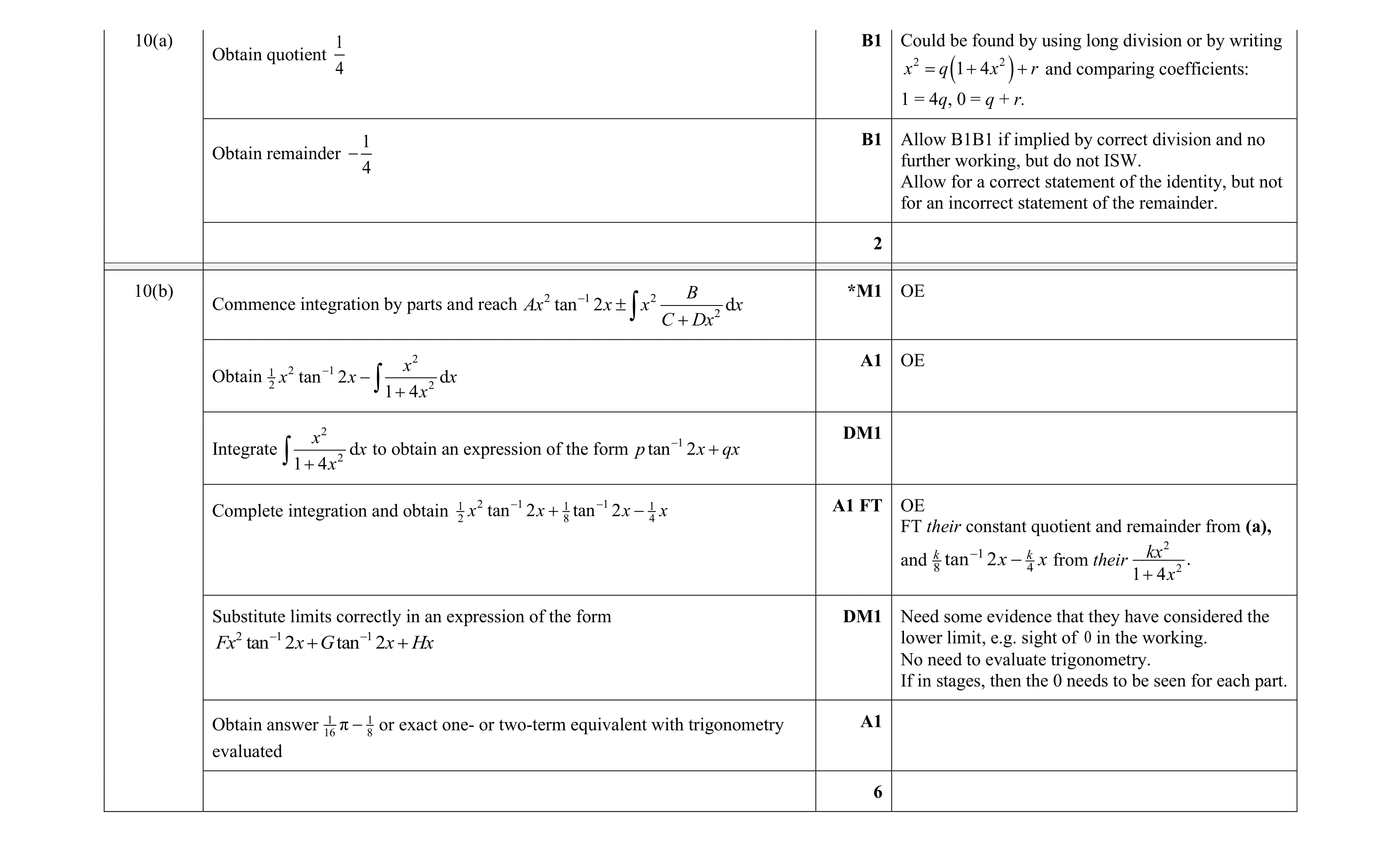 8
8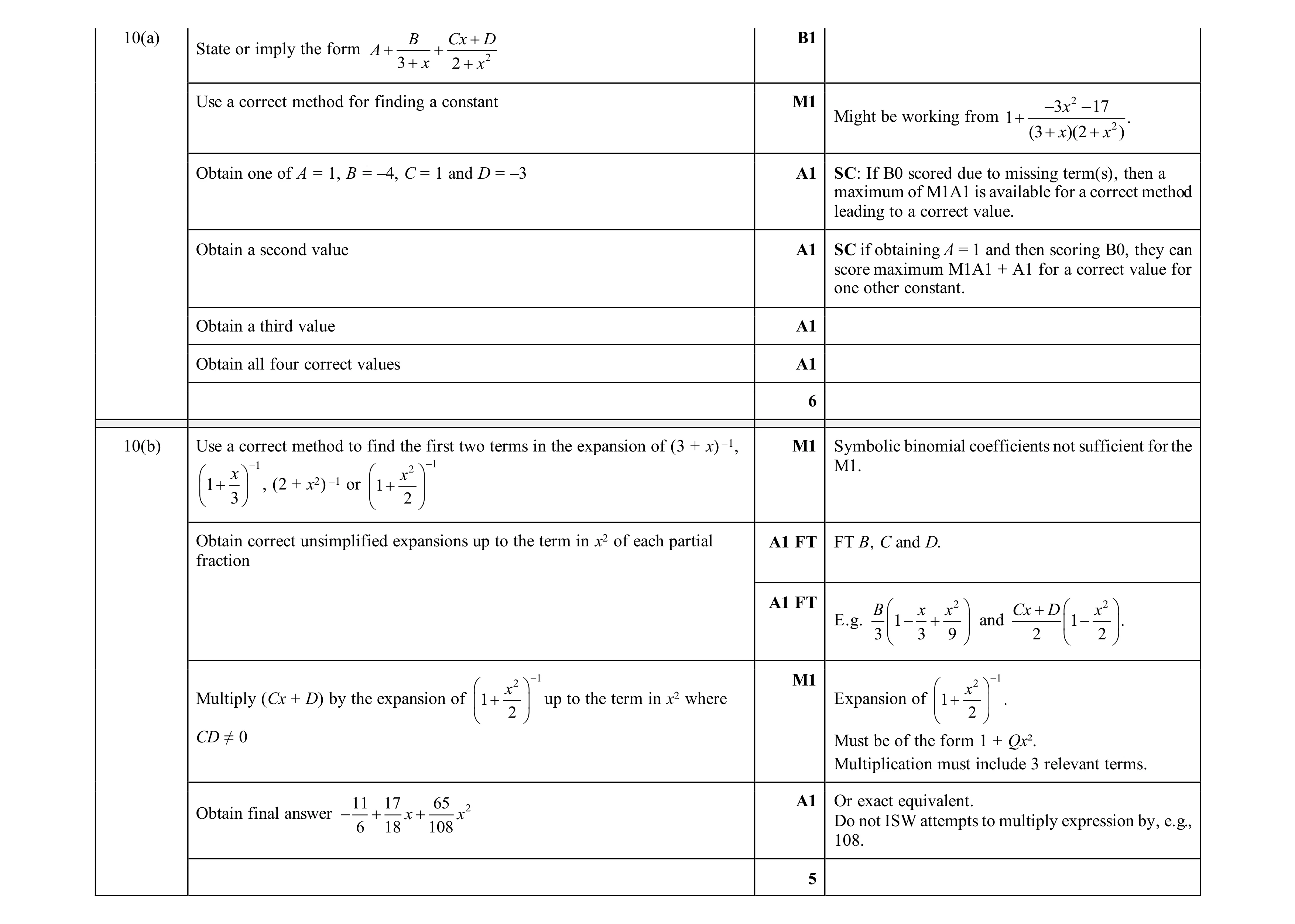 11
11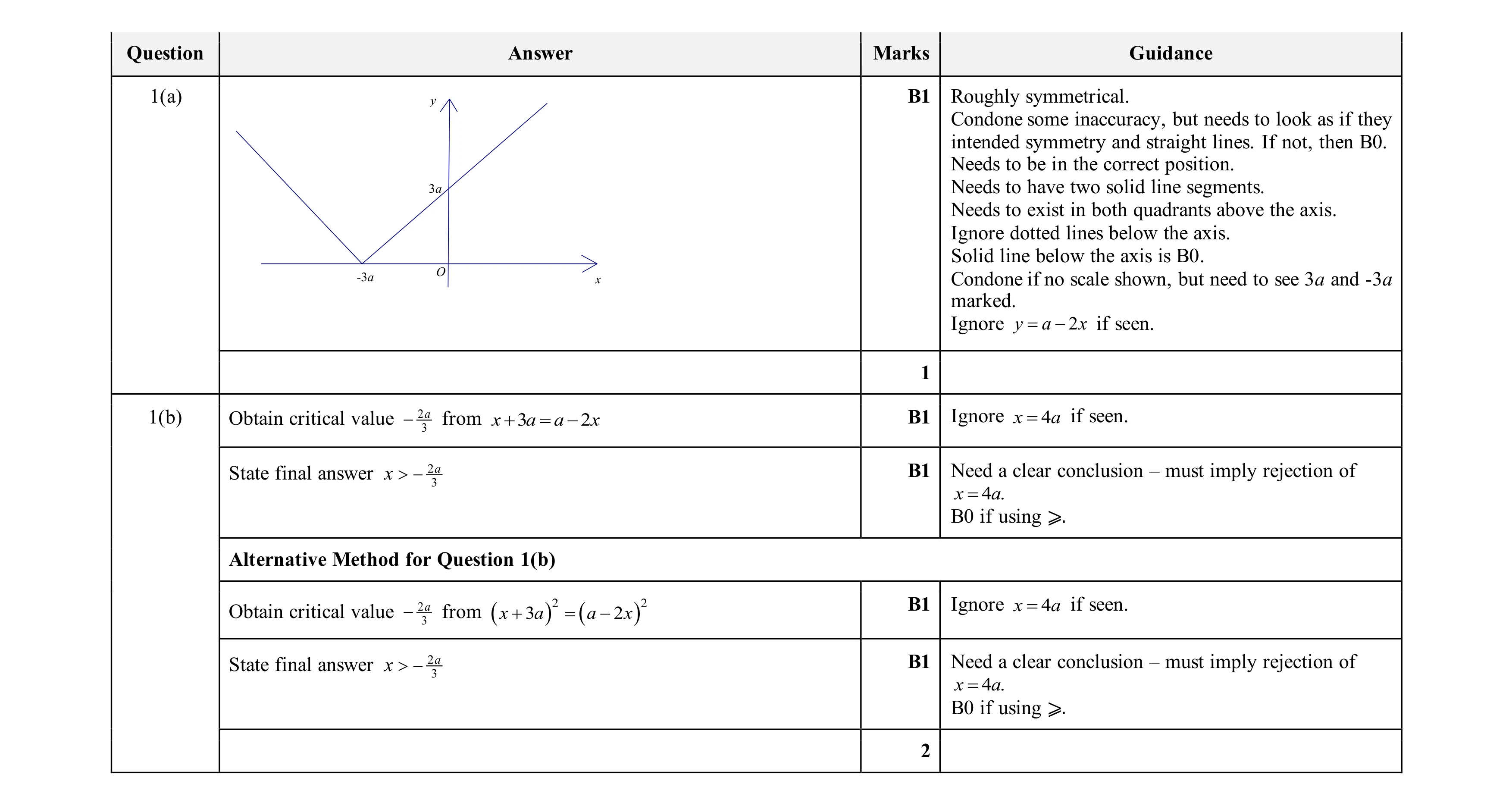 3
3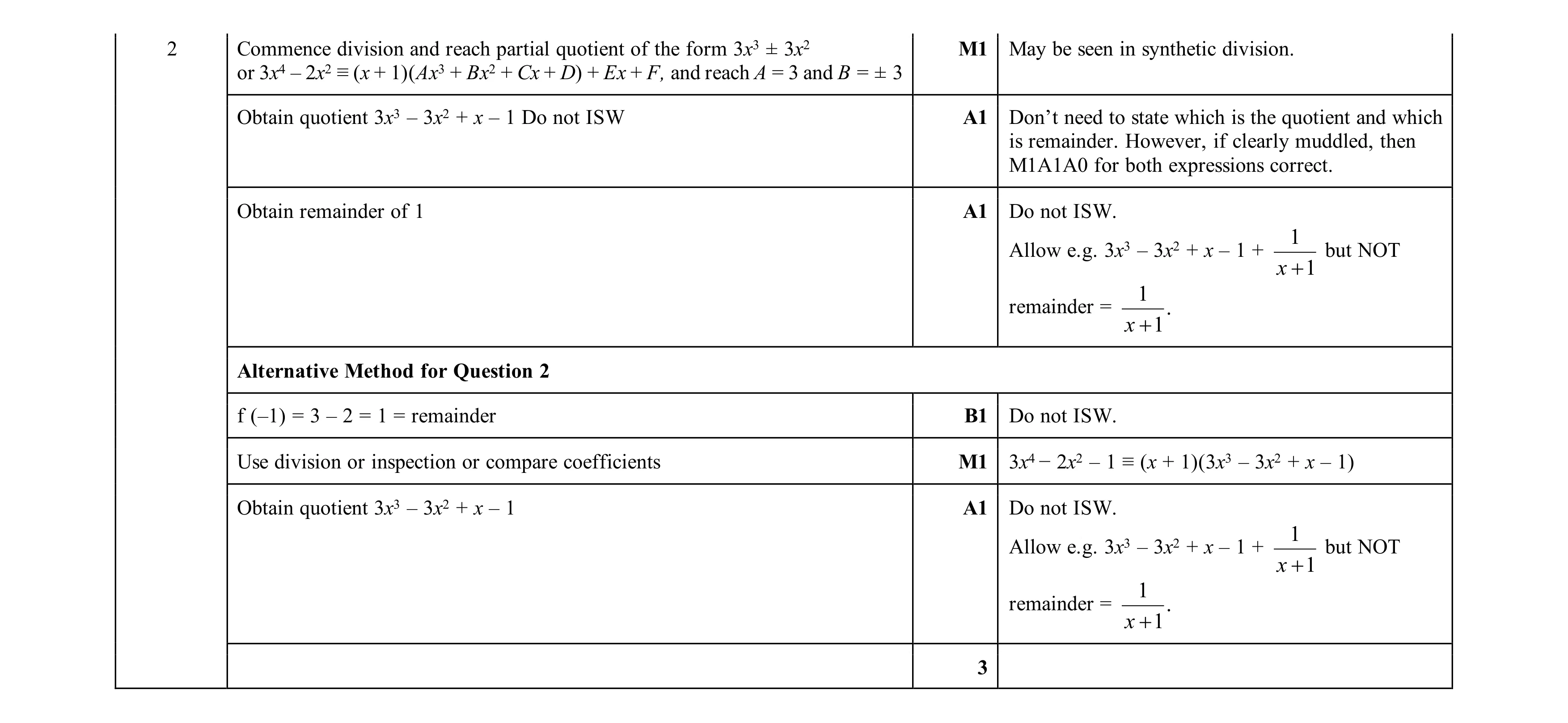 3
3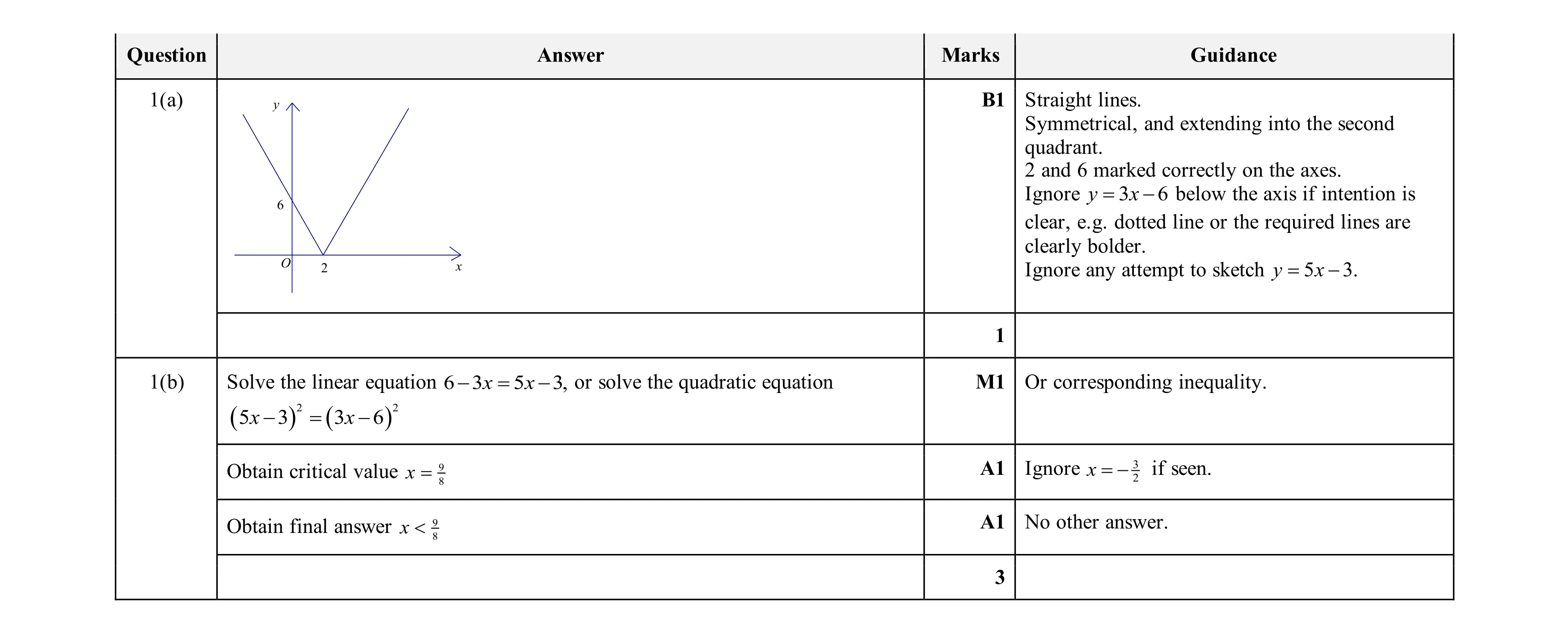 4
4