Cambridge A Level Islamic Studies 9488 — 2022 May/June Paper 2 · Variant 2
9488/22/M/J/22 · 4 questions · 50 marks · ≈56 min
The question paper and its mark scheme, free to read here and free to download. This is Cambridge’s own paper, exactly as it was sat.
Question paper4 pages
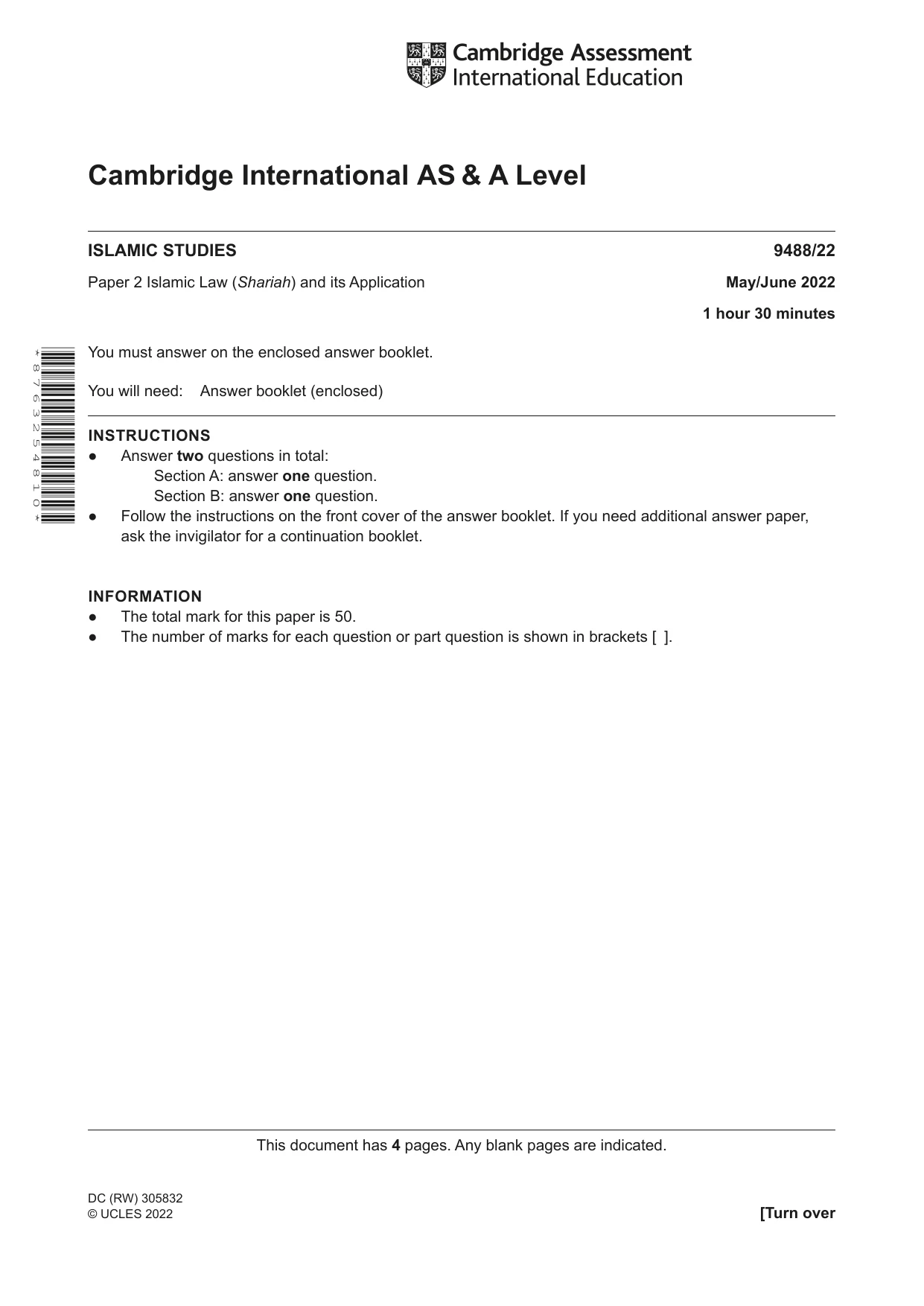

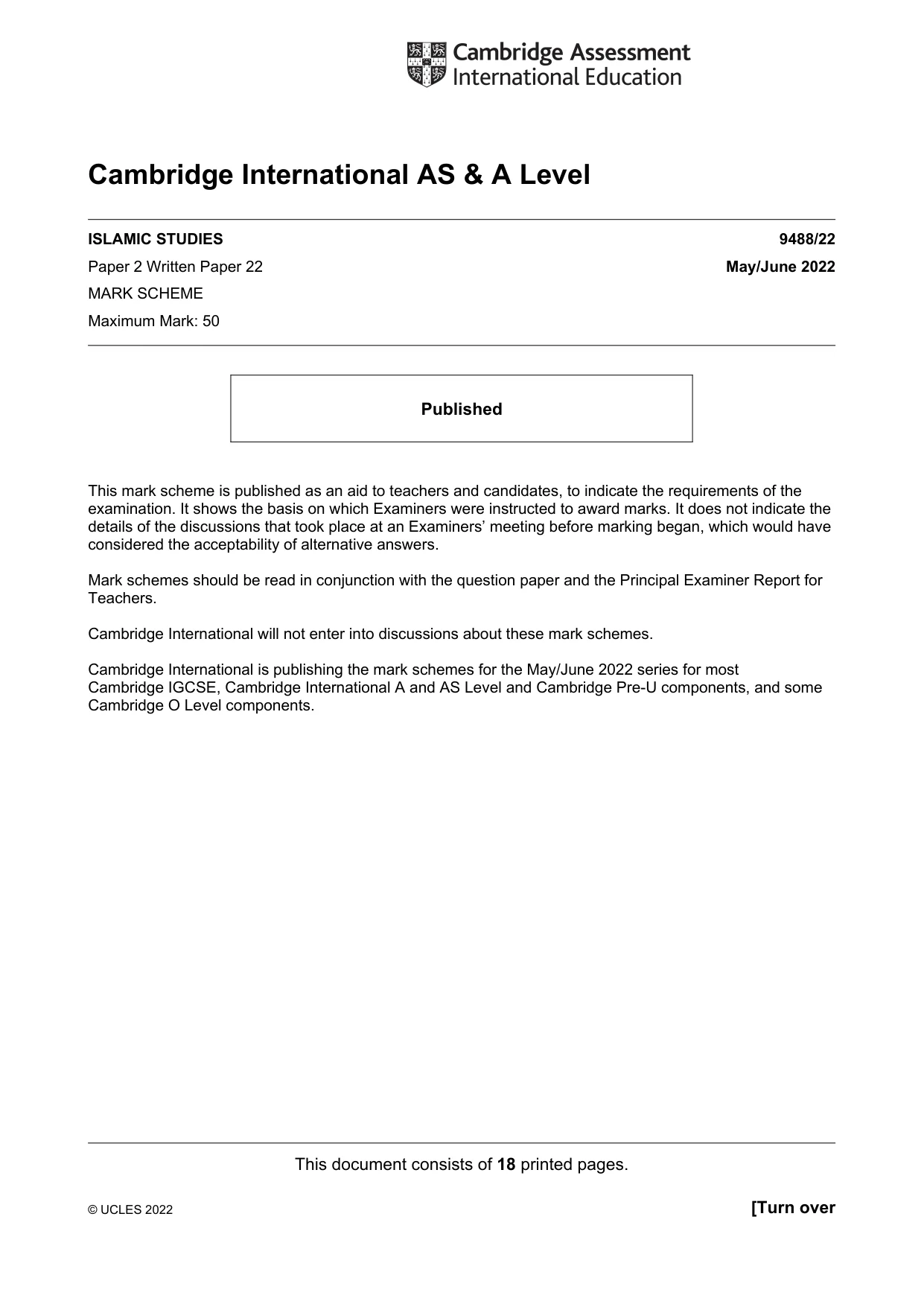
Mark scheme18 pages
Answers below. Sit the paper first if you are practising.
Questions as text
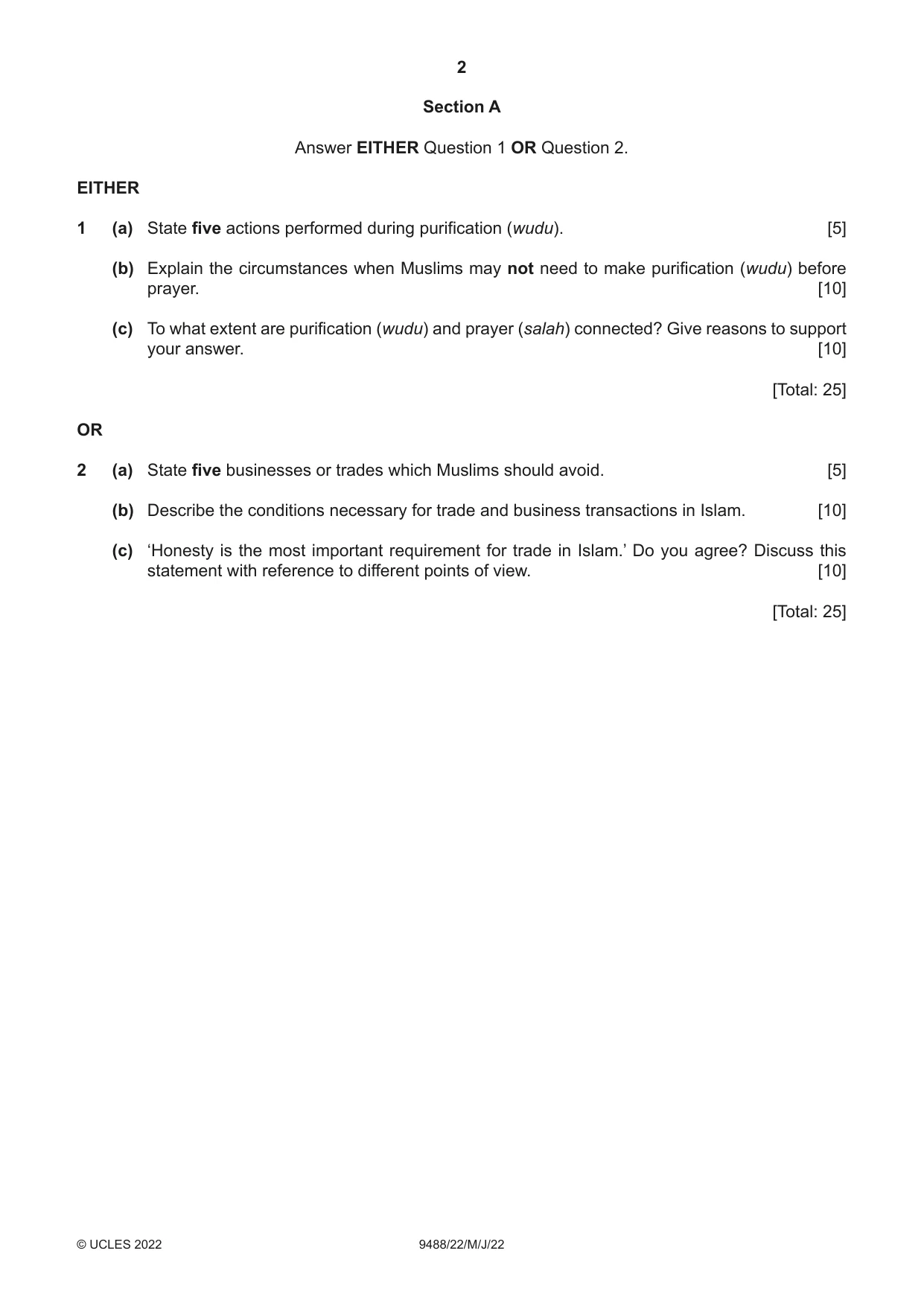
Q1 · State five actions performed during purification (wudu)
1 (a) State five actions performed during purification (wudu). [5] (b) Explain the circumstances when Muslims may not need to make purification (wudu) before prayer. [10] (c) To what extent are purification (wudu) and prayer (salah) connected? Give reasons to support your answer. [10] [Total: 25] OR
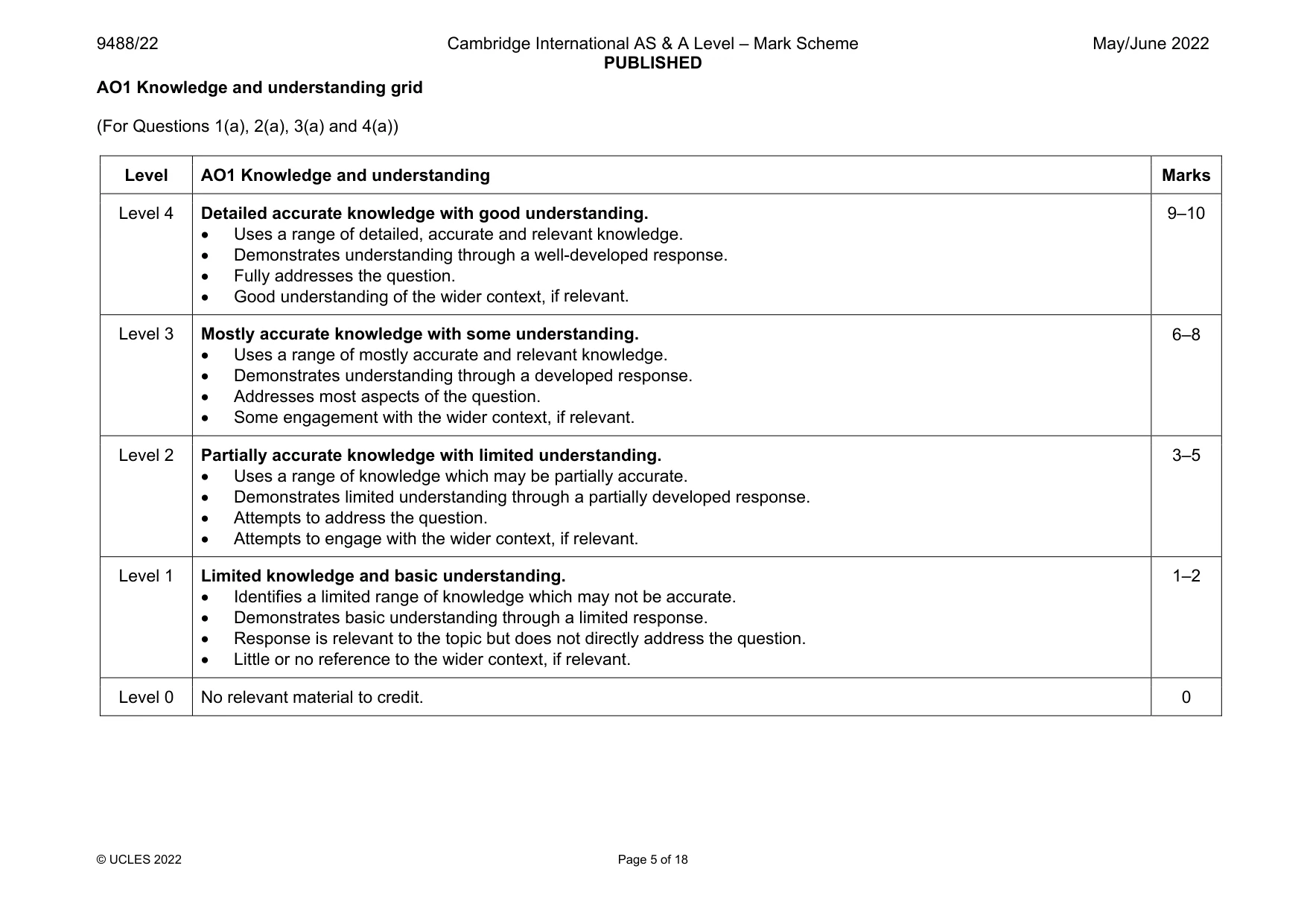
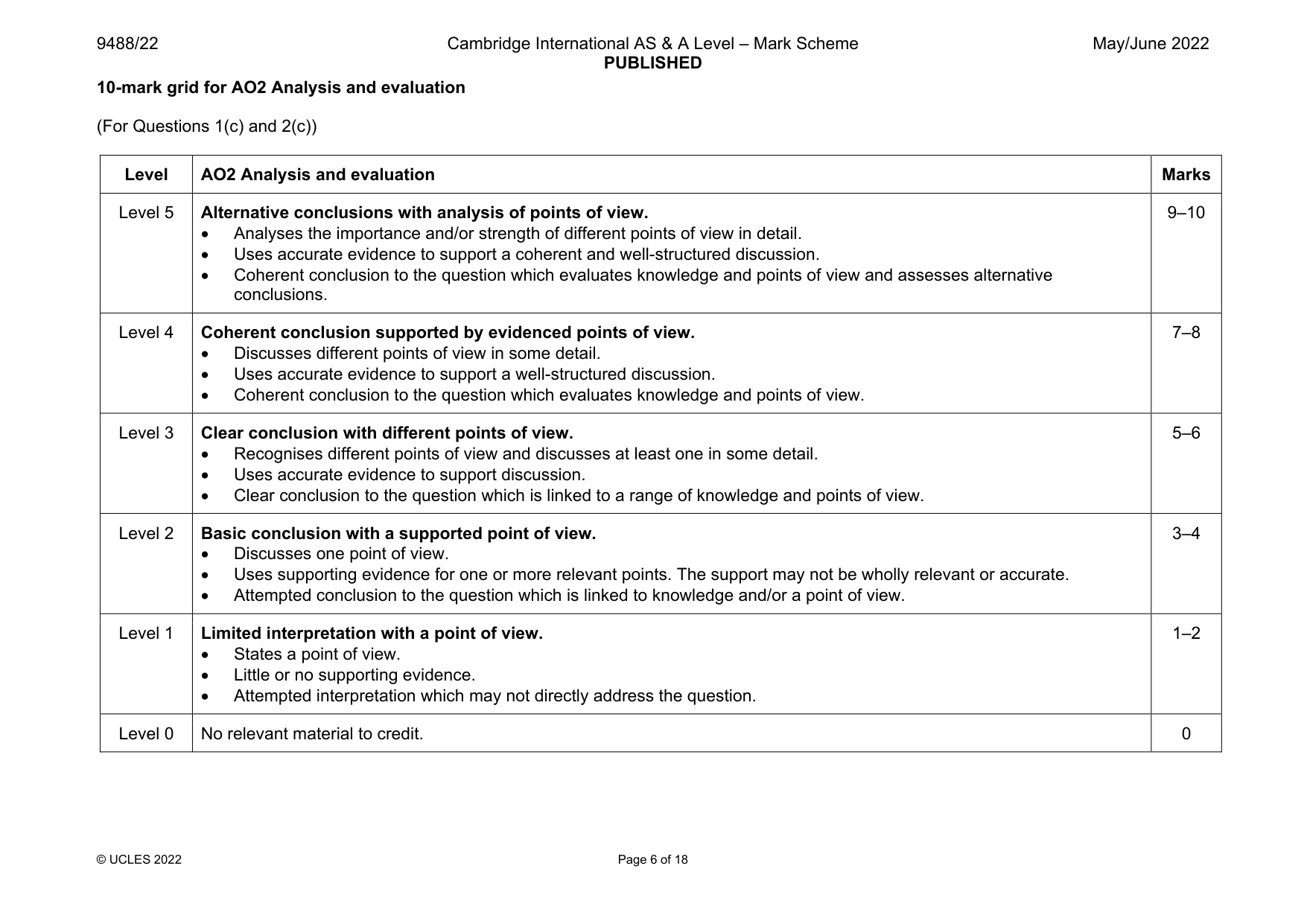
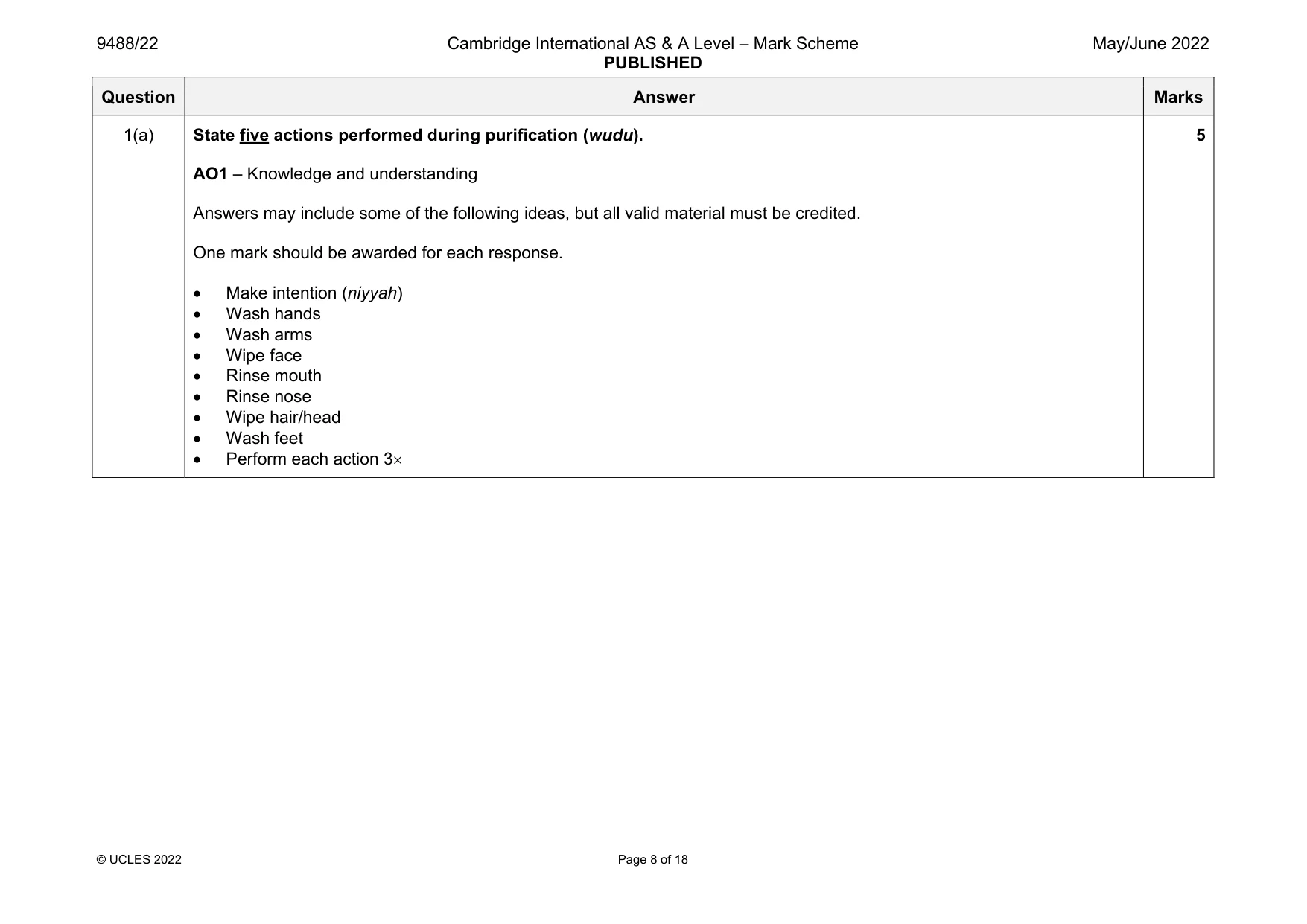
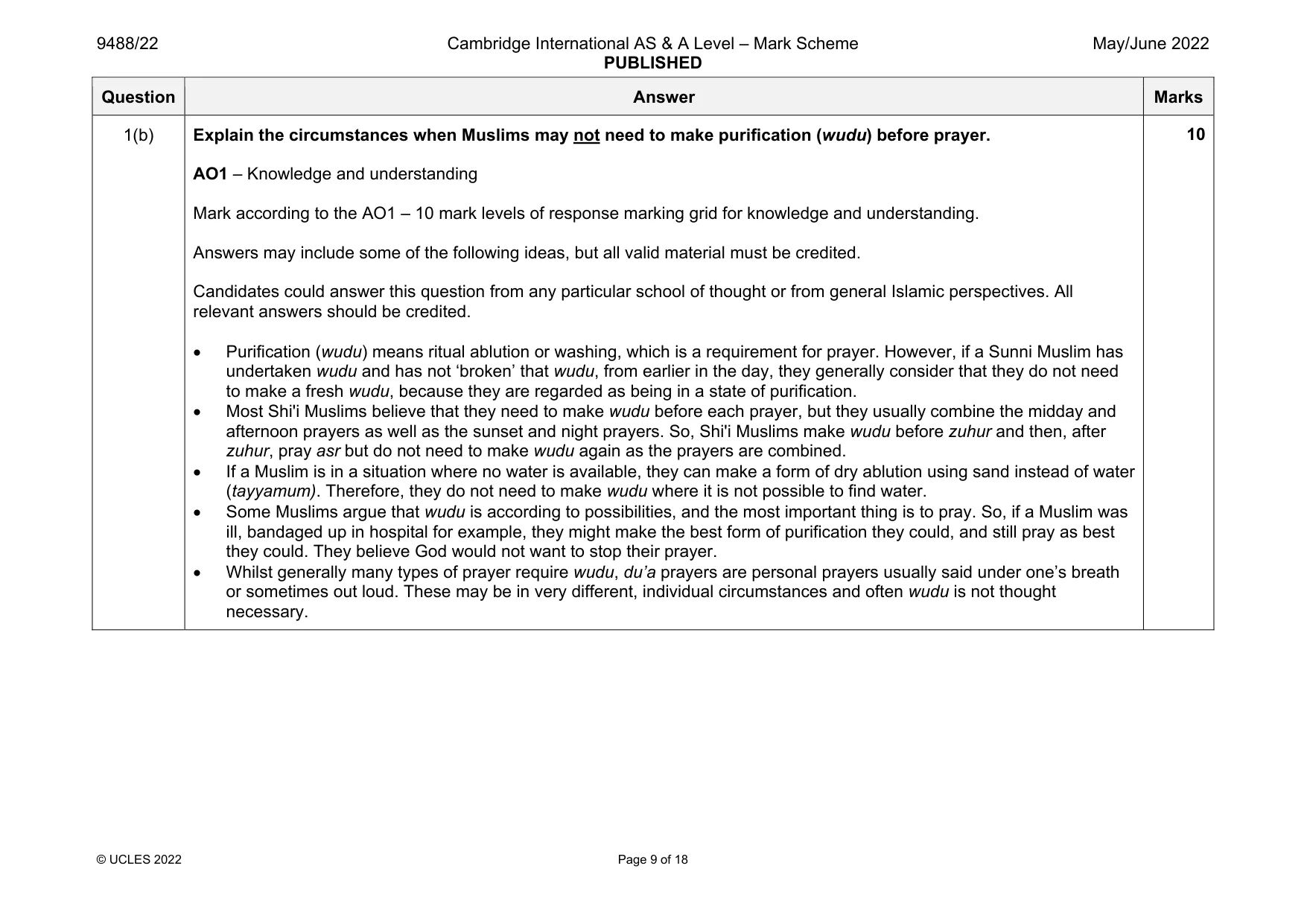
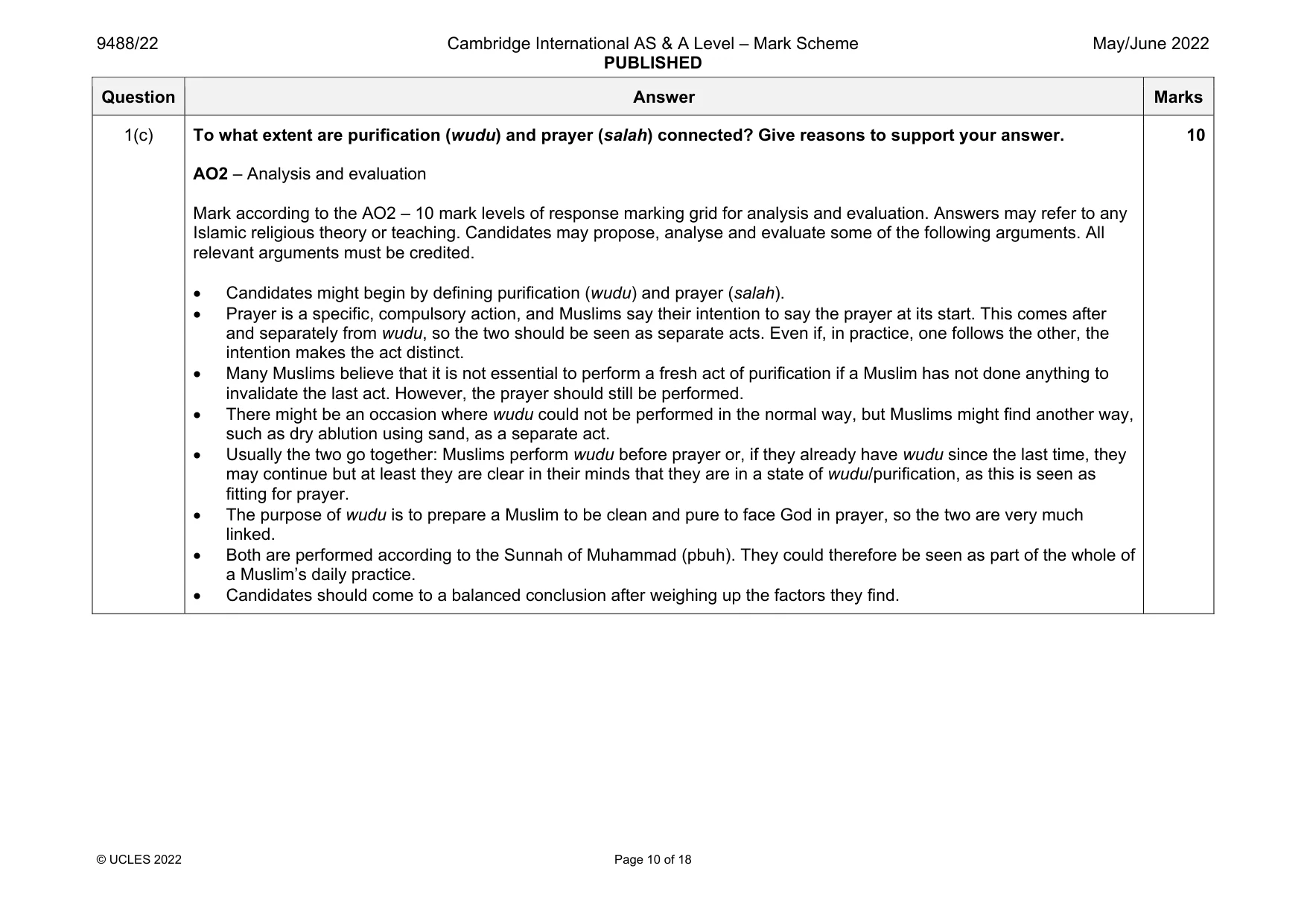
Mark scheme: 1(a) State five actions performed during purification (wudu). AO1 – Knowledge and understanding Answers may include some of the following ideas, but all valid material must be credited. One mark should be awarded for each response. Make intention (niyyah) Wash hands Wash arms Wipe face Rinse mouth Rinse nose Wipe hair/head Wash feet Perform each action 3 5 Question Answer Marks 1(b) Explain the circumstances when Muslims may not need to make purification (wudu) before prayer. AO1 – Knowledge and understanding Mark according to the AO1 – 10 mark levels of response marking grid for knowledge and understanding. Answers may include some of the following ideas, but all valid material must be credited. Candidates could answer this question from any particular school of thought or from general Islamic perspectives. All relevant answers should be credited. Purification (wudu) means ritual ablution or washing, which is a requirement for prayer. However, if a Sunni Muslim has undertaken wudu and has not ‘broken’ that wudu, from earlier in the day, they generally consider that they do not need to make a fresh wudu, because they are regarded as being in a state of purification. Most Shi'i Muslims believe that they need to make wudu before each prayer, but they usually combine the midday and afternoon prayers as well as the sunset and night prayers. So, Shi'i Muslims make wudu before zuhur and then, after zuhur, pray asr but do not need to make wudu again as the prayers are combined. If a Muslim is in a situation where no water is available, they can make a form of dry ablution using sand instead of water (tayyamum). Therefore, they do not need to make wudu where it is not possible to find water. Some Muslims argue that wudu is according to possibilities, and the most important thing is to pray. So, if a Muslim was ill, bandaged up in hospital for example, they might make the best form of purification they could, and still pray as best they could. They believe God would not want to stop their prayer. Whilst generally many types of prayer require wudu, du’a prayers are personal prayers usually said under one’s breath or sometimes out loud. These may be in very different, individual circumstances and often wudu is not thought necessary. 10 Question Answer Marks 1(c) To what extent are purification (wudu) and prayer (salah) connected? Give reasons to support your answer. AO2 – Analysis and evaluation Mark according to the AO2 – 10 mark levels of response marking grid for analysis and evaluation. Answers may refer to any Islamic religious theory or teaching. Candidates may propose, analyse and evaluate some of the following arguments. All relevant arguments must be credited. Candidates might begin by defining purification (wudu) and prayer (salah). Prayer is a specific, compulsory action, and Muslims say their intention to say the prayer at its start. This comes after and separately from wudu, so the two should be seen as separate acts. Even if, in practice, one follows the other, the intention makes the act distinct. Many Muslims believe that it is not essential to perform a fresh act of purification if a Muslim has not done anything to invalidate the last act. However, the prayer should still be performed. There might be an occasion where wudu could not be performed in the normal way, but Muslims might find another way, such as dry ablution using sand, as a separate act. Usually the two go together: Muslims perform wudu before prayer or, if they already have wudu since the last time, they may continue but at least they are clear in their minds that they are in a state of wudu/purification, as this is seen as fitting for prayer. The purpose of wudu is to prepare a Muslim to be clean and pure to face God in prayer, so the two are very much linked. Both are performed according to the Sunnah of Muhammad (pbuh). They could therefore be seen as part of the whole of a Muslim’s daily practice. Candidates should come to a balanced conclusion after weighing up the factors they find. 10
Q2 · State five businesses or trades which Muslims should avoid
2 (a) State five businesses or trades which Muslims should avoid. [5] (b) Describe the conditions necessary for trade and business transactions in Islam. [10] (c) ‘Honesty is the most important requirement for trade in Islam.’ Do you agree? Discuss this statement with reference to different points of view. [10] [Total: 25]
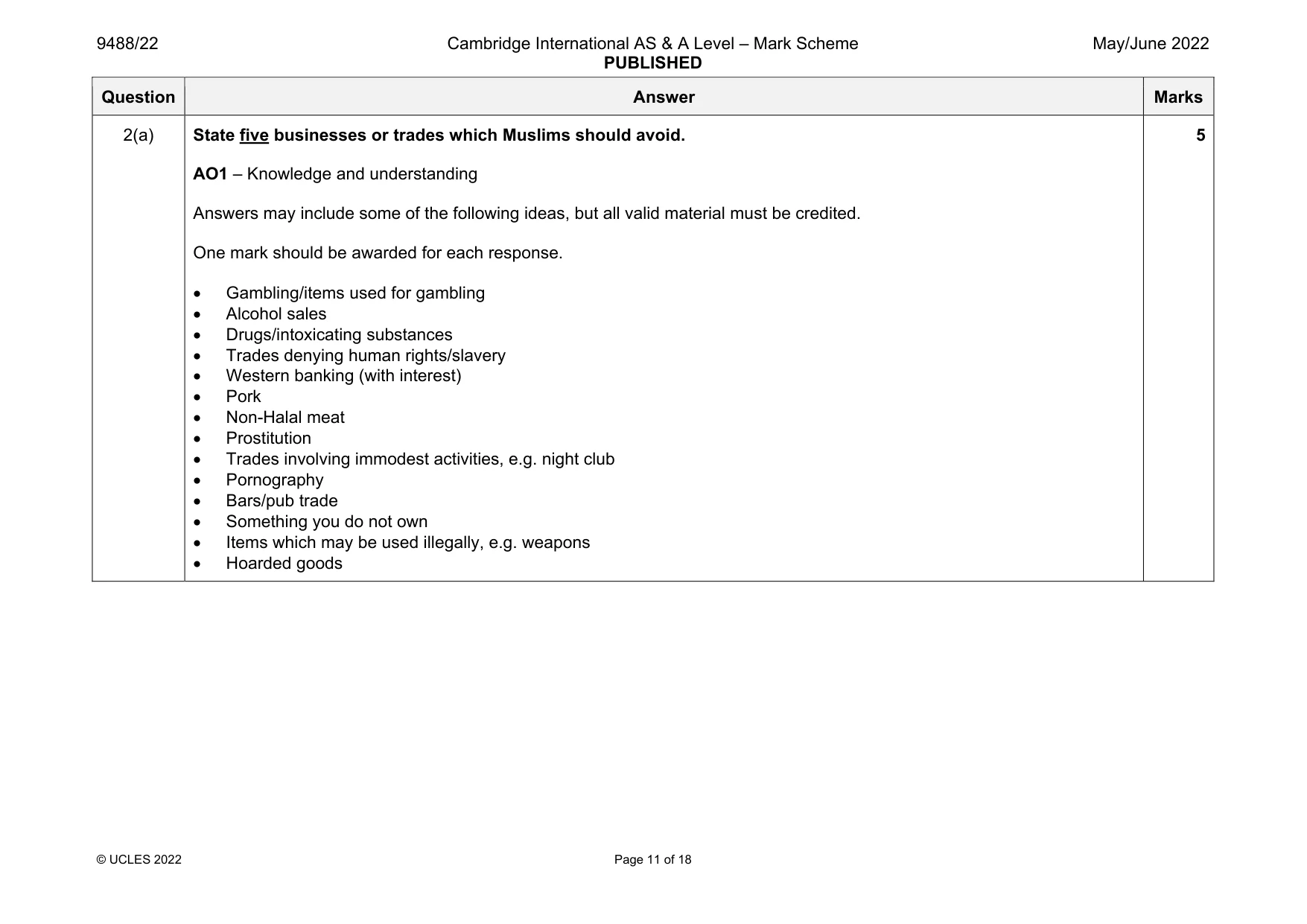
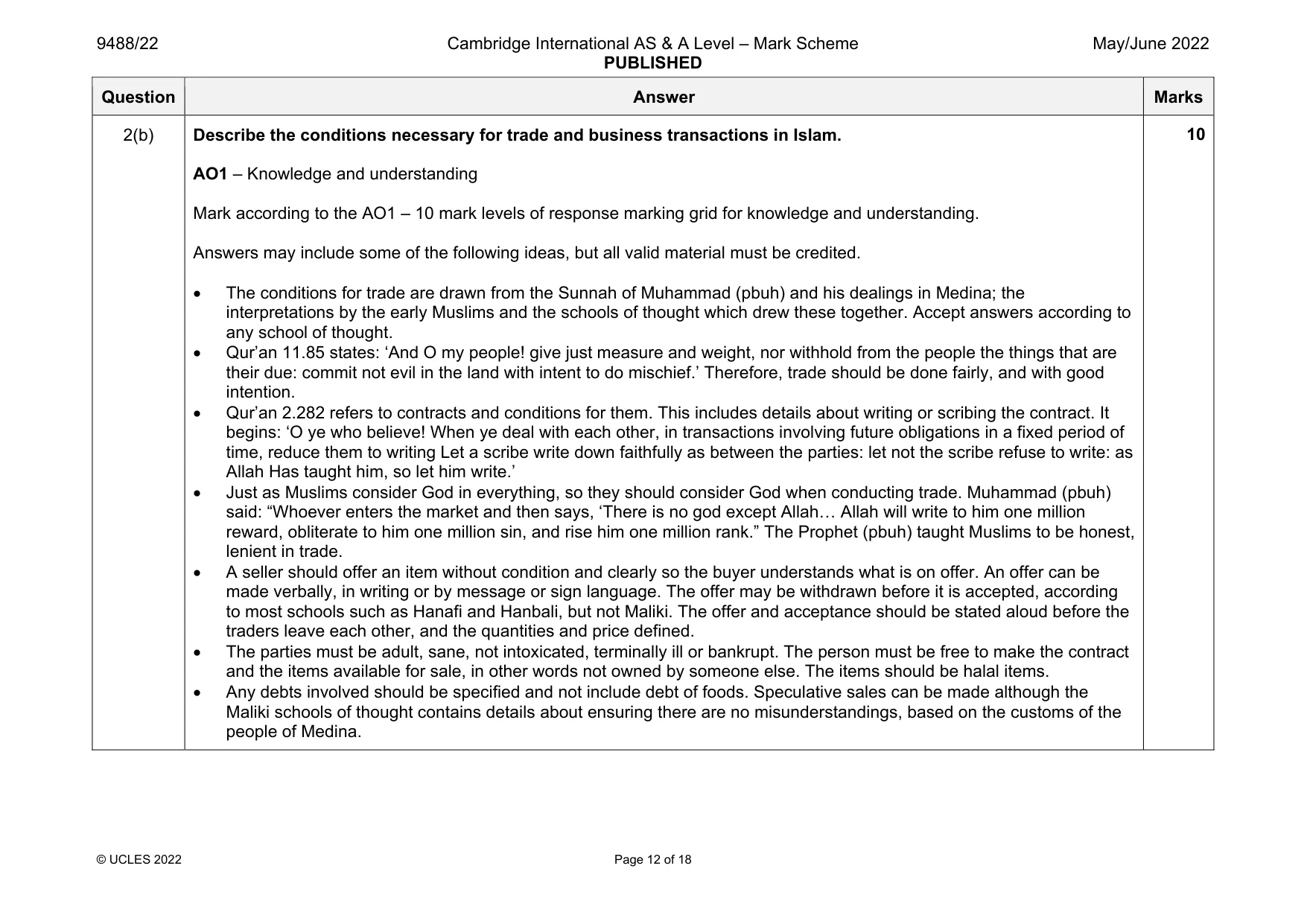
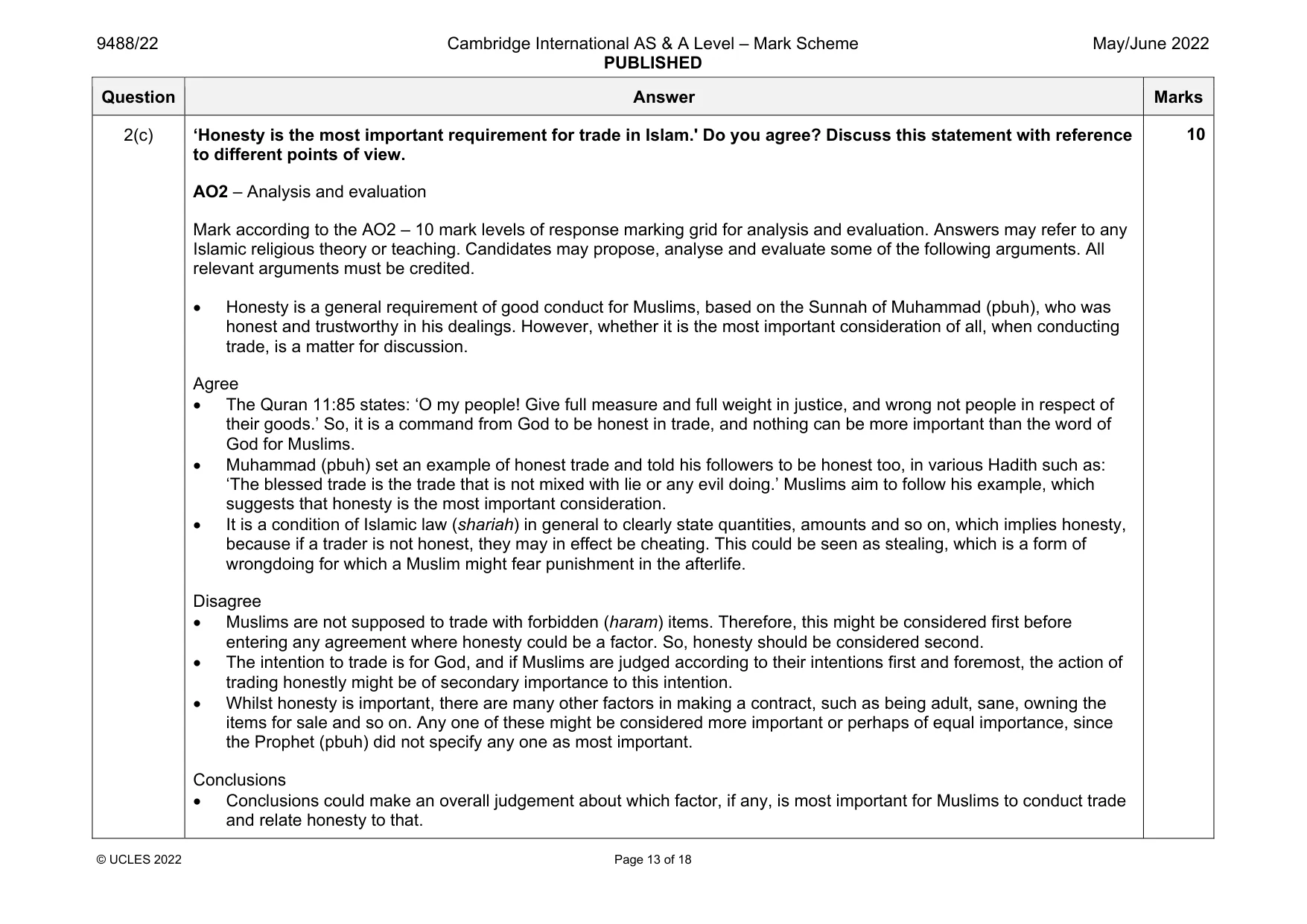
Mark scheme: 2(a) State five businesses or trades which Muslims should avoid. AO1 – Knowledge and understanding Answers may include some of the following ideas, but all valid material must be credited. One mark should be awarded for each response. Gambling/items used for gambling Alcohol sales Drugs/intoxicating substances Trades denying human rights/slavery Western banking (with interest) Pork Non-Halal meat Prostitution Trades involving immodest activities, e.g. night club Pornography Bars/pub trade Something you do not own Items which may be used illegally, e.g. weapons Hoarded goods 5 Question Answer Marks 2(b) Describe the conditions necessary for trade and business transactions in Islam. AO1 – Knowledge and understanding Mark according to the AO1 – 10 mark levels of response marking grid for knowledge and understanding. Answers may include some of the following ideas, but all valid material must be credited. The conditions for trade are drawn from the Sunnah of Muhammad (pbuh) and his dealings in Medina; the interpretations by the early Muslims and the schools of thought which drew these together. Accept answers according to any school of thought. Qur’an 11.85 states: ‘And O my people! give just measure and weight, nor withhold from the people the things that are their due: commit not evil in the land with intent to do mischief.’ Therefore, trade should be done fairly, and with good intention. Qur’an 2.282 refers to contracts and conditions for them. This includes details about writing or scribing the contract. It begins: ‘O ye who believe! When ye deal with each other, in transactions involving future obligations in a fixed period of time, reduce them to writing Let a scribe write down faithfully as between the parties: let not the scribe refuse to write: as Allah Has taught him, so let him write.’ Just as Muslims consider God in everything, so they should consider God when conducting trade. Muhammad (pbuh) said: “Whoever enters the market and then says, ‘There is no god except Allah… Allah will write to him one million reward, obliterate to him one million sin, and rise him one million rank.” The Prophet (pbuh) taught Muslims to be honest, lenient in trade. A seller should offer an item without condition and clearly so the buyer understands what is on offer. An offer can be made verbally, in writing or by message or sign language. The offer may be withdrawn before it is accepted, according to most schools such as Hanafi and Hanbali, but not Maliki. The offer and acceptance should be stated aloud before the traders leave each other, and the quantities and price defined. The parties must be adult, sane, not intoxicated, terminally ill or bankrupt. The person must be free to make the contract and the items available for sale, in other words not owned by someone else. The items should be halal items. Any debts involved should be specified and not include debt of foods. Speculative sales can be made although the Maliki schools of thought contains details about ensuring there are no misunderstandings, based on the customs of the people of Medina. 10 Question Answer Marks 2(c) ‘Honesty is the most important requirement for trade in Islam.' Do you agree? Discuss this statement with reference to different points of view. AO2 – Analysis and evaluation Mark according to the AO2 – 10 mark levels of response marking grid for analysis and evaluation. Answers may refer to any Islamic religious theory or teaching. Candidates may propose, analyse and evaluate some of the following arguments. All relevant arguments must be credited. Honesty is a general requirement of good conduct for Muslims, based on the Sunnah of Muhammad (pbuh), who was honest and trustworthy in his dealings. However, whether it is the most important consideration of all, when conducting trade, is a matter for discussion. Agree The Quran 11:85 states: ‘O my people! Give full measure and full weight in justice, and wrong not people in respect of their goods.’ So, it is a command from God to be honest in trade, and nothing can be more important than the word of God for Muslims. Muhammad (pbuh) set an example of honest trade and told his followers to be honest too, in various Hadith such as: ‘The blessed trade is the trade that is not mixed with lie or any evil doing.’ Muslims aim to follow his example, which suggests that honesty is the most important consideration. It is a condition of Islamic law (shariah) in general to clearly state quantities, amounts and so on, which implies honesty, because if a trader is not honest, they may in effect be cheating. This could be seen as stealing, which is a form of wrongdoing for which a Muslim might fear punishment in the afterlife. Disagree Muslims are not supposed to trade with forbidden (haram) items. Therefore, this might be considered first before entering any agreement where honesty could be a factor. So, honesty should be considered second. The intention to trade is for God, and if Muslims are judged according to their intentions first and foremost, the action of trading honestly might be of secondary importance to this intention. Whilst honesty is important, there are many other factors in making a contract, such as being adult, sane, owning the items for sale and so on. Any one of these might be considered more important or perhaps of equal importance, since the Prophet (pbuh) did not specify any one as most important. Conclusions Conclusions could make an overall judgement about which factor, if any, is most important for Muslims to conduct trade and relate honesty to that. 10
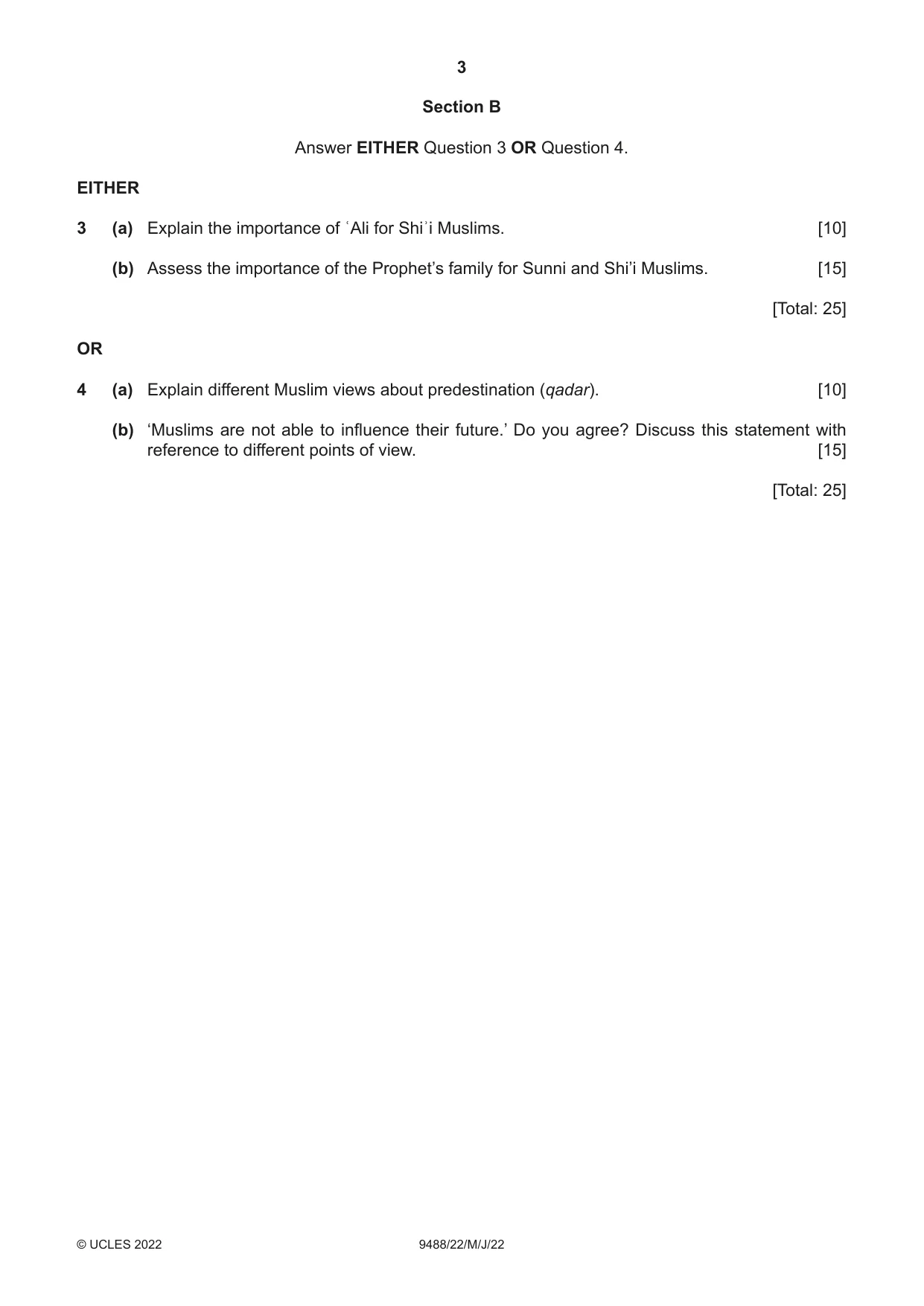
Q3 · Explain the importance of ʿAli for Shiʾi Muslims
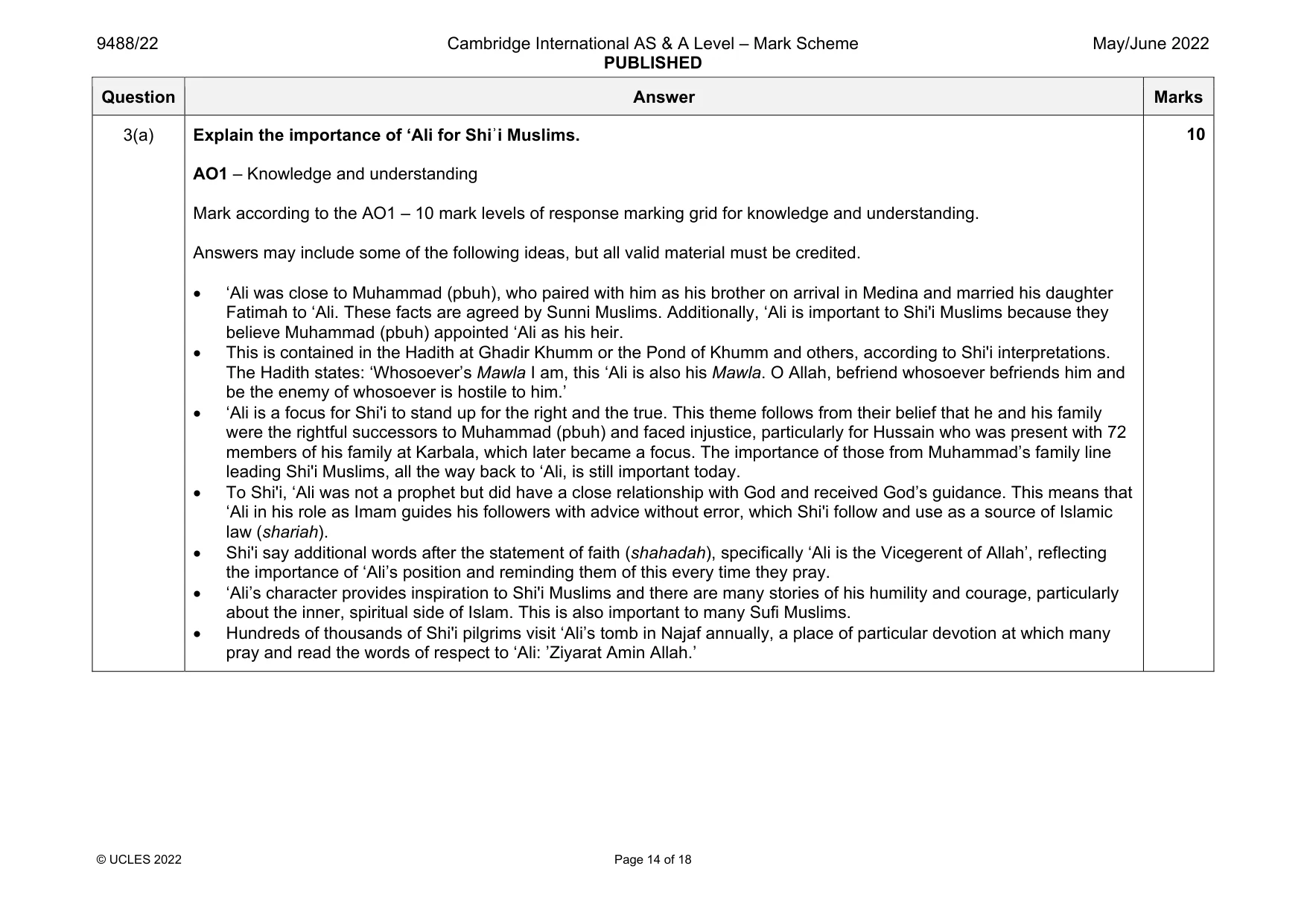
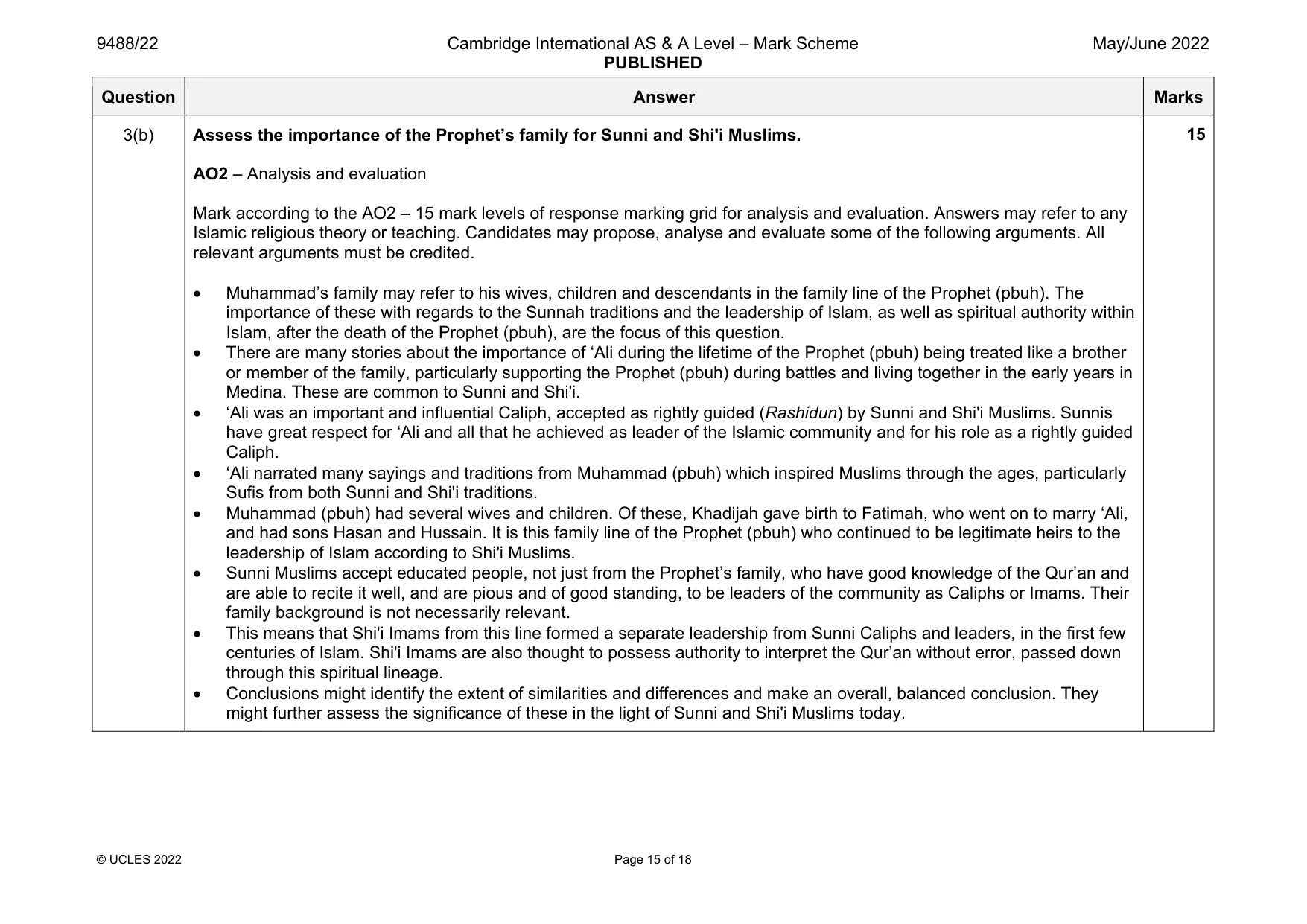
3 (a) Explain the importance of ʿAli for Shiʾi Muslims. [10] (b) Assess the importance of the Prophet’s family for Sunni and Shi’i Muslims. [15] [Total: 25] OR
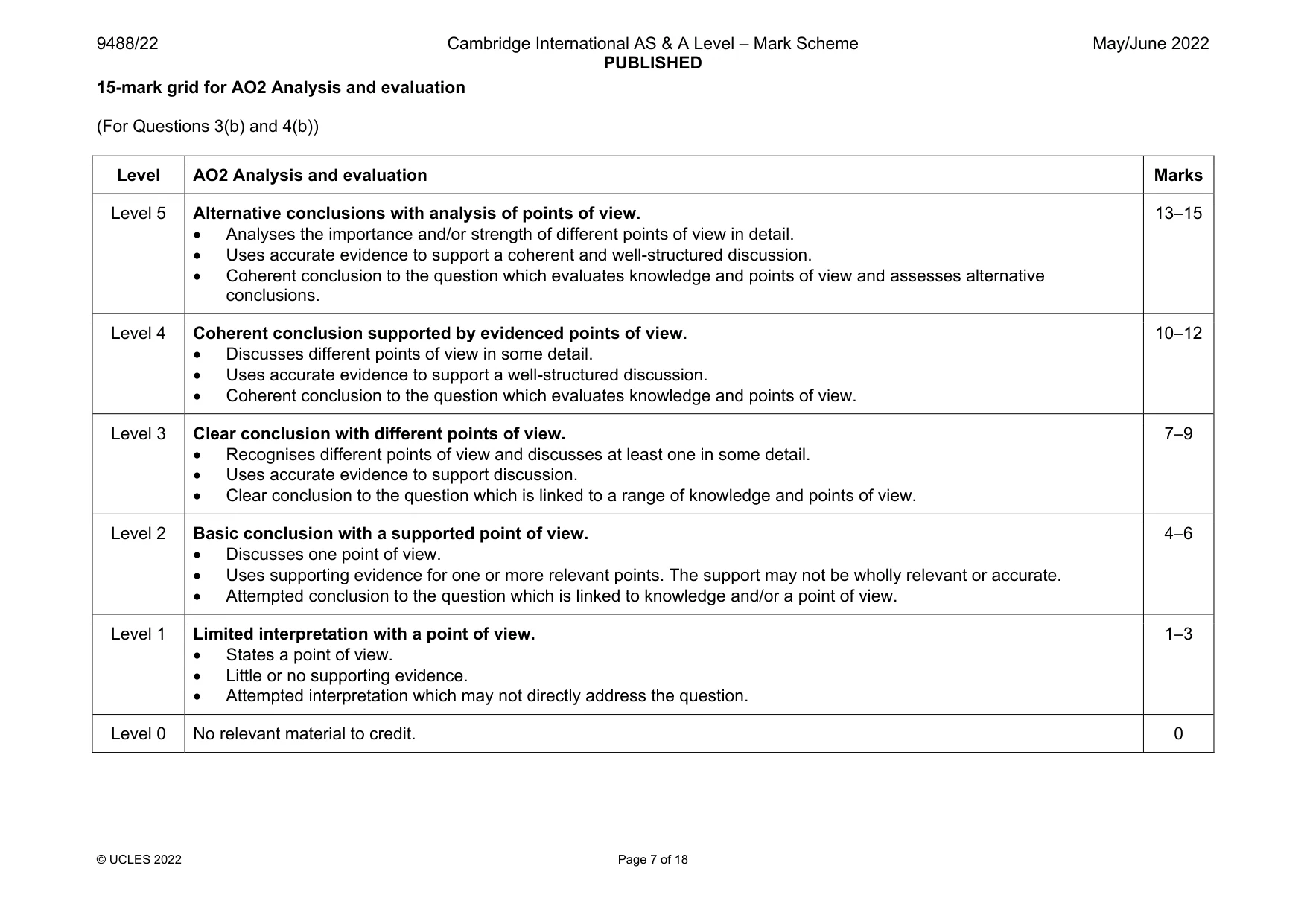
Mark scheme: 3(a) Explain the importance of ‘Ali for Shiʾi Muslims. AO1 – Knowledge and understanding Mark according to the AO1 – 10 mark levels of response marking grid for knowledge and understanding. Answers may include some of the following ideas, but all valid material must be credited. ‘Ali was close to Muhammad (pbuh), who paired with him as his brother on arrival in Medina and married his daughter Fatimah to ‘Ali. These facts are agreed by Sunni Muslims. Additionally, ‘Ali is important to Shi'i Muslims because they believe Muhammad (pbuh) appointed ‘Ali as his heir. This is contained in the Hadith at Ghadir Khumm or the Pond of Khumm and others, according to Shi'i interpretations. The Hadith states: ‘Whosoever’s Mawla I am, this ‘Ali is also his Mawla. O Allah, befriend whosoever befriends him and be the enemy of whosoever is hostile to him.’ ‘Ali is a focus for Shi'i to stand up for the right and the true. This theme follows from their belief that he and his family were the rightful successors to Muhammad (pbuh) and faced injustice, particularly for Hussain who was present with 72 members of his family at Karbala, which later became a focus. The importance of those from Muhammad’s family line leading Shi'i Muslims, all the way back to ‘Ali, is still important today. To Shi'i, ‘Ali was not a prophet but did have a close relationship with God and received God’s guidance. This means that ‘Ali in his role as Imam guides his followers with advice without error, which Shi'i follow and use as a source of Islamic law (shariah). Shi'i say additional words after the statement of faith (shahadah), specifically ‘Ali is the Vicegerent of Allah’, reflecting the importance of ‘Ali’s position and reminding them of this every time they pray. ‘Ali’s character provides inspiration to Shi'i Muslims and there are many stories of his humility and courage, particularly about the inner, spiritual side of Islam. This is also important to many Sufi Muslims. Hundreds of thousands of Shi'i pilgrims visit ‘Ali’s tomb in Najaf annually, a place of particular devotion at which many pray and read the words of respect to ‘Ali: ’Ziyarat Amin Allah.’ Question Answer Marks 3(b) Assess the importance of the Prophet’s family for Sunni and Shi'i Muslims. AO2 – Analysis and evaluation Mark according to the AO2 – 15 mark levels of response marking grid for analysis and evaluation. Answers may refer to any Islamic religious theory or teaching. Candidates may propose, analyse and evaluate some of the following arguments. All relevant arguments must be credited. Muhammad’s family may refer to his wives, children and descendants in the family line of the Prophet (pbuh). The importance of these with regards to the Sunnah traditions and the leadership of Islam, as well as spiritual authority within Islam, after the death of the Prophet (pbuh), are the focus of this question. There are many stories about the importance of ‘Ali during the lifetime of the Prophet (pbuh) being treated like a brother or member of the family, particularly supporting the Prophet (pbuh) during battles and living together in the early years in Medina. These are common to Sunni and Shi'i. ‘Ali was an important and influential Caliph, accepted as rightly guided (Rashidun) by Sunni and Shi'i Muslims. Sunnis have great respect for ‘Ali and all that he achieved as leader of the Islamic community and for his role as a rightly guided Caliph. ‘Ali narrated many sayings and traditions from Muhammad (pbuh) which inspired Muslims through the ages, particularly Sufis from both Sunni and Shi'i traditions. Muhammad (pbuh) had several wives and children. Of these, Khadijah gave birth to Fatimah, who went on to marry ‘Ali, and had sons Hasan and Hussain. It is this family line of the Prophet (pbuh) who continued to be legitimate heirs to the leadership of Islam according to Shi'i Muslims. Sunni Muslims accept educated people, not just from the Prophet’s family, who have good knowledge of the Qur’an and are able to recite it well, and are pious and of good standing, to be leaders of the community as Caliphs or Imams. Their family background is not necessarily relevant. This means that Shi'i Imams from this line formed a separate leadership from Sunni Caliphs and leaders, in the first few centuries of Islam. Shi'i Imams are also thought to possess authority to interpret the Qur’an without error, passed down through this spiritual lineage. Conclusions might identify the extent of similarities and differences and make an overall, balanced conclusion. They might further assess the significance of these in the light of Sunni and Shi'i Muslims today. 15
Q4 · Explain different Muslim views about predestination (qadar)
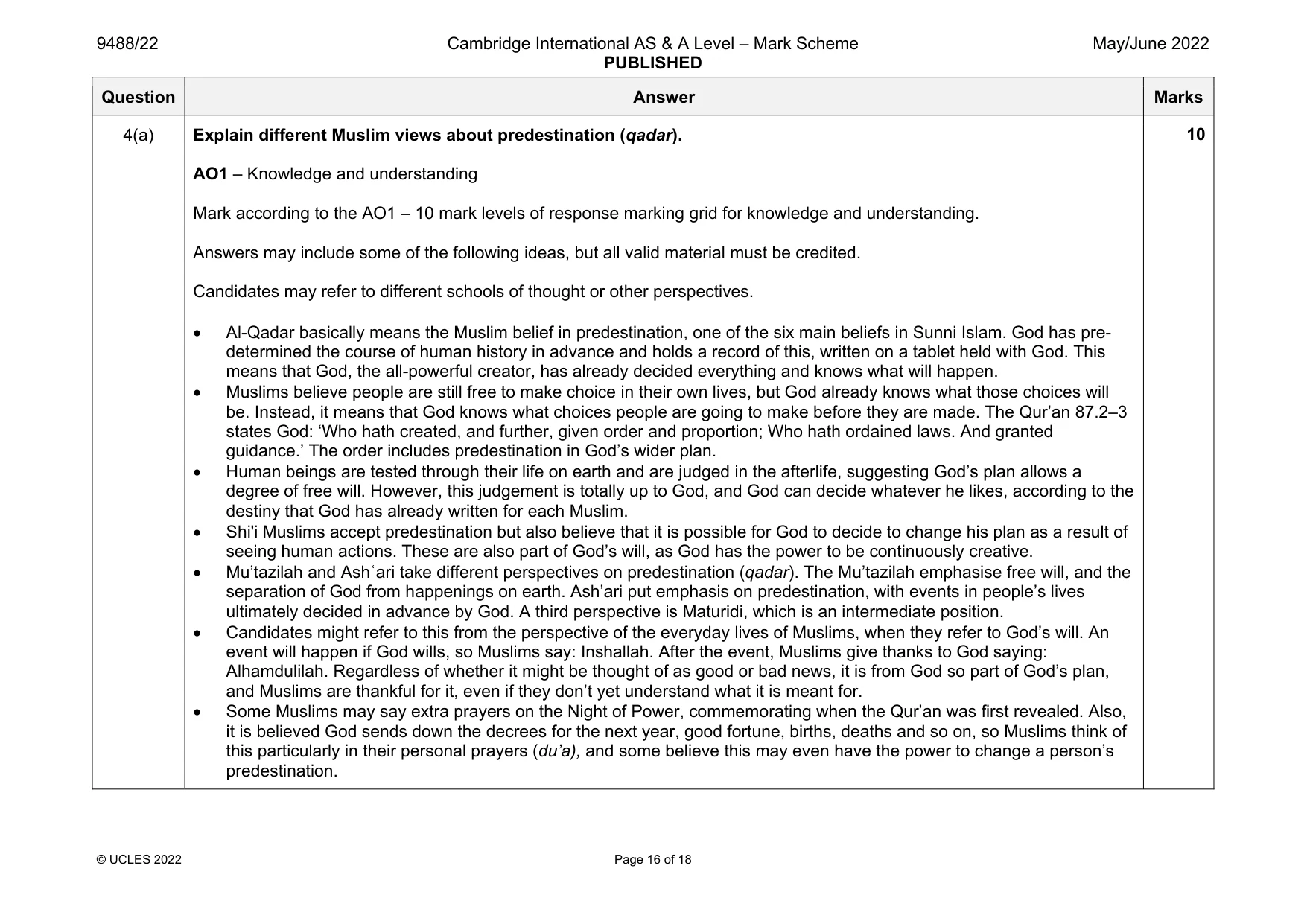
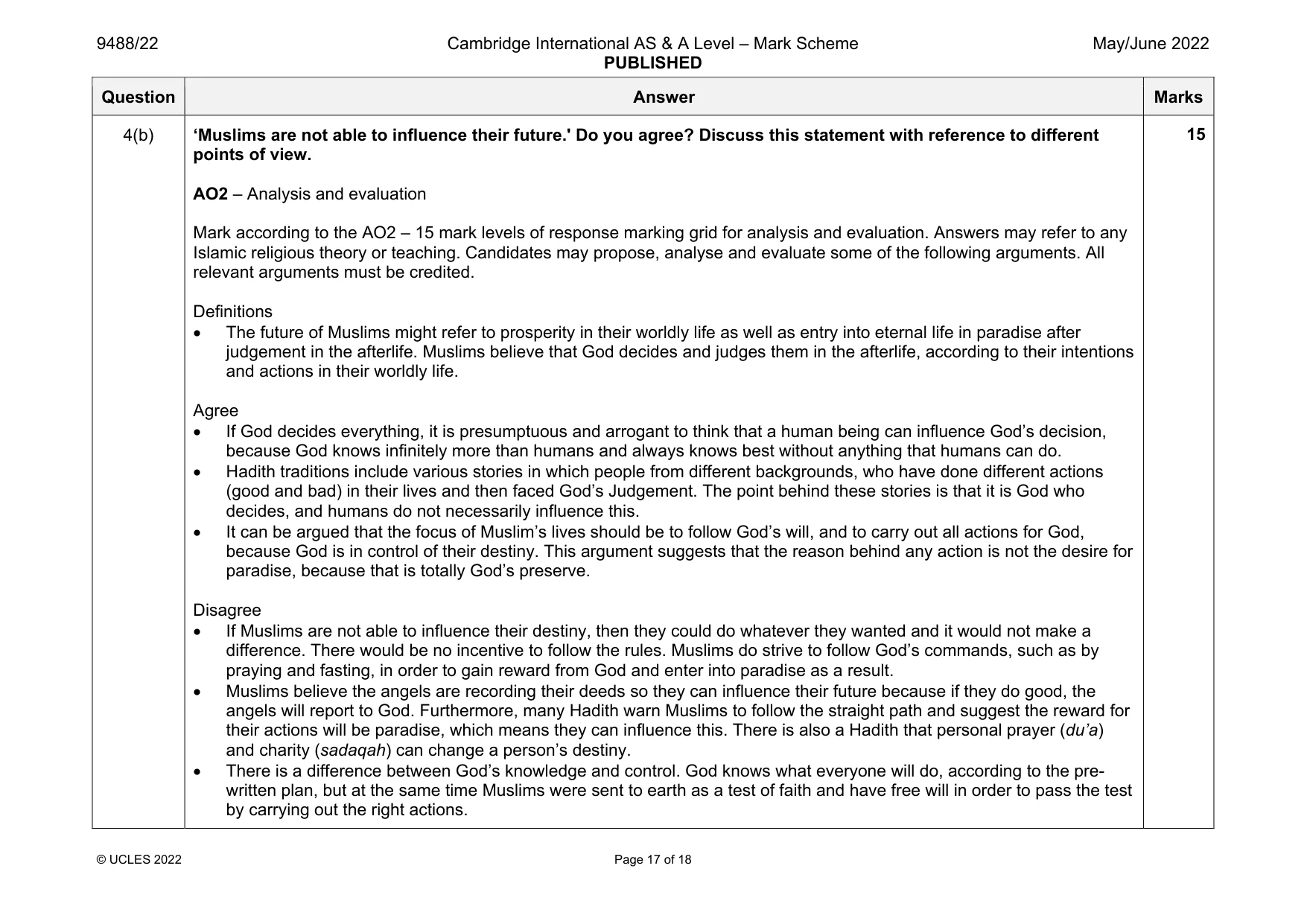
4 (a) Explain different Muslim views about predestination (qadar). [10] (b) ‘Muslims are not able to influence their future.’ Do you agree? Discuss this statement with reference to different points of view. [15] [Total: 25]
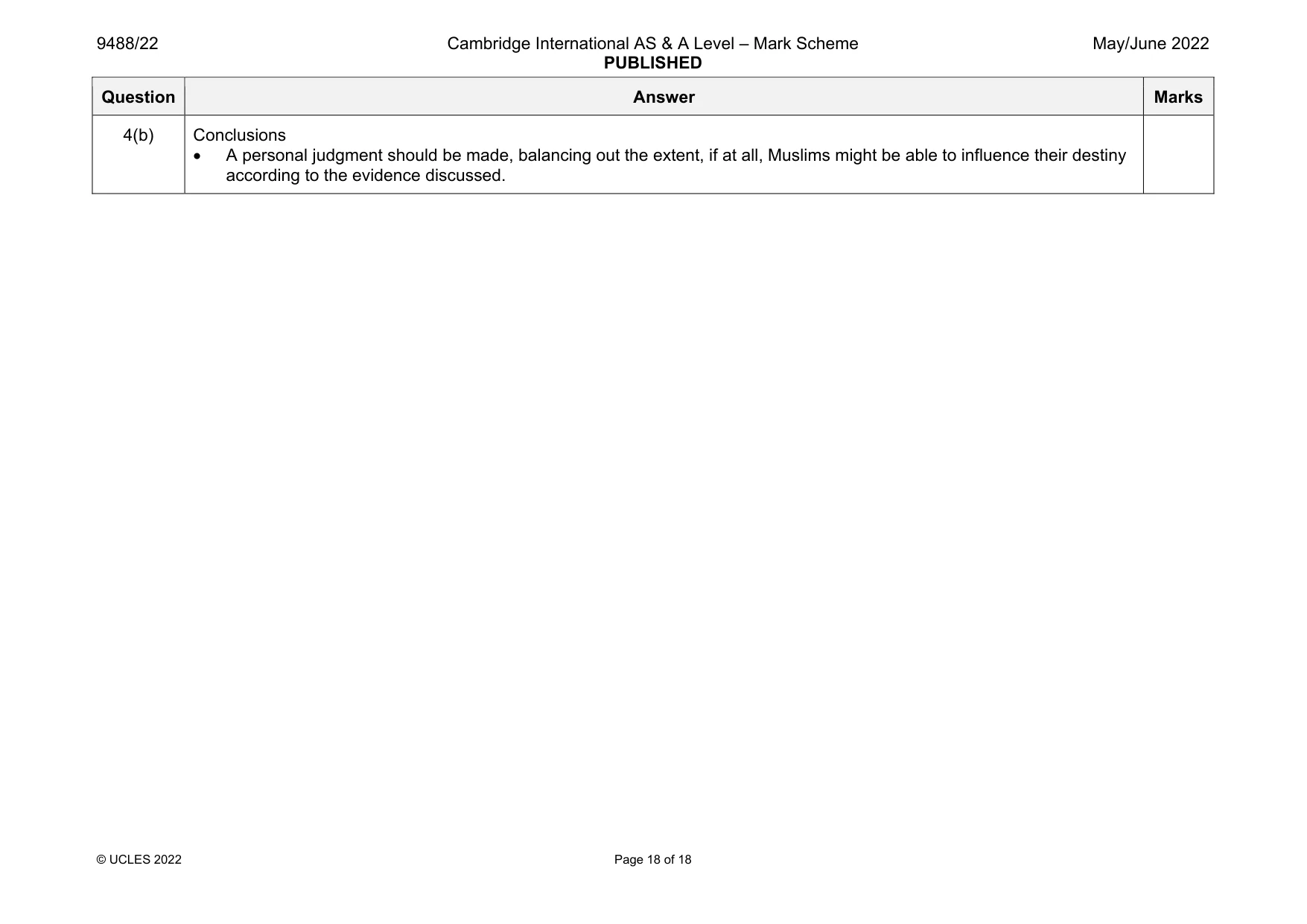
Mark scheme: 4(a) Explain different Muslim views about predestination (qadar). AO1 – Knowledge and understanding Mark according to the AO1 – 10 mark levels of response marking grid for knowledge and understanding. Answers may include some of the following ideas, but all valid material must be credited. Candidates may refer to different schools of thought or other perspectives. Al-Qadar basically means the Muslim belief in predestination, one of the six main beliefs in Sunni Islam. God has pre- determined the course of human history in advance and holds a record of this, written on a tablet held with God. This means that God, the all-powerful creator, has already decided everything and knows what will happen. Muslims believe people are still free to make choice in their own lives, but God already knows what those choices will be. Instead, it means that God knows what choices people are going to make before they are made. The Qur’an 87.2–3 states God: ‘Who hath created, and further, given order and proportion; Who hath ordained laws. And granted guidance.’ The order includes predestination in God’s wider plan. Human beings are tested through their life on earth and are judged in the afterlife, suggesting God’s plan allows a degree of free will. However, this judgement is totally up to God, and God can decide whatever he likes, according to the destiny that God has already written for each Muslim. Shi'i Muslims accept predestination but also believe that it is possible for God to decide to change his plan as a result of seeing human actions. These are also part of God’s will, as God has the power to be continuously creative. Mu’tazilah and Ashʿari take different perspectives on predestination (qadar). The Mu’tazilah emphasise free will, and the separation of God from happenings on earth. Ash’ari put emphasis on predestination, with events in people’s lives ultimately decided in advance by God. A third perspective is Maturidi, which is an intermediate position. Candidates might refer to this from the perspective of the everyday lives of Muslims, when they refer to God’s will. An event will happen if God wills, so Muslims say: Inshallah. After the event, Muslims give thanks to God saying: Alhamdulilah. Regardless of whether it might be thought of as good or bad news, it is from God so part of God’s plan, and Muslims are thankful for it, even if they don’t yet understand what it is meant for. Some Muslims may say extra prayers on the Night of Power, commemorating when the Qur’an was first revealed. Also, it is believed God sends down the decrees for the next year, good fortune, births, deaths and so on, so Muslims think of this particularly in their personal prayers (du’a), and some believe this may even have the power to change a person’s predestination. Question Answer Marks 4(b) ‘Muslims are not able to influence their future.' Do you agree? Discuss this statement with reference to different points of view. AO2 – Analysis and evaluation Mark according to the AO2 – 15 mark levels of response marking grid for analysis and evaluation. Answers may refer to any Islamic religious theory or teaching. Candidates may propose, analyse and evaluate some of the following arguments. All relevant arguments must be credited. Definitions The future of Muslims might refer to prosperity in their worldly life as well as entry into eternal life in paradise after judgement in the afterlife. Muslims believe that God decides and judges them in the afterlife, according to their intentions and actions in their worldly life. Agree If God decides everything, it is presumptuous and arrogant to think that a human being can influence God’s decision, because God knows infinitely more than humans and always knows best without anything that humans can do. Hadith traditions include various stories in which people from different backgrounds, who have done different actions (good and bad) in their lives and then faced God’s Judgement. The point behind these stories is that it is God who decides, and humans do not necessarily influence this. It can be argued that the focus of Muslim’s lives should be to follow God’s will, and to carry out all actions for God, because God is in control of their destiny. This argument suggests that the reason behind any action is not the desire for paradise, because that is totally God’s preserve. Disagree If Muslims are not able to influence their destiny, then they could do whatever they wanted and it would not make a difference. There would be no incentive to follow the rules. Muslims do strive to follow God’s commands, such as by praying and fasting, in order to gain reward from God and enter into paradise as a result. Muslims believe the angels are recording their deeds so they can influence their future because if they do good, the angels will report to God. Furthermore, many Hadith warn Muslims to follow the straight path and suggest the reward for their actions will be paradise, which means they can influence this. There is also a Hadith that personal prayer (du’a) and charity (sadaqah) can change a person’s destiny. There is a difference between God’s knowledge and control. God knows what everyone will do, according to the pre- written plan, but at the same time Muslims were sent to earth as a test of faith and have free will in order to pass the test by carrying out the right actions. 15 Question Answer Marks 4(b) Conclusions A personal judgment should be made, balancing out the extent, if at all, Muslims might be able to influence their destiny according to the evidence discussed.
What was in this paper
The subtopics covered by these 4 questions, and how many questions each got. Open one in a new tab to see every Cambridge question on it.
What you needed in this session
Cambridge’s own grade thresholds for 2022 May/June, Paper 2 · Variant 2. A higher threshold means an easier paper — the bar moves with how the cohort did.