Questions as text
Q1 · Discuss the benefits and drawbacks of using computer-aided manufacturing (CAM) to produce… 9626/33 Oct/Nov 2017
2 Discuss the benefits and drawbacks of using computer-aided manufacturing (CAM) to produce the prototype of a new tail fin for a racing car. … … … … … … … … … … … … … … … … … … … … [8]
8 marks
Mark scheme: 2 Eight from e.g.: 8 Benefits: High/consistent accuracy in large scale production/consistent results during production Production can be faster than traditional methods Can produce complex products faster/easier than traditional methods CAD can produce the instructions and send to CAM electronically obviating need for manual programming JIT can be used in conjunction with CAM Drawbacks: Can be slow for one off products Need a separate CAM machine for each product Software is expensive to develop/maintain Expensive to train users to use the system Errors can affect the whole production. Max 6 for all benefits or all drawbacks. 1 mark is available for a reasoned conclusion.
This question in 9626/33 Oct/Nov 2017
Q2 · Describe the advantages of evolutionary prototyping compared to throw-away prototyping 9626/32 Feb/March 2018
8 Describe the advantages of evolutionary prototyping compared to throw-away prototyping. … … … … … … … … … [4]
4 marks
Mark scheme: 8 Four from: 4 User/client may decide that the early version is all that is needed Developers can focus on developing parts of the system that they understand Instead of developing a whole system which might be beyond their comprehension Improvements/alterations/add-ons to the system can be created later First prototype is not discarded so materials/time are not wasted Throw-away prototypes may not work at all/be on paper only Can be used in interim until final system is complete.
This question in 9626/32 Feb/March 2018
Q3 · A software development company uses throw away prototyping to develop parts of a new… 9626/32 Oct/Nov 2018
9 A software development company uses throw away prototyping to develop parts of a new system. (a) Give one reason why the company would use throw away prototyping. … … … [1] (b) Describe two drawbacks to the company of using throw away prototyping. … … … … … … [2]
3 marks
Mark scheme: 9(a) One from: 1 To ensure that the system requirements are valid To ensure that the system requirements are understood by all (Can be) quickest method of obtaining feedback from users about (proposed) main features. 9(b) Two from: 2 Developers can be pressured into delivering unfinished product Prototype may not work well enough so final product is never made/produced/required The time spent on the prototype is lost/cannot be used in development of final product.
This question in 9626/32 Oct/Nov 2018
Q4 · Describe the characteristics of incremental prototyping 9626/32 Feb/March 2020
3 (a) Describe the characteristics of incremental prototyping. … … … … … … … … … … [4] (b) Discuss the advantages and disadvantages of incremental prototyping. … … … … … … … … … … … … … … … … … … … … [8]
12 marks
Mark scheme: 3(a) Four from: 4 Project/model/product is broken into several/many sub projects/models/products Model/product is partly built/built on previous iterations Top priority/essential requirements are produced first and completed Testing occurs at each iteration/incremental stage As soon as a requirement is produced/testing is complete, its development is stopped/goes no further. 3(b) Eight from: 8 Advantages: Each stage is an identifiable milestone to track progress Testing is carried out at each incremental stage, allowing faults/problems to be identified/rectified quickly/before final completion Testing is easier/quicker because changes are usually small at each iteration of product Client/user can see/use new features and review these for any further changes Product delivery/completion of early/working versions is faster than other methods of development Risks can be managed better since risks are identified and handled during each iteration/incremental stage Product delivery/completion of early/working versions can cost less than other methods of development Disadvantages: Incremental/additional changes may affect functionality of earlier versions in an unexpected manner May raise problems at the end because all requirements are not produced/created/identified in product at start Overall cost of many versions/increments can become exorbitant/excessive. Must be at least 1 advantage and 1 disadvantage for full marks. 1 mark available for a reasoned conclusion.
This question in 9626/32 Feb/March 2020
Q5 · A new store is being opened and a spreadsheet is being created to manage its finances and… 9626/32 May/June 2021
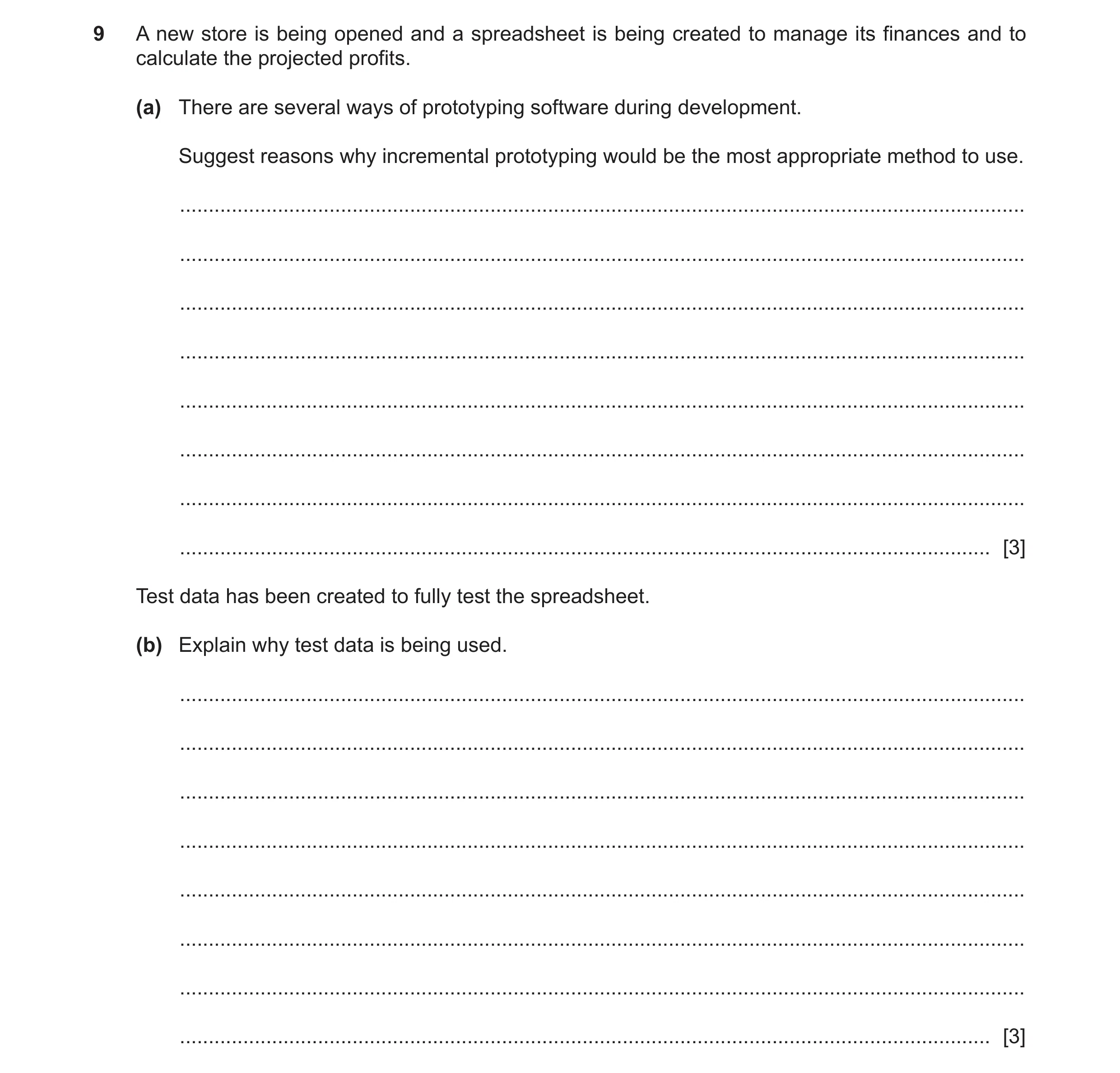
9 A new store is being opened and a spreadsheet is being created to manage its finances and to calculate the projected profits. (a) There are several ways of prototyping software during development. Suggest reasons why incremental prototyping would be the most appropriate method to use. … … … … … … … … [3] Test data has been created to fully test the spreadsheet. (b) Explain why test data is being used. … … … … … … … … [3]
6 marks
This question in 9626/32 May/June 2021
Q6 · A software developer uses prototyping when creating a new app for smartphones 9626/32 Oct/Nov 2022
7 A software developer uses prototyping when creating a new app for smartphones. (a) Describe the use of prototyping during the development of the app. … … … … … … … … … … … [4] (b) Compare throw-away prototyping with evolutionary prototyping for creating the new app. … … … … … … … … … … … … … [6]
10 marks
Mark scheme: 7(a) Four from: 4 Problems/issues are detected and corrected during development Users are involved at all stages of the development Allows users to interact with the app/try out the app during development Allows users to make feedback/suggest new features/improvements… …that can be incorporated during the development Users and developers obtain a better understanding of the product/app Use the prototype to investigate the potential market for the app. 7(b) Six from: 6 Similarities: Both develop early prototypes that do not feature the full requirements of the users/require more work to meet all of user requirements Developers and end-users interact frequently during both of the processes of creating prototypes End users can add features to both types of prototype at the time of review Both use interactive reviews to improve the prototypes Differences: Throw-away prototypes are discarded at any stage whereas evolutionary prototype become part of the final product Throw-away prototypes are produced quickly and cheaply whereas evolutionary prototypes are developed over time Throw-away prototypes may be non-functional whereas evolutionary prototypes are functional from inception/the start Throw-away prototypes have early/more user involvement than evolutionary prototypes Progress in throw-away prototyping is easier to monitor/measure than in evolutionary prototyping Time scales are easier to set in throw-away prototyping than in evolutionary prototyping
This question in 9626/32 Oct/Nov 2022
Q7 · Evaluate the use of prototyping in software development 9626/32 Feb/March 2023
9 Evaluate the use of prototyping in software development. … … … … … … … … … … … … … … … … … … … … … [8]
8 marks
Mark scheme: 9 Evaluate: judge the quality, importance, amount of something 8 Eight from: Pros: • Customers/clients can request/need changes – so anticipate any higher costs/decide whether or not to implement the changes • Quality/detail of specifications/requirements provided to customers/clients can be improved by examining/testing prototypes • Avoidance of potential disasters at end of project/development – as these are discovered in early prototypes rather than in final product • Discovery of problems/issues in prototypes – results in lower costs/reduced time taken for development • Prototyping requires greater customer/client involvement in development/at all stages of development – so enables clients to see/use/interact with a working model of their project – means clients are more aware/involved with development • Customers/clients can provide immediate feedback/request project changes/alter model specifications – resulting in product that more closely meets their requirements • Prototyping helps eliminate/reduce misunderstandings/miscommunications between developer and client during the development process – so end product more closely meets requirements • Prototyping can reduce project time/costs by early determination of/avoiding late changes/alterations required by client Cons: • Focus on prototyping can result in reduced/inadequate/insufficient analysis of project – which may overlook potential problems/better solutions – overlooking better solutions (due to inadequate analysis) can result in incomplete/poor specifications – which results in poorly engineered/developed final projects that are hard to maintain. • Users can confuse protypes with final products/wrongly assume that the protype is the finished product – resulting is acceptance of features that may not/will not appear in the final product/assume the final product is not properly finished/not what they expected • User may require that all proposed features of a prototype are included in the final product – resulting in team/project mission conflicts and slowed/stalled development • Prototypes take time to develop/redevelop to add/remove features – resulting in project time overrun/increased costs/missed deadlines. Must be at least two of each for full marks. Max 6 marks if bullets/list of points.
This question in 9626/32 Feb/March 2023
Q8 · Developers can use either evolutionary or throw-away prototyping to create prototypes of… 9626/31 May/June 2024
3 Developers can use either evolutionary or throw-away prototyping to create prototypes of a new interface. (a) Describe two advantages of using evolutionary prototyping. … … … … … … [2] (b) Describe one disadvantage of using evolutionary prototyping. … … … [1] (c) Describe two advantages of using throw-away prototyping. … … … … … … [2] (d) Describe one disadvantage of using throw-away prototyping. … … … [1]
6 marks
Mark scheme: 3(a) Two from: The delivery of the system is speeded up The user engages with the system The system is more likely to meet the user requirements. 2 3(b) One from: Not knowing when to stop the development/extended development time/takes a long time Opinions/views/comments come from a biased/small group. 1 3(c) Two from: The advantage of this approach is the speed with which the prototype is put together To ensure that the (system) requirements are clearly understood/validated It focuses the user on only one aspect of the system/keeps the feedback precise. 2 3(d) One from: All the man-hours/effort/research/work/resources used to create the throw away prototypes are lost/total cost of project increased. Developers may be pressurised by the users to deliver the prototype/it as a final product. 1
This question in 9626/31 May/June 2024
Q9 · Developers can use either evolutionary or throw-away prototyping to create prototypes of… 9626/33 May/June 2024
3 Developers can use either evolutionary or throw-away prototyping to create prototypes of a new interface. (a) Describe two advantages of using evolutionary prototyping. … … … … … … [2] (b) Describe one disadvantage of using evolutionary prototyping. … … … [1] (c) Describe two advantages of using throw-away prototyping. … … … … … … [2] (d) Describe one disadvantage of using throw-away prototyping. … … … [1]
6 marks
Mark scheme: 3(a) Two from: The delivery of the system is speeded up The user engages with the system The system is more likely to meet the user requirements. 2 3(b) One from: Not knowing when to stop the development/extended development time/takes a long time Opinions/views/comments come from a biased/small group. 1 3(c) Two from: The advantage of this approach is the speed with which the prototype is put together To ensure that the (system) requirements are clearly understood/validated It focuses the user on only one aspect of the system/keeps the feedback precise. 2 3(d) One from: All the man-hours/effort/research/work/resources used to create the throw away prototypes are lost/total cost of project increased. Developers may be pressurised by the users to deliver the prototype/it as a final product. 1
This question in 9626/33 May/June 2024
Q10 · A company is developing a data input screen for entering customer details into a database 9626/32 Oct/Nov 2024
10 A company is developing a data input screen for entering customer details into a database. Evaluate the use of evolutionary prototyping for developing the data input screen. … … … … … … … … … … … … … … … … … … … … [8]
8 marks
Mark scheme: 10 Command word: Evaluate: judge or calculate the quality, importance, amount, or value of something. 8 Eight from: Two from: • The system / screen is continually refined and rebuilt (when developed using evolutionary prototyping) • Features not thought of in the requirements and design phase can be added / removed during the development (of the screen) Pros: Max Six from: • Developers and stakeholders engage at all stages / all the time (1) so the delivery of the system is speeded up (1) • The user continuously engages with the system (1), so the new system / screen is more likely to meet the user requirements (1) • Screen / product can be changed at any stage / iteration (1) so can meet / be adapted for changing demands of client / end-user (1) • Continual consultations / interactions between developers / client / end-users (1) results in greater feedback (1) so screen / product is better / of greater quality (1) Cons: Max Six from: • Need to rapidly produce a function-limited prototype (1) reduces analysis time / depth (1) so business risks are increased (1) • Incomplete specifications may be produced (1) so features may be omitted / neglected (1) • Continual need to consult / interact between developers / client / end-users can be costly (1) which raises overall cost of development (1) and can increase the time taken to develop the product (1) • Client may mistake the initial prototype(s) for the finished / final product (1) so all required features may never make it into the final product (1) • Developers may have difficulty knowing when it is necessary to stop ‘tweaking’ / developing the system (1), so the development goes on too long / does not actually finish / product is never finished (1) One mark is available for a valid conclusion / judgement (must have considered both pros and cons).
This question in 9626/32 Oct/Nov 2024
 1 / 9
1 / 9 2 / 9
2 / 9
 4 / 9
4 / 9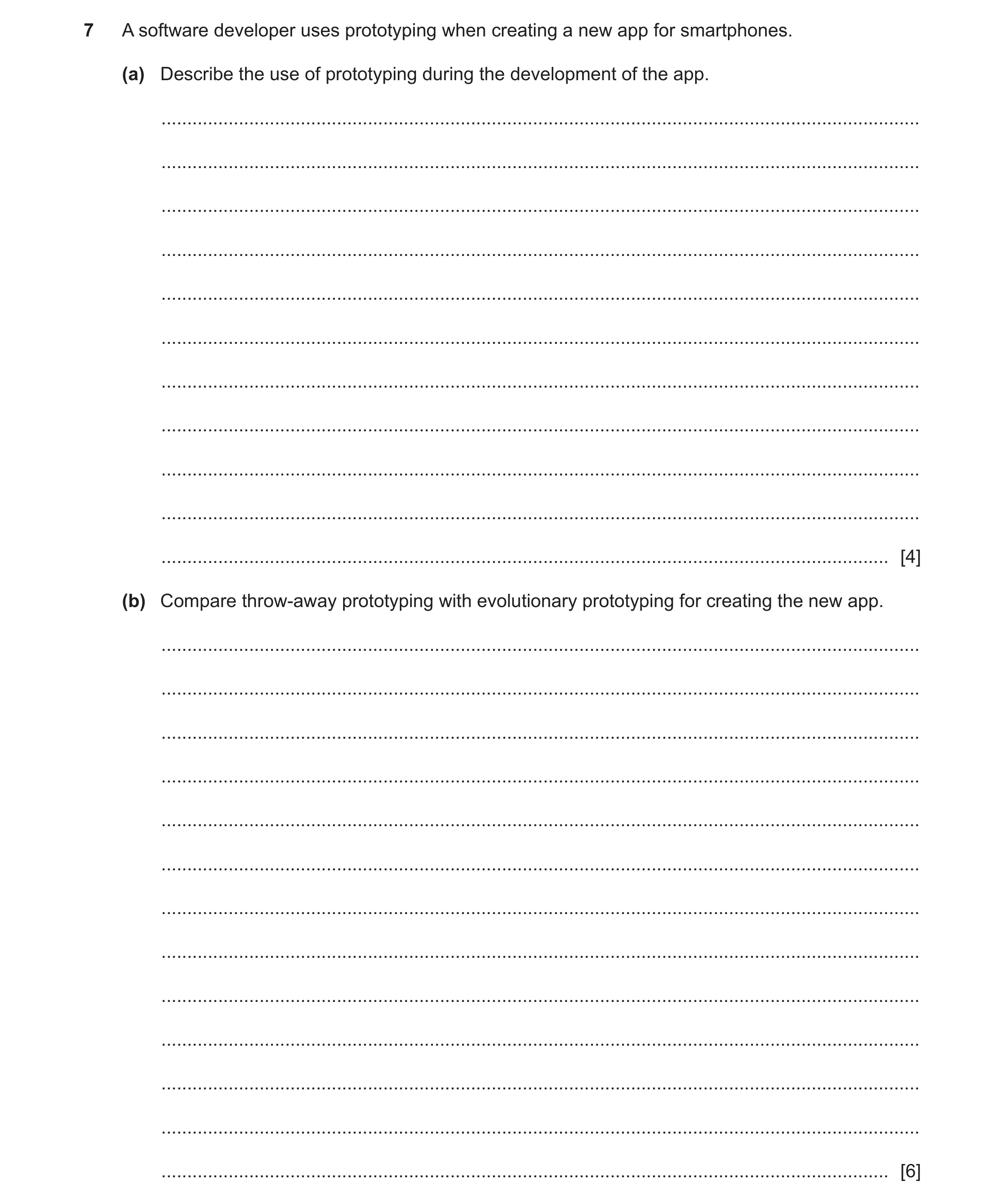 5 / 9
5 / 9 6 / 9
6 / 9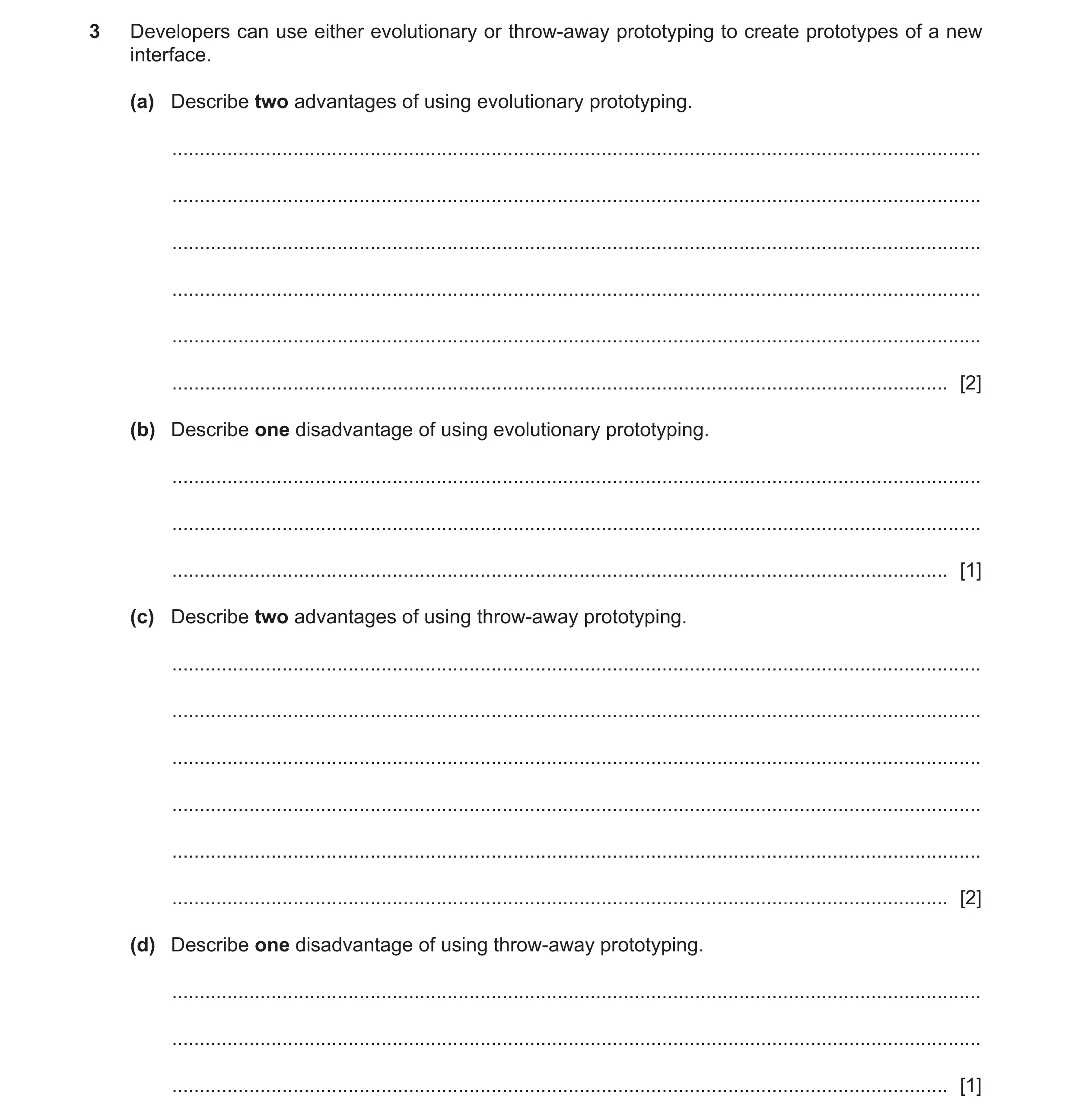 7 / 9
7 / 9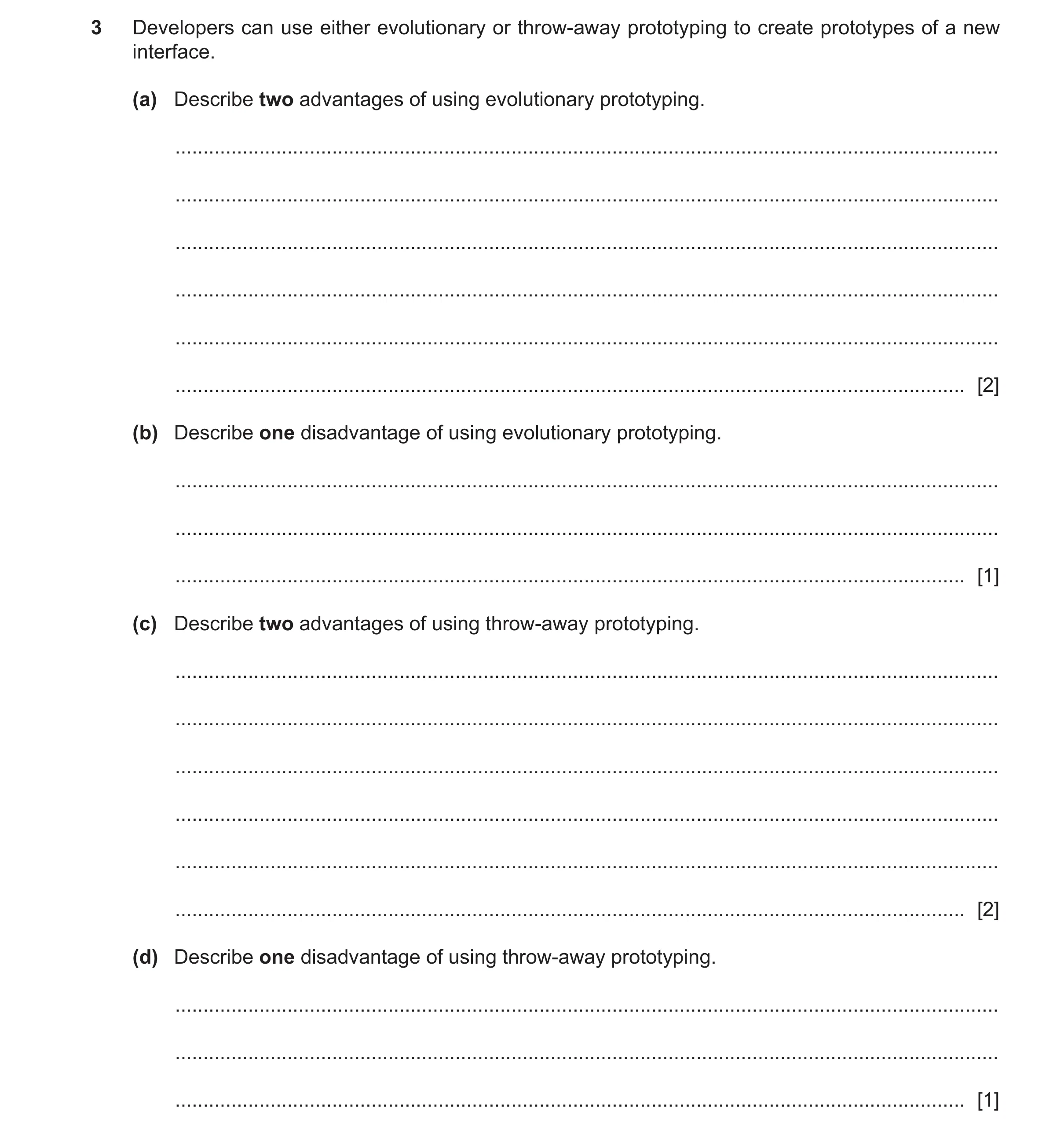 8 / 9
8 / 9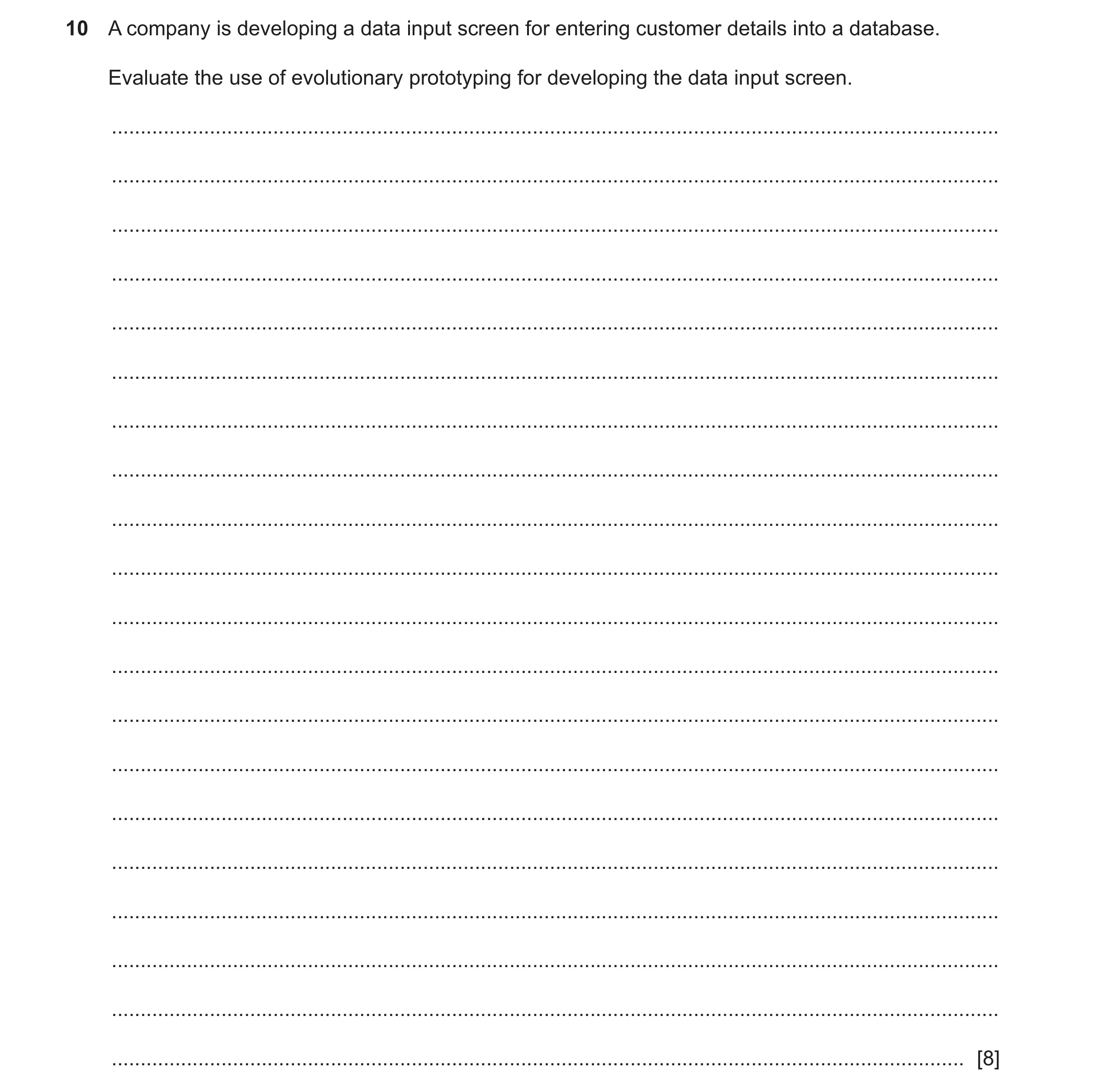 9 / 9
9 / 9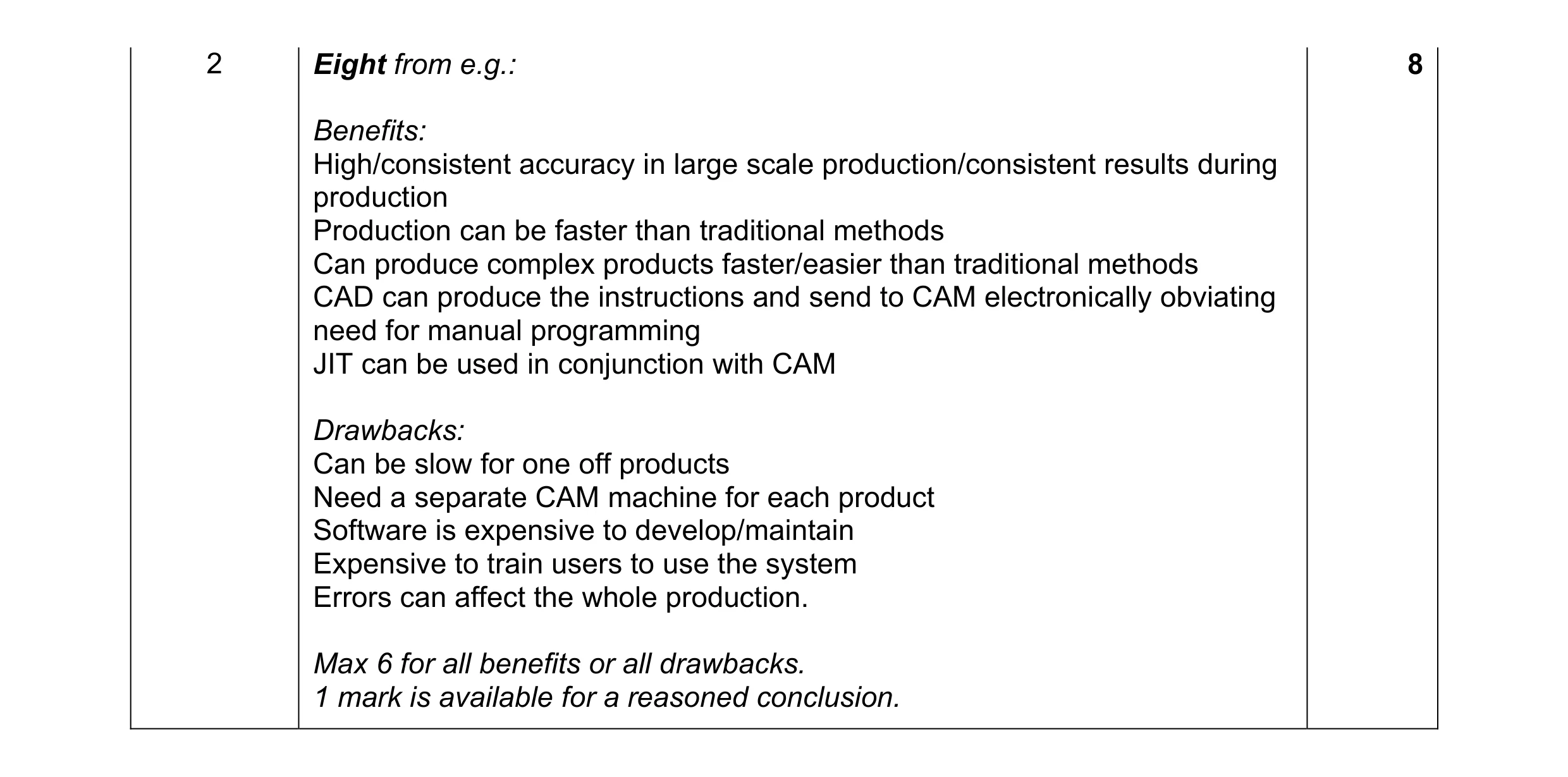 8
8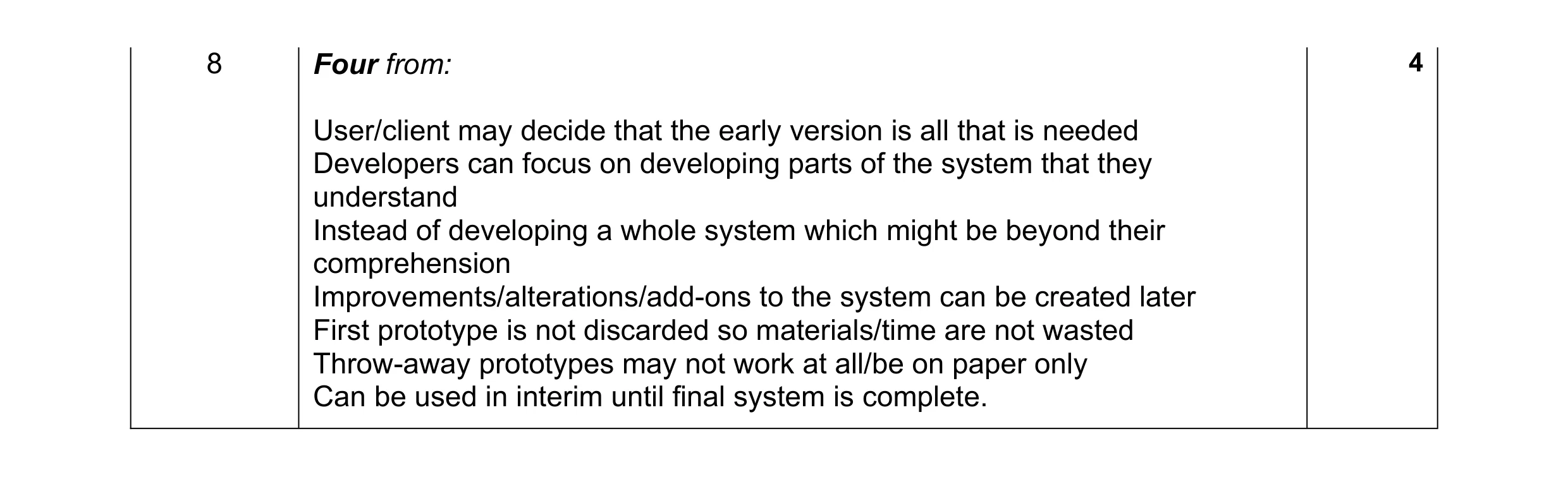 4
4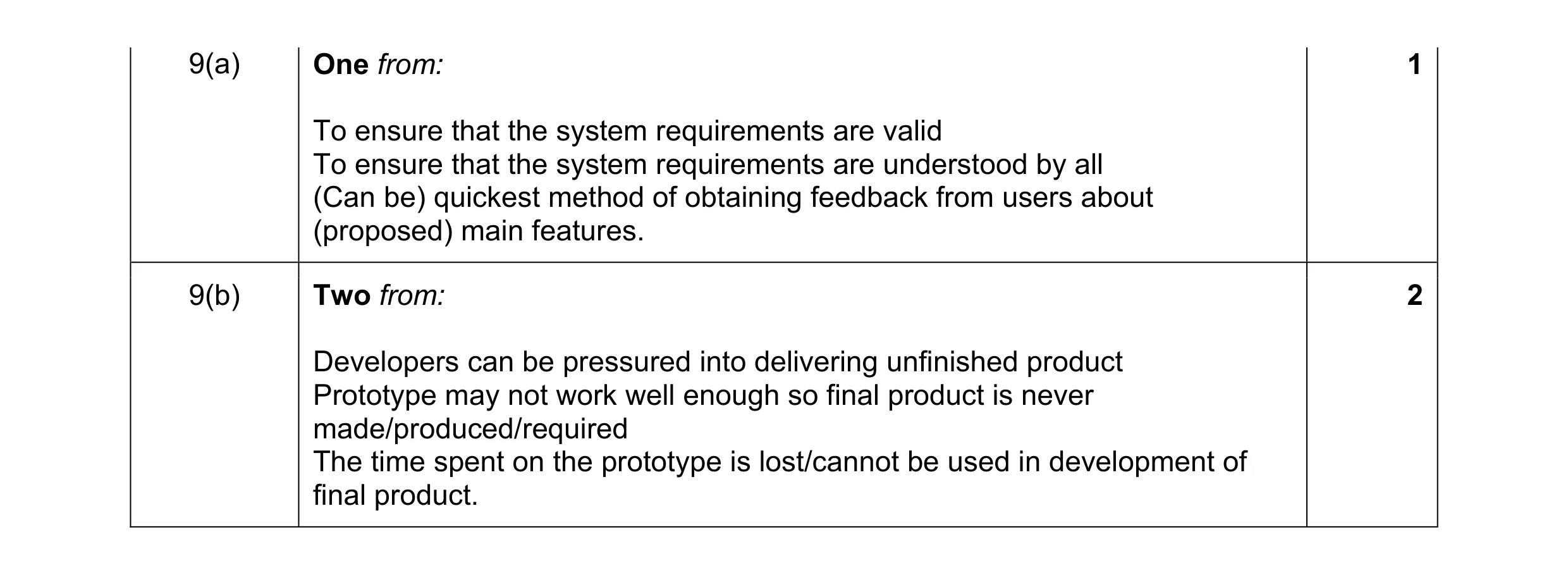 3
3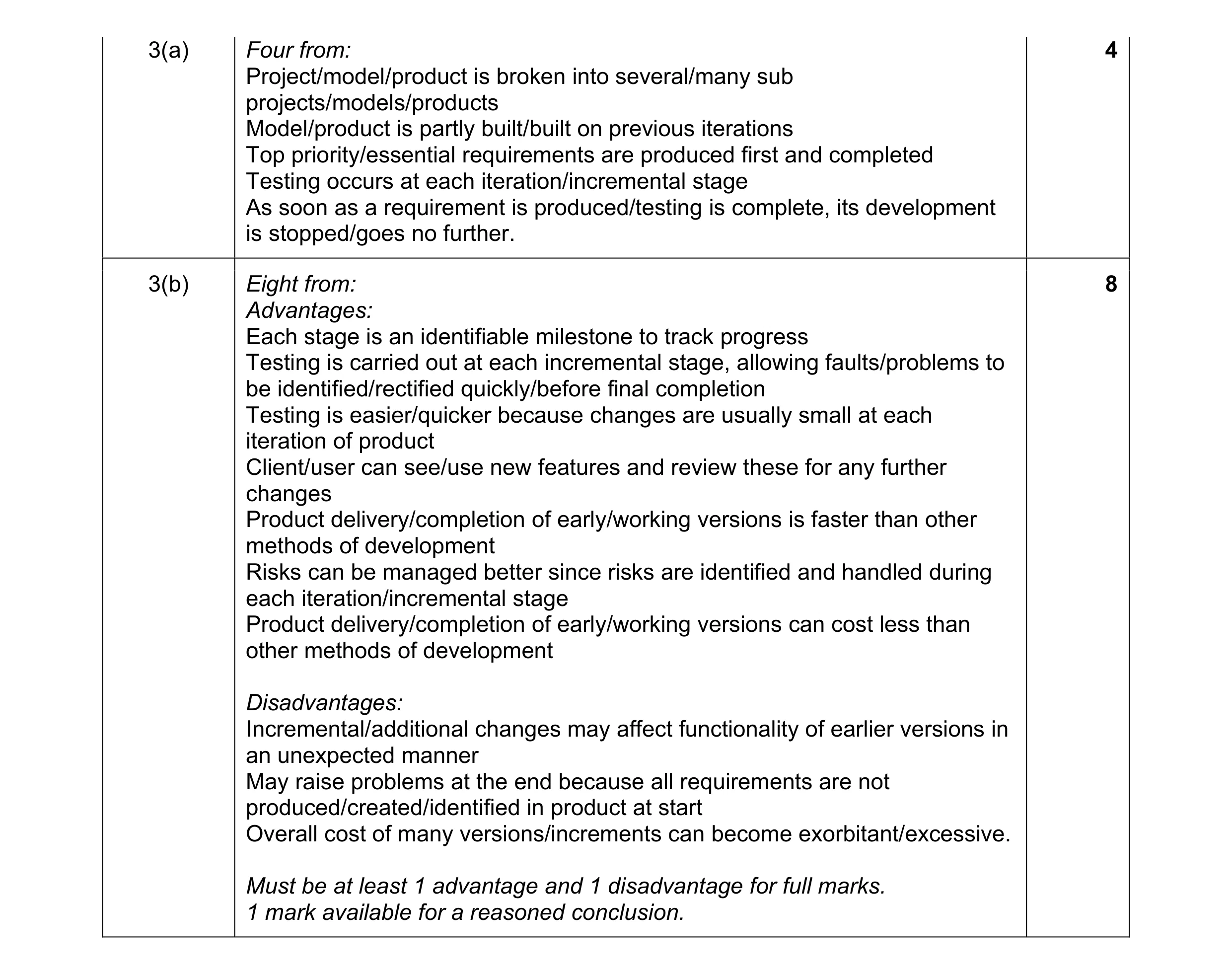 12
12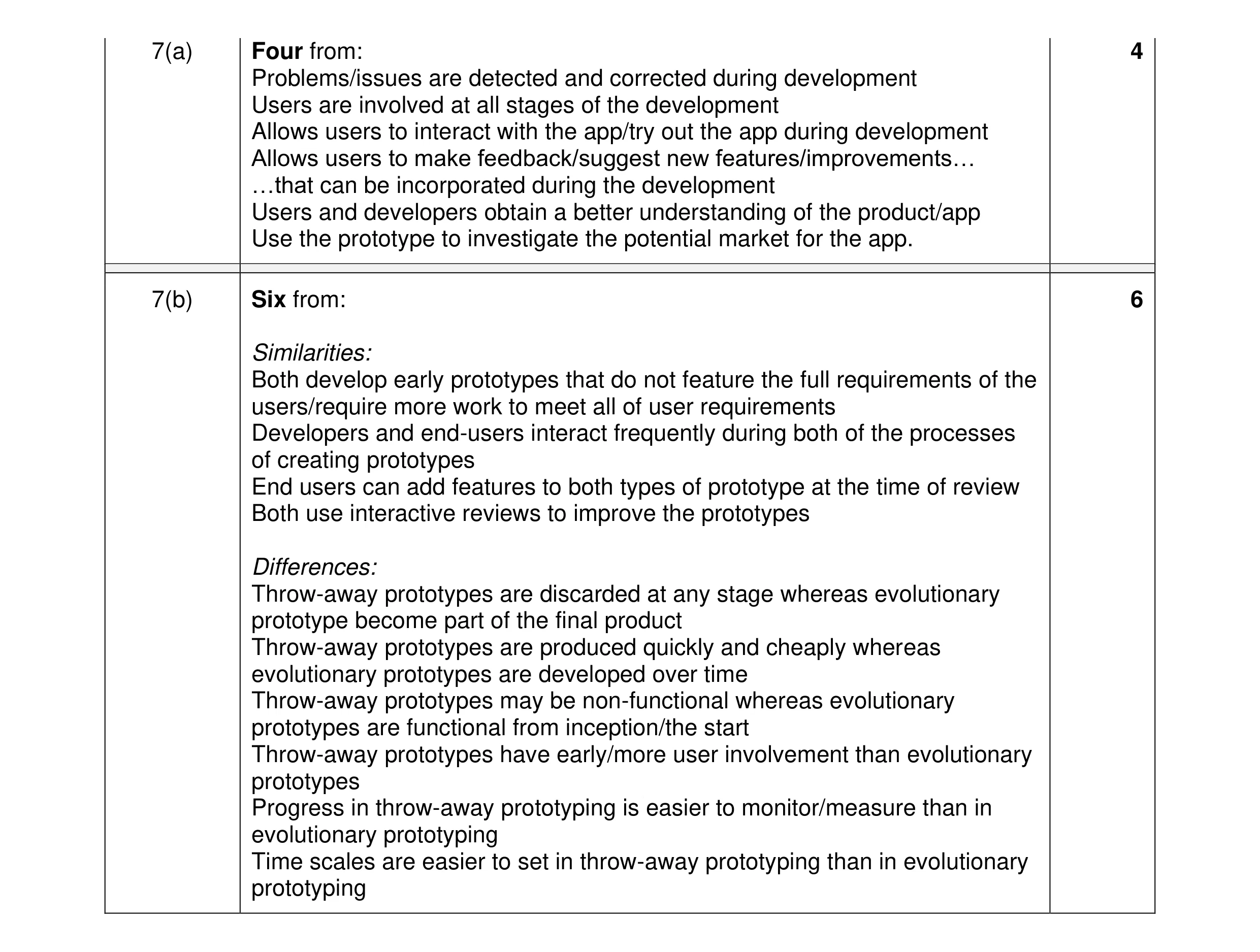 10
10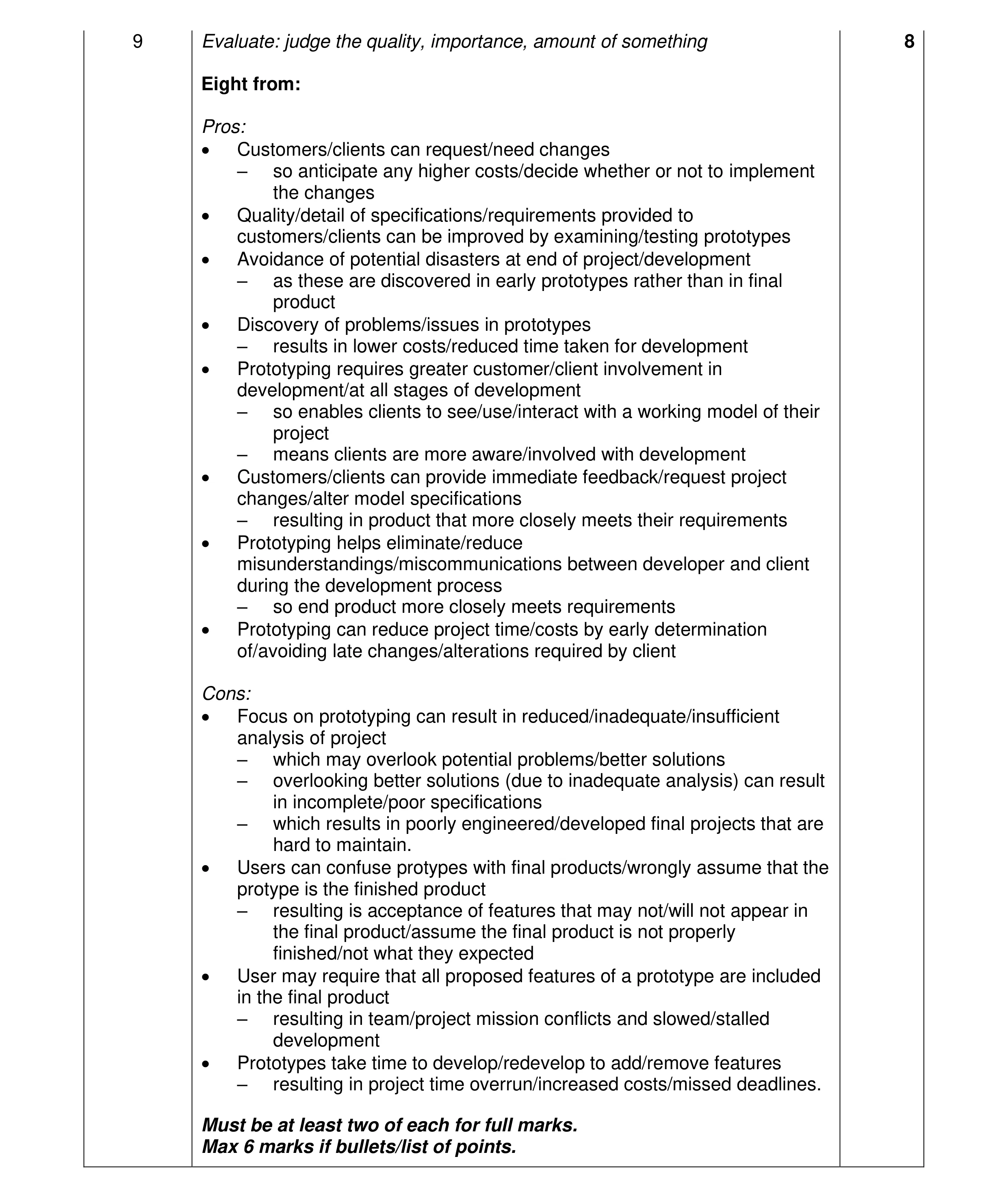 8
8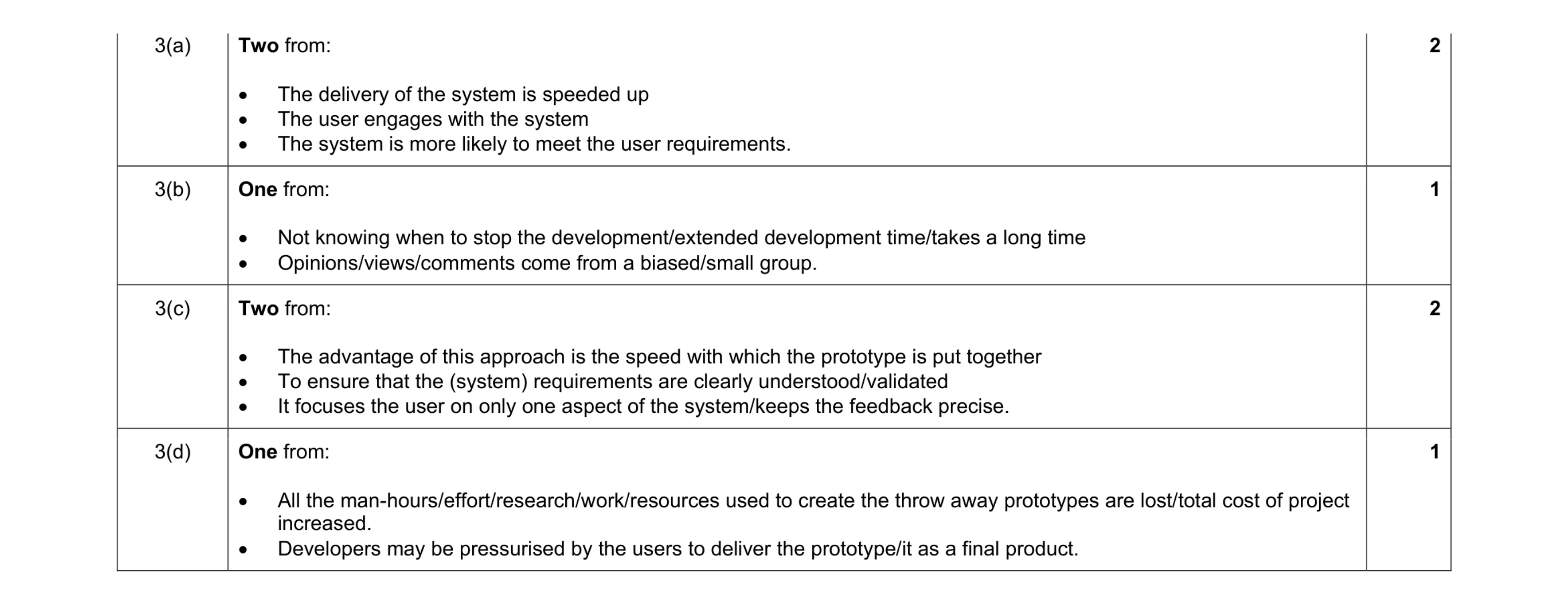 6
6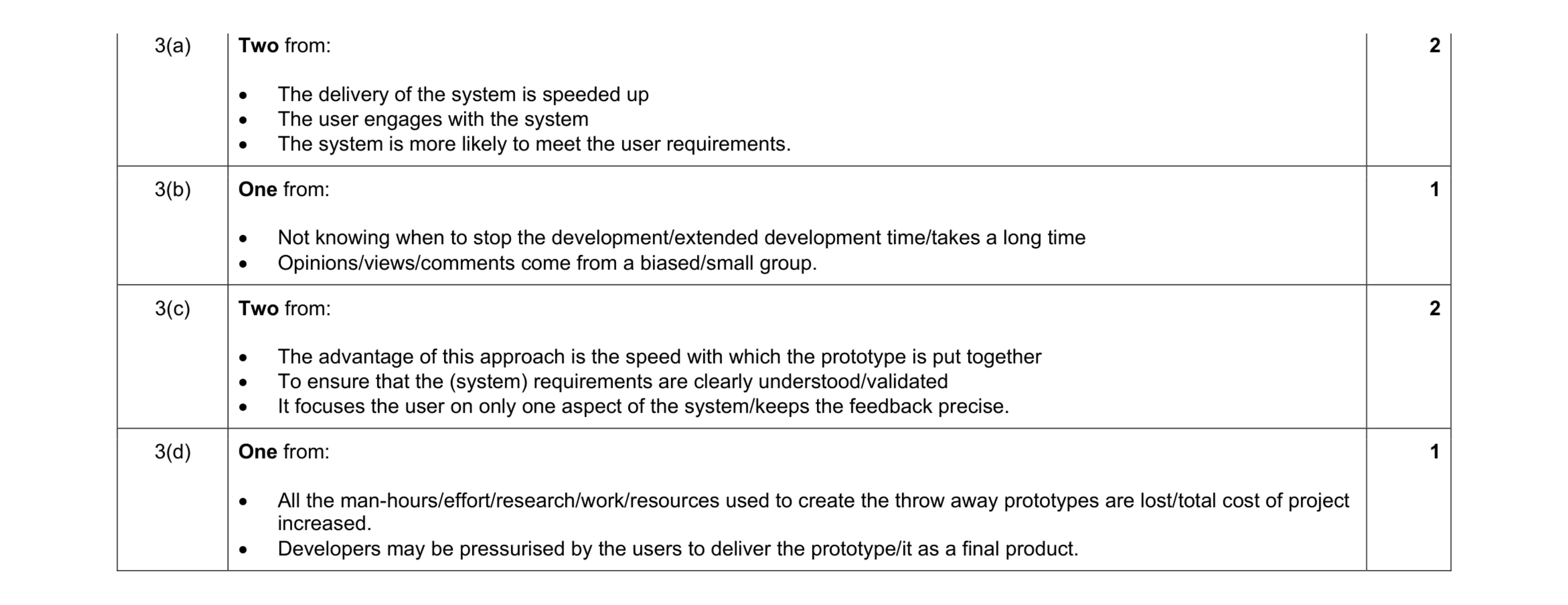 6
6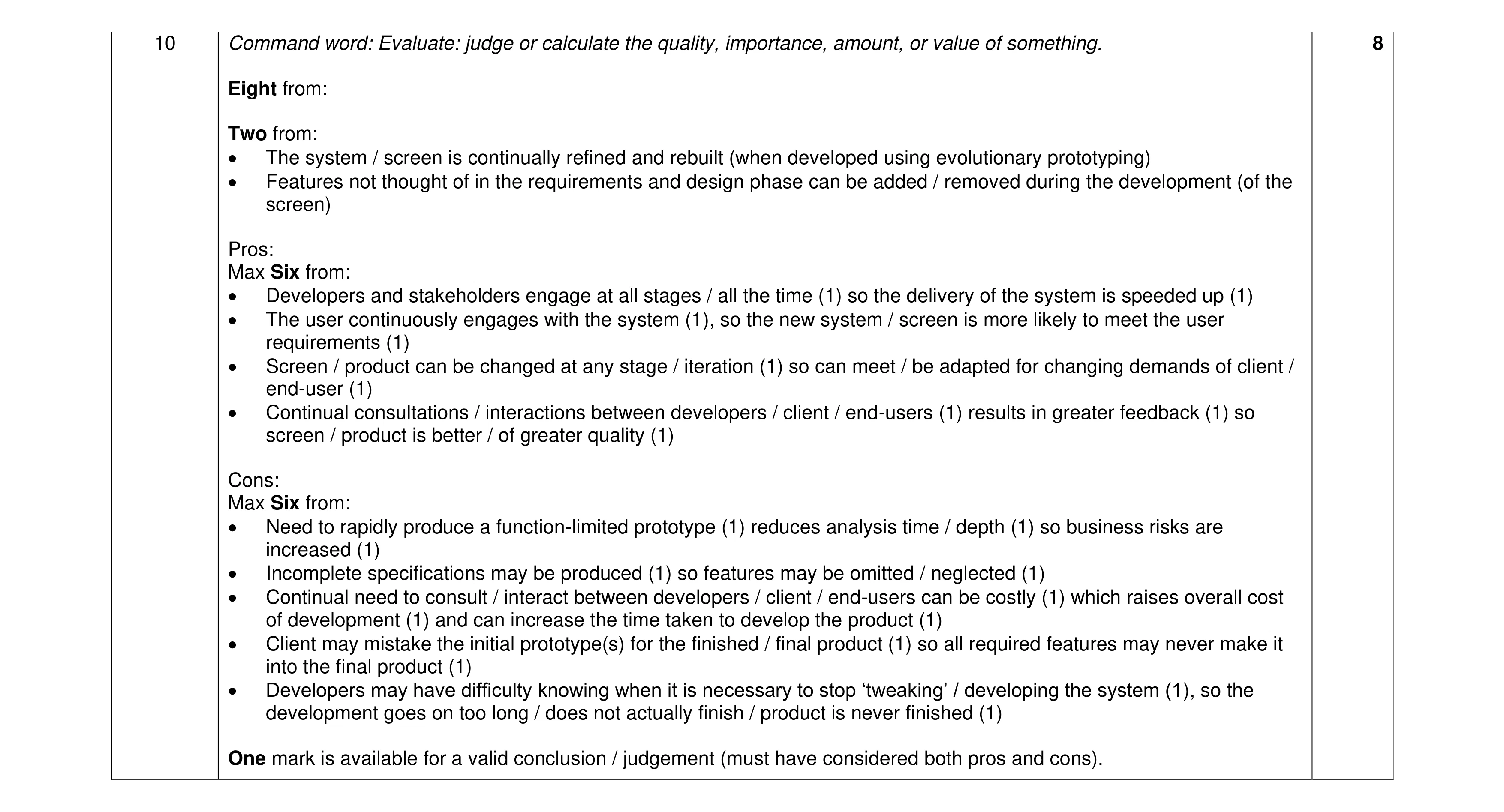 8
8