Questions as text
Q1 · A college department has a free Massive Open Online Course (MOOC) with access for its… 9626/32 May/June 2017
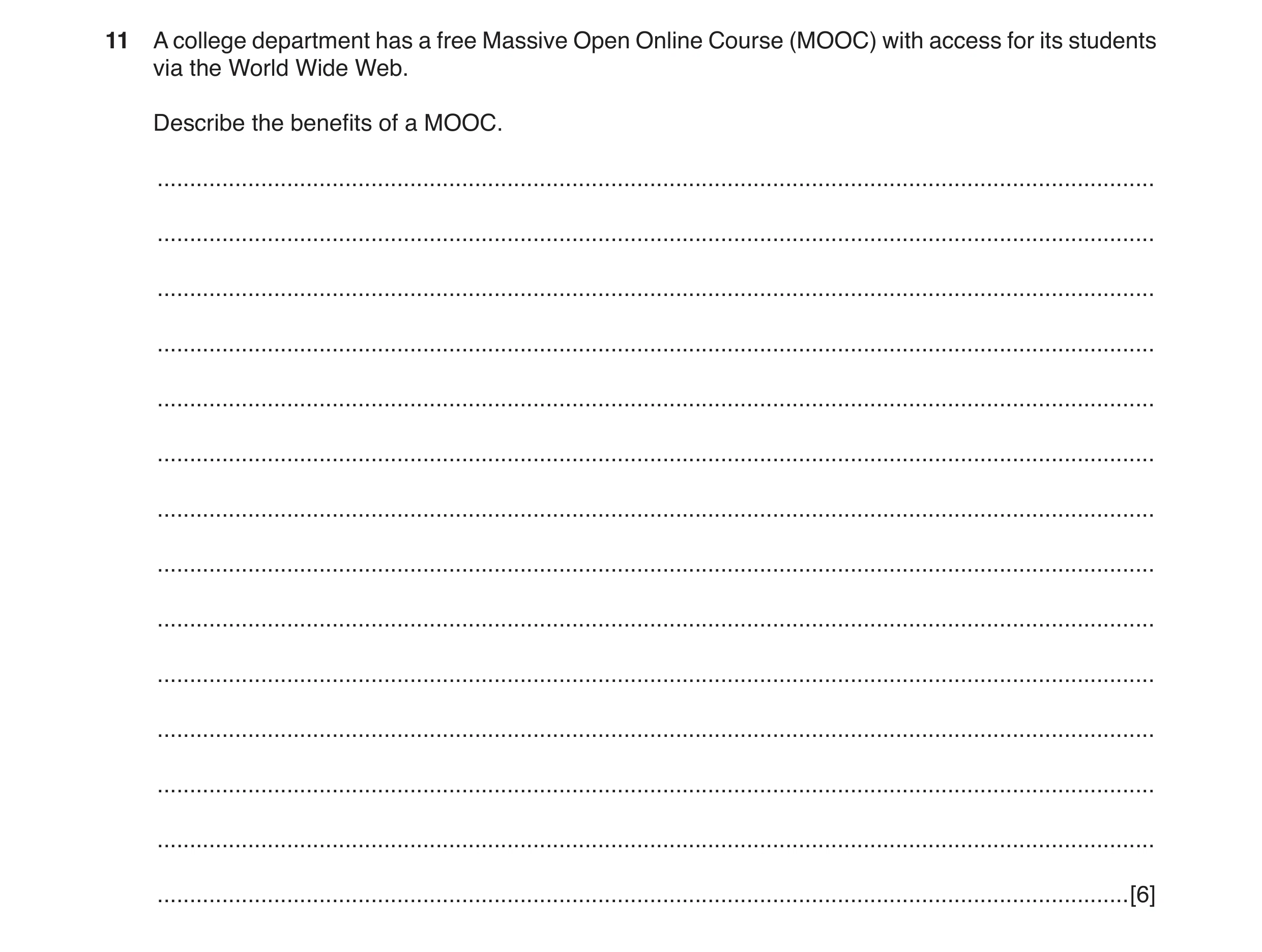
11 A college department has a free Massive Open Online Course (MOOC) with access for its students via the World Wide Web. Describe the benefits of a MOOC. … … … … … … … … … … … … … … [6]
6 marks
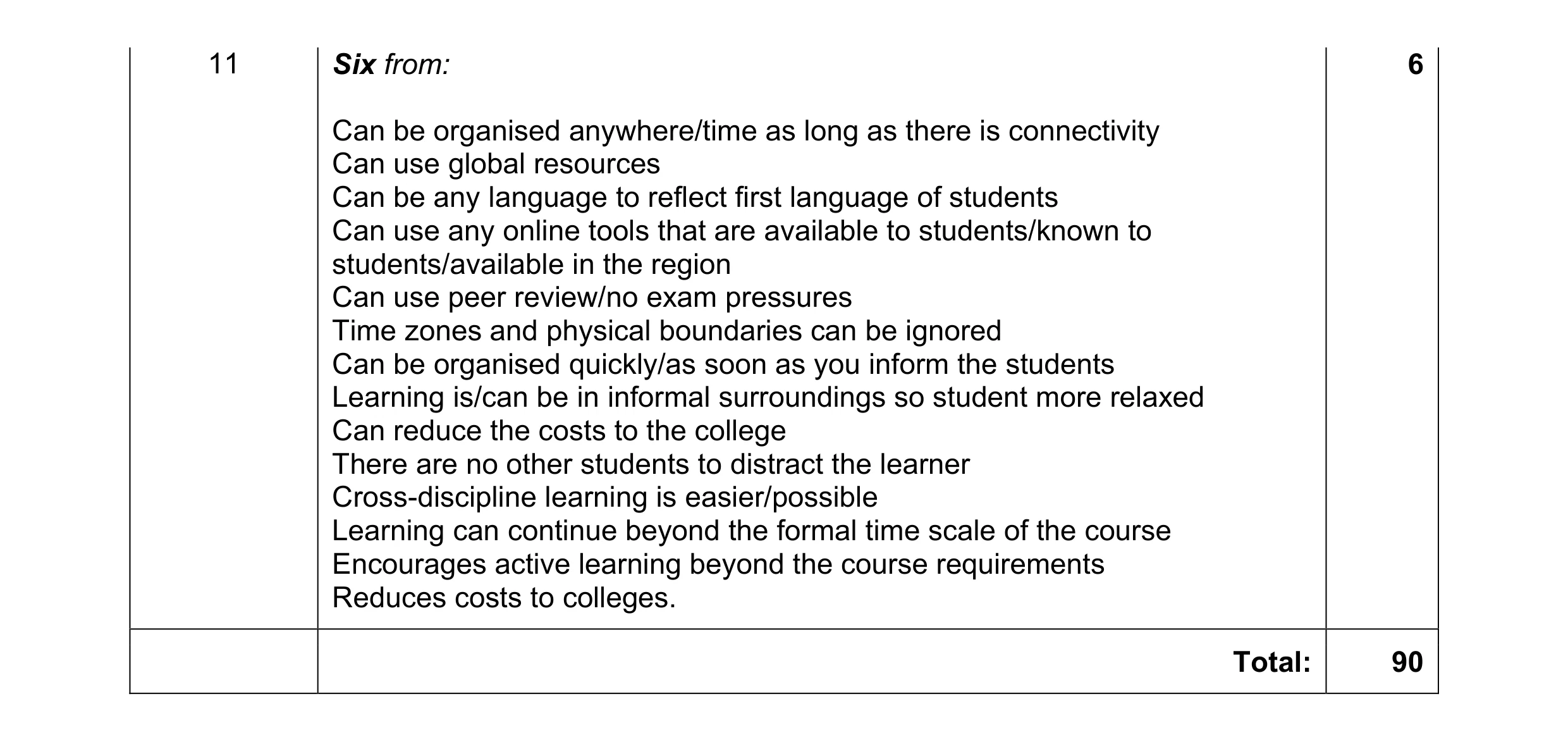
Mark scheme: 11 Six from: 6 Can be organised anywhere/time as long as there is connectivity Can use global resources Can be any language to reflect first language of students Can use any online tools that are available to students/known to students/available in the region Can use peer review/no exam pressures Time zones and physical boundaries can be ignored Can be organised quickly/as soon as you inform the students Learning is/can be in informal surroundings so student more relaxed Can reduce the costs to the college There are no other students to distract the learner Cross-discipline learning is easier/possible Learning can continue beyond the formal time scale of the course Encourages active learning beyond the course requirements Reduces costs to colleges. Total: 90
This question in 9626/32 May/June 2017
Q2 · Describe the impact of video-conferencing on learning in schools 9626/32 May/June 2018
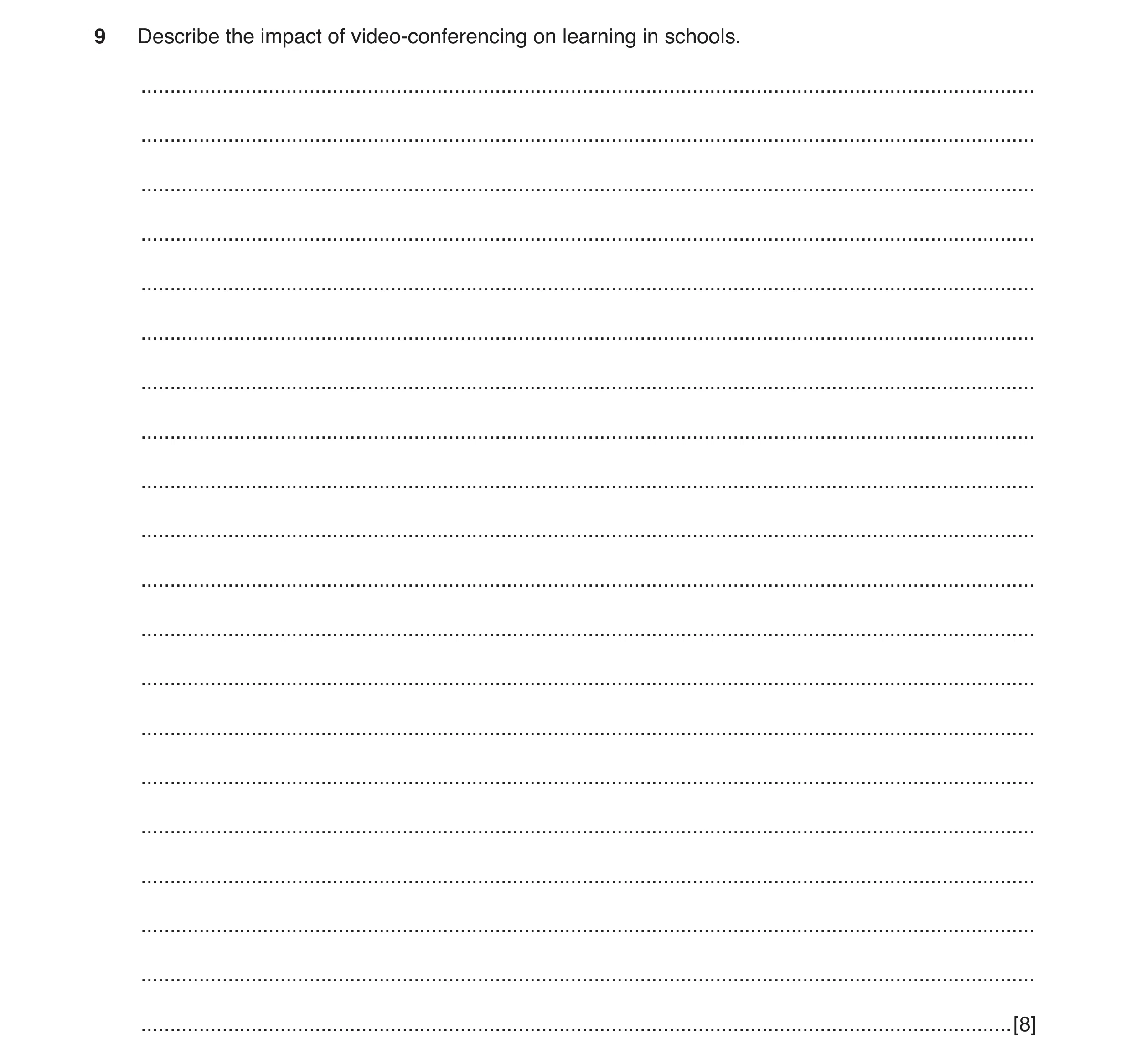
9 Describe the impact of video-conferencing on learning in schools. … … … … … … … … … … … … … … … … … … … … [8]
8 marks
Mark scheme: 9 Eight from: 8 Students can connect to students all around the world Students see and hear real people in different classrooms Students can collaborate on projects/share resources/ideas Courses can be made available to others Students can attend remotely Students living in remote rural areas can attend school No need to make difficult/lengthy travel arrangements Students can take virtual field trips to dangerous/remote areas in safety Students can experience remote testing by instructor ...before travel to be properly tested ...increasing chance of positive results Students who are home-based through e.g. illness can be included in classes Education does not unduly suffer.
This question in 9626/32 May/June 2018
Q3 · Discuss the advantages and disadvantages of software-based training methods 9626/32 May/June 2018
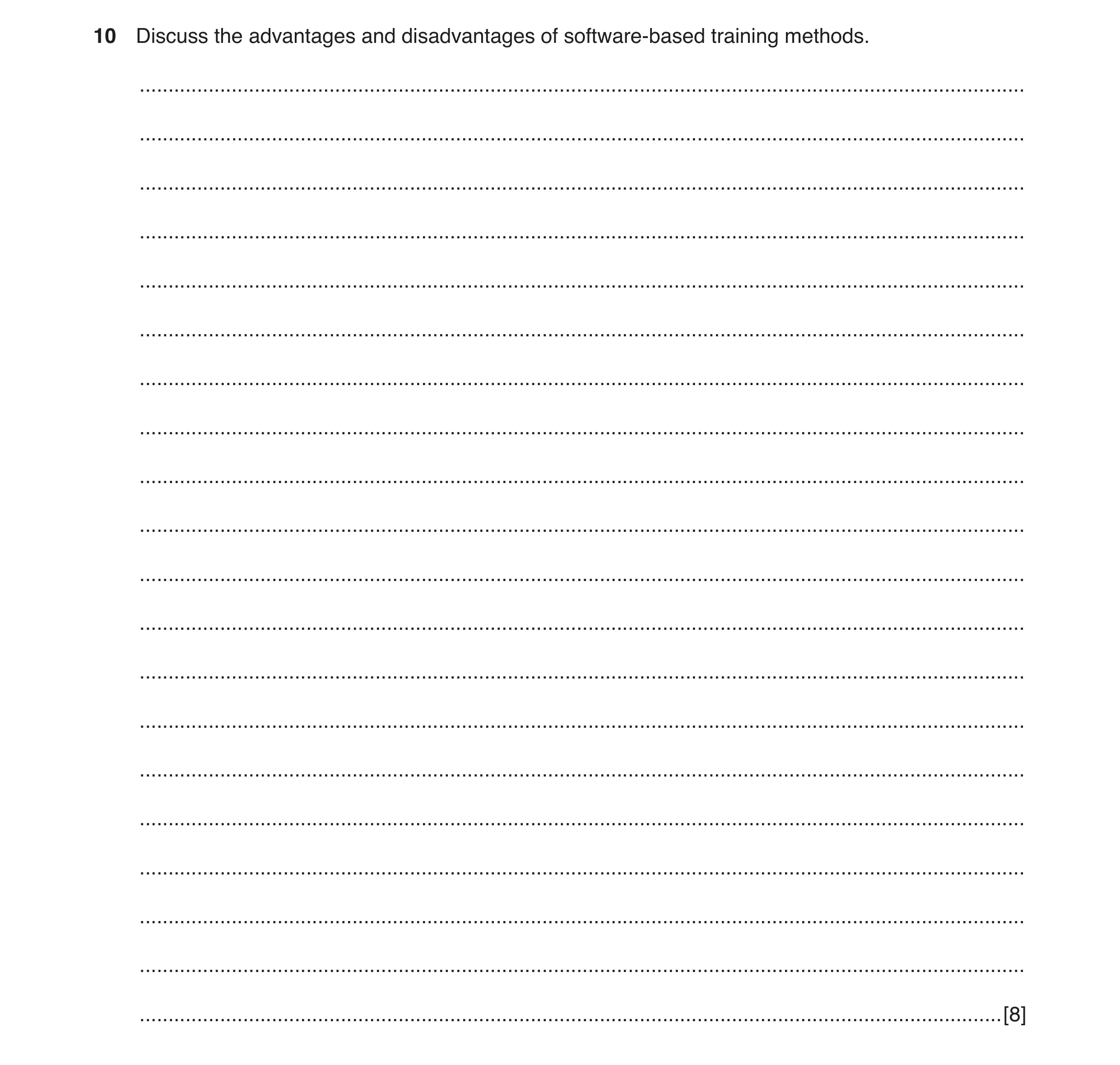
10 Discuss the advantages and disadvantages of software-based training methods. … … … … … … … … … … … … … … … … … … … … [8]
8 marks
Mark scheme: 10 This question to be marked as a Level of Response. 8 Level 3 (7–8 marks) Candidates will discuss in detail the advantages and disadvantages of software-based training methods. The information will be relevant, clear, organised and presented in a structured and coherent format. There will be a reasoned conclusion/opinion. Subject specific terminology will be used accurately and appropriately. Level 2 (4–6 marks) Candidates will explain advantages and disadvantages of software-based training methods. For the most part, the information will be relevant and presented in a structured and coherent format. There may be a reasoned conclusion/opinion. Subject specific terminology will be used appropriately and for the most part correctly. Level 1 (1–3 marks) Candidates will describe the advantages and disadvantages of software- based training methods. Answers may be in the form of a list. There will be little or no use of specialist terms. Level 0 (0 marks): Response with no valid content. Answers may make reference to e.g.: Can learn at own pace Can stop/start at any point Can use multimedia Can choose level of course/learning Progress can be tracked Interactive games/tests available Can set personal targets Can receive feedback/assistance from tutors online Little interaction with other students/learners May not be enough pressure/motivation to meet deadlines parts of course/work may be skipped due to lack of supervision Some learning cannot be done using software e.g. swimming/driving... «although s/ware can be supportive.
This question in 9626/32 May/June 2018
Q4 · Describe the benefits to students of using online tutorials 9626/33 Oct/Nov 2018
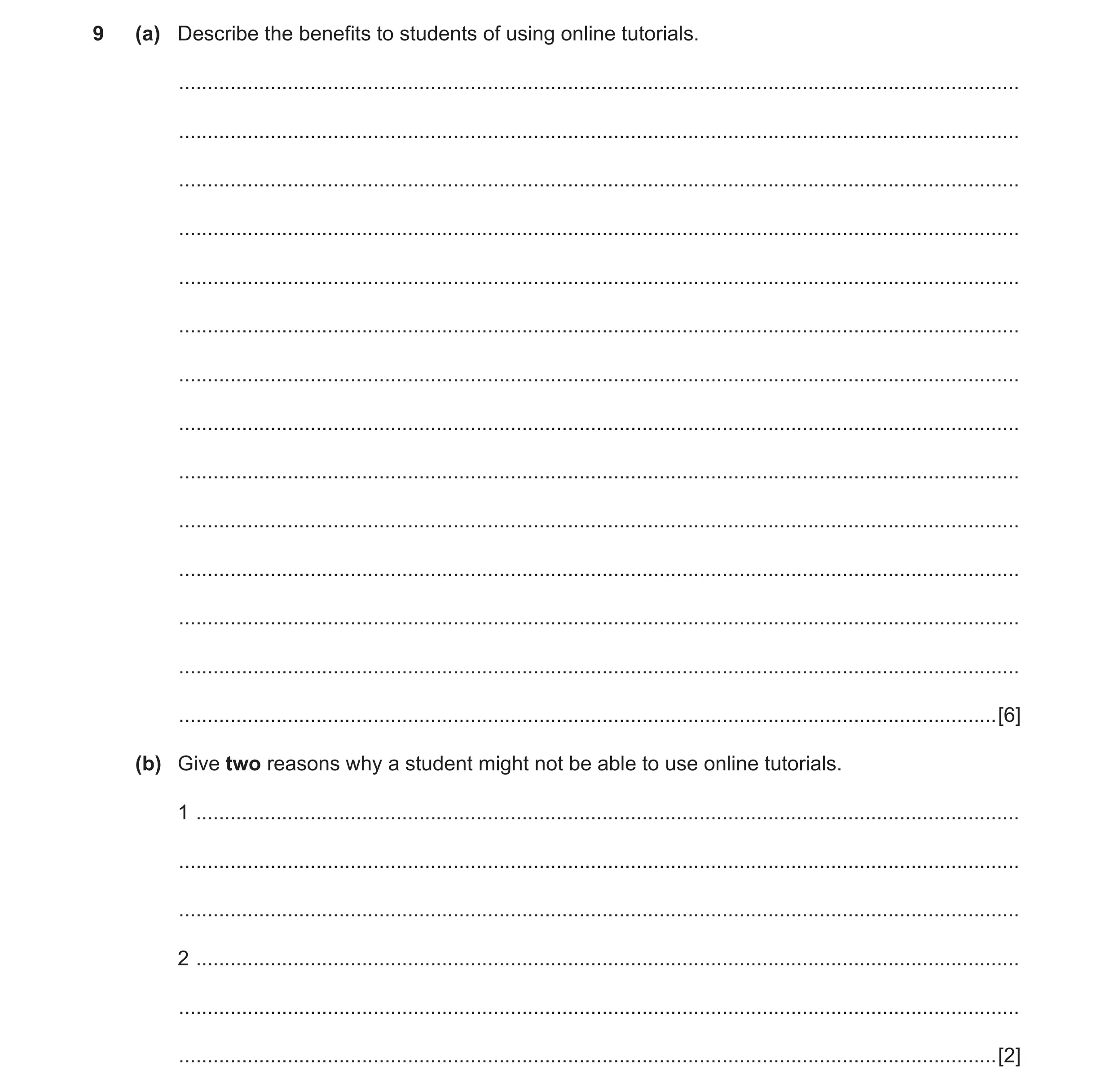
9 (a) Describe the benefits to students of using online tutorials. … … … … … … … … … … … … … … [6] (b) Give two reasons why a student might not be able to use online tutorials. 1 … … … 2 … … … [2]
8 marks
Mark scheme: 9(a) Six from: 6 Students can access/learn from the tutorial in their own time/have a flexible schedule Can study in own familiar/comfortable surroundings Time is not wasted travelling to school/college/university No travel costs incurred as no travelling Students can often access/learn from the tutorial for free/no tuition fees Motivation is increased/students can work at own pace/ask extra questions/students feel empowered Students have access to ‘live’ interaction with tutors/teachers Students can have personalised/customised courses/tutorials. 9(b) Two from: 2 (Younger) students who are dependent on teachers for learning cannot use online tutorial effectively (Disabled/older/any) students might have difficulty with the technology No access to the internet/computer/IT services due to cost/lack of IT skills/expertise Not enrolled on course/too many students using the tutorial at once.
This question in 9626/33 Oct/Nov 2018
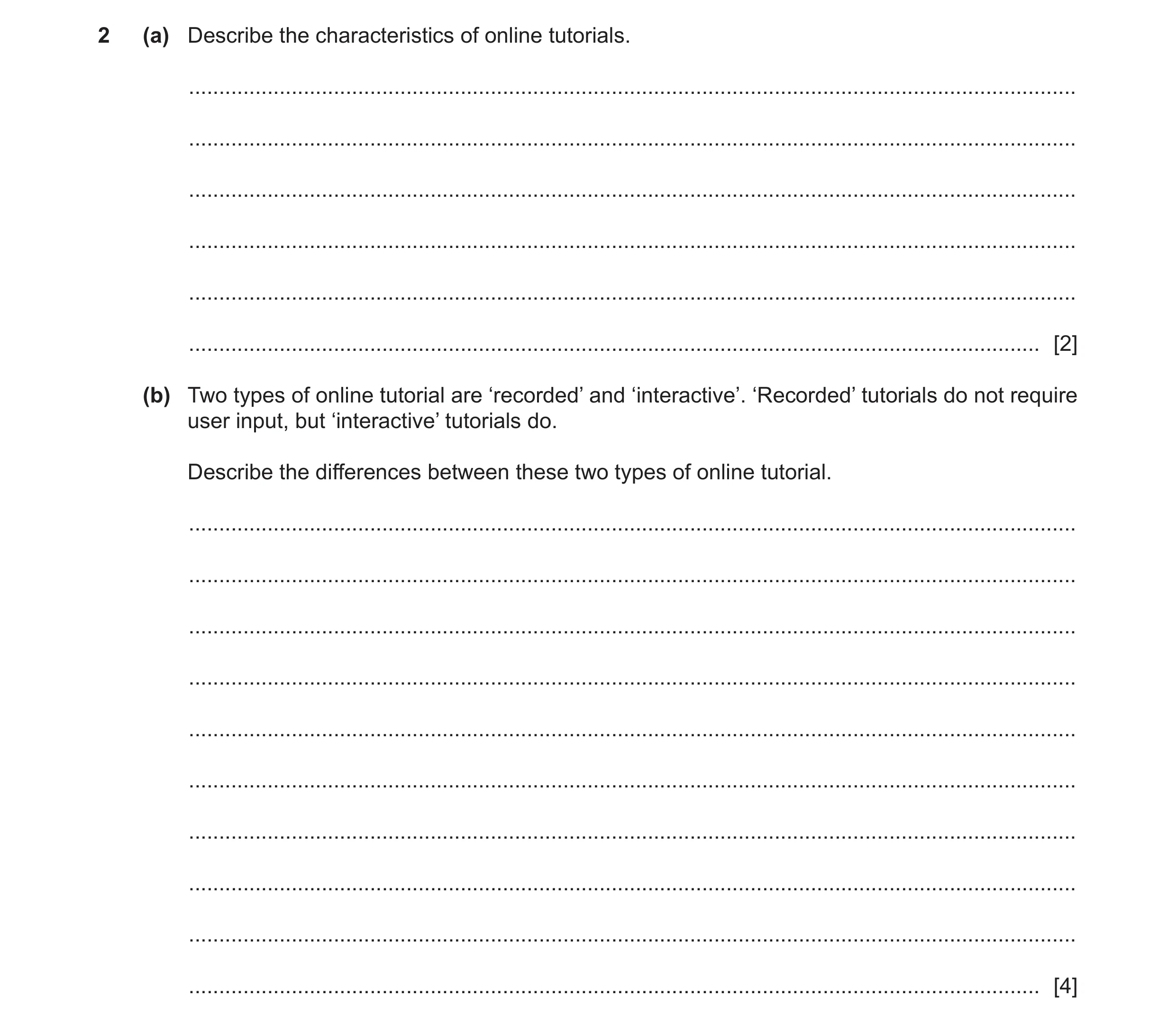
Q5 · Describe the characteristics of online tutorials 9626/32 Feb/March 2019
2 (a) Describe the characteristics of online tutorials. … … … … … … [2] (b) Two types of online tutorial are ‘recorded’ and ‘interactive’. ‘Recorded’ tutorials do not require user input, but ‘interactive’ tutorials do. Describe the differences between these two types of online tutorial. … … … … … … … … … … [4]
6 marks
Mark scheme: 2(a) Two from: 2 A self-study activity Has a specific learning outcome Delivered via internet/network. 2(b) Four from: 4 Recorded tutorial uses video/audio only in a linear sequence/one route through Interactive tutorial is a set of structured (web) pages/slides Navigated by different routes/routes chosen by the learner Interactive can use any combination of text/images/video/audio/animations in any order No user input required in recorded/user input required/mandatory in interactive tutorials.
This question in 9626/32 Feb/March 2019
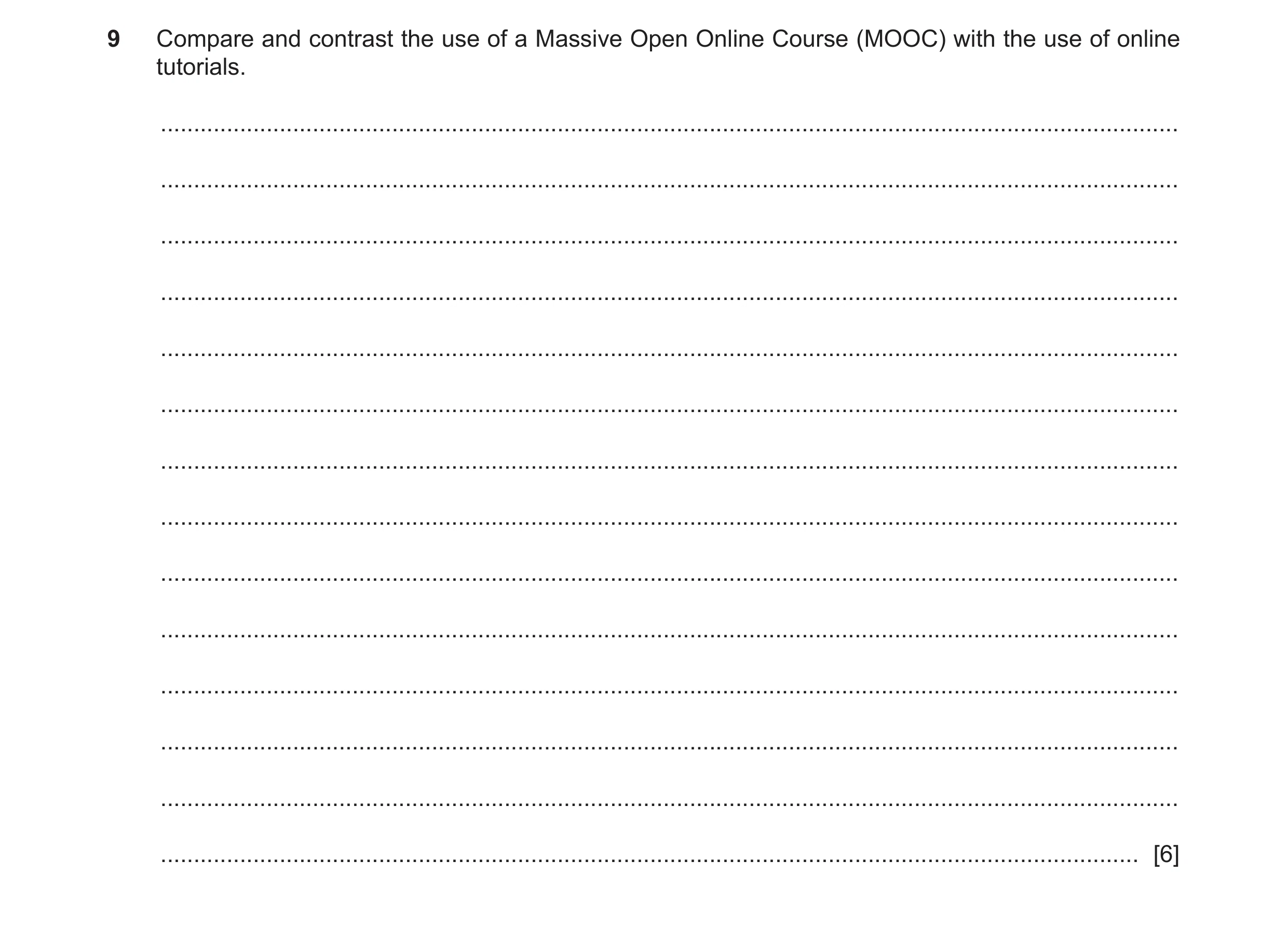
Q6 · Compare and contrast the use of a Massive Open Online Course (MOOC) with the use of… 9626/32 Oct/Nov 2019
9 Compare and contrast the use of a Massive Open Online Course (MOOC) with the use of online tutorials. … … … … … … … … … … … … … … [6]
6 marks
Mark scheme: 9 Two from: 6 MOOC and online tutorials both use the World Wide Web MOOC and online tutorials are both interactive using multimedia With both, courses are either bought off-the shelf or custom built Students will learn in isolation i.e.as individuals Four from: MOOC provides interactive user forums whereas online tutorials do not provide these MOOC content can be re-interpreted by students leading to loss of control by the instructors whereas online tutorials are fixed in in their aims/objectives. MOOC covers more content than a tutorial because tutorials are focussed on one/limited topic(s) MOOC are more easily scalable to encompass more content than online tutorials Unlike an online course which focuses more on content, MOOCs focus more on context. Online courses are closed-ended with static content whereas the content in a MOOC evolves dynamically through learner participation
This question in 9626/32 Oct/Nov 2019
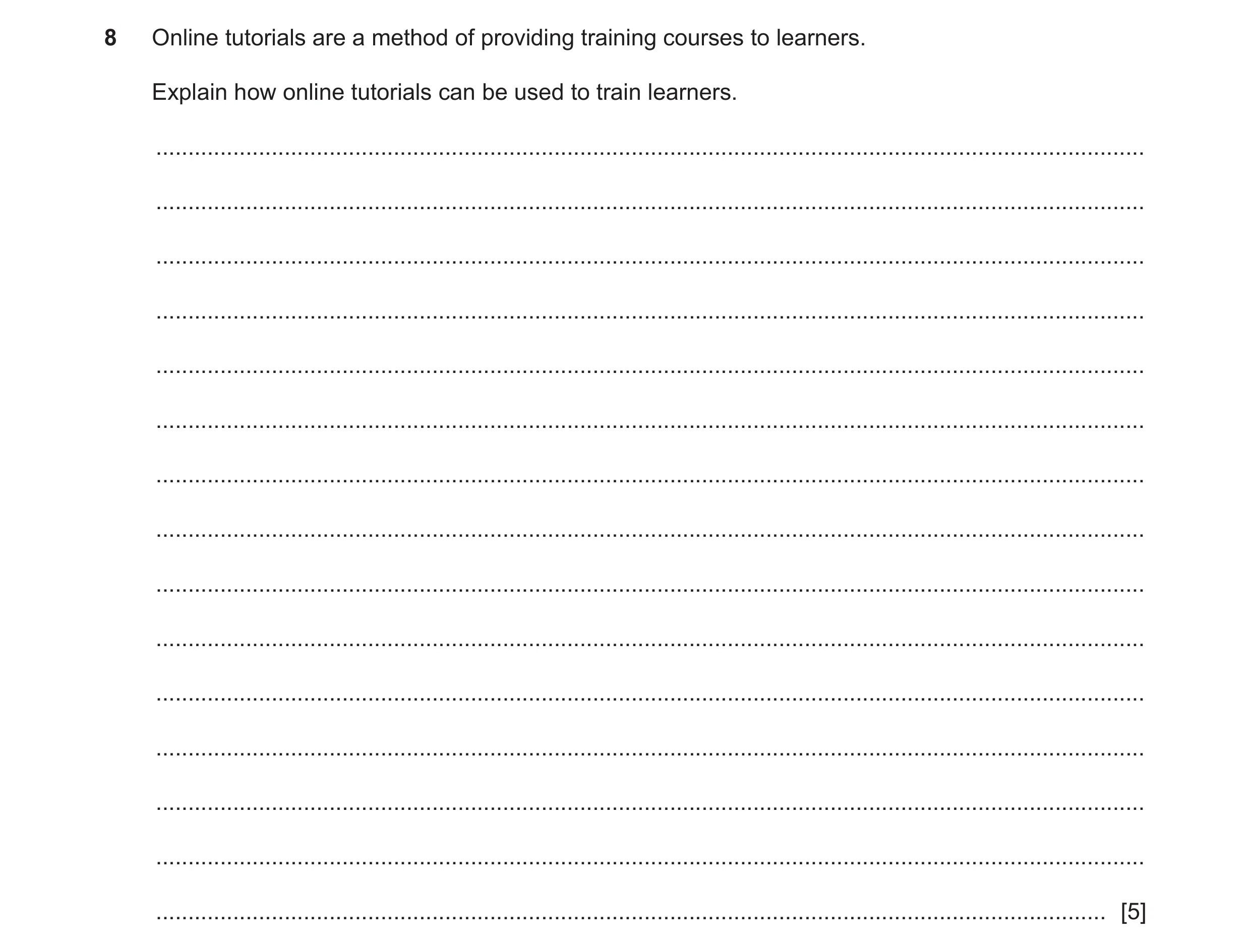
Q7 · Online tutorials are a method of providing training courses to learners 9626/32 Feb/March 2022
8 Online tutorials are a method of providing training courses to learners. Explain how online tutorials can be used to train learners. … … … … … … … … … … … … … … … [5]
5 marks
Mark scheme: 8 Five from: 5 Use of recorded tutorials showing screenshots/videos of topics presenting expert ideas/views Can include a narration to explain the topics as the images are displayed Tutorial can be designed to create a conversation/dialogue between the student and the teacher Tutorials can be interactive with navigable pages of content so student can choose which route to take The route through is decided by answers to questions/following links to different topics Topics should flow from generalised ideas to specific as the tutorial progress The tutorial’s structure should manage the flow of the topic to allow the student to work through the topic Tutorials can be used to create/impart factual knowledge as the basis for advanced learning Tutorials can be used instead of lectures/classes to free up classroom time/space for other studies Tutorials can allow students to learn at their own pace/in their own time. Tutorials can be used to reinforce class learning/for revision Tutorials can be used to provide interactive testing/to give immediate feedback to students Online tutorials can allow for note taking, including adding notes to certain parts of the tutorial
This question in 9626/32 Feb/March 2022
Q8 · Online tutorials are provided to help students learn 9626/31 May/June 2022
4 Online tutorials are provided to help students learn. Discuss the advantages and disadvantages to students of using online tutorials. … … … … … … … … … … … … … … … … … … … … [8]
8 marks
Mark scheme: 4 Discuss: write about a topic in depth in a structured way. Max 1 for good description of online tutorial. Eight from e.g.: Advantages: Students can have access to teachers/tutors that they would not otherwise be able to contact so they have a greater range of expertise to draw upon in their studies Students can access the tutorial at anytime that is convenient so can study as and when they wish Students and teachers do not have to be online at the same time so there are less time constraints on the interaction between students and teachers Students can access material without having to travel so there are no geographical constraints on where they study from or from where they take courses Students can share their studies/ideas/learning with a group without having to physically be together/have a teacher present Tutorials can be recorded for access at any time/can be replayed to review work Tutorial material can be studied in any order so students can choose what they study Students can get instant feedback from periodic pre-set tests/tasks Disadvantages: A reliable internet connection/suitable computing devices is/are required to access the tutorial without which there is a digital divide to overcome Tutorial may not be at the appropriate level for an individual student so some may be disadvantaged Lack of a teacher may result in loss of motivation by student so work is not completed/of low standard Lack of guidance through material may result in student missing important material in the study Teacher feedback may not be fast enough to resolve problems in the studies/task. Must have at least two from each for full marks. Must be a proper discussion for full marks. Max 6 marks if bullets/list of points.
This question in 9626/31 May/June 2022
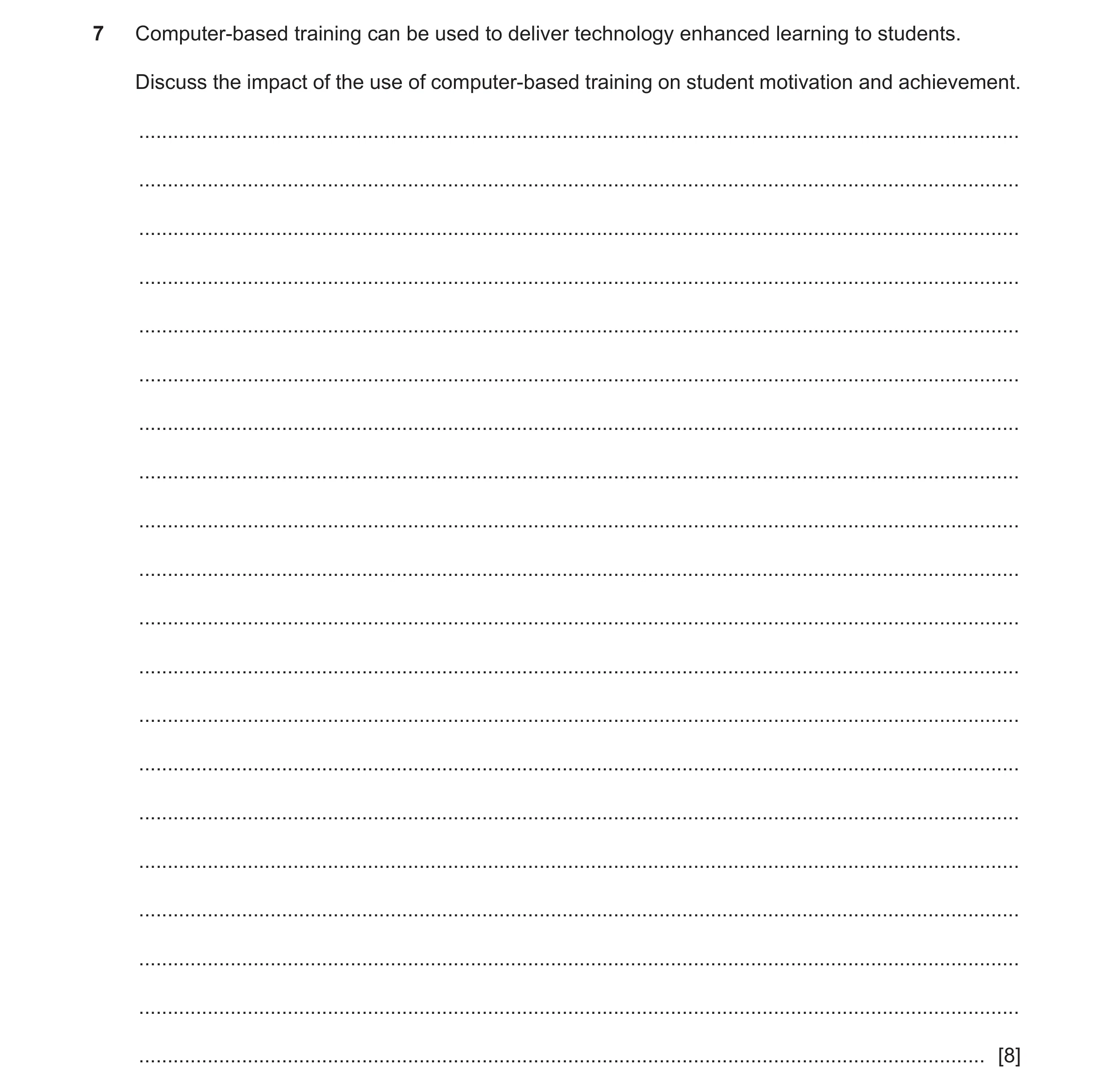
Q9 · Computer-based training can be used to deliver technology enhanced learning to students 9626/32 May/June 2022
7 Computer-based training can be used to deliver technology enhanced learning to students. Discuss the impact of the use of computer-based training on student motivation and achievement. … … … … … … … … … … … … … … … … … … … … [8]
8 marks
Mark scheme: 7 Eight from: Discuss: write about issues(s) or topic(s) in depth in a structured way. Positive Impacts: Training is more accessible to students/learners as can be used when and where convenient to student/available at anytime Delivery of small amounts of information in a step-by-step manner prompts students/learners to respond to a lesson at intervals/take brief tests regularly Provides students/learners with regular/instant/quicker feedback on their responses/overall progress increasing engagement and achievement/retention of knowledge/skills Allows students/learners to take courses at their own pace without need for/pressure to keep up with/wait for peers Sets learning prerequisites for moving on to/in readiness for the next lesson/section/topic Can track progress more accurately/can set individual targets Course information is easily/readily available/retrievable for later reference Negative impacts: Reduced human interaction with teachers/instructors so discussion is more difficult Reduced human interaction with fellow students/learners so reduced groupwork/discussions/assistance Teachers/instructors may not always be available when students require assistance Students/learners with low motivation will fall behind in their studies Without per/class discussions some students will be confused/not understand fully Slow /poor internet connections/older computing devices/power fluctuations may not allow easy access to course materials Must be at least two of each for full marks. Must be a proper discussion for full marks. Max 6 marks if bullets/list of points.
This question in 9626/32 May/June 2022
Q10 · Online tutorials are provided to help students learn 9626/33 May/June 2022
4 Online tutorials are provided to help students learn. Discuss the advantages and disadvantages to students of using online tutorials. … … … … … … … … … … … … … … … … … … … … [8]
8 marks
Mark scheme: 4 Discuss: write about a topic in depth in a structured way. Max 1 for good description of online tutorial. Eight from e.g.: Advantages: Students can have access to teachers/tutors that they would not otherwise be able to contact so they have a greater range of expertise to draw upon in their studies Students can access the tutorial at anytime that is convenient so can study as and when they wish Students and teachers do not have to be online at the same time so there are less time constraints on the interaction between students and teachers Students can access material without having to travel so there are no geographical constraints on where they study from or from where they take courses Students can share their studies/ideas/learning with a group without having to physically be together/have a teacher present Tutorials can be recorded for access at any time/can be replayed to review work Tutorial material can be studied in any order so students can choose what they study Students can get instant feedback from periodic pre-set tests/tasks Disadvantages: A reliable internet connection/suitable computing devices is/are required to access the tutorial without which there is a digital divide to overcome Tutorial may not be at the appropriate level for an individual student so some may be disadvantaged Lack of a teacher may result in loss of motivation by student so work is not completed/of low standard Lack of guidance through material may result in student missing important material in the study Teacher feedback may not be fast enough to resolve problems in the studies/task. Must have at least two from each for full marks. Must be a proper discussion for full marks. Max 6 marks if bullets/list of points.
This question in 9626/33 May/June 2022
Q11 · Technology enhanced learning (E-learning) can be delivered using a Massive Open Online… 9626/31 Oct/Nov 2022
8 Technology enhanced learning (E-learning) can be delivered using a Massive Open Online Course (MOOC). (a) Describe the features of a MOOC. … … … … … … … … … … … [4] (b) Explain the drawbacks to students of using a MOOC. … … … … … … … … … … … [4]
8 marks
Mark scheme: 8(a) Four from: 4 Unlimited/very large numbers of students can participate Unrestricted/open access via the web/internet Can include multimedia/videoed lectures/talks Can include quizzes/interactive tasks for immediate feedback to students Can include online assessments for progress through the MOOC Can include user forums for group discussions. 8(b) Four from: 4 Students who are not digitally literate will not be able to (fully) participate and not make use of the course materials User-generated course materials may devalue/undermine the validity of the course Students who cannot self-motivate/cannot set own goals will not be able to (fully) participate Barriers of language/translations may exclude/restrict/disadvantage some participants from (fully) taking part Very large amounts of content are difficult to navigate/set up/learn/work through without guidance. Practical experience/training is limited/resources for practical work are limited Some students may not be able/be prepared to devote the time and effort necessary/required for the course.
This question in 9626/31 Oct/Nov 2022
Q12 · Technology enhanced learning (E-learning) can be delivered using a Massive Open Online… 9626/33 Oct/Nov 2022
8 Technology enhanced learning (E-learning) can be delivered using a Massive Open Online Course (MOOC). (a) Describe the features of a MOOC. … … … … … … … … … … … [4] (b) Explain the drawbacks to students of using a MOOC. … … … … … … … … … … … [4]
8 marks
Mark scheme: 8(a) Four from: 4 Unlimited/very large numbers of students can participate Unrestricted/open access via the web/internet Can include multimedia/videoed lectures/talks Can include quizzes/interactive tasks for immediate feedback to students Can include online assessments for progress through the MOOC Can include user forums for group discussions. 8(b) Four from: 4 Students who are not digitally literate will not be able to (fully) participate and not make use of the course materials User-generated course materials may devalue/undermine the validity of the course Students who cannot self-motivate/cannot set own goals will not be able to (fully) participate Barriers of language/translations may exclude/restrict/disadvantage some participants from (fully) taking part Very large amounts of content are difficult to navigate/set up/learn/work through without guidance. Practical experience/training is limited/resources for practical work are limited Some students may not be able/be prepared to devote the time and effort necessary/required for the course.
This question in 9626/33 Oct/Nov 2022
Q13 · Explain how the use of technology enhanced learning methods can affect the motivation of… 9626/31 Oct/Nov 2023
4 Explain how the use of technology enhanced learning methods can affect the motivation of students. … … … … … … … … … … … … … … [6]
6 marks
Mark scheme: 4 Six from e.g.: 6 Use of TEL: • directs learning to specific goals (so increases motivation) • can lead to increased effort • by enhancing the meaning/learning/retention of materials • can increase persistence in the effort leading to increased motivation to succeed • can increase the comprehension/cognition of topics by use of multimedia/feedback/self-assessment so increasing motivation • can increase performance/success so increasing motivation to continue • means users are willing to spend more time using technology c.f. time in a classroom (can increase motivation) • can be available as and when user wishes/learn at own pace • has control/increases choice (which increases motivation) • Allows control of route through/navigation increases interest of leaners • Allows self-assessment with regular/instant feedback (improves motivation).
This question in 9626/31 Oct/Nov 2023
Q14 · Explain how the use of technology enhanced learning methods can affect the motivation of… 9626/33 Oct/Nov 2023
4 Explain how the use of technology enhanced learning methods can affect the motivation of students. … … … … … … … … … … … … … … [6]
6 marks
Mark scheme: 4 Six from e.g.: 6 Use of TEL: • directs learning to specific goals (so increases motivation) • can lead to increased effort • by enhancing the meaning/learning/retention of materials • can increase persistence in the effort leading to increased motivation to succeed • can increase the comprehension/cognition of topics by use of multimedia/feedback/self-assessment so increasing motivation • can increase performance/success so increasing motivation to continue • means users are willing to spend more time using technology c.f. time in a classroom (can increase motivation) • can be available as and when user wishes/learn at own pace • has control/increases choice (which increases motivation) • Allows control of route through/navigation increases interest of leaners • Allows self-assessment with regular/instant feedback (improves motivation).
This question in 9626/33 Oct/Nov 2023
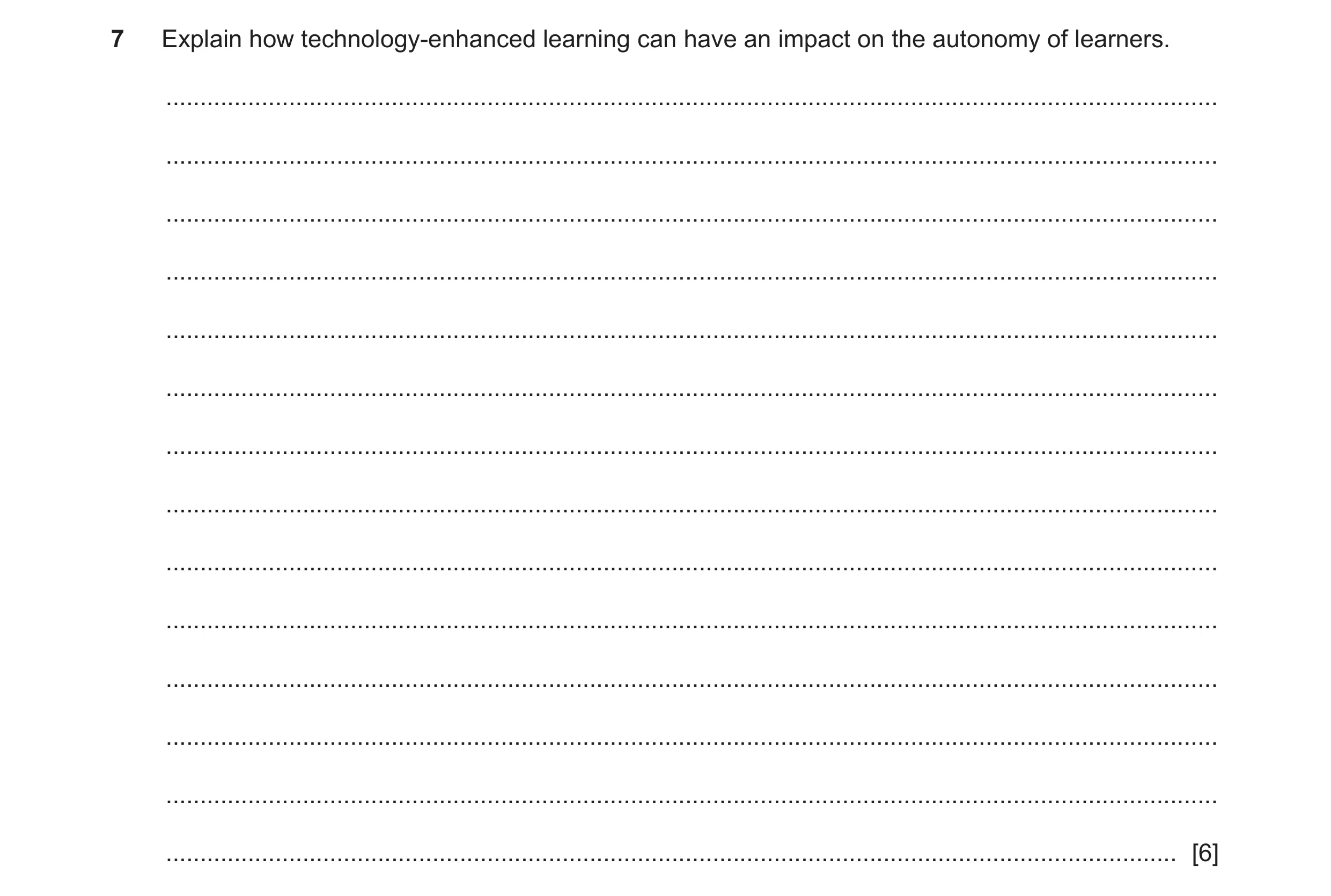
Q15 · Explain how technology-enhanced learning can have an impact on the autonomy of learners 9626/32 May/June 2024
7 Explain how technology-enhanced learning can have an impact on the autonomy of learners. … … … … … … … … … … … … … … [6]
6 marks
Mark scheme: 7 Six from e.g.: 6 Different methods allow/enable different levels of learner control in the speed and route through courses/learning CBT allows leaners almost complete control over time allocation/speed/route Learners can use networked courses to work at their own speed and to follow their own route/topics through the course MOOCs allow some control over time and choice of routes through the course …may allow learners to miss out/skip through content so progress/learning is less effective/impaired Video-conferencing allows little learner control over speed of activity as it is determined by the teacher/lecturer Technology allows learners to take control over when/how much/what learning they do because it is not directed by teacher/lecturer as in face- to-face teaching Technology allows learning resources/facilities to be available 24/7/as and when the learner requires so learner can control their own access Technology/social media enables/allows learners to learn/seek advice/help from others from diverse locations Technical difficulties could result in missing some aspects/content of course/lack of control over access Isolation from other learners can allow more control over learning Isolation can result in lack of motivation/learning/progress.
This question in 9626/32 May/June 2024
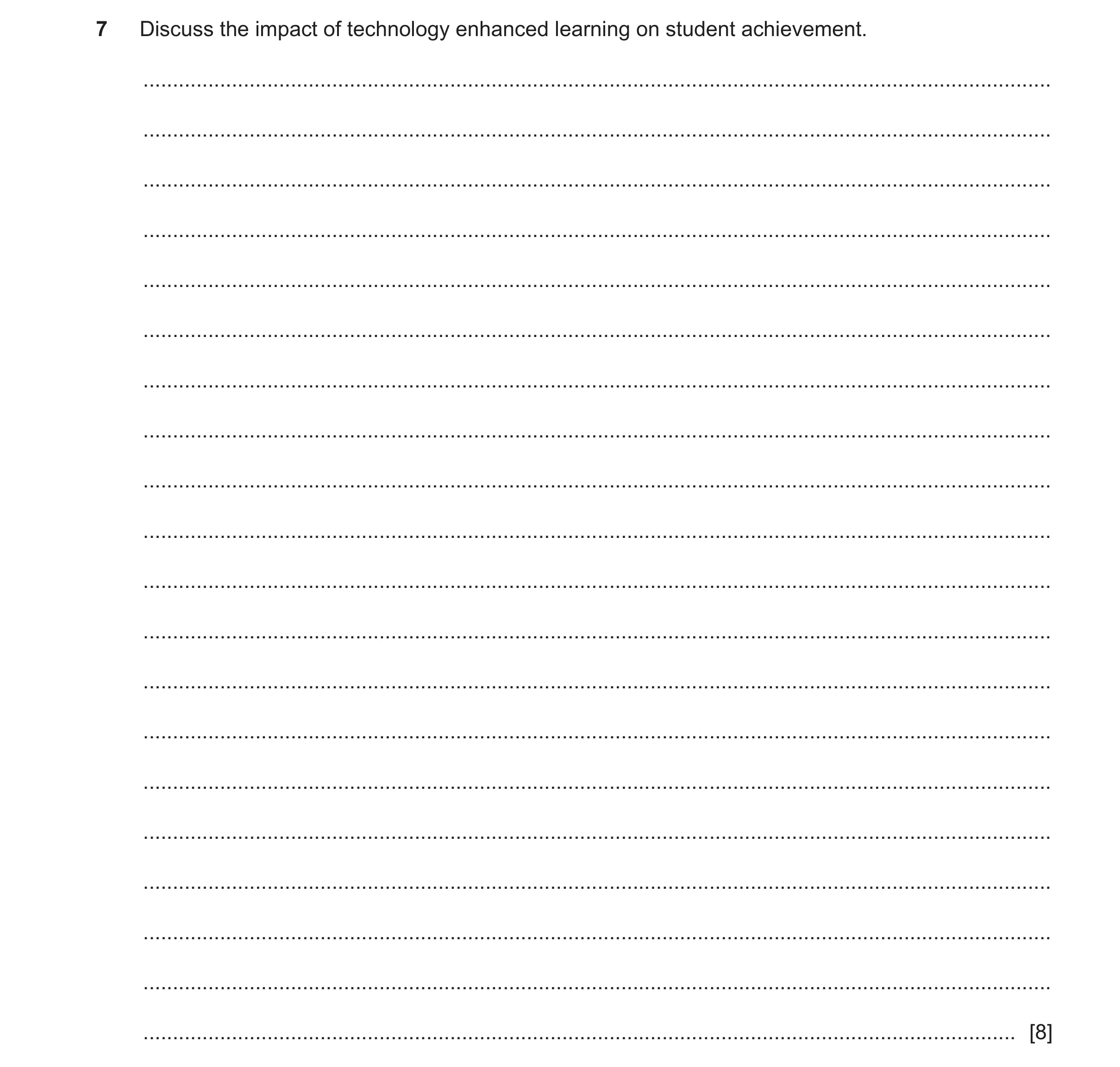
Q16 · Discuss the impact of technology enhanced learning on student achievement 9626/32 Feb/March 2025
7 Discuss the impact of technology enhanced learning on student achievement. … … … … … … … … … … … … … … … … … … … … [8]
8 marks
Mark scheme: 7 Command word: Discuss – write about issues(s) or topic(s) in a 8 structured way. E.g.: Positive impacts: • Increase in achievement gives lifetime skills // greater achievement in workplace / higher // enhanced social lives • students can take part in classes that they would not otherwise be able to // increases range of study // more knowledge gained • well-prepared / motivated students more likely to complete / finish the courses // more likely to go onto more courses / more learning • Increase in independent learning by students so more likely to succeed / increase knowledge • More likely to understand their aims / goals / assignments • Increase in technology literacy during lessons / learning at school / college Negative impacts: • poor quality lessons / materials / teachers unsuited / untrained / unskilled in technology demotivates students / decrease in achievement in classes / courses • lack of direct support so less access to clarification • decrease in achievement in classes / courses (1st) • over / in lifetime (1) • less disciplined teaching environment (1st) • so reduced motivation (1) • more likely to drop out. One mark per bullet point to a maximum of eight marks.
This question in 9626/32 Feb/March 2025
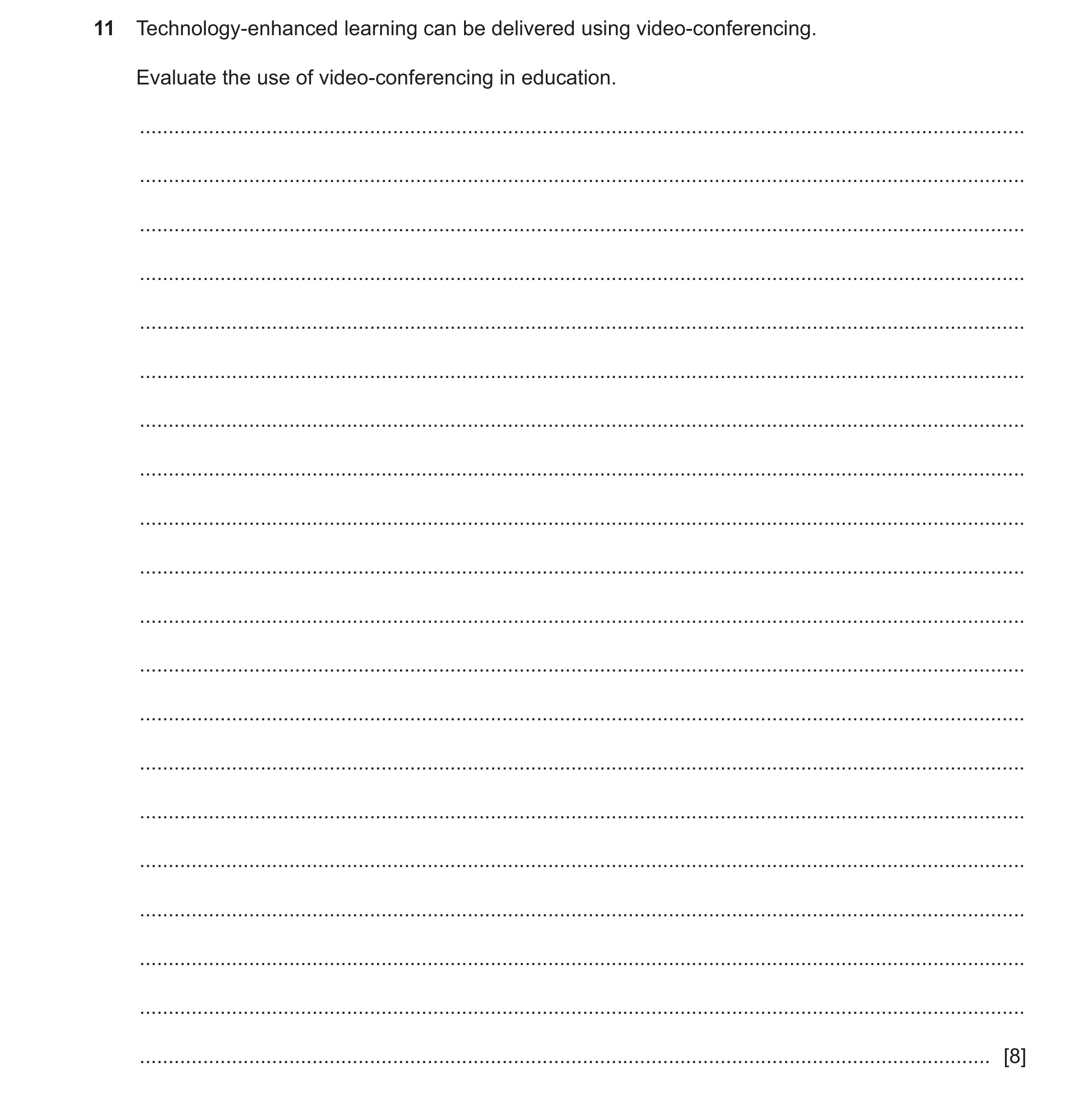
Q17 · Technology-enhanced learning can be delivered using video-conferencing 9626/31 May/June 2025
11 Technology-enhanced learning can be delivered using video-conferencing. Evaluate the use of video-conferencing in education. … … … … … … … … … … … … … … … … … … … … [8]
8 marks
Mark scheme: 11 Command word: Evaluate: judge or calculate the quality, importance, amount, or value of something. 8 EIGHT from: • Valid definition / description of video-conferencing in education Pros: e.g.: • Gives students remote access to experiences / demonstrations / learning materials / experts / teachers / discussions • (with the remote access) students have access that they might not have otherwise had • Educators / students do not have to physically be present in same location / travel to classes • Saves time of travel / saves costs of travel • Allows those unable to physically attend / travel to take part (1st) ▪ valid reason for not attending (1) • Classes from different schools / colleges / areas / regions / countries can be combined (1st) ▪ reduces employment / resources costs to individual schools / colleges (1) ▪ allows resources to used more effectively (1) • Can record session for later use Cons: e.g.: • Costs of the (additional) hardware / software can be high / prohibitive (1st) ▪ not all students / schools / colleges can afford them (1) ▪ so cannot take part in the sessions (1) • Technical problems / latency of the audio / lack of synchronisation with the video • Interruptions due to power outages / equipment malfunctions • Dropped internet connections (1st) ▪ can make a video-conferencing session unworkable (1) • Lack of a physical presence by the teacher • Cameras lack complete coverage of the classrooms / do not cover all students • Some students can be distracted / avoid taking part in the lesson • Monitoring of individual student’s progress during the lesson is more difficult • Encouragement of all students is more difficult • Student progress may not be as good as in real / face to face classes Conclusion: • One mark for a reasoned conclusion
This question in 9626/31 May/June 2025
 1 / 16
 2 / 16
 3 / 16
 4 / 16
 5 / 16
 6 / 16
 7 / 16
 8 / 16
 9 / 16
 10 / 16
 11 / 16
 12 / 16
 13 / 16
 14 / 16
 15 / 16
 16 / 16
 6
6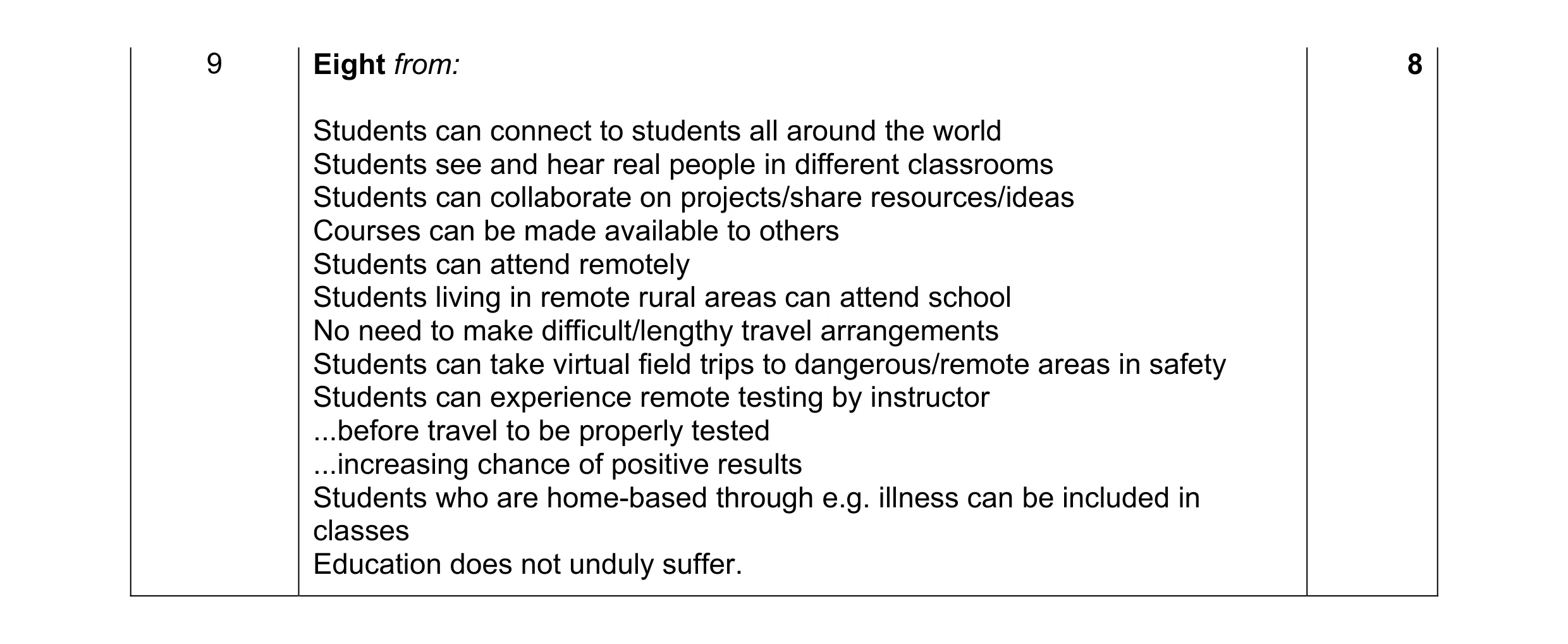 8
8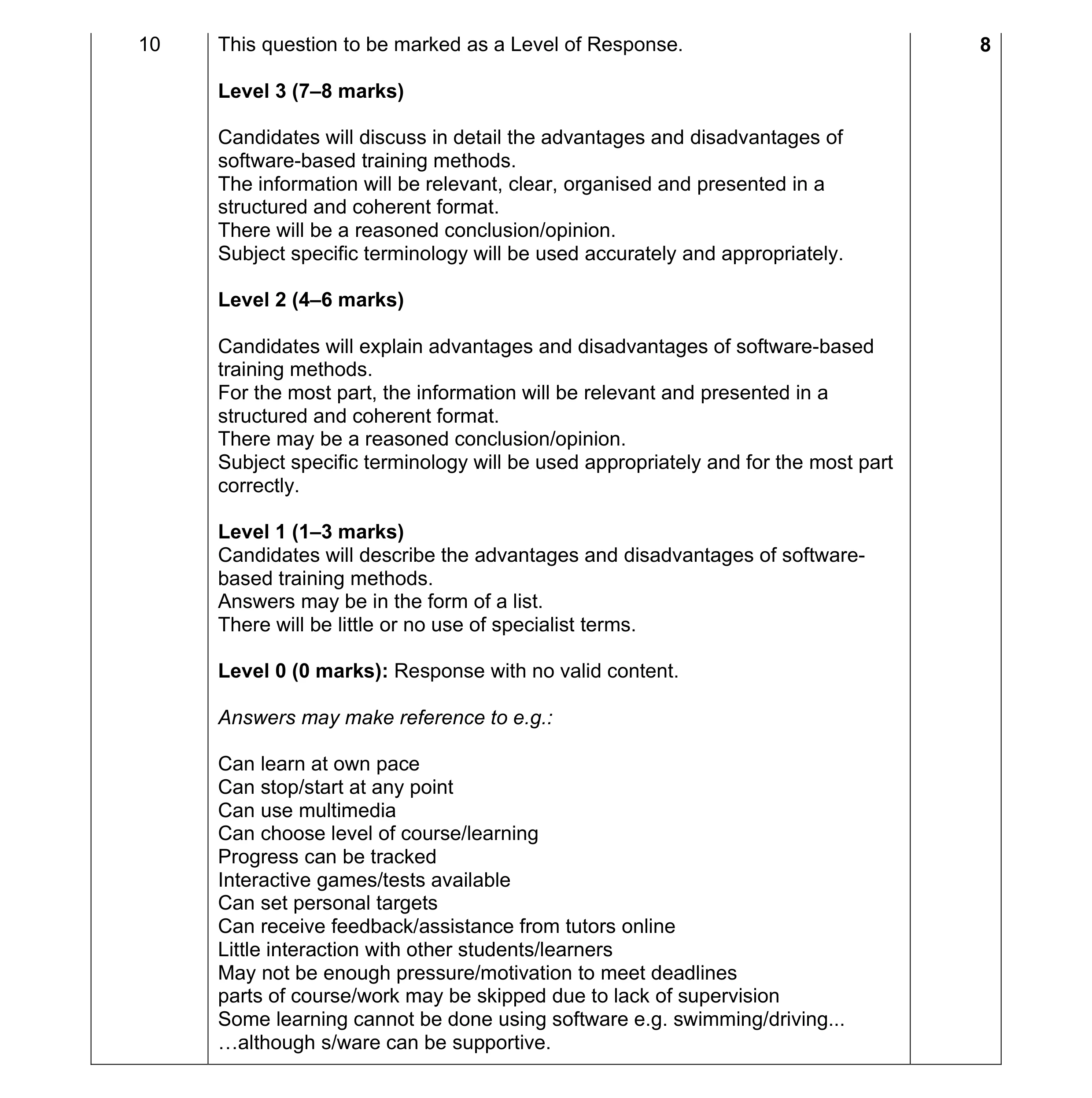 8
8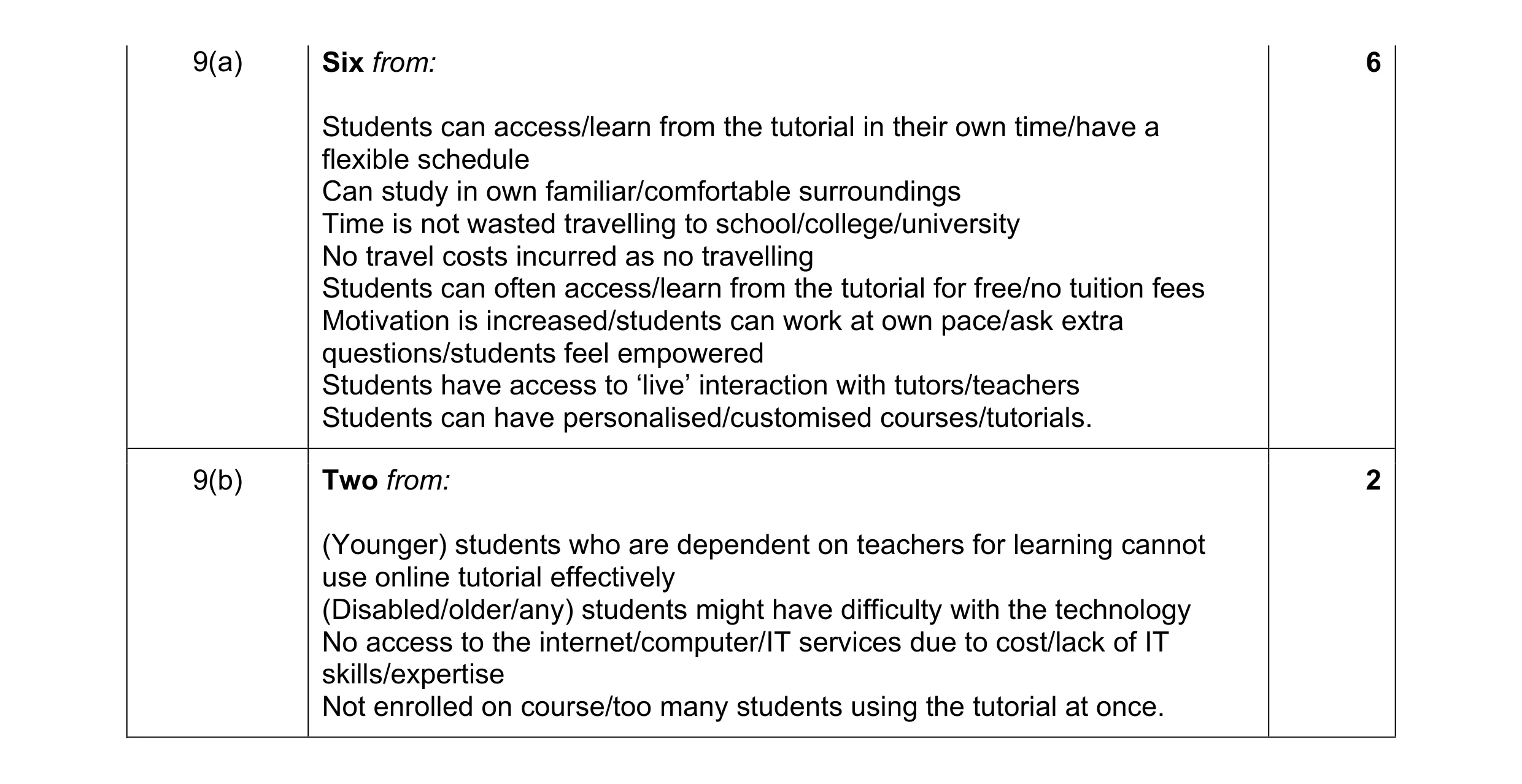 8
8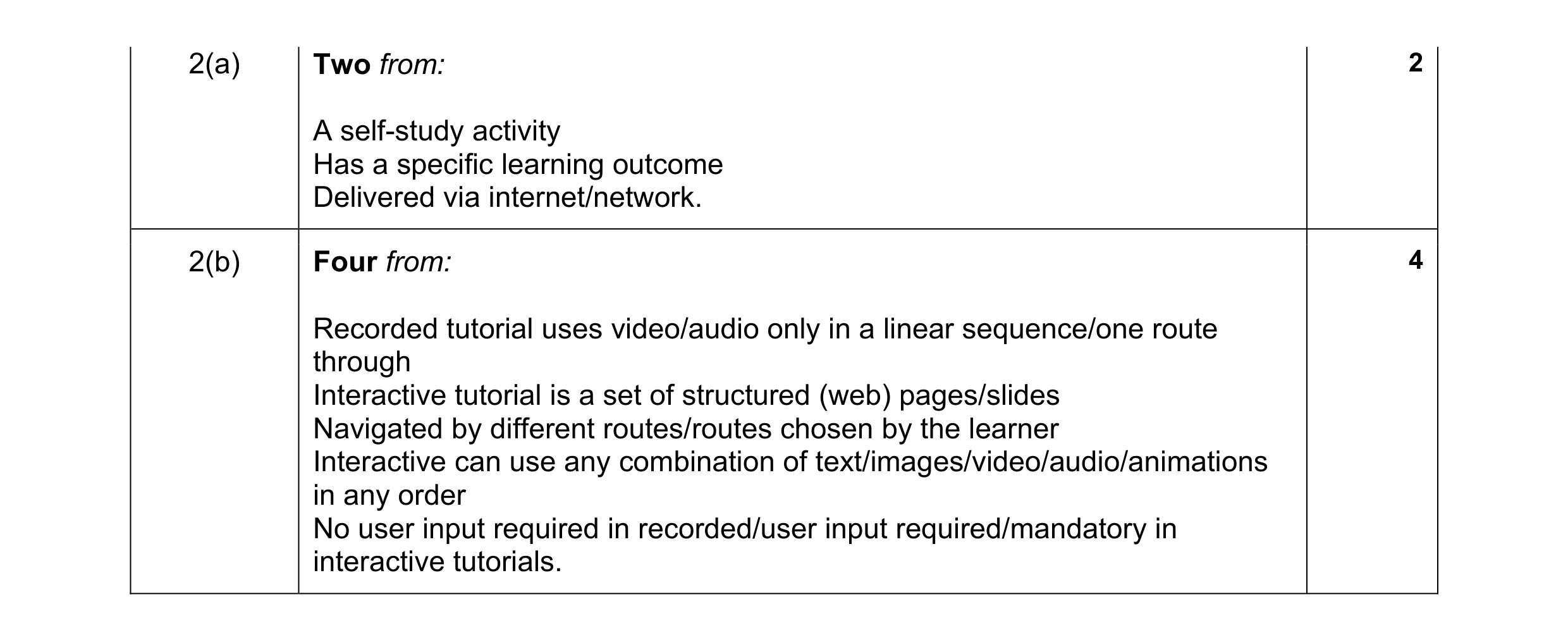 6
6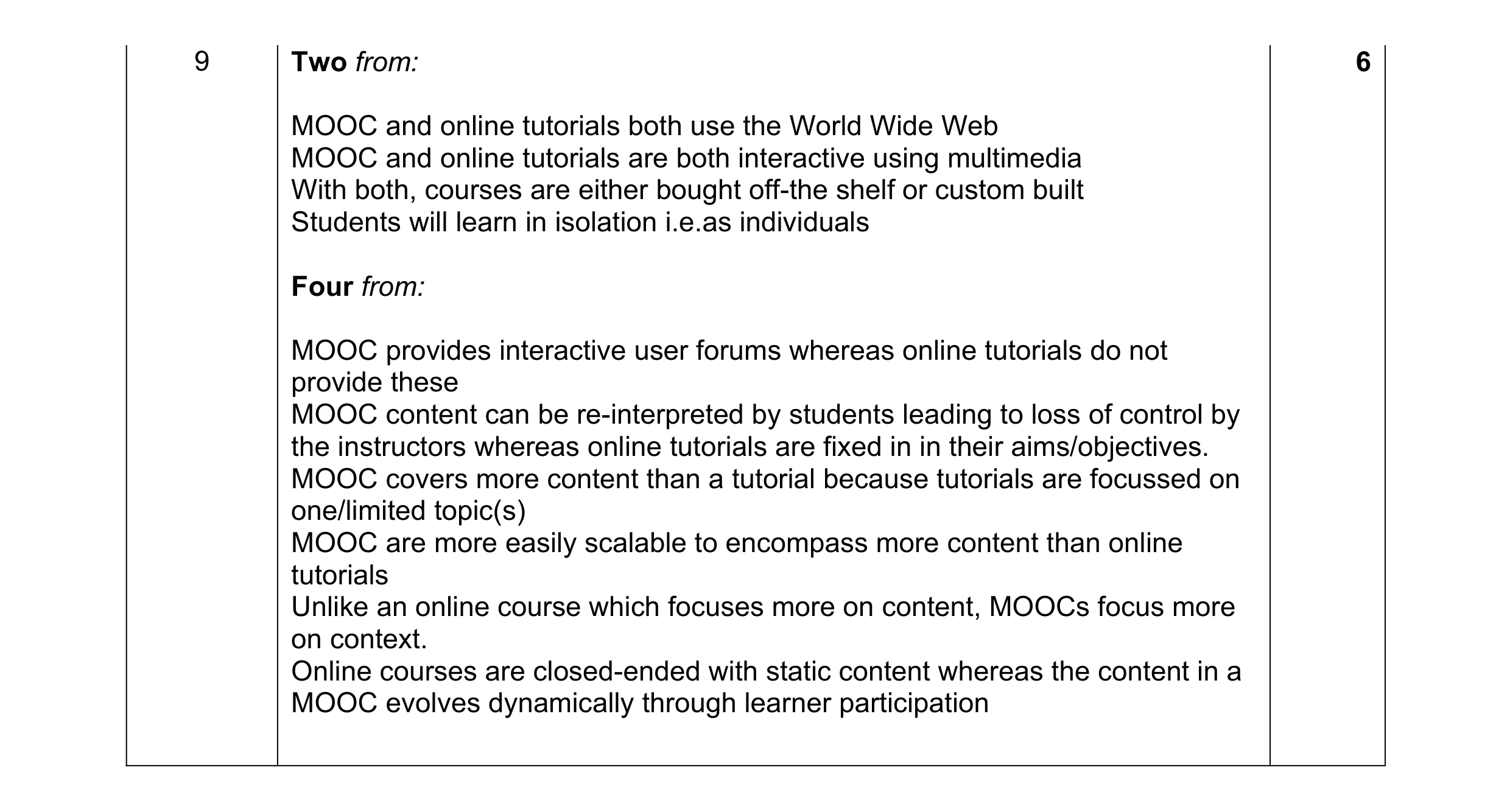 6
6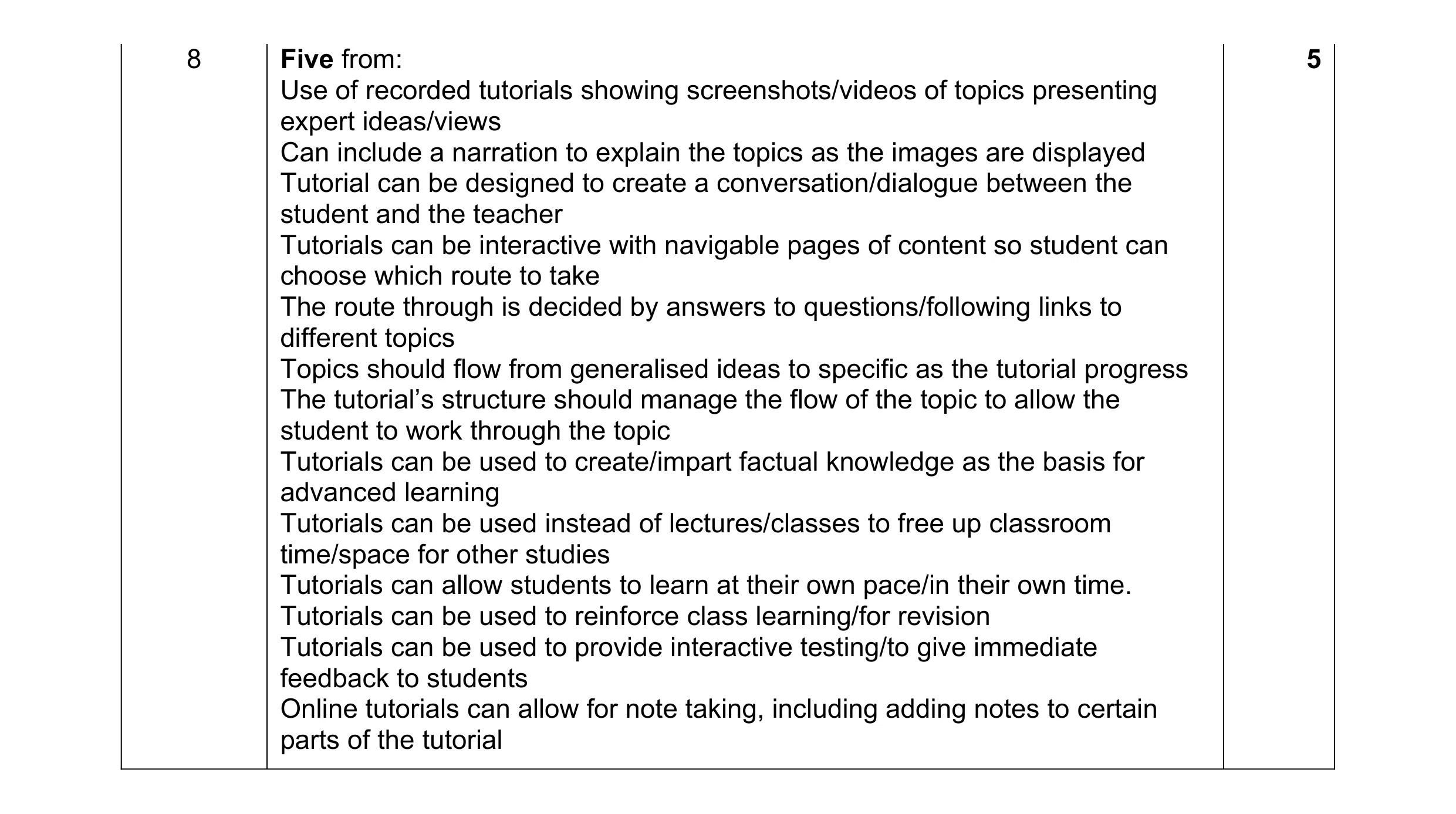 5
5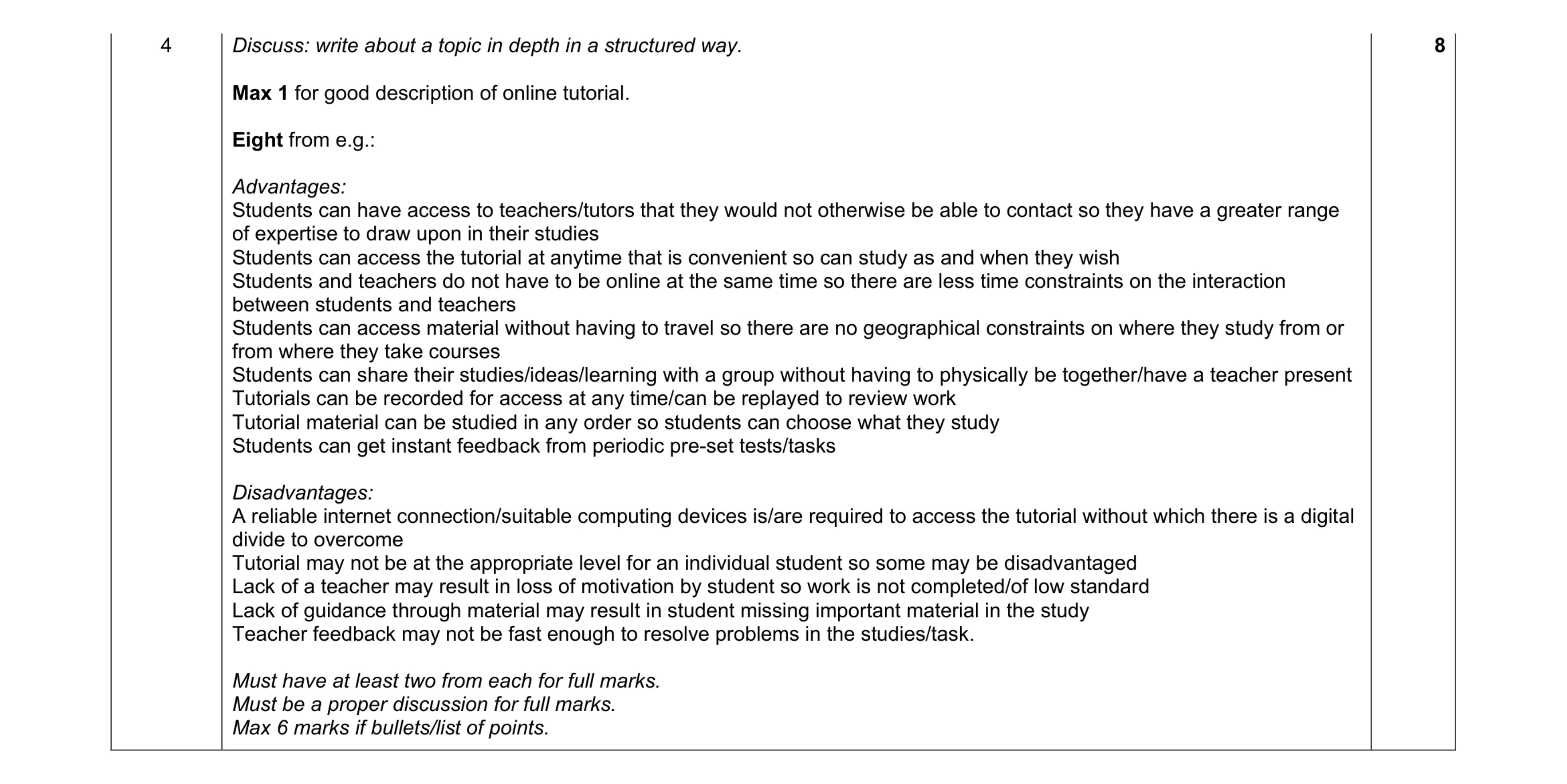 8
8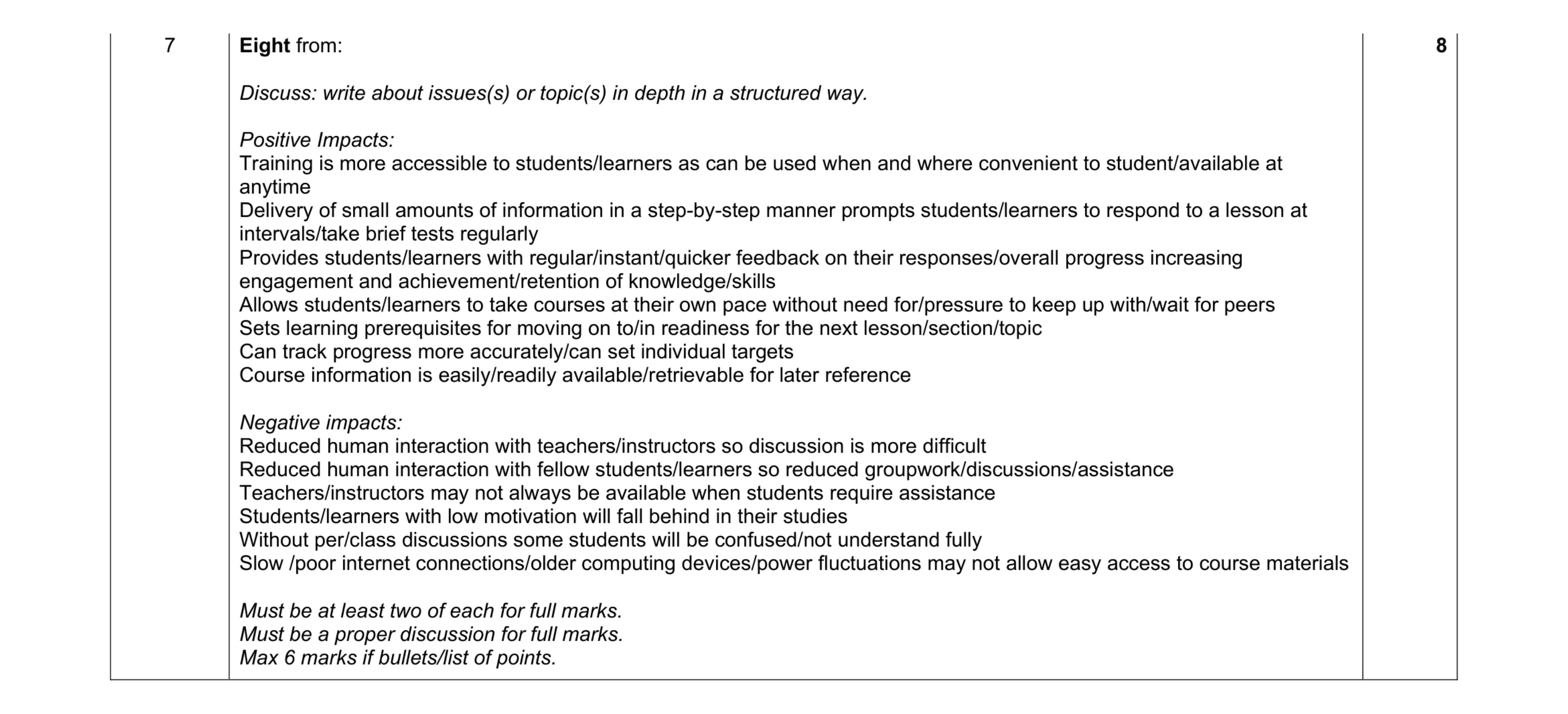 8
8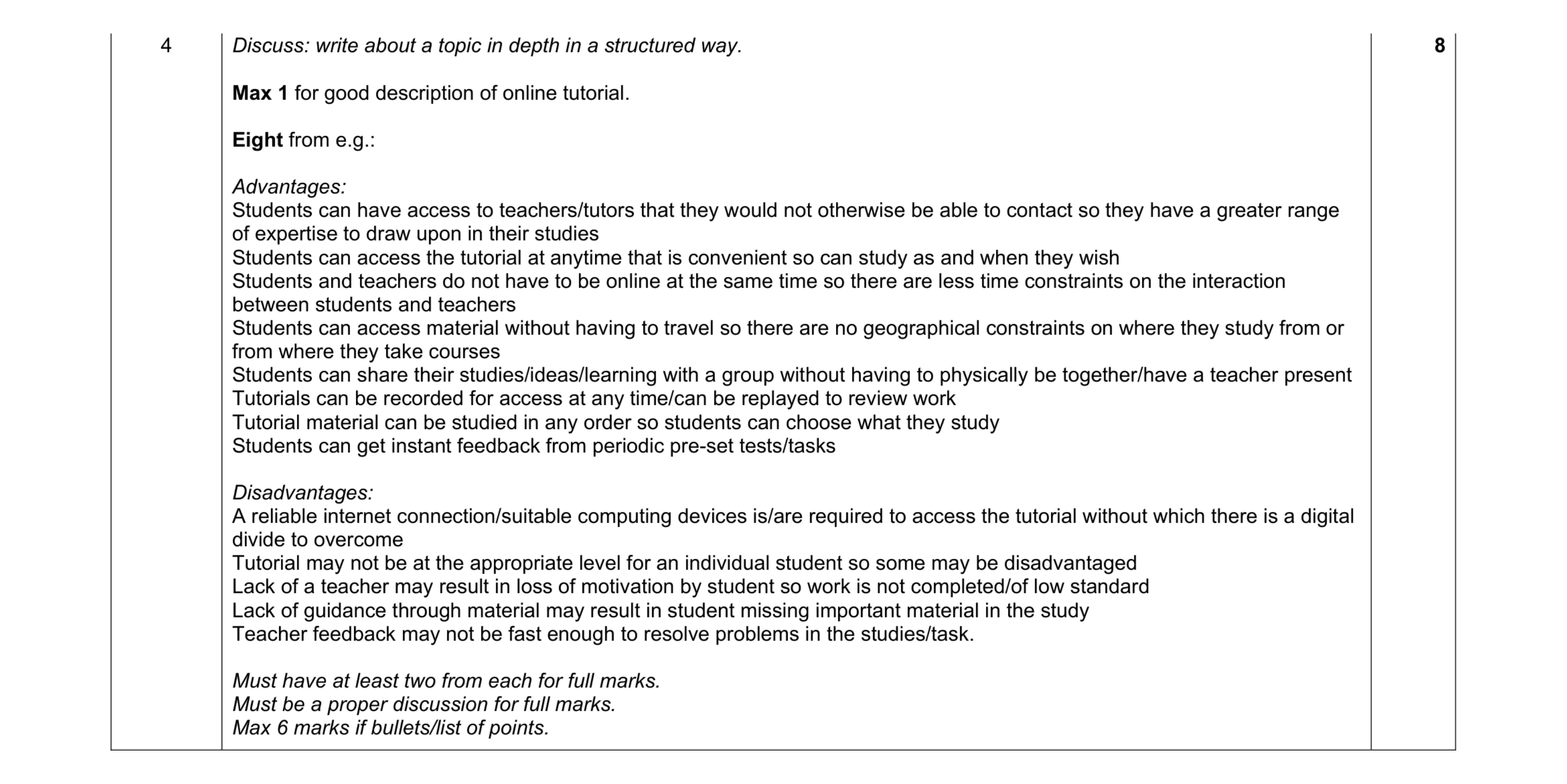 8
8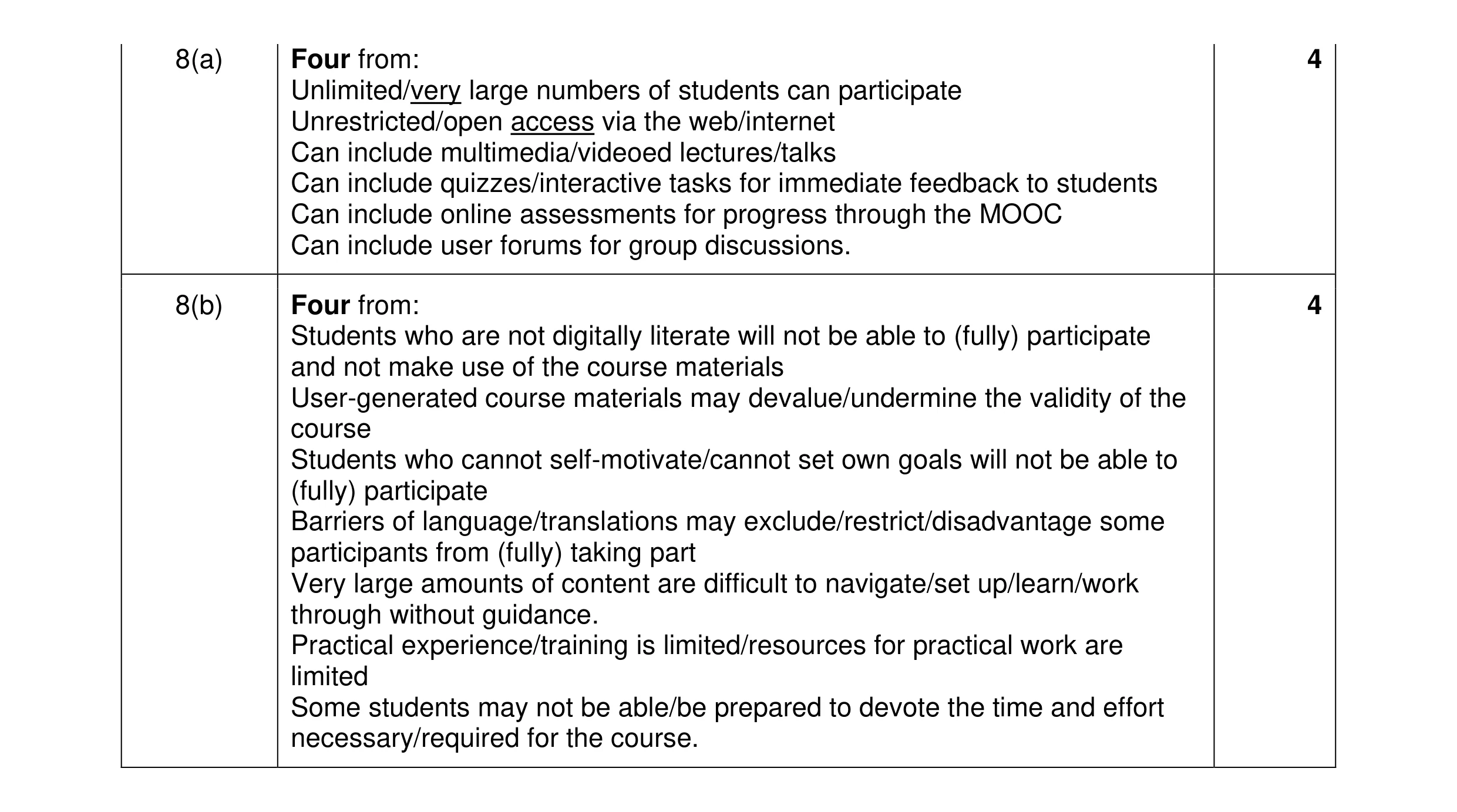 8
8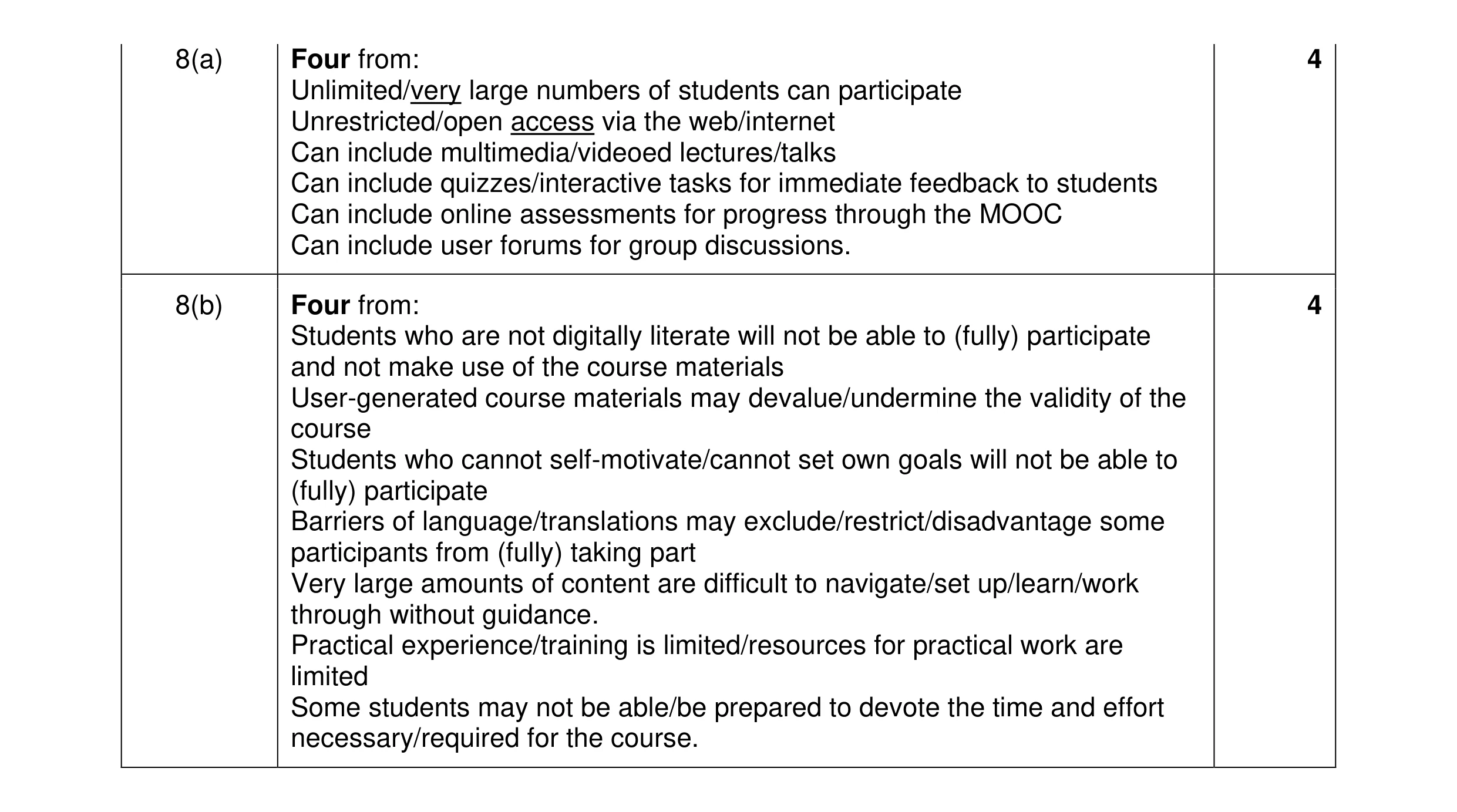 8
8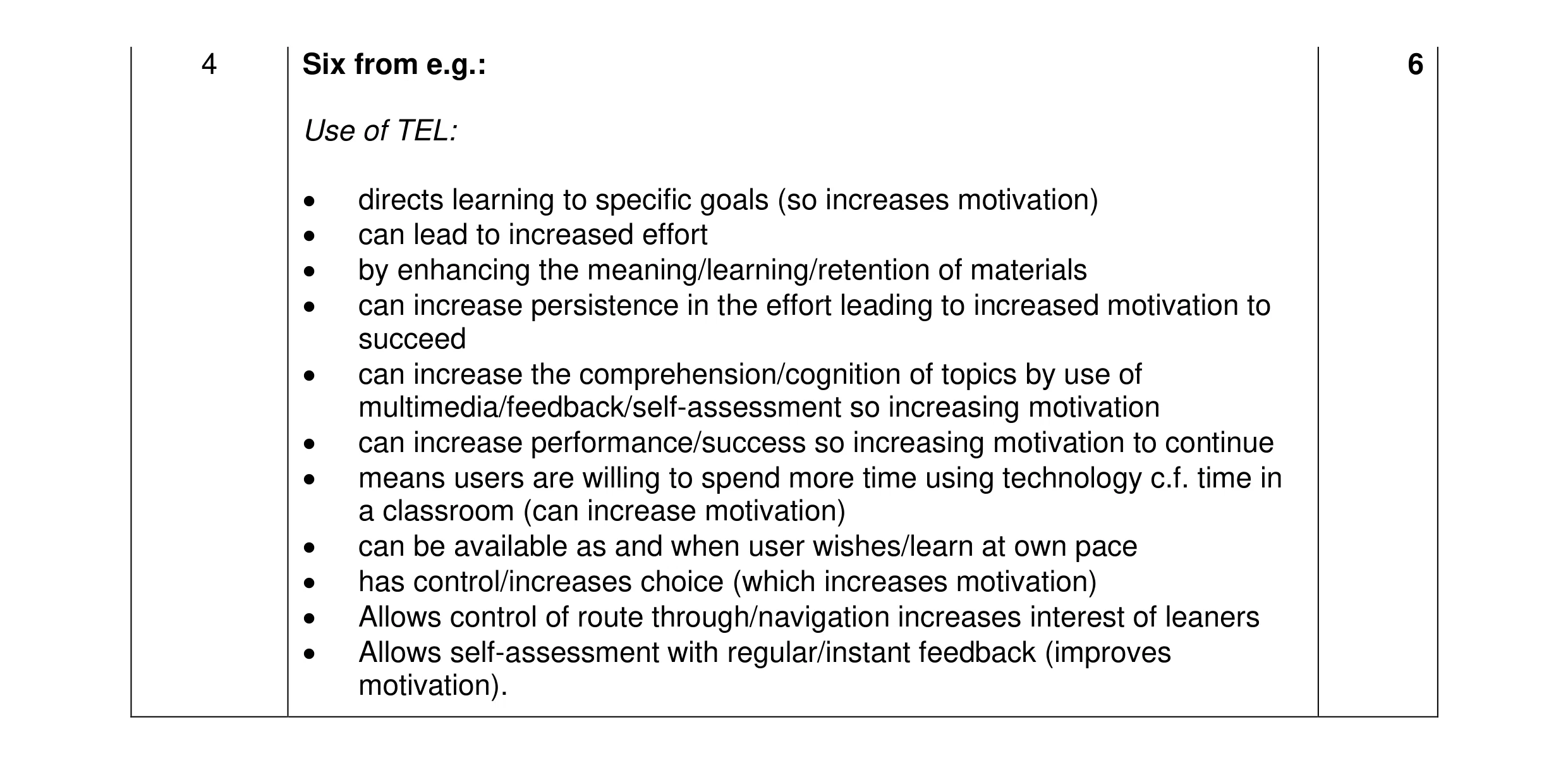 6
6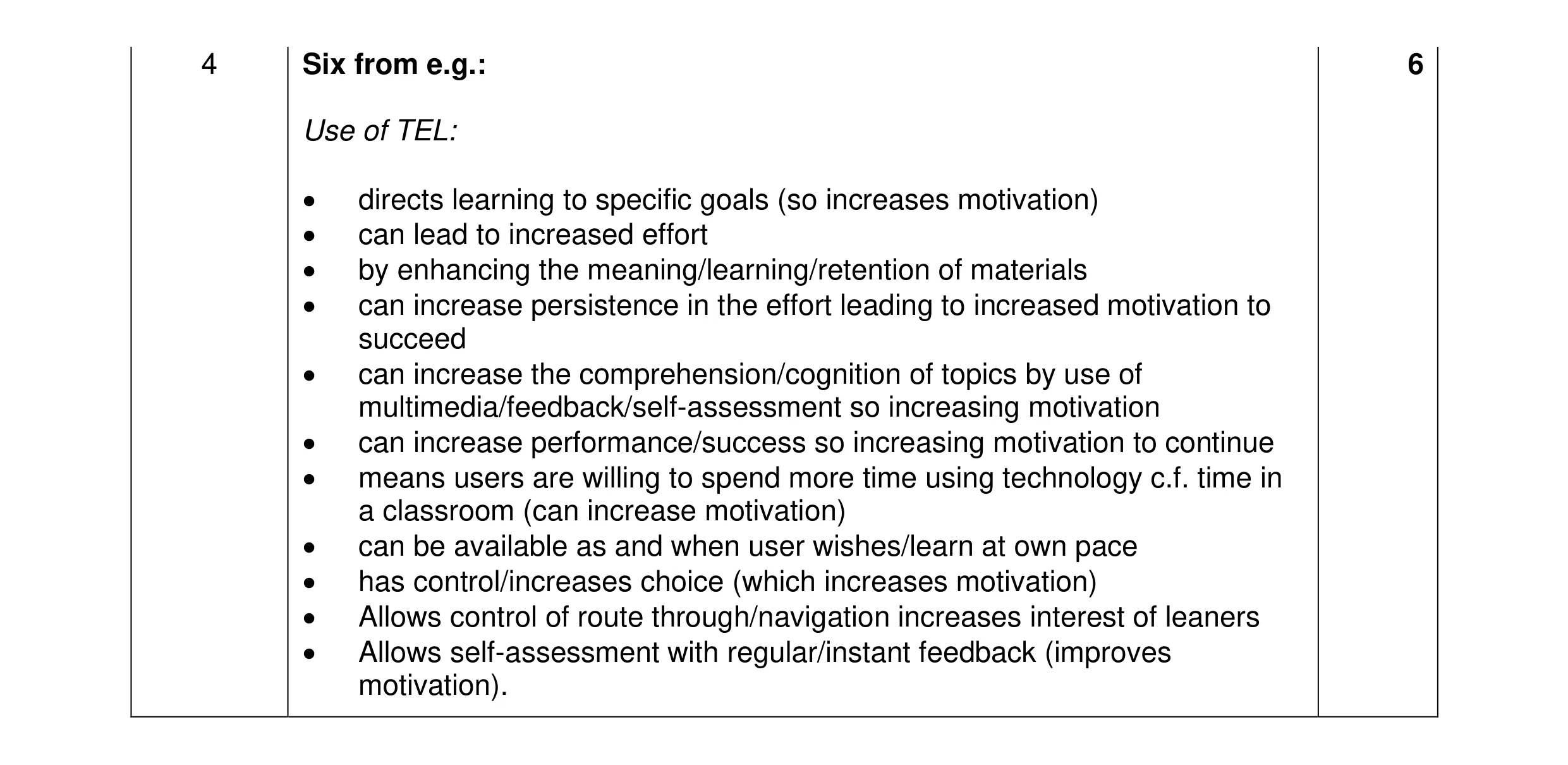 6
6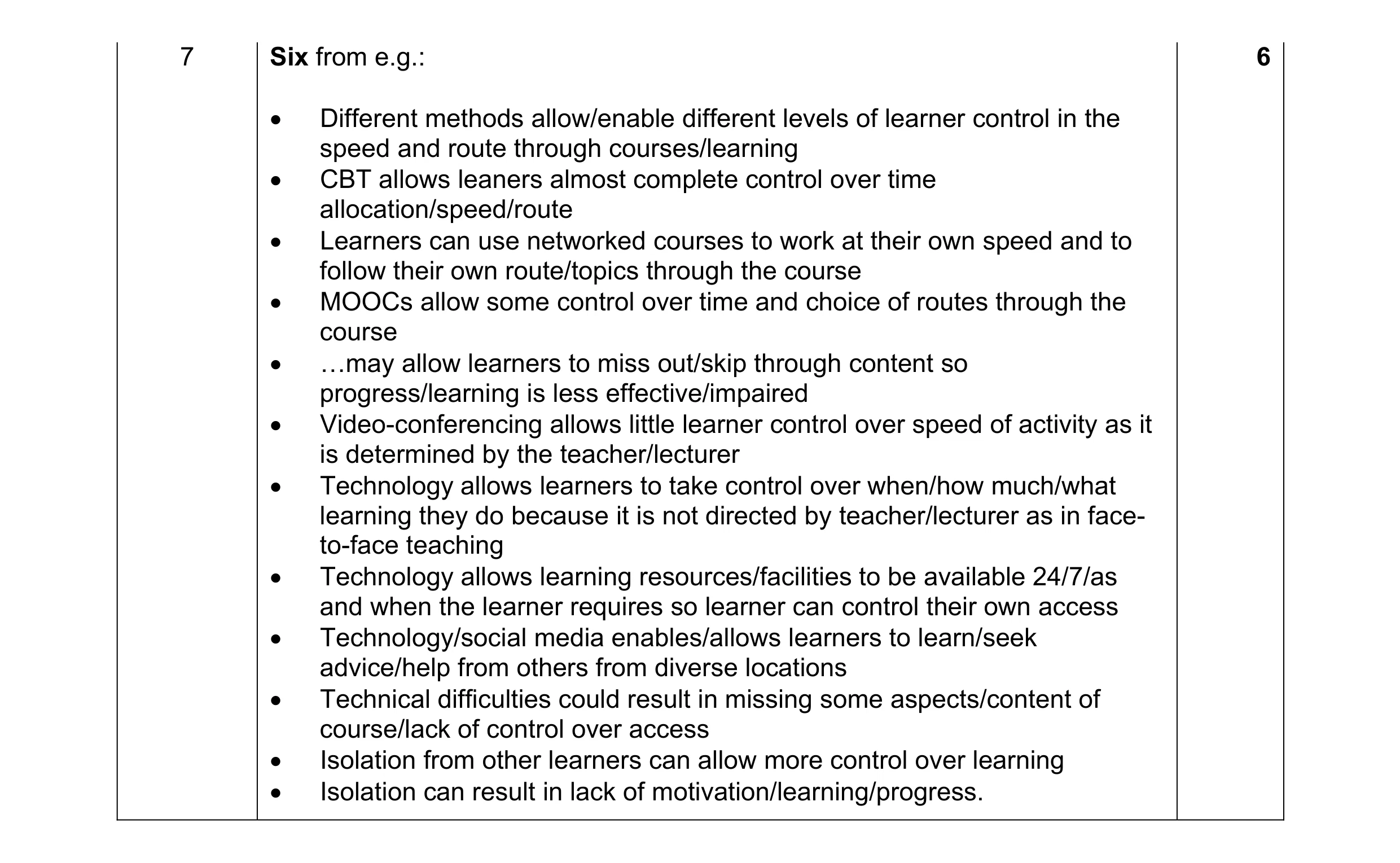 6
6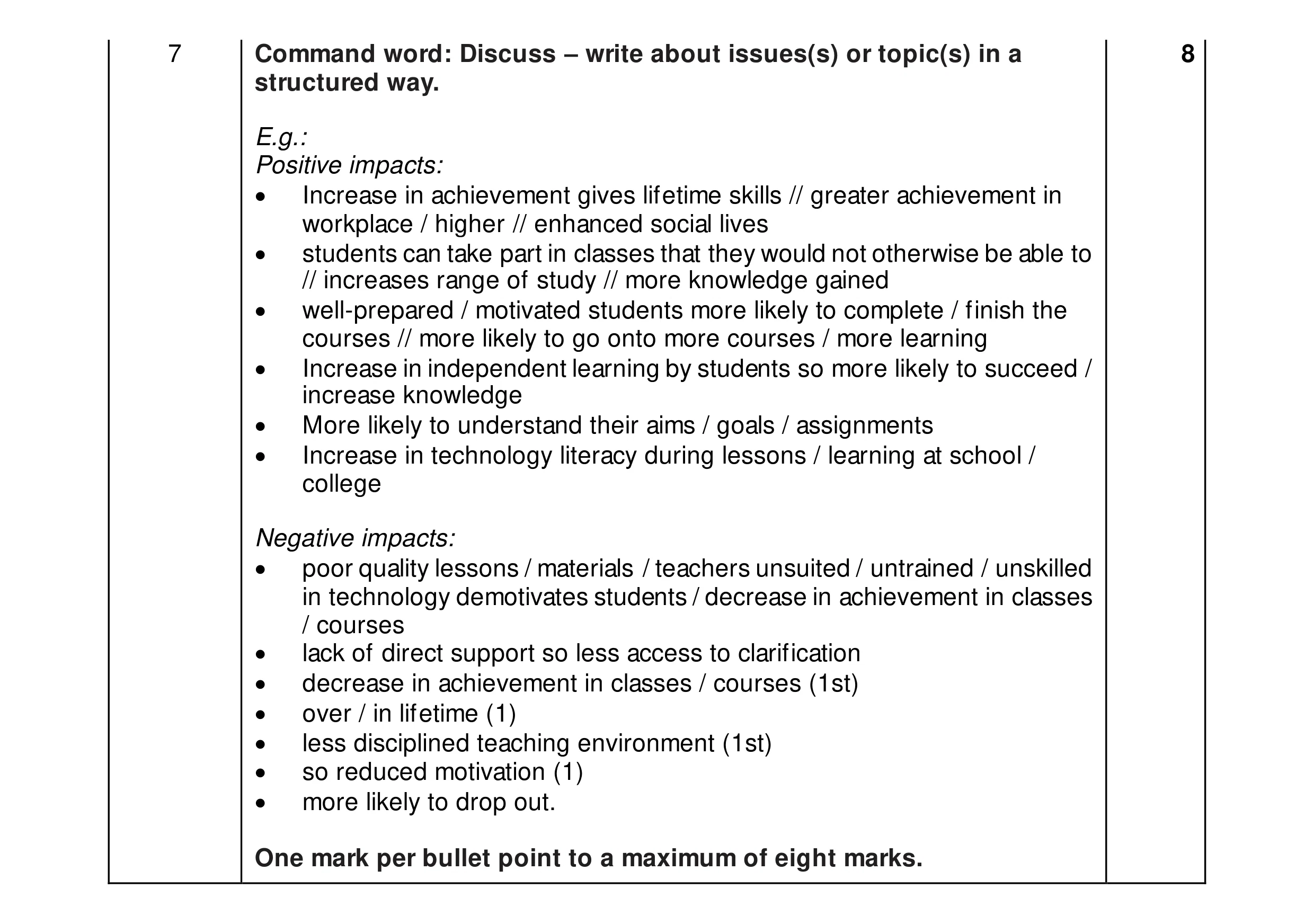 8
8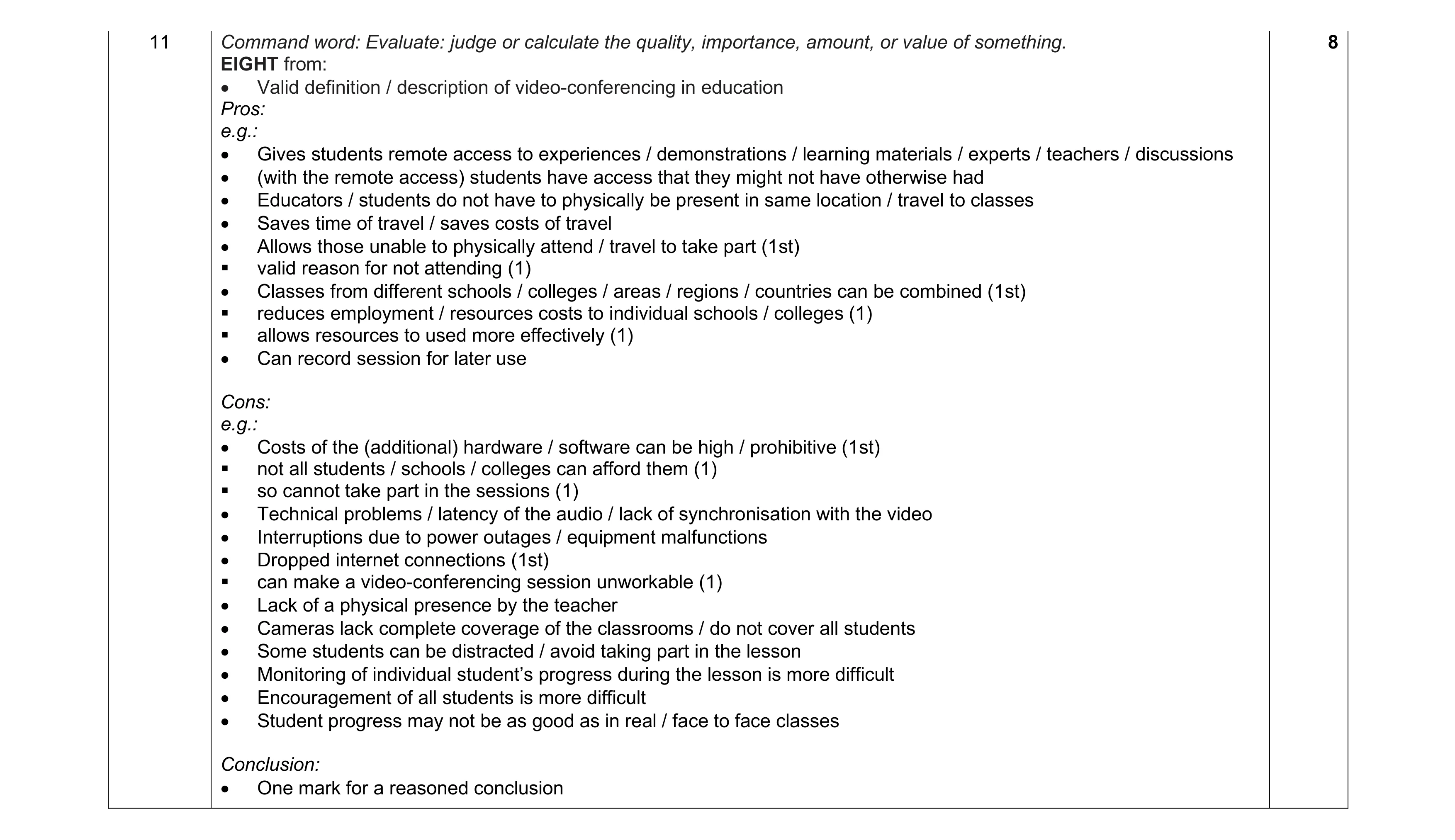 8
8