Cambridge A Level Economics 9708 — 2023 Feb/March Paper 4 · Variant 2
9708/42/F/M/23 · 4 questions · 60 marks · ≈68 min
The question paper and its mark scheme, free to read here and free to download. This is Cambridge’s own paper, exactly as it was sat.
Question paper4 pages

Mark scheme15 pages
Answers below. Sit the paper first if you are practising.


Questions as text
Q1 · Increasing public sector debt is a good policy Politicians do not usually think it a…
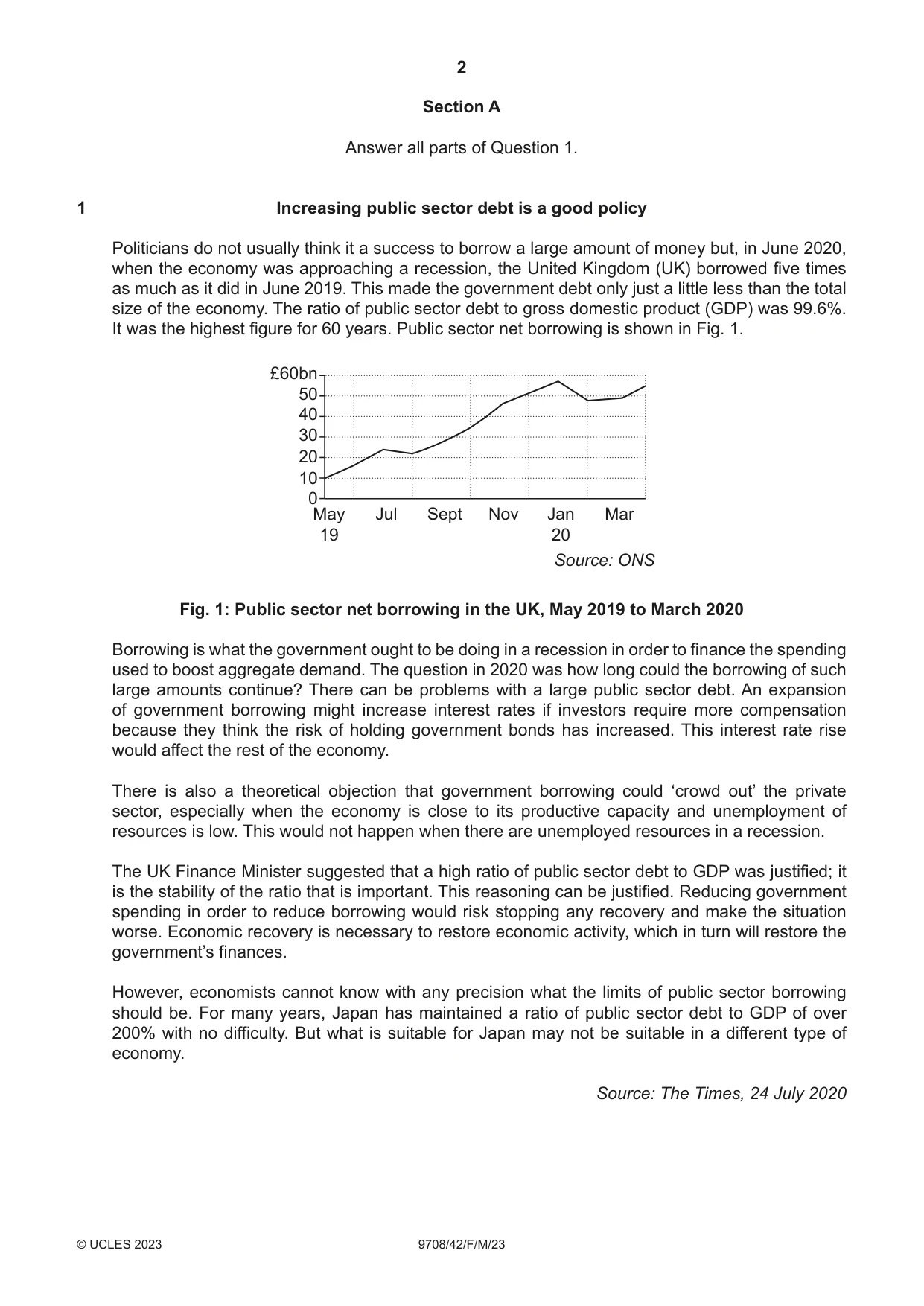
1 Increasing public sector debt is a good policy Politicians do not usually think it a success to borrow a large amount of money but, in June 2020, when the economy was approaching a recession, the United Kingdom (UK) borrowed five times as much as it did in June 2019. This made the government debt only just a little less than the total size of the economy. The ratio of public sector debt to gross domestic product (GDP) was 99.6%. It was the highest figure for 60 years. Public sector net borrowing is shown in Fig. 1. £60bn 50 40 30 20 10 0 May Jul Sept Nov Jan Mar 19 20 Source: ONS Fig. 1: Public sector net borrowing in the UK, May 2019 to March 2020 Borrowing is what the government ought to be doing in a recession in order to finance the spending used to boost aggregate demand. The question in 2020 was how long could the borrowing of such large amounts continue? There can be problems with a large public sector debt. An expansion of government borrowing might increase interest rates if investors require more compensation because they think the risk of holding government bonds has increased. This interest rate rise would affect the rest of the economy. There is also a theoretical objection that government borrowing could ‘crowd out’ the private sector, especially when the economy is close to its productive capacity and unemployment of resources is low. This would not happen when there are unemployed resources in a recession. The UK Finance Minister suggested that a high ratio of public sector debt to GDP was justified; it is the stability of the ratio that is important. This reasoning can be justified. Reducing government spending in order to reduce borrowing would risk stopping any recovery and make the situation worse. Economic recovery is necessary to restore economic activity, which in turn will restore the government’s finances. However, economists cannot know with any precision what the limits of public sector borrowing should be. For many years, Japan has maintained a ratio of public sector debt to GDP of over 200% with no difficulty. But what is suitable for Japan may not be suitable in a different type of economy. Source: The Times, 24 July 2020 (a) State what is meant by ‘a recession’. [3] (b) Analyse why governments borrow and why it is said that a government should increase spending in a recession. [5] (c) Consider what is meant by the phrase ‘government borrowing could ‘crowd out’ the private sector.’ [6] (d) Assess whether the evidence in the article makes a conclusive case that the high level of government borrowing is an effective policy. [6]
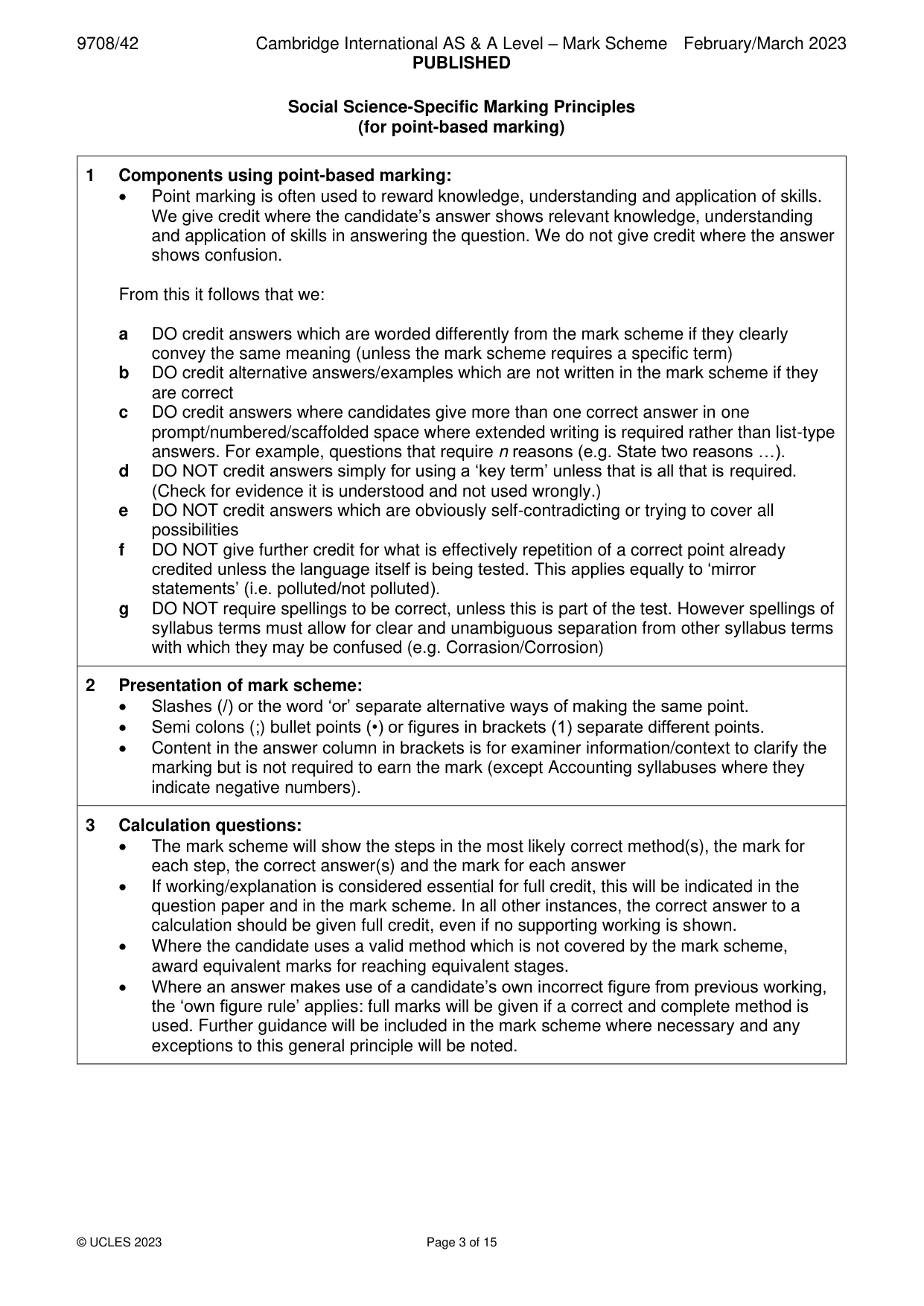
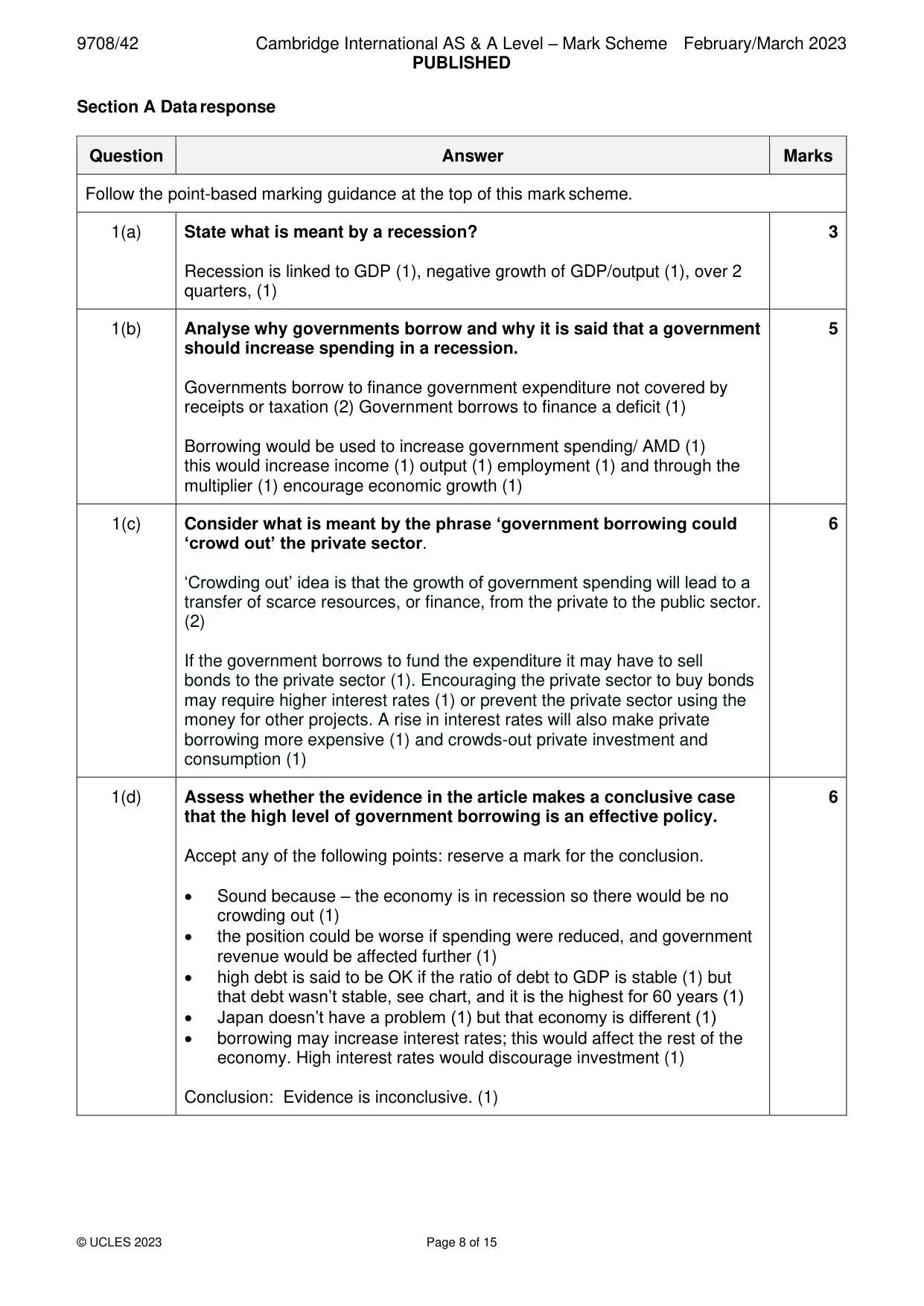
Mark scheme: Question Answer Marks Follow the point-based marking guidance at the top of this mark scheme. 1(a) State what is meant by a recession? 3 Recession is linked to GDP (1), negative growth of GDP/output (1), over 2 quarters, (1) 1(b) Analyse why governments borrow and why it is said that a government 5 should increase spending in a recession. Governments borrow to finance government expenditure not covered by receipts or taxation (2) Government borrows to finance a deficit (1) Borrowing would be used to increase government spending/ AMD (1) this would increase income (1) output (1) employment (1) and through the multiplier (1) encourage economic growth (1) 1(c) Consider what is meant by the phrase ‘government borrowing could 6 ‘crowd out’ the private sector. ‘Crowding out’ idea is that the growth of government spending will lead to a transfer of scarce resources, or finance, from the private to the public sector. (2) If the government borrows to fund the expenditure it may have to sell bonds to the private sector (1). Encouraging the private sector to buy bonds may require higher interest rates (1) or prevent the private sector using the money for other projects. A rise in interest rates will also make private borrowing more expensive (1) and crowds-out private investment and consumption (1) 1(d) Assess whether the evidence in the article makes a conclusive case 6 that the high level of government borrowing is an effective policy. Accept any of the following points: reserve a mark for the conclusion. • Sound because – the economy is in recession so there would be no crowding out (1) • the position could be worse if spending were reduced, and government revenue would be affected further (1) • high debt is said to be OK if the ratio of debt to GDP is stable (1) but that debt wasn’t stable, see chart, and it is the highest for 60 years (1) • Japan doesn’t have a problem (1) but that economy is different (1) • borrowing may increase interest rates; this would affect the rest of the economy. High interest rates would discourage investment (1) Conclusion: Evidence is inconclusive. (1)
Q2 · The use of air travel leads to market failure caused by negative externalities
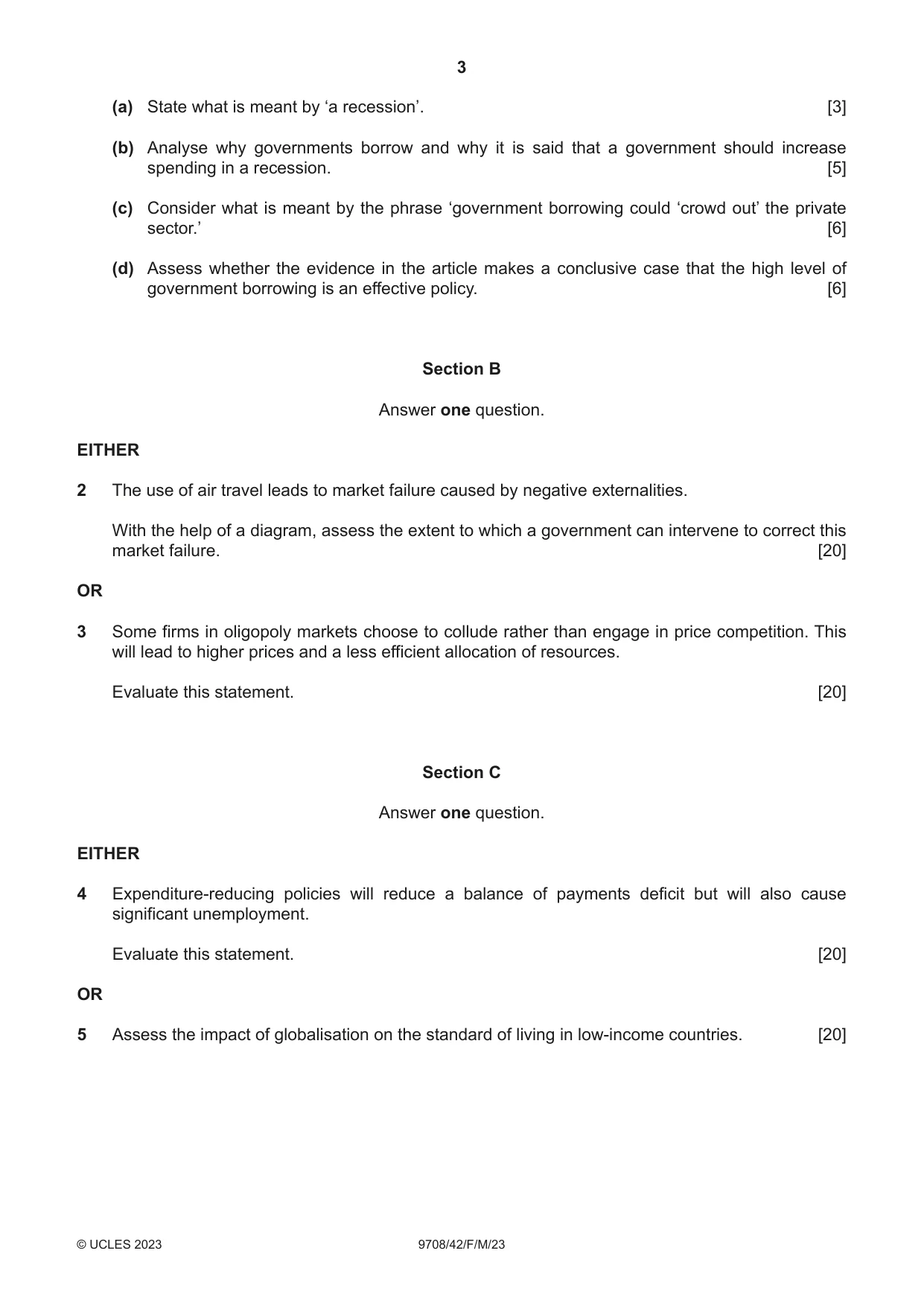
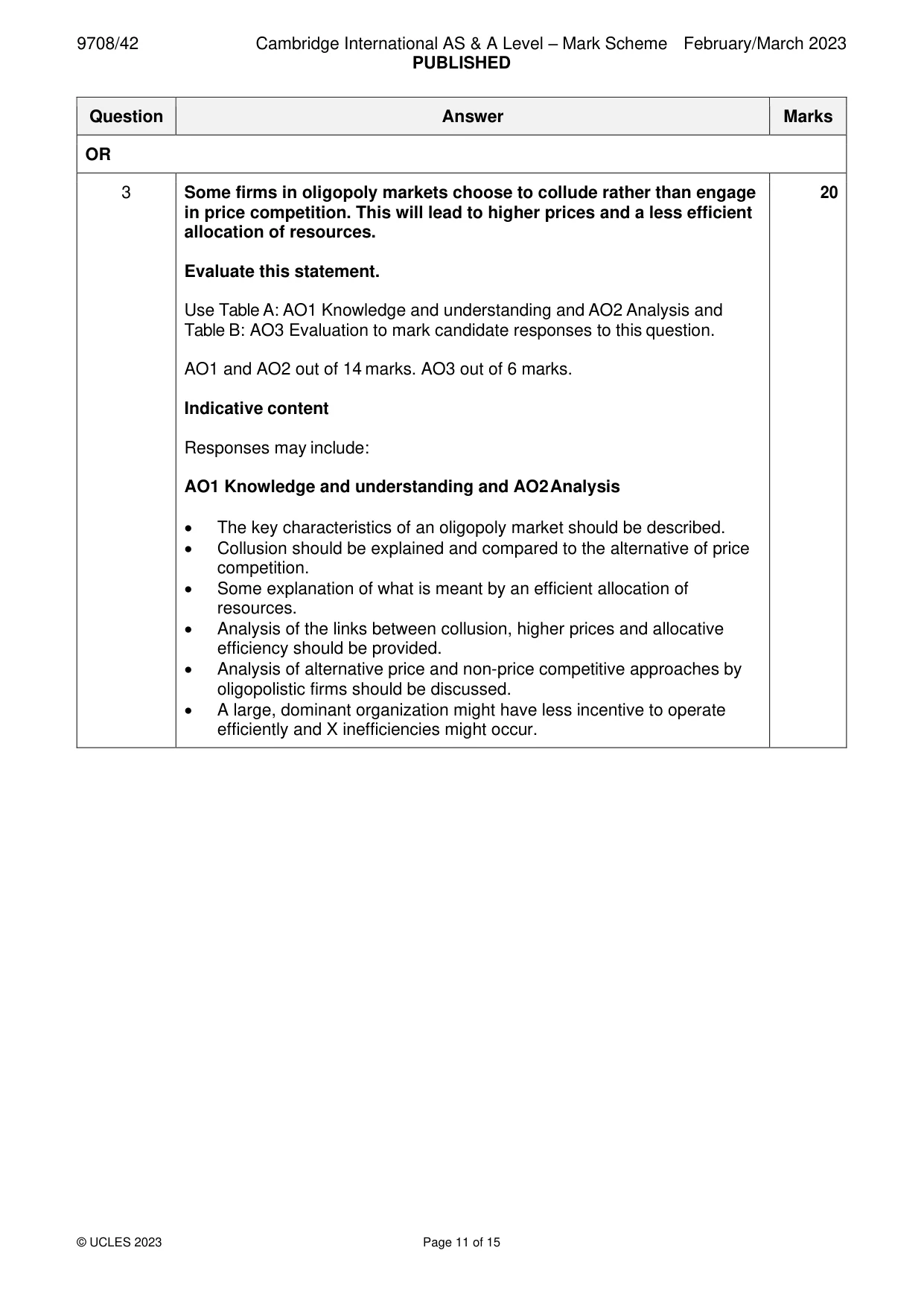
2 The use of air travel leads to market failure caused by negative externalities. With the help of a diagram, assess the extent to which a government can intervene to correct this market failure. [20] OR
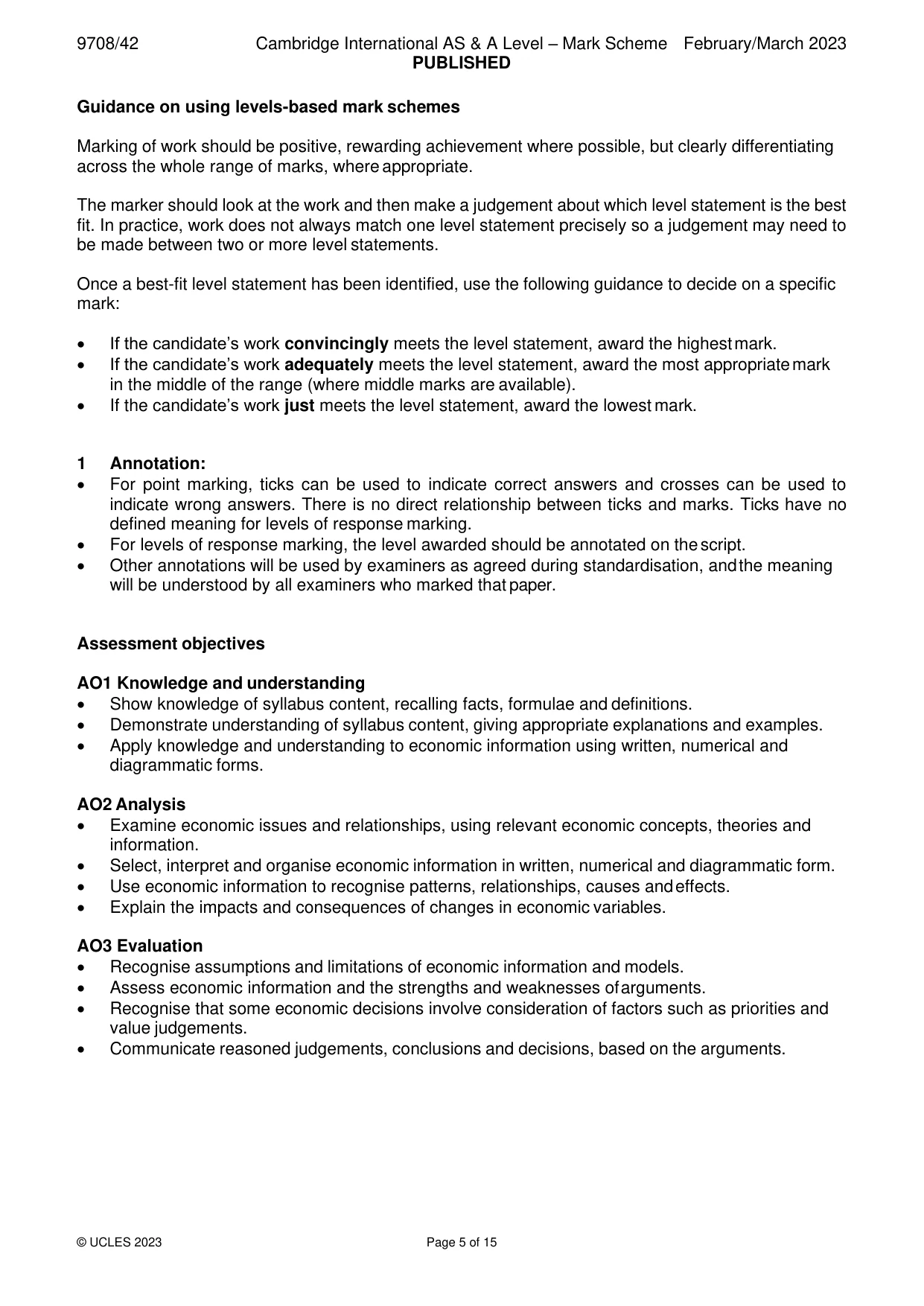
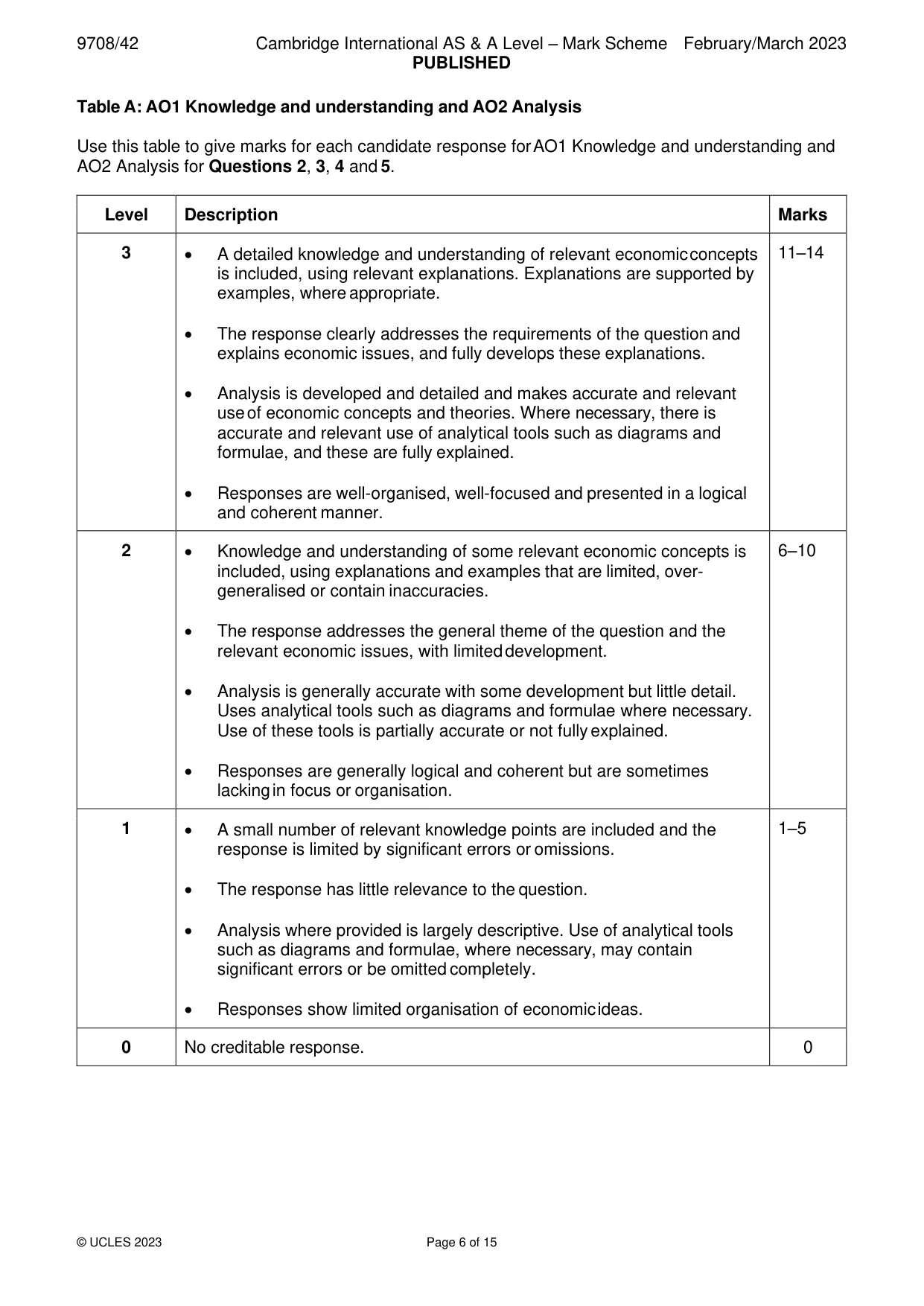
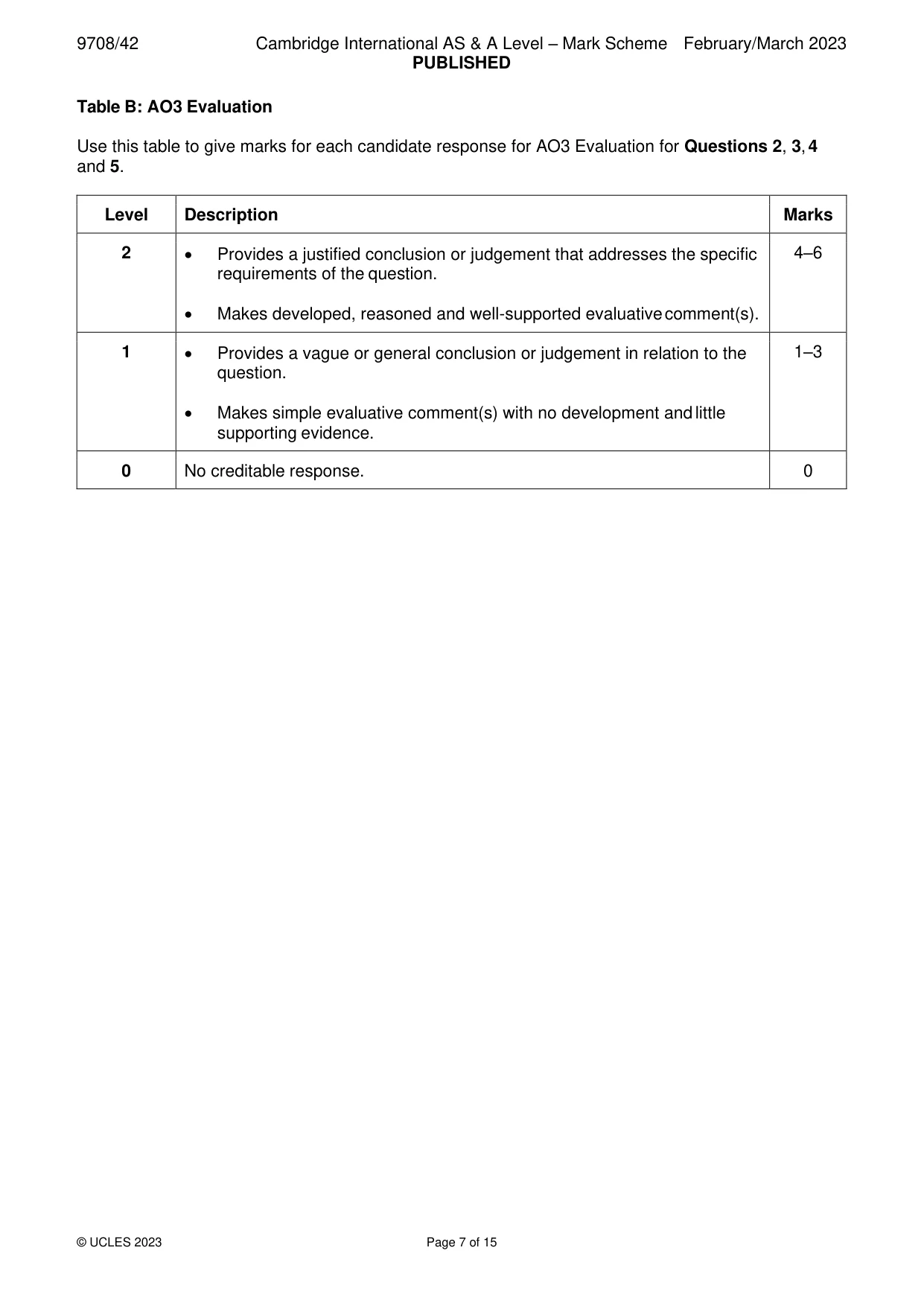
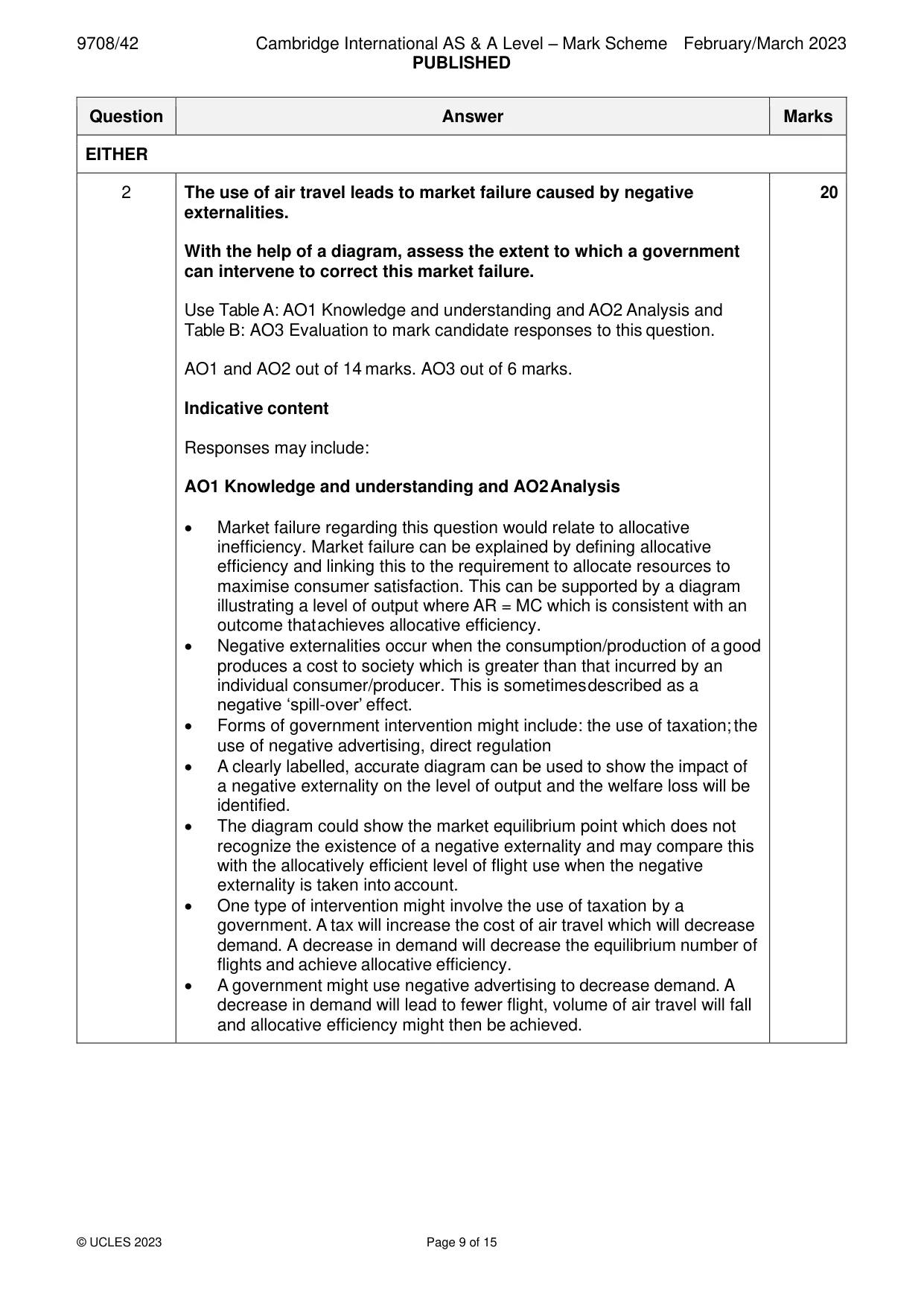
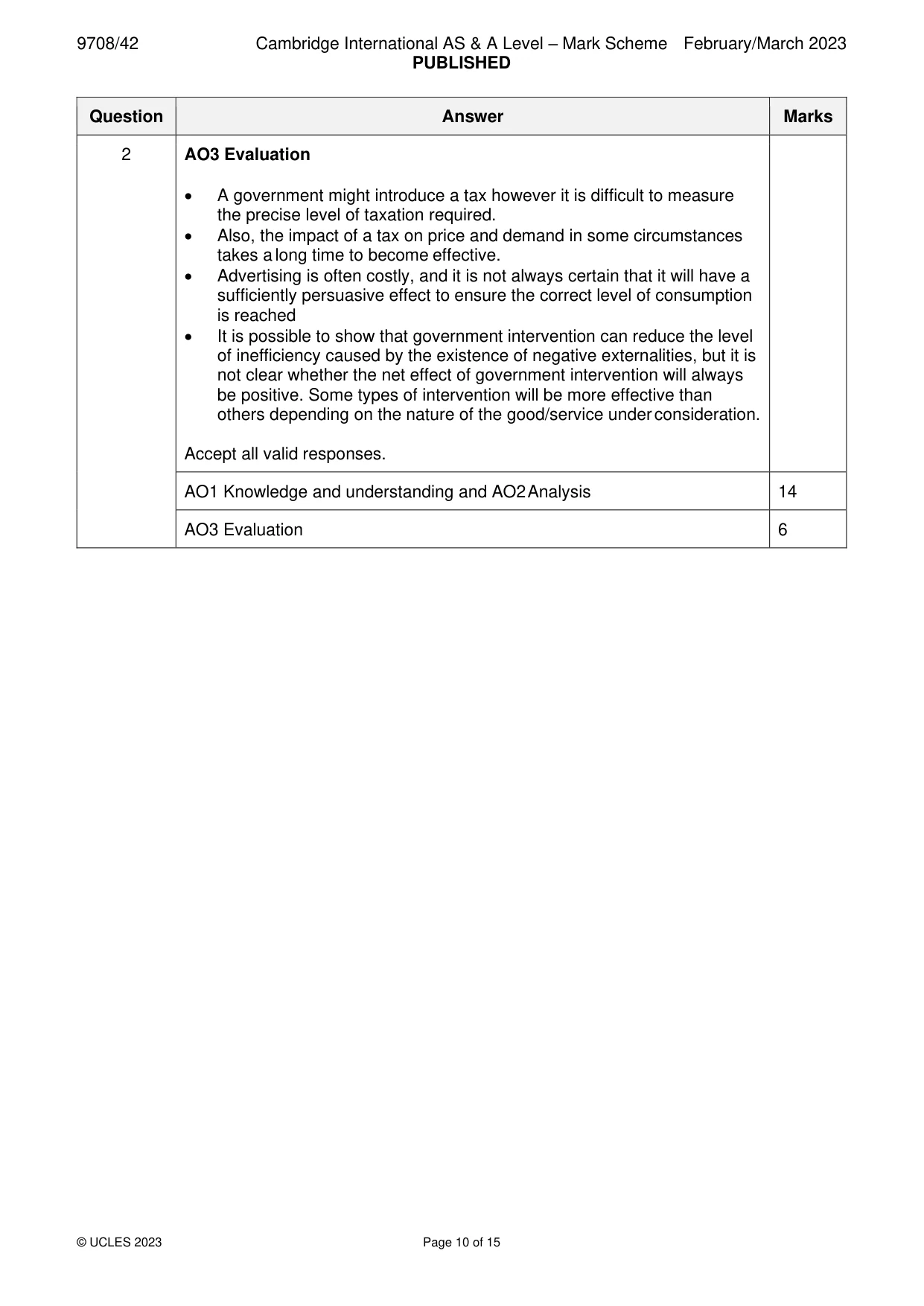
Mark scheme: 2 The use of air travel leads to market failure caused by negative 20 externalities. With the help of a diagram, assess the extent to which a government can intervene to correct this market failure. Use Table A: AO1 Knowledge and understanding and AO2 Analysis and Table B: AO3 Evaluation to mark candidate responses to this question. AO1 and AO2 out of 14 marks. AO3 out of 6 marks. Indicative content Responses may include: AO1 Knowledge and understanding and AO2 Analysis • Market failure regarding this question would relate to allocative inefficiency. Market failure can be explained by defining allocative efficiency and linking this to the requirement to allocate resources to maximise consumer satisfaction. This can be supported by a diagram illustrating a level of output where AR = MC which is consistent with an outcome that achieves allocative efficiency. • Negative externalities occur when the consumption/production of a good produces a cost to society which is greater than that incurred by an individual consumer/producer. This is sometimes described as a negative ‘spill-over’ effect. • Forms of government intervention might include: the use of taxation; the use of negative advertising, direct regulation • A clearly labelled, accurate diagram can be used to show the impact of a negative externality on the level of output and the welfare loss will be identified. • The diagram could show the market equilibrium point which does not recognize the existence of a negative externality and may compare this with the allocatively efficient level of flight use when the negative externality is taken into account. • One type of intervention might involve the use of taxation by a government. A tax will increase the cost of air travel which will decrease demand. A decrease in demand will decrease the equilibrium number of flights and achieve allocative efficiency. • A government might use negative advertising to decrease demand. A decrease in demand will lead to fewer flight, volume of air travel will fall and allocative efficiency might then be achieved. 2 AO3 Evaluation • A government might introduce a tax however it is difficult to measure the precise level of taxation required. • Also, the impact of a tax on price and demand in some circumstances takes a long time to become effective. • Advertising is often costly, and it is not always certain that it will have a sufficiently persuasive effect to ensure the correct level of consumption is reached • It is possible to show that government intervention can reduce the level of inefficiency caused by the existence of negative externalities, but it is not clear whether the net effect of government intervention will always be positive. Some types of intervention will be more effective than others depending on the nature of the good/service under consideration. Accept all valid responses. AO1 Knowledge and understanding and AO2 Analysis 14 AO3 Evaluation 6
Q3 · Some firms in oligopoly markets choose to collude rather than engage in price competition
3 Some firms in oligopoly markets choose to collude rather than engage in price competition. This will lead to higher prices and a less efficient allocation of resources. Evaluate this statement. [20] Section C Answer one question. EITHER
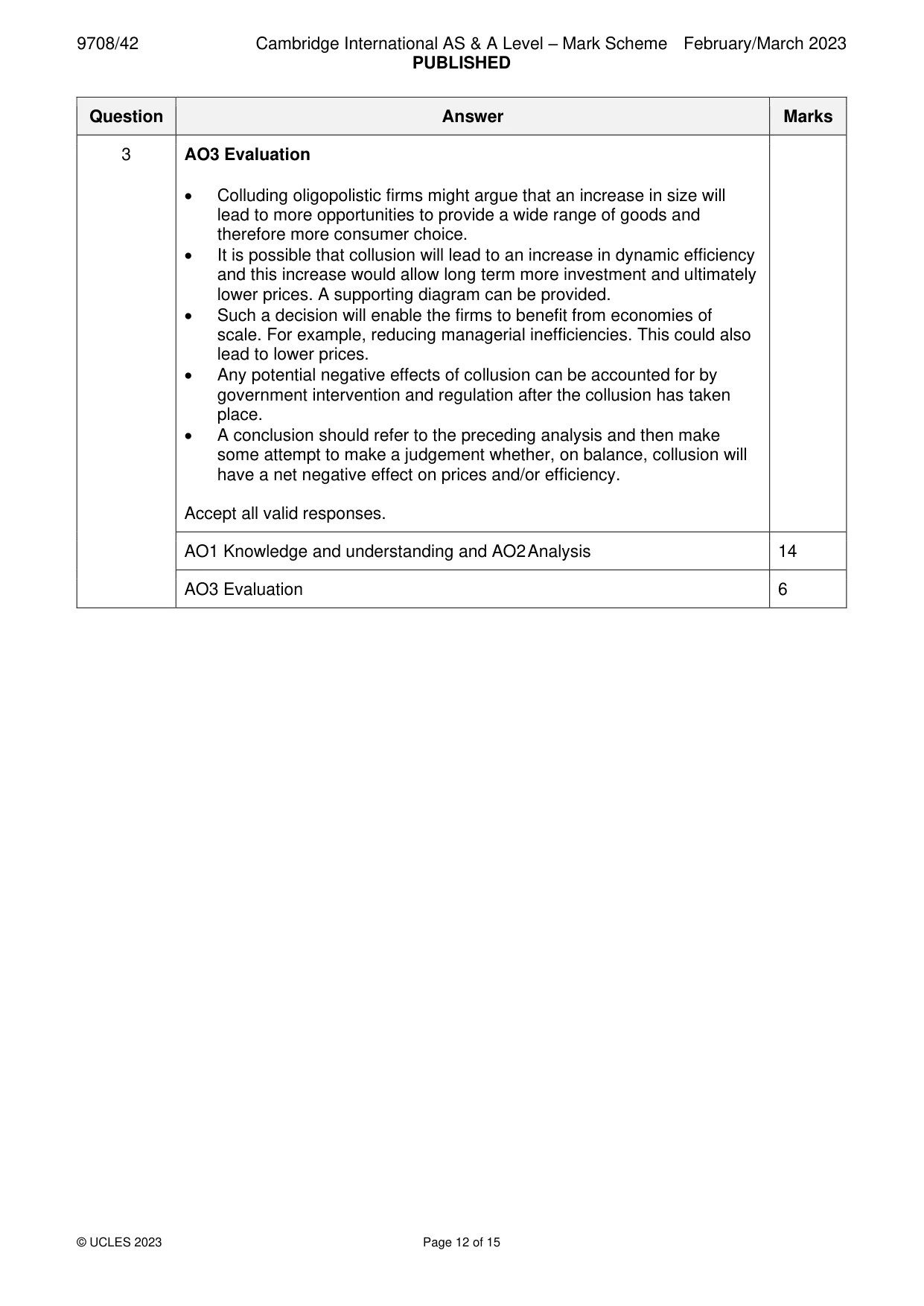
Mark scheme: 3 Some firms in oligopoly markets choose to collude rather than engage 20 in price competition. This will lead to higher prices and a less efficient allocation of resources. Evaluate this statement. Use Table A: AO1 Knowledge and understanding and AO2 Analysis and Table B: AO3 Evaluation to mark candidate responses to this question. AO1 and AO2 out of 14 marks. AO3 out of 6 marks. Indicative content Responses may include: AO1 Knowledge and understanding and AO2 Analysis • The key characteristics of an oligopoly market should be described. • Collusion should be explained and compared to the alternative of price competition. • Some explanation of what is meant by an efficient allocation of resources. • Analysis of the links between collusion, higher prices and allocative efficiency should be provided. • Analysis of alternative price and non-price competitive approaches by oligopolistic firms should be discussed. • A large, dominant organization might have less incentive to operate efficiently and X inefficiencies might occur. 3 AO3 Evaluation • Colluding oligopolistic firms might argue that an increase in size will lead to more opportunities to provide a wide range of goods and therefore more consumer choice. • It is possible that collusion will lead to an increase in dynamic efficiency and this increase would allow long term more investment and ultimately lower prices. A supporting diagram can be provided. • Such a decision will enable the firms to benefit from economies of scale. For example, reducing managerial inefficiencies. This could also lead to lower prices. • Any potential negative effects of collusion can be accounted for by government intervention and regulation after the collusion has taken place. • A conclusion should refer to the preceding analysis and then make some attempt to make a judgement whether, on balance, collusion will have a net negative effect on prices and/or efficiency. Accept all valid responses. AO1 Knowledge and understanding and AO2 Analysis 14 AO3 Evaluation 6
Q4 · Expenditure-reducing policies will reduce a balance of payments deficit but will also…
4 Expenditure-reducing policies will reduce a balance of payments deficit but will also cause significant unemployment. Evaluate this statement. [20] OR
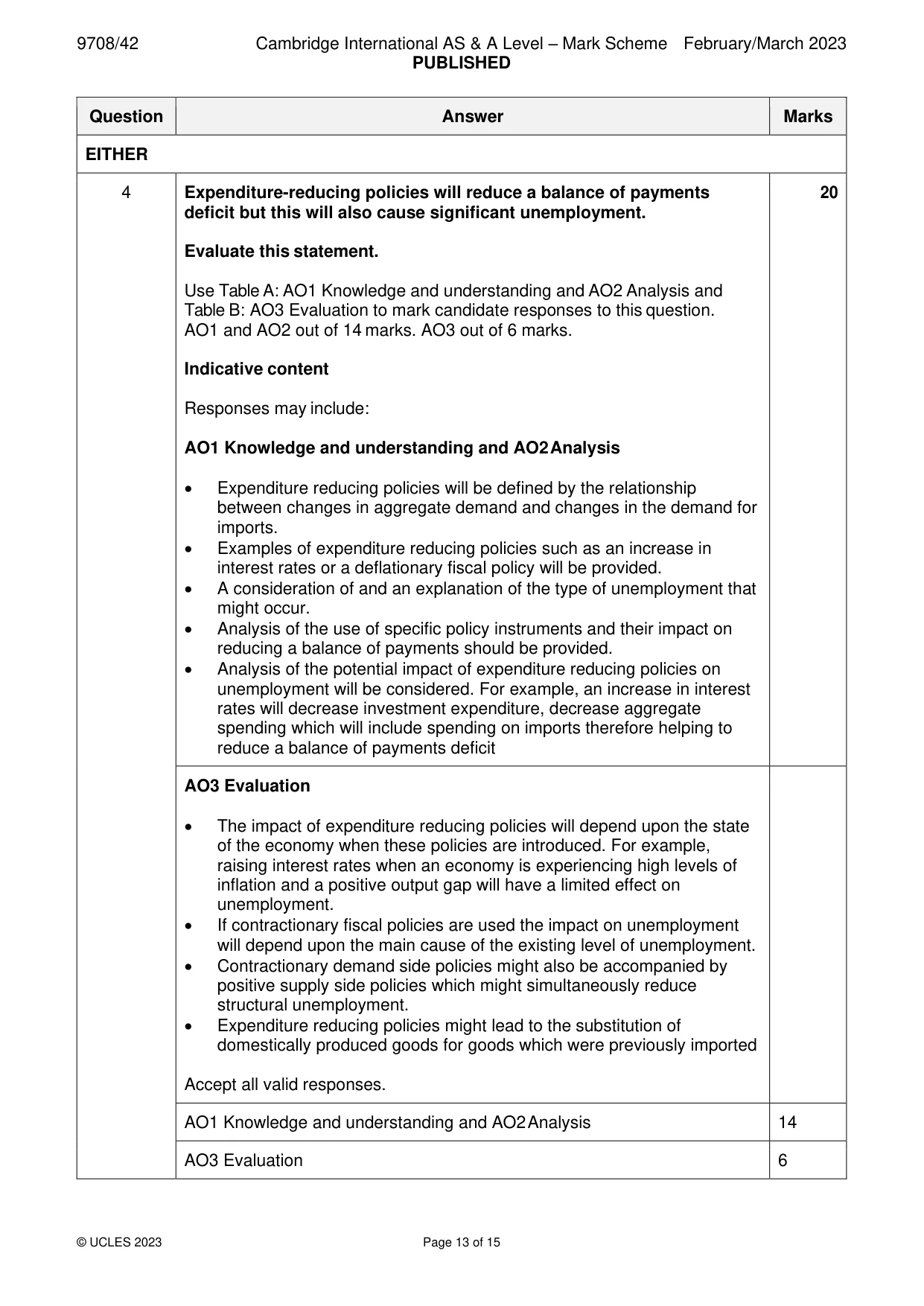
Mark scheme: 4 Expenditure-reducing policies will reduce a balance of payments 20 deficit but this will also cause significant unemployment. Evaluate this statement. Use Table A: AO1 Knowledge and understanding and AO2 Analysis and Table B: AO3 Evaluation to mark candidate responses to this question. AO1 and AO2 out of 14 marks. AO3 out of 6 marks. Indicative content Responses may include: AO1 Knowledge and understanding and AO2 Analysis • Expenditure reducing policies will be defined by the relationship between changes in aggregate demand and changes in the demand for imports. • Examples of expenditure reducing policies such as an increase in interest rates or a deflationary fiscal policy will be provided. • A consideration of and an explanation of the type of unemployment that might occur. • Analysis of the use of specific policy instruments and their impact on reducing a balance of payments should be provided. • Analysis of the potential impact of expenditure reducing policies on unemployment will be considered. For example, an increase in interest rates will decrease investment expenditure, decrease aggregate spending which will include spending on imports therefore helping to reduce a balance of payments deficit AO3 Evaluation • The impact of expenditure reducing policies will depend upon the state of the economy when these policies are introduced. For example, raising interest rates when an economy is experiencing high levels of inflation and a positive output gap will have a limited effect on unemployment. • If contractionary fiscal policies are used the impact on unemployment will depend upon the main cause of the existing level of unemployment. • Contractionary demand side policies might also be accompanied by positive supply side policies which might simultaneously reduce structural unemployment. • Expenditure reducing policies might lead to the substitution of domestically produced goods for goods which were previously imported Accept all valid responses. AO1 Knowledge and understanding and AO2 Analysis 14 AO3 Evaluation 6
More questions on Policies to correct imbalances in the current account of the balance of payments
What was in this paper
The subtopics covered by these 4 questions, and how many questions each got. Open one in a new tab to see every Cambridge question on it.
What you needed in this session
Cambridge’s own grade thresholds for 2023 Feb/March, Paper 4 · Variant 2. A higher threshold means an easier paper — the bar moves with how the cohort did.