Cambridge A Level Chemistry 9701 — 2018 Feb/March Paper 2 · Variant 2
9701/22/F/M/18 · 4 questions · 60 marks · ≈68 min
The question paper and its mark scheme, free to read here and free to download. This is Cambridge’s own paper, exactly as it was sat.
Question paper12 pages
Mark scheme7 pages
Answers below. Sit the paper first if you are practising.
Questions as text
Q1 · The graph shows a sketch of the first ionisation energies of six successive elements in…
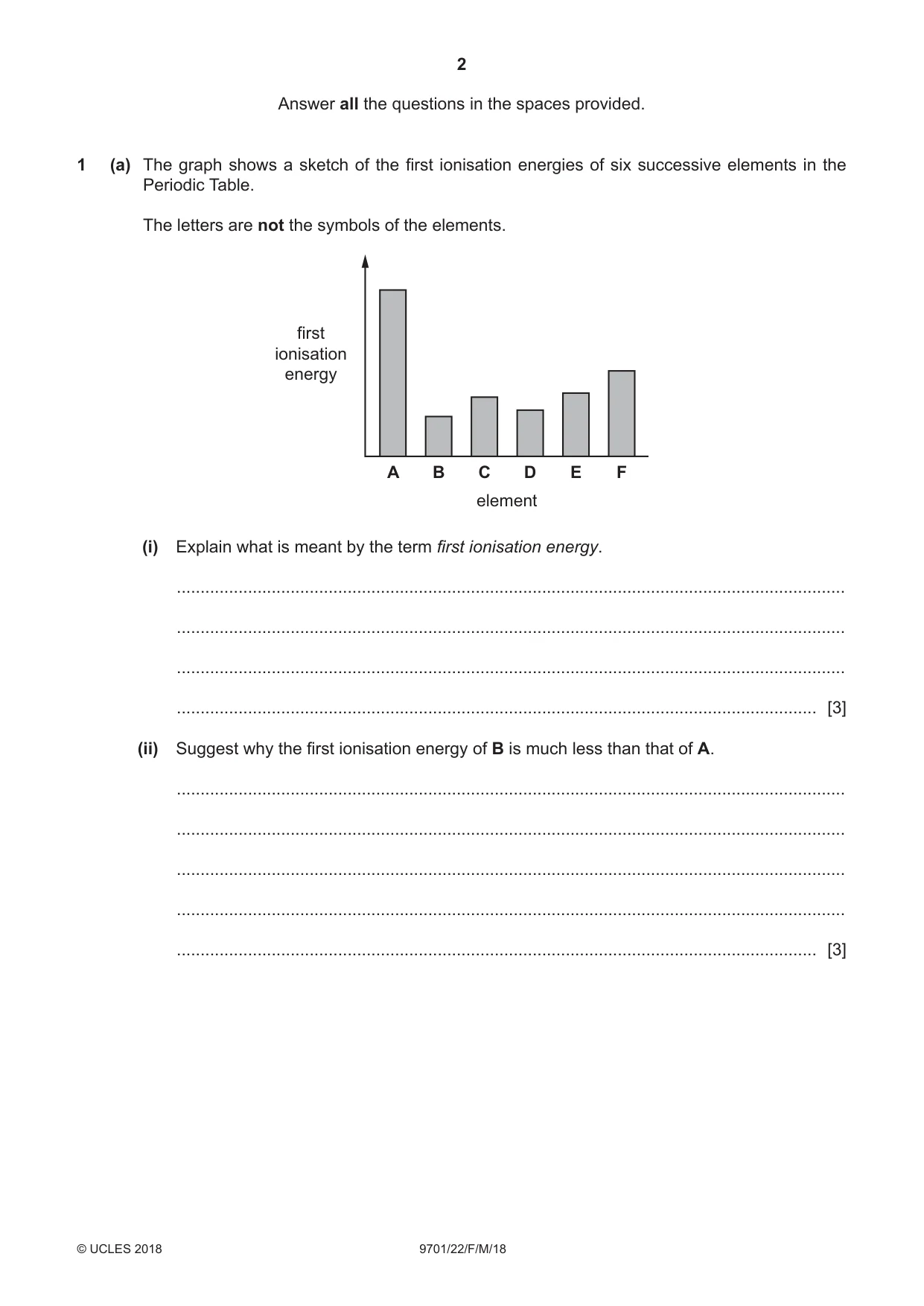
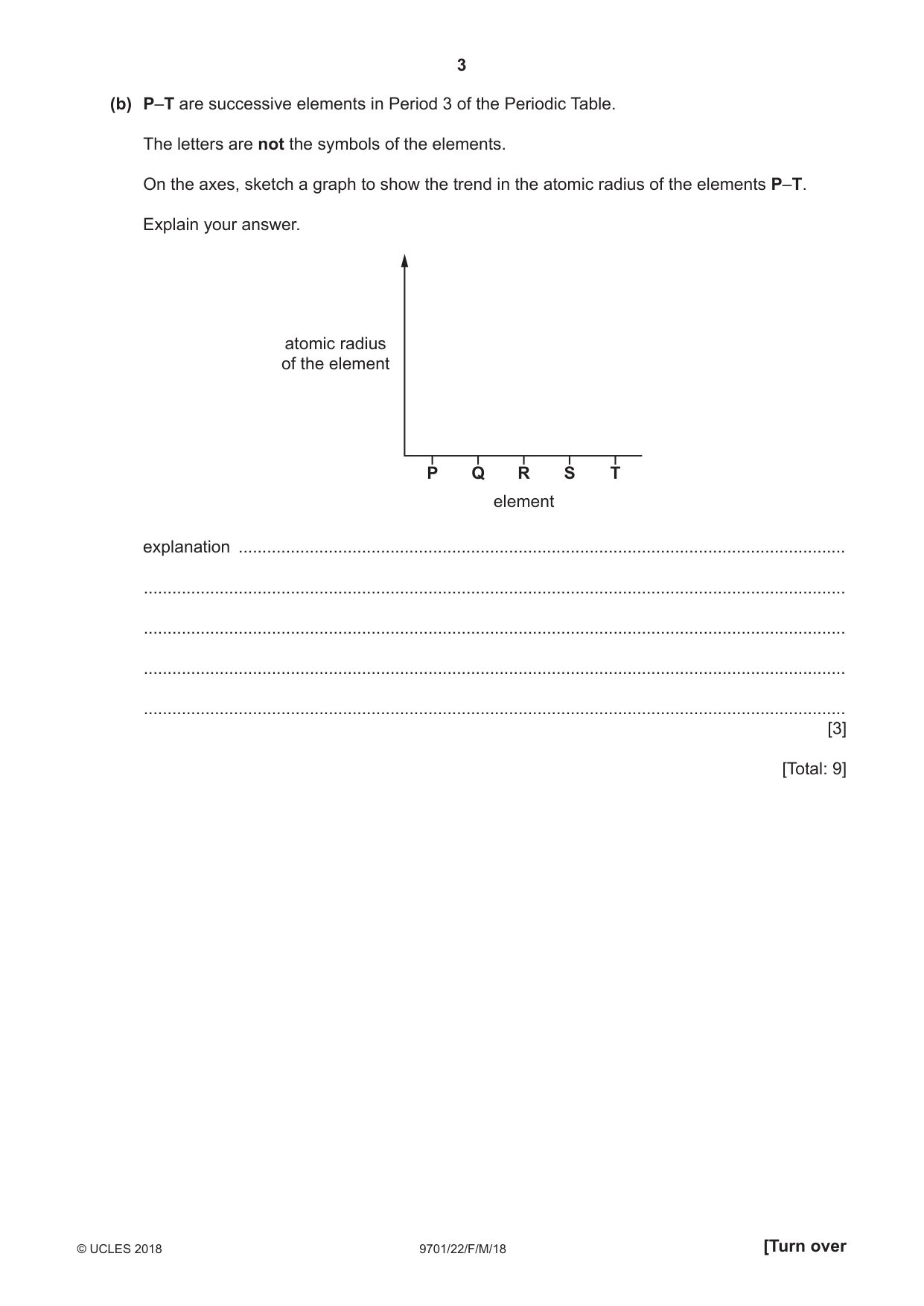
1 (a) The graph shows a sketch of the first ionisation energies of six successive elements in the Periodic Table. The letters are not the symbols of the elements. first ionisation energy A B C D E F element (i) Explain what is meant by the term first ionisation energy. ............................................................................................................................................. ............................................................................................................................................. ............................................................................................................................................. ....................................................................................................................................... [3] (ii) Suggest why the first ionisation energy of B is much less than that of A. ............................................................................................................................................. ............................................................................................................................................. ............................................................................................................................................. ............................................................................................................................................. ....................................................................................................................................... [3] (b) P–T are successive elements in Period 3 of the Periodic Table. The letters are not the symbols of the elements. On the axes, sketch a graph to show the trend in the atomic radius of the elements P–T. Explain your answer. atomic radius of the element P Q R S T element explanation ................................................................................................................................. .................................................................................................................................................... .................................................................................................................................................... .................................................................................................................................................... .................................................................................................................................................... [3] [Total: 9]
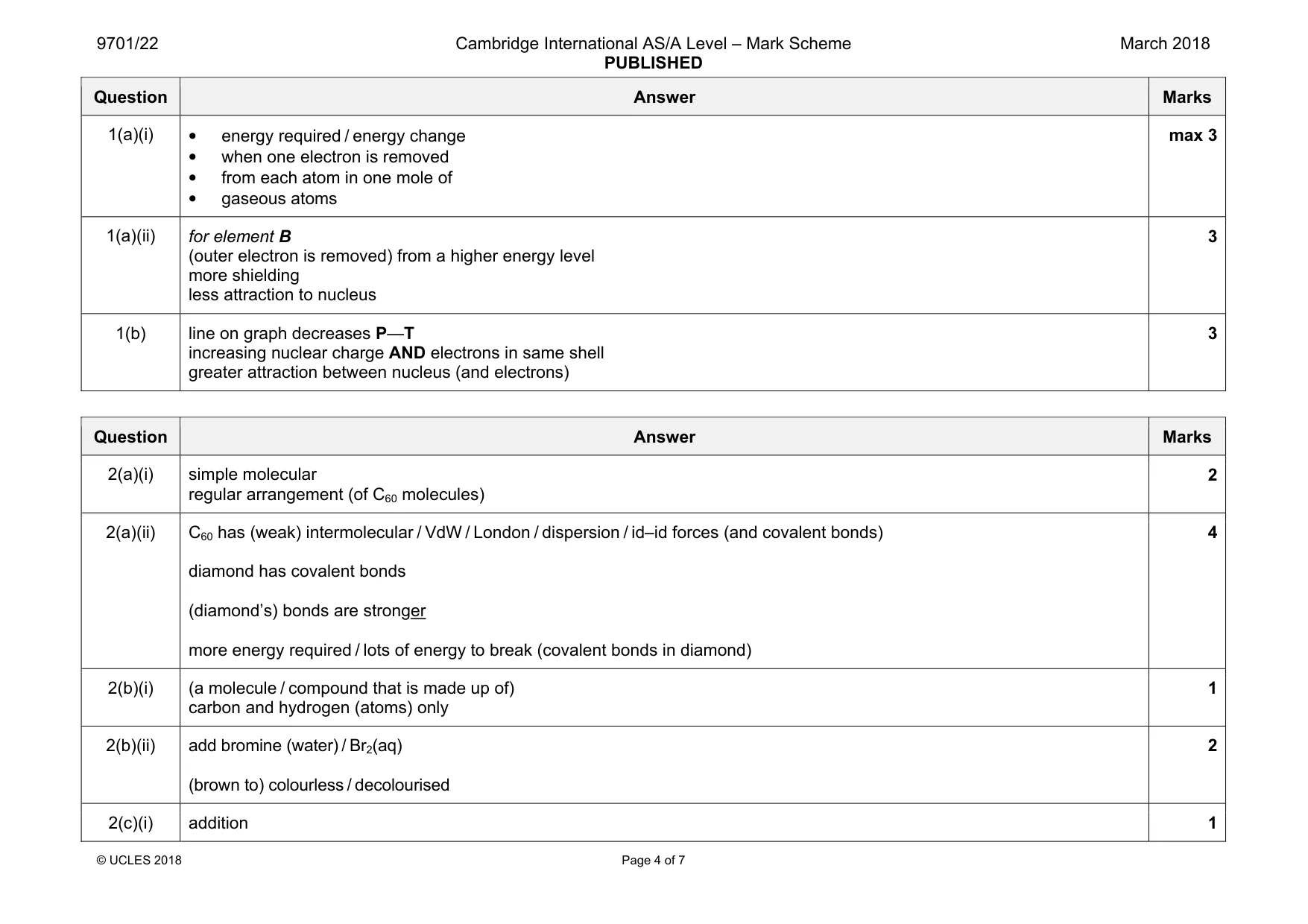
Mark scheme: 1(a)(i) energy required / energy change • when one electron is removed • from each atom in one mole of • gaseous atoms max 3 1(a)(ii) for element B (outer electron is removed) from a higher energy level more shielding less attraction to nucleus 3 1(b) line on graph decreases P—T increasing nuclear charge AND electrons in same shell greater attraction between nucleus (and electrons) 3
Q2 · Carbon and silicon are elements in Group 14
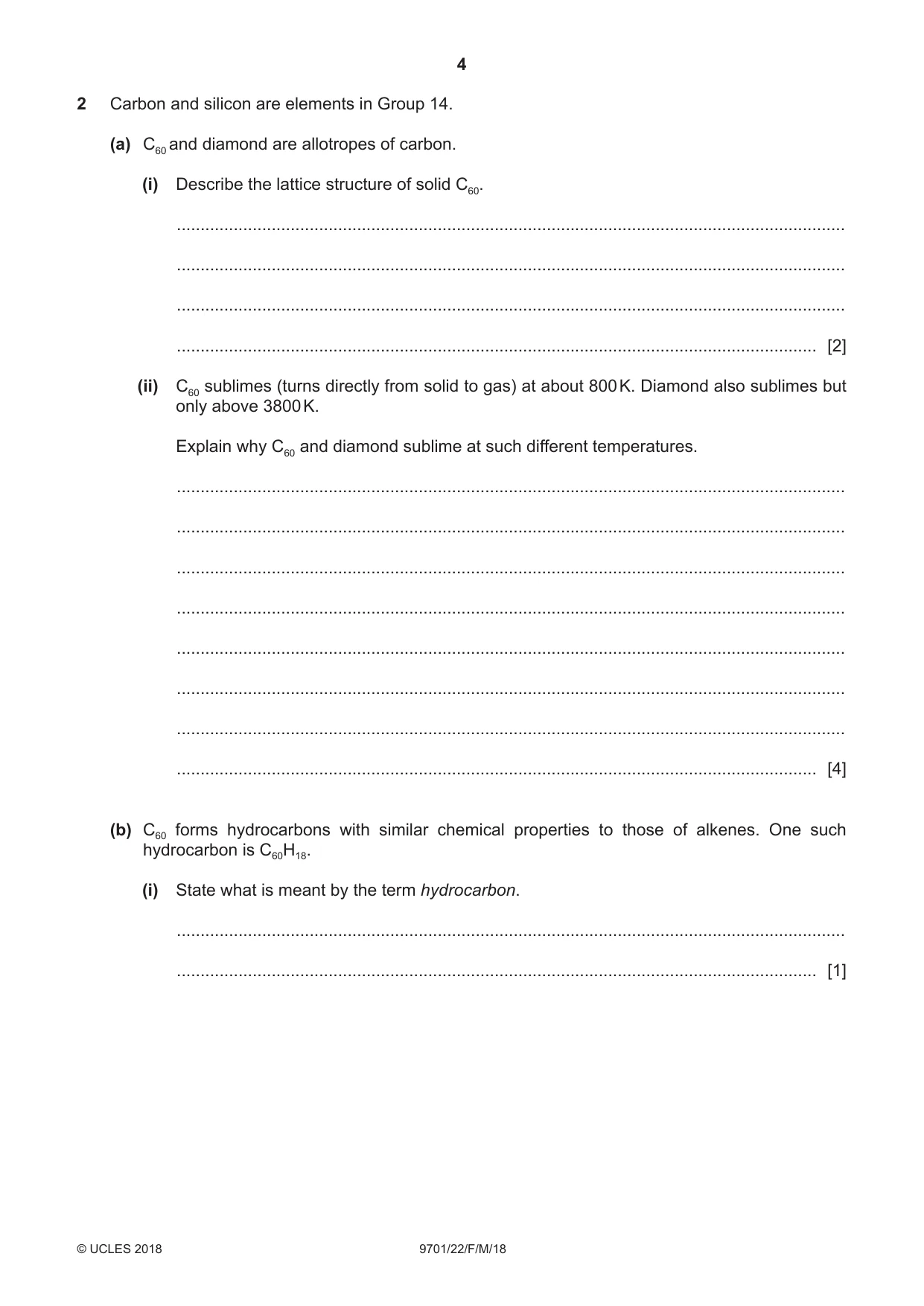
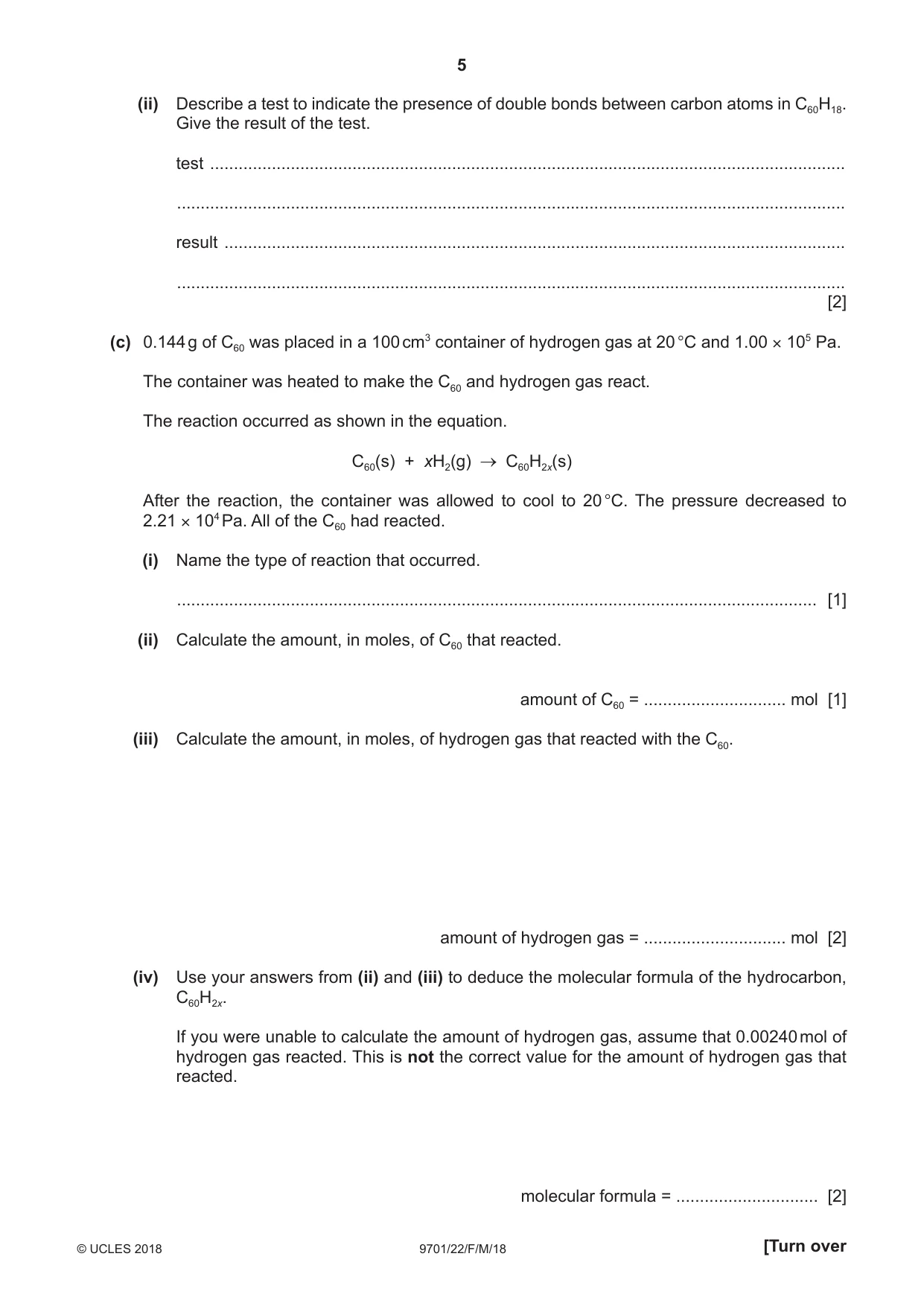
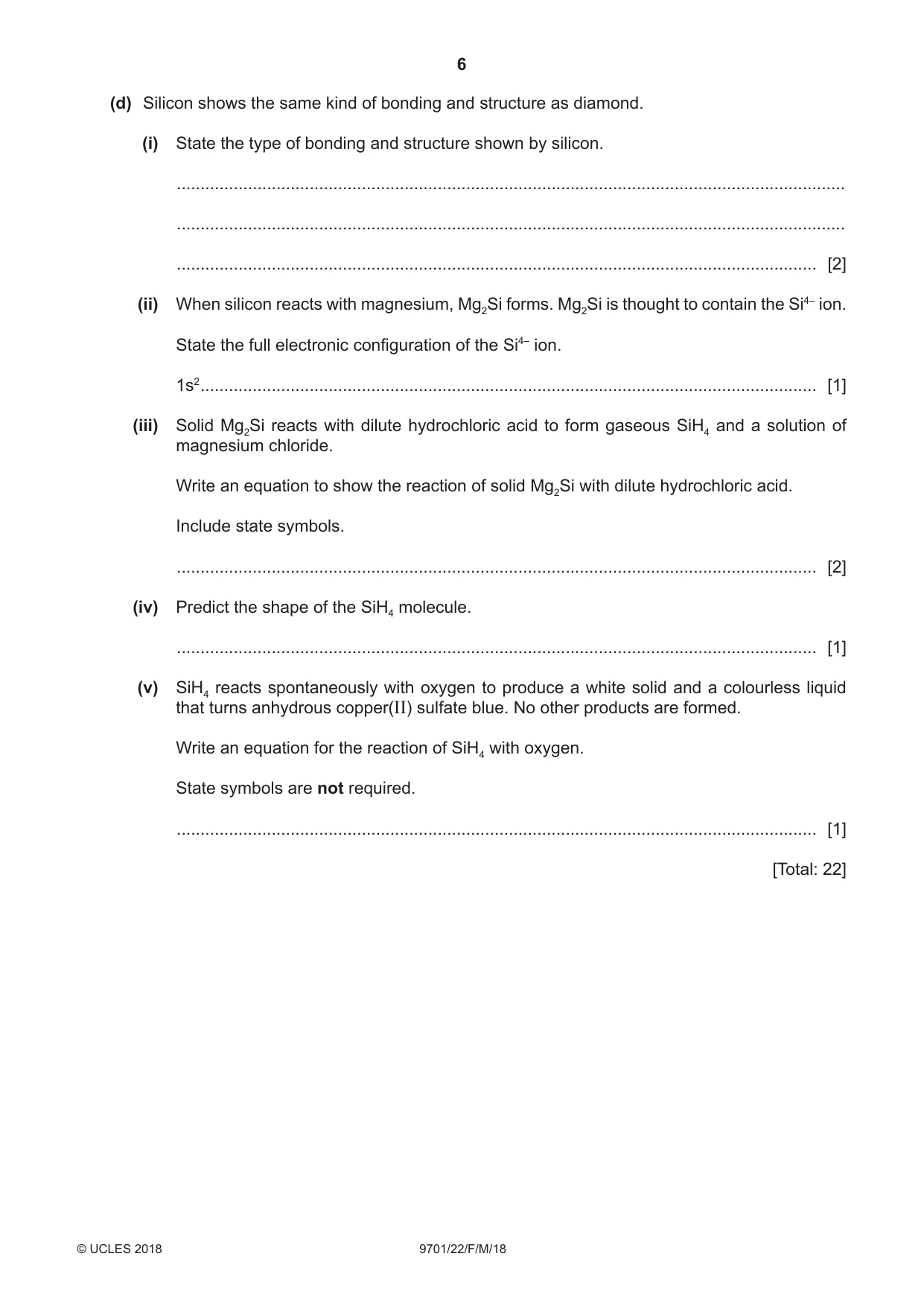
2 Carbon and silicon are elements in Group 14. (a) C60 and diamond are allotropes of carbon. (i) Describe the lattice structure of solid C60. ............................................................................................................................................. ............................................................................................................................................. ............................................................................................................................................. ....................................................................................................................................... [2] (ii) C60 sublimes (turns directly from solid to gas) at about 800 K. Diamond also sublimes but only above 3800 K. Explain why C60 and diamond sublime at such different temperatures. ............................................................................................................................................. ............................................................................................................................................. ............................................................................................................................................. ............................................................................................................................................. ............................................................................................................................................. ............................................................................................................................................. ............................................................................................................................................. ....................................................................................................................................... [4] (b) C60 forms hydrocarbons with similar chemical properties to those of alkenes. One such hydrocarbon is C60H18. (i) State what is meant by the term hydrocarbon. ............................................................................................................................................. ....................................................................................................................................... [1] (ii) Describe a test to indicate the presence of double bonds between carbon atoms in C60H18. Give the result of the test. test ...................................................................................................................................... ............................................................................................................................................. result ................................................................................................................................... ............................................................................................................................................. [2] (c) 0.144 g of C60 was placed in a 100 cm3 container of hydrogen gas at 20 °C and 1.00 × 10⁵ Pa. The container was heated to make the C60 and hydrogen gas react. The reaction occurred as shown in the equation. C60(s) + xH2(g) C60H2x(s) After the reaction, the container was allowed to cool to 20 °C. The pressure decreased to 2.21 × 10⁴ Pa. All of the C60 had reacted. (i) Name the type of reaction that occurred. ....................................................................................................................................... [1] (ii) Calculate the amount, in moles, of C60 that reacted. amount of C60 = .............................. mol [1] (iii) Calculate the amount, in moles, of hydrogen gas that reacted with the C60. amount of hydrogen gas = .............................. mol [2] (iv) Use your answers from (ii) and (iii) to deduce the molecular formula of the hydrocarbon, C60H2x. If you were unable to calculate the amount of hydrogen gas, assume that 0.00240 mol of hydrogen gas reacted. This is not the correct value for the amount of hydrogen gas that reacted. molecular formula = .............................. [2] (d) Silicon shows the same kind of bonding and structure as diamond. (i) State the type of bonding and structure shown by silicon. ............................................................................................................................................. ............................................................................................................................................. ....................................................................................................................................... [2] (ii) When silicon reacts with magnesium, Mg2Si forms. Mg2Si is thought to contain the Si4– ion. State the full electronic configuration of the Si4– ion. 1s2.................................................................................................................................. [1] (iii) Solid Mg2Si reacts with dilute hydrochloric acid to form gaseous SiH4 and a solution of magnesium chloride. Write an equation to show the reaction of solid Mg2Si with dilute hydrochloric acid. Include state symbols. ....................................................................................................................................... [2] (iv) Predict the shape of the SiH4 molecule. ....................................................................................................................................... [1] (v) SiH4 reacts spontaneously with oxygen to produce a white solid and a colourless liquid that turns anhydrous copper(II) sulfate blue. No other products are formed. Write an equation for the reaction of SiH4 with oxygen. State symbols are not required. ....................................................................................................................................... [1] [Total: 22]
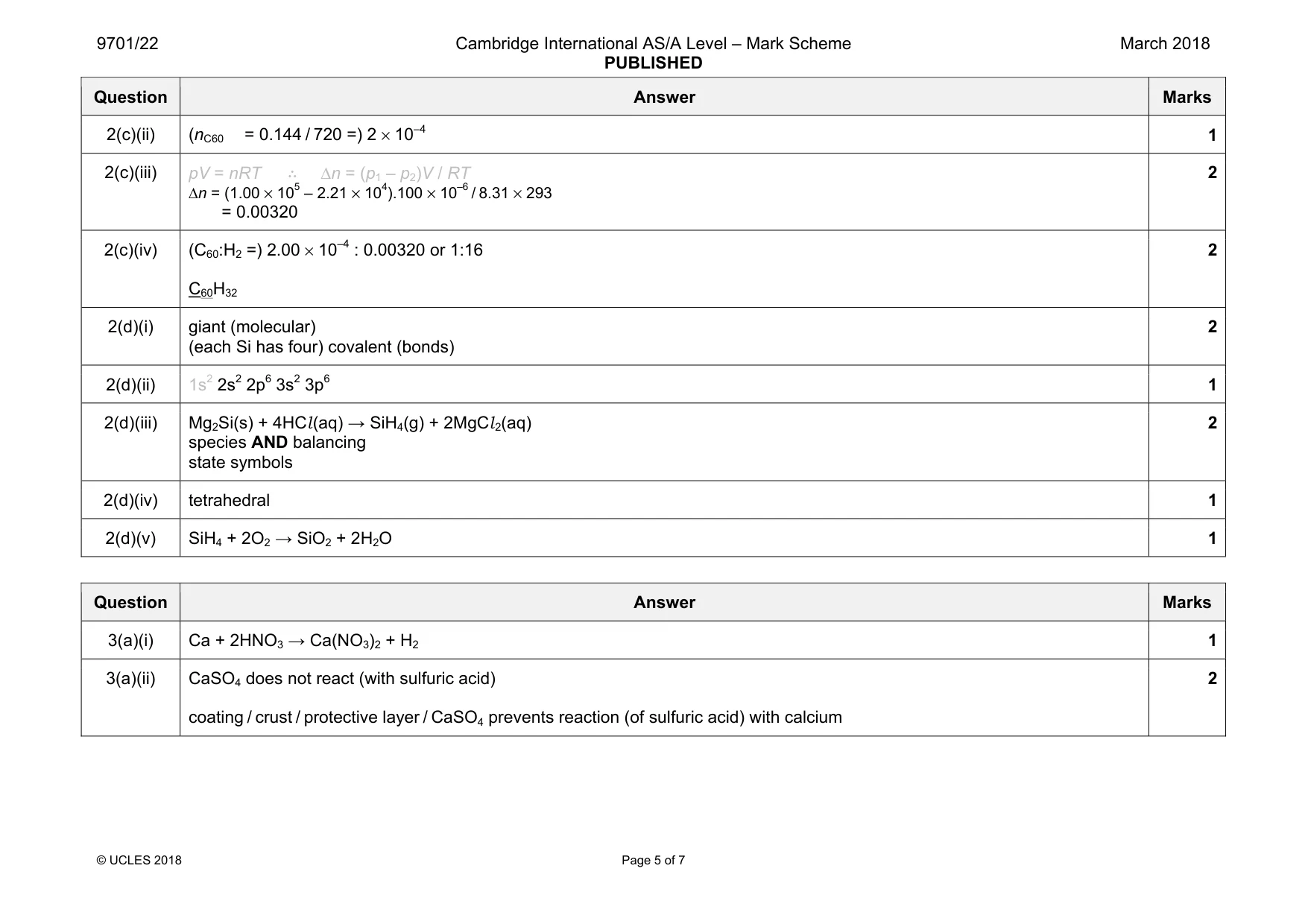
Mark scheme: 2(a)(i) simple molecular regular arrangement (of C60 molecules) 2 2(a)(ii) C60 has (weak) intermolecular / VdW / London / dispersion / id–id forces (and covalent bonds) diamond has covalent bonds (diamond’s) bonds are stronger more energy required / lots of energy to break (covalent bonds in diamond) 4 2(b)(i) (a molecule / compound that is made up of) carbon and hydrogen (atoms) only 1 2(b)(ii) add bromine (water) / Br2(aq) (brown to) colourless / decolourised 2 2(c)(i) addition 1 Question Answer Marks 2(c)(ii) (nC60 = 0.144 / 720 =) 2 × 10⁻⁴ 1 2(c)(iii) pV = nRT ∴ ∆n = (p1 – p2)V / RT ∆n = (1.00 × 10⁵ – 2.21 × 10⁴).100 × 10–6 / 8.31 × 293 = 0.00320 2 2(c)(iv) (C60:H2 =) 2.00 × 10⁻⁴ : 0.00320 or 1:16 C60H32 2 2(d)(i) giant (molecular) (each Si has four) covalent (bonds) 2 2(d)(ii) 1s2 2s2 2p6 3s2 3p6 1 2(d)(iii) Mg2Si(s) + 4HCl (aq) → SiH4(g) + 2MgCl 2(aq) species AND balancing state symbols 2 2(d)(iv) tetrahedral 1 2(d)(v) SiH4 + 2O2 → SiO2 + 2H2O 1
Q3 · Calcium and its compounds have a large variety of applications
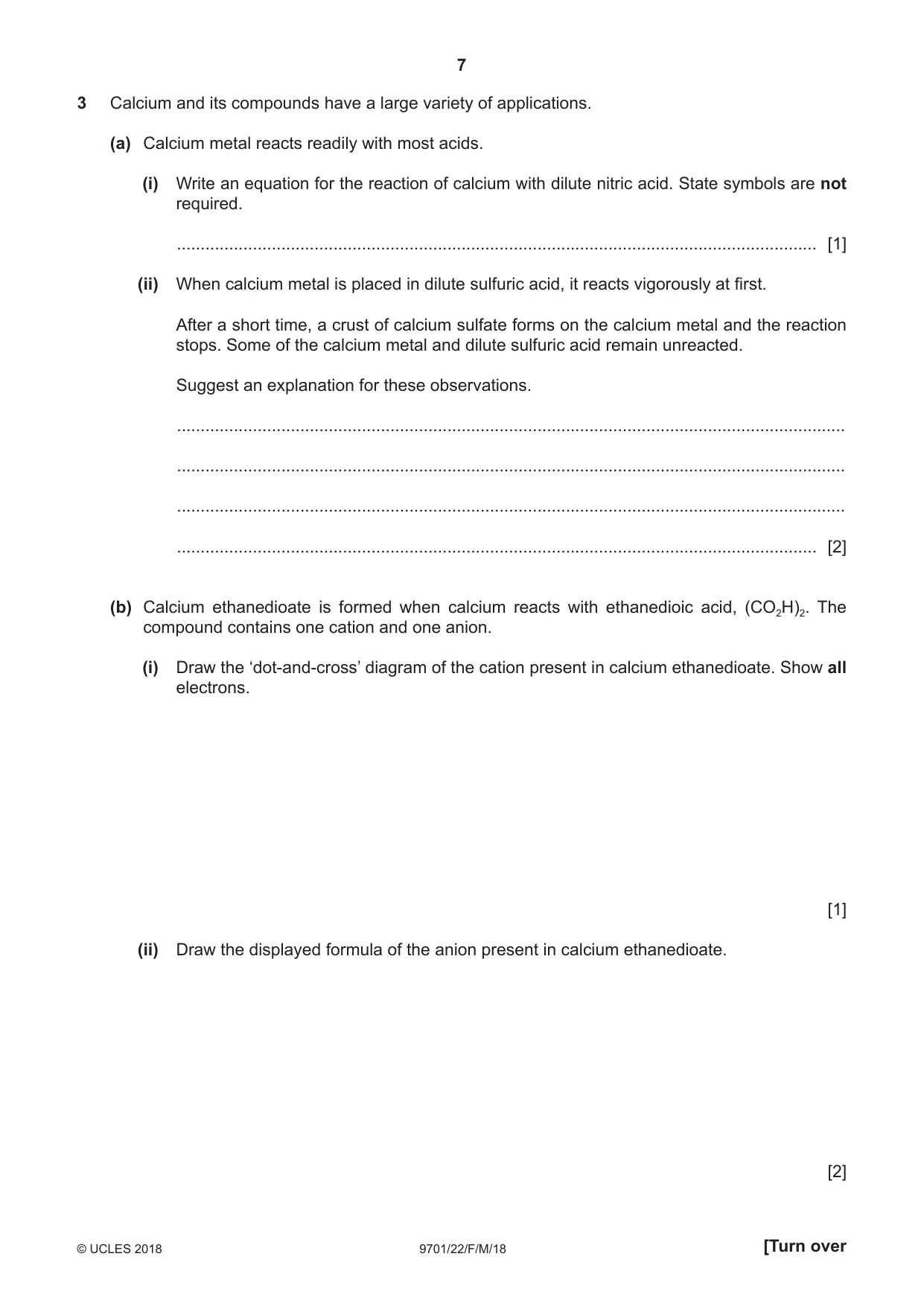
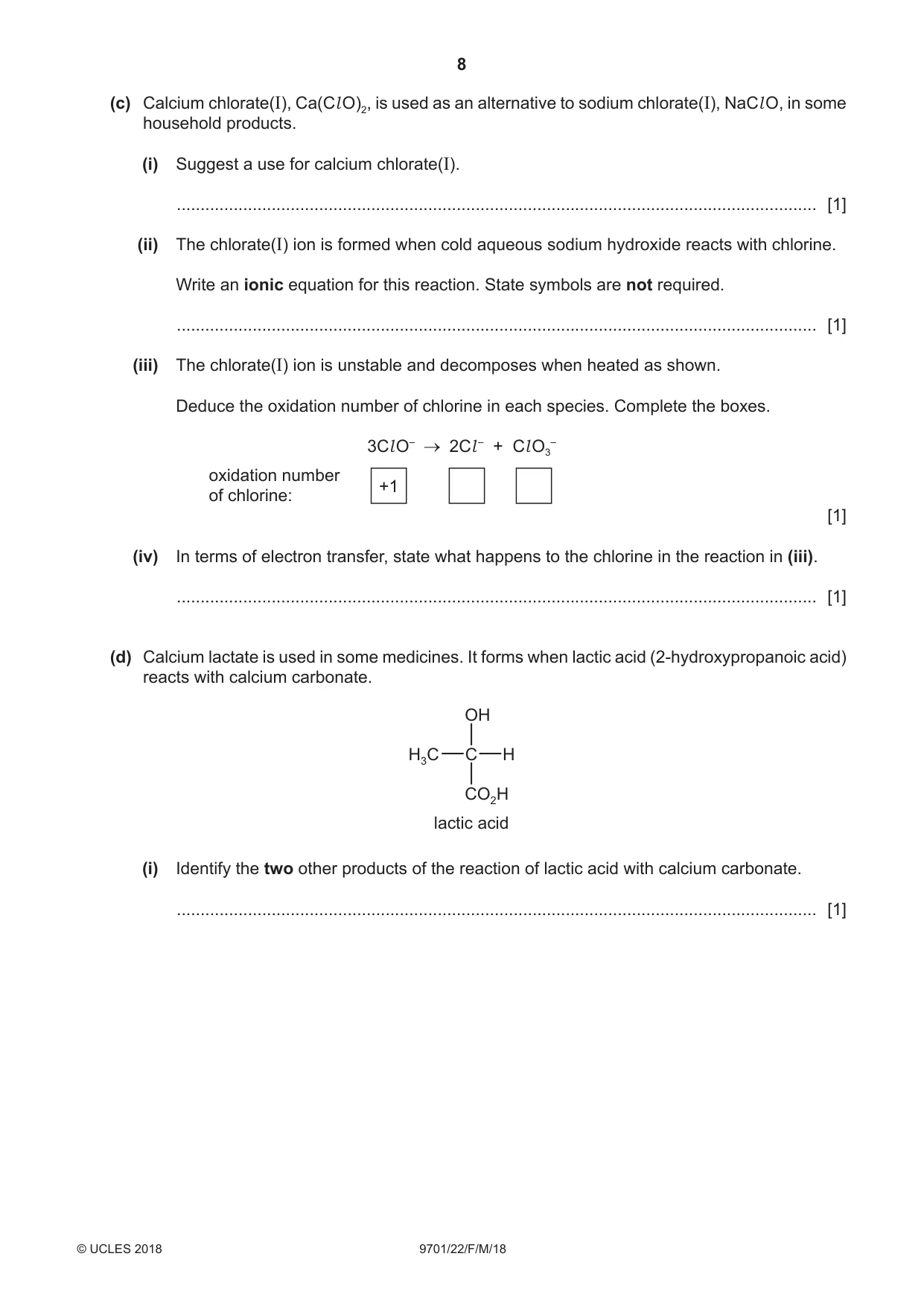
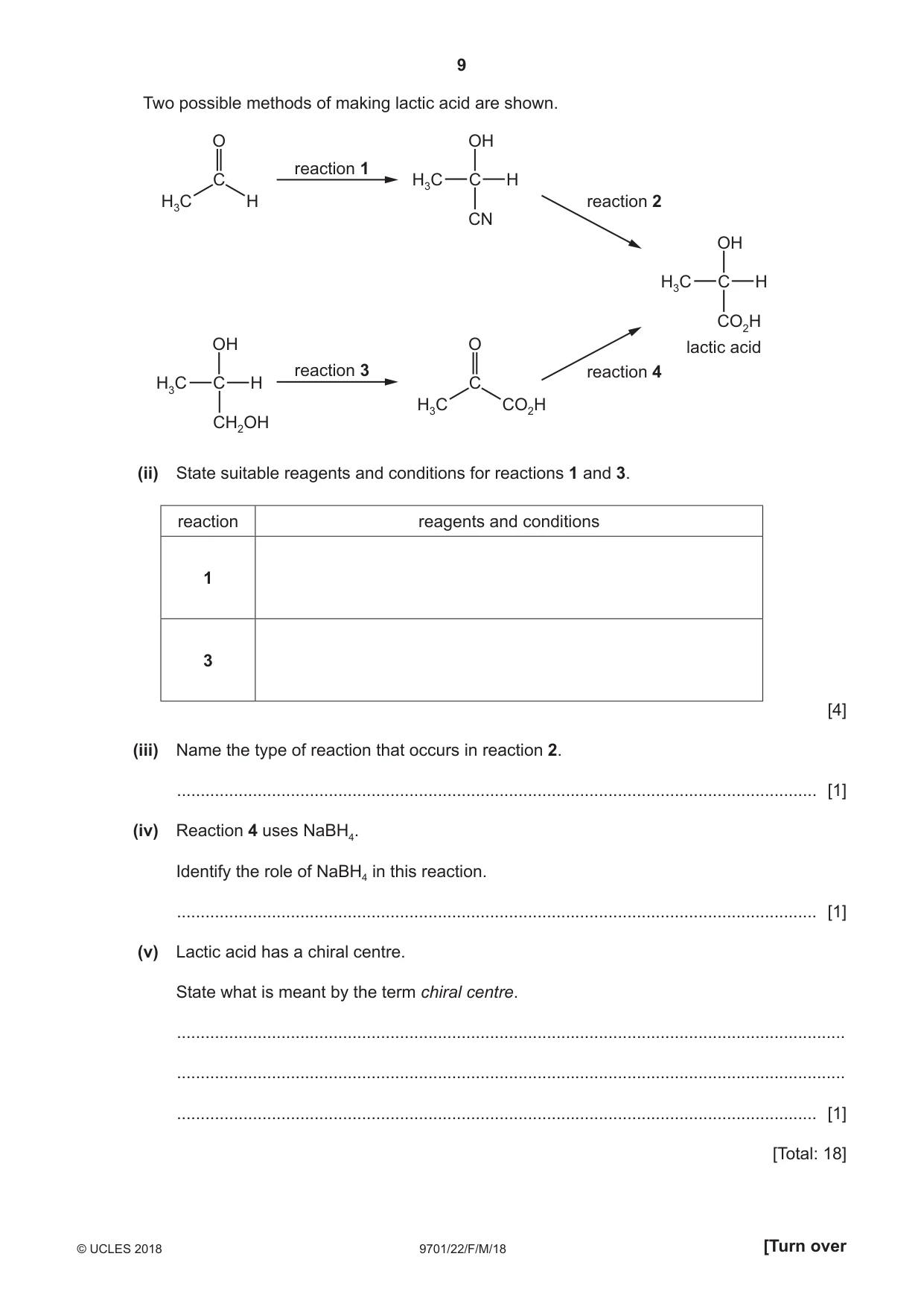
3 Calcium and its compounds have a large variety of applications. (a) Calcium metal reacts readily with most acids. (i) Write an equation for the reaction of calcium with dilute nitric acid. State symbols are not required. ....................................................................................................................................... [1] (ii) When calcium metal is placed in dilute sulfuric acid, it reacts vigorously at first. After a short time, a crust of calcium sulfate forms on the calcium metal and the reaction stops. Some of the calcium metal and dilute sulfuric acid remain unreacted. Suggest an explanation for these observations. ............................................................................................................................................. ............................................................................................................................................. ............................................................................................................................................. ....................................................................................................................................... [2] (b) Calcium ethanedioate is formed when calcium reacts with ethanedioic acid, (CO2H)2. The compound contains one cation and one anion. (i) Draw the ‘dot-and-cross’ diagram of the cation present in calcium ethanedioate. Show all electrons. [1] (ii) Draw the displayed formula of the anion present in calcium ethanedioate. [2] (c) Calcium chlorate(I), Ca(Cl O)2, is used as an alternative to sodium chlorate(I), NaCl O, in some household products. (i) Suggest a use for calcium chlorate(I). ....................................................................................................................................... [1] (ii) The chlorate(I) ion is formed when cold aqueous sodium hydroxide reacts with chlorine. Write an ionic equation for this reaction. State symbols are not required. ....................................................................................................................................... [1] (iii) The chlorate(I) ion is unstable and decomposes when heated as shown. Deduce the oxidation number of chlorine in each species. Complete the boxes. 3Cl O– 2Cl – + Cl O3– oxidation number +1 of chlorine: [1] (iv) In terms of electron transfer, state what happens to the chlorine in the reaction in (iii). ....................................................................................................................................... [1] (d) Calcium lactate is used in some medicines. It forms when lactic acid (2-hydroxypropanoic acid) reacts with calcium carbonate. OH H3C C H CO2H lactic acid (i) Identify the two other products of the reaction of lactic acid with calcium carbonate. ....................................................................................................................................... [1] Two possible methods of making lactic acid are shown. O OH reaction 1 C H3C C H H3C H reaction 2 CN OH H3C C H CO2H OH O lactic acid reaction 3 reaction 4 H3C C H C H3C CO2H CH2OH (ii) State suitable reagents and conditions for reactions 1 and 3. reaction reagents and conditions 1 3 [4] (iii) Name the type of reaction that occurs in reaction 2. ....................................................................................................................................... [1] (iv) Reaction 4 uses NaBH4. Identify the role of NaBH4 in this reaction. ....................................................................................................................................... [1] (v) Lactic acid has a chiral centre. State what is meant by the term chiral centre. ............................................................................................................................................. ............................................................................................................................................. ....................................................................................................................................... [1] [Total: 18]
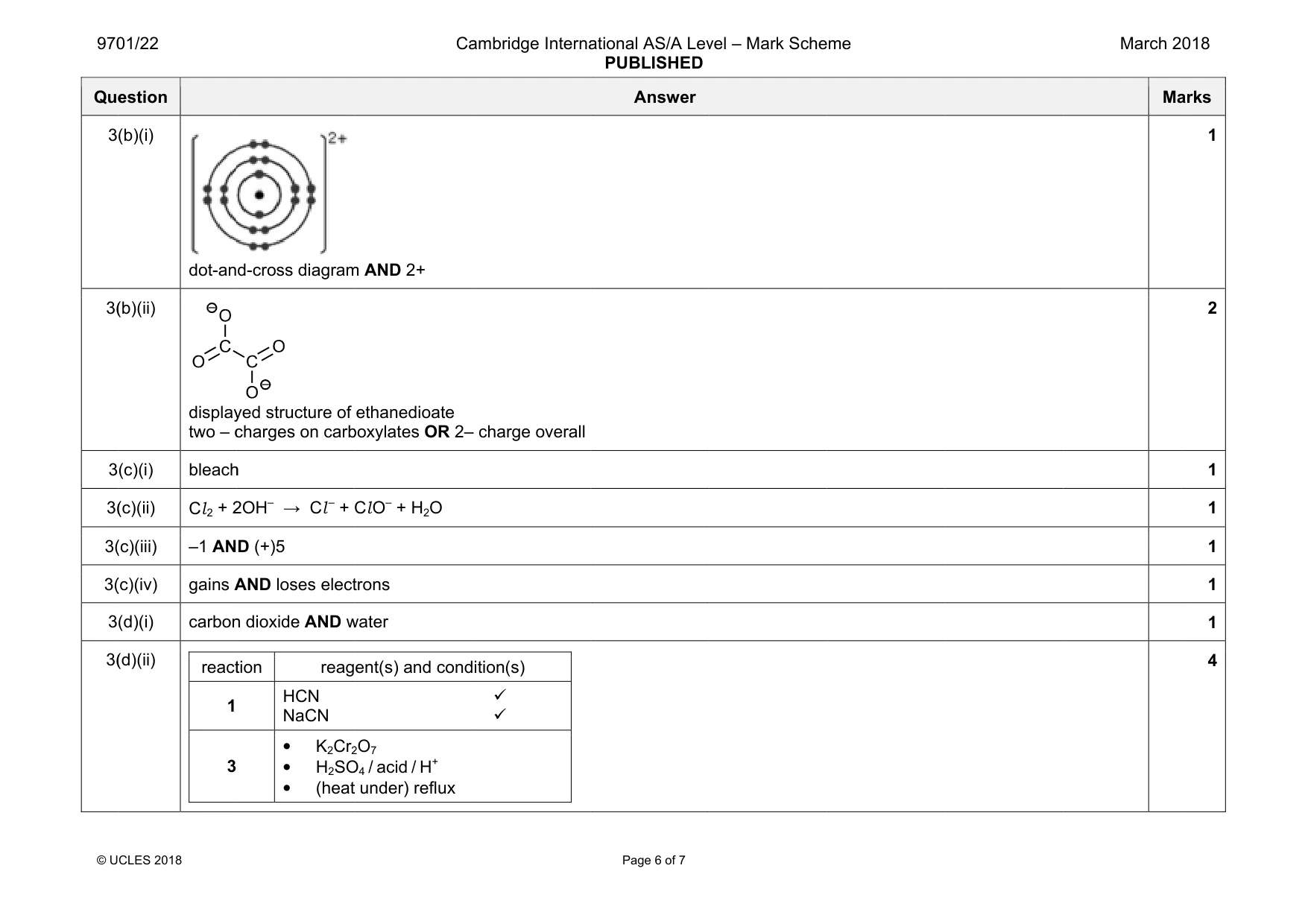
Mark scheme: 3(a)(i) Ca + 2HNO3 → Ca(NO3)2 + H2 1 3(a)(ii) CaSO4 does not react (with sulfuric acid) coating / crust / protective layer / CaSO4 prevents reaction (of sulfuric acid) with calcium 2 Que 3 3( 3 3( 3( 3( 3 3( estion (b)(i) dot-an (b)(ii) display two – c (c)(i) bleach (c)(ii) Cl 2 + 2 (c)(iii) –1 AN (c)(iv) gains A (d)(i) carbon (d)(ii) react 1 3 d-cross diagram yed structure of charges on carb h 2OH– → Cl – + D (+)5 AND loses elect n dioxide AND w tion reag HCN NaCN • K2Cr2 • H2SO • (heat m AND 2+ ethanedioate boxylates OR 2– Cl O– + H2O trons water ent(s) and cond 2O7 O4 / acid / H+ t under) reflux – charge overall ition(s) 9 9 Answer Ma arks 1 2 1 1 1 1 1 4 Question Answer Marks 3(d)(iii) hydrolysis 1 3(d)(iv) reducing agent 1 3(d)(v) has a carbon / C / atom attached to four different groups / atoms / chains OR has no plane / line of symmetry / has non-superimposable images 1
More questions on Formulas, functional groups and the naming of organic compounds
Q4 · Cyclohexane is a colourless liquid used in industry to produce synthetic fibres
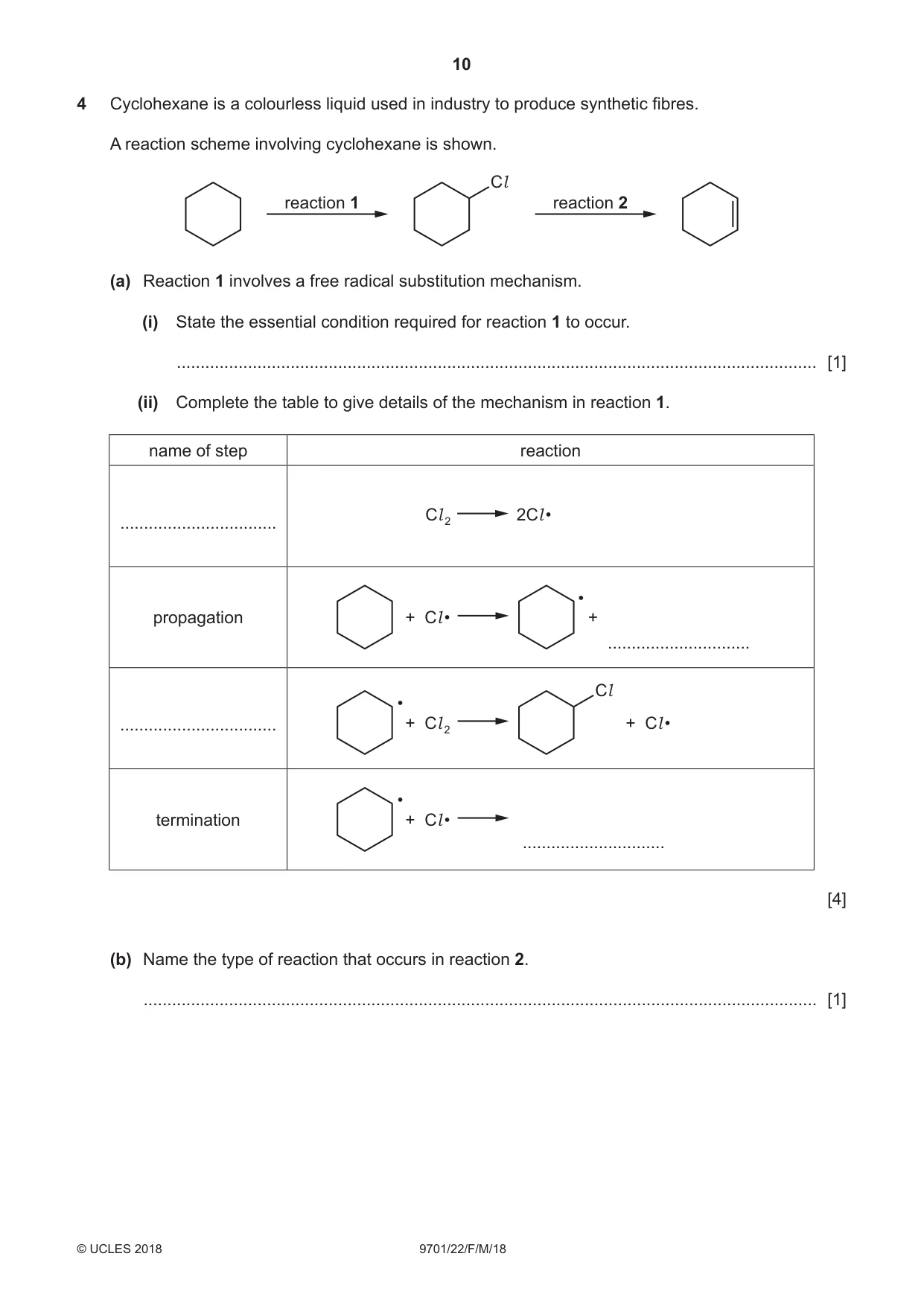
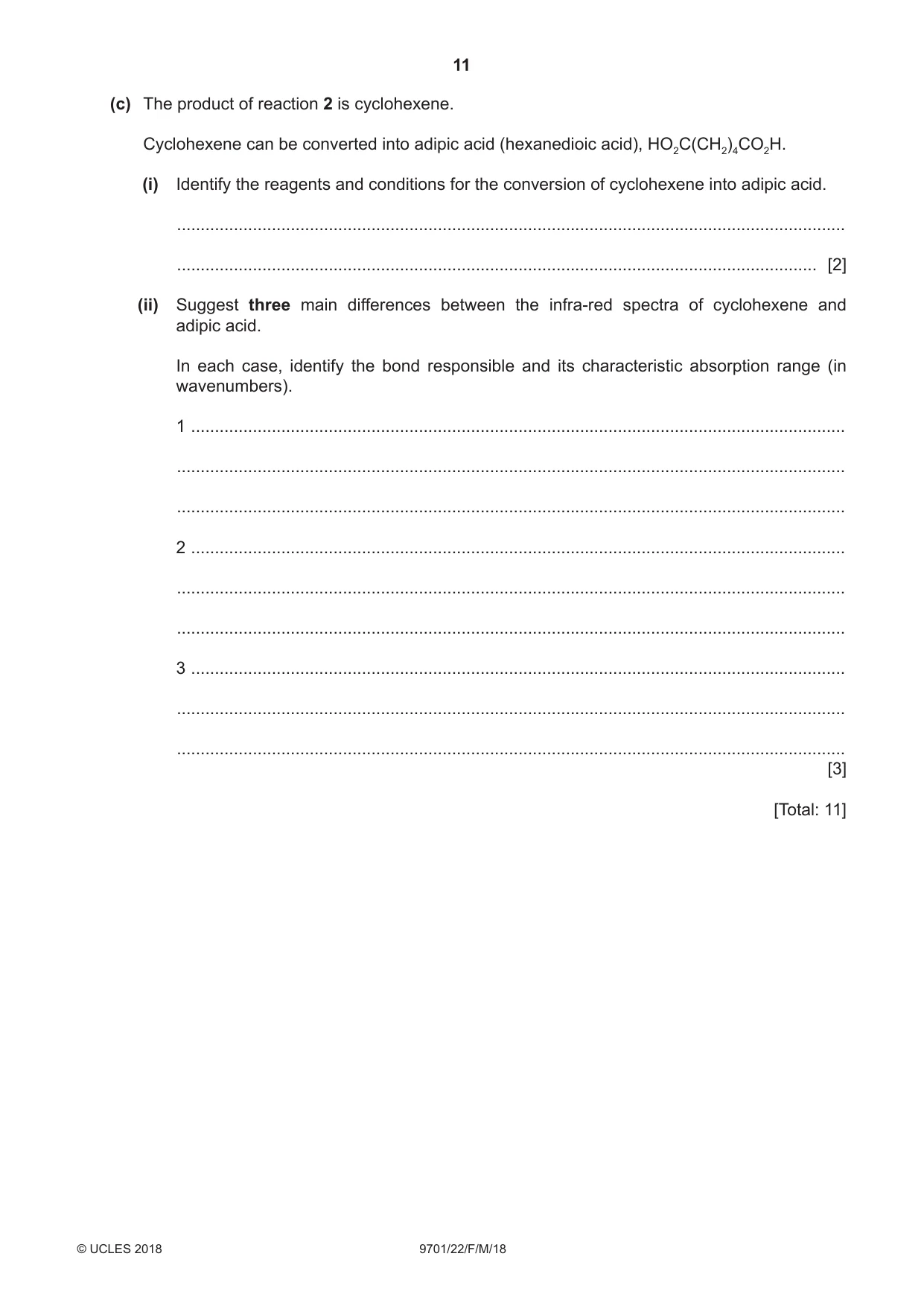
4 Cyclohexane is a colourless liquid used in industry to produce synthetic fibres. A reaction scheme involving cyclohexane is shown. Cl reaction 1 reaction 2 (a) Reaction 1 involves a free radical substitution mechanism. (i) State the essential condition required for reaction 1 to occur. ....................................................................................................................................... [1] (ii) Complete the table to give details of the mechanism in reaction 1. name of step reaction Cl 2 2Cl • ................................. • propagation + Cl • + .............................. Cl • ................................. + Cl 2 + Cl • • termination + Cl • .............................. [4] (b) Name the type of reaction that occurs in reaction 2. .............................................................................................................................................. [1] (c) The product of reaction 2 is cyclohexene. Cyclohexene can be converted into adipic acid (hexanedioic acid), HO2C(CH2)4CO2H. (i) Identify the reagents and conditions for the conversion of cyclohexene into adipic acid. ............................................................................................................................................. ....................................................................................................................................... [2] (ii) Suggest three main differences between the infra-red spectra of cyclohexene and adipic acid. In each case, identify the bond responsible and its characteristic absorption range (in wavenumbers). 1 .......................................................................................................................................... ............................................................................................................................................. ............................................................................................................................................. 2 .......................................................................................................................................... ............................................................................................................................................. ............................................................................................................................................. 3 .......................................................................................................................................... ............................................................................................................................................. ............................................................................................................................................. [3] [Total: 11]
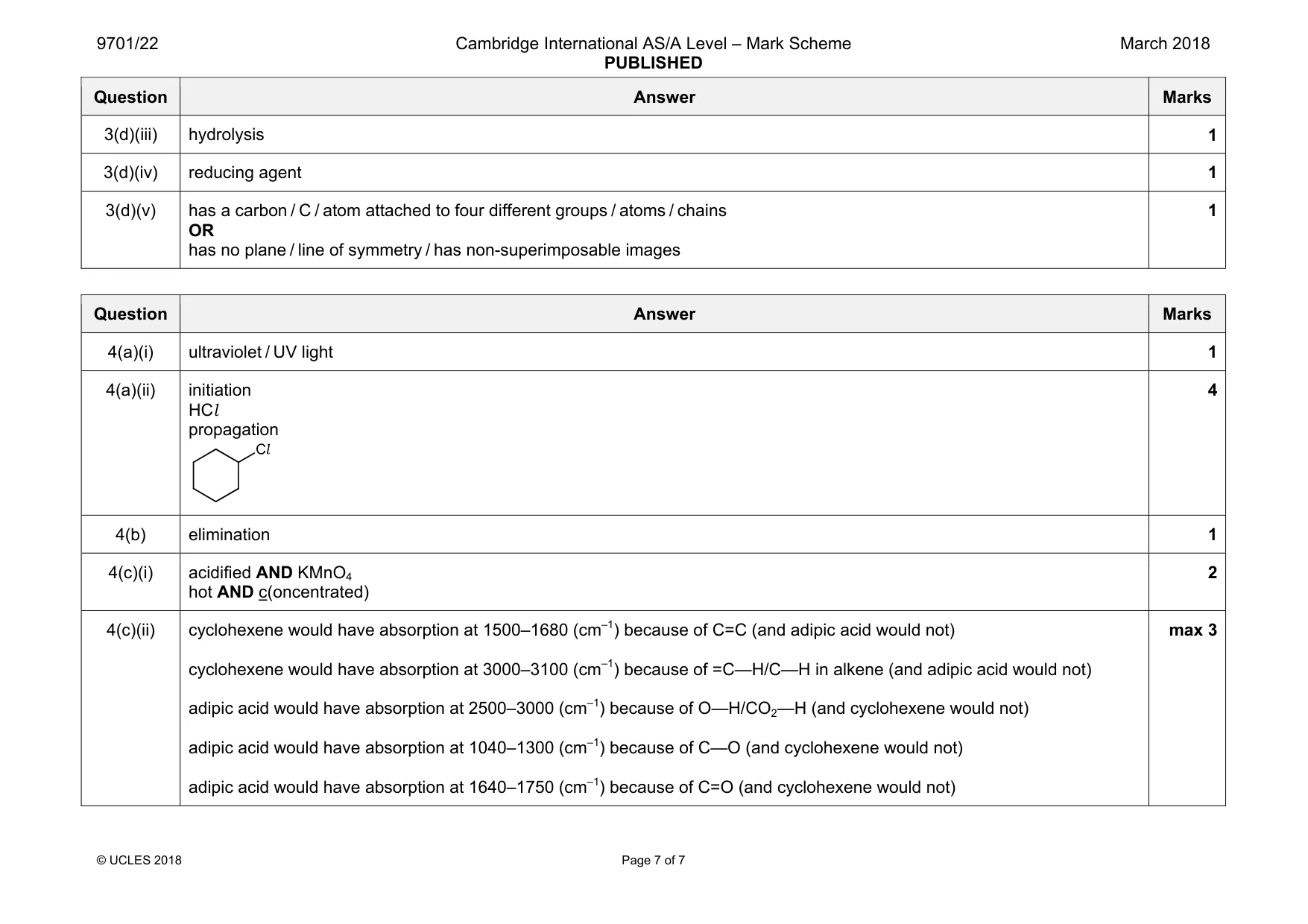
Mark scheme: 4(a)(i) ultraviolet / UV light 1 4(a)(ii) initiation HCl propagation 4 4(b) elimination 1 4(c)(i) acidified AND KMnO4 hot AND c(oncentrated) 2 4(c)(ii) cyclohexene would have absorption at 1500–1680 (cm–1) because of C=C (and adipic acid would not) cyclohexene would have absorption at 3000–3100 (cm–1) because of =C—H/C—H in alkene (and adipic acid would not) adipic acid would have absorption at 2500–3000 (cm–1) because of O—H/CO2—H (and cyclohexene would not) adipic acid would have absorption at 1040–1300 (cm–1) because of C—O (and cyclohexene would not) adipic acid would have absorption at 1640–1750 (cm–1) because of C=O (and cyclohexene would not) max 3
What was in this paper
The subtopics covered by these 4 questions, and how many questions each got. Open one in a new tab to see every Cambridge question on it.
What you needed in this session
Cambridge’s own grade thresholds for 2018 Feb/March, Paper 2 · Variant 2. A higher threshold means an easier paper — the bar moves with how the cohort did.