Cambridge A Level Biology 9700 — 2023 Feb/March Paper 2 · Variant 2
9700/22/F/M/23 · 60 marks · ≈68 min
The question paper and its mark scheme, free to read here and free to download. This is Cambridge’s own paper, exactly as it was sat.
Question paper20 pages
Mark scheme14 pages
Answers below. Sit the paper first if you are practising.
Paper as text
Question paper, page 1
This document has 20 pages. Any blank pages are indicated. [Turn over Cambridge International AS & A Level BIOLOGY 9700/22 Paper 2 AS Level Structured Questions February/March 2023 1 hour 15 minutes You must answer on the question paper. No additional materials are needed. INSTRUCTIONS ● Answer all questions. ● Use a black or dark blue pen. You may use an HB pencil for any diagrams or graphs. ● Write your name, centre number and candidate number in the boxes at the top of the page. ● Write your answer to each question in the space provided. ● Do not use an erasable pen or correction fluid. ● Do not write on any bar codes. ● You may use a calculator. ● You should show all your working and use appropriate units. INFORMATION ● The total mark for this paper is 60. ● The number of marks for each question or part question is shown in brackets [ ]. * 8 7 7 6 6 8 8 9 4 1 * DC (PQ/CT) 313406/4 © UCLES 2023
Question paper, page 2
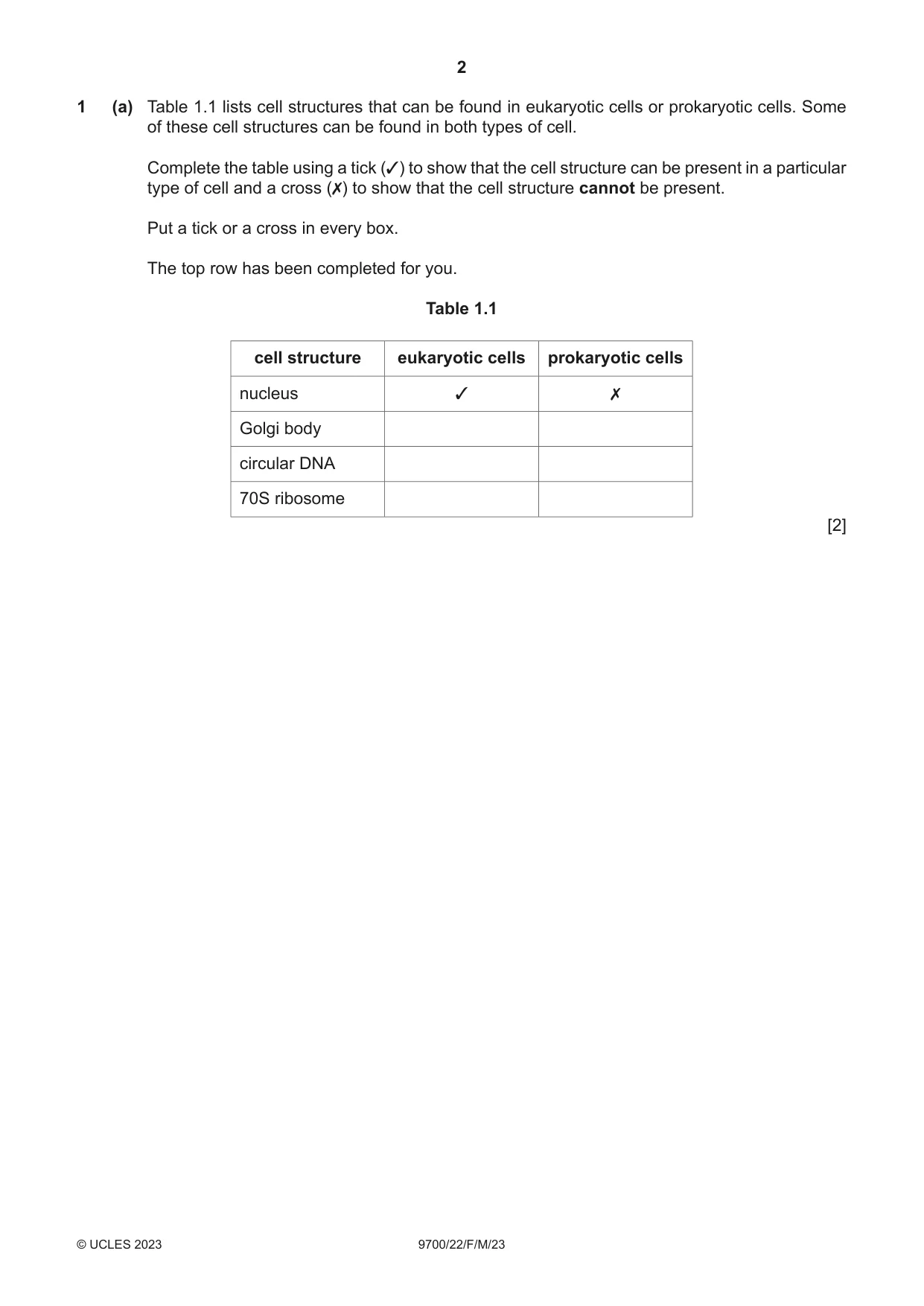
2 9700/22/F/M/23 © UCLES 2023 1 (a) Table 1.1 lists cell structures that can be found in eukaryotic cells or prokaryotic cells. Some of these cell structures can be found in both types of cell. Complete the table using a tick (3) to show that the cell structure can be present in a particular type of cell and a cross (✗) to show that the cell structure cannot be present. Put a tick or a cross in every box. The top row has been completed for you. Table 1.1 cell structure eukaryotic cells prokaryotic cells nucleus 3 ✗ Golgi body circular DNA 70S ribosome [2]
Question paper, page 3
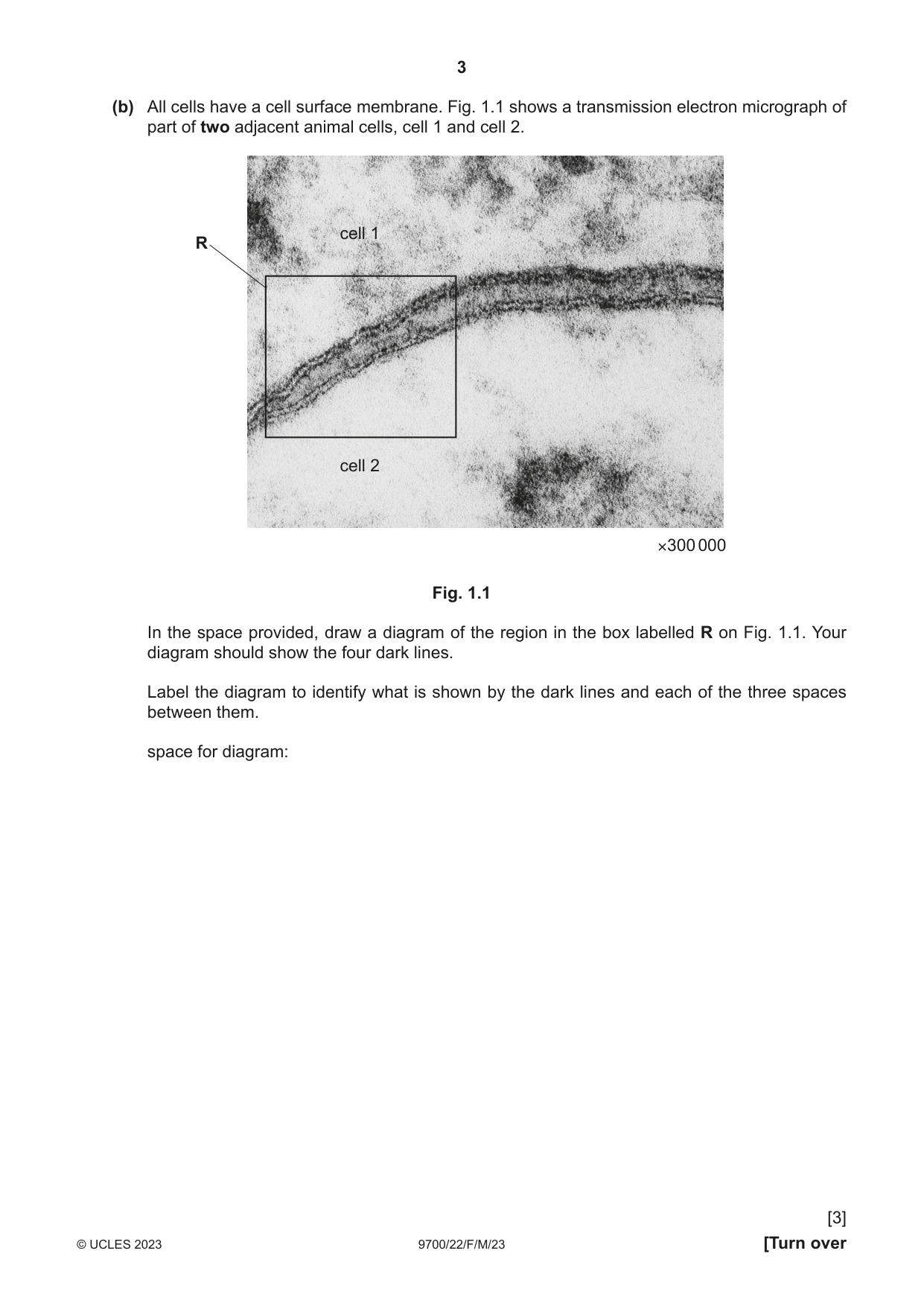
3 9700/22/F/M/23 © UCLES 2023 [Turn over (b) All cells have a cell surface membrane. Fig. 1.1 shows a transmission electron micrograph of part of two adjacent animal cells, cell 1 and cell 2. R cell 1 cell 2 ×300 000 Fig. 1.1 In the space provided, draw a diagram of the region in the box labelled R on Fig. 1.1. Your diagram should show the four dark lines. Label the diagram to identify what is shown by the dark lines and each of the three spaces between them. space for diagram: [3]
Question paper, page 4
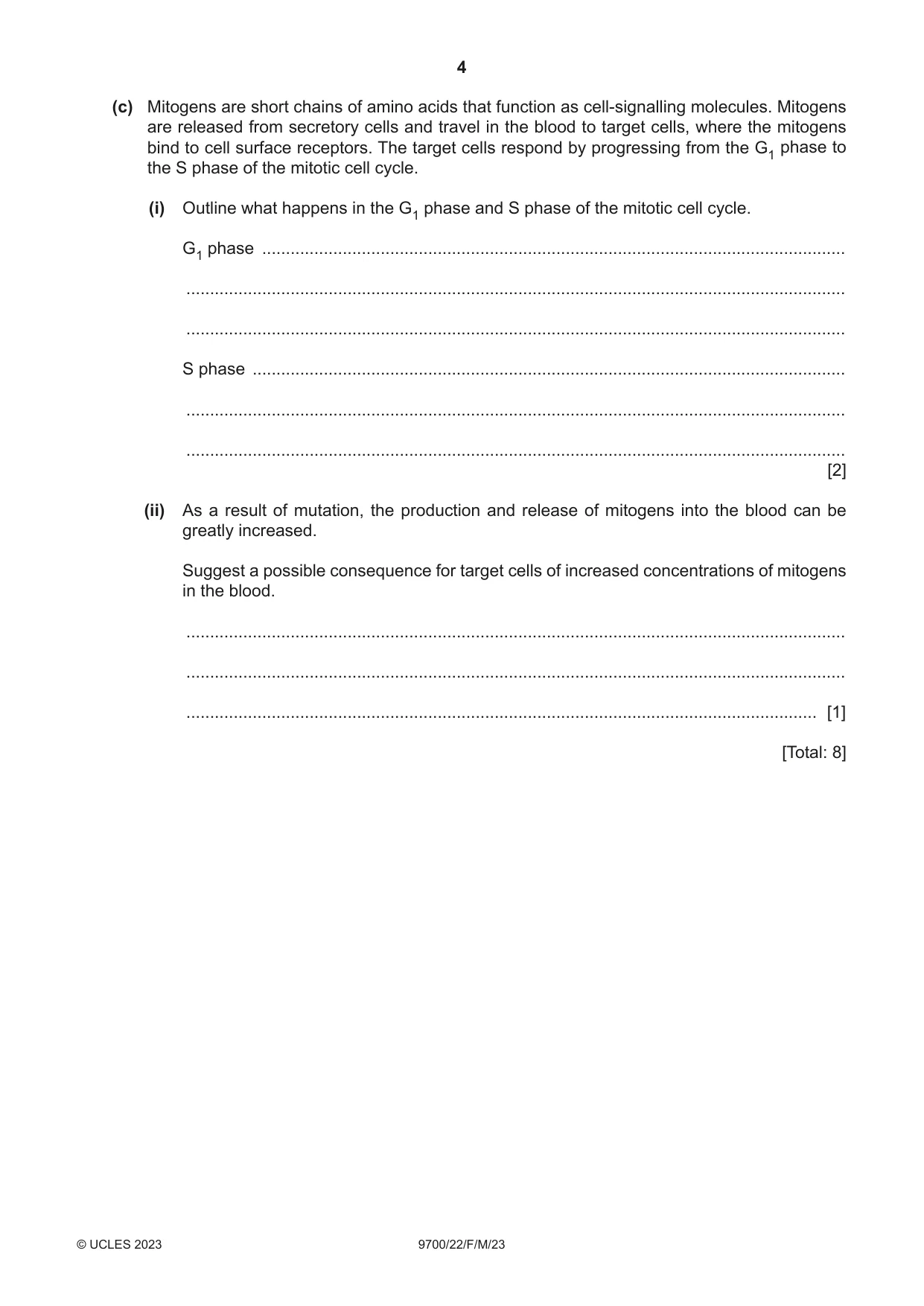
4 9700/22/F/M/23 © UCLES 2023 (c) Mitogens are short chains of amino acids that function as cell-signalling molecules. Mitogens are released from secretory cells and travel in the blood to target cells, where the mitogens bind to cell surface receptors. The target cells respond by progressing from the G1 phase to the S phase of the mitotic cell cycle. (i) Outline what happens in the G1 phase and S phase of the mitotic cell cycle. G1 phase … … … S phase … … … [2] (ii) As a result of mutation, the production and release of mitogens into the blood can be greatly increased. Suggest a possible consequence for target cells of increased concentrations of mitogens in the blood. … … … [1] [Total: 8]
Question paper, page 5
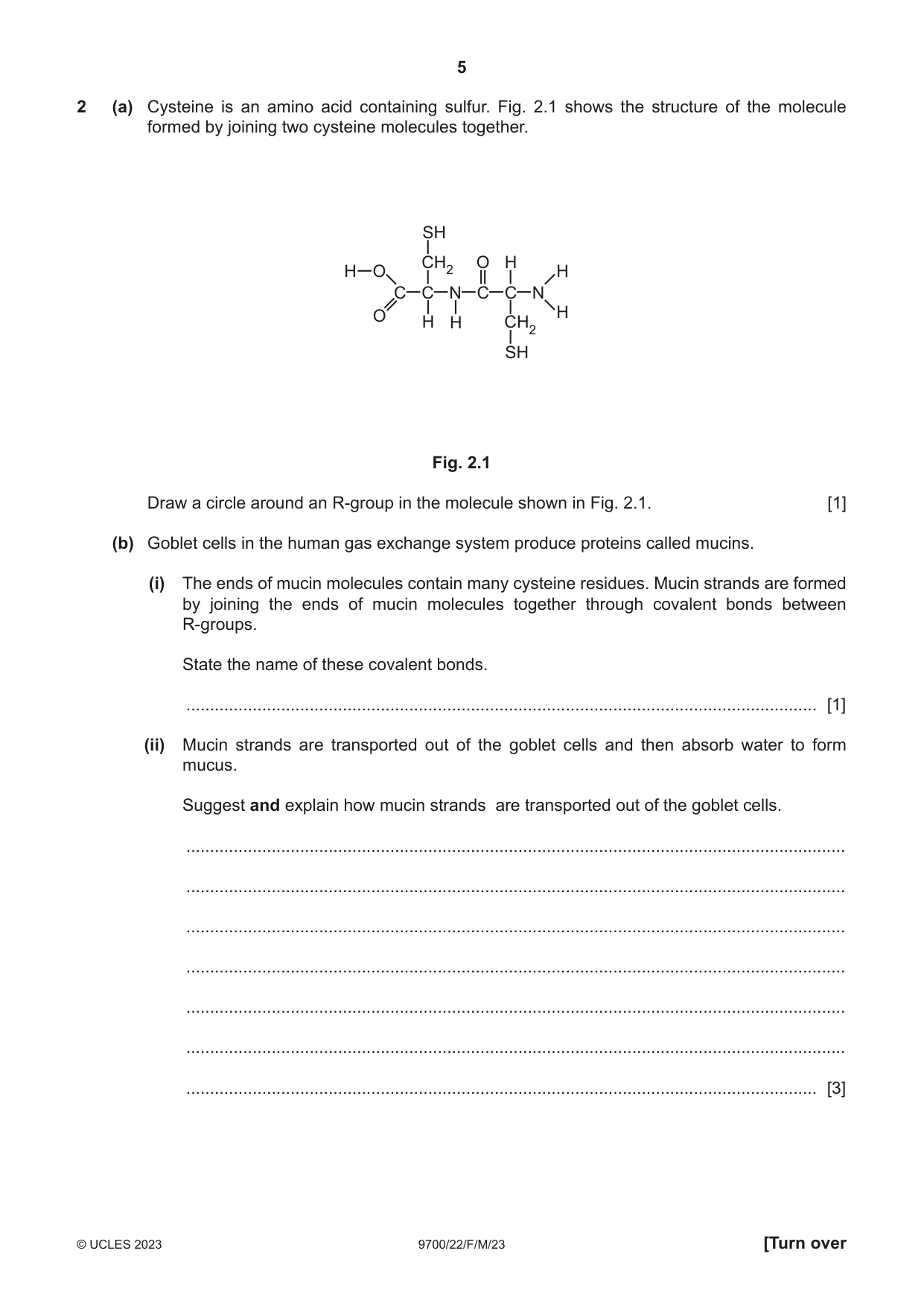
5 9700/22/F/M/23 © UCLES 2023 [Turn over 2 (a) Cysteine is an amino acid containing sulfur. Fig. 2.1 shows the structure of the molecule formed by joining two cysteine molecules together. C C CH2 N C O O O H C CH2 SH H H H SH N H H Fig. 2.1 Draw a circle around an R-group in the molecule shown in Fig. 2.1. [1] (b) Goblet cells in the human gas exchange system produce proteins called mucins. (i) The ends of mucin molecules contain many cysteine residues. Mucin strands are formed by joining the ends of mucin molecules together through covalent bonds between R-groups. State the name of these covalent bonds. … [1] (ii) Mucin strands are transported out of the goblet cells and then absorb water to form mucus. Suggest and explain how mucin strands are transported out of the goblet cells. … … … … … … … [3]
Question paper, page 6
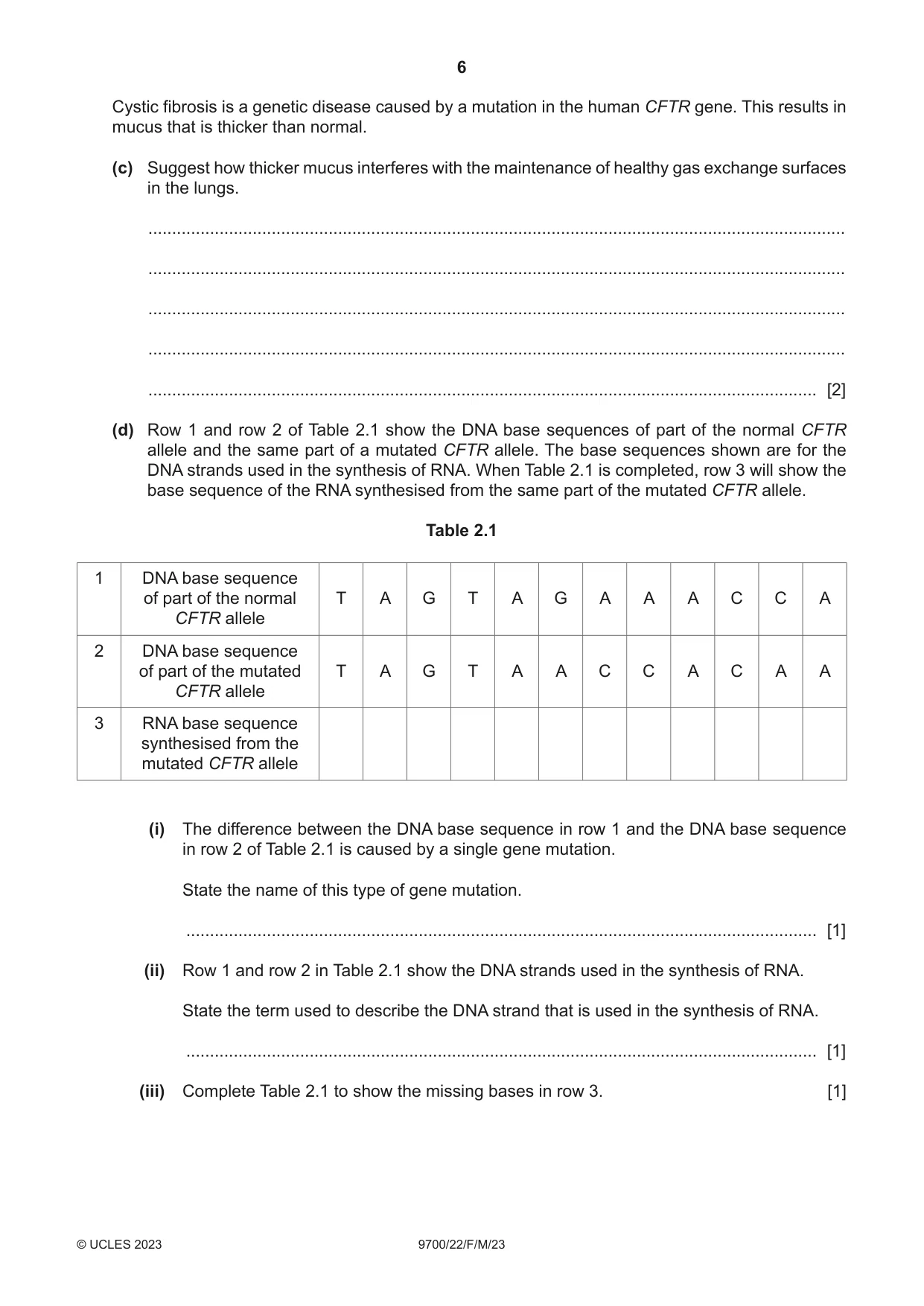
6 9700/22/F/M/23 © UCLES 2023 Cystic fibrosis is a genetic disease caused by a mutation in the human CFTR gene. This results in mucus that is thicker than normal. (c) Suggest how thicker mucus interferes with the maintenance of healthy gas exchange surfaces in the lungs. … … … … … [2] (d) Row 1 and row 2 of Table 2.1 show the DNA base sequences of part of the normal CFTR allele and the same part of a mutated CFTR allele. The base sequences shown are for the DNA strands used in the synthesis of RNA. When Table 2.1 is completed, row 3 will show the base sequence of the RNA synthesised from the same part of the mutated CFTR allele. Table 2.1 1 DNA base sequence of part of the normal CFTR allele T A G T A G A A A C C A 2 DNA base sequence of part of the mutated CFTR allele T A G T A A C C A C A A 3 RNA base sequence synthesised from the mutated CFTR allele (i) The difference between the DNA base sequence in row 1 and the DNA base sequence in row 2 of Table 2.1 is caused by a single gene mutation. State the name of this type of gene mutation. … [1] (ii) Row 1 and row 2 in Table 2.1 show the DNA strands used in the synthesis of RNA. State the term used to describe the DNA strand that is used in the synthesis of RNA. … [1] (iii) Complete Table 2.1 to show the missing bases in row 3. [1]
Question paper, page 7
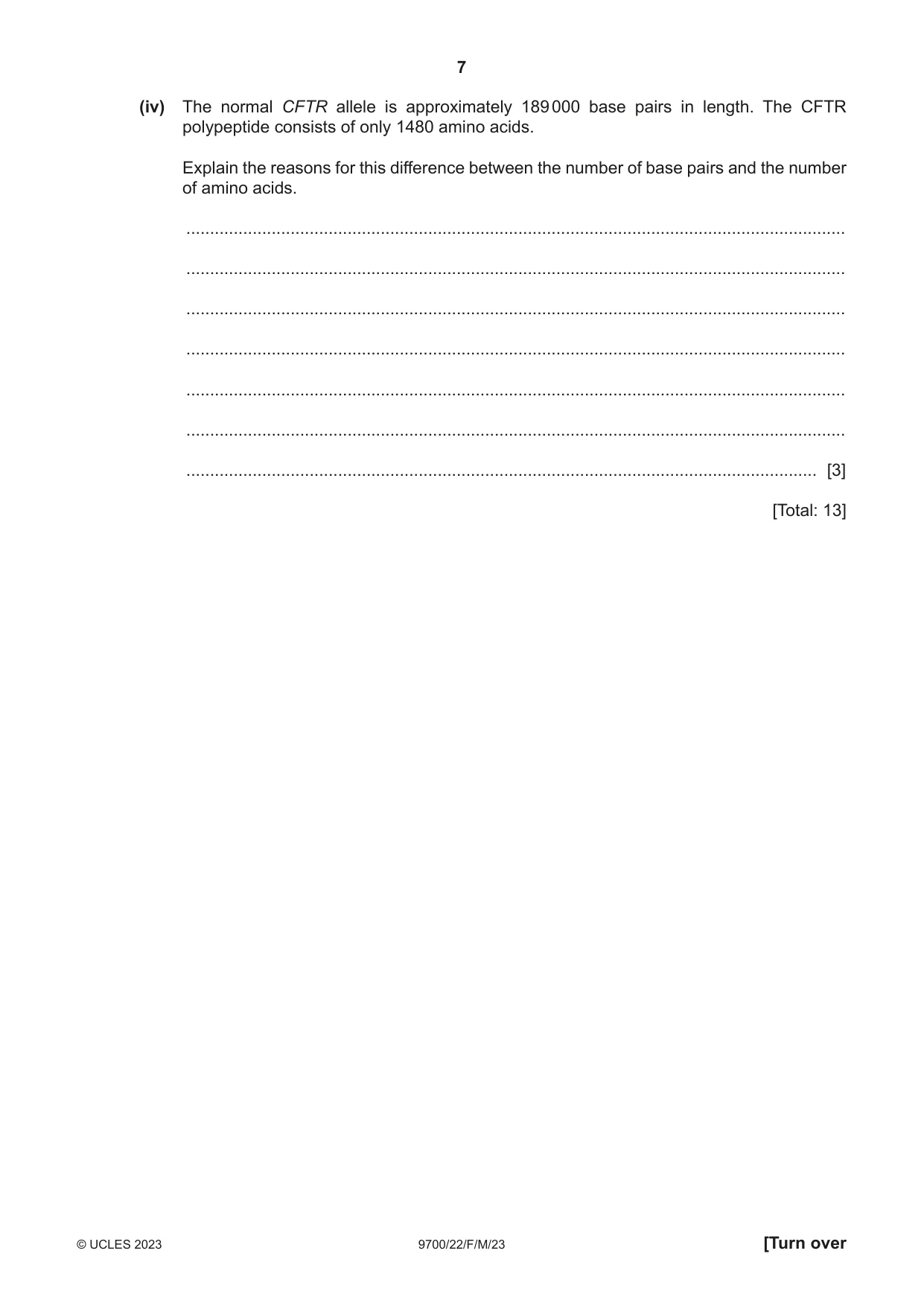
7 9700/22/F/M/23 © UCLES 2023 [Turn over (iv) The normal CFTR allele is approximately 189 000 base pairs in length. The CFTR polypeptide consists of only 1480 amino acids. Explain the reasons for this difference between the number of base pairs and the number of amino acids. … … … … … … … [3] [Total: 13]
Question paper, page 8
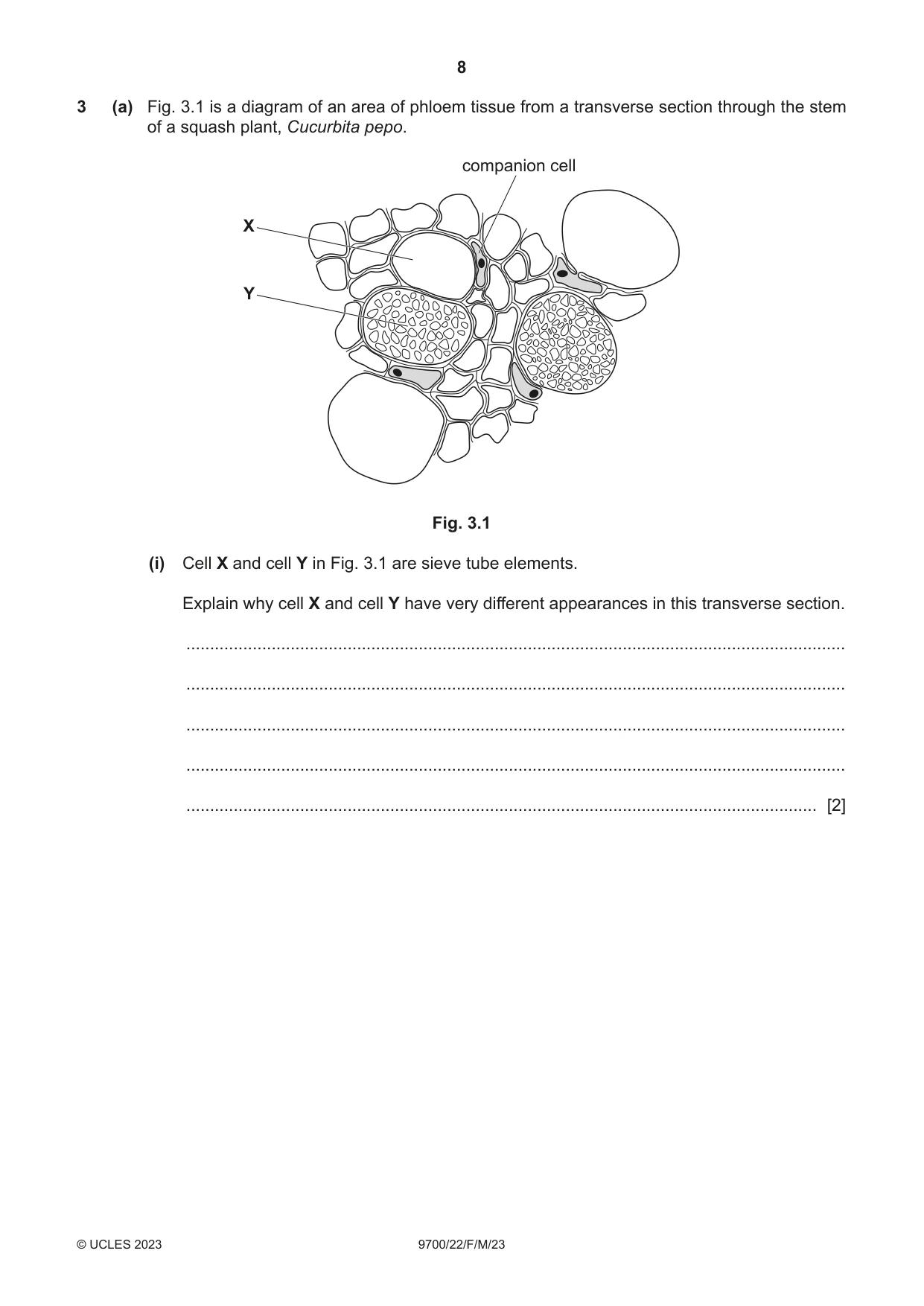
8 9700/22/F/M/23 © UCLES 2023 3 (a) Fig. 3.1 is a diagram of an area of phloem tissue from a transverse section through the stem of a squash plant, Cucurbita pepo. X Y companion cell Fig. 3.1 (i) Cell X and cell Y in Fig. 3.1 are sieve tube elements. Explain why cell X and cell Y have very different appearances in this transverse section. … … … … … [2]
Question paper, page 9
9 9700/22/F/M/23 © UCLES 2023 [Turn over (ii) Sucrose is formed from the glucose synthesised by mesophyll cells in the leaves of C. pepo. Explain how companion cells are involved in the transfer of sucrose into phloem sieve tubes. … … … … … … … … … [4] (b) Hydrogen bonding is important in the movement of water in xylem. (i) Explain how hydrogen bonding occurs between two water molecules. … … … … … [2] (ii) Outline how hydrogen bonding is involved in water transport in the xylem of a plant stem. … … … … … … … [3]
Question paper, page 10
10 9700/22/F/M/23 © UCLES 2023 (iii) Hydrogen bonding between water molecules gives water a relatively high latent heat of vaporisation. Suggest why it is important to plants that water has a high latent heat of vaporisation. … … … … … [2] [Total: 13]
Question paper, page 11
11 9700/22/F/M/23 © UCLES 2023 [Turn over Question 4 starts on page 12.
Question paper, page 12
12 9700/22/F/M/23 © UCLES 2023 4 Tuberculosis (TB), influenza and polio are examples of infectious diseases. (a) (i) Explain what is meant by an infectious disease. … … … … … [2] (ii) Name a species of organism that causes TB. … [1] (b) Immunity can be described as artificial or natural and passive or active. Name the type of immunity that a mother gives to her baby through breast milk. … [1] (c) The influenza virus can mutate frequently to produce different strains of the virus. A new vaccine is often necessary to stimulate the production of new antibodies to these new strains. Explain why different antibodies need to be produced to give immunity to these new strains. … … … … … … … [3]
Question paper, page 13
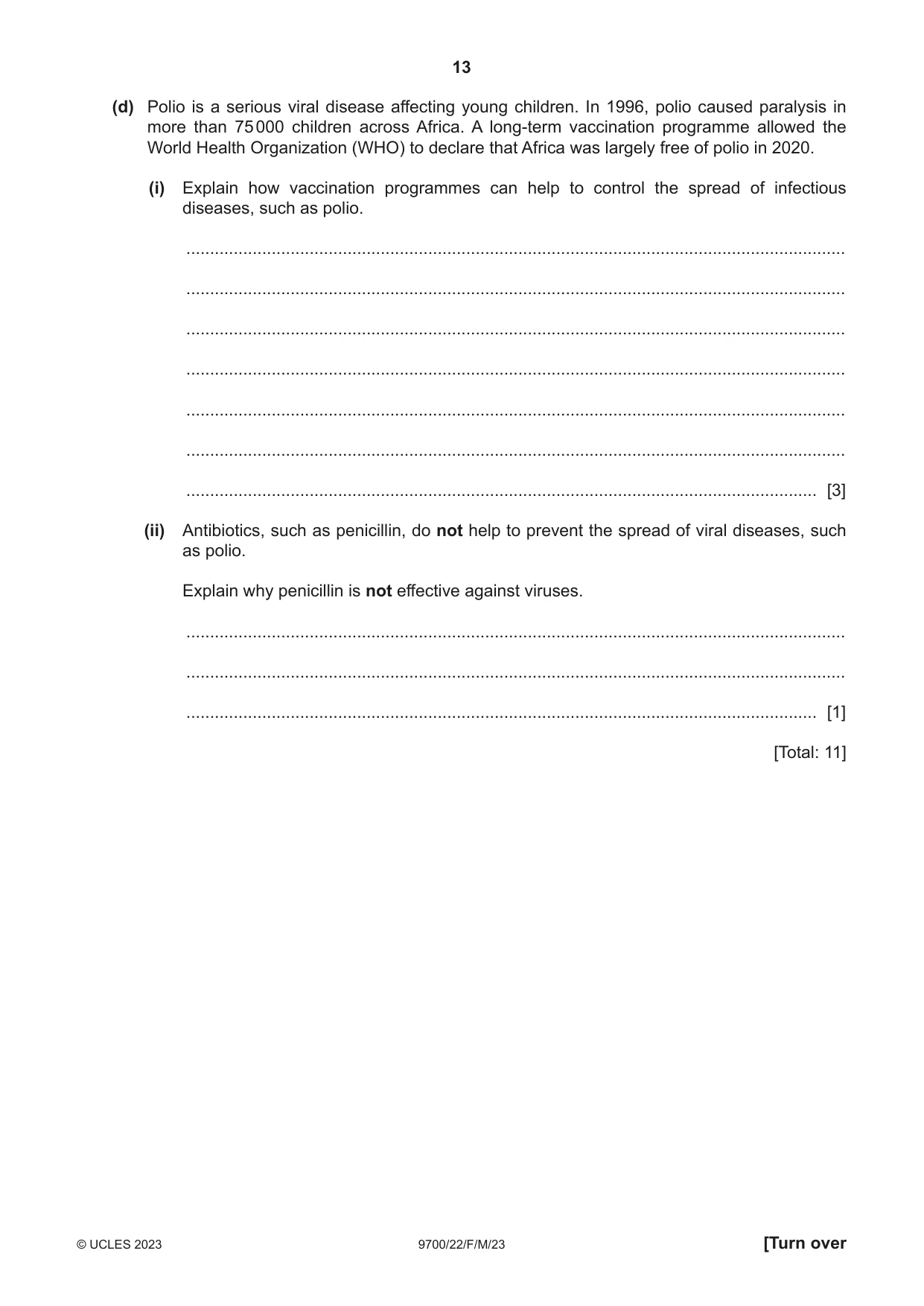
13 9700/22/F/M/23 © UCLES 2023 [Turn over (d) Polio is a serious viral disease affecting young children. In 1996, polio caused paralysis in more than 75 000 children across Africa. A long-term vaccination programme allowed the World Health Organization (WHO) to declare that Africa was largely free of polio in 2020. (i) Explain how vaccination programmes can help to control the spread of infectious diseases, such as polio. … … … … … … … [3] (ii) Antibiotics, such as penicillin, do not help to prevent the spread of viral diseases, such as polio. Explain why penicillin is not effective against viruses. … … … [1] [Total: 11]
Question paper, page 14
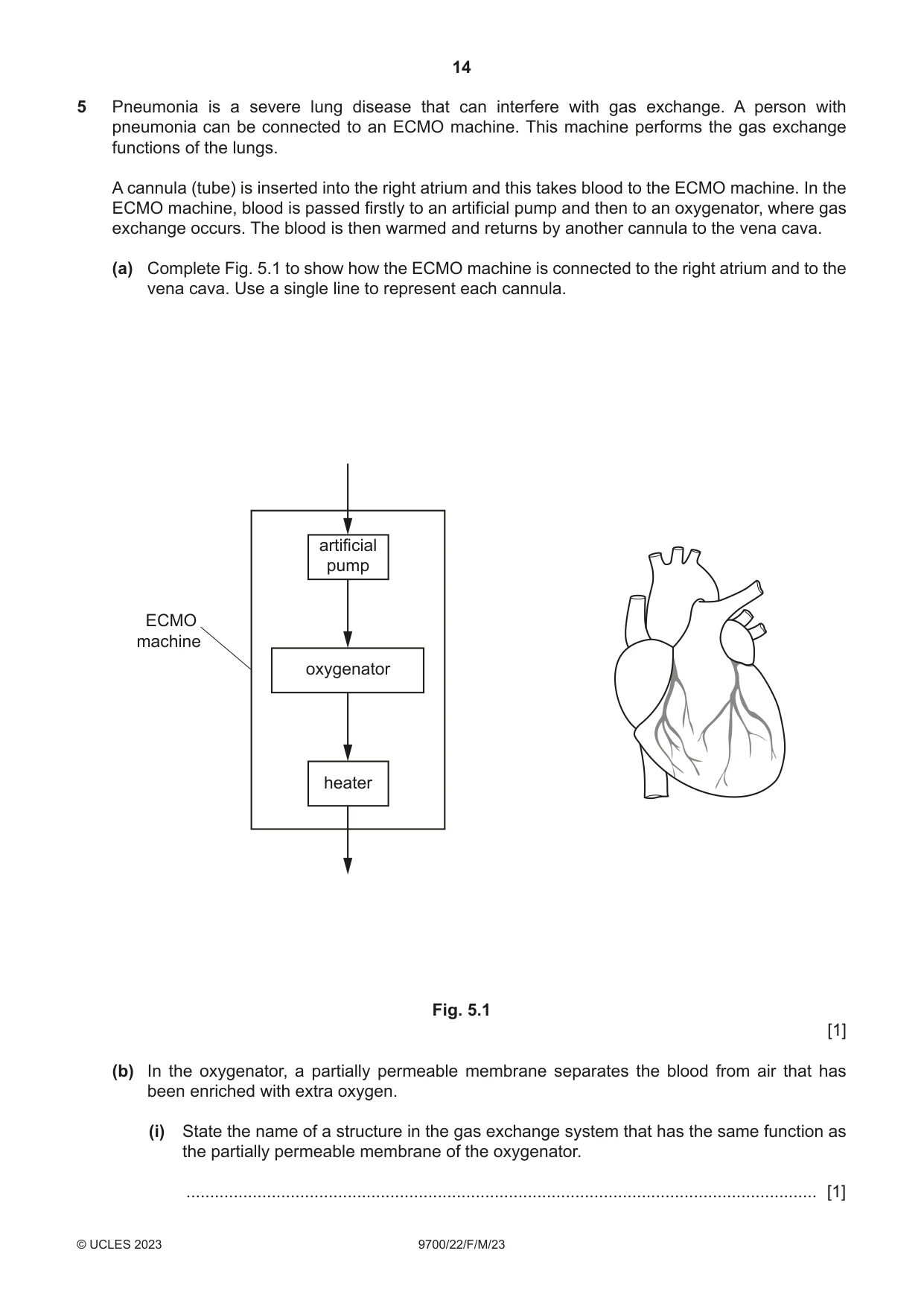
14 9700/22/F/M/23 © UCLES 2023 5 Pneumonia is a severe lung disease that can interfere with gas exchange. A person with pneumonia can be connected to an ECMO machine. This machine performs the gas exchange functions of the lungs. A cannula (tube) is inserted into the right atrium and this takes blood to the ECMO machine. In the ECMO machine, blood is passed firstly to an artificial pump and then to an oxygenator, where gas exchange occurs. The blood is then warmed and returns by another cannula to the vena cava. (a) Complete Fig. 5.1 to show how the ECMO machine is connected to the right atrium and to the vena cava. Use a single line to represent each cannula. artificial pump oxygenator heater ECMO machine Fig. 5.1 [1] (b) In the oxygenator, a partially permeable membrane separates the blood from air that has been enriched with extra oxygen. (i) State the name of a structure in the gas exchange system that has the same function as the partially permeable membrane of the oxygenator. … [1]
Question paper, page 15
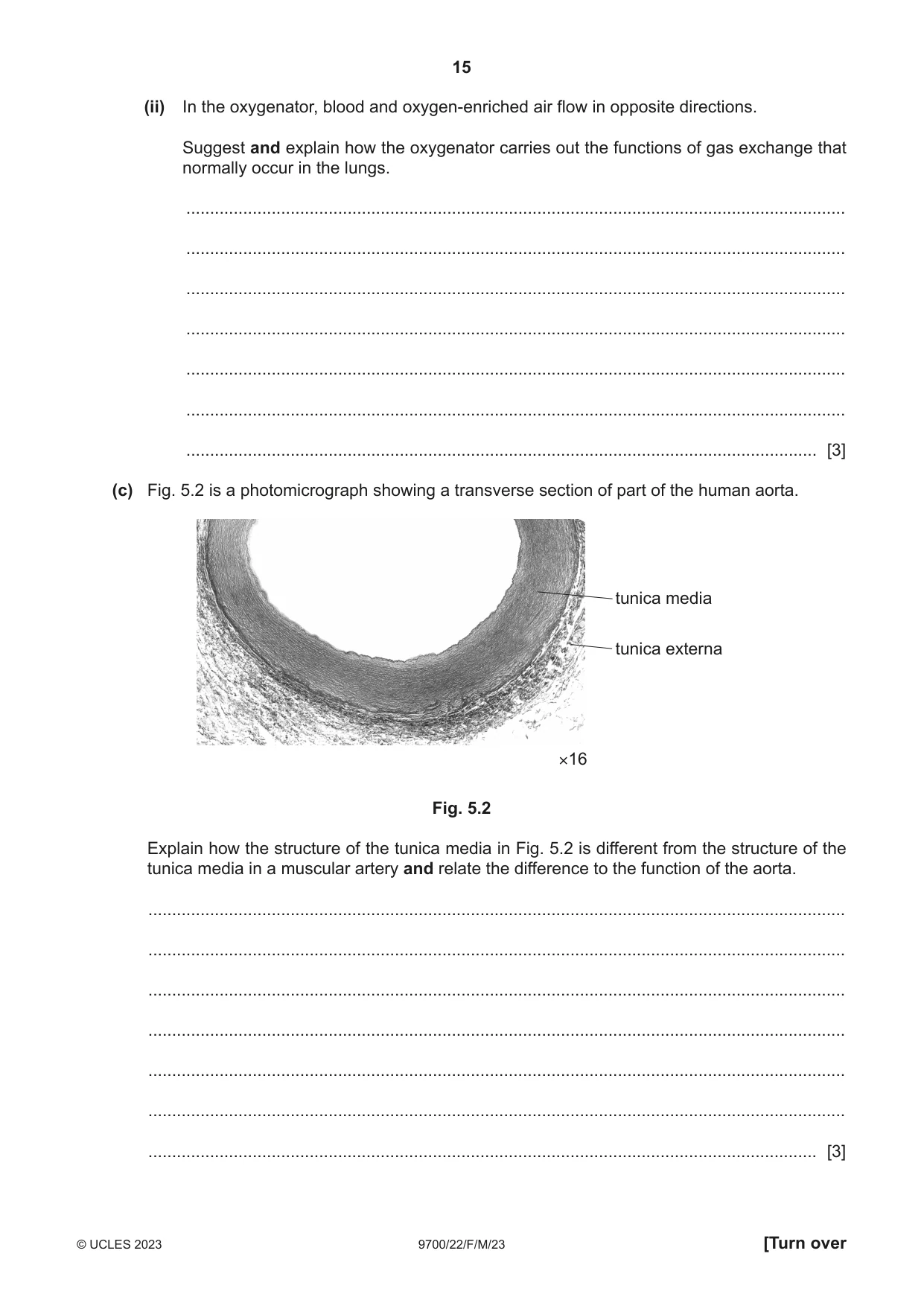
15 9700/22/F/M/23 © UCLES 2023 [Turn over (ii) In the oxygenator, blood and oxygen-enriched air flow in opposite directions. Suggest and explain how the oxygenator carries out the functions of gas exchange that normally occur in the lungs. … … … … … … … [3] (c) Fig. 5.2 is a photomicrograph showing a transverse section of part of the human aorta. tunica media tunica externa ×16 Fig. 5.2 Explain how the structure of the tunica media in Fig. 5.2 is different from the structure of the tunica media in a muscular artery and relate the difference to the function of the aorta. … … … … … … … [3]
Question paper, page 16
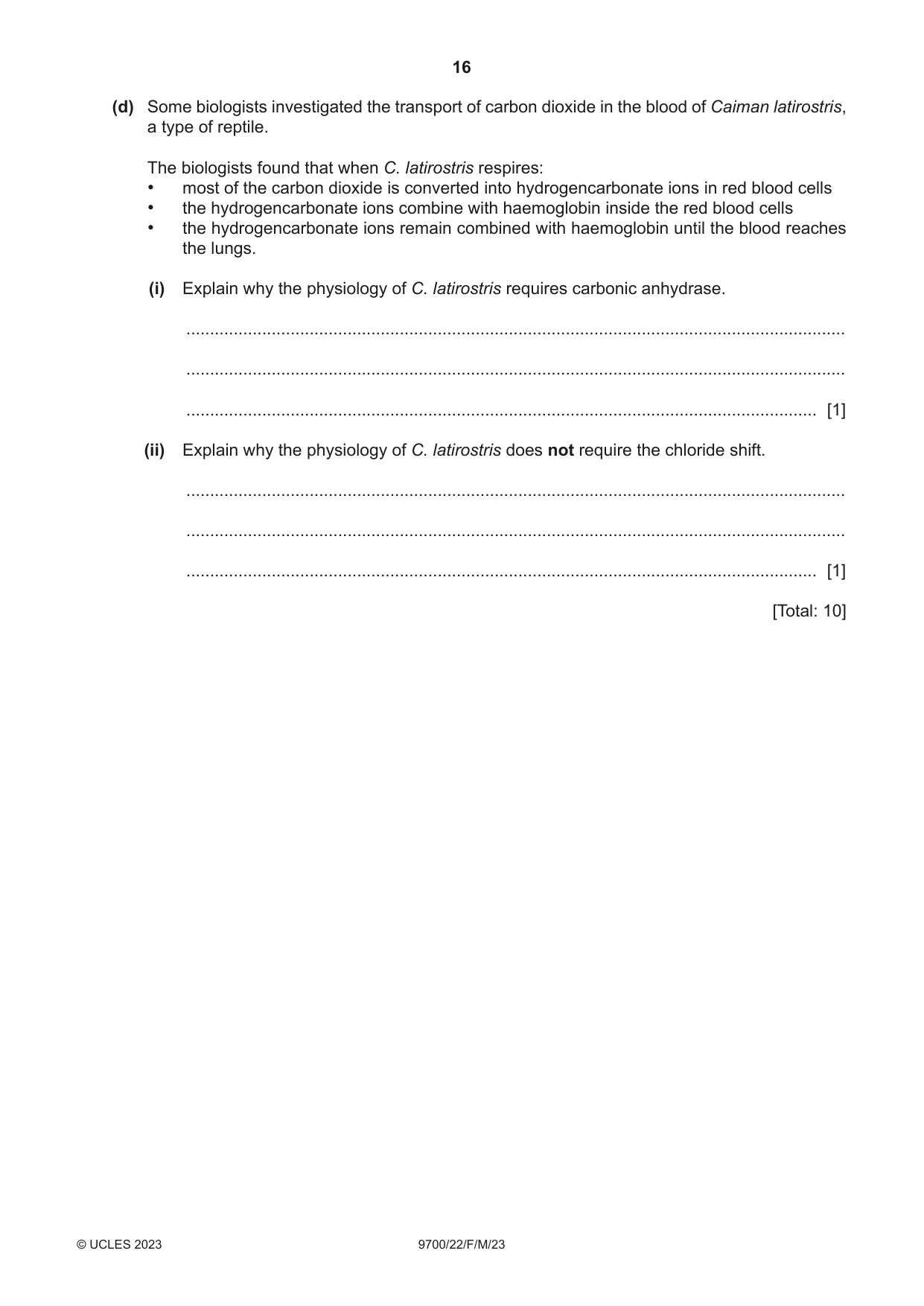
16 9700/22/F/M/23 © UCLES 2023 (d) Some biologists investigated the transport of carbon dioxide in the blood of Caiman latirostris, a type of reptile. The biologists found that when C. latirostris respires: • most of the carbon dioxide is converted into hydrogencarbonate ions in red blood cells • the hydrogencarbonate ions combine with haemoglobin inside the red blood cells • the hydrogencarbonate ions remain combined with haemoglobin until the blood reaches the lungs. (i) Explain why the physiology of C. latirostris requires carbonic anhydrase. … … … [1] (ii) Explain why the physiology of C. latirostris does not require the chloride shift. … … … [1] [Total: 10]
Question paper, page 17
17 9700/22/F/M/23 © UCLES 2023 Question 6 starts on page 18. [Turn over
Question paper, page 18
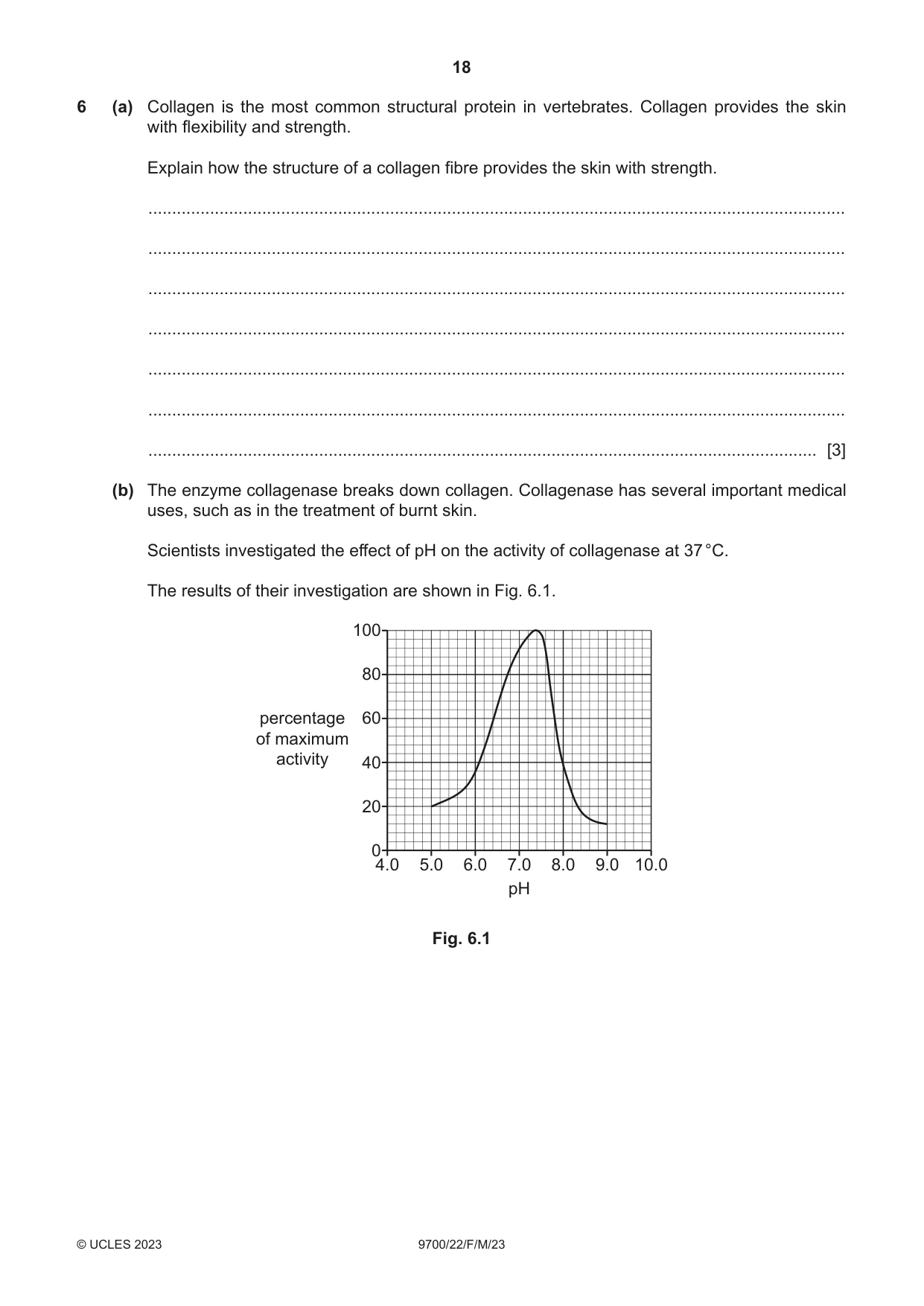
18 9700/22/F/M/23 © UCLES 2023 6 (a) Collagen is the most common structural protein in vertebrates. Collagen provides the skin with flexibility and strength. Explain how the structure of a collagen fibre provides the skin with strength. … … … … … … … [3] (b) The enzyme collagenase breaks down collagen. Collagenase has several important medical uses, such as in the treatment of burnt skin. Scientists investigated the effect of pH on the activity of collagenase at 37 °C. The results of their investigation are shown in Fig. 6.1. 4.0 0 40 80 20 60 percentage of maximum activity 100 6.0 8.0 10.0 5.0 7.0 pH 9.0 Fig. 6.1
Question paper, page 19
19 9700/22/F/M/23 © UCLES 2023 Explain why the activity of collagenase is lower at pH 8.0 than at the optimum pH. … … … … … [2] [Total: 5]
Question paper, page 20
20 9700/22/F/M/23 © UCLES 2023 The boundaries and names shown, the designations used and the presentation of material on any maps contained in this question paper/insert do not imply official endorsement or acceptance by Cambridge Assessment International Education concerning the legal status of any country, territory, or area or any of its authorities, or of the delimitation of its frontiers or boundaries. Permission to reproduce items where third-party owned material protected by copyright is included has been sought and cleared where possible. Every reasonable effort has been made by the publisher (UCLES) to trace copyright holders, but if any items requiring clearance have unwittingly been included, the publisher will be pleased to make amends at the earliest possible opportunity. To avoid the issue of disclosure of answer-related information to candidates, all copyright acknowledgements are reproduced online in the Cambridge Assessment International Education Copyright Acknowledgements Booklet. This is produced for each series of examinations and is freely available to download at www.cambridgeinternational.org after the live examination series. Cambridge Assessment International Education is part of Cambridge Assessment. Cambridge Assessment is the brand name of the University of Cambridge Local Examinations Syndicate (UCLES), which is a department of the University of Cambridge. BLANK PAGE
Mark scheme, page 1
This document consists of 14 printed pages. © UCLES 2023 [Turn over Cambridge International AS & A Level BIOLOGY 9700/22 Paper 2 AS Level Structured Questions February/March 2023 MARK SCHEME Maximum Mark: 60 Published This mark scheme is published as an aid to teachers and candidates, to indicate the requirements of the examination. It shows the basis on which Examiners were instructed to award marks. It does not indicate the details of the discussions that took place at an Examiners’ meeting before marking began, which would have considered the acceptability of alternative answers. Mark schemes should be read in conjunction with the question paper and the Principal Examiner Report for Teachers. Cambridge International will not enter into discussions about these mark schemes. Cambridge International is publishing the mark schemes for the February/March 2023 series for most Cambridge IGCSE™, Cambridge International A and AS Level components and some Cambridge O Level components.
Mark scheme, page 2
9700/22 Cambridge International AS & A Level – Mark Scheme PUBLISHED February/March 2023 © UCLES 2023 Page 2 of 14 Generic Marking Principles These general marking principles must be applied by all examiners when marking candidate answers. They should be applied alongside the specific content of the mark scheme or generic level descriptors for a question. Each question paper and mark scheme will also comply with these marking principles. GENERIC MARKING PRINCIPLE 1: Marks must be awarded in line with: • the specific content of the mark scheme or the generic level descriptors for the question • the specific skills defined in the mark scheme or in the generic level descriptors for the question • the standard of response required by a candidate as exemplified by the standardisation scripts. GENERIC MARKING PRINCIPLE 2: Marks awarded are always whole marks (not half marks, or other fractions). GENERIC MARKING PRINCIPLE 3: Marks must be awarded positively: • marks are awarded for correct/valid answers, as defined in the mark scheme. However, credit is given for valid answers which go beyond the scope of the syllabus and mark scheme, referring to your Team Leader as appropriate • marks are awarded when candidates clearly demonstrate what they know and can do • marks are not deducted for errors • marks are not deducted for omissions • answers should only be judged on the quality of spelling, punctuation and grammar when these features are specifically assessed by the question as indicated by the mark scheme. The meaning, however, should be unambiguous. GENERIC MARKING PRINCIPLE 4: Rules must be applied consistently, e.g. in situations where candidates have not followed instructions or in the application of generic level descriptors.
Mark scheme, page 3
9700/22 Cambridge International AS & A Level – Mark Scheme PUBLISHED February/March 2023 © UCLES 2023 Page 3 of 14 GENERIC MARKING PRINCIPLE 5: Marks should be awarded using the full range of marks defined in the mark scheme for the question. (However, the use of the full mark range may be limited according to the quality of the candidate responses seen.) GENERIC MARKING PRINCIPLE 6: Marks awarded are based solely on the requirements as defined in the mark scheme. Marks should not be awarded with grade thresholds or grade descriptors in mind. Science-Specific Marking Principles 1 Examiners should consider the context and scientific use of any keywords when awarding marks. Although keywords may be present, marks should not be awarded if the keywords are used incorrectly. 2 The examiner should not choose between contradictory statements given in the same question part, and credit should not be awarded for any correct statement that is contradicted within the same question part. Wrong science that is irrelevant to the question should be ignored. 3 Although spellings do not have to be correct, spellings of syllabus terms must allow for clear and unambiguous separation from other syllabus terms with which they may be confused (e.g. ethane / ethene, glucagon / glycogen, refraction / reflection). 4 The error carried forward (ecf) principle should be applied, where appropriate. If an incorrect answer is subsequently used in a scientifically correct way, the candidate should be awarded these subsequent marking points. Further guidance will be included in the mark scheme where necessary and any exceptions to this general principle will be noted. 5 ‘List rule’ guidance For questions that require n responses (e.g. State two reasons …): • The response should be read as continuous prose, even when numbered answer spaces are provided. • Any response marked ignore in the mark scheme should not count towards n. • Incorrect responses should not be awarded credit but will still count towards n. • Read the entire response to check for any responses that contradict those that would otherwise be credited. Credit should not be awarded for any responses that are contradicted within the rest of the response. Where two responses contradict one another, this should be treated as a single incorrect response. • Non-contradictory responses after the first n responses may be ignored even if they include incorrect science.
Mark scheme, page 4
9700/22 Cambridge International AS & A Level – Mark Scheme PUBLISHED February/March 2023 © UCLES 2023 Page 4 of 14 6 Calculation specific guidance Correct answers to calculations should be given full credit even if there is no working or incorrect working, unless the question states ‘show your working’. For questions in which the number of significant figures required is not stated, credit should be awarded for correct answers when rounded by the examiner to the number of significant figures given in the mark scheme. This may not apply to measured values. For answers given in standard form (e.g. a 10n) in which the convention of restricting the value of the coefficient (a) to a value between 1 and 10 is not followed, credit may still be awarded if the answer can be converted to the answer given in the mark scheme. Unless a separate mark is given for a unit, a missing or incorrect unit will normally mean that the final calculation mark is not awarded. Exceptions to this general principle will be noted in the mark scheme. 7 Guidance for chemical equations Multiples / fractions of coefficients used in chemical equations are acceptable unless stated otherwise in the mark scheme. State symbols given in an equation should be ignored unless asked for in the question or stated otherwise in the mark scheme. Mark scheme abbreviations: ; separates marking points / alternative answers for the same marking point R reject A accept I ignore AVP any valid point AW alternative wording (where responses vary more than normal) ecf error carried forward underline actual word underlined must be used by candidate (grammatical variants accepted) max indicates the maximum number of marks that can be given ora or reverse argument mp marking point
Mark scheme, page 5
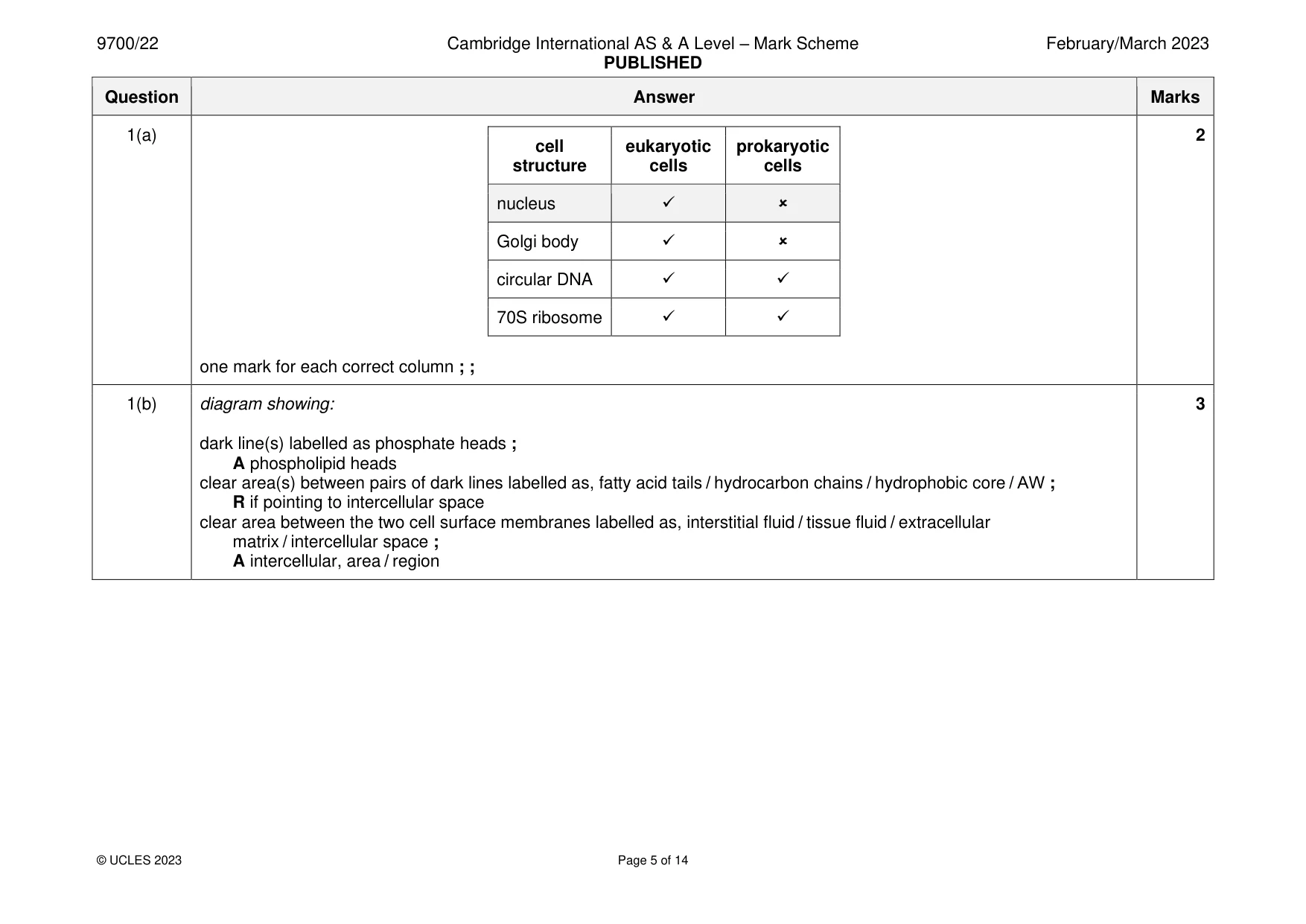
9700/22 Cambridge International AS & A Level – Mark Scheme PUBLISHED February/March 2023 © UCLES 2023 Page 5 of 14 Question Answer Marks 1(a) cell structure eukaryotic cells prokaryotic cells nucleus ✓ Golgi body ✓ circular DNA ✓ ✓ 70S ribosome ✓ ✓ one mark for each correct column ; ; 2 1(b) diagram showing: dark line(s) labelled as phosphate heads ; A phospholipid heads clear area(s) between pairs of dark lines labelled as, fatty acid tails / hydrocarbon chains / hydrophobic core / AW ; R if pointing to intercellular space clear area between the two cell surface membranes labelled as, interstitial fluid / tissue fluid / extracellular matrix / intercellular space ; A intercellular, area / region 3
Mark scheme, page 6
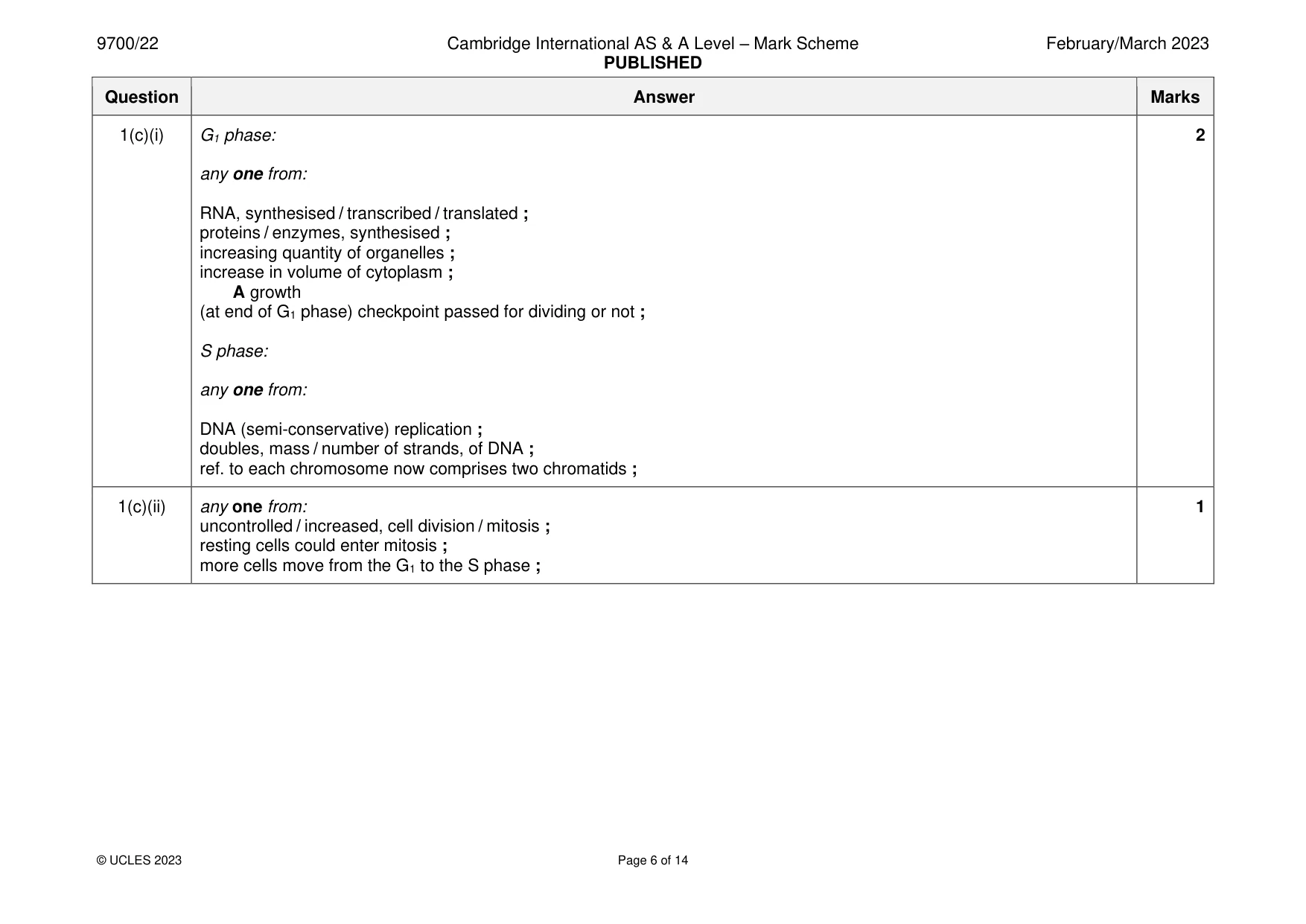
9700/22 Cambridge International AS & A Level – Mark Scheme PUBLISHED February/March 2023 © UCLES 2023 Page 6 of 14 Question Answer Marks 1(c)(i) G1 phase: any one from: RNA, synthesised / transcribed / translated ; proteins / enzymes, synthesised ; increasing quantity of organelles ; increase in volume of cytoplasm ; A growth (at end of G1 phase) checkpoint passed for dividing or not ; S phase: any one from: DNA (semi-conservative) replication ; doubles, mass / number of strands, of DNA ; ref. to each chromosome now comprises two chromatids ; 2 1(c)(ii) any one from: uncontrolled / increased, cell division / mitosis ; resting cells could enter mitosis ; more cells move from the G1 to the S phase ; 1
Mark scheme, page 7
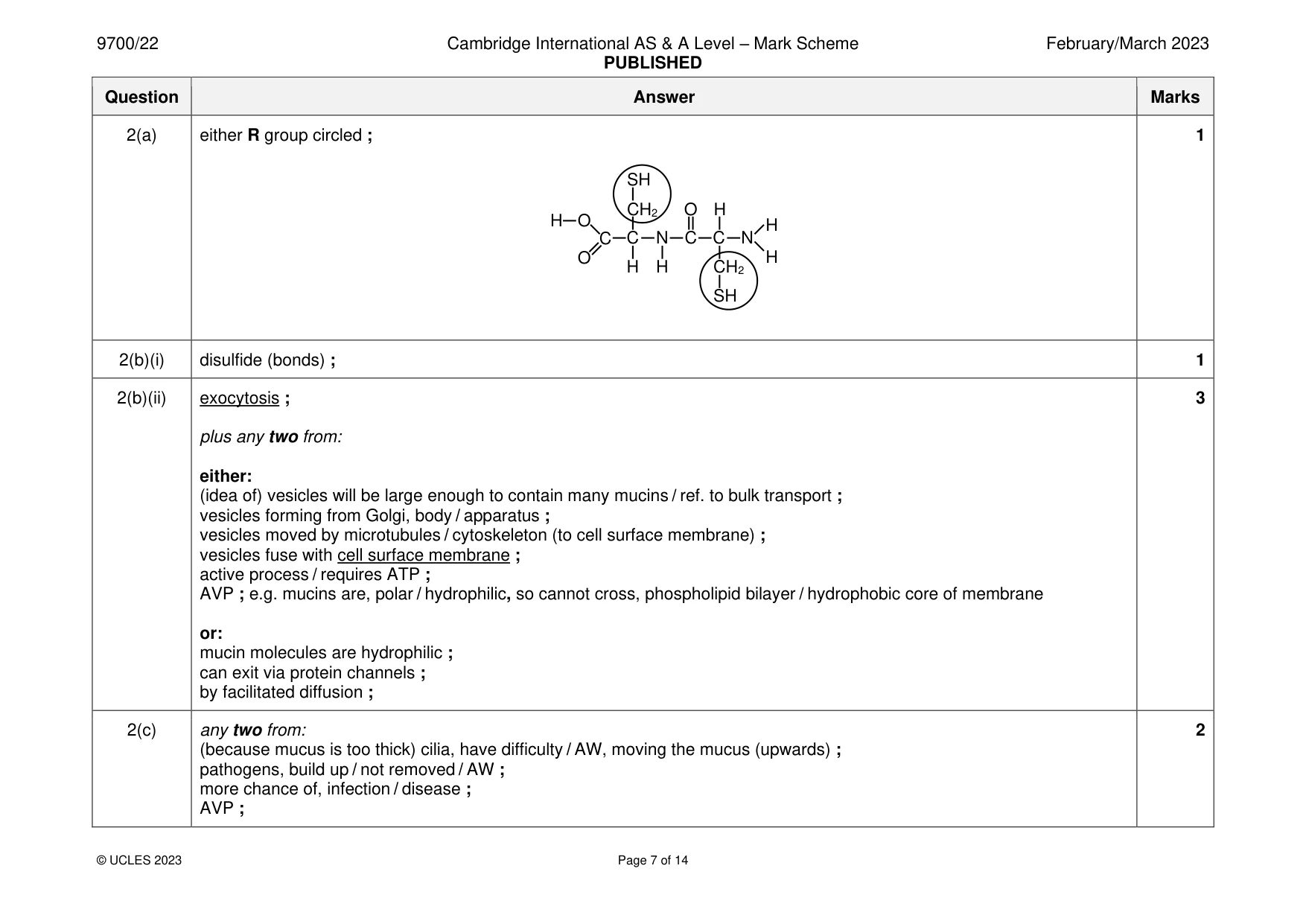
9700/22 Cambridge International AS & A Level – Mark Scheme PUBLISHED February/March 2023 © UCLES 2023 Page 7 of 14 Question Answer Marks 2(a) either R group circled ; 1 2(b)(i) disulfide (bonds) ; 1 2(b)(ii) exocytosis ; plus any two from: either: (idea of) vesicles will be large enough to contain many mucins / ref. to bulk transport ; vesicles forming from Golgi, body / apparatus ; vesicles moved by microtubules / cytoskeleton (to cell surface membrane) ; vesicles fuse with cell surface membrane ; active process / requires ATP ; AVP ; e.g. mucins are, polar / hydrophilic, so cannot cross, phospholipid bilayer / hydrophobic core of membrane or: mucin molecules are hydrophilic ; can exit via protein channels ; by facilitated diffusion ; 3 2(c) any two from: (because mucus is too thick) cilia, have difficulty / AW, moving the mucus (upwards) ; pathogens, build up / not removed / AW ; more chance of, infection / disease ; AVP ; 2 H O O C C C C N O H CH2 SH N H H SH CH2 H H
Mark scheme, page 8
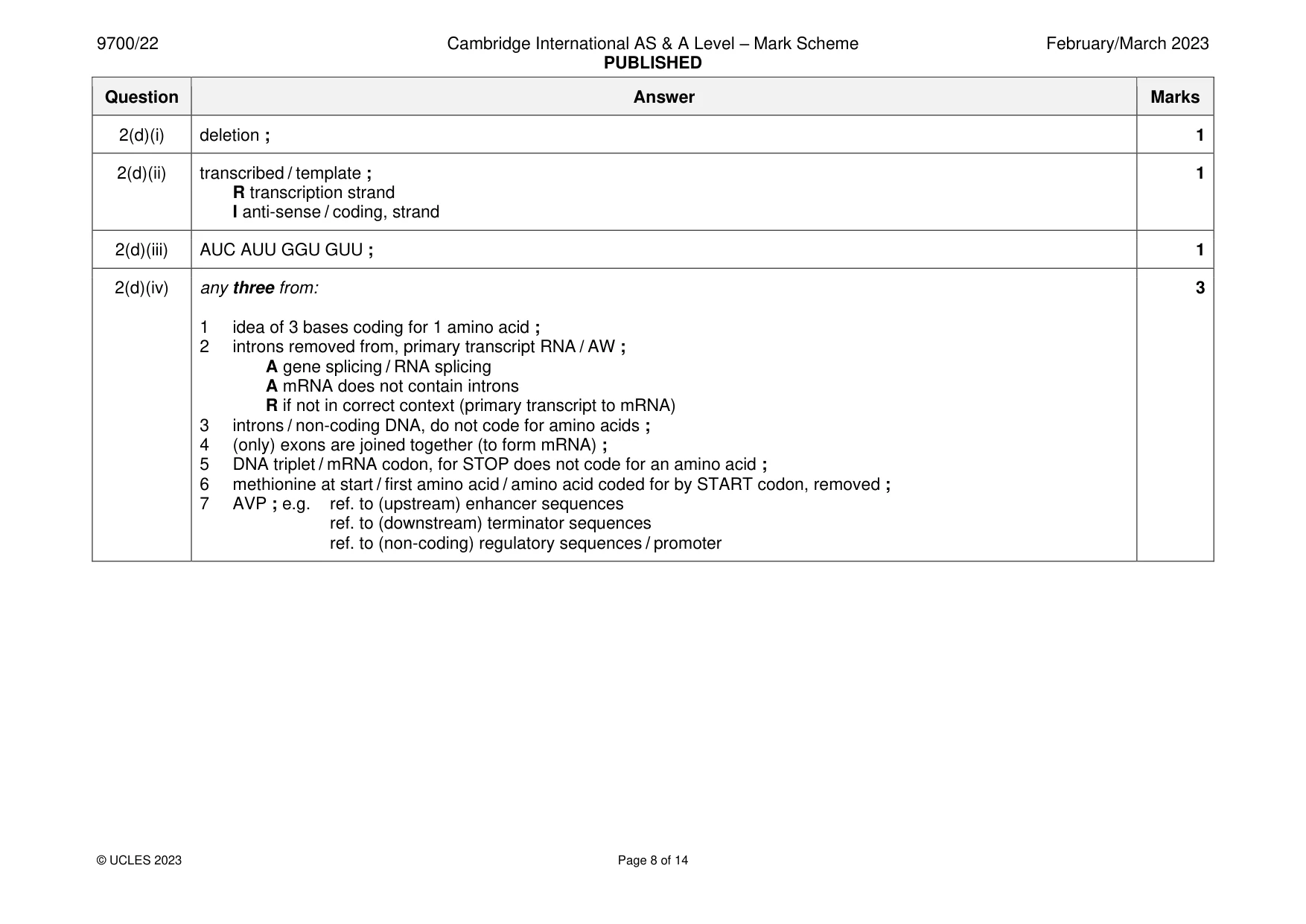
9700/22 Cambridge International AS & A Level – Mark Scheme PUBLISHED February/March 2023 © UCLES 2023 Page 8 of 14 Question Answer Marks 2(d)(i) deletion ; 1 2(d)(ii) transcribed / template ; R transcription strand I anti-sense / coding, strand 1 2(d)(iii) AUC AUU GGU GUU ; 1 2(d)(iv) any three from: 1 idea of 3 bases coding for 1 amino acid ; 2 introns removed from, primary transcript RNA / AW ; A gene splicing / RNA splicing A mRNA does not contain introns R if not in correct context (primary transcript to mRNA) 3 introns / non-coding DNA, do not code for amino acids ; 4 (only) exons are joined together (to form mRNA) ; 5 DNA triplet / mRNA codon, for STOP does not code for an amino acid ; 6 methionine at start / first amino acid / amino acid coded for by START codon, removed ; 7 AVP ; e.g. ref. to (upstream) enhancer sequences ref. to (downstream) terminator sequences ref. to (non-coding) regulatory sequences / promoter 3
Mark scheme, page 9
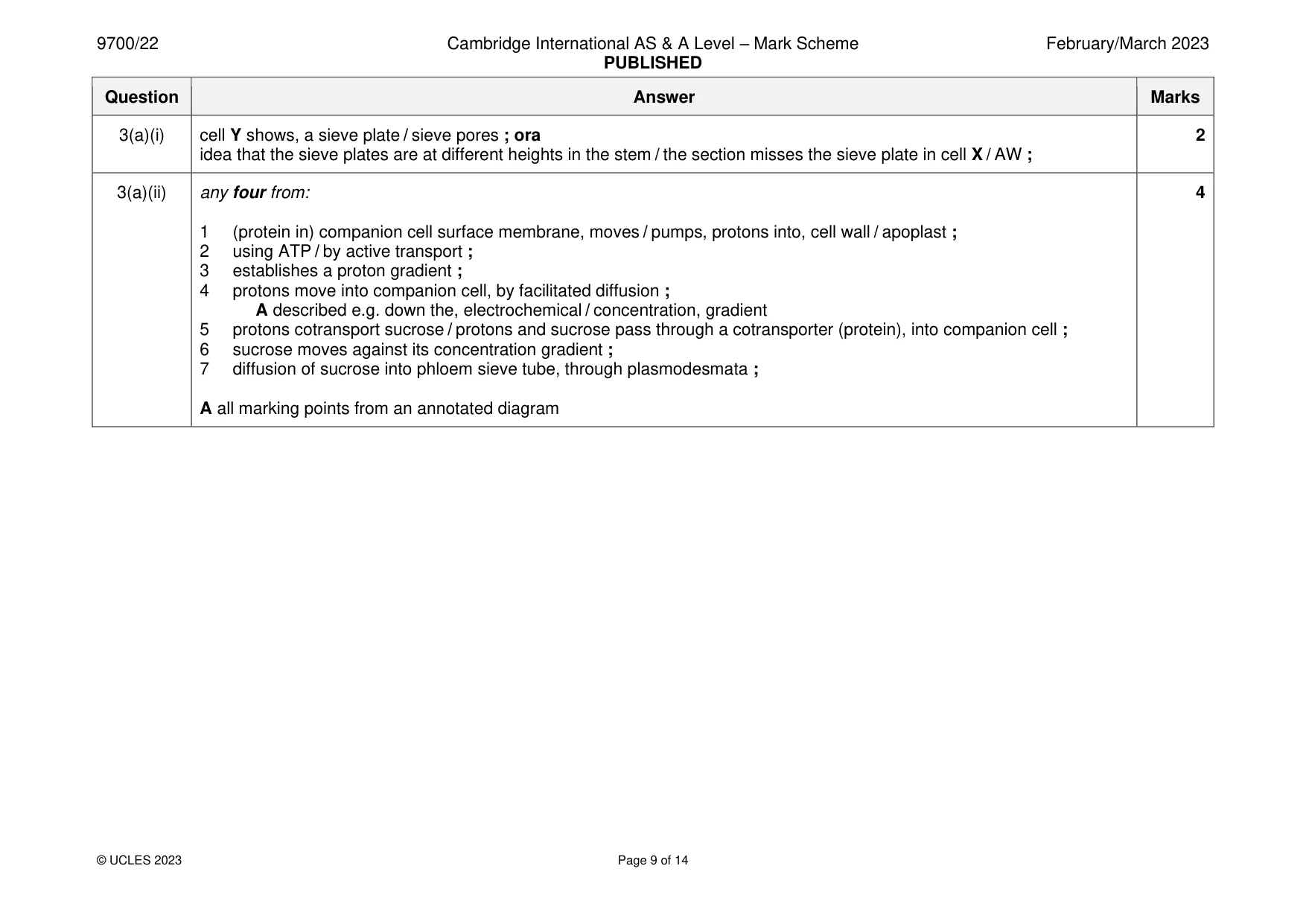
9700/22 Cambridge International AS & A Level – Mark Scheme PUBLISHED February/March 2023 © UCLES 2023 Page 9 of 14 Question Answer Marks 3(a)(i) cell Y shows, a sieve plate / sieve pores ; ora idea that the sieve plates are at different heights in the stem / the section misses the sieve plate in cell X / AW ; 2 3(a)(ii) any four from: 1 (protein in) companion cell surface membrane, moves / pumps, protons into, cell wall / apoplast ; 2 using ATP / by active transport ; 3 establishes a proton gradient ; 4 protons move into companion cell, by facilitated diffusion ; A described e.g. down the, electrochemical / concentration, gradient 5 protons cotransport sucrose / protons and sucrose pass through a cotransporter (protein), into companion cell ; 6 sucrose moves against its concentration gradient ; 7 diffusion of sucrose into phloem sieve tube, through plasmodesmata ; A all marking points from an annotated diagram 4
Mark scheme, page 10
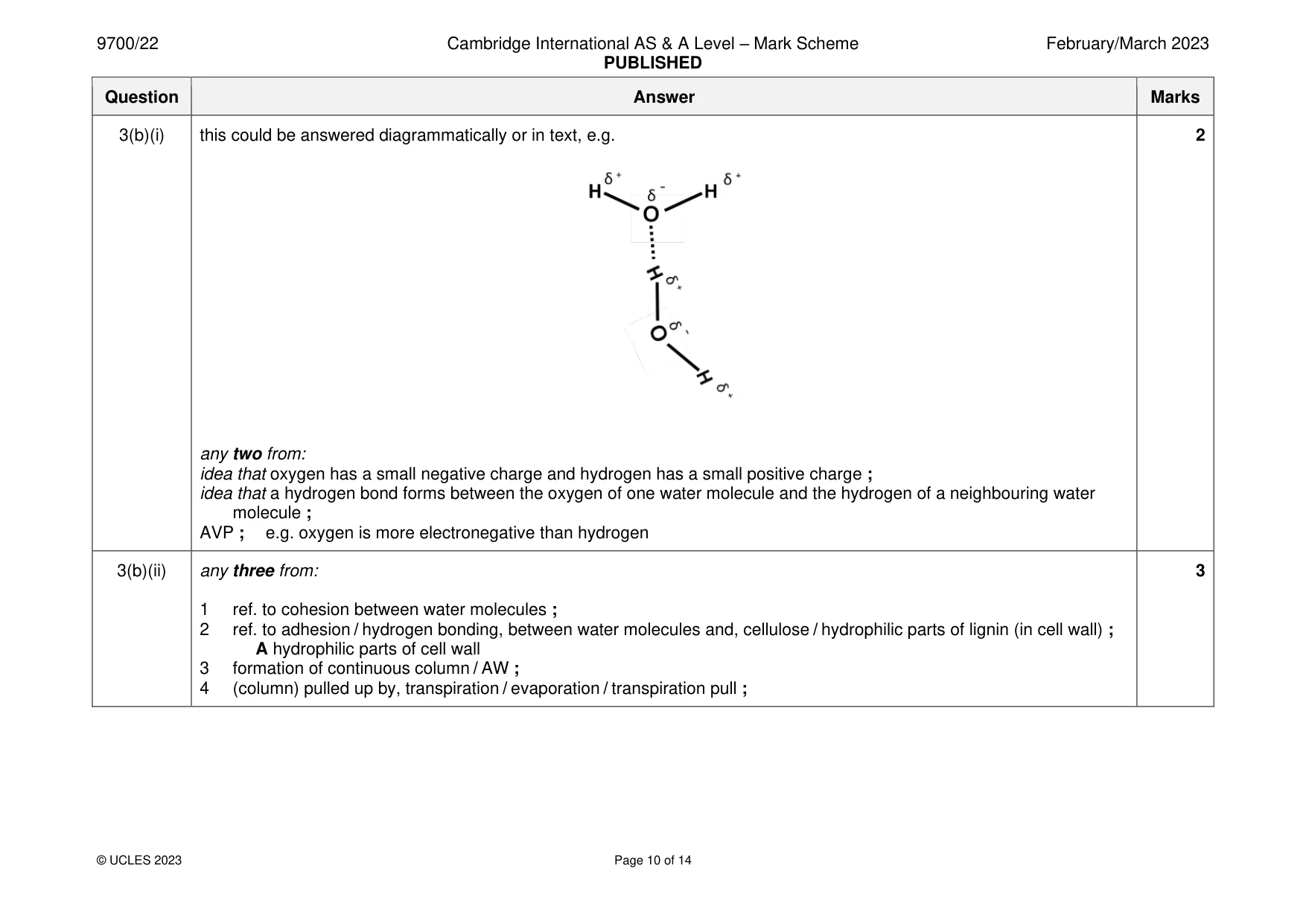
9700/22 Cambridge International AS & A Level – Mark Scheme PUBLISHED February/March 2023 © UCLES 2023 Page 10 of 14 Question Answer Marks 3(b)(i) this could be answered diagrammatically or in text, e.g. any two from: idea that oxygen has a small negative charge and hydrogen has a small positive charge ; idea that a hydrogen bond forms between the oxygen of one water molecule and the hydrogen of a neighbouring water molecule ; AVP ; e.g. oxygen is more electronegative than hydrogen 2 3(b)(ii) any three from: 1 ref. to cohesion between water molecules ; 2 ref. to adhesion / hydrogen bonding, between water molecules and, cellulose / hydrophilic parts of lignin (in cell wall) ; A hydrophilic parts of cell wall 3 formation of continuous column / AW ; 4 (column) pulled up by, transpiration / evaporation / transpiration pull ; 3
Mark scheme, page 11
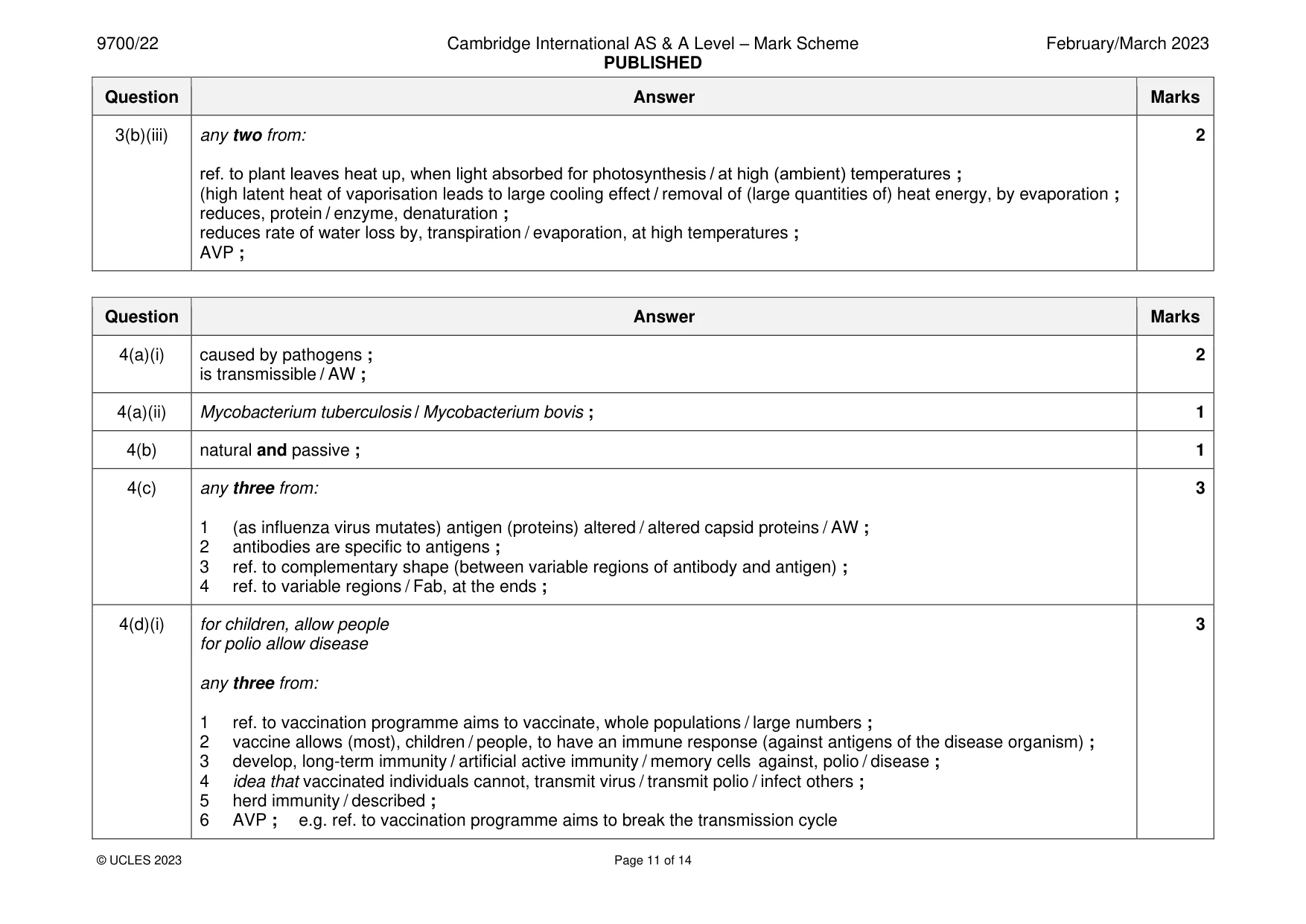
9700/22 Cambridge International AS & A Level – Mark Scheme PUBLISHED February/March 2023 © UCLES 2023 Page 11 of 14 Question Answer Marks 3(b)(iii) any two from: ref. to plant leaves heat up, when light absorbed for photosynthesis / at high (ambient) temperatures ; (high latent heat of vaporisation leads to large cooling effect / removal of (large quantities of) heat energy, by evaporation ; reduces, protein / enzyme, denaturation ; reduces rate of water loss by, transpiration / evaporation, at high temperatures ; AVP ; 2 Question Answer Marks 4(a)(i) caused by pathogens ; is transmissible / AW ; 2 4(a)(ii) Mycobacterium tuberculosis / Mycobacterium bovis ; 1 4(b) natural and passive ; 1 4(c) any three from: 1 (as influenza virus mutates) antigen (proteins) altered / altered capsid proteins / AW ; 2 antibodies are specific to antigens ; 3 ref. to complementary shape (between variable regions of antibody and antigen) ; 4 ref. to variable regions / Fab, at the ends ; 3 4(d)(i) for children, allow people for polio allow disease any three from: 1 ref. to vaccination programme aims to vaccinate, whole populations / large numbers ; 2 vaccine allows (most), children / people, to have an immune response (against antigens of the disease organism) ; 3 develop, long-term immunity / artificial active immunity / memory cells against, polio / disease ; 4 idea that vaccinated individuals cannot, transmit virus / transmit polio / infect others ; 5 herd immunity / described ; 6 AVP ; e.g. ref. to vaccination programme aims to break the transmission cycle 3
Mark scheme, page 12
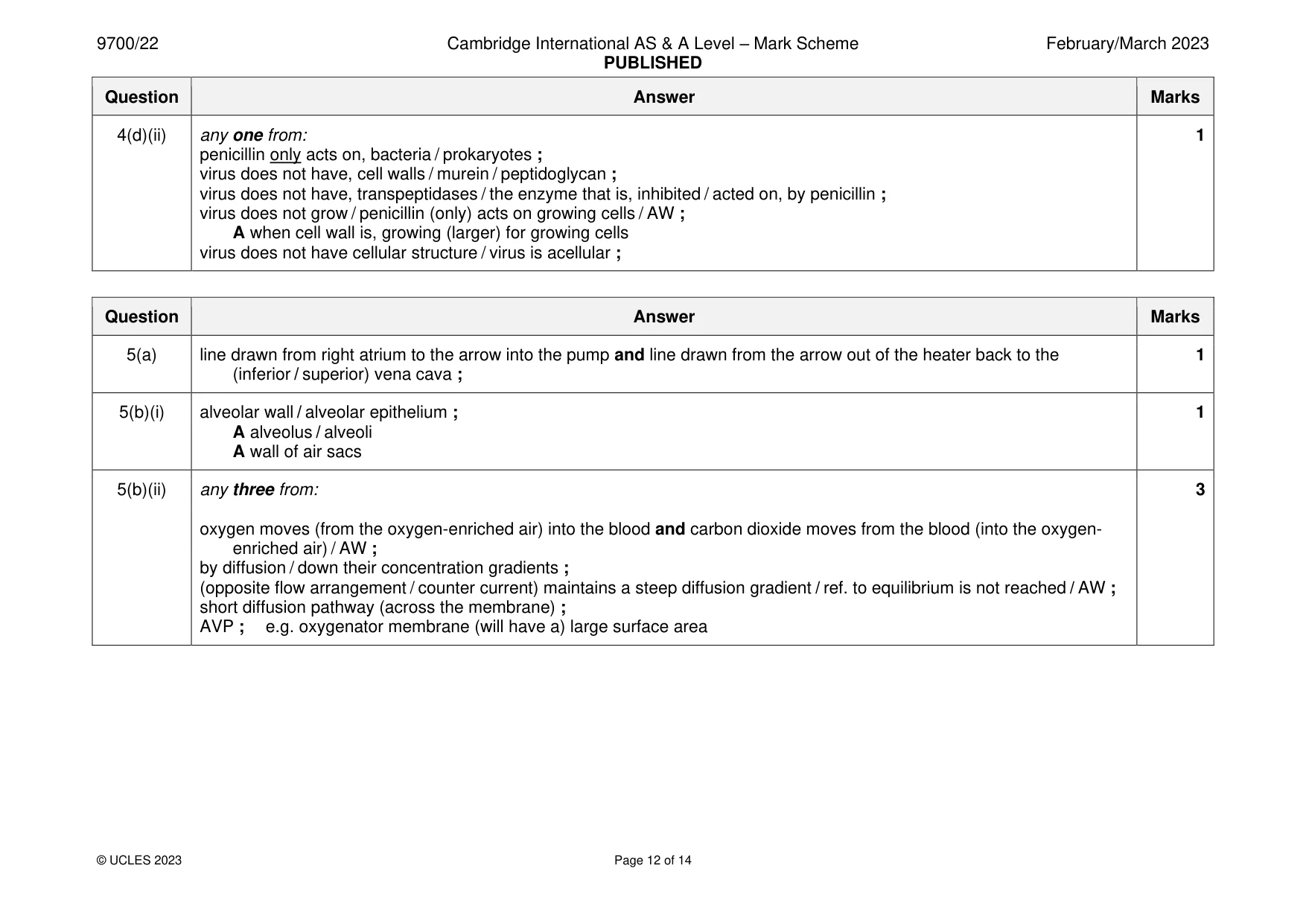
9700/22 Cambridge International AS & A Level – Mark Scheme PUBLISHED February/March 2023 © UCLES 2023 Page 12 of 14 Question Answer Marks 4(d)(ii) any one from: penicillin only acts on, bacteria / prokaryotes ; virus does not have, cell walls / murein / peptidoglycan ; virus does not have, transpeptidases / the enzyme that is, inhibited / acted on, by penicillin ; virus does not grow / penicillin (only) acts on growing cells / AW ; A when cell wall is, growing (larger) for growing cells virus does not have cellular structure / virus is acellular ; 1 Question Answer Marks 5(a) line drawn from right atrium to the arrow into the pump and line drawn from the arrow out of the heater back to the (inferior / superior) vena cava ; 1 5(b)(i) alveolar wall / alveolar epithelium ; A alveolus / alveoli A wall of air sacs 1 5(b)(ii) any three from: oxygen moves (from the oxygen-enriched air) into the blood and carbon dioxide moves from the blood (into the oxygen- enriched air) / AW ; by diffusion / down their concentration gradients ; (opposite flow arrangement / counter current) maintains a steep diffusion gradient / ref. to equilibrium is not reached / AW ; short diffusion pathway (across the membrane) ; AVP ; e.g. oxygenator membrane (will have a) large surface area 3
Mark scheme, page 13
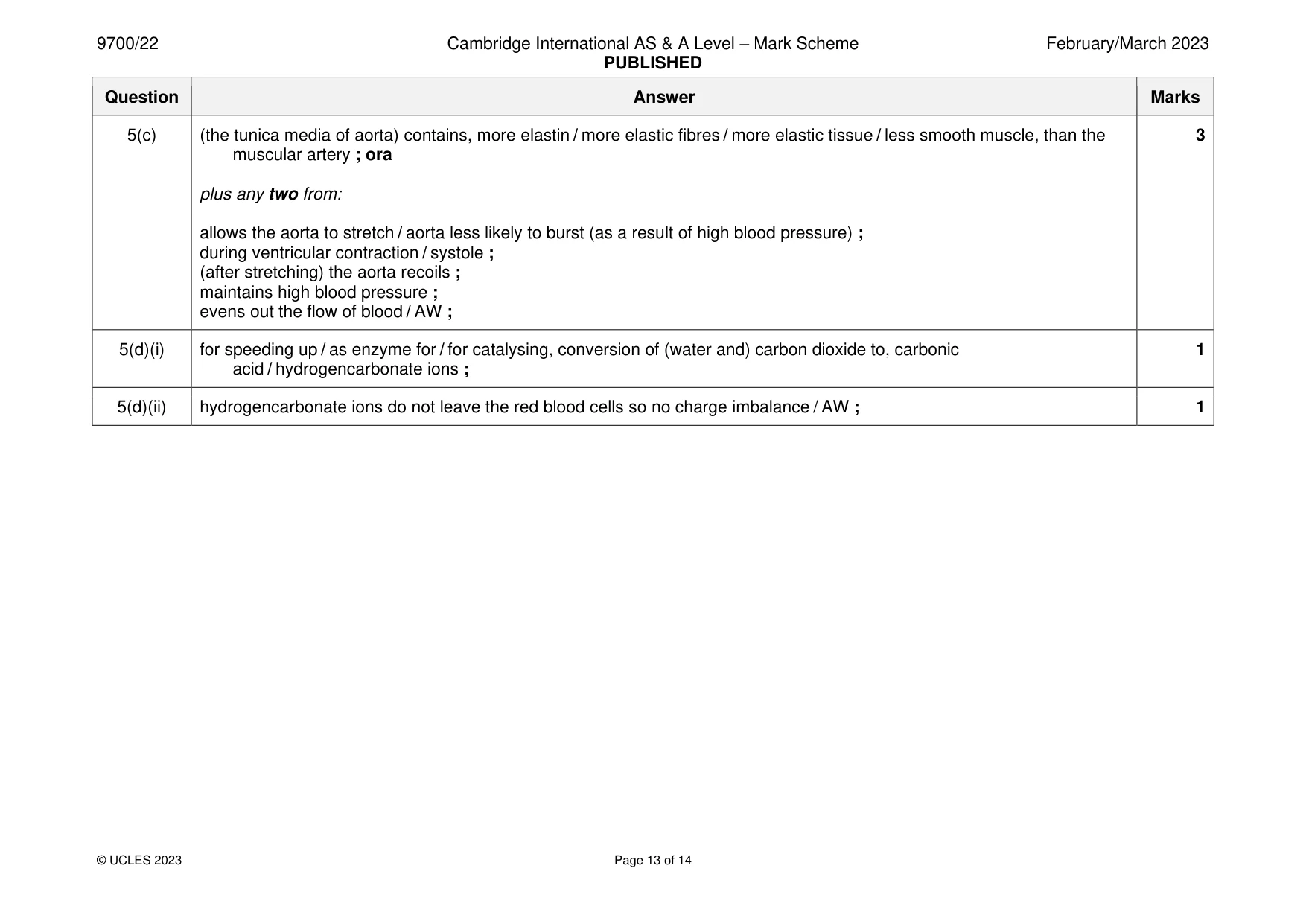
9700/22 Cambridge International AS & A Level – Mark Scheme PUBLISHED February/March 2023 © UCLES 2023 Page 13 of 14 Question Answer Marks 5(c) (the tunica media of aorta) contains, more elastin / more elastic fibres / more elastic tissue / less smooth muscle, than the muscular artery ; ora plus any two from: allows the aorta to stretch / aorta less likely to burst (as a result of high blood pressure) ; during ventricular contraction / systole ; (after stretching) the aorta recoils ; maintains high blood pressure ; evens out the flow of blood / AW ; 3 5(d)(i) for speeding up / as enzyme for / for catalysing, conversion of (water and) carbon dioxide to, carbonic acid / hydrogencarbonate ions ; 1 5(d)(ii) hydrogencarbonate ions do not leave the red blood cells so no charge imbalance / AW ; 1
Mark scheme, page 14
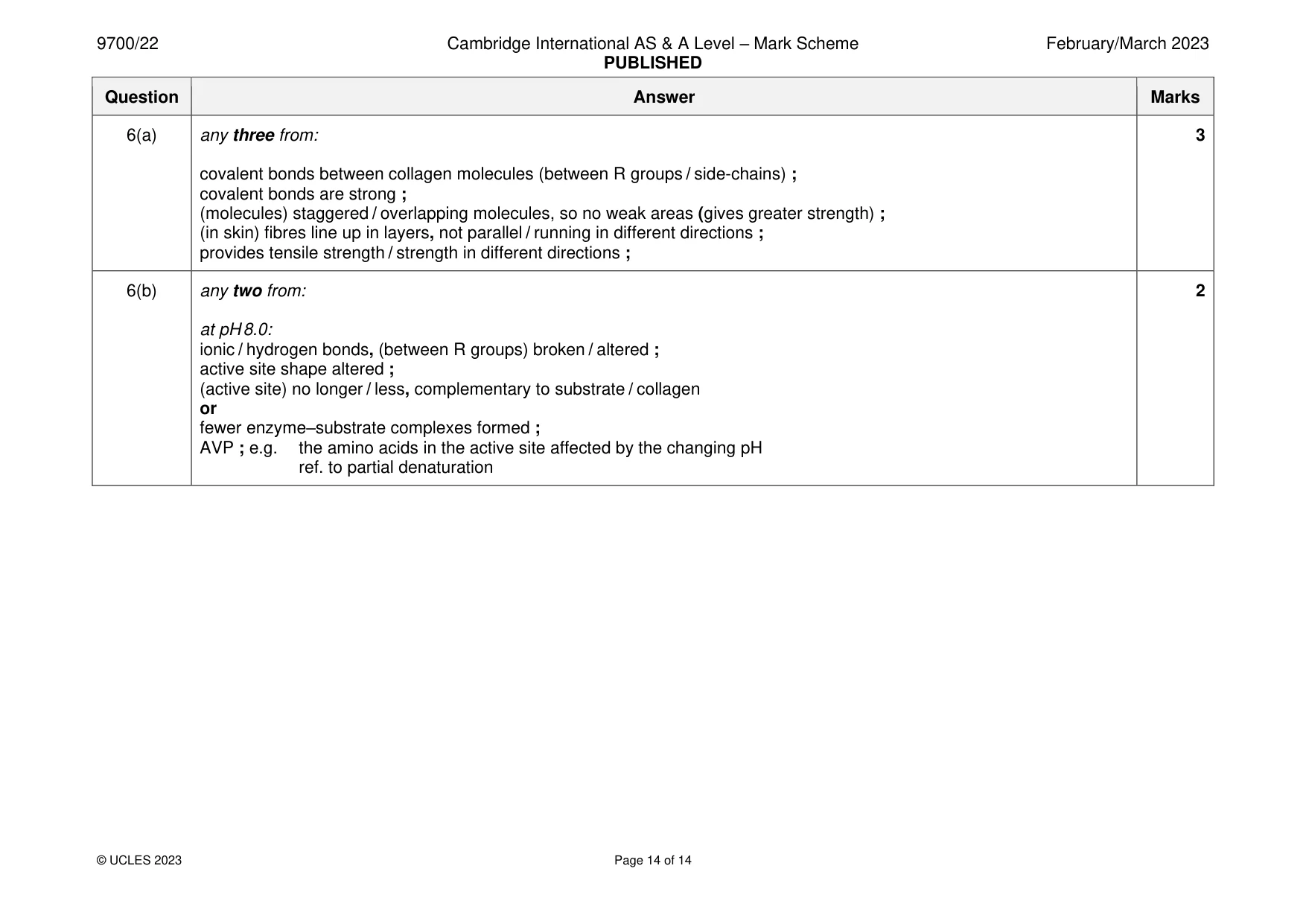
9700/22 Cambridge International AS & A Level – Mark Scheme PUBLISHED February/March 2023 © UCLES 2023 Page 14 of 14 Question Answer Marks 6(a) any three from: covalent bonds between collagen molecules (between R groups / side-chains) ; covalent bonds are strong ; (molecules) staggered / overlapping molecules, so no weak areas (gives greater strength) ; (in skin) fibres line up in layers, not parallel / running in different directions ; provides tensile strength / strength in different directions ; 3 6(b) any two from: at pH 8.0: ionic / hydrogen bonds, (between R groups) broken / altered ; active site shape altered ; (active site) no longer / less, complementary to substrate / collagen or fewer enzyme–substrate complexes formed ; AVP ; e.g. the amino acids in the active site affected by the changing pH ref. to partial denaturation 2
What you needed in this session
Cambridge’s own grade thresholds for 2023 Feb/March, Paper 2 · Variant 2. A higher threshold means an easier paper — the bar moves with how the cohort did.